EP1616575A1 - Methode destinée à traiter l'inflammation - Google Patents
Methode destinée à traiter l'inflammation Download PDFInfo
- Publication number
- EP1616575A1 EP1616575A1 EP05020542A EP05020542A EP1616575A1 EP 1616575 A1 EP1616575 A1 EP 1616575A1 EP 05020542 A EP05020542 A EP 05020542A EP 05020542 A EP05020542 A EP 05020542A EP 1616575 A1 EP1616575 A1 EP 1616575A1
- Authority
- EP
- European Patent Office
- Prior art keywords
- seq
- receptor
- human
- polypeptide
- antibody
- Prior art date
- Legal status (The legal status is an assumption and is not a legal conclusion. Google has not performed a legal analysis and makes no representation as to the accuracy of the status listed.)
- Granted
Links
Images


Classifications
-
- C—CHEMISTRY; METALLURGY
- C07—ORGANIC CHEMISTRY
- C07K—PEPTIDES
- C07K14/00—Peptides having more than 20 amino acids; Gastrins; Somatostatins; Melanotropins; Derivatives thereof
- C07K14/435—Peptides having more than 20 amino acids; Gastrins; Somatostatins; Melanotropins; Derivatives thereof from animals; from humans
- C07K14/705—Receptors; Cell surface antigens; Cell surface determinants
- C07K14/715—Receptors; Cell surface antigens; Cell surface determinants for cytokines; for lymphokines; for interferons
- C07K14/7155—Receptors; Cell surface antigens; Cell surface determinants for cytokines; for lymphokines; for interferons for interleukins [IL]
-
- A—HUMAN NECESSITIES
- A61—MEDICAL OR VETERINARY SCIENCE; HYGIENE
- A61K—PREPARATIONS FOR MEDICAL, DENTAL OR TOILETRY PURPOSES
- A61K38/00—Medicinal preparations containing peptides
- A61K38/16—Peptides having more than 20 amino acids; Gastrins; Somatostatins; Melanotropins; Derivatives thereof
- A61K38/17—Peptides having more than 20 amino acids; Gastrins; Somatostatins; Melanotropins; Derivatives thereof from animals; from humans
- A61K38/19—Cytokines; Lymphokines; Interferons
- A61K38/20—Interleukins [IL]
-
- A—HUMAN NECESSITIES
- A61—MEDICAL OR VETERINARY SCIENCE; HYGIENE
- A61P—SPECIFIC THERAPEUTIC ACTIVITY OF CHEMICAL COMPOUNDS OR MEDICINAL PREPARATIONS
- A61P1/00—Drugs for disorders of the alimentary tract or the digestive system
-
- A—HUMAN NECESSITIES
- A61—MEDICAL OR VETERINARY SCIENCE; HYGIENE
- A61P—SPECIFIC THERAPEUTIC ACTIVITY OF CHEMICAL COMPOUNDS OR MEDICINAL PREPARATIONS
- A61P11/00—Drugs for disorders of the respiratory system
-
- A—HUMAN NECESSITIES
- A61—MEDICAL OR VETERINARY SCIENCE; HYGIENE
- A61P—SPECIFIC THERAPEUTIC ACTIVITY OF CHEMICAL COMPOUNDS OR MEDICINAL PREPARATIONS
- A61P11/00—Drugs for disorders of the respiratory system
- A61P11/06—Antiasthmatics
-
- A—HUMAN NECESSITIES
- A61—MEDICAL OR VETERINARY SCIENCE; HYGIENE
- A61P—SPECIFIC THERAPEUTIC ACTIVITY OF CHEMICAL COMPOUNDS OR MEDICINAL PREPARATIONS
- A61P17/00—Drugs for dermatological disorders
-
- A—HUMAN NECESSITIES
- A61—MEDICAL OR VETERINARY SCIENCE; HYGIENE
- A61P—SPECIFIC THERAPEUTIC ACTIVITY OF CHEMICAL COMPOUNDS OR MEDICINAL PREPARATIONS
- A61P17/00—Drugs for dermatological disorders
- A61P17/04—Antipruritics
-
- A—HUMAN NECESSITIES
- A61—MEDICAL OR VETERINARY SCIENCE; HYGIENE
- A61P—SPECIFIC THERAPEUTIC ACTIVITY OF CHEMICAL COMPOUNDS OR MEDICINAL PREPARATIONS
- A61P17/00—Drugs for dermatological disorders
- A61P17/06—Antipsoriatics
-
- A—HUMAN NECESSITIES
- A61—MEDICAL OR VETERINARY SCIENCE; HYGIENE
- A61P—SPECIFIC THERAPEUTIC ACTIVITY OF CHEMICAL COMPOUNDS OR MEDICINAL PREPARATIONS
- A61P19/00—Drugs for skeletal disorders
- A61P19/02—Drugs for skeletal disorders for joint disorders, e.g. arthritis, arthrosis
-
- A—HUMAN NECESSITIES
- A61—MEDICAL OR VETERINARY SCIENCE; HYGIENE
- A61P—SPECIFIC THERAPEUTIC ACTIVITY OF CHEMICAL COMPOUNDS OR MEDICINAL PREPARATIONS
- A61P29/00—Non-central analgesic, antipyretic or antiinflammatory agents, e.g. antirheumatic agents; Non-steroidal antiinflammatory drugs [NSAID]
-
- A—HUMAN NECESSITIES
- A61—MEDICAL OR VETERINARY SCIENCE; HYGIENE
- A61P—SPECIFIC THERAPEUTIC ACTIVITY OF CHEMICAL COMPOUNDS OR MEDICINAL PREPARATIONS
- A61P31/00—Antiinfectives, i.e. antibiotics, antiseptics, chemotherapeutics
-
- A—HUMAN NECESSITIES
- A61—MEDICAL OR VETERINARY SCIENCE; HYGIENE
- A61P—SPECIFIC THERAPEUTIC ACTIVITY OF CHEMICAL COMPOUNDS OR MEDICINAL PREPARATIONS
- A61P31/00—Antiinfectives, i.e. antibiotics, antiseptics, chemotherapeutics
- A61P31/04—Antibacterial agents
-
- A—HUMAN NECESSITIES
- A61—MEDICAL OR VETERINARY SCIENCE; HYGIENE
- A61P—SPECIFIC THERAPEUTIC ACTIVITY OF CHEMICAL COMPOUNDS OR MEDICINAL PREPARATIONS
- A61P35/00—Antineoplastic agents
-
- A—HUMAN NECESSITIES
- A61—MEDICAL OR VETERINARY SCIENCE; HYGIENE
- A61P—SPECIFIC THERAPEUTIC ACTIVITY OF CHEMICAL COMPOUNDS OR MEDICINAL PREPARATIONS
- A61P37/00—Drugs for immunological or allergic disorders
-
- A—HUMAN NECESSITIES
- A61—MEDICAL OR VETERINARY SCIENCE; HYGIENE
- A61P—SPECIFIC THERAPEUTIC ACTIVITY OF CHEMICAL COMPOUNDS OR MEDICINAL PREPARATIONS
- A61P37/00—Drugs for immunological or allergic disorders
- A61P37/08—Antiallergic agents
-
- A—HUMAN NECESSITIES
- A61—MEDICAL OR VETERINARY SCIENCE; HYGIENE
- A61P—SPECIFIC THERAPEUTIC ACTIVITY OF CHEMICAL COMPOUNDS OR MEDICINAL PREPARATIONS
- A61P43/00—Drugs for specific purposes, not provided for in groups A61P1/00-A61P41/00
-
- C—CHEMISTRY; METALLURGY
- C07—ORGANIC CHEMISTRY
- C07K—PEPTIDES
- C07K16/00—Immunoglobulins [IG], e.g. monoclonal or polyclonal antibodies
- C07K16/18—Immunoglobulins [IG], e.g. monoclonal or polyclonal antibodies against material from animals or humans
- C07K16/24—Immunoglobulins [IG], e.g. monoclonal or polyclonal antibodies against material from animals or humans against cytokines, lymphokines or interferons
- C07K16/244—Interleukins [IL]
-
- A—HUMAN NECESSITIES
- A61—MEDICAL OR VETERINARY SCIENCE; HYGIENE
- A61K—PREPARATIONS FOR MEDICAL, DENTAL OR TOILETRY PURPOSES
- A61K38/00—Medicinal preparations containing peptides
-
- C—CHEMISTRY; METALLURGY
- C07—ORGANIC CHEMISTRY
- C07K—PEPTIDES
- C07K2319/00—Fusion polypeptide
- C07K2319/30—Non-immunoglobulin-derived peptide or protein having an immunoglobulin constant or Fc region, or a fragment thereof, attached thereto
Definitions
- Inflammation normally is a localized, protective response to trauma or microbial invasion that destroys, dilutes, or walls-off the injurious agent and the injured tissue. It is characterized in the acute form by the classic signs of pain, heat, redness, swelling, and loss of function. Microscopically, it involves a complex series of events, including dilation of arterioles, capillaries, and venules, with increased permeability and blood flow, exudation of fluids, including plasma proteins, and leukocyte migration into the area of inflammation.
- inflammation occurs as a defensive response to invasion of the host by foreign, particularly microbial, material.
- Responses to mechanical trauma, toxins, and neoplasia also may results in inflammatory reactions.
- the accumulation and subsequent activation of leukocytes are central events in the pathogenesis of most forms of inflammation. Deficiencies of inflammation compromise the host.
- Excessive inflammation caused by abnormal recognition of host tissue as foreign or prolongation of the inflammatory process may lead to inflammatory diseases as diverse as diabetes, arteriosclerosis, cataracts, reperfusion injury, and cancer, to post-infectious syndromes such as in infectious meningitis, rheumatic fever, and to rheumatic diseases such as systemic lupus erythematosus and rheumatoid arthritis.
- the centrality of the inflammatory response in these varied disease processes makes its regulation a major element in the prevention control or cure of human disease.
- IL-8 interleukin-8
- IL-8 is a chemokine. It was identified as an agonist for neutrophils on the basis of two effects, chemotaxis and the release of granule enzymes. IL-8 binds to two receptors on neutrophils. IL-8 receptors are also found on monocytes, basophils, and eosinophils. In human fibroblasts, cytomegalovirus has been shown to induce the expression of IL-8 receptors and to replicate more rapidly when cells are exposed to IL-8. IL-8 is a potent chemoattractant for neutrophils; and the early stages of periodontal disease are characterized by the influx of neutrophils.
- IL-8 is a potent inducer of angiogenesis in several angiogenesis-dependent chronic inflammatory conditions, including rheumatoid arthritis, psoriasis, and idiopathic pulmonary fibrosis. Additionally, IL-8 is an important source of angiogenic activity in human lung cancer. Also, IL-8 expression correlates with experimental metastatic activity of some melanoma cell lines. Thus, an effective method to treat inflammatory diseases would be to administer an agent that would inhibit IL-8.
- the present invention fills this need by providing for a method for treating inflammation in which IL-20 plays a role, comprising administering to a mammal in need of treatment of inflammation an antagonist to IL-20 or an antagonist to the IL-20 receptor.
- the antagonist to IL-20 can be an antibody, antibody fragment or single-chain antibody that binds to IL-20, a soluble receptor that binds to IL-20.
- the antagonist to the IL-20 receptor can be an antibody, antibody fragment, single-chain antibody or small molecule that binds to the IL-20 receptor.
- an anti-sense nucleotide that binds to the mRNA that encodes IL-20 can be used as an antagonist.
- IL-20 up-regulates IL-8.
- Inflammatory diseases in which IL-8 plays a significant role, and for which a decrease in IL-8 would be beneficial are, adult respiratory disease (ARD), septic shock, multiple organ failure, inflammatory lung injury such as asthma or bronchitis, bacterial pneumonia, psoriasis and inflammatory bowel disease such as ulcerative colitis and Crohn's disease, eczema, atopic dermatitis and contact dermatitis.
- ARD adult respiratory disease
- septic shock multiple organ failure
- inflammatory lung injury such as asthma or bronchitis
- bacterial pneumonia bacterial pneumonia
- psoriasis psoriasis
- inflammatory bowel disease such as ulcerative colitis and Crohn's disease
- eczema atopic dermatitis and contact dermatitis.
- amino-terminal and “carboxyl-terminal” are used herein to denote positions within polypeptides. Where the context allows, these terms are used with reference to a particular sequence or portion of a polypeptide to denote proximity or relative position. For example, a certain sequence positioned carboxyl-terminal to a reference sequence within a polypeptide is located proximal to the carboxyl terminus of the reference sequence, but is not necessarily at the carboxyl terminus of the complete polypeptide.
- complement/anti-complement pair denotes non-identical moieties that form a non-covalently associated, stable pair under appropriate conditions.
- biotin and avidin are prototypical members of a complement/anti-complement pair.
- Other exemplary complement/anti-complement pairs include receptor/ligand pairs, antibody/antigen (or hapten or epitope) pairs, sense/antisense polynucleotide pairs, and the like.
- the complement/anti-complement pair preferably has a binding affinity of ⁇ 10 9 M -1 .
- polynucleotide molecule is a polynucleotide molecule having a complementary base sequence and reverse orientation as compared to a reference sequence.
- sequence 5' ATGCACGGG 3' is complementary to 5' CCCGTGCAT 3'.
- contig denotes a polynucleotide that has a contiguous stretch of identical or complementary sequence to another polynucleotide. Contiguous sequences are said to "overlap" a given stretch of polynucleotide sequence either in their entirety or along a partial stretch of the polynucleotide. For example, representative contigs to the polynucleotide sequence 5'-ATGGCTTAGCTT-3' are 5'-TAGCTTgagtct-3' and 3'-gtcgacTACCGA-5'.
- degenerate nucleotide sequence denotes a sequence of nucleotides that includes one or more degenerate codons (as compared to a reference polynucleotide molecule that encodes a polypeptide).
- Degenerate codons contain different triplets of nucleotides, but encode the same amino acid residue (i.e., GAU and GAC triplets each encode Asp).
- expression vector is used to denote a DNA molecule, linear or circular, that comprises a segment encoding a polypeptide of interest operably linked to additional segments that provide for its transcription.
- additional segments include promoter and terminator sequences, and may also include one or more origins of replication, one or more selectable markers, an enhancer, a polyadenylation signal, etc.
- Expression vectors are generally derived from plasmid or viral DNA, or may contain elements of both.
- isolated when applied to a polynucleotide, denotes that the polynucleotide has been removed from its natural genetic milieu and is thus free of other extraneous or unwanted coding sequences, and is in a form suitable for use within genetically engineered protein production systems.
- isolated molecules are those that are separated from their natural environment and include cDNA and genomic clones.
- Isolated DNA molecules of the present invention are free of other genes with which they are ordinarily associated, but may include naturally occurring 5' and 3' untranslated regions such as promoters and terminators. The identification of associated regions will be evident to one of ordinary skill in the art (see for example, Dynan and Tijan, Nature 316 :774-78 (1985).
- an "isolated" polypeptide or protein is a polypeptide or protein that is found in a condition other than its native environment, such as apart from blood and animal tissue.
- the isolated polypeptide is substantially free of other polypeptides, particularly other polypeptides of animal origin: It is preferred to provide the polypeptides in a highly purified form, i.e. greater than 95% pure, more preferably greater than 99% pure.
- the term “isolated” does not exclude the presence of the same polypeptide in alternative physical forms, such as dimers or alternatively glycosylated or derivatized forms.
- operably linked when referring to DNA segments, indicates that the segments are arranged so that they function in concert for their intended purposes, e.g., transcription initiates in the promoter and proceeds through the coding segment to the terminator.
- polynucleotide is a single- or double-stranded polymer of deoxyribonucleotide or ribonucleotide bases read from the 5' to the 3' end.
- Polynucleotides include RNA and DNA, and may be isolated from natural sources, synthesized in vitro, or prepared from a combination of natural and synthetic molecules. Sizes of polynucleotides are expressed as base pairs (abbreviated "bp"), nucleotides ("nt”), or kilobases ("kb”). Where the context allows, the latter two terms may describe polynucleotides that are single-stranded or double-stranded.
- double-stranded molecules When the term is applied to double-stranded molecules it is used to denote overall length and will be understood to be equivalent to the term "base pairs". It will be recognized by those skilled in the art that the two strands of a double-stranded polynucleotide may differ slightly in length and that the ends thereof may be staggered as a result of enzymatic cleavage; thus all nucleotides within a double-stranded polynucleotide molecule may not be paired. Such unpaired ends will in general not exceed 20 nucleotides in length.
- polypeptide is a polymer of amino acid residues joined by peptide bonds, whether produced naturally or synthetically. Polypeptides of less than about 10 amino acid residues are commonly referred to as “peptides”.
- promoter is used herein for its art-recognized meaning to denote a portion of a gene containing DNA sequences that provide for the binding of RNA polymerase and initiation of transcription. Promoter sequences are commonly, but not always, found in the 5' non-coding regions of genes.
- a “protein” is a macromolecule comprising one or more polypeptide chains.
- a protein may also comprise non-peptidic components, such as carbohydrate groups. Carbohydrates and other non-peptidic substituents may be added to a protein by the cell in which the protein is produced, and will vary with the type of cell. Proteins are defined herein in terms of their amino acid backbone structures; substituents such as carbohydrate groups are generally not specified, but may be present nonetheless.
- receptor denotes a cell-associated protein that binds to a bioactive molecule (i.e., a ligand) and mediates the effect of the ligand on the cell.
- a bioactive molecule i.e., a ligand
- Membrane-bound receptors are characterized by a multi-domain structure comprising an extracellular ligand-binding domain and an intracellular effector domain that is typically involved in signal transduction. Binding of ligand to receptor results in a conformational change in the receptor that causes an interaction between the effector domain and other molecule(s) in the cell. This interaction in turn leads to an alteration in the metabolism of the cell.
- Metabolic events that are linked to receptor-ligand interactions include gene transcription, phosphorylation, dephosphorylation, increases in cyclic AMP production, mobilization of cellular calcium, mobilization of membrane lipids, cell adhesion, hydrolysis of inositol lipids and hydrolysis of phospholipids.
- receptors can be membrane bound, cytosolic or nuclear, monomeric (e.g. , thyroid stimulating hormone receptor, beta-adrenergic receptor) or multimeric ( e.g. , PDGF receptor, growth hormone receptor, IL-3 receptor, GM-CSF receptor, G-CSF receptor, erythropoietin receptor and IL-6 receptor).
- the present invention relates to the treatment of inflammation and inflammatory diseases in which IL-20 plays a role either in initiating or spreading or maintenance by administering to the afflicted individual an antagonist to IL-20.
- That antagonist can be an antibody to IL-20, a soluble receptor that binds to IL-20, an anti-sense molecule or an antibody that binds to either the IL-20RA subunit or the IL-20RB subunit of the IL-20 receptor.
- IL-20 is defined and methods for producing it and antibodies to IL-20 are contained in International Patent Application No. PCT/US98/25228, publication no. WO 99/27103,published November 25, 1998 and U.S. Patent Application No. 09/313,458 filed May 17, 1999.
- the polynucleotide and polypeptide of human IL-20 are represented by SEQ ID NOs: 1 - 4, and mouse IL-20 by SEQ ID NOs: 5-9.
- the receptor to IL-20 has been discovered and is a heterodimer comprised of the polypeptide termed 'IL-20RA' (formally called Zcytor7) and a polypeptide termed 'IL-20RB'.
- the IL-20RA polypeptide, nucleic acid that encodes it, antibodies to IL-20RA, and methods for producing it are disclosed in U.S. Patent No. 5,945,511 issued August 31, 1999.
- SEQ ID NOs: 10 - 12 are the IL-20RA polynucleotides and polypeptides.
- the extracellular domain of the human IL-20RA is comprised of a polypeptide selected from the group consisting of SEQ ID NOs: 12, 55, 63 and 65, the full-length receptor subunit being comprised of SEQ ID NO: 11.
- the extracellular domain of mouse IL-20RA is SEQ ID NO: 38, SEQ ID NO: 37 being the entire mouse IL-20RA.
- the extracellular domain of IL-20RB (SEQ ID NOs: 13-14, and a variant SEQ ID NOs: 18 and 19) is comprised of a polypeptide selected from the group consisting of SEQ ID NOs: 15, 59, 61, 67, 68 and 69.
- the extracellular domain of the IL-20RA polypeptide and the extracellular domain of the IL-20RB polypeptide are covalently linked together.
- SEQ ID NOs: 22 and 23 are constructs of the extracellular domain of IL-20RA fused to a mutated human immunoglobulin gamma 1 constant region produced according to the procedure set forth in example 5.
- SEQ ID NO: 62 is the predicted mature sequence without the signal sequence.
- SEQ ID NOs: 20 and 21 are constructs of the extracellular domain of IL-20RB fused to wild type human immunoglobulin kappa light chain constant region produced according to the procedure of example 5.
- SEQ ID NO: 60 is the predicted mature sequence without the signal sequence.
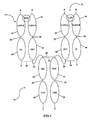
- Figure 1 depicts the heterotetramer produced by example 5.
- SEQ ID NOs: 52 and 53 are constructs of the extracellular domain of IL-20RA fused to a mutated human immunoglobulin gamma 1 constant region produced according to the procedure set forth in example 12.
- SEQ ID NO: 54 is the predicted mature sequence without the signal sequence.
- SEQ ID NOs: 56 and 57 are constructs of the extracellular domain of IL-20RB fused to wild type human immunoglobulin kappa light chain constant region produced according to the procedure of example 12.
- SEQ ID NO: 58 is the predicted mature sequence without the signal sequence.
- the resultant heterotetramer is almost identical to that produced by example 5, the primary difference being the absence of a polypeptide linker between the extracellular domains and the beginning of the Ig constant regions, 22 in Figure 1.
- the term "extracellular domain of a receptor” means the extracellular domain of the receptor or a portion of the extracellular domain that is necessary for binding to its ligand, in this case the ligand being IL-20.
- Figures 1-8 illustrate a representative number of embodiments of the present invention. Common elements in each of the drawings are given the same number.
- Figure 1 represents the embodiment of the present invention produced according to example 5 below.
- the soluble receptor construct, designated 10 is comprised of two IL-20 binding site polypeptide chains designated 12 and 14. Each binding site is comprised of the extracellular domain of IL-20RA, designated 16, and the extracellular domain of IL-20RB designated 18.
- the extracellular domain, 16, of IL-20RA is linked to the constant heavy one (CH1) domain, 20, of the human immunoglobulin gamma 1 heavy chain constant region via linker 22, which is SEQ ID NO:72.
- the CH1 domain, 20, is then linked to the CH2 domain, 24, via hinge region 23.
- the CH2 domain, 24, is linked to the CH3 domain, 26, via hinge region 25.
- the extracellular domain, 16, of IL-20RA extends from amino acid residues 36, a valine, to and including amino acid residue 249, a glutamine of SEQ ID NO:22.
- Polypeptide linker, 22, extends from amino acid residue 250, a glycine to and including amino acid residue 264, a serine, of SEQ ID NO:22.
- the CH1 domain, 22 of Figure 1 extends from amino acid residue 265, an alanine, to and including amino acid residue 362, a valine, of SEQ ID NO:22.
- Hinge region 23 of Figure 1 extends from amino acid residue 363, a glutamic acid to and including amino acid residue 377, a proline, of SEQ ID NO: 22.
- Chains 12 and 14 are disulfide-bonded together by means of disulfide bonds 28 and 30.
- the disulfide bonds are formed between the heavy chains by the cysteine residues at positions 373 and 376 of SEQ ID NO: 22 of each of the two heavy chains.
- Extracellular domain, 18, of IL-20RB is linked to the constant region of the human kappa light chain (CL), 34 of Figure 1 via polypeptide linker 32, which is the polypeptide SEQ ID NO: 72.
- the extracellular domain, 18, of IL-20RB extends from amino acid residue 30, a valine, to and including amino acid residue 230, an alanine, of SEQ ID NO: 20.
- Polypeptide linker, 32 extends from amino acid residue 231, a glycine, to and including amino acid residue 245, a serine, of SEQ ID NO:20.
- the kappa constant light region, 34 extends from amino acid residue 246, an arginine, to and including the final amino acid residue 352, a cysteine, of SEQ ID NO:20.
- the cysteine at position 352 of SEQ ID NO: 20 forms a disulfide bond, 36 in Figure 1, with the cysteine at position 367 of SEQ ID NO: 22.
- the constant light chain 34 is thus linked to the hinge region, 23, by disulfide bond, 36.
- the extracellular domain, 16, of IL-20RA is linked to the extracellular domain, 18, of IL-20RB to form a soluble receptor.
- Figure 3 shows a very simple soluble receptor 38 of the present invention wherein extracellular domain, 16, of IL-20RA is connected to the extracellular domain, 18, of IL-20RB by means of a polypeptide linker, 40.
- the polypeptide linker extends from the amino terminus of extracellular domain, 16, of IL-20RA and is connected to the carboxyl terminus of the extracellular domain, 18, of IL-20RB.
- the polypeptide linker should be between 100-240 amino acids in length, preferably about 170 amino acid residues in length.
- a suitable linker would be comprised of glycine and serine residues.
- a possible linker would be multiple units of SEQ ID NO: 72, preferably about 12.
- Figure 4 shows an embodiment that has the extracellular domain, 16, of IL-20RA linked to the extracellular domain, 18, of IL-20RB by means of linker 40, as in Figure 3. While the extracellular domain, 16, of IL-20RA is linked to the CH1 domain, 20, as in Figure 1 by means of polypeptide linker 42, which should be about 30 amino acid residues in length.
- An ideal linker would be comprised of glycine and serine as in SEQ ID NO: 72, and the hinge sequence, 23 of Figure 1.
- Figure 5 shows another possible embodiment of the present invention.
- a polypeptide linker 44 of about 15 amino acid residue e.g. SEQ ID NO: 72
- a polypeptide linker 46 of about 30 amino acid residues extends from the carboxy terminus of the extracellular domain, 16, of IL-20RA to the CH2 domain.
- the carboxyl terminus of linker 46 would preferably be comprised of the hinge region extending from amino acid residue 363, a glutamic acid to and including amino acid residue 377, a proline, of SEQ ID NO: 22. Nonetheless, polypeptide linker 46 would ideally have at least one cysteine residue at its carboxyl terminus so a disulfide bond could be formed.
- the soluble IL-20 receptor of Figure 6 is identical to that of Figure 1 except for the CH3 domain, 26 of Figure 1, is not present on the embodiment of Figure 6.
- the CH3 region begins at amino acid residue 488, a glycine, and extends to the last residue 594 of SEQ ID NO: 22.
- Figure 7 shows a soluble IL-20 receptor construct that is identical to the construct of Figure 1 except both the CH2, and CH3 domains are absent.
- the CH2 and CH3 domains run from amino acid residue 378, an alanine, to the end of the polypeptide sequence of SEQ ID NO: 22.
- a method for producing a soluble receptor comprised of extracellular domains of IL-20RA and IL-20RB comprising (a) introducing into a host cell a first DNA sequence comprised of a transcriptional promoter operatively linked to a first secretory signal sequence followed downstream by and in proper reading frame the DNA that encodes the extracellular portion of IL-20RA and the DNA that encodes an immunoglobulin light chain constant region;(b) introducing into the host cell a second DNA construct comprised of a transcriptional promoter operatively linked to a second secretory signal followed downstream by and in proper reading frame a DNA sequence that encodes the extracellular portion of IL-20RB and a DNA sequence that encodes an immunoglobulin heavy chain constant region domain selected from the group consisting of C H 1, C H 2, C H 3 and C H 4; (c) growing the host cell in an appropriate growth medium under physiological conditions to allow the secretion of a fusion protein comprised of the extracellular domain of IL-20RA and IL-20RB
- the second DNA sequence further encodes an immunoglobulin heavy chain hinge region wherein the hinge region is joined to the heavy chain constant region domain. In another embodiment, the second DNA sequence further encodes an immunoglobulin variable region joined upstream of and in proper reading frame with the immunoglobulin heavy chain constant region.
- a method for producing a soluble receptor comprised of the extracellular domains of IL-20RA and IL-20RB comprising (a) introducing into a host cell a first DNA sequence comprised of a transcriptional promoter operatively linked to a first secretory signal sequence followed downstream by and in proper reading frame the DNA that encodes the extracellular portion of IL-20RB and the DNA that encodes an immunoglobulin light chain constant region;(b) introducing into the host cell a second DNA construct comprised of a transcriptional promoter operatively linked to a second secretory signal followed downstream by and in proper reading frame a DNA sequence that encodes the extracellular portion of IL-20RA and a DNA sequence that encodes an immunoglobulin heavy chain constant region domain selected from the group consisting of C H 1, C H 2, C H 3 and C H 4; (c) growing the host cell in an appropriate growth medium under physiological conditions to allow the secretion of a dimerized heterodimeric fusion protein comprised of the extracellular domain of IL-20
- the second DNA sequence further encodes an immunoglobulin heavy chain hinge region wherein the hinge region is joined to the heavy chain constant region domain. In another embodiment, the second DNA sequence further encodes an immunoglobulin variable region joined upstream of and in proper reading frame with the immunoglobulin heavy chain constant region. (See U.S. Patent No. 5,843,725.)
- antibodies includes polyclonal antibodies, affinity-purified polyclonal antibodies, monoclonal antibodies, and antigen-binding fragments, such as F(ab') 2 and Fab proteolytic fragments. Genetically engineered intact antibodies or fragments, such as chimeric antibodies, Fv fragments, single chain antibodies and the like, as well as synthetic antigen-binding peptides and polypeptides, are also included.
- Non-human antibodies may be humanized by grafting non-human CDRs onto human framework and constant regions, or by incorporating the entire non-human variable domains (optionally "cloaking" them with a human-like surface by replacement of exposed residues, wherein the result is a "veneered” antibody).
- humanized antibodies may retain non-human residues within the human variable region framework domains to enhance proper binding characteristics. Through humanizing antibodies, biological half-life may be increased, and the potential for adverse immune reactions upon administration to humans is reduced.
- the binding affinity of an antibody can be readily determined by one of ordinary skill in the art, for example, by Scatchard analysis. A variety of assays known to those skilled in the art can be utilized to detect antibodies that bind to protein or peptide. Exemplary assays are described in detail in Antibodies: A Laboratory Manual , Harlow and Lane (Eds.) (Cold Spring Harbor Laboratory Press, 1988).
- Representative examples of such assays include: concurrent immunoelectrophoresis, radioimmunoassay, radioimmunoprecipitation, enzyme-linked immunosorbent assay (ELISA), dot blot or Western blot assay, inhibition or competition assay, and sandwich assay.
- ELISA enzyme-linked immunosorbent assay
- IL-20 up-regulates IL-8.
- Inflammatory diseases in which IL-8 plays a significant role, and for which a decrease in IL-8 would be beneficial are, adult respiratory disease (ARD), septic shock, multiple organ failure, inflammatory lung injury such as asthma or bronchitis, bacterial pneumonia, psoriasis and inflammatory bowel disease such as ulcerative colitis and Crohn's disease, eczema, atopic dermatitis and contact dermatitis.
- ARD adult respiratory disease
- septic shock multiple organ failure
- inflammatory lung injury such as asthma or bronchitis
- bacterial pneumonia bacterial pneumonia
- psoriasis psoriasis
- inflammatory bowel disease such as ulcerative colitis and Crohn's disease
- eczema atopic dermatitis and contact dermatitis.
- IL-20 receptor subunits Two orphan class II cytokine receptors, both of which are expressed in skin, were identified as IL-20 receptor subunits. Both IL-20 receptor subunits are required for ligand binding, distinguishing their role from that of subunits in the four other known class II cytokine receptors. IL-20RA and IL-20RB are also coexpressed in a number of human tissues besides skin, including ovary, adrenal gland, testis, salivary gland, muscle, lung, kidney, heart and to a lesser degree the small intestine suggesting additional target tissues for IL-20 action.
- Psoriasis is one of the most common dermatologic diseases, affecting up to 1 to 2 percent of the world's population. It is a chronic inflammatory skin disorder characterized by erythematous, sharply demarcated papules and rounded plaques, covered by silvery micaceous scale. The skin lesions of psoriasis are variably pruritic. Traumatized areas often develop lesions of psoriasis. Additionally, other external factors may exacerbate psoriasis including infections, stress, and medications, e . g . lithium, beta blockers, and anti-malarials.
- the antagonists in particularly the soluble receptor or the antibodies that bind to IL-20 or the IL-20 receptor can be administered to individual subcutaneously, intravenously, or transdermally using a cream or transdermal patch that contains the antagonist of IL-20. If administered subcutaneously, the antagonist can be injected into one or more psoriatic plaques. If administered transdermally, the antagonists can be administered directly on the plaques using a cream containing the antagonist to IL-20.
- Antagonists to IL-20 can be administered to a person who has asthma, bronchitis or cystic fibrosis or other inflammatory lung disease to treat the disease.
- the antagonists can be administered by any suitable method including intravenous, subcutaneous, bronchial lavage, and the use of inhalant containing an antagonist to IL-20.
- Dosage ranges would ordinarily be expected from 1 ⁇ g to 1000 ⁇ g per kilogram of body weight per day.
- a dosage for an average adult of the IL-20 soluble receptor would be about 25 mg given twice weekly as a subcutaneous injection.
- a dosage of an antibody that binds to IL-20 would be about 25 mg given twice weekly.
- a mixture of antibodies that bind to the IL-20RA and IL-20RB subunits would be about 25 mg given twice weekly for an adult.
- Injections could be given at the site of psoriatic lesions for the treatment of psoriasis.
- the antibody or soluble receptor can be in phosphate buffered saline.
- KGM Keratinocyte growth media
- KBM keratinocyte basal media
- a pZP plasmid is a mammalian expression vector containing an expression cassette having the mouse metallothionein-1 promoter, human tPA leader peptide, multiple restriction sites for insertion of coding sequences, a Glu-Glu tag, and a human growth hormone terminator.
- the plasmid also has an E. coli origin of replication, a mammalian selectable marker expression unit having an SV40 promoter, an enhancer and an origin of replication, as well as a DHFR gene, and the SV40 terminator.
- Several IL-20RB-pZP7N clones were sequenced.
- PCR amplification was carried out using three difference cDNA sources - fetal skin marathon cDNA, HaCaT cDNA library DNA, and prostate smooth muscle cDNA library DNA -- as templates.
- the PCR products were gel purified and sequenced. The sequence of each of the three PCR products was consistent with that of the IL-20RB-pZP7N clone.
- IL-20RB is SEQ ID NO: 13 and 14, and the mature extracellular domain is SEQ ID NO: 15.
- a cell-based binding assay was used to verify IL-20 binds to IL-20RAIL-20RB heterodimer.
- the COS cell transfection was performed in a 12-well tissue culture plate as follows: 0.5 ⁇ g DNA was mixed with medium containing 5 ⁇ l lipofectamine in 92 ⁇ l serum free Dulbecco's modified Eagle's medium (DMEM) (55 mg sodium pyruvate, 146 mg L-glutamine, 5 mg transferrin, 2.5 mg insulin, 1 ⁇ g selenium and 5 mg fetuin in 500 ml DMEM), incubated at room temperature for 30 minutes and then added to 400 ⁇ l serum free DMEM media. This 500 ⁇ l mixture was then added to 1.5 x 10 5 COS cells/well and incubated for 5 hours at 37° C. 500 ⁇ l 20% fetal bovine serum (FBS) DMEM media was added and incubated overnight.
- DMEM Dulbecco's modified Eagle's medium
- the assay a modification of the "secretion trap" (Davis, S., et al., Cell 87 : 1161-1169 (1996), was performed as follows: cells were rinsed with PBS/1% bovine serum albumin (BSA) and blocked for 1 hour with TNB (0.1 M Tris-HCl, 0.15 M NaCl and 0.5% Blocking Reagent (NEN Renaissance TSA-Direct Kit Cat# NEL701) in water). This was followed by a one-hour incubation with 3 ⁇ g/ml biotinylated IL-20 protein in TNB. Cells were washed with PBS/1% BSA and incubated for another hour with 1:300 diluted streptavidin-HRP (NEN kit) in TNB.
- BSA bovine serum albumin
- TNB 0.1 M Tris-HCl, 0.15 M NaCl and 0.5% Blocking Reagent (NEN Renaissance TSA-Direct Kit Cat# NEL701) in water. This was followed by a one-hour incubation
- TNT phosphate-buffered saline
- the human keratinocyte cell line, HaCaT was grown at 37°C to several days post-confluence in T-75 tissue culture flasks. At this point, normal growth media (DMEM + 10% FBS) was removed and replaced with serum-free media. Cells were then incubated for two days at 37°C.
- DMEM fetal calf serum
- rh recombinant human (rh) IL-1 alpha at 5 ng/mL
- rh IL-1 alpha at 20 ng/mL
- rh IL-1 alpha at 5 ng/mL + IL-20 at 1 ⁇ g/mL
- IL-20 at 1 ⁇ g/mL
- rh IL-10 at 10 ng/mL.
- AtlasTM arrays were pre-hybridized with Clontech ExpressHyb plus 100 mg/mL heat denatured salmon sperm DNA for at least thirty minutes at 68°C with continuous agitation. Membranes were then hybridized with 1.9 x 10 6 CPM/mL (a total of 1.14 x 10 7 CPM) overnight at 68°C with continuous agitation. The following day, membranes were washed for thirty minutes x 4 in 2X SSC, 1% SDS at 68° C, plus for thirty minutes x 1 in 0.1X SSC, 0.5% SDS at 68°C, followed by one final room temperature wash for five minutes in 2X SSC.
- Array membranes were then placed in Kodak plastic pouches sealed and exposed to a phosphor imager screen overnight at room temperature. The next day, phosphor screens were scanned on a phosphor imager and analyzed using Clontech's AtlasImageTM 1.0 software.
- the expression vector pEZE3 was used to express the recombinant IL-20 receptor-Ig fusion protein.
- the plasmid pEZE3 is derived from pDC312.
- pDC312 was obtained through license from Immunex Corporation.
- the plasmids pDC312 and pEZE3 contain an EASE segment as described in WO 97/25420. The presence of the EASE segment in an expression vector can improve expression of recombinant proteins two to eight fold in stable cell pools.
- the plasmid pEZE3 is a tricistronic expression vector that may be used to express up to three different proteins in mammalian cells, preferably Chinese Hamster Ovary (CHO) cells.
- the pEZE3 expression unit contains the cytomegalovirus (CMV) enhancer/promoter, the adenovirus tripartite leader sequence, a multiple cloning site for insertion of the coding region for the first recombinant protein, the poliovirus type 2 internal ribosome entry site, a second multiple cloning site for insertion of the coding region for the second recombinant protein, an encephalomyocarditis virus internal ribosome entry site, a coding segment for mouse dihydrofolate reductase, and the SV40 transcription terminator.
- pEZE3 contains an E. coli origin of replication and the bacterial beta lactamase gene.
- the IL-20 receptor-Ig fusion protein is a disulfide linked heterotetramer consisting of two chains of the extracellular domain of the human IL-20RB fused to the wild type human immunoglobulin kappa light chain constant region and two chains of the human IL-20RA protein extracellular domain fused to a mutated human immunoglobulin gamma 1 constant region.
- the human immunoglobulin gamma 1 constant region contains amino acid substitutions to reduce Fc ⁇ RI binding and C1q complement fixation.
- the human IL-24RB extracellular domain human immunoglobulin kappa light chain constant region fusion construct was generated by overlap PCR.
- the IL-20RB coding segment consists of amino acids 1 to 230.
- the template used for the PCR amplification of the IL-20R segment was generated IL-20RB human kappa light chain constant region expression construct as described below in Example 12.
- Oligonucleotide primers SEQ ID NO: 24 and SEQ ID NO: 25 were used to amplify the IL-20RB segment.
- the entire wild type human immunoglobulin kappa light chain constant region was used.
- the template used for the PCR amplification of the wild type human immunoglobulin kappa light chain constant region segment was generated IL-20RB human kappa light chain constant region expression construct as described in Example 12.
- Oligonucleotide primers SEQ ID NO: 26 and SEQ ID NO: 27 were used to amplify the wild type human immunoglobulin kappa light chain constant region.
- the two protein coding domains were linked by overlap PCR using oligonucleotides SEQ ID NO: 24 and SEQ ID NO: 27.
- a (Gly 4 Ser) 3 (SEQ ID NO: 72) peptide linker was inserted between the two protein domains.
- the (Gly 4 Ser) 3 peptide linker was encoded on the PCR primers SEQ ID NO: 26 and SEQ ID NO:25.
- the resultant IL-20RB extracellular domain/kappa light chain constant region fusion construct is shown by SEQ ID NOs: 20 and 21.
- the predicted mature polypeptide, minus the signal sequence, is SEQ ID NO: 60.
- the portion of the extracellular domain of IL-20RB that was actually used was comprised of the amino acid sequence of SEQ ID NO: 61. N-terminal sequencing resulted in the predicted amino acid sequence.
- the human IL-20RA extracellular domain human immunoglobulin gamma 1 heavy chain constant region fusion construct was generated by overlap PCR of four separate DNA fragments, each generated by separate PCR amplification reactions.
- the first fragment contained an optimized tPA (tissue plasminogen activator) signal sequence.
- the tPA signal sequence was amplified using oligonucleotide primers SEQ ID NO: 28 and SEQ ID NO: 29 using an in-house previously generated expression vector as the template.
- the second fragment contained the IL-20RA extracellular domain-coding region consisting of amino acids 30 to 243 of SEQ ID NO: 11. Oligonucleotide primers SEQ ID NO: 30 and SEQ ID NO: 31 were used to amplify this IL-20RA segment using a previously generated clone of IL-20RA as the template.
- the human gamma 1 heavy chain constant region was generated from 2 segments.
- the first segment containing the C H 1 domain was amplified using oligonucleotide primers SEQ ID NO: 32 and SEQ ID NO: 33 using a clone of the wild type human gamma 1 heavy chain constant region as the template.
- the second segment containing the remaining hinge, C H 2, and C H 3 domains of the human immunoglobulin gamma 1 heavy chain constant region was generated by PCR amplification using oligonucleotide primers SEQ ID NO: 34 and SEQ ID NO: 35.
- the template used for this PCR amplification was from a previously generated human gamma 1 Fc construct that contained codons for amino acid substitutions to reduce Fc ⁇ RI binding and C1q complement fixation as described in Example 12.
- the four protein coding domains were linked by overlap PCR using oligonucleotides SEQ ID NO: 28 and SEQ ID NO: 35.
- a (Gly 4 Ser) 3 peptide linker was inserted between the IL-20RA and CH1 protein domains.
- the (Gly 4 Ser) 3 peptide linker was encoded on the PCR primers SEQ ID NO: 32 and SEQ ID NO: 31.
- the IL-20RA extracellular domain/ domain human immunoglobulin gamma 1 heavy constant region fusion protein and DNA sequence are shown in SEQ ID NOs: 22 and 23.
- the predicted mature polypeptide sequence, minus the signal sequence, is SEQ ID NO: 62.
- the portion of extracellular domain of IL-20RA that was actually used was comprised of SEQ ID NO: 63.
- the JL-20RB extracellular domain human immunoglobulin kappa light chain constant region fusion coding segment was cloned into the second MCS while the human IL-20RA extracellular domain human immunoglobulin gamma 1 heavy chain constant region fusion coding segment was cloned into the first MCS of pEZE3.
- the plasmid was used to transfect CHO cells. The cells were selected in medium without hypoxanthine or thymidine and the transgene was amplified using methotrexate. The presence of protein was assayed by Western blotting using anti human gamma 1 heavy chain constant region and anti human kappa light chain antibodies. N-terminal sequencing revealed that the optimized tPA leader was not completely cleaved.
- Both human and mouse IL-20 were overexpressed in transgenic mice using a variety of promoters.
- the liver-specific mouse albumin promoter directing expression of human IL-20, was used initially in an attempt to achieve circulating levels of protein.
- Subsequent studies were conducted using the keratin 14 (K14) promoter, which primarily targets expression to the epidermis and other stratified squamous epithelia; the mouse metallothionein-1 promoter, which gives a broad expression pattern; and the E ⁇ LCK promoter, which drives expression in cells of the lymphoid lineage. Similar results were obtained in all four cases, possibly because these promoters all give rise to circulating levels of IL-20.
- transgenic pups expressing the IL-20 trans gene were smaller than non-transgenic littermates, had a shiny appearance with tight, wrinkled skin and died within the first few days after birth. Pups had milk in their stomachs indicating that they were able to suckle. These mice had swollen extremities, tail, nostril and mouth regions and had difficulty moving. In addition, the mice were frail, lacked visible adipose tissue and had delayed ear and toe development. Low expression levels in liver (less than 100 mRNA molecules/cell) were sufficient for both the neonatal lethality and skin abnormalities. Transgenic mice without a visible phenotype either did not express the transgene, did not express it at detectable levels, or were mosaic.
- IL-20 The specificity and affinity of IL-20 for its receptor was determined using BHK cells stably transfected with IL-20RA, IL-20RB or both receptor subunits. Binding assays using radiolabeled ligand demonstrated that IL-20 bound to BHK transfectants expressing both IL-20RA and IL-20RB but not to untransfected cells nor to transfectants expressing either receptor subunit alone. Binding of 125 I-labeled IL-20 was eliminated in the presence of 100-fold excess of unlabeled IL-20 but not with 100-fold excess of the unrelated cytokine, IL-21. The binding affinity (k D ) of IL-20 to the IL-20RA/IL-20RB heterodimeric receptor was determined to be approximately 1.5 nM.
- the factor-dependent pre-B cell line BaF3 was co-transfected with IL-20RA and IL-20RB and treated with IL-20 at various concentrations.
- IL-20 stimulated proliferation in a dose-dependent manner and gave a detectable signal at 1.1 pM, with a half maximal response at 3.4 pM.
- the IL-20 concentration for the half maximal proliferative response in BaF3 cells is 1000X lower than that for half maximal binding affinity in BHK cells. Possible explanations for this large difference include the use of different cell lines, different receptor expression levels and different assay outputs.
- IL-20 also stimulated signal transduction in the biologically relevant human keratinocyte cell line HaCaT, which naturally expresses IL-20RA and IL-20RB. Therefore, IL-20 binds and activates the heterodimeric IL-20RA/IL-20RB receptor at concentrations expected for a cytokine. While the negative controls containing untransfected BaF3
- RT-PCR analysis was performed on a variety of human tissues to determine the expression pattern of IL-20RA and IL-20RB. Both receptor subunits are most highly expressed in skin and testis. The significant result is that IL-20RA and IL-20RB are both expressed in skin, where they have been shown to mediate the IL-20-induced response. Both IL-20RA and IL-20RB are also both expressed in monocytes, lung, ovary, muscle, testis, adrenal gland, heart, salivary gland and placenta. IL-20RA is also in brain, kidney, liver, colon, small intestine, stomach, thyroid, pancreas, uterus and prostate while IL-20RB is not.
- IL-20RA and IL-20RB mRNA are Up-regulated in Psoriasis
- In situ hybridization was used to determine whether IL-20 receptor expression is altered in psoriasis. Skin samples from four psoriasis patients and three unaffected patients were assayed with probes specific for the two-receptor subunit mRNAs. All four psoriatic skin samples had high levels of IL-20RA and IL-20RB mRNA in keratinocytes whereas normal skin samples did not have detectable levels of either receptor subunit mRNA. Positive signals in psoriatic skin were also observed in mononuclear immune cells and in endothelial cells in a subset of vessels. Therefore, both IL-20RA and IL-20RB are expressed in keratinocytes, immune cells and endothelial cells, the major cell types thought to interact in psoriasis.
- a cross-species hybridization probe was generated which contained the full-length cDNA fragment encoding human IL-20RA.
- a Southern blot of mouse genomic DNA and Northern blots of mouse RNA were performed to demonstrate that the human IL-20RA cDNA could specifically hybridize to mouse sequences.
- the human IL-20RA full length DNA hybridization probe was used to screen a mouse genomic library.
- the library which was obtained from Clontech (Palo Alto, CA), was generated from an MboI partial digest of mouse genomic DNA and cloned into the BamHI site of Lambda bacteriophage EMBL3 SP6/T7. Positive bacteriophage was plaque purified and bacteriophage DNA was prepared using Promega's Wizard Lambda Preps DNA Purification System. Two genomic restriction enzyme fragments, a 5.7 kb EcoRI fragment and an 8.0 kb SacI fragment, were generated from the positive bacteriophage and subcloned into pBluescript. DNA sequence analysis revealed the presence of 3 exons from the mouse ortholog to human IL-20RA.
- PCR primers from the 5' UTR, SEQ ID NO: 40, and 3' UTR, SEQ ID NO: 41 were designed to generate a full-length mouse IL-20RA sequence by PCR amplification.
- Mouse embryo 15day plus 17 day cDNA was used as the template for the PCR amplification.
- PCR products were subcloned and sequenced for confirmation.
- the mouse sequences are SEQ ID NOs: 36 and 37.
- the mature extracellular domain is comprised of SEQ ID NO: 38.
- a vector expressing a secreted hIL-20RA/hIL-20B heterodimer was constructed.
- the extracellular domain of hIL-20RA was fused to the heavy chain of IgG gamma 1 (IgG ⁇ 1), while the extracellular portion of IL-20RB was fused to human kappa light chain (human ⁇ light chain).
- the heavy chain of IgG ⁇ 1 was cloned into the Zem229R mammalian expression vector (ATCC deposit No. 69447) such that any extracellular portion of a receptor having a 5' EcoRI and 3' NheI site can be cloned in, resulting in an N-terminal extracellular domain-C-terminal IgG ⁇ 1 fusion.
- the IgG ⁇ 1 fragment used in this construct was made by using PCR to isolate the IgG ⁇ 1 sequence from a Clontech human fetal liver cDNA library as template.
- a PCR reaction using oligos SEQ ID NO: 42 and SEQ ID NO: 43 was run as follows: 40 cycles of 94° for 60 sec., 53°C for 60 sec., and 72° for 120 sec.; and 72°C for 7 minutes. PCR products were separated by agarose gel electrophoresis and purified using a QiaQuickTM (Qiagen Inc., Valencia, CA) gel extraction kit.
- QiaQuickTM Qiagen Inc., Valencia, CA
- the isolated, 990 bp, DNA fragment was digested with MluI and EcoRI (Boerhinger-Mannheim), extracted with QiaQuickTM gel extraction kit and ligated with oligos SEQ ID NO: 44 and SEQ ID NO: 45, which comprise an MluI/EcoRI linker, into Zem229R previously digested with MluI and EcoRI using standard molecular biology techniques disclosed herein.
- This generic cloning vector was called Vector#76 hIgGgammal w/ Ch1 #786 Zem229R (Vector #76).
- polynucleotide sequence of the extracellular domain of hIL-20RA fused to the heavy chain of IgG gamma 1 is show in SEQ ID NO: 52 and the corresponding polypeptide sequence shown in SEQ ID NO: 53, the mature polypeptide, minus the signal sequence being comprised of SEQ ID NO: 54.
- the portion of the extracellular domain of IL-20RA used was comprised of SEQ ID NO: 55.
- the human ⁇ light chain was cloned in the Zem228R mammalian expression vector (ATCC deposit No. 69446) such that any extracellular portion of a receptor having a 5' EcoRI site and a 3' KpnI site can be cloned in, resulting in an N-terminal extracellular domain-C-terminal human ⁇ light chain fusion.
- the human ⁇ light chain fragment used in this construct was made by using PCR to isolate the human ⁇ light chain sequence from the same Clontech hFetal Liver cDNA library used above. A PCR reaction was run using oligos SEQ ID NO: 46 and SEQ ID NO: 47.
- PCR products were separated by agarose gel electrophoresis and purified using a QiaQuickTM (Qiagen) gel extraction kit.
- the isolated, 315 bp, DNA fragment was digested with MluI and EcoRI (Boerhinger-Mannheim), extracted with QiaQuickTM gel extraction kit and ligated with the MluI/EcoRI linker described above, into Zem228R previously digested with MluI and EcoRI using standard molecular biology techniques disclosed herein.
- This generic cloning vector was called Vector #77 h ⁇ light #774 Zem228R (Vector #77).
- polynucleotide sequence of the extracellular portion of IL-20RB fused to human kappa light chain is shown in SEQ ID NO: 56 and the corresponding polypeptide sequence shown in SEQ ID NO: 57, the mature polypeptide, minus the signal sequence, is comprised of SEQ ID NO: 58.
- the portion of the extracellular domain of IL-20RB actually used was comprised of SEQ ID NO: 59.
- a construct having human IL-20RA fused to IgG ⁇ 1 was made. This construction was done by using PCR to obtain human IL-20RA receptor from hIL-20RA /IgG Vector #102 with oligos SEQ ID NO: 48 and SEQ ID NO: 49 under conditions described as follows: 30 cycles of 94°C for 60 sec., 57°C for 60 sec., and 72°C for 120 sec.; and 72°C for 7 min. The resulting PCR product was digested with EcoRI and NheI, gel purified, as described herein, and ligated into a previously EcoRI and NheI digested and band-purified Vector #76 (above).
- the resulting vector was sequenced to confirm that the human IL-20R ⁇ /IgG gamma 1 fusion (hIL-20RA /Ch1 IgG) was correct.
- the hIL-20RA /Ch1 IgG gamma 1 #1825 Zem229R vector was called vector #195.
- the IL-20RA/Ch1 IgG ⁇ 1 sequence thus obtained is depicted by SEQ ID NOs: 52 and 53. N-terminal sequencing indicated the presence of the predicted mature polypeptide sequence of SEQ ID NO: 54.
- IL-20RB/human ⁇ light chain construction was performed as above by PCRing from DR1/7N-4 with oligos SEQ ID NO: 50 and SEQ ID NO: 51, digesting the resulting band with EcoRI and KpnI and then ligating this product into a previously EcoRI and KpnI digested and band-purified Vec#77 (above).
- the resulting vector was sequenced to confirm that the IL-20RB/ human ⁇ light chain fusion (IL-20RB/ ⁇ light) was correct.
- This IL-20RB// ⁇ light construct is shown by SEQ ID NOs: 56 and 57. N-terminal sequencing of the resultant polypeptide indicated the presence of the predicted mature amino acid sequence comprised of SEQ ID NO: 58.
- SEQ ID NO:59 is the mature portion of the extracellular domain of IL-20RB used.
- each of vectors #194 and #195, above were co-transfected into BHK-570 cells (ATCC No. CRL-10314) using LipofectamineTM reagent (Gibco/BRL), as per manufacturer's instructions.
- the transfected cells were selected for 10 days in DMEM + 5%FBS (Gibco/BRL) containing 1 ⁇ M of methotrexate (MTX) (Sigma, St. Louis, MO) and 0.5mg/ml G418 (Gibco/BRL) for 10 days.
- the resulting pool of transfectants was selected again in 10 ⁇ M MTX and 0.5mg/ml G418 for 10 days.
- the resulting pool of doubly selected cells was used to generate protein.
- Three factories (Nunc, Denmark) of this pool were used to generate 8 L of serum free conditioned medium. This conditioned media was passed over a 1 ml protein-A column and eluted in (10) 750 microliter fractions. 4 of these fractions found to have the highest concentration were pooled and dialyzed (10 kD MW cutoff) against PBS. Finally, the dialyzed material was analyzed by BCA (Pierce) and found to have a concentration of 317 ⁇ g/ml. A total of 951 ⁇ g was obtained from this 8 L purification.
- HaCaT cells were treated with IL-20 alone or in combination with a single submaximal dose of EGF, IL-1 ⁇ , or TNF ⁇ .
- IL-20 treatment resulted in a dose-dependent increase in luciferase activity.
- IL-20 in combination with IL-1 ⁇ results in a half-maximal response at approximately 0.5 nM, about five-fold lower than with IL-20 alone.
- activation of the reporter gene is detectable at 0.1 nM IL-20, a dose that is at least tenfold lower than the IL-20 dose required alone.
Landscapes
- Health & Medical Sciences (AREA)
- Life Sciences & Earth Sciences (AREA)
- Chemical & Material Sciences (AREA)
- Organic Chemistry (AREA)
- Medicinal Chemistry (AREA)
- General Health & Medical Sciences (AREA)
- Animal Behavior & Ethology (AREA)
- Pharmacology & Pharmacy (AREA)
- Public Health (AREA)
- Veterinary Medicine (AREA)
- General Chemical & Material Sciences (AREA)
- Nuclear Medicine, Radiotherapy & Molecular Imaging (AREA)
- Chemical Kinetics & Catalysis (AREA)
- Bioinformatics & Cheminformatics (AREA)
- Engineering & Computer Science (AREA)
- Immunology (AREA)
- Pulmonology (AREA)
- Dermatology (AREA)
- Proteomics, Peptides & Aminoacids (AREA)
- Oncology (AREA)
- Gastroenterology & Hepatology (AREA)
- Biochemistry (AREA)
- Biophysics (AREA)
- Genetics & Genomics (AREA)
- Molecular Biology (AREA)
- Rheumatology (AREA)
- Communicable Diseases (AREA)
- Zoology (AREA)
- Orthopedic Medicine & Surgery (AREA)
- Epidemiology (AREA)
- Pain & Pain Management (AREA)
- Physical Education & Sports Medicine (AREA)
- Cell Biology (AREA)
- Toxicology (AREA)
- Peptides Or Proteins (AREA)
- Medicines Containing Antibodies Or Antigens For Use As Internal Diagnostic Agents (AREA)
- Medicines That Contain Protein Lipid Enzymes And Other Medicines (AREA)
- Medicines Containing Plant Substances (AREA)
- Liquid Crystal Substances (AREA)
- Apparatuses For Bulk Treatment Of Fruits And Vegetables And Apparatuses For Preparing Feeds (AREA)
Priority Applications (3)
| Application Number | Priority Date | Filing Date | Title |
|---|---|---|---|
| EP10180136A EP2295079A3 (fr) | 1999-12-23 | 2000-12-22 | Methode destinée à traiter l'inflammation |
| EP10180117A EP2295078A3 (fr) | 1999-12-23 | 2000-12-22 | Methode destinée à traiter l'inflammation |
| EP10166530A EP2248828A1 (fr) | 1999-12-23 | 2000-12-22 | Procédé de traitement de l'inflammation |
Applications Claiming Priority (3)
| Application Number | Priority Date | Filing Date | Title |
|---|---|---|---|
| US47089899A | 1999-12-23 | 1999-12-23 | |
| US21334100P | 2000-06-22 | 2000-06-22 | |
| EP00988365A EP1244708B8 (fr) | 1999-12-23 | 2000-12-22 | Methode destinee a traiter l'inflammation |
Related Parent Applications (2)
| Application Number | Title | Priority Date | Filing Date |
|---|---|---|---|
| EP00988365.3 Division | 2000-12-22 | ||
| EP00988365A Division EP1244708B8 (fr) | 1999-12-23 | 2000-12-22 | Methode destinee a traiter l'inflammation |
Related Child Applications (3)
| Application Number | Title | Priority Date | Filing Date |
|---|---|---|---|
| EP10166530.5 Division-Into | 2010-06-18 | ||
| EP10180136.3 Division-Into | 2010-09-27 | ||
| EP10180117.3 Division-Into | 2010-09-27 |
Publications (2)
| Publication Number | Publication Date |
|---|---|
| EP1616575A1 true EP1616575A1 (fr) | 2006-01-18 |
| EP1616575B1 EP1616575B1 (fr) | 2012-06-06 |
Family
ID=26907985
Family Applications (6)
| Application Number | Title | Priority Date | Filing Date |
|---|---|---|---|
| EP10180136A Withdrawn EP2295079A3 (fr) | 1999-12-23 | 2000-12-22 | Methode destinée à traiter l'inflammation |
| EP10166530A Withdrawn EP2248828A1 (fr) | 1999-12-23 | 2000-12-22 | Procédé de traitement de l'inflammation |
| EP00988365A Expired - Lifetime EP1244708B8 (fr) | 1999-12-23 | 2000-12-22 | Methode destinee a traiter l'inflammation |
| EP06006242A Expired - Lifetime EP1743648B1 (fr) | 1999-12-23 | 2000-12-22 | Méthode de traitement de l'inflammation |
| EP05020542A Expired - Lifetime EP1616575B1 (fr) | 1999-12-23 | 2000-12-22 | Methode destinée à traiter l'inflammation |
| EP10180117A Withdrawn EP2295078A3 (fr) | 1999-12-23 | 2000-12-22 | Methode destinée à traiter l'inflammation |
Family Applications Before (4)
| Application Number | Title | Priority Date | Filing Date |
|---|---|---|---|
| EP10180136A Withdrawn EP2295079A3 (fr) | 1999-12-23 | 2000-12-22 | Methode destinée à traiter l'inflammation |
| EP10166530A Withdrawn EP2248828A1 (fr) | 1999-12-23 | 2000-12-22 | Procédé de traitement de l'inflammation |
| EP00988365A Expired - Lifetime EP1244708B8 (fr) | 1999-12-23 | 2000-12-22 | Methode destinee a traiter l'inflammation |
| EP06006242A Expired - Lifetime EP1743648B1 (fr) | 1999-12-23 | 2000-12-22 | Méthode de traitement de l'inflammation |
Family Applications After (1)
| Application Number | Title | Priority Date | Filing Date |
|---|---|---|---|
| EP10180117A Withdrawn EP2295078A3 (fr) | 1999-12-23 | 2000-12-22 | Methode destinée à traiter l'inflammation |
Country Status (10)
| Country | Link |
|---|---|
| EP (6) | EP2295079A3 (fr) |
| JP (3) | JP2003535037A (fr) |
| AT (2) | ATE459369T1 (fr) |
| AU (1) | AU2458001A (fr) |
| CA (1) | CA2395406C (fr) |
| DE (2) | DE60030769T2 (fr) |
| DK (1) | DK1616575T3 (fr) |
| ES (1) | ES2387394T3 (fr) |
| PT (1) | PT1616575E (fr) |
| WO (1) | WO2001046261A1 (fr) |
Cited By (2)
| Publication number | Priority date | Publication date | Assignee | Title |
|---|---|---|---|---|
| JP2012505227A (ja) * | 2008-10-07 | 2012-03-01 | ナショナル チェン クン ユニバーシティ | リウマチ性関節炎および骨粗鬆症の治療のためのil−20アンタゴニストの使用 |
| US9221904B2 (en) | 2012-07-19 | 2015-12-29 | National Cheng Kung University | Treatment of osteoarthritis using IL-20 antagonists |
Families Citing this family (111)
| Publication number | Priority date | Publication date | Assignee | Title |
|---|---|---|---|---|
| CN1618969A (zh) * | 1997-11-26 | 2005-05-25 | 津莫吉尼蒂克斯公司 | 哺乳动物细胞因子样多肽-10 |
| US6057128A (en) | 1998-03-17 | 2000-05-02 | Genetics Institute, Inc. | MU-1, member of the cytokine receptor family |
| US7189400B2 (en) | 1998-03-17 | 2007-03-13 | Genetics Institute, Llc | Methods of treatment with antagonists of MU-1 |
| US7198789B2 (en) | 1998-03-17 | 2007-04-03 | Genetics Institute, Llc | Methods and compositions for modulating interleukin-21 receptor activity |
| US6610286B2 (en) | 1999-12-23 | 2003-08-26 | Zymogenetics, Inc. | Method for treating inflammation using soluble receptors to interleukin-20 |
| EP2295079A3 (fr) * | 1999-12-23 | 2011-03-23 | ZymoGenetics, L.L.C. | Methode destinée à traiter l'inflammation |
| US7122632B2 (en) | 1999-12-23 | 2006-10-17 | Zymogenetics, Inc. | Soluble Interleukin-20 receptor |
| DE60045139D1 (de) | 1999-12-23 | 2010-12-02 | Zymogenetics Inc | Löslicher Interleukin-20-Rezeptor |
| US20030023033A1 (en) * | 2001-07-26 | 2003-01-30 | Laure Dumoutier | Novel class II cytokine receptors and uses thereof |
| EP2177616B1 (fr) | 2000-08-08 | 2012-02-29 | ZymoGenetics, Inc. | Récepteurs de cytokines zcytor 11 solubles |
| EP1803733B1 (fr) | 2000-09-15 | 2010-03-10 | ZymoGenetics, Inc. | Polypeptides comprenant le domaine extracellulaire de IL-20RA et / ou IL-20RB |
| US20050272120A1 (en) | 2001-06-20 | 2005-12-08 | Genentech, Inc. | Compositions and methods for the diagnosis and treatment of tumor |
| KR100576674B1 (ko) * | 2001-06-20 | 2006-05-10 | 제넨테크, 인크. | 종양의 진단 및 치료를 위한 방법 및 이를 위한 조성물 |
| ES2629395T3 (es) * | 2001-10-04 | 2017-08-09 | Genetics Institute, Llc | Métodos y composiciones para modular la actividad de la interleucina-21 |
| IL161978A0 (en) | 2001-12-17 | 2005-11-20 | Zymogenetics Inc | Method for treating cervical cancer |
| EP1498137A1 (fr) * | 2002-04-25 | 2005-01-19 | Chugai Seiyaku Kabushiki Kaisha | Remede contre le cancer du poumon |
| EP1606317B1 (fr) * | 2003-03-24 | 2010-07-28 | ZymoGenetics, Inc. | Anticorps anti-il-22ra et leurs partenaires de liaison, methodes d'utilisation de ces derniers dans les cas d'inflammation |
| JP2007501813A (ja) * | 2003-08-08 | 2007-02-01 | ノボ ノルディスク アクティーゼルスカブ | 新生血管形成と関連した症状を治療および診断するためのインターロイキン−20 |
| EP3434275A1 (fr) | 2003-11-06 | 2019-01-30 | Seattle Genetics, Inc. | Méthode de dépistage de cellules cancéreuses basé sur l'utilisation de conjugués d'auristatin avec anticorps |
| EP2143733A1 (fr) * | 2003-11-21 | 2010-01-13 | ZymoGenetics, Inc. | Anticorps du récepteur anti-il-20 et partenaires de liaison et procédés d'utilisation dans l'inflammation |
| MXPA06014065A (es) | 2004-06-01 | 2007-01-31 | Genentech Inc | Conjugados de droga-anticuerpo y metodos. |
| US20100111856A1 (en) | 2004-09-23 | 2010-05-06 | Herman Gill | Zirconium-radiolabeled, cysteine engineered antibody conjugates |
| ES2579805T3 (es) | 2004-09-23 | 2016-08-16 | Genentech, Inc. | Anticuerpos y conjugados modificados por ingeniería genética con cisteína |
| EA015706B1 (ru) | 2004-10-22 | 2011-10-31 | Займоджинетикс, Инк. | Моноклональное антитело или его фрагмент, связывающиеся с полипептидом il-22ra, гуманизированное антитело, полученное из указанного антитела, гибридомы, продуцирующие антитело, и применение указанного антитела |
| RU2011101969A (ru) * | 2008-06-30 | 2012-08-10 | Ново Нордиск А/С (DK) | Антитела к человеческому интерлейкину-20 |
| US8454956B2 (en) | 2009-08-31 | 2013-06-04 | National Cheng Kung University | Methods for treating rheumatoid arthritis and osteoporosis with anti-IL-20 antibodies |
| JP2013504585A (ja) | 2009-09-09 | 2013-02-07 | セントローズ, エルエルシー | 細胞外標的化薬物複合体 |
| JP2013514795A (ja) | 2009-12-22 | 2013-05-02 | ノバルティス アーゲー | 治療における使用のための四価cd47抗体定常領域融合タンパク質 |
| WO2011130598A1 (fr) | 2010-04-15 | 2011-10-20 | Spirogen Limited | Pyrrolobenzodiazépines et conjugués de celles-ci |
| SG185428A1 (en) | 2010-06-08 | 2012-12-28 | Genentech Inc | Cysteine engineered antibodies and conjugates |
| WO2012074757A1 (fr) | 2010-11-17 | 2012-06-07 | Genentech, Inc. | Conjugués d'anticorps alaninyl-maytansinol |
| US8679767B2 (en) | 2011-05-12 | 2014-03-25 | Genentech, Inc. | Multiple reaction monitoring LC-MS/MS method to detect therapeutic antibodies in animal samples using framework signature peptides |
| JP2014519338A (ja) | 2011-06-16 | 2014-08-14 | ノバルティス アーゲー | 治療薬として使用される可溶性タンパク質 |
| UY34347A (es) | 2011-09-26 | 2013-04-30 | Novartis Ag | Proteínas de función dual para tratar trastornos metabólicos |
| UY34346A (es) | 2011-09-26 | 2013-04-30 | Novartis Ag | Proteínas de fusión para tratar trastornos metabólicos |
| PT2750713E (pt) | 2011-10-14 | 2016-01-20 | Genentech Inc | Pirrolobenzodiazepinas e conjugados das mesmas |
| KR20140124767A (ko) | 2012-02-10 | 2014-10-27 | 노보 노르디스크 에이/에스 | 염증성 질환 및 장애의 치료에 관한 방법 |
| WO2013130093A1 (fr) | 2012-03-02 | 2013-09-06 | Genentech, Inc. | Biomarqueurs pour un traitement à base de composés chimiothérapeutiques anti-tubuline |
| WO2013164440A1 (fr) | 2012-05-03 | 2013-11-07 | Novo Nordisk A/S | Procédés relatifs au traitement de maladies et de troubles inflammatoires |
| US8852588B2 (en) | 2012-08-07 | 2014-10-07 | National Cheng Kung University | Treating allergic airway disorders using anti-IL-20 receptor antibodies |
| US8603470B1 (en) | 2012-08-07 | 2013-12-10 | National Cheng Kung University | Use of IL-20 antagonists for treating liver diseases |
| ES2649990T3 (es) | 2012-10-12 | 2018-01-16 | Medimmune Limited | Conjugados de anticuerpos anti-CD22-pirrolobenzodiazepinas |
| WO2014057114A1 (fr) | 2012-10-12 | 2014-04-17 | Adc Therapeutics Sàrl | Conjugués pyrrolobenzodiazepine-anticorps anti-psma |
| ES2738310T3 (es) | 2012-10-12 | 2020-01-21 | Medimmune Ltd | Pirrolobenzodiazepinas y conjugados de las mismas |
| US9931414B2 (en) | 2012-10-12 | 2018-04-03 | Medimmune Limited | Pyrrolobenzodiazepine-antibody conjugates |
| WO2014057120A1 (fr) | 2012-10-12 | 2014-04-17 | Adc Therapeutics Sàrl | Conjugués anticorps - pyrrolobenzodiazépine |
| EP2906296B1 (fr) | 2012-10-12 | 2018-03-21 | ADC Therapeutics SA | Conjugués anticorps - pyrrolobenzodiazépine |
| NZ707486A (en) | 2012-10-12 | 2018-09-28 | Adc Therapeutics Sa | Pyrrolobenzodiazepine - anti-psma antibody conjugates |
| BR112015014669B1 (pt) | 2012-12-21 | 2023-09-26 | Medimmune Limited | Compostos pirrolobenzodiazepinas, conjugados compreendendo os mesmos e uso destes para tratar uma doença proliferativa |
| HK1216176A1 (zh) | 2012-12-21 | 2016-10-21 | Medlmmune Limited | 用於治疗增殖性和自身免疫疾病的非对称吡咯并苯并二氮杂卓二聚物 |
| AU2014244245C1 (en) | 2013-03-13 | 2018-04-19 | Genentech, Inc. | Pyrrolobenzodiazepines and conjugates thereof |
| CA2905181C (fr) | 2013-03-13 | 2020-06-02 | Medimmune Limited | Pyrrolobenzodiazepines et ses conjugues servant a fournir une therapie ciblee |
| CN105142674B (zh) | 2013-03-13 | 2018-11-13 | 麦迪穆有限责任公司 | 吡咯并苯并二氮杂卓和其结合物 |
| JP6993084B2 (ja) | 2013-08-12 | 2022-02-03 | ジェネンテック, インコーポレイテッド | 1-(クロロメチル)-2,3-ジヒドロ-1h-ベンゾ[e]インドール二量体抗体 - 薬物コンジュゲート化合物、並びに使用及び処置の方法 |
| EP3054986B1 (fr) | 2013-10-11 | 2019-03-20 | Medimmune Limited | Conjugués anticorps-pyrrolobenzodiazépine |
| EP3054985B1 (fr) | 2013-10-11 | 2018-12-26 | Medimmune Limited | Conjugués anticorps-pyrrolobenzodiazépine |
| GB201317982D0 (en) | 2013-10-11 | 2013-11-27 | Spirogen Sarl | Pyrrolobenzodiazepines and conjugates thereof |
| EP3054983B1 (fr) | 2013-10-11 | 2019-03-20 | Medimmune Limited | Conjugués anticorps-pyrrolobenzodiazépines |
| EP3082876B1 (fr) | 2013-12-16 | 2018-01-17 | Genentech, Inc. | Composés conjugués anticorps-médicament dimérique à base de 1-(chlorométhyl)-2,3-dihydro-1 h-benzo [e]indole, et méthodes d'utilisation et de traitement |
| CA2928952A1 (fr) | 2013-12-16 | 2015-06-25 | Genentech, Inc. | Composes peptidomimetiques et conjugues anticorps-medicament de ceux-ci |
| UA118113C2 (uk) | 2013-12-16 | 2018-11-26 | Дженентек, Інк. | Пептидоміметичні сполуки та їх кон'югати антитіла з лікарським засобом |
| AU2015271709B2 (en) | 2014-06-06 | 2020-11-26 | Bristol-Myers Squibb Company | Antibodies against glucocorticoid-induced tumor necrosis factor receptor (GITR) and uses thereof |
| US10188746B2 (en) | 2014-09-10 | 2019-01-29 | Medimmune Limited | Pyrrolobenzodiazepines and conjugates thereof |
| GB201416112D0 (en) | 2014-09-12 | 2014-10-29 | Medimmune Ltd | Pyrrolobenzodiazepines and conjugates thereof |
| US10149913B2 (en) | 2014-09-12 | 2018-12-11 | Genentech, Inc. | Anthracycline disulfide intermediates, antibody-drug conjugates and methods |
| TW201625688A (zh) | 2014-09-12 | 2016-07-16 | 建南德克公司 | 經半胱胺酸改造之抗體及接合物 |
| JP2017533887A (ja) | 2014-09-17 | 2017-11-16 | ジェネンテック, インコーポレイテッド | ピロロベンゾジアゼピン類及びその抗体ジスルフィドコンジュゲート |
| PL3221346T3 (pl) | 2014-11-21 | 2021-03-08 | Bristol-Myers Squibb Company | Przeciwciała ze zmodyfikowanym regionem stałym łańcucha ciężkiego |
| TWI711630B (zh) | 2014-11-21 | 2020-12-01 | 美商必治妥美雅史谷比公司 | 抗cd73抗體及其用途 |
| EP3223854A1 (fr) | 2014-11-25 | 2017-10-04 | ADC Therapeutics SA | Conjugués anticorps-pyrrolobenzodiazépine |
| MX2017007169A (es) | 2014-12-03 | 2018-05-02 | Genentech Inc | Compuestos de amina cuaternaria y conjugados de anticuerpofármaco de los mismos. |
| GB201506402D0 (en) | 2015-04-15 | 2015-05-27 | Berkel Patricius H C Van And Howard Philip W | Site-specific antibody-drug conjugates |
| GB201506411D0 (en) | 2015-04-15 | 2015-05-27 | Bergenbio As | Humanized anti-axl antibodies |
| JP6812364B2 (ja) | 2015-06-03 | 2021-01-13 | ブリストル−マイヤーズ スクイブ カンパニーBristol−Myers Squibb Company | 癌診断用抗gitr抗体 |
| KR102111338B1 (ko) | 2015-10-02 | 2020-05-15 | 제넨테크, 인크. | 피롤로벤조디아제핀 항체 약물 콘쥬게이트 및 이의 사용 방법 |
| WO2017064675A1 (fr) | 2015-10-16 | 2017-04-20 | Genentech, Inc. | Conjugués médicamenteux à pont disulfure encombré |
| EP3365025B1 (fr) | 2015-10-20 | 2020-07-15 | Genentech, Inc. | Conjugués calichéamicine-anticorps-médicament et procédés d'utilisation |
| CA3005855A1 (fr) | 2015-11-19 | 2017-05-26 | Bristol-Myers Squibb Company | Anticorps diriges contre un recepteur du facteur de necrose tumorale induit par glucocorticoides (gitr) et leurs utilisations |
| GB201601431D0 (en) | 2016-01-26 | 2016-03-09 | Medimmune Ltd | Pyrrolobenzodiazepines |
| GB201602359D0 (en) | 2016-02-10 | 2016-03-23 | Medimmune Ltd | Pyrrolobenzodiazepine Conjugates |
| GB201602356D0 (en) | 2016-02-10 | 2016-03-23 | Medimmune Ltd | Pyrrolobenzodiazepine Conjugates |
| US20170315132A1 (en) | 2016-03-25 | 2017-11-02 | Genentech, Inc. | Multiplexed total antibody and antibody-conjugated drug quantification assay |
| GB201607478D0 (en) | 2016-04-29 | 2016-06-15 | Medimmune Ltd | Pyrrolobenzodiazepine Conjugates |
| CN118436801A (zh) | 2016-05-20 | 2024-08-06 | 豪夫迈·罗氏有限公司 | Protac抗体缀合物及其使用方法 |
| JP7022080B2 (ja) | 2016-05-27 | 2022-02-17 | ジェネンテック, インコーポレイテッド | 部位特異的抗体-薬物複合体の特徴付けのための生化学分析的方法 |
| US10639378B2 (en) | 2016-06-06 | 2020-05-05 | Genentech, Inc. | Silvestrol antibody-drug conjugates and methods of use |
| EP3496763B1 (fr) | 2016-08-11 | 2026-04-01 | Genentech, Inc. | Prodrogues de pyrrolobenzodiazepines et leurs conjugués aux anticorps |
| EP3522933B1 (fr) | 2016-10-05 | 2021-12-15 | F. Hoffmann-La Roche AG | Procédés de préparation de conjugués anticorps-médicament |
| GB201617466D0 (en) | 2016-10-14 | 2016-11-30 | Medimmune Ltd | Pyrrolobenzodiazepine conjugates |
| GB201702031D0 (en) | 2017-02-08 | 2017-03-22 | Medlmmune Ltd | Pyrrolobenzodiazepine-antibody conjugates |
| US11160872B2 (en) | 2017-02-08 | 2021-11-02 | Adc Therapeutics Sa | Pyrrolobenzodiazepine-antibody conjugates |
| EP3612537B1 (fr) | 2017-04-18 | 2022-07-13 | Medimmune Limited | Conjugués de pyrrolobenzodiazépine |
| CN110536703B (zh) | 2017-04-20 | 2024-07-12 | Adc治疗有限公司 | 使用抗axl抗体-药物缀合物的组合疗法 |
| CN110869392A (zh) | 2017-05-16 | 2020-03-06 | 百时美施贵宝公司 | 用抗gitr激动性抗体治疗癌症 |
| UA127900C2 (uk) | 2017-06-14 | 2024-02-07 | Ейдісі Терапьютікс Са | Схема дозування для введення adc до cd19 |
| RS62928B1 (sr) | 2017-08-18 | 2022-03-31 | Medimmune Ltd | Konjugati pirolobenzodiazepina |
| US10301319B2 (en) | 2017-09-20 | 2019-05-28 | Ph Pharma Co., Ltd. | Thailanstatin analogs |
| GB201803342D0 (en) | 2018-03-01 | 2018-04-18 | Medimmune Ltd | Methods |
| GB201806022D0 (en) | 2018-04-12 | 2018-05-30 | Medimmune Ltd | Pyrrolobenzodiazepines and conjugates thereof |
| GB201814281D0 (en) | 2018-09-03 | 2018-10-17 | Femtogenix Ltd | Cytotoxic agents |
| TW202037381A (zh) | 2018-10-24 | 2020-10-16 | 瑞士商赫孚孟拉羅股份公司 | 綴合化學降解誘導劑及使用方法 |
| EP3894427A1 (fr) | 2018-12-10 | 2021-10-20 | Genentech, Inc. | Peptides de photoréticulation pour conjugaison spécifique de site à des protéines contenant fc |
| GB201901197D0 (en) | 2019-01-29 | 2019-03-20 | Femtogenix Ltd | G-A Crosslinking cytotoxic agents |
| ES2967878T3 (es) | 2019-03-15 | 2024-05-06 | Medimmune Ltd | Dímeros de azetidobenzodiazepina y conjugados que los comprenden para uso en el tratamiento del cáncer |
| RU2753282C2 (ru) * | 2019-09-19 | 2021-08-12 | Закрытое Акционерное Общество "Биокад" | ИММУНОЦИТОКИН, ВКЛЮЧАЮЩИЙ ГЕТЕРОДИМЕРНЫЙ БЕЛКОВЫЙ КОМПЛЕКС НА ОСНОВЕ IL-15/IL-15Rα, И ЕГО ПРИМЕНЕНИЕ |
| EP4051313A4 (fr) * | 2019-10-28 | 2024-04-24 | LBL Biotechnology Inc. | Traitement d'une fibrose tissulaire et/ou d'une lésion et/ou d'une défaillance d'organe avec l'interleukine 24 ou un antagoniste de l'interleukine 20 |
| CN117980327A (zh) | 2021-11-03 | 2024-05-03 | 杭州多禧生物科技有限公司 | 抗体的特异性偶联 |
| EP4637833A2 (fr) | 2022-12-23 | 2025-10-29 | Genentech, Inc. | Conjugués d'agent de dégradation de céréblon et leurs utilisations |
| AU2024257248A1 (en) | 2023-04-17 | 2025-11-06 | Peak Bio, Inc. | Antibodies and antibody-drug conjugates and methods of use and synthetic processes and intermediates |
| WO2026006688A2 (fr) | 2024-06-28 | 2026-01-02 | Firefly Bio, Inc. | Conjugués d'anticorps de dégradation et leurs utilisations |
| WO2026006689A2 (fr) | 2024-06-28 | 2026-01-02 | Firefly Bio, Inc. | Conjugués anticorps-dégradeur de bcl-xl et leurs utilisations |
Citations (2)
| Publication number | Priority date | Publication date | Assignee | Title |
|---|---|---|---|---|
| WO1999003982A1 (fr) * | 1997-07-16 | 1999-01-28 | Human Genome Sciences, Inc. | Interleukine-20 |
| WO1999027103A1 (fr) * | 1997-11-26 | 1999-06-03 | Zymogenetics, Inc. | Polypeptide 10 de type cytokine mammifere |
Family Cites Families (9)
| Publication number | Priority date | Publication date | Assignee | Title |
|---|---|---|---|---|
| US5567584A (en) | 1988-01-22 | 1996-10-22 | Zymogenetics, Inc. | Methods of using biologically active dimerized polypeptide fusions to detect PDGF |
| JP3495375B2 (ja) | 1996-01-11 | 2004-02-09 | イミュネックス・コーポレーション | 真核生物発現システムの発現増大配列エレメント(ease) |
| US5945511A (en) | 1997-02-20 | 1999-08-31 | Zymogenetics, Inc. | Class II cytokine receptor |
| US6486301B1 (en) * | 1997-07-16 | 2002-11-26 | Human Genome Sciences, Inc. | Interleukin-20 |
| JP2002505879A (ja) | 1998-03-09 | 2002-02-26 | シェーリング コーポレイション | ヒトレセプタータンパク質;関連する試薬および方法 |
| AU4411699A (en) * | 1998-06-05 | 1999-12-20 | Human Genome Sciences, Inc. | Interferon receptor hkaef92 |
| AU2222700A (en) * | 1998-12-31 | 2000-07-31 | Millennium Pharmaceuticals, Inc. | Class ii cytokine receptor-like proteins and nucleic acids encoding them |
| DE60045139D1 (de) * | 1999-12-23 | 2010-12-02 | Zymogenetics Inc | Löslicher Interleukin-20-Rezeptor |
| EP2295079A3 (fr) * | 1999-12-23 | 2011-03-23 | ZymoGenetics, L.L.C. | Methode destinée à traiter l'inflammation |
-
2000
- 2000-12-22 EP EP10180136A patent/EP2295079A3/fr not_active Withdrawn
- 2000-12-22 ES ES05020542T patent/ES2387394T3/es not_active Expired - Lifetime
- 2000-12-22 EP EP10166530A patent/EP2248828A1/fr not_active Withdrawn
- 2000-12-22 DK DK05020542.6T patent/DK1616575T3/da active
- 2000-12-22 EP EP00988365A patent/EP1244708B8/fr not_active Expired - Lifetime
- 2000-12-22 AT AT06006242T patent/ATE459369T1/de not_active IP Right Cessation
- 2000-12-22 EP EP06006242A patent/EP1743648B1/fr not_active Expired - Lifetime
- 2000-12-22 AT AT00988365T patent/ATE339450T1/de active
- 2000-12-22 DE DE60030769T patent/DE60030769T2/de not_active Expired - Lifetime
- 2000-12-22 EP EP05020542A patent/EP1616575B1/fr not_active Expired - Lifetime
- 2000-12-22 JP JP2001547170A patent/JP2003535037A/ja not_active Withdrawn
- 2000-12-22 DE DE60043957T patent/DE60043957D1/de not_active Expired - Lifetime
- 2000-12-22 WO PCT/US2000/035305 patent/WO2001046261A1/fr not_active Ceased
- 2000-12-22 EP EP10180117A patent/EP2295078A3/fr not_active Withdrawn
- 2000-12-22 AU AU24580/01A patent/AU2458001A/en not_active Abandoned
- 2000-12-22 CA CA2395406A patent/CA2395406C/fr not_active Expired - Fee Related
- 2000-12-22 PT PT05020542T patent/PT1616575E/pt unknown
-
2011
- 2011-06-16 JP JP2011133929A patent/JP2012025737A/ja active Pending
- 2011-09-27 JP JP2011210306A patent/JP2012025766A/ja active Pending
Patent Citations (2)
| Publication number | Priority date | Publication date | Assignee | Title |
|---|---|---|---|---|
| WO1999003982A1 (fr) * | 1997-07-16 | 1999-01-28 | Human Genome Sciences, Inc. | Interleukine-20 |
| WO1999027103A1 (fr) * | 1997-11-26 | 1999-06-03 | Zymogenetics, Inc. | Polypeptide 10 de type cytokine mammifere |
Non-Patent Citations (2)
| Title |
|---|
| BLUMBERG H ET AL: "Interleukin 20: Discovery, receptor identification, and role in epidermal function", CELL, CELL PRESS, CAMBRIDGE, NA, US, vol. 104, no. 1, 12 January 2001 (2001-01-12), pages 9 - 19, XP002311902, ISSN: 0092-8674 * |
| RICH B E ET AL: "CYTOKINES: IL-20 - A NEW EFFECTOR IN SKIN INFLAMMATION", CURRENT BIOLOGY, CURRENT SCIENCE,, GB, vol. 11, no. 13, 10 July 2001 (2001-07-10), pages R531 - R534, XP001183885, ISSN: 0960-9822 * |
Cited By (3)
| Publication number | Priority date | Publication date | Assignee | Title |
|---|---|---|---|---|
| JP2012505227A (ja) * | 2008-10-07 | 2012-03-01 | ナショナル チェン クン ユニバーシティ | リウマチ性関節炎および骨粗鬆症の治療のためのil−20アンタゴニストの使用 |
| JP2016041730A (ja) * | 2008-10-07 | 2016-03-31 | ナショナル チェン クン ユニバーシティ | リウマチ性関節炎の治療のためのil−20アンタゴニストの使用 |
| US9221904B2 (en) | 2012-07-19 | 2015-12-29 | National Cheng Kung University | Treatment of osteoarthritis using IL-20 antagonists |
Also Published As
| Publication number | Publication date |
|---|---|
| EP2295079A2 (fr) | 2011-03-16 |
| DK1616575T3 (da) | 2012-09-10 |
| JP2012025766A (ja) | 2012-02-09 |
| DE60030769T2 (de) | 2007-10-25 |
| PT1616575E (pt) | 2012-08-07 |
| EP2295079A3 (fr) | 2011-03-23 |
| EP2248828A1 (fr) | 2010-11-10 |
| CA2395406C (fr) | 2013-07-16 |
| DE60030769D1 (de) | 2006-10-26 |
| ES2387394T3 (es) | 2012-09-21 |
| ATE339450T1 (de) | 2006-10-15 |
| JP2003535037A (ja) | 2003-11-25 |
| EP1244708B1 (fr) | 2006-09-13 |
| ATE459369T1 (de) | 2010-03-15 |
| EP1743648A1 (fr) | 2007-01-17 |
| EP1244708A1 (fr) | 2002-10-02 |
| DE60043957D1 (de) | 2010-04-15 |
| EP2295078A2 (fr) | 2011-03-16 |
| JP2012025737A (ja) | 2012-02-09 |
| EP1743648B1 (fr) | 2010-03-03 |
| EP2295078A3 (fr) | 2011-03-23 |
| EP1244708B8 (fr) | 2007-03-07 |
| WO2001046261A1 (fr) | 2001-06-28 |
| EP1616575B1 (fr) | 2012-06-06 |
| AU2458001A (en) | 2001-07-03 |
| CA2395406A1 (fr) | 2001-06-28 |
Similar Documents
| Publication | Publication Date | Title |
|---|---|---|
| EP1244708B1 (fr) | Methode destinee a traiter l'inflammation | |
| US8728469B2 (en) | Method of treating rheumatoid arthritis using anti-IL-20 antibodies | |
| EP1246846B1 (fr) | Recepteur soluble de l'interleukine-20 | |
| US8217008B2 (en) | Methods of treating inflammatory disease using a soluble IL-20 receptor | |
| JP2012036204A (ja) | 抗il−20抗体および結合パートナーならびに炎症において用いる方法 |
Legal Events
| Date | Code | Title | Description |
|---|---|---|---|
| PUAI | Public reference made under article 153(3) epc to a published international application that has entered the european phase |
Free format text: ORIGINAL CODE: 0009012 |
|
| 17P | Request for examination filed |
Effective date: 20050921 |
|
| AC | Divisional application: reference to earlier application |
Ref document number: 1244708 Country of ref document: EP Kind code of ref document: P |
|
| AK | Designated contracting states |
Kind code of ref document: A1 Designated state(s): AT BE CH CY DE DK ES FI FR GB GR IE IT LI LU MC NL PT SE TR |
|
| RIN1 | Information on inventor provided before grant (corrected) |
Inventor name: THOMPSON, PENNY Inventor name: SPRECHER, CINDY A. Inventor name: FOSTER, DONALD C. Inventor name: CHANDRASEKHER, JASMIN A. Inventor name: KELLY, JAMES D. Inventor name: NOVAK, JULIA E. Inventor name: MADDEN, KAREN L. Inventor name: JASPERS, STEPHEN R. Inventor name: BLUMBERG, HAL Inventor name: EAGAN, MARIBETH A. Inventor name: WENFENG, XU |
|
| AKX | Designation fees paid |
Designated state(s): AT BE CH CY DE DK ES FI FR GB GR IE IT LI LU MC NL PT SE TR |
|
| 17Q | First examination report despatched |
Effective date: 20060331 |
|
| RIN1 | Information on inventor provided before grant (corrected) |
Inventor name: THOMPSON, PENNY Inventor name: NOVAK, JULIA E. Inventor name: WENFENG, XU Inventor name: MADDEN, KAREN L. Inventor name: KELLY, JAMES D. Inventor name: EAGAN, MARIBETH A. Inventor name: FOSTER, DONALD C. Inventor name: JASPERS, STEPHEN R. Inventor name: CHANDRASEKHER, YASMIN A Inventor name: SPRECHER, CINDY A. Inventor name: BLUMBERG, HAL |
|
| RIN1 | Information on inventor provided before grant (corrected) |
Inventor name: EAGAN, MARIBETH A. Inventor name: KELLY, JAMES D. Inventor name: CHANDRASEKHER, YASMIN A Inventor name: JASPERS, STEPHEN R. Inventor name: BLUMBERG, HAL Inventor name: SPRECHER, CINDY A. Inventor name: NOVAK, JULIA E. Inventor name: MADDEN, KAREN L. Inventor name: XU, WENFENG Inventor name: FOSTER, DONALD C. Inventor name: THOMPSON, PENNY |
|
| GRAP | Despatch of communication of intention to grant a patent |
Free format text: ORIGINAL CODE: EPIDOSNIGR1 |
|
| GRAS | Grant fee paid |
Free format text: ORIGINAL CODE: EPIDOSNIGR3 |
|
| GRAA | (expected) grant |
Free format text: ORIGINAL CODE: 0009210 |
|
| AC | Divisional application: reference to earlier application |
Ref document number: 1244708 Country of ref document: EP Kind code of ref document: P |
|
| AK | Designated contracting states |
Kind code of ref document: B1 Designated state(s): AT BE CH CY DE DK ES FI FR GB GR IE IT LI LU MC NL PT SE TR |
|
| REG | Reference to a national code |
Ref country code: GB Ref legal event code: FG4D |
|
| REG | Reference to a national code |
Ref country code: CH Ref legal event code: EP Ref country code: AT Ref legal event code: REF Ref document number: 560683 Country of ref document: AT Kind code of ref document: T Effective date: 20120615 |
|
| REG | Reference to a national code |
Ref country code: IE Ref legal event code: FG4D |
|
| REG | Reference to a national code |
Ref country code: CH Ref legal event code: NV Representative=s name: MARKS & CLERK (LUXEMBOURG) LLP |
|
| REG | Reference to a national code |
Ref country code: DE Ref legal event code: R096 Ref document number: 60047256 Country of ref document: DE Effective date: 20120802 |
|
| REG | Reference to a national code |
Ref country code: PT Ref legal event code: SC4A Free format text: AVAILABILITY OF NATIONAL TRANSLATION Effective date: 20120801 |
|
| REG | Reference to a national code |
Ref country code: DK Ref legal event code: T3 |
|
| REG | Reference to a national code |
Ref country code: NL Ref legal event code: T3 |
|
| REG | Reference to a national code |
Ref country code: SE Ref legal event code: TRGR |
|
| REG | Reference to a national code |
Ref country code: ES Ref legal event code: FG2A Ref document number: 2387394 Country of ref document: ES Kind code of ref document: T3 Effective date: 20120921 |
|
| REG | Reference to a national code |
Ref country code: GR Ref legal event code: EP Ref document number: 20120401972 Country of ref document: GR Effective date: 20120915 |
|
| PG25 | Lapsed in a contracting state [announced via postgrant information from national office to epo] |
Ref country code: CY Free format text: LAPSE BECAUSE OF FAILURE TO SUBMIT A TRANSLATION OF THE DESCRIPTION OR TO PAY THE FEE WITHIN THE PRESCRIBED TIME-LIMIT Effective date: 20120606 |
|
| PGFP | Annual fee paid to national office [announced via postgrant information from national office to epo] |
Ref country code: MC Payment date: 20121213 Year of fee payment: 13 |
|
| PGFP | Annual fee paid to national office [announced via postgrant information from national office to epo] |
Ref country code: LU Payment date: 20130103 Year of fee payment: 13 |
|
| PLBE | No opposition filed within time limit |
Free format text: ORIGINAL CODE: 0009261 |
|
| STAA | Information on the status of an ep patent application or granted ep patent |
Free format text: STATUS: NO OPPOSITION FILED WITHIN TIME LIMIT |
|
| 26N | No opposition filed |
Effective date: 20130307 |
|
| REG | Reference to a national code |
Ref country code: DE Ref legal event code: R097 Ref document number: 60047256 Country of ref document: DE Effective date: 20130307 |
|
| PG25 | Lapsed in a contracting state [announced via postgrant information from national office to epo] |
Ref country code: MC Free format text: LAPSE BECAUSE OF NON-PAYMENT OF DUE FEES Effective date: 20131231 |
|
| PG25 | Lapsed in a contracting state [announced via postgrant information from national office to epo] |
Ref country code: LU Free format text: LAPSE BECAUSE OF NON-PAYMENT OF DUE FEES Effective date: 20131222 |
|
| PGFP | Annual fee paid to national office [announced via postgrant information from national office to epo] |
Ref country code: TR Payment date: 20141126 Year of fee payment: 15 |
|
| REG | Reference to a national code |
Ref country code: FR Ref legal event code: PLFP Year of fee payment: 16 |
|
| PGFP | Annual fee paid to national office [announced via postgrant information from national office to epo] |
Ref country code: FI Payment date: 20151209 Year of fee payment: 16 Ref country code: IE Payment date: 20151209 Year of fee payment: 16 Ref country code: DK Payment date: 20151210 Year of fee payment: 16 Ref country code: GR Payment date: 20151112 Year of fee payment: 16 Ref country code: DE Payment date: 20151215 Year of fee payment: 16 Ref country code: GB Payment date: 20151216 Year of fee payment: 16 Ref country code: CH Payment date: 20151211 Year of fee payment: 16 |
|
| PGFP | Annual fee paid to national office [announced via postgrant information from national office to epo] |
Ref country code: PT Payment date: 20151222 Year of fee payment: 16 Ref country code: NL Payment date: 20151210 Year of fee payment: 16 Ref country code: FR Payment date: 20151110 Year of fee payment: 16 Ref country code: SE Payment date: 20151211 Year of fee payment: 16 Ref country code: BE Payment date: 20151207 Year of fee payment: 16 Ref country code: ES Payment date: 20151112 Year of fee payment: 16 Ref country code: AT Payment date: 20151125 Year of fee payment: 16 |
|
| PGFP | Annual fee paid to national office [announced via postgrant information from national office to epo] |
Ref country code: IT Payment date: 20151221 Year of fee payment: 16 |
|
| PG25 | Lapsed in a contracting state [announced via postgrant information from national office to epo] |
Ref country code: BE Free format text: LAPSE BECAUSE OF NON-PAYMENT OF DUE FEES Effective date: 20161231 |
|
| REG | Reference to a national code |
Ref country code: DE Ref legal event code: R119 Ref document number: 60047256 Country of ref document: DE |
|
| PG25 | Lapsed in a contracting state [announced via postgrant information from national office to epo] |
Ref country code: FI Free format text: LAPSE BECAUSE OF NON-PAYMENT OF DUE FEES Effective date: 20161222 |
|
| REG | Reference to a national code |
Ref country code: DK Ref legal event code: EBP Effective date: 20161231 Ref country code: CH Ref legal event code: PL |
|
| REG | Reference to a national code |
Ref country code: SE Ref legal event code: EUG |
|
| REG | Reference to a national code |
Ref country code: NL Ref legal event code: MM Effective date: 20170101 |
|
| REG | Reference to a national code |
Ref country code: AT Ref legal event code: MM01 Ref document number: 560683 Country of ref document: AT Kind code of ref document: T Effective date: 20161222 |
|
| GBPC | Gb: european patent ceased through non-payment of renewal fee |
Effective date: 20161222 |
|
| PG25 | Lapsed in a contracting state [announced via postgrant information from national office to epo] |
Ref country code: SE Free format text: LAPSE BECAUSE OF NON-PAYMENT OF DUE FEES Effective date: 20161223 Ref country code: PT Free format text: LAPSE BECAUSE OF NON-PAYMENT OF DUE FEES Effective date: 20170622 |
|
| PG25 | Lapsed in a contracting state [announced via postgrant information from national office to epo] |
Ref country code: NL Free format text: LAPSE BECAUSE OF NON-PAYMENT OF DUE FEES Effective date: 20170101 |
|
| REG | Reference to a national code |
Ref country code: FR Ref legal event code: ST Effective date: 20170831 |
|
| REG | Reference to a national code |
Ref country code: IE Ref legal event code: MM4A |
|
| PG25 | Lapsed in a contracting state [announced via postgrant information from national office to epo] |
Ref country code: IT Free format text: LAPSE BECAUSE OF NON-PAYMENT OF DUE FEES Effective date: 20161222 Ref country code: GR Free format text: LAPSE BECAUSE OF NON-PAYMENT OF DUE FEES Effective date: 20170707 Ref country code: LI Free format text: LAPSE BECAUSE OF NON-PAYMENT OF DUE FEES Effective date: 20161231 Ref country code: FR Free format text: LAPSE BECAUSE OF NON-PAYMENT OF DUE FEES Effective date: 20170102 Ref country code: AT Free format text: LAPSE BECAUSE OF NON-PAYMENT OF DUE FEES Effective date: 20161222 Ref country code: CH Free format text: LAPSE BECAUSE OF NON-PAYMENT OF DUE FEES Effective date: 20161231 |
|
| PG25 | Lapsed in a contracting state [announced via postgrant information from national office to epo] |
Ref country code: IE Free format text: LAPSE BECAUSE OF NON-PAYMENT OF DUE FEES Effective date: 20161222 Ref country code: GB Free format text: LAPSE BECAUSE OF NON-PAYMENT OF DUE FEES Effective date: 20161222 Ref country code: DE Free format text: LAPSE BECAUSE OF NON-PAYMENT OF DUE FEES Effective date: 20170701 |
|
| PG25 | Lapsed in a contracting state [announced via postgrant information from national office to epo] |
Ref country code: DK Free format text: LAPSE BECAUSE OF NON-PAYMENT OF DUE FEES Effective date: 20161231 |
|
| REG | Reference to a national code |
Ref country code: BE Ref legal event code: MM Effective date: 20161231 |
|
| PG25 | Lapsed in a contracting state [announced via postgrant information from national office to epo] |
Ref country code: ES Free format text: LAPSE BECAUSE OF NON-PAYMENT OF DUE FEES Effective date: 20161223 |
|
| REG | Reference to a national code |
Ref country code: ES Ref legal event code: FD2A Effective date: 20181114 |
|
| PG25 | Lapsed in a contracting state [announced via postgrant information from national office to epo] |
Ref country code: TR Free format text: LAPSE BECAUSE OF NON-PAYMENT OF DUE FEES Effective date: 20161222 |