EP1616958A2 - Notch ligand et son utilisation pour le thérapie immunogène - Google Patents
Notch ligand et son utilisation pour le thérapie immunogène Download PDFInfo
- Publication number
- EP1616958A2 EP1616958A2 EP05076507A EP05076507A EP1616958A2 EP 1616958 A2 EP1616958 A2 EP 1616958A2 EP 05076507 A EP05076507 A EP 05076507A EP 05076507 A EP05076507 A EP 05076507A EP 1616958 A2 EP1616958 A2 EP 1616958A2
- Authority
- EP
- European Patent Office
- Prior art keywords
- notch
- ligand
- cells
- delta
- protein
- Prior art date
- Legal status (The legal status is an assumption and is not a legal conclusion. Google has not performed a legal analysis and makes no representation as to the accuracy of the status listed.)
- Withdrawn
Links
Images





Classifications
-
- C—CHEMISTRY; METALLURGY
- C12—BIOCHEMISTRY; BEER; SPIRITS; WINE; VINEGAR; MICROBIOLOGY; ENZYMOLOGY; MUTATION OR GENETIC ENGINEERING
- C12N—MICROORGANISMS OR ENZYMES; COMPOSITIONS THEREOF; PROPAGATING, PRESERVING, OR MAINTAINING MICROORGANISMS; MUTATION OR GENETIC ENGINEERING; CULTURE MEDIA
- C12N15/00—Mutation or genetic engineering; DNA or RNA concerning genetic engineering, vectors, e.g. plasmids, or their isolation, preparation or purification; Use of hosts therefor
- C12N15/09—Recombinant DNA-technology
- C12N15/63—Introduction of foreign genetic material using vectors; Vectors; Use of hosts therefor; Regulation of expression
-
- C—CHEMISTRY; METALLURGY
- C07—ORGANIC CHEMISTRY
- C07K—PEPTIDES
- C07K14/00—Peptides having more than 20 amino acids; Gastrins; Somatostatins; Melanotropins; Derivatives thereof
- C07K14/435—Peptides having more than 20 amino acids; Gastrins; Somatostatins; Melanotropins; Derivatives thereof from animals; from humans
- C07K14/705—Receptors; Cell surface antigens; Cell surface determinants
-
- A—HUMAN NECESSITIES
- A61—MEDICAL OR VETERINARY SCIENCE; HYGIENE
- A61K—PREPARATIONS FOR MEDICAL, DENTAL OR TOILETRY PURPOSES
- A61K38/00—Medicinal preparations containing peptides
- A61K38/16—Peptides having more than 20 amino acids; Gastrins; Somatostatins; Melanotropins; Derivatives thereof
- A61K38/17—Peptides having more than 20 amino acids; Gastrins; Somatostatins; Melanotropins; Derivatives thereof from animals; from humans
-
- A—HUMAN NECESSITIES
- A61—MEDICAL OR VETERINARY SCIENCE; HYGIENE
- A61K—PREPARATIONS FOR MEDICAL, DENTAL OR TOILETRY PURPOSES
- A61K39/00—Medicinal preparations containing antigens or antibodies
-
- A—HUMAN NECESSITIES
- A61—MEDICAL OR VETERINARY SCIENCE; HYGIENE
- A61K—PREPARATIONS FOR MEDICAL, DENTAL OR TOILETRY PURPOSES
- A61K39/00—Medicinal preparations containing antigens or antibodies
- A61K39/385—Haptens or antigens, bound to carriers
-
- A—HUMAN NECESSITIES
- A61—MEDICAL OR VETERINARY SCIENCE; HYGIENE
- A61P—SPECIFIC THERAPEUTIC ACTIVITY OF CHEMICAL COMPOUNDS OR MEDICINAL PREPARATIONS
- A61P1/00—Drugs for disorders of the alimentary tract or the digestive system
- A61P1/16—Drugs for disorders of the alimentary tract or the digestive system for liver or gallbladder disorders, e.g. hepatoprotective agents, cholagogues, litholytics
-
- A—HUMAN NECESSITIES
- A61—MEDICAL OR VETERINARY SCIENCE; HYGIENE
- A61P—SPECIFIC THERAPEUTIC ACTIVITY OF CHEMICAL COMPOUNDS OR MEDICINAL PREPARATIONS
- A61P31/00—Antiinfectives, i.e. antibiotics, antiseptics, chemotherapeutics
-
- A—HUMAN NECESSITIES
- A61—MEDICAL OR VETERINARY SCIENCE; HYGIENE
- A61P—SPECIFIC THERAPEUTIC ACTIVITY OF CHEMICAL COMPOUNDS OR MEDICINAL PREPARATIONS
- A61P31/00—Antiinfectives, i.e. antibiotics, antiseptics, chemotherapeutics
- A61P31/04—Antibacterial agents
-
- A—HUMAN NECESSITIES
- A61—MEDICAL OR VETERINARY SCIENCE; HYGIENE
- A61P—SPECIFIC THERAPEUTIC ACTIVITY OF CHEMICAL COMPOUNDS OR MEDICINAL PREPARATIONS
- A61P31/00—Antiinfectives, i.e. antibiotics, antiseptics, chemotherapeutics
- A61P31/12—Antivirals
- A61P31/14—Antivirals for RNA viruses
-
- A—HUMAN NECESSITIES
- A61—MEDICAL OR VETERINARY SCIENCE; HYGIENE
- A61P—SPECIFIC THERAPEUTIC ACTIVITY OF CHEMICAL COMPOUNDS OR MEDICINAL PREPARATIONS
- A61P31/00—Antiinfectives, i.e. antibiotics, antiseptics, chemotherapeutics
- A61P31/12—Antivirals
- A61P31/14—Antivirals for RNA viruses
- A61P31/16—Antivirals for RNA viruses for influenza or rhinoviruses
-
- A—HUMAN NECESSITIES
- A61—MEDICAL OR VETERINARY SCIENCE; HYGIENE
- A61P—SPECIFIC THERAPEUTIC ACTIVITY OF CHEMICAL COMPOUNDS OR MEDICINAL PREPARATIONS
- A61P31/00—Antiinfectives, i.e. antibiotics, antiseptics, chemotherapeutics
- A61P31/12—Antivirals
- A61P31/14—Antivirals for RNA viruses
- A61P31/18—Antivirals for RNA viruses for HIV
-
- A—HUMAN NECESSITIES
- A61—MEDICAL OR VETERINARY SCIENCE; HYGIENE
- A61P—SPECIFIC THERAPEUTIC ACTIVITY OF CHEMICAL COMPOUNDS OR MEDICINAL PREPARATIONS
- A61P31/00—Antiinfectives, i.e. antibiotics, antiseptics, chemotherapeutics
- A61P31/12—Antivirals
- A61P31/20—Antivirals for DNA viruses
-
- A—HUMAN NECESSITIES
- A61—MEDICAL OR VETERINARY SCIENCE; HYGIENE
- A61P—SPECIFIC THERAPEUTIC ACTIVITY OF CHEMICAL COMPOUNDS OR MEDICINAL PREPARATIONS
- A61P33/00—Antiparasitic agents
-
- A—HUMAN NECESSITIES
- A61—MEDICAL OR VETERINARY SCIENCE; HYGIENE
- A61P—SPECIFIC THERAPEUTIC ACTIVITY OF CHEMICAL COMPOUNDS OR MEDICINAL PREPARATIONS
- A61P33/00—Antiparasitic agents
- A61P33/02—Antiprotozoals, e.g. for leishmaniasis, trichomoniasis, toxoplasmosis
- A61P33/06—Antimalarials
-
- A—HUMAN NECESSITIES
- A61—MEDICAL OR VETERINARY SCIENCE; HYGIENE
- A61P—SPECIFIC THERAPEUTIC ACTIVITY OF CHEMICAL COMPOUNDS OR MEDICINAL PREPARATIONS
- A61P37/00—Drugs for immunological or allergic disorders
- A61P37/02—Immunomodulators
-
- A—HUMAN NECESSITIES
- A61—MEDICAL OR VETERINARY SCIENCE; HYGIENE
- A61P—SPECIFIC THERAPEUTIC ACTIVITY OF CHEMICAL COMPOUNDS OR MEDICINAL PREPARATIONS
- A61P37/00—Drugs for immunological or allergic disorders
- A61P37/02—Immunomodulators
- A61P37/04—Immunostimulants
-
- A—HUMAN NECESSITIES
- A61—MEDICAL OR VETERINARY SCIENCE; HYGIENE
- A61P—SPECIFIC THERAPEUTIC ACTIVITY OF CHEMICAL COMPOUNDS OR MEDICINAL PREPARATIONS
- A61P37/00—Drugs for immunological or allergic disorders
- A61P37/02—Immunomodulators
- A61P37/06—Immunosuppressants, e.g. drugs for graft rejection
-
- A—HUMAN NECESSITIES
- A61—MEDICAL OR VETERINARY SCIENCE; HYGIENE
- A61P—SPECIFIC THERAPEUTIC ACTIVITY OF CHEMICAL COMPOUNDS OR MEDICINAL PREPARATIONS
- A61P37/00—Drugs for immunological or allergic disorders
- A61P37/08—Antiallergic agents
-
- G—PHYSICS
- G01—MEASURING; TESTING
- G01N—INVESTIGATING OR ANALYSING MATERIALS BY DETERMINING THEIR CHEMICAL OR PHYSICAL PROPERTIES
- G01N33/00—Investigating or analysing materials by specific methods not covered by groups G01N1/00 - G01N31/00
- G01N33/48—Biological material, e.g. blood, urine; Haemocytometers
- G01N33/50—Chemical analysis of biological material, e.g. blood, urine; Testing involving biospecific ligand binding methods; Immunological testing
- G01N33/5005—Chemical analysis of biological material, e.g. blood, urine; Testing involving biospecific ligand binding methods; Immunological testing involving human or animal cells
- G01N33/5008—Chemical analysis of biological material, e.g. blood, urine; Testing involving biospecific ligand binding methods; Immunological testing involving human or animal cells for testing or evaluating the effect of chemical or biological compounds, e.g. drugs, cosmetics
- G01N33/5044—Chemical analysis of biological material, e.g. blood, urine; Testing involving biospecific ligand binding methods; Immunological testing involving human or animal cells for testing or evaluating the effect of chemical or biological compounds, e.g. drugs, cosmetics involving specific cell types
- G01N33/5047—Cells of the immune system
- G01N33/505—Cells of the immune system involving T-cells
-
- G—PHYSICS
- G01—MEASURING; TESTING
- G01N—INVESTIGATING OR ANALYSING MATERIALS BY DETERMINING THEIR CHEMICAL OR PHYSICAL PROPERTIES
- G01N33/00—Investigating or analysing materials by specific methods not covered by groups G01N1/00 - G01N31/00
- G01N33/48—Biological material, e.g. blood, urine; Haemocytometers
- G01N33/50—Chemical analysis of biological material, e.g. blood, urine; Testing involving biospecific ligand binding methods; Immunological testing
- G01N33/68—Chemical analysis of biological material, e.g. blood, urine; Testing involving biospecific ligand binding methods; Immunological testing involving proteins, peptides or amino acids
- G01N33/6893—Chemical analysis of biological material, e.g. blood, urine; Testing involving biospecific ligand binding methods; Immunological testing involving proteins, peptides or amino acids related to diseases not provided for elsewhere
-
- A—HUMAN NECESSITIES
- A01—AGRICULTURE; FORESTRY; ANIMAL HUSBANDRY; HUNTING; TRAPPING; FISHING
- A01K—ANIMAL HUSBANDRY; AVICULTURE; APICULTURE; PISCICULTURE; FISHING; REARING OR BREEDING ANIMALS, NOT OTHERWISE PROVIDED FOR; NEW BREEDS OF ANIMALS
- A01K2217/00—Genetically modified animals
- A01K2217/05—Animals comprising random inserted nucleic acids (transgenic)
-
- A—HUMAN NECESSITIES
- A01—AGRICULTURE; FORESTRY; ANIMAL HUSBANDRY; HUNTING; TRAPPING; FISHING
- A01K—ANIMAL HUSBANDRY; AVICULTURE; APICULTURE; PISCICULTURE; FISHING; REARING OR BREEDING ANIMALS, NOT OTHERWISE PROVIDED FOR; NEW BREEDS OF ANIMALS
- A01K2227/00—Animals characterised by species
- A01K2227/10—Mammal
- A01K2227/105—Murine
-
- A—HUMAN NECESSITIES
- A01—AGRICULTURE; FORESTRY; ANIMAL HUSBANDRY; HUNTING; TRAPPING; FISHING
- A01K—ANIMAL HUSBANDRY; AVICULTURE; APICULTURE; PISCICULTURE; FISHING; REARING OR BREEDING ANIMALS, NOT OTHERWISE PROVIDED FOR; NEW BREEDS OF ANIMALS
- A01K2267/00—Animals characterised by purpose
- A01K2267/03—Animal model, e.g. for test or diseases
- A01K2267/035—Animal model for multifactorial diseases
-
- A—HUMAN NECESSITIES
- A61—MEDICAL OR VETERINARY SCIENCE; HYGIENE
- A61K—PREPARATIONS FOR MEDICAL, DENTAL OR TOILETRY PURPOSES
- A61K39/00—Medicinal preparations containing antigens or antibodies
- A61K2039/51—Medicinal preparations containing antigens or antibodies comprising whole cells, viruses or DNA/RNA
- A61K2039/515—Animal cells
- A61K2039/5154—Antigen presenting cells [APCs], e.g. dendritic cells or macrophages
-
- A—HUMAN NECESSITIES
- A61—MEDICAL OR VETERINARY SCIENCE; HYGIENE
- A61K—PREPARATIONS FOR MEDICAL, DENTAL OR TOILETRY PURPOSES
- A61K39/00—Medicinal preparations containing antigens or antibodies
- A61K2039/60—Medicinal preparations containing antigens or antibodies characteristics by the carrier linked to the antigen
- A61K2039/6031—Proteins
-
- C—CHEMISTRY; METALLURGY
- C07—ORGANIC CHEMISTRY
- C07K—PEPTIDES
- C07K2319/00—Fusion polypeptide
-
- C—CHEMISTRY; METALLURGY
- C12—BIOCHEMISTRY; BEER; SPIRITS; WINE; VINEGAR; MICROBIOLOGY; ENZYMOLOGY; MUTATION OR GENETIC ENGINEERING
- C12N—MICROORGANISMS OR ENZYMES; COMPOSITIONS THEREOF; PROPAGATING, PRESERVING, OR MAINTAINING MICROORGANISMS; MUTATION OR GENETIC ENGINEERING; CULTURE MEDIA
- C12N2799/00—Uses of viruses
- C12N2799/02—Uses of viruses as vector
- C12N2799/021—Uses of viruses as vector for the expression of a heterologous nucleic acid
- C12N2799/027—Uses of viruses as vector for the expression of a heterologous nucleic acid where the vector is derived from a retrovirus
-
- G—PHYSICS
- G01—MEASURING; TESTING
- G01N—INVESTIGATING OR ANALYSING MATERIALS BY DETERMINING THEIR CHEMICAL OR PHYSICAL PROPERTIES
- G01N2333/00—Assays involving biological materials from specific organisms or of a specific nature
- G01N2333/435—Assays involving biological materials from specific organisms or of a specific nature from animals; from humans
- G01N2333/705—Assays involving receptors, cell surface antigens or cell surface determinants
-
- G—PHYSICS
- G01—MEASURING; TESTING
- G01N—INVESTIGATING OR ANALYSING MATERIALS BY DETERMINING THEIR CHEMICAL OR PHYSICAL PROPERTIES
- G01N2500/00—Screening for compounds of potential therapeutic value
- G01N2500/02—Screening involving studying the effect of compounds C on the interaction between interacting molecules A and B (e.g. A = enzyme and B = substrate for A, or A = receptor and B = ligand for the receptor)
-
- Y—GENERAL TAGGING OF NEW TECHNOLOGICAL DEVELOPMENTS; GENERAL TAGGING OF CROSS-SECTIONAL TECHNOLOGIES SPANNING OVER SEVERAL SECTIONS OF THE IPC; TECHNICAL SUBJECTS COVERED BY FORMER USPC CROSS-REFERENCE ART COLLECTIONS [XRACs] AND DIGESTS
- Y02—TECHNOLOGIES OR APPLICATIONS FOR MITIGATION OR ADAPTATION AGAINST CLIMATE CHANGE
- Y02A—TECHNOLOGIES FOR ADAPTATION TO CLIMATE CHANGE
- Y02A50/00—TECHNOLOGIES FOR ADAPTATION TO CLIMATE CHANGE in human health protection, e.g. against extreme weather
- Y02A50/30—Against vector-borne diseases, e.g. mosquito-borne, fly-borne, tick-borne or waterborne diseases whose impact is exacerbated by climate change
Definitions
- the present invention relates to use of therapeutic compounds in the modification of T-cell activation.
- it relates to their use in modulating the interaction between Notch protein family members and their ligands and to the use of such compounds in the therapy of conditions such as graft rejection, autoimmunity, allergy, asthma, infectious diseases and tumours.
- T cells and between antigen presenting cells (APC) and T cells are vital to the function of the human immune system.
- APC antigen presenting cells
- T cell or T cell-APC interaction in conditions such as autoimmunity, allergy and graft rejection it is desirable to induce the downregulation of an immune response by stimulation of negative T cell or T cell-APC interaction.
- Models of "infectious tolerance” and "linked suppression” suggest that tolerance may be induced in a small number of T cells and that these T cells then transmit this tolerance to other T cells thus preventing an effective immunological attack.
- immunosuppression is a common feature. In such circumstances it would therefore be desirable to inhibit the T cell interactions passing on the infectious tolerance.
- WO 92/19734 purports to disclose the nucleotide sequences of the human Notch and Delta genes and amino acid sequences of their encoded proteins.
- the disclosure shows that the Notch gene family has been well characterised as essential to the correct embryological cell lineage development of insects such as Drosophila .
- Proteins belonging to the Notch family are transmembrane receptors that contain several conserved peptide motifs. Each protein within the family displays characteristic extracellular EGF (epidermal growth factor)-like repeats and a juxtamembrane Lin-12/ Notch motif. In addition each protein has 6-8 ankyrin repeat motifs on the cytoplasmic tail together with a PEST sequence.
- the Notch ligands have a diagnostic DSL domain ( D . Delta , S , Serrate , L,Lag2) comprising 20-22 amino acids at the amino terminus of the protein and between 3-8 EGF-like repeats on the extracellular surface. The proteins have a short cytoplasmic tail with no conserved functional domains.
- immunisation with a peptide fragment of antigen under selected conditions may inhibit specific responses not only to itself but to other regions in the same molecule provided the intact protein is used for the challenge immunisation (linked suppression; Hoyne GF, et al. J. Exp Med. 1993; 178:183. and Metzler B, Wraith DC. Int. Immunol. 1993;5:1159).
- the present invention arises from the discovery that the Notch receptor family and its ligands, Delta and Serrate, are expressed on the cell surface of normal adult cells of the peripheral immune system.
- Notch signalling may play a central role in the induction of peripheral unresponsiveness (tolerance or anergy) and may provide a physical explanation for linked suppression and infectious tolerance.
- the present invention further relates to the use of a Notch -ligand in the treatment of a T cell mediated reaction.
- a Notch -ligand expressed by an APC in the presence of an allergen or antigen
- the Notch-ligand is capable of making the T cell population tolerant to said allergen or antigen.
- this T cell population when subsequently exposed to a second population of naive T cells is capable of rendering the second population tolerant to said allergen or antigen.
- the invention also relates to the use of a Notch -ligand in affecting linked tolerance and/or bystander tolerance (also known in the art as infectious tolerance).
- a further embodiment of the invention relates to the use of a Notch -ligand in the modulation of the expression of a functional Notch -protein or Notch signalling pathways.
- the Notch -ligand may be exposed to the T cells by incubating/mixing the T cells with antigen presenting cells (APCs) or the like, that express or overexpress a Notch -ligand in the presence of an allergen or antigen.
- APCs antigen presenting cells
- the (over)expression of the Notch -ligand gene may be brought about by the APCs being transfected with a gene capable of expressing a Notch -ligand or by the APCs being exposed to an agent capable of up-regulating expression of endogenous Notch-ligand gene(s).
- Suitable agents that influence expression of Notch -ligands include agents that affect the expression of Delta and/or Serrate genes.
- BMPs bone morphogenetic proteins, Wilson, P.A. and Hemmati-Brivanlou A.1997 Neuron 18: 699-710, Hemmati-Brivanlou, A and Melton, D. 1997 Cell 88:13-17
- binding of extracellular BMPs to their receptors leads to down-regulated Delta transcription due to the inhibition of the expression of the Achaete/Scute Complex transcription factor.
- This complex is believed to be directly involved in the regulation of Delta expression.
- any agent that inhibits the binding of BMPs to their receptors is capable of producing an increase in the expression of Delta and/or Serrate.
- Such agents include Noggin, Chordin, Follistatin, Xnr3, FGFs, Fringe and derivatives and variants thereof (see references for noggin-Smith W. C. and Harland, R.M Cell 70:829-840, chordin-Sasai, Yet al., 1994 Cell 79: 779-790).
- Noggin and Chordin bind to BMPs thereby preventing activation of their signalling cascade which leads to decreased Delta transcription.
- the body may be immuno-compromised and it may be desirable to downregulate the expression of Delta and/or Serrate in order to overcome the imposed immunosuppression.
- Agents that inhibit the expression of Delta and/or Serrate may be used in such circumstances.
- agents that inhibit the expression of Delta and/or Serrate include the Toll protein (Medzhitov, R.et al., 1997 Nature 388: 394-397) BMPs and other agents that decrease or interfere with the production of Noggin, Chordin, Follistatin, Xnr3, FGFs and Fringe.
- the invention further relates to the use of an agent capable of downregulating the expression of Delta or Serrate proteins in the manufacture of a medicament for use in reversing bacteria infection or tumour-induced immunosuppression.
- the invention also relates to the modification of Notch-protein expression or presentation on the cell membrane or signalling pathways. These have been shown to be involved in T-cell mediated responses that participate in the induction of tolerance (linked and/or bystander).
- Agents that enhance the presentation of a fully functional Notch -protein on the cell surface include matrix metalloproteinases such as the product of the Kuzbanian gene of Drosophila (Dkuz, Pan, D and Rubin, G.M. 1997 Cell 90: 271-280) and other ADAMALYSIN gene family members.
- Agents that reduce or interfere with its presentation as a fully functional cell membrane protein may include MMP inhibitors such as hydroxymate-based inhibitors.
- APC antigen presenting cell or the like
- suitable APCs include dendritic cells, L cells, hybridomas, lymphomas, macrophages, B cells or synthetic APCs such as lipid membranes.
- the transfection may be brought about by a virus such as a retrovirus or adenovirus, or by any other vehicle or method capable of delivering a gene to the cells.
- viruses such as a retrovirus or adenovirus
- vehicle or method capable of delivering a gene to the cells.
- retroviruses include any vehicles or methods shown to be effective in gene therapy and include retroviruses, liposomes, electroporation, other viruses such as adenovirus, adeno-associated virus, herpes virus, vaccinia, calcium phosphate precipitated DNA, DEAE dextran assisted transfection, microinjection, polyethylene glycol, protein-DNA complexes.
- a virus may be used in combination with liposomes in order to increase the efficiency of DNA uptake.
- the site specificity of the delivery may be achieved by the inclusion of specific proteins (eg a single chain antibody reactive with CD11c for dendritic cells/macrophages) in the viral coat or liposome.
- constructs through which expression of the the gene eg serrate
- APCs (over)expressing Serrate would therefore also express high levels of the relevant antigen and so preferentially interact with T cells of the appropriate specificity.
- a further embodiment of the present invention relates to a molecule comprising a Notch -ligand moiety operably linked to a T cell allergen or antigen moiety such that upon exposure to T cells both moieties are capable of binding to their respective sites.
- a molecule is capable of rendering an antigen/allergen specific T cell tolerant to the allergen or antigen upon which the allergen or antigen moiety is based, as the specificity required of the Notch -ligand moiety is provided by the close proximity of the allergen or antigen moiety.
- the antigen or allergen moiety may be, for example, a synthetic MHC-peptide complex. That is a fragment of the MHC molecule bearing the antigen groove bearing an element of the antigen. Such complexes have been described in Altman JD et al Science 1996 274: 94-6.
- the compound is a fusion protein comprising a segment of Notch or Notch ligand extracellular domain and an immunoglobulin F c segment, preferably IgGF c or IgMF c .
- the Notch -ligand is of the Serrate family of proteins or Delta family of proteins, derivatives, fragments or analogs thereof.
- T cells Diseased or infectious states that may be described as being mediated by T cells include any one or more of asthma, allergy, graft rejection, autoimmunity, tumour induced abberations to the T cell system and infectious diseases such as those caused by Plasmodium species, Microfilariae, Helminths, Mycobacteria, HIV, Cytomegalovirus, Pseudomonas, Toxoplasma, Echinococcus, Haemophilus influenza type B, measles, Hepatitis C or Toxicara.
- infectious diseases such as those caused by Plasmodium species, Microfilariae, Helminths, Mycobacteria, HIV, Cytomegalovirus, Pseudomonas, Toxoplasma, Echinococcus, Haemophilus influenza type B, measles, Hepatitis C or Toxicara.
- a Notch- ligand may be used in accordance with the present invention to treat the said disease or infection.
- the invention also provides a method for detecting immune suppression induced by an invading organism.
- Such organisms may generate soluble forms of family members of Serrate, Notch and/or Delta or derivatives thereof or proteins that affect their expression in vivo, thus inducing infectious tolerance immunosuppression.
- the method comprises an assay for the presence of in vivo non-membrane bound Serrate, Delta, Notch or derivatives thereof and preferably comprises an antibody to Serrate, Delta or Notch or their derivatives.
- Methods of use in screening assays for the detection of increased or decreased Notch, Delta/Serrate expression and/or processing include:
- Delta/Serrate or Notch expression should lead to increased adhesion between cells expressing Notch and its ligands Delta/Serrate.Test cells will be exposed to a particular treatment in culture and radiolabelled or flourescein labelled target cells (transfected with Notch/Delta/Serrate protein) will be overlayed. Cell mixtures will be incubated at 37 degrees C for 2hr. Nonadherent cells will be washed away and the level of adherence measured by the level of radioactivity/immunofluorescence at the plate surface.
- the invention also relates to compounds, or Notch -ligands detectable by these assay methods.
- the invention also includes an assay method comprising contacting (a) Notch protein and a ligand capable of binding to the Notch protein with (b) a compound; and determining if the compound affects binding of the ligand to the Notch protein preferably wherein the Notch protein is associated with a T cell.
- the Notch-ligands of use in the present invention are preferably Delta or Serrate family member proteins or polypeptides or derivatives thereof. These are preferably obtained using standard techniques of recombinant technology well known to the person skilled in the art. Appropriate gene sequences for use to generate such compounds of the present invention may be obtained from publications such as WO97/01571, WO 96/27610 and WO 92/19734. The invention is not however in any way limited by the Notch, Delta and Serrate invention is not however in any way limited by the Notch, Delta and Serrate sequences disclosed in these publications.
- Notch ligand further includes any ligand or ligand family member that interacts with a Notch protein family member and includes the group of proteins referred to as "toporythmic proteins” i.e. the protein product of the Delta, Serrate, Deltex and Enhancer of split genes as well as other members of this gene family identifiable by virtue of the ability of their gene sequences to hybridize to, or their homology with Notch, Delta or Serrate proteins, or the ability of their genes to display phenotypic interactions.
- Notch Delta and Serrate were first described in Drosophila and therefore represent prototypic proteins of the Notch receptor and Notch-ligand family members respectively. Multiple Notch proteins and ligands have now been described in many invertebrate and vertebrate species but their nomenclature may differ from that used in the fly. For example Notch is a homolog of Lin 12 and Glp 1, Serrate/Delta are homologs of Jagged, Apxl and Lag-2.
- compositions of the present invention may be formulated according to principles well known in the art. Thus the nature of the excipient and the amount of activity will depend upon the compound of the present invention which is to be formulated.
- compositions are in unit dosage form.
- Dosages of compounds of the present invention, to be administered to a patient in the form of a pharmaceutical formulation, could be determined by a suitable physician.
- the preferred administration route of a formulation of the present invention is any one of the usual methods of administration including intra-muscular and intra-peritoneal, intravenous injection, intranasal inhalation, lung inhalation subcutaneous, intradermal, intra-articular, intrathecal, topical, and via the alimentary tract (for example, via the Peyers patches).
- derivative in relation to proteins or polypeptides of the present invention includes any substitution of, variation of, modification of, replacement of, deletion of or addition of one (or more) amino acid residues from or to the sequence providing that the resultant protein on polypeptide possesses the capability of modulating Notch-Notch ligand interactions.
- variant in relation to proteins or polypeptides of the present invention includes any substitution of, variation of, modification of, replacement of, deletion of or addition of one (or more) amino acid residues from or to the sequence providing that the resultant protein on polypeptide possesses the capability of modulating Notch-Notch ligand interactions.
- analog in relation to proteins or polypeptides of the present invention includes any peptidomimetic, that is, a chemical compound that possesses the capability of modulating Notch-Notch ligand interactions in a similar manner to the parent protein or polypeptide.
- peptidomimetic that is, a chemical compound that possesses the capability of modulating Notch-Notch ligand interactions in a similar manner to the parent protein or polypeptide.
- These include compounds that may agonise or antagonise the expression or activity of a Notch -protein or Notch -ligand.
- a compound may be considered to modulate Notch-Notch ligand interactions if it is capable of either inhibiting or enhancing the interaction of Notch with its ligands, preferably to an extent sufficient to provide therapeutic efficacy.
- Notch-Notch ligand means the interaction between a Notch family member and a ligand capable of binding to one or more such member.
- therapy should be taken to encompass diagnostic and prophylactic applications.
- protein and polypeptide may be assumed to be synonymous, protein merely being used in a general sense to indicate a relatively longer amino acid sequence than that present in a polypeptide.
- Antisense RNA probes specific for Notch 1, Delta 1 and Serrate I were synthesized and incorporated with digoxigenin labelled-UTP. Each probe was dissolved in hybridisation buffer, heated to 70°C for 5-10 minutes and added to TESPA coated slides containing 10mm sections of spleen or thymus that had been previously fixed with 4% paraformaldehyde + PBS. Slides were hybridized overnight at 65°C. The following day, slides were washed twice at 65°C. and twice at room temperature (RT) with 1xSSC/50% Formamide/0.1%Tween 20.
- the pIG-1 [D. Simmons, "Cloning cell surface molecules by transient surface expression in mammalian cells” pp 93-128, Cellular Interactions in Development Ed. D. Hartley, pub. Ox. Uni. Press (1993)] expression vector allows production of a fusion protein that contains the extracellular portion of Delta 1 linked to the human IgG1-F c domain. A restriction enzyme fragment that contained only the extracellular domain of the Delta 1 protein was cloned into the pIG-1 vector. The resultant plasmid was tranformed into E. Coli MC 1061, and grown in SOB containing 10 ⁇ g/ml tetracycline/ampicillin. Purified vector was used to transfect COS cells in vitro.
- COS cells were grown to 50-75% confluency and transfected with 10 ⁇ g of plasmid DNA per dish by DEAE-dextran method.
- the culture medium was replaced with culture medium containing 1% FCS and cells were cultured for a further 3-6 days in vitro. Cells were spun for 5mins/5000 rpm to pellet cells and debris, the supernatant was removed and stored until required.
- the Delta-Fc fusion was purified from culture supernatants by adding 2ml of 50% slurry of protein a Sepharose (Phamacia) and rotated overnight at 4°C. Sepharose beads were isolated by passing culture supernatants through a 0.45 mm filter, washed and transferred to a 10 ml plastic column.
- the Delta-Fc fusion construct was eluted with 2 ml of elution buffer pH 4.0. The eluate was neutralised by the addition of 1M Tris base.
- TCR T cell receptor
- Peripheral tolerance to self antigens can be analysed in T cell receptor (TCR) transgenic mice in which the TCR ligand is expressed as a self antigen only in the periphery.
- Peripheral tolerance to transplantation antigens can be induced in several ways including recipient pre-treatment with T cell antibodies or blockade of costimulation. It is thereby possible to demonstrate both linked suppression and infectious tolerance.
- Peripheral tolerance to allergens may be induced by the intranasal delivery of allergen derived peptides.
- the expression of Notch-Notch ligands is measured on cells recruited into the airways and/or lymphoid tissues following allergen inhalation and modifications in tolerance demonstrated.
- the expression of Notch-Notch ligands can be measured on the organism (pathogen) and immunocompetent cells in the host.
- Delta expressing hybridomas can inhibit the responses of antigen primed lymphocytes.
- LNCs lymph node cells
- T cell hybridomas were transfected with either full length Delta or a control plasmid, such that delta was expressed as a membrane protein. After two days in culture the hybridomas were irradiated to prevent them from proliferating or from producing cytokines. Therefore, the only response which was measured in the assay comes from the lymph node cells alone.
- the irradiated hybridomas were added in increasing numbers to cultures containing the primed LNCs.
- the appropriate antigen i.e. p110-131 or OVA
- Supernatent fluids were then collected and assayed for IL-2 (a major T cell growth factor) content. Proliferative responses of the lymph node cells after 72 hours were also measured.
- LNC lymph node cells
- Total numbers of cells/well 4 x 10 5 (i.e the number of LNCs varies according to the ratio of hybridomas to LNC, so the cpm will vary).
- p110-131 LNC are cells primed with Der p1 (p110-131),
- OVA LNC are cells primed with OVA.
- 2BB11 and 2BC3 are two different Der p1 reactive hybridomas.
- DCs Dendritic cells
- the DCs were obtained from the spleen and transfected with either a retrovirus allowing expression of the full length Serrate protein or a control retrovirus.
- the DCs were also pulsed with the HDM peptide p110-131 for 3 hours in vitro at 37°C.
- the DCs were then washed and used to immunise naive mice subcutaneously using 10 5 cells/mouse. After 7 days the draining LNCs were recovered and restimulated in culture with peptide at 4x10 5 cells/well. Since the mice were only immunised with peptide-pulsed DCs this gives us a measure of the ability of these cells to prime an immune response.
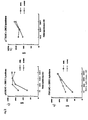
- Figure 3 shows the data presented as cpm of LNCs 72 hours after culture from animals immunised with control transfected (open circles) or serrated transfected (open squares) dendritic cells (DCs).
- mice with DCs expressing Serrate resulted in a 10 fold decrease in the number of cells recovered from lymph nodes when compared to immunisation with control DCs.
- LNCs from mice immunised with DCs+Serrate failed to proliferate (93% reduction on control values, Figure 3) or secrete IL-2 when compared to cells from mice immunised with control DCs.
- Delta expressing T cell hybridomas are able to inhibit the development of immunity to Der p 1 antigen in animals.
- T cell hybridomas (reactive with Der p 1) were transfected with a retrovirus containing mouse Delta such that Delta was expressed on the cell surface or with a control retrovirus.
- C57 BL mice were injected with 10 million irradiated hybridomas i.p. and immunised with 50 microgram Der p 1 emulsified in Complete Freunds Adjuvant (CFA) sub-cutaneously. After 7 days the draining lymph node cells were collected and cultured at 4 x 10 5 cells/well with Der p 1 (10 microgram/ml), peptide 110-131 of Der p 1 (10 microgram/ml), or peptide 81-102 of Der p 1 (10 microgram/ml).
- Delta expressing human T cells can block the response of normal T cells.
- HA1.7 human T cell clone
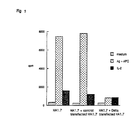
- mice Delta mice Delta using a retroviral construct to allow cell surface expression of the Delta protein. Mixing of this cell population with normal HA1.7 prevented subsequent reactivity of these normal HA1.7 with peptide HA306-318 and antigen presenting cells.
- 5 x 10 5 HA1.7 were mixed with 1 x 10 6 irradiated DRB1*0101 pripheral blood mononuclear cells (PBMC) + 1 microgram HA306-318 and cultured at 37°C. 6 hours later 5% lymphocult (IL-2 containing medium) was added in a total volume of 1ml. 24 hours after the initiation of culture Delta or control retrovirus or nothing was added.
- PBMC pripheral blood mononuclear cells
- Serrate expression by antigen presenting cells prevents T cell responses.
- Clone HA1.7 was mixed with peptide HA306-318 (1.0 microgram/ml) in the presence of L cells expressing HLA-DRB1*0101(as antigen presenting cells), using 2x10 4 of each cell type.
- the L cells were transfected with either control (puro) or serrate (serrate L cells) expressing retrovirus.
- the proliferative response was measured after 72 hours following addition of tritiated thymidine for the last 8 hours of culture. Results are shown in Figure 6 for HA1.7 cultures:
- Serrate expressing antigen presenting cells induce regulatory T cells.
- Clone HA1.7 was mixed with peptide HA306-318 and L cells (expressing DRB1*0101 as antigen presenting cells) in the presence of 2% IL-2.
- the L cells were transfected with either control or serrate expressing retrovirus. After 7 days in culture, the HA1.7 were harvested washed and irradiated before being mixed with fresh HA1.7 (using 2x10 4 each population). Cells were cultured for a further 2 days before being stimulated with peptide (1.0 microgram/ml) + normal antigen presenting cells (DRB1*0101 PBMCs). The proliferative response was measured after 72 hours following addition of tritiated thymidine for the last 8 hours of culture. The results are shown in Figure 7 for fresh HA1.7 cultured:
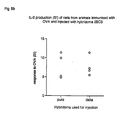
- the regulation induced by delta expressing T cells is antigen specific.
- mice were injected with 10 7 T cell hybridoma cells transduced with either delta or control retrovirus.
- the hybridoma was 2BC3 which has specificity for peptide 110-131 of Der p1.
- animals received either Der p 1 or ovalbumin emulsified in complete Freund's adjuvant. 7 days later, lymph node cells were removed and 4x10 5 cells were cultured in the presence of Der p1 or ovalbumin (using the same antigen that they had already been immunised with).
- IL-2 The production of IL-2 was measured 24 hours after the start of culture. Stimulation indexes for IL-2 production are shown in Figures 8a (responses of animals immunised with Der pl) and 8b (responses of animals immunised with OVA) for animals injected with hybridomas transfected with control (puro) or Delta (delta) retrovirus.
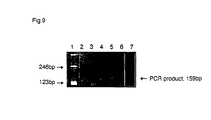
- HA1.7 was cultured in the presence of peptide HA306-318 (50 ⁇ g/ml) in the absence of APCs. Such conditions result in a state of tolerance in the HA1.7.
- cells 1.5x10 6
- RNA was prepared from cell pellets by homogenisation in guanidium thiocyanate solution followed by CsCl density centrifugation. 1 ⁇ g RNA was converted into cDNA using an oligo dT primer. Of the resultant cDNA, 1/20th was used in PCR (40 cycles) using primers specific for the human delta homolog.
- C57 BL/6J mice were treated intranasally with either 100 microgram Der p 1 peptide 110-131 or a control solution (phosphate buffered saline, PBS) on three consecutive days. Intranasal adminstration of antigen in this way is known to induce tolerance to the antigen. Some animals were then rested for 2 weeks before being rechallenged with antigen by injection of 50 ⁇ g Der p1/CFA subcutaneously into the base of the tail. The superficial lymph nodes and spleens of animals were harvested at various time points thereafter (d0 being the first day of intranasal treatment or antigen rechallenge) and processed for immunohistology or in situ hybridisation.
- PBS phosphate buffered saline
- Data shown in tables 1 and 2 are for immunohistology and in situ hybridisation respectively. Data represent the analysis of tissues from 5 separate mice after intranasal peptide alone (PBS/p110-131 primary) or intranasal and subcutaneous antigen (PBS/p110-131 rechallenge. + weak staining, ++ moderate staining, +++ stong staining. Results: Basal levels of Notch, Delta and Serrate are expressed in control mice receiving only PBS. Mice dosed intranasally with PBS and subcutaneously with antigen showed a moderate increase in expression of all three molecules within 8 days of rechallenge.
Landscapes
- Health & Medical Sciences (AREA)
- Life Sciences & Earth Sciences (AREA)
- Chemical & Material Sciences (AREA)
- General Health & Medical Sciences (AREA)
- Immunology (AREA)
- Medicinal Chemistry (AREA)
- Veterinary Medicine (AREA)
- Engineering & Computer Science (AREA)
- Public Health (AREA)
- Pharmacology & Pharmacy (AREA)
- Animal Behavior & Ethology (AREA)
- Organic Chemistry (AREA)
- General Chemical & Material Sciences (AREA)
- Nuclear Medicine, Radiotherapy & Molecular Imaging (AREA)
- Chemical Kinetics & Catalysis (AREA)
- Molecular Biology (AREA)
- Bioinformatics & Cheminformatics (AREA)
- Virology (AREA)
- Microbiology (AREA)
- Biomedical Technology (AREA)
- Communicable Diseases (AREA)
- Oncology (AREA)
- Epidemiology (AREA)
- Biotechnology (AREA)
- Genetics & Genomics (AREA)
- Tropical Medicine & Parasitology (AREA)
- Cell Biology (AREA)
- Zoology (AREA)
- Biochemistry (AREA)
- Mycology (AREA)
- Hematology (AREA)
- Urology & Nephrology (AREA)
- Physics & Mathematics (AREA)
- Gastroenterology & Hepatology (AREA)
- Proteomics, Peptides & Aminoacids (AREA)
- General Physics & Mathematics (AREA)
- Wood Science & Technology (AREA)
- Analytical Chemistry (AREA)
- Food Science & Technology (AREA)
- Pulmonology (AREA)
Applications Claiming Priority (4)
| Application Number | Priority Date | Filing Date | Title |
|---|---|---|---|
| GBGB9623236.8A GB9623236D0 (en) | 1996-11-07 | 1996-11-07 | Notch |
| GBGB9715674.9A GB9715674D0 (en) | 1997-07-24 | 1997-07-24 | Notch |
| GBGB9719350.2A GB9719350D0 (en) | 1997-09-11 | 1997-09-11 | Notch |
| EP97911353A EP0942998B1 (fr) | 1996-11-07 | 1997-11-06 | Notch |
Related Parent Applications (1)
| Application Number | Title | Priority Date | Filing Date |
|---|---|---|---|
| EP97911353A Division EP0942998B1 (fr) | 1996-11-07 | 1997-11-06 | Notch |
Publications (2)
| Publication Number | Publication Date |
|---|---|
| EP1616958A2 true EP1616958A2 (fr) | 2006-01-18 |
| EP1616958A3 EP1616958A3 (fr) | 2006-02-08 |
Family
ID=27268574
Family Applications (2)
| Application Number | Title | Priority Date | Filing Date |
|---|---|---|---|
| EP97911353A Expired - Lifetime EP0942998B1 (fr) | 1996-11-07 | 1997-11-06 | Notch |
| EP05076507A Withdrawn EP1616958A3 (fr) | 1996-11-07 | 1997-11-06 | Notch ligand et son utilisation pour le thérapie immunogène |
Family Applications Before (1)
| Application Number | Title | Priority Date | Filing Date |
|---|---|---|---|
| EP97911353A Expired - Lifetime EP0942998B1 (fr) | 1996-11-07 | 1997-11-06 | Notch |
Country Status (20)
| Country | Link |
|---|---|
| EP (2) | EP0942998B1 (fr) |
| JP (1) | JP4339406B2 (fr) |
| KR (1) | KR100393234B1 (fr) |
| CN (2) | CN1524583A (fr) |
| AT (1) | ATE299184T1 (fr) |
| AU (1) | AU736361B2 (fr) |
| BG (1) | BG103444A (fr) |
| CA (1) | CA2271248C (fr) |
| CZ (1) | CZ295997B6 (fr) |
| DE (1) | DE69733695T2 (fr) |
| ES (1) | ES2243986T3 (fr) |
| GB (2) | GB2335194B (fr) |
| GE (1) | GEP20043390B (fr) |
| IL (1) | IL129531A0 (fr) |
| NO (1) | NO992196L (fr) |
| NZ (1) | NZ335549A (fr) |
| PL (1) | PL333302A1 (fr) |
| RO (1) | RO120850B1 (fr) |
| TR (1) | TR199901000T2 (fr) |
| WO (1) | WO1998020142A1 (fr) |
Cited By (3)
| Publication number | Priority date | Publication date | Assignee | Title |
|---|---|---|---|---|
| EP2011877A3 (fr) * | 2001-07-25 | 2009-07-29 | Celldex Therapeutics Limited | Conjugués capables de moduler des réponses immunitaires |
| RU2567662C2 (ru) * | 2008-08-22 | 2015-11-10 | Дзе Трастиз Оф Коламбия Юниверсити Ин Дзе Сити Оф Нью Йорк | ОСНОВАННЫЕ НА Notch3 ЧЕЛОВЕКА ГИБРИДНЫЕ БЕЛКИ В КАЧЕСТВЕ ЛОВУШЕК-ИНГИБИТОРОВ ПЕРЕДАЧИ СИГНАЛА Notch3 |
| CN112930393A (zh) * | 2018-08-28 | 2021-06-08 | 福瑞德哈金森癌症研究中心 | 结合诱导的Notch信号传导的过继T细胞疗法的方法和组合物 |
Families Citing this family (34)
| Publication number | Priority date | Publication date | Assignee | Title |
|---|---|---|---|---|
| DE69638023D1 (de) | 1995-06-28 | 2009-10-22 | Univ Yale | Nukleotid- und proteinsequenzen von delta-genen von vertebraten und darauf basierende methoden |
| US5780300A (en) * | 1995-09-29 | 1998-07-14 | Yale University | Manipulation of non-terminally differentiated cells using the notch pathway |
| GB9824045D0 (en) * | 1998-11-03 | 1998-12-30 | European Molecular Biology Lab Embl | Regulator protein |
| GB9827604D0 (en) * | 1998-12-15 | 1999-02-10 | Lorantis Ltd | Methods of immunosuppression |
| GB9927328D0 (en) * | 1999-11-18 | 2000-01-12 | Lorantis Ltd | Immunotherapy |
| GB0019242D0 (en) * | 2000-08-04 | 2000-09-27 | Lorantis Ltd | Assay |
| AU2001292750B2 (en) * | 2000-09-22 | 2005-07-14 | Genentech, Inc. | Notch receptor agonists and uses |
| US6689744B2 (en) | 2000-09-22 | 2004-02-10 | Genentech, Inc. | Notch receptor agonists and uses |
| RU2179862C1 (ru) * | 2000-12-26 | 2002-02-27 | Общество с ограниченной ответственностью Научно-производственный центр "МедБиоСпектр" | Лекарственное средство для предотвращения отторжения трансплантата, моноклональное антитело к cd3-антигену т-лимфоцитов человека, гибридома и способ лечения больных, имеющих реакцию острого отторжения трансплантата после пересадки почки |
| EP1410018A1 (fr) * | 2001-07-25 | 2004-04-21 | Lorantis Limited | Procede de detection de modulateurs de signalisation de notch |
| GB0123379D0 (en) * | 2001-09-28 | 2001-11-21 | Lorantis Ltd | Modulators |
| CN101584869B (zh) * | 2002-02-06 | 2013-03-27 | 桑比欧公司 | 通过导入notch基因将骨髓基质细胞诱导分化为神经细胞或骨骼肌细胞的方法 |
| AU2003226537A1 (en) * | 2002-04-05 | 2003-10-27 | Lorantis Limited | Modulators of the notch signalling pathway and uses thereof in medical treatment |
| WO2004013179A1 (fr) * | 2002-08-03 | 2004-02-12 | Lorantis Limited | Conjuges de modulateurs de la voie de signalisation notch et leur utilisation dans les traitements medicaux |
| GB0218879D0 (en) * | 2002-08-14 | 2002-09-25 | Lorantis Ltd | Medical treatment |
| GB0220658D0 (en) * | 2002-09-05 | 2002-10-16 | Lorantis Ltd | Immunotherapy |
| EP1549347A1 (fr) * | 2002-10-09 | 2005-07-06 | Lorantis Limited | Modulation de la fonction immunitaire |
| WO2004060262A2 (fr) * | 2003-01-07 | 2004-07-22 | Lorantis Limited | Traitement medical |
| GB0300428D0 (en) * | 2003-01-09 | 2003-02-05 | Lorantis Ltd | Medical treatment |
| JP2006517533A (ja) * | 2003-01-23 | 2006-07-27 | ロランティス リミテッド | Notchシグナル伝達経路のアクチベーターを用いる自己免疫疾患の治療 |
| GB0303663D0 (en) * | 2003-02-18 | 2003-03-19 | Lorantis Ltd | Assays and medical treatments |
| EP1646400B1 (fr) * | 2003-03-21 | 2010-07-21 | Celldex Therapeutics Limited | Traitement de maladies allergiques utilisant un modulateur de la voie de signalisation notch |
| WO2004083372A2 (fr) * | 2003-03-21 | 2004-09-30 | Lorantis Limited | Traitement medical |
| GB0307472D0 (en) * | 2003-04-01 | 2003-05-07 | Lorantis Ltd | Medical treatment |
| ES2413087T3 (es) | 2006-06-13 | 2013-07-15 | Oncomed Pharmaceuticals, Inc. | Composiciones y métodos para el diagnóstico y tratamiento del cáncer |
| WO2008091641A2 (fr) | 2007-01-24 | 2008-07-31 | Oncomed Pharmaceuticals, Inc. | Compositions et procédés utilisés pour le diagnostic et le traitement du cancer |
| CN102112490B (zh) | 2008-07-08 | 2014-10-22 | 昂考梅德药品有限公司 | Notch1受体结合剂和其使用方法 |
| DE112010000371A5 (de) * | 2009-02-16 | 2012-09-06 | Deutsches Rheuma-Forschungszentrum Berlin | Verwendung von Notch-Regulatoren zur Modulation der Immunantwort durch Induktion/Suppression von Interleukin-22 |
| BR112012004546A8 (pt) | 2009-08-29 | 2017-12-05 | Abbott Lab | Terapêutica por proteínas ligantes dll4-ligantes |
| KR101853278B1 (ko) | 2010-03-02 | 2018-05-02 | 애브비 인코포레이티드 | 치료학적 dll4 결합 단백질 |
| CA2832356C (fr) * | 2011-04-06 | 2017-12-19 | Sanbio, Inc. | Procedes et compositions destines a moduler la fonction immunitaire peripherique |
| EP2780354A4 (fr) * | 2011-11-16 | 2015-06-24 | Oncomed Pharm Inc | Mutations du récepteur notch humain et leur utilisation |
| US20150140043A1 (en) * | 2012-05-10 | 2015-05-21 | Institut National De La Sante De La Recherche Medical (Inserm) | Immunomodulatory methods using notch agonists |
| KR101573650B1 (ko) | 2015-02-04 | 2015-12-01 | 성균관대학교산학협력단 | Hcmv 바이러스 복제 억제용 조성물 |
Family Cites Families (6)
| Publication number | Priority date | Publication date | Assignee | Title |
|---|---|---|---|---|
| IL101728A (en) * | 1991-05-03 | 2007-08-19 | Univ Yale | Human Abandonment and Delta, Restrictive Areas of Effect in Tophoric Proteins, and Methods Based on Them |
| US5869282A (en) * | 1991-12-11 | 1999-02-09 | Imperial Cancer Research Technology, Ltd. | Nucleotide and protein sequences of the serrate gene and methods based thereon |
| US5786158A (en) * | 1992-04-30 | 1998-07-28 | Yale University | Therapeutic and diagnostic methods and compositions based on notch proteins and nucleic acids |
| EP0742830B1 (fr) * | 1994-02-01 | 2001-07-18 | THE UNITED STATES OF AMERICA, as represented by the Secretary of the Department of Health and Human Services | Proteines de fusion comprenant des parties anticorps et non anticorps |
| US5780300A (en) * | 1995-09-29 | 1998-07-14 | Yale University | Manipulation of non-terminally differentiated cells using the notch pathway |
| US6337387B1 (en) * | 1995-11-17 | 2002-01-08 | Asahi Kasei Kabushiki Kaisha | Differentiation-suppressive polypeptide |
-
1997
- 1997-11-06 CN CNA2004100055918A patent/CN1524583A/zh active Pending
- 1997-11-06 EP EP97911353A patent/EP0942998B1/fr not_active Expired - Lifetime
- 1997-11-06 CZ CZ19991639A patent/CZ295997B6/cs not_active IP Right Cessation
- 1997-11-06 PL PL97333302A patent/PL333302A1/xx unknown
- 1997-11-06 CN CNB971811598A patent/CN1160371C/zh not_active Expired - Fee Related
- 1997-11-06 RO RO99-00524A patent/RO120850B1/ro unknown
- 1997-11-06 GB GB9910276A patent/GB2335194B/en not_active Revoked
- 1997-11-06 DE DE69733695T patent/DE69733695T2/de not_active Expired - Lifetime
- 1997-11-06 AT AT97911353T patent/ATE299184T1/de not_active IP Right Cessation
- 1997-11-06 EP EP05076507A patent/EP1616958A3/fr not_active Withdrawn
- 1997-11-06 TR TR1999/01000T patent/TR199901000T2/xx unknown
- 1997-11-06 JP JP52115098A patent/JP4339406B2/ja not_active Expired - Fee Related
- 1997-11-06 ES ES97911353T patent/ES2243986T3/es not_active Expired - Lifetime
- 1997-11-06 GE GE3531A patent/GEP20043390B/en unknown
- 1997-11-06 CA CA002271248A patent/CA2271248C/fr not_active Expired - Fee Related
- 1997-11-06 KR KR10-1999-7004079A patent/KR100393234B1/ko not_active Expired - Fee Related
- 1997-11-06 WO PCT/GB1997/003058 patent/WO1998020142A1/fr not_active Ceased
- 1997-11-06 IL IL12953197A patent/IL129531A0/xx unknown
- 1997-11-06 NZ NZ335549A patent/NZ335549A/en unknown
- 1997-11-06 AU AU48765/97A patent/AU736361B2/en not_active Ceased
- 1997-11-06 GB GB0023691A patent/GB2353094B/en not_active Expired - Fee Related
-
1999
- 1999-05-05 NO NO992196A patent/NO992196L/no unknown
- 1999-05-28 BG BG103444A patent/BG103444A/xx unknown
Cited By (3)
| Publication number | Priority date | Publication date | Assignee | Title |
|---|---|---|---|---|
| EP2011877A3 (fr) * | 2001-07-25 | 2009-07-29 | Celldex Therapeutics Limited | Conjugués capables de moduler des réponses immunitaires |
| RU2567662C2 (ru) * | 2008-08-22 | 2015-11-10 | Дзе Трастиз Оф Коламбия Юниверсити Ин Дзе Сити Оф Нью Йорк | ОСНОВАННЫЕ НА Notch3 ЧЕЛОВЕКА ГИБРИДНЫЕ БЕЛКИ В КАЧЕСТВЕ ЛОВУШЕК-ИНГИБИТОРОВ ПЕРЕДАЧИ СИГНАЛА Notch3 |
| CN112930393A (zh) * | 2018-08-28 | 2021-06-08 | 福瑞德哈金森癌症研究中心 | 结合诱导的Notch信号传导的过继T细胞疗法的方法和组合物 |
Also Published As
Similar Documents
| Publication | Publication Date | Title |
|---|---|---|
| EP0942998B1 (fr) | Notch | |
| JP2002505873A (ja) | 血管内皮増殖因子2 | |
| JPH10327880A (ja) | ヒト・ナトリウム依存性リン酸輸送体(ipt−1) | |
| JP2001512667A (ja) | ヒトオーファンレセプターntr−1 | |
| JPH11502405A (ja) | p15及びチロシナーゼ黒色腫抗原並びに診断及び治療方法におけるそれらの使用 | |
| US20060034857A1 (en) | Notch | |
| RU2197262C2 (ru) | Лиганд notch | |
| JP2003525599A (ja) | 肺癌特異的遺伝子による肺癌の診断、モニタリング、病期分類、イメージングおよび治療の方法 | |
| US20050025754A1 (en) | Increased T-cell tumor infiltration by mutant light | |
| AU773479B2 (en) | Notch | |
| JP2004041174A (ja) | 免疫グロブリン遺伝子スーパーファミリーのメンバーpigrl−1 | |
| US20060286117A1 (en) | Neuronally expressed stem cell factor modulates angiogenesis and neural stem cell migration to areas of brain injury | |
| MXPA99004282A (es) | Notch | |
| JPH1175872A (ja) | 新規化合物 | |
| KR19990007806A (ko) | 전환 성장 인자 α HII | |
| HUP0001059A2 (hu) | Gyógyhatású vegyületek | |
| JP2004000193A (ja) | 免疫グロブリン遺伝子スーパーファミリーのメンバー、pigr−2 | |
| JP2004041175A (ja) | ヒトlig−1相同体(hlig−1) | |
| US6746867B1 (en) | Mammalian mesoderm induction early response (MIER) gene family | |
| JP2001505433A (ja) | ヒトgタンパク質レセプターhcegh45,pacap様(gタンパク質下垂体アデニル酸シクラーゼ活性化ポリペプチド様)受容体 | |
| JP2005500049A (ja) | 有機化合物 | |
| JPH11507506A (ja) | 内皮単球活性ポリペプチドiii | |
| WO2001021649A2 (fr) | Acides nucleiques codant pour des proteines de liaison de l'element de reponse a la vitamine d, produits connexes et leurs methodes d'utilisation |
Legal Events
| Date | Code | Title | Description |
|---|---|---|---|
| PUAI | Public reference made under article 153(3) epc to a published international application that has entered the european phase |
Free format text: ORIGINAL CODE: 0009012 |
|
| PUAL | Search report despatched |
Free format text: ORIGINAL CODE: 0009013 |
|
| AC | Divisional application: reference to earlier application |
Ref document number: 0942998 Country of ref document: EP Kind code of ref document: P |
|
| AK | Designated contracting states |
Kind code of ref document: A2 Designated state(s): AT BE CH CY DE DK ES FI FR GB GR IE IT LI LU MC NL PT SE |
|
| AK | Designated contracting states |
Kind code of ref document: A3 Designated state(s): AT BE CH CY DE DK ES FI FR GB GR IE IT LI LU MC NL PT SE |
|
| RAP1 | Party data changed (applicant data changed or rights of an application transferred) |
Owner name: CELLDEX THERAPEUTICS LIMITED |
|
| 17P | Request for examination filed |
Effective date: 20060724 |
|
| 17Q | First examination report despatched |
Effective date: 20060818 |
|
| AKX | Designation fees paid |
Designated state(s): AT BE CH DE DK ES FI FR GB GR IE IT LI LU MC NL PT SE |
|
| GRAP | Despatch of communication of intention to grant a patent |
Free format text: ORIGINAL CODE: EPIDOSNIGR1 |
|
| STAA | Information on the status of an ep patent application or granted ep patent |
Free format text: STATUS: THE APPLICATION IS DEEMED TO BE WITHDRAWN |
|
| 18D | Application deemed to be withdrawn |
Effective date: 20090203 |