EP1619254A1 - Transfer von mRNA unter Verwendung von polykationischen Verbindungen - Google Patents
Transfer von mRNA unter Verwendung von polykationischen Verbindungen Download PDFInfo
- Publication number
- EP1619254A1 EP1619254A1 EP05022610A EP05022610A EP1619254A1 EP 1619254 A1 EP1619254 A1 EP 1619254A1 EP 05022610 A EP05022610 A EP 05022610A EP 05022610 A EP05022610 A EP 05022610A EP 1619254 A1 EP1619254 A1 EP 1619254A1
- Authority
- EP
- European Patent Office
- Prior art keywords
- mrna
- rna
- complex
- protamine
- protein
- Prior art date
- Legal status (The legal status is an assumption and is not a legal conclusion. Google has not performed a legal analysis and makes no representation as to the accuracy of the status listed.)
- Granted
Links
Images


Classifications
-
- A—HUMAN NECESSITIES
- A61—MEDICAL OR VETERINARY SCIENCE; HYGIENE
- A61K—PREPARATIONS FOR MEDICAL, DENTAL OR TOILETRY PURPOSES
- A61K9/00—Medicinal preparations characterised by special physical form
- A61K9/0012—Galenical forms characterised by the site of application
- A61K9/0019—Injectable compositions; Intramuscular, intravenous, arterial, subcutaneous administration; Compositions to be administered through the skin in an invasive manner
-
- A—HUMAN NECESSITIES
- A61—MEDICAL OR VETERINARY SCIENCE; HYGIENE
- A61K—PREPARATIONS FOR MEDICAL, DENTAL OR TOILETRY PURPOSES
- A61K9/00—Medicinal preparations characterised by special physical form
- A61K9/10—Dispersions; Emulsions
- A61K9/127—Synthetic bilayered vehicles, e.g. liposomes or liposomes with cholesterol as the only non-phosphatidyl surfactant
- A61K9/1271—Non-conventional liposomes, e.g. PEGylated liposomes or liposomes coated or grafted with polymers
- A61K9/1272—Non-conventional liposomes, e.g. PEGylated liposomes or liposomes coated or grafted with polymers comprising non-phosphatidyl surfactants as bilayer-forming substances, e.g. cationic lipids or non-phosphatidyl liposomes coated or grafted with polymers
-
- A—HUMAN NECESSITIES
- A61—MEDICAL OR VETERINARY SCIENCE; HYGIENE
- A61P—SPECIFIC THERAPEUTIC ACTIVITY OF CHEMICAL COMPOUNDS OR MEDICINAL PREPARATIONS
- A61P31/00—Antiinfectives, i.e. antibiotics, antiseptics, chemotherapeutics
- A61P31/12—Antivirals
-
- C—CHEMISTRY; METALLURGY
- C12—BIOCHEMISTRY; BEER; SPIRITS; WINE; VINEGAR; MICROBIOLOGY; ENZYMOLOGY; MUTATION OR GENETIC ENGINEERING
- C12N—MICROORGANISMS OR ENZYMES; COMPOSITIONS THEREOF; PROPAGATING, PRESERVING, OR MAINTAINING MICROORGANISMS; MUTATION OR GENETIC ENGINEERING; CULTURE MEDIA
- C12N15/00—Mutation or genetic engineering; DNA or RNA concerning genetic engineering, vectors, e.g. plasmids, or their isolation, preparation or purification; Use of hosts therefor
- C12N15/09—Recombinant DNA-technology
- C12N15/87—Introduction of foreign genetic material using processes not otherwise provided for, e.g. co-transformation
-
- A—HUMAN NECESSITIES
- A61—MEDICAL OR VETERINARY SCIENCE; HYGIENE
- A61K—PREPARATIONS FOR MEDICAL, DENTAL OR TOILETRY PURPOSES
- A61K39/00—Medicinal preparations containing antigens or antibodies
- A61K2039/51—Medicinal preparations containing antigens or antibodies comprising whole cells, viruses or DNA/RNA
- A61K2039/53—DNA (RNA) vaccination
-
- A—HUMAN NECESSITIES
- A61—MEDICAL OR VETERINARY SCIENCE; HYGIENE
- A61K—PREPARATIONS FOR MEDICAL, DENTAL OR TOILETRY PURPOSES
- A61K48/00—Medicinal preparations containing genetic material which is inserted into cells of the living body to treat genetic diseases; Gene therapy
-
- Y—GENERAL TAGGING OF NEW TECHNOLOGICAL DEVELOPMENTS; GENERAL TAGGING OF CROSS-SECTIONAL TECHNOLOGIES SPANNING OVER SEVERAL SECTIONS OF THE IPC; TECHNICAL SUBJECTS COVERED BY FORMER USPC CROSS-REFERENCE ART COLLECTIONS [XRACs] AND DIGESTS
- Y02—TECHNOLOGIES OR APPLICATIONS FOR MITIGATION OR ADAPTATION AGAINST CLIMATE CHANGE
- Y02A—TECHNOLOGIES FOR ADAPTATION TO CLIMATE CHANGE
- Y02A50/00—TECHNOLOGIES FOR ADAPTATION TO CLIMATE CHANGE in human health protection, e.g. against extreme weather
- Y02A50/30—Against vector-borne diseases, e.g. mosquito-borne, fly-borne, tick-borne or waterborne diseases whose impact is exacerbated by climate change
Definitions
- the invention relates to a method for the transfer of mRNA, particularly into cells. Furthermore, the invention relates to a complex and a composition useful for performing especially the inventive method.
- Gene therapy is a medical procedure that treats a disorder by replacing or counteracting a faulty gene. Such a therapy demands a high measure of safety precautions to minimize risks and dangers for the treated person.
- Viruses have the important advantage that they are infective by themselves. Therefore, they have no problems in entering the cell. On the other hand, by working with viruses a certain risk always remains. It is not possible to exclude that the virus spreads uncontrollably in the organism, in spite of the fact that obviously the used viruses have been genetically engineered to exclude this risk as far as possible.
- the DNA delivered into the cell integrates to a certain extent into the genome of the transfected cell. This could be a desired effect because this could possibly enable a long-persisting effect of the introduced DNA.
- integration into the genome involves one main risk of gene therapy.
- the introduced DNA could cause an insertion in an intact gene of the transfected cell, i.e. a mutation which disturbes the function of that particular gene.
- an important enzyme for example, could be knocked out, and the cell possibly looses its viability. Since the integration into the genome is a statistic event only a portion of the cells will die due to the integration of the delivered DNA causing lethal insertion mutations.
- lethal insertion mutations will not lead to extreme drastic after-effects for the organism, in general. It is more fatal that due to the mutation caused by the insertion of the DNA the starting point for the development of a cancer could be given. For example, by destroying the gene encoding a regulatory factor for proliferation the cell can show unlimited division. Such an abnormal proliferative cell could entail a cancerous disease with all known bad consequences for the concerned patient. For this it could be sufficient that only one single cell is converted into a cancerous cell which is the starting point for the cancer development.
- Another dangerous aspect of using DNA in gene therapy is the induction of pathogenic anti-DNA antibodies within the treated organism causing a fatal immune defence.
- RNA by itself is not able to integrate into the genome. Therefore, by the use of RNA mutations caused by insertion will not take place.
- One further advantage of the use of RNA is that RNA could be directly translated by the translation machinery of the cell. The step of transcription of DNA into mRNA as it is needed when using DNA for transfection is not necessary. Therefore, the genetic information is directly translated into the desired gene product, e.g. an enzyme, without delay. An appearance of anti-RNA antibodies, which could cause problems in respect to clinical applications, were not observed until now.
- RNA messenger RNA
- mRNA messenger RNA
- RNA complementary to the target mRNA is transferred into the cell. Due to complemetarity both RNAs interact with each other and thereby the translation of the target mRNA is inhibited. By this technology the expression of a special undesired protein can be suppressed.
- Ribozymes are RNA molecules with enzymatic activity which attack desired targets in the cell very specifically.
- RNA would be a very efficient tool in the field of gene therapy and in the field of molecular research on the whole.
- RNA was considered to be very problematical in laboratory and clinical handling. Since RNA is very prone to hydrolyses by ubiquitous ribonucleases it is not stable in solution. Even smallest contaminations of ribonucleases are sufficient to degrade RNA completely. Therefore, gene therapy approaches involving nucleic acids have until now focused on DNA which is much easier in handling (Ref. 1).
- RNA vaccine is a potentially useful candidate for the treatment of patients with cancer (Ref. 23).
- Vaccination is based on introducing an antigen, in this case the genetic information (DNA or RNA) for an antigen, into the organism, especially into the cell.
- the genetic information is translated into the antigen, i.e. into a certain peptide or protein and thereby an immune response directed against this peptide or protein is stimulated.
- this can be achieved by introducing the genetic information of cancer antigens, e.g. proteins solely expressed by cancerous cells.
- RNA replicase polyprotein derived from the Semliki forest virus in combination with a RNA encoding for a model antigen.
- RNA replicase is necessary to enhance the efficacy of the RNA introduced.
- the effects of this foreign enzyme in the organism treated are not known.
- This enzyme is able to replicate RNA unspecifically, i.e. it replicates RNA from viruses which could enter the organism by normal infections at random, thereby increasing the risk of dangerous infections drastically. This makes the approach of Ying et al. risky for clinical applications.
- replicase Another disadvantage when using replicase is that cells transfected with this enzyme show apoptosis, i.e. cell death, within about 24 h. These short-living cells are not able to produce the desired gene product in sufficient amounts. That is another reason why this approach is not suited for applications in the field of gene therapy where relatively long-persisting expression of the target gene has to be achieved.
- the invention has the object to provide an efficient method for introducing mRNA into cells, especially into (living) organisms which circumvents the above-mentioned problems and which is suited for therapeutical and clinical applications.
- This object is solved by a method showing the features of claim 1.
- Special embodiments of the inventive method are depicted in the dependent claims 2 to 10.
- a complex comprising inter alia mRNA, a composition, and the use of the complex or the composition in accordance with the inventive method are claimed in claims 11 to 25. The wording of all claims is hereby made to the content of the specification by reference.
- the invention is based on the surprising results of the inventors that mRNA could be efficiently transferred into cells if the mRNA is associated or bound to a cationic peptide or protein.
- the use of protamine as a polycationic nucleic acid binding protein is especially effective.
- Use of other cationic peptides or proteins like poly-L-lysine or histone is also possible.
- Protamines are basic (cationic) small proteins of molecular weights of about 4,200 Da. They are found tightly associated with DNAs in fish spermatozoa. Nearly two-thirds of the amino acid residues in protamines are basic, and these basic residues are usually found clustered, four or five in a sequence.
- RNA single stranded RNA
- mRNA single stranded RNA
- a method for the transfer of mRNA into cells was developed, wherein the mRNA is transferred in the form of a complex or a comparable associated structure between at least one mRNA and at least one cationic, especially polycationic peptide or protein.
- Complex formation by essentially ionic interactions has the decisive effect of stabilizing the mRNA and preventing it from degradation.
- the genetic information is delivered into the cell without the drastic loss of efficacy which normally makes the transfer of functional RNA into cells impossible.
- cationic, especially polyicationic, peptides or proteins should be suited for this inventive method.
- nucleic acid binding peptides or proteins show good results.
- the cationic/basic peptides are short and possess a length of up to 100 amino acids.
- the invention comprises use of peptides or proteins which are larger. Usable peptides or proteins are preferably provided by purification of naturally occuring or recombinantly expressed peptides or proteins, since such substances are commonly available. Another possibility is to produce the substances by chemical synthesis. Especially suited are protamine, poly-L-lysine and histone.
- the inventive method is excellently suited for therapeutical and clinical application. Obviously, the inventive method provides also an efficient tool in all domains of molecular research.
- the tolerance of the inventive method in the field of e.g. gene therapy is a main advantage of the invention. Therefore, it is preferred to perform the inventive method in vivo, especially in clinical applications.
- the complex comprising mRNA and the cationic peptide or protein is preferably administered into subarachnoid spaces, peripheral lymphatic nodes, tumour tissues and/or cartilaginous tissues. Especially promising results were obtained by administration into cartilaginous tissues.
- the complex is administered into aural tissues, especially into the ear pinna.
- the applicability of the inventive method in aural tissues is of particular importance since conventional methods, like liposome-mediated nucleic acid transfer into aural tissues is not possible.
- the complex is delivered by injection, particularly by intradermal, intramuscular, intravenous, subcutaneous and/or intranasal injection.
- the mRNA to be transferred encodes at least one antigen.
- the encoded antigen is translated by the translation machinery of the transfected cell.
- This antigen evokes an immune response within the organism.
- This response is usable to treat a certain disease, for example to treat tumours or cancer.
- a specific protein or peptide of the target cells to be eliminated is chosen as antigen.
- Another possibility is to deliver the genetic information for more than one antigen into the cell.
- collections of mRNAs are transferred in order to achieve a strong immune response.
- the invention comprises the transfer of genetic information encoding e.g. enzymes or other peptides or proteins or collections thereof.
- the invention comprises the delivery of antisense RNA or collections thereof into the cell.
- the collection of mRNAs is achieved by preparing a RNA library derived from e.g. tumour tissue.
- the collection of mRNAs could be built up by fractionated or unfractionated RNA libraries.
- the aim of introducing mRNA encoding antigens into the cell is to stimulate cytotoxic T cells for example. This is achieved by the presentation of antigenic peptides in connection with MHC class I complex on the surface of antigen presenting cells, which have been transfected by mRNA. This way of evoking an immune response is similar to the stimulation by viral pathogens. Simultaneously, a humoral immune response is achieved by stimulation of T helper cells due to the immunization with mRNA. Thereby, the immunization with mRNA leads to the possibility of treatment of viral infections up to the treatment of cancer.
- RNA can be transcribed in vitro in high amounts which can be used for vaccination in the inventive manner.
- the mRNA comprises sequences, especially at the 5'- and/or 3'-terminal end, which are not translated within the cell. These additional sequences are especially preferred in order to achieve a further stabilization of the mRNA. Particularly in clinical applications such a further stabilization of RNA could be desirable.
- a mRNA which comprises at least one internal ribosomal entry site (IRES).
- IRES internal ribosomal entry site
- the transferred RNA comprises two or more genes, e.g. a gene encoding for an antigen and a gene encoding for a factor, e.g. a cytokine, which stimulates the immune response or costimulating surface receptors.
- a gene encoding for an antigen e.g. a gene encoding for a factor, e.g. a cytokine, which stimulates the immune response or costimulating surface receptors.
- IRES could be used as well-suited components when constructing the corresponding vectors.
- RNA per 30 g living weight was shown to be effective in evoking a specific cytotoxic T cell response in mouse whereas 50 ⁇ g DNA per 30 g living weight were necessary to evoke the same effect.
- inventive method has the considerable advantage that much less genetic material is needed to obtain the desired effect thereby reducing the costs.
- the invention comprises a kit suitable for performing the inventive method.
- the kit comprises at least one basic peptide or protein, especially protamine or poly-L-lysine, appropriate buffer solutions and preferably RNA, especially mRNA, in dried state.
- RNA is excluded in order to enable the user to use the inventive kit for the own particular task of interest.
- the invention comprises a complex which is formed by at least one cationic peptide or protein and at least one mRNA.
- a complex which is formed by at least one cationic peptide or protein and at least one mRNA.
- the inventive complex is especially useful for transfer of mRNA into cells, especially into organisms.
- At least one inventive complex as described above is part of a composition.
- Further ingredients of the composition are preferably buffer solutions and/or further components which promote the stability of the mRNA.
- the composition comprises at least one RNase inhibitor.
- RNase inhibitors are commercially available and are widely used in laboratory practice.
- One example of a suitable RNase inhibitor is the RNase inhibitor of human placenta. It is also possible to stabilize the RNA by other treatments, e.g. special salt conditions, as they are known by experts in the art.
- composition could comprise at least one pharmaceutically acceptable carrier in order to provide a pharmaceutical composition useful in therapeutical applications, for example.
- the invention comprises the use of the inventive complex as outlined above for the manufacturing of pharmaceutical compositions.
- the manufacturing of the pharmaceutical composition is performed according to standard procedures. Due to the stability of precepitated RNA it is possible to store RNA in dried state.
- the RNA Prior to the transfer of the RNA according to the invention the RNA e. g. is solved into an appropriate solution additionally comprising at least the basic peptide or protein and preferably further comprising stabilizing components, e.g. at least one RNase inhibitor.
- Such pharmaceutical compositions are especially useful for the treatment of diseases, which are preferably caused by at least one genetic defect.
- diseases are congenital immunodeficiency disorders, like Cystic Fibrosis or Adenosine Deaminase Deficiency (ADA).
- ADA Adenosine Deaminase Deficiency
- the invention is used to deliver the correct genetic information which is absent or malfunctional in the concerned patient. If it is appropriate, the invention is used to suppress a malfunctional gene by antisense technology.
- the complex is used for the manufacturing of a pharmaceutical composition for the stimulation of an immune response.
- the inventive method can be used to introduce the genetic information for an antigen into the cell evoking an immune response directed against the certain antigen. For example, in the treatment of cancer this could be a very efficient strategy to overcome the disease. Also in the field of infections like AIDS, Hepatitis or Malaria, the use of the inventive method, especially the use of a complex for the manufacturing of pharmaceutical composition, promises good results.
- the invention comprises the use of the inventive method in order to express factors, especially peptides or proteins, preferably peptides or proteins which are expressed on cell surfaces by means of which the cell is labelled.
- factors especially peptides or proteins, preferably peptides or proteins which are expressed on cell surfaces by means of which the cell is labelled.
- This aspect of the invention could be used to promote desired cell-to-cell interactions, for example, or to provide a target for specific destroying strategies, e.g. in the field of tumour treatment.
- the invention could be used in order to express cytokines which could e.g. stimulate the immune system and/or strengthen the immune response. Examples of such cytokines are GM-CSF, IL-2 or IFN-gamma.
- surface receptors which increase presentation of antigens, e.g. molecules of the B7 class or surface molecules involved in cell-cell adhesion like ICAM-1, ICAM-2 and LFA-3, in particular with respect to tumor therapy and/or viral infections.
- One example of the use of the inventive method is the treatment of muscular dystrophy, comprising the steps of introducing a therapeutic amount of a composition comprising a mRNA operatively encoding for dystrophin in a pharmaceutically acceptable injectable carrier in vivo into the muscle tissue whereby the mRNA is taken up into the cells and dystrophin is produced in vivo.
- diseases which could be treated by the inventive method are insulin deficiencies (transfer of mRNA encoding insulin), Phenylketonuria (transfer of mRNA encoding phenylalanine hydroxylase), Hypercholesterolemia (transfer of mRNA encoding a factor associated with cholesterol homeostasis) and Cystic Fibrosis.
- Capped ⁇ glacZ ⁇ g ⁇ n RNA transcripts for vaccination containing Xenopus laevis ⁇ -globin sequences were prepared by in vitro transcription with Sp6 Cap-Scribe (Boehringer Mannheim) according to the manufacturer's directions from the linearized SpjC- ⁇ glacZ ⁇ g ⁇ n , plasmid (a HindIII-BamHI fragment containing the lacZ gene was excised from pCH110 plasmid (Pharma-cia) and inserted into the HindIII and BglII sites of the pSpjC-1 plasmid, which was kindly provided by J. Lord, Warwick, UK).
- RNA from the linearized pT7TS- ⁇ ggfp ⁇ n plasmid was prepared containing the gfp gene from Aequoria victoria with T7 Cap-Scribe (Boehringer Mannheim; the SmaI-SpeI fragment of the gfp gene was excised from pCFP (Clontech) and inserted into the EcoRV and SpeI sites of pT7TS plasmid, which was generously provided by P. A. Krieg, Austin, Texas, USA).
- P13.1 library RNA transcripts were prepared from a linearized cDNA library from P13.1 cells with T3 Cap-Scribe (Boehringer Mannheim).
- the cDNA library was constructed from P13.1 cells using the ZAP-cDNA Synthesis Kit (Stratagene) according to the manufacturer's instructions. Prior to in vitro transcription, all linearized plasmids were extracted twice with phenolchloroform and precipitated with ethanol/sodium acetate.
- RNA transcripts were treated with DNase (2 U/ ⁇ g of DNA-template, Boehringer Mannheim) at 37 °C for 15 min and extracted with phenol/chloroform. Finally RNA was precipitated with ethanol/sodium acetate, solubilized in DEPC-treated water and stored at -80 °C until use.
- Protamine free base, grade IV from salmon
- protamine derivates protamine phosphate and protamine sulphate
- the cationic liposome Unifectin (structure see below) was obtained from A. Surovoy, Tübingen.
- a protamine : RNA ratio of 1:2 throughout was incubated in 100 ⁇ l vaccination buffer (150 mM NaCl, 10 mM HEPES, pH 7.4) at room temperature for 5 min.
- Unifectin-encapsulated RNA was prepared in a liposome : protamine : RNA ratio of 2:1:1, whereas Unifectin was added 10 min after incubation of protamine-RNA in 60 ⁇ l vaccination buffer at room temperature.
- RNA and DNA plasmid controls were prepared in 100 ⁇ l DEPC treated vaccination buffer and applied immediately. 50 ⁇ l vaccination solution was injected into each ear pinna of anaesthetized mice (Metofane, Janssen).
- P 815 and P13.1 cells were cultured in ⁇ -MEN containing 10 % FCS, 2-ME, L-glutamine, and antibiotics. 7-9 d after immunization of mice, recipient spleens were removed and the splenocytes were restimulated with synthetic ⁇ -Gal peptide TPHPARIGL (ICPMYARV for the Hela-K b approach) at 50-100 mM.
- CTL (cytotoxic T lymphocyte) lines were generated by weekly restimulation with syngeneic, irradiated spleen cells and synthetic peptides as described in Ref. 19. Lysis of target cells was tested in a standard 5 h 51 Cr-release assay described previously in Ref. 20.
- RNA 0.5 ⁇ g of ⁇ glacZ ⁇ g ⁇ n RNA was incubated for 5 min in 5 ⁇ l vaccination buffer containing 0.25 ⁇ g of protamine. At time point 0.5 ⁇ l vaccination buffer containing 5 % fetal bovine serum was added and incubated at room temperature. At an indicated period of time, samples were withdrawn and mixed with 2 ⁇ l vaccination buffer containing 10 U of RNase inhibitor (Sigma) and frozen at -70 °C. 4 ⁇ l DEPC-treated vaccination buffer containing 10 U of proteinase K and 4 ⁇ l DEPC-treated vaccination buffer containing 20% SDS and loading dye was added. Samples were analyzed on a 1% agarose gel in DEPC-treated Tris-acetate-EDTA buffer.
- RNA-based vaccines a plasmid vector for in vitro transcription of lacZ-RNA ( ⁇ glacZ ⁇ g ⁇ n RNA) was engineered containing a cap structure, a poly(A) tail and flanked at the 5' end and the 3' end by untranslated regions (UTRs) from ⁇ -globin of Xenopus laevis to enhance cytosolic protein expression (Refs 4 and 5).
- UTRs untranslated regions
- Hela-K b cells (Ref 6) were electroporated with ⁇ glacZ ⁇ g n RNA (as follows: settings for Gene Pulser (Bio-Rad): Voltage: 850 V, Capacitance: 50 ⁇ F, Current: 50 mA, Resistance: ⁇ . Cells (0.5 ml) were placed on ice for 5 minutes and transferred to 9.5 ml of complete ⁇ -MEM medium and incubated at 37°C over night) and injected i.p. into B6 (H2 b ) mice.
- Gene Pulser Bio-Rad
- Capacitance 50 ⁇ F
- Current 50 mA
- Resistance Resistance
- protamine was used to condense and protect RNA from RNase degradation.
- Protamine is a small naturally occurring, arginine rich protein (Ref. 9).
- the protamine RNA complex is less sensitive to RNase activity in 2.5 % fetal bovine serum (undegraded full length RNA was visible after 60 min incubation) as compared to naked RNA, which was degraded within minutes.
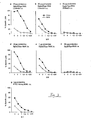
- RNA vaccination using the ear pinna was investigated. Injection into the ear pinna of Unifectin-encapsulated protamine-condensed Bglac-Z ⁇ g ⁇ n RNA did not generate specific CTL (data not shown), whereas a single injection of 30 ⁇ g protamine-condensed ⁇ glacZ ⁇ g ⁇ n RNA without liposome triggered a specific CTL response that was recalled after stimulation in vitro using a synthetic peptide corresponding to the H2 d ⁇ -Gal epitope TPHPARIGL (amino acid sequence 876-884) (Ref. 11) (Fig. 3d).
- RNA transcribed in vitro from a cDNA library can be taken up by dendritic cells (DC) in vitro and that RNA-loaded DC induce CTL responses in vivo (Ref. 8).
- DC dendritic cells
- RNA-loaded DC induce CTL responses in vivo
- the possibility of triggering a CTL response directed against ⁇ -Gal by employing a complex mixture of RNA was evaluated using RNA transcribed in vitro from a cDNA library of P13.1 cells (H2 d , lacZ transfected). Immunization (i.e.) with protamine-condensed, P13.1 library-RNA, for example led to a specific CTL response against ⁇ -Gal (Fig. 3g). This is remarkable, since only a low amount of of lacZ encoding RNA can be expected in the 30 ⁇ g of total unfractionated P13.1 RNA.
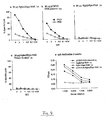
- RNA immunization also generated a ⁇ -Gal specific CTL response, that was even stronger than the injection i.e. of 30 ⁇ g of naked pCMV ⁇ plasmid DNA, for example (Fig. 4b).
- injection of unprotected ⁇ ggfp ⁇ g ⁇ n RNA, as well as RNase-treated ⁇ glacZ ⁇ g ⁇ n RNA did not induce ⁇ -Gal specific CTL (Fig.
- Sera of mice injected i.e. with ⁇ ggfp ⁇ g ⁇ n RNA was used as control (Fig. 4e).
- RNA can be prepared from a cDNA library established from a small tumor sample (Ref. 8).
- RNA-protective protamine does not appear to be immunogenic since no protamine-specific IgG antibodies were detected in sera of mice (data not shown).
- RNA can be stored in precipitated form and solubilized in transfection buffer containing protamine directly before vaccination.
- RNA coding for the model antigen ⁇ -galactosidase ( ⁇ -Gal) was transcribed in vitro from a lacZ gene flanked by stabilizing Xenopus laevis ⁇ -globin 5' and 3' sequences and was protected from RNase degradation by condensation with the polycationic peptide protamine.
- the liposome-encapsulated condensed RNA-peptide complex, the condensed RNA-peptide complex without liposome or naked, unprotected RNA was injected into BALB/c (H2 d ) mice.
- RNA vaccines can be produced in high amounts and have the same major advantages as DNA vaccines but lack the potentially harmful effect of DNA integration into the genome.
Landscapes
- Health & Medical Sciences (AREA)
- Life Sciences & Earth Sciences (AREA)
- Chemical & Material Sciences (AREA)
- Genetics & Genomics (AREA)
- General Health & Medical Sciences (AREA)
- Veterinary Medicine (AREA)
- Public Health (AREA)
- Pharmacology & Pharmacy (AREA)
- Organic Chemistry (AREA)
- Engineering & Computer Science (AREA)
- Medicinal Chemistry (AREA)
- Animal Behavior & Ethology (AREA)
- Molecular Biology (AREA)
- Wood Science & Technology (AREA)
- Zoology (AREA)
- Biomedical Technology (AREA)
- Bioinformatics & Cheminformatics (AREA)
- Biophysics (AREA)
- General Engineering & Computer Science (AREA)
- Biotechnology (AREA)
- Epidemiology (AREA)
- Communicable Diseases (AREA)
- Dermatology (AREA)
- General Chemical & Material Sciences (AREA)
- Oncology (AREA)
- Nuclear Medicine, Radiotherapy & Molecular Imaging (AREA)
- Virology (AREA)
- Biochemistry (AREA)
- Microbiology (AREA)
- Plant Pathology (AREA)
- Dispersion Chemistry (AREA)
- Physics & Mathematics (AREA)
- Chemical Kinetics & Catalysis (AREA)
- Medicines That Contain Protein Lipid Enzymes And Other Medicines (AREA)
- Pharmaceuticals Containing Other Organic And Inorganic Compounds (AREA)
- Preparation Of Compounds By Using Micro-Organisms (AREA)
- Peptides Or Proteins (AREA)
- Medicines Containing Antibodies Or Antigens For Use As Internal Diagnostic Agents (AREA)
- Saccharide Compounds (AREA)
- Organic Low-Molecular-Weight Compounds And Preparation Thereof (AREA)
Priority Applications (3)
| Application Number | Priority Date | Filing Date | Title |
|---|---|---|---|
| AT05022610T ATE492644T1 (de) | 1999-09-09 | 1999-09-09 | Transfer von mrna unter verwendung von polykationischen verbindungen |
| EP05022610A EP1619254B1 (de) | 1999-09-09 | 1999-09-09 | Transfer von mRNA unter Verwendung von polykationischen Verbindungen |
| DE69943068T DE69943068D1 (de) | 1999-09-09 | 1999-09-09 | Transfer von mRNA unter Verwendung von polykationischen Verbindungen |
Applications Claiming Priority (3)
| Application Number | Priority Date | Filing Date | Title |
|---|---|---|---|
| EP05002916A EP1541690A3 (de) | 1999-09-09 | 1999-09-09 | Transfer von mRNA unter Verwendung von polykationischen Verbindungen |
| EP99117771A EP1083232B1 (de) | 1999-09-09 | 1999-09-09 | Transfer von mRNAs unter Verwendung von polykationischen Verbindungen |
| EP05022610A EP1619254B1 (de) | 1999-09-09 | 1999-09-09 | Transfer von mRNA unter Verwendung von polykationischen Verbindungen |
Related Parent Applications (3)
| Application Number | Title | Priority Date | Filing Date |
|---|---|---|---|
| EP99117771.8 Division | 1999-09-09 | ||
| EP05002916A Division EP1541690A3 (de) | 1999-09-09 | 1999-09-09 | Transfer von mRNA unter Verwendung von polykationischen Verbindungen |
| EP05002916.4 Division | 2005-02-11 |
Publications (2)
| Publication Number | Publication Date |
|---|---|
| EP1619254A1 true EP1619254A1 (de) | 2006-01-25 |
| EP1619254B1 EP1619254B1 (de) | 2010-12-22 |
Family
ID=8238953
Family Applications (4)
| Application Number | Title | Priority Date | Filing Date |
|---|---|---|---|
| EP07002200A Withdrawn EP1818409A1 (de) | 1999-09-09 | 1999-09-09 | Transfer von mRNA unter Verwendung von polykationischen Verbindungen |
| EP05022610A Expired - Lifetime EP1619254B1 (de) | 1999-09-09 | 1999-09-09 | Transfer von mRNA unter Verwendung von polykationischen Verbindungen |
| EP05002916A Withdrawn EP1541690A3 (de) | 1999-09-09 | 1999-09-09 | Transfer von mRNA unter Verwendung von polykationischen Verbindungen |
| EP99117771A Expired - Lifetime EP1083232B1 (de) | 1999-09-09 | 1999-09-09 | Transfer von mRNAs unter Verwendung von polykationischen Verbindungen |
Family Applications Before (1)
| Application Number | Title | Priority Date | Filing Date |
|---|---|---|---|
| EP07002200A Withdrawn EP1818409A1 (de) | 1999-09-09 | 1999-09-09 | Transfer von mRNA unter Verwendung von polykationischen Verbindungen |
Family Applications After (2)
| Application Number | Title | Priority Date | Filing Date |
|---|---|---|---|
| EP05002916A Withdrawn EP1541690A3 (de) | 1999-09-09 | 1999-09-09 | Transfer von mRNA unter Verwendung von polykationischen Verbindungen |
| EP99117771A Expired - Lifetime EP1083232B1 (de) | 1999-09-09 | 1999-09-09 | Transfer von mRNAs unter Verwendung von polykationischen Verbindungen |
Country Status (4)
| Country | Link |
|---|---|
| EP (4) | EP1818409A1 (de) |
| AT (2) | ATE289630T1 (de) |
| DE (2) | DE69943068D1 (de) |
| ES (1) | ES2238799T3 (de) |
Cited By (23)
| Publication number | Priority date | Publication date | Assignee | Title |
|---|---|---|---|---|
| US8980864B2 (en) | 2013-03-15 | 2015-03-17 | Moderna Therapeutics, Inc. | Compositions and methods of altering cholesterol levels |
| EP2101823B1 (de) | 2007-01-09 | 2016-11-23 | CureVac AG | Rna-kodierter antikörper |
| US9657295B2 (en) | 2010-10-01 | 2017-05-23 | Modernatx, Inc. | Modified nucleosides, nucleotides, and nucleic acids, and uses thereof |
| US9814760B2 (en) | 2012-04-02 | 2017-11-14 | Modernatx, Inc. | Modified polynucleotides for the production of biologics and proteins associated with human disease |
| US9828416B2 (en) | 2012-04-02 | 2017-11-28 | Modernatx, Inc. | Modified polynucleotides for the production of secreted proteins |
| US9827332B2 (en) | 2012-04-02 | 2017-11-28 | Modernatx, Inc. | Modified polynucleotides for the production of proteins |
| US9872900B2 (en) | 2014-04-23 | 2018-01-23 | Modernatx, Inc. | Nucleic acid vaccines |
| US9937233B2 (en) | 2010-08-06 | 2018-04-10 | Modernatx, Inc. | Engineered nucleic acids and methods of use thereof |
| US10077439B2 (en) | 2013-03-15 | 2018-09-18 | Modernatx, Inc. | Removal of DNA fragments in mRNA production process |
| US10138507B2 (en) | 2013-03-15 | 2018-11-27 | Modernatx, Inc. | Manufacturing methods for production of RNA transcripts |
| US10286086B2 (en) | 2014-06-19 | 2019-05-14 | Modernatx, Inc. | Alternative nucleic acid molecules and uses thereof |
| US10385088B2 (en) | 2013-10-02 | 2019-08-20 | Modernatx, Inc. | Polynucleotide molecules and uses thereof |
| US10407683B2 (en) | 2014-07-16 | 2019-09-10 | Modernatx, Inc. | Circular polynucleotides |
| US10590161B2 (en) | 2013-03-15 | 2020-03-17 | Modernatx, Inc. | Ion exchange purification of mRNA |
| US10751386B2 (en) | 2011-09-12 | 2020-08-25 | Modernatx, Inc. | Engineered nucleic acids and methods of use thereof |
| US10815291B2 (en) | 2013-09-30 | 2020-10-27 | Modernatx, Inc. | Polynucleotides encoding immune modulating polypeptides |
| US10898574B2 (en) | 2011-03-31 | 2021-01-26 | Modernatx, Inc. | Delivery and formulation of engineered nucleic acids |
| US11027025B2 (en) | 2013-07-11 | 2021-06-08 | Modernatx, Inc. | Compositions comprising synthetic polynucleotides encoding CRISPR related proteins and synthetic sgRNAs and methods of use |
| US11377470B2 (en) | 2013-03-15 | 2022-07-05 | Modernatx, Inc. | Ribonucleic acid purification |
| EP4035659A1 (de) | 2016-11-29 | 2022-08-03 | PureTech LYT, Inc. | Exosome zur ausgabe von therapeutischen wirkstoffen |
| US11434486B2 (en) | 2015-09-17 | 2022-09-06 | Modernatx, Inc. | Polynucleotides containing a morpholino linker |
| US12109274B2 (en) | 2015-09-17 | 2024-10-08 | Modernatx, Inc. | Polynucleotides containing a stabilizing tail region |
| US12385034B2 (en) | 2016-06-24 | 2025-08-12 | Modernatx, Inc. | Methods and apparatus for filtration |
Families Citing this family (113)
| Publication number | Priority date | Publication date | Assignee | Title |
|---|---|---|---|---|
| AU1013601A (en) * | 1999-10-22 | 2001-05-08 | Aventis Pasteur Limited | Method of inducing and/or enhancing an immune response to tumor antigens |
| EP1383556B9 (de) * | 2001-04-21 | 2008-03-19 | Curevac GmbH | INJEKTIONSGERÄT FÜR mRNA APPLIKATION |
| EP1903054A3 (de) * | 2001-06-05 | 2008-07-23 | CureVac GmbH | Stabilisierte mRNA mit erhöhtem G/C-Gehalt und optimierter Codon Usage für die Gentherapie |
| DE10162480A1 (de) | 2001-12-19 | 2003-08-07 | Ingmar Hoerr | Die Applikation von mRNA für den Einsatz als Therapeutikum gegen Tumorerkrankungen |
| WO2003059381A2 (en) * | 2002-01-18 | 2003-07-24 | Curevac Gmbh | Immunogenic preparations and vaccines on the basis of mrna |
| FR2845918A1 (fr) * | 2002-10-16 | 2004-04-23 | Pasteur Institut | Preparations immunogenes et vaccinantes a base d'arn |
| DE10229872A1 (de) | 2002-07-03 | 2004-01-29 | Curevac Gmbh | Immunstimulation durch chemisch modifizierte RNA |
| CA2512052C (en) | 2002-12-31 | 2016-06-21 | Altus Pharmaceuticals Inc. | Human growth hormone crystals and methods for preparing them |
| DE10335833A1 (de) | 2003-08-05 | 2005-03-03 | Curevac Gmbh | Transfektion von Blutzellen mit mRNA zur Immunstimulation und Gentherapie |
| GB0501125D0 (en) * | 2005-01-19 | 2005-02-23 | Ribostem Ltd | Method of genotypically modifying cells by administration of rna |
| WO2006046978A2 (en) * | 2004-06-28 | 2006-05-04 | Argos Therapeutics, Inc. | Cationic peptide-mediated transformation |
| DE102004042546A1 (de) | 2004-09-02 | 2006-03-09 | Curevac Gmbh | Kombinationstherapie zur Immunstimulation |
| AU2005284922B2 (en) | 2004-09-14 | 2010-12-23 | Coimmune, Inc. | Strain independent amplification of pathogens and vaccines thereto |
| DE102005023170A1 (de) | 2005-05-19 | 2006-11-23 | Curevac Gmbh | Optimierte Formulierung für mRNA |
| DK3467112T3 (da) * | 2005-12-13 | 2020-11-30 | Univ Pennsylvania | Fremgangsmåder til transfektion af nukleinsyrer til levende celler |
| US10647960B2 (en) | 2005-12-13 | 2020-05-12 | The Trustees Of The University Of Pennsylvania | Transcriptome transfer produces cellular phenotype conversion |
| US9157066B2 (en) | 2005-12-13 | 2015-10-13 | The Trustees Of The University Of Pennsylvania | Transcriptome transfer produces cellular phenotype conversion |
| DE102006035618A1 (de) | 2006-07-31 | 2008-02-07 | Curevac Gmbh | Nukleinsäure der Formel (I): GlXmGn, insbesondere als immunstimulierendes Adjuvanz |
| JP2010507361A (ja) | 2006-07-31 | 2010-03-11 | キュアバック ゲーエムベーハー | 具体的には免疫刺激剤/アジュバントとしての、一般式(I):GlXmGn、または一般式(II):ClXmCnで表される核酸 |
| WO2009030254A1 (en) | 2007-09-04 | 2009-03-12 | Curevac Gmbh | Complexes of rna and cationic peptides for transfection and for immunostimulation |
| WO2009046739A1 (en) | 2007-10-09 | 2009-04-16 | Curevac Gmbh | Composition for treating prostate cancer (pca) |
| EP3222290A1 (de) | 2007-10-09 | 2017-09-27 | CureVac AG | Zusammensetzung zur behandlung von prostatakrebs |
| WO2009046738A1 (en) | 2007-10-09 | 2009-04-16 | Curevac Gmbh | Composition for treating lung cancer, particularly of non-small lung cancers (nsclc) |
| CN101932707B (zh) | 2008-01-31 | 2013-08-21 | 库瑞瓦格有限责任公司 | 作为免疫刺激剂/佐剂的式(I)(NuGlXmGnNv)a的核酸及其衍生物 |
| WO2010037408A1 (en) * | 2008-09-30 | 2010-04-08 | Curevac Gmbh | Composition comprising a complexed (m)rna and a naked mrna for providing or enhancing an immunostimulatory response in a mammal and uses thereof |
| US20110053829A1 (en) | 2009-09-03 | 2011-03-03 | Curevac Gmbh | Disulfide-linked polyethyleneglycol/peptide conjugates for the transfection of nucleic acids |
| WO2011069528A1 (en) | 2009-12-09 | 2011-06-16 | Curevac Gmbh | Lyophilization of nucleic acids in lactate-containing solutions |
| WO2011069529A1 (en) | 2009-12-09 | 2011-06-16 | Curevac Gmbh | Mannose-containing solution for lyophilization, transfection and/or injection of nucleic acids |
| EP2387999A1 (de) | 2010-05-21 | 2011-11-23 | CureVac GmbH | Histidin enthaltende Lösung zur Transfektion und/oder Injektion von Nukleinsäuren und deren Verwendungen |
| AU2011276234B2 (en) | 2010-07-06 | 2016-02-25 | Glaxosmithkline Biologicals S.A. | Liposomes with lipids having an advantageous pKa- value for RNA delivery |
| US11291635B2 (en) | 2010-07-06 | 2022-04-05 | Glaxosmithkline Biological Sa | Virion-like delivery particles for self-replicating RNA molecules |
| ES2646669T3 (es) | 2010-07-06 | 2017-12-14 | Glaxosmithkline Biologicals Sa | Procedimientos de aumento de una respuesta inmunitaria mediante el suministro de ARN |
| SI2591114T1 (sl) | 2010-07-06 | 2016-10-28 | Glaxosmithkline Biologicals S.A. | Imunizacija velikih sesalcev z majhnimi odmerki RNA |
| WO2012031043A1 (en) | 2010-08-31 | 2012-03-08 | Novartis Ag | Pegylated liposomes for delivery of immunogen-encoding rna |
| EP3520813B1 (de) | 2010-10-11 | 2023-04-19 | GlaxoSmithKline Biologicals S.A. | Antigenfreisetzungsplattformen |
| CA2821622C (en) * | 2010-12-16 | 2019-09-03 | Sprna Gmbh | Pharmaceutical composition consisting of rna having alkali metal as counter ion and formulated with dications |
| WO2012116715A1 (en) | 2011-03-02 | 2012-09-07 | Curevac Gmbh | Vaccination in newborns and infants |
| WO2012113413A1 (en) | 2011-02-21 | 2012-08-30 | Curevac Gmbh | Vaccine composition comprising complexed immunostimulatory nucleic acids and antigens packaged with disulfide-linked polyethyleneglycol/peptide conjugates |
| EP3138577A1 (de) * | 2011-03-02 | 2017-03-08 | CureVac AG | Impfung alter patienten |
| WO2012116714A1 (en) * | 2011-03-02 | 2012-09-07 | Curevac Gmbh | Vaccination in elderly patients |
| EP3854413A1 (de) | 2011-07-06 | 2021-07-28 | GlaxoSmithKline Biologicals SA | Immunogene kombinationszusammensetzungen und ihre verwendung |
| SG11201400250UA (en) * | 2011-08-31 | 2014-03-28 | Novartis Ag | Pegylated liposomes for delivery of immunogen-encoding rna |
| EP2763701B1 (de) | 2011-10-03 | 2018-12-19 | Moderna Therapeutics, Inc. | Modifizierte nukleoside, nukleotide und nukleinsäuren und verwendungen davon |
| JP2013095755A (ja) * | 2011-11-02 | 2013-05-20 | Kyowa Hakko Kirin Co Ltd | カチオン性脂質 |
| JP2015501844A (ja) | 2011-12-16 | 2015-01-19 | モデルナ セラピューティクス インコーポレイテッドModerna Therapeutics,Inc. | 修飾ヌクレオシド、ヌクレオチドおよび核酸組成物 |
| WO2013113326A1 (en) | 2012-01-31 | 2013-08-08 | Curevac Gmbh | Pharmaceutical composition comprising a polymeric carrier cargo complex and at least one protein or peptide antigen |
| US9572897B2 (en) | 2012-04-02 | 2017-02-21 | Modernatx, Inc. | Modified polynucleotides for the production of cytoplasmic and cytoskeletal proteins |
| ES2921623T3 (es) | 2012-11-26 | 2022-08-30 | Modernatx Inc | ARN modificado terminalmente |
| EP2996697B1 (de) | 2013-05-15 | 2019-06-26 | Robert Kruse | Intrazelluläre translation von zirkulärer rna |
| EP3035955B1 (de) | 2013-08-21 | 2019-09-11 | CureVac AG | Zusammensetzung und impfstoff zur behandlung von lungenkrebs |
| CA2915728A1 (en) | 2013-08-21 | 2015-02-26 | Thomas Kramps | Respiratory syncytial virus (rsv) vaccine |
| KR20160067219A (ko) | 2013-10-03 | 2016-06-13 | 모더나 세라퓨틱스, 인코포레이티드 | 저밀도 지단백질 수용체를 암호화하는 폴리뉴클레오타이드 |
| ES2806575T3 (es) | 2013-11-01 | 2021-02-18 | Curevac Ag | ARN modificado con propiedades inmunoestimuladoras disminuidas |
| CA2936286A1 (en) | 2014-04-01 | 2015-10-08 | Curevac Ag | Polymeric carrier cargo complex for use as an immunostimulating agent or as an adjuvant |
| IL316479A (en) | 2014-06-25 | 2024-12-01 | Acuitas Therapeutics Inc | Novel lipids and lipid nanoparticle compositions for nucleic acid delivery |
| EP3283059B1 (de) | 2015-04-13 | 2024-01-03 | CureVac Manufacturing GmbH | Verfahren zur herstellung von rna-zusammensetzungen |
| CN107567497A (zh) | 2015-04-17 | 2018-01-09 | 库瑞瓦格股份公司 | Rna的冻干 |
| EP3173092B1 (de) | 2015-04-22 | 2019-06-26 | CureVac AG | Rna-haltige zusammensetzung zur behandlung von tumorerkrankungen |
| JP2018526321A (ja) | 2015-04-27 | 2018-09-13 | ザ・トラステイーズ・オブ・ザ・ユニバーシテイ・オブ・ペンシルベニア | 適応免疫応答を誘導するためのヌクレオシド修飾rna |
| DK3294885T3 (da) | 2015-05-08 | 2020-08-10 | Curevac Real Estate Gmbh | Fremgangsmåde til at fremstille rna |
| SG10201910431RA (en) | 2015-05-20 | 2020-01-30 | Curevac Ag | Dry powder composition comprising long-chain rna |
| WO2016184576A2 (en) | 2015-05-20 | 2016-11-24 | Curevac Ag | Dry powder composition comprising long-chain rna |
| HUE067372T2 (hu) | 2015-06-29 | 2024-10-28 | Acuitas Therapeutics Inc | Lipidek és nanoszemcsés lipid formulázások nukleinsavak beadására |
| MA42502A (fr) | 2015-07-21 | 2018-05-30 | Modernatx Inc | Vaccins contre une maladie infectieuse |
| US11364292B2 (en) | 2015-07-21 | 2022-06-21 | Modernatx, Inc. | CHIKV RNA vaccines |
| MD3718565T2 (ro) | 2015-10-22 | 2022-09-30 | Modernatx Inc | Vaccinuri împotriva virusului respirator |
| WO2017070601A1 (en) | 2015-10-22 | 2017-04-27 | Modernatx, Inc. | Nucleic acid vaccines for varicella zoster virus (vzv) |
| EP3364950A4 (de) | 2015-10-22 | 2019-10-23 | ModernaTX, Inc. | Impfstoffe gegen tropenkrankheiten |
| AU2016342376A1 (en) | 2015-10-22 | 2018-06-07 | Modernatx, Inc. | Sexually transmitted disease vaccines |
| EP3364981A4 (de) | 2015-10-22 | 2019-08-07 | ModernaTX, Inc. | Impfstoff gegen das humane cytomegalovirus |
| RS63986B1 (sr) | 2015-10-28 | 2023-03-31 | Acuitas Therapeutics Inc | Novi lipidi i lipidne formulacije nanočestica za isporuku nukleinskih kiselina |
| JP6949845B2 (ja) | 2015-12-22 | 2021-10-13 | キュアバック アーゲー | Rna分子組成物の作製方法 |
| WO2017191264A1 (en) | 2016-05-04 | 2017-11-09 | Curevac Ag | Nucleic acid molecules and uses thereof |
| US12128113B2 (en) | 2016-05-18 | 2024-10-29 | Modernatx, Inc. | Polynucleotides encoding JAGGED1 for the treatment of Alagille syndrome |
| WO2017212006A1 (en) * | 2016-06-09 | 2017-12-14 | Curevac Ag | Hybrid carriers for nucleic acid cargo |
| CN109475640B (zh) | 2016-06-09 | 2023-03-10 | 库瑞瓦格欧洲公司 | 核酸被运载物的混合载运体 |
| CA3025812A1 (en) | 2016-08-19 | 2018-02-22 | Curevac Ag | Rna for cancer therapy |
| AU2017345766A1 (en) | 2016-10-21 | 2019-05-16 | Modernatx, Inc. | Human cytomegalovirus vaccine |
| MX2019004913A (es) | 2016-10-26 | 2019-09-16 | Curevac Ag | Vacunas de nanoparticulas lipidicas que comprenden acido ribonucleico mensajero (arnm). |
| US12491261B2 (en) | 2016-10-26 | 2025-12-09 | Acuitas Therapeutics, Inc. | Lipid nanoparticle formulations |
| CN110167587A (zh) | 2016-11-11 | 2019-08-23 | 摩登纳特斯有限公司 | 流感疫苗 |
| EP3551193A4 (de) | 2016-12-08 | 2020-08-19 | Modernatx, Inc. | Nukleinsäureimpstoffe gegen atemwegsvirus |
| BR112019014314A2 (pt) | 2017-01-11 | 2020-02-18 | The Trustees Of The University Of Pennsylvania | Composição, e, método de indução de uma resposta imune adaptativa contra vírus zika. |
| WO2018151816A1 (en) | 2017-02-16 | 2018-08-23 | Modernatx, Inc. | High potency immunogenic compositions |
| MA47787A (fr) | 2017-03-15 | 2020-01-22 | Modernatx Inc | Vaccin contre le virus respiratoire syncytial |
| WO2018170245A1 (en) | 2017-03-15 | 2018-09-20 | Modernatx, Inc. | Broad spectrum influenza virus vaccine |
| WO2018170270A1 (en) | 2017-03-15 | 2018-09-20 | Modernatx, Inc. | Varicella zoster virus (vzv) vaccine |
| US11752206B2 (en) | 2017-03-15 | 2023-09-12 | Modernatx, Inc. | Herpes simplex virus vaccine |
| WO2018170347A1 (en) | 2017-03-17 | 2018-09-20 | Modernatx, Inc. | Zoonotic disease rna vaccines |
| WO2018191657A1 (en) | 2017-04-13 | 2018-10-18 | Acuitas Therapeutics, Inc. | Lipids for delivery of active agents |
| ES2981244T3 (es) | 2017-04-28 | 2024-10-07 | Acuitas Therapeutics Inc | Novedosas formulaciones de nanopartículas de lípidos de carbonilo y lípidos para la administración de ácidos nucleicos |
| JP7237825B2 (ja) * | 2017-05-26 | 2023-03-13 | 公益財団法人川崎市産業振興財団 | 血中におけるrnaの安定性の改善剤および投与方法 |
| US11639329B2 (en) | 2017-08-16 | 2023-05-02 | Acuitas Therapeutics, Inc. | Lipids for use in lipid nanoparticle formulations |
| EP4501322A3 (de) | 2017-08-17 | 2025-04-16 | Acuitas Therapeutics, Inc. | Lipide zur verwendung in lipidnanopartikelformulierungen |
| WO2019036030A1 (en) | 2017-08-17 | 2019-02-21 | Acuitas Therapeutics, Inc. | LIPIDS FOR USE IN LIPID NANOPARTICLE FORMULATIONS |
| US11542225B2 (en) | 2017-08-17 | 2023-01-03 | Acuitas Therapeutics, Inc. | Lipids for use in lipid nanoparticle formulations |
| US10653767B2 (en) | 2017-09-14 | 2020-05-19 | Modernatx, Inc. | Zika virus MRNA vaccines |
| EP3723796A1 (de) | 2017-12-13 | 2020-10-21 | CureVac AG | Flavivirus-impfstoff |
| JP2019106895A (ja) * | 2017-12-15 | 2019-07-04 | インダストリー‐ユニバーシティー コーぺレーション ファンデーション ハンヤン ユニバーシティ | 神経幹細胞または神経前駆細胞からドーパミン神経細胞への分化方法 |
| KR102206657B1 (ko) * | 2017-12-15 | 2021-01-22 | 한양대학교 산학협력단 | 신경줄기세포 또는 신경전구세포에서 도파민 신경세포로의 분화방법 |
| WO2019148101A1 (en) | 2018-01-29 | 2019-08-01 | Modernatx, Inc. | Rsv rna vaccines |
| IL281615B2 (en) | 2018-09-21 | 2026-01-01 | Acuitas Therapeutics Inc | Systems and methods for producing lipid nanoparticles and liposomes |
| US12583816B2 (en) | 2018-10-18 | 2026-03-24 | Acuitas Therapeutics, Inc. | Lipids for lipid nanoparticle delivery of active agents |
| US11351242B1 (en) | 2019-02-12 | 2022-06-07 | Modernatx, Inc. | HMPV/hPIV3 mRNA vaccine composition |
| WO2020190750A1 (en) | 2019-03-15 | 2020-09-24 | Modernatx, Inc. | Hiv rna vaccines |
| CN114901360A (zh) | 2019-12-20 | 2022-08-12 | 库瑞瓦格股份公司 | 用于递送核酸的新型脂质纳米颗粒 |
| JP7798855B2 (ja) | 2020-07-16 | 2026-01-14 | アクイタス セラピューティクス インコーポレイテッド | 脂質ナノ粒子に使用するためのカチオン性脂質 |
| US11406703B2 (en) | 2020-08-25 | 2022-08-09 | Modernatx, Inc. | Human cytomegalovirus vaccine |
| US20240262878A1 (en) | 2021-06-07 | 2024-08-08 | The Board Of Trustees Of The University Of Illinois | Photoactivatable gasdermin proteins |
| IL309505A (en) | 2021-09-03 | 2024-02-01 | CureVac SE | Novel lipid nanoparticles for delivery of nucleic acids |
| CN117940158A (zh) | 2021-09-03 | 2024-04-26 | 库瑞瓦格欧洲公司 | 用于核酸递送的包含磷脂酰丝氨酸的新型脂质纳米颗粒 |
| CA3242402A1 (en) | 2021-12-16 | 2023-06-22 | Acuitas Therapeutics, Inc. | Lipids for use in lipid nanoparticle formulations |
| WO2025059215A1 (en) | 2023-09-12 | 2025-03-20 | Aadigen, Llc | Methods and compositions for treating or preventing cancer |
Citations (3)
| Publication number | Priority date | Publication date | Assignee | Title |
|---|---|---|---|---|
| GB1412591A (en) * | 1971-11-30 | 1975-11-05 | Beecham Group Ltd | Antiviral ds rna and compositions thereof |
| WO1999014346A2 (en) | 1997-09-19 | 1999-03-25 | Sequitur, Inc. | SENSE mRNA THERAPY |
| US5945400A (en) * | 1995-02-17 | 1999-08-31 | Rhone-Poulenc Rorer Sa | Nucleic acid-containing composition, preparation and use thereof |
Family Cites Families (2)
| Publication number | Priority date | Publication date | Assignee | Title |
|---|---|---|---|---|
| FR2676072B1 (fr) * | 1991-05-03 | 1994-11-18 | Transgene Sa | Vecteur de delivrance d'arn. |
| AU681997B2 (en) * | 1991-09-05 | 1997-09-18 | University Of Connecticut, The | Targeted delivery of poly- or oligonucleotides to cells |
-
1999
- 1999-09-09 DE DE69943068T patent/DE69943068D1/de not_active Expired - Lifetime
- 1999-09-09 EP EP07002200A patent/EP1818409A1/de not_active Withdrawn
- 1999-09-09 EP EP05022610A patent/EP1619254B1/de not_active Expired - Lifetime
- 1999-09-09 DE DE69923840T patent/DE69923840T2/de not_active Expired - Lifetime
- 1999-09-09 AT AT99117771T patent/ATE289630T1/de active
- 1999-09-09 EP EP05002916A patent/EP1541690A3/de not_active Withdrawn
- 1999-09-09 EP EP99117771A patent/EP1083232B1/de not_active Expired - Lifetime
- 1999-09-09 ES ES99117771T patent/ES2238799T3/es not_active Expired - Lifetime
- 1999-09-09 AT AT05022610T patent/ATE492644T1/de not_active IP Right Cessation
Patent Citations (3)
| Publication number | Priority date | Publication date | Assignee | Title |
|---|---|---|---|---|
| GB1412591A (en) * | 1971-11-30 | 1975-11-05 | Beecham Group Ltd | Antiviral ds rna and compositions thereof |
| US5945400A (en) * | 1995-02-17 | 1999-08-31 | Rhone-Poulenc Rorer Sa | Nucleic acid-containing composition, preparation and use thereof |
| WO1999014346A2 (en) | 1997-09-19 | 1999-03-25 | Sequitur, Inc. | SENSE mRNA THERAPY |
Non-Patent Citations (30)
| Title |
|---|
| BOCZKOWSKI, D.; NAIR, S. K.; SNYDER, D.; GILBOA, E.: "Dendritic cells pulsed with RNA are potent antigen-presenting cells in vitro and in vivo", J. EXP. MED., vol. 184, 1996, pages 465 - 472 |
| CARBONE, F. R.; BEVAN, M. J.: "Class I-restricted processing and presentation of exogenous cell-associated antigen in vivo", J.EXP. MED., vol. 171, 1990, pages 377 - 387 |
| CONOLLY, J. H.: "Effect of Histones and Protamine on the Infectivity of Semliki Forest Virus and its Ribonucleic Acid", NATURE, vol. 19, 1966, pages 858 |
| CONRY R M ET AL: "CHARACTERIZATION OF A MESSENGER RNA POLYNUCLEOTIDE VACCINE VECTOR", CANCER RESEARCH, AMERICAN ASSOCIATION FOR CANCER RESEARCH, BALTIMORE, MD, US, vol. 55, no. 7, 1 April 1995 (1995-04-01), pages 1397 - 1400, XP000576177, ISSN: 0008-5472 * |
| DERES, K.; SCHILD, H.; WIESMÜLLER, K-H.; JUNG, G.; RAMMENSEE, H.-G.: "In vivo priming of virus-specific cytotoxic T lymphocytes with synthetic lipopeptide vaccine", NATURE, vol. 342, 1989, pages 561 - 564 |
| DUBES G R ET AL: "RAPID EPHEMERAL CELL SENSITIZATION AS THE MECHANISM OF HISTONE- INDUCED AND PROTAMINE-INDUCED ENHANCEMENT OF TRASNFECTION BY POLIOVIRUS RNA", PROTOPLASMA, SPRINGER VERLAG, VIENNA, AT, vol. 96, 1978, pages 209 - 223, XP000575919, ISSN: 0033-183X * |
| DUBES, G. R.; WEGRZYN, R. J.: "Rapid Ephemeral Cell Sensitization as the Mechanism of Histone-Induced and Protamine-Induced Enhancement of Transfection by Poliovirus RNA", PROTOPLASMA, vol. 96, 1978, pages 209 - 223 |
| FALK, K.; ROTZSCHKE, 0.; FAATH, S.; GOTH, S.; GRAEF, I.; SHASTRI, N.; RAMMENSEE, H.-G.: "Both human and mouse cells expressing H-2Kb and ovalbumin process the same peptide, SIINFEKL", CELL IMMUNOL., vol. 150, 1993, pages 447 - 52 |
| FILION, M. C.; PHILLIPS, N. C.: "Toxicity and immunomodu- latory activity of liposomal vectors formulated with cationic lipids toward immune effector cells", BIOCHIM. BIOPHYS. ACTA, vol. 1329, 1997, pages 245 - 356 |
| FISHER K J ET AL: "THE TRANSMEMBRANE DOMAIN OF DIPHTHERIA TOXIN IMPROVES MOLECULAR CONJUGATE GENE TRANSFER", BIOCHEMICAL JOURNAL, PORTLAND PRESS, LONDON, GB, vol. 321, no. 1, 1997, pages 49 - 58, XP000867796, ISSN: 0264-6021 * |
| FLECHSLER I ET AL: "Comparison of antisense vectors and antisense oligonucleotides delivered by means of the new cationic lipids unifectin and maxifectin.", ADVANCES IN EXPERIMENTAL MEDICINE AND BIOLOGY. 1998, vol. 451, 1998, pages 469 - 472, XP009048306, ISSN: 0065-2598 * |
| FÖRG, P.; VON HOEGEN, P.; DALEMANS, W.; SCHIRRMACHER V.: "Superiority of the ear pinna over muscle tissue as site for DNA vaccination", GENE THER., vol. 5, 1998, pages 789 - 797 |
| GAVIN, M.A.; GILBERT, M. J.; RIDDELL, S. R.; GREENBERG, P. D.; BEVAN M. J.: "Alkali hydrolysis of recombinant proteins allows for the rapid identification of class I MHC-restricted CTL epitopes", J. IMMUNOL., vol. 151, 1993, pages 3971 - 3980 |
| GILKESON G. S.; PIPPEN, A. M.; PISETSKY, D. S.: "Induction of cross-reactive anti-dsDNA antibodies in preautoimmune NZB/NZW mice by immunization with bacterial DNA", J. CLIN. INVEST., vol. 95, 1995, pages 1398 - 1402 |
| LIU, M. A.; FU, T. M.; DONNELLY, J. J.; CAULFIELD, M. J.; ULMER, J. B.: "DNA vaccines. Mechanisms for generation of immune responses", ADV. EXP. MED. BIOL., vol. 452, 1998, pages 187 - 191 |
| MALONE R W ET AL: "CATIONIC LIPOSOME-MEDIATED RNA TRANSFECTION", PROCEEDINGS OF THE NATIONAL ACADEMY OF SCIENCES OF USA, NATIONAL ACADEMY OF SCIENCE. WASHINGTON, US, vol. 86, no. 16, 1 August 1989 (1989-08-01), pages 6077 - 6081, XP000604642, ISSN: 0027-8424 * |
| MALONE, R. W.; FELGNER, P. L.; VERMA, I.: "cationic liposome-mediated RNA transfection", PROC. NATL. ACAD. SCI. USA, vol. 86, 1989, pages 6077 - 6081 |
| MARTINON, F.; KRISHNAN, S.; LENZEN, G.; MAGNE, R.; GOMARD, E.; GUILLET, J-G.; LEVY J-P.; MEULIEN, P.: "Induction of virus specific cytotoxic T Iymphocytes in vivo by liposome entrapped mRNA", EUR. J. IMMUNOL., vol. 23, 1993, pages 1719 - 1722 |
| MARTINS, L. P.; LAU, L. L.; ASANO, M. S.; AHMED, R.: "DNA vaccination against persistent viral infection", J. VIROL., vol. 69, 1995, pages 2574 - 2582 |
| MONTGOMERY, D. L. ET AL.: "Heterologous and homologous protection against influenza A by DNA vaccination: Optimiza tion of DNA vectors", DNA AND CELL BIOLOGY, vol. 12, 1993, pages 777 - 783 |
| OUKKA, M.; COHEN-TANNOUDJI, M.; TANAKA, Y.; BABINET, C; KOSMATOPOULOS, K.: "Medullary thymic epithelial cells induce tolerance to intracellular proteins", J. IMMUNOL., vol. 156, 1996, pages 968 - 975 |
| RAMMENSEE, H.-G.; SCHILD, H.; THEOPOLD, U.: "Protein-specific cytotoxic T lymphocytes. Recognition of transfectants expressing intracellular, membrane-associated or secreted forms of B-galactosidase", IMMUNOGENETICS, vol. 30, 1989, pages 296 - 302 |
| SAWAI KEISUKE ET AL: "A novel method of cell-specific mRNA transfection", MOLECULAR GENETICS AND METABOLISM, ACADEMIC PRESS, SAN DIEGO, CA, US, vol. 64, no. 1, May 1998 (1998-05-01), pages 44 - 51, XP002245185, ISSN: 1096-7192 * |
| SCHILD, H.; NORDA, M.; DERES, K.; FALK, K.; ROTZSCHKE, 0.; WIESMULLER, K.-H.; JUNG, G.; RAMMENSEE, H.-G.: "Fine specifity of cytotoxic T lymphocytes primed in vivo either with virus or synthetic lipopeptide vaccine or primed in vitro with peptide", J. EXP. MED., vol. 174, 1991, pages 1665 - 1668 |
| SMULL C E ET AL: "Enhancement of the plaque-forming capacity of poliovirus ribonucleic acid with basic proteins.", JOURNAL OF BACTERIOLOGY. NOV 1962, vol. 84, November 1962 (1962-11-01), pages 1035 - 1040, XP002330080, ISSN: 0021-9193 * |
| STRONG, T. V.; HAMPTON, T. A.; LOURO, I.; BILBAO, G.; CONRY, R. M.; CURIEL,. D. T.: "Incorporation of B-globin untranslated regions into a sindbis virus vector for augmentation of heterologous mRNA expression", GENE THER., vol. 4, 1997, pages 624 - 627 |
| TAMURA, Y.; PENG, P.; LIU, K.; DAOU, M.; SRIVASTAVA, P. K.: "Immunotherapy of tumors with autologous tumor-derived heat shock protein preparations", SCIENCE, vol. 278, 1997, pages 117 - 120 |
| WARRANT, R. W.; KIM, S. H.: "Alpha-Helix-double helix interaction shown in the structure of a protamine-transfer RNA complex and a nucleoprotamine model", NATURE, vol. 27, 1978, pages 130 - 135 |
| WOLFF, J. A.; MALONE, R. W.; WILLIAMS, P.; CHONG, W.; ACSADI, G.; FELGNER, P. L.: "Direct gene transfer into mouse- muscle in vivo", SCIENCE, vol. 257, 1990, pages 1465 - 1468 |
| YING, H.; ZAKS, T. Z.; WANG, R.; IRVINE, K. R.; KAMMULA, U. S.; MARINCOLA, F. M.; LEITNER, W. W.; RESTIFO, N. P.: "Cancer therapy using a self-replicating RNA vaccine", NATURE MEDICINE, vol. 5, 1999, pages 823 - 827 |
Cited By (40)
| Publication number | Priority date | Publication date | Assignee | Title |
|---|---|---|---|---|
| EP2101823B1 (de) | 2007-01-09 | 2016-11-23 | CureVac AG | Rna-kodierter antikörper |
| US11421038B2 (en) | 2007-01-09 | 2022-08-23 | Curevac Ag | RNA-coded antibody |
| US9937233B2 (en) | 2010-08-06 | 2018-04-10 | Modernatx, Inc. | Engineered nucleic acids and methods of use thereof |
| US9657295B2 (en) | 2010-10-01 | 2017-05-23 | Modernatx, Inc. | Modified nucleosides, nucleotides, and nucleic acids, and uses thereof |
| US12502431B2 (en) | 2011-03-31 | 2025-12-23 | Modernatx, Inc. | Delivery and formulation of engineered nucleic acids |
| US12419957B2 (en) | 2011-03-31 | 2025-09-23 | Modernatx, Inc. | Delivery and formulation of engineered nucleic acids |
| US12409226B2 (en) | 2011-03-31 | 2025-09-09 | Modernatx, Inc. | Delivery and formulation of engineered nucleic acids |
| US12364763B2 (en) | 2011-03-31 | 2025-07-22 | Modernatx, Inc. | Delivery and formulation of engineered nucleic acids |
| US11911474B2 (en) | 2011-03-31 | 2024-02-27 | Modernatx, Inc. | Delivery and formulation of engineered nucleic acids |
| US10898574B2 (en) | 2011-03-31 | 2021-01-26 | Modernatx, Inc. | Delivery and formulation of engineered nucleic acids |
| US10751386B2 (en) | 2011-09-12 | 2020-08-25 | Modernatx, Inc. | Engineered nucleic acids and methods of use thereof |
| US10772975B2 (en) | 2012-04-02 | 2020-09-15 | Modernatx, Inc. | Modified Polynucleotides for the production of biologics and proteins associated with human disease |
| US9828416B2 (en) | 2012-04-02 | 2017-11-28 | Modernatx, Inc. | Modified polynucleotides for the production of secreted proteins |
| US10385106B2 (en) | 2012-04-02 | 2019-08-20 | Modernatx, Inc. | Modified polynucleotides for the production of secreted proteins |
| US9814760B2 (en) | 2012-04-02 | 2017-11-14 | Modernatx, Inc. | Modified polynucleotides for the production of biologics and proteins associated with human disease |
| US10577403B2 (en) | 2012-04-02 | 2020-03-03 | Modernatx, Inc. | Modified polynucleotides for the production of secreted proteins |
| US9878056B2 (en) | 2012-04-02 | 2018-01-30 | Modernatx, Inc. | Modified polynucleotides for the production of cosmetic proteins and peptides |
| US10703789B2 (en) | 2012-04-02 | 2020-07-07 | Modernatx, Inc. | Modified polynucleotides for the production of secreted proteins |
| US9827332B2 (en) | 2012-04-02 | 2017-11-28 | Modernatx, Inc. | Modified polynucleotides for the production of proteins |
| US10858647B2 (en) | 2013-03-15 | 2020-12-08 | Modernatx, Inc. | Removal of DNA fragments in mRNA production process |
| US11845772B2 (en) | 2013-03-15 | 2023-12-19 | Modernatx, Inc. | Ribonucleic acid purification |
| US10590161B2 (en) | 2013-03-15 | 2020-03-17 | Modernatx, Inc. | Ion exchange purification of mRNA |
| US8980864B2 (en) | 2013-03-15 | 2015-03-17 | Moderna Therapeutics, Inc. | Compositions and methods of altering cholesterol levels |
| US10138507B2 (en) | 2013-03-15 | 2018-11-27 | Modernatx, Inc. | Manufacturing methods for production of RNA transcripts |
| US10077439B2 (en) | 2013-03-15 | 2018-09-18 | Modernatx, Inc. | Removal of DNA fragments in mRNA production process |
| US11377470B2 (en) | 2013-03-15 | 2022-07-05 | Modernatx, Inc. | Ribonucleic acid purification |
| US11027025B2 (en) | 2013-07-11 | 2021-06-08 | Modernatx, Inc. | Compositions comprising synthetic polynucleotides encoding CRISPR related proteins and synthetic sgRNAs and methods of use |
| US10815291B2 (en) | 2013-09-30 | 2020-10-27 | Modernatx, Inc. | Polynucleotides encoding immune modulating polypeptides |
| US10385088B2 (en) | 2013-10-02 | 2019-08-20 | Modernatx, Inc. | Polynucleotide molecules and uses thereof |
| US10709779B2 (en) | 2014-04-23 | 2020-07-14 | Modernatx, Inc. | Nucleic acid vaccines |
| US12274743B2 (en) | 2014-04-23 | 2025-04-15 | Modernatx, Inc. | Nucleic acid vaccines |
| US9872900B2 (en) | 2014-04-23 | 2018-01-23 | Modernatx, Inc. | Nucleic acid vaccines |
| US12329812B2 (en) | 2014-04-23 | 2025-06-17 | Modernatx, Inc. | Nucleic acid vaccines |
| US10286086B2 (en) | 2014-06-19 | 2019-05-14 | Modernatx, Inc. | Alternative nucleic acid molecules and uses thereof |
| US10407683B2 (en) | 2014-07-16 | 2019-09-10 | Modernatx, Inc. | Circular polynucleotides |
| US12109274B2 (en) | 2015-09-17 | 2024-10-08 | Modernatx, Inc. | Polynucleotides containing a stabilizing tail region |
| US12071620B2 (en) | 2015-09-17 | 2024-08-27 | Modernatx, Inc. | Polynucleotides containing a morpholino linker |
| US11434486B2 (en) | 2015-09-17 | 2022-09-06 | Modernatx, Inc. | Polynucleotides containing a morpholino linker |
| US12385034B2 (en) | 2016-06-24 | 2025-08-12 | Modernatx, Inc. | Methods and apparatus for filtration |
| EP4035659A1 (de) | 2016-11-29 | 2022-08-03 | PureTech LYT, Inc. | Exosome zur ausgabe von therapeutischen wirkstoffen |
Also Published As
| Publication number | Publication date |
|---|---|
| DE69923840T2 (de) | 2006-04-06 |
| EP1619254B1 (de) | 2010-12-22 |
| ATE492644T1 (de) | 2011-01-15 |
| DE69943068D1 (de) | 2011-02-03 |
| DE69923840D1 (de) | 2005-03-31 |
| ATE289630T1 (de) | 2005-03-15 |
| EP1541690A2 (de) | 2005-06-15 |
| EP1541690A3 (de) | 2005-07-27 |
| ES2238799T3 (es) | 2005-09-01 |
| EP1083232A1 (de) | 2001-03-14 |
| EP1818409A1 (de) | 2007-08-15 |
| EP1083232B1 (de) | 2005-02-23 |
Similar Documents
| Publication | Publication Date | Title |
|---|---|---|
| EP1619254B1 (de) | Transfer von mRNA unter Verwendung von polykationischen Verbindungen | |
| JP7465310B2 (ja) | 多用途性且つ効率的な遺伝子発現のためのrnaレプリコン | |
| Hoerr et al. | In vivo application of RNA leads to induction of specific cytotoxic T lymphocytes and antibodies | |
| JP7421256B2 (ja) | トランス複製型rna | |
| Yamamoto et al. | Current prospects for mRNA gene delivery | |
| Diken et al. | mRNA: a versatile molecule for cancer vaccines | |
| JP7769644B2 (ja) | 多用途かつ効率的な遺伝子発現のためのrnaレプリコン | |
| Běláková et al. | DNA vaccines: are they still just a powerful tool for the future? | |
| Giese | DNA-antiviral vaccines: new developments and approaches—a review | |
| US20190224338A1 (en) | Use of liposomes in a carrier comprising a continuous hydrophobic phase for delivery of polynucleotides in vivo | |
| JP2024539089A (ja) | 修飾複製可能rnaの機能および関連する組成物を増加させるための変異を決定する方法ならびにそれらの使用 | |
| ZA200308390B (en) | Novel expression vectors and uses thereof | |
| AU7251596A (en) | Stimulation of cell-mediated immune responses by targeted particulate genetic immunization | |
| US7176186B1 (en) | Stimulation of cell-mediated immune responses by targeted particulate genetic immunization | |
| US20070258993A1 (en) | Dna-Carrier Conjugate | |
| Fando et al. | DNA vaccine technologies: design and delivery | |
| Hasan | Messenger RNA Based Vaccines and Their immunological effect on diseases | |
| Del Bene et al. | From genetic code to global health: the impact of nucleic acid vaccines on disease prevention and treatment | |
| JP2024539087A (ja) | 修飾複製可能rnaおよび関連組成物ならびにそれらの使用 | |
| Probst et al. | Messenger RNA vaccines | |
| JP2026514088A (ja) | Hivワクチン | |
| HK40094277A (zh) | 用於多用途和有效的基因表达的rna复制子 | |
| NZ785741A (en) | Trans-replicating RNA |
Legal Events
| Date | Code | Title | Description |
|---|---|---|---|
| PUAI | Public reference made under article 153(3) epc to a published international application that has entered the european phase |
Free format text: ORIGINAL CODE: 0009012 |
|
| 17P | Request for examination filed |
Effective date: 20051017 |
|
| AC | Divisional application: reference to earlier application |
Ref document number: 1083232 Country of ref document: EP Kind code of ref document: P Ref document number: 1541690 Country of ref document: EP Kind code of ref document: P |
|
| AK | Designated contracting states |
Kind code of ref document: A1 Designated state(s): AT BE CH CY DE DK ES FI FR GB GR IE IT LI LU MC NL PT SE |
|
| RIN1 | Information on inventor provided before grant (corrected) |
Inventor name: JUNG, GUENTHER, PROF. DR. Inventor name: HOERR, INGMAR Inventor name: OBST, REINHARD, DR. Inventor name: RAMMENSEE, HANS-GEORG, PROF. DR. |
|
| AKX | Designation fees paid |
Designated state(s): AT BE CH CY DE DK ES FI FR GB GR IE IT LI LU MC NL PT SE |
|
| 17Q | First examination report despatched |
Effective date: 20080108 |
|
| GRAP | Despatch of communication of intention to grant a patent |
Free format text: ORIGINAL CODE: EPIDOSNIGR1 |
|
| GRAS | Grant fee paid |
Free format text: ORIGINAL CODE: EPIDOSNIGR3 |
|
| GRAA | (expected) grant |
Free format text: ORIGINAL CODE: 0009210 |
|
| RIN1 | Information on inventor provided before grant (corrected) |
Inventor name: RAMMENSEE, HANS-GEORG, PROF. DR. Inventor name: HOERR, INGMAR, DR. Inventor name: OBST, REINHARD, DR. Inventor name: JUNG, GUENTHER, PROF. DR. |
|
| AC | Divisional application: reference to earlier application |
Ref document number: 1083232 Country of ref document: EP Kind code of ref document: P Ref document number: 1541690 Country of ref document: EP Kind code of ref document: P |
|
| AK | Designated contracting states |
Kind code of ref document: B1 Designated state(s): AT BE CH CY DE DK ES FI FR GB GR IE IT LI LU MC NL PT SE |
|
| REG | Reference to a national code |
Ref country code: GB Ref legal event code: FG4D |
|
| REG | Reference to a national code |
Ref country code: CH Ref legal event code: EP |
|
| REG | Reference to a national code |
Ref country code: IE Ref legal event code: FG4D |
|
| REF | Corresponds to: |
Ref document number: 69943068 Country of ref document: DE Date of ref document: 20110203 Kind code of ref document: P |
|
| REG | Reference to a national code |
Ref country code: DE Ref legal event code: R096 Ref document number: 69943068 Country of ref document: DE Effective date: 20110203 |
|
| REG | Reference to a national code |
Ref country code: CH Ref legal event code: NV Representative=s name: PATENTANWALTSKANZLEI NUECKEL |
|
| REG | Reference to a national code |
Ref country code: NL Ref legal event code: VDEP Effective date: 20101222 |
|
| PG25 | Lapsed in a contracting state [announced via postgrant information from national office to epo] |
Ref country code: FI Free format text: LAPSE BECAUSE OF FAILURE TO SUBMIT A TRANSLATION OF THE DESCRIPTION OR TO PAY THE FEE WITHIN THE PRESCRIBED TIME-LIMIT Effective date: 20101222 Ref country code: AT Free format text: LAPSE BECAUSE OF FAILURE TO SUBMIT A TRANSLATION OF THE DESCRIPTION OR TO PAY THE FEE WITHIN THE PRESCRIBED TIME-LIMIT Effective date: 20101222 Ref country code: CY Free format text: LAPSE BECAUSE OF FAILURE TO SUBMIT A TRANSLATION OF THE DESCRIPTION OR TO PAY THE FEE WITHIN THE PRESCRIBED TIME-LIMIT Effective date: 20101222 Ref country code: SE Free format text: LAPSE BECAUSE OF FAILURE TO SUBMIT A TRANSLATION OF THE DESCRIPTION OR TO PAY THE FEE WITHIN THE PRESCRIBED TIME-LIMIT Effective date: 20101222 |
|
| PG25 | Lapsed in a contracting state [announced via postgrant information from national office to epo] |
Ref country code: GR Free format text: LAPSE BECAUSE OF FAILURE TO SUBMIT A TRANSLATION OF THE DESCRIPTION OR TO PAY THE FEE WITHIN THE PRESCRIBED TIME-LIMIT Effective date: 20110323 Ref country code: ES Free format text: LAPSE BECAUSE OF FAILURE TO SUBMIT A TRANSLATION OF THE DESCRIPTION OR TO PAY THE FEE WITHIN THE PRESCRIBED TIME-LIMIT Effective date: 20110402 Ref country code: PT Free format text: LAPSE BECAUSE OF FAILURE TO SUBMIT A TRANSLATION OF THE DESCRIPTION OR TO PAY THE FEE WITHIN THE PRESCRIBED TIME-LIMIT Effective date: 20110422 Ref country code: BE Free format text: LAPSE BECAUSE OF FAILURE TO SUBMIT A TRANSLATION OF THE DESCRIPTION OR TO PAY THE FEE WITHIN THE PRESCRIBED TIME-LIMIT Effective date: 20101222 |
|
| PG25 | Lapsed in a contracting state [announced via postgrant information from national office to epo] |
Ref country code: NL Free format text: LAPSE BECAUSE OF FAILURE TO SUBMIT A TRANSLATION OF THE DESCRIPTION OR TO PAY THE FEE WITHIN THE PRESCRIBED TIME-LIMIT Effective date: 20101222 |
|
| PLBE | No opposition filed within time limit |
Free format text: ORIGINAL CODE: 0009261 |
|
| STAA | Information on the status of an ep patent application or granted ep patent |
Free format text: STATUS: NO OPPOSITION FILED WITHIN TIME LIMIT |
|
| PG25 | Lapsed in a contracting state [announced via postgrant information from national office to epo] |
Ref country code: DK Free format text: LAPSE BECAUSE OF FAILURE TO SUBMIT A TRANSLATION OF THE DESCRIPTION OR TO PAY THE FEE WITHIN THE PRESCRIBED TIME-LIMIT Effective date: 20101222 |
|
| 26N | No opposition filed |
Effective date: 20110923 |
|
| PG25 | Lapsed in a contracting state [announced via postgrant information from national office to epo] |
Ref country code: IT Free format text: LAPSE BECAUSE OF FAILURE TO SUBMIT A TRANSLATION OF THE DESCRIPTION OR TO PAY THE FEE WITHIN THE PRESCRIBED TIME-LIMIT Effective date: 20101222 |
|
| REG | Reference to a national code |
Ref country code: DE Ref legal event code: R097 Ref document number: 69943068 Country of ref document: DE Effective date: 20110923 |
|
| PG25 | Lapsed in a contracting state [announced via postgrant information from national office to epo] |
Ref country code: MC Free format text: LAPSE BECAUSE OF NON-PAYMENT OF DUE FEES Effective date: 20110930 |
|
| REG | Reference to a national code |
Ref country code: IE Ref legal event code: MM4A |
|
| PG25 | Lapsed in a contracting state [announced via postgrant information from national office to epo] |
Ref country code: IE Free format text: LAPSE BECAUSE OF NON-PAYMENT OF DUE FEES Effective date: 20110909 |
|
| PG25 | Lapsed in a contracting state [announced via postgrant information from national office to epo] |
Ref country code: LU Free format text: LAPSE BECAUSE OF NON-PAYMENT OF DUE FEES Effective date: 20110909 |
|
| REG | Reference to a national code |
Ref country code: FR Ref legal event code: PLFP Year of fee payment: 17 |
|
| REG | Reference to a national code |
Ref country code: FR Ref legal event code: PLFP Year of fee payment: 18 |
|
| PGFP | Annual fee paid to national office [announced via postgrant information from national office to epo] |
Ref country code: CH Payment date: 20160926 Year of fee payment: 18 |
|
| REG | Reference to a national code |
Ref country code: FR Ref legal event code: PLFP Year of fee payment: 19 |
|
| PGFP | Annual fee paid to national office [announced via postgrant information from national office to epo] |
Ref country code: FR Payment date: 20170925 Year of fee payment: 19 Ref country code: GB Payment date: 20170925 Year of fee payment: 19 Ref country code: DE Payment date: 20170717 Year of fee payment: 19 |
|
| REG | Reference to a national code |
Ref country code: CH Ref legal event code: PCAR Free format text: NEW ADDRESS: OBERDORFSTRASSE 16, 8820 WAEDENSWIL (CH) |
|
| REG | Reference to a national code |
Ref country code: CH Ref legal event code: PL |
|
| PG25 | Lapsed in a contracting state [announced via postgrant information from national office to epo] |
Ref country code: CH Free format text: LAPSE BECAUSE OF NON-PAYMENT OF DUE FEES Effective date: 20170930 Ref country code: LI Free format text: LAPSE BECAUSE OF NON-PAYMENT OF DUE FEES Effective date: 20170930 |
|
| REG | Reference to a national code |
Ref country code: DE Ref legal event code: R119 Ref document number: 69943068 Country of ref document: DE |
|
| GBPC | Gb: european patent ceased through non-payment of renewal fee |
Effective date: 20180909 |
|
| PG25 | Lapsed in a contracting state [announced via postgrant information from national office to epo] |
Ref country code: DE Free format text: LAPSE BECAUSE OF NON-PAYMENT OF DUE FEES Effective date: 20190402 |
|
| PG25 | Lapsed in a contracting state [announced via postgrant information from national office to epo] |
Ref country code: FR Free format text: LAPSE BECAUSE OF NON-PAYMENT OF DUE FEES Effective date: 20180930 |
|
| PG25 | Lapsed in a contracting state [announced via postgrant information from national office to epo] |
Ref country code: GB Free format text: LAPSE BECAUSE OF NON-PAYMENT OF DUE FEES Effective date: 20180909 |