EP1623731A1 - Procede et appareil de planification d'une utilisation simultanee de la dialyse peritoneale et de l'hemodialyse - Google Patents
Procede et appareil de planification d'une utilisation simultanee de la dialyse peritoneale et de l'hemodialyse Download PDFInfo
- Publication number
- EP1623731A1 EP1623731A1 EP04733122A EP04733122A EP1623731A1 EP 1623731 A1 EP1623731 A1 EP 1623731A1 EP 04733122 A EP04733122 A EP 04733122A EP 04733122 A EP04733122 A EP 04733122A EP 1623731 A1 EP1623731 A1 EP 1623731A1
- Authority
- EP
- European Patent Office
- Prior art keywords
- dialysis
- hybrid
- peritoneal dialysis
- hemodialysis
- remedy
- Prior art date
- Legal status (The legal status is an assumption and is not a legal conclusion. Google has not performed a legal analysis and makes no representation as to the accuracy of the status listed.)
- Withdrawn
Links
- 238000000502 dialysis Methods 0.000 title claims abstract description 114
- 238000001631 haemodialysis Methods 0.000 title claims abstract description 89
- 230000000322 hemodialysis Effects 0.000 title claims abstract description 89
- 238000013439 planning Methods 0.000 title claims abstract description 89
- 238000000034 method Methods 0.000 title claims abstract description 27
- 239000008280 blood Substances 0.000 claims abstract description 24
- 210000004369 blood Anatomy 0.000 claims abstract description 24
- 210000001124 body fluid Anatomy 0.000 claims abstract description 19
- 239000010839 body fluid Substances 0.000 claims abstract description 19
- 230000000694 effects Effects 0.000 claims abstract description 14
- 238000004364 calculation method Methods 0.000 claims description 26
- 239000000385 dialysis solution Substances 0.000 claims description 22
- 238000012360 testing method Methods 0.000 claims description 17
- 230000003204 osmotic effect Effects 0.000 claims description 15
- 239000012530 fluid Substances 0.000 claims description 12
- DDRJAANPRJIHGJ-UHFFFAOYSA-N creatinine Chemical compound CN1CC(=O)NC1=N DDRJAANPRJIHGJ-UHFFFAOYSA-N 0.000 description 34
- 238000011282 treatment Methods 0.000 description 20
- XLYOFNOQVPJJNP-UHFFFAOYSA-N water Substances O XLYOFNOQVPJJNP-UHFFFAOYSA-N 0.000 description 20
- 230000006870 function Effects 0.000 description 18
- 229940109239 creatinine Drugs 0.000 description 17
- PNNCWTXUWKENPE-UHFFFAOYSA-N [N].NC(N)=O Chemical compound [N].NC(N)=O PNNCWTXUWKENPE-UHFFFAOYSA-N 0.000 description 15
- 230000003442 weekly effect Effects 0.000 description 15
- 230000003907 kidney function Effects 0.000 description 11
- 230000014759 maintenance of location Effects 0.000 description 8
- XSQUKJJJFZCRTK-UHFFFAOYSA-N Urea Chemical compound NC(N)=O XSQUKJJJFZCRTK-UHFFFAOYSA-N 0.000 description 6
- 239000004202 carbamide Substances 0.000 description 6
- 239000000243 solution Substances 0.000 description 6
- 238000010586 diagram Methods 0.000 description 5
- 238000013178 mathematical model Methods 0.000 description 5
- 210000004303 peritoneum Anatomy 0.000 description 5
- 210000002700 urine Anatomy 0.000 description 5
- 238000007405 data analysis Methods 0.000 description 4
- 238000004519 manufacturing process Methods 0.000 description 4
- 238000000108 ultra-filtration Methods 0.000 description 4
- 230000008859 change Effects 0.000 description 3
- 238000013500 data storage Methods 0.000 description 3
- 230000008569 process Effects 0.000 description 3
- 238000004088 simulation Methods 0.000 description 3
- 239000002904 solvent Substances 0.000 description 3
- 230000004083 survival effect Effects 0.000 description 3
- 238000011067 equilibration Methods 0.000 description 2
- 238000001914 filtration Methods 0.000 description 2
- 210000004379 membrane Anatomy 0.000 description 2
- 239000012528 membrane Substances 0.000 description 2
- 238000012546 transfer Methods 0.000 description 2
- 239000002441 uremic toxin Substances 0.000 description 2
- 206010062237 Renal impairment Diseases 0.000 description 1
- 238000010521 absorption reaction Methods 0.000 description 1
- 230000008901 benefit Effects 0.000 description 1
- 238000009534 blood test Methods 0.000 description 1
- 208000020832 chronic kidney disease Diseases 0.000 description 1
- 208000022831 chronic renal failure syndrome Diseases 0.000 description 1
- 238000004891 communication Methods 0.000 description 1
- 230000006866 deterioration Effects 0.000 description 1
- 238000009792 diffusion process Methods 0.000 description 1
- 238000007599 discharging Methods 0.000 description 1
- 239000003792 electrolyte Substances 0.000 description 1
- 230000002708 enhancing effect Effects 0.000 description 1
- 230000036541 health Effects 0.000 description 1
- 210000004324 lymphatic system Anatomy 0.000 description 1
- 230000007246 mechanism Effects 0.000 description 1
- 230000002503 metabolic effect Effects 0.000 description 1
- 210000003200 peritoneal cavity Anatomy 0.000 description 1
- 231100000857 poor renal function Toxicity 0.000 description 1
- 238000012545 processing Methods 0.000 description 1
- 230000033764 rhythmic process Effects 0.000 description 1
- 239000000126 substance Substances 0.000 description 1
- 230000007704 transition Effects 0.000 description 1
Images







Classifications
-
- A—HUMAN NECESSITIES
- A61—MEDICAL OR VETERINARY SCIENCE; HYGIENE
- A61M—DEVICES FOR INTRODUCING MEDIA INTO, OR ONTO, THE BODY; DEVICES FOR TRANSDUCING BODY MEDIA OR FOR TAKING MEDIA FROM THE BODY; DEVICES FOR PRODUCING OR ENDING SLEEP OR STUPOR
- A61M1/00—Suction or pumping devices for medical purposes; Devices for carrying-off, for treatment of, or for carrying-over, body-liquids; Drainage systems
- A61M1/14—Dialysis systems; Artificial kidneys; Blood oxygenators ; Reciprocating systems for treatment of body fluids, e.g. single needle systems for hemofiltration or pheresis
- A61M1/28—Peritoneal dialysis ; Other peritoneal treatment, e.g. oxygenation
-
- A—HUMAN NECESSITIES
- A61—MEDICAL OR VETERINARY SCIENCE; HYGIENE
- A61M—DEVICES FOR INTRODUCING MEDIA INTO, OR ONTO, THE BODY; DEVICES FOR TRANSDUCING BODY MEDIA OR FOR TAKING MEDIA FROM THE BODY; DEVICES FOR PRODUCING OR ENDING SLEEP OR STUPOR
- A61M1/00—Suction or pumping devices for medical purposes; Devices for carrying-off, for treatment of, or for carrying-over, body-liquids; Drainage systems
- A61M1/14—Dialysis systems; Artificial kidneys; Blood oxygenators ; Reciprocating systems for treatment of body fluids, e.g. single needle systems for hemofiltration or pheresis
- A61M1/16—Dialysis systems; Artificial kidneys; Blood oxygenators ; Reciprocating systems for treatment of body fluids, e.g. single needle systems for hemofiltration or pheresis with membranes
-
- A—HUMAN NECESSITIES
- A61—MEDICAL OR VETERINARY SCIENCE; HYGIENE
- A61M—DEVICES FOR INTRODUCING MEDIA INTO, OR ONTO, THE BODY; DEVICES FOR TRANSDUCING BODY MEDIA OR FOR TAKING MEDIA FROM THE BODY; DEVICES FOR PRODUCING OR ENDING SLEEP OR STUPOR
- A61M1/00—Suction or pumping devices for medical purposes; Devices for carrying-off, for treatment of, or for carrying-over, body-liquids; Drainage systems
- A61M1/14—Dialysis systems; Artificial kidneys; Blood oxygenators ; Reciprocating systems for treatment of body fluids, e.g. single needle systems for hemofiltration or pheresis
- A61M1/16—Dialysis systems; Artificial kidneys; Blood oxygenators ; Reciprocating systems for treatment of body fluids, e.g. single needle systems for hemofiltration or pheresis with membranes
- A61M1/1601—Control or regulation
- A61M1/1613—Profiling or modelling of patient or predicted treatment evolution or outcome
-
- A—HUMAN NECESSITIES
- A61—MEDICAL OR VETERINARY SCIENCE; HYGIENE
- A61M—DEVICES FOR INTRODUCING MEDIA INTO, OR ONTO, THE BODY; DEVICES FOR TRANSDUCING BODY MEDIA OR FOR TAKING MEDIA FROM THE BODY; DEVICES FOR PRODUCING OR ENDING SLEEP OR STUPOR
- A61M1/00—Suction or pumping devices for medical purposes; Devices for carrying-off, for treatment of, or for carrying-over, body-liquids; Drainage systems
- A61M1/14—Dialysis systems; Artificial kidneys; Blood oxygenators ; Reciprocating systems for treatment of body fluids, e.g. single needle systems for hemofiltration or pheresis
- A61M1/28—Peritoneal dialysis ; Other peritoneal treatment, e.g. oxygenation
- A61M1/282—Operational modes
-
- G—PHYSICS
- G16—INFORMATION AND COMMUNICATION TECHNOLOGY [ICT] SPECIALLY ADAPTED FOR SPECIFIC APPLICATION FIELDS
- G16H—HEALTHCARE INFORMATICS, i.e. INFORMATION AND COMMUNICATION TECHNOLOGY [ICT] SPECIALLY ADAPTED FOR THE HANDLING OR PROCESSING OF MEDICAL OR HEALTHCARE DATA
- G16H20/00—ICT specially adapted for therapies or health-improving plans, e.g. for handling prescriptions, for steering therapy or for monitoring patient compliance
- G16H20/40—ICT specially adapted for therapies or health-improving plans, e.g. for handling prescriptions, for steering therapy or for monitoring patient compliance relating to mechanical, radiation or invasive therapies, e.g. surgery, laser therapy, dialysis or acupuncture
-
- A—HUMAN NECESSITIES
- A61—MEDICAL OR VETERINARY SCIENCE; HYGIENE
- A61M—DEVICES FOR INTRODUCING MEDIA INTO, OR ONTO, THE BODY; DEVICES FOR TRANSDUCING BODY MEDIA OR FOR TAKING MEDIA FROM THE BODY; DEVICES FOR PRODUCING OR ENDING SLEEP OR STUPOR
- A61M2205/00—General characteristics of the apparatus
- A61M2205/05—General characteristics of the apparatus combined with other kinds of therapy
-
- A—HUMAN NECESSITIES
- A61—MEDICAL OR VETERINARY SCIENCE; HYGIENE
- A61M—DEVICES FOR INTRODUCING MEDIA INTO, OR ONTO, THE BODY; DEVICES FOR TRANSDUCING BODY MEDIA OR FOR TAKING MEDIA FROM THE BODY; DEVICES FOR PRODUCING OR ENDING SLEEP OR STUPOR
- A61M2205/00—General characteristics of the apparatus
- A61M2205/50—General characteristics of the apparatus with microprocessors or computers
- A61M2205/52—General characteristics of the apparatus with microprocessors or computers with memories providing a history of measured variating parameters of apparatus or patient
Definitions
- the present invention relates to a planning method and apparatus for peritoneal dialysis and hemodialysis hybrid remedy.
- Dialysis here means a process of removing molecules from body fluid due to a concentration gradient by filtering it across a membrane, making use of different molecular weights.
- this process assists impaired renal function of the patients by transferring various substances which are accumulated in the body through metabolic activities ⁇ solutes (such as urea (U) as a uremic toxin and creatinine (Cr)), electrolytes (Ca 2+ , Cl - , Na + , and K + ), excess water and the like ⁇ out of the body fluid into a dialysis solution, and by then discharging the dialysis solution from the body as drained fluid.
- urea U
- Cr urea
- electrolytes Ca 2+ , Cl - , Na + , and K +
- excess water and the like excess water and the like ⁇ out of the body fluid into a dialysis solution
- Two distinguished modalities used for dialysis treatment are hemodialysis (HD) and peritoneal dialysis (PD).
- Hemodialysis involves filtration of blood using a dialysis solution while peritoneal dialysis is a procedure in which a dialysis solution is infused into the peritoneal cavity. Conventionally, either one of the dialysis procedures has been applied to the patients.
- PD-HD peritoneal dialysis and hemodialysis
- a PD system in which a condition of patient's peritoneal function is simulated by a computer has recently been developed (see Japanese Laid-Open Patent Application Publication No. 2000-140100).
- This PD system enables testing aspects of peritoneal function, such as the rates of solute removal and transperitoneal water removal, by computing Pyle-Popovich's mathematical model ⁇ known as a macroscopic model of PD ⁇ from patient's data (the concentration of each solute, the volume of water removal and so on, included) obtained by using PET (Peritoneal Equilibration Test, 1987).
- a PD schedule for a week for instance, can be worked out.
- the above PD system is specialized to plan a schedule for PD, and a problem remains that dialysis planning for a PD-HD hybrid remedy is difficult to establish. That is, although there are conventionally modality-specific parameters for PD and HD, respectively (clearance, the number of dialysis sessions, etc.), when it comes to dialysis planning for the hybrid remedy, a parameter shared between these two modalities is not yet known, and therefore creating the dialysis schedule is comparatively difficult. For this reason, the establishment of a planning method allowing to work out an accurate dialysis schedule for the hybrid remedy has been called for.
- the present invention has been made in view of the above problem, and aims at offering a method and apparatus that exercise fair PD-HD hybrid-remedy planning by providing a prescription examination parameter shared between PD and HD.
- the present invention uses an index that is shared by both peritoneal dialysis and hemodialysis and indicates the dialysis effect.
- the index for peritoneal dialysis and hemodialysis hybrid-remedy planning is M / C (0) / V B , which is obtained by dividing a ratio M / C (0) ⁇ where M is the removal amount of a solute for a fixed time period, and C(0) is the concentration of the solute in blood before the dialysis ⁇ by the body fluid volume of a patient, V B .
- the present invention uses a ratio M / C (0) ⁇ where M is the removal amount of a solute for a fixed time period, and C(0) is the concentration of the solute in blood before the dialysis ⁇ as the index for the peritoneal dialysis and hemodialysis hybrid-remedy planning.
- the effect of PD and HD is conventionally comprehended only by using modality-specific parameters for PD and HD, respectively.
- Planning of a PD-HD hybrid remedy is very difficult since no prescription examination parameter shared between PD and HD is known.
- the present invention uses the initial value of M / C (0) or M / C (0)/ V B as a parameter shared between PD and HD, and is thereby capable of representing the dialysis effect of PD and HD as an integrated sum and achieving concise and explicit PD-HD hybrid-remedy planning.
- the present invention enables an examination of ideal PD-HD hybrid-remedy planning by (1) configuring some setting conditions so that M / C (0) / V B ⁇ the initial value divided by the body fluid volume ⁇ meets the reference value, and (2) conducting a simulation in which the dialysis intensity and the number of dialysis sessions for both PD and HD are adjusted.
- Kt / V is known as an index of peritoneal function, this index cannot be used for a simple comparison between PD and HD in the same unit.
- M / C (0) / V B enables the PD-HD comparison in the same unit as Kt / V , which achieves a dialysis plan free from influence of variations in physical attributes of the patients.
- Such dialysis planning is desirable because it can be exercised in the same time span used for conventional planning prescriptions (e.g. a prescription in which peritoneal function of a patient is estimated from the clinical data derived from PET to configure the concentrations of dialysis solutions and the number of exchanges and the like, and a prescription in which the peritoneal function is estimated from the blood sample data to configure hemodialysis).
- conventional planning prescriptions e.g. a prescription in which peritoneal function of a patient is estimated from the clinical data derived from PET to configure the concentrations of dialysis solutions and the number of exchanges and the like, and a prescription in which the peritoneal function is estimated from the blood sample data to configure hemodialysis.
- the present invention is capable of exercising more precise and accurate PD-HD planning by, specifically speaking, determining M / C (0) / V B ⁇ the initial value divided by the body fluid volume, rather than by referring to one of the drained-fluid-volume curve and the D/P curve.
- At least one of the drained-fluid-volume curve and the D/P curve can be obtained from results of computation using Pyle-Popovich model.
- a PD-HD hybrid-remedy planning apparatus of the present invention computes Pyle-Popovich model, known as a macroscopic PD model, and uses the computation results.
- this mathematical model is first described prior to a description of the apparatus.
- FIG. 17 is a cross-sectional view of a peritoneum, concisely illustrating Pyle-Popovich model.
- the transfer of solutes from the body fluid to the dialysis solution via the peritoneum is represented by the sum of diffusion of solute molecules into the dialysis solution and convection (mass transfer due to the water movement ⁇ that is, convective transport, and a back flow due to absorption of the lymphatic system in the peritoneum) , as shown by arrows in the figure.
- This mathematical model can be expressed as the following set of formulae (1-1) to (1-8) of the mathematical expression I.
- Pyle-Popovich model is based on a mass balance equation of individual solutes in the body fluid and those in the dialysis solution.
- items calculated for each patient are: an overall mass transfer-area coefficient KA (or MTAC) for each solute; a reflection coefficient ⁇ ; water removal parameters a 1 , a 2 and a 3 .
- the water removal parameters a 1 , a 2 and a 3 are said to be particularly important for evaluating patient's capability of removing excess water from the body (referred to as "the water removal rate").
- water removal parameters a 1 , a 2 and a 3 are determined from curve fitting of drained-fluid-volume curves, a value of each parameter can be estimated by using the modified Powell method which minimizes the error between clinical data and calculated values.
- the PD-HD hybrid-remedy planning apparatus can be established by implementing a program for executing a PD-HD hybrid-remedy planning method (a PD-HD hybrid-remedy planning program) on a general-purpose computer.
- FIG. 1 shows a configuration example of the PD-HD hybrid-remedy planning apparatus.
- the PD-HD hybrid-remedy planning apparatus is here shown as a personal computer (PC) 1 comprising: a main body 11; a keyboard 12 connected to the main body as input means; and a display 10.
- PC personal computer
- the main body 11 has a basic configuration as a computer, having a general architecture which includes CPU, hard drives, memory and the like therein.
- the main body 11 is equipped with drive units for reading various transportable recording media 20 (a CD-ROM 201, a DVD-ROM 202, a flexible disc 203, and a memory card 204) placed from outside, and data or programs recorded on these recording media 20 are to be read into the CPU accordingly.
- the keyboard 12 is connected to the main body 11.
- the keyboard 12 is an example of input means used by the operator to input data to the main body 11.
- the display 10 is an example of data display (output means) connected to the main body 11.
- the display 10 shown here is formed by a CRT.
- the PD-HD hybrid-remedy planning program may be, for example, read to the PC 1 from the various transportable recording media 20 (the CD-ROM 201, DVD-ROM 202, flexible disc 203, and memory card 204), or may be read to the PC 1 from a storage device 30, such as a different server or PC, via a communication line. It is desirable that the PD-HD hybrid-remedy planning program, once being read, be stored in a hard drive of the PC 1, along with patient's data.
- the PD-HD hybrid-remedy planning apparatus uses a range of data obtained from a patient in a general clinical test (for example, Peritoneal Equilibration Test, or PET) as input data.
- the CPU of the PC 1 computes data obtained from PET and mathematical models of peritoneal function (such as Pyle-Popovich model). Then, based on data obtained as a result of the computation, such as the concentration of each solute, the water removal volume and the like, the CPU presents individual curves (drained-fluid-volume curves, a D/P curve, and time-course changes in blood concentration) on the display 10.
- the drained-fluid-volume curves are curves indicating ultrafiltration of dialysis solutions with low and medium osmotic pressures, while the D/P curve represents the ratio of the concentrations of a target solute in the dialysis solution and in the blood.
- the contents presented on the display 10 assist examination of planning for a future PD-HD hybrid remedy.
- the present invention is herewith capable of accurately exercising PD-HD hybrid-remedy planning, which is conventionally difficult to achieve.
- the PD-HD hybrid-remedy planning apparatus has an advantage of making an effective use of conventional devices and data from the past, not requiring other special devices, calculation methods, new data which has previously never been used or the like, to fulfill the function.
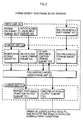
- the PD-HD hybrid-remedy planning program implemented on the PC 1 is configured to be generally executed in the following sequence.
- FIG. 2 shows a sequence of the program, from input of the data to display of calculation results.
- patient's clinical data required for PD and HD is input by the operator from a clinical data input screen (FIG. 6) presented on the display 10 of the PC 1.
- the program becomes executable after the data is input, and carries out various computations for PD and HD, including Pyle-Popovich model.
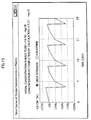
- Drained-fluid-volume curves, a D/P curve, and the concentration of a target solute in the blood are presented on the display 10 (FIGs. 9, 11 and 15, respectively), by using individual parameters obtained from the computations ⁇ such as the water removal parameters, body surface area, body fluid volume, injected solution volume, residual solution volume, urea nitrogen production rate, and creatinine production rate.
- the operator sets a condition for each input item of the PD-HD hybrid remedy (PD-HD planning).
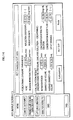
- PD-HD planning specifies conditions on: a HD and PD dialysis schedule for a fixed period of time (here, on a weekly basis), in which scheduling for days when no dialysis treatment is performed is also incorporated; PD conditions (the osmotic pressure and volume of each dialysis solution, the retention periods, and the number of exchanges); HD conditions (the dialysis duration, water removal volume, urea nitrogen clearance, and creatinine clearance), and inputs these specified conditions from a PD-HD planning input screen (FIG. 12).
- PD conditions the osmotic pressure and volume of each dialysis solution, the retention periods, and the number of exchanges
- HD conditions the dialysis duration, water removal volume, urea nitrogen clearance, and creatinine clearance
- the PC 1 calculates the initial value of the ratio M / C (0), using the amount of target-solute removal M and the concentration of the target solute in the blood before dialysis C(0) for the dialysis plan based on the input conditions.
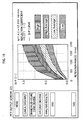
- the ratio M / C (0) is divided by the body fluid volume V B to obtain M / C (0)/V B , which is displayed as an integrated sum of divisional M / C (0)/ V B planned to be achieved by HD, PD, and RRF (residual renal function), respectively (PD-HD planning output; FIG. 13).
- the main feature of the present invention is to exercise the PD-HD hybrid-remedy planning by using an index shared by both PD and HD (i.e. M / C (0)/ V B , as an integrated sum of divisional M / C (0)/ V B planned to be achieved individually by HD, PD, and RRF; or M / C (0)). Effectiveness and details of M / C(0) / V B and M / C (0) will be described when the operational sequence of the program is discussed.
- the operator checks whether or not the value of M / C (0) / V B reaches a predefined reference value. If the value is smaller than the reference value, the input conditions are adjusted in the PD-HD planning input screen (FIG. 12) so that the value becomes equal to or larger than the reference value. At this point, setting the proportion of PD in M / C (0)/ V B as large as possible enables creating a schedule of the PD-HD hybrid remedy effectively utilizing residual renal function of the patient.
- the reference value for weekly M/C(0) /V B be 2.0 or more.
- DOQI guideline recommends to set Kt / V ⁇ a parameter equivalent to divisional M/C(0) / V B of PD ⁇ to 2. 0 or more in order to maintain 5-year survival rates at 95% or more.
- urea nitrogen M / C (0)/ V B is prescribed to be 2.0 or more.
- M / C (0) un/c obtained by dividing urea nitrogen M / C (0) by creatinine M / C (0), represents the dialysis intensity, and the closer M / C (0) un/c is to 1, the higher is the efficiency of uremic toxin removal.
- FIG. 3 illustrates functional blocks of the PD-HD hybrid-remedy planning apparatus.
- the PD-HD hybrid-remedy planning apparatus having the above-mentioned PD-HD hybrid-remedy planning program stored in a hard drive thereof can be divided broadly into the following functional blocks: an input unit 40; a storage unit 50; a computation unit 60; and an output unit 70.
- the input unit 40 comprises: a patient-data input subunit 401; a HD-catalogue-value input subunit 402; and a dialysis-schedule input subunit 403.
- the storage unit 50 includes: a patient-data storage subunit 501; a HD-catalogue-value storage subunit 502; a patient-peritoneal-function storage subunit 503; and a dialysis-schedule storage subunit 504, each of which is connected to the corresponding subunit inside the input unit 40.
- the patient-data input subunit 401 receives patient's clinical data input by the operator via the keyboard 12, and stores the input clinical data into the patient-data storage subunit 501 of the storage unit 50.
- the HD-catalogue-value input subunit 402 receives set values of a dialyzer, and stores the set values into the HD-catalogue-value storage subunit 502 of the storage unit 50.
- the dialysis-schedule input subunit 403 receives setting conditions for individual input items of the PD-HD hybrid-remedy planning, which is input by the operator via the keyboard 12, and stores these into the dialysis-schedule storage subunit 504 of the storage unit 50.
- the storage unit 50 further includes the patient-peritoneal-function storage subunit 503, which is mutually connected to the computation unit 60.
- the computation unit 60 accordingly receives data from the patient-data storage subunit 501, HD-catalogue-value storage subunit 502, patient-peritoneal-function storage subunit 503, and dialysis-schedule storage unit 504 of the storage unit 50, and performs a range of computations for PD and HD, including Pyle-Popovich model.
- the computation unit 60 is in operation, computation required to establish a model (e.g. determination of reflection coefficients) is iterated, and therefore the computation unit 60 is configured to store a newly computed result into the patient-peritoneal-function storage subunit 503, overwriting a previously stored result, and then perform computation again.
- the computation unit 60 is connected to the output unit 70, which comprises a patient-peritoneal-function output subunit 701 and a dialysis-schedule output subunit 702.
- the patient-peritoneal-function output subunit 701 outputs data indicating peritoneal function of the patient (for example, the drained-fluid-volume curves and D/P curve) based on the computational result of Pyle-Popovich model obtained by the computation unit 60.
- the dialysis-schedule output subunit 702 outputs a schedule of the PD-HD hybrid-remedy planning ⁇ a feature of the present invention ⁇ based on the computational result of Pyle-Popovich model obtained by the computation unit 60.
- the operator assesses the computational result output by the output unit 70, and inputs data again to the dialysis-schedule-input subunit 403 of the input unit 40, if necessary.
- the computation is iterated, resulting in creating a more ideal dialysis schedule.
- FIG. 4 shows the data acquisition steps (a protocol for peritoneal function testing).
- dialysis solution exchange which starts in the evening of a previous day, is performed on a patient four times in total at intervals of retention periods of 6 hours, 3 hours, 8 hours, and 4 hours.
- Dialysis solutions used in the exchange procedure are ones with a low osmotic pressure (360 mOsm/kg-solvent) and with a medium osmotic pressure (400 mOsm/kg-solvent) , and two sets of each are used in the stated order, as shown in the figure.
- drained fluid samples D1 to D6 are collected (D1 to D3 are individually collected from the first three exchange sessions while D4 to D6 are collected from the last session), and drained fluid volumes (water removal volumes) VDL1, VDL2, VDM1 and VDM2 are individually measured.
- a blood sample (B1) for HD is collected.
- a urine collection (U1) is performed while a urine volume (V U ) being measured.
- dialysis solution is exchanged twice or more with respect to each osmotic pressure; however, the present invention can be carried out if at least two sets of drained fluid data for a single level of osmotic pressure are obtained, as described above. While conventional peritoneal function testing requires 36 hours or more in total since at least three sets of drained fluid data for each osmotic pressure are collected, the present invention requires a smaller number of drained fluid data sets as compared to the conventional testing, and the protocol for peritoneal function testing can be completed in about 24 hours.
- FIG. 4 illustrates an example in which two different retention periods are established for each osmotic pressure in order to solve Pyle-Popovich formulae.
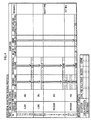
- Items of patient's data herewith obtained are sorted out as input data, as shown in a chart of FIG. 5.
- obtained as clinical data for PD are: the solute concentrations of urea and creatinine; the drained fluid volumes (VDL1, VDL2, VDM1 and VDM2) ; and the retention periods for the samples D1 to D6.
- the samples D4 to D6 are used for PET.
- the blood sample is examined to determine the solute concentrations of urea and creatinine.
- Acquired from the urine sample U1 are: the urea concentration; the creatinine concentration; the urine volume V U and the like.
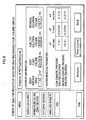
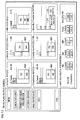
- FIG. 6 shows screen examples of when data obtained from a given patient, Patient A, is used as input data.
- Items to be input comprises as follows: (1) patient information including sex, height and weight; (2) information on renal function including the urea nitrogen and creatinine concentrations derived from the blood sample, and the urine volume; (3) information on HD conditions including the urea nitrogen clearance, creatinine clearance, dialysis duration, and water removal volume (note however that, for these HD items, catalogue values of the dialyzer can be input for the initial time, and measured values are used from the second time onward to raise accuracy); and (4) information on PD conditions including the injected solution volume, and the urea nitrogen concentration, creatinine concentration, drained fluid volume, and retention period with respect to each of D1 to D6 and B1.
- the present embodiment may always use fixed values (for example, the catalogue values, or numerical values predicted based on an empirical rule and/or patient's previous data) , or may instead use some numerical values prepared in advance.
- the PD-HD hybrid-remedy planning can be carried out only with clinical data on the peritoneum (data of the peritoneal function testing), not requiring a blood test to be conducted, which therefore leads to a simpler exercise of PD-HD hybrid-remedy planning with a smaller amount of data.
- graph display is made possible by using numerical values obtained from at least two sets of the clinical data.
- the program of the PD-HD hybrid-remedy planning apparatus (the PD-HD hybrid-remedy planning program) can be executed.
- FIG. 7 is a flow diagram showing exemplified steps of the PD-HD hybrid-remedy planning program.
- the PC 1 first judges whether or not data required to compute Pyle-Popovich model has been input according to the program (Step S101).
- the PC 1 computes Pyle-Popovich model of the above mathematical expression I, based on the input patient's clinical data (Step S102). This computation determines the overall mass transfer-area coefficients for urea nitrogen ( MTAC un ) as well as for creatinine ( MTAC c ), the water removal parameters a 1 , a 2 and a 3 , and so on. Note that how to compute the simultaneous equations of Pyle-Popovich model is specifically described in Japanese Laid-Open Patent Application Publication No. 2000-140100.
- the PC 1 calculates the body surface area (BSA) of a patient in m 2 , by assigning the patient's height and weight into the mathematical expression II (BSA calculation; Gehan, 1970).
- BSA body surface area
- BSA of Patient A is 1.62 m 2 according to the mathematical expression II.
- the PC 1 presents, on the display 10, a data analysis result screen for creating the drained-fluid-volume curves (FIG. 8), according to the program.
- patient information including the body surface area, body fluid volume, injected solution volume, and residual solution volume; and the water removal parameters a 1 , a 2 and a 3 of the dialysis solutions with a low and a medium osmotic pressure obtained by computing approximation solutions based on Pyle-Popovich model and the modified Powell method.
- the operator checks the information, and directs the PC 1 to carry out calculation for drained-fluid-volume curves, which are subsequently presented on the display 10 (FIG. 9) (Step S103).
- the first embodiment is capable of displaying results obtained from PET (data on a creatinine D/P ratio of FIG. 14; and PET curves of FIG. 16) instead by modifying the program's set items.
- the PC 1 causes the display 10 to present, data analysis result screen for creating the D/P curve (FIG. 10), based on the clinical data input from the data input screen of FIG. 6.
- data analysis result screen for creating the D/P curve
- FIG. 10 data analysis result screen for creating the D/P curve
- patient information including the solute production rates with respect to urea nitrogen and creatinine
- the operator checks the information, and directs the PC 1 to carry out calculation for the D/P curve, which is subsequently presented on the display 10 (FIG. 11) (Step S103). Examination of the D/P curve allows to see whether the clinical data and the calculation results match each other. In addition, by comparing the drained-fluid-volume curves against the D/P curve, it is possible to examine a schedule for dialysis solution exchanges where the amount of solute removal and water removal volume are taken into account.
- the operator checks the parameters for patient's peritoneal function (MTAC, ⁇ , a 1 , a 2 , and a 3 ) in reference to individual curves of FIGs. 10 and 11, to then exercise PD-HD hybrid-remedy planning.
- MTAC peritoneal function
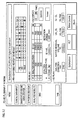
- the operator configures predefined setting items from a daily prescription input screen for PD-HD hybrid-remedy planning, shown in FIG. 12.
- Specific setting items are: PD and HD for a fixed period of time (here, a week ⁇ known as a unit of time period employed for a general dialysis schedule; allocation of days on which no dialysis treatment is performed; PD conditions (the osmotic pressure and volume of each dialysis solution, the number of exchanges, and the retention periods); and HD conditions (the dialysis duration, water removal volume, urea nitrogen clearance, and creatinine clearance).
- the PC 1 judges whether or not the data has been properly input (Step S104) and then calculates the remedy efficiency based on the schedule (Step S105).
- the PC 1 calculates, with respect to each PD and HD, the amount of each solute removal M (mg/week), the concentration of each solute (urea and creatinine) in the blood C(0) (mg/mL) , and the initial value of the ratio M / C (0) (L/week) for a fixed period of time ⁇ a week, in the first embodiment.
- the PC 1 further calculates M / C (0) (L/week) , which is an integrated sum of divisional M / C (0) planned to be achieved by PD and HD, respectively. This calculation process is a feature of the present embodiment.
- M / C (0) is calculated with respect to each PD and HD for every dialysis treatment, and a total M / C (0)(L/week) is determined by adding all M / C (0) for seven days. The total M / C (0) (L/week) is then divided by the body fluid volume V B of the patient to obtain M / C (0)/ V B .
- the PC 1 directs the display 10 to present thereon the result, and thereby a PD-HD hybrid-remedy planning screen (FIG. 13) is displayed (Step S106).
- the total M / C (0) (L/week) shown in FIG. 13 is calculated by further adding divisional M / C (0) of RRF to the PD-HD integrated sum of M / C (0) ⁇ namely, the total M / C (0) is composed of divisional M / C (0) of PD, HD, and RRF, respectively; however, FIG. 13 shows only a fractional portion of RRF since Patient A has a very small RRF value.
- M / C (0)/ V B has for the first time been discovered, by the present inventors, as a parameter index (criterion) shared between PD and HD in a PD-HD hybrid remedy.
- the dialysis effect using PD and HD is conventionally determined only by parameters specific to the respective dialysis modalities. Since there is no common parameter which can be used as an index to examine prescription for a PD-HD hybrid remedy, PD-HD hybrid-remedy planning has been very difficult to exercise.
- the first embodiment is capable of using M / C (0) / V B ⁇ representing the integrated sum of divisional M / C (0)/ V B of HD and PD ⁇ as a concise and accurate index for PD-HD hybrid-remedy planning (i.e. an indicator of the dialysis effect of the PD-HD hybrid remedy).
- M / C (0) / V B can be controlled as many times as desired by modifying some of the previously input conditions from the input screen shown in FIG. 12 and then conducting a simulation while adjusting the dialysis intensity and the number of dialysis sessions for both HD and PD plans. This allows to consider the best-suited PD-HD hybrid-remedy planning in which QOL (quality of life) of the patient is taken into full account.
- M / C(0) / V B enables a comparison against Kt/V ⁇ a conventionally well known parameter ⁇ in the same dimension, which in turn allows a dialysis plan to be examined without influence of variations in physical attributes of the patients (individual difference in the body fluid volume). It is preferable that the reference value for weekly M / C (0)/ V B be 2.0 or more.
- DOQI guideline recommends to set Kt / V ⁇ a parameter equivalent to divisional M / C (0) / V B of PD ⁇ to 2.0 or more in order to maintain 5-year survival rates at 95% or more.
- the first embodiment has successfully simplified PD-HD hybrid-remedy planning, which is conventionally very difficult to achieve, by using the PD-HD shared parameter of the same dimension.
- the first embodiment is capable of judging the adequacy of currently examined PD-HD hybrid-remedy planning based on whether or not weekly M / C(0) / V B is 2.0 or more. It is preferable that the reference value for weekly M / C (0)/ V B be 2.0 or more.
- DOQI guideline recommends to set Kt / V ⁇ a parameter equivalent to divisional M / C(0) / V B of PD ⁇ to 2.0 or more in order to maintain 5-year survival rates at 95% or more.
- patients with loss of renal function in Japan generally receive HD treatment three times a week, in the treatment, urea nitrogen M / C (0) / V B is prescribed to be 2.0 or more.
- the reference value, 2.0 can be changed adequately, for example, when the parameter is applied to non-Japanese patients.
- the operator accordingly configures, from the input screen shown in FIG. 12, the setting conditions for: PD and HD plans; a schedule for days when no dialysis treatment is performed; and the number of dialysis sessions, and repeats the setting procedure so that the values of weekly urea and creatinine M / C (0) / V B presented as in FIG. 13 individually become 2.0 or more.
- PD accounts for as large a proportion of the dialysis schedule as possible in order to utilize residual renal function of the patient.
- the first embodiment is capable of exercising PD-HD hybrid-remedy planning in a dramatically simple and accurate manner, as compared to conventional complicated dialysis planning compositely taking into account different parameters, each of which is specific to either PD or HD.
- the operator sets a schedule of one week in the input screen of FIG. 12 as follows: PD on Monday to Friday; HD on Saturday; and no dialysis treatment on Sunday.
- the PD plan is set so that a dialysis solution of 2000 mL with an osmotic pressure of 360 (mOsm/kg-solvent) is to be exchanged four times a day.
- osm/kg-solvent an osmotic pressure of 360
- the operator changes conditions for the respective dialysis plans in the input screen of FIG. 12, taking into account the patient's daily rhythm, the physical condition and the like, so that the ultimate weekly M / C (0)/ V B shown in FIG. 13 satisfies the target value, 2.0 or more.
- weekly M / C (0) / V B is preferable to be 2.0 or more, it is not recommended to enhance the dialysis intensity so much that weekly M / C (0) / V B exceeds far beyond 2.0, which results in imposing a burden on the patient.
- weekly M / C(0) / V B it is desirable to set weekly M / C(0) / V B to be approximately 2.0, as has been described above.
- the effect of the dialysis planning configured in the above-described manner can be learned, for example, from an output screen of the blood concentration changes in FIG. 15.
- the effect of the configured dialysis planning can be determined.
- the data on the blood concentration changes can be obtained by calculating peritoneal function based on the PD conditions of FIG. 6, and running a simulation by applying the calculated peritoneal function to the dialysis schedule.
- the first embodiment is able to use the initial value of the ratio M / C (0) itself as an index of the PD-HD hybrid-remedy planning, as shown in FIG. 13.
- the ratio M / C (0) can be calculated as an integrated sum of divisional M / C (0) of PD and HD, achieving nearly the same effect as when M / C(0) / V B is used.
- the first embodiment has successfully simplified PD-HD hybrid-remedy planning, which is conventionally very difficult to achieve, by using the PD-HD shared parameter of the same dimension. Note however that, when M / C (0) is used for the dialysis planning, physical attributes of each patient have to be taken into account.
- the PD-HD hybrid-remedy planning is preferably configured in a manner that the contribution of PD and RRF (residual renal function) accounts for as large a proportion of the total water removal volume due to ultrafiltration ⁇ achieved by PD, HD, and RRF all together ⁇ as possible because this enables utilizing patient's residual physical function and reducing the treatment burden on the patient.
- PD and RRF residual renal function
- the PC 1 After displaying the output screen of FIG. 13 once, the PC 1 seeks a operator' s direction concerning whether or not to complete the processing (Step S107). At this point, if the operator desires to change the setting conditions for the PD-HD hybrid-remedy planning, the PC 1 returns to Step S104. When the setting conditions are ultimately determined, the PC 1 completes the program processing.
- the first embodiment above describes an example in which the display 10 functioning as display means presents and outputs M / C (0) and M / C(0) / V B ; however, the present invention is not confined to this, and such data may be output by audio using speakers.
- the above-mentioned example uses drained-fluid-volume curves and a D/P curve in order to determine M / C (0) and M / C (0)/ V B ; however, these curves are not indispensable for the present invention, and other clinical data obtained from a patient (for example, data derived from PET only) may be used instead.
- the retention periods for PD for example, are set to time periods that were not used in the clinical test. With a retention period not found in the clinical test, the amount of target-solute removal M can only be found by estimation; a dynamic estimation model, such as Pyle-Popovich model, is largely effective for the estimation procedure.
- the present invention is applicable to the examination of peritoneal dialysis and hemodialysis hybrid remedy in dialysis treatment.
Landscapes
- Health & Medical Sciences (AREA)
- Urology & Nephrology (AREA)
- Heart & Thoracic Surgery (AREA)
- Emergency Medicine (AREA)
- Public Health (AREA)
- Engineering & Computer Science (AREA)
- General Health & Medical Sciences (AREA)
- Hematology (AREA)
- Animal Behavior & Ethology (AREA)
- Veterinary Medicine (AREA)
- Life Sciences & Earth Sciences (AREA)
- Biomedical Technology (AREA)
- Vascular Medicine (AREA)
- Anesthesiology (AREA)
- Surgery (AREA)
- Nuclear Medicine, Radiotherapy & Molecular Imaging (AREA)
- Epidemiology (AREA)
- Primary Health Care (AREA)
- Medical Informatics (AREA)
- External Artificial Organs (AREA)
- Medical Treatment And Welfare Office Work (AREA)
Applications Claiming Priority (3)
| Application Number | Priority Date | Filing Date | Title |
|---|---|---|---|
| JP2003136067 | 2003-05-14 | ||
| JP2003205819A JP4379027B2 (ja) | 2003-05-14 | 2003-08-04 | 腹膜透析および血液透析併用プランニング方法ならびに腹膜透析および血液透析併用プランニング装置 |
| PCT/JP2004/006863 WO2004101031A1 (fr) | 2003-05-14 | 2004-05-14 | Procede et appareil de planification d'une utilisation simultanee de la dialyse peritoneale et de l'hemodialyse |
Publications (2)
| Publication Number | Publication Date |
|---|---|
| EP1623731A1 true EP1623731A1 (fr) | 2006-02-08 |
| EP1623731A4 EP1623731A4 (fr) | 2011-03-23 |
Family
ID=33455463
Family Applications (1)
| Application Number | Title | Priority Date | Filing Date |
|---|---|---|---|
| EP04733122A Withdrawn EP1623731A4 (fr) | 2003-05-14 | 2004-05-14 | Procede et appareil de planification d'une utilisation simultanee de la dialyse peritoneale et de l'hemodialyse |
Country Status (6)
| Country | Link |
|---|---|
| US (2) | US8123715B2 (fr) |
| EP (1) | EP1623731A4 (fr) |
| JP (1) | JP4379027B2 (fr) |
| KR (1) | KR20060011871A (fr) |
| CA (1) | CA2524445A1 (fr) |
| WO (1) | WO2004101031A1 (fr) |
Cited By (10)
| Publication number | Priority date | Publication date | Assignee | Title |
|---|---|---|---|---|
| WO2009134881A1 (fr) * | 2008-05-02 | 2009-11-05 | Baxter International Inc. | Optimisation des résultats d'un traitement de dialyse péritonéale |
| WO2010006147A1 (fr) * | 2008-07-09 | 2010-01-14 | Baxter International Inc. | Test d'équilibrage péritonéal et système de dialyse l'utilisant |
| WO2010006131A3 (fr) * | 2008-07-09 | 2010-03-04 | Baxter International Inc. | Système de dialyse ayant une méthodologie de génération de régime |
| US20110093294A1 (en) * | 2009-10-16 | 2011-04-21 | Baxter International Inc. | Peritoneal dialysis optimized using a patient hand-held scanning device |
| US8377012B2 (en) | 2009-01-30 | 2013-02-19 | Baxter International Inc. | Transfer sets for therapy optimization |
| US8882700B2 (en) | 2008-05-02 | 2014-11-11 | Baxter International Inc. | Smart patient transfer set for peritoneal dialysis |
| US8926551B2 (en) | 2009-07-07 | 2015-01-06 | Baxter Healthcare Inc. | Peritoneal dialysis therapy with large dialysis solution volumes |
| US9149570B2 (en) | 2008-07-09 | 2015-10-06 | Baxter International Inc. | Dialysis system having filtering method for determining therapy prescriptions |
| EP3011984A1 (fr) * | 2007-07-05 | 2016-04-27 | Baxter International Inc. | Machine de dialyse péritonéale conçue pour une dialyse extracorporelle |
| US9629949B2 (en) | 2010-04-16 | 2017-04-25 | Baxter International Inc. | Therapy prediction and optimization for renal failure blood therapy, especially home hemodialysis |
Families Citing this family (14)
| Publication number | Priority date | Publication date | Assignee | Title |
|---|---|---|---|---|
| JP2007029705A (ja) * | 2005-06-24 | 2007-02-08 | Jms Co Ltd | 腹膜透析及び血液透析併用プランニング装置 |
| CA2624161A1 (fr) * | 2005-10-18 | 2007-04-26 | Jms Co., Ltd. | Procede, appareil et programme de test de la fonction de la membrane peritoneale |
| US9514283B2 (en) * | 2008-07-09 | 2016-12-06 | Baxter International Inc. | Dialysis system having inventory management including online dextrose mixing |
| JP5357511B2 (ja) * | 2008-11-04 | 2013-12-04 | テルモ株式会社 | 腹膜透析支援システム及び表示制御方法 |
| US11278653B2 (en) * | 2009-01-29 | 2022-03-22 | Baxter International Inc. | Method and apparatus for trending automated peritoneal dialysis treatments |
| DE102009021255A1 (de) * | 2009-05-14 | 2010-11-18 | Fresenius Medical Care Deutschland Gmbh | Verfahren und Vorrichtung zur Optimierung einer extrakorporalen Blutbehandlung |
| US9132219B2 (en) * | 2010-04-16 | 2015-09-15 | Baxter International Inc. | Therapy prediction and optimization of serum potassium for renal failure blood therapy, especially home hemodialysis |
| AU2015203634C1 (en) * | 2010-04-16 | 2018-01-25 | Baxter Healthcare S.A. | Therapy prediction and optimization for renal failure blood therapy, especially home hemodialysis |
| EP3706134A1 (fr) * | 2010-04-16 | 2020-09-09 | Baxter International Inc | Prédiction et optimisation de thérapie pour une thérapie sanguine de l'insuffisance rénale, en particulier l'hémodialyse à domicile |
| JP6049685B2 (ja) | 2011-03-23 | 2016-12-21 | ネクステージ メディカル インコーポレイテッド | 腹膜透析使い捨てユニット、コントローラ、腹膜透析システム |
| US9861733B2 (en) | 2012-03-23 | 2018-01-09 | Nxstage Medical Inc. | Peritoneal dialysis systems, devices, and methods |
| WO2018237375A1 (fr) | 2017-06-24 | 2018-12-27 | Nxstage Medical, Inc. | Procédés et systèmes de préparation et/ou de traitement de fluide de dialyse péritonéale |
| JP6914803B2 (ja) * | 2017-10-17 | 2021-08-04 | 日機装株式会社 | 血液浄化装置 |
| US11364328B2 (en) | 2018-02-28 | 2022-06-21 | Nxstage Medical, Inc. | Fluid preparation and treatment devices methods and systems |
Family Cites Families (8)
| Publication number | Priority date | Publication date | Assignee | Title |
|---|---|---|---|---|
| CA1124952A (fr) | 1977-03-03 | 1982-06-08 | Robert P. Popovich | Methode et appareil pour la dialyse peritoneale continue ambulatoire |
| DE3642088A1 (de) * | 1986-12-10 | 1988-06-23 | Wolfgang Brunner | Anordnung zur messung von kraftverteilungen |
| EP0616540B1 (fr) * | 1992-10-13 | 1998-08-26 | Baxter International Inc. | Systeme de surveillance d'hemodialyse pour machines d'hemodialyse |
| JP3402360B2 (ja) | 1998-08-21 | 2003-05-06 | 株式会社ジェイ・エム・エス | 腹膜透析システム |
| US6691040B2 (en) | 1999-12-02 | 2004-02-10 | Hospal Ag | Method for determining a parameter indicative of the progress of an extracorporeal blood treatment |
| FR2801794B1 (fr) | 1999-12-02 | 2002-01-11 | Hospal Ag | Procede de determination d'un parametre significatif du progres d'un traitement extracorporel de sang |
| US6867777B2 (en) | 2000-12-20 | 2005-03-15 | Texas Instruments Incorporated | Tracing and storing points of interest on a graphing calculator |
| US20030216677A1 (en) * | 2002-05-15 | 2003-11-20 | Li Pan | Biosensor for dialysis therapy |
-
2003
- 2003-08-04 JP JP2003205819A patent/JP4379027B2/ja not_active Expired - Lifetime
-
2004
- 2004-05-14 CA CA002524445A patent/CA2524445A1/fr not_active Abandoned
- 2004-05-14 US US10/555,701 patent/US8123715B2/en not_active Expired - Fee Related
- 2004-05-14 WO PCT/JP2004/006863 patent/WO2004101031A1/fr not_active Ceased
- 2004-05-14 KR KR1020057021673A patent/KR20060011871A/ko not_active Ceased
- 2004-05-14 EP EP04733122A patent/EP1623731A4/fr not_active Withdrawn
-
2009
- 2009-09-30 US US12/570,109 patent/US8088094B2/en not_active Expired - Fee Related
Cited By (25)
| Publication number | Priority date | Publication date | Assignee | Title |
|---|---|---|---|---|
| US10441703B2 (en) | 2007-07-05 | 2019-10-15 | Baxter International Inc. | Weight controlled and/or sorbent hybrid blood and peritoneal dialysis treatment systems and methods |
| US10434237B2 (en) | 2007-07-05 | 2019-10-08 | Baxter International Inc. | Hybrid blood and peritoneal dialysis treatment systems and methods |
| US9744284B2 (en) | 2007-07-05 | 2017-08-29 | Baxter International Inc. | Hybrid blood and peritoneal dialysis treatment systems and methods |
| US11672895B2 (en) | 2007-07-05 | 2023-06-13 | Baxter International Inc. | Method for peritoneal dialysis and extracorporeal blood treatments |
| EP3011984A1 (fr) * | 2007-07-05 | 2016-04-27 | Baxter International Inc. | Machine de dialyse péritonéale conçue pour une dialyse extracorporelle |
| US11045595B2 (en) | 2007-07-05 | 2021-06-29 | Baxter International Inc. | System for peritoneal dialysis and extracorporeal blood treatments |
| US9348975B2 (en) * | 2008-05-02 | 2016-05-24 | Baxter International Inc. | Optimizing therapy outcomes for peritoneal dialysis |
| US8882700B2 (en) | 2008-05-02 | 2014-11-11 | Baxter International Inc. | Smart patient transfer set for peritoneal dialysis |
| WO2009134881A1 (fr) * | 2008-05-02 | 2009-11-05 | Baxter International Inc. | Optimisation des résultats d'un traitement de dialyse péritonéale |
| US9147045B2 (en) | 2008-07-09 | 2015-09-29 | Baxter International Inc. | Peritoneal equilibration test and dialysis system using same |
| US9149570B2 (en) | 2008-07-09 | 2015-10-06 | Baxter International Inc. | Dialysis system having filtering method for determining therapy prescriptions |
| WO2010006147A1 (fr) * | 2008-07-09 | 2010-01-14 | Baxter International Inc. | Test d'équilibrage péritonéal et système de dialyse l'utilisant |
| US7981281B2 (en) | 2008-07-09 | 2011-07-19 | Baxter International, Inc. | Dialysis system having regimen generation methodology |
| WO2010006131A3 (fr) * | 2008-07-09 | 2010-03-04 | Baxter International Inc. | Système de dialyse ayant une méthodologie de génération de régime |
| US8636706B2 (en) | 2009-01-30 | 2014-01-28 | Baxter International Inc. | Transfer sets for therapy optimization |
| US8377012B2 (en) | 2009-01-30 | 2013-02-19 | Baxter International Inc. | Transfer sets for therapy optimization |
| US8926551B2 (en) | 2009-07-07 | 2015-01-06 | Baxter Healthcare Inc. | Peritoneal dialysis therapy with large dialysis solution volumes |
| US11058809B2 (en) | 2009-10-16 | 2021-07-13 | Baxter International Inc. | Optimizing peritoneal dialysis using a patient hand-held scanning device |
| US10449284B2 (en) | 2009-10-16 | 2019-10-22 | Baxter Interntional Inc. | Optimizing peritoneal dialysis using a patient hand-held scanning device |
| US9020827B2 (en) | 2009-10-16 | 2015-04-28 | Baxter International Inc. | Peritoneal dialysis optimized using a patient hand-held scanning device |
| US11607479B2 (en) | 2009-10-16 | 2023-03-21 | Baxter International Inc. | Optimizing peritoneal dialysis using a patient hand-held scanning device |
| US20110093294A1 (en) * | 2009-10-16 | 2011-04-21 | Baxter International Inc. | Peritoneal dialysis optimized using a patient hand-held scanning device |
| US10363351B2 (en) | 2010-04-16 | 2019-07-30 | Baxter International Inc. | Therapy prediction and optimization for renal failure blood therapy, especially home hemodialysis |
| US9629949B2 (en) | 2010-04-16 | 2017-04-25 | Baxter International Inc. | Therapy prediction and optimization for renal failure blood therapy, especially home hemodialysis |
| US11285248B2 (en) | 2010-04-16 | 2022-03-29 | Baxter International Inc. | Therapy prediction and optimization for renal failure blood therapy |
Also Published As
| Publication number | Publication date |
|---|---|
| US20100042331A1 (en) | 2010-02-18 |
| US20070061045A1 (en) | 2007-03-15 |
| CA2524445A1 (fr) | 2004-11-25 |
| JP2005027886A (ja) | 2005-02-03 |
| US8088094B2 (en) | 2012-01-03 |
| WO2004101031A1 (fr) | 2004-11-25 |
| US8123715B2 (en) | 2012-02-28 |
| JP4379027B2 (ja) | 2009-12-09 |
| KR20060011871A (ko) | 2006-02-03 |
| EP1623731A4 (fr) | 2011-03-23 |
Similar Documents
| Publication | Publication Date | Title |
|---|---|---|
| US8088094B2 (en) | Planning method and apparatus for peritoneal dialysis and hemodialysis hybrid remedy | |
| US8444593B2 (en) | Method for testing peritoneum function and a peritoneal dialysis planning apparatus | |
| CN101291696B (zh) | 腹膜功能检查装置 | |
| US8696613B2 (en) | Peritoneal dialysis system | |
| AU2011239488B2 (en) | Therapy prediction and optimization for renal failure blood therapy, especially home hemodialysis | |
| US9155823B2 (en) | Determining dialysis treatment effectiveness | |
| JP3402360B2 (ja) | 腹膜透析システム | |
| CN100493630C (zh) | 腹膜透析和血液透析并用计划方法以及腹膜透析和血液透析并用计划装置 | |
| Korohoda et al. | Analytical solution of multicompartment solute kinetics for hemodialysis | |
| Camilla | Patient-specific modelling for hemodialysis therapy setting optimization | |
| Hamada et al. | Development of a computer-aided diagnosis system for a new modality of renal replacement therapy: an integrated approach combining both peritoneal dialysis and hemodialysis | |
| JP4968349B2 (ja) | 腹膜機能検査方法および腹膜透析プランニング装置 | |
| Flessner | Computerized kinetic modeling: a new tool in the quest for adequacy in peritoneal dialysis | |
| Hamada et al. | Development of a computer-aided diagnosis system for continuous peritoneal dialysis: an availability of the simultaneous numerical optimization technique for kinetic parameters in the peritoneal dialysis model | |
| HK1123759B (en) | Peritoneal membrane function test apparatus |
Legal Events
| Date | Code | Title | Description |
|---|---|---|---|
| PUAI | Public reference made under article 153(3) epc to a published international application that has entered the european phase |
Free format text: ORIGINAL CODE: 0009012 |
|
| 17P | Request for examination filed |
Effective date: 20051107 |
|
| AK | Designated contracting states |
Kind code of ref document: A1 Designated state(s): AT BE BG CH CY CZ DE DK EE ES FI FR GB GR HU IE IT LI LU MC NL PL PT RO SE SI SK TR |
|
| DAX | Request for extension of the european patent (deleted) | ||
| A4 | Supplementary search report drawn up and despatched |
Effective date: 20110223 |
|
| 17Q | First examination report despatched |
Effective date: 20110707 |
|
| STAA | Information on the status of an ep patent application or granted ep patent |
Free format text: STATUS: THE APPLICATION IS DEEMED TO BE WITHDRAWN |
|
| 18D | Application deemed to be withdrawn |
Effective date: 20140122 |