EP1625554B1 - Selbstbedienungskasseneinrichtung - Google Patents
Selbstbedienungskasseneinrichtung Download PDFInfo
- Publication number
- EP1625554B1 EP1625554B1 EP04727503A EP04727503A EP1625554B1 EP 1625554 B1 EP1625554 B1 EP 1625554B1 EP 04727503 A EP04727503 A EP 04727503A EP 04727503 A EP04727503 A EP 04727503A EP 1625554 B1 EP1625554 B1 EP 1625554B1
- Authority
- EP
- European Patent Office
- Prior art keywords
- self
- goods
- reader
- service checkout
- barcode
- Prior art date
- Legal status (The legal status is an assumption and is not a legal conclusion. Google has not performed a legal analysis and makes no representation as to the accuracy of the status listed.)
- Expired - Lifetime
Links
- 238000012545 processing Methods 0.000 claims description 14
- 238000005303 weighing Methods 0.000 claims description 13
- 238000001514 detection method Methods 0.000 description 22
- 239000000047 product Substances 0.000 description 20
- 238000000034 method Methods 0.000 description 5
- 230000008569 process Effects 0.000 description 4
- 241000531116 Blitum bonus-henricus Species 0.000 description 2
- 235000008645 Chenopodium bonus henricus Nutrition 0.000 description 2
- 230000008901 benefit Effects 0.000 description 2
- 230000005540 biological transmission Effects 0.000 description 2
- 239000000969 carrier Substances 0.000 description 2
- 239000013065 commercial product Substances 0.000 description 2
- 238000004891 communication Methods 0.000 description 2
- 238000005516 engineering process Methods 0.000 description 2
- 235000012055 fruits and vegetables Nutrition 0.000 description 2
- 230000004913 activation Effects 0.000 description 1
- 230000015572 biosynthetic process Effects 0.000 description 1
- 230000008878 coupling Effects 0.000 description 1
- 238000010168 coupling process Methods 0.000 description 1
- 238000005859 coupling reaction Methods 0.000 description 1
- 238000013461 design Methods 0.000 description 1
- 238000010586 diagram Methods 0.000 description 1
- 239000000428 dust Substances 0.000 description 1
- 230000007613 environmental effect Effects 0.000 description 1
- 238000011156 evaluation Methods 0.000 description 1
- 238000005755 formation reaction Methods 0.000 description 1
- 230000006872 improvement Effects 0.000 description 1
- 238000010348 incorporation Methods 0.000 description 1
- 239000004973 liquid crystal related substance Substances 0.000 description 1
- 238000004519 manufacturing process Methods 0.000 description 1
- 238000005259 measurement Methods 0.000 description 1
- 230000003287 optical effect Effects 0.000 description 1
- 238000004806 packaging method and process Methods 0.000 description 1
- 230000002265 prevention Effects 0.000 description 1
- 230000004044 response Effects 0.000 description 1
- 230000035939 shock Effects 0.000 description 1
- 230000001960 triggered effect Effects 0.000 description 1
Images


Classifications
-
- A—HUMAN NECESSITIES
- A47—FURNITURE; DOMESTIC ARTICLES OR APPLIANCES; COFFEE MILLS; SPICE MILLS; SUCTION CLEANERS IN GENERAL
- A47F—SPECIAL FURNITURE, FITTINGS, OR ACCESSORIES FOR SHOPS, STOREHOUSES, BARS, RESTAURANTS OR THE LIKE; PAYING COUNTERS
- A47F9/00—Shop, bar, bank or like counters
- A47F9/02—Paying counters
- A47F9/04—Check-out counters, e.g. for self-service stores
- A47F9/046—Arrangement of recording means in or on check-out counters
-
- G—PHYSICS
- G07—CHECKING-DEVICES
- G07G—REGISTERING THE RECEIPT OF CASH, VALUABLES, OR TOKENS
- G07G1/00—Cash registers
- G07G1/0036—Checkout procedures
- G07G1/0045—Checkout procedures with a code reader for reading of an identifying code of the article to be registered, e.g. barcode reader or radio-frequency identity [RFID] reader
- G07G1/0054—Checkout procedures with a code reader for reading of an identifying code of the article to be registered, e.g. barcode reader or radio-frequency identity [RFID] reader with control of supplementary check-parameters, e.g. weight or number of articles
Definitions
- the invention relates to a self-service checkout device for collecting data on merchandise.
- bar code marks typically are labeled with bar code marks, which are usually already applied by the manufacturer to the package or the product itself.
- barcode barcode readers are used, which are available in different formations for different applications.
- the most popular readers include a laser and various mirrors to scan the bar code pattern.
- RFID radio frequency identification
- An RFID system essentially consists of two components: the mobile data carriers, which are also called code transmitters, transponders, RFID tags, ID transmitters or ID cards, which a user carries with him or those on an object to be identified, such as attached to a commercial product, and the reader, also referred to as base station or transceiver, which reads the data from the transponders or adds new data to it this writes.
- the reader also referred to as base station or transceiver, which reads the data from the transponders or adds new data to it this writes.
- the reader can also provide energy for the transponder.
- For the data transmission an antenna is required on both sides, which is designed in simple cases as an air coil.
- the transponders store information ranging from a simple identification number to complex user or measurement data. In the case of transponders, a distinction is made between active and passive identification.
- the passive identification is characterized by the fact that the transponder can be constantly interrogated by the reader without the intervention of the user or the product. They draw their energy from the magnetic field of the reader. This makes them very robust and maintenance-free. If the code transmitter is located within a certain distance range to the transmitting and receiving unit, the identification takes place automatically. The limitation of the distance range generally results from the radio field attenuation. In the case of an active identification system, however, the communication is actively triggered by the user at the transponder. A user must manually operate the transponder in this case. Active transponders usually have their own energy source in the form of a primary source. The disadvantage here is the limited life.
- LF systems in the frequency range of 100-300 kHz
- RF systems at 433 MHz or 867 MHz
- high-frequency microwave systems which are mostly available at the frequencies 2.4 GHz, 5.8 GHz, 9.5 GHz or 24 GHz.
- Transponders in the kHz frequency range have ranges of a few centimeters. They are called proximity tags because they work in close proximity. Transponders operating in the MHz frequency range are called Vicinity tags because they are used in the vicinity of the detection device with ranges of up to approx. 2 m. On the frequency of 2.4 GHz operate essentially active transponder with a range up to several meters.
- RFID systems are increasingly being used in supermarkets, with the proximity transponders being used here in particular.
- RFID tags have in the trade environment in addition to an identification of the commercial product the advantage of a significant improvement in the tracking of goods, so that in this way the logistics processes are easier to understand for the manufacturer than is the case with a barcode.
- the transponders are resistant to environmental influences, such as e.g. high and low temperatures, humidity, vibration, shock, dust, oil and dirt.
- the transponder can be installed unobtrusively or invisibly, for example in the packaging.
- the object of the invention is therefore to enable a secure and rapid detection of articles with a barcode and / or an RF-ID tag on a self-service checkout device.
- a bar code reader and an RF-ID reader in the area of a goods detection area in a self-checkout device means both the detection of articles that are equipped with an RF-ID tag (transponder), and / or the detection of items that with a barcode are possible.
- the goods detection station is provided with a camera. The images taken by the camera are forwarded to a data processing device and it is determined by means of image processing, how many products have passed the goods detection station. Duplicate registration for products having both a barcode and an RF-ID tag can be excluded by comparison with the captured image so that when duplicating an article, only the simple price is calculated.
- the RF-ID reading device is furthermore advantageously designed as a transmitting device in such a way that transponders which can be written on by sending a corresponding code can be canceled.
- these transponders are used for high-priced goods. If the customer now leaves the warehouse, more RF-ID readers can be installed in the output area, which receive the signals from unverentenseten transponders and thus can display the unlawful removal of the article, for example, by an alarm triggering.
- a Disclosed here an embodiment of a Edbedienungskassen Surprise 1 is shown, which comprises a carrier housing 2.
- the carrier housing 2 has a goods detection station 3, which is equipped with a barcode reader not shown here and an RF-ID reader. Furthermore, in the goods detection station 3 even more advantageously a scale for the collection of cargo such as fruits and vegetables can be integrated.
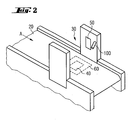
- a transport device 20 as a conveyor belt provided on the customer place the goods and the goods transported in the scanning of a goods detection station 30.
- the RF-ID reader 40 is mounted below the conveyor belt 20 in order to achieve optimum space utilization.
- One or more bar code readers 50 are preferably laterally or mounted above the transport device to allow detection of the bar code in all spatial directions.
- a balance 60 can be integrated for the detection of piece goods such as fruits and vegetables.
- the RF-ID reader transmits, if required or constantly, broadband modulated transmit signals and then waits for the reception of reflected signals (echo signals), ie the RF-ID reader is designed as a transmitter and receiver.
- the RF-ID data carrier (transponder) is activated by the magnetic field of the reader by transmitting the energy required to operate the transponder via a coupling element. Outside of the response range of the reader, the transponder behaves passively, which he usually has no own power supply. In particular, in the trade environment will use transponder, which have only a very short range, so that can not be a collection of unwanted items.
- transponders used in the field of mobile telephony are hard-coded data carriers which only reproduce the data written at the time of transponder production.
- transponder use which are writable by the reader, so that, for example, the transponder can be canceled by the reader.
- another RF-ID reader is installed, which can receive the signals from unverentenseten transponders. The illegal misappropriation of the article may then be indicated, for example, by an alarm trigger.
- a devaluation of special transponders may be required.
- a display 4 for displaying customer information such as the price, the weight, the type of goods, etc. is provided, wherein the display 4 is preferably in the vicinity of the goods detection place 3.
- the display 4 can also be located in a different position.
- the display 4 may be formed as a liquid crystal screen and provided with a touch screen function.
- a goods bin is provided, which comprises a weighing device 5, so that the weight of the stored goods can be detected.
- a pass card reader 6 and a card reader 8 for credit cards and ec cards and a PIN input keyboard 7 are advantageously provided for payment transactions.
- the goods detection station 3 can still optically with a preferably attached to the display housing 9 video camera 10 be recorded.
- a camera 100 is mounted laterally of the conveyor belt 20 at the goods detection station 30. But it can also be positioned above the transport device 20.
- the customer After selecting the goods, the customer usually brings the goods collected in a shopping cart to the self-service checkout device 1, takes the goods out of the car and scans them over the goods registration point 3 or places the goods on the transport device 20, which places the goods in the goods registration area 30 feeds.
- the bar code attached to the goods or an RF ID identification mark is detected.
- the customer places the goods on the weighing device 5, on which the weight of all goods already collected is summed up. This weighing device 5 is used for theft prevention. If the weight of the articles placed on the weighing device 5 does not correspond to the weight of the articles detected, a corresponding message is issued on the display 4 or acoustically indicating that the customer is retracing the article just filed.
- a scanned item is assigned a designated price from a database. If an article is equipped with both a barcode and an RFID code transmitter, both information can be recorded simultaneously. Since the information is forwarded to the data processing device, the double registration is taken into account and only the simple price is calculated. In addition, since each product is characterized by its weight, the data processing device can still be connected to the weighing device 5. In the case of a double registration, it can then be determined by comparison with the weight G determined on the weighing device 5 whether in fact only one article is present.
- the camera 10, 100 may still be connected to the data processing.
- an image processing B of the image captured by the camera 10, 100 it is ascertained how many products are located in the area of the goods detection station 3, 30.
- the true number of products can be determined and thus calculated by comparison with the optical result.
- camera surveillance can be used if bar code registration and / or RF ID scanning has not occurred. Since the camera 10, 100 in this case has detected an excess number of products, the customer is acoustically or optically made aware that a re-registration of individual items is required.
- the customer If the customer has scanned all the goods and the weight of the goods placed on the weighing device 5 always matches the weight resulting from the goods registration, the customer presses a button at the end of the process to signal that all goods are now being collected are and thus initiates the payment process.
- the display 4 shows the total price and the customer can now pay by means of a credit card or his ec card or cash the bill.
- the weighing device 5 it is possible to record the weighing device 5 from a second video camera, not shown here, in order to enable subsequent detection of articles that have not been scanned by mistake.
- the camera is activated when the weight specification of the weighing device 5 changes without an article being scanned or detected by means of an RFID marking.
- the camera thus detects the last placed on the weighing device 5 article.
- This image of the camera can be transmitted to the display 11 of an operator, who is thus informed about the unrecorded article and can accordingly ask the customer to retrace the article that was not recorded by mistake.
- two self-service checkout devices are combined so that a space-saving arrangement of several self-service checkout devices is made possible.
Landscapes
- Physics & Mathematics (AREA)
- General Physics & Mathematics (AREA)
- Cash Registers Or Receiving Machines (AREA)
Description
- Die Erfindung bezieht sich auf eine Selbstbedienungskasseneinrichtung zum Erfassen von Daten an Handelswaren.
- Üblicherweise sind Produkte im Handelsumfeld mit Barcodemarkierungen gekennzeichnet, wobei diese normalerweise bereits vom Hersteller auf die Verpackung oder das Produkt selbst angebracht werden. Zum Lesen eines Barcodes werden Barcodelesegeräte eingesetzt, die in unterschiedlichen Ausformungen für die verschiedenen Einsatzgebiete zur Verfügung stehen. Die gängigsten Lesegeräte enthalten einen Laser und verschiedene Spiegel, um das Strichcodemuster abzutasten. Es gibt festinstallierte und tragbare Barcodelesegeräte.
- Neben der Barcodetechnologie sind jedoch auch RFID "radio frequency identification" Systeme als Identifikationsmarken zunehmend im Einsatz und werden zur Identifizierung von Produkten eingesetzt.
- Ein RFID-System besteht im wesentlichen aus zwei Komponenten: den mobilen Datenträgern, die auch Codegeber, Transponder, RFID-Tag, ID-Geber oder ID-Karte genannt werden, und die ein Benutzer bei sich trägt oder die an einem zu identifizierenden Objekt wie einem Handelsprodukt angebracht werden, und dem Lesegerät, das auch als Base Station oder Transceiver bezeichnet wird und welches die Daten von den Transpondern ausliest oder neue Daten in diese schreibt. Zusätzlich kann das Lesegerät auch noch Energie für den Transponder liefern. Für die Datenübertragung wird auf beiden Seiten eine Antenne benötigt, die in einfachen Fällen als Luftspule ausgeführt ist. Die Transponder speichern je nach Ausführung Informationen, die von einer einfachen Identifikationsnummer bis hin zu komplexen Nutzer- oder Messdaten reichen. Man unterscheidet bei Transpondern zwischen einer aktiven und passiven Identifikation. Die passive Identifikation zeichnet sich dadurch aus, dass der Transponder ständig, ohne Zutun des Benutzers oder des Produktes, von dem Lesegerät abgefragt werden kann. Sie beziehen ihre Energie aus dem magnetischen Feld des Lesegerätes. Dadurch sind sie sehr robust und wartungsfrei. Befindet sich der Codegeber innerhalb eines gewissen Entfernungsbereiches zur Sende- und Empfangseinheit, so erfolgt die Identifikation automatisch. Die Beschränkung des Entfernungsbereiches ergibt sich im allgemeinen aus der Funkfelddämpfung. Bei einem aktiven Identifikationssystem hingegen wird die Kommunikation aktiv vom Benutzer am Transponder ausgelöst. Ein Benutzer muß in diesem Fall den Transponder manuell bedienen. Aktive Transponder besitzen eine eigene Energiequelle meist in der Form einer Primärquelle. Nachteilig ist hier die begrenzte Lebensdauer.
- Es sind verschiedene funkbasierte Übertragungstechnologien möglich oder üblich: LF-Systeme im Frequenzbereich von 100-300 kHz, RF-Systeme bei 433 MHz oder 867 MHz und hochfrequente Mikrowellensysteme, die zumeist bei den Frequenzen 2,4 GHz, 5,8GHz, 9,5 GHz oder 24 GHz arbeiten.
- Transponder im kHz-Frequenzbereich haben Reichweiten von wenigen Zentimetern. Sie werden als Proximity-Tags bezeichnet, da sie in unmittelbarer Nähe (proximity) arbeiten. Transponder, die im MHz-Frequenzbereich arbeiten, werden Vicinity-Tags genannt, da sie mit Reichweiten bis ca. 2 m in der Nachbarschaft (vicinity) zum Erfassungsgeräte eingesetzt werden. Auf der Frequenz von 2,4 GHz arbeiten im wesentlichen aktive Transponder mit einer Reichweite bis zu mehreren Metern.
- Diese RFID-Systeme werden zunehmend auch in Supermärkten eingesetzt, wobei hier vor allem die Proximity-Transponder zum Einsatz kommen. Derartige RFID-Tags haben im Handelsumfeld neben einer Identifikation des Handelsproduktes den Vorteil einer deutlichen Verbesserung der Warenverfolgung, so daß hierdurch die Logistikabläufe für den Hersteller besser nachvollziehbar sind als dies mit einem Barcode der Fall ist. Insbesondere sind die Transponder resistent gegenüber Umwelteinflüssen, wie z.B. hohe und tiefe Temperaturen, Feuchtigkeit, Vibration, Stoß, Staub, Öl und Schmutz. Je nach Design des fertigen Produktes kann der Transponder unaufdringlich bzw. unsichtbar eingebaut werden, beispielsweise in die Verpackung.
- Im Handelsumfeld insbesondere in Supermärkten werden verstärkt Selbstbedienungskasseneinrichtungen eingesetzt, um die Personalkosten zu senken. Es sind verschiedene Selbstbedienungskasseneinrichtungen bekannt, bei denen die vom Kunden ausgewählten Waren erfaßt und eine automatische Abrechnung erstellt wird. Der Kunde bringt die in der Regel in einen Einkaufswagen abgelegten Waren zu der Selbstbedienungskasseneinrichtung und führt sie einem Abtastvorgang zu, bei dem normalerweise der auf den Waren befindliche Barcode von einem Barcodeleser abgetastet wird. Danach werden die Waren in eine Ablage gelegt, die auch ein weiterer Einkaufswagen oder eine Einkaufstüte sein kann, und die mit einer Waage gekoppelt ist. Beim Identifizieren der Waren durch Abtasten des Barcodes werden der Warenpreis, die Warenart und das Gewicht ermittelt. Legt nun der Kunde die Waren in die Ablage, so werden diese nochmals gewogen und das Wägeergebnis wird mit dem Gewicht verglichen, das für diese Warenart vorgesehen ist bzw. mit dem Gewicht, das bei der Gewichtserfassung von einzeln auszuwiegenden Produkten ermittelt worden ist. Stimmen die Vergleichsgrößen überein, so kann eine Fehlauswertung bzw. ein Betrugsversuch ausgeschlossen werden.
- In der
EP 338 376 A2 - In der
EP-A-1 248 244 wird eine Selbstbedienungskasseneinrichtung beschrieben, bei dem die Produkte mit einem RFID-Label ausgestattet sind. Zusätzlich zu der Erfassung des RFID-Labels wird das Gewicht der Produktes erfasst, um Manipulationen bei der Warenerfassung entgegenzuwirken. Das Problem einer Doppelregistrierung bei Produkten, die sowohl mit einem Barcode als auch mit einem RFID-Label ausgestattet sind, wird jedoch nicht beschrieben. - Auch in der
EP-A-1 255 217 ist das Problem der Doppelregistrierung bei einer Markierung der Produkte mit einem Barcode und einem RFID-Label nicht gelöst. - Werden jedoch nun Produkte angeboten, die teilweise mit einer Barcode-Identifizierungsmarke und teilweise mit einer RF-ID-Identifikationsmarke ausgestattet sind, so erkennt bei einer bedienten Kasse das Kassierpersonal, ob das Produkt mit einem RF-ID-Tag oder mit einem Barcode versehen ist und kann dann entsprechend der angebrachten Markierung einen Barcodelesegerät oder ein RF-ID-Lesegerät einsetzen. Im Selbstbedienungsumfeld hingegen können diese mit einem RF-ID-Transponder gekennzeichneten Produkte mit den gängigen Selbstbedienungskasseneinrichtungen bisher nicht erfasst werden.
- Aufgabe der Erfindung ist es daher, eine sichere und schnelle Erfassung von Artikeln mit einem Barcode und/oder einer RF-ID-Markierung an einer Selbstbedienungskasseneinrichtung zu ermöglichen.
- Diese Aufgabe wird durch die in Anspruch 1 angegebenen Merkmale gelöst. Durch den Einbau eines Barcodelesers und eines RF-ID-Lesegerätes im Bereich eines Warenerfassungsplatzes bei einer Selbstbedienungskasseneinrichtung ist sowohl die Erfassung von Artikeln, die mit einer RF-ID-Markierung (Transponder) ausgestattet sind, als auch/oder die Erfassung von Artikeln, die mit einem Barcode versehen sind, möglich. Um eine doppelte Erfassung bei Artikeln zu vermeiden, die sowohl eine Barcodekennung als auch eine RF-ID-Markierung (Transponder) aufweisen, ist der Warenerfassungsplatz mit einer Kamera versehen. Die von der Kamera aufgenommenen Bilder werden an eine Datenverarbeitungseinrichtung weitergeleitet und es wird mittels einer Bildverarbeitung ermittelt, wieviele Produkte den Warenerfassungsplatz passiert haben. Eine doppelte Registrierung bei Produkten, die sowohl einen Barcode als auch eine RF-ID-Markierung aufweisen, kann durch Vergleich mit dem aufgenommenen Bild ausgeschlossen werden, so daß bei einer doppelten Erfassung eines Artikels nur der einfache Preis berechnet wird.
- Um eine Diebstahlsicherung vorzunehmen, ist des weiteren vorteilhafterweise das RF-ID-Lesegerät als Sendegerät derart ausgebildet, dass durch Senden eines entsprechenden Codes beschreibbare Transponder entwertet werden können. Vorzugsweise werden diese Transponder bei hochpreisigen Gütern angewendet. Wenn der Kunde nun das Warenhaus verläßt, können im Ausgangsbereich weitere RF-ID-Lesegeräte installiert sein, die die Signale von nichtentwerteten Transpondern empfangen und somit die unrechtmäßige Entwendung des Artikels beispielsweise durch eine Alarmauslösung anzeigen können.
- Weitere Einzelheiten und Vorteile der Erfindung ergeben sich aus der nachfolgenden Beschreibung und der Zeichnung.
- In der Zeichnung zeigen:
- Fig. 1:
- eine perspektivische Ansicht eines Ausführungsbeispiels einer Selbstbedienungskasseneinrichtung gemäss der Erfindung;
- Fig. 2:
- eine schematische perspektivische Darstellung einer abgewandelten Form der Erfindung mit einer Transportvorrichtung;
- Fig. 3:
- Blockschaltbild der Warenerfassung.
- In
Fig. 1 ist ein Ausführungsbeispiel einer Selbstbedienungskasseneinrichtung 1 dargestellt, die ein Träger-gehäuse 2 umfasst. Das Trägergehäuse 2 weist einen Warenerfassungsplatz 3 auf, der mit einem hier nicht näher dargestellten Barcodelesegerät und einem RF-ID-Lesegerät ausgestattet ist. Des weiteren kann in den Warenerfassungsplatz 3 noch vorteilhafterweise eine Waage für die Erfassung von Stückgütern wie Obst und Gemüse integriert sein. - Neben einem Warenerfassungsplatz 3, an dem die Kunden die Waren manuell scannen, ist in einer in
Fig. 2 dargestellten weiteren Ausbildung der Erfindung eine Transporteinrichtung 20 wie ein Förderband vorgesehen, auf das die Kunden die Waren legen und das die Waren in den Abtastbereich eines Warenerfassungsplatzes 30 transportiert. Hier ist es denkbar, dass das RF-ID-Lesegerät 40 unterhalb des Förderbandes 20 angebracht ist, um eine optimale Platzausnutzung zu erreichen. Ein oder mehrere Barcodelesegeräte 50 sind vorzugsweise seitlich oder oberhalb der Transportvorrichtung angebracht, um eine Erfassung des Barcodes in allen Raumrichtungen zu ermöglichen. Des weiteren kann unterhalb des Förderbandes 20 eine Waage 60 für die Erfassung von Stückgütern wie Obst und Gemüse integriert sein. - Das RF-ID-Lesegerät sendet bei Bedarf oder ständig Sendesignale breitbandig moduliert aus und wartet daraufhin auf den Empfang von reflektierten Signalen (Echosignale), d.h. das RF-ID-Lesegerät ist als Sender und Empfänger ausgelegt. Wenn eine Ware mit einem Transponder in die Nähe des RF-ID-Lesegerätes kommt, so wird der RF-ID-Datenträger (Transponder) vom magnetischen Feld des Lesegerätes aktiviert, indem die zum Betrieb des Transponders benötigte Energie über ein Kopplungselement übertragen wird. Außerhalb des Ansprechbereiches des Lesegerätes verhält sich der Transponder passiv, der er in der Regel keine eigene Energieversorgung besitzt. Insbesondere im Handelsumfeld wird man Transponder einsetzen, die nur eine sehr geringe Reichweite aufweisen, damit nicht eine Erfassung von nicht gewünschten Artikeln erfolgen kann. Nach der Aktivierung des Transponders wird eine Kommunikation zwischen dem Transponder und dem Lesegerät aufgebaut, so dass die auf dem Transponder gespeicherten Daten zum Lesegerät übertragen werden können. In der Regel handelt es sich bei im Handeldsumfeld verwendeten Transpondern um fest programmierte Datenträger, die nur die zum Zeitpunkt der Transponderherstellung eingeschriebenen Daten wiedergeben. Insbesondere bei hochpreisigen Gütern kann jedoch vorgesehen sein, Transponder zu verwenden, die vom Lesegerät beschreibbar sind, so dass beispielsweise der Transponder vom Lesegerät entwertet werden kann. Hier kann vorgesehen werden, dass im Ausgangsbereich des Supermarktes ein weiteres RF-ID-Lesegerät installiert ist, das die Signale von nichtentwerteten Transpondern empfangen kann. Die unrechtmäßige Entwendung des Artikels kann dann beispielsweise durch eine Alarmauslösung angezeigt werden. Darüber hinaus kann auch aus Datenschutzgründen eine Entwertung von speziellen Transpondern erforderlich sein.
- Des weiteren ist ein Display 4 zur Anzeige von Kundeninformationen wie der Preis, das Gewicht, die Warenart etc. vorgesehen, wobei sich das Display 4 vorzugsweise in der Nähe des Warenerfassungsplatzes 3 befindet. Handelt es sich jedoch um eine Selbstbedienungskasseneinrichtung, bei der die Waren mittels einer Transporteinrichtung 20 wie einem Förderband zu dem Warenerfassungsplatz 30 transportiert werden, so kann sich das Display 4 auch an einer anderen Position befinden. Das Display 4 kann als Flüssigkristallbildschirm ausgebildet und mit einer Touchscreenfunktion versehen sein. Neben dem Warenerfassungsplatz 3 ist eine Warenablage vorgesehen, die eine Wägeeinrichtung 5 umfasst, so dass das Gewicht der abgelegten Waren erfasst werden kann. Weiterhin sind vorteilhafterweise ein Durchzugskartenleser 6 sowie ein Karteneinzugsleser 8 für Kreditkarten und ec-Karten und eine PIN-Eingabetastatur 7 für Bezahlvorgänge vorgesehen. Außerdem kann der Warenerfassungsplatz 3 noch mit einer vorzugsweise am Displaygehäuse 9 befestigten Videokamera 10 optisch erfasst werden. In der in
Fig.2 dargestellten Ausführungsform ist eine Kamera 100 seitlich des Förderbandes 20 am Warenerfassungsplatz 30 angebracht. Sie kann aber auch oberhalb der Transportvorrichtung 20 positioniert sein. - Des weiteren ist es im Rahmen der Erfindung möglich, die Selbstbedienungskasseneinrichtung mit einem Bargeldmodul für die Bezahlung mit Geldnoten und Münzen auszustatten.
- Nach dem Aussuchen der Waren bringt der Kunde in der Regel die in einem Einkaufswagen gesammelten Waren zu der Selbstbedienungkasseneinrichtung 1, nimmt die Waren aus dem Wagen und scannt sie über dem Warenerfassungsplatz 3 bzw. legt die Waren auf die Transportvorrichtung 20, die die Waren dem Warenerfassungsplatz 30 zuführt. An dem Warenerfassungsplatz 3, 30 werden der an den Waren angebrachte Barcode oder eine RF-ID-Identifikationsmarke erfasst. Nach der Warenerfassung legt der Kunde die Waren auf die Wägeeinrichtung 5, auf der das Gewicht aller bereits erfassten Waren summiert wird. Diese Wägeeinrichtung 5 dient der Diebstahlsicherung. Stimmt das Gewicht der auf die Wägeeinrichtung 5 gelegten Artikel nicht mit dem Gewicht der erfassten Artikel überein, wird eine entsprechende Meldung an dem Display 4 oder akustisch ausgegeben, die dem Kunden mitteilt, den gerade abgelegten Artikel nochmals nachzuerfassen.
- Wie in
Fig. 3 veranschaulicht, werden die von dem Barcodelesegerät oder dem RF-ID-Lesegerät empfangenen Informationen zu einer Datenverarbeitungseinrichtung in der Selbstbedienungskasseneinrichtung weitergeleitet und dort weiterverarbeitet. Insbesondere wird einem eingescannten Artikel ein vorgesehener Preis aus einer Datenbank zugeordnet. Ist ein Artikel sowohl mit einem Barcode als auch mit einem RFID-Codegeber ausgestattet, so können beide Informationen gleichzeitig erfasst werden. Da die Informationen an die Datenverarbeitungseinrichtung weitergeleitet werden, wird die doppelte Registrierung berücksichtigt und nur der einfache Preis berechnet. Da jedes Produkt zudem durch sein Gewicht gekennzeichnet ist, kann darüber hinaus die Datenverarbeitungseinrichtung noch mit der Wägeeinrichtung 5 verbunden werden. Bei einer doppelten Registrierung kann durch Vergleich mit dem auf der Wägeeinrichtung 5 ermittelten Gewicht G dann festgestellt werden, ob tatsächlich nur ein Artikel vorhanden ist. Außerdem kann die Kamera 10, 100 noch mit der Datenverarbeitung verbunden sein. Durch eine Bildverarbeitung B des von der Kamera 10, 100 erfassten Bildes wird ermittelt, wieviele Produkte sich im Bereich des Warenerfassungsplatzes 3, 30 befinden. Bei einer doppelten Erfassung bei einer RF-ID-Markierung und einer Barcodemarkierung kann durch Vergleich mit dem optischen Ergebnis die wahre Anzahl der Produkte festgestellt und somit berechnet werden. Darüber hinaus kann die Kameraüberwachung genutzt werden, wenn eine Barcoderegistrierung und/oder eine RF-ID-Abtastung nicht erfolgt ist. Da die Kamera 10, 100 in diesem Fall eine überzählige Zahl von Produkten erfasst hat, wird der Kunde akustisch oder optisch darauf aufmerksam gemacht, dass eine Nacherfassung einzelner Artikel erforderlich ist. - Hat der Kunde alle Waren eingescannt und stimmt das Gewicht der auf der Wägeeinrichtung 5 gelegten Waren immer mit dem Gewicht überein, das sich aus der Warenerfassung ergibt, so drückt der Kunde am Ende des Vorgangs eine Taste, um zu signalisieren, dass nun alle Waren erfasst sind und leitet damit den Bezahlvorgang ein. Am Display 4 wird der Gesamtpreis angezeigt und der Kunde kann nun mittels einer Kreditkarte oder seiner ec-Karte oder bar die Rechnung bezahlen.
- Des weiteren ist es möglich, die Wägeeinrichtung 5 von einer zweiten hier nicht dargestellten Videokamera aufzuzeichnen, um eine Nacherfassung von versehentlich nicht gescannten Artikeln zu ermöglichen. Die Kamera wird aktiviert, wenn die Gewichtsangabe der Wägeeinrichtung 5 sich ändert, ohne dass ein Artikel gescannt oder mittels einer RFID-Markierung erfasst worden ist. Die Kamera erfasst somit den zuletzt auf die Wägeeinrichtung 5 gelegten Artikel. Dieses Bild der Kamera kann auf das Display 11 einer Bedienperson übermittelt werden, die somit über den nicht erfassten Artikel informiert wird und entsprechend den Kunden auffordern kann, den versehentlich nicht erfassten Artikel noch nachzuerfassen. Weiterhin ist es möglich, auch diese Bilderfassung mit der Datenverarbeitung des Barcodelesegerätes und des RF-IDF-Lesegerätes zu verbinden, um durch die optische Überprüfung eine doppelte Registrierung bei Produkten, die mit beiden Markierungssystemen ausgestattet sind, zu vermeiden.
- vorzugsweise sind zwei Selbstbedienungskasseneinrichtungen zusammengefasst, so dass eine raumsparenden Anordnung von mehreren Selbstbedienungskasseneinrichtungen ermöglicht ist.
Claims (7)
- Selbstbedienungskasseneinrichtung mit einem Warenerfassungsplatz (3, 30) zur Erfassung der Waren, einem Display (4) zur Anzeige und zur Eingabe von Informationen, einem Kartenleser (6, 8) zum Bezahlen der Waren und einer Datenverarbeitungseinrichtung, wobei der Warenerfassungplatz (3) eine Lesevorrichtung mit einem Barcodeleser und einem RF-ID-Lesegerät aufweist und die Signale des Barcodelesers und die Signale des RF-ID-Lesegerätes an die Datenverarbeitungseinrichtung weitergeleitet werden, dadurch gekennzeichnet, dass eine Kamera (10, 100) zum Erfassen der Waren im Bereich des Warenerfassungsplatzes (3, 30) vorgesehen ist und ein von der Kamera (10, 100) erfasstes Bild einer Bildverarbeitungseinrichtung zugeführt wird, die mit der Datenverarbeitungseinrichtung verbunden ist, wobei bei einer doppelten Registrierung einer Ware sowohl durch einen Barcode als auch eine RF-ID-Markierung sich die Registrierung der Ware durch das von der Bildverarbeitung bearbeitete Bild der Kamera (10, 100) ergibt.
- Selbstbedienungskasseneinrichtung nach Anspruch 1, dadurch gekennzeichnet, dass eine Wägevorrichtung (5) vorgesehen ist.
- Selbstbedienungskasseneinrichtung nach Anspruch 2, dadurch gekennzeichnet, dass die Wägevorrichtung (5) mit der Datenverarbeitungseinrichtung verbunden ist, wobei bei einer doppelten Registrierung einer Ware sowohl durch einen Barcode als auch eine RF-ID-Markierung sich die Registrierung der Ware aus dem ermittelten Gewicht ergibt.
- Selbstbedienungskasseneinrichtung nach einem oder mehreren der Ansprüche 1 bis 3, dadurch gekennzeichnet, dass das RF-ID-Lesegerät als Lese- und Schreibgerät ausgebildet ist.
- Selbstbedienungskasseneinrichtung nach einem oder mehreren der Ansprüche 1 bis 4, dadurch gekennzeichnet, dass ein Bargeldmodul für das Bezahlen mit Geldnoten oder Münzen vorgesehen ist.
- Selbstbedienungskasseneinrichtung nach nach einem oder mehreren der Ansprüche 1 bis 5, dadurch gekennzeichnet, dass eine Transportvorrichtung (20) vorgesehen ist, mit der die Waren durch den Abtastbereich des Warenerfassungsplatzes (3, 39) transportiert werden können.
- Selbstbedienungskasseneinrichtung nach nach Anspruch 6, dadurch gekennzeichnet, dass das RF-ID-Lesegerät (40) unterhalb der Transportvorrichtung (20) angeordnet ist.
Applications Claiming Priority (2)
| Application Number | Priority Date | Filing Date | Title |
|---|---|---|---|
| DE10323691A DE10323691A1 (de) | 2003-05-22 | 2003-05-22 | Selbstbedienungskasseneinrichtung |
| PCT/DE2004/000789 WO2004109611A1 (de) | 2003-05-22 | 2004-04-15 | Selbstbedienungskasseneinrichtung |
Publications (2)
| Publication Number | Publication Date |
|---|---|
| EP1625554A1 EP1625554A1 (de) | 2006-02-15 |
| EP1625554B1 true EP1625554B1 (de) | 2008-04-02 |
Family
ID=33482160
Family Applications (1)
| Application Number | Title | Priority Date | Filing Date |
|---|---|---|---|
| EP04727503A Expired - Lifetime EP1625554B1 (de) | 2003-05-22 | 2004-04-15 | Selbstbedienungskasseneinrichtung |
Country Status (6)
| Country | Link |
|---|---|
| US (1) | US7387241B2 (de) |
| EP (1) | EP1625554B1 (de) |
| CN (1) | CN100520838C (de) |
| DE (2) | DE10323691A1 (de) |
| ES (1) | ES2300761T3 (de) |
| WO (1) | WO2004109611A1 (de) |
Cited By (1)
| Publication number | Priority date | Publication date | Assignee | Title |
|---|---|---|---|---|
| DE102013205669A1 (de) * | 2013-03-28 | 2014-10-02 | Siemens Aktiengesellschaft | Verfahren und Vorrichtungen zum manipulationssicheren Transport eines Gegenstandes |
Families Citing this family (58)
| Publication number | Priority date | Publication date | Assignee | Title |
|---|---|---|---|---|
| DE10323691A1 (de) | 2003-05-22 | 2004-12-23 | Wincor Nixdorf International Gmbh | Selbstbedienungskasseneinrichtung |
| WO2006053023A2 (en) * | 2004-11-09 | 2006-05-18 | Digimarc Corporation | Authenticating identification and security documents |
| WO2006110189A1 (en) | 2005-04-07 | 2006-10-19 | Michael Daily | Self checkout kiosk and retail security system |
| JP2006350806A (ja) * | 2005-06-17 | 2006-12-28 | Toshiba Tec Corp | 無線タグ認識装置及び商品販売データ処理装置 |
| US7275690B1 (en) * | 2005-07-01 | 2007-10-02 | Ncr Corporation | System and method of determining unprocessed items |
| EP1755093A1 (de) | 2005-08-05 | 2007-02-21 | Toshiba Tec Kabushiki Kaisha | Vorrichtung zur Registrierung von Produktinformationen |
| US7222785B2 (en) | 2005-08-16 | 2007-05-29 | Toshiba Tec Kabushiki Kaisha | Commodity information registering apparatus and commodity information registering method |
| US8239268B2 (en) * | 2006-06-20 | 2012-08-07 | Toshiba Tec Kabushiki Kaisha | Self-checkout terminal |
| US20080084312A1 (en) * | 2006-10-10 | 2008-04-10 | Daily Michael A | Radio frequency identification layered foam tag |
| US7841522B2 (en) * | 2006-11-28 | 2010-11-30 | International Business Machines Corporation | Apparatus, system, and method for measuring light-weight purchase items |
| US8055053B2 (en) * | 2006-12-14 | 2011-11-08 | The Hong Kong Polytechnic University | Physimetric property identification of physical object for process control |
| US8181865B2 (en) * | 2007-04-24 | 2012-05-22 | Freedom Shopping, Inc. | Radio frequency identification point of sale unassisted retail transaction and digital media kiosk |
| JP4383471B2 (ja) | 2007-07-25 | 2009-12-16 | 東芝テック株式会社 | 商品販売データ処理装置 |
| US7909248B1 (en) * | 2007-08-17 | 2011-03-22 | Evolution Robotics Retail, Inc. | Self checkout with visual recognition |
| US7997486B2 (en) * | 2007-08-24 | 2011-08-16 | Wal-Mart Stores, Inc. | System, method, and apparatus of RFID point of sale |
| US9412124B2 (en) * | 2007-09-23 | 2016-08-09 | Sunrise R&D Holdings, Llc | Multi-item scanning systems and methods of items for purchase in a retail environment |
| CN101918988A (zh) | 2007-11-08 | 2010-12-15 | 沃尔玛公司 | 使用射频识别技术自动顾客结账的方法和装置 |
| US8448857B2 (en) * | 2007-12-07 | 2013-05-28 | Toshiba Global Commerce Solutions Holdings Corporation | Radio frequency identification system for inventory handling, tracking, and checkout |
| US8376228B2 (en) * | 2008-02-04 | 2013-02-19 | Target Brands, Inc. | Product identification and tracking |
| US8033461B2 (en) * | 2008-05-08 | 2011-10-11 | Ncr Corporation | Item checkout device and weigh plate with improved electromagnetic field performance |
| US8305192B2 (en) * | 2008-11-21 | 2012-11-06 | Symbol Technologies, Inc. | RFID reader with automatic near/far field interrogation mode switching, and related operating methods |
| JP4751938B2 (ja) * | 2009-03-17 | 2011-08-17 | 東芝テック株式会社 | チェックアウト端末装置 |
| DE102009013636B4 (de) * | 2009-03-18 | 2018-02-15 | Wincor Nixdorf International Gmbh | Vorrichtung und Verfahren zur Warenerfassung |
| DE102009037124A1 (de) | 2009-08-11 | 2011-02-17 | Wincor Nixdorf International Gmbh | Vorrichtung und Verfahren zum optischen Abtasten einer maschinenlesbaren Markierung |
| DE102009044537A1 (de) | 2009-11-16 | 2011-05-19 | Wincor Nixdorf International Gmbh | System für eine mobile Warenerfassung und Verfahren hierzu |
| EP3133579B1 (de) | 2010-01-29 | 2020-03-04 | Avery Dennison Corporation | Intelligente schilderbox mit elektronischen interaktionen |
| US10977965B2 (en) * | 2010-01-29 | 2021-04-13 | Avery Dennison Retail Information Services, Llc | Smart sign box using electronic interactions |
| US9053473B2 (en) * | 2010-05-28 | 2015-06-09 | Ncr Corporation | Techniques for assisted self checkout |
| DE102011000025A1 (de) | 2011-01-04 | 2012-07-05 | Wincor Nixdorf International Gmbh | Vorrichtung zum Erfassen von Waren |
| DE102011000087A1 (de) | 2011-01-11 | 2012-07-12 | Wincor Nixdorf International Gmbh | Transporteinheit und Verfahren zum Betrieb derselben |
| US8678286B2 (en) * | 2011-01-31 | 2014-03-25 | Honeywell Scanning & Mobility | Method and apparatus for reading optical indicia using a plurality of data sources |
| US9082114B2 (en) * | 2011-07-29 | 2015-07-14 | Ncr Corporation | Self-service terminal |
| US9858583B2 (en) | 2011-09-01 | 2018-01-02 | Avery Dennison Retail Information Services, Llc | Apparatus, system and method for tracking consumer product interest using mobile devices |
| US8630908B2 (en) | 2011-11-02 | 2014-01-14 | Avery Dennison Corporation | Distributed point of sale, electronic article surveillance, and product information system, apparatus and method |
| US10460572B2 (en) | 2012-07-16 | 2019-10-29 | Ncr Corporation | Methods and system for processing customers through a point-of-sale system having a multiple-item price scanning apparatus |
| CN104025129B (zh) | 2012-09-10 | 2018-04-03 | 艾利丹尼森公司 | 用于防止nfc签条未授权转移的方法 |
| US9595029B1 (en) | 2012-10-04 | 2017-03-14 | Ecr Software Corporation | System and method for self-checkout, scan portal, and pay station environments |
| US10089614B1 (en) | 2013-10-04 | 2018-10-02 | Ecr Software Corporation | System and method for self-checkout, scan portal, and pay station environments |
| EP2786304B1 (de) | 2012-10-18 | 2017-06-07 | Avery Dennison Corporation | Verfahren, system und vorrichtung für nfc-sicherheit |
| NO335097B1 (no) * | 2012-10-31 | 2014-09-15 | Peoplepos Ltd | Fremgangsmåte og anordning for betaling av varer |
| ES2698060T3 (es) | 2012-11-19 | 2019-01-30 | Avery Dennison Corp | Sistema de seguridad NFC y método para deshabilitar etiquetas no autorizadas |
| US8783438B2 (en) | 2012-11-30 | 2014-07-22 | Heb Grocery Company, L.P. | Diverter arm for retail checkstand and retail checkstands and methods incorporating same |
| US9053615B2 (en) * | 2013-03-14 | 2015-06-09 | Wal-Mart Stores, Inc. | Method and apparatus pertaining to use of both optical and electronic product codes |
| CN103177362A (zh) * | 2013-04-09 | 2013-06-26 | 西安科技大学 | 一种超市购物快速支付系统及使用方法 |
| US10192208B1 (en) | 2013-07-08 | 2019-01-29 | Ecr Software Corporation | Systems and methods for an improved self-checkout with loss prevention options |
| US11087318B1 (en) | 2013-09-25 | 2021-08-10 | Ecr Software Corporation | System and method for electronic coupons |
| CN103699911A (zh) * | 2013-11-21 | 2014-04-02 | 苏州斯普锐智能系统有限公司 | 一种具有底部扫描装置的自结算系统 |
| US10210361B1 (en) | 2014-08-25 | 2019-02-19 | Ecr Software Corporation | Systems and methods for checkouts, scan portal, and pay station environments with improved attendant work stations |
| EP3079114A1 (de) * | 2015-04-09 | 2016-10-12 | Saeed Hamed AlDahbaj | Checkout-system für den einzelhandel |
| CN107492216A (zh) * | 2016-06-13 | 2017-12-19 | 曹进 | 一种自助式购物结算与支付系统 |
| JP2019109613A (ja) * | 2017-12-15 | 2019-07-04 | 東芝テック株式会社 | 商品情報読取装置 |
| CN109961594A (zh) * | 2017-12-26 | 2019-07-02 | 阿里巴巴集团控股有限公司 | 数据对象信息处理方法、装置及系统 |
| WO2019204170A1 (en) | 2018-04-18 | 2019-10-24 | Walmart Apollo, Llc | Transparent rolling platform for item scanning tunnel |
| WO2020179374A1 (ja) * | 2019-03-04 | 2020-09-10 | 日本電気株式会社 | 店舗装置、店舗システム、決済方法、およびプログラム |
| CN109827649B (zh) * | 2019-03-25 | 2020-07-24 | 杭州富阳福士得食品有限公司 | 环保节能的食品称重装置 |
| US11610210B2 (en) * | 2020-06-30 | 2023-03-21 | Zebra Technologies Corporation | Systems and methods for detecting potential shrink events via RFID technology |
| EP4036881A1 (de) * | 2021-01-28 | 2022-08-03 | Cashops S.r.l. | Multimedia kiosk zum einkauf von produkten |
| ES1294114Y (es) * | 2022-03-23 | 2022-11-24 | Rielec Automatizacion Ind S L | Equipo de lectura y codificacion de lecturas rfid |
Family Cites Families (15)
| Publication number | Priority date | Publication date | Assignee | Title |
|---|---|---|---|---|
| DE3813725A1 (de) | 1988-04-22 | 1989-11-09 | Nixdorf Computer Ag | Verfahren zum optischen abtasten von markierungen auf gegenstaenden und vorrichtung zu seiner durchfuehrung |
| US5365048A (en) * | 1992-02-20 | 1994-11-15 | Olympus Optical Co., Ltd. | Bar code symbol reading apparatus with double-reading preventing function |
| US6215078B1 (en) * | 1998-12-22 | 2001-04-10 | Ncr Corporation | Method and apparatus for determining a stable weight measurement for use in a security software application of a self-service checkout terminal |
| DE19940403A1 (de) * | 1999-08-25 | 2001-03-01 | Sick Ag | Verfahren und Vorrichtung zum Identifizieren und zur Positionsbestimmung von Objekten |
| US6427914B1 (en) | 1999-11-02 | 2002-08-06 | Ncr Corporation | Apparatus and method for operating a checkout system having a number of port expander devices associated therewith |
| US6264106B1 (en) * | 1999-12-27 | 2001-07-24 | Symbol Technologies, Inc. | Combination bar code scanner/RFID circuit |
| US6726094B1 (en) * | 2000-01-19 | 2004-04-27 | Ncr Corporation | Method and apparatus for multiple format image capture for use in retail transactions |
| US6598791B2 (en) * | 2001-01-19 | 2003-07-29 | Psc Scanning, Inc. | Self-checkout system and method including item buffer for item security verification |
| US6497362B2 (en) * | 2001-02-15 | 2002-12-24 | New Check Corporation | Method and apparatus for wireless assistance for self-service checkout |
| US6547040B2 (en) * | 2001-04-02 | 2003-04-15 | Ncr Corporation | Self-service checkout system with RFID capability |
| US6592038B2 (en) * | 2001-04-09 | 2003-07-15 | Ncr Corporation | Item processing system and method which track label usage |
| US7248754B2 (en) * | 2003-05-05 | 2007-07-24 | International Business Machines Corporation | Apparatus and method for determining whether machine readable information on an item matches the item |
| DE10323691A1 (de) | 2003-05-22 | 2004-12-23 | Wincor Nixdorf International Gmbh | Selbstbedienungskasseneinrichtung |
| US7118026B2 (en) * | 2003-06-26 | 2006-10-10 | International Business Machines Corporation | Apparatus, method, and system for positively identifying an item |
| US7150395B1 (en) * | 2004-09-17 | 2006-12-19 | Ncr Corporation | Method of identifying items for checkout |
-
2003
- 2003-05-22 DE DE10323691A patent/DE10323691A1/de not_active Withdrawn
-
2004
- 2004-04-15 WO PCT/DE2004/000789 patent/WO2004109611A1/de not_active Ceased
- 2004-04-15 ES ES04727503T patent/ES2300761T3/es not_active Expired - Lifetime
- 2004-04-15 DE DE502004006721T patent/DE502004006721D1/de not_active Expired - Lifetime
- 2004-04-15 EP EP04727503A patent/EP1625554B1/de not_active Expired - Lifetime
- 2004-04-15 CN CNB2004800140730A patent/CN100520838C/zh not_active Expired - Fee Related
- 2004-04-15 US US10/557,983 patent/US7387241B2/en not_active Expired - Fee Related
Cited By (1)
| Publication number | Priority date | Publication date | Assignee | Title |
|---|---|---|---|---|
| DE102013205669A1 (de) * | 2013-03-28 | 2014-10-02 | Siemens Aktiengesellschaft | Verfahren und Vorrichtungen zum manipulationssicheren Transport eines Gegenstandes |
Also Published As
| Publication number | Publication date |
|---|---|
| CN100520838C (zh) | 2009-07-29 |
| US20060266824A1 (en) | 2006-11-30 |
| CN1795472A (zh) | 2006-06-28 |
| DE10323691A1 (de) | 2004-12-23 |
| ES2300761T3 (es) | 2008-06-16 |
| DE502004006721D1 (de) | 2008-05-15 |
| WO2004109611A1 (de) | 2004-12-16 |
| EP1625554A1 (de) | 2006-02-15 |
| US7387241B2 (en) | 2008-06-17 |
Similar Documents
| Publication | Publication Date | Title |
|---|---|---|
| EP1625554B1 (de) | Selbstbedienungskasseneinrichtung | |
| DE68927003T2 (de) | Verfahren und vorrichtung zur erfassung von integrierten daten und elektronische warenüberwachung | |
| AU2017203799B2 (en) | Shelf-monitoring system | |
| EP1386293B1 (de) | Bezeichnen eines mit pfand belegten objektes | |
| US20080191873A1 (en) | Customer interaction with inventory via rfid | |
| US5729697A (en) | Intelligent shopping cart | |
| DE102016009647A1 (de) | System und Verfahren für eine Mobilgeräte-Selbstbedienungskasse für Einzelhandelstransaktionen mit Verlustsicherung | |
| DE19921748A1 (de) | System und Verfahren zur Steuerung automatisierter und personalloser Logistik-, Verleih- und Verkaufsysteme | |
| EP1476056B1 (de) | Selbstbedienungs-warenerfassungsplatz | |
| US20060287078A1 (en) | Identifying components of a casino game | |
| DE102011009382B4 (de) | Anordnung und Verfahren zur selbstbedienten Erfassung von Waren | |
| EP2207149B1 (de) | Vorrichtung und Verfahren zur Warenerfassung an einem Selbstbedienungskassensystem | |
| EP1659549A1 (de) | Verfahren und Anordnung zur Erfassung von Warendaten | |
| US7479881B2 (en) | System and method for RFID tag hole puncher | |
| WO2005105235A1 (en) | Identifying components of a casino game | |
| DE202004020790U1 (de) | Anordnung zur Erfassung von Warendaten | |
| DE102024103442A1 (de) | Warenerfassungsverfahren in einer Verkaufsumgebung | |
| DE20104927U1 (de) | Kassiersystem für Verkaufseinrichtungen | |
| DE102008016459A1 (de) | Verfahren und Vorrichtung, das die einen geringeren Personaleinsatz bei dem Verkauf und/oder der Erfassung von Waren und/oder sonstigen Gegenständen notwendig macht | |
| DE10324133A1 (de) | Kassengeldlade | |
| DE20221668U1 (de) | Selbstbedienungs-Warenerfassungsplatz |
Legal Events
| Date | Code | Title | Description |
|---|---|---|---|
| PUAI | Public reference made under article 153(3) epc to a published international application that has entered the european phase |
Free format text: ORIGINAL CODE: 0009012 |
|
| 17P | Request for examination filed |
Effective date: 20051020 |
|
| AK | Designated contracting states |
Kind code of ref document: A1 Designated state(s): DE ES FR GB IT |
|
| DAX | Request for extension of the european patent (deleted) | ||
| RBV | Designated contracting states (corrected) |
Designated state(s): DE ES FR GB IT |
|
| 17Q | First examination report despatched |
Effective date: 20060405 |
|
| GRAP | Despatch of communication of intention to grant a patent |
Free format text: ORIGINAL CODE: EPIDOSNIGR1 |
|
| GRAS | Grant fee paid |
Free format text: ORIGINAL CODE: EPIDOSNIGR3 |
|
| GRAA | (expected) grant |
Free format text: ORIGINAL CODE: 0009210 |
|
| AK | Designated contracting states |
Kind code of ref document: B1 Designated state(s): DE ES FR GB IT |
|
| REG | Reference to a national code |
Ref country code: GB Ref legal event code: FG4D Free format text: NOT ENGLISH |
|
| REF | Corresponds to: |
Ref document number: 502004006721 Country of ref document: DE Date of ref document: 20080515 Kind code of ref document: P |
|
| REG | Reference to a national code |
Ref country code: ES Ref legal event code: FG2A Ref document number: 2300761 Country of ref document: ES Kind code of ref document: T3 |
|
| ET | Fr: translation filed | ||
| PLBE | No opposition filed within time limit |
Free format text: ORIGINAL CODE: 0009261 |
|
| STAA | Information on the status of an ep patent application or granted ep patent |
Free format text: STATUS: NO OPPOSITION FILED WITHIN TIME LIMIT |
|
| 26N | No opposition filed |
Effective date: 20090106 |
|
| REG | Reference to a national code |
Ref country code: FR Ref legal event code: PLFP Year of fee payment: 13 |
|
| REG | Reference to a national code |
Ref country code: FR Ref legal event code: PLFP Year of fee payment: 14 |
|
| REG | Reference to a national code |
Ref country code: FR Ref legal event code: PLFP Year of fee payment: 15 |
|
| REG | Reference to a national code |
Ref country code: FR Ref legal event code: PLFP Year of fee payment: 20 |
|
| REG | Reference to a national code |
Ref country code: GB Ref legal event code: 732E Free format text: REGISTERED BETWEEN 20230316 AND 20230322 |
|
| PGFP | Annual fee paid to national office [announced via postgrant information from national office to epo] |
Ref country code: FR Payment date: 20230321 Year of fee payment: 20 |
|
| PGFP | Annual fee paid to national office [announced via postgrant information from national office to epo] |
Ref country code: IT Payment date: 20230322 Year of fee payment: 20 Ref country code: GB Payment date: 20230321 Year of fee payment: 20 |
|
| REG | Reference to a national code |
Ref country code: GB Ref legal event code: 732E Free format text: REGISTERED BETWEEN 20230525 AND 20230601 |
|
| PGFP | Annual fee paid to national office [announced via postgrant information from national office to epo] |
Ref country code: ES Payment date: 20230502 Year of fee payment: 20 Ref country code: DE Payment date: 20230321 Year of fee payment: 20 |
|
| REG | Reference to a national code |
Ref country code: DE Ref legal event code: R081 Ref document number: 502004006721 Country of ref document: DE Owner name: DIEBOLD NIXDORF SYSTEMS GMBH, DE Free format text: FORMER OWNER: WINCOR NIXDORF INTERNATIONAL GMBH, 33106 PADERBORN, DE |
|
| REG | Reference to a national code |
Ref country code: DE Ref legal event code: R071 Ref document number: 502004006721 Country of ref document: DE |
|
| PG25 | Lapsed in a contracting state [announced via postgrant information from national office to epo] |
Ref country code: ES Free format text: LAPSE BECAUSE OF EXPIRATION OF PROTECTION Effective date: 20240416 |
|
| REG | Reference to a national code |
Ref country code: ES Ref legal event code: FD2A Effective date: 20240426 |
|
| PG25 | Lapsed in a contracting state [announced via postgrant information from national office to epo] |
Ref country code: ES Free format text: LAPSE BECAUSE OF EXPIRATION OF PROTECTION Effective date: 20240416 |
|
| REG | Reference to a national code |
Ref country code: GB Ref legal event code: PE20 Expiry date: 20240414 |
|
| PG25 | Lapsed in a contracting state [announced via postgrant information from national office to epo] |
Ref country code: GB Free format text: LAPSE BECAUSE OF EXPIRATION OF PROTECTION Effective date: 20240414 |
|
| PG25 | Lapsed in a contracting state [announced via postgrant information from national office to epo] |
Ref country code: GB Free format text: LAPSE BECAUSE OF EXPIRATION OF PROTECTION Effective date: 20240414 |