EP1635510A2 - Méthode pour le rétablissement en ligne de la synchronisation des paramètres pour des applications de chiffrement - Google Patents
Méthode pour le rétablissement en ligne de la synchronisation des paramètres pour des applications de chiffrement Download PDFInfo
- Publication number
- EP1635510A2 EP1635510A2 EP05018943A EP05018943A EP1635510A2 EP 1635510 A2 EP1635510 A2 EP 1635510A2 EP 05018943 A EP05018943 A EP 05018943A EP 05018943 A EP05018943 A EP 05018943A EP 1635510 A2 EP1635510 A2 EP 1635510A2
- Authority
- EP
- European Patent Office
- Prior art keywords
- hfn
- pdu
- synchronization
- value
- pdus
- Prior art date
- Legal status (The legal status is an assumption and is not a legal conclusion. Google has not performed a legal analysis and makes no representation as to the accuracy of the status listed.)
- Withdrawn
Links
Images




Classifications
-
- H—ELECTRICITY
- H04—ELECTRIC COMMUNICATION TECHNIQUE
- H04J—MULTIPLEX COMMUNICATION
- H04J14/00—Optical multiplex systems
- H04J14/02—Wavelength-division multiplex systems
- H04J14/0227—Operation, administration, maintenance or provisioning [OAMP] of WDM networks, e.g. media access, routing or wavelength allocation
-
- H—ELECTRICITY
- H04—ELECTRIC COMMUNICATION TECHNIQUE
- H04W—WIRELESS COMMUNICATION NETWORKS
- H04W12/00—Security arrangements; Authentication; Protecting privacy or anonymity
- H04W12/02—Protecting privacy or anonymity, e.g. protecting personally identifiable information [PII]
-
- H—ELECTRICITY
- H04—ELECTRIC COMMUNICATION TECHNIQUE
- H04J—MULTIPLEX COMMUNICATION
- H04J14/00—Optical multiplex systems
- H04J14/02—Wavelength-division multiplex systems
- H04J14/0227—Operation, administration, maintenance or provisioning [OAMP] of WDM networks, e.g. media access, routing or wavelength allocation
- H04J14/0241—Wavelength allocation for communications one-to-one, e.g. unicasting wavelengths
-
- H—ELECTRICITY
- H04—ELECTRIC COMMUNICATION TECHNIQUE
- H04J—MULTIPLEX COMMUNICATION
- H04J14/00—Optical multiplex systems
- H04J14/02—Wavelength-division multiplex systems
- H04J14/0287—Protection in WDM systems
- H04J14/0297—Optical equipment protection
-
- H—ELECTRICITY
- H04—ELECTRIC COMMUNICATION TECHNIQUE
- H04L—TRANSMISSION OF DIGITAL INFORMATION, e.g. TELEGRAPHIC COMMUNICATION
- H04L1/00—Arrangements for detecting or preventing errors in the information received
- H04L1/12—Arrangements for detecting or preventing errors in the information received by using return channel
- H04L1/16—Arrangements for detecting or preventing errors in the information received by using return channel in which the return channel carries supervisory signals, e.g. repetition request signals
- H04L1/18—Automatic repetition systems, e.g. Van Duuren systems
- H04L1/1829—Arrangements specially adapted for the receiver end
-
- H—ELECTRICITY
- H04—ELECTRIC COMMUNICATION TECHNIQUE
- H04L—TRANSMISSION OF DIGITAL INFORMATION, e.g. TELEGRAPHIC COMMUNICATION
- H04L63/00—Network architectures or network communication protocols for network security
- H04L63/04—Network architectures or network communication protocols for network security for providing a confidential data exchange among entities communicating through data packet networks
- H04L63/0428—Network architectures or network communication protocols for network security for providing a confidential data exchange among entities communicating through data packet networks wherein the data content is protected, e.g. by encrypting or encapsulating the payload
-
- H—ELECTRICITY
- H04—ELECTRIC COMMUNICATION TECHNIQUE
- H04L—TRANSMISSION OF DIGITAL INFORMATION, e.g. TELEGRAPHIC COMMUNICATION
- H04L7/00—Arrangements for synchronising receiver with transmitter
- H04L7/04—Speed or phase control by synchronisation signals
- H04L7/041—Speed or phase control by synchronisation signals using special codes as synchronising signal
-
- H—ELECTRICITY
- H04—ELECTRIC COMMUNICATION TECHNIQUE
- H04L—TRANSMISSION OF DIGITAL INFORMATION, e.g. TELEGRAPHIC COMMUNICATION
- H04L9/00—Cryptographic mechanisms or cryptographic arrangements for secret or secure communications; Network security protocols
- H04L9/12—Transmitting and receiving encryption devices synchronised or initially set up in a particular manner
-
- H—ELECTRICITY
- H04—ELECTRIC COMMUNICATION TECHNIQUE
- H04Q—SELECTING
- H04Q11/00—Selecting arrangements for multiplex systems
- H04Q11/0001—Selecting arrangements for multiplex systems using optical switching
- H04Q11/0005—Switch and router aspects
-
- H—ELECTRICITY
- H04—ELECTRIC COMMUNICATION TECHNIQUE
- H04W—WIRELESS COMMUNICATION NETWORKS
- H04W12/00—Security arrangements; Authentication; Protecting privacy or anonymity
- H04W12/03—Protecting confidentiality, e.g. by encryption
- H04W12/033—Protecting confidentiality, e.g. by encryption of the user plane, e.g. user's traffic
-
- H—ELECTRICITY
- H04—ELECTRIC COMMUNICATION TECHNIQUE
- H04J—MULTIPLEX COMMUNICATION
- H04J14/00—Optical multiplex systems
- H04J14/02—Wavelength-division multiplex systems
- H04J14/0278—WDM optical network architectures
- H04J14/0282—WDM tree architectures
-
- H—ELECTRICITY
- H04—ELECTRIC COMMUNICATION TECHNIQUE
- H04L—TRANSMISSION OF DIGITAL INFORMATION, e.g. TELEGRAPHIC COMMUNICATION
- H04L2209/00—Additional information or applications relating to cryptographic mechanisms or cryptographic arrangements for secret or secure communication H04L9/00
- H04L2209/80—Wireless
-
- H—ELECTRICITY
- H04—ELECTRIC COMMUNICATION TECHNIQUE
- H04Q—SELECTING
- H04Q11/00—Selecting arrangements for multiplex systems
- H04Q11/0001—Selecting arrangements for multiplex systems using optical switching
- H04Q11/0005—Switch and router aspects
- H04Q2011/0037—Operation
- H04Q2011/0043—Fault tolerance
Definitions
- the present invention relates to methods for ensuring and restoring hyper frame number according to the pre-characterizing clauses of claims 1 and 2.
- 3GPPTM The surge in public demand for wireless communication devices has placed pressure upon industry to develop increasingly sophisticated communications standards.
- 3GPPTM The 3 rd Generation Partnership Project (3GPPTM) is an example of such a new communications protocol.
- 3GPP 3 rd Generation Partnership Project
- 3GPP TS 33.102 V6.1.0 (2004-06) "Security Architecture" (referred to hereinafter as 3GPP TS 33.102) is included herein by reference.
- UMTS Universal Mobile Telecommunications System
- 3GPP TS 25.322 V6.1.0 (2004-06) Radio Link Control (RLC) protocol specification (referred to hereinafter as 3GPP TS 25.332) is also included herein by reference. This document details the RLC functionalities used in UMTS.
- the 3GPP standards utilize a three-layer approach to communications.
- hyper frame numbers are associated with protocol data units (PDUs) for ciphering operations. It is important that a transmitter and a receiver have synchronized HFNs to properly communicate data.
- the stat-of-the-art detection of HFN un-synchronization is not without drawbacks. In some cases, it is assumed that erroneous length indication is due to a HFN un-synchronization and an thus a reset procedure is triggered to restore HFN synchronization. In other cases, when HFN un-synchronization is detected, the receiver invokes a process to synchronize the communication link. This can be done with an explicit parameter signaling procedure. Examples of explicit signaling procedures for both acknowledged mode (AM) and unacknowledged mode (UM) transmission include an RLC re-establishment procedure and a security parameter synchronization procedure. For AM transmission, the RLC reset procedure is another example of an explicit parameter signaling procedure.
- Explicit parameter signaling procedures involve explicit signaling between the sender and the receiver, adding a further transmission overhead and is therefore time consuming.
- conventional HFN re-synchronization procedures are time consuming due to transmission delay, potential signal loss during radio transmission, and utilization of a time-out retransmission mechanism.
- the present invention aims at providing methods to maintain HFN re-synchronization between stations that avoid the need for time consuming procedures and/or system resets and subsequent data loss.
- the claimed method for ensuring hyper frame number includes discarding a received protocol data unit if the received protocol data unit has an sequence number that is out of sequence according to a preceding PDU and a following PDU.
- the claimed method for restoring hyper frame number includes adjusting a current HFN of a receiving station to derive an adjusted HFN, and adopting the adjusted HFN at the receiving station for subsequent operations of the ciphering session.
- Fig.1 is a block diagram of the three layers in such a communications protocol.
- a first station 10 is in wireless communications with one or more second stations 20.
- An application 13 on the first station 10 composes a message 11 and has it delivered to the second station 20 by handing the message 11 to a layer-3 interface 12.
- the layer-3 interface 12 may also generate some layer-3 signaling messages 14 for the purpose of controlling layer-3 operations.
- the layer-3 interface 12 delivers either the message 11 or the layer-3 signaling message 14 to a layer-2 interface 16 in the form of layer-2 service data units (SDUs) 15.
- SDUs layer-2 service data units
- the layer-2 SDUs 15 may be of any length.
- the layer-2 interface 16 composes the SDUs 15 into one or more layer-2 protocol data unit(s) (PDU) 17.
- PDU protocol data unit
- Each layer-2 PDU 17 is of a fixed length, and is delivered to a layer-1 interface 18. Note that the fact that variable length SDUs are transported in fixed length PDUs generates issues that are highly relevant to the present invention, and these issues are discussed in more detail below.
- the layer-1 interface 18 is the physical layer, transmitting data to the second station 20. The transmitted data is received by the layer-1 interface 28 of the second station 20 and reconstructed into one or more PDUs 27, which is/are passed up to the layer-2 interface 26.
- the layer-2 interface 26 receives the PDU (s) 27 and builds up one or more layer-2 SDU (s) 25 from the PDU(s) 27.
- the layer-2 SDU(s) 25 is/are passed up to the layer-3 interface 22.
- the layer-3 interface 22 converts the layer-2 SDU(s) 25 back into either a message 21, which should be identical to the original message 11 that was generated by the application 13 on the first station 10, or a layer-3 signaling message 24, which should be identical to the original signaling message 14 generated by the layer-3 interface 12, and which is then processed by the layer-3 interface 22.
- the received message 21 is passed up to an application 23 on the second station 20.
- a PDU is a data unit that is used internally by a layer to transmit to or receive from its lower layer
- an SDU is a data unit that is passed up to, or received from, its upper layer.
- Fig.2 is a simplified diagram of a transmission/reception process from a layer-2 perspective.
- a layer-2 interface 42 of a first station 40 receives an SDU string 44 (i.e. a string of SDUs) from a layer-3 interface 43.
- the SDUs 44 are sequentially ordered SDU1 ⁇ SDU5, and are of unequal length.
- the layer-2 interface 42 converts the layer-2 SDU string 44 into a layer-2 PDU string 45.
- the PDUs 45 are sequentially ordered PDU1 ⁇ PDU4, and are all of equal length.
- Each PDU of the layer-2 PDU string 45 is associated with a header that includes a sequence number (.SN) to explicitly identify the PDUs and indicate their respective sequential positions within the PDU string 45.
- .SN sequence number
- AM acknowledged mode
- UM unacknowledged mode
- Both AM and UM type transmissions require the addition of a header by the transmitting station 40 to each PDU to hold the inclusive sequence number.
- the bit size of an SN will vary depending on the transmission method used. For example, in UM transmissions the SN is a 7-bit value held in the header of each PDU, whereas in AM transmissions the SN is a 12-bit value held in the header of each PDU.
- These SNs are n-bit numbers assigned by the layer-2 interface 42 to the PDUs of the PDU string 45.
- the SN 400 associated with PDU1 holds a value that may be any n-bit number, i.e. the SN of a first PDU of a string is not necessarily zero, the SNs 401 ⁇ 403 of succeeding PDUs are successively incremented from the number held by SN 400. For example, if PDU1 410 has an SN 400 of 192, then PDU2 411 would have an associated SN 401 of 193, and so forth.
- SN rollover (which occurs after a value of 2 n - 1 as each SN is an n-bit number where n is the SN word length in bits) can cause sequentially later PDUs to have SNs that are numerically lower than those of sequentially earlier PDUs. For example, assuming an eight-bit word length for SNs in a system, an initial starting value of zero and increments of one, the SN bits would all be set to logical zero every 256 increments. SNs thus have a cyclical ambiguity.
- the layer-2 PDU string 45 is encrypted by an encryption engine 46.
- the encryption of PDUs includes many variables, but, in particular, the encryption engine 46 utilizes the SN 400 ⁇ 403 of each PDU (PDU1 ⁇ PDU4), and a ciphering key 47.
- the ciphering key 47 is provided by the layer-3 interface 43, by way of command primitives.
- the result is an encrypted PDU (ePDU) string 48, which is then sent off to a layer-1 interface 41 for transmission.
- a reverse process occurs at the second station 50.
- the second station 50 in the same way as station 40, associates an SN with each received ePDU of the ePDU string 58, i.e.
- SNs 500 ⁇ 503 are associated with ePDU1 ⁇ ePDU4 respectively. In AM and UM transmissions, this association is explicit, i.e. by extracting SNs from the header of each received ePDU, hence SNs 400 ⁇ 403 should be identical to SNs 500 ⁇ 503.
- the SNs 500 ⁇ 503, along with a ciphering key 57, are used by a decryption engine 56 to decrypt the ePDU string 58 into a decrypted PDU string 55.
- the decrypted PDU string 55 is converted into a layer-2 SDU string 54, which is then passed up to a layer-3 interface 53.
- the decryption engine 56 For the ePDU string 58 to be properly decrypted into the decrypted PDU string 55, the decryption engine 56 must use a ciphering key 57 that is identical to the ciphering key 47.
- a layer-3 signaling message a so-called ciphering reconfiguration activation command, is used to synchronize the ciphering keys 47 and 57.
- the first station 40 may wish to change its ciphering key 47 for the sake of security.
- the layer-3 interface 43 will thus compose a layer-3 ciphering reconfiguration activation command, which demands both the changing of the ciphering key 47 and relays a time at which the key change is to take effect.
- the ciphering reconfiguration activation command indicates an activation time.
- This activation time is simply a layer-2 PDU SN value.
- PDUs with SNs that are sequentially before the activation time are encrypted using the old ciphering key.
- PDUs with SNs that are sequentially on or after the activation time are encrypted using a new ciphering key.
- the second station 50 After reception of the ciphering reconfiguration activation command, the second station 50 will use the old ciphering key to decrypt ePDUs having SNs that are sequentially prior to the activation time. The second station 50 will use the new ciphering key to decrypt encrypted PDUs having SNs that are sequentially on or after the activation time. As described above, for the ciphering mechanism of a UMTS to work, all the parameters in the transmitting station and the receiving station must match, i.e. must be kept in synchronization.
- the layer-2 interface 60 comprises a radio link control (RLC) layer 62 on top of, and in communication with, a medium access control (MAC) layer 64.
- the MAC layer 64 acts as an interface between the RLC layer 62 and the layer-1 interface 61.
- the MAC layer 64 divides the transmission of PDUs 63, which the MAC layer 64 receives from the RLC layer 62, into a series of transmission time intervals (TTIs) 72 (Fig.4 refers).
- TTIs transmission time intervals
- Each TTI 72 has an interval length that is identical to the other TTIs 72, and within the time span of each TTI 72, the MAC layer 64 sends off a transport block set 74 to the layer-1 interface 61 to be transmitted.
- Each transport block set 74 comprises a predetermined number of transport blocks 704, and each transport block 704 comprises one RLC PDU 75 and may optionally carry a MAC header. All the RLC PDUs 75 (and thus the transport blocks 704) within each TTI 72, are of the same length, however, the number of RLC PDUs 75 (or equivalent transport blocks 704) in each transport block set 74 within the span of a TTI 72 may change.
- an SN is embedded in each packet of information sent between the transmitting station and the receiving station, i.e. in each RLC PDU 63
- only an initial HFN value is explicitly transmitted between stations before a ciphering session starts. Otherwise, only SNs are transmitted and HFNs are never transmitted, instead, each station maintains a record of current HFN separately according to the SN of each PDU for the remainder of the ciphering session.
- the SN 76 associated with each PDU 63/75 is used to form a 'Count-C' value 680 for that PDU 63/75.
- the Count-C value 680 is a 32-bit number that comprises a HFN 681 as the most significant 32-n bits (as the SN 76 is an n-bit number), and comprises an SN 682 of the PDU 63/75 as the least significant n bits.
- the HFN 681 is initially set to zero, or a specific value specified by the radio access network, and is incremented upon detection of rollover in the PDU 63/75 SN 76. For example, if the HFN 681 has a value of zero, and a PDU 63/75 has an associated SN 76 of 255, Count-C 680 would have a value of 255 and that value is used to encrypt the PDU 63 to generate the encrypted PDU 75.
- a subsequent PDU 63/75 would have an SN 76 of zero, due to rollover, and the encryption engine 67 would thus increment the HFN value 681 to 1.
- the value of Count-C 680 used to encrypt this subsequent PDU 63, would therefore be 256.
- the transmitting station's layer-2 inserts 'length indicators', i.e. bits carrying information on the ending position of an SDU data, into the beginning of the PDU which includes the last segment of the SDU data (assuming the original SDU was of sufficient length to warrant splitting into multiple PDUs). If, however, several SDUs are short enough to fit into one PDU, they can be concatenated and the appropriate length indicators are inserted into the beginning of the PDU.
- a length indicator (LI) can be 7-bits or 15-bits depending on the size of the PDU.
- UMD PDU unacknowledged mode data PDU
- Fig.5 An example of an unacknowledged mode data PDU (UMD PDU) is shown in Fig.5.
- the header contains an SN 81, extension bit E 82 and optionally, an LI 83, which will also have an extension bit, E 84.
- the purpose of the extension bit E 82 after the SN field 81 is to signify whether the next consecutive octet of the UMD PDU 80 contains data, or an LI.
- the purpose of the extension bit E 84 after the LI 83 is to signify whether the next consecutive octet of the UMD PDU 80 contains data, or another LI.
- a number of LIs 83 may be required in cases where the contents of more than one SDU are contained within a single PDU 80, or where a padding field or piggybacked status message is included; these will follow on consecutively from the SN 81.
- Any unused octets after the end of the data 85 should, according to 3GPP TS 25.322, contain padding 86.
- Any unused space in a PDU should be located at the end of the PDU, and is referred to as a padding field.
- a predefined value of LI, called padding LI is used to indicate the presence of a padding field.
- the padding field should be of sufficient length such that the length of the PDU as a whole conforms to the predefined total length for a PDU as dictated by the RLC layer.
- the padding may have any value and both the transmitting and receiving stations simply ignore padding content.
- Status messages i.e. STATUS PDUs
- STATUS PDUs can be piggybacked on an AMD PDU by using part or all of the padding space and a predefined value of LI is used to indicate the presence of a piggybacked STATUS PDU.
- This LI replaces the padding LI as the piggybacked STATUS PDU immediately follows the PDU data. When only part of the available space is used, remainder of the PDU after the end of the piggybacked STATUS PDU is regarded as padding.
- length indicators can be used to detect the abovementioned problem of HFN un-synchronization between the sender and the receiver. Indeed, such findings are discussed both in a 3GPP RAN WG2 #37 document entitled “Erroneous LI and RLC Reset Procedure” (R2-031831) (hereinafter referred to as R2-031831), included herein by reference, and in U.S. Patent Application 2003/0091048 "Detection of Ciphering Parameter Unsychronization in a RLC Entity" (hereinafter referred to as 91048), also included herein by reference. Additionally, as disclosed by 91048, a padding field with a predefined pattern can also be used to detect HFN un-synchronization.
- the illegal states signifying HFN un-synchronization that can occur in length indicators embedded in PDUs include:
- Explicit parameter signaling procedures involve explicit signaling between the sender and the receiver, adding a further transmission overhead and is therefore time consuming.
- the HFN re-synchronization procedure is time consuming due to transmission delay, potential signal loss during radio transmission and utilization of the time-out retransmission mechanism. There is a need then, for a method to keep HFN re-synchronization between stations that avoids the need for time consuming procedures and/or system resets and subsequent data loss.
- HFN hyper frame number
- the length indicator field and the padding field can be used for this purpose as discussed above, they are not dedicated to the task and are unsuitable in many instances. Consequently, reliable detection of HFN un-synchronization using these features cannot be fully guaranteed as, for example, a technique dependent upon length indicators cannot be applied to PDUs that do not contain length indicators. Also, deciphering PDUs with an HFN adjusted according to a length indicator dependent technique, and finding no further HFN un-synchronization symptom(s), does not fully guarantee that the adjusted HFN is the true synchronous value for HFN.
- HFN hyper frame number
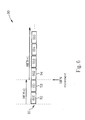
- Fig.6 represents PDUs being received by a receiving station 90 and deciphered in sequence from left to right.
- a normal sequence of PDUs 91 may have SN values of 000, 001, 002, 003, 004, 005 etc.
- the receiving station will receive a sequence of PDUs with SNs as follows: 000, 100, 002, 003, 004, 005 etc.
- the PDU 94 is not retransmitted using the pre-adjustment HFN value, and so the temporary upset caused by the corrupted PDU goes undetected, and HFN difference between the transmitting station and the receiving station remains at one for subsequently received PDUs.
- the possibility of such SN corruption occurring in two consecutive PDUs without detection by a CRC mechanism is very low, furthermore the possibility of two corrupted consecutive PDUs having corrupted SNs with consecutive values again is significantly lower (1/128 lower for UMD PDUs having 7 bit SNs).
- the PDU is discarded as if it were never received, i. e. the PDU is ignored.
- the next sequential PDU 94 i.e. the third PDU
- the HFN value can be further incremented by one at the receiving station. Since missing larger and larger number of consecutive PDUs has a lower and lower probability, the maximum on-line adjustment of HFN can be limited to a predefined number. When HFN un-synchronization is still detected after the limiting predefined number of HFN adjustments has been reached, the on-line HFN adjustment procedure is terminated and considered as failed and an explicit parameter signaling procedure is invoked.
- the maximum allowed value of the HFN adjustment counter above is used in view of a preferred embodiment value. However, this limit can have any practical numerical value. Moreover, the steps of the process can be performed in other arrangements, and even with other steps intervening. On the other hand, Step 804 above can be neglected and the process progresses from step 803 to step 805 directly. In addition, since it takes time for a transmitter to transmit SN space number of PDUs, which are lost during radio transmission, the receiver can prohibit HFN adjustment step (step 805) for a predetermined period of time after a PDU is received and deciphered successfully. The predetermined period of time is no shorter than the time period required for the transmitter to transmit SN space number of PDUs.
- the PDU on which the HFN adjustment procedure was working is discarded in one preferred embodiment.
- the original, i.e., pre-adjustment, HFN value is assigned to the next PDU unless an SN rollover occurs between the SN of the discarded PDU and an SN of a next consecutive PDU, in which case the original HFN value is incremented by one. That is, if for example the predefined number of HFN adjustments is set at two (step 804 in Fig. 8), then at the point where the procedure is terminated and considered as failed the original HFN value will have been incremented by one, twice over, hence the current HFN at procedure termination will correspond to 'original HFN+2'.
- HFN value assigned to the next PDU will correspond to 'current HFN-2', therefore 'original HFN value' can be taken to mean HFN value prior to any adjustment in a particular iteration of the present invention process, and not merely prior to the last adjustment.
- bit corruption occurs in the parts of a PDU used for detecting HFN un-synchronization symptoms, e.g., in the length indicator(s) or in a padding field, an erroneous un-synchronization symptom may be detected.
- HFN un-synchronization caused by PDU corruption and HFN un-synchronization caused by the receiver missing more than SN space number of consecutive PDUs will both create the same apparent affect and initiate HFN adjustment, an additional measures are used to circumvent HFN adjustment being applied to false alarm cases.
- the HFN adjustment process is limited to a predefined number of iterations (two, in the preferred embodiment of the present invention).
- HFN adjustment under the conditions described herein will generally be incremental, aside from times when original PDU values are restored following the failure of HFN adjustment to re-synchronize the current HFNs, a method for decrementing a current HFN value to re-gain HFN synchronization does not feature in the above embodiments of the present invention.
- the original HFN value is decremented in order to restore HFN synchronization.
- limits may be imposed on the allowable number of decrements and iterations before the process is considered as failed.
- length indicators are used in addition to or instead of SN irregularities to detect HFN un-synchronicity.
- LIs illegal length indicators
- the current HFN value is incremented by one and the last PDU of the ten PDUs containing LI fields found to have an illegal LI, together with all subsequent PDUs, is re-deciphered using the adjusted HFN value.
- the method can be iterated for as long as more than two out of every ten PDUs containing LI fields have illegal LIs.
- a limit may be imposed on the number of iterations of HFN adjustment for a given sample/batch of PDUs, after which the process is considered to have failed.
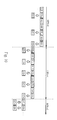
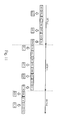
- the updated HFN can be applied from the first UMD PDU in which illegal LI was detected, as shown by Fig.11.
- One further symptom of HFN un-synchronization is an unmatched predefined padding pattern. As discussed in the description of the prior art above, padding occupies any remaining space at the end of a PDU in order to ensure that the PDU is made up to the predetermined length required in a given communications system.
- padding has its own LI at the head of the PDU where no STATUS PDU is inserted, hence a mismatch between the amount of padding according to the padding LI and the amount of padding at the end of the PDU.
- padding patterns can also be used to detect HFN un-synchronization.
- HFN un-synchronization symptoms stated above may be used within the present invention method to detect HFN un-synchronization.
- the receiving station can recover HFN synchronization on line, i.e. without interruption to the dynamic transmission process. Data loss caused by the deciphering of PDUs using un-synchronous parameters will be kept a minimum. Explicit parameter signaling procedures, such as RLC Reset procedures, are not needed except as a last resort, so time delay and potential signaling loss can be avoided.
Landscapes
- Engineering & Computer Science (AREA)
- Computer Networks & Wireless Communication (AREA)
- Signal Processing (AREA)
- Computer Security & Cryptography (AREA)
- Computer Hardware Design (AREA)
- Computing Systems (AREA)
- General Engineering & Computer Science (AREA)
- Mobile Radio Communication Systems (AREA)
- Synchronisation In Digital Transmission Systems (AREA)
- Communication Control (AREA)
Applications Claiming Priority (1)
| Application Number | Priority Date | Filing Date | Title |
|---|---|---|---|
| US52227004P | 2004-09-09 | 2004-09-09 |
Publications (2)
| Publication Number | Publication Date |
|---|---|
| EP1635510A2 true EP1635510A2 (fr) | 2006-03-15 |
| EP1635510A3 EP1635510A3 (fr) | 2006-06-07 |
Family
ID=35197858
Family Applications (1)
| Application Number | Title | Priority Date | Filing Date |
|---|---|---|---|
| EP05018943A Withdrawn EP1635510A3 (fr) | 2004-09-09 | 2005-08-31 | Méthode pour le rétablissement en ligne de la synchronisation des paramètres pour des applications de chiffrement |
Country Status (6)
| Country | Link |
|---|---|
| US (1) | US20060050679A1 (fr) |
| EP (1) | EP1635510A3 (fr) |
| JP (1) | JP2006087097A (fr) |
| KR (1) | KR100673515B1 (fr) |
| CN (1) | CN1767414A (fr) |
| TW (1) | TWI305461B (fr) |
Cited By (2)
| Publication number | Priority date | Publication date | Assignee | Title |
|---|---|---|---|---|
| WO2012167189A1 (fr) * | 2011-06-01 | 2012-12-06 | Qualcomm Incorporated | Mécanismes pour la détection d'une discordance de paramètres de chiffrage et la récupération à partir de celle-ci sur des réseaux de communication |
| US9124425B2 (en) | 2009-06-30 | 2015-09-01 | Nokia Technologies Oy | Systems, methods, and apparatuses for ciphering error detection and recovery |
Families Citing this family (30)
| Publication number | Priority date | Publication date | Assignee | Title |
|---|---|---|---|---|
| JP2006217100A (ja) * | 2005-02-02 | 2006-08-17 | Nec Corp | 復号処理システム及びその方法並びにそれを用いた移動通信システム |
| JP4671776B2 (ja) * | 2005-06-15 | 2011-04-20 | 株式会社エヌ・ティ・ティ・ドコモ | 秘匿処理装置及び秘匿処理方法 |
| KR101211807B1 (ko) | 2006-01-05 | 2012-12-12 | 엘지전자 주식회사 | 이동통신 시스템에서 무선단말의 동기상태 관리방법 |
| KR101187076B1 (ko) | 2006-01-05 | 2012-09-27 | 엘지전자 주식회사 | 이동 통신 시스템에 있어서 신호 전송 방법 |
| CN105515736A (zh) * | 2006-01-05 | 2016-04-20 | Lg电子株式会社 | 在移动通信系统中发送数据 |
| GB2436912B (en) | 2006-04-04 | 2008-03-12 | Nec Technologies | ARQ and HARQ protocol data units and method of formation |
| WO2007148881A2 (fr) | 2006-06-21 | 2007-12-27 | Lg Electronics Inc. | Procédé de prise en charge de retransmission de données dans un système de communication mobile |
| KR101211758B1 (ko) * | 2007-01-10 | 2012-12-12 | 엘지전자 주식회사 | 무선 통신 시스템의 블록 데이터 생성 방법 |
| JP4447028B2 (ja) * | 2007-08-10 | 2010-04-07 | 富士通株式会社 | 通信制御方法、送信装置、およびコンピュータプログラム |
| JP4372814B2 (ja) * | 2007-08-10 | 2009-11-25 | 富士通株式会社 | データユニットの送信回数のカウント方法、カウント装置、送信装置、およびコンピュータプログラム |
| US8208498B2 (en) * | 2007-10-30 | 2012-06-26 | Qualcomm Incorporated | Methods and systems for HFN handling at inter-base station handover in mobile communication networks |
| CN101981962B (zh) | 2008-03-31 | 2013-07-24 | 日本电气株式会社 | 密码处理设备、密码处理方法和密码处理程序 |
| US8898448B2 (en) * | 2008-06-19 | 2014-11-25 | Qualcomm Incorporated | Hardware acceleration for WWAN technologies |
| EP2136501B1 (fr) * | 2008-06-20 | 2019-12-04 | LG Electronics Inc. | Procédé pour fournir une unité de données PDCP sur une couche supérieure |
| JP2010028757A (ja) * | 2008-07-24 | 2010-02-04 | Panasonic Corp | 無線受信装置及び無線受信方法 |
| US9554417B2 (en) * | 2008-12-24 | 2017-01-24 | Qualcomm Incorporated | Optimized header for efficient processing of data packets |
| US8494451B2 (en) * | 2009-01-30 | 2013-07-23 | Nokia Corporation | Method, apparatus and computer program product for providing ciphering problem recovery for unacknowledged mode radio bearer |
| KR101541079B1 (ko) * | 2009-02-09 | 2015-07-31 | 삼성전자주식회사 | 이동통신시스템에서 상향 링크 데이터의 암호화처리 장치 및 방법 |
| JP5316217B2 (ja) * | 2009-05-19 | 2013-10-16 | ソニー株式会社 | データ送信方法および装置、データ通信方法および装置 |
| EP2467968B1 (fr) * | 2009-08-21 | 2019-01-02 | Samsung Electronics Co., Ltd. | Procédé et appareil de gestion de la synchronisation de sécurité pendant des périodes prolongées de non-réception de trames de données |
| US8611541B2 (en) * | 2011-01-17 | 2013-12-17 | Samsung Electronics Co., Ltd | Method and apparatus for applying a ciphering configuration in a wireless communication network |
| EP2688328B1 (fr) * | 2012-07-17 | 2018-10-03 | Google Technology Holdings LLC | Sécurité dans un système de communication sans fil et dispositif |
| US9313756B2 (en) * | 2012-10-10 | 2016-04-12 | Qualcomm Incorporated | Apparatus and methods for managing hyper frame number (HFN) de-synchronization in radio link control (RLC) unacknowledged mode (UM) |
| US20140219451A1 (en) * | 2013-02-07 | 2014-08-07 | Mediatek Inc. | Adaptive security apparatus and method for updating security parameter |
| US20150280905A1 (en) * | 2014-04-01 | 2015-10-01 | Telefonaktiebolaget L M Ericsson (Publ) | Method and apparatus for detecting and correcting pdcp hyper frame number (hfn) desynchronization |
| US20160066289A1 (en) * | 2014-08-28 | 2016-03-03 | Qualcomm Incorporated | Hyperframe number desynchronization recovery mechanism |
| KR102202894B1 (ko) * | 2014-08-28 | 2021-01-14 | 삼성전자 주식회사 | 이동 통신 네트워크에서 패킷 손실 관리 방법 |
| US9532268B2 (en) | 2014-11-19 | 2016-12-27 | Qualcomm Incorporated | Methods and apparatus for synchronizing a user equipment with an HFN offset |
| JP6798280B2 (ja) * | 2016-11-29 | 2020-12-09 | 富士通株式会社 | 攻撃検知装置、攻撃検知方法、および、攻撃検知プログラム |
| KR102395812B1 (ko) * | 2017-06-26 | 2022-05-09 | 삼성전자주식회사 | 무선 통신 시스템에서 암호화 파라미터의 불일치를 감지하기 위한 장치 및 방법 |
Family Cites Families (9)
| Publication number | Priority date | Publication date | Assignee | Title |
|---|---|---|---|---|
| US6243446B1 (en) * | 1997-03-11 | 2001-06-05 | Inline Connections Corporation | Distributed splitter for data transmission over twisted wire pairs |
| US6236729B1 (en) * | 1997-06-06 | 2001-05-22 | Hitachi, Ltd. | Key recovery method and system |
| KR100447162B1 (ko) * | 2000-08-19 | 2004-09-04 | 엘지전자 주식회사 | 래디오 링크 콘트롤(rlc)에서 프로토콜 데이터 유닛(pdu) 정보의 길이 지시자(li) 처리방법 |
| US6765885B2 (en) * | 2001-02-09 | 2004-07-20 | Asustek Computer Inc. | Determination of acceptable sequence number ranges in a communications protocol |
| US6987981B2 (en) * | 2001-11-13 | 2006-01-17 | Asustek Computer Inc. | Robust RLC reset procedure in a wireless communication system |
| US20030091048A1 (en) * | 2001-11-13 | 2003-05-15 | Jiang Sam Shiaw-Shiang | Detection of ciphering parameter unsynchronization in a RLC entity |
| KR100765123B1 (ko) * | 2002-02-16 | 2007-10-11 | 엘지전자 주식회사 | Srns 재할당 방법 |
| EP1361704A1 (fr) * | 2002-05-08 | 2003-11-12 | Lucent Technologies Inc. | Procédé et appareil de contrôle de numéros de séquence lors de la transmission de messages dans un réseau UMTS |
| US6968200B2 (en) * | 2002-08-26 | 2005-11-22 | Asustek Computer Inc. | Method of initializing hyper-frame numbers during an establishment of a new radio bearer in a wireless communication system |
-
2005
- 2005-08-09 US US11/161,591 patent/US20060050679A1/en not_active Abandoned
- 2005-08-31 EP EP05018943A patent/EP1635510A3/fr not_active Withdrawn
- 2005-09-08 KR KR1020050083543A patent/KR100673515B1/ko not_active Expired - Fee Related
- 2005-09-09 JP JP2005261870A patent/JP2006087097A/ja not_active Withdrawn
- 2005-09-09 CN CN200510099179.1A patent/CN1767414A/zh active Pending
- 2005-09-09 TW TW094131124A patent/TWI305461B/zh not_active IP Right Cessation
Cited By (4)
| Publication number | Priority date | Publication date | Assignee | Title |
|---|---|---|---|---|
| US9124425B2 (en) | 2009-06-30 | 2015-09-01 | Nokia Technologies Oy | Systems, methods, and apparatuses for ciphering error detection and recovery |
| US9608815B2 (en) | 2009-06-30 | 2017-03-28 | Nokia Technologies Oy | Systems, methods, and apparatuses for ciphering error detection and recovery |
| WO2012167189A1 (fr) * | 2011-06-01 | 2012-12-06 | Qualcomm Incorporated | Mécanismes pour la détection d'une discordance de paramètres de chiffrage et la récupération à partir de celle-ci sur des réseaux de communication |
| US9736684B2 (en) | 2011-06-01 | 2017-08-15 | Qualcomm Incorporated | Mechanisms for detection of and recovery from ciphering parameter mismatch on communication networks |
Also Published As
| Publication number | Publication date |
|---|---|
| EP1635510A3 (fr) | 2006-06-07 |
| JP2006087097A (ja) | 2006-03-30 |
| CN1767414A (zh) | 2006-05-03 |
| US20060050679A1 (en) | 2006-03-09 |
| KR20060051096A (ko) | 2006-05-19 |
| TWI305461B (en) | 2009-01-11 |
| TW200610347A (en) | 2006-03-16 |
| KR100673515B1 (ko) | 2007-01-24 |
Similar Documents
| Publication | Publication Date | Title |
|---|---|---|
| EP1635510A2 (fr) | Méthode pour le rétablissement en ligne de la synchronisation des paramètres pour des applications de chiffrement | |
| US6765885B2 (en) | Determination of acceptable sequence number ranges in a communications protocol | |
| KR101392697B1 (ko) | 이동통신 시스템에서의 보안 오류 검출방법 및 장치 | |
| EP0671092B1 (fr) | Procede et appareil assurant la protection cryptographique d'un flot de donnees dans un systeme de communications | |
| EP1563651B1 (fr) | Transmission de donnees par paquets dans un contenant unique | |
| US20030091048A1 (en) | Detection of ciphering parameter unsynchronization in a RLC entity | |
| US20080101609A1 (en) | Method and apparatus for handling protocol error in a wireless communications system | |
| TW200402943A (en) | Abnormal case handling for acknowledged mode transmission and unacknowledged mode transmission | |
| CN101933271A (zh) | 用于具有受保护mac序列号的安全块应答的方法和系统 | |
| KR101755336B1 (ko) | 음성 프레임들의 비수신이 지속되는 기간 동안 보안 동기 처리 방법 및 시스템 | |
| KR100712036B1 (ko) | 무선 통신 시스템에서 특정 데이터 분할을 위한 향상된서비스 데이터 유닛 폐기 방법 | |
| EP1916795A2 (fr) | Procédé et appareil pour manipuler les erreurs de protocole dans un système de communication sans fil | |
| CN101258706B (zh) | 用于安全且带宽高效的密码同步的方法 | |
| US20030076859A1 (en) | Modification of ciphering activation time by RLC reset procedure during ciphering configuration change procedure in a wireless communications protocol | |
| CN112996052B (zh) | 数据发送控制方法及装置、终端、基站和介质 | |
| EP1686718A2 (fr) | Procédé de détection et traitement d'erreurs résiduelles de code CRC | |
| EP2076072A2 (fr) | Système et dispositif de communication sans fil | |
| JP2006217100A (ja) | 復号処理システム及びその方法並びにそれを用いた移動通信システム | |
| EP1940108A2 (fr) | Procédé et appareil pour manipuler les erreurs de protocole dans un système de communication sans fil | |
| CN111769914B (zh) | 数据通信方法和存储介质 | |
| EP1510017B1 (fr) | Procede et appareil de synchronisation utilisant l'erreur de detection de numeros de sequence de fa on a eviter une defaillance de synchronisation | |
| WO2004068807A1 (fr) | Determination de plages de numeros de sequence acceptables dans un protocole de communication | |
| JP5309712B2 (ja) | 通信装置、秘匿解除方法 | |
| CN102938679B (zh) | 检测无线传输差错的方法 | |
| KR20060086786A (ko) | 이동 통신 시스템의 라디오 링크 제어 계층에서 패킷데이터의 역비화를 수행하는 방법 |
Legal Events
| Date | Code | Title | Description |
|---|---|---|---|
| PUAI | Public reference made under article 153(3) epc to a published international application that has entered the european phase |
Free format text: ORIGINAL CODE: 0009012 |
|
| 17P | Request for examination filed |
Effective date: 20050831 |
|
| AK | Designated contracting states |
Kind code of ref document: A2 Designated state(s): AT BE BG CH CY CZ DE DK EE ES FI FR GB GR HU IE IS IT LI LT LU LV MC NL PL PT RO SE SI SK TR |
|
| AX | Request for extension of the european patent |
Extension state: AL BA HR MK YU |
|
| PUAL | Search report despatched |
Free format text: ORIGINAL CODE: 0009013 |
|
| AK | Designated contracting states |
Kind code of ref document: A3 Designated state(s): AT BE BG CH CY CZ DE DK EE ES FI FR GB GR HU IE IS IT LI LT LU LV MC NL PL PT RO SE SI SK TR |
|
| AX | Request for extension of the european patent |
Extension state: AL BA HR MK YU |
|
| 17Q | First examination report despatched |
Effective date: 20060926 |
|
| AKX | Designation fees paid |
Designated state(s): DE FI FR GB SE |
|
| RAP1 | Party data changed (applicant data changed or rights of an application transferred) |
Owner name: INNOVATIVE SONIC LIMITED |
|
| STAA | Information on the status of an ep patent application or granted ep patent |
Free format text: STATUS: THE APPLICATION IS DEEMED TO BE WITHDRAWN |
|
| 18D | Application deemed to be withdrawn |
Effective date: 20090303 |