EP1637147A1 - Stallstaub-Extrakt zum Schutz vor Allergien - Google Patents
Stallstaub-Extrakt zum Schutz vor Allergien Download PDFInfo
- Publication number
- EP1637147A1 EP1637147A1 EP04022275A EP04022275A EP1637147A1 EP 1637147 A1 EP1637147 A1 EP 1637147A1 EP 04022275 A EP04022275 A EP 04022275A EP 04022275 A EP04022275 A EP 04022275A EP 1637147 A1 EP1637147 A1 EP 1637147A1
- Authority
- EP
- European Patent Office
- Prior art keywords
- extract
- dust
- mice
- extracts
- stable
- Prior art date
- Legal status (The legal status is an assumption and is not a legal conclusion. Google has not performed a legal analysis and makes no representation as to the accuracy of the status listed.)
- Granted
Links
- 239000000284 extract Substances 0.000 title claims abstract description 60
- 239000000428 dust Substances 0.000 title claims description 48
- 206010020751 Hypersensitivity Diseases 0.000 title description 19
- 208000026935 allergic disease Diseases 0.000 title description 14
- 230000007815 allergy Effects 0.000 title description 14
- 238000000034 method Methods 0.000 claims abstract description 24
- 238000004519 manufacturing process Methods 0.000 claims abstract description 13
- 238000002360 preparation method Methods 0.000 claims abstract description 6
- 238000011282 treatment Methods 0.000 claims description 15
- FAPWRFPIFSIZLT-UHFFFAOYSA-M Sodium chloride Chemical compound [Na+].[Cl-] FAPWRFPIFSIZLT-UHFFFAOYSA-M 0.000 claims description 12
- 230000008569 process Effects 0.000 claims description 11
- 238000000605 extraction Methods 0.000 claims description 9
- 239000000243 solution Substances 0.000 claims description 9
- XLYOFNOQVPJJNP-UHFFFAOYSA-N water Substances O XLYOFNOQVPJJNP-UHFFFAOYSA-N 0.000 claims description 7
- 238000000502 dialysis Methods 0.000 claims description 6
- 230000002265 prevention Effects 0.000 claims description 6
- 238000004062 sedimentation Methods 0.000 claims description 6
- 239000007787 solid Substances 0.000 claims description 6
- 239000000725 suspension Substances 0.000 claims description 6
- 239000003814 drug Substances 0.000 claims description 4
- 239000006228 supernatant Substances 0.000 claims description 4
- 239000000470 constituent Substances 0.000 claims description 3
- 208000037265 diseases, disorders, signs and symptoms Diseases 0.000 claims description 2
- 239000002504 physiological saline solution Substances 0.000 claims description 2
- 229930182490 saponin Natural products 0.000 claims description 2
- 150000007949 saponins Chemical class 0.000 claims description 2
- 235000017709 saponins Nutrition 0.000 claims description 2
- 230000002009 allergenic effect Effects 0.000 claims 1
- 239000007853 buffer solution Substances 0.000 claims 1
- 201000010099 disease Diseases 0.000 claims 1
- 239000012266 salt solution Substances 0.000 claims 1
- 230000000694 effects Effects 0.000 abstract description 7
- 230000003266 anti-allergic effect Effects 0.000 abstract 1
- 230000001088 anti-asthma Effects 0.000 abstract 1
- 239000000924 antiasthmatic agent Substances 0.000 abstract 1
- 230000010534 mechanism of action Effects 0.000 abstract 1
- 239000012873 virucide Substances 0.000 abstract 1
- 241000699670 Mus sp. Species 0.000 description 41
- 239000000203 mixture Substances 0.000 description 35
- 208000006673 asthma Diseases 0.000 description 29
- 108010058846 Ovalbumin Proteins 0.000 description 26
- 229940092253 ovalbumin Drugs 0.000 description 26
- OKKJLVBELUTLKV-UHFFFAOYSA-N Methanol Chemical compound OC OKKJLVBELUTLKV-UHFFFAOYSA-N 0.000 description 24
- 208000024891 symptom Diseases 0.000 description 13
- 239000002158 endotoxin Substances 0.000 description 12
- 206010070834 Sensitisation Diseases 0.000 description 11
- 230000008313 sensitization Effects 0.000 description 11
- 239000000443 aerosol Substances 0.000 description 10
- 210000004027 cell Anatomy 0.000 description 10
- 102000004169 proteins and genes Human genes 0.000 description 10
- 108090000623 proteins and genes Proteins 0.000 description 10
- 239000013566 allergen Substances 0.000 description 9
- NTYJJOPFIAHURM-UHFFFAOYSA-N Histamine Chemical compound NCCC1=CN=CN1 NTYJJOPFIAHURM-UHFFFAOYSA-N 0.000 description 8
- 238000005259 measurement Methods 0.000 description 8
- NZWOPGCLSHLLPA-UHFFFAOYSA-N methacholine Chemical compound C[N+](C)(C)CC(C)OC(C)=O NZWOPGCLSHLLPA-UHFFFAOYSA-N 0.000 description 8
- 229960002329 methacholine Drugs 0.000 description 8
- 210000002966 serum Anatomy 0.000 description 8
- 238000000926 separation method Methods 0.000 description 7
- 238000002965 ELISA Methods 0.000 description 6
- 201000009961 allergic asthma Diseases 0.000 description 6
- 239000002904 solvent Substances 0.000 description 6
- 206010066091 Bronchial Hyperreactivity Diseases 0.000 description 5
- 230000036427 bronchial hyperreactivity Effects 0.000 description 5
- 239000000872 buffer Substances 0.000 description 5
- 238000006243 chemical reaction Methods 0.000 description 5
- 230000028993 immune response Effects 0.000 description 5
- 230000004044 response Effects 0.000 description 5
- 238000002415 sodium dodecyl sulfate polyacrylamide gel electrophoresis Methods 0.000 description 5
- 239000000126 substance Substances 0.000 description 5
- 239000011534 wash buffer Substances 0.000 description 5
- 208000002109 Argyria Diseases 0.000 description 4
- SRBFZHDQGSBBOR-IOVATXLUSA-N D-xylopyranose Chemical compound O[C@@H]1COC(O)[C@H](O)[C@H]1O SRBFZHDQGSBBOR-IOVATXLUSA-N 0.000 description 4
- 241000699666 Mus <mouse, genus> Species 0.000 description 4
- 238000004458 analytical method Methods 0.000 description 4
- PYMYPHUHKUWMLA-UHFFFAOYSA-N arabinose Natural products OCC(O)C(O)C(O)C=O PYMYPHUHKUWMLA-UHFFFAOYSA-N 0.000 description 4
- SRBFZHDQGSBBOR-UHFFFAOYSA-N beta-D-Pyranose-Lyxose Natural products OC1COC(O)C(O)C1O SRBFZHDQGSBBOR-UHFFFAOYSA-N 0.000 description 4
- 230000004071 biological effect Effects 0.000 description 4
- 238000004128 high performance liquid chromatography Methods 0.000 description 4
- 229960001340 histamine Drugs 0.000 description 4
- 210000004072 lung Anatomy 0.000 description 4
- 210000004698 lymphocyte Anatomy 0.000 description 4
- 244000005700 microbiome Species 0.000 description 4
- 239000013642 negative control Substances 0.000 description 4
- 239000012071 phase Substances 0.000 description 4
- 210000002345 respiratory system Anatomy 0.000 description 4
- 239000011780 sodium chloride Substances 0.000 description 4
- 238000010186 staining Methods 0.000 description 4
- 235000000346 sugar Nutrition 0.000 description 4
- WQZGKKKJIJFFOK-GASJEMHNSA-N Glucose Natural products OC[C@H]1OC(O)[C@H](O)[C@@H](O)[C@@H]1O WQZGKKKJIJFFOK-GASJEMHNSA-N 0.000 description 3
- 206010061218 Inflammation Diseases 0.000 description 3
- 108010002616 Interleukin-5 Proteins 0.000 description 3
- 102000000743 Interleukin-5 Human genes 0.000 description 3
- HEMHJVSKTPXQMS-UHFFFAOYSA-M Sodium hydroxide Chemical compound [OH-].[Na+] HEMHJVSKTPXQMS-UHFFFAOYSA-M 0.000 description 3
- 208000024780 Urticaria Diseases 0.000 description 3
- 230000000172 allergic effect Effects 0.000 description 3
- 239000007864 aqueous solution Substances 0.000 description 3
- 208000010668 atopic eczema Diseases 0.000 description 3
- 210000000621 bronchi Anatomy 0.000 description 3
- 238000012512 characterization method Methods 0.000 description 3
- 238000011161 development Methods 0.000 description 3
- 235000014113 dietary fatty acids Nutrition 0.000 description 3
- 238000010790 dilution Methods 0.000 description 3
- 239000012895 dilution Substances 0.000 description 3
- 210000000222 eosinocyte Anatomy 0.000 description 3
- 229930195729 fatty acid Natural products 0.000 description 3
- 239000000194 fatty acid Substances 0.000 description 3
- 150000004665 fatty acids Chemical class 0.000 description 3
- 239000008103 glucose Substances 0.000 description 3
- 210000000987 immune system Anatomy 0.000 description 3
- 238000001727 in vivo Methods 0.000 description 3
- 230000006698 induction Effects 0.000 description 3
- 230000008595 infiltration Effects 0.000 description 3
- 238000001764 infiltration Methods 0.000 description 3
- 230000004054 inflammatory process Effects 0.000 description 3
- 208000030603 inherited susceptibility to asthma Diseases 0.000 description 3
- 210000000265 leukocyte Anatomy 0.000 description 3
- 230000001681 protective effect Effects 0.000 description 3
- 239000013049 sediment Substances 0.000 description 3
- 208000035285 Allergic Seasonal Rhinitis Diseases 0.000 description 2
- 241000894006 Bacteria Species 0.000 description 2
- HEDRZPFGACZZDS-UHFFFAOYSA-N Chloroform Chemical compound ClC(Cl)Cl HEDRZPFGACZZDS-UHFFFAOYSA-N 0.000 description 2
- SHZGCJCMOBCMKK-UHFFFAOYSA-N D-mannomethylose Natural products CC1OC(O)C(O)C(O)C1O SHZGCJCMOBCMKK-UHFFFAOYSA-N 0.000 description 2
- 206010012438 Dermatitis atopic Diseases 0.000 description 2
- 208000004262 Food Hypersensitivity Diseases 0.000 description 2
- 241000233866 Fungi Species 0.000 description 2
- SHZGCJCMOBCMKK-JFNONXLTSA-N L-rhamnopyranose Chemical compound C[C@@H]1OC(O)[C@H](O)[C@H](O)[C@H]1O SHZGCJCMOBCMKK-JFNONXLTSA-N 0.000 description 2
- PNNNRSAQSRJVSB-UHFFFAOYSA-N L-rhamnose Natural products CC(O)C(O)C(O)C(O)C=O PNNNRSAQSRJVSB-UHFFFAOYSA-N 0.000 description 2
- 241001465754 Metazoa Species 0.000 description 2
- VVQNEPGJFQJSBK-UHFFFAOYSA-N Methyl methacrylate Chemical compound COC(=O)C(C)=C VVQNEPGJFQJSBK-UHFFFAOYSA-N 0.000 description 2
- 229920005372 Plexiglas® Polymers 0.000 description 2
- BQCADISMDOOEFD-UHFFFAOYSA-N Silver Chemical compound [Ag] BQCADISMDOOEFD-UHFFFAOYSA-N 0.000 description 2
- QAOWNCQODCNURD-UHFFFAOYSA-N Sulfuric acid Chemical compound OS(O)(=O)=O QAOWNCQODCNURD-UHFFFAOYSA-N 0.000 description 2
- 239000013543 active substance Substances 0.000 description 2
- 230000001154 acute effect Effects 0.000 description 2
- 239000002671 adjuvant Substances 0.000 description 2
- WNROFYMDJYEPJX-UHFFFAOYSA-K aluminium hydroxide Chemical compound [OH-].[OH-].[OH-].[Al+3] WNROFYMDJYEPJX-UHFFFAOYSA-K 0.000 description 2
- 239000012062 aqueous buffer Substances 0.000 description 2
- PYMYPHUHKUWMLA-WDCZJNDASA-N arabinose Chemical compound OC[C@@H](O)[C@@H](O)[C@H](O)C=O PYMYPHUHKUWMLA-WDCZJNDASA-N 0.000 description 2
- 201000008937 atopic dermatitis Diseases 0.000 description 2
- MSWZFWKMSRAUBD-UHFFFAOYSA-N beta-D-galactosamine Natural products NC1C(O)OC(CO)C(O)C1O MSWZFWKMSRAUBD-UHFFFAOYSA-N 0.000 description 2
- WQZGKKKJIJFFOK-VFUOTHLCSA-N beta-D-glucose Chemical compound OC[C@H]1O[C@@H](O)[C@H](O)[C@@H](O)[C@@H]1O WQZGKKKJIJFFOK-VFUOTHLCSA-N 0.000 description 2
- 239000011248 coating agent Substances 0.000 description 2
- 238000000576 coating method Methods 0.000 description 2
- 230000029087 digestion Effects 0.000 description 2
- 239000013024 dilution buffer Substances 0.000 description 2
- 230000002327 eosinophilic effect Effects 0.000 description 2
- 235000020932 food allergy Nutrition 0.000 description 2
- 229930182830 galactose Natural products 0.000 description 2
- 238000000338 in vitro Methods 0.000 description 2
- 208000015181 infectious disease Diseases 0.000 description 2
- 229940100602 interleukin-5 Drugs 0.000 description 2
- 230000000670 limiting effect Effects 0.000 description 2
- KWGKDLIKAYFUFQ-UHFFFAOYSA-M lithium chloride Chemical compound [Li+].[Cl-] KWGKDLIKAYFUFQ-UHFFFAOYSA-M 0.000 description 2
- 239000000401 methanolic extract Substances 0.000 description 2
- 230000000813 microbial effect Effects 0.000 description 2
- 230000007935 neutral effect Effects 0.000 description 2
- 230000003449 preventive effect Effects 0.000 description 2
- 230000009467 reduction Effects 0.000 description 2
- 229910052709 silver Inorganic materials 0.000 description 2
- 239000004332 silver Substances 0.000 description 2
- 239000011734 sodium Substances 0.000 description 2
- 238000002560 therapeutic procedure Methods 0.000 description 2
- 210000003437 trachea Anatomy 0.000 description 2
- MSWZFWKMSRAUBD-GASJEMHNSA-N 2-amino-2-deoxy-D-galactopyranose Chemical compound N[C@H]1C(O)O[C@H](CO)[C@H](O)[C@@H]1O MSWZFWKMSRAUBD-GASJEMHNSA-N 0.000 description 1
- MSWZFWKMSRAUBD-IVMDWMLBSA-N 2-amino-2-deoxy-D-glucopyranose Chemical compound N[C@H]1C(O)O[C@H](CO)[C@@H](O)[C@@H]1O MSWZFWKMSRAUBD-IVMDWMLBSA-N 0.000 description 1
- UAIUNKRWKOVEES-UHFFFAOYSA-N 3,3',5,5'-tetramethylbenzidine Chemical compound CC1=C(N)C(C)=CC(C=2C=C(C)C(N)=C(C)C=2)=C1 UAIUNKRWKOVEES-UHFFFAOYSA-N 0.000 description 1
- XZKIHKMTEMTJQX-UHFFFAOYSA-N 4-Nitrophenyl Phosphate Chemical compound OP(O)(=O)OC1=CC=C([N+]([O-])=O)C=C1 XZKIHKMTEMTJQX-UHFFFAOYSA-N 0.000 description 1
- 101800000263 Acidic protein Proteins 0.000 description 1
- 241000283690 Bos taurus Species 0.000 description 1
- 206010006482 Bronchospasm Diseases 0.000 description 1
- 206010053567 Coagulopathies Diseases 0.000 description 1
- 108090000695 Cytokines Proteins 0.000 description 1
- 102000004127 Cytokines Human genes 0.000 description 1
- WQZGKKKJIJFFOK-QTVWNMPRSA-N D-mannopyranose Chemical compound OC[C@H]1OC(O)[C@@H](O)[C@@H](O)[C@@H]1O WQZGKKKJIJFFOK-QTVWNMPRSA-N 0.000 description 1
- HMFHBZSHGGEWLO-SOOFDHNKSA-N D-ribofuranose Chemical compound OC[C@H]1OC(O)[C@H](O)[C@@H]1O HMFHBZSHGGEWLO-SOOFDHNKSA-N 0.000 description 1
- 241000196324 Embryophyta Species 0.000 description 1
- 241001295925 Gegenes Species 0.000 description 1
- 102000003886 Glycoproteins Human genes 0.000 description 1
- 108090000288 Glycoproteins Proteins 0.000 description 1
- 241000282412 Homo Species 0.000 description 1
- 108090000176 Interleukin-13 Proteins 0.000 description 1
- 108090000978 Interleukin-4 Proteins 0.000 description 1
- -1 Na 2 SO 4 Chemical class 0.000 description 1
- 101150034459 Parpbp gene Proteins 0.000 description 1
- PYMYPHUHKUWMLA-LMVFSUKVSA-N Ribose Natural products OC[C@@H](O)[C@@H](O)[C@@H](O)C=O PYMYPHUHKUWMLA-LMVFSUKVSA-N 0.000 description 1
- VYPSYNLAJGMNEJ-UHFFFAOYSA-N Silicium dioxide Chemical compound O=[Si]=O VYPSYNLAJGMNEJ-UHFFFAOYSA-N 0.000 description 1
- 210000001744 T-lymphocyte Anatomy 0.000 description 1
- 210000000447 Th1 cell Anatomy 0.000 description 1
- 210000004241 Th2 cell Anatomy 0.000 description 1
- 241000700605 Viruses Species 0.000 description 1
- 239000002253 acid Substances 0.000 description 1
- 150000007513 acids Chemical class 0.000 description 1
- 230000009471 action Effects 0.000 description 1
- 208000030961 allergic reaction Diseases 0.000 description 1
- 230000037446 allergic sensitization Effects 0.000 description 1
- HMFHBZSHGGEWLO-UHFFFAOYSA-N alpha-D-Furanose-Ribose Natural products OCC1OC(O)C(O)C1O HMFHBZSHGGEWLO-UHFFFAOYSA-N 0.000 description 1
- WQZGKKKJIJFFOK-PHYPRBDBSA-N alpha-D-galactose Chemical compound OC[C@H]1O[C@H](O)[C@H](O)[C@@H](O)[C@H]1O WQZGKKKJIJFFOK-PHYPRBDBSA-N 0.000 description 1
- 239000000427 antigen Substances 0.000 description 1
- 102000036639 antigens Human genes 0.000 description 1
- 108091007433 antigens Proteins 0.000 description 1
- 239000006286 aqueous extract Substances 0.000 description 1
- 239000008346 aqueous phase Substances 0.000 description 1
- 239000011324 bead Substances 0.000 description 1
- 238000010009 beating Methods 0.000 description 1
- 230000008827 biological function Effects 0.000 description 1
- 230000007885 bronchoconstriction Effects 0.000 description 1
- 244000309466 calf Species 0.000 description 1
- 230000001413 cellular effect Effects 0.000 description 1
- 238000005119 centrifugation Methods 0.000 description 1
- 230000008859 change Effects 0.000 description 1
- 239000003795 chemical substances by application Substances 0.000 description 1
- 239000002026 chloroform extract Substances 0.000 description 1
- 230000035602 clotting Effects 0.000 description 1
- 238000007796 conventional method Methods 0.000 description 1
- 230000001419 dependent effect Effects 0.000 description 1
- 238000000586 desensitisation Methods 0.000 description 1
- 238000001514 detection method Methods 0.000 description 1
- 238000003745 diagnosis Methods 0.000 description 1
- 238000009826 distribution Methods 0.000 description 1
- 231100000673 dose–response relationship Toxicity 0.000 description 1
- 229940079593 drug Drugs 0.000 description 1
- 230000007613 environmental effect Effects 0.000 description 1
- 210000003979 eosinophil Anatomy 0.000 description 1
- 230000007717 exclusion Effects 0.000 description 1
- 238000002474 experimental method Methods 0.000 description 1
- 239000012634 fragment Substances 0.000 description 1
- 230000006870 function Effects 0.000 description 1
- 230000002068 genetic effect Effects 0.000 description 1
- 239000011521 glass Substances 0.000 description 1
- 229960002442 glucosamine Drugs 0.000 description 1
- 238000000227 grinding Methods 0.000 description 1
- 150000002386 heptoses Chemical class 0.000 description 1
- 238000000265 homogenisation Methods 0.000 description 1
- 230000035874 hyperreactivity Effects 0.000 description 1
- 230000009610 hypersensitivity Effects 0.000 description 1
- 230000002519 immonomodulatory effect Effects 0.000 description 1
- 230000001900 immune effect Effects 0.000 description 1
- 230000007233 immunological mechanism Effects 0.000 description 1
- 230000003308 immunostimulating effect Effects 0.000 description 1
- 230000001024 immunotherapeutic effect Effects 0.000 description 1
- 239000007924 injection Substances 0.000 description 1
- 238000002347 injection Methods 0.000 description 1
- 239000007928 intraperitoneal injection Substances 0.000 description 1
- 230000007794 irritation Effects 0.000 description 1
- 150000002632 lipids Chemical class 0.000 description 1
- 244000144972 livestock Species 0.000 description 1
- 230000001050 lubricating effect Effects 0.000 description 1
- 210000002540 macrophage Anatomy 0.000 description 1
- 239000003550 marker Substances 0.000 description 1
- 230000001404 mediated effect Effects 0.000 description 1
- 229910052751 metal Inorganic materials 0.000 description 1
- 239000002184 metal Substances 0.000 description 1
- 239000004570 mortar (masonry) Substances 0.000 description 1
- 238000010172 mouse model Methods 0.000 description 1
- 230000036961 partial effect Effects 0.000 description 1
- 244000052769 pathogen Species 0.000 description 1
- 230000001717 pathogenic effect Effects 0.000 description 1
- 238000005191 phase separation Methods 0.000 description 1
- 239000008363 phosphate buffer Substances 0.000 description 1
- 230000036515 potency Effects 0.000 description 1
- 239000000047 product Substances 0.000 description 1
- 238000011002 quantification Methods 0.000 description 1
- 230000002829 reductive effect Effects 0.000 description 1
- 230000000241 respiratory effect Effects 0.000 description 1
- 230000004202 respiratory function Effects 0.000 description 1
- 150000003839 salts Chemical class 0.000 description 1
- 238000005070 sampling Methods 0.000 description 1
- 230000035945 sensitivity Effects 0.000 description 1
- 230000001235 sensitizing effect Effects 0.000 description 1
- 230000000405 serological effect Effects 0.000 description 1
- 210000002460 smooth muscle Anatomy 0.000 description 1
- 238000002791 soaking Methods 0.000 description 1
- 159000000000 sodium salts Chemical class 0.000 description 1
- 238000010972 statistical evaluation Methods 0.000 description 1
- 230000000638 stimulation Effects 0.000 description 1
- 238000003756 stirring Methods 0.000 description 1
- 239000000758 substrate Substances 0.000 description 1
- 150000008163 sugars Chemical class 0.000 description 1
- 239000013589 supplement Substances 0.000 description 1
- 238000010408 sweeping Methods 0.000 description 1
- 210000001519 tissue Anatomy 0.000 description 1
- 230000001960 triggered effect Effects 0.000 description 1
- 210000003462 vein Anatomy 0.000 description 1
Images



Classifications
-
- A—HUMAN NECESSITIES
- A61—MEDICAL OR VETERINARY SCIENCE; HYGIENE
- A61K—PREPARATIONS FOR MEDICAL, DENTAL OR TOILETRY PURPOSES
- A61K35/00—Medicinal preparations containing materials or reaction products thereof with undetermined constitution
- A61K35/02—Medicinal preparations containing materials or reaction products thereof with undetermined constitution from inanimate materials
-
- A—HUMAN NECESSITIES
- A61—MEDICAL OR VETERINARY SCIENCE; HYGIENE
- A61K—PREPARATIONS FOR MEDICAL, DENTAL OR TOILETRY PURPOSES
- A61K39/00—Medicinal preparations containing antigens or antibodies
- A61K39/35—Allergens
-
- A—HUMAN NECESSITIES
- A61—MEDICAL OR VETERINARY SCIENCE; HYGIENE
- A61P—SPECIFIC THERAPEUTIC ACTIVITY OF CHEMICAL COMPOUNDS OR MEDICINAL PREPARATIONS
- A61P11/00—Drugs for disorders of the respiratory system
- A61P11/06—Antiasthmatics
-
- A—HUMAN NECESSITIES
- A61—MEDICAL OR VETERINARY SCIENCE; HYGIENE
- A61P—SPECIFIC THERAPEUTIC ACTIVITY OF CHEMICAL COMPOUNDS OR MEDICINAL PREPARATIONS
- A61P27/00—Drugs for disorders of the senses
- A61P27/02—Ophthalmic agents
- A61P27/14—Decongestants or antiallergics
-
- A—HUMAN NECESSITIES
- A61—MEDICAL OR VETERINARY SCIENCE; HYGIENE
- A61P—SPECIFIC THERAPEUTIC ACTIVITY OF CHEMICAL COMPOUNDS OR MEDICINAL PREPARATIONS
- A61P37/00—Drugs for immunological or allergic disorders
- A61P37/08—Antiallergic agents
Definitions
- the present invention relates to a composition containing the total allergy-protective potency, activity and action of a natural stable dust, and to a process for the preparation of this composition.
- Type I allergies are mediated by group E antibodies whose production is dependent on group II T helper lymphocytes. These Th2 cells are more common in allergies relative to Th1 cells. Children are initially born with a Th2-dominated immune response, which shifts in the first year of life probably under the influence of microbial burden to a Th1-dominated response (non-allergic immune response). It is believed that common infections correlate with a lower Th2 response and thus fewer allergies. A low microbial load could therefore lead to an increased occurrence of allergies (hygiene hypothesis). A number of epidemiological studies in Europe have shown that children growing up on farms have much less allergic disease than children growing up under non-traditional living conditions (farm effect).
- WO 01/49319 describes a composition which contains antigens present on / in microorganisms and whose use is to be used for the prevention and treatment of allergic diseases.
- This composition is prepared by collecting livestock dust and optionally treating it in a suitable solvent, e.g. Water or isotonic saline solution is suspended.
- a suitable solvent e.g. Water or isotonic saline solution is suspended.
- a suspension of microorganisms or fragments of these organisms is prepared in a solvent which can be administered directly or after further treatment steps for the treatment of allergies.
- WO 96/00579 describes a preparation process for producing a suspension and an extract of mycobacteria in aqueous solution, in which the extract is heated to 121 ° C. for at least 20 minutes. This suspension or extract can be used for non-specific immunomodulation.
- the object of the present invention was to provide a process for the preparation of an agent and a means for the prevention and treatment of allergic diseases.
- This object is achieved by a method for producing an anti-allergenic extract, characterized in that no heat is supplied during the entire production process and an extract prepared by such a process.
- the extract is preferably made from dusts which may contain spores of fungi and bacteria but no vegetative cells.
- the extract of stable dust is preferably produced by farms.
- the dust can be collected by any type of pick-up system, such as by sweeping, soaking, wiping, and the like, without limiting the invention.
- the dust After collecting, the dust can be homogenized.
- any type of technique is possible, which leads to a uniform homogenization of the dust, in particular the bonding and clumping of the dust cancels.
- methods such as, but not limited to, rubbing, beating or crushing, stirring or introduction into a blender are suitable.
- a digestion of the dust may be part of the process of the invention. Digestion of the constituents present in the dust, such as cells, microorganisms, in particular their spores and the like, can be carried out e.g. by grinding, crushing and similar procedures.
- the extraction of the dust is preferably carried out according to the invention with the aid of water or an aqueous solution, more preferably a physiological aqueous saline solution or an aqueous buffer.
- a preferred aqueous buffer contains sodium salts or similar monovalent or divalent salts such as Na 2 SO 4 , KCl, LiCl, MgCl 2 and CaCl 2 . It is very particularly preferred to carry out the extraction of the dust with a physiological saline solution (0.9% NaCl).
- An important aspect of the process according to the invention is that during the entire treatment process of the preparation of the extract no external heat input takes place. This means that neither the solvents used are heated (at the time of use), nor during the manufacturing process, a heat input. Rather, the extract is made at ambient or below. This means that all solvents used have ambient temperature (depending on the season and place of manufacture between about 10 ° C and 40 ° C), or may be cooled, but not be used when hot, or the extract is heated.
- this suspension After uptake of the dust in the aqueous solution or water, this suspension is either allowed to stand or stirred, so that the water-soluble or water-removable substances from the dusts can go into the aqueous phase. Subsequently, the dust components remaining in the solution as solid constituents are removed by a sedimentation step.
- the sedimentation step is not limiting for the process according to the invention; any type of sedimentation known to those skilled in the art can be used. Also, allowing the suspension to stand so that sedimentation of the solid components by gravitational attraction may be considered to be within the meaning of the invention.
- a preferred way of separating the solid components is by centrifuging, after which the supernatant is removed from the sediment. The supernatant from which the solid components such as cells, microorganisms or spores were separated from the dusts by sedimentation forms the extract according to the invention.
- the extract may optionally be subjected to a dialysis step.
- Dialysis can be carried out against the same type of solvents as those already used to pick up the dust.
- Dialysis is preferably carried out against aqua dest.
- a preferred exclusion limit for dialysis is a limit of about 3000 daltons. Thus, smaller molecules are removed from the extract.
- An extract prepared by this process is qualitatively characterized by the fact that it uses the same amounts of dust and the same amounts Solvents contain a significantly higher protein content than extracts prepared by conventional extraction methods, and the protein distribution (the protein pattern on an SDS gel) must be distinguished from other extracts.
- the extract is further characterized by the fact that it contains saponins to a significant extent.
- the extract according to the invention can be used for the prevention and treatment of allergic diseases, in particular as a medicament or for the manufacture of a medicament for the prevention and treatment of allergic diseases such as bronchial asthma, hay fever, atopic dermatitis, food allergies, urticaria and all types be used by contact allergies.
- allergic diseases such as bronchial asthma, hay fever, atopic dermatitis, food allergies, urticaria and all types be used by contact allergies.
- the efficacy of the extract according to the invention clearly exceeds that of extracts prepared by conventional methods, as shown in the examples.
- Example 1 Stable and barn dust collection
- the sediment dust collection is preferably made from cow and calf barns and barn areas of traditionally run alpine farms. These are defined by their location in the northern Alpine valleys in Switzerland, Austria and Germany and their special architecture, i. the spatial proximity of the stable and the living area.
- the sampling of the sediment dust is carried out by the barn door sills, the window sills, raised shelves, Kuhtrainer rods, trays, stools, raised shelves and tools lying around.
- the height of the quilt should be between 0.5m and 1.5m above ground level. No damp or even wet dust should be collected.
- the surfaces are scraped off with the metal spatula and sieved through the household sieve (ALK-Scherax filter holder attachment for vacuum cleaner) into the dust collecting container for stable dust.
- the collected samples are stored in a dry, closed container at room temperature (maximum 22 ° C) and protected from direct sunlight.
- the stable dust is homogenized with a spatula and then in a mortar. Subsequently, the thus homogenized dust in 0.9% aqueous NaCl solution is suspended (at 22 ° C), digested by means of glass beads at about 4 ° C and at 22 ° C. gently stirred for a further 6 hours. It is then centrifuged, the supernatant is removed, dialyzed against water and lyophilized.
- the yield of NaCl cold extract composition of the invention
- extracts of barn dust with H 2 O cold (16.8 wt .-%), H 2 O hot (20.2 wt .-%) and CHCl 3 / MeOH (9 wt .-%) were prepared.
- composition of the invention is subjected to fingerprint analysis by HPLC as compared to the other three extracts and characterized by SDS-polyacrylamide gel electrophoresis (SDS-PAGE) for the presence of proteins (Coomassie stain, silver stain) and lipoglycans (silver stain). Furthermore, sugar, protein (total content) and fatty acids are quantified. Standardized routine methods are used for this purpose.
- the extracts are separated for characterization by HPLC on a Zorbax Bioseries GF-250 column (0.2 M Na phosphate buffer, pH 7.0, isocratic, separation of proteins by size, detection at 280 nm).
- a characteristic separation profile can be seen for the composition according to the invention at 280 nm, which is shown in FIG.
- Extract invention significantly more proteins of high molecular weights than the reference extracts, with a protein of about 20 kDa is particularly present in all extracts.
- the protein content of the composition according to the invention is about 140 ⁇ g / mg twice as high as the protein amounts of the other extracts, assuming the same initial amounts of stable dust and the same volumes were used in the process.
- the composition according to the invention contains 34.6 nmol / mg rhamnose, 20.9 nmol / mg ribose, 42.0 nmol / mg arabinose, 25.6 nmol / mg xylose, 70.9 nmol / mg mannose, 129 , 7 nmol / mg glucose, and 124.4 nmol / mg galactose.
- H 2 O has hot significantly higher amounts of arabinose, xylose, glucose and galactose, and the CHCl 3 / MeOH extract higher Amounts of rhamnose and glucose. H 2 O cold does not differ significantly in its neutral sugar composition from the composition according to the invention.
- the composition according to the invention has a significantly higher content of C14: 0 and C16: 0 than the other two aqueous extracts.
- the full protective potency of the inventive composition is determined by immunological and cell biological function studies in the standardized mouse model in vivo.
- the following are the methods for sensitization and induction of allergic asthma in mice with ovalbumin, the treatment with stable dust extracts and the analysis of allergic and inflammatory reactions.
- Ovalbumin Ovalbumin (OVA) - To raise awareness of mice against the model allergen ovalbumin is used aluminum hydroxide (Pierce) as an adjuvant.
- This adjuvant is known to elicit immune responses characterized by the production of cytokines such as IL-4, IL-5 and IL-13 and by the production of antibodies of the isotype IgE and IgG1 (corresponding human isotype is IgG4).
- mice of the inbred strain Balb / c The sensitization of seven week old mice of the inbred strain Balb / c is carried out by intraperitoneal injection of a mixture of 20 ⁇ g ovalbumin (grade V from Sigma) and 2.2 mg aluminum hydroxide in a total volume of 200 ⁇ l buffer (PBS). Overall, the injection is made twice, on day 0 and on day 14.
- bronchial hyperreactivity A key diagnostic parameter measured in humans to safely diagnose an allergic asthmatic disease is bronchial hyperreactivity. This is a hypersensitivity of the bronchial smooth muscle to nonspecific irritation.
- bronchial hyperreactivity For human diagnosis, low concentrations of histamine are applied and then airway resistance measured in a plethysmograph. Asthmatic persons show a stronger bronchoconstriction depending on the histamine concentration and thus a higher airway resistance than healthy persons.
- mice For measurement, the mice are placed in a Plethysmograph Buxco company in the chambers provided. Through the chambers flows a continuous flow of air and a highly sensitive pressure sensor registers short-term pressure changes in the chamber. The inhalation of the mice produces a negative pressure and the exhalation an overpressure in the chamber. These pressure changes are continuously recorded as a function of time and the software calculates the so-called Penh value from the measured values for each respiratory cycle. The formula used to calculate the Penh value is shown in Figure 5. This dimensionless value correlates with airway resistance. In hyperreactive mice, the airway resistance increases depending on the methacholine concentration (in mice instead of histamine, methacholine provokes, as the bronchi of mice do not respond to histamine), which is expressed by the increase in Penh value.
- the measurement of bronchial hyperreactivity occurs 24 hours after the last OVA aerosol exposure.
- the mice are brought into contact with PBS aerosol for 7 minutes in the plethysmograph after a period of ten minutes in the plethysmograph and the Penh value is recorded. Subsequently, the exposure is carried out for 7 minutes with increasing concentrations of methacholine: 6, 12, 25, 50 mg / ml.
- the Penh value is continuously measured and averaged over periods of 30 seconds. The period in which the maximum Penh value is reached for a certain methacholine concentration is then plotted against the methacholine concentration. This results in a dose-response curve whose area under the curve is greater the stronger the mice are Methacholine react. The area under the curve thus correlates with the hyperreactivity of the animals and is used for statistical evaluation.
- BAL bronchoalveolar lavage
- the staining of the cells is then carried out with the HAEME rapid staining kit from the company Labor +technik Eberhard Lehmann, as described in the product supplement. After staining, 300 cells are counted microscopically on the slide and classified according to the usual criteria in the different leukocyte subpopulations. Subsequently, the percentage composition of the BAL can be calculated.
- Measurement of OVA-specific antibodies of the isotype IgE and IgG1 - Sensitization to an allergen can be measured by determination of allergen-specific antibodies of classes IgG1 and IgE.
- the quantification of the allergen-specific antibodies in the serum of mice is carried out by means of indirect ELISA. To do this, the mice are bled from the tail vein two days after the last application of OVA aerosol. After clotting, the serum is collected by centrifugation and used in ELISA:
- IgE (OVA spec.) ELISA IgE (OVA spec.) ELISA:
- a dilution series of a standard serum is carried.
- This standard serum contains a known concentration of OVA-specific antibodies of the isotype IgG1 and IgE.
- concentration in the unknown sample can be calculated.
- mice with stable dust extracts during sensitization For the treatment of mice with the different stable dust extracts, they are placed in a plexiglass chamber with 11 liters volume. The chamber is as described above in the paragraph "Sensitization and induction of allergic asthma in mice with ovalbumin (OVA)," aerosol generator connected to a pari-Boy, the inhaler of the barn dust extracts has been previously filled with a 1% solution. The mice are then treated with the stable dust extract aerosol for 20 minutes. The treatments take place a total of 14x at the times specified in Figure 3 during the sensitizations.
- OVA ovalbumin
- FIG. 4 shows that the sensitivity of the respiratory tract in the asthmatic mice can be reduced to the level of untreated mice without asthma by the treatment with the extract according to the invention.
- pure LPS was used as a control in a concentration as measured in the stable dust extracts. LPS can not reduce the asthma symptoms of the mice. One must therefore assume that other substances in the dust are responsible for the observed biological effect.
- CHCl 3 / MeOH is the classical extraction method which, after phase separation, extracts lipids into the chloroform phase and other molecules with weaker lipophilic properties into the methanol phase.
- the methanol extract (here called CHCl 3 / MeOH) has no preventive effect on the asthma symptoms of the mice.
- the barn dust extracted cold in H 2 O causes a partial reduction of the symptoms, which is not as effective as the effect of the composition according to the invention.
Landscapes
- Health & Medical Sciences (AREA)
- Life Sciences & Earth Sciences (AREA)
- Pharmacology & Pharmacy (AREA)
- Veterinary Medicine (AREA)
- Public Health (AREA)
- General Health & Medical Sciences (AREA)
- Chemical & Material Sciences (AREA)
- Animal Behavior & Ethology (AREA)
- Medicinal Chemistry (AREA)
- Epidemiology (AREA)
- Chemical Kinetics & Catalysis (AREA)
- Pulmonology (AREA)
- Nuclear Medicine, Radiotherapy & Molecular Imaging (AREA)
- General Chemical & Material Sciences (AREA)
- Immunology (AREA)
- Bioinformatics & Cheminformatics (AREA)
- Engineering & Computer Science (AREA)
- Organic Chemistry (AREA)
- Microbiology (AREA)
- Mycology (AREA)
- Ophthalmology & Optometry (AREA)
- Medicines Containing Material From Animals Or Micro-Organisms (AREA)
- Pharmaceuticals Containing Other Organic And Inorganic Compounds (AREA)
- Medicines That Contain Protein Lipid Enzymes And Other Medicines (AREA)
- Medicines Containing Plant Substances (AREA)
- Medicinal Preparation (AREA)
Abstract
Description
- Die vorliegende Erfindung betrifft eine Zusammensetzung, welche die gesamte Allergie protektive Potenz, Aktivität und Wirkung eines natürlichen Stallstaubs enthält, und ein Verfahren zur Herstellung dieser Zusammensetzung.
- Als Allergien bezeichnet man überschießende Reaktionen des Körpers, insbesondere des Immunsystems, auf nicht schädliche fremde Substanzen. Diese Reaktionen laufen genauso wie die normale Immunantwort gegen einen Krankheitserreger ab. Es werden mehrere Typen der allergischen Immunantwort unterschieden. Allergische Reaktionen vom Typ 1, zu denen bronchiales Asthma, Atopische Dermatitis, Urtikaria (Nesselsucht), Heuschnupfen sowie Nahrungsmittelallergien gehören, sind am weitesten verbreitet. Obgleich diese Krankheiten unterschiedliche körperliche Symptome aufweisen, liegen Ihnen ähnliche immunologische Mechanismen zugrunde.
- Zahlreiche Studien belegen, dass allergische Erkrankungen zunehmen. Die Ursachen der Entstehung und Entwicklung der Allergien sind bisher unklar. Bestimmte bisher unbekannte Erbfaktoren und Umweltbedingungen wie Allergenexposition, Leben in der Stadt, Anzahl der Geschwister und manche Infektionen tragen wahrscheinlich zur Entstehung bei.
- Allergien vom Typ I werden durch Antikörper der Gruppe E vermittelt, deren Entstehung von T-Helferlymphozyten der Gruppe II abhängig ist. Diese Th2-Zellen kommen bei Allergien im Verhältnis zu den Th1 Zellen häufiger vor. Kinder werden zunächst mit einer Th2 dominierten Immunantwort geboren, die sich im ersten Lebensjahr wohl unter dem Einfluß der mikrobiellen Belastung zu einer Th1 dominierten Antwort (nicht allergischen Immunantwort) verschiebt. Es wird angenommen, dass häufige Infektionen mit einer geringeren Th2 Antwort und damit weniger Allergien korrelieren. Eine niedrige mikrobielle Belastung könnte also zum verstärkten Auftreten von Allergien führen (Hygienehypothese). Eine Reihe von epidemiologischen Studien in Europa haben gezeigt, dass Kinder, die auf Bauernhöfen aufwachsen sehr viel weniger allergische Erkrankungen aufweisen als Kinder, die unter nicht traditionellen Lebensbedingungen groß werden (Bauerneffekt). Es ist heute klar, dass dieser Effekt mit dem häufigen Stallkontakt der Kinder auf den Bauernhöfen zusammenhängt, da Allergieprotektion am deutlichsten bei Kindern zu finden war, die sich im ersten Lebensjahr häufig dort aufhielten. Dieser Schutzeffekt geht mit sehr hoher Wahrscheinlichkeit vom Kontakt mit Stallstaub (z. B. über Inhalation) aus. Das hängt damit zusammen, dass der Stallstaub unter anderem auch immunstimulatorisch wirksame Substanzen aus Bakterien, Viren, Pilzen, Pflanzen und Tieren enthält, die vermutlich den mit der Hygienehypothese zusammenhängenden Bauerneffekt ausmachen. Welche Substanzen im Stallstaub den Schutzeffekt letztlich auslösen, ist jedoch bis heute unbekannt.
- Die Möglichkeiten zur Prävention und Therapie allergischer Erkrankungen sind begrenzt. Die Symptome lassen sich zwar relativ gut durch zahlreiche Medikamente lindern, die immuntherapeutischen Behandlungen wie die Desensibilisierung sind aber unterschiedlich erfolgreich. Vor allem bei dem häufig auftretenden bronchialen Asthma ist diese Therapie eher unwirksam. Auch die Allergenvermeidung als präventive Maßnahme trägt nicht sicher zur Senkung der Allergiehäufigkeit bei. Insgesamt gibt es keine Möglichkeiten, dass Risiko für Allergieentstehung zu senken.
- Die WO 01/49319 beschreibt eine Zusammensetzung, die auf/in Mikroorganismen befindliche Antigene enthält und deren Benutzung zur Vorbeugung und Behandlung von allergischen Erkrankungen angewandt werden soll. Diese Zusammensetzung wird dadurch hergestellt, dass Stallstaub gesammelt und dieser gegebenenfalls in einem geeigneten Lösungsmittel, z.B. Wasser oder isotonischer Salzlösung suspendiert wird. Somit wird eine Suspension von Mikroorganismen oder auch Fragmenten dieser Organismen in einem Lösungsmittel hergestellt, die direkt oder nach weiteren Behandlungsschritten zur Behandlung von Allergien verabreicht werden kann.
- Die WO 96/00579 beschreibt ein Herstellungsverfahren zum Herstellen einer Suspension und eines Extraktes von Mykobakterien in wässriger Lösung, bei dem der Extrakt wenigstens 20 Minuten auf 121°C erhitzt wird. Diese Suspension oder dieser Extrakt kann für die unspezifische Immunmodulation eingesetzt werden.
- Die Aufgabe der vorliegenden Erfindung war es ein Verfahren zur Herstellung eines Mittels und ein Mittel zur Vorbeugung und Behandlung von allergischen Erkrankungen bereitzustellen.
- Diese Aufgabe wird gelöst durch ein Verfahren zur Herstellung eines anti-allergenen Extraktes, dadurch gekennzeichnet, dass während des gesamten Herstellungsverfahrens keine Wärmezufuhr erfolgt und einen nach einem solchen Verfahren hergestellten Extrakt.
- Der Extrakt wird bevorzugt aus Stäuben hergestellt, die Sporen von Pilzen und Bakterien enthalten können, jedoch keine vegetativen Zellen. Bevorzugt wird der Extrakt aus Stallstaub von Bauernhöfen hergestellt.
- Der Staub kann mit Hilfe jeder Art von Aufnahmesystem gesammelt werden, also durch Zusammenkehren, Aufsaugen, Abwischen und ähnlichem, ohne dass die Erfindung hierdurch beschränkt würde.
- Nach dem Sammeln kann der Staub homogenisiert werden. Hierfür ist jede Art von Technik möglich, die zu einer gleichmäßigen Homogenisierung des Staubes führt, insbesondere die Verklebungen und Verklumpungen des Staubes aufhebt. Hierfür sind Verfahren wie das Reiben, Zerschlagen oder Zerstampfen, Rühren oder Einbringen in einen Mixer geeignet, ohne hierauf beschränkt zu sein. Auch ein Aufschließen des Staubes kann Bestandteil des erfindungsgemäßen Verfahrens sein. Ein Aufschließen der in dem Staub vorliegenden Bestandteile wie Zellen, Mikroorganismen, insbesondere deren Sporen und Ähnliches kann z.B. durch Zerreiben, Zerquetschen und ähnliche Verfahren erfolgen.
- Die Extraktion des Staubes wird erfindungsgemäß bevorzugt mit Hilfe von Wasser oder einer wässrigen Lösung durchgeführt, besonders bevorzugt ist eine physiologische wässrige Kochsalzlösung oder ein wässrigen Puffer. Ein bevorzugter wässriger Puffer enthält Natriumsalze oder ähnliche ein- oder zweiwertige Salze wie Na2SO4, KCI, LiCl, MgCl2 und CaCl2. Ganz besonders bevorzugt ist es die Extraktion des Staubes mit einer physiologischen Kochsalzlösung (0,9% NaCl) durchzuführen.
- Ein wichtiger Aspekt des erfindungsgemäßen Verfahrens ist, dass während des gesamten Aufbereitungsverfahrens der Herstellung des Extraktes keine externe Wärmezufuhr erfolgt. Dies bedeutet, dass weder die eingesetzten Lösungsmittel (zum Zeitpunkt des Einsatzes) erhitzt werden, noch während des Herstellungsverfahrens eine Wärmezufuhr erfolgt. Vielmehr wird der Extrakt bei Umgebungstemperatur oder darunter hergestellt. Dies bedeutet, dass alle verwendeten Lösungsmittel Umgebungstemperatur (je nach Jahreszeit und Herstellungsort zwischen ca. 10 °C und 40°C) haben, oder gekühlt sein können, nicht aber in heißem Zustand verwendet werden, oder der Extrakt erhitzt wird.
- Nach Aufnahme des Staubes in der wässrigen Lösung oder Wasser wird diese Suspension entweder stehen gelassen oder gerührt, so dass die wasserlöslichen oder durch Wasser von den Stäuben entfernbaren Substanzen in die wässrige Phase übergehen können. Anschließend werden die in der Lösung als feste Bestandteile verbleibenden Staubanteile durch einen Sedimentationsschritt entfernt. Der Sedimentationsschritt ist für das erfindungsgemäße Verfahren nicht limitierend, es kann jede dem Fachmann bekannte Art der Sedimentation angewendet werden. Auch das Stehenlassen der Suspension, so dass das Sedimentieren der festen Bestandteile durch die Erdanziehung erfolgt kann als im Sinne der Erfindung betrachtet werden. Eine bevorzugte Art des Abtrennens der festen Bestandteile ist das Zentrifugieren, wonach der Überstand von dem Sediment abgenommen wird. Der Überstand, aus dem die festen Bestandteile wie Zellen, Mikroorganismen oder Sporen aus den Stäuben durch Sedimentieren abgetrennt wurden, bildet den erfindungsgemäßen Extrakt.
- In einer bevorzugten Ausführungsform der Erfindung kann der Extrakt optional noch einem Dialyseschritt unterzogen werden. Die Dialyse kann gegen dieselbe Art von Lösungsmitteln erfolgen, wie sie bereits für die Aufnahme des Staubes eingesetzt wurden. Bevorzugt erfolgt die Dialyse gegen aqua dest. Eine bevorzugte Ausschlussgrenze bei der Dialyse stellt eine Grenze von ca. 3000 Dalton dar. Somit werden kleinere Moleküle aus dem Extrakt entfernt.
- Ein nach diesem Verfahren hergestellter Extrakt zeichnet sich qualitativ dadurch aus, dass er bei gleichen Einsatzmengen von Staub und gleichen Einsatzmengen an Lösungsmitteln einen deutlich höheren Proteinanteil enthält als Extrakte, die nach herkömmlichen Extraktionsverfahren hergestellt werden, außerdem ist die Proteinverteilung (das Proteinmuster auf einem SDS Gel) von der anderer Extrakte zu unterscheiden. Der Extrakt zeichnet sich weiterhin dadurch aus, dass er Saponine zu einem deutlichen Anteil enthält.
- Der erfindungsgemäße Extrakt kann für die Vorbeugung und Behandlung von allergischen Erkrankungen verwendet werden, insbesondere kann er als Medikament oder für die Herstellung eines Medikaments für die Vorbeugung und Behandlung von allergisch bedingten Erkrankungen wie Asthma bronchiale, Heuschnupfen, atopische Dermatitis, Nahrungsmittelallergien, Urtikaria und alle Arten von Kontaktallergien verwendet werden. Die Wirksamkeit des erfindungsgemäßen Extraktes übersteigt deutlich die von Extrakten, die nach herkömmlichen Verfahren hergestellt werden, wie in den Beispielen gezeigt wird.
-
- Abb. 1 zeigt das Trennungsprofil der Auftrennung der erfindungsgemäßen Zusammensetzung und dreier Vergleichsextrakte mittels HPLC.
- Abb. 2 zeigt die Auftrennung der erfindungsgemäßen Zusammensetzung und dreier Vergleichsextrakte mittels SDS-PAGE. Das obere Gel ist Coomassi blue gefärbt, das untere zeigt eine Silberfärbung derselben Auftrennung.
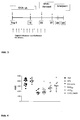
- Abb. 3 zeigt eine schematische Zusammenfassung des Asthma- und Sensibilisierungsmodell in der Balb/c Labormaus. Die Mäuse erhalten 2x im Abstand von 14 Tagen das Allergen (Ovalbumin Grad VII) intraperitonial, anschließend 2x als Aeorosol. Parallel inhalieren die Mäuse in einer abgeschlossenen Kammer die erfindungsmäßige Zusammensetzung für 20 Minuten täglich über 14 Tage. Am 39. Tag wird die Atemfunktion der Lunge mit dem Bodyplethysmographen für die Maus gemessen, am 41. Tag folgen die übrigen serologischen und zellbiologischen Analysen.
- Abb. 4 zeigt die Ergebnisse der Untersuchungen von Asthmasymptomen bei Mäusen. AUC steht für "area under the curve" und beschreibt die Fläche unter der Penh-Kurve nach Stimulation der Mäuse mit 6, 12, 24 und 48 mg/ml Metacolin. Es werden Mäuse verglichen, die PBS als negative Kontrolle (PBS), LPS in Stallstaub äquivalenter Dosis als negativ Kontrolle (LPS), die erfindungsgemäße Zusammensetzung ( NaCl kalt ), ein Kaltwasserextrakt zum Vergleich ( H 2 O kalt ), die Methanolphase des Bligh&Dyer Extrakts (CHCl 3 / MeOH) und PBS ohne Sensibilisierung (non sens.) inhaliert haben.
- Abb. 5 zeigt die Modulation der Eosinophilen Zellen in der bronchoalveolären Lavage (BAL). Es wurden Mäuse verglichen, die PBS als negative Kontrolle (PBS), LPS in Stallstaub äquivalenter Dosis als negativ Kontrolle (LPS), die erfindungsgemäße Zusammensetzung (NaCl kalt ), ein Kaltwasserextrakt zum Vergleich (H 2 O kalt ), die Methanolphase des Bligh&Dyer Extrakts (CHCl 3 /MeOM) und PBS ohne Sensibilisierung (non sens.) inhaliert haben.
- Die Sedimentstaubsammlung erfolgt bevorzugt aus Kuh- und Kälberställen und Scheunenbereichen traditionell geführter Alpenbauernhöfe. Diese sind definiert über ihre Lage in den nördlichen Alpentälern in der Schweiz, Österreichs und Deutschlands und ihre besondere Architektur, d.h. der räumlichen Nähe des Stall- und des Wohnbereichs. Die Probenahme des Sedimentstaubs erfolgt von den Scheunentorsimsen, den Fenstersimsen, erhöhten Ablageflächen, Kuhtrainer-Gestängen, Tablaren, Schemeln, erhöhte Ablageflächen und herumliegenden Werkzeugen. Die Höhe der Sammelflächen sollte zwischen 0.5m und 1.5m Höhe über Boden betragen. Es darf kein feuchter oder sogar nasser Staub gesammelt werden. Die Oberflächen werden mit dem Metallspatel abgekratzt und durch das Haushaltssieb (ALK-Scherax Filterhalteraufsatz [Vorabscheidersieb] für Staubsauger) in den Staubsammelbehälter für Stallstaub gesiebt.
- Die gesammelten Proben werden alle im geschlossenen Sammelbehälter trocken bei Raumtemperatur (maximal 22°C) und vor direkter Sonneneinstrahlung geschützt aufbewahrt.
- Der Stallstaub wird mit einem Spatel und anschließend im Mörser homogenisiert. Anschließend wird der so homogenisierte Staub in 0.9% wässriger NaCl-Lösung suspendiert (bei 22°C), mittels Glasperlen bei ca. 4°C aufgeschlossen und bei 22°C für weitere 6 Std. vorsichtig gerührt. Anschließend wird zentrifugiert, der Überstand wird abgenommen, gegen Wasser dialysiert und lyophilisiert. Die Ausbeute des NaClkalt Extrakts (erfindungsgemäße Zusammensetzung) liegt bei 9 Gew.-% des eingesetzten Stallstaubs. Zum Vergleich wurden Extrakte aus Stallstaub mit H2Okalt (16.8 Gew.-%), H2Oheiss (20.2 Gew.-%) und CHCl3/MeOH (9 Gew.-%) hergestellt.
- Der erfindungsgemäße Zusammensetzung wird im Vergleich zu den drei anderen Extrakten einer fingerprint-Analyse mittels HPLC unterworfen und durch SDS-Polyacrylamid-Gelelektrophorese (SDS-PAGE) auf das Vorkommen von Proteinen (Coomassie-Färbung, Silberfärbung) und Lipoglycanen (Silberfärbung) charakterisiert. Weiterhin werden Zucker, Protein (Gesamtgehalt) und Fettsäuren quantifiziert. Dazu werden standardisierte Routinemethoden angewandt.
- Die Extrakte werden zur Charakterisierung mittels HPLC über eine Zorbax Bioseries GF-250 Säule aufgetrennt (0.2 M Na-Phosphat-Puffer, pH 7.0, isokratisch, Auftrennung von Proteinen nach Größe, Detektion bei 280 nm). Im Vergleich zu den anderen Staubextrakten ist für die erfindungsgemäße Zusammensetzung bei 280 nm ein charakteristisches Trennprofil erkennbar, welches in Abbildung 1 gezeigt ist.
- Die Auftrennung der Extrakte in der SDS-PAGE (Abb. 2) zeigt, dass sich die erfindungsgemäße Zusammensetzung sowohl qualitativ als auch quantitativ von den anderen Extrakten unterscheidet. Dies betrifft sowohl Proteine (Coomassiefärbung, oberes Bild: MGW 30000 ― 100000 Da) als auch Lipoglycane (Silberfärbung: breit schmierende Substanz(en) im Bereich MGW 20000 und darunter). Dazu zeigt die Silberfärbung weitere distinkte Banden, die nicht oder nur sehr schwach durch Coomassie angefärbt werden (MGW ca. 26 kDa, ca. 14 kDa, ca. 12 kDa und 2 Banden darunter). Hierbei könnte es sich um Proteine und/oder Glycoproteine handeln, die nur sehr schlecht mit Coomassie anfärben (stark saure Proteine) und/oder nur in geringen Mengen vorliegen (die Silberfärbung ist zwischen 10 und 40 mal empfindlicher als die Coomassiefärbung). Insbesondere enthält der erfindungsgemäße Extrakt deutlich mehr Proteine hoher Molekulargewichte als die Vergleichsextrakte, wobei in allen Extrakten ein Protein mit ca. 20 kDa besonders präsent ist.
- Der Proteingehalt der erfindungsgemäßen Zusammensetzung liegt mit ca. 140 µg/mg um das Zweifache höher als die Proteinmengen der anderen Extrakte, wenn von gleichen Ausgangsmengen an Stallstaub ausgegangen und dieselben Volumina im Verfahren verwendet wurden.
- Die Analyse der Zuckerzusammensetzung zeigte, dass in allen Extrakten keine Uronsäuren und Heptosen zu finden sind und alle Extrakte Glucosamin und Galactosamin enthalten. Hinsichtlich der Neutralzucker findet man in der erfindungsgemäßen Zusammensetzung 34,6 nmol/mg Rhamnose, 20,9 nmol/mg Ribose, 42,0 nmol/mg Arabinose, 25,6 nmol/mg Xylose, 70,9 nmol/mg Mannose, 129,7 nmol/mg Glucose, und 124,4 nmol/mg Galactose.

- Wie aus Tabelle 1 ersichtlich ist, besitzt H2Oheiss deutliche höhere Mengen an Arabinose, Xylose, Glucose und Galactose, und der CHCl3/MeOH Extrakt höhere Mengen an Rhamnose und Glucose. H 2 O kalt unterscheidet sich in seiner Neutralzuckerzusammensetzung nicht wesentlich von der erfindungsgemäßen Zusammensetzung. Diese Befunde deuten darauf hin, dass die Temperatur bei der Extraktion für molekulare Unterschiede wesentlich mit verantwortlich ist.
- Die Analyse der Fettsäuren ergibt für die erfindungsgemäße Zusammensetzung einen Gehalt an C12:0 von 5.9 nmol/mg, C14:0 von 30.7 nmol/mg, 2-OH-C14:0 von 4.3 nmol/mg, 3-OH-C14:0 von 3.2 nmol/mg, C16:0 von 13.9 nmol/mg, C18:0 von 5.6 nmol/mg und C18:1 von 4.7 nmol/mg. In der Summe bedeutet das 68.2 nmol/mg Fettsäuren.

- Wie Tabelle 2 zeigt, weist die erfindungsgemäße Zusammensetzung einen deutlich höheren Gehalt an C14:0 und C16:0 als die anderen beiden wässrigen Extrakte auf. Diese Ergebnisse zeigen, dass neben der Temperatur auch der Zusatz von NaCl zur Extraktion von unterschiedlichen Molekülen aus Stallstaub führt.
- Die vollständige protektive Potenz der erfindungsgemäßen Zusammensetzung wird durch immunologische und zellbiologische Funktionsuntersuchungen im standardisierten Tiermodell der Maus in vivo bestimmt.
- Im folgenden werden zunächst die Methoden zur Sensibilisierung und Induktion von allergischem Asthma bei Mäusen mit Ovalbumin, der Behandlung mit StallstaubExtrakten und der Analyse der allergischen und entzündlichen Reaktionen beschrieben.
- Ovalbumin (OVA)- Zur Sensibilisierung von Mäusen gegen das Modell-Allergen Ovalbumin wird Aluminiumhydroxid (Pierce) als Adjuvans verwendet. Von diesem Adjuvans ist bekannt, dass es Immunantworten auslöst, die durch die Produktion von Cytokinen wie IL-4, IL-5 und IL-13 charakterisiert sind und durch die Produktion von Antikörpern des Isotyps IgE und IgG1 (entsprechender Isotyp beim Menschen ist IgG4).
- Die Sensibilisierung von sieben Wochen alten Mäusen des Inzuchtstammes Balb/c erfolgt durch intraperitoneale Injektion eines Gemisches von 20µg Ovalbumin (Grade V der Firma Sigma) und 2.2 mg Aluminiumhydroxid in einem Gesamtvolumen von 200µl Puffer (PBS). Insgesamt erfolgt die Injektion zweimal, nämlich am Tag 0 und am Tag 14.
- Um anschließend eine allergische Reaktion in der Lunge der Mäuse hervorzurufen, also das akute allergische Asthma auszulösen, werden die Mäuse am Tag 28 und Tag 38 jeweils 20 Minuten lang mit Ovalbumin-Aerosol behandelt. Hierzu werden die Mäuse in eine Plexiglas-Kammer mit 11 Litern Volumen gesetzt. An die Kammer wird ein Inhalator der Firma Pari angeschlossen, der zuvor mit 1%iger Ovalbuminlösung befüllt wurde, und mit einem Pari-Boy-Turbo Aerosol Generator betrieben wird. Nach der zweiten Applikation von OVA-Aerosol kann bei den Mäusen einige Tage lang Symptome des akuten allergischen Asthmas diagnostiziert werden. Zu den Symptomen gehören:
- 1) die verstärkte Reaktion gegen Methacholin, die bronchiale Hyperreaktivität
- 2) die verstärkte Infiltration von eosinophilen Granulozyten und Lymphozyten in das Atemwegslumen .
- 3) die Produktion von Ovalbumin spezifischen Antikörpern der Isotypen IgE und IgG1
- 4) die Produktion von Interleukin-5 nach in vitro Restimulierung von Lymphozyten mit Ovalbumin
- Die Methoden zur Messung der einzelnen Parameter werden im folgenden näher erläutert.
- Messung der bronchialen Hyperreaktivität - Ein entscheidender diagnostischer Parameter, der beim Menschen gemessen wird, um eine allergisch asthmatische Erkrankung sicher zu diagnostizieren, ist die bronchiale Hyperreaktivität. Hierbei handelt es sich um eine Überempfindlichkeit der glatten Muskulatur der Bronchien gegen unspezifische Reizungen. Zur Diagnose beim Menschen werden geringe Konzentrationen an Histamin appliziert und anschließend der Atemwegswiderstand in einem Plethysmographen gemessen. Asthmatische Personen zeigen eine von der Histaminkonzentration abhängige stärkere Bronchokonstriktion und damit einen höheren Atemwegswiderstand als gesunde Personen.
- Ganz ähnlich erfolgt die Messung bei Mäusen. Zur Messung werden die Mäuse in einen Plethysmographen der Firma Buxco in die dafür vorgesehenen Kammern gesetzt. Durch die Kammern fließt ein kontinuierlicher Luftstrom und ein hochempfindlicher Druckabnehmer registriert kurzfristige Druckänderungen in der Kammer. Die Einatmung der Mäuse erzeugt einen Unterdruck und die Ausatmung einen Überdruck in der Kammer. Diese Druckänderung werden in Abhängigkeit von der Zeit kontinuierlich aufgezeichnet und von der Software aus den gemessenen Werten für jeden Atemzyklus der sogenannte Penh-Wert berechnet. Die Formel mittels der der Penh-Wert berechnet wird, geht aus Abbildung 5 hervor. Dieser dimensionslose Wert korreliert mit dem Atemwegswiderstand. Bei hyperreaktiven Mäusen erhöht sich der Atemwegswiderstand abhängig von der Methacholin-Konzentration (bei Mäusen nimmt man anstelle von Histamin, Methacholin zur Provokation, da die Bronchien von Mäusen nicht auf Histamin reagieren), was sich durch die Erhöhung des Penh-Wertes ausdrückt.
- Die Messung der bronchialen Hyperreaktivität erfolgt 24 Stunden nach der letzten OVA-Aerosol Exposition. Für die Messung der bronchialen Hyperreaktivität werden die Mäuse nach einer Gewöhnungszeit von 10 Minuten im Plethysmographen 7 Minuten lang mit PBS-Aerosol in Kontakt gebracht und dabei der Penh-Wert aufgezeichnet. Anschließend erfolgt die Exposition jeweils 7 Minuten lang mit aufsteigenden Konzentrationen an Methacholin: 6, 12, 25, 50mg/ml. Während jeder Exposition wird der Penh-Wert kontinuierlich gemessen und über Perioden von 30 Sekunden gemittelt. Die Periode in der für eine bestimmte Methacholin-Konzentration der maximale Penh-Wert erreicht wird, wird dann gegen die Methacholin-Konzentration aufgetragen. Hieraus ergibt sich eine Dosis-Wirkungs-Kurve, deren Fläche unter der Kurve umso größer ist, je stärker die Mäuse auf Methacholin reagieren. Die Fläche unter der Kurve korreliert also mit der Hyperreagibilität der Tiere und wird zur statistischen Auswertung verwendet.
- Untersuchung der zellulären Zusammensetzung der Broncho-Alveolären-Lavage (BAL) - Bei gesunden Probanden bzw. unbehandelten Mäusen können nur sehr wenige bis gar keine eosinophile Granulozyten im Lungengewebe und im Lumen der Atemwege beobachtet werden. Die Leukozyten, die in gesunden Atemwegen vorgefunden werden, sind hauptsächlich Makrophagen. Im Zusammenhang mit allergischem Asthma kommt es aus noch nicht ganz geklärten Ursachen zur massiven Infiltration der Atemwege durch eosinophile Granulozyten und im geringeren Maße durch Lymphozyten.
- Um die Zusammensetzung des Leukozyten-Infiltrats in den Atemwegen von Mäusen zu untersuchen, werden diese drei Tage nach der letzten OVA-Aerosol Exposition getötet. Die Trachea wird freigelegt und eine 24G Venen-Verweilkanüle in die Trachea inseriert. Durch diese wird das Lumen der Atemwege zweimal mit jeweils 1ml isotonischem Puffer gewaschen (Broncho-Alveoläre-Lavage). Die Gesamtzahl der Zellen, die auf diese Weise aus der Lunge herausgespült werden, wird mittels Neubauer Zählkammer mikroskopisch ausgezählt. Anschließend werden die Leukozyten der BAL mit einer Zyto-Zentrifuge der Firma Shandon auf Objektträger zentrifugiert. Die Färbung der Zellen erfolgt dann mit dem HAEME-Schnellfärbungs Kit der Firma Labor+Technik Eberhard Lehmann, wie in der Produktbeilage beschrieben. Nach erfolgter Färbung werden 300 Zellen auf dem Objektträger mikroskopisch ausgezählt und nach den gängigen Kriterien in die unterschiedlichen Leukozyten-Subpopulationen eingeteilt. Anschließend kann die prozentuale Zusammensetzung der BAL berechnet werden.
- Messung von OVA-spezifischen Antikörpern des Isotyps IgE und IgG1 - Die Sensibilisierung gegen ein Allergen kann durch die Bestimmung von Allergen-spezifischen Antikörpern der Klassen IgG1 und IgE gemessen werden. Die Quantifizierung der Allergen-spezifischen Antikörper im Serum von Mäusen erfolgt mittels indirektem ELISA. Hierzu wird den Mäusen zwei Tagen nach der letzten Applikation von OVA-Aerosol Blut aus der Schwanzvene entnommen. Nach dem Gerinnen des Bluts wird das Serum durch Zentrifugation gewonnen und im ELISA eingesetzt:
-
- Platten beschichten mit 5µg/ml OVA in Beschichtungspuffer, je 100µl pro Depot (über Nacht)
- 3x waschen, jeweils 250µl pro Depot
- Nachbeschichtung mit 1 % BSA in Waschpuffer, 250µl pro Depot, 1 Stunde
- 3x waschen
- Serumverdünnungen in Waschpuffer auftragen 1/3 1/10 und 1/30, 100µl pro Depot, 1 Stunde
- 3x waschen
- biotinylierten anti-IgE-Antikörper (Pharmingen, R35-72) 1/100 in Waschpuffer verdünnt auftragen, 100µl pro Depot, 1 Stunde
- 3x waschen
- Extravidin-POD (Sigma) 1/1000 in Waschpuffer verdünnt auftragen, 100µl pro Depot, 1 Stunde
- 3x waschen
- TMB-Substratlösung auftragen, 100µl pro Depot, 30min
- Reaktion abstoppen mit 50µl 1M Schwefelsäure pro Depot, Platte kann bei einer Wellenlänge von 450nm gemessen werden
-
- Platten beschichten mit 5µg/ml OVA in Beschichtungspuffer, je 100µl pro Depot (über Nacht)
- 3x waschen, jeweils 250µl pro Depot
- Nachbeschichtung mit 5% MMP in Waschpuffer, 250µl pro Depot, 1 Stunde
- 3x waschen
- Serumverdünnungen in Verdünnungspuffer auftragen 1/100 1/300 1/1000 und 1/3000, 100µl pro Depot, 1 Stunde
- 3x waschen
- AKP-konjugierten anti-lgG1-Antikörper (Pharmingen, X56) 1/1000 in Verdünnungspuffer verdünnt auftragen, 100µl pro Depot, 1 Stunde
- 3x waschen
- pNPP-Substratlösung auftragen, 100µl pro Depot, 30min
- Reaktion abstoppen mit 50µl 1 M Natronlauge pro Depot, Platte kann bei einer Wellenlänge von 405nm gemessen werden
- Auf jeder ELISA-Platte wird eine Verdünnungsreihe eines Standard-Serums mitgeführt. In diesem Standard-Serum befindet sich eine bekannte Konzentration an OVA-spezifischen Antikörpern des Isotyps IgG1 und IgE. Durch den Vergleich von Messwerten aus Mausserum mit unbekannter OVA-spez. IgG1- und IgE-Konzentration mit der Messreihe des bekannten Mausserums, kann die Konzentration in der unbekannten Probe berechnet werden.
- Behandlung von Mäusen mit Stallstaubextrakten während der Sensibilisierung: Zur Behandlung von Mäusen mit den unterschiedlichen Stallstaubextrakten werden diese in eine Plexiglaskammer mit 11 Litern Volumen gesetzt. Die Kammer wird, wie oben im Absatz "Sensibilisierung und Induktion von allergischem Asthma bei Mäusen mit Ovalbumin (OVA)" beschrieben, an einen Pari-Boy Aerosol-Generator angeschlossen, wobei der Inhalator zuvor mit einer 1%igen Lösung der Stallstaubextrakte gefüllt wurde. Anschließend werden die Mäuse 20 Minuten lang mit dem Stallstaubextrakt-Aerosol behandelt. Die Behandlungen erfolgen insgesamt 14x und zwar zu den in Abbildung 3 spezifizierten Zeitpunkten während der Sensibilisierungen.
- Asthmasymptome - Der am weitesten gehende Versuch zum Nachweis der biologischen Wirkung der erfindungsgemäßen Zusammensetzung ist die Untersuchung der durch Allergie ausgelösten Asthmasymptome bei den Mäusen. Abb. 4 zeigt, dass die Empfindlichkeit der Atemwege bei den asthmatischen Mäusen durch die Behandlung mit dem erfindungsgemäßen Extrakt auf das Niveau von unbehandelten Mäusen ohne Asthma abgesenkt werden kann. Um auszuschließen, dass der biologische Effekt der erfindungsgemäßen Zusammensetzung nicht durch LPS bedingt ist, wurde reines LPS in einer Konzentration, wie sie in den Stallstaubextrakten gemessen wurden, als Kontrolle eingesetzt. LPS kann die Asthmasymptome der Mäuse nicht reduzieren. Man muss also davon ausgehen, dass andere Substanzen im Staub für den beobachteten biologischen Effekt verantwortlich sind. CHCl3/MeOH ist die klassische Extraktionsmethode, mit der nach Phasentrennung Lipide in die Chloroformphase und andere Moleküle mit schwächeren lipophilen Eigenschaften in die Methanolphase extrahiert werden. Der Methanol-Extrakt (hier CHCl3/MeOH genannt) hat keinen präventiven Einfluss auf die Asthmasymptome der Mäuse. Der in H2Okalt extrahierte Stallstaub bewirkt eine partielle Reduktion der Symptome, die aber nicht so effektiv ist wie die Wirkung der erfindungsgemäßen Zusammensetzung.
- Entzündung in den Bronchien - Bei Mäusen mit Asthma reflektieren eosinophile Zellen in den Bronchien den Zustand einer asthmatischen Entzündung. Abb. 5 belegt, dass durch die Behandlung der Mäuse mit der erfindungsgemäßen Zusammensetzung die Zahl der eosinophilen Zellen, die kranken Mäusen stark erhöht sind und im Normalfall fehlen, stark absinkt und nur noch geringfügig zu finden sind. Wie bei den asthmatischen Symptomen findet man bei den mit Puffer und LPS behandelten Mäusen keine Veränderung, CHCl3/MeOH hat nur einen geringen Einfluss, der H2Okalt Extrakt erreicht nicht ganz die Wirkung der erfindungsgemäßen Zusammensetzung.
- Allergische Sensibilisierung - Die Asthmasymptome werden in den Mäusen durch Sensibilisierung mit einem Allergen ausgelöst. Deshalb wurde untersucht, ob die bei Sensibilisierung ansteigenden IgE-Antikörper gegen das Allergen durch die erfindungsgemäßen Zusammensetzung beeinflusst werden. Die Tabelle dokumentiert, dass die gegen Ovalbumin gerichteten lgE Antikörper lediglich bei Anwendung der erfindungsgemäßen Zusammensetzung im Vergleich zu den unbehandelten Mäusen statistisch signifikant abfallen, bei den anderen Kontrollen aber nicht oder zumindest nicht signifikant. Der Anstieg der lgG1 Antikörper bei Ovabuminsensibilisierung korreliert zwar nicht mit den Asthmasymptomen, reflektiert aber eine Reaktion der T-Lymphozyten vom Typ Helfer-2 (Th2), deren Erhöhung bei Allergien zu beobachten sind. Hier zeigt die Tabelle, dass sowohl die erfindungsgemäße Zusammensetzung als auch die beiden anderen Staubextrakte die Th2 Antwort des Immunsystems reduzieren können, nicht jedoch das LPS. Die Th2 Antwort des Immunsystems ist also kein präziser Marker für den besonderen biologischen Effekt der erfindungsgemäßen Zusammensetzung. Außerdem scheinen die wirksamen Substanzen, die in der erfindungsgemäßen Zusammensetzung wirken, in den anderen Extrakten außer in der LPS-Lösung partiell ebenfalls enthalten zu sein.

Claims (10)
- Verfahren zur Herstellung eines anti-allergenen Extraktes, dadurch gekennzeichnet, dass während des gesamten Herstellungsverfahrens keine Wärmezufuhr erfolgt.
- Verfahren nach Anspruch 1, dadurch gekennzeichnet, dass der Extrakt aus Stallstaub von Bauernhöfen hergestellt wird.
- Verfahren nach Anspruch 1 oder 2, dadurch gekennzeichnet, dass die Extraktion mit Hilfe von Wasser, einer Salzlösung oder einer Pufferlösung erfolgt.
- Verfahren nach Anspruch 3, dadurch gekennzeichnet, dass die Extraktion mit Hilfe einer physiologischen Kochsalzlösung erfolgt.
- Verfahren nach einem der Ansprüche 1 bis 4, dadurch gekennzeichnet, dass ein Schritt zum Sedimentieren fester Bestandteile umfasst ist.
- Verfahren nach einem der Ansprüche 1 bis 5, dadurch gekennzeichnet, dass ein Dialyseschritt umfasst ist.
- Verfahren nach einem der Ansprüche 1 bis 6, dadurch gekennzeichnet, dass der Extrakt in folgenden Schritten hergestellt wird:a) Sammeln von Stallstaub,b) Homogenisieren des Staubs,c) Suspendieren des homogenisierten Staubs in wässriger 0,9% NaCl-Lösung bei Umgebungstemperatur oder darunter,d) gegebenenfalls Aufschließen der Staubbestandteile,e) Sedimentieren der festen Teile der Suspension,f) Dialyse des wässrigen Überstandes.
- Extrakt, hergestellt nach einem Verfahren gemäß einem der Ansprüche 1 bis 7.
- Extrakt nach Anspruch 8, dadurch gekennzeichnet, dass er Saponine enthält
- Verwendung eines Extraktes gemäß einem der Ansprüche 8 oder 9 zur Herstellung eines Medikaments zur Behandlung oder Vorbeugung von allergenen Erkrankungen.
Priority Applications (6)
| Application Number | Priority Date | Filing Date | Title |
|---|---|---|---|
| DE502004008649T DE502004008649D1 (de) | 2004-09-18 | 2004-09-18 | Stallstaub-Extrakt zum Schutz vor Allergien |
| ES04022275T ES2316909T3 (es) | 2004-09-18 | 2004-09-18 | Extracto de polvo de establo para proteccion contra alergias. |
| AT04022275T ATE416776T1 (de) | 2004-09-18 | 2004-09-18 | Stallstaub-extrakt zum schutz vor allergien |
| EP04022275A EP1637147B1 (de) | 2004-09-18 | 2004-09-18 | Stallstaub-Extrakt zum Schutz vor Allergien |
| US11/575,490 US20080112983A1 (en) | 2004-09-18 | 2005-08-18 | Barn Dust Extract Providing Protection From Allergies |
| PCT/EP2005/008937 WO2006029685A1 (de) | 2004-09-18 | 2005-08-18 | Stallstaub-extrakt zum schutz vor allergien |
Applications Claiming Priority (1)
| Application Number | Priority Date | Filing Date | Title |
|---|---|---|---|
| EP04022275A EP1637147B1 (de) | 2004-09-18 | 2004-09-18 | Stallstaub-Extrakt zum Schutz vor Allergien |
Publications (2)
| Publication Number | Publication Date |
|---|---|
| EP1637147A1 true EP1637147A1 (de) | 2006-03-22 |
| EP1637147B1 EP1637147B1 (de) | 2008-12-10 |
Family
ID=34926603
Family Applications (1)
| Application Number | Title | Priority Date | Filing Date |
|---|---|---|---|
| EP04022275A Expired - Lifetime EP1637147B1 (de) | 2004-09-18 | 2004-09-18 | Stallstaub-Extrakt zum Schutz vor Allergien |
Country Status (6)
| Country | Link |
|---|---|
| US (1) | US20080112983A1 (de) |
| EP (1) | EP1637147B1 (de) |
| AT (1) | ATE416776T1 (de) |
| DE (1) | DE502004008649D1 (de) |
| ES (1) | ES2316909T3 (de) |
| WO (1) | WO2006029685A1 (de) |
Cited By (5)
| Publication number | Priority date | Publication date | Assignee | Title |
|---|---|---|---|---|
| DE202007003266U1 (de) | 2007-03-02 | 2008-07-17 | Bufe, Albrecht, Prof. Dr. Med. | Pharmazeutische Zusammensetzung zum Schutz vor Allergien und entzündlichen Erkrankungen |
| EP2361632A1 (de) | 2010-02-19 | 2011-08-31 | Protectimmun GmbH | Spezifische Umgebungsbakterien zum Schutz vor und/oder zur Behandlung von allergischen, chronischen Entzündungs- und/oder Autoimmunerkrankungen |
| US9375444B2 (en) | 2008-08-16 | 2016-06-28 | Protectimmun Gmbh | Composition for prevention and treatment of allergic and/or inflammatory diseases |
| US9950017B2 (en) | 2007-03-02 | 2018-04-24 | Forschungszentrum Borstel | Pharmaceutical composition for protection from allergies and inflammatory disorders |
| EP4162970A1 (de) * | 2021-10-06 | 2023-04-12 | Hipp & Co | Staub-applikatorvorrichtung |
Families Citing this family (42)
| Publication number | Priority date | Publication date | Assignee | Title |
|---|---|---|---|---|
| DE102009034779A1 (de) | 2009-07-25 | 2011-02-03 | Emc Microcollections Gmbh | Synthetische Analoga bakterieller Lipopeptide und ihre Anwendung zur Therapie und Prophylaxe allergischer Erkrankungen |
| US9585920B2 (en) | 2011-02-04 | 2017-03-07 | Katherine Rose Kovarik | Method and system for treating cancer cachexia |
| US9457077B2 (en) | 2009-11-18 | 2016-10-04 | Katherine Rose Kovarik | Method and system for targeting the microbiome to promote health and treat allergic and inflammatory diseases |
| US9408880B2 (en) | 2013-12-20 | 2016-08-09 | Katherine Rose Kovarik | Method and system for prevention and treatment of allergic and inflammatory diseases |
| US9730967B2 (en) | 2011-02-04 | 2017-08-15 | Katherine Rose Kovarik | Method and system for treating cancer cachexia |
| US10314865B2 (en) | 2011-02-04 | 2019-06-11 | Katherine Rose Kovarik | Method and system for treating cancer and other age-related diseases by extending the healthspan of a human |
| US11191665B2 (en) | 2011-02-04 | 2021-12-07 | Joseph E. Kovarik | Method and system for reducing the likelihood of a porphyromonas gingivalis infection in a human being |
| US10512661B2 (en) | 2011-02-04 | 2019-12-24 | Joseph E. Kovarik | Method and system for reducing the likelihood of developing liver cancer in an individual diagnosed with non-alcoholic fatty liver disease |
| US10583033B2 (en) | 2011-02-04 | 2020-03-10 | Katherine Rose Kovarik | Method and system for reducing the likelihood of a porphyromonas gingivalis infection in a human being |
| US11844720B2 (en) | 2011-02-04 | 2023-12-19 | Seed Health, Inc. | Method and system to reduce the likelihood of dental caries and halitosis |
| US11951139B2 (en) | 2015-11-30 | 2024-04-09 | Seed Health, Inc. | Method and system for reducing the likelihood of osteoporosis |
| US10835560B2 (en) | 2013-12-20 | 2020-11-17 | Joseph E. Kovarik | Reducing the likelihood of skin cancer in an individual human being |
| US10245288B2 (en) | 2011-02-04 | 2019-04-02 | Joseph E. Kovarik | Method and system for reducing the likelihood of developing NASH in an individual diagnosed with non-alcoholic fatty liver disease |
| US11523934B2 (en) | 2011-02-04 | 2022-12-13 | Seed Health, Inc. | Method and system to facilitate the growth of desired bacteria in a human's mouth |
| US10086018B2 (en) | 2011-02-04 | 2018-10-02 | Joseph E. Kovarik | Method and system for reducing the likelihood of colorectal cancer in a human being |
| US10010568B2 (en) | 2011-02-04 | 2018-07-03 | Katherine Rose Kovarik | Method and system for reducing the likelihood of a spirochetes infection in a human being |
| US10085938B2 (en) | 2011-02-04 | 2018-10-02 | Joseph E. Kovarik | Method and system for preventing sore throat in humans |
| US9987224B2 (en) | 2011-02-04 | 2018-06-05 | Joseph E. Kovarik | Method and system for preventing migraine headaches, cluster headaches and dizziness |
| US10842834B2 (en) | 2016-01-06 | 2020-11-24 | Joseph E. Kovarik | Method and system for reducing the likelihood of developing liver cancer in an individual diagnosed with non-alcoholic fatty liver disease |
| US10548761B2 (en) | 2011-02-04 | 2020-02-04 | Joseph E. Kovarik | Method and system for reducing the likelihood of colorectal cancer in a human being |
| US11419903B2 (en) | 2015-11-30 | 2022-08-23 | Seed Health, Inc. | Method and system for reducing the likelihood of osteoporosis |
| US10687975B2 (en) | 2011-02-04 | 2020-06-23 | Joseph E. Kovarik | Method and system to facilitate the growth of desired bacteria in a human's mouth |
| US12533312B2 (en) | 2011-02-04 | 2026-01-27 | Seed Health, Inc. | Method and system for preventing sore throat in humans |
| US12257272B2 (en) | 2015-12-24 | 2025-03-25 | Seed Health, Inc. | Method and system for reducing the likelihood of developing depression in an individual |
| US11273187B2 (en) | 2015-11-30 | 2022-03-15 | Joseph E. Kovarik | Method and system for reducing the likelihood of developing depression in an individual |
| US12279989B2 (en) | 2011-02-04 | 2025-04-22 | Seed Health, Inc. | Method and system for increasing beneficial bacteria and decreasing pathogenic bacteria in the oral cavity |
| US11357722B2 (en) | 2011-02-04 | 2022-06-14 | Seed Health, Inc. | Method and system for preventing sore throat in humans |
| US11998479B2 (en) | 2011-02-04 | 2024-06-04 | Seed Health, Inc. | Method and system for addressing adverse effects on the oral microbiome and restoring gingival health caused by sodium lauryl sulphate exposure |
| US10111913B2 (en) | 2011-02-04 | 2018-10-30 | Joseph E. Kovarik | Method of reducing the likelihood of skin cancer in an individual human being |
| US11951140B2 (en) | 2011-02-04 | 2024-04-09 | Seed Health, Inc. | Modulation of an individual's gut microbiome to address osteoporosis and bone disease |
| US11826388B2 (en) | 2013-12-20 | 2023-11-28 | Seed Health, Inc. | Topical application of Lactobacillus crispatus to ameliorate barrier damage and inflammation |
| US12329783B2 (en) | 2013-12-20 | 2025-06-17 | Seed Health, Inc. | Method and system to improve the health of a person's skin microbiome |
| US11969445B2 (en) | 2013-12-20 | 2024-04-30 | Seed Health, Inc. | Probiotic composition and method for controlling excess weight, obesity, NAFLD and NASH |
| US11980643B2 (en) | 2013-12-20 | 2024-05-14 | Seed Health, Inc. | Method and system to modify an individual's gut-brain axis to provide neurocognitive protection |
| US11839632B2 (en) | 2013-12-20 | 2023-12-12 | Seed Health, Inc. | Topical application of CRISPR-modified bacteria to treat acne vulgaris |
| US11833177B2 (en) | 2013-12-20 | 2023-12-05 | Seed Health, Inc. | Probiotic to enhance an individual's skin microbiome |
| US11998574B2 (en) | 2013-12-20 | 2024-06-04 | Seed Health, Inc. | Method and system for modulating an individual's skin microbiome |
| US12318377B2 (en) | 2013-12-20 | 2025-06-03 | Seed Health, Inc. | Method and system for reducing the likelihood of a porphyromonas gingivalis infection in a human being |
| US12005085B2 (en) | 2013-12-20 | 2024-06-11 | Seed Health, Inc. | Probiotic method and composition for maintaining a healthy vaginal microbiome |
| US12246043B2 (en) | 2013-12-20 | 2025-03-11 | Seed Health, Inc. | Topical application to treat acne vulgaris |
| WO2020120724A1 (en) * | 2018-12-14 | 2020-06-18 | Helmholtz Zentrum München - Deutsches Forschungszentrum für Gesundheit und Umwelt (GmbH) | Barn dust extract for the prevention and treatment of diseases |
| WO2021158990A1 (en) * | 2020-02-07 | 2021-08-12 | Arizona Board Of Regents On Behalf Of The University Of Arizona | Therapeutic fractions and proteins from asthma-protective farm dust |
Citations (4)
| Publication number | Priority date | Publication date | Assignee | Title |
|---|---|---|---|---|
| US4234569A (en) * | 1978-10-04 | 1980-11-18 | The Johns Hopkins University | Production of aldehyde-treated allergen-containing substances |
| WO1994006821A1 (en) * | 1992-09-21 | 1994-03-31 | Laboratorios Leti S.A. | A process for the purification of aqueous extracts containing allergenically active proteins, extracts obtainable according to this process as well as their use |
| DE4422859A1 (de) * | 1994-06-30 | 1996-01-11 | Laves Arzneimittel Gmbh | Wäßrige Zellextrakte und wäßrige Suspensionen von Zellwandfraktionen aus Mykobacterien |
| WO2001049319A1 (de) * | 1999-12-30 | 2001-07-12 | Erika Mutius Von | Zusammensetzung, enthaltend bakterielle antigene, zum vorbeugen und behandeln von allergischen erkrankungen |
-
2004
- 2004-09-18 EP EP04022275A patent/EP1637147B1/de not_active Expired - Lifetime
- 2004-09-18 AT AT04022275T patent/ATE416776T1/de not_active IP Right Cessation
- 2004-09-18 ES ES04022275T patent/ES2316909T3/es not_active Expired - Lifetime
- 2004-09-18 DE DE502004008649T patent/DE502004008649D1/de not_active Expired - Lifetime
-
2005
- 2005-08-18 US US11/575,490 patent/US20080112983A1/en not_active Abandoned
- 2005-08-18 WO PCT/EP2005/008937 patent/WO2006029685A1/de not_active Ceased
Patent Citations (4)
| Publication number | Priority date | Publication date | Assignee | Title |
|---|---|---|---|---|
| US4234569A (en) * | 1978-10-04 | 1980-11-18 | The Johns Hopkins University | Production of aldehyde-treated allergen-containing substances |
| WO1994006821A1 (en) * | 1992-09-21 | 1994-03-31 | Laboratorios Leti S.A. | A process for the purification of aqueous extracts containing allergenically active proteins, extracts obtainable according to this process as well as their use |
| DE4422859A1 (de) * | 1994-06-30 | 1996-01-11 | Laves Arzneimittel Gmbh | Wäßrige Zellextrakte und wäßrige Suspensionen von Zellwandfraktionen aus Mykobacterien |
| WO2001049319A1 (de) * | 1999-12-30 | 2001-07-12 | Erika Mutius Von | Zusammensetzung, enthaltend bakterielle antigene, zum vorbeugen und behandeln von allergischen erkrankungen |
Non-Patent Citations (1)
| Title |
|---|
| RIEDLER J ET AL: "Austrian children living on a farm have less hay fever, asthma and allergic sensitization", CLINICAL AND EXPERIMENTAL ALLERGY, vol. 30, no. 2, February 2000 (2000-02-01), pages 194 - 200, XP002318936, ISSN: 0954-7894 * |
Cited By (5)
| Publication number | Priority date | Publication date | Assignee | Title |
|---|---|---|---|---|
| DE202007003266U1 (de) | 2007-03-02 | 2008-07-17 | Bufe, Albrecht, Prof. Dr. Med. | Pharmazeutische Zusammensetzung zum Schutz vor Allergien und entzündlichen Erkrankungen |
| US9950017B2 (en) | 2007-03-02 | 2018-04-24 | Forschungszentrum Borstel | Pharmaceutical composition for protection from allergies and inflammatory disorders |
| US9375444B2 (en) | 2008-08-16 | 2016-06-28 | Protectimmun Gmbh | Composition for prevention and treatment of allergic and/or inflammatory diseases |
| EP2361632A1 (de) | 2010-02-19 | 2011-08-31 | Protectimmun GmbH | Spezifische Umgebungsbakterien zum Schutz vor und/oder zur Behandlung von allergischen, chronischen Entzündungs- und/oder Autoimmunerkrankungen |
| EP4162970A1 (de) * | 2021-10-06 | 2023-04-12 | Hipp & Co | Staub-applikatorvorrichtung |
Also Published As
| Publication number | Publication date |
|---|---|
| US20080112983A1 (en) | 2008-05-15 |
| WO2006029685A1 (de) | 2006-03-23 |
| ATE416776T1 (de) | 2008-12-15 |
| EP1637147B1 (de) | 2008-12-10 |
| DE502004008649D1 (de) | 2009-01-22 |
| ES2316909T3 (es) | 2009-04-16 |
Similar Documents
| Publication | Publication Date | Title |
|---|---|---|
| EP1637147B1 (de) | Stallstaub-Extrakt zum Schutz vor Allergien | |
| EP1964570B1 (de) | Pharmazeutische Zusammensetzung zum Schutz vor Allergien und entzündlichen Erkrankungen | |
| DE69532469T2 (de) | Adhäsion inhibierender Vaccinium Extrakt | |
| DE112008003744T5 (de) | Fettemulsion, umfassend Ganoderma-Sporenöl, Verfahren zur Qualitätskontrolle und Verwendung davon | |
| DE69217395T2 (de) | Verfahren zur reinigung von waessrigen extrakten, die allergenische proteine enthalten, so erhaltene extrakte und ihre verwendung | |
| DE60121039T2 (de) | Toleranzinduktion | |
| US20190060390A1 (en) | Active ingredient obtained from ophiopogon japonicus for the treatment of atopic dermatitis | |
| CN110236988A (zh) | 一种抗敏舒缓多重修复组合物及其软膏与制备方法 | |
| DE2939557A1 (de) | Verfahren zur herstellung eines mit aldehyd behandelten allergens und das bei dem verfahren erhaltene produkt | |
| DE69634530T2 (de) | Antivirales mittel und verfahren zu dessen herstellung | |
| EP1411977B1 (de) | Zusammensetzung, enthaltend bakterielle antigene, zum vorbeugen und behandeln von allergischen erkrankungen | |
| EP1191100A2 (de) | Rekombinante Allergene aus der Dörrobstmotte Plodia interpunctella | |
| DE69126735T2 (de) | Verwendung einer hypoallergenen Zubereitung aus Getreideprodukten für die Herstellung eines Nahrungsmittels für eine Person, die an einer Nahrungsmittelallergie gegen Getreideprodukte leidet | |
| CH663900A5 (de) | Pharmazeutisches praeparat zur prophylaktischen behandlung von allergien und verfahren zur herstellung dieses praeparates. | |
| JP3397791B2 (ja) | アレルゲンとして活性なタンパク質を含有する水性エキスの精製方法,この方法で得られるエキスならびにそれらの使用 | |
| DE69930603T2 (de) | Zusammensetzung zur Wiederherstellung und Stimulierung der Hautbarrierefunktion | |
| DE10101543A1 (de) | Verfahren zur Erhöhung der Antitumoraktivität einer Amygdalin enthaltenden Substanz, Zusammensetzung mit einem Gehalt an einer Substanz mit erhöhtem Amygdalingehalt, Verfahren zur Bestimmung der Antitumor-Behandlungswirksamkeit einer Amygadlin enthaltenden Substanz und Verfahren zur Bestimmung einer Amygdalin enthaltenden Antitumorsubstanz | |
| DE69022086T2 (de) | Primär toxische chemische Verbindungen oder Allergene, isolierbar aus pflanzlichem Material, Verfahren zu ihrer Herstellung und Verwendung. | |
| US12496267B2 (en) | Extract of organic humified materials | |
| CH639667A5 (de) | Verfahren zur herstellung von peptidkomplexen aus dns-haltigen organismen. | |
| DE60306877T2 (de) | Die Blut-Fluidität verbessernde Lebensmittel | |
| AT287917B (de) | Verfahren zur Herstellung eines ein Allergen enthaltenden Extraktes | |
| CN116492252B (zh) | 一种含茉莉花提取物的修复抗衰老面霜 | |
| CN114272195B (zh) | 一种抗紫外线和蓝光损伤的组合物及其制备方法和应用 | |
| Udofia et al. | Comparative Effect of Datura Metel Leaf and Flower Extracts for Hair Formulations |
Legal Events
| Date | Code | Title | Description |
|---|---|---|---|
| PUAI | Public reference made under article 153(3) epc to a published international application that has entered the european phase |
Free format text: ORIGINAL CODE: 0009012 |
|
| AK | Designated contracting states |
Kind code of ref document: A1 Designated state(s): AT BE BG CH CY CZ DE DK EE ES FI FR GB GR HU IE IT LI LU MC NL PL PT RO SE SI SK TR |
|
| AX | Request for extension of the european patent |
Extension state: AL HR LT LV MK |
|
| 17P | Request for examination filed |
Effective date: 20060908 |
|
| AKX | Designation fees paid |
Designated state(s): AT BE BG CH CY CZ DE DK EE ES FI FR GB GR HU IE IT LI LU MC NL PL PT RO SE SI SK TR |
|
| RAP1 | Party data changed (applicant data changed or rights of an application transferred) |
Owner name: HOLST, OTTO, PROF. DR. RER. NAT. Owner name: BUFE, ALBRECHT, PROF. DR. MED. |
|
| RIN1 | Information on inventor provided before grant (corrected) |
Inventor name: HOLST, OTTO, PROF. DR. RER. NAT. Inventor name: BUFE, ALBRECHT, PROF. DR. MED. |
|
| 17Q | First examination report despatched |
Effective date: 20070226 |
|
| RAP1 | Party data changed (applicant data changed or rights of an application transferred) |
Owner name: FORSCHUNGSZENTRUM BORSTEL Owner name: BUFE, ALBRECHT, PROF. DR. MED. |
|
| RIN1 | Information on inventor provided before grant (corrected) |
Inventor name: RIEDLER, JOSEF Inventor name: HOLST, OTTO Inventor name: BRAUN-FAHRLAENDER, CHARLOTTE Inventor name: NOWAK, DENNIS Inventor name: VON MUTIUS, ERIKA Inventor name: BUFE, ALBRECHT |
|
| GRAP | Despatch of communication of intention to grant a patent |
Free format text: ORIGINAL CODE: EPIDOSNIGR1 |
|
| GRAS | Grant fee paid |
Free format text: ORIGINAL CODE: EPIDOSNIGR3 |
|
| GRAA | (expected) grant |
Free format text: ORIGINAL CODE: 0009210 |
|
| RAP1 | Party data changed (applicant data changed or rights of an application transferred) |
Owner name: PROTECTIMMUN GMBH |
|
| AK | Designated contracting states |
Kind code of ref document: B1 Designated state(s): AT BE BG CH CY CZ DE DK EE ES FI FR GB GR HU IE IT LI LU MC NL PL PT RO SE SI SK TR |
|
| REG | Reference to a national code |
Ref country code: GB Ref legal event code: FG4D Free format text: NOT ENGLISH |
|
| REG | Reference to a national code |
Ref country code: CH Ref legal event code: EP |
|
| REG | Reference to a national code |
Ref country code: IE Ref legal event code: FG4D Free format text: LANGUAGE OF EP DOCUMENT: GERMAN |
|
| REF | Corresponds to: |
Ref document number: 502004008649 Country of ref document: DE Date of ref document: 20090122 Kind code of ref document: P |
|
| REG | Reference to a national code |
Ref country code: ES Ref legal event code: FG2A Ref document number: 2316909 Country of ref document: ES Kind code of ref document: T3 |
|
| PG25 | Lapsed in a contracting state [announced via postgrant information from national office to epo] |
Ref country code: NL Free format text: LAPSE BECAUSE OF FAILURE TO SUBMIT A TRANSLATION OF THE DESCRIPTION OR TO PAY THE FEE WITHIN THE PRESCRIBED TIME-LIMIT Effective date: 20081210 Ref country code: SI Free format text: LAPSE BECAUSE OF FAILURE TO SUBMIT A TRANSLATION OF THE DESCRIPTION OR TO PAY THE FEE WITHIN THE PRESCRIBED TIME-LIMIT Effective date: 20081210 Ref country code: PL Free format text: LAPSE BECAUSE OF FAILURE TO SUBMIT A TRANSLATION OF THE DESCRIPTION OR TO PAY THE FEE WITHIN THE PRESCRIBED TIME-LIMIT Effective date: 20081210 Ref country code: FI Free format text: LAPSE BECAUSE OF FAILURE TO SUBMIT A TRANSLATION OF THE DESCRIPTION OR TO PAY THE FEE WITHIN THE PRESCRIBED TIME-LIMIT Effective date: 20081210 |
|
| NLV1 | Nl: lapsed or annulled due to failure to fulfill the requirements of art. 29p and 29m of the patents act | ||
| REG | Reference to a national code |
Ref country code: IE Ref legal event code: FD4D |
|
| PG25 | Lapsed in a contracting state [announced via postgrant information from national office to epo] |
Ref country code: RO Free format text: LAPSE BECAUSE OF FAILURE TO SUBMIT A TRANSLATION OF THE DESCRIPTION OR TO PAY THE FEE WITHIN THE PRESCRIBED TIME-LIMIT Effective date: 20081210 Ref country code: IE Free format text: LAPSE BECAUSE OF FAILURE TO SUBMIT A TRANSLATION OF THE DESCRIPTION OR TO PAY THE FEE WITHIN THE PRESCRIBED TIME-LIMIT Effective date: 20081210 Ref country code: EE Free format text: LAPSE BECAUSE OF FAILURE TO SUBMIT A TRANSLATION OF THE DESCRIPTION OR TO PAY THE FEE WITHIN THE PRESCRIBED TIME-LIMIT Effective date: 20081210 Ref country code: BG Free format text: LAPSE BECAUSE OF FAILURE TO SUBMIT A TRANSLATION OF THE DESCRIPTION OR TO PAY THE FEE WITHIN THE PRESCRIBED TIME-LIMIT Effective date: 20090310 |
|
| PG25 | Lapsed in a contracting state [announced via postgrant information from national office to epo] |
Ref country code: PT Free format text: LAPSE BECAUSE OF FAILURE TO SUBMIT A TRANSLATION OF THE DESCRIPTION OR TO PAY THE FEE WITHIN THE PRESCRIBED TIME-LIMIT Effective date: 20090511 Ref country code: CZ Free format text: LAPSE BECAUSE OF FAILURE TO SUBMIT A TRANSLATION OF THE DESCRIPTION OR TO PAY THE FEE WITHIN THE PRESCRIBED TIME-LIMIT Effective date: 20081210 Ref country code: SE Free format text: LAPSE BECAUSE OF FAILURE TO SUBMIT A TRANSLATION OF THE DESCRIPTION OR TO PAY THE FEE WITHIN THE PRESCRIBED TIME-LIMIT Effective date: 20090310 |
|
| PG25 | Lapsed in a contracting state [announced via postgrant information from national office to epo] |
Ref country code: SK Free format text: LAPSE BECAUSE OF FAILURE TO SUBMIT A TRANSLATION OF THE DESCRIPTION OR TO PAY THE FEE WITHIN THE PRESCRIBED TIME-LIMIT Effective date: 20081210 |
|
| PLBE | No opposition filed within time limit |
Free format text: ORIGINAL CODE: 0009261 |
|
| STAA | Information on the status of an ep patent application or granted ep patent |
Free format text: STATUS: NO OPPOSITION FILED WITHIN TIME LIMIT |
|
| PG25 | Lapsed in a contracting state [announced via postgrant information from national office to epo] |
Ref country code: DK Free format text: LAPSE BECAUSE OF FAILURE TO SUBMIT A TRANSLATION OF THE DESCRIPTION OR TO PAY THE FEE WITHIN THE PRESCRIBED TIME-LIMIT Effective date: 20081210 |
|
| 26N | No opposition filed |
Effective date: 20090911 |
|
| BERE | Be: lapsed |
Owner name: PROTECTIMMUN G.M.B.H. Effective date: 20090930 |
|
| PG25 | Lapsed in a contracting state [announced via postgrant information from national office to epo] |
Ref country code: MC Free format text: LAPSE BECAUSE OF NON-PAYMENT OF DUE FEES Effective date: 20090930 |
|
| REG | Reference to a national code |
Ref country code: CH Ref legal event code: PL |
|
| PG25 | Lapsed in a contracting state [announced via postgrant information from national office to epo] |
Ref country code: BE Free format text: LAPSE BECAUSE OF NON-PAYMENT OF DUE FEES Effective date: 20090930 |
|
| PG25 | Lapsed in a contracting state [announced via postgrant information from national office to epo] |
Ref country code: CH Free format text: LAPSE BECAUSE OF NON-PAYMENT OF DUE FEES Effective date: 20090930 Ref country code: GR Free format text: LAPSE BECAUSE OF FAILURE TO SUBMIT A TRANSLATION OF THE DESCRIPTION OR TO PAY THE FEE WITHIN THE PRESCRIBED TIME-LIMIT Effective date: 20090311 Ref country code: LI Free format text: LAPSE BECAUSE OF NON-PAYMENT OF DUE FEES Effective date: 20090930 |
|
| PG25 | Lapsed in a contracting state [announced via postgrant information from national office to epo] |
Ref country code: AT Free format text: LAPSE BECAUSE OF NON-PAYMENT OF DUE FEES Effective date: 20090918 |
|
| PG25 | Lapsed in a contracting state [announced via postgrant information from national office to epo] |
Ref country code: LU Free format text: LAPSE BECAUSE OF NON-PAYMENT OF DUE FEES Effective date: 20090918 |
|
| PG25 | Lapsed in a contracting state [announced via postgrant information from national office to epo] |
Ref country code: HU Free format text: LAPSE BECAUSE OF FAILURE TO SUBMIT A TRANSLATION OF THE DESCRIPTION OR TO PAY THE FEE WITHIN THE PRESCRIBED TIME-LIMIT Effective date: 20090611 |
|
| PG25 | Lapsed in a contracting state [announced via postgrant information from national office to epo] |
Ref country code: TR Free format text: LAPSE BECAUSE OF FAILURE TO SUBMIT A TRANSLATION OF THE DESCRIPTION OR TO PAY THE FEE WITHIN THE PRESCRIBED TIME-LIMIT Effective date: 20081210 |
|
| PG25 | Lapsed in a contracting state [announced via postgrant information from national office to epo] |
Ref country code: CY Free format text: LAPSE BECAUSE OF FAILURE TO SUBMIT A TRANSLATION OF THE DESCRIPTION OR TO PAY THE FEE WITHIN THE PRESCRIBED TIME-LIMIT Effective date: 20081210 |
|
| REG | Reference to a national code |
Ref country code: DE Ref legal event code: R082 Ref document number: 502004008649 Country of ref document: DE Representative=s name: GODEMEYER BLUM LENZE PATENTANWAELTE, PARTNERSC, DE Ref country code: DE Ref legal event code: R082 Ref document number: 502004008649 Country of ref document: DE Representative=s name: GODEMEYER BLUM LENZE PARTNERSCHAFT, PATENTANWA, DE |
|
| REG | Reference to a national code |
Ref country code: FR Ref legal event code: PLFP Year of fee payment: 12 |
|
| REG | Reference to a national code |
Ref country code: FR Ref legal event code: PLFP Year of fee payment: 13 |
|
| PGFP | Annual fee paid to national office [announced via postgrant information from national office to epo] |
Ref country code: GB Payment date: 20160920 Year of fee payment: 13 |
|
| PGFP | Annual fee paid to national office [announced via postgrant information from national office to epo] |
Ref country code: FR Payment date: 20160921 Year of fee payment: 13 |
|
| PGFP | Annual fee paid to national office [announced via postgrant information from national office to epo] |
Ref country code: ES Payment date: 20160923 Year of fee payment: 13 |
|
| PGFP | Annual fee paid to national office [announced via postgrant information from national office to epo] |
Ref country code: IT Payment date: 20160922 Year of fee payment: 13 |
|
| PGFP | Annual fee paid to national office [announced via postgrant information from national office to epo] |
Ref country code: DE Payment date: 20180322 Year of fee payment: 14 |
|
| GBPC | Gb: european patent ceased through non-payment of renewal fee |
Effective date: 20170918 |
|
| REG | Reference to a national code |
Ref country code: FR Ref legal event code: ST Effective date: 20180531 |
|
| PG25 | Lapsed in a contracting state [announced via postgrant information from national office to epo] |
Ref country code: GB Free format text: LAPSE BECAUSE OF NON-PAYMENT OF DUE FEES Effective date: 20170918 |
|
| PG25 | Lapsed in a contracting state [announced via postgrant information from national office to epo] |
Ref country code: FR Free format text: LAPSE BECAUSE OF NON-PAYMENT OF DUE FEES Effective date: 20171002 Ref country code: IT Free format text: LAPSE BECAUSE OF NON-PAYMENT OF DUE FEES Effective date: 20170918 |
|
| REG | Reference to a national code |
Ref country code: ES Ref legal event code: FD2A Effective date: 20181019 |
|
| PG25 | Lapsed in a contracting state [announced via postgrant information from national office to epo] |
Ref country code: ES Free format text: LAPSE BECAUSE OF NON-PAYMENT OF DUE FEES Effective date: 20170919 |
|
| REG | Reference to a national code |
Ref country code: DE Ref legal event code: R119 Ref document number: 502004008649 Country of ref document: DE |
|
| PG25 | Lapsed in a contracting state [announced via postgrant information from national office to epo] |
Ref country code: DE Free format text: LAPSE BECAUSE OF NON-PAYMENT OF DUE FEES Effective date: 20190402 |