EP1637958A2 - Kompakte Hardwareidentifikation zum Binden eines Softwarepakets an ein Computersystem mit Toleranz gegenüber Hardwareänderungen - Google Patents
Kompakte Hardwareidentifikation zum Binden eines Softwarepakets an ein Computersystem mit Toleranz gegenüber Hardwareänderungen Download PDFInfo
- Publication number
- EP1637958A2 EP1637958A2 EP05021320A EP05021320A EP1637958A2 EP 1637958 A2 EP1637958 A2 EP 1637958A2 EP 05021320 A EP05021320 A EP 05021320A EP 05021320 A EP05021320 A EP 05021320A EP 1637958 A2 EP1637958 A2 EP 1637958A2
- Authority
- EP
- European Patent Office
- Prior art keywords
- component
- hardware configuration
- hash
- instance
- hardware
- Prior art date
- Legal status (The legal status is an assumption and is not a legal conclusion. Google has not performed a legal analysis and makes no representation as to the accuracy of the status listed.)
- Withdrawn
Links
Images




Classifications
-
- G—PHYSICS
- G06—COMPUTING OR CALCULATING; COUNTING
- G06F—ELECTRIC DIGITAL DATA PROCESSING
- G06F21/00—Security arrangements for protecting computers, components thereof, programs or data against unauthorised activity
- G06F21/10—Protecting distributed programs or content, e.g. vending or licensing of copyrighted material ; Digital rights management [DRM]
- G06F21/12—Protecting executable software
- G06F21/121—Restricting unauthorised execution of programs
-
- A—HUMAN NECESSITIES
- A45—HAND OR TRAVELLING ARTICLES
- A45B—WALKING STICKS; UMBRELLAS; LADIES' OR LIKE FANS
- A45B25/00—Details of umbrellas
- A45B25/02—Umbrella frames
-
- G—PHYSICS
- G06—COMPUTING OR CALCULATING; COUNTING
- G06F—ELECTRIC DIGITAL DATA PROCESSING
- G06F21/00—Security arrangements for protecting computers, components thereof, programs or data against unauthorised activity
- G06F21/10—Protecting distributed programs or content, e.g. vending or licensing of copyrighted material ; Digital rights management [DRM]
- G06F21/12—Protecting executable software
- G06F21/121—Restricting unauthorised execution of programs
- G06F21/123—Restricting unauthorised execution of programs by using dedicated hardware, e.g. dongles, smart cards, cryptographic processors, global positioning systems [GPS] devices
-
- G—PHYSICS
- G06—COMPUTING OR CALCULATING; COUNTING
- G06F—ELECTRIC DIGITAL DATA PROCESSING
- G06F21/00—Security arrangements for protecting computers, components thereof, programs or data against unauthorised activity
- G06F21/60—Protecting data
- G06F21/604—Tools and structures for managing or administering access control systems
-
- G—PHYSICS
- G06—COMPUTING OR CALCULATING; COUNTING
- G06F—ELECTRIC DIGITAL DATA PROCESSING
- G06F21/00—Security arrangements for protecting computers, components thereof, programs or data against unauthorised activity
- G06F21/70—Protecting specific internal or peripheral components, in which the protection of a component leads to protection of the entire computer
- G06F21/71—Protecting specific internal or peripheral components, in which the protection of a component leads to protection of the entire computer to assure secure computing or processing of information
- G06F21/73—Protecting specific internal or peripheral components, in which the protection of a component leads to protection of the entire computer to assure secure computing or processing of information by creating or determining hardware identification, e.g. serial numbers
-
- G—PHYSICS
- G06—COMPUTING OR CALCULATING; COUNTING
- G06F—ELECTRIC DIGITAL DATA PROCESSING
- G06F2221/00—Indexing scheme relating to security arrangements for protecting computers, components thereof, programs or data against unauthorised activity
- G06F2221/21—Indexing scheme relating to G06F21/00 and subgroups addressing additional information or applications relating to security arrangements for protecting computers, components thereof, programs or data against unauthorised activity
- G06F2221/2129—Authenticate client device independently of the user
Definitions
- the present invention relates to systems and methods for generating a compact hardware identification (CHWID) for a given computer system.
- the compact hardware identification (CHWID) may be used to control the use of software on the given computer system depending on the degree of hardware changes to the computer system.
- the compact hardware identification (CHWID) may be electronically transmitted over limited bandwidth media, such as a telephone.
- the present invention addresses some of the difficulties and problems discussed above by the discovery of an improved hardware identification for a computer system.
- the hardware identification of the present invention provides a method of minimizing or preventing software piracy and the illegal use of computer software beyond the scope of a license agreement, while allowing for machine upgrades by legitimate software users.
- the hardware identification of the present invention identifies (1) a number of component classes typically used to build a hardware configuration for a computer system, and (2) a single component device or instance within a given component class for a particular computer system.
- CHWID compact hardware identification
- the compact hardware identification may be used when a limited amount of space is available to identify a particular hardware configuration when initially loading a software product onto a computer.
- the compact hardware identification (CHWID) may be stored for future use, such as (i) when the same software product is launched on the same computer or a variation of the same computer, or (ii) when the same software product is reloaded onto a variation of the same computer or a completely different computer.
- a second compact hardware identification sCHWID
- sCHWID is generated and compared to (1) a previously stored compact hardware identification (iCHWID), or (2) a previously stored verbose hardware identification (VHWID) described below.
- the method of the present invention allows the software product to be launched.
- a desired number of matches do not exist between component classes of the second compact hardware identification (sCHWID) and corresponding component classes of either (1) the previously stored compact hardware identification (iCHWID), or (2) the previously stored verbose hardware identification (VHWID)
- the method of the present invention will not allow the software product to be launched due to changes to the original hardware system beyond a desired threshold.
- the present invention is directed to a compact hardware identification (CHWID), and a method of generating a compact hardware identification (CHWID).
- the present invention is further directed to a method for preventing the use of software on a computer system if an attempt to launch the software product generates a new compact hardware identification (CHWID), which is out of tolerance when compared to either (1) a previously stored compact hardware identification (iCHWID), or (2) a previously stored verbose hardware identification (VHWID) due to one or more hardware changes to the original computer system.
- CHWID compact hardware identification
- VHWID verbose hardware identification
- the present invention is directed to a method for identifying a hardware configuration of a given computer system by a compact hardware identification (CHWID).
- the present invention is also directed to a method of generating a compact hardware identification (CHWID) by identifying a single component instance within each of a selected number of component classes.
- the present invention is further directed to a method of using a compact hardware identification (CHWID) to determine whether a software product can be used on a computer hardware configuration.
- the compact hardware identification may be generated for a computer system comprising a variety of hardware components.
- An exemplary computer system may comprise a number of hardware components, which are grouped into classes including, but not limited to, hard disk drives, optical disk drives network cards, display adapters, read only memory (ROM), random access memory (RAM), and a basic input/output system (BIOS).
- ROM read only memory
- RAM random access memory
- BIOS basic input/output system
- FIG. 1 illustrates an exemplary operating environment for implementation of the present invention.
- the exemplary operating environment includes a general-purpose computing device in the form of a conventional personal computer 20.
- a personal computer 20 includes a processing unit 21, a system memory 22, and a system bus 23 that couples various system components including the system memory 22 to processing unit 21.
- System bus 23 may be any of several types of bus structures including a memory bus or memory controller, a peripheral bus, and a local bus using any of a variety of bus architectures.
- the system memory includes a read only memory (ROM) 24 and random access memory (RAM) 25.
- a basic input/output system (BIOS) 26 containing the basic routines that help to transfer information between elements within personal computer 20, such as during start-up, is stored in ROM 24.
- BIOS basic input/output system
- Personal computer 20 further includes a hard disk drive 27 for reading from and writing to a hard disk, not shown, a magnetic disk drive 28 for reading from or writing to a removable magnetic disk 29, and an optical disk drive 30 for reading from or writing to a removable optical disk 31 such as a CD-ROM or other optical media.
- Hard disk drive 27, magnetic disk drive 28, and optical disk drive 30 are connected to system bus 23 by a hard disk drive interface 32, a magnetic disk drive interface 33, and an optical disk drive interface 34, respectively.
- the exemplary environment described herein employs hard disk 27, removable magnetic disk 29, and removable optical disk 31, it should be appreciated by those skilled in the art that other types of computer readable media, which can store data that is accessible by a computer, such as magnetic cassettes, flash memory cards, digital video disks, Bernoulli cartridges, RAMs, ROMs, and the like, may also be used in the exemplary operating environment.
- the drives and their associated computer readable media provide nonvolatile storage of computer-executable instructions, data structures, program modules, and other data for personal computer 20.
- one or more data files 60 may be stored in the RAM 25 and/or hard drive 27 of the personal computer 20.
- a number of program modules may be stored on hard disk 27, magnetic disk 29, optical disk 31, ROM 24, or RAM 25, including an operating system 35, an application program module 36, other program modules 37, and program data 38.
- Program modules include, but are not limited to, routines, sub-routines, programs, objects, components, data structures, etc., which perform particular tasks or implement particular abstract data types. Aspects of the present invention may be implemented as an integral part of an application program module 36 or as a part of another program module 37.
- a user may enter commands and information into personal computer 20 through input devices, such as a keyboard 40 and a pointing device 42.
- Other input devices may include a microphone, joystick, game pad, satellite dish, scanner, or the like.
- processing unit 22 may be connected by other interfaces, such as a parallel port, game port, a universal serial bus (USB), or the like.
- a monitor 47 or other type of display device may also be connected to system bus 23 via an interface, such as a video adapter 48.
- personal computers typically include other peripheral output devices (not shown), such as speakers and printers.
- Personal computer 20 may operate in a networked environment using logical connections to one or more remote computers 49.
- Remote computer 49 may be another personal computer, a server, a client, a router, a network PC, a peer device, or other common network node. While a remote computer 49 typically includes many or all of the elements described above relative to personal computer 20, only a memory storage device 50 has been illustrated in FIG. 1.
- the logical connections depicted in FIG. 1 include a local area network (LAN) 51 and a wide area network (WAN) 52.
- LAN local area network
- WAN wide area network
- personal computer 20 When used in a LAN networking environment, personal computer 20 is connected to local area network 51 through a network interface or adapter 53. When used in a WAN networking environment, personal computer 20 typically includes a modem 54 or other means for establishing communications over WAN 52, such as the Internet. Modem 54, which may be internal or external, is connected to system bus 23 via serial port interface 46. In a networked environment, program modules depicted relative to personal computer 20, or portions thereof, may be stored in the remote memory storage device 50. It will be appreciated that the network connections shown are exemplary and other means of establishing a communications link between the computers may be used.
- the present invention may be implemented in other computer system configurations, including hand-held devices, multiprocessor systems, microprocessor based or programmable consumer electronics, network person computers, minicomputers, mainframe computers, and the like.
- the present invention may also be practiced in distributed computing environments, where tasks are performed by remote processing devices that are linked through a communications network.
- program modules may be located in both local and remote memory storage devices.
- a computer system typically comprises multiple classes of hardware components. Further, the computer system may comprise multiple components (e.g., two disk hard drives) within each class of hardware components.
- the compact hardware identification (CHWID) of the present invention takes into account a single component device (also referred to herein as an "instance") within each desired class of hardware components used to determine the CHWID.
- the compact hardware identification (CHWID) of the present invention may also take into account the absence of a component device within a given component class of a computer hardware system. For example, a determination of the component classes to be used to identify a given computer hardware configuration may be made prior to examining the given computer hardware configuration.
- the computer hardware configuration may or may not contain a component instance for each of the selected component classes used to produce the compact hardware identification (CHWID) of the computer hardware configuration.
- An exemplary method of the present invention for generating a compact hardware identification (CHWID) is given below. Further, an exemplary method of the present invention for using the compact hardware identification (CHWID) as an anti-pirating tool is also described below.
- CHWID compact hardware identification
- the compact hardware identification (CHWID) of a given computer system desirably comprises two distinct parts: (1) an optional version component and (2) a hash component.
- Each of the possible compact hardware identification (CHWID) parts may be derived from the hardware configuration of a given computer system.
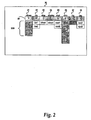
- An example of a computer hardware configuration and the instances within each component class is shown in FIG. 2.
- the exemplary computer hardware configuration 20 comprises 8 distinct component classes 21-28 having a total of 19 component instances 200 distributed among component classes 21-28.
- CDRom component class 21 contains 4 component instances; IDE component class 22 contains 2 component instances; drive component class 23 contains 1 component instance; display component class 24 contains 1 component instance; SCSI component class 25 contains 2 component instances; disk component class 26 contains 6 component instances; network card component class 27 contains 1 component instance; and processor (i.e., cpu) component class 28 contains 2 component instances.
- Row 29 in FIG. 2 depicts a string of numbers, which represent the number of component instances within each of the 8 component classes 21-28.
- the number of component instances within a given component class may vary from 0 to as many as required to represent a given hardware configuration, although an implementation may arbitrarily limit the number of component instances per component class.
- a given hardware configuration contains from 0 to about 6 component instances per component class.
- CHWID compact hardware identification
- FIG. 3 An exemplary compact hardware identification (CHWID) is shown in FIG. 3.
- the exemplary compact hardware identification (CHWID) 35 of FIG. 3 is one possible way to identify the computer hardware configuration shown in FIG. 2.
- the compact hardware identification (CHWID) 35 desirably comprises two separate components: version component 31' and hash portion 33'. Each of the two separate portions of compact hardware identification (CHWID) 35 is depicted in FIG 3.
- Version component 310 of header portion 31 identifies a particular version of the verbose hardware identification (VHWID) 34 and its corresponding compact hardware identification (CHWID) 35 used to identify a given computer system.
- a particular version e.g., version "I”
- version "I” a verbose hardware identification
- CHWID compact hardware identification
- a particular version e.g., version "I”
- version "2” version "2” of a verbose hardware identification (VHWID) or compact hardware identification (CHWID) by using one set of parameters to create version 1, while using a separate, different set of parameters to create version 2.
- a variety of parameters may be used to create a given version of a verbose hardware identification (VHWID) and its corresponding compact hardware identification (CHWID). Suitable parameters include, but are not limited to, (1) the number of component classes represented in the compact hardware identification (CHWID) 35; (2) the maximum and/or minimum number of component classes used to create verbose hardware identification (VHWID) 34; (3) the maximum and/or minimum number of component instances to be considered within a given VHWID component class; (4) the first hash function used to produce hash values for each component instance in the verbose hardware identification (VHWID) 34; (5) the length of each hash result used to form the verbose hardware identification (VHWID) 34; (6) the maximum length of the verbose hardware identification (VHWID) 34; (7) the maximum and/or minimum number of component class hash results used to create the compact hardware identification (CHWID) 35; (8) the second hash function used to produce second hash values for each component instance; (9)
- Total system RAM is one example of a single-instance class.
- the data for a single-instance class is hashed and truncated if necessary, then stored in the truncated numerical portion 312 of the header part 31.
- Each single-instance class represented in the header will have an associated truncated numerical portion 312.
- version component 31' of compact hardware identification (CHWID) 35 has a fixed length, which is consistent for all compact hardware identifications having a particular version type (e.g., version 1 CHWIDs).
- Count portion 32 comprises a string of n numbers, which represent the number of component instances within each of the n component classes used to prepare the verbose hardware identification (VHWID) 34. As shown in FIG. 3, count portion 32 comprises the string of numbers: "4 2 1 1 2 6 1 2", which corresponds to the component instances within component classes 21-28 shown in FIG. 2. It should be noted that if a component class does not contain a component instance, count portion 32 contains a "0" for the particular component class.
- Hash portion 33 used to create verbose hardware identification (VHWID) 34 comprises a concatenated string of first hash values representing each of the 19 component instances within component classes 21-28 shown in FIG. 2.
- Each separate hash result may have a length of up to about 160 bits. Desirably, each separate hash result has a length of from about 10 to about 20 bits, more desirably, about 16 bits.
- Hash portion 33 of verbose hardware identification (VHWID) 34 typically has a length, which varies depending upon the number of component instances within n component classes of a given hardware configuration.
- the total length of hash portion 33 is equal to the number of component instances times the desired hash result length for each component instance hash result.
- Hash portion 33' of compact hardware identification (CHWID) 35 differs from hash portion 33 used to create verbose hardware identification (VHWID) 34.
- hash portion 33' of compact hardware identification (CHWID) 35 comprises one component instance second hash value per component class, resulting from a second hash function performed on one component instance first hash value per component class.
- the component instance first hash value is selected from one or more of the n component classes used to create hash portion 33 of verbose hardware identification (VHWID) 34.
- the method of choosing component instance first hash values within hash portion 33 to be further processed through a second hash function may be (i) by a random selection procedure or (ii) by a predetermined method.
- One exemplary predetermined method comprises selecting the first instance within each component class as shown in FIG. 3.
- the resulting hash portion 33' of compact hardware identification (CHWID) 35 comprises a concatenated string of component instance second hash values (v' x ) resulting from performing a second hash function on select component instance first hash values of hash portion 33.
- Each separate component instance second hash value may have a length of up to about 16 bits. Desirably, each separate component instance second hash value has a length of up to about 8 bits, more desirably, from about 3 to about 6 bits.
- Component instance second hash values (v' x ) are shown in FIG.
- Hash portion 33' of compact hardware identification (CHWID) 35 typically has a length of less than about 64 bits.
- the length of hash portion 33' may vary depending upon (i) the number of component instance first hash values used to create hash portion 33', and (ii) the second hash value length for each individual component instance second hash value.
- verbose hardware identification (VHWID) 34 may be represented by a concatenated string of header portion 31, count portion 32 and hash portion 33.
- compact hardware identification (CHWID) 35 may be represented by a concatenated string of version component 31' and hash portion 33'.
- the compact hardware identification (CHWID) of the present invention may only comprise one of the above-described portions.
- the compact hardware identification (CHWID) 35 of a given computer hardware configuration comprises hash portion 33' alone.
- the compact hardware identification (CHWID) 35 does not contain version component 31'.
- compact hardware identification (CHWID) 35 desirably has a total length of less than about 256 bits. In one exemplary embodiment of the present invention, compact hardware identification (CHWID) 35 has a total length of from about 32 bits to about 64 bits.
- VHWID Verbose Hardware Identification
- the VHWID of the present invention may be determined by an exemplary method as shown in FIGS. 4-6.
- the steps of the exemplary method may be performed by software code within a software product on a customer's computer, similar to computer 20 described above with reference to FIG. 1.
- an exemplary determination of a VHWID for a given computer hardware configuration begins with step 401, wherein a number of component classes, n, is chosen to identify a given computer hardware configuration HW1.
- n a number of component classes, n, is chosen to identify a given computer hardware configuration HW1.
- a given computer system may include a variety of hardware components and classes of hardware components.
- Exemplary hardware component classes include, but are not limited to, hard disk drives, logical disk partitions, optical disks, network cards, display adapters, read only memory (ROM), random access memory (RAM), IDE devices, sound cards, video cards, processors, SCSI devices and the system BIOS.
- n the number of hardware component classes, is a whole number ranging from about 2 to about 16. In general, it is desirable for n to be as large as possible in order (i) to more precisely identify a given computer system, and (ii) to more accurately measure the degree of tolerance of a given computer system.
- each component class is identified in step 402.
- the component classes may include any of the above-described component classes such as the class of disk hard drives.
- An exemplary list of component classes used to identify sample hardware configuration HW1 is given below in Table 1.
- Exemplary List of Hardware Component Classes Used To Identify Sample Hardware Configuration HW1 Component Class No. Class Description Class Identifier 1 CdRom CdRom device identifier 2 IDE devices IDE device identifier 3 Hard Disk Drive Drive partition serial number 4 Display adapter device Identifier 5 SCSI devices SCSI device identifier 6 Disk Devices Disk device identifier 7 Network Card MAC address 8 Processors Processor device identifier
- n 8
- the identified hardware component classes include: (1) a CdRom class; (2) an IDE devices class; (3) a drive class; (4) a display adapter device class; (5) a SCSI device class; (6) a disk class; (7) a network card class; and (8) a CPU processor class.
- each component class is identified in step 402
- all devices or instances within each hardware component class are identified in step 403.
- the "count” i.e., the number of component devices or instances within each component class
- each instance within a particular component class is identified by the most unique identification string associated with the instance.
- the hardware configuration may contain a CdRom manufactured by NEC Corporation and having an identification string of "NEC CDRW24 S15.” Any available method for determining the most unique identification string of a given instance may be used in the present invention.
- the step of assigning an identification string for each component instance is shown in step 404.
- the header portion of the verbose hardware identification is prepared in step 405.
- a particular version of the verbose hardware identification is inputted into the header to form header portion 310 (as shown in FIG 3).
- the version number may represent one or more parameters used to determine the verbose hardware identification (VHWID) and its corresponding compact hardware identification (CHWID).
- a component class to be represented in the header is identified.
- component classes capable of having only a single component instance, or single instance classes are represented in the header portion of the VHWID.
- Suitable component classes which may be represented in the header portion of the VHWID, included, but are not limited to, a memory component class, a computer dockability component class (i.e., whether the computer is dockable or not), the system BIOS, or a combination thereof.
- the header portion of the VHWID comprises information from a single component class of the hardware configuration.
- decision block 409 a decision is made as to whether the identification string of the component instance used to form a portion of the header is subjected to a hashing function.
- the identification string may be subjected to a hash function or truncated to a desired number of bits.
- the identification string could be used verbatim as long as the identification string has less than a desired maximum of characters, typically less than about 16 bits.
- the method proceeds to step 411, wherein a hash function is performed on the identification string of the component instance and truncated to a desired bit length. Desirably, the hash result is truncated to a length of about 16 bits.
- step 412 the truncated hash result is inputted into the truncated numerical portion 312 of header portion 31 (as shown in FIG. 3).
- the identification string is not subjected to a hash function
- the method proceeds to step 410, where the identification string is truncated to a desired length and inputted into the truncated numerical portion 312 of header portion 31. Desirably, the identification string is truncated to a length of less than about 16 bits.
- step 412 a truncated hash result from step 412 or a truncated identification string from step 410 is inputted into truncated numerical portion 312 of header portion 31, the method proceeds to decision block 413.
- decision block 413 a decision is made whether to add details of another component class to header portion 31 of the VHWID. If additional details of another component class are to be added to the header portion 31 of the VHWID, the method returns to step 407 and proceeds as described above. If no further information is to be added to the header portion 31 of the VHWID, the method proceeds to step 414, where the count portion 32 of the VHWID is prepared.
- the count portion 32 of the VHWID comprises a numerical string of n numbers, which represent the number of component instances within each of the n component classes used to form the VHWID. (See count portion 32 of FIG 3.)
- a first hash function is performed on the identification strings for each component instance represented in the count portion 32 of the VHWID. If a given component class does not contain a component instance, a special first hash result may be generated for use in the VHWID, wherein the special first hash result indicates that a given component class did not contain a component instance. Alternatively, no first hash value may be stored and the part of count potion 32 corresponding to the missing component class will be set to zero, indicating that the component class is absent.
- the first hash results for each component instance may be truncated to a desired length. In one exemplary embodiment of the present invention, each of the first hash function results are truncated to a length of from about 10 to about 20 bits, more desirably, about 16 bits.
- Any known hash functions may be used in the present invention as long as the hash function is capable of accepting an identification string of arbitrary length and producing a hash output or result having a fixed length of less than about 160 bits.
- suitable hash functions include, but are not limited to, hash function algorithms HAVAL, MD2, MD4, MD5, and SHA-1, all of which are known to those of ordinary skill in the art.
- Suitable hash functions and a description thereof may be found in Applied Cryptography by Bruce Schneier, published by John Wiley & Sons (ISBN #0471117099), the disclosure of which is incorporated herein in its entirety.
- a "salt value" may be added to the component instance identifier prior to performing the first hash function for a given component instance.
- adding a salt value enables the production of different VHWIDs based on the same computer hardware configuration. Different VHWIDs for the same hardware configuration may be beneficial when running different applications or different passes. One example of a situation where different VHWIDs for the same hardware configuration may be beneficial is discussed below.
- step 416 the first hash results for each component instance are concatenated to form hash portion 33 of verbose hardware identification (VHWID) 34 (as shown in FIG. 3).
- step 417 the final verbose hardware identification (VHWID) 34 is assembled by concatenating header part 31, count part 32, and hash part 33.
- the resulting verbose hardware identification (VHWID) for hardware configuration HW1 is stored for future use.
- the verbose hardware identification (VHWID) for hardware configuration HW1 may be stored locally (e.g., in the registry, file system, or secure store), at an accessible remote location (e.g., database), or transmitted to a clearinghouse server for license acquisition.
- the exemplary method described above produces a verbose hardware identification (VHWID) containing header part 31, count part 32, and hash part 33
- the verbose hardware identification (VHWID) for hardware configuration HW1 may only contain (i) hash portion 33 alone or (ii) count part 32 in combination with hash portion 33, such as a VHWID comprising count part 32 concatenated with hash portion 33.
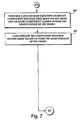
- the compact hardware identification (CHWID) of the present invention may be determined by as shown in FIGS. 7-8.
- the steps of the exemplary method for forming the compact hardware identification (CHWID) may be performed by software code within a software product on a customer's computer, similar to computer 20 described above with reference to FIG. 1.
- the exemplary method for forming one possible compact hardware identification (CHWID) for hardware configuration HW1 begins with step 420.
- a second hash function is performed on one component instance first hash value from each of the q component classes selected from one or more component classes, n , used to create hash portion 33 of verbose hardware identification (VHWID) 34.
- the second hash function may be performed on one or more component instance first hash values, wherein the method of selecting component instance first hash values from one or more of the n component classes is accomplished via (i) a random selection procedure or (ii) a predetermined method.
- one component instance first hash value is selected from at least (n - 5) component classes, more desirably, from at least (n - 3) component classes, even more desirably, from at least (n - 2) component classes.
- one component instance first hash value is selected from all of the n component classes to form corresponding component instance second hash values.
- any known hash function may be used in the present invention as long as the hash function is capable of accepting a component instance first hash value of up to about 160 bits and producing a component instance second hash value having a fixed length of less than about 32 bits.
- suitable second hash functions include, but are not limited to, hash function algorithms HAVAL, MD2, MD4, MD5, and SHA-1, all of which are known to those of ordinary skill in the art as discussed above.
- a "salt value" may be added to the component instance first hash value prior to performing the second hash function for a given component instance first hash value.
- adding a salt value enables the production of different compact hardware identifications (CHWIDs) based on the same computer hardware configuration.
- CHWIDs compact hardware identifications
- Different compact hardware identifications (CHWIDs) for the same hardware configuration may be beneficial when running different applications or different passes.
- CHWIDs compact hardware identifications
- step 421 the component instance second hash values are concatenated to form hash portion 33' of compact hardware identification (CHWID) 35 (as shown in FIG. 3).
- CHWID compact hardware identification
- step 427 the version component 31' of the compact hardware identification (CHWID) is concatenated with the hash portion 33' of the compact hardware identification (CHWID) to form the final compact hardware identification (CHWID) for hardware configuration HW1.
- the method then proceeds to step 428.
- the compact hardware identification (CHWID) does not comprise a version component 31', the method proceeds directly to step 428.
- the resulting compact hardware identification (CHWID) for hardware configuration HW1 is stored for future use.
- the compact hardware identification (CHWID) for hardware configuration HW1 may be stored locally (e.g., in the registry, file system, or secure store), or at an accessible remote location (e.g., database) as described below.
- the compact hardware identification (CHWID) for hardware configuration HW1 may only contain hash portion 33'.
- CHWID Compact Hardware Identification
- the present invention is further directed to a method of using a compact hardware identification (CHWID) to enable the use of a software product on a computer system having a given computer hardware configuration.
- the method of using a compact hardware identification (CHWID) to enable the use of a software product on a computer system having a given computer hardware configuration is initiated (i) during any installation of the software product on a computer other than an initial installation, (ii) during launching of a software product or application already existing on a component of a computer hardware configuration, or (iii) both.
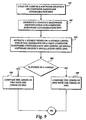
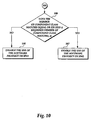
- An exemplary method for using the compact hardware identification (CHWID) is described in FIGS. 9-10. The steps of the exemplary method may be performed by software code within a software product on a customer's computer, similar to computer 20 described above with reference to FIG. 1.
- Computer hardware configuration HW2 (i) may be identical to hardware configuration HW1 used to produce an initial verbose hardware identification (referred to herein as iVHWID) or an initial compact hardware identification (referred to herein as iCHWID) or (ii) may be a completely different computer.
- iVHWID initial verbose hardware identification
- iCHWID initial compact hardware identification
- nCHWID a new compact hardware identification
- the new compact hardware identification (nCHWID) for computer hardware configuration HW2 may be generated as described above and shown in FIGS. 4-8.
- nCHWID a stored verbose hardware identification
- CHWID a stored compact hardware identification
- the stored verbose hardware identification (VHWID) is the initial verbose hardware identification (iVHWID), which was generated on a first computer hardware configuration HW1 during an initial software product installation onto HW1.
- the stored compact hardware identification (CHWID) is typically the initial compact hardware identification (iCHWID), which was generated on a first computer hardware configuration HW1 during an initial software product installation onto HW1.
- CHWID stored compact hardware identification
- a second hash function is performed for each of the first hash values in each component class of the stored verbose hardware identification (VHWID) and the results compared to the second hash value associated with each component class in the new compact hardware identification (CHWID). The method then proceeds to decision block 506.
- step 505 the comparison of new compact hardware identification (nCHWID) of hardware configuration HW2 with (1) the previously stored compact hardware identification (CHWID) of hardware configuration HW1 or (2) the previously stored verbose hardware identification (VHWID) of hardware configuration HW1, collectively referred to herein as "the hardware identification (HWID) of hardware configuration HW1,” may involve one or more rules for determining whether or not there is a match for a given component class.
- the method of using a compact hardware identification (CHWID) to enable the use of a software product comprises one or more of the following rules for determining the number of component class matches between a newly generated compact hardware identification (nCHWID) for a hardware configuration HW2 and the compact hardware identification (CHWID) or verbose hardware identification (VHWID) of hardware configuration HW1:
- the number of required component class matches, m is chosen depending on the degree of tolerance desired for hardware configuration component changes.
- the number of required component class matches, m may be (i) as great as n , the total number of component classes considered during the determination of a verbose hardware identification (VHWID), or (ii) as great as q, the total number of selected component classes considered during the determination of the compact hardware identification (CHWID), or (iii) may be as small as 1.
- VHWID verbose hardware identification
- CHWID compact hardware identification
- m the degree of tolerance to computer hardware configuration changes decreases. For example, if the total number of component classes n is equal to 10 and m is equal to 7, 7 out of 10 component classes must match at least one component instance to enable the loading or running of a software product. If the number of component class matches is less than 7, the software product will not run or be loaded onto the computer hardware configuration.
- the number of required component class matches, m may be predetermined by a software manufacturer and encoded into the software product code used to generate a compact hardware identification (CHWID).
- CHWID compact hardware identification
- m is desirably equal to ( n - 3). More desirably, m is equal to (n - 2).
- m is desirably equal to ( q - 3). More desirably, m is equal to ( q - 2).
- m may range from 1 to n .
- the method steps described above and illustrated in FIGS. 4-10 may be performed locally or at a remote location.
- a customer purchases a software product that can run on a given computer, such as computer 20 shown in FIG. 1.
- the software product may be a shrink-wrap product having a software program stored on a transportable computer-readable medium, such as a CD-ROM or floppy diskette.
- the software product may be delivered electronically over a network, such as a local area network (LAN) 51 or a wide area network (WAN) 52.
- LAN local area network
- WAN wide area network
- the customer is typically prompted to enter a portion of the software product identification (PID) for the software product into computer 20.
- PID may be derived, for example, from a CD key printed on a label of the shrink-wrap package.
- the customer enters the PID, which is associated with a software program of the software product.
- the PID is stored locally on computer 20 and/or remotely at an accessible location, either on a local area network (LAN) 51 or a wide area network (WAN) 52 with a third party, such as an activation authority.
- LAN local area network
- WAN wide area network
- a verbose hardware identification (VHWID) and/or compact hardware identification (CHWID) is also generated using code within the software product or triggered by the installation of the software product.
- the verbose hardware identification (VHWID) and/or compact hardware identification (CHWID) generated by the method of the present invention is associated with the software product identification (PID) and stored along with the software product identification (PID) locally on computer 20 and/or remotely at an accessible location, either on a local area network (LAN) 51 or a wide area network (WAN) 52, such as with a third party activation authority.
- LAN local area network
- WAN wide area network
- the customer may be required to activate the software product with an activation authority.
- This authority might be, for example, the product manufacturer or an authorized third party.
- the activation process is intended to force the customer to activate the software product (i) for installation and use on a specific computer or (ii) for installation and use according to terms of a product licensing agreement.
- Such an activation process is described in detail in U.S. Patent No. 6,243,468, assigned to Microsoft Corporation (Redmond, WA), the contents of which are hereby incorporated in its entirety by reference.
- VHWID verbose hardware identification
- CHWID compact hardware identification
- PID software product identification
- the software product (i) stores (a) the verbose hardware identification (VHWID) and/or compact hardware identification (CHWID) and (b) the associated software product identification (PID) on computer 20, and (ii) sends (a) the verbose hardware identification (VHWID) and/or compact hardware identification (CHWID) and (b) the associated software product identification (PID) electronically over wide area network (WAN) 52 to an activation server.
- the software product automatically displays a graphical user interface (UI) dialog window when it is first launched, which prompt the user to initiate a connection with the activation server to activate.
- the activation server maintains a database to store (a) received verbose hardware identifications (VHWIDs) and/or compact hardware identifications (CHWIDs) and (b) the associated software product identifications (PIDs).
- the verbose hardware identification (VHWID) and/or compact hardware identification (CHWID) and the associated software product identification (PID) for a given software product may be stored for an indefinite period of time until the software product is re-installed onto another computer or launched on the first computer (i.e., the computer used during the initial installation).
- code on the software product initiates a method of generating a new compact hardware identification (CHWID) according to the present invention.
- the software product also retrieves the previously stored (a) verbose hardware identification (VHWID) and/or compact hardware identification (CHWID) and (b) the associated software product identification (PID) of the software product either from local computer 20 or from a remote location via a local area network (LAN) 51 or a wide area network (WAN) 52.
- VHWID verbose hardware identification
- CHWID compact hardware identification
- PID software product identification
- a customer provides a service representative with a compact hardware identification (CHWID) over the phone and the service representative provides the customer with a confirmation identification (CID) based on the compact hardware identification (CHWID).
- CHWID compact hardware identification
- CID confirmation identification
- the customer enters the confirmation identification (CID) via a UI window.
- a dialog box may be provided to the customer indicating that the use of the software product is being denied, and that further information regarding future use of the software product may be obtained from a given source.
- CHWID Compact Hardware Identification
- the compact hardware identification (CHWID) of the present invention may also be used for other purposes than those described above.
- the compact hardware identification (CHWID) is used to create semi-unique installation ID to track the machine.
- the compact hardware identification (CHWID) is used on a clearinghouse server when granting licenses to use software on a customer's computer.
Landscapes
- Engineering & Computer Science (AREA)
- Theoretical Computer Science (AREA)
- Software Systems (AREA)
- Computer Security & Cryptography (AREA)
- Physics & Mathematics (AREA)
- Computer Hardware Design (AREA)
- General Physics & Mathematics (AREA)
- General Engineering & Computer Science (AREA)
- Multimedia (AREA)
- Technology Law (AREA)
- Health & Medical Sciences (AREA)
- Automation & Control Theory (AREA)
- Mathematical Physics (AREA)
- Radar, Positioning & Navigation (AREA)
- Remote Sensing (AREA)
- General Health & Medical Sciences (AREA)
- Bioethics (AREA)
- Stored Programmes (AREA)
- Storage Device Security (AREA)
- Telephonic Communication Services (AREA)
- Hardware Redundancy (AREA)
Applications Claiming Priority (2)
| Application Number | Priority Date | Filing Date | Title |
|---|---|---|---|
| US10/378,294 US7278131B2 (en) | 2003-03-03 | 2003-03-03 | Compact hardware identification for binding a software package to a computer system having tolerance for hardware changes |
| EP04004848A EP1455258B1 (de) | 2003-03-03 | 2004-03-02 | Kompaktidentifizierung von Hardware zur verbindung der Software mit einem Tolerantesänerungen Computer System |
Related Parent Applications (1)
| Application Number | Title | Priority Date | Filing Date |
|---|---|---|---|
| EP04004848A Division EP1455258B1 (de) | 2003-03-03 | 2004-03-02 | Kompaktidentifizierung von Hardware zur verbindung der Software mit einem Tolerantesänerungen Computer System |
Publications (2)
| Publication Number | Publication Date |
|---|---|
| EP1637958A2 true EP1637958A2 (de) | 2006-03-22 |
| EP1637958A3 EP1637958A3 (de) | 2006-05-17 |
Family
ID=32824753
Family Applications (2)
| Application Number | Title | Priority Date | Filing Date |
|---|---|---|---|
| EP05021320A Withdrawn EP1637958A3 (de) | 2003-03-03 | 2004-03-02 | Kompakte Hardwareidentifikation zum Binden eines Softwarepakets an ein Computersystem mit Toleranz gegenüber Hardwareänderungen |
| EP04004848A Expired - Lifetime EP1455258B1 (de) | 2003-03-03 | 2004-03-02 | Kompaktidentifizierung von Hardware zur verbindung der Software mit einem Tolerantesänerungen Computer System |
Family Applications After (1)
| Application Number | Title | Priority Date | Filing Date |
|---|---|---|---|
| EP04004848A Expired - Lifetime EP1455258B1 (de) | 2003-03-03 | 2004-03-02 | Kompaktidentifizierung von Hardware zur verbindung der Software mit einem Tolerantesänerungen Computer System |
Country Status (15)
| Country | Link |
|---|---|
| US (1) | US7278131B2 (de) |
| EP (2) | EP1637958A3 (de) |
| JP (1) | JP4652701B2 (de) |
| KR (1) | KR100991061B1 (de) |
| CN (1) | CN100430860C (de) |
| AT (1) | ATE473486T1 (de) |
| AU (1) | AU2004200641B2 (de) |
| BR (1) | BRPI0400378A (de) |
| CA (1) | CA2458765C (de) |
| DE (1) | DE602004027966D1 (de) |
| MX (1) | MXPA04002023A (de) |
| MY (1) | MY142576A (de) |
| RU (1) | RU2363044C2 (de) |
| TW (1) | TWI321289B (de) |
| ZA (1) | ZA200401491B (de) |
Cited By (32)
| Publication number | Priority date | Publication date | Assignee | Title |
|---|---|---|---|---|
| WO2009042617A1 (en) * | 2007-09-27 | 2009-04-02 | Adobe Systems Incorporated | Providing local storage service to applications that run in an application execution environment |
| WO2010093683A3 (en) * | 2009-02-10 | 2010-10-07 | Uniloc Usa, Inc. | Web content access using a client device identifier |
| US7908662B2 (en) | 2007-06-21 | 2011-03-15 | Uniloc U.S.A., Inc. | System and method for auditing software usage |
| US8087092B2 (en) | 2005-09-02 | 2011-12-27 | Uniloc Usa, Inc. | Method and apparatus for detection of tampering attacks |
| US8103553B2 (en) | 2009-06-06 | 2012-01-24 | Bullock Roddy Mckee | Method for making money on internet news sites and blogs |
| US8160962B2 (en) | 2007-09-20 | 2012-04-17 | Uniloc Luxembourg S.A. | Installing protected software product using unprotected installation image |
| US8213907B2 (en) | 2009-07-08 | 2012-07-03 | Uniloc Luxembourg S. A. | System and method for secured mobile communication |
| US8239852B2 (en) | 2009-06-24 | 2012-08-07 | Uniloc Luxembourg S.A. | Remote update of computers based on physical device recognition |
| US8284929B2 (en) | 2006-09-14 | 2012-10-09 | Uniloc Luxembourg S.A. | System of dependant keys across multiple pieces of related scrambled information |
| US8316421B2 (en) | 2009-10-19 | 2012-11-20 | Uniloc Luxembourg S.A. | System and method for device authentication with built-in tolerance |
| US8374968B2 (en) | 2008-02-22 | 2013-02-12 | Uniloc Luxembourg S.A. | License auditing for distributed applications |
| US8438394B2 (en) | 2011-01-14 | 2013-05-07 | Netauthority, Inc. | Device-bound certificate authentication |
| US8464059B2 (en) | 2007-12-05 | 2013-06-11 | Netauthority, Inc. | System and method for device bound public key infrastructure |
| US8495359B2 (en) | 2009-06-22 | 2013-07-23 | NetAuthority | System and method for securing an electronic communication |
| US8695068B1 (en) | 2013-04-25 | 2014-04-08 | Uniloc Luxembourg, S.A. | Device authentication using display device irregularity |
| US8751811B2 (en) | 2009-12-14 | 2014-06-10 | Nxp B.V. | Integrated circuit and system for installing computer code thereon |
| US8769296B2 (en) | 2009-10-19 | 2014-07-01 | Uniloc Luxembourg, S.A. | Software signature tracking |
| US8898450B2 (en) | 2011-06-13 | 2014-11-25 | Deviceauthority, Inc. | Hardware identity in multi-factor authentication at the application layer |
| US9047450B2 (en) | 2009-06-19 | 2015-06-02 | Deviceauthority, Inc. | Identification of embedded system devices |
| US9047458B2 (en) | 2009-06-19 | 2015-06-02 | Deviceauthority, Inc. | Network access protection |
| US9075958B2 (en) | 2009-06-24 | 2015-07-07 | Uniloc Luxembourg S.A. | Use of fingerprint with an on-line or networked auction |
| US9082128B2 (en) | 2009-10-19 | 2015-07-14 | Uniloc Luxembourg S.A. | System and method for tracking and scoring user activities |
| US9129097B2 (en) | 2009-06-24 | 2015-09-08 | Uniloc Luxembourg S.A. | Systems and methods for auditing software usage using a covert key |
| US9141489B2 (en) | 2009-07-09 | 2015-09-22 | Uniloc Luxembourg S.A. | Failover procedure for server system |
| US9143496B2 (en) | 2013-03-13 | 2015-09-22 | Uniloc Luxembourg S.A. | Device authentication using device environment information |
| US9286466B2 (en) | 2013-03-15 | 2016-03-15 | Uniloc Luxembourg S.A. | Registration and authentication of computing devices using a digital skeleton key |
| US9571492B2 (en) | 2011-09-15 | 2017-02-14 | Uniloc Luxembourg S.A. | Hardware identification through cookies |
| US9578502B2 (en) | 2013-04-11 | 2017-02-21 | Uniloc Luxembourg S.A. | Device authentication using inter-person message metadata |
| US9756133B2 (en) | 2011-08-15 | 2017-09-05 | Uniloc Luxembourg S.A. | Remote recognition of an association between remote devices |
| US10068282B2 (en) | 2009-06-24 | 2018-09-04 | Uniloc 2017 Llc | System and method for preventing multiple online purchases |
| US10489562B2 (en) | 2009-06-19 | 2019-11-26 | Uniloc 2017 Llc | Modular software protection |
| US10754945B2 (en) | 2010-09-16 | 2020-08-25 | Uniloc 2017 Llc | Psychographic device fingerprinting |
Families Citing this family (44)
| Publication number | Priority date | Publication date | Assignee | Title |
|---|---|---|---|---|
| US7596539B2 (en) * | 2003-05-29 | 2009-09-29 | International Business Machines Corporation | Method and apparatus for providing connection information of functional components within a computer system |
| US20050138563A1 (en) * | 2003-12-18 | 2005-06-23 | International Business Machines Corporation | Method and system for providing computer system software images |
| GB0427540D0 (en) * | 2004-12-15 | 2005-01-19 | Ibm | A system for maintaining data |
| US9547780B2 (en) | 2005-03-28 | 2017-01-17 | Absolute Software Corporation | Method for determining identification of an electronic device |
| US8839451B1 (en) * | 2006-08-07 | 2014-09-16 | Moka5, Inc. | Activation and security of software |
| US8620818B2 (en) | 2007-06-25 | 2013-12-31 | Microsoft Corporation | Activation system architecture |
| US8281298B2 (en) * | 2007-08-27 | 2012-10-02 | International Business Machines Corporation | Evaluating computer driver update compliance |
| US8528109B2 (en) * | 2007-10-09 | 2013-09-03 | Microsoft Corporation | Optimizing amount of data passed during software license activation |
| EP2223256A1 (de) | 2007-11-17 | 2010-09-01 | Uniloc Usa, Inc. | System und verfahren zur anpassbaren lizenzierung digitaler produkte |
| WO2009143115A1 (en) | 2008-05-21 | 2009-11-26 | Uniloc Usa, Inc. | Device and method for secured communication |
| US9594582B2 (en) * | 2009-01-05 | 2017-03-14 | International Business Machines Corporation | Detection and management of dynamic migration of virtual environments |
| JP4692652B2 (ja) * | 2009-02-18 | 2011-06-01 | コニカミノルタビジネステクノロジーズ株式会社 | ライセンス管理システム、ライセンス管理コンピュータ、ライセンス管理方法およびライセンス管理プログラム |
| US8423473B2 (en) | 2009-06-19 | 2013-04-16 | Uniloc Luxembourg S. A. | Systems and methods for game activation |
| US8452960B2 (en) | 2009-06-23 | 2013-05-28 | Netauthority, Inc. | System and method for content delivery |
| US8736462B2 (en) | 2009-06-23 | 2014-05-27 | Uniloc Luxembourg, S.A. | System and method for traffic information delivery |
| US8903653B2 (en) | 2009-06-23 | 2014-12-02 | Uniloc Luxembourg S.A. | System and method for locating network nodes |
| US8726407B2 (en) | 2009-10-16 | 2014-05-13 | Deviceauthority, Inc. | Authentication of computing and communications hardware |
| US10387927B2 (en) * | 2010-01-15 | 2019-08-20 | Dell Products L.P. | System and method for entitling digital assets |
| US9256899B2 (en) * | 2010-01-15 | 2016-02-09 | Dell Products, L.P. | System and method for separation of software purchase from fulfillment |
| US9235399B2 (en) * | 2010-01-15 | 2016-01-12 | Dell Products L.P. | System and method for manufacturing and personalizing computing devices |
| US9100396B2 (en) * | 2010-01-29 | 2015-08-04 | Dell Products L.P. | System and method for identifying systems and replacing components |
| US8170783B2 (en) | 2010-03-16 | 2012-05-01 | Dell Products L.P. | System and method for handling software activation in entitlement |
| US11063920B2 (en) | 2011-02-03 | 2021-07-13 | mSignia, Inc. | Cryptographic security functions based on anticipated changes in dynamic minutiae |
| US8817984B2 (en) | 2011-02-03 | 2014-08-26 | mSignia, Inc. | Cryptographic security functions based on anticipated changes in dynamic minutiae |
| CN103797490B (zh) | 2011-03-15 | 2017-04-26 | 爱迪德技术有限公司 | 在使用秘密共享方案的计算环境中生成用于资产集合的标识符的容忍变化方法 |
| US8949401B2 (en) | 2012-06-14 | 2015-02-03 | Dell Products L.P. | Automated digital migration |
| US9779219B2 (en) | 2012-08-09 | 2017-10-03 | Dell Products L.P. | Method and system for late binding of option features associated with a device using at least in part license and unique ID information |
| CN104246722B (zh) | 2013-03-29 | 2017-02-22 | 株式会社东芝 | 用于基于哈希表排除数据重复的存储系统,存储控制器及方法 |
| JP6244759B2 (ja) | 2013-09-10 | 2017-12-13 | 株式会社ソシオネクスト | セキュアブート方法、半導体装置、及び、セキュアブートプログラム |
| US9356914B2 (en) | 2014-07-30 | 2016-05-31 | Gracenote, Inc. | Content-based association of device to user |
| CN104834537B (zh) * | 2014-12-30 | 2018-04-27 | 沈阳东软医疗系统有限公司 | 数据处理方法、服务器及客户端 |
| US9824236B2 (en) * | 2015-05-19 | 2017-11-21 | Accenture Global Services Limited | System for anonymizing and aggregating protected information |
| US10491401B2 (en) | 2017-02-21 | 2019-11-26 | Google Llc | Verification of code signature with flexible constraints |
| US10311224B1 (en) * | 2017-03-23 | 2019-06-04 | Amazon Technologies, Inc. | Digitally sealing equipment for authentication of components |
| US11075925B2 (en) * | 2018-01-31 | 2021-07-27 | EMC IP Holding Company LLC | System and method to enable component inventory and compliance in the platform |
| US10693722B2 (en) | 2018-03-28 | 2020-06-23 | Dell Products L.P. | Agentless method to bring solution and cluster awareness into infrastructure and support management portals |
| US10754708B2 (en) | 2018-03-28 | 2020-08-25 | EMC IP Holding Company LLC | Orchestrator and console agnostic method to deploy infrastructure through self-describing deployment templates |
| US10795756B2 (en) | 2018-04-24 | 2020-10-06 | EMC IP Holding Company LLC | System and method to predictively service and support the solution |
| US11086738B2 (en) | 2018-04-24 | 2021-08-10 | EMC IP Holding Company LLC | System and method to automate solution level contextual support |
| US11599422B2 (en) | 2018-10-16 | 2023-03-07 | EMC IP Holding Company LLC | System and method for device independent backup in distributed system |
| CN109508517B (zh) * | 2018-10-29 | 2021-06-29 | 武汉思普崚技术有限公司 | 软件功能模块选择性激活方法及设备 |
| US12149525B2 (en) * | 2019-01-04 | 2024-11-19 | T-Mobile Usa, Inc. | Holistic module authentication with a device |
| US10862761B2 (en) | 2019-04-29 | 2020-12-08 | EMC IP Holding Company LLC | System and method for management of distributed systems |
| US11301557B2 (en) | 2019-07-19 | 2022-04-12 | Dell Products L.P. | System and method for data processing device management |
Family Cites Families (12)
| Publication number | Priority date | Publication date | Assignee | Title |
|---|---|---|---|---|
| JPS61220030A (ja) * | 1985-03-26 | 1986-09-30 | Toshiba Corp | ソフトウエア識別方式 |
| JPS63296136A (ja) * | 1987-05-27 | 1988-12-02 | Nec Corp | プログラムの正当性確認方法 |
| US5757907A (en) | 1994-04-25 | 1998-05-26 | International Business Machines Corporation | Method and apparatus for enabling trial period use of software products: method and apparatus for generating a machine-dependent identification |
| US5734819A (en) | 1994-10-12 | 1998-03-31 | International Business Machines Corporation | Method and apparatus for validating system operation |
| JPH1027035A (ja) * | 1996-07-12 | 1998-01-27 | Fujitsu Ltd | 情報処理装置 |
| US6148407A (en) | 1997-09-30 | 2000-11-14 | Intel Corporation | Method and apparatus for producing computer platform fingerprints |
| US6226747B1 (en) | 1998-04-10 | 2001-05-01 | Microsoft Corporation | Method for preventing software piracy during installation from a read only storage medium |
| US6243468B1 (en) | 1998-04-29 | 2001-06-05 | Microsoft Corporation | Software anti-piracy system that adapts to hardware upgrades |
| US7503072B2 (en) | 1998-04-29 | 2009-03-10 | Microsoft Corporation | Hardware ID to prevent software piracy |
| US6044471A (en) | 1998-06-04 | 2000-03-28 | Z4 Technologies, Inc. | Method and apparatus for securing software to reduce unauthorized use |
| RU2152074C1 (ru) * | 1999-04-06 | 2000-06-27 | Литвак Игорь Иосифович | Система обеспечения безопасности пользования компьютером (варианты) |
| US7290149B2 (en) * | 2003-03-03 | 2007-10-30 | Microsoft Corporation | Verbose hardware identification for binding a software package to a computer system having tolerance for hardware changes |
-
2003
- 2003-03-03 US US10/378,294 patent/US7278131B2/en not_active Expired - Fee Related
-
2004
- 2004-02-18 AU AU2004200641A patent/AU2004200641B2/en not_active Ceased
- 2004-02-20 MY MYPI20040558A patent/MY142576A/en unknown
- 2004-02-23 CA CA2458765A patent/CA2458765C/en not_active Expired - Fee Related
- 2004-02-24 ZA ZA200401491A patent/ZA200401491B/xx unknown
- 2004-03-01 TW TW093105318A patent/TWI321289B/zh not_active IP Right Cessation
- 2004-03-02 KR KR1020040013892A patent/KR100991061B1/ko not_active Expired - Fee Related
- 2004-03-02 RU RU2004106185/09A patent/RU2363044C2/ru not_active IP Right Cessation
- 2004-03-02 BR BR0400378-0A patent/BRPI0400378A/pt not_active IP Right Cessation
- 2004-03-02 MX MXPA04002023A patent/MXPA04002023A/es active IP Right Grant
- 2004-03-02 EP EP05021320A patent/EP1637958A3/de not_active Withdrawn
- 2004-03-02 AT AT04004848T patent/ATE473486T1/de not_active IP Right Cessation
- 2004-03-02 EP EP04004848A patent/EP1455258B1/de not_active Expired - Lifetime
- 2004-03-02 DE DE602004027966T patent/DE602004027966D1/de not_active Expired - Lifetime
- 2004-03-03 CN CNB2004100286486A patent/CN100430860C/zh not_active Expired - Fee Related
- 2004-03-03 JP JP2004059840A patent/JP4652701B2/ja not_active Expired - Fee Related
Cited By (42)
| Publication number | Priority date | Publication date | Assignee | Title |
|---|---|---|---|---|
| US8087092B2 (en) | 2005-09-02 | 2011-12-27 | Uniloc Usa, Inc. | Method and apparatus for detection of tampering attacks |
| US8284929B2 (en) | 2006-09-14 | 2012-10-09 | Uniloc Luxembourg S.A. | System of dependant keys across multiple pieces of related scrambled information |
| US7908662B2 (en) | 2007-06-21 | 2011-03-15 | Uniloc U.S.A., Inc. | System and method for auditing software usage |
| US8160962B2 (en) | 2007-09-20 | 2012-04-17 | Uniloc Luxembourg S.A. | Installing protected software product using unprotected installation image |
| US8671060B2 (en) | 2007-09-20 | 2014-03-11 | Uniloc Luxembourg, S.A. | Post-production preparation of an unprotected installation image for downloading as a protected software product |
| US8160247B2 (en) | 2007-09-27 | 2012-04-17 | Adobe Systems Incorporated | Providing local storage service to applications that run in an application execution environment |
| WO2009042617A1 (en) * | 2007-09-27 | 2009-04-02 | Adobe Systems Incorporated | Providing local storage service to applications that run in an application execution environment |
| CN101802833B (zh) * | 2007-09-27 | 2016-01-20 | 奥多比公司 | 向在应用执行环境中运行的应用提供本地存储服务 |
| US8464059B2 (en) | 2007-12-05 | 2013-06-11 | Netauthority, Inc. | System and method for device bound public key infrastructure |
| US8374968B2 (en) | 2008-02-22 | 2013-02-12 | Uniloc Luxembourg S.A. | License auditing for distributed applications |
| WO2010093683A3 (en) * | 2009-02-10 | 2010-10-07 | Uniloc Usa, Inc. | Web content access using a client device identifier |
| US8838976B2 (en) | 2009-02-10 | 2014-09-16 | Uniloc Luxembourg S.A. | Web content access using a client device identifier |
| US8103553B2 (en) | 2009-06-06 | 2012-01-24 | Bullock Roddy Mckee | Method for making money on internet news sites and blogs |
| US10489562B2 (en) | 2009-06-19 | 2019-11-26 | Uniloc 2017 Llc | Modular software protection |
| US9047450B2 (en) | 2009-06-19 | 2015-06-02 | Deviceauthority, Inc. | Identification of embedded system devices |
| US9047458B2 (en) | 2009-06-19 | 2015-06-02 | Deviceauthority, Inc. | Network access protection |
| US8495359B2 (en) | 2009-06-22 | 2013-07-23 | NetAuthority | System and method for securing an electronic communication |
| US9075958B2 (en) | 2009-06-24 | 2015-07-07 | Uniloc Luxembourg S.A. | Use of fingerprint with an on-line or networked auction |
| US8239852B2 (en) | 2009-06-24 | 2012-08-07 | Uniloc Luxembourg S.A. | Remote update of computers based on physical device recognition |
| US10068282B2 (en) | 2009-06-24 | 2018-09-04 | Uniloc 2017 Llc | System and method for preventing multiple online purchases |
| US10402893B2 (en) | 2009-06-24 | 2019-09-03 | Uniloc 2017 Llc | System and method for preventing multiple online purchases |
| US9129097B2 (en) | 2009-06-24 | 2015-09-08 | Uniloc Luxembourg S.A. | Systems and methods for auditing software usage using a covert key |
| US8213907B2 (en) | 2009-07-08 | 2012-07-03 | Uniloc Luxembourg S. A. | System and method for secured mobile communication |
| US9141489B2 (en) | 2009-07-09 | 2015-09-22 | Uniloc Luxembourg S.A. | Failover procedure for server system |
| US8769296B2 (en) | 2009-10-19 | 2014-07-01 | Uniloc Luxembourg, S.A. | Software signature tracking |
| US8316421B2 (en) | 2009-10-19 | 2012-11-20 | Uniloc Luxembourg S.A. | System and method for device authentication with built-in tolerance |
| US9082128B2 (en) | 2009-10-19 | 2015-07-14 | Uniloc Luxembourg S.A. | System and method for tracking and scoring user activities |
| EP2372592B1 (de) * | 2009-12-14 | 2016-08-24 | Nxp B.V. | Integrierte Schaltung und System zur Installierung eines Computercodes darauf |
| US8751811B2 (en) | 2009-12-14 | 2014-06-10 | Nxp B.V. | Integrated circuit and system for installing computer code thereon |
| US10754945B2 (en) | 2010-09-16 | 2020-08-25 | Uniloc 2017 Llc | Psychographic device fingerprinting |
| US8438394B2 (en) | 2011-01-14 | 2013-05-07 | Netauthority, Inc. | Device-bound certificate authentication |
| US10432609B2 (en) | 2011-01-14 | 2019-10-01 | Device Authority Ltd. | Device-bound certificate authentication |
| US8898450B2 (en) | 2011-06-13 | 2014-11-25 | Deviceauthority, Inc. | Hardware identity in multi-factor authentication at the application layer |
| US9756133B2 (en) | 2011-08-15 | 2017-09-05 | Uniloc Luxembourg S.A. | Remote recognition of an association between remote devices |
| US10142337B2 (en) | 2011-09-15 | 2018-11-27 | Uniloc 2017 Llc | Hardware identification through cookies |
| US9571492B2 (en) | 2011-09-15 | 2017-02-14 | Uniloc Luxembourg S.A. | Hardware identification through cookies |
| US9143496B2 (en) | 2013-03-13 | 2015-09-22 | Uniloc Luxembourg S.A. | Device authentication using device environment information |
| US9740849B2 (en) | 2013-03-15 | 2017-08-22 | Uniloc Luxembourg S.A. | Registration and authentication of computing devices using a digital skeleton key |
| US9286466B2 (en) | 2013-03-15 | 2016-03-15 | Uniloc Luxembourg S.A. | Registration and authentication of computing devices using a digital skeleton key |
| US9578502B2 (en) | 2013-04-11 | 2017-02-21 | Uniloc Luxembourg S.A. | Device authentication using inter-person message metadata |
| US8695068B1 (en) | 2013-04-25 | 2014-04-08 | Uniloc Luxembourg, S.A. | Device authentication using display device irregularity |
| US9444802B2 (en) | 2013-04-25 | 2016-09-13 | Uniloc Luxembourg S.A. | Device authentication using display device irregularity |
Also Published As
| Publication number | Publication date |
|---|---|
| EP1455258A2 (de) | 2004-09-08 |
| TW200511108A (en) | 2005-03-16 |
| KR100991061B1 (ko) | 2010-10-29 |
| CN1530790A (zh) | 2004-09-22 |
| ATE473486T1 (de) | 2010-07-15 |
| EP1455258A3 (de) | 2004-11-03 |
| CN100430860C (zh) | 2008-11-05 |
| US7278131B2 (en) | 2007-10-02 |
| MXPA04002023A (es) | 2005-02-17 |
| AU2004200641B2 (en) | 2009-09-10 |
| EP1455258B1 (de) | 2010-07-07 |
| US20040177354A1 (en) | 2004-09-09 |
| BRPI0400378A (pt) | 2005-01-04 |
| EP1637958A3 (de) | 2006-05-17 |
| AU2004200641A1 (en) | 2004-09-23 |
| RU2363044C2 (ru) | 2009-07-27 |
| RU2004106185A (ru) | 2005-08-10 |
| JP4652701B2 (ja) | 2011-03-16 |
| CA2458765A1 (en) | 2004-09-03 |
| TWI321289B (en) | 2010-03-01 |
| MY142576A (en) | 2010-12-15 |
| DE602004027966D1 (de) | 2010-08-19 |
| ZA200401491B (en) | 2005-04-18 |
| HK1068978A1 (en) | 2005-05-06 |
| JP2004265422A (ja) | 2004-09-24 |
| KR20040078557A (ko) | 2004-09-10 |
| CA2458765C (en) | 2011-09-13 |
Similar Documents
| Publication | Publication Date | Title |
|---|---|---|
| EP1455258B1 (de) | Kompaktidentifizierung von Hardware zur verbindung der Software mit einem Tolerantesänerungen Computer System | |
| EP1469369B1 (de) | Ausführliche Identifizierung von Hardware zur Verbindung der Software mit einem änderungstolerantem Computersystem | |
| US7647640B2 (en) | System for binding secrets to a computer system having tolerance for hardware changes | |
| US7565323B2 (en) | Hardware ID to prevent software piracy | |
| US7236958B2 (en) | Electronic software license with software product installer identifier | |
| US7921059B2 (en) | Licensing upsell | |
| HK1068978B (en) | Compact hardware identification for binding a software package to a computer system having tolerance for hardware changes | |
| HK1069240B (en) | Verbose hardware identification for binding a software package to a computer system having tolerance for hardware changes | |
| HK1068697B (en) | System for binding secrets to a computer system having tolerance for hardware changes |
Legal Events
| Date | Code | Title | Description |
|---|---|---|---|
| PUAI | Public reference made under article 153(3) epc to a published international application that has entered the european phase |
Free format text: ORIGINAL CODE: 0009012 |
|
| 17P | Request for examination filed |
Effective date: 20050929 |
|
| AC | Divisional application: reference to earlier application |
Ref document number: 1455258 Country of ref document: EP Kind code of ref document: P |
|
| AK | Designated contracting states |
Kind code of ref document: A2 Designated state(s): AT BE BG CH CY CZ DE DK EE ES FI FR GB GR HU IE IT LI LU MC NL PL PT RO SE SI SK TR |
|
| PUAL | Search report despatched |
Free format text: ORIGINAL CODE: 0009013 |
|
| RIN1 | Information on inventor provided before grant (corrected) |
Inventor name: GUNYAKTI, CAGLAR Inventor name: ALABRABA, FERDINAND, JAY Inventor name: HUGHES, AIDAN, T. |
|
| AK | Designated contracting states |
Kind code of ref document: A3 Designated state(s): AT BE BG CH CY CZ DE DK EE ES FI FR GB GR HU IE IT LI LU MC NL PL PT RO SE SI SK TR |
|
| 17Q | First examination report despatched |
Effective date: 20060621 |
|
| AKX | Designation fees paid |
Designated state(s): AT BE BG CH CY CZ DE DK EE ES FI FR GB GR HU IE IT LI LU MC NL PL PT RO SE SI SK TR |
|
| RIC1 | Information provided on ipc code assigned before grant |
Ipc: G06F 21/22 20060101AFI20080326BHEP |
|
| APBK | Appeal reference recorded |
Free format text: ORIGINAL CODE: EPIDOSNREFNE |
|
| APBN | Date of receipt of notice of appeal recorded |
Free format text: ORIGINAL CODE: EPIDOSNNOA2E |
|
| APBR | Date of receipt of statement of grounds of appeal recorded |
Free format text: ORIGINAL CODE: EPIDOSNNOA3E |
|
| APAF | Appeal reference modified |
Free format text: ORIGINAL CODE: EPIDOSCREFNE |
|
| APBT | Appeal procedure closed |
Free format text: ORIGINAL CODE: EPIDOSNNOA9E |
|
| STAA | Information on the status of an ep patent application or granted ep patent |
Free format text: STATUS: THE APPLICATION IS DEEMED TO BE WITHDRAWN |
|
| 18D | Application deemed to be withdrawn |
Effective date: 20131001 |