EP1641920B1 - Einen internen reinigungsmarker enthaltende glutamin:fructose-6-phosphat- amidotransferase (gfat) und verwendung davon zum screening von verbindungen - Google Patents
Einen internen reinigungsmarker enthaltende glutamin:fructose-6-phosphat- amidotransferase (gfat) und verwendung davon zum screening von verbindungen Download PDFInfo
- Publication number
- EP1641920B1 EP1641920B1 EP04767632A EP04767632A EP1641920B1 EP 1641920 B1 EP1641920 B1 EP 1641920B1 EP 04767632 A EP04767632 A EP 04767632A EP 04767632 A EP04767632 A EP 04767632A EP 1641920 B1 EP1641920 B1 EP 1641920B1
- Authority
- EP
- European Patent Office
- Prior art keywords
- sequence
- seq
- gfat
- protein
- amino acids
- Prior art date
- Legal status (The legal status is an assumption and is not a legal conclusion. Google has not performed a legal analysis and makes no representation as to the accuracy of the status listed.)
- Expired - Lifetime
Links
Images
Classifications
-
- C—CHEMISTRY; METALLURGY
- C12—BIOCHEMISTRY; BEER; SPIRITS; WINE; VINEGAR; MICROBIOLOGY; ENZYMOLOGY; MUTATION OR GENETIC ENGINEERING
- C12N—MICROORGANISMS OR ENZYMES; COMPOSITIONS THEREOF; PROPAGATING, PRESERVING, OR MAINTAINING MICROORGANISMS; MUTATION OR GENETIC ENGINEERING; CULTURE MEDIA
- C12N9/00—Enzymes; Proenzymes; Compositions thereof; Processes for preparing, activating, inhibiting, separating or purifying enzymes
- C12N9/10—Transferases (2.)
- C12N9/1096—Transferases (2.) transferring nitrogenous groups (2.6)
-
- C—CHEMISTRY; METALLURGY
- C12—BIOCHEMISTRY; BEER; SPIRITS; WINE; VINEGAR; MICROBIOLOGY; ENZYMOLOGY; MUTATION OR GENETIC ENGINEERING
- C12Q—MEASURING OR TESTING PROCESSES INVOLVING ENZYMES, NUCLEIC ACIDS OR MICROORGANISMS; COMPOSITIONS OR TEST PAPERS THEREFOR; PROCESSES OF PREPARING SUCH COMPOSITIONS; CONDITION-RESPONSIVE CONTROL IN MICROBIOLOGICAL OR ENZYMOLOGICAL PROCESSES
- C12Q1/00—Measuring or testing processes involving enzymes, nucleic acids or microorganisms; Compositions therefor; Processes of preparing such compositions
- C12Q1/48—Measuring or testing processes involving enzymes, nucleic acids or microorganisms; Compositions therefor; Processes of preparing such compositions involving transferase
-
- C—CHEMISTRY; METALLURGY
- C12—BIOCHEMISTRY; BEER; SPIRITS; WINE; VINEGAR; MICROBIOLOGY; ENZYMOLOGY; MUTATION OR GENETIC ENGINEERING
- C12Y—ENZYMES
- C12Y206/00—Transferases transferring nitrogenous groups (2.6)
- C12Y206/01—Transaminases (2.6.1)
- C12Y206/01016—Glutamine-fructose-6-phosphate transaminase (isomerizing) (2.6.1.16), i.e. glucosamine-6-phosphate-synthase
-
- C—CHEMISTRY; METALLURGY
- C07—ORGANIC CHEMISTRY
- C07K—PEPTIDES
- C07K2319/00—Fusion polypeptide
- C07K2319/20—Fusion polypeptide containing a tag with affinity for a non-protein ligand
-
- C—CHEMISTRY; METALLURGY
- C07—ORGANIC CHEMISTRY
- C07K—PEPTIDES
- C07K2319/00—Fusion polypeptide
- C07K2319/20—Fusion polypeptide containing a tag with affinity for a non-protein ligand
- C07K2319/21—Fusion polypeptide containing a tag with affinity for a non-protein ligand containing a His-tag
Definitions
- the present invention relates to a modified glutamine: fructose-6-phosphate amidotransferase, rapidly purifiable and in sufficient quantities for the screening of compounds that modify its activity.
- a recombinant bacterial form of GFAT Escherichia coli glucosamine-6-phosphate synthase , has been purified to homogeneity and extensively studied.
- the properties and the enzymatic mechanism of amide transfer have been widely described (for review Teplyakov et al., Nat. Prod. Rep. (2002) 19:60 ).
- this enzyme whose crystalline structure has been solved ( Teplyakov et al., J. Mol. Biol. (2001) 313: 1093 ), is formed of two domains, one having a hydrolase activity (glutaminase) and the other an isomerase activity.
- eukaryotic GFATs have been characterized, including that of rat liver ( Huynh et al., Arch. Biochem. Biophys. (2000) 379: 307 ) and that of yeast Candida albicans ( Milewsky et al., J. Biol. Chem. (1999) 274: 4000 ).
- GFAT1Alt an isoform of GFAT1, expressed primarily in striated muscles.
- the peptide sequences of GFAT1 and GFAT2 have 75% sequence identities to each other, and those of GFAT1 and GFAT1Alt are identical except for an insertion of 18 amino acids in the GFAT1Alt sequence.
- the GFAT sequences are therefore very conserved in man, but also between species, since the peptide sequences of human GFAT1 and GFAT of E. coli or mouse GFAT1 have 35% and 99% identities, respectively.
- insulin activates its transduction pathway by binding to its receptor, which induces the translocation of glucose transporters, such as the GLUT4 receptor, stored in the cell, to the membrane, and increases the influx of glucose. .
- glucose transporters such as the GLUT4 receptor
- Glucose thus enters the glycolysis pathway and is converted to glucose-6-phosphate and then to fructose-6-phosphate.
- fructose-6-phosphate enters the hexosamine biosynthetic pathway and is converted to glucosamine-6-phosphate by GFAT.
- GFAT activity is therefore considered to be one of the causes of high blood glucose levels and is known to be elevated in patients with non-insulin-dependent diabetes mellitus or type II diabetes mellitus ( Yki-Jarvinen et al., Diabetes (1996) 45: 302 ).
- GFAT inhibitors would lower blood glucose levels especially in individuals with hyperglycemia-related conditions, such as type II diabetes, acidosis and / or diabetic ketosis, for example.
- Inhibitors of plant or fungal GFAT could also result in fungicides and herbicides, respectively.
- An object of the invention is therefore to provide a modified GFAT whose activity is stable and can be obtained in large quantities, with a high level of purity and activity.
- GFAT is referred to as glutamine: fructose-6-phosphate amidotransferase, or also glucosamine-6-phosphate synthase or 2-deoxy-glucose-6-phosphate ketol isomerase.
- enzymes means a protein having a catalytic action.
- the enzymatically active protein has a GFAT activity.
- purification tag denotes a peptide sequence capable of binding specifically to a given ligand.
- binding of said ligand to the purification tag makes it possible to form a complex between the protein carrying the purification tag and said ligand, said complex being able to be specifically isolated.
- the purification labels according to the invention are not placed at the end of the peptide chain, at the N-terminal or C-terminal end, but inside the peptide chain.
- sequence identity denotes the percentage of identical amino acids between two aligned sequences, in particular using algorithms such as that defined by Altschul et al., Nucleic Acids Res. (1997) 25: 3389 , for example.
- Sequence similarity denotes the percentage of similar amino acids, that is to say amino acids whose side chains have close physicochemical properties, between two aligned sequences, in particular with the aid of algorithms such as the one defined by Altschul et al., Nucleic Acids Res. (1997) 25: 3389 , for example.
- the present invention relates in particular to a protein as defined above, in which the GFAT sequence corresponds to a GFAT sequence of a bacterium or a eukaryote, in particular a plant, a fungus or an animal, in particular an insect. or mammal, more particularly of man.
- the structure of GFAT Escherichia coli is described in particular by Teplyakov et al., J. Mol. Biol. (2001) 313: 1093 (whole protein), by Isupov et al., Structure (1996) 4: 801 (glutaminase domain) and by Teplyakov et al., Structure (1998) 6: 1047 (isomerase domain).
- the structure of the complete protein can be consulted in particular using the 1JXA atomic coordinate file deposited with the Protein Data Bank (http://www.pdb.org).
- the peptide sequence of E. coli GFAT is defined by SEQ ID NO: 13.
- the sequence extending between the ⁇ 2 sheet and the ⁇ 3 sheet corresponds to the sequence extending approximately between the amino acids 30 to 80 of the E. coli GFAT located in the glutaminase domain.
- the sequence extending between the ⁇ 13 sheet and the ⁇ 14 sheet corresponds to the sequence extending approximately between the amino acids 220 to 230 of the GFAT of E. coli , located in the glutaminase domain.
- the identification of the sequence parts of a GFAT corresponding to and / or being homologous to secondary structures of the GFAT of E. coli can be obtained by aligning the sequence of said GFAT with that of the GFAT of E. coli, in particular using an algorithm such as that defined by Altschul et al., Nucleic Acids Res. (1997) 25: 3389 or using Clustal W software, well known to those skilled in the art and described by Thompson et al., Nucleic Acids Res. (1994) 22: 4673-4680 , for example.
- two sequences or parts of sequences are said to be homologous if the percentage identity between these two sequences or parts of sequences is greater than about 35% and / or if the percentage of similarity between these two sequences or parts of sequences is greater than at around 44%.
- sequences or parts of sequences are said to be homologous if they are capable of hybridizing under stringent conditions, such as the following conditions: formamide 50%, NaCl 0.75 mol / l, sodium citrate 0.75 mmol 1% sodium dodecyl sulfate 1%, pH 7, 42 ° C.
- the invention relates to a protein as defined above, in which the sequence of the purification tag is inserted between two consecutive amino acids of the sequence of a human GFAT, said amino acids being between amino acids 40 to 50 and / or 290 to 330 of said human GFAT sequence.
- Amino acids 40-50 of said human GFAT sequence corresponding and / or are homologous to the part of the sequence of GFAT E. coli extending between ⁇ 2 and ⁇ 3 slip sheet, that is, say to the sequence extending approximately between amino acids 30 to 80 of the GFAT of E. coli.
- Amino acids 290 to 330 of said human GFAT sequence correspond and / or are homologous to the portion of the GFAT sequence of E. coli extending between the ⁇ 13 sheet and the ⁇ 14 sheet, that is to say the sequence extending approximately between the amino acids 220 to 230 of the GFAT of E. coli.
- human GFAT1 The sequence of human GFAT1 is notably described in McKnight et al., J. Biol. Chem. (1992) 267: 25208 , and corresponds to the nucleotide sequence SEQ ID NO: 1.
- human GFAT2 is notably described in Oki et al., Genomics (1999) 57: 227 , and corresponds to the nucleotide sequence SEQ ID NO: 3.
- human GFAT1Alt is described in particular in DeHaven et al., Diabetes (2001) 50: 2419 , and corresponds to the nucleotide sequence SEQ ID NO: 5.
- Amino acids 43 to 47 of SEQ ID NO: 2, 42 to 45 of SEQ ID NO: 4 and 43 to 47 of SEQ ID NO: 6 correspond, i.e. are homologous, to the portion of the GFAT sequence of E. coli extending between the ⁇ 2 sheet and the ⁇ 3 sheet, that is, the sequence extending approximately between amino acids 30 to 80 of the E. coli.
- Amino acids 298 to 306 of SEQ ID NO: 2, 299 to 307 of SEQ ID NO: 4 and 325 to 330 of SEQ ID NO: 6 correspond, i.e. are homologous, to the portion of the GFAT sequence of E. coli extending between the ⁇ 13 sheet and the ⁇ 14 sheet, that is, the sequence extending approximately between amino acids 220 to 230 of the E. coli GFAT. coli.
- the invention relates to a protein above, wherein the purification tag corresponds to a sequence of from about 2 to about 10 amino acids, especially from about 4 to about 8 amino acids.
- Preferred purification labels according to the invention particularly relate to FLAG labels (Sigma-Aldrich, France). These tags bind specifically to a given paratope, said paratope may belong to an antibody or an antibody fragment for example.
- FLAG tags consists of the peptide sequence Asp-Tyr-Lys-Asp-Asp-Asp-Asp-Asp-Lys (SEQ ID NO: 18) for example.
- labels formed from several histidines are labels formed from several histidines. These labels can form complexes with divalent metal cations such as Ni 2+ or Co 2+, for example.
- the invention particularly relates to a protein as defined above, wherein the purification tag is a hexa-histidine.
- Hexa-histdin is the His-His-His-His-His-His-His (SEQ ID NO: 19) sequence.
- the present invention also relates to a nucleic acid comprising or consisting of a coding sequence for a protein as defined above.
- the present invention also relates to a eukaryotic or prokaryotic vector comprising a nucleic acid as defined above.
- the invention relates to a baculovirus-type expression vector for the synthesis of the proteins according to the invention in insect cells.
- the present invention also relates to a process for purifying a protein as defined above, from a solution comprising said protein, comprising a step of bringing said solution into contact with a compound specifically binding to the purification label of said protein and a step of separating the complex formed by the binding of said protein to said compound of the other constituents of the solution.
- the compound can be attached to a solid support so that the complex formed between said compound and said protein can be recovered by centrifugation or filtration.
- said compound attached to its support may be disposed in a column through which said solution is eluted.
- the above method may also comprise a step of dissociating the complex formed by the binding of said protein to said compound in order to recover the purified protein.
- the invention relates more particularly to a purification method as defined above, comprising a step of bringing into contact a solution comprising a protein as defined above with a compound comprising a divalent metal cation chosen from Ni 2 + or Co 2+ , in particular Ni 2+ , and a step of separating the complex formed by the binding of the protein to said compound of the other constituents of the solution.
- the above method may also comprise a step of dissociating the complex formed by the binding of said protein to said compound comprising a divalent metal cation, in particular using imidazole, in order to recover the purified protein.
- Fructose-6-phosphate is a substrate of said protein.
- Tris (2-carboxyethyl) phosphine is a reducing compound which advantageously enables the properties of resins bearing Ni 2+ or Co 2+ ions to be maintained.
- glycerol is a cryoprotectant agent.
- the present invention also relates to the use of a protein as defined above, for the screening of compounds modifying the activity of said protein, in particular for the screening of inhibitor of said protein.
- these methods can be used for the screening, in particular at high rate, of compounds modifying the activity of the proteins according to the invention.
- the invention particularly relates to the use as defined above, for the screening of compounds useful in the treatment or prevention of diabetes, including type II diabetes, obesity, acidosis , ketosis, arthritis, cancers, or osteoporosis.
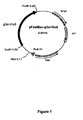
- the Figure 1 represents the plasmid pFastBac-gfat-His6 with a molecular weight of 6.89 kb.
- the "Ampr” cassette represents an ampicillin resistance gene
- the "ori” cassette represents an origin of bacterial replication
- the "Gmr” cassette represents a gentamicin resistance gene
- the "Polh Pr” cassette represents the promoter. of polyhedrin
- the gfat-his6 cassette represents the gfat1 gene modified by the insertion of a sequence encoding a hexahistidine tag.
- the Xba I restriction sites at the 4.11 kb position and the Eco RI at the 4.56 kb and 6.60 kb positions are also represented.
- a recombinant bacmid was isolated after transposition into DH10Bac cells and used to transfect Sf9 insect cells in the presence of Lipofectin (Life Technologies Ltd).
- the baculoviruses obtained were amplified in Sf9 cells and the viral titre was measured at 5 ⁇ 10 7 pfu / ml.
- Sf9 insect cells were cultured at 28 ° C in the presence of SF900II medium (Life Technologies Ltd) in 5 L flasks with shaking at 100 rpm. Cells at a density of 2.10 9 cells / L were infected with the recombinant baculovirus obtained above with a multiplicity of infection of 2 (pfu / cell), then cultured for 72 h.
- the cells and the supernatant were separated by centrifugation (2500 g, 10 min at 4 ° C).
- the cell pellets were washed in the presence of 20 mM Tris-HCl buffer, pH 7, centrifuged (4000 g, 45 min at 4 ° C) and frozen at -80 ° C.
- the cell pellet (20 g) was taken up in 50 ml of lysis buffer (50 mM NaPO 4 pH 7.5, 300 mM NaCl, 10 mM imidazole, 1 mM fructose-6-phosphate (fructose-6P), TCEP (Tris 1 mM (2-carboxyethyl) phosphine), 1 mM PMSF (phenylmethylsulfonyl fluoride), 10% glycerol and 1 tablet of protease inhibitors without EDTA (Roche Applied Sciences) and subjected to DynoMill milling at 4500 trs / min (4 cycles of 30 sec) in the presence of 40 g of microbeads 0.2 mm in diameter
- the assembly was cooled by circulation of ethylene glycol / water adjusted to -15 ° C.
- the crude extract obtained ( 100 ml, 445 mg of total protein) was centrifuged at 4 ° C for 20 min. at 12000 rpm. The supernatant was subjected to ultracentrifugation at 4 ° C (350000 rpm, 1h). The supernatant thus obtained was mixed with 5 ml of 50% Ni-NTA (Qiagen) matrix for 2 hours at 4 ° C.
- the mixture was poured into an empty column and rinsed with 40 ml of washing buffer (50 mM NaPO 4 pH 7.5, 300 mM NaCl, 40 mM imidazole, 1 mM fructose-6P, 1 mM TCEP, 1 mM PMSF and 1 EDTA-free protease inhibitor cocktail tablet (Roche Applied Sciences) elution was carried out in successive stages at 125 and 500 mM imidazole in the same buffer as before 12 mg functional GFAT1-His6 (protein assay according to US Pat. Bradford's method was thus obtained.
- washing buffer 50 mM NaPO 4 pH 7.5, 300 mM NaCl
- 40 mM imidazole 1 mM fructose-6P
- 1 mM TCEP 1 mM PMSF
- 1 EDTA-free protease inhibitor cocktail tablet (Roche Applied Sciences)
- the enzyme was then stored in fractions of 100 ⁇ l in the presence of 1 mM fructose-6P, 1 mM TCEP and 10% glycerol at -80 ° C.
- the stability of the enzyme is several months at -80 ° C and greater than 8 days at 4 ° C.
- the enzymatic activity is followed by a colorimetric test whose principle is as follows: the D-glucosamine-6P released by the enzyme is N-acetylated with acetic anhydride in an alkaline medium ( Ghosh et al., Method Enzymol. (1962) 5: 414 The solution is then treated with Ehrlich's reagent (para-dimethyl-amino-benzaldehyde, PDAB) in a concentrated acidic medium; the pink compound formed absorbs at 585 nm.
- Ehrlich's reagent para-dimethyl-amino-benzaldehyde, PDAB
- GFAT activity was determined relative to a standard curve established using D-glucosamine as standard in a concentration range of 0 to 200 nmol.
- the specific activity of the GFAT1-His6 obtained was thus measured at 1.7 U / mg. Which is greater than the value of 0.4 U / mg obtained by Broschat et al., J. Biol. Chem. (2002) 277: 14764 for purification of a recombinant human GFAT1. This reflects higher activity of GFAT1-His6 and greater purity of the enzyme preparation according to the invention.
- the measurement is carried out at 365 nm at 37 ° C. Under these conditions, an absorbance unit corresponds to 0.11 ⁇ mol of APADH formed.
Landscapes
- Chemical & Material Sciences (AREA)
- Life Sciences & Earth Sciences (AREA)
- Organic Chemistry (AREA)
- Health & Medical Sciences (AREA)
- Zoology (AREA)
- Wood Science & Technology (AREA)
- Engineering & Computer Science (AREA)
- Genetics & Genomics (AREA)
- Bioinformatics & Cheminformatics (AREA)
- General Health & Medical Sciences (AREA)
- General Engineering & Computer Science (AREA)
- Biochemistry (AREA)
- Molecular Biology (AREA)
- Microbiology (AREA)
- Biotechnology (AREA)
- Proteomics, Peptides & Aminoacids (AREA)
- Biomedical Technology (AREA)
- Immunology (AREA)
- Physics & Mathematics (AREA)
- Biophysics (AREA)
- Medicinal Chemistry (AREA)
- Analytical Chemistry (AREA)
- Enzymes And Modification Thereof (AREA)
- Measuring Or Testing Involving Enzymes Or Micro-Organisms (AREA)
- Peptides Or Proteins (AREA)
- Micro-Organisms Or Cultivation Processes Thereof (AREA)
- Preparation Of Compounds By Using Micro-Organisms (AREA)
- Investigating Or Analysing Biological Materials (AREA)
- Medicines That Contain Protein Lipid Enzymes And Other Medicines (AREA)
Claims (18)
- Protein, das eine GFAT-Aktivität besitzt, umfassend:eine GFAT-Sequenz und mindestens eine Reinigungs-Tag-Sequenz, wobei die Reinigungs-Tag-Sequenz zwischen zwei aufeinanderfolgenden Aminosäuren der GFAT-Sequenz eingefügt ist, wobei die Aminosäuren enthalten sind in:• einer GFAT-Sequenz, die der Sequenz entspricht, die sich zwischen den Aminosäuren 30 bis 80 der GFAT von Eschericia coli erstreckt, oder• einer GFAT-Sequenz, die der Sequenz entspricht, die sich zwischen den Aminosäuren 220 bis 230 der GFAT von Eschericia coli erstreckt.
- Protein nach Anspruch 1, wobei die GFAT-Sequenz einer GFAT-Sequenz eines Bakteriums oder Eukaryoten, insbesondere einer Pflanze, eines Pilzes oder eines Tiers, besonders einem Insekt oder einem Säuger, ganz speziell dem Menschen entspricht.
- Protein nach Anspruch 1 oder 2, wobei die Reinigungs-Tag-Sequenz zwischen zwei aufeinanderfolgenden Aminosäuren der Sequenz einer humanen GFAT eingefügt ist, wobei die Aminosäuren zwischen den Aminosäuren 40 bis 50 und/oder 290 bis 330 der humanen GFAT-Sequenz enthalten sind.
- Protein nach einem der Ansprüche 1 bis 3, wobei die GFAT-Sequenz Folgendem entspricht:• SEQ ID NR: 2, die der humanen GFAT1-Sequenz entspricht,oder• SEQ ID NR: 4, die der humanen GFAT2-Sequenz entspricht, oder• SEQ ID NR: 6, die der humanen GFAT1Alt-Sequenz entspricht.
- Protein nach einem der Ansprüche 1 bis 4, wobei die Reinigungs-Tag-Sequenz zwischen zwei aufeinanderfolgenden Aminosäuren eingefügt ist, wobei die Aminosäuren zwischen den folgenden Aminosäuren enthalten sind:• 43 bis 47 und/oder 298 bis 306 der SEQ ID NR: 2, oder• 42 bis 45 und/oder 299 bis 307 der SEQ ID NR: 4, oder• 43 bis 47 und/oder 316 bis 324 der SEQ ID NR: 6.
- Protein nach Anspruch 5, wobei die Reinigungs-Tag-Sequenz zwischen die folgenden Aminosäuren eingefügt ist:• 299 und 300 von SEQ ID NR: 2, oder• 300 und 301 von SEQ ID NR: 4, oder• 317 und 318 von SEQ ID NR: 6.
- Protein nach einem der Ansprüche 1 bis 6, wobei der Reinigungs-Tag einer Sequenz mit 2 bis 10 Aminosäuren, insbesondere 4 bis 8 Aminosäuren entspricht.
- Protein nach einem der Ansprüche 1 bis 7, wobei der Reinigungs-Tag ein Hexahistidin ist.
- Protein nach den Ansprüchen 6 und 8, das den folgenden Sequenzen entspricht:• SEQ ID NR: 8, die der Sequenz SEQ ID NR: 2 entspricht, in die ein Hexahistidin zwischen die Aminosäuren 299 und 300 eingefügt ist,• SEQ ID NR: 10, die der Sequenz SEQ ID NR: 4 entspricht, in die ein Hexahistidin zwischen die Aminosäuren 300 und 301 eingefügt ist, und• SEQ ID NR: 12, die der Sequenz SEQ ID NR: 6 entspricht, in die ein Hexahistidin zwischen die Aminosäuren 317 und 318 eingefügt ist.
- Nukleinsäure, umfassend oder bestehend aus einer Sequenz, die für ein Protein nach einem der Ansprüche 1 bis 9 kodiert.
- Nukleinsäure, umfassend oder bestehend aus der Nukleotidsequenz:• SEQ ID NR: 7, die für das Protein SEQ ID NR: 8 kodiert, oder• SEQ ID NR: 9, die für das Protein SEQ ID NR: 10 kodiert, oder• SEQ ID NR: 11, die für das Protein SEQ ID NR: 12 kodiert.
- Eukaryotischer oder prokaryotischer Vektor, der eine Nukleinsäure nach Anspruch 10 oder 11 umfasst.
- Verfahren zur Reinigung eines Proteins nach einem der Ansprüche 1 bis 9, ausgehend von einer Lösung, die das Protein umfasst, das einen Schritt des Inkontaktbringens der Lösung mit einer Verbindung umfasst, die spezifisch an das Reinigungs-Tag des Proteins bindet und einen Schritt der Trennung des Komplexes, der durch die Bindung des Proteins an die Verbindung gebildet wurde, von den anderen Bestandteilen der Lösung.
- Verfahren zur Reinigung nach Anspruch 13, das einen Schritt des Inkontaktbringens einer Lösung, die ein Protein nach Anspruch 9 umfasst, mit einer Verbindung, die ein zweiwertiges Metallkation, wie etwa Ni2+ oder Co2+, insbesondere Ni2+, umfasst, und einen Schritt der Trennung des Komplexes, der durch die Bildung des Proteins an die Verbindung gebildet wurde, von den anderen Bestandteilen der Lösung umfasst.
- Verfahren zur Konservierung eines Proteins nach einem der Ansprüche 1 bis 9 in enzymatisch aktiver Form, insbesondere bei -80 °C oder bei 4 °C, das die Zugabe des Proteins zu einer Lösung umfasst, die Folgendes umfasst:• 1 mM bis 10 mM Fructose-6-phosphat, insbesondere etwa 1 mM,• 1 mM bis 5 mM Tris(2-carboxyethyl)phosphin, insbesondere 1 mM,• 5 % bis 20 % Glycerol, insbesondere 10 %.
- Zusammensetzung, die ein aktives GFAT-Protein umfasst, das an einen Reinigungs-Tag nach einem der Ansprüche 1 bis 9 gebunden ist, wobei das Protein in einer enzymatisch aktiven Form mindestens 8 Tage lang bei einer Temperatur von 2 °C bis 10 °C, insbesondere 4 °C, und mindestens 12 Monate lang bei einer Temperatur von -100 °C bis -20 °C, insbesondere - 80 °C, konserviert werden kann, wobei das Protein assoziiert ist mit :• 1 mM bis 10 mM Fructose-6-phosphat, insbesondere 1 mM,• 1 mM bis 5 mM Tris(2-carboxyethyl)phosphin, insbesondere 1 mM,• 5 % bis 20 % Glycerol, insbesondere 10 %.
- Verwendung eines Proteins nach einem der Ansprüche 1 bis 9 zum Screenen von Verbindungen, die die Aktivität des Proteins modifizieren, besonders zum Screenen des Proteininhibitors.
- Verwendung nach Anspruch 17 zum Screenen von Verbindungen, die im Rahmen der Behandlung oder der Vorbeugung von Diabetes, insbesondere Typ-II-Diabetes, Adipositas, Acidose, Ketose, Arthritis, Krebsformen oder Osteoporose nützlich sind.
Applications Claiming Priority (2)
| Application Number | Priority Date | Filing Date | Title |
|---|---|---|---|
| FR0308350A FR2857374B1 (fr) | 2003-07-08 | 2003-07-08 | Glutamine:fructose-6-phosphate amidotransferase(gfat) comprenant une etiquette de purification interne, et son utilisation pour le criblage de composes |
| PCT/FR2004/001800 WO2005005628A1 (fr) | 2003-07-08 | 2004-07-08 | Glutamine:fructose-6-phosphate amidotransferase (gfat) comprenant une etiquette de purification interne, et son utilisation pour le criblage de composes |
Publications (2)
| Publication Number | Publication Date |
|---|---|
| EP1641920A1 EP1641920A1 (de) | 2006-04-05 |
| EP1641920B1 true EP1641920B1 (de) | 2010-03-17 |
Family
ID=33522866
Family Applications (1)
| Application Number | Title | Priority Date | Filing Date |
|---|---|---|---|
| EP04767632A Expired - Lifetime EP1641920B1 (de) | 2003-07-08 | 2004-07-08 | Einen internen reinigungsmarker enthaltende glutamin:fructose-6-phosphat- amidotransferase (gfat) und verwendung davon zum screening von verbindungen |
Country Status (9)
| Country | Link |
|---|---|
| US (1) | US7625734B2 (de) |
| EP (1) | EP1641920B1 (de) |
| JP (1) | JP2007515931A (de) |
| AT (1) | ATE461274T1 (de) |
| CA (1) | CA2531630C (de) |
| DE (1) | DE602004026056D1 (de) |
| ES (1) | ES2343571T3 (de) |
| FR (1) | FR2857374B1 (de) |
| WO (1) | WO2005005628A1 (de) |
Families Citing this family (2)
| Publication number | Priority date | Publication date | Assignee | Title |
|---|---|---|---|---|
| EP3061829B1 (de) | 2013-10-25 | 2021-09-22 | Kikkoman Corporation | Hba1c-messverfahren mit auf glykierte peptide wirkender amadoriase |
| CN112852774A (zh) * | 2019-11-28 | 2021-05-28 | 中国科学院大连化学物理研究所 | 磷酸果糖氨基转移酶编码基因及酶的制备与应用 |
Family Cites Families (4)
| Publication number | Priority date | Publication date | Assignee | Title |
|---|---|---|---|---|
| WO1993021330A1 (en) * | 1992-04-22 | 1993-10-28 | Zymogenetics, Inc. | Human glutamine:fructose-6-phosphate amino-transferase |
| AUPN480095A0 (en) * | 1995-08-15 | 1995-09-07 | Commonwealth Scientific And Industrial Research Organisation | Epitope tagging system |
| US5710248A (en) * | 1996-07-29 | 1998-01-20 | University Of Iowa Research Foundation | Peptide tag for immunodetection and immunopurification |
| US7090976B2 (en) * | 1999-11-10 | 2006-08-15 | Rigel Pharmaceuticals, Inc. | Methods and compositions comprising Renilla GFP |
-
2003
- 2003-07-08 FR FR0308350A patent/FR2857374B1/fr not_active Expired - Fee Related
-
2004
- 2004-07-08 AT AT04767632T patent/ATE461274T1/de not_active IP Right Cessation
- 2004-07-08 US US10/563,572 patent/US7625734B2/en not_active Expired - Fee Related
- 2004-07-08 EP EP04767632A patent/EP1641920B1/de not_active Expired - Lifetime
- 2004-07-08 JP JP2006518301A patent/JP2007515931A/ja active Pending
- 2004-07-08 WO PCT/FR2004/001800 patent/WO2005005628A1/fr not_active Ceased
- 2004-07-08 CA CA2531630A patent/CA2531630C/fr not_active Expired - Fee Related
- 2004-07-08 DE DE602004026056T patent/DE602004026056D1/de not_active Expired - Lifetime
- 2004-07-08 ES ES04767632T patent/ES2343571T3/es not_active Expired - Lifetime
Also Published As
| Publication number | Publication date |
|---|---|
| CA2531630A1 (fr) | 2005-01-20 |
| ATE461274T1 (de) | 2010-04-15 |
| ES2343571T3 (es) | 2010-08-04 |
| US20060239989A1 (en) | 2006-10-26 |
| JP2007515931A (ja) | 2007-06-21 |
| EP1641920A1 (de) | 2006-04-05 |
| US7625734B2 (en) | 2009-12-01 |
| WO2005005628A1 (fr) | 2005-01-20 |
| DE602004026056D1 (de) | 2010-04-29 |
| FR2857374B1 (fr) | 2005-09-23 |
| CA2531630C (fr) | 2013-08-27 |
| FR2857374A1 (fr) | 2005-01-14 |
Similar Documents
| Publication | Publication Date | Title |
|---|---|---|
| Morales‐Ríos et al. | A novel 11‐kDa inhibitory subunit in the F1FO ATP synthase of Paracoccus denitrificans and related α‐proteobacteria | |
| KR102390390B1 (ko) | 헤모글로빈 A1c의 측정 방법 및 측정 키트 | |
| CA2847747C (fr) | Mutants de la glucose oxydase de penicillium amagasakiense | |
| US12098405B2 (en) | Protecting group chemistry for clean, reductant-free dyeing | |
| JP2000502262A (ja) | 原生動物トリコモナス・バギナリスからのホモシステインデスルフラーゼ | |
| KR102390400B1 (ko) | 당화 펩티드에 작용하는 아마도리아제를 이용한 HbA1c 측정법 | |
| Creuzenet et al. | Structure-function studies of two novel UDP-GlcNAc C6 dehydratases/C4 reductases: Variation from the SYK dogma | |
| CA2531630C (fr) | Glutamine: fructose-6-phosphate amidotransferase (gfat) comprenant une etiquette de purification interne, et son utilisation pour le criblage de composes | |
| Rydström et al. | Domains, specific residues and conformational states involved in hydride ion transfer and proton pumping by nicotinamide nucleotide transhydrogenase from Escherichia coli | |
| FR2798391A1 (fr) | Enzyme thyroidienne nadph oxydase, acide nucleique codant pour cette enzyme et leurs applications | |
| Katane et al. | Caenorhabditis elegans has two genes encoding functional d‐aspartate oxidases | |
| Ye Jeong et al. | Mutational study of the role of tyrosine‐49 in the Saccharomyces cerevisiae xylose reductase | |
| EP2459712B1 (de) | Mutanten von pyrrolochinolinchinon-abhängiger löslicher glucose-dehydrogenase | |
| Garcia et al. | Differential RNA-dependent ATPase activities of four rRNA processing yeast DEAD-box proteins | |
| EP1163364B1 (de) | Screeningverfahren unter verwendung der mgdg-synthase | |
| Yamamoto et al. | Functional and structural characterization of D-aspartate oxidase from porcine kidney: non-Michaelis kinetics due to substrate activation | |
| HUP0105035A2 (hu) | Emlőseredetű szerin racemáz | |
| FR2556740A1 (fr) | Nouveaux mutants d'escherichia coli, capables d'excreter dans le milieu extracellulaire des proteines periplasmiques, leur obtention et leur application a la preparation de beta-lactamases ou de proteines hybrides de beta-lactamases | |
| FR2810673A1 (fr) | Dynamine mitochondriale humaine msp1 et son utilisation en therapeutique | |
| Bastida et al. | C-Terminal truncation of α 1, 6-fucosyltransferase from Rhizobium sp. does not annul the transferase activity of the enzyme | |
| WO2026017657A1 (fr) | Production d'acide p-aminobenzoïque par un microorganisme recombinant | |
| Liu et al. | Cloning, expression and characterization of a novel aldehyde dehydrogenase gene from Flammeovirga pacifica | |
| FR3127946A1 (fr) | Procédé de purification d’une protéine d’intérêt et moyens pour sa mise en œuvre | |
| WO2015162383A1 (fr) | Proteines nadph oxydases | |
| WO2005005627A2 (fr) | Applications d'une nouvelle classe d'enzymes : les sulfiredoxines. |
Legal Events
| Date | Code | Title | Description |
|---|---|---|---|
| PUAI | Public reference made under article 153(3) epc to a published international application that has entered the european phase |
Free format text: ORIGINAL CODE: 0009012 |
|
| 17P | Request for examination filed |
Effective date: 20060102 |
|
| AK | Designated contracting states |
Kind code of ref document: A1 Designated state(s): AT BE BG CH CY CZ DE DK EE ES FI FR GB GR HU IE IT LI LU MC NL PL PT RO SE SI SK TR |
|
| DAX | Request for extension of the european patent (deleted) | ||
| 17Q | First examination report despatched |
Effective date: 20061220 |
|
| GRAJ | Information related to disapproval of communication of intention to grant by the applicant or resumption of examination proceedings by the epo deleted |
Free format text: ORIGINAL CODE: EPIDOSDIGR1 |
|
| GRAP | Despatch of communication of intention to grant a patent |
Free format text: ORIGINAL CODE: EPIDOSNIGR1 |
|
| GRAS | Grant fee paid |
Free format text: ORIGINAL CODE: EPIDOSNIGR3 |
|
| GRAA | (expected) grant |
Free format text: ORIGINAL CODE: 0009210 |
|
| AK | Designated contracting states |
Kind code of ref document: B1 Designated state(s): AT BE BG CH CY CZ DE DK EE ES FI FR GB GR HU IE IT LI LU MC NL PL PT RO SE SI SK TR |
|
| REG | Reference to a national code |
Ref country code: GB Ref legal event code: FG4D Free format text: NOT ENGLISH |
|
| REG | Reference to a national code |
Ref country code: CH Ref legal event code: EP |
|
| REG | Reference to a national code |
Ref country code: IE Ref legal event code: FG4D |
|
| REF | Corresponds to: |
Ref document number: 602004026056 Country of ref document: DE Date of ref document: 20100429 Kind code of ref document: P |
|
| REG | Reference to a national code |
Ref country code: NL Ref legal event code: VDEP Effective date: 20100317 |
|
| REG | Reference to a national code |
Ref country code: CH Ref legal event code: NV Representative=s name: ABREMA AGENCE BREVET ET MARQUES, GANGUILLET |
|
| REG | Reference to a national code |
Ref country code: ES Ref legal event code: FG2A Ref document number: 2343571 Country of ref document: ES Kind code of ref document: T3 |
|
| PG25 | Lapsed in a contracting state [announced via postgrant information from national office to epo] |
Ref country code: FI Free format text: LAPSE BECAUSE OF FAILURE TO SUBMIT A TRANSLATION OF THE DESCRIPTION OR TO PAY THE FEE WITHIN THE PRESCRIBED TIME-LIMIT Effective date: 20100317 Ref country code: AT Free format text: LAPSE BECAUSE OF FAILURE TO SUBMIT A TRANSLATION OF THE DESCRIPTION OR TO PAY THE FEE WITHIN THE PRESCRIBED TIME-LIMIT Effective date: 20100317 Ref country code: PL Free format text: LAPSE BECAUSE OF FAILURE TO SUBMIT A TRANSLATION OF THE DESCRIPTION OR TO PAY THE FEE WITHIN THE PRESCRIBED TIME-LIMIT Effective date: 20100317 Ref country code: SI Free format text: LAPSE BECAUSE OF FAILURE TO SUBMIT A TRANSLATION OF THE DESCRIPTION OR TO PAY THE FEE WITHIN THE PRESCRIBED TIME-LIMIT Effective date: 20100317 |
|
| REG | Reference to a national code |
Ref country code: IE Ref legal event code: FD4D |
|
| PG25 | Lapsed in a contracting state [announced via postgrant information from national office to epo] |
Ref country code: EE Free format text: LAPSE BECAUSE OF FAILURE TO SUBMIT A TRANSLATION OF THE DESCRIPTION OR TO PAY THE FEE WITHIN THE PRESCRIBED TIME-LIMIT Effective date: 20100317 Ref country code: GR Free format text: LAPSE BECAUSE OF FAILURE TO SUBMIT A TRANSLATION OF THE DESCRIPTION OR TO PAY THE FEE WITHIN THE PRESCRIBED TIME-LIMIT Effective date: 20100618 Ref country code: NL Free format text: LAPSE BECAUSE OF FAILURE TO SUBMIT A TRANSLATION OF THE DESCRIPTION OR TO PAY THE FEE WITHIN THE PRESCRIBED TIME-LIMIT Effective date: 20100317 Ref country code: RO Free format text: LAPSE BECAUSE OF FAILURE TO SUBMIT A TRANSLATION OF THE DESCRIPTION OR TO PAY THE FEE WITHIN THE PRESCRIBED TIME-LIMIT Effective date: 20100317 Ref country code: SE Free format text: LAPSE BECAUSE OF FAILURE TO SUBMIT A TRANSLATION OF THE DESCRIPTION OR TO PAY THE FEE WITHIN THE PRESCRIBED TIME-LIMIT Effective date: 20100317 Ref country code: CY Free format text: LAPSE BECAUSE OF FAILURE TO SUBMIT A TRANSLATION OF THE DESCRIPTION OR TO PAY THE FEE WITHIN THE PRESCRIBED TIME-LIMIT Effective date: 20100317 |
|
| PG25 | Lapsed in a contracting state [announced via postgrant information from national office to epo] |
Ref country code: BG Free format text: LAPSE BECAUSE OF FAILURE TO SUBMIT A TRANSLATION OF THE DESCRIPTION OR TO PAY THE FEE WITHIN THE PRESCRIBED TIME-LIMIT Effective date: 20100617 Ref country code: SK Free format text: LAPSE BECAUSE OF FAILURE TO SUBMIT A TRANSLATION OF THE DESCRIPTION OR TO PAY THE FEE WITHIN THE PRESCRIBED TIME-LIMIT Effective date: 20100317 Ref country code: CZ Free format text: LAPSE BECAUSE OF FAILURE TO SUBMIT A TRANSLATION OF THE DESCRIPTION OR TO PAY THE FEE WITHIN THE PRESCRIBED TIME-LIMIT Effective date: 20100317 |
|
| PLBE | No opposition filed within time limit |
Free format text: ORIGINAL CODE: 0009261 |
|
| STAA | Information on the status of an ep patent application or granted ep patent |
Free format text: STATUS: NO OPPOSITION FILED WITHIN TIME LIMIT |
|
| BERE | Be: lapsed |
Owner name: CENTRE NATIONAL DE LA RECHERCHE SCIENTIFIQUE (CNR Effective date: 20100731 |
|
| PG25 | Lapsed in a contracting state [announced via postgrant information from national office to epo] |
Ref country code: PT Free format text: LAPSE BECAUSE OF FAILURE TO SUBMIT A TRANSLATION OF THE DESCRIPTION OR TO PAY THE FEE WITHIN THE PRESCRIBED TIME-LIMIT Effective date: 20100719 Ref country code: IE Free format text: LAPSE BECAUSE OF FAILURE TO SUBMIT A TRANSLATION OF THE DESCRIPTION OR TO PAY THE FEE WITHIN THE PRESCRIBED TIME-LIMIT Effective date: 20100317 Ref country code: DK Free format text: LAPSE BECAUSE OF FAILURE TO SUBMIT A TRANSLATION OF THE DESCRIPTION OR TO PAY THE FEE WITHIN THE PRESCRIBED TIME-LIMIT Effective date: 20100317 |
|
| 26N | No opposition filed |
Effective date: 20101220 |
|
| PG25 | Lapsed in a contracting state [announced via postgrant information from national office to epo] |
Ref country code: MC Free format text: LAPSE BECAUSE OF NON-PAYMENT OF DUE FEES Effective date: 20100731 |
|
| PG25 | Lapsed in a contracting state [announced via postgrant information from national office to epo] |
Ref country code: BE Free format text: LAPSE BECAUSE OF NON-PAYMENT OF DUE FEES Effective date: 20100731 |
|
| PG25 | Lapsed in a contracting state [announced via postgrant information from national office to epo] |
Ref country code: LU Free format text: LAPSE BECAUSE OF NON-PAYMENT OF DUE FEES Effective date: 20100708 Ref country code: HU Free format text: LAPSE BECAUSE OF FAILURE TO SUBMIT A TRANSLATION OF THE DESCRIPTION OR TO PAY THE FEE WITHIN THE PRESCRIBED TIME-LIMIT Effective date: 20100918 |
|
| PG25 | Lapsed in a contracting state [announced via postgrant information from national office to epo] |
Ref country code: TR Free format text: LAPSE BECAUSE OF FAILURE TO SUBMIT A TRANSLATION OF THE DESCRIPTION OR TO PAY THE FEE WITHIN THE PRESCRIBED TIME-LIMIT Effective date: 20100317 |
|
| REG | Reference to a national code |
Ref country code: FR Ref legal event code: PLFP Year of fee payment: 13 |
|
| REG | Reference to a national code |
Ref country code: FR Ref legal event code: PLFP Year of fee payment: 14 |
|
| REG | Reference to a national code |
Ref country code: FR Ref legal event code: PLFP Year of fee payment: 15 |
|
| PGFP | Annual fee paid to national office [announced via postgrant information from national office to epo] |
Ref country code: FR Payment date: 20190731 Year of fee payment: 16 Ref country code: ES Payment date: 20190809 Year of fee payment: 16 Ref country code: DE Payment date: 20190711 Year of fee payment: 16 Ref country code: IT Payment date: 20190718 Year of fee payment: 16 |
|
| PGFP | Annual fee paid to national office [announced via postgrant information from national office to epo] |
Ref country code: GB Payment date: 20190719 Year of fee payment: 16 |
|
| PGFP | Annual fee paid to national office [announced via postgrant information from national office to epo] |
Ref country code: CH Payment date: 20190724 Year of fee payment: 16 |
|
| REG | Reference to a national code |
Ref country code: CH Ref legal event code: PFUS Owner name: CENTRE NATIONAL DE LA RECHERCHE SCIENTIFIQUE (, FR Free format text: FORMER OWNER: CENTRE NATIONAL DE LA RECHERCHE SCIENTIFIQUE (CNRS), FR |
|
| REG | Reference to a national code |
Ref country code: DE Ref legal event code: R119 Ref document number: 602004026056 Country of ref document: DE |
|
| REG | Reference to a national code |
Ref country code: CH Ref legal event code: PL |
|
| GBPC | Gb: european patent ceased through non-payment of renewal fee |
Effective date: 20200708 |
|
| PG25 | Lapsed in a contracting state [announced via postgrant information from national office to epo] |
Ref country code: GB Free format text: LAPSE BECAUSE OF NON-PAYMENT OF DUE FEES Effective date: 20200708 Ref country code: FR Free format text: LAPSE BECAUSE OF NON-PAYMENT OF DUE FEES Effective date: 20200731 Ref country code: LI Free format text: LAPSE BECAUSE OF NON-PAYMENT OF DUE FEES Effective date: 20200731 Ref country code: CH Free format text: LAPSE BECAUSE OF NON-PAYMENT OF DUE FEES Effective date: 20200731 |
|
| PG25 | Lapsed in a contracting state [announced via postgrant information from national office to epo] |
Ref country code: DE Free format text: LAPSE BECAUSE OF NON-PAYMENT OF DUE FEES Effective date: 20210202 |
|
| PG25 | Lapsed in a contracting state [announced via postgrant information from national office to epo] |
Ref country code: IT Free format text: LAPSE BECAUSE OF NON-PAYMENT OF DUE FEES Effective date: 20200708 |
|
| REG | Reference to a national code |
Ref country code: ES Ref legal event code: FD2A Effective date: 20211202 |
|
| PG25 | Lapsed in a contracting state [announced via postgrant information from national office to epo] |
Ref country code: ES Free format text: LAPSE BECAUSE OF NON-PAYMENT OF DUE FEES Effective date: 20200709 |