EP1643347A2 - Informationsverarbeitungsgerät und Kühlverfahren - Google Patents
Informationsverarbeitungsgerät und Kühlverfahren Download PDFInfo
- Publication number
- EP1643347A2 EP1643347A2 EP05107900A EP05107900A EP1643347A2 EP 1643347 A2 EP1643347 A2 EP 1643347A2 EP 05107900 A EP05107900 A EP 05107900A EP 05107900 A EP05107900 A EP 05107900A EP 1643347 A2 EP1643347 A2 EP 1643347A2
- Authority
- EP
- European Patent Office
- Prior art keywords
- mode
- cooling
- accordance
- information processing
- processing apparatus
- Prior art date
- Legal status (The legal status is an assumption and is not a legal conclusion. Google has not performed a legal analysis and makes no representation as to the accuracy of the status listed.)
- Withdrawn
Links
Images


Classifications
-
- G—PHYSICS
- G06—COMPUTING OR CALCULATING; COUNTING
- G06F—ELECTRIC DIGITAL DATA PROCESSING
- G06F1/00—Details not covered by groups G06F3/00 - G06F13/00 and G06F21/00
- G06F1/16—Constructional details or arrangements
- G06F1/20—Cooling means
- G06F1/206—Cooling means comprising thermal management
-
- G—PHYSICS
- G06—COMPUTING OR CALCULATING; COUNTING
- G06F—ELECTRIC DIGITAL DATA PROCESSING
- G06F9/00—Arrangements for program control, e.g. control units
- G06F9/06—Arrangements for program control, e.g. control units using stored programs, i.e. using an internal store of processing equipment to receive or retain programs
- G06F9/44—Arrangements for executing specific programs
- G06F9/4401—Bootstrapping
- G06F9/4406—Loading of operating system
- G06F9/441—Multiboot arrangements, i.e. selecting an operating system to be loaded
Definitions
- One embodiment of the invention relates to an information processing apparatus and a cooling method for an information processing apparatus.
- cooling unit that operates to cool the environment inside the computer housing, responding to a temperature rise inside the computer housing.
- the cooling unit may perform cooling operations based on an indirect measured value, such as whether or not the computer is powered by a commercial alternating power source or powered by a battery or a direct temperature measurement represented by a temperature indication number.
- An example of such a personal computer is disclosed in Japanese Patent Application Publication (KOKAI) No. 9-198166.
- a temperature management method described in this reference determines a desired state of at least one cooling option such as a fan on the basis of a detected temperature and an indirect input. For example, a fan speed is set to any of 0%, 50%, 75%, and 100%.
- personal computers have been implemented with audio visual (also referred as "AV") functionality.
- personal computers may include a TV tuner is incorporated to view a TV program and an MPEG-2 encoder, a hard disk drive (also referred as “HDD”), or a digital versatile disk (also referred as "DVD”) drive is incorporated to compress, encode, and record the TV program in accordance with the MPEG-2 system.
- TV tuner is incorporated to view a TV program and an MPEG-2 encoder
- HDD hard disk drive
- DVD digital versatile disk
- the computer is used as an AV device instead of as a personal computer, and thus, a lower noise output by the computer would be preferable. Since it is possible to execute an application in a multi-task manner in a general personal computer use environment, a cooling capability is fulfilled so as to achieve its function even at the time of a maximum load.
- the control system is also applied to the AV viewing environment as is, a user recognizes that the number of rotations of the fan changes during viewing of an AV program, and it is expected that the user feels the change to be noisy. Further, if the number of rotations of the fan increases, it leads to noise generation.
- an information processing apparatus comprises:
- a method for cooling an information processing apparatus operated by a first operating system in a first mode and operated by a second operating system in a second mode comprises:
- an information processing apparatus comprises a memory to store a first software (e.g., operating system, application program, etc.) used in a first mode and a second software (e.g., operating system, application program, etc.) used in a second mode.
- a first software e.g., operating system, application program, etc.
- a second software e.g., operating system, application program, etc.
- the first operating system supports a wider range of functionality, namely a greater number of functions including those unrelated to AV functions, than the second operating system.
- the information processing apparatus further comprises a processor to execute the first operating system and the second operating system, a cooling unit, and a driving unit to drive the cooling unit in accordance with the operating load in the first mode, and to drive the cooling unit in a predetermined level regardless of the operating load in the second mode.
- FIG. 1 shows a personal computer 1 that is an information processing apparatus according to one embodiment.
- the personal computer 1 comprises a computer main body 12 and a display unit 14.
- the display unit 14 incorporates a display panel 16 configured by an LCD.
- the display unit 14 is mounted to the computer main body 12 via a hinge 18 so as to be rotationally changed between an open position and a closed position.
- FIG. 1 shows a state in which the display unit 14 of the personal computer 1 is open.
- the computer main body 12 has a thin box-shaped housing 19, and a keyboard 20 is provided at a center part of an upper face of the housing.
- An armrest 21 is formed on an upper face of the housing 19 in front side of the keyboard 20.
- a touch pad 22, a scroll button 24, and a touch control button 26 are provided at a substantial center part of the armrest 21.
- a power button 28 for turning on/off the power supply of the personal computer 1 and ten AV buttons 30 and left and right speakers 32 and 34 are disposed between the hinges 18 and the keyboard 20, that is, at the back side of the keyboard 20.
- a variety of indicators 36 which comprises LEDs, are indicative of a power supply state or an HDD operating state.
- a remote controller receiving section 38 are provided on a frontal face of the housing 19.
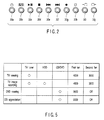
- FIG. 2 is a detailed view showing the ten AV buttons 30.
- a TV button 30a a CD/DVD button 30b, a play/pause button 30c, a stop button 30d, a backward button 30e, a forward button 30f, a record button 30g, a luminance button 30h, a monitor input button 30i, and a TV output button 30j are provided.
- the TV button 30a is the button pressed to activate or deactivate a TV viewing application in order to watch TV while WINDOWS® OS software is activated.
- the CD/DVD button 30b is the button that executes an AV viewing application for viewing CD or DVD while the WINDOWS® OS software is activated.
- a DVD/CD indicator (not shown) provided at bezel of an ODD 128 of FIG. 3 is lit, and audio buttons such as the backward button 30e and the forward button 30f become enabled.
- the AV viewing application is activated, even if the CD/DVD button 30b is pressed during a standby mode, nothing changes.
- an AV specific operating system which is OS software other than the OS WINDOWS® software, is booted up.
- OS includes for example, LINUX® in this embodiment.
- the TV viewing application or AV viewing application on the AV specific OS is launched in accordance with the pressed button.
- the play/pause button 30c is the button that is pressed to start or interrupt reproduction by the AV viewing application irrespective of the WINDOWS® or LINUX® based OS, in which the application is launched.
- the stop button 30d has a function of stopping playback.
- the backward button 30e has a function of return to a backward track, chapter, or item of data.
- the forward button 30f has a function of forwarding to a previous track, chapter, or item of data.
- the record button 30g has a function of recording a TV program in a DVD or the like mounted to a hard disk drive (also referred as "HDD”) 126 or an optical disk drive (also referred as "ODD”) 128.
- HDD hard disk drive
- ODD optical disk drive
- the monitor input button 30i When the monitor input button 30i is pressed while an AV viewing application is activated, the button is toggled between the AV viewing application and an AV input.
- the TV output button 30j When the TV output button 30j is pressed while the WINDOWS® OS is operated, the display of the LCD panel 16 is changed to a TV output. However, if the button 30j is pressed while the AV viewing application is operational, irrespective of the OS being either WINDOWS® or LINUX®, no display changes are necessary.
- the button 30j is programmable under the WINDOWS® OS, and is a utility that a user may set an option.
- FIG. 3 shows a system configuration of the personal computer 1.
- the personal computer 1 mainly comprises a CPU 102, a north bridge 104, a south bridge 106, a graphics controller 108, a high quality video engine (also referred as "HVE”) 110, an embedded controller/keyboard controller (also referred as "EC/KBC”) 112, the main memory 114, and the like.
- HVE high quality video engine
- EC/KBC embedded controller/keyboard controller
- the CPU 102 is a processor provided to control an operation of the computer, and executes an operating system (OS), for example, a WINDOWS® OS and a variety of applications which are loaded from the HDD 126 to the main memory 114.
- OS operating system
- the north bridge 104 is a bridge device which couples a local bus of the CPU 102 to the south bridge 106.
- the north bridge 104 also incorporates a memory controller which accesses and controls the main memory 114.
- the north bridge 104 has a function of executing communication with the graphics controller 108 via an accelerated graphics port (also referred as "AGP") bus or the like.
- AGP accelerated graphics port
- the CPU 102 also executes a system BIOS which is an abbreviation of Basic Input Output System.
- the BIOS is stored in a BIOS-ROM 136.
- the system BIOS is a program for making hardware control.
- Video data is moving picture data, and is, for example, TV broadcast program data received by the TV tuner 134, and video contents stored in storage media such as a DVD.
- the video data is generally displayed in a window which corresponds to a video reproduction application program for reproducing the video data.
- a window corresponding to the video reproduction application program is disposed on a so-called desktop screen, and the video data is displayed in that window in a window mode.
- the personal computer 1 may display video data in a full screen mode on the display screen of the LCD panel 16.
- the full screen mode only the video data is displayed in a substantially full area on the display screen.
- the desktop screen and a window corresponding to an application program other than the video reproduction application program are not displayed at all.
- a menu bar or the like of the window corresponding to the video reproduction application program is not displayed, and only the video data is displayed on a substantially full area on the display screen.
- the graphics controller 108 is a display controller which controls the LCD panel 16 used as a display monitor of the personal computer 1.
- the graphics controller 108 has a video memory (also referred as "VRAM"), and generates a picture signal which forms a display image to be displayed on the LCD panel 16 from the display data depicted on the video memory by means of an OS/application program.
- the display image to be displayed on the LCD panel 16 includes an image of a desktop screen and an image of each of the windows disposed on the desktop screen.
- the display image to be displayed on the LCD panel 16 comprises only the image of the video data. Therefore, in the case where the video data is displayed in the full screen mode, an image signal which forms only a display image of the video data is output from the graphics controller 108.
- the image signal generated by the graphics controller 108 is output to each of a line 108A and a line 108B.
- the image signal output to the line 108A is composed of an 18-bit signal in accordance with a low voltage differential signaling (also referred as "LVDS") format, for example.
- the image signal output to the line 108B is composed of a 24-bit signal in a transition minimized differential signaling (also referred as "TMDS”) format, for example.
- the graphics controller 108 is also coupled to: a terminal "CRT out” for outputting an analog image signal to an external cathode ray tube (also referred as "CRT”) and an S-video terminal "SVideo out” for externally outputting an analog image signal processed by the TV encoder 116.
- a TMDS (Rx) processing section 118 converts the 24-bit signal in accordance with the TMDS format, the signal being sent from the graphics controller 108 via the line 108B, to a 24-bit RGB digital signal, and sends the 24-bit RGB digital signal to the HVE 110.
- the HVE 110 is an image processing controller which executes image processing for enhancing the picture signal generated by the graphics controller 108. This process is, hereinafter, referred to as an image quality correction process.
- the HVE 110 is coupled to a video memory (also referred as "VRAM") 124.
- the image quality correction process is executed on the VRAM 124.
- the image quality correction process is image processing exclusively used for a moving image for enhancing a moving image, and is executed to display a smooth and high quality mobile image on the LCD panel 16.
- processing operations such as color correction, sharpness adjustment, edge enhancement, and response speed improvement are performed in order to improve an image quality of a moving image.
- the color correction includes gamma correction, white balance adjustment, brightness adjustment, and contrast adjustment.
- the HVE 110 may apply the image correction process to an image signal input from an external video device via a composite input terminal as well.
- the image signal whose image quality is corrected by the HVE 110 is sent to the LVDS (Tx) processing section 120.
- the LVDS (Tx) processing section 120 converts the RGB digital signal whose image quality is corrected, the digital signal being output from the HVE 110 to a signal in accordance with the LVDS format, and outputs the signal in accordance with the LVDS format to a switch 122.
- a connection terminal is connected to an output of the LVDS (Tx) processing section 120.
- the switch 122 functions as a selector which selectively outputs to the LCD panel 16 one of the image signal generated by the graphics controller 108 and the image signal whose image quality is corrected by the HVE 110.
- the switch 122 has: a first input terminal connected to the graphics controller 108; a second input terminal connected to the LVDS (Tx) processing section 120; and an output terminal connected to the LCD panel 16.
- the switch 122 is configured to select one of the first input terminal and the second input terminal according to a switch control signal SW supplied from the EC/KBC 112, and to connect the selected input terminal to the output terminal.
- the high image quality mode may be always set regardless of a moving image or a still image.
- the south bridge 106 controls each device on a low pin count (also referred as "LPC”) bus.
- the south bridge 106 incorporates an integrated drive electronics (also referred as "IDE”) controller for controlling the HDD 126 and the ODD 128.
- IDE integrated drive electronics
- the south bridge 106 has a function of controlling the TV tuner 134, a function for accessing and controlling the BIOS-ROM 136, and a function of driving the speaker 132 via the sound controller 130.
- the ODD 128 is a drive unit for driving storage media such as a DVD and a CD having video contents stored therein.
- the TV tuner 134 is a receiver device for receiving broadcast program data such as a TV broadcast program. In the present embodiment, the TV tuner 134 also includes an MPEG-2 encoder.
- the EC/KBC 112 is a one-chip microcomputer in which an embedded controller for power management and a keyboard controller for the keyboard (also referred as "KB") 20 and the touch pad 22 are integrated with each other.
- the EC/KBC 112 has: a function for turning on/off the power of the computer 1 according to a user's operation of the power button 28; a function of activating and controlling a variety of AV functions according to a user's operation of the AV button 30; a function for driving and controlling first and second fans 140, 142 serving as a cooling unit; and a function of controlling a power circuit 146 to which an AC power is supplied and a power supply controller (also referred as "PSC”) 144 to which a battery 148 is connected.
- PSC power supply controller
- the EC/KBC 112 has a function of making communications with the HVE 110 via an I 2 C bus; and a function of supplying the above-described switch control signal SW to the switch 122.
- a cooling capability which is the number of rotations of the cooling fans 140 and/or 142 is varied depending on an operating load, the temperatures of the CPU 102, the graphic controller 108, the TV tuner 134, the memory 114 and the like.
- the temperature of the CPU 102 is measured by a thermister T1 mounted inside the CPU 102.
- the temperature of the graphic controller 108 is measured by a thermister T2 mounted inside the graphic controller 108.
- a thermister T3 mounted near those devices measures in this embodiment. The measured temperature by these thermisters T1, T2, and T3 is notified to the CPU 102.
- a cooling operation according to this embodiment will be described with referring to FiG. 4.
- the following functions are supported as functions of activating an AV specific OS, which is LINUX® in this embodiment, to perform AV viewing.
- these functions operate independently under the AV specific OS environment, and thus, a maximum load may be limited.
- the number of rotations of a fan for cooling may be changed from a variable number of rotations according to a load to a fixed number of rotations, and the amount of noise caused by rotations of the fan may be reduced.
- the number of rotations since a load on these functions is smaller than that during multi-task processing under the WINDOWS® environment, the number of rotations may be limited or may be reduced in order to limit or reduce the amount of noise present.
- a cooling control method under the WINDOWS® OS environment and a cooling control method under the AV specific OS environment are switched, thereby making it possible to achieve low noise during AV viewing under the AV specific OS environment.
- BIOS controls the number of rotations of the fans 140 and 142, and the EC/KBC 112 drives the fans 140 and 142, it is necessary to discriminate whether or not an operating system currently activated by the BIOS is a normal OS (e.g., WINDOWS® OS), or the AV specific OS (e.g., LINUX® OS for this embodiment).
- a normal OS e.g., WINDOWS® OS
- the AV specific OS e.g., LINUX® OS for this embodiment
- the operating system sets a flag. Therefore, it is possible to determine that the normal OS is activated if this flag is not set, and to determine that the AV specific OS is activated if the flag is set.
- the flag is stored in the main memory 114 or the like.
- the BIOS is activated and initially set (block S4).
- the WINDOWS® cooling control method is set as a cooling control method. Under the WINDOWS® cooling control method, the number of rotations of the fan is varied depending on a temperature of each section measured by the thermisters T1, T2, and T3.
- the AV specific OS is activated, and the AV viewing application having a function which corresponds to a pressed button, the application operating under this OS, is activated.
- the AV application enables TV viewing, TV image recording, DVD viewing, and CD appreciation.
- TV button 30a is pressed, TV viewing and TV image recording may be performed.
- the CD/DVD button 30b is pressed, DVD viewing and CD appreciation may be performed.
- the AV specific OS When activation is notified from the AV viewing application to the AV specific OS, the AV specific OS sets a flag in the memory 114.
- the BIOS may recognize activation of the AV specific OS on the basis of a value of this flag (block S8).
- a noise reduction process according the embodiment makes the number of rotations uniform, and thus, there may be some case that a little more power is consumed. For this reason, the noise reduction process according to the embodiment is performed only in the case of the AC drive, and no noise reduction process is performed in the case of the battery drive.
- the AC drive which is noise reduction priority mode or the battery drive which is drive time priority mode is determined.
- the BIOS sets the cooling control method for the AV specific OS as a cooling control method in block S12.
- the number of rotations of the fan is fixed to a predetermined number of rotations according to an application regardless of the temperature of each section.
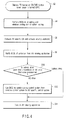
- An exemplary number of rotations are shown in FIG. 5.
- the TV tuner 134 operates as a main heat generation source; at the time of TV video recording, the TV tuner 134 and the HDD 126 operate; and at the time of DVD viewing and CD appreciation, the ODD 128 operates, so that a predetermined number of rotations according to the heat generation source is obtained.
- the BIOS sets to 4,500 rotations for the first fan 140, and sets to 3,500 rotations for the second fan 142.
- the EC/KBC 112 drives the fans 140 and 142 in accordance with the set rotations.
- the BIOS sets to 4,000 rotations for the first fan 140, and sets to 3,000 rotations for the second fan 142, as well.
- the BIOS sets only the first fan 140 to 3,500 rotations.
- the second fan 142 is not rotated and is stopped.
- the BIOS sets only the first fan 140 to 3,000 rotations.
- the EC/KBC 112 drives the fans 140 and 142 in accordance with the set rotations.
- block S12 is skipped, and block S14 is executed immediately.
- the number of rotations of the fan is varied depending on a load in the case where a normal OS is executed, and a multi-task process is performed as a general personal computer.
- the fan is rotated by a predetermined number of rotations according to the application, whereby cooling fan noise reduction may be achieved at the time of AV viewing.
- the present invention may be implemented by variously modifying it without being limited to the above-described embodiment.
- a predetermined number of rotations according to the application may be set in the case where an attempt is made to set priority over low noise during the battery drive as well.
- a merely low speed and predetermined number of rotations may be set regardless of the application.
- a predetermined number of rotations is set at the time of the AV specific OS operation. However, if the number of rotations changes infrequently, noise reduction may be accelerated.
- variable number of fan rotation frequencies at the time of normal OS operation is set to, for example, four (4)
- the number of rotations of the fan is varied depending on a load regardless of the battery drive mode when the AV specific OS operation mode is the AC drive mode, but its variable number may be reduced, for example, may be set to two (2).
- a CPU clock frequency may be lowered instead of increasing the number of rotations of the fan or in addition to such an increase.
- a predetermined number of rotations has been set according to the application at the time of the AV specific OS operation, it may be varied to two (2) according to the load.
- the present invention is not limited to the above-described embodiment as is, but may be instantiated by modifying constituent elements with departing from the spirit of the invention at the stage of implementation.
- a variety of inventions may be formed by a proper combination of a plurality of constituent elements disclosed in the above-described embodiment. For example, some of all the constituent elements presented in the embodiments may be erased. Further, the constituent elements across the different embodiments may be properly combined with each other.
Landscapes
- Engineering & Computer Science (AREA)
- Theoretical Computer Science (AREA)
- Software Systems (AREA)
- Physics & Mathematics (AREA)
- General Engineering & Computer Science (AREA)
- General Physics & Mathematics (AREA)
- Human Computer Interaction (AREA)
- Computer Security & Cryptography (AREA)
- Cooling Or The Like Of Electrical Apparatus (AREA)
- Stored Programmes (AREA)
Applications Claiming Priority (1)
| Application Number | Priority Date | Filing Date | Title |
|---|---|---|---|
| JP2004290589A JP2006106981A (ja) | 2004-10-01 | 2004-10-01 | 情報処理装置及びその冷却方法 |
Publications (2)
| Publication Number | Publication Date |
|---|---|
| EP1643347A2 true EP1643347A2 (de) | 2006-04-05 |
| EP1643347A3 EP1643347A3 (de) | 2009-01-28 |
Family
ID=35455251
Family Applications (1)
| Application Number | Title | Priority Date | Filing Date |
|---|---|---|---|
| EP05107900A Withdrawn EP1643347A3 (de) | 2004-10-01 | 2005-08-29 | Informationsverarbeitungsgerät und Kühlverfahren |
Country Status (4)
| Country | Link |
|---|---|
| US (1) | US7308340B2 (de) |
| EP (1) | EP1643347A3 (de) |
| JP (1) | JP2006106981A (de) |
| CN (1) | CN100397298C (de) |
Families Citing this family (16)
| Publication number | Priority date | Publication date | Assignee | Title |
|---|---|---|---|---|
| JP4545479B2 (ja) * | 2004-04-19 | 2010-09-15 | 富士通株式会社 | 情報処理装置、アプリケーション起動方法、及びアプリケーション起動プログラム、並びにコンピュータのディスプレイ装置 |
| JP2005338184A (ja) * | 2004-05-24 | 2005-12-08 | Toshiba Corp | 情報処理装置および表示制御方法 |
| JP2005338185A (ja) * | 2004-05-24 | 2005-12-08 | Toshiba Corp | 情報処理装置および表示制御方法 |
| JP2006030911A (ja) * | 2004-07-21 | 2006-02-02 | Toshiba Corp | 情報処理装置および表示制御方法 |
| JP4709519B2 (ja) | 2004-09-30 | 2011-06-22 | 株式会社東芝 | 情報処理装置および表示制御方法 |
| JP2007025060A (ja) * | 2005-07-13 | 2007-02-01 | Toshiba Corp | 情報処理装置、および映像信号出力制御方法 |
| TWI268434B (en) * | 2005-07-22 | 2006-12-11 | Mitac Tech Corporation | Method of quick activation of grouping function selection in multimedia playback system capable of starting the corresponding multimedia playback system quickly |
| WO2007035611A2 (en) * | 2005-09-16 | 2007-03-29 | Hoshiko, Llc | Low power mode for portable computer system |
| US7692634B2 (en) * | 2005-10-24 | 2010-04-06 | Fujitsu Limited | Portable electronic apparatus |
| JP4424514B2 (ja) | 2006-10-05 | 2010-03-03 | ソニー株式会社 | 音響機器の冷却装置および冷却方法 |
| US20090099696A1 (en) * | 2007-10-16 | 2009-04-16 | Dell Products, Lp | System and method of reporting and managing real-time airflow within an information handling system |
| JP4591521B2 (ja) * | 2008-02-18 | 2010-12-01 | ソニー株式会社 | 圧電ポンプを有する電子機器 |
| CN102298431A (zh) * | 2010-06-28 | 2011-12-28 | 鸿富锦精密工业(深圳)有限公司 | 计算机散热控制系统及方法 |
| JP2012053678A (ja) * | 2010-09-01 | 2012-03-15 | Fujitsu Ltd | ファン制御プログラム、ファン制御方法及び情報処理装置 |
| JP2022116793A (ja) * | 2021-01-29 | 2022-08-10 | レノボ・シンガポール・プライベート・リミテッド | 情報処理装置、及び制御方法 |
| US12450140B2 (en) * | 2023-02-06 | 2025-10-21 | Dell Products L.P. | Systems and methods for estimating information handling system performance capacity based on temperature and acoustic parameters |
Citations (1)
| Publication number | Priority date | Publication date | Assignee | Title |
|---|---|---|---|---|
| JPH09198166A (ja) | 1996-01-16 | 1997-07-31 | Compaq Computer Corp | コンピュータの温度管理方法及びシステム |
Family Cites Families (14)
| Publication number | Priority date | Publication date | Assignee | Title |
|---|---|---|---|---|
| US5396635A (en) * | 1990-06-01 | 1995-03-07 | Vadem Corporation | Power conservation apparatus having multiple power reduction levels dependent upon the activity of the computer system |
| US5598838A (en) * | 1995-04-07 | 1997-02-04 | Healthdyne Technologies, Inc. | Pressure support ventilatory assist system |
| JPH09101848A (ja) * | 1995-10-04 | 1997-04-15 | Hitachi Ltd | マルチメディア小型情報処理装置 |
| KR100260380B1 (ko) * | 1996-01-26 | 2000-07-01 | 윤종용 | 마이크로 프로세서칩의 냉각팬 제어장치 및 그 제어방법 |
| US5777897A (en) * | 1996-11-26 | 1998-07-07 | The United States Of America As Represented By The Secretary Of The Navy | Method for optimizing the rotational speed of cooling fans |
| CN1154035C (zh) * | 1998-12-28 | 2004-06-16 | 神达电脑股份有限公司 | 具有可控制的散热风扇的个人电脑 |
| US6601168B1 (en) * | 1999-11-19 | 2003-07-29 | Hewlett-Packard Development Company, L.P. | Computer fan speed system to reduce audible perceptibility of fan speed changes |
| JP2002006991A (ja) * | 2000-06-16 | 2002-01-11 | Toshiba Corp | コンピュータシステム及び冷却ファンの回転数制御方法 |
| GB0107458D0 (en) * | 2001-03-24 | 2001-05-16 | Patterson Simon D | Method and apparatus |
| US6643128B2 (en) * | 2001-07-13 | 2003-11-04 | Hewlett-Packard Development Company, Lp. | Method and system for controlling a cooling fan within a computer system |
| US6873883B2 (en) * | 2001-12-26 | 2005-03-29 | Hewlett-Packard Development Company, L.P. | Adaptive fan controller for a computer system |
| CN1317622C (zh) * | 2002-04-22 | 2007-05-23 | 联想(北京)有限公司 | 计算机单功能启动方法 |
| TW571200B (en) * | 2002-08-26 | 2004-01-11 | Asustek Comp Inc | Computer audio CD playing method loaded with no operating system |
| US6737824B1 (en) * | 2002-09-30 | 2004-05-18 | National Semiconductor Corporation | Fan acceleration control |
-
2004
- 2004-10-01 JP JP2004290589A patent/JP2006106981A/ja active Pending
-
2005
- 2005-08-19 US US11/208,286 patent/US7308340B2/en not_active Expired - Fee Related
- 2005-08-29 EP EP05107900A patent/EP1643347A3/de not_active Withdrawn
- 2005-09-15 CN CNB2005101040810A patent/CN100397298C/zh not_active Expired - Fee Related
Patent Citations (1)
| Publication number | Priority date | Publication date | Assignee | Title |
|---|---|---|---|---|
| JPH09198166A (ja) | 1996-01-16 | 1997-07-31 | Compaq Computer Corp | コンピュータの温度管理方法及びシステム |
Also Published As
| Publication number | Publication date |
|---|---|
| CN100397298C (zh) | 2008-06-25 |
| JP2006106981A (ja) | 2006-04-20 |
| US20060085145A1 (en) | 2006-04-20 |
| CN1755586A (zh) | 2006-04-05 |
| EP1643347A3 (de) | 2009-01-28 |
| US7308340B2 (en) | 2007-12-11 |
Similar Documents
| Publication | Publication Date | Title |
|---|---|---|
| US7308340B2 (en) | Information processing apparatus and cooling method | |
| US20070242159A1 (en) | Information processing apparatus and display control method | |
| USRE41104E1 (en) | Information processing apparatus and display control method | |
| US20050244131A1 (en) | Electronic apparatus and display control method | |
| US20080272984A1 (en) | Method and apparatus for controlling display monitors provided on an electronic apparatus | |
| US20060022992A1 (en) | Information processing apparatus and method for controlling display luminance | |
| JP2006254185A (ja) | 節電機能を有する電子機器 | |
| US7437577B2 (en) | Information processing apparatus and power consumption control method | |
| US20070182853A1 (en) | Information processing apparatus and display controlling method applied to the same | |
| US20070204181A1 (en) | Information processing apparatus and power consumption method | |
| JP2005340954A (ja) | 情報処理装置および表示制御方法 | |
| US20090168333A1 (en) | Information processing apparatus and fan control method | |
| US7619619B2 (en) | Information processing apparatus and display control method | |
| US20140095914A1 (en) | Information processing apparatus and operation control method | |
| JP2008005006A (ja) | 情報処理装置および動画再生方法 | |
| US20060017852A1 (en) | Information processing apparatus and display control method | |
| US20050168638A1 (en) | Information processing apparatus | |
| EP1521236A2 (de) | Elektronische Anzeigevorrichtung und Verfahren zur Steuerung einer solchen Anzeigevorrichtung | |
| JP2005338184A (ja) | 情報処理装置および表示制御方法 | |
| US20050246706A1 (en) | Electronic apparatus and information notifying method | |
| US20070052696A1 (en) | Information processing apparatus and system control method | |
| JP2005338185A (ja) | 情報処理装置および表示制御方法 | |
| JPH11312054A (ja) | タッチパネル装置 | |
| JP2006340440A (ja) | 情報処理装置、およびファン制御方法 | |
| US20080271028A1 (en) | Information processing apparatus |
Legal Events
| Date | Code | Title | Description |
|---|---|---|---|
| PUAI | Public reference made under article 153(3) epc to a published international application that has entered the european phase |
Free format text: ORIGINAL CODE: 0009012 |
|
| 17P | Request for examination filed |
Effective date: 20050830 |
|
| AK | Designated contracting states |
Kind code of ref document: A2 Designated state(s): AT BE BG CH CY CZ DE DK EE ES FI FR GB GR HU IE IS IT LI LT LU LV MC NL PL PT RO SE SI SK TR |
|
| AX | Request for extension of the european patent |
Extension state: AL BA HR MK YU |
|
| PUAL | Search report despatched |
Free format text: ORIGINAL CODE: 0009013 |
|
| AK | Designated contracting states |
Kind code of ref document: A3 Designated state(s): AT BE BG CH CY CZ DE DK EE ES FI FR GB GR HU IE IS IT LI LT LU LV MC NL PL PT RO SE SI SK TR |
|
| AX | Request for extension of the european patent |
Extension state: AL BA HR MK YU |
|
| 17Q | First examination report despatched |
Effective date: 20090313 |
|
| AKX | Designation fees paid |
Designated state(s): DE FR GB |
|
| STAA | Information on the status of an ep patent application or granted ep patent |
Free format text: STATUS: THE APPLICATION IS DEEMED TO BE WITHDRAWN |
|
| 18D | Application deemed to be withdrawn |
Effective date: 20090724 |