EP1647599A2 - Quantitatives verfahren zum nachweis von yessotoxinen in fischprodukten auf grundlage der durch das toxin verursachten aktivierung zellulärer phosphodiesterase sowie therapeutischer nutzen dieser aktivierung - Google Patents
Quantitatives verfahren zum nachweis von yessotoxinen in fischprodukten auf grundlage der durch das toxin verursachten aktivierung zellulärer phosphodiesterase sowie therapeutischer nutzen dieser aktivierung Download PDFInfo
- Publication number
- EP1647599A2 EP1647599A2 EP04742071A EP04742071A EP1647599A2 EP 1647599 A2 EP1647599 A2 EP 1647599A2 EP 04742071 A EP04742071 A EP 04742071A EP 04742071 A EP04742071 A EP 04742071A EP 1647599 A2 EP1647599 A2 EP 1647599A2
- Authority
- EP
- European Patent Office
- Prior art keywords
- ytx
- activation
- ytxs
- pdes
- detecting
- Prior art date
- Legal status (The legal status is an assumption and is not a legal conclusion. Google has not performed a legal analysis and makes no representation as to the accuracy of the status listed.)
- Granted
Links
Images



Classifications
-
- C—CHEMISTRY; METALLURGY
- C12—BIOCHEMISTRY; BEER; SPIRITS; WINE; VINEGAR; MICROBIOLOGY; ENZYMOLOGY; MUTATION OR GENETIC ENGINEERING
- C12Q—MEASURING OR TESTING PROCESSES INVOLVING ENZYMES, NUCLEIC ACIDS OR MICROORGANISMS; COMPOSITIONS OR TEST PAPERS THEREFOR; PROCESSES OF PREPARING SUCH COMPOSITIONS; CONDITION-RESPONSIVE CONTROL IN MICROBIOLOGICAL OR ENZYMOLOGICAL PROCESSES
- C12Q1/00—Measuring or testing processes involving enzymes, nucleic acids or microorganisms; Compositions therefor; Processes of preparing such compositions
- C12Q1/34—Measuring or testing processes involving enzymes, nucleic acids or microorganisms; Compositions therefor; Processes of preparing such compositions involving hydrolase
- C12Q1/44—Measuring or testing processes involving enzymes, nucleic acids or microorganisms; Compositions therefor; Processes of preparing such compositions involving hydrolase involving esterase
-
- A—HUMAN NECESSITIES
- A61—MEDICAL OR VETERINARY SCIENCE; HYGIENE
- A61K—PREPARATIONS FOR MEDICAL, DENTAL OR TOILETRY PURPOSES
- A61K31/00—Medicinal preparations containing organic active ingredients
- A61K31/33—Heterocyclic compounds
- A61K31/335—Heterocyclic compounds having oxygen as the only ring hetero atom, e.g. fungichromin
- A61K31/35—Heterocyclic compounds having oxygen as the only ring hetero atom, e.g. fungichromin having six-membered rings with one oxygen as the only ring hetero atom
-
- A—HUMAN NECESSITIES
- A61—MEDICAL OR VETERINARY SCIENCE; HYGIENE
- A61P—SPECIFIC THERAPEUTIC ACTIVITY OF CHEMICAL COMPOUNDS OR MEDICINAL PREPARATIONS
- A61P11/00—Drugs for disorders of the respiratory system
- A61P11/06—Antiasthmatics
-
- A—HUMAN NECESSITIES
- A61—MEDICAL OR VETERINARY SCIENCE; HYGIENE
- A61P—SPECIFIC THERAPEUTIC ACTIVITY OF CHEMICAL COMPOUNDS OR MEDICINAL PREPARATIONS
- A61P35/00—Antineoplastic agents
-
- A—HUMAN NECESSITIES
- A61—MEDICAL OR VETERINARY SCIENCE; HYGIENE
- A61P—SPECIFIC THERAPEUTIC ACTIVITY OF CHEMICAL COMPOUNDS OR MEDICINAL PREPARATIONS
- A61P37/00—Drugs for immunological or allergic disorders
- A61P37/02—Immunomodulators
- A61P37/06—Immunosuppressants, e.g. drugs for graft rejection
-
- A—HUMAN NECESSITIES
- A61—MEDICAL OR VETERINARY SCIENCE; HYGIENE
- A61P—SPECIFIC THERAPEUTIC ACTIVITY OF CHEMICAL COMPOUNDS OR MEDICINAL PREPARATIONS
- A61P37/00—Drugs for immunological or allergic disorders
- A61P37/08—Antiallergic agents
-
- A—HUMAN NECESSITIES
- A61—MEDICAL OR VETERINARY SCIENCE; HYGIENE
- A61P—SPECIFIC THERAPEUTIC ACTIVITY OF CHEMICAL COMPOUNDS OR MEDICINAL PREPARATIONS
- A61P39/00—General protective or antinoxious agents
- A61P39/02—Antidotes
-
- A—HUMAN NECESSITIES
- A61—MEDICAL OR VETERINARY SCIENCE; HYGIENE
- A61P—SPECIFIC THERAPEUTIC ACTIVITY OF CHEMICAL COMPOUNDS OR MEDICINAL PREPARATIONS
- A61P43/00—Drugs for specific purposes, not provided for in groups A61P1/00-A61P41/00
Definitions
- the present invention describes the detection and quantification of yessotoxins in vitro with respect to their ability for activating phosphodiesterase enzymes, one of the cellular targets of these toxins. It also describes therapeutic applications derived from the yessotoxin-phosphodiesterase bond.
- Marine phycotoxins are substances produced by algae which represent a serious public health problem. These toxins accumulate in mollusks and fish in such a manner that when they are ingested by man they produce food poisoning. Phycotoxin classification is carried out in five large groups with respect to the type of intoxication they produce: paralyzing toxins (PSP), diarrhetic toxins (DSP), neurotoxic toxins (NSP), ciguatera toxins (CFP) and amnesic toxins (ASP) (Van Dolah, 2000).
- PSP paralyzing toxins
- DSP diarrhetic toxins
- NSP neurotoxic toxins
- CFP ciguatera toxins
- ASP amnesic toxins
- YTXs have been detected in Japan, Europe, New Zealand and Chile, and they are produced by the Protoceratium reticulatum and Lingulodinium polyedrum (Gonyaulax polyedra ) dinoflagellates. These toxins accumulate in marine mollusks and are heat stable, and therefore they are not destroyed during the cooking of marine products. Their absorption, from the digestive tube, is low and therefore they are not toxic when ingested orally, although histopathological modifications have been detected in the liver and pancreas after an oral administration of YTXs in rats (Terao, Ito et al., 1990).
- the detection methods for phycotoxins in samples coming from marine product extracts are classified in assay methods and analytical methods.
- Assay methods are those which provide a value for the total toxin content by measuring a single biological or biochemical response which encompasses the activity of all the toxins present in the sample.
- Analytical methods are those in which separation, identification and individual quantification of the toxins in the sample with respect to an instrumental response is performed. The first include in vivo assays in rats or mice, and in vitro assays, amongst which must be stressed the enzymatic inhibition assays, cell assays, receptor assays, etc. In these cases, toxicity determination is performed with respect to a dose-response curve obtained with one of the representative toxins of each group.
- Quantification of the response is performed, amongst others, by means of colorimetric, fluorimetric, luminescence, polarized fluorescence methods, or by determining ligand-receptor interactions in real time with biosensors.
- the second are in vitro assays requiring a prior calibration of the instrumental equipment with standards of known concentrations of each toxin.
- These assays include chemical methods such as high performance liquid chromatography (HPLC), mass spectrometry or capillary electrophoresis.
- HPLC high performance liquid chromatography
- mass spectrometry mass spectrometry
- capillary electrophoresis capillary electrophoresis.
- the instrumental chemical methods are used when it is necessary to identify and quantify each one of the toxins present in a sample.
- assay methods also called functional methods, are used (Fernández, M ⁇ guez et al., 2002).
- the mouse bioassay according to Commission Decision 2002/225/EEC of 15 March, 2002. This decision provides that the maximum level of YTXs in a mollusk sample is 1 mg of YTXs per Kg of mollusk flesh.
- the bioassay consists in observing, for 24 hours, three mice that have been intraperitoneally inoculated with an extract equivalent to 5 grams of mollusk digestive gland, where YTXs usually accumulate, or to 25 grams of whole mollusk. Since the maximum amount of YTX allowed could induce death by intraperitoneal administration within 6 hours, this assay has been modified by shortening the observation time and introducing additional extractions in the method.
- YTX has a lipophilic molecule consisting of eleven rings with ether groups bound to an unsaturated side chain and to two sulfonic esters.
- Figure 1 shows some of the natural analogs of YTX which are differentiated in the side chain substituents, although recently more than 50 natural derivatives have been described the structure of which has not yet been identified.
- YTX has been observed in in vitro studies with YTX that it can produce apoptosis, although its potency is less than that of okadaic acid, a DSP toxin that usually occurs associated to YTX (Leira, Alvarez et al., 2001); and, in contrast to what occurs with okadaic acid, YTX does not inhibit cellular phosphatases (Draisci, Lucentini et al., 2000). YTX has a cytotoxic effect because it inhibits growth in human hepatocellular carcinoma cells (HEP-G2), and it may thus be used as an antitumor drug.
- HEP-G2 human hepatocellular carcinoma cells
- YTX modifies cytosolic calcium levels in lymphocytes (De la Rosa, L.A., Alfonso, A. et al., 2001), and increases the calcium flow induced by maitotoxin in these cells (De la Rosa, L.A., Alfonso, A. et al., 2001). It has recently been observed that YTX decreases intracellular levels of cyclic adenosine monophosphate (cAMP) second messenger through the activation of cellular phosphodiesterases (PDEs), which are the enzymes which destroy cAMP, suggesting that these enzymes may be one of the cellular targets of YTXs (Alfonso, de la Rosa et al., 2003). On the other hand, it has been observed that YTX is a histamine release inhibitor, activated by immunological stimulus, in rat mastocytes, and it may thus be used as an antiallergic or antiasthmathic drug.
- cAMP cyclic aden
- the present invention develops methods for detecting these toxins in extracts from fishery products, based on their specific affinity for cellular PDEs.
- These are functional assays in which the presence of other toxins the mechanism of action of which is different does not interfere, i.e., they do not act on PDEs, but they coexist with YTX in toxic episodes.
- false positives and animal sacrifices are prevented and the contamination monitoring process in said products is expedited, since results on the exact concentration of the toxin can be obtained in 1-2 hours.
- the invention set forth describes three uses based on the discovery that YTX is a PDE activator and involves the conversion of this activation into a measurable signal.
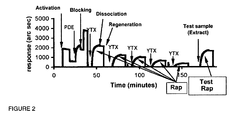
- USE 1 Method for determining PDE-YTX biomolecular bonds using an affinity sensor.
- a biosensor is used which is an equipment detecting molecular reactions between a biologically active molecule, called a ligand, and another molecule it binds to, called a receptor.
- the ligand is bound to the support surface of the equipment, generally a cuvette or a plate. Created on the support surface where the bonds occur is an electromagnetic field, called an evanescent field, which is extremely sensitive to changes in mass.
- the biosensor transforms the changes in mass occurring on the support surface due to the ligand-receptor bond into an electrical signal.
- Commercial biosensor models which can be used for this method are those marketed by the Biacore or Thermo Labsystems companies.
- the PDEs function as the ligand and samples with YTX, which acts as a receptor, are added thereto.
- the signal in the biosensor will be larger or smaller depending on the amount of toxin adhered to the PDEs and, therefore, depending on the YTX present in the sample.
- the method is carried out at a temperature between 22 and 37°C.
- USE 2 Method for determining PDE activation by YTX using a fluorescent molecule.
- a usual way of detecting cellular PDE activity is to observe their ability to destroy cAMP.
- cAMP fluorescent derivative of cAMP, anthraniloyl-cAMP (excitation wavelength: 350 nm, emission wavelength: 445 nm), the fluorescence of which decreases as it degrades. The decrease of fluorescence over time can be expressed as the destruction rate of cAMP.
- the destruction rate increases, and if these enzymes are activated, the degradation rate will be even greater.
- the degradation rate of the fluorescent indicator anthraniloyl-cAMP in the presence of PDEs is determined and its variation when samples with YTX are added is studied.
- Fluorescence is read with a fluorimeter that is prepared for reading microtitration plates.
- the destruction rate is determined in the presence of several known concentrations of YTX.
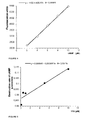
- the representation of the destruction rate against toxin concentration follows a linear fit with a regression coefficient greater than 0.9. A regression line is thus obtained in which the destruction rate value obtained with a sample from fishery products (test sample) can be transformed into YTX concentration.
- the method is carried out in a microtitration plate in a temperature range between 22 and 37°C and the fluorescence is measured at an excitation wavelength of 360 nanometers and an emission wavelength of 460 nanometers.
- Figure 4 represents the fluorescence units calibration line against a concentration of anthraniloyl-cAMP.
- Figure 5 represents the standard line for destruction rates of cAMP against YTX concentration for a standard assay.
- YTX a.1- Use of YTX as an inhibitor of the immunological activation of mastocytes and basophils.
- Immunological activation of mastocytes and basophils requires a temporary increase of cAMP. This increase is indispensable for cell response activation (Botana and MacGlashan, 1994). PDE activation cancels this initial cAMP peak, and therefore prevents cell activation. In the presence of YTX, i.e. with activated PDEs, cell response will be inhibited.
- the inhibiting effect can be used in antiallergic or antiasthmatic therapeutic strategies, these being two pathologies in which mastocytes play a predominant role (Metcalfe, Baram, D. et al ., 1997).
- the present use describes the quantification of the inhibition that YTX produces on cell activation induced by immunological stimulus in mastocytes in rats.
- Cell response inhibition can be determined according to different protocols described in the literature.
- One in which the response is quantified according to the histamine released by mastocytes in rats into the extracellular medium is set forth below (Alfonso, Cabado, A.G. et al ., 2000; Estévez, Vieytes, et al ., 1994).
- Figure 6 shows the percentage of inhibition of histamine release induced by ovalbumin in the presence of several concentrations of YTX.
- Neoplasic cell growth inhibition is an indicator of antitumor activity widely used to describe antineoplasic properties of new drugs. It has been found that YTX is cytotoxic for human hepatocellular carcinoma cells, and it has further been described that this toxin induces apoptosis (programmed cell death) in neuroblastoma cells (Leira, Alvarez et al., 2001), which all indicates that YTX is susceptible to being used as an antitumor drug. The ability of YTX as a cytotoxic drug for hepatic carcinoma tumor cells is quantified in the present use. Cell growth inhibition can be determined according to different protocols described in the literature. One of these protocols is set forth below in which the response is quantified in the HEP-G2 cell line by means of crystal violet staining and subsequent acetylation.
- PDE4 cAMP phosphodiesterases modular enzymes that orchestrate signalling cross-talk, desentization and associationalization.” Biochem J. 370 : 1-18.
Landscapes
- Health & Medical Sciences (AREA)
- Chemical & Material Sciences (AREA)
- Life Sciences & Earth Sciences (AREA)
- Organic Chemistry (AREA)
- General Health & Medical Sciences (AREA)
- Public Health (AREA)
- Medicinal Chemistry (AREA)
- Veterinary Medicine (AREA)
- Pharmacology & Pharmacy (AREA)
- Animal Behavior & Ethology (AREA)
- Engineering & Computer Science (AREA)
- Bioinformatics & Cheminformatics (AREA)
- Nuclear Medicine, Radiotherapy & Molecular Imaging (AREA)
- General Chemical & Material Sciences (AREA)
- Immunology (AREA)
- Chemical Kinetics & Catalysis (AREA)
- Proteomics, Peptides & Aminoacids (AREA)
- Zoology (AREA)
- Wood Science & Technology (AREA)
- Epidemiology (AREA)
- Pulmonology (AREA)
- Physics & Mathematics (AREA)
- Biophysics (AREA)
- Analytical Chemistry (AREA)
- Biotechnology (AREA)
- Microbiology (AREA)
- Molecular Biology (AREA)
- Biochemistry (AREA)
- General Engineering & Computer Science (AREA)
- Genetics & Genomics (AREA)
- Transplantation (AREA)
- Toxicology (AREA)
- Pharmaceuticals Containing Other Organic And Inorganic Compounds (AREA)
- Measuring Or Testing Involving Enzymes Or Micro-Organisms (AREA)
- Investigating Or Analysing Biological Materials (AREA)
- Medicines That Contain Protein Lipid Enzymes And Other Medicines (AREA)
- Medicines Containing Material From Animals Or Micro-Organisms (AREA)
- Heterocyclic Carbon Compounds Containing A Hetero Ring Having Oxygen Or Sulfur (AREA)
- Investigating Or Analysing Materials By The Use Of Chemical Reactions (AREA)
- Investigating, Analyzing Materials By Fluorescence Or Luminescence (AREA)
Priority Applications (2)
| Application Number | Priority Date | Filing Date | Title |
|---|---|---|---|
| EP07017631A EP1875907B1 (de) | 2003-07-25 | 2004-07-21 | Einsatz von Yessotoxin bei der Behandlung allergischer und asthmatischer Leiden |
| EP07017630A EP1875906B1 (de) | 2003-07-25 | 2004-07-21 | Therapeutische Verwendung von Yessotoxin als Wachstumshemmer für humane Tumorzellen |
Applications Claiming Priority (2)
| Application Number | Priority Date | Filing Date | Title |
|---|---|---|---|
| ES200301773A ES2235611B2 (es) | 2003-07-25 | 2003-07-25 | Metodo cuantitativo para la deteccion de yesotoxinas en productos pesqueros basado en la activacion que producen en las fosfodiesterasas. |
| PCT/ES2004/000343 WO2005012543A2 (es) | 2003-07-25 | 2004-07-21 | Método cuantitativo para la detección de yesotoxinas en productos pesqueros basado en la activación que la toxina produce en las fosfodiesterasas celulares y utilidad terapéutica de esta activación. |
Related Child Applications (2)
| Application Number | Title | Priority Date | Filing Date |
|---|---|---|---|
| EP07017630A Division EP1875906B1 (de) | 2003-07-25 | 2004-07-21 | Therapeutische Verwendung von Yessotoxin als Wachstumshemmer für humane Tumorzellen |
| EP07017631A Division EP1875907B1 (de) | 2003-07-25 | 2004-07-21 | Einsatz von Yessotoxin bei der Behandlung allergischer und asthmatischer Leiden |
Publications (2)
| Publication Number | Publication Date |
|---|---|
| EP1647599A2 true EP1647599A2 (de) | 2006-04-19 |
| EP1647599B1 EP1647599B1 (de) | 2008-04-30 |
Family
ID=34112518
Family Applications (3)
| Application Number | Title | Priority Date | Filing Date |
|---|---|---|---|
| EP07017631A Expired - Lifetime EP1875907B1 (de) | 2003-07-25 | 2004-07-21 | Einsatz von Yessotoxin bei der Behandlung allergischer und asthmatischer Leiden |
| EP07017630A Expired - Lifetime EP1875906B1 (de) | 2003-07-25 | 2004-07-21 | Therapeutische Verwendung von Yessotoxin als Wachstumshemmer für humane Tumorzellen |
| EP04742071A Expired - Lifetime EP1647599B1 (de) | 2003-07-25 | 2004-07-21 | Quantitatives verfahren zum nachweis von yessotoxinen in fischprodukten auf grundlage der durch das toxin verursachten aktivierung zellulärer phosphodiesterase |
Family Applications Before (2)
| Application Number | Title | Priority Date | Filing Date |
|---|---|---|---|
| EP07017631A Expired - Lifetime EP1875907B1 (de) | 2003-07-25 | 2004-07-21 | Einsatz von Yessotoxin bei der Behandlung allergischer und asthmatischer Leiden |
| EP07017630A Expired - Lifetime EP1875906B1 (de) | 2003-07-25 | 2004-07-21 | Therapeutische Verwendung von Yessotoxin als Wachstumshemmer für humane Tumorzellen |
Country Status (12)
| Country | Link |
|---|---|
| US (1) | US20110065138A1 (de) |
| EP (3) | EP1875907B1 (de) |
| JP (2) | JP2006528483A (de) |
| CN (1) | CN1852988A (de) |
| AT (3) | ATE514423T1 (de) |
| AU (3) | AU2004260895A1 (de) |
| BR (1) | BRPI0412832A (de) |
| CA (1) | CA2533600A1 (de) |
| DE (1) | DE602004013446D1 (de) |
| ES (4) | ES2235611B2 (de) |
| RU (1) | RU2389488C2 (de) |
| WO (1) | WO2005012543A2 (de) |
Families Citing this family (5)
| Publication number | Priority date | Publication date | Assignee | Title |
|---|---|---|---|---|
| CN101382531B (zh) * | 2008-10-08 | 2011-12-28 | 天津商业大学 | 利用电子鼻检测虾新鲜度的方法 |
| ES2393696B2 (es) * | 2012-09-07 | 2013-06-04 | Universidade De Santiago De Compostela | Uso de la Yessotoxina y sus derivados para el tratamiento de gliomas |
| CN105198900A (zh) * | 2015-09-22 | 2015-12-30 | 国家海洋环境检测中心 | 虾夷扇贝毒素ytx纯品的提取、制备方法 |
| US10890573B2 (en) | 2017-12-19 | 2021-01-12 | International Business Machines Corporation | Facile methods to detect toxin in seafood |
| RU2716233C1 (ru) * | 2018-11-13 | 2020-03-10 | Федеральное государственное бюджетное учреждение науки "Федеральный исследовательский центр питания, биотехнологии и безопасности пищи" | Способ количественного определения йессотоксинов в моллюсках |
Family Cites Families (9)
| Publication number | Priority date | Publication date | Assignee | Title |
|---|---|---|---|---|
| US5672509A (en) * | 1993-08-25 | 1997-09-30 | Pfizer Inc. | hPDE IV-C: a human phosphodiesterase IV isozyme |
| US5858694A (en) * | 1997-05-30 | 1999-01-12 | Cell Pathways, Inc. | Method for identifying compounds for inhibition of cancerous lesions |
| AU3635099A (en) * | 1997-12-15 | 1999-07-26 | Beth Israel Deaconess Medical Center | Methods and reagents for modulating cell motility |
| RU2136278C1 (ru) * | 1998-04-07 | 1999-09-10 | Государственный научный центр вирусологии и биотехнологии "Вектор" | Противоопухолевое средство |
| CN1229339C (zh) * | 2000-03-27 | 2005-11-30 | 斯克里普斯研究学院 | 抑制血管生成和肿瘤生长的化合物,含有该化合物的药用制剂,以及该化合物的制药用途 |
| IT1318605B1 (it) * | 2000-06-30 | 2003-08-27 | Uni Degli Studi Di Modena E Re | Procedimoento per il dosaggio di tossine dsp del gruppo delledinophysitossine e delle yessottossine. |
| US6977155B2 (en) * | 2000-08-10 | 2005-12-20 | Corning Incorporated | Arrays of biological membranes and methods and use thereof |
| AR033680A1 (es) * | 2000-08-30 | 2004-01-07 | Schering Corp | Compuestos triciclicos utiles como inhibidores de la farnesil proteino transferasa y su uso para la manufactura de medicamentos como agentes antitumorales |
| EP1251181A1 (de) * | 2001-04-20 | 2002-10-23 | Warner-Lambert Company | Nicht-rekombinante Zelllinien fähig zur überwiegende Expression der Subtyp B der zyklisch Nukleotide Phosphodiesterase (PDE4) und ihre Verwendung zum Screenen von PDE4 Subtyp-spezifische Modulatoren |
-
2003
- 2003-07-25 ES ES200301773A patent/ES2235611B2/es not_active Expired - Fee Related
-
2004
- 2004-07-21 AT AT07017630T patent/ATE514423T1/de not_active IP Right Cessation
- 2004-07-21 AT AT04742071T patent/ATE393833T1/de not_active IP Right Cessation
- 2004-07-21 BR BRPI0412832-0A patent/BRPI0412832A/pt not_active Application Discontinuation
- 2004-07-21 ES ES07017630T patent/ES2368872T3/es not_active Expired - Lifetime
- 2004-07-21 EP EP07017631A patent/EP1875907B1/de not_active Expired - Lifetime
- 2004-07-21 DE DE602004013446T patent/DE602004013446D1/de not_active Expired - Lifetime
- 2004-07-21 AT AT07017631T patent/ATE524174T1/de not_active IP Right Cessation
- 2004-07-21 EP EP07017630A patent/EP1875906B1/de not_active Expired - Lifetime
- 2004-07-21 CN CNA200480021338XA patent/CN1852988A/zh active Pending
- 2004-07-21 WO PCT/ES2004/000343 patent/WO2005012543A2/es not_active Ceased
- 2004-07-21 RU RU2006101631/15A patent/RU2389488C2/ru not_active IP Right Cessation
- 2004-07-21 CA CA002533600A patent/CA2533600A1/en not_active Abandoned
- 2004-07-21 JP JP2006520848A patent/JP2006528483A/ja active Pending
- 2004-07-21 EP EP04742071A patent/EP1647599B1/de not_active Expired - Lifetime
- 2004-07-21 US US10/566,050 patent/US20110065138A1/en not_active Abandoned
- 2004-07-21 AU AU2004260895A patent/AU2004260895A1/en not_active Abandoned
- 2004-12-10 ES ES200402944A patent/ES2259894B2/es not_active Expired - Fee Related
- 2004-12-10 ES ES200402943A patent/ES2259266B2/es not_active Expired - Fee Related
-
2006
- 2006-03-27 JP JP2006084989A patent/JP2006325580A/ja active Pending
-
2010
- 2010-05-31 AU AU2010202237A patent/AU2010202237A1/en not_active Abandoned
- 2010-05-31 AU AU2010202232A patent/AU2010202232A1/en not_active Abandoned
Non-Patent Citations (1)
| Title |
|---|
| See references of WO2005012543A3 * |
Also Published As
| Publication number | Publication date |
|---|---|
| EP1875906B1 (de) | 2011-06-29 |
| EP1875907A3 (de) | 2008-02-27 |
| CN1852988A (zh) | 2006-10-25 |
| ATE524174T1 (de) | 2011-09-15 |
| JP2006528483A (ja) | 2006-12-21 |
| ATE393833T1 (de) | 2008-05-15 |
| AU2010202232A1 (en) | 2010-07-08 |
| EP1875906A3 (de) | 2008-02-27 |
| ES2259894B2 (es) | 2008-11-16 |
| ES2235611A1 (es) | 2005-07-01 |
| DE602004013446D1 (de) | 2008-06-12 |
| EP1875906A2 (de) | 2008-01-09 |
| ES2368872T3 (es) | 2011-11-23 |
| AU2010202237A1 (en) | 2010-06-24 |
| EP1875907A2 (de) | 2008-01-09 |
| AU2004260895A1 (en) | 2005-02-10 |
| ES2259266B2 (es) | 2008-06-01 |
| ES2235611B2 (es) | 2006-07-16 |
| US20110065138A1 (en) | 2011-03-17 |
| ATE514423T1 (de) | 2011-07-15 |
| JP2006325580A (ja) | 2006-12-07 |
| WO2005012543A2 (es) | 2005-02-10 |
| EP1875907B1 (de) | 2011-09-14 |
| RU2389488C2 (ru) | 2010-05-20 |
| CA2533600A1 (en) | 2005-02-10 |
| RU2006101631A (ru) | 2006-08-27 |
| EP1647599B1 (de) | 2008-04-30 |
| WO2005012543A3 (es) | 2005-03-17 |
| BRPI0412832A (pt) | 2006-11-21 |
| ES2259266A1 (es) | 2006-09-16 |
| ES2259894A1 (es) | 2006-10-16 |
Similar Documents
| Publication | Publication Date | Title |
|---|---|---|
| Jose et al. | Application of primary haemocyte culture of Penaeus monodon in the assessment of cytotoxicity and genotoxicity of heavy metals and pesticides | |
| Carmichael et al. | Cyanobacteria toxins in the Salton Sea | |
| Canty et al. | Sublethal impact of short term exposure to the organophosphate pesticide azamethiphos in the marine mollusc Mytilus edulis | |
| Prassopoulou et al. | Detection of okadaic acid and related esters in mussels during diarrhetic shellfish poisoning (DSP) episodes in Greece using the mouse bioassay, the PP2A inhibition assay and HPLC with fluorimetric detection | |
| Chuiko et al. | Acetylcholinesterase and butyrylcholinesterase activities in brain and plasma of freshwater teleosts: cross-species and cross-family differences | |
| Ramstad et al. | Monthly variations in diarrhetic toxins and yessotoxin in shellfish from coast to the inner part of the Sognefjord, Norway | |
| Pazos et al. | Resonant mirror biosensor detection method based on yessotoxin–phosphodiesterase interactions | |
| Hanssen et al. | Antitumoral and mechanistic studies of ianthelline isolated from the Arctic sponge Stryphnus fortis | |
| Grzesiuk et al. | Anticancer agents found in environment affect Daphnia at population, individual and molecular levels | |
| EP1647599B1 (de) | Quantitatives verfahren zum nachweis von yessotoxinen in fischprodukten auf grundlage der durch das toxin verursachten aktivierung zellulärer phosphodiesterase | |
| Alfonso et al. | A rapid microplate fluorescence method to detect yessotoxins based on their capacity to activate phosphodiesterases | |
| Cervantes et al. | High content live cell imaging for the discovery of new antimalarial marine natural products | |
| DE60015319T2 (de) | Test zur gleichzeitigen Messung von verschiedenen enzymischen Aktivitäten | |
| Bui et al. | Zebrafish embryos sequester and retain petrochemical combustion products: developmental and transcriptome consequences | |
| Ondeyka et al. | Isolation, structure elucidation, and biological activity of altersolanol P using Staphylococcus aureus fitness test based genome-wide screening | |
| Utami et al. | Identification of Secondary Metabolites Derived from Aaptos spp. and Their Antibacterial Activity. | |
| Akor et al. | Biological elements as important tools in the detection/monitoring of drug compounds in organic and environmental samples | |
| Götze et al. | NanoDrop fluorometry adopted for microassays of proteasomal enzyme activities | |
| Harper | Improved methods of detection for the difficult to identify marine toxin, Okadaic acid | |
| Vieytes et al. | Mechanism of action and toxicology | |
| Celik et al. | Neurotoxic and immunotoxic effects of fenthion and omethoate on frogs at acute exposure | |
| Feng et al. | Toxicity screening of eight Prorocentrum lima (Dinophyceae) strains of coastal China | |
| Sharlaimova et al. | Cytotoxic Effect of a Crude Extract of Halichondria panicea (Porifera: Demospongiae) from the White Sea on Mouse 3T3 Balb Cells | |
| Jeyaraj et al. | Tackling MDR bacterial pathogens through marine microbial prospecting | |
| Sweeney-Jones | Discovery and Evaluation of Antimalarial, Anthelmintic, and Antimicrobial Marine Natural Products |
Legal Events
| Date | Code | Title | Description |
|---|---|---|---|
| PUAI | Public reference made under article 153(3) epc to a published international application that has entered the european phase |
Free format text: ORIGINAL CODE: 0009012 |
|
| 17P | Request for examination filed |
Effective date: 20060112 |
|
| AK | Designated contracting states |
Kind code of ref document: A2 Designated state(s): AT BE BG CH CY CZ DE DK EE ES FI FR GB GR HU IE IT LI LU MC NL PL PT RO SE SI SK TR |
|
| DAX | Request for extension of the european patent (deleted) | ||
| 17Q | First examination report despatched |
Effective date: 20061117 |
|
| GRAP | Despatch of communication of intention to grant a patent |
Free format text: ORIGINAL CODE: EPIDOSNIGR1 |
|
| RTI1 | Title (correction) |
Free format text: QUANTITATIVE METHOD FOR DETECTING YESSOTOXINS IN FISHERY PRODUCTS BASED ON THE ACTIVATION CAUSED BY THE TOXIN IN CELLULAR PHOSPHODIESTERASE |
|
| GRAS | Grant fee paid |
Free format text: ORIGINAL CODE: EPIDOSNIGR3 |
|
| GRAA | (expected) grant |
Free format text: ORIGINAL CODE: 0009210 |
|
| AK | Designated contracting states |
Kind code of ref document: B1 Designated state(s): AT BE BG CH CY CZ DE DK EE ES FI FR GB GR HU IE IT LI LU MC NL PL PT RO SE SI SK TR |
|
| REG | Reference to a national code |
Ref country code: GB Ref legal event code: FG4D |
|
| REG | Reference to a national code |
Ref country code: CH Ref legal event code: EP |
|
| REG | Reference to a national code |
Ref country code: IE Ref legal event code: FG4D Free format text: LANGUAGE OF EP DOCUMENT: FRENCH |
|
| REF | Corresponds to: |
Ref document number: 602004013446 Country of ref document: DE Date of ref document: 20080612 Kind code of ref document: P |
|
| PG25 | Lapsed in a contracting state [announced via postgrant information from national office to epo] |
Ref country code: SI Free format text: LAPSE BECAUSE OF FAILURE TO SUBMIT A TRANSLATION OF THE DESCRIPTION OR TO PAY THE FEE WITHIN THE PRESCRIBED TIME-LIMIT Effective date: 20080430 |
|
| NLV1 | Nl: lapsed or annulled due to failure to fulfill the requirements of art. 29p and 29m of the patents act | ||
| PG25 | Lapsed in a contracting state [announced via postgrant information from national office to epo] |
Ref country code: NL Free format text: LAPSE BECAUSE OF FAILURE TO SUBMIT A TRANSLATION OF THE DESCRIPTION OR TO PAY THE FEE WITHIN THE PRESCRIBED TIME-LIMIT Effective date: 20080430 Ref country code: FI Free format text: LAPSE BECAUSE OF FAILURE TO SUBMIT A TRANSLATION OF THE DESCRIPTION OR TO PAY THE FEE WITHIN THE PRESCRIBED TIME-LIMIT Effective date: 20080430 Ref country code: PT Free format text: LAPSE BECAUSE OF FAILURE TO SUBMIT A TRANSLATION OF THE DESCRIPTION OR TO PAY THE FEE WITHIN THE PRESCRIBED TIME-LIMIT Effective date: 20080930 Ref country code: BG Free format text: LAPSE BECAUSE OF FAILURE TO SUBMIT A TRANSLATION OF THE DESCRIPTION OR TO PAY THE FEE WITHIN THE PRESCRIBED TIME-LIMIT Effective date: 20080730 Ref country code: ES Free format text: LAPSE BECAUSE OF FAILURE TO SUBMIT A TRANSLATION OF THE DESCRIPTION OR TO PAY THE FEE WITHIN THE PRESCRIBED TIME-LIMIT Effective date: 20080810 |
|
| PG25 | Lapsed in a contracting state [announced via postgrant information from national office to epo] |
Ref country code: AT Free format text: LAPSE BECAUSE OF FAILURE TO SUBMIT A TRANSLATION OF THE DESCRIPTION OR TO PAY THE FEE WITHIN THE PRESCRIBED TIME-LIMIT Effective date: 20080430 Ref country code: PL Free format text: LAPSE BECAUSE OF FAILURE TO SUBMIT A TRANSLATION OF THE DESCRIPTION OR TO PAY THE FEE WITHIN THE PRESCRIBED TIME-LIMIT Effective date: 20080430 |
|
| PGFP | Annual fee paid to national office [announced via postgrant information from national office to epo] |
Ref country code: FR Payment date: 20080731 Year of fee payment: 5 |
|
| PGFP | Annual fee paid to national office [announced via postgrant information from national office to epo] |
Ref country code: GB Payment date: 20080729 Year of fee payment: 5 |
|
| PG25 | Lapsed in a contracting state [announced via postgrant information from national office to epo] |
Ref country code: SE Free format text: LAPSE BECAUSE OF FAILURE TO SUBMIT A TRANSLATION OF THE DESCRIPTION OR TO PAY THE FEE WITHIN THE PRESCRIBED TIME-LIMIT Effective date: 20080731 Ref country code: CZ Free format text: LAPSE BECAUSE OF FAILURE TO SUBMIT A TRANSLATION OF THE DESCRIPTION OR TO PAY THE FEE WITHIN THE PRESCRIBED TIME-LIMIT Effective date: 20080430 Ref country code: DK Free format text: LAPSE BECAUSE OF FAILURE TO SUBMIT A TRANSLATION OF THE DESCRIPTION OR TO PAY THE FEE WITHIN THE PRESCRIBED TIME-LIMIT Effective date: 20080430 |
|
| ET | Fr: translation filed | ||
| PG25 | Lapsed in a contracting state [announced via postgrant information from national office to epo] |
Ref country code: SK Free format text: LAPSE BECAUSE OF FAILURE TO SUBMIT A TRANSLATION OF THE DESCRIPTION OR TO PAY THE FEE WITHIN THE PRESCRIBED TIME-LIMIT Effective date: 20080430 Ref country code: BE Free format text: LAPSE BECAUSE OF FAILURE TO SUBMIT A TRANSLATION OF THE DESCRIPTION OR TO PAY THE FEE WITHIN THE PRESCRIBED TIME-LIMIT Effective date: 20080430 Ref country code: RO Free format text: LAPSE BECAUSE OF FAILURE TO SUBMIT A TRANSLATION OF THE DESCRIPTION OR TO PAY THE FEE WITHIN THE PRESCRIBED TIME-LIMIT Effective date: 20080430 |
|
| REG | Reference to a national code |
Ref country code: CH Ref legal event code: PL |
|
| PLBE | No opposition filed within time limit |
Free format text: ORIGINAL CODE: 0009261 |
|
| STAA | Information on the status of an ep patent application or granted ep patent |
Free format text: STATUS: NO OPPOSITION FILED WITHIN TIME LIMIT |
|
| PG25 | Lapsed in a contracting state [announced via postgrant information from national office to epo] |
Ref country code: MC Free format text: LAPSE BECAUSE OF NON-PAYMENT OF DUE FEES Effective date: 20080731 |
|
| 26N | No opposition filed |
Effective date: 20090202 |
|
| REG | Reference to a national code |
Ref country code: IE Ref legal event code: MM4A |
|
| PG25 | Lapsed in a contracting state [announced via postgrant information from national office to epo] |
Ref country code: DE Free format text: LAPSE BECAUSE OF FAILURE TO SUBMIT A TRANSLATION OF THE DESCRIPTION OR TO PAY THE FEE WITHIN THE PRESCRIBED TIME-LIMIT Effective date: 20080801 Ref country code: EE Free format text: LAPSE BECAUSE OF FAILURE TO SUBMIT A TRANSLATION OF THE DESCRIPTION OR TO PAY THE FEE WITHIN THE PRESCRIBED TIME-LIMIT Effective date: 20080430 |
|
| PG25 | Lapsed in a contracting state [announced via postgrant information from national office to epo] |
Ref country code: LI Free format text: LAPSE BECAUSE OF NON-PAYMENT OF DUE FEES Effective date: 20080731 Ref country code: CH Free format text: LAPSE BECAUSE OF NON-PAYMENT OF DUE FEES Effective date: 20080731 |
|
| PG25 | Lapsed in a contracting state [announced via postgrant information from national office to epo] |
Ref country code: IE Free format text: LAPSE BECAUSE OF NON-PAYMENT OF DUE FEES Effective date: 20080721 |
|
| PG25 | Lapsed in a contracting state [announced via postgrant information from national office to epo] |
Ref country code: IT Free format text: LAPSE BECAUSE OF NON-PAYMENT OF DUE FEES Effective date: 20080721 |
|
| GBPC | Gb: european patent ceased through non-payment of renewal fee |
Effective date: 20090721 |
|
| REG | Reference to a national code |
Ref country code: FR Ref legal event code: ST Effective date: 20100331 |
|
| PG25 | Lapsed in a contracting state [announced via postgrant information from national office to epo] |
Ref country code: FR Free format text: LAPSE BECAUSE OF NON-PAYMENT OF DUE FEES Effective date: 20090731 |
|
| PG25 | Lapsed in a contracting state [announced via postgrant information from national office to epo] |
Ref country code: GB Free format text: LAPSE BECAUSE OF NON-PAYMENT OF DUE FEES Effective date: 20090721 |
|
| PG25 | Lapsed in a contracting state [announced via postgrant information from national office to epo] |
Ref country code: HU Free format text: LAPSE BECAUSE OF FAILURE TO SUBMIT A TRANSLATION OF THE DESCRIPTION OR TO PAY THE FEE WITHIN THE PRESCRIBED TIME-LIMIT Effective date: 20081101 Ref country code: LU Free format text: LAPSE BECAUSE OF NON-PAYMENT OF DUE FEES Effective date: 20080721 Ref country code: CY Free format text: LAPSE BECAUSE OF FAILURE TO SUBMIT A TRANSLATION OF THE DESCRIPTION OR TO PAY THE FEE WITHIN THE PRESCRIBED TIME-LIMIT Effective date: 20080430 |
|
| PG25 | Lapsed in a contracting state [announced via postgrant information from national office to epo] |
Ref country code: TR Free format text: LAPSE BECAUSE OF FAILURE TO SUBMIT A TRANSLATION OF THE DESCRIPTION OR TO PAY THE FEE WITHIN THE PRESCRIBED TIME-LIMIT Effective date: 20080430 |
|
| PG25 | Lapsed in a contracting state [announced via postgrant information from national office to epo] |
Ref country code: GR Free format text: LAPSE BECAUSE OF FAILURE TO SUBMIT A TRANSLATION OF THE DESCRIPTION OR TO PAY THE FEE WITHIN THE PRESCRIBED TIME-LIMIT Effective date: 20080731 |
|
| PGFP | Annual fee paid to national office [announced via postgrant information from national office to epo] |
Ref country code: IT Payment date: 20080818 Year of fee payment: 5 |
|
| PGRI | Patent reinstated in contracting state [announced from national office to epo] |
Ref country code: IT Effective date: 20110616 |
|
| PGRI | Patent reinstated in contracting state [announced from national office to epo] |
Ref country code: IT Effective date: 20110616 |