EP1651265B1 - Vakzin-formulierungen mit einer öl-in-wasser-emulsion - Google Patents
Vakzin-formulierungen mit einer öl-in-wasser-emulsion Download PDFInfo
- Publication number
- EP1651265B1 EP1651265B1 EP04779201A EP04779201A EP1651265B1 EP 1651265 B1 EP1651265 B1 EP 1651265B1 EP 04779201 A EP04779201 A EP 04779201A EP 04779201 A EP04779201 A EP 04779201A EP 1651265 B1 EP1651265 B1 EP 1651265B1
- Authority
- EP
- European Patent Office
- Prior art keywords
- emulsion
- composition
- sorbitan
- oil
- immunogen
- Prior art date
- Legal status (The legal status is an assumption and is not a legal conclusion. Google has not performed a legal analysis and makes no representation as to the accuracy of the status listed.)
- Expired - Lifetime
Links
Images


Classifications
-
- A—HUMAN NECESSITIES
- A61—MEDICAL OR VETERINARY SCIENCE; HYGIENE
- A61K—PREPARATIONS FOR MEDICAL, DENTAL OR TOILETRY PURPOSES
- A61K39/00—Medicinal preparations containing antigens or antibodies
- A61K39/12—Viral antigens
-
- A—HUMAN NECESSITIES
- A61—MEDICAL OR VETERINARY SCIENCE; HYGIENE
- A61K—PREPARATIONS FOR MEDICAL, DENTAL OR TOILETRY PURPOSES
- A61K39/00—Medicinal preparations containing antigens or antibodies
- A61K39/02—Bacterial antigens
- A61K39/0241—Mollicutes, e.g. Mycoplasma, Erysipelothrix
-
- A—HUMAN NECESSITIES
- A61—MEDICAL OR VETERINARY SCIENCE; HYGIENE
- A61K—PREPARATIONS FOR MEDICAL, DENTAL OR TOILETRY PURPOSES
- A61K39/00—Medicinal preparations containing antigens or antibodies
- A61K39/02—Bacterial antigens
- A61K39/102—Pasteurellales, e.g. Actinobacillus, Pasteurella; Haemophilus
-
- A—HUMAN NECESSITIES
- A61—MEDICAL OR VETERINARY SCIENCE; HYGIENE
- A61K—PREPARATIONS FOR MEDICAL, DENTAL OR TOILETRY PURPOSES
- A61K39/00—Medicinal preparations containing antigens or antibodies
- A61K39/12—Viral antigens
- A61K39/145—Orthomyxoviridae, e.g. influenza virus
-
- A—HUMAN NECESSITIES
- A61—MEDICAL OR VETERINARY SCIENCE; HYGIENE
- A61K—PREPARATIONS FOR MEDICAL, DENTAL OR TOILETRY PURPOSES
- A61K39/00—Medicinal preparations containing antigens or antibodies
- A61K39/39—Medicinal preparations containing antigens or antibodies characterised by the immunostimulating additives, e.g. chemical adjuvants
-
- A—HUMAN NECESSITIES
- A61—MEDICAL OR VETERINARY SCIENCE; HYGIENE
- A61P—SPECIFIC THERAPEUTIC ACTIVITY OF CHEMICAL COMPOUNDS OR MEDICINAL PREPARATIONS
- A61P11/00—Drugs for disorders of the respiratory system
-
- A—HUMAN NECESSITIES
- A61—MEDICAL OR VETERINARY SCIENCE; HYGIENE
- A61P—SPECIFIC THERAPEUTIC ACTIVITY OF CHEMICAL COMPOUNDS OR MEDICINAL PREPARATIONS
- A61P31/00—Antiinfectives, i.e. antibiotics, antiseptics, chemotherapeutics
-
- A—HUMAN NECESSITIES
- A61—MEDICAL OR VETERINARY SCIENCE; HYGIENE
- A61P—SPECIFIC THERAPEUTIC ACTIVITY OF CHEMICAL COMPOUNDS OR MEDICINAL PREPARATIONS
- A61P31/00—Antiinfectives, i.e. antibiotics, antiseptics, chemotherapeutics
- A61P31/04—Antibacterial agents
-
- A—HUMAN NECESSITIES
- A61—MEDICAL OR VETERINARY SCIENCE; HYGIENE
- A61P—SPECIFIC THERAPEUTIC ACTIVITY OF CHEMICAL COMPOUNDS OR MEDICINAL PREPARATIONS
- A61P31/00—Antiinfectives, i.e. antibiotics, antiseptics, chemotherapeutics
- A61P31/04—Antibacterial agents
- A61P31/08—Antibacterial agents for leprosy
-
- A—HUMAN NECESSITIES
- A61—MEDICAL OR VETERINARY SCIENCE; HYGIENE
- A61P—SPECIFIC THERAPEUTIC ACTIVITY OF CHEMICAL COMPOUNDS OR MEDICINAL PREPARATIONS
- A61P31/00—Antiinfectives, i.e. antibiotics, antiseptics, chemotherapeutics
- A61P31/10—Antimycotics
-
- A—HUMAN NECESSITIES
- A61—MEDICAL OR VETERINARY SCIENCE; HYGIENE
- A61P—SPECIFIC THERAPEUTIC ACTIVITY OF CHEMICAL COMPOUNDS OR MEDICINAL PREPARATIONS
- A61P31/00—Antiinfectives, i.e. antibiotics, antiseptics, chemotherapeutics
- A61P31/12—Antivirals
-
- A—HUMAN NECESSITIES
- A61—MEDICAL OR VETERINARY SCIENCE; HYGIENE
- A61P—SPECIFIC THERAPEUTIC ACTIVITY OF CHEMICAL COMPOUNDS OR MEDICINAL PREPARATIONS
- A61P33/00—Antiparasitic agents
-
- A—HUMAN NECESSITIES
- A61—MEDICAL OR VETERINARY SCIENCE; HYGIENE
- A61P—SPECIFIC THERAPEUTIC ACTIVITY OF CHEMICAL COMPOUNDS OR MEDICINAL PREPARATIONS
- A61P37/00—Drugs for immunological or allergic disorders
- A61P37/02—Immunomodulators
- A61P37/04—Immunostimulants
-
- A—HUMAN NECESSITIES
- A61—MEDICAL OR VETERINARY SCIENCE; HYGIENE
- A61K—PREPARATIONS FOR MEDICAL, DENTAL OR TOILETRY PURPOSES
- A61K39/00—Medicinal preparations containing antigens or antibodies
- A61K2039/51—Medicinal preparations containing antigens or antibodies comprising whole cells, viruses or DNA/RNA
- A61K2039/52—Bacterial cells; Fungal cells; Protozoal cells
- A61K2039/521—Bacterial cells; Fungal cells; Protozoal cells inactivated (killed)
-
- A—HUMAN NECESSITIES
- A61—MEDICAL OR VETERINARY SCIENCE; HYGIENE
- A61K—PREPARATIONS FOR MEDICAL, DENTAL OR TOILETRY PURPOSES
- A61K39/00—Medicinal preparations containing antigens or antibodies
- A61K2039/51—Medicinal preparations containing antigens or antibodies comprising whole cells, viruses or DNA/RNA
- A61K2039/525—Virus
- A61K2039/5252—Virus inactivated (killed)
-
- A—HUMAN NECESSITIES
- A61—MEDICAL OR VETERINARY SCIENCE; HYGIENE
- A61K—PREPARATIONS FOR MEDICAL, DENTAL OR TOILETRY PURPOSES
- A61K39/00—Medicinal preparations containing antigens or antibodies
- A61K2039/55—Medicinal preparations containing antigens or antibodies characterised by the host/recipient, e.g. newborn with maternal antibodies
- A61K2039/552—Veterinary vaccine
-
- A—HUMAN NECESSITIES
- A61—MEDICAL OR VETERINARY SCIENCE; HYGIENE
- A61K—PREPARATIONS FOR MEDICAL, DENTAL OR TOILETRY PURPOSES
- A61K39/00—Medicinal preparations containing antigens or antibodies
- A61K2039/555—Medicinal preparations containing antigens or antibodies characterised by a specific combination antigen/adjuvant
- A61K2039/55511—Organic adjuvants
- A61K2039/55566—Emulsions, e.g. Freund's adjuvant, MF59
-
- A—HUMAN NECESSITIES
- A61—MEDICAL OR VETERINARY SCIENCE; HYGIENE
- A61K—PREPARATIONS FOR MEDICAL, DENTAL OR TOILETRY PURPOSES
- A61K39/00—Medicinal preparations containing antigens or antibodies
- A61K2039/70—Multivalent vaccine
-
- C—CHEMISTRY; METALLURGY
- C12—BIOCHEMISTRY; BEER; SPIRITS; WINE; VINEGAR; MICROBIOLOGY; ENZYMOLOGY; MUTATION OR GENETIC ENGINEERING
- C12N—MICROORGANISMS OR ENZYMES; COMPOSITIONS THEREOF; PROPAGATING, PRESERVING, OR MAINTAINING MICROORGANISMS; MUTATION OR GENETIC ENGINEERING; CULTURE MEDIA
- C12N2750/00—MICROORGANISMS OR ENZYMES; COMPOSITIONS THEREOF; PROPAGATING, PRESERVING, OR MAINTAINING MICROORGANISMS; MUTATION OR GENETIC ENGINEERING; CULTURE MEDIA ssDNA viruses
- C12N2750/00011—Details
- C12N2750/10011—Circoviridae
- C12N2750/10034—Use of virus or viral component as vaccine, e.g. live-attenuated or inactivated virus, VLP, viral protein
-
- C—CHEMISTRY; METALLURGY
- C12—BIOCHEMISTRY; BEER; SPIRITS; WINE; VINEGAR; MICROBIOLOGY; ENZYMOLOGY; MUTATION OR GENETIC ENGINEERING
- C12N—MICROORGANISMS OR ENZYMES; COMPOSITIONS THEREOF; PROPAGATING, PRESERVING, OR MAINTAINING MICROORGANISMS; MUTATION OR GENETIC ENGINEERING; CULTURE MEDIA
- C12N2760/00—MICROORGANISMS OR ENZYMES; COMPOSITIONS THEREOF; PROPAGATING, PRESERVING, OR MAINTAINING MICROORGANISMS; MUTATION OR GENETIC ENGINEERING; CULTURE MEDIA ssRNA viruses negative-sense
- C12N2760/00011—Details
- C12N2760/16011—Orthomyxoviridae
- C12N2760/16111—Influenzavirus A, i.e. influenza A virus
- C12N2760/16134—Use of virus or viral component as vaccine, e.g. live-attenuated or inactivated virus, VLP, viral protein
-
- Y—GENERAL TAGGING OF NEW TECHNOLOGICAL DEVELOPMENTS; GENERAL TAGGING OF CROSS-SECTIONAL TECHNOLOGIES SPANNING OVER SEVERAL SECTIONS OF THE IPC; TECHNICAL SUBJECTS COVERED BY FORMER USPC CROSS-REFERENCE ART COLLECTIONS [XRACs] AND DIGESTS
- Y02—TECHNOLOGIES OR APPLICATIONS FOR MITIGATION OR ADAPTATION AGAINST CLIMATE CHANGE
- Y02A—TECHNOLOGIES FOR ADAPTATION TO CLIMATE CHANGE
- Y02A50/00—TECHNOLOGIES FOR ADAPTATION TO CLIMATE CHANGE in human health protection, e.g. against extreme weather
- Y02A50/30—Against vector-borne diseases, e.g. mosquito-borne, fly-borne, tick-borne or waterborne diseases whose impact is exacerbated by climate change
Definitions
- the present invention relates to oil-in-water emulsions, their use as a djuvants, and pharmaceutical, immunologic, or vaccine compositions comprising the same.
- An adjuvant is a compound that, when combined with a vaccine antigen, increases the immune response to the vaccine antigen as compared to the response induced by the vaccine antigen alone.
- strategies that promote antigen immunogenicity are those that render vaccine antigens particulate, those that polymerize or emulsify vaccine antigens, methods of encapsulating vaccine antigens, ways of increasing host innate cytokine responses, and methods that target vaccine antigens to antigen presenting cells ( Nossal, 1999, In: Fundamental Immunology. Paul (Ed.), Lippincott-Raven Publishers, Philadelphia, Pa .; Vogel and Powell, 1995, In: Vaccine Design. The Subunit and Adjuvant Approach.
- adjuvants are diverse in nature. They may, for example, consist of water-insoluble inorganic salts, liposomes, micelles or emulsions, i . e . Freund's adjuvant. Other adjuvants may be found in Vogel and Powell , 1995, mentioned supra . Although there is no single mechanism of adjuvant action, an essential characteristic is their ability to significantly increase the immune response to a vaccine antigen as compared to the response induced by the vaccine antigen alone ( Nossal , 1999, supra; Vogel and Powell , 1995, supra).
- adjuvants are more effective at augmenting humoral immune responses; other adjuvants are more effective at increasing cell-mediated immune responses ( Vogel and Powell , 1995, supra); and yet another group of adjuvants increase both humoral and cell-mediated immune responses against vaccine antigens ( Vogel and Powell , 1995, supra).
- emulsions used in vaccine formulation comprise a mixture of oil, aqueous solution and surfactants.
- Some emulsions incorporate a lipophilic surfactant such as Span 80 ® and a hydrophilic surfactant such as Tween 80 ® .
- These emulsions may also contain compounds such as lecithin or saponin known to have ionic surfactant properties.
- Another problem with adjuvant use is linked to a risk of adverse events such as toxicity or local inflammation at the site of injection.
- adverse events such as toxicity or local inflammation at the site of injection.
- a local inflammatory response and/or granulomae may result after injection.
- surfactants and other components in the emulsion may be reduced; however, the reduction may then result in a decrease in the stability of the vaccine composition.
- FR 1 562 758 describes an injectable antigenic vaccine preparation comprising aqueous antigenic material derived from a clostridium species, a mineral oil, a lipophilic emulsifier, and a hydrophilic emulsifier.
- the present invention provides for a novel oil-in-water (O/W) emulsion, with increased stability in the presence of bacterial or viral suspensions, especially those concentrated and non-purified or weakly purified.
- O/W oil-in-water
- Another embodiment of the present invention provides for a stable, safe and easily administrable, in particular injectable, O/W emulsion acting as a vehicle for the delivery of a pharmaceutical composition comprising at least one active ingredient that may be, more particularly, an immunogen.
- Yet another embodiment of the present invention provides for a stable, safe and injectable O/W emulsion acting as an adjuvant to increase the immune response induced by an immunogen.
- the present invention provides a novel adjuvant which, when used in a vaccine composition containing an immunogen increases the vaccinate's cellular immune response, humoral immune response or, preferably, both to the immunogen.
- Yet another embodiment of the present invention provides a stable, safe and immunogenic composition or vaccine comprising an O/W emulsion.
- a further embodiment of the present invention provides for a method of making a vaccine composition using the adjuvant of the instant invention; the vaccine composition so obtained; and methods of using thereof.
- Still another embodiment of the present invention provides for a kit comprising an immunogen or other pharmaceutical product in a first vial, and an adjuvant made according to the present invention in a second vial, with the adjuvant designed to be mixed with the immunogen or other vaccine product before use.
- an injectable oil-in-water (O/W) emulsion comprising:
- the present invention provides for an injectable oil-in-water (O/W) emulsion comprising:
- the present invention provides for a vaccine composition
- a vaccine composition comprising a novel emulsion containing at least one immunogen suitable for eliciting an immunologic response in a vaccinate.
- the invention further provides such compositions wherein the emulsion acts as an adjuvant to increase the immune response induced by the immunogen, in particular, to increase the cellular response, the humoral response or preferably both.
- the present invention provides for a method of making a vaccine composition wherein an immunogen, especially an immunogen in lyophilized form or in an aqueous solution, is mixed with the adjuvant according to the instant invention.
- the immunogen may be selected from the group consisting of: inactivated pathogens, attenuated pathogens, sub-unit antigens, recombinant expression vectors including plasmids, and the like.
- the pathogen may be bacterial, viral, protozoal, or fungal in origin or the immunogen may constitute an antitoxin.
- the present invention provides for a method of inducing an immune response in a vaccinate against a pathogen comprising administering the vaccine composition of the present invention to the vaccinate.
- kits comprising at least two vials, in a first vial an immunogen, especially an immunogen in lyophilized form or in solution in an aqueous medium, and in a second vial an adjuvant or emulsion according to the present invention.
- the term "animal” includes all vertebrate animals including humans. It also includes an individual animal in all stages of development, including embryonic and fetal stages.
- the term "vertebrate animal” includes, but not limited to, humans, canines (e . g ., dogs), felines ( e . g ., cats); equines ( e . g ., horses), bovines ( e . g ., cattle) porcine ( e . g ., pigs), as well as in avians.
- avian refers to any species or subspecies of the taxonomic class ava , such as, but not limited to, chickens (breeders, broilers and layers), turkeys, ducks, a goose, a quail, pheasants, parrots, finches, hawks, crows and ratites including ostrich, emu and cassowary.
- pig or "piglet” means an animal of porcine origin, while “sow” refers to a female of reproductive age and capability.
- virulent means an isolate that retains its ability to be infectious in an animal host.
- the term "inactivated vaccine” means a vaccine composition containing an infectious organism or pathogen that is no longer capable of replication or growth.
- the pathogen may be bacterial, viral, protozoal or fungal in origin. Inactivation may be accomplished by a variety of methods including freeze-thawing, chemical treatment (for example, treatment with thimerosal or formalin), sonication, radiation, heat or any other convention means sufficient to prevent replication or growth of the organism while maintaining its immunogenicity.
- the term "immunogenicity" means capable of producing an immune response in a host animal against an antigen or antigens. This immune response forms the basis of the protective immunity elicited by a vaccine against a specific infectious organism.
- immune response refers to a response elicited in an animal.
- An immune response may refer to cellular immunity (CMI); humoral immunity or may involve both.
- CMI cellular immunity
- humoral immunity or may involve both.
- the present invention also contemplates a response limited to a part of the immune system.
- a vaccine composition of the present invention may specifically induce an increased gamma interferon response.
- the term "antigen” or “immunogen” means a substance that induces a specific immune response in a host animal.
- the antigen may comprise a whole organism, killed, attenuated or live; a subunit or portion of an organism; a recombinant vector containing an insert with immunogenic properties; a piece or fragment of DNA capable of inducing an immune response upon presentation to a host animal; a protein, a polypeptide, a peptide, an epitope, a hapten, or any combination thereof.
- the immunogen or antigen may comprise a toxin or antitoxin.
- multivalent means a vaccine containing more than one antigen whether from the same species (i . e ., different isolates of Mycoplasma hyopneumonia ), from a different species ( i . e ., isolates from both Pasteurella hemolytica and Pasteurella multocida ), or a vaccine containing a combination of antigens from different genera (for example, a vaccine comprising antigens from Pasteurella multocida, Salmonella, Escherichia coli, Haemophilus somnus and Clostridium ).
- adjuvant means a substance added to a vaccine to increase a vaccine's immunogenicity.
- the mechanism of how an adjuvant operates is not entirely known. Some adjuvants are believed to enhance the immune response by slowly releasing the antigen, while other adjuvants are strongly immunogenic in their own right and are believed to function synergistically.
- vaccine adjuvants include, but are not limited to, oil and water emulsions (for example, complete Freund's adjuvant and incomplete Freund's adjuvant), Corynebacterium parvum , Bacillus Calmette G uerin, aluminum hydroxide, glucan, dextran sulfate, iron oxide, sodium alginate, Bacto-Adjuvant, certain synthetic polymers such as poly amino acids and co-polymers of amino acids, saponin, "REGRESSIN” (Vetrepharm, Athens, Ga.), "AVRIDINE” (N, N-dioctadecyl-N',N'-bis(2-hydroxyethyl)-propanediamine), paraffin oil, muramyl dipeptide and the like.
- oil and water emulsions for example, complete Freund's adjuvant and incomplete Freund's adjuvant
- Corynebacterium parvum for example, Corynebacterium parvum , Bacillus
- Suitable pharmaceutically acceptable carriers include, but are not limited to, sterile water, saline, glucose, dextrose, or buffered solutions. Carriers may include auxiliary agents including, but not limited to, diluents, stabilizers ( i . e ., sugars and amino acids), preservatives, wetting agents, emulsifying agents, pH buffering agents, viscosity enhancing additives, colors and the like.
- the term "vaccine composition” includes at least one antigen or immunogen in a pharmaceutically acceptable vehicle useful for inducing an immune response in a host.
- Vaccine compositions can be administered in dosages and by techniques well known to those skilled in the medical or veterinary arts, taking into consideration such factors as the age, sex, weight, species and condition of the recipient animal, and the route of administration.
- the route of administration can be percutaneous, via mucosal administration (e . g ., oral, nasal, anal, vaginal) or via a parenteral route (intradermal, intramuscular, subcutaneous, intravenous, or intraperitoneal).
- Vaccine compositions can be administered alone, or can be co-administered or sequentially administered with other treatments or therapies.
- Forms of administration may include suspensions, syrups or elixirs, and preparations for parenteral, subcutaneous, intradermal, intramuscular or intravenous administration ( e . g ., injectable administration) such as sterile suspensions or emulsions.
- Vaccine compositions may be administered as a spray or mixed in food and/or water or delivered in admixture with a suitable carrier, diluent, or excipient such as sterile water, physiological saline, glucose, or the like.
- compositions can contain auxiliary substances such as wetting or emulsifying agents, pH buffering agents, adjuvants, gelling or viscosity enhancing additives, preservatives, flavoring agents, colors, and the like, depending upon the route of administration and the preparation desired.
- auxiliary substances such as wetting or emulsifying agents, pH buffering agents, adjuvants, gelling or viscosity enhancing additives, preservatives, flavoring agents, colors, and the like, depending upon the route of administration and the preparation desired.
- Standard pharmaceutical texts such as "Remington's Pharmaceutical Sciences," 1990 may be consulted to prepare suitable preparations, without undue experimentation.
- the present invention provides a novel oil-in-water (O/W) adjuvant or emulsion comprising:
- the emulsions made according to the present invention are based on a combination of at least 3 surfactants chosen among the members of three different groups of surfactants, and it is possible to use one or more surfactant pertaining to each group.
- the concentration of non-ionic hydrophilic surfactant (5) in the emulsion is from 1% to 8 %, in p articular from 1.5% to 6%, preferably from 2% to 5%, more preferably from 2.5% to 4%, expressed as a percentage in weight by volume of emulsion (w/v).
- This group of surfactants comprises non-ionic hydrophilic surfactants having a low HLB value (HLB value between 9 and 13).
- This group includes but is not limited to ethoxylated fatty acid monoester of sorbitan (in particular 5 ethoxyl groups) (e.g. ethoxylated sorbitan monooleate such as Tween 81 ® , ethoxylated fatty acid diesters of sorbitan, ethoxylated fatty acid triesters of sorbitan (in particular 20 ethoxyl groups) (e.g.
- ethoxylated sorbitan trioleate such as Tween 85 ®
- ethoxylated sorbitan tristearate such as Tween 65 ®
- ethoxylated fatty alcohols in particular 5 - 10 ethoxyl groups
- ethoxylated fatty acids in particular 5-10 ethoxyl groups
- Simulsol 2599 ® , Myrj 45 ® ethoxylated castor oil
- Arlatone 650 ® Arlatone G ®
- Ethoxylated fatty acid diesters of sorbitan and ethoxylated fatty acid triesters of sorbitan are preferred, as well combinations of both species.
- the fatty acid is preferably selected from the group consisting of oleate, palmitate, stearate, isostearate, laurate and the combinations thereof.
- Preferred ethoxylated fatty acid triester of sorbitan comprise ethoxylated sorbitan trioleate such as Tween 85 ® ), or ethoxylated sorbitan tristearate such as Tween 65 ® .
- the concentration of non-ionic hydrophilic surfactant (2) is generally from 0.1 % to 1.5%, in particular from 0.2% to 1.4%, preferably from 0.3% to 1.3%, more preferably from 0.4% to 1.2%, expressed as a percentage in weight by volume of emulsion (w./v).
- This second group of surfactants comprises non-ionic hydrophilic surfactants having a high hydrophilic-lipophilic balance (HLB) value (HLB>13, in particular HLB ⁇ 13.5, and preferably HLB ⁇ 14).
- HLB hydrophilic-lipophilic balance
- This group comprises ethoxylated fatty acid monoesters of sorbitan (in particular 20 ethoxyl groups) (e.g.
- ethoxylated sorbitan monolaurate such as Tween 20 ®
- ethoxylated sorbitan monopalmitate such as Tween 40 ®
- ethoxylated sorbitan monostearate such as Tween 60 ®
- ethoxylated sorbitan monooleate such as Tween 80 ®
- ethoxylated fatty alcohols in particular 15-30 ethoxyl groups
- Brij 78 ® e.g. Brij 78 ® , Brij 98 ® , Brij 721 ®
- ethoxylated fatty acids in particular 15-30 ethoxyl groups
- non-ionic block-copolymers e.g. polyoxyethylene/polyoxypropylene copolymer (POE-POP),1 such as Lutrol F127 ® , Lutrol F68 ® ), and combinations thereof.
- POE-POP polyoxyethylene/polyoxypropylene copolymer
- the percentages may be lower and be in particular from 0.1% to 0.5%, more particularly from 0.2% to 0.4% (weight by volume of emulsion (w/v)).
- Preferred surfactants (2) comprise ethoxylated fatty acid monoesters of sorbitan, such as those described above.
- the concentration of non-ionic lipophilic surfactant (4) is from 0.1% to 2.5%, in particular from 0.2% to 2%, preferably from 0.2% to 1.5%, more preferably from 0.2% to 1.2%, expressed as a percentage in weight by volume of emulsion (w/v).
- This group of surfactants comprises fatty acid esters of sorbitan (e.g. sorbitan monolaurate, like Span 20 ® , sorbitan monopalmitate, such as Span 40 ® , sorbitan monostearate, such as Span 60 ® , sorbitan tristearate, such as Span 65 ® , sorbitan monooleate, like Span 80 ® , sorbitan trioleate, like Span 85®, sorbitan monoisostearate, such as Arlacel 987 ® , sorbitan isostearate, such as Crill 6 ® ), fatty acid esters of mannide (e.g.
- Montanide 80 ® mannide monooleate (such as Arlacel A ® ), mannide dioleate, mannide trioleate, mannide tetraoleate), ethoxylated fatty acid esters of mannide (2, 3 or 4 ethoxyl groups) (e.g. Montanide 888 ® , Montanide 103 ® , ethoxylated mannide monooleate, ethoxylated mannide dioleate, ethoxylated mannide trioleate, ethoxylated mannide tetraoleate), and combinations thereof.
- mannide monooleate such as Arlacel A ®
- mannide dioleate such as Arlacel A ®
- mannide trioleate such as mannide tetraoleate
- ethoxylated fatty acid esters of mannide (2, 3 or 4 ethoxyl groups) e.g. Montanide
- the fatty acid is preferably selected from the group consisting of oleate, palmitate, stearate, isostearate, laurate and combinations thereof.
- Preferred surfactants (4) comprise the fatty acid esters of sorbitan, in particular those described above, and combinations thereof.
- the surfactants of the invention may have fatty acids from animal or vegetal origin.
- the change of one origin for the other could be done simply with only minor adjustment in the formulation of the emulsion.
- An emulsion according to the invention may have an overall concentration of surfactants, by weight per volume of emulsion, from 1.2% to 10%, in particular from 2% to 8%, preferably from 3% to 7%, more preferably from 4% to 6%.
- the emulsion according to the invention may have a phase inversion temperature (PIT) which is ⁇ 33°C, in particular ranges from 33°C to 65°C, more particularly from 36°C to 60°C, preferably from 37°C to 55°C, and more preferably from 38°C to 50°C.
- PIT phase inversion temperature
- the PIT is the temperature at which a water-in-oil emulsion changes to an oil-in-water emulsion or de-phases (breaks of the emulsion and separation of the 2 phases).
- the PIT value may be measured by various means, like for example by visual appearance (e.g. see example 2) or by conductivity.
- the emulsion is placed at a temperature below the PIT of the emulsion, for example of about 25°C in a water-bath. The temperature is progressively increased.
- the change of the visual aspect of the emulsion is observed in comparison with a control emulsion, notably the fluidity, the viscosity, the separation in two phases, the change of the surface aspect due to the migration of the oily phase to the surface.
- the temperature, for which this change of visual aspect was observed, is the PIT value of the emulsion.
- the PIT is determined by the quick passage from a conductivity value of about 5-8 milliSiemens/centimetre (mS/cm) (oil-in-water emulsion) to a value of about 0 mS/cm (water-in-oil emulsion) measured by a probe placed into the emulsion, near its surface.
- the temperature, for which the transition was observed, is the PIT value of the emulsion.
- an emulsions as described herein does not contain any ionic surfactant or any compound known to have ionic surfactant properties, such as lecithin or saponin.
- emulsions according to the present invention may contain, by volume per volume of emulsion, from 3% to 55% of oil, in particular from 5% to 50% of oil, preferably from 10% to 40% of oil and, more preferably, from 20% to 40% of oil.
- ranges of values in the present specification include always the limit of the range, unless otherwise indicated.
- the oil used may be a mineral oil including, but not limited to, paraffin oil such as isoparaffinic oil and/or naphtenic oil, squalane, pristane, polyisobutene oil, hydrogenated polyisobutene oil, polydecene oil, polyisoprene oil, polyisopropene oil and the like.
- One advantageous mineral oil useful in the present invention may include an oil comprising a linear or ramified carbon chain having a number of carbon atoms greater than 15, preferably from 15 to 32, and free of aromatic compounds.
- oils may, for example, be those marketed under the name "MARCOL 52 ® " or "MARCOL 82 ® " (produced by Esso, France) or "DRAKEOL 6VR ® " (produced by Penreco, USA).
- the oil may also be a mixture of oils comprising at least 2 oils selected among the oils described herein, and in any proportion.
- the mixture of oils may also comprise at least one oil selected among the oils described above and at least one vegetable oil, and this vegetable oil represents from about 0.1 % to about 33% of the oily phase, preferably from about 10% to about 25% v/v.
- These vegetable oils are unsaturated oils rich in oleic acid that are biodegradable and preferably liquid at the storage temperature (about +4 degree C.) or at least make it possible to give emulsions that are liquid at this temperature.
- the vegetable oil may be groundnut oil, nut oil, sunflower oil, safflower oil, soya oil, onager oil and the like.
- hydrophilic surfactants (2) and (5) preferably include surfactants having the same hydrophilic part of the molecules. For instance, use is made of ethoxylated fatty acid esters of sorbitan for each of hydrophilic surfactants (2) and (5). For example if Tween 85 ® is chosen as non-ionic hydrophilic surfactants having a low HLB value, the non-ionic hydrophilic surfactant having a high HLB value will advantageously have a hydrophilic part constituted with an ethoxyletad sorbitan, such as Tween 80 ® .
- an aqueous solution comprising a suitable veterinary or pharmaceutically acceptable vehicle, excipient, or diluent including, but not limited to, sterile water, physiological saline, glucose, buffer and the like.
- vehicle, excipient or diluent may also include polyols, glucids or pH buffering agents.
- the vehicle, excipient or diluent may, for example, also comprise amino acids, peptides, antioxidants, bactericide, bacteriostatic compounds.
- the aqueous solution is added to the oil and the surfactants in quantity to obtain 100% of the volume of the emulsion according to the invention.
- the hydrophilic-lipophilic balance HLB of an emulsion allows for the estimation of the hydrophilic or lipophilic force of a surfactant.
- the final HLB of the emulsion is from about 9 to about 12, preferably from about 9.5 to about 11.5 and more preferably from about 10 to about 11.5.
- the present invention contemplates an emulsion comprising a paraffin oil (in particular at a concentration of from about 10% to about 40% and preferably from about 20% to a bout 40%, expressed as a volume per volume of emulsion (v/v)); a sorbitan fatty acid monoester (as non-ionic lipophilic surfactant), an ethoxylated fatty acid triester of sorbitan (as non-ionic hydrophilic surfactant having a low HLB value); and an ethoxylated fatty acid monoester of sorbitan (as non-ionic hydrophilic surfactant having a high HLB value).
- a paraffin oil in particular at a concentration of from about 10% to about 40% and preferably from about 20% to a bout 40%, expressed as a volume per volume of emulsion (v/v)
- a sorbitan fatty acid monoester as non-ionic lipophilic surfactant
- the sorbitan fatty acid monoester is a sorbitan monooleate (in particular at the concentration from 0.2% to 1.5%, preferably from 0.2% to 1.2% expressed as a weight per volume of emulsion (w/v))
- the ethoxylated fatty acid triester of sorbitan is an ethoxylated trioleate of sorbitan (in particular at the concentration from 2% to 5%, preferably from 2.5% to 4% w/v))
- the ethoxylated fatty acid monoester of sorbitan is an ethoxylated sorbitan monooleate (in particular at the concentration from 0.3% to 1.3%, preferably from 0.4% to 1.2% w/v).
- the emulsion comprises the paraffin oil at about 29.3% by volume per volume of emulsion, the sorbitan monooleate at 0.6% by weight per volume of emulsion, the ethoxylated trioleate of sorbitan at 3.4% by weight per volume of emulsion, and the ethoxylated sorbitan monooleate at 0.75% by weight per volume of emulsion.
- the emulsion comprises a paraffin oil (in particular at a concentration from 10% to 40%, preferably from 20% to 40% v/v), a sorbitan fatty acid monoester (as non-ionic lipophilic surfactant), an ethoxylated fatty acid triester of sorbitan (as non-ionic hydrophilic surfactant having a low HLB value), and a non-ionic block-copolymer (as non-ionic hydrophilic surfactant having a high HLB value).
- a paraffin oil in particular at a concentration from 10% to 40%, preferably from 20% to 40% v/v
- a sorbitan fatty acid monoester as non-ionic lipophilic surfactant
- an ethoxylated fatty acid triester of sorbitan as non-ionic hydrophilic surfactant having a low HLB value
- a non-ionic block-copolymer as non-ionic hydrophilic surfactant having a high H
- the sorbitan fatty acid monoester is a sorbitan monooleate (in particular at the concentration from 0.2% to 1.5%, preferably from 0.2% to 1.2% w/v)
- the ethoxylated fatty acid triester of sorbitan is an ethoxylated trioleate of sorbitan (in particular at the concentration from 2 % to 5%, preferably from 2.5% to 4% w/v)
- the non-ionic block-copolymer is a polyoxyethylene/polyoxypropylene polymer (POE-POP) (in particular at the concentration from 0.1% to 0.5%, preferably from 0.2% to 0.4% w/v).
- POE-POP polyoxyethylene/polyoxypropylene polymer
- the emulsion comprises the paraffin oil at about 29.3% v/v, the sorbitan monooleate at 0.6% w/v, the ethoxylated trioleate of sorbitan at 3.4% w/v, and the ethoxylated sorbitan monooleate at 0.25% w/v.
- an injectable oil-in-water (O/W) emulsion comprising:
- An emulsion according to this embodiment comprises ethoxylated fatty acid diesters of sorbitan that may contain up to 20 ethoxy groups.
- the fatty acids may be from animal or vegetable origin and may be selected from the group consisting of oleate, palmitate, stearate, isostearate, laurate and combinations thereof.
- the ethoxylated fatty acid is preferably oleate.
- the other ingredients, as well as the general properties of the emulsion such as the PIT, may have the same characteristics than those described above.
- surfactant (4) comprises ethoxylated fatty acid diesters of sorbitan, such as ethoxylated sorbitan dioleate, ethoxylated sorbitan distearate or ethoxylated sorbitan diisostearate, ethoxylated sorbitan dipalmitate, ethoxylated sorbitan dilaurate, and combinations thereof.
- sorbitan such as ethoxylated sorbitan dioleate, ethoxylated sorbitan distearate or ethoxylated sorbitan diisostearate, ethoxylated sorbitan dipalmitate, ethoxylated sorbitan dilaurate, and combinations thereof.
- other compounds may be added as co-adjuvants to the emulsion, including, but not limited to, alum; CpG oligonucleotides (ODN), in particular ODN 2006, 2007, 2059, or 2135 ( Pontarollo R.A. et al., Vet. Immunol. Immunopath, 2002, 84: 43-59 ; Wernette C.M. et al., Vet. Immunol. Immunopath, 2002, 84: 223-236 ; Mutwiri G. et al., Vet. Immunol. Immunopath, 2003, 91: 89-103 ); polyA-polyU (" Vaccine Design The Subunit and Adjuvant Approach", edited by Michael F. Powell and Mark J.
- ODN CpG oligonucleotides
- DDA dimethyldioctadecylammonium bromide
- the present invention also provides a method of making a vaccine composition or immunologic composition comprising at least one antigen or immunogen and an adjuvant or emulsion made according to the present invention.
- the immunogen may be incorporated during emulsion formation or, in an alternate embodiment, the immunogen may be added to the emulsion later as, for example, just before use.
- the entire amount of the aqueous solution used may be present in the emulsion first produced. Or it may be that only a part of this aqueous solution is used to form the emulsion, and the remaining quantity of aqueous solution is added after incorporation of the immunogen.
- the immunogen or antigen may be in a lyophilized form or present in some other appropriate solid form and then mixed with the emulsion or, alternately, the antigen may be in solution, in particular in an aqueous solution, and this solution mixed with the emulsion.
- Surfactants are preferably added to either the oil or the aqueous solution according to their solubility.
- the non-ionic lipophilic surfactants are added to the oil according to the invention while non-ionic hydrophilic surfactants having a high HLB value are added to the aqueous solution.
- the emulsification can be prepared according to conventional methods known to one of ordinary skill in the art.
- the emulsion can be prepared at a temperature below the PIT of the emulsion, in particular at room temperature, e . g . at about 25°C.
- the aqueous phase and the oily phase are mixed together by a mechanical agitation, e . g . with a turbine equipped with a rotor-stator able to create a high shearing force.
- the agitation starts at a low rotation speed and slowly increases in relation to the progressive addition generally of the aqueous solution in the oil.
- the aqueous solution is progressively added to the oil.
- the ratio of oil/aqueous solution may be adapted to obtain a water-in oil (W/O) emulsion, for example, at a concentration of about 40% to about 55% of oil (v/v).
- W/O water-in oil
- the emulsion changes progressively to an O/W emulsion (phase inversion).
- the emulsion is diluted by addition of an aqueous solution to obtain the desired concentration of oil into the final emulsion.
- the emulsion may be stored at about 5°C.
- the emulsion can be prepared at a temperature higher than the PIT of the emulsion.
- aqueous phase and the oily phase are mixed together at a temperature higher than the PIT of the emulsion.
- the aqueous solution is progressively added to the oil.
- the ratio of oil/aqueous solution may be adapted to obtain a water-in oil (W/O) emulsion, for example at a concentration of about 40% to about 55% of oil (v/v).
- W/O water-in oil
- the emulsification may be done by an agitation with low or no shearing force, e.g. with a static mixer or a marine helix or with a turbine at a very low rotation speed.
- the emulsion obtained is a water-in-oil (W/O) emulsion.
- W/O water-in-oil
- the emulsion is cooled progressively below the PIT.
- the emulsion changes to an O/W emulsion (phases inversion).
- the emulsion is diluted by addition of an aqueous solution to obtain the desired concentration of oil into the final emulsion.
- the emulsion may be stored at about 5°C.
- the size of the droplets in the emulsion may be from about 100 nm to about 500 nm.
- the emulsion may be used, for example, as an adjuvant to formulate a vaccine composition or a pharmaceutical composition.
- the emulsion may also be used as a solvent to dissolve a dried product, especially a lyophilised product containing, for example, attenuated microorganisms or live recombinant vectors.
- a pre-emulsion is produced with only a part of the aqueous solution.
- This pre-emulsion may be diluted by addition of a suspension of an active ingredient such as a drug or an immunogen, preferably an immunogen, to obtain the final composition.
- the pre-emulsion may be diluted with an aqueous solution and used to dissolve a dried product such as a lyophilised product.
- the immunogen or antigen suitable for use in the present invention may be selected from the group consisting of inactivated pathogens, attenuated pathogens, immunogenic subunits (e.g. proteins, polypeptides, peptides, epitopes, haptens), or recombinant expression vectors, including plasmids having immunogenic inserts.
- the immunogen is an inactivated or killed microorganism.
- the vaccine composition comprises an immunogen selected from the group of avian pathogens including, but not limited to, Salmonella typhimurium, Salmonella enteritidis , Infectious Bronchitis virus (IBV), Newcastle Disease virus (NDV), egg drop syndrome virus (EDS), or Infectious Bursal Disease virus (IBDV), avian influenza virus, and the like, and combinations thereof.
- avian pathogens including, but not limited to, Salmonella typhimurium, Salmonella enteritidis , Infectious Bronchitis virus (IBV), Newcastle Disease virus (NDV), egg drop syndrome virus (EDS), or Infectious Bursal Disease virus (IBDV), avian influenza virus, and the like, and combinations thereof.
- the vaccine composition comprises an immunogen selected from a feline pathogen such as, but not limited to, feline herpesvirus (FHV), feline calicivirus (FCV), feline leukemia virus (FeLV), feline immunodeficiency virus (FIV), rabies virus, and the like, and combinations thereof.
- a feline pathogen such as, but not limited to, feline herpesvirus (FHV), feline calicivirus (FCV), feline leukemia virus (FeLV), feline immunodeficiency virus (FIV), rabies virus, and the like, and combinations thereof.
- a vaccine composition of the present invention comprises an immunogen selected from a canine pathogen including, but not limited to, rabies virus, canine herpesvirus (CHV), canine parvovirus (CPV), canine coronavirus, Leptospira canicola, Leptospira icterohaemorragiae, Leptospira grippoyphosa, Borrelia burgdorferi, Bordetella bronchiseptica and the like, and combinations thereof.
- rabies virus canine herpesvirus (CHV), canine parvovirus (CPV)
- canine coronavirus canine coronavirus
- Leptospira canicola canine herpesvirus
- CPV canine parvovirus
- canine coronavirus canine coronavirus
- Leptospira canicola canine herpesvirus
- Leptospira icterohaemorragiae Leptospira grippoyphosa
- the composition comprises an immunogen selected from an equine pathogen, such as equine herpesvirus (type 1 or type 4), equine influenza virus, tetanus, west nile virus, and the like or combinations thereof.
- an equine pathogen such as equine herpesvirus (type 1 or type 4), equine influenza virus, tetanus, west nile virus, and the like or combinations thereof.
- the composition comprises an immunogen selected from an bovine pathogen, such as rabies virus, bovine rotavirus, bovine parainfluenza virus type 3 (bPIV-3), bovine coronavirus, bovine viral diarrhea virus (BVDV), foot and mouth disease virus (FMDV), bovine respiratory syncytial virus (BRSV), Infectious Bovine Rhinotracheitis virus (IBR), Escherichia coli, Pasteurella multocida, Pasteurella haemolytica and the like and combinations thereof.
- an immunogen selected from an bovine pathogen, such as rabies virus, bovine rotavirus, bovine parainfluenza virus type 3 (bPIV-3), bovine coronavirus, bovine viral diarrhea virus (BVDV), foot and mouth disease virus (FMDV), bovine respiratory syncytial virus (BRSV), Infectious Bovine Rhinotracheitis virus (IBR), Escherichia coli, Pasteurella multocida, Pasteurella haemolytica and the
- the composition comprises an immunogen selected from an porcine pathogen such as, but not limited to, swine influenza virus (SIV), porcine circovirus type 2 (PCV-2), porcine reproductive respiratory syndrome virus (PRRS), pseudorabies virus (PRV), porcine parvovirus (PPV), FMDV, Mycoplasma hyopneumoniae, Erysipelothrix rhusiopathiae, Pasteurella multocida, Bordetella bronchiseptica, Escherichia coli and the like, and combinations thereof.
- porcine pathogen such as, but not limited to, swine influenza virus (SIV), porcine circovirus type 2 (PCV-2), porcine reproductive respiratory syndrome virus (PRRS), pseudorabies virus (PRV), porcine parvovirus (PPV), FMDV, Mycoplasma hyopneumoniae, Erysipelothrix rhusiopathiae, Pasteurella multocida, Bordetella
- a preferred embodiment of the invention provides for vaccine compositions comprising at least one immunogen and an emulsion in a pharmaceutically acceptable vehicle.
- Immunogens comprising viruses, bacteria, fungi a nd the like may be produced b y in vitro culture methods using appropriate culture medium or host cells lines and conventional methods well known to those of ordinary skill in the art.
- PRRS may be cultured in an appropriate cell line, such as MA-104 cell line (see US Patent Nos. 5,587,164 ; 5,866,401 ; 5,840,563 ; 6,251,404 among others).
- PCV-2 may be cultured using PK-15 cells line (see US Patent No. 6,391,314 ); SIV may be cultured on eggs ( US Patent No.
- Mycoplasma hyopneumoniae may b e cultured in a appropriate culture medium ( US Patent Nos. 5,968,525 ; US 5.338.543 ; Ross R. F. et a/., Am. J. Vet. Res., 1984, 45: 1899-1905 ).
- the pathogen is preferably inactivated after harvesting and, optionally, subjected to clarification by means of a chemical treatment using, for example, formalin or formaldehyde, beta-propiolactone, ethyleneimine, binary ethyleneimine (BEI), thimerosal, and the like, and/or a physical treatment ( e . g . a heat treatment or sonication).
- a chemical treatment using, for example, formalin or formaldehyde, beta-propiolactone, ethyleneimine, binary ethyleneimine (BEI), thimerosal, and the like
- a physical treatment e . g . a heat treatment or sonication.
- Methods for inactivation are well known to those of skill in the art.
- the PRRS virus may be inactivated by beta-propiolactone treatment ( Plana-Duran et al., Vet. Microbiol., 1997, 55: 361-370 ) or by BEI treatment ( US Patent No.
- PCV-2 virus inactivation of PCV-2 virus may be accomplished using ethyleneimine treatment or by beta-propiolactone treatment ( US Patent No. 6,391,314 ); swine influenza virus may be inactivated using a detergent like Triton, or with formaldehyde treatment ( US Patent No. 6,048,537 ); Mycoplasma hyopneumoniae bacterium may be inactivated by formaldehyde treatment ( Ross R. F. supra ), by ethylenimine or BEI treatment (see WO 91/18627 ), or by thimerosal treatment ( US Patent Nos. 5,968,525 and 5,338,543 ).
- the inactivated pathogen can be concentrated by conventional concentration techniques, in particular by ultrafiltration, and/or purified by conventional purification means, in particular using chromatography techniques including, but not limited to, gel-filtration, ultracentrifugation on a sucrose gradient, or selective precipitations, in particular in the presence of polyethylene glycol (PEG).
- concentration techniques in particular by ultrafiltration
- purified by conventional purification means in particular using chromatography techniques including, but not limited to, gel-filtration, ultracentrifugation on a sucrose gradient, or selective precipitations, in particular in the presence of polyethylene glycol (PEG).
- PEG polyethylene glycol
- Immunogens useful in vaccine compositions according to the present invention also include expression vectors.
- Such vectors include, but are not limited to, in vivo recombinant expression vectors such as a polynucleotide vector or a plasmid ( EP-A2-1001025 ; Chaudhuri P, Res. Vet. Sci. 2001, 70: 255-6 ), virus vectors such as, but not limited to, adenovirus vectors, poxvirus vectors such as fowlpox ( US Patent Nos. 5,174,993 ; 5,505,941 ; and 5,766,599 ) or canarypox vectors ( US Patent No. 5,756,103 ) or bacterial vectors ( Escherichia coli or Salmonella sp .)/
- the present invention also encompasses the formulation of multivalent immunological compositions or combination vaccine compositions.
- antigens useful in a combination bovine bacterin made according to the present invention of the present invention include, but are not limited to, Mycoplasma bovis, Pasteurella sp., particularly P. multocida and P. haemolytica, Haemophilus sp., particularly H. somnus, Clostridium sp., Salmonella, Corynebacterium, Streptococcus, Staphylococcus, Moraxella, E. coli and the like.
- the present invention further provides for methods for inducing an immune response in a host, e.g., an animal, comprising administering to the host an immunological composition or a vaccine composition according to the invention.
- the immune responses elicited in this manner are notably antibody and/or cellular immune responses, and in particular, a gamma-interferon response.
- the present invention provides for methods to immunize against, or to prevent or to reduce the symptoms caused by, infection of an animal with a pathogenic organism (for example, infection by a virus, bacteria, fungus, or protozoan parasite).
- the method of the present invention is useful in vertebrate animals including, but not limited to, humans, canines ( e . g ., dogs), felines ( e . g ., cats); equines ( e . g ., horses), bovines ( e . g ., cattle) and porcine animals ( e .
- pigs as well as in avians including, but not limited to, chickens, turkeys, ducks, geese, a quail, a pheasant, parrots, finches, hawks, crows and ratites (ostrich, emu, cassowary, and the like).
- these methods consist of the vaccination of pregnant females before parturition by administering a vaccine composition made according to the invention. These methods further include the induction of protective antibodies elicited by the vaccination protocol and the transfer of these protective antibodies from vaccinated pregnant females to their offspring. The transfer of such maternal antibodies subsequently protects the offspring from disease.
- the dosage of the vaccine composition made according to the present invention will depend on the species, breed, age, size, vaccination history, and health status of the animal to be vaccinated. Other factors like antigen concentration, additional vaccine components, and route of administration ( i . e ., subcutaneous, intradermal, oral, intramuscular or intravenous administration) will also impact the effective dosage.
- the dosage of vaccine to administer is easily determinable based on the antigen concentration of the vaccine, the route of administration, and the age and condition of the animal to be vaccinated. Each batch of antigen may be individually calibrated.
- the dosage provides at least a partial protective effect against natural infection, as evidenced by a reduction in the mortality and morbidity associated with natural infection.
- the appropriate volume is likewise easily ascertained by one of ordinary skill in the art.
- the volume of a dose may be from about 0.1 ml to about 0.5 ml and, advantageously, from about 0.3 ml to about 0.5 ml.
- the volume of a dose may be from about 0.2 ml to about 3.0 ml, advantageously from about 0.3 ml to about 2.0 ml, and more advantageously, from about 0.5 ml to about 1.0 ml.
- the volume of dose may be from about 0.2 ml to about 5.0 ml, advantageously from about 0.3 ml to about 3.0 ml, and more advantageously from 0.5 ml to about 2.0 ml.
- the vaccine composition is administered as a parenteral injection (i . e ., subcutaneously, intradermally, or intramuscularly.
- the composition may be administered as one dose or, in alternate embodiments, administered in repeated doses of from about two to about five doses given at intervals of about two to about six weeks, preferably from about two to about five weeks.
- the number of doses and the time interval between vaccinations depends on a number of factors including, but not limited to, the age of the animal vaccinated; the condition of the animal; the route of immunization; amount of antigen available per dose; and the like.
- the period will generally be longer than a week and preferably will be between about two to about five weeks.
- a booster vaccination before or during pregnancy, at about an annual interval may be performed.
- the present invention also contemplates administering a vaccine composition using a needlefree injector such as Pigjet ® , Avijet ® , Dermojet ® or Biojector ® (Bioject, Oregon, USA).
- a needlefree injector such as Pigjet ® , Avijet ® , Dermojet ® or Biojector ® (Bioject, Oregon, USA).
- An person of ordinary skill in the art is able to adjust the specifications of the injector as required with regard to factors such as the species of the animal to be vaccinated; the age and weight of the animal, and the like without undue experimentation.
- the method comprises a single administration of a vaccine composition formulated with an emulsion according to the invention.
- the vaccine composition is an inactivated Mycoplasma hyopneumoniae vaccine, while an alternate embodiment provides for a vaccine comprising an inactivates PCV2 virus composition.
- Other immunological compositions or vaccines are suitable for use in a single dose regimen including, but not limited to, inactivated PRRS and SIV.
- the single dose may be administered between the birth and the slaughtering of a pig, in particular between about 3 to about 56 days of age, preferably between about 10 to about 35 days of age, more preferably between about 15 and about 30 days of age.
- the vaccine may be administered also in presence of pre-existing antibodies.
- the invention further relates to methods to treat a host, e.g., an animal, comprising administering to the host a pharmaceutical composition made according to the invention and comprising at least one immunogen selected from the group consisting of proteins or peptides, antibodies, allergens, CpG ODN, growth factors, cytokines, or antibiotics, and in particular CpG ODN or cytokines.
- a pharmaceutical composition made according to the invention comprising at least one immunogen selected from the group consisting of proteins or peptides, antibodies, allergens, CpG ODN, growth factors, cytokines, or antibiotics, and in particular CpG ODN or cytokines.
- the present invention further relates to a kit comprising a first vial containing an ingredient such as an immunogen or pharmaceutical composition and, in a second vial, an emulsion made according to the present invention.
- the immunogen may be in a lyophilized form, a dried form or in aqueous solution as described herein.
- the emulsion is produced in two steps as described as follows:
- the TS6 vaccines are stable for at least one year at 5°C.
- the T S7 emulsion is an O/W emulsion containing 33% of an oily phase.
- the oily phase 120 ml contains Marcol 82® 88% v/v, Span 80® 1.8% w/v and Tween 85® 10.2% w/v.
- the aqueous phase #1 120 ml contains phosphate disodic and m onopotassic 0.02M isotonic buffer (pH 7.8) 97.75% v/v, Thiomersal® 1% in water 1.5% v/v and Lutrol F127® 0.75% w/v.
- the aqueous phase #2 (120 ml) is constituted with the phosphate disodic and monopotassic 0.02M isotonic buffer (pH 7.8), optionally containing immunogens.
- Final surfactant concentration in the TS7 emulsion is 4.25% w/v.
- the TS8 emulsion is an O/W emulsion containing 50% of an oily phase.
- the oily phase (160 ml) contains Marcol 82® 92% v/v, Span 85® 1.8% w/v and Brij 96® 6.2% w/v.
- the aqueous phase #1 (160 ml) contains phosphate disodic and monopotassic 0.02M isotonic buffer (pH 7.8) 98.5% v/v, Thiomersal® 1% in water 1.0% v/v and Lutrol F127® 0.5% w/v, optionally containing immunogens.
- Final surfactant concentration in the TS8 emulsion is 4.25% w/v.
- the T S9 emulsion is an O/W emulsion containing 10% of an oily phase.
- the oily phase 120 ml contains Marcol 82® 60% v/v, Span 40® 17.2% w/v and Arlatone 650® 22.8% w/v.
- the aqueous phase #1 120 ml contains phosphate disodic and monopotassic 0.02M isotonic buffer (pH 7.8) 97.5% v/v and Tween 20® 2.5% w/v.
- the aqueous phase #2 was prepared with 400 ml of phosphate disodic and monopotassic 0.02M isotonic buffer pH 7.8, optionally containing immunogens. 100 ml of the pre-emulsion was diluted with the 400 ml of the aqueous phase #2 to obtain the TS9 emulsion. Final surfactant concentration in the TS9 emulsion is 4.25% w/v.
- TS6 emulsion 10 ml of the TS6 emulsion was placed into a glass tube in a water-bath at a temperature of about 25°C.
- the TS6 emulsion was a white homogeneous emulsion.
- the temperature in the water bath was progressively increased. Changes in the emulsion were visually observed (the emulsion became two separated phases due to the migration of the yellow-brown oily phase to the surface). This change is characteristic of the break down of the emulsion.
- the temperature at which this change is observed is the PIT value of the emulsion.
- the PIT was 40-45°C
- the PIT for the TS7 emulsion 44-49°C.
- Example 3 Mycoplasma hyopneumoniae Vaccine Composition and Heterologous Challenge
- the vaccine composition was formulated containing the TS6 emulsion, prepared as described in Example 1, and inactivated Mycoplasma hyopneumoniae, BQ14 strain ( Kobisch M. et al., Ann. Inst. Pasteur Immunol., 1987, 138:693-705 ) at a concentration of 8.7 log10 CCU (color changing unit) per ml of vaccine.
- Twenty-two (22) piglets, three weeks old and having maternal antibodies (born from sows seropositive for Mycoplasma hyopneumoniae) were randomly allocated into two groups.
- One group of ten (10) piglets was vaccinated on day 0 with 2 ml of the vaccine composition by intramuscular injection, while the control group of twelve (12) piglets was not vaccinated.
- nasal swabs were taken from piglets in both groups and anti-BQ14 secretory antibodies determined by ELISA.
- piglets were b led and peripheral blood mononuclear cells (PBMN) obtained to determine IFN ⁇ levels in the peripheral blood.
- PBMN peripheral blood mononuclear cells
- all piglets were challenged intranasally with a solution containing approximately 6.6 log 10 CCU/ml of Mycoplasma hyopneumoniae Mp88c strain (strain isolated from a sick pig in Denmark and cultivated as described by Kobisch and Friis in Rev. Sci. Tech. Off. Int. Epiz.
- Pigs vaccinated with the TS6 vaccine formulation exhibited a strong cellular response, and one that was significantly higher than the control group, as demonstrated by the number of spots secreting IFN ⁇ from 5x10 5 P peripheral blood mononuclear cells (PBMN). Pigs from the vaccinated group averaged 139 spots (standard deviation 25) as compared to 11 (standard deviation of 5) in the unvaccinated controls. Groups Number of spots for 5 ⁇ 10 5 PBMNCs TS6 vaccine composition 139 (25) Untreated Controls 11 (5)
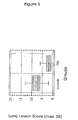
- animals vaccinated with the TS6 vaccine composition exhibit an average lung score of 2.1 ⁇ 1.9 (mean ⁇ standard deviation) as compared to the untreated controls with an average lung score of 7.8 +/- 4.1. These results show a significant reduction in lung lesions for the pigs vaccinated with the vaccine composition as compared to the unvaccinated controls..
- Example 4 Duration of protection against a Mycoplasma hyopneumoniae heterologous challenge
- the following table summarizes the average results ( ⁇ the standard deviation) in number of spots for 5x10 5 peripheral blood mononuclear cells (PBMN) secreting gamma-interferon (IFN ⁇ ) in the peripheral blood: Groups D28 D138 Day152 TS6 vaccine 81 ⁇ 20 9 ⁇ 2 28 ⁇ 7 Commercial vaccine 5 ⁇ 2 3 ⁇ 1 6 ⁇ 1 Controls 6 ⁇ 3 2 ⁇ 2 11 ⁇ 8* *if a piglet expressing an abnormally high number of spots (109) is excluded, the mean of the control group is 4 ⁇ 1.
- Example 5 Serology results after administration of one dose of a PCV-2 vaccine adjuvanted with the TS6 emulsion
- Example 6 Protection against challenge elicited by a PCV-2 vaccine adjuvanted with the TS6 emulsion
- a lesion score was calculated as follows: Score 0 1 2 3 Corpulence Normal Lean Very lean Rachitic Carcass aspect Normal White Yellow Mucosa Normal White Yellow Subcutaneous connective tissue Normal Bright Yellow Superficial lymphatic ganglions Normal 1 fat and/or and/or white congestive 1 fat and/or > white and/or congestive > 1 very fat and/or white and/or congestive Thoracic discharge No Bright thoracic cavity Visible presence Hearth No lesion Lesion Lung No lesion Lesion Pleura No lesion Small lesions Large lesions Mediastinal lymphatic ganglions Normal 1 fat and/or white and/or congestive > 1 fat and/or > white and/or congestive 1 very fat and/or white and/or congestive Abdominal cavity Normal Bright Visible ascites liquide Peritoneum No lesion Lesion Stomach No lesion Lesion Ulcer Small intestine No lesion Lesion Intestine No lesion Lesion Mesenteritic lymphatic ganglions Normal 1 fat
- Vaccine composition The TS6 adjuvant was prepared as described in Example 1.
- the PCV-2 virus was grown on PK/15 cells and viral multiplication carried out as described in US Patent No. 6,517,843 ( Ellis et al . Briefly, at the end of viral culture, the infected cells are harvested, lysed and the viral harvest inactivated with conventional methods. For example, inactivation may be accomplished with 0.1% ethyleneimine for 18 hours at +37 degrees C; with 0.5% beta-propiolactone for 24 hours at +28 degrees C.; or with 0.2% and 0.1% beta-propiolactone for 24 hours at +4 degrees C.
- the viral suspension was concentrated by ultrafiltration using a membrane with a 150 - 300 kDa cutoff.
- the inactivated viral suspension was stored at +5 degrees C before formulating the vaccine.
- the antigen content of the vaccine was set at 2.1 log 10 antigen Units per dose. Based on this content, the activity of the vaccine determined through the quantification of the active ingredient in the final product by an ELISA method was arbitrarily set at a minimum of 100 ELISA Units per dose.
- PMWS postweaning multisytemic wasting syndrome
- Figure 4 shows a graph depicting the percentages of PMWS cases in piglets up to the time of slaughter. As can be seen from the graph, there was a 75% reduction in the number of cases of PMWS in piglets born to vaccinated sows as compared to the number of cases in piglets from unvaccinated controls. These results show a significant decrease in the clinical disease associated with PCV-2 infection and demonstrate the feasibility of vaccinating sows shortly before farrowing with a TS6 adjuvanted inactivated PCV2 vaccine to prevent the mortality and morbidity associated with PCV2 infection in piglets. These results further demonstrate that a significant reduction of PMWS among piglets in actual field conditions can be achieved using only one dose of a vaccine composition according to the present invention.
- Example 8 LF2 emulsion
- an oil-in-water (O/W) emulsion containing 10% oily phase.emulsion and designated as LF2 was made.
- the oily phase (100 ml) contained Marcol 82® 88% v/v, Span 80® 1.8% w/v and Tween 85® 10.2% w/v.
- the aqueous phase #1 (100 ml) contained phosphate disodic a nd m onopotassic 0.02M isotonic buffer (pH 7.8) 88.5% v/v and 20% (w/v) solution of Tween 80® 11.5% w/v.
- the aqueous phase #2 (400 ml) was constituted with the phosphate disodic and monopotassic 0.02M isotonic buffer (pH 7.8), optionally containing immunogens. 100 ml of the pre-emulsion was diluted with 400 ml of the aqueous phase #2 to obtain the LF2 emulsion. The final surfactant concentration in the LF2 emulsion was 1.43% w/v. The PIT of the LF2 emulsion was > 45°C, as determined by conductivity.
- Example 9 Serology analysis after the administration of a swine influenza vaccine adjuvanted with the LF2 emulsion
- piglets fifteen (15) piglets, a bout 10 weeks of age were randomly allocated into 3 groups. Group one (vaccinated) had 5 piglets vaccinated twice (on day 0 and day 28) with 2 ml of a recombinant swine influenza vaccine at 7.7 log10 CCID 50 per dose by intramuscular injection.
- This recombinant expression vector vaccine contained a canarypox vector encoding and expressing nucleoprotein (NP) and haemagglutinin (HA) of an H1N1 swine flu virus.
- the second group of 5 piglets was vaccinated twice (by intramuscular injection on day 0 and day 28) with 2 ml of the recombinant swine influenza vaccine (at 7.7 log10 CCID 50 per dose) adjuvanted with the L F2 emulsion (LF2 vaccinated group).
- F ive piglets were left unvaccinated (control group). Blood samples were taken at D0, D14, D28, D42 and D56 post vaccination for determining haemagglutination inhibition (HI) titers.
- results As summarized in the following table, all vaccinates showed a significant anti-swine flu antibody response from 42 to 56 days after vaccination (ANOVA, p ⁇ 0.0001) as compared to untreated controls. However, pigs vaccinated with the LF2 adjuvanted vaccine showed a significant increase in antibody response at days 42 to 56 days post-vaccination as compared to pigs receiving the unadjuvanted recombinant vaccine (ANOVA, p ⁇ 0.0001).
- the adjuvant effect of the LF2 emulsion allows the vaccine to induce a higher antibody response against the swine flu virus, as compared to the non-adjuvanted vaccine.
- Example 10 Protection induced by a Mannheimia haemolytica vaccine adjuvanted with the LF2 emulsion
- One group of 10 calves was vaccinated on day 0 with 2 ml of the LF2 vaccine composition by subcutaneous injection, while the control group of 10 calves was not vaccinated. From the day of vaccination (D0) to the day of challenge (D20), all vaccinated calves were regularly examined for general and local reactions to vaccination. Clinical examination comprised an assessment of systemic reactions (such as apathy, anorexia, polypnea, salivation, trembling), recordation rectal temperature, and a measurement of local reaction at injection sites. None of the calves presented any systemic reaction to vaccination.
- Rectal temperatures (in °C, mean +/- standard deviation) summarized in the following table showed a transient and slight phase of hyperthermia was observed in the vaccinated group, with a peak within 24 hours after vaccination.
- D0 D0+4h D1 D2 D3 D7 D14 D20 Vaccinated 39.3 +/- 0.3 39.6 +/- 0.4 39.5 +/- 0.3 39.2+/- 0.3 39.0+/- 0.2 39.0 +/- 0.2 39.1 +/- 0.3 38.7 +/- 0.3 Controls 39.3 +/- 0.2 39.3 +/- 0.2 39.1 +/- 0.2 39.1 +/- 0.2 38.9+/- 0.2 39.0 +/- 0.2 38.9 +/- 0.1 38.7 +/- 0.3
- Global clinical scores were calculated according to the following formula and the partial scores given in the table:
- Global clinical score ⁇ partial score ⁇ coefficient / 14 0 1 2 Coefficient General condition Normal Depression Prostration ⁇ 2 Food Normal Reduce Anorexia ⁇ 3 Cough No Intense, occasional Weak, frequent ⁇ 1 Nasal discharge No Serous Muco-purulent ⁇ 2 Respiratory rate ⁇ 35/min 35-50/min >50/min ⁇ 3 Rectal temperature ⁇ 39.5°C 39.5°C-40.5°C >40.5°C ⁇ 3
- Lung lession score ⁇ surface of the lesion a lobe / surface of the whole lobe ⁇ 100 ⁇ LRM
- LRM is the lung relative mass, with a value of:
- Results of the lung lesion scores are summarized in the following table: Individual percentage of lung lesions in vaccinates 74.8* Individual percentage of lung lesions in controls 64.5* 10.6 7.0 10.1 78.6* 10.5 63.1* 66.4* 44.7 6.2 60.9 6.9 48.2 32.9 0.8 25.4 59.5* 8.0 32.9 Mean +/- std deviation 25.2 +/- 25.5 Mean +/- std deviation 46.0 +/- 25.5 * animals that succumbed to the challenge
Landscapes
- Health & Medical Sciences (AREA)
- Life Sciences & Earth Sciences (AREA)
- Chemical & Material Sciences (AREA)
- Veterinary Medicine (AREA)
- General Health & Medical Sciences (AREA)
- Animal Behavior & Ethology (AREA)
- Medicinal Chemistry (AREA)
- Public Health (AREA)
- Pharmacology & Pharmacy (AREA)
- Immunology (AREA)
- Mycology (AREA)
- Epidemiology (AREA)
- Microbiology (AREA)
- Chemical Kinetics & Catalysis (AREA)
- General Chemical & Material Sciences (AREA)
- Organic Chemistry (AREA)
- Virology (AREA)
- Nuclear Medicine, Radiotherapy & Molecular Imaging (AREA)
- Oncology (AREA)
- Communicable Diseases (AREA)
- Pulmonology (AREA)
- Bioinformatics & Cheminformatics (AREA)
- Engineering & Computer Science (AREA)
- Tropical Medicine & Parasitology (AREA)
- Medicines Containing Antibodies Or Antigens For Use As Internal Diagnostic Agents (AREA)
- Medicinal Preparation (AREA)
Claims (34)
- Impfstoffzusammensetzung, umfassend eine injizierbare Öl-in-Wasser (Ö/W)-Emulsion, umfassend(i) eine wässrige Lösung, enthaltend mindestens ein Immunogen;(ii) ein Mineralöl;(iii) ein nicht-ionisches lipophiles grenzflächenaktives Mittel;(iv) ein nicht-ionisches hydrophiles grenzflächenaktives Mittel, welches einen hohen HLB-Wert (hydrophilic-lipophilic balance) von mehr als 13 und weniger als 40 besitzt; und(v) ein nicht-ionisches hydrophiles grenzflächenaktives Mittel, welches einen niedrigen HLB-Wert (hydrophilic-lipophilic balance) zwischen 9 und 13 besitzt.
- Zusammensetzung gemäß Anspruch 1, wobei das nicht-ionische hydrophile grenzflächenaktive Mittel mit hohem HLB-Wert in einer Konzentration von 0,1 bis 1,5%, bezogen auf das Gewicht pro Volumen der Emulsion (w/v), vorhanden ist.
- Zusammensetzung gemäß Anspruch 2, wobei der Prozentanteil der grenzflächenaktiven Mittel 4% bis 6% Gewicht/Volumen beträgt.
- Zusammensetzung gemäß Anspruch 1, wobei das nicht-ionische hydrophile grenzflächenaktive Mittel mit niedrigem HLB-Wert in einer Konzentration von 1% bis 8%, bezogen auf das Gewicht pro Volumen der Emulsion (w/v), vorhanden ist.
- Zusammensetzung gemäß Anspruch 1, wobei das nicht-Ionische lipophile grenzflächenaktive Mittel in einer Konzentration von 0,1% bis 2,5%, bezogen auf Gewicht pro Volumen der Emulsion (w/v), vorhanden ist.
- Zusammensetzung gemäß Anspruch 1, wobei das Mineralöl in einer Konzentration von 20% bis 40% (v/v) vorhanden ist.
- Zusammensetzung gemäß Anspruch 1, wobei die Emulsion eine Phaseninversionstemperatur (PIT) zwischen 33 bis 66°C hat.
- Zusammensetzung gemäß Anspruch 1, wobei das nicht-ionische hydrophile grenzflächenaktive Mittel mit niedrigem HLB-Wert ausgewählt ist aus ethoxylierten Fettsäuretriestern von Sorbitan, ethoxylierten Fettsäurediestern von Sorbitan, ethoxylierten Fettsäuremonoestern von Sorbitan, ethoxylierten Fettalkoholen, ethoxylierten Fettsäuren, ethoxyliertem Kastoröl und Kombinationen davon.
- Zusammensetzung gemäß Anspruch 8, wobei der Ester des ethoxylierten Fettsäureesters ausgewählt ist aus Oleat, Palmitat, Stearat, Isostearat, Laurat und Kombinationen davon.
- Zusammensetzung gemäß Anspruch 1, wobei das nicht-ionische lipophile grenzflächenaktive Mittel ausgewählt ist aus Fettsäureestern von Sorbitan, Fettsäureestern von Mannid, diethoxylierten Fettsäureestern von Mannid, triethoxylierten Fettsäureestern von Mannid, tetraethoxylierten Fettsäureestern von Mannid und Kombinationen davon
- Zusammensetzung gemäß Anspruch 10, wobei der Ester der Fettsäureester ausgewählt ist aus Oleat, Palmitat, Stearat, Isostearat, Laurat und Kombinationen davon.
- Zusammensetzung gemäß Anspruch 1, wobei das nicht-ionische hydrophile grenzflächenaktive Mittel mit hohem HLB-Wert ausgewählt ist aus ethoxylierten Fettsäuremonoestern von Sorbitan, ethoxylierten Fettalkoholen, ethoxylierten Fettsäuren, nicht-ionischem Blockcopolymer und Kombinationen davon.
- Zusammensetzung gemäß Anspruch 12, wobei der ethoxylierte Monoester von Sorbitan ausgewählt ist aus ethoxyliertem Sorbitanmonolaurat, ethoxyliertem Sorbitamnonopalmitat, ethoxyliertem Sorbitanmonostearat, ethoxyliertem Sorbitanmonooleat und Kombinationen davon.
- Zusammensetzung gemäß Anspruch 1, wobei das Mineralöl ausgewählt ist aus Paraffinöl, Squalan, Pristan, Polyisobutenöl, hydriertem Polyisobutenöl, Polydecenöl, Polyisoprenöl, Polyisopropenöl und Kombinationen davon.
- Zusammensetzung gemäß Anspruch 1, umfassend ein Paraffinöl, einen Sorbitanfettsäuremonoester als nicht-ionisches lipophiles grenzflächenaktives Mittel, einen ethoxylierten Fettsäuretriester von Sorbitan als nicht-ionisches hydrophiles grenzflächenaktives Mittel mit niedrigem HLB-Wert und ein nicht-ionisches Blockcopolymer als nicht-ionisches hydrophiles grenzflächenaktives Mittel mit hohem HLB-Wert.
- Zusammensetzung gemäß Anspruch 15, wobei der Sorbitanfettsäuremonoester ein Sorbitanmonooleat ist, der ethoxylierte Fettsäuretriester von Sorbitan ein ethoxyliertes Trioleat von Sorbitan ist und das nicht-ionische Blockcopolymer ein Polyoxyethylen/Polyoxypropylen-Polymer (POE-POP) ist.
- Zusammensetzung gemäß Anspruch 16, wobei das Paraffinöl in einer Konzentration von 10% bis 40% v/v vorhanden ist, das Sorbitanmonooleat in einer Konzentration von 0,2% bis 1.5% w/v vorhanden ist, das ethoxylierte Trioleat von Sorbitan in einer Konzentration von 2% bis 5% w/v vorhanden ist und das POE-POP in einer Konzentration von 0,1% bis 0,5% w/v vorhanden ist.
- Zusammensetzung gemäß Anspruch 16, wobei das Paraffinöl in einer Konzentration von 29,3% v/v vorhanden ist, das Sorbitanmonooleat in einer Konzentration von 0,6% w/v vorhanden ist, das ethoxylierte Trioleat von Sorbitan in einer Konzentration von 3,4% w/v vorhanden ist und das POE-POP in einer Konzentration von 0,25% w/v vorhanden ist.
- Zusammensetzung gemäß Anspruch 1, wobei das Immunogen ausgewählt ist aus einem inaktivierten Pathogen, einem abgeschwächten Pathogen, einer immunogenen Untereinheit, einem rekombinanten Expressionsvektor und einem Plasmid oder Kombinationen davon.
- Zusammensetzung gemäß Anspruch 19, wobei das Pathogen ausgewählt ist aus einem Virus, einem Bakterium, einem Pilz, einem protozoischen Parasiten oder Kombinationen davon.
- Zusammensetzung gemäß Anspruch 19, wobei das Immunogen ein inaktivierter Virus ist.
- Zusammensetzung gemäß Anspruch 21, wobei das Immunogen ein inaktivierter Schweine-Circovirus Typ 2 (porcine circovirus type 2, PCV-2) ist.
- Zusammensetzung gemäß Anspruch 19, wobei das Immunogen ein inaktiviertes Mycoplasma hyopneumoniae Bakterium ist.
- Zusammensetzung gemäß Anspruch 19 zur Verwendung als Impfstoff zum Erzeugen einer Immunantwort gegen ein Pathogen in einem Tier.
- Verwendung der Zusammensetzung gemäß Anspruch 19 bei der Herstellung eines Medikaments zum Erzeugen einer Immunantwort gegen ein Pathogen in einem Tier.
- Zusammensetzung gemäß Anspruch 24 oder Verwendung gemäß Anspruch 25, wobei das Immunogen ausgewählt ist aus einem inaktivierten Mycoplasma hyopneumoniae Bakterium, einem inaktivierten Schweine-Circovirus Typ 2 (porcine circovirus type 2, PCV-2) oder Kombinationen davon.
- Verwendung gemäß Anspruch 25 oder 26, wobei die Impfstoffzusammensetzung zur Verabreichung als Einmalbehandlung ist.
- Verwendung gemäß einem der Ansprüche 25 bis 27, wobei das Tier ausgewählt ist aus Rindern, Schweinen, Pferden, Hunden, Katzen, Hühnern, Enten und Truthähnen.
- Verwendung gemäß einem der Ansprüche 25 bis 28, wobei die Verabreichung intramuskuläre (IM), intradermale (ID) oder subkutane (SC) Injektion ist.
- Verwendung gemäß einem der Ansprüche 25 bis 29, wobei die Verabreichung mit einem nadellosen Injektionsapparat erfolgt.
- Zusammensetzung gemäß Anspruch 24 oder Verwendung gemäß einem der Ansprüche 25 bis 30, wobei das Immunogen ausgewählt ist aus einem Schweineinfluenzavirus oder inaktiviertem Mannheimia haemolytica.
- Kit, umfassend ein Immunogen in einem ersten Fläschchen und eine Emulsion in einem zweiten Fläschchen, wobei die Emulsion umfasst: (i) ein Mineralöl; (ii) ein nicht-ionisches lipophiles grenzflächenaktives Mittel; (iii) ein nicht-ionisches hydrophiles grenzflächenaktives Mittel mit einem hohen HLB-Wert (hydrophilic-lipophihc balance) von mehr als 13 und weniger als 40; und (iv) ein nicht-ionisches hydrophiles grenzfläoheaaktives Mittel mit niedrigem HLB-Wert (hydrophilic-lipophilic balance) zwischen 9 und 13.
- Kit gemäß Anspruch 32, wobei das Immunogen in einer lyophilisierten Form oder in Lösung in einem wässrigen Medium ist
- Verfahren zur Herstellung einer mindestens ein Immunogen und eine Emulsion umfassenden Impfstoffzusammensetzung;
wobei die Emulsion umfasst: (i) ein Mineralöl; (ii) ein nicht-ionisches lipophiles grenzflächenaktives Mittel; (iii) ein nicht-ionisches hydrophiles grenzflächenaktives Mittel mit einem hohen HLB-Wert (hydrophilic-lipophilic balance) von mehr als 13 und weniger als 40; und (iv) ein nicht-ionisches hydrophiles grenzflächenaktives Mittel mit niedrigem HLB-Wert (hydrophilic-lipophilic balance) zwischen 9 und 13; und
wobei das mindestens eine Immunogen während der Emulsionsbildung eingebracht wird oder zur Emulsion hinzugefügt wird.
Priority Applications (3)
| Application Number | Priority Date | Filing Date | Title |
|---|---|---|---|
| SI200430782T SI1651265T1 (sl) | 2003-07-24 | 2004-07-26 | Formulacije cepiva, ki obsegajo emulzijo olje v vodi |
| PL04779201T PL1651265T3 (pl) | 2003-07-24 | 2004-07-26 | Formulacje szczepionek zawierających emulsję olej w wodzie |
| CY20081100747T CY1108782T1 (el) | 2003-07-24 | 2008-07-17 | Νεες συνταγοποιησεις εμβολιου |
Applications Claiming Priority (2)
| Application Number | Priority Date | Filing Date | Title |
|---|---|---|---|
| US49034503P | 2003-07-24 | 2003-07-24 | |
| PCT/US2004/024027 WO2005009462A2 (en) | 2003-07-24 | 2004-07-26 | Vaccine formulations comprising an oil-in-water emulsion |
Publications (2)
| Publication Number | Publication Date |
|---|---|
| EP1651265A2 EP1651265A2 (de) | 2006-05-03 |
| EP1651265B1 true EP1651265B1 (de) | 2008-04-23 |
Family
ID=34102977
Family Applications (1)
| Application Number | Title | Priority Date | Filing Date |
|---|---|---|---|
| EP04779201A Expired - Lifetime EP1651265B1 (de) | 2003-07-24 | 2004-07-26 | Vakzin-formulierungen mit einer öl-in-wasser-emulsion |
Country Status (22)
| Country | Link |
|---|---|
| US (3) | US7371395B2 (de) |
| EP (1) | EP1651265B1 (de) |
| JP (1) | JP2006528647A (de) |
| KR (1) | KR101146545B1 (de) |
| CN (1) | CN1852735B (de) |
| AT (1) | ATE392905T1 (de) |
| AU (1) | AU2004259034C1 (de) |
| BR (1) | BRPI0412855B8 (de) |
| CA (1) | CA2533581C (de) |
| CY (1) | CY1108782T1 (de) |
| DE (1) | DE602004013331T2 (de) |
| DK (1) | DK1651265T3 (de) |
| ES (1) | ES2307053T3 (de) |
| HR (1) | HRP20080235T3 (de) |
| MX (1) | MXPA06000942A (de) |
| NZ (1) | NZ545289A (de) |
| PL (1) | PL1651265T3 (de) |
| RU (1) | RU2354399C2 (de) |
| SI (1) | SI1651265T1 (de) |
| UA (1) | UA84024C2 (de) |
| WO (1) | WO2005009462A2 (de) |
| ZA (1) | ZA200600937B (de) |
Families Citing this family (128)
| Publication number | Priority date | Publication date | Assignee | Title |
|---|---|---|---|---|
| US8088388B2 (en) * | 2002-02-14 | 2012-01-03 | United Biomedical, Inc. | Stabilized synthetic immunogen delivery system |
| PL1651265T3 (pl) * | 2003-07-24 | 2008-10-31 | Merial Ltd | Formulacje szczepionek zawierających emulsję olej w wodzie |
| US7833707B2 (en) * | 2004-12-30 | 2010-11-16 | Boehringer Ingelheim Vetmedica, Inc. | Methods of overexpression and recovery of porcine circovirus type 2 ORF2 |
| US7700285B1 (en) | 2005-12-29 | 2010-04-20 | Boehringer Ingelheim Vetmedica, Inc. | PCV2 immunogenic compositions and methods of producing such compositions |
| UA95602C2 (ru) | 2004-12-30 | 2011-08-25 | Берингер Ингельхейм Ветмедика, Инк. | Иммуногенная композиция цвс2 и способы приготовления такой композиции |
| RU2620968C9 (ru) * | 2004-12-30 | 2017-08-08 | Берингер Ингельгейм Ветмедика, Инк. | Иммуногенные композиции pcv2 и способы получения таких композиций |
| US8834891B2 (en) | 2005-03-14 | 2014-09-16 | Boehringer Ingelheim Vetmedica, Inc. | Immunogenic compositions comprising Lawsonia intracellularis |
| US7691368B2 (en) * | 2005-04-15 | 2010-04-06 | Merial Limited | Vaccine formulations |
| US8703095B2 (en) * | 2005-07-07 | 2014-04-22 | Sanofi Pasteur S.A. | Immuno-adjuvant emulsion |
| WO2007051329A1 (de) * | 2005-11-02 | 2007-05-10 | Laboswiss Ag | Verfahren zum extrahieren und solubilisieren von wirkstoffen aus organischem material, nach dem verfahren hergestellte wirkstoff-erzeuignisse und ihre verwendung |
| WO2007052055A1 (en) | 2005-11-04 | 2007-05-10 | Novartis Vaccines And Diagnostics Srl | Adjuvanted vaccines with non-virion antigens prepared from influenza viruses grown in cell culture |
| US11707520B2 (en) | 2005-11-03 | 2023-07-25 | Seqirus UK Limited | Adjuvanted vaccines with non-virion antigens prepared from influenza viruses grown in cell culture |
| KR20080069232A (ko) * | 2005-11-04 | 2008-07-25 | 노바티스 백신즈 앤드 다이아그노스틱스 에스.알.엘. | 스플리트 인플루엔자 백신에 대한 보조제로서 유리 수성상계면활성제를 갖는 에멀젼 |
| CA2632866A1 (en) * | 2005-12-01 | 2007-06-07 | Domantis Limited | Noncompetitive domain antibody formats that bind interleukin 1 receptor type 1 |
| DK2275132T3 (da) * | 2005-12-29 | 2021-05-17 | Boehringer Ingelheim Animal Health Usa Inc | Multivalente pcv2-immunogeniske sammensætninger og fremgangsmåder til at fremstille dem |
| CA2635430A1 (en) * | 2005-12-29 | 2007-08-23 | Boehringer Ingelheim Vetmedica, Inc. | Use of a pcv2 immunogenic composition for lessening clinical symptoms in pigs |
| FR2896162B1 (fr) * | 2006-01-13 | 2008-02-15 | Sanofi Pasteur Sa | Emulsion huile dans eau thermoreversible |
| US20090038701A1 (en) | 2006-01-17 | 2009-02-12 | Baxter International Inc. | Device, system and method for mixing |
| JP2009528361A (ja) * | 2006-03-03 | 2009-08-06 | メリアル リミテッド | マイコプラズマ・ハイオニューモニエワクチン |
| US7455844B2 (en) | 2006-03-29 | 2008-11-25 | Merial Limited | Vaccine against streptococci |
| US10138279B2 (en) | 2006-04-13 | 2018-11-27 | Regents Of The University Of Michigan | Compositions and methods for Bacillus anthracis vaccination |
| US9839685B2 (en) * | 2006-04-13 | 2017-12-12 | The Regents Of The University Of Michigan | Methods of inducing human immunodeficiency virus-specific immune responses in a host comprising nasally administering compositions comprising a naonemulsion and recombinant GP120 immunogen |
| US20080107687A1 (en) * | 2006-11-06 | 2008-05-08 | Herve Poulet | Feline vaccines against avian influenza |
| KR100904226B1 (ko) * | 2006-11-08 | 2009-06-25 | (주)인터리스 | 레시틴 유사유화제를 함유하는 나노좀 형태의 면역증강제및 그의 백신용 조성물 |
| WO2008064299A2 (en) * | 2006-11-22 | 2008-05-29 | Boehringer Ingelheim Vetmedica, Inc. | Methods of reducing porcine circovirus-associated disease outbreaks |
| UA100370C2 (uk) | 2006-12-11 | 2012-12-25 | Мериал Лимитед | Спосіб вакцинації птахів проти salmonella |
| WO2008073464A2 (en) * | 2006-12-11 | 2008-06-19 | Boehringer Ingelheim Vetmedica, Inc. | Effective method of treatment of porcine circovirus and lawsonia intracellularis infections |
| PT2094872T (pt) | 2006-12-15 | 2017-04-27 | Boehringer Ingelheim Vetmedica Inc | Tratamento de porcos seropositivos para o anticorpo anti-pcv2 com antigénio de pcv2 |
| EP1941903A1 (de) | 2007-01-03 | 2008-07-09 | Boehringer Ingelheim Vetmedica Gmbh | Prophylaxe und Behandlung von PRDC |
| EP1958644A1 (de) | 2007-02-13 | 2008-08-20 | Boehringer Ingelheim Vetmedica Gmbh | Vorbeugung und Behandlung von subklinischer PCVD |
| US8003073B2 (en) * | 2007-04-16 | 2011-08-23 | Air Products And Chemicals, Inc. | Autothermal hydrogen storage and delivery systems |
| US20090017064A1 (en) * | 2007-07-10 | 2009-01-15 | Wyeth | Methods and Compositions for Immunizing Pigs Against Porcine Circovirus |
| US7829274B2 (en) | 2007-09-04 | 2010-11-09 | Boehringer Ingelheim Vetmedica, Inc. | Reduction of concomitant infections in pigs by the use of PCV2 antigen |
| CN101932336B (zh) * | 2007-12-31 | 2014-07-09 | 贝林格尔.英格海姆维特梅迪卡有限公司 | 有外来氨基酸插入的pcv2 orf2病毒样颗粒 |
| KR20100113582A (ko) | 2008-01-23 | 2010-10-21 | 베링거잉겔하임베트메디카인코퍼레이티드 | Pcv2 마이코플라즈마 히오뉴모니에 면역원성 조성물 및 당해 조성물의 생산 방법 |
| EP2254595A4 (de) * | 2008-02-15 | 2012-12-05 | Boehringer Ingelheim Vetmed | Verfahren und zusammensetzungen zur minderung der auswirkungen von magen-darm-erkrankungen |
| US8877208B2 (en) | 2008-05-23 | 2014-11-04 | The Regents Of The University Of Michigan | Multivalent nanoemulsion vaccines |
| MX2011005604A (es) | 2008-11-28 | 2011-09-01 | Merial Ltd | Vacuna recombinante para influenza aviar y sus usos. |
| EA023662B1 (ru) | 2009-02-10 | 2016-06-30 | Новартис Аг | Вакцины против гриппа со сниженным количеством сквалена |
| US8871220B2 (en) | 2009-04-03 | 2014-10-28 | Merial Limited | Newcastle disease virus vectored avian vaccines |
| EP3020412B1 (de) * | 2009-06-16 | 2017-10-11 | The Regents of the University of Michigan | Nanoemulsionsimpfstoffe |
| KR101745029B1 (ko) | 2009-08-21 | 2017-06-08 | 메리얼 인코포레이티드 | 재조합 조류 파라믹소바이러스 백신 및 이의 제조 및 사용 방법 |
| TWI627281B (zh) | 2009-09-02 | 2018-06-21 | 百靈佳殷格翰家畜藥品公司 | 降低pcv-2組合物殺病毒活性之方法及具有改良免疫原性之pcv-2組合物 |
| DK2475384T3 (en) * | 2009-09-10 | 2016-10-24 | Merial Inc | NEW VACCINE FORMULATIONS COMPREHENSIVE saponin-CONTAINING ADJUVANTS |
| EP3213766A1 (de) | 2009-12-28 | 2017-09-06 | Merial Ltd. | Rekombinantes ndv-antigen und verwendungen davon |
| FR2955775B1 (fr) | 2010-02-01 | 2012-05-04 | Seppic Sa | Adjuvant pour la preparation de compositions vaccinales destinees a la prevention contre les coccidioses |
| FR2955776A1 (fr) * | 2010-02-01 | 2011-08-05 | Seppic Sa | Utilisation d'une huile minerale specifique pour la fabrication d'un nouveau adjuvant |
| US20130197612A1 (en) | 2010-02-26 | 2013-08-01 | Jack W. Lasersohn | Electromagnetic Radiation Therapy |
| WO2011112945A2 (en) | 2010-03-12 | 2011-09-15 | Merial Limited | Foot and mouth disease virus recombinant vaccines and uses thereof |
| FR2957933B1 (fr) | 2010-03-24 | 2012-04-27 | Seppic Sa | Vaccin vivant pour maladies aviaires |
| FR2957803B1 (fr) * | 2010-03-24 | 2012-06-01 | Soc Dexploitation De Produits Pour Les Industries Chimiques Seppic | Diluants adjuvants de vaccins vivants pour maladies porcines |
| ES2559445T3 (es) | 2010-05-11 | 2016-02-12 | Intervet International B.V. | Vacuna contra Mycoplasma hyopneumoniae apta para la administración en presencia de anticuerpos de origen materno |
| US9932372B2 (en) * | 2010-07-08 | 2018-04-03 | United Biomedical, Inc. | Designer peptide-based PCV2 vaccine |
| US8986706B2 (en) | 2010-08-31 | 2015-03-24 | Merial, Inc. | Newcastle disease virus vectored herpesvirus vaccines |
| ES2972387T3 (es) | 2011-03-18 | 2024-06-12 | Alkermes Pharma Ireland Ltd | Composiciones farmacéuticas que comprenden ésteres de sorbitán |
| US9216213B2 (en) | 2011-04-20 | 2015-12-22 | Merial, Inc. | Adjuvanted rabies vaccine with improved viscosity profile |
| NZ618125A (en) | 2011-05-27 | 2016-03-31 | Merial Ltd | Genetic vaccines against hendra virus and nipah virus |
| ES2674439T3 (es) * | 2011-06-01 | 2018-06-29 | Merial, Inc. | Administración sin aguja de vacunas contra el VSRRP |
| CN103182076B (zh) * | 2011-12-29 | 2015-06-17 | 北京大北农科技集团股份有限公司 | 一种猪支原体肺炎灭活疫苗及其制备方法 |
| WO2013106558A1 (en) * | 2012-01-10 | 2013-07-18 | Merial Limited | Lipid based adjuvants for dna - plasmid vaccines |
| HUE033858T2 (en) | 2012-02-14 | 2018-01-29 | Merial Inc | Rotavirus unit vaccines and method for their preparation and use |
| WO2013138776A1 (en) | 2012-03-16 | 2013-09-19 | Merial Limited | Novel methods for providing long-term protective immunity against rabies in animals, based upon administration of replication-deficient flavivirus expressing rabies g |
| US9999670B2 (en) | 2012-03-19 | 2018-06-19 | Alkermes Pharma Ireland Limited | Pharmaceutical compositions comprising benzyl alcohol |
| CA2867121C (en) | 2012-03-19 | 2021-05-25 | Alkermes Pharma Ireland Limited | Pharmaceutical compositions comprising fatty acid esters |
| WO2013142202A1 (en) | 2012-03-19 | 2013-09-26 | Alkermes Pharma Ireland Limited | Pharmaceutical compositions comprising glycerol esters |
| US9120859B2 (en) | 2012-04-04 | 2015-09-01 | Zoetis Services Llc | Mycoplasma hyopneumoniae vaccine |
| UA114503C2 (uk) | 2012-04-04 | 2017-06-26 | Зоетіс Сервісіз Ллс | Комбінована вакцина pcv та mycoplasma hyopneumoniae |
| UA114504C2 (uk) | 2012-04-04 | 2017-06-26 | Зоетіс Сервісіз Ллс | Комбінована вакцина pcv, mycoplasma hyopneumoniae та prrs |
| NZ703297A (en) | 2012-06-13 | 2016-04-29 | Merial Ltd | Reassortant btv and ahsv vaccines |
| HUE059179T2 (hu) * | 2012-09-10 | 2022-10-28 | Galenbio Inc | Vízimadárban Mycoplasma-fertõzés megelõzésére szolgáló oltóanyag |
| CN102813922B (zh) * | 2012-09-11 | 2013-12-11 | 山东省农业科学院畜牧兽医研究所 | 一种复方油佐剂及其制备方法和应用 |
| JP6654042B2 (ja) | 2012-09-19 | 2020-02-26 | アルカームス ファーマ アイルランド リミテッド | 貯蔵安定性が改善された医薬組成物 |
| CA2895324A1 (en) | 2012-12-18 | 2014-06-26 | Merial, Inc. | High resolution melt genotyping of ibv, csfv and ndv |
| CN103059134B (zh) * | 2013-01-18 | 2015-03-04 | 武汉辉斯特科技有限公司 | 一种抗结核多肽的免疫制备方法 |
| BR102013001893B1 (pt) | 2013-01-25 | 2022-01-25 | Fundação De Amparo À Pesquisa Do Estado De Minas Gerais - Fapemig | Antígenos recombinantes do porcine circovirus 2 (pcv-2) para formulações vacinais, kit de diagnóstico e uso |
| US9556419B2 (en) | 2013-03-12 | 2017-01-31 | Merial Inc. | Reverse genetics Schmallenberg virus vaccine compositions, and methods of use thereof |
| EP2789346A1 (de) * | 2013-04-11 | 2014-10-15 | CEVA Santé Animale SA | Fusionspolypeptide und Impfstoffe |
| EP2994162B1 (de) | 2013-05-08 | 2021-04-07 | Pharmgate Biologics Inc. | Impfstoff für pcv2 und mycoplasma |
| ES2778425T3 (es) | 2013-10-02 | 2020-08-10 | Boehringer Ingelheim Animal Health Usa Inc | Variante de la proteína ORF2 del PCV2 y partículas similares a virus compuestas por esta |
| FR3012964A1 (fr) * | 2013-11-12 | 2015-05-15 | Seppic Sa | Vaccins adjuves pour vaccination aviaire in ovo |
| WO2015077717A1 (en) | 2013-11-25 | 2015-05-28 | The Broad Institute Inc. | Compositions and methods for diagnosing, evaluating and treating cancer by means of the dna methylation status |
| CN103585622B (zh) * | 2013-11-25 | 2015-09-02 | 江苏省农业科学院 | 猪支原体肺炎疫苗株的应用 |
| PL3076996T3 (pl) * | 2013-12-03 | 2020-05-18 | Intervet International B.V. | Szczepionka przeciwko cirkowirusowi świń typu 2 |
| WO2015082457A1 (en) * | 2013-12-03 | 2015-06-11 | Intervet International B.V. | Vaccine against lawsonia intracellularis and porcine circovirus 2 |
| WO2015085147A1 (en) | 2013-12-05 | 2015-06-11 | The Broad Institute Inc. | Polymorphic gene typing and somatic change detection using sequencing data |
| JP7060324B2 (ja) | 2013-12-20 | 2022-04-26 | ザ・ブロード・インスティテュート・インコーポレイテッド | ネオ抗原ワクチンによる併用療法 |
| AU2015231278B2 (en) | 2014-03-20 | 2020-01-23 | Alkermes Pharma Ireland Limited | Aripiprazole formulations having increased injection speeds |
| US9713639B2 (en) | 2014-05-19 | 2017-07-25 | Merial, Inc. | Recombinant spike protein subunit based vaccine for porcine epidemic diarrhea virus (PEDV) |
| US10010605B2 (en) | 2014-09-23 | 2018-07-03 | Merial, Inc. | FMDV recombinant vaccines and uses thereof |
| AU2015343369B2 (en) | 2014-11-03 | 2018-11-22 | Georgia Tech Research Corporation | Methods of using microneedle vaccine formulations to elicit in animals protective immunity against rabies virus |
| EP3234130B1 (de) | 2014-12-19 | 2020-11-25 | The Broad Institute, Inc. | Verfahren zum profiling vom t-zell-rezeptor-repertoire |
| US10975442B2 (en) | 2014-12-19 | 2021-04-13 | Massachusetts Institute Of Technology | Molecular biomarkers for cancer immunotherapy |
| HK1252427A1 (zh) | 2015-05-14 | 2019-05-24 | Boehringer Ingelheim Animal Health USA Inc. | 猪环状病毒生产方法和pcv2疫苗 |
| JP6913032B2 (ja) | 2015-05-20 | 2021-08-04 | ザ・ブロード・インスティテュート・インコーポレイテッド | 共通ネオ抗原 |
| TW202241500A (zh) | 2015-06-09 | 2022-11-01 | 美商博德研究所有限公司 | 用於贅瘤疫苗之調配物及其製備方法 |
| PH12017502380B1 (en) | 2015-06-23 | 2022-10-26 | Merial Inc | Prrsv minor protein-containing recombinant viral vectors and methods of making and use thereof |
| NZ739260A (en) | 2015-06-26 | 2019-09-27 | Boehringer Ingelheim Animal Health Usa Inc | Inactivated canine influenza vaccines and methods of making and uses thereof |
| AR106026A1 (es) | 2015-09-29 | 2017-12-06 | Merial Inc | Vacunas de partículas tipo virus (vlp) contra el parvovirus canino (cpv) y sus usos |
| JP6986019B2 (ja) | 2015-10-08 | 2021-12-22 | ベーリンガー インゲルハイム アニマル ヘルス ユーエスエイ インコーポレイテッド | レプトスピラ用生弱毒化異種ワクチン |
| US10780158B2 (en) | 2015-11-16 | 2020-09-22 | Georgia State University Research Foundation, Inc. | Tunable vaccine platform against pathogens of the paramyxovirus family |
| JP6797206B2 (ja) | 2015-11-23 | 2020-12-09 | ベーリンガー インゲルハイム アニマル ヘルス ユーエスエイ インコーポレイテッド | Fmdv及びe2融合タンパク質並びにその使用 |
| TWI760322B (zh) | 2016-01-29 | 2022-04-11 | 美商百靈佳殷格翰動物保健美國有限公司 | 重組腺病毒載體裝載之fmdv疫苗及其用途 |
| BR112018069100A2 (pt) * | 2016-03-23 | 2019-01-29 | Intervet International B.V. | uma vacina combinada contra a infecção por vírus pcv2 e mycoplasma hyopneumoniae |
| BR112018069219A2 (pt) | 2016-03-23 | 2019-01-22 | Intervet Int Bv | uma vacina para aplicação intradérmica contra infecção pelo vírus pcv2 e prrs |
| US10485857B2 (en) | 2016-04-07 | 2019-11-26 | Boehringer Ingelheim Animal Health USA Inc. | Heartworm vaccine, methods and uses thereof |
| CA3020634C (en) * | 2016-04-14 | 2025-06-17 | Genzyme Corporation | MULTIDOSE COMPOSITIONS CONTAINING AN ANTIMICROBIAL PRESERVATIVE BASED ON POLYAMIDE OR OCTENIDINE |
| AU2017254477A1 (en) | 2016-04-18 | 2018-11-01 | Jennifer G. ABELIN | Improved HLA epitope prediction |
| US10279031B2 (en) * | 2016-05-11 | 2019-05-07 | Phibro Animal Health Corporation | Composition comprising antigens and a mucosal adjuvant and a method for using |
| KR102724939B1 (ko) | 2016-06-17 | 2024-11-01 | 뵈링거 잉겔하임 애니멀 헬스 유에스에이 인코포레이티드 | 선형 또는 분지형 폴리아크릴산 폴리머 아쥬반트를 포함하는 신규한 면역원성 제형 |
| JOP20190088A1 (ar) | 2016-10-21 | 2019-04-21 | Us Agriculture | نواقل مؤتلفة للتعبير عن مولدات مضاد فيروس انفلونزا الطيور و استخداماتها |
| BR112019010394A2 (pt) * | 2016-11-29 | 2019-09-03 | Intervet International B.V. | vacina suína |
| RU2752836C2 (ru) | 2016-12-14 | 2021-08-09 | БЁРИНГЕР ИНГЕЛЬХАЙМ ЭНИМАЛ ХЕЛТ ЮЭсЭй ИНК. | Рекомбинантные hvt-векторы, экспрессирующие множественные антигены патогенов птиц, и содержащие их вакцины |
| EP3574116A1 (de) | 2017-01-24 | 2019-12-04 | The Broad Institute, Inc. | Zusammensetzungen und verfahren zum nachweis einer mutanten variante eines polynukleotids |
| US12374423B2 (en) | 2017-06-27 | 2025-07-29 | The Broad Institute, Inc | Systems and methods for MHC class II epitope prediction |
| WO2019086463A1 (en) | 2017-10-30 | 2019-05-09 | Baxalta GmbH | Environmentally compatible detergents for inactivation of lipid-enveloped viruses |
| AU2019230014B2 (en) | 2018-03-05 | 2024-11-28 | Alkermes Pharma Ireland Limited | Aripiprazole dosing strategy |
| CN108324941A (zh) * | 2018-04-03 | 2018-07-27 | 林淑卿 | 猪疾病疫苗用佐剂及其制备方法 |
| US20210382068A1 (en) | 2018-10-02 | 2021-12-09 | Dana-Farber Cancer Institute, Inc. | Hla single allele lines |
| WO2020131586A2 (en) | 2018-12-17 | 2020-06-25 | The Broad Institute, Inc. | Methods for identifying neoantigens |
| FR3092754B1 (fr) | 2019-02-18 | 2022-06-03 | Total Marketing Services | Composition adjuvante pour vaccin |
| US12394502B2 (en) | 2019-10-02 | 2025-08-19 | The General Hospital Corporation | Method for predicting HLA-binding peptides using protein structural features |
| JP2024501949A (ja) | 2020-12-23 | 2024-01-17 | アクセス ツー アドバンスト ヘルス インスティチュート | ソラネソールワクチンアジュバント及びその調製方法 |
| US20250114447A1 (en) * | 2021-08-06 | 2025-04-10 | Intervet Inc. | Vaccine for equine herpesvirus |
| CA3228419A1 (en) * | 2021-08-11 | 2023-02-16 | Zhengrong Cui | Dry powder compositions of oil-in-water (o/w) emulsion adjuvanted vaccines |
| WO2024133656A1 (en) | 2022-12-22 | 2024-06-27 | Ceva Sante Animale | Oil adjuvant compositions and vaccine emulsions comprising such oil adjuvant compositions |
| US12531162B1 (en) * | 2023-05-31 | 2026-01-20 | Northeastern University | Multi-dimensional phenotypic space for genotype to phenotype mapping and intelligent design of cancer drug therapies using a deep learning net |
| WO2025097055A2 (en) | 2023-11-02 | 2025-05-08 | The Broad Institute, Inc. | Compositions and methods of use of t cells in immunotherapy |
| US12562256B2 (en) * | 2023-11-07 | 2026-02-24 | New York University | Systems, methods and computer-accessible medium for identifying target pairs for CAR-T therapy |
Family Cites Families (14)
| Publication number | Priority date | Publication date | Assignee | Title |
|---|---|---|---|---|
| GB1143545A (en) * | 1965-03-25 | 1969-02-26 | Wellcome Found | Injectable vaccine emulsions |
| IE922436A1 (en) * | 1991-07-25 | 1993-01-27 | Idec Pharma Corp | Induction of cytotoxic t-lymphocyte responses |
| JPH10218788A (ja) * | 1997-02-07 | 1998-08-18 | Natl Fedelation Of Agricult Coop Assoc | 免疫増強剤の製造法および免疫増強法 |
| US6391314B1 (en) * | 1997-10-03 | 2002-05-21 | Merial | Porcine circoviruses vaccines diagnostic reagents |
| CA2330610A1 (en) | 1998-05-07 | 1999-11-11 | Corixa Corporation | Adjuvant composition and methods for its use |
| NZ513289A (en) * | 1998-12-22 | 2003-04-29 | Pfizer Prod Inc | Infectious cDNA clone of north american procine reproductive and respiratory syndrome (PRRS) virus and uses thereof |
| US6943152B1 (en) * | 1999-06-10 | 2005-09-13 | Merial | DNA vaccine-PCV |
| FR2800280B1 (fr) * | 1999-10-29 | 2003-09-19 | Seppic Sa | Nouvelle composition vaccinale et utilisation d'agents tensioactifs comme adjuvants d'immunite |
| DE10012370A1 (de) * | 2000-03-14 | 2001-09-27 | Chiron Behring Gmbh & Co | Adjuvans für Vakzinen |
| GB0009735D0 (en) * | 2000-04-19 | 2000-06-07 | Zeneca Ltd | Formulation |
| DE10113284A1 (de) * | 2001-03-16 | 2002-10-02 | Heinrich Exner | Adjuvans-Emulsion und Verfahren zu deren Verwendung |
| FR2824269B1 (fr) * | 2001-09-03 | 2012-03-02 | Seppic Sa | Composition adjuvante constituee de 1% a 15% de tensioactifs a hlb global compris entre 5 et 8 et de 85% a 99% de corps gras |
| US6642178B2 (en) | 2001-11-14 | 2003-11-04 | North Dakota State University | Adjuvant blend for enhancing efficacy of pesticides |
| PL1651265T3 (pl) * | 2003-07-24 | 2008-10-31 | Merial Ltd | Formulacje szczepionek zawierających emulsję olej w wodzie |
-
2004
- 2004-07-26 PL PL04779201T patent/PL1651265T3/pl unknown
- 2004-07-26 JP JP2006521308A patent/JP2006528647A/ja active Pending
- 2004-07-26 UA UAA200601926A patent/UA84024C2/ru unknown
- 2004-07-26 MX MXPA06000942A patent/MXPA06000942A/es active IP Right Grant
- 2004-07-26 CN CN200480026569XA patent/CN1852735B/zh not_active Expired - Lifetime
- 2004-07-26 HR HR20080235T patent/HRP20080235T3/xx unknown
- 2004-07-26 AU AU2004259034A patent/AU2004259034C1/en not_active Expired
- 2004-07-26 NZ NZ545289A patent/NZ545289A/en not_active IP Right Cessation
- 2004-07-26 WO PCT/US2004/024027 patent/WO2005009462A2/en not_active Ceased
- 2004-07-26 SI SI200430782T patent/SI1651265T1/sl unknown
- 2004-07-26 ES ES04779201T patent/ES2307053T3/es not_active Expired - Lifetime
- 2004-07-26 US US10/899,181 patent/US7371395B2/en not_active Expired - Lifetime
- 2004-07-26 RU RU2006105506/13A patent/RU2354399C2/ru active
- 2004-07-26 AT AT04779201T patent/ATE392905T1/de active
- 2004-07-26 CA CA2533581A patent/CA2533581C/en not_active Expired - Lifetime
- 2004-07-26 DE DE602004013331T patent/DE602004013331T2/de not_active Expired - Lifetime
- 2004-07-26 EP EP04779201A patent/EP1651265B1/de not_active Expired - Lifetime
- 2004-07-26 BR BRPI0412855A patent/BRPI0412855B8/pt active IP Right Grant
- 2004-07-26 KR KR1020067001685A patent/KR101146545B1/ko not_active Expired - Lifetime
- 2004-07-26 DK DK04779201T patent/DK1651265T3/da active
-
2006
- 2006-02-01 ZA ZA200600937A patent/ZA200600937B/en unknown
-
2008
- 2008-02-07 US US12/027,776 patent/US7608279B2/en not_active Expired - Lifetime
- 2008-07-17 CY CY20081100747T patent/CY1108782T1/el unknown
-
2009
- 2009-09-10 US US12/556,891 patent/US20100062019A1/en not_active Abandoned
Also Published As
Similar Documents
| Publication | Publication Date | Title |
|---|---|---|
| US7608279B2 (en) | Vaccine formulations | |
| RU2555342C2 (ru) | Новые вакцинные составы, включающие сапонинсодержащие адъюванты | |
| US7691368B2 (en) | Vaccine formulations | |
| HK1083764B (en) | Vaccine formulations comprising an oil-in-water emulsion |
Legal Events
| Date | Code | Title | Description |
|---|---|---|---|
| PUAI | Public reference made under article 153(3) epc to a published international application that has entered the european phase |
Free format text: ORIGINAL CODE: 0009012 |
|
| 17P | Request for examination filed |
Effective date: 20060203 |
|
| AK | Designated contracting states |
Kind code of ref document: A2 Designated state(s): AT BE BG CH CY CZ DE DK EE ES FI FR GB GR HU IE IT LI LU MC NL PL PT RO SE SI SK TR |
|
| AX | Request for extension of the european patent |
Extension state: AL HR LT LV MK |
|
| REG | Reference to a national code |
Ref country code: HK Ref legal event code: DE Ref document number: 1083764 Country of ref document: HK |
|
| 17Q | First examination report despatched |
Effective date: 20070418 |
|
| GRAP | Despatch of communication of intention to grant a patent |
Free format text: ORIGINAL CODE: EPIDOSNIGR1 |
|
| GRAS | Grant fee paid |
Free format text: ORIGINAL CODE: EPIDOSNIGR3 |
|
| GRAA | (expected) grant |
Free format text: ORIGINAL CODE: 0009210 |
|
| RIN1 | Information on inventor provided before grant (corrected) |
Inventor name: CHARREYRE, CATHERINE Inventor name: NORDGREN, ROBERT M. Inventor name: DES GOUILLES-BLECHET, STEPHANIE MARIE-CATHERINE Inventor name: PARISOT, ALEXIS GUY ANDRE |
|
| AK | Designated contracting states |
Kind code of ref document: B1 Designated state(s): AT BE BG CH CY CZ DE DK EE ES FI FR GB GR HU IE IT LI LU MC NL PL PT RO SE SI SK TR |
|
| AX | Request for extension of the european patent |
Extension state: AL HR LT LV MK |
|
| REG | Reference to a national code |
Ref country code: GB Ref legal event code: FG4D |
|
| REG | Reference to a national code |
Ref country code: CH Ref legal event code: EP |
|
| REG | Reference to a national code |
Ref country code: HR Ref legal event code: TUEP Ref document number: P20080235 Country of ref document: HR |
|
| REG | Reference to a national code |
Ref country code: CH Ref legal event code: NV Representative=s name: BRAUNPAT BRAUN EDER AG |
|
| REF | Corresponds to: |
Ref document number: 602004013331 Country of ref document: DE Date of ref document: 20080605 Kind code of ref document: P |
|
| REG | Reference to a national code |
Ref country code: IE Ref legal event code: FG4D Free format text: LANGUAGE OF EP DOCUMENT: FRENCH |
|
| REG | Reference to a national code |
Ref country code: RO Ref legal event code: EPE |
|
| REG | Reference to a national code |
Ref country code: HK Ref legal event code: GR Ref document number: 1083764 Country of ref document: HK |
|
| REG | Reference to a national code |
Ref country code: HR Ref legal event code: T1PR Ref document number: P20080235 Country of ref document: HR |
|
| REG | Reference to a national code |
Ref country code: SE Ref legal event code: TRGR |
|
| REG | Reference to a national code |
Ref country code: DK Ref legal event code: T3 |
|
| REG | Reference to a national code |
Ref country code: GR Ref legal event code: EP Ref document number: 20080401714 Country of ref document: GR |
|
| PG25 | Lapsed in a contracting state [announced via postgrant information from national office to epo] |
Ref country code: PT Free format text: LAPSE BECAUSE OF FAILURE TO SUBMIT A TRANSLATION OF THE DESCRIPTION OR TO PAY THE FEE WITHIN THE PRESCRIBED TIME-LIMIT Effective date: 20080923 |
|
| REG | Reference to a national code |
Ref country code: PL Ref legal event code: T3 |
|
| REG | Reference to a national code |
Ref country code: ES Ref legal event code: FG2A Ref document number: 2307053 Country of ref document: ES Kind code of ref document: T3 |
|
| REG | Reference to a national code |
Ref country code: HU Ref legal event code: AG4A Ref document number: E003686 Country of ref document: HU |
|
| ET | Fr: translation filed | ||
| PLBE | No opposition filed within time limit |
Free format text: ORIGINAL CODE: 0009261 |
|
| STAA | Information on the status of an ep patent application or granted ep patent |
Free format text: STATUS: NO OPPOSITION FILED WITHIN TIME LIMIT |
|
| 26N | No opposition filed |
Effective date: 20090126 |
|
| PG25 | Lapsed in a contracting state [announced via postgrant information from national office to epo] |
Ref country code: PL Free format text: LAPSE BECAUSE OF NON-PAYMENT OF DUE FEES Effective date: 20080726 |
|
| REG | Reference to a national code |
Ref country code: FR Ref legal event code: PLFP Year of fee payment: 12 |
|
| REG | Reference to a national code |
Ref country code: DE Ref legal event code: R082 Ref document number: 602004013331 Country of ref document: DE Representative=s name: VOSSIUS & PARTNER PATENTANWAELTE RECHTSANWAELT, DE Ref country code: DE Ref legal event code: R081 Ref document number: 602004013331 Country of ref document: DE Owner name: MERIAL, INC., DULUTH, US Free format text: FORMER OWNER: MERIAL LTD., DULUTH, GA., US |
|
| REG | Reference to a national code |
Ref country code: SI Ref legal event code: SP73 Owner name: MERIAL, INC.; US Effective date: 20160224 |
|
| REG | Reference to a national code |
Ref country code: GB Ref legal event code: 732E Free format text: REGISTERED BETWEEN 20160324 AND 20160330 |
|
| REG | Reference to a national code |
Ref country code: FR Ref legal event code: TP Owner name: MERIAL INC., US Effective date: 20160405 |
|
| REG | Reference to a national code |
Ref country code: NL Ref legal event code: PD Owner name: MERIAL, INC.; US Free format text: DETAILS ASSIGNMENT: VERANDERING VAN EIGENAAR(S), OVERDRACHT; FORMER OWNER NAME: MERIAL LIMITED Effective date: 20160113 |
|
| REG | Reference to a national code |
Ref country code: FR Ref legal event code: PLFP Year of fee payment: 13 |
|
| REG | Reference to a national code |
Ref country code: CH Ref legal event code: PUE Owner name: MERIAL, INC., US Free format text: FORMER OWNER: MERIAL LIMITED, US |
|
| REG | Reference to a national code |
Ref country code: HU Ref legal event code: GB9C Owner name: MERIAL, INC., US Free format text: FORMER OWNER(S): MERIAL LIMITED, US Ref country code: HU Ref legal event code: FH1C Free format text: FORMER REPRESENTATIVE(S): DR. PETHOE ARPAD, DANUBIA SZABADALMI ES JOGI IRODA KFT., HU Representative=s name: DANUBIA SZABADALAMI ES JOGI IRODA KFT., HU |
|
| REG | Reference to a national code |
Ref country code: ES Ref legal event code: PC2A Owner name: MERIAL, INC. Effective date: 20160824 |
|
| REG | Reference to a national code |
Ref country code: AT Ref legal event code: PC Ref document number: 392905 Country of ref document: AT Kind code of ref document: T Owner name: MERIAL, INC., US Effective date: 20170503 |
|
| REG | Reference to a national code |
Ref country code: FR Ref legal event code: PLFP Year of fee payment: 14 |
|
| REG | Reference to a national code |
Ref country code: LU Ref legal event code: PD Owner name: MERIAL, INC.; US Free format text: FORMER OWNER: MERIAL LIMITED Effective date: 20170711 |
|
| REG | Reference to a national code |
Ref country code: CH Ref legal event code: PCAR Free format text: NEW ADDRESS: HOLEESTRASSE 87, 4054 BASEL (CH) |
|
| REG | Reference to a national code |
Ref country code: FR Ref legal event code: PLFP Year of fee payment: 15 |
|
| REG | Reference to a national code |
Ref country code: HR Ref legal event code: ODRP Ref document number: P20080235 Country of ref document: HR Payment date: 20190703 Year of fee payment: 16 |
|
| REG | Reference to a national code |
Ref country code: HR Ref legal event code: ODRP Ref document number: P20080235 Country of ref document: HR Payment date: 20200703 Year of fee payment: 17 |
|
| REG | Reference to a national code |
Ref country code: ES Ref legal event code: PC2A Owner name: BOEHRINGER INGELHEIM ANIMAL HEALTH USA INC. Effective date: 20200918 |
|
| REG | Reference to a national code |
Ref country code: GB Ref legal event code: 732E Free format text: REGISTERED BETWEEN 20210211 AND 20210217 |
|
| REG | Reference to a national code |
Ref country code: HR Ref legal event code: ODRP Ref document number: P20080235 Country of ref document: HR Payment date: 20210721 Year of fee payment: 18 |
|
| REG | Reference to a national code |
Ref country code: HR Ref legal event code: ODRP Ref document number: P20080235 Country of ref document: HR Payment date: 20220720 Year of fee payment: 19 |
|
| P01 | Opt-out of the competence of the unified patent court (upc) registered |
Effective date: 20230508 |
|
| REG | Reference to a national code |
Ref country code: HR Ref legal event code: ODRP Ref document number: P20080235 Country of ref document: HR Payment date: 20230720 Year of fee payment: 20 |
|
| PGFP | Annual fee paid to national office [announced via postgrant information from national office to epo] |
Ref country code: NL Payment date: 20230719 Year of fee payment: 20 Ref country code: LU Payment date: 20230719 Year of fee payment: 20 |
|
| PGFP | Annual fee paid to national office [announced via postgrant information from national office to epo] |
Ref country code: TR Payment date: 20230724 Year of fee payment: 20 Ref country code: RO Payment date: 20230718 Year of fee payment: 20 Ref country code: MC Payment date: 20230724 Year of fee payment: 20 Ref country code: IT Payment date: 20230724 Year of fee payment: 20 Ref country code: IE Payment date: 20230719 Year of fee payment: 20 Ref country code: GB Payment date: 20230719 Year of fee payment: 20 Ref country code: FI Payment date: 20230719 Year of fee payment: 20 Ref country code: ES Payment date: 20230926 Year of fee payment: 20 Ref country code: EE Payment date: 20230717 Year of fee payment: 20 Ref country code: CZ Payment date: 20230717 Year of fee payment: 20 Ref country code: CY Payment date: 20230622 Year of fee payment: 20 Ref country code: CH Payment date: 20230802 Year of fee payment: 20 Ref country code: BG Payment date: 20230719 Year of fee payment: 20 Ref country code: AT Payment date: 20230720 Year of fee payment: 20 |
|
| PGFP | Annual fee paid to national office [announced via postgrant information from national office to epo] |
Ref country code: SK Payment date: 20230719 Year of fee payment: 20 Ref country code: SI Payment date: 20230713 Year of fee payment: 20 Ref country code: SE Payment date: 20230719 Year of fee payment: 20 Ref country code: HU Payment date: 20230721 Year of fee payment: 20 Ref country code: GR Payment date: 20230721 Year of fee payment: 20 Ref country code: FR Payment date: 20230725 Year of fee payment: 20 Ref country code: DK Payment date: 20230721 Year of fee payment: 20 Ref country code: DE Payment date: 20230719 Year of fee payment: 20 Ref country code: BE Payment date: 20230719 Year of fee payment: 20 |
|
| REG | Reference to a national code |
Ref country code: DE Ref legal event code: R071 Ref document number: 602004013331 Country of ref document: DE |
|
| REG | Reference to a national code |
Ref country code: DK Ref legal event code: EUP Expiry date: 20240726 |
|
| REG | Reference to a national code |
Ref country code: CH Ref legal event code: PL Ref country code: NL Ref legal event code: MK Effective date: 20240725 |
|
| REG | Reference to a national code |
Ref country code: ES Ref legal event code: FD2A Effective date: 20240802 |
|
| REG | Reference to a national code |
Ref country code: BE Ref legal event code: MK Effective date: 20240726 |
|
| REG | Reference to a national code |
Ref country code: LT Ref legal event code: MM9A Effective date: 20240726 |
|
| REG | Reference to a national code |
Ref country code: SK Ref legal event code: MK4A Ref document number: E 3766 Country of ref document: SK Expiry date: 20240726 Ref country code: GB Ref legal event code: PE20 Expiry date: 20240725 |
|
| REG | Reference to a national code |
Ref country code: IE Ref legal event code: MK9A |
|
| REG | Reference to a national code |
Ref country code: SE Ref legal event code: EUG |
|
| REG | Reference to a national code |
Ref country code: AT Ref legal event code: MK07 Ref document number: 392905 Country of ref document: AT Kind code of ref document: T Effective date: 20240726 |
|
| PG25 | Lapsed in a contracting state [announced via postgrant information from national office to epo] |
Ref country code: IE Free format text: LAPSE BECAUSE OF EXPIRATION OF PROTECTION Effective date: 20240726 |
|
| PG25 | Lapsed in a contracting state [announced via postgrant information from national office to epo] |
Ref country code: GB Free format text: LAPSE BECAUSE OF EXPIRATION OF PROTECTION Effective date: 20240725 |
|
| PG25 | Lapsed in a contracting state [announced via postgrant information from national office to epo] |
Ref country code: ES Free format text: LAPSE BECAUSE OF EXPIRATION OF PROTECTION Effective date: 20240727 |
|
| PG25 | Lapsed in a contracting state [announced via postgrant information from national office to epo] |
Ref country code: CZ Free format text: LAPSE BECAUSE OF EXPIRATION OF PROTECTION Effective date: 20240726 |
|
| PG25 | Lapsed in a contracting state [announced via postgrant information from national office to epo] |
Ref country code: SI Free format text: LAPSE BECAUSE OF EXPIRATION OF PROTECTION Effective date: 20240727 Ref country code: SK Free format text: LAPSE BECAUSE OF EXPIRATION OF PROTECTION Effective date: 20240726 |
|
| PG25 | Lapsed in a contracting state [announced via postgrant information from national office to epo] |
Ref country code: SK Free format text: LAPSE BECAUSE OF EXPIRATION OF PROTECTION Effective date: 20240726 Ref country code: SI Free format text: LAPSE BECAUSE OF EXPIRATION OF PROTECTION Effective date: 20240727 Ref country code: IE Free format text: LAPSE BECAUSE OF EXPIRATION OF PROTECTION Effective date: 20240726 Ref country code: GB Free format text: LAPSE BECAUSE OF EXPIRATION OF PROTECTION Effective date: 20240725 Ref country code: ES Free format text: LAPSE BECAUSE OF EXPIRATION OF PROTECTION Effective date: 20240727 Ref country code: CZ Free format text: LAPSE BECAUSE OF EXPIRATION OF PROTECTION Effective date: 20240726 |
|
| REG | Reference to a national code |
Ref country code: HR Ref legal event code: PB20 Ref document number: P20080235 Country of ref document: HR Effective date: 20240726 |