EP1652776A1 - Flasche, insbesondere Mehrweggetränkeflasche - Google Patents
Flasche, insbesondere Mehrweggetränkeflasche Download PDFInfo
- Publication number
- EP1652776A1 EP1652776A1 EP05017570A EP05017570A EP1652776A1 EP 1652776 A1 EP1652776 A1 EP 1652776A1 EP 05017570 A EP05017570 A EP 05017570A EP 05017570 A EP05017570 A EP 05017570A EP 1652776 A1 EP1652776 A1 EP 1652776A1
- Authority
- EP
- European Patent Office
- Prior art keywords
- bottle
- muzzle
- neck
- bottles
- type
- Prior art date
- Legal status (The legal status is an assumption and is not a legal conclusion. Google has not performed a legal analysis and makes no representation as to the accuracy of the status listed.)
- Granted
Links
- 235000013361 beverage Nutrition 0.000 title claims description 4
- 238000000034 method Methods 0.000 claims abstract description 3
- 239000011324 bead Substances 0.000 claims description 8
- 210000001015 abdomen Anatomy 0.000 claims description 6
- 238000011156 evaluation Methods 0.000 claims description 2
- 230000002093 peripheral effect Effects 0.000 claims description 2
- 238000001454 recorded image Methods 0.000 claims description 2
- 230000001149 cognitive effect Effects 0.000 abstract 3
- 210000003739 neck Anatomy 0.000 description 14
- 235000013405 beer Nutrition 0.000 description 4
- 239000011521 glass Substances 0.000 description 1
Images



Classifications
-
- B—PERFORMING OPERATIONS; TRANSPORTING
- B65—CONVEYING; PACKING; STORING; HANDLING THIN OR FILAMENTARY MATERIAL
- B65D—CONTAINERS FOR STORAGE OR TRANSPORT OF ARTICLES OR MATERIALS, e.g. BAGS, BARRELS, BOTTLES, BOXES, CANS, CARTONS, CRATES, DRUMS, JARS, TANKS, HOPPERS, FORWARDING CONTAINERS; ACCESSORIES, CLOSURES, OR FITTINGS THEREFOR; PACKAGING ELEMENTS; PACKAGES
- B65D1/00—Rigid or semi-rigid containers having bodies formed in one piece, e.g. by casting metallic material, by moulding plastics, by blowing vitreous material, by throwing ceramic material, by moulding pulped fibrous material or by deep-drawing operations performed on sheet material
- B65D1/02—Bottles or similar containers with necks or like restricted apertures, designed for pouring contents
- B65D1/0223—Bottles or similar containers with necks or like restricted apertures, designed for pouring contents characterised by shape
- B65D1/023—Neck construction
-
- B—PERFORMING OPERATIONS; TRANSPORTING
- B07—SEPARATING SOLIDS FROM SOLIDS; SORTING
- B07C—POSTAL SORTING; SORTING INDIVIDUAL ARTICLES, OR BULK MATERIAL FIT TO BE SORTED PIECE-MEAL, e.g. BY PICKING
- B07C5/00—Sorting according to a characteristic or feature of the articles or material being sorted, e.g. by control effected by devices which detect or measure such characteristic or feature; Sorting by manually actuated devices, e.g. switches
- B07C5/04—Sorting according to size
- B07C5/12—Sorting according to size characterised by the application to particular articles, not otherwise provided for
- B07C5/122—Sorting according to size characterised by the application to particular articles, not otherwise provided for for bottles, ampoules, jars and other glassware
-
- B—PERFORMING OPERATIONS; TRANSPORTING
- B65—CONVEYING; PACKING; STORING; HANDLING THIN OR FILAMENTARY MATERIAL
- B65D—CONTAINERS FOR STORAGE OR TRANSPORT OF ARTICLES OR MATERIALS, e.g. BAGS, BARRELS, BOTTLES, BOXES, CANS, CARTONS, CRATES, DRUMS, JARS, TANKS, HOPPERS, FORWARDING CONTAINERS; ACCESSORIES, CLOSURES, OR FITTINGS THEREFOR; PACKAGING ELEMENTS; PACKAGES
- B65D2203/00—Decoration means, markings, information elements, contents indicators
Definitions
- the invention relates to a bottle, in particular a reusable beverage with a bottle neck, a bottleneck, which connects to the bottle belly, and a muzzle acorn, which adjoins the bottle neck, wherein the bottle has at least one feature for detecting the bottle type (recognition feature).
- the beer produced in Germany is, in particular after the introduction of the one-way deposit, largely filled in reusable returnable bottles.
- the standardized 0.33 I-Lux bottles or the 0.5 NRW bottles were widely used. Bottles of this type were used by breweries throughout the Federal Republic for bottling beer.
- the evacuated by the consumer returnable bottles are u. a. delivered via the beverage trade back to the various breweries.
- the return delivery takes place in crates.
- the used bottles are then cleaned and checked in the brewery and then refilled with beer.
- the identification of the bottle type could be done while the bottles are in a bottle crate.
- cameras and ultrasonic sensors were arranged vertically above the bottle crate, which could determine the closure type, the color and the height of the bottle from this perspective.
- bottle types have been introduced by various breweries, which, while conforming to the outer shape of the bottle type of another brewery, but carry an individual pointing to the brewery feature (for example, a lettering or an emblem).
- These bottles can not be identified by the conventional characteristics (color of the glass, height of the bottle and closure type).
- the problem in particular is that the individual features are usually arranged on the bottle belly or on a shoulder region between the bottle belly and the neck of the bottle. To identify these bottles, these bottles must currently be removed from the bottle crate and examined for the brewery's individual characteristics. Even if you could automate this identification step, it would be very expensive, since the bottle must be removed from the bottle crate.
- the invention has for its object to propose a bottle whose type is also recognizable when the bottle belly and the shoulder area of the bottle are covered. Furthermore, the invention has for its object to propose a method by which the type of such a bottle can be detected.
- the recognition feature is arranged on the muzzle acorn or in an area adjacent to the muzzle of the neck of the neck of the bottle neck and that the recognition feature is uniformly formed circumferentially or with a circumferential uniform pattern.
- the muzzle sickle or the area of the bottle neck immediately adjacent to the muzzle sickle can also be recognized in bottles which are arranged in a box or are transported on a conveyor line or fed to a recognition machine in which guide elements laterally cover the bottle belly or the shoulder area of the bottle neck.
- the muzzle sickle or the region of the bottleneck adjoining the muzzle sickle can be recognized obliquely from above, for example, at an elevation angle of approximately between -5 ° and 40 °.
- the image pickup means are arranged laterally above relative to the bottle to take a picture of the muzzle acorn or of the bottleneck.
- the recorded image can then be evaluated in an evaluation means, the image of the wrong being compared with one in a stored pattern for recognizing the type of bottle.
- a bottle according to the invention may comprise one or more beads as a distinguishing feature. It is likewise possible for one or more peripheral recesses or elevations to be provided as identification feature.
- the bottles can be designed so that the identification feature is attached exclusively to the muzzle acorn or only in the area of the neck adjacent to the muzzle acorn.
- a bottle according to the invention can also have an encircling and uniform pattern, for example of depressions and elevations. These can be arranged in the area of the muzzle acorn or in the area of the neck of the bottle which adjoins the muzzle sickle.
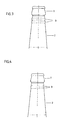
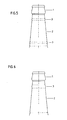
- FIGS. 1 to 6 have a muzzle sickle which has a bead for fastening a crown cap at its upper end.
- This bead is the same in all bottles, including bottles, which are known from the prior art and can be closed with a crown cap.
- Below the neck acorn 2 the bottleneck 1 connects.
- a recognition feature is provided on the bottle necks 1 in each case. This distinguishing feature is formed by two beads 3, which rotate around the bottleneck.
- the bottles according to the figures 1 to 6 differ in that the distance of the beads 3 on the bottle neck 1 is different. It is thus possible to distinguish the individual variants of the bottles from each other.
- bottles shown in Figures 7 to 10 have a muzzle sickle 2, to which a bottleneck 1 is connected.
- the bottleneck 1 is formed significantly shorter in these embodiments.
- the distinguishing feature for the type of bottle is provided in the embodiments according to FIGS. 7 to 10 not on the bottle neck 1 but on the muzzle sickle 2. These are circumferential depressions 4 and a bead 3.
- FIG. 11 corresponds essentially to one of the exemplary embodiments according to FIGS. 7 to 10.
- the exemplary embodiment according to FIG. 11 has a distinguishing feature formed from a circumferential uniform pattern of calottes. This identification feature is a dome-shaped depressions 5 in a circumferential depression 4.
Landscapes
- Engineering & Computer Science (AREA)
- Ceramic Engineering (AREA)
- Mechanical Engineering (AREA)
- Sorting Of Articles (AREA)
- Containers Having Bodies Formed In One Piece (AREA)
- Filling Of Jars Or Cans And Processes For Cleaning And Sealing Jars (AREA)
- Investigating Materials By The Use Of Optical Means Adapted For Particular Applications (AREA)
Abstract
Description
- Die Erfindung betrifft eine Flasche, insbesondere eine Mehrweggetränkeflache mit einem Flaschenbauch, einem Flaschenhals, der sich an den Flaschenbauch anschließt, und einer Mündungseichel, die sich an den Flaschenhals anschließt, wobei die Flasche zumindest ein Merkmal zur Erkennung des Flaschentyps (Erkennungsmerkmal) aufweist.
- Das in Deutschland hergestellte Bier wird insbesondere nach der Einführung des Einwegpfands zu großen Teilen in Mehrwegpfandflaschen abgefüllt. In der Vergangenheit waren dabei die standardisierten 0,33 I ― Lux-Flaschen oder die 0,5-NRW-Flaschen weit verbreitet. Flaschen dieses Flaschentyps wurden von Brauereien in der ganzen Bundesrepublik zur Abfüllung von Bier verwendet. Die von dem Verbraucher geleerten Pfandflaschen werden u. a. über den Getränkehandel zurück an die verschiedenen Brauereien geliefert. Die Rücklieferung erfolgt dabei in Flaschenkästen. Die gebrauchten Flaschen werden dann in der Brauerei gereinigt und geprüft, um anschließend wieder mit Bier befüllt zu werden.
- Schon in der Vergangenheit gab es jedoch verschiedene Brauereien, die nicht den weit verbreiteten 0,33 Lux-Flaschentyp oder den 0,5 I-NRW-Flaschentyp verwendet haben, sondern individuelle Flaschen zur Abfüllung des Biers verwendet haben. Beliebt waren insbesondere Bügelverschlussflaschen, grün gefärbte Flaschen oder Flaschen mit einer anderen Höhe. Sofern solche Flaschen in den Mehrwegkreislauf gelangten, mussten diese Flaschen in den Brauereien aussortiert werden. Dazu werden die Flaschen nach der Anlieferung auf ihre Farbe, ihren Verschlusstyp oder ihre Höhe hin untersucht. Flaschen die nicht dem vorgegebenen Typ entsprechen, werden aussortiert.
- Die Identifikation des Flaschentyps konnte erfolgen, während die Flaschen in einem Flaschenkasten stehen. Dazu waren Kameras und Ultraschallsensoren senkrecht über dem Flaschenkasten angeordnet, die aus dieser Perspektive den Verschlusstyp, die Farbe und die Höhe der Flasche ermitteln konnten.
- In der jüngeren Vergangenheit sind von verschiedenen Brauereien Flaschentypen eingeführt worden, die der äußeren Gestalt nach zwar dem Flaschentyp einer anderen Brauerei entsprechen, jedoch ein individuelles auf die Brauerei hinweisendes Merkmal (zum Beispiel einen Schriftzug oder ein Emblem) tragen. Diese Flaschen lassen sich anhand der herkömmlichen Merkmale (Farbe des Glases, Höhe der Flasche und Verschlusstyp) nicht identifizieren. Problematisch ist dabei insbesondere, dass die individuellen Merkmale zumeist am Flaschenbauch oder an einem Schulterbereich zwischen dem Flaschenbauch und dem Flaschenhals angeordnet sind. Zur Identifikation dieser Flaschen müssen diese Flaschen derzeit aus dem Flaschenkasten entnommen werden und auf das individuelle Merkmal der Brauerei untersucht werden. Selbst wenn man diesen Identifikationsschritt automatisieren könnte, wäre er sehr aufwändig, da dazu die Flasche aus dem Flaschenkasten entnommen werden muss.
- Hier setzt die vorliegende Erfindung an.
- Der Erfindung liegt die Aufgabe zugrunde, eine Flasche vorzuschlagen, deren Typ auch dann erkennbar ist, wenn der Flaschenbauch und der Schulterbereich der Flasche verdeckt sind. Ferner liegt der Erfindung die Aufgabe zugrunde, ein Verfahren vorzuschlagen, mit welchem der Typ einer solchen Flasche erkannt werden kann.
- Diese Aufgabe wird erfindungsgemäß dadurch gelöst, dass das Erkennungsmerkmal an der Mündungseichel oder in einem an die Mündungseichel angrenzenden Bereich des Flaschenhalses angeordnet ist und dass das Erkennungsmerkmal gleichförmig umlaufend oder mit einem umlaufenden gleichförmigen Muster ausgebildet ist. Die Mündungseichel oder der unmittelbar an die Mündungseichel angrenzende Bereich des Flaschenhalses kann auch bei Flaschen erkannt werden, die in einem Kasten angeordnet sind oder aber auf einer Förderstrecke transportiert beziehungsweise einem Erkennungsautomat zugeführt werden, bei der Führungselemente seitlich den Flaschenbauch oder den Schulterbereich des Flaschenhalses abdecken. Insbesondere kann die Mündungseichel oder der an die Mündungseichel angrenzende Bereich des Flaschenhalses von schräg oben beispielsweise unter einem Höhenwinkel von ca. zwischen -5° bis 40° erkannt werden. Damit ist es möglich, das Bildaufnahmemittel seitlich oberhalb bezogen auf die Flasche angeordnet werden, um ein Bild von der Mündungseichel beziehungsweise von dem Flaschenhals aufzunehmen. Das aufgenommene Bild kann dann in einem Auswertemittel ausgewertet werden, wobei das Bild der Falsche mit einem in einem gespeicherten Muster zur Erkennung des Typs der Flasche verglichen wird.
- Eine erfindungsgemäße Flasche kann als Erkennungsmerkmal einen oder mehrere Wülste umfassen. Ebenso ist es möglich, dass als Erkennungsmerkmal ein oder mehrere umlaufende Vertiefungen oder Erhöhungen vorgesehen sind.
- Die Flaschen können so gestaltet werden, dass das Erkennungsmerkmal ausschließlich an der Mündungseichel oder aber ausschließlich in dem an die Mündungseichel angrenzenden Bereich des Flaschenhalses angebracht ist.
- Eine erfindungsgemäße Flasche kann als Erkennungsmerkmal auch ein umlaufendes und gleichförmiges Muster, zum Beispiel aus Vertiefungen und Erhebungen aufweisen. Diese können im Bereich der Mündungseichel oder in dem Bereich des Flaschenhalses angeordnet sein, der an die Mündungseichel angrenzt.
- Ausführungsbeispiele für erfindungsgemäße Flaschen sind anhand der Zeichnung näher beschrieben. Darin zeigt
- Fig. 1
- die Mündungseichel und den Flaschenhals mit einem Erkennungsmerkmal einer erfindungsgemäßen Flasche,
- Fig. 2
- eine Variante zu der Flasche gemäß Fig. 1,
- Fig. 3
- eine Variante zu den Flaschen gemäß Fig. 1 und 2,
- Fig. 4
- eine Variante zu den Flaschen gemäß Fig. 1 bis 3,
- Fig. 5
- eine Variante zu den Flaschen gemäß Fig. 1 bis 4,
- Fig. 6
- eine Variante zu den Flaschen gemäß Fig. 1 bis 5,
- Fig. 7 und 7a
- eine Mündungseichel mit einem Erkennungsmerkmal und einem Flaschenhals einer erfindungsgemäßen Flasche,
- Fig. 8 und 8a
- eine Variante zu der Flasche gemäß Fig. 7,
- Fig. 9 und 9a
- eine Variante zu dem Ausführungsbeispiel gemäß Fig. 7 oder 8,
- Fig. 10 und 10a
- eine Variante zu den Ausführungsbeispielen gemäß der Fig. 7 bis 9,
- Fig. 11 und 11a
- eine Variante zu den Ausführungsbeispielen gemäß Fig. 7 bis 10 und
- Fig. 11b
- einen Schnitt entlang der Linie Xlb-Xlb in Fig. 11a und
- Fig. 11c
- eine Einzelheit aus Fig. 11a.
- Die in den Figuren 1 bis 6 dargestellten Ausführungsbeispiele weisen eine Mündungseichel auf, die an ihrem oberen Ende einen Wulst zur Befestigung eines Kronkorkens aufweist. Dieser Wulst ist bei allen Flaschen, auch bei Flaschen, die aus dem Stand der Technik bekannt und mit einem Kronkorken verschließbar sind, gleich ausgebildet. Unterhalb der Mündungseichel 2 schließt sich der Flaschenhals 1 an. Zur Erkennung des Typs der Flasche ist an den Flaschenhälsen 1 jeweils ein Erkennungsmerkmal vorgesehen. Dieses Erkennungsmerkmal wird durch zwei Wülste 3 gebildet, die um den Flaschenhals umlaufen.
- Die Flaschen gemäß der Figuren 1 bis 6 unterscheiden sich dadurch, dass der Abstand der Wülste 3 am Flaschenhals 1 unterschiedlich ist. Es ist dadurch möglich, die einzelnen Varianten der Flaschen voneinander zu unterscheiden.
- Auch die Flaschen die in den Figuren 7 bis 10 dargestellt sind, weisen eine Mündungseichel 2 auf, an die sich ein Flaschenhals 1 anschließt. Der Flaschenhals 1 ist bei diesen Ausführungsbeispielen jedoch deutlich kürzer ausgebildet.
- Das Erkennungsmerkmal für den Typ der Flasche ist bei den Ausführungsbeispielen gemäß der Fig. 7 bis 10 nicht am Flaschenhals 1 sondern an der Mündungseichel 2 vorgesehen. Es handelt sich dabei um umlaufende Vertiefungen 4 und einen Wulst 3.
- Die Ausführungsbeispiele der Figuren 7 bis 10 unterscheiden sich dadurch, dass die Wülste 3 beziehungsweise die umlaufenden Vertiefungen 4 unterschiedlich breit ausgebildet sind.
- Das in der Figur 11 beziehungsweise der Figur 11a, b und c dargestellte Ausführungsbeispiel entspricht im Wesentlichen einem der Ausführungsbeispiele gemäß der Figuren 7 bis 10. Das Ausführungsbeispiel gemäß der Figur 11 weist jedoch ein aus einem umlaufenden gleichförmigen Muster aus Kalotten gebildetes Erkennungsmerkmal auf. Bei diesem Erkennungsmerkmal handelt es sich um kalottenförmige Vertiefungen 5 in einer umlaufenden Vertiefung 4.
Claims (7)
- Flasche, insbesondere Mehrweggetränkeflasche mit einem Flaschenbauch, einem Flaschenhals (1), der sich an den Flaschenbauch anschließt, und einer Mündungseichel (2), die sich an den Flaschenhals (1) anschließt, wobei die Flasche zumindest ein Merkmal zur Erkennung (Erkennungsmerkmal 3, 4) des Flaschentyps aufweist,
dadurch gekennzeichnet,
dass das Erkennungsmerkmal (3, 4) an der Mündungseichel (2) oder in einem an die Mündungseichel (2) angrenzenden Bereich des Flaschenhalses (1) angeordnet ist und das das Erkennungsmerkmal (3, 4) gleichförmig umlaufend oder mit einem umlaufendem gleichförmigem Muster (5) ausgebildet ist. - Flasche nach Anspruch 1, dadurch gekennzeichnet, dass das Erkennungsmerkmal (3, 4) einen oder mehrere Wülste (3) umfasst.
- Flasche nach Anspruch 1 oder 2, dadurch gekennzeichnet, dass das Erkennungsmerkmale (3, 4) einen oder mehrere umlaufende Vertiefungen (4) umfassen.
- Flasche nach einem der Ansprüche 1 bis 3, dadurch gekennzeichnet, dass das Erkennungsmerkmal (3, 4) ausschließlich an der Mündungseichel (2) angebracht ist.
- Flasche nach einem der Ansprüche 1 bis 3, dadurch gekennzeichnet, dass das Erkennungsmerkmal (3, 4) ausschließlich im an die Mündungseichel (2) angrenzenden Bereich des Flaschenhalses (1) angebracht ist.
- Flasche nach einem der Ansprüche 1 bis 5, dadurch gekennzeichnet, dass die Flasche weitere Erkennungsmerkmale aufweist.
- Verfahren zur Erkennung des Typs von Flaschen nach einem der Ansprüche 1 bis 6, insbesondere von Flaschen, die in einem Flaschenkasten angeordnet sind,
dadurch gekennzeichnet,
dass mit einem Bildaufnahmemittel ein Bild von der Mündungseichel (2) der Flasche mit einem Höhenwinkel von ca. -5° bis 40° aufgenommen wird,
dass mit einem Auswertemittel das aufgenommene Bild ausgewertet wird, wobei das Bild der Flasche mit einem in einem Speicher hinterlegten Muster zur Erkennung des Typs der Flasche verglichen wird.
Applications Claiming Priority (1)
| Application Number | Priority Date | Filing Date | Title |
|---|---|---|---|
| DE102004052942A DE102004052942A1 (de) | 2004-10-29 | 2004-10-29 | Flasche, insbesondere Mehrweggetränkeflasche |
Publications (2)
| Publication Number | Publication Date |
|---|---|
| EP1652776A1 true EP1652776A1 (de) | 2006-05-03 |
| EP1652776B1 EP1652776B1 (de) | 2008-05-07 |
Family
ID=35656391
Family Applications (1)
| Application Number | Title | Priority Date | Filing Date |
|---|---|---|---|
| EP05017570A Expired - Lifetime EP1652776B1 (de) | 2004-10-29 | 2005-08-12 | Verfahren zur Erkennung des Typs von Flaschen |
Country Status (3)
| Country | Link |
|---|---|
| EP (1) | EP1652776B1 (de) |
| AT (1) | ATE394310T1 (de) |
| DE (2) | DE102004052942A1 (de) |
Cited By (4)
| Publication number | Priority date | Publication date | Assignee | Title |
|---|---|---|---|---|
| WO2009021515A1 (en) * | 2007-08-13 | 2009-02-19 | Anker Andersen A/S | Apparatus and method for counting, identifying and/or sorting objects |
| EP2210675A1 (de) * | 2009-01-21 | 2010-07-28 | Antonio Falanga | Verpackungsunterscheidungssystem für Verpackungen mit einem den Inhalt kennzeichnenden Element |
| CN113233396A (zh) * | 2021-05-31 | 2021-08-10 | 深圳市莱福科技有限公司 | 识别不同类型瓶盖的智能开瓶方法及智能开瓶器 |
| CN121589047A (zh) * | 2024-08-19 | 2026-03-03 | 北京霍里思特科技有限公司 | 塑料瓶分类识别方法、分选机、电子设备及可读存储介质 |
Families Citing this family (2)
| Publication number | Priority date | Publication date | Assignee | Title |
|---|---|---|---|---|
| DE202009015614U1 (de) | 2009-11-18 | 2010-02-25 | Müller, Tobias | Vorrichtung zur Erkennung von Flaschen |
| EP3892253B1 (de) * | 2020-04-06 | 2024-03-20 | SCHOTT Pharma Schweiz AG | Pharmazeutische behälter und verfahren zur herstellung, registrierung, identifizierung und authentifizierung solcher behälter |
Citations (7)
| Publication number | Priority date | Publication date | Assignee | Title |
|---|---|---|---|---|
| US1623459A (en) * | 1925-02-28 | 1927-04-05 | Oscar H Baker | Milk bottle |
| US1650440A (en) * | 1924-11-29 | 1927-11-22 | Edward F Glacken | Bottle |
| DE1921885U (de) * | 1965-06-19 | 1965-08-19 | Deutscher Brauerbund E V | Glasflasche, insbesondere normfaehige bierflasche. |
| US4941573A (en) * | 1988-05-26 | 1990-07-17 | Color Ident Systems Corporation | Package identification system |
| EP0489267A1 (de) * | 1990-12-05 | 1992-06-10 | Halton Oy | Sortierverfahren und -einrichtung für Pfandflaschen, Büchsen und andere Verpackungen |
| EP0869067A1 (de) * | 1997-04-01 | 1998-10-07 | Femit Plastic Ag | Blasgeformte Kunststoff-Flasche |
| DE10149239A1 (de) * | 2001-10-05 | 2003-04-17 | Tesa Scribos Gmbh | Gebrauchsgegenstand mit einer eine Datenspur aufweisenden Oberfläche |
Family Cites Families (18)
| Publication number | Priority date | Publication date | Assignee | Title |
|---|---|---|---|---|
| DE7138435U (de) * | 1972-01-13 | Eifler O | Flasche aus Kunststoff | |
| DE1809843U (de) * | 1959-12-09 | 1960-04-14 | Haberle Walter | Flasche fuer Getraenke |
| NO135609C (de) * | 1975-06-03 | 1977-05-11 | Tore Planke | |
| JPS54140838A (en) * | 1978-04-20 | 1979-11-01 | Honeywell Inc | Article identifier |
| DE8027471U1 (de) * | 1980-10-15 | 1981-11-12 | Eifler, Otto, Dipl. Brau-Ing., 6483 Bad Soden-Salmünster | Flasche aus Glas oder Kunststoff fuer die Aufnahme von mit Fluorid angereichertem Quellwasser oder Fruchtsaftgetraenk |
| US4414566A (en) * | 1981-04-03 | 1983-11-08 | Industrial Automation Corporation | Sorting and inspection apparatus and method |
| DE8202986U1 (de) * | 1982-02-05 | 1982-06-09 | Oldenburger Dauersahne- u. Süßwarenwerk GmbH, 2900 Oldenburg | Flasche |
| US4644151A (en) * | 1985-04-05 | 1987-02-17 | Owens-Illinois, Inc. | Identification of a molded container with its mold of origin |
| CH680820A5 (de) * | 1990-07-13 | 1992-11-13 | Elpatronic Ag | |
| DE4305559A1 (de) * | 1993-02-24 | 1994-08-25 | Hans Schiesl | Anordnung und Verfahren zur Konturerkennung von Gegenständen |
| DE19509631A1 (de) * | 1995-03-17 | 1996-09-19 | Helmut A Kappner | Verfahren und Einrichtung zum Erkennen und Sortieren von Getränkebehältern, insbesondere Flaschen und Flaschenkästen |
| EP0815958A3 (de) * | 1996-06-27 | 1999-01-20 | Elpatronic Ag | Verfahren und Vorrichtung zur Erkennung von Behältern |
| DE29808332U1 (de) * | 1998-05-12 | 1998-08-06 | Specht, Rolf F., 36037 Fulda | Behälter mit Kennzeichnungselement |
| DE19832615B4 (de) * | 1998-07-21 | 2004-04-15 | Metec Gmbh | Verfahren und Vorrichtung zur Erkennung der jeweiligen Form mehrerer in einem Kasten befindlicher flaschenförmiger Behälter |
| DE29901421U1 (de) * | 1999-01-28 | 1999-06-24 | Kockel, Antje, 30161 Hannover | Erkennungsmarke für Flaschen und Gläser |
| DE20106260U1 (de) * | 2001-04-10 | 2001-08-16 | Eichelmann, Ingrid, 89331 Burgau | Kennzeichnungssystem für Getränkebehälter |
| JP2003034333A (ja) * | 2001-07-25 | 2003-02-04 | Mitsubishi Materials Corp | ボトル型金属容器 |
| AU2003217326A1 (en) * | 2002-02-06 | 2003-09-02 | Pepsico, Inc. | Translucent container with composite design |
-
2004
- 2004-10-29 DE DE102004052942A patent/DE102004052942A1/de not_active Ceased
-
2005
- 2005-08-12 EP EP05017570A patent/EP1652776B1/de not_active Expired - Lifetime
- 2005-08-12 AT AT05017570T patent/ATE394310T1/de not_active IP Right Cessation
- 2005-08-12 DE DE502005003963T patent/DE502005003963D1/de not_active Expired - Lifetime
Patent Citations (7)
| Publication number | Priority date | Publication date | Assignee | Title |
|---|---|---|---|---|
| US1650440A (en) * | 1924-11-29 | 1927-11-22 | Edward F Glacken | Bottle |
| US1623459A (en) * | 1925-02-28 | 1927-04-05 | Oscar H Baker | Milk bottle |
| DE1921885U (de) * | 1965-06-19 | 1965-08-19 | Deutscher Brauerbund E V | Glasflasche, insbesondere normfaehige bierflasche. |
| US4941573A (en) * | 1988-05-26 | 1990-07-17 | Color Ident Systems Corporation | Package identification system |
| EP0489267A1 (de) * | 1990-12-05 | 1992-06-10 | Halton Oy | Sortierverfahren und -einrichtung für Pfandflaschen, Büchsen und andere Verpackungen |
| EP0869067A1 (de) * | 1997-04-01 | 1998-10-07 | Femit Plastic Ag | Blasgeformte Kunststoff-Flasche |
| DE10149239A1 (de) * | 2001-10-05 | 2003-04-17 | Tesa Scribos Gmbh | Gebrauchsgegenstand mit einer eine Datenspur aufweisenden Oberfläche |
Cited By (5)
| Publication number | Priority date | Publication date | Assignee | Title |
|---|---|---|---|---|
| WO2009021515A1 (en) * | 2007-08-13 | 2009-02-19 | Anker Andersen A/S | Apparatus and method for counting, identifying and/or sorting objects |
| EP2210675A1 (de) * | 2009-01-21 | 2010-07-28 | Antonio Falanga | Verpackungsunterscheidungssystem für Verpackungen mit einem den Inhalt kennzeichnenden Element |
| CN113233396A (zh) * | 2021-05-31 | 2021-08-10 | 深圳市莱福科技有限公司 | 识别不同类型瓶盖的智能开瓶方法及智能开瓶器 |
| CN113233396B (zh) * | 2021-05-31 | 2023-03-14 | 深圳市莱福科技有限公司 | 识别不同类型瓶盖的智能开瓶方法及智能开瓶器 |
| CN121589047A (zh) * | 2024-08-19 | 2026-03-03 | 北京霍里思特科技有限公司 | 塑料瓶分类识别方法、分选机、电子设备及可读存储介质 |
Also Published As
| Publication number | Publication date |
|---|---|
| DE502005003963D1 (de) | 2008-06-19 |
| ATE394310T1 (de) | 2008-05-15 |
| DE102004052942A1 (de) | 2006-05-04 |
| EP1652776B1 (de) | 2008-05-07 |
Similar Documents
| Publication | Publication Date | Title |
|---|---|---|
| EP2379439B2 (de) | Verfahren sowie inspektionsvorrichtung zum überprüfen von behältern | |
| EP1652776B1 (de) | Verfahren zur Erkennung des Typs von Flaschen | |
| DE102008053927A1 (de) | Vorrichtung zur Befestigung einer Aufsatzfigur auf einem Deckel einer Getränkeflasche | |
| DE2502271A1 (de) | Garantieverschlusskapsel | |
| DE102008006770B4 (de) | Vorrichtung sowie Verfahren zum Aufschäumen von in Behältern abgefüllten Produkten | |
| DE102007010018A1 (de) | Verfahren und Inspektionsvorrichtung zur Untersuchung von Behältern | |
| DE10146449A1 (de) | Verfahren zur Kontrolle von Verschlüssen auf Gefäßen | |
| DE4114889C2 (de) | Verfahren und Vorrichtung zum Befüllen und Verschließen von Gefäßen | |
| DE102011101116A1 (de) | Verfahren zur Herstellung von Gebinden | |
| DE10209990B4 (de) | Flasche und Verfahren zu deren Herstellung | |
| DE102004023044B4 (de) | Flaschenkasten aus Kunststoff | |
| EP2729381B1 (de) | Technischer aufsatz für ein verfahren zur herstellung von schaumwein in einer flasche | |
| DE102008006978B4 (de) | Verpackungseinheit aus mindestens vier Getränkeflaschen | |
| DE102019125850A1 (de) | Verfahren und System zur Ausstattung von Behältern und zur Bedruckung von Schraubverschlüssen für die Behälter | |
| EP1407834B1 (de) | Entnahmevorrichtung mit mehreren einzeln ansteuerbaren Greifern zum Aussortieren von Fehlflaschen aus einem ersten auf einer ersten Kastenbahn geförderten Flaschenkasten | |
| DE10327628A1 (de) | Markierungsstation | |
| EP1059260B1 (de) | Verfahren zum Abfüllen und Verschliessen von Behältern mit zweiteiligen Stopfen | |
| EP1854734B1 (de) | Flaschenverschluss, insbesondere für eine Getränkeflasche | |
| DE29714994U1 (de) | Flasche mit einer Ausnehmung zur Aufnahme des entnommenen Korkens | |
| DE102013103393A1 (de) | Füllanlage sowie Verfahren zur CIP-Reinigung eines Füllelementes einer Füllanlage | |
| DE102011114747A1 (de) | Vorrichtung zum Aufbewahren von Recyclinggut | |
| DE202019103693U1 (de) | Flasche | |
| DE19804722A1 (de) | Flasche für Getränke und andere Flüssigkeiten und eine Vielzahl von solchen Flaschen umfassende Verpackung | |
| DE202021103415U1 (de) | Einheitsbierflasche | |
| DE8228575U1 (de) | Flaschenartiger Behaelter |
Legal Events
| Date | Code | Title | Description |
|---|---|---|---|
| PUAI | Public reference made under article 153(3) epc to a published international application that has entered the european phase |
Free format text: ORIGINAL CODE: 0009012 |
|
| AK | Designated contracting states |
Kind code of ref document: A1 Designated state(s): AT BE BG CH CY CZ DE DK EE ES FI FR GB GR HU IE IS IT LI LT LU LV MC NL PL PT RO SE SI SK TR |
|
| AX | Request for extension of the european patent |
Extension state: AL BA HR MK YU |
|
| 17P | Request for examination filed |
Effective date: 20061103 |
|
| 17Q | First examination report despatched |
Effective date: 20061208 |
|
| AKX | Designation fees paid |
Designated state(s): AT BE BG CH CY CZ DE DK EE ES FI FR GB GR HU IE IS IT LI LT LU LV MC NL PL PT RO SE SI SK TR |
|
| RTI1 | Title (correction) |
Free format text: METHOD OF RECOGNISING TYPES OF BOTTLES |
|
| GRAP | Despatch of communication of intention to grant a patent |
Free format text: ORIGINAL CODE: EPIDOSNIGR1 |
|
| GRAS | Grant fee paid |
Free format text: ORIGINAL CODE: EPIDOSNIGR3 |
|
| GRAA | (expected) grant |
Free format text: ORIGINAL CODE: 0009210 |
|
| AK | Designated contracting states |
Kind code of ref document: B1 Designated state(s): AT BE BG CH CY CZ DE DK EE ES FI FR GB GR HU IE IS IT LI LT LU LV MC NL PL PT RO SE SI SK TR |
|
| REG | Reference to a national code |
Ref country code: GB Ref legal event code: FG4D Free format text: NOT ENGLISH |
|
| REG | Reference to a national code |
Ref country code: CH Ref legal event code: EP |
|
| REG | Reference to a national code |
Ref country code: IE Ref legal event code: FG4D Free format text: LANGUAGE OF EP DOCUMENT: GERMAN |
|
| REF | Corresponds to: |
Ref document number: 502005003963 Country of ref document: DE Date of ref document: 20080619 Kind code of ref document: P |
|
| PG25 | Lapsed in a contracting state [announced via postgrant information from national office to epo] |
Ref country code: SI Free format text: LAPSE BECAUSE OF FAILURE TO SUBMIT A TRANSLATION OF THE DESCRIPTION OR TO PAY THE FEE WITHIN THE PRESCRIBED TIME-LIMIT Effective date: 20080507 |
|
| PG25 | Lapsed in a contracting state [announced via postgrant information from national office to epo] |
Ref country code: ES Free format text: LAPSE BECAUSE OF FAILURE TO SUBMIT A TRANSLATION OF THE DESCRIPTION OR TO PAY THE FEE WITHIN THE PRESCRIBED TIME-LIMIT Effective date: 20080818 Ref country code: FI Free format text: LAPSE BECAUSE OF FAILURE TO SUBMIT A TRANSLATION OF THE DESCRIPTION OR TO PAY THE FEE WITHIN THE PRESCRIBED TIME-LIMIT Effective date: 20080507 |
|
| PG25 | Lapsed in a contracting state [announced via postgrant information from national office to epo] |
Ref country code: LV Free format text: LAPSE BECAUSE OF FAILURE TO SUBMIT A TRANSLATION OF THE DESCRIPTION OR TO PAY THE FEE WITHIN THE PRESCRIBED TIME-LIMIT Effective date: 20080507 Ref country code: PL Free format text: LAPSE BECAUSE OF FAILURE TO SUBMIT A TRANSLATION OF THE DESCRIPTION OR TO PAY THE FEE WITHIN THE PRESCRIBED TIME-LIMIT Effective date: 20080507 |
|
| REG | Reference to a national code |
Ref country code: IE Ref legal event code: FD4D |
|
| PG25 | Lapsed in a contracting state [announced via postgrant information from national office to epo] |
Ref country code: IS Free format text: LAPSE BECAUSE OF FAILURE TO SUBMIT A TRANSLATION OF THE DESCRIPTION OR TO PAY THE FEE WITHIN THE PRESCRIBED TIME-LIMIT Effective date: 20080907 |
|
| PG25 | Lapsed in a contracting state [announced via postgrant information from national office to epo] |
Ref country code: LT Free format text: LAPSE BECAUSE OF FAILURE TO SUBMIT A TRANSLATION OF THE DESCRIPTION OR TO PAY THE FEE WITHIN THE PRESCRIBED TIME-LIMIT Effective date: 20080507 Ref country code: SE Free format text: LAPSE BECAUSE OF FAILURE TO SUBMIT A TRANSLATION OF THE DESCRIPTION OR TO PAY THE FEE WITHIN THE PRESCRIBED TIME-LIMIT Effective date: 20080807 Ref country code: CZ Free format text: LAPSE BECAUSE OF FAILURE TO SUBMIT A TRANSLATION OF THE DESCRIPTION OR TO PAY THE FEE WITHIN THE PRESCRIBED TIME-LIMIT Effective date: 20080507 Ref country code: IE Free format text: LAPSE BECAUSE OF FAILURE TO SUBMIT A TRANSLATION OF THE DESCRIPTION OR TO PAY THE FEE WITHIN THE PRESCRIBED TIME-LIMIT Effective date: 20080507 Ref country code: DK Free format text: LAPSE BECAUSE OF FAILURE TO SUBMIT A TRANSLATION OF THE DESCRIPTION OR TO PAY THE FEE WITHIN THE PRESCRIBED TIME-LIMIT Effective date: 20080507 Ref country code: PT Free format text: LAPSE BECAUSE OF FAILURE TO SUBMIT A TRANSLATION OF THE DESCRIPTION OR TO PAY THE FEE WITHIN THE PRESCRIBED TIME-LIMIT Effective date: 20081007 |
|
| PG25 | Lapsed in a contracting state [announced via postgrant information from national office to epo] |
Ref country code: RO Free format text: LAPSE BECAUSE OF FAILURE TO SUBMIT A TRANSLATION OF THE DESCRIPTION OR TO PAY THE FEE WITHIN THE PRESCRIBED TIME-LIMIT Effective date: 20080507 Ref country code: SK Free format text: LAPSE BECAUSE OF FAILURE TO SUBMIT A TRANSLATION OF THE DESCRIPTION OR TO PAY THE FEE WITHIN THE PRESCRIBED TIME-LIMIT Effective date: 20080507 |
|
| PLBE | No opposition filed within time limit |
Free format text: ORIGINAL CODE: 0009261 |
|
| STAA | Information on the status of an ep patent application or granted ep patent |
Free format text: STATUS: NO OPPOSITION FILED WITHIN TIME LIMIT |
|
| PG25 | Lapsed in a contracting state [announced via postgrant information from national office to epo] |
Ref country code: MC Free format text: LAPSE BECAUSE OF NON-PAYMENT OF DUE FEES Effective date: 20080831 |
|
| 26N | No opposition filed |
Effective date: 20090210 |
|
| PG25 | Lapsed in a contracting state [announced via postgrant information from national office to epo] |
Ref country code: BG Free format text: LAPSE BECAUSE OF FAILURE TO SUBMIT A TRANSLATION OF THE DESCRIPTION OR TO PAY THE FEE WITHIN THE PRESCRIBED TIME-LIMIT Effective date: 20080807 Ref country code: EE Free format text: LAPSE BECAUSE OF FAILURE TO SUBMIT A TRANSLATION OF THE DESCRIPTION OR TO PAY THE FEE WITHIN THE PRESCRIBED TIME-LIMIT Effective date: 20080507 |
|
| PG25 | Lapsed in a contracting state [announced via postgrant information from national office to epo] |
Ref country code: BE Free format text: LAPSE BECAUSE OF NON-PAYMENT OF DUE FEES Effective date: 20080831 |
|
| PG25 | Lapsed in a contracting state [announced via postgrant information from national office to epo] |
Ref country code: IT Free format text: LAPSE BECAUSE OF FAILURE TO SUBMIT A TRANSLATION OF THE DESCRIPTION OR TO PAY THE FEE WITHIN THE PRESCRIBED TIME-LIMIT Effective date: 20080507 |
|
| PGFP | Annual fee paid to national office [announced via postgrant information from national office to epo] |
Ref country code: AT Payment date: 20090814 Year of fee payment: 5 Ref country code: CH Payment date: 20090825 Year of fee payment: 5 Ref country code: DE Payment date: 20090831 Year of fee payment: 5 Ref country code: NL Payment date: 20090814 Year of fee payment: 5 |
|
| GBPC | Gb: european patent ceased through non-payment of renewal fee |
Effective date: 20090812 |
|
| PG25 | Lapsed in a contracting state [announced via postgrant information from national office to epo] |
Ref country code: LU Free format text: LAPSE BECAUSE OF NON-PAYMENT OF DUE FEES Effective date: 20080812 Ref country code: CY Free format text: LAPSE BECAUSE OF FAILURE TO SUBMIT A TRANSLATION OF THE DESCRIPTION OR TO PAY THE FEE WITHIN THE PRESCRIBED TIME-LIMIT Effective date: 20080507 Ref country code: HU Free format text: LAPSE BECAUSE OF FAILURE TO SUBMIT A TRANSLATION OF THE DESCRIPTION OR TO PAY THE FEE WITHIN THE PRESCRIBED TIME-LIMIT Effective date: 20081108 |
|
| PG25 | Lapsed in a contracting state [announced via postgrant information from national office to epo] |
Ref country code: TR Free format text: LAPSE BECAUSE OF FAILURE TO SUBMIT A TRANSLATION OF THE DESCRIPTION OR TO PAY THE FEE WITHIN THE PRESCRIBED TIME-LIMIT Effective date: 20080507 |
|
| PG25 | Lapsed in a contracting state [announced via postgrant information from national office to epo] |
Ref country code: GR Free format text: LAPSE BECAUSE OF FAILURE TO SUBMIT A TRANSLATION OF THE DESCRIPTION OR TO PAY THE FEE WITHIN THE PRESCRIBED TIME-LIMIT Effective date: 20080808 |
|
| PG25 | Lapsed in a contracting state [announced via postgrant information from national office to epo] |
Ref country code: GB Free format text: LAPSE BECAUSE OF NON-PAYMENT OF DUE FEES Effective date: 20090812 |
|
| REG | Reference to a national code |
Ref country code: NL Ref legal event code: V1 Effective date: 20110301 |
|
| REG | Reference to a national code |
Ref country code: CH Ref legal event code: PL |
|
| PG25 | Lapsed in a contracting state [announced via postgrant information from national office to epo] |
Ref country code: CH Free format text: LAPSE BECAUSE OF NON-PAYMENT OF DUE FEES Effective date: 20100831 Ref country code: LI Free format text: LAPSE BECAUSE OF NON-PAYMENT OF DUE FEES Effective date: 20100831 |
|
| PG25 | Lapsed in a contracting state [announced via postgrant information from national office to epo] |
Ref country code: AT Free format text: LAPSE BECAUSE OF NON-PAYMENT OF DUE FEES Effective date: 20100812 Ref country code: NL Free format text: LAPSE BECAUSE OF NON-PAYMENT OF DUE FEES Effective date: 20110301 |
|
| REG | Reference to a national code |
Ref country code: DE Ref legal event code: R119 Ref document number: 502005003963 Country of ref document: DE Effective date: 20110301 |
|
| PG25 | Lapsed in a contracting state [announced via postgrant information from national office to epo] |
Ref country code: DE Free format text: LAPSE BECAUSE OF NON-PAYMENT OF DUE FEES Effective date: 20110301 |
|
| REG | Reference to a national code |
Ref country code: FR Ref legal event code: ST Effective date: 20110729 |
|
| PG25 | Lapsed in a contracting state [announced via postgrant information from national office to epo] |
Ref country code: FR Free format text: LAPSE BECAUSE OF NON-PAYMENT OF DUE FEES Effective date: 20080901 |