EP1654543B1 - Capteur ophtalmique - Google Patents
Capteur ophtalmique Download PDFInfo
- Publication number
- EP1654543B1 EP1654543B1 EP04763860A EP04763860A EP1654543B1 EP 1654543 B1 EP1654543 B1 EP 1654543B1 EP 04763860 A EP04763860 A EP 04763860A EP 04763860 A EP04763860 A EP 04763860A EP 1654543 B1 EP1654543 B1 EP 1654543B1
- Authority
- EP
- European Patent Office
- Prior art keywords
- ophthalmic
- lens
- sensor
- sugar
- group
- Prior art date
- Legal status (The legal status is an assumption and is not a legal conclusion. Google has not performed a legal analysis and makes no representation as to the accuracy of the status listed.)
- Expired - Lifetime
Links
- 0 C[*@@](C=CC(C)(C)c1ccc(B(O)O)cc1*)c1ccc(*)cc1 Chemical compound C[*@@](C=CC(C)(C)c1ccc(B(O)O)cc1*)c1ccc(*)cc1 0.000 description 2
Classifications
-
- G—PHYSICS
- G02—OPTICS
- G02C—SPECTACLES; SUNGLASSES OR GOGGLES INSOFAR AS THEY HAVE THE SAME FEATURES AS SPECTACLES; CONTACT LENSES
- G02C7/00—Optical parts
- G02C7/02—Lenses; Lens systems ; Methods of designing lenses
- G02C7/04—Contact lenses for the eyes
-
- G—PHYSICS
- G01—MEASURING; TESTING
- G01N—INVESTIGATING OR ANALYSING MATERIALS BY DETERMINING THEIR CHEMICAL OR PHYSICAL PROPERTIES
- G01N33/00—Investigating or analysing materials by specific methods not covered by groups G01N1/00 - G01N31/00
- G01N33/48—Biological material, e.g. blood, urine; Haemocytometers
- G01N33/50—Chemical analysis of biological material, e.g. blood, urine; Testing involving biospecific ligand binding methods; Immunological testing
- G01N33/58—Chemical analysis of biological material, e.g. blood, urine; Testing involving biospecific ligand binding methods; Immunological testing involving labelled substances
- G01N33/582—Chemical analysis of biological material, e.g. blood, urine; Testing involving biospecific ligand binding methods; Immunological testing involving labelled substances with fluorescent label
-
- G—PHYSICS
- G01—MEASURING; TESTING
- G01N—INVESTIGATING OR ANALYSING MATERIALS BY DETERMINING THEIR CHEMICAL OR PHYSICAL PROPERTIES
- G01N33/00—Investigating or analysing materials by specific methods not covered by groups G01N1/00 - G01N31/00
- G01N33/48—Biological material, e.g. blood, urine; Haemocytometers
- G01N33/50—Chemical analysis of biological material, e.g. blood, urine; Testing involving biospecific ligand binding methods; Immunological testing
- G01N33/66—Chemical analysis of biological material, e.g. blood, urine; Testing involving biospecific ligand binding methods; Immunological testing involving blood sugars, e.g. galactose
Definitions
- This disclosure is related to an ophthalmic sensor which comprises an ophthalmic device having a polymer matrix and a molecular sensing moiety which interacts with sugar to provide an optical signal being indicative of sugar level in an ocular fluid.
- An ophthalmic sensor of the present invention is suitable for continuously monitoring of glucose concentration in occular fluid in a non-invasive or minimally invasive manner.
- Diabetes is a serious, lifelong disease which can cause long-term complications that affect almost every part of the body. This disease often leads to blindness, heart and blood vessel disease, strokes, kidney failure, amputations, and nerve damage. Uncontrolled diabetes can complicate pregnancy, and birth defects are more common in babies born to women with diabetes. Diabetes is widely recognized as one of the leading causes of death and disability in the United States.
- Blood collection is an invasive technique requiring arterial or venous puncture. A patient has to endure discomfort associated with needles or other devices to obtain blood samples for testing. Currently, millions of diabetics are forced to draw blood daily to determine their blood sugar levels. In addition, blood collection sometimes can be associated with problems in various ethnic settings. To alleviate the constant discomfort and inconvenience for these individuals, substantial effort has been expanded in the search for a non-invasive or minimally invasive technology to accurately determine blood glucose levels, in particular for a non-invasive or minimally invasive to continuously or at least frequently monitor blood glucose levels.
- an ophthalmic lens comprising a chemical sensor can be used to determine the amount of an analyte (e.g., glucose) in an ocular fluid, which is accessible to light.
- an analyte e.g., glucose
- Such chemical sensors comprise a receptor specific for an analyte of interest and a detectable label (e.g., a fluorescent label) which in combination with the receptor to provide a detectable optical signal (e.g., fluorescent signal).
- the primary object of the invention is to provide an ophthalmic sensor device containing a molecular sensing moiety which interacts with sugar to provide an optical signal being indicative of sugar level in an ocular fluid.
- a molecular sensing moiety which interacts with sugar to provide an optical signal being indicative of sugar level in an ocular fluid.
- Such molecular sensing moiety has a relatively high sensitivity for glucose sensing, a relatively high binding reversibility with glucose and relatively long shelf-life.
- the invention provides an ophthalmic sensor according to claims 1-9, comprising an ophthalmic device having a polymer matrix and a molecular sensing moiety in and/or on said ophthalmic device, a molecular sensing moiety which interacts or reacts with sugar to provide an optical signal which is indicative of sugar level in an ocular fluid.
- Biocompatible refers to a material or a surface of a material or an article which does not deteriorate appreciably and does not induce a significant immune response or deleterious tissue reaction, e.g., toxic reaction or significant irritation, over time when implanted into or placed adjacent to the biological tissue of a subject.
- a biocompatible material does not deteriorate and does not cause immune response or deleterious tissue reaction over at least 6 months, more preferably at least 1 year, most preferably at least 10 years.
- Exemplary biocompatible materials that are particularly suitable for producing a biocompatible sensor of the present invention are discussed below.
- an “ophthalmic device”, as used herein, refers to a contact lens (hard or soft), a corneal onlay, implantable ophthalmic devices used in, on or about the eye or ocular vicinity.
- an “implantable ophthalmic device”, as used herein, refers to an ophthalmic device which is used in, on or about the eye or ocular vicinity.
- implantable ophthalmic devices include, without limitation, an intraocular lens, a subconjunctival lens, an intracomeal lens, and a shunt or implant (e.g., a stent, or a glaucoma shunt or the like) that can rest in the cul de sac of an eye..
- contact lens employed herein in a broad sense and is intended to encompass any hard or soft lens used on the eye or ocular vicinity for vision correction, diagnosis, sample collection, drug delivery, wound healing, cosmetic appearance (e.g., eye color modification), or other ophthalmic applications.
- Optically compatible refers to a material or surface of a material which may be in intimate contact with the ocular environment for an extended period of time without significantly damaging the ocular environment and without significant user discomfort.
- an ophthalmically compatible contact lens will not produce significant corneal swelling, will adequately move on the eye with blinking to promote adequate tear exchange, will not have substantial amounts of protein or lipid adsorption, and will not cause substantial wearer discomfort during the prescribed period of wear.
- Opta refers to ocular fluids (e.g., tear fluid) and ocular tissue (e.g., the cornea) and/or conjunctiva which may come into intimate contact with a contact lens.
- ocular fluids e.g., tear fluid
- ocular tissue e.g., the cornea
- conjunctiva which may come into intimate contact with a contact lens.
- hydrogel material refers to a polymeric material which can absorb at least 10 percent by weight of water when it is fully hydrated. Generally, a hydrogel material is obtained by polymerization or copolymerization of at least one hydrophilic monomer in the presence of or in the absence of additional monomers and/or macromers.
- Exemplary hydrogels include, but are not limited to, poly(vinyl alcohol) (PVA), modified polyvinylalcohol (e.g., as nelfilcon A), poly(hydroxyethyl methacrylate), poly(vinyl pyrrolidone), PVAs with polycarboxylic acids (e.g., carbopol), polyethylene glycol, polyacrylamide, polymethacrylamide, silicone-containing hydrogels, polyurethane, polyurea, and the like.
- PVA poly(vinyl alcohol)
- modified polyvinylalcohol e.g., as nelfilcon A
- poly(hydroxyethyl methacrylate) poly(vinyl pyrrolidone)
- PVAs with polycarboxylic acids e.g., carbopol
- polyethylene glycol polyacrylamide
- polymethacrylamide polymethacrylamide
- silicone-containing hydrogels polyurethane, polyurea, and the like.
- a hydrogel can
- a “lens-forming material” refers to a material which can be polymerized and/or crosslinked by actinic radiation to form a contact lens.
- a lens-forming material can be any materials known to a skilled artisan.
- a lens-forming material can be a prepolymer, a mixture of prepolymers, a mixture of monomers, or a mixture of one or more prepolymers and one or more monomers and/or macromers.
- a lens-forming material can further include other components, such as a photoinitiator, a visibility tinting agent, UV-blocking agent, photosensitizers, and the like.
- Actinic radiation refers to radiation of a suitable form of energy.
- Examples of actinic radiation includes without limitation light radiation (e.g., UV radiation), gamma radiation, electron radiation, X-ray irradiation, microwave irradiation, thermal radiation and the like.
- a “monomer” means a low molecular weight compound that can be polymerized. Low molecular weight typically means average molecular weights less than 700 Daltons.
- hydrophilic vinylic monomer refers to a monomer which as a homopolymer typically yields a polymer that is water-soluble or can absorb at least 10 percent by weight water.
- a “macromer” refers to medium and high molecular weight compounds or polymers that contain functional groups capable of further polymerization.
- Medium and high molecular weight typically means average molecular weights greater than 700 Daltons.
- Molecular weight of a polymeric material refers to the number-average molecular weight unless otherwise specifically noted or unless testing conditions indicate otherwise.
- a "polymer” means a material formed by polymerizing one or more monomers.
- a “prepolymer” refers to a starting polymer which can be polymerized and/or crosslinked upon actinic radiation to obtain a crosslinked polymer having a molecular.weight much higher than the starting polymer.
- a “photoinitiator” refers to a substance that can initiate free radical polymerization and/or crosslinking by the use of light.
- Suitable photoinitiators are benzoin methyl ether, diethoxyacetophenone, a benzoylphosphine oxide, 1-hydroxycyclohexyl phenyl ketone and Darocur and Irgacur types, preferably Darocur 1173® and Darocur 2959®.
- benzoylphosphine initiators include 2,4,6-trimethylbenzoyldiphenylo-phosphine oxide; bis-(2,6-dichlorobenzoyl)-4-N-propylphenylphosphine oxide; and bis-(2,6-dichlorobenzoyl)-4-N-butylphenylphosphine oxide.
- Reactive photoinitiators which can be incorporated, for example, into a macromer or can be used as a special monomer are also suitable. Examples of reactive photoinitiators are those disclosed in EP 632 329 .
- the polymerization can then be triggered off by actinic radiation, for example light, in particular UV light of a suitable wavelength.
- the spectral requirements can be controlled accordingly, if appropriate, by addition of suitable photosensitizers.
- a “visibility tinting agent” refers to a substance that dyes (or colors) a contact lens to enable a user to easily locate a contact lens in a clear solution within a lens storage, disinfecting or cleaning container. It is well known in the art that a dye and/or a pigment can be used as a visibility tinting agent.
- Dyes means a substance that is soluble in a solvent and that is used to impart color. Dyes are typically translucent and absorb but do not scatter light. Any suitable biocompatible dye can be used in the present Invention.
- a “Pigment” means a powdered substance that is suspended in a liquid in which it is insoluble.
- a pigment can be a fluorescent pigment, phosphorescent pigment, pearlescent pigment, or conventional pigment. While any suitable pigment may be employed, it is presently preferred that the pigment be heat resistant, non-toxic and insoluble in aqueous solutions. Examples of preferred pigments include (C.I. is the color index no.), without limitation, for a blue color, phthalocyanine blue (pigment blue 15:3, C.I. 74160), cobalt blue (pigment blue 36, C.I.
- Toner cyan BG (Clariant), Permajet blue B2G (Clariant); for a green color, phthalocyanine green (Pigment green 7, C.I. 74260) and chromium sesquioxide; for yellow, red, brown and black colors, various iron oxides; PR122, PY154, for violet, carbazole violet; for black, Monolith black C-K (CIBA Specialty Chemicals).
- “Surface modification” means that an article has been treated in a surface treatment process (or a surface modification process), in which, by means of contact with a vapor or liquid, and/or by means of application of an energy source (1) a coating is applied to the surface of an article, (2) chemical species are adsorbed onto the surface of an article, (3) the chemical nature (e.g., electrostatic charge) of chemical groups on the surface of an article are altered, or (4) the surface properties of an article are otherwise modified.
- Exemplary surface treatment processes include, but are not limited to, a surface treatment by energy (e.g., a plasma, a static electrical charge, irradiation, or other energy source), chemical treatments, the grafting of hydrophilic monomers or macromers onto the surface of an article, and layer-by-layer deposition of polyelectrolytes.
- a preferred class of surface treatment processes are plasma processes, in which an ionized gas is applied to the surface of an article. Plasma gases and processing conditions are described more fully in U.S. Pat. Nos. 4,312,575 and 4,632,844 .
- the plasma gas is preferably a mixture of lower alkanes and nitrogen, oxygen or an inert gas.
- LbL coating refers to a coating that is not covalently attached to a medical device and is obtained through a layer-by-layer (“LbL”) deposition of polyionic materials on an article.
- LbL layer-by-layer
- Any suitable LbL polyelectrolyte deposition techniques can be used in the LbL coating.
- U.S. Patent No. 6,451,871, issued to Winterton et al discloses an LbL polyelectrolyte deposition technique that involves consecutively dipping a substrate into oppositely charged polyionic materials until a coating of a desired thickness is formed.
- bilayer is employed herein in a broad sense and is intended to encompass, a coating structure formed by applying one layer of a first polyionic material and subsequently one layer of a second polyionic material having charges opposite of the charges of the first polyionic material. It should be understood that the layers of the first and second polyionic materials may be intertwined with each other in the bilayer.
- a “charged polymeric material” or a “polyionic material” refers to a charged polymer that has a plurality of charged groups in a solution, or a mixture of charged polymers each of which has a plurality of charged groups in a solution.
- Exemplary charged polymers includes polyelectrolytes, p- and n-type doped conducting polymers.
- Charged polymeric materials include both polycationic (having positive charges) and polyanionic (having negative charges) polymeric materials.
- molecular sensing moiety employed herein in a broad sense and is intended to encompass, for example, a chemical or biochemical molecule or fragments thereof that is capable of interacting or reacting specifically with an analyte of interest in a sample to provide one or more optical signal.
- exemplary molecular sensing moieties includes without limitation derivatives of phenyl boronic add (for interacting with glucose), a receptor for specifically binding an analyte of interest, and an enzyme which reacts specifically with an analyte of interest.
- boronic acid compounds have been used for the synthesis of glucose sensors.
- Boronic acids are weak Lewis Acids composed of an electron deficient boron atom and two hydroxyl groups, which can interact with strong bases like OH- to from the anionic borate form, showing typically high pKa around 9 ( Karnati, et al., A glucose-selective fluorescence sensor based on boronic acid-diol recognition, Bioorganic and Medicinal Chemistry Letters, 12, (2002), 3373-3377 ; Dicesare and Lakowicz, Charge transfer fluorescent probes using boronic acids for monosaccharide signaling, J. Biomedical Optics, 7(4), (2002), 538-545 ).
- Boronic acids couple with diols to form a boronic acid diester group.
- the diol is linked covalently, and the reaction is fast and completely reversible.
- the boronic acid ester group shows higher acidity (pKa - 6) due to a higher electrophilic boron atom.
- the phenylboronic acid group shows higher affinity for D-fructose with a smaller affinity for D-glucose, with binding constants of - 0.5 and 10 mM respectively ( Dicesare and Lakowicz, Charge transfer fluorescent probes using boronic acids for monosaccharide signaling, J. Biomedical Optics, 7(4), (2002), 538-545 ).
- glucose sensitive probes can be made with a variety of affinities, in the mM range for blood glucose, and in the ⁇ M range for tear glucose.
- optical signals include changes in the optical properties, including, but not limited to, a change in color, changes in intensity (absorbance or fluorescence) at different wavelengths, a spectral (absorption or emission) shift, changes in lifetime of luminescence (fluorescence, phosphorescence, and the like), and the like.
- a change in color can be observed by naked eyes and can be used in qualitative or semi-quantitative assays.
- receptor employed herein in a broad sense and is intended to encompass, for example, a protein or fragment thereof or a biochemical compound that is capable of binding an analyte of interest in a sample.
- exemplary receptors include, without limitation, antibodies or fragments thereof, lectins or fragments thereof, hormone receptors or fragments thereof, drug receptors or fragment thereof, enzymes or fragment thereof, aptamers, nucleic acids, nucleic acid analogs, and the like.
- a biocompatible sensor of the disclosure comprises, consists essentially, or consists of an ophthalmic device including a polymer matrix and a molecular sensing moiety in and/or on the ophthalmic device.
- the molecular sensing moiety is a phenyl boronic acid containing a fluorophore moiety and can interact or react specifically with sugar to provide an optical signal which is indicative of the sugar level in a body fluid.
- the polymer matrix is formed by polymerizing/crosslinking a lens forming material according to a method known to a person skilled in the art.
- an ophthalmic device is a contact lens (hard or soft), a corneal onlay, implantable ophthalmic devices used in, on or about the eye or ocular vicinity.
- a contact lens can be a hard or soft contact lens. It can be a daily-disposable contact lens, a daily-wear contact lens or an extended-wear contact lens.
- a contact lens as an ophthalmic sensor device of the invention can be made from any known suitable lens-forming materials.
- a lens-forming material can be a prepolymer, a mixture of prepolymers, a mixture of monomers, or a mixture of one or more prepolymers and one or more monomers and/or macromers.
- a lens-forming material can further include other components, such as a photoinitiator, a visibility tinting agent, UV-blocking agent, photosensitizers, and the like. It should be understood that any silicone-containing prepolymers or any silicone-free prepolymers can be used in the present invention.
- a preferred group of lens-forming materials are prepolymers which are water-soluble and/or meltable. It would be advantageous that a lens-forming material comprises primarily one or more prepolymers which are preferably in a substantially pure form (e.g., purified by ultrafiltration). Therefore, after crosslinking/polymerizing by actinic radiation, a contact lens may require practically no more subsequent purification, such as in particular complicated extraction of unpolymerized constituents. Furthermore, crosslinking/polymerizing may take place solvent-free or in aqueous solution, so that a subsequent solvent exchange or the hydration step is not necessary.
- Examples of preferred prepolymers include, but are not limited to, a water-soluble crosslinkable poly(vinyl alcohol) prepolymer described in U.S. pat. Nos. 5,583,163 and 6,303,687 ; a water-soluble vinyl group-terminated polyurethane which is obtained by reacting an isocyanate-capped polyurethane with an ethylenically unsaturated amine (primary or secondary amine) or an ethylenically unsaturated monohydroxy compound, wherein the isocyanate-capped polyurethane can be a copolymerization product of at least one polyalkylene glycol, a compound containing at least 2 hydroxyl groups, and at least one compound with two or more isocyanate groups; derivatives of a polyvinyl alcohol, polyethyleneimine or polyvinylamine, which are disclosed in US 5,849,841 ; a water-soluble crosslinkable polyurea prepolymer described in US Patent No.
- crosslinkable polyacrylamide crosslinkable statistical copolymers of vinyl lactam, MMA and a comonomer, which are disclosed in EP 655,470 and US 5,712,356 ; crosslinkable copolymers of vinyl lactam, vinyl acetate and vinyl alcohol, which are disclosed in EP 712,867 and US 5,665,840 ; polyether-polyester copolymers with crosslinkable side chains which are disclosed in EP 932,635 ; branched polyalkylene glycol-urethane prepolymers disclosed in EP 958,315 and US 6,165,408 ; polyalkylene glycol-tetra(meth)acrylate prepolymers disclosed in EP 961,941 and US 6,221,303 ; and crosslinkable polyallylamine gluconolactone prepolymers disclosed in PCT patent application WO 2000/31150 .
- An ophthalmic lens of the invention may be produced by any convenient manufacturing means, including, for example, a computer-controllable manufacturing device, molding or the like.
- a "computer controllable manufacturing device” refers to a device that can be controlled by a computer system and that is capable of producing directly an ophthalmic lens or optical tools for producing an ophthalmic lens. Any known, suitable computer controllable manufacturing device can be used in the invention. Exemplary computer controllable manufacturing devices includes, but are not limited to, lathes, grinding and milling machines, molding equipment, and lasers.
- contact lenses can be manufactured economically in large numbers by a conventional full-mold process involving disposable molds, the examples of which are disclosed in, for example, PCT patent application no. WO/87/04390 or in EP-A 0 367 513 . More preferably, contact lenses can be manufactured economically in large numbers by a process described in European Patent EP 0 637 490 B1 .
- a lens-forming material e.g., a prepolymer solution
- a mold consisting of two mold halves, the two mold halves not touching each other but having a thin gap of annular design arranged between them.
- the gap is connected to the mold cavity, so that excess lens forming material can flow away into the gap.
- the crosslinking of the lens-forming material is carried out by means of actinic irradiation, especially with UV light, the irradiation of the mold cavity being spatially limited by means of a chromium mask.
- actinic irradiation especially with UV light
- the irradiation of the mold cavity being spatially limited by means of a chromium mask.
- the uncrosslinked, shadowed prepolymer solution can easily be washed away from the dimensionally stable, crosslinked lens by using water.
- polypropylene or polystyrene molds that can be used only once
- quartz/glass molds or reusable plastic molds it is possible for reusable quartz/glass molds or reusable plastic molds to be used, since, following the production of a lens, these molds can be cleaned rapidly and effectively off the uncrosslinked prepolymer and other residues, using water, on account of the water-soluble basic chemistry, and can be dried with air.
- molding of contact lenses with high precision and reproducibility can in particular be achieved.
- a contact lens of the invention can be used in non-invasively monitoring of glucose levels in tears. Glucose levels in tears then can be converted into blood glucose levels based on correlations between tear glucose levels and blood glucose levels.
- An ophthalmic sensor device can be an implantable ophthalmic device. Glucose levels in tears may be much lower than blood glucose levels. With an implantable ophthalmic sensor device of the invention, one can monitor periodically or on demand glucose levels in aqueous humor or interstitial fluid where glucose levels can be much higher than glucose levels in tears.
- an implantable ophthalmic sensor device of the invention is a subconjunctival implant, an intraconeal lens, a stent, or a glaucoma shunt.
- An implantable ophthalmic device can be produced according to any known suitable methods.
- a molecular sensing moiety can be physically bond or covalently linked to a polymer matrix prepared from a crossllinkable and/or polymerizable fluid material, according to any known, suitable methods.
- a prepolymer and a molecular sensing compound, which comprises or be modified to comprise matching functional groups can be covalently linked with each other, thereby incorporating molecular sensing moiety into the modified prepolymer.
- a molecular sensing moiety can also be covalently attached to the ophthalmic device to form an ophthalmic sensor.
- Such ophthalmic sensor can be prepared by first functionalizing the surface of a preformed ophthalmic device to obtain function groups and then covalently attaching a layer of a molecular sensing moiety.
- Surface modification (or functionalization) of an ophthalmic device is well known to a person skilled in the art. Any known suitable method can be used.
- the surface modification of a contact lens includes, without limitation, the grafting of monomers or macromer onto polymers to make the lens biocompatible, wherein monomers or macromers contain functional groups, for example, such as hydroxyl' group, amine group, amide group, sulfhydryl group, -COOR (R and R' are hydrogen or C 1 to C 8 alkyl groups), halide (chloride, bromide, iodide), acyl chloride, isothiocyanate, isocyanate, monochlorotriazine, dichlorotriazine, mono- or di-halogen substituted pyridine, mono- or di-halogen substituted diazine, phosphoramidite, maleimide, aziridine, sulfonyl halide, hydroxysuccinimide ester, hydroxysulfosuccinimide ester, imido ester, hydrazine, axidonitrophenyl group, azide, 3-(2-pyr
- the above mentioned functional groups can alternatively be introduced onto the surface of a contact lens by using other surface modification techniques, such as, for example, a surface treatment by energy (e.g., a plasma, a static electrical charge, irradiation, or other energy source), chemical treatments, or layer-by-layer deposition of polyelectrolytes (LbL coating).
- a surface treatment by energy e.g., a plasma, a static electrical charge, irradiation, or other energy source
- chemical treatments e.g., a layer-by-layer deposition of polyelectrolytes (LbL coating).
- LbL coating layer-by-layer deposition of polyelectrolytes
- a pair of matching functional groups can form a covalent bond or linkage under known reaction conditions, such as, oxidation-reduction conditions, dehydration condensation conditions, addition conditions, substitution (or displacement) conditions, 2+2 cyclo-addition conditions, Diels-Alder reaction conditions, ROMP (Ring Opening Metathesis Polymerization) conditions, vulcanization conditions, cationic crosslinking conditions, and epoxy hardening conditions.
- reaction conditions such as, oxidation-reduction conditions, dehydration condensation conditions, addition conditions, substitution (or displacement) conditions, 2+2 cyclo-addition conditions, Diels-Alder reaction conditions, ROMP (Ring Opening Metathesis Polymerization) conditions, vulcanization conditions, cationic crosslinking conditions, and epoxy hardening conditions.
- an amino group is covalently bondable with aldehyde (Schiff base which is formed from aldehyde group and amino group may further be reduced); an hydroxyl group and an amino group are covalently bondable with carboxyl group; carboxyl group and a sulfo group are covalently bondable with hydroxyl group; or a mercapto group is covalently bondable with amino group.
- Exemplary covalent bonds or linkage, which are formed between pairs of crosslinkable groups include without limitation, ester, ether, acetal, ketal, vinyl ether, carbamate, urea, amine, amide, enamine, imine, oxime, amidine, iminoester, carbonate, orthoester, phosphonate, phosphinate, sulfonate, sulfinate, sulfide, sulfate, disulfide, sulfinamide, sulfonamide, thioester, aryl, silane, siloxane, heterocycles, thiocarbonate, thiocarbamate, and phosphonamide.
- Exemplary functional groups include hydroxyl group, amine group, amide group, sulfhydryl group, -COOR (R and R' are hydrogen or C 1 to C 8 alkyl groups), halide (chloride, bromide, iodide), acyl chloride, isothiocyanate, isocyanate, monochlorotriazine, dichlorotriazine, mono- or di-halogen substituted pyridine, mono- or di-halogen substituted diazine, phosphoramidite, maleimide, aziridine, sulfonyl halide, hydroxysuccinimide ester, hydroxysulfosuccinimide ester, imido ester, hydrazine, axidonitrophenyl group, azide, 3-(2-pyridyl dithio)proprionamide, glyoxal, aldehyde, epoxy.
- R and R' are hydrogen or C 1 to C 8 alkyl groups
- Coupling agents useful for coupling antimicrobial peptide to the LbL coating of a medical device include, without limitation, N. N'-carbonyldiimidazole, carbodiimides such as 1-ethyl-3-(3-dimethylaminopropyl)carbodiimide ('EDC"), dicyclohexyl carbodiimide, 1-cylcohexyl-3-(2-morpholinoethyl)carbodiimide, diisopropyl carbodiimide, or mixtures thereof.
- the carbodiimides also may be used with N-hydroxysuccinimide or N-hydroxysulfosuccinimide to form esters that can react with amines to form amides.
- a molecular sensing moiety can be incorporated in a vinylic monomer which is one of the components of a crosslinkable and/or polymerizable fluid material.
- Derivatives of phenyl boronic acid which are applied in the Experimental Part furtherdown include those having the following structural formula (1) or (2): wherein R' is H or an olefinically unsaturated, crosslinkable radicals, having up to 25 carbon atoms; R is H, NR ⁇ , CN, OCH 3 , or a radical constituent capable of donating an electron to or accepting an electron from adjacent aromatic System, wherein R 1 is H or Ci-C 6 alkyl, and R 2 is a C 3 -C 25 radical terminated with and n is an integer from 1 to 5. It is understood that the phenyl ring of a derivative of phenyl boronic acid can be substituted with electron withdrawing groups such as fluorine or nitrate and that the position of the boronic acid may vary.
- R' is H or an olefinically unsaturated, crosslinkable radicals, having up to 25 carbon atoms
- R is H, NR ⁇ , CN, OCH 3 , or a radical
- R' in formula (1)or (2) is a preferred example of R' in formula (1)or (2).
- the molecular sensing moiety is a phenylboronic acid of formula (2), but also molecular sensing moieties being a phenylboronic acid of formula (1) are applied in the Experimental Part furtherdown for comparison.
- a derivative of phenyl boronic acid of formula (1) or (2) having an olefinically unsaturated, crosslinkable radical can be incorporated in a lens-forming material for making an ophthalmic sensor device of the invention.
- a molecular sensing moiety can be copolymerized with other polymerizable components in the lens-forming material and thereby become parts of or be anchored onto the polymer matrix of the ophthalmic device.
- a derivative of phenyl boronic acid of formula (1) or (2) can interact or react with a sugar, preferably glucose, to cause changes in fluorescence lifetime, changes in fluorescence intensity, and/or spectral shifts. Any known suitable methods for measuring fluorescence intensity, and spectral shifts can be used in the invention to determine glucose concentration in an ocular fluid.
- CT boronic acid containing fluorophores
- BA group [ -B(OH)2] acts as an electron withdrawing group.
- the boronic acid group is present in its anionic form, namely [-B(OH)(Sugar)]- and is no longer an electron withdrawing group.
- spectral changes can be observed due to the perturbation of the charge transfer nature of the excited state.
- the contact lenses are Focus Dailies® lenses (Nelfilcon A, CIBA Vision, Atlanta, USA), and are stirred in 500 ml water, 20°C for 24 hrs before post-doping.
- the contact lens is a polyvinyl alcohol based polymer which swells slightly in water. Its hydrophilic character readily allows for the diffusion of the aqueous analytes in tears.
- Doping is undertaken by incubating the lenses in a high concentration of the respective BAFs solution for 24 hrs before being rinsed in Millipore water. Lenses are used directly after been prepared.
- Doped contact lenses are mounted in a custom made (CIBA Vision) lens holder, which is itself inserted into a quartz holder for fluorescence sensing measurements. Excitation and emission is performed using a Varian Fluorometer; a geometry, wherein the concave edge of the lens faces towards the excitation source, is employed to reduce any scattering of the excitation light. We additionally tested the lens excited from the convex edge, just as would be used in the eye, and found identical results.
- the quartz lens holder has dimensions of 4*2.5*0.8 cm, all 4 sides being of optical quality.
- the contact lens is mounted onto a stainless steel mount of dimensions 4*2*0.4 cm which fits tightly within the quartz outer holder.
- a circular hole in the center of the mount with a 2.5 cm ID, has a raised quartz lip, which enables the lens to be mounted.
- the mount and holder readily allow for ⁇ 1.5 cm 3 of solution to be in contact with the front and back sides of the lens for the sugar sensing experiments.
- Leaching of the probes from the contact lens polymer is observed using the sample holder, which contained - 1.5 cm 3 buffer, at 20° C.
- a Varian fluorometer measured the intensity change as a function of time to determine the percentage signal change, corresponding to dye leaching. It should be noted that with no sample present, no intensity fluctuations or drifts are observed, indicating stability of the fluorometer Xenon-arc source.
- Stilbene Derivatives Two stilbene derivatives, 4'-Dimethylaminostilbene-4-boronic acid (DSTBA) and 4'-Cyanostilbene-4-boronic acid (CSTBA) are used.
- the dimethylamino group is an electron-donating group.
- Cyano group is an electron withdrawing group.
- Chalcone derivatives unlike the stilbenes and polyenes, have the advantage of much longer wavelength emission. This is particularly attractive as longer wavelength emission reduces the detection of any lens or eye autofluorescence as well as scatter ( ⁇ -4 dependence), and also allows the use of cheaper and longer wavelength laser or light emitting diode excitation sources, reducing the need for UV excitation in the eye.
- the boronic acid group does not produce resonance forms with the electron donating amino group.
- the CT occurs between the dimethylamino group (electron donating group) and the carbonyl group (electron withdrawing group).
- a change in the electronic properties of the boron group both when free and when complexed with sugar, leads to a change in the electronic density of the benzophenone moiety and subsequently the CT properties of the excited state of the fluorophore, noting that boronic acid. group is in resonance with the carbonyl group.
- Both Chalcone derivatives show a similar response to sugar and pH.
- Doped contact lenses which are previously washed and allowed to leach excess dye for 1 hr, are inserted in the contact lens holder. Buffered solutions of sugars are then added to the lens, which are also similarly buffered in the 1.5 cm 3 cell volume. Fluorescence spectra are typically taken 15 mins after each sugar addition to allow the lens to reach equilibrium. Stilbene Derivatives. Results show response of a DSTBA doped contact lens towards both glucose and fructose. The magnitude of the response towards fructose is greater, reflecting the higher affinity of mono boronic acids for fructose.
- Results also show the response of CSTBA in the lens for both glucose and fructose. While a similar reduction in intensity is observed as compared to solution, no red shift in the emission is observed, indicative of a reduction in the electron donating capability of the anionic sugar bound form.
- Chalc 1 shows an emission centered around 560 nm in the lens as compared to 580 nm in solution
- Chalc 2 shows an emission centered at - 630 nm as compared to 665 nm in solution.
- a reduction in fluorescence intensity is observed for both Chalc 1 and 2 doped contact lenses.
- the solution response for Chalc 2 towards 100 mM fructose at pH 8.0 produces an - 3 fold increase in fluorescence emission, as compared to the - 2.6 fold reduction for the same fructose concentration in the contact lens.
- the intensity ratio of the 0,0 (or 11) and 0,2 (or 13) bands of a pyrene doped lens where the intensity ratio of pyrene fluorescence bands is widely used to estimate the polarity of media, such as in micelles.
- the lens is post-doped with pyrene by immersing the lens in a pyrene buffer methanol solution (pH 8.0, 2:1 v / v ) for 1 hr, then rinsed extensively with Millipore water.
- these BAFs typically display pKa around 9, with a pKa ⁇ 6 for the sugar complexed form.
- these probes are ideal for solution sugar sensing in the pH range 6.5-8.5, which for blood glucose levels is ideal, where the maximum spectral change is usually observed in the pH range 7 -7.5.
- the low pH nature of the contact lens limits the spectral changes and therefore the dynamic range for tear glucose sensing.
- these probes are polarity sensitive. For DSTBA and DDPBBA, as the polarity of the solvent increases, a red-shifted emission band can be observed, which accounts for the emission maximum difference between DDPBBA in the contact lens and in pH 6 solution. Similar rationale can also be drawn for the other BAFs considered here.
Landscapes
- Health & Medical Sciences (AREA)
- Life Sciences & Earth Sciences (AREA)
- Engineering & Computer Science (AREA)
- Hematology (AREA)
- Molecular Biology (AREA)
- Immunology (AREA)
- Physics & Mathematics (AREA)
- Biomedical Technology (AREA)
- Chemical & Material Sciences (AREA)
- Urology & Nephrology (AREA)
- General Physics & Mathematics (AREA)
- General Health & Medical Sciences (AREA)
- Food Science & Technology (AREA)
- Pathology (AREA)
- Ophthalmology & Optometry (AREA)
- Cell Biology (AREA)
- Biotechnology (AREA)
- Microbiology (AREA)
- Medicinal Chemistry (AREA)
- Analytical Chemistry (AREA)
- Biochemistry (AREA)
- Optics & Photonics (AREA)
- Diabetes (AREA)
- Eyeglasses (AREA)
- Investigating, Analyzing Materials By Fluorescence Or Luminescence (AREA)
- Investigating Or Analysing Biological Materials (AREA)
- Measuring Pulse, Heart Rate, Blood Pressure Or Blood Flow (AREA)
- Acyclic And Carbocyclic Compounds In Medicinal Compositions (AREA)
- Window Of Vehicle (AREA)
Claims (9)
- Un capteur ophtalmique, comprenant un dispositif ophtalmique ayant une matrice polymère; et un agent de captage moléculaire dans et/ou sur ledit dispositif ophtalmique, lequel agent de captage moléculaire interagit ou réagit avec du sucre pour produire un signal optique qui est indicateur du taux de sucre dans un fluide oculaire, lequel agent de captage moléculaire est un composé ayant la formule structurelle (2) suivante
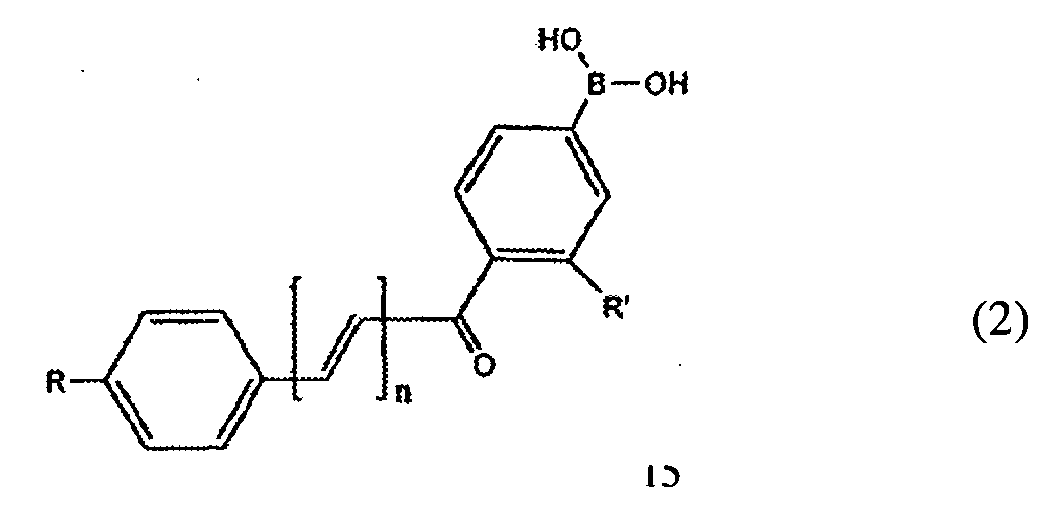 - R' est H ou un radical à insaturation oléfinique, réticulable, pouvant comporter jusqu'à 25 atomes de carbone;- R est H, NR1R2, CN, OCH3, ou un radical capable de fournir un électron à un système aromatique adjacent ou d'accepter un électron d'un tel système, où R1 est H ou un radical C1-C6 alkyl tandis que R2 est un radical C3-C25 se terminant par un groupeet n est un nombre entier de 1 à 5.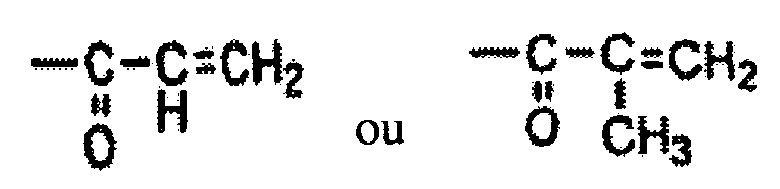
- Le capteur ophtalmique selon la revendication 1, dans lequel le dispositif ophtalmique est une lentille de contact, une greffe de cornée ou un dispositif ophtalmique implantable.
- Le capteur ophtalmique selon la revendication 1 ou 2, dans lequel la matrice polymère est obtenue par polymérisation d'un matériau formant le dispositif ophtalmique.
- Le capteur ophtalmique selon la revendication 3, dans lequel le matériau formant le dispositif ophtalmique comprend un ou plusieurs pré-polymères.
- Le capteur ophtalmique selon la revendication 4, dans lequel un ou plusieurs des pré-polymères sont des pré-polymères contenant de la silicone, des pré-polymères exempts de silicone ou un de leurs mélanges.
- Le capteur ophtalmique selon la revendication 3, dans lequel le matériau formant le dispositif ophtalmique comprend un mélange de monomères et éventuellement un macromère ou un mélange de un ou plusieurs pré-polymères avec un ou plusieurs monomères et/ou macromères.
- Le capteur ophtalmique selon une quelconque des revendications 1 à 6, dans lequel R' est un radical à insaturation oléfinique, réticulable, pouvant contenir jusqu'à 25 atomes de carbone.
- Le capteur ophtalmique selon une quelconque des revendications 1 à 6, dans lequel R est NR1R2, dans lequel R1 est H ou un radical C1-C6 alkyl tandis que R2 est un radical C3-C25 se terminant par un groupe

- Le capteur ophtalmique selon une quelconque des revendications 1 à 8, dans lequel le agent de captage moléculaire est lié de façon covalente à la surface du dispositif
Applications Claiming Priority (2)
| Application Number | Priority Date | Filing Date | Title |
|---|---|---|---|
| US49324103P | 2003-08-07 | 2003-08-07 | |
| PCT/EP2004/008825 WO2005015237A1 (fr) | 2003-08-07 | 2004-08-06 | Capteur ophtalmique |
Publications (2)
| Publication Number | Publication Date |
|---|---|
| EP1654543A1 EP1654543A1 (fr) | 2006-05-10 |
| EP1654543B1 true EP1654543B1 (fr) | 2010-07-07 |
Family
ID=34135218
Family Applications (1)
| Application Number | Title | Priority Date | Filing Date |
|---|---|---|---|
| EP04763860A Expired - Lifetime EP1654543B1 (fr) | 2003-08-07 | 2004-08-06 | Capteur ophtalmique |
Country Status (6)
| Country | Link |
|---|---|
| US (1) | US8131333B2 (fr) |
| EP (1) | EP1654543B1 (fr) |
| AT (1) | ATE473444T1 (fr) |
| DE (1) | DE602004028020D1 (fr) |
| ES (1) | ES2350933T3 (fr) |
| WO (1) | WO2005015237A1 (fr) |
Families Citing this family (71)
| Publication number | Priority date | Publication date | Assignee | Title |
|---|---|---|---|---|
| US7964390B2 (en) * | 2002-10-11 | 2011-06-21 | Case Western Reserve University | Sensor system |
| US7832856B2 (en) * | 2006-12-20 | 2010-11-16 | Bausch & Lomb Incorporated | Coatings and solutions for contact lenses |
| US20080151181A1 (en) * | 2006-12-20 | 2008-06-26 | Bausch & Lomb Incorporated | Coatings and Solutions for Contact Lenses |
| DE102007003341B4 (de) | 2007-01-17 | 2018-01-04 | Eyesense Ag | Okularsensor und Messsystem zum Nachweis eines Analyten in einer Augenflüssigkeit |
| JP2011527713A (ja) * | 2008-07-09 | 2011-11-04 | エージェンシー フォー サイエンス, テクノロジー アンド リサーチ | ポリマーの孔中にグルコースプローブを捕捉する方法 |
| WO2010077709A2 (fr) * | 2008-12-30 | 2010-07-08 | Bausch & Lomb Incorporated | Dispositifs biomédicaux |
| WO2010077646A2 (fr) * | 2008-12-30 | 2010-07-08 | Bausch & Lomb Incorporated | Procédé d'application d'un revêtement polymère renouvelable de lentille |
| US20100168851A1 (en) * | 2008-12-30 | 2010-07-01 | David Paul Vanderbilt | Surface Modified Biomedical Devices |
| US9517023B2 (en) | 2009-06-01 | 2016-12-13 | Profusa, Inc. | Method and system for directing a localized biological response to an implant |
| US8410190B2 (en) | 2009-09-22 | 2013-04-02 | Coopervision International Holding Company, Lp | Wettable hydrogel materials for use in ophthalmic applications and methods |
| US10010272B2 (en) | 2010-05-27 | 2018-07-03 | Profusa, Inc. | Tissue-integrating electronic apparatus |
| EP4449978B1 (fr) | 2010-10-06 | 2026-03-18 | Profusa, Inc. | Capteurs d'intégration tissulaire |
| CN103328980B (zh) * | 2010-12-17 | 2016-01-20 | 视觉股份公司 | 具有提高的敏感性的竞争性生物传感器 |
| US9051598B2 (en) * | 2011-05-02 | 2015-06-09 | The Hong Kong University Of Science And Technology | Specific detection of D-glucose by a tetraphenylethene-base fluorescent sensor |
| EP3659495B1 (fr) | 2011-09-13 | 2022-12-14 | Dose Medical Corporation | Capteur physiologique intraoculaire |
| US8798332B2 (en) | 2012-05-15 | 2014-08-05 | Google Inc. | Contact lenses |
| US9298020B1 (en) | 2012-07-26 | 2016-03-29 | Verily Life Sciences Llc | Input system |
| US8857981B2 (en) | 2012-07-26 | 2014-10-14 | Google Inc. | Facilitation of contact lenses with capacitive sensors |
| US9523865B2 (en) | 2012-07-26 | 2016-12-20 | Verily Life Sciences Llc | Contact lenses with hybrid power sources |
| US9158133B1 (en) | 2012-07-26 | 2015-10-13 | Google Inc. | Contact lens employing optical signals for power and/or communication |
| US8919953B1 (en) | 2012-08-02 | 2014-12-30 | Google Inc. | Actuatable contact lenses |
| US9696564B1 (en) | 2012-08-21 | 2017-07-04 | Verily Life Sciences Llc | Contact lens with metal portion and polymer layer having indentations |
| US9111473B1 (en) | 2012-08-24 | 2015-08-18 | Google Inc. | Input system |
| US8820934B1 (en) | 2012-09-05 | 2014-09-02 | Google Inc. | Passive surface acoustic wave communication |
| US20140192315A1 (en) | 2012-09-07 | 2014-07-10 | Google Inc. | In-situ tear sample collection and testing using a contact lens |
| US9398868B1 (en) | 2012-09-11 | 2016-07-26 | Verily Life Sciences Llc | Cancellation of a baseline current signal via current subtraction within a linear relaxation oscillator-based current-to-frequency converter circuit |
| US10010270B2 (en) | 2012-09-17 | 2018-07-03 | Verily Life Sciences Llc | Sensing system |
| US9326710B1 (en) | 2012-09-20 | 2016-05-03 | Verily Life Sciences Llc | Contact lenses having sensors with adjustable sensitivity |
| US8870370B1 (en) | 2012-09-24 | 2014-10-28 | Google Inc. | Contact lens that facilitates antenna communication via sensor impedance modulation |
| US8960898B1 (en) | 2012-09-24 | 2015-02-24 | Google Inc. | Contact lens that restricts incoming light to the eye |
| US8989834B2 (en) | 2012-09-25 | 2015-03-24 | Google Inc. | Wearable device |
| US20140088372A1 (en) | 2012-09-25 | 2014-03-27 | Google Inc. | Information processing method |
| US8979271B2 (en) | 2012-09-25 | 2015-03-17 | Google Inc. | Facilitation of temperature compensation for contact lens sensors and temperature sensing |
| US9884180B1 (en) | 2012-09-26 | 2018-02-06 | Verily Life Sciences Llc | Power transducer for a retinal implant using a contact lens |
| US8821811B2 (en) | 2012-09-26 | 2014-09-02 | Google Inc. | In-vitro contact lens testing |
| US8985763B1 (en) | 2012-09-26 | 2015-03-24 | Google Inc. | Contact lens having an uneven embedded substrate and method of manufacture |
| US8960899B2 (en) | 2012-09-26 | 2015-02-24 | Google Inc. | Assembling thin silicon chips on a contact lens |
| US9063351B1 (en) | 2012-09-28 | 2015-06-23 | Google Inc. | Input detection system |
| US8965478B2 (en) | 2012-10-12 | 2015-02-24 | Google Inc. | Microelectrodes in an ophthalmic electrochemical sensor |
| US9176332B1 (en) | 2012-10-24 | 2015-11-03 | Google Inc. | Contact lens and method of manufacture to improve sensor sensitivity |
| US9757056B1 (en) | 2012-10-26 | 2017-09-12 | Verily Life Sciences Llc | Over-molding of sensor apparatus in eye-mountable device |
| US8874182B2 (en) | 2013-01-15 | 2014-10-28 | Google Inc. | Encapsulated electronics |
| US9289954B2 (en) | 2013-01-17 | 2016-03-22 | Verily Life Sciences Llc | Method of ring-shaped structure placement in an eye-mountable device |
| US9636016B1 (en) | 2013-01-25 | 2017-05-02 | Verily Life Sciences Llc | Eye-mountable devices and methods for accurately placing a flexible ring containing electronics in eye-mountable devices |
| US20140209481A1 (en) | 2013-01-25 | 2014-07-31 | Google Inc. | Standby Biasing Of Electrochemical Sensor To Reduce Sensor Stabilization Time During Measurement |
| US9730638B2 (en) | 2013-03-13 | 2017-08-15 | Glaukos Corporation | Intraocular physiological sensor |
| CA2904031A1 (fr) | 2013-03-14 | 2014-10-02 | Profusa, Inc. | Procede et dispositif pour corriger des signaux optiques |
| US9161712B2 (en) | 2013-03-26 | 2015-10-20 | Google Inc. | Systems and methods for encapsulating electronics in a mountable device |
| US9113829B2 (en) | 2013-03-27 | 2015-08-25 | Google Inc. | Systems and methods for encapsulating electronics in a mountable device |
| CN105307559B (zh) | 2013-06-06 | 2020-06-05 | 普罗菲尤萨股份有限公司 | 用于探测来自植入传感器的光信号的设备和方法 |
| US20140371560A1 (en) | 2013-06-14 | 2014-12-18 | Google Inc. | Body-Mountable Devices and Methods for Embedding a Structure in a Body-Mountable Device |
| US9084561B2 (en) | 2013-06-17 | 2015-07-21 | Google Inc. | Symmetrically arranged sensor electrodes in an ophthalmic electrochemical sensor |
| US9948895B1 (en) | 2013-06-18 | 2018-04-17 | Verily Life Sciences Llc | Fully integrated pinhole camera for eye-mountable imaging system |
| US9685689B1 (en) | 2013-06-27 | 2017-06-20 | Verily Life Sciences Llc | Fabrication methods for bio-compatible devices |
| US9028772B2 (en) | 2013-06-28 | 2015-05-12 | Google Inc. | Methods for forming a channel through a polymer layer using one or more photoresist layers |
| US9307901B1 (en) | 2013-06-28 | 2016-04-12 | Verily Life Sciences Llc | Methods for leaving a channel in a polymer layer using a cross-linked polymer plug |
| US9492118B1 (en) | 2013-06-28 | 2016-11-15 | Life Sciences Llc | Pre-treatment process for electrochemical amperometric sensor |
| US9814387B2 (en) | 2013-06-28 | 2017-11-14 | Verily Life Sciences, LLC | Device identification |
| US20150065824A1 (en) * | 2013-08-28 | 2015-03-05 | Johnson & Johnson Vision Care, Inc. | Methods and apparatus to form ophthalmic devices incorporating fluorescence detectors |
| US9572522B2 (en) | 2013-12-20 | 2017-02-21 | Verily Life Sciences Llc | Tear fluid conductivity sensor |
| US9654674B1 (en) | 2013-12-20 | 2017-05-16 | Verily Life Sciences Llc | Image sensor with a plurality of light channels |
| US9366570B1 (en) | 2014-03-10 | 2016-06-14 | Verily Life Sciences Llc | Photodiode operable in photoconductive mode and photovoltaic mode |
| US9184698B1 (en) | 2014-03-11 | 2015-11-10 | Google Inc. | Reference frequency from ambient light signal |
| US9789655B1 (en) | 2014-03-14 | 2017-10-17 | Verily Life Sciences Llc | Methods for mold release of body-mountable devices including microelectronics |
| WO2016054079A1 (fr) | 2014-09-29 | 2016-04-07 | Zyomed Corp. | Systèmes et procédés pour la détection et la mesure du glucose sanguin du sang et d'autres analytes à l'aide du calcul de collision |
| US9554738B1 (en) | 2016-03-30 | 2017-01-31 | Zyomed Corp. | Spectroscopic tomography systems and methods for noninvasive detection and measurement of analytes using collision computing |
| AU2017298463B2 (en) * | 2016-07-20 | 2022-09-01 | University Of Maryland, Baltimore | Silicone hydrogel based fluorescent assay and contact lens |
| US11331018B2 (en) | 2016-12-22 | 2022-05-17 | Profusa, Inc. | System and single-channel biosensor for and method of determining analyte value |
| CN110536654A (zh) * | 2017-04-06 | 2019-12-03 | 提尔迪克斯有限公司 | 眼部装置及其运用方法 |
| AU2018338994B2 (en) | 2017-09-29 | 2024-03-28 | Glaukos Corporation | Intraocular physiological sensor |
| CN120479321B (zh) * | 2025-07-14 | 2025-10-17 | 杭州博岳生物技术有限公司 | 一种自抗污超亲水免疫磁性微球及其应用 |
Family Cites Families (29)
| Publication number | Priority date | Publication date | Assignee | Title |
|---|---|---|---|---|
| US3958560A (en) | 1974-11-25 | 1976-05-25 | Wayne Front March | Non-invasive automatic glucose sensor system |
| US4321575A (en) | 1980-06-02 | 1982-03-23 | Milwaukee Safety Devices, Inc. | Fuse cut-out recloser apparatus |
| JPS60163901A (ja) | 1984-02-04 | 1985-08-26 | Japan Synthetic Rubber Co Ltd | プラズマ重合処理方法 |
| GB8601967D0 (en) | 1986-01-28 | 1986-03-05 | Coopervision Optics | Manufacturing contact lenses |
| EP0367513B1 (fr) | 1988-11-02 | 1995-07-05 | Btg International Limited | Coulage de lentilles de contact |
| DE4243142A1 (de) * | 1992-12-19 | 1994-06-23 | Boehringer Mannheim Gmbh | Vorrichtung zur in-vivo-Bestimmung einer optischen Eigenschaft des Kammerwassers des Auges |
| TW328535B (en) | 1993-07-02 | 1998-03-21 | Novartis Ag | Functional photoinitiators and their manufacture |
| SG49612A1 (en) | 1993-07-19 | 2003-03-18 | Novartis Ag | A process and device for the manufacture of moulding and mouldings manufactured in accordance with that process |
| TW272976B (fr) | 1993-08-06 | 1996-03-21 | Ciba Geigy Ag | |
| US5712356A (en) | 1993-11-26 | 1998-01-27 | Ciba Vision Corporation | Cross-linkable copolymers and hydrogels |
| EP0655470B1 (fr) | 1993-11-26 | 1999-05-12 | Novartis AG | Copolymères réticulables et hydrogels |
| US5665840A (en) | 1994-11-18 | 1997-09-09 | Novartis Corporation | Polymeric networks from water-soluble prepolymers |
| EP0712867B1 (fr) | 1994-11-18 | 1999-07-14 | Novartis AG | Réseaux polymères à partir de prépolymères solubles dans l'eau |
| JP3785599B2 (ja) | 1995-02-03 | 2006-06-14 | ノバルティス アクチエンゲゼルシャフト | エステル又はアミド基を含む架橋ポリマー |
| TW349967B (en) | 1995-02-03 | 1999-01-11 | Novartis Ag | Process for producing contact lenses and a cross-linkable polyvinylalcohol used therefor |
| US6544193B2 (en) | 1996-09-04 | 2003-04-08 | Marcio Marc Abreu | Noninvasive measurement of chemical substances |
| CN1234044A (zh) | 1996-10-21 | 1999-11-03 | 诺瓦提斯公司 | 可交联聚合物 |
| US5854078A (en) | 1996-11-06 | 1998-12-29 | University Of Pittsburgh | Polymerized crystalline colloidal array sensor methods |
| EP0867456A1 (fr) | 1997-02-04 | 1998-09-30 | Novartis AG | Objet ophtalmique moulé |
| TW425403B (en) | 1997-02-04 | 2001-03-11 | Novartis Ag | Branched polyurethane (meth)acrylate prepolymers, opthal-mic mouldings derived therefrom and processes for their manufacture |
| EP0961941B1 (fr) | 1997-02-21 | 2002-04-17 | Novartis AG | Moulages ophtalmiques |
| AU9743298A (en) | 1997-09-16 | 1999-04-05 | Novartis Ag | Crosslinkable polyurea polymers |
| US6451871B1 (en) | 1998-11-25 | 2002-09-17 | Novartis Ag | Methods of modifying surface characteristics |
| JP2003502493A (ja) | 1999-06-22 | 2003-01-21 | ノバルティス アクチエンゲゼルシャフト | 成形物の製造方法 |
| US20020007113A1 (en) * | 1999-08-26 | 2002-01-17 | March Wayne Front | Ocular analyte sensor |
| WO2001013783A1 (fr) * | 1999-08-26 | 2001-03-01 | Novartis Ag | Detecteur d'analyte dans un liquide oculaire |
| DK1385423T3 (da) * | 2001-04-27 | 2008-03-25 | Eyesense Ag | Udstyr til måling af glukosekoncentrationer i blod |
| WO2003031150A1 (fr) | 2001-10-11 | 2003-04-17 | Dsm Ip Assets B.V. | Procede pour preparer un elastomere thermoplastique vulcanise dynamiquement |
| US20040087842A1 (en) | 2002-05-30 | 2004-05-06 | Lakowicz Joseph R. | Fluorescent probes for saccharrides |
-
2004
- 2004-08-06 WO PCT/EP2004/008825 patent/WO2005015237A1/fr not_active Ceased
- 2004-08-06 DE DE602004028020T patent/DE602004028020D1/de not_active Expired - Lifetime
- 2004-08-06 EP EP04763860A patent/EP1654543B1/fr not_active Expired - Lifetime
- 2004-08-06 ES ES04763860T patent/ES2350933T3/es not_active Expired - Lifetime
- 2004-08-06 US US10/566,406 patent/US8131333B2/en active Active
- 2004-08-06 AT AT04763860T patent/ATE473444T1/de not_active IP Right Cessation
Also Published As
| Publication number | Publication date |
|---|---|
| WO2005015237A1 (fr) | 2005-02-17 |
| US20070030443A1 (en) | 2007-02-08 |
| ES2350933T3 (es) | 2011-01-28 |
| EP1654543A1 (fr) | 2006-05-10 |
| DE602004028020D1 (de) | 2010-08-19 |
| US8131333B2 (en) | 2012-03-06 |
| ATE473444T1 (de) | 2010-07-15 |
Similar Documents
| Publication | Publication Date | Title |
|---|---|---|
| EP1654543B1 (fr) | Capteur ophtalmique | |
| Zhu et al. | Lab‐on‐a‐Contact lens: Recent advances and future opportunities in diagnostics and therapeutics | |
| US7927519B2 (en) | Reflection hologram sensor in contact lens | |
| EP1644330B1 (fr) | Composes heterocycliques contenant de l'azote quaternaire, servant a detecter des monosaccharides aqueux dans des fluides physiologiques | |
| US7429462B2 (en) | Kits for assays of rapid screening of diabetes | |
| US8044111B2 (en) | Actinically-crosslinkable silicone-containing block copolymers | |
| Badugu et al. | Ophthalmic glucose monitoring using disposable contact lenses—a review | |
| US8241574B2 (en) | Ophthalmic device comprising a holographic sensor | |
| Domschke et al. | Initial clinical testing of a holographic non-invasive contact lens glucose sensor | |
| Elsherif et al. | Wearable bifocal contact lens for continual glucose monitoring integrated with smartphone readers | |
| US8883874B2 (en) | Polymeric compositions comprising at least one volume excluding polymer | |
| US20140200319A1 (en) | Fluorescent potassium ion sensors | |
| AU2004276949B2 (en) | Ophthalmic device comprising a holographic sensor | |
| Badugu et al. | A glucose-sensing contact lens: a new approach to noninvasive continuous physiological glucose monitoring | |
| US20230025694A1 (en) | Silicone Hydrogel Based Fluorescent Assay and Contact Lens | |
| Hu et al. | Synthesis of Rhodamine B Derivatives Doped Contact Lenses via Graft Copolymerization and their Application in Color Vision Correction | |
| Badugu et al. | Development of smart contact lenses for ophthalmic glucose monitoring | |
| Alqurashi | Photonic hydrogel sensors |
Legal Events
| Date | Code | Title | Description |
|---|---|---|---|
| PUAI | Public reference made under article 153(3) epc to a published international application that has entered the european phase |
Free format text: ORIGINAL CODE: 0009012 |
|
| 17P | Request for examination filed |
Effective date: 20060307 |
|
| AK | Designated contracting states |
Kind code of ref document: A1 Designated state(s): AT BE BG CH CY CZ DE DK EE ES FI FR GB GR HU IE IT LI LU MC NL PL PT RO SE SI SK TR |
|
| RAP1 | Party data changed (applicant data changed or rights of an application transferred) |
Owner name: EYESENSE AG Owner name: NOVARTIS PHARMA GMBH |
|
| RAP1 | Party data changed (applicant data changed or rights of an application transferred) |
Owner name: EYESENSE AG |
|
| RAP1 | Party data changed (applicant data changed or rights of an application transferred) |
Owner name: EYESENSE AG |
|
| 17Q | First examination report despatched |
Effective date: 20060926 |
|
| DAX | Request for extension of the european patent (deleted) | ||
| RAP1 | Party data changed (applicant data changed or rights of an application transferred) |
Owner name: EYESENSE AG |
|
| GRAP | Despatch of communication of intention to grant a patent |
Free format text: ORIGINAL CODE: EPIDOSNIGR1 |
|
| GRAS | Grant fee paid |
Free format text: ORIGINAL CODE: EPIDOSNIGR3 |
|
| GRAA | (expected) grant |
Free format text: ORIGINAL CODE: 0009210 |
|
| AK | Designated contracting states |
Kind code of ref document: B1 Designated state(s): AT BE BG CH CY CZ DE DK EE ES FI FR GB GR HU IE IT LI LU MC NL PL PT RO SE SI SK TR |
|
| REG | Reference to a national code |
Ref country code: GB Ref legal event code: FG4D |
|
| REG | Reference to a national code |
Ref country code: CH Ref legal event code: EP |
|
| REG | Reference to a national code |
Ref country code: IE Ref legal event code: FG4D |
|
| REF | Corresponds to: |
Ref document number: 602004028020 Country of ref document: DE Date of ref document: 20100819 Kind code of ref document: P |
|
| REG | Reference to a national code |
Ref country code: NL Ref legal event code: VDEP Effective date: 20100707 |
|
| PG25 | Lapsed in a contracting state [announced via postgrant information from national office to epo] |
Ref country code: SI Free format text: LAPSE BECAUSE OF FAILURE TO SUBMIT A TRANSLATION OF THE DESCRIPTION OR TO PAY THE FEE WITHIN THE PRESCRIBED TIME-LIMIT Effective date: 20100707 |
|
| REG | Reference to a national code |
Ref country code: ES Ref legal event code: FG2A Effective date: 20110118 |
|
| PG25 | Lapsed in a contracting state [announced via postgrant information from national office to epo] |
Ref country code: NL Free format text: LAPSE BECAUSE OF FAILURE TO SUBMIT A TRANSLATION OF THE DESCRIPTION OR TO PAY THE FEE WITHIN THE PRESCRIBED TIME-LIMIT Effective date: 20100707 Ref country code: AT Free format text: LAPSE BECAUSE OF FAILURE TO SUBMIT A TRANSLATION OF THE DESCRIPTION OR TO PAY THE FEE WITHIN THE PRESCRIBED TIME-LIMIT Effective date: 20100707 Ref country code: FI Free format text: LAPSE BECAUSE OF FAILURE TO SUBMIT A TRANSLATION OF THE DESCRIPTION OR TO PAY THE FEE WITHIN THE PRESCRIBED TIME-LIMIT Effective date: 20100707 |
|
| PG25 | Lapsed in a contracting state [announced via postgrant information from national office to epo] |
Ref country code: PL Free format text: LAPSE BECAUSE OF FAILURE TO SUBMIT A TRANSLATION OF THE DESCRIPTION OR TO PAY THE FEE WITHIN THE PRESCRIBED TIME-LIMIT Effective date: 20100707 Ref country code: PT Free format text: LAPSE BECAUSE OF FAILURE TO SUBMIT A TRANSLATION OF THE DESCRIPTION OR TO PAY THE FEE WITHIN THE PRESCRIBED TIME-LIMIT Effective date: 20101108 Ref country code: BG Free format text: LAPSE BECAUSE OF FAILURE TO SUBMIT A TRANSLATION OF THE DESCRIPTION OR TO PAY THE FEE WITHIN THE PRESCRIBED TIME-LIMIT Effective date: 20101007 Ref country code: CY Free format text: LAPSE BECAUSE OF FAILURE TO SUBMIT A TRANSLATION OF THE DESCRIPTION OR TO PAY THE FEE WITHIN THE PRESCRIBED TIME-LIMIT Effective date: 20100707 |
|
| PGFP | Annual fee paid to national office [announced via postgrant information from national office to epo] |
Ref country code: DE Payment date: 20100922 Year of fee payment: 7 |
|
| PG25 | Lapsed in a contracting state [announced via postgrant information from national office to epo] |
Ref country code: MC Free format text: LAPSE BECAUSE OF NON-PAYMENT OF DUE FEES Effective date: 20100831 Ref country code: SE Free format text: LAPSE BECAUSE OF FAILURE TO SUBMIT A TRANSLATION OF THE DESCRIPTION OR TO PAY THE FEE WITHIN THE PRESCRIBED TIME-LIMIT Effective date: 20100707 Ref country code: GR Free format text: LAPSE BECAUSE OF FAILURE TO SUBMIT A TRANSLATION OF THE DESCRIPTION OR TO PAY THE FEE WITHIN THE PRESCRIBED TIME-LIMIT Effective date: 20101008 Ref country code: BE Free format text: LAPSE BECAUSE OF FAILURE TO SUBMIT A TRANSLATION OF THE DESCRIPTION OR TO PAY THE FEE WITHIN THE PRESCRIBED TIME-LIMIT Effective date: 20100707 |
|
| REG | Reference to a national code |
Ref country code: CH Ref legal event code: PL |
|
| PG25 | Lapsed in a contracting state [announced via postgrant information from national office to epo] |
Ref country code: CH Free format text: LAPSE BECAUSE OF NON-PAYMENT OF DUE FEES Effective date: 20100831 Ref country code: LI Free format text: LAPSE BECAUSE OF NON-PAYMENT OF DUE FEES Effective date: 20100831 Ref country code: DK Free format text: LAPSE BECAUSE OF FAILURE TO SUBMIT A TRANSLATION OF THE DESCRIPTION OR TO PAY THE FEE WITHIN THE PRESCRIBED TIME-LIMIT Effective date: 20100707 |
|
| PLBE | No opposition filed within time limit |
Free format text: ORIGINAL CODE: 0009261 |
|
| STAA | Information on the status of an ep patent application or granted ep patent |
Free format text: STATUS: NO OPPOSITION FILED WITHIN TIME LIMIT |
|
| PG25 | Lapsed in a contracting state [announced via postgrant information from national office to epo] |
Ref country code: SK Free format text: LAPSE BECAUSE OF FAILURE TO SUBMIT A TRANSLATION OF THE DESCRIPTION OR TO PAY THE FEE WITHIN THE PRESCRIBED TIME-LIMIT Effective date: 20100707 Ref country code: EE Free format text: LAPSE BECAUSE OF FAILURE TO SUBMIT A TRANSLATION OF THE DESCRIPTION OR TO PAY THE FEE WITHIN THE PRESCRIBED TIME-LIMIT Effective date: 20100707 Ref country code: RO Free format text: LAPSE BECAUSE OF FAILURE TO SUBMIT A TRANSLATION OF THE DESCRIPTION OR TO PAY THE FEE WITHIN THE PRESCRIBED TIME-LIMIT Effective date: 20100707 Ref country code: CZ Free format text: LAPSE BECAUSE OF FAILURE TO SUBMIT A TRANSLATION OF THE DESCRIPTION OR TO PAY THE FEE WITHIN THE PRESCRIBED TIME-LIMIT Effective date: 20100707 |
|
| 26N | No opposition filed |
Effective date: 20110408 |
|
| REG | Reference to a national code |
Ref country code: DE Ref legal event code: R097 Ref document number: 602004028020 Country of ref document: DE Effective date: 20110408 |
|
| PG25 | Lapsed in a contracting state [announced via postgrant information from national office to epo] |
Ref country code: IE Free format text: LAPSE BECAUSE OF NON-PAYMENT OF DUE FEES Effective date: 20100806 |
|
| PGFP | Annual fee paid to national office [announced via postgrant information from national office to epo] |
Ref country code: ES Payment date: 20110825 Year of fee payment: 8 Ref country code: GB Payment date: 20110824 Year of fee payment: 8 Ref country code: FR Payment date: 20110829 Year of fee payment: 8 |
|
| PGFP | Annual fee paid to national office [announced via postgrant information from national office to epo] |
Ref country code: IT Payment date: 20110824 Year of fee payment: 8 |
|
| PG25 | Lapsed in a contracting state [announced via postgrant information from national office to epo] |
Ref country code: LU Free format text: LAPSE BECAUSE OF NON-PAYMENT OF DUE FEES Effective date: 20100806 Ref country code: HU Free format text: LAPSE BECAUSE OF FAILURE TO SUBMIT A TRANSLATION OF THE DESCRIPTION OR TO PAY THE FEE WITHIN THE PRESCRIBED TIME-LIMIT Effective date: 20110108 |
|
| PG25 | Lapsed in a contracting state [announced via postgrant information from national office to epo] |
Ref country code: TR Free format text: LAPSE BECAUSE OF FAILURE TO SUBMIT A TRANSLATION OF THE DESCRIPTION OR TO PAY THE FEE WITHIN THE PRESCRIBED TIME-LIMIT Effective date: 20100707 |
|
| GBPC | Gb: european patent ceased through non-payment of renewal fee |
Effective date: 20120806 |
|
| REG | Reference to a national code |
Ref country code: FR Ref legal event code: ST Effective date: 20130430 |
|
| PG25 | Lapsed in a contracting state [announced via postgrant information from national office to epo] |
Ref country code: IT Free format text: LAPSE BECAUSE OF NON-PAYMENT OF DUE FEES Effective date: 20120806 |
|
| PG25 | Lapsed in a contracting state [announced via postgrant information from national office to epo] |
Ref country code: GB Free format text: LAPSE BECAUSE OF NON-PAYMENT OF DUE FEES Effective date: 20120806 Ref country code: DE Free format text: LAPSE BECAUSE OF NON-PAYMENT OF DUE FEES Effective date: 20130301 |
|
| PG25 | Lapsed in a contracting state [announced via postgrant information from national office to epo] |
Ref country code: FR Free format text: LAPSE BECAUSE OF NON-PAYMENT OF DUE FEES Effective date: 20120831 |
|
| REG | Reference to a national code |
Ref country code: DE Ref legal event code: R119 Ref document number: 602004028020 Country of ref document: DE Effective date: 20130301 |
|
| REG | Reference to a national code |
Ref country code: ES Ref legal event code: FD2A Effective date: 20131022 |
|
| PG25 | Lapsed in a contracting state [announced via postgrant information from national office to epo] |
Ref country code: ES Free format text: LAPSE BECAUSE OF NON-PAYMENT OF DUE FEES Effective date: 20120807 |