EP1660654B1 - Vecteur d'expression - Google Patents
Vecteur d'expression Download PDFInfo
- Publication number
- EP1660654B1 EP1660654B1 EP04783263A EP04783263A EP1660654B1 EP 1660654 B1 EP1660654 B1 EP 1660654B1 EP 04783263 A EP04783263 A EP 04783263A EP 04783263 A EP04783263 A EP 04783263A EP 1660654 B1 EP1660654 B1 EP 1660654B1
- Authority
- EP
- European Patent Office
- Prior art keywords
- expression
- cell
- expression vector
- promoter
- gene
- Prior art date
- Legal status (The legal status is an assumption and is not a legal conclusion. Google has not performed a legal analysis and makes no representation as to the accuracy of the status listed.)
- Expired - Lifetime
Links
Images



Classifications
-
- C—CHEMISTRY; METALLURGY
- C07—ORGANIC CHEMISTRY
- C07K—PEPTIDES
- C07K16/00—Immunoglobulins [IG], e.g. monoclonal or polyclonal antibodies
-
- C—CHEMISTRY; METALLURGY
- C07—ORGANIC CHEMISTRY
- C07K—PEPTIDES
- C07K14/00—Peptides having more than 20 amino acids; Gastrins; Somatostatins; Melanotropins; Derivatives thereof
- C07K14/795—Porphyrin- or corrin-ring-containing peptides
- C07K14/805—Haemoglobins; Myoglobins
-
- C—CHEMISTRY; METALLURGY
- C12—BIOCHEMISTRY; BEER; SPIRITS; WINE; VINEGAR; MICROBIOLOGY; ENZYMOLOGY; MUTATION OR GENETIC ENGINEERING
- C12N—MICROORGANISMS OR ENZYMES; COMPOSITIONS THEREOF; PROPAGATING, PRESERVING, OR MAINTAINING MICROORGANISMS; MUTATION OR GENETIC ENGINEERING; CULTURE MEDIA
- C12N15/00—Mutation or genetic engineering; DNA or RNA concerning genetic engineering, vectors, e.g. plasmids, or their isolation, preparation or purification; Use of hosts therefor
- C12N15/09—Recombinant DNA-technology
- C12N15/63—Introduction of foreign genetic material using vectors; Vectors; Use of hosts therefor; Regulation of expression
- C12N15/79—Vectors or expression systems specially adapted for eukaryotic hosts
- C12N15/85—Vectors or expression systems specially adapted for eukaryotic hosts for animal cells
-
- C—CHEMISTRY; METALLURGY
- C12—BIOCHEMISTRY; BEER; SPIRITS; WINE; VINEGAR; MICROBIOLOGY; ENZYMOLOGY; MUTATION OR GENETIC ENGINEERING
- C12N—MICROORGANISMS OR ENZYMES; COMPOSITIONS THEREOF; PROPAGATING, PRESERVING, OR MAINTAINING MICROORGANISMS; MUTATION OR GENETIC ENGINEERING; CULTURE MEDIA
- C12N2800/00—Nucleic acids vectors
- C12N2800/10—Plasmid DNA
- C12N2800/108—Plasmid DNA episomal vectors
-
- C—CHEMISTRY; METALLURGY
- C12—BIOCHEMISTRY; BEER; SPIRITS; WINE; VINEGAR; MICROBIOLOGY; ENZYMOLOGY; MUTATION OR GENETIC ENGINEERING
- C12N—MICROORGANISMS OR ENZYMES; COMPOSITIONS THEREOF; PROPAGATING, PRESERVING, OR MAINTAINING MICROORGANISMS; MUTATION OR GENETIC ENGINEERING; CULTURE MEDIA
- C12N2830/00—Vector systems having a special element relevant for transcription
-
- C—CHEMISTRY; METALLURGY
- C12—BIOCHEMISTRY; BEER; SPIRITS; WINE; VINEGAR; MICROBIOLOGY; ENZYMOLOGY; MUTATION OR GENETIC ENGINEERING
- C12N—MICROORGANISMS OR ENZYMES; COMPOSITIONS THEREOF; PROPAGATING, PRESERVING, OR MAINTAINING MICROORGANISMS; MUTATION OR GENETIC ENGINEERING; CULTURE MEDIA
- C12N2830/00—Vector systems having a special element relevant for transcription
- C12N2830/15—Vector systems having a special element relevant for transcription chimeric enhancer/promoter combination
-
- C—CHEMISTRY; METALLURGY
- C12—BIOCHEMISTRY; BEER; SPIRITS; WINE; VINEGAR; MICROBIOLOGY; ENZYMOLOGY; MUTATION OR GENETIC ENGINEERING
- C12N—MICROORGANISMS OR ENZYMES; COMPOSITIONS THEREOF; PROPAGATING, PRESERVING, OR MAINTAINING MICROORGANISMS; MUTATION OR GENETIC ENGINEERING; CULTURE MEDIA
- C12N2830/00—Vector systems having a special element relevant for transcription
- C12N2830/80—Vector systems having a special element relevant for transcription from vertebrates
- C12N2830/85—Vector systems having a special element relevant for transcription from vertebrates mammalian
-
- C—CHEMISTRY; METALLURGY
- C12—BIOCHEMISTRY; BEER; SPIRITS; WINE; VINEGAR; MICROBIOLOGY; ENZYMOLOGY; MUTATION OR GENETIC ENGINEERING
- C12N—MICROORGANISMS OR ENZYMES; COMPOSITIONS THEREOF; PROPAGATING, PRESERVING, OR MAINTAINING MICROORGANISMS; MUTATION OR GENETIC ENGINEERING; CULTURE MEDIA
- C12N2840/00—Vectors comprising a special translation-regulating system
- C12N2840/20—Vectors comprising a special translation-regulating system translation of more than one cistron
-
- C—CHEMISTRY; METALLURGY
- C12—BIOCHEMISTRY; BEER; SPIRITS; WINE; VINEGAR; MICROBIOLOGY; ENZYMOLOGY; MUTATION OR GENETIC ENGINEERING
- C12N—MICROORGANISMS OR ENZYMES; COMPOSITIONS THEREOF; PROPAGATING, PRESERVING, OR MAINTAINING MICROORGANISMS; MUTATION OR GENETIC ENGINEERING; CULTURE MEDIA
- C12N2840/00—Vectors comprising a special translation-regulating system
- C12N2840/44—Vectors comprising a special translation-regulating system being a specific part of the splice mechanism, e.g. donor, acceptor
Definitions
- This invention relates to vectors for high expression of one or more genes of interest in host cells, such as mammalian cells, and the like.
- Stable production of a gene of interest can be accomplished by transfecting host cells with vectors containing the GOI co-linked to a selectable marker gene, and selecting for cells harboring the GOI by inflicting a stress on the cell which can only be abated if the cell expresses sufficient quantities of the selectable marker.
- the vectors randomly integrate into the host calls' chromosomal DNA, and resulting transfectants show a large degree of variation in the expression level of the GOI. However, relatively few transfectant cell clones will express the GOI at the desired highest levels due to the positional effect of the site of integration.
- the level of expression of the genes encoded by the vector is influenced largely by the local chromosomal environment at the site of the genes' integration. ( Barnett et al., 1995, Antibody Expression and Engineering, Wang and Imanaka (eds.), ACS Symposia Series, p. 604 ).
- a weakened selectable marker has been correlated with a shift towards obtaining transfectants with higher levels of expression of the linked GOI, presumably by biasing selection for integration positions that have positive influences on the expression of the weakened selectable marker and the co-linked GOI ( Reff and Brunswick, 1992, Gene Amplification in Mammalian Cells, R.E. Kellems (ed.), Marcel Dekker, Inc., p. 355 ).
- the expression vectors typically described in the prior art contain strong regulatory elements to drive high-level protein expression of the GOI which is co-linked to a weak selectable marker.
- This invention provides novel expression vectors that are capable of producing high quantities of one or more desired proteins in a host cell, particularly mammalian cells.
- the invention is directed to expression vectors.
- the expression vector contains a selectable marker gene operably linked to a regulatory nucleic acid comprising a transcriptionally impaired promoter, and one or more insertion sites for inserting a co4inked gene of interest operably linked to a regulatory sequence.
- the expression vector contains a selectable marker gene operably linked to a regulatory nucleic acid which comprises a beta globin gene promoter which lacks a CCAAT box sequence, and one or more genes of interest operably linked to a regulatory nucleic acid.
- the expression vectors also have an amplifiable marker gene.
- the invention is directed to host cells that have been transfected with an expression vector of the invention.
- the host cell is mammalian, e.g., CHO cell.
- the invention is directed to methods for producing a polypeptide encoded by a gene of interest, comprising culturing a host cell, which contains an expression vector of the invention, under suitable conditions such that the gene of interest expresses the polypeptide.
- the methods of the invention produce an immunoglobulin heavy chain and an immunoglobulin light chain, thereby resulting in a functional antibody.
- This invention provides vectors for high levels of expression of a gene of interest (GOI).
- the vectors of the invention are particularly well suited for expression of recombinant antibodies (e,g., antibody heavy and light chains carried on the same expression vector) and can be used to obtain levels of antibody expression in the range of, for example 3-14 pg/cell/day.
- high level protein expression is achieved by co-linking the gene of interest (encoding the protein) to a selectable marker gene having a transcriptionally impaired promoter.
- the selectable marker operatively linked to the transcriptionally impaired promoter is used in combination with another selectable marker that is amplifiable to achieve even greater levels of expression of the gene of interest.
- Stable yet high-level expression of genes in mammalian cells is critically dependent on both the site of integration and the copy number.
- the selection pressure imposed by conventional concentrations of the neomycin analog G4 18, for example, is typically low and yields cell clones having a wide distribution of expression levels with very few clones having the higher levels of expression that typically are desirable for recombinant protein production purposes.
- the nucleic acids and expression vectors described herein solve this and other problems by using a selectable marker operably linked to a weakened promoter which is co-linked to a GOI.
- the markedly low expression of the selectable marker gene allows for a biased selection towards high-expressing clones.
- This invention provides novel nucleic acid constructs (expression vectors) that are useful for stable, high-level expression of a heterologous GOI in a host cell, particularly mammalian cells.
- the expression vectors contain (1) a selectable marker gene operably linked to a regulatory nucleic acid comprising a weakened promoter and (2) an insertion site for inserting one or more co-linked genes of interest (GOI). Insertion of a GOI operably linked to appropriate regulatory nucleic acid sequence(s) at the insertion site permits expression of the GOT in high quantity in a host cell which has been transfected with the vector.
- the expression vectors contain (1) a selectable marker gene operably linked to a regulatory nucleic acid comprising a weakened promoter and (2) one or more GOI operably linked to a suitable regulatory nucleic acid.
- the selectable marker gene and the GOI are co-linked in the vector.
- Vectors of the present invention optionally contain a second selectable (“amplifiable") marker, e.g., dihydrofolate reductase (DHFR), which facilitates selection of host cells which express the (301 at high levels.
- DHFR dihydrofolate reductase
- an advantage of the expression vectors of the invention is that they allow increased expression of a GOI, and therefore higher production levels of the polypeptide of interest, in comparison with vectors that have the same promoter operably linked to the selectable marker gene, but which promoter has not been weakened.
- a “nucleic acid” includes DNA, RNA, mRNA, cDNA, genomic DNA, and analogs thereof; from prokaryotes, eukaryotes and synthetic sources.
- a "coding sequence” or a sequence which "encodes' a selected polypeptide is a nucleic acid molecule which is transcribed (in the case of DNA) and translated (in the case of mRNA) into a polypeptide in vivo when placed under the control of appropriate regulatory nucleic acids (or "control elements'). The boundaries of the coding sequence are determined by a start codon at the 5' (amino) terminus and a translation stop codon at the 3' (carboxy) terminus.
- a coding sequence can include, but is not limited to, cDNA from viral, prokaryotic or eukaryotic mRNA, genomic DNA sequences from viral or prokaryotic DNA, and even synthetic DNA sequences.
- a transcription termination sequence is typically located 3' to the coding sequence.
- Techniques for determining nucleic acid and amino acid "sequence identity" also are known in the art. Typically, such techniques include determining the nucleotide sequence of the mRNA for a gene and/or determining the amino acid sequence encoded thereby, and comparing these sequences to a second nucleotide or amino acid sequence.
- identity refers to an exact nucleotide-to-nucleotide or amino acid-to-amino acid correspondence of two polynucleotides or polypeptide sequences, respectively. Two or more sequences (polynucleotide or amino acid) can be compared by determining their "percent identity.” The percent identity of two sequences, whether nucleic acid or amino acid sequences, is the number of exact matches between two aligned sequences divided by the length of the shorter sequences and multiplied by 100. An approximate alignment for nucleic acid sequences is provided by the local homology algorithm of Smith and Waterman, Advances in Applied Mathematics 2:482-489 (1931 ).
- This algorithm can be applied to amino acid sequences by using the scoring matrix developed by Dayhoff, Atlas of Protein Sequences and Structure, M. O. Dayhoff ed., 5 suppl. 3:353-358, National Biomedical Research Foundation, Washington, D.C., USA , and normalized by Gribskov, Nucl. Acids Res. 14(6):6745-6763 (1986 ).
- An exemplary implementation of this algorithm to determine percent identity of a sequence is provided by the Genetics Computer Group (Madison, Wis.) in the "BestFit" utility application. The default parameters for this method are described in the Wisconsin Sequence Analysis Package Program Manual, Version 8 (1995 ) (available from Genetics Computer Group, Madison, Wis.).
- a preferred method of establishing percent identity in the context of the present invention is to use the MPSRCH package of programs copyrighted by the University of Edinburgh, developed by John F. Collins and Shane S. Sturrok, and distributed by IntelliGenetics, Inc. (Mountain View, Calif.). From this suite of packages the Smith-Waterman algorithm can be employed where default parameters are used for the scoring table (for example, gap open penalty of 12, gap extension penalty of one, and a gap of six). From the data generated the "Match" value reflects "sequence identity.” Other suitable programs for calculating the percent identity or similarity between sequences are generally known in the art.
- Two nucleic acid fragments are considered to "selectively hybridize" as described herein.
- the degree of sequence identity between two nucleic acid molecules affects the efficiency and strength of hybridization events between such molecules.
- a partially identical nucleic acid sequence will at least partially inhibit a completely identical sequence from hybridizing to a target molecule. Inhibition of hybridization of the completely identical sequence can be assessed using hybridization assays that are well known in the art (e.g., Southern blot, Northern blot, solution hybridization, or the like, see Sambrook et al., 1989, Molecular Cloning: A Labor-atory Manual, Cold Spring Harbor Laboratories, New York ; or Ausubel et al.
- Such assays can be conducted using varying degrees of selectivity, for example, using conditions varying from low to high stringency. If conditions of low stringency are employed, the absence of non-specific binding can be assessed using a secondary probe that lacks even a partial degree of sequence identity (for example, a probe having less than about 30% sequence identity with the target molecule), such that, in the absence of non-specific binding events, the secondary probe will not hybridize to the target.
- a partial degree of sequence identity for example, a probe having less than about 30% sequence identity with the target molecule
- a nucleic acid probe When utilizing a hybridization-based detection system, a nucleic acid probe is chosen that is complementary to a target nucleic acid sequence, and then by selection of appropriate conditions the probe and the target sequence "selectively hybridize,” or bind, to each other to form a hybrid molecule.
- a nucleic acid molecule that is capable of hybridizing selectively to a target sequence under "moderately stringent” typically hybridizes under conditions that allow detection of a target nucleic acid sequence of at least about 10-14 nucleotides in length having at least approximately 70% sequence identity with the sequence of the selected nucleic acid probe.
- Stringent hybridization -conditions typically allow detection of target nucleic acid sequences of at least about 10-14 nucleotides in length having a sequence identity of greater than about 90-95% with the sequence of the selected nucleic acid probe.
- Hybridization conditions useful for probe/target hybridization where the probe and target have a specific degree of sequence identity can be determined as is known in the art (see, for example, Nucleic Acid Hybridization: A Practical Approach, editors B. D. Hames and S. J. Higgins, (1985) Oxford; Washington, D.C.; IRL Press ).
- stringency conditions for hybridization it is well known in the art that numerous equivalent conditions can be employed to establish a particular stringency by varying, for example, the following factors: the length and nature of probe and target sequences, base composition of the various sequences, concentrations of salts and other hybridization solution components, the presence or absence of blocking agents in the hybridization solutions (e.g., formamide, dextran sulfate, and polyethylene glycol), hybridization reaction temperature and time parameters, as well as, varying wash conditions.
- the selection of a particular set of hybridization conditions is selected following standard methods in the art (see, for example, see Sambrook, et al., supra or Ausubel et al., supra).
- a first polynucleotide is "derived from” second polynucleotide if it has the same or substantially the same basepair sequence as a region of the second polynucleotide, its cDNA, complements thereof, or if it displays sequence identity as described above.
- a first polypeptide is "derived from” a second polypeptide if it is (i) encoded by a first polynucleotide derived from a second polynucleotide, or (ii) displays sequence identity to the second polypeptides as described above.
- amplifiable marker is used to describe the latter.
- Selectable and amplifiable markers are well-known in the art, and can be chosen for use in the invention to isolate stable transfectants based on the particular expression system desired by the skilled practitioner.
- the appropriate concentrations of the agents that stress the host cell, which are metabolized by the selectable marker will vary based on the manner they are used. The parameters for such use can be readily ascertained by one having ordinary skill in the art. Cell lines deficient in genes encoding the selectable marker are also well-known in the art.
- a "selectable marker” encodes a polypeptide whose expression is necessary to permit a cell, which is transfected with a nucleic acid or vector of the present invention, to survive under a certain applied stress to the cell, e.g. a toxic agent (e.g. G418).
- selectable marker genes include, but are not limited to, neomycin phosphotransferase, glutamine synthetase, dihydrofolate reductase, chloramphenicol acetyltransferase, hygromycin B phosphotransferase (see Gritz et al., 1983, Gene 25:179-188 and Palmer et al., 1987, Proc. Natl.
- CAD carboxyl-P-synthetase, aspartate transcarbamylase, dihydro-orotase.
- Any suitable nucleic acid encoding a selectable marker can be used in the vector compositions and methods described herein.
- the selectable marker genes employed in this invention can be obtained from readily available sources.
- the selectable marker encodes a gene which confers resistance to antibiotics, e.g., neomycin (neo) resistance gene.
- the neomycin resistance gene of transposon Tn5 encodes for neomycin phosphotransferase II, which confers resistance to various antibiotics, including G418 and kanamycin.
- the optimum amount of substrate (e.g., G418) needed for selection can be individually determined for each cell line according to known methods. See Bryan L.E., 1984, Antimicrobial Drug Resistance, L.B. Bryan (ed.), Academic, NY, pp. 241-277 .
- an "amplifiable marked” is employed in the vectors of the present invention, in order to enhance expression of the GOI.
- amplifiable markers include dihydrofolate reductase, P-glycoprotein, adenosine deaminase, ornithine decarboxylase, and CAD (carbamoyl-P-synthetase, aspartate transcarbamylase, dihydroorotase).
- neo is used as a selectable marker and DHFR as the amplifiable marker to allow for increased expression of GOI DHFR is necessary for purine biosynthesis and, in the absence of exogenous purines, DHFR is required for growth of cells.
- Methotrexate (MTX) is a potent competitive inhibitor of DHFR so increasing MTX concentration selects for cells that express increased levels of DHFR.
- Conventional DHFR amplification methods allow for the isolation of stably amplified cells that contain the amplified DHFR genes, as well as the GOI, within their chromosomes.
- the GOI encodes an antibody heavy chain or light chain, which can be of any antibody type, e.g., murine, chimeric, humanized and human, where the two chains can come from the same or different antibodies.
- a GOI encoding a heavy chain or light chain may encode only a fragment of the heavy chain or light chain, e.g., the antigen binding portion or Fc binding portion or a combination of both.
- antigen-binding portion refers to one or more fragments of an antibody that retain the ability to bind to an antigen. It has been shown that the antigen-binding function of an antibody can be performed by fragments of a full-length antibody.
- binding fragments encompassed within the term "antigen-binding portion" of an antibody include but are not limited to: (i) a Fab fragment, a monovalent fragment consisting of the V L , V H , C L and C H1 domains; (ii) a F(ab')2 fragment, a bivalent fragment comprising two Fab fragments linked by a disulfide bridge at the hinge region; (iii) a Fd fragment consisting of the V H and Cm domains; (iv) a fv fragment consisting of the V L and V H domains of a single arm of an antibody, (v) a dAb fragment ( Ward et al., 1989, Nature 341:544-546 ), which consists of a V H domain; and (vi) an isolated complementarity determining region (CDR).
- a Fab fragment a monovalent fragment consisting of the V L , V H , C L and C H1 domains
- F(ab')2 fragment a bi
- the two domains of the Fv fragment, V L and V H are coded for by separate genes, they can be joined, using recombinant methods, by a synthetic linker that enables them to be made as a single protein chain in which the V L and V H regions pair to form monovalent molecules (known as single chain Fv (scFv); see e.g., Bird et al., 1988, Science 242:423-426 ; and Huston et al., 1988, Proc. Natl. Acad. Sci. USA 85:5879-5883 ).
- single chain Fv single chain Fv
- Such single chain antibodies are also intended to be encompassed within the term "antigen-binding portion" of an antibody.
- a regulatory nucleic acid is any sequence that regulates or affects (i) transcription, (ii) translation, or (iii) post-translational modifications, during expression of a gene operably linked the the regulatory nucleic acid, and which contains one or more "control elements" for regulating such activity.
- a regulatory nucleic acid and operably linked gene need not derive from the same organism or cell type.
- the regulatory nucleic acid is mammalian or viral in origin.
- control element of a regulatory nucleic acid
- transcriptional promoters located 3' to the translation stop codon
- sequences for optimization of initiation of translation located 5' to the coding sequence
- translation termination sequences sequences that direct post-translational modification (e.g., glycosylation sites), all of which may be used to regulate the transcription and/or translation of a gene operably linked to a regulatory sequence.
- selection of control elements of a regulatory nucleic acid will depend on such factors as the choice of the host cell to be transformed, the level of expression
- operably linked refers to an arrangement of elements, e.g., a functional linkage between a regulatory nucleic acid and a gene, wherein the components so described are configured so as to perform their usual function.
- a given promoter operably linked to a coding sequence is capable of effecting the expression of the coding sequence when the proper enzymes are present.
- the promoter need not be contiguous with the coding sequence, so long as it functions to direct the expression thereof.
- intervening untranslated yet transcribed sequences can be present between the promoter sequence and the coding sequence and the promoter sequence can still be considered operably linked to the coding sequence.
- promoter includes any nucleic acid sequence sufficient to direct transcription in a eukaryotic cell, including inducible promoters, repressible promoters and constitutive promoters.
- a promoter includes elements that are sufficient to render promoter-dependent gene expression controllable in a cell type-specific, tissue-specific or temporal-specific manner, or inducible by external signals or agents. Such elements can be located in the 5' or 3' or intron sequence regions of a particular gene.
- gene expression will be constitutive, although regulatable promoters can be employed in the present invention if desired. Examples of suitable regulatable promoters are Tet, ecdysone and lac repressor sequences.
- Gene expression can also be controlled by transcription-regulation using heat, light, or metals, such as by the use of metallothionine genes or heat shock genes.
- metallothionine genes or heat shock genes such as by the use of metallothionine genes or heat shock genes.
- non-inducible, non-regulatable promoters such as, for example, the beta globin gene, CMV, ubiquitin and SR alpha.
- Promoters for use in the present invention include viral, mammalian and yeast promoters, e.g., murine beta globin promoter, ubiquitin promoter, polyoma promoter, mammalian CMV promoter, yeast alcohol oxidase, phosphoglycerokinase promoter, lactose inducible promoters, galactosidase promoter, adeno-associated viral promoter, poxvirus promoter, retroviral promoters, rous sarcoma virus promoter, adenovirus promoters, SV40 promoter, hydroxymethylglutaryl coenzyne A promoter, thymidine kinase promoter, or H5R poxvirus promoters, adenovirus type 2MPC late promoter, alpha-antrypsin promoter, fox IX promoter, immunoglobulin promoter, CFTR surfactant promoter, albumin promoter and transferrin promoter.
- a promoter selected for use with nucleic acids and expression vectors of the invention can provide for (1) high levels of expression, e.g., in driving expression of the GOI, or (2) decreased levels of expression (after weakening by modification), e.g., in driving expression of the selectable marker gene.
- the promoter driving the GOI is a strong promoter, e.g., ubiquitin, CMV, and SR alpha promoters, to increase expression and promote correct splicing of the product of interest.
- the selectable marker gene is under control of the murine beta globin gene promoter and the GOI is under control of SR alpha promoter ( Takebe et al., 1988, Molecular and Cellular Biology 8:466 ) or human ubiquitin C promoter ( Nenoi et al., 1996, Gene 175:179 ).
- a promoter used to drive expression of the selectable marker gene is modified such that one or more transcriptional regulatory elements are disrupted, i.e., the one or more elements' ability to drive expression of an operably linked gene is weakened in comparison to a promoter that is not modified.
- a "transcriptional regulatory element” is any nucleic acid sequence encoding a transcription factor binding site or enhancer element within a promoter involved in the expression of an operably linked selectable marker gene, but excludes the TATA box or similar RNA polymerase II binding site, i.e., the TATA box sequence is not modified in the present invention.
- transcriptionally impaired regulatory nucleic acid consists of the sequence set forth in SEQ ID No.4 (as shown in Figure 2 )
- the promoter which drives the selectable marker gene is based on the well-characterized murine beta globin major promoter ( Berg at al, 1983, Mol. and Cell Biology 3:1246 ; Ward et al., 1990, J Biological Chemistry 265:3030 ; Stuve et aL, 1990, Mol. and Cell Biology 10:972 ; US Patent No. 5,733,779 ; and US Patent No. 6,042,835 ).
- This particular promoter requires an enhancer to be active in nonerythroid cells.
- Chinese hamster ovary (CHO) cell transfectants the strength of the murine beta globin promoter was shown to be dependent on its proximity to powerful enhancers on the same vector DNA ( Reff, M.E. and Victoria, D.S.
- the expression vector is engineered to further encode the amplifiable marker murine dihydrofolate reductase (dhfr), which permits higher expression levels of the GOI by gene amplification in transfectants that respond to methotrexate (MTX) treatment.
- dhfr murine dihydrofolate reductase
- the weakened promoter used in the present invention is transcriptionally impaired by modifying one or more transcription factor binding sites (TFBS), so that a transcription factor binds weakly, i.e., to a lesser extent in comparison with an otherwise equivalent unmodified promoter.
- TFBS transcription factor binding sites
- a weakened promoter according to the invention causes decreased expression of the selected marker gene operably linked thereto.
- genes are sandwiched between the promoter and a polyadenylation site.
- the poly A sequence used can be from the gene of interest (i.e., the native poly A sequence can be used) or a heterologous poly A sequence can be used (i.e., from a gene different from the GOI), e.g., BGH polyA and SV40 polyA.
- An mRNA is transcribed from the promoters and stabilized by the polyadenylation signals located 3' to the coding regions.
- Poly A signals are well-known in the art, and can be selected based on suitability for use with the vectors and host cells employed in the present invention. Examples of poly A signals that can be used include human BGH poly A, SV40 poly A, human beta actin polyA, rabbit beta globin poly, immunoglobulin kappa polyA.
- vectors can be incorporated into a number of suitable backbone vectors to facilitate manipulation of the expression vectors and constructs.
- incorporation of the components into a vector containing means that allow replication in a microorganism greatly facilitates propagation and isolation of the constructs (i.e., creating shuttle vectors).
- vector and expression vector are used interchangeably herein, and refer to any nucleic acid, preferably DNA, which contains (1) a selectable marker gene operably linked to a regulatory nucleic acid that contains the weakened promoter, and (2) an insertion site for introducing a GOI operably linked to a regulatory nucleic acid.
- the two genes are considered co-linked.
- co-link refers to distinct two nucleic acids, typically genes, which reside in a continuous stretch of DNA in the same vector (although there can be intervening DNA between the two co-linked DNA sequences on the vector).
- Vectors used in the present invention include any nucleic acid construct capable of directing the expression of a GOI and which can transfer gene sequences to target cells, and therefore include a promoter, which is operably linked to the gene for which expression is desired.
- vectors may also include a bacterial origin of replication, additional selectable marker or amplifiable genes, a signal sequence allowing the vector to exist as single-stranded DNA (e.g., M13 origin of replication), a multiple cloning site, and a mammalian origin of replication (e.g., a SV40 or adenovirus origin of replication).
- Vector backbones are discussed in further detail below.
- Vectors are capable of transferring gene sequences to target cells (e.g., viral vectors, non-viral vectors, particulate carriers, and liposomes).
- Target cells e.g., viral vectors, non-viral vectors, particulate carriers, and liposomes.
- Vectors can be of any type including cloning, expression, and from any source inclunding viral.
- the vector is a mammalian expression vector.
- An expression vector typically includes one or more elements for means of replication, e.g., origin of replication, which can be episomal or chromosomal.
- the replication sequence renders the vector capable of both means, such that the vector is capable of self-replication as an extrachromosomal unit and of integration into the chromosome, either due to the presence of a translocatable sequence, such as an insertion sequence or transposon, due to substantial homology with a sequence present in the chromosome or due to non-homologous recombinational events.
- the replication sequence or replicon will be one recognized by the transformed host and is derived from any convenient source, such as from a plasmid, virus, the host cell, e.g., an autonomous replicating segment, by itself, or in conjunction with a centromere, or the like.
- the particular replication sequence is not critical to the subject invention and various sequences may be employed. Conveniently, a replication sequence of a virus can be employed.
- Expression vectors and methods for their preparation are well known in the art (see, e.g., Maniatis et al., supra ), or they can be obtained through a commercial vendor, e.g., Invitrogen (Carlsbad, CA), Promega (Madison, WI), and Statagene (La Jolla, CA) and modified as needed.
- Examples of commercially available expression vectors include pcDNA3 (Invitrogen) and pCMV-Script (Stratagene).
- Vector components, regulatory nucleic acids, selectable marker genes, amplifiable markers, and GOI are typically available from a commercial source or can be isolated from a natural source (e.g., animal tissue or microorganism) or prepared using a synthetic means such as PCR.
- the arrangement of the components can be any arrangement practically desired by one of ordinary skill in the art.
- Vectors used in the present invention can be derived from viral genomes that yield virions or virus-like particles, which may or may not replicate independently as extrachromosomal elements.
- Virion particles containing the DNA for the high expression locus can be introduced into the host cells by infection.
- the viral vector may become integrated into the cellular genome.
- vital vectors for transformation of mammalian cells are SV40 vectors, and vectors based on papillomavirus, adenovirus, Epstein-Barr virus, vaccinia virus, and retroviruses, such as Rous sarcoma virus, or a mouse leukemia virus, such as Moloney murine leukemia virus.
- electroporation or viral-mediated introduction can be used.
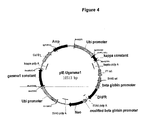
- FIG. 4 An example of an expression vector used in the present invention is described in Figure 4 .
- This may be used for expressing heavy and light chains of an antibody.
- a light chain variable region i.e., a first gene of interest
- a heavy chain variable region i.e., a second gene of interest
- One having ordinary skill in the art could modify the expression vector depicted in Figure 4 to express other genes of interest by removing the kappa constant and gamma1 constant regions, which are sequences useful for generating antibody chains.
- Regulatory nucleic acids e.g., kappa poly A, can also be changed to suit the needs of the practitioner.
- host cells refers to cells that have been transformed with a vector constructed using recombinant DNA techniques and encoding at least one heterologous gene, i.e., the selectable marker gene operably linked to a weakened promoter,
- the host cell is sensitive to aminoglyconide antibiotics, such as G418, and capable of harboring kanamycin or neomycin resistance genes for expression therein, e.g., HeLa cells, CV-1 cells, CHO cells, 3T3 cells, L cells, or TC7 cells.
- Cells that can be employed in this invention include mammalian and yeast cells (e.g., Sacchromyces cerevisiae) and cell lines and cell cultures derived therefrom.
- Mammalian cells e.g., germ cells or somatic cells, can be derived from mammals, such as mice, rats, or other rodents, or from primates, such as humans or monkeys. It shall be understood that primary cell cultures or immortalized cells can be employed in carrying out the techniques of this invention.
- the cell type is mammalian or yeast in origin including, but not limited to Chinese hamster ovary (CHO) (e.g., DG44 and DUXB11; Urlaub et al., Som. Cell Molec. Genet. 12:555, 1986 ; Haynes et al., Nuc. Acid. Res. 11:687-706, 1983 ; Lau et al., Mol. Cell. Biol. 4:1469-1475, 1984 ; Methods in Enzymology, 1991, vol. 185, pp537-566.
- CHO Chinese hamster ovary
- Chinese hamster fibroblast e.g., R1610
- human cervical carcinoma e.g., HELA
- monkey kidney line e.g., CVI and COS
- murine fibroblast e.g., BALBc/3T3
- murine myeloma P3x63-Ag3.653; NS0; SP2/O
- hamster kidney line e.g., HAK
- murine L cell e.g., L-929
- human lymphocyte e.g., RAJI
- human kidney e.g., 293 and 293T
- yeast host e.g., as described in RE 35749; US 5,629,203 ; Gellissen et al., Antonie Van Leeuwenhoek 62:79-93 (1992 ); Romanos et al., Yeast 8:423-488 (1992 ); Goeddel, Methods in Enzymology 185 (1990 ); Gu
- Host cell lines are typically commercially available (e.g., from BD Biosciences, Lexington, KY; Promega, Madison, WI; Life Technologies, Gaithersburg, MD) or from the American Type Culture Collection (ATCC, Manassas, VA).
- ATCC American Type Culture Collection
- Nucleic acids and expression vectors can be introduced or transformed into an appropriate host cell by various techniques well known in the art (see, e.g., Ridgway, 1973, Vectors: Mammalian Expression Vectors, Chapter 24.2, pp. 470-472, Rodriguez and Denhardt eds., Butterworths, Boston, MA ; Graham et al., 1973, Virology 52:456 ; Sambrook et al., 1989, Molecular Cloning: A Laboratory Manual, Cold Spring Harbor Laboratories, New York ; Davis et al., 1986, Basic Methods in Molecular Biology, Elsevier ; and Chu et al., 1981, Gene 13:197 ).
- transformation and “transfection”, and their grammatical variations, are used interchangeably herein and refer to the uptake of foreign DNA by a cell by any means practicable.
- a cell has been "transformed” when an exogenous nucleic acid has been introduced inside the cell membrane.
- the uptake of the nucleic acid results in a stable transfectant, regardless of the means by which the uptake is accomplished, which may include transfection (including electroporation), protoplast fusion, calcium phosphate precipitation, cell fusion with enveloped DNA, microinjection, and infection with intact virus. Even transient expression at higher than normal levels is useful for functional studies or for the production and recovery of proteins of interest.
- Transformed cells are grown under conditions appropriate for the production of the GOI (i.e, antibody heavy and/or light chains), and assays are performed to identify the encoded polypeptide of interest.
- exemplary assay techniques for identifying and quantifying gene products include enzyme-linked immunosorbent assay (ELISA), radioimmunoassay (RIA), or fluorescence-activated cell sorter analysis (FACS), immunohistochemistry, and the like.
- the transformed cells obtained by the method of this invention can be employed for the preparation of continuous cell lines in which the cells are essentially immortal, or for the preparation of established cell lines that have the potential to be subcultured in vitro.
- Continuous cell lines and established cell lines can be obtained from a variety of organisms and organs, such as rodent embryos; primate kidneys; rodent and human tumors; and fibroblast, epithelial, or lymphoid cells. Cells exhibiting the highest levels of expression can be cloned, if desired.
- Cells used in the present invention can be cultured according to standard cell culture techniques, e.g., they can be fixed to a solid surface or grown in suspension in appropriate nutrient media.
- nucleic acid molecule means a polynucleotide of genomic, cDNA, semisynthetic, or synthetic origin, which by virtue of its origin or manipulation (1) is not associated with all or a portion of the polynucleotide with which it is associated in nature, and/or (2) is linked to a polynucleotide other than that to which it is linked in nature.
- recombinant as used herein to describe a protein or polypeptide means a polypeptide produced by expression of a recombinant polynucleotide.
- progeny of a single parental cell may not be completely identical in morphology or in genomic or total DNA complement to the original parent, due to accidental or deliberate mutation.
- Progeny of a parental cell which are sufficiently similar to the parent to be characterized by a relevant property, such as the presence of a nucleotide sequence encoding a desired polypeptide, are also considered progeny.
- a pAGE2 vector was constructed from a pcDNA3.1 (+) vector backbone (Invitrogen #V790-20) by replacing the SV40 promoter that drives expression of the neomycin phosphotransferase (neo) selectable marker with the murine beta globin major promoter ( Berg et al., 1983, Molecular and Cellular Biology 3:1246 and Ward et al., 1990, J. Biol. Chem. 265:303030 ).
- an expression cassette containing a murine dihydrofolate reductase (DHFR) amplifiable marker was inserted upstream of the neo cassette.
- DHFR murine dihydrofolate reductase
- the region inserted into the vector backbone to create pAGE2 was a DNA derived from assembled polymerase chain reaction (PCR) amplified products consisting of a 5' ⁇ 3' murine beta globin promoter, a murine DHFR coding region, a SV40 polyadenylation region (polyA) and a second murine beta globin promoter.
- PCR polymerase chain reaction
- the templates for the PCR amplification of the beta globin promoters, the DHFR coding region and the SV40 polyA were derived from Medarex Human Mouse® genomic DNA (see Fig.
- the resulting pAGE2 vector contained the following elements: an ampicillin resistance gene, a viral promoter upstream of a multiple cloning site followed by a poly A sequence (to allow for insertion of a gene of interest to be expressed), an f1 ori, a murine beta globin major promoter operatively linked to the DHFR gene followed by an operatively linked SV40 poly A sequence, and a second murine beta globin major promoter operatively linked to a neomycin gene followed by an operatively linked SV40 poly A sequence.
- the annotated sequence of the inserted region is shown in Figures 1A-1B (SEQ ID NO: 1).
- Example 2 Construction of pAGE8 and pAGE9 for comparative purposes
- the pAGE8 vector was constructed from the pAGE2 vector by removing 199 bp from the beta globin promoter between the Rsa I and Ms1 I restriction enzyme sites (see Fig. 2 ).
- the pAGE9 vector was constructed from pAGE2 by removing 128 bp immediately downstream from the Rsa I restriction enzyme cleavage site in the beta globin promoter.
- the sequences of the pAGE2 murine beta globin major promoter (SEQ ID NO:2) and the pAGE8 and pAGE9 modified murine beta globin major promoters (SEQ ID NOS:3 and 4) are shown in Figure 2 .
- the beta globin promoter of the pAGE8 vector lacks both the CCAAT and TATA elements
- the beta globin promoter of the pAGE9 vector lacks the CCAAT but retains the TATA element.
- the pAGE2, pAGE8 and pAGE9 GOI constructs have identical sequences except for the modifications made to the beta globin promoters driving neo expression.
- the Chinese hamster ovary cell line CHO DG44 ( Urlaub et al., Som. Cell Molec. Genet. 12:555, 1986 ), which is deficient in DHFR activity, was used as host cells for expressing the GOI from the pAGE constructs.
- the CHO DG44 cells were adapted to growth in suspension culture in growth medium (CHO SSFMII; Invitrogen #31033-020) supplemented with HAT (100 ⁇ M hypoxanthine, 16 ⁇ M thymidine; Invitrogen #11067-030).
- the pAGE2, pAGE8 and pAGE9 constructs containing GOI were linearized by digestion with Bgl II restriction enzyme.
- the DNAs were ethanol precipitated and resuspended in 10 mM Tris 7.6,1 mM EDTA.
- the CHO cells were prepared for transfection by washing the cells in a sucrose-buffered solution (SBS) and resuspending the cells at 1 X 10 7 cells/ml SBS solution.
- Cells (400 ⁇ l) were mixed with the pAGE construct DNAs and electroporated (four electroporations using 0.5 ⁇ g DNA and 3 electroporations using 2 ⁇ g DNA per electroportation for each construct) at 230 volts, 400 microfaradays capacitance and 13 ohms resistance (BTX Molecular Delivery Systems #600 electro cell manipulator; San Diego, CA).
- the cells were removed from the electroporation cuvettes, 20 ml growth medium added, and plated into a 96 well dish using 200 ⁇ l cells per well (approximately 4 X 10 4 cells/well).
- 150 ⁇ l of medium was removed from each well and replaced with 150 ⁇ l selection medium [growth medium with 400 ⁇ g/ml G418 (Invitrogen #10131-035)]. Every three to seven days, 150 ⁇ l of selection medium per well was replaced with fresh selection medium. The number of wells per plate that had viable colonies of cells was counted for 34 days after the electroportation.
- Cells electroporated with pAGE8 yielded only 38 viable colonies having low protein expression levels.
- Cells electroporated with the pAGE2 construct yielded 245/251 (98%) colonies with GOI expression levels under 500 ng/ml and only 1/251 (0.3%) colony with GOI expression levels over 1000ng/ml.
- the cells electroporated with the pAGE9 construct yielded 254/287 (88%) colonies with under 500 ng/ml and 10/287 (3%) colonies with over 1000 ng/ml expression levels.
- the pAGE9 construct which contains modifications to the murine beta globin promoter, which drives the expression of the neo selectable marker, achieved the highest percentage of transfectant colonies producing at the highest levels of GOI protein expression.
- a second vector series (termed pIE) was constructed for expression of recombinant antibodies utilizing the pAGE9 vector, which contained the modified beta globin promoter, in order to increase the number of transfectant clones that produce high levels of antibody.
- This vector consists of the pAGE9 vector backbone modified to contain two separate expression cassettes for the antibody light and heavy chain proteins.
- a representative pIE vector is shown in Figure4 . It shall be appreciated by those of ordinary skill in the art, that the pIE vector can be modified to express any two genes of interest, e.g., subunits of a receptor complex or other protein.
- the light chain expression cassette was created by modifying the protein expression cassette of the pAGE vector.
- the original polyA region in the protein expression cassette between the Bbs I and Xba I sites was replaced with a human kappa polyA region ( Hieter et al., Cell 22:197, 1980 ).
- the Bgl II recognition site upstream of the protein expression cassette promoter was destroyed by digestion of the plasmid with Bgl II followed by Klenow treatment.
- a human kappa constant region was PCR amplified from a synthetic kappa constant region template utilizing primers that added a 3' Xba I site after the translational stop codon and 5' Avr II, Bgl II, Pme I, Hind III, Kpn I sites and a BsiW I site that encodes the first two codons of the kappa constant region.
- This PCR fragment containing the kappa constant region and restriction enzyme cloning sites was digested with Avr II and Xba I and subcloned into the Nhe I and Xba I sites in the pAGE vector protein expression cassette multiple cloning site.
- a strong promoter such as the human ubiquitin C promoter (U) ( Nenoi et al., Gene 175:179, 1996 ) or the SR ⁇ promoter with the SV40 late region splice junction (SR) ( Takebe et al., Molecular and Cellular Biology 8:466, 1988 ) was inserted between the Nru I and Bgl II sites to drive expression of the light chain.
- SR late region splice junction
- a heavy chain expression cassette was created at the unique Pci I site downstream of the neo expression cassette.
- the human kappa polyA template was PCR amplified utilizing primers that added 5' Pci I, Not I, Xho I, Nhe I and BamH I sites and a 3' Nco I site.
- the PCR amplified product was digested with Pci I and Nco I restricition enzymes and cloned into the Pci I site of the pAGE9 vector.
- a human gamma1 cDNA containing a 5' Nhe I recognition site which encodes the first two codons of the gamma1 constant region and a 3' BamH I site following the translational stop codon, was subcloned into the Nhe I and BamH I sites of the vector.
- a human ubiqutin C or SR ⁇ promoter was cloned into the Pci I and Not I sites of the vector.
- antibody heavy chain variable region cDNAs including signal sequences and optimal Kozak sequences typically were subcloned into the Not I and Nhe I recognition sites and in frame with the gamma constant region. See for example Figure 4 .
- a series of pIE vectors were constructed in which the promoters in the heavy and light chain cassettes varied (either ubiquitin, abbreviated as U, or SRalpha, abbreviated as SR) and the gamma1 heavy chain constant region was replaced with a gamma4 constant region or with various gamma1 allotypes, including z, f and fa (WHO, J. Immunogenetics 3:357, 1976 ).
- the pIE vector series included the following vectors: pIE-U ⁇ 1z, pIE-U ⁇ 1f, pIE-U ⁇ 1fa, pIE-U ⁇ 4, pIE-SR ⁇ 1z, pIE-SR ⁇ 1f, pIE-SR ⁇ 1fa and pIE-SR ⁇ 4.
- the vector nomenclature represents the pIE vector backbone, the promoter driving heavy and light chain expression and the isotype and allotype of the heavy chain constant region.
- Example 6 Expression of recombinant antibodies by CHO cell transfectants
- Antibody heavy and light chain variable region cDNAs derived from hybridomas producing fully human monoclonal antibodies were subcloned into the heavy and light chain expression cassettes of the pIE vectors as described above.
- the pIE antibody constructs were used to transfect CHO DG44 host cells using the protocol described above for the pAGE9 test GOI construct.
- GOI Transfection with the pIE constructs resulted in a substantial percentage of the colonies producing antibody at high levels, which was similar to the results achieved using the pAGE9 test antigen.
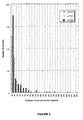
- Figure 5 shows a histogram comparing the number of 96 well colonies expressing varying levels of representative monoclonal antibody mAb1, as measured by ELISA. At the 96 well stage, 20/322 (6%) of the colonies produced over 1000 ng/ml antibody.
- Example 7 Amplification with methotrexate (MTX) treatment
- DHFR expression cassettes were engineered into the pAGE and pIE vectors described above, and the vectors were used to transfect CHO DG44 cells.
- the cells were grown in CHO SSFMII Medium (Invitrogen #31033-020) supplemented with 5, 50 or 500 nM MTX in order to induce amplification.
- a particular transfectant making mAb4 had one integration site containing the pIE construct and produced 8 pg/cell/day prior to amplification in 50 nM MTX; following amplification, production was increased threefold accompanied by a sevenfold increase in construct copy number.
- the sequential amplification in 5, 50 and 500 nM MTX increased the gene copy number eightfold and productivity twelve-fold.
Landscapes
- Health & Medical Sciences (AREA)
- Chemical & Material Sciences (AREA)
- Genetics & Genomics (AREA)
- Organic Chemistry (AREA)
- Life Sciences & Earth Sciences (AREA)
- Biophysics (AREA)
- Engineering & Computer Science (AREA)
- General Health & Medical Sciences (AREA)
- Biochemistry (AREA)
- Molecular Biology (AREA)
- Bioinformatics & Cheminformatics (AREA)
- Biotechnology (AREA)
- Proteomics, Peptides & Aminoacids (AREA)
- Wood Science & Technology (AREA)
- Zoology (AREA)
- Medicinal Chemistry (AREA)
- General Engineering & Computer Science (AREA)
- Biomedical Technology (AREA)
- Physics & Mathematics (AREA)
- Immunology (AREA)
- Plant Pathology (AREA)
- Microbiology (AREA)
- Gastroenterology & Hepatology (AREA)
- Micro-Organisms Or Cultivation Processes Thereof (AREA)
- Preparation Of Compounds By Using Micro-Organisms (AREA)
- Peptides Or Proteins (AREA)
Claims (15)
- Vecteur d'expression comprenant (i) un gène marqueur sélectionnable lié d'une manière opérationnelle à un acide nucléique régulateur qui comprend un promoteur du gène de β globine et (2) un ou plusieurs gènes d'intérêt liés d'une manière opérationnelle à un deuxième acide nucléique régulateur, où le promoteur de β globine consiste en la séquence présentée dans la SEQ ID NO:4 (comme illustrée sur la Figure 2) et où un ou plusieurs gènes d'intérêt codent une chaîne lourde d'immunoglobuline et/ou une chaîne légère d'immunoglobuline.
- Vecteur d'expression selon la revendication 1, dans lequel le gène marqueur sélectionnable est une néomycine phosphotransférase.
- Vecteur d'expression selon la revendication 1, dans lequel le gène marqueur sélectionnable est sélectionné parmi la glutamine synthétase, la dihydrofolate réductase, la chloramphénicol acétyltransférase, l'hygromycine B phosphotransférase, la xanthine-guanine phosphoribosyltransférase, l'histidinol déshydrogénase, la sous-unité β de la tryptophane synthase, la blasticidine S désaminase, la zéocine, l'asparagine synthase, l'hypoxanthine-guanine phosphoribosyltransférase, la thymidine kinase, l'adénine phosphoribosyltransférase, la P-glycoprotéine, l'adénosine désaminase, l'ornithine décarboxylase, CAD (carbamoyl-P-synthétase, aspartate transcarbamylase, dihydroorotase).
- Vecteur d'expression selon l'une quelconque des revendications précédentes, comprenant en outre un deuxième marqueur sélectionnable qui facilite la sélection de cellules hôtes qui expriment ledit un ou lesdits plusieurs gènes d'intérêt.
- Vecteur d'expression selon la revendication 4, dans lequel le deuxième marqueur sélectionnable est sélectionné parmi la dihydrofolate réductase, la P-glycoprotéine, l'adénosine désaminase, l'ornithine décarboxylase ou CAD (carbamoyl-P-synthétase, aspartate transcarbamylase, dihydroorotase).
- Vecteur d'expression selon l'une quelconque des revendications précédentes, dans lequel le vecteur d'expression comprend deux gènes d'intérêt.
- Cellule hôte transfectée avec un vecteur d'expression selon l'une quelconque des revendications précédentes.
- Cellule hôte selon la revendication 7, dans laquelle le vecteur d'expression est intégré d'une manière stable dans un chromosome de la cellule hôte.
- Cellule hôte selon la revendication 7, qui est une cellule mammalienne.
- Cellule hôte selon la revendication 7, qui est une cellule ovarienne de hamster chinois.
- Procédé de culture de la cellule selon la revendication 7 dans des conditions appropriées de telle sorte que le gène d'intérêt est exprimé.
- Procédé selon la revendication 11, dans lequel les conditions appropriées permettent au vecteur d'expression de s'intégrer d'une manière stable dans un chromosome de la cellule.
- Procédé selon la revendication 11, dans lequel les conditions appropriées comprennent en outre mettre la cellule en contact avec un composé qui sélectionne pour l'expression du gène marqueur sélectionnable.
- Procédé selon la revendication 13, dans lequel le vecteur d'expression comprend en outre un deuxième gène marqueur sélectionnable et dans lequel les conditions appropriées comprennent en outre mettre la cellule en contact avec un composé qui sélectionne pour l'expression du deuxième gène marqueur.
- Procédé selon la revendication 13, dans lequel la chaîne lourde et/ou légère d'immunoglobuline est récupérée.
Applications Claiming Priority (2)
| Application Number | Priority Date | Filing Date | Title |
|---|---|---|---|
| US50080303P | 2003-09-04 | 2003-09-04 | |
| PCT/US2004/028954 WO2005024015A1 (fr) | 2003-09-04 | 2004-09-03 | Vecteur d'expression |
Publications (3)
| Publication Number | Publication Date |
|---|---|
| EP1660654A1 EP1660654A1 (fr) | 2006-05-31 |
| EP1660654A4 EP1660654A4 (fr) | 2007-08-22 |
| EP1660654B1 true EP1660654B1 (fr) | 2011-11-09 |
Family
ID=34272998
Family Applications (1)
| Application Number | Title | Priority Date | Filing Date |
|---|---|---|---|
| EP04783263A Expired - Lifetime EP1660654B1 (fr) | 2003-09-04 | 2004-09-03 | Vecteur d'expression |
Country Status (7)
| Country | Link |
|---|---|
| US (1) | US7674618B2 (fr) |
| EP (1) | EP1660654B1 (fr) |
| JP (1) | JP4751326B2 (fr) |
| AT (1) | ATE532861T1 (fr) |
| CA (1) | CA2536807C (fr) |
| ES (1) | ES2374526T3 (fr) |
| WO (1) | WO2005024015A1 (fr) |
Cited By (1)
| Publication number | Priority date | Publication date | Assignee | Title |
|---|---|---|---|---|
| US12529050B2 (en) | 2018-10-26 | 2026-01-20 | Hoffmann-La Roche Inc. | Multispecific antibody screening method using recombinase mediated cassette exchange |
Families Citing this family (14)
| Publication number | Priority date | Publication date | Assignee | Title |
|---|---|---|---|---|
| AU2007235496B2 (en) | 2006-03-31 | 2013-11-21 | E. R. Squibb & Sons, L.L.C. | Transgenic animals expressing chimeric antibodies for use in preparing human antibodies |
| MX2009003306A (es) | 2006-10-02 | 2009-04-23 | Medarex Inc | Anticuerpos humanos que se unen a cxcr4 y sus usos. |
| US8481683B2 (en) | 2006-12-01 | 2013-07-09 | Medarex, Inc. | Human antibodies that bind CD22 and uses thereof |
| UA100692C2 (ru) * | 2007-05-02 | 2013-01-25 | Мериал Лимитед | Днк-плазмиды, имеющие повышенную экспрессию и стабильность |
| RU2456346C2 (ru) * | 2007-05-02 | 2012-07-20 | Мериал Лимитед | Днк-плазмиды, обладающие повышенной экспрессией и стабильностью |
| CN101903531B (zh) | 2007-12-19 | 2013-09-18 | 格利科菲公司 | 用于蛋白质生产的酵母菌株 |
| PL3075858T3 (pl) | 2007-12-21 | 2020-07-13 | Novartis Ag | Ssaczy wektor ekspresyjny |
| AR072999A1 (es) | 2008-08-11 | 2010-10-06 | Medarex Inc | Anticuerpos humanos que se unen al gen 3 de activacion linfocitaria (lag-3) y los usos de estos |
| JP4491808B1 (ja) * | 2009-06-05 | 2010-06-30 | 東洋紡績株式会社 | 高発現細胞の効率的な選別に有用な薬剤選択マーカー遺伝子発現カセット |
| JP4547643B1 (ja) * | 2009-06-05 | 2010-09-22 | 東洋紡績株式会社 | クローニングに最適化された発現ベクター |
| JP4525863B1 (ja) | 2009-06-05 | 2010-08-18 | 東洋紡績株式会社 | 高生産性細胞の樹立のための発現ベクター及び高生産性細胞 |
| CN104039320B (zh) | 2011-11-09 | 2019-10-15 | 百时美施贵宝公司 | 血液恶性肿瘤用抗-cxcr4抗体的治疗 |
| JP6972022B2 (ja) * | 2016-05-11 | 2021-11-24 | アムジエン・インコーポレーテツド | グルタミンシンセターゼ遺伝子内相補ベクターを用いた高レベルのヘテロマータンパク質発現細胞の直接選択 |
| US12157897B2 (en) | 2018-12-04 | 2024-12-03 | Catalent Pharma Solutions, Llc | Vectors for protein manufacture |
Family Cites Families (13)
| Publication number | Priority date | Publication date | Assignee | Title |
|---|---|---|---|---|
| US4713339A (en) | 1983-01-19 | 1987-12-15 | Genentech, Inc. | Polycistronic expression vector construction |
| US4876197A (en) | 1983-02-22 | 1989-10-24 | Chiron Corporation | Eukaryotic regulatable transcription |
| ES2179854T3 (es) | 1988-12-13 | 2003-02-01 | Harvard College | Materiales aislados de felv prototipos para uso en modelos de enfermedades y vacunas. |
| US5256568A (en) * | 1990-02-12 | 1993-10-26 | Regeneron Phamaceuticals, Inc. | Vectors and transformed most cells for recombinant protein production with reduced expression of selectable markers |
| WO1992001800A1 (fr) | 1990-07-20 | 1992-02-06 | Chiron Corporation | Procede de transformation integrante de levure au moyen d'elements repetitifs disperses |
| US5648267A (en) * | 1992-11-13 | 1997-07-15 | Idec Pharmaceuticals Corporation | Impaired dominant selectable marker sequence and intronic insertion strategies for enhancement of expression of gene product and expression vector systems comprising same |
| ATE236987T1 (de) | 1992-11-13 | 2003-04-15 | Idec Pharma Corp | Konsensus-kozak-sequenzen zur säugetier- exprimierung |
| US5627033A (en) * | 1995-03-28 | 1997-05-06 | Research & Diagnostics Systems, Inc. | Mammalian expression vectors |
| US5928941A (en) * | 1996-10-07 | 1999-07-27 | President And Fellows Of Harvard College | Repressor kruppel-like factor |
| AU737155B2 (en) * | 1997-03-14 | 2001-08-09 | Biogen Idec Inc. | Method for integrating genes at specific sites in mammalian cells via homologous recombination and vectors for accomplishing the same |
| US6444421B1 (en) * | 1997-11-19 | 2002-09-03 | The United States Of America As Represented By The Department Of Health And Human Services | Methods for detecting intermolecular interactions in vivo and in vitro |
| US6316253B1 (en) | 1999-11-01 | 2001-11-13 | Chiron Corporation | Expression vectors, transfection systems, and method of use thereof |
| US20040029229A1 (en) | 2002-05-20 | 2004-02-12 | Reeves Philip J. | High level protein expression system |
-
2004
- 2004-09-03 JP JP2006525499A patent/JP4751326B2/ja not_active Expired - Lifetime
- 2004-09-03 WO PCT/US2004/028954 patent/WO2005024015A1/fr not_active Ceased
- 2004-09-03 US US10/934,304 patent/US7674618B2/en not_active Expired - Lifetime
- 2004-09-03 CA CA2536807A patent/CA2536807C/fr not_active Expired - Lifetime
- 2004-09-03 ES ES04783263T patent/ES2374526T3/es not_active Expired - Lifetime
- 2004-09-03 AT AT04783263T patent/ATE532861T1/de active
- 2004-09-03 EP EP04783263A patent/EP1660654B1/fr not_active Expired - Lifetime
Cited By (1)
| Publication number | Priority date | Publication date | Assignee | Title |
|---|---|---|---|---|
| US12529050B2 (en) | 2018-10-26 | 2026-01-20 | Hoffmann-La Roche Inc. | Multispecific antibody screening method using recombinase mediated cassette exchange |
Also Published As
| Publication number | Publication date |
|---|---|
| US20050153394A1 (en) | 2005-07-14 |
| EP1660654A1 (fr) | 2006-05-31 |
| JP2007503837A (ja) | 2007-03-01 |
| WO2005024015A1 (fr) | 2005-03-17 |
| CA2536807A1 (fr) | 2005-03-17 |
| JP4751326B2 (ja) | 2011-08-17 |
| CA2536807C (fr) | 2010-07-13 |
| ES2374526T3 (es) | 2012-02-17 |
| US7674618B2 (en) | 2010-03-09 |
| ATE532861T1 (de) | 2011-11-15 |
| EP1660654A4 (fr) | 2007-08-22 |
Similar Documents
| Publication | Publication Date | Title |
|---|---|---|
| EP1660654B1 (fr) | Vecteur d'expression | |
| US7235360B2 (en) | Method for integrating genes at specific sites in mammalian cells via homologous recombination and vectors for accomplishing the same | |
| USRE49347E1 (en) | Mammalian expression vector | |
| US5830698A (en) | Method for integrating genes at specific sites in mammalian cells via homologous recombination and vectors for accomplishing the same | |
| US6451539B2 (en) | Expression vectors, transfection systems, and method of use thereof | |
| CN102165060A (zh) | 新的调控组件 | |
| CA2681581A1 (fr) | Elements de vecteurs d'expression recombinants (reve) destines a augmenter l'expression de proteines recombinantes dans des cellules hotes | |
| EP1115852B1 (fr) | Vecteurs d'expression contenant un point chaud permettant d'augmenter l'expression de proteines recombinantes dans des cellules transfectees | |
| US20200087679A1 (en) | Expression cassette | |
| CN120152986A (zh) | 一种稳定、高滴度大规模生产重组蛋白的新型表达平台 | |
| TR2025005329T2 (tr) | Rekombi̇nant protei̇ni̇n yüksek veri̇m ve stabi̇l üreti̇mi̇ i̇çi̇n yeni̇ bi̇r ekspresyon platformu | |
| HK1086298A (en) | Method for integrating genes at specific sites in mammalian cells via homologous recombination and vectors for accomplishing the same | |
| HK1086299A (en) | Method for integrating genes at specific sites in mammalian cells via homologous recombination and vectors for accomplishing the same | |
| HK1153773A (en) | Expression vectors, transfection systems, and method of use thereof |
Legal Events
| Date | Code | Title | Description |
|---|---|---|---|
| PUAI | Public reference made under article 153(3) epc to a published international application that has entered the european phase |
Free format text: ORIGINAL CODE: 0009012 |
|
| 17P | Request for examination filed |
Effective date: 20060228 |
|
| AK | Designated contracting states |
Kind code of ref document: A1 Designated state(s): AT BE BG CH CY CZ DE DK EE ES FI FR GB GR HU IE IT LI LU MC NL PL PT RO SE SI SK TR |
|
| DAX | Request for extension of the european patent (deleted) | ||
| A4 | Supplementary search report drawn up and despatched |
Effective date: 20070723 |
|
| 17Q | First examination report despatched |
Effective date: 20071030 |
|
| GRAP | Despatch of communication of intention to grant a patent |
Free format text: ORIGINAL CODE: EPIDOSNIGR1 |
|
| GRAS | Grant fee paid |
Free format text: ORIGINAL CODE: EPIDOSNIGR3 |
|
| GRAA | (expected) grant |
Free format text: ORIGINAL CODE: 0009210 |
|
| AK | Designated contracting states |
Kind code of ref document: B1 Designated state(s): AT BE BG CH CY CZ DE DK EE ES FI FR GB GR HU IE IT LI LU MC NL PL PT RO SE SI SK TR |
|
| REG | Reference to a national code |
Ref country code: GB Ref legal event code: FG4D |
|
| REG | Reference to a national code |
Ref country code: CH Ref legal event code: EP |
|
| REG | Reference to a national code |
Ref country code: IE Ref legal event code: FG4D |
|
| REG | Reference to a national code |
Ref country code: DE Ref legal event code: R096 Ref document number: 602004035263 Country of ref document: DE Effective date: 20120105 |
|
| REG | Reference to a national code |
Ref country code: ES Ref legal event code: FG2A Ref document number: 2374526 Country of ref document: ES Kind code of ref document: T3 Effective date: 20120217 |
|
| REG | Reference to a national code |
Ref country code: NL Ref legal event code: VDEP Effective date: 20111109 |
|
| PG25 | Lapsed in a contracting state [announced via postgrant information from national office to epo] |
Ref country code: GR Free format text: LAPSE BECAUSE OF FAILURE TO SUBMIT A TRANSLATION OF THE DESCRIPTION OR TO PAY THE FEE WITHIN THE PRESCRIBED TIME-LIMIT Effective date: 20120210 Ref country code: PL Free format text: LAPSE BECAUSE OF FAILURE TO SUBMIT A TRANSLATION OF THE DESCRIPTION OR TO PAY THE FEE WITHIN THE PRESCRIBED TIME-LIMIT Effective date: 20111109 Ref country code: NL Free format text: LAPSE BECAUSE OF FAILURE TO SUBMIT A TRANSLATION OF THE DESCRIPTION OR TO PAY THE FEE WITHIN THE PRESCRIBED TIME-LIMIT Effective date: 20111109 Ref country code: PT Free format text: LAPSE BECAUSE OF FAILURE TO SUBMIT A TRANSLATION OF THE DESCRIPTION OR TO PAY THE FEE WITHIN THE PRESCRIBED TIME-LIMIT Effective date: 20120309 Ref country code: SI Free format text: LAPSE BECAUSE OF FAILURE TO SUBMIT A TRANSLATION OF THE DESCRIPTION OR TO PAY THE FEE WITHIN THE PRESCRIBED TIME-LIMIT Effective date: 20111109 Ref country code: BE Free format text: LAPSE BECAUSE OF FAILURE TO SUBMIT A TRANSLATION OF THE DESCRIPTION OR TO PAY THE FEE WITHIN THE PRESCRIBED TIME-LIMIT Effective date: 20111109 Ref country code: SE Free format text: LAPSE BECAUSE OF FAILURE TO SUBMIT A TRANSLATION OF THE DESCRIPTION OR TO PAY THE FEE WITHIN THE PRESCRIBED TIME-LIMIT Effective date: 20111109 |
|
| PG25 | Lapsed in a contracting state [announced via postgrant information from national office to epo] |
Ref country code: CY Free format text: LAPSE BECAUSE OF FAILURE TO SUBMIT A TRANSLATION OF THE DESCRIPTION OR TO PAY THE FEE WITHIN THE PRESCRIBED TIME-LIMIT Effective date: 20111109 |
|
| PG25 | Lapsed in a contracting state [announced via postgrant information from national office to epo] |
Ref country code: SK Free format text: LAPSE BECAUSE OF FAILURE TO SUBMIT A TRANSLATION OF THE DESCRIPTION OR TO PAY THE FEE WITHIN THE PRESCRIBED TIME-LIMIT Effective date: 20111109 Ref country code: BG Free format text: LAPSE BECAUSE OF FAILURE TO SUBMIT A TRANSLATION OF THE DESCRIPTION OR TO PAY THE FEE WITHIN THE PRESCRIBED TIME-LIMIT Effective date: 20120209 Ref country code: CZ Free format text: LAPSE BECAUSE OF FAILURE TO SUBMIT A TRANSLATION OF THE DESCRIPTION OR TO PAY THE FEE WITHIN THE PRESCRIBED TIME-LIMIT Effective date: 20111109 Ref country code: DK Free format text: LAPSE BECAUSE OF FAILURE TO SUBMIT A TRANSLATION OF THE DESCRIPTION OR TO PAY THE FEE WITHIN THE PRESCRIBED TIME-LIMIT Effective date: 20111109 Ref country code: EE Free format text: LAPSE BECAUSE OF FAILURE TO SUBMIT A TRANSLATION OF THE DESCRIPTION OR TO PAY THE FEE WITHIN THE PRESCRIBED TIME-LIMIT Effective date: 20111109 |
|
| PG25 | Lapsed in a contracting state [announced via postgrant information from national office to epo] |
Ref country code: RO Free format text: LAPSE BECAUSE OF FAILURE TO SUBMIT A TRANSLATION OF THE DESCRIPTION OR TO PAY THE FEE WITHIN THE PRESCRIBED TIME-LIMIT Effective date: 20111109 |
|
| PLBE | No opposition filed within time limit |
Free format text: ORIGINAL CODE: 0009261 |
|
| STAA | Information on the status of an ep patent application or granted ep patent |
Free format text: STATUS: NO OPPOSITION FILED WITHIN TIME LIMIT |
|
| REG | Reference to a national code |
Ref country code: AT Ref legal event code: MK05 Ref document number: 532861 Country of ref document: AT Kind code of ref document: T Effective date: 20111109 |
|
| 26N | No opposition filed |
Effective date: 20120810 |
|
| REG | Reference to a national code |
Ref country code: DE Ref legal event code: R097 Ref document number: 602004035263 Country of ref document: DE Effective date: 20120810 |
|
| PG25 | Lapsed in a contracting state [announced via postgrant information from national office to epo] |
Ref country code: AT Free format text: LAPSE BECAUSE OF FAILURE TO SUBMIT A TRANSLATION OF THE DESCRIPTION OR TO PAY THE FEE WITHIN THE PRESCRIBED TIME-LIMIT Effective date: 20111109 |
|
| PG25 | Lapsed in a contracting state [announced via postgrant information from national office to epo] |
Ref country code: MC Free format text: LAPSE BECAUSE OF NON-PAYMENT OF DUE FEES Effective date: 20120930 |
|
| REG | Reference to a national code |
Ref country code: CH Ref legal event code: PL |
|
| REG | Reference to a national code |
Ref country code: IE Ref legal event code: MM4A |
|
| PG25 | Lapsed in a contracting state [announced via postgrant information from national office to epo] |
Ref country code: FI Free format text: LAPSE BECAUSE OF FAILURE TO SUBMIT A TRANSLATION OF THE DESCRIPTION OR TO PAY THE FEE WITHIN THE PRESCRIBED TIME-LIMIT Effective date: 20111109 |
|
| REG | Reference to a national code |
Ref country code: FR Ref legal event code: TP Owner name: MEDAREX, L.L.C., US Effective date: 20130620 |
|
| PG25 | Lapsed in a contracting state [announced via postgrant information from national office to epo] |
Ref country code: LI Free format text: LAPSE BECAUSE OF NON-PAYMENT OF DUE FEES Effective date: 20120930 Ref country code: CH Free format text: LAPSE BECAUSE OF NON-PAYMENT OF DUE FEES Effective date: 20120930 Ref country code: IE Free format text: LAPSE BECAUSE OF NON-PAYMENT OF DUE FEES Effective date: 20120903 |
|
| REG | Reference to a national code |
Ref country code: DE Ref legal event code: R082 Ref document number: 602004035263 Country of ref document: DE Representative=s name: MARKS & CLERK (LUXEMBOURG) LLP, LU |
|
| REG | Reference to a national code |
Ref country code: GB Ref legal event code: 732E Free format text: REGISTERED BETWEEN 20130801 AND 20130807 |
|
| REG | Reference to a national code |
Ref country code: ES Ref legal event code: PC2A Owner name: MEDAREX, L.L.C. Effective date: 20130912 |
|
| REG | Reference to a national code |
Ref country code: DE Ref legal event code: R081 Ref document number: 602004035263 Country of ref document: DE Owner name: E. R. SQUIBB SONS, L.L.C. (N.D.GES.D. STAATE, US Free format text: FORMER OWNER: MEDAREX INC., 08540 PRINCETON, N.J., US Effective date: 20111110 Ref country code: DE Ref legal event code: R081 Ref document number: 602004035263 Country of ref document: DE Owner name: E. R. SQUIBB SONS, L.L.C. (N.D.GES.D. STAATE, US Free format text: FORMER OWNER: MEDAREX INC., 08540 PRINCETON, N.J., US Effective date: 20130819 Ref country code: DE Ref legal event code: R081 Ref document number: 602004035263 Country of ref document: DE Owner name: MEDAREX, L.L.C., US Free format text: FORMER OWNER: MEDAREX INC., 08540 PRINCETON, US Effective date: 20130819 Ref country code: DE Ref legal event code: R081 Ref document number: 602004035263 Country of ref document: DE Owner name: MEDAREX, L.L.C., US Free format text: FORMER OWNER: MEDAREX INC., 08540 PRINCETON, US Effective date: 20111110 Ref country code: DE Ref legal event code: R081 Ref document number: 602004035263 Country of ref document: DE Owner name: MEDAREX, L.L.C., PRINCETON, US Free format text: FORMER OWNER: MEDAREX INC., 08540 PRINCETON, N.J., US Effective date: 20111110 Ref country code: DE Ref legal event code: R081 Ref document number: 602004035263 Country of ref document: DE Owner name: MEDAREX, L.L.C., PRINCETON, US Free format text: FORMER OWNER: MEDAREX INC., 08540 PRINCETON, N.J., US Effective date: 20130819 Ref country code: DE Ref legal event code: R081 Ref document number: 602004035263 Country of ref document: DE Owner name: E. R. SQUIBB & SONS, L.L.C. (N.D.GES.D. STAATE, US Free format text: FORMER OWNER: MEDAREX INC., 08540 PRINCETON, N.J., US Effective date: 20111110 Ref country code: DE Ref legal event code: R081 Ref document number: 602004035263 Country of ref document: DE Owner name: E. R. SQUIBB & SONS, L.L.C. (N.D.GES.D. STAATE, US Free format text: FORMER OWNER: MEDAREX INC., 08540 PRINCETON, N.J., US Effective date: 20130819 Ref country code: DE Ref legal event code: R082 Ref document number: 602004035263 Country of ref document: DE Representative=s name: MARKS & CLERK (LUXEMBOURG) LLP, LU Effective date: 20130819 |
|
| PG25 | Lapsed in a contracting state [announced via postgrant information from national office to epo] |
Ref country code: TR Free format text: LAPSE BECAUSE OF FAILURE TO SUBMIT A TRANSLATION OF THE DESCRIPTION OR TO PAY THE FEE WITHIN THE PRESCRIBED TIME-LIMIT Effective date: 20111109 |
|
| PG25 | Lapsed in a contracting state [announced via postgrant information from national office to epo] |
Ref country code: LU Free format text: LAPSE BECAUSE OF NON-PAYMENT OF DUE FEES Effective date: 20120903 |
|
| PG25 | Lapsed in a contracting state [announced via postgrant information from national office to epo] |
Ref country code: HU Free format text: LAPSE BECAUSE OF FAILURE TO SUBMIT A TRANSLATION OF THE DESCRIPTION OR TO PAY THE FEE WITHIN THE PRESCRIBED TIME-LIMIT Effective date: 20040903 |
|
| REG | Reference to a national code |
Ref country code: DE Ref legal event code: R082 Ref document number: 602004035263 Country of ref document: DE Representative=s name: MARKS & CLERK (LUXEMBOURG) LLP, LU |
|
| REG | Reference to a national code |
Ref country code: GB Ref legal event code: 732E Free format text: REGISTERED BETWEEN 20150212 AND 20150219 |
|
| REG | Reference to a national code |
Ref country code: DE Ref legal event code: R081 Ref document number: 602004035263 Country of ref document: DE Owner name: E. R. SQUIBB SONS, L.L.C. (N.D.GES.D. STAATE, US Free format text: FORMER OWNER: MEDAREX, L.L.C., PRINCETON, N.J., US Effective date: 20150205 Ref country code: DE Ref legal event code: R081 Ref document number: 602004035263 Country of ref document: DE Owner name: E. R. SQUIBB & SONS, L.L.C. (N.D.GES.D. STAATE, US Free format text: FORMER OWNER: MEDAREX, L.L.C., PRINCETON, N.J., US Effective date: 20150205 Ref country code: DE Ref legal event code: R082 Ref document number: 602004035263 Country of ref document: DE Representative=s name: MARKS & CLERK (LUXEMBOURG) LLP, LU Effective date: 20150205 |
|
| REG | Reference to a national code |
Ref country code: ES Ref legal event code: PC2A Owner name: E. R. SQUIBB & SONS, L.L.C. Effective date: 20150715 |
|
| REG | Reference to a national code |
Ref country code: FR Ref legal event code: TP Owner name: E.R. SQUIBB & SONS, LLC, US Effective date: 20150623 |
|
| REG | Reference to a national code |
Ref country code: FR Ref legal event code: PLFP Year of fee payment: 12 |
|
| REG | Reference to a national code |
Ref country code: FR Ref legal event code: RM Effective date: 20151021 |
|
| REG | Reference to a national code |
Ref country code: FR Ref legal event code: PLFP Year of fee payment: 13 |
|
| REG | Reference to a national code |
Ref country code: FR Ref legal event code: PLFP Year of fee payment: 14 |
|
| REG | Reference to a national code |
Ref country code: FR Ref legal event code: PLFP Year of fee payment: 15 |
|
| P01 | Opt-out of the competence of the unified patent court (upc) registered |
Effective date: 20230516 |
|
| PGFP | Annual fee paid to national office [announced via postgrant information from national office to epo] |
Ref country code: IT Payment date: 20230810 Year of fee payment: 20 Ref country code: GB Payment date: 20230803 Year of fee payment: 20 |
|
| PGFP | Annual fee paid to national office [announced via postgrant information from national office to epo] |
Ref country code: FR Payment date: 20230808 Year of fee payment: 20 Ref country code: DE Payment date: 20230802 Year of fee payment: 20 |
|
| PGFP | Annual fee paid to national office [announced via postgrant information from national office to epo] |
Ref country code: ES Payment date: 20231005 Year of fee payment: 20 |
|
| REG | Reference to a national code |
Ref country code: DE Ref legal event code: R071 Ref document number: 602004035263 Country of ref document: DE |
|
| REG | Reference to a national code |
Ref country code: GB Ref legal event code: PE20 Expiry date: 20240902 |
|
| REG | Reference to a national code |
Ref country code: ES Ref legal event code: FD2A Effective date: 20240927 |
|
| PG25 | Lapsed in a contracting state [announced via postgrant information from national office to epo] |
Ref country code: GB Free format text: LAPSE BECAUSE OF EXPIRATION OF PROTECTION Effective date: 20240902 |
|
| PG25 | Lapsed in a contracting state [announced via postgrant information from national office to epo] |
Ref country code: ES Free format text: LAPSE BECAUSE OF EXPIRATION OF PROTECTION Effective date: 20240904 |
|
| PG25 | Lapsed in a contracting state [announced via postgrant information from national office to epo] |
Ref country code: GB Free format text: LAPSE BECAUSE OF EXPIRATION OF PROTECTION Effective date: 20240902 Ref country code: ES Free format text: LAPSE BECAUSE OF EXPIRATION OF PROTECTION Effective date: 20240904 |