EP1669995A1 - Vorrichtung und Verfahren zur Verarbeitung von Musikdaten - Google Patents
Vorrichtung und Verfahren zur Verarbeitung von Musikdaten Download PDFInfo
- Publication number
- EP1669995A1 EP1669995A1 EP05111818A EP05111818A EP1669995A1 EP 1669995 A1 EP1669995 A1 EP 1669995A1 EP 05111818 A EP05111818 A EP 05111818A EP 05111818 A EP05111818 A EP 05111818A EP 1669995 A1 EP1669995 A1 EP 1669995A1
- Authority
- EP
- European Patent Office
- Prior art keywords
- music data
- format
- data sets
- music
- data
- Prior art date
- Legal status (The legal status is an assumption and is not a legal conclusion. Google has not performed a legal analysis and makes no representation as to the accuracy of the status listed.)
- Withdrawn
Links
- 238000012545 processing Methods 0.000 title claims description 88
- 238000000034 method Methods 0.000 title claims description 19
- 238000006243 chemical reaction Methods 0.000 claims description 31
- 238000010586 diagram Methods 0.000 description 7
- 230000015654 memory Effects 0.000 description 7
- 238000004891 communication Methods 0.000 description 6
- 230000000694 effects Effects 0.000 description 5
- 238000007726 management method Methods 0.000 description 5
- 230000004044 response Effects 0.000 description 5
- 238000001514 detection method Methods 0.000 description 4
- 238000005562 fading Methods 0.000 description 4
- 238000012217 deletion Methods 0.000 description 3
- 230000037430 deletion Effects 0.000 description 3
- 238000004590 computer program Methods 0.000 description 2
- 238000013500 data storage Methods 0.000 description 2
- 238000009527 percussion Methods 0.000 description 2
- 239000011295 pitch Substances 0.000 description 2
- 238000001308 synthesis method Methods 0.000 description 2
- 230000006399 behavior Effects 0.000 description 1
- 238000007796 conventional method Methods 0.000 description 1
- 238000000605 extraction Methods 0.000 description 1
- 239000004973 liquid crystal related substance Substances 0.000 description 1
- 238000012986 modification Methods 0.000 description 1
- 230000004048 modification Effects 0.000 description 1
- 239000004065 semiconductor Substances 0.000 description 1
- 230000003936 working memory Effects 0.000 description 1
Images



Classifications
-
- G—PHYSICS
- G11—INFORMATION STORAGE
- G11B—INFORMATION STORAGE BASED ON RELATIVE MOVEMENT BETWEEN RECORD CARRIER AND TRANSDUCER
- G11B27/00—Editing; Indexing; Addressing; Timing or synchronising; Monitoring; Measuring tape travel
- G11B27/36—Monitoring, i.e. supervising the progress of recording or reproducing
-
- G—PHYSICS
- G11—INFORMATION STORAGE
- G11B—INFORMATION STORAGE BASED ON RELATIVE MOVEMENT BETWEEN RECORD CARRIER AND TRANSDUCER
- G11B20/00—Signal processing not specific to the method of recording or reproducing; Circuits therefor
- G11B20/10—Digital recording or reproducing
- G11B20/10527—Audio or video recording; Data buffering arrangements
-
- G—PHYSICS
- G11—INFORMATION STORAGE
- G11B—INFORMATION STORAGE BASED ON RELATIVE MOVEMENT BETWEEN RECORD CARRIER AND TRANSDUCER
- G11B27/00—Editing; Indexing; Addressing; Timing or synchronising; Monitoring; Measuring tape travel
- G11B27/02—Editing, e.g. varying the order of information signals recorded on, or reproduced from, record carriers
-
- G—PHYSICS
- G11—INFORMATION STORAGE
- G11B—INFORMATION STORAGE BASED ON RELATIVE MOVEMENT BETWEEN RECORD CARRIER AND TRANSDUCER
- G11B27/00—Editing; Indexing; Addressing; Timing or synchronising; Monitoring; Measuring tape travel
- G11B27/02—Editing, e.g. varying the order of information signals recorded on, or reproduced from, record carriers
- G11B27/031—Electronic editing of digitised analogue information signals, e.g. audio or video signals
- G11B27/034—Electronic editing of digitised analogue information signals, e.g. audio or video signals on discs
-
- G—PHYSICS
- G11—INFORMATION STORAGE
- G11B—INFORMATION STORAGE BASED ON RELATIVE MOVEMENT BETWEEN RECORD CARRIER AND TRANSDUCER
- G11B27/00—Editing; Indexing; Addressing; Timing or synchronising; Monitoring; Measuring tape travel
- G11B27/02—Editing, e.g. varying the order of information signals recorded on, or reproduced from, record carriers
- G11B27/031—Electronic editing of digitised analogue information signals, e.g. audio or video signals
- G11B27/038—Cross-faders therefor
-
- G—PHYSICS
- G11—INFORMATION STORAGE
- G11B—INFORMATION STORAGE BASED ON RELATIVE MOVEMENT BETWEEN RECORD CARRIER AND TRANSDUCER
- G11B27/00—Editing; Indexing; Addressing; Timing or synchronising; Monitoring; Measuring tape travel
- G11B27/02—Editing, e.g. varying the order of information signals recorded on, or reproduced from, record carriers
- G11B27/06—Cutting and rejoining; Notching, or perforating record carriers otherwise than by recording styli
-
- G—PHYSICS
- G11—INFORMATION STORAGE
- G11B—INFORMATION STORAGE BASED ON RELATIVE MOVEMENT BETWEEN RECORD CARRIER AND TRANSDUCER
- G11B27/00—Editing; Indexing; Addressing; Timing or synchronising; Monitoring; Measuring tape travel
- G11B27/10—Indexing; Addressing; Timing or synchronising; Measuring tape travel
- G11B27/34—Indicating arrangements
Definitions
- the present invention relates to music data processing apparatus for converting music data sets of a given format to music data of another format. More particularly, the present invention relates to an improved music data processing apparatus, method and computer program which can collectively convert a plurality of music data sets on the basis of predetermined reproduction defining information that defines objects of reproduction and reproducing order of the objects of reproduction.
- music data sets of a first format have to be converted into music data sets reproducible by the other music apparatus (the thus-converted music data sets will hereinafter be referred to as "music data sets of a second format").
- music data sets of a second format there have heretofore been known and used apparatus and programs for converting music data sets from one format (or first format) to another format (or second format), one example of which is disclosed in Japanese Patent Application Laid-open Publication No. HEI-10-124046 corresponding to U.S. Patent No. 6,034,314.
- music data sets of the first format to be converted are designated by the user one by one and converted in accordance with such user's designation.
- music data sets can be reproduced successively in given reproducing order on the basis of reproduction that defines information (so-called "play list”) defining objects of reproduction and reproducing order of the objects of reproduction, without the user selecting music data sets one by one.
- play list information
- the user selects, one by one in desired reproducing order, desired music data sets to be reproduced, from among a multiplicity of prestored music data sets.
- formats of music data sets embrace, for example, data structures (such as monaural and stereophonic structures) and data file formats (such as a WAV file format and MP3 file format).
- the user of the music apparatus may want music data sets, listed in a play list created via the music apparatus currently used by the user, reproduced by another music apparatus in the same reproducing order as defined in the play list.
- the music data sets have to be converted in accordance with the other music apparatus.
- the user has to select one by one the music data sets, defined in the play list as objects of reproduction from among a multiplicity of music data sets, and the thus-selected music data sets have to be converted individually.
- the present invention provides an improved music data processing apparatus, which comprises: a storage section storing a plurality of music data sets of a given first format; an acquisition section that acquires reproduction definition information defining reproducing order of a group of desired music data sets of the first format among the plurality of music data sets stored in the storage section; a supply section that, on the basis of the reproduction definition information acquired by the acquisition section, reads out, from the storage section, the desired music data sets defined by the reproduction definition information and supplies the read-out music data sets as objects to be converted into a second format different from the first format; and a conversion section that converts the music data sets of the first format, supplied by the supply section, into music data of the second format.
- the plurality of music data sets of the first format defined by the reproduction definition information are identified as objects of conversion into the second format different from the first format. Then, the thus-identified music data sets are read out from the storage section.
- the reproduction definition information is information that defines a plurality of music data sets of the first format to be reproduced in succession from among a multiplicity of music data sets stored in the storage section and also defines reproducing order of the to-be-reproduced music data sets.
- the plurality of music data sets of the first format defined by the reproduction definition information are used to identify music data sets as objects of reproduction.
- the present invention identifies to-be-identified music data sets (i.e., objects of reproduction) on the basis of the predetermined reproduction definition information defining the objects of reproduction and their reproducing order. In this way, the user is allowed to readily convert the plurality of music data sets in a collective fashion by only using the reproduction definition information previously created for reproduction purposes.
- the present invention may be constructed and implemented not only as the apparatus invention as discussed above but also as a method invention. Also, the present invention may be arranged and implemented as a software program for execution by a processor such as a computer or DSP, as well as a storage medium storing such a software program. Further, the processor used in the present invention may comprise a dedicated processor with dedicated logic built in hardware, not to mention a computer or other general-purpose type processor capable of running a desired software program.
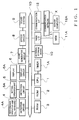
- Fig. 1 is a block diagram illustrating a general hardware setup of an electronic music apparatus to which is applied a music data processing apparatus employing a music data processing apparatus in accordance with an embodiment of the present invention.
- This electronic music apparatus is controlled by a microcomputer comprising a microprocessor unit (CPU) 1, a read-only memory (ROM) 2 and a random-access memory (RAM) 3.
- the CPU 1 controls behavior of the entire electronic music apparatus.
- To the CPU 1 are connected, via a data and address bus 1D, the ROM 2, RAM 3, detection circuits 4 and 5, display circuit 6, tone generator (T.G.) circuit 7, effect circuit 8, external storage device 10, MIDI interface (I/F) 11 and communication interface 12.
- T.G. tone generator
- I/F MIDI interface
- timer 1A for counting various time periods and intervals, for example, to signal interrupt timing for timer interrupt processes.
- the timer 1A generates clock pulses, which are given to the CPU 1 as processing timing instructions or as interrupt instructions.
- the CPU 1 carries out various processes in accordance with such instructions.
- the ROM 2 has prestored therein various programs to be executed by the CPU 1 and various data.
- the RAM 3 is used as a working memory for temporarily storing various data generated as the CPU 1 executes a predetermined program, as a memory for storing the currently-executed program and data related thereto, and for various other purposes. Predetermined address regions of the RAM 3 are allocated and used as registers, flags, tables, memories, etc.
- Performance operator unit 4A is, for example, in the form of a keyboard having a plurality of keys for designating pitches of tones to be generated and a plurality of key switches provided in corresponding relation to the keys.
- the performance operator unit (e.g., keyboard) 4A can be used not only for a manual performance by a user but also as input means for making various settings in the electronic music apparatus, etc.
- the detection circuit 4 detects depression and release of the keys on the performance operator unit 4A to thereby produce detection outputs.
- Setting operator (e.g., switch) unit 5A includes, for example, play list selection switches for selecting a desired play list (see Fig. 2), music data registration/deletion switches for selecting a music data set (see Fig. 3) to be added or deleted to or from a play list, an export switch for instructing conversion (also referred to as "export") of a music data set, and a performance button for instructing a reproduction start or stop of a music data set.
- the performance operator unit 5A may of course include various other operators, such as a numerical-value-data inputting key pad operable to select, set and control a tone pitch, tone color, effect and the like, a character (or letter) data inputting keyboard and a mouse for manipulating a predetermined pointing device displayed on a display 6A.
- the detection circuit 5 detects operating states of the above-mentioned switches and outputs switch information, corresponding to the detected operating states, to the CPU 1 via the data and address bus 1D.
- the display circuit 6 displays, on the display 6A that is, for example, in the form of a liquid crystal display (LCD) panel or CRT, a list of already-registered play lists, a list of music data sets already registered in each of the play lists, a list of music data sets already registered in the external storage device 10 etc. controlling states of the CPU 1, and various other information.
- the user can, for example, ascertain the already-registered play lists and contents of the individual lists and readily register or delete a music data set to or from any one of the play lists.
- the tone generator (T.G.) circuit 7 which is capable of simultaneously generating tone signals in a plurality of channels, receives, via the data and address bus 1D, various performance information generated in response to user's manipulation on the performance operator unit 4A or various performance information generated on the basis of reproduction of a music data set, and it generates tone signals based on the received performance information.
- the tone signals thus generated by the tone generator circuit 7 are audibly reproduced or sounded by a sound system 9, including an amplifier and speaker, after being imparted with desired effects via the effect circuit 8.
- the tone generator circuit 7, effect circuit 8 and sound system 9 may be constructed in any conventionally known manner.
- any desired tone synthesis method may be used in the tone generator circuit 7, such as the FM, PCM, physical model or formant synthesis method.
- the tone generator circuit 7 may be implemented by either dedicated hardware or software processing performed by the CPU 1.
- the external storage device 10 is provided for storing various data, such as already-registered play lists and a multiplicity of music data sets, as well as control-related data, such as various control programs to be executed by the CPU 1. Where a particular control program is not prestored in the ROM 2, the control program may be prestored in the external storage device (e.g., hard disk device) 10, so that, by reading the control program from the external storage device 10 into the RAM 3, the CPU 1 is allowed to operate in exactly the same way as in the case where the particular control program is stored in the program memory 2. This arrangement greatly facilitates version upgrade of the control program, addition of a new control program, etc.
- the external storage device e.g., hard disk device
- the external storage device 10 may comprise any of various removable-type media other than the hard disk (HD), such as a flexible disk (FD), compact disk (CD-ROM or CD-RAM), magneto-optical disk (MO) and digital versatile disk (DVD), or a semiconductor memory, such as a flash memory.
- HD hard disk
- FD flexible disk
- CD-ROM or CD-RAM compact disk
- MO magneto-optical disk
- DVD digital versatile disk
- semiconductor memory such as a flash memory.
- the MIDI interface (I/F) 11 is provided for inputting performance data of the MIDI format (i.e., MIDI data) from externally-connected other MIDI equipment 11A or the like to the electronic music apparatus, and for outputting performance data of the MIDI format (i.e., MIDI data) from the electronic music apparatus to the other MIDI equipment 11A or the like.
- the other MIDI equipment 11A may be of any type (or operating type), such as the keyboard type, stringed instrument type, wind instrument type, percussion instrument type or body-attachable type, as long as it can generate MIDI data in response to operation by a user of the equipment.
- the MIDI interface 11 may be a general-purpose interface rather than a dedicated MIDI interface, such as RS-232C, USB (Universal Serial Bus) or IEEE1394, in which case other data than MIDI event data may be communicated at the same time.
- the other MIDI equipment 11A may be arranged to communicate other data than MIDI event data.
- the performance data may be in any other format than the MIDI format, in which case the MIDI interface 11 and other MIDI equipment 11A are constructed in conformity with the data of the other format.
- the communication interface (I/F) 12 is an interface connected to a wired or wireless communication network X, such as a LAN, the Internet, telephone line network, etc., via which it can be connected to a desired server computer 12A to receive various desired control programs and data from the server computer 12A. Namely, where any control program or data is not stored in the ROM 2 or external storage device (e.g., hard disk) 10, the communication interface 12 is used to download the control program or data from the server computer 12A. It should be appreciated that the communication interface 12 may be of either or both of wired and wireless types.
- the electronic music apparatus of the present invention is not limited to the type where the performance operator unit 4A is a keyboard, and it may be of any other desired type, such as a stringed instrument type, wind instrument type or percussion instrument type. Further, the electronic music apparatus of the present invention is not limited to the type where the performance operator unit 4A, display 6A, tone generator circuit 7, etc. are incorporated together within the body of the electronic music apparatus; for example, the electronic music apparatus may be constructed such that the above-mentioned components are provided separately and interconnected via communication facilities, such as a MIDI interface, various networks and/or the like. Moreover, the electronic music apparatus of the present invention may be applied to any desired type of apparatus or equipment other than an electronic musical instrument as described above, such as a personal computer, karaoke apparatus or game apparatus.
- Fig. 2 is a conceptual diagram showing an example structure of a play list
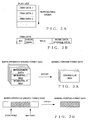
- FIG. 3 is a conceptual diagram showing example structures of a pre-export music data set (i.e., music data set before export) and post-export music data set (i.e., music data set after export).
- a pre-export music data set i.e., music data set before export
- post-export music data set i.e., music data set after export
- the pre-export or unexported music data set reproducible by the electronic music apparatus of Fig. 1 will be referred to as "maker/apparatus-specific-format data set”
- general-purpose-format data set so as to distinguish from the post-export or exported music data set reproducible by the other electronic music apparatus that will be referred to as "general-purpose-format data set”.
- the terms "formats" of music data sets embrace, for example, data structures (such as monaural and stereophonic structures) and data file formats (such as a WAV file format and MP3 file format).
- each play list is reproduction definition information that defines, in reproducing order, a plurality of music data sets to be successively reproduced, even without a user's reproduction instruction, among a multiplicity of music data sets generally stored in the ROM 2, RAM 3 or external storage device 10.
- the play list defines a plurality of "item data”.
- the item data include a "number”, "checkmark”, "title” and "music data storage path”.
- the "number” is a unique number assigned to the to-be-reproduced music data set when it is added to the list; for example, a serial number is assigned to each added music data set in accordance with the reproducing order.
- the "checkmark” is intended to further narrow down music data sets to be reproduced among the music data sets defined in the play list. Namely, only each music data set with the "checkmark” added thereto is subjected to reproduction, and each music data set with no such "checkmark” is not subjected to reproduction. Whether not the checkmark is to be added can be determined as desired by the user per item data.
- the "title” is predetermined information pertaining to the music data set, which is information, such as a music piece name, to be visually shown in when a list of music data sets defined in the play list is displayed.
- the "music data storage path” is information pointing to storage locations where the music data set is actually stored.
- the play list only the respective storage paths of the music data sets are stored without the actual music data sets themselves being stored therein; thus, any desired one of the music data sets is read out and reproduced, on the basis of the storage path, from the storage locations in the external storage device 10 having the desired music data set stored therein.
- the play lists and item data are not limited to the above-described structures.
- Fig. 3A shows, on its left side, a maker/apparatus-specific-format data set that is a music data set before export (i.e., unexported or pre-export music data set), which comprises management data, monaural left-channel (monaural L) data of the WAV file format, monaural right-channel (monaural R) data of the WAV file format.
- a music data set before export i.e., unexported or pre-export music data set
- management data i.e., unexported or pre-export music data set
- the management data include or store, for each music data set, various parameters pertaining to recording/reproduction of the music data set, such as a data-recording input level, data-reproducing output level, punch-in/punch-out points, start and end points designating a data reproduction range (only a range between the start and end points is reproduced at the reproduction of the music data set).
- the maker/apparatus-specific-format data set including the monaural left-channel (monaural L) data and monaural right-channel (monaural R) data of the WAV file format, is, for example, a body of audio data on the basis of which tones of an entire music piece are generated, and which comprises data reproducible by the electronic music apparatus of Fig. 1 but non-reproducible by another electronic music apparatus different in model type, maker or the like from the apparatus of Fig. 1.
- Fig. 3B shows, on its right side, shows a "general-purpose-format data set” that is a music data set after export (i.e., post-export music data set), which comprises only monaural left-channel (monaural L) and right-channel (monaural R) data of the WAV file format.
- the "general-purpose-format data set” is reproducible by any of other electronic music apparatus different in model type, maker or the like from the electronic music apparatus of Fig. 1; such a general-purpose-format data set may or may not be reproducible by the music apparatus shown in Fig. 1.
- the music apparatus of Fig. 1 is constructed to convert a range of data between the start and end points set in the management data.
- maker/apparatus-specific-format data set and general-purpose-format data set may be in other than the illustrated data structure (monaural or stereophonic) and file format (WAV file format).
- the maker/apparatus-specific-format data set reproducible by the electronic music apparatus of Fig. 1 and the "general-purpose-format data set" is reproducible by any of other electronic music apparatus different in model type, maker or the like from the music apparatus shown in Fig. 1 are in different formats. Therefore, the maker/apparatus-specific-format data set is not reproducible by the other music apparatus.
- data conversion (export) processing which can be classified broadly into several types. Thus, the following paragraphs describe four types of data conversion (export) processing for converting (exporting) a maker/apparatus-specific-format data set into a general-purpose-format data set, with reference to Figs. 4A - 4D.
- the firs-type conversion processing (i.e., first-type export processing) shown in Fig. 4A is a process intended to collectively export a plurality of maker/apparatus-specific-format data sets, defined in a play list, into corresponding general-purpose-format data sets.
- the maker/apparatus-specific-format data sets before the export i.e., data 1 - data n
- the general-purpose-format data sets after the export i.e., data 1' - data n'
- the second-type data conversion processing (i.e., second-type export processing) shown in Fig. 4B is a process intended to collectively export a plurality of maker/apparatus-specific-format data sets, defined in a play list, into corresponding general-purpose-format data sets, similarly to the first-type data conversion processing.
- the second-type data conversion processing is further intended to automatically create a new play list (for convenience of explanation, called "general-purpose-format-data play list") which defines the exported general-purpose-format data sets, as objects of reproduction, in reproducing order and which is used in another electronic music apparatus than the apparatus of Fig. 1.
- the other electronic music apparatus too can reproduce the exported general-purpose-format data set on the basis of the general-purpose-format-data play list, in a similar manner to data reproduction based on the play list of the maker/apparatus-specifie-format data sets.
- the general-purpose-format-data play list has to be created by the user selecting and registering a plurality of general-purpose-format data sets in given order similar to the order defined by the play list of the maker/apparatus-specific-format data sets.
- the general-purpose-format-data play list can be newly created automatically, without the user having to create it by himself or herself.
- the second-type export processing can significantly reduce the time and labor and achieve an enhanced convenience, as compared with the first-type export processing.
- the general-purpose-format data play list too is interpretable by other electronic music apparatus.
- the third-type data conversion processing (i.e., third-type export processing) shown in Fig. 4C is a process intended to export a plurality of maker/apparatus-specific-format data sets (data 1 - data n) into a single integrated general-purpose-format data set. Namely, with the third-type export processing, a single general-purpose-format data set of a "medley" type can be created on the basis of a plurality of maker/apparatus-specific-format data sets.
- the fourth-type data conversion processing (i.e., fourth-type export processing) shown in Fig. 4D is a process intended to export a plurality of maker/apparatus-specific-format data sets (data 1 - data n) into a single integrated general-purpose-format data set by connecting between the successive maker/apparatus-specific-format data sets through "cross-fading".
- the fourth-type export processing can create a single general-purpose-format data set of a "medley" type on the basis of a plurality of the maker/apparatus-specific-format data sets, as with the third-type export processing.
- the forth-type export processing can provide general-purpose-format data capable of successively generating tones smoothly with no break therebetween during reproduction.
- export processing is just illustrative and more than the four types of export processing types may be used.
- the user may select any desired one of the data conversion processing types.
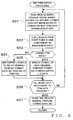
- FIG. 5 is a flow chart showing an example operational sequence of the "main processing" carried out in the electronic music apparatus of Fig. 1.
- Fig. 5 is a flow chart showing an example operational sequence of the "main processing" carried out in the electronic music apparatus of Fig. 1;
- a play list is created, edited and/or selected in response to user's operation, at step S1.
- the user can add or delete a desired music data set (i.e., maker/apparatus-specific-format data set) to or from a play list newly created in response to operation of the play list switches or a play list selected from one or more existing play lists.
- a desired music data set i.e., maker/apparatus-specific-format data set
- one play list to be used for reproduction and/or export is specified, and a music data reproduction process is performed on the basis of the specified current play list in response to user's operation of the performance button etc.
- the maker/apparatus-specific-format data sets registered in the play list are sequentially read out and reproduced in the reproducing order.
- the music data reproduction process may be arranged in any conventionally-known manner.
- step S3 a determination is made as to whether or not collective export of the maker/apparatus-specific-format data sets has been instructed. If the collective export has been instructed, for example, by the user operating the export switch (YES determination at step S3), then "type-correspondent export processing" is performed on all of the to-be-reproduced maker/apparatus-specific-format data sets defined in the current play list, at step S4. In this manner, the maker/apparatus-specific-format data sets are exported into general-purpose-format data.
- the "type-correspondent export processing" will be described in detail below with reference to Figs. 6 - 9.
- Figs. 6, 7, 8 and 9 show export processing intended to convert the music data from the maker/apparatus-specific format to the general-purpose format, which correspond to the first-type export processing (see Fig. 4A), second-type export processing (Fig. 4B), third-type export processing (see Fig. 4C) and fourth-type export processing (Fig. 4D), respectively.
- Fig. 6 is a flow chart showing an example operational sequence of the first-type export processing.
- the maker/apparatus-specific-format data set represented by the leading or next item data defined in the play list, is read out from the external storage device 10, at step S11.
- data in the range from the start point to the end point preset in the management data are clipped (i.e., cut out) from each of the monaural L and monaural R data included in the read-out maker/apparatus-specific-format data set.
- stereo L/R data (general-purpose-format data) are created using the thus-clipped monaural L and monaural R data as stereo L and stereo R data, and the thus-created stereo L/R data are stored into the external storage device 10.
- the maker/apparatus-specific-format data set is converted or exported into a general-purpose-format data set.
- File name to be assigned to the entire exported general-purpose-format data set may be the same as the pre-export maker/apparatus-specific-format data set, or may be automatically created using, for example, a combination of a predetermined string of characters (letters) and sequential number.
- step S14 a determination is made as to whether all of the predetermined music data sets (maker/apparatus-specific-format data sets) have been exported in accordance with the item data defined in the current play list. If all of the predetermined music data sets (maker/apparatus-specific-format data sets) have been exported (YES determination at step S14), the instant export processing is brought to an end. If all of the predetermined music data sets have not been exported (NO determination at step S14), the processing reverts to step S11 in order to repeat the operations at steps S11 - S13. In the aforementioned manner, the data conversion (export) processing is performed on all of the maker/apparatus-specifie-format data sets defined in the play list as objects of reproduction.
- Fig. 7 is a flow chart showing an example operational sequence of the second-type export processing.
- This "second-type export processing" is different from the first-type export processing only in that it creates, at the time of data conversion, a general-purpose-format data play list that defines, in reproducing order, general-purpose-format data sets to be used in another music apparatus (see Fig. 4).
- operations in the second-type export processing are mostly similar to those in the first-type export processing. More specifically, steps S21 - S23 and S25 of Fig. 7 are similar to steps S11 - S13 and S14 of Fig. 6.
- the data conversion (export) processing is performed on all of the maker/apparatus-specific-format data sets defined in the current play list as objects of reproduction.
- an operation is performed at step S24 for adding item data to the general-purpose-format data play list, to update the play list.
- Fig. 8 is a flow chart showing an example operational sequence of the third-type export processing.
- the maker/apparatus-specific-format data set represented by the leading or next item data defined in the current play list, is read out from the external storage device 10, at step S31.
- data in the range from the start point to the end point preset in the management data are clipped (i.e., cut out) from each of the monaural L and monaural R data included in the read-out maker/apparatus-specific-format data set.
- step S33 a determination is made as to whether the readout of the maker/apparatus-specific-format data set is based on the leading item data.
- a stereo L/R data set (general-purpose-format data set) is created using the thus-clipped data monaural L and monaural R data as stereo L and stereo R data, at step S35. In this way, the maker/apparatus-specific-format data set is exported.
- step S33 the processing branches to step S34, where the clipped monaural L and monaural R data are added to the end of the general-purpose-format data set having been created at step S35.
- step S36 a determination is made as to whether all of the predetermined music data sets (maker/apparatus-specific-format data sets) have been exported in accordance with the item data defined in the current play list.
- the instant export processing is brought to an end after storing the created general-purpose-format data set in the external storage device 10 at step S37.
- File name to be assigned to the general-purpose-format data set may be the same as any one of the pre-export maker/apparatus-specific-format data sets, or may be automatically created using, for example, a predetermined string of characters (letters). Alternatively, the user may be prompted to enter a desired file name.
- the processing reverts to step S31 in order to repeat the operations at steps S31 -S35. In the aforementioned manner, the data conversion (export) processing is performed on all of the maker/apparatus-specific-format data sets, defined in the current play list as objects of reproduction, for exporting the data sets into a single integrated general-purpose-format data set.
- Fig. 9 is a flow chart showing an example operational sequence of the fourth-type export processing.
- This "fourth-type export processing" is different from the third-type export processing only in that general-purpose-format data sets are connected together, after the data conversion, through a cross-fade process (see Fig. 4). Namely, operations in the fourth-type export processing are mostly similar to those in the third-type export processing. More specifically, steps S41 - S47 (step S44 excluded) of Fig. 9 are similar to steps S31 - S37 (step S34 excluded) of Fig. 8.
- step S44 different from step S34, the clipped L/R data are added to the end of the exported general-purpose-format data set created at step S45, while being subjected to cross-fading; thus, the exported general-purpose-format data sets are connected together using the cross-fade (i.e., in a cross-fading fashion).
- the data conversion (export) processing is performed on all of the maker/apparatus-specific-format data sets, defined in the current play list as objects of reproduction, for creating a single integrated exported general-purpose-format data set.
- the present invention may be provided with only one, two or three of the four types of export processing.
- the user may be caused to select which of the types is to be used.
- the present invention is not limited to the arrangements where only a range of data from the preset start point to the preset end point is exported; for example, if no data range to be exported is designated, the whole of the music data set in question may be exported. Whether a part or whole of the music data set in question should be exported may be selected by the user or the like. Further, whether a part or whole of the music data set should be exported may be set per item data stored in the play list.
- the present invention is not limited to the arrangements where all of the music data sets defined in the play list are exported; for example, the present invention may be arranged to export only each of the music data sets for which the corresponding item data has the checkmark placed therein.
- the present invention is not limited to the arrangements where the play list is created or updated by the user operating as necessary the data registration/deletion switches to add or delete a music data set to or from the play list.
- a play list may be created or updated automatically with music data sets extracted as objects of reproduction in accordance with suitable extraction conditions.
Landscapes
- Engineering & Computer Science (AREA)
- Multimedia (AREA)
- Signal Processing (AREA)
- Electrophonic Musical Instruments (AREA)
- Management Or Editing Of Information On Record Carriers (AREA)
- Signal Processing For Digital Recording And Reproducing (AREA)
Priority Applications (1)
| Application Number | Priority Date | Filing Date | Title |
|---|---|---|---|
| EP07112762A EP1845528A1 (de) | 2004-12-13 | 2005-12-08 | Vorrichtung und Verfahren zur Verarbeitung von Musikdaten |
Applications Claiming Priority (1)
| Application Number | Priority Date | Filing Date | Title |
|---|---|---|---|
| JP2004359653A JP4740583B2 (ja) | 2004-12-13 | 2004-12-13 | 音楽データ処理装置及びプログラム |
Related Child Applications (1)
| Application Number | Title | Priority Date | Filing Date |
|---|---|---|---|
| EP07112762A Division EP1845528A1 (de) | 2004-12-13 | 2005-12-08 | Vorrichtung und Verfahren zur Verarbeitung von Musikdaten |
Publications (1)
| Publication Number | Publication Date |
|---|---|
| EP1669995A1 true EP1669995A1 (de) | 2006-06-14 |
Family
ID=35735104
Family Applications (2)
| Application Number | Title | Priority Date | Filing Date |
|---|---|---|---|
| EP05111818A Withdrawn EP1669995A1 (de) | 2004-12-13 | 2005-12-08 | Vorrichtung und Verfahren zur Verarbeitung von Musikdaten |
| EP07112762A Withdrawn EP1845528A1 (de) | 2004-12-13 | 2005-12-08 | Vorrichtung und Verfahren zur Verarbeitung von Musikdaten |
Family Applications After (1)
| Application Number | Title | Priority Date | Filing Date |
|---|---|---|---|
| EP07112762A Withdrawn EP1845528A1 (de) | 2004-12-13 | 2005-12-08 | Vorrichtung und Verfahren zur Verarbeitung von Musikdaten |
Country Status (4)
| Country | Link |
|---|---|
| US (2) | US20060123980A1 (de) |
| EP (2) | EP1669995A1 (de) |
| JP (1) | JP4740583B2 (de) |
| CN (1) | CN1790479B (de) |
Families Citing this family (5)
| Publication number | Priority date | Publication date | Assignee | Title |
|---|---|---|---|---|
| FR2899354A1 (fr) * | 2006-03-28 | 2007-10-05 | St Microelectronics Sa | Traitement de donnees avec transfert de donnees entre memoires. |
| JP4399440B2 (ja) | 2006-06-30 | 2010-01-13 | 株式会社コナミデジタルエンタテインメント | 音楽ジャンル判別装置及びこれを備えたゲーム機 |
| KR101116617B1 (ko) * | 2007-07-20 | 2012-03-07 | 삼성전자주식회사 | I2S(Inter-IC Sound) 형식의 오디오전송과 처리에 관한 방법 및 그 장치 |
| JP5678409B2 (ja) * | 2009-03-30 | 2015-03-04 | ヤマハ株式会社 | 楽音信号作成装置及びプログラム |
| US9160566B2 (en) * | 2009-04-10 | 2015-10-13 | Qualcomm Incorporated | QOS mapping for relay nodes |
Citations (4)
| Publication number | Priority date | Publication date | Assignee | Title |
|---|---|---|---|---|
| US6034314A (en) * | 1996-08-29 | 2000-03-07 | Yamaha Corporation | Automatic performance data conversion system |
| EP1198133A1 (de) * | 2000-04-21 | 2002-04-17 | Sony Corporation | Informationsverarbeitungsgerät und verfahren, programm und aufgenommenes medium |
| US20040078383A1 (en) * | 2002-10-16 | 2004-04-22 | Microsoft Corporation | Navigating media content via groups within a playlist |
| WO2004036906A1 (ja) * | 2002-10-21 | 2004-04-29 | Matsushita Electric Industrial Co., Ltd. | データ処理装置 |
Family Cites Families (2)
| Publication number | Priority date | Publication date | Assignee | Title |
|---|---|---|---|---|
| JPH06259887A (ja) * | 1993-03-09 | 1994-09-16 | Sony Corp | 記録再生装置 |
| US20040019396A1 (en) * | 2001-03-30 | 2004-01-29 | Mcmahon Maureen | Methods for recording music to optical media |
-
2004
- 2004-12-13 JP JP2004359653A patent/JP4740583B2/ja not_active Expired - Fee Related
-
2005
- 2005-12-07 US US11/297,518 patent/US20060123980A1/en not_active Abandoned
- 2005-12-08 EP EP05111818A patent/EP1669995A1/de not_active Withdrawn
- 2005-12-08 EP EP07112762A patent/EP1845528A1/de not_active Withdrawn
- 2005-12-13 CN CN2005101296136A patent/CN1790479B/zh not_active Expired - Fee Related
-
2007
- 2007-10-29 US US11/927,530 patent/US20080060501A1/en not_active Abandoned
Patent Citations (5)
| Publication number | Priority date | Publication date | Assignee | Title |
|---|---|---|---|---|
| US6034314A (en) * | 1996-08-29 | 2000-03-07 | Yamaha Corporation | Automatic performance data conversion system |
| EP1198133A1 (de) * | 2000-04-21 | 2002-04-17 | Sony Corporation | Informationsverarbeitungsgerät und verfahren, programm und aufgenommenes medium |
| US20040078383A1 (en) * | 2002-10-16 | 2004-04-22 | Microsoft Corporation | Navigating media content via groups within a playlist |
| WO2004036906A1 (ja) * | 2002-10-21 | 2004-04-29 | Matsushita Electric Industrial Co., Ltd. | データ処理装置 |
| EP1560431A1 (de) * | 2002-10-21 | 2005-08-03 | Matsushita Electric Industrial Co., Ltd. | Vorrichtung zur datenverarbeitung |
Also Published As
| Publication number | Publication date |
|---|---|
| JP4740583B2 (ja) | 2011-08-03 |
| CN1790479B (zh) | 2010-12-22 |
| EP1845528A1 (de) | 2007-10-17 |
| US20080060501A1 (en) | 2008-03-13 |
| JP2006172534A (ja) | 2006-06-29 |
| US20060123980A1 (en) | 2006-06-15 |
| CN1790479A (zh) | 2006-06-21 |
Similar Documents
| Publication | Publication Date | Title |
|---|---|---|
| US8121314B2 (en) | Mixing apparatus, mixing method, and mixing program | |
| JP2001092464A (ja) | 楽音生成方法、楽音生成用データ記録方法および楽音生成用データを記録した記録媒体 | |
| JP3838353B2 (ja) | 楽音生成装置および楽音生成用コンピュータプログラム | |
| JP3470596B2 (ja) | 情報表示方法および情報表示プログラムが記録された記録媒体 | |
| US20080060501A1 (en) | Music data processing apparatus and method | |
| JP5724231B2 (ja) | 電子音楽装置及びプログラム | |
| JP3821103B2 (ja) | 情報表示方法および情報表示装置、並びに、情報表示プログラムを記録した記録媒体 | |
| JP3551086B2 (ja) | 楽音合成装置及び方法 | |
| JP3551087B2 (ja) | 楽曲自動再生装置および連続楽曲情報作成再生プログラムを記録した記録媒体 | |
| JP3671788B2 (ja) | 音色設定装置および音色設定方法並びに音色設定プログラムを記録したコンピュータで読み取り可能な記録媒体 | |
| JP2001109470A (ja) | 自動演奏装置及び方法 | |
| JP5505012B2 (ja) | 電子音楽装置及びプログラム | |
| JPH1039864A (ja) | 電子楽器及びそのディスプレイ装置 | |
| JP4270102B2 (ja) | 自動演奏装置及びプログラム | |
| JP3843688B2 (ja) | 楽曲データ編集装置 | |
| JP4305315B2 (ja) | 自動演奏データ特性変更装置及びそのプログラム | |
| JP2003114680A (ja) | 楽曲情報編集装置及び楽曲情報編集プログラム | |
| JP4685226B2 (ja) | 波形再生用自動演奏装置 | |
| JP3620423B2 (ja) | 楽曲情報入力編集装置 | |
| JP3752956B2 (ja) | 演奏ガイド装置および演奏ガイド方法並びに演奏ガイドプログラムを記録したコンピュータ読み取り可能な記録媒体 | |
| JP2005106928A (ja) | 演奏データ処理装置及びプログラム | |
| JP3518392B2 (ja) | 演奏情報設定装置および演奏情報設定プログラムを記録したコンピュータで読み取り可能な記録媒体 | |
| JPH11109972A (ja) | 演奏データから和音を検出する和音検出方法および和音検出装置、ならびに、和音検出用プログラムを記録した記録媒体 | |
| JPH10133658A (ja) | 伴奏パターンデータ作成装置 | |
| JP4835433B2 (ja) | 演奏パターン再生装置及びそのコンピュータプログラム |
Legal Events
| Date | Code | Title | Description |
|---|---|---|---|
| PUAI | Public reference made under article 153(3) epc to a published international application that has entered the european phase |
Free format text: ORIGINAL CODE: 0009012 |
|
| 17P | Request for examination filed |
Effective date: 20051212 |
|
| AK | Designated contracting states |
Kind code of ref document: A1 Designated state(s): AT BE BG CH CY CZ DE DK EE ES FI FR GB GR HU IE IS IT LI LT LU LV MC NL PL PT RO SE SI SK TR |
|
| AX | Request for extension of the european patent |
Extension state: AL BA HR MK YU |
|
| 17Q | First examination report despatched |
Effective date: 20070115 |
|
| AKX | Designation fees paid |
Designated state(s): AT BE BG CH CY CZ DE DK EE ES FI FR GB GR HU IE IS IT LI LT LU LV MC NL PL PT RO SE SI SK TR |
|
| RAP1 | Party data changed (applicant data changed or rights of an application transferred) |
Owner name: YAMAHA CORPORATION |
|
| STAA | Information on the status of an ep patent application or granted ep patent |
Free format text: STATUS: THE APPLICATION IS DEEMED TO BE WITHDRAWN |
|
| 18D | Application deemed to be withdrawn |
Effective date: 20150421 |