EP1670086B1 - Alliages à base de nickel pour utilisation comme collectors de courant d'une électrode positive dans des cellules électrochemiquees non aqueuses - Google Patents
Alliages à base de nickel pour utilisation comme collectors de courant d'une électrode positive dans des cellules électrochemiquees non aqueuses Download PDFInfo
- Publication number
- EP1670086B1 EP1670086B1 EP05026752A EP05026752A EP1670086B1 EP 1670086 B1 EP1670086 B1 EP 1670086B1 EP 05026752 A EP05026752 A EP 05026752A EP 05026752 A EP05026752 A EP 05026752A EP 1670086 B1 EP1670086 B1 EP 1670086B1
- Authority
- EP
- European Patent Office
- Prior art keywords
- alloy
- nickel
- weight
- current collector
- carbonate
- Prior art date
- Legal status (The legal status is an assumption and is not a legal conclusion. Google has not performed a legal analysis and makes no representation as to the accuracy of the status listed.)
- Expired - Lifetime
Links
Images




Classifications
-
- H—ELECTRICITY
- H01—ELECTRIC ELEMENTS
- H01M—PROCESSES OR MEANS, e.g. BATTERIES, FOR THE DIRECT CONVERSION OF CHEMICAL ENERGY INTO ELECTRICAL ENERGY
- H01M4/00—Electrodes
- H01M4/02—Electrodes composed of, or comprising, active material
- H01M4/64—Carriers or collectors
- H01M4/66—Selection of materials
- H01M4/661—Metal or alloys, e.g. alloy coatings
-
- H—ELECTRICITY
- H01—ELECTRIC ELEMENTS
- H01M—PROCESSES OR MEANS, e.g. BATTERIES, FOR THE DIRECT CONVERSION OF CHEMICAL ENERGY INTO ELECTRICAL ENERGY
- H01M10/00—Secondary cells; Manufacture thereof
- H01M10/05—Accumulators with non-aqueous electrolyte
- H01M10/052—Li-accumulators
-
- H—ELECTRICITY
- H01—ELECTRIC ELEMENTS
- H01M—PROCESSES OR MEANS, e.g. BATTERIES, FOR THE DIRECT CONVERSION OF CHEMICAL ENERGY INTO ELECTRICAL ENERGY
- H01M6/00—Primary cells; Manufacture thereof
- H01M6/14—Cells with non-aqueous electrolyte
- H01M6/16—Cells with non-aqueous electrolyte with organic electrolyte
-
- Y—GENERAL TAGGING OF NEW TECHNOLOGICAL DEVELOPMENTS; GENERAL TAGGING OF CROSS-SECTIONAL TECHNOLOGIES SPANNING OVER SEVERAL SECTIONS OF THE IPC; TECHNICAL SUBJECTS COVERED BY FORMER USPC CROSS-REFERENCE ART COLLECTIONS [XRACs] AND DIGESTS
- Y02—TECHNOLOGIES OR APPLICATIONS FOR MITIGATION OR ADAPTATION AGAINST CLIMATE CHANGE
- Y02E—REDUCTION OF GREENHOUSE GAS [GHG] EMISSIONS, RELATED TO ENERGY GENERATION, TRANSMISSION OR DISTRIBUTION
- Y02E60/00—Enabling technologies; Technologies with a potential or indirect contribution to GHG emissions mitigation
- Y02E60/10—Energy storage using batteries
-
- Y—GENERAL TAGGING OF NEW TECHNOLOGICAL DEVELOPMENTS; GENERAL TAGGING OF CROSS-SECTIONAL TECHNOLOGIES SPANNING OVER SEVERAL SECTIONS OF THE IPC; TECHNICAL SUBJECTS COVERED BY FORMER USPC CROSS-REFERENCE ART COLLECTIONS [XRACs] AND DIGESTS
- Y10—TECHNICAL SUBJECTS COVERED BY FORMER USPC
- Y10T—TECHNICAL SUBJECTS COVERED BY FORMER US CLASSIFICATION
- Y10T29/00—Metal working
- Y10T29/49—Method of mechanical manufacture
- Y10T29/49002—Electrical device making
- Y10T29/49108—Electric battery cell making
-
- Y—GENERAL TAGGING OF NEW TECHNOLOGICAL DEVELOPMENTS; GENERAL TAGGING OF CROSS-SECTIONAL TECHNOLOGIES SPANNING OVER SEVERAL SECTIONS OF THE IPC; TECHNICAL SUBJECTS COVERED BY FORMER USPC CROSS-REFERENCE ART COLLECTIONS [XRACs] AND DIGESTS
- Y10—TECHNICAL SUBJECTS COVERED BY FORMER USPC
- Y10T—TECHNICAL SUBJECTS COVERED BY FORMER US CLASSIFICATION
- Y10T428/00—Stock material or miscellaneous articles
- Y10T428/12—All metal or with adjacent metals
- Y10T428/12229—Intermediate article [e.g., blank, etc.]
- Y10T428/12271—Intermediate article [e.g., blank, etc.] having discrete fastener, marginal fastening, taper, or end structure
- Y10T428/12278—Same structure at both ends of plural taper
-
- Y—GENERAL TAGGING OF NEW TECHNOLOGICAL DEVELOPMENTS; GENERAL TAGGING OF CROSS-SECTIONAL TECHNOLOGIES SPANNING OVER SEVERAL SECTIONS OF THE IPC; TECHNICAL SUBJECTS COVERED BY FORMER USPC CROSS-REFERENCE ART COLLECTIONS [XRACs] AND DIGESTS
- Y10—TECHNICAL SUBJECTS COVERED BY FORMER USPC
- Y10T—TECHNICAL SUBJECTS COVERED BY FORMER US CLASSIFICATION
- Y10T428/00—Stock material or miscellaneous articles
- Y10T428/12—All metal or with adjacent metals
- Y10T428/12306—Workpiece of parallel, nonfastened components [e.g., fagot, pile, etc.]
-
- Y—GENERAL TAGGING OF NEW TECHNOLOGICAL DEVELOPMENTS; GENERAL TAGGING OF CROSS-SECTIONAL TECHNOLOGIES SPANNING OVER SEVERAL SECTIONS OF THE IPC; TECHNICAL SUBJECTS COVERED BY FORMER USPC CROSS-REFERENCE ART COLLECTIONS [XRACs] AND DIGESTS
- Y10—TECHNICAL SUBJECTS COVERED BY FORMER USPC
- Y10T—TECHNICAL SUBJECTS COVERED BY FORMER US CLASSIFICATION
- Y10T428/00—Stock material or miscellaneous articles
- Y10T428/19—Sheets or webs edge spliced or joined
Definitions
- the present invention generally relates to a positive electrode support material in electrochemical cells containing nonaqueous electrolytes and, more specifically, to nickel-based alloys as positive electrode current collector materials.
- Solid cathode, liquid organic electrolyte, alkali metal anode electrochemical cells or batteries are used in applications ranging from power sources for implantable medical devices to down-hole instrumentation in oil/gas well drilling.
- the cell is comprised of a casing housing a positive electrode comprised of a cathode active material, material to enhance conductivity, a binder material, and a current collector material; a negative electrode comprised of active material such as an alkali metal and a current collector material; a nonaqueous electrolyte solution that includes an alkali metal salt and an organic solvent system; and a separator material isolating the electrodes from each other.
- a positive electrode comprised of a cathode active material, material to enhance conductivity, a binder material, and a current collector material
- a negative electrode comprised of active material such as an alkali metal and a current collector material
- a nonaqueous electrolyte solution that includes an alkali metal salt and an organic solvent system
- the positive electrode current collector serves several functions. First, it acts as a support for the cathode active material. Secondly, the positive current collector conducts the flow of electrons between the cathode active material and the positive cell terminal. Consequently, the material selected for this function affects the longevity and performance of the electrochemical cell into which it is fabricated. For one, the positive electrode current collector must maintain chemical stability and mechanical integrity in corrosive electrolytes throughout the anticipated useful life of the cell. In addition, as applications become more demanding on electrochemical cells containing nonaqueous electrolytes (including increased shelf life and extended long term performance), the availability of corrosion resistant materials suitable for these applications becomes more limited. For example, the availability of materials capable of operating or maintaining chemical stability at elevated temperatures is limited.
- Elevated temperatures may be encountered either during storage or under operating conditions (for example, down-hole in well drilling), or during autoclave sterilization of an implantable medical device powered by the electrochemical cell ( Thiebolt III and Takeuchi, 1989, Progress in Batteries & Solar Cells 8:122-125 ).
- the prior art has developed various corrosion resistant materials useful for positive electrode current collectors.
- certain of these materials corrode when exposed to elevated temperatures of about 72°C. or higher, or when exposed to operating conditions in aggressive cell environments that can compromise surface passivity.
- the chemical integrity of the positive electrode current collector may depend on the specific cathode active material.
- fluorinated carbon (CF x ) is contacted to a current collector of titanium. It is known that titanium reacts with species present within the internal cell environment to undesirably increase cell impedance by fluorination and excessive passivation of the current collector interface ( Fateev, S. A., Denisova, O. O., I. P.
- the present invention is directed to providing a positive electrode current collector material that exhibits chemical compatibility with aggressive cell environments; provides high corrosion resistance, but does not develop excessive passivation in the presence of fluorinated active materials such as fluorinated carbons, and thereby maintains its inherent high interfacial conductivity; provides resistance to surface activation by material handling or mechanical means; and can be manufactured in the required form and thicknesses.
- Nickel-based alloys according to the present invention offer the characteristics required of such positive current collectors. This class of metals also offers other advantages, especially when used in cells for implantable medical devices.
- the power source of an implantable medical device contains current collectors of wrought metal stock in sheet or foil form made by convenient and economical chemical milling/photoetching processes. In contrast to the previously described relatively costly prior art fabrication processes for high chromium ferritic alloys ( Japanese patent publication Nos. 18647 and 15067 ), chemical milling/photo etching these processes readily fabricate the present nickel-based alloy current collectors.
- the present invention as taught in the claims, therefore, relates to a novel alloyed material used to fabricate positive electrode current collectors for solid cathode, liquid organic electrolyte, and alkali metal electrochemical cells.
- the present nickel-based alloys provide high corrosion resistance, particularly where elevated temperature storage and/or discharge performance are required or when long term storage at a broad temperature range is needed. This provides for increased cell longevity relative to other positive electrode current collector materials.
- a preferred composition range for the nickel-based alloys of the present invention comprises, by weight percent:
- nickel-based alloys is not meant to imply that nickel must be the largest constituent in all alloys meeting the compositional requirements of the present invention. Instead, the nickel content provides a "base" of corrosion resistance that is greatly augmented by the presence of chromium and/or molybdenum. In that respect, by weight, nickel comprises up to about 65% of the alloy, chromium comprises up to about 24% of the alloy, and molybdenum comprises up to about 17% of the alloy. Chromium and molybdenum are known to have a powerful effect on the protective ability of the passive layer that forms on these nickel alloys. However, when nickel is the greatest constituent of the alloy composition, then the corrosion resistance is acceptable.
- Nickel-based alloys according to the present invention further comprise, by weight, 0 to 50% iron, 0 to 5% tungsten, 0 to 5% cobalt, 0 to 1% carbon, 0 to 3% copper, 0 to 3% manganese, and minor amounts of at least one element selected from the group consisting of silicon, phosphorus, sulfur, titanium, aluminum, tantalum, zirconium, lanthanum, boron, beryllium, and mixtures thereof.
- the term "minor” means an amount of an alloy constituent less than about 3%, by weight.
- Table 1 contains a summary of the elemental composition of commercially available nickel-based alloys according to the present invention. In individual heats of these alloys, the actual percentage content of each listed element may range around the values given.
- Table 1 Sample Ni Cr Mo Fe W Co Cu Mn Total 625 (UNS N066625) 61 23 10 5 99 C22(UNS (N06022) 59.5 22 13 3 2.5 100 622 (UNS N06022 58 20 14 5 3 100 686 (UNS N06686) 57.63 20.48 16.38 1.04 3.88 99.41 C276 (UNS N10276) 56 16 16 6 4 1 1 100 25-6Mo (UNS N08926) 25 20 7 47 1 100 Elements less than 1% not listed.
- Table 2 contains a summary of the elemental composition of commercially available nickel-based alloys that are not acceptable according to the present invention.
- Table 2 Sample Ni Cr Mo Fe Cu Total 200 nickel (UNS N02200) 100 100 600 alloy (UNS N06600) 76 15 8 99 825 (UNS N08825) 42 21.5 3 30 2 98.5 Elements less than 1% not listed.
- the "base” may be comprised of, by weight, nickel in the amount of at least about 23%.
- the remainder of the alloy formulation comprises, by weight, at least about 20% of a combination of chromium and molybdenum, or at least about 5% molybdenum.
- the preferred amounts of chromium, and/or molybdenum confer on the alloys a high degree of resistance to pitting and crevice corrosion in the presence of nonaqueous electrolytes activating cathode active materials typically coupled with alkali metal anode active materials, whether in a primary or a secondary electrochemical configuration. This is especially the case at elevated temperatures above about 72°C. Nitrogen and other elements present in minor amounts can also be beneficial to corrosion resistance.
- Nickel-based alloys of the present invention may be formed from conventional wrought metal stock in sheet or foil form by any applicable chemical or mechanical means.
- Current collectors can thus be made in the form of a metal sheet without holes, or in the form of screens produced by etching/chemical milling, by mechanical perforation with or without expansion after perforation, or by other means.
- sheet or foil stock made by powder metallurgy techniques can be the starting material, or complete current collectors can be produced in final form by powder metallurgy.
- the positive electrode current collector material of the present invention is useful in electrochemical cells having either a primary configuration with a positive electrode of either a solid cathode active material or a liquid catholyte/carbonaceous material supported on the nickel-based current collector, or a secondary cell configuration.
- such cells preferably comprise an anode active material of a metal selected from Groups IA, IIA and IIIB of the Periodic Table of the Elements. This includes the alkali metals lithium, sodium, potassium, etc., and their alloys and intermetallic compounds including, for example, Li--Si, Li--Al, Li--B and Li--Si--B alloys and intermetallic compounds.
- the preferred anode active material comprises lithium. More preferred is a lithium alloy such as a lithium-aluminum alloy. However, the greater the amounts of aluminum present by weight in the alloy, the lower the energy density of the cell.
- the form of the anode may vary, but preferably the anode is a thin metal sheet or foil of the anode active metal, pressed or rolled on a metallic anode current collector, i.e., preferably comprising nickel, to form an anode component.
- the anode component has an extended tab or lead of the same material as the anode current collector, i.e., preferably nickel, integrally formed therewith such as by welding and contacted by a weld to a cell case of conductive metal in a case-negative electrical configuration.
- the anode may be formed in some other geometry, such as a bobbin shape, cylinder or pellet to allow an alternate low surface area cell design.
- the positive electrode or cathode of the present electrochemical cell is preferably of carbonaceous materials such as graphite, carbon and fluorinated carbon. Such carbonaceous materials are useful in both liquid catholyte and solid cathode primary cells and in rechargeable, secondary cells.
- the positive electrode more preferably comprises a fluorinated carbon represented by the formula (CF x ) n wherein x varies between about 0.1 to 1.9 and preferably between about 0.5 and 1.2 and (C 2 F) n wherein the n refers to the number of monomer units, which can vary widely.
- These electrode active materials are composed of carbon and fluorine, and include graphitic and nongraphitic forms of carbon, such as coke, charcoal or activated carbon.
- cathode active materials useful for constructing an electrochemical cell according to the present invention are selected from a metal, a metal oxide, a metal sulfide or a mixed metal oxide.
- Such electrode active materials include silver vanadium oxide (SVO), copper silver vanadium oxide, manganese dioxide, titanium disulfide, copper oxide, copper sulfide, iron sulfide, iron disulfide, cobalt oxide, nickel oxide, copper vanadium oxide, and combinations thereof.
- the positive electrode preferably comprises a lithiated material that is stable in air and readily handled.
- air-stable lithiated cathode materials include oxides, sulfides, selenides, and tellurides of such metals as vanadium, titanium, chromium, copper, molybdenum, niobium, iron, nickel, cobalt and manganese.
- the more preferred oxides include LiNiO 2 , LiMn 2 O 4' LiCoO 2 , LiCo 0.92 Sn 0.08 O 2 and LiCo 1-x Ni x O 2 .
- the lithium metal comprising the positive electrode is intercalated into a carbonaceous negative electrode or anode by applying an externally generated electrical potential to recharge the cell.
- the applied recharging electrical potential draws the alkali metal from the cathode material, through the electrolyte and into the carbonaceous anode to saturate the carbon comprising the anode.
- the cell is then provided with an electrical potential and discharged in a normal manner.
- An alternate secondary cell construction comprises intercalating the carbonaceous material with the active alkali material before the negative electrode is incorporated into the cell.
- the positive electrode body can be solid and comprise, but not be limited to, such materials as manganese dioxide, silver vanadium oxide, titanium disulfide, copper oxide, copper sulfide, iron sulfide, iron disulfide and fluorinated carbon.
- this approach may be compromised by problems associated with handling lithiated carbon outside of the cell. Lithiated carbon tends to react when contacted by air or water.
- the positive electrode for a primary or a secondary cell is prepared by mixing about 80 to about 99 weight percent of an already prepared electrode active material in a finely divided form with up to about 10 weight percent of a binder material, preferably a thermoplastic polymeric binder material.
- a binder material preferably a thermoplastic polymeric binder material.
- thermoplastic polymeric binder material is used in its broad sense and any polymeric material, preferably in a powdered form, which is inert in the cell and which passes through a thermoplastic state, whether or not it finally sets or cures, is included within the meaning "thermoplastic polymer”.
- Representative materials include polyethylene, polypropylene and fluoropolymers such as fluorinated ethylene and propylene, polyvinylidene fluoride (PVDF), polyethylenetetrafluoroethylene (ETFE), and polytetrafluoroethylene (PTFE), the latter material being most preferred. Natural rubbers are also useful as the binder material with the present invention.
- the cathode active material is further combined with up to about 5 weight percent of a discharge promoter diluent such as acetylene black, carbon black and/or graphite.
- a discharge promoter diluent such as acetylene black, carbon black and/or graphite.
- a preferred carbonaceous diluent is Shawinigan® acetylene black carbon.
- Metallic powders such as nickel, aluminum, titanium and stainless steel in powder form are also useful as conductive diluents.
- the electrode material preferably includes a conductive diluent and a binder material in a similar manner as the previously described primary, solid cathode electrochemical cell.
- the thusly-prepared cathode active admixture may be formed into a freestanding sheet prior to being contacted to a conductive positive current collector of a nickel-based alloy according to the present invention to form the positive electrode.
- the manner of preparing the freestanding sheet is thoroughly described in U.S. Patent No. 5,435,874 to Takeuchi et al. This patent is assigned to the assignee of the present and incorporated herein by reference. Rolling, spreading or pressing the cathode active admixture onto a nickel-based alloy current collector may also prepare cathode components for incorporation into a cell.
- Cathodes prepared as described above are flexible and may be in the form of one or more plates operatively associated with at least one or more plates of anode material, or in the form of a strip wound with a corresponding strip of anode material in a structure similar to a "jellyroll".
- the cell includes a separator to provide physical segregation between the anode and cathode electrodes.
- the separator is of electrically insulative material, and the separator material also is chemically unreactive with and insoluble in the electrolyte.
- the separator material has a degree of porosity sufficient to allow flow there through of the electrolyte during the,electrochemical reaction of the cell.
- Illustrative materials include fabrics woven from fluoropolymeric fibers of polyethylenetetrafluoroethylene and polyethylenechlorotrifluoroethylene used either alone or laminated with a fluoropolymeric microporous film.
- separator materials include non-woven glass, polypropylene, polyethylene, glass fiber materials, ceramics, a polytetrafluoroethylene membrane commercially available under the designation ZITEX (Chemplast Inc.), a polypropylene membrane commercially available under the designation CELGARD (Celanese Plastic Company, Inc.) and a membrane commercially available under the designation DEXIGLAS (C. H. Dexter, Div., Dexter Corp.).
- the electrochemical cell further includes a nonaqueous, ionically conductive electrolyte as a medium for migration of ions between the anode and the cathode electrodes during electrochemical reactions of the cell.
- Suitable nonaqueous electrolytes useful for activating both primary and secondary cells having an electrode couple of alkali metal or an alkali metal-containing material, and a solid active material counter electrode preferably comprise a combination of a lithium salt and an organic solvent system.
- the electrolyte includes an ionizable alkali metal salt dissolved in an aprotic organic solvent or a mixture of solvents comprising a low viscosity solvent and a high permittivity solvent.
- the inorganic, ionically conductive salt serves as the vehicle for migration of the alkali metal ions to intercalate into the counter electrode and is similar to the alkali metal comprising the anode active material.
- Suitable salts include LiPF 6 , LiBF 4 , LiAsF 6 , LiSbF 6 , LiClO 4 , LiAlCl 4 , LiGaCl 4 , LiC(SO 2 CF 3 ) 3 , LiO 2 , LiN(SO 2 CF 3 ) 2 , LiSCN, LiO 3 SCF 2 CF 3 , LiC 6 F 5 So 3 , LiO 2 CCF 3 , LiSO 3 F, LiB(C 6 H 5 ) 4 , LiCF 3 SO 3 , and mixtures thereof.
- Suitable salt concentrations typically range between about 0.8 to 1.5 molar.
- the nonaqueous solvent system comprises low viscosity solvents including tetrahydrofuran (THF), methyl acetate (MA), diglyme, trigylme, tetragylme, dimethyl carbonate (DMC), ethyl methyl carbonate (EMC), 1,2-dimethoxyethane (DME), diisopropylether, 1,2-diethoxyethane, 1-ethoxy,2-methoxyethane, dipropyl carbonate, methyl propyl carbonate, ethyl propyl carbonate, diethyl carbonate, and mixtures thereof.
- THF tetrahydrofuran
- MA methyl acetate
- DMC dimethyl carbonate
- EMC ethyl methyl carbonate
- DME 1,2-dimethoxyethane
- diisopropylether 1,2-diethoxyethane, 1-ethoxy,2-methoxyethane, dipropyl carbonate, methyl propyl
- the electrolyte also preferably includes a high permittivity solvent selected from cyclic carbonates, cyclic esters and cyclic amides such as propylene carbonate (PC), ethylene carbonate (EC), butylene carbonate, acetonitrile, dimethyl sulfoxide, dimethyl formamide, dimethyl acetamide, ⁇ -butyrolactone (GBL), ⁇ -valerolactone, N-methyl-pyrrolidinone (NMP), and mixtures thereof.
- a high permittivity solvent selected from cyclic carbonates, cyclic esters and cyclic amides such as propylene carbonate (PC), ethylene carbonate (EC), butylene carbonate, acetonitrile, dimethyl sulfoxide, dimethyl formamide, dimethyl acetamide, ⁇ -butyrolactone (GBL), ⁇ -valerolactone, N-methyl-pyrrolidinone (NMP), and mixtures thereof.
- the preferred electrolyte is LiA
- the preferred form of a primary alkali metal/solid cathode electrochemical cell is a case-negative design wherein the anode is in contact with a conductive metal casing and the cathode contacted to the nickel-based current collector is the positive terminal.
- the anode (counter electrode)/cathode couple is inserted into the conductive metal casing such that the casing is connected to the carbonaceous counter electrode current collector, and the lithiated material is contacted to a second current collector.
- the current collector for the lithiated material or the cathode electrode is in contact with the positive terminal pin via a lead of the same material as the current collector. The lead is welded to both the current collector and the positive terminal pin, which can also be the present nickel-based alloy material, for electrical contact.
- a preferred material for the casing is titanium although stainless steel, mild steel, nickel-plated mild steel and aluminum are also suitable.
- the casing header comprises a metallic lid having an opening to accommodate the glass-to-metal seal/terminal pin feedthrough for the cathode electrode.
- the anode electrode or counter electrode is preferably connected to the case or the lid.
- An additional opening is provided for electrolyte filling.
- the casing header comprises elements having compatibility with the other components of the electrochemical cell and is resistant to corrosion.
- the cell is thereafter filled with the electrolyte solution described hereinabove and hermetically sealed such as by close-welding a titanium plug over the fill hole, but not limited thereto.
- the cell of the present invention can also be constructed in a case-positive design.
- the electrochemical cell of the present invention comprising the nickel-based alloy as the positive electrode current collector operates in the following manner.
- the ionically conductive electrolytic solution becomes operatively associated with the anode and the cathode, an electrical potential difference is developed between terminals operatively connected to the anode and the cathode.
- the electrochemical reaction at the anode includes oxidation to form metal ions during cell discharge.
- the electrochemical reaction at the cathode involves intercalation or insertion of ions that migrate from the anode to the cathode and conversion of those ions into atomic or molecular forms.
- Three groups of three test cells were manufactured, each containing a single cathode plate comprised of SVO mix pressed to various nickel alloy current collectors, i.e., C22, C276, and 825, respectively.
- a molybdenum terminal pin was welded to the cathode current collector.
- the terminal pin was part of a hermetic feedthrough assembly, i.e., a header.
- An anode butterfly assembly consisting of a 200 series nickel current collector having lithium pressed to each screen was used in the test cells.
- the butterfly anode screens were folded down and into contact with the opposed major faces of the cathode.
- a thin polypropylene film laminate served as the separator between the anode and cathode.
- the resulting electrode assembly was inserted into a prismatic stainless steel case with the anode current collector welded thereto in a case negative design.
- the electrode assembly was activated with an electrolyte of 1.2M LiPF 6 in a 50:50 by volume mixture of PC/DME after the header assembly was welded to the cell case.
- Table 3 exhibits information collected on these Li/SVO cells burned-in for 9 hours under a 2.49-kohm load at 37°C and then stored 2 years at that temperature under open circuit conditions.
- the last loaded voltage under the burn-in regime as recorded at beginning of life is listed.
- the cells were then pulse discharged using a 20mA, four pulse train during which the pulse current was applied for 10 seconds with a 15 second rest between pulses.
- the cells were allowed to sit for one week after the pulse train, then discharged under a 4.53 kohm load. None of the cells exhibited a potential below 2.974 V under this test regime.
- FIGs. 1 and 2 were constructed from the average discharge of such cells under a 4.53-kohm constant resistive load.
- curve 10 was generated from the average discharge of the three cells containing a cathode current collector of C22
- curve 12 was generated from the average discharge of the three cells containing C276
- curve 14 was generated from the average discharge of the three cells containing a cathode current collector of 825 alloy.
- Curve 16 is from the average discharge of twelve standard technology cells containing titanium cathode current collectors and activated with an electrolyte of 1M LiPF 6 in a 50:50 by volume mixture of PC/DME.
- curves 20, 22 and 24 were constructed from the average impedance vs. capacity of the respective present invention cells graphed in FIG. 1 .
- FIGs. 3A to 5C present the Electrochemical Impedance Spectra (EIS) recorded under open circuit conditions at ambient temperatures for Li/SVO cells constructed in the same manner as those cells used in Example I, except they were activated with an electrolyte composed of 1M LiPF 6 in a 50:50 by volume mixture of PC/DME.
- the cells were stored under open circuit conditions at 37°C for two years after having been pre-discharged under a 2.49-k ⁇ load for 21 hours.
- Figs. 3A to 3C are the EIS spectra for the three cells having C22 alloy as the cathode current collector
- Figs. 4A to 4C are the EIS spectra for the three cells having C276 alloy as the cathode current collector
- Figs. 5A to 5C are the EIS spectra for the three cells having 825 alloy as the cathode current collector.
- the impedance plots for the cells containing the indicated nickel-based alloys show very little variation in internal cell impedance among samples of the same material.
- the conclusion from the EIS spectra is that no cell appears to have developed a significant increase in internal impedance, even after storage under open circuit conditions at 37°C for 2 years.
- Polarization characteristics of the exposed materials were obtained by plotting the current density ( ⁇ A/cm 2 ) as a function of the applied potential (E vs. Li (V)) using log current functions versus a potential semi-log chart.
- the uniform corrosion rates of the eight materials listed in Table 4 were calculated at 3.25V. All uniform corrosion rates (@3.25V vs Li) were less than 0.5 mills per year (mpy).
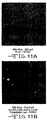
- FIGs. 6A to 14B display the unexposed and exposed surfaces of the materials listed in Table 4. Only the 600 alloy ( FIG.7B ) and 825 alloy ( FIG. 13B ) exhibited pitting corrosion. These alloys (excluding commercially pure 200 series nickel) have the lowest weight percentages of molybdenum, and were previously described with respect to Table 2 as being unacceptable for the present invention. Pure 200 series nickel had the highest uniform corrosion noted.
Landscapes
- Chemical & Material Sciences (AREA)
- Engineering & Computer Science (AREA)
- Chemical Kinetics & Catalysis (AREA)
- Electrochemistry (AREA)
- General Chemical & Material Sciences (AREA)
- Manufacturing & Machinery (AREA)
- Materials Engineering (AREA)
- Cell Electrode Carriers And Collectors (AREA)
- Secondary Cells (AREA)
- Battery Electrode And Active Subsutance (AREA)
Claims (22)
- Collecteur de courant pour une utilisation dans un dispositif de stockage d'énergie électrique, le collecteur de courant étant un alliage constitué essentiellement, en poids :(a) d'au moins 23 % de nickel ;(b) d'au moins 10 % de molybdène ;(c) d'au moins 20 % d'une combinaison de chrome et de molybdène ;(d) de 0 à 50% de fer;(e) de 0 à 5 % de tungstène ;(f) de 0 à 5 % de cobalt ;(g) de 0 à 1 % de carbone ;(h) de 0 à 3 % de cuivre ; et(i) de 0 à 3 % de manganèse.
- Collecteur de courant selon la revendication 1, constitué en outre, en poids, de quantités mineures inférieures à environ 3 % d'au moins un élément choisi dans le groupe constitué par le silicium, le phosphore, le soufre, le titane, l'aluminium, le tantale, le zirconium, le lanthane, le bore, le béryllium et les mélanges de ceux-ci.
- Collecteur de courant selon la revendication 1 ou la revendication 2, dans lequel le nickel comprend, en poids, jusqu'à environ 65 % de l'alliage.
- Collecteur de courant selon l'une quelconque des revendications 1 à 3, dans lequel le chrome comprend, en poids, jusqu'à environ 24 % de l'alliage.
- Collecteur de courant selon l'une quelconque des revendications 1 à 4, dans lequel le molybdène comprend, en poids, jusqu'à environ 17 % de l'alliage.
- Collecteur de courant pour une utilisation dans un dispositif de stockage d'énergie électrique, le collecteur de courant d'un alliage étant essentiellement constitué, en poids :(a) d'au moins 23 % à 65 % de nickel ;(b) d'environ 15 % à 24 % de chrome ;(c) d'environ 10 % à 17 % de molybdène ;(d) de 0 à 50 % de fer ;(e) de 0 à 5 % d'au moins un élément choisi dans le groupe constitué par le tungstène, le cobalt, le carbone, le cuivre et le manganèse ;(f) dans lequel l'alliage contient au moins 20 % d'une combinaison de chrome et de molybdène.
- Collecteur de courant selon la revendication 6, constitué en outre, en poids, de quantités mineures inférieures à environ 3 % d'au moins un élément choisi dans le groupe constitué par le silicium, le phosphore, le soufre, le titane, l'aluminium, le tantale, le zirconium, le lanthane, le bore, le béryllium et les mélanges de ceux-ci.
- Pile électrochimique, qui comprend :(a) une anode ;(b) une contre-électrode comprenant au moins un matériau actif d'électrode supporté sur un collecteur de courant, dans laquelle le collecteur de courant est un alliage constitué essentiellement, en poids :(i) d'au moins 23 % de nickel;(ii) d'au moins 10 % de molybdène;(iii) d'au moins 20 % d'une combinaison de chrome et de molybdène ;(iv) de 0 à 50 % de fer ;(v) de 0 à 5 % de tungstène ;(vi) de 0 à 5 % de cobalt ;(vii) de 0 à 1 % de carbone ;(viii) de 0 à 3 % de cuivre ; et(ix) de 0 à 3 % de manganèse ; et(c) un électrolyte activant l'anode et la contre-électrode.
- Pile électrochimique selon la revendication 8, dans laquelle l'alliage est en outre constitué, en poids, de quantités mineures inférieures à environ 3 % d'au moins un élément choisi dans le groupe constitué par le silicium, le phosphore, le soufre, le titane, l'aluminium, le tantale, le zirconium, le lanthane, le bore, le béryllium et les mélanges de ceux-ci.
- Pile électrochimique selon la revendication 8 ou la revendication 9, dans laquelle le nickel comprend, en poids, jusqu'à environ 65 % de l'alliage.
- Pile électrochimique selon l'une quelconque des revendications 8 à 10, dans laquelle le chrome comprend, en poids, jusqu'à environ 24 % de l'alliage.
- Pile électrochimique selon l'une quelconque des revendications 8 à 11, dans laquelle le molybdène comprend, en poids, jusqu'à environ 17 % de l'alliage.
- Pile électrochimique selon l'une quelconque des revendications 8 à 12, dans laquelle l'anode est du lithium et le matériau actif d'électrode de la contre-électrode est du carbone fluoré.
- Pile électrochimique selon l'une quelconque des revendications 8 à 13, dans laquelle le matériau d'anode est du lithium et le matériau actif d'électrode de la contre-électrode est choisi dans le groupe constitué par l'oxyde d'argent vanadium, l'oxyde de cuivre d'argent vanadium, le dioxyde de manganèse, le disulfure de titane, l'oxyde de cuivre, le sulfure de cuivre, le sulfure de fer, le disulfure de fer, l'oxyde de cobalt, l'oxyde de nickel, l'oxyde de cuivre vanadium, LiNiO2, LiMn2O4, LiCoO2, LiCo0,92Sn0,08O2, LiCo1-xNixO2 et les combinaisons de ceux-ci.
- Pile électrochimique selon l'une quelconque des revendications 8 à 14, dans laquelle l'électrolyte comprend un sel choisi dans le groupe constitué par LiPF6, LiBF4, LiAsF6, LiSbF6, LiClO4, LiAlCl4, LiGaCl4, LiC(SO2CF3)3, LiO2, LiN(SO2CF3)2, LiSCN, LiO3SCF2CF3, LiC6F5SO3, LiO2CCF3, LiSO3F, LiB(C6H5)4, LiCF3SO3 et les mélanges de ceux-ci dissous dans un solvant choisi dans le groupe constitué par le tétrahydrofurane, l'acétate de méthyle, le diglyme , le triglyme, le tétraglyme, le carbonate de diméthyle, le carbonate d'éthyl méthyle, le 1,2-diméthoxyéthane, le diisopropyléther, le 1,2-diéthoxyéthane, le 1-éthoxy, 2-méthoxyéthane, le carbonate de dipropyle, le carbonate de méthyl propyle, le carbonate d'éthyl propyle, le carbonate de diéthyle, le carbonate de propylène, le carbonate d'éthylène, le carbonate de butylène, l'acétonitrile, le diméthyl sulfoxyde, le diméthyl formamide, le diméthyl acétamide, la γ-butyrolactone, la γ-valérolactone, la N-méthyl-pyrrolidinone et les mélanges de ceux-ci.
- Procédé de formation d'une pile électrochimique, comprenant les étapes consistant à :(a) former une anode;(b) former une contre-électrode comprenant au moins un matériau actif d'électrode supporté sur un collecteur de courant, dans lequel le collecteur de courant est un alliage constitué essentiellement, en poids :(i) d'au moins 23 % de nickel ;(ii) d'au moins 10 % de molybdène ;(iii) d'au moins 20 % d'une combinaison de chrome et de molybdène ;(iv) de 0 à 50 % de fer ;(v) de 0 à 5 % de tungstène ;(vi) de 0 à 5 % de cobalt ;(vii) de 0 à 1 % de carbone ;(viii) de 0 à 3 % de cuivre ; et(ix) de 0 à 3 % de manganèse ; et(c) activer l'anode et l'électrode auxiliaire avec un électrolyte.
- Procédé selon la revendication 16, comprenant la formation de l'alliage constitué en outre, en poids, de moins d'environ 3 % d'au moins un élément choisi dans le groupe constitué par le silicium, le phosphore, le soufre, le titane, l'aluminium, le tantale, le zirconium, le lanthane, le bore, le béryllium et les mélanges de ceux-ci.
- Procédé selon la revendication 16 ou la revendication 17, comprenant la formation de nickel comprenant, en poids, jusqu'à environ 65 % de l'alliage.
- Procédé selon l'une quelconque des revendications 16 à 18, comprenant la formation de chrome comprenant, en poids, jusqu'à environ 24 % de l'alliage.
- Procédé selon l'une quelconque des revendications 16 à 19, comprenant la formation de molybdène comprenant, en poids, jusqu'à environ 17 % de l'alliage.
- Procédé selon l'une quelconque des revendications 16 à 20, comprenant la formation du matériau d'anode tel que le lithium, et le choix du matériau actif d'électrode de l'électrode auxiliaire dans le groupe constitué par l'oxyde de vanadium, l'oxyde de cuivre d'argent vanadium, le dioxyde de manganèse, le disulfure de titane, l'oxyde de cuivre, le sulfure de cuivre, le sulfure de fer, le disulfure de fer, l'oxyde de cobalt, l'oxyde de nickel, l'oxyde de cuivre vanadium, LiNiO2, LiMn2O4, LiCoO2, LiCo0,92Sn0,08O2, LiCo1-xNixO2 et les combinaisons de ceux-ci.
- Procédé selon l'une quelconque des revendications 16 à 21, comprenant la formation de l'électrolyte comprenant un sel choisi dans le groupe constitué par LiPF6, LiBF4, LiAsF6, LiSbF6, LiClO4, LiAlCl4, LiGaCl4, LiC(SO2CF3)3, LiO2, LiN(SO2CF3)2, LiSCN, LiO3SCF2CF3, LiC6F5SO3, LiO2CCF3, LiSO3F, LiB(C6H5)4, LiCF3SO3 et les mélanges de ceux-ci dissous dans un solvant choisi dans le groupe constitué par le tétrahydrofurane, l'acétate de méthyle, le diglyme, le triglyme, le tétraglyme, le carbonate de diméthyle, le carbonate d'éthyl méthyle, le 1,2-diméthoxyéthane, le diisopropyléther, le 1,2-diéthoxyéthane, le 1-éthoxy, 2-méthoxyéthane, le carbonate de dipropyle, le carbonate de méthyl propyle, le carbonate d'éthyl propyle, le carbonate de diéthyle, le carbonate de propylène, le carbonate d'éthylène, le carbonate de butylène, l'acétonitrile, le diméthyl sulfoxyde, le diméthyl formamide, le diméthyl acétamide, la γ-butyrolactone, la γ-valérolactone, la N-méthyl-pyrrolidinone et les mélanges de ceux-ci.
Applications Claiming Priority (1)
| Application Number | Priority Date | Filing Date | Title |
|---|---|---|---|
| US11/007,534 US7465521B2 (en) | 2004-12-08 | 2004-12-08 | Nickel-based alloys as positive electrode support materials in electrochemical cells containing nonaqueous electrolytes |
Publications (2)
| Publication Number | Publication Date |
|---|---|
| EP1670086A1 EP1670086A1 (fr) | 2006-06-14 |
| EP1670086B1 true EP1670086B1 (fr) | 2008-04-30 |
Family
ID=35645852
Family Applications (1)
| Application Number | Title | Priority Date | Filing Date |
|---|---|---|---|
| EP05026752A Expired - Lifetime EP1670086B1 (fr) | 2004-12-08 | 2005-12-07 | Alliages à base de nickel pour utilisation comme collectors de courant d'une électrode positive dans des cellules électrochemiquees non aqueuses |
Country Status (3)
| Country | Link |
|---|---|
| US (1) | US7465521B2 (fr) |
| EP (1) | EP1670086B1 (fr) |
| DE (1) | DE602005006368T2 (fr) |
Families Citing this family (4)
| Publication number | Priority date | Publication date | Assignee | Title |
|---|---|---|---|---|
| US20090081532A1 (en) * | 2007-09-21 | 2009-03-26 | David Aaron Kaplin | Electrochemical cell with improved internal contact |
| JP2008269972A (ja) * | 2007-04-20 | 2008-11-06 | Nissan Motor Co Ltd | 非水溶媒二次電池 |
| KR101154545B1 (ko) * | 2009-11-23 | 2012-06-13 | 지에스나노텍 주식회사 | 향상된 전류 집전 효율을 갖는 박막 전지 |
| WO2024112751A1 (fr) * | 2022-11-21 | 2024-05-30 | The Regents Of The University Of Michigan | Placage métallique stable dans des batteries à l'état solide « sans anode » activées par nucléation ensemencée |
Family Cites Families (10)
| Publication number | Priority date | Publication date | Assignee | Title |
|---|---|---|---|---|
| US4176214A (en) | 1978-12-26 | 1979-11-27 | Gte Laboratories Incorporated | Lithium-lead sulfate primary electrochemical cell |
| US4565751A (en) | 1984-06-18 | 1986-01-21 | Eastman Kodak Company | Cathode for high current density and high power density electrochemical cells |
| US5114810A (en) * | 1990-02-05 | 1992-05-19 | Wilson Greatbatch Ltd. | Cathode current collector material for solid cathode cell |
| JP3195475B2 (ja) * | 1992-11-26 | 2001-08-06 | セイコーインスツルメンツ株式会社 | 電気化学セル |
| US5294502A (en) | 1993-04-02 | 1994-03-15 | Valence Technology, Inc. | Cyclic ethers, solid electrolytes containing such ethers and electrolytic cells produced therefrom |
| US5340669A (en) | 1993-04-19 | 1994-08-23 | Valence Technology, Inc. | Allyl polyalkylene ether polymers and solid electrolytes for an electrochemical cell |
| US5455127A (en) | 1994-03-31 | 1995-10-03 | Olsen; Ib I. | Fire resistant curable solid electrolytes and electrolytic cells produced therefrom |
| JPH0922701A (ja) * | 1995-07-06 | 1997-01-21 | Nippon Yakin Kogyo Co Ltd | 非水二次電池用部材 |
| US5776635A (en) | 1996-09-16 | 1998-07-07 | Wilson Greatbatch Ltd. | Ternary solvent nonaqueous organic electrolyte for alkali metal electrochemical cells |
| US6306544B1 (en) * | 1999-02-25 | 2001-10-23 | Wilson Greatbatch Ltd. | Cobalt-based alloys as positive electrode current collectors in nonaqueous electrochemical cells |
-
2004
- 2004-12-08 US US11/007,534 patent/US7465521B2/en not_active Expired - Fee Related
-
2005
- 2005-12-07 EP EP05026752A patent/EP1670086B1/fr not_active Expired - Lifetime
- 2005-12-07 DE DE602005006368T patent/DE602005006368T2/de not_active Expired - Lifetime
Also Published As
| Publication number | Publication date |
|---|---|
| DE602005006368D1 (de) | 2008-06-12 |
| DE602005006368T2 (de) | 2009-06-04 |
| EP1670086A1 (fr) | 2006-06-14 |
| US7465521B2 (en) | 2008-12-16 |
| US20060121354A1 (en) | 2006-06-08 |
Similar Documents
| Publication | Publication Date | Title |
|---|---|---|
| US6537698B2 (en) | Electrochemical cell having an electrode with a phosphonate additive in the electrode active mixture | |
| US6727022B2 (en) | Powder process for double current collector screen cathode preparation | |
| US6511772B2 (en) | Electrochemical cell having an electrode with a phosphate additive in the electrode active mixture | |
| US6228534B1 (en) | Annealing of mixed metal oxide electrodes to reduce polarization resistance | |
| US6171729B1 (en) | Control of swelling in alkali metal electrochemical cells | |
| US6645670B2 (en) | Efficient cell stack for cells with double current collectors sandwich cathodes | |
| US6743547B2 (en) | Pellet process for double current collector screen cathode preparation | |
| US6673493B2 (en) | Double current collector cathode design using the same active material in varying formulations for alkali metal or ion electrochemical cells | |
| EP1315226B1 (fr) | Electrolyte nonaqueux stable de haute conductivité pour batteries au lithium | |
| US7820328B1 (en) | Electrochemical cell electrode with improved particle-to-particle contact and method of manufacturing | |
| US6605385B2 (en) | Electrochemical cell having an electrode with a carbonate additive in the electrode active mixture | |
| EP1032063B1 (fr) | Alliages à base de cobalt pour utilisation comme collectors de courant d'une électrode positive dans des cellules électrochimiques non aqueuses | |
| US20020090548A1 (en) | Double current collector cathode design using mixtures of two active materials for alkali metal or ion electrochemical cells | |
| US6562515B2 (en) | Electrochemical cell having an electrode with a nitrate additive in the electrode active mixture | |
| JP2002198035A (ja) | 種々の調合体において同じ活物質を用いた二重集電体カソード構造を含むアルカリ金属電池またはイオン電気化学的電池からなる電気化学セル | |
| US6586135B2 (en) | Electrochemical cell having an electrode with a dicarbonate additive in the electrode active mixture | |
| US8192867B2 (en) | Hybrid cathode design for an electrochemical cell | |
| US6528207B2 (en) | Electrochemical cell having an electrode with a nitrite additive in the electrode active mixture | |
| US6673487B2 (en) | Double current collector cathode design using the same active material in varying thicknesses for alkali metal or ION electrochemical cells | |
| EP1914823B1 (fr) | Design de cathode hybride pour cellule électrochimique | |
| US7465521B2 (en) | Nickel-based alloys as positive electrode support materials in electrochemical cells containing nonaqueous electrolytes |
Legal Events
| Date | Code | Title | Description |
|---|---|---|---|
| PUAI | Public reference made under article 153(3) epc to a published international application that has entered the european phase |
Free format text: ORIGINAL CODE: 0009012 |
|
| AK | Designated contracting states |
Kind code of ref document: A1 Designated state(s): AT BE BG CH CY CZ DE DK EE ES FI FR GB GR HU IE IS IT LI LT LU LV MC NL PL PT RO SE SI SK TR |
|
| AX | Request for extension of the european patent |
Extension state: AL BA HR MK YU |
|
| 17P | Request for examination filed |
Effective date: 20061213 |
|
| AKX | Designation fees paid |
Designated state(s): AT BE BG |
|
| RBV | Designated contracting states (corrected) |
Designated state(s): DE FR SE |
|
| REG | Reference to a national code |
Ref country code: DE Ref legal event code: 8566 |
|
| 17Q | First examination report despatched |
Effective date: 20070416 |
|
| GRAP | Despatch of communication of intention to grant a patent |
Free format text: ORIGINAL CODE: EPIDOSNIGR1 |
|
| GRAS | Grant fee paid |
Free format text: ORIGINAL CODE: EPIDOSNIGR3 |
|
| RAP1 | Party data changed (applicant data changed or rights of an application transferred) |
Owner name: GREATBATCH LTD. |
|
| GRAA | (expected) grant |
Free format text: ORIGINAL CODE: 0009210 |
|
| AK | Designated contracting states |
Kind code of ref document: B1 Designated state(s): DE FR SE |
|
| REF | Corresponds to: |
Ref document number: 602005006368 Country of ref document: DE Date of ref document: 20080612 Kind code of ref document: P |
|
| REG | Reference to a national code |
Ref country code: SE Ref legal event code: TRGR |
|
| RAP2 | Party data changed (patent owner data changed or rights of a patent transferred) |
Owner name: GREATBATCH LTD. |
|
| ET | Fr: translation filed | ||
| PLBE | No opposition filed within time limit |
Free format text: ORIGINAL CODE: 0009261 |
|
| STAA | Information on the status of an ep patent application or granted ep patent |
Free format text: STATUS: NO OPPOSITION FILED WITHIN TIME LIMIT |
|
| 26N | No opposition filed |
Effective date: 20090202 |
|
| PGFP | Annual fee paid to national office [announced via postgrant information from national office to epo] |
Ref country code: SE Payment date: 20101229 Year of fee payment: 6 |
|
| PGFP | Annual fee paid to national office [announced via postgrant information from national office to epo] |
Ref country code: FR Payment date: 20120104 Year of fee payment: 7 |
|
| REG | Reference to a national code |
Ref country code: SE Ref legal event code: EUG |
|
| PG25 | Lapsed in a contracting state [announced via postgrant information from national office to epo] |
Ref country code: SE Free format text: LAPSE BECAUSE OF NON-PAYMENT OF DUE FEES Effective date: 20111208 |
|
| REG | Reference to a national code |
Ref country code: FR Ref legal event code: ST Effective date: 20130830 |
|
| PG25 | Lapsed in a contracting state [announced via postgrant information from national office to epo] |
Ref country code: FR Free format text: LAPSE BECAUSE OF NON-PAYMENT OF DUE FEES Effective date: 20130102 |
|
| PGFP | Annual fee paid to national office [announced via postgrant information from national office to epo] |
Ref country code: DE Payment date: 20141202 Year of fee payment: 10 |
|
| REG | Reference to a national code |
Ref country code: DE Ref legal event code: R082 Ref document number: 602005006368 Country of ref document: DE Representative=s name: SSM SANDMAIR PATENTANWAELTE RECHTSANWALT PARTN, DE Ref country code: DE Ref legal event code: R082 Ref document number: 602005006368 Country of ref document: DE Representative=s name: SCHWABE SANDMAIR MARX PATENTANWAELTE RECHTSANW, DE |
|
| REG | Reference to a national code |
Ref country code: DE Ref legal event code: R119 Ref document number: 602005006368 Country of ref document: DE |
|
| PG25 | Lapsed in a contracting state [announced via postgrant information from national office to epo] |
Ref country code: DE Free format text: LAPSE BECAUSE OF NON-PAYMENT OF DUE FEES Effective date: 20160701 |