EP1674113A1 - Conjugués de l'IGF-1 et du poly(éthylène glycol) - Google Patents
Conjugués de l'IGF-1 et du poly(éthylène glycol) Download PDFInfo
- Publication number
- EP1674113A1 EP1674113A1 EP04030415A EP04030415A EP1674113A1 EP 1674113 A1 EP1674113 A1 EP 1674113A1 EP 04030415 A EP04030415 A EP 04030415A EP 04030415 A EP04030415 A EP 04030415A EP 1674113 A1 EP1674113 A1 EP 1674113A1
- Authority
- EP
- European Patent Office
- Prior art keywords
- igf
- variant
- peg
- amino acid
- poly
- Prior art date
- Legal status (The legal status is an assumption and is not a legal conclusion. Google has not performed a legal analysis and makes no representation as to the accuracy of the status listed.)
- Withdrawn
Links
Images





Classifications
-
- A—HUMAN NECESSITIES
- A61—MEDICAL OR VETERINARY SCIENCE; HYGIENE
- A61K—PREPARATIONS FOR MEDICAL, DENTAL OR TOILETRY PURPOSES
- A61K38/00—Medicinal preparations containing peptides
- A61K38/16—Peptides having more than 20 amino acids; Gastrins; Somatostatins; Melanotropins; Derivatives thereof
- A61K38/17—Peptides having more than 20 amino acids; Gastrins; Somatostatins; Melanotropins; Derivatives thereof from animals; from humans
- A61K38/22—Hormones
- A61K38/30—Insulin-like growth factors, i.e. somatomedins, e.g. IGF-1, IGF-2
-
- A—HUMAN NECESSITIES
- A61—MEDICAL OR VETERINARY SCIENCE; HYGIENE
- A61K—PREPARATIONS FOR MEDICAL, DENTAL OR TOILETRY PURPOSES
- A61K47/00—Medicinal preparations characterised by the non-active ingredients used, e.g. carriers or inert additives; Targeting or modifying agents chemically bound to the active ingredient
- A61K47/50—Medicinal preparations characterised by the non-active ingredients used, e.g. carriers or inert additives; Targeting or modifying agents chemically bound to the active ingredient the non-active ingredient being chemically bound to the active ingredient, e.g. polymer-drug conjugates
- A61K47/51—Medicinal preparations characterised by the non-active ingredients used, e.g. carriers or inert additives; Targeting or modifying agents chemically bound to the active ingredient the non-active ingredient being chemically bound to the active ingredient, e.g. polymer-drug conjugates the non-active ingredient being a modifying agent
- A61K47/56—Medicinal preparations characterised by the non-active ingredients used, e.g. carriers or inert additives; Targeting or modifying agents chemically bound to the active ingredient the non-active ingredient being chemically bound to the active ingredient, e.g. polymer-drug conjugates the non-active ingredient being a modifying agent the modifying agent being an organic macromolecular compound, e.g. an oligomeric, polymeric or dendrimeric molecule
- A61K47/59—Medicinal preparations characterised by the non-active ingredients used, e.g. carriers or inert additives; Targeting or modifying agents chemically bound to the active ingredient the non-active ingredient being chemically bound to the active ingredient, e.g. polymer-drug conjugates the non-active ingredient being a modifying agent the modifying agent being an organic macromolecular compound, e.g. an oligomeric, polymeric or dendrimeric molecule obtained otherwise than by reactions only involving carbon-to-carbon unsaturated bonds, e.g. polyureas or polyurethanes
- A61K47/60—Medicinal preparations characterised by the non-active ingredients used, e.g. carriers or inert additives; Targeting or modifying agents chemically bound to the active ingredient the non-active ingredient being chemically bound to the active ingredient, e.g. polymer-drug conjugates the non-active ingredient being a modifying agent the modifying agent being an organic macromolecular compound, e.g. an oligomeric, polymeric or dendrimeric molecule obtained otherwise than by reactions only involving carbon-to-carbon unsaturated bonds, e.g. polyureas or polyurethanes the organic macromolecular compound being a polyoxyalkylene oligomer, polymer or dendrimer, e.g. PEG, PPG, PEO or polyglycerol
-
- C—CHEMISTRY; METALLURGY
- C07—ORGANIC CHEMISTRY
- C07K—PEPTIDES
- C07K14/00—Peptides having more than 20 amino acids; Gastrins; Somatostatins; Melanotropins; Derivatives thereof
- C07K14/435—Peptides having more than 20 amino acids; Gastrins; Somatostatins; Melanotropins; Derivatives thereof from animals; from humans
- C07K14/575—Hormones
- C07K14/62—Insulins
-
- A—HUMAN NECESSITIES
- A61—MEDICAL OR VETERINARY SCIENCE; HYGIENE
- A61K—PREPARATIONS FOR MEDICAL, DENTAL OR TOILETRY PURPOSES
- A61K47/00—Medicinal preparations characterised by the non-active ingredients used, e.g. carriers or inert additives; Targeting or modifying agents chemically bound to the active ingredient
- A61K47/50—Medicinal preparations characterised by the non-active ingredients used, e.g. carriers or inert additives; Targeting or modifying agents chemically bound to the active ingredient the non-active ingredient being chemically bound to the active ingredient, e.g. polymer-drug conjugates
-
- A—HUMAN NECESSITIES
- A61—MEDICAL OR VETERINARY SCIENCE; HYGIENE
- A61P—SPECIFIC THERAPEUTIC ACTIVITY OF CHEMICAL COMPOUNDS OR MEDICINAL PREPARATIONS
- A61P25/00—Drugs for disorders of the nervous system
- A61P25/28—Drugs for disorders of the nervous system for treating neurodegenerative disorders of the central nervous system, e.g. nootropic agents, cognition enhancers, drugs for treating Alzheimer's disease or other forms of dementia
-
- A—HUMAN NECESSITIES
- A61—MEDICAL OR VETERINARY SCIENCE; HYGIENE
- A61P—SPECIFIC THERAPEUTIC ACTIVITY OF CHEMICAL COMPOUNDS OR MEDICINAL PREPARATIONS
- A61P43/00—Drugs for specific purposes, not provided for in groups A61P1/00-A61P41/00
-
- C—CHEMISTRY; METALLURGY
- C07—ORGANIC CHEMISTRY
- C07K—PEPTIDES
- C07K14/00—Peptides having more than 20 amino acids; Gastrins; Somatostatins; Melanotropins; Derivatives thereof
- C07K14/435—Peptides having more than 20 amino acids; Gastrins; Somatostatins; Melanotropins; Derivatives thereof from animals; from humans
- C07K14/475—Growth factors; Growth regulators
-
- C—CHEMISTRY; METALLURGY
- C07—ORGANIC CHEMISTRY
- C07K—PEPTIDES
- C07K14/00—Peptides having more than 20 amino acids; Gastrins; Somatostatins; Melanotropins; Derivatives thereof
- C07K14/435—Peptides having more than 20 amino acids; Gastrins; Somatostatins; Melanotropins; Derivatives thereof from animals; from humans
- C07K14/575—Hormones
- C07K14/65—Insulin-like growth factors, i.e. somatomedins, e.g. IGF-1, IGF-2
-
- C—CHEMISTRY; METALLURGY
- C07—ORGANIC CHEMISTRY
- C07K—PEPTIDES
- C07K19/00—Hybrid peptides, i.e. peptides covalently bound to nucleic acids, or non-covalently bound protein-protein complexes
Definitions
- This invention relates to conjugates of insulin-like growth factor-I(IGF-I) with poly(ethylene glycol) (PEG), pharmaceutical compositions containing such conjugates, and methods for the production and methods of use of such conjugates.
- PEG poly(ethylene glycol)
- AD Alzheimer's disease
- AD is an increasingly prevalent form of neurodegeneration that accounts for approximately 50%-60% of the overall cases of dementia among people over 65 years of age. It currently affects an estimated 15 million people worldwide and owing to the relative increase of elderly people in the population its prevalence is likely to increase over the next 2 to 3 decades.
- AD is a progressive disorder with a mean duration of around 8.5 years between onset of clinical symptoms and death. Death of pyramidal neurons and loss of neuronal synapses in brains regions associated with higher mental functions results in the typical symptoms, characterized by gross and progressive impairment of cognitive function (Francis, P.T., et al., J. Neurol. Neurosurg. Psychiatry 66 (1999) 137-147).
- AD Alzheimer's disease
- senile and presenile dementia dementia in the world and is recognized clinically as relentlessly progressive dementia that presents with increasing loss of memory, intellectual function and disturbances in speech (Merritt, A Textbook of Neurology, 6th edition, Lea& Febiger, Philadelphia, pp. 484-489, 1979).
- Neuropathologically, the major hallmarks of AD are the presence of two characteristic lesions: the amyloid senile plaque and neurofibrillary tangle (NFT). While the plaque is deposited extraneuronally, the tangle is observed intraneuronally in the post-mortem brain.
- NFT neurofibrillary tangle
- amyloid plaque core One of the major components of the amyloid plaque core is the pathologically deposited small amyloid-beta-peptide (A ⁇ ), which is cleaved by secretases from amyloid precursor protein (APP) (Selkoe, D.J., Physiol. Rev. 81 (2001) 741-766; Hardy, J., and Selkoe, D.J., Science 297 (2002) 353-356; Bush, A.I., and Tanzi, R.E., Proc. Natl. Acad. Sci. USA 99 (2002) 7317-7319).
- APP amyloid precursor protein
- a ⁇ a self-aggregating peptide of 39-43 residues (MW ⁇ 4 kDa), is synthesized as part of the larger APP (110-120 kDa).
- APP is a type I integral membrane glycoprotein with a large N-terminal extracellular domain, a single transmembrane domain and a short cytoplasmic tail.
- the A ⁇ region spans portions of the extracellular and transmembrane domains of APP.
- the most common hypothesis for the participation of APP in neuronal cell death in AD is the amyloid hypothesis.
- IGF-I Insulin-like growth factor I
- IGF-I Insulin-like growth factor I
- somatomedin C a circulating hormone structurally related to insulin. IGF-I was traditionally considered the major mediator of the actions of growth hormone on peripheral tissues. IGF-I is also named somatomedin C and defined by SwissProt No. P01343. Use, activity and production are mentioned in, e.g., le Bouc, Y., et al., FEBS Lett. 196 (1986) 108-112; de Pagter-Holthuizen, P., et al., FEBS Lett. 195 (1986) 179-184; Sandberg Nordqvist, A.C., et al., Brain Res. Mol. Brain Res.
- IGF-I function The regulation of IGF-I function is quite complex. In the circulation, only 0.2 % of IGF-I exists in the free form whereas the majority is bound to IGF-binding proteins (IGFBP's), which have very high affinities to IGF's and modulate IGF-I function. The factor can be locally liberated by mechanisms releasing IGF-I.
- IGFBP's IGF-binding proteins
- IGF-I plays a paracrine role in the developing and mature brain (Werther, G.A., et al., Mol. Endocrinol. 4 (1990) 773-778).
- IGF-I is a potent non-selective trophic agent for several types of neurons in the CNS (Knusel, B., et al., J. Neurosci. 10(1990) 558-570; Svrzic, D., and Schubert, D., Biochem. Biophys. Res. Commun. 172 (1990) 54-60), including dopaminergic neurons (Knusel, B., et al., J. Neurosci.
- IGF-I stimulate peripheral nerve regeneration (Kanje, M., et al., Brain Res. 486 (1989) 396-398) and enhance ornithine decarboxylase activity US 5,093,317).
- US 5,861,373 and WO 93/02695 mention a method of treating injuries to or diseases of the central nervous system that predominantly affects glia and/or non-cholinergic neuronal cells by increasing the active concentration(s) of IGF-I and/or analogues thereof in the central nervous system of the patient.
- WO0232449 is directed to methods for reducing or preventing ischemic damage in the central nervous system of a mammal by administering to the nasal cavity of the mammal a pharmaceutical composition comprising a therapeutically effective amount of IGF-I or biologically active variant thereof.
- the IGF-I or variant thereof is absorbed through the nasal cavity and transported into the central nervous system of the mammal in an amount effective to reduce or prevent ischemic damage associated with an ischemic event.
- EP 0874641 claims the use of an IGF-I or an IGF-II for the manufacture of a medicament for treating or preventing neuronal damage in the central nervous system, due to AIDS-related dementia, AD, Parkinson's Disease, Pick's Disease, Huntington's Disease, hepatic encephalopathy, cortical- basal ganglionic syndromes, progressive dementia, familial dementia with spastic parapavresis, progressive supranuclear palsy, multiple sclerosis, cerebral sclerosis of Schilder or acute necrotizing hemorrhagic encephalomyelitis, wherein the medicament is in a form for parenteral administration of an effective amount of said IGF outside the blood-brain barrier or blood- spinal cord barrier.
- IGF-I protects neurons against A ⁇ -induced neurotoxicity (Niikura, T., et al., J. Neurosci. 21 (2001) 1902-1910; Dore, S., et al., Proc. Natl. Acad. Sci. USA 94 (1997) 4772-4777; Dore, S., et al., Ann. NY Acad. Sci. 890 (1999) 356-364). Recently, it was shown that peripherally administered IGF-I is capable of reducing brain A ⁇ levels in rats and mice (Carro, E., et al., Nat. Med.
- Covalent modification of proteins with poly(ethylene glycol) (PEG) has proven to be a useful method to extend the circulating half-lives of proteins in the body (Hershfield, M.S., et al., N. Engl. J. Med. 316 (1987) 589-596; Meyers, F.J., et al., Clin. Pharmacol. Ther. 49 (1991) 307-313; Delgado, C., et al., Crit. Rev. Ther. Drug Carrier Syst. 9 (1992) 249-304; Katre, Advanced Drug Delivery Systems 10 (1993) 91; EP-A 0 400 472; Monfardini, C., et al., Bioconjug. Chem.
- PEGylation is an increase of solubility and a decrease in protein immunogenicity (Katre, N.V., J. Immunol. 144 (1990) 209-213).
- a common method for the PEGylation of proteins is the use of poly(ethylene glycol) activated with amino-reactive reagents like N-hydroxysuccinimide (NHS). With such reagents poly(ethylene glycol) is attached to the proteins at free primary amino groups such as the N-terminal ⁇ -amino group and the ⁇ -amino groups of lysine residues.
- WO 94/12219 and WO 95/32003 claim polyethylene glycol conjugates comprising PEG and IGF or a cystein mutated IGF, said PEG attached to said mutein at a free cystein in the N-terminal region of the mutein.
- WO 2004/60300 describes N-terminally PEGylated IGF-I.
- This PEGylated IGF-I should be administered preferably via intreperitoneal or intranasal application. It is expected that prolonged IGF-I bioavailability reduces brain amyloid load in AD patients.
- the invention comprises an IGF-I variant, characterized in having an amino acid alteration at amino acid positions 27, 37, 65 and/or 68 of the wild-type IGF-I amino acid sequence so that one or more of amino acids 37, 65, 68 is/are lysine(K) and amino acid 27 is a polar amino acid but not lysine.
- amino acid 27 is arginine.
- IGF-I variants are useful as intermediates (IGF-I intermediates) for the production of lysine-PEGylated IGF-I.
- a lysine-PEGylated IGF-I variant (amino-reactive PEGylated IGF-I variant), preferably a 20 kDa to 100 kDa PEGylated IGF-I variant, and especially preferably a monoPEGylated IGF-I variant, has superior properties in regard to therapeutic applicability.
- the present invention provides a conjugate consisting of a IGF-I variant (IGF-I conjugate or conjugate) and poly(ethylene glycol) group(s), characterized in that said IGF-I variant has amino acid alteration(s) at amino acid positions 27, 37, 65 and/or 68 of the wild-type IGF-I amino acid sequence so that one or more of amino acids 37, 65, 68 is/are lysine(K), amino acid 27 is a polar amino acid but not lysine and said PEG is conjugated to said IGF-I variant via primary amino group(s), preferably via primary amino group(s) oflysine(s).
- the poly(ethylene glycol) group(s) have an overall molecular weight of at least 20 kDa, more preferably from about 20 to 100 kDa and especially preferably from 20 to 80 kDa.
- the poly(ethylene glycol) group(s) are conjugated to the IGF-I variant via the primary amino group(s) of lysine at one or more amino acid positions 37, 65, 68 (amino-reactive PEGylation) and are optionally PEGylated at the N-terminal amino acid.
- the conjugate is preferably mono- or diPEGylated at lysine residue(s) at one or more amino acid position(s) 37, 65, 68 and optionally PEGylated at the N-terminal amino acid. It is further preferred that the conjugate is monoPEGylated at K65, K68, or K37 or diPEGylated at K65 and K68 and optionally PEGylated at the N-terminal amino acid.
- Preferably not more than 20% of the PEGylated IGF-I variant is additional N-terminal PEGylated.
- IGF-I variants are designated as follows: K65 means that amino acid 65 is lysine, R27 means that amino acid 27 is arginine etc.
- An IGF-I variant bearing the amino acids R27, K37, K65, K68 is designated RKKK.
- IGF-I wildtype is designated KRKK.
- IGF-I variants and variants in the conjugates are: RRKK, RRKR, RRRK, RKRR.
- the (PEGylated) IGF-I variant according to the invention is a variant in which up to three (preferably all three) amino acids at the N-terminus are truncated.
- the respective wild type mutant is named Des(1-3)-IGF-I and lacks the amino acid residues gly, pro and glu from the N-terminal (Kummer, A., et al., Int. J. Exp. Diabesity Res. 4 (2003) 45-57).
- the poly(ethylene glycol) group(s) either linear or branched.
- the invention further comprises methods for the preparation of a conjugate according to the invention using the IGF-I intermediates.
- the method comprises the preparation of a conjugate comprising an IGF-I variant and one or two poly(ethylene glycol) group(s), said poly(ethylene glycol) group(s) having preferably an overall molecular weight of at least 20 kDa, more preferably from about 20 to 100 kDa and especially preferably from 20 to 80 kDa by reacting the IGF-I intermediate with activated (polyethylene) glycol under conditions such that said (polyethylene) glycol is chemically bound to said IGF-I intermediate via primary lysine amino group(s) of IGF-I variant.
- the invention further comprises pharmaceutical compositions containing a conjugate according to the invention, preferably together with a pharmaceutically acceptable carrier.
- the invention further comprises methods for the production of pharmaceutical compositions containing a conjugate according to the invention.
- the invention further comprises the use of a conjugate according to the invention for the preparation of a medicament for the treatment of AD.
- the invention further comprises methods for the treatment of AD, characterized in that a pharmaceutically effective amount of aminio-reacvtive PEGylated IGF-I variant is administered to a patient in need of such treatment, preferably in one to two applications per week.
- PEGylated IGF-I variant or “amino-reactive PEGylation” as used herein means that a IGF-I variant is covalently bonded to one or two poly(ethylene glycol) groups by amino-reactive coupling to one or two lysines of the IGF-I variant molecule.
- the PEG group(s) is/are be attached at the sites of the IGF-I variant molecule that are the primary ⁇ -amino groups of the lysine side chains. It is further possible that PEGylation occurs im addition on the N-terminal ⁇ -amino group.
- PEGylated IGF-I variant can consist of a mixture of IGF-I variants, PEGylated at K65, K68 and/or K37 with or without N-terminal PEGylation, whereby the sites of PEGylation can be different in different molecules or can be substantially homogeneous in regard to the amount of poly(ethylene glycol) side chains per molecule and/or the site of PEGylation in the molecule.
- the IGF-I variants are mono- and/or diPEGylated and especially purified from N-terminal PEGylated IGF-I variants.
- Amino-reactive PEGylation designates a method of randomly attaching poly(ethylene glycol) chains to primary lysine amino group(s) of the IGF-I variant by the use of reactive (activated) poly(ethylene glycol), preferably by the use of N-hydroxysuccinimidyl esters of, preferably, methoxypoly(ethylene glycol).
- the coupling reaction attaches poly(ethylene glycol) to reactive primary ⁇ -amino groups of lysine residues and optionally the ⁇ -amino group of the N-terminal amino acid of IGF-I.
- Such amino group conjugation of PEG to proteins is well known in the art.
- the conjugation of PEG to primary amino groups of proteins can be performed by using activated PEGs which perform an alkylation of said primary amino groups.
- activated alkylating PEGs for example PEG aldehyde, PEG-tresyl chloride or PEG epoxide can be used.
- Further useful reagents are acylating PEGs such as hydroxysuccinimidyl esters of carboxylated PEGs or PEGs in which the terminal hydroxy group is activated by chloroformates or carbonylimidazole.
- PEG reagents are PEGs with amino acid arms.
- Such reagents can contain the socalled branched PEGs, whereby at least two identical or different PEG molecules are linked together by a peptidic spacer (preferably lysine) and, for example, bound to IGF-I variant as activated carboxylate of the lysine spacer.
- a peptidic spacer preferably lysine
- IGF-I variant as activated carboxylate of the lysine spacer.
- Mono-N-terminal coupling is also described by Kinstler, O., et al., Adv. Drug Deliv. Rev. 54 (2002) 477-485.
- PEG or poly(ethylene glycol) as used herein means a water soluble polymer that is commercially available or can be prepared by ring-opening polymerization of ethylene glycol according to methods well known in the art (Kodera, Y., et al., Progress in Polymer Science 23 (1998) 1233-1271; Francis, G.E., et al., Int. J. Hematol. 68 (1998) 1-18.
- the term "PEG” is used broadly to encompass any polyethylene glycol molecule, wherein the number of ethylene glycol units is at least 460, preferably 460 to 2300 and especially preferably 460 to 1840 kDa (230 PEG units refers to an molecular weight of about 10 kDa).
- PEG units are only limited by solubility of the conjugate. Usually PEGs which are larger than PEGs containing 2300 units are not used.
- a PEG used in the invention terminates on one end with hydroxy or methoxy, i.e., X is H or CH 3 (methoxy PEG, mPEG) and is on the other end covalently attached to a linker moiety via an ether oxygen bond.
- the polymer is either linear or branched. Branched PEGs are e.g. described in Veronese, F.M., et al., Journal of Bioactive and Compatible Polymers 12 (1997) 196-207.
- Useful PEG reagents are e.g. available form Nektar Therapeutics (www.nektar.com)
- any molecular mass for a PEG can be used as practically desired, e.g., from about 20 kDaltons (Da) to 100 kDa (n is 460 to 2300).
- the number of repeating units "n" in the PEG is approximated for the molecular mass described in Daltons. For example, if two PEG molecules are attached to a linker, where each PEG molecule has the same molecular mass of 10 kDa (each n is about 230), then the total molecular mass of PEG on the linker is about 20 kDa.
- the molecular masses of the PEG attached to the linker can also be different, e.g., of two molecules on a linker one PEG molecule can be 5 kDa and one PEG molecule can be 15 kDa.
- Molecular mass means always average molecular mass.
- the invention provides PEGylated forms of IGF-I variant with improved properties.
- PEGylated IGF-I variant conjugates contain one or two PEG groups linear or branched and randomly attached thereto, whereby the overall molecular weight of all PEG groups in the conjugate is preferably about 20 to 80 kDa. It is obvious to a person skilled in the art that small deviations from this range of molecular weight are possible as long as the PEGylated IGF-I variant does show activity in lowering brain Abeta. Also PEGylation of IGF-I variant with PEG having molecular weights of more than 80 kDa results in higher bioavailability.
- the range of 20 to 100 kDa for the molecular weight of PEG has to be understood as the optimized range for a conjugate of PEG and IGF-I variant useful for an efficient treatment of a patient suffering from AD.
- molecular weight means the mean molecular weight of the PEG. The term “about” before a designated molecular weight indicates that in said PEG preparations, some molecules will weigh more and some less than the stated molecular weight.
- monoPEGylated RRKK, RRKR, RRRK, RKRR wherein the branched PEG group has a molecular weight of 40-45 kDa (about 920 PEG units). Based on an average molecular weight of 44 kDa and a molecular weight of 7.6 kDa for IGF-I, the calculated average molecular weight for monoPEG-IGF-I is about 51.6 kDa.
- PEG or PEG group means a residue containing poly(ethylene glycol) as an essential part.
- a PEG can contain further chemical groups which are necessary for binding reactions; which results from the chemical synthesis of the molecule; or which is a spacer for optimal distance of the parts of the molecule from one another.
- PEG can consist of one or more PEG side-chains which are linked together.
- PEG groups with more than one PEG chain are called multiarmed or branched PEGs.
- Branched PEGs can be prepared, for example, by the addition of polyethylene oxide to various polyols, including glycerol, pentaerythriol, and sorbitol.
- a four-armed branched PEG can be prepared from pentaerythriol and ethylene oxide.
- Branched PEGs usually have 2 to 8 arms and are described in, for example, EP-A 0 473 084 and US Patent No. 5,932,462.
- PEGs with two PEG side-chains (PEG2) linked via the primary amino groups of a lysine (Monfardini, C., et al., Bioconjug. Chem. 6 (1995) 62-69).
- Substantially homogeneous as used herein means that the only PEGylated IGF-I variant molecules produced, contained or used are those having one or two PEG group(s) attached.
- the preparation may contain small amounts of unreacted (i.e., lacking PEG group) protein.
- As ascertained by peptide mapping and N-terminal sequencing, one example below provides for the preparation which is at least 90% PEG-IGF-I variant conjugate and at most 5% unreacted protein. Isolation and purification of such homogeneous preparations of PEGylated IGF-I variant can be performed by usual purification methods, preferably size exclusion chromatography.
- “MonoPEGylated” as used herein means that IGF-I variant is PEGylated at only one lysine per IGF-I variant molecule, whereby only one PEG group is attached covalently at this site. Such a monoPEGylated IGF-I can be in addition PEGylated at the N-terminus to a certain extent.
- the pure monoPEGylated IGF-I variant (without N-terminal PEGylation) is at least 80% of the preparation, preferably 90%, and most preferably, monoPEGylated IGF-I variant is 92%, or more, of the preparation, the remainder being e.g.
- the monoPEGylated IGF-I variant preparations according to the invention are therefore homogeneous enough to display the advantages of a homogeneous preparation, e.g., in a pharmaceutical application. The same applies to the diPEGylated species.
- Activated PEGs or activated PEG reagents are well-known in the state of the art.
- electrophilically activated PEGs such as alkoxybutyric acid succinimidyl esters of poly(ethylene glycol) ("lower alkoxy-PEG-SBA") or alkoxypropionic acid succinimidyl esters of poly(ethylene glycol) (“lower alkoxy-PEG-SPA”) or N-hydroxysuccinimide activated PEGs.
- Any conventional method of reacting an activated ester with an amine to form an amide can be utilized.
- the exemplified succinimidyl ester is a leaving group causing the amide formation.
- succinimidyl esters to produce conjugates with proteins is disclosed in US Patent No. 5,672,662.
- the reaction conditions used have an influence on the relative amount of differently PEGylated IGF-I variants.
- the reaction conditions e.g., ratio of reagents, pH, temperature, protein concentration, time of reaction etc.
- the relative amounts of the different PEGylated species can be varied
- the reagent contains in a buffered aqueous solution pH 8-10, 5-15% (v/v) ethanol and 0.5-4% (v/v) ethyleneglycol.
- the protein:PEG ration is preferably 1:0.5 to 1:2 if monoPEGylated variants are produced and 1:2.2 to 1:5 if diPEGylated variants are produced.
- Reaction temperature and reaction time can be varied according to the knowledge of a skilled artisan, whereby high temperature and long reaction time results in increased PEGylation. If monoPEGylated variants are produced, it is therefore preferred to work at 4°C and for up to 30 minutes.
- a reaction buffer which preferably consist of 50mM sodium borat, 10% ethanol and 1% di(ethylene glycol) (DEG) at a pH of about 9.0 , a protein:PEG ratio of about 1:1.5, and a reaction temperature of from 4°C, a mixture of mono-, di-, and trace amounts of the tri-PEGylated species are produced.
- a reaction buffer which preferably consist of 50mM sodium borat, 10% ethanol and 1% di(ethylene glycol) (DEG) at a pH of about 9.0
- DEG di(ethylene glycol)
- IGF-I variant conjugates according to the invention may be prepared by covalently reacting a primary lysine amino group of an IGF-I variant with a bifunctional reagent to form an intermediate with an amide linkage and covalently reacting the intermediate containing amide linkage with an activated poly(ethylene glycol) derivative to form an IGF-I variant conjugate.
- the bifunctional reagent is preferably N-succinimidyl-S-acetylthiopropionate or N-succinimidyl-S-acetylthioacetate
- the activated poly(ethylene glycol) derivative is preferably selected from the group consisting of iodo-acetyl-methoxy-PEG, methoxy-PEG-vinylsulfone, and methoxy- PEG-maleimide.
- mPEG2-NHS N-Hydroxysuccinimidyl activated branched PEG ester
- the IGF-I variant conjugates may be prepared by amino-reactive covalent linking of thiol groups to IGF-I variant ("activation") and coupling the resulting activated IGF-I variant with a poly(ethylene glycol) (PEG) derivative.
- the first step comprises covalent linking of thiol groups via lysine NH 2 -groups of IGF-I variant.
- This activation of IGF-I variant is performed with bifunctional reagents which carry a protected thiol group and an additional reactive group, such as active esters (e.g., a succinimidylester), anhydrides, esters of sulphonic acids, halogenides of carboxylic acids and sulphonic acids, respectively.
- the thiol group is protected by groups known in the art, e.g., acetyl groups.
- These bifunctional reagents are able to react with the ⁇ -amino groups of the lysine amino acids by forming an amide linkage.
- the preparation of the bifunctional reagents is known in the art.
- Precursors of bifunctional NHS esters are described in DE 39 24 705, while the derivatization to the acetylthio compound is described by March, J., Advanced Organic Chemistry (1977) 375-376.
- the bifunctional reagent SATA is commercially available (Molecular Probes, Eugene, OR, USA and Pierce, Rockford, IL) and described in Duncan, R.J., Anal. Biochem. 132 (1983) 68-73.
- the reaction is carried out, for example, in an aqueous buffer solution, pH 6.5-8.0, e.g., in 10 mM potassium phosphate, 300 mM NaCl, pH 7.3.
- the bifunctional reagent may be added in DMSO. After completion of the reaction, preferably after 30 minutes, the reaction is stopped by addition of lysine. Excess bifunctional reagent may be separated by methods known in the art, e.g., by dialysis or column filtration.
- the average number of thiol groups added to IGF-I variant can be determined by photometric methods described in, for example, Grasetti, D.R,. and Murray, J.F., in Arch. Biochem. Biophys. 119 (1967) 41-49.
- the above reaction is followed by covalent coupling of an activated poly(ethylene glycol) (PEG) derivative.
- PEG poly(ethylene glycol)
- Activated PEG derivatives are known in the art and are described in, for example, Morpurgo, M., et al., J. Bioconjug. Chem. 7 (1996) 363-368 for PEG-vinylsulfone.
- Linear chain and branched chain PEG species are suitable for the preparation of the compounds of formula I.
- reactive PEG reagents are iodo-acetyl-methoxy-PEG and methoxy-PEG-vinylsulfone.
- the use of these iodo-activated substances is known in the art and is described e.g. by Hermanson, G.T., in Bioconjugate Techniques, Academic Press, San Diego (1996) pp. 147-148.
- the further purification of the compounds according to the invention including the separation of mono- and/or diPEGylated IGF-I variants and preferably from N-terminally PEGylated forms may be done by methods known in the art, e.g., column chromatography, preferably ion exchange chromatography especially cationic exchange chromatography.
- the percentage of mono-PEG conjugates as well as the ratio of mono- and di-PEG species can be controlled by pooling broader fractions around the elution peak to decrease the percentage of mono-PEG or narrower fractions to increase the percentage of mono-PEG in the composition.
- About ninety percent mono-PEG conjugates is a good balance of yield and activity.
- compositions in which, for example, at least ninety-five percent or at least ninety-eight percent of the conjugates are mono-PEG species may be desired.
- the percentage of mono PEGylated conjugates is from ninety percent to ninety-eight percent.
- a "polar amino acid” as used herein refers to an amino acid selected from the group consisting of cysteine (C), aspartic acid (D), glutamic acid (E), histidine (H), asparagine (N), glutamine (O), arginine (R), serine (S), and threonine (T). Lysine is also a polar amino acid, but excluded, as lysine is replaced according to the invention. Arginine is preferably used as polar amono acid.
- PEGylated IGF-I variants can be administered as a mixture, or as the ion exchange chromatography or size exclusion chromatography separated different PEGylated species.
- the compounds of the present invention can be formulated according to methods for the preparation of pharmaceutical compositions which methods are known to the person skilled in the art.
- a PEGylated IGF-I variant according to the invention is combined in a mixture with a pharmaceutically acceptable carrier, preferably by dialysis against an aqueous solution containing the desired ingredients of the pharmaceutical compositions.
- Typical compositions contain an effective amount of the substance according to the invention, for example from about 0.1 to 100 mg/ml, together with a suitable amount of a carrier.
- the compositions may be administered parenterally.
- the pharmaceutical formulations according to the invention can be prepared according to known methods in the art. Usually, solutions of PEGylated IGF-I variant are dialyzed against the buffer intended to be used in the pharmaceutical composition and the desired final protein concentration is adjusted by concentration or dilution.
- compositions may be used for administration for injection or infusion and contain an effective amount of the PEGylated IGF-I variant together with pharmaceutically acceptable diluents, preservatives, solubilizers, emulsifiers, adjuvants and/or carriers.
- pharmaceutically acceptable diluents include diluents of various buffer contents (e.g. arginine, acetate, phosphate), pH and ionic strength, additives such as detergents and solubilizing agents (e.g. TweenTM 80/polysorbate, pluronicTM F68), antioxidants (e.g. ascorbic acid, sodium metabisulfite), preservatives (TimersolTM, benzyl alcohol) and bulking substances (e.g.
- compositions may influence the physical state stability rate of release and clearance of the monoPEGylated IGF-I according to the invention.
- patients are treated with dosages in the range between 0.01 to 3 mg of PEGylated IGF-Ivariant per kg per day over a certain period of time, lasting from one day to about 30 days or even longer.
- Drug is applied as a single daily subcutaneous or i.v. or i.p. (intraperitoneal) bolus injection or infusion of a pharmaceutical formulation containing 0.1 to 100 mg PEGylated IGF-I per ml.
- This treatment can be combined with any standard (e.g. chemotherapeutic) treatment, by applying PEGylated IGF-I before, during or after the standard treatment. This results in an improved outcome compared to standard treatment alone.
- rhIGF-I human insulin-like growth factor
- PeproTech Rocky Hill, NJ, USA
- Cell Concepts Umkirch, Germany
- Des(1-3)-IGF-I was obtained from GroPep (Adelaide, Australia).
- the polyethylene glycol (PEG) reagent was delivered from Nektar Ltd. (San Carlos, CA, USA). All other chemicals and solvents for this investigation were of the highest purity available.
- IGF-I isomers with PEGylation at a single site were produced at Hoffmann-La Roche Ltd..
- This monoPEG-IGF-I was prepared by the conjugation of lysine ⁇ -amino groups at the surface or on the N-terminus of the IGF-I molecule with an activated branched PEG moiety of 40 kDa molecular weight.
- PEGylation reaction mixture contained rhIGF-I and 40 kDa PEG-NHS reagent at 1:1.5 molar ratio in 50 mM sodium borate buffer (10% etanol and 1% DEG), pH 9.0. The reaction was performed for 30 min at 4°C.
- a purification scheme with a preparative strong-cation exchange column (TOSOH-BIOSEP, SP-5PW, 30 mm i.d. and 75 mm length) was used to prepare pure monoPEG-IGF-I isoforms.
- the buffer system consisted of 7.5 mM sodium acetate, 10 % ethanol and 1 % diethylene glycol, adjusted to pH 4.5 (buffer A) and 20 mM potassium phosphate, 10 % ethanol and 1 % diethylene glycol, adjusted to pH 6.5 (buffer B).
- the column was pre-equilibrated with 25 % buffer B. After loading the PEG-IGF-I samples, the column was washed with 35 % buffer B, followed by an ascending linear gradient to 65 % buffer B to separate the isomers. For the elution of the nonPEGylated IGF-I the system was switched to modified buffer B with a pH. 8.0. The flow rate was 8 ml/min and the detection was performed at 218 nm. The resulting protein samples were collected manually and stored aliqouted at -20°C to be analyzed by a variety of protein chemical and biological assays (see below).
- the purified monoPEG-IGF isomers were cleaved with Asp-N to identify the four possible PEGylation sites at the N-terminus, at K27, K65 or K68.
- the cleavage buffer consisted of 100 mM Tris/HCl pH 8.0 with 0.04 ⁇ g/ ⁇ l Asp-N (Roche Diagnostics GmbH, DE). 20 ⁇ g monoPEG-IGF were incubated in cleavage buffer for 16 h at 37 °C with 1 ⁇ g Asp-N. After 16 h the reaction mixture was reduced by addition of TCEP (10 mM) for 1.5 h at 37°C.
- reaction solution was quenched by addition of 1/20 volume of 10% TFA to finalize the cleavage reaction.
- the obtained peptide mixtures were either directly analyzed by online-HPLC ESI mass spectrometry, HPLC or stored at -80 °C.
- ESI-LC-MS analysis the peptide mixtures were separated on an Agilent 1100 HPLC system equipped with a Phenomenex Jupiter C18 reversed phase column (1 x 250 mm, 5 ⁇ m, 300 ⁇ ) with a flow rate of 40 ⁇ l/min. The UV signal was also recorded at 220 nm. A Q-ToF II or LCT mass spectrometer (Micromass) was directly coupled to the HPLC system. ESI-ToF spectra were recorded with 1 scan/s in the mass range from 200-2000 m/z. UV and TIC spectra were evaluated and each peptide could be assigned to a single peak in the chromatogram.
- peptide mixtures were separated on an Agilent 1100 HPLC system equipped with a Phenomenex Jupiter C18 reversed phase column (1 x 250 mm, 5 ⁇ m, 300 ⁇ ) with a flow rate of 40 ⁇ l/min.
- the UV signal was also recorded at 220 nm.
- PEG peptides were shifted in retention time towards higher acetonitrile concentrations and were manually collected and submitted to N-terminal Edman degradation.
- N-terminal Edman degradation sequencing was conducted on an Applied Biosystems Procise system according to TV XA0079X. N-terminal sequencing revealed the positions of PEG modified lysines, because modified amino acids resulted in a gap in the peptide sequence.
- IGF-IR stably transfected NIH-3T3 cells were serum-starved for 2 h and incubated in the absence of serum over 24 h with 0.1 or 1 ⁇ g/ml rhIGF and 1 ⁇ g/ml of the respective monoPEG-IGF-I isomers or the mixture of all isomers obtained before separation. Subsequently, the cultured cells were harvested and the total cellular RNA was extracted with RNA-BeeTM.
- RNA From each sample 10 ⁇ g RNA were reversely transcribed, labelled and processed by using commercial kits (Invitrogen, Basel, Switzerland; Ambion, Huntingdon, UK) corresponding to the supplier's instructions.
- the methods of alkaline heat fragmentation and the following hybridization of the cDNA with MOE 430A GeneChip arrays were standard procedures provided by the manufacturer of the microchips (Affymetrix, US).
- Fluorescence of the arrays was recorded with a confocal laser scanner and data were analyzed using MAS 5.0 software (Affymetrix, US). The expression level for each gene was calculated as normalized average difference of fluorescence intensity as compared to hybridization to mismatched oligonucleotides, expressed as average difference (AD). Each experiment was performed in triplicate in order to account for biological variation.
- the mRNA levels value of the treated cells had to be at least five fold higher or five fold lower as compared to the untreated cells.
- the standard deviation must be significantly smaller than the absolute change in average difference and the calculated confidence level of a gene was set greater than 97% (p ⁇ 0.03).
- NIH-3T3 cells stably transfected with human IGF-IR were used for these experiments between passages 2 and 4.
- Cells were cultivated either in uncoated 24-or in 96-well plates and grown until 70 % confluency. Subsequently, cells were serum-starved over night and then incubated with rhIGF-I or the respective PEG-IGF-I peaks (or peak mix) for 30 minutes. Cells were then either lysed in Laemmli buffer for Western or fixed with 4 % paraformaldehyde for 30 minutes for in-cell analysis of IGF-IR phosphorylation. For Western analysis, protein extracts were separated by 10 % Bis-Tris SDS-PAGE and blotted onto nitrocellulose membranes.
- a double-transgenic mouse model for Alzheimer's disease related amyloidosis termed PS2APP mice was used to investigate the effect of rhIGF-I (and monoPEG-IGF-I) on brain amyloidosis that has been recently shown in other mouse and rat models (Carro, E., et al., Nat. Med. 8 (2002) 1390-1397).
- This mouse model has been shown to develop an amyloidosis with onset of plaque deposition at 8 months of age (Richards, J.G., et al., J. Neurosci. 23 (2003) 8989-9003).
- mice were sacrificed under isoflurane anesthesia. Mice were decapitated, blood samples were taken for blood glucose analysis and brains were removed for isolation of the telencephalon (cortex including hippocampus). Cortical protein extracts were prepared in hypotonic lysis buffer containing 4 mM Tris and 320 mM Sucrose (both Fluka) with protease and phosphatase inhibitor cocktails (both Sigma). Sample buffer was Laemmli containing 8 M urea (Fluka). Proteins were separated by 4-12 % Bis-Tris SDS-PAGE and blotted onto nitrocellulose membranes.
- APP mouse-anti-amyloid precursor protein
- WO-2 clone 1:5000; The Genetics Company
- APP mouse-anti-amyloid precursor protein
- C-11, 1:5000; Santa Cruz primary antibodies
- anti-mouse-Alexa680 1:10000; Molecular Probes
- anti-goat-IRDye800 secondary antibodies 1:10000; Jackson.
- Fluorescent detection of protein bands was performed with the Odyssey imaging system (Licor Biosciences). From digital pictures, pixel intensity of protein bands was analyzed using GraphPad Prism software.
- IGF-I contains 3 lysines. 4 amino groups as potential PEGylation sites we expected 4 possible monoPEGylated IGF-I (monoPEG-IGF-I) isomers. Further derivates were expected to be oligoPEGylated depending on the reaction conditions.
- a strong-cation high pressure liquid chromatography method (IEC-HPLC) was developed for the separation of PEG-IGF-I or -Des(1-3)-IGF-I isomers based on their local charge differences.
- a preparative elution profile of 5 mg PEG-IGF-I is shown in Fig. 1. The result of this method was a separation into 5 major peaks, 3 peaks with baseline separation and 2 with partial separation.
- peaks 1-3 were designated as 3 different monoPEG-IGF-I isomers.
- the expected molecular weight for monoPEG-IGF-I 51.6 kDa
- the apparent size of ⁇ 70 kDa the observed higher apparent molecular weight can be explained by the larger hydrodynamic volume of PEG due to water binding considerably slowing the electrophoretic motility of PEG-IGF-I and increasing the apparent molecularv weight (Foser et al., 2003).
- RP-HPLC and SDS-PAGE experiments indicate that the purity of the IEC fractions can be considered comparable to the PEG-IFN reference standard.
- Fig. 11B shows the peptide sequences of the respective fragments as obtained by Asp-N cleavage of rhIGF-1.
- Edman N-terminal peptide degradation we analyzed the peptide sequences of the major fragments 7 obtained with the PEGylated peaks 1, 2 and 3. Thereby, cysteins and PEGylated amino acids delivered breaks in the peptide sequence.
- this analysis peak 1 could be clearly mapped as rhIGF-I being PEGylated at K27 (Fig. 3C).
- the major fragment 7 (>90 %) was mapped as K65 being PEGylated since K68 was confirmed as unmodified lysine (K) by Edman degradation.
- the fraction of peak 3 delivered a PEGylation at K68 (gap in the sequence) with K65 resulting in a signal in the Edman degradation HPLC chromatogram (Fig. 3C).
- the minor peak 7' could not be sequenced by Edman degradation indicating that the N-terminus was not accessible to the reaction, most probably by PEGylation.
- peak 1 consists of the K27 PEGylated isomer
- peak 2 is IGF-I PEGylated at K65
- peak 3 is K68 PEGylated with a significant amount of N-terminally PEGylated IGF-I.
- DNA micorarrays we determined the transcriptional response of NIH-3T3 cells stably transfected with human IGF-IR over a 24h treatment with rhIGF-I or the PEG-IGF-I isomers. Therefore, we stimulated the cells with 0.1 and 1 ⁇ g/ml IGF-I or with 1 ⁇ g/ml monoPEG-IGF-I peaks or the peak mixture obtained from the PEGylation reaction and compared the expression levels with untreated control cultures using a commercial chip type (MOE 430A; Affymetrix Inc.) containing probe sets for about 14,000 mouse genes and including all known IGF-I responsive genes.
- MOE 430A Affymetrix Inc.
- the mRNA abundance was expressed as average difference (AD) between perfect match oligonucleotide probes and a corresponding probe with mismatch in the center position.
- AD average difference
- This analysis yielded to a total of 162 genes, 86 upregulated and 76 downregulated by all IGF-I variants. Not surprisingly this group contained mostly known IGF-I inducible genes and a subset of these genes have been associated with the control of cell survival, cell proliferation and angiogenesis.
- a general correlation profile for transcriptional activity of different monoPEG-IGF-I isomers is illustrated in form of a hierarchical cluster of the up- and downregulated genes in Fig. 4.
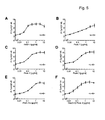
- NIH-3T3 cells stably expressing the human IGF-IR were used. After serum starvation over night, cells were treated with increasing doses of rhIGF-I or the respective PEG-IGF-I isomer (0.003-10 ⁇ g/ml).
- Western analysis of phosphorylated IGF-IR was performed according to described above and the obtained dose response curves were fitted with a one-site binding kinetics including the Hill coefficient (n H ); quantitative data of the association curves are shown in the table in Fig. 6.
- the dose response of rhIGF-I (Fig.
- n H was regular with 1.27 and 1.19, respectively.
- Double-transgenic PS2APP mice were used to analyze the short-term effects of rhIGF-I on brain Abeta load.
- Fig. 7A shows Western Blots of brain extracts from 2 months old miceWhereas APP, C99 and actin levels appear unchanged by rhIGF-I, Abeta levels were reduced by 2 h rhIGF-I treatment. Quantitative analysis was performed and ratios of the respective pixel intensities were calculated to obtain information about potential effects of rhIGF-I on Abeta production.
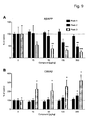
- peaks 1-3 are shown together for direct comparison of the potencies for Abeta lowering and Abeta clearance.
- APP/Actin or C99/APP ratios were not altered by any concentration of peak 1, 2 or 3.
- Peak 3 had the highest potency in reducing Abeta/APP at 6 h after i.p. injection (Fig. 9A).
- peak 1 was without activity over the whole concentration range tested and peak 2 only exerts a significant effect on lowering Abeta/APP at the highest concentration used (500 ⁇ g/kg).
- Fig. 9A peak 1 was without activity over the whole concentration range tested and peak 2 only exerts a significant effect on lowering Abeta/APP at the highest concentration used (500 ⁇ g/kg).
- peak 3 was the only compound active at low doses (15-50 ⁇ g/kg) in increasing the C99/Abeta ratio representative for an increased Abeta clearance. Also in this evaluation, peak 1 was inactive and peak 2 only exerted significant effects at 500 ⁇ g/kg. Taken together, these data suggest that peak 3 is the most active monoPEG-IGF-I isomer in this in vivo experimental paradigm.
Landscapes
- Health & Medical Sciences (AREA)
- Chemical & Material Sciences (AREA)
- Life Sciences & Earth Sciences (AREA)
- Organic Chemistry (AREA)
- Medicinal Chemistry (AREA)
- General Health & Medical Sciences (AREA)
- Engineering & Computer Science (AREA)
- Bioinformatics & Cheminformatics (AREA)
- Pharmacology & Pharmacy (AREA)
- Animal Behavior & Ethology (AREA)
- Public Health (AREA)
- Veterinary Medicine (AREA)
- Proteomics, Peptides & Aminoacids (AREA)
- Molecular Biology (AREA)
- Biochemistry (AREA)
- Zoology (AREA)
- Genetics & Genomics (AREA)
- Biophysics (AREA)
- Gastroenterology & Hepatology (AREA)
- Epidemiology (AREA)
- Toxicology (AREA)
- Endocrinology (AREA)
- Diabetes (AREA)
- Nuclear Medicine, Radiotherapy & Molecular Imaging (AREA)
- Biomedical Technology (AREA)
- General Chemical & Material Sciences (AREA)
- Chemical Kinetics & Catalysis (AREA)
- Neurosurgery (AREA)
- Neurology (AREA)
- Hospice & Palliative Care (AREA)
- Immunology (AREA)
- Psychiatry (AREA)
- Peptides Or Proteins (AREA)
- Medicinal Preparation (AREA)
- Medicines That Contain Protein Lipid Enzymes And Other Medicines (AREA)
Priority Applications (30)
| Application Number | Priority Date | Filing Date | Title |
|---|---|---|---|
| EP04030415A EP1674113A1 (fr) | 2004-12-22 | 2004-12-22 | Conjugués de l'IGF-1 et du poly(éthylène glycol) |
| US11/313,101 US20060154865A1 (en) | 2004-12-22 | 2005-12-20 | Conjugates of insulin-like growth factor-1 and poly(ethylene glycol) |
| KR1020097014300A KR101106860B1 (ko) | 2004-12-22 | 2005-12-21 | 인슐린-유사 성장 인자-1(igf-1) 및 폴리(에틸렌 글라이콜)의 접합체 |
| EP05849990.6A EP1830889B1 (fr) | 2004-12-22 | 2005-12-21 | Conjugués de l'igf-1 et du poly(éthylène glycol) |
| CN2005800485069A CN101123991B (zh) | 2004-12-22 | 2005-12-21 | 胰岛素样生长因子-1(igf-i)和聚乙二醇的缀合物 |
| JP2007547330A JP4954896B2 (ja) | 2004-12-22 | 2005-12-21 | インスリン様増殖因子−1とポリ(エチレングリコール)のコンジュゲート |
| NZ555840A NZ555840A (en) | 2004-12-22 | 2005-12-21 | Conjugates of insulin-like growth factor-1 (IGF-1) and poly (ethylene glycol) |
| AU2005318387A AU2005318387B2 (en) | 2004-12-22 | 2005-12-21 | Conjugates of insulin-like growth factor-1 (IGF-1) and poly(ethylene glycol) |
| TW097145363A TW200914041A (en) | 2004-12-22 | 2005-12-21 | Conjugates of insulin-like growth factor-I and poly(ethylene glycol) |
| BRPI0515857-5A BRPI0515857A (pt) | 2004-12-22 | 2005-12-21 | conjugados do fator-i de crescimento semelhante à insulina ( igf-i ) e polietileno glicol |
| TW094145672A TW200635604A (en) | 2004-12-22 | 2005-12-21 | Conjugates of insulin-like growth factor-1 and poly(ethylene glycol) |
| EA200701234A EA011284B1 (ru) | 2004-12-22 | 2005-12-21 | Конъюгаты инсулиноподобного фактора роста i (ифр-i) и полиэтиленгликоля |
| TW098120879A TW200940085A (en) | 2004-12-22 | 2005-12-21 | Conjugates of insulin-like growth factor-I and poly(ethylene glycol) |
| KR1020077016867A KR100915278B1 (ko) | 2004-12-22 | 2005-12-21 | 인슐린-유사 성장 인자-1(igf-1) 및 폴리(에틸렌글라이콜)의 접합체 |
| CA2592006A CA2592006C (fr) | 2004-12-22 | 2005-12-21 | Conjugues du facteur de croissance 1 analogue a l'insuline et du poly(ethylene glycol) |
| PCT/EP2005/013756 WO2006066891A2 (fr) | 2004-12-22 | 2005-12-21 | Conjugues du facteur de croissance 1 analogue a l'insuline et du poly(ethylene glycol) |
| KR1020097000308A KR20090010138A (ko) | 2004-12-22 | 2005-12-21 | 인슐린-유사 성장 인자-1(igf-1) 및 폴리(에틸렌 글라이콜)의 접합체 |
| UAA200708134A UA93666C2 (en) | 2004-12-22 | 2005-12-21 | Conjugates of insulin-like growth factor-1 (igf-1) and poly(ethylene glycol) |
| MX2007007479A MX2007007479A (es) | 2004-12-22 | 2005-12-21 | Conjugados del factor de crecimiento-1 similar a la insulina (igf-i) y polietilenglicol (peg). |
| ARP050105473A AR052842A1 (es) | 2004-12-22 | 2005-12-22 | Conjugados de factor de crecimiento -1 similar a la insulina y polietilenglicol |
| CR9177A CR9177A (es) | 2004-12-22 | 2007-06-12 | Conjugados de factor de crecimiento-1 similar a insulina y polietilenglicol |
| IL183966A IL183966A (en) | 2004-12-22 | 2007-06-14 | Conjugates of insulin-like growth factor-1 and poly(ethylene glycol) |
| NO20073103A NO20073103L (no) | 2004-12-22 | 2007-06-18 | Konjugater av insulinlignende vekstfaktor-1 og poly(etylenglykol) |
| ZA200705146A ZA200705146B (en) | 2004-12-22 | 2007-06-21 | Conjugates of insulin-like growth factor-1 (IGF-1) and poly(ethylene glycol) |
| MA30023A MA29107B1 (fr) | 2004-12-22 | 2007-06-21 | Conjugues du facteur de croissance 1 analogue a l'insuline et du poly(ethylene glycol) |
| TNP2007000237A TNSN07237A1 (fr) | 2004-12-22 | 2007-06-21 | Conjugues de l'igf-1 et du poly (ethylene glycol) |
| US12/791,904 US20110009317A1 (en) | 2004-12-22 | 2010-06-02 | Conjugates of insulin-like growth factor-1 and poly(ethylene glycol) |
| US13/551,648 US20120322732A1 (en) | 2004-12-22 | 2012-07-18 | Conjugates of insulin-like growth factor-1 and poly(ethylene glycol) |
| US13/845,179 US20130217623A1 (en) | 2004-12-22 | 2013-03-18 | Conjugates of insulin-like growth factor-1 and poly(ethylene glycol) |
| US14/482,703 US9724425B2 (en) | 2004-12-22 | 2014-09-10 | Conjugates of insulin-like growth factor-1 and poly(ethylene glycol) |
Applications Claiming Priority (1)
| Application Number | Priority Date | Filing Date | Title |
|---|---|---|---|
| EP04030415A EP1674113A1 (fr) | 2004-12-22 | 2004-12-22 | Conjugués de l'IGF-1 et du poly(éthylène glycol) |
Publications (1)
| Publication Number | Publication Date |
|---|---|
| EP1674113A1 true EP1674113A1 (fr) | 2006-06-28 |
Family
ID=34927913
Family Applications (2)
| Application Number | Title | Priority Date | Filing Date |
|---|---|---|---|
| EP04030415A Withdrawn EP1674113A1 (fr) | 2004-12-22 | 2004-12-22 | Conjugués de l'IGF-1 et du poly(éthylène glycol) |
| EP05849990.6A Expired - Lifetime EP1830889B1 (fr) | 2004-12-22 | 2005-12-21 | Conjugués de l'igf-1 et du poly(éthylène glycol) |
Family Applications After (1)
| Application Number | Title | Priority Date | Filing Date |
|---|---|---|---|
| EP05849990.6A Expired - Lifetime EP1830889B1 (fr) | 2004-12-22 | 2005-12-21 | Conjugués de l'igf-1 et du poly(éthylène glycol) |
Country Status (21)
| Country | Link |
|---|---|
| US (5) | US20060154865A1 (fr) |
| EP (2) | EP1674113A1 (fr) |
| JP (1) | JP4954896B2 (fr) |
| KR (3) | KR100915278B1 (fr) |
| CN (1) | CN101123991B (fr) |
| AR (1) | AR052842A1 (fr) |
| AU (1) | AU2005318387B2 (fr) |
| BR (1) | BRPI0515857A (fr) |
| CA (1) | CA2592006C (fr) |
| CR (1) | CR9177A (fr) |
| EA (1) | EA011284B1 (fr) |
| IL (1) | IL183966A (fr) |
| MA (1) | MA29107B1 (fr) |
| MX (1) | MX2007007479A (fr) |
| NO (1) | NO20073103L (fr) |
| NZ (1) | NZ555840A (fr) |
| TN (1) | TNSN07237A1 (fr) |
| TW (3) | TW200635604A (fr) |
| UA (1) | UA93666C2 (fr) |
| WO (1) | WO2006066891A2 (fr) |
| ZA (1) | ZA200705146B (fr) |
Cited By (4)
| Publication number | Priority date | Publication date | Assignee | Title |
|---|---|---|---|---|
| WO2008025528A1 (fr) * | 2006-08-31 | 2008-03-06 | F. Hoffmann-La Roche Ag | Procédés de production de conjugués de facteurs de croissance i de type insuline (igf-i) et de polyéthylène glycol |
| US8552158B2 (en) | 2006-08-31 | 2013-10-08 | Hoffmann-La Roche Inc. | Method for the production of insulin-like growth factor-1 |
| US8759299B2 (en) | 2009-07-22 | 2014-06-24 | Ipsen Pharma S.A.S. | Analogues of insulin-like growth factor-1 (IGF-1) having amino acid substitution at position 59 |
| EP2864353A4 (fr) * | 2012-06-25 | 2015-09-30 | Brigham & Womens Hospital | Thérapie sélective des cartilages |
Families Citing this family (18)
| Publication number | Priority date | Publication date | Assignee | Title |
|---|---|---|---|---|
| EP1674113A1 (fr) | 2004-12-22 | 2006-06-28 | F. Hoffmann-La Roche Ag | Conjugués de l'IGF-1 et du poly(éthylène glycol) |
| US8343918B2 (en) | 2006-06-09 | 2013-01-01 | Novartis Ag | Stabilized insulin-like growth factor polypeptides |
| AU2009231394B2 (en) * | 2008-04-03 | 2013-09-05 | F. Hoffmann-La Roche Ag | Use of PEGylated IGF-I variants for the treatment of neuromuscular disorders |
| CA2748119A1 (fr) * | 2008-12-23 | 2010-07-01 | Salk Institute For Biological Studies | Procede de traitement de maladie neurodegenerative |
| WO2011041376A1 (fr) * | 2009-09-30 | 2011-04-07 | Prolong Pharmaceuticals | Facteur modifié de stimulation des colonies de granulocytes (g-csf) |
| US20110152188A1 (en) | 2009-12-23 | 2011-06-23 | Hanns-Christian Mahler | Pharmaceutical compositions of igf/i proteins |
| US9587006B2 (en) * | 2010-02-11 | 2017-03-07 | Hoffmann-La Roche Inc. | IGF-I poly (ethylene glycol) conjugates |
| CN101831067A (zh) * | 2010-05-31 | 2010-09-15 | 王二新 | 聚乙二醇脂类缀合物及其在制备药物中的应用 |
| EP3626735A1 (fr) | 2012-12-18 | 2020-03-25 | Novartis AG | Polypeptides stabilisés de facteur de croissance de type insuline |
| BR112016005716A2 (pt) | 2013-10-02 | 2017-09-12 | Nat Institutes Of Health | miméticos de fator de crescimento semelhante à insulina para uso em terapia |
| UY35874A (es) | 2013-12-12 | 2015-07-31 | Novartis Ag | Un proceso para la preparación de una composición de proteínas pegiladas |
| EP3347486A4 (fr) * | 2015-09-09 | 2019-06-19 | The Trustees of Columbia University in the City of New York | Réduction du fragment c99 de l'app localisé sur la membrane er-mam et procédés de traitement de la maladie d'alzheimer |
| KR200481741Y1 (ko) | 2016-02-22 | 2016-11-04 | 강진범 | 차량의 방향지시등에 연동하여 특수 인식 영역에 led 반사광을 형성하기 위한 노면 광조사 장치 |
| WO2017147298A1 (fr) | 2016-02-23 | 2017-08-31 | The Regents Of The University Of Colorado, A Body Corporate | Procédés à base de peptides pour traiter une lésion neurologique |
| RU2711111C1 (ru) * | 2018-09-05 | 2020-01-15 | Илья Владимирович Духовлинов | Гибридный белок igf-1-long для лечения инсульта, нуклеиновая кислота, вектор, клетка, фармацевтическая композиция, способ лечения |
| EP3911668A1 (fr) | 2019-01-18 | 2021-11-24 | The Regents of the University of Colorado, a body corporate | Peptides antimicrobiens alpha-hélicoïdaux amphipathiques pour le traitement d'infections par des agents pathogènes à gram-négatif |
| US12222354B2 (en) * | 2021-03-19 | 2025-02-11 | Quest Diagnostics Investments Llc | Identification and quantitation of insulin-like growth factor-I variants by mass spectrometry |
| WO2024138064A1 (fr) * | 2022-12-22 | 2024-06-27 | Cavalry Biosciences, Inc. | Compositions et méthodes de traitement de dysfonctionnement de la glande de meibomius |
Citations (4)
| Publication number | Priority date | Publication date | Assignee | Title |
|---|---|---|---|---|
| WO1994012219A2 (fr) * | 1992-11-25 | 1994-06-09 | Amgen Boulder Inc. | Facteur de croissance insulinoide modifie |
| WO1995032003A1 (fr) * | 1994-05-24 | 1995-11-30 | Amgen Boulder Inc. | Facteurs de croissance proches de l'insuline modifies |
| WO2001091798A2 (fr) * | 2000-06-01 | 2001-12-06 | Universite Catholique De Louvain | Composes de promedicaments a activation tumorale et procedes de fabrication et d'utilisation de ces derniers |
| US20040014652A1 (en) * | 2000-06-01 | 2004-01-22 | Andre Trouet | Tumor activated prodrug compounds and methods of making and using the same |
Family Cites Families (29)
| Publication number | Priority date | Publication date | Assignee | Title |
|---|---|---|---|---|
| DE3486216T2 (de) | 1983-04-25 | 1994-02-17 | Chiron Corp | Hybrid-DNS-Synthesis von reifen insulinähnlichen Wachstumsfaktoren. |
| IL71991A (en) | 1983-06-06 | 1994-05-30 | Genentech Inc | Preparation of human FGI and FGE in their processed form through recombinant AND tranology in prokaryotes |
| US4904584A (en) | 1987-12-23 | 1990-02-27 | Genetics Institute, Inc. | Site-specific homogeneous modification of polypeptides |
| JP2507106B2 (ja) * | 1987-12-24 | 1996-06-12 | グロペップ プロプライエタリー リミテッド | インスリン様成長因子1(igf―1)または因子2(igf―2)の類縁ペプチド |
| EP0400472B1 (fr) | 1989-05-27 | 1996-04-03 | Sumitomo Pharmaceuticals Company, Limited | Procédé pour la préparation de dérivés de polyéthylène glycol et protéine modifiée. |
| DE3924705A1 (de) | 1989-07-26 | 1991-01-31 | Boehringer Mannheim Gmbh | Heterobifunktionelle verbindungen |
| US5681814A (en) | 1990-06-07 | 1997-10-28 | Genentech, Inc. | Formulated IGF-I Composition |
| JP3051145B2 (ja) * | 1990-08-28 | 2000-06-12 | 住友製薬株式会社 | 新規なポリエチレングリコール誘導体修飾ペプチド |
| US5861373A (en) * | 1991-08-01 | 1999-01-19 | Genentech, Inc | IGF-1 to improve the neural condition |
| DE69218948T2 (de) | 1991-08-01 | 1997-07-31 | Auckland Uniservices Ltd | IGF-I zur Verbesserung der neuronale Lage |
| US5824784A (en) | 1994-10-12 | 1998-10-20 | Amgen Inc. | N-terminally chemically modified protein compositions and methods |
| US5932462A (en) * | 1995-01-10 | 1999-08-03 | Shearwater Polymers, Inc. | Multiarmed, monofunctional, polymer for coupling to molecules and surfaces |
| US5672662A (en) * | 1995-07-07 | 1997-09-30 | Shearwater Polymers, Inc. | Poly(ethylene glycol) and related polymers monosubstituted with propionic or butanoic acids and functional derivatives thereof for biotechnical applications |
| JP2001511162A (ja) * | 1997-02-06 | 2001-08-07 | ノボ ノルディスク アクティーゼルスカブ | 付加され、そして/又は除去された付着基を有するポリペプチド−ポリマー結合体 |
| US7067485B2 (en) | 1997-11-07 | 2006-06-27 | Chiron Corporation | IGF-I composition and its use |
| US6767892B1 (en) | 1997-11-07 | 2004-07-27 | Chrion Corporation | Compositions providing for increased IGF-I solubility |
| AU3764199A (en) | 1998-04-29 | 1999-11-16 | Genentech Inc. | Spray dried formulations of igf-i |
| US6436897B2 (en) | 1998-06-01 | 2002-08-20 | Celtrix Pharmaceuticals, Inc. | Pharmaceutical formulations for IGF/IGFBP |
| US6451986B1 (en) | 1998-06-22 | 2002-09-17 | Immunex Corporation | Site specific protein modification |
| CA2356109C (fr) * | 1999-01-06 | 2008-04-22 | Genentech, Inc. | Variants mutants du facteur de croissance insulinomimetique (igf) de type i |
| DE60042550D1 (de) * | 1999-01-06 | 2009-08-27 | Genentech Inc | Mutierte varianten des insulin-ähnlichen wachstumsfaktor i (igf-i) |
| CA2369451C (fr) | 1999-04-08 | 2009-09-22 | Genentech, Inc. | Composition a base de polypeptides a charge opposee |
| US7431921B2 (en) | 1999-08-27 | 2008-10-07 | Maxygen Aps | Interferon beta-like molecules |
| WO2001015736A2 (fr) * | 1999-08-27 | 2001-03-08 | Maxygen Aps | Nouvelles molecules analogues a l'interferon beta |
| US20020082215A1 (en) | 2000-10-13 | 2002-06-27 | Chiron Corporation | Method for treating ischemic events affecting the central nervous system |
| AU2003303636B2 (en) * | 2002-12-26 | 2010-08-05 | Mountain View Pharmaceuticals, Inc. | Polymer conjugates of cytokines, chemokines, growth factors, polypeptide hormones and antagonists thereof with preserved receptor-binding activity |
| EP1674113A1 (fr) | 2004-12-22 | 2006-06-28 | F. Hoffmann-La Roche Ag | Conjugués de l'IGF-1 et du poly(éthylène glycol) |
| CL2007002502A1 (es) | 2006-08-31 | 2008-05-30 | Hoffmann La Roche | Variantes del factor de crecimiento similar a insulina-1 humano (igf-1) pegilados en lisina; metodo de produccion; proteina de fusion que la comprende; y su uso para tratar la enfermedad de alzheimer. |
| AU2009231394B2 (en) | 2008-04-03 | 2013-09-05 | F. Hoffmann-La Roche Ag | Use of PEGylated IGF-I variants for the treatment of neuromuscular disorders |
-
2004
- 2004-12-22 EP EP04030415A patent/EP1674113A1/fr not_active Withdrawn
-
2005
- 2005-12-20 US US11/313,101 patent/US20060154865A1/en not_active Abandoned
- 2005-12-21 BR BRPI0515857-5A patent/BRPI0515857A/pt not_active Application Discontinuation
- 2005-12-21 EP EP05849990.6A patent/EP1830889B1/fr not_active Expired - Lifetime
- 2005-12-21 CN CN2005800485069A patent/CN101123991B/zh not_active Expired - Fee Related
- 2005-12-21 KR KR1020077016867A patent/KR100915278B1/ko not_active Expired - Fee Related
- 2005-12-21 NZ NZ555840A patent/NZ555840A/en not_active IP Right Cessation
- 2005-12-21 MX MX2007007479A patent/MX2007007479A/es active IP Right Grant
- 2005-12-21 KR KR1020097000308A patent/KR20090010138A/ko not_active Withdrawn
- 2005-12-21 WO PCT/EP2005/013756 patent/WO2006066891A2/fr not_active Ceased
- 2005-12-21 JP JP2007547330A patent/JP4954896B2/ja not_active Expired - Fee Related
- 2005-12-21 CA CA2592006A patent/CA2592006C/fr not_active Expired - Fee Related
- 2005-12-21 EA EA200701234A patent/EA011284B1/ru not_active IP Right Cessation
- 2005-12-21 KR KR1020097014300A patent/KR101106860B1/ko not_active Expired - Fee Related
- 2005-12-21 TW TW094145672A patent/TW200635604A/zh unknown
- 2005-12-21 TW TW098120879A patent/TW200940085A/zh unknown
- 2005-12-21 TW TW097145363A patent/TW200914041A/zh unknown
- 2005-12-21 UA UAA200708134A patent/UA93666C2/ru unknown
- 2005-12-21 AU AU2005318387A patent/AU2005318387B2/en not_active Ceased
- 2005-12-22 AR ARP050105473A patent/AR052842A1/es not_active Application Discontinuation
-
2007
- 2007-06-12 CR CR9177A patent/CR9177A/es not_active Application Discontinuation
- 2007-06-14 IL IL183966A patent/IL183966A/en not_active IP Right Cessation
- 2007-06-18 NO NO20073103A patent/NO20073103L/no not_active Application Discontinuation
- 2007-06-21 ZA ZA200705146A patent/ZA200705146B/en unknown
- 2007-06-21 MA MA30023A patent/MA29107B1/fr unknown
- 2007-06-21 TN TNP2007000237A patent/TNSN07237A1/fr unknown
-
2010
- 2010-06-02 US US12/791,904 patent/US20110009317A1/en not_active Abandoned
-
2012
- 2012-07-18 US US13/551,648 patent/US20120322732A1/en not_active Abandoned
-
2013
- 2013-03-18 US US13/845,179 patent/US20130217623A1/en not_active Abandoned
-
2014
- 2014-09-10 US US14/482,703 patent/US9724425B2/en not_active Expired - Fee Related
Patent Citations (4)
| Publication number | Priority date | Publication date | Assignee | Title |
|---|---|---|---|---|
| WO1994012219A2 (fr) * | 1992-11-25 | 1994-06-09 | Amgen Boulder Inc. | Facteur de croissance insulinoide modifie |
| WO1995032003A1 (fr) * | 1994-05-24 | 1995-11-30 | Amgen Boulder Inc. | Facteurs de croissance proches de l'insuline modifies |
| WO2001091798A2 (fr) * | 2000-06-01 | 2001-12-06 | Universite Catholique De Louvain | Composes de promedicaments a activation tumorale et procedes de fabrication et d'utilisation de ces derniers |
| US20040014652A1 (en) * | 2000-06-01 | 2004-01-22 | Andre Trouet | Tumor activated prodrug compounds and methods of making and using the same |
Non-Patent Citations (4)
| Title |
|---|
| CARRO E ET AL: "Serum insulin-like growth factor I regulates brain amyloid-[beta] levels", NATURE MEDICINE 01 DEC 2002 UNITED STATES, vol. 8, no. 12, 1 December 2002 (2002-12-01), pages 1390 - 1397, XP002338195, ISSN: 1078-8956 * |
| GREENWALD R B: "PEG drugs: an overview", JOURNAL OF CONTROLLED RELEASE, ELSEVIER SCIENCE PUBLISHERS B.V. AMSTERDAM, NL, vol. 74, no. 1-3, 6 July 2001 (2001-07-06), pages 159 - 171, XP004297521, ISSN: 0168-3659 * |
| KIM T H ET AL: "Pegylated recombinant human epidermal growth factor (rhEGF) for sustained release from biodegradable PLGA microspheres", BIOMATERIALS, ELSEVIER SCIENCE PUBLISHERS BV., BARKING, GB, vol. 23, no. 11, June 2002 (2002-06-01), pages 2311 - 2317, XP004345260, ISSN: 0142-9612 * |
| PARK T G ET AL: "Preparation and characterization of mono-PEGylated epidermal growth factor: evaluation of in vitro biologic activity", PHARMACEUTICAL RESEARCH, NEW YORK, NY, US, vol. 19, no. 6, June 2002 (2002-06-01), pages 845 - 851, XP002904848, ISSN: 0724-8741 * |
Cited By (7)
| Publication number | Priority date | Publication date | Assignee | Title |
|---|---|---|---|---|
| WO2008025528A1 (fr) * | 2006-08-31 | 2008-03-06 | F. Hoffmann-La Roche Ag | Procédés de production de conjugués de facteurs de croissance i de type insuline (igf-i) et de polyéthylène glycol |
| US7625996B2 (en) | 2006-08-31 | 2009-12-01 | Hoffmann-La Roche Inc. | Method for the production of conjugates of insulin-like growth factor-1 and poly(ethylene glycol) |
| AU2007291502B2 (en) * | 2006-08-31 | 2012-05-31 | F. Hoffmann-La Roche Ag | Method for the production of conjugates of insulin-like growth factor-I and poly(ethylene glycol) |
| US8476232B2 (en) | 2006-08-31 | 2013-07-02 | Hoffman-La Roche Inc. | Method for the production of conjugates of insulin-like growth factor-1 and poly(ethylene glycol) |
| US8552158B2 (en) | 2006-08-31 | 2013-10-08 | Hoffmann-La Roche Inc. | Method for the production of insulin-like growth factor-1 |
| US8759299B2 (en) | 2009-07-22 | 2014-06-24 | Ipsen Pharma S.A.S. | Analogues of insulin-like growth factor-1 (IGF-1) having amino acid substitution at position 59 |
| EP2864353A4 (fr) * | 2012-06-25 | 2015-09-30 | Brigham & Womens Hospital | Thérapie sélective des cartilages |
Also Published As
Similar Documents
| Publication | Publication Date | Title |
|---|---|---|
| US9724425B2 (en) | Conjugates of insulin-like growth factor-1 and poly(ethylene glycol) | |
| US8476232B2 (en) | Method for the production of conjugates of insulin-like growth factor-1 and poly(ethylene glycol) | |
| CA2720408C (fr) | Utilisation de variants de igf-i pegyles pour traiter des troubles neuromusculaires | |
| JP2011520447A (ja) | コリンエステラーゼ部分とポリマーとのコンジュゲート | |
| DE60313786T2 (de) | Poly(ethylen glykol)-konjugate von insulinähnlichem wachstumfaktor bindenden protein-4 | |
| CN101277715B (zh) | 神经变性疾病的治疗 | |
| HK1117055A (en) | Conjugates of insulin-like growth factor-1 and poly(ethylene glycol) | |
| JP2017502005A (ja) | ペグ化タンパク質の組成物を調製するための方法 |
Legal Events
| Date | Code | Title | Description |
|---|---|---|---|
| PUAI | Public reference made under article 153(3) epc to a published international application that has entered the european phase |
Free format text: ORIGINAL CODE: 0009012 |
|
| AK | Designated contracting states |
Kind code of ref document: A1 Designated state(s): AT BE BG CH CY CZ DE DK EE ES FI FR GB GR HU IE IS IT LI LT LU MC NL PL PT RO SE SI SK TR |
|
| AX | Request for extension of the european patent |
Extension state: AL BA HR LV MK YU |
|
| STAA | Information on the status of an ep patent application or granted ep patent |
Free format text: STATUS: THE APPLICATION IS DEEMED TO BE WITHDRAWN |
|
| 18D | Application deemed to be withdrawn |
Effective date: 20060425 |