EP1685268B1 - Verfahren zur herstellung eines automobilkarosseriebauteils - Google Patents
Verfahren zur herstellung eines automobilkarosseriebauteils Download PDFInfo
- Publication number
- EP1685268B1 EP1685268B1 EP04798037.0A EP04798037A EP1685268B1 EP 1685268 B1 EP1685268 B1 EP 1685268B1 EP 04798037 A EP04798037 A EP 04798037A EP 1685268 B1 EP1685268 B1 EP 1685268B1
- Authority
- EP
- European Patent Office
- Prior art keywords
- annealing
- sheet metal
- maximum
- alloy
- rolled
- Prior art date
- Legal status (The legal status is an assumption and is not a legal conclusion. Google has not performed a legal analysis and makes no representation as to the accuracy of the status listed.)
- Expired - Lifetime
Links
- 238000004519 manufacturing process Methods 0.000 title claims description 14
- 229910000838 Al alloy Inorganic materials 0.000 claims description 33
- 238000000137 annealing Methods 0.000 claims description 28
- 229910045601 alloy Inorganic materials 0.000 claims description 27
- 239000000956 alloy Substances 0.000 claims description 27
- 239000011777 magnesium Substances 0.000 claims description 20
- 229910052751 metal Inorganic materials 0.000 claims description 17
- 239000002184 metal Substances 0.000 claims description 17
- 229910052749 magnesium Inorganic materials 0.000 claims description 14
- 229910052710 silicon Inorganic materials 0.000 claims description 14
- XEEYBQQBJWHFJM-UHFFFAOYSA-N Iron Chemical compound [Fe] XEEYBQQBJWHFJM-UHFFFAOYSA-N 0.000 claims description 11
- 238000010438 heat treatment Methods 0.000 claims description 10
- RYGMFSIKBFXOCR-UHFFFAOYSA-N Copper Chemical compound [Cu] RYGMFSIKBFXOCR-UHFFFAOYSA-N 0.000 claims description 6
- FYYHWMGAXLPEAU-UHFFFAOYSA-N Magnesium Chemical compound [Mg] FYYHWMGAXLPEAU-UHFFFAOYSA-N 0.000 claims description 6
- PWHULOQIROXLJO-UHFFFAOYSA-N Manganese Chemical compound [Mn] PWHULOQIROXLJO-UHFFFAOYSA-N 0.000 claims description 6
- 238000005098 hot rolling Methods 0.000 claims description 6
- 239000011572 manganese Substances 0.000 claims description 6
- 229910052720 vanadium Inorganic materials 0.000 claims description 6
- LEONUFNNVUYDNQ-UHFFFAOYSA-N vanadium atom Chemical compound [V] LEONUFNNVUYDNQ-UHFFFAOYSA-N 0.000 claims description 6
- 229910052782 aluminium Inorganic materials 0.000 claims description 5
- XAGFODPZIPBFFR-UHFFFAOYSA-N aluminium Chemical compound [Al] XAGFODPZIPBFFR-UHFFFAOYSA-N 0.000 claims description 5
- 239000010949 copper Substances 0.000 claims description 5
- 229910052802 copper Inorganic materials 0.000 claims description 5
- 229910052742 iron Inorganic materials 0.000 claims description 5
- 229910052748 manganese Inorganic materials 0.000 claims description 5
- 238000000034 method Methods 0.000 claims description 5
- 239000010703 silicon Substances 0.000 claims description 5
- 239000004411 aluminium Substances 0.000 claims 1
- 239000000356 contaminant Substances 0.000 claims 1
- 229910019018 Mg 2 Si Inorganic materials 0.000 description 14
- 238000001723 curing Methods 0.000 description 13
- 239000011856 silicon-based particle Substances 0.000 description 13
- 238000005275 alloying Methods 0.000 description 12
- 239000000243 solution Substances 0.000 description 10
- 239000000523 sample Substances 0.000 description 8
- 208000027418 Wounds and injury Diseases 0.000 description 7
- 230000006378 damage Effects 0.000 description 7
- 208000014674 injury Diseases 0.000 description 7
- 239000003973 paint Substances 0.000 description 6
- 239000006104 solid solution Substances 0.000 description 6
- XUIMIQQOPSSXEZ-UHFFFAOYSA-N Silicon Chemical compound [Si] XUIMIQQOPSSXEZ-UHFFFAOYSA-N 0.000 description 5
- 239000000463 material Substances 0.000 description 5
- 238000010276 construction Methods 0.000 description 4
- 239000000203 mixture Substances 0.000 description 4
- 230000032683 aging Effects 0.000 description 3
- 238000005452 bending Methods 0.000 description 3
- 239000012535 impurity Substances 0.000 description 3
- 238000001556 precipitation Methods 0.000 description 3
- 230000003014 reinforcing effect Effects 0.000 description 3
- 238000007669 thermal treatment Methods 0.000 description 3
- 229920001187 thermosetting polymer Polymers 0.000 description 3
- 206010039203 Road traffic accident Diseases 0.000 description 2
- 238000010521 absorption reaction Methods 0.000 description 2
- 238000005097 cold rolling Methods 0.000 description 2
- 238000010586 diagram Methods 0.000 description 2
- 238000012821 model calculation Methods 0.000 description 2
- 239000002244 precipitate Substances 0.000 description 2
- 230000002265 prevention Effects 0.000 description 2
- 238000004064 recycling Methods 0.000 description 2
- 238000009864 tensile test Methods 0.000 description 2
- 206010011906 Death Diseases 0.000 description 1
- CWYNVVGOOAEACU-UHFFFAOYSA-N Fe2+ Chemical compound [Fe+2] CWYNVVGOOAEACU-UHFFFAOYSA-N 0.000 description 1
- 206010019196 Head injury Diseases 0.000 description 1
- 229910000831 Steel Inorganic materials 0.000 description 1
- 238000003483 aging Methods 0.000 description 1
- 238000005266 casting Methods 0.000 description 1
- 230000008859 change Effects 0.000 description 1
- 239000002131 composite material Substances 0.000 description 1
- 238000009749 continuous casting Methods 0.000 description 1
- 238000001816 cooling Methods 0.000 description 1
- 238000005336 cracking Methods 0.000 description 1
- 238000013461 design Methods 0.000 description 1
- 238000011161 development Methods 0.000 description 1
- 230000018109 developmental process Effects 0.000 description 1
- 238000004090 dissolution Methods 0.000 description 1
- 238000009826 distribution Methods 0.000 description 1
- 230000000694 effects Effects 0.000 description 1
- 238000002474 experimental method Methods 0.000 description 1
- 210000003195 fascia Anatomy 0.000 description 1
- 238000010304 firing Methods 0.000 description 1
- 239000006261 foam material Substances 0.000 description 1
- 230000005484 gravity Effects 0.000 description 1
- 238000013007 heat curing Methods 0.000 description 1
- 238000000265 homogenisation Methods 0.000 description 1
- 210000002414 leg Anatomy 0.000 description 1
- 239000002245 particle Substances 0.000 description 1
- 230000008569 process Effects 0.000 description 1
- 238000010791 quenching Methods 0.000 description 1
- 230000000171 quenching effect Effects 0.000 description 1
- 230000009467 reduction Effects 0.000 description 1
- 230000002787 reinforcement Effects 0.000 description 1
- 150000003839 salts Chemical class 0.000 description 1
- 239000012488 sample solution Substances 0.000 description 1
- 238000001878 scanning electron micrograph Methods 0.000 description 1
- 238000000926 separation method Methods 0.000 description 1
- 239000010959 steel Substances 0.000 description 1
- 238000003860 storage Methods 0.000 description 1
- 238000005482 strain hardening Methods 0.000 description 1
- 230000035882 stress Effects 0.000 description 1
- 239000000126 substance Substances 0.000 description 1
- 238000003878 thermal aging Methods 0.000 description 1
- 210000000689 upper leg Anatomy 0.000 description 1
- XLYOFNOQVPJJNP-UHFFFAOYSA-N water Substances O XLYOFNOQVPJJNP-UHFFFAOYSA-N 0.000 description 1
- 230000003313 weakening effect Effects 0.000 description 1
Images


Classifications
-
- C—CHEMISTRY; METALLURGY
- C22—METALLURGY; FERROUS OR NON-FERROUS ALLOYS; TREATMENT OF ALLOYS OR NON-FERROUS METALS
- C22C—ALLOYS
- C22C21/00—Alloys based on aluminium
- C22C21/02—Alloys based on aluminium with silicon as the next major constituent
-
- B—PERFORMING OPERATIONS; TRANSPORTING
- B62—LAND VEHICLES FOR TRAVELLING OTHERWISE THAN ON RAILS
- B62D—MOTOR VEHICLES; TRAILERS
- B62D25/00—Superstructure or monocoque structure sub-units; Parts or details thereof not otherwise provided for
- B62D25/08—Front or rear portions
- B62D25/10—Bonnets or lids, e.g. for trucks, tractors, busses, work vehicles
- B62D25/105—Bonnets or lids, e.g. for trucks, tractors, busses, work vehicles for motor cars
-
- B—PERFORMING OPERATIONS; TRANSPORTING
- B62—LAND VEHICLES FOR TRAVELLING OTHERWISE THAN ON RAILS
- B62D—MOTOR VEHICLES; TRAILERS
- B62D25/00—Superstructure or monocoque structure sub-units; Parts or details thereof not otherwise provided for
- B62D25/08—Front or rear portions
-
- B—PERFORMING OPERATIONS; TRANSPORTING
- B62—LAND VEHICLES FOR TRAVELLING OTHERWISE THAN ON RAILS
- B62D—MOTOR VEHICLES; TRAILERS
- B62D25/00—Superstructure or monocoque structure sub-units; Parts or details thereof not otherwise provided for
- B62D25/08—Front or rear portions
- B62D25/082—Engine compartments
-
- B—PERFORMING OPERATIONS; TRANSPORTING
- B62—LAND VEHICLES FOR TRAVELLING OTHERWISE THAN ON RAILS
- B62D—MOTOR VEHICLES; TRAILERS
- B62D25/00—Superstructure or monocoque structure sub-units; Parts or details thereof not otherwise provided for
- B62D25/08—Front or rear portions
- B62D25/082—Engine compartments
- B62D25/085—Front-end modules
-
- B—PERFORMING OPERATIONS; TRANSPORTING
- B62—LAND VEHICLES FOR TRAVELLING OTHERWISE THAN ON RAILS
- B62D—MOTOR VEHICLES; TRAILERS
- B62D25/00—Superstructure or monocoque structure sub-units; Parts or details thereof not otherwise provided for
- B62D25/08—Front or rear portions
- B62D25/10—Bonnets or lids, e.g. for trucks, tractors, busses, work vehicles
-
- B—PERFORMING OPERATIONS; TRANSPORTING
- B62—LAND VEHICLES FOR TRAVELLING OTHERWISE THAN ON RAILS
- B62D—MOTOR VEHICLES; TRAILERS
- B62D25/00—Superstructure or monocoque structure sub-units; Parts or details thereof not otherwise provided for
- B62D25/08—Front or rear portions
- B62D25/10—Bonnets or lids, e.g. for trucks, tractors, busses, work vehicles
- B62D25/12—Parts or details thereof
-
- C—CHEMISTRY; METALLURGY
- C22—METALLURGY; FERROUS OR NON-FERROUS ALLOYS; TREATMENT OF ALLOYS OR NON-FERROUS METALS
- C22C—ALLOYS
- C22C21/00—Alloys based on aluminium
- C22C21/02—Alloys based on aluminium with silicon as the next major constituent
- C22C21/04—Modified aluminium-silicon alloys
-
- C—CHEMISTRY; METALLURGY
- C22—METALLURGY; FERROUS OR NON-FERROUS ALLOYS; TREATMENT OF ALLOYS OR NON-FERROUS METALS
- C22C—ALLOYS
- C22C21/00—Alloys based on aluminium
- C22C21/06—Alloys based on aluminium with magnesium as the next major constituent
- C22C21/08—Alloys based on aluminium with magnesium as the next major constituent with silicon
-
- C—CHEMISTRY; METALLURGY
- C22—METALLURGY; FERROUS OR NON-FERROUS ALLOYS; TREATMENT OF ALLOYS OR NON-FERROUS METALS
- C22F—CHANGING THE PHYSICAL STRUCTURE OF NON-FERROUS METALS AND NON-FERROUS ALLOYS
- C22F1/00—Changing the physical structure of non-ferrous metals or alloys by heat treatment or by hot or cold working
- C22F1/04—Changing the physical structure of non-ferrous metals or alloys by heat treatment or by hot or cold working of aluminium or alloys based thereon
- C22F1/05—Changing the physical structure of non-ferrous metals or alloys by heat treatment or by hot or cold working of aluminium or alloys based thereon of alloys of the Al-Si-Mg type, i.e. containing silicon and magnesium in approximately equal proportions
-
- Y—GENERAL TAGGING OF NEW TECHNOLOGICAL DEVELOPMENTS; GENERAL TAGGING OF CROSS-SECTIONAL TECHNOLOGIES SPANNING OVER SEVERAL SECTIONS OF THE IPC; TECHNICAL SUBJECTS COVERED BY FORMER USPC CROSS-REFERENCE ART COLLECTIONS [XRACs] AND DIGESTS
- Y10—TECHNICAL SUBJECTS COVERED BY FORMER USPC
- Y10T—TECHNICAL SUBJECTS COVERED BY FORMER US CLASSIFICATION
- Y10T428/00—Stock material or miscellaneous articles
- Y10T428/12—All metal or with adjacent metals
- Y10T428/12493—Composite; i.e., plural, adjacent, spatially distinct metal components [e.g., layers, joint, etc.]
- Y10T428/12736—Al-base component
- Y10T428/12764—Next to Al-base component
Definitions
- the invention relates to a method for producing a sheet metal body of an aluminum alloy AlMgSi type. Further, disclosed herein is an automobile body having at least a first member made of a first aluminum alloy sheet and at least a second member made of a second aluminum alloy sheet, the first and second aluminum alloys being of the AlMgSi type and the second members have lower mechanical strength values compared to the first components after a hot curing of the body or the body component.
- a hot curing occurs under the annealing conditions during paint firing or during a separate heat treatment carried out.
- an aluminum alloy for sheet metal applications should be very formable to allow for stretch drawing, deep drawing and bending while achieving high strength after paint bake.
- AlMgSi alloys such as AlMgSi alloys
- AlMgSi alloys are already being used to a great extent for outer sheet metal applications, in particular for engine hoods.
- the alloy AA 6016 used.
- WO 00/52216 A1 refers to a structural element made of AlMgSi aluminum alloy with high kinetic energy capacity by plastic deformation, characterized in that the alloy (in wt%) is silicon 0.45 to 0.85, magnesium 0.35 to 1.0, copper 0.05 to 0.30, iron 0.05 to 0.25, vanadium max. 0.25, manganese max. 0.10 as well as production-related impurities individually max. 0.05, a total of max. 0.15 and aluminum as balance and the structural member is made of rolled strip or sheet of alloy.
- the structural component can be used as a safety part in vehicle construction.
- Aluminum alloys in the structural area of a vehicle improve driving behavior (vehicle stiffness, axle load distribution, center of gravity, etc.). Such constructions can also have a high capacity for energy absorption in the event of a crash.
- EP-A-1 165 848 are disclosed made of sheet metal structural components made of an AlMgSi alloy disclosed.
- Pedestrian protection measures on automobile bodies can be very effective in preventing serious and fatal injuries in mid-speed collisions.
- a car collides head-on with those affected.
- the injury to the pedestrian is only partially caused by the initial collision.
- the upper body of the collapsed bends, and his head beats on the hood.
- the front edge of the bonnet is particularly critical for injuries in the Thigh or hip area.
- Detailed changes in the sheet metal structure of the hood edge are necessary to reduce the rigidity and provide sufficient depth. This can be achieved by weakening or retracting the inner panel reinforcements of the hood, the closure and the closure cross struts.
- front flaps and other large body parts of automobiles are made "softer".
- the components are designed or actively changed so that they can absorb a large part of the kinetic energy by plastic deformation in an impact. These measures lead to less serious injuries.
- Passive measures include design, construction and materials. With respect to the material, various composite materials such as e.g. Sandwich constructions known with foam materials. However, no attempts have yet been made to use relatively soft aluminum alloys.
- the invention has for its object to provide an automobile body component and an automobile body or a component of an automobile body of the type mentioned, in addition to the common recycling of process scrap in the production of various components and a simple scrap recycling of body parts in end-of-life cars to a comparison to prior art solutions provides improved pedestrian impact protection.
- the object of the invention is to provide a substantial part of the Mg and Si particles required for achieving hot curing in solid solution in the sheet to avoid hot curing in the form of precipitated Mg 2 Si and / or Si particles.
- the solution according to the invention achieves the object that, at least in the second aluminum alloy sheet, an essential part of the elements Mg and Si required for achieving a hot solid solution hardening Prevention of hot curing prior to thermosetting of the body or the body component is present in the form of precipitated Mg 2 Si and / or Si particles.
- the essential core of the invention is thus to use the "soft" components with a predetermined microstructure, so that - in contrast to the "hard” components - under normal Lackeinbrenn suction no or a reduced hot curing occurs and consequently no more or a reduced increase of the mechanical strength values takes place, but the soft components retain the values already set by the predetermined microstructure or, in the case of hot curing, no longer reach the maximum possible strength level.
- an alloy is disclosed 0.6 to 1.2 wt .-% silicon 0.3 to 0.8% by weight of magnesium Max. 0.8% by weight of copper Max. 0.4% by weight of iron Max. 0.3% by weight of manganese Max. 0.2% by weight of vanadium as well as production-related impurities and aluminum as balance.
- the hard first aluminum alloy includes in particular the usual body exterior skin materials such as AA 6016 and AA 6111.
- the soft second aluminum alloy an alloy identical to the first hard aluminum alloy can be used, but in general, a composition having a much lower strength level is preferred.
- an alloy is disclosed 0.25 to 0.60 wt.% Silicon 0.25 to 0.60 wt% magnesium 0.05 to 0.30 wt .-% copper Max. 0.40% by weight of iron Max. 0.30 wt .-% manganese Max. 0.20% by weight of vanadium as well as production-related impurities individually max. 0.05% by weight, in total max. 0.15 wt .-%, and aluminum as the remainder.
- the "soft" sheets or the sheets of the second aluminum alloy can be prepared in a conventional manner via strand or strip casting with subsequent hot and / or cold rolling with or without intermediate annealing.
- the proportion of precipitation-relevant alloying elements present after removal of the solution or before hot curing causes a change in the mechanical strength values which, outside of a given setpoint value, lies outside the deviations in a conventional manufacturing procedure within the scope of manufacturing tolerances.
- the proportion of precipitation-relevant alloying elements present in precipitated form can therefore be described as essential.
- the selection of the second aluminum alloy is primarily due to a given strength level.
- the definition of the required temperature and the duration of time when carrying out the abovementioned annealing to achieve a structural state which does not lead to a further limited or limited increase in the mechanical strength values in a subsequent thermal aging takes place individually for each alloy or application based on a simple series of experiments.
- the lowest strength level results when the proportion of alloying elements contributing to the thermosetting, in solid solution, is practically negligible.
- the same alloy composition can be used to adjust the level of firmness by adding the portion of the hot curing solid solution existing alloying elements selected higher or the heat treatment is controlled so that only a small part as Mg 2 Si and / or Si particles is eliminated. The component is then somewhat less "soft" in favor of a higher strength.
- the soft second components are preferably inner panels of a body element, in particular a bonnet, and trim parts or structural components or reinforcing elements arranged in the front region of the body.
- the soft second components may also be body elements which are formed in conventional automobile bodies of hard first components. An essential area of application of the soft second components are thus deep-drawn body parts with good bending behavior.
- a soft component for example, as an inner panel of a steel or plastic hood, as a trim part in the front of a car (eg grille, bumper fascia, spoiler, etc.) or as a structural component or reinforcing plate in the front (eg reinforcing plate in the "closure area" of the hood, carrier plate for coolers, headlamps and other units in the front area, etc.).
- the strips were subjected to solution annealing (Alloy A) or partial solution annealing (Alloy B) in a continuous strip annealing furnace, followed by quenching with agitated air and aging by storage for several days at room temperature to the delivery condition T4.
- solution annealing conditions were chosen: Alloy A 550 ° C / 30sec Alloy B 500 ° C / 20 sec
- Sheet metal samples of the aluminum alloys A and B in delivery condition T4 were simulated with an annealing at a temperature of 185 ° C. for a period of 20 minutes, a paint bake cycle.
- the sheet samples were additionally cold worked 2% on delivery.
- Another series of sheet metal samples was delivered 2% cold worked and then subjected to the above-mentioned annealing.
- Tensile strength Rm, yield strength Rp0.2 and elongation at break A50 were determined in tensile tests on two pairs of tensile specimens with a thickness of 0.85 mm and a width of 12.5 mm of the alloy B of Example 1.
- the heat treatments investigated are summarized in Table 3.
- the solution annealing was carried out in a salt bath at the indicated temperature during the stated period of time. Subsequently, the samples were quenched in water, stored for 24 h at room temperature and then for a further 24 h at a temperature of 65 ° C. This heat treatment leads to a T4 condition. A part of these samples A to L was subjected to heat curing at 205 ° C for 1 hour, corresponding to about a state T6.
- the averaged values gave a volume fraction of 0.444 ⁇ 0.077% for Sample C, which corresponds to a proportion of approximately 50% of the theoretically possible volume fraction.
- the averaged values gave a volume fraction of 0.071 ⁇ 0.029%, corresponding to a share of about 8% of the theoretically possible volume fraction.
Landscapes
- Chemical & Material Sciences (AREA)
- Engineering & Computer Science (AREA)
- Mechanical Engineering (AREA)
- Materials Engineering (AREA)
- Metallurgy (AREA)
- Organic Chemistry (AREA)
- Combustion & Propulsion (AREA)
- Transportation (AREA)
- Physics & Mathematics (AREA)
- Thermal Sciences (AREA)
- Crystallography & Structural Chemistry (AREA)
- Body Structure For Vehicles (AREA)
- Automobile Manufacture Line, Endless Track Vehicle, Trailer (AREA)
- Shaping Metal By Deep-Drawing, Or The Like (AREA)
Description
- Die Erfindung betrifft ein Verfahren zur Herstellung eines Automobilkarosseriebauteils aus Blech aus einer Aluminiumlegierung vom Typ AlMgSi. Weiter wird hierin eine Automobilkarosserie bzw. eine Komponente einer Automobilkarosserie mit wenigstens einem ersten Bauteil aus Blech aus einer ersten Aluminiumlegierung und wenigstens einem zweiten Bauteil aus Blech aus einer zweiten Aluminiumlegierung offenbart, wobei die erste und die zweite Aluminiumlegierung vom Typ AlMgSi sind und die zweiten Bauteile gegenüber den ersten Bauteilen nach einer Warmaushärtung der Karosserie bzw. der Karosseriekomponente tiefere mechanische Festigkeitswerte aufweisen.
- Bei Automobilkarosseriebauteilen, Automobilkarosserien bzw. Komponenten von Automobilkarosserien tritt eine Warmaushärtung beispielsweise unter den Glühbedingungen beim Lackeinbrennen oder bei einer separaten durchgeführten Wärmebehandlung auf.
- Die zunehmende Bedeutung der Herstellung leichterer Automobile mit dem Ziel einer Energieeinsparung hat zur Entwicklung einer grossen Anzahl von Aluminiumlegierungen für Automobilanwendungen geführt.
- Verschiedene Komponenten in einem Automobil verlangen meistens auch unterschiedliche Eigenschaften. Beispielsweise sollte eine Aluminiumlegierung für Aussenblechanwendungen sehr gut umformbar sein, um Streckziehen, Tiefziehen und Biegen zu ermöglichen, und gleichzeitig eine hohe Festigkeit nach dem Lackeinbrennen erreichen.
- In Europa werden für Aussenblechanwendungen, insbesondere für Motorhauben, bereits in grösserem Ausmass AlMgSi-Legierungen, wie z.B. die Legierung AA 6016, verwendet.
- Insbesondere im Hinblick auf die Schrottverwertung und die Rezyklierbarkeit wäre es besonders vorteilhaft und zweckmässig, wenn für alle Aluminiumblechanwendungen in der Karosserie Aluminiumlegierungen, die derselben Legierungsfamilie angehören, eingesetzt werden könnten. Aus der
US-A-4 082 578
und derEP-A-0 811 700 sind für Innen- und Aussenbiechanwendungen bei Automobilkarosserien Aluminiumlegierungen vom Typ AlMgSi bekannt. -
WO 00/52216 A1 - Aluminiumlegierungen im Strukturbereich eines Fahrzeugs verbessern das Fahrverhalten (Fahrzeugsteifigkeit, Achslastverteilung, Schwerpunktslage etc.). Derartige Konstruktionen können zudem eine hohe Fähigkeit zur Energieabsorption im Crashfall aufweisen. In der
EP-A-1 165 848 sind aus Blech gefertigte Strukturbauteile aus einer AlMgSi-Legierung offenbart. - Insbesondere in Europa hat die Herabsetzung des Verletzungsrisikos bei Automobilunfällen hohe Priorität. Durch Verbesserung der Sicherhett der Automobile lässt sich dieses Ziel auf wirksamste Art erreichen. Bisher wurde jedoch zur Verminderung der Schwere von Verletzungen bei Fussgängern und Motorradfahrern, die bei einem Unfall auf die Frontpartie eines Autos aufschlagen, sehr wenig getan. Durch die Schaffung von Frontpartien von Automobilen mit einem entsprechenden Energieabsorptionsverhalten können wesentliche Verbesserungen erreicht werden.
- Fussgängerschutzmassnahmen an Automobilkarosserien können zur Vermeidung ernsthafter und tödlicher Verletzungen bei Zusammenstössen im mittleren Geschwindigkeitsbereich sehr wirksam sein. Bei den meisten Verkehrsunfällen mit Fussgängem kollidiert ein Automobil mit den Betroffenen frontal. Dabei wird die Verletzung des Fussgängers nur zum Teil durch den anfänglichen Zusammenstoss verursacht. In vielen Fällen knickt der Oberkörper des Angefahrenen ein, und sein Kopf schlägt auf der Motorhaube auf.
- Die meisten Kopfverletzungen werden bei Erwachsenen durch das obere Ende und bei Kindern durch den vorderen Bereich der Motorhaube erzeugt. Die Vorderkante der Motorhaube ist besonders kritisch bezüglich Verletzungen im Oberschenkel- oder im Hüftbereich. Detaillierte Veränderungen im Blechaufbau des Motorhaubenrandes sind notwendig, um die Steifigkeit zu reduzieren und genügend Stauchtiefe vorzusehen. Dies kann durch Schwächung oder Zurücknahme der Innenblechverstärkungen der Motorhaube, des Verschlusses und der Verschlussquerstreben erreicht werden.
- Durch verschiedene aktive und passive Massnahmen werden Frontklappen und andere grossflächige Karosserieelemente von Automobilen "weicher" gemacht. Die Bauteile werden dabei so ausgestaltet oder aktiv verändert, dass sie bei einem Aufprall einen grossen Teil der kinetischen Energie durch plastische Verformung aufnehmen können. Diese Massnahmen führen zu weniger gravierenden Verletzungen.
- Zu den passiven Massnahmen gehören das Design, die Konstruktion und das Material. Bezüglich des Materials sind verschiedene Materialverbunde wie z.B. Sandwichkonstruktionen mit Schaumwerkstoffen bekannt. Es wurden aber bisher noch keine Versuche unternommen, relativ weiche Aluminiumlegierungen einzusetzen.
- Der Erfindung liegt die Aufgabe zugrunde, ein Automobilkarosseriebauteil sowie eine Automobilkarosserie bzw. eine Komponente einer Automobilkarosserie der eingangs genannten Art zu schaffen, die neben dem gemeinsamen Rezyklieren der Prozessschrotte bei der Herstellung der verschiedenen Bauteile und einer einfachen Schrottverwertung der Karosseriebauteile in Altautos zu einem im Vergleich zu Lösungen nach dem Stand der Technik verbesserten Aufprallschutz für Fussgänger führt.
- Bezüglich des einschaligen Automobilkarosseriebauteils führt zur erfindungsgemässen Lösung der Aufgabe, dass im Blech ein wesentlicher Teil der zur Erzielung einer Warmaushärtung in fester Lösung benötigten Elemente Mg und Si zur Vermeidung einer Warmaushärtung in der Form ausgeschiedener Mg2Si- und/oder Si-Partikel vorliegt.
- Bezüglich der mehrschaligen Automobilkarosserie bzw. der aus einem Aussen- und einem Innenteil hergestellten Komponente einer Automobilkarosserie führt zur erfindungsgemässen Lösung der Aufgabe, dass wenigstens im Blech aus der zweiten Aluminiumlegierung ein wesentlicher Teil der zur Erzielung einer Warmaushärtung in fester Lösung benötigten Elemente Mg und Si zur Vermeidung einer Warmaushärtung vor der Warmaushärtung der Karosserie bzw. der Karosseriekomponente in der Form ausgeschiedener Mg2Si- und/oder Si-Partikel vorliegt.
- Der wesentliche Kern der Erfindung liegt somit darin, die "weichen" Bauteile mit einer vorgegebenen Gefügestruktur einzusetzen, so dass -- im Gegensatz zu den "harten" Bauteilen -- unter üblichen Lackeinbrennbedingungen keine oder eine verminderte Warmaushärtung auftritt und demzufolge auch keine weitere bzw. eine verminderte Zunahme der mechanischen Festigkeitswerte erfolgt, sondern die weichen Bauteile die durch die vorgegebene Gefügestruktur bereits eingestellten Werte beibehalten bzw. das bei einer Warmaushärtung maximal mögliche Festigkeitsniveau nicht mehr erreichen.
- Als harte erste Aluminiumlegierung wird eine Legierung offenbart, die
0,6 bis 1,2 Gew.-% Silizium
0,3 bis 0,8 Gew.-% Magnesium
max. 0.8 Gew.-% Kupfer
max. 0,4 Gew.-% Eisen
max. 0,3 Gew.-% Mangan
max. 0,2 Gew.-% Vanadium
sowie herstellungsbedingte Verunreinigungen und Aluminium als Rest enthält. - Die harte erste Aluminiumlegierung umfasst insbesondere die üblichen Karosserieaussenhautwerkstoffe wie z.B. AA 6016 und AA 6111.
- Grundsätzlich kann als weiche zweite Aluminiumlegierung eine mit der ersten harten Aluminiumlegierung identische Legierung eingesetzt werden, jedoch wird im Allgemeinen eine Zusammensetzung mit einem wesentlich tieferen Festigkeitsniveau bevorzugt.
- Als weiche zweite Aluminiumlegierung wird eine Legierung offenbart, die
0,25 bis 0,60 Gew.-% Silizium
0,25 bis 0,60 Gew.-% Magnesium
0,05 bis 0.30 Gew.-% Kupfer
max. 0,40 Gew.-% Eisen
max. 0,30 Gew.-% Mangan
max. 0,20 Gew.-% Vanadium
sowie herstellungsbedingte Verunreinigungen einzeln max. 0,05 Gew.-%, insgesamt max. 0,15 Gew.-%, und Aluminium als Rest enthält. - Für die einzelnen Legierungselemente der zweiten Aluminiumlegierung gelten die folgenden Gehaltsbereiche:
- 0,30 bis 0,50 Gew.-% Silizium
- 0,30 bis 0,50 Gew.-% Magnesium
- max. 0.20 Gew.-% Kupfer
- 0,05 bis 0,20 Gew.-% Eisen
- max. 0,10 Gew.-% Mangan
- max. 0,15 Gew.-% Vanadium
- Das gewünschte Festigkeitsniveau bzw. der gewünschte Weichheitsgrad der weichen zweiten Bauteile wird hauptsächlich über den Mg- und den Si-Gehalt der zweiten Aluminiumlegierung in Kombination mit einer thermischen Behandlung der aus der Legierung hergestellten Bleche vor deren Umformung zu den zweiten Bauteilen eingestellt. Mit der thermischen Behandlung wird sichergestellt, dass die gewünschten tiefen mechanischen Festigkeitswerte der weichen zweiten Bauteile auch nach Durchführung eines Lackeinbrennzyklus an der Automobilkarosserie im Wesentlichen unverändert sind bzw. nur noch ein gegebenenfalls höheres, jedoch unterhalb der maximal möglichen Werte liegendes Festigkeitsniveau erreichen. Je nach Durchführung bewirkt die thermische Behandlung
- eine Ausscheidung eines wesentlichen Teils der Legierungselemente Mg und Si aus der festen Lösung in der Form von Si- und Mg2Si-Partikeln sowie eine Vergröberung derselben, so dass die genannten Legierungselemente für die nachfolgende Warmaushärtung nicht mehr in vollem Umfang zur Verfügung stehen, und/oder
- die Verhinderung einer Rücklösung der ausgeschiedenen Mg2Si- und Si-Partikel, so dass die Legierungselemente Mg und Si für eine weitere Aushärtung bei der nachfolgenden Warmauslagerung während eines nachfolgenden Lackeinbrennzyklus ebenfalls nicht mehr in vollen Umfang zur Verfügung stehen.
- Es ist auch denkbar, anstelle eines "harten" ersten Bauteils ein "weiches", d.h. nicht warmaushärtbares Bauteil einzusetzen und die unterschiedlichen Festigkeitswerte des ersten und des zweiten Bauteils über die Konzentration der Legierungselemente Mg und Si einzustellen.
- Die "weichen" Bleche bzw. die Bleche aus der zweiten Aluminiumlegierung können auf herkömmliche Art über Strang- oder Bandgiessen mit nachfolgendem Warm- und/oder Kaltwalzen mit oder ohne Zwischenglühungen hergestellt werden.
- Bei dem herkömmlichen Fertigungsprozedere von Karosserieblechen aus AlMgSi-Werkstoffen wird darauf geachtet, dass ausscheidungsrelevante Legierungselemente nach einer Lösungsglühung bzw. vor einer Warmaushärtung praktisch vollständig in fester Lösung sind und allenfalls ein als unwesentlich zu bezeichnender, bei dem gewählten Fertigungsprozedere nicht vermeidbarer Teil in ausgeschiedener Form vorliegt.
- Hiervon unterscheiden sich die hierin offenbarten Karosseriebleche. Der Anteil der nach einer Lösungsglühung bzw. vor einer Warmaushärtung in ausgeschiedener Form vorliegenden ausscheidungsrelevanten Legierungselemente bewirkt eine Änderung der mechanischen Festigkeitswerte, die ausserhalb der bei einem herkömmlichen Fertigungsprozedere im Rahmen von Fertigungstoleranzen liegenden Abweichungen von einem vorgegebenen Sollwert liegt. Der Anteil der in ausgeschiedener Form vorliegenden ausscheidungsrelevanten Legierungselemente ist demzufolge als wesentlich zu bezeichnen.
- Der bei den Blechen aus der zweiten Aluminiumlegierung gewünschte Ausscheidungszustand der Legierungselemente Mg und Si kann in an sich bekannter Art auf unterschiedliche Weise erreicht werden. Zu den Verfahrensschritten, die vom herkömmlichen Fertigungsprozedere von AlMgSi-Karosseriewerkstoffen abweichen und zur gewünschten Vorausscheidung der aushärtungsrelevanten Legierungselemente Mg und Si führen, gehören die folgenden Schritte, die einzeln oder in Kombination durchgeführt werden können:
- Keine Homogenisierungsglühung des Gussbarrens, lediglich Aufheizen auf Warmwalztemperatur und sofort Warmwalzen.
- Durchführung einer "partiellen Lösungsglühung" der auf Enddicke gewalzten Bleche während einer kurzen Zeitdauer bei verhältnismässig tiefer Temperatur mit einer kontinuierlichen Glühung in einem Bänddurchlaufofen in einem Temperaturbereich von etwa 450°C bis 520°C während max. 30 sec, gegebenenfalls unter Anwendung milder Abkühlungsbedingungen.
- Durchführung einer "partiellen Heterogenisierungsglühung" der auf Enddicke gewalzten Bleche mit einer Glühung von Coils in einem Kammerofen mit einer Haltezeit von etwa 1 bis 4 h in einem Temperaturbereich von etwa 330°C bis 400°C.
- Das Verfahren gemäß der Erfindung wird durch die Ansprüche definiert.
- Grundsätzlich erfolgt die Auswahl der zweiten Aluminiumlegierung in erster Linie aufgrund eines vorgegebenen Festigkeitsniveaus. Die Festlegung der erforderlichen Temperatur und der Zeitdauer bei Durchführung der vorstehend genannten Glühungen zur Erzielung eines Gefügezustandes, der bei einer nachfolgenden Warmauslagerung nicht zu einem weiteren bzw. nur zu einem definiert begrenzten Anstieg der mechanischen Festigkeitswerte führt, erfolgt für jede Legierung bzw. jede Anwendung individuell anhand einer einfachen Versuchsreihe.
- Das tiefste Festigkeitsniveau ergibt sich dann, wenn der Anteil der zur Warmaushärtung beitragenden, in fester Lösung vorliegenden Legierungselemente praktisch vernachlässigbar gering ist. Für den Fall, dass z.B. eine Spezifikation für ein Karosseriebauteil aus Blech ein bestimmtes, oberhalb des für eine vorgegebene Legierungszusammensetzung liegendes minimales Festigkeitsniveau verlangt, kann mit derselben Legierungszusammensetzung eine Anpassung des Festigkeitsniveaus dadurch vorgenommen werden, dass der Anteil der zur Warmaushärtung beitragenden, in fester Lösung vorliegenden Legierungselemente höher gewählt bzw. die Wärmebehandlung so gesteuert wird, dass nur ein kleiner Teil als Mg2Si- und/oder Si-Partikel ausgeschieden wird. Das Bauteil ist dann zugunsten einer höheren Festigkeit etwas weniger "weich".
- Bevorzugt sind die weichen zweiten Bauteile Innenbleche eines Karosserieelements, insbesondere einer Motorhaube, und im Frontbereich der Karosserie angeordnete Verkleidungsteile oder Strukturbauteile bzw. Verstärküngselemente. Die weichen zweiten Bauteile können jedoch auch Karosserieelemente sein, die bei herkömmlichen Automobilkarosserien von harten ersten Bauteilen gebildet werden. Ein wesentlicher Einsatzbereich der weichen zweiten Bauteile sind damit tiefgezogene Karosserieteile mit gutem Biegeverhalten.
- Ein weiches Bauteil kann beispielsweise auch als Innenblech einer Stahl- oder Kunststoffhaube, als Verkleidungsteil im vorderen Bereich eines Autos (z.B. Kühlergrill, Stossfängerverkleidung, Spoiler etc.) oder als Strukturbauteil bzw. Verstärkungsblech im Frontbereich (z.B. Verstärkungsblech im "Verschlussbereich" der Haube, Trägerblech für Kühler, Scheinwerfer und andere Aggregate im Frontbereich etc.) eingesetzt werden.
- Eine weitere, in dieser Art nicht bekannte Anwendung im Karosseriebau können zudem "vorgehängte" Schutzbleche darstellen. In diesem Fall spielt das festgestellte verbesserte Biegeverhalten eine besonders wichtige Rolle, da es beim Aufprall eine Riss- oder Splitterbildung in den Falten verhindert, wodurch die Verletzungsgefahr weiter minimiert wird.
- Weitere Vorteile, Merkmale und Einzelheiten der Erfindung ergeben sich aus der nachfolgenden Beschreibung sowie anhand der Zeichnung; dies zeigt in
- - Fig. 1
- ein Diagramm mit den Dehngrenzen einer ersten und einer zweiten Aluminiumlegierung in verschiedenen Auslagerungszuständen;
- - Fig. 2
- ein Diagramm mit den Differenzen der Dehngrenzen der ersten und der zweiten Aluminiumlegierung von
Fig. 1 in verschiedenen Auslagerungszuständen zu den Dehngrenzen der Legierungen im Lieferzustand T4; - - Fig. 3 und 4
- Fotografische Aufnahmen unter einem Rasterelektronenmikroskop im Compomodus an Metallschliffen von Blechproben mit unterschiedlichem Anteil ausgeschiedener Mg2Si-Partikel;
- - Fig. 5
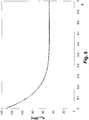
- die Abhängigkeit der Dehngrenze einer beispielhaften AlMgSi-Legierung vom Volumenanteil ausgeschiedener Mg2Si-Partikel anhand einer Modellrechnung.
- Aus einer ersten Aluminiumlegierung A (AA 6016) und einer zweiten Aluminiumlegierung B mit den in der Tabelle 1 angegebenen chemischen Zusammensetzungen wurden auf herkömmliche Art durch vertikales Stranggiessen, Homogenisierungsglühen, Warm- und Kaltwalzen Bänder einer Dicke von 1,2 mm hergestellt.
Tabelle 1 Leg. Si Fe Cu Mn Mg Cr Zn Ti V A 1.14 0.21 0.08 0.07 0.55 0.013 0.003 0.033 <0.005 B 0.42 0.17 0.08 0.07 0.40 0.018 <0.003 0.024 0.006 - Die Bänder wurden in einem Banddurchlaufglühofen einer Lösungsglühung (Legierung A) bzw. einer partiellen Lösungsglühung (Legierung B) unterworfen, nachfolgend an bewegter Luft abgeschreckt und durch Lagerung während einigen Tagen bei Raumtemperatur zum Lieferzustand T4 ausgelagert. Für die beiden Aluminiumlegierungen A und B wurden die folgenden Lösungsglühbedingungen gewählt:
Legierung A 550°C / 30sec Legierung B 500°C / 20 sec - An Blechproben aus den Aluminiumlegierungen A und B im Lieferzustand T4 wurde mit einer Glühung bei einer Temperatur von 185°C während einer Zeitdauer von 20 min ein Lackeinbrennzyklus simuliert. Um den Einfluss einer Kaltverformung (KV) auf die Dehngrenze Rp0.2, die Bruchspannung Rm und die Bruchdehnung A80 zu untersuchen, wurden die Blechproben im Lieferzustand zusätzlich 2% kaltverformt. Eine weitere Serie von Blechproben wurde im Lieferzustand 2% kaltverformt und anschliessend der vorstehend erwähnten Glühbehandlung unterzogen.
- Die in der Tabelle 2 zusammengestellten mechanischen Festigkeitswerte der beiden Aluminiumlegierungen A und B in den verschiedenen untersuchten Zuständen und die in den
Fig. 1 und2 zusätzlich graphisch dargestellten Werte für die Dehngrenze Rp0.2 zeigen für beide Aluminiumlegierungen A und B im Lieferzustand mit 2% Kaltverformung eine schwache und betragsmässig etwa gleiche Zunahme der Dehngrenze. Wird am Lieferzustand nur eine Lackeinbrennglühung durchgeführt, erfolgt bei der Legierung A eine starke Erhöhung der Dehngrenze, während die Legierung B praktisch keinen Aushärtungseffekt zeigt. Das unterschiedliche Verhalten der beiden Aluminiumlegierungen A und B unter Lackeinbrennbedingungen zeigt sich noch deutlicher bei einer kombinierten Anwendung einer Kaltverformung von 2% mit nachfolgender Glühung bei 185°C während 20 min, wie sie in der Praxis bei der Fertigung von Automobilkarosseriekomponenten häufig auftritt.Tabelle 2 Legierung Zustand Rp0.2 [MPa] Rm [MPa] A80 [%] Δ Rp0.2 [MPa] A Lieferzustand T4 115 225 25.4 185°C x 20 min 195 271 20.8 80 2% KV 140 251 24.3 25 2% KV + 185°C x 20 min 245 295 15.4 130 B Lieferzustand T4 70 129 27.7 185°C x 20 min 74 130 25.9 4 2% KV 90 133 25.3 20 2% KV + 185°C x 20 min 94 149 18.6 24 - An zweimal je 2 Zugproben einer Dicke von 0,85 mm und einer Breite von 12,5 mm der Legierung B von Beispiel 1 in unterschiedlichen Wärmebehandlungszuständen wurde in Zugversuchen die Bruchspannung Rm, die Dehngrenze Rp0.2 und die Bruchdehnung A50 ermittelt. Die untersuchten Wärmebehandlungen sind in Tabelle 3 zusammengestellt. Die Lösungsglühung erfolgte in einem Salzbad bei der angegebenen Temperatur während der angeführten Zeitdauer. Anschliessend wurden die Proben in Wasser abgeschreckt, während 24 h bei Raumtemperatur und nachfolgend während weiteren 24 h bei einer Temperatur von 65 °C gelagert. Diese Wärmebehandlung führt etwa zu einem T4 Zustand. Ein Teil dieser Proben A bis L wurde einer Warmaushärtung bei 205°C während 1 h unterworfen, entsprechend etwa einem Zustand T6.
Tabelle 3 Probe Lösungsglühung A 520 °C / 5 s B 520 °C / 10 s C 530 °C / 0 s D 530 °C / 5 s E 530 °C / 10 s F 530 °C / 20 s G 540 °C / 0 s H 540 °C / 5 s I 540 °C / 10 s J 540 °C / 20 s K 540 °C / 60 s L 540 °C / 10 min - Die Ergebnisse der an je 2 Proben durchgeführten Zugversuche sind in Tabelle 4 für die Proben im Zustand T4 und in Tabelle 5 für die Proben im Zustand T6 zusammengestellt.
Tabelle 4 Probe Rp0.2 [MPa] Rm [MPa] A50 [%] A1 43,9 115,6 16,3 A2 44,6 114,5 23,3 B1 43,9 114,9 20,2 B2 44,2 117,3 23,2 C1 44,1 116,4 24,2 C2 40,6 112,9 26,8 D1 45,2 114,8 30,9 D2 43,6 116,0 22,0 E1 44,0 119,5 15,6 E2 45,3 117,2 25,5 F1 48,5 125,2 19,0 F2 48,4 124,9 26,6 G1 41,5 112,1 26,1 G2 42,9 111,1 25,1 H1 43,7 115,3 25,1 H2 43,9 114,0 20,2 I1 44,0 119,0 21,7 I2 45,3 118,7 24,9 J1 48,3 127,6 15,1 J2 47,6 126,1 24,4 K1 56,8 137,8 15,6 K2 56,4 137,9 16,2 L1 63,1 152,4 20,7 L2 61,7 144,1 18,1 Tabelle 5 Probe Rp0.2 [MPa] Rm [MPa] A50 [%] A1 47,1 117,2 25,1 A2 46,5 116,1 21,6 B1 52,5 119,9 24,8 B2 54,3 123,4 25,3 C1 40,9 111,0 26,1 C2 41,4 111,2 27,9 D1 49,9 119,6 24,4 D2 53,2 120,4 25,2 E1 50,6 121,4 25,3 E2 57,2 123,5 23,9 F1 61,5 130,9 24,7 F2 61,7 129,1 22,9 G1 44,7 114,1 28,1 G2 44,0 113,3 26,5 H1 45,4 119,9 20,5 H2 47,5 118.4 19,2 I1 55,6 125,7 25,0 I2 52,6 124,5 25,4 J1 65,9 135,1 18,5 J2 64,5 135,1 18,9 K1 98,3 154,6 10,6 K2 98,2 153,5 11,3 L1 138,4 177,3 9,0 L2 137,4 178,0 11,4 - Von den Proben C und L aus Tabelle 4 wurden Metallschliffe angefertigt. Unter einem Rasterelektronenmikroskop wurde im Compomodus auf bekannte Art der Volumenanteil der ausgeschiedenen Mg2Si-Partikel am Gesamtvolumen der Legierung durch Ausmessen der entsprechenden Flächenanteile in 12 Flächenbereichen ermittelt. Als ausgeschiedene Mg2Si-Partikel werden hier Partikel mit einem Durchmesser > 0,1 µm bezeichnet.
- Die gemittelten Werte ergaben für die Probe C einen Volumenanteil von 0,444 ± 0,077 %, was einem Anteil von etwa 50 % des theoretisch möglichen Volumenanteils entspricht. Für die Probe L ergaben die gemittelten Werte einen Volumenanteil von 0,071 ± 0,029 %, entsprechend einem Anteil von etwa 8 % des theoretisch möglichen Volumenanteils.
- Die in
Fig. 3 von der Probe C und inFig. 4 von der Probe L gezeigten REM-Aufnahmen im Compomodus lassen die schweren eisenhaltigen Ausscheidungen als helle und die leichten Mg2Si-Partikel als dunkle Flecken erscheinen. Der im Vergleich zur Probe L höhere Volumenanteil ausgeschiedener Mg2Si-Partikel der Probe C ist deutlich zu erkennen. - Aus den an den Proben A bis L von Tabelle 5 ermittelten Werten für die Dehngrenze Rp0.2 wurde anhand einer Modellrechnung die Abhängigkeit der Dehngrenze Rp0.2 vom Volumenanteil der ausgeschiedenen Mg2Si-Partikel bestimmt und in
Fig. 5 grafisch dargestellt. Die Werte auf der x-Achse entsprechen dem Verhältnis des Volumenanteils der Vorausscheidungen von Mg2Si zum theoretisch möglichen Volumenanteil. - Die Abbildung zeigt deutlich, dass durch eine gezielte Steuerung der Vorausscheidung von Mg2Si die hier als Mass für die "Weichheit" der Legierung gewählte Dehngrenze Rp0.2 in weiten Grenzen variiert werden kann.
Claims (3)
- Verfahren zur Herstellung eines Automobilkarosseriebauteils aus Blech aus einer Aluminiumlegierung vom Typ AlMgSi, wobei die Aluminiumlegierung 0,30 bis 0,50 Gew.-% Silizium
0,30 bis 0,50 Gew.-% Magnesium
max. 0,20 Gew.-% Kupfer
0,05 bis 0,20 Gew.-% Eisen
max. 0,10 Gew.-% Mangan
max. 0,15 Gew.-% Vanadium
sowie herstellungsbedingte Verunreinigungen einzeln max. 0,05 Gew.-%, insgesamt max. 0,15 Gew.-%, und Aluminium als Rest enthält,
umfassend eine thermische Behandlung des aus der Legierung hergestellten Blechs vor dessen Umformung zu dem Bauteil,
wobei die thermische Behandlung Durchführen einer partiellen Lösungsglühung des auf Enddicke gewalzten Bleches mit einer kontinuierlichen Glühung in einem Banddurchlaufofen in einem Temperaturbereich von 450°C bis 520°C während max. 30 sec;
oder
Durchführen einer partiellen Heterogenisierungsglühung des auf Enddicke gewalzten Bleches mit einer Glühung von Coils in einem Kammerofen mit einer Haltezeit von 1 bis 4 h in einem Temperaturbereich von 330°C bis 400°C umfasst,
wobei das Verfahren keine Homogenisierungsglühung eines Gussbarrens, lediglich Aufheizen auf Warmwalztemperatur und sofort Warmwalzen umfasst. - Verfahren nach Anspruch 1, wobei die thermische Behandlung Durchführen einer partiellen Lösungsglühung des auf Enddicke gewalzten Bleches mit einer kontinuierlichen Glühung in einem Banddurchlaufofen in einem Temperaturbereich von 450°C bis 520°C während max. 30 sec umfasst.
- Verfahren nach Anspruch 1, wobei die thermische Behandlung Durchführen einer partiellen Heterogenisierungsglühung des auf Enddicke gewalzten Bleches mit einer Glühung von Coils in einem Kammerofen mit einer Haltezeit von 1 bis 4 h in einem Temperaturbereich von 330°C bis 400°C umfasst.
Priority Applications (1)
| Application Number | Priority Date | Filing Date | Title |
|---|---|---|---|
| EP04798037.0A EP1685268B1 (de) | 2003-11-20 | 2004-11-22 | Verfahren zur herstellung eines automobilkarosseriebauteils |
Applications Claiming Priority (3)
| Application Number | Priority Date | Filing Date | Title |
|---|---|---|---|
| EP20030405826 EP1533394A1 (de) | 2003-11-20 | 2003-11-20 | Automobilkarosseriebauteil |
| EP04798037.0A EP1685268B1 (de) | 2003-11-20 | 2004-11-22 | Verfahren zur herstellung eines automobilkarosseriebauteils |
| PCT/EP2004/013233 WO2005049877A2 (de) | 2003-11-20 | 2004-11-22 | Automobilkarosseriebauteil |
Publications (2)
| Publication Number | Publication Date |
|---|---|
| EP1685268A2 EP1685268A2 (de) | 2006-08-02 |
| EP1685268B1 true EP1685268B1 (de) | 2019-01-09 |
Family
ID=34429624
Family Applications (2)
| Application Number | Title | Priority Date | Filing Date |
|---|---|---|---|
| EP20030405826 Withdrawn EP1533394A1 (de) | 2003-11-20 | 2003-11-20 | Automobilkarosseriebauteil |
| EP04798037.0A Expired - Lifetime EP1685268B1 (de) | 2003-11-20 | 2004-11-22 | Verfahren zur herstellung eines automobilkarosseriebauteils |
Family Applications Before (1)
| Application Number | Title | Priority Date | Filing Date |
|---|---|---|---|
| EP20030405826 Withdrawn EP1533394A1 (de) | 2003-11-20 | 2003-11-20 | Automobilkarosseriebauteil |
Country Status (6)
| Country | Link |
|---|---|
| US (5) | US20070137738A1 (de) |
| EP (2) | EP1533394A1 (de) |
| KR (2) | KR20120005045A (de) |
| CN (1) | CN100476011C (de) |
| CA (1) | CA2545439C (de) |
| WO (1) | WO2005049877A2 (de) |
Families Citing this family (21)
| Publication number | Priority date | Publication date | Assignee | Title |
|---|---|---|---|---|
| EP1533394A1 (de) | 2003-11-20 | 2005-05-25 | Alcan Technology & Management Ltd. | Automobilkarosseriebauteil |
| EP3461635A1 (de) * | 2004-11-16 | 2019-04-03 | Aleris Aluminum Duffel BVBA | Aluminiumverbundblechmaterial |
| US7377304B2 (en) * | 2005-07-12 | 2008-05-27 | Alcoa Inc. | Method of unidirectional solidification of castings and associated apparatus |
| EP1852250A1 (de) * | 2006-05-02 | 2007-11-07 | Aleris Aluminum Duffel BVBA | Plattiertes Blechprodukt |
| EP1852251A1 (de) * | 2006-05-02 | 2007-11-07 | Aleris Aluminum Duffel BVBA | Verbundblech aus Aluminium |
| JP5059423B2 (ja) * | 2007-01-18 | 2012-10-24 | 株式会社神戸製鋼所 | アルミニウム合金板 |
| US8448690B1 (en) | 2008-05-21 | 2013-05-28 | Alcoa Inc. | Method for producing ingot with variable composition using planar solidification |
| EP2156945A1 (de) | 2008-08-13 | 2010-02-24 | Novelis Inc. | Plattiertes Kraftfahrzeug-Blechprodukt |
| EP2270249B2 (de) | 2009-06-30 | 2020-05-27 | Hydro Aluminium Deutschland GmbH | AlMgSi-Band für Anwendungen mit hohen Umformungsanforderungen |
| US9890443B2 (en) | 2012-07-16 | 2018-02-13 | Arconic Inc. | 6XXX aluminum alloys, and methods for producing the same |
| CN105026143B (zh) * | 2013-02-19 | 2017-06-06 | 阿莱利斯铝业迪弗尔私人有限公司 | 具有锐利的特征线的汽车车身包覆板 |
| FR3042140B1 (fr) * | 2015-10-12 | 2017-10-20 | Constellium Neuf-Brisach | Composant de structure de caisse automobile presentant un excellent compromis entre resistance mecanique et comportement au crash |
| JP6506678B2 (ja) * | 2015-11-02 | 2019-04-24 | 株式会社神戸製鋼所 | 自動車構造部材用アルミニウム合金板およびその製造方法 |
| FR3044326B1 (fr) * | 2015-12-01 | 2017-12-01 | Constellium Neuf-Brisach | Tole mince a haute rigidite pour carrosserie automobile |
| KR102170010B1 (ko) | 2016-01-08 | 2020-10-26 | 아르코닉 테크놀로지스 엘엘씨 | 새로운 6xxx 알루미늄 합금, 및 그의 제조 방법 |
| EP3497256B1 (de) | 2016-08-15 | 2020-07-01 | Hydro Aluminium Rolled Products GmbH | Aluminiumlegierung und aluminiumlegierungsband für den fussgängeraufprallschutz |
| US10030295B1 (en) | 2017-06-29 | 2018-07-24 | Arconic Inc. | 6xxx aluminum alloy sheet products and methods for making the same |
| EP3666915A1 (de) | 2018-12-11 | 2020-06-17 | Constellium Neuf Brisach | Verfahren zur herstellung von aluminium magnesium silicium legierungen mit guter oberflächequalität |
| CN110373580A (zh) * | 2019-08-16 | 2019-10-25 | 马鞍山市新马精密铝业股份有限公司 | 一种汽车电池托盘用高强度铝合金型材及其生产方法 |
| CN112522550B (zh) * | 2020-11-04 | 2022-10-04 | 佛山科学技术学院 | 一种快速时效响应的铝合金及其制备方法和应用 |
| FR3122187B1 (fr) | 2021-04-21 | 2024-02-16 | Constellium Neuf Brisach | Tôles d’aluminium 5xxx dotée d’une aptitude à la mise en forme élevée |
Family Cites Families (35)
| Publication number | Priority date | Publication date | Assignee | Title |
|---|---|---|---|---|
| US1911080A (en) | 1932-11-30 | 1933-05-23 | Aluminum Co Of America | Aluminum alloy |
| US3177073A (en) | 1962-03-26 | 1965-04-06 | Dow Chemical Co | High strength aluminum alloy for pellet extrusion and product |
| US3252841A (en) | 1964-09-25 | 1966-05-24 | Dow Chemical Co | Aluminum alloy |
| US3816190A (en) * | 1969-03-13 | 1974-06-11 | Vmw Ranshofen Berndorf Ag | Method of heat-treatment of aluminum alloys |
| US3990922A (en) | 1975-10-20 | 1976-11-09 | Swiss Aluminium Ltd. | Processing aluminum alloys |
| US4082578A (en) * | 1976-08-05 | 1978-04-04 | Aluminum Company Of America | Aluminum structural members for vehicles |
| DE3243371A1 (de) * | 1982-09-13 | 1984-03-15 | Schweizerische Aluminium AG, 3965 Chippis | Aluminiumlegierung |
| US5303763A (en) * | 1988-11-10 | 1994-04-19 | Lanxide Technology Company, Lp | Directional solidification of metal matrix composites |
| DE4015741A1 (de) * | 1990-05-16 | 1991-11-21 | Metallgesellschaft Ag | Verfahren zur herstellung von mg(pfeil abwaerts)2(pfeil abwaerts)si enthaltenden legierungen |
| JP2614686B2 (ja) | 1992-06-30 | 1997-05-28 | 住友軽金属工業株式会社 | 形状凍結性及び塗装焼付硬化性に優れた成形加工用アルミニウム合金の製造方法 |
| FR2704557B1 (fr) | 1993-04-28 | 1995-06-02 | Pechiney Rhenalu | Alliage de revêtement à base d'Al et produit composite plaqué sur alliages 2000 ou 6000. |
| US5616189A (en) | 1993-07-28 | 1997-04-01 | Alcan International Limited | Aluminum alloys and process for making aluminum alloy sheet |
| JPH0967659A (ja) * | 1995-08-31 | 1997-03-11 | Ykk Corp | Al−Mg−Si系アルミニウム合金の熱処理方法 |
| DE69620771T3 (de) | 1995-09-19 | 2006-04-27 | Alcan International Ltd., Montreal | Verwendung von gewalzten Aluminiumlegierungen für Konstruktionsteile von Fahrzeugen |
| CH690916A5 (de) * | 1996-06-04 | 2001-02-28 | Alusuisse Tech & Man Ag | Tiefziehbare und schweissbare Aluminiumlegierung vom Typ AlMgSi. |
| JP2000129382A (ja) | 1998-10-26 | 2000-05-09 | Kobe Steel Ltd | 耐糸錆び性に優れた成形加工用アルミニウム合金クラッド板 |
| US20020014287A1 (en) * | 1998-10-27 | 2002-02-07 | Shinji Yoshihara | A1-mg-si based aluminum alloy extrusion |
| BR0008694A (pt) | 1999-03-01 | 2001-12-26 | Alcan Int Ltd | Método para folha de alumìnio aa6000 |
| CH693673A5 (de) | 1999-03-03 | 2003-12-15 | Alcan Tech & Man Ag | Verwendung einer Aluminiumlegierung vom Typ AlMgSi zur Herstellung von Strukturbauteilen. |
| FR2811337B1 (fr) | 2000-07-05 | 2002-08-30 | Pechiney Rhenalu | Toles en alliage d'aluminium plaquees pour elements de structure d'aeronefs |
| EP1318881A2 (de) | 2000-09-19 | 2003-06-18 | R.J. Tower Corporation | Verfahren und vorrichtung zum herstellen von strukturteile |
| CA2440666C (en) | 2001-03-28 | 2011-07-12 | Sumitomo Light Metal Industries, Ltd. | Aluminum alloy sheet with excellent formability and paint bake hardenability and method for production thereof |
| US6780259B2 (en) | 2001-05-03 | 2004-08-24 | Alcan International Limited | Process for making aluminum alloy sheet having excellent bendability |
| US6613167B2 (en) | 2001-06-01 | 2003-09-02 | Alcoa Inc. | Process to improve 6XXX alloys by reducing altered density sites |
| CN1237195C (zh) | 2001-07-09 | 2006-01-18 | 克里斯铝轧制品有限公司 | 可焊高强度铝合金轧制产品及其制造方法 |
| BR0211202B1 (pt) | 2001-07-23 | 2013-05-14 | liga de alumÍnio fundido de alta resistÊncia, produto e seu mÉtodo de produÇço. | |
| KR100951504B1 (ko) | 2001-09-28 | 2010-04-07 | 후루카와 스카이 가부시키가이샤 | 알루미늄 또는 알루미늄 합금재의 납땜방법 및 알루미늄 합금제 브레이징 시트 |
| FR2835533B1 (fr) | 2002-02-05 | 2004-10-08 | Pechiney Rhenalu | TOLE EN ALLIAGE Al-Si-Mg POUR PEAU DE CARROSSERIE AUTOMOBILE |
| DE10392806B4 (de) | 2002-06-24 | 2019-12-24 | Corus Aluminium Walzprodukte Gmbh | Verfahren zum Herstellen einer hochfesten ausgeglichenen AI-Mg-Si-Legierung |
| NO20034731D0 (no) * | 2003-10-22 | 2003-10-22 | Norsk Hydro As | Aluminiumslegering |
| EP1533394A1 (de) * | 2003-11-20 | 2005-05-25 | Alcan Technology & Management Ltd. | Automobilkarosseriebauteil |
| EP1852250A1 (de) | 2006-05-02 | 2007-11-07 | Aleris Aluminum Duffel BVBA | Plattiertes Blechprodukt |
| FR2922222B1 (fr) | 2007-10-12 | 2011-02-18 | Alcan Int Ltd | Tole plaquee en alliages de la serie 6xxx pour carrosserie automobile. |
| JP4473908B2 (ja) | 2007-12-27 | 2010-06-02 | 株式会社神戸製鋼所 | 熱交換器用アルミニウム合金クラッド材、および、その製造方法 |
| EP2156945A1 (de) | 2008-08-13 | 2010-02-24 | Novelis Inc. | Plattiertes Kraftfahrzeug-Blechprodukt |
-
2003
- 2003-11-20 EP EP20030405826 patent/EP1533394A1/de not_active Withdrawn
-
2004
- 2004-11-22 WO PCT/EP2004/013233 patent/WO2005049877A2/de not_active Ceased
- 2004-11-22 EP EP04798037.0A patent/EP1685268B1/de not_active Expired - Lifetime
- 2004-11-22 US US10/578,985 patent/US20070137738A1/en not_active Abandoned
- 2004-11-22 KR KR1020117028832A patent/KR20120005045A/ko not_active Ceased
- 2004-11-22 CN CNB2004800342126A patent/CN100476011C/zh not_active Expired - Lifetime
- 2004-11-22 CA CA2545439A patent/CA2545439C/en not_active Expired - Lifetime
- 2004-11-22 KR KR1020067009707A patent/KR101130656B1/ko not_active Expired - Lifetime
-
2010
- 2010-02-10 US US12/703,538 patent/US20100201155A1/en not_active Abandoned
-
2012
- 2012-05-09 US US13/467,328 patent/US9085328B2/en not_active Expired - Lifetime
-
2013
- 2013-09-16 US US14/027,718 patent/US9242678B2/en not_active Expired - Lifetime
-
2015
- 2015-12-17 US US14/972,646 patent/US9731772B2/en not_active Expired - Fee Related
Non-Patent Citations (1)
| Title |
|---|
| None * |
Also Published As
| Publication number | Publication date |
|---|---|
| US20100201155A1 (en) | 2010-08-12 |
| US9731772B2 (en) | 2017-08-15 |
| CN100476011C (zh) | 2009-04-08 |
| WO2005049877A3 (de) | 2005-09-22 |
| KR20120005045A (ko) | 2012-01-13 |
| KR101130656B1 (ko) | 2012-04-02 |
| US20120234437A1 (en) | 2012-09-20 |
| CA2545439C (en) | 2011-09-20 |
| US20070137738A1 (en) | 2007-06-21 |
| US20160101816A1 (en) | 2016-04-14 |
| CA2545439A1 (en) | 2005-06-02 |
| KR20060105003A (ko) | 2006-10-09 |
| EP1685268A2 (de) | 2006-08-02 |
| CN1882709A (zh) | 2006-12-20 |
| US9242678B2 (en) | 2016-01-26 |
| US20140035323A1 (en) | 2014-02-06 |
| EP1533394A1 (de) | 2005-05-25 |
| WO2005049877A2 (de) | 2005-06-02 |
| US9085328B2 (en) | 2015-07-21 |
Similar Documents
| Publication | Publication Date | Title |
|---|---|---|
| EP1685268B1 (de) | Verfahren zur herstellung eines automobilkarosseriebauteils | |
| DE19830560B4 (de) | Energie-absorbierendes Element | |
| EP0902842B1 (de) | Bauteil | |
| EP2449145B1 (de) | AlMgSi-Band für Anwendungen mit hohen Umformungsanforderungen | |
| EP2723909B1 (de) | Fahrzeugbauteil und verfahren zu seiner herstellung | |
| DE4219336C2 (de) | Verwendung eines Stahls zur Herstellung von Konstruktionsrohren | |
| DE69521284T2 (de) | Verfahren zum Herstellen von Stahlblechen hoher Schlagfestigkeit für den Automobilbau | |
| DE112009000981T5 (de) | Verfahren zur Herstellung eines Bauteils aus einer Aluminiumlegierung | |
| EP1165848B1 (de) | VERWENDUNG EINER ALUMINIUMLEGIERUNG VOM TYP AlMgSi ALS SICHERHEITSTEIL IM FAHRZEUGBAU | |
| DE69519012T2 (de) | Korrosionsbeständiges gewalztes blech aus aluminium-legierung | |
| DE102004037789B3 (de) | Bodengruppe für die Karosserie eines Kraftfahrzeugs | |
| EP3625045B1 (de) | Warmumformmaterial, bauteil und verwendung | |
| EP0811700B1 (de) | Tiefziehbare und schweissbare Aluminiumlegierung vom Typ AlMgSi | |
| CH700835B1 (de) | Aluminium-Verbundwalzblechprodukt. | |
| EP4284954A1 (de) | Aluminiumlegierung, bauteil aus einer aluminiumlegierung und verfahren zum herstellen eines bauteils aus einer aluminiumlegierung | |
| DE102010053848A1 (de) | Kraftwagenbauteil und Verfahren zu seiner Herstellung | |
| DE102019123598A1 (de) | A-Säule und Fahrzeugkarosserie mit einer A-Säule | |
| DE102012021634B4 (de) | Verfahren zur Herstellung einer Fahrzeugkarosserie mit einem Karosseriebauteil aus einer Magnesiumlegierung, sowie hiermit hergestellte Fahrzeugkarosserie | |
| WO2025149500A1 (de) | Aluminiumlegierung mit erhöhter schrottaufnahmefähigkeit und festigkeit |
Legal Events
| Date | Code | Title | Description |
|---|---|---|---|
| PUAI | Public reference made under article 153(3) epc to a published international application that has entered the european phase |
Free format text: ORIGINAL CODE: 0009012 |
|
| 17P | Request for examination filed |
Effective date: 20060505 |
|
| AK | Designated contracting states |
Kind code of ref document: A2 Designated state(s): AT BE BG CH CY CZ DE DK EE ES FI FR GB GR HU IE IS IT LI LU MC NL PL PT RO SE SI SK TR |
|
| DAX | Request for extension of the european patent (deleted) | ||
| RAP1 | Party data changed (applicant data changed or rights of an application transferred) |
Owner name: NOVELIS, INC. |
|
| 17Q | First examination report despatched |
Effective date: 20140221 |
|
| STAA | Information on the status of an ep patent application or granted ep patent |
Free format text: STATUS: EXAMINATION IS IN PROGRESS |
|
| GRAP | Despatch of communication of intention to grant a patent |
Free format text: ORIGINAL CODE: EPIDOSNIGR1 |
|
| STAA | Information on the status of an ep patent application or granted ep patent |
Free format text: STATUS: GRANT OF PATENT IS INTENDED |
|
| TPAC | Observations filed by third parties |
Free format text: ORIGINAL CODE: EPIDOSNTIPA |
|
| INTG | Intention to grant announced |
Effective date: 20170529 |
|
| GRAS | Grant fee paid |
Free format text: ORIGINAL CODE: EPIDOSNIGR3 |
|
| GRAJ | Information related to disapproval of communication of intention to grant by the applicant or resumption of examination proceedings by the epo deleted |
Free format text: ORIGINAL CODE: EPIDOSDIGR1 |
|
| STAA | Information on the status of an ep patent application or granted ep patent |
Free format text: STATUS: EXAMINATION IS IN PROGRESS |
|
| INTC | Intention to grant announced (deleted) | ||
| STAA | Information on the status of an ep patent application or granted ep patent |
Free format text: STATUS: GRANT OF PATENT IS INTENDED |
|
| GRAP | Despatch of communication of intention to grant a patent |
Free format text: ORIGINAL CODE: EPIDOSNIGR1 |
|
| GRAJ | Information related to disapproval of communication of intention to grant by the applicant or resumption of examination proceedings by the epo deleted |
Free format text: ORIGINAL CODE: EPIDOSDIGR1 |
|
| STAA | Information on the status of an ep patent application or granted ep patent |
Free format text: STATUS: EXAMINATION IS IN PROGRESS |
|
| TPAC | Observations filed by third parties |
Free format text: ORIGINAL CODE: EPIDOSNTIPA |
|
| INTG | Intention to grant announced |
Effective date: 20180302 |
|
| INTC | Intention to grant announced (deleted) | ||
| GRAP | Despatch of communication of intention to grant a patent |
Free format text: ORIGINAL CODE: EPIDOSNIGR1 |
|
| STAA | Information on the status of an ep patent application or granted ep patent |
Free format text: STATUS: GRANT OF PATENT IS INTENDED |
|
| INTG | Intention to grant announced |
Effective date: 20180528 |
|
| GRAJ | Information related to disapproval of communication of intention to grant by the applicant or resumption of examination proceedings by the epo deleted |
Free format text: ORIGINAL CODE: EPIDOSDIGR1 |
|
| STAA | Information on the status of an ep patent application or granted ep patent |
Free format text: STATUS: EXAMINATION IS IN PROGRESS |
|
| GRAR | Information related to intention to grant a patent recorded |
Free format text: ORIGINAL CODE: EPIDOSNIGR71 |
|
| GRAS | Grant fee paid |
Free format text: ORIGINAL CODE: EPIDOSNIGR3 |
|
| STAA | Information on the status of an ep patent application or granted ep patent |
Free format text: STATUS: GRANT OF PATENT IS INTENDED |
|
| INTC | Intention to grant announced (deleted) | ||
| INTG | Intention to grant announced |
Effective date: 20181016 |
|
| GRAA | (expected) grant |
Free format text: ORIGINAL CODE: 0009210 |
|
| STAA | Information on the status of an ep patent application or granted ep patent |
Free format text: STATUS: THE PATENT HAS BEEN GRANTED |
|
| AK | Designated contracting states |
Kind code of ref document: B1 Designated state(s): AT BE BG CH CY CZ DE DK EE ES FI FR GB GR HU IE IS IT LI LU MC NL PL PT RO SE SI SK TR |
|
| REG | Reference to a national code |
Ref country code: GB Ref legal event code: FG4D Free format text: NOT ENGLISH |
|
| REG | Reference to a national code |
Ref country code: CH Ref legal event code: EP Ref country code: AT Ref legal event code: REF Ref document number: 1087364 Country of ref document: AT Kind code of ref document: T Effective date: 20190115 |
|
| REG | Reference to a national code |
Ref country code: DE Ref legal event code: R096 Ref document number: 502004015759 Country of ref document: DE |
|
| REG | Reference to a national code |
Ref country code: IE Ref legal event code: FG4D Free format text: LANGUAGE OF EP DOCUMENT: GERMAN |
|
| REG | Reference to a national code |
Ref country code: NL Ref legal event code: MP Effective date: 20190109 |
|
| PG25 | Lapsed in a contracting state [announced via postgrant information from national office to epo] |
Ref country code: NL Free format text: LAPSE BECAUSE OF FAILURE TO SUBMIT A TRANSLATION OF THE DESCRIPTION OR TO PAY THE FEE WITHIN THE PRESCRIBED TIME-LIMIT Effective date: 20190109 |
|
| PG25 | Lapsed in a contracting state [announced via postgrant information from national office to epo] |
Ref country code: SE Free format text: LAPSE BECAUSE OF FAILURE TO SUBMIT A TRANSLATION OF THE DESCRIPTION OR TO PAY THE FEE WITHIN THE PRESCRIBED TIME-LIMIT Effective date: 20190109 Ref country code: PL Free format text: LAPSE BECAUSE OF FAILURE TO SUBMIT A TRANSLATION OF THE DESCRIPTION OR TO PAY THE FEE WITHIN THE PRESCRIBED TIME-LIMIT Effective date: 20190109 Ref country code: PT Free format text: LAPSE BECAUSE OF FAILURE TO SUBMIT A TRANSLATION OF THE DESCRIPTION OR TO PAY THE FEE WITHIN THE PRESCRIBED TIME-LIMIT Effective date: 20190509 Ref country code: FI Free format text: LAPSE BECAUSE OF FAILURE TO SUBMIT A TRANSLATION OF THE DESCRIPTION OR TO PAY THE FEE WITHIN THE PRESCRIBED TIME-LIMIT Effective date: 20190109 Ref country code: ES Free format text: LAPSE BECAUSE OF FAILURE TO SUBMIT A TRANSLATION OF THE DESCRIPTION OR TO PAY THE FEE WITHIN THE PRESCRIBED TIME-LIMIT Effective date: 20190109 |
|
| PG25 | Lapsed in a contracting state [announced via postgrant information from national office to epo] |
Ref country code: IS Free format text: LAPSE BECAUSE OF FAILURE TO SUBMIT A TRANSLATION OF THE DESCRIPTION OR TO PAY THE FEE WITHIN THE PRESCRIBED TIME-LIMIT Effective date: 20190509 Ref country code: GR Free format text: LAPSE BECAUSE OF FAILURE TO SUBMIT A TRANSLATION OF THE DESCRIPTION OR TO PAY THE FEE WITHIN THE PRESCRIBED TIME-LIMIT Effective date: 20190410 Ref country code: BG Free format text: LAPSE BECAUSE OF FAILURE TO SUBMIT A TRANSLATION OF THE DESCRIPTION OR TO PAY THE FEE WITHIN THE PRESCRIBED TIME-LIMIT Effective date: 20190409 |
|
| REG | Reference to a national code |
Ref country code: DE Ref legal event code: R097 Ref document number: 502004015759 Country of ref document: DE |
|
| PG25 | Lapsed in a contracting state [announced via postgrant information from national office to epo] |
Ref country code: RO Free format text: LAPSE BECAUSE OF FAILURE TO SUBMIT A TRANSLATION OF THE DESCRIPTION OR TO PAY THE FEE WITHIN THE PRESCRIBED TIME-LIMIT Effective date: 20190109 Ref country code: CZ Free format text: LAPSE BECAUSE OF FAILURE TO SUBMIT A TRANSLATION OF THE DESCRIPTION OR TO PAY THE FEE WITHIN THE PRESCRIBED TIME-LIMIT Effective date: 20190109 Ref country code: IT Free format text: LAPSE BECAUSE OF FAILURE TO SUBMIT A TRANSLATION OF THE DESCRIPTION OR TO PAY THE FEE WITHIN THE PRESCRIBED TIME-LIMIT Effective date: 20190109 Ref country code: EE Free format text: LAPSE BECAUSE OF FAILURE TO SUBMIT A TRANSLATION OF THE DESCRIPTION OR TO PAY THE FEE WITHIN THE PRESCRIBED TIME-LIMIT Effective date: 20190109 Ref country code: DK Free format text: LAPSE BECAUSE OF FAILURE TO SUBMIT A TRANSLATION OF THE DESCRIPTION OR TO PAY THE FEE WITHIN THE PRESCRIBED TIME-LIMIT Effective date: 20190109 Ref country code: SK Free format text: LAPSE BECAUSE OF FAILURE TO SUBMIT A TRANSLATION OF THE DESCRIPTION OR TO PAY THE FEE WITHIN THE PRESCRIBED TIME-LIMIT Effective date: 20190109 |
|
| PLBE | No opposition filed within time limit |
Free format text: ORIGINAL CODE: 0009261 |
|
| STAA | Information on the status of an ep patent application or granted ep patent |
Free format text: STATUS: NO OPPOSITION FILED WITHIN TIME LIMIT |
|
| 26N | No opposition filed |
Effective date: 20191010 |
|
| PG25 | Lapsed in a contracting state [announced via postgrant information from national office to epo] |
Ref country code: SI Free format text: LAPSE BECAUSE OF FAILURE TO SUBMIT A TRANSLATION OF THE DESCRIPTION OR TO PAY THE FEE WITHIN THE PRESCRIBED TIME-LIMIT Effective date: 20190109 |
|
| PG25 | Lapsed in a contracting state [announced via postgrant information from national office to epo] |
Ref country code: TR Free format text: LAPSE BECAUSE OF FAILURE TO SUBMIT A TRANSLATION OF THE DESCRIPTION OR TO PAY THE FEE WITHIN THE PRESCRIBED TIME-LIMIT Effective date: 20190109 |
|
| REG | Reference to a national code |
Ref country code: CH Ref legal event code: PL |
|
| PG25 | Lapsed in a contracting state [announced via postgrant information from national office to epo] |
Ref country code: CH Free format text: LAPSE BECAUSE OF NON-PAYMENT OF DUE FEES Effective date: 20191130 Ref country code: LI Free format text: LAPSE BECAUSE OF NON-PAYMENT OF DUE FEES Effective date: 20191130 Ref country code: LU Free format text: LAPSE BECAUSE OF NON-PAYMENT OF DUE FEES Effective date: 20191122 Ref country code: MC Free format text: LAPSE BECAUSE OF FAILURE TO SUBMIT A TRANSLATION OF THE DESCRIPTION OR TO PAY THE FEE WITHIN THE PRESCRIBED TIME-LIMIT Effective date: 20190109 |
|
| REG | Reference to a national code |
Ref country code: BE Ref legal event code: MM Effective date: 20191130 |
|
| PG25 | Lapsed in a contracting state [announced via postgrant information from national office to epo] |
Ref country code: IE Free format text: LAPSE BECAUSE OF NON-PAYMENT OF DUE FEES Effective date: 20191122 |
|
| PG25 | Lapsed in a contracting state [announced via postgrant information from national office to epo] |
Ref country code: BE Free format text: LAPSE BECAUSE OF NON-PAYMENT OF DUE FEES Effective date: 20191130 |
|
| REG | Reference to a national code |
Ref country code: AT Ref legal event code: MM01 Ref document number: 1087364 Country of ref document: AT Kind code of ref document: T Effective date: 20191122 |
|
| PG25 | Lapsed in a contracting state [announced via postgrant information from national office to epo] |
Ref country code: AT Free format text: LAPSE BECAUSE OF NON-PAYMENT OF DUE FEES Effective date: 20191122 |
|
| PG25 | Lapsed in a contracting state [announced via postgrant information from national office to epo] |
Ref country code: CY Free format text: LAPSE BECAUSE OF FAILURE TO SUBMIT A TRANSLATION OF THE DESCRIPTION OR TO PAY THE FEE WITHIN THE PRESCRIBED TIME-LIMIT Effective date: 20190109 |
|
| PG25 | Lapsed in a contracting state [announced via postgrant information from national office to epo] |
Ref country code: HU Free format text: LAPSE BECAUSE OF FAILURE TO SUBMIT A TRANSLATION OF THE DESCRIPTION OR TO PAY THE FEE WITHIN THE PRESCRIBED TIME-LIMIT; INVALID AB INITIO Effective date: 20041122 |
|
| P01 | Opt-out of the competence of the unified patent court (upc) registered |
Effective date: 20230518 |
|
| PGFP | Annual fee paid to national office [announced via postgrant information from national office to epo] |
Ref country code: GB Payment date: 20231019 Year of fee payment: 20 |
|
| PGFP | Annual fee paid to national office [announced via postgrant information from national office to epo] |
Ref country code: FR Payment date: 20231019 Year of fee payment: 20 Ref country code: DE Payment date: 20231019 Year of fee payment: 20 |
|
| REG | Reference to a national code |
Ref country code: DE Ref legal event code: R071 Ref document number: 502004015759 Country of ref document: DE |
|
| REG | Reference to a national code |
Ref country code: GB Ref legal event code: PE20 Expiry date: 20241121 |
|
| PG25 | Lapsed in a contracting state [announced via postgrant information from national office to epo] |
Ref country code: GB Free format text: LAPSE BECAUSE OF EXPIRATION OF PROTECTION Effective date: 20241121 |
|
| PG25 | Lapsed in a contracting state [announced via postgrant information from national office to epo] |
Ref country code: GB Free format text: LAPSE BECAUSE OF EXPIRATION OF PROTECTION Effective date: 20241121 |