EP1701539A2 - Fernsehsendungsalarmvorrichtung und -verfahren - Google Patents
Fernsehsendungsalarmvorrichtung und -verfahren Download PDFInfo
- Publication number
- EP1701539A2 EP1701539A2 EP06002547A EP06002547A EP1701539A2 EP 1701539 A2 EP1701539 A2 EP 1701539A2 EP 06002547 A EP06002547 A EP 06002547A EP 06002547 A EP06002547 A EP 06002547A EP 1701539 A2 EP1701539 A2 EP 1701539A2
- Authority
- EP
- European Patent Office
- Prior art keywords
- program
- setting
- electronic device
- showtime
- epg
- Prior art date
- Legal status (The legal status is an assumption and is not a legal conclusion. Google has not performed a legal analysis and makes no representation as to the accuracy of the status listed.)
- Withdrawn
Links
Images



Classifications
-
- H—ELECTRICITY
- H04—ELECTRIC COMMUNICATION TECHNIQUE
- H04N—PICTORIAL COMMUNICATION, e.g. TELEVISION
- H04N21/00—Selective content distribution, e.g. interactive television or video on demand [VOD]
- H04N21/40—Client devices specifically adapted for the reception of or interaction with content, e.g. set-top-box [STB]; Operations thereof
- H04N21/47—End-user applications
- H04N21/472—End-user interface for requesting content, additional data or services; End-user interface for interacting with content, e.g. for content reservation or setting reminders, for requesting event notification, for manipulating displayed content
- H04N21/47214—End-user interface for requesting content, additional data or services; End-user interface for interacting with content, e.g. for content reservation or setting reminders, for requesting event notification, for manipulating displayed content for content reservation or setting reminders; for requesting event notification, e.g. of sport results or stock market
-
- H—ELECTRICITY
- H04—ELECTRIC COMMUNICATION TECHNIQUE
- H04N—PICTORIAL COMMUNICATION, e.g. TELEVISION
- H04N21/00—Selective content distribution, e.g. interactive television or video on demand [VOD]
- H04N21/40—Client devices specifically adapted for the reception of or interaction with content, e.g. set-top-box [STB]; Operations thereof
- H04N21/41—Structure of client; Structure of client peripherals
- H04N21/4104—Peripherals receiving signals from specially adapted client devices
- H04N21/4126—The peripheral being portable, e.g. PDAs or mobile phones
- H04N21/41265—The peripheral being portable, e.g. PDAs or mobile phones having a remote control device for bidirectional communication between the remote control device and client device
-
- H—ELECTRICITY
- H04—ELECTRIC COMMUNICATION TECHNIQUE
- H04N—PICTORIAL COMMUNICATION, e.g. TELEVISION
- H04N21/00—Selective content distribution, e.g. interactive television or video on demand [VOD]
- H04N21/40—Client devices specifically adapted for the reception of or interaction with content, e.g. set-top-box [STB]; Operations thereof
- H04N21/41—Structure of client; Structure of client peripherals
- H04N21/422—Input-only peripherals, i.e. input devices connected to specially adapted client devices, e.g. global positioning system [GPS]
- H04N21/4227—Providing Remote input by a user located remotely from the client device, e.g. at work
-
- H—ELECTRICITY
- H04—ELECTRIC COMMUNICATION TECHNIQUE
- H04N—PICTORIAL COMMUNICATION, e.g. TELEVISION
- H04N21/00—Selective content distribution, e.g. interactive television or video on demand [VOD]
- H04N21/40—Client devices specifically adapted for the reception of or interaction with content, e.g. set-top-box [STB]; Operations thereof
- H04N21/41—Structure of client; Structure of client peripherals
- H04N21/426—Internal components of the client ; Characteristics thereof
- H04N21/42692—Internal components of the client ; Characteristics thereof for reading from or writing on a volatile storage medium, e.g. Random Access Memory [RAM]
-
- H—ELECTRICITY
- H04—ELECTRIC COMMUNICATION TECHNIQUE
- H04N—PICTORIAL COMMUNICATION, e.g. TELEVISION
- H04N21/00—Selective content distribution, e.g. interactive television or video on demand [VOD]
- H04N21/40—Client devices specifically adapted for the reception of or interaction with content, e.g. set-top-box [STB]; Operations thereof
- H04N21/45—Management operations performed by the client for facilitating the reception of or the interaction with the content or administrating data related to the end-user or to the client device itself, e.g. learning user preferences for recommending movies, resolving scheduling conflicts
- H04N21/458—Scheduling content for creating a personalised stream, e.g. by combining a locally stored advertisement with an incoming stream; Updating operations, e.g. for OS modules ; time-related management operations
- H04N21/4586—Content update operation triggered locally, e.g. by comparing the version of software modules in a DVB carousel to the version stored locally
-
- H—ELECTRICITY
- H04—ELECTRIC COMMUNICATION TECHNIQUE
- H04N—PICTORIAL COMMUNICATION, e.g. TELEVISION
- H04N21/00—Selective content distribution, e.g. interactive television or video on demand [VOD]
- H04N21/40—Client devices specifically adapted for the reception of or interaction with content, e.g. set-top-box [STB]; Operations thereof
- H04N21/47—End-user applications
-
- H—ELECTRICITY
- H04—ELECTRIC COMMUNICATION TECHNIQUE
- H04N—PICTORIAL COMMUNICATION, e.g. TELEVISION
- H04N21/00—Selective content distribution, e.g. interactive television or video on demand [VOD]
- H04N21/40—Client devices specifically adapted for the reception of or interaction with content, e.g. set-top-box [STB]; Operations thereof
- H04N21/47—End-user applications
- H04N21/488—Data services, e.g. news ticker
- H04N21/4882—Data services, e.g. news ticker for displaying messages, e.g. warnings, reminders
Definitions
- the invention relates to digital TVs, and in particular, to TV program alert methods, digital TVs and electronic devices.
- a sequence of TV programs (hereafter referred to as program) can be delivered through a TV broadcast channel, whereby each program is played at a respective time. Programs, however, may be missed by viewers. Conventionally, analog TVs display programs without attention to beginnings and ends thereof. Although time schedules of programs are available, remembering or recording showtimes can be inconvenient for viewers.
- digital televisions and electronic devices with program alert function are provided.
- An exemplary embodiment of digital TV comprises a first communication unit, a first input unit, a first memory, a first clock, a first output unit, and a first processor coupled to the first communication unit, the first input unit, the first memory, the first output unit, and the first clock.
- the first communication unit receives and demodulates a digital signal from a digital TV broadcaster, and the first processor decodes the digital signal to get an electronic program guide (EPG), wherein the EPG comprises a showtime of a TV program.
- EPG electronic program guide
- the first input unit receives a setting comprising information corresponding to the TV program. The setting is set by the viewer upon his need.
- the first memory stores the setting.
- the first processor When determining that the first clock has reached a first predetermined time corresponding to the setting before the showtime of the TV program, the first processor directs the first output unit to provide a first program alert signal.
- the first communication unit may be or comprise a tuner, and may further receive a time signal from the digital TV broadcaster so that the first clock is synchronized with the time signal.
- the first processor may comprise a CPU and a MPEG decoder for decoding the digital signal.
- An exemplary embodiment of an electronic device for receiving a setting of an electronic program guide (EPG) from a digital TV, comprises a second communication unit, a second memory, a second output unit, a second clock, and a second processor coupled to the second communication unit, the second memory, the second output unit, and the second clock.
- the EPG received and demodulated by the digital TV from a digital TV broadcaster comprises a showtime of a TV program.
- the setting comprises information corresponding to the TV program that is selected by the viewer.
- the second communication unit receives the setting.
- the second memory stores the setting.
- the second processor directs the second output unit to provide a second program alert signal.
- the second communication unit may further receive a time signal from the digital TV so that the second clock is synchronized with the time signal.
- An exemplary embodiment of a program alert method implemented in a digital TV, comprises the steps of: (a) receiving an electronic program guide (EPG) which comprises a showtime of a TV program; (b) receiving a setting which comprises information corresponding to the TV program, and storing the setting; and (c) outputting a program alert signal when a predetermined adjustable time corresponding to the setting before the showtime of the TV program is reached.
- Step (a) may further comprise displaying the EPG.
- Step (b) may further comprise displaying the setting.
- the method may further comprise: (b-1) comparing the setting with the EPG, and when determining that the setting is to be updated, updating the setting according to the EPG.
- step (b-1) if the setting is updated, in step (c) the program alert signal is outputted based on the updated setting. If the updated setting shows that the showtime is canceled, in step (c) the program alert signal comprises a message that the showtime is canceled.
- the method may further comprise the step of: (d) playing the TV program when the showtime of the TV program is reached.
- the program alert signal may comprise an audio signal of the TV program, a predetermined music, a predetermined ring, a video signal of a predetermined text, a still image or an animation.
- Broadcasters can publish the latest TV program schedules utilizing electronic program guide (EPG). Unlike conventional TV guides within TV signals being processed as image data by analog TVs, broadcasters encapsulate EPGs in a special packet format for submission, whereby, after receiving and demodulating the EPGs, digital TVs can identify and further process the EPGs. Digital TVs and systems with program alert functions are described.
- EPG electronic program guide
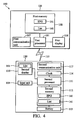
- digital TV system 90 comprises digital TV 20 and remote control 10.
- Digital TV 20 communicates with remote control 10 through communication channel 15.
- processor 1 is coupled to primary power unit 2, battery 3, clock 4, speaker 5, display 6, communication unit 7, memory 8, and input/output unit 9.
- Primary power unit 2 supplies power to digital TV 20.
- Battery 3 supplies power to clock 4.
- the communication unit 7 may comprise a tuner.
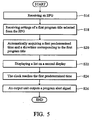
- communication unit 7 receives and demodulates a digital signal from a digital TV broadcaster (not shown) through a wired or wireless channel, and the processor 1 decodes the digital signal to get EPG 81 (step S2).
- EPG 81 comprises a plurality of program titles each of which corresponds to a showtime. Note that an EPG may include more information, such as program introduction, types, duration, and other attributes thereof.
- Digital TV 20 provides an interface, such as on-screen display modules and input/output unit 9, by which the program titles within EPG 81 can be selected (or configured).
- Processor 1 receives a setting of a first program title in EPG 81 through the interface (step S4) and stores the setting in memory 8 (step S5).
- Processor 1 automatically acquires a first predetermined time and a showtime corresponding to the first program title based on the setting (step S6).
- a user can configure the setting of the first program title using remote control 10 or input/output unit 9.
- the first program title corresponds to a first program decided by the user.
- the selected program's title, showtime, and the predetermined time are stored in the setting.
- the predetermined time is adjustable. Note that processor 1 can receive the setting for multiple TV programs upon the user's need.
- Processor 1 displays list 61 of titles and showtimes (such as the first program title, showtime, and the first predetermined time) of selected programs on display 6 (step S7).
- the setting stored in memory 8 may be edited (added or removed) using input/output unit 9.
- processor 1 outputs a program alert signal utilizing an output unit.
- the program alert signal comprises notification that clock 4 has achieved the first predetermined time (step S9).
- the output unit may comprise speaker 5, display 6, communication unit 7, or input/output unit 9.
- processor 1 provides audible signals (such as audio signals of the first program or other music and ring tones) through speaker 5, visible signals (such as text, still images, or animated images) through display 6, notification to remote control 10 through communication unit 7, and/or other signals through input/output unit 9.
- audible signals such as audio signals of the first program or other music and ring tones
- visible signals such as text, still images, or animated images
- display 6 notification to remote control 10 through communication unit 7, and/or other signals through input/output unit 9.
- remote control 10 may further output corresponding signals, such as visible signals (such as reminding text, still images, or animated images), audible signals (such as music, ring tones, and audio signals of the first program), and/or triggers vibration of the remote control 10.
- signals such as visible signals (such as reminding text, still images, or animated images), audible signals (such as music, ring tones, and audio signals of the first program), and/or triggers vibration of the remote control 10.
- Processor 1 can receive a setting of music, ring tones, text, and still or animated images stored previously in memory 8 through input/output unit 9.
- processor 1 provides predetermined music, ring tones, text, still images, or animated images as the program alert signal utilizing speaker 5 and display 6.
- processor 1 may automatically direct display 6 to show content of a channel corresponding to the first program title, i.e. the channel where the first program is located.
- processor 1 accordingly outputs program alert signals utilizing an output unit.
- processor 1 may automatically direct display 6 to show contents of the channels corresponding to other program titles.
- battery 3 supplies power to processor 1 to determine whether a predetermined time corresponding to a selected program arrives and to output program alert signals accordingly.
- processor 1 can receive other setting of the EPG.
- Processor 1 compares the setting with the EPG stored in memory 8.
- processor 1 updates the setting according to the EPG. An example is subsequently described.
- processor 1 determines if the EPG has been updated (step S10).
- processor 1 automatically updates the first predetermined time to a second predetermined time corresponding to the updated showtime accordingly (step S12), and when clock 4 has reached the second predetermined time (step S13), processor 1 provides a program alert signal utilizing an output unit (step S14).
- a showtime and a first predetermined time of a TV program A are respectively 17:00 and 16:00, that is, digital TV 20 performs program alert function one hour before showtime of the TV program A.
- processor 1 determines that the showtime of the TV program A in list 61 should be updated to 15:00 according to updated EPG 81 (step S10), processor 1 not only updates the showtime of the TV program A in list 61 to 15:00 but also updates the first predetermined time 16:00 to a second predetermined time 14:00 (i.e. one hour before the showtime) (step S12).
- processor 1 directs an output unit to provide program alert signals (step S14).
- EPG 81 is updated, digital TV 20 performs program alert function according to the second predetermined time.
- the program alert signal comprises a corresponding message.
- the communication unit 7 may be or comprise a tuner, and may further receive a time signal from the digital TV broadcaster so that the clock 4 is synchronized with the time signal.
- the processor 1 may comprise a CPU and a MPEG decoder for decoding the digital signal.
- the program alert signal may be or comprise an audio signal of the TV program, a predetermined music, a predetermined ring, a video signal of a predetermined text, a still image or an animation.
- the remote control may be another portable electronic device, such as a cell phone, a personal digital assistant (PDA), or a laptop.
- PDA personal digital assistant
- digital TV system 190 comprises digital TV 120 and portable electronic device 110.
- Digital TV 120 communicates with portable electronic device 110 through channel 115.
- first processor 101 is coupled to first display 106, first communication unit 107, and first memory 108.
- the first communication unit 107 may be or comprise a tuner.
- the first processor 101 may comprise a CPU and a MPEG decoder for decoding digital signals.
- second processor 111 is coupled to second memory 112, clock 114, second communication unit 117, second display 116, and input unit 109. Battery 113 supplies power to portable electronic device 110.
- first communication unit 107 receives and demodulates a digital signal from a digital TV broadcaster (not shown) through a wired or wireless channel, and the first processor 101 decodes the digital signal to get EPG 181 (step S16).
- EPG 181 is stored in first memory 108 and comprises a plurality of program titles each of which corresponds to a TV program and a showtime thereof. After a user selects program titles from the EPG and sets predetermined times before the showtimes of the selected programs for notification, all of the selected program titles, showtimes, and the predetermined times are collected into a setting.
- second communication unit 117 receives the setting of a first program title selected from the EPG (step S18).
- the setting may be stored in second memory 112.
- Second processor 111 may automatically acquire a first predetermined time and a showtime corresponding to the first program title based on the setting (step S20).
- the first predetermined time is a time the same as or prior to the showtime corresponding to the first program title so that the viewer can be reminded of the program, and it is adjustable. Note that second processor 111 can receive the setting of multiple TV programs.
- digital TV 120 may provide an interface for selection of the first program title within the EPG, similar to those described in the first embodiment, and transmits the setting of the first program title to portable electronic device 110 through communication channel 115.
- the setting of the first program title may be configured by a user using digital TV 120 or portable electronic device 110, and then transmitted from digital TV 120 to portable electronic device 110.
- the setting may comprise list 161 containing the selected program titles and time information thereof (such as the first program title, the showtime, and the first predetermined time).
- Portable electronic device 110 receives list 161 from digital TV 120 and displays list 161 on second display 116 (step S22).
- first communication unit 107 transmits the EPG to second communication unit 117.
- Second processor 111 displays the EPG on second display 116 and stores it in second memory 112.
- Second processor 111 provides an interface on second display 116 allowing program titles to be selected from the EPG, and receives a setting of at least one program title (such the first program title) through input unit 109.
- Portable electronic device 110 may display list 161 of selected titles and showtimes (such as the first program title and the first predetermined time) on second display 116.
- second processor 111 when clock 114 has reached the first predetermined time corresponding to the first program title (step S24), second processor 111 outputs a program alert signal utilizing an output unit.
- the program alert signal comprises notification that clock 114 has reached the first predetermined time (step S26).
- second processor 111 can provide audible signals through a speaker, visible signals through second display 116, notification to other electronic devices through second communication unit 117, and/or other signals through other input/output units.
- second processor 111 outputs program alert signals utilizing an output unit.
- second processor 111 determines if the EPG has been updated (step S28). For example, second processor 111 may periodically determine if the showtime of a selected program title has been updated by inquiring digital TV 20 and getting the response thereof. Alternatively, digital TV 20 may determine if the showtime of a selected program title has been updated and notify portable electronic device 110 when the showtime is updated. In portable electronic device 110, second processor 111 automatically updates the first predetermined time to a second predetermined time corresponding to the updated showtime accordingly (step S30). If the first predetermined time is updated to a second predetermined time, when clock 114 achieves the second predetermined time (step S31), second processor 111 provides a program alert signal utilizing the output unit (step S32).
- a showtime and a first predetermined time of a TV program A are respectively 17:00 and 16:00, i.e. that portable electronic device 110 will perform program alert function one hour before the showtime of the TV program A.
- second processor 111 not only updates the showtime of the TV program A in the setting to 15:00 but also updates the first predetermined time 16:00 to a second predetermined time 14:00 (i.e. one hour before the showtime).
- portable electronic device 110 performs program alert function according to the second predetermined time.
- the program alert signal comprises a message that the showtime has been canceled.
- the second communication unit 117 may further receive a time signal from the digital TV 120 so that the clock 114 is synchronized with the time signal.
- the program alert signal may be or comprise an audio signal of the TV program, a predetermined music, a predetermined ring, a video signal of a predetermined text, a still image or an animation, and/or may trigger vibration of the portable electronic device.
- the digital TV and the portable electronic device receive a setting of a program referred to an EPG acquired from a broadcaster and perform program alert function at a predetermined time corresponding to the program.
Landscapes
- Engineering & Computer Science (AREA)
- Multimedia (AREA)
- Signal Processing (AREA)
- Databases & Information Systems (AREA)
- Business, Economics & Management (AREA)
- Finance (AREA)
- Strategic Management (AREA)
- Human Computer Interaction (AREA)
- Two-Way Televisions, Distribution Of Moving Picture Or The Like (AREA)
- Telephone Function (AREA)
Applications Claiming Priority (1)
| Application Number | Priority Date | Filing Date | Title |
|---|---|---|---|
| CNA2005100534512A CN1832545A (zh) | 2005-03-10 | 2005-03-10 | 具有节目提醒功能的数字电视、电子装置及其方法 |
Publications (3)
| Publication Number | Publication Date |
|---|---|
| EP1701539A2 true EP1701539A2 (de) | 2006-09-13 |
| EP1701539A8 EP1701539A8 (de) | 2006-12-27 |
| EP1701539A3 EP1701539A3 (de) | 2010-08-18 |
Family
ID=36282895
Family Applications (1)
| Application Number | Title | Priority Date | Filing Date |
|---|---|---|---|
| EP06002547A Withdrawn EP1701539A3 (de) | 2005-03-10 | 2006-02-08 | Fernsehsendungsalarmvorrichtung und -verfahren |
Country Status (2)
| Country | Link |
|---|---|
| EP (1) | EP1701539A3 (de) |
| CN (1) | CN1832545A (de) |
Cited By (3)
| Publication number | Priority date | Publication date | Assignee | Title |
|---|---|---|---|---|
| WO2010074931A1 (en) | 2008-12-16 | 2010-07-01 | Echostar Technologies L.L.C. | Systems and methods for a remote alarm |
| EP2603012A1 (de) | 2011-12-06 | 2013-06-12 | France Télécom | Notification relating to broadcast content |
| US9257034B2 (en) | 2009-02-19 | 2016-02-09 | Echostar Technologies L.L.C. | Systems, methods and apparatus for providing an audio indicator via a remote control |
Families Citing this family (8)
| Publication number | Priority date | Publication date | Assignee | Title |
|---|---|---|---|---|
| CN101651799B (zh) * | 2008-08-11 | 2012-03-14 | 鸿富锦精密工业(深圳)有限公司 | 具电视节目提示与快捷播放的电子相框及方法 |
| CN102263914A (zh) * | 2010-05-28 | 2011-11-30 | 深圳Tcl新技术有限公司 | 一种强制频道切换的方法及电视机 |
| CN102843587B (zh) * | 2012-08-10 | 2015-08-05 | 深圳市茁壮网络股份有限公司 | 一种预订节目的管理方法及预订管理器 |
| CN103634672A (zh) * | 2012-08-27 | 2014-03-12 | 联想(北京)有限公司 | 提醒用户观看电视节目的方法和电子设备 |
| CN104125484B (zh) * | 2014-06-20 | 2018-01-26 | 京东方科技集团股份有限公司 | 一种播放装置频道切换的方法和播放装置 |
| CN104378664A (zh) * | 2014-11-07 | 2015-02-25 | 天脉聚源(北京)传媒科技有限公司 | 一种节目提醒方法及装置 |
| CN105847989A (zh) * | 2016-03-28 | 2016-08-10 | 乐视控股(北京)有限公司 | 直播节目的提醒方法、装置及终端 |
| WO2019014836A1 (zh) * | 2017-07-18 | 2019-01-24 | 深圳市智晟达科技有限公司 | 节目提醒的方法以及数字电视 |
Family Cites Families (8)
| Publication number | Priority date | Publication date | Assignee | Title |
|---|---|---|---|---|
| JP3026686B2 (ja) * | 1992-09-22 | 2000-03-27 | 三洋電機株式会社 | ビデオテープレコーダ |
| US5659366A (en) * | 1995-05-10 | 1997-08-19 | Matsushita Electric Corporation Of America | Notification system for television receivers |
| US5867226A (en) * | 1995-11-17 | 1999-02-02 | Thomson Consumer Electronics, Inc. | Scheduler employing a predictive agent for use in a television receiver |
| JP2001511958A (ja) * | 1996-10-08 | 2001-08-14 | アレン チャン | 音声で知らせる表示付きリモートコントロール |
| US6836296B1 (en) * | 1997-07-18 | 2004-12-28 | Sony Corporation | Control device, control method, electric apparatus, control method of an electric apparatus, electric apparatus system, control method of an electric apparatus system, and transmission medium |
| EP0988752B1 (de) * | 1998-04-08 | 2006-08-09 | Koninklijke Philips Electronics N.V. | Fernsehempfänger mit elektronischer programmzeitschrift |
| MXPA01012809A (es) * | 1999-06-11 | 2002-07-22 | United Video Properties Inc | Sistema de aplicacion de television interactiva con dispositivo de aplicacion de mano. |
| GB0121559D0 (en) * | 2001-09-06 | 2001-10-24 | Pace Micro Tech Plc | Broadcast data receiver |
-
2005
- 2005-03-10 CN CNA2005100534512A patent/CN1832545A/zh active Pending
-
2006
- 2006-02-08 EP EP06002547A patent/EP1701539A3/de not_active Withdrawn
Cited By (6)
| Publication number | Priority date | Publication date | Assignee | Title |
|---|---|---|---|---|
| WO2010074931A1 (en) | 2008-12-16 | 2010-07-01 | Echostar Technologies L.L.C. | Systems and methods for a remote alarm |
| EP2377302A1 (de) * | 2008-12-16 | 2011-10-19 | Echostar Technologies LLC | Systeme und verfahren für einen fernalarm |
| US9094723B2 (en) | 2008-12-16 | 2015-07-28 | Echostar Technologies L.L.C. | Systems and methods for a remote alarm |
| US9257034B2 (en) | 2009-02-19 | 2016-02-09 | Echostar Technologies L.L.C. | Systems, methods and apparatus for providing an audio indicator via a remote control |
| US9520058B2 (en) | 2009-02-19 | 2016-12-13 | Echostar Technologies L.L.C. | Systems, methods and apparatus for providing an audio indicator via a remote control |
| EP2603012A1 (de) | 2011-12-06 | 2013-06-12 | France Télécom | Notification relating to broadcast content |
Also Published As
| Publication number | Publication date |
|---|---|
| EP1701539A3 (de) | 2010-08-18 |
| EP1701539A8 (de) | 2006-12-27 |
| CN1832545A (zh) | 2006-09-13 |
Similar Documents
| Publication | Publication Date | Title |
|---|---|---|
| KR100754676B1 (ko) | 디지털 방송 수신 단말기의 전자 프로그램 가이드 데이터관리 장치 및 방법 | |
| US7239359B2 (en) | Digital broadcasting receiver | |
| US20080155609A1 (en) | Method of providing key frames of video in mobile terminal | |
| JP2001036847A (ja) | 番組スケジューリング情報を有するシステムにおける周期的繰返し記録及びリマインドイベントの知的スケジュール方法 | |
| JP2003018483A (ja) | 受信装置、番組予告方法、記録媒体及びプログラム | |
| EP1701539A2 (de) | Fernsehsendungsalarmvorrichtung und -verfahren | |
| US20080244650A1 (en) | Program table displaying apparatus and program table displaying method | |
| US20070141980A1 (en) | Digital broadcasting reception apparatus and method for displaying broadcasting channel information using the same | |
| US20060184970A1 (en) | Digital televisions and electronic devices with program alert function, and methods thereof | |
| US20080201745A1 (en) | Control circuit of display device having program search function and method for controlling display device to receive program information of tv programs and selecting programs | |
| EP2190201A1 (de) | Anzeigevorrichtung, anzeigeverfahren und anzeigeprogramm | |
| US8315384B2 (en) | Information processing apparatus, information processing method, and program | |
| JP5185798B2 (ja) | 送信装置、受信装置、番組予約システムおよび番組予約方法 | |
| JP2004080194A (ja) | Epg予測情報作成装置及び受信機、epg予測情報作成方法、並びにepg予測情報作成プログラム | |
| JP2880988B1 (ja) | 番組表表示装置及び方法 | |
| US20080134244A1 (en) | Broadcast receiving system | |
| US20090083799A1 (en) | Broadcast receiving apparatus | |
| US20040010799A1 (en) | Channel control method and apparatus for television having channel reservation function | |
| KR100590341B1 (ko) | 디지털 티브이의 재방송 예약녹화 방법 | |
| JP4508815B2 (ja) | 裏番組情報制御装置,テレビジョン受像機 | |
| US20060143659A1 (en) | TV broadcasting receiving apparatus and receiving method thereof | |
| JP4687127B2 (ja) | 放送受像装置、放送受信制御装置、放送受信装置、放送録画装置 | |
| KR20080004031A (ko) | 영상표시기기의 선호 채널 관리 장치 및 방법 | |
| KR100998436B1 (ko) | 방송프로그램안내정보의 osd 생성장치 및 그 방법 | |
| RU2397613C2 (ru) | Устройство для приема широковещательной передачи и способ оповещения пользователя о широковещательной передаче |
Legal Events
| Date | Code | Title | Description |
|---|---|---|---|
| PUAI | Public reference made under article 153(3) epc to a published international application that has entered the european phase |
Free format text: ORIGINAL CODE: 0009012 |
|
| AK | Designated contracting states |
Kind code of ref document: A2 Designated state(s): AT BE BG CH CY CZ DE DK EE ES FI FR GB GR HU IE IS IT LI LT LU LV MC NL PL PT RO SE SI SK TR |
|
| AX | Request for extension of the european patent |
Extension state: AL BA HR MK YU |
|
| RIN1 | Information on inventor provided before grant (corrected) |
Inventor name: LIN, CHIA-HUNG |
|
| RAP1 | Party data changed (applicant data changed or rights of an application transferred) |
Owner name: BENQ CORPORATION |
|
| RAP1 | Party data changed (applicant data changed or rights of an application transferred) |
Owner name: QISDA CORPORATION |
|
| RAP1 | Party data changed (applicant data changed or rights of an application transferred) |
Owner name: AU OPTRONICS CORPORATION |
|
| PUAL | Search report despatched |
Free format text: ORIGINAL CODE: 0009013 |
|
| AK | Designated contracting states |
Kind code of ref document: A3 Designated state(s): AT BE BG CH CY CZ DE DK EE ES FI FR GB GR HU IE IS IT LI LT LU LV MC NL PL PT RO SE SI SK TR |
|
| AX | Request for extension of the european patent |
Extension state: AL BA HR MK YU |
|
| AKY | No designation fees paid | ||
| STAA | Information on the status of an ep patent application or granted ep patent |
Free format text: STATUS: THE APPLICATION IS DEEMED TO BE WITHDRAWN |
|
| 18D | Application deemed to be withdrawn |
Effective date: 20110219 |