EP1701836B1 - Materiaux composites comprenant un materiau de renfort et une matrice thermoplastique, article compose precurseur de ces materiaux et produits obtenus a partir de ces materiaux. - Google Patents
Materiaux composites comprenant un materiau de renfort et une matrice thermoplastique, article compose precurseur de ces materiaux et produits obtenus a partir de ces materiaux. Download PDFInfo
- Publication number
- EP1701836B1 EP1701836B1 EP20040816443 EP04816443A EP1701836B1 EP 1701836 B1 EP1701836 B1 EP 1701836B1 EP 20040816443 EP20040816443 EP 20040816443 EP 04816443 A EP04816443 A EP 04816443A EP 1701836 B1 EP1701836 B1 EP 1701836B1
- Authority
- EP
- European Patent Office
- Prior art keywords
- radical
- fibers
- article according
- polyamide
- anyone
- Prior art date
- Legal status (The legal status is an assumption and is not a legal conclusion. Google has not performed a legal analysis and makes no representation as to the accuracy of the status listed.)
- Expired - Lifetime
Links
- 239000011159 matrix material Substances 0.000 title claims description 56
- 239000002131 composite material Substances 0.000 title claims description 34
- 150000001875 compounds Chemical class 0.000 title claims description 26
- 229920001169 thermoplastic Polymers 0.000 title claims description 23
- 239000002243 precursor Substances 0.000 title claims description 12
- 239000000463 material Substances 0.000 title claims description 9
- 239000012779 reinforcing material Substances 0.000 title claims description 7
- 239000004416 thermosoftening plastic Substances 0.000 title description 10
- 239000004952 Polyamide Substances 0.000 claims description 67
- 229920002647 polyamide Polymers 0.000 claims description 67
- 239000000835 fiber Substances 0.000 claims description 47
- 125000004432 carbon atom Chemical group C* 0.000 claims description 22
- CVIBEPBSEBXMEB-UHFFFAOYSA-N Polyester A2 Natural products CC1CC(OC(=O)c2ccccc2)C(OC(=O)C)C3(COC(=O)C)C(OC(=O)C)C(OC(=O)c4ccccc4)C5C(OC(=O)C)C13OC5(C)C CVIBEPBSEBXMEB-UHFFFAOYSA-N 0.000 claims description 19
- 239000000178 monomer Substances 0.000 claims description 18
- 239000004215 Carbon black (E152) Substances 0.000 claims description 17
- 229930195733 hydrocarbon Natural products 0.000 claims description 17
- 125000005842 heteroatom Chemical group 0.000 claims description 15
- 229920000728 polyester Polymers 0.000 claims description 15
- WNLRTRBMVRJNCN-UHFFFAOYSA-N adipic acid Chemical compound OC(=O)CCCCC(O)=O WNLRTRBMVRJNCN-UHFFFAOYSA-N 0.000 claims description 14
- 230000003014 reinforcing effect Effects 0.000 claims description 14
- 125000001931 aliphatic group Chemical group 0.000 claims description 13
- 229920000642 polymer Polymers 0.000 claims description 13
- 150000001412 amines Chemical class 0.000 claims description 12
- TUJKJAMUKRIRHC-UHFFFAOYSA-N hydroxyl Chemical compound [OH] TUJKJAMUKRIRHC-UHFFFAOYSA-N 0.000 claims description 12
- 238000000034 method Methods 0.000 claims description 12
- 238000006116 polymerization reaction Methods 0.000 claims description 12
- 238000002844 melting Methods 0.000 claims description 11
- 230000008018 melting Effects 0.000 claims description 11
- 230000002787 reinforcement Effects 0.000 claims description 11
- 239000000843 powder Substances 0.000 claims description 10
- 125000003118 aryl group Chemical group 0.000 claims description 9
- 238000009833 condensation Methods 0.000 claims description 9
- 230000005494 condensation Effects 0.000 claims description 9
- 239000000203 mixture Substances 0.000 claims description 9
- 229910052739 hydrogen Inorganic materials 0.000 claims description 8
- 239000001257 hydrogen Substances 0.000 claims description 8
- 229920002292 Nylon 6 Polymers 0.000 claims description 7
- 239000001361 adipic acid Substances 0.000 claims description 7
- 235000011037 adipic acid Nutrition 0.000 claims description 7
- 125000004122 cyclic group Chemical group 0.000 claims description 7
- 125000004435 hydrogen atom Chemical group [H]* 0.000 claims description 7
- 239000011265 semifinished product Substances 0.000 claims description 7
- 229920000571 Nylon 11 Polymers 0.000 claims description 6
- 229920000299 Nylon 12 Polymers 0.000 claims description 6
- KKEYFWRCBNTPAC-UHFFFAOYSA-N Terephthalic acid Chemical compound OC(=O)C1=CC=C(C(O)=O)C=C1 KKEYFWRCBNTPAC-UHFFFAOYSA-N 0.000 claims description 6
- WERYXYBDKMZEQL-UHFFFAOYSA-N butane-1,4-diol Chemical compound OCCCCO WERYXYBDKMZEQL-UHFFFAOYSA-N 0.000 claims description 6
- 150000001735 carboxylic acids Chemical class 0.000 claims description 6
- POULHZVOKOAJMA-UHFFFAOYSA-N dodecanoic acid Chemical compound CCCCCCCCCCCC(O)=O POULHZVOKOAJMA-UHFFFAOYSA-N 0.000 claims description 6
- NAQMVNRVTILPCV-UHFFFAOYSA-N hexane-1,6-diamine Chemical compound NCCCCCCN NAQMVNRVTILPCV-UHFFFAOYSA-N 0.000 claims description 6
- QQVIHTHCMHWDBS-UHFFFAOYSA-N isophthalic acid Chemical compound OC(=O)C1=CC=CC(C(O)=O)=C1 QQVIHTHCMHWDBS-UHFFFAOYSA-N 0.000 claims description 6
- 239000000047 product Substances 0.000 claims description 6
- CXMXRPHRNRROMY-UHFFFAOYSA-N sebacic acid Chemical compound OC(=O)CCCCCCCCC(O)=O CXMXRPHRNRROMY-UHFFFAOYSA-N 0.000 claims description 6
- 150000001298 alcohols Chemical class 0.000 claims description 5
- FDLQZKYLHJJBHD-UHFFFAOYSA-N [3-(aminomethyl)phenyl]methanamine Chemical compound NCC1=CC=CC(CN)=C1 FDLQZKYLHJJBHD-UHFFFAOYSA-N 0.000 claims description 4
- 150000001338 aliphatic hydrocarbons Chemical class 0.000 claims description 4
- 150000001413 amino acids Chemical class 0.000 claims description 4
- 238000007334 copolymerization reaction Methods 0.000 claims description 4
- 239000011521 glass Substances 0.000 claims description 4
- 150000001261 hydroxy acids Chemical class 0.000 claims description 4
- 150000003951 lactams Chemical class 0.000 claims description 4
- 150000002596 lactones Chemical class 0.000 claims description 4
- 238000002156 mixing Methods 0.000 claims description 4
- 229920006114 semi-crystalline semi-aromatic polyamide Polymers 0.000 claims description 4
- DNIAPMSPPWPWGF-VKHMYHEASA-N (+)-propylene glycol Chemical compound C[C@H](O)CO DNIAPMSPPWPWGF-VKHMYHEASA-N 0.000 claims description 3
- YPFDHNVEDLHUCE-UHFFFAOYSA-N 1,3-propanediol Substances OCCCO YPFDHNVEDLHUCE-UHFFFAOYSA-N 0.000 claims description 3
- GYSCBCSGKXNZRH-UHFFFAOYSA-N 1-benzothiophene-2-carboxamide Chemical compound C1=CC=C2SC(C(=O)N)=CC2=C1 GYSCBCSGKXNZRH-UHFFFAOYSA-N 0.000 claims description 3
- JZUHIOJYCPIVLQ-UHFFFAOYSA-N 2-methylpentane-1,5-diamine Chemical compound NCC(C)CCCN JZUHIOJYCPIVLQ-UHFFFAOYSA-N 0.000 claims description 3
- GHVNFZFCNZKVNT-UHFFFAOYSA-N Decanoic acid Natural products CCCCCCCCCC(O)=O GHVNFZFCNZKVNT-UHFFFAOYSA-N 0.000 claims description 3
- LYCAIKOWRPUZTN-UHFFFAOYSA-N Ethylene glycol Chemical compound OCCO LYCAIKOWRPUZTN-UHFFFAOYSA-N 0.000 claims description 3
- ALQSHHUCVQOPAS-UHFFFAOYSA-N Pentane-1,5-diol Chemical compound OCCCCCO ALQSHHUCVQOPAS-UHFFFAOYSA-N 0.000 claims description 3
- 239000004744 fabric Substances 0.000 claims description 3
- XXMIOPMDWAUFGU-UHFFFAOYSA-N hexane-1,6-diol Chemical compound OCCCCCCO XXMIOPMDWAUFGU-UHFFFAOYSA-N 0.000 claims description 3
- 229920000909 polytetrahydrofuran Polymers 0.000 claims description 3
- 229920000166 polytrimethylene carbonate Polymers 0.000 claims description 3
- DZIHTWJGPDVSGE-UHFFFAOYSA-N 4-[(4-aminocyclohexyl)methyl]cyclohexan-1-amine Chemical compound C1CC(N)CCC1CC1CCC(N)CC1 DZIHTWJGPDVSGE-UHFFFAOYSA-N 0.000 claims description 2
- 244000198134 Agave sisalana Species 0.000 claims description 2
- 244000025254 Cannabis sativa Species 0.000 claims description 2
- 235000012766 Cannabis sativa ssp. sativa var. sativa Nutrition 0.000 claims description 2
- 235000012765 Cannabis sativa ssp. sativa var. spontanea Nutrition 0.000 claims description 2
- OKTJSMMVPCPJKN-UHFFFAOYSA-N Carbon Chemical compound [C] OKTJSMMVPCPJKN-UHFFFAOYSA-N 0.000 claims description 2
- JHWNWJKBPDFINM-UHFFFAOYSA-N Laurolactam Chemical compound O=C1CCCCCCCCCCCN1 JHWNWJKBPDFINM-UHFFFAOYSA-N 0.000 claims description 2
- 240000006240 Linum usitatissimum Species 0.000 claims description 2
- 235000004431 Linum usitatissimum Nutrition 0.000 claims description 2
- 239000004642 Polyimide Substances 0.000 claims description 2
- 239000004954 Polyphthalamide Substances 0.000 claims description 2
- 239000000654 additive Substances 0.000 claims description 2
- 229920003231 aliphatic polyamide Polymers 0.000 claims description 2
- 239000003963 antioxidant agent Substances 0.000 claims description 2
- 229920003235 aromatic polyamide Polymers 0.000 claims description 2
- 238000003490 calendering Methods 0.000 claims description 2
- 235000009120 camo Nutrition 0.000 claims description 2
- 229910052799 carbon Inorganic materials 0.000 claims description 2
- 235000005607 chanvre indien Nutrition 0.000 claims description 2
- 239000003063 flame retardant Substances 0.000 claims description 2
- 239000012760 heat stabilizer Substances 0.000 claims description 2
- 239000011487 hemp Substances 0.000 claims description 2
- 239000004611 light stabiliser Substances 0.000 claims description 2
- 239000003607 modifier Substances 0.000 claims description 2
- 239000004745 nonwoven fabric Substances 0.000 claims description 2
- RGSFGYAAUTVSQA-UHFFFAOYSA-N pentamethylene Natural products C1CCCC1 RGSFGYAAUTVSQA-UHFFFAOYSA-N 0.000 claims description 2
- 239000000049 pigment Substances 0.000 claims description 2
- 229920001721 polyimide Polymers 0.000 claims description 2
- 229920006375 polyphtalamide Polymers 0.000 claims description 2
- 239000001993 wax Substances 0.000 claims description 2
- 125000000524 functional group Chemical group 0.000 claims 7
- 238000003856 thermoforming Methods 0.000 claims 2
- 229920003189 Nylon 4,6 Polymers 0.000 claims 1
- 229920000305 Nylon 6,10 Polymers 0.000 claims 1
- 229920002302 Nylon 6,6 Polymers 0.000 claims 1
- 239000004760 aramid Substances 0.000 claims 1
- QVYARBLCAHCSFJ-UHFFFAOYSA-N butane-1,1-diamine Chemical compound CCCC(N)N QVYARBLCAHCSFJ-UHFFFAOYSA-N 0.000 claims 1
- 239000002667 nucleating agent Substances 0.000 claims 1
- 239000004014 plasticizer Substances 0.000 claims 1
- 239000012783 reinforcing fiber Substances 0.000 description 18
- 125000004429 atom Chemical group 0.000 description 11
- 238000005470 impregnation Methods 0.000 description 11
- 238000004519 manufacturing process Methods 0.000 description 11
- -1 radical amine Chemical class 0.000 description 9
- JBKVHLHDHHXQEQ-UHFFFAOYSA-N epsilon-caprolactam Chemical compound O=C1CCCCCN1 JBKVHLHDHHXQEQ-UHFFFAOYSA-N 0.000 description 8
- LFQSCWFLJHTTHZ-UHFFFAOYSA-N Ethanol Chemical compound CCO LFQSCWFLJHTTHZ-UHFFFAOYSA-N 0.000 description 4
- 239000004677 Nylon Substances 0.000 description 4
- 239000002253 acid Substances 0.000 description 4
- 229920001778 nylon Polymers 0.000 description 4
- 238000006068 polycondensation reaction Methods 0.000 description 4
- 230000035882 stress Effects 0.000 description 4
- 150000001732 carboxylic acid derivatives Chemical class 0.000 description 3
- 150000004985 diamines Chemical class 0.000 description 3
- 239000003365 glass fiber Substances 0.000 description 3
- 229920001610 polycaprolactone Polymers 0.000 description 3
- 239000004632 polycaprolactone Substances 0.000 description 3
- ULKFLOVGORAZDI-UHFFFAOYSA-N 3,3-dimethyloxetan-2-one Chemical compound CC1(C)COC1=O ULKFLOVGORAZDI-UHFFFAOYSA-N 0.000 description 2
- FJKROLUGYXJWQN-UHFFFAOYSA-N 4-hydroxybenzoic acid Chemical compound OC(=O)C1=CC=C(O)C=C1 FJKROLUGYXJWQN-UHFFFAOYSA-N 0.000 description 2
- OZJPLYNZGCXSJM-UHFFFAOYSA-N 5-valerolactone Chemical compound O=C1CCCCO1 OZJPLYNZGCXSJM-UHFFFAOYSA-N 0.000 description 2
- 230000015572 biosynthetic process Effects 0.000 description 2
- 239000001273 butane Substances 0.000 description 2
- 238000001125 extrusion Methods 0.000 description 2
- 230000004927 fusion Effects 0.000 description 2
- 238000010438 heat treatment Methods 0.000 description 2
- 239000000155 melt Substances 0.000 description 2
- OFBQJSOFQDEBGM-UHFFFAOYSA-N n-pentane Natural products CCCCC OFBQJSOFQDEBGM-UHFFFAOYSA-N 0.000 description 2
- KDYFGRWQOYBRFD-UHFFFAOYSA-N succinic acid Chemical compound OC(=O)CCC(O)=O KDYFGRWQOYBRFD-UHFFFAOYSA-N 0.000 description 2
- 229920001187 thermosetting polymer Polymers 0.000 description 2
- RTBFRGCFXZNCOE-UHFFFAOYSA-N 1-methylsulfonylpiperidin-4-one Chemical compound CS(=O)(=O)N1CCC(=O)CC1 RTBFRGCFXZNCOE-UHFFFAOYSA-N 0.000 description 1
- 229940090248 4-hydroxybenzoic acid Drugs 0.000 description 1
- SLXKOJJOQWFEFD-UHFFFAOYSA-N 6-aminohexanoic acid Chemical compound NCCCCCC(O)=O SLXKOJJOQWFEFD-UHFFFAOYSA-N 0.000 description 1
- 229920000049 Carbon (fiber) Polymers 0.000 description 1
- 239000004593 Epoxy Substances 0.000 description 1
- UFHFLCQGNIYNRP-UHFFFAOYSA-N Hydrogen Chemical compound [H][H] UFHFLCQGNIYNRP-UHFFFAOYSA-N 0.000 description 1
- OFOBLEOULBTSOW-UHFFFAOYSA-N Malonic acid Chemical compound OC(=O)CC(O)=O OFOBLEOULBTSOW-UHFFFAOYSA-N 0.000 description 1
- 206010063493 Premature ageing Diseases 0.000 description 1
- 208000032038 Premature aging Diseases 0.000 description 1
- 241001080024 Telles Species 0.000 description 1
- 150000008065 acid anhydrides Chemical class 0.000 description 1
- 229960002684 aminocaproic acid Drugs 0.000 description 1
- JFCQEDHGNNZCLN-UHFFFAOYSA-N anhydrous glutaric acid Natural products OC(=O)CCCC(O)=O JFCQEDHGNNZCLN-UHFFFAOYSA-N 0.000 description 1
- 238000005452 bending Methods 0.000 description 1
- 239000006227 byproduct Substances 0.000 description 1
- 239000004917 carbon fiber Substances 0.000 description 1
- 239000003054 catalyst Substances 0.000 description 1
- 239000003795 chemical substances by application Substances 0.000 description 1
- 150000001805 chlorine compounds Chemical class 0.000 description 1
- 238000001816 cooling Methods 0.000 description 1
- 229920001577 copolymer Polymers 0.000 description 1
- 230000032798 delamination Effects 0.000 description 1
- KEIQPMUPONZJJH-UHFFFAOYSA-N dicyclohexylmethanediamine Chemical compound C1CCCCC1C(N)(N)C1CCCCC1 KEIQPMUPONZJJH-UHFFFAOYSA-N 0.000 description 1
- 230000000694 effects Effects 0.000 description 1
- 239000003822 epoxy resin Substances 0.000 description 1
- 150000002148 esters Chemical class 0.000 description 1
- 239000005357 flat glass Substances 0.000 description 1
- 239000012530 fluid Substances 0.000 description 1
- 230000009477 glass transition Effects 0.000 description 1
- 239000012761 high-performance material Substances 0.000 description 1
- 238000011065 in-situ storage Methods 0.000 description 1
- 239000013067 intermediate product Substances 0.000 description 1
- 239000011872 intimate mixture Substances 0.000 description 1
- 150000002825 nitriles Chemical class 0.000 description 1
- 239000002245 particle Substances 0.000 description 1
- 150000003022 phthalic acids Chemical class 0.000 description 1
- 238000013001 point bending Methods 0.000 description 1
- 229920000647 polyepoxide Polymers 0.000 description 1
- 230000002035 prolonged effect Effects 0.000 description 1
- 229920005989 resin Polymers 0.000 description 1
- 239000011347 resin Substances 0.000 description 1
- 229920006024 semi-aromatic copolyamide Polymers 0.000 description 1
- 238000007493 shaping process Methods 0.000 description 1
- 230000035939 shock Effects 0.000 description 1
- 239000001384 succinic acid Substances 0.000 description 1
- 238000003786 synthesis reaction Methods 0.000 description 1
- 229920005992 thermoplastic resin Polymers 0.000 description 1
- 238000009941 weaving Methods 0.000 description 1
- PAPBSGBWRJIAAV-UHFFFAOYSA-N ε-Caprolactone Chemical compound O=C1CCCCCO1 PAPBSGBWRJIAAV-UHFFFAOYSA-N 0.000 description 1
Classifications
-
- B—PERFORMING OPERATIONS; TRANSPORTING
- B29—WORKING OF PLASTICS; WORKING OF SUBSTANCES IN A PLASTIC STATE IN GENERAL
- B29C—SHAPING OR JOINING OF PLASTICS; SHAPING OF MATERIAL IN A PLASTIC STATE, NOT OTHERWISE PROVIDED FOR; AFTER-TREATMENT OF THE SHAPED PRODUCTS, e.g. REPAIRING
- B29C70/00—Shaping composites, i.e. plastics material comprising reinforcements, fillers or preformed parts, e.g. inserts
- B29C70/04—Shaping composites, i.e. plastics material comprising reinforcements, fillers or preformed parts, e.g. inserts comprising reinforcements only, e.g. self-reinforcing plastics
- B29C70/28—Shaping operations therefor
- B29C70/40—Shaping or impregnating by compression not applied
- B29C70/50—Shaping or impregnating by compression not applied for producing articles of indefinite length, e.g. prepregs, sheet moulding compounds [SMC] or cross moulding compounds [XMC]
-
- B—PERFORMING OPERATIONS; TRANSPORTING
- B29—WORKING OF PLASTICS; WORKING OF SUBSTANCES IN A PLASTIC STATE IN GENERAL
- B29B—PREPARATION OR PRETREATMENT OF THE MATERIAL TO BE SHAPED; MAKING GRANULES OR PREFORMS; RECOVERY OF PLASTICS OR OTHER CONSTITUENTS OF WASTE MATERIAL CONTAINING PLASTICS
- B29B15/00—Pretreatment of the material to be shaped, not covered by groups B29B7/00 - B29B13/00
- B29B15/08—Pretreatment of the material to be shaped, not covered by groups B29B7/00 - B29B13/00 of reinforcements or fillers
- B29B15/10—Coating or impregnating independently of the moulding or shaping step
-
- B—PERFORMING OPERATIONS; TRANSPORTING
- B29—WORKING OF PLASTICS; WORKING OF SUBSTANCES IN A PLASTIC STATE IN GENERAL
- B29C—SHAPING OR JOINING OF PLASTICS; SHAPING OF MATERIAL IN A PLASTIC STATE, NOT OTHERWISE PROVIDED FOR; AFTER-TREATMENT OF THE SHAPED PRODUCTS, e.g. REPAIRING
- B29C70/00—Shaping composites, i.e. plastics material comprising reinforcements, fillers or preformed parts, e.g. inserts
- B29C70/04—Shaping composites, i.e. plastics material comprising reinforcements, fillers or preformed parts, e.g. inserts comprising reinforcements only, e.g. self-reinforcing plastics
- B29C70/28—Shaping operations therefor
- B29C70/40—Shaping or impregnating by compression not applied
- B29C70/42—Shaping or impregnating by compression not applied for producing articles of definite length, i.e. discrete articles
- B29C70/46—Shaping or impregnating by compression not applied for producing articles of definite length, i.e. discrete articles using matched moulds, e.g. for deforming sheet moulding compounds [SMC] or prepregs
-
- B—PERFORMING OPERATIONS; TRANSPORTING
- B29—WORKING OF PLASTICS; WORKING OF SUBSTANCES IN A PLASTIC STATE IN GENERAL
- B29C—SHAPING OR JOINING OF PLASTICS; SHAPING OF MATERIAL IN A PLASTIC STATE, NOT OTHERWISE PROVIDED FOR; AFTER-TREATMENT OF THE SHAPED PRODUCTS, e.g. REPAIRING
- B29C70/00—Shaping composites, i.e. plastics material comprising reinforcements, fillers or preformed parts, e.g. inserts
- B29C70/04—Shaping composites, i.e. plastics material comprising reinforcements, fillers or preformed parts, e.g. inserts comprising reinforcements only, e.g. self-reinforcing plastics
- B29C70/28—Shaping operations therefor
- B29C70/40—Shaping or impregnating by compression not applied
- B29C70/42—Shaping or impregnating by compression not applied for producing articles of definite length, i.e. discrete articles
- B29C70/46—Shaping or impregnating by compression not applied for producing articles of definite length, i.e. discrete articles using matched moulds, e.g. for deforming sheet moulding compounds [SMC] or prepregs
- B29C70/465—Shaping or impregnating by compression not applied for producing articles of definite length, i.e. discrete articles using matched moulds, e.g. for deforming sheet moulding compounds [SMC] or prepregs and impregnating by melting a solid material, e.g. sheets, powders of fibres
-
- C—CHEMISTRY; METALLURGY
- C08—ORGANIC MACROMOLECULAR COMPOUNDS; THEIR PREPARATION OR CHEMICAL WORKING-UP; COMPOSITIONS BASED THEREON
- C08G—MACROMOLECULAR COMPOUNDS OBTAINED OTHERWISE THAN BY REACTIONS ONLY INVOLVING UNSATURATED CARBON-TO-CARBON BONDS
- C08G69/00—Macromolecular compounds obtained by reactions forming a carboxylic amide link in the main chain of the macromolecule
- C08G69/02—Polyamides derived from amino-carboxylic acids or from polyamines and polycarboxylic acids
- C08G69/36—Polyamides derived from amino-carboxylic acids or from polyamines and polycarboxylic acids derived from amino acids, polyamines and polycarboxylic acids
-
- C—CHEMISTRY; METALLURGY
- C08—ORGANIC MACROMOLECULAR COMPOUNDS; THEIR PREPARATION OR CHEMICAL WORKING-UP; COMPOSITIONS BASED THEREON
- C08J—WORKING-UP; GENERAL PROCESSES OF COMPOUNDING; AFTER-TREATMENT NOT COVERED BY SUBCLASSES C08B, C08C, C08F, C08G or C08H
- C08J5/00—Manufacture of articles or shaped materials containing macromolecular substances
- C08J5/04—Reinforcing macromolecular compounds with loose or coherent fibrous material
-
- C—CHEMISTRY; METALLURGY
- C08—ORGANIC MACROMOLECULAR COMPOUNDS; THEIR PREPARATION OR CHEMICAL WORKING-UP; COMPOSITIONS BASED THEREON
- C08K—Use of inorganic or non-macromolecular organic substances as compounding ingredients
- C08K5/00—Use of organic ingredients
- C08K5/16—Nitrogen-containing compounds
- C08K5/20—Carboxylic acid amides
-
- C—CHEMISTRY; METALLURGY
- C08—ORGANIC MACROMOLECULAR COMPOUNDS; THEIR PREPARATION OR CHEMICAL WORKING-UP; COMPOSITIONS BASED THEREON
- C08L—COMPOSITIONS OF MACROMOLECULAR COMPOUNDS
- C08L77/00—Compositions of polyamides obtained by reactions forming a carboxylic amide link in the main chain; Compositions of derivatives of such polymers
- C08L77/02—Polyamides derived from omega-amino carboxylic acids or from lactams thereof
-
- B—PERFORMING OPERATIONS; TRANSPORTING
- B29—WORKING OF PLASTICS; WORKING OF SUBSTANCES IN A PLASTIC STATE IN GENERAL
- B29K—INDEXING SCHEME ASSOCIATED WITH SUBCLASSES B29B, B29C OR B29D, RELATING TO MOULDING MATERIALS OR TO MATERIALS FOR MOULDS, REINFORCEMENTS, FILLERS OR PREFORMED PARTS, e.g. INSERTS
- B29K2077/00—Use of PA, i.e. polyamides, e.g. polyesteramides or derivatives thereof, as moulding material
-
- Y—GENERAL TAGGING OF NEW TECHNOLOGICAL DEVELOPMENTS; GENERAL TAGGING OF CROSS-SECTIONAL TECHNOLOGIES SPANNING OVER SEVERAL SECTIONS OF THE IPC; TECHNICAL SUBJECTS COVERED BY FORMER USPC CROSS-REFERENCE ART COLLECTIONS [XRACs] AND DIGESTS
- Y10—TECHNICAL SUBJECTS COVERED BY FORMER USPC
- Y10T—TECHNICAL SUBJECTS COVERED BY FORMER US CLASSIFICATION
- Y10T428/00—Stock material or miscellaneous articles
- Y10T428/31504—Composite [nonstructural laminate]
-
- Y—GENERAL TAGGING OF NEW TECHNOLOGICAL DEVELOPMENTS; GENERAL TAGGING OF CROSS-SECTIONAL TECHNOLOGIES SPANNING OVER SEVERAL SECTIONS OF THE IPC; TECHNICAL SUBJECTS COVERED BY FORMER USPC CROSS-REFERENCE ART COLLECTIONS [XRACs] AND DIGESTS
- Y10—TECHNICAL SUBJECTS COVERED BY FORMER USPC
- Y10T—TECHNICAL SUBJECTS COVERED BY FORMER US CLASSIFICATION
- Y10T428/00—Stock material or miscellaneous articles
- Y10T428/31504—Composite [nonstructural laminate]
- Y10T428/31725—Of polyamide
-
- Y—GENERAL TAGGING OF NEW TECHNOLOGICAL DEVELOPMENTS; GENERAL TAGGING OF CROSS-SECTIONAL TECHNOLOGIES SPANNING OVER SEVERAL SECTIONS OF THE IPC; TECHNICAL SUBJECTS COVERED BY FORMER USPC CROSS-REFERENCE ART COLLECTIONS [XRACs] AND DIGESTS
- Y10—TECHNICAL SUBJECTS COVERED BY FORMER USPC
- Y10T—TECHNICAL SUBJECTS COVERED BY FORMER US CLASSIFICATION
- Y10T428/00—Stock material or miscellaneous articles
- Y10T428/31504—Composite [nonstructural laminate]
- Y10T428/31725—Of polyamide
- Y10T428/31736—Next to polyester
Definitions
- the field of the invention is that of composite materials and their manufacturing processes.
- the invention relates to the use of certain polycondensates for impregnating reinforcement materials, especially in the form of yarns and / or fibers, intended to act as a thermoplastic matrix, in composite materials.
- wire is meant a monofilament, a continuous multifilament yarn, a spun yarn, obtained from a single type of fiber or several types of fibers in intimate mixture.
- the continuous wire can also be obtained by assembling several multifilament yarns.
- fiber is meant a filament or a set of cut, cracked or converted filaments.
- thermosetting resins the use of which is limited to low-volume applications, mainly in aeronautics, motor sports, and in the best cases, presenting times. about fifteen minutes, for example, during the manufacture of skis. The cost of these materials, and / or the manufacturing times, make them incompatible with mass use.
- thermoplastic matrix composites An answer, compared to the manufacturing times, is given by thermoplastic matrix composites.
- Thermoplastic resins are generally known for their high viscosity, which constitutes a brake with regard to the impregnation of reinforcing materials, generally composed of very dense filament bundles. It results from the use of thermoplastic matrices available on the market, in particular polyamide matrices, a difficulty of impregnation imposing either prolonged impregnation times or significant application pressures. In most cases, the composite materials obtained from these matrices may have microvoids and non-impregnated areas. These microvids cause falls mechanical properties, premature aging of the material as well as delamination problems when the material is laminated.
- the first of these routes consisted of using linear polyamides with a lowered molecular weight as a matrix.
- the document FR-2,158,422 discloses a composite sheet made of a polyamide matrix and reinforcing fibers of glass fiber type.
- the polyamide is obtained by polycondensation of ⁇ -caprolactam, whose molecular weight is between 3000 and 25000 g / mol, having the capacity, thanks to its low viscosity, to impregnate the reinforcing fibers properly and thus to limit the appearance of microvides, in the finished product.
- This document also describes a method of forming this composite sheet.
- the use of low molecular weight polyamides in the matrix has the major disadvantage of altering the mechanical properties of the composite, in particular as regards the breaking strength, the resistance to elongation and the behavior of the composite. tired.
- the mechanical properties of these composites are a function of the plasticity of the matrix, which transmits the stresses at the reinforcement, and the mechanical properties of the latter. this.
- Another way to improve the impregnation of reinforcing fibers by the matrix consists in using a matrix in the form of a polycondensation polymerizable low molecular weight oligomer or prepolymer, in situ.
- the document FR-A-2 603 891 relates to a method of manufacturing a composite material, consisting of a polyamide matrix reinforced with long reinforcing fibers. These fibers are impregnated with a prepolymer or a polyamide oligomer which comprises at each end of the molecular chain a reactive function capable of reacting with another molecule of oligomer or prepolymer under the effect of heating, resulting in the elongation of the polymer chain, to obtain a high molecular weight polyamide.
- the oligomer or prepolymer, of low molecular weight has the characteristic of being fluid in the molten state.
- the polyamides used are preferably polyamides 6, 6.6, 6.10, 6.12, 11 and 12. impregnated are then pultruded through a forming die, at high temperature, to form profiles.
- the document EP-B-0 133 825 discloses a flexible composite material mainly consisting of a reinforcing material in the form of a wick of parallel continuous fibers, impregnated with thermoplastic powder, preferably polyamide powder, and a thermoplastic matrix in the form of a sheath around the wick continuous fibers, this sheath can also be polyamide.
- This material is characterized in that the polymer constituting the thermoplastic matrix has a melting point less than or equal to that of the polymer constituting the thermoplastic powder, so that the sheathing of the powder-coated fibers is produced by melting the thermoplastic matrix. but without melting the powder, so that the latter isolates the fibers of the sheath.
- thermoplastic polymer in powder form A disadvantage of using a thermoplastic polymer in powder form is the need to use a complex apparatus which limits the amount of composite obtained. It therefore clearly appears that this process is not very compatible with mass production.
- the document US-B-5,464,684 discloses a hybrid yarn comprising a core of intimate mixing of reinforcing filaments and low viscosity polyamide filaments, forming the matrix.
- This core is covered by a continuous polyamide thread, preferably of the same type as that used for the core.
- the polyamide used is of the nylon 6 or nylon 6.6 type, but may also consist of nylon 6.6 T, nylon 6.10, nylon 10 or polyamide of adipic acid and 1,3-xylylenediamine.
- the reinforcing fibers are carbon fibers or glass fibers.
- WO 03/029350 describes the use of a star polyamide as a matrix, such a polyamide having a good melt flowability, which allows good impregnation of the reinforcing materials.
- the objective of the present invention is therefore to overcome the disadvantages described above by providing a precursor article of a composite material, comprising different types of son and / or fibers, and in particular at least one yarn and / or reinforcing fibers, and at least one yarn and / or fibers generating a thermoplastic matrix having a high fluidity in the molten state, allowing very good impregnation of the yarns and / or the reinforcing fibers, during the formation of the composite material.
- Such an article makes it possible to obtain a composite material by a simple and rapid technique of thermocompression.
- Another object of the invention is to provide a composite material obtained from this article and having good mechanical properties.
- a final objective of the invention is to provide a composite material having the advantage of reducing manufacturing costs, by the use of tools using low pressures and shortened cycle times.
- radicals R 2 may be identical in nature or different from each other.
- the polymer matrix of the invention may also be a copolyesteramide.
- m, n and p are between 30 and 250.
- R2 is a pentamethylene radical.
- the polyamide A1 or polyester A2 of the invention advantageously comprises at least 45%, preferably at least 60%, even more preferably at least 80 mol% of macromolecular chains corresponding to formula (I).
- the polyamide A1 or the polyester A2 of the invention advantageously has a molecular mass greater than or equal to 5000, and less than or equal to 25000 g / mol.
- the yarn and / or thermoplastic polymer fibers intended to act as matrix will hereinafter be referred to as "fil- and / or matrix fibers”.
- number-average molecular weight of the polyamide A1 or the polyester A2 is meant the molecular weight in number weighted by the mole fractions of the two types of macromolecular chains of the formulas (I) and (II).
- carboxylic acid or carboxylic radical in the present invention is meant carboxylic acids and their derivatives, such as acid anhydrides, acid chlorides, esters, nitriles etc.
- Amine means amines and their derivatives.
- the monomers of formula (IIIa) or (IIIb) are preferably polyamide monomers of polyamide 6 type polyamide 11, polyamide 12, etc. There may be mentioned by way of example of monomers of formula (IIIa) or (IIIb) may be suitable in the context of the invention caprolactam, 6-aminocaproic acid, lauryllactam, etc. It can be a mixture of different monomers.
- Examples of monomers of formula (III a ') or (III b ') that may be suitable in the context of the invention include caprolactone, ⁇ -valerolactone, 4-hydroxybenzoic acid, and the like.
- the monomer mixture may also comprise a monofunctional monomer conventionally used in the production of polymers as a chain limiter.
- the monomer mixture may also include catalysts.
- the compound a) represents between 0.1 and 2 mol% relative to the number of moles of monomers of type b) or b ').
- the copolymerization of the monomers is carried out under standard conditions of polymerization of polyamides obtained from lactams or amino acids.
- polyester A2 the copolymerization of the monomers is carried out under standard conditions of polymerization of polyesters obtained from lactones or hydroxy acids
- the polymerization may comprise a finishing step to obtain the desired degree of polymerization.
- the polyamide A1 or the polyester A2 is obtained by melt blending, for example with the aid of an extrusion device, of a polyamide of the type obtained by polymerization of lactams and / or amino acids or of a polyester of the type obtained by polymerization of lactones and / or hydroxy acids and of a difunctional compound whose reactive functions are chosen from amines, alcohols, acids carboxylic acids and their derivatives, the reactive functions being identical.
- the polyamide is for example polyamide 6, polyamide 11, polyamide 12 etc.
- the polyester is for example polycaprolactone, poly (pivalolactone) etc.
- the difunctional compound is added directly to the polyamide or polyester in a melt.
- the difunctional compound represents between 0.05 and 2% by weight relative to the weight of polyamide or polyester.
- radical X By way of example of radical X ", mention may be made of a primary amine radical, a secondary amine radical, and the like.
- the difunctional compound may be a dicarboxylic acid.
- diacids mention may be made of adipic acid, which is the preferred acid, decanoic or sebacic acid, dodecanoic acid, phthalic acids such as than terephthalic acid, isophthalic acid. It may be a mixture comprising by-products from the manufacture of adipic acid, for example a mixture of adipic acid, glutaric acid and succinic acid.
- the difunctional compound may be a diamine.
- diamines that may be mentioned include hexamethylenediamine, methyl pentamethylenediamine, 4,4'-diaminodicyclohexylmethane, butane diamine and metaxylylenediamine.
- the difunctional compound may be a dihydric alcohol.
- dialcohols mention may be made of 1,3-propanediol, 1,2-ethanediol, 1,4-butanediol, 1,5-pentanediol, 1,6-hexanediol and polytetrahydrofuran.
- the functional compound can be a mixture of a diamine and a dihydric alcohol.
- the reactive functions of the difunctional compound are generally amines or carboxylic acids or derivatives.
- the reactive functions of the difunctional compound are generally alcohols or carboxylic acids or derivatives.
- the difunctional compound is chosen from adipic acid, decanoic or sebacic acid, dodecanoic acid, terephthalic acid, isophthalic acid, hexamethylenediamine, methyl pentamethylenediamine, 4,4'-dicarboxylic acid. diaminodicyclohexylmethane, butane diamine, metaxylylene diamine, 1,3-propanediol, 1,2-ethanediol, 1,4-butanediol, 1,5-pentanediol, 1,6-hexanediol and polytetrahydrofuran
- the compound of formula (V) is added directly into the polyamide or the polyester in a melt.
- the compound of formula (V) represents between 0.05 and 2% by weight relative to the weight of polyamide or polyester.
- the compound (V) may for example react selectively with the amine functions of the polyamide in which it is introduced. This compound will not react with the acid functions of the polyamide in this case.
- the wire and / or the reinforcing fibers comprise a thermoplastic polymer
- it is preferably in the form of a polymer sheath which covers the wire and / or the reinforcing fibers.
- the precursor article of the composite material also comprises at least one thread and / or matrix fibers of linear thermoplastic polymer.
- this linear polymer is an aliphatic and / or semicrystalline polyamide or copolyamide chosen from the group comprising PA 4.6, PA 6, PA 6.6, PA 6.9, PA 6.10, PA 6.12, PA 6.36, PA 11, PA 12 or a semicrystalline semi-aromatic polyamide or copolyamide selected from the group consisting of polyphthalamides, and mixtures of these polymers and their copolymers.
- the yarn and / or the matrix fibers may also comprise all the usual additives such as flame retardants, fluidifiers, heat and light stabilizers, waxes, pigments, nucleants, antioxidants, impact-resistance modifiers. or the like and known to those skilled in the art.
- the yarn and / or the reinforcing fibers are chosen from yarns and / or fibers of carbon, glass, aramids and polyimides.
- the yarn and / or the reinforcing fibers are a yarn and / or natural fibers, chosen from among the yarns and / or the fibers of sisal, hemp, flax.
- the article according to the invention also comprises a powder material, matrix precursor, which may be for example a polyamide.
- a powder having a particle size of between 1 and 100 microns will be used.
- the article according to the invention is in the form of continuous or cut yarns, ribbons, mats, braids, fabrics, knits, tablecloths, multiaxials, nonwovens and / or complex shapes comprising many of the above forms.
- a complex shape may be a web associated with a nonwoven or continuous son.
- Another subject of the invention is a composite material obtained from an article as defined above, by at least partial melting of the yarn and / or the matrix fibers.
- This composite material comprises a polymeric matrix and reinforcing threads and / or fibers.
- partial melting means the melting of at least a portion of at least one wire and / or a matrix fiber.
- This fusion can be carried out by thermocompression at a temperature above the melting point of the polymer matrix and under pressure. This fusion makes it possible to obtain homogeneous impregnation of the threads and / or reinforcing fibers by the matrix.
- the composite material thus obtained has a degree of mass reinforcement of between 25 and 80%.
- Yet another object of the invention is a semi-finished product obtained by a method of thermocompression or calendering of the aforementioned article, during at least partially melting the wire and / or matrix fibers to impregnate the wire and / or the reinforcing fibers.
- this semi-finished product is in the form of plates or strips.
- the semi-finished product consists of an intermediate product, in which the reinforcing yarns and / or fibers have been impregnated with the polymeric matrix which is in the form of a continuous phase. This product is not yet in final form.
- the semi-finished product must undergo a final shaping step, by a forming process or thermocompression known to those skilled in the art, at temperatures above their glass transition point and below its melting point, to obtain a finished product.
- Yet another object of the invention is a finished product obtained by a method of thermocompression in the definitive form of the aforementioned article, during which at least partially the fil- or / and the matrix fibers are melted in order to impregnate the yarn and / or the reinforcing fibers.
- thermocompression methods use low pressures (less than 20 bar), temperatures lower than 290 ° C, and short times (less than 5 minutes).
- Matrix used polyamide A1 according to the invention, obtained by polycondensation of caprolactam in the presence of 0.6 mol% of adipic acid, under standard polyamide polymerization conditions from caprolactam
- Example 1 Semi-finished plate made from polyamide according to the invention and reinforcement son
- multifilament yarn of polyamide A1 described above having a strand count of between 21 and 22 dtex and a toughness close to 23 cN / Tex.
- Such a multifilament is assembled, during a multiaxial weaving operation, with a continuous glass reinforcing thread, having a title of 600 Tex.
- multiaxial tissues are made from elementary layers, defined as follows:
- a laminated composite is then made by placing a plurality of elementary layers (between 2 and 10) of the resulting fabric in a mold having a plate shape, under a heating plate press, for a period of 1 to 3 minutes, under a pressure of between 1 and 20 Bars and a temperature between 250 and 260 ° C (higher than the melting temperature of Polyamide A1). After cooling to a temperature of 50-60 ° C, the composite is demolded. The reinforcement mass ratio is then between 60 and 70%.
- the high fluidity of the polyamide A1 makes it possible to obtain a good impregnation of the reinforcement by the matrix without generating either the losses of mechanical properties or the problems of fatigue resistance observed with low molecular weight polymers.
- the bending mechanical properties are compared with those of a thermosetting composite obtained from the same reinforcing material and an epoxy resin in Table 1. ⁇ u> Table 1: ⁇ / u> Polyamide / glass fiber composite sheet Glass fibers Breaking stress (MPa) Flexural modulus (MPa) Elongation at break (%) Epoxy matrix 630.0 21000 3.53 PA1 matrix 517 21000 3.26
- a reinforcement in the form of continuous wire makes it possible to maintain high mechanical properties in preferred directions.
- Using the matrix in the form of a wire allows, in addition to an economic advantage compared to conventional dusts or pre-impregnation solutions, easy handling and good control of the rate of reinforcement of the final composite material.
- Table 2 gives a summary of the mechanical properties obtained.
- Table 2 Synthesis of the mechanical properties obtained. units Standard Multiaxial Fabric PA A1 / Glass Impregnation rate (w / w) % 65 Density 1.8 Simple traction Breaking stress MPa ISO 527 545 Young's module GPa ISO 527 21.3 Elongation % ISO 527 2.76 3-point bending Breaking stress MPa ISO 14125 517 Flexural module GPa ISO 14125 21 Multiaxial shock Maximum strength DaN ISO 6603-2 650
Landscapes
- Chemical & Material Sciences (AREA)
- Organic Chemistry (AREA)
- Polymers & Plastics (AREA)
- Health & Medical Sciences (AREA)
- Chemical Kinetics & Catalysis (AREA)
- Medicinal Chemistry (AREA)
- Engineering & Computer Science (AREA)
- Mechanical Engineering (AREA)
- Composite Materials (AREA)
- Manufacturing & Machinery (AREA)
- Materials Engineering (AREA)
- Life Sciences & Earth Sciences (AREA)
- Proteomics, Peptides & Aminoacids (AREA)
- Reinforced Plastic Materials (AREA)
- Compositions Of Macromolecular Compounds (AREA)
- Processing And Handling Of Plastics And Other Materials For Molding In General (AREA)
- Polyamides (AREA)
Description
- Le domaine de l'invention est celui des matériaux composites et de leurs procédés de fabrication.
- De façon plus précise, l'invention se rapporte à l'utilisation de certains polycondensats servant à l'imprégnation de matériaux de renfort, notamment sous la forme de fils et/ou de fibres, destinés à jouer le rôle de matrice thermoplastique, dans des matériaux composites.
- Par fil, on entend un monofilament, un fil multifilamentaire continu, un filé de fibres, obtenu à partir d'un unique type de fibres ou de plusieurs types de fibres en mélange intime. Le fil continu peut être également obtenu par assemblage de plusieurs fils multifilamentaires.
- Par fibre, on entend un filament ou un ensemble de filaments coupés, craqués ou convertis.
- Dans le domaine des matériaux haute-performances, les composites ont pris une place prépondérante, de par leurs performances et les gains de poids qu'ils autorisent. Les composites hautes performances les plus connus à ce jour, sont obtenus à partir de résines thermodurcissables, dont l'utilisation est limitée aux applications de faibles séries, principalement dans l'aéronautique, le sport automobile, et dans les meilleurs cas, présentant des temps de fabrication voisins d'une quinzaine de minutes, comme par exemple, lors de la fabrication de skis. Le coût de ces matériaux, et/ou les temps de fabrication, les rendent incompatibles avec un usage en grande série.
- Une réponse, en regard des temps de fabrication, est donnée par les composites à matrice thermoplastique. Les résines thermoplastiques sont en général connues pour leur viscosité élevée, ce qui constitue un frein en ce qui concerne l'imprégnation des matériaux de renfort, composés en général de faisceaux de filaments très denses. Il résulte de l'emploi des matrices thermoplastiques disponibles sur le marché, notamment des matrices polyamide, une difficulté d'imprégnation imposant soit des temps d'imprégnation prolongés, soit des pressions de mise en oeuvre importantes. Dans la majeure partie des cas, les matériaux composites obtenus à partir de ces matrices peuvent présenter des microvides et des zones non imprégnées. Ces microvides causent des chutes de propriétés mécaniques, un vieillissement prématuré du matériau ainsi que des problèmes de délaminage lorsque le matériau est stratifié.
- Pour améliorer l'imprégnation des fils de renfort par la matrice et l'adhésion entre les fils de renfort et la matrice, plusieurs voies ont été explorées.
- La première de ces voies a consisté à utiliser des polyamides linéaires à poids moléculaire abaissé, comme matrice.
- Ainsi, le document
FR-2 158 422 - De façon générale, l'utilisation de polyamides de poids moléculaires faibles dans la matrice présente comme inconvénient majeur d'altérer les propriétés mécaniques du composite, notamment en ce qui concerne la résistance à la rupture, la résistance à l'allongement et le comportement en fatigue. En effet, lors de la mise en oeuvre de composites hautes performances, renforcés de fibres longues, les propriétés mécaniques de ces composites sont fonction de la plasticité de la matrice, qui transmet les contraintes au niveau du renfort, et des propriétés mécaniques de celle-ci.
- Une autre voie permettant d'améliorer l'imprégnation des fibres de renforts par la matrice, consiste à employer une matrice se présentant sous la forme d'un oligomère ou d'un prépolymère de bas poids moléculaire, polymérisable par polycondensation, in situ.
- Ainsi, le document
FR-A-2 603 891 - Ce procédé reste voisin des procédés classiques de polymérisation, donc présente des temps de cycle incompatibles avec une cadence de production rapide. Si l'on adapte les temps de cycle de façon à les rendre compatibles avec la grande série, le poids moléculaire du polyamide obtenu et constituant la matrice est trop faible pour conférer à cette dernière un bon niveau de propriétés mécaniques.
- Le document
EP-B-0 133 825 décrit un matériau composite souple principalement constitué d'un matériau de renfort sous forme d'une mèche de fibres continues parallèles, imprégnées de poudre thermoplastique, préférentiellement de la poudre de polyamide, et d'une matrice thermoplastique sous forme de gaine autour de la mèche de fibres continues, cette gaine pouvant être également en polyamide. Ce matériau se caractérise par le fait que le polymère constituant la matrice thermoplastique possède un point de fusion inférieur ou égal à celui du polymère constituant la poudre thermoplastique, de telle sorte que le gainage des fibres recouvertes de poudre est réalisé par fusion de la matrice thermoplastique, mais sans fusion de la poudre, de telle sorte que cette dernière isole les fibres de la gaine. - Un inconvénient de l'utilisation d'un polymère thermoplastique sous forme de poudre est la nécessité d'utiliser un appareillage complexe qui limite la quantité de composite obtenue. Il apparaît donc clairement que ce procédé est peu compatible avec une production de grande série.
- Le document
US-B-5 464 684 décrit un fil hybride comprenant un coeur de mélange intime de filaments de renfort et de filaments de polyamide de basse viscosité, formant la matrice. Ce noyau est recouvert par un fil continu de polyamide, préférentiellement du même type que celui utilisé pour le noyau. Le polyamide utilisé est du type nylon 6 ou nylon 6.6, mais peut également être constitué par le nylon 6.6 T, le nylon 6.10, le nylon 10 ou un polyamide d'acide adipique et de 1,3-xylylènediamine. Les fibres de renfort sont des fibres de carbone ou des fibres de verre. - La technique utilisée pour fabriquer un tel fil hybride est certes adaptée à des applications de petites séries, telles que la fabrication de raquettes de tennis. Toutefois, il est difficile de concevoir l'utilisation d'une telle méthode à plus grande échelle.
- Le document
WO 03/029350 - L'objectif de la présente invention est donc de remédier aux inconvénients décrits ci-dessus en proposant un article précurseur d'un matériau composite, comprenant des types différents de fils et/ou de fibres, et notamment au moins un fil et/ou des fibres de renfort, et au moins un fil et/ou des fibres générateur d'une matrice thermoplastique présentant une haute fluidité à l'état fondu, permettant une très bonne imprégnation des fils et/ou des fibres de renfort, lors de la formation du matériau composite. Un tel article permet d'obtenir un matériau composite par une technique simple et rapide de thermocompression.
- Un autre objectif de l'invention est de proposer un matériau composite, obtenu à partir de cet article et présentant de bonnes propriétés mécaniques.
- Enfin, un dernier objectif de l'invention est de fournir un matériau composite présentant un avantage de réduction de coûts de fabrication, par l'emploi d'un outillage mettant en oeuvre des basses pressions et des temps de cycle raccourcis.
- A cette fin, l'invention concerne un article précurseur d'un matériau composite comprenant une matrice polymérique et au moins un fil et/ou des fibres de renfort, ledit article comprenant au moins un fil et/ou des fibres de renfort et au moins un fil et/ou des fibres de matrice polymérique caractérisé en ce que :
- ledit fil et/ou lesdites fibres de renfort sont en matériau de renfort et comprennent éventuellement une partie en polymère thermoplastique
- ledit fil et/ou lesdites fibres de matrice polymérique sont en polymère thermoplastique, et en ce que,
- ledit polymère thermoplastique dudit fil et/ou desdites fibres de renfort et/ou dudit fil et/ou desdites fibres de matrice polymérique comprend au moins un polycondensat constitué de :
- 30 à 100% molaire (bornes comprises) de chaînes macromoléculaires répondant à la formule (I) suivante :
R3-(X-R2-Y)n-X-A-R1-A-X-(Y-R2-X)m-R3 (I)
- 0 à 70% molaire (bornes comprises) de chaînes macromoléculaires répondant à la formule (II) suivante
R4-[Y-R2-X]p-R3 (II)
- 30 à 100% molaire (bornes comprises) de chaînes macromoléculaires répondant à la formule (I) suivante :
- X-Y- est un radical issu de la condensation de deux fonctions réactives F1 et F2 telles que
- F1 est le précurseur du radical -X- et F2 le précurseur du radical -Y- ou inversement,
- les fonctions F1 ne peuvent réagir entre elles par condensation
- les fonctions F2 ne peuvent réagir entre elles par condensation
- A est une liaison covalente ou un radical hydrocarboné aliphatique pouvant comprendre des hétéroatomes et comprenant de 1 à 20 atomes de carbone.
- R2 est un radical hydrocarboné aliphatique ou aromatique ramifié ou non comprenant de 2 à 20 atomes de carbone.
- R3, R4 représente l'hydrogène, un radical hydroxyle ou un radical hydrocarboné
- R1 est un radical hydrocarboné comprenant au moins 2 atomes de carbone, linéaire ou cyclique, aromatique ou aliphatique et pouvant comprendre des hétéroatomes.
- -n, m et p représentent chacun un nombre compris entre 30 et 200
- Toutes les fonctions de polycondensation connues peuvent être utilisées dans le cadre de l'invention pour F1 et F2.
- Dans le polycondensat, les radicaux R2 peuvent être de nature identique ou différente entre eux.
- Selon un mode de réalisation particulier de l'invention ;la matrice polymérique est un polyamide A1 constitué de :
- 30 à 100% molaire (bornes comprises) de chaînes macromoléculaires répondant à la formule (I) suivante :
R3-(X-R2-Y)n-X-A-R1-A-X-(Y-R2-X)m-R3 (I)
- 0 à 70% molaire (bornes comprises) de chaînes macromoléculaires répondant à la formule (II) suivante
R4-[Y-R2-X]p-R3 (II)
dans lesquelles :- Y est le radical


- Y est le radical

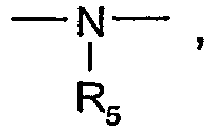
- A est une liaison covalente ou un radical hydrocarboné aliphatique pouvant comprendre des hétéroatomes et comprenant de 1 à 20 atomes de carbone.
- R2 est un radical hydrocarboné aliphatique ou aromatique ramifié ou non comprenant de 2 à 20 atomes de carbone.
- R3, R4 représente l'hydrogène, un radical hydroxyle ou un radical hydrocarboné comprenant un groupement

- R5 représente l'hydrogène ou un radical hydrocarboné comprenant de 1 à 6 atomes de carbone
- R1 est un radical hydrocarboné comprenant au moins 2 atomes de carbone, linéaire ou cyclique, aromatique ou aliphatique et pouvant comprendre des hétéroatomes.
- n, m et p représentent chacun un nombre compris entre 30 et 200
- Y est le radical
- Selon un autre mode de réalisation particulier de l'invention, la matrice polymérique de l'invention consiste en un polyester A2 constitué de :
- 30 à 100% molaire (bornes comprises) de chaînes macromoléculaires répondant à la formule (I) suivante :
R3-(X-R2-Y)n-X-A-R1-A-X-(Y-R2-X)m-R3 (I)
- 0 à 70% molaire (bornes comprises) de chaînes macromoléculaires répondant à la formule (II) suivante
R4-[Y-R2-X]p-R3 (II)
dans lesquelles :- Y est le radical


- Y est le radical


- A est une liaison covalente ou un radical hydrocarboné aliphatique pouvant comprendre des hétéroatomes et comprenant de 1 à 20 atomes de carbone.
- R2 est un radical hydrocarboné aliphatique ou aromatique ramifié ou non comprenant de 2 à 20 atomes de carbone.
- R3, R4 représente l'hydrogène, un radical hydroxyle ou un radical hydrocarboné comprenant un groupement
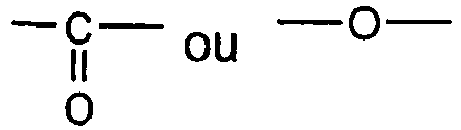
- R1 est un radical hydrocarboné comprenant au moins 2 atomes de carbone, linéaire ou cyclique, aromatique ou aliphatique et pouvant comprendre des hétéroatomes.
- n, m et p représentent chacun un nombre compris entre 30 et 200
- Y est le radical
- La matrice polymérique de l'invention peut également être un copolyesteramide.
- Avantageusement m, n et p sont compris entre 30 et 250.
- Avantageusement, R2 est un radical pentaméthylénique.
- Le polyamide A1 ou le polyester A2 de l'invention comprend avantageusement au moins 45%, de préférence au moins 60%, encore plus préférentiellement au moins 80% molaire de chaînes macromoléculaires répondant à la formule (I).
- Le polyamide A1 ou le polyester A2 de l'invention présente avantageusement une masse moléculaire en nombre supérieure ou égale à 5000, et inférieure ou égale à 25000 g/mol.
- Le fil et/ou les fibres de polymère thermoplastique destinés à jouer le rôle de matrice seront dénommés ci-après "fil- et/ou fibres-matrice".
- Par masse moléculaire en nombre du polyamide A1 ou du polyester A2, on entend la masse moléculaire en nombre pondérée par les fractions molaires des deux types de chaînes macromoléculaires des formules (I) et (II).
- Selon un mode de réalisation particulier de l'invention, le polyamide A1 ou le polyester A2 est obtenu par copolymérisation à partir d'un mélange de monomères comprenant :
- a) un composé difonctionnel dont les fonctions réactives sont choisies parmi les amines, les acides carboxyliques, les alcools, et leurs dérivés, les fonctions réactives étant identiques,
- b) des monomères de formules générales (IIIa) et (IIIb) suivantes dans le cas du polyamide A1
X'-R'2-Y' (IIIa)
ou
- b') des monomères de formules générales (IIIa') et (IIIb') suivantes dans le cas du polyester A2
X'-R'2-Y' (IIIa')
ou
- R'2 représente un radical hydrocarboné aliphatique, cycloaliphatique ou aromatique, substitué ou non, comprenant de 2 à 20 atomes de carbone, et pouvant comprendre des hétéroatomes,
- Y' est un radical amine quand X' représente un radical carboxylique, ou Y' est un radical carboxylique quand X' représente un radical amine, dans le cas du polyamide A1
- Y' est un radical hydroxyle quand X' représente un radical carboxylique, ou Y' est un radical carboxylique quand X' représente un radical hydroxyle, dans le cas du polyester A2
- Par acide carboxylique ou radical carboxylique dans la présente invention, on entend les acides carboxyliques et leurs dérivés, tels que les anhydrides d'acide, les chlorures d'acide, les esters, les nitriles etc. Par amine, on entend les amines et leurs dérivés.
- Les monomères de formule (IIIa) ou (IIIb) sont de préférence les monomères de polyamides du type polyamide 6, polyamide 11, polyamide 12 etc. On peut citer à titre d'exemple de monomères de formule (IIIa) ou (IIIb) pouvant convenir dans le cadre de l'invention le caprolactame, l'acide 6-aminocaproïque, le lauryllactame etc. Il peut s'agir d'un mélange de monomères différents.
- Comme exemples de monomères de formule (IIIa') ou (IIIb') pouvant convenir dans le cadre de l'invention, on peut citer la caprolactone, la δ-valerolactone, l'acide 4-hydroxybenzoïque etc.
- Le mélange de monomères peut également comprendre un monomère monofonctionnel utilisé classiquement dans la production des polymères comme limiteur de chaînes.
- Le mélange de monomères peut également comprendre des catalyseurs.
- Avantageusement le composé a) représente entre 0,1 et 2% molaire par rapport au nombre de moles de monomères de type b) ou b').
- Dans le cas du polyamide A1, la copolymérisation des monomères est réalisée dans des conditions classiques de polymérisation de polyamides obtenus à partir de lactames ou d'aminoacides.
- Dans le cas du polyester A2, la copolymérisation des monomères est réalisée dans des conditions classiques de polymérisation de polyesters obtenus à partir de lactones ou d'hydroxy-acides
- La polymérisation peut comprendre une étape de finition afin d'obtenir le degré de polymérisation souhaité.
- Selon un autre mode de réalisation particulier de l'invention, le polyamide A1 ou le polyester A2 est obtenu par mélange en fondu, par exemple à l'aide d'un dispositif d'extrusion, d'un polyamide du type de ceux obtenus par polymérisation des lactames et/ou amino-acides ou d'un polyester du type de ceux obtenus par polymérisation de lactones et/ou hydroxy-acides et d'un composé difonctionnel dont les fonctions réactives sont choisies parmi les amines, les alcools, les acides carboxyliques et leurs dérivés, les fonctions réactives étant identiques. Le polyamide est par exemple du polyamide 6, du polyamide 11, du polyamide 12 etc.. Le polyester est par exemple le polycaprolactone, la poly(pivalolactone) etc..
- Le composé difonctionnel est ajouté directement dans le polyamide ou le polyester en milieu fondu.
- Avantageusement le composé difonctionnel représente entre 0,05 et 2% en poids par rapport au poids de polyamide ou de polyester.
- Le composé difonctionnel de l'invention est de préférence représenté par la formule (IV) :
X"-A-R1-A-X", (IV)
- dans laquelle X" représente un radical amine, un radical hydroxyle ou un groupement carboxylique ou leurs dérivés
- R1 et A sont tels que décrits ci-dessus.
- A titre d'exemple de radical X", on peut citer un radical amine primaire, amine secondaire etc.
- Le composé difonctionnel peut être un diacide carboxylique. A titre d'exemples de diacides, on peut citer l'acide adipique qui est l'acide préféré, l'acide décanoïque ou sébacique, l'acide dodécanoïque, les acides phtaliques tels que l'acide téréphtalique, l'acide isophtalique. Il peut s'agir d'un mélange comprenant des sous-produits issus de la fabrication d'acide adipique, par exemple un mélange d'acide adipique, d'acide glutarique et d'acide succinique.
- Le composé difonctionnel peut être une diamine. A titre d'exemples de diamines, on peut citer l'hexaméthylène diamine, la méthyl pentaméthylènediamine, la 4,4'-diaminodicyclohexylméthane, la butane diamine, la métaxylylène diamine.
- Le composé difonctionnel peut être un dialcool. A titre d'exemples de dialcools, on peut citer le 1,3-propanediol, le 1,2-éthanediol, le 1,4-butanediol, le 1,5-pentanediol, le 1,6-hexanediol et polytetrahydrofurane.
- Le composé fonctionnel peut être un mélange d'une diamine et d'un dialcool.
- Dans le cas du polyamide A1, les fonctions réactives du composé difonctionnel sont généralement des amines ou des acides carboxyliques ou dérivés.
- Dans le cas du polyester A2, les fonctions réactives du composé difonctionnel sont généralement des alcools ou des acides carboxyliques ou dérivés.
- De préférence le composé difonctionnel est choisi parmi l'acide adipique, l'acide décanoïque ou sébacique, l'acide dodécanoïque, l'acide téréphtalique, l'acide isophtalique, l'hexaméthylène diamine, la méthyl pentaméthylènediamine, la 4,4'-diaminodicyclohexylméthane, la butane diamine, la métaxylylène diamine, le 1,3-propanediol, le 1,2-éthanediol, le 1,4-butanediol, le 1,5-pentanediol, le 1,6-hexanediol et le polytetrahydrofurane
- Selon un autre mode de réalisation particulier de l'invention, le polyamide A1 ou le polyester A2 est obtenu par mélange en fondu, par exemple à l'aide d'un dispositif d'extrusion, d'un polyamide du type de ceux obtenus par polymérisation des lactames et/ou amino-acides ou d'un polyester du type de ceux obtenus par polymérisation de lactones et/ou hydroxy-acides, avec un composé de formule (V) :
G-R-G (V)
dans laquelle - R est un radical hydrocarboné, linéaire ou cyclique, aromatique ou aliphatique, substitué ou non, et pouvant comprendre des hétéroatomes,
- G est une fonction ou un radical pouvant réagir sélectivement soit avec les fonctions réactives amine, soit avec les fonctions réactives alcool, soit avec les fonctions réactives acide carboxylique du polyamide ou du polyester, pour former des liaisons covalentes. Le polyamide est par exemple du polyamide 6, du polyamide 11, du polyamide 12. Le polyester est par exemple le polycaprolactone ou le poly(pivalolactone).
- Le composé de formule (V) est ajouté directement dans le polyamide ou le polyester en milieu fondu.
- Avantageusement le composé de formule (V) représente entre 0,05 et 2% en poids par rapport au poids de polyamide ou de polyester.
- Tous les coupleurs de chaînes polymériques ou les agents d'extension de chaînes polymériques connus de l'homme du métier, comprenant généralement deux fonctions identiques ou deux radicaux identiques, et réagissant sélectivement soit avec les fonctions réactives amine, soit avec les fonctions réactives alcool, soit avec les fonctions réactives acide carboxylique du polyamide ou du polyester, pour former des liaisons covalentes, peuvent être utilisés comme composé de formule (V).
- Dans le cas de l'obtention de polyamide A1, le composé (V) peut par exemple réagir sélectivement avec les fonctions amine du polyamide dans lequel il est introduit. Ce composé ne réagira pas avec les fonctions acide du polyamide dans ce cas.
- De façon avantageuse, lorsque le fil et/ou les fibres de renfort comprennent un polymère thermoplastique, celui-ci se présente préférentiellement sous la forme d'une gaine de polymère qui recouvre le fil et/ou les fibres de renfort.
- Selon une variante de l'invention, l'article précurseur du matériau composite comporte également au moins un fil- et/ou des fibres-matrice en polymère thermoplastique linéaire.
- Selon une caractéristique préférée, ce polymère linéaire est un polyamide ou copolyamide aliphatique et/ou semicristallin choisi dans le groupe comprenant le PA 4.6, PA 6, PA 6.6, PA 6.9, PA 6.10, PA 6.12, PA 6.36, PA 11, PA 12 ou un polyamide ou copolyamide semi-aromatique semicristallin choisi dans le groupe comprenant les polyphtalamides, et les mélanges de ces polymères et de leurs copolymères.
- Le fil- et/ou les fibres-matrice peuvent comprendre également tous les additifs usuels tels que des ignifugeants, des fluidifiants, des stabilisants chaleur et lumière, des cires, des pigments, des nucléants, des antioxydants, des modificateurs de la résistance aux chocs ou analogues et connus de l'homme de l'art.
- Avantageusement, le fil et/ou les fibres de renfort sont choisis parmi les fils et/ou les fibres de carbone, de verre, d'aramides et de polyimides.
- Selon une variante de cette caractéristique, le fil et/ou les fibres de renfort sont un fil et/ou des fibres naturels, choisis parmi les fils et/ou les fibres de sisal, de chanvre, de lin.
- De façon avantageuse, l'article selon l'invention comporte également un matériau en poudre, précurseur de matrice, qui peut être par exemple un polyamide.
- De préférence, on utilisera une poudre présentant une granulométrie comprise entre 1 et 100 microns.
- Préférentiellement, l'article selon l'invention est sous forme de fils continus ou coupés, de rubans, de mats, de tresses, de tissus, de tricots, de nappes, de multiaxiaux, de non-tissés et/ou de formes complexes comprenant plusieurs des formes précitées. A titre d'exemples, une forme complexe peut être une nappe associée à un non-tissé ou à des fils continus.
- Un autre objet de l'invention est un matériau composite obtenu à partir d'un article tel que défini ci-dessus, par fusion au moins partielle du fil- et/ou des fibres-matrice. Ce matériau composite comprend une matrice polymérique et des fils et/ou des fibres de renfort.
- Par fusion partielle, on entend la fusion d'au moins une partie d'au moins un fil et/ou une fibre-matrice.
- Cette fusion peut être réalisée par thermocompression à une température supérieure à la température de fusion de la matrice polymérique et sous pression. Cette fusion permet d'obtenir une imprégnation homogène des fils et/ou des fibres de renfort par la matrice.
- Selon une caractéristique préférentielle, le matériau composite ainsi obtenu, présente un taux de renfort massique compris entre 25 et 80 %.
- Encore un autre objet de l'invention est un produit semi-fini obtenu par un procédé de thermocompression ou de calandrage de l'article précité, au cours duquel on fond au moins partiellement le fil- et/ou les fibres-matrice afin d'imprégner le fil et/ou les fibres de renfort.
- Avantageusement encore, ce produit semi-fini se présente sous forme de plaques ou de bandes.
- Le produit semi-fini consiste en un produit intermédiaire, dans lequel les fils et/ou les fibres de renfort ont été imprégnés par la matrice polymérique qui se trouve sous la forme d'une phase continue. Ce produit n'est pas encore sous sa forme définitive.
- Le produit semi-fini doit subir une ultime étape de mise en forme, par un procédé de formage ou thermocompression connus de l'homme de l'art, à des températures supérieures à leur point de transition vitreuse et inférieures à son point de fusion, permettant d'obtenir un produit fini.
- Encore un autre objet de l'invention est un produit fini obtenu par un procédé de thermocompression à la forme définitive de l'article précité, au cours duquel on fond au moins partiellement le fil- ou/et les fibres-matrice afin d'imprégner le fil et/ou les fibres de renfort.
- De façon générale, les procédés de thermocompression utilisés mettent en oeuvre des basses pressions (inférieures à 20 bars), des températures inférieures à 290°C, et des temps courts (inférieurs à 5 minutes).
- D'autres détails et avantages de l'invention apparaîtront plus clairement à la lumière des exemples donnés ci-dessous, uniquement à titre indicatif et à fin d'illustration.
- Matrice utilisée : polyamide A1 selon l'invention, obtenu par polycondensation de caprolactame en présence de 0.6% molaire d'acide adipique, dans des conditions classiques de polymérisation de polyamide à partir de caprolactame
- Une série d'essais à été réalisée à partir d'un fil multifilaments de polyamide A1 décrit ci-dessus, présentant un titre par brin compris entre 21 et 22 dtex et une ténacité voisine de 23 cN/Tex. Un tel multifilament est assemblé, lors d'une opération de tissage multiaxial, avec un fil de renfort continu de verre, présentant un titre de 600 Tex. Afin de valider la haute fluidité de la matrice à l'état fondu, des tissus multiaxiaux sont réalisés à partir de couches élémentaires, définies comme suit:
-
- Pli n°1 : fil de renfort - orientation : - 45°
- Pli n°2 : fil de renfort - orientation : +45°
- Pli n°3 : fil Polyamide A1 (matrice) - orientation : 90°
- Un composite stratifié est ensuite réalisé en plaçant plusieurs couches élémentaires (entre 2 et 10) du tissu obtenu dans un moule présentant une forme de plaque, sous une presse à plateaux chauffants, pendant une durée de 1 à 3 minutes, sous une pression comprise entre 1 et 20 Bars et une température comprise entre 250 et 260 °C (supérieure à la température de fusion du Polyamide A1). Après refroidissement jusqu'à une température de 50-60°C, le composite est démoulé. Le taux massique de renfort est alors compris entre 60 et 70%.
- La haute fluidité du polyamide A1 permet d'obtenir une bonne imprégnation du renfort par la matrice sans engendrer ni les pertes de propriétés mécaniques, ni les problèmes de résistance à la fatigue constatés avec des polymères à bas poids moléculaire. Les propriétés mécaniques en flexion sont comparées à celles d'un composite thermodurcissable obtenu à partir du même matériau de renfort et d'une résine époxy dans le tableau 1.
Tableau 1 : Plaque composite polyamide/fibres de verre Fibres de verre Contrainte de rupture (MPa) Module de flexion (MPa) Allongement à la rupture (%) Matrice Epoxy 630,0 21000 3,53 Matrice PA1 517 21000 3,26 - L'utilisation d'un renfort sous forme de fil continu permet de conserver des propriétés mécaniques élevées dans des directions privilégiées. Le fait d'utiliser la matrice sous la forme d'un fil permet, outre un avantage économique par rapport aux solutions de poudrage ou de pré-imprégnation classiques, une manipulation aisée ainsi qu'une bonne maîtrise du taux de renforcement du matériau composite final.
- Le tableau n°2 donne une synthèse des propriétés mécaniques obtenues.
Tableau 2: Synthèse des propriétés mécaniques obtenues. Unités Norme Tissu Multiaxial PA A1 / Verre Taux d'imprégnation (p/p) % 65 Densité 1.8 Traction Simple Contrainte rupture MPa ISO 527 545 Module d'Young GPa ISO 527 21.3 Allongement % ISO 527 2.76 Flexion 3 points Contrainte rupture MPa ISO 14125 517 Module de flexion GPa ISO 14125 21 Choc multiaxial Force maximale DaN ISO 6603-2 650
Claims (26)
- Article précurseur d'un matériau composite comprenant une matrice polymérique et au moins un fil et/ou des fibres de renfort, ledit article comprenant au moins un fil et/ou des fibres de renfort et au moins un fil et/ou des fibres de matrice polymérique caractérisé en ce que :- ledit fil et/ou lesdites fibres de renfort sont en matériau de renfort et comprennent éventuellement une partie en polymère thermoplastique- ledit fil et/ou lesdites fibres de matrice polymérique sont en polymère thermoplastique, et en ce que,- ledit polymère thermoplastique dudit fil et/ou desdites fibres de renfort et/ou dudit fil et/ou desdites fibres de matrice polymérique comprend au moins un polycondensat constitué de :• 30 à 100% molaire (bornes comprises) de chaînes macromoléculaires répondant à la formule (I) suivante :
R3-(X-R2-Y)n-X-A-R1-A-X-(Y-R2-X)m-R3 (I)
• 0 à 70% molaire (bornes comprises) de chaînes macromoléculaires répondant à la formule (II) suivante
R4-[Y-R2-X]p-R3 (II)
dans lesquelles- X-Y- est un radical issu de la condensation de deux fonctions réactives F1 et F2 telles que- F1 est le précurseur du radical -X- et F2 le précurseur du radical -Y- ou inversement,- les fonctions F1 ne peuvent réagir entre elles par condensation- les fonctions F2 ne peuvent réagir entre elles par condensation- A est une liaison covalente ou un radical hydrocarboné aliphatique pouvant comprendre des hétéroatomes et comprenant de 1 à 20 atomes de carbone.- R2 est un radical hydrocarboné aliphatique ou aromatique ramifié ou non comprenant de 2 à 20 atomes de carbone.- R3, R4 représente l'hydrogène, un radical hydroxyle ou un radical hydrocarboné- R1 est un radical hydrocarboné comprenant au moins 2 atomes de carbone, linéaire ou cyclique, aromatique ou aliphatique et pouvant comprendre des hétéroatomes.- -n, m et p représentent chacun un nombre compris entre 30 et 200 - Article selon la revendication 1, caractérisé en ce que le polymère thermoplastique comprend au moins un polyamide A1 constitué de :• 30 à 100% molaire (bornes comprises) de chaînes macromoléculaires répondant à la formule (I) suivante :
R3-(X-R2-Y)n-X-A-R1-A-X-(Y-R2-X)m-R3 (I)
• 0 à 70% molaire (bornes comprises) de chaînes macromoléculaires répondant à la formule (II) suivante
R4-[Y-R2-X]p-R3 (II)
dans lesquelles :- Y est le radical
 - Y est le radical
 - A est une liaison covalente ou un radical hydrocarboné aliphatique pouvant comprendre des hétéroatomes et comprenant de 1 à 20 atomes de carbone.- R2 est un radical hydrocarboné aliphatique ou aromatique ramifié ou non comprenant de 2 à 20 atomes de carbone.- R3, R4 représente l'hydrogène, un radical hydroxle ou un radical hydrocarboné comprenant un groupement
 - R5 représente l'hydrogène ou un radical hydrocarboné comprenant de 1 à 6 atomes de carbone- R1 est un radical hydrocarboné comprenant au moins 2 atomes de carbone, linéaire ou cyclique, aromatique ou aliphatique et pouvant comprendre des hétéroatomes.- n, m et p représentent chacun un nombre compris entre 30 et 200
 - Article selon la revendication 1, caractérisé en ce que le polymère thermoplastique comprend au moins un polyester A2 constitué de :• 30 à 100% molaire (bornes comprises) de chaînes macromoléculaires répondant à la formule (I) suivante :
R3-(X-R2-Y)n-X-A-R1-A-X-(Y-R2-X)m-R3 (I)
• 0 à 70% molaire (bornes comprises) de chaînes macromoléculaires répondant à la formule (II) suivante
R4-[Y-R2-X]p-R3 (II)
dans lesquelles :- Y est le radical
 - Y est le radical
 - A est une liaison covalente ou un radical hydrocarboné aliphatique pouvant comprendre des hétéroatomes et comprenant de 1 à 20 atomes de carbone.- R2 est un radical hydrocarboné aliphatique ou aromatique ramifié ou non comprenant de 2 à 20 atomes de carbone.- R3, R4 représente l'hydrogène, un radical hydroxyle ou un radical hydrocarboné comprenant un groupement
 - R1 est un radical hydrocarboné comprenant au moins 2 atomes de carbone, linéaire ou cyclique, aromatique ou aliphatique et pouvant comprendre des hétéroatomes.- n, m et p représentent chacun un nombre compris entre 30 et 200
 - Article selon l'une des revendications précédentes, caractérisé en ce que n, m et p sont compris entre 30 et 150
- Article selon l'une des revendications 2 à 4, caractérisé en ce que le polyamide A1 ou le polyester A2 comprend au moins 45%, de préférence au moins 60% molaire de chaînes macromoléculaires répondant à la formule (I)
- Article selon l'une des revendications précédentes, caractérisé en ce que R2 est un radical pentaméthylénique
- Article selon l'une des revendications 2 à 6, caractérisé en ce que le polyamide A1 ou le polyester A2 est obtenu par copolymérisation à partir d'un mélange de monomères comprenant :a) un composé difonctionnel dont les fonctions réactives sont choisies parmi les amines, les acides carboxyliques, les alcools, et leurs dérivés, les fonctions réactives étant identiques,b) des monomères de formules générales (IIIa) et (IIIb) suivantes dans le cas du polyamide A1
X'-R'2-Y' (IIIa)
ou b') des monomères de formules générales (IIIa') et (IIIb') suivantes dans le cas du polyester A2
X'-R'2-Y' (IIIa ')
ou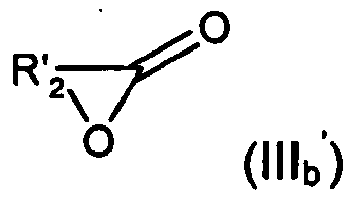 • R'2 représente un radical hydrocarboné aliphatique, cycloaliphatique ou aromatique, substitué ou non, comprenant de 2 à 20 atomes de carbone, et pouvant comprendre des hétéroatomes,• Y' est un radical amine quand X' représente un radical carboxylique, ou Y' est un radical carboxylique quand X' représente un radical amine, dans le cas du polyamide A1• Y' est un radical hydroxyle quand X' représente un radical carboxylique, ou Y' est un radical carboxylique quand X' représente un radical hydroxyle, dans le cas du Polyester A2
 - Article selon la revendication 7, caractérisé en ce que le composé a) représente entre 0,1 et 2% molaire par rapport au nombre de moles de monomères de type b) ou b')
- Article selon l'une des revendications 2 à 6, caractérisé en ce que le polyamide A1 ou le polyester A2 est obtenu par mélange en fondu d'un polyamide du type de ceux obtenus par polymérisation des lactames et/ou amino-acides ou d'un polyester du type de ceux obtenus par polymérisation de lactones et/ou hydroxy-acides avec un composé difonctionnel dont les fonctions réactives sont choisies parmi les amines, les alcools, les acides carboxyliques et leurs dérivés, les fonctions réactives étant identiques.
- Article selon la revendication 9, caractérisé en ce que le composé difonctionnel représente entre 0,05 et 2% en poids par rapport au poids de polyamide ou de polyester
- Article selon l'une des revendications 7 à 10, caractérisé en ce que le composé difonctionnel est représenté par la formule (IV) :
X"-A-R1-A-X" (IV)
dans laquelle X" représente un radical amine, un radical hydroxyle, un groupement carboxylique ou leurs dérivés - Article selon l'une des revendications 7 à 11, caractérisé en ce que le composé difonctionnel est choisi parmi l'acide adipique, l'acide décanoïque ou sébacique, l'acide dodécanoïque, l'acide téréphtalique, l'acide isophtatique, l'hexaméthylène diamine, la méthyl pentaméthylènediamine, la 4,4'-diaminodicyclohexylméthane, la butane diamine, la métaxylylène diamine, le 1,3-propanediol, le 1,2-éthanediol, le 1,4-butanediol, le 1,5-pentanediol, le 1,6-hexanediol et le polytetrahydrofurane
- Article selon l'une des revendications précédentes, caractérisé en ce qu'il comporte également au moins un fil- et/ou des fibres-matrice en polymère thermoplastique linéaire
- Article selon la revendication 13, caractérisé en ce que le polymère linéaire est un polyamide ou copolyamide aliphatique et/ou semicristallin choisi dans le groupe comprenant le PA 4.6, PA 6,PA 6.6, PA 6.9, PA 6.10, PA 6.12, PA 6.36, PA 11, PA 12 ou un polyamide ou copolyamide semi-aromatique semicristallin choisi dans le groupe comprenant les polyphtalamides, et les mélanges de ces polymères et de leurs copolymères.
- Article selon l'une des revendications précédentes, caractérisé en ce que le fil- et/ou les fibres-matrice comprennent également des additifs, tels que des ignifugeants, des fluidifiants, des stabilisants chaleur et lumière, des cires, des pigments, des nucléants, des antioxydants, des modificateurs de la résistance aux chocs ou analogues.
- Article selon l'une des revendications précédentes, caractérisé en ce que le fil et/ou les fibres de renfort sont choisis parmi les fils et/ou les fibres de carbone, de verre, d'aramides et de polyimides.
- Article selon l'une des revendications 1 à 15, caractérisé en ce que le fil et/ou les fibres de renfort sont un fil et/ou des fibres naturels, choisis parmi les fils et/ou les fibres dé sisal, de chanvre, de lin.
- Article selon l'une des revendications précédentes, caractérisé en ce qu'il comporte également un matériau en poudre précurseur de matrice.
- Article selon la revendication précédente, caractérisé en ce que ledit matériau en poudre précurseur de matrice est un polyamide.
- Article selon l'une des revendications précédentes, caractérisé en ce qu'il est sous forme de fils continus ou coupés, de rubans, de mats, de tressés, de tissus, de tricots, de nappes, de multiaxiaux, de non-tissés et/ou de formes complexes comprenant plusieurs des formes précitées.
- Matériau composite caractérisé en ce qu'il est obtenu à partir d'un article selon l'une des revendications précédentes, par fusion au moins partielle du fil- et/ou des fibres-matrice.
- Matériau composite selon la revendication précédente, caractérisé en ce qu'il présente un taux de renfort massique compris entre 25 et 80 %.
- Produit semi-fini caractérisé en ce qu'il est obtenu par un procédé de thermoformage ou de calandrage de l'article selon l'une des revendications 1 à 22, au cours duquel on fond au moins partiellement le fil- ou/et les fibres-matrice afin d'imprégner le fil et/ou les fibres de renfort.
- Produit semi-fini selon la revendication 23, caractérisé en ce qu'il se présente sous forme de plaques ou de bandes.
- Produit fini caractérisé en ce qu'il est obtenu par un procédé de thermoformage à la forme finale de l'article selon l'une des revendications 1 à 22, au cours duquel on fond au moins partiellement le fil- ou/et les fibres-matrice afin d'imprégner le fil et/ou les fibres de renfort.
- Produit fini caractérisé en ce qu'il est obtenu par un procédé de formage ou de thermocompression à la forme finale du produit semi-fini selon l'une des revendications 23 ou 24.
Applications Claiming Priority (2)
| Application Number | Priority Date | Filing Date | Title |
|---|---|---|---|
| FR0314994A FR2864094B1 (fr) | 2003-12-19 | 2003-12-19 | Materiaux composites comprenant un materiau de renfort et une matrice thermoplastique, article compose precurseur de ces materiaux et produits obtenus a partir de ces materiaux |
| PCT/FR2004/003310 WO2005061209A1 (fr) | 2003-12-19 | 2004-12-20 | Matériaux composites comprenant un matériau de renfort et une matrice thermoplastique, article composé precurseur de ces matériaux et produits obtenus a partir de ces matériaux. |
Publications (2)
| Publication Number | Publication Date |
|---|---|
| EP1701836A1 EP1701836A1 (fr) | 2006-09-20 |
| EP1701836B1 true EP1701836B1 (fr) | 2014-05-07 |
Family
ID=34630343
Family Applications (1)
| Application Number | Title | Priority Date | Filing Date |
|---|---|---|---|
| EP20040816443 Expired - Lifetime EP1701836B1 (fr) | 2003-12-19 | 2004-12-20 | Materiaux composites comprenant un materiau de renfort et une matrice thermoplastique, article compose precurseur de ces materiaux et produits obtenus a partir de ces materiaux. |
Country Status (6)
| Country | Link |
|---|---|
| US (1) | US9200124B2 (fr) |
| EP (1) | EP1701836B1 (fr) |
| JP (1) | JP5337345B2 (fr) |
| KR (1) | KR100796549B1 (fr) |
| FR (1) | FR2864094B1 (fr) |
| WO (1) | WO2005061209A1 (fr) |
Families Citing this family (12)
| Publication number | Priority date | Publication date | Assignee | Title |
|---|---|---|---|---|
| GB0610272D0 (en) | 2006-05-24 | 2006-07-05 | Auxetic Technologies Ltd | A composite material |
| ES2354934T3 (es) * | 2007-06-20 | 2011-03-21 | RHODIA OPéRATIONS | Artículo de poliamida compuesto. |
| US8334046B2 (en) * | 2009-05-12 | 2012-12-18 | E I Du Pont De Nemours And Company | Overmolded polyamide composite structures and processes for their preparation |
| US20110027571A1 (en) * | 2009-07-30 | 2011-02-03 | E.I. Du Pont De Nemours And Company | Heat resistant polyamide composite structures and processes for their preparation |
| WO2013008720A1 (fr) * | 2011-07-11 | 2013-01-17 | 東レ株式会社 | Pré-imprégné en résine thermoplastique, préforme moulée et composite moulé l'utilisant et procédé de production desdits préforme moulée et composite moulé |
| FR2981653B1 (fr) | 2011-10-25 | 2014-08-22 | Arkema France | Materiau composite thermoplastique renforce de fibres synthetiques et procede de fabrication |
| FR2997089B1 (fr) | 2012-10-23 | 2015-11-13 | Arkema France | Materiau composite thermoplastique a base de polyamide semi-cristallin et procede de fabrication |
| US9834885B2 (en) | 2012-12-04 | 2017-12-05 | Basf Se | Process for the production of a fiber-reinforced composite material |
| JP2016505664A (ja) * | 2012-12-04 | 2016-02-25 | ビーエーエスエフ ソシエタス・ヨーロピアBasf Se | 繊維強化複合材の製造方法 |
| FR3019826B1 (fr) | 2014-04-15 | 2017-10-20 | Arkema France | Composition thermoplastique a base de polyamide polymere issu d'un prepolymere et d'un allongeur de chaine et procede de fabrication |
| FR3019824B1 (fr) * | 2014-04-15 | 2017-10-13 | Arkema France | Procede pour materiau composite avec impregnation par polymere thermoplastique, issu d'un prepolymere et d'un allongeur de chaine |
| FR3019822B1 (fr) | 2014-04-15 | 2017-10-20 | Arkema France | Procede de fabrication d'un materiau thermoplastique a base de polyamide semi-cristallin |
Family Cites Families (22)
| Publication number | Priority date | Publication date | Assignee | Title |
|---|---|---|---|---|
| US3549601A (en) * | 1968-08-20 | 1970-12-22 | Peter A Fowell | Polyamide molding resin obtained by polymerizing polyamide precursors in the presence of a critical proportion of end capping agent: branching agent |
| DE2253048B2 (de) * | 1971-11-01 | 1980-09-18 | Allied Chemical Corp., Morristown, N.J. (V.St.A.) | Thermoplastischer Formling und Verfahren zu dessen Herstellung |
| LU67858A1 (fr) * | 1972-07-08 | 1973-08-30 | ||
| NL90940C (fr) | 1980-12-20 | |||
| FR2579133B1 (fr) * | 1985-03-25 | 1987-09-25 | Atochem | Materiau composite polymere thermoplastique renforce de fibres, son procede de fabrication |
| JPS6245718A (ja) | 1985-08-23 | 1987-02-27 | Sumitomo Chem Co Ltd | ポリエステル繊維 |
| FR2603891B1 (fr) * | 1986-09-17 | 1990-12-14 | Atochem | Procede de fabrication de materiau composite a base de polyamide renforcee de fibres longues |
| DE3751984T2 (de) * | 1986-09-30 | 1997-04-17 | Toho Rayon Kk | Harzzusammensetzung auf der Basis von wärmehärtbaren Harzen und thermoplastischen Harzen |
| DE4218719A1 (de) | 1992-06-06 | 1993-12-09 | Basf Ag | Schnellgesponnene Fäden auf der Basis von Polycaprolactam und Verfahren zu ihrer Herstellung |
| SG49833A1 (en) * | 1993-03-24 | 1998-06-15 | Du Pont | Wet-laid sheet material and composites thereof |
| DE4327024A1 (de) * | 1993-08-12 | 1995-02-16 | Bayer Ag | Thermoplastisch verarbeitbare und biologisch abbaubare aliphatische Polyesteramide |
| DE4421704A1 (de) * | 1994-06-21 | 1996-01-04 | Bayer Ag | Verfahren zur Herstellung von hochmolekularem Polyamid 6 |
| CA2176416C (fr) * | 1995-05-18 | 1999-07-06 | Bruce Norman Greve | Technique, methode et appareil de moulage de thermoplastiques renforces |
| ATE325152T1 (de) * | 1995-12-29 | 2006-06-15 | Rhodia Eng Plastics Srl | Polyamid und verfahren zu dessen herstellung |
| DE19806930A1 (de) * | 1998-02-19 | 1999-08-26 | Bayer Ag | Biologisch abbaubare Polyesteramide mit aliphatisch-aromatischen Strukturen |
| JP2000095861A (ja) * | 1998-09-21 | 2000-04-04 | Unitika Ltd | ナイロン6樹脂組成物 |
| US20020177911A1 (en) * | 1998-09-30 | 2002-11-28 | Lawrence Waugh | Method and apparatus for determining an arrangement of components |
| US20030018135A1 (en) * | 1999-09-23 | 2003-01-23 | Pagilagan Rolando Umali | Toughened nylon compositions with improved flow and processes for their preparation |
| JP2002003600A (ja) * | 2000-06-19 | 2002-01-09 | Toray Ind Inc | ポリアミドの製造方法、それから得られるポリアミドおよびポリアミド成形品 |
| DE10105813A1 (de) | 2001-02-08 | 2002-08-14 | Quadrant Plastic Composites Ag | Verfahren zur Herstellung eines thermoplastisch verformbaren, faserverstärkten Halbzeugs |
| FR2830255B1 (fr) * | 2001-10-01 | 2004-10-22 | Rhodia Industrial Yarns Ag | Materiaux composites comprenant un materiau de renfort et comme matrice thermoplastique un polyamide etoile, article compose precurseur de ces materiaux et produits obtenus a partir de ces materiaux |
| CN100357079C (zh) * | 2002-04-11 | 2007-12-26 | 卡拉姆技术株式会社 | 使用纤维垫加工纤维强化复合材料的设备及制造方法 |
-
2003
- 2003-12-19 FR FR0314994A patent/FR2864094B1/fr not_active Expired - Lifetime
-
2004
- 2004-12-20 US US10/583,168 patent/US9200124B2/en active Active
- 2004-12-20 EP EP20040816443 patent/EP1701836B1/fr not_active Expired - Lifetime
- 2004-12-20 JP JP2006544507A patent/JP5337345B2/ja not_active Expired - Lifetime
- 2004-12-20 WO PCT/FR2004/003310 patent/WO2005061209A1/fr not_active Ceased
- 2004-12-20 KR KR1020067014020A patent/KR100796549B1/ko not_active Expired - Fee Related
Also Published As
| Publication number | Publication date |
|---|---|
| US9200124B2 (en) | 2015-12-01 |
| KR20060117348A (ko) | 2006-11-16 |
| WO2005061209A1 (fr) | 2005-07-07 |
| US20080020219A1 (en) | 2008-01-24 |
| KR100796549B1 (ko) | 2008-01-21 |
| EP1701836A1 (fr) | 2006-09-20 |
| FR2864094B1 (fr) | 2006-02-10 |
| JP2007519770A (ja) | 2007-07-19 |
| FR2864094A1 (fr) | 2005-06-24 |
| JP5337345B2 (ja) | 2013-11-06 |
Similar Documents
| Publication | Publication Date | Title |
|---|---|---|
| EP1432763B1 (fr) | Materiaux composites comprenant un materiau de renfort et comme matrice thermoplastique un polyamide etoile, article compose precurseur de ces materiaux et produits obtenus a partir de ces materiaux | |
| EP2155474B1 (fr) | Article polyamide composite | |
| EP2326487B1 (fr) | Article polyamide composite | |
| EP2451864A1 (fr) | Article polyamide composite | |
| KR20050109549A (ko) | 장섬유에 의하여 보강된 폴리아미드 물품 | |
| EP2451865A1 (fr) | Article polyamide composite | |
| EP2571925A1 (fr) | Article polyamide composite | |
| FR2864094A1 (fr) | Materiaux composites comprenant un materiau de renfort et une matrice thermoplastique, article compose precurseur de ces materiaux et produits obtenus a partir de ces materiaux | |
| EP2512785A1 (fr) | Procede de fabrication d'articles composite a base de polyamide | |
| EP2513203B1 (fr) | Article composite a base de resines polyamides de faibles masses moleculaires | |
| CA2539629A1 (fr) | Structure composite | |
| CA2515744A1 (fr) | Composition comprenant une matrice et un additif fonctionnalise et articles realises a partir de cette composition | |
| FR2833015A1 (fr) | Compositions thermoplastiques a proprietes mecaniques ameliorees |
Legal Events
| Date | Code | Title | Description |
|---|---|---|---|
| PUAI | Public reference made under article 153(3) epc to a published international application that has entered the european phase |
Free format text: ORIGINAL CODE: 0009012 |
|
| 17P | Request for examination filed |
Effective date: 20060711 |
|
| AK | Designated contracting states |
Kind code of ref document: A1 Designated state(s): AT BE BG CH CY CZ DE DK EE ES FI FR GB GR HU IE IS IT LI LT LU MC NL PL PT RO SE SI SK TR |
|
| DAX | Request for extension of the european patent (deleted) | ||
| RAP1 | Party data changed (applicant data changed or rights of an application transferred) |
Owner name: RHODIA OPERATIONS |
|
| 17Q | First examination report despatched |
Effective date: 20091103 |
|
| GRAP | Despatch of communication of intention to grant a patent |
Free format text: ORIGINAL CODE: EPIDOSNIGR1 |
|
| INTG | Intention to grant announced |
Effective date: 20140127 |
|
| GRAS | Grant fee paid |
Free format text: ORIGINAL CODE: EPIDOSNIGR3 |
|
| GRAA | (expected) grant |
Free format text: ORIGINAL CODE: 0009210 |
|
| AK | Designated contracting states |
Kind code of ref document: B1 Designated state(s): AT BE BG CH CY CZ DE DK EE ES FI FR GB GR HU IE IS IT LI LT LU MC NL PL PT RO SE SI SK TR |
|
| REG | Reference to a national code |
Ref country code: GB Ref legal event code: FG4D Free format text: NOT ENGLISH |
|
| REG | Reference to a national code |
Ref country code: AT Ref legal event code: REF Ref document number: 666265 Country of ref document: AT Kind code of ref document: T Effective date: 20140515 |
|
| REG | Reference to a national code |
Ref country code: IE Ref legal event code: FG4D Free format text: LANGUAGE OF EP DOCUMENT: FRENCH |
|
| REG | Reference to a national code |
Ref country code: DE Ref legal event code: R096 Ref document number: 602004045075 Country of ref document: DE Effective date: 20140626 |
|
| REG | Reference to a national code |
Ref country code: NL Ref legal event code: T3 |
|
| REG | Reference to a national code |
Ref country code: LT Ref legal event code: MG4D |
|
| PG25 | Lapsed in a contracting state [announced via postgrant information from national office to epo] |
Ref country code: GR Free format text: LAPSE BECAUSE OF FAILURE TO SUBMIT A TRANSLATION OF THE DESCRIPTION OR TO PAY THE FEE WITHIN THE PRESCRIBED TIME-LIMIT Effective date: 20140808 Ref country code: IS Free format text: LAPSE BECAUSE OF FAILURE TO SUBMIT A TRANSLATION OF THE DESCRIPTION OR TO PAY THE FEE WITHIN THE PRESCRIBED TIME-LIMIT Effective date: 20140907 Ref country code: LT Free format text: LAPSE BECAUSE OF FAILURE TO SUBMIT A TRANSLATION OF THE DESCRIPTION OR TO PAY THE FEE WITHIN THE PRESCRIBED TIME-LIMIT Effective date: 20140507 Ref country code: CY Free format text: LAPSE BECAUSE OF FAILURE TO SUBMIT A TRANSLATION OF THE DESCRIPTION OR TO PAY THE FEE WITHIN THE PRESCRIBED TIME-LIMIT Effective date: 20140507 Ref country code: FI Free format text: LAPSE BECAUSE OF FAILURE TO SUBMIT A TRANSLATION OF THE DESCRIPTION OR TO PAY THE FEE WITHIN THE PRESCRIBED TIME-LIMIT Effective date: 20140507 |
|
| PG25 | Lapsed in a contracting state [announced via postgrant information from national office to epo] |
Ref country code: PL Free format text: LAPSE BECAUSE OF FAILURE TO SUBMIT A TRANSLATION OF THE DESCRIPTION OR TO PAY THE FEE WITHIN THE PRESCRIBED TIME-LIMIT Effective date: 20140507 Ref country code: SE Free format text: LAPSE BECAUSE OF FAILURE TO SUBMIT A TRANSLATION OF THE DESCRIPTION OR TO PAY THE FEE WITHIN THE PRESCRIBED TIME-LIMIT Effective date: 20140507 Ref country code: ES Free format text: LAPSE BECAUSE OF FAILURE TO SUBMIT A TRANSLATION OF THE DESCRIPTION OR TO PAY THE FEE WITHIN THE PRESCRIBED TIME-LIMIT Effective date: 20140507 |
|
| PG25 | Lapsed in a contracting state [announced via postgrant information from national office to epo] |
Ref country code: PT Free format text: LAPSE BECAUSE OF FAILURE TO SUBMIT A TRANSLATION OF THE DESCRIPTION OR TO PAY THE FEE WITHIN THE PRESCRIBED TIME-LIMIT Effective date: 20140908 |
|
| PG25 | Lapsed in a contracting state [announced via postgrant information from national office to epo] |
Ref country code: RO Free format text: LAPSE BECAUSE OF FAILURE TO SUBMIT A TRANSLATION OF THE DESCRIPTION OR TO PAY THE FEE WITHIN THE PRESCRIBED TIME-LIMIT Effective date: 20140507 Ref country code: CZ Free format text: LAPSE BECAUSE OF FAILURE TO SUBMIT A TRANSLATION OF THE DESCRIPTION OR TO PAY THE FEE WITHIN THE PRESCRIBED TIME-LIMIT Effective date: 20140507 Ref country code: EE Free format text: LAPSE BECAUSE OF FAILURE TO SUBMIT A TRANSLATION OF THE DESCRIPTION OR TO PAY THE FEE WITHIN THE PRESCRIBED TIME-LIMIT Effective date: 20140507 Ref country code: SK Free format text: LAPSE BECAUSE OF FAILURE TO SUBMIT A TRANSLATION OF THE DESCRIPTION OR TO PAY THE FEE WITHIN THE PRESCRIBED TIME-LIMIT Effective date: 20140507 Ref country code: DK Free format text: LAPSE BECAUSE OF FAILURE TO SUBMIT A TRANSLATION OF THE DESCRIPTION OR TO PAY THE FEE WITHIN THE PRESCRIBED TIME-LIMIT Effective date: 20140507 |
|
| REG | Reference to a national code |
Ref country code: DE Ref legal event code: R097 Ref document number: 602004045075 Country of ref document: DE |
|
| PLBE | No opposition filed within time limit |
Free format text: ORIGINAL CODE: 0009261 |
|
| STAA | Information on the status of an ep patent application or granted ep patent |
Free format text: STATUS: NO OPPOSITION FILED WITHIN TIME LIMIT |
|
| 26N | No opposition filed |
Effective date: 20150210 |
|
| PG25 | Lapsed in a contracting state [announced via postgrant information from national office to epo] |
Ref country code: IT Free format text: LAPSE BECAUSE OF FAILURE TO SUBMIT A TRANSLATION OF THE DESCRIPTION OR TO PAY THE FEE WITHIN THE PRESCRIBED TIME-LIMIT Effective date: 20140507 |
|
| REG | Reference to a national code |
Ref country code: DE Ref legal event code: R097 Ref document number: 602004045075 Country of ref document: DE Effective date: 20150210 |
|
| PG25 | Lapsed in a contracting state [announced via postgrant information from national office to epo] |
Ref country code: BE Free format text: LAPSE BECAUSE OF NON-PAYMENT OF DUE FEES Effective date: 20141231 |
|
| PG25 | Lapsed in a contracting state [announced via postgrant information from national office to epo] |
Ref country code: LU Free format text: LAPSE BECAUSE OF FAILURE TO SUBMIT A TRANSLATION OF THE DESCRIPTION OR TO PAY THE FEE WITHIN THE PRESCRIBED TIME-LIMIT Effective date: 20141220 Ref country code: SI Free format text: LAPSE BECAUSE OF FAILURE TO SUBMIT A TRANSLATION OF THE DESCRIPTION OR TO PAY THE FEE WITHIN THE PRESCRIBED TIME-LIMIT Effective date: 20140507 |
|
| REG | Reference to a national code |
Ref country code: CH Ref legal event code: PL |
|
| REG | Reference to a national code |
Ref country code: IE Ref legal event code: MM4A |
|
| PG25 | Lapsed in a contracting state [announced via postgrant information from national office to epo] |
Ref country code: CH Free format text: LAPSE BECAUSE OF NON-PAYMENT OF DUE FEES Effective date: 20141231 Ref country code: LI Free format text: LAPSE BECAUSE OF NON-PAYMENT OF DUE FEES Effective date: 20141231 Ref country code: IE Free format text: LAPSE BECAUSE OF NON-PAYMENT OF DUE FEES Effective date: 20141220 |
|
| REG | Reference to a national code |
Ref country code: FR Ref legal event code: PLFP Year of fee payment: 12 |
|
| PG25 | Lapsed in a contracting state [announced via postgrant information from national office to epo] |
Ref country code: MC Free format text: LAPSE BECAUSE OF FAILURE TO SUBMIT A TRANSLATION OF THE DESCRIPTION OR TO PAY THE FEE WITHIN THE PRESCRIBED TIME-LIMIT Effective date: 20140507 Ref country code: BG Free format text: LAPSE BECAUSE OF FAILURE TO SUBMIT A TRANSLATION OF THE DESCRIPTION OR TO PAY THE FEE WITHIN THE PRESCRIBED TIME-LIMIT Effective date: 20140507 |
|
| PG25 | Lapsed in a contracting state [announced via postgrant information from national office to epo] |
Ref country code: HU Free format text: LAPSE BECAUSE OF FAILURE TO SUBMIT A TRANSLATION OF THE DESCRIPTION OR TO PAY THE FEE WITHIN THE PRESCRIBED TIME-LIMIT; INVALID AB INITIO Effective date: 20041220 Ref country code: TR Free format text: LAPSE BECAUSE OF FAILURE TO SUBMIT A TRANSLATION OF THE DESCRIPTION OR TO PAY THE FEE WITHIN THE PRESCRIBED TIME-LIMIT Effective date: 20140507 |
|
| REG | Reference to a national code |
Ref country code: FR Ref legal event code: PLFP Year of fee payment: 13 |
|
| REG | Reference to a national code |
Ref country code: FR Ref legal event code: PLFP Year of fee payment: 14 |
|
| PGFP | Annual fee paid to national office [announced via postgrant information from national office to epo] |
Ref country code: AT Payment date: 20221125 Year of fee payment: 19 |
|
| P01 | Opt-out of the competence of the unified patent court (upc) registered |
Effective date: 20230624 |
|
| PGFP | Annual fee paid to national office [announced via postgrant information from national office to epo] |
Ref country code: NL Payment date: 20231116 Year of fee payment: 20 |
|
| PGFP | Annual fee paid to national office [announced via postgrant information from national office to epo] |
Ref country code: GB Payment date: 20231102 Year of fee payment: 20 |
|
| PGFP | Annual fee paid to national office [announced via postgrant information from national office to epo] |
Ref country code: FR Payment date: 20231108 Year of fee payment: 20 Ref country code: DE Payment date: 20231031 Year of fee payment: 20 |
|
| REG | Reference to a national code |
Ref country code: GB Ref legal event code: 732E Free format text: REGISTERED BETWEEN 20240222 AND 20240228 |
|
| REG | Reference to a national code |
Ref country code: NL Ref legal event code: PD Owner name: SPECIALTY OPERATIONS FRANCE; FR Free format text: DETAILS ASSIGNMENT: CHANGE OF OWNER(S), ASSIGNMENT; FORMER OWNER NAME: RHODIA OPERATIONS Effective date: 20240318 |
|
| REG | Reference to a national code |
Ref country code: DE Ref legal event code: R081 Ref document number: 602004045075 Country of ref document: DE Owner name: SPECIALTY OPERATIONS FRANCE, FR Free format text: FORMER OWNER: RHODIA OPERATIONS, AUBERVILLIERS, FR |
|
| REG | Reference to a national code |
Ref country code: AT Ref legal event code: MM01 Ref document number: 666265 Country of ref document: AT Kind code of ref document: T Effective date: 20231220 |
|
| PG25 | Lapsed in a contracting state [announced via postgrant information from national office to epo] |
Ref country code: AT Free format text: LAPSE BECAUSE OF NON-PAYMENT OF DUE FEES Effective date: 20231220 |
|
| PG25 | Lapsed in a contracting state [announced via postgrant information from national office to epo] |
Ref country code: AT Free format text: LAPSE BECAUSE OF NON-PAYMENT OF DUE FEES Effective date: 20231220 |
|
| REG | Reference to a national code |
Ref country code: DE Ref legal event code: R071 Ref document number: 602004045075 Country of ref document: DE |
|
| REG | Reference to a national code |
Ref country code: NL Ref legal event code: MK Effective date: 20241219 Ref country code: GB Ref legal event code: PE20 Expiry date: 20241219 |
|
| PG25 | Lapsed in a contracting state [announced via postgrant information from national office to epo] |
Ref country code: GB Free format text: LAPSE BECAUSE OF EXPIRATION OF PROTECTION Effective date: 20241219 |
|
| PG25 | Lapsed in a contracting state [announced via postgrant information from national office to epo] |
Ref country code: GB Free format text: LAPSE BECAUSE OF EXPIRATION OF PROTECTION Effective date: 20241219 |