EP1706428B1 - Antikrebs-antikörper mit reduzierter komplementfixierung - Google Patents
Antikrebs-antikörper mit reduzierter komplementfixierung Download PDFInfo
- Publication number
- EP1706428B1 EP1706428B1 EP05701002A EP05701002A EP1706428B1 EP 1706428 B1 EP1706428 B1 EP 1706428B1 EP 05701002 A EP05701002 A EP 05701002A EP 05701002 A EP05701002 A EP 05701002A EP 1706428 B1 EP1706428 B1 EP 1706428B1
- Authority
- EP
- European Patent Office
- Prior art keywords
- antibody
- polypeptide
- cell
- cells
- antibodies
- Prior art date
- Legal status (The legal status is an assumption and is not a legal conclusion. Google has not performed a legal analysis and makes no representation as to the accuracy of the status listed.)
- Expired - Lifetime
Links
Images





Classifications
-
- C—CHEMISTRY; METALLURGY
- C07—ORGANIC CHEMISTRY
- C07K—PEPTIDES
- C07K16/00—Immunoglobulins [IG], e.g. monoclonal or polyclonal antibodies
- C07K16/18—Immunoglobulins [IG], e.g. monoclonal or polyclonal antibodies against material from animals or humans
- C07K16/28—Immunoglobulins [IG], e.g. monoclonal or polyclonal antibodies against material from animals or humans against receptors, cell surface antigens or cell surface determinants
- C07K16/30—Immunoglobulins [IG], e.g. monoclonal or polyclonal antibodies against material from animals or humans against receptors, cell surface antigens or cell surface determinants from tumour cells
- C07K16/3076—Immunoglobulins [IG], e.g. monoclonal or polyclonal antibodies against material from animals or humans against receptors, cell surface antigens or cell surface determinants from tumour cells against structure-related tumour-associated moieties
- C07K16/3084—Immunoglobulins [IG], e.g. monoclonal or polyclonal antibodies against material from animals or humans against receptors, cell surface antigens or cell surface determinants from tumour cells against structure-related tumour-associated moieties against tumour-associated gangliosides
-
- A—HUMAN NECESSITIES
- A61—MEDICAL OR VETERINARY SCIENCE; HYGIENE
- A61P—SPECIFIC THERAPEUTIC ACTIVITY OF CHEMICAL COMPOUNDS OR MEDICINAL PREPARATIONS
- A61P35/00—Antineoplastic agents
-
- C—CHEMISTRY; METALLURGY
- C07—ORGANIC CHEMISTRY
- C07K—PEPTIDES
- C07K16/00—Immunoglobulins [IG], e.g. monoclonal or polyclonal antibodies
- C07K16/44—Immunoglobulins [IG], e.g. monoclonal or polyclonal antibodies against material not provided for elsewhere, e.g. haptens, metals, DNA, RNA, amino acids
-
- A—HUMAN NECESSITIES
- A61—MEDICAL OR VETERINARY SCIENCE; HYGIENE
- A61K—PREPARATIONS FOR MEDICAL, DENTAL OR TOILETRY PURPOSES
- A61K39/00—Medicinal preparations containing antigens or antibodies
- A61K2039/505—Medicinal preparations containing antigens or antibodies comprising antibodies
-
- C—CHEMISTRY; METALLURGY
- C07—ORGANIC CHEMISTRY
- C07K—PEPTIDES
- C07K2317/00—Immunoglobulins specific features
- C07K2317/50—Immunoglobulins specific features characterized by immunoglobulin fragments
- C07K2317/52—Constant or Fc region; Isotype
-
- C—CHEMISTRY; METALLURGY
- C07—ORGANIC CHEMISTRY
- C07K—PEPTIDES
- C07K2317/00—Immunoglobulins specific features
- C07K2317/50—Immunoglobulins specific features characterized by immunoglobulin fragments
- C07K2317/52—Constant or Fc region; Isotype
- C07K2317/522—CH1 domain
-
- C—CHEMISTRY; METALLURGY
- C07—ORGANIC CHEMISTRY
- C07K—PEPTIDES
- C07K2317/00—Immunoglobulins specific features
- C07K2317/50—Immunoglobulins specific features characterized by immunoglobulin fragments
- C07K2317/56—Immunoglobulins specific features characterized by immunoglobulin fragments variable (Fv) region, i.e. VH and/or VL
-
- C—CHEMISTRY; METALLURGY
- C07—ORGANIC CHEMISTRY
- C07K—PEPTIDES
- C07K2317/00—Immunoglobulins specific features
- C07K2317/70—Immunoglobulins specific features characterized by effect upon binding to a cell or to an antigen
- C07K2317/73—Inducing cell death, e.g. apoptosis, necrosis or inhibition of cell proliferation
- C07K2317/732—Antibody-dependent cellular cytotoxicity [ADCC]
-
- C—CHEMISTRY; METALLURGY
- C07—ORGANIC CHEMISTRY
- C07K—PEPTIDES
- C07K2317/00—Immunoglobulins specific features
- C07K2317/70—Immunoglobulins specific features characterized by effect upon binding to a cell or to an antigen
- C07K2317/73—Inducing cell death, e.g. apoptosis, necrosis or inhibition of cell proliferation
- C07K2317/734—Complement-dependent cytotoxicity [CDC]
Definitions
- the invention relates generally to the field of anti-cancer antibodies for targeting tumor cells. More specifically, the invention relates to anti-GD2 antibodies for targeting tumor cells expressing the glycolipid GD2.
- a common method of treating cancer involves using antibodies to attack tumor cells by specifically targeting tumor cell associated antigens.
- One specific example of this method involves using anti-GD2 antibodies targeted against GD2, a glycolipid which is highly expressed in certain tumor cells, such as glioblastoma, melanoma, small-cell lung carcinoma, and neuroblastoma.
- anti-GD2 antibodies such as 14.18, have been tested against neuroblastoma and osteosarcoma tumors ( Yu et al., J. Clin. Oncol., [1998]; 16: 2169-80 ), with encouraging results.
- GD2 is also expressed in nerve endings, pain is a serious side effect of anti-GD2 antibody treatment ( Kushner et al., J. Clin.
- the invention relates to proteins comprising antibody moieties in which the proteins bind to the GD2 glycolipid and induce antibody-dependent cell-mediated cytotoxicity (ADCC), but have reduced complement fixation.
- ADCC antibody-dependent cell-mediated cytotoxicity
- the antibodies and related proteins of the invention generally result in patients experiencing lower pain levels when compared to pain levels generated by administration of the corresponding proteins not modified in accordance with the invention.
- patient suffering is alleviated and quality of life is improved.
- the dose of the therapeutic protein of the invention is higher than the corresponding antibody-based protein without the modifications of the invention.
- antibody-based proteins comprising an Fc region and a variable region capable of binding GD2 are used, wherein the Fc region is derived from IgG, more specifically EgG1.
- the antibody-based proteins of the invention may include CH1 domains and/or CL domains.
- the variable region of the antibody based protein is connected to an Fc region by a linker, more specifically a polypeptide linker.
- the polypeptide linker may comprise glycine and/or serine.
- the linker has the polypeptide sequence GGGGSGGGGSGGGGSGGGGS (SEQ ID NO:10).
- variable region is at least 60%, 70%, 80%, or 90% identical to the variable region of the canonical 14.18 antibody ( Yu et al., J. Clin. Oncol., [1998]; 16: 2169-80 ; U.S. Patent Application Publication No. 2003-0157054-A1 ).
- the Fc region has a modification that reduces or abolishes complement fixation, e.g., relative to levels of ADCC.
- the Fc region of IgG1 has been modified by the mutation Lys322Ala.
- Other mutations that reduce complement fixation may be used, and the mutations may be amino acid substitutions as well as deletions or insertions of amino acids.
- anti-GD2 antibodies are expressed in the rat-derived cell line YB2/0, which results in antibodies having higher ADCC activity than anti-GD2 antibodies expressed from most other cell lines.
- the invention relates to the following issues:
- Figure 1 depicts the wild-type amino acid sequence of the human 14.18 IgG1 mature heavy chain (SEQ ID NO: 1).
- Figure 2 depicts an amino acid sequence of the human 14.18 IgG1 mature heavy chain with a K322A mutation (SEQ ID NO:5). The substituted alanine residue at 322 is underlined.
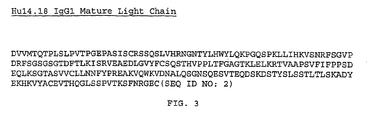
- Figure 3 depicts the amino acid sequence of the mature human 14.18 IgG1 light chain. (SEQ ID NO:2)
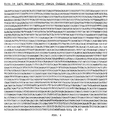
- Figure 4 depicts a nucleic acid sequence (SEQ ID NO:3), with introns, encoding a human 14.18 IgG1 mature heavy chain.
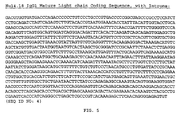
- Figure 5 depicts a nucleic acid sequence (SEQ ID NO:4), with introns, encoding a human 14.18 IgG1 mature light chain.
- Figure 6 depicts the results of an antibody-dependent cellular cytotoxicity assay performed on GD2 expressing M-21 cells.
- the x-axis indicates the concentration of antibody in ng/ml while the y-axis indicates the percent lysis of target cells.
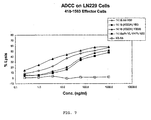
- Figure 7 depicts the results of an antibody-dependent cellular cytotoxicity assay performed on GD2 expressing LN-229 cells.
- the x-axis indicates the concentration of antibody in ng/ml while the y-axis indicates the percent lysis of target cells.
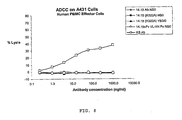
- Figure 8 depicts the results of an antibody-dependent cellular cytotoxicity assay performed on non-GD2 expressing EpCAM+ A431 cells.
- the x-axis indicates the concentration of antibody in ng/ml while the y-axis indicates the percent lysis of target cells.
- Figure 9 depicts the results of a complement dependent cytotoxicity assay performed on GD2 expressing M-21 cells.
- the x-axis indicates the concentration of antibody in ng/ml while the y-axis indicates the percent lysis of target cells.
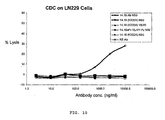
- Figure 10 depicts the results of a complement-dependent cytotoxicity assay performed on GD2 expressing LN-229 cells.
- the x-axis indicates the concentration of antibody in ng/ml while the y-axis indicates the percent lysis of target cells.
- Figure 11 depicts the amino acid sequence of the mature fusion protein human 14.18 sFv(VL-VH)-Fc (SEQ ID NO:9) which is an sFv antigen binding portion connected via a polypeptide linker with the amino acid sequence GGGGSGGGGSGGGGSGGGGS (SEQ ID NO:10) to an Fc fragment consisting of hinge, CH2 and CH3 domains of IgG1.
- Figure 12 depicts a nucleic acid sequence encoding the mature human 14.18 sFv(VL-VH)-Fc antibody construct (SEQ ID NO:8) of Figure 10 .
- the GD2 glycolipid is expressed on a variety of tumor types, but is essentially not expressed in normal tissues, with the exception of some expression at nerve endings. Antibodies directed against the GD2 glycolipid antigen have been tested in cancer patients with some success. However, presumably because of the expression of GD2 in neurons, pain is a major side effect of anti-GD2 antibody treatment, and is consequently a dose-limiting toxicity.
- the present invention provides anti-GD2 antibodies and related molecules that induce less pain.
- glycolipid GD2 or GD2 antigen is defined as a glycolipid capable of specific binding to an anti-GD2 antibody as defined herein.
- anti-GD2 antibody is defined as an antibody capable of specific binding to the antigen glycolipid GD2.
- bind specifically specifically bind
- specific binding are understood to mean that the antibody has a binding affinity for a particular antigen of at least about 10 6 M -1 , more preferably, at least about 10 7 M -1 , more preferably at least about 10 8 M -1 and most preferably at least about 10 10 M -1 .
- the terms "antibody” is understood to mean (i) an intact antibody (for example, a monoclonal antibody or polyclonal antibody), (ii) antigen binding portions thereof, including, for example, an Fab fragment, an Fab' fragment, an (Fab') 2 fragment, an Fv fragment, a single chain antibody binding site, an sFv, (iii) bi-specific antibodies and antigen binding portions thereof, and (iv) multi-specific antibodies and antigen binding portions thereof
- the term “antibody” encompasses any of an Fab fragment, an Fab' fragment, an (Fab') 2 fragment, an Fv fragment, a single chain antibody binding site, or an sFv fragment linked to an Fc fragment or any portion of an Fc fragment.
- the linkage can be accomplished through use of linker peptide sequences known in the art.
- An antibody of the invention may be naturally occurring or synthetic, such as a recombinant antibody.
- immunoglobulin is understood to mean a naturally occurring or synthetically produced polypeptide homologous to an intact antibody (for example, a monoclonal antibody or polyclonal antibody) or fragment or portion thereof, such as an antigen-binding portion thereof.
- Immunoglobulin according to the invention may be from any class such as IgA, IgD, IgG, IgE, or IgM.
- IgG immunoglobulins can be of any subclass such as IgG1, IgG2, IgG3, or IgG4.
- the term immunoglobulin also encompasses polypeptides and fragments thereof derived from immunoglobulins. Immunoglobulins can be naturally occurring or synthetically produced, such as recombinant immunoglobulins.
- the constant region of an immunoglobulin is defined as a naturally-occurring or synthetically-produced polypeptide homologous to the immunoglobulin C-terminal region, and can include a CH1 domain, a hinge, a CH2 domain, a CH3 domain, or a CH4 domain, separately or in any combination.
- "Fc portion” encompasses domains derived from the constant region of an anti-GD2 antibody, including a fragment, analog, variant, mutant or derivative of the constant region.
- Suitable immunoglobulins include IgG1, IgG2, IgG3, IgG4, and other classes.
- the constant region of an immunoglobulin is defined as a naturally-occurring or synthetically-produced polypeptide homologous to the immunoglobulin C-terminal region, and can include a CH1 domain, a hinge, a CH2 domain, a CH3 domain, or a CH4 domain, separately or in any combination.
- the Fc portion typically includes at least a CH2 domain.
- the Fc portion can include hinge-CH2-CH3.
- the Fc portion can include all or a portion of the hinge region, the CH2 domain and/or the CH3 domain and/or CH4 domain.
- variable fragment or Fv as used herein is defined as a naturally occurring or synthetically produced polypeptide homologous to the heavy chain variable region and/or the light chain variable region. More specifically, an Fv can be an sFv or single chain variable fragment wherein the heavy chain variable region and the light chain variable region are linked together by a polypeptide moiety. Such polypeptide linker sequences are known in the art.
- Anti-tumor activity of antibodies generally occurs via either complement dependent cytotoxicity (CDC or complement fixation) or through anti-body dependent cell-mediated cytotoxicity (ADCC). These two activities are known in the art as "effector functions" and are mediated by antibodies, particularly of the IgG class. All of the IgG subclasses (IgG1, IgG2, IgG3, IgG4) mediate ADCC and complement fixation to some extent, with IgG1 and IgG3 being most potent for both activities ( Chapter 3, Table 3 in Paul, Essential Immunology 4th Ed., p. 62 ). ADCC is believed to occur when Fc receptors on natural killer (NK) cells bind to the Fc region of antibodies bound to antigen on a cell's surface.
- NK natural killer
- Fc receptor binding signals the NK cell to kill the target cell.
- CDC is believed to occur by multiple mechanisms; one mechanism is initiated when an antibody binds to an antigen on a cell's surface. Once the antigen-antibody complex is formed, the C1q molecule is believed to bind the antigen-antibody complex. Clq then cleaves itself to initiate a cascade of enzymatic activation and cleavage of other complement proteins which then bind the target cell surface and facilitate its death through, for example, cell lysis and/or ingestion by a macrophage.
- CDC causes the side effect of pain.
- neurons may be particularly sensitive to complement fixation because this process involves the creation of channels in a cell membrane, allowing an uncontrolled ion flux.
- even a small amount of complement fixation may be significant to generate action potentials.
- any amount of CDC resulting from anti-GD2 antibody binding on neurons will result in pain.
- it is advantageous to reduce complement fixation so as to reduce the level of side effects in a patient.
- a second key finding of the invention is that the antitumor activity of anti-GD2 antibodies results primarily from ADCC, and not substantially from complement fixation. Therefore, a key aspect of the invention is that it is possible to reduce or eliminate CDC function of an anti-GD2 antibody without eliminating the anti-tumor capabilities of the anti-GD2 antibody. In other words, an anti-GD2 antibody modified to reduce or eliminate complement fixation will still have anti-tumor capabilities and therefore can be effective at treating tumor growth.
- the invention provides a mutation in anti-GD2 antibodies that reduce complement fixation to a great extent while having a minimal effect on ADCC, such as mutation of lysine 322 to alanine (K322A) or another amino acid ( Tansen et al., Mol. Immunol., [2000]; 37(16): 995-1004 ).
- the anti-GD2 antibodies of the invention can be produced using recombinant expression vectors known in the art.
- expression vector refers to a replicable DNA construct used to express DNA encoding the desired anti-GD2 antibody and including a transcriptional unit of (1) genetic element(s) having a regulatory role in gene expression, for example, promoters, operators, or enhancers, operatively linked to (2) a DNA sequence encoding the desired anti-GD2 antibody which is transcribed into mRNA and translated into protein, and (3) appropriate transcription and translation initiation and termination sequences.
- the choice of promoter and other regulatory elements generally varies according to the intended host cell.
- the nucleic acid encoding the modified anti-GD2 antibody is transfected into a host cell using recombinant DNA techniques.
- the foreign DNA includes a sequence encoding the inventive proteins.
- Suitable host cells include prokaryotic, yeast or higher eukaryotic cells.
- the recombinant anti-GD2 antibodies can be expressed in yeast hosts, preferably from Saccharomyces species, such as S . cerevisiae. Yeasts of other genera such as Pichia or Kluyveromyces may also be employed. Yeast vectors will generally contain an origin of replication from a yeast plasmid or an autonomously replicating sequence (ARS), a promoter, DNA encoding the anti-GD2 antibody, as well as sequences for polyadenylation, transcription termination, and a selection gene.
- yeast hosts preferably from Saccharomyces species, such as S . cerevisiae.
- Yeasts of other genera such as Pichia or Kluyveromyces may also be employed.
- Yeast vectors will generally contain an origin of replication from a yeast plasmid or an autonomously replicating sequence (ARS), a promoter, DNA encoding the anti-GD2 antibody, as well as sequences for polyadenylation, transcription termination, and a selection gene.
- ARS
- Suitable promoter sequences in yeast vectors include the promoters for metallothionein, 3-phosphoglycerate kinase or other glycolytic enzymes, such as enolase, glyceraldehyde-3-phosphate dehydrogenase, hexokinase, pyruvate decarboxylase, phosphofructokinase, glucose-4-phosphate isomerase, 3-phosphoglycerate mutase, pyruvate kinase, triosephosphate isomerase, phosphoglucose isomerase and glucokinase.
- 3-phosphoglycerate kinase or other glycolytic enzymes such as enolase, glyceraldehyde-3-phosphate dehydrogenase, hexokinase, pyruvate decarboxylase, phosphofructokinase, glucose-4-phosphate isomerase, 3-phosphoglycerate mutase,
- mammalian or insect cell culture systems can be employed to express the recombinant protein of the invention.
- Baculovirus systems for production of proteins in insect cells are well known in the art.
- suitable mammalian host cell lines include NS/0 cells, L cells, C127, 3T3, Chinese hamster ovary (CHO), HeLa, and BHK cell lines.
- Additional suitable mammalian host cells include CV-1 cells (ATCC CCL70) and COS-7 cells, both derived from monkey kidney.
- CV-1/EBNA Another suitable monkey kidney cell line, CV-1/EBNA, was derived by transfection of the CV-1 cell line with a gene encoding Epstein-Barr virus nuclear antigen-1 (EBNA-1) and with a vector containing CMV regulatory sequences ( McMahan et al., EMBO J., [1991]; 10: 2821-32 ).
- EBNA-1 gene allows for episomal replication of expression vectors, such as HAV-EO or pDC406, that contain the EBV origin of replication.
- a particularly useful cell line for expression of anti-GD2 antibodies is the YB2/0 cell line ( Shinkawa et al., J. Biol. Chem., [2003]; 278: 3466-3473 ).
- Antibodies produced from this cell line have enhanced ADCC.
- antibodies of the invention When produced from this cell line, antibodies of the invention have a different N-linked oligosaccharide than the oligosaccharide seen in antibodies produced from other cell lines described above.
- Particular embodiments of the invention include anti-GD2 antibodies with non-mutant constant regions produced in YB2/0, as well as anti-GD2 antibodies with constant regions bearing mutations that reduce complement fixation, such as Lys322A1a, also produced in YB2/0 cells.
- Mammalian expression vectors can include non-transcribed elements such as an origin of replication, a suitable promoter and enhancer linked to the gene to be expressed, and other 5' or 3' flanking non-transcribed sequences, and 5' or 3' non-translated sequences, such as necessary ribosome binding sites, a poly-adenylation site, splice donor and acceptor sites, and transcriptional termination sequences.
- a suitable promoter and enhancer linked to the gene to be expressed and other 5' or 3' flanking non-transcribed sequences, and 5' or 3' non-translated sequences, such as necessary ribosome binding sites, a poly-adenylation site, splice donor and acceptor sites, and transcriptional termination sequences.
- Commonly used promoters and enhancers are derived from Polyoma, Adenovirus 2, Simian Virus 40 (SV40), and human cytomegalovirus.
- DNA sequences derived from the SV40 viral genome for example, SV40 origin, early
- the expression vector can include DNA encoding signal or leader peptides, preferably placed N-terminally to both heavy and light chains.
- the native signal sequences of the antibody V regions can be used, or alternatively, a heterologous signal sequence may be added, such as the signal sequence from interleukin-4.
- the present invention also provides a process for preparing the recombinant proteins of the present invention including culturing a host cell transformed with an expression vector comprising a DNA sequence that encodes the anti-GD2 antibody under conditions that promote expression.
- the desired protein is then purified from culture media or cell extracts.
- supernatants from expression systems that secrete recombinant protein into the culture medium can be first concentrated using a commercially available protein concentration filter, for example, an Amicon or Millipore Pellicon ultrafiltration unit. Following the concentration step, the concentrate can be applied to a suitable purification matrix, as known in the art.
- modified anti-GD2 antibody or biologically active portion thereof is substantially free of cellular material or other contaminating proteins from the cell or tissue source from which the modified anti-GD2 antibody is derived, or substantially free from chemical precursors or other chemicals when chemically synthesized.
- substantially free of cellular material includes preparations of modified anti-GD2 antibody in which the protein is separated from cellular components of the cells from which it is isolated or recombinantly produced.
- the language "substantially free of cellular material” includes preparations of modified anti-GD2 antibody having less than about 30% (by dry weight) of non-antibody (also referred to herein as a "contaminating protein"), more preferably less than about 20% of non-antibody protein, still more preferably less than about 10% of non-antibody protein, and most preferably less than about 5% non-antibody protein.
- non-antibody also referred to herein as a "contaminating protein”
- the modified anti-GD2 antibody or biologically active portion thereof is purified from a recombinant source, it is also preferably substantially free of culture medium, i.e., culture medium represents less than about 20%, more preferably less than about 10%, and most preferably less than about 5% of the volume of the protein preparation.
- substantially pure modified anti-GD2 antibody refers to a preparation in which the modified anti-GD2 antibody constitutes at least 60%, 70%, 80%, 90%, 95% or 99% of the proteins in the preparation.
- the modified anti-GD2 antibodies of the invention are useful in treating cancers, such as GD2-expressing cancers.
- cancers include, but are not limited to, neuroblastoma, glioblastoma, melanoma, small-cell lung carcinoma, B-cell lymphoma, renal carcinoma, retinoblastoma, and other cancers of neuroectodermal origin.
- the modified anti-GD2 antibodies of the invention can be incorporated into a pharmaceutical composition suitable for administration.
- Such compositions typically comprise the modified anti-GD2 antibodies and a pharmaceutically-acceptable carrier.
- pharmaceutically-acceptable carrier is intended to include any and all solvents, dispersion media, coatings, antibacterial and antifungal agents, isotonic and absorption delaying agents, and the like, compatible with pharmaceutical administration. The use of such media and agents for pharmaceutically active substances is well known in the art.
- a pharmaceutical composition of the invention is formulated to be compatible with its intended route of administration.
- routes of administration include parenteral, e.g., intravenous, intradermal, subcutaneous, oral (e.g., inhalation), transdermal (topical), transmucosal, and rectal administration.
- Solutions or suspensions used for parenteral, intradermal, or subcutaneous application can include the following components: a sterile diluent such as water for injection, saline solution, fixed oils, polyethylene glycols, glycerine, propylene glycol or other synthetic solvents; antibacterial agents such as benzyl alcohol or methyl parabens; antioxidants such as ascorbic acid or sodium bisulfite; chelating agents such as ethylenediaminetetraacetic acid; buffers such as acetates, citrates or phosphates; and agents for the adjustment of tonicity such as sodium chloride or dextrose. pH can be adjusted with acids or bases, such as hydrochloric acid or sodium hydroxide.
- the parenteral preparation can be enclosed in ampoules, disposable syringes or multiple dose vials made of glass or plastic.
- Medicaments that contain the modified anti-GD2 antibodies of the invention can have a concentration of 0.01 to 100% (w/w), though the amount varies according to the dosage form of the medicaments.
- Administration dose depends on the body weight of the patients, the seriousness of the disease, and the doctor's opinion. However, it is generally advisable to administer about 0.01 to about 10 mg/kg body weight a day, preferably about 0.02 to about 2 mg/kg/day in case of injection, and more preferably about 0.5 mg/kg/day.
- the dose can be administered once or several times daily according to the seriousness of the disease and the doctor's opinion.
- compositions of the invention are useful when co-administered with one or more other therapeutic agents, for example, chemotherapeutic agents that are standard treatment in cancer therapy.
- EXAMPLE 1 Expression of an Anti-GD2 Antibody with a Mutation that Reduced Complement Fixation.
- An expression plasmid that expresses the heavy and light chains of the human 14.18 anti-GD2 antibody with reduced complement fixation due to mutation was constructed as follows.
- the expression plasmid for the 14.18 anti-GD2 antibody was pdHL7-hu14.18.
- pdHL7 was derived from pdHL2 ( Gillies et al., J. Immunol. Methods, [1989]; 125: 191-202 ), and uses the cytomegalovirus enhancer-promoter for the transcription of both the immunoglobulin light and heavy chain genes.
- the K322A mutation in the CH2 region was introduced by overlapping Polymerase Chain Reactions (PCR) using pdHL7-hu14.18 plasmid DNA as template.
- the sequence of the forward primer was 5'-TAC AAG TGC GCT GTC TCC AAC (SEQ ID NO:6), where the underlined GCT encodes the K322A substitution, and the sequence of the reverse primer was 5'-T GTT GGA GAC AGC GCA CTT GTA (SEQ ID NO:7), where the underlined AGC is the anticodon of the introduced alanine residue.
- the PCR product was cloned and, after sequence confirmation, the DNA containing the K322A mutation was excised as a 190 base-pair (bp) Sac II - Nae I restriction fragment (the restriction sites Sac II and Nae I are located about 90 bp upstream and 100 bp downstream, respectively, of the K322A mutation), which was then used to replace the corresponding fragment containing the K322 wild-type in the pdHL7-hu14.18 to give pdHL7-hu14.18(K322A).
- bp base-pair
- the expression vector for the 14.18(K322A) antibody, pdHL7-hu14.18(K322A), was constructed in a manner analogous to the construction of pdHL7-hu14.18. However, one skilled in the art may choose from a number of acceptable vectors to express hu14.18 K322A.
- Electroporation was used to introduce the DNA encoding the anti-GD2 antibody described above into a mouse myeloma NS/0 cell line or the YB2/0 cell line.
- cells were grown in Dulbecco's modified Eagle's medium supplemented with 10% heat-inactivated fetal bovine serum, 2 mM glutamine and penicillin/streptomycin. About 5x10 6 cells were washed once with PBS and resuspended in 0.5 ml PBS.
- Stably transfected clones were selected by their growth in the presence of 100 nM. methotrexate (MTX), which was added to the growth medium two days post-transfection. The cells were fed two to three more times on every third day, and MTX-resistant clones appeared in 2 to 3 weeks. Supernatants from clones were assayed by anti-Fc ELISA to identify clones that produced high amounts of the anti-GD2 antibody. High producing clones were isolated and propagated in growth medium containing 100 nM MTX. Typically, a serum-free growth medium, such as H-SFM or CD medium (Life Technologies), was used.
- H-SFM human serum-free growth medium
- the modified anti-GD2 antibodies were captured on Protein A Sepharose beads (Repligen, Needham, MA) from the tissue culture medium into which they were secreted, and were eluted by boiling in protein sample buffer, with or without a reducing agent such as ⁇ -mercaptoethanol. The samples were separated by SDS-PAGE and the protein bands were visualized by Coomassie staining. Results from SDS-PAGE showed that the modified anti-GD2 antibody proteins analyzed were present substantially as a single band, indicating that there was not any significant amount of degradation.
- Protein A Sepharose beads Repligen, Needham, MA
- ADCC Antibody-Dependent Cell-Mediated Cytotoxicity
- CDC Complement-Dependent Cytotoxicity
- the KS-1/4 antibody which does not bind target cells, was also assayed to serve as a control.
- the K322A variant grown in YB2/0 cells had the highest overall levels of ADCC as compared to all other antibody constructs tested.
- the same constructs were also tested in a similar assay using LN-229 GD2 expressing cells as the target cells.
- the KS-1/4 antibody was used as a control.
- the K322A variant grown in YB2/0 cells had the highest overall levels of ADCC as compared to all other antibody constructs tested.
- EXAMPLE 5 Treatment of Mice Bearing GD2-Expressing Tumors with Modified Anti-GD2 Antibodies.
- the modified antibody of Example 1 is tested in a mouse model of melanoma or neuroblastoma.
- Hu/SCID beige mice are used.
- the SCID and beige mutations suppress the normal mouse immune system, so that human immune cells can be added to reconstitute the immune system.
- Human peripheral blood mononucleocytes (PBMCs) are used. It is necessary to use human immune cells because the Fc region of human IgG1 is not recognized by murine Fc receptors to achieve ADCC.
- Cells expressing GD2 are then implanted into the mice. For example, cells are implanted subcutaneously, and their growth is monitored twice per week with calipers to estimate tumor volume.
- the GD2-expressing cell line NXS2 is used ( Greene et al., Proc. Natl. Acad. Sci. USA, [1975]; 72: 4923-27 ).
- the cell line B16, modified to express GD2 is used ( Haraguchi et al., Proc. Natl. Acad. Sci. USA, [1994]; 91: 10455-59 ).
- Subcutaneous tumors are allowed to grow to a size of about 25 to 200 cubic millimeters, and treatment is initiated. Because the serum half-life of the modified antibodies of the invention is several days, animals are treated only one to three times per week. It is found that the volumes of tumors in mice treated with either vehicle or a control antibody increase rapidly, while the volumes of mice treated with the modified antibodies of the invention increase more slowly, or are stabilized, or in some cases shrink.
- a Phase I clinical trial is performed essentially as described in Yu et al. (J. Clin. Oncol., [1998]; 16: 2169-80 ).
- the maximum tolerated dose of the human IgG1-based chimeric 14.18 antibody reported by Yu et al. was found to be about 20 mg/m 2 .
- the maximum tolerated dose of the modified anti-GD2 antibody of the invention is found to be higher than 20 mg/m 2 .
Landscapes
- Chemical & Material Sciences (AREA)
- Health & Medical Sciences (AREA)
- Organic Chemistry (AREA)
- Life Sciences & Earth Sciences (AREA)
- Immunology (AREA)
- Medicinal Chemistry (AREA)
- General Health & Medical Sciences (AREA)
- Molecular Biology (AREA)
- Proteomics, Peptides & Aminoacids (AREA)
- Genetics & Genomics (AREA)
- Biophysics (AREA)
- Biochemistry (AREA)
- Cell Biology (AREA)
- Veterinary Medicine (AREA)
- General Chemical & Material Sciences (AREA)
- Pharmacology & Pharmacy (AREA)
- Public Health (AREA)
- Nuclear Medicine, Radiotherapy & Molecular Imaging (AREA)
- Chemical Kinetics & Catalysis (AREA)
- Animal Behavior & Ethology (AREA)
- Peptides Or Proteins (AREA)
- Medicines Containing Antibodies Or Antigens For Use As Internal Diagnostic Agents (AREA)
- Preparation Of Compounds By Using Micro-Organisms (AREA)
- Micro-Organisms Or Cultivation Processes Thereof (AREA)
- Medicines That Contain Protein Lipid Enzymes And Other Medicines (AREA)
Claims (10)
- Immunglobulin-Polypeptid, enthaltend eine variable Region eines anti-GD2-Antikörpers, eine CL-Domäne und eine Fc-Region eines IgG 1-Immunglobulins, das eine CH1-Domäne enthält und eine K322A-Mutation besitzt, so dass die Komplement-Fixierung (CDC) verringert oder beseitigt wird, wobei die schwere Kette des Immunglobulin-Polypeptids die in SEQ ID NR: 5 dargestellte Aminosäuresequenz enthält und die leichte Kette des Immunglobulin-Polypeptids die Aminosäuresequenz der SEQ ID NR: 2 enthält.
- Polypeptid nach Anspruch 1, wobei die antikörperabhängige zellvermittelte Zytotoxizität (ADCC) beibehalten wird.
- Polypeptid nach Anspruch 1, das eine verstärkte ADCC hervorruft und mittels Produktion des Polypeptids in YB2/0-Zellen erhältlich ist.
- DNA-Molekül, das für ein Polypeptid nach einem der Ansprüche 1-3 codiert.
- Expressionszelle, die das DNA-Molekül nach Anspruch 4 enthält.
- Zelle nach Anspruch 5, wobei die Zelle eine YB2/0-Zelle ist.
- Pharmazeutische Zusammensetzung, die eine wirksame Menge eines Polypeptids nach einem der Ansprüche 1-3 zusammen mit einem pharmazeutisch wirksamen Träger, Verdünnungsmittel oder Exzipienten enthält.
- Verwendung eines Polypeptids nach einem der Ansprüche 1-3 zur Herstellung eines Arzneimittels zur Verringerung des Schmerzes bei der Krebstherapie.
- Verwendung nach Anspruch 8, wobei der Krebs aus der Gruppe ausgewählt ist, bestehend aus Neuroblastom, Glioblastom, Osteosarkom, Melanom, kleinzelligem Lungenkarzinom, B-Zell-Lymphom, Nierenkarzinom und Retinoblastom.
- Verwendung eines Immunglobulin-Polypeptids, enthaltend eine variable Region eines anti-GD2-Antikörpers, eine CL-Domäne und eine Fc-Region eines IgG 1-Immunglobulins, das eine CH1-Domäne enthält und eine K322A-Mutation besitzt, so dass die Komplement-Fixierung (CDC) verringert oder beseitigt wird, wobei die antikörperabhängige zellvermittelte Zytotoxizität (ADCC) beibehalten wird, zur Herstellung eines Arzneimittels zur Verringerung des Schmerzes bei der Krebstherapie.
Priority Applications (1)
| Application Number | Priority Date | Filing Date | Title |
|---|---|---|---|
| PL05701002T PL1706428T3 (pl) | 2004-01-22 | 2005-01-18 | Przeciwciała przeciwnowotworowe o zredukowanym wiązaniu dopełniacza |
Applications Claiming Priority (2)
| Application Number | Priority Date | Filing Date | Title |
|---|---|---|---|
| US53834804P | 2004-01-22 | 2004-01-22 | |
| PCT/EP2005/000428 WO2005070967A2 (en) | 2004-01-22 | 2005-01-18 | Anti-cancer antibodies with reduced complement fixation |
Publications (2)
| Publication Number | Publication Date |
|---|---|
| EP1706428A2 EP1706428A2 (de) | 2006-10-04 |
| EP1706428B1 true EP1706428B1 (de) | 2009-09-23 |
Family
ID=34807180
Family Applications (1)
| Application Number | Title | Priority Date | Filing Date |
|---|---|---|---|
| EP05701002A Expired - Lifetime EP1706428B1 (de) | 2004-01-22 | 2005-01-18 | Antikrebs-antikörper mit reduzierter komplementfixierung |
Country Status (12)
| Country | Link |
|---|---|
| US (5) | US7432357B2 (de) |
| EP (1) | EP1706428B1 (de) |
| JP (1) | JP4987484B2 (de) |
| AT (1) | ATE443724T1 (de) |
| AU (1) | AU2005206277B2 (de) |
| CA (1) | CA2553883C (de) |
| DE (1) | DE602005016773D1 (de) |
| DK (1) | DK1706428T3 (de) |
| ES (1) | ES2330860T3 (de) |
| PL (1) | PL1706428T3 (de) |
| PT (1) | PT1706428E (de) |
| WO (1) | WO2005070967A2 (de) |
Families Citing this family (71)
| Publication number | Priority date | Publication date | Assignee | Title |
|---|---|---|---|---|
| US20030105294A1 (en) * | 1998-02-25 | 2003-06-05 | Stephen Gillies | Enhancing the circulating half life of antibody-based fusion proteins |
| US7183387B1 (en) | 1999-01-15 | 2007-02-27 | Genentech, Inc. | Polypeptide variants with altered effector function |
| JP5179689B2 (ja) | 2000-02-11 | 2013-04-10 | メルク パテント ゲゼルシャフト ミット ベシュレンクテル ハフツング | 抗体ベース融合タンパク質の循環系内半減期の増強 |
| HUP0303428A2 (hu) | 2001-03-07 | 2004-01-28 | Merck Patent Gmbh. | Expressziós eljárás hibrid izotípusú antitestcsoportot tartalmazó fehérjékhez |
| WO2002079415A2 (en) | 2001-03-30 | 2002-10-10 | Lexigen Pharmaceuticals Corp. | Reducing the immunogenicity of fusion proteins |
| KR100900166B1 (ko) | 2001-05-03 | 2009-06-02 | 메르크 파텐트 게엠베하 | 재조합 종양 특이적 항체 및 이들의 용도 |
| KR100988949B1 (ko) * | 2001-10-25 | 2010-10-20 | 제넨테크, 인크. | 당단백질 조성물 |
| ATE542137T1 (de) | 2001-12-04 | 2012-02-15 | Merck Patent Gmbh | Immunocytokine mit modulierter selektivität |
| US20050069521A1 (en) * | 2003-08-28 | 2005-03-31 | Emd Lexigen Research Center Corp. | Enhancing the circulating half-life of interleukin-2 proteins |
| PT1699822E (pt) * | 2003-12-30 | 2008-07-30 | Merck Patent Gmbh | Proteínas de fusão de il-7 |
| BRPI0417916A (pt) | 2003-12-31 | 2007-04-10 | Merck Patent Gmbh | proteìna de fusão de fc-eritropoietina com farmacocinética melhorada |
| AU2005206277B2 (en) * | 2004-01-22 | 2011-06-23 | Merck Patent Gmbh | Anti-cancer antibodies with reduced complement fixation |
| US7670595B2 (en) * | 2004-06-28 | 2010-03-02 | Merck Patent Gmbh | Fc-interferon-beta fusion proteins |
| EP3489257A1 (de) | 2004-07-23 | 2019-05-29 | Acceleron Pharma Inc. | Actrii-rezeptor-polypeptide, verfahren und zusammensetzungen |
| RU2437893C2 (ru) * | 2004-12-09 | 2011-12-27 | Мерк Патент Гмбх | Варианты il-7 со сниженной иммуногенностью |
| US8128933B2 (en) | 2005-11-23 | 2012-03-06 | Acceleron Pharma, Inc. | Method of promoting bone growth by an anti-activin B antibody |
| EP2781222B1 (de) | 2005-11-23 | 2017-08-02 | Acceleron Pharma, Inc. | Activin-actriia antagonisten zur verwendung in der förderung von knochenwachstum |
| EP2270050B1 (de) | 2005-12-30 | 2013-06-05 | Merck Patent GmbH | Anti-C19 Antikörper mit reduzierter Immunogenizität |
| EP1966238B1 (de) * | 2005-12-30 | 2012-04-25 | Merck Patent GmbH | Interleukin-12p40-varianten mit verbesserter stabilität |
| EP2006305B1 (de) * | 2006-03-03 | 2016-08-10 | The Chemo-Sero-Therapeutic Research Institute | Modifizierte antikörper mit verbesserter biologischer wirkung |
| FR2906808B1 (fr) * | 2006-10-10 | 2012-10-05 | Univ Nantes | Utilisation d'anticorps monoclonaux specifiques de la forme o-acetylee du ganglioside gd2 dans le traitement de certains cancers |
| US8895016B2 (en) | 2006-12-18 | 2014-11-25 | Acceleron Pharma, Inc. | Antagonists of activin-actriia and uses for increasing red blood cell levels |
| CA2677007A1 (en) | 2007-02-01 | 2008-08-07 | Acceleron Pharma Inc. | Activin-actriia antagonists and uses for treating or preventing breast cancer |
| TW201803890A (zh) | 2007-02-02 | 2018-02-01 | 艾瑟勒朗法瑪公司 | 衍生自ActRIIB的變體與其用途 |
| EP2481415B1 (de) | 2007-02-09 | 2019-09-11 | Acceleron Pharma Inc. | Zusammensetzungen enhaltend Activin-ActRIIA-Antagonisten |
| JP2010539236A (ja) | 2007-09-18 | 2010-12-16 | アクセルロン ファーマ, インコーポレイテッド | アクチビン−ActRIIa拮抗薬およびFSH分泌を低減または阻害するための使用 |
| TWI626945B (zh) | 2008-08-14 | 2018-06-21 | 艾瑟勒朗法瑪公司 | 使用gdf阱以增加紅血球水平 |
| US8216997B2 (en) | 2008-08-14 | 2012-07-10 | Acceleron Pharma, Inc. | Methods for increasing red blood cell levels and treating anemia using a combination of GDF traps and erythropoietin receptor activators |
| AU2010204985A1 (en) | 2009-01-13 | 2011-08-04 | Acceleron Pharma Inc. | Methods for increasing adiponectin |
| SG175233A1 (en) | 2009-04-22 | 2011-11-28 | Merck Patent Gmbh | Antibody fusion proteins with modified fcrn binding sites |
| JP5912078B2 (ja) | 2009-06-08 | 2016-04-27 | アクセルロン ファーマ, インコーポレイテッド | 熱発生性脂肪細胞を増加させるための方法 |
| EP3290439B1 (de) | 2009-06-12 | 2020-09-02 | Acceleron Pharma Inc. | Verkürzte actriib-fc-fusionsproteine |
| EP3332796A1 (de) | 2009-11-17 | 2018-06-13 | Acceleron Pharma Inc. | Actriib-proteine und varianten davon sowie verwendungen davon zur utrophin-induktion für therapien gegen muskuläre dystrophie |
| ES2961381T3 (es) | 2010-06-19 | 2024-03-11 | Memorial Sloan Kettering Cancer Center | Anticuerpos anti-GD2 |
| JP5534977B2 (ja) * | 2010-06-29 | 2014-07-02 | 東レ・ダウコーニング株式会社 | 硬化性オルガノポリシロキサン組成物および光半導体装置 |
| KR20130132824A (ko) | 2010-11-08 | 2013-12-05 | 악셀레론 파마 인코포레이티드 | Actriia 결합제 및 이의 용도 |
| FR2971250A1 (fr) | 2011-02-07 | 2012-08-10 | Univ Nantes | Anticorps anti-gb3 utiles dans le traitement des maladies associees a l'angiogenese |
| ES2692268T5 (en) | 2011-03-29 | 2025-02-26 | Roche Glycart Ag | Antibody fc variants |
| EP2861251A1 (de) | 2012-06-18 | 2015-04-22 | Apeiron Biologics AG | Verfahren zur behandlung eines gd2-positiven tumors |
| WO2013189516A1 (en) | 2012-06-18 | 2013-12-27 | Apeiron Biologics Ag | Method for treating a gd2 positive cancer |
| LT3495387T (lt) | 2012-07-13 | 2021-11-25 | Roche Glycart Ag | Bispecifiniai anti-vegf / anti-ang-2 antikūnai ir jų panaudojimas akių kraujagyslių ligoms gydyti |
| US10195249B2 (en) | 2012-11-02 | 2019-02-05 | Celgene Corporation | Activin-ActRII antagonists and uses for treating bone and other disorders |
| US10167341B2 (en) | 2013-03-15 | 2019-01-01 | Memorial Sloan Kettering Cancer Center | High affinity anti-GD2 antibodies |
| EP3068798B1 (de) | 2013-11-12 | 2020-10-07 | OGD2 Pharma | Menschliche igg1-derivierte antikörper mit pro-apoptotischer aktivität |
| EP3620173A1 (de) | 2013-11-21 | 2020-03-11 | Apeiron Biologics AG | Zubereitungen und verfahren zur behandlung von gd2-positivem krebs |
| US9840566B2 (en) | 2013-11-21 | 2017-12-12 | Apeiron Biologics Ag | Preparations and methods for treating a GD2 positive cancer |
| MA40008A (fr) | 2014-06-13 | 2021-05-05 | Acceleron Pharma Inc | Antagoniste actrii pour le traitement et la prevention d'un ulcere cutane chez un sujet ayant l'anemie |
| MA41052A (fr) | 2014-10-09 | 2017-08-15 | Celgene Corp | Traitement d'une maladie cardiovasculaire à l'aide de pièges de ligands d'actrii |
| TWI730949B (zh) | 2014-12-03 | 2021-06-21 | 美商西建公司 | 活化素-actrii拮抗劑及治療貧血之用途 |
| WO2016130918A1 (en) * | 2015-02-12 | 2016-08-18 | The Arizona Board Of Regents On Behalf Of The University Of Arizona | Methods for treating neuroblastoma |
| US10676723B2 (en) | 2015-05-11 | 2020-06-09 | David Gordon Bermudes | Chimeric protein toxins for expression by therapeutic bacteria |
| US11129906B1 (en) | 2016-12-07 | 2021-09-28 | David Gordon Bermudes | Chimeric protein toxins for expression by therapeutic bacteria |
| CA3054081A1 (en) * | 2017-02-20 | 2018-08-23 | Dragonfly Therapeutics, Inc. | Proteins binding gd2, nkg2d and cd16 |
| RU2663104C1 (ru) * | 2017-07-13 | 2018-08-01 | Общество с ограниченной ответственностью "Реал Таргет" | Получение пегилированных фрагментов gd2-специфичных антител, индуцирующих прямую клеточную гибель gd2-позитивных опухолевых клеток, и их применение в терапии gd2-позитивных опухолей |
| WO2019154776A1 (en) | 2018-02-06 | 2019-08-15 | F. Hoffmann-La Roche Ag | Treatment of ophthalmologic diseases |
| CN108948211B (zh) * | 2018-07-24 | 2021-08-20 | 北京美康基免生物科技有限公司 | 一种基于靶向gd2的嵌合抗原受体及其应用 |
| SG11202103064YA (en) | 2018-10-29 | 2021-05-28 | Hoffmann La Roche | Antibody formulation |
| WO2020106886A1 (en) | 2018-11-20 | 2020-05-28 | Cornell University | Macrocyclic complexes of radionuclides and their use in radiotherapy of cancer |
| GB201917487D0 (en) | 2019-11-29 | 2020-01-15 | Oxular Ltd | Methods for the treatment of retinoblastoma |
| EP4175988A1 (de) | 2020-07-06 | 2023-05-10 | EUSA Pharma (UK) Limited | Verfahren zur behandlung von gd2-positivem krebs |
| WO2022203552A1 (en) * | 2021-03-24 | 2022-09-29 | Joint Stock Company "Biocad" | Monoclonal antibody that specifically binds to gd2 |
| EP4489791A1 (de) * | 2022-03-09 | 2025-01-15 | Merck Patent GmbH | Anti-gd2-antikörper, immunkonjugate und therapeutische verwendungen davon |
| WO2024040195A1 (en) | 2022-08-17 | 2024-02-22 | Capstan Therapeutics, Inc. | Conditioning for in vivo immune cell engineering |
| GB202307103D0 (en) | 2023-05-12 | 2023-06-28 | Prinses Maxima Centrum Voor Kinderoncologie B V | Method for detecting a GD2 positive cancer |
| AU2024279278A1 (en) | 2023-05-31 | 2025-12-18 | Capstan Therapeutics, Inc. | Lipid nanoparticle formulations and compositions |
| IL327045A (en) | 2023-10-05 | 2026-05-01 | Capstan Therapeutics Inc | Structure-restricted ionizable cationic lipids and lipid nanoparticles |
| WO2025076113A1 (en) | 2023-10-05 | 2025-04-10 | Capstan Therapeutics, Inc. | Ionizable cationic lipids with conserved spacing and lipid nanoparticles |
| TW202600175A (zh) | 2024-02-15 | 2026-01-01 | 德商馬克專利公司 | 用於治療gd2陽性癌症之抗gd2抗體及免疫結合物 |
| WO2025217454A2 (en) | 2024-04-11 | 2025-10-16 | Capstan Therapeutics, Inc. | Ionizable cationic lipids and lipid nanoparticles |
| WO2025217452A1 (en) | 2024-04-11 | 2025-10-16 | Capstan Therapeutics, Inc. | Constrained ionizable cationic lipids and lipid nanoparticles |
| EP4684803A1 (de) | 2024-07-25 | 2026-01-28 | CeMM - Forschungszentrum für Molekulare Medizin GmbH | Antikörperkonjugierte chemische induktoren des abbaus von rbm39 und therapeutische verwendungen davon |
Family Cites Families (103)
| Publication number | Priority date | Publication date | Assignee | Title |
|---|---|---|---|---|
| US4196265A (en) | 1977-06-15 | 1980-04-01 | The Wistar Institute | Method of producing antibodies |
| US4816567A (en) | 1983-04-08 | 1989-03-28 | Genentech, Inc. | Recombinant immunoglobin preparations |
| US5082658A (en) | 1984-01-16 | 1992-01-21 | Genentech, Inc. | Gamma interferon-interleukin-2 synergism |
| US5807715A (en) | 1984-08-27 | 1998-09-15 | The Board Of Trustees Of The Leland Stanford Junior University | Methods and transformed mammalian lymphocyte cells for producing functional antigen-binding protein including chimeric immunoglobulin |
| GB8422238D0 (en) | 1984-09-03 | 1984-10-10 | Neuberger M S | Chimeric proteins |
| US5679543A (en) | 1985-08-29 | 1997-10-21 | Genencor International, Inc. | DNA sequences, vectors and fusion polypeptides to increase secretion of desired polypeptides from filamentous fungi |
| US4676980A (en) | 1985-09-23 | 1987-06-30 | The United States Of America As Represented By The Secretary Of The Department Of Health And Human Services | Target specific cross-linked heteroantibodies |
| US4935233A (en) | 1985-12-02 | 1990-06-19 | G. D. Searle And Company | Covalently linked polypeptide cell modulators |
| US5359035A (en) | 1985-12-21 | 1994-10-25 | Hoechst Aktiengesellschaft | Bifunctional proteins including interleukin-2 (IL-2) and granuloctyte macrophage colony stimulating factor (GM-CSF) |
| GB8607679D0 (en) | 1986-03-27 | 1986-04-30 | Winter G P | Recombinant dna product |
| US5225539A (en) | 1986-03-27 | 1993-07-06 | Medical Research Council | Recombinant altered antibodies and methods of making altered antibodies |
| US4946778A (en) | 1987-09-21 | 1990-08-07 | Genex Corporation | Single polypeptide chain binding molecules |
| EP0307434B2 (de) | 1987-03-18 | 1998-07-29 | Scotgen Biopharmaceuticals, Inc. | Geänderte antikörper |
| US5258498A (en) | 1987-05-21 | 1993-11-02 | Creative Biomolecules, Inc. | Polypeptide linkers for production of biosynthetic proteins |
| US5091513A (en) | 1987-05-21 | 1992-02-25 | Creative Biomolecules, Inc. | Biosynthetic antibody binding sites |
| AU612370B2 (en) | 1987-05-21 | 1991-07-11 | Micromet Ag | Targeted multifunctional proteins |
| DE3853740T2 (de) | 1987-06-10 | 1995-11-09 | Dana Farber Cancer Inst Inc | Bifunktionelle Antikörperkonstruktionen und Verfahren zur selektiven Tötung von Zellbeständen. |
| US5064646A (en) | 1988-08-02 | 1991-11-12 | The University Of Maryland | Novel infectious bursal disease virus |
| ATE88900T1 (de) | 1987-09-02 | 1993-05-15 | Ciba Geigy Ag | Konjugate von interferon alpha mit immunglobulinen. |
| US5677425A (en) | 1987-09-04 | 1997-10-14 | Celltech Therapeutics Limited | Recombinant antibody |
| DE3850542T2 (de) | 1987-09-23 | 1994-11-24 | Bristol Myers Squibb Co | Antikörper-Heterokonjugate zur Töting von HIV-infizierten Zellen. |
| PT88641B (pt) | 1987-10-02 | 1993-04-30 | Genentech Inc | Metodo para a preparacao de uma variante de adesao |
| WO1989006692A1 (en) | 1988-01-12 | 1989-07-27 | Genentech, Inc. | Method of treating tumor cells by inhibiting growth factor receptor function |
| CA1341588C (en) | 1988-01-26 | 2009-01-06 | Michel Revel | Human ifn-beta2/i1-6, its purification and use |
| DE3812605A1 (de) | 1988-04-15 | 1990-06-07 | Leskovar Peter Dipl Ing Dr Hab | Immunregulative stoffe und stoffgemische zur aktiven beeinflussung des krankheitsverlaufes |
| US4975369A (en) | 1988-04-21 | 1990-12-04 | Eli Lilly And Company | Recombinant and chimeric KS1/4 antibodies directed against a human adenocarcinoma antigen |
| IT1217724B (it) | 1988-05-26 | 1990-03-30 | Ist Naz Ric Sul Cancro | Anticorpo monoclonale specifico per una sequenza di fibronettina espressa in cellule trasformate ibridoma secernente tale anticorpo e impiego dell'anticorpo monoclonale per la diagnosi di tumori |
| US5601819A (en) | 1988-08-11 | 1997-02-11 | The General Hospital Corporation | Bispecific antibodies for selective immune regulation and for selective immune cell binding |
| US5530101A (en) | 1988-12-28 | 1996-06-25 | Protein Design Labs, Inc. | Humanized immunoglobulins |
| US5225538A (en) | 1989-02-23 | 1993-07-06 | Genentech, Inc. | Lymphocyte homing receptor/immunoglobulin fusion proteins |
| US5116964A (en) | 1989-02-23 | 1992-05-26 | Genentech, Inc. | Hybrid immunoglobulins |
| US6291158B1 (en) | 1989-05-16 | 2001-09-18 | Scripps Research Institute | Method for tapping the immunological repertoire |
| US5399346A (en) | 1989-06-14 | 1995-03-21 | The United States Of America As Represented By The Department Of Health And Human Services | Gene therapy |
| DE69030579T2 (de) | 1989-09-20 | 1997-11-13 | Abbott Lab | Verfahren zur herstellung von fusionsproteinen |
| US5314995A (en) | 1990-01-22 | 1994-05-24 | Oncogen | Therapeutic interleukin-2-antibody based fusion proteins |
| JPH07507440A (ja) | 1990-03-02 | 1995-08-24 | レプリゲン・コーポレーション | 結合親和性を高めた抗体構築物 |
| WO1992002240A2 (en) | 1990-07-27 | 1992-02-20 | Repligen Corporation | Novel methods and compositions for treatment of angiogenic diseases |
| WO1992008801A1 (en) | 1990-11-09 | 1992-05-29 | Abbott Laboratories | Bridging antibody fusion constructs |
| US5650150A (en) | 1990-11-09 | 1997-07-22 | Gillies; Stephen D. | Recombinant antibody cytokine fusion proteins |
| ATE218889T1 (de) | 1990-11-09 | 2002-06-15 | Stephen D Gillies | Cytokine immunokonjugate |
| CA2095852C (en) | 1990-12-05 | 2001-05-08 | Uffe Lovborg | Proteins with changed epitopes and methods for the production thereof |
| GB9105245D0 (en) | 1991-03-12 | 1991-04-24 | Lynxvale Ltd | Binding molecules |
| US6072039A (en) | 1991-04-19 | 2000-06-06 | Rohm And Haas Company | Hybrid polypeptide comparing a biotinylated avidin binding polypeptide fused to a polypeptide of interest |
| DE69233482T2 (de) | 1991-05-17 | 2006-01-12 | Merck & Co., Inc. | Verfahren zur Verminderung der Immunogenität der variablen Antikörperdomänen |
| WO1993003157A1 (en) | 1991-07-29 | 1993-02-18 | Dana Farber Cancer Institute | Plasmids for the rapid preparation of modified proteins |
| ATE173763T1 (de) | 1991-08-30 | 1998-12-15 | Hutchinson Fred Cancer Res | Hybride cytokine |
| US20020037558A1 (en) | 1991-10-23 | 2002-03-28 | Kin-Ming Lo | E.coli produced immunoglobulin constructs |
| US6627615B1 (en) | 1991-12-17 | 2003-09-30 | The Regents Of The University Of California | Methods and compositions for in vivo gene therapy |
| WO1993024640A2 (en) | 1992-06-04 | 1993-12-09 | The Regents Of The University Of California | Methods and compositions for in vivo gene therapy |
| CA2142007C (en) | 1992-08-11 | 2007-10-30 | Robert Glen Urban | Immunomodulatory peptides |
| DE4228839A1 (de) | 1992-08-29 | 1994-03-03 | Behringwerke Ag | Verfahren zum Nachweis und zur Bestimmung von Mediatoren |
| WO1994009817A1 (en) | 1992-11-04 | 1994-05-11 | City Of Hope | Novel antibody construct |
| WO1994025609A1 (en) | 1993-04-28 | 1994-11-10 | Hybritech Incorporated | Method for creating optimized regulatory regions affecting protein expression and protein trafficking |
| US5554512A (en) | 1993-05-24 | 1996-09-10 | Immunex Corporation | Ligands for flt3 receptors |
| GB9316989D0 (en) | 1993-08-16 | 1993-09-29 | Lynxvale Ltd | Binding molecules |
| CU22615A1 (es) | 1994-06-30 | 2000-02-10 | Centro Inmunologia Molecular | Procedimiento de obtención de anticuerpos monoclonales murinos menos inmunogénicos. anticuerpos monoclonales obtenidos |
| US5888773A (en) | 1994-08-17 | 1999-03-30 | The United States Of America As Represented By The Department Of Health And Human Services | Method of producing single-chain Fv molecules |
| US5541087A (en) | 1994-09-14 | 1996-07-30 | Fuji Immunopharmaceuticals Corporation | Expression and export technology of proteins as immunofusins |
| US6410008B1 (en) * | 1994-12-12 | 2002-06-25 | Beth Israel Hospital Association | Chimeric IL-10 proteins and uses thereof |
| US6281010B1 (en) | 1995-06-05 | 2001-08-28 | The Trustees Of The University Of Pennsylvania | Adenovirus gene therapy vehicle and cell line |
| AU5985996A (en) | 1995-06-07 | 1997-01-15 | Osteosa Inc. | Osteoclast growth regulatory factor |
| US5723125A (en) | 1995-12-28 | 1998-03-03 | Tanox Biosystems, Inc. | Hybrid with interferon-alpha and an immunoglobulin Fc linked through a non-immunogenic peptide |
| WO1997030089A1 (en) | 1996-02-13 | 1997-08-21 | Regents Of The University Of California | Novel antibody-cytokine fusion protein, and methods of making and using the same |
| ATE279947T1 (de) | 1996-03-18 | 2004-11-15 | Univ Texas | Immunglobulinähnliche domäne mit erhöhten halbwertszeiten |
| US6100387A (en) | 1997-02-28 | 2000-08-08 | Genetics Institute, Inc. | Chimeric polypeptides containing chemokine domains |
| US6277375B1 (en) | 1997-03-03 | 2001-08-21 | Board Of Regents, The University Of Texas System | Immunoglobulin-like domains with increased half-lives |
| US6972323B1 (en) * | 1997-04-01 | 2005-12-06 | Sankyo Company, Limited | Anti-Fas antibodies |
| WO1998052976A1 (en) | 1997-05-21 | 1998-11-26 | Biovation Limited | Method for the production of non-immunogenic proteins |
| GB9712892D0 (en) | 1997-06-20 | 1997-08-20 | Eclagen Ltd | Identification of mhc binding peptides |
| CN1269805A (zh) | 1997-07-14 | 2000-10-11 | 博尔德生物技术公司 | 生长激素和相关蛋白的衍生物 |
| PT1037927E (pt) | 1997-12-08 | 2004-10-29 | Emd Lexigen Res Ct Corp | Proteinas de fusao heterodimericas uteis para imunoterapia de abordagem selectiva e estimulacao imunologica geral |
| US20030105294A1 (en) | 1998-02-25 | 2003-06-05 | Stephen Gillies | Enhancing the circulating half life of antibody-based fusion proteins |
| US6194551B1 (en) * | 1998-04-02 | 2001-02-27 | Genentech, Inc. | Polypeptide variants |
| ATE329622T1 (de) | 1998-04-15 | 2006-07-15 | Lexigen Pharm Corp | Steigerung der antikörper-zytokin- fusionsproteinmediierten immunantwort durch mitverabreichung mit einem angiogeneseinhibitor |
| RU2217168C2 (ru) | 1998-04-17 | 2003-11-27 | Лексиген Фармасьютикэлс Корпорейшн | Усиление иммунных ответов, опосредованных белками, слитыми из антитела и цитокина, посредством совместного введения ингибитора простагландина |
| WO1999054484A1 (en) | 1998-04-20 | 1999-10-28 | The Regents Of The University Of California | Modified immunoglobulin molecules and methods for use thereof |
| EP1088888A4 (de) | 1998-05-14 | 2005-03-16 | Merck Patent Gmbh | Fusionierte proteine |
| GB9814383D0 (en) | 1998-07-02 | 1998-09-02 | Cambridge Antibody Tech | Improvements relating to antibodies |
| ATE462725T1 (de) | 1998-08-25 | 2010-04-15 | Merck Patent Gmbh | Expression und export von angiostatin und endostatin als immunofusins |
| US6646113B1 (en) | 1998-09-17 | 2003-11-11 | The Trustees Of The University Of Pennsylvania | Nucleic acid molecule encoding human survival of motor neuron-interacting protein 1 (SIP1) deletion mutants |
| US6335176B1 (en) | 1998-10-16 | 2002-01-01 | Pharmacopeia, Inc. | Incorporation of phosphorylation sites |
| EP1051432B1 (de) | 1998-12-08 | 2007-01-24 | Biovation Limited | Verfahren zur verminderung der immunogenität von proteinen |
| BR0007414A (pt) | 1999-01-07 | 2001-10-16 | Lexigen Pharm Corp | Expressão e exportação de proteìnas antiobesidade como proteìnas de fusão fc |
| US7183387B1 (en) * | 1999-01-15 | 2007-02-27 | Genentech, Inc. | Polypeptide variants with altered effector function |
| PT1176195E (pt) * | 1999-04-09 | 2013-07-18 | Kyowa Hakko Kirin Co Ltd | Processo para controlar a actividade de uma molécula funcional sob o ponto de vista imunológico |
| KR20020018197A (ko) | 1999-05-19 | 2002-03-07 | 추후보정 | Fc 융합 단백질로서의 인터페론-알파 단백질의 발현 및분비 |
| BR0013231A (pt) | 1999-08-09 | 2002-07-23 | Lexigen Pharm Corp | Complexos citocina-anticorpo múltiplos |
| JP5179689B2 (ja) | 2000-02-11 | 2013-04-10 | メルク パテント ゲゼルシャフト ミット ベシュレンクテル ハフツング | 抗体ベース融合タンパク質の循環系内半減期の増強 |
| AU2001263149A1 (en) | 2000-05-12 | 2001-11-26 | Neose Technologies, Inc. | In vitro fucosylation recombinant glycopeptides |
| DE10117248A1 (de) * | 2000-05-31 | 2002-10-10 | Mg Technologies Ag | Verfahren zum Erzeugen von Propylen aus Methanol |
| JP5390055B2 (ja) | 2000-06-29 | 2014-01-15 | メルク パテント ゲゼルシャフト ミット ベシュレンクテル ハフツング | 免疫サイトカインの取り込み増強剤との併用治療による抗体−サイトカイン融合タンパク質媒介免疫応答の増強 |
| DE60138222D1 (de) * | 2000-09-14 | 2009-05-14 | Beth Israel Hospital | Modulierung von il-2 und il-15 vermittelten t zellantworten |
| US7737258B2 (en) * | 2000-10-18 | 2010-06-15 | Sloan-Kettering Institute For Cancer Research | Uses of monoclonal antibody 8H9 |
| MXPA03006294A (es) | 2001-01-18 | 2003-09-16 | Merck Patent Gmbh | Proteinas de fusion disfuncionales con actividad glucocerebrosidasa. |
| AU2002256624B2 (en) | 2001-02-19 | 2007-12-06 | Merck Patent Gmbh | Method for identification of T-cell epitopes and use for preparing molecules with reduced immunogenicity |
| PL362324A1 (en) | 2001-02-19 | 2004-10-18 | Merck Patent Gmbh | Artificial fusion proteins with reduced immunogenicity |
| HUP0303428A2 (hu) | 2001-03-07 | 2004-01-28 | Merck Patent Gmbh. | Expressziós eljárás hibrid izotípusú antitestcsoportot tartalmazó fehérjékhez |
| WO2002079415A2 (en) | 2001-03-30 | 2002-10-10 | Lexigen Pharmaceuticals Corp. | Reducing the immunogenicity of fusion proteins |
| KR100900166B1 (ko) | 2001-05-03 | 2009-06-02 | 메르크 파텐트 게엠베하 | 재조합 종양 특이적 항체 및 이들의 용도 |
| ATE542137T1 (de) | 2001-12-04 | 2012-02-15 | Merck Patent Gmbh | Immunocytokine mit modulierter selektivität |
| CN100432105C (zh) | 2002-12-17 | 2008-11-12 | 默克专利有限公司 | 与gd2结合的小鼠14.18抗体的人源化抗体(h14.18)以及其与il-2的融合 |
| US20050069521A1 (en) | 2003-08-28 | 2005-03-31 | Emd Lexigen Research Center Corp. | Enhancing the circulating half-life of interleukin-2 proteins |
| AU2005206277B2 (en) | 2004-01-22 | 2011-06-23 | Merck Patent Gmbh | Anti-cancer antibodies with reduced complement fixation |
-
2005
- 2005-01-18 AU AU2005206277A patent/AU2005206277B2/en not_active Expired
- 2005-01-18 EP EP05701002A patent/EP1706428B1/de not_active Expired - Lifetime
- 2005-01-18 DK DK05701002T patent/DK1706428T3/da active
- 2005-01-18 JP JP2006550009A patent/JP4987484B2/ja not_active Expired - Lifetime
- 2005-01-18 AT AT05701002T patent/ATE443724T1/de active
- 2005-01-18 DE DE602005016773T patent/DE602005016773D1/de not_active Expired - Lifetime
- 2005-01-18 PL PL05701002T patent/PL1706428T3/pl unknown
- 2005-01-18 CA CA2553883A patent/CA2553883C/en not_active Expired - Lifetime
- 2005-01-18 ES ES05701002T patent/ES2330860T3/es not_active Expired - Lifetime
- 2005-01-18 PT PT05701002T patent/PT1706428E/pt unknown
- 2005-01-18 WO PCT/EP2005/000428 patent/WO2005070967A2/en not_active Ceased
- 2005-01-21 US US11/040,071 patent/US7432357B2/en not_active Expired - Lifetime
-
2008
- 2008-09-12 US US12/209,935 patent/US8835606B2/en active Active
-
2014
- 2014-09-05 US US14/478,753 patent/US9617349B2/en not_active Expired - Lifetime
-
2017
- 2017-04-10 US US15/483,698 patent/US10017579B2/en not_active Expired - Lifetime
-
2018
- 2018-07-03 US US16/026,846 patent/US10633452B2/en not_active Expired - Lifetime
Non-Patent Citations (1)
| Title |
|---|
| WALLACE M S ET AL: "Intravenous lidocaine: effects on controlling pain after anti-GD2 antibody therapy in children with neuroblastoma-a report of a series", ANESTHESIA AND ANALGESIA, vol. 85, October 1997 (1997-10-01), USA, pages 794 - 796 * |
Also Published As
| Publication number | Publication date |
|---|---|
| ATE443724T1 (de) | 2009-10-15 |
| JP2007537719A (ja) | 2007-12-27 |
| PL1706428T3 (pl) | 2010-02-26 |
| DK1706428T3 (da) | 2009-11-30 |
| US8835606B2 (en) | 2014-09-16 |
| US20150065691A1 (en) | 2015-03-05 |
| AU2005206277B2 (en) | 2011-06-23 |
| DE602005016773D1 (de) | 2009-11-05 |
| EP1706428A2 (de) | 2006-10-04 |
| WO2005070967A3 (en) | 2005-12-01 |
| US20170210817A1 (en) | 2017-07-27 |
| CA2553883C (en) | 2013-04-02 |
| US10017579B2 (en) | 2018-07-10 |
| CA2553883A1 (en) | 2005-08-04 |
| US20190031769A1 (en) | 2019-01-31 |
| US20090148441A1 (en) | 2009-06-11 |
| AU2005206277A1 (en) | 2005-08-04 |
| US10633452B2 (en) | 2020-04-28 |
| ES2330860T3 (es) | 2009-12-16 |
| US7432357B2 (en) | 2008-10-07 |
| US9617349B2 (en) | 2017-04-11 |
| PT1706428E (pt) | 2009-12-29 |
| WO2005070967A2 (en) | 2005-08-04 |
| US20050202021A1 (en) | 2005-09-15 |
| JP4987484B2 (ja) | 2012-07-25 |
Similar Documents
| Publication | Publication Date | Title |
|---|---|---|
| US10633452B2 (en) | Anti-cancer antibodies with reduced complement fixation | |
| AU2024202527B2 (en) | Anti-PD1 monoclonal antibody, pharmaceutical composition thereof and use thereof | |
| CA2455365C (en) | Antibody glycosylation variants having increased antibody-dependent cellular cytotoxicity | |
| KR101637502B1 (ko) | 치료용 개 면역글로불린 및 이를 이용하는 방법 | |
| US20240336694A1 (en) | Compositions and methods for augmenting antibody mediated receptor signaling | |
| EP1985633A1 (de) | Kit mit Teilen zur Behandlung von Krebs oder Infektionskrankheiten | |
| EP4541821A1 (de) | Bispezifischer antikörper mit anti-cldn18.2-antikörper sowie pharmazeutische zusammensetzung und verwendung davon | |
| EP4573111A1 (de) | Interferonrezeptoragonisten und verwendungen davon | |
| WO2024040247A1 (en) | Interferon proproteins and uses thereof | |
| WO2024051223A1 (zh) | 药物组合及用途 | |
| EP4357367A1 (de) | Therapeutische kombination und verwendung davon | |
| EP4678186A1 (de) | Pharmazeutische zusammensetzung mit bispezifischem anti-ctla4-anti-pd-1-antikörper und verwendung davon | |
| US20230287135A1 (en) | Multifunctional antibody, preparation for same, and uses thereof | |
| CA3288582A1 (en) | Medical use of anti-ctla4 and anti-pd-1 bispecific antibody | |
| EP4696715A1 (de) | Medizinische verwendung von anti-ctla4- und anti-pd-1-bispezifischem antikörper | |
| CN120677177A (zh) | 特异性识别tnfr2和pd-l1或pd-1的抗体的组合 | |
| KR20250160510A (ko) | 항-lag3 항체, 약학적 조성물 및 용도 | |
| HK40109390A (zh) | 药物组合及用途 |
Legal Events
| Date | Code | Title | Description |
|---|---|---|---|
| PUAI | Public reference made under article 153(3) epc to a published international application that has entered the european phase |
Free format text: ORIGINAL CODE: 0009012 |
|
| 17P | Request for examination filed |
Effective date: 20060526 |
|
| AK | Designated contracting states |
Kind code of ref document: A2 Designated state(s): AT BE BG CH CY CZ DE DK EE ES FI FR GB GR HU IE IS IT LI LT LU MC NL PL PT RO SE SI SK TR |
|
| DAX | Request for extension of the european patent (deleted) | ||
| 17Q | First examination report despatched |
Effective date: 20070625 |
|
| GRAP | Despatch of communication of intention to grant a patent |
Free format text: ORIGINAL CODE: EPIDOSNIGR1 |
|
| GRAS | Grant fee paid |
Free format text: ORIGINAL CODE: EPIDOSNIGR3 |
|
| GRAA | (expected) grant |
Free format text: ORIGINAL CODE: 0009210 |
|
| AK | Designated contracting states |
Kind code of ref document: B1 Designated state(s): AT BE BG CH CY CZ DE DK EE ES FI FR GB GR HU IE IS IT LI LT LU MC NL PL PT RO SE SI SK TR |
|
| REG | Reference to a national code |
Ref country code: GB Ref legal event code: FG4D |
|
| REG | Reference to a national code |
Ref country code: CH Ref legal event code: EP |
|
| REG | Reference to a national code |
Ref country code: IE Ref legal event code: FG4D |
|
| REF | Corresponds to: |
Ref document number: 602005016773 Country of ref document: DE Date of ref document: 20091105 Kind code of ref document: P |
|
| REG | Reference to a national code |
Ref country code: DE Ref legal event code: R096 Ref document number: 602005016773 Country of ref document: DE Effective date: 20091105 |
|
| REG | Reference to a national code |
Ref country code: DK Ref legal event code: T3 |
|
| REG | Reference to a national code |
Ref country code: ES Ref legal event code: FG2A Ref document number: 2330860 Country of ref document: ES Kind code of ref document: T3 |
|
| REG | Reference to a national code |
Ref country code: PT Ref legal event code: SC4A Free format text: AVAILABILITY OF NATIONAL TRANSLATION Effective date: 20091221 |
|
| REG | Reference to a national code |
Ref country code: GR Ref legal event code: EP Ref document number: 20090402986 Country of ref document: GR |
|
| REG | Reference to a national code |
Ref country code: SE Ref legal event code: TRGR |
|
| PG25 | Lapsed in a contracting state [announced via postgrant information from national office to epo] |
Ref country code: LT Free format text: LAPSE BECAUSE OF FAILURE TO SUBMIT A TRANSLATION OF THE DESCRIPTION OR TO PAY THE FEE WITHIN THE PRESCRIBED TIME-LIMIT Effective date: 20090923 |
|
| LTIE | Lt: invalidation of european patent or patent extension |
Effective date: 20090923 |
|
| PG25 | Lapsed in a contracting state [announced via postgrant information from national office to epo] |
Ref country code: SI Free format text: LAPSE BECAUSE OF FAILURE TO SUBMIT A TRANSLATION OF THE DESCRIPTION OR TO PAY THE FEE WITHIN THE PRESCRIBED TIME-LIMIT Effective date: 20090923 |
|
| REG | Reference to a national code |
Ref country code: PL Ref legal event code: T3 |
|
| REG | Reference to a national code |
Ref country code: SK Ref legal event code: T3 Ref document number: E 6358 Country of ref document: SK |
|
| PG25 | Lapsed in a contracting state [announced via postgrant information from national office to epo] |
Ref country code: CY Free format text: LAPSE BECAUSE OF FAILURE TO SUBMIT A TRANSLATION OF THE DESCRIPTION OR TO PAY THE FEE WITHIN THE PRESCRIBED TIME-LIMIT Effective date: 20090923 |
|
| REG | Reference to a national code |
Ref country code: HU Ref legal event code: AG4A Ref document number: E006991 Country of ref document: HU |
|
| PG25 | Lapsed in a contracting state [announced via postgrant information from national office to epo] |
Ref country code: IS Free format text: LAPSE BECAUSE OF FAILURE TO SUBMIT A TRANSLATION OF THE DESCRIPTION OR TO PAY THE FEE WITHIN THE PRESCRIBED TIME-LIMIT Effective date: 20100123 Ref country code: EE Free format text: LAPSE BECAUSE OF FAILURE TO SUBMIT A TRANSLATION OF THE DESCRIPTION OR TO PAY THE FEE WITHIN THE PRESCRIBED TIME-LIMIT Effective date: 20090923 Ref country code: RO Free format text: LAPSE BECAUSE OF FAILURE TO SUBMIT A TRANSLATION OF THE DESCRIPTION OR TO PAY THE FEE WITHIN THE PRESCRIBED TIME-LIMIT Effective date: 20090923 |
|
| PLBE | No opposition filed within time limit |
Free format text: ORIGINAL CODE: 0009261 |
|
| STAA | Information on the status of an ep patent application or granted ep patent |
Free format text: STATUS: NO OPPOSITION FILED WITHIN TIME LIMIT |
|
| PG25 | Lapsed in a contracting state [announced via postgrant information from national office to epo] |
Ref country code: MC Free format text: LAPSE BECAUSE OF NON-PAYMENT OF DUE FEES Effective date: 20100131 |
|
| 26N | No opposition filed |
Effective date: 20100624 |
|
| REG | Reference to a national code |
Ref country code: DE Ref legal event code: R097 Ref document number: 602005016773 Country of ref document: DE Effective date: 20100624 |
|
| PG25 | Lapsed in a contracting state [announced via postgrant information from national office to epo] |
Ref country code: BG Free format text: LAPSE BECAUSE OF FAILURE TO SUBMIT A TRANSLATION OF THE DESCRIPTION OR TO PAY THE FEE WITHIN THE PRESCRIBED TIME-LIMIT Effective date: 20090923 |
|
| PG25 | Lapsed in a contracting state [announced via postgrant information from national office to epo] |
Ref country code: TR Free format text: LAPSE BECAUSE OF FAILURE TO SUBMIT A TRANSLATION OF THE DESCRIPTION OR TO PAY THE FEE WITHIN THE PRESCRIBED TIME-LIMIT Effective date: 20090923 |
|
| PGFP | Annual fee paid to national office [announced via postgrant information from national office to epo] |
Ref country code: LU Payment date: 20130123 Year of fee payment: 9 Ref country code: GR Payment date: 20121221 Year of fee payment: 9 Ref country code: PL Payment date: 20121210 Year of fee payment: 9 |
|
| PGFP | Annual fee paid to national office [announced via postgrant information from national office to epo] |
Ref country code: HU Payment date: 20121221 Year of fee payment: 9 Ref country code: SE Payment date: 20130114 Year of fee payment: 9 Ref country code: CZ Payment date: 20130115 Year of fee payment: 9 Ref country code: IE Payment date: 20130118 Year of fee payment: 9 Ref country code: FI Payment date: 20130110 Year of fee payment: 9 Ref country code: DK Payment date: 20130110 Year of fee payment: 9 |
|
| PGFP | Annual fee paid to national office [announced via postgrant information from national office to epo] |
Ref country code: BE Payment date: 20130114 Year of fee payment: 9 Ref country code: SK Payment date: 20130107 Year of fee payment: 9 Ref country code: NL Payment date: 20130116 Year of fee payment: 9 |
|
| PGFP | Annual fee paid to national office [announced via postgrant information from national office to epo] |
Ref country code: AT Payment date: 20121231 Year of fee payment: 9 Ref country code: PT Payment date: 20130117 Year of fee payment: 9 |
|
| REG | Reference to a national code |
Ref country code: PT Ref legal event code: MM4A Free format text: LAPSE DUE TO NON-PAYMENT OF FEES Effective date: 20140718 |
|
| BERE | Be: lapsed |
Owner name: MERCK PATENT G.M.B.H. Effective date: 20140131 |
|
| REG | Reference to a national code |
Ref country code: NL Ref legal event code: V1 Effective date: 20140801 |
|
| PG25 | Lapsed in a contracting state [announced via postgrant information from national office to epo] |
Ref country code: LU Free format text: LAPSE BECAUSE OF NON-PAYMENT OF DUE FEES Effective date: 20140118 |
|
| REG | Reference to a national code |
Ref country code: DK Ref legal event code: EBP Effective date: 20140131 |
|
| REG | Reference to a national code |
Ref country code: AT Ref legal event code: MM01 Ref document number: 443724 Country of ref document: AT Kind code of ref document: T Effective date: 20140118 |
|
| REG | Reference to a national code |
Ref country code: SE Ref legal event code: EUG |
|
| REG | Reference to a national code |
Ref country code: SK Ref legal event code: MM4A Ref document number: E 6358 Country of ref document: SK Effective date: 20140118 |
|
| REG | Reference to a national code |
Ref country code: GR Ref legal event code: ML Ref document number: 20090402986 Country of ref document: GR Effective date: 20140801 |
|
| PG25 | Lapsed in a contracting state [announced via postgrant information from national office to epo] |
Ref country code: FI Free format text: LAPSE BECAUSE OF NON-PAYMENT OF DUE FEES Effective date: 20140118 Ref country code: GR Free format text: LAPSE BECAUSE OF NON-PAYMENT OF DUE FEES Effective date: 20140801 Ref country code: NL Free format text: LAPSE BECAUSE OF NON-PAYMENT OF DUE FEES Effective date: 20140801 Ref country code: CZ Free format text: LAPSE BECAUSE OF NON-PAYMENT OF DUE FEES Effective date: 20140118 |
|
| REG | Reference to a national code |
Ref country code: IE Ref legal event code: MM4A |
|
| PG25 | Lapsed in a contracting state [announced via postgrant information from national office to epo] |
Ref country code: SK Free format text: LAPSE BECAUSE OF NON-PAYMENT OF DUE FEES Effective date: 20140118 Ref country code: SE Free format text: LAPSE BECAUSE OF NON-PAYMENT OF DUE FEES Effective date: 20140119 Ref country code: AT Free format text: LAPSE BECAUSE OF NON-PAYMENT OF DUE FEES Effective date: 20140118 Ref country code: HU Free format text: LAPSE BECAUSE OF NON-PAYMENT OF DUE FEES Effective date: 20140119 |
|
| PG25 | Lapsed in a contracting state [announced via postgrant information from national office to epo] |
Ref country code: PT Free format text: LAPSE BECAUSE OF NON-PAYMENT OF DUE FEES Effective date: 20140718 |
|
| PG25 | Lapsed in a contracting state [announced via postgrant information from national office to epo] |
Ref country code: BE Free format text: LAPSE BECAUSE OF NON-PAYMENT OF DUE FEES Effective date: 20140131 Ref country code: DK Free format text: LAPSE BECAUSE OF NON-PAYMENT OF DUE FEES Effective date: 20140131 Ref country code: IE Free format text: LAPSE BECAUSE OF NON-PAYMENT OF DUE FEES Effective date: 20140118 |
|
| REG | Reference to a national code |
Ref country code: PL Ref legal event code: LAPE |
|
| PG25 | Lapsed in a contracting state [announced via postgrant information from national office to epo] |
Ref country code: PL Free format text: LAPSE BECAUSE OF NON-PAYMENT OF DUE FEES Effective date: 20140118 |
|
| REG | Reference to a national code |
Ref country code: FR Ref legal event code: PLFP Year of fee payment: 12 |
|
| REG | Reference to a national code |
Ref country code: FR Ref legal event code: PLFP Year of fee payment: 13 |
|
| REG | Reference to a national code |
Ref country code: FR Ref legal event code: PLFP Year of fee payment: 14 |
|
| P01 | Opt-out of the competence of the unified patent court (upc) registered |
Effective date: 20230518 |
|
| PGFP | Annual fee paid to national office [announced via postgrant information from national office to epo] |
Ref country code: GB Payment date: 20231207 Year of fee payment: 20 |
|
| PGFP | Annual fee paid to national office [announced via postgrant information from national office to epo] |
Ref country code: FR Payment date: 20231212 Year of fee payment: 20 |
|
| PGFP | Annual fee paid to national office [announced via postgrant information from national office to epo] |
Ref country code: ES Payment date: 20240202 Year of fee payment: 20 |
|
| PGFP | Annual fee paid to national office [announced via postgrant information from national office to epo] |
Ref country code: DE Payment date: 20231205 Year of fee payment: 20 Ref country code: CH Payment date: 20240202 Year of fee payment: 20 |
|
| PGFP | Annual fee paid to national office [announced via postgrant information from national office to epo] |
Ref country code: IT Payment date: 20231212 Year of fee payment: 20 |
|
| REG | Reference to a national code |
Ref country code: DE Ref legal event code: R071 Ref document number: 602005016773 Country of ref document: DE |
|
| REG | Reference to a national code |
Ref country code: ES Ref legal event code: FD2A Effective date: 20250124 |
|
| REG | Reference to a national code |
Ref country code: CH Ref legal event code: PL |
|
| REG | Reference to a national code |
Ref country code: GB Ref legal event code: PE20 Expiry date: 20250117 |
|
| PG25 | Lapsed in a contracting state [announced via postgrant information from national office to epo] |
Ref country code: ES Free format text: LAPSE BECAUSE OF EXPIRATION OF PROTECTION Effective date: 20250119 |
|
| PG25 | Lapsed in a contracting state [announced via postgrant information from national office to epo] |
Ref country code: GB Free format text: LAPSE BECAUSE OF EXPIRATION OF PROTECTION Effective date: 20250117 |