EP1722834B1 - Matrix mit natürlich vorkommendem vernetztem proteingerüst - Google Patents
Matrix mit natürlich vorkommendem vernetztem proteingerüst Download PDFInfo
- Publication number
- EP1722834B1 EP1722834B1 EP04806668A EP04806668A EP1722834B1 EP 1722834 B1 EP1722834 B1 EP 1722834B1 EP 04806668 A EP04806668 A EP 04806668A EP 04806668 A EP04806668 A EP 04806668A EP 1722834 B1 EP1722834 B1 EP 1722834B1
- Authority
- EP
- European Patent Office
- Prior art keywords
- peg
- fibrinogen
- scaffold
- kda
- composition
- Prior art date
- Legal status (The legal status is an assumption and is not a legal conclusion. Google has not performed a legal analysis and makes no representation as to the accuracy of the status listed.)
- Expired - Lifetime
Links
- 102000004169 proteins and genes Human genes 0.000 title claims abstract description 61
- 108090000623 proteins and genes Proteins 0.000 title claims abstract description 61
- 239000011159 matrix material Substances 0.000 title description 23
- 229940012952 fibrinogen Drugs 0.000 claims abstract description 280
- 238000000034 method Methods 0.000 claims abstract description 50
- 229920001059 synthetic polymer Polymers 0.000 claims abstract description 27
- 239000000017 hydrogel Substances 0.000 claims description 237
- 229920001223 polyethylene glycol Polymers 0.000 claims description 221
- 239000002202 Polyethylene glycol Substances 0.000 claims description 192
- 108010049003 Fibrinogen Proteins 0.000 claims description 187
- 102000008946 Fibrinogen Human genes 0.000 claims description 187
- 210000001519 tissue Anatomy 0.000 claims description 72
- 238000004132 cross linking Methods 0.000 claims description 64
- 239000002243 precursor Substances 0.000 claims description 45
- 229920000642 polymer Polymers 0.000 claims description 35
- 239000000203 mixture Substances 0.000 claims description 34
- 230000015572 biosynthetic process Effects 0.000 claims description 29
- 208000037265 diseases, disorders, signs and symptoms Diseases 0.000 claims description 24
- 238000001727 in vivo Methods 0.000 claims description 20
- 208000035475 disorder Diseases 0.000 claims description 18
- 230000000451 tissue damage Effects 0.000 claims description 13
- 231100000827 tissue damage Toxicity 0.000 claims description 13
- 230000001939 inductive effect Effects 0.000 claims description 10
- 230000006698 induction Effects 0.000 claims description 5
- 230000007850 degeneration Effects 0.000 claims description 4
- 230000008439 repair process Effects 0.000 claims description 3
- 206010005949 Bone cancer Diseases 0.000 claims description 2
- 208000018084 Bone neoplasm Diseases 0.000 claims description 2
- 206010061762 Chondropathy Diseases 0.000 claims description 2
- 201000003883 Cystic fibrosis Diseases 0.000 claims description 2
- 206010067584 Type 1 diabetes mellitus Diseases 0.000 claims description 2
- 206010064930 age-related macular degeneration Diseases 0.000 claims description 2
- 208000019425 cirrhosis of liver Diseases 0.000 claims description 2
- 230000000968 intestinal effect Effects 0.000 claims description 2
- 230000003902 lesion Effects 0.000 claims description 2
- 208000002780 macular degeneration Diseases 0.000 claims description 2
- 230000002107 myocardial effect Effects 0.000 claims description 2
- 208000010125 myocardial infarction Diseases 0.000 claims description 2
- 230000037314 wound repair Effects 0.000 claims description 2
- KUDUQBURMYMBIJ-UHFFFAOYSA-N 2-prop-2-enoyloxyethyl prop-2-enoate Chemical compound C=CC(=O)OCCOC(=O)C=C KUDUQBURMYMBIJ-UHFFFAOYSA-N 0.000 claims 22
- 230000017423 tissue regeneration Effects 0.000 abstract description 18
- 229920000671 polyethylene glycol diacrylate Polymers 0.000 description 95
- 210000004027 cell Anatomy 0.000 description 71
- 235000018102 proteins Nutrition 0.000 description 52
- 239000000463 material Substances 0.000 description 51
- 239000000243 solution Substances 0.000 description 37
- 210000002303 tibia Anatomy 0.000 description 37
- 241000700159 Rattus Species 0.000 description 34
- 210000000988 bone and bone Anatomy 0.000 description 33
- 239000012634 fragment Substances 0.000 description 32
- 230000015556 catabolic process Effects 0.000 description 25
- 238000006731 degradation reaction Methods 0.000 description 25
- YMWUJEATGCHHMB-UHFFFAOYSA-N Dichloromethane Chemical compound ClCCl YMWUJEATGCHHMB-UHFFFAOYSA-N 0.000 description 24
- 230000007547 defect Effects 0.000 description 22
- 230000007480 spreading Effects 0.000 description 22
- 238000003892 spreading Methods 0.000 description 22
- 230000006320 pegylation Effects 0.000 description 21
- 102000029816 Collagenase Human genes 0.000 description 17
- 108060005980 Collagenase Proteins 0.000 description 17
- 241001465754 Metazoa Species 0.000 description 17
- 102000004142 Trypsin Human genes 0.000 description 17
- 108090000631 Trypsin Proteins 0.000 description 17
- 239000012588 trypsin Substances 0.000 description 17
- 102000035195 Peptidases Human genes 0.000 description 16
- 108091005804 Peptidases Proteins 0.000 description 16
- 239000004365 Protease Substances 0.000 description 16
- 229960002424 collagenase Drugs 0.000 description 16
- CSCPPACGZOOCGX-UHFFFAOYSA-N Acetone Chemical compound CC(C)=O CSCPPACGZOOCGX-UHFFFAOYSA-N 0.000 description 15
- 239000012620 biological material Substances 0.000 description 14
- 238000006243 chemical reaction Methods 0.000 description 14
- 230000001965 increasing effect Effects 0.000 description 14
- 108091006006 PEGylated Proteins Proteins 0.000 description 13
- 239000000470 constituent Substances 0.000 description 13
- ATDGTVJJHBUTRL-UHFFFAOYSA-N cyanogen bromide Chemical compound BrC#N ATDGTVJJHBUTRL-UHFFFAOYSA-N 0.000 description 13
- 238000011534 incubation Methods 0.000 description 13
- 239000002953 phosphate buffered saline Substances 0.000 description 13
- 239000000758 substrate Substances 0.000 description 13
- LOKCTEFSRHRXRJ-UHFFFAOYSA-I dipotassium trisodium dihydrogen phosphate hydrogen phosphate dichloride Chemical compound P(=O)(O)(O)[O-].[K+].P(=O)(O)([O-])[O-].[Na+].[Na+].[Cl-].[K+].[Cl-].[Na+] LOKCTEFSRHRXRJ-UHFFFAOYSA-I 0.000 description 12
- 210000000845 cartilage Anatomy 0.000 description 11
- 230000000694 effects Effects 0.000 description 11
- 210000000329 smooth muscle myocyte Anatomy 0.000 description 11
- 241000283690 Bos taurus Species 0.000 description 10
- 102000004190 Enzymes Human genes 0.000 description 10
- 108090000790 Enzymes Proteins 0.000 description 10
- ZMANZCXQSJIPKH-UHFFFAOYSA-N Triethylamine Chemical compound CCN(CC)CC ZMANZCXQSJIPKH-UHFFFAOYSA-N 0.000 description 10
- 229940088598 enzyme Drugs 0.000 description 10
- 238000002513 implantation Methods 0.000 description 10
- 241000282414 Homo sapiens Species 0.000 description 9
- 125000000524 functional group Chemical group 0.000 description 9
- 239000000499 gel Substances 0.000 description 9
- 238000002415 sodium dodecyl sulfate polyacrylamide gel electrophoresis Methods 0.000 description 9
- NIXOWILDQLNWCW-UHFFFAOYSA-M Acrylate Chemical compound [O-]C(=O)C=C NIXOWILDQLNWCW-UHFFFAOYSA-M 0.000 description 8
- XKRFYHLGVUSROY-UHFFFAOYSA-N Argon Chemical compound [Ar] XKRFYHLGVUSROY-UHFFFAOYSA-N 0.000 description 8
- 238000004113 cell culture Methods 0.000 description 8
- 230000001413 cellular effect Effects 0.000 description 8
- 238000002474 experimental method Methods 0.000 description 8
- 230000001404 mediated effect Effects 0.000 description 8
- 230000011164 ossification Effects 0.000 description 8
- 230000002797 proteolythic effect Effects 0.000 description 8
- 238000013459 approach Methods 0.000 description 7
- 210000000963 osteoblast Anatomy 0.000 description 7
- -1 polypropylene fumarate Polymers 0.000 description 7
- 239000000047 product Substances 0.000 description 7
- 230000017854 proteolysis Effects 0.000 description 7
- 238000012360 testing method Methods 0.000 description 7
- 102000008186 Collagen Human genes 0.000 description 6
- 108010035532 Collagen Proteins 0.000 description 6
- LFQSCWFLJHTTHZ-UHFFFAOYSA-N Ethanol Chemical compound CCO LFQSCWFLJHTTHZ-UHFFFAOYSA-N 0.000 description 6
- XSQUKJJJFZCRTK-UHFFFAOYSA-N Urea Chemical compound NC(N)=O XSQUKJJJFZCRTK-UHFFFAOYSA-N 0.000 description 6
- 150000001252 acrylic acid derivatives Chemical class 0.000 description 6
- 229920001436 collagen Polymers 0.000 description 6
- 201000010099 disease Diseases 0.000 description 6
- 239000003102 growth factor Substances 0.000 description 6
- 229920003229 poly(methyl methacrylate) Polymers 0.000 description 6
- 238000006116 polymerization reaction Methods 0.000 description 6
- 239000004926 polymethyl methacrylate Substances 0.000 description 6
- 230000002829 reductive effect Effects 0.000 description 6
- 125000003396 thiol group Chemical group [H]S* 0.000 description 6
- 102000009123 Fibrin Human genes 0.000 description 5
- 108010073385 Fibrin Proteins 0.000 description 5
- BWGVNKXGVNDBDI-UHFFFAOYSA-N Fibrin monomer Chemical compound CNC(=O)CNC(=O)CN BWGVNKXGVNDBDI-UHFFFAOYSA-N 0.000 description 5
- 102000015636 Oligopeptides Human genes 0.000 description 5
- 108010038807 Oligopeptides Proteins 0.000 description 5
- 210000002403 aortic endothelial cell Anatomy 0.000 description 5
- 210000003433 aortic smooth muscle cell Anatomy 0.000 description 5
- 238000003556 assay Methods 0.000 description 5
- 238000006065 biodegradation reaction Methods 0.000 description 5
- 238000003776 cleavage reaction Methods 0.000 description 5
- 235000018417 cysteine Nutrition 0.000 description 5
- 150000001945 cysteines Chemical class 0.000 description 5
- 230000001419 dependent effect Effects 0.000 description 5
- 238000004090 dissolution Methods 0.000 description 5
- 229950003499 fibrin Drugs 0.000 description 5
- 230000007774 longterm Effects 0.000 description 5
- 238000004519 manufacturing process Methods 0.000 description 5
- 210000004409 osteocyte Anatomy 0.000 description 5
- 239000011148 porous material Substances 0.000 description 5
- 230000007017 scission Effects 0.000 description 5
- 238000010186 staining Methods 0.000 description 5
- 238000001356 surgical procedure Methods 0.000 description 5
- 229920000954 Polyglycolide Polymers 0.000 description 4
- 229910052786 argon Inorganic materials 0.000 description 4
- 230000021164 cell adhesion Effects 0.000 description 4
- AFOSIXZFDONLBT-UHFFFAOYSA-N divinyl sulfone Chemical compound C=CS(=O)(=O)C=C AFOSIXZFDONLBT-UHFFFAOYSA-N 0.000 description 4
- STVZJERGLQHEKB-UHFFFAOYSA-N ethylene glycol dimethacrylate Chemical compound CC(=C)C(=O)OCCOC(=O)C(C)=C STVZJERGLQHEKB-UHFFFAOYSA-N 0.000 description 4
- 210000001564 haversian system Anatomy 0.000 description 4
- 230000002209 hydrophobic effect Effects 0.000 description 4
- 238000000338 in vitro Methods 0.000 description 4
- BDAGIHXWWSANSR-UHFFFAOYSA-N methanoic acid Natural products OC=O BDAGIHXWWSANSR-UHFFFAOYSA-N 0.000 description 4
- 231100000252 nontoxic Toxicity 0.000 description 4
- 230000003000 nontoxic effect Effects 0.000 description 4
- 238000010899 nucleation Methods 0.000 description 4
- 229920001432 poly(L-lactide) Polymers 0.000 description 4
- 229920002791 poly-4-hydroxybutyrate Polymers 0.000 description 4
- 239000004633 polyglycolic acid Substances 0.000 description 4
- 229920001299 polypropylene fumarate Polymers 0.000 description 4
- 229920001343 polytetrafluoroethylene Polymers 0.000 description 4
- 239000004810 polytetrafluoroethylene Substances 0.000 description 4
- 238000001556 precipitation Methods 0.000 description 4
- 230000008569 process Effects 0.000 description 4
- 238000011069 regeneration method Methods 0.000 description 4
- 239000007787 solid Substances 0.000 description 4
- QORWJWZARLRLPR-UHFFFAOYSA-H tricalcium bis(phosphate) Chemical compound [Ca+2].[Ca+2].[Ca+2].[O-]P([O-])([O-])=O.[O-]P([O-])([O-])=O QORWJWZARLRLPR-UHFFFAOYSA-H 0.000 description 4
- BVQVLAIMHVDZEL-UHFFFAOYSA-N 1-phenyl-1,2-propanedione Chemical compound CC(=O)C(=O)C1=CC=CC=C1 BVQVLAIMHVDZEL-UHFFFAOYSA-N 0.000 description 3
- 108091003079 Bovine Serum Albumin Proteins 0.000 description 3
- CURLTUGMZLYLDI-UHFFFAOYSA-N Carbon dioxide Chemical compound O=C=O CURLTUGMZLYLDI-UHFFFAOYSA-N 0.000 description 3
- 239000004971 Cross linker Substances 0.000 description 3
- RTZKZFJDLAIYFH-UHFFFAOYSA-N Diethyl ether Chemical compound CCOCC RTZKZFJDLAIYFH-UHFFFAOYSA-N 0.000 description 3
- 239000006144 Dulbecco’s modified Eagle's medium Substances 0.000 description 3
- 241000124008 Mammalia Species 0.000 description 3
- 108020004511 Recombinant DNA Proteins 0.000 description 3
- HFBMWMNUJJDEQZ-UHFFFAOYSA-N acryloyl chloride Chemical compound ClC(=O)C=C HFBMWMNUJJDEQZ-UHFFFAOYSA-N 0.000 description 3
- 238000007259 addition reaction Methods 0.000 description 3
- 238000004458 analytical method Methods 0.000 description 3
- 230000000975 bioactive effect Effects 0.000 description 3
- 230000001851 biosynthetic effect Effects 0.000 description 3
- 210000004204 blood vessel Anatomy 0.000 description 3
- 239000000872 buffer Substances 0.000 description 3
- 239000004202 carbamide Substances 0.000 description 3
- 230000010261 cell growth Effects 0.000 description 3
- 230000012292 cell migration Effects 0.000 description 3
- 239000006285 cell suspension Substances 0.000 description 3
- 230000005754 cellular signaling Effects 0.000 description 3
- 239000003795 chemical substances by application Substances 0.000 description 3
- 125000000151 cysteine group Chemical group N[C@@H](CS)C(=O)* 0.000 description 3
- 230000003247 decreasing effect Effects 0.000 description 3
- 238000001962 electrophoresis Methods 0.000 description 3
- 230000035194 endochondral ossification Effects 0.000 description 3
- 210000002889 endothelial cell Anatomy 0.000 description 3
- 230000002255 enzymatic effect Effects 0.000 description 3
- 238000011156 evaluation Methods 0.000 description 3
- 239000012091 fetal bovine serum Substances 0.000 description 3
- 230000020764 fibrinolysis Effects 0.000 description 3
- 238000001879 gelation Methods 0.000 description 3
- 230000035876 healing Effects 0.000 description 3
- 210000004185 liver Anatomy 0.000 description 3
- 238000005259 measurement Methods 0.000 description 3
- 244000005700 microbiome Species 0.000 description 3
- 230000003278 mimic effect Effects 0.000 description 3
- 238000002156 mixing Methods 0.000 description 3
- 238000010369 molecular cloning Methods 0.000 description 3
- 235000015097 nutrients Nutrition 0.000 description 3
- 210000000056 organ Anatomy 0.000 description 3
- 210000000496 pancreas Anatomy 0.000 description 3
- 238000002135 phase contrast microscopy Methods 0.000 description 3
- 230000000704 physical effect Effects 0.000 description 3
- 238000010526 radical polymerization reaction Methods 0.000 description 3
- 230000008929 regeneration Effects 0.000 description 3
- 229920006395 saturated elastomer Polymers 0.000 description 3
- 230000035945 sensitivity Effects 0.000 description 3
- 210000003491 skin Anatomy 0.000 description 3
- 238000007619 statistical method Methods 0.000 description 3
- 239000000126 substance Substances 0.000 description 3
- 229920002994 synthetic fiber Polymers 0.000 description 3
- 238000004154 testing of material Methods 0.000 description 3
- 230000007704 transition Effects 0.000 description 3
- 238000011282 treatment Methods 0.000 description 3
- KIUKXJAPPMFGSW-DNGZLQJQSA-N (2S,3S,4S,5R,6R)-6-[(2S,3R,4R,5S,6R)-3-Acetamido-2-[(2S,3S,4R,5R,6R)-6-[(2R,3R,4R,5S,6R)-3-acetamido-2,5-dihydroxy-6-(hydroxymethyl)oxan-4-yl]oxy-2-carboxy-4,5-dihydroxyoxan-3-yl]oxy-5-hydroxy-6-(hydroxymethyl)oxan-4-yl]oxy-3,4,5-trihydroxyoxane-2-carboxylic acid Chemical compound CC(=O)N[C@H]1[C@H](O)O[C@H](CO)[C@@H](O)[C@@H]1O[C@H]1[C@H](O)[C@@H](O)[C@H](O[C@H]2[C@@H]([C@@H](O[C@H]3[C@@H]([C@@H](O)[C@H](O)[C@H](O3)C(O)=O)O)[C@H](O)[C@@H](CO)O2)NC(C)=O)[C@@H](C(O)=O)O1 KIUKXJAPPMFGSW-DNGZLQJQSA-N 0.000 description 2
- VNQXSTWCDUXYEZ-UHFFFAOYSA-N 1,7,7-trimethylbicyclo[2.2.1]heptane-2,3-dione Chemical compound C1CC2(C)C(=O)C(=O)C1C2(C)C VNQXSTWCDUXYEZ-UHFFFAOYSA-N 0.000 description 2
- KWVGIHKZDCUPEU-UHFFFAOYSA-N 2,2-dimethoxy-2-phenylacetophenone Chemical compound C=1C=CC=CC=1C(OC)(OC)C(=O)C1=CC=CC=C1 KWVGIHKZDCUPEU-UHFFFAOYSA-N 0.000 description 2
- JKNCOURZONDCGV-UHFFFAOYSA-N 2-(dimethylamino)ethyl 2-methylprop-2-enoate Chemical compound CN(C)CCOC(=O)C(C)=C JKNCOURZONDCGV-UHFFFAOYSA-N 0.000 description 2
- GJKGAPPUXSSCFI-UHFFFAOYSA-N 2-Hydroxy-4'-(2-hydroxyethoxy)-2-methylpropiophenone Chemical compound CC(C)(O)C(=O)C1=CC=C(OCCO)C=C1 GJKGAPPUXSSCFI-UHFFFAOYSA-N 0.000 description 2
- OSWFIVFLDKOXQC-UHFFFAOYSA-N 4-(3-methoxyphenyl)aniline Chemical compound COC1=CC=CC(C=2C=CC(N)=CC=2)=C1 OSWFIVFLDKOXQC-UHFFFAOYSA-N 0.000 description 2
- QTBSBXVTEAMEQO-UHFFFAOYSA-N Acetic acid Chemical compound CC(O)=O QTBSBXVTEAMEQO-UHFFFAOYSA-N 0.000 description 2
- HRPVXLWXLXDGHG-UHFFFAOYSA-N Acrylamide Chemical compound NC(=O)C=C HRPVXLWXLXDGHG-UHFFFAOYSA-N 0.000 description 2
- 229920002749 Bacterial cellulose Polymers 0.000 description 2
- 102000004506 Blood Proteins Human genes 0.000 description 2
- 108010017384 Blood Proteins Proteins 0.000 description 2
- 102000010834 Extracellular Matrix Proteins Human genes 0.000 description 2
- 108010037362 Extracellular Matrix Proteins Proteins 0.000 description 2
- WZUVPPKBWHMQCE-UHFFFAOYSA-N Haematoxylin Chemical compound C12=CC(O)=C(O)C=C2CC2(O)C1C1=CC=C(O)C(O)=C1OC2 WZUVPPKBWHMQCE-UHFFFAOYSA-N 0.000 description 2
- 241001441571 Hiodontidae Species 0.000 description 2
- JVTAAEKCZFNVCJ-REOHCLBHSA-N L-lactic acid Chemical compound C[C@H](O)C(O)=O JVTAAEKCZFNVCJ-REOHCLBHSA-N 0.000 description 2
- 239000004698 Polyethylene Substances 0.000 description 2
- 102000014961 Protein Precursors Human genes 0.000 description 2
- PZBFGYYEXUXCOF-UHFFFAOYSA-N TCEP Chemical compound OC(=O)CCP(CCC(O)=O)CCC(O)=O PZBFGYYEXUXCOF-UHFFFAOYSA-N 0.000 description 2
- 239000004809 Teflon Substances 0.000 description 2
- 229920006362 Teflon® Polymers 0.000 description 2
- 102000005789 Vascular Endothelial Growth Factors Human genes 0.000 description 2
- 108010019530 Vascular Endothelial Growth Factors Proteins 0.000 description 2
- 241000251539 Vertebrata <Metazoa> Species 0.000 description 2
- 230000002159 abnormal effect Effects 0.000 description 2
- 238000013019 agitation Methods 0.000 description 2
- 235000001014 amino acid Nutrition 0.000 description 2
- 150000001413 amino acids Chemical class 0.000 description 2
- 238000000540 analysis of variance Methods 0.000 description 2
- 210000004102 animal cell Anatomy 0.000 description 2
- QVGXLLKOCUKJST-UHFFFAOYSA-N atomic oxygen Chemical compound [O] QVGXLLKOCUKJST-UHFFFAOYSA-N 0.000 description 2
- 239000005016 bacterial cellulose Substances 0.000 description 2
- 230000008901 benefit Effects 0.000 description 2
- RWCCWEUUXYIKHB-UHFFFAOYSA-N benzophenone Chemical compound C=1C=CC=CC=1C(=O)C1=CC=CC=C1 RWCCWEUUXYIKHB-UHFFFAOYSA-N 0.000 description 2
- 239000012965 benzophenone Substances 0.000 description 2
- 230000033228 biological regulation Effects 0.000 description 2
- 229930006711 bornane-2,3-dione Natural products 0.000 description 2
- 210000004556 brain Anatomy 0.000 description 2
- 210000005013 brain tissue Anatomy 0.000 description 2
- 229910002092 carbon dioxide Inorganic materials 0.000 description 2
- 230000008614 cellular interaction Effects 0.000 description 2
- 230000036755 cellular response Effects 0.000 description 2
- 125000003636 chemical group Chemical group 0.000 description 2
- 239000000512 collagen gel Substances 0.000 description 2
- 230000021615 conjugation Effects 0.000 description 2
- 210000002808 connective tissue Anatomy 0.000 description 2
- 238000004925 denaturation Methods 0.000 description 2
- 230000036425 denaturation Effects 0.000 description 2
- 238000011161 development Methods 0.000 description 2
- 230000018109 developmental process Effects 0.000 description 2
- 230000003511 endothelial effect Effects 0.000 description 2
- 230000007515 enzymatic degradation Effects 0.000 description 2
- 230000001747 exhibiting effect Effects 0.000 description 2
- 210000002744 extracellular matrix Anatomy 0.000 description 2
- 235000019253 formic acid Nutrition 0.000 description 2
- 229940116336 glycol dimethacrylate Drugs 0.000 description 2
- 231100001261 hazardous Toxicity 0.000 description 2
- 229910052588 hydroxylapatite Inorganic materials 0.000 description 2
- 238000003780 insertion Methods 0.000 description 2
- 230000037431 insertion Effects 0.000 description 2
- QWTDNUCVQCZILF-UHFFFAOYSA-N isopentane Chemical compound CCC(C)C QWTDNUCVQCZILF-UHFFFAOYSA-N 0.000 description 2
- 210000002414 leg Anatomy 0.000 description 2
- 238000011068 loading method Methods 0.000 description 2
- 210000004072 lung Anatomy 0.000 description 2
- 239000003550 marker Substances 0.000 description 2
- 230000000873 masking effect Effects 0.000 description 2
- 230000005012 migration Effects 0.000 description 2
- 238000013508 migration Methods 0.000 description 2
- 230000004048 modification Effects 0.000 description 2
- 238000012986 modification Methods 0.000 description 2
- 239000001301 oxygen Substances 0.000 description 2
- 229910052760 oxygen Inorganic materials 0.000 description 2
- 230000036961 partial effect Effects 0.000 description 2
- XYJRXVWERLGGKC-UHFFFAOYSA-D pentacalcium;hydroxide;triphosphate Chemical compound [OH-].[Ca+2].[Ca+2].[Ca+2].[Ca+2].[Ca+2].[O-]P([O-])([O-])=O.[O-]P([O-])([O-])=O.[O-]P([O-])([O-])=O XYJRXVWERLGGKC-UHFFFAOYSA-D 0.000 description 2
- 229940012957 plasmin Drugs 0.000 description 2
- 239000005014 poly(hydroxyalkanoate) Substances 0.000 description 2
- 229920001610 polycaprolactone Polymers 0.000 description 2
- 239000004632 polycaprolactone Substances 0.000 description 2
- 229920000573 polyethylene Polymers 0.000 description 2
- 238000002360 preparation method Methods 0.000 description 2
- 230000035755 proliferation Effects 0.000 description 2
- 239000012460 protein solution Substances 0.000 description 2
- 230000009467 reduction Effects 0.000 description 2
- 230000024155 regulation of cell adhesion Effects 0.000 description 2
- 238000007634 remodeling Methods 0.000 description 2
- 210000001525 retina Anatomy 0.000 description 2
- 239000002356 single layer Substances 0.000 description 2
- 230000003381 solubilizing effect Effects 0.000 description 2
- 150000003573 thiols Chemical class 0.000 description 2
- 230000036962 time dependent Effects 0.000 description 2
- 230000002792 vascular Effects 0.000 description 2
- 238000005160 1H NMR spectroscopy Methods 0.000 description 1
- PBVAJRFEEOIAGW-UHFFFAOYSA-N 3-[bis(2-carboxyethyl)phosphanyl]propanoic acid;hydrochloride Chemical compound Cl.OC(=O)CCP(CCC(O)=O)CCC(O)=O PBVAJRFEEOIAGW-UHFFFAOYSA-N 0.000 description 1
- FHVDTGUDJYJELY-UHFFFAOYSA-N 6-{[2-carboxy-4,5-dihydroxy-6-(phosphanyloxy)oxan-3-yl]oxy}-4,5-dihydroxy-3-phosphanyloxane-2-carboxylic acid Chemical compound O1C(C(O)=O)C(P)C(O)C(O)C1OC1C(C(O)=O)OC(OP)C(O)C1O FHVDTGUDJYJELY-UHFFFAOYSA-N 0.000 description 1
- 208000010392 Bone Fractures Diseases 0.000 description 1
- 241000208199 Buxus sempervirens Species 0.000 description 1
- 102000014914 Carrier Proteins Human genes 0.000 description 1
- 208000035473 Communicable disease Diseases 0.000 description 1
- 241001573498 Compacta Species 0.000 description 1
- 241000196324 Embryophyta Species 0.000 description 1
- 108010088842 Fibrinolysin Proteins 0.000 description 1
- 102000016359 Fibronectins Human genes 0.000 description 1
- 108010067306 Fibronectins Proteins 0.000 description 1
- 108010010803 Gelatin Proteins 0.000 description 1
- 208000005176 Hepatitis C Diseases 0.000 description 1
- 206010020649 Hyperkeratosis Diseases 0.000 description 1
- 208000026350 Inborn Genetic disease Diseases 0.000 description 1
- YQEZLKZALYSWHR-UHFFFAOYSA-N Ketamine Chemical compound C=1C=CC=C(Cl)C=1C1(NC)CCCCC1=O YQEZLKZALYSWHR-UHFFFAOYSA-N 0.000 description 1
- ZDXPYRJPNDTMRX-VKHMYHEASA-N L-glutamine Chemical compound OC(=O)[C@@H](N)CCC(N)=O ZDXPYRJPNDTMRX-VKHMYHEASA-N 0.000 description 1
- 229930182816 L-glutamine Natural products 0.000 description 1
- FFEARJCKVFRZRR-BYPYZUCNSA-N L-methionine Chemical compound CSCC[C@H](N)C(O)=O FFEARJCKVFRZRR-BYPYZUCNSA-N 0.000 description 1
- 102000006386 Myelin Proteins Human genes 0.000 description 1
- 108010083674 Myelin Proteins Proteins 0.000 description 1
- 239000004677 Nylon Substances 0.000 description 1
- UQKKDJWFQBNZBJ-UHFFFAOYSA-N Polydin Natural products OC1C(O)C(O)COC1OC1=CC(O)=C(CC(O)C(O2)C=3C=C(O)C(O)=CC=3)C2=C1 UQKKDJWFQBNZBJ-UHFFFAOYSA-N 0.000 description 1
- 102000001708 Protein Isoforms Human genes 0.000 description 1
- 108010029485 Protein Isoforms Proteins 0.000 description 1
- 108010078762 Protein Precursors Proteins 0.000 description 1
- AUNGANRZJHBGPY-SCRDCRAPSA-N Riboflavin Chemical compound OC[C@@H](O)[C@@H](O)[C@@H](O)CN1C=2C=C(C)C(C)=CC=2N=C2C1=NC(=O)NC2=O AUNGANRZJHBGPY-SCRDCRAPSA-N 0.000 description 1
- 102000012479 Serine Proteases Human genes 0.000 description 1
- 108010022999 Serine Proteases Proteins 0.000 description 1
- 238000000692 Student's t-test Methods 0.000 description 1
- 208000027418 Wounds and injury Diseases 0.000 description 1
- MFGSTSNUMVXOHJ-UHFFFAOYSA-M [I+].CC([O-])=O Chemical compound [I+].CC([O-])=O MFGSTSNUMVXOHJ-UHFFFAOYSA-M 0.000 description 1
- GUCYFKSBFREPBC-UHFFFAOYSA-N [phenyl-(2,4,6-trimethylbenzoyl)phosphoryl]-(2,4,6-trimethylphenyl)methanone Chemical compound CC1=CC(C)=CC(C)=C1C(=O)P(=O)(C=1C=CC=CC=1)C(=O)C1=C(C)C=C(C)C=C1C GUCYFKSBFREPBC-UHFFFAOYSA-N 0.000 description 1
- 229960000583 acetic acid Drugs 0.000 description 1
- 230000006978 adaptation Effects 0.000 description 1
- 210000001789 adipocyte Anatomy 0.000 description 1
- GZCGUPFRVQAUEE-SLPGGIOYSA-N aldehydo-D-glucose Chemical compound OC[C@@H](O)[C@@H](O)[C@H](O)[C@@H](O)C=O GZCGUPFRVQAUEE-SLPGGIOYSA-N 0.000 description 1
- 229940072056 alginate Drugs 0.000 description 1
- 229920000615 alginic acid Polymers 0.000 description 1
- 235000010443 alginic acid Nutrition 0.000 description 1
- AVKUERGKIZMTKX-NJBDSQKTSA-N ampicillin Chemical compound C1([C@@H](N)C(=O)N[C@H]2[C@H]3SC([C@@H](N3C2=O)C(O)=O)(C)C)=CC=CC=C1 AVKUERGKIZMTKX-NJBDSQKTSA-N 0.000 description 1
- 239000003242 anti bacterial agent Substances 0.000 description 1
- 229940088710 antibiotic agent Drugs 0.000 description 1
- 108091008324 binding proteins Proteins 0.000 description 1
- 229920001222 biopolymer Polymers 0.000 description 1
- 210000004369 blood Anatomy 0.000 description 1
- 239000008280 blood Substances 0.000 description 1
- 230000036760 body temperature Effects 0.000 description 1
- 230000010478 bone regeneration Effects 0.000 description 1
- 239000001569 carbon dioxide Substances 0.000 description 1
- 238000005266 casting Methods 0.000 description 1
- 230000024245 cell differentiation Effects 0.000 description 1
- 210000003855 cell nucleus Anatomy 0.000 description 1
- 210000003169 central nervous system Anatomy 0.000 description 1
- 230000008859 change Effects 0.000 description 1
- 238000010382 chemical cross-linking Methods 0.000 description 1
- 239000007795 chemical reaction product Substances 0.000 description 1
- 239000003153 chemical reaction reagent Substances 0.000 description 1
- 210000001612 chondrocyte Anatomy 0.000 description 1
- 229960005188 collagen Drugs 0.000 description 1
- 239000002131 composite material Substances 0.000 description 1
- 230000006835 compression Effects 0.000 description 1
- 238000007906 compression Methods 0.000 description 1
- 230000001276 controlling effect Effects 0.000 description 1
- 230000002596 correlated effect Effects 0.000 description 1
- 239000003431 cross linking reagent Substances 0.000 description 1
- 238000012258 culturing Methods 0.000 description 1
- 125000004122 cyclic group Chemical group 0.000 description 1
- 230000006378 damage Effects 0.000 description 1
- 239000007857 degradation product Substances 0.000 description 1
- 230000008021 deposition Effects 0.000 description 1
- 238000013461 design Methods 0.000 description 1
- 238000003745 diagnosis Methods 0.000 description 1
- 210000003275 diaphysis Anatomy 0.000 description 1
- 238000009792 diffusion process Methods 0.000 description 1
- 238000006073 displacement reaction Methods 0.000 description 1
- 231100000673 dose–response relationship Toxicity 0.000 description 1
- 229940079593 drug Drugs 0.000 description 1
- 239000003814 drug Substances 0.000 description 1
- 238000005516 engineering process Methods 0.000 description 1
- YQGOJNYOYNNSMM-UHFFFAOYSA-N eosin Chemical compound [Na+].OC(=O)C1=CC=CC=C1C1=C2C=C(Br)C(=O)C(Br)=C2OC2=C(Br)C(O)=C(Br)C=C21 YQGOJNYOYNNSMM-UHFFFAOYSA-N 0.000 description 1
- 210000001508 eye Anatomy 0.000 description 1
- 230000003176 fibrotic effect Effects 0.000 description 1
- 230000001497 fibrovascular Effects 0.000 description 1
- 210000002082 fibula Anatomy 0.000 description 1
- 239000012467 final product Substances 0.000 description 1
- 239000006260 foam Substances 0.000 description 1
- 238000010100 freeform fabrication Methods 0.000 description 1
- 238000004108 freeze drying Methods 0.000 description 1
- 239000008273 gelatin Substances 0.000 description 1
- 229920000159 gelatin Polymers 0.000 description 1
- 229940014259 gelatin Drugs 0.000 description 1
- 235000019322 gelatine Nutrition 0.000 description 1
- 235000011852 gelatine desserts Nutrition 0.000 description 1
- 208000016361 genetic disease Diseases 0.000 description 1
- 239000012362 glacial acetic acid Substances 0.000 description 1
- 239000011521 glass Substances 0.000 description 1
- 239000003292 glue Substances 0.000 description 1
- 230000002710 gonadal effect Effects 0.000 description 1
- 230000012010 growth Effects 0.000 description 1
- 239000001963 growth medium Substances 0.000 description 1
- 230000003394 haemopoietic effect Effects 0.000 description 1
- 210000003128 head Anatomy 0.000 description 1
- 210000005003 heart tissue Anatomy 0.000 description 1
- 238000010438 heat treatment Methods 0.000 description 1
- 230000002440 hepatic effect Effects 0.000 description 1
- 229920002674 hyaluronan Polymers 0.000 description 1
- 229960003160 hyaluronic acid Drugs 0.000 description 1
- 230000036571 hydration Effects 0.000 description 1
- 238000006703 hydration reaction Methods 0.000 description 1
- XMBWDFGMSWQBCA-UHFFFAOYSA-N hydrogen iodide Chemical compound I XMBWDFGMSWQBCA-UHFFFAOYSA-N 0.000 description 1
- 230000002631 hypothermal effect Effects 0.000 description 1
- 238000005286 illumination Methods 0.000 description 1
- 238000003384 imaging method Methods 0.000 description 1
- 210000001822 immobilized cell Anatomy 0.000 description 1
- 238000003018 immunoassay Methods 0.000 description 1
- 238000005470 impregnation Methods 0.000 description 1
- 230000001976 improved effect Effects 0.000 description 1
- 238000012606 in vitro cell culture Methods 0.000 description 1
- 208000015181 infectious disease Diseases 0.000 description 1
- 230000028709 inflammatory response Effects 0.000 description 1
- 230000002401 inhibitory effect Effects 0.000 description 1
- 230000000977 initiatory effect Effects 0.000 description 1
- 208000014674 injury Diseases 0.000 description 1
- 238000011835 investigation Methods 0.000 description 1
- 230000000302 ischemic effect Effects 0.000 description 1
- 229960003299 ketamine Drugs 0.000 description 1
- 210000003734 kidney Anatomy 0.000 description 1
- 230000000670 limiting effect Effects 0.000 description 1
- 239000007788 liquid Substances 0.000 description 1
- PSGAAPLEWMOORI-PEINSRQWSA-N medroxyprogesterone acetate Chemical compound C([C@@]12C)CC(=O)C=C1[C@@H](C)C[C@@H]1[C@@H]2CC[C@]2(C)[C@@](OC(C)=O)(C(C)=O)CC[C@H]21 PSGAAPLEWMOORI-PEINSRQWSA-N 0.000 description 1
- 229930182817 methionine Natural products 0.000 description 1
- 230000002906 microbiologic effect Effects 0.000 description 1
- 238000001000 micrograph Methods 0.000 description 1
- 238000000386 microscopy Methods 0.000 description 1
- 230000037230 mobility Effects 0.000 description 1
- 210000003205 muscle Anatomy 0.000 description 1
- 210000000663 muscle cell Anatomy 0.000 description 1
- 210000005012 myelin Anatomy 0.000 description 1
- 210000004165 myocardium Anatomy 0.000 description 1
- 239000006225 natural substrate Substances 0.000 description 1
- 238000007899 nucleic acid hybridization Methods 0.000 description 1
- 229920001778 nylon Polymers 0.000 description 1
- 238000002515 oligonucleotide synthesis Methods 0.000 description 1
- 125000002524 organometallic group Chemical group 0.000 description 1
- 230000001582 osteoblastic effect Effects 0.000 description 1
- 210000001672 ovary Anatomy 0.000 description 1
- 210000004923 pancreatic tissue Anatomy 0.000 description 1
- 239000012188 paraffin wax Substances 0.000 description 1
- 239000008188 pellet Substances 0.000 description 1
- 230000035699 permeability Effects 0.000 description 1
- 230000035790 physiological processes and functions Effects 0.000 description 1
- 230000000379 polymerizing effect Effects 0.000 description 1
- 230000002980 postoperative effect Effects 0.000 description 1
- 239000002244 precipitate Substances 0.000 description 1
- 102000004196 processed proteins & peptides Human genes 0.000 description 1
- 108090000765 processed proteins & peptides Proteins 0.000 description 1
- 230000000750 progressive effect Effects 0.000 description 1
- 230000001737 promoting effect Effects 0.000 description 1
- 230000000069 prophylactic effect Effects 0.000 description 1
- 238000012514 protein characterization Methods 0.000 description 1
- 238000001742 protein purification Methods 0.000 description 1
- 238000000746 purification Methods 0.000 description 1
- 239000010453 quartz Substances 0.000 description 1
- 210000005084 renal tissue Anatomy 0.000 description 1
- 230000003252 repetitive effect Effects 0.000 description 1
- 238000011160 research Methods 0.000 description 1
- 230000004044 response Effects 0.000 description 1
- 238000012216 screening Methods 0.000 description 1
- 102000034285 signal transducing proteins Human genes 0.000 description 1
- 108091006024 signal transducing proteins Proteins 0.000 description 1
- VYPSYNLAJGMNEJ-UHFFFAOYSA-N silicon dioxide Inorganic materials O=[Si]=O VYPSYNLAJGMNEJ-UHFFFAOYSA-N 0.000 description 1
- 210000002460 smooth muscle Anatomy 0.000 description 1
- RWVGQQGBQSJDQV-UHFFFAOYSA-M sodium;3-[[4-[(e)-[4-(4-ethoxyanilino)phenyl]-[4-[ethyl-[(3-sulfonatophenyl)methyl]azaniumylidene]-2-methylcyclohexa-2,5-dien-1-ylidene]methyl]-n-ethyl-3-methylanilino]methyl]benzenesulfonate Chemical compound [Na+].C1=CC(OCC)=CC=C1NC1=CC=C(C(=C2C(=CC(C=C2)=[N+](CC)CC=2C=C(C=CC=2)S([O-])(=O)=O)C)C=2C(=CC(=CC=2)N(CC)CC=2C=C(C=CC=2)S([O-])(=O)=O)C)C=C1 RWVGQQGBQSJDQV-UHFFFAOYSA-M 0.000 description 1
- 238000005063 solubilization Methods 0.000 description 1
- 230000007928 solubilization Effects 0.000 description 1
- 241000894007 species Species 0.000 description 1
- 238000002798 spectrophotometry method Methods 0.000 description 1
- 238000001228 spectrum Methods 0.000 description 1
- 238000013223 sprague-dawley female rat Methods 0.000 description 1
- 238000003756 stirring Methods 0.000 description 1
- 210000002784 stomach Anatomy 0.000 description 1
- 229960005322 streptomycin Drugs 0.000 description 1
- 239000006228 supernatant Substances 0.000 description 1
- 230000008093 supporting effect Effects 0.000 description 1
- 239000000725 suspension Substances 0.000 description 1
- 238000003786 synthesis reaction Methods 0.000 description 1
- 210000001550 testis Anatomy 0.000 description 1
- 238000002560 therapeutic procedure Methods 0.000 description 1
- 229940098465 tincture Drugs 0.000 description 1
- 230000009772 tissue formation Effects 0.000 description 1
- 230000007838 tissue remodeling Effects 0.000 description 1
- 231100000331 toxic Toxicity 0.000 description 1
- 230000002588 toxic effect Effects 0.000 description 1
- 238000013518 transcription Methods 0.000 description 1
- 230000035897 transcription Effects 0.000 description 1
- 238000013519 translation Methods 0.000 description 1
- 230000008733 trauma Effects 0.000 description 1
- 229960001322 trypsin Drugs 0.000 description 1
- 230000005641 tunneling Effects 0.000 description 1
- 210000005167 vascular cell Anatomy 0.000 description 1
- 230000009790 vascular invasion Effects 0.000 description 1
- 210000004509 vascular smooth muscle cell Anatomy 0.000 description 1
- 230000035899 viability Effects 0.000 description 1
- 238000012800 visualization Methods 0.000 description 1
- 239000011800 void material Substances 0.000 description 1
- XLYOFNOQVPJJNP-UHFFFAOYSA-N water Substances O XLYOFNOQVPJJNP-UHFFFAOYSA-N 0.000 description 1
- 230000003442 weekly effect Effects 0.000 description 1
- BPICBUSOMSTKRF-UHFFFAOYSA-N xylazine Chemical compound CC1=CC=CC(C)=C1NC1=NCCCS1 BPICBUSOMSTKRF-UHFFFAOYSA-N 0.000 description 1
- 229960001600 xylazine Drugs 0.000 description 1
Images







Classifications
-
- A—HUMAN NECESSITIES
- A61—MEDICAL OR VETERINARY SCIENCE; HYGIENE
- A61L—METHODS OR APPARATUS FOR STERILISING MATERIALS OR OBJECTS IN GENERAL; DISINFECTION, STERILISATION OR DEODORISATION OF AIR; CHEMICAL ASPECTS OF BANDAGES, DRESSINGS, ABSORBENT PADS OR SURGICAL ARTICLES; MATERIALS FOR BANDAGES, DRESSINGS, ABSORBENT PADS OR SURGICAL ARTICLES
- A61L27/00—Materials for grafts or prostheses or for coating grafts or prostheses
- A61L27/14—Macromolecular materials
- A61L27/22—Polypeptides or derivatives thereof, e.g. degradation products
- A61L27/225—Fibrin; Fibrinogen
-
- A—HUMAN NECESSITIES
- A61—MEDICAL OR VETERINARY SCIENCE; HYGIENE
- A61K—PREPARATIONS FOR MEDICAL, DENTAL OR TOILETRY PURPOSES
- A61K38/00—Medicinal preparations containing peptides
- A61K38/16—Peptides having more than 20 amino acids; Gastrins; Somatostatins; Melanotropins; Derivatives thereof
- A61K38/17—Peptides having more than 20 amino acids; Gastrins; Somatostatins; Melanotropins; Derivatives thereof from animals; from humans
- A61K38/36—Blood coagulation or fibrinolysis factors
- A61K38/363—Fibrinogen
-
- A—HUMAN NECESSITIES
- A61—MEDICAL OR VETERINARY SCIENCE; HYGIENE
- A61K—PREPARATIONS FOR MEDICAL, DENTAL OR TOILETRY PURPOSES
- A61K38/00—Medicinal preparations containing peptides
- A61K38/16—Peptides having more than 20 amino acids; Gastrins; Somatostatins; Melanotropins; Derivatives thereof
- A61K38/17—Peptides having more than 20 amino acids; Gastrins; Somatostatins; Melanotropins; Derivatives thereof from animals; from humans
- A61K38/39—Connective tissue peptides, e.g. collagen, elastin, laminin, fibronectin, vitronectin, cold insoluble globulin [CIG]
-
- A—HUMAN NECESSITIES
- A61—MEDICAL OR VETERINARY SCIENCE; HYGIENE
- A61K—PREPARATIONS FOR MEDICAL, DENTAL OR TOILETRY PURPOSES
- A61K38/00—Medicinal preparations containing peptides
- A61K38/16—Peptides having more than 20 amino acids; Gastrins; Somatostatins; Melanotropins; Derivatives thereof
- A61K38/43—Enzymes; Proenzymes; Derivatives thereof
- A61K38/45—Transferases (2)
-
- A—HUMAN NECESSITIES
- A61—MEDICAL OR VETERINARY SCIENCE; HYGIENE
- A61K—PREPARATIONS FOR MEDICAL, DENTAL OR TOILETRY PURPOSES
- A61K47/00—Medicinal preparations characterised by the non-active ingredients used, e.g. carriers or inert additives; Targeting or modifying agents chemically bound to the active ingredient
- A61K47/50—Medicinal preparations characterised by the non-active ingredients used, e.g. carriers or inert additives; Targeting or modifying agents chemically bound to the active ingredient the non-active ingredient being chemically bound to the active ingredient, e.g. polymer-drug conjugates
- A61K47/51—Medicinal preparations characterised by the non-active ingredients used, e.g. carriers or inert additives; Targeting or modifying agents chemically bound to the active ingredient the non-active ingredient being chemically bound to the active ingredient, e.g. polymer-drug conjugates the non-active ingredient being a modifying agent
- A61K47/56—Medicinal preparations characterised by the non-active ingredients used, e.g. carriers or inert additives; Targeting or modifying agents chemically bound to the active ingredient the non-active ingredient being chemically bound to the active ingredient, e.g. polymer-drug conjugates the non-active ingredient being a modifying agent the modifying agent being an organic macromolecular compound, e.g. an oligomeric, polymeric or dendrimeric molecule
- A61K47/59—Medicinal preparations characterised by the non-active ingredients used, e.g. carriers or inert additives; Targeting or modifying agents chemically bound to the active ingredient the non-active ingredient being chemically bound to the active ingredient, e.g. polymer-drug conjugates the non-active ingredient being a modifying agent the modifying agent being an organic macromolecular compound, e.g. an oligomeric, polymeric or dendrimeric molecule obtained otherwise than by reactions only involving carbon-to-carbon unsaturated bonds, e.g. polyureas or polyurethanes
- A61K47/60—Medicinal preparations characterised by the non-active ingredients used, e.g. carriers or inert additives; Targeting or modifying agents chemically bound to the active ingredient the non-active ingredient being chemically bound to the active ingredient, e.g. polymer-drug conjugates the non-active ingredient being a modifying agent the modifying agent being an organic macromolecular compound, e.g. an oligomeric, polymeric or dendrimeric molecule obtained otherwise than by reactions only involving carbon-to-carbon unsaturated bonds, e.g. polyureas or polyurethanes the organic macromolecular compound being a polyoxyalkylene oligomer, polymer or dendrimer, e.g. PEG, PPG, PEO or polyglycerol
-
- A—HUMAN NECESSITIES
- A61—MEDICAL OR VETERINARY SCIENCE; HYGIENE
- A61K—PREPARATIONS FOR MEDICAL, DENTAL OR TOILETRY PURPOSES
- A61K47/00—Medicinal preparations characterised by the non-active ingredients used, e.g. carriers or inert additives; Targeting or modifying agents chemically bound to the active ingredient
- A61K47/50—Medicinal preparations characterised by the non-active ingredients used, e.g. carriers or inert additives; Targeting or modifying agents chemically bound to the active ingredient the non-active ingredient being chemically bound to the active ingredient, e.g. polymer-drug conjugates
- A61K47/51—Medicinal preparations characterised by the non-active ingredients used, e.g. carriers or inert additives; Targeting or modifying agents chemically bound to the active ingredient the non-active ingredient being chemically bound to the active ingredient, e.g. polymer-drug conjugates the non-active ingredient being a modifying agent
- A61K47/62—Medicinal preparations characterised by the non-active ingredients used, e.g. carriers or inert additives; Targeting or modifying agents chemically bound to the active ingredient the non-active ingredient being chemically bound to the active ingredient, e.g. polymer-drug conjugates the non-active ingredient being a modifying agent the modifying agent being a protein, peptide or polyamino acid
- A61K47/64—Drug-peptide, drug-protein or drug-polyamino acid conjugates, i.e. the modifying agent being a peptide, protein or polyamino acid which is covalently bonded or complexed to a therapeutically active agent
- A61K47/6435—Drug-peptide, drug-protein or drug-polyamino acid conjugates, i.e. the modifying agent being a peptide, protein or polyamino acid which is covalently bonded or complexed to a therapeutically active agent the peptide or protein in the drug conjugate being a connective tissue peptide, e.g. collagen, fibronectin or gelatin
-
- A—HUMAN NECESSITIES
- A61—MEDICAL OR VETERINARY SCIENCE; HYGIENE
- A61K—PREPARATIONS FOR MEDICAL, DENTAL OR TOILETRY PURPOSES
- A61K47/00—Medicinal preparations characterised by the non-active ingredients used, e.g. carriers or inert additives; Targeting or modifying agents chemically bound to the active ingredient
- A61K47/50—Medicinal preparations characterised by the non-active ingredients used, e.g. carriers or inert additives; Targeting or modifying agents chemically bound to the active ingredient the non-active ingredient being chemically bound to the active ingredient, e.g. polymer-drug conjugates
- A61K47/69—Medicinal preparations characterised by the non-active ingredients used, e.g. carriers or inert additives; Targeting or modifying agents chemically bound to the active ingredient the non-active ingredient being chemically bound to the active ingredient, e.g. polymer-drug conjugates the conjugate being characterised by physical or galenical forms, e.g. emulsion, particle, inclusion complex, stent or kit
- A61K47/6903—Medicinal preparations characterised by the non-active ingredients used, e.g. carriers or inert additives; Targeting or modifying agents chemically bound to the active ingredient the non-active ingredient being chemically bound to the active ingredient, e.g. polymer-drug conjugates the conjugate being characterised by physical or galenical forms, e.g. emulsion, particle, inclusion complex, stent or kit the form being semi-solid, e.g. an ointment, a gel, a hydrogel or a solidifying gel
-
- A—HUMAN NECESSITIES
- A61—MEDICAL OR VETERINARY SCIENCE; HYGIENE
- A61L—METHODS OR APPARATUS FOR STERILISING MATERIALS OR OBJECTS IN GENERAL; DISINFECTION, STERILISATION OR DEODORISATION OF AIR; CHEMICAL ASPECTS OF BANDAGES, DRESSINGS, ABSORBENT PADS OR SURGICAL ARTICLES; MATERIALS FOR BANDAGES, DRESSINGS, ABSORBENT PADS OR SURGICAL ARTICLES
- A61L27/00—Materials for grafts or prostheses or for coating grafts or prostheses
- A61L27/14—Macromolecular materials
- A61L27/18—Macromolecular materials obtained otherwise than by reactions only involving carbon-to-carbon unsaturated bonds
-
- A—HUMAN NECESSITIES
- A61—MEDICAL OR VETERINARY SCIENCE; HYGIENE
- A61L—METHODS OR APPARATUS FOR STERILISING MATERIALS OR OBJECTS IN GENERAL; DISINFECTION, STERILISATION OR DEODORISATION OF AIR; CHEMICAL ASPECTS OF BANDAGES, DRESSINGS, ABSORBENT PADS OR SURGICAL ARTICLES; MATERIALS FOR BANDAGES, DRESSINGS, ABSORBENT PADS OR SURGICAL ARTICLES
- A61L27/00—Materials for grafts or prostheses or for coating grafts or prostheses
- A61L27/14—Macromolecular materials
- A61L27/22—Polypeptides or derivatives thereof, e.g. degradation products
- A61L27/227—Other specific proteins or polypeptides not covered by A61L27/222, A61L27/225 or A61L27/24
-
- A—HUMAN NECESSITIES
- A61—MEDICAL OR VETERINARY SCIENCE; HYGIENE
- A61L—METHODS OR APPARATUS FOR STERILISING MATERIALS OR OBJECTS IN GENERAL; DISINFECTION, STERILISATION OR DEODORISATION OF AIR; CHEMICAL ASPECTS OF BANDAGES, DRESSINGS, ABSORBENT PADS OR SURGICAL ARTICLES; MATERIALS FOR BANDAGES, DRESSINGS, ABSORBENT PADS OR SURGICAL ARTICLES
- A61L27/00—Materials for grafts or prostheses or for coating grafts or prostheses
- A61L27/14—Macromolecular materials
- A61L27/22—Polypeptides or derivatives thereof, e.g. degradation products
- A61L27/24—Collagen
-
- A—HUMAN NECESSITIES
- A61—MEDICAL OR VETERINARY SCIENCE; HYGIENE
- A61L—METHODS OR APPARATUS FOR STERILISING MATERIALS OR OBJECTS IN GENERAL; DISINFECTION, STERILISATION OR DEODORISATION OF AIR; CHEMICAL ASPECTS OF BANDAGES, DRESSINGS, ABSORBENT PADS OR SURGICAL ARTICLES; MATERIALS FOR BANDAGES, DRESSINGS, ABSORBENT PADS OR SURGICAL ARTICLES
- A61L27/00—Materials for grafts or prostheses or for coating grafts or prostheses
- A61L27/14—Macromolecular materials
- A61L27/26—Mixtures of macromolecular compounds
-
- A—HUMAN NECESSITIES
- A61—MEDICAL OR VETERINARY SCIENCE; HYGIENE
- A61L—METHODS OR APPARATUS FOR STERILISING MATERIALS OR OBJECTS IN GENERAL; DISINFECTION, STERILISATION OR DEODORISATION OF AIR; CHEMICAL ASPECTS OF BANDAGES, DRESSINGS, ABSORBENT PADS OR SURGICAL ARTICLES; MATERIALS FOR BANDAGES, DRESSINGS, ABSORBENT PADS OR SURGICAL ARTICLES
- A61L27/00—Materials for grafts or prostheses or for coating grafts or prostheses
- A61L27/36—Materials for grafts or prostheses or for coating grafts or prostheses containing ingredients of undetermined constitution or reaction products thereof, e.g. transplant tissue, natural bone, extracellular matrix
- A61L27/38—Materials for grafts or prostheses or for coating grafts or prostheses containing ingredients of undetermined constitution or reaction products thereof, e.g. transplant tissue, natural bone, extracellular matrix containing added animal cells
-
- A—HUMAN NECESSITIES
- A61—MEDICAL OR VETERINARY SCIENCE; HYGIENE
- A61L—METHODS OR APPARATUS FOR STERILISING MATERIALS OR OBJECTS IN GENERAL; DISINFECTION, STERILISATION OR DEODORISATION OF AIR; CHEMICAL ASPECTS OF BANDAGES, DRESSINGS, ABSORBENT PADS OR SURGICAL ARTICLES; MATERIALS FOR BANDAGES, DRESSINGS, ABSORBENT PADS OR SURGICAL ARTICLES
- A61L27/00—Materials for grafts or prostheses or for coating grafts or prostheses
- A61L27/50—Materials characterised by their function or physical properties, e.g. injectable or lubricating compositions, shape-memory materials, surface modified materials
- A61L27/52—Hydrogels or hydrocolloids
-
- A—HUMAN NECESSITIES
- A61—MEDICAL OR VETERINARY SCIENCE; HYGIENE
- A61L—METHODS OR APPARATUS FOR STERILISING MATERIALS OR OBJECTS IN GENERAL; DISINFECTION, STERILISATION OR DEODORISATION OF AIR; CHEMICAL ASPECTS OF BANDAGES, DRESSINGS, ABSORBENT PADS OR SURGICAL ARTICLES; MATERIALS FOR BANDAGES, DRESSINGS, ABSORBENT PADS OR SURGICAL ARTICLES
- A61L27/00—Materials for grafts or prostheses or for coating grafts or prostheses
- A61L27/50—Materials characterised by their function or physical properties, e.g. injectable or lubricating compositions, shape-memory materials, surface modified materials
- A61L27/54—Biologically active materials, e.g. therapeutic substances
-
- A—HUMAN NECESSITIES
- A61—MEDICAL OR VETERINARY SCIENCE; HYGIENE
- A61L—METHODS OR APPARATUS FOR STERILISING MATERIALS OR OBJECTS IN GENERAL; DISINFECTION, STERILISATION OR DEODORISATION OF AIR; CHEMICAL ASPECTS OF BANDAGES, DRESSINGS, ABSORBENT PADS OR SURGICAL ARTICLES; MATERIALS FOR BANDAGES, DRESSINGS, ABSORBENT PADS OR SURGICAL ARTICLES
- A61L27/00—Materials for grafts or prostheses or for coating grafts or prostheses
- A61L27/50—Materials characterised by their function or physical properties, e.g. injectable or lubricating compositions, shape-memory materials, surface modified materials
- A61L27/58—Materials at least partially resorbable by the body
-
- A—HUMAN NECESSITIES
- A61—MEDICAL OR VETERINARY SCIENCE; HYGIENE
- A61P—SPECIFIC THERAPEUTIC ACTIVITY OF CHEMICAL COMPOUNDS OR MEDICINAL PREPARATIONS
- A61P17/00—Drugs for dermatological disorders
-
- A—HUMAN NECESSITIES
- A61—MEDICAL OR VETERINARY SCIENCE; HYGIENE
- A61P—SPECIFIC THERAPEUTIC ACTIVITY OF CHEMICAL COMPOUNDS OR MEDICINAL PREPARATIONS
- A61P19/00—Drugs for skeletal disorders
- A61P19/08—Drugs for skeletal disorders for bone diseases, e.g. rachitism, Paget's disease
-
- A—HUMAN NECESSITIES
- A61—MEDICAL OR VETERINARY SCIENCE; HYGIENE
- A61P—SPECIFIC THERAPEUTIC ACTIVITY OF CHEMICAL COMPOUNDS OR MEDICINAL PREPARATIONS
- A61P21/00—Drugs for disorders of the muscular or neuromuscular system
-
- A—HUMAN NECESSITIES
- A61—MEDICAL OR VETERINARY SCIENCE; HYGIENE
- A61P—SPECIFIC THERAPEUTIC ACTIVITY OF CHEMICAL COMPOUNDS OR MEDICINAL PREPARATIONS
- A61P25/00—Drugs for disorders of the nervous system
-
- A—HUMAN NECESSITIES
- A61—MEDICAL OR VETERINARY SCIENCE; HYGIENE
- A61P—SPECIFIC THERAPEUTIC ACTIVITY OF CHEMICAL COMPOUNDS OR MEDICINAL PREPARATIONS
- A61P9/00—Drugs for disorders of the cardiovascular system
-
- C—CHEMISTRY; METALLURGY
- C12—BIOCHEMISTRY; BEER; SPIRITS; WINE; VINEGAR; MICROBIOLOGY; ENZYMOLOGY; MUTATION OR GENETIC ENGINEERING
- C12M—APPARATUS FOR ENZYMOLOGY OR MICROBIOLOGY; APPARATUS FOR CULTURING MICROORGANISMS FOR PRODUCING BIOMASS, FOR GROWING CELLS OR FOR OBTAINING FERMENTATION OR METABOLIC PRODUCTS, i.e. BIOREACTORS OR FERMENTERS
- C12M25/00—Means for supporting, enclosing or fixing the microorganisms, e.g. immunocoatings
- C12M25/14—Scaffolds; Matrices
-
- C—CHEMISTRY; METALLURGY
- C12—BIOCHEMISTRY; BEER; SPIRITS; WINE; VINEGAR; MICROBIOLOGY; ENZYMOLOGY; MUTATION OR GENETIC ENGINEERING
- C12N—MICROORGANISMS OR ENZYMES; COMPOSITIONS THEREOF; PROPAGATING, PRESERVING, OR MAINTAINING MICROORGANISMS; MUTATION OR GENETIC ENGINEERING; CULTURE MEDIA
- C12N5/00—Undifferentiated human, animal or plant cells, e.g. cell lines; Tissues; Cultivation or maintenance thereof; Culture media therefor
- C12N5/0068—General culture methods using substrates
-
- A—HUMAN NECESSITIES
- A61—MEDICAL OR VETERINARY SCIENCE; HYGIENE
- A61L—METHODS OR APPARATUS FOR STERILISING MATERIALS OR OBJECTS IN GENERAL; DISINFECTION, STERILISATION OR DEODORISATION OF AIR; CHEMICAL ASPECTS OF BANDAGES, DRESSINGS, ABSORBENT PADS OR SURGICAL ARTICLES; MATERIALS FOR BANDAGES, DRESSINGS, ABSORBENT PADS OR SURGICAL ARTICLES
- A61L2300/00—Biologically active materials used in bandages, wound dressings, absorbent pads or medical devices
- A61L2300/40—Biologically active materials used in bandages, wound dressings, absorbent pads or medical devices characterised by a specific therapeutic activity or mode of action
- A61L2300/412—Tissue-regenerating or healing or proliferative agents
- A61L2300/414—Growth factors
-
- A—HUMAN NECESSITIES
- A61—MEDICAL OR VETERINARY SCIENCE; HYGIENE
- A61L—METHODS OR APPARATUS FOR STERILISING MATERIALS OR OBJECTS IN GENERAL; DISINFECTION, STERILISATION OR DEODORISATION OF AIR; CHEMICAL ASPECTS OF BANDAGES, DRESSINGS, ABSORBENT PADS OR SURGICAL ARTICLES; MATERIALS FOR BANDAGES, DRESSINGS, ABSORBENT PADS OR SURGICAL ARTICLES
- A61L2300/00—Biologically active materials used in bandages, wound dressings, absorbent pads or medical devices
- A61L2300/40—Biologically active materials used in bandages, wound dressings, absorbent pads or medical devices characterised by a specific therapeutic activity or mode of action
- A61L2300/418—Agents promoting blood coagulation, blood-clotting agents, embolising agents
-
- A—HUMAN NECESSITIES
- A61—MEDICAL OR VETERINARY SCIENCE; HYGIENE
- A61L—METHODS OR APPARATUS FOR STERILISING MATERIALS OR OBJECTS IN GENERAL; DISINFECTION, STERILISATION OR DEODORISATION OF AIR; CHEMICAL ASPECTS OF BANDAGES, DRESSINGS, ABSORBENT PADS OR SURGICAL ARTICLES; MATERIALS FOR BANDAGES, DRESSINGS, ABSORBENT PADS OR SURGICAL ARTICLES
- A61L2430/00—Materials or treatment for tissue regeneration
- A61L2430/02—Materials or treatment for tissue regeneration for reconstruction of bones; weight-bearing implants
-
- A—HUMAN NECESSITIES
- A61—MEDICAL OR VETERINARY SCIENCE; HYGIENE
- A61L—METHODS OR APPARATUS FOR STERILISING MATERIALS OR OBJECTS IN GENERAL; DISINFECTION, STERILISATION OR DEODORISATION OF AIR; CHEMICAL ASPECTS OF BANDAGES, DRESSINGS, ABSORBENT PADS OR SURGICAL ARTICLES; MATERIALS FOR BANDAGES, DRESSINGS, ABSORBENT PADS OR SURGICAL ARTICLES
- A61L2430/00—Materials or treatment for tissue regeneration
- A61L2430/06—Materials or treatment for tissue regeneration for cartilage reconstruction, e.g. meniscus
-
- A—HUMAN NECESSITIES
- A61—MEDICAL OR VETERINARY SCIENCE; HYGIENE
- A61L—METHODS OR APPARATUS FOR STERILISING MATERIALS OR OBJECTS IN GENERAL; DISINFECTION, STERILISATION OR DEODORISATION OF AIR; CHEMICAL ASPECTS OF BANDAGES, DRESSINGS, ABSORBENT PADS OR SURGICAL ARTICLES; MATERIALS FOR BANDAGES, DRESSINGS, ABSORBENT PADS OR SURGICAL ARTICLES
- A61L2430/00—Materials or treatment for tissue regeneration
- A61L2430/34—Materials or treatment for tissue regeneration for soft tissue reconstruction
-
- C—CHEMISTRY; METALLURGY
- C12—BIOCHEMISTRY; BEER; SPIRITS; WINE; VINEGAR; MICROBIOLOGY; ENZYMOLOGY; MUTATION OR GENETIC ENGINEERING
- C12N—MICROORGANISMS OR ENZYMES; COMPOSITIONS THEREOF; PROPAGATING, PRESERVING, OR MAINTAINING MICROORGANISMS; MUTATION OR GENETIC ENGINEERING; CULTURE MEDIA
- C12N2533/00—Supports or coatings for cell culture, characterised by material
- C12N2533/30—Synthetic polymers
-
- C—CHEMISTRY; METALLURGY
- C12—BIOCHEMISTRY; BEER; SPIRITS; WINE; VINEGAR; MICROBIOLOGY; ENZYMOLOGY; MUTATION OR GENETIC ENGINEERING
- C12N—MICROORGANISMS OR ENZYMES; COMPOSITIONS THEREOF; PROPAGATING, PRESERVING, OR MAINTAINING MICROORGANISMS; MUTATION OR GENETIC ENGINEERING; CULTURE MEDIA
- C12N2533/00—Supports or coatings for cell culture, characterised by material
- C12N2533/30—Synthetic polymers
- C12N2533/40—Polyhydroxyacids, e.g. polymers of glycolic or lactic acid (PGA, PLA, PLGA); Bioresorbable polymers
-
- C—CHEMISTRY; METALLURGY
- C12—BIOCHEMISTRY; BEER; SPIRITS; WINE; VINEGAR; MICROBIOLOGY; ENZYMOLOGY; MUTATION OR GENETIC ENGINEERING
- C12N—MICROORGANISMS OR ENZYMES; COMPOSITIONS THEREOF; PROPAGATING, PRESERVING, OR MAINTAINING MICROORGANISMS; MUTATION OR GENETIC ENGINEERING; CULTURE MEDIA
- C12N2533/00—Supports or coatings for cell culture, characterised by material
- C12N2533/50—Proteins
-
- C—CHEMISTRY; METALLURGY
- C12—BIOCHEMISTRY; BEER; SPIRITS; WINE; VINEGAR; MICROBIOLOGY; ENZYMOLOGY; MUTATION OR GENETIC ENGINEERING
- C12N—MICROORGANISMS OR ENZYMES; COMPOSITIONS THEREOF; PROPAGATING, PRESERVING, OR MAINTAINING MICROORGANISMS; MUTATION OR GENETIC ENGINEERING; CULTURE MEDIA
- C12N2533/00—Supports or coatings for cell culture, characterised by material
- C12N2533/50—Proteins
- C12N2533/52—Fibronectin; Laminin
-
- C—CHEMISTRY; METALLURGY
- C12—BIOCHEMISTRY; BEER; SPIRITS; WINE; VINEGAR; MICROBIOLOGY; ENZYMOLOGY; MUTATION OR GENETIC ENGINEERING
- C12N—MICROORGANISMS OR ENZYMES; COMPOSITIONS THEREOF; PROPAGATING, PRESERVING, OR MAINTAINING MICROORGANISMS; MUTATION OR GENETIC ENGINEERING; CULTURE MEDIA
- C12N2533/00—Supports or coatings for cell culture, characterised by material
- C12N2533/50—Proteins
- C12N2533/54—Collagen; Gelatin
-
- C—CHEMISTRY; METALLURGY
- C12—BIOCHEMISTRY; BEER; SPIRITS; WINE; VINEGAR; MICROBIOLOGY; ENZYMOLOGY; MUTATION OR GENETIC ENGINEERING
- C12Y—ENZYMES
- C12Y203/00—Acyltransferases (2.3)
- C12Y203/02—Aminoacyltransferases (2.3.2)
- C12Y203/02013—Protein-glutamine gamma-glutamyltransferase (2.3.2.13), i.e. transglutaminase or factor XIII
Definitions
- the present invention relates to a matrix composed of a naturally-occurring protein backbone cross-linked by polyethylene glycol (PEG) and, more particularly, to methods of generating and using same in tissue regeneration.
- PEG polyethylene glycol
- Tissue engineering i.e ., the generation of new living tissues in vitro, is widely used to replace diseased, traumatized or other unhealthy tissues.
- the classic tissue engineering approach utilizes living cells and a basic scaffold for cell culture (Langer and Vacanti, 1993; Nerem and Seliktar, 2001).
- the scaffold structure attempts to mimic the natural structure of the tissue it is replacing and to provide a temporary functional support for the cells (Griffith LG, 2002).
- Tissue engineering scaffolds are fabricated from either biological materials or synthetic polymers.
- Synthetic polymers such as polyethylene glycol (PEG), Hydroxyapatite/polycaprolactone (HA/PLC), polyglycolic acid (PGA), Poly-L-lactic acid (PLLA), Polymethyl methacrylate (PMMA), polyhydroxyalkanoate (PHA), poly-4-hydroxybutyrate (P4HB), polypropylene fumarate (PPF), polyethylene glycol-dimethacrylate (PEG-DMA), beta-tricalcium phosphate (beta-TCP) and nonbiodegradable polytetrafluoroethylene (PTFE) provide precise control over the mechanical properties of the material (Drury and Mooney, 2003).
- PEG polyethylene glycol
- H/PLC Hydroxyapatite/polycaprolactone
- PGA polyglycolic acid
- PLLA Poly-L-lactic acid
- PMMA Polymethyl methacrylate
- PMMA polyhydroxyalkanoate
- U.S. Patent No. 5,863,984 discloses porous matrices formed from a biopolymer such as collagen, which are conjugated to PEG by chemical means or by irradiation. The conjugation to PEG reduces the biodegradability of the matrix, thereby preserving the porous structure thereof.
- PEG hydrogels are highly biocompatible (Merrill and Salzman, 1983) and exhibit versatile physical characteristics based on their weight percent, molecular chain length, and cross-linking density (Temenoff JS et al., 2002).
- PEG hydrogels are capable of a controlled liquid-to-solid transition (gelation) in the presence of cell suspension (Elbert and Hubbell, 2001).
- the PEG gelation (i.e., PEGylation) reaction can be carried out under non-toxic conditions in the presence of a photoinitiator (Elisseeff J et al., 2000; Nguyen and West, 2002) or by mixing a two-part reactive solution of functionalized PEG and cross-linking constituents (Lutolf and Hubbell, 2003).
- a photoinitiator Elisseeff J et al., 2000; Nguyen and West, 2002
- mixing a two-part reactive solution of functionalized PEG and cross-linking constituents Litolf and Hubbell, 2003.
- scaffolds such as collagen, fibrin, alginate, hyaluronic acid, gelatin, and bacterial cellulose (BC) provide bio-functional signals and exhibit various cellular interactions.
- fibrin a natural substrate of tissue remodeling (Herrick S., et al., 1999)
- cell-signaling domains such as a protease degradation substrate (Werb Z, 1999) and cell-adhesion domains (Herrick S., 1999).
- biological materials exhibit multiple inherent signals (e.g., regulation of cell adhesion, proliferation, cellular phenotype, matrix production and enzyme activity)
- their use as scaffolds in tissue regeneration often results in abnormal regulation of cellular events (Hubbell, 2003).
- the natural scaffolds are often much weaker after reconstitution as compared to the strength of the original biological material, and little control can be exercised to improve their physical properties.
- the ideal scaffold for tissue engineering should exhibit the structural characteristics of synthetic materials with the biofunctionality of natural materials (Leach JB, et al., 2004; Leach and Schmidt, 2005).
- several methods of preparing scaffold with natural biofunctionality and physical properties of synthetic polymers have been proposed. Most of these "hybrid” approaches, however, fall short of producing a biomaterial with broad inherent biofunctionality and a wide range of physical properties; mainly because they employ only a single biofunctional element into the material design.
- prior studies describe the preparation of scaffolds consisting of biodegradable elements grafted into the backbone of a synthetic hydrogel network.
- Hydrogels were prepared from synthetic PEG which was cross-linked with short oligopeptides containing enzymatic substrates capable of being proteolytically degraded by cell-secreted enzymes [Lutolf et al (2003); Gobin and West (2002)]. Furthermore, to increase the biofunctionality of such hydrogels, synthetic adhesion motifs such as the RGD sequences [Lutolf et al (2003)] or VEGF (Seliktar et al; 2004, Zisch AH, et al, 2003; FASEB J. 17: 2260-2. Epub 2003 Oct 16 ) were grafted into the PEG backbone. However, the use of such scaffolds (in which PEG is the major component) was limited by the insufficient bio-feedback and/or long-term cellular responses which are essential for phenotypic stability.
- biosynthetic hybrid scaffolds composed of a fibrinogen backbone which is cross-linked with functional polyethylene glycol (PEG) side chains are excellent, biodegradable scaffolds and that such scaffolds can be used for tissue regeneration applications.
- PEG polyethylene glycol
- a scaffold comprising a plurality of units each composed of PEG denatured fibrinogen attached to
- hydrogel formed from the scaffold of claim 1.
- a method of generating a scaffold comprising: (a) covalently connecting PEG to denaturated fibrinogen to thereby obtain a polymer-protein precursor molecule, and; (b) cross-linking a plurality of the precursor molecules to thereby generate the biodegradable scaffold.
- a method of inducing in vivo formation of a tissue comprising: (a) providing a scaffold formed from a plurality of units each composed of PEG attached to denaturated fibrinogen (b) implanting the scaffold in a subject to thereby induce the formation of the tissue.
- a method of inducing in vivo formation of a tissue comprising administering to a subject in need thereof a composition composed of PEG attached to denaturated fibrinogen the composition capable of forming a scaffold within the subject and thereby inducing the formation of the tissue in vivo.
- a method of treating a subject having a disorder characterized by tissue damage or loss comprising: (a) providing a scaffold formed from a plurality of units each composed of PEG attached to and (b) implanting the scaffold in the subject to thereby induce formation of the tissue and treat the disorder characterized by tissue damage or loss.
- a method of treating a subject having a disorder characterized by tissue damage or loss comprising administering to the subject a composition composed of PEG attached to denaturated fibrinogen, the composition capable of forming a scaffold within the subject and thereby inducing a formation of a tissue and treating the disorder characterized by tissue damage or loss.
- composition-of-matter comprising polyethylene glycol (PEG) attached to denaturated fibrinogen
- the scaffold further comprising a molecule capable of cross-linking, the molecule covalently connecting the units.
- the scaffold is biodegradable.
- the PEG is selected from the group consisting of PEG-acrylate (PEG-Ac) and PEG-vinylsulfone (PEG-VS).
- the PEG-Ac is selected from the group consisting of PEG-DA, 4-arm star PEG multi-Acrylate and 8-arm star PEG multi-Acrylate.
- the PEG-DA is a 4-kDa PEG-DA, 6-kDa PEG-DA, 10-kDa PEG-DA and/or 20-kDa PEG-DA.
- the PEG is selected from the group consisting of PEG-DA, 4-arm star PEG multi-Acrylate and 8-arm star PEG multi-Acrylate.
- the PEG-DA is a 4-kDa PEG-DA, 6-kDa PEG-DA, 10-kDa PEG-DA and/or 20-kDa PEG-DA.
- the fibrinogen is denatured.
- the molar ratio between the PEG-DA to the fibrinogen in the units is 2-400 to 1, respectively.
- the molecule capable of cross-linking is selected from the group consisting of PEG-DA, PEG multi-Acrylate, and PEG-VS.
- the fibrinogen is whole fibrinogen or fragmented fibrinogen.
- the naturally occurring protein is whole fibrinogen and whereas a concentration of the units in the hydrogel is selected from a range of 0.5 - 35 %.
- the fibrinogen is fragmented fibrinogen and whereas a concentration of the units in the hydrogel is selected from a range of 0.5 - 35 %.
- the modulus of elasticity of the hydrogel is in a range of 0.02-0.11 kPa for 10-20 % polymer.
- the modulus of elasticity of the hydrogel is in a range of 0.01-0.07 kPa for 10-20 % polymer.
- cross-linking is effected using PEG, PEG-DA, PEG multi-Acrylate, and/or PEG-VS.
- cross-linking is effected in vitro, ex vivo and/or in vivo.
- the present invention successfully addresses the shortcomings of the presently known configurations by providing biodegradable scaffold suitable for tissue regeneration applications.
- the present invention is of a matrix composed of a naturally-occurring protein backbone cross-linked by polyethylene glycol (PEG) which can be used in tissue regeneration applications.
- PEG polyethylene glycol
- the present invention is of a PEGylated denaturated fibrinogen scaffold which can be used to treat disorders characterized by tissue damage or loss using biodegradable scaffolds.
- Tissue engineering approaches utilize basic scaffolds which mimic the natural structure of the tissues they replace and provide temporary functional support for cells seeded thereon (Griffith LG, 2002). Scaffolds can be fabricated from either biological materials or synthetic polymers. While synthetic polymers [e.g., polyethylene glycol (PEG) and Polymethyl methacrylate (PMMA)], provide precise control over the scaffold material and its mechanical properties, such polymers are devoid of biofunctional properties which enable cell attachment and spreading (Drury and Mooney, 2003), and are therefore unsuitable for long-term tissue culture or in vivo tissue regeneration.
- synthetic polymers e.g., polyethylene glycol (PEG) and Polymethyl methacrylate (PMMA)
- scaffolds such as collagen and fibrin provide bio-functional signals and exhibit various cellular interactions.
- biological materials exhibit multiple inherent signals (e.g., regulation of cell adhesion, proliferation, cellular phenotype, matrix production and enzyme activity)
- their use as scaffolds for tissue regeneration often results in abnormal regulation of cellular events (Hubbell, 2003).
- the strength of such scaffolds is lower than that characterizing the natural biological material (e.g., collagen).
- hybrid scaffolds were constructed by grafting biodegradable elements into synthetic backbones.
- synthetic PEG backbone was cross-linked with short oligopeptides containing enzymatic substrates, RGD and/or VEGF sequences [Lutolf et al (2003); Gobin and West (2002); Seliktar et al; 2004, Zisch AH, et al, 2003; FASEB J. 17: 2260-2. Epub 2003 Oct 16 ], or with genetically-engineered protein-like precursors of 100 amino acids ( Halstenberg et al. 2002; Biomacromolecules, 3: 710-23 ).
- PEG was the major component, failed to provide sufficient bio-feedback and/or long-term cellular responses which are essential for tissue regeneration and phenotypic stability.
- biosynthetic hybrid scaffolds composed of a fibrinogen backbone with functional polyethylene glycol (PEG) side chains are excellent, biodegradable scaffolds and that such scaffolds can be used for tissue regeneration applications.
- PEG polyethylene glycol
- the present inventors generated PEG-fibrinogen precursor molecules which were further used to form hydrogel scaffolds.
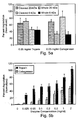
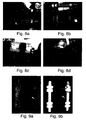
- the PEG-fibrinogen scaffolds of the present invention exhibit material properties and biodegradability which are superior to any known prior art scaffolds; they also exhibit high flexibility and a controllable elastic modulus ( Figures 3a-b ), efficient biodegradability ( Figures 5a-b ), improved biofunctionality and support for cell spreading and extension ( Figures 6a-e, 7a-b , 18a-e and Examples 2 and 4).
- the PEG-fibrinogen scaffolds of the present invention were capable of in vivo bone regeneration in rats exposed to critical size tibia defect.
- a scaffold comprising a plurality of units each composed of a synthetic polymer attached to a naturally occurring protein or a portion thereof.
- the scaffold of the present invention refers to a two-dimensional or a three-dimensional supporting framework.
- the scaffold of the present invention is composed of units (interchangeably referred to herein as "precursor molecules") which are directly or indirectly (e.g., via linker) attachable therebetween.
- precursor molecules can be for example, PEGylated fibrinogen (see Example 1 of the Examples section which follows), PEGylated collagen, PEGylated fibronectin and the like.
- the scaffold of the present invention can form two-or three-dimensional structure at any size, structure or porosity.
- the scaffold of the present invention can be embedded within, or formed around, another scaffold or gel or it can be linked to additional materials to form a hybrid or coated scaffold.
- the scaffold of the present invention can be used to support cell growth, attachment, spreading, and thus facilitate cell growth, tissue regeneration and/or tissue repair.
- polymer refers to a plurality of repeating units which form a new molecular structure.
- synthetic polymer refers to any polymer which is made of a synthetic material, i.e. , a non-natural, non-cellular material.
- Non-limiting examples for synthetic polymers which can be used along with the present invention include polyethylene glycol (PEG) (average Mw. 200; P3015, SIGMA), Hydroxyapatite/polycaprolactone (HA/PLC) [ Choi, D., et al., 2004, Materials Research Bulletin, 39: 417-432 ; Azevedo MC, et al., 2003, J. Mater Sci. Mater. Med.
- polyglycolic acid [ Nakamura T, et al., 2004, Brain Res. 1027(1-2): 18-29 ], Poly-L-lactic acid (PLLA) [ Ma Z, et al., 2005, Biomaterials. 26(11): 1253-9 ], Polymethyl methacrylate (PMMA) [average Mw 93,000, Aldrich Cat. # 370037; Li C, et al., 2004, J. Mater. Sci. Mater. Med. 15(1): 85-9 ], polyhydroxyalkanoate (PHA) [ Zinn M, et al., 2001, Adv. Drug Deliv. Rev. 53(1): 5-21 ; Sudesh K., 2004, Med. J. Malaysia.
- beta-TCP beta-tricalcium phosphate
- PTFE nonbiodegradable polytetrafluoroethylene
- the synthetic polymer used by the present invention is PEG.
- the PEG molecule used by the present invention can be linearized or branched ( i.e ., 2-arm, 4-arm, and 8-arm PEG) and can be of any molecular weight, e.g., 4 kDa, 6 kDa and 20 kDa for linearized or 2-arm PEG, 14 kDa and 20 kDa for 4-arm PEG, and 14 kDa and 20 kDa for 8-arm PEG and combination thereof.
- the OH-termini of the PEG molecule can be reacted with a chemical group such as acrylate (Ac) or vinylsulfone (VS) which turn the PEG molecule into a functionalized PEG, i.e. , PEG-Ac or PEG-VS.
- a chemical group such as acrylate (Ac) or vinylsulfone (VS) which turn the PEG molecule into a functionalized PEG, i.e. , PEG-Ac or PEG-VS.
- the PEG molecule used by the present invention is PEG-Ac.
- PEG-VS can be prepared under argon by reacting a dichloromethane (DCM) solution of the PEG-OH with NaH and then with di-vinylsulfone (molar ratios: OH 1: NaH 5: divinyl sulfone 50, at 0.2 gram PEG/mL DCM).
- DCM dichloromethane
- PEG-Ac is made under argon by reacting a DCM solution of the PEG-OH with acryloyl chloride and triethylamine (molar ratios: OH 1: acryloyl chloride 1.5: triethylamine 2, at 0.2 gram PEG/mL DCM), essentially as described in Example 1 of the Examples section which follows.
- the PEG-Ac used by the present invention is PEG-DA, 4-arm star PEG multi-Acrylate and/or 8-arm star PEG multi-Acrylate.
- naturally occurring protein or a portion thereof refers to denaturated fibrinogen.
- the scaffold of the present invention is composed of a naturally occurring protein such a scaffold can be configured susceptible to degradation by biological material such as enzymes, i.e. , biodegradable.
- biodegradable refers to capable of being degraded (i.e ., broken down) by biological proteases or biomolecules. Biodegradability depends on the availability of degradation substrates ( i.e ., biological materials or portion thereof), the presence of biodegrading materials (e.g., microorganisms, enzymes, proteins) and the availability of oxygen (for aerobic organisms, microorganisms or portions thereof), carbon dioxide (for anaerobic organisms, microorganisms or portions thereof) and/or other nutrients.
- biodegradability of a material, such as the scaffold of the present invention also depends on the material structure and/or mechanical properties, i.e.
- biodegradable materials include, but are not limited to, reconstituted collagen gels, fibrin glues, and hyaluronic acid scaffolds.
- the scaffold of the present invention is fabricated by cross linking multiple copies of a precursor molecule which is composed of a synthetic polymer attached to a naturally occurring protein or a portion thereof.
- the present inventors fabricated a PEGylated fibrinogen precursor molecule by denaturing fibrinogen molecules and reacting them with functionalized PEG-diacrylates.
- the polymer-protein precursor molecule is made of PEG and fibrinogen.
- the molar ratio between the synthetic polymer (e.g., PEG) and the naturally occurring protein (e.g., fibrinogen) of the present invention may affect the pore size, strength, flexibility and elasticity of the scaffold of the present invention.
- excess of the synthetic polymer would lead to binding of the polymer functional groups (e.g., PEG-DA) to all potential binding sites on the naturally occurring protein and would result in smaller pore size, more cross-linking sites, higher strength, less flexibility and increased rigidity.
- binding of only two molecules of the synthetic polymer to each molecule of the protein i.e ., a 2:1 molar ratio
- the molar ratio between the synthetic polymer and the protein can also affect the biodegradability of the scaffold.
- a higher molar ratio i.e ., excess of polymer
- Those of skills in the art are capable of adjusting the molar ratio between the synthetic polymer and the protein to obtain the desired scaffold with the optimal physical and biological characteristics.
- the PEG-fibrinogen precursor molecule can be prepared using a wide range of molar ratios.
- the molar ratio used by the present invention is 2-400 (PEG) to 1 (fibrinogen), more preferably, the molar ratio is 30-300 (PEG) to 1 (fibrinogen), more preferably, the molar ratio is 100-200 (PEG) to 1 (fibrinogen), most preferably, the molar ratio is 130-160 (PEG) to 1 (fibrinogen).
- PEG-fibrinogen the molar ratio used by the present invention is 2-400 (PEG) to 1 (fibrinogen)
- the molar ratio is 30-300 (PEG) to 1 (fibrinogen)
- the molar ratio is 100-200 (PEG) to 1 (fibrinogen)
- the molar ratio is 130-160 (PEG) to 1 (fibrinogen).
- the fibrinogen used by the present invention can be whole fibrinogen (i.e ., un-cleaved) or fragmented fibrinogen, which can be obtained using, for example, CNBr cleavage (see Example 1 of the Examples section which follows).
- the scaffold of the present invention is formed by cross-linking the polymer-protein precursor molecules of the present invention.
- Such cross-linking can be performed in vitro, ex vivo and/or in vivo.
- Cross-linking according to this aspect of the present invention is performed by subjecting the precursor molecules to a free-radical polymerization reaction (i.e. , a cross-linking reaction).
- a free-radical polymerization reaction i.e. , a cross-linking reaction.
- Methods of cross-linking polymers are known in the art, and include for example, cross-linking via photoinitiation (in the presence of an appropriate light, e.g., 365 nm), chemical cross-linking [in the presence of a free-radical donor] and/or heating [at the appropriate temperatures.
- cross-linking according to the present invention is effected by photoinitiation.
- Photoinitiation can take place using a photoinitiation agent (i.e ., photoinitiator) such as bis(2,4,6-trimethylbenzoyl) phenylphosphine oxide (BAPO) ( Fisher JP et al., 2001; J. Biomater. Sci. Polym. Ed. 12: 673-87 ), 2,2-dimethoxy-2-phenylacetophenone (DMPA) ( Witte RP et al., 2004; J. Biomed. Mater. Res. 71A(3): 508-18 ), camphorquinone (CQ), 1-phenyl-1,2-propanedione (PPD) ( Park YJ et al., 1999, Dent. Mater.
- a photoinitiation agent i.e ., photoinitiator
- BAPO bis(2,4,6-trimethylbenzoyl) phenylphosphine oxide
- DMPA 2,2-dimethoxy-2-phenylacetophenone
- CQ camphorquinone
- DMAEMA dimethylaminoethyl methacrylate
- the photoinitiation reaction can be performed using a variety of wave-lengths including UV (190-365 nm) wavelengths, and visible light (400-1100 nm) and at various light intensities. It will be appreciated that for ex vivo or in vivo applications, the photoinitiator and wavelengths used are preferably non-toxic and/or non-hazardous.
- the PEG-fibrinogen precursor molecule was cross-linked by photoinitiation in the presence of Igracure TM 2959 and a non-toxic UV light illumination (e.g., 5 minutes at 365 nm wavelength, 4-5 mWatts/cm 2 intensity).
- a non-toxic UV light illumination e.g., 5 minutes at 365 nm wavelength, 4-5 mWatts/cm 2 intensity.
- polymer-protein precursor molecules of the present invention e.g., PEGylated fibrinogen
- cross-linking according to the present invention can also utilize a molecule capable of cross-linking the polymer-protein precursors.
- Such cross-linking molecules can be for examples, PEG, PEG-DA, PEG multi-Acrylate, and/or PEG-VS.
- a functionalized PEG molecule e.g:, PEG-DA
- PEG-DA a functionalized PEG molecule
- the concentration of cross-linking molecules can affect the scaffold strength, flexibility, elasticity and biodegradability and determination of such a concentration depends on the scaffold application and is within the capabilities of those skilled in the arts. For example, excess of a cross-linking molecule is expected to result in smaller pores, more cross-linking sites, and higher scaffold strength and less flexibility.
- excess of PEG-DA i.e ., the cross-linking molecule of the present invention
- reduced scaffold biodegradability is probably a result of masking or modifying the protein binding sites or signals which are necessary for protein degradation.
- cross-linking is effected such that the polymer-protein precursors of the present invention are solubilized in a water-based solution and such solutions are further subjected to cross-linking (e.g., using photoinitiation) to form a hydrogel scaffold.
- a PEG-fibrinogen hydrogel was formed by mixing the PEGylated fibrinogen precursor molecules with the photoinitiation agent (IgracureTM2959) in the presence or absence of PEG-DA and exposing such a mixture to UV light.
- the PEGylated fibrinogen precursors were solubilized in 1-ml of 50 mM PBS, pH 7.4 and 25 °C to achieve a final concentration of 10, 15, or 20 % polymer-protein (w/v).
- the precursor solution also contained a PEG-DA cross-linking constituent at a molar ratio of 1:2 PEG-DA to functional groups on the PEGylated fibrinogen.
- the precursor solution was mixed with 10 ⁇ l of IgracureTM2959 photoinitiator solution (Ciba Specialty Chemicals, Tarrytown, New York) in 70 % ethanol (100 mg/ml) and centrifuged for 5 min at 14,000 RPM. The solution was then placed into Teflon tubes (5-min diameter and 20-mm long) and polymerized under UV light (365 nm, 4-5 mW/cm 2 ) for 15 minutes according to published protocols (Lum LY et al., 2003).
- the hydrogel can be generated from PEGylated whole fibrinogen or PEGylated fragmented fibrinogen.
- the molecular weight and length of the grafted PEG affects the degree of solubility of the PEGylated protein, i.e., higher length and/or molecular weight of PEG results in increased solubility of PEGylated protein. It will be appreciated that solubility of the PEGylated protein is also affected by the presence of whole or cleaved fibrinogen.
- the concentration of the precursor molecules in the hydrogel is between 0.5 to 35 %, more preferably, when PEGylated whole fibrinogen is used, the concentration of the precursor molecules in the hydrogel is between 0.5 to 5 % (depending on the MW and length of the grafted PEG used to PEGylate the protein) and when PEGylated fragmented fibrinogen is used, the concentration of the precursor molecules in the hydrogel is between 5 - 35 % (depending on the MW and length of PEG used to PEGylate the protein).
- the PEG-fibrinogen hydrogels of the present invention exhibited a superior flexibility over the prior art PEG-PEG hydrogels.
- a strain of 30 % was achieved by employing a stress of 90 kPa
- a similar strain was achieved by employing only 4 kPa ( Figures 3a-b and Figures 4a-c ).
- the modulus of elasticity of the hydrogels made from PEGylated whole fibrinogen is in a range of 0.02-0.11 kPa for 10-20 % polymer
- the modulus of elasticity of the hydrogels made from PEGylated fragmented fibrinogen is in a range of 0.01-0.07 kPa for 10-20 % polymer.
- hydrogel scaffolds of the present invention exhibit high biodegradability as compared with prior art hydrogel scaffolds [e.g., hydrogels made with an oligopeptide cross-linker containing a protease substrate (Seliktar et al 2004)].
- hydrogel scaffolds made with an oligopeptide cross-linker containing a protease substrate (Seliktar et al 2004)
- a significant degradation of 45 - 70 % or 35 - 85 % of the PEG-fibrinogen hydrogels was observed following 30 minutes incubation in the presence of 0.05 mg/ml trypsin or 0.5 mg/ml collagenase, respectively.
- higher concentrations of trypsin i.e ., 1-2 mg/ml
- the biodegradability of the hydrogel scaffold of the present invention can be determined by subjecting such hydrogels to enzymatic degradation using proteases such as plasmin, trypsin, collagenase, chemotrypsin and the like.
- the biodegradability and biofunctionality of the scaffold hydrogel of the present invention can be further increased by attaching or impregnating a protein such as a cell signaling protein, or a (as described hereinabove) to the hydrogel of the present invention.
- a protein such as a cell signaling protein, or a (as described hereinabove)
- Attaching such proteins to the hydrogel scaffold of the present invention is preferably employed by covalent immobilization of a PEGylated protein to the PEG hydrogel network during cross-linking (Seliktar et al 2004, JBMR).
- the immobilization of such factor is accomplished by directly reacting functionalized PEG to an unreacted thiol present on a cysteine residue of the protein sequence.
- Impregnation of the hydrogel with growth factors can be performed by dehydrating the scaffold and then immersing the hydrogels in a solution containing the growth factors and gently shaking such hydrogels for a few hours until the growth factors penetrate the scaffold during the hydration process.
- the hydrogel can be impregnated with growth factor by incubation in factor-containing solution overnight until the growth factor diffuses into the polymeric network of the scaffold by slow, passive diffusion. The latter is influenced by the degree of cross-linking, the porosity of the scaffold, and the structural properties described hereinabove.
- the scaffold of the present invention is highly reproducible, flexible (can be stressed or stretched easily), exhibit a controllable structural properties, and amenable to controllable biodegradation; characteristics which make it highly suitable for in vivo or ex vivo regeneration of tissues such as bone, cartilage, heart muscle, skin tissue, blood vessels, and other tissues (soft and hard) in the body.
- tissue such as bone, cartilage, heart muscle, skin tissue, blood vessels, and other tissues (soft and hard) in the body.
- a scaffold hydrogel can be easily placed into gaps within a tissue or an organ, following which it can fill the void and initiate the process of regeneration as the scaffold degrades away.
- in vivo refers to within a living organism such as a plant or an animal, preferably in mammals, preferably, in human subjects.
- the method is effected by implanting the scaffold of the present invention in a subject to thereby induce the formation of the tissue.
- the term "subject” refers to a vertebrate, preferably a mammal, more preferably a human being (male or female) at any age.
- the scaffold of the present invention can be implanted in the subject using a surgical tool such as a scalpel, spoon, spatula, or other surgical device.
- a surgical tool such as a scalpel, spoon, spatula, or other surgical device.
- in vivo formation of a tissue can be also achieved by administering the scaffold precursor molecules to the subject and further cross-linking the precursor molecules in vivo.
- a method of inducing in vivo formation of a tissue is effected by administering to a subject in need thereof a composition composed of a synthetic polymer attached to a naturally occurring protein or a portion thereof, the composition capable of forming a scaffold within the subject and thereby inducing the formation of the tissue in vivo.
- composition composed of a synthetic polymer attached to a naturally occurring protein or a portion thereof refers to the polymer-protein precursor molecule of the present invention which is described hereinabove.
- the method according to this aspect further comprising a step of cross-linking following administering the composition.
- Cross-linking can be performed as described hereinabove using non-toxic, non-hazardous agents and/or conditions.
- the method according to this aspect further comprising administering to the subject a molecule capable of cross-linking the composition.
- molecule capable of cross-linking the composition refers to the cross-linking agent described hereinabove (e.g., PEG-DA).
- the scaffold of the present invention can be also used for ex vivo formation of a tissue.
- tissue refers to part of an organism consisting of an aggregate of cells having a similar structure and function. Examples include, but are not limited to, brain tissue, retina, skin tissue, hepatic tissue, pancreatic tissue, bone, cartilage, connective tissue, blood tissue, muscle tissue, cardiac tissue brain tissue, vascular tissue, renal tissue, pulmunary tissue, gonadal tissue, hematopoietic tissue and fat tissue.
- tissue as used herein also encompasses the phrase "organ” which refers to a fully differentiated structural and functional unit in an animal that is specialized for some particular function. Non-limiting examples of organs include head, brain, eye, leg, hand, heart, liver kidney, lung, pancreas, ovary, testis, and stomach.
- ex vivo refers to living cells which are derived from an organism and are growing (or cultured) outside of the living organism, preferably, outside the body of a vertebrate, a mammal, or human being.
- cells which are derived from a human being such as human muscle cells or human aortic endothelial cells and are cultured outside of the body are referred to as cells which are cultured ex vivo.
- the scaffold of the present invention which is formed in vitro, ex vivo or in vivo can be used to induce tissue formation and/or regeneration and thus treat individuals suffering from tissue damage or loss.
- tissue damage or loss refers to any disorder, disease or condition exhibiting a tissue damage (i.e ., non-functioning tissue, cancerous or pre-cancerous tissue, broken tissue, fractured tissue, fibrotic tissue, or ischemic tissue) or a tissue loss (e.g., following a trauma, an infectious disease, a genetic disease, and the like) which require tissue regeneration.
- tissue damage i.e ., non-functioning tissue, cancerous or pre-cancerous tissue, broken tissue, fractured tissue, fibrotic tissue, or ischemic tissue
- tissue loss e.g., following a trauma, an infectious disease, a genetic disease, and the like
- liver cirrhosis such as in hepatitis C patients (liver), Type-1 diabetes (pancreas), cystic fibrosis (lung, liver, pancreas), bone cancer (bone), burn and wound repair (skin), age related macular degeneration (retina), myocardial infarction, myocardial repair, CNS lesions (myelin), articular cartilage defects (chondrocytes), bladder degeneration, intestinal degeneration, and the like.
- treating refers to inhibiting or arresting the development of a disease, disorder or condition and/or causing the reduction, remission, or regression of a disease, disorder or condition in an individual suffering from, or diagnosed with, the disease, disorder or condition.
- Those of skill in the art will be aware of various methodologies and assays which can be used to assess the development of a disease, disorder or condition, and similarly, various methodologies and assays which can be used to assess the reduction, remission or regression of a disease, disorder or condition.
- the method is effected by implanting the scaffold of the present invention alone or following seeding such a scaffold with cells, or by administering the scaffold units (i.e ., the polymer-protein precursor molecules of the present invention) into the subject to thereby induce formation of the tissue and treat the disorder characterized by tissue damage or loss.
- the scaffold units i.e ., the polymer-protein precursor molecules of the present invention
- Tissue engineering scaffolds with controllable mechanical properties and adequate biofunctional signals were generated from PEG and fibrinogen. Briefly, denatured fibrinogen fragments were PEGylated with PEG-diacrylates, mixed with photoinitiator and exposed to UV light to form a hydrogel material in the presence of a cell suspension. The degradability of the PEG-fibrinogen scaffold was further tested by enzyme-mediated proteolysis, as follows.
- PEG-DA PEG Diacrylate
- PEG-DA PEG-diacrylate
- acrylation of PEG-OH was carried out under Argon by reacting a dichloromethane (DCM) (Aldrich, Sleeze, Germany) solution of the PEG-OH with acryloyl chloride (Merck, Darmstadt, Germany) and triethylamine (Fluka) at a molar ratio of 1-OH to 1.5-acryloyl chloride to 1.5-triethylamine (0.2 g PEG/ml DCM).
- DCM dichloromethane
- Fluka triethylamine
- Cyanogen bromide cleavage of fibrinogen - Whole fibrinogen [Sigma-Aldrich, Steinheim, Germany, Cat # F8630, GenBank Accession No. AAC67562.1. ( ⁇ -chain; SEQ ID NO:1); GenBank Accession No. CAA23444.1 ( ⁇ -chain; SEQ ID NO:2), and GenBank Accession No. CAA33562.1 ( ⁇ -chain; SEQ ID NO:3)] was dissolved in a solution of 70 % formic acid containing 17 mg/ml Cyanogen Bromide (CNBr) (Aldrich, Cat. # C9, 149-2) and incubated overnight in the dark at 25 °C.
- CBr Cyanogen Bromide
- the cleaved fibrinogen fragments were dialyzed for 2 days at 4 °C in 50 mM phosphate buffered saline (PBS) at pH 7.4 with a twice-daily change of buffer to remove all the CNBr and formic acid from the solution.
- the dialyzed fragments were stored in PBS at 4 °C until they were subjected to PEGylation.
- the molar ratio of PEG to fibrinogen was 145:1 (linear PEG-DA, MW 4-kDa, 6-kDa, and 20-kDa).
- the final PEGylated protein product was precipitated for 20 minutes at room temperature while stirring in 5X excess acetone (Frutarom, Haifa, Israel).
- the precipitated protein solution was centrifuged for 20 minutes at 5000 RPM (Sorvall GSA rotor) and the pellet was redissolved at 20 mg/ml protein concentration in PBS containing 8 M urea.
- the PEGylated protein solution was then dialyzed for 2 days at 4 °C against PBS containing 0.1 % (v/v) glacial acetic acid (Frutarom) with twice-daily changes of PBS (Spectrum, 12-14-kDa MW cutoff).
- the dialyzed product was either used immediately or lyophilized in a solution of 10 % D-(+)-glucose (Riedel-deHa ⁇ n, Germany) to improve solubility upon redissolution.
- the lyophilized PEGylated product was stored under Argon at -80 °C for up to six months.
- the PEG-fibrinogen hydrogels were made from a precursor solution of PEGylated fibrinogen (whole or cleaved).
- the precursor solution was made by solubilizing PEGylated fibrinogen in 1-ml of 50 mM PBS, pH 7.4 and 25 °C to achieve a final concentration of 10, 15, or 20 % polymer (w/v).
- the precursor solution also contained a PEG-DA cross-linking constituent at a molar ratio of 1:2 PEG-DA to functional groups on the PEGylated fibrinogen.
- the additional PEG-DA was used to efficiently cross-link the PEGylated protein macromeres and minimize steric hindrances that result in poor gelation.
- the precursor solution was mixed with 10 ⁇ l of IgracureTM2959 photoinitiator solution (Ciba Specialty Chemicals, Tarrytown, New York) in 70 % ethanol (100 mg/ml) and centrifuged for 5 min at 14,000 RPM. The solution was then placed into Teflon tubes (5-mm diameter and 20-mm long) and polymerized under UV light (365 nm, 4-5 mW/cm 2 ) for 15 minutes according to published protocols (Lum LY et al., 2003).
- hydrogels were cut into 5-mm long sections for mechanical testing. Control hydrogels were made by solubilizing 10, 15, or 20 % (w/v) PEG-DA in 1-ml of 50 mM PBS with IgracureTM and then polymerizing under UV light as described above.
- Biodegradation assay - To assess the rate of enzymatic hydrogel degradation, Coomassie® brilliant blue G-250 dye (Aldrich) was bound to the PEG-fibrinogen hydrogels and the release of the Coomassie® dye was measured spectrophotometrically. Hydrogels were stained in 0.1 % Coomassie® (w/v) overnight with gentle agitation, and destained for 1 hour in destaining buffer. Since the Coomassie® dye binds to proteins with very high affinity, following the initial staining, the hydrogels were destained to release all unbound dye.
- PEGylation of fibrinogen can be performed using 4-kDa, 6-kDa and / or 20-kDa PEG DA -
- the PEG-fibrinogen hydrogels were prepared by covalently binding protein fragments to PEG-DA and cross-linking by UV photoinitiation.
- Figure 1a illustrates the potential of the fibrinogen constituent to be linked to fractionalized PEG.
- a Michael-type addition reaction Lutolf M et al, 2001, Bioconjugate chem.
- the PEG-fibrinogen product exhibits high percentage of PEGylated fibrinogen - Following an overnight PEGylation reaction the PEGylated fibrinogen product is purified using acetone precipitation which selectively precipitates the protein (i.e. , PEGylated fibrinogen) from the excess of unreacted PEG-DA. It is worth mentioning that the addition of acetone at room temperature to the PEG-DA reaction [using an iodide solution as described elsewhere (24)] did not result in the precipitation of free, unreacted PEG-DA (data not shown).
- the dry weight of the total PEGylated product was compared with the amount of total protein as measured using a Pierce BCA assay in a purified solution of PEGylated fibrinogen.
- the dry weight of PEGylated protein should be the sum of the weights of the fibrinogen and the grafted PEG, assuming 100 % PEGylation.
- the theoretical protein fractions for PEGylated fibrinogen using 4-kDa, 6-kDa, and 20-kDa PEG are 59 %, 49 %, and 22 %, respectively.
- the results indicate a protein fraction of 45 ⁇ 5.0 % using the 4-kDa PEG, 39 ⁇ 3.4 % using the 6-kDa PEG, and 36 ⁇ 1.5 % using the 20-kDa PEG.
- the difference between the theoretical and the measured protein factions can be attributed to several factors, including excess of unreacted PEG, partial PEGylation, and/or error in the BCA measurements.
- Cyanogen bromide cleavage of fibrinogen facilitates the preparation of PEGylated fibrinogen solutions - Since the combination of the highly hydrophilic PEG to the partially hydrophobic fibrinogen can result in a highly hydrophobic protein core, the fibrinogen molecule was denatured prior to being subjected to the PEGylation reaction. Such denaturation minimizes the formation of the hydrophobic core after PEGylation and significantly improves the solubility of the product. Denaturation of the fibrinogen molecule was accomplished using CNBr, a proteolytic molecule which chemically cleaves adjacent to methionine peptides in the fibrinogen sequence.
- PEGylated fibrinogen solutions with concentrations of up to 300 mg/ml were prepared under non-denaturing conditions.
- Table 1 Fibrinogen fragments and cysteines from whole fibrinogen Fragments Alpha beta gamma Total M.W. 65 53.3 47.6 165.9 Cysteines 8 11 10 29
- Table 2 Fibrinogen fragments and cysteines from multi thiol fragments of cleaved fibrinogen Fragments F1 F2 F3 F4 F7 F8 F15 F16 Total M.W. 32.4 24.6 12.1 10 7 6.3 3.8 3.8 100 Cysteines 2 4 3 4 2 2 4 4 25
- PEG-fibrinogen hydrogels are highly elastic -
- the compressive mechanical properties of the material were measured using the InstronTM single column material testing system. These measurements confirmed the formation of acellular PEG-fibrinogen hydrogels (and PEG-PEG controls) with varying amounts of polymer (10 %, 15 %, and 20 % w/v) and different molecular weights of PEG (4-kDa and 6-kDa, 20-kDa) as well as the formation of hydrogels which are made of either whole fibrinogen (whole) or CNBr-cleaved fibrinogen (cleaved).
- the elastic modulus (as determined from the stress-strain curve) was found to be dependent on the percent polymer, the molecular weight of the PEG precursor, and the fibrinogen backbone ( Figures 4a-c ).
- Biodegradation of PEG-fibrinogen hydrogels is dependent on the MW of the PEG component and the protein backbone - Hydrogel biodegradation was quantified by subjecting colorimetrically-labeled pure PEG-fibrinogen hydrogels (15 % w/v PEG-DA, MW 6-kDa) to varying concentrations of proteases (e.g., Collagenase or trypsin) and assessing the dissolution of the gels.
- proteases e.g., Collagenase or trypsin
- hydrogel scaffolds for tissue engineering (16, 23, 26-30). These materials are capable of promoting cell growth and exhibit proteolytic degradability via their biological domains while still providing exacting mechanical properties based on their synthetic composition.
- a number of these hybrid hydrogel materials are currently in use as ingrowth matrices or cell culture substrates which take advantage of biologically active oligopeptides in the material backbone that mimic the properties of natural tissue (17, 18). While these materials satisfy the general criteria of biofunctionality, the small oligopeptides provide only a fraction of the bioactive signals present in the natural extracellular matrix (ECM).
- ECM extracellular matrix
- the hydrogel material of the present invention contains a natural protein backbone onto which di-functional PEGs are covalently bound and cross-linked together using photo-polymerization.
- the protein backbone is comprised of alpha, beta, and gamma fragments of denatured fibrinogen. These fibrinogen fragments are inherently bioactive with proteolytically sensitive sequences, cell adhesion motifs, and other cell-signaling sequences (14). Free thiol groups present in unpaired cysteine residues in the denatured fibrinogen fragment are covalently conjugated by a Michael-type addition reaction to an unsaturated double bond on functionalized PEG-DA.
- the hydrogel material of the present invention uses denatured fibrinogen since it consists of a large number of free thiol groups (i.e ., unpaired cysteine residues) that can react with PEG-DA. After PEGylation, unreacted acrylates on the di-functional PEGs are used to cross-link the fibrinogen backbone into a hydrogel network using photo-polymerization.
- the molecular structure of the hydrogels is highly influenced by the degree of cross-linking.
- the other crucial determining factor of the hydrogel cross-linking is the ratio of reactive acrylate end-groups on the PEG per MW of protein (acrylates per kDa of PEGylated protein).
- PEGylated fibrinogen contains 29 acrylate groups for each molecule of protein, or approximately 0.1 acrylate/kDa for 4-kDa PEGylated fibrinogen, 0.086 acrylate/kDa for 6-kDa PEGylated fibrinogen, and 0.039 acrylate/kDa for 20-kDa PEGylated fibrinogen.
- a pure PEG-DA solution contains 0.5 acrylates/kDa for 4-kDa PEG, 0.33 acrylates/kDa for 6-kDa PEG, and 0.1 acrylates/kDa for 20-kDa PEG. If the ratio of acrylates to MW is too low, the polymer solution will not form a continuous hydrogel. For this reason, the experiments performed in the present study utilized high concentrations of PEGylated fibrinogen ( ⁇ 10 %).
- the PEGylated fibrinogen requires substantial effort to solubilize at these high concentrations. Since the solubility of the PEGylated fibrinogen is highly affected by the grafting of the PEG chains; presumably because of the formation of a hydrophobic protein complex in the presence of a highly hydrophilic PEG graft, the fibrinogen protein used by the present invention utilized an irreversibly cleaved by CNBr. Thus, PEGylation of cleaved fibrinogen results in a highly soluble protein precursor for hydrogel formation.
- the mechanical properties of the cleaved and whole PEG-fibrinogen hydrogels was characterized using the stress-strain behavior under quasi-static uniaxial unconfined compression.
- the PEG-fibrinogen material demonstrates the typical non-linear stress-strain characteristics of a polymeric material, similar to the PEG-PEG control gels.
- the composite behaves like a viscoelastic solid with minimal hysteresis under repetitive cyclic loading (data not shown).
- the material stiffness, as determined from the modulus of elasticity, is directly proportional to the percent polymer composition. It will be appreciated that the material stiffness of polymeric hydrogels can be directly attributed to the degree of cross-linking.
- the amount of functional groups available for cross-linking is proportional to the polymer concentration.
- the modulus of the material is directly proportional to the amount polymer in the hydrogel.
- the relationship between the elastic modulus of the hydrogel and the molecular chain length of the grafted PEG constituent is ambiguous. While pure PEG hydrogels exhibit a proportional relationship between the material modulus and the MW of the PEG, the addition of the protein into the hydrogel network can have a profound impact on this relationship, depending on the relative size of the two polymers. In the case of whole PEGylated fibrinogen hydrogels, where the PEG is significantly smaller than the protein, the impact of PEG MW on the modulus is more pronounced. In contrast, the relationship between PEG MW and the modulus of the hydrogels is less pronounced when the hydrogels are made of cleaved protein. In either case, it is difficult to resolve the difference between 4-kDa PEG and 6-kDa PEG when comparing the elastic moduli.
- the mechanical properties data demonstrate a significant difference in the stiffness of hydrogels made from pure PEGylated fibrinogen versus pure PEG hydrogels. Irrespective of the PEG MW, the PEGylated fibrinogen hydrogels are always less stiff than the pure PEG hydrogels. This can be attributed to the fact that pure PEG hydrogels (made with similar weight percent of polymer) contain nearly 5 times more functional groups available for cross-linking than the PEGylated hydrogels.
- cross-linking sites arises from the fact that the fibrinogen constituent accounts for more than half the weight of the polymer but does not contain inherent cross-linking sites, and each grafted PEG on the PEGylated fibrinogen only has a single functional group available for cross-linking, in contrast to two functional groups on free PEG-DA. Additional cross-linking limitations may arise because of steric hindrances caused by the bulky PEGylated fibrinogen molecules.
- the molecular chain length and percent composition represent two independent parameters to control the mechanical properties of the material.
- An additional parameter which can alter the mechanical properties of the material is the number of cross-linking sites on each grafted PEG molecule.
- the linear grafted PEG contains only one functional group for cross-linking the hydrogel; however, PEG molecules containing several functional groups such as star-PEGs can also be grafted onto the fibrinogen to form hydrogels. While star-PEG was not used as part of the current investigation, future studies aim to increase the stiffness of the PEG-fibrinogen hydrogels using 4-arm and 8-arm star-PEG precursors.
- the fibrinogen backbone of the hydrogel material provides proteolytic sensitivity via naturally occurring substrates for fibrinolysis.
- Fibrinolysis is a physiological process whereby the native fibrin molecule is proteolytically dismantled by serine proteases.
- the fibrinogen backbone is cleaved in the presence of activated proteases, resulting in complete dissolution of the PEG-fibrinogen hydrogel.
- the results shown in the present study demonstrate that pure PEG-fibrinogen hydrogels are proteolytically degradable while the PEG-PEG controls are not susceptible to proteolysis (data not shown).
- the degradation data reveals several other interesting patterns regarding the proteolytic degradation of cleaved and whole fibrinogen hydrogels in the presence of trypsin or Collagenase after 30 minutes.
- trypsin the cleaved and whole fibrinogen hydrogels degrade almost identically. This is likely explained by the observation that 0.05 mg/ml trypsin is saturated with substrate whereas 0.5 mg/ml collagenase is not saturated with substrate.
- the MW of the PEG constituent also affects the degradation results.
- the 20-kDa PEG hydrogels are comprised of less fibrinogen which results in faster hydrogel dissolution. This can also be explained by the observation that 0.05 mg/ml trypsin is saturated with enzyme and cannot degrade the 20-kDa PEGylated fibrinogen hydrogels faster. Future studies will examine more aspects of proteolytic degradability of the PEG-fibrinogen material, including degradation kinetics and fibrinolysis in the presence of plasmin.
- Bovine aortic smooth muscle cells from young donors were isolated and cultured according to a modified protocol of Oakes et al., 1982.
- the BSMCs were cultured up to 6 th passage in Dulbecco's Modified Eagle Medium (DMEM) (Gibco, U.K.) containing 10 % fetal bovine serum (FBS) (Biological Industries, Israel), 1 % penicillin-streptomycin (Biological Industries), and 1 % L-glutamine (Gibco).
- DMEM Dulbecco's Modified Eagle Medium
- PEG hydrogels containing BSMCs were made by mixing a PBS cell suspension and PEGylated fibrinogen precursor solution containing IgracureTM photoinitiator to make a 10 % (w/v) solution with 1.5 x 10 6 cells/ml. Aliquots of 100 ⁇ l of the suspension were added into wells in a flat-bottom 96-well plate and placed under UV-light (4-5 mW/cm 2 ) for 5 min in a laminar flow hood. DMEM culture medium (containing 10 % FBS) was added immediately to the polymerized hydrogels and changed daily (100- ⁇ l/well).
- BAECs bovine aortic endothelial cells
- PEG-fibrinogen hydrogels support cell spreading and attachment -
- endothelial (BAECs) or smooth muscle (BSMCs) cells were cultured on the surface of or inside the PEG hydrogels.
- BAECs were seeded on the surface of the hydrogels at a concentration of 30,000 cells/cm 2 and 24 hours following cell seeding the degree of cell attachment and spreading was evaluated using phase contrast microscopy.
- the hydrogel network contained homogeneously distributed BSMCs with round morphology.
- BSMCs cultured inside the PEG-fibrinogen hydrogels formed stable adhesions, processes, and cellular extensions ( Figures 6b-c ).
- PEGylated fibrinogen hydrogels made with cleaved fibrinogen also supported the adhesion and extension of BSMCs inside PEGylated hydrogels (data not shown).
- BSMCs cultured inside PEG-PEG hydrogels were round and devoid of any visible cell extensions ( Figure 6e ).
- the PEG hydrogel scaffold without the fibrinogen backbone is completely devoid of biofunctional domains for cell culture.
- the fibrinogen backbone provides at least two biofunctional characteristics to the hydrogel material: proteolytic sensitivity and cell adhesivity. With regards to the latter, the PEG-fibrinogen hydrogels support the attachment and spreading of endothelial cells in the presence of serum proteins whereas PEG-PEG controls are not able to support cell attachment. Endothelial cell-surface adhesion molecules can therefore attach either directly to adhesion domains on the fibrinogen backbone or to other serum proteins that interact non-specifically with the fibrinogen.
- cells are capable of proteolytically tunneling through the hydrogel network with the help of cell-secreted enzymes such as Collagenase.
- cell-secreted enzymes such as Collagenase.
- smooth muscle cells that are three-dimensionally entrapped inside the hydrogel material after photopolymerization and begin to form clusters of cells after 24 hours in culture.
- Phase contrast micrographs and histological cross-sections confirm that BSMCs form flagella-like extensions which enable their migration inside the hydrogel network.
- BSMCs remained round and homogeneously dispersed and cell extensions are not observed in the non-degradable PEG-PEG controls.
- the biological domains in the fibrinogen backbone provide attachment motifs for endothelial cell and smooth muscle cell adhesion as well as proteolytic sensitivity for biodegradation.
- Smooth muscle cells demonstrate the ability to proteolytically penetrate through the hydrogel material and form interconnecting networks of cells.
- the scaffolds of the present invention are novel, biodegradable and highly suitable for cultivating cells in a 3-D environment for tissue regeneration therapies.
- Two needles were drilled into the proximal tibia (21G) and distal tibia (23G) and connected to two external fixators (screws) to form a stable fixation of the bone.
- a 10-mm gap was excised using a disk saw in the portion between the proximal and distal needles of the fixators ( Figure 8c ). The fibula was not osteotomized.
- PEG-fibrinogen (Gelrin TM ) scaffold -
- a PEG-fibrinogen plug (5-mm diameter and 10-mm long) was inserted into the defect site and the surrounding connective tissue was wrapped around to secure the plug into place ( Figure 8d ).
- the incisional wound was sutured using nylon surgical thread.
- the animal was given prophylactic antibiotics (ampicilline 0.1 gram/100 gram).
- the animal was x-rayed and further evaluated weekly by x-ray screening. The animal was free to move about the cage during the entire post-operative follow-up period.
- the animal was sacrificed with CO 2 and the right tibia was harvested for histology and mechanical testing.
- a critical size rat tibia defect is known to result in up to 20 % mortality.
- a critical rat tibia defect was introduced into 25 rats ( Figures 8a-d ), of them 17 rats were further subjected to scaffold implantation using the PEG-fibrinogen or PEG-PEG hydrogels (see Table 3, hereinbelow, for representative rats).
- Four to seven weeks following subjecting rats to critical size tibia defects the rats were sacrificed and the tibias were evaluated for the presence, extent and location of tissue ingrowth and new bone formation.
- Rats were implanted with either PEG-PEG (PEG-only) or PEG-fibrinogen hydrogels.
- the PEG-fibrinogen hydrogels were prepared from PEG-fibrinogen precursors and PEG-DA crosslinkers.
- the PEG-fibrinogen precursors were prepared from either whole fibrinogen (Gelrin TM ) or from CNBr-cleaved fibrinogen.
- Figures 10-17 demonstrate the presence of normal bone and cartilage tissue five weeks following introduction of a critical size tibia defect and Gelrin TM -implantation.
- tibias of Gelrin TM -treated rats exhibited well-vascularized, orientated and densely textured fibrous tissue ( Figure 13 ), osteonal healing ( Figure 11 ), and Haversian systems with small central canals containing blood vessels ( Figure 10 ).
- BIODEGRADABILITY OF PEG-FIBRINOGEN HYDROGELS IS CONTROLLABLE VL4 THE SYNTHETIC PEG CONSTITUENT
- Biodegradability of PEG-fibrinogen hydrogels is reduced by the addition of free PEG-DA to the hydrogels -
- concentration of the cross-linking molecule of the present invention i.e., PEG-DA (free PEG)
- PEG-DA free PEG
- 1x10 6 smooth muscle cells per ml were seeded inside Gelrin TM hydrogels (1.75 % PEG-fibrinogen, 10-kDa PEG) containing various concentrations of PEG-DA.
- the seeded hydrogels were cultured for 48 hours, following which the ability of the cells to attach and spread inside the hydrogels was evaluated using an inverted microscope.
- Gelrin TM hydrogels consisting of more than 1 % of a cross-linking molecule (PEG-DA) -
- PEG-DA cross-linking molecule
- Gelrin TM matrices (1.75 % PEG-fibrinogen, 10-kDa PEG) were prepared as pure hydrogels (in the absence of free PEG-DA cross-linker) or in the presence of 1 or 2 % of free PEG-DA and cell clusters composed of highly compacted smooth muscle cells inside a collagen gel matrix (5 x 10 6 cells in one mg collagen cluster).
- the clusters were seeded in the center of each hydrogel by placing the cell mass into the Gelrin TM matrix prior to polymerization and forming the scaffold around the tissue so that it encapsulates the tissue mass from all sides.
- the degree of cell extension was monitored following 1, 2, 4, and 7 days in culture using phase microscopy. As is shown in Figures 19a-1 , significant cell extensions were observed in pure Gelrin TM hydrogels beginning following one day in culture. In contrast, cell extensions were relatively decreased in smooth muscle cell clusters cultured inside Gelrin TM hydrogels which were fabricated in the presence of 2 % free PEG-DA.
Landscapes
- Health & Medical Sciences (AREA)
- Life Sciences & Earth Sciences (AREA)
- Chemical & Material Sciences (AREA)
- Engineering & Computer Science (AREA)
- General Health & Medical Sciences (AREA)
- Medicinal Chemistry (AREA)
- Public Health (AREA)
- Animal Behavior & Ethology (AREA)
- Veterinary Medicine (AREA)
- Bioinformatics & Cheminformatics (AREA)
- Epidemiology (AREA)
- Pharmacology & Pharmacy (AREA)
- Biomedical Technology (AREA)
- Dermatology (AREA)
- Transplantation (AREA)
- Oral & Maxillofacial Surgery (AREA)
- Zoology (AREA)
- Organic Chemistry (AREA)
- Proteomics, Peptides & Aminoacids (AREA)
- Chemical Kinetics & Catalysis (AREA)
- Immunology (AREA)
- Wood Science & Technology (AREA)
- Gastroenterology & Hepatology (AREA)
- Genetics & Genomics (AREA)
- Biotechnology (AREA)
- General Chemical & Material Sciences (AREA)
- Nuclear Medicine, Radiotherapy & Molecular Imaging (AREA)
- Cell Biology (AREA)
- Biochemistry (AREA)
- General Engineering & Computer Science (AREA)
- Microbiology (AREA)
- Molecular Biology (AREA)
- Physical Education & Sports Medicine (AREA)
- Hematology (AREA)
- Dispersion Chemistry (AREA)
- Biophysics (AREA)
- Botany (AREA)
- Sustainable Development (AREA)
- Orthopedic Medicine & Surgery (AREA)
- Neurology (AREA)
Claims (28)
- Gerüst, umfassend eine Mehrzahl von Einheiten, von denen jede aus einem synthetischen Polymer besteht, das mit einem natürlich vorkommenden Protein oder einem Teil davon verbunden ist, wobei das synthetische Polymer PEG ist und das natürlich vorkommende Protein denaturiertes Fibrinogen ist.
- Verfahren zum Herstellen eines Gerüsts, wobei das Verfahren umfasst:(a) kovalentes Verbinden eines synthetischen Polymeren mit einem natürlich vorkommenden Protein oder einem Teil davon, um dadurch ein Polymerproteinvorläufermolekül zu erhalten, und(b) Kreuzvernetzen einer Mehrzahl der Vorläufermoleküle, um dadurch ein biologisch abbaubares Gerüst zu erhalten, wobei das synthetische Polymer PEG und das natürlich vorkommende Protein denaturiertes Fibrinogen ist.
- Gerüst nach Anspruch 1, ferner umfassend ein Molekül, das zur Kreuzvernetzung in der Lage ist, wobei das Molekül die Einheiten kovalent verbindet.
- Gerüst oder Verfahren nach einem der Ansprüche 1 bis 3, wobei das Fibrinogen vollständiges Fibrinogen oder fragmentiertes Fibrinogen ist.
- Gerüst oder Verfahren nach einem der Ansprüche 1 bis 4, wobei PEG ausgewählt ist aus der Gruppe bestehend aus: PEG-DA, vierarmigem Stern-PEG-Multiacrylat und achtarmigem Stern-PEG-Multiacrylat.
- Gerüst oder Verfahren nach Anspruch 5, wobei das PEG-DA 4-kDa PEG-DA, 6-kDa PEG-DA, 10-kDa PEG-DA und/oder 20-kDa PEG-DA ist.
- Gerüst oder Verfahren nach Anspruch 6, wobei ein molares Verhältnis zwischen PEG-DA und Fibrinogen in den Einheiten jeweils 2-400 zu 1 ist.
- Hydrogel, gebildet aus dem Gerüst nach einem der Ansprüche 1 und 3 bis 7 oder gebildet aus dem Gerüst, das mit dem Verfahren nach einem der Ansprüche 2 und 4 bis 7 hergestellt ist.
- Hydrogel nach Anspruch 8, wobei das natürlich vorkommende Protein vollständiges Fibrinogen ist und wobei eine Konzentration der Einheiten im Hydrogel ausgewählt ist aus einem Bereich von 0,5 - 35 %.
- Hydrogel nach Anspruch 8, wobei das Fibrinogen fragmentiertes Fibrinogen ist und eine Konzentration der Einheiten im Hydrogel ausgewählt ist aus einem Bereich von 0,5 - 35 %.
- Hydrogel nach Anspruch 9, wobei der Elastizitätsmodul des Hydrogels in einem Bereich von 0,02 - 0,11 kPa für 10-20 % Polymer ist.
- Hydrogel nach Anspruch 10, wobei der Elastizitätsmodul des Hydrogels in einem Bereich von 0,01 - 0,07 kPa für 10-20 % Polymer ist.
- Zusammensetzung bestehend aus einem synthetischen Polymer, das mit einem natürlich vorkommenden Protein oder einem Teil davon verbunden ist, wobei das synthetische Polymer PEG ist und wobei das natürlich vorkommende Protein denaturiertes Fibrinogen ist, für die Verwendung(a) in der Induzierung von in-vivo-Bildung eines Gewebes, wobei die Zusammensetzung in der Lage ist, ein Gerüst innerhalb eines Subjekts zu bilden und dadurch die Bildung des Gewebes in vivo zu induzieren, oder(b) in der Behandlung eines Subjekts, das eine Störung hat, die durch Gewebszerstörung oder -verlust charakterisiert ist, wobei die Zusammensetzung in der Lage ist, ein Gerüst in dem Subjekt zu bilden, wodurch eine Bildung eines Gewebes induziert und die Störung behandelt wird, die durch Gewebszerstörung oder -verlust charakterisiert ist.
- Zusammensetzung für die Verwendung nach Anspruch 13, wobei ferner ein Molekül dem Subjekt zu verabreichen ist, das in der Lage ist, die Zusammensetzung kreuzzuvernetzen.
- Zusammensetzung für die Verwendung nach Anspruch 13, wobei PEG ausgewählt ist aus der Gruppe bestehend aus PEG-Acrylat (PEG-AC) und PEG-Vinylsulfon (PEG-VS).
- Zusammensetzung für die Verwendung nach Anspruch 15, wobei PEG-Ac ausgewählt ist aus der Gruppe bestehend aus PEG-DA, vierarmigem Stern-PEG-Multiacrylat und achtarmigem Stern-PEG-Multiacrylat.
- Zusammensetzung für die Verwendung nach Anspruch 16, wobei das PEG-DA 4-kDa PEG-DA, 6-kDa PEG-DA, 10-kDa PEG-DA und/oder 20-kDa PEG-DA ist.
- Zusammensetzung für die Verwendung nach Anspruch 17, wobei ein molares Verhältnis zwischen PEG-DA und Fibrinogen in den Einheiten jeweils 2-400 zu 1 ist.
- Zusammensetzung für die Verwendung nach Anspruch 13, wobei das Fibrinogen vollständiges Fibrinogen oder fragmentiertes Fibrinogen ist.
- Zusammensetzung für die Verwendung nach Anspruch 14, wobei das Molekül, das kreuzvernetzen kann, ausgewählt ist aus der Gruppe bestehend aus PEG-DA, PEG-Multiacrylat und PEG-VS.
- Zusammensetzung für die Verwendung nach Anspruch 13, wobei das Gerüst biologisch abbaubar ist.
- Zusammensetzung für die Verwendung nach Anspruch 13(b), wobei die Gewebszerstörung mit einer Störung in Zusammenhang steht, die ausgewählt ist aus der Gruppe bestehend aus Leberzirrhose, Typ-I-Diabetes, zystischer Fibrose, Knochenkrebs, Heilung von Brandwunden und Wunden, altersbedingter Makuladegeneration, Myokardinfarkt, Myokardgenesung, ZNS-Läsionen, Gelenksknorpeldefekt, Blasendegeneration und intestinaler Degeneration.
- Stoffliche Zusammensetzung umfassend Polyethylenglykol (PEG), das mit denaturiertem Fibrinogen verbunden ist, wobei die stoffliche Zusammensetzung in der Lage ist, ein Gerüst zu bilden.
- Stoffliche Zusammensetzung nach Anspruch 23, wobei PEG ausgewählt ist aus der Gruppe bestehend aus PEG-Acrylat (PEG-Ac) und PEG-Vinylsulfon (PEG-VS).
- Stoffliche Zusammensetzung nach Anspruch 24, wobei PEG-Ac ausgewählt ist aus der Gruppe bestehend aus PEG-DA, vierarmigem Stern-PEG-Multiacrylat und achtarmigem Stern-PEG-Multiacrylat.
- Stoffliche Zusammensetzung nach Anspruch 25, wobei das PEG-DA 4-kDa PEG-DA, 6-kDa PEG-DA, 10-kDa PEG-DA und/oder 20-kDa PEG-DA ist.
- Stoffliche Zusammensetzung nach Anspruch 25, wobei ein molares Verhältnis zwischen PEG-DA und Fibrinogen jeweils 2-400 zu 1 ist.
- Stoffliche Zusammensetzung nach Anspruch 22, wobei Fibrinogen vollständiges Fibrinogen oder fragmentiertes Fibrinogen ist.
Priority Applications (1)
| Application Number | Priority Date | Filing Date | Title |
|---|---|---|---|
| EP10012382A EP2289567A3 (de) | 2003-12-22 | 2004-12-15 | Matrix aus natürlich vorkomendem vernetztem Protein |
Applications Claiming Priority (2)
| Application Number | Priority Date | Filing Date | Title |
|---|---|---|---|
| US53091703P | 2003-12-22 | 2003-12-22 | |
| PCT/IL2004/001136 WO2005061018A1 (en) | 2003-12-22 | 2004-12-15 | Matrix comprising naturally-occurring protein backbone |
Related Child Applications (1)
| Application Number | Title | Priority Date | Filing Date |
|---|---|---|---|
| EP10012382.7 Division-Into | 2010-09-30 |
Publications (2)
| Publication Number | Publication Date |
|---|---|
| EP1722834A1 EP1722834A1 (de) | 2006-11-22 |
| EP1722834B1 true EP1722834B1 (de) | 2012-06-27 |
Family
ID=34710189
Family Applications (2)
| Application Number | Title | Priority Date | Filing Date |
|---|---|---|---|
| EP04806668A Expired - Lifetime EP1722834B1 (de) | 2003-12-22 | 2004-12-15 | Matrix mit natürlich vorkommendem vernetztem proteingerüst |
| EP10012382A Withdrawn EP2289567A3 (de) | 2003-12-22 | 2004-12-15 | Matrix aus natürlich vorkomendem vernetztem Protein |
Family Applications After (1)
| Application Number | Title | Priority Date | Filing Date |
|---|---|---|---|
| EP10012382A Withdrawn EP2289567A3 (de) | 2003-12-22 | 2004-12-15 | Matrix aus natürlich vorkomendem vernetztem Protein |
Country Status (5)
| Country | Link |
|---|---|
| US (4) | US8007774B2 (de) |
| EP (2) | EP1722834B1 (de) |
| DK (1) | DK1722834T3 (de) |
| ES (1) | ES2392061T3 (de) |
| WO (1) | WO2005061018A1 (de) |
Families Citing this family (81)
| Publication number | Priority date | Publication date | Assignee | Title |
|---|---|---|---|---|
| EP2335650B1 (de) | 2003-12-11 | 2012-10-03 | Isto Technologies Inc. | Teilchenförmiges Knorpelsystem |
| EP1722834B1 (de) | 2003-12-22 | 2012-06-27 | Regentis Biomaterials Ltd. | Matrix mit natürlich vorkommendem vernetztem proteingerüst |
| US7842667B2 (en) | 2003-12-22 | 2010-11-30 | Regentis Biomaterials Ltd. | Matrix composed of a naturally-occurring protein backbone cross linked by a synthetic polymer and methods of generating and using same |
| US8512730B2 (en) | 2004-07-12 | 2013-08-20 | Isto Technologies, Inc. | Methods of tissue repair and compositions therefor |
| WO2007025290A2 (en) | 2005-08-26 | 2007-03-01 | Isto Technologies, Inc. | Implants and methods for repair, replacement and treatment of joint disease |
| CA2655026C (en) | 2006-06-15 | 2016-08-02 | Microvention, Inc. | Embolization device constructed from expansible polymer |
| US8163549B2 (en) | 2006-12-20 | 2012-04-24 | Zimmer Orthobiologics, Inc. | Method of obtaining viable small tissue particles and use for tissue repair |
| EP2134297B1 (de) | 2007-04-12 | 2017-03-08 | Zimmer, Inc. | Vorrichtung zur gewebereparatur |
| ES2596707T3 (es) * | 2007-04-16 | 2017-01-11 | Regentis Biomaterials Ltd. | Composiciones y métodos para la formación de armazones |
| US8092837B2 (en) * | 2007-04-27 | 2012-01-10 | Biomet Manufacturing Corp | Fibrin based glue with functionalized hydrophilic polymer protein binding agent |
| WO2009029049A1 (en) * | 2007-08-30 | 2009-03-05 | National University Of Singapore | A bone and/or dental cement composition and uses thereof |
| WO2009086208A2 (en) | 2007-12-21 | 2009-07-09 | Microvention, Inc. | Hydrogel filaments for biomedical uses |
| US8846003B2 (en) | 2008-03-27 | 2014-09-30 | Symic Biomedical, Inc. | Collagen-binding synthetic peptidoglycans, preparation, and methods of use |
| WO2010027471A2 (en) | 2008-09-04 | 2010-03-11 | The General Hospital Corporation | Hydrogels for vocal cord and soft tissue augmentation and repair |
| WO2010064251A1 (en) | 2008-12-04 | 2010-06-10 | Technion Research & Development Foundation Ltd | Hydrogel sponges, methods of producing them and uses thereof |
| IL195764A0 (en) | 2008-12-07 | 2009-11-18 | Technion Res & Dev Foundation | Compositions and methods for drug delivery |
| US8148445B1 (en) * | 2009-01-14 | 2012-04-03 | Novartis Ag | Ophthalmic and otorhinolaryngological device materials containing a multi-arm PEG macromer |
| US9080138B2 (en) * | 2009-01-29 | 2015-07-14 | Empire Technology Development Llc | Cell culture system, cell culture method, cell culture vessel and method for manufacturing cell culture vessel |
| US20100261652A1 (en) * | 2009-04-08 | 2010-10-14 | California Institute Of Technology | Tissue Adhesive Using Engineered Proteins |
| WO2010123938A2 (en) * | 2009-04-20 | 2010-10-28 | Oregon Health & Science University | Bioresponsive hydrogel |
| US10639396B2 (en) | 2015-06-11 | 2020-05-05 | Microvention, Inc. | Polymers |
| BRPI1014645B1 (pt) | 2009-04-30 | 2020-07-07 | Technip France | método e sistema para compartilhar linhas de amarração |
| AU2010313530B2 (en) | 2009-10-26 | 2015-12-17 | Microvention, Inc. | Embolization device constructed from expansile polymer |
| ES2860453T3 (es) | 2009-10-30 | 2021-10-05 | Novartis Ag | Bibliotecas universales del dominio de unión del lado inferior de la fibronectina de tipo III |
| DK2513294T3 (en) | 2009-12-16 | 2016-06-06 | Regentis Biomaterials Ltd | SKELETS FOR POLYMER-PROTEIN CONJUGATES, PROCEDURES FOR GENERATION THEREOF AND APPLICATIONS THEREOF |
| AT509355B1 (de) | 2010-02-10 | 2012-04-15 | Univ Graz Tech | Testanordnung |
| US9198568B2 (en) | 2010-03-04 | 2015-12-01 | The General Hospital Corporation | Methods and systems of matching voice deficits with a tunable mucosal implant to restore and enhance individualized human sound and voice production |
| KR101067827B1 (ko) * | 2010-03-19 | 2011-09-27 | 포항공과대학교 산학협력단 | 3차원 인공 지지체 및 그 제조방법 |
| US9938501B2 (en) | 2010-07-28 | 2018-04-10 | Jointechlabs, Inc. | Encapsulated adipose-derived stem cells, methods for preparation and theraputic use |
| US8524215B2 (en) * | 2010-08-02 | 2013-09-03 | Janssen Biotech, Inc. | Absorbable PEG-based hydrogels |
| US9456823B2 (en) | 2011-04-18 | 2016-10-04 | Terumo Corporation | Embolic devices |
| EP2714718B1 (de) | 2011-05-24 | 2017-01-11 | Symic IP, LLC | Hyaluronsäurebindende synthetische peptidoglycane, ihre herstellung und verfahren zu ihrer verwendung |
| WO2013158781A1 (en) | 2012-04-18 | 2013-10-24 | Microvention, Inc. | Embolic devices |
| CA2876474C (en) | 2012-06-14 | 2021-06-22 | Microvention, Inc. | Polymeric treatment compositions |
| BR112015008245B1 (pt) | 2012-10-15 | 2022-09-27 | Microvention, Inc | Composições poliméricas de tratamento |
| US10245306B2 (en) | 2012-11-16 | 2019-04-02 | Isto Technologies Ii, Llc | Flexible tissue matrix and methods for joint repair |
| US20140178343A1 (en) | 2012-12-21 | 2014-06-26 | Jian Q. Yao | Supports and methods for promoting integration of cartilage tissue explants |
| BR112015022917A2 (pt) | 2013-03-15 | 2017-07-18 | Symic Biomedical Inc | peptidoglicanos sintéticos componentes da matriz extracelular |
| US20160296664A1 (en) | 2013-04-12 | 2016-10-13 | The Trustees Of Columbia University In The City Of New York | Methods for host cell homing and dental pulp regeneration |
| WO2014204634A1 (en) * | 2013-05-31 | 2014-12-24 | University Of Massachusetts Medical School | Elastomeric and degradable polymer mineral composite scaffolds |
| CN105407933B (zh) | 2013-06-27 | 2017-09-12 | 里捐提司生物材料有限公司 | 包含聚合物蛋白质偶联物及环境响应性聚合物的组成物及其应用 |
| US9587221B2 (en) | 2013-11-11 | 2017-03-07 | Auburn University | Encapsulation and cardiac differentiation of hiPSCs in 3D PEG-fibrinogen hydrogels |
| US10124090B2 (en) | 2014-04-03 | 2018-11-13 | Terumo Corporation | Embolic devices |
| KR102462244B1 (ko) | 2014-04-25 | 2022-11-03 | 바이엘 헬스케어 엘엘씨 | 롤링 다이어프램을 갖는 시린지 |
| US10772931B2 (en) | 2014-04-25 | 2020-09-15 | Purdue Research Foundation | Collagen binding synthetic peptidoglycans for treatment of endothelial dysfunction |
| WO2015167751A1 (en) | 2014-04-29 | 2015-11-05 | Microvention, Inc. | Polymers |
| WO2015167752A1 (en) | 2014-04-29 | 2015-11-05 | Microvention, Inc. | Polymers including active agents |
| US10179191B2 (en) | 2014-10-09 | 2019-01-15 | Isto Technologies Ii, Llc | Flexible tissue matrix and methods for joint repair |
| US20160303281A1 (en) | 2015-04-17 | 2016-10-20 | Rochal Industries, Llc | Composition and kits for pseudoplastic microgel matrices |
| CA2983589C (en) | 2015-04-24 | 2024-11-12 | Bayer Healthcare Llc | SYRINGE WITH ROLLING DIAPHRAGM |
| GB201508024D0 (en) * | 2015-05-11 | 2015-06-24 | Haemostatix Ltd | Haemostatic compositions |
| WO2017103914A1 (en) * | 2015-12-17 | 2017-06-22 | Regentis Biomaterials Ltd. | Ready for use organic solvent free compositions comprising protein-polymer conjugates and uses thereof |
| US20190083642A1 (en) | 2016-03-30 | 2019-03-21 | Regentis Biomaterials Ltd. | Treatments utilizing a polymer-protein conjugate |
| US10368874B2 (en) | 2016-08-26 | 2019-08-06 | Microvention, Inc. | Embolic compositions |
| CA3036818C (en) | 2016-09-16 | 2024-01-09 | Bayer Healthcare Llc | Pressure jacket having syringe retaining element |
| US10940233B2 (en) * | 2016-10-05 | 2021-03-09 | 3M Innovative Properties Company | Fibrinogen composition, method and wound articles |
| EP3522942B1 (de) | 2016-10-05 | 2023-12-27 | 3M Innovative Properties Company | Fibrinzusammensetzung mit trägermaterial, verfahren und wundartikel |
| US20180105481A1 (en) * | 2016-10-14 | 2018-04-19 | The United States Of America, As Represented By The Secretary Of Agriculture | Bio-based methacrylic acid and other alkenoic-derived monomers via catalytic decarboxylation |
| EP4302808A3 (de) | 2016-10-17 | 2024-04-17 | Bayer Healthcare LLC | Flüssigkeitsinjektor mit spritzeneinrastmechanismus |
| AU2017345167B2 (en) | 2016-10-17 | 2022-12-15 | Bayer Healthcare Llc | Fluid injector with syringe engagement mechanism |
| US10072120B2 (en) | 2016-12-02 | 2018-09-11 | International Business Machines Corporation | Functionalized polyhydroxyalkanoate materials formed from an unsaturated polyhydroxyalkanoate material |
| US20180169326A1 (en) * | 2016-12-20 | 2018-06-21 | Liebel-Flarsheim Company Llc | Tapered front-load power injector syringe |
| US10081706B2 (en) | 2017-01-03 | 2018-09-25 | International Business Machines Corporation | Side-chain-functionalized polyhydroxyalkanoate materials |
| EP3648774A4 (de) | 2017-07-07 | 2021-04-21 | Symic IP, LLC | Synthetische biokonjugate |
| EP3681561B1 (de) | 2017-09-13 | 2021-11-03 | Bayer Healthcare LLC | Gleitende spritzenkappe für separates befüllen und abgeben |
| JP7362598B2 (ja) | 2017-10-09 | 2023-10-17 | マイクロベンション インコーポレイテッド | 放射性液体塞栓物質 |
| WO2019136453A1 (en) * | 2018-01-08 | 2019-07-11 | The Regents Of The University Of Colorado, A Body Corporate | 3d in vitro models of lung tissue |
| US11419892B2 (en) | 2018-02-01 | 2022-08-23 | North Carolina State University | Antimicrobial platelet-like particles |
| WO2019161327A1 (en) | 2018-02-19 | 2019-08-22 | Bayer Healthcare Llc | Syringe rolling apparatus and method |
| EP3849636A1 (de) | 2018-09-11 | 2021-07-21 | Bayer HealthCare LLC | Spritzenhaltevorrichtung für ein flüssigkeitseinspritzsystem |
| WO2021050507A1 (en) | 2019-09-10 | 2021-03-18 | Bayer Healthcare Llc | Pressure jackets and syringe retention features for angiography fluid injectors |
| US20230015266A1 (en) * | 2019-11-29 | 2023-01-19 | North Carolina State University | Neonatal fibrin scaffolds for promoting wound healing |
| WO2021168076A1 (en) | 2020-02-21 | 2021-08-26 | Bayer Healthcare Llc | Fluid path connectors for medical fluid delivery |
| MX2022010694A (es) | 2020-02-28 | 2022-09-26 | Bayer Healthcare Llc | Juego de mezcla de fluidos. |
| US12427247B2 (en) | 2020-03-16 | 2025-09-30 | Bayer Healthcare Llc | Stopcock apparatus for angiography injector fluid paths |
| CN115697435B (zh) | 2020-06-18 | 2026-03-03 | 拜耳医药保健有限责任公司 | 用于血管造影注入器流体路径的在线气泡悬浮装置 |
| HRP20250659T1 (hr) | 2020-08-11 | 2025-08-01 | Bayer Healthcare Llc | Značajke angiografske štrcaljke |
| CN116547022A (zh) | 2020-12-01 | 2023-08-04 | 拜耳医药保健有限责任公司 | 用于保持流体注入器系统的流体路径部件的盒 |
| JP7670866B2 (ja) | 2021-06-17 | 2025-04-30 | バイエル・ヘルスケア・エルエルシー | 流体注入器装置用のチュービング内の流体タイプを検出するためのシステムおよび方法 |
| CN113758782B (zh) * | 2021-09-06 | 2024-05-28 | 北京银河巴马生物技术股份有限公司 | 一种生物材料气体加强装置 |
| CN115547405A (zh) * | 2022-07-04 | 2022-12-30 | 长春理工大学 | 基于gsa优化神经网络的生物活细胞表面力学特性评估方法 |
Family Cites Families (54)
| Publication number | Priority date | Publication date | Assignee | Title |
|---|---|---|---|---|
| NL154600B (nl) | 1971-02-10 | 1977-09-15 | Organon Nv | Werkwijze voor het aantonen en bepalen van specifiek bindende eiwitten en hun corresponderende bindbare stoffen. |
| NL154598B (nl) | 1970-11-10 | 1977-09-15 | Organon Nv | Werkwijze voor het aantonen en bepalen van laagmoleculire verbindingen en van eiwitten die deze verbindingen specifiek kunnen binden, alsmede testverpakking. |
| NL154599B (nl) | 1970-12-28 | 1977-09-15 | Organon Nv | Werkwijze voor het aantonen en bepalen van specifiek bindende eiwitten en hun corresponderende bindbare stoffen, alsmede testverpakking. |
| US3901654A (en) | 1971-06-21 | 1975-08-26 | Biological Developments | Receptor assays of biologically active compounds employing biologically specific receptors |
| US3853987A (en) | 1971-09-01 | 1974-12-10 | W Dreyer | Immunological reagent and radioimmuno assay |
| US3867517A (en) | 1971-12-21 | 1975-02-18 | Abbott Lab | Direct radioimmunoassay for antigens and their antibodies |
| NL171930C (nl) | 1972-05-11 | 1983-06-01 | Akzo Nv | Werkwijze voor het aantonen en bepalen van haptenen, alsmede testverpakkingen. |
| US3850578A (en) | 1973-03-12 | 1974-11-26 | H Mcconnell | Process for assaying for biologically active molecules |
| US3935074A (en) | 1973-12-17 | 1976-01-27 | Syva Company | Antibody steric hindrance immunoassay with two antibodies |
| US3996345A (en) | 1974-08-12 | 1976-12-07 | Syva Company | Fluorescence quenching with immunological pairs in immunoassays |
| US4034074A (en) | 1974-09-19 | 1977-07-05 | The Board Of Trustees Of Leland Stanford Junior University | Universal reagent 2-site immunoradiometric assay using labelled anti (IgG) |
| US4188318A (en) * | 1975-06-16 | 1980-02-12 | Edward Shanbrom | Simplified method for preparation of high yield, high purity Factor VIII concentrate |
| US4069216A (en) * | 1975-06-16 | 1978-01-17 | Edward Shanbrom, Inc. | Simplified methods for preparation of very high purity Factor VIII concentrate |
| US3984533A (en) | 1975-11-13 | 1976-10-05 | General Electric Company | Electrophoretic method of detecting antigen-antibody reaction |
| US4098876A (en) | 1976-10-26 | 1978-07-04 | Corning Glass Works | Reverse sandwich immunoassay |
| US4879219A (en) | 1980-09-19 | 1989-11-07 | General Hospital Corporation | Immunoassay utilizing monoclonal high affinity IgM antibodies |
| US4925924A (en) * | 1984-03-27 | 1990-05-15 | University Of Medicine And Dentistry Of New Jersey | Biocompatible synthetic and collagen compositions having a dual-type porosity for treatment of wounds and pressure ulcers and therapeutic methods thereof |
| MX163953B (es) * | 1984-03-27 | 1992-07-03 | Univ New Jersey Med | Procedimiento para preparar una matriz biodegradable a base de colageno |
| US5011771A (en) | 1984-04-12 | 1991-04-30 | The General Hospital Corporation | Multiepitopic immunometric assay |
| US4666828A (en) | 1984-08-15 | 1987-05-19 | The General Hospital Corporation | Test for Huntington's disease |
| US4683202A (en) | 1985-03-28 | 1987-07-28 | Cetus Corporation | Process for amplifying nucleic acid sequences |
| US4801531A (en) | 1985-04-17 | 1989-01-31 | Biotechnology Research Partners, Ltd. | Apo AI/CIII genomic polymorphisms predictive of atherosclerosis |
| US5272057A (en) | 1988-10-14 | 1993-12-21 | Georgetown University | Method of detecting a predisposition to cancer by the use of restriction fragment length polymorphism of the gene for human poly (ADP-ribose) polymerase |
| US5614587A (en) * | 1988-11-21 | 1997-03-25 | Collagen Corporation | Collagen-based bioadhesive compositions |
| US5475052A (en) * | 1988-11-21 | 1995-12-12 | Collagen Corporation | Collagen-synthetic polymer matrices prepared using a multiple step reaction |
| US5192659A (en) | 1989-08-25 | 1993-03-09 | Genetype Ag | Intron sequence analysis method for detection of adjacent and remote locus alleles as haplotypes |
| US5626863A (en) * | 1992-02-28 | 1997-05-06 | Board Of Regents, The University Of Texas System | Photopolymerizable biodegradable hydrogels as tissue contacting materials and controlled-release carriers |
| US5529914A (en) * | 1990-10-15 | 1996-06-25 | The Board Of Regents The Univeristy Of Texas System | Gels for encapsulation of biological materials |
| US5410016A (en) * | 1990-10-15 | 1995-04-25 | Board Of Regents, The University Of Texas System | Photopolymerizable biodegradable hydrogels as tissue contacting materials and controlled-release carriers |
| US5573934A (en) * | 1992-04-20 | 1996-11-12 | Board Of Regents, The University Of Texas System | Gels for encapsulation of biological materials |
| NZ249770A (en) * | 1992-02-28 | 1996-09-25 | Univ Texas | Biodegradable, polymerisable, substantially water soluble macromer comprising at least one water soluble region, at least one degradable region and at least two free radical polymerisable regions separated by at least one degradable region |
| US5281521A (en) | 1992-07-20 | 1994-01-25 | The Trustees Of The University Of Pennsylvania | Modified avidin-biotin technique |
| DE4242736A1 (de) | 1992-12-17 | 1994-06-23 | Behringwerke Ag | Synthetische Peptide, Antikörper dagegen und ihre Verwendung |
| ATE215106T1 (de) * | 1993-12-01 | 2002-04-15 | Bioartificial Gel Technologies Inc | Hydrogel auf basis von albumin |
| US6565842B1 (en) * | 1995-06-07 | 2003-05-20 | American Bioscience, Inc. | Crosslinkable polypeptide compositions |
| US6129761A (en) | 1995-06-07 | 2000-10-10 | Reprogenesis, Inc. | Injectable hydrogel compositions |
| CA2164262A1 (en) * | 1995-12-01 | 1997-06-02 | Charles J. Doillon | Biostable porous material comprising composite biopolymers |
| US5902599A (en) * | 1996-02-20 | 1999-05-11 | Massachusetts Institute Of Technology | Biodegradable polymer networks for use in orthopedic and dental applications |
| JP2001508783A (ja) * | 1997-01-29 | 2001-07-03 | ポリマスク・ファーマシューティカルズ・パブリック・リミテッド・カンパニー | Peg化法 |
| US6224893B1 (en) * | 1997-04-11 | 2001-05-01 | Massachusetts Institute Of Technology | Semi-interpenetrating or interpenetrating polymer networks for drug delivery and tissue engineering |
| TR200001021T2 (tr) * | 1997-07-18 | 2000-09-21 | Infimed Inc. | Aktif maddelerin kontrollü salınması için biyo aşındırılabilir makromerler. |
| WO1999034833A1 (en) * | 1998-01-07 | 1999-07-15 | Shearwater Polymers, Incorporated | Degradable heterobifunctional poly(ethylene glycol) acrylates and gels and conjugates derived therefrom |
| DE19831061A1 (de) * | 1998-07-10 | 2000-01-13 | Rotkreuzstiftung Zentrallab | Herstellung von Proteinpräparationen mit verringertem Aggregatgehalt |
| US6403672B1 (en) * | 1998-11-30 | 2002-06-11 | University Technology Corporation | Preparation and use of photopolymerized microparticles |
| US6864301B2 (en) * | 1998-11-30 | 2005-03-08 | The Regents Of The University Of Colorado | Preparation and use of photopolymerized microparticles |
| US6858229B1 (en) * | 1999-04-26 | 2005-02-22 | California Institute Of Technology | In situ forming hydrogels |
| US7148190B2 (en) | 2000-01-20 | 2006-12-12 | Hadasit Medical Research Services & Development Company Ltd. | Haptotactic peprides |
| CA2457162A1 (en) * | 2000-09-01 | 2002-03-07 | Virginia Commonwealth University Intellectual Property Foundation | Electroprocessed fibrin-based matrices and tissues |
| EP1351697B1 (de) * | 2001-01-18 | 2013-10-30 | Georg Watzek | Arzneimittel zur förderung der regeneration von gewebe |
| IL152609A0 (en) | 2002-11-03 | 2003-06-24 | Hapto Biotech Inc | Liposomal compositions comprising haptotactic peptides and uses thereof |
| US7842667B2 (en) * | 2003-12-22 | 2010-11-30 | Regentis Biomaterials Ltd. | Matrix composed of a naturally-occurring protein backbone cross linked by a synthetic polymer and methods of generating and using same |
| EP1722834B1 (de) | 2003-12-22 | 2012-06-27 | Regentis Biomaterials Ltd. | Matrix mit natürlich vorkommendem vernetztem proteingerüst |
| ES2596707T3 (es) * | 2007-04-16 | 2017-01-11 | Regentis Biomaterials Ltd. | Composiciones y métodos para la formación de armazones |
| DK2513294T3 (en) | 2009-12-16 | 2016-06-06 | Regentis Biomaterials Ltd | SKELETS FOR POLYMER-PROTEIN CONJUGATES, PROCEDURES FOR GENERATION THEREOF AND APPLICATIONS THEREOF |
-
2004
- 2004-12-15 EP EP04806668A patent/EP1722834B1/de not_active Expired - Lifetime
- 2004-12-15 DK DK04806668.2T patent/DK1722834T3/da active
- 2004-12-15 WO PCT/IL2004/001136 patent/WO2005061018A1/en not_active Ceased
- 2004-12-15 ES ES04806668T patent/ES2392061T3/es not_active Expired - Lifetime
- 2004-12-15 EP EP10012382A patent/EP2289567A3/de not_active Withdrawn
-
2006
- 2006-06-22 US US11/472,437 patent/US8007774B2/en not_active Expired - Lifetime
-
2011
- 2011-07-13 US US13/181,562 patent/US8858925B2/en not_active Expired - Lifetime
-
2014
- 2014-10-13 US US14/512,525 patent/US9474830B2/en not_active Expired - Fee Related
-
2016
- 2016-09-08 US US15/259,057 patent/US20160375174A1/en not_active Abandoned
Also Published As
| Publication number | Publication date |
|---|---|
| WO2005061018A1 (en) | 2005-07-07 |
| ES2392061T3 (es) | 2012-12-04 |
| US20120020911A1 (en) | 2012-01-26 |
| US20160375174A1 (en) | 2016-12-29 |
| US8007774B2 (en) | 2011-08-30 |
| DK1722834T3 (da) | 2012-10-22 |
| EP2289567A3 (de) | 2011-06-22 |
| US8858925B2 (en) | 2014-10-14 |
| EP1722834A1 (de) | 2006-11-22 |
| US20150030580A1 (en) | 2015-01-29 |
| EP2289567A2 (de) | 2011-03-02 |
| US9474830B2 (en) | 2016-10-25 |
| US20060233854A1 (en) | 2006-10-19 |
Similar Documents
| Publication | Publication Date | Title |
|---|---|---|
| EP2289567A2 (de) | Matrix aus natürlich vorkomendem vernetztem Protein | |
| EP2150282B1 (de) | Zusammensetzungen und verfahren zur gerüstbildung | |
| Almany et al. | Biosynthetic hydrogel scaffolds made from fibrinogen and polyethylene glycol for 3D cell cultures | |
| Shu et al. | In situ crosslinkable hyaluronan hydrogels for tissue engineering | |
| US9700600B2 (en) | Matrix composed of a naturally-occurring protein backbone cross linked by a synthetic polymer and methods of generating and using same | |
| CN1328319C (zh) | 用于控制细胞向内生长和组织再生的合成基质 | |
| Shu et al. | Synthesis and evaluation of injectable, in situ crosslinkable synthetic extracellular matrices for tissue engineering | |
| Gonen-Wadmany et al. | Protein–polymer conjugates for forming photopolymerizable biomimetic hydrogels for tissue engineering | |
| Dikovsky et al. | The effect of structural alterations of PEG-fibrinogen hydrogel scaffolds on 3-D cellular morphology and cellular migration | |
| JP7384767B2 (ja) | コラーゲンに基づく治療送達系 | |
| EP2498830B1 (de) | Hydrogels auf Basis von Dextran-Hyaluronsäure | |
| EP2370115B1 (de) | Hydrogel-schwämme, verfahren zu ihrer herstellung und ihre verwendung | |
| US20070264227A1 (en) | Synthetic Matrix for Controlled Cell Ingrowth and Tissue Regeneration | |
| Luong et al. | In situ functionalization of poly (hydroxyethyl methacrylate) cryogels with oligopeptides via β-cyclodextrin–adamantane complexation for studying cell-instructive peptide environment | |
| Kasper et al. | Development of a bioactive tunable hyaluronic-protein bioconjugate hydrogel for tissue regenerative applications | |
| JP2025513507A (ja) | 組織伝導性足場材料 | |
| HK1154815A (en) | Matrix comprising naturally-occurring crosslinked protein backbone | |
| Rahman et al. | Stimuli-responsive hydrogels for tissue engineering | |
| You et al. | Biosafe macromolecular crosslinking enables tunable biodegradation and sustained reparative bioactivity of small intestinal submucosa |
Legal Events
| Date | Code | Title | Description |
|---|---|---|---|
| PUAI | Public reference made under article 153(3) epc to a published international application that has entered the european phase |
Free format text: ORIGINAL CODE: 0009012 |
|
| 17P | Request for examination filed |
Effective date: 20060718 |
|
| AK | Designated contracting states |
Kind code of ref document: A1 Designated state(s): AT BE BG CH CY CZ DE DK EE ES FI FR GB GR HU IE IS IT LI LT LU MC NL PL PT RO SE SI SK TR |
|
| DAX | Request for extension of the european patent (deleted) | ||
| 17Q | First examination report despatched |
Effective date: 20061211 |
|
| REG | Reference to a national code |
Ref country code: DE Ref legal event code: R079 Ref document number: 602004038384 Country of ref document: DE Free format text: PREVIOUS MAIN CLASS: A61L0024100000 Ipc: C12N0005000000 |
|
| GRAP | Despatch of communication of intention to grant a patent |
Free format text: ORIGINAL CODE: EPIDOSNIGR1 |
|
| RIC1 | Information provided on ipc code assigned before grant |
Ipc: A61L 27/52 20060101ALI20111011BHEP Ipc: A61L 27/24 20060101ALI20111011BHEP Ipc: C07K 14/48 20060101ALI20111011BHEP Ipc: A61K 38/45 20060101ALI20111011BHEP Ipc: A61K 38/39 20060101ALI20111011BHEP Ipc: A61K 38/17 20060101ALI20111011BHEP Ipc: A61L 27/36 20060101ALI20111011BHEP Ipc: C07K 14/75 20060101ALI20111011BHEP Ipc: C12N 5/00 20060101AFI20111011BHEP Ipc: A61L 27/18 20060101ALI20111011BHEP Ipc: A61L 27/22 20060101ALI20111011BHEP Ipc: A61K 38/21 20060101ALI20111011BHEP Ipc: A61K 47/48 20060101ALI20111011BHEP Ipc: A61K 38/18 20060101ALI20111011BHEP |
|
| GRAS | Grant fee paid |
Free format text: ORIGINAL CODE: EPIDOSNIGR3 |
|
| GRAA | (expected) grant |
Free format text: ORIGINAL CODE: 0009210 |
|
| RAP1 | Party data changed (applicant data changed or rights of an application transferred) |
Owner name: REGENTIS BIOMATERIALS LTD. |
|
| AK | Designated contracting states |
Kind code of ref document: B1 Designated state(s): AT BE BG CH CY CZ DE DK EE ES FI FR GB GR HU IE IS IT LI LT LU MC NL PL PT RO SE SI SK TR |
|
| REG | Reference to a national code |
Ref country code: GB Ref legal event code: FG4D |
|
| REG | Reference to a national code |
Ref country code: CH Ref legal event code: EP |
|
| REG | Reference to a national code |
Ref country code: AT Ref legal event code: REF Ref document number: 564256 Country of ref document: AT Kind code of ref document: T Effective date: 20120715 |
|
| REG | Reference to a national code |
Ref country code: IE Ref legal event code: FG4D |
|
| REG | Reference to a national code |
Ref country code: DE Ref legal event code: R096 Ref document number: 602004038384 Country of ref document: DE Effective date: 20120830 |
|
| REG | Reference to a national code |
Ref country code: DK Ref legal event code: T3 |
|
| REG | Reference to a national code |
Ref country code: NL Ref legal event code: T3 |
|
| PG25 | Lapsed in a contracting state [announced via postgrant information from national office to epo] |
Ref country code: FI Free format text: LAPSE BECAUSE OF FAILURE TO SUBMIT A TRANSLATION OF THE DESCRIPTION OR TO PAY THE FEE WITHIN THE PRESCRIBED TIME-LIMIT Effective date: 20120627 Ref country code: LT Free format text: LAPSE BECAUSE OF FAILURE TO SUBMIT A TRANSLATION OF THE DESCRIPTION OR TO PAY THE FEE WITHIN THE PRESCRIBED TIME-LIMIT Effective date: 20120627 Ref country code: SE Free format text: LAPSE BECAUSE OF FAILURE TO SUBMIT A TRANSLATION OF THE DESCRIPTION OR TO PAY THE FEE WITHIN THE PRESCRIBED TIME-LIMIT Effective date: 20120627 |
|
| REG | Reference to a national code |
Ref country code: AT Ref legal event code: MK05 Ref document number: 564256 Country of ref document: AT Kind code of ref document: T Effective date: 20120627 |
|
| REG | Reference to a national code |
Ref country code: LT Ref legal event code: MG4D Effective date: 20120627 |
|
| PG25 | Lapsed in a contracting state [announced via postgrant information from national office to epo] |
Ref country code: SI Free format text: LAPSE BECAUSE OF FAILURE TO SUBMIT A TRANSLATION OF THE DESCRIPTION OR TO PAY THE FEE WITHIN THE PRESCRIBED TIME-LIMIT Effective date: 20120627 Ref country code: GR Free format text: LAPSE BECAUSE OF FAILURE TO SUBMIT A TRANSLATION OF THE DESCRIPTION OR TO PAY THE FEE WITHIN THE PRESCRIBED TIME-LIMIT Effective date: 20120928 |
|
| REG | Reference to a national code |
Ref country code: ES Ref legal event code: FG2A Ref document number: 2392061 Country of ref document: ES Kind code of ref document: T3 Effective date: 20121204 |
|
| PG25 | Lapsed in a contracting state [announced via postgrant information from national office to epo] |
Ref country code: CZ Free format text: LAPSE BECAUSE OF FAILURE TO SUBMIT A TRANSLATION OF THE DESCRIPTION OR TO PAY THE FEE WITHIN THE PRESCRIBED TIME-LIMIT Effective date: 20120627 Ref country code: CY Free format text: LAPSE BECAUSE OF FAILURE TO SUBMIT A TRANSLATION OF THE DESCRIPTION OR TO PAY THE FEE WITHIN THE PRESCRIBED TIME-LIMIT Effective date: 20120627 Ref country code: RO Free format text: LAPSE BECAUSE OF FAILURE TO SUBMIT A TRANSLATION OF THE DESCRIPTION OR TO PAY THE FEE WITHIN THE PRESCRIBED TIME-LIMIT Effective date: 20120627 Ref country code: SK Free format text: LAPSE BECAUSE OF FAILURE TO SUBMIT A TRANSLATION OF THE DESCRIPTION OR TO PAY THE FEE WITHIN THE PRESCRIBED TIME-LIMIT Effective date: 20120627 Ref country code: IS Free format text: LAPSE BECAUSE OF FAILURE TO SUBMIT A TRANSLATION OF THE DESCRIPTION OR TO PAY THE FEE WITHIN THE PRESCRIBED TIME-LIMIT Effective date: 20121027 Ref country code: EE Free format text: LAPSE BECAUSE OF FAILURE TO SUBMIT A TRANSLATION OF THE DESCRIPTION OR TO PAY THE FEE WITHIN THE PRESCRIBED TIME-LIMIT Effective date: 20120627 Ref country code: AT Free format text: LAPSE BECAUSE OF FAILURE TO SUBMIT A TRANSLATION OF THE DESCRIPTION OR TO PAY THE FEE WITHIN THE PRESCRIBED TIME-LIMIT Effective date: 20120627 |
|
| PG25 | Lapsed in a contracting state [announced via postgrant information from national office to epo] |
Ref country code: PT Free format text: LAPSE BECAUSE OF FAILURE TO SUBMIT A TRANSLATION OF THE DESCRIPTION OR TO PAY THE FEE WITHIN THE PRESCRIBED TIME-LIMIT Effective date: 20121029 Ref country code: PL Free format text: LAPSE BECAUSE OF FAILURE TO SUBMIT A TRANSLATION OF THE DESCRIPTION OR TO PAY THE FEE WITHIN THE PRESCRIBED TIME-LIMIT Effective date: 20120627 |
|
| PLBE | No opposition filed within time limit |
Free format text: ORIGINAL CODE: 0009261 |
|
| STAA | Information on the status of an ep patent application or granted ep patent |
Free format text: STATUS: NO OPPOSITION FILED WITHIN TIME LIMIT |
|
| 26N | No opposition filed |
Effective date: 20130328 |
|
| REG | Reference to a national code |
Ref country code: DE Ref legal event code: R097 Ref document number: 602004038384 Country of ref document: DE Effective date: 20130328 |
|
| PG25 | Lapsed in a contracting state [announced via postgrant information from national office to epo] |
Ref country code: BG Free format text: LAPSE BECAUSE OF FAILURE TO SUBMIT A TRANSLATION OF THE DESCRIPTION OR TO PAY THE FEE WITHIN THE PRESCRIBED TIME-LIMIT Effective date: 20120927 Ref country code: MC Free format text: LAPSE BECAUSE OF NON-PAYMENT OF DUE FEES Effective date: 20121231 |
|
| REG | Reference to a national code |
Ref country code: IE Ref legal event code: MM4A |
|
| PG25 | Lapsed in a contracting state [announced via postgrant information from national office to epo] |
Ref country code: IE Free format text: LAPSE BECAUSE OF NON-PAYMENT OF DUE FEES Effective date: 20121215 |
|
| PG25 | Lapsed in a contracting state [announced via postgrant information from national office to epo] |
Ref country code: TR Free format text: LAPSE BECAUSE OF FAILURE TO SUBMIT A TRANSLATION OF THE DESCRIPTION OR TO PAY THE FEE WITHIN THE PRESCRIBED TIME-LIMIT Effective date: 20120627 |
|
| PG25 | Lapsed in a contracting state [announced via postgrant information from national office to epo] |
Ref country code: LU Free format text: LAPSE BECAUSE OF NON-PAYMENT OF DUE FEES Effective date: 20121215 |
|
| PG25 | Lapsed in a contracting state [announced via postgrant information from national office to epo] |
Ref country code: HU Free format text: LAPSE BECAUSE OF FAILURE TO SUBMIT A TRANSLATION OF THE DESCRIPTION OR TO PAY THE FEE WITHIN THE PRESCRIBED TIME-LIMIT Effective date: 20041215 |
|
| REG | Reference to a national code |
Ref country code: FR Ref legal event code: PLFP Year of fee payment: 12 |
|
| REG | Reference to a national code |
Ref country code: FR Ref legal event code: PLFP Year of fee payment: 13 |
|
| REG | Reference to a national code |
Ref country code: FR Ref legal event code: PLFP Year of fee payment: 14 |
|
| PGFP | Annual fee paid to national office [announced via postgrant information from national office to epo] |
Ref country code: DE Payment date: 20181210 Year of fee payment: 15 Ref country code: DK Payment date: 20181221 Year of fee payment: 15 Ref country code: NL Payment date: 20181219 Year of fee payment: 15 |
|
| PGFP | Annual fee paid to national office [announced via postgrant information from national office to epo] |
Ref country code: BE Payment date: 20181217 Year of fee payment: 15 Ref country code: FR Payment date: 20181220 Year of fee payment: 15 Ref country code: CH Payment date: 20181218 Year of fee payment: 15 Ref country code: GB Payment date: 20181218 Year of fee payment: 15 |
|
| PGFP | Annual fee paid to national office [announced via postgrant information from national office to epo] |
Ref country code: ES Payment date: 20190124 Year of fee payment: 15 Ref country code: IT Payment date: 20181220 Year of fee payment: 15 |
|
| REG | Reference to a national code |
Ref country code: DE Ref legal event code: R119 Ref document number: 602004038384 Country of ref document: DE |
|
| REG | Reference to a national code |
Ref country code: DK Ref legal event code: EBP Effective date: 20191231 |
|
| REG | Reference to a national code |
Ref country code: CH Ref legal event code: PL |
|
| REG | Reference to a national code |
Ref country code: NL Ref legal event code: MM Effective date: 20200101 |
|
| REG | Reference to a national code |
Ref country code: BE Ref legal event code: MM Effective date: 20191231 |
|
| GBPC | Gb: european patent ceased through non-payment of renewal fee |
Effective date: 20191215 |
|
| PG25 | Lapsed in a contracting state [announced via postgrant information from national office to epo] |
Ref country code: NL Free format text: LAPSE BECAUSE OF NON-PAYMENT OF DUE FEES Effective date: 20200101 |
|
| PG25 | Lapsed in a contracting state [announced via postgrant information from national office to epo] |
Ref country code: GB Free format text: LAPSE BECAUSE OF NON-PAYMENT OF DUE FEES Effective date: 20191215 Ref country code: IT Free format text: LAPSE BECAUSE OF NON-PAYMENT OF DUE FEES Effective date: 20191215 Ref country code: FR Free format text: LAPSE BECAUSE OF NON-PAYMENT OF DUE FEES Effective date: 20191231 Ref country code: DE Free format text: LAPSE BECAUSE OF NON-PAYMENT OF DUE FEES Effective date: 20200701 |
|
| PG25 | Lapsed in a contracting state [announced via postgrant information from national office to epo] |
Ref country code: CH Free format text: LAPSE BECAUSE OF NON-PAYMENT OF DUE FEES Effective date: 20191231 Ref country code: BE Free format text: LAPSE BECAUSE OF NON-PAYMENT OF DUE FEES Effective date: 20191231 Ref country code: LI Free format text: LAPSE BECAUSE OF NON-PAYMENT OF DUE FEES Effective date: 20191231 |
|
| PG25 | Lapsed in a contracting state [announced via postgrant information from national office to epo] |
Ref country code: DK Free format text: LAPSE BECAUSE OF NON-PAYMENT OF DUE FEES Effective date: 20191231 |
|
| REG | Reference to a national code |
Ref country code: ES Ref legal event code: FD2A Effective date: 20210601 |
|
| PG25 | Lapsed in a contracting state [announced via postgrant information from national office to epo] |
Ref country code: ES Free format text: LAPSE BECAUSE OF NON-PAYMENT OF DUE FEES Effective date: 20191216 |