EP1724640B1 - Positiv lichtempfindliche harzzusammensetzung und reliefmuster damit - Google Patents
Positiv lichtempfindliche harzzusammensetzung und reliefmuster damit Download PDFInfo
- Publication number
- EP1724640B1 EP1724640B1 EP05719779.0A EP05719779A EP1724640B1 EP 1724640 B1 EP1724640 B1 EP 1724640B1 EP 05719779 A EP05719779 A EP 05719779A EP 1724640 B1 EP1724640 B1 EP 1724640B1
- Authority
- EP
- European Patent Office
- Prior art keywords
- resin composition
- photosensitive resin
- compound
- positive photosensitive
- carbon atoms
- Prior art date
- Legal status (The legal status is an assumption and is not a legal conclusion. Google has not performed a legal analysis and makes no representation as to the accuracy of the status listed.)
- Expired - Lifetime
Links
- 239000011342 resin composition Substances 0.000 title claims description 113
- -1 quinone diazide compound Chemical class 0.000 claims description 129
- 150000001875 compounds Chemical class 0.000 claims description 88
- 229920000642 polymer Polymers 0.000 claims description 73
- 125000002887 hydroxy group Chemical group [H]O* 0.000 claims description 48
- 239000002245 particle Substances 0.000 claims description 46
- 229920006015 heat resistant resin Polymers 0.000 claims description 43
- 238000010438 heat treatment Methods 0.000 claims description 41
- 125000000962 organic group Chemical group 0.000 claims description 40
- 125000004432 carbon atom Chemical group C* 0.000 claims description 39
- 239000000126 substance Substances 0.000 claims description 38
- 229920005989 resin Polymers 0.000 claims description 34
- 239000011347 resin Substances 0.000 claims description 34
- ISWSIDIOOBJBQZ-UHFFFAOYSA-N phenol group Chemical group C1(=CC=CC=C1)O ISWSIDIOOBJBQZ-UHFFFAOYSA-N 0.000 claims description 25
- 239000000178 monomer Substances 0.000 claims description 24
- 125000003178 carboxy group Chemical group [H]OC(*)=O 0.000 claims description 14
- HSHNITRMYYLLCV-UHFFFAOYSA-N 4-methylumbelliferone Chemical compound C1=C(O)C=CC2=C1OC(=O)C=C2C HSHNITRMYYLLCV-UHFFFAOYSA-N 0.000 claims description 13
- 125000004435 hydrogen atom Chemical group [H]* 0.000 claims description 9
- QUAMTGJKVDWJEQ-UHFFFAOYSA-N octabenzone Chemical compound OC1=CC(OCCCCCCCC)=CC=C1C(=O)C1=CC=CC=C1 QUAMTGJKVDWJEQ-UHFFFAOYSA-N 0.000 claims description 9
- 238000007334 copolymerization reaction Methods 0.000 claims description 8
- 229920003986 novolac Polymers 0.000 claims description 8
- 229920001577 copolymer Polymers 0.000 claims description 7
- VXIXUWQIVKSKSA-UHFFFAOYSA-N 4-hydroxycoumarin Chemical compound C1=CC=CC2=C1OC(=O)C=C2O VXIXUWQIVKSKSA-UHFFFAOYSA-N 0.000 claims description 6
- UFHFLCQGNIYNRP-UHFFFAOYSA-N Hydrogen Chemical compound [H][H] UFHFLCQGNIYNRP-UHFFFAOYSA-N 0.000 claims description 5
- 229920003987 resole Polymers 0.000 claims description 5
- 239000001257 hydrogen Substances 0.000 claims description 4
- 229910052739 hydrogen Inorganic materials 0.000 claims description 4
- HJIAMFHSAAEUKR-UHFFFAOYSA-N (2-hydroxyphenyl)-phenylmethanone Chemical class OC1=CC=CC=C1C(=O)C1=CC=CC=C1 HJIAMFHSAAEUKR-UHFFFAOYSA-N 0.000 claims description 3
- CJIJXIFQYOPWTF-UHFFFAOYSA-N 7-hydroxycoumarin Natural products O1C(=O)C=CC2=CC(O)=CC=C21 CJIJXIFQYOPWTF-UHFFFAOYSA-N 0.000 claims description 3
- 150000004775 coumarins Chemical class 0.000 claims description 3
- 229920001519 homopolymer Polymers 0.000 claims description 3
- 150000003609 titanium compounds Chemical class 0.000 claims description 3
- ORHBXUUXSCNDEV-UHFFFAOYSA-N umbelliferone Chemical compound C1=CC(=O)OC2=CC(O)=CC=C21 ORHBXUUXSCNDEV-UHFFFAOYSA-N 0.000 claims description 3
- GOLORTLGFDVFDW-UHFFFAOYSA-N 3-(1h-benzimidazol-2-yl)-7-(diethylamino)chromen-2-one Chemical compound C1=CC=C2NC(C3=CC4=CC=C(C=C4OC3=O)N(CC)CC)=NC2=C1 GOLORTLGFDVFDW-UHFFFAOYSA-N 0.000 claims description 2
- 229910052782 aluminium Inorganic materials 0.000 claims description 2
- 150000003377 silicon compounds Chemical class 0.000 claims description 2
- 150000003606 tin compounds Chemical class 0.000 claims description 2
- 150000003755 zirconium compounds Chemical class 0.000 claims description 2
- 125000003354 benzotriazolyl group Chemical class N1N=NC2=C1C=CC=C2* 0.000 claims 1
- 239000000047 product Substances 0.000 description 75
- 239000002966 varnish Substances 0.000 description 70
- 239000000243 solution Substances 0.000 description 61
- 238000002834 transmittance Methods 0.000 description 60
- YEJRWHAVMIAJKC-UHFFFAOYSA-N 4-Butyrolactone Chemical compound O=C1CCCO1 YEJRWHAVMIAJKC-UHFFFAOYSA-N 0.000 description 50
- 239000000758 substrate Substances 0.000 description 43
- 238000011161 development Methods 0.000 description 42
- SECXISVLQFMRJM-UHFFFAOYSA-N N-Methylpyrrolidone Chemical compound CN1CCCC1=O SECXISVLQFMRJM-UHFFFAOYSA-N 0.000 description 40
- 239000007787 solid Substances 0.000 description 33
- 239000011246 composite particle Substances 0.000 description 32
- XUIMIQQOPSSXEZ-UHFFFAOYSA-N Silicon Chemical compound [Si] XUIMIQQOPSSXEZ-UHFFFAOYSA-N 0.000 description 31
- 238000000034 method Methods 0.000 description 31
- 229910052710 silicon Inorganic materials 0.000 description 31
- 239000010703 silicon Substances 0.000 description 31
- 206010034972 Photosensitivity reaction Diseases 0.000 description 29
- 239000011521 glass Substances 0.000 description 29
- 230000036211 photosensitivity Effects 0.000 description 29
- IJGRMHOSHXDMSA-UHFFFAOYSA-N Atomic nitrogen Chemical compound N#N IJGRMHOSHXDMSA-UHFFFAOYSA-N 0.000 description 28
- 230000015572 biosynthetic process Effects 0.000 description 26
- 238000003786 synthesis reaction Methods 0.000 description 24
- 238000011156 evaluation Methods 0.000 description 23
- ZYGHJZDHTFUPRJ-UHFFFAOYSA-N coumarin Chemical compound C1=CC=C2OC(=O)C=CC2=C1 ZYGHJZDHTFUPRJ-UHFFFAOYSA-N 0.000 description 22
- 230000000052 comparative effect Effects 0.000 description 21
- 239000003054 catalyst Substances 0.000 description 20
- 239000000203 mixture Substances 0.000 description 20
- 229920001721 polyimide Polymers 0.000 description 20
- 239000004642 Polyimide Substances 0.000 description 19
- ZMANZCXQSJIPKH-UHFFFAOYSA-N Triethylamine Chemical compound CCN(CC)CC ZMANZCXQSJIPKH-UHFFFAOYSA-N 0.000 description 16
- 238000006243 chemical reaction Methods 0.000 description 16
- 239000000463 material Substances 0.000 description 14
- 229910052757 nitrogen Inorganic materials 0.000 description 14
- CSCPPACGZOOCGX-UHFFFAOYSA-N Acetone Chemical compound CC(C)=O CSCPPACGZOOCGX-UHFFFAOYSA-N 0.000 description 13
- 235000019441 ethanol Nutrition 0.000 description 13
- 239000010954 inorganic particle Substances 0.000 description 13
- RTZKZFJDLAIYFH-UHFFFAOYSA-N Diethyl ether Chemical compound CCOCC RTZKZFJDLAIYFH-UHFFFAOYSA-N 0.000 description 12
- LFQSCWFLJHTTHZ-UHFFFAOYSA-N Ethanol Chemical compound CCO LFQSCWFLJHTTHZ-UHFFFAOYSA-N 0.000 description 12
- 125000003118 aryl group Chemical group 0.000 description 12
- USIUVYZYUHIAEV-UHFFFAOYSA-N diphenyl ether Natural products C=1C=CC=CC=1OC1=CC=CC=C1 USIUVYZYUHIAEV-UHFFFAOYSA-N 0.000 description 12
- 230000003287 optical effect Effects 0.000 description 12
- JVQAJHYYWVAKPP-UHFFFAOYSA-N [O-2].[Ti+4].[Sn+2]=O.[O-2].[O-2] Chemical compound [O-2].[Ti+4].[Sn+2]=O.[O-2].[O-2] JVQAJHYYWVAKPP-UHFFFAOYSA-N 0.000 description 11
- 238000010521 absorption reaction Methods 0.000 description 11
- 229960000956 coumarin Drugs 0.000 description 11
- 235000001671 coumarin Nutrition 0.000 description 11
- 239000002244 precipitate Substances 0.000 description 11
- 238000012545 processing Methods 0.000 description 11
- 239000012670 alkaline solution Substances 0.000 description 10
- XLYOFNOQVPJJNP-UHFFFAOYSA-N water Substances O XLYOFNOQVPJJNP-UHFFFAOYSA-N 0.000 description 10
- RYHBNJHYFVUHQT-UHFFFAOYSA-N 1,4-Dioxane Chemical compound C1COCCO1 RYHBNJHYFVUHQT-UHFFFAOYSA-N 0.000 description 9
- 238000001914 filtration Methods 0.000 description 9
- WSFSSNUMVMOOMR-UHFFFAOYSA-N Formaldehyde Chemical compound O=C WSFSSNUMVMOOMR-UHFFFAOYSA-N 0.000 description 8
- JUJWROOIHBZHMG-UHFFFAOYSA-N Pyridine Chemical compound C1=CC=NC=C1 JUJWROOIHBZHMG-UHFFFAOYSA-N 0.000 description 8
- LZCLXQDLBQLTDK-UHFFFAOYSA-N ethyl 2-hydroxypropanoate Chemical compound CCOC(=O)C(C)O LZCLXQDLBQLTDK-UHFFFAOYSA-N 0.000 description 8
- OGIDPMRJRNCKJF-UHFFFAOYSA-N titanium oxide Inorganic materials [Ti]=O OGIDPMRJRNCKJF-UHFFFAOYSA-N 0.000 description 8
- KFZMGEQAYNKOFK-UHFFFAOYSA-N Isopropanol Chemical compound CC(C)O KFZMGEQAYNKOFK-UHFFFAOYSA-N 0.000 description 7
- OFOBLEOULBTSOW-UHFFFAOYSA-N Propanedioic acid Natural products OC(=O)CC(O)=O OFOBLEOULBTSOW-UHFFFAOYSA-N 0.000 description 7
- KZTYYGOKRVBIMI-UHFFFAOYSA-N S-phenyl benzenesulfonothioate Natural products C=1C=CC=CC=1S(=O)(=O)C1=CC=CC=C1 KZTYYGOKRVBIMI-UHFFFAOYSA-N 0.000 description 7
- GWEVSGVZZGPLCZ-UHFFFAOYSA-N Titan oxide Chemical compound O=[Ti]=O GWEVSGVZZGPLCZ-UHFFFAOYSA-N 0.000 description 7
- 238000000576 coating method Methods 0.000 description 7
- 239000013256 coordination polymer Substances 0.000 description 7
- 150000004985 diamines Chemical class 0.000 description 7
- 150000002148 esters Chemical class 0.000 description 7
- 238000003756 stirring Methods 0.000 description 7
- MSTZGVRUOMBULC-UHFFFAOYSA-N 2-amino-4-[2-(3-amino-4-hydroxyphenyl)-1,1,1,3,3,3-hexafluoropropan-2-yl]phenol Chemical compound C1=C(O)C(N)=CC(C(C=2C=C(N)C(O)=CC=2)(C(F)(F)F)C(F)(F)F)=C1 MSTZGVRUOMBULC-UHFFFAOYSA-N 0.000 description 6
- OKKJLVBELUTLKV-UHFFFAOYSA-N Methanol Chemical compound OC OKKJLVBELUTLKV-UHFFFAOYSA-N 0.000 description 6
- 239000002253 acid Substances 0.000 description 6
- 150000008065 acid anhydrides Chemical class 0.000 description 6
- 239000003513 alkali Substances 0.000 description 6
- 125000000217 alkyl group Chemical group 0.000 description 6
- 239000011248 coating agent Substances 0.000 description 6
- ZUOUZKKEUPVFJK-UHFFFAOYSA-N diphenyl Chemical compound C1=CC=CC=C1C1=CC=CC=C1 ZUOUZKKEUPVFJK-UHFFFAOYSA-N 0.000 description 6
- 125000001495 ethyl group Chemical group [H]C([H])([H])C([H])([H])* 0.000 description 6
- 238000000059 patterning Methods 0.000 description 6
- 229910001887 tin oxide Inorganic materials 0.000 description 6
- SDDLEVPIDBLVHC-UHFFFAOYSA-N Bisphenol Z Chemical compound C1=CC(O)=CC=C1C1(C=2C=CC(O)=CC=2)CCCCC1 SDDLEVPIDBLVHC-UHFFFAOYSA-N 0.000 description 5
- 125000001931 aliphatic group Chemical group 0.000 description 5
- 125000003545 alkoxy group Chemical group 0.000 description 5
- 230000003247 decreasing effect Effects 0.000 description 5
- 229910052731 fluorine Inorganic materials 0.000 description 5
- 238000004519 manufacturing process Methods 0.000 description 5
- 125000002496 methyl group Chemical group [H]C([H])([H])* 0.000 description 5
- FMLYSTGQBVZCGN-UHFFFAOYSA-N oxosilicon(2+) oxygen(2-) titanium(4+) Chemical compound [O-2].[Ti+4].[Si+2]=O.[O-2].[O-2] FMLYSTGQBVZCGN-UHFFFAOYSA-N 0.000 description 5
- 125000001997 phenyl group Chemical group [H]C1=C([H])C([H])=C(*)C([H])=C1[H] 0.000 description 5
- 229920005575 poly(amic acid) Polymers 0.000 description 5
- 239000002243 precursor Substances 0.000 description 5
- LLHKCFNBLRBOGN-UHFFFAOYSA-N propylene glycol methyl ether acetate Chemical compound COCC(C)OC(C)=O LLHKCFNBLRBOGN-UHFFFAOYSA-N 0.000 description 5
- 229910001928 zirconium oxide Inorganic materials 0.000 description 5
- JESXATFQYMPTNL-UHFFFAOYSA-N 2-ethenylphenol Chemical compound OC1=CC=CC=C1C=C JESXATFQYMPTNL-UHFFFAOYSA-N 0.000 description 4
- JWAZRIHNYRIHIV-UHFFFAOYSA-N 2-naphthol Chemical compound C1=CC=CC2=CC(O)=CC=C21 JWAZRIHNYRIHIV-UHFFFAOYSA-N 0.000 description 4
- GPXCORHXFPYJEH-UHFFFAOYSA-N 3-[[3-aminopropyl(dimethyl)silyl]oxy-dimethylsilyl]propan-1-amine Chemical compound NCCC[Si](C)(C)O[Si](C)(C)CCCN GPXCORHXFPYJEH-UHFFFAOYSA-N 0.000 description 4
- VPWNQTHUCYMVMZ-UHFFFAOYSA-N 4,4'-sulfonyldiphenol Chemical compound C1=CC(O)=CC=C1S(=O)(=O)C1=CC=C(O)C=C1 VPWNQTHUCYMVMZ-UHFFFAOYSA-N 0.000 description 4
- YQUQWHNMBPIWGK-UHFFFAOYSA-N 4-isopropylphenol Chemical compound CC(C)C1=CC=C(O)C=C1 YQUQWHNMBPIWGK-UHFFFAOYSA-N 0.000 description 4
- KAKZBPTYRLMSJV-UHFFFAOYSA-N Butadiene Chemical compound C=CC=C KAKZBPTYRLMSJV-UHFFFAOYSA-N 0.000 description 4
- RRHGJUQNOFWUDK-UHFFFAOYSA-N Isoprene Chemical compound CC(=C)C=C RRHGJUQNOFWUDK-UHFFFAOYSA-N 0.000 description 4
- PPBRXRYQALVLMV-UHFFFAOYSA-N Styrene Chemical compound C=CC1=CC=CC=C1 PPBRXRYQALVLMV-UHFFFAOYSA-N 0.000 description 4
- WYURNTSHIVDZCO-UHFFFAOYSA-N Tetrahydrofuran Chemical compound C1CCOC1 WYURNTSHIVDZCO-UHFFFAOYSA-N 0.000 description 4
- JHGFRCLDPHKRBS-UHFFFAOYSA-N [Sn+2]=O.[O-2].[Zr+4].[O-2].[O-2] Chemical compound [Sn+2]=O.[O-2].[Zr+4].[O-2].[O-2] JHGFRCLDPHKRBS-UHFFFAOYSA-N 0.000 description 4
- GTDPSWPPOUPBNX-UHFFFAOYSA-N ac1mqpva Chemical compound CC12C(=O)OC(=O)C1(C)C1(C)C2(C)C(=O)OC1=O GTDPSWPPOUPBNX-UHFFFAOYSA-N 0.000 description 4
- JHIVVAPYMSGYDF-UHFFFAOYSA-N cyclohexanone Chemical compound O=C1CCCCC1 JHIVVAPYMSGYDF-UHFFFAOYSA-N 0.000 description 4
- 238000001035 drying Methods 0.000 description 4
- NKSJNEHGWDZZQF-UHFFFAOYSA-N ethenyl(trimethoxy)silane Chemical compound CO[Si](OC)(OC)C=C NKSJNEHGWDZZQF-UHFFFAOYSA-N 0.000 description 4
- 229940116333 ethyl lactate Drugs 0.000 description 4
- 125000001188 haloalkyl group Chemical group 0.000 description 4
- 125000005843 halogen group Chemical group 0.000 description 4
- VCFXAYFIMPGWMJ-UHFFFAOYSA-N naphthalene-1,5-dione;sulfuryl dichloride;diazide Chemical compound [N-]=[N+]=[N-].[N-]=[N+]=[N-].ClS(Cl)(=O)=O.O=C1C=CC=C2C(=O)C=CC=C21 VCFXAYFIMPGWMJ-UHFFFAOYSA-N 0.000 description 4
- RVTZCBVAJQQJTK-UHFFFAOYSA-N oxygen(2-);zirconium(4+) Chemical compound [O-2].[O-2].[Zr+4] RVTZCBVAJQQJTK-UHFFFAOYSA-N 0.000 description 4
- 229920002577 polybenzoxazole Polymers 0.000 description 4
- UMJSCPRVCHMLSP-UHFFFAOYSA-N pyridine Natural products COC1=CC=CN=C1 UMJSCPRVCHMLSP-UHFFFAOYSA-N 0.000 description 4
- 230000035945 sensitivity Effects 0.000 description 4
- 239000002904 solvent Substances 0.000 description 4
- XOLBLPGZBRYERU-UHFFFAOYSA-N tin dioxide Chemical compound O=[Sn]=O XOLBLPGZBRYERU-UHFFFAOYSA-N 0.000 description 4
- VCFRAMZVMJTSDM-UHFFFAOYSA-N (1,2,2,3,3,3-hexafluoro-1-phenylpropyl)benzene Chemical compound C=1C=CC=CC=1C(F)(C(F)(F)C(F)(F)F)C1=CC=CC=C1 VCFRAMZVMJTSDM-UHFFFAOYSA-N 0.000 description 3
- BUZMJVBOGDBMGI-UHFFFAOYSA-N 1-phenylpropylbenzene Chemical compound C=1C=CC=CC=1C(CC)C1=CC=CC=C1 BUZMJVBOGDBMGI-UHFFFAOYSA-N 0.000 description 3
- MQXNNWDXHFBFEB-UHFFFAOYSA-N 2,2-bis(2-hydroxyphenyl)propane Chemical compound C=1C=CC=C(O)C=1C(C)(C)C1=CC=CC=C1O MQXNNWDXHFBFEB-UHFFFAOYSA-N 0.000 description 3
- QUWAJPZDCZDTJS-UHFFFAOYSA-N 2-(2-hydroxyphenyl)sulfonylphenol Chemical compound OC1=CC=CC=C1S(=O)(=O)C1=CC=CC=C1O QUWAJPZDCZDTJS-UHFFFAOYSA-N 0.000 description 3
- SMZOUWXMTYCWNB-UHFFFAOYSA-N 2-(2-methoxy-5-methylphenyl)ethanamine Chemical compound COC1=CC=C(C)C=C1CCN SMZOUWXMTYCWNB-UHFFFAOYSA-N 0.000 description 3
- NIXOWILDQLNWCW-UHFFFAOYSA-N 2-Propenoic acid Natural products OC(=O)C=C NIXOWILDQLNWCW-UHFFFAOYSA-N 0.000 description 3
- QNHYFFOMUQQWPR-UHFFFAOYSA-N 2-[1,1,1,3,3,3-hexafluoro-2-(2-hydroxyphenyl)propan-2-yl]phenol Chemical compound OC1=CC=CC=C1C(C(F)(F)F)(C(F)(F)F)C1=CC=CC=C1O QNHYFFOMUQQWPR-UHFFFAOYSA-N 0.000 description 3
- HLBLWEWZXPIGSM-UHFFFAOYSA-N 4-Aminophenyl ether Chemical compound C1=CC(N)=CC=C1OC1=CC=C(N)C=C1 HLBLWEWZXPIGSM-UHFFFAOYSA-N 0.000 description 3
- OGRAOKJKVGDSFR-UHFFFAOYSA-N 6-Oxy-pseudocumol Natural products CC1=CC(C)=C(C)C(O)=C1 OGRAOKJKVGDSFR-UHFFFAOYSA-N 0.000 description 3
- PNEYBMLMFCGWSK-UHFFFAOYSA-N Alumina Chemical compound [O-2].[O-2].[O-2].[Al+3].[Al+3] PNEYBMLMFCGWSK-UHFFFAOYSA-N 0.000 description 3
- LSNNMFCWUKXFEE-UHFFFAOYSA-M Bisulfite Chemical compound OS([O-])=O LSNNMFCWUKXFEE-UHFFFAOYSA-M 0.000 description 3
- YCKRFDGAMUMZLT-UHFFFAOYSA-N Fluorine atom Chemical compound [F] YCKRFDGAMUMZLT-UHFFFAOYSA-N 0.000 description 3
- NTIZESTWPVYFNL-UHFFFAOYSA-N Methyl isobutyl ketone Chemical compound CC(C)CC(C)=O NTIZESTWPVYFNL-UHFFFAOYSA-N 0.000 description 3
- UIHCLUNTQKBZGK-UHFFFAOYSA-N Methyl isobutyl ketone Natural products CCC(C)C(C)=O UIHCLUNTQKBZGK-UHFFFAOYSA-N 0.000 description 3
- ZMXDDKWLCZADIW-UHFFFAOYSA-N N,N-Dimethylformamide Chemical compound CN(C)C=O ZMXDDKWLCZADIW-UHFFFAOYSA-N 0.000 description 3
- KWYUFKZDYYNOTN-UHFFFAOYSA-M Potassium hydroxide Chemical compound [OH-].[K+] KWYUFKZDYYNOTN-UHFFFAOYSA-M 0.000 description 3
- GOOHAUXETOMSMM-UHFFFAOYSA-N Propylene oxide Chemical compound CC1CO1 GOOHAUXETOMSMM-UHFFFAOYSA-N 0.000 description 3
- HEMHJVSKTPXQMS-UHFFFAOYSA-M Sodium hydroxide Chemical compound [OH-].[Na+] HEMHJVSKTPXQMS-UHFFFAOYSA-M 0.000 description 3
- YXFVVABEGXRONW-UHFFFAOYSA-N Toluene Chemical compound CC1=CC=CC=C1 YXFVVABEGXRONW-UHFFFAOYSA-N 0.000 description 3
- 235000010724 Wisteria floribunda Nutrition 0.000 description 3
- 150000001298 alcohols Chemical class 0.000 description 3
- 239000004305 biphenyl Substances 0.000 description 3
- 235000010290 biphenyl Nutrition 0.000 description 3
- LLEMOWNGBBNAJR-UHFFFAOYSA-N biphenyl-2-ol Chemical group OC1=CC=CC=C1C1=CC=CC=C1 LLEMOWNGBBNAJR-UHFFFAOYSA-N 0.000 description 3
- VCCBEIPGXKNHFW-UHFFFAOYSA-N biphenyl-4,4'-diol Chemical group C1=CC(O)=CC=C1C1=CC=C(O)C=C1 VCCBEIPGXKNHFW-UHFFFAOYSA-N 0.000 description 3
- 238000004364 calculation method Methods 0.000 description 3
- 239000003795 chemical substances by application Substances 0.000 description 3
- IMHDGJOMLMDPJN-UHFFFAOYSA-N dihydroxybiphenyl Natural products OC1=CC=CC=C1C1=CC=CC=C1O IMHDGJOMLMDPJN-UHFFFAOYSA-N 0.000 description 3
- 238000007865 diluting Methods 0.000 description 3
- 238000004090 dissolution Methods 0.000 description 3
- 239000011737 fluorine Substances 0.000 description 3
- 125000001153 fluoro group Chemical group F* 0.000 description 3
- 125000004464 hydroxyphenyl group Chemical group 0.000 description 3
- RLSSMJSEOOYNOY-UHFFFAOYSA-N m-cresol Chemical compound CC1=CC=CC(O)=C1 RLSSMJSEOOYNOY-UHFFFAOYSA-N 0.000 description 3
- 238000005259 measurement Methods 0.000 description 3
- VLKZOEOYAKHREP-UHFFFAOYSA-N n-Hexane Chemical compound CCCCCC VLKZOEOYAKHREP-UHFFFAOYSA-N 0.000 description 3
- 125000004108 n-butyl group Chemical group [H]C([H])([H])C([H])([H])C([H])([H])C([H])([H])* 0.000 description 3
- IWDCLRJOBJJRNH-UHFFFAOYSA-N p-cresol Chemical compound CC1=CC=C(O)C=C1 IWDCLRJOBJJRNH-UHFFFAOYSA-N 0.000 description 3
- 238000007789 sealing Methods 0.000 description 3
- 125000006158 tetracarboxylic acid group Chemical group 0.000 description 3
- KJCVRFUGPWSIIH-UHFFFAOYSA-N 1-naphthol Chemical compound C1=CC=C2C(O)=CC=CC2=C1 KJCVRFUGPWSIIH-UHFFFAOYSA-N 0.000 description 2
- QWBBPBRQALCEIZ-UHFFFAOYSA-N 2,3-dimethylphenol Chemical compound CC1=CC=CC(O)=C1C QWBBPBRQALCEIZ-UHFFFAOYSA-N 0.000 description 2
- VXSCPERJHPWROZ-UHFFFAOYSA-N 2,4,5-trimethylphenol Chemical compound CC1=CC(C)=C(O)C=C1C VXSCPERJHPWROZ-UHFFFAOYSA-N 0.000 description 2
- NKTOLZVEWDHZMU-UHFFFAOYSA-N 2,5-xylenol Chemical compound CC1=CC=C(C)C(O)=C1 NKTOLZVEWDHZMU-UHFFFAOYSA-N 0.000 description 2
- NXXYKOUNUYWIHA-UHFFFAOYSA-N 2,6-Dimethylphenol Chemical compound CC1=CC=CC(C)=C1O NXXYKOUNUYWIHA-UHFFFAOYSA-N 0.000 description 2
- LKMJVFRMDSNFRT-UHFFFAOYSA-N 2-(methoxymethyl)oxirane Chemical compound COCC1CO1 LKMJVFRMDSNFRT-UHFFFAOYSA-N 0.000 description 2
- VLZVIIYRNMWPSN-UHFFFAOYSA-N 2-Amino-4-nitrophenol Chemical compound NC1=CC([N+]([O-])=O)=CC=C1O VLZVIIYRNMWPSN-UHFFFAOYSA-N 0.000 description 2
- KZLDGFZCFRXUIB-UHFFFAOYSA-N 2-amino-4-(3-amino-4-hydroxyphenyl)phenol Chemical group C1=C(O)C(N)=CC(C=2C=C(N)C(O)=CC=2)=C1 KZLDGFZCFRXUIB-UHFFFAOYSA-N 0.000 description 2
- FDQQNNZKEJIHMS-UHFFFAOYSA-N 3,4,5-trimethylphenol Chemical compound CC1=CC(O)=CC(C)=C1C FDQQNNZKEJIHMS-UHFFFAOYSA-N 0.000 description 2
- YCOXTKKNXUZSKD-UHFFFAOYSA-N 3,4-xylenol Chemical compound CC1=CC=C(O)C=C1C YCOXTKKNXUZSKD-UHFFFAOYSA-N 0.000 description 2
- TUAMRELNJMMDMT-UHFFFAOYSA-N 3,5-xylenol Chemical compound CC1=CC(C)=CC(O)=C1 TUAMRELNJMMDMT-UHFFFAOYSA-N 0.000 description 2
- HMNKTRSOROOSPP-UHFFFAOYSA-N 3-Ethylphenol Chemical compound CCC1=CC=CC(O)=C1 HMNKTRSOROOSPP-UHFFFAOYSA-N 0.000 description 2
- YNGIFMKMDRDNBQ-UHFFFAOYSA-N 3-ethenylphenol Chemical compound OC1=CC=CC(C=C)=C1 YNGIFMKMDRDNBQ-UHFFFAOYSA-N 0.000 description 2
- ASHGTJPOSUFTGB-UHFFFAOYSA-N 3-methoxyphenol Chemical compound COC1=CC=CC(O)=C1 ASHGTJPOSUFTGB-UHFFFAOYSA-N 0.000 description 2
- MBGGFXOXUIDRJD-UHFFFAOYSA-N 4-Butoxyphenol Chemical compound CCCCOC1=CC=C(O)C=C1 MBGGFXOXUIDRJD-UHFFFAOYSA-N 0.000 description 2
- HXDOZKJGKXYMEW-UHFFFAOYSA-N 4-ethylphenol Chemical compound CCC1=CC=C(O)C=C1 HXDOZKJGKXYMEW-UHFFFAOYSA-N 0.000 description 2
- JXYITCJMBRETQX-UHFFFAOYSA-N 4-ethynylaniline Chemical compound NC1=CC=C(C#C)C=C1 JXYITCJMBRETQX-UHFFFAOYSA-N 0.000 description 2
- FUGYGGDSWSUORM-UHFFFAOYSA-N 4-hydroxystyrene Chemical compound OC1=CC=C(C=C)C=C1 FUGYGGDSWSUORM-UHFFFAOYSA-N 0.000 description 2
- SKDHHIUENRGTHK-UHFFFAOYSA-N 4-nitrobenzoyl chloride Chemical compound [O-][N+](=O)C1=CC=C(C(Cl)=O)C=C1 SKDHHIUENRGTHK-UHFFFAOYSA-N 0.000 description 2
- HGINCPLSRVDWNT-UHFFFAOYSA-N Acrolein Chemical compound C=CC=O HGINCPLSRVDWNT-UHFFFAOYSA-N 0.000 description 2
- NIXOWILDQLNWCW-UHFFFAOYSA-M Acrylate Chemical compound [O-]C(=O)C=C NIXOWILDQLNWCW-UHFFFAOYSA-M 0.000 description 2
- QOSSAOTZNIDXMA-UHFFFAOYSA-N Dicylcohexylcarbodiimide Chemical compound C1CCCCC1N=C=NC1CCCCC1 QOSSAOTZNIDXMA-UHFFFAOYSA-N 0.000 description 2
- ROSDSFDQCJNGOL-UHFFFAOYSA-N Dimethylamine Chemical compound CNC ROSDSFDQCJNGOL-UHFFFAOYSA-N 0.000 description 2
- IAZDPXIOMUYVGZ-UHFFFAOYSA-N Dimethylsulphoxide Chemical compound CS(C)=O IAZDPXIOMUYVGZ-UHFFFAOYSA-N 0.000 description 2
- VZCYOOQTPOCHFL-OWOJBTEDSA-N Fumaric acid Chemical compound OC(=O)\C=C\C(O)=O VZCYOOQTPOCHFL-OWOJBTEDSA-N 0.000 description 2
- CERQOIWHTDAKMF-UHFFFAOYSA-M Methacrylate Chemical compound CC(=C)C([O-])=O CERQOIWHTDAKMF-UHFFFAOYSA-M 0.000 description 2
- CERQOIWHTDAKMF-UHFFFAOYSA-N Methacrylic acid Chemical compound CC(=C)C(O)=O CERQOIWHTDAKMF-UHFFFAOYSA-N 0.000 description 2
- BAVYZALUXZFZLV-UHFFFAOYSA-N Methylamine Chemical compound NC BAVYZALUXZFZLV-UHFFFAOYSA-N 0.000 description 2
- 239000006087 Silane Coupling Agent Substances 0.000 description 2
- CDBYLPFSWZWCQE-UHFFFAOYSA-L Sodium Carbonate Chemical compound [Na+].[Na+].[O-]C([O-])=O CDBYLPFSWZWCQE-UHFFFAOYSA-L 0.000 description 2
- KKEYFWRCBNTPAC-UHFFFAOYSA-N Terephthalic acid Chemical compound OC(=O)C1=CC=C(C(O)=O)C=C1 KKEYFWRCBNTPAC-UHFFFAOYSA-N 0.000 description 2
- WNLRTRBMVRJNCN-UHFFFAOYSA-N adipic acid Chemical compound OC(=O)CCCCC(O)=O WNLRTRBMVRJNCN-UHFFFAOYSA-N 0.000 description 2
- 150000001299 aldehydes Chemical class 0.000 description 2
- 208000021825 aldosterone-producing adrenal cortex adenoma Diseases 0.000 description 2
- AZDRQVAHHNSJOQ-UHFFFAOYSA-N alumane Chemical class [AlH3] AZDRQVAHHNSJOQ-UHFFFAOYSA-N 0.000 description 2
- 125000003368 amide group Chemical group 0.000 description 2
- 150000001408 amides Chemical class 0.000 description 2
- 150000001412 amines Chemical class 0.000 description 2
- QMKYBPDZANOJGF-UHFFFAOYSA-N benzene-1,3,5-tricarboxylic acid Chemical compound OC(=O)C1=CC(C(O)=O)=CC(C(O)=O)=C1 QMKYBPDZANOJGF-UHFFFAOYSA-N 0.000 description 2
- FDQSRULYDNDXQB-UHFFFAOYSA-N benzene-1,3-dicarbonyl chloride Chemical compound ClC(=O)C1=CC=CC(C(Cl)=O)=C1 FDQSRULYDNDXQB-UHFFFAOYSA-N 0.000 description 2
- 150000001565 benzotriazoles Chemical class 0.000 description 2
- IISBACLAFKSPIT-UHFFFAOYSA-N bisphenol A Chemical compound C=1C=C(O)C=CC=1C(C)(C)C1=CC=C(O)C=C1 IISBACLAFKSPIT-UHFFFAOYSA-N 0.000 description 2
- YCIMNLLNPGFGHC-UHFFFAOYSA-N catechol Chemical compound OC1=CC=CC=C1O YCIMNLLNPGFGHC-UHFFFAOYSA-N 0.000 description 2
- 239000007822 coupling agent Substances 0.000 description 2
- 239000013078 crystal Substances 0.000 description 2
- 125000000113 cyclohexyl group Chemical group [H]C1([H])C([H])([H])C([H])([H])C([H])(*)C([H])([H])C1([H])[H] 0.000 description 2
- PAFZNILMFXTMIY-UHFFFAOYSA-N cyclohexylamine Chemical compound NC1CCCCC1 PAFZNILMFXTMIY-UHFFFAOYSA-N 0.000 description 2
- BGTOWKSIORTVQH-UHFFFAOYSA-N cyclopentanone Chemical compound O=C1CCCC1 BGTOWKSIORTVQH-UHFFFAOYSA-N 0.000 description 2
- 229910003460 diamond Inorganic materials 0.000 description 2
- 239000010432 diamond Substances 0.000 description 2
- 150000005690 diesters Chemical class 0.000 description 2
- 230000000694 effects Effects 0.000 description 2
- 238000005516 engineering process Methods 0.000 description 2
- 238000000445 field-emission scanning electron microscopy Methods 0.000 description 2
- 125000003055 glycidyl group Chemical group C(C1CO1)* 0.000 description 2
- 229910052736 halogen Inorganic materials 0.000 description 2
- 150000002367 halogens Chemical class 0.000 description 2
- NAQMVNRVTILPCV-UHFFFAOYSA-N hexane-1,6-diamine Chemical compound NCCCCCCN NAQMVNRVTILPCV-UHFFFAOYSA-N 0.000 description 2
- 239000011229 interlayer Substances 0.000 description 2
- QQVIHTHCMHWDBS-UHFFFAOYSA-N isophthalic acid Chemical compound OC(=O)C1=CC=CC(C(O)=O)=C1 QQVIHTHCMHWDBS-UHFFFAOYSA-N 0.000 description 2
- 125000001449 isopropyl group Chemical group [H]C([H])([H])C([H])(*)C([H])([H])[H] 0.000 description 2
- 150000002576 ketones Chemical class 0.000 description 2
- 230000031700 light absorption Effects 0.000 description 2
- FPYJFEHAWHCUMM-UHFFFAOYSA-N maleic anhydride Chemical compound O=C1OC(=O)C=C1 FPYJFEHAWHCUMM-UHFFFAOYSA-N 0.000 description 2
- 238000002844 melting Methods 0.000 description 2
- UKVIEHSSVKSQBA-UHFFFAOYSA-N methane;palladium Chemical compound C.[Pd] UKVIEHSSVKSQBA-UHFFFAOYSA-N 0.000 description 2
- 238000002156 mixing Methods 0.000 description 2
- 125000004123 n-propyl group Chemical group [H]C([H])([H])C([H])([H])C([H])([H])* 0.000 description 2
- QVEIBLDXZNGPHR-UHFFFAOYSA-N naphthalene-1,4-dione;diazide Chemical compound [N-]=[N+]=[N-].[N-]=[N+]=[N-].C1=CC=C2C(=O)C=CC(=O)C2=C1 QVEIBLDXZNGPHR-UHFFFAOYSA-N 0.000 description 2
- QWVGKYWNOKOFNN-UHFFFAOYSA-N o-cresol Chemical compound CC1=CC=CC=C1O QWVGKYWNOKOFNN-UHFFFAOYSA-N 0.000 description 2
- 239000003921 oil Substances 0.000 description 2
- AXFLWPUWMOTLEY-UHFFFAOYSA-N oxosilicon(2+) oxygen(2-) zirconium(4+) Chemical compound [Si+2]=O.[O-2].[Zr+4].[O-2].[O-2] AXFLWPUWMOTLEY-UHFFFAOYSA-N 0.000 description 2
- 150000002941 palladium compounds Chemical class 0.000 description 2
- 150000002989 phenols Chemical class 0.000 description 2
- 239000003504 photosensitizing agent Substances 0.000 description 2
- 238000012643 polycondensation polymerization Methods 0.000 description 2
- BWHMMNNQKKPAPP-UHFFFAOYSA-L potassium carbonate Chemical compound [K+].[K+].[O-]C([O-])=O BWHMMNNQKKPAPP-UHFFFAOYSA-L 0.000 description 2
- 239000000843 powder Substances 0.000 description 2
- 238000004321 preservation Methods 0.000 description 2
- 229940079877 pyrogallol Drugs 0.000 description 2
- CYIDZMCFTVVTJO-UHFFFAOYSA-N pyromellitic acid Chemical compound OC(=O)C1=CC(C(O)=O)=C(C(O)=O)C=C1C(O)=O CYIDZMCFTVVTJO-UHFFFAOYSA-N 0.000 description 2
- 125000002914 sec-butyl group Chemical group [H]C([H])([H])C([H])([H])C([H])(*)C([H])([H])[H] 0.000 description 2
- 239000004065 semiconductor Substances 0.000 description 2
- 238000005507 spraying Methods 0.000 description 2
- 238000006467 substitution reaction Methods 0.000 description 2
- 125000000999 tert-butyl group Chemical group [H]C([H])([H])C(*)(C([H])([H])[H])C([H])([H])[H] 0.000 description 2
- 150000000000 tetracarboxylic acids Chemical class 0.000 description 2
- YLQBMQCUIZJEEH-UHFFFAOYSA-N tetrahydrofuran Natural products C=1C=COC=1 YLQBMQCUIZJEEH-UHFFFAOYSA-N 0.000 description 2
- WGTYBPLFGIVFAS-UHFFFAOYSA-M tetramethylammonium hydroxide Chemical compound [OH-].C[N+](C)(C)C WGTYBPLFGIVFAS-UHFFFAOYSA-M 0.000 description 2
- VZCYOOQTPOCHFL-UHFFFAOYSA-N trans-butenedioic acid Natural products OC(=O)C=CC(O)=O VZCYOOQTPOCHFL-UHFFFAOYSA-N 0.000 description 2
- WQGWDDDVZFFDIG-UHFFFAOYSA-N trihydroxybenzene Natural products OC1=CC=CC(O)=C1O WQGWDDDVZFFDIG-UHFFFAOYSA-N 0.000 description 2
- ARCGXLSVLAOJQL-UHFFFAOYSA-N trimellitic acid Chemical compound OC(=O)C1=CC=C(C(O)=O)C(C(O)=O)=C1 ARCGXLSVLAOJQL-UHFFFAOYSA-N 0.000 description 2
- 229920002554 vinyl polymer Polymers 0.000 description 2
- GGAUUQHSCNMCAU-ZXZARUISSA-N (2s,3r)-butane-1,2,3,4-tetracarboxylic acid Chemical compound OC(=O)C[C@H](C(O)=O)[C@H](C(O)=O)CC(O)=O GGAUUQHSCNMCAU-ZXZARUISSA-N 0.000 description 1
- BQCIDUSAKPWEOX-UHFFFAOYSA-N 1,1-Difluoroethene Chemical compound FC(F)=C BQCIDUSAKPWEOX-UHFFFAOYSA-N 0.000 description 1
- BWKAYBPLDRWMCJ-UHFFFAOYSA-N 1,1-diethoxy-n,n-dimethylmethanamine Chemical compound CCOC(N(C)C)OCC BWKAYBPLDRWMCJ-UHFFFAOYSA-N 0.000 description 1
- GEYOCULIXLDCMW-UHFFFAOYSA-N 1,2-phenylenediamine Chemical compound NC1=CC=CC=C1N GEYOCULIXLDCMW-UHFFFAOYSA-N 0.000 description 1
- BLLFPKZTBLMEFG-UHFFFAOYSA-N 1-(4-hydroxyphenyl)pyrrole-2,5-dione Chemical compound C1=CC(O)=CC=C1N1C(=O)C=CC1=O BLLFPKZTBLMEFG-UHFFFAOYSA-N 0.000 description 1
- ARXJGSRGQADJSQ-UHFFFAOYSA-N 1-methoxypropan-2-ol Chemical compound COCC(C)O ARXJGSRGQADJSQ-UHFFFAOYSA-N 0.000 description 1
- HIDBROSJWZYGSZ-UHFFFAOYSA-N 1-phenylpyrrole-2,5-dione Chemical compound O=C1C=CC(=O)N1C1=CC=CC=C1 HIDBROSJWZYGSZ-UHFFFAOYSA-N 0.000 description 1
- MQCPOLNSJCWPGT-UHFFFAOYSA-N 2,2'-Bisphenol F Chemical compound OC1=CC=CC=C1CC1=CC=CC=C1O MQCPOLNSJCWPGT-UHFFFAOYSA-N 0.000 description 1
- XRUGBBIQLIVCSI-UHFFFAOYSA-N 2,3,4-trimethylphenol Chemical compound CC1=CC=C(O)C(C)=C1C XRUGBBIQLIVCSI-UHFFFAOYSA-N 0.000 description 1
- PCAXITAPTVOLGL-UHFFFAOYSA-N 2,3-diaminophenol Chemical compound NC1=CC=CC(O)=C1N PCAXITAPTVOLGL-UHFFFAOYSA-N 0.000 description 1
- UMPSXRYVXUPCOS-UHFFFAOYSA-N 2,3-dichlorophenol Chemical compound OC1=CC=CC(Cl)=C1Cl UMPSXRYVXUPCOS-UHFFFAOYSA-N 0.000 description 1
- RLEWTHFVGOXXTN-UHFFFAOYSA-N 2,3-diethylphenol Chemical compound CCC1=CC=CC(O)=C1CC RLEWTHFVGOXXTN-UHFFFAOYSA-N 0.000 description 1
- KUFFULVDNCHOFZ-UHFFFAOYSA-N 2,4-xylenol Chemical compound CC1=CC=C(O)C(C)=C1 KUFFULVDNCHOFZ-UHFFFAOYSA-N 0.000 description 1
- HWSJQFCTYLBBOF-UHFFFAOYSA-N 2,5-diamino-4-hydroxy-1h-pyrimidin-6-one Chemical compound NC1=NC(O)=C(N)C(O)=N1 HWSJQFCTYLBBOF-UHFFFAOYSA-N 0.000 description 1
- XQRUEDXXCQDNOT-UHFFFAOYSA-N 2,5-diaminophenol Chemical compound NC1=CC=C(N)C(O)=C1 XQRUEDXXCQDNOT-UHFFFAOYSA-N 0.000 description 1
- AQFCDVGUEQOTAC-UHFFFAOYSA-N 2,5-diethylphenol Chemical compound CCC1=CC=C(CC)C(O)=C1 AQFCDVGUEQOTAC-UHFFFAOYSA-N 0.000 description 1
- STMDPCBYJCIZOD-UHFFFAOYSA-N 2-(2,4-dinitroanilino)-4-methylpentanoic acid Chemical compound CC(C)CC(C(O)=O)NC1=CC=C([N+]([O-])=O)C=C1[N+]([O-])=O STMDPCBYJCIZOD-UHFFFAOYSA-N 0.000 description 1
- WMOFXPSPFDNZNM-UHFFFAOYSA-N 2-(2-methylprop-2-enoyl)isoindole-1,3-dione Chemical compound C1=CC=C2C(=O)N(C(=O)C(=C)C)C(=O)C2=C1 WMOFXPSPFDNZNM-UHFFFAOYSA-N 0.000 description 1
- JAHNSTQSQJOJLO-UHFFFAOYSA-N 2-(3-fluorophenyl)-1h-imidazole Chemical compound FC1=CC=CC(C=2NC=CN=2)=C1 JAHNSTQSQJOJLO-UHFFFAOYSA-N 0.000 description 1
- OEPOKWHJYJXUGD-UHFFFAOYSA-N 2-(3-phenylmethoxyphenyl)-1,3-thiazole-4-carbaldehyde Chemical compound O=CC1=CSC(C=2C=C(OCC=3C=CC=CC=3)C=CC=2)=N1 OEPOKWHJYJXUGD-UHFFFAOYSA-N 0.000 description 1
- IYAZLDLPUNDVAG-UHFFFAOYSA-N 2-(benzotriazol-2-yl)-4-(2,4,4-trimethylpentan-2-yl)phenol Chemical compound CC(C)(C)CC(C)(C)C1=CC=C(O)C(N2N=C3C=CC=CC3=N2)=C1 IYAZLDLPUNDVAG-UHFFFAOYSA-N 0.000 description 1
- JKNCOURZONDCGV-UHFFFAOYSA-N 2-(dimethylamino)ethyl 2-methylprop-2-enoate Chemical compound CN(C)CCOC(=O)C(C)=C JKNCOURZONDCGV-UHFFFAOYSA-N 0.000 description 1
- GOLSFPMYASLXJC-UHFFFAOYSA-N 2-(dimethylamino)ethyl acetate Chemical compound CN(C)CCOC(C)=O GOLSFPMYASLXJC-UHFFFAOYSA-N 0.000 description 1
- IXQGCWUGDFDQMF-UHFFFAOYSA-N 2-Ethylphenol Chemical compound CCC1=CC=CC=C1O IXQGCWUGDFDQMF-UHFFFAOYSA-N 0.000 description 1
- XNWFRZJHXBZDAG-UHFFFAOYSA-N 2-METHOXYETHANOL Chemical compound COCCO XNWFRZJHXBZDAG-UHFFFAOYSA-N 0.000 description 1
- PTTPXKJBFFKCEK-UHFFFAOYSA-N 2-Methyl-4-heptanone Chemical compound CC(C)CC(=O)CC(C)C PTTPXKJBFFKCEK-UHFFFAOYSA-N 0.000 description 1
- WYGWHHGCAGTUCH-UHFFFAOYSA-N 2-[(2-cyano-4-methylpentan-2-yl)diazenyl]-2,4-dimethylpentanenitrile Chemical compound CC(C)CC(C)(C#N)N=NC(C)(C#N)CC(C)C WYGWHHGCAGTUCH-UHFFFAOYSA-N 0.000 description 1
- XZXYQEHISUMZAT-UHFFFAOYSA-N 2-[(2-hydroxy-5-methylphenyl)methyl]-4-methylphenol Chemical compound CC1=CC=C(O)C(CC=2C(=CC=C(C)C=2)O)=C1 XZXYQEHISUMZAT-UHFFFAOYSA-N 0.000 description 1
- NGNBDVOYPDDBFK-UHFFFAOYSA-N 2-[2,4-di(pentan-2-yl)phenoxy]acetyl chloride Chemical compound CCCC(C)C1=CC=C(OCC(Cl)=O)C(C(C)CCC)=C1 NGNBDVOYPDDBFK-UHFFFAOYSA-N 0.000 description 1
- UHIDYCYNRPVZCK-UHFFFAOYSA-N 2-amino-4-[2-(3-amino-4-hydroxyphenyl)propan-2-yl]phenol Chemical compound C=1C=C(O)C(N)=CC=1C(C)(C)C1=CC=C(O)C(N)=C1 UHIDYCYNRPVZCK-UHFFFAOYSA-N 0.000 description 1
- ZDRNVPNSQJRIRN-UHFFFAOYSA-N 2-amino-5-[2-(4-amino-3-hydroxyphenyl)-1,1,1,3,3,3-hexafluoropropan-2-yl]phenol Chemical compound C1=C(O)C(N)=CC=C1C(C(F)(F)F)(C(F)(F)F)C1=CC=C(N)C(O)=C1 ZDRNVPNSQJRIRN-UHFFFAOYSA-N 0.000 description 1
- JDFAWEKPFLGRAK-UHFFFAOYSA-N 2-amino-5-[2-(4-amino-3-hydroxyphenyl)propan-2-yl]phenol Chemical compound C=1C=C(N)C(O)=CC=1C(C)(C)C1=CC=C(N)C(O)=C1 JDFAWEKPFLGRAK-UHFFFAOYSA-N 0.000 description 1
- XMOJDDYUUPGBIT-UHFFFAOYSA-N 2-amino-6-[2-(3-amino-2-hydroxyphenyl)-1,1,1,3,3,3-hexafluoropropan-2-yl]phenol Chemical compound NC1=CC=CC(C(C=2C(=C(N)C=CC=2)O)(C(F)(F)F)C(F)(F)F)=C1O XMOJDDYUUPGBIT-UHFFFAOYSA-N 0.000 description 1
- BQRGWNFAKZOBCX-UHFFFAOYSA-N 2-amino-N-(1-cyanoethenyl)benzamide Chemical compound C(C=1C(N)=CC=CC1)(=O)NC(C#N)=C BQRGWNFAKZOBCX-UHFFFAOYSA-N 0.000 description 1
- QSKPIOLLBIHNAC-UHFFFAOYSA-N 2-chloro-acetaldehyde Chemical compound ClCC=O QSKPIOLLBIHNAC-UHFFFAOYSA-N 0.000 description 1
- ISPYQTSUDJAMAB-UHFFFAOYSA-N 2-chlorophenol Chemical compound OC1=CC=CC=C1Cl ISPYQTSUDJAMAB-UHFFFAOYSA-N 0.000 description 1
- GWYFZTJDIQALEB-UHFFFAOYSA-N 2-ethenylbenzene-1,4-diol Chemical compound OC1=CC=C(O)C(C=C)=C1 GWYFZTJDIQALEB-UHFFFAOYSA-N 0.000 description 1
- XUDBVJCTLZTSDC-UHFFFAOYSA-N 2-ethenylbenzoic acid Chemical compound OC(=O)C1=CC=CC=C1C=C XUDBVJCTLZTSDC-UHFFFAOYSA-N 0.000 description 1
- ZTMADXFOCUXMJE-UHFFFAOYSA-N 2-methylbenzene-1,3-diol Chemical compound CC1=C(O)C=CC=C1O ZTMADXFOCUXMJE-UHFFFAOYSA-N 0.000 description 1
- NMFFUUFPJJOWHK-UHFFFAOYSA-N 2-phenoxyaniline Chemical compound NC1=CC=CC=C1OC1=CC=CC=C1 NMFFUUFPJJOWHK-UHFFFAOYSA-N 0.000 description 1
- 125000000094 2-phenylethyl group Chemical group [H]C1=C([H])C([H])=C(C([H])=C1[H])C([H])([H])C([H])([H])* 0.000 description 1
- NHECGRVSXQNMTF-UHFFFAOYSA-N 2-prop-2-enoylisoindole-1,3-dione Chemical compound C1=CC=C2C(=O)N(C(=O)C=C)C(=O)C2=C1 NHECGRVSXQNMTF-UHFFFAOYSA-N 0.000 description 1
- 125000003903 2-propenyl group Chemical group [H]C([*])([H])C([H])=C([H])[H] 0.000 description 1
- 125000001494 2-propynyl group Chemical group [H]C#CC([H])([H])* 0.000 description 1
- KGIGUEBEKRSTEW-UHFFFAOYSA-N 2-vinylpyridine Chemical compound C=CC1=CC=CC=N1 KGIGUEBEKRSTEW-UHFFFAOYSA-N 0.000 description 1
- QQOMQLYQAXGHSU-UHFFFAOYSA-N 236TMPh Natural products CC1=CC=C(C)C(O)=C1C QQOMQLYQAXGHSU-UHFFFAOYSA-N 0.000 description 1
- UENRXLSRMCSUSN-UHFFFAOYSA-N 3,5-diaminobenzoic acid Chemical compound NC1=CC(N)=CC(C(O)=O)=C1 UENRXLSRMCSUSN-UHFFFAOYSA-N 0.000 description 1
- NHJNWRVCOATWGF-UHFFFAOYSA-N 3-(3-amino-2-phenoxyphenyl)sulfonyl-2-phenoxyaniline Chemical compound NC1=CC=CC(S(=O)(=O)C=2C(=C(N)C=CC=2)OC=2C=CC=CC=2)=C1OC1=CC=CC=C1 NHJNWRVCOATWGF-UHFFFAOYSA-N 0.000 description 1
- ULPWATNJVBJKGM-UHFFFAOYSA-N 3-[2-(3-amino-2-phenoxyphenyl)propan-2-yl]-2-phenoxyaniline Chemical compound C=1C=CC(N)=C(OC=2C=CC=CC=2)C=1C(C)(C)C1=CC=CC(N)=C1OC1=CC=CC=C1 ULPWATNJVBJKGM-UHFFFAOYSA-N 0.000 description 1
- HORNXRXVQWOLPJ-UHFFFAOYSA-N 3-chlorophenol Chemical compound OC1=CC=CC(Cl)=C1 HORNXRXVQWOLPJ-UHFFFAOYSA-N 0.000 description 1
- VWXZFDWVWMQRQR-UHFFFAOYSA-N 3-ethenylbenzoic acid Chemical compound OC(=O)C1=CC=CC(C=C)=C1 VWXZFDWVWMQRQR-UHFFFAOYSA-N 0.000 description 1
- WHNPOQXWAMXPTA-UHFFFAOYSA-N 3-methylbut-2-enamide Chemical compound CC(C)=CC(N)=O WHNPOQXWAMXPTA-UHFFFAOYSA-N 0.000 description 1
- SJECZPVISLOESU-UHFFFAOYSA-N 3-trimethoxysilylpropan-1-amine Chemical compound CO[Si](OC)(OC)CCCN SJECZPVISLOESU-UHFFFAOYSA-N 0.000 description 1
- ZCLVSKOEHOIHBU-UHFFFAOYSA-N 4,5-diamino-3-hydroxy-1h-pyridin-2-one Chemical compound NC1=CN=C(O)C(O)=C1N ZCLVSKOEHOIHBU-UHFFFAOYSA-N 0.000 description 1
- OKSVBJJXPDBPKN-UHFFFAOYSA-N 4,6-diamino-1h-pyrimidin-2-one Chemical compound NC=1C=C(N)NC(=O)N=1 OKSVBJJXPDBPKN-UHFFFAOYSA-N 0.000 description 1
- UITKHKNFVCYWNG-UHFFFAOYSA-N 4-(3,4-dicarboxybenzoyl)phthalic acid Chemical compound C1=C(C(O)=O)C(C(=O)O)=CC=C1C(=O)C1=CC=C(C(O)=O)C(C(O)=O)=C1 UITKHKNFVCYWNG-UHFFFAOYSA-N 0.000 description 1
- DQPSETABKZMTEZ-UHFFFAOYSA-N 4-(3-aminophenyl)-2-methylbut-3-yn-2-ol Chemical compound CC(C)(O)C#CC1=CC=CC(N)=C1 DQPSETABKZMTEZ-UHFFFAOYSA-N 0.000 description 1
- SGPJBCCVSFQQED-UHFFFAOYSA-N 4-[(4-aminophenyl)-[[dimethyl(trimethylsilyloxy)silyl]oxy-dimethylsilyl]oxy-methylsilyl]oxysilylaniline Chemical compound C=1C=C(N)C=CC=1[Si](C)(O[Si](C)(C)O[Si](C)(C)O[Si](C)(C)C)O[SiH2]C1=CC=C(N)C=C1 SGPJBCCVSFQQED-UHFFFAOYSA-N 0.000 description 1
- WXNZTHHGJRFXKQ-UHFFFAOYSA-N 4-chlorophenol Chemical compound OC1=CC=C(Cl)C=C1 WXNZTHHGJRFXKQ-UHFFFAOYSA-N 0.000 description 1
- WTQZSMDDRMKJRI-UHFFFAOYSA-N 4-diazoniophenolate Chemical class [O-]C1=CC=C([N+]#N)C=C1 WTQZSMDDRMKJRI-UHFFFAOYSA-N 0.000 description 1
- IRQWEODKXLDORP-UHFFFAOYSA-N 4-ethenylbenzoic acid Chemical compound OC(=O)C1=CC=C(C=C)C=C1 IRQWEODKXLDORP-UHFFFAOYSA-N 0.000 description 1
- RGHHSNMVTDWUBI-UHFFFAOYSA-N 4-hydroxybenzaldehyde Chemical compound OC1=CC=C(C=O)C=C1 RGHHSNMVTDWUBI-UHFFFAOYSA-N 0.000 description 1
- MNVMYTVDDOXZLS-UHFFFAOYSA-N 4-methoxyguaiacol Natural products COC1=CC=C(O)C(OC)=C1 MNVMYTVDDOXZLS-UHFFFAOYSA-N 0.000 description 1
- FNYDIAAMUCQQDE-UHFFFAOYSA-N 4-methylbenzene-1,3-diol Chemical compound CC1=CC=C(O)C=C1O FNYDIAAMUCQQDE-UHFFFAOYSA-N 0.000 description 1
- XBCXTFGGCBORFJ-UHFFFAOYSA-N 5-ethenylcyclohexa-1,3-diene-1,3,5-triol Chemical compound OC1=CC(O)=CC(O)(C=C)C1 XBCXTFGGCBORFJ-UHFFFAOYSA-N 0.000 description 1
- JVERADGGGBYHNP-UHFFFAOYSA-N 5-phenylbenzene-1,2,3,4-tetracarboxylic acid Chemical compound OC(=O)C1=C(C(O)=O)C(C(=O)O)=CC(C=2C=CC=CC=2)=C1C(O)=O JVERADGGGBYHNP-UHFFFAOYSA-N 0.000 description 1
- JBRZTFJDHDCESZ-UHFFFAOYSA-N AsGa Chemical compound [As]#[Ga] JBRZTFJDHDCESZ-UHFFFAOYSA-N 0.000 description 1
- MQJKPEGWNLWLTK-UHFFFAOYSA-N Dapsone Chemical compound C1=CC(N)=CC=C1S(=O)(=O)C1=CC=C(N)C=C1 MQJKPEGWNLWLTK-UHFFFAOYSA-N 0.000 description 1
- VIZORQUEIQEFRT-UHFFFAOYSA-N Diethyl adipate Chemical compound CCOC(=O)CCCCC(=O)OCC VIZORQUEIQEFRT-UHFFFAOYSA-N 0.000 description 1
- PIICEJLVQHRZGT-UHFFFAOYSA-N Ethylenediamine Chemical compound NCCN PIICEJLVQHRZGT-UHFFFAOYSA-N 0.000 description 1
- DLEPYXFUDLQGDW-UHFFFAOYSA-N FC(F)(F)NC1=CC=C(C2=CC=C(NC(F)(F)F)C=C2)C=C1 Chemical compound FC(F)(F)NC1=CC=C(C2=CC=C(NC(F)(F)F)C=C2)C=C1 DLEPYXFUDLQGDW-UHFFFAOYSA-N 0.000 description 1
- 229910001218 Gallium arsenide Inorganic materials 0.000 description 1
- OAZWDJGLIYNYMU-UHFFFAOYSA-N Leucocrystal Violet Chemical compound C1=CC(N(C)C)=CC=C1C(C=1C=CC(=CC=1)N(C)C)C1=CC=C(N(C)C)C=C1 OAZWDJGLIYNYMU-UHFFFAOYSA-N 0.000 description 1
- GYCMBHHDWRMZGG-UHFFFAOYSA-N Methylacrylonitrile Chemical compound CC(=C)C#N GYCMBHHDWRMZGG-UHFFFAOYSA-N 0.000 description 1
- FXHOOIRPVKKKFG-UHFFFAOYSA-N N,N-Dimethylacetamide Chemical compound CN(C)C(C)=O FXHOOIRPVKKKFG-UHFFFAOYSA-N 0.000 description 1
- ZSXGLVDWWRXATF-UHFFFAOYSA-N N,N-dimethylformamide dimethyl acetal Chemical compound COC(OC)N(C)C ZSXGLVDWWRXATF-UHFFFAOYSA-N 0.000 description 1
- WHNWPMSKXPGLAX-UHFFFAOYSA-N N-Vinyl-2-pyrrolidone Chemical compound C=CN1CCCC1=O WHNWPMSKXPGLAX-UHFFFAOYSA-N 0.000 description 1
- GRYLNZFGIOXLOG-UHFFFAOYSA-N Nitric acid Chemical compound O[N+]([O-])=O GRYLNZFGIOXLOG-UHFFFAOYSA-N 0.000 description 1
- MUBZPKHOEPUJKR-UHFFFAOYSA-N Oxalic acid Chemical compound OC(=O)C(O)=O MUBZPKHOEPUJKR-UHFFFAOYSA-N 0.000 description 1
- 229930040373 Paraformaldehyde Natural products 0.000 description 1
- VYPSYNLAJGMNEJ-UHFFFAOYSA-N Silicium dioxide Chemical compound O=[Si]=O VYPSYNLAJGMNEJ-UHFFFAOYSA-N 0.000 description 1
- ATJFFYVFTNAWJD-UHFFFAOYSA-N Tin Chemical class [Sn] ATJFFYVFTNAWJD-UHFFFAOYSA-N 0.000 description 1
- XTXRWKRVRITETP-UHFFFAOYSA-N Vinyl acetate Chemical compound CC(=O)OC=C XTXRWKRVRITETP-UHFFFAOYSA-N 0.000 description 1
- BZHJMEDXRYGGRV-UHFFFAOYSA-N Vinyl chloride Chemical compound ClC=C BZHJMEDXRYGGRV-UHFFFAOYSA-N 0.000 description 1
- SHPBBNULESVQRH-UHFFFAOYSA-N [O-2].[O-2].[Ti+4].[Zr+4] Chemical compound [O-2].[O-2].[Ti+4].[Zr+4] SHPBBNULESVQRH-UHFFFAOYSA-N 0.000 description 1
- SDXHEKVPVRFSRP-UHFFFAOYSA-N [Si]=O.[Sn]=O Chemical compound [Si]=O.[Sn]=O SDXHEKVPVRFSRP-UHFFFAOYSA-N 0.000 description 1
- IUXAGJRMSWHCIL-UHFFFAOYSA-N [Sn+2]=O.[O-2].[Al+3] Chemical compound [Sn+2]=O.[O-2].[Al+3] IUXAGJRMSWHCIL-UHFFFAOYSA-N 0.000 description 1
- GGQKSERDXSAHCN-UHFFFAOYSA-N [dimethoxy(methyl)silyl] 2-methylprop-2-enoate Chemical compound CO[Si](C)(OC)OC(=O)C(C)=C GGQKSERDXSAHCN-UHFFFAOYSA-N 0.000 description 1
- 239000006096 absorbing agent Substances 0.000 description 1
- 150000007513 acids Chemical class 0.000 description 1
- 239000001361 adipic acid Substances 0.000 description 1
- 229960000250 adipic acid Drugs 0.000 description 1
- 235000011037 adipic acid Nutrition 0.000 description 1
- 230000002411 adverse Effects 0.000 description 1
- XAGFODPZIPBFFR-UHFFFAOYSA-N aluminium Chemical compound [Al] XAGFODPZIPBFFR-UHFFFAOYSA-N 0.000 description 1
- VIJYFGMFEVJQHU-UHFFFAOYSA-N aluminum oxosilicon(2+) oxygen(2-) Chemical compound [O-2].[Al+3].[Si+2]=O VIJYFGMFEVJQHU-UHFFFAOYSA-N 0.000 description 1
- DCRIQAAPAFMPKP-UHFFFAOYSA-N aluminum oxygen(2-) titanium(4+) Chemical compound [O-2].[O-2].[Al+3].[Ti+4] DCRIQAAPAFMPKP-UHFFFAOYSA-N 0.000 description 1
- VCRLKNZXFXIDSC-UHFFFAOYSA-N aluminum oxygen(2-) zirconium(4+) Chemical compound [O--].[O--].[Al+3].[Zr+4] VCRLKNZXFXIDSC-UHFFFAOYSA-N 0.000 description 1
- XIWMTQIUUWJNRP-UHFFFAOYSA-N amidol Chemical compound NC1=CC=C(O)C(N)=C1 XIWMTQIUUWJNRP-UHFFFAOYSA-N 0.000 description 1
- 125000003277 amino group Chemical group 0.000 description 1
- 150000003931 anilides Chemical class 0.000 description 1
- 125000002178 anthracenyl group Chemical group C1(=CC=CC2=CC3=CC=CC=C3C=C12)* 0.000 description 1
- 125000001797 benzyl group Chemical group [H]C1=C([H])C([H])=C(C([H])=C1[H])C([H])([H])* 0.000 description 1
- 229950011260 betanaphthol Drugs 0.000 description 1
- WKDNYTOXBCRNPV-UHFFFAOYSA-N bpda Chemical compound C1=C2C(=O)OC(=O)C2=CC(C=2C=C3C(=O)OC(C3=CC=2)=O)=C1 WKDNYTOXBCRNPV-UHFFFAOYSA-N 0.000 description 1
- 150000001735 carboxylic acids Chemical class 0.000 description 1
- 239000000919 ceramic Substances 0.000 description 1
- 239000002738 chelating agent Substances 0.000 description 1
- 239000012295 chemical reaction liquid Substances 0.000 description 1
- YACLQRRMGMJLJV-UHFFFAOYSA-N chloroprene Chemical compound ClC(=C)C=C YACLQRRMGMJLJV-UHFFFAOYSA-N 0.000 description 1
- HNEGQIOMVPPMNR-IHWYPQMZSA-N citraconic acid Chemical compound OC(=O)C(/C)=C\C(O)=O HNEGQIOMVPPMNR-IHWYPQMZSA-N 0.000 description 1
- 229940018557 citraconic acid Drugs 0.000 description 1
- 238000012790 confirmation Methods 0.000 description 1
- 238000001816 cooling Methods 0.000 description 1
- 125000000853 cresyl group Chemical group C1(=CC=C(C=C1)C)* 0.000 description 1
- CISNNLXXANUBPI-UHFFFAOYSA-N cyano(nitro)azanide Chemical compound [O-][N+](=O)[N-]C#N CISNNLXXANUBPI-UHFFFAOYSA-N 0.000 description 1
- KAAQPMPUQHKLLE-UHFFFAOYSA-N cyclohexene-1,4-dicarboxylic acid Chemical compound OC(=O)C1CCC(C(O)=O)=CC1 KAAQPMPUQHKLLE-UHFFFAOYSA-N 0.000 description 1
- STZIXLPVKZUAMV-UHFFFAOYSA-N cyclopentane-1,1,2,2-tetracarboxylic acid Chemical compound OC(=O)C1(C(O)=O)CCCC1(C(O)=O)C(O)=O STZIXLPVKZUAMV-UHFFFAOYSA-N 0.000 description 1
- NHAQFLFLZGBOBG-UHFFFAOYSA-N decan-3-yl prop-2-enoate Chemical compound CCCCCCCC(CC)OC(=O)C=C NHAQFLFLZGBOBG-UHFFFAOYSA-N 0.000 description 1
- 230000018044 dehydration Effects 0.000 description 1
- 238000006297 dehydration reaction Methods 0.000 description 1
- 238000004925 denaturation Methods 0.000 description 1
- 230000036425 denaturation Effects 0.000 description 1
- 125000004427 diamine group Chemical group 0.000 description 1
- 150000001993 dienes Chemical class 0.000 description 1
- HPNMFZURTQLUMO-UHFFFAOYSA-N diethylamine Chemical compound CCNCC HPNMFZURTQLUMO-UHFFFAOYSA-N 0.000 description 1
- ZZTCPWRAHWXWCH-UHFFFAOYSA-N diphenylmethanediamine Chemical compound C=1C=CC=CC=1C(N)(N)C1=CC=CC=C1 ZZTCPWRAHWXWCH-UHFFFAOYSA-N 0.000 description 1
- 238000001312 dry etching Methods 0.000 description 1
- 238000005401 electroluminescence Methods 0.000 description 1
- 238000010894 electron beam technology Methods 0.000 description 1
- 125000004185 ester group Chemical group 0.000 description 1
- 150000002170 ethers Chemical class 0.000 description 1
- 239000000706 filtrate Substances 0.000 description 1
- XUCNUKMRBVNAPB-UHFFFAOYSA-N fluoroethene Chemical compound FC=C XUCNUKMRBVNAPB-UHFFFAOYSA-N 0.000 description 1
- 239000008098 formaldehyde solution Substances 0.000 description 1
- 239000001530 fumaric acid Substances 0.000 description 1
- 150000002430 hydrocarbons Chemical group 0.000 description 1
- 150000003949 imides Chemical group 0.000 description 1
- 238000007654 immersion Methods 0.000 description 1
- 238000001764 infiltration Methods 0.000 description 1
- 230000008595 infiltration Effects 0.000 description 1
- 239000012212 insulator Substances 0.000 description 1
- 230000001788 irregular Effects 0.000 description 1
- 239000010410 layer Substances 0.000 description 1
- 125000004401 m-toluyl group Chemical group [H]C1=C([H])C(=C([H])C(=C1[H])C([H])([H])[H])C(*)=O 0.000 description 1
- VZCYOOQTPOCHFL-UPHRSURJSA-N maleic acid Chemical compound OC(=O)\C=C/C(O)=O VZCYOOQTPOCHFL-UPHRSURJSA-N 0.000 description 1
- 239000011976 maleic acid Substances 0.000 description 1
- 230000008018 melting Effects 0.000 description 1
- QSHDDOUJBYECFT-UHFFFAOYSA-N mercury Chemical compound [Hg] QSHDDOUJBYECFT-UHFFFAOYSA-N 0.000 description 1
- 229910052753 mercury Inorganic materials 0.000 description 1
- HNEGQIOMVPPMNR-NSCUHMNNSA-N mesaconic acid Chemical compound OC(=O)C(/C)=C/C(O)=O HNEGQIOMVPPMNR-NSCUHMNNSA-N 0.000 description 1
- 229940100630 metacresol Drugs 0.000 description 1
- LVHBHZANLOWSRM-UHFFFAOYSA-N methylenebutanedioic acid Natural products OC(=O)CC(=C)C(O)=O LVHBHZANLOWSRM-UHFFFAOYSA-N 0.000 description 1
- HNEGQIOMVPPMNR-UHFFFAOYSA-N methylfumaric acid Natural products OC(=O)C(C)=CC(O)=O HNEGQIOMVPPMNR-UHFFFAOYSA-N 0.000 description 1
- CMDHNEAPXOZXBI-UHFFFAOYSA-N n-[4-[4-(hydroxyamino)phenyl]phenyl]hydroxylamine Chemical compound C1=CC(NO)=CC=C1C1=CC=C(NO)C=C1 CMDHNEAPXOZXBI-UHFFFAOYSA-N 0.000 description 1
- YNDRMAAWTXUJPV-UHFFFAOYSA-N n-cyclohexyl-2-methylidenecyclohexan-1-amine Chemical compound C=C1CCCCC1NC1CCCCC1 YNDRMAAWTXUJPV-UHFFFAOYSA-N 0.000 description 1
- KYTZHLUVELPASH-UHFFFAOYSA-N naphthalene-1,2-dicarboxylic acid Chemical compound C1=CC=CC2=C(C(O)=O)C(C(=O)O)=CC=C21 KYTZHLUVELPASH-UHFFFAOYSA-N 0.000 description 1
- VKGMUJJGIHYISW-UHFFFAOYSA-N naphthalene-1,5-dione diazide Chemical compound [N-]=[N+]=[N-].[N-]=[N+]=[N-].C1(C=CC=C2C(C=CC=C12)=O)=O VKGMUJJGIHYISW-UHFFFAOYSA-N 0.000 description 1
- 125000001624 naphthyl group Chemical group 0.000 description 1
- 125000001971 neopentyl group Chemical group [H]C([*])([H])C(C([H])([H])[H])(C([H])([H])[H])C([H])([H])[H] 0.000 description 1
- 239000012299 nitrogen atmosphere Substances 0.000 description 1
- 125000005441 o-toluyl group Chemical group [H]C1=C([H])C(C(*)=O)=C(C([H])=C1[H])C([H])([H])[H] 0.000 description 1
- 239000003960 organic solvent Substances 0.000 description 1
- 125000002971 oxazolyl group Chemical group 0.000 description 1
- NWVVVBRKAWDGAB-UHFFFAOYSA-N p-methoxyphenol Chemical compound COC1=CC=C(O)C=C1 NWVVVBRKAWDGAB-UHFFFAOYSA-N 0.000 description 1
- 125000005440 p-toluyl group Chemical group [H]C1=C([H])C(=C([H])C([H])=C1C(*)=O)C([H])([H])[H] 0.000 description 1
- NFHFRUOZVGFOOS-UHFFFAOYSA-N palladium;triphenylphosphane Chemical compound [Pd].C1=CC=CC=C1P(C=1C=CC=CC=1)C1=CC=CC=C1.C1=CC=CC=C1P(C=1C=CC=CC=1)C1=CC=CC=C1.C1=CC=CC=C1P(C=1C=CC=CC=1)C1=CC=CC=C1.C1=CC=CC=C1P(C=1C=CC=CC=1)C1=CC=CC=C1 NFHFRUOZVGFOOS-UHFFFAOYSA-N 0.000 description 1
- 229920002866 paraformaldehyde Polymers 0.000 description 1
- 125000001147 pentyl group Chemical group C(CCCC)* 0.000 description 1
- 125000005004 perfluoroethyl group Chemical group FC(F)(F)C(F)(F)* 0.000 description 1
- 229960005235 piperonyl butoxide Drugs 0.000 description 1
- 125000004591 piperonyl group Chemical group C(C1=CC=2OCOC2C=C1)* 0.000 description 1
- 239000002798 polar solvent Substances 0.000 description 1
- 238000006116 polymerization reaction Methods 0.000 description 1
- 229910000027 potassium carbonate Inorganic materials 0.000 description 1
- 238000002360 preparation method Methods 0.000 description 1
- 125000001436 propyl group Chemical group [H]C([*])([H])C([H])([H])C([H])([H])[H] 0.000 description 1
- 238000010526 radical polymerization reaction Methods 0.000 description 1
- 238000001953 recrystallisation Methods 0.000 description 1
- 230000002829 reductive effect Effects 0.000 description 1
- 238000010992 reflux Methods 0.000 description 1
- GHMLBKRAJCXXBS-UHFFFAOYSA-N resorcinol Chemical compound OC1=CC=CC(O)=C1 GHMLBKRAJCXXBS-UHFFFAOYSA-N 0.000 description 1
- 229960001755 resorcinol Drugs 0.000 description 1
- JZWFDVDETGFGFC-UHFFFAOYSA-N salacetamide Chemical group CC(=O)NC(=O)C1=CC=CC=C1O JZWFDVDETGFGFC-UHFFFAOYSA-N 0.000 description 1
- 229910052814 silicon oxide Inorganic materials 0.000 description 1
- 229910000029 sodium carbonate Inorganic materials 0.000 description 1
- 239000011343 solid material Substances 0.000 description 1
- 238000004528 spin coating Methods 0.000 description 1
- 239000007921 spray Substances 0.000 description 1
- 229910001220 stainless steel Inorganic materials 0.000 description 1
- 239000010935 stainless steel Substances 0.000 description 1
- 239000004094 surface-active agent Substances 0.000 description 1
- 150000003512 tertiary amines Chemical class 0.000 description 1
- QEMXHQIAXOOASZ-UHFFFAOYSA-N tetramethylammonium Chemical compound C[N+](C)(C)C QEMXHQIAXOOASZ-UHFFFAOYSA-N 0.000 description 1
- 125000003396 thiol group Chemical group [H]S* 0.000 description 1
- 150000003608 titanium Chemical class 0.000 description 1
- NJMOHBDCGXJLNJ-UHFFFAOYSA-N trimellitic anhydride chloride Chemical compound ClC(=O)C1=CC=C2C(=O)OC(=O)C2=C1 NJMOHBDCGXJLNJ-UHFFFAOYSA-N 0.000 description 1
- 125000002221 trityl group Chemical group [H]C1=C([H])C([H])=C([H])C([H])=C1C([*])(C1=C(C(=C(C(=C1[H])[H])[H])[H])[H])C1=C([H])C([H])=C([H])C([H])=C1[H] 0.000 description 1
- 150000003754 zirconium Chemical class 0.000 description 1
- SXPUVBFQXJHYNS-UHFFFAOYSA-N α-furil Chemical compound C=1C=COC=1C(=O)C(=O)C1=CC=CO1 SXPUVBFQXJHYNS-UHFFFAOYSA-N 0.000 description 1
Images

Classifications
-
- G—PHYSICS
- G03—PHOTOGRAPHY; CINEMATOGRAPHY; ANALOGOUS TECHNIQUES USING WAVES OTHER THAN OPTICAL WAVES; ELECTROGRAPHY; HOLOGRAPHY
- G03F—PHOTOMECHANICAL PRODUCTION OF TEXTURED OR PATTERNED SURFACES, e.g. FOR PRINTING, FOR PROCESSING OF SEMICONDUCTOR DEVICES; MATERIALS THEREFOR; ORIGINALS THEREFOR; APPARATUS SPECIALLY ADAPTED THEREFOR
- G03F7/00—Photomechanical, e.g. photolithographic, production of textured or patterned surfaces, e.g. printing surfaces; Materials therefor, e.g. comprising photoresists; Apparatus specially adapted therefor
- G03F7/004—Photosensitive materials
- G03F7/039—Macromolecular compounds which are photodegradable, e.g. positive electron resists
- G03F7/0392—Macromolecular compounds which are photodegradable, e.g. positive electron resists the macromolecular compound being present in a chemically amplified positive photoresist composition
-
- G—PHYSICS
- G03—PHOTOGRAPHY; CINEMATOGRAPHY; ANALOGOUS TECHNIQUES USING WAVES OTHER THAN OPTICAL WAVES; ELECTROGRAPHY; HOLOGRAPHY
- G03F—PHOTOMECHANICAL PRODUCTION OF TEXTURED OR PATTERNED SURFACES, e.g. FOR PRINTING, FOR PROCESSING OF SEMICONDUCTOR DEVICES; MATERIALS THEREFOR; ORIGINALS THEREFOR; APPARATUS SPECIALLY ADAPTED THEREFOR
- G03F7/00—Photomechanical, e.g. photolithographic, production of textured or patterned surfaces, e.g. printing surfaces; Materials therefor, e.g. comprising photoresists; Apparatus specially adapted therefor
- G03F7/004—Photosensitive materials
- G03F7/022—Quinonediazides
- G03F7/0226—Quinonediazides characterised by the non-macromolecular additives
-
- G—PHYSICS
- G03—PHOTOGRAPHY; CINEMATOGRAPHY; ANALOGOUS TECHNIQUES USING WAVES OTHER THAN OPTICAL WAVES; ELECTROGRAPHY; HOLOGRAPHY
- G03F—PHOTOMECHANICAL PRODUCTION OF TEXTURED OR PATTERNED SURFACES, e.g. FOR PRINTING, FOR PROCESSING OF SEMICONDUCTOR DEVICES; MATERIALS THEREFOR; ORIGINALS THEREFOR; APPARATUS SPECIALLY ADAPTED THEREFOR
- G03F7/00—Photomechanical, e.g. photolithographic, production of textured or patterned surfaces, e.g. printing surfaces; Materials therefor, e.g. comprising photoresists; Apparatus specially adapted therefor
- G03F7/004—Photosensitive materials
- G03F7/0047—Photosensitive materials characterised by additives for obtaining a metallic or ceramic pattern, e.g. by firing
-
- G—PHYSICS
- G03—PHOTOGRAPHY; CINEMATOGRAPHY; ANALOGOUS TECHNIQUES USING WAVES OTHER THAN OPTICAL WAVES; ELECTROGRAPHY; HOLOGRAPHY
- G03F—PHOTOMECHANICAL PRODUCTION OF TEXTURED OR PATTERNED SURFACES, e.g. FOR PRINTING, FOR PROCESSING OF SEMICONDUCTOR DEVICES; MATERIALS THEREFOR; ORIGINALS THEREFOR; APPARATUS SPECIALLY ADAPTED THEREFOR
- G03F7/00—Photomechanical, e.g. photolithographic, production of textured or patterned surfaces, e.g. printing surfaces; Materials therefor, e.g. comprising photoresists; Apparatus specially adapted therefor
- G03F7/004—Photosensitive materials
- G03F7/022—Quinonediazides
- G03F7/023—Macromolecular quinonediazides; Macromolecular additives, e.g. binders
- G03F7/0233—Macromolecular quinonediazides; Macromolecular additives, e.g. binders characterised by the polymeric binders or the macromolecular additives other than the macromolecular quinonediazides
-
- Y—GENERAL TAGGING OF NEW TECHNOLOGICAL DEVELOPMENTS; GENERAL TAGGING OF CROSS-SECTIONAL TECHNOLOGIES SPANNING OVER SEVERAL SECTIONS OF THE IPC; TECHNICAL SUBJECTS COVERED BY FORMER USPC CROSS-REFERENCE ART COLLECTIONS [XRACs] AND DIGESTS
- Y10—TECHNICAL SUBJECTS COVERED BY FORMER USPC
- Y10T—TECHNICAL SUBJECTS COVERED BY FORMER US CLASSIFICATION
- Y10T428/00—Stock material or miscellaneous articles
- Y10T428/24—Structurally defined web or sheet [e.g., overall dimension, etc.]
- Y10T428/24479—Structurally defined web or sheet [e.g., overall dimension, etc.] including variation in thickness
Definitions
- the invention relates to positive photosensitive resin compositions that become soluble in an alkaline solution when exposed to ultraviolet light, and that serve as material for optical waveguides and lenses for optical devices which are required to be high in transparency, refractive index, and quality of curvature.
- Said positive photosensitive resin compositions that become soluble in an alkaline solution when exposed to ultraviolet light include positive resist compositions, positive photosensitive polyimide precursor compositions, and positive photosensitive polybenzoxazole precursor compositions, all of which have already been developed (for instance, see patent reference 1) . These have been used as material for masks designed for silicon oxide film dry etching processes in semiconductor manufacturing plants, or theymaybeheated, or processed with a suitable catalyst, toproduce heat-resistant resin to be used in semiconductor's surface protection film, interlayer insulators, insulating layers in organic electroluminescence devices, etc (forinstance, seepatent reference 2). Said resin compositions generally do not have a sufficiently high index of refraction as material for lenses of optical devices, and products consisting of high transparency polyimide incorporating particles with a high refractive index have been developed to solve this problem (for instance, see patent reference 3).
- the object of the invention is to provide compositions that are almost insoluble in alkali developers before exposure but become highly soluble in alkali developers when exposed to ultraviolet light, and that can form a fine, high-resolution pattern, to serve for productions of lenses with a high transparency and a high refractive index to be used in optical devices.
- the relief pattern of heat-resistant resin of the invention comprises dots with a size of 1 ⁇ m to 10 ⁇ m arranged grid-like at intervals of 0.1 ⁇ m to 1.0 ⁇ m, wherein each dot has a light transmittance at 400 nm of 80% or more per ⁇ m and a taper angle of 55° or less.
- the present invention also proposes various preferred embodiments.
- the invention provide a positive photosensitive resin composition with a high transparency and a high refractive index, which can be developed by an alkaline solution. It is also possible to form a relief pattern that serves to produce lenses with a preferred refractive index and an accurate shape to be used in solid-state image sensors such as charge coupled device.
- the left-hand picture shows the cross-section of a pattern produced by light exposure and development, while the right-hand picture shows the cross-section (in a lens shape) of a pattern produced by heating the former.
- Component (a) of the invention should be soluble in the alkaline solution used as developer, and any common alkali-soluble polymer that has been conventionally used may serve appropriately.
- alkali-soluble polymers include novolac resin, resol resin, produced free-radical polymerized polymers comprising a phenolic hydroxyl group or a carboxyl group, polyimide precursors, polyimide and polybenzoxazole precursors. Said polymers preferably have an alkali-soluble group in their molecules.
- Said alkali-soluble group may be, for instance, a carboxyl group, phenolic hydroxyl group, sulfonic group or thiol group.
- Said novolac resin and resol resin may be produced through condensation polymerization of one or more phenols with a known method using an aldehyde such as formalin.
- Said phenols used to produce novolac resin or resol resin include, but not limited to, phenol, p-cresol, m-cresol, o-cresol, 2,3-dimethylphenol, 2,4-dimethylphenol, 2,5-dimethylphenol, 2,6-dimethylphenol, 3,4-dimethylphenol, 3,5-dimethylphenol, 2,3,4-trimethylphenol, 2,3,5-trimethylphenol, 3,4,5-trimethylphenol, 2,4,5-trimethylphenol, methylenebisphenol, methylene bis-p-cresol, resorcin, catechol, 2-methylresorcin, 4-methylresorcin, o-chlorophenol, m-chlorophenol, p-chlorophenol, 2,3-dichlorophenol, m-methoxyphenol, p-methoxyphenol, p-butoxyphenol, o-ethylphenol, m-ethylphenol, p-ethylphenol, 2,3-diethyl
- Said aldehydes include formalin, paraformaldehyde, acetaldehyde, benzaldehydes, hydroxybenzaldehyde and chloroacetaldehyde, which may be used alone or in combination as a mixture.
- suitable homopolymers produced from free-radical polymerizable monomers comprising a phenolic hydroxyl group or a carboxyl group and/or copolymers produced through copolymerization of said free-radical polymerizable monomers with other free-radical polymerizable monomers can be produced with a known polymerization method using a free-radical polymerization innitiator.
- Said free-radical polymerizable monomers comprising a phenolic hydroxyl group or a carboxyl group include, for instance, o-hydroxystyrene, m-hydroxystyrene, p-hydroxystyrene, and their alkyl-, alkoxy-, halogen-, haloalkyl-, nitro-, cyano-, amide-, ester-, or carboxy-substituted products; polyhydroxyvinylphenols such as vinyl hydroquinone, 5-vinyl pyrogallol, 6-vinyl pyrogallol, and 1-vinyl phloroglucinol; o-vinyl benzoic acid, m-vinyl benzoic acid, p-vinyl benzoic acid, and their alkyl-, alkoxy-, halogen-, nitro-, cyano-, amide-, or ester-substituted products; methacrylic acid, acrylic acid, and their
- o-hydroxystyrene, m-hydroxystyrene, p-hydroxystyrene, and their alkyl- or alkoxy-substituted products are preferred because of their good properties in terms of sensitivity during patterning, resolution, remained film thickness after development, resistance to heat deformation, resistance to solvents, adhesion with substrates, and preservation stability of solutions. These may be used alone or in combination.
- styrene and its substitution products with alkyl, alkoxy, halogen, haloalkyl, nitro, cyano, amide, or ester at ⁇ -, o-, m- or p-position; diolefins such as butadiene, isoprene, and chloroprene; methacrylate or acrylate esterified with methyl, ethyl, n-propyl, i-propyl, n-butyl, sec-butyl, tert-butyl, pentyl, neopentyl, isoamylhexyl, cyclohexyl, adamanthyl, allyl, propargyl, phenyl, naphthyl, anthracenyl, anthraquinonyl, piperonyl, salicyl, cyclohexyl, benzyl,
- styrene and its substitution products with alkyl, alkoxy, halogen, or haloalkyl at ⁇ -, o-, m- or p-position; butadiene and isoprene; methacrylate or acrylate esterified with methyl, ethyl, n-propyl, n-butyl, glycidyl, or tricycle[5.2.1.0 2,6 ]decane-8-yl are preferred because of their good properties in terms of sensitivity during patterning, resolution, remained film thickness after development, resistance to heat deformation, resistance to solvents, adhesion with substrates, and preservation stability of solutions.
- the ratio of said another free-radical polymerizable monomer to the total amount of said free-radical polymerizable monomer that has the phenolic hydroxyl group and said another free-radical polymerizable monomer is preferably 30 percent by weight or less, more preferably 5-20 percent by weight.
- the ratio of said another free-radical polymerizable monomer to the total amount of said free-radical polymerizable monomer that has the carboxyl group and said another free-radical polymerizable monomer is preferably 90wt% or less, more preferably 10-80wt%. Development with an alkali will be difficult in some cases if the ratio of these free-radical polymerizable monomers relative to the free-radical polymerizable monomer with the phenolic hydroxyl group or carboxyl group is larger than said ranges.
- Preferred polymers for the invention that comprises a structural unit as shown by general formula (1) as main component can form a polymer having an imide ring, oxazole ring or other rings under heating or a suitable catalyst.
- the main component should account for 50 mol% or more, preferably 70 mol% or more, still more preferably 90 mol% or more in terms of the amount of structural units.
- the formation of rings will act to drastically increase the heat resistance and solvent resistance.
- "heat-resistant resin” for the invention refers to a polymer that forms a ring structure under heating or a suitable catalyst or a polymer that comprises a ring.
- R 1 denotes a bivalent to octavalent organic group with two or more carbon atoms
- R 2 a bivalent to hexavalent organic group with two or more carbon atoms
- R 3 a hydrogen atom or an organic group with 1-20 carbon atoms.
- n indicates an integer in the range of 10 to 100000
- m an integer in the range of 0 to 2
- p and q an integer in the range of 0 to 4 that meet the following formula: p+q ⁇ 0.
- General formula (1) given above represents a polyamic acid and/or polyamic acid ester having a hydroxyl group, and it is only natural that p+q>0 is preferred. With this hydroxyl group, said substance is more soluble in an alkaline solution than a polyamic acid that is free of the hydroxyl group. Phenolic hydroxyl groups, among others, are preferred in terms of the solubility in alkaline solutions. If each molecular of said polymer that comprises, as main component, a structural unit as shown by general formula (1) contains 10 wt% or more of fluorine atom, the film interface will have a moderate degree of repellency during development with an alkaline solution, serving to prevent the infiltration of the solution into the interface.
- a fluorine content above 20 wt% is undesirable since it will cause a decrease in the solubility in an alkaline solution, a decrease in the organic solvent resistance of said polymer in which a ring has been introduced by heating, and a decrease in the solubility in fuming nitric acid.
- the fluorine content is in the range of 10 to 20 wt%.
- R 1 represent a structural unit of an acid dianhydride, which is preferably a bivalent to octavalent organic group that comprises an aromatic ring, one to four hydroxyl groups, and two or more carbon atoms, more preferably a trivalent or quadrivalent organic group with 6-30 carbon atoms.
- R 4 and R 6 represent a bivalent to quadrivalent organic group with 2-20 carbon atoms
- R 5 a trivalent to hexavalent organic group with a hydroxyl group and 3-20 carbon atoms
- R 7 and R 8 either a hydrogen or an organic group with 1-20 carbon atoms.
- o and s denote an integer in the range of 0 to 2
- r shows an integer in the range of 1 to 4.
- R 4 and R 6 represent a bivalent to quadrivalent organic group with 2-20 carbon atoms
- R 4 and R 6 represent a bivalent to quadrivalent organic group with 2-20 carbon atoms
- R 5 is preferably a trivalent to hexavalent organic group with a hydroxyl group and 3-20 carbon atoms.
- said hydroxyl group is located at a position next to the amide bond.
- preferred substances include bis(3-amino-4-hydroxyphenyl)hexafluoropropane and bis(3-hydroxy-4-aminophenyl)hexafluoropropane that contain a fluorine atom; and bis(3-amino-4-hydroxyphenyl)propane, bis(3-hydroxy-4-aminophenyl)propane, 3,3'-diamino-4,4'-dihydroxybiphenyl, 3,3'-diamino-4,4'-dihydroxybiphenyl, 2,4-diamino-phenol, 2,5-diamino-phenol, and 1,4'-diamino-2,5-dihydroxybenzene that have an amino group bonded and that contain no fluorine atoms.
- R 7 and R 8 in general formula (2) are preferably either a hydrogen atom and/or an organic group with 1-20 carbon atoms. Solubility in an alkali developer will decrease as the number of carbon atoms exceeds 20.
- o and s denote an integer in the range of 0 to 2
- r shows an integer in the range of 1 to 4. The characteristics of the heat resistant resin film obtained will deteriorate as r exceeds 5.
- preferred structural units as represented by general formula (2) include the following. But these are not intended to limit the invention.
- the compound may be denatured with a tetracarboxylic acid or a dicarboxylic acid that is free of the hydroxyl group unless the solubility in alkalis, photosensitivity or heat resistance is decreased.
- Such acids include aromatic tetracarboxylic acids such as pyromellitic acid, benzophenone tetracarboxylic acid, biphenyltetracarboxylic acid, diphenyl ether tetracarboxylic acid and diphenylsulfone tetracarboxylic acid; diester compounds produced by replacing their two carboxyl groups with methyl groups or ethyl groups; aliphatic tetracarboxylic acids such as butane tetracarboxylic acid and cyclopentane tetracarboxylic acid; diester compounds produced by replacing their two carboxyl groups with methyl groups or ethyl groups; aromatic dicarboxylic acids such as terephthalic acid, isophthalic
- R 2 represents a diamine residue.
- R 2 should comprise a hydroxyl group and an aromatic ring so that the resulting polymer will have a high heat resistance.
- preferred units include fluorine-containing bis(amino-hydroxy-phenyl)hexafluoropropane, fluorine-free diaminodihydroxypyrimidine, diaminodihydroxypyridine, hydroxy-diamino-pyrimidine, diaminophenol, dihydroxybenzidine, and other units that has a structure as represented by general formula (3), (4) or (5).
- R 9 and R 11 represent a trivalent to quadrivalent organic group that comprises a hydroxyl group and 2-20 carbon atoms, R 10 a bivalent organic group comprising 2-30 carbon atoms, and t and u an integer of 1 or 2.
- R 12 and R 14 represent a bivalent organic group that comprises 2-20 carbon atoms, R 13 a trivalent to hexavalent organic group that comprises a hydroxyl group and 3-20 carbon atoms, and v an integer of 1-4.
- R 15 represents a bivalent organic group that comprises 2-20 carbon atoms, R 16 a trivalent to hexavalent organic group that comprises a hydroxyl group and 3-20 carbon atoms, and w an integer of 1-4.
- R 9 and R 11 in general formula (3), R 13 in general formula (4) and R 16 in general formula (5) are preferably an organic group comprising an aromatic ring and a hydroxyl group so that the resulting polymer will have a high heat resistance.
- R 10 in general formula (3), R 12 and R 14 in general formula (4) and R 15 in general formula (5) are preferably an organic group comprising an aromatic ring so that the resulting polymer will have a high heat resistance.
- t and u in general formula (3) represent an integer of 1 or 2
- v in general formula (4) and w in general formula (5) denote an integer of 1-4.
- Preferred structural units as represented by general formula (4) include the following.
- Preferred structural units as represented by general formula (5) include the following.
- R 9 and R 11 represent a trivalent-quadrivalent organic group that comprises a hydroxyl group and 2-20 carbon atoms and preferably comprises an aromatic ring so that the resulting polymer will have a high heat resistance.
- preferred groups include hydroxyphenyl, dihydroxyphenyl, hydroxynaphthyl, dihydroxynaphthyl, hydroxybiphenyl, dihydroxybiphenyl, bis(hydroxyphenyl)hexafluoropropane, bis(hydroxyphenyl)propane, bis(hydroxyphenyl)sulfone, hydroxydiphenyl ether, and dihydroxydiphenyl ether.
- R 10 represents a bivalent organic group comprising 2-30 carbon atoms.
- Bivalent groups comprising an aromatic ring are preferably used so that the resulting polymer will have a high heat resistance, and such groups include phenyl, biphenyl, diphenyl ether, diphenylhexafluoropropane, diphenylpropane and diphenylsulfone, as well as aliphatic cyclohexyl.
- R 12 and R 14 represent a bivalent organic group comprising 2-20 carbon atoms.
- Bivalent groups comprising an aromatic ring are preferably used so that the resulting polymer will have a high heat resistance, and such groups include phenyl, biphenyl, diphenyl ether, diphenylhexafluoropropane, diphenylpropane and diphenylsulfone, as well as aliphatic cyclohexyl.
- R 13 represents a trivalent-hexavalent organic group comprising a hydroxyl group and 3-20 carbon atoms, and preferably comprises an aromatic ring so that the resulting polymer will have a high heat resistance.
- preferred groups include hydroxyphenyl, dihydroxyphenyl, hydroxynaphthyl, dihydroxynaphthyl, hydroxybiphenyl, dihydroxybiphenyl, bis(hydroxyphenyl)hexafluoropropane, bis(hydroxyphenyl)propane, bis(hydroxyphenyl)sulfone, hydroxydiphenyl ether, and dihydroxydiphenyl ether.
- Aliphatic goups such as hydroxycyclohexyl and dihydroxycyclohexyl are also preferred.
- R 15 represents a bivalent organic group comprising 2-20 carbon atoms.
- Bivalent groups comprising an aromatic ring are preferably used so that the resulting polymer will have a high heat resistance, and such groups include phenyl, biphenyl, diphenyl ether, diphenylhexafluoropropane, diphenylpropane and diphenylsulfone, as well as aliphatic cyclohexyl.
- R 16 represents a trivalent-hexavalent organic group comprising a hydroxyl group and 3-20 carbon atoms, and preferably comprises an aromatic ring so that the resulting polymer will have a high heat resistance.
- preferred groups include hydroxyphenyl, dihydroxyphenyl, hydroxynaphthyl, dihydroxynaphthyl, hydroxybiphenyl, dihydroxybiphenyl', bis(hydroxyphenyl) hexafluoropropane, bis (hydroxyphenyl) propane, bis(hydroxyphenyl)sulfone, hydroxydiphenyl ether, and dihydroxydiphenyl ether.
- Aliphatic goups such as hydroxycyclohexyl and dihydroxycyclohexyl are also preferred.
- These structures may be denatured with other diamine components in the range of 1-40 mol%.
- Such substances include phenylenediamine, diaminodiphenyl ether, aminophenoxybenzene, diaminodiphenylmethane, diaminodiphenylsulfone, bis(trifluoromethyl)benzidine, bis(aminophenoxyphenyl)propane, bis(aminophenoxyphenyl)sulfone, and compounds produced by substituting an alkyl group or a halogen atom in the aromatic ring of the preceding compounds, as well as aliphatic cyclohexyldiamine and methylene biscyclohexylamine.
- the heat resistance of the resulting polymer will deteriorate if these diamine components are used for copolymerization up to more than 40 mol%.
- R 3 represents either a hydrogen atom or an organic group comprising 1-20 carbon atoms.
- R 3 is preferably an organic group to provide a stable positive photosensitive resin composition solution, while it is preferably a hydrogen atom to achieve a high solubility in alkali solutions.
- a hydrogen atom and an alkyl group may coexist.
- the amount of the hydrogen atom and the organic group used as R 3 affects the rate of dissolution inalkali solutions, so a positive photosensitive resin composition with a preferred rate of dissolution can be produced by controlling the amount.
- the hydrogen atom accounts for 10%-90% of the R 3 units. Said compounds will be insoluble in alkali solutions as the number of carbon atoms in R 3 exceeds 20.
- R 3 comprises one or more hydrocarbon atom with 1-16 carbon atoms, with the rest being hydrogen atoms.
- n which represents the number of repeating units in the polymer of the invention, is preferably in the range of 10-100000.
- Polyhydroxyamide which has a similar structure to polyamic acid, can be used as heat-resistant polymer precursor instead of polyamic acid.
- a bisaminophenol compound may be condensed with dicarboxylic acid.
- a dehydration agent such as dicyclohexylcarbodiimide (DCC) may be reacted with an acid, followed by addition of a bisaminophenol compound, or a tertiary amine such as pyridine is added to a solutionof abisaminophenol compound, followed by dropping of a solution of dicarboxylic acid dichloride.
- DCC dicyclohexylcarbodiimide
- polyhydroxyamide is used, addition of a photosensitizing agent such as naphthoquinonediazidosulfonate to the polyhydroxyamide solution will serve to produce a positive photosensitive resin composition wherein portions exposed to ultraviolet light can be removed with an alkaline solution.
- a photosensitizing agent such as naphthoquinonediazidosulfonate
- an aliphatic group with a siloxane structure may be introduced, through copolymerization with a substance having said siloxane structure for instance, in the R 1 or R 2 components in general formula (1) to the extent that it will not decrease the heat resistance.
- copolymerization may be performed with a 1-10 mol% diamine component such as bis (3-aminopropyl) tetramethyldisiloxane and bis(p-amino-phenyl)octamethylpentasiloxane.
- Said polymer of the invention as represented by general formula (1) may comprise only its structural unit, but also may be a copolymerization or blending product with other structural units.
- the structural units as represented by general formula (1) account for 90 mol% or more of the polymer. Suitable structural units should be added for copolymerization or blending to the extent that they will not act to decrease the heat resistance of the polyimide-based polymer resulting from final heating.
- Said polymer of the invention as represented by general formula (1) may be produced by, for instance, reacting tetracarboxylic dianhydride with a diamine compound at a low temperature, reacting tetracarboxylic dianhydride with an alcohol to produce a diester which is then reacted with an amine under the existence of a condensing agent, or reacting tetracarboxylic dianhydride with an alcohol to produce a diester and subsequently converting the remaining dicarboxylic acid into an acid chloride, followed by reaction with an amine.
- Compound (b) used for the invention is an important component of the composition which contains particles to lower the flowability during heat processing, serving to achieve an accurate lens shape regardless of the flowability during heat processing. If the flowability is low during heat processing, it will be difficult to produce an accurate lens shape by using the surface tension, so compound (b) is introduced to first produce a pattern as shown in Figure 1 that allows the pattern shape after exposure and development to have taper angle 1 of 65° or less, followed by heat-melting the composition by heat processing at a temperature in the range of 130 to 400°C, preferably 170 to 400°C to provide patterned heat-resistant resin film in a lens shape with taper angle 3 of 55° or less.
- a pattern shown in Figure 1 is produced by the use of compound (b) which absorbs ultraviolet light used for exposure, but is not bleached by the light. So, compound (b) should have absorption capacity in the ultraviolet light range. Since compound (b) absorbs ultraviolet light emitted from exposure equipment, a large portion of the light used for exposure will be absorbed when a photosensitive resin composition is patterned by light exposure, but the compound, which is not bleached by the light, will act as a light-absorbing agent, leading to a large difference in the proportion of sensitized photosensitizing agent molecules between the top and the bottom of the film, namely leading to a difference in the rate of development between the top and the bottom of the film, to ensure easy formation of the tapered pattern as mentioned above.
- a preferred compound as compound (b) of the invention absorbs at least one selected from the group of the i-line (365 nm), h-line (405 nm) and g-line (436 nm) which are generally used for exposure, but is not decomposed or bleached by rays with said wavelengths.
- Light sources are widely available, and therefore, compounds with light absorption capacity at these wavelengths are preferred. As a matter of course, this does not mean that the compound should not have light absorption capacity at other wavelengths. Since the invention is mainly applied to optical devices, transparency at wavelengths of 400 to 700 nm should be maintained after heat processing in the range of 130 to 400°C, preferably 170 to 400°C.
- absorption at wavelengths of 400 to 700 nm originating in said compound should not increase if said compound is vaporized, lost or decomposed during heat processing. If the absorption at wavelengths of 400 to 700 nm of said compound increases, film may be colored by heat processing, resulting in material that is not suitable for optical uses.
- Compound (b) of the invention should accounts for 2-30 parts by weight, preferably 2-25 parts by weight, relative to 100 parts by weight of the polymer.
- the minimum content is 2 parts by weight, while the maximum is 30 parts by weight, preferably 25 parts by weight.
- a content of less than 2 part by weight will allow the taper angle in the pattern shape produced by development to be above 65°, while a content of more than 30 parts by weight will lead to a large decarese in sensitivity during the patterning process causing some practical troubles.
- the positive photosensitive resin composition of the invention should have an appropriate transmittance measured per 1.2 ⁇ m of thickness after coating and drying for rays with wavelengths of 365-436 nm, particularly at 365 nm, and preferably the wavelengths of the rays used for exposure.
- said transmittance is preferably in the range of 20-70%, particularly preferably 30-70%, depending on the type of compound (b). A transmittance of less than 20% will lead to a large decarese in sensitivity during the patterning process causing some practical troubles.
- the taper angle in the pattern shape can exceed 65°, and a proper lens shape in some cases will fail to be produced by said heat processing in the range of 130 to 400°C, preferably 170 to 400°C. To ensure a proper transmittance as described above, it is important for the content of compound (b) to be in said range.
- Compounds that meet these characteristics of compound (b) include coumarin derivatives, benzotriazole derivatives and hydroxybenzophenone derivatives.
- Preferred coumarin derivatives include Coumarin and Coumarin-4 (products of Sigma-Aldrich Japan K.K.), and 4-Hydroxycoumarin and 7-Hydroxycoumarin (products of Tokyo Chemical Industry Co., Ltd.).
- Preferred benzotriazole derivatives include Sumisorb 200, Sumisorb 250, Sumisorb 320, Sumisorb 340 and Sumisorb 350 (products of Sumitomo Chemical Co., Ltd.).
- Preferred hydroxybenzophenone derivatives include Sumisorb 130 and Sumisorb 140 (products of Sumitomo Chemical Co., Ltd.), Zislizer M and Zislizer O (products of Sankyo Kasei Co., Ltd.), and Seesorb 103(product of Shipro Kasei Kaisha, Ltd.).
- a compound that can be removed by heat processing at a temperature in the range of 130 to 400°C, preferably 170 to 400°C, should be used, or if it is not removed, it should degrade with its absorption capacity in the range of 400 to 700 nm not increased as compared to that before the heat processing.
- its molecular weight should preferably be in the range of 100-350.
- Preferred compounds to be used as compound (b) include Coumarin, Coumarin-4, 4-Hydroxycoumarin, 7-Hydroxycoumarin, Sumisorb 130, Sumisorb 200, Zislizer M and Zislizer O.
- the structural formulae of preferred compounds are described below.
- Preferred quinone diazide compounds as compound (c) of the invention consist of a compound with a phenolic hydroxyl group connected with naphthoquinone diazide sulfonic acid through an ester.
- Preferred compounds with a phenolic hydroxyl group to be used here include Bis-Z, BisOC-Z, BisOPP-Z, BisP-CP, Bis26X-Z, BisOTBP-Z, BisOCHP-Z, BisOCR-CP, BisP-MZ, BisP-EZ, Bis26X-CP, BisP-PZ, BisP-IPZ, BisCR-IPZ, BisOCP-IPZ, BisOIPP-CP, Bis26X-IPZ, BisOTBP-CP, TekP-4HBPA(tetrakis P-DO-BPA), TrisP-HAP, TrisP-PA, BisOFP-Z, BisRS-2P, BisPG-26X, BisRS-3P, BisOC-OCHP, BisPC-OCHP, Bis25X-OC
- preferred compounds with a phenolic hydroxyl group include Bis-Z, BisP-EZ, TekP-4HBPA, TrisP-HAP, TrisP-PA, BisOCHP-Z, BisP-MZ, BisP-PZ, BisP-IPZ, BisOCP-IPZ, BisP-CP, BisRS-2P, BisRS-3P, BisP-OCHP, methylenetris-FR-CR, BisRS-26X, BIP-PC, BIR-PC, BIR-PTBPandBIR-BIPC-F.
- particularly preferred compounds with a phenolic hydroxyl group include Bis-Z, TekP-4HBPA, TrisP-HAP, TrisP-PA, BisRS-2P, BisRS-3P, BIR-PC, BIR-PTBP, BIR-BIPC-F, 4,4'-sulphonyldiphenol and BPFL.
- Preferred compounds can be produced by introducing 4-naphthoquinone diazide sulfonic acid or 5-naphthoquinone diazide sulfonic acid into one of these compounds with a phenolic hydroxyl group through an ester bond, though other compounds may also be used.
- the content of said quinone diazide compound (c) should be 1-50 parts by weight relative to 100 parts by weight of said polymer with an alkali-soluble group.
- a naphthoquinone diazide compound with a molecular weight of larger than 1000 is used for the invention, such a naphthoquinone diazide compound will not be decomposed sufficiently during the subsequent heat processing, probably resulting film with some problems such as a decreased heat resistance, poor mechanical properties and poor adhesion capability.
- said naphthoquinone diazide compound should have a molecular weight of 300 to 1000, preferably 350 to 800.
- the amount of said naphthoquinone diazide compound should be 1 to 50 parts by weight relative to 100 parts by weight of said polymer with an alkali-soluble group.
- a compound with a phenolic hydroxyl group as listed above may be added with the aim of decreasing the rate of dissolution of unexposed portions during development.
- Preferred Compounds with a phenolic hydroxyl group include Bis-Z, BisP-EZ, TekP-4HBPA, TrisP-HAP, TrisP-PA, BisOCHP-Z, BisP-MZ, BisP-PZ, BisP-IPZ, BisOCP-IPZ, BisP-CP, BisRS-2P, BisRS-3P, BisP-OCHP, methylenetris-FR-CR, BisRS-26X, BIP-PC, BIR-PC, BIR-PTBP and BIR-BIPC-F.
- particularly preferred compounds with a phenolic hydroxyl group include Bis-Z, TekP-4HBPA, TrisP-HAP, TrisP-PA, BisRS-2P, BisRS-3P, BIR-PC, BIR-PTBP, BIR-BIPC-F, 4,4'-sulphonyldiphenol and BPFL, though other compounds may also be used.
- the content of said compound with a phenolic hydroxyl group is preferably more than 0 and less than 100 parts by weight, particularly preferably more than 0 and less than 30 parts by weight, relative to 100 parts by weight of said polymer with an alkali-soluble group.
- a content of more than 0 and less than 100 parts by weight relative to 100 parts by weight of the polymer will allow said compound with a phenolic hydroxyl group to act to increase the solubility in alkalis of the photosensitive resin composition, leading to an increase in the solubility of exposed portions during development.
- a content of 100 parts by weight or more relative to 100 parts by weight of the polymer will lead to an unnecessarily high solubility in alkalis of the photosensitive resin composition, making patterning difficult to perform.
- Component (d) of the invention is inorganic particles of at least one or more materials selected from the group of aluminum compounds, silicon compounds, tin compounds, titanium compounds and zirconium compounds with a diameter of 1 to 30 nm.
- they include aluminum complexes, aluminium oxide particles, tin oxide-aluminium oxide composite particles, silicon oxide-aluminium oxide composite particles, zirconium oxide-aluminium oxide composite particles, tin oxide-silicon oxide composite particles, zirconium oxide-silicon oxide composite particles, tin complexes, tin oxide particles, zirconium oxide-tin oxide composite particles, titanium complexes, titanium oxide particles, tin oxide-titanium oxide composite particles, silicon oxide-titanium oxide composite particles, zirconium oxide-titanium oxide composite particles, zirconium complexes and zirconium oxide particles.
- Preferred ones include tin oxide-titanium oxide composite particles, silicon oxide-titanium oxide composite particles, titanium oxide particles, zir
- the number average particle diameter of said inorganic particles as measured with laser diffraction and scattering is preferably 1 to 30 nm, particularly preferably 1 to 15 nm.
- a particle diameter of 1 to 30 nm makes it possible to achieve a photosensitivity that allows a desired resolvable pattern to be produced by light exposure of said composition. If the particle diameter is more than 30 nm, the resulting composition will not have a sufficient photosensitivity because it causes irregular reflection of rays used for light exposure, failing to produce a desired resolvable pattern.
- the content of these inorganic particles should be 5 to 500 parts by weight, preferably 50 to 500 parts by weight, particularly preferably 60 to 300 parts by weight, relative to 100 parts by weight of the polymer.
- the minimum content is 5 parts by weight, preferably 50 parts by weight, more preferably 60 parts by weight, relative to 100 parts by weight of the polymer, while the maximum content is 500 parts by weight, preferably 300 parts by weight.
- a content of 5 to 500 parts by weight, preferably 50 to 500 parts by weight, relative to 100 parts by weight of the polymer acts to increase both the refractive index and transmittance (particularly at 400 nm) .
- a content of less than 5 parts by weight can lead to an insufficient transparency and refractive index, while a content of more than 500 parts by weight can make it very difficult to perform patterning to achieve any photosensitivity though both the transparency and refractive index can be increased.
- These inorganic particle materials can be used alone or for composite particles. In addition, these inorganic particle materials can be used in combination as a mixture.
- surfactants esters such as ethyl lactate and propylene glycol monomethyl ether acetate, alcohols such as ethyl alcohol, ketones such as cyclohexanone and methyl isobutyl ketone, ethers such as tetrahydrofuran and dioxane may be added to improve the wettability between said photosensitive resin composition and the substrate.
- Other inorganic particles or powder of polyimide etc. may also be added.
- a silane coupling agent etc. may be added to photosensitive resin composition varnish up to 0.5 to 10 wt%, or such a silicon wafer substrate may be pretreated with such chemicals.
- Such agents for addition to varnish include aluminum chelating agents or silane coupling agents such as methylmethacryloxy dimethoxy silane and 3-aminopropyl trimethoxy silane, which may be added up to 0.5 to 10 wt% relative to the amount of the polymer in the varnish.
- said coupling agents When treating a substrate, said coupling agents are dissolved in a solvent such as isopropanol, ethyl alcohol, methyl alcohol, water, tetrahydrofuran, propylene glycol monomethyl ether acetate, propylene glycol monomethyl ether, ethyl lactate and diethyl adipate up to 0.5 to 20 wt% to produce a solution, which is applied over the surface with such techniques as spin coating, immersion, spray coating and steam treatment.
- a solvent such as isopropanol, ethyl alcohol, methyl alcohol, water, tetrahydrofuran, propylene glycol monomethyl ether acetate, propylene glycol monomethyl ether, ethyl lactate and diethyl adipate up to 0.5 to 20 wt% to produce a solution, which is applied over the surface with such techniques as spin coating, immersion, spray coating and steam treatment.
- the reaction between the substrate and the coupling agents may be
- Described below are methods to produce a resin pattern using the photosensitive resin composition of the invention.
- the photosensitive resin composition is applied over the substrate.
- Materials often used for the substrate include, but not limited to, silicon wafer, ceramics and gallium arsenide.
- Useful coating methods include rotation coating using a spinner, spray coating and roll coating.
- the coating thickness is generally in the range of 0.1 to 150 ⁇ m after drying, depending on the coating technique used and solid content and viscosity of the composition.
- the substrate coated with the photosensitive resin composition is dried to provide film of photosensitive resin composition. Drying is preferably performed for one minute to several hours in the temperature range of 50 to 150°C using an oven, hot plate, infrared light, etc.
- a chemical ray is applied for exposure to the photosensitive resin composition film from above through a mask with a desired pattern.
- Ultraviolet light, visible light, electron beam, X-ray, etc. can be used as the chemical ray for exposure, but for the present invention, the i-line (365 nm), h-line (405 nm) and g-line (436 nm) of a mercury lamp are preferred.
- developing solutions include aqueous tetramethylammonium solution, and other solutions of an alkaline compound such as diethyl alcohol amine, diethylaminoethyl alcohol, sodium hydroxide, potassium hydroxide, sodium carbonate, potassium carbonate, triethylamine, diethylamine, methylamine, dimethylamine, dimethylaminoethyl acetate, dimethylaminoethyl alcohol, dimethylaminoethylmethacrylate, cyclohexylamine, ethylenediamine and hexamethylenediamine.
- an alkaline compound such as diethyl alcohol amine, diethylaminoethyl alcohol, sodium hydroxide, potassium hydroxide, sodium carbonate, potassium carbonate, triethylamine, diethylamine, methylamine, dimethylamine, dimethylaminoethyl acetate, dimethylaminoethyl alcohol, dimethylaminoethylmethacrylate
- such alkaline solutions may contain polar solvents including N-methyl-2-pyrrolidone, N,N-dimethyl formamide, N,N-dimethyl acetamide, dimethylsulfoxide, ⁇ -butyrolactone and dimethylacrylamide, alcohols including methyl alcohol, ethyl alcohol and isopropanol, esters including ethyl lactate and propylene glycol monomethyl ether acetate, and ketones including cyclopentanone, cyclohexanone, isobutyl ketone and methyl isobutyl ketone, which may be added alone or in combination. Rinsing with water is performed after development.
- polar solvents including N-methyl-2-pyrrolidone, N,N-dimethyl formamide, N,N-dimethyl acetamide, dimethylsulfoxide, ⁇ -butyrolactone and dimethylacrylamide
- alcohols including methyl alcohol, ethyl alcohol and isopropanol
- alcohols including ethyl alcohol and isopropyl alcohol, and esters including ethyl lactate and propylene glycol monomethyl ether acetate may be added to the water used for rinsing.
- a polymer mainly comprising a structural unit as represented by general formula (1) is used as component (a)
- ultraviolet light is also applied to unexposed portions after development up to 100 to 4000 mJ/cm 2 , followed by heating in the range of 200 to 400°C to provide heat-resistant resin film.
- compound (c) remaining in the composition will show absorption particularly at 400 to 450 nm and the transmittance will be less than 80%, which is not preferable. If inorganic particles containing a titanium compound is used, it will be possible to decompose compound (c) by a smaller exposure to ultraviolet light, partly owing to photocalytic reaction, which is preferable.
- compound (b) a compound that shows absorption at 400-700 nm after heating in the range of 130 to 400°C, preferably 170 to 400°C, is used as compound (b). Because it will fail to produce heat-resistant resin film that is preferable as optical material.
- This heating for conversion to heat-resistant resin film should performed for 5 minutes to 5 hours by increasing the temperature stepwise at selected temperatures or increasing the temperature continuously over a selected temperature range. For instance, heating may be performed at 170°C, 200°C and 350°C for 30 minutes at each temperature, or the temperature is increased linearly from room temperature to 400°C over a 2-hour period.
- heating may be performed at 170°C, 200°C and 350°C for 30 minutes at each temperature, or the temperature is increased linearly from room temperature to 400°C over a 2-hour period.
- the use of a hot plate in a nitrogen atmosphere at 130 to 400°C, preferably 170 to 400°C, for 5 to 15 minutes is preferred in view of the fact that the resulting material will be used in an optical device.
- the photosensitive resin composition of the invention serves to form an accurate lens shape with a high refractive index, and therefore, will be used to produce interlayer film and microlenses with a high refractive index for optical devices.
- the polymer is converted to heat-resistant resin by heating.
- dots of 1 to 10 ⁇ m are arranged grid-like at intervals of 0.1 to 1.0 ⁇ m.
- the resin composition of the invention serves to achieve high transmittance, and it is preferred that each dot has a light transmittance at 400 nm being 80% or more per ⁇ m.
- a light transmittance of 80% or more serves to eliminate the problem of colored transmitted light, and the resulting material can be used in, for instance, solid-state image sensors without having adverse effect on the color balance when a color filter is used.
- a solid-state image sensor converts an image into electronic data through calculation based on the intensity of signals from and the position of regularly arranged charge coupled devices.
- the invention allows said relief pattern and charge coupled devices to be arranged so that each dot of the former comes on the photosensitive surface of each charge coupled device to enhance the light collection by the devices. As a result, not only highly sensitive solid-state image sensor can be produced, but also a higher resolution can be achieved by using smaller charge coupled devices.
- Photosensitive resin composition film was produced by coating a 6-inch silicon wafer or a 6-inch glass substrate with a positive photosensitive resin composition (hereafter referred to as varnish) so that the thickness after pre-bake treatment will be 1.2 ⁇ m as measured with the thickness measuring method described below, followed by pre-bake treatment at 120°C for 3 minutes using a SCW-636 hot plate (product of Dainippon Screen Mfg. Co., Ltd.).
- varnish positive photosensitive resin composition
- Measuring method for film thickness Lambda Ace STM-602 manufactured by Dainippon Screen Mfg. Co., Ltd. was used to measure the film thickness of the photosensitive resin composition film at a refractive index of 1.64.
- the 365 nm transmittance of the photosensitive resin composition film prepared above on the 6-inch glass substrate was measured with a MultiSpec-1500 spectrophotometer for ultraviolet and visible region (product of Shimadzu Corporation).
- a patterned reticle was set on an exposure machine (NSR-1755-i7A i-line stepper manufactured by Nikon Corporation), and i-line exposure was performed up to 300 mJ/cm 2 (intensitry at 365 nm) for the photosensitive resin composition film prepared above on the 6-inch silicon wafer or 6-inch glass substrate.
- MARK-7 development equipment product of Tokyo Electron Ltd. was used to spray 2.38% tetramethylammonium hydroxide solution over the positive photosensitive resin composition film produced over a 6-inch silicon wafer or a 6-inch glass substrate.
- the sprayng was performed at a rotation rate of 50 per minute for 10 seconds.
- the equipment was kept still at a rotation rate of 0 per minute for 40 seconds, followed by rinsing with water at a rotation rate of 400 per minute and shake-off drying at a rotation rate of 3000 per minute for 10 seconds.
- the 2 ⁇ m line and space pattern was selected from the patterns in the positive photosensitive resin composition film produced over a 6-inch silicon wafer, and a diamond cutter was used to cut the pattern, and the cross section was observed with S-4800 FE-SEM manufactured by Hitachi High-Technologies Corporation to determine the taper angle (which, needless to say, is defined as the angle between the substrate plane and the tangent to the curved surface of the resin pattern at the boundary point between the substrate plane and the resin in the cross section).
- the positive photosensitive resin composition film produced over a 6-inch silicon wafer or a 6-inch glass substrate was exposed to ultraviolet light over the entire wavelength range (major wavelengths 365 nm, 405 nm, 436 nm) for 3 minutes at an ultraviolet light intensity of 5 mW/cm 2 (365 nm equivalent) using an exposure meter (PLA501F Contact Aligner manufactured by Canon Inc.,) followed by heat treatment at an appropriate temperature for 5 minutes with a hot plate (PMC Digital Hot Plate 722A-1 manufacture by As One Corp.) to produce heat-resistant resin film.
- the thickness of heat-resistant resin film samples was 1 ⁇ m.
- the 2 ⁇ m line and space pattern was selected from the patterns in the heat-resistant resin film produced over a 6-inch silicon wafer, and a diamond cutter was used to cut the pattern, followed by observation of the cross section with S-4800 FE-SEM manufactured by Hitachi High-Technologies Corporation to determine the taper angle.
- TE refractive index
- MODEL2010 prism coupler product of Metricon Corp.
- a 30g portion of the solidmaterial was put in a 300ml stainless steel autoclave, dispersed in 250ml of methyl cellosolve, followed by addition of 2g of 5% palladium carbon. Hydrogen was introduced using a balloon to ensure a reductive reaction at room temperature. In about 2 hours, the reaction was stopped after confirming that the balloon has stopped deflating. Following the completion of the reaction, the palladium compound used as catalyst was filtered out, and the solution was condensed with a rotary evaporator to produce diamine compound (b) . As-obtained solid was used for the subsequent reaction.
- the precipitate was dissolved in 200ml of gamma butyrolactone, and 3g of 5% palladium carbon was added, followed by strong stirring.
- a balloon containing hydrogen gas was fixed on the container, and stirring was continued at room temperature until the balloon has stopped deflating, followed by additional stirring for 2 hours with the hydrogen balloon fixed.
- the palladium compound was filtered out, and the solution was condensed with a rotary evaporator until the volume decreased by 50%. Then, ethyl alcohol was added to cause recrystallization to produce crystals of the target compound.
- varnish A To 40g of the solution obtained, 2g of naphthoquinone diazide compound (1), 1. 6g of coumarin (product of Sigma-Aldrich Japan K. K.) and 50g of OptorakeTR-502 (product of Catalysts & Chemicals Ind. Co., Ltd., gamma butyrolactone solution, solid content 20%) with a particle diameter of 5 nm were added to produce a positive photosensitive resin composition, which is referred to as varnish A.
- the varnish obtained was then used to produce positive photosensitive resin film over a silicon wafer or a glass substrate, and subjected to light exposure, development and heating at 280°C, and evaluation was carried out to determine the photosensitivity of the varnish, transmittance of photosensitive resin composition film, transmittance of heat-resistant resin composition film and the taper angle.
- a 10g portion of the polymer solid thus obtained was weighed out and, along with 2g of naphthoquinone diazide compound (2) described above, 1g of vinyl trimethoxy silane, 0.5g of Zislizer O (product of Sankyo Kasei Co., Ltd.) and 50g of OptorakeTR-502 (product of Catalysts & Chemicals Ind. Co. , Ltd. , gamma butyrolactone solution, solid content 20%) with a particle diameter of 5 nm, were dissolved in 30g of gamma butyrolactone to produce a positive photosensitive resin composition, which is referred to as varnish B.
- varnish B a positive photosensitive resin composition
- the varnish obtained was then used to produce positive photosensitive resin film over a silicon wafer or a glass substrate, and subjected to light exposure, development and heating at 350°C, and evaluation was carried out to determine the photosensitivity of the varnish, transmittance of photosensitive resin composition film, transmittance of heat-resistant resin composition film and the taper angle.
- the varnish obtained was then used to produce positive photosensitive resin film over a silicon wafer or a glass substrate, and subjected to light exposure, development and heating at 300°C, and evaluation was carried out to determine the photosensitivity of the varnish, transmittance of photosensitive resin composition film, transmittance of heat-resistant resin composition film and the taper angle.
- the varnish obtained was then used to produce positive photosensitive resin film over a silicon wafer or a glass substrate, and subjected to light exposure, development and heating at 400°C, and evaluation was carried out to determine the photosensitivity of the varnish, transmittance of photosensitive resin composition film, transmittance of heat-resistant resin composition film and the taper angle.
- the varnish obtained was then used to produce positive photosensitive resin film over a silicon wafer or a glass substrate, and subjected to light exposure, development and heating at 320°C, and evaluation was carried out to determine the photosensitivity of the varnish, transmittance of photosensitive resin composition film, transmittance of heat-resistant resin composition film and the taper angle.
- a 10g portion of the polymer solid thus obtained was weighed out and, along with 2g of naphthoquinone diazide compound (2) described above, 1g of vinyl trimethoxy silane, 2.5g of coumarin-4 (product of Sigma-Aldrich Japan K.K.) and 100.0g of OptorakeTR-504 (product of Catalysts & Chemicals Ind. Co., Ltd., gamma butyrolactone solution, solid content 20%) with a particle diameter of 5 nm, were dissolved in 30g of gamma butyrolactone to produce a positive photosensitive resin composition, which is referred to as varnish F.
- varnish F a positive photosensitive resin composition
- the varnish obtained was then used to produce positive photosensitive resin film over a silicon wafer or a glass substrate, and subjected to light exposure, development and heating at 300°C, and evaluation was carried out to determine the photosensitivity of the varnish, transmittance of photosensitive resin composition film, transmittance of heat-resistant resin composition film and the taper angle.
- the varnish obtained was then used to produce positive photosensitive resin film over a silicon wafer or a glass substrate, and subjected to light exposure, development and heating at 320°C, and evaluation was carried out to determine the photosensitivity of the varnish, transmittance of photosensitive resin composition film, transmittance of heat-resistant resin composition film and the taper angle.
- varnish H tin oxide-zirconium oxide composite particle sol (product of Catalysts & Chemicals Ind. Co., Ltd., gamma butyrolactone solution, solid content 8.5%) with a particle diameter of 25 nm was used instead of OptorakeTR-505 (product of Catalysts & Chemicals Ind. Co. , Ltd., gamma butyrolactone solution, solid content 20%) with a particle diameter 10 nm to produce a positive photosensitive resin composition, which is referred to as varnish H.
- the varnish obtained was then used to produce positive photosensitive resin film over a silicon wafer or a glass substrate, and subjected to light exposure, development and heating at 350°C, and evaluation was carried out to determine the photosensitivity of the varnish, transmittance of photosensitive resin composition film, transmittance of heat-resistant resin composition film and the taper angle.
- varnish I aluminium oxide-titanium oxide composite particles (solid content 100%) with a particle diameter of 15 nm and 1g of coumarin (product of Sigma-Aldrich Japan K.K.) were used instead of OptorakeTR-502 (products of Catalysts & Chemicals Ind. Co., Ltd., gamma butyrolactone solution, solid content 20%) with a particle diameter of 5 nm and 0.5g of Zislizer O (product of Sankyo Kasei Co. , Ltd.), respectively, to produce a positive photosensitive resin composition, which is referred to as varnish I.
- the varnish obtained was then used to produce positive photosensitive resin film over a silicon wafer or a glass substrate, and subjected to light exposure, development and heating at 280°C, and evaluation was carried out to determine the photosensitivity of the varnish, transmittance of photosensitive resin composition film, transmittance of heat-resistant resin composition film and the taper angle.
- varnish J a positive photosensitive resin composition
- the varnish obtained was then used to produce positive photosensitive resin film over a silicon wafer or a glass substrate, and subjected to light exposure, development and heating at 300°C, and evaluation was carried out to determine the photosensitivity of the varnish, transmittance of photosensitive resin composition film, transmittance of heat-resistant resin composition film and the taper angle.
- the oil bath was heated for 3 hours, and the pressure in the flask was decreased down to 30-50mmHg to remove volatile components, followed by cooling the resin, which was dissolved in the solution, to room temperature to produce 85g of polymer solid which was alkali-soluble novolac resin.
- a 10g portion of the novolac resin thus obtained was weighed out and, along with 2g of naphthoquinone diazide compound (2) described above, 1g of Sumisorb 130 (product of Sumitomo Chemical Co., Ltd.), 1g of vinyl trimethoxy silane, 1g of Sumisorb 140 (product of Sumitomo Chemical Co., Ltd.) and 50g of OptorakeTR-502 (product of Catalysts &Chemicals Ind. Co., Ltd. , gamma butyrolactone solution, solid content 20%) with a particle diameter of 5 nm, were dissolved in 30g of gamma butyrolactone to produce a positive photosensitive resin composition, which is referred to as varnish K.
- the varnish obtained was then used to produce positive photosensitive resin film over a silicon wafer or a glass substrate, and subjected to light exposure, development and heating at 220°C, and evaluation was carried out to determine the photosensitivity of the varnish, transmittance of photosensitive resin composition film, transmittance of heat-resistant resin composition film and the taper angle.
- a 10g portion of the polymer solid thus obtained was weighed out and, along with 2g of naphthoquinone diazide compound (1) described above, 1g of Sumisorb 200 (product of Sumitomo Chemical Co. , Ltd.) and 70g of OptorakeTR-505 (product of Catalysts & Chemicals Ind. Co., Ltd., gamma butyrolactone solution, solid content 20%) with a particle diameter of 10 nm, was added to produce a positive photosensitive resin composition, which is referred to as varnish L.
- the varnish obtained was then used to produce positive photosensitive resin film over a silicon wafer or a glass substrate, and subjected to light exposure, development and heating at 200°C, and evaluation was carried out to determine the photosensitivity of the varnish, transmittance of photosensitive resin composition film, transmittance of heat-resistant resin composition film and the taper angle.
- a 10g portion of the polymer solid thus obtained was weighed out and, along with 2g of naphthoquinone diazide compound (2) described above, 1g of vinyl trimethoxy silane, 1g of coumarin-4 (product of Sigma-Aldrich Japan K.K.) and 50g of OptorakeTR-502 (product of Catalysts & Chemicals Ind. Co., Ltd. , gamma butyrolactone solution, solid content 20%) with a particle diameter of 5 nm, was dissolved in 30g of gamma butyrolactone to produce a positive photosensitive resin composition, which is referred to as varnish M.
- the varnish obtained was then used to produce positive photosensitive resin film over a silicon wafer or a glass substrate, and subjected to light exposure, development and heating at 320°C, and evaluation was carried out to determine the photosensitivity of the varnish, transmittance of photosensitive resin composition film, transmittance of heat-resistant resin composition film and the taper angle.
- varnish S a positive photosensitive resin composition
- A-DMA product of Hodogaya Chemical Co. , Ltd.
- Sumisorb 200 product of Sumitomo Chemical Co., Ltd.
- varnish U a positive photosensitive resin composition
- the varnish obtained was then used to produce positive photosensitive resin film over a silicon wafer or a glass substrate, and subjected to light exposure, development and heating at 200°C, and evaluation was carried out to determine the photosensitivity of the varnish, transmittance of photosensitive resin composition film, transmittance of heat-resistant resin composition film and the taper angle.
- varnish N a positive photosensitive resin composition
- the varnish obtained was then used to produce positive photosensitive resin film over a silicon wafer or a glass substrate, and subjected to light exposure, development and heating at 280°C, and evaluation was carried out to determine the photosensitivity of the varnish, transmittance of photosensitive resin composition film, transmittance of heat-resistant resin composition film and the taper angle.
- varnish O a positive photosensitive resin composition
- the varnish obtained was then used to produce positive photosensitive resin film over a silicon wafer or a glass substrate, and subjected to light exposure, development and heating at 350°C, and evaluation was carried out to determine the photosensitivity of the varnish, transmittance of photosensitive resin composition film, transmittance of heat-resistant resin composition film and the taper angle.
- varnish P a positive photosensitive resin composition
- the varnish obtained was then used to produce positive photosensitive resin film over a silicon wafer or a glass substrate, and subjected to light exposure, development and heating at 300°C, and evaluation was carried out to determine the photosensitivity of the varnish, transmittance of photosensitive resin composition film, transmittance of heat-resistant resin composition film and the taper angle.
- varnish Q a positive photosensitive resin composition
- the varnish obtained was then used to produce positive photosensitive resin film over a silicon wafer or a glass substrate, and subjected to light exposure, development and heating at 300°C, and evaluation was carried out to determine the photosensitivity of the varnish, transmittance of photosensitive resin composition film, transmittance of heat-resistant resin composition film and the taper angle.
- varnish R a positive photosensitive resin composition
- Sumisorb 200 product of Sumitomo Chemical Co. , Ltd.
- the varnish obtained was then used to produce positive photosensitive resin film over a silicon wafer or a glass substrate, and subjected to light exposure, development and heating at 400°C, and evaluation was carried out to determine the photosensitivity of the varnish, transmittance of photosensitive resin composition film, transmittance of heat-resistant resin composition film and the taper angle.
- varnish T a positive photosensitive resin composition
- 1g of coumarin-4 product of Sigma-Aldrich Japan K.K.
- varnish T a positive photosensitive resin composition
- the varnish obtained was then used to produce positive photosensitive resin film over a silicon wafer or a glass substrate, and subjected to light exposure, development and heating at 320°C, and evaluation was carried out to determine the photosensitivity of the varnish,transmittance of photosensitive resin composition film, transmittance of heat-resistant resin composition film and the taper angle.
- the positive photosensitive resin composition of the invention can serve to produce a lens shape with high transparency and high refractive index that is suitable to optical devices.
- Table 1-1 varnish (a) polymer (b) compound absorbing exposure (c) quinone diazide compound (d) inorganic particles compound free of absorption increase during heating at 130-400°C amount (parts by weight) relative to 100 parts by weight of polymer compound amount (parts by weight) relative to 100 parts by weight of polymer product name type of inorganic particles particle diameter (nm) amount (parts by weight) relative to 100 parts by weight of polymer
- Example 1 A polyimide pecursor coumarin 15 compound (1) 18 OptorakeTR-502 tin oxide -- titanium oxide composite particles 5 90
- Example 2 B polyimide pecursor Zislizer 0 5 compound (2) 20 OptorakeTR-502 tin oxide - titanium oxide composite particles 5 100
Landscapes
- Physics & Mathematics (AREA)
- Spectroscopy & Molecular Physics (AREA)
- General Physics & Mathematics (AREA)
- Chemical & Material Sciences (AREA)
- Engineering & Computer Science (AREA)
- Ceramic Engineering (AREA)
- Materials For Photolithography (AREA)
- Optical Integrated Circuits (AREA)
Claims (11)
- Positiv arbeitende lichtempfindliche Harzzusammensetzung, umfassend:(a) 100 Gewichtsteile eines Polymers, das eine alkalilösliche Gruppe hat,(b) 2 - 30 Gewichtsteile, bezogen auf 100 Gewichtsteile des Polymers (a), einer Verbindung, die ultraviolettes Licht, das zur Exposition verwendet wird, absorbiert, aber durch das Licht nicht gebleicht wird,(c) 1 - 50 Gewichtsteile, bezogen auf 100 Gewichtsteile des Polymers (a), einer Quinondiazid-Verbindung, und(d) 5 - 500 Gewichtsteile, bezogen auf 100 Gewichtsteile des Polymers (a), Partikel aus mindestens einer anorganischen Substanz, die aus der Gruppe ausgewählt ist, bestehend aus einer Aluminiumverbindung, Siliciumverbindung, Zinnverbindung, Titanverbindung und Zirconiumverbindung, wobei die Partikel einen Durchmesser in dem Bereich von 1 nm bis 30 nm haben.
- Positiv arbeitende lichtempfindliche Harzzusammensetzung nach Anspruch 1, wobei die Verbindung (b) mindestens eine Linie absorbiert, die aus der Gruppe ausgewählt ist, bestehend aus der i-Linie (365 nm), h-Linie (405 nm) und g-Linie (436 nm).
- Positiv arbeitende lichtempfindliche Harzzusammensetzung nach Anspruch 1, wobei der Bestandteil (a) ein Novolak-Harz und/oder Resol-Harz ist.
- Positiv arbeitende lichtempfindliche Harzzusammensetzung nach Anspruch 1, wobei der Bestandteil (a) ein Homopolymer ist, das aus Monomeren hergestellt ist, die durch freie radikalische Polymerisation polymerisierbar sind, wobei die Monomere eine phenolische Hydroxylgruppe oder eine Carboxylgruppe haben, oder ein Copolymer ist, das aus den Monomeren hergestellt ist, die durch freie radikalische Polymerisation polymerisierbar sind, oder ein Copolymer ist, das durch Copolymerisation von den Monomeren, die durch freie radikalische Polymerisation polymerisierbar sind, wobei die Monomere eine phenolische Hydroxylgruppe oder eine Carboxylgruppe haben, und anderen Monomeren hergestellt ist, die durch freie radikalische Polymerisation polymerisierbar sind.
- Positiv arbeitende lichtempfindliche Harzzusammensetzung nach Anspruch 1, wobei der Bestandteil (a) ein Polymer ist, das hauptsächlich eine Struktureinheit umfasst, wie sie durch die allgemeine Formel (1) repräsentiert ist.

- Positiv arbeitende lichtempfindliche Harzzusammensetzung nach Anspruch 5, wobei R1(COOR3)m(OH)p in der allgemeinen Formel (1) durch die allgemeine Formel (2) repräsentiert wird.

- Positiv arbeitende lichtempfindliche Harzzusammensetzung nach Anspruch 5, wobei R2(OH)q in der allgemeinen Formel (1) mindestens eine Einheit ist, die durch irgendeine der allgemeinen Formeln (3) - (5) repräsentiert wird.


- Positiv arbeitende lichtempfindliche Harzzusammensetzung nach Anspruch 1, wobei der Bestandteil (b) ein oder mehrere Verbindungen umfasst, die aus der Gruppe ausgewählt sind, bestehend aus Cumarin-Derivaten, Benzotriazol-Derivaten und Hydroxylbenzophenon-Derivaten.
- Positiv arbeitende lichtempfindliche Harzzusammensetzung nach Anspruch 1, wobei der Bestandteil (b) eine Verbindung umfasst, die aus der Gruppe ausgewählt ist, bestehend aus Cumarin, Cumarin-4, 4-Hydroxycumarin, 7-Hydroxycumarin, Sumisorb 130, Sumisorb 200, Zislizer M und Zislizer O, deren Strukturformeln wie unten beschrieben sind;


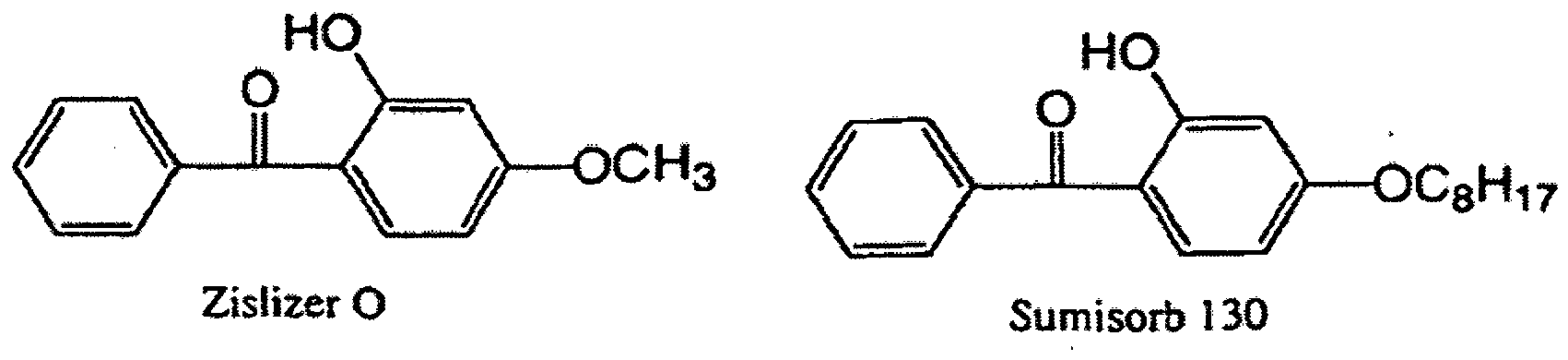
- Reliefmuster aus hitzebeständigem Harz, welches hergestellt wird, indem eine positiv arbeitende lichtempfindliche Harzzusammensetzung nach einem der Ansprüche 1 - 9 ultraviolettem Licht ausgesetzt wird und anschließend erhitzt wird.
- Festkörperbildsensor, hergestellt aus einem Reliefmuster aus einem hitzebeständigem Harz nach Anspruch 10.
Applications Claiming Priority (2)
| Application Number | Priority Date | Filing Date | Title |
|---|---|---|---|
| JP2004070229 | 2004-03-12 | ||
| PCT/JP2005/003464 WO2005088396A1 (ja) | 2004-03-12 | 2005-03-02 | ポジ型感光性樹脂組成物、それを用いたレリーフパターン、及び固体撮像素子 |
Publications (3)
| Publication Number | Publication Date |
|---|---|
| EP1724640A1 EP1724640A1 (de) | 2006-11-22 |
| EP1724640A4 EP1724640A4 (de) | 2010-04-07 |
| EP1724640B1 true EP1724640B1 (de) | 2015-11-18 |
Family
ID=34975743
Family Applications (1)
| Application Number | Title | Priority Date | Filing Date |
|---|---|---|---|
| EP05719779.0A Expired - Lifetime EP1724640B1 (de) | 2004-03-12 | 2005-03-02 | Positiv lichtempfindliche harzzusammensetzung und reliefmuster damit |
Country Status (7)
| Country | Link |
|---|---|
| US (1) | US20080193718A1 (de) |
| EP (1) | EP1724640B1 (de) |
| JP (1) | JP4743115B2 (de) |
| KR (1) | KR101150593B1 (de) |
| CN (1) | CN1930522B (de) |
| TW (1) | TWI370325B (de) |
| WO (1) | WO2005088396A1 (de) |
Families Citing this family (28)
| Publication number | Priority date | Publication date | Assignee | Title |
|---|---|---|---|---|
| JP2004310076A (ja) * | 2003-03-26 | 2004-11-04 | Sumitomo Bakelite Co Ltd | ポジ型感光性樹脂組成物並びに半導体装置及び表示素子 |
| JP2007122024A (ja) * | 2005-09-28 | 2007-05-17 | Toray Ind Inc | 感光性組成物 |
| JP5299739B2 (ja) * | 2007-10-15 | 2013-09-25 | 富士電機株式会社 | X線用屈折レンズユニットおよびx線用屈折レンズの製造方法 |
| KR101461123B1 (ko) * | 2008-05-08 | 2014-11-14 | 삼성디스플레이 주식회사 | 표시 기판의 제조 방법 및 이를 포함하는 표시 장치의 제조방법 |
| KR101113063B1 (ko) * | 2008-05-22 | 2012-02-15 | 주식회사 엘지화학 | 폴리이미드와 노볼락 수지를 포함하는 감광성 수지 조성물 |
| US8137901B2 (en) * | 2008-05-28 | 2012-03-20 | United Microelectronics Corp. | Method for fabricating an image sensor |
| JP5343738B2 (ja) * | 2008-08-05 | 2013-11-13 | Jsr株式会社 | 樹脂組成物、光学膜及び光学用部材 |
| JP5425005B2 (ja) * | 2009-08-19 | 2014-02-26 | 日本電波工業株式会社 | 圧電部品及びその製造方法 |
| JP5423802B2 (ja) * | 2009-09-29 | 2014-02-19 | 東レ株式会社 | ポジ型感光性樹脂組成物、それを用いた硬化膜および光学デバイス |
| PH12012502576A1 (en) | 2010-07-02 | 2022-03-30 | Toray Industries | Photosensitive resin composition, photosensitive resin composition film, and semiconductor device using the photosensitive resin composition or the photosensitive resin composition film |
| US10655003B2 (en) * | 2010-10-14 | 2020-05-19 | Lg Chem, Ltd. | Resin blend for melting process |
| KR101890633B1 (ko) * | 2011-04-27 | 2018-08-22 | 후지필름 가부시키가이샤 | 수지 조성물, 경화물의 제조 방법, 수지 패턴 제조 방법, 경화물 및 광학 부재 |
| JP6110107B2 (ja) * | 2012-03-13 | 2017-04-05 | 東京応化工業株式会社 | パターン形成方法 |
| JP6155823B2 (ja) * | 2012-07-12 | 2017-07-05 | Jsr株式会社 | 有機el素子、感放射線性樹脂組成物および硬化膜 |
| TWI585522B (zh) * | 2012-08-31 | 2017-06-01 | 富士軟片股份有限公司 | 感光性樹脂組成物、硬化物及其製造方法、樹脂圖案的製造方法、硬化膜、液晶顯示裝置、有機el顯示裝置、以及觸控面板顯示裝置 |
| JPWO2014136922A1 (ja) * | 2013-03-08 | 2017-02-16 | 富士フイルム株式会社 | 感光性樹脂組成物、硬化物及びその製造方法、樹脂パターン製造方法、硬化膜、液晶表示装置、有機el表示装置、並びに、タッチパネル表示装置 |
| JP5799182B1 (ja) * | 2014-10-03 | 2015-10-21 | 富士フイルム株式会社 | シロキサン樹脂組成物、これを用いた透明硬化物、透明画素、マイクロレンズ、固体撮像素子 |
| WO2016148176A1 (ja) * | 2015-03-19 | 2016-09-22 | 東レ株式会社 | ポジ型感光性樹脂組成物、硬化膜、tft基板、層間絶縁膜、表示装置、およびその製造方法 |
| TW201741765A (zh) * | 2015-12-17 | 2017-12-01 | 陶氏全球科技責任有限公司 | 具有高介電常數之光可成像薄膜 |
| TW201800860A (zh) * | 2015-12-17 | 2018-01-01 | 陶氏全球科技責任有限公司 | 具有高介電常數之光可成像薄膜 |
| TW201802587A (zh) * | 2016-03-24 | 2018-01-16 | 陶氏全球科技責任有限公司 | 具有高介電常數之光可成像薄膜 |
| US10948821B2 (en) * | 2016-03-28 | 2021-03-16 | Toray Industries, Inc. | Photosensitive resin composition |
| JP7296746B2 (ja) * | 2019-03-06 | 2023-06-23 | 太陽ホールディングス株式会社 | ポジ型感光性樹脂組成物、ドライフィルム、硬化物、および電子部品 |
| KR20210086527A (ko) * | 2019-12-31 | 2021-07-08 | 주식회사 동진쎄미켐 | 포지티브형 감광성 수지 조성물 |
| CN115244461A (zh) * | 2020-03-13 | 2022-10-25 | 东丽株式会社 | 有机el显示装置以及感光性树脂组合物 |
| US11675266B2 (en) | 2021-04-15 | 2023-06-13 | Industrial Technology Research Institute | Photosensitive compound, photosensitive composition, and patterning method |
| CN113485072B (zh) * | 2021-06-22 | 2023-11-07 | 北京科华微电子材料有限公司 | 一种光刻胶组合物及其用途 |
| US20230324789A1 (en) * | 2021-07-05 | 2023-10-12 | Resonac Corporation | Photosensitive resin composition, permanent resist, method for forming permanent resist, and method for inspecting permanent resist cured film |
Family Cites Families (16)
| Publication number | Priority date | Publication date | Assignee | Title |
|---|---|---|---|---|
| JPS61184828A (ja) * | 1985-02-12 | 1986-08-18 | Matsushita Electronics Corp | 半導体装置の製造方法 |
| JP3553929B2 (ja) * | 1990-05-21 | 2004-08-11 | ナシュア コーポレイション | 光拡散性材料を製造する方法 |
| DE69130701T2 (de) * | 1990-10-29 | 1999-08-26 | Toyo Gosei Kogyo Co. Ltd. | Lichtempfindliches gefärbtes Harz, farbiges Bild, Verfahren zur Herstellung von Farbfiltern und Verfahren zur Herstellung einer Schwarzmatrix |
| JPH05323599A (ja) * | 1992-05-22 | 1993-12-07 | Sumitomo Chem Co Ltd | 感光性フォトレジスト組成物 |
| DE69408709T2 (de) * | 1993-04-28 | 1998-10-01 | Hitachi Chemical Co Ltd | Photoempfindliche Harzzusammensetzung |
| JPH1164608A (ja) * | 1997-08-26 | 1999-03-05 | Dainippon Printing Co Ltd | レンチキュラーレンズ |
| JP2000039503A (ja) * | 1998-07-22 | 2000-02-08 | Matsushita Electric Ind Co Ltd | レンズアレイ |
| JP4390028B2 (ja) * | 2000-10-04 | 2009-12-24 | 日産化学工業株式会社 | ポジ型感光性ポリイミド樹脂組成物 |
| JP3672085B2 (ja) * | 2000-10-11 | 2005-07-13 | シャープ株式会社 | 固体撮像素子およびその製造方法 |
| JP3622201B2 (ja) * | 2001-02-19 | 2005-02-23 | Jsr株式会社 | 感放射線性屈折率変化性組成物 |
| JP3959735B2 (ja) | 2001-03-13 | 2007-08-15 | Jsr株式会社 | 感放射線性屈折率変化性組成物およびその利用 |
| RU2275401C2 (ru) * | 2001-03-13 | 2006-04-27 | Джей Эс Эр КОРПОРЕЙШН | Радиационно-чувстивительная композиция, изменяющая показатель преломления, и ее применение |
| JP4310968B2 (ja) * | 2001-06-22 | 2009-08-12 | 東レ株式会社 | ポジ型感光性樹脂組成物を用いて得られるレンズおよび光導波路 |
| JP4673513B2 (ja) | 2001-08-01 | 2011-04-20 | 株式会社半導体エネルギー研究所 | 半導体装置の作製方法 |
| CN100336137C (zh) * | 2002-01-28 | 2007-09-05 | 捷时雅株式会社 | 形成电介体的光敏组合物以及利用该组合物的电介体 |
| JP4062087B2 (ja) * | 2002-01-28 | 2008-03-19 | Jsr株式会社 | 感光性誘電体形成用組成物、転写フィルム、誘電体および電子部品 |
-
2005
- 2005-03-02 KR KR1020067018518A patent/KR101150593B1/ko not_active Expired - Fee Related
- 2005-03-02 CN CN2005800079347A patent/CN1930522B/zh not_active Expired - Fee Related
- 2005-03-02 EP EP05719779.0A patent/EP1724640B1/de not_active Expired - Lifetime
- 2005-03-02 US US10/590,366 patent/US20080193718A1/en not_active Abandoned
- 2005-03-02 WO PCT/JP2005/003464 patent/WO2005088396A1/ja not_active Ceased
- 2005-03-02 JP JP2006510911A patent/JP4743115B2/ja not_active Expired - Fee Related
- 2005-03-09 TW TW094107131A patent/TWI370325B/zh not_active IP Right Cessation
Also Published As
| Publication number | Publication date |
|---|---|
| JP4743115B2 (ja) | 2011-08-10 |
| KR20070007095A (ko) | 2007-01-12 |
| EP1724640A1 (de) | 2006-11-22 |
| JPWO2005088396A1 (ja) | 2008-01-31 |
| WO2005088396A1 (ja) | 2005-09-22 |
| CN1930522A (zh) | 2007-03-14 |
| TWI370325B (en) | 2012-08-11 |
| EP1724640A4 (de) | 2010-04-07 |
| TW200532374A (en) | 2005-10-01 |
| KR101150593B1 (ko) | 2012-06-01 |
| US20080193718A1 (en) | 2008-08-14 |
| CN1930522B (zh) | 2013-06-12 |
Similar Documents
| Publication | Publication Date | Title |
|---|---|---|
| EP1724640B1 (de) | Positiv lichtempfindliche harzzusammensetzung und reliefmuster damit | |
| KR101099336B1 (ko) | 포지티브형 감광성 수지 조성물 | |
| TWI413863B (zh) | 正型感光性樹脂組成物 | |
| TWI381248B (zh) | 感光性樹脂組成物 | |
| JP4310968B2 (ja) | ポジ型感光性樹脂組成物を用いて得られるレンズおよび光導波路 | |
| JP5034996B2 (ja) | ポジ型感光性樹脂組成物 | |
| KR102542822B1 (ko) | 수지 조성물, 그의 경화 릴리프 패턴, 및 그것을 사용한 반도체 전자 부품 또는 반도체 장치의 제조 방법 | |
| JP2004326094A (ja) | 感光性樹脂組成物 | |
| JP2005043883A (ja) | 感光性樹脂前駆体組成物 | |
| KR100894802B1 (ko) | 후막 내식막 패턴의 형성방법 및 이에 사용되는 감광성 수지 조성물 | |
| JP5176600B2 (ja) | ポジ型感光性樹脂組成物 | |
| JP4548001B2 (ja) | ポジ型感光性樹脂前駆体組成物 | |
| JP4403811B2 (ja) | ポジ型感光性樹脂組成物 | |
| JP2006047627A (ja) | 感光性樹脂前駆体組成物 | |
| JP4899695B2 (ja) | 感光性樹脂組成物、硬化膜、パターン硬化膜の製造方法および電子部品 | |
| JP4924013B2 (ja) | ポジ型感光性樹脂組成物 | |
| JP4449119B2 (ja) | ポジ型感光性樹脂前駆体組成物 | |
| JP2000292919A (ja) | 感放射線性樹脂組成物 | |
| JP2003076007A (ja) | ポジ型感光性樹脂前駆体組成物 | |
| JP4946105B2 (ja) | 樹脂組成物、それを用いたレリーフパターンの形成方法 | |
| JP2003043686A (ja) | ポジ型感光性樹脂前駆体組成物 | |
| JP2001235860A (ja) | ポジ型感光性樹脂前駆体組成物 | |
| JPS622249A (ja) | 感光性組成物 |
Legal Events
| Date | Code | Title | Description |
|---|---|---|---|
| PUAI | Public reference made under article 153(3) epc to a published international application that has entered the european phase |
Free format text: ORIGINAL CODE: 0009012 |
|
| 17P | Request for examination filed |
Effective date: 20060907 |
|
| AK | Designated contracting states |
Kind code of ref document: A1 Designated state(s): AT BE BG CH CY CZ DE DK EE ES FI FR GB GR HU IE IS IT LI LT LU MC NL PL PT RO SE SI SK TR |
|
| RIN1 | Information on inventor provided before grant (corrected) |
Inventor name: MINAMIHASHI, KATSUYA Inventor name: SUWA, MITSUHITO |
|
| DAX | Request for extension of the european patent (deleted) | ||
| A4 | Supplementary search report drawn up and despatched |
Effective date: 20100310 |
|
| 17Q | First examination report despatched |
Effective date: 20100625 |
|
| REG | Reference to a national code |
Ref country code: DE Ref legal event code: R079 Ref document number: 602005047942 Country of ref document: DE Free format text: PREVIOUS MAIN CLASS: G03F0007004000 Ipc: G03F0007022000 |
|
| GRAP | Despatch of communication of intention to grant a patent |
Free format text: ORIGINAL CODE: EPIDOSNIGR1 |
|
| RIC1 | Information provided on ipc code assigned before grant |
Ipc: G03F 7/022 20060101AFI20150318BHEP |
|
| INTG | Intention to grant announced |
Effective date: 20150414 |
|
| GRAS | Grant fee paid |
Free format text: ORIGINAL CODE: EPIDOSNIGR3 |
|
| GRAP | Despatch of communication of intention to grant a patent |
Free format text: ORIGINAL CODE: EPIDOSNIGR1 |
|
| INTG | Intention to grant announced |
Effective date: 20150916 |
|
| GRAA | (expected) grant |
Free format text: ORIGINAL CODE: 0009210 |
|
| AK | Designated contracting states |
Kind code of ref document: B1 Designated state(s): AT BE BG CH CY CZ DE DK EE ES FI FR GB GR HU IE IS IT LI LT LU MC NL PL PT RO SE SI SK TR |
|
| REG | Reference to a national code |
Ref country code: GB Ref legal event code: FG4D |
|
| REG | Reference to a national code |
Ref country code: CH Ref legal event code: EP |
|
| REG | Reference to a national code |
Ref country code: AT Ref legal event code: REF Ref document number: 761841 Country of ref document: AT Kind code of ref document: T Effective date: 20151215 |
|
| REG | Reference to a national code |
Ref country code: IE Ref legal event code: FG4D |
|
| REG | Reference to a national code |
Ref country code: DE Ref legal event code: R096 Ref document number: 602005047942 Country of ref document: DE |
|
| REG | Reference to a national code |
Ref country code: FR Ref legal event code: PLFP Year of fee payment: 12 |
|
| REG | Reference to a national code |
Ref country code: NL Ref legal event code: MP Effective date: 20160218 |
|
| REG | Reference to a national code |
Ref country code: LT Ref legal event code: MG4D |
|
| REG | Reference to a national code |
Ref country code: AT Ref legal event code: MK05 Ref document number: 761841 Country of ref document: AT Kind code of ref document: T Effective date: 20151118 |
|
| PG25 | Lapsed in a contracting state [announced via postgrant information from national office to epo] |
Ref country code: ES Free format text: LAPSE BECAUSE OF FAILURE TO SUBMIT A TRANSLATION OF THE DESCRIPTION OR TO PAY THE FEE WITHIN THE PRESCRIBED TIME-LIMIT Effective date: 20151118 Ref country code: IS Free format text: LAPSE BECAUSE OF FAILURE TO SUBMIT A TRANSLATION OF THE DESCRIPTION OR TO PAY THE FEE WITHIN THE PRESCRIBED TIME-LIMIT Effective date: 20160318 Ref country code: NL Free format text: LAPSE BECAUSE OF FAILURE TO SUBMIT A TRANSLATION OF THE DESCRIPTION OR TO PAY THE FEE WITHIN THE PRESCRIBED TIME-LIMIT Effective date: 20151118 Ref country code: LT Free format text: LAPSE BECAUSE OF FAILURE TO SUBMIT A TRANSLATION OF THE DESCRIPTION OR TO PAY THE FEE WITHIN THE PRESCRIBED TIME-LIMIT Effective date: 20151118 Ref country code: IT Free format text: LAPSE BECAUSE OF FAILURE TO SUBMIT A TRANSLATION OF THE DESCRIPTION OR TO PAY THE FEE WITHIN THE PRESCRIBED TIME-LIMIT Effective date: 20151118 |
|
| PG25 | Lapsed in a contracting state [announced via postgrant information from national office to epo] |
Ref country code: PT Free format text: LAPSE BECAUSE OF FAILURE TO SUBMIT A TRANSLATION OF THE DESCRIPTION OR TO PAY THE FEE WITHIN THE PRESCRIBED TIME-LIMIT Effective date: 20160318 Ref country code: SE Free format text: LAPSE BECAUSE OF FAILURE TO SUBMIT A TRANSLATION OF THE DESCRIPTION OR TO PAY THE FEE WITHIN THE PRESCRIBED TIME-LIMIT Effective date: 20151118 Ref country code: GR Free format text: LAPSE BECAUSE OF FAILURE TO SUBMIT A TRANSLATION OF THE DESCRIPTION OR TO PAY THE FEE WITHIN THE PRESCRIBED TIME-LIMIT Effective date: 20160219 Ref country code: PL Free format text: LAPSE BECAUSE OF FAILURE TO SUBMIT A TRANSLATION OF THE DESCRIPTION OR TO PAY THE FEE WITHIN THE PRESCRIBED TIME-LIMIT Effective date: 20151118 Ref country code: FI Free format text: LAPSE BECAUSE OF FAILURE TO SUBMIT A TRANSLATION OF THE DESCRIPTION OR TO PAY THE FEE WITHIN THE PRESCRIBED TIME-LIMIT Effective date: 20151118 Ref country code: AT Free format text: LAPSE BECAUSE OF FAILURE TO SUBMIT A TRANSLATION OF THE DESCRIPTION OR TO PAY THE FEE WITHIN THE PRESCRIBED TIME-LIMIT Effective date: 20151118 |
|
| PG25 | Lapsed in a contracting state [announced via postgrant information from national office to epo] |
Ref country code: CZ Free format text: LAPSE BECAUSE OF FAILURE TO SUBMIT A TRANSLATION OF THE DESCRIPTION OR TO PAY THE FEE WITHIN THE PRESCRIBED TIME-LIMIT Effective date: 20151118 |
|
| REG | Reference to a national code |
Ref country code: DE Ref legal event code: R097 Ref document number: 602005047942 Country of ref document: DE |
|
| PG25 | Lapsed in a contracting state [announced via postgrant information from national office to epo] |
Ref country code: BE Free format text: LAPSE BECAUSE OF NON-PAYMENT OF DUE FEES Effective date: 20160331 Ref country code: SK Free format text: LAPSE BECAUSE OF FAILURE TO SUBMIT A TRANSLATION OF THE DESCRIPTION OR TO PAY THE FEE WITHIN THE PRESCRIBED TIME-LIMIT Effective date: 20151118 Ref country code: EE Free format text: LAPSE BECAUSE OF FAILURE TO SUBMIT A TRANSLATION OF THE DESCRIPTION OR TO PAY THE FEE WITHIN THE PRESCRIBED TIME-LIMIT Effective date: 20151118 Ref country code: DK Free format text: LAPSE BECAUSE OF FAILURE TO SUBMIT A TRANSLATION OF THE DESCRIPTION OR TO PAY THE FEE WITHIN THE PRESCRIBED TIME-LIMIT Effective date: 20151118 Ref country code: RO Free format text: LAPSE BECAUSE OF FAILURE TO SUBMIT A TRANSLATION OF THE DESCRIPTION OR TO PAY THE FEE WITHIN THE PRESCRIBED TIME-LIMIT Effective date: 20151118 |
|
| PLBE | No opposition filed within time limit |
Free format text: ORIGINAL CODE: 0009261 |
|
| STAA | Information on the status of an ep patent application or granted ep patent |
Free format text: STATUS: NO OPPOSITION FILED WITHIN TIME LIMIT |
|
| 26N | No opposition filed |
Effective date: 20160819 |
|
| PG25 | Lapsed in a contracting state [announced via postgrant information from national office to epo] |
Ref country code: LU Free format text: LAPSE BECAUSE OF FAILURE TO SUBMIT A TRANSLATION OF THE DESCRIPTION OR TO PAY THE FEE WITHIN THE PRESCRIBED TIME-LIMIT Effective date: 20160302 Ref country code: MC Free format text: LAPSE BECAUSE OF FAILURE TO SUBMIT A TRANSLATION OF THE DESCRIPTION OR TO PAY THE FEE WITHIN THE PRESCRIBED TIME-LIMIT Effective date: 20151118 |
|
| REG | Reference to a national code |
Ref country code: CH Ref legal event code: PL |
|
| PG25 | Lapsed in a contracting state [announced via postgrant information from national office to epo] |
Ref country code: SI Free format text: LAPSE BECAUSE OF FAILURE TO SUBMIT A TRANSLATION OF THE DESCRIPTION OR TO PAY THE FEE WITHIN THE PRESCRIBED TIME-LIMIT Effective date: 20151118 |
|
| REG | Reference to a national code |
Ref country code: IE Ref legal event code: MM4A |
|
| PG25 | Lapsed in a contracting state [announced via postgrant information from national office to epo] |
Ref country code: BE Free format text: LAPSE BECAUSE OF FAILURE TO SUBMIT A TRANSLATION OF THE DESCRIPTION OR TO PAY THE FEE WITHIN THE PRESCRIBED TIME-LIMIT Effective date: 20151118 |
|
| PG25 | Lapsed in a contracting state [announced via postgrant information from national office to epo] |
Ref country code: LI Free format text: LAPSE BECAUSE OF NON-PAYMENT OF DUE FEES Effective date: 20160331 Ref country code: IE Free format text: LAPSE BECAUSE OF NON-PAYMENT OF DUE FEES Effective date: 20160302 Ref country code: CH Free format text: LAPSE BECAUSE OF NON-PAYMENT OF DUE FEES Effective date: 20160331 |
|
| REG | Reference to a national code |
Ref country code: FR Ref legal event code: PLFP Year of fee payment: 13 |
|
| REG | Reference to a national code |
Ref country code: FR Ref legal event code: PLFP Year of fee payment: 14 |
|
| PGFP | Annual fee paid to national office [announced via postgrant information from national office to epo] |
Ref country code: GB Payment date: 20180228 Year of fee payment: 14 Ref country code: DE Payment date: 20180220 Year of fee payment: 14 |
|
| PG25 | Lapsed in a contracting state [announced via postgrant information from national office to epo] |
Ref country code: CY Free format text: LAPSE BECAUSE OF FAILURE TO SUBMIT A TRANSLATION OF THE DESCRIPTION OR TO PAY THE FEE WITHIN THE PRESCRIBED TIME-LIMIT Effective date: 20151118 Ref country code: HU Free format text: LAPSE BECAUSE OF FAILURE TO SUBMIT A TRANSLATION OF THE DESCRIPTION OR TO PAY THE FEE WITHIN THE PRESCRIBED TIME-LIMIT; INVALID AB INITIO Effective date: 20050302 |
|
| PGFP | Annual fee paid to national office [announced via postgrant information from national office to epo] |
Ref country code: FR Payment date: 20180223 Year of fee payment: 14 |
|
| PG25 | Lapsed in a contracting state [announced via postgrant information from national office to epo] |
Ref country code: TR Free format text: LAPSE BECAUSE OF FAILURE TO SUBMIT A TRANSLATION OF THE DESCRIPTION OR TO PAY THE FEE WITHIN THE PRESCRIBED TIME-LIMIT Effective date: 20151118 |
|
| PG25 | Lapsed in a contracting state [announced via postgrant information from national office to epo] |
Ref country code: BG Free format text: LAPSE BECAUSE OF FAILURE TO SUBMIT A TRANSLATION OF THE DESCRIPTION OR TO PAY THE FEE WITHIN THE PRESCRIBED TIME-LIMIT Effective date: 20151118 |
|
| REG | Reference to a national code |
Ref country code: DE Ref legal event code: R119 Ref document number: 602005047942 Country of ref document: DE |
|
| GBPC | Gb: european patent ceased through non-payment of renewal fee |
Effective date: 20190302 |
|
| PG25 | Lapsed in a contracting state [announced via postgrant information from national office to epo] |
Ref country code: GB Free format text: LAPSE BECAUSE OF NON-PAYMENT OF DUE FEES Effective date: 20190302 Ref country code: DE Free format text: LAPSE BECAUSE OF NON-PAYMENT OF DUE FEES Effective date: 20191001 |
|
| PG25 | Lapsed in a contracting state [announced via postgrant information from national office to epo] |
Ref country code: FR Free format text: LAPSE BECAUSE OF NON-PAYMENT OF DUE FEES Effective date: 20190331 |