EP1730264B1 - Gewebeartige organisation von zellen und makroskopische gewebeartige konstrukte, die durch "makromass-kultur" von zellen hergestellt werden, und die methode der "makromass-kultur" - Google Patents
Gewebeartige organisation von zellen und makroskopische gewebeartige konstrukte, die durch "makromass-kultur" von zellen hergestellt werden, und die methode der "makromass-kultur" Download PDFInfo
- Publication number
- EP1730264B1 EP1730264B1 EP04770637A EP04770637A EP1730264B1 EP 1730264 B1 EP1730264 B1 EP 1730264B1 EP 04770637 A EP04770637 A EP 04770637A EP 04770637 A EP04770637 A EP 04770637A EP 1730264 B1 EP1730264 B1 EP 1730264B1
- Authority
- EP
- European Patent Office
- Prior art keywords
- tissue
- cells
- culture
- constructs
- formation
- Prior art date
- Legal status (The legal status is an assumption and is not a legal conclusion. Google has not performed a legal analysis and makes no representation as to the accuracy of the status listed.)
- Expired - Lifetime
Links
- 238000000034 method Methods 0.000 title claims description 81
- 230000008520 organization Effects 0.000 title abstract description 46
- 210000004027 cell Anatomy 0.000 claims abstract description 182
- 230000002500 effect on skin Effects 0.000 claims abstract description 44
- 210000002950 fibroblast Anatomy 0.000 claims abstract description 40
- 238000010899 nucleation Methods 0.000 claims abstract description 37
- 230000009772 tissue formation Effects 0.000 claims abstract description 37
- 210000002536 stromal cell Anatomy 0.000 claims abstract description 32
- 210000001612 chondrocyte Anatomy 0.000 claims abstract description 24
- 239000003795 chemical substances by application Substances 0.000 claims abstract description 20
- 230000001413 cellular effect Effects 0.000 claims abstract description 18
- 239000011159 matrix material Substances 0.000 claims abstract description 14
- 210000005009 osteogenic cell Anatomy 0.000 claims abstract description 13
- 239000003102 growth factor Substances 0.000 claims abstract description 12
- 230000001939 inductive effect Effects 0.000 claims abstract description 12
- 210000000963 osteoblast Anatomy 0.000 claims abstract description 10
- 239000000126 substance Substances 0.000 claims abstract description 6
- 230000003328 fibroblastic effect Effects 0.000 claims abstract description 4
- 210000001519 tissue Anatomy 0.000 claims description 111
- 230000015572 biosynthetic process Effects 0.000 claims description 60
- 210000000845 cartilage Anatomy 0.000 claims description 16
- 210000000988 bone and bone Anatomy 0.000 claims description 13
- 102000008186 Collagen Human genes 0.000 claims description 11
- 108010035532 Collagen Proteins 0.000 claims description 11
- 229920001436 collagen Polymers 0.000 claims description 11
- 239000000499 gel Substances 0.000 claims description 11
- 238000002513 implantation Methods 0.000 claims description 11
- 102000010834 Extracellular Matrix Proteins Human genes 0.000 claims description 9
- 108010037362 Extracellular Matrix Proteins Proteins 0.000 claims description 9
- 210000002744 extracellular matrix Anatomy 0.000 claims description 9
- 239000000463 material Substances 0.000 claims description 9
- 230000008439 repair process Effects 0.000 claims description 9
- 108010010803 Gelatin Proteins 0.000 claims description 8
- 239000008273 gelatin Substances 0.000 claims description 8
- 229920000159 gelatin Polymers 0.000 claims description 8
- 235000019322 gelatine Nutrition 0.000 claims description 8
- 235000011852 gelatine desserts Nutrition 0.000 claims description 8
- 239000001963 growth medium Substances 0.000 claims description 8
- 108090000623 proteins and genes Proteins 0.000 claims description 8
- 238000002560 therapeutic procedure Methods 0.000 claims description 8
- 238000004519 manufacturing process Methods 0.000 claims description 6
- 238000002360 preparation method Methods 0.000 claims description 6
- 102000009123 Fibrin Human genes 0.000 claims description 5
- 108010073385 Fibrin Proteins 0.000 claims description 5
- BWGVNKXGVNDBDI-UHFFFAOYSA-N Fibrin monomer Chemical compound CNC(=O)CNC(=O)CN BWGVNKXGVNDBDI-UHFFFAOYSA-N 0.000 claims description 5
- 229950003499 fibrin Drugs 0.000 claims description 5
- 239000004033 plastic Substances 0.000 claims description 5
- 229920003023 plastic Polymers 0.000 claims description 5
- 239000000203 mixture Substances 0.000 claims description 4
- 102000004169 proteins and genes Human genes 0.000 claims description 4
- 230000029663 wound healing Effects 0.000 claims description 4
- 206010061218 Inflammation Diseases 0.000 claims description 3
- 210000001671 embryonic stem cell Anatomy 0.000 claims description 3
- 230000004054 inflammatory process Effects 0.000 claims description 3
- 239000012528 membrane Substances 0.000 claims description 3
- 239000004677 Nylon Substances 0.000 claims description 2
- 238000003255 drug test Methods 0.000 claims description 2
- 238000007443 liposuction Methods 0.000 claims description 2
- 229920001778 nylon Polymers 0.000 claims description 2
- -1 sheets Substances 0.000 claims description 2
- 230000001627 detrimental effect Effects 0.000 claims 1
- 201000010099 disease Diseases 0.000 claims 1
- 208000037265 diseases, disorders, signs and symptoms Diseases 0.000 claims 1
- 238000010874 in vitro model Methods 0.000 claims 1
- 239000004017 serum-free culture medium Substances 0.000 claims 1
- 210000004504 adult stem cell Anatomy 0.000 abstract 1
- 239000002609 medium Substances 0.000 description 43
- 239000006144 Dulbecco’s modified Eagle's medium Substances 0.000 description 23
- 238000010186 staining Methods 0.000 description 21
- 239000000306 component Substances 0.000 description 18
- 230000002188 osteogenic effect Effects 0.000 description 17
- 102000012422 Collagen Type I Human genes 0.000 description 11
- 108010022452 Collagen Type I Proteins 0.000 description 11
- 229940096422 collagen type i Drugs 0.000 description 11
- 230000012010 growth Effects 0.000 description 11
- WZUVPPKBWHMQCE-UHFFFAOYSA-N Haematoxylin Chemical compound C12=CC(O)=C(O)C=C2CC2(O)C1C1=CC=C(O)C(O)=C1OC2 WZUVPPKBWHMQCE-UHFFFAOYSA-N 0.000 description 10
- 210000003491 skin Anatomy 0.000 description 10
- 239000000047 product Substances 0.000 description 9
- CIWBSHSKHKDKBQ-JLAZNSOCSA-N Ascorbic acid Chemical compound OC[C@H](O)[C@H]1OC(=O)C(O)=C1O CIWBSHSKHKDKBQ-JLAZNSOCSA-N 0.000 description 8
- 230000002349 favourable effect Effects 0.000 description 8
- 239000007943 implant Substances 0.000 description 8
- 230000014509 gene expression Effects 0.000 description 7
- 210000000056 organ Anatomy 0.000 description 7
- 210000002966 serum Anatomy 0.000 description 7
- 238000013459 approach Methods 0.000 description 6
- 230000002648 chondrogenic effect Effects 0.000 description 5
- 230000001143 conditioned effect Effects 0.000 description 5
- 210000004207 dermis Anatomy 0.000 description 5
- 238000011161 development Methods 0.000 description 5
- 230000018109 developmental process Effects 0.000 description 5
- YQGOJNYOYNNSMM-UHFFFAOYSA-N eosin Chemical compound [Na+].OC(=O)C1=CC=CC=C1C1=C2C=C(Br)C(=O)C(Br)=C2OC2=C(Br)C(O)=C(Br)C=C21 YQGOJNYOYNNSMM-UHFFFAOYSA-N 0.000 description 5
- 230000035876 healing Effects 0.000 description 5
- 208000014674 injury Diseases 0.000 description 5
- 230000008569 process Effects 0.000 description 5
- 238000003757 reverse transcription PCR Methods 0.000 description 5
- 230000035899 viability Effects 0.000 description 5
- 208000027418 Wounds and injury Diseases 0.000 description 4
- 235000010323 ascorbic acid Nutrition 0.000 description 4
- 239000011668 ascorbic acid Substances 0.000 description 4
- 230000008901 benefit Effects 0.000 description 4
- 230000006378 damage Effects 0.000 description 4
- 238000010562 histological examination Methods 0.000 description 4
- NOESYZHRGYRDHS-UHFFFAOYSA-N insulin Chemical compound N1C(=O)C(NC(=O)C(CCC(N)=O)NC(=O)C(CCC(O)=O)NC(=O)C(C(C)C)NC(=O)C(NC(=O)CN)C(C)CC)CSSCC(C(NC(CO)C(=O)NC(CC(C)C)C(=O)NC(CC=2C=CC(O)=CC=2)C(=O)NC(CCC(N)=O)C(=O)NC(CC(C)C)C(=O)NC(CCC(O)=O)C(=O)NC(CC(N)=O)C(=O)NC(CC=2C=CC(O)=CC=2)C(=O)NC(CSSCC(NC(=O)C(C(C)C)NC(=O)C(CC(C)C)NC(=O)C(CC=2C=CC(O)=CC=2)NC(=O)C(CC(C)C)NC(=O)C(C)NC(=O)C(CCC(O)=O)NC(=O)C(C(C)C)NC(=O)C(CC(C)C)NC(=O)C(CC=2NC=NC=2)NC(=O)C(CO)NC(=O)CNC2=O)C(=O)NCC(=O)NC(CCC(O)=O)C(=O)NC(CCCNC(N)=N)C(=O)NCC(=O)NC(CC=3C=CC=CC=3)C(=O)NC(CC=3C=CC=CC=3)C(=O)NC(CC=3C=CC(O)=CC=3)C(=O)NC(C(C)O)C(=O)N3C(CCC3)C(=O)NC(CCCCN)C(=O)NC(C)C(O)=O)C(=O)NC(CC(N)=O)C(O)=O)=O)NC(=O)C(C(C)CC)NC(=O)C(CO)NC(=O)C(C(C)O)NC(=O)C1CSSCC2NC(=O)C(CC(C)C)NC(=O)C(NC(=O)C(CCC(N)=O)NC(=O)C(CC(N)=O)NC(=O)C(NC(=O)C(N)CC=1C=CC=CC=1)C(C)C)CC1=CN=CN1 NOESYZHRGYRDHS-UHFFFAOYSA-N 0.000 description 4
- 230000004048 modification Effects 0.000 description 4
- 238000012986 modification Methods 0.000 description 4
- 238000001356 surgical procedure Methods 0.000 description 4
- 230000001225 therapeutic effect Effects 0.000 description 4
- 229950003937 tolonium Drugs 0.000 description 4
- QTBSBXVTEAMEQO-UHFFFAOYSA-N Acetic acid Chemical compound CC(O)=O QTBSBXVTEAMEQO-UHFFFAOYSA-N 0.000 description 3
- 102000001893 Bone Morphogenetic Protein Receptors Human genes 0.000 description 3
- 108010040422 Bone Morphogenetic Protein Receptors Proteins 0.000 description 3
- 102000029816 Collagenase Human genes 0.000 description 3
- 108060005980 Collagenase Proteins 0.000 description 3
- HEMHJVSKTPXQMS-UHFFFAOYSA-M Sodium hydroxide Chemical compound [OH-].[Na+] HEMHJVSKTPXQMS-UHFFFAOYSA-M 0.000 description 3
- 230000002411 adverse Effects 0.000 description 3
- 239000011543 agarose gel Substances 0.000 description 3
- 210000001188 articular cartilage Anatomy 0.000 description 3
- 229960005070 ascorbic acid Drugs 0.000 description 3
- 230000008859 change Effects 0.000 description 3
- 229960002424 collagenase Drugs 0.000 description 3
- UREBDLICKHMUKA-CXSFZGCWSA-N dexamethasone Chemical compound C1CC2=CC(=O)C=C[C@]2(C)[C@]2(F)[C@@H]1[C@@H]1C[C@@H](C)[C@@](C(=O)CO)(O)[C@@]1(C)C[C@@H]2O UREBDLICKHMUKA-CXSFZGCWSA-N 0.000 description 3
- 229960003957 dexamethasone Drugs 0.000 description 3
- 238000010195 expression analysis Methods 0.000 description 3
- 238000012744 immunostaining Methods 0.000 description 3
- 230000010354 integration Effects 0.000 description 3
- 239000003550 marker Substances 0.000 description 3
- 230000011164 ossification Effects 0.000 description 3
- 239000008188 pellet Substances 0.000 description 3
- 239000012679 serum free medium Substances 0.000 description 3
- HNONEKILPDHFOL-UHFFFAOYSA-M tolonium chloride Chemical compound [Cl-].C1=C(C)C(N)=CC2=[S+]C3=CC(N(C)C)=CC=C3N=C21 HNONEKILPDHFOL-UHFFFAOYSA-M 0.000 description 3
- CSCPPACGZOOCGX-UHFFFAOYSA-N Acetone Chemical compound CC(C)=O CSCPPACGZOOCGX-UHFFFAOYSA-N 0.000 description 2
- 102000016284 Aggrecans Human genes 0.000 description 2
- 108010067219 Aggrecans Proteins 0.000 description 2
- 108010049931 Bone Morphogenetic Protein 2 Proteins 0.000 description 2
- 108010049955 Bone Morphogenetic Protein 4 Proteins 0.000 description 2
- 102100024506 Bone morphogenetic protein 2 Human genes 0.000 description 2
- 102100024505 Bone morphogenetic protein 4 Human genes 0.000 description 2
- 241000283690 Bos taurus Species 0.000 description 2
- 208000004434 Calcinosis Diseases 0.000 description 2
- 108010041390 Collagen Type II Proteins 0.000 description 2
- 102000001187 Collagen Type III Human genes 0.000 description 2
- 108010069502 Collagen Type III Proteins 0.000 description 2
- 102000030746 Collagen Type X Human genes 0.000 description 2
- 108010022510 Collagen Type X Proteins 0.000 description 2
- 102000003972 Fibroblast growth factor 7 Human genes 0.000 description 2
- 108090000385 Fibroblast growth factor 7 Proteins 0.000 description 2
- 102000016359 Fibronectins Human genes 0.000 description 2
- 108010067306 Fibronectins Proteins 0.000 description 2
- DHCLVCXQIBBOPH-UHFFFAOYSA-N Glycerol 2-phosphate Chemical compound OCC(CO)OP(O)(O)=O DHCLVCXQIBBOPH-UHFFFAOYSA-N 0.000 description 2
- 102000004877 Insulin Human genes 0.000 description 2
- 108090001061 Insulin Proteins 0.000 description 2
- NPGIHFRTRXVWOY-UHFFFAOYSA-N Oil red O Chemical compound Cc1ccc(C)c(c1)N=Nc1cc(C)c(cc1C)N=Nc1c(O)ccc2ccccc12 NPGIHFRTRXVWOY-UHFFFAOYSA-N 0.000 description 2
- 102000004264 Osteopontin Human genes 0.000 description 2
- 108010081689 Osteopontin Proteins 0.000 description 2
- 102000006461 Parathyroid Hormone Receptors Human genes 0.000 description 2
- 108010058828 Parathyroid Hormone Receptors Proteins 0.000 description 2
- 206010072170 Skin wound Diseases 0.000 description 2
- 102000003711 Syndecan-2 Human genes 0.000 description 2
- 108090000054 Syndecan-2 Proteins 0.000 description 2
- 102000007000 Tenascin Human genes 0.000 description 2
- 108010008125 Tenascin Proteins 0.000 description 2
- GLNADSQYFUSGOU-GPTZEZBUSA-J Trypan blue Chemical compound [Na+].[Na+].[Na+].[Na+].C1=C(S([O-])(=O)=O)C=C2C=C(S([O-])(=O)=O)C(/N=N/C3=CC=C(C=C3C)C=3C=C(C(=CC=3)\N=N\C=3C(=CC4=CC(=CC(N)=C4C=3O)S([O-])(=O)=O)S([O-])(=O)=O)C)=C(O)C2=C1N GLNADSQYFUSGOU-GPTZEZBUSA-J 0.000 description 2
- 108010073929 Vascular Endothelial Growth Factor A Proteins 0.000 description 2
- 102000005789 Vascular Endothelial Growth Factors Human genes 0.000 description 2
- 108010019530 Vascular Endothelial Growth Factors Proteins 0.000 description 2
- 230000000735 allogeneic effect Effects 0.000 description 2
- 238000004458 analytical method Methods 0.000 description 2
- 210000002449 bone cell Anatomy 0.000 description 2
- 239000000316 bone substitute Substances 0.000 description 2
- 230000002308 calcification Effects 0.000 description 2
- 230000022159 cartilage development Effects 0.000 description 2
- 238000004113 cell culture Methods 0.000 description 2
- 239000006285 cell suspension Substances 0.000 description 2
- 230000017455 cell-cell adhesion Effects 0.000 description 2
- 230000009816 chondrogenic differentiation Effects 0.000 description 2
- 239000002131 composite material Substances 0.000 description 2
- 238000002474 experimental method Methods 0.000 description 2
- 210000002216 heart Anatomy 0.000 description 2
- 238000000338 in vitro Methods 0.000 description 2
- 229940125396 insulin Drugs 0.000 description 2
- 210000003734 kidney Anatomy 0.000 description 2
- JVTAAEKCZFNVCJ-UHFFFAOYSA-N lactic acid Chemical compound CC(O)C(O)=O JVTAAEKCZFNVCJ-UHFFFAOYSA-N 0.000 description 2
- 210000002414 leg Anatomy 0.000 description 2
- 238000012423 maintenance Methods 0.000 description 2
- 239000012533 medium component Substances 0.000 description 2
- 210000002901 mesenchymal stem cell Anatomy 0.000 description 2
- 238000012340 reverse transcriptase PCR Methods 0.000 description 2
- 238000013341 scale-up Methods 0.000 description 2
- 238000003786 synthesis reaction Methods 0.000 description 2
- 230000008733 trauma Effects 0.000 description 2
- 238000005406 washing Methods 0.000 description 2
- 208000010392 Bone Fractures Diseases 0.000 description 1
- 240000007124 Brassica oleracea Species 0.000 description 1
- 235000003899 Brassica oleracea var acephala Nutrition 0.000 description 1
- 235000012905 Brassica oleracea var viridis Nutrition 0.000 description 1
- OYPRJOBELJOOCE-UHFFFAOYSA-N Calcium Chemical compound [Ca] OYPRJOBELJOOCE-UHFFFAOYSA-N 0.000 description 1
- 241000283707 Capra Species 0.000 description 1
- 206010007710 Cartilage injury Diseases 0.000 description 1
- 229920001287 Chondroitin sulfate Polymers 0.000 description 1
- 102000000503 Collagen Type II Human genes 0.000 description 1
- KDXKERNSBIXSRK-RXMQYKEDSA-N D-lysine Chemical compound NCCCC[C@@H](N)C(O)=O KDXKERNSBIXSRK-RXMQYKEDSA-N 0.000 description 1
- 229920003134 Eudragit® polymer Polymers 0.000 description 1
- 108010049003 Fibrinogen Proteins 0.000 description 1
- 102000008946 Fibrinogen Human genes 0.000 description 1
- 102000018233 Fibroblast Growth Factor Human genes 0.000 description 1
- 108050007372 Fibroblast Growth Factor Proteins 0.000 description 1
- AEMRFAOFKBGASW-UHFFFAOYSA-N Glycolic acid Natural products OCC(O)=O AEMRFAOFKBGASW-UHFFFAOYSA-N 0.000 description 1
- MIJPAVRNWPDMOR-ZAFYKAAXSA-N L-ascorbic acid 2-phosphate Chemical compound OC[C@H](O)[C@H]1OC(=O)C(OP(O)(O)=O)=C1O MIJPAVRNWPDMOR-ZAFYKAAXSA-N 0.000 description 1
- 241001465754 Metazoa Species 0.000 description 1
- VVQNEPGJFQJSBK-UHFFFAOYSA-N Methyl methacrylate Chemical compound COC(=O)C(C)=C VVQNEPGJFQJSBK-UHFFFAOYSA-N 0.000 description 1
- CTQNGGLPUBDAKN-UHFFFAOYSA-N O-Xylene Chemical compound CC1=CC=CC=C1C CTQNGGLPUBDAKN-UHFFFAOYSA-N 0.000 description 1
- 206010053159 Organ failure Diseases 0.000 description 1
- 102000016611 Proteoglycans Human genes 0.000 description 1
- 108010067787 Proteoglycans Proteins 0.000 description 1
- 108090000190 Thrombin Proteins 0.000 description 1
- RTAQQCXQSZGOHL-UHFFFAOYSA-N Titanium Chemical compound [Ti] RTAQQCXQSZGOHL-UHFFFAOYSA-N 0.000 description 1
- 108010009583 Transforming Growth Factors Proteins 0.000 description 1
- 102000009618 Transforming Growth Factors Human genes 0.000 description 1
- 102000056172 Transforming growth factor beta-3 Human genes 0.000 description 1
- 108090000097 Transforming growth factor beta-3 Proteins 0.000 description 1
- 208000025865 Ulcer Diseases 0.000 description 1
- 206010052428 Wound Diseases 0.000 description 1
- 230000006978 adaptation Effects 0.000 description 1
- 230000001464 adherent effect Effects 0.000 description 1
- 230000002776 aggregation Effects 0.000 description 1
- 238000004220 aggregation Methods 0.000 description 1
- 230000003367 anti-collagen effect Effects 0.000 description 1
- 230000000890 antigenic effect Effects 0.000 description 1
- 229940072107 ascorbate Drugs 0.000 description 1
- 230000009286 beneficial effect Effects 0.000 description 1
- 239000012620 biological material Substances 0.000 description 1
- 230000005540 biological transmission Effects 0.000 description 1
- 238000001574 biopsy Methods 0.000 description 1
- 210000004204 blood vessel Anatomy 0.000 description 1
- 210000001185 bone marrow Anatomy 0.000 description 1
- 229910052791 calcium Inorganic materials 0.000 description 1
- 239000011575 calcium Substances 0.000 description 1
- 230000015556 catabolic process Effects 0.000 description 1
- 230000003915 cell function Effects 0.000 description 1
- 210000003850 cellular structure Anatomy 0.000 description 1
- 239000000919 ceramic Substances 0.000 description 1
- 229940059329 chondroitin sulfate Drugs 0.000 description 1
- 239000011248 coating agent Substances 0.000 description 1
- 238000000576 coating method Methods 0.000 description 1
- 238000009833 condensation Methods 0.000 description 1
- 230000005494 condensation Effects 0.000 description 1
- 229920001577 copolymer Polymers 0.000 description 1
- 238000012136 culture method Methods 0.000 description 1
- 210000004748 cultured cell Anatomy 0.000 description 1
- 238000012258 culturing Methods 0.000 description 1
- 230000003247 decreasing effect Effects 0.000 description 1
- 238000006731 degradation reaction Methods 0.000 description 1
- 230000001419 dependent effect Effects 0.000 description 1
- 230000008021 deposition Effects 0.000 description 1
- 238000001514 detection method Methods 0.000 description 1
- 230000004069 differentiation Effects 0.000 description 1
- 108010007093 dispase Proteins 0.000 description 1
- 230000000694 effects Effects 0.000 description 1
- 238000005538 encapsulation Methods 0.000 description 1
- 238000005516 engineering process Methods 0.000 description 1
- 230000002708 enhancing effect Effects 0.000 description 1
- 210000002615 epidermis Anatomy 0.000 description 1
- 210000003414 extremity Anatomy 0.000 description 1
- 230000001815 facial effect Effects 0.000 description 1
- 229940012952 fibrinogen Drugs 0.000 description 1
- 229940126864 fibroblast growth factor Drugs 0.000 description 1
- 238000009472 formulation Methods 0.000 description 1
- 239000012634 fragment Substances 0.000 description 1
- 230000006870 function Effects 0.000 description 1
- 210000003709 heart valve Anatomy 0.000 description 1
- 210000003494 hepatocyte Anatomy 0.000 description 1
- 210000004394 hip joint Anatomy 0.000 description 1
- 230000036571 hydration Effects 0.000 description 1
- 238000006703 hydration reaction Methods 0.000 description 1
- 229910052588 hydroxylapatite Inorganic materials 0.000 description 1
- 230000001900 immune effect Effects 0.000 description 1
- 230000002163 immunogen Effects 0.000 description 1
- 238000003364 immunohistochemistry Methods 0.000 description 1
- 230000006872 improvement Effects 0.000 description 1
- 238000010348 incorporation Methods 0.000 description 1
- 238000011534 incubation Methods 0.000 description 1
- 238000002955 isolation Methods 0.000 description 1
- 239000004310 lactic acid Substances 0.000 description 1
- 235000014655 lactic acid Nutrition 0.000 description 1
- 150000002632 lipids Chemical class 0.000 description 1
- 239000007788 liquid Substances 0.000 description 1
- 210000004185 liver Anatomy 0.000 description 1
- 230000007774 longterm Effects 0.000 description 1
- 210000004962 mammalian cell Anatomy 0.000 description 1
- 108010082117 matrigel Proteins 0.000 description 1
- 230000003278 mimic effect Effects 0.000 description 1
- 210000005036 nerve Anatomy 0.000 description 1
- 230000024121 nodulation Effects 0.000 description 1
- 230000009818 osteogenic differentiation Effects 0.000 description 1
- XYJRXVWERLGGKC-UHFFFAOYSA-D pentacalcium;hydroxide;triphosphate Chemical compound [OH-].[Ca+2].[Ca+2].[Ca+2].[Ca+2].[Ca+2].[O-]P([O-])([O-])=O.[O-]P([O-])([O-])=O.[O-]P([O-])([O-])=O XYJRXVWERLGGKC-UHFFFAOYSA-D 0.000 description 1
- 239000000863 peptide conjugate Substances 0.000 description 1
- 230000008447 perception Effects 0.000 description 1
- 238000002278 reconstructive surgery Methods 0.000 description 1
- 230000008929 regeneration Effects 0.000 description 1
- 238000011069 regeneration method Methods 0.000 description 1
- 238000011160 research Methods 0.000 description 1
- 229940091258 selenium supplement Drugs 0.000 description 1
- 238000007390 skin biopsy Methods 0.000 description 1
- 210000000130 stem cell Anatomy 0.000 description 1
- 238000006467 substitution reaction Methods 0.000 description 1
- 229920001059 synthetic polymer Polymers 0.000 description 1
- 229960004072 thrombin Drugs 0.000 description 1
- 230000008467 tissue growth Effects 0.000 description 1
- 238000012546 transfer Methods 0.000 description 1
- 238000002054 transplantation Methods 0.000 description 1
- 231100000397 ulcer Toxicity 0.000 description 1
- 241001430294 unidentified retrovirus Species 0.000 description 1
- XLYOFNOQVPJJNP-UHFFFAOYSA-N water Substances O XLYOFNOQVPJJNP-UHFFFAOYSA-N 0.000 description 1
- 239000008096 xylene Substances 0.000 description 1
- 244000000023 zoonotic pathogen Species 0.000 description 1
Images






Classifications
-
- C—CHEMISTRY; METALLURGY
- C12—BIOCHEMISTRY; BEER; SPIRITS; WINE; VINEGAR; MICROBIOLOGY; ENZYMOLOGY; MUTATION OR GENETIC ENGINEERING
- C12N—MICROORGANISMS OR ENZYMES; COMPOSITIONS THEREOF; PROPAGATING, PRESERVING, OR MAINTAINING MICROORGANISMS; MUTATION OR GENETIC ENGINEERING; CULTURE MEDIA
- C12N5/00—Undifferentiated human, animal or plant cells, e.g. cell lines; Tissues; Cultivation or maintenance thereof; Culture media therefor
- C12N5/0062—General methods for three-dimensional culture
-
- A—HUMAN NECESSITIES
- A61—MEDICAL OR VETERINARY SCIENCE; HYGIENE
- A61K—PREPARATIONS FOR MEDICAL, DENTAL OR TOILETRY PURPOSES
- A61K35/00—Medicinal preparations containing materials or reaction products thereof with undetermined constitution
- A61K35/12—Materials from mammals; Compositions comprising non-specified tissues or cells; Compositions comprising non-embryonic stem cells; Genetically modified cells
Definitions
- the present invention relates to tissue engineering. More specifically, this invention relates to generation of three-dimensional tissue-like organization of cells. Further more specifically, this invention relates to the fabrication of three-dimensional macroscopic tissue-like constructs for possible implantation in the human body as a therapy for diseased or damaged conditions.
- tissue engineering is relatively recent and has been used more widely in the last five years to describe the interdisciplinary field that applies the principles of engineering and the life sciences toward the development of bioartificial tissues and organs.
- the matrices can be fashioned from natural materials such as collagen or from synthetic polymers such as plastics.
- the scaffold material should be biodegradable over time and should serve as an initial three-dimensional template for tissue growth.
- U.S. Patent No. 5489304 describes a non-cellular graft which has a synthetic outer layer bonded to a collagen-chondroitin sulfate-derived dermal analog layer.
- This replacement which is placed initially on the wound before a cultured epithelial autograft is applied, has the disadvantage that it lacks the growth factors important for skin wound healing or the cells that can supply these factors.
- U.S. Patent No. 5460939 describes another graft, which is cellular.
- fibroblasts are grown in bio-resorbable lactic acid / glycolic acid copolymer mesh to form a sheet.
- the scaffolding mesh is not of natural origin.
- Eaglstein & Falanga (1997) describe a skin graft, which includes a dermal layer having fibroblasts grown in a bovine collagen matrix.
- extracellular matrix is provided extraneously to the cells, which although manufacture human collagen, but, the extraneous component remains at the time of graft application.
- U.S. Patent No.5613982 describes a graft, in which human cadaver skin is processed to remove antigenic cellular components, leaving an immunologically inert dermal layer. This has the limitation of being acellular and of non-availability of human cadaver skin easily.
- cartilage repair Another area that requires attention in the field of tissue-engineered products is cartilage repair. It is a known fact that articular cartilage has limited capacity for complete repair after injury.
- the cell-based therapy of autologous chondrocyte implantation has shown good clinical results (McPherson & Tubo, 2000) but there remains ample scope for improvement because, the time for complete repair is very long. Possibly, a pre-formed tissue rather than cell suspension would give better results upon implantation. Also, a preformed tissue has an advantage over free cells for surgical implantation. Therefore, various approaches are being tried in making a cartilage-like construct using cells and scaffold, but an ideal scaffolding matrix that will allow the cells in the implant to closely mimic the natural cartilage formation process remains a challenge (Kim & Han, 2000). Thus, there exists a need for developing a preformed tissue that could efficiently initiate cartilage repair when implanted at the site of injury, and which would also be cost-effective.
- the macroscopic tissue-like constructs are histologically competent.
- tissueological competence it is meant that these tissue-like constructs can be sectioned easily without disruption.
- the method provides tissue-like organization of cells and macroscopic tissue-like constructs which can be formed without the requirement of specific complex medium components.
- the properties of the tissue-like organization of cells and macroscopic tissue-like constructs can be modulated to include desired properties by suitable change/s in the growth and/or tissue-forming medium.
- Macroscopic tissue-like constructs can be scaled-up to larger sizes by simple scaling-up in two dimensions of the method used for their formation, viz., macromass culture.
- the present invention there is provided a method for the assembly of cells into three-dimensional tissue-like organization by macromass culture, and the novel method of macromass culture.
- the methods provided produce macroscopic three-dimensional tissue-like constructs that are histologically competent, generated by macromass culture of cells.
- the present invention relates to tissue engineering. More specifically, this invention relates to fabrication of three-dimensional tissue like constructs suitable for possible implantation in the human body as a therapy for diseased or damaged conditions. This invention gives a method for the organization of cells into three-dimensional tissue-like forms and describes the tissue-like forms themselves.
- tissue-like masses generated by the present inventors are macroscopic (and formed without the aid of any specific agent that aids in tissue formation), and thus possess the desirable quality of size required to have potential as tissue replacements for the human body.
- all cells become part of the integrated tissue-like organization which is thus whole; there are no individual nodules. It has been earlier found that, by micromass culture, leg precartilage mesenchymal cells produced a nodular pattern (Downie & Newman, 1994).
- macromass at first perception may appear to mean a mere extension of “micromass”, it is actually different in the important respect that micromass has been developed as a method for chondrogenic differentiation of cells and also includes specific complex medium requirements for even microscopic whole spheroidal aggregate formation (as mentioned below), while macromass is a method for the generation of three-dimensional tissue-like organization of cells and macroscopic tissue-like constructs, and without specific complex medium requirements for formation.
- spheroids The largest of spheroids (about 1 mm in diameter ) the present inventors have found in published literature was formed by high-density pellet culture (Mackay et al, 1998). Their formation took place in the presence of a serum-free defined medium containing TGF- ⁇ 3, dexamethasone, ascorbate 2-phosphate and insulin-transferrin-selenium supplement where as such a serum-free defined medium is not required for tissue generation by macromass culture.
- a simple medium such as DMEM + 10% FCS suffices for tissue-like construct formation by macromass culture.
- Cohesive plugs of cells have been earlier formed from chondrogenic cells ( US Patent No. 5,723,331 ), but a preshaped well having a surface that discourages cell attachment and thus deprives cells of anchorage is a critical requirement for this, whereas, in the present invention, there is no requirement for such a surface for tissue-like construct formation.
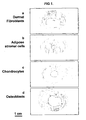
- a tissue-like sheet is formed from human dermal fibroblasts as a potential dermal substitute.
- the dermal fibroblasts can be of allogeneic origin, since it is known that human dermal fibroblasts are relatively non-immunogenic upon transfer to an allogeneic recipient ( U.S. Patent no. 5460939 ).
- This tissue-like sheet has the potential to be a dermal equivalent, the materials for which are easily available, which has no synthetic or natural extraneous matrix that could cause an inflammatory reaction in some patients, which is cellular so that it can produce growth factors and other proteins, which can be prepared in a relatively shorter time, and the preparation of which is technologically simple so that the product is more cost-effective.
- a tissue-like sheet has been developed from human chondrocytes, as a putative implant inducing cartilage repair in patients with articular cartilage damage.
- Autologous chondrocytes could be used for this tissue-therapy, since chondrocytes can be obtained from small biopsies of cartilage.
- This tissue-like sheet could have the potential to be a preformed tissue that could efficiently initiate cartilage repair when implanted at the site of injury, and which would also be cost-effective.
- Chondrocytes isolated from human cartilage also formed such a tissue sheet upon macromass culture in DMEM + 10%FCS.
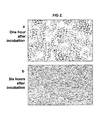
- Osteoblasts isolated from human bone also formed a tissue-like construct by macromass culture in DMEM + 10% FCS, after washing away the maintenance medium containing ascorbic acid. Integration of cells appears to be playing an important role in such tissue-like construct formation as seen from the extensive formation of extensions from the cells and cell integration, shown in FIG 2 .
- dermal fibroblast macromass culture was scaled up by seeding cells at the mentioned seeding density in a 8.5 cm petri dish, a much larger sheet formed.
- macromass culture can be directly scaled up areawise to obtain as large tissues as desired.
- Dermal fibroblasts also formed a sheet by macromass culture in serum free DMEM, but the time of formation was greater than in DMEM containing 10% FCS, overnight compared to 3-4 hours in serum-containing medium.
- serum-containing medium the time of formation of tissue from dermal fibroblasts, from adipose stromal cells & osteogenic cells derived from them was about 4 hour, and from chondrocytes was about 18 hours.
- Osteogenic cells derived from adipose stromal cells formed a tissue-like mass in osteogenic medium as well as in DMEM + 10% FCS, after washing the cells to remove osteogenic medium containing ascorbic acid.
- tissue-like constructs by macromass culture has been done successfully in culture vessels of diameter 0.75 cm to 8.5 cm. It can be extrapolated that macromass culture in culture vessels smaller than 0.75 cm diameter and larger than 8.5 cm diameter would result in formation of smaller or larger tissue-like constructs respectively. Thus, the dimensions of the three-dimensional tissue-like constructs can be varied.
- tissue-like organisation of cells and the different forms thereof are three-dimensional and have flexibility with respect to dimensions, comprising: different three dimensional sizes; larger or smaller tissue-like constructs achieved by scaling up or down the culture system for three-dimensional tissue-like formation; and variable size or scale by changing the number of cells used to achieve a seeding density within a favorable range of tissue-forming densities.
- tissue-like constructs are not fully formed tissues, they could be capable of inducing and participating in the healing process in the body, in a way analogous to the findings that implantation of even stem cells or partially differentiated cells (which are not fully formed tissue but are at the very beginning of tissue formation) can lead to repair and regeneration (Kaji & Leiden, 2001).
- tissue sheet formation occurred at the seeding density of 3 x 10 6 cells per cm 2 but not at 7 x 10 6 cell per cm 2 or higher, at the latter seeding density the cells only loosely clumped together but did not form a cohesive tissue mass.
- tissue sheet formation took place at 3.33 x 10 5 cell per cm 2 and at 3 x 10 6 cells per cm 2 as well as all densities lying between these two figures that were tested. At the densities tested above or below this range, tissue formation did not occur. Similar experiments were done with native adipose stromal cells and with chondrocytes and the results are tabulated in Table 1. As with dermal fibroblasts, there was a minimum and maximum tissue-like construct forming seeding density for these cell types also, similar to those of dermal fibroblasts. These data indicate that a minimum and maximum cell seeding density per unit area exist for tissue formation by macromass culture.
- the range of high cell densities at which tissue formation occurs by macromass culture could be different for other cell types not tested.
- the lower seeding densities of cells used as shown in Table 1 resulted in thinner tissue-like construct, that is, having smaller three dimensions, while the higher seeding densities used resulted in thicker tissue-like constructs, that is, having larger three-dimensions.
- the dimensions of the three-dimensional tissue-like constructs can be varied. Table 1. Dependence of three-dimensional tissue-like construct formation on cell-seeding density.
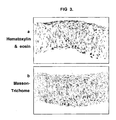
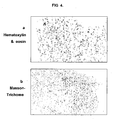
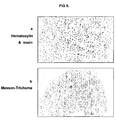
- Hematoxylin& eosin staining of the sections of the different tissue-like constructs produced by the methods of the present invention shows three-dimensional structural organization and extracellular matrix formation.
- Masson-Trichome staining of tissue-like constructs formed from dermal fibroblasts as well as native stromal cells and osteogenic stromal cells showed collagen synthesis.
- Collagen type I immunostaining of a tissue-like construct made from dermal fibroblast, incubated for 10 days, showed positive staining for collagen type I ( FIG 6 ).
- extracellular matrix formation appears to be taking place in tissue-like construct formation by the method of macromass culture.
- tissue sheet formed from dermal fibroblasts has potential as a dermis substitute
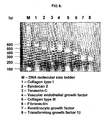
- the expression of genes known to play an important role in the wound healing process of the skin was analyzed ( FIG 8 ).
- Collagen type I, collagen type III, keratinocyte growth factor, TGF ⁇ 1, fibronectin, vascular endothelial growth factor, tenascin-C and syndecan-2 were found to be expressed in the tissue sheet, thus demonstrating that this tissue-like sheet made from dermal fibroblasts has potential as a dermis substitute.
- the tissue-like construct made from osteogenic adipose stromal cells had potential has a bone-like tissue substitute
- the expression of bone-specific expressed genes was analyzed.
- tissue formation In macromass culture, it is possible to tailor the properties of the tissue formed by including appropriate medium components or by changing the medium, since, as far as has been tested, tissue formation is independent of medium conditions, as long as something that inhibits tissue-like organization by macromass is not included in the medium.
- tissue sheet formation by dermal fibroblasts in both serum-containing and serum free medium, as well as from tissue formation from adipose stromal cells in both DMEM + FCS and osteogenic medium, which contains dexamethasone and ⁇ -glycerophosphate.
- the properties of the tissue formed can be modulated to incorporate desirable properties by modifying the tissue-formation medium and/or growth medium of the cells.
- tissue-like organisation of cells is formed in the presence of different culture media, different growth and/or tissue-formation media; and the tissue-like organisation of cells' properties are modulated by (a) including components in the growth and/or tissue-formation medium, provided that addition of these components does not adversely affect tissue formation, or (b) the medium of the cells is changed, provided that this change in medium does not adversely affect tissue formation.
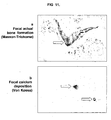
- bone-like properties in the shape of actual bone formation were induced in tissue formed from adipose stromal cells by culturing the cells, and forming the tissue-like construct in conditioned osteogenic medium as compared to osteogenic medium alone, where no actual bone spicule formation was seen ( FIG 11 ).
- Von Kossa staining of the tissue mass formed from osteogenic stromal cells in the presence of conditioned osteogenic medium showed focal regions of calcification, thus demonstrating bone-like properties, while the construct made from osteogenic stromal cells in non-conditioned osteogenic medium did not display these properties.
- tissue-like constructs from chondrocytes in the presence of DMEM + 10% FCS or in the presence of chondrogenic medium which contained 1% FCS and insulin; and TGF ⁇ 1 as a chondroinductive agent.
- the property of having extracellular matrix characteristic of the cartilage phenotype was generated in the tissue-like construct made in chondrogenic medium while the one made in DMEM + 10% FCS did not have such a property. This is shown by the Toluidine blue staining in FIG 12 .
- tissue formation by macromass culture does not have specific complex medium requirements, such specific components can be used in the medium for modulating the properties, of the tissue formed.
- tissue-like organization and macroscopic tissue-like constructs can be formed in the presence of different culture media, with the different media presented here are examples and do not limit the invention hereof to these examples.
- tissue-like sheets formed from cells plated on plastic surface had a tendency to detach spontaneously and curl or roll up, which is not desirable, since the sheet does not straighten once rolled up.
- a tissue being developed as a possible dermis substitute requires to remain straight.
- macromass culture of dermal fibroblasts was done on a Hybond-N (Amersham Pharmacia Biotech, Buckinghamshire, UK) filter placed in a plastic dish. With this adaptation, the sheet that formed remained straightened and adhered to the filter, so, in the future, it could be applied onto a skin wound with the filter side up. This experiment demonstrates that it can be possible to achieve tissue formation by macromass culture on different compatible growth surfaces.
- the sheet made by macromass culture becomes a component of a putative implant that includes a nylon filter which serves as a supporting layer and its requirement is not as a scaffold for tissue-like organization of the cells.
- This supporting layer is not designed to integrate into the body along with the dermis-like sheet, and so it is not a scaffold which would become a part of the body, but a supporting handling device for the application of the dermis-like sheet. This supporting layer would be removed after healing.
- tissue-like construct can be incorporated to become a component or part of a (larger) object
- dermal fibroblasts were seeded by macromass culture to form a tissue-like sheet, and then after removing the culture medium, it was overlaid with a collagen and fibrin gel mix. The gel was then allowed to set. Now, the gel could be lifted with the tissue-like sheet adhered to one side of it.
- a histological section of this composite, in which the tissue-like construct is a component is shown in FIG 13 .
- other matrices like sponges or membranes could also support tissue-like-constructs from one side by adhering to them.
- tissue-like organization and macroscopic tissue-like constructs can be combined with different objects, for example, a sheet or membrane, a gel, a sponge, or other matrices.
- Dermal fibroblasts were seeded onto a gelatin sponge of diameter 3.5 cm, at a seeding density of about 2.5 x 10 6 cells per cm 2 of sponge area, in DMEM + 10% FCS.
- This application of the high cell-seeding-density macromass culture method to the gelatin sponge resulted in formation of microscopic clusters of three-dimensional tissue-like organizations within the sponge, as seen in the histological section of the sponge, shown in FIG 14 .
- the method of macromass culture can be used to generate three-dimensional tissue-like organization of cells at the microscopic level also, the tissue-like organizations becoming a component of the whole assembly.
- the novelty of the present invention lies in the fact that high cell-seeding-density culture can generate whole three-dimensional tissue-like organization of cells without any specific agents that aid in tissue formation to induce such organization and can be scaled up areawise to generate macroscopic three-dimensional tissue-like constructs of different kinds, besides in the other important features such as the fact that scaffolding material is not employed or specific agents that aid in tissue formation/complex media formulations are not required, as are detailed in this description.
- the inventors of the present invention are the first to report that whole three-dimensional tissue-like organization of cells and macroscopic three-dimensional tissue-like constructs of different kinds can be generated by high cell-seeding-density culture alone.
- tissue-like organization and macroscopic tissue-like constructs made by macromass culture from any type of mammalian cells are within the scope of this invention, the defining feature being tissue-like organization achieved by the method of macromass culture.
- tissue-like constructs are the preferred embodiment of the methods of this invention, it is apparent that macromass culture at a smaller scale, that is in culture areas anything smaller than about 0.75 cm diameter, would result in smaller tissue-like organizations, decreasing in size towards being microscopic as the scale of macromass culture is reduced.
- Microscopic tissue-like organization by high cell-seeding-density macromass culture in the above form or other form such as in the gelatin sponge described earlier is thus also within the scope of this invention.
- tissue-like constructs could be generated by macromass culture in culture vessels larger than 8.5 cm diameter.
- tissue-like construct made by macromass culture would now be a component of the whole substitute.
- tissue-like organization of cells by macromass culture does not require any scaffold and also histologically competent tissue-like constructs form without the aid of a scaffold
- a scaffold may be provided for macromass culture, for example, as an alternative growth surface, such that the scaffold becomes a part of the whole substitute.
- the three-dimensional tissue-like organization and histologically competent tissue-like constructs can be developed scaffold-free, but can be combined with a suitable scaffold, if it gives beneficial properties or advantages over the tissue-like construct alone.
- Other modifications would be the use of other cell types which have the properties to form a tissue-like mass by macromass culture, use of other compatible growth surface than described, other medium changes for modulation, and other sizes of scale-up, etc. Therefore, this description of the present invention is not intended to limit this invention by the precise illustrative embodiments that are disclosed.
Landscapes
- Health & Medical Sciences (AREA)
- Life Sciences & Earth Sciences (AREA)
- Engineering & Computer Science (AREA)
- Organic Chemistry (AREA)
- Chemical & Material Sciences (AREA)
- Biomedical Technology (AREA)
- Bioinformatics & Cheminformatics (AREA)
- Genetics & Genomics (AREA)
- Biotechnology (AREA)
- Wood Science & Technology (AREA)
- Zoology (AREA)
- Biochemistry (AREA)
- Microbiology (AREA)
- General Engineering & Computer Science (AREA)
- General Health & Medical Sciences (AREA)
- Cell Biology (AREA)
- Micro-Organisms Or Cultivation Processes Thereof (AREA)
- Materials For Medical Uses (AREA)
- Immobilizing And Processing Of Enzymes And Microorganisms (AREA)
- Prostheses (AREA)
Claims (21)
- Verfahren zur Erzeugung einer lebenden, gewebeartigen Organisation von Zellen, einschließlich dreidimensionaler gewebeartiger Konstrukte, ohne die Hilfe eines Gerüsts oder einer Fremdmatrix, wobei das Verfahren folgendes umfasst:das Herstellen eines Kultursystems, in dem Zellen, die nicht embryonale Stammzellen sind, in einer hohen Dichte pro Flächeneinheit eines Kulturgefäßes bei 3,33 x 10⁵ bis 3 x 10⁶ Zellen pro cm2 ausgesät werden, wobei eine dreidimensionale, gewebeartige Formation oder Organisation von Zellen entsteht, ohne die Hilfe von jeglichen Mitteln, die bei der Gewebebildung helfen, wobei solche Mittel Gewebe-induzierende Chemikalien, Gewebe-induzierende Wachstumsfaktoren, andere Substrate als unmodifizierter Gewebekulturkunststoff oder Rotationskultur umfassen, unddas Zurverfügungstellen der gewebeartigen Konstrukte, wobei optional die Zellen Mesodermzellen sind.
- Verfahren nach Anspruch 1, wobei die Zellen aus Fibroblastzellen, einschließlich dermalen Fibroblasten, Osteoblastzellen, fetthaltigen Stromazellen, von fetthaltigen Stromazellen abstammende osteogenen Zellen und Chondrozyten ausgewählt werden.
- Verfahren nach Anspruch 2, wobei die Fibroblastzellen von menschlichem Hautgewebe abstammen, die Chondrozyten von menschlichem Knorpelgewebe abstammen, die Osteoblastzellen von menschlichem Knochengewebe abstammen und die fetthaltigen Stromazellen von menschlichem Material aus abgesaugten Fett abstammen.
- Verfahren nach Anspruch 1, wobei die gewebeartige Organisation von Zellen eine gewebeartige dünne Schicht ist, die menschliche fibroblastische Zellen mesenchymalen Ursprungs umfasst, wobei die gewebeartige dünne Schicht frei von synthetischer oder natürlicher Fremdmatrix ist, die eine entzündliche Reaktion in manchen Patienten hervorrufen könnte, und zellulär ist, so dass sie Wachstumsfaktoren und andere Proteine produzieren kann, und welche in einer relativ kurzen Zeit hergestellt werden kann.
- Verfahren nach Anspruch 1, wobei die gewebeartige Organisation von Zellen makroskopische dreidimensionale Konstrukte beinhaltet, die zur Verwendung als Gewebeersatz für die Implantation, zur Wundheilung oder als in vitro Modelle für das Testen von Arzneistoffen geeignet sind, und die Zellen fibroblastische Zellen mesenchymalen Ursprungs sind und optional folgendes beinhalten:ein mutmaßliches dermales Äquivalent, gemacht aus dermalen Fibroblasten, ein mutmaßlicher Ersatz mit knochenartigen Eigenschaften, gemacht aus von fetthaltigen Stromazellen abstammende osteogenen Zellen, und ein mutmaßlicher Knorpelersatz, gemacht aus Chondrozyten, wobei die Zellen erzeugt werden, um verschiedene Formen anzunehmen.
- Verfahren nach Anspruch 5, wobei die gewebeartige Organisation von Zellen gemacht werden kann, um verschiedene Formen anzunehmen, für den Zweck des Erreichens verschiedener Eigenschaften oder Qualitäten, wobei die verschiedenen Formen folgendes umfassen:(a) dreidimensionale makroskopische gewebeartige Konstrukte, wobei "makroskopisch" bedeutet, dass die Größe des Gewebes zumindest dergestalt ist, dass es durch normale menschliche Sehkraft leicht visuell wahrnehmbar ist, und die makroskopischen gewebeartigen Konstrukte histologisch funktionsfähig-sind, oder(b) die dreidimensionale gewebeartige Organisation, die ferner mit verschiedenen Matrices, wie zum Beispiel Gelen, dünne Schichten, Membranen oder Schwämmen oder mit anderen Gerüsten kombiniert ist.
- Verfahren nach Anspruch 6, wobei die Matrices Collagen plus Fibrin, Gelatineschwamm oder Nylonfilter umfassen.
- Verfahren nach Anspruch 5, wobei die gewebeartige Organisation von Zellen gänzlich unter Verwendung von Zellen alleine und einem Kulturmedium erzeugt wird.
- Verfahren nach Anspruch 5, wobei die gewebeartige Organisation von Zellen ohne die folgenden Mittel, die bei der Gewebebildung helfen, erzeugt wird: einem Bioreaktor, Fremdgerüst oder -matrix oder -träger, oder fremdartige extrazelluläre Matrixkomponenten.
- Verfahren nach Anspruch 5, wobei die gewebeartige Organisation von Zellen aus verschiedenen Zelltypen erzeugt wird, die dermale Fibroblasten, fetthaltige Stromazellen, von fetthaltigen Stromazellen abstammende osteogene Zellen, Chondrozyten und Osteoblasten umfassen.
- Verfahren nach Anspruch 5, wobei die genaues gewebebildende, hohe Zellsaatdichte für verschiedene Zelltypen verschieden ist.
- Verfahren nach Anspruch 5, wobei die Zeit, die für die Erzeugung der verschiedenen Formen aufgebracht wird, für die verschiedenen Zelltypen oder verschiedenen Bedingungen der Medien variieren kann.
- Verfahren nach Anspruch 5, wobei die gewebeartige Organisation von Zellen ohne die Hilfe von spezifischen Bedingungen der Medien erzeugt wird, einschließlich Bedingungen von serumfreien Medien und Bedingungen von komplexen Medien.
- Verfahren nach Anspruch 5, das die Herstellung von gewebeartigen Konstrukten in Kulturgefäßen jeglicher Gestalt, mit einem flachen oder einem gebogenen Boden, beinhaltet.
- Verfahren nach einem der Ansprüche 1 bis 4, wobei alle gesäte Zellen als eine gemeinsame gewebeartige Organisation ohne jegliche individuelle Knötchen zusammengeschlossen sind.
- Verfahren nach Anspruch 15, wobei die dreidimensionalen Konstrukte blattartig sind und/oder größer als 7,5 mm im Durchmesser sind.
- Verfahren nach Anspruch 1, das ferner die Herstellung von verschiedenen gewebekonstruierten Produkten durch Erzeugung gewebeartiger Organisationen von Zellen und die Bildung von lebendem, zellulären mutmaßlichen Gewebeersatz umfasst.
- Verfahren nach Anspruch 17, wobei die gewebeartige Organisation ein makroskopisches gewebeartiges Konstrukt ist.
- Verfahren nach Anspruch 17, wobei die hohe Zellsaatdichte von 3,33 x 10⁵ bis 3 x 10⁶ Zellen pro cm2 erreicht wird durch ein gemeinsames Absetzen der Zellen innerhalb des dreidimensionalen Raumes-, der durch die Zellen am Boden des Kulturgefäßes belegt ist, sodass sie in einen Zustand von enger Nähe miteinander kommen, sodass ein Gewebsbildungsmodus getriggert oder ihnen signalisiert wird, durch den sie kohäsiv zusammengeschlossen werden; und wobei der Bereich der Zellsaatdichte erreicht wird in einem Gefäß mit flachem oder gebogenem Boden unter Verwendung eines Kulturgefäßes von mindestens ungefähr 0,75 cm im Durchmesser, woraus die Bildung von makroskopischen gewebeartigen Konstrukten resultiert, wobei makroskopisch eine Gewebsgröße bedeutet, die durch die normale menschliche Sehkraft einfach visuell wahrgenommen werden kann.
- Verfahren nach Anspruch 1, das ferner die Erzeugung einer makroskopischen, ganzen gewebeartigen Organisation von Zellen umfasst, die zur Implantation in einen menschlichen Körper oder einen Säugerkörper geeignet ist, wobei die gewebeartige Organisation von Zellen aus Zellen mesenchymalen Ursprungs gemacht ist, wie zum Beispiel (i) einem konstruierten mutmaßlichen dermalen Äquivalent, gemacht aus dermalen Fibroblasten, (ii) einem mutmaßlichen Ersatz mit knochenähnlichen Eigenschaften, gemacht aus von fetthaltigen Stromazellen abstammende osteogenen Zellen oder von Osteoblasten oder (iii) einem mutmaßlichen Ersatz für die Reparatur von Knorpel, gemacht aus Chondrocyten.
- Verfahren nach Anspruch 20, wobeidie gewebeartige Organisation von Zellen für die Implantation in einen menschlichen Körper oder einen Säugerkörper als Therapie für eine Krankheit oder einen Zustand geeignet ist, unddie Bildung der gewebeartigen Organsiation von Zellen nicht eine vorgeformte Vertiefung bedarf, die eine Oberfläche hat, die für das Anhaften von Zellen schädlich ist.
Applications Claiming Priority (1)
| Application Number | Priority Date | Filing Date | Title |
|---|---|---|---|
| PCT/IN2004/000086 WO2005095585A1 (en) | 2004-03-31 | 2004-03-31 | Tissue-like organization of cells and macroscopic tissue-like constructs, generated by macromass culture of cells, and the method of macromass culture |
Publications (2)
| Publication Number | Publication Date |
|---|---|
| EP1730264A1 EP1730264A1 (de) | 2006-12-13 |
| EP1730264B1 true EP1730264B1 (de) | 2009-11-04 |
Family
ID=34958569
Family Applications (1)
| Application Number | Title | Priority Date | Filing Date |
|---|---|---|---|
| EP04770637A Expired - Lifetime EP1730264B1 (de) | 2004-03-31 | 2004-03-31 | Gewebeartige organisation von zellen und makroskopische gewebeartige konstrukte, die durch "makromass-kultur" von zellen hergestellt werden, und die methode der "makromass-kultur" |
Country Status (9)
| Country | Link |
|---|---|
| EP (1) | EP1730264B1 (de) |
| CN (1) | CN1938419B (de) |
| AT (1) | ATE447609T1 (de) |
| AU (1) | AU2004317828B2 (de) |
| BR (1) | BRPI0418641C1 (de) |
| CA (1) | CA2566374A1 (de) |
| DE (1) | DE602004023974D1 (de) |
| IL (2) | IL178265A (de) |
| WO (1) | WO2005095585A1 (de) |
Families Citing this family (10)
| Publication number | Priority date | Publication date | Assignee | Title |
|---|---|---|---|---|
| US7993922B2 (en) | 2002-10-18 | 2011-08-09 | Reliance Life Sciences Pvt. Ltd. | Three-dimensional tissue equivalent using macromass culture |
| ES2641528T3 (es) * | 2006-06-27 | 2017-11-10 | Shiseido Company, Limited | Masa celular capaz de servir como estructura de tipo órgano primitivo compuesta por una diversidad de tipos de células de origen somático |
| WO2008068776A2 (en) | 2006-12-08 | 2008-06-12 | Reliance Life Sciences Pvt. Ltd. | Three-dimensional tissue equivalent using macromass culture. |
| EP2138571B1 (de) | 2008-06-26 | 2017-04-12 | SpheroTec GmbH | Verfahren zur Herstellung mehrzelliger Sphäroide |
| KR101733137B1 (ko) * | 2015-12-30 | 2017-05-08 | (주)엑셀세라퓨틱스 | 연골조직 제조를 위한 3차원 오가노이드 블록 제작 방법 |
| CN106754669B (zh) * | 2016-11-23 | 2020-04-17 | 河海大学常州校区 | 基于反应-扩散模型的多细胞结构的制备方法及制备系统 |
| EP3417888A1 (de) | 2017-06-25 | 2018-12-26 | co.don AG | Verfahren zum herstellen von transplantierbarem knorpelgewebe |
| IL306070A (en) | 2018-05-03 | 2023-11-01 | Collplant Ltd | Dermal fillers and their uses |
| CN110157617B (zh) * | 2019-04-29 | 2021-07-16 | 重庆大学附属肿瘤医院 | 宫颈癌细胞三维培养装置及其应用 |
| US12435312B2 (en) | 2022-02-28 | 2025-10-07 | Brown University | Quantifying cell-derived changes in collagen synthesis, alignment, and mechanics in a 3D connective tissue model |
Family Cites Families (3)
| Publication number | Priority date | Publication date | Assignee | Title |
|---|---|---|---|---|
| US6197586B1 (en) * | 1997-12-12 | 2001-03-06 | The Regents Of The University Of California | Chondrocyte-like cells useful for tissue engineering and methods |
| JP2002529073A (ja) * | 1998-11-12 | 2002-09-10 | セル サイエンス セラピューティックス インコーポレーテッド | 三次元装置における造血前駆細胞からのリンパ様組織特異的細胞の生成 |
| US6429013B1 (en) * | 1999-08-19 | 2002-08-06 | Artecel Science, Inc. | Use of adipose tissue-derived stromal cells for chondrocyte differentiation and cartilage repair |
-
2004
- 2004-03-31 EP EP04770637A patent/EP1730264B1/de not_active Expired - Lifetime
- 2004-03-31 AU AU2004317828A patent/AU2004317828B2/en not_active Ceased
- 2004-03-31 CN CN2004800426456A patent/CN1938419B/zh not_active Expired - Fee Related
- 2004-03-31 WO PCT/IN2004/000086 patent/WO2005095585A1/en not_active Ceased
- 2004-03-31 BR BRC10418641-9A patent/BRPI0418641C1/pt not_active IP Right Cessation
- 2004-03-31 AT AT04770637T patent/ATE447609T1/de not_active IP Right Cessation
- 2004-03-31 DE DE602004023974T patent/DE602004023974D1/de not_active Expired - Lifetime
- 2004-03-31 CA CA002566374A patent/CA2566374A1/en not_active Abandoned
-
2006
- 2006-09-21 IL IL178265A patent/IL178265A/en not_active IP Right Cessation
-
2007
- 2007-11-18 IL IL187448A patent/IL187448A/en not_active IP Right Cessation
Also Published As
| Publication number | Publication date |
|---|---|
| IL187448A0 (en) | 2008-02-09 |
| CN1938419A (zh) | 2007-03-28 |
| BRPI0418641A (pt) | 2007-08-07 |
| CA2566374A1 (en) | 2005-10-13 |
| CN1938419B (zh) | 2011-12-14 |
| AU2004317828A1 (en) | 2005-10-13 |
| WO2005095585A1 (en) | 2005-10-13 |
| HK1092507A1 (en) | 2007-02-09 |
| EP1730264A1 (de) | 2006-12-13 |
| ATE447609T1 (de) | 2009-11-15 |
| DE602004023974D1 (de) | 2009-12-17 |
| AU2004317828B2 (en) | 2010-06-24 |
| IL187448A (en) | 2012-05-31 |
| IL178265A0 (en) | 2006-12-31 |
| BRPI0418641C1 (pt) | 2009-11-24 |
| IL178265A (en) | 2010-11-30 |
Similar Documents
| Publication | Publication Date | Title |
|---|---|---|
| US20080026461A1 (en) | Tissue-like organization of cells and macroscopic tissue-like constructs, generated by macromass culture of cells and the method of macromass culture | |
| US9623051B2 (en) | Decellularized extracellular matrix | |
| Tian et al. | Myogenic differentiation of human bone marrow mesenchymal stem cells on a 3D nano fibrous scaffold for bladder tissue engineering | |
| Murphy et al. | Organ engineering–combining stem cells, biomaterials, and bioreactors to produce bioengineered organs for transplantation | |
| KR100968164B1 (ko) | 지방 유래 간세포 및 격자 | |
| EP1793874B1 (de) | Weichgewebekonstrukte enthaltend adulte mesenchymale Stammzellen | |
| Ibsirlioglu et al. | Decellularized biological scaffold and stem cells from autologous human adipose tissue for cartilage tissue engineering | |
| WO2012064606A2 (en) | Tissue-specific extracellular matrix with or without tissue protein components for cell culture | |
| Xing et al. | Engineered myocardial tissues constructed in vivo using cardiomyocyte-like cells derived from bone marrow mesenchymal stem cells in rats | |
| Koch et al. | Tissue engineering with chondrocytes | |
| US20160067377A1 (en) | Stem Cell Seeded Natural Substrates and Methods Relating Thereto | |
| AU2004317828B2 (en) | Tissue-like organization of cells and macroscopic tissue-like constructs, generated by macromass culture of cells, and the method of macromass culture | |
| US20050002982A1 (en) | Hybrid tissues for tissue engineering | |
| KR20110032433A (ko) | 세포이식술을 위한 혼합세포복합체인 세포스페로이드의 제조방법 및 이의 이용방법 | |
| Martin et al. | Producing prefabricated tissues and organs via tissue engineering | |
| US20150344847A1 (en) | Method For Production Of Large Numbers Of Cartilage Cells With Phenotype Retention | |
| Smith et al. | Porcine-derived collagen as a scaffold for tissue engineering | |
| CN111214707A (zh) | 一种破骨细胞前体和间充质干细胞作为种子细胞的基质依赖型组织工程骨及其构建方法 | |
| KR100907323B1 (ko) | 세포의 매크로매스 배양에 의해 생성된, 세포의 조직-유사조직체 및 거시적인 조직-유사 구조물, 및 매크로매스 배양방법 | |
| RU2335538C2 (ru) | Подобная ткани организация клеток и подобные ткани макроскопические конструкции, полученные при помощи культивирования макромассы клеток, и способ культивирования макромассы | |
| Tezcaner et al. | Fundamentals of tissue engineering: tissues and applications | |
| HK1092507B (en) | Tissue-like organization of cells and macroscopic tissue-like constructs, generated by macromass culture of cells, and the method of macromass culture | |
| JP7626993B2 (ja) | 培養基材を用いたTie2陽性幹/前駆細胞を含む細胞集団の培養方法およびその利用 | |
| Alberti | Hollow organ tissue engineering: short updating about current approaches and forecast for major research advances | |
| Huss | In vitro and in vivo studies of tissue engineering in reconstructive plastic surgery |
Legal Events
| Date | Code | Title | Description |
|---|---|---|---|
| PUAI | Public reference made under article 153(3) epc to a published international application that has entered the european phase |
Free format text: ORIGINAL CODE: 0009012 |
|
| 17P | Request for examination filed |
Effective date: 20060929 |
|
| AK | Designated contracting states |
Kind code of ref document: A1 Designated state(s): AT BE BG CH CY CZ DE DK EE ES FI FR GB GR HU IE IT LI LU MC NL PL PT RO SE SI SK TR |
|
| REG | Reference to a national code |
Ref country code: HK Ref legal event code: DE Ref document number: 1092507 Country of ref document: HK |
|
| 17Q | First examination report despatched |
Effective date: 20070119 |
|
| DAX | Request for extension of the european patent (deleted) | ||
| GRAP | Despatch of communication of intention to grant a patent |
Free format text: ORIGINAL CODE: EPIDOSNIGR1 |
|
| RIN1 | Information on inventor provided before grant (corrected) |
Inventor name: DESHPANDE, MANISHA, SHARADCHANDRA; Inventor name: MOJAMDAR, MANOJ, VINOY |
|
| GRAS | Grant fee paid |
Free format text: ORIGINAL CODE: EPIDOSNIGR3 |
|
| GRAA | (expected) grant |
Free format text: ORIGINAL CODE: 0009210 |
|
| AK | Designated contracting states |
Kind code of ref document: B1 Designated state(s): AT BE BG CH CY CZ DE DK EE ES FI FR GB GR HU IE IT LI LU MC NL PL PT RO SE SI SK TR |
|
| REG | Reference to a national code |
Ref country code: GB Ref legal event code: FG4D |
|
| REG | Reference to a national code |
Ref country code: CH Ref legal event code: EP |
|
| REG | Reference to a national code |
Ref country code: IE Ref legal event code: FG4D |
|
| REF | Corresponds to: |
Ref document number: 602004023974 Country of ref document: DE Date of ref document: 20091217 Kind code of ref document: P |
|
| NLV1 | Nl: lapsed or annulled due to failure to fulfill the requirements of art. 29p and 29m of the patents act | ||
| REG | Reference to a national code |
Ref country code: CH Ref legal event code: NV Representative=s name: PATENTANWAELTE SCHAAD, BALASS, MENZL & PARTNER AG |
|
| RAP2 | Party data changed (patent owner data changed or rights of a patent transferred) |
Owner name: RELIANCE LIFE SCIENCES PVT., LTD. |
|
| PG25 | Lapsed in a contracting state [announced via postgrant information from national office to epo] |
Ref country code: PT Free format text: LAPSE BECAUSE OF FAILURE TO SUBMIT A TRANSLATION OF THE DESCRIPTION OR TO PAY THE FEE WITHIN THE PRESCRIBED TIME-LIMIT Effective date: 20100304 Ref country code: SE Free format text: LAPSE BECAUSE OF FAILURE TO SUBMIT A TRANSLATION OF THE DESCRIPTION OR TO PAY THE FEE WITHIN THE PRESCRIBED TIME-LIMIT Effective date: 20091104 Ref country code: ES Free format text: LAPSE BECAUSE OF FAILURE TO SUBMIT A TRANSLATION OF THE DESCRIPTION OR TO PAY THE FEE WITHIN THE PRESCRIBED TIME-LIMIT Effective date: 20100215 Ref country code: FI Free format text: LAPSE BECAUSE OF FAILURE TO SUBMIT A TRANSLATION OF THE DESCRIPTION OR TO PAY THE FEE WITHIN THE PRESCRIBED TIME-LIMIT Effective date: 20091104 |
|
| PG25 | Lapsed in a contracting state [announced via postgrant information from national office to epo] |
Ref country code: SI Free format text: LAPSE BECAUSE OF FAILURE TO SUBMIT A TRANSLATION OF THE DESCRIPTION OR TO PAY THE FEE WITHIN THE PRESCRIBED TIME-LIMIT Effective date: 20091104 Ref country code: PL Free format text: LAPSE BECAUSE OF FAILURE TO SUBMIT A TRANSLATION OF THE DESCRIPTION OR TO PAY THE FEE WITHIN THE PRESCRIBED TIME-LIMIT Effective date: 20091104 Ref country code: CY Free format text: LAPSE BECAUSE OF FAILURE TO SUBMIT A TRANSLATION OF THE DESCRIPTION OR TO PAY THE FEE WITHIN THE PRESCRIBED TIME-LIMIT Effective date: 20091104 |
|
| PG25 | Lapsed in a contracting state [announced via postgrant information from national office to epo] |
Ref country code: BE Free format text: LAPSE BECAUSE OF FAILURE TO SUBMIT A TRANSLATION OF THE DESCRIPTION OR TO PAY THE FEE WITHIN THE PRESCRIBED TIME-LIMIT Effective date: 20091104 Ref country code: AT Free format text: LAPSE BECAUSE OF FAILURE TO SUBMIT A TRANSLATION OF THE DESCRIPTION OR TO PAY THE FEE WITHIN THE PRESCRIBED TIME-LIMIT Effective date: 20091104 |
|
| REG | Reference to a national code |
Ref country code: HK Ref legal event code: GR Ref document number: 1092507 Country of ref document: HK |
|
| PG25 | Lapsed in a contracting state [announced via postgrant information from national office to epo] |
Ref country code: BG Free format text: LAPSE BECAUSE OF FAILURE TO SUBMIT A TRANSLATION OF THE DESCRIPTION OR TO PAY THE FEE WITHIN THE PRESCRIBED TIME-LIMIT Effective date: 20100204 Ref country code: DK Free format text: LAPSE BECAUSE OF FAILURE TO SUBMIT A TRANSLATION OF THE DESCRIPTION OR TO PAY THE FEE WITHIN THE PRESCRIBED TIME-LIMIT Effective date: 20091104 Ref country code: EE Free format text: LAPSE BECAUSE OF FAILURE TO SUBMIT A TRANSLATION OF THE DESCRIPTION OR TO PAY THE FEE WITHIN THE PRESCRIBED TIME-LIMIT Effective date: 20091104 Ref country code: RO Free format text: LAPSE BECAUSE OF FAILURE TO SUBMIT A TRANSLATION OF THE DESCRIPTION OR TO PAY THE FEE WITHIN THE PRESCRIBED TIME-LIMIT Effective date: 20091104 |
|
| PG25 | Lapsed in a contracting state [announced via postgrant information from national office to epo] |
Ref country code: SK Free format text: LAPSE BECAUSE OF FAILURE TO SUBMIT A TRANSLATION OF THE DESCRIPTION OR TO PAY THE FEE WITHIN THE PRESCRIBED TIME-LIMIT Effective date: 20091104 Ref country code: CZ Free format text: LAPSE BECAUSE OF FAILURE TO SUBMIT A TRANSLATION OF THE DESCRIPTION OR TO PAY THE FEE WITHIN THE PRESCRIBED TIME-LIMIT Effective date: 20091104 |
|
| PLBE | No opposition filed within time limit |
Free format text: ORIGINAL CODE: 0009261 |
|
| STAA | Information on the status of an ep patent application or granted ep patent |
Free format text: STATUS: NO OPPOSITION FILED WITHIN TIME LIMIT |
|
| 26N | No opposition filed |
Effective date: 20100805 |
|
| PG25 | Lapsed in a contracting state [announced via postgrant information from national office to epo] |
Ref country code: GR Free format text: LAPSE BECAUSE OF FAILURE TO SUBMIT A TRANSLATION OF THE DESCRIPTION OR TO PAY THE FEE WITHIN THE PRESCRIBED TIME-LIMIT Effective date: 20100205 Ref country code: MC Free format text: LAPSE BECAUSE OF NON-PAYMENT OF DUE FEES Effective date: 20100331 |
|
| PG25 | Lapsed in a contracting state [announced via postgrant information from national office to epo] |
Ref country code: IE Free format text: LAPSE BECAUSE OF NON-PAYMENT OF DUE FEES Effective date: 20100331 |
|
| PG25 | Lapsed in a contracting state [announced via postgrant information from national office to epo] |
Ref country code: IT Free format text: LAPSE BECAUSE OF FAILURE TO SUBMIT A TRANSLATION OF THE DESCRIPTION OR TO PAY THE FEE WITHIN THE PRESCRIBED TIME-LIMIT Effective date: 20091104 |
|
| PGFP | Annual fee paid to national office [announced via postgrant information from national office to epo] |
Ref country code: CH Payment date: 20110314 Year of fee payment: 8 Ref country code: FR Payment date: 20110317 Year of fee payment: 8 |
|
| PGFP | Annual fee paid to national office [announced via postgrant information from national office to epo] |
Ref country code: GB Payment date: 20110330 Year of fee payment: 8 Ref country code: DE Payment date: 20110323 Year of fee payment: 8 |
|
| PG25 | Lapsed in a contracting state [announced via postgrant information from national office to epo] |
Ref country code: HU Free format text: LAPSE BECAUSE OF FAILURE TO SUBMIT A TRANSLATION OF THE DESCRIPTION OR TO PAY THE FEE WITHIN THE PRESCRIBED TIME-LIMIT Effective date: 20100505 Ref country code: LU Free format text: LAPSE BECAUSE OF NON-PAYMENT OF DUE FEES Effective date: 20100331 Ref country code: NL Free format text: LAPSE BECAUSE OF FAILURE TO SUBMIT A TRANSLATION OF THE DESCRIPTION OR TO PAY THE FEE WITHIN THE PRESCRIBED TIME-LIMIT Effective date: 20091104 |
|
| PG25 | Lapsed in a contracting state [announced via postgrant information from national office to epo] |
Ref country code: TR Free format text: LAPSE BECAUSE OF FAILURE TO SUBMIT A TRANSLATION OF THE DESCRIPTION OR TO PAY THE FEE WITHIN THE PRESCRIBED TIME-LIMIT Effective date: 20091104 |
|
| REG | Reference to a national code |
Ref country code: CH Ref legal event code: PL |
|
| GBPC | Gb: european patent ceased through non-payment of renewal fee |
Effective date: 20120331 |
|
| REG | Reference to a national code |
Ref country code: FR Ref legal event code: ST Effective date: 20121130 |
|
| PG25 | Lapsed in a contracting state [announced via postgrant information from national office to epo] |
Ref country code: LI Free format text: LAPSE BECAUSE OF NON-PAYMENT OF DUE FEES Effective date: 20120331 Ref country code: CH Free format text: LAPSE BECAUSE OF NON-PAYMENT OF DUE FEES Effective date: 20120331 Ref country code: FR Free format text: LAPSE BECAUSE OF NON-PAYMENT OF DUE FEES Effective date: 20120402 Ref country code: GB Free format text: LAPSE BECAUSE OF NON-PAYMENT OF DUE FEES Effective date: 20120331 |
|
| REG | Reference to a national code |
Ref country code: DE Ref legal event code: R119 Ref document number: 602004023974 Country of ref document: DE Effective date: 20121002 |
|
| PG25 | Lapsed in a contracting state [announced via postgrant information from national office to epo] |
Ref country code: DE Free format text: LAPSE BECAUSE OF NON-PAYMENT OF DUE FEES Effective date: 20121002 |