EP1741679A2 - Verfahren zur verbesserten Versorgung einer biologischen Kläranlagae mit Calcium und Magnesium - Google Patents
Verfahren zur verbesserten Versorgung einer biologischen Kläranlagae mit Calcium und Magnesium Download PDFInfo
- Publication number
- EP1741679A2 EP1741679A2 EP20060013968 EP06013968A EP1741679A2 EP 1741679 A2 EP1741679 A2 EP 1741679A2 EP 20060013968 EP20060013968 EP 20060013968 EP 06013968 A EP06013968 A EP 06013968A EP 1741679 A2 EP1741679 A2 EP 1741679A2
- Authority
- EP
- European Patent Office
- Prior art keywords
- reactor
- activated sludge
- magnesium
- calcium
- sludge
- Prior art date
- Legal status (The legal status is an assumption and is not a legal conclusion. Google has not performed a legal analysis and makes no representation as to the accuracy of the status listed.)
- Granted
Links
Images
Classifications
-
- C—CHEMISTRY; METALLURGY
- C02—TREATMENT OF WATER, WASTE WATER, SEWAGE, OR SLUDGE
- C02F—TREATMENT OF WATER, WASTE WATER, SEWAGE, OR SLUDGE
- C02F3/00—Biological treatment of water, waste water, or sewage
- C02F3/02—Aerobic processes
- C02F3/12—Activated sludge processes
-
- C—CHEMISTRY; METALLURGY
- C02—TREATMENT OF WATER, WASTE WATER, SEWAGE, OR SLUDGE
- C02F—TREATMENT OF WATER, WASTE WATER, SEWAGE, OR SLUDGE
- C02F1/00—Treatment of water, waste water, or sewage
- C02F1/68—Treatment of water, waste water, or sewage by addition of specified substances, e.g. trace elements, for ameliorating potable water
-
- C—CHEMISTRY; METALLURGY
- C02—TREATMENT OF WATER, WASTE WATER, SEWAGE, OR SLUDGE
- C02F—TREATMENT OF WATER, WASTE WATER, SEWAGE, OR SLUDGE
- C02F1/00—Treatment of water, waste water, or sewage
- C02F1/68—Treatment of water, waste water, or sewage by addition of specified substances, e.g. trace elements, for ameliorating potable water
- C02F1/685—Devices for dosing the additives
- C02F1/688—Devices in which the water progressively dissolves a solid compound
-
- C—CHEMISTRY; METALLURGY
- C02—TREATMENT OF WATER, WASTE WATER, SEWAGE, OR SLUDGE
- C02F—TREATMENT OF WATER, WASTE WATER, SEWAGE, OR SLUDGE
- C02F2301/00—General aspects of water treatment
- C02F2301/04—Flow arrangements
- C02F2301/043—Treatment of partial or bypass streams
-
- C—CHEMISTRY; METALLURGY
- C02—TREATMENT OF WATER, WASTE WATER, SEWAGE, OR SLUDGE
- C02F—TREATMENT OF WATER, WASTE WATER, SEWAGE, OR SLUDGE
- C02F2303/00—Specific treatment goals
- C02F2303/06—Sludge reduction, e.g. by lysis
-
- C—CHEMISTRY; METALLURGY
- C02—TREATMENT OF WATER, WASTE WATER, SEWAGE, OR SLUDGE
- C02F—TREATMENT OF WATER, WASTE WATER, SEWAGE, OR SLUDGE
- C02F2305/00—Use of specific compounds during water treatment
- C02F2305/12—Inert solids used as ballast for improving sedimentation
-
- Y—GENERAL TAGGING OF NEW TECHNOLOGICAL DEVELOPMENTS; GENERAL TAGGING OF CROSS-SECTIONAL TECHNOLOGIES SPANNING OVER SEVERAL SECTIONS OF THE IPC; TECHNICAL SUBJECTS COVERED BY FORMER USPC CROSS-REFERENCE ART COLLECTIONS [XRACs] AND DIGESTS
- Y02—TECHNOLOGIES OR APPLICATIONS FOR MITIGATION OR ADAPTATION AGAINST CLIMATE CHANGE
- Y02W—CLIMATE CHANGE MITIGATION TECHNOLOGIES RELATED TO WASTEWATER TREATMENT OR WASTE MANAGEMENT
- Y02W10/00—Technologies for wastewater treatment
- Y02W10/10—Biological treatment of water, waste water, or sewage
Definitions
- the invention relates to a process for the improved supply of a biological sewage treatment plant operated by the aerobic activated sludge process with calcium and magnesium.
- the inventive method leads to a reduction or avoidance of the formation of bulking sludge, scum and foam.
- the nitrification, the hydraulics of the sewage treatment plant and the function of the digester are stabilized.
- a ventilated reaction tank activated sludge tank
- the microorganisms especially bacteria, ensure the breakdown of dissolved organic matter in the wastewater. They grow and multiply through the degradation of organic matter, creating additional biomass.
- a downstream sedimentation tank sedimentation tank
- the activated sludge flakes are sedimented, the purified wastewater is removed in an overflow and a portion of the separated biomass recycled as return sludge in the reaction tank.
- the activated sludge usually consists of irregularly shaped flakes between 50 and 300 microns in diameter and a specific gravity> 1.
- the flakes consist on the one hand of the microorganisms, especially bacteria, and on the other hand of organic excretory products of the bacteria, i. w. Macromolecules, such as polysaccharides and proteins, which are also called extracellular polymeric substances (EPS).
- EPS extracellular polymeric substances
- These EPS form a three-dimensional gel-like network, which holds the bacteria together and protects. The stability of the network is ensured by stored inorganic substances such as carbonates, phosphates or metal hydroxides.
- lime-carbonic acid balance plays an important role not only in processes for (drinking) water treatment, but also in wastewater treatment. Everything indicates that the excessive growth of the filamentous bacteria and the formation of bulking sludge can be traced back to a disturbed lime-carbonic acid balance (brochure "Control of filamentous bacteria", Kronos International Inc., Leverkusen, Kronos ecochem 2002, DS 2082D / 10022D). In particular, by increased cleaning performance of biological treatment plants, this balance is severely disturbed by increased production of carbon dioxide and carbon dioxide (CO 2 ). This increases the amount of free carbon dioxide in the activated sludge, whereby the acid capacity and the pH decrease.
- the calcareous aggressive environment leads to the dissolution of the calcium carbonate stabilizing the flake structure. Due to the lack of calcium carbonate, the floc structure of the activated sludge breaks down and the settling characteristics deteriorate. At the same time there is a growth advantage for the filamentous bacteria over the remaining bacteria.
- the DE 196 35 391 A1 describes the addition of dolomitic lime hydrate into the aeration tank.
- the dosing of the lime or dolomitic lime hydrate in said processes is pH-controlled either in a dry form or as a suspension. Both forms require a complex system and control technology. Especially in the handling of lime suspension occur in winter problems.
- the notes DE 196 35 391 A1 a significant increase in sludge.
- the invention is therefore an object of the invention to provide a method that in addition to the symptoms, especially in the long term, the causes of increased growth of the filamentous bacteria and the formation of bulking mud, scum and foam and the other causes of disturbances mentioned above minimized and also cost and in the daily practice is easy and low maintenance to operate.
- the solution to this problem consists in a method for supplying a operated by the aerobic activated sludge process biological wastewater treatment plant with calcium and magnesium, wherein a partial volume flow of the activated sludge is passed through a filter in the form of a reactor containing calcium and magnesium compounds as Reaktor spallmaterial.
- a partial volume flow of the activated sludge preferably 1 to 100%, in particular 1 to 20%, of the inflow volume flow of the wastewater treatment plant, taken at a suitable point the clarification and passed through a reactor.
- the reactor contains calcium- and magnesium-containing compounds, which are referred to below as Reaktor colllmaterial.
- the partial volume flow of the activated sludge introduced into the reactor is brought into intensive contact with the reactor filling material.
- the passage through the reactor preferably takes place from bottom to top. Subsequently, the activated sludge in free flow from the reactor out and back into the activated sludge tank.
- the calcium- and magnesium-containing compounds may be carbonates, bicarbonates, oxides or hydroxides, or mixtures thereof.
- treated dolomite for example thermally treated dolomite
- the reactor filler material contains in particular up to 30% by weight of MgO, up to 50% of MgCO 3 , up to 5% by weight of CaO and 45 to 80% of CaCO 3 .
- the loss on ignition is 25 to 50 wt .-%.
- the reactor filler material contains 15 to 30% by weight of MgO, 0 to 21% by weight of MgCO 3 , 0 to 4% by weight of CaO and 63 to 75% by weight of CaCO 3 , the loss on ignition being 31 to 39 Wt .-% is.
- the reactor filler material particularly preferably contains 23 to 28% by weight of MgO, 0 to 8% by weight of MgCO 3 , 0 to 2% by weight of CaO and 67 to 72% by weight of CaCO 3 , the loss on ignition being 31 to 35% by weight .% is.
- the reactor filler is in a particle size ⁇ 20 mm, preferably 2 to 12 mm, before.
- the bed height of the reactor filler is 20 to 500 cm, preferably 60 to 200 cm.
- the reactor should be flowed through evenly.
- a secure operation is possible in particular when the reactor is charged with 1 to 30 m 3 , preferably 5 to 15 m 3 , sludge per hour and m 2 cross-sectional area of the reactor.
- a series of reactors or a reactor cascade can also be used.
- the passage of the activated sludge through the reactor according to the inventive method causes the content of CaCO 3 of the activated sludge flake increases significantly, while the free carbonic acid (base capacity) decreases.
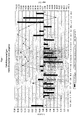
- the content of CaCO 3 of the activated sludge flake could be approximately doubled within 4 weeks (see FIG. 1) with the method according to the invention while the amount of free carbonic acid simultaneously decreased to about 50%.
- the calcite dissolving power (CLV) according to Strohecker and Langier is used. The calcite dissolving capacity is shifted through the reactor into the negative range (see FIG. 1).
- the activated sludge was supplied within a short time with calcium carbonate and magnesium carbonate and reduced the formation of scum and bulking sludge.
- the visibility in the secondary clarification improved significantly, and the hydraulics in the treatment plants was stabilized. Further, foaming or spitting occurred the digestion towers prevented. In addition, an increase in the biodegradation of nitrogen and phosphate could be observed.
- the lime-aggressive carbonic acid is neutralized.
- the ratio of the neutralized carbon dioxide to the total volume of the biomass can be determined.
- the content of CaCO 3 of the activated sludge flake is deliberately increased, so that bridging and crosslinking of the EPS macromolecules is improved by calcium-magnesium ions.
- the reactor does not need to be backflushed because the feed from below does not allow clogging of the reactor.
- Operation is easy and low maintenance. It is only necessary to ensure the degree of filling with the reactor filling material, since the material consumes over time. The consumption depends on the neutralized amount of carbon dioxide.
- a reactor with a volume of 1 m 3 was filled with a treated dolomite granules.
- the dolomite granules had the following composition: mgO: 25.3% by weight MgCO 3 : 4.0% by weight CaO: 0% by weight CaCO 3 : 69.9 wt .-%.
- activated sludge from the biology of a sewage treatment plant was injected from below into the reactor.
- the treatment plant was a system designed for 30,000 population equivalents.
- the activated sludge was returned to biology via an overflow of the reactor.
- the average dry weather input of the treatment plant was about 2000 m 3 / day.
- the amount of wastewater fluctuated between 1800 m 3 / day in dry weather and 6000 m 3 / day in rainy weather.
- a partial flow volume of the activated sludge could be achieved by the reactor of about 10% of the dry weather inlet of the sewage treatment plant.
- the partial volume flow of the activated sludge through the reactor was 204 m 3 / day.
- Example 1 was carried out in a period from 15 June (15 June in Figure 1) to 25 April (25 April in Figure 1) of the following year.
- the calcite dissolving power or the calcite saturation which will be abbreviated as CLV hereinafter, concerning the lime-carbonic acid balance
- the CLV is calculated by calculating the saturation pH according to Strohecker and Langelier in accordance with DIN 38404 Part 10 R 2.
- the CLV was 49 mg / l. This can be seen in the figure 1 on the right Y-axis.
- the course of the experiment shows that the reactor was able to reduce the CLV to negative values.
- a negative Calcitlierecore means that after the lime-carbonic acid balance calcium carbonate is deposited. This shows that the reactor was sufficiently dimensioned for this sewage treatment plant.
- Example 1 showed that the percentage of calcium carbonate (CaCO 3 ) on the activated sludge flake was increased.
- Rainy weather and cold waste water temperatures in winter increase the CLV.
- Example 1 during the period of August, there were long periods of rain that shifted the CLV into positive territory. The direct influence on the calcium carbonate content is clearly visible.
- the CLV rose with colder temperatures from October to January, but remained in negative territory. The changing conditions between January and March with rain, snowfall and snow melt could compensate the reactor. It was not until the failure of the pumps described above at the end of March that the CLV in biology increased to over 100 mg / l, so that the calcium carbonate content on the activated sludge flake dropped from about 15% to 5%. In the plant of Example 1, it was observed that at a calcium carbonate content of less than 4%, floating scum occurred more. After repair of the pump, the calcium carbonate content could be increased again to over 10%.
- a poor supply of the activated sludge flake with calcium and magnesium can be improved in a very short time, thereby reducing or reducing bulking sludge, floating sludge and foaming.
- Example 1 about 4 tons / year of the treated dolomite granules were consumed in the trial period. It was continuously filled by plant personnel into the reactor. The filling level was kept at the same level by refilling. Depending on the season, the amount of replenishment fluctuated between 50 kg per week and up to 100 kg per week. On average, 67 kg per week were refilled. As the process uses carbonic acid itself, consumption varies as needed. The control for the process was simple, since with a dipstick only the level was to control and was too low level simply refilled reactor filler. The simple construction and the easy maintenance advantageously contributes to the simplification of a method for supplying one after the aerobic Activated sludge process operated biological wastewater treatment plant with calcium and magnesium.
- Example 1 The process carried out in Example 1 was carried out on four further plants with different feed conditions and led to similar results as were obtained in Example 1 and shown in FIG.
Landscapes
- Chemical & Material Sciences (AREA)
- Life Sciences & Earth Sciences (AREA)
- Hydrology & Water Resources (AREA)
- Engineering & Computer Science (AREA)
- Environmental & Geological Engineering (AREA)
- Water Supply & Treatment (AREA)
- Organic Chemistry (AREA)
- Health & Medical Sciences (AREA)
- Medicinal Chemistry (AREA)
- Biodiversity & Conservation Biology (AREA)
- Microbiology (AREA)
- Activated Sludge Processes (AREA)
Abstract
Description
- Die Erfindung betrifft ein Verfahren zur verbesserten Versorgung einer nach dem aeroben Belebtschlammverfahren betriebenen biologischen Kläranlage mit Calcium und Magnesium. Das erfindungsgemäße Verfahren führt zu einer Reduzierung oder Vermeidung der Bildung von Blähschlamm, Schwimmschlamm und Schaum. Gleichzeitig wird die Nitrifikation, die Hydraulik der Kläranlage und die Funktion des Faulturms stabilisiert.
- Bei der biologischen Abwasserbehandlung nach dem aeroben Belebtschlammverfahren befindet sich in einem belüfteten Reaktionsbecken (Belebungsbecken) im Abwasser suspendierter Belebtschlamm, in dessen Flocken Mikroorganismen in Mischkulturen leben. Die Mikroorganismen, insbesondere Bakterien, sorgen für den Abbau von gelösten organischen Stoffen in den Abwässern. Sie wachsen und vermehren sich durch den Abbau der organischen Stoffe, wodurch zusätzliche Biomasse entsteht. In einem nachgeschalteten Sedimentationsbecken (Nachklärbecken) werden die Belebtschlammflocken sedimentiert, das gereinigte Abwasser in einem Überlauf abgezogen und ein Teil der abgetrennten Biomasse als Rücklaufschlamm in das Reaktionsbecken zurückgeführt.
- Der Belebtschlamm besteht normalerweise aus unregelmäßig geformten Flocken zwischen 50 und 300 µm Durchmesser und einem spezifischen Gewicht > 1. Die Flocken bestehen einerseits aus den Mikroorganismen, insbesondere Bakterien, und andererseits aus organischen Ausscheidungsprodukten der Bakterien, i. w. Makromoleküle, wie Polysaccharide und Proteine, die auch extrazelluläre polymere Substanzen (EPS) genannt werden. Diese EPS bilden ein dreidimensionales gelartiges Netzwerk, welches die Bakterien zusammenhält und schützt. Für die Stabilität des Netzwerks sorgen eingelagerte anorganische Substanzen, wie Carbonate, Phosphate oder Metallhydroxide.
- In modernen biologischen Kläranlagen mit zusätzlicher Stickstoffentfernung kommt es häufig zu Betriebsstörungen durch Bildung von Blähschlamm, Schwimmschlamm und/oder Schaum im Nachklärbecken. Insbesondere bei niedrigeren Temperaturen können sich die Absetzeigeneigenschaften des Belebtschlammes gravierend verschlechtern und im Extremfall zu einem Schlammabtrieb führen, welcher die Ablaufwerte des gereinigten Abwassers erheblich verschlechtert. Verantwortlich für die Absetzschwierigkeiten ist u.a. das vermehrte Auftreten fadenförmiger Bakterien, wodurch die Ausbildung kompakter Belebtschlammflocken erschwert bzw. verhindert wird. Zudem kann es zu Betriebsstörungen durch Spucken oder Schäumen des Faulturms kommen.
- Nach dem Stand der Technik sind verschiedene Ansätze bekannt, um den Blähschlamm zu bekämpfen. Beispielsweise wird der flotierende Schlamm gemäß
DE 102 62 031 B4 abgeschöpft. In einem anderen Ansatz wird der überproportionalen Vermehrung der Fadenbakterien durch mechanische Zerstörung der Zellstrukturen entgegengearbeitet, was entweder mittels Scherbeanspruchung des Schlamms (DE 101 55 161 A1 ) oder durch Ultraschallbehandlung (DE 198 43 862 A1 ) geschieht. Diese Maßnahmen bekämpfen jedoch nur die Symptome, nicht aber die Ursachen des Problems. - Weiterhin wird in
DE 102 44 416 A1 der Einsatz von Polymetallhydroxiden, wie Polyaluminiumhydroxidchlorid, in Mischung mit einem positiv geladenen quartären Amin beschrieben. Hierbei sollen die Bedingungen für das Wachstum Flocken bildender Bakterien im Vergleich zu den Fadenbakterien begünstigt werden. Die Verwendung dieser Zusatzmittel ist allerdings mit erheblichen Mehrkosten verbunden. - Es ist bekannt, dass das so genannte Kalk-Kohlensäure-Gleichgewicht nicht nur in Verfahren zur (Trink-) Wasseraufbereitung eine wichtige Rolle spielt, sondern auch in der Abwasserreinigung. Alles deutet daraufhin, dass das übermäßige Wachstum der Fadenbakterien und die Bildung von Blähschlamm ursächlich auf ein gestörtes Kalk-Kohlensäure-Gleichgewicht zurück zu führen ist (Broschüre "Bekämpfung von Fadenbakterien", Kronos International Inc., Leverkusen, Kronos ecochem 2002, DS 2082D/10022D). Insbesondere durch gesteigerte Reinigungsleistungen der biologischen Kläranlagen wird dieses Gleichgewicht durch verstärkte Kohlensäureproduktion und Kohlensäureanreicherung (CO2) massiv gestört. Dadurch erhöht sich der Anteil freier Kohlensäure im Belebtschlamm, wobei die Säurekapazität und der pH-Wert sinken. Das kalkaggressive Milieu führt zur Auflösung des die Flockenstruktur stabilisierenden Calciumcarbonats. Infolge des Mangels an Calciumcarbonat bricht die Flockenstruktur des Belebtschlammes zusammen, und die Absetzeigenschaften verschlechtern sich. Gleichzeitig ergibt sich ein Wachstumsvorteil für die fadenförmigen Bakterien gegenüber den übrigen Bakterien.
- Mit einer Dosierung von Kalkhydrat direkt in das Belebtschlammbecken kann der pH-Wert angehoben und die Konzentration an freier Kohlensäure durch Bildung von CaCO3 unmittelbar verringert werden (N. Weber: "Einsatz von Kalk auf biologischen Kläranlagen", wwt awt Wasserwirtschaft/Abwassertechnik 5, 2001, Seiten 23 bis 25; B. Oppermann et al.: "Stabilisierung der Biozönose in Abwasserreinigungsanlagen mit Kalk", ZKG International 5, 2005, Seiten 40 bis 46). Die
DE 196 35 391 A1 beschreibt die Zugabe von Dolomitkalkhydrat in das Belebungsbecken. Die Dosierung des Kalks bzw. Dolomitkalkhydrats in den genannten Verfahren erfolgt pH-Wert-gesteuert entweder in trockener Form oder als Suspension. Beide Formen erfordern eine aufwändige Anlagen- und Regelungstechnik. Insbesondere beim Handling von Kalksuspension treten im Winter Probleme auf. Zudem vermerkt dieDE 196 35 391 A1 einen signifikanten Mehranfall an Schlamm. - Der Erfindung liegt somit die Aufgabe zugrunde, ein Verfahren anzugeben, dass neben den Symptomen vor allem langfristig die Ursachen des vermehrten Wachstums der Fadenbakterien und der Bildung von Blähschlamm, Schwimmschlamm und Schaum sowie der anderen oben genannten Ursachen für Störungen minimiert und zudem kostengünstig und in der täglichen Praxis einfach und wartungsarm zu betreiben ist.
- Die Lösung dieser Aufgabe besteht in einem Verfahren zur Versorgung einer nach dem aeroben Belebtschlammverfahren betriebenen biologischen Abwasserreinigungsanlage mit Calcium und Magnesium, wobei ein Teilvolumenstrom des Belebtschlamms durch einen Filter in Form eines Reaktors geleitet wird, der als Reaktorfüllmaterial calcium- und magnesiumhaltige Verbindungen enthält.
- Weitere vorteilhafte Ausführungsformen der Erfindung sind in den Unteransprüchen beschrieben.
- Beim erfindungsgemäßen Verfahren wird ein Teilvolumenstrom des Belebtschlammes, bevorzugt 1 bis 100 %, insbesondere 1 bis 20 %, des Zulaufvolumenstroms der Abwasserreinigungsanlage, an einer geeigneten Stelle dem Klärprozess entnommen und durch einen Reaktor geleitet. Der Reaktor enthält calcium- und magnesiumhaltige Verbindungen, die im folgenden als Reaktorfüllmaterial bezeichnet werden. Der in den Reaktor eingeleitete Teilvolumenstrom des Belebtschlamms wird mit dem Reaktorfüllmaterial in einen intensiven Kontakt gebracht. Die Durchleitung durch den Reaktor erfolgt vorzugsweise von unten nach oben. Anschließend wird der Belebtschlamm im freien Ablauf aus dem Reaktor heraus und in das Belebtschlammbecken zurück geführt.
- Bei den calcium- und magnesiumhaltigen Verbindungen kann es sich um Carbonate, Hydrogencarbonate, Oxide oder Hydroxide oder Mischungen davon handeln. Insbesondere ist behandelter Dolomit, beispielsweise thermisch behandelter Dolomit, geeignet. Das Reaktorfüllmaterial enthält insbesondere bis 30 Gew.-% MgO, bis 50 % MgCO3, bis 5 Gew.-% CaO und 45 bis 80 % CaCO3. Der Glühverlust liegt bei 25 bis 50 Gew.-%. In einer anderen vorteilhaften Ausführung enthält das Reaktorfüllmaterial 15 bis 30 Gew.-% MgO, 0 bis 21 Gew.-% MgCO3, 0 bis 4 Gew.-% CaO und 63 bis 75 Gew.-% CaCO3 , wobei der Glühverlust 31 bis 39 Gew.-% beträgt. Besonders bevorzugt enthält das Reaktorfüllmaterial 23 bis 28 Gew.-% MgO, 0 bis 8 Gew.-% MgCO3, 0 bis 2 Gew.-% CaO und 67 bis 72 Gew.-% CaCO3, wobei der Glühverlust 31 bis 35 Gew.% beträgt.
- Im Kontakt mit dem wässrigen Belebtschlamm kommt es zu einer Umwandlung der Inhaltsstoffe des Reaktorfüllmaterials zu Ca(OH)2, Mg(OH)2, Ca(HCO3)2, Mg(HCO3)2 sowie verwandten Verbindungen. Die Stoffe werden im Laufe der Betriebszeit vollständig gelöst und lagern sich in der Belebtschlammflocke an. Die Flockenstruktur wird dadurch stabilisiert, wobei der Gehalt an CaCO3 der Flocke steigt. Auf diese Weise wird gezielt der Schlamm behandelt und in seiner Struktur stabilisiert. Die Bildung von Schwimmschlamm und Blähschlamm wird verhindert. Darüber hinaus können sich weitere Verfahrensvorteile einstellen, wie ein verbessertes Absetzverhalten im Nachklärbecken, eine Stabilisierung der Nitrifikation, ein Ausgasen der Kohlensäure im Faulturm ohne Schaumbildung oder Spucken.
- Das Reaktorfüllmaterial liegt in einer Korngröße < 20 mm, bevorzugt 2 bis 12 mm, vor.
- In einer Ausführungsform der Erfindung beträgt die Schütthöhe des Reaktorfüllmaterials 20 bis 500 cm, bevorzugt 60 bis 200 cm. Der Reaktor sollte gleichmäßig durchströmt werden. Ein gesicherter Betrieb ist insbesondere bei einer Beschickung des Reaktors mit 1 bis 30 m3, bevorzugt 5 bis 15 m3, Schlamm pro Stunde und m2 Querschnittsfläche des Reaktors möglich. Anstelle eines einzigen Reaktors kann auch eine Serie von Reaktoren bzw. eine Reaktorkaskade eingesetzt werden.
- Die Durchleitung des Belebtschlamms durch den Reaktor gemäß dem erfindungsgemäßen Verfahren bewirkt, dass der Gehalt an CaCO3 der Belebtschlammflocke deutlich ansteigt, während die freie Kohlensäure (Basenkapazität) abnimmt. In mehreren Langzeitversuchen in verschiedenen Kläranlagen konnte mit dem erfindungsgemäßen Verfahren der Gehalt an CaCO3 der Belebtschlammflocke innerhalb von 4 Wochen etwa verdoppelt werden (siehe Figur 1), während die Menge an freier Kohlensäure gleichzeitig auf etwa 50% sank. Als Maß für die freie Kohlensäure wird das Calcitlösevermögen (CLV) nach Strohecker und Langier herangezogen. Das Calcitlösevermögen wird durch den Reaktor bis in den negativen Bereich verschoben (siehe Figur 1). Der Belebtschlamm wurde gezielt innerhalb kurzer Zeit mit Calciumcarbonat und Magnesiumcarbonat versorgt und die Bildung von Schwimmschlamm und Blähschlamm reduziert. Die Sichttiefe in der Nachklärung verbesserte sich deutlich, und die Hydraulik in den Kläranlagen wurde stabilisiert. Ferner wurde ein Schäumen oder Spucken der Faultürme unterbunden. Darüber hinaus konnte eine Steigerung des biologischen Abbaus von Stickstoff und Phosphat beobachtet werden.
- Das erfindungsgemäße Verfahren bietet gegenüber den bekannten Verfahren zur Blähschlammreduzierung zahlreiche Vorteile:
- Die kalkaggressive Kohlensäure wird neutralisiert. Durch die Dimensionierung des Reaktors und damit des Volumenstroms kann das Verhältnis der neutralisierten Kohlensäure zum Gesamtvolumen der Biomasse festgelegt werden.
- Bei steigender Löslichkeit der Kohlensäure (sinkende Temperaturen) wird im gleichen Verhältnis mehr Kohlensäure neutralisiert, d.h. bei wechselnden Temperaturen arbeitet das Verfahren selbst regulierend.
- Es kann keine Überdosierung oder Anreicherung erfolgen, da der Reaktor nach dem Gesetz des Kalk-Kohlensäure-Gleichgewichts immer nur das Gleichgewicht zwischen Kalk und Kohlensäure erreichen kann. Dadurch reduziert sich der Verbrauch des Reaktorfüllmaterials auf die Menge, die für die Lösung des Problems benötigt wird. Der Belebtschlamm wird weder unter- noch überversorgt, sondern ausreichend mit Calcium und Magnesium versorgt. Das Verfahren ist in Hinblick auf die positiven Effekte vergleichbar mit der bekannten Kalkdosierung, gleichzeitig aber einfacher, wobei die negativen Auswirkungen der Kalkdosierung (z.B. Stauben beim Handling von Kalk, Kalkablagerungen in den Leitungen) im Verlaufe der weiteren Schlammbehandlung vermieden werden. Zudem fällt kein zusätzliches Schlammvolumen an.
- Der Gehalt an CaCO3 der Belebtschlammflocke wird gezielt erhöht, so dass die Brückenbildung und die Vernetzung der EPS-Makromoleküle durch Calcium-Magnesium-lonen verbessert wird.
- Der Reaktor muss nicht rückgespült werden, da durch die Beschickung von unten kein Zusetzen des Reaktors möglich ist.
- Der Betrieb ist einfach und wartungsarm. Es muss lediglich der Befüllungsgrad mit dem Reaktorfüllmaterial gewährleistet sein, da das Material sich mit der Zeit verbraucht. Der Verbrauch ist abhängig von der neutralisierten Menge an Kohlensäure.
- Die Erfindung wird nun anhand von Beispielen und der beigefügten Figur 1 weiter veranschaulicht.
- Ein Reaktor mit einem Volumen von 1 m3 wurde mit einem behandelten Dolomitgranulat befüllt. Das Dolomitgranulat hatte die folgende Zusammensetzung:
mgO : 25,3 Gew.-% MgCO3 : 4,0 Gew.-% CaO : 0 Gew.-% CaCO3 : 69,9 Gew.-%. - Mit einer Pumpe, die eine Förderleistung von 8,5 m3/h aufwies, wurde Belebtschlamm aus der Biologie einer Kläranlage von unten in den Reaktor eingedüst. Bei der Kläranlage handelte es sich um ein System, das für 30000 Einwohnerwerte ausgelegt ist. Über einen Überlauf des Reaktors wurde der Belebtschlamm wieder zurück in die Biologie geführt.
- Der durchschnittliche Trockenwetterzulauf der Kläranlage betrug etwa 2000 m3/Tag. Die Abwassermengen schwankten je nach Wetterlage zwischen 1800 m3/Tag bei Trockenwetter und 6000 m3/Tag bei Regenwetter. Mit der ausgewählten Pumpe, die eine Förderleistung von 8,5 m3/h aufwies, konnte ein Teilstromvolumen des Belebtschlamms durch den Reaktor von etwa 10% des Trockenwetterzulaufs der Kläranlage erreicht werden. Der Teilvolumenstrom des Belebtschlamms durch den Reaktor betrug 204 m3/Tag.
- Das Beispiel 1 wurde in einem Zeitraum vom 15. Juni (15.6. in der Figur 1) bis zum 25. April (25.4. in der Figur 1) des folgenden Jahres ausgeführt. Dabei wurde das Calcitlösevermögen oder die Calcit-Sättigung, was im Weiteren als CLV abgekürzt wird, das Kalk-Kohlensäure-Gleichgewicht betreffend, verfolgt. Die Berechnung des CLV erfolgt durch die Berechnung des Sättigungs-pH-Wertes nach Strohecker und Langelier gemäß der DIN 38404 Teil 10 R 2. Zu Versuchsbeginn am 15. Juni (15.6. in der Figur 1) lag das CLV bei 49 mg/l. Dies ist in der Figur 1 auf der rechten Y-Achse abzulesen. Der Verlauf des Versuchs zeigt, dass der Reaktor das CLV auf negative Werte reduzieren konnte. Ein negatives Calcitlösevermögen bedeutet, dass nach dem Kalk-Kohlensäure-Gleichgewicht Calciumcarbonat abgeschieden wird. Dies zeigt, dass der Reaktor für diese Kläranlage ausreichend dimensioniert war.
- Bei einem Ausfall der Pumpe über einen Zeitraum von drei Wochen vom 20. März (20.3.) bis 07. April (7.4.) zeigt sich in der Figur 1 ein deutliches Ansteigen des CLV in der Biologie. Erst nach Reparatur der Pumpe konnte die Verschlechterung ausgeglichen werden.
- Direkt im Zusammenhang mit dem CLV steht der Prozentanteil von Calciumcarbonat (CaCO3) auf der Belebtschlammflocke, siehe dazu die linke Y-Achse in der Figur 1. Dieser Wert steigt, wenn das CLV in der Biologie negativ ist, und fällt, wenn das CLV positiv ist.
- Mit dem Beispiel 1 wurde gezeigt, dass der Prozentanteil von Calciumcarbonat (CaCO3) auf der Belebtschlammflocke erhöht wurde. Regenwetter und kalte Abwassertemperaturen im Winter erhöhen das CLV. Im Beispiel 1 gab es im Zeitraum August lange Regenphasen, die das CLV in den positiven Bereich verschoben. Der direkte Einfluss auf den Calciumcarbonatgehalt ist deutlich erkennbar. Ebenso stieg das CLV mit kälter werdenden Temperaturen von Oktober bis Januar, blieb aber im negativen Bereich. Die wechselnden Bedingungen zwischen Januar und März mit Regen, Schneefall und Schneeschmelze konnte der Reaktor ausgleichen. Erst der oben beschriebene Ausfall der Pumpen Ende März ließ das CLV in der Biologie auf über 100 mg/l ansteigen, sodass der Calciumcarbonatgehalt auf der Belebtschlammflocke von etwa 15 % auf 5 % fiel. Bei der Anlage von Beispiel 1 wurde beobachtet, dass bei einem Calciumcarbonatgehalt von unter 4 % verstärkt Schwimmschlamm auftrat. Nach Reparatur der Pumpe konnte der Calciumcarbonatgehalt wieder auf über 10 % gesteigert werden.
- Gemäß der Erfindung kann also in sehr kurzer Zeit eine schlechte Versorgung der Belebtschlammflocke mit Calcium und Magnesium verbessert und dadurch Blähschlamm-, Schwimmschlamm- und Schaumbildung reduziert bzw. vermindert werden.
- Im Beispiel 1 wurde im Versuchszeitraum etwa 4 Tonnen/Jahr von dem behandelten Dolomitgranulat verbraucht. Es wurde fortlaufend vom Anlagenpersonal in den Reaktor gefüllt. Dabei wurde das Füllniveau durch das Nachfüllen auf dem gleichen Stand gehalten. Die Nachfüllmenge schwankte je nach Jahreszeit zwischen 50 kg pro Woche bis zu 100 kg pro Woche. Im Durchschnitt wurden 67 kg pro Woche nachgefüllt. Da sich das Verfahren über die Kohlensäure selbst regelt, ist der Verbrauch je nach Bedarf unterschiedlich. Die Kontrolle für das Verfahren war einfach, da mit einem Messstab einzig und allein der Füllstand zu kontrollieren war und bei einem zu geringen Füllstand einfach Reaktorfüllmaterial nachgefüllt wurde. Der einfache Aufbau und die einfache Wartung trägt vorteilhaft zur Vereinfachung eines Verfahrens zur Versorgung einer nach dem aeroben Belebtschlammverfahren betriebenen biologischen Abwasserreinigungsanlage mit Calcium und Magnesium bei.
- Das im Beispiel 1 durchgeführte Verfahren wurde an vier weiteren Anlagen mit unterschiedlichen Zulaufbedingungen ausgeführt und führte zu ähnlichen Ergebnissen, wie sie im Beispiel 1 erhalten wurden und in der Figur 1 gezeigt sind.
Claims (14)
- Verfahren zur Versorgung einer nach dem aeroben Belebtschlammverfahren betriebenen biologischen Abwasserreinigungsanlage mit Calcium und Magnesium, wobei ein Teilvolumenstrom des Belebtschlamms durch einen Reaktor geleitet wird, der als Reaktorfüllmaterial calcium- und magnesiumhaltige Verbindungen enthält.
- Verfahren nach Anspruch 1, dadurch gekennzeichnet, dass das Reaktorfüllmaterial Carbonate, Hydrogencarbonate, Oxide oder Hydroxide von Calcium und Magnesium oder Mischungen davon enthält.
- Verfahren nach Anspruch 2, dadurch gekennzeichnet, dass das Reaktorfüllmaterial behandelten Dolomit enthält.
- Verfahren nach Anspruch 3, dadurch gekennzeichnet, dass der Dolomit thermisch behandelt ist.
- Verfahren nach einem der Ansprüche 1 bis 4, dadurch gekennzeichnet, dass das Reaktorfüllmaterial eine Korngöße von < 20 mm, bevorzugt 2 bis 12 mm, aufweist.
- Verfahren nach einem der Ansprüche 1 bis 5, dadurch gekennzeichnet, dass der Teilvolumenstrom des Belebtschlamms 1 bis 100 %, bevorzugt 1 bis 20 %, besonders bevorzugt 5 bis 15 %, des Zulaufvolumenstroms der Abwasserreinigungsanlage beträgt.
- Verfahren nach einem oder mehreren der Ansprüche 1 bis 6, dadurch gekennzeichnet, dass der Belebtschlamm von unten durch den Reaktor geleitet wird.
- Verfahren nach einem oder mehreren der Ansprüche 1 bis 7, dadurch gekennzeichnet, dass eine Serie von Reaktoren oder eine Reaktorkaskade verwendet wird.
- Verfahren nach einem oder mehreren der Ansprüche 1 bis 8, dadurch gekennzeichnet, dass das Reaktorfüllmaterial 0 bis 30 Gew.-% MgO, 0 bis 50 Gew.-% MgCO3, 0 bis 5 Gew.-% CaO und 45 bis 80 Gew.-% CaCO3 enthält und der Glühverlust des 25 bis 50 Gew.-% beträgt.
- Verfahren nach Anspruch 9, dadurch gekennzeichnet, dass das Reaktorfüllmaterial 15 bis 30 Gew.-% MgO, 0 bis 21 Gew.-% MgCO3, 0 bis 4 Gew.-% CaO und 63 bis 75 Gew.-% CaCO3 enthält und der Glühverlust 31 bis 39 Gew.-% beträgt.
- Verfahren nach Anspruch 10, dadurch gekennzeichnet, dass das Reaktorfüllmaterial 23 bis 28 Gew.-% MgO, 0 bis 8 Gew.-% MgCO3, 0 bis 2 Gew.-% CaO und 67 bis 72 Gew.-% CaCO3 enthält und der Glühverlust 31 bis 35 Gew.-% beträgt.
- Verfahren nach einem oder mehreren der Ansprüche 1 bis 11, dadurch gekennzeichnet, dass der Reaktor mit 1 bis 30 m3, bevorzugt 5 bis 15 m3, Schlammvolumen pro Stunde und pro m2 Querschnittsfläche des Reaktors beschickt wird.
- Verfahren nach einem oder mehreren der Ansprüche 1 bis 12, dadurch gekennzeichnet, dass die Schütthöhe des Reaktorfüllmaterials 20 bis 500 cm, bevorzugt 60 bis 200 cm, beträgt.
- Verfahren nach Anspruch 1 dadurch gekennzeichnet, dass das Reaktorfüllmaterial mit Wasser und / oder Kohlendioxid zu Ca(OH)2, Mg(OH)2, Ca(HCO3)2, Mg(HCO3)2 und verwandten Verbindungen reagiert.
Applications Claiming Priority (1)
| Application Number | Priority Date | Filing Date | Title |
|---|---|---|---|
| DE200510031865 DE102005031865A1 (de) | 2005-07-06 | 2005-07-06 | Verfahren zur Vermeidung der Bildung von Blähschlamm in biologischen Kläranlagen |
Publications (3)
| Publication Number | Publication Date |
|---|---|
| EP1741679A2 true EP1741679A2 (de) | 2007-01-10 |
| EP1741679A3 EP1741679A3 (de) | 2008-07-30 |
| EP1741679B1 EP1741679B1 (de) | 2012-09-12 |
Family
ID=36933611
Family Applications (1)
| Application Number | Title | Priority Date | Filing Date |
|---|---|---|---|
| EP20060013968 Not-in-force EP1741679B1 (de) | 2005-07-06 | 2006-07-05 | Verfahren zur verbesserten Versorgung einer biologischen Kläranlagae mit Calcium und Magnesium |
Country Status (2)
| Country | Link |
|---|---|
| EP (1) | EP1741679B1 (de) |
| DE (1) | DE102005031865A1 (de) |
Cited By (4)
| Publication number | Priority date | Publication date | Assignee | Title |
|---|---|---|---|---|
| DE102007035253A1 (de) | 2007-07-27 | 2009-01-29 | Anton Hausberger | Vorrichtung zum Dispergieren eines Feststoffs in Abwasser |
| EP2565165A1 (de) * | 2011-08-31 | 2013-03-06 | Omya Development AG | Remineralisierung aus entsalztem und Süßwasser durch Dosieren einer Calcium-Carbonat-Lösung in weichem Wasser |
| CN109095601A (zh) * | 2018-10-25 | 2018-12-28 | 江西理工大学 | 基于粒径控制的好氧颗粒污泥反应器运行稳定性维持方法 |
| RU2748331C1 (ru) * | 2020-06-03 | 2021-05-24 | Общество с ограниченной ответственностью "КНТП" | Способ обработки сточных вод |
Families Citing this family (1)
| Publication number | Priority date | Publication date | Assignee | Title |
|---|---|---|---|---|
| DE102007027074A1 (de) * | 2007-06-12 | 2008-12-18 | Peter Schöndorfer | Verwendung eines anorganischen Materials in Abwasser zur Verringerung oder Vermeidung von Verschleiß von Beton durch einen lösenden Angriff |
Citations (4)
| Publication number | Priority date | Publication date | Assignee | Title |
|---|---|---|---|---|
| GB684607A (en) | 1949-06-11 | 1952-12-24 | Infilco Inc | Improvements in or relating to a sewage treating process |
| JP2004167372A (ja) | 2002-11-20 | 2004-06-17 | Sumitomo Densetsu Corp | 懸濁粒子の凝集方法および凝集装置 |
| JP2005034702A (ja) | 2003-07-16 | 2005-02-10 | Sumitomo Densetsu Corp | 懸濁粒子凝集ユニット及び廃液浄化装置 |
| FR2869895A1 (fr) | 2004-05-07 | 2005-11-11 | Halter Hydro Environnement Ent | Procede de lestage de boues activees |
Family Cites Families (6)
| Publication number | Priority date | Publication date | Assignee | Title |
|---|---|---|---|---|
| JPS51120055A (en) * | 1975-04-15 | 1976-10-21 | Nippon Peroxide Co Ltd | A composition imparting activity to active mud |
| JPS6015396B2 (ja) * | 1977-02-25 | 1985-04-19 | 日立化成工業株式会社 | 生物学的硝化方法 |
| JPS5559894A (en) * | 1978-10-26 | 1980-05-06 | Nippon Steel Corp | Denitrifying method for waste water by activated sludge process system |
| US5500131A (en) * | 1994-04-05 | 1996-03-19 | Metz; Jean-Paul | Compositions and methods for water treatment |
| JP3335500B2 (ja) * | 1994-08-03 | 2002-10-15 | シャープ株式会社 | 排水処理装置および排水処理方法 |
| DE10244416A1 (de) * | 2002-09-24 | 2004-04-01 | Vta Engineering Und Umwelttechnik Gmbh | Verfahren zum Unterdrücken einer Schwimm- und Blähschlammbildung in der aeroben Behandlungsstufe einer biologischen Abwasserreinigung |
-
2005
- 2005-07-06 DE DE200510031865 patent/DE102005031865A1/de not_active Withdrawn
-
2006
- 2006-07-05 EP EP20060013968 patent/EP1741679B1/de not_active Not-in-force
Patent Citations (4)
| Publication number | Priority date | Publication date | Assignee | Title |
|---|---|---|---|---|
| GB684607A (en) | 1949-06-11 | 1952-12-24 | Infilco Inc | Improvements in or relating to a sewage treating process |
| JP2004167372A (ja) | 2002-11-20 | 2004-06-17 | Sumitomo Densetsu Corp | 懸濁粒子の凝集方法および凝集装置 |
| JP2005034702A (ja) | 2003-07-16 | 2005-02-10 | Sumitomo Densetsu Corp | 懸濁粒子凝集ユニット及び廃液浄化装置 |
| FR2869895A1 (fr) | 2004-05-07 | 2005-11-11 | Halter Hydro Environnement Ent | Procede de lestage de boues activees |
Cited By (10)
| Publication number | Priority date | Publication date | Assignee | Title |
|---|---|---|---|---|
| DE102007035253A1 (de) | 2007-07-27 | 2009-01-29 | Anton Hausberger | Vorrichtung zum Dispergieren eines Feststoffs in Abwasser |
| EP2025646A2 (de) | 2007-07-27 | 2009-02-18 | Anton Hausberger | Vorrichtung zum Dispergieren eines Feststoffs in Abwasser |
| EP2025646A3 (de) * | 2007-07-27 | 2010-07-21 | Anton Hausberger | Vorrichtung zum Dispergieren eines Feststoffs in Abwasser |
| EP2565165A1 (de) * | 2011-08-31 | 2013-03-06 | Omya Development AG | Remineralisierung aus entsalztem und Süßwasser durch Dosieren einer Calcium-Carbonat-Lösung in weichem Wasser |
| WO2013030185A1 (en) * | 2011-08-31 | 2013-03-07 | Omya Development Ag | Remineralization of desalinated and of fresh water by dosing of a calcium carbonate solution in soft water |
| AU2012301003B2 (en) * | 2011-08-31 | 2016-05-05 | Omya International Ag | Remineralization of desalinated and of fresh water by dosing of a calcium carbonate solution in soft water |
| EP2565165B1 (de) | 2011-08-31 | 2016-08-03 | Omya International AG | Remineralisierung aus entsalztem und Süßwasser durch Dosieren einer Calcium-Carbonat-Lösung in weichem Wasser |
| EA027742B1 (ru) * | 2011-08-31 | 2017-08-31 | Омиа Интернэшнл Аг | Реминерализация опресненной и пресной воды путем дозирования раствора карбоната кальция в мягкой воде |
| CN109095601A (zh) * | 2018-10-25 | 2018-12-28 | 江西理工大学 | 基于粒径控制的好氧颗粒污泥反应器运行稳定性维持方法 |
| RU2748331C1 (ru) * | 2020-06-03 | 2021-05-24 | Общество с ограниченной ответственностью "КНТП" | Способ обработки сточных вод |
Also Published As
| Publication number | Publication date |
|---|---|
| EP1741679B1 (de) | 2012-09-12 |
| EP1741679A3 (de) | 2008-07-30 |
| DE102005031865A1 (de) | 2007-01-18 |
Similar Documents
| Publication | Publication Date | Title |
|---|---|---|
| DE102008050349B4 (de) | Verfahren zur Ausfällung von Phosphor aus phosphatbelastetem Abwasser | |
| DE69512727T2 (de) | Vorrichtung und Verfahren zur Behandlung von Fluor und Tenside enthaltenden Abwässern und/oder Abgasen | |
| DE102013103704B4 (de) | Verfahren zur Optimierung der biologischen Nährstoffeliminierung aus Abwasser | |
| EP0383156B1 (de) | Verfahren zur Eliminierung von Phosphaten und organisch gebundenem Phosphor aus Abwässern und Zulaufwässern | |
| DE3006070A1 (de) | Verfahren und vorrichtung zur behandlung von abwasser | |
| EP1807360B1 (de) | Vorrichtung und verfahren zur abwasserreinigung | |
| DE69400915T2 (de) | Verbesserte methode zur reinigung von abwasser unter anwendung von belebtem schlamm zur vergrösserung der reinigungsausbeuten | |
| DE2520742A1 (de) | Verfahren zur anaeroben biologischen reinigung von abwasser | |
| EP1241140B1 (de) | Verfahren zur Vermeidung und Beseitigigung von Inkrustationen bei der Förderung und Ableitung von Flüssigkeiten | |
| EP1741679B1 (de) | Verfahren zur verbesserten Versorgung einer biologischen Kläranlagae mit Calcium und Magnesium | |
| EP2576449A1 (de) | Stoffgemisch zur verringerung der entstehung von magnesiumammoniumphosphat (struvit) in kläranlagen | |
| DE3833039A1 (de) | Verfahren und vorrichtung zur reinigung phosphat- und stickstoffhaltigen abwassers | |
| EP3429968B1 (de) | Modulares verfahren und abwasserbehandlungsanordnung zur effizienten reinigung von abwasser | |
| EP1634854B1 (de) | Verfahren zur direkten, selektiven Wahl eines gewünschten, niedrigen Schlammindex beim Belebtschlammverfahren mittels externer Schlammselektion | |
| DE2654431A1 (de) | Verfahren zur aeroben biologischen abwasserreinigung mit einem modifizierten belebungsverfahren | |
| DE102015002850A1 (de) | Abfolge von Verfahren zur Behandlung von Abwasser | |
| DE102006011951A1 (de) | Verfahren zur anaeroben Aufbereitung von Abwasser | |
| EP2025646B1 (de) | Vorrichtung zum Dispergieren eines Feststoffs in Abwasser | |
| EP2822900B1 (de) | Vorrichtung und biologisches verfahren mit teilweise ionisiertem gasstrom | |
| DE20022664U1 (de) | Koditioniermittel zur Behandlung von Abwasser | |
| AT409857B (de) | Verfahren zum unterdrücken einer schwimm- und blähschlammbildung in der aeroben behandlungsstufe einer biologischen abwasserreinigung | |
| DE19635391C2 (de) | Abwasserreinigungsverfahren mit biologischer Phosphatelimination unter konstantem pH-Wert | |
| DE102006028485A1 (de) | Verfahren zum Aufbau eines Säure-Puffers in Oberflächengewässer | |
| DE102005037541B4 (de) | Verfahren zum Aufbereiten von Brauwasser | |
| Beer et al. | Chemical flocculation as a tertiary treatment for pig effluent |
Legal Events
| Date | Code | Title | Description |
|---|---|---|---|
| PUAI | Public reference made under article 153(3) epc to a published international application that has entered the european phase |
Free format text: ORIGINAL CODE: 0009012 |
|
| AK | Designated contracting states |
Kind code of ref document: A2 Designated state(s): AT BE BG CH CY CZ DE DK EE ES FI FR GB GR HU IE IS IT LI LT LU LV MC NL PL PT RO SE SI SK TR |
|
| AX | Request for extension of the european patent |
Extension state: AL BA HR MK YU |
|
| PUAL | Search report despatched |
Free format text: ORIGINAL CODE: 0009013 |
|
| AK | Designated contracting states |
Kind code of ref document: A3 Designated state(s): AT BE BG CH CY CZ DE DK EE ES FI FR GB GR HU IE IS IT LI LT LU LV MC NL PL PT RO SE SI SK TR |
|
| AX | Request for extension of the european patent |
Extension state: AL BA HR MK RS |
|
| 17P | Request for examination filed |
Effective date: 20090130 |
|
| 17Q | First examination report despatched |
Effective date: 20090306 |
|
| AKX | Designation fees paid |
Designated state(s): AT BE BG CH CY CZ DE DK EE ES FI FR GB GR HU IE IS IT LI LT LU LV MC NL PL PT RO SE SI SK TR |
|
| GRAP | Despatch of communication of intention to grant a patent |
Free format text: ORIGINAL CODE: EPIDOSNIGR1 |
|
| GRAS | Grant fee paid |
Free format text: ORIGINAL CODE: EPIDOSNIGR3 |
|
| GRAA | (expected) grant |
Free format text: ORIGINAL CODE: 0009210 |
|
| AK | Designated contracting states |
Kind code of ref document: B1 Designated state(s): AT BE BG CH CY CZ DE DK EE ES FI FR GB GR HU IE IS IT LI LT LU LV MC NL PL PT RO SE SI SK TR |
|
| REG | Reference to a national code |
Ref country code: GB Ref legal event code: FG4D Free format text: NOT ENGLISH |
|
| REG | Reference to a national code |
Ref country code: CH Ref legal event code: EP |
|
| REG | Reference to a national code |
Ref country code: AT Ref legal event code: REF Ref document number: 574976 Country of ref document: AT Kind code of ref document: T Effective date: 20120915 |
|
| REG | Reference to a national code |
Ref country code: IE Ref legal event code: FG4D Free format text: LANGUAGE OF EP DOCUMENT: GERMAN |
|
| REG | Reference to a national code |
Ref country code: DE Ref legal event code: R096 Ref document number: 502006011958 Country of ref document: DE Effective date: 20121108 |
|
| REG | Reference to a national code |
Ref country code: CH Ref legal event code: NV Representative=s name: BOHEST AG, CH |
|
| PG25 | Lapsed in a contracting state [announced via postgrant information from national office to epo] |
Ref country code: FI Free format text: LAPSE BECAUSE OF FAILURE TO SUBMIT A TRANSLATION OF THE DESCRIPTION OR TO PAY THE FEE WITHIN THE PRESCRIBED TIME-LIMIT Effective date: 20120912 Ref country code: LT Free format text: LAPSE BECAUSE OF FAILURE TO SUBMIT A TRANSLATION OF THE DESCRIPTION OR TO PAY THE FEE WITHIN THE PRESCRIBED TIME-LIMIT Effective date: 20120912 |
|
| REG | Reference to a national code |
Ref country code: NL Ref legal event code: VDEP Effective date: 20120912 |
|
| REG | Reference to a national code |
Ref country code: LT Ref legal event code: MG4D Effective date: 20120912 |
|
| PG25 | Lapsed in a contracting state [announced via postgrant information from national office to epo] |
Ref country code: GR Free format text: LAPSE BECAUSE OF FAILURE TO SUBMIT A TRANSLATION OF THE DESCRIPTION OR TO PAY THE FEE WITHIN THE PRESCRIBED TIME-LIMIT Effective date: 20121213 Ref country code: LV Free format text: LAPSE BECAUSE OF FAILURE TO SUBMIT A TRANSLATION OF THE DESCRIPTION OR TO PAY THE FEE WITHIN THE PRESCRIBED TIME-LIMIT Effective date: 20120912 Ref country code: SE Free format text: LAPSE BECAUSE OF FAILURE TO SUBMIT A TRANSLATION OF THE DESCRIPTION OR TO PAY THE FEE WITHIN THE PRESCRIBED TIME-LIMIT Effective date: 20120912 Ref country code: SI Free format text: LAPSE BECAUSE OF FAILURE TO SUBMIT A TRANSLATION OF THE DESCRIPTION OR TO PAY THE FEE WITHIN THE PRESCRIBED TIME-LIMIT Effective date: 20120912 |
|
| PG25 | Lapsed in a contracting state [announced via postgrant information from national office to epo] |
Ref country code: RO Free format text: LAPSE BECAUSE OF FAILURE TO SUBMIT A TRANSLATION OF THE DESCRIPTION OR TO PAY THE FEE WITHIN THE PRESCRIBED TIME-LIMIT Effective date: 20120912 Ref country code: NL Free format text: LAPSE BECAUSE OF FAILURE TO SUBMIT A TRANSLATION OF THE DESCRIPTION OR TO PAY THE FEE WITHIN THE PRESCRIBED TIME-LIMIT Effective date: 20120912 Ref country code: EE Free format text: LAPSE BECAUSE OF FAILURE TO SUBMIT A TRANSLATION OF THE DESCRIPTION OR TO PAY THE FEE WITHIN THE PRESCRIBED TIME-LIMIT Effective date: 20120912 Ref country code: ES Free format text: LAPSE BECAUSE OF FAILURE TO SUBMIT A TRANSLATION OF THE DESCRIPTION OR TO PAY THE FEE WITHIN THE PRESCRIBED TIME-LIMIT Effective date: 20121223 Ref country code: IS Free format text: LAPSE BECAUSE OF FAILURE TO SUBMIT A TRANSLATION OF THE DESCRIPTION OR TO PAY THE FEE WITHIN THE PRESCRIBED TIME-LIMIT Effective date: 20130112 Ref country code: CZ Free format text: LAPSE BECAUSE OF FAILURE TO SUBMIT A TRANSLATION OF THE DESCRIPTION OR TO PAY THE FEE WITHIN THE PRESCRIBED TIME-LIMIT Effective date: 20120912 |
|
| PG25 | Lapsed in a contracting state [announced via postgrant information from national office to epo] |
Ref country code: SK Free format text: LAPSE BECAUSE OF FAILURE TO SUBMIT A TRANSLATION OF THE DESCRIPTION OR TO PAY THE FEE WITHIN THE PRESCRIBED TIME-LIMIT Effective date: 20120912 Ref country code: CY Free format text: LAPSE BECAUSE OF FAILURE TO SUBMIT A TRANSLATION OF THE DESCRIPTION OR TO PAY THE FEE WITHIN THE PRESCRIBED TIME-LIMIT Effective date: 20120912 Ref country code: PT Free format text: LAPSE BECAUSE OF FAILURE TO SUBMIT A TRANSLATION OF THE DESCRIPTION OR TO PAY THE FEE WITHIN THE PRESCRIBED TIME-LIMIT Effective date: 20130114 Ref country code: PL Free format text: LAPSE BECAUSE OF FAILURE TO SUBMIT A TRANSLATION OF THE DESCRIPTION OR TO PAY THE FEE WITHIN THE PRESCRIBED TIME-LIMIT Effective date: 20120912 |
|
| PLBE | No opposition filed within time limit |
Free format text: ORIGINAL CODE: 0009261 |
|
| STAA | Information on the status of an ep patent application or granted ep patent |
Free format text: STATUS: NO OPPOSITION FILED WITHIN TIME LIMIT |
|
| PG25 | Lapsed in a contracting state [announced via postgrant information from national office to epo] |
Ref country code: BG Free format text: LAPSE BECAUSE OF FAILURE TO SUBMIT A TRANSLATION OF THE DESCRIPTION OR TO PAY THE FEE WITHIN THE PRESCRIBED TIME-LIMIT Effective date: 20121212 Ref country code: DK Free format text: LAPSE BECAUSE OF FAILURE TO SUBMIT A TRANSLATION OF THE DESCRIPTION OR TO PAY THE FEE WITHIN THE PRESCRIBED TIME-LIMIT Effective date: 20120912 |
|
| 26N | No opposition filed |
Effective date: 20130613 |
|
| REG | Reference to a national code |
Ref country code: DE Ref legal event code: R097 Ref document number: 502006011958 Country of ref document: DE Effective date: 20130613 |
|
| BERE | Be: lapsed |
Owner name: SCHONDORFER, PETER Effective date: 20130731 |
|
| PG25 | Lapsed in a contracting state [announced via postgrant information from national office to epo] |
Ref country code: MC Free format text: LAPSE BECAUSE OF FAILURE TO SUBMIT A TRANSLATION OF THE DESCRIPTION OR TO PAY THE FEE WITHIN THE PRESCRIBED TIME-LIMIT Effective date: 20120912 |
|
| GBPC | Gb: european patent ceased through non-payment of renewal fee |
Effective date: 20130705 |
|
| REG | Reference to a national code |
Ref country code: IE Ref legal event code: MM4A |
|
| PG25 | Lapsed in a contracting state [announced via postgrant information from national office to epo] |
Ref country code: BE Free format text: LAPSE BECAUSE OF NON-PAYMENT OF DUE FEES Effective date: 20130731 Ref country code: GB Free format text: LAPSE BECAUSE OF NON-PAYMENT OF DUE FEES Effective date: 20130705 |
|
| PG25 | Lapsed in a contracting state [announced via postgrant information from national office to epo] |
Ref country code: IE Free format text: LAPSE BECAUSE OF NON-PAYMENT OF DUE FEES Effective date: 20130705 |
|
| REG | Reference to a national code |
Ref country code: CH Ref legal event code: PCAR Free format text: NEW ADDRESS: HOLBEINSTRASSE 36-38, 4051 BASEL (CH) |
|
| PG25 | Lapsed in a contracting state [announced via postgrant information from national office to epo] |
Ref country code: TR Free format text: LAPSE BECAUSE OF FAILURE TO SUBMIT A TRANSLATION OF THE DESCRIPTION OR TO PAY THE FEE WITHIN THE PRESCRIBED TIME-LIMIT Effective date: 20120912 |
|
| PG25 | Lapsed in a contracting state [announced via postgrant information from national office to epo] |
Ref country code: LU Free format text: LAPSE BECAUSE OF NON-PAYMENT OF DUE FEES Effective date: 20130705 Ref country code: HU Free format text: LAPSE BECAUSE OF FAILURE TO SUBMIT A TRANSLATION OF THE DESCRIPTION OR TO PAY THE FEE WITHIN THE PRESCRIBED TIME-LIMIT; INVALID AB INITIO Effective date: 20060705 |
|
| REG | Reference to a national code |
Ref country code: FR Ref legal event code: PLFP Year of fee payment: 11 |
|
| REG | Reference to a national code |
Ref country code: FR Ref legal event code: PLFP Year of fee payment: 12 |
|
| REG | Reference to a national code |
Ref country code: FR Ref legal event code: PLFP Year of fee payment: 13 |
|
| PGFP | Annual fee paid to national office [announced via postgrant information from national office to epo] |
Ref country code: DE Payment date: 20190710 Year of fee payment: 14 Ref country code: FR Payment date: 20190725 Year of fee payment: 14 Ref country code: IT Payment date: 20190731 Year of fee payment: 14 |
|
| PGFP | Annual fee paid to national office [announced via postgrant information from national office to epo] |
Ref country code: AT Payment date: 20190723 Year of fee payment: 14 |
|
| PGFP | Annual fee paid to national office [announced via postgrant information from national office to epo] |
Ref country code: CH Payment date: 20190725 Year of fee payment: 14 |
|
| REG | Reference to a national code |
Ref country code: DE Ref legal event code: R119 Ref document number: 502006011958 Country of ref document: DE |
|
| REG | Reference to a national code |
Ref country code: CH Ref legal event code: PL |
|
| REG | Reference to a national code |
Ref country code: AT Ref legal event code: MM01 Ref document number: 574976 Country of ref document: AT Kind code of ref document: T Effective date: 20200705 |
|
| PG25 | Lapsed in a contracting state [announced via postgrant information from national office to epo] |
Ref country code: FR Free format text: LAPSE BECAUSE OF NON-PAYMENT OF DUE FEES Effective date: 20200731 Ref country code: CH Free format text: LAPSE BECAUSE OF NON-PAYMENT OF DUE FEES Effective date: 20200731 Ref country code: LI Free format text: LAPSE BECAUSE OF NON-PAYMENT OF DUE FEES Effective date: 20200731 |
|
| PG25 | Lapsed in a contracting state [announced via postgrant information from national office to epo] |
Ref country code: DE Free format text: LAPSE BECAUSE OF NON-PAYMENT OF DUE FEES Effective date: 20210202 Ref country code: AT Free format text: LAPSE BECAUSE OF NON-PAYMENT OF DUE FEES Effective date: 20200705 |
|
| PG25 | Lapsed in a contracting state [announced via postgrant information from national office to epo] |
Ref country code: IT Free format text: LAPSE BECAUSE OF NON-PAYMENT OF DUE FEES Effective date: 20200705 |