EP1749870B1 - Fluorescein-Derivate und ihre Verwendung für Peptidsynthese. - Google Patents
Fluorescein-Derivate und ihre Verwendung für Peptidsynthese. Download PDFInfo
- Publication number
- EP1749870B1 EP1749870B1 EP05291676A EP05291676A EP1749870B1 EP 1749870 B1 EP1749870 B1 EP 1749870B1 EP 05291676 A EP05291676 A EP 05291676A EP 05291676 A EP05291676 A EP 05291676A EP 1749870 B1 EP1749870 B1 EP 1749870B1
- Authority
- EP
- European Patent Office
- Prior art keywords
- formula
- compounds
- group
- compound
- fluorescent compounds
- Prior art date
- Legal status (The legal status is an assumption and is not a legal conclusion. Google has not performed a legal analysis and makes no representation as to the accuracy of the status listed.)
- Expired - Lifetime
Links
Images


Classifications
-
- C—CHEMISTRY; METALLURGY
- C07—ORGANIC CHEMISTRY
- C07D—HETEROCYCLIC COMPOUNDS
- C07D311/00—Heterocyclic compounds containing six-membered rings having one oxygen atom as the only hetero atom, condensed with other rings
- C07D311/02—Heterocyclic compounds containing six-membered rings having one oxygen atom as the only hetero atom, condensed with other rings ortho- or peri-condensed with carbocyclic rings or ring systems
- C07D311/78—Ring systems having three or more relevant rings
- C07D311/80—Dibenzopyrans; Hydrogenated dibenzopyrans
- C07D311/82—Xanthenes
-
- C—CHEMISTRY; METALLURGY
- C09—DYES; PAINTS; POLISHES; NATURAL RESINS; ADHESIVES; COMPOSITIONS NOT OTHERWISE PROVIDED FOR; APPLICATIONS OF MATERIALS NOT OTHERWISE PROVIDED FOR
- C09B—ORGANIC DYES OR CLOSELY-RELATED COMPOUNDS FOR PRODUCING DYES, e.g. PIGMENTS; MORDANTS; LAKES
- C09B11/00—Diaryl- or thriarylmethane dyes
- C09B11/04—Diaryl- or thriarylmethane dyes derived from triarylmethanes, i.e. central C-atom is substituted by amino, cyano, alkyl
- C09B11/06—Hydroxy derivatives of triarylmethanes in which at least one OH group is bound to an aryl nucleus and their ethers or esters
- C09B11/08—Phthaleins; Phenolphthaleins; Fluorescein
-
- C—CHEMISTRY; METALLURGY
- C09—DYES; PAINTS; POLISHES; NATURAL RESINS; ADHESIVES; COMPOSITIONS NOT OTHERWISE PROVIDED FOR; APPLICATIONS OF MATERIALS NOT OTHERWISE PROVIDED FOR
- C09K—MATERIALS FOR MISCELLANEOUS APPLICATIONS, NOT PROVIDED FOR ELSEWHERE
- C09K11/00—Luminescent materials, e.g. electroluminescent or chemiluminescent
- C09K11/06—Luminescent materials, e.g. electroluminescent or chemiluminescent containing organic luminescent materials
-
- C—CHEMISTRY; METALLURGY
- C09—DYES; PAINTS; POLISHES; NATURAL RESINS; ADHESIVES; COMPOSITIONS NOT OTHERWISE PROVIDED FOR; APPLICATIONS OF MATERIALS NOT OTHERWISE PROVIDED FOR
- C09K—MATERIALS FOR MISCELLANEOUS APPLICATIONS, NOT PROVIDED FOR ELSEWHERE
- C09K2211/00—Chemical nature of organic luminescent or tenebrescent compounds
- C09K2211/10—Non-macromolecular compounds
- C09K2211/1003—Carbocyclic compounds
- C09K2211/1011—Condensed systems
-
- C—CHEMISTRY; METALLURGY
- C09—DYES; PAINTS; POLISHES; NATURAL RESINS; ADHESIVES; COMPOSITIONS NOT OTHERWISE PROVIDED FOR; APPLICATIONS OF MATERIALS NOT OTHERWISE PROVIDED FOR
- C09K—MATERIALS FOR MISCELLANEOUS APPLICATIONS, NOT PROVIDED FOR ELSEWHERE
- C09K2211/00—Chemical nature of organic luminescent or tenebrescent compounds
- C09K2211/10—Non-macromolecular compounds
- C09K2211/1018—Heterocyclic compounds
- C09K2211/1025—Heterocyclic compounds characterised by ligands
- C09K2211/1088—Heterocyclic compounds characterised by ligands containing oxygen as the only heteroatom
Definitions
- the subject-matter of the present invention is related to new fluorescein derivatives, the method for producing such derivatives and their use for the synthesis of fluorogenic peptides and in particular protease substrates and peptide ligands.
- Fluorescent dyes are widely employed in both qualitative and quantitative biological and chemical analysis as labels and staining reagents. Many xanthene derivatives are employed as fluorescent dye among which fluorescein and derivatives thereof including carboxyfluoresceins, aminofluoresceins, fluorescein isothiocyanates and the aminomethylfluoresceins can be cited.
- fluorescein and derivatives thereof including carboxyfluoresceins, aminofluoresceins, fluorescein isothiocyanates and the aminomethylfluoresceins can be cited.
- the low photostability and dependence of the fluorescence on pH are two most important drawbacks limiting biological applications of fluorescein analogues. Indeed, in fluorescence measurements such as immunofluorescence, dealing with small amount of fluorescent molecules and/or small sample volume, the irreversible destruction or photobleaching of the excited fluorophore becomes the factor limiting fluorescence detectability.
- fluorescein derivatives One obvious way to the modification of fluorescein derivatives is a conjugation of the carboxylic group on the phenyl ring with a nucleophile.
- suchmputationalization chemistry is complicated by tautomeric equilibrium between a locked non-fluorescent spiro -lacton form and an open fluorescent quinoid form as well as by ionic equilibrium of multiple (de)protonated forms of fluorescein ( Klonis et al., J. Fluoresc., 1996, 6, 147-159 ; Martin et al., J. Luminesc., 1975, 10, 381-390 ; Orndorff et al., J. Am. Chem.
- the present invention relates to fluorescent compounds of formula (I): wherein :
- the compounds of the invention have the advantage of having on the phenyl ring a carboxylic acid group blocked by an appropriate protecting group Y which will not be removed when X and/or R are removed. So that the compounds of the invention are no subject to tautomerization.
- the compounds of the invention have a carboxylic acid function, possibly protected by the X group, and an amino function, protected by the R group, said groups offering a protection which can be removed independently.
- This amino-acid functionalization of the fluorescein molecule permits the use of the compounds of formula (I) in peptide synthesis using usual methods of peptide synthesis, and especially these compounds can be used in solid phase automated peptide synthesis.
- W is preferably a C 1 -C 4 alkyl chain di-radical, even more preferably W is -CH 2 -.
- X can be preferably selected from H, C 1 -C 6 alkyl, even more preferably from H and C 1 -C 4 alkyl, like methyl, ethyl, n-propyl, isopropyl, n-butyl, isobutyl, ter-butyl.
- X is ter-butyl.
- Y is preferably C 1 -C 6 alkyl, and even more preferably methyl or ethyl.
- Z is preferably a chain comprising at least two carbon atoms.
- Z may be a C 2 -C 8 alkyl chain, optionally comprising one or two functions selected from the group consisting of: an ether bridge, an amide function and an ester function.
- Z can be selected from the group consisting of -CH 2 -CH 2 -, -CH 2 -CH 2 -CH 2 -, -CH 2 -(CH 2 ) 2 -CH 2 -, -CH 2 -(CH 2 ) 3 -CH 2 -, -CH 2 -(CH 2 ) 4 -CH 2 -, -CH 2 -O-CH 2 -CO-NH-CH 2 -CH 2 -, -CH 2 -O-CH 2 -CO-NH-(CH 2 ) 2 -CH 2 - and -CH 2 -O-CH 2 -CO-NH-(CH 2 ) 3- CH 2 -.
- R is preferably a Fmoc group.
- Preferred compounds of formula (I) are the following:
- the present invention relates to a method for producing the fluorescent compounds according to the invention. This method is carried out according to the following reaction scheme 1, wherein W, X, Y and Z have the same definition as in formula (I) above unless otherwise indicated.
- the amino-fluoresceins (compounds of formula (A)) are firstly esterified in refluxing alcohol Y-OH such as methanol or ethanol in acidic conditions, providing with the corresponding fluorescein ester (compounds of formula (B)).
- the esterification is carried out in ethanol, in presence of H 2 SO 4 (for example using 5 mmol of H 2 SO 4 for 1 mmol of amino-fluorescein).
- the compounds thus obtained are optionally purified using any conventional method well known to the man skilled in the art and for example using chromatography on silica gel.
- the reaction is conducted under basic conditions to provide with compounds of formula (C).
- the alkylation proceeds selectively on the 6'-OH function on the xanthen cycle and does not involve the amino group.
- the compounds thus obtained are optionally purified using any conventional method well known to the man skilled in the art and for example using chromatography on silica gel.
- an alkylbromoacetate and even more preferably t-butyl bromoacetate is used to carried out the alkylation of step ii.
- compounds of formula (C) could be used in peptide synthesis, according to a variant of the invention: a NH 2 - protected amino acid can be reacted via its acid function with the NH 2 function of a compound of formula (C). The amino acid chain thus obtained can be further used in peptide synthesis.
- R-NH-Z-COOH is reacted on compound of formula (C) in conditions such that a peptide link is created.
- the coupling may be made with the help of dicyclohexylcarbodiimide (DCC) or with the acid chloride R-NH-Z-COCl, or with the succinimide ester of R-NH-Z-COOH or any appropriate coupling method.
- Z is an alkyl chain interrupted by one of more function(s)
- the above disclosed method is adapted by the man skilled in the art.
- a suitable method consists in reacting the compound of formula C with diglycolic anhydride to obtain a derivative of formula (C) grafted with a -CO-CH 2 -O-CH 2 -CO-OH group on its amino function. Then, reacting this compound with a R-NH-(CH 2 ) x- NH 2 molecule in conditions to obtain a coupling between the amino and the carboxylic acid functions.
- the compounds thus obtained are optionally purified using any conventional method well known to the man skilled in the art and for example using chromatography on silica gel.
- step iii of the method for producing the fluorescent compounds can be carried out in a several steps procedure, said steps being adapted to the functions in the Z chain, according to methods known to the man skilled in the art.
- the compounds obtained from the different stages are optionally purified using any conventional method well known to the man skilled in the art and for example using chromatography on silica gel.
- Any conventional deprotecting method can be used to carried out step iv, with the provision that it selectively deprotect the protective group X of compounds of formula (D).
- An hydrolysis under acidic conditions can be cited as such a deprotecting method, for example using trifluoroacetic acid (TFA) in dichloromethane (DCM) when X is a ter-butyl group.
- TFA trifluoroacetic acid
- DCM dichloromethane
- the present invention relates to the use of the fluorescent compounds according to the present invention for the synthesis of fluorescent peptides.
- the fluorescent compounds according to the present invention can be used for the synthesis of fluorogenic protease substrates or peptide ligands.
- the fluorescein compounds can also be incorporated into PNA oligomers or other compounds during solid phase synthesis.
- the fluorescent compounds of formula (I) can be used directly in solid phase peptide synthesis.
- a resin with a NH 2 functionality is provided, like for example commercially available NH 2 -resins based on Wang resin matrix, Rink resin matrix TentaGel matrix, PEGA matrix, Sasrin (Bachem) matrix etc. Otherwise, a linker containing Fmoc-protected NH 2 group can be introduced in the resin of choice. Then, the compound of formula (I) is grafted onto the resin using normal coupling method of peptide synthesis. Said compound is designated as (Flu) on Scheme 2.
- a NH 2 -functionalised polar linker (designated as PL on Scheme 2) is coupled to the resin and the compound of formula (I) is grafted onto the NH 2 -functionalised polar linker.
- preferred fluorescent compounds of formula (I) to be used for the peptide synthesis are those wherein there is a polar linker between the protected amino group and the fluorophore.
- the polar linker is preferably chosen among the group consisting of PEG linkers comprising from 2 to 300 PEG units.
- PEG(7) represents a particular preferred polar linker to be used.
- the peptide synthesis is done on the NH 2 group of the compound of formula (I) according to methods known to the man skilled in the art.
- a quencher (marked (Qu) on Scheme 2) is grafted at the NH 2 -terminal function of the peptide.
- the quencher may be any molecule whose absorbance spectrum overlaps with excitation/emission spectra of the Flu, or any paramagnetic molecule.
- Useful quenchers are known in the art; they are chosen, for instance, among the followings: Methyl Red, TAMRA (6-carboxytetramethylrhodamine) or dark quenchers; more precisely the following quenchers may be used Black Hole Quencher ® 1, 2 and 3 (Biosearch Technologies), Nanogold Particules ® (Nanoprobes), Eclipse Dark Quencher ® (Epoch Bioscience), Elle Quencher ® (Oswell), malachite green and QSY ® 7, QSY ® 9 and QSY ® 21 dyes (Molecular Probes).
- the quencher is a Methyl Red chromophore.
- the fluorogenic peptide grafted on the resin can be used directly in an enzymatic assay with a protease as illustrated on Scheme 3 representing the case of a hexapeptide with the use of a polar linker in the fluorogenic peptide.
- the fluorogenic peptide can be cleaved from the resin, purified by chromatography (HPLC) and used in solution in homogeneous proteolysis assay.
- the peptide can be separated of the resin, by methods known to the man skilled in the art, before being used in enzymatic assays.
- the measure of the distribution of bead fluorescence can be made by spotting the beads suspension on the surface of a microscope slide by using piezo-electric dispenser.
- the beads can be pre-incubated with protease prior to spotting, or protease can be added directly to the arrayed beads.
- proteolysis of the bead-bound substrate can be measured by using micro-array scanner or fluorescent microscope.
- the present invention will be further described by the examples below related to the synthesis of several fluorescent compounds according to the invention and the synthesis of a fluorogenic papain substrate based on one of these fluorescent compounds and Methyl Red as a fluorescence quencher, and the demonstration of its application for direct measuring papain activity on TentaGel beads. It is noted that these examples are given only for illustration purposes and that they are not intended to limit the invention.
- Beads scanner images were obtained with a GeneTAC LS IV scanner (Genomic Solutions). Microscope images were analysed quantitatively using IMSTAR software ( Khomyakova et al., Cell. Mol. Biol., 2004, 50, 217-224 ), and scanner images were analysed with Genepix Pro 4.0 software.
- Such a compound was obtained with the same method as used for the synthesis of a) but starting from 6-aminofluorescein (which is the spiro -lacton form of 4-amino-2-(6'-hydroxy-3'-oxo-3 H -xanthen-9'-yl)-benzoic acid) with yield 319 mg (85%).
- An intermediate acid 2 (2-(6-tert-butoxycarbonylmethoxy-3-oxo-3H-xanthen-9-yl)-4-(2-carboxymethoxy-acetylamino)-benzoic acid ethyl ester) was obtained by the same method as used for the synthesis of the intermediate acid 1 mentioned above but starting from amine d ) with yield 85 mg (70%).
- the compounds k ) (dye 15) and l) (dye 16) of formula E were synthetized as mentioned in Example 1 and used as a model of the compounds of formula (I) with regards to the photochemical properties of the synthesized fluorescein compounds.
- the fluorescein compounds according to the invention m) to p) have the same organization of the fluorophore core as the model compounds k) and l), and are thus expected to have similar photochemical characteristics.
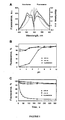
- the shorter wavelength maximum at 456 nm is characteristic of 3-O-fluorescein ethers ( He et al., Colloids and Surfaces A: Physicochemical and Engineering Aspects, 1998, 142, 49-57 ) and has been observed in absorbance spectra of various fluorescein ethers having 2'-ester (Lohse et al . ; Adamczyk et al ., previously cited) or 2'-secondary amide residues (Goa et al ., previously cited).
- the entire well volume was irradiated under the microscope with standard "fluorescein” filters set.
- the intensity delivered by the source on the surface of the slide was measured with a COHERENT LaserCheck probe, and found to be ⁇ 6mW/cm 2 at 488 nm.
- Well images were recorded regularly with IMSTAR software and mean fluorescence intensity was calculated. The snapshots took 8-120 ms, that was considerably shorter than the characteristic time of photobleaching kinetics t 1/2 > 14 s.
- the sample was placed in a well on the surface of a glass slide that contains 40 circular wells of 2 mm diameter, separated by 30 ⁇ m-thick Teflon coating. The well was then enclosed with a coverslip producing a cylindrical sample chamber of ⁇ 380 nl volume. The slide was mounted on the microscope stage and the well was irradiated with standard "fluorescein" filters set. In order to prevent a heterogeneous photobleaching and associated macrodiffusion phenomena, the objective was adjusted to irradiate an entire sample chamber. The resulted light intensity at the chamber level was measured to be ⁇ 6 mW/mm 2 . At different times the fluorescence images of the well were taken and mean fluorescence intensity was calculated using IMSTAR software (Khomyakova et al ., previously cited).
- EXAMPLE 3 SOLID PHASE SYNTHESIS OF FLUOROGENIC SUBSTRATE USING A FLUORESCEIN COMPOUND ACCORDING TO THE INVENTION.
- the substrate comprised of Fmoc-protected fluorescent compound n) and Methyl Red (MR) chromophore separated by the peptide sequence GGFGLG. that has been described as a good papain substrate with a cleavage being at the G-L bond ( Leon et al., Bioorg. Med. Chem. Lett., 1998, 8, 2997-3002 ).
- the specificity for the papain is determined by the phenylalanine at the P2 position and the leucine at the position P1' ( Schechter et al., Biochem. Biophys. Res. Commun., 1968, 32, 898-902 ).
- the MR dye has been shown to be well suited to quench the fluorescence of fluorescein derivatives ( McKeen et al., Org. Biomol. Chem. 2003, 1, 2267-2275 ).
- the substrate was synthesized by Fmoc-chemistry on TentaGel resin (20 ⁇ m beads).
- the major concern of such heterophase screening assay is the permeability of resins to biomolecules, which determines the accessibility of the resin-bound substrate for the enzymes.
- TentaGel resin has been shown not to be optimal for on-bead enzymatic screening (Leon et al ., previously cited), it has some important advantages such as excellent swelling properties in organic and aqueous media, mechanical stability and narrow size distribution ( Olivos et al., Chembiochem 2003, 4, 1242-1245 ; Lam et al., Chem. Rev. 1997, 97, 411-448 ). Furthermore, a polyethylene glycol linker PEG(7) has been introduced between the peptide and TentaGel functional group rendered the fluorogenic substrate more accessible for protease cleavage.
- the fluorophore n was coupled first after the linker followed by peptide sequence and the quencher MR, which was coupled to the side chain of the lysine at the end of the synthesis, as illustrated by Figure 2 .
- the first G of the peptide sequence is represented by -NH-CH 2 -CO.
- the substrate was synthesized semi-manually on TentaGel S NH2 resin (20 ⁇ m beads, 0.25 mmol/g) using Bohdan MiniBlock synthesizer (Mettler Toledo).
- diisopropylcarbodiimide DIC
- HOBt 17 mg, 0.125 mmol
- DMAP 3 mg, 0.025 mmol
- TentaGel-PEG(7)-NH2 resin was used for substrate synthesis by standard Fmoc protocol (Chan et al ., Oxford University Press: New York, 2002). Ten fold excess of Fmoc-protected compounds for 2 hours were used in each coupling cycle to ensure the completion of peptide coupling reaction (three fold excess overnight for Fmoc-protected fluorescent amino-acid n) . Each successive coupling was verified by ninhydrin test and by measuring resin weight. Prior to MR coupling, the synthesized sequence was confirmed by Edman sequencing. In order to attach MR, N ⁇ -Boc lysine was introduced in the peptide chain.
- the N ⁇ -Boc protecting group was removed with 20% TFA in DCM prior final N ⁇ -Fmoc deprotection.
- the resin was resuspended in 2 ml of dry DCM, and was treated with a solution of MR (34 mg, 0.125 mmol), DIC (16 mg, 0.125 mmol), HOBt (17 mg, 0.125 mmol) and DMAP (3 mg, 0.025 mmol) in 0.5 ml of dry DMF. The reaction was shaken for 6 hours at room temperature. The resin was washed thoroughly with dry DMF and dry DCM and fully deprotected with 50% TFA in DCM.
- the on-bead screening assay requires methods for determination and analysis of the "positive" beads.
- the peptide sequence susceptible to proteolysis should be cleaved from the solid phase support thereby releasing the MR quenching moiety and resulting in an enhancement of the fluorescence of the resin-bound fluorophore. Therefore, to detect a proteolytic activity, the fluorescent proteolized beads should be distinguished from the control beads, which have not been exposed to a protease. functioning
- the beads were swollen overnight in 0.4 M sodium phosphate buffer (pH 6.8), centrifuged and re-suspended in the same buffer containing 8 mM DTT and 4 mM EDTA ( Szabelski et al., Acta Biochim. Pol. 2001, 48, 995-1002 ).
- the samples of beads suspension was incubated with 0.5 ⁇ M papain for 2 hours, then washed and examined for fluorescence.
- 5 ⁇ M stock papain solution was pre-incubated with 1 mM N-ethylmaleimide (NEM) for 15 min at 37°C before adding to beads.
- NEM N-ethylmaleimide
- the beads samples were spotted in the wells on Super-Teflon glass slides by using piezo-electric dispenser and were enclosed with coverslips.
- the 40-wells patterned glass slides with 30 ⁇ m-thick Teflon frame were used to delimit the bead solution, although higher density format (several thousands hydrophilic wells patterned on a perfluorated glass surface) can also be used.
- the beads were maintained in suspension by sonication pulses. Under these conditions rather homogeneous dispense of the beads 5-500 per droplet, depending on the bead concentration, can be achieved.
- the measure of the distribution of bead fluorescence has been performed in arrayed droplets without covering, but glycerol should be added to the beads suspension to prevent evaporation.
- the proteolysis of the bead-bound substrate is measured by using microarray scanner or fluorescent microscope.
- the scanning were performed on GeneTAC LS IV scanner using a 488 nm argon ion laser and a 512 nm emission filter (512BP).
- the obtained images were analyzed with Genepix Pro 4.0 software.
- Microscope measurements were performed on a Olympus BX51 fluorescent microscope with standard "fluorescein" filters set. A random population of 200 beads was analyzed for each sample.
- Figure 3A illustrates the 5 ⁇ m-resolution scanner images of two beads populations : the 20 ⁇ m TentaGel beads carrying the fluorogenic papain substrate incubated with 0.5 ⁇ M papain (marked “papain”) or with NEM-inhibited papain (marked “control”).
- Automated fluorescence microscopy provides with precise data on brightness variation within the bead population, as illustrated on Figure 3B of the fluorescence micrographs of the beads obtained with fluorescein filter set and on Figure 3C showing bright field images of the same bead populations as in Figure 3B . These results clearly demonstrate that the beads incubated with papain appeared significantly brighter on scanner image than the control beads.
Landscapes
- Chemical & Material Sciences (AREA)
- Organic Chemistry (AREA)
- Engineering & Computer Science (AREA)
- Materials Engineering (AREA)
- Peptides Or Proteins (AREA)
- Heterocyclic Carbon Compounds Containing A Hetero Ring Having Oxygen Or Sulfur (AREA)
- Measuring Or Testing Involving Enzymes Or Micro-Organisms (AREA)
- Pyrane Compounds (AREA)
Claims (29)
- Fluoreszierende Verbindungen der Formel (I):
 W ein Diradikal, ausgewählt aus der Gruppe, bestehend aus einem linearen, verzweigten oder cyclischen C1-C12-Alkyl, C2-C12-Alkenyl, C6-C10-Aryl und C6-C12-Alkylaryl oder -Aralkyl darstellt;X ausgewählt ist aus der Gruppe, bestehend aus H, einem linearen, verzweigten oder cyclischen C1-C12-Alkyl oder C2-C12-Alkenyl, einem Phenyl, einem para-Nitrophenyl und einem Benzyl;Y ein Radikal darstellt, ausgewählt aus der Gruppe, bestehend aus einem linearen, verzweigten oder cyclischen C1-C6-Alkyl, C2-C6-Alkenyl, einem Phenyl, einem para-Nitrophenyl, einem Benzyl, C6-C10-Aryl und C6-C12-Alkylaryl oder -Aralkyl, das gegebenenfalls ein Heteroatom oder mehrere Heteroatome, ausgewählt aus der Gruppe, bestehend aus O, N und S, enthält;Z ein Diradikal, ausgewählt aus der Gruppe, bestehend aus C1-C12-Alkyl-Ketten, wobei die genannte Kette durch eine oder mehrere der folgenden Funktionalitäten unterbrochen sein kann: eine Etherbrücke -O-, eine Aminobrücke -NH-, eine Esterfunktion -O-CO-, eine Amidfunktion -NH-CO-, eine Schwefelbrücke -S-, eine Harnstofffunktion -NH-CO-NH-, eine Oxycarbonylfunktion -O-CO-O-, C6-C10-Aryl, C6-C10-Heteroaryle, gegebenenfalls enthaltend ein Heteroatom oder mehrere Heteroatome, ausgewählt aus der Gruppe, bestehend aus O, N und S, und C6-C12-Alkylaryl oder -Aralkyl, darstellt;NH des Phenylrings in Position 3 bis 6 des Rings ist;R eine Aminoschutzgruppe ist, ausgewählt aus der Gruppe, bestehend aus: Fmoc, t-BuO-CO- (Boc), Phenyl, Benzyl, Acetyl, Benzoyl, 4-Toluolsulfonyl, 4-Methoxy-2,3,6-trimethylbenzolsulfonyl, Trityl, 4-Methoxytrityl, Trifluoracetyl, Benzyloxycarbonyl, Allyloxycarbonyl, 2-Chlorbenzyloxycarbonyl; und R-, X- und Y-Gruppen so gewählt sind, dass R und X unabhängig voneinander und ohne Entschützen von Y entschützt werden können.
 - Fluoreszierende Verbindungen der Formel (I) nach Anspruch 1, worin W ein C1-C4-Alkylketten-Diradikal ist.
- Fluoreszierende Verbindungen der Formel (I) nach Anspruch 2, worin W -CH2- ist.
- Fluoreszierende Verbindungen der Formel (I) nach einem der vorangehenden Ansprüche, worin X ausgewählt ist aus H, C1-C6-Alkyl.
- Fluoreszierende Verbindungen der Formel (I) nach Anspruch 4, worin X H ist.
- Fluoreszierende Verbindungen der Formel (I) nach Anspruch 4, worin X tert.-Butyl ist.
- Fluoreszierende Verbindungen der Formel (I) nach einem der vorangehenden Ansprüche, worin Y C1-C6-Alkyl ist.
- Fluoreszierende Verbindungen der Formel (I) nach Anspruch 7, worin Y Methyl oder Ethyl ist.
- Fluoreszierende Verbindungen der Formel (I) nach Anspruch 8, worin Z eine C2-C8-Alkylkette ist, die gegebenenfalls eine oder zwei Funktion(en), ausgewählt aus der Gruppe, bestehend aus: einer Etherbrücke, einer Amidfunktion und einer Esterfunktion, umfasst.
- Fluoreszierende Verbindungen der Formel (I) nach Anspruch 9, worin Z ausgewählt ist aus der Gruppe, bestehend aus -CH2-CH2-, -CH2-CH2-CH2-, -CH2-(CH2)2-CH2-, -CH2-(CH2)3-CH2-, -CH2-(CH2)4-CH2-, -CH2-O-CH2-CO-NH-CH2-CH2-, -CH2-O-CH2-CO-NH-(CH2)2-CH2- und -CH2-O-CH2-CO-NH-(CH2)3-CH2-.
- Fluoreszierende Verbindungen der Formel (I) nach einem der vorangehenden Ansprüche, worin R eine Fmoc-Gruppe ist.
- Fluoreszierende Verbindungen der Formel (I) nach Anspruch 1, ausgewählt unter den folgenden Formeln:


- Verfahren zur Herstellung der fluoreszierenden Verbindungen der Formel (I) nach einem der Ansprüche 1 bis 12, wenn X H ist, umfassend wenigstens einen Schritt, in dem die saure Funktion, die an die 6'-Hydroxyfunktion des Xanthenrings von Verbindungen der Formel (D) gepfropft ist, entschützt wird, um Verbindungen der Formel (E) zu erhalten.

- Verfahren nach Anspruch 13, wobei Verbindungen der Formel (D) erhalten werden, indem die Verbindungen der Formel (C) an ihrer NH2-Funktion geschützt werden.

- Verfahren nach Anspruch 14, wobei Z ein Alkyldiradikal ist, wobei das Verfahren eine Reaktion umfasst, bei der R-NH-Z-COOH mit einer Verbindung der Formel (C) unter solchen Bedingungen umgesetzt wird, dass eine Peptidbindung erzeugt wird.
- Verfahren nach Anspruch 14, wobei Z -CH2-O-CH2-CO-NH-(CH2)x-, worin x eine ganze Zahl von 1 bis 6 ist, darstellt, wobei das Verfahren eine Zweistufenreaktion umfasst, bestehend aus der Umsetzung der Verbindung der Formel (C) mit Diglycolsäureanhydrid unter Erhalt eines Derivats der Formel (C) das mit einer -CO-CH2-O-CH2-CO-OH-Gruppe an seiner Aminfunktion gepfropft ist, und danach einem Umsetzen dieser Verbindung mit einem R-NH-(CH2)x-NH2-Molekül unter solchen Bedingungen, dass eine Kopplung zwischen den Amino- und Carbonsäure-Funktionen erhalten wird.
- Verfahren nach einem der Ansprüche 14 bis 16, wobei Verbindungen der Formel (C) durch die Alkylierung der Verbindungen der Formel (B) mit einer Alkylhalogenalkylcarboxylat-Gruppe Hal-W-CO-OX, worin W und X dieselbe Definition wie in Formel (I), die in Anspruch 1 definiert ist, haben, außer dass X nicht H ist und Hal ein Halogenatom darstellt.

- Verfahren nach Anspruch 17, wobei Hal Br ist.
- Verfahren nach Anspruch 17 oder 18, wobei die Alkylhalogenalkylcarboxylat-Gruppe t-Butylbromacetat ist.
- Verfahren nach einem der Ansprüche 17 bis 19, wobei die Verbindungen der Formel (B) durch Veresterung der Verbindungen der Formel (A) mit Alkohol Y-OH, worin Y dieselbe Definition wie in Formel (I), die in Anspruch 1 definiert ist, hat, erhalten werden.

- Fluoreszierende Verbindungen der Formel (D):

- Fluoreszierende Verbindungen der Formel (C):

- Fluoreszierende Verbindungen der Formel (C) nach Anspruch 22, worin W Methyl ist, X tert.-Butyl ist und Y Ethyl ist.
- Verwendung der fluoreszierenden Verbindungen der Formel (I) nach einem der Ansprüche 1 bis 12 zur Synthese eines fluorogenen Peptids.
- Verfahren zur Herstellung eines fluorogenen Peptids, umfassend die Schritte, bestehend aus:a) Pfropfen der Verbindung der Formel (I) nach einem der Ansprüche 1 bis 12 auf ein Harz mit einer NH2-Funktionalität,b) Synthetisieren des Peptids an der NH2-Gruppe der Verbindung der Formel (I), die in Schritt a) gepropft wurde,c) Pfropfen eines Quenchers an die NH2-terminale Funktion des in Schritt b) synthetisierten Peptids.
- Verfahren nach Anspruch 25, wobei die Verbindung der Formel (I) auf ein Harz gepfropft wird, das vorher an einen NH2-funktionalisierten polaren Linker gekoppelt worden war.
- Verfahren nach Anspruch 26, wobei der NH2-funktionalisierte polare Linker aus der Gruppe ausgewählt wird, die aus PEG-Linkern besteht, die 2 bis 300 PEG-Einheiten umfassen.
- Verbindung der Formel (II):

ein Harz darstellt,
PL einen polaren Linker darstellt,
y eine ganze Zahl, ausgewählt aus 0 und 1 ist,
Flu eine Verbindung der Formel (I) nach einem der Ansprüche 1 bis 12 , gepropft durch ihre Carbonsäurefunktion, ist. - Kit zur Peptidsynthese, umfassend:- eine Verbindung der Formel (II), wie sie in Anspruch 28 definiert ist, und- ein Quencher-Molekül.
Priority Applications (6)
| Application Number | Priority Date | Filing Date | Title |
|---|---|---|---|
| AT05291676T ATE395390T1 (de) | 2005-08-04 | 2005-08-04 | Fluorescein-derivate und ihre verwendung für peptidsynthese. |
| EP05291676A EP1749870B1 (de) | 2005-08-04 | 2005-08-04 | Fluorescein-Derivate und ihre Verwendung für Peptidsynthese. |
| DE602005006795T DE602005006795D1 (de) | 2005-08-04 | 2005-08-04 | Fluorescein-Derivate und ihre Verwendung für Peptidsynthese. |
| PCT/IB2006/003476 WO2007029122A2 (en) | 2005-08-04 | 2006-07-25 | Fluorescein-based compounds and their use for peptide synthesis |
| US11/997,516 US20080275215A1 (en) | 2005-08-04 | 2006-07-25 | Fluorescein-Based Compounds And Their Use For Peptide Synthesis |
| JP2008524627A JP2009503054A (ja) | 2005-08-04 | 2006-07-25 | フルオレセイン系化合物およびペプチド合成のためのその使用 |
Applications Claiming Priority (1)
| Application Number | Priority Date | Filing Date | Title |
|---|---|---|---|
| EP05291676A EP1749870B1 (de) | 2005-08-04 | 2005-08-04 | Fluorescein-Derivate und ihre Verwendung für Peptidsynthese. |
Publications (2)
| Publication Number | Publication Date |
|---|---|
| EP1749870A1 EP1749870A1 (de) | 2007-02-07 |
| EP1749870B1 true EP1749870B1 (de) | 2008-05-14 |
Family
ID=35219599
Family Applications (1)
| Application Number | Title | Priority Date | Filing Date |
|---|---|---|---|
| EP05291676A Expired - Lifetime EP1749870B1 (de) | 2005-08-04 | 2005-08-04 | Fluorescein-Derivate und ihre Verwendung für Peptidsynthese. |
Country Status (6)
| Country | Link |
|---|---|
| US (1) | US20080275215A1 (de) |
| EP (1) | EP1749870B1 (de) |
| JP (1) | JP2009503054A (de) |
| AT (1) | ATE395390T1 (de) |
| DE (1) | DE602005006795D1 (de) |
| WO (1) | WO2007029122A2 (de) |
Families Citing this family (4)
| Publication number | Priority date | Publication date | Assignee | Title |
|---|---|---|---|---|
| US8084627B2 (en) | 2007-01-26 | 2011-12-27 | University Of Pittsburgh-Of The Commonwealth System Of Higher Education | Hydroxymethyl fluorescein derivatives for use as biological markers and dyes |
| WO2015137451A1 (ja) * | 2014-03-13 | 2015-09-17 | 株式会社クラレ | 重合体、吸着材、並びにその製造方法 |
| WO2018222773A2 (en) * | 2017-05-30 | 2018-12-06 | Chan Eugene Y | Fluorogenic peptide substrates for in solution and solid phase factor xa measurements |
| CN110361378B (zh) * | 2019-07-25 | 2021-04-02 | 浙江大学 | 基于荧光素乙酯的orac抗氧化活性评价方法及荧光指示剂 |
Family Cites Families (3)
| Publication number | Priority date | Publication date | Assignee | Title |
|---|---|---|---|---|
| GB846674A (en) | 1958-04-29 | 1960-08-31 | Univ Kansas Res Foundation | Xanthene compounds and dyestuffs and means of producing the same |
| DE4213703A1 (de) * | 1992-04-25 | 1993-10-28 | Merck Patent Gmbh | Fluoreszenzmarkierte Verbindungen, ihre Herstellung und Verwendung |
| US20040054195A1 (en) | 2002-01-10 | 2004-03-18 | Jianxin Gao | Xanthene derivatives |
-
2005
- 2005-08-04 EP EP05291676A patent/EP1749870B1/de not_active Expired - Lifetime
- 2005-08-04 AT AT05291676T patent/ATE395390T1/de not_active IP Right Cessation
- 2005-08-04 DE DE602005006795T patent/DE602005006795D1/de not_active Expired - Lifetime
-
2006
- 2006-07-25 WO PCT/IB2006/003476 patent/WO2007029122A2/en not_active Ceased
- 2006-07-25 JP JP2008524627A patent/JP2009503054A/ja active Pending
- 2006-07-25 US US11/997,516 patent/US20080275215A1/en not_active Abandoned
Also Published As
| Publication number | Publication date |
|---|---|
| WO2007029122A2 (en) | 2007-03-15 |
| JP2009503054A (ja) | 2009-01-29 |
| EP1749870A1 (de) | 2007-02-07 |
| DE602005006795D1 (de) | 2008-06-26 |
| ATE395390T1 (de) | 2008-05-15 |
| WO2007029122A3 (en) | 2007-07-12 |
| US20080275215A1 (en) | 2008-11-06 |
Similar Documents
| Publication | Publication Date | Title |
|---|---|---|
| US5132432A (en) | Chemically reactive pyrenyloxy sulfonic acid dyes | |
| EP0885263B1 (de) | Benzophenoxazinfarbstoffe | |
| Ho et al. | Development of water-soluble far-red fluorogenic dyes for enzyme sensing | |
| CA2251985A1 (en) | Squarate dyes and their use in fluorescent sequencing method | |
| EP2794764A1 (de) | Hochdichte fluoreszenzfarbstoff-cluster | |
| CA2336904A1 (en) | Novel fluorescent lanthanide chelates | |
| CN112940709A (zh) | 一类自闪烁罗丹明螺硫酯荧光染料及其合成方法和在超分辨成像领域的应用 | |
| Burchak et al. | Fluorescein-based amino acids for solid phase synthesis of fluorogenic protease substrates | |
| US20040054195A1 (en) | Xanthene derivatives | |
| WO2008145609A1 (en) | Method of making covalent conjugates with his-tagged proteins | |
| EP1281712A1 (de) | Fluoreszierende PH Indikatoren für intrazelluläre Assays | |
| EP1749870A1 (de) | Fluorescein-Derivate und ihre Verwendung für Peptidsynthese. | |
| US5958673A (en) | Fluorescent dye | |
| US7101999B2 (en) | Oxazine derivatives | |
| WO2002055512A1 (en) | Xanthene derivatives | |
| US6740756B1 (en) | Fluorescent lanthanide chelates | |
| JP2023007068A (ja) | 蛍光色素、蛍光色素で標識された生体分子、及び化合物又はその塩 | |
| US7897787B2 (en) | Maleimide derivative | |
| JP7339675B2 (ja) | カルボキシペプチダーゼ活性検出用蛍光プローブ | |
| US6809220B2 (en) | Trityl-type compounds and their use | |
| CN113603681B (zh) | 一种基于菁染料的化合物及其制备方法和用途 | |
| WO2010054183A2 (en) | Dyes, compositions and related methods of use | |
| JP2006342299A (ja) | 蛍光性アミノ酸誘導体 | |
| Kang et al. | Spectral Properties Of 4-Sulfonato-3, 3', 5, 5'-Tetramethy1-2, Z-Pyrronlethen-1, 1'-Borondifluoride Complex (Bodipy), Its Sodium Salt, And Protein Derivatives | |
| JP5229700B2 (ja) | 新規蛍光化合物およびそれを用いた細胞内コレステロールの検出方法 |
Legal Events
| Date | Code | Title | Description |
|---|---|---|---|
| PUAI | Public reference made under article 153(3) epc to a published international application that has entered the european phase |
Free format text: ORIGINAL CODE: 0009012 |
|
| AK | Designated contracting states |
Kind code of ref document: A1 Designated state(s): AT BE BG CH CY CZ DE DK EE ES FI FR GB GR HU IE IS IT LI LT LU LV MC NL PL PT RO SE SI SK TR |
|
| AX | Request for extension of the european patent |
Extension state: AL BA HR MK YU |
|
| 17P | Request for examination filed |
Effective date: 20070706 |
|
| 17Q | First examination report despatched |
Effective date: 20070806 |
|
| AKX | Designation fees paid |
Designated state(s): AT BE BG CH CY CZ DE DK EE ES FI FR GB GR HU IE IS IT LI LT LU LV MC NL PL PT RO SE SI SK TR |
|
| GRAP | Despatch of communication of intention to grant a patent |
Free format text: ORIGINAL CODE: EPIDOSNIGR1 |
|
| GRAS | Grant fee paid |
Free format text: ORIGINAL CODE: EPIDOSNIGR3 |
|
| GRAA | (expected) grant |
Free format text: ORIGINAL CODE: 0009210 |
|
| AK | Designated contracting states |
Kind code of ref document: B1 Designated state(s): AT BE BG CH CY CZ DE DK EE ES FI FR GB GR HU IE IS IT LI LT LU LV MC NL PL PT RO SE SI SK TR |
|
| REG | Reference to a national code |
Ref country code: GB Ref legal event code: FG4D |
|
| REG | Reference to a national code |
Ref country code: CH Ref legal event code: EP |
|
| REG | Reference to a national code |
Ref country code: IE Ref legal event code: FG4D Free format text: LANGUAGE OF EP DOCUMENT: FRENCH |
|
| REF | Corresponds to: |
Ref document number: 602005006795 Country of ref document: DE Date of ref document: 20080626 Kind code of ref document: P |
|
| REG | Reference to a national code |
Ref country code: CH Ref legal event code: NV Representative=s name: ISLER UND PEDRAZZINI AG |
|
| RAP2 | Party data changed (patent owner data changed or rights of a patent transferred) |
Owner name: COMMISSARIAT A L'ENERGIE ATOMIQUE |
|
| PG25 | Lapsed in a contracting state [announced via postgrant information from national office to epo] |
Ref country code: SI Free format text: LAPSE BECAUSE OF FAILURE TO SUBMIT A TRANSLATION OF THE DESCRIPTION OR TO PAY THE FEE WITHIN THE PRESCRIBED TIME-LIMIT Effective date: 20080514 |
|
| PG25 | Lapsed in a contracting state [announced via postgrant information from national office to epo] |
Ref country code: FI Free format text: LAPSE BECAUSE OF FAILURE TO SUBMIT A TRANSLATION OF THE DESCRIPTION OR TO PAY THE FEE WITHIN THE PRESCRIBED TIME-LIMIT Effective date: 20080514 Ref country code: ES Free format text: LAPSE BECAUSE OF FAILURE TO SUBMIT A TRANSLATION OF THE DESCRIPTION OR TO PAY THE FEE WITHIN THE PRESCRIBED TIME-LIMIT Effective date: 20080825 |
|
| NLT2 | Nl: modifications (of names), taken from the european patent patent bulletin |
Owner name: COMMISSARIAT A L'ENERGIE ATOMIQUE Effective date: 20080820 |
|
| PG25 | Lapsed in a contracting state [announced via postgrant information from national office to epo] |
Ref country code: LV Free format text: LAPSE BECAUSE OF FAILURE TO SUBMIT A TRANSLATION OF THE DESCRIPTION OR TO PAY THE FEE WITHIN THE PRESCRIBED TIME-LIMIT Effective date: 20080514 Ref country code: PL Free format text: LAPSE BECAUSE OF FAILURE TO SUBMIT A TRANSLATION OF THE DESCRIPTION OR TO PAY THE FEE WITHIN THE PRESCRIBED TIME-LIMIT Effective date: 20080514 Ref country code: AT Free format text: LAPSE BECAUSE OF FAILURE TO SUBMIT A TRANSLATION OF THE DESCRIPTION OR TO PAY THE FEE WITHIN THE PRESCRIBED TIME-LIMIT Effective date: 20080514 |
|
| PG25 | Lapsed in a contracting state [announced via postgrant information from national office to epo] |
Ref country code: IS Free format text: LAPSE BECAUSE OF FAILURE TO SUBMIT A TRANSLATION OF THE DESCRIPTION OR TO PAY THE FEE WITHIN THE PRESCRIBED TIME-LIMIT Effective date: 20080914 |
|
| PG25 | Lapsed in a contracting state [announced via postgrant information from national office to epo] |
Ref country code: SE Free format text: LAPSE BECAUSE OF FAILURE TO SUBMIT A TRANSLATION OF THE DESCRIPTION OR TO PAY THE FEE WITHIN THE PRESCRIBED TIME-LIMIT Effective date: 20080814 Ref country code: LT Free format text: LAPSE BECAUSE OF FAILURE TO SUBMIT A TRANSLATION OF THE DESCRIPTION OR TO PAY THE FEE WITHIN THE PRESCRIBED TIME-LIMIT Effective date: 20080514 Ref country code: CZ Free format text: LAPSE BECAUSE OF FAILURE TO SUBMIT A TRANSLATION OF THE DESCRIPTION OR TO PAY THE FEE WITHIN THE PRESCRIBED TIME-LIMIT Effective date: 20080514 Ref country code: DK Free format text: LAPSE BECAUSE OF FAILURE TO SUBMIT A TRANSLATION OF THE DESCRIPTION OR TO PAY THE FEE WITHIN THE PRESCRIBED TIME-LIMIT Effective date: 20080514 |
|
| PG25 | Lapsed in a contracting state [announced via postgrant information from national office to epo] |
Ref country code: PT Free format text: LAPSE BECAUSE OF FAILURE TO SUBMIT A TRANSLATION OF THE DESCRIPTION OR TO PAY THE FEE WITHIN THE PRESCRIBED TIME-LIMIT Effective date: 20081014 Ref country code: SK Free format text: LAPSE BECAUSE OF FAILURE TO SUBMIT A TRANSLATION OF THE DESCRIPTION OR TO PAY THE FEE WITHIN THE PRESCRIBED TIME-LIMIT Effective date: 20080514 Ref country code: RO Free format text: LAPSE BECAUSE OF FAILURE TO SUBMIT A TRANSLATION OF THE DESCRIPTION OR TO PAY THE FEE WITHIN THE PRESCRIBED TIME-LIMIT Effective date: 20080514 |
|
| PLBE | No opposition filed within time limit |
Free format text: ORIGINAL CODE: 0009261 |
|
| STAA | Information on the status of an ep patent application or granted ep patent |
Free format text: STATUS: NO OPPOSITION FILED WITHIN TIME LIMIT |
|
| PG25 | Lapsed in a contracting state [announced via postgrant information from national office to epo] |
Ref country code: MC Free format text: LAPSE BECAUSE OF NON-PAYMENT OF DUE FEES Effective date: 20080831 |
|
| 26N | No opposition filed |
Effective date: 20090217 |
|
| PG25 | Lapsed in a contracting state [announced via postgrant information from national office to epo] |
Ref country code: EE Free format text: LAPSE BECAUSE OF FAILURE TO SUBMIT A TRANSLATION OF THE DESCRIPTION OR TO PAY THE FEE WITHIN THE PRESCRIBED TIME-LIMIT Effective date: 20080514 Ref country code: BG Free format text: LAPSE BECAUSE OF FAILURE TO SUBMIT A TRANSLATION OF THE DESCRIPTION OR TO PAY THE FEE WITHIN THE PRESCRIBED TIME-LIMIT Effective date: 20080814 |
|
| REG | Reference to a national code |
Ref country code: IE Ref legal event code: MM4A |
|
| PG25 | Lapsed in a contracting state [announced via postgrant information from national office to epo] |
Ref country code: IE Free format text: LAPSE BECAUSE OF NON-PAYMENT OF DUE FEES Effective date: 20080804 |
|
| PG25 | Lapsed in a contracting state [announced via postgrant information from national office to epo] |
Ref country code: IT Free format text: LAPSE BECAUSE OF FAILURE TO SUBMIT A TRANSLATION OF THE DESCRIPTION OR TO PAY THE FEE WITHIN THE PRESCRIBED TIME-LIMIT Effective date: 20080514 |
|
| PGFP | Annual fee paid to national office [announced via postgrant information from national office to epo] |
Ref country code: CH Payment date: 20090825 Year of fee payment: 5 Ref country code: DE Payment date: 20090821 Year of fee payment: 5 Ref country code: GB Payment date: 20090827 Year of fee payment: 5 Ref country code: NL Payment date: 20090814 Year of fee payment: 5 |
|
| PGFP | Annual fee paid to national office [announced via postgrant information from national office to epo] |
Ref country code: BE Payment date: 20090814 Year of fee payment: 5 |
|
| PG25 | Lapsed in a contracting state [announced via postgrant information from national office to epo] |
Ref country code: LU Free format text: LAPSE BECAUSE OF NON-PAYMENT OF DUE FEES Effective date: 20080804 Ref country code: CY Free format text: LAPSE BECAUSE OF FAILURE TO SUBMIT A TRANSLATION OF THE DESCRIPTION OR TO PAY THE FEE WITHIN THE PRESCRIBED TIME-LIMIT Effective date: 20080514 Ref country code: HU Free format text: LAPSE BECAUSE OF FAILURE TO SUBMIT A TRANSLATION OF THE DESCRIPTION OR TO PAY THE FEE WITHIN THE PRESCRIBED TIME-LIMIT Effective date: 20081115 |
|
| PG25 | Lapsed in a contracting state [announced via postgrant information from national office to epo] |
Ref country code: TR Free format text: LAPSE BECAUSE OF FAILURE TO SUBMIT A TRANSLATION OF THE DESCRIPTION OR TO PAY THE FEE WITHIN THE PRESCRIBED TIME-LIMIT Effective date: 20080514 |
|
| PG25 | Lapsed in a contracting state [announced via postgrant information from national office to epo] |
Ref country code: GR Free format text: LAPSE BECAUSE OF FAILURE TO SUBMIT A TRANSLATION OF THE DESCRIPTION OR TO PAY THE FEE WITHIN THE PRESCRIBED TIME-LIMIT Effective date: 20080815 |
|
| BERE | Be: lapsed |
Owner name: *COMMISSARIAT A L'ENERGIE ATOMIQUE Effective date: 20100831 |
|
| REG | Reference to a national code |
Ref country code: NL Ref legal event code: V1 Effective date: 20110301 |
|
| REG | Reference to a national code |
Ref country code: CH Ref legal event code: PL |
|
| GBPC | Gb: european patent ceased through non-payment of renewal fee |
Effective date: 20100804 |
|
| PG25 | Lapsed in a contracting state [announced via postgrant information from national office to epo] |
Ref country code: LI Free format text: LAPSE BECAUSE OF NON-PAYMENT OF DUE FEES Effective date: 20100831 Ref country code: CH Free format text: LAPSE BECAUSE OF NON-PAYMENT OF DUE FEES Effective date: 20100831 |
|
| REG | Reference to a national code |
Ref country code: FR Ref legal event code: ST Effective date: 20110502 |
|
| PG25 | Lapsed in a contracting state [announced via postgrant information from national office to epo] |
Ref country code: NL Free format text: LAPSE BECAUSE OF NON-PAYMENT OF DUE FEES Effective date: 20110301 |
|
| REG | Reference to a national code |
Ref country code: DE Ref legal event code: R119 Ref document number: 602005006795 Country of ref document: DE Effective date: 20110301 |
|
| PG25 | Lapsed in a contracting state [announced via postgrant information from national office to epo] |
Ref country code: BE Free format text: LAPSE BECAUSE OF NON-PAYMENT OF DUE FEES Effective date: 20100831 Ref country code: FR Free format text: LAPSE BECAUSE OF NON-PAYMENT OF DUE FEES Effective date: 20100831 Ref country code: DE Free format text: LAPSE BECAUSE OF NON-PAYMENT OF DUE FEES Effective date: 20110301 |
|
| PG25 | Lapsed in a contracting state [announced via postgrant information from national office to epo] |
Ref country code: GB Free format text: LAPSE BECAUSE OF NON-PAYMENT OF DUE FEES Effective date: 20100804 |
|
| PGFP | Annual fee paid to national office [announced via postgrant information from national office to epo] |
Ref country code: FR Payment date: 20090914 Year of fee payment: 5 |