EP1760431A1 - Véhicule comprenant un système de navigation inertielle avec plusieurs filtres de Kalman - Google Patents
Véhicule comprenant un système de navigation inertielle avec plusieurs filtres de Kalman Download PDFInfo
- Publication number
- EP1760431A1 EP1760431A1 EP06119725A EP06119725A EP1760431A1 EP 1760431 A1 EP1760431 A1 EP 1760431A1 EP 06119725 A EP06119725 A EP 06119725A EP 06119725 A EP06119725 A EP 06119725A EP 1760431 A1 EP1760431 A1 EP 1760431A1
- Authority
- EP
- European Patent Office
- Prior art keywords
- vehicle
- inertial
- motion
- kalman filters
- kalman filter
- Prior art date
- Legal status (The legal status is an assumption and is not a legal conclusion. Google has not performed a legal analysis and makes no representation as to the accuracy of the status listed.)
- Granted
Links
- 238000012545 processing Methods 0.000 claims abstract description 22
- 238000000034 method Methods 0.000 claims description 32
- 230000008569 process Effects 0.000 claims description 19
- 238000005259 measurement Methods 0.000 claims description 18
- 238000000926 separation method Methods 0.000 claims description 12
- 230000004044 response Effects 0.000 abstract description 2
- 238000004891 communication Methods 0.000 description 12
- 238000001514 detection method Methods 0.000 description 10
- 239000011159 matrix material Substances 0.000 description 8
- 230000008859 change Effects 0.000 description 4
- 230000001419 dependent effect Effects 0.000 description 4
- 230000035945 sensitivity Effects 0.000 description 3
- 230000009471 action Effects 0.000 description 2
- 238000010586 diagram Methods 0.000 description 2
- 230000001133 acceleration Effects 0.000 description 1
- 230000006978 adaptation Effects 0.000 description 1
- 230000009286 beneficial effect Effects 0.000 description 1
- 238000004364 calculation method Methods 0.000 description 1
- 238000012937 correction Methods 0.000 description 1
- 238000005516 engineering process Methods 0.000 description 1
- 238000012360 testing method Methods 0.000 description 1
- 230000007704 transition Effects 0.000 description 1
Images


Classifications
-
- G—PHYSICS
- G01—MEASURING; TESTING
- G01C—MEASURING DISTANCES, LEVELS OR BEARINGS; SURVEYING; NAVIGATION; GYROSCOPIC INSTRUMENTS; PHOTOGRAMMETRY OR VIDEOGRAMMETRY
- G01C21/00—Navigation; Navigational instruments not provided for in groups G01C1/00 - G01C19/00
- G01C21/10—Navigation; Navigational instruments not provided for in groups G01C1/00 - G01C19/00 by using measurements of speed or acceleration
- G01C21/12—Navigation; Navigational instruments not provided for in groups G01C1/00 - G01C19/00 by using measurements of speed or acceleration executed aboard the object being navigated; Dead reckoning
- G01C21/16—Navigation; Navigational instruments not provided for in groups G01C1/00 - G01C19/00 by using measurements of speed or acceleration executed aboard the object being navigated; Dead reckoning by integrating acceleration or speed, i.e. inertial navigation
- G01C21/183—Compensation of inertial measurements, e.g. for temperature effects
- G01C21/188—Compensation of inertial measurements, e.g. for temperature effects for accumulated errors, e.g. by coupling inertial systems with absolute positioning systems
-
- G—PHYSICS
- G01—MEASURING; TESTING
- G01C—MEASURING DISTANCES, LEVELS OR BEARINGS; SURVEYING; NAVIGATION; GYROSCOPIC INSTRUMENTS; PHOTOGRAMMETRY OR VIDEOGRAMMETRY
- G01C21/00—Navigation; Navigational instruments not provided for in groups G01C1/00 - G01C19/00
- G01C21/10—Navigation; Navigational instruments not provided for in groups G01C1/00 - G01C19/00 by using measurements of speed or acceleration
- G01C21/12—Navigation; Navigational instruments not provided for in groups G01C1/00 - G01C19/00 by using measurements of speed or acceleration executed aboard the object being navigated; Dead reckoning
- G01C21/16—Navigation; Navigational instruments not provided for in groups G01C1/00 - G01C19/00 by using measurements of speed or acceleration executed aboard the object being navigated; Dead reckoning by integrating acceleration or speed, i.e. inertial navigation
- G01C21/165—Navigation; Navigational instruments not provided for in groups G01C1/00 - G01C19/00 by using measurements of speed or acceleration executed aboard the object being navigated; Dead reckoning by integrating acceleration or speed, i.e. inertial navigation combined with non-inertial navigation instruments
Definitions
- the present invention relates generally to inertial systems and in particular to the use of Kalman filters to improve inertial systems.
- Some inertial measurement systems are used to determine the attitude and propagate the position of an object on the ground. This is done by utilizing inertial sensors which measure rate information of the object relative to an inertia frame of reference.
- An inertial frame of reference is constant with respect to inertial space.
- Non-inertial frames of reference such as an earth fixed frame, rotate and possibly translate with respect to an inertial frame.
- An example of an inertial sensor is an accelerometer which measures the change of velocity with respect to an inertial frame.
- Inertial sensors can be used by an inertial measurement system to realize 3-dimensional coordinates for the position of the object. To increase the accuracy of the coordinates, only the components of the body-sensed measurements which are relative to the actual motion of the vehicle are measured, and earth rotation, vibrations, and other random errors are eliminated.
- Kalman filters are used by systems such as an inertial measurement system to estimate the state of a system from measurements, such as those from inertial sensors, inertial sensor measurements are integrated up and contain random errors that the Kalman filter estimates in order to determine the attitude of the object.
- the accuracy of the position determined by an inertial system is dependent on processing zero velocity updates (ZUPTS).
- ZUPTS are measurements made by inertial sensors while the vehicle is stopped to ensure the accuracy of the position of the vehicle. ZUPTS are accurate only when the vehicle is stopped.
- processing an observation to the Kalman filter that assumes the vehicle is stopped causes an error in the inertial measurement system. Detection of motion that would enable the system to avoid erroneous ZUPTS often occurs after the motion has started.
- an inertial system includes at least one inertial sensor, a processing unit and a plurality of Kalman filters implemented in the processing unit.
- the Kalman filters receive information from the at least one inertial sensor, and at most one of the plurality of Kalman filters has processed zero velocity updates on the last cycle.
- the plurality of Kalman filters is used to optimize system response and performance during periods of intermittent motion.
- Embodiments of the present invention include an inertial system with improved accuracy by having a plurality of Kalman filters.
- the plurality of Kalman filters includes one that has processed zero velocity updates (ZUPTS) on the last cycle and at least one that has not processed ZUPTS on the last cycle but has processed ZUPTS on at least one previous cycle.
- ZUPTS zero velocity updates
- the inertial system can revert back to the solution maintained by a Kalman filter that has not processed ZUPTS on the last cycle (or has not processed ZUPTS on multiple cycles), thereby removing bad observations due to ZUPTS processed when the vehicle was in motion.
- the method of detecting motion using the multiple Kalman filters is enhanced. This is done by using a solution separation algorithm which is beneficial for detecting motion in slow moving objects. This technique overcomes problems with conventional threshold motion detection algorithms as applied to, for example, slow moving objects.
- a vehicle incorporating an inertial system with a plurality of Kalman filters is provided.
- the vehicle includes a guidance system and a position controller than moves the vehicle to the proper position.
- Figure 1 is an inertial system of one embodiment of the present invention shown generally at 100.
- Inertial system 100 is comprised of inertial sensor 102.
- inertial sensor 102 is an accelerometer.
- inertial sensor 102 is a gyroscope.
- inertial sensor 102 is a plurality of accelerometers or a plurality of gyroscopes or a combination of the two.
- Inertial sensor 102 is used in civil and military aviation, missiles and other projectiles, submarines and space technology as well as a number of other vehicles.
- Inertial sensor 102 measures rotational and linear movements without reference to external coordinates.
- accelerometers measure a change of velocity with respect to an inertial frame.
- Gyroscopes measure change of rotation with respect to inertial space.
- Inertial sensor 102 is subject to errors such as vibration and other disturbances.
- Inertial sensor 102 communicates with a processing unit 104 via a communication link 108.
- communication link 108 is wireless.
- communication link 108 is a wired connection.
- Processing unit 104 includes but is not limited to digital electronic circuitry, a programmable processor (for example, a special-purpose processor or a general-purpose processor such as a computer) firmware, software, or in combinations of them.
- Processing unit 104 implements a plurality of Kalman filters 106-1...106-N.
- Kalman filters 106-1...106-N estimate a series of parameters that describe and predict the behavior of a system.
- the Kalman filters 106-1...106-N operate with a set of state variables that describe errors in the system and an associated covariance matrix that describes the current knowledge level of the state.
- the Kalman filters 106-1...106-N maintain an estimate of the system errors and associated covariance over time and in the presence of external measurements through the use of propagation and updating processes.
- Kalman filters 106-1...106-N take the information provided by the inertial sensor 102 and received by the processing unit 104, including the errors created when they are integrated, and provides an estimate of the position, velocity, and attitude of the vehicle.
- the accuracy of the position of the inertial system 100 is dependent on the Kalman filters 106-1...106-N processing zero velocity observations (ZUPTS).
- ZUPTS are only accurate when the vehicle is stopped.
- processing an observation to the Kalman filters 106-1...106-N that assumes the vehicle is stopped causes an error.
- Detection of motion that allows the system 100 to avoid erroneous ZUPTS often occurs after the motion has started.
- This detection of motion is performed by the processing unit 104 using a motion detection algorithm.
- the motion detection algorithm is a threshold algorithm.
- the motion detection algorithm is a solution separation algorithm as described below in Figure 3.
- To avoid erroneously processing ZUPTS system 100 maintains a plurality of Kalman filters 106-1...106-N that have processed zero velocity updates on various cycles.
- Kalman filter 106-1 processes ZUPTS on all the cycles, and Kalman filter 106-N does not process ZUPTS on the last cycle. This allows the processing unit 104 to revert back to Kalman filter 106-N which did not process ZUPTS on the last cycle when motion is detected. This reduces the likelihood that the ZUPTS processed will have errors due to vehicle movement.
- N is equal to two and Kalman filter 106-2 does not process ZUPTS on the last cycle as described above. In another embodiment, N is greater than two and for each additional Kalman filter 106-1...106-N there is an additional cycle where ZUPTS are not processed. For example, when N is equal to four, Kalman filter 106-1 processes ZUPTS on all cycles, Kalman filter 106-2 does not process ZUPTS on the last cycle, Kalman filter 106-3 does not process ZUPTS on the last two cycles, and Kalman filter 106-4 does not process ZUPTS on the last three cycles. In one embodiment, a cycle is approximately equal to one second. The length of a cycle and the number of Kalman filters 106-1...106-N are application dependent. One embodiment of a process for preventing erroneous processing of ZUPTS is described with respect to Figure 2 below.
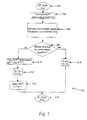
- Figure 2 is a flow chart of one embodiment of a method of improving the accuracy of an inertial system shown generally at 200.
- a plurality of Kalman filters is initialized and the cycle starts (202).
- a plurality of Kalman filters are used because when a vehicle moves, processing an observation to the Kalman filters that assumes the vehicle is stopped causes an error. Detection of motion that allows the system 200 to avoid erroneous ZUPTS often occurs after the motion has started. Therefore, the method maintains a plurality of Kalman filters that have processed zero velocity updates on various cycles in order to revert back to a Kalman filter that processed zero velocity updates when no motion occurred.
- Kalman filter 1 represents the Kalman filter that processes ZUPTS on all cycles.
- Kalman filter N represents the Kalman filter that has not processed ZUPTS when motion was occurring. In one embodiment, Kalman filter N did not process ZUPTS on the last cycle. In another embodiment, Kalman filter N did not process ZUPTS on a number of sequential cycles.
- the plurality of Kalman filters form non-zero velocity updates (ZUPTS) observations (204). These non-ZUPT observations are for the measurement vector (z) and the measurement sensitivity matrix (H) (204).
- ZUPTS non-zero velocity updates
- H measurement sensitivity matrix
- Each of the plurality of Kalman filters are updated (206).
- X i is the error state vector for Kalman filter i.
- ⁇ is the state transition matrix for Kalman filter i.
- Q is the process noise for the error states in all Kalman filters.
- K i is the measurement gain matrix for the non-ZUPT observations for Kalman filter i.
- H is the measurement sensitivity matrix for the non-ZUPT observations.
- z is the measurement vector for the non-ZUPT observations for Kalman filter i.
- K i AUPT is the measurement gain matrix for the ZUPT observations for Kalman filter i .
- H ZUPT is the measurement sensitivity matrix for the ZUPT observations.
- Z ZUPT is the measurement vector for the ZUPT observations.
- the method determines whether motion has been detected by a motion detect algorithm (208).
- the motion detection algorithm uses a threshold to determine if there has been motion.
- the motion detection algorithm is a solution separation algorithm as described below in Figure 3. If no motion is deleted, then ZUPT observations are formed (z ZUPT and H ZUPT ) (210).
- each Kalman filter copies the covariance and error state vector of the Kalman filter that has processed one more cycle of ZUPTS (212). This process starts with the Kalman filter that has processed the least amount of ZUPTS and ends when the covariance and error state vector for the Kalman filter that processed ZUPTS on the last cycle is copied to the Kalman filter that did not process ZUPTS on the last cycle (212).
- the Kalman filter that processed ZUPTS on the last cycle is Kalman filter 1. After the Kalman filters are copied, the zero velocity updates are applied to Kalman filter 1 as demonstrated in the following equations (214).
- X 1 X 1 + K 1 Z ⁇ U ⁇ P ⁇ T ⁇ z Z ⁇ U ⁇ P ⁇ T ⁇ H Z ⁇ U ⁇ P ⁇ T ⁇ X 1
- FIG 3 is a view of one embodiment of a method of the present invention shown generally at 300.
- a solution separation algorithm 302 is shown.
- solution separation algorithm 302 is used to detect motion as shown in block 208 of Figure 2 rather than using a threshold method. Motion is assumed to have occurred if the position separation between a Kalman filter that assumed no motion and a Kalman filter that assumed motion is greater than the statistically expected separation.
- P i (1,1) is the first position error covariance of Kalman filter i.
- P i (2,2) is the second position error covariance of Kalman filter i.
- P i (3,3) is the third position error covariance of Kalman filter i.
- X i (1) is the first position error state estimate of Kalman filter i.
- X i (2) is the second position error state estimate of Kalman filter i.
- X i (3) is the third position error state estimate of Kalman filter i.
- the solution separation algorithm 302 takes the difference between the first position error state estimate of the n th Kalman filter and the first Kalman filter and squares it. If this number is greater than the difference between the first position error covariance of the n th Kalman filter and the first Kalman filter multipled by C then motion is implied.
- C is defined as the confidence level required for the test. A value of C greater than one implies a need for uncertainty associated with motion to be greater than one-sigma. This number is application dependent.
- the solution separation algorithm 302 then takes the difference between the second position error state estimate of the n th Kalman filter and the first Kalman filter and squares it. If this number is greater than the difference between the second position error covariance of the n th Kalman filter and the first Kalman filter multipled by C then motion is implied.
- the solution separation algorithm 302 then takes the difference between the third position error state estimate of the n th Kalman filter and the first Kalman filter and squares it. If this number is greater than the difference between the third position error covariance of the n th Kalman filter and the first Kalman filter multipled by C then motion is implied.
- Kalman filter N is copied to all Kalman filters as shown with respect to block 218 of Figure 2 above,
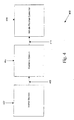
- FIG 4 is a block diagram of a vehicle of one embodiment of the present invention shown generally at 400.
- Vehicle 400 comprises an inertial system 402.
- Inertial system 402 provides vehicle 400 positioning information.
- Inertial system 402 uses multiple Kalman filters to enable maintaining a proper output even when ZUPTS are processed when the vehicle is in motion.
- One example of inertial system 402 is inertial system 100 described above in Figure 1.
- Another example of inertial system 402 is inertial navigation system 500 described below in Figure 5.
- Inertial system 402 communicates with a guidance system 404 via a communication link 408,
- communication link 408 is wireless.
- communication link 408 is a wired connection.
- Guidance system 404 takes information received from inertial system 402 and determines what actions, if any, are necessary to maintain or achieve a proper heading. When guidance system 404 determines a course of action which requires a change in position of vehicle 400, guidance sytem 404 communicates with a vehicle position controller 406 via a communication link 410. In one embodiment, communication link 410 is wireless. In another embodiment, communication link 410 is a wired connection. Vehicle position controller 406 takes the information received from guidance system 404 and moves vehicle 400 to the appropriate position.
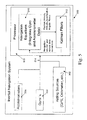
- FIG. 5 is an inertial navigation system of one embodiment of the present invention shown generally at 500.
- Inertial navigation system 500 is comprised of a processor 508.
- Processor 508 includes navigation equations 510 which receive data from sensors and integrates the data before sending it to Kalman filters 512.
- the sensors are accelerometers 506.
- the sensors are gyroscopes 504.
- the sensors are aiding sources 502, including but not limited to, global positioning systems (GPS) and odometers.
- GPS global positioning systems
- Accelerometers 506, gyroscopes 504, and aiding sources 502 communicate with processor 508 via a communication link 514.
- communication link 108 is wireless.
- communication link 514 is a wired connection.
- Processor 508 includes but is not limited to digital electronic circuitry, a programmable processor (for example, a special-purpose processor or a general-purpose processor such as a computer) firmware, software, or in combinations of them.
- Navigation equations 510 send data, including but not limited to, position, velocity, attitude, acceleration, and angular rates to the Kalman filters 512.
- Kalman filters 51 receive the data, and after performing calculations, send back to the navigation equations 510 a navigation solution and sensor data corrections.
- inertial navigation system 500 The accuracy of the data used in inertial navigation system 500 is dependant on processing zero velocity updates (ZUPTS). ZUPTS are only accurate when the vehicle in which the inertial navigation system 500 is located, is stopped. Inertial navigation system 500 uses multiple Kalman filters 512 to enable maintaining a proper output even when ZUPTS are processed when the vehicle is in motion.
- ZUPTS zero velocity updates
- Inertial navigation system 500 uses multiple Kalman filters 512 to enable maintaining a proper output even when ZUPTS are processed when the vehicle is in motion.
- One example of a method of using multiple Kalman filters 512 to avoid errors due to processing ZUPTS while the vehicle is in motion is described above in Figure 2.
Landscapes
- Engineering & Computer Science (AREA)
- Radar, Positioning & Navigation (AREA)
- Remote Sensing (AREA)
- Automation & Control Theory (AREA)
- Physics & Mathematics (AREA)
- General Physics & Mathematics (AREA)
- Navigation (AREA)
Priority Applications (1)
| Application Number | Priority Date | Filing Date | Title |
|---|---|---|---|
| PL06119725T PL1760431T3 (pl) | 2005-08-30 | 2006-08-29 | System nawigacji bezwładnościowej z wieloma filtrami Kalmana i pojazd wyposażony w taki system |
Applications Claiming Priority (1)
| Application Number | Priority Date | Filing Date | Title |
|---|---|---|---|
| US11/215,762 US7860651B2 (en) | 2005-08-30 | 2005-08-30 | Enhanced inertial system performance |
Publications (2)
| Publication Number | Publication Date |
|---|---|
| EP1760431A1 true EP1760431A1 (fr) | 2007-03-07 |
| EP1760431B1 EP1760431B1 (fr) | 2011-10-26 |
Family
ID=37459323
Family Applications (1)
| Application Number | Title | Priority Date | Filing Date |
|---|---|---|---|
| EP06119725A Ceased EP1760431B1 (fr) | 2005-08-30 | 2006-08-29 | Système de navigation inertielle avec plusieurs filtres de Kalman et véhicule comprenant un tel système |
Country Status (4)
| Country | Link |
|---|---|
| US (2) | US7860651B2 (fr) |
| EP (1) | EP1760431B1 (fr) |
| IL (1) | IL177783A (fr) |
| PL (1) | PL1760431T3 (fr) |
Cited By (8)
| Publication number | Priority date | Publication date | Assignee | Title |
|---|---|---|---|---|
| EP1862764A1 (fr) | 2006-05-31 | 2007-12-05 | Honeywell International Inc. | Alignement de compas gyroscopique à grande vitesse via vérifications d'hypothèse multiples de type filtre de Kalman |
| US7739045B2 (en) | 2006-05-31 | 2010-06-15 | Honeywell International Inc. | Rapid self-alignment of a strapdown inertial system through real-time reprocessing |
| WO2011126861A3 (fr) * | 2010-03-29 | 2011-12-15 | Qualcomm Incorporated | Méthode économe en énergie pour exploiter des capteurs de mouvement |
| EP2128644A4 (fr) * | 2007-03-22 | 2015-11-18 | Furuno Electric Co | Dispositif de navigation composite à gps |
| CN105180932A (zh) * | 2015-09-16 | 2015-12-23 | 成都四威高科技产业园有限公司 | 一种适合仓储agv的惯性导航方法 |
| CN105180931A (zh) * | 2015-09-16 | 2015-12-23 | 成都四威高科技产业园有限公司 | 一种适合仓储agv的惯性导航系统 |
| CN105180930A (zh) * | 2015-09-16 | 2015-12-23 | 成都四威高科技产业园有限公司 | 一种agv惯性导航系统 |
| CN105180934A (zh) * | 2015-09-16 | 2015-12-23 | 成都四威高科技产业园有限公司 | 一种agv惯性导航方法 |
Families Citing this family (21)
| Publication number | Priority date | Publication date | Assignee | Title |
|---|---|---|---|---|
| US7328104B2 (en) * | 2006-05-17 | 2008-02-05 | Honeywell International Inc. | Systems and methods for improved inertial navigation |
| IL179344A (en) * | 2006-11-16 | 2014-02-27 | Rafael Advanced Defense Sys | Mobile Platform Tracking Method |
| US8031175B2 (en) * | 2008-04-21 | 2011-10-04 | Panasonic Corporation | Touch sensitive remote control system that detects hand size characteristics of user and adapts mapping to screen display |
| US8019539B2 (en) * | 2007-12-07 | 2011-09-13 | Honeywell International Inc. | Navigation system with apparatus for detecting accuracy failures |
| US20090182495A1 (en) * | 2008-01-15 | 2009-07-16 | Honeywell International, Inc. | Navigation system with apparatus for detecting accuracy failures |
| US20090182494A1 (en) * | 2008-01-15 | 2009-07-16 | Honeywell International, Inc. | Navigation system with apparatus for detecting accuracy failures |
| US20090182493A1 (en) * | 2008-01-15 | 2009-07-16 | Honeywell International, Inc. | Navigation system with apparatus for detecting accuracy failures |
| US8248233B2 (en) * | 2009-04-27 | 2012-08-21 | Cisco Technology, Inc. | Location filtering based on device mobility classification |
| WO2012061834A1 (fr) * | 2010-11-07 | 2012-05-10 | The Trustees Of Columbia University In The City Of New York | Procédés, systèmes et supports pour la modélisation et l'édition interactives de vêtements |
| JP6086211B2 (ja) * | 2010-11-23 | 2017-03-01 | 日本電気株式会社 | 位置情報提供装置、位置情報提供システム、位置情報提供方法、プログラム及び記録媒体 |
| EP2679954A1 (fr) | 2012-06-26 | 2014-01-01 | ST-Ericsson SA | Estimation séquentielle dans un système de positionnement ou navigation en temps réel par utilisation d'états historiques |
| CN102818567A (zh) * | 2012-08-08 | 2012-12-12 | 浙江大学 | 集合卡尔曼滤波-粒子滤波相结合的auv组合导航方法 |
| US9341718B2 (en) | 2012-09-07 | 2016-05-17 | Honeywell International Inc. | Method and system for providing integrity for hybrid attitude and true heading |
| TWI524758B (zh) | 2014-12-09 | 2016-03-01 | 財團法人工業技術研究院 | 電子裝置及其漸增式姿態估算及攝影方法 |
| US10048070B2 (en) * | 2015-04-17 | 2018-08-14 | Honeywell International Inc. | Transitioning from stationary alignment mode to in-motion alignment mode |
| US10983191B2 (en) | 2016-11-29 | 2021-04-20 | Marine Technologies LLC | Position reference system for vessels |
| JP6712037B2 (ja) * | 2017-01-27 | 2020-06-17 | 株式会社FADrone | 慣性計測方法と慣性計測装置及び慣性計測プログラム |
| CN107121929B (zh) * | 2017-05-23 | 2020-02-21 | 西北工业大学 | 基于线性协方差模型预测控制的鲁棒再入制导方法 |
| CN112733314B (zh) * | 2019-10-28 | 2023-03-21 | 成都安则优科技有限公司 | 一种惯性传感器数据模拟方法 |
| CN113899374B (zh) * | 2021-12-10 | 2022-05-17 | 智道网联科技(北京)有限公司 | 自动驾驶车辆定位方法、装置及电子设备、存储介质 |
| EP4332587B1 (fr) * | 2022-08-30 | 2024-07-24 | Aptiv Technologies AG | Dispositif de montage de capteur pour test de radar |
Citations (4)
| Publication number | Priority date | Publication date | Assignee | Title |
|---|---|---|---|---|
| EP0276663A2 (fr) * | 1987-01-21 | 1988-08-03 | Bodenseewerk Gerätetechnik GmbH | Montage pour mesurer la position variable dans le temps et les erreurs d'un système de navigation répétiteur par rapport à un système principal |
| US6298316B1 (en) * | 1998-05-18 | 2001-10-02 | Litton Systems, Inc. | Failure detection system |
| US20020198656A1 (en) * | 2001-06-04 | 2002-12-26 | Ford Thomas John | Inertial GPS navigation system |
| WO2005062984A2 (fr) | 2003-12-24 | 2005-07-14 | Automotive Systems Laboratory, Inc. | Systeme d'estimation de courbure de route |
Family Cites Families (10)
| Publication number | Priority date | Publication date | Assignee | Title |
|---|---|---|---|---|
| US5184304A (en) * | 1991-04-26 | 1993-02-02 | Litton Systems, Inc. | Fault-tolerant inertial navigation system |
| US6243657B1 (en) * | 1997-12-23 | 2001-06-05 | Pii North America, Inc. | Method and apparatus for determining location of characteristics of a pipeline |
| US6516021B1 (en) * | 1999-09-14 | 2003-02-04 | The Aerospace Corporation | Global positioning systems and inertial measuring unit ultratight coupling method |
| US6459990B1 (en) * | 1999-09-23 | 2002-10-01 | American Gnc Corporation | Self-contained positioning method and system thereof for water and land vehicles |
| US6477465B1 (en) * | 1999-11-29 | 2002-11-05 | American Gnc Corporation | Vehicle self-carried positioning method and system thereof |
| US7162367B2 (en) * | 1999-11-29 | 2007-01-09 | American Gnc Corporation | Self-contained/interruption-free positioning method and system thereof |
| SE523023C2 (sv) * | 2000-04-12 | 2004-03-23 | Nira Dynamics Ab | Metod och anordning för att med rekursiv filtrering bestämma en fysikalisk parameter hos ett hjulfordon |
| US6834234B2 (en) * | 2000-11-22 | 2004-12-21 | Trimble Navigation, Limited | AINS land surveyor system with reprocessing, AINS-LSSRP |
| SE519803C2 (sv) * | 2001-08-06 | 2003-04-08 | Ericsson Telefon Ab L M | Metod och anordning för analys av sensorsystems prestanda |
| US7248964B2 (en) * | 2003-12-05 | 2007-07-24 | Honeywell International Inc. | System and method for using multiple aiding sensors in a deeply integrated navigation system |
-
2005
- 2005-08-30 US US11/215,762 patent/US7860651B2/en not_active Expired - Fee Related
-
2006
- 2006-08-29 EP EP06119725A patent/EP1760431B1/fr not_active Ceased
- 2006-08-29 PL PL06119725T patent/PL1760431T3/pl unknown
- 2006-08-30 IL IL177783A patent/IL177783A/en not_active IP Right Cessation
-
2010
- 2010-09-14 US US12/881,266 patent/US8185309B2/en not_active Expired - Lifetime
Patent Citations (4)
| Publication number | Priority date | Publication date | Assignee | Title |
|---|---|---|---|---|
| EP0276663A2 (fr) * | 1987-01-21 | 1988-08-03 | Bodenseewerk Gerätetechnik GmbH | Montage pour mesurer la position variable dans le temps et les erreurs d'un système de navigation répétiteur par rapport à un système principal |
| US6298316B1 (en) * | 1998-05-18 | 2001-10-02 | Litton Systems, Inc. | Failure detection system |
| US20020198656A1 (en) * | 2001-06-04 | 2002-12-26 | Ford Thomas John | Inertial GPS navigation system |
| WO2005062984A2 (fr) | 2003-12-24 | 2005-07-14 | Automotive Systems Laboratory, Inc. | Systeme d'estimation de courbure de route |
Cited By (12)
| Publication number | Priority date | Publication date | Assignee | Title |
|---|---|---|---|---|
| EP1862764A1 (fr) | 2006-05-31 | 2007-12-05 | Honeywell International Inc. | Alignement de compas gyroscopique à grande vitesse via vérifications d'hypothèse multiples de type filtre de Kalman |
| US7512493B2 (en) | 2006-05-31 | 2009-03-31 | Honeywell International Inc. | High speed gyrocompass alignment via multiple Kalman filter based hypothesis testing |
| US7739045B2 (en) | 2006-05-31 | 2010-06-15 | Honeywell International Inc. | Rapid self-alignment of a strapdown inertial system through real-time reprocessing |
| EP2128644A4 (fr) * | 2007-03-22 | 2015-11-18 | Furuno Electric Co | Dispositif de navigation composite à gps |
| WO2011126861A3 (fr) * | 2010-03-29 | 2011-12-15 | Qualcomm Incorporated | Méthode économe en énergie pour exploiter des capteurs de mouvement |
| CN102918356A (zh) * | 2010-03-29 | 2013-02-06 | 高通股份有限公司 | 操作运动传感器的功率高效方式 |
| US8886980B2 (en) | 2010-03-29 | 2014-11-11 | Qualcomm Incorporated | Power efficient way of operating motion sensors |
| CN102918356B (zh) * | 2010-03-29 | 2016-10-12 | 高通股份有限公司 | 操作运动传感器的功率高效方式 |
| CN105180932A (zh) * | 2015-09-16 | 2015-12-23 | 成都四威高科技产业园有限公司 | 一种适合仓储agv的惯性导航方法 |
| CN105180931A (zh) * | 2015-09-16 | 2015-12-23 | 成都四威高科技产业园有限公司 | 一种适合仓储agv的惯性导航系统 |
| CN105180930A (zh) * | 2015-09-16 | 2015-12-23 | 成都四威高科技产业园有限公司 | 一种agv惯性导航系统 |
| CN105180934A (zh) * | 2015-09-16 | 2015-12-23 | 成都四威高科技产业园有限公司 | 一种agv惯性导航方法 |
Also Published As
| Publication number | Publication date |
|---|---|
| US20110004404A1 (en) | 2011-01-06 |
| EP1760431B1 (fr) | 2011-10-26 |
| IL177783A0 (en) | 2006-12-31 |
| US8185309B2 (en) | 2012-05-22 |
| US7860651B2 (en) | 2010-12-28 |
| PL1760431T3 (pl) | 2012-03-30 |
| IL177783A (en) | 2013-04-30 |
| US20070050138A1 (en) | 2007-03-01 |
Similar Documents
| Publication | Publication Date | Title |
|---|---|---|
| EP1760431B1 (fr) | Système de navigation inertielle avec plusieurs filtres de Kalman et véhicule comprenant un tel système | |
| EP1837627B1 (fr) | Procédés et systèmes pour mettre en oeuvre un filtre Kalman étendu itéré au sein d'un système de navigation | |
| US8457891B1 (en) | Systems and methods for compensating nonlinearities in a navigational model | |
| EP3408688B1 (fr) | Gnss et système de navigation inertiel utilisant le lacet relatif comme variable observable pour un filtre ins | |
| US7421343B2 (en) | Systems and methods for reducing vibration-induced errors in inertial sensors | |
| US6498996B1 (en) | Vibration compensation for sensors | |
| US7587277B1 (en) | Inertial/magnetic measurement device | |
| EP2026037A2 (fr) | Système de navigation et son procédé correspondant pour alignement de boussole gyroscopique utilisant des données de capteur étalonné dynamiquement et un filtre Kalman étendu à itération | |
| EP1983304B1 (fr) | Stabilisation d'en-tête pour des systèmes de navigation à inertie assistée | |
| EP1903308A2 (fr) | Systèmes et procédés pour matrice de transition à l'état hybride | |
| EP2957928B1 (fr) | Procédé d'utilisation d'images partiellement occluses pour la navigation et le positionnement | |
| EP2187170A2 (fr) | Procédé et système pour estimer les erreurs d'un capteur d'inertie dans une unité de mesure d'inertie distante | |
| EP3246661B1 (fr) | Unité de mesure inertielle hybride | |
| CN108106635A (zh) | 惯性卫导组合导航系统的长航时抗干扰姿态航向校准方法 | |
| JPH09318382A (ja) | 姿勢角検出装置及び方法 | |
| CN110567457B (zh) | 一种基于冗余的惯导自检测系统 | |
| WO2017141469A1 (fr) | Dispositif d'estimation de position | |
| CN116718153B (zh) | 一种基于gnss和ins的形变监测方法及系统 | |
| US11679774B1 (en) | System and method to reduce vertical reference unit unreferenced heading drift error | |
| JP5183050B2 (ja) | 車載用ナビゲーション装置及びナビゲーション方法 | |
| CN118112623A (zh) | 一种间断gnss信号下的车辆融合定位方法及相关设备 |
Legal Events
| Date | Code | Title | Description |
|---|---|---|---|
| PUAI | Public reference made under article 153(3) epc to a published international application that has entered the european phase |
Free format text: ORIGINAL CODE: 0009012 |
|
| AK | Designated contracting states |
Kind code of ref document: A1 Designated state(s): AT BE BG CH CY CZ DE DK EE ES FI FR GB GR HU IE IS IT LI LT LU LV MC NL PL PT RO SE SI SK TR |
|
| AX | Request for extension of the european patent |
Extension state: AL BA HR MK YU |
|
| 17P | Request for examination filed |
Effective date: 20070824 |
|
| 17Q | First examination report despatched |
Effective date: 20071004 |
|
| AKX | Designation fees paid |
Designated state(s): DE PL |
|
| GRAP | Despatch of communication of intention to grant a patent |
Free format text: ORIGINAL CODE: EPIDOSNIGR1 |
|
| RTI1 | Title (correction) |
Free format text: INERTIAL NAVIGATION SYSTEM WITH A PLURALITY OF KALMAN FILTERS AND VEHICLE EQUIPPED WITH SUCH A SYSTEM |
|
| GRAS | Grant fee paid |
Free format text: ORIGINAL CODE: EPIDOSNIGR3 |
|
| GRAA | (expected) grant |
Free format text: ORIGINAL CODE: 0009210 |
|
| AK | Designated contracting states |
Kind code of ref document: B1 Designated state(s): DE PL |
|
| REG | Reference to a national code |
Ref country code: DE Ref legal event code: R096 Ref document number: 602006025393 Country of ref document: DE Effective date: 20120105 |
|
| REG | Reference to a national code |
Ref country code: PL Ref legal event code: T3 |
|
| PLBE | No opposition filed within time limit |
Free format text: ORIGINAL CODE: 0009261 |
|
| STAA | Information on the status of an ep patent application or granted ep patent |
Free format text: STATUS: NO OPPOSITION FILED WITHIN TIME LIMIT |
|
| 26N | No opposition filed |
Effective date: 20120727 |
|
| REG | Reference to a national code |
Ref country code: DE Ref legal event code: R097 Ref document number: 602006025393 Country of ref document: DE Effective date: 20120727 |
|
| PGFP | Annual fee paid to national office [announced via postgrant information from national office to epo] |
Ref country code: PL Payment date: 20120820 Year of fee payment: 7 |
|
| PG25 | Lapsed in a contracting state [announced via postgrant information from national office to epo] |
Ref country code: PL Free format text: LAPSE BECAUSE OF NON-PAYMENT OF DUE FEES Effective date: 20130829 |
|
| REG | Reference to a national code |
Ref country code: PL Ref legal event code: LAPE |
|
| PGFP | Annual fee paid to national office [announced via postgrant information from national office to epo] |
Ref country code: DE Payment date: 20190830 Year of fee payment: 14 |
|
| REG | Reference to a national code |
Ref country code: DE Ref legal event code: R119 Ref document number: 602006025393 Country of ref document: DE |
|
| PG25 | Lapsed in a contracting state [announced via postgrant information from national office to epo] |
Ref country code: DE Free format text: LAPSE BECAUSE OF NON-PAYMENT OF DUE FEES Effective date: 20210302 |
|
| P01 | Opt-out of the competence of the unified patent court (upc) registered |
Effective date: 20230525 |