EP1761064A2 - Appareil et procèdè de prédiction de codage et dècodage vidéo pour trames intra-predictives - Google Patents
Appareil et procèdè de prédiction de codage et dècodage vidéo pour trames intra-predictives Download PDFInfo
- Publication number
- EP1761064A2 EP1761064A2 EP20060119478 EP06119478A EP1761064A2 EP 1761064 A2 EP1761064 A2 EP 1761064A2 EP 20060119478 EP20060119478 EP 20060119478 EP 06119478 A EP06119478 A EP 06119478A EP 1761064 A2 EP1761064 A2 EP 1761064A2
- Authority
- EP
- European Patent Office
- Prior art keywords
- area
- pixels
- intraprediction
- intrapredictor
- block
- Prior art date
- Legal status (The legal status is an assumption and is not a legal conclusion. Google has not performed a legal analysis and makes no representation as to the accuracy of the status listed.)
- Ceased
Links
Images






Classifications
-
- H—ELECTRICITY
- H04—ELECTRIC COMMUNICATION TECHNIQUE
- H04N—PICTORIAL COMMUNICATION, e.g. TELEVISION
- H04N19/00—Methods or arrangements for coding, decoding, compressing or decompressing digital video signals
- H04N19/10—Methods or arrangements for coding, decoding, compressing or decompressing digital video signals using adaptive coding
- H04N19/102—Methods or arrangements for coding, decoding, compressing or decompressing digital video signals using adaptive coding characterised by the element, parameter or selection affected or controlled by the adaptive coding
- H04N19/103—Selection of coding mode or of prediction mode
- H04N19/105—Selection of the reference unit for prediction within a chosen coding or prediction mode, e.g. adaptive choice of position and number of pixels used for prediction
-
- H—ELECTRICITY
- H04—ELECTRIC COMMUNICATION TECHNIQUE
- H04N—PICTORIAL COMMUNICATION, e.g. TELEVISION
- H04N19/00—Methods or arrangements for coding, decoding, compressing or decompressing digital video signals
- H04N19/10—Methods or arrangements for coding, decoding, compressing or decompressing digital video signals using adaptive coding
- H04N19/102—Methods or arrangements for coding, decoding, compressing or decompressing digital video signals using adaptive coding characterised by the element, parameter or selection affected or controlled by the adaptive coding
- H04N19/103—Selection of coding mode or of prediction mode
- H04N19/11—Selection of coding mode or of prediction mode among a plurality of spatial predictive coding modes
-
- H—ELECTRICITY
- H04—ELECTRIC COMMUNICATION TECHNIQUE
- H04N—PICTORIAL COMMUNICATION, e.g. TELEVISION
- H04N19/00—Methods or arrangements for coding, decoding, compressing or decompressing digital video signals
- H04N19/10—Methods or arrangements for coding, decoding, compressing or decompressing digital video signals using adaptive coding
- H04N19/134—Methods or arrangements for coding, decoding, compressing or decompressing digital video signals using adaptive coding characterised by the element, parameter or criterion affecting or controlling the adaptive coding
- H04N19/146—Data rate or code amount at the encoder output
- H04N19/147—Data rate or code amount at the encoder output according to rate distortion criteria
-
- H—ELECTRICITY
- H04—ELECTRIC COMMUNICATION TECHNIQUE
- H04N—PICTORIAL COMMUNICATION, e.g. TELEVISION
- H04N19/00—Methods or arrangements for coding, decoding, compressing or decompressing digital video signals
- H04N19/10—Methods or arrangements for coding, decoding, compressing or decompressing digital video signals using adaptive coding
- H04N19/169—Methods or arrangements for coding, decoding, compressing or decompressing digital video signals using adaptive coding characterised by the coding unit, i.e. the structural portion or semantic portion of the video signal being the object or the subject of the adaptive coding
- H04N19/17—Methods or arrangements for coding, decoding, compressing or decompressing digital video signals using adaptive coding characterised by the coding unit, i.e. the structural portion or semantic portion of the video signal being the object or the subject of the adaptive coding the unit being an image region, e.g. an object
- H04N19/174—Methods or arrangements for coding, decoding, compressing or decompressing digital video signals using adaptive coding characterised by the coding unit, i.e. the structural portion or semantic portion of the video signal being the object or the subject of the adaptive coding the unit being an image region, e.g. an object the region being a slice, e.g. a line of blocks or a group of blocks
-
- H—ELECTRICITY
- H04—ELECTRIC COMMUNICATION TECHNIQUE
- H04N—PICTORIAL COMMUNICATION, e.g. TELEVISION
- H04N19/00—Methods or arrangements for coding, decoding, compressing or decompressing digital video signals
- H04N19/10—Methods or arrangements for coding, decoding, compressing or decompressing digital video signals using adaptive coding
- H04N19/169—Methods or arrangements for coding, decoding, compressing or decompressing digital video signals using adaptive coding characterised by the coding unit, i.e. the structural portion or semantic portion of the video signal being the object or the subject of the adaptive coding
- H04N19/17—Methods or arrangements for coding, decoding, compressing or decompressing digital video signals using adaptive coding characterised by the coding unit, i.e. the structural portion or semantic portion of the video signal being the object or the subject of the adaptive coding the unit being an image region, e.g. an object
- H04N19/176—Methods or arrangements for coding, decoding, compressing or decompressing digital video signals using adaptive coding characterised by the coding unit, i.e. the structural portion or semantic portion of the video signal being the object or the subject of the adaptive coding the unit being an image region, e.g. an object the region being a block, e.g. a macroblock
-
- H—ELECTRICITY
- H04—ELECTRIC COMMUNICATION TECHNIQUE
- H04N—PICTORIAL COMMUNICATION, e.g. TELEVISION
- H04N19/00—Methods or arrangements for coding, decoding, compressing or decompressing digital video signals
- H04N19/10—Methods or arrangements for coding, decoding, compressing or decompressing digital video signals using adaptive coding
- H04N19/189—Methods or arrangements for coding, decoding, compressing or decompressing digital video signals using adaptive coding characterised by the adaptation method, adaptation tool or adaptation type used for the adaptive coding
- H04N19/19—Methods or arrangements for coding, decoding, compressing or decompressing digital video signals using adaptive coding characterised by the adaptation method, adaptation tool or adaptation type used for the adaptive coding using optimisation based on Lagrange multipliers
-
- H—ELECTRICITY
- H04—ELECTRIC COMMUNICATION TECHNIQUE
- H04N—PICTORIAL COMMUNICATION, e.g. TELEVISION
- H04N19/00—Methods or arrangements for coding, decoding, compressing or decompressing digital video signals
- H04N19/50—Methods or arrangements for coding, decoding, compressing or decompressing digital video signals using predictive coding
- H04N19/593—Methods or arrangements for coding, decoding, compressing or decompressing digital video signals using predictive coding involving spatial prediction techniques
Definitions
- Apparatuses and methods consistent with the present invention relate to video intraprediction encoding and decoding.
- the H.264/Moving Picture Expert Group (MPEG)-4/Advanced Video Coding (AVC) standard is a video compression standard which adopts various techniques such as multiple reference motion compensation, loop filtering, variable block size motion compensation, and context adaptive binary arithmetic coding (CABAC) for the purpose of improving compression efficiency.
- MPEG-4/Advanced Video Coding (AVC) standard is a video compression standard which adopts various techniques such as multiple reference motion compensation, loop filtering, variable block size motion compensation, and context adaptive binary arithmetic coding (CABAC) for the purpose of improving compression efficiency.
- CABAC context adaptive binary arithmetic coding
- a picture is divided into macroblocks for video encoding. After each of the macroblocks is encoded in all interprediction and intraprediction encoding modes, an appropriate encoding mode is selected according to the bit rate required for encoding the macroblock and the distortion between the original macroblock and the decoded macroblock. Then the macroblock is encoded in the selected encoding mode.
- Intraprediction instead of referring to reference pictures, a prediction value of a macroblock to be encoded is calculated using the value of a pixel that is spatially adjacent to the macroblock to be encoded, and the difference between the prediction value and the pixel value is encoded when encoding macroblocks of the current picture.
- Intraprediction modes are divided into 4x4 intraprediction modes for luminance components, 8x8 intraprediction modes (in case of a high profile), 16x16 intraprediction modes, and an intraprediction mode for chrominance components.
- FIG. 1 illustrates related art 16x16 intraprediction modes for luminance components according to the H.264 standard
- FIG. 2 illustrates related art 4x4 intraprediction modes for luminance components according to the H.264 standard.
- FIG. 1 there are four 16x16 intraprediction modes, i.e. a vertical mode 0, a horizontal mode 1, a direct current (DC) mode 2, and a plane mode 3.
- FIG. 2 there are nine 4x4 intraprediction modes, i.e. a vertical mode 0, a horizontal mode 1, a DC mode 2, a diagonal down-left mode 3, a diagonal down-right mode 4, a vertical-right mode 5, a horizontal-down mode 6, a vertical-left mode 7, and a horizontal-up mode 8.
- a 4x4 current block is prediction encoded in a mode 0, i.e., the vertical mode of FIG. 2, pixel values of pixels A through D adjacent above the 4x4 current block are predicted to be the pixel values of the 4x4 current block.
- the pixel value of the pixel A is predicted to be the pixel values of the four pixels of the first column of the 4x4 current block
- the pixel value of the pixel B is predicted to be the pixel values of the four pixels of the second column of the 4x4 current block
- the pixel value of the pixel C is predicted to be the pixel values of the four pixels of the third column of the 4x4 current block
- the pixel value of the pixel D is predicted to be the pixel values of the four pixels of the fourth column of the 4x4 current block.
- the current macroblock is encoded in a total of thirteen modes including the 4x4 intraprediction modes and the 16x16 intraprediction modes and is then intraprediction encoded in the encoding mode having the smallest cost.
- Each of the 4x4 sub-blocks of the current macroblock is intrapredicted in the nine 4x4 intraprediction modes, and the one having the smallest cost is selected for each sub-block.
- the cost of the selected 16x16 intraprediction mode and the sum of the costs of the selected 4x4 intraprediction modes are compared, and the mode having the smallest cost is selected.
- intraprediction uses pixels sampled from neighboring blocks of the current block to be intrapredicted.
- the difference between an intrapredicted block and an actual block may be large. In these circumstances, prediction and coding efficiency are limited.
- a method of video intraprediction encoding comprising: dividing an input block into at least two areas; performing intraprediction-encoding on pixels of a first area of the at least two areas using pixels of a neighboring block; reconstructing the intraprediction-encoded pixels of the first area; and predicting pixels of a second area of the at least two areas using the intraprediction-encoded pixels of the first area according to at least one prediction mode of a plurality of prediction modes.
- an apparatus for video intraprediction encoding comprising: a block division unit which divides an input block into at least first and second areas; a first intrapredictor which performs intraprediction on pixels of the first area using pixels of a neighboring block; and a second intrapredictor which reconstructs the intraprediction-encoded pixels of the first area and predicts pixels of the second area using the intraprediction-encoded pixels of the first area according to at least one prediction mode of a plurality of prediction modes.
- a method of video intraprediction decoding comprising: receiving a bitstream comprising data for pixels of a first area that are intraprediction-encoded using pixels of a neighboring block and direction information; determining an intraprediction mode for a current block; performing intraprediction-decoding on pixels of the first area using the received data for the pixels of the first area; and predicting the pixels of a second area using the received direction information and the intraprediction-decoded pixels for the first area.
- an apparatus for video intraprediction decoding comprising: receiving a bitstream comprising data for pixels of a first area that are intraprediction-encoded using pixels of a neighboring block and direction information; performing intraprediction-decoding on pixels of the first area using the received data for the pixels of the first area; and predicting the pixels of the second area using the received direction information and the intraprediction-decoded pixels for the first area.
- an apparatus for video intraprediction decoding comprising: an intraprediction mode determination unit which receives a bitstream comprising data for pixels of a first area that are intraprediction-encoded using pixels of a neighboring block and direction information, and determines an intraprediction mode for a current block; a first intrapredictor which performs intraprediction-decoding on pixels of the first area using the received data for the pixels of the first area; and a second intrapredictor which predicts the pixels of the second area using the received direction information and the intraprediction-decoded pixels for the first area.
- an apparatus for video intraprediction decoding comprising: a receiving unit which receives a bitstream including data for pixels of a first area that are intraprediction-encoded using pixels of a neighboring block and direction information; a first intrapredictor which performs intraprediction-decoding on pixels of the first area using the received data for the pixels of the first area; and a second intrapredictor which predicts the pixels of the second area using the received direction information and the intraprediction-decoded pixels for the first area.
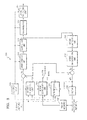
- FIG. 3 is a block diagram of a video encoder 300 which uses an apparatus for video intraprediction encoding according to an exemplary embodiment of the present invention.
- an apparatus for video intraprediction encoding according to an exemplary embodiment of the present invention is applied to an H.264 video encoder.
- the apparatus for video intraprediction encoding according to an exemplary embodiment of the present invention can also be applied to other compression methods using intraprediction.
- the illustrative video encoder 300 includes a motion estimation unit 302, a motion compensation unit 304, an intraprediction unit 330, a transformation unit 308, a quantization unit 310, a re-arrangement unit 312, an entropy-coding unit 314, an inverse quantization unit 316, an inverse transformation unit 318, a filter 320, a frame memory 322, and a control unit 325.
- the motion estimation unit 302 searches in a reference picture for a prediction value of a macroblock of the current picture.
- the motion compensation unit 304 calculates the median pixel value of the reference block to determine reference block data. Interprediction is performed in this way by the motion estimation unit 302 and the motion compensation unit 304.
- the intraprediction unit 330 searches in the current picture for a prediction value of the current block for intraprediction.
- the intraprediction unit 330 receives the current block to be prediction-encoded and performs intraprediction encoding in 16x16 intraprediction modes, 4x4 intraprediction modes, or 8x8 intraprediction modes, and chrominance intraprediction modes of the type or similar to those illustrated in FIGS. 1 and 2.
- the intraprediction unit 330 also divides the current block into at least two areas, performs intraprediction on one of the at least two areas, e.g., a first area, and then predicts pixels of a remaining area, i.e., a second area, using reconstructed information of the intrapredicted first area.
- the intraprediction unit 330 divides the current block into at least two areas and performs intraprediction on pixels of a first area of the at least two areas using pixels of blocks neighboring the current block.
- the intraprediction unit 330 then predicts pixels of a second area of the at least two areas using an average of pixels of the first area positioned in a direction as a predictor.
- the direction may be predetermined.
- the control unit 325 controls components of the video encoder 300 and determines a prediction mode for the current block. For example, the control unit 325 determines a prediction mode which minimizes the difference between an interpredicted or intrapredicted block and the original block to be the prediction mode for the current block. More specifically, the control unit 325 calculates the costs of an interpredicted video and an intrapredicted video and determines the prediction mode which has the smallest cost to be the final prediction mode.
- cost calculation may be performed using various methods such as a sum of absolute difference (SAD) cost function, a sum of absolute transformed difference (SATD) cost function, a sum of squares difference (SSD) cost function, a mean of absolute difference (MAD) cost function, a Lagrange cost function or other such cost function.
- SAD is a sum of absolute values of prediction residues of 4x4 blocks.
- SATD is a sum of absolute values of coefficients obtained by applying a Hadamard transform to prediction residues of 4x4 blocks.
- An SSD is a sum of the squares of prediction residues of 4x4 block prediction samples.
- An MAD is an average of absolute values of prediction residues of 4x4 block prediction samples.
- the Lagrange cost function is a modified cost function including bitstream length information.
- prediction data to be referred to by a macroblock of the current frame is found through interprediction or intraprediction, it is extracted from the macroblock of the current frame, transformed by the transformation unit 308, and then quantized by the quantization unit 310.
- the portion of the macroblock of the current frame remaining after subtracting a motion-estimated reference block is referred to as a residue.
- the residue is encoded to reduce the amount of data in video encoding.
- the quantized residue is processed by the rearrangement unit 312 and encoded in the entropy-encoding unit 314.
- a quantized picture is processed by the inverse quantization unit 316 and the inverse transformation unit 318, and thus the current picture is reconstructed.
- the reconstructed current picture is processed by the filter 320 performing deblocking filtering, and is then stored in the frame memory 322 for use in interprediction of the next picture.
- Reconstructed video data of the first area prior to deblocking filtering is input to the intraprediction unit 330 to be used as reference data for prediction of pixels of the second area.
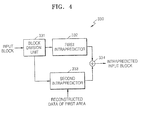
- FIG. 4 is a block diagram of the intraprediction unit 330 of FIG. 3 according to an exemplary embodiment of the present invention, and FIGS. 5A and 5B illustrate division of an input block, performed by a block division unit 331 of FIG. 4.
- the intraprediction unit 330 includes the block division unit 331, a first intrapredictor 332, a second intrapredictor 333, and an addition unit 334.
- the block division unit 331 divides an input current block into at least two areas. For example, as illustrated in FIG. 5A, the block division unit 331 may divide the current block into a first area including odd-numbered horizontal lines and a second area including even-numbered horizontal lines. As illustrated in FIG. 5B, the block division unit 331 may alternatively divide the current block into a first area including odd-numbered vertical lines and a second area including even-numbered vertical lines.
- the divisions of an input block illustrated in FIGS. 5A and 5B are only examples, and the block division unit 331 may divide the input block into areas of various patterns. In addition, the first area and the second area may be interchanged.
- the first intrapredictor 332 first performs intraprediction on pixels of the first area using pixels of a neighboring block of the current block. Intraprediction according to the H.264 standard or other intraprediction methods using pixels of neighboring blocks may be applied. In the following description, intraprediction according to the H.264 standard is used as an illustrative example.
- FIG. 6 illustrates intraprediction of an input current block divided as illustrated in FIG. 5A, performed by the first intrapredictor 332 of FIG. 4.
- C xy indicates a pixel at an x th row and an y th column in the current block.
- pixels of the first area are intrapredicted according to a vertical mode among the intraprediction modes of the H.264 standards.
- the first intrapredictor 332 first predicts pixel values of pixels U 0 through U 15 adjacent above the current block to be the pixel values of the pixels of the first area.
- the pixel value of the pixel U 0 is predicted to be the pixel values of eight pixels of the first column of the first area (i.e., the shaded region)
- the pixel value of the pixel U 1 is predicted to be the pixel values of eight pixels of the second column of the first area
- the pixel value of the pixel U 2 is predicted to be the pixel values of eight pixels of the third column of the first area, and so on.
- pixels C 00 , C 20 , C 40 , ..., C 140 have the same prediction value as the pixel U 0 of a neighboring block located above the current block.
- pixels C 01 , C 21 , C 41 , ..., C 141 have the same prediction value as the pixel U 1
- pixels C 02 , C 22 , C 42 , ..., C 142 have the same prediction value as the pixel U 2
- the pixel values of pixels of the fourth through sixteenth columns of the first area are predicted from the pixel values of pixels U 3 through U 15 of the neighboring block located above the current block.
- the first intrapredictor 332 after the first intrapredictor 332 performs intraprediction according to various intraprediction modes such as a horizontal mode, it compares the costs of the intraprediction modes according to the difference between an image of the intrapredicted first area and a portion of the original image corresponding to the first area in each intraprediction mode, to determine the intraprediction mode for the first area.
- various intraprediction modes such as a horizontal mode
- the first intrapredictor 332 may perform intraprediction not only on a 16x16 block but also on an 8x8 block or a 4x4 block using pixels of neighboring blocks.
- the residue between video data of the intrapredicted first area and video data of the current block corresponding to the first area is transformed by the transformation unit 308 and then quantized by the quantization unit 310.
- the transformation unit 308 transforms a 16x8 first area as illustrated in FIG. 6, it may perform 8x8 transformation twice or 4x4 transformation eight times.
- the transformation unit 308 may also perform transformation of various block sizes.
- the quantized residual video data of the first area undergoes inverse quantization in the inverse quantization unit 316 and inverse transform in the inverse transformation unit 318, is added to video data of the intrapredicted first area for reconstruction, and is then input to the second intrapredictor 333.
- the second intrapredictor 333 receives reconstructed video data of the first area and performs intraprediction on pixels of the second area except for an image corresponding to the first area. Since the pixels of the first area are intrapredicted by the first intrapredictor 332 and then reconstructed through transformation, quantization, inverse quantization, and inverse transformation, they are available for processing the pixels of the second area.
- FIG. 7 illustrates processing orders in which the second intrapredictor 333 processes 4x4 blocks according to an exemplary embodiment of the present invention.
- the second intrapredictor 333 predicts pixels of the second area for each 4x4 block in the following description, it can be easily understood that the second intrapredictor 333 can predict pixels of the second area for each 8x8 block or 16x16 block.
- the second intrapredictor 333 processes 4x4 blocks 1-16 in a raster scan order in which the blocks are processed left-to-right and top-to-bottom. According to the processing order, the second intrapredictor 333 predicts pixels of the second area using reconstructed pixels of the first area as below.
- FIGS. 8A through 8C illustrate the prediction of pixels of the second area of a first block among the 4x4 blocks 1-16 illustrated in FIG. 7.
- FIGS. 8A through 8C show prediction modes in which pixels of the second area are predicted using pixels of the first area positioned in 90°, 45°, and 135° directions with respect to the pixels of the second area. The prediction modes are classified according to the direction in which pixels of the first area referred to by pixels of the second area are positioned.
- C' xy indicates a pixel of the second area predicted using pixels of the first area
- an arrow indicates a prediction direction in each prediction mode.
- a prime symbol (') is used to indicate that a pixel of the second area is predicted using pixels of the first area.
- the second intrapredictor 333 predicts a pixel of the second area using reconstructed pixels of the first area located above and below the pixel of the second area.
- a pixel C' 10 of the second area is predicted using (C 00 +C 20 )/2, i.e., the average of pixels C 00 and C 20 of the first area adjacent above and adjacent below the pixel C' 10 of the second area.
- (C 00 +C 20 )/2 is used as a predictor for the pixel C' 10 .
- other pixels of the second area may be predicted using averages of pixels of the first area adjacent above and adjacent below the pixels of the second area.
- the second intrapredictor 333 may use the average of pixels of the first area located on a straight line in the 45° direction with respect to a pixel of the second area as a predictor for the pixel of the second area.
- a pixel C' 11 of the second area is predicted as the average of pixels C 02 and C 20 of the first area, i.e., (C 00 +C 20 )/2.
- the second intrapredictor 333 may use the average of pixels of the first area located on a straight line in the 135° direction with respect to a pixel of the second area as a predictor for the pixel of the second area.
- a pixel C' 11 of the second area is predicted as the average of pixels C 00 and C 22 of the first area, i.e., (C 00 +C 22 )/2.
- the second intrapredictor 333 also may predict pixels of the second area by sampling pixels of the first area at various angles, without being limited to the examples illustrated in FIGS. 8A through 8C. In the case of a 0° direction, a pixel of the second area is predicted using pixels of a second area of a block to the left of the current block as in a horizontal mode of conventional H.264 intraprediction.
- the second intrapredictor 333 After the second intrapredictor 333 performs intraprediction on pixels of the second area in prediction modes using various angles, it compares the costs of the prediction modes according to the difference between an intrapredicted image of the second area and a portion of the original image corresponding to the second area in each intraprediction mode, to determine which pixels of the first area, i.e., pixels from which direction, are to be used for prediction of pixels of the second area.
- the second intrapredictor 333 also adds information about the determined prediction mode to a header of a bitstream.
- the second intrapredictor 333 may use pixels of a neighboring block located to the left of the current block and pixels of a neighboring block located above the current block when processing the remaining blocks except for the thirteenth, fourteenth, fifteenth, and sixteenth blocks of FIG. 7.
- the second intrapredictor 333 may also use pixels of a neighboring block located to the right of the current block when processing the remaining blocks except for the fourth, eighth, twelfth, and sixteenth blocks of FIG. 7.
- the second intrapredictor 333 may predict pixels of the second area as follows.
- FIG. 9 illustrates the generation of right neighboring pixels performed by the second intrapredictor 333 to process a fourth block of FIG. 7 according to an exemplary embodiment of the present invention.
- available pixels of the first area may be limited.
- available pixels of the first area are limited when the pixels of the second area are predicted using pixels of the first area in the 45° or 135° direction with respect to the pixels of the second area.
- the second intrapredictor 333 extends available pixels of the first area for use in prediction of pixels of the second area.
- the second intrapredictor 333 extrapolates a pixel C 015 of the first area, i.e., extends the pixel C 015 to the right. After the second intrapredictor 333 extends the pixel C 015 through extrapolation, it may predict the pixel C' 115 of the second area as (C 015 +C 214 )/2. Similarly, when the second intrapredictor 333 predicts the pixel C' 115 of the second area using pixels of the first area positioned in the 135° direction with respect to the pixel C' 115 , it may extend a pixel C 215 of the first area for use in prediction.
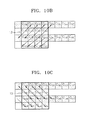
- FIGS. 10A through 10C illustrate the prediction of pixels of the second area of a thirteenth block among the 4x4 blocks illustrated in FIG. 7.
- pixels of the second area are predicted only using available pixels of the first area.
- FIG. 10A when pixels C' 150 , C' 151 , C' 152 , and C' 153 of the second area are predicted by referring to pixels of the first area located above and below the pixels C' 150 , C' 151 , C' 152 , and C' 153 of the second area, pixels of the first area located below the pixels C' 150 , C' 151 , C' 152 , and C' 153 of the second area are not reconstructed.
- the pixels C' 150 , C' 151 , C' 152 , and C' 153 of the second area are predicted using only reconstructed pixels of the first area located above the pixels C' 150 , C' 151 , C' 152 , and C' 153 of the second area.
- the pixel C' 150 of the second area is predicted using only a pixel C 140 of the first area located above the pixel C 150 as a predictor in the prediction mode using the 90° direction.
- the pixel C' 150 of the second area is predicted using only a pixel C 141 of the first area located above and to the left of the pixel C' 150 .
- the pixel C' 151 of the second area is predicted using only the pixel C 140 of the first area located above and to the left of the pixel C' 151 .
- the second intrapredictor 333 When an input block is divided into the at least two areas, i.e., a first area and a second area, for intraprediction encoding, the second intrapredictor 333 adds a flag indicating division of the block and direction information indicating a prediction direction of a pixel of the second area to a header of a bitstream.
- prediction data of the first area intrapredicted by the first intrapredictor 332 and data of the second area predicted using reconstructed prediction data of the first area by the second intrapredictor 333 are added by the addition unit 334 and an intrapredicted input block is finally output.
- FIG. 11 is a flowchart illustrating a method of video intraprediction encoding according to an exemplary embodiment of the present invention.
- an input current block is divided into at least two areas in operation 1110.
- an area that is subject to intraprediction using pixels of a neighboring block of the current block will be referred to as a first area
- an area that is subject to prediction using reconstructed data of the first area will be referred to as a second area.
- intraprediction-encoding is performed on pixels of the first area using pixels of the neighboring block.
- a pixel of the second area is predicted using the reconstructed pixels of the first area in one of a plurality of prediction modes.
- the average of reconstructed pixels of the first area in a certain direction with respect to the pixel of the second area may be used as a predictor.
- the prediction modes may be classified according to the direction in which pixels of the first area referred to by the pixel of the second area are positioned.
- a flag indicating whether a received bitstream is encoded after block division, and direction information indicating a direction in which pixels of the first area referred to for prediction of the pixel of the second area are positioned, are included in a header of the encoded bitstream.
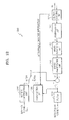
- FIG. 12 is a block diagram of a video decoder 1200 which uses an apparatus for video intraprediction decoding according to an exemplary embodiment of the present invention.
- the video decoder 1200 includes an entropy-decoding unit 1210, a rearrangement unit 1220, an inverse quantization unit 1230, an inverse transformation unit 1240, a motion compensation unit 1250, an intraprediction unit 1260, and a filter 1270.
- the entropy-decoding unit 1210 and the rearrangement unit 1220 receive a compressed bitstream and perform entropy decoding, thereby generating a quantized coefficient X.
- the inverse quantization unit 1230 and the inverse transformation unit 1240 perform inverse quantization and an inverse transformation on the quantized coefficient X, thereby extracting transformation encoding coefficients, motion vector information, header information, and intraprediction mode information.
- the intraprediction mode information includes a flag indicating whether a received bitstream is encoded after block division according to an exemplary embodiment of the present invention, and direction information indicating a direction in which pixels of the first area referred to for prediction of a pixel of the second area are positioned.
- the motion compensation unit 1250 and the intraprediction unit 1260 generate a predicted block according to an encoded picture type using the decoded header information, and the predicted block is added to an error D' n to generate uF' n .
- uF' n is processed by the filter 1270, and thus a reconstructed picture F' n is generated.
- the intraprediction unit 1260 determines an intraprediction mode used in encoding the current block to be decoded using the intraprediction mode information included in a received bitstream.
- the intraprediction unit 1260 performs intraprediction decoding on pixels of the first area and decodes pixels of the second area using the direction information included in the bitstream and the decoded pixels of the first area.
- FIG. 13 is a block diagram of the intraprediction unit 1260 of FIG. 12 according to an exemplary embodiment of the present invention.
- the intraprediction unit 1260 includes an intraprediction mode determination unit 1261, a first intrapredictor 1263, a second intrapredictor 1264, and an addition unit 1265.
- the intraprediction mode determination unit 1261 determines the intraprediction mode in which the current block to be intraprediction-decoded has been intraprediction-encoded based on the intraprediction mode information extracted from the received bitstream.
- a video decoder that decodes only a compressed bitstream in which each block is divided into at least two areas according to an exemplary embodiment of the present invention may not include the intraprediction mode determination unit 1261.
- a receiving unit may be substituted for the intraprediction mode determination unit 1261, to receive data for pixels of the first area that are intraprediction-encoded using pixels of a neighboring block and the direction information indicating a direction in which pixels of the first area referred to for reconstruction of pixels of the second area that are predicted using reconstructed pixel information of the first area are positioned.
- the first intrapredictor 1263 performs intraprediction decoding on the received bitstream according to a related art.
- the first intrapredictor 1263 first performs intraprediction-decoding on the first area using data for pixels of the first area included in the received bitstream. Data for pixels of the first area decoded by the first intrapredictor 1263 is input to the second intrapredictor 1264.
- the second intrapredictor 1264 receives the reconstructed data for the first area and the direction information included in the bitstream and predicts pixels of the second area using the average of pixels of the first area positioned in a direction indicated by the direction information as a predictor.
- the function and operation of the second intrapredictor 1264 are similar to the second intrapredictor 333 of FIG. 4 used in the video encoder 300.
- the data for the first area decoded by the first intrapredictor 1263 and the data for the second area decoded by the second intrapredictor 1263 are added by the addition unit 1265, thereby forming an intrapredicted block.
- the residue included in the bitstream is added to the intrapredicted block, thereby obtaining a reconstructed video.
- FIG. 14 is a flowchart illustrating a method of video intraprediction decoding according to an exemplary embodiment of the present invention.
- the method of video intraprediction decoding according to an exemplary embodiment of the present invention to decode a first area intrapredicted using pixels of neighboring blocks and a second area predicted from pixels of the first area, the first area is first intraprediction-decoded and pixels of the second area are intraprediction-decoded from the decoded pixels of the first area.
- a bitstream including data for pixels of the first area that are intraprediction-encoded using pixels of neighboring blocks, and direction information indicating a direction in which pixels of the first area referred to for reconstruction of a pixel of the second area predicted using reconstructed pixel information of the first area are positioned, is received to determine the intraprediction mode for the current block.
- intraprediction-decoding is performed on the pixels of the first area using the data for the pixels of the first area included in the received bitstream.
- the pixel of the second area is predicted using pixels of the first area positioned in the direction with respect to the pixel of the second area, indicated by the direction information included in the bitstream.
- a prediction block can be more similar to the current block, thereby improving coding efficiency.
- video intraprediction uses not only pixel information of neighboring blocks but also pixel information of the current block to be intrapredicted, thereby improving prediction and coding efficiency.
- the present inventive concept can also be embodied as computer-readable code on a computer-readable recording medium.
- the computer-readable recording medium is any data storage device that can store data which can be thereafter read by a computer system. Examples of the computer-readable recording medium include read-only memory (ROM), random-access memory (RAM), CD-ROMs, magnetic tapes, floppy disks, optical data storage devices, and carrier waves.
- ROM read-only memory
- RAM random-access memory
- CD-ROMs compact discs, digital versatile discs, digital versatile discs, and Blu-rays, and Blu-rays, and Blu-rays, etc.
Landscapes
- Engineering & Computer Science (AREA)
- Multimedia (AREA)
- Signal Processing (AREA)
- Compression Or Coding Systems Of Tv Signals (AREA)
- Compression, Expansion, Code Conversion, And Decoders (AREA)
Applications Claiming Priority (1)
| Application Number | Priority Date | Filing Date | Title |
|---|---|---|---|
| KR20050082629A KR100727972B1 (ko) | 2005-09-06 | 2005-09-06 | 영상의 인트라 예측 부호화, 복호화 방법 및 장치 |
Publications (2)
| Publication Number | Publication Date |
|---|---|
| EP1761064A2 true EP1761064A2 (fr) | 2007-03-07 |
| EP1761064A3 EP1761064A3 (fr) | 2009-09-02 |
Family
ID=37546867
Family Applications (1)
| Application Number | Title | Priority Date | Filing Date |
|---|---|---|---|
| EP20060119478 Ceased EP1761064A3 (fr) | 2005-09-06 | 2006-08-24 | Appareil et procèdè de prédiction de codage et dècodage vidéo pour trames intra-predictives |
Country Status (5)
| Country | Link |
|---|---|
| US (1) | US20070053443A1 (fr) |
| EP (1) | EP1761064A3 (fr) |
| JP (1) | JP5128794B2 (fr) |
| KR (1) | KR100727972B1 (fr) |
| CN (1) | CN100584027C (fr) |
Cited By (10)
| Publication number | Priority date | Publication date | Assignee | Title |
|---|---|---|---|---|
| WO2009080132A1 (fr) * | 2007-12-21 | 2009-07-02 | Telefonaktiebolaget L M Ericsson (Publ) | Prédiction de pixel améliorée pour codage vidéo |
| EP1992171A4 (fr) * | 2006-03-03 | 2010-12-29 | Samsung Electronics Co Ltd | Procédé et appareil destinés à un codage/décodage d'intraprédiction vidéo |
| CN102165772B (zh) * | 2008-09-16 | 2013-07-24 | 杜比实验室特许公司 | 自适应视频编码器控制 |
| US8654845B2 (en) | 2010-03-12 | 2014-02-18 | Tencent Technology (Shenzhen) Company Limited | Method and device for video predictive encoding |
| EP2273776A4 (fr) * | 2008-03-31 | 2014-07-16 | Fujitsu Ltd | Appareil de compression de données d'image, appareil de décompression, procédé de compression, procédé de décompression et programme |
| EP2775718A4 (fr) * | 2011-12-13 | 2015-07-29 | Nippon Telegraph & Telephone | Procédé, dispositif et programme permettant un codage et un décodage d'images |
| US9237357B2 (en) | 2007-09-02 | 2016-01-12 | Lg Electronics Inc. | Method and an apparatus for processing a video signal |
| US9813702B2 (en) | 2007-10-16 | 2017-11-07 | Lg Electronics Inc. | Method and an apparatus for processing a video signal |
| GB2486726B (en) * | 2010-12-23 | 2017-11-29 | British Broadcasting Corp | Compression of pictures |
| EP3442231A4 (fr) * | 2016-05-02 | 2019-12-04 | Industry - University Cooperation Foundation Hanyang University | Procédé et appareil de codage/décodage d'image utilisant une prédiction intra-écran |
Families Citing this family (43)
| Publication number | Priority date | Publication date | Assignee | Title |
|---|---|---|---|---|
| EP1995973A4 (fr) * | 2006-03-10 | 2011-10-26 | Nec Corp | Procede de selection de mode de prevision interne, procede de codage d'image animee et dispositif et programme les utilisant |
| KR101365574B1 (ko) * | 2007-01-29 | 2014-02-20 | 삼성전자주식회사 | 영상 부호화 방법 및 장치, 복호화 방법 및 장치 |
| KR101378338B1 (ko) * | 2007-06-14 | 2014-03-28 | 삼성전자주식회사 | 영상 복구를 이용한 인트라 예측 부호화, 복호화 방법 및장치 |
| EP2034742A3 (fr) | 2007-07-25 | 2009-10-14 | Hitachi Ltd. | Procédé et dispositif de codage vidéo |
| US8885726B2 (en) * | 2007-12-04 | 2014-11-11 | Vixs Systems, Inc. | Neighbor management for use in entropy encoding and methods for use therewith |
| KR101446773B1 (ko) * | 2008-02-20 | 2014-10-02 | 삼성전자주식회사 | 영상 복구를 이용한 인터 예측 부호화, 복호화 방법 및장치 |
| US8787693B2 (en) * | 2008-04-15 | 2014-07-22 | Orange | Prediction of images by prior determination of a family of reference pixels, coding and decoding using such a prediction |
| BRPI0911307B1 (pt) * | 2008-04-15 | 2020-09-29 | France Telecom | Codificação e decodificação de uma imagem ou de uma sequência de imagens recortadas, segundo partições de pixels de forma linear |
| KR101361005B1 (ko) | 2008-06-24 | 2014-02-13 | 에스케이 텔레콤주식회사 | 인트라 예측 방법 및 장치와 그를 이용한 영상부호화/복호화 방법 및 장치 |
| US8705627B2 (en) * | 2008-07-25 | 2014-04-22 | Sony Corporation | Image processing apparatus and method |
| US8311111B2 (en) * | 2008-09-11 | 2012-11-13 | Google Inc. | System and method for decoding using parallel processing |
| US8867854B2 (en) | 2008-10-01 | 2014-10-21 | Electronics And Telecommunications Research Institute | Image encoder and decoder using undirectional prediction |
| KR101356448B1 (ko) | 2008-10-01 | 2014-02-06 | 한국전자통신연구원 | 예측 모드를 이용한 복호화 장치 |
| KR20110095320A (ko) * | 2008-11-14 | 2011-08-24 | 미쓰비시덴키 가부시키가이샤 | 동화상 부호화 장치 및 동화상 복호 장치 |
| JP5238523B2 (ja) * | 2009-01-13 | 2013-07-17 | 株式会社日立国際電気 | 動画像符号化装置、動画像復号化装置、および、動画像復号化方法 |
| CN105120262A (zh) * | 2010-02-24 | 2015-12-02 | 夏普株式会社 | 图像解码装置 |
| US8712173B2 (en) * | 2010-03-12 | 2014-04-29 | Mediatek Singapore Pte. Ltd. | Methods for processing 2Nx2N block with N being positive integer greater than four under intra-prediction mode and related processing circuits thereof |
| US8743957B2 (en) | 2010-04-12 | 2014-06-03 | Sony Corporation | Context adaptive directional intra prediction |
| MX2012013263A (es) | 2010-05-14 | 2013-01-24 | Thomson Licensing | Metodos y aparatos para intracodificar un bloque que tiene pixeles asignados a grupos. |
| WO2011145862A2 (fr) * | 2010-05-17 | 2011-11-24 | Lg Electronics Inc. | Nouveaux modes de prédiction intra |
| JP2012028858A (ja) * | 2010-07-20 | 2012-02-09 | Sony Corp | 画像処理装置及び画像処理方法 |
| KR101673026B1 (ko) * | 2010-07-27 | 2016-11-04 | 에스케이 텔레콤주식회사 | 경쟁 기반 인터리브드 움직임 벡터코딩 방법 및 장치와 이를 이용한 영상 부호화/복호화 방법 및 장치 |
| KR20120025111A (ko) * | 2010-09-07 | 2012-03-15 | 에스케이 텔레콤주식회사 | 참조 화소들의 특성을 이용하여 예측모드 정보의 전송을 생략할 수 있는 화면 내 예측 부호화/복호화 장치 및 그 방법 |
| US8923395B2 (en) * | 2010-10-01 | 2014-12-30 | Qualcomm Incorporated | Video coding using intra-prediction |
| JP2012080370A (ja) * | 2010-10-01 | 2012-04-19 | Sony Corp | 画像処理装置及び画像処理方法 |
| KR101283577B1 (ko) * | 2010-12-10 | 2013-07-05 | 광주과학기술원 | 비디오 영상의 부호화 방법 및 이를 수행하는 비디오 영상 부호화 장치 |
| KR101588601B1 (ko) * | 2010-12-13 | 2016-01-29 | 한국전자통신연구원 | 참조 유닛 결정 방법 및 장치 |
| LT4033760T (lt) | 2010-12-31 | 2025-04-25 | Electronics And Telecommunications Research Institute | Vaizdo informacijos kodavimo būdas ir vaizdo informacijos iškodavimo būdas bei aparatas, kuriame jis naudojamas |
| JP5594841B2 (ja) | 2011-01-06 | 2014-09-24 | Kddi株式会社 | 画像符号化装置及び画像復号装置 |
| US9299133B2 (en) * | 2011-01-12 | 2016-03-29 | Mitsubishi Electric Corporation | Image encoding device, image decoding device, image encoding method, and image decoding method for generating a prediction image |
| WO2013005967A2 (fr) * | 2011-07-05 | 2013-01-10 | 한국전자통신연구원 | Procédé de codage de données d'image et procédé de décodage de données d'image |
| US20140133559A1 (en) * | 2011-07-05 | 2014-05-15 | Electronics And Telecommunications Research Institute | Method for encoding image information and method for decoding same |
| US9100657B1 (en) | 2011-12-07 | 2015-08-04 | Google Inc. | Encoding time management in parallel real-time video encoding |
| JP5980616B2 (ja) * | 2012-08-08 | 2016-08-31 | 株式会社日立国際電気 | 低遅延画像符号化装置及びその予測画像制御方法 |
| US10104397B2 (en) * | 2014-05-28 | 2018-10-16 | Mediatek Inc. | Video processing apparatus for storing partial reconstructed pixel data in storage device for use in intra prediction and related video processing method |
| KR102403685B1 (ko) * | 2015-03-23 | 2022-05-30 | 엘지전자 주식회사 | 인트라 예측 모드 기반 영상 처리 방법 및 이를 위한 장치 |
| JP2017078828A (ja) * | 2015-10-22 | 2017-04-27 | 株式会社 オルタステクノロジー | 液晶駆動装置及び液晶駆動方法 |
| US9794574B2 (en) | 2016-01-11 | 2017-10-17 | Google Inc. | Adaptive tile data size coding for video and image compression |
| US10542258B2 (en) | 2016-01-25 | 2020-01-21 | Google Llc | Tile copying for video compression |
| CN115460409B (zh) * | 2016-01-27 | 2025-11-18 | 韩国电子通信研究院 | 通过使用预测对视频进行编码和解码的方法和装置 |
| JP6669622B2 (ja) * | 2016-09-21 | 2020-03-18 | Kddi株式会社 | 動画像復号装置、動画像復号方法、動画像符号化装置、動画像符号化方法及びコンピュータ可読記録媒体 |
| TWI749297B (zh) | 2018-02-28 | 2021-12-11 | 弗勞恩霍夫爾協會 | 合成式預測及限制性合併技術 |
| WO2020072494A1 (fr) * | 2018-10-01 | 2020-04-09 | Op Solutions, Llc | Procédés et systèmes de partitionnement exponentiel |
Citations (2)
| Publication number | Priority date | Publication date | Assignee | Title |
|---|---|---|---|---|
| JPS631184A (ja) * | 1986-06-20 | 1988-01-06 | Nippon Telegr & Teleph Corp <Ntt> | 予測符号化方式 |
| US5815097A (en) * | 1996-05-23 | 1998-09-29 | Ricoh Co. Ltd. | Method and apparatus for spatially embedded coding |
Family Cites Families (31)
| Publication number | Priority date | Publication date | Assignee | Title |
|---|---|---|---|---|
| US5625714A (en) * | 1991-01-10 | 1997-04-29 | Olympus Optical Co., Ltd. | Image signal decoding device capable of removing block distortion with simple structure |
| JP3485192B2 (ja) * | 1991-01-10 | 2004-01-13 | オリンパス株式会社 | 画像信号復号化装置 |
| JPH0556397A (ja) * | 1991-08-23 | 1993-03-05 | Sony Corp | 画像信号記録再生方式 |
| FR2700090B1 (fr) * | 1992-12-30 | 1995-01-27 | Thomson Csf | Procédé de désentrelacement de trames d'une séquence d'images animées. |
| ES2170954T3 (es) * | 1996-05-28 | 2002-08-16 | Matsushita Electric Industrial Co Ltd | Dispositivo de prediccion y de decodificado de imagen. |
| US6275533B1 (en) * | 1997-06-20 | 2001-08-14 | Matsushita Electric Industrial Co., Ltd. | Image processing method, image processing apparatus, and data recording medium |
| US6157676A (en) * | 1997-07-31 | 2000-12-05 | Victor Company Of Japan | Digital video signal inter-block interpolative predictive encoding/decoding apparatus and method providing high efficiency of encoding |
| JP2900999B2 (ja) * | 1997-08-29 | 1999-06-02 | 日本ビクター株式会社 | ブロック間適応内挿予測符号化装置、復号化装置、符号化方法及び復号化方法 |
| JP2000036963A (ja) * | 1998-07-17 | 2000-02-02 | Sony Corp | 画像符号化装置、画像符号化方法および画像復号化装置 |
| FI116819B (fi) * | 2000-01-21 | 2006-02-28 | Nokia Corp | Menetelmä kuvien lähettämiseksi ja kuvakooderi |
| JP2002058020A (ja) | 2000-08-09 | 2002-02-22 | Sony Corp | 画像符号化装置および方法、画像復号装置および方法、ならびに画像処理装置 |
| JP4224662B2 (ja) | 2000-08-09 | 2009-02-18 | ソニー株式会社 | 画像符号化装置および方法、画像復号装置および方法、ならびに画像処理装置 |
| EP2099228B1 (fr) * | 2001-09-14 | 2014-11-12 | NTT DoCoMo, Inc. | Procédé de codage, procédé de décodage, appareil de codage, appareil de décodage, système de traitement d'images, programme de codage, programme de décodage |
| PT1449385E (pt) * | 2001-11-21 | 2015-10-15 | Google Technology Holdings LLC | Codificação adaptativa de quadro/campo ao nível dos macroblocos para o conteúdo de vídeo digital |
| US7386048B2 (en) * | 2002-05-28 | 2008-06-10 | Sharp Laboratories Of America, Inc. | Methods and systems for image intra-prediction mode organization |
| US7289674B2 (en) * | 2002-06-11 | 2007-10-30 | Nokia Corporation | Spatial prediction based intra coding |
| JP3975188B2 (ja) * | 2002-09-30 | 2007-09-12 | 三星電子株式会社 | 色相の空間予測符号化を利用した映像の符号化及び復号化方法及び装置 |
| JP2004140473A (ja) | 2002-10-15 | 2004-05-13 | Sony Corp | 画像情報符号化装置、復号化装置並びに画像情報符号化方法、復号化方法 |
| BR0317966A (pt) * | 2003-01-10 | 2005-11-29 | Thomson Licensing Sa | Definindo filtros de interpolação para ocultação de erros em uma imagem codificada |
| CN1843038B (zh) * | 2003-08-26 | 2010-09-22 | 汤姆森特许公司 | 用于解码混合内部-相互编码块的方法和装置 |
| KR101014660B1 (ko) * | 2003-10-24 | 2011-02-16 | 삼성전자주식회사 | 인트라 예측 방법 및 장치 |
| CN100534192C (zh) * | 2003-10-28 | 2009-08-26 | 松下电器产业株式会社 | 帧内预测编码方法 |
| JP4213646B2 (ja) * | 2003-12-26 | 2009-01-21 | 株式会社エヌ・ティ・ティ・ドコモ | 画像符号化装置、画像符号化方法、画像符号化プログラム、画像復号装置、画像復号方法、及び画像復号プログラム。 |
| KR100754388B1 (ko) * | 2003-12-27 | 2007-08-31 | 삼성전자주식회사 | 레지듀 영상 다운/업 샘플링 방법 및 장치와 그를 이용한영상 부호화/복호화 방법 및 장치 |
| US7480335B2 (en) * | 2004-05-21 | 2009-01-20 | Broadcom Corporation | Video decoder for decoding macroblock adaptive field/frame coded video data with spatial prediction |
| KR100679031B1 (ko) * | 2004-12-03 | 2007-02-05 | 삼성전자주식회사 | 다 계층 기반의 비디오 인코딩 방법, 디코딩 방법 및 상기방법을 이용한 장치 |
| US7830960B2 (en) * | 2005-01-13 | 2010-11-09 | Qualcomm Incorporated | Mode selection techniques for intra-prediction video encoding |
| US7924915B2 (en) * | 2005-01-28 | 2011-04-12 | Broadcom Corporation | Method and system for encoding video data |
| JP4050754B2 (ja) * | 2005-03-23 | 2008-02-20 | 株式会社東芝 | ビデオエンコーダ及び動画像信号の符号化方法 |
| US20060222251A1 (en) * | 2005-04-01 | 2006-10-05 | Bo Zhang | Method and system for frame/field coding |
| KR100750128B1 (ko) * | 2005-09-06 | 2007-08-21 | 삼성전자주식회사 | 영상의 인트라 예측 부호화, 복호화 방법 및 장치 |
-
2005
- 2005-09-06 KR KR20050082629A patent/KR100727972B1/ko not_active Expired - Fee Related
-
2006
- 2006-08-24 EP EP20060119478 patent/EP1761064A3/fr not_active Ceased
- 2006-09-04 JP JP2006239048A patent/JP5128794B2/ja not_active Expired - Fee Related
- 2006-09-06 US US11/515,829 patent/US20070053443A1/en not_active Abandoned
- 2006-09-06 CN CN200610126748A patent/CN100584027C/zh not_active Expired - Fee Related
Patent Citations (2)
| Publication number | Priority date | Publication date | Assignee | Title |
|---|---|---|---|---|
| JPS631184A (ja) * | 1986-06-20 | 1988-01-06 | Nippon Telegr & Teleph Corp <Ntt> | 予測符号化方式 |
| US5815097A (en) * | 1996-05-23 | 1998-09-29 | Ricoh Co. Ltd. | Method and apparatus for spatially embedded coding |
Non-Patent Citations (2)
| Title |
|---|
| MAREK DOMANSKI ET AL: "AVC video coders with spatial and temporal scalability", 23. PICTURE CODING SYMPOSIUM;23-4-2003 - 25-4-2003; SAINT MALO, 23 April 2003 (2003-04-23), XP030080005 * |
| ZHAO M ET AL: "TOWARDS AN OVERVIEW OF SPATIAL UP-CONVERSION TECHNIQUES", PROCEEDINGS OF ISCE, 24 September 2002 (2002-09-24), pages 23 - 26, XP008027127 * |
Cited By (21)
| Publication number | Priority date | Publication date | Assignee | Title |
|---|---|---|---|---|
| EP1992171A4 (fr) * | 2006-03-03 | 2010-12-29 | Samsung Electronics Co Ltd | Procédé et appareil destinés à un codage/décodage d'intraprédiction vidéo |
| US8165195B2 (en) | 2006-03-03 | 2012-04-24 | Samsung Electronics Co., Ltd. | Method of and apparatus for video intraprediction encoding/decoding |
| US9237357B2 (en) | 2007-09-02 | 2016-01-12 | Lg Electronics Inc. | Method and an apparatus for processing a video signal |
| US9813702B2 (en) | 2007-10-16 | 2017-11-07 | Lg Electronics Inc. | Method and an apparatus for processing a video signal |
| US10820013B2 (en) | 2007-10-16 | 2020-10-27 | Lg Electronics Inc. | Method and an apparatus for processing a video signal |
| US10306259B2 (en) | 2007-10-16 | 2019-05-28 | Lg Electronics Inc. | Method and an apparatus for processing a video signal |
| WO2009080132A1 (fr) * | 2007-12-21 | 2009-07-02 | Telefonaktiebolaget L M Ericsson (Publ) | Prédiction de pixel améliorée pour codage vidéo |
| US9049457B2 (en) | 2007-12-21 | 2015-06-02 | Telefonaktiebolaget L M Ericsson (Publ) | Pixel prediction for video coding |
| EP2273776A4 (fr) * | 2008-03-31 | 2014-07-16 | Fujitsu Ltd | Appareil de compression de données d'image, appareil de décompression, procédé de compression, procédé de décompression et programme |
| CN102165772B (zh) * | 2008-09-16 | 2013-07-24 | 杜比实验室特许公司 | 自适应视频编码器控制 |
| US8654835B2 (en) | 2008-09-16 | 2014-02-18 | Dolby Laboratories Licensing Corporation | Adaptive video encoder control |
| US8654845B2 (en) | 2010-03-12 | 2014-02-18 | Tencent Technology (Shenzhen) Company Limited | Method and device for video predictive encoding |
| GB2486726B (en) * | 2010-12-23 | 2017-11-29 | British Broadcasting Corp | Compression of pictures |
| US10298943B2 (en) | 2010-12-23 | 2019-05-21 | British Broadcasting Corporation | Compression of pictures |
| US9332275B2 (en) | 2011-12-13 | 2016-05-03 | Nippon Telegraph And Telephone Corporation | Methods, apparatuses, and programs for encoding and decoding picture |
| KR101614828B1 (ko) | 2011-12-13 | 2016-04-22 | 니폰 덴신 덴와 가부시끼가이샤 | 화상 부호화 및 복호 방법, 장치, 프로그램 |
| EP2775718A4 (fr) * | 2011-12-13 | 2015-07-29 | Nippon Telegraph & Telephone | Procédé, dispositif et programme permettant un codage et un décodage d'images |
| EP3442231A4 (fr) * | 2016-05-02 | 2019-12-04 | Industry - University Cooperation Foundation Hanyang University | Procédé et appareil de codage/décodage d'image utilisant une prédiction intra-écran |
| US10834408B2 (en) | 2016-05-02 | 2020-11-10 | Industry-University Cooperation Foundation Hanyang University | Image encoding/decoding method and apparatus using intra-screen prediction |
| US11825099B2 (en) | 2016-05-02 | 2023-11-21 | Industry-University Cooperation Foundation Hanyang University | Image encoding/decoding method and apparatus using intra-screen prediction |
| US12273537B2 (en) | 2016-05-02 | 2025-04-08 | Industry-University Cooperation Foundation Hanyang University | Image encoding/decoding method and apparatus using intra-screen prediction |
Also Published As
| Publication number | Publication date |
|---|---|
| JP2007074725A (ja) | 2007-03-22 |
| CN100584027C (zh) | 2010-01-20 |
| KR100727972B1 (ko) | 2007-06-14 |
| CN1929612A (zh) | 2007-03-14 |
| EP1761064A3 (fr) | 2009-09-02 |
| US20070053443A1 (en) | 2007-03-08 |
| KR20070027237A (ko) | 2007-03-09 |
| JP5128794B2 (ja) | 2013-01-23 |
Similar Documents
| Publication | Publication Date | Title |
|---|---|---|
| US20070053443A1 (en) | Method and apparatus for video intraprediction encoding and decoding | |
| EP1761063A2 (fr) | Méthode et appareil de codage et décodage de vidéo avec le prédiction intra | |
| US8165195B2 (en) | Method of and apparatus for video intraprediction encoding/decoding | |
| US8005142B2 (en) | Intraprediction encoding/decoding method and apparatus | |
| US9154809B2 (en) | Encoding/decoding method and device for high-resolution moving images | |
| KR20230050289A (ko) | 영상 정보 부호화 방법 및 복호화 방법 | |
| KR101403341B1 (ko) | 영상의 부호화, 복호화 방법 및 장치 | |
| KR101411315B1 (ko) | 인트라/인터 예측 방법 및 장치 | |
| US20070098067A1 (en) | Method and apparatus for video encoding/decoding | |
| US20150010065A1 (en) | Adaptive intra-prediction encoding and decoding method | |
| KR101818997B1 (ko) | 다단계 예측을 이용한 영상 부/복호화 방법 및 이러한 방법을 사용하는 부/복호화 장치 | |
| US20070041450A1 (en) | Method and apparatus for image intraperdiction encoding/decoding | |
| EP1997316A2 (fr) | Procédé et appareil de codage et de décodage d'images | |
| EP1997317A1 (fr) | Procédé et appareil de codage/décodage d'images | |
| US20070058715A1 (en) | Apparatus and method for image encoding and decoding and recording medium having recorded thereon a program for performing the method | |
| EP1804516A1 (fr) | Procédé et dispositif de codage/décodage d'un signal vidéo | |
| KR100727991B1 (ko) | 영상의 인트라 예측 부호화 방법 및 그 방법을 사용하는부호화 장치 |
Legal Events
| Date | Code | Title | Description |
|---|---|---|---|
| PUAI | Public reference made under article 153(3) epc to a published international application that has entered the european phase |
Free format text: ORIGINAL CODE: 0009012 |
|
| 17P | Request for examination filed |
Effective date: 20060824 |
|
| AK | Designated contracting states |
Kind code of ref document: A2 Designated state(s): AT BE BG CH CY CZ DE DK EE ES FI FR GB GR HU IE IS IT LI LT LU LV MC NL PL PT RO SE SI SK TR |
|
| AX | Request for extension of the european patent |
Extension state: AL BA HR MK YU |
|
| PUAL | Search report despatched |
Free format text: ORIGINAL CODE: 0009013 |
|
| AK | Designated contracting states |
Kind code of ref document: A3 Designated state(s): AT BE BG CH CY CZ DE DK EE ES FI FR GB GR HU IE IS IT LI LT LU LV MC NL PL PT RO SE SI SK TR |
|
| AX | Request for extension of the european patent |
Extension state: AL BA HR MK RS |
|
| 17Q | First examination report despatched |
Effective date: 20090930 |
|
| AKX | Designation fees paid |
Designated state(s): DE FR GB NL |
|
| RAP1 | Party data changed (applicant data changed or rights of an application transferred) |
Owner name: SAMSUNG ELECTRONICS CO., LTD. |
|
| STAA | Information on the status of an ep patent application or granted ep patent |
Free format text: STATUS: THE APPLICATION HAS BEEN REFUSED |
|
| 18R | Application refused |
Effective date: 20120924 |