EP1776143B1 - Bifunktionale derivate von polyethylenglykol, ihre herstellung und verwendung - Google Patents
Bifunktionale derivate von polyethylenglykol, ihre herstellung und verwendung Download PDFInfo
- Publication number
- EP1776143B1 EP1776143B1 EP05771854A EP05771854A EP1776143B1 EP 1776143 B1 EP1776143 B1 EP 1776143B1 EP 05771854 A EP05771854 A EP 05771854A EP 05771854 A EP05771854 A EP 05771854A EP 1776143 B1 EP1776143 B1 EP 1776143B1
- Authority
- EP
- European Patent Office
- Prior art keywords
- peg
- bifunctional
- polyethylene glycol
- derivatives
- molecules
- Prior art date
- Legal status (The legal status is an assumption and is not a legal conclusion. Google has not performed a legal analysis and makes no representation as to the accuracy of the status listed.)
- Expired - Lifetime
Links
- JXWABCYGGVHAHB-UHFFFAOYSA-N NCCCNC(OCc1ccccc1)=O Chemical compound NCCCNC(OCc1ccccc1)=O JXWABCYGGVHAHB-UHFFFAOYSA-N 0.000 description 1
- DKEVHPUNRFVAND-UHFFFAOYSA-N O=C(NCCCN=C=O)OCc1ccccc1 Chemical compound O=C(NCCCN=C=O)OCc1ccccc1 DKEVHPUNRFVAND-UHFFFAOYSA-N 0.000 description 1
- HSDAJNMJOMSNEV-UHFFFAOYSA-N O=C(OCc1ccccc1)Cl Chemical compound O=C(OCc1ccccc1)Cl HSDAJNMJOMSNEV-UHFFFAOYSA-N 0.000 description 1
Images



Classifications
-
- C—CHEMISTRY; METALLURGY
- C08—ORGANIC MACROMOLECULAR COMPOUNDS; THEIR PREPARATION OR CHEMICAL WORKING-UP; COMPOSITIONS BASED THEREON
- C08G—MACROMOLECULAR COMPOUNDS OBTAINED OTHERWISE THAN BY REACTIONS ONLY INVOLVING UNSATURATED CARBON-TO-CARBON BONDS
- C08G65/00—Macromolecular compounds obtained by reactions forming an ether link in the main chain of the macromolecule
- C08G65/02—Macromolecular compounds obtained by reactions forming an ether link in the main chain of the macromolecule from cyclic ethers by opening of the heterocyclic ring
- C08G65/32—Polymers modified by chemical after-treatment
- C08G65/329—Polymers modified by chemical after-treatment with organic compounds
- C08G65/333—Polymers modified by chemical after-treatment with organic compounds containing nitrogen
-
- A—HUMAN NECESSITIES
- A61—MEDICAL OR VETERINARY SCIENCE; HYGIENE
- A61K—PREPARATIONS FOR MEDICAL, DENTAL OR TOILETRY PURPOSES
- A61K47/00—Medicinal preparations characterised by the non-active ingredients used, e.g. carriers or inert additives; Targeting or modifying agents chemically bound to the active ingredient
- A61K47/50—Medicinal preparations characterised by the non-active ingredients used, e.g. carriers or inert additives; Targeting or modifying agents chemically bound to the active ingredient the non-active ingredient being chemically bound to the active ingredient, e.g. polymer-drug conjugates
- A61K47/51—Medicinal preparations characterised by the non-active ingredients used, e.g. carriers or inert additives; Targeting or modifying agents chemically bound to the active ingredient the non-active ingredient being chemically bound to the active ingredient, e.g. polymer-drug conjugates the non-active ingredient being a modifying agent
- A61K47/56—Medicinal preparations characterised by the non-active ingredients used, e.g. carriers or inert additives; Targeting or modifying agents chemically bound to the active ingredient the non-active ingredient being chemically bound to the active ingredient, e.g. polymer-drug conjugates the non-active ingredient being a modifying agent the modifying agent being an organic macromolecular compound, e.g. an oligomeric, polymeric or dendrimeric molecule
- A61K47/59—Medicinal preparations characterised by the non-active ingredients used, e.g. carriers or inert additives; Targeting or modifying agents chemically bound to the active ingredient the non-active ingredient being chemically bound to the active ingredient, e.g. polymer-drug conjugates the non-active ingredient being a modifying agent the modifying agent being an organic macromolecular compound, e.g. an oligomeric, polymeric or dendrimeric molecule obtained otherwise than by reactions only involving carbon-to-carbon unsaturated bonds, e.g. polyureas or polyurethanes
- A61K47/60—Medicinal preparations characterised by the non-active ingredients used, e.g. carriers or inert additives; Targeting or modifying agents chemically bound to the active ingredient the non-active ingredient being chemically bound to the active ingredient, e.g. polymer-drug conjugates the non-active ingredient being a modifying agent the modifying agent being an organic macromolecular compound, e.g. an oligomeric, polymeric or dendrimeric molecule obtained otherwise than by reactions only involving carbon-to-carbon unsaturated bonds, e.g. polyureas or polyurethanes the organic macromolecular compound being a polyoxyalkylene oligomer, polymer or dendrimer, e.g. PEG, PPG, PEO or polyglycerol
-
- A—HUMAN NECESSITIES
- A61—MEDICAL OR VETERINARY SCIENCE; HYGIENE
- A61P—SPECIFIC THERAPEUTIC ACTIVITY OF CHEMICAL COMPOUNDS OR MEDICINAL PREPARATIONS
- A61P43/00—Drugs for specific purposes, not provided for in groups A61P1/00-A61P41/00
-
- C—CHEMISTRY; METALLURGY
- C08—ORGANIC MACROMOLECULAR COMPOUNDS; THEIR PREPARATION OR CHEMICAL WORKING-UP; COMPOSITIONS BASED THEREON
- C08G—MACROMOLECULAR COMPOUNDS OBTAINED OTHERWISE THAN BY REACTIONS ONLY INVOLVING UNSATURATED CARBON-TO-CARBON BONDS
- C08G18/00—Polymeric products of isocyanates or isothiocyanates
- C08G18/06—Polymeric products of isocyanates or isothiocyanates with compounds having active hydrogen
- C08G18/28—Polymeric products of isocyanates or isothiocyanates with compounds having active hydrogen characterised by the compounds used containing active hydrogen
- C08G18/40—High-molecular-weight compounds
- C08G18/48—Polyethers
- C08G18/4833—Polyethers containing oxyethylene units
-
- C—CHEMISTRY; METALLURGY
- C08—ORGANIC MACROMOLECULAR COMPOUNDS; THEIR PREPARATION OR CHEMICAL WORKING-UP; COMPOSITIONS BASED THEREON
- C08G—MACROMOLECULAR COMPOUNDS OBTAINED OTHERWISE THAN BY REACTIONS ONLY INVOLVING UNSATURATED CARBON-TO-CARBON BONDS
- C08G18/00—Polymeric products of isocyanates or isothiocyanates
- C08G18/06—Polymeric products of isocyanates or isothiocyanates with compounds having active hydrogen
- C08G18/70—Polymeric products of isocyanates or isothiocyanates with compounds having active hydrogen characterised by the isocyanates or isothiocyanates used
- C08G18/71—Monoisocyanates or monoisothiocyanates
- C08G18/714—Monoisocyanates or monoisothiocyanates containing nitrogen in addition to isocyanate or isothiocyanate nitrogen
-
- C—CHEMISTRY; METALLURGY
- C08—ORGANIC MACROMOLECULAR COMPOUNDS; THEIR PREPARATION OR CHEMICAL WORKING-UP; COMPOSITIONS BASED THEREON
- C08G—MACROMOLECULAR COMPOUNDS OBTAINED OTHERWISE THAN BY REACTIONS ONLY INVOLVING UNSATURATED CARBON-TO-CARBON BONDS
- C08G65/00—Macromolecular compounds obtained by reactions forming an ether link in the main chain of the macromolecule
- C08G65/02—Macromolecular compounds obtained by reactions forming an ether link in the main chain of the macromolecule from cyclic ethers by opening of the heterocyclic ring
- C08G65/32—Polymers modified by chemical after-treatment
- C08G65/329—Polymers modified by chemical after-treatment with organic compounds
Definitions
- the invention relates to derivatives of polyethylene glycol of different molecular weights homo- or hetero-bifunctionalized at the hydroxyl end groups with reactive bifunctional molecules (biPEG), to their synthesis process and to their use as biocompatible carriers and/or stabilizers by means of the conjugation thereto of substances used in the diagnostic, prophylactic or therapeutic field, or reagents and catalysts used for the synthesis of supported organic syntheses.
- biPEG reactive bifunctional molecules
- PEG Polyethylene glycol
- polymer materials based thereon are gaining considerable interest for their biotechnological and pharmaceutical applications ( R.B. Greenwald, Y.H Choe, J. McGuire, C.D. Conover, Adv. Drug Delivery Rev., 5, 217-250, 2003 ).
- the PEGylation of peptides and proteins constitute the main example of such applications ( F.M. Veronese, Biomaterials, 22, 405 - 417, 2001 ): this process is able to expand therapeutic potential in that the molecule bound to PEG, while maintaining its original biological functions, demonstrates an increased stability to degradation processes occurring in vivo.
- PEG polystyrene glycostyrene glycostyrene
- the presence of these PEG chains can mask its protein surface and so prevent being attacked by compounds with degrading or blocking action, such as enzymes or antibodies or even by cells designated to destroy them.
- the resulting increased molecular size reduces its renal filtration thus maintaining the active PEG-conjugated molecules in the blood system for a longer period of time, hence advantageously modifying its pharmacokinetic properties.
- PEG confers its own chemico-physical characteristics to the molecules bound thereto, improving their bioavailability and solubility and, in general, making them easier to administer ( M.L. Nucci, R. Shorr, A. Abuchowski, Adv. Drug Delivery Rev., 6, 133 - 151, 1991 ).
- oligonucleotide chains behaving as antisense and antigene agents ( G.M. Bonora et al., Farmaco, 53, 634-637, 1998 ) or as ribozymes for the specific hydrolysis of RNA chains ( L. Gold, J. Biol. Chem.,270, 13589-93584, 1995 ), have been investigated.
- the charged polar chains of the oligonucleotides generally exhibit limited cell penetrability which can be increased by the amphiphilic character of the PEG chains.
- an increased stability to enzyme degradation is again noted ( G.M. Bonora et al., Bioconjugate Chem., 8, 793-797, 1997 ) as well as a prolonged circulation time in the blood stream, with an effect that increases with increasing polymer molecular weight.
- antitumour drugs such as doxorubicin and taxol
- antimalarials such as artemisinin and various enzymatic inhibitors
- a recent example used a heterofunctional PEG for coupling the protein FGF2 to the surface of an adenovirus to generate a new vector for use in gene therapy and for the purpose of minimizing its toxicity and expression in non target tissues and of exploiting the receptor specificity of said protein ( J. Lanciotti et al., Mol. Ther., 8, 99-107, 2003 ).
- An object of the present invention is therefore to obtain new homo- or hetero-bifunctional derivatives of polyethylene glycol (PEG), namely derivatives characterised by equally or differently reactive terminal chemical functionalities.
- PEG polyethylene glycol
- Another object of the present invention is to obtain new homo- or hetero-bifunctional derivatives of polyethylene glycol (PEG) by a simplified synthesis process of easy industrial applicability.
- PEG polyethylene glycol
- Another object of the present invention is to obtain new homo- or hetero-bifunctional derivatives of polyethylene glycol (PEG) suitable for the conjugation of compounds usable for diagnostic, prophylactic or therapeutic purposes or reagents or catalysts usable in supported synthesis processes.
- PEG polyethylene glycol
- the inventors have identified in the new homo- or hetero-bifunctional derivatives of polyethylene glycol (PEG) characterised by equally or differently reactive terminal chemical functionalities, the solution for obtaining bifunctional PEG derivatives that are easily synthesizable and easily conjugatable with compounds of different kind starting from commercial dihydroxy PEGs of various molecular weights.
- PEG polyethylene glycol
- the invention therefore provides bifunctional polyethylene glycol (PEG) derivatives of general formula (I) P'HN-(H 2 C) n' -HN-CO-O-PEG-O-CO-NH-(CH 2 ) n -NHP (I) in which:
- a further aspect of the invention is the synthesis process for the homo- and hetero-bifunctional derivatives of polyethylene glycol (PEG) of general formula (I) characterised by the following steps:
- a further aspect of the invention is the use of homo- or hetero-bifunctional polyethylene glycol (PEG) derivatives of general formula (I) for the preparation of compounds by conjugation with compounds of differnt kind, being said compounds the same or different one from the other, usable for diagnostic, prophylactic and therapeutic purposes or for supported synthesis processes.
- PEG polyethylene glycol
- PEG polyethylene glycol
- general formula (I) P'HN-(H 2 C) n ,-HN-CO-O-PEG-O-CO-NH-(CH 2 ) n -NHP (I) in which:
- P and P' groups are different from hydrogen, and are therefore a group protective of the amino group, they are protecting groups known to the expert of the art (for reference see Protective Groups in Organic Synthesis, T.W. Greene and P.G.M. Wuts Ed., J. Wiley & Sons, New York, 1999, III Edition, pp.503-614 ) and are carbamates, amides and groups specific for N-alkyl and N-arylamine, for imino derivatives, for enamino derivatives, derivatives with N-heteroatoms (for example N-metals, N-N derivatives, N-P derivatives, N-Si derivatives, N-sulfenyl derivatives and N-sulfonyl derivatives).
- carbamates and amides are carbamates and amides and in particular for carbamates: carbamates in general, ethyl substituted carbamates, carbamates with assisted hydrolysis and photolytic hydrolysis, urea type, and for amides: amides in general, amides with assisted hydrolysis, cyclic imide derivatives.
- the pre-selected procedure comprises the sequential introduction of bifunctional linkers which on the one hand enable polymer reactivity to be optimised and on the other hand enable it to be purified from all the unmodified or totally modified polydisperse polymer derivatives obtained by virtue of the ionisability of a generally amino terminal. Protection with groups that can be selectively introduced and removed enables the widest choice of synthesis methods relating to the conjugation of chemical species, even where they are different, on the same polymer support.
- the novel characteristic of the process is related to the ability to activate a functional group of the bifunctional compound chosen for derivatization of commercial dihydroxy PEG, having the significance of conjugation linker and not, as is normally done, of the hydroxyl group of the PEG to be derivatized.
- the type of bifunctional compound or linker that is introduced provides at the same time an ionisable terminal which enables easy and selective purifications by means of suitable exchanging supports.
- the chemical bond between PEG and said bifunctional compound or linker possesses predictably useful biodegradability characteristics, as has also the bond between the reactive terminal of the bifunctional compound or linker and the conjugated compound, for example a drug.
- the molecule used is of bifunctional type, generally a diamine, and for the first derivatization preferably exhibits a mono-protection, such as benzyl-oxycarbonyl (Z) thus avoiding the formation of dimers of the type HO-PEG-O-CO-NH-(CH 2 ) n -NH-CO-O-PEG-OH.
- benzyl-oxycarbonyl Z
- other groups can be used in so far as their stability under the reaction conditions allows, such as tert-butyl-oxy carbonyl (Boc) and the like as indicated previously.
- a biPEG is given hereinafter, starting from a commercial PEG, with a molecular weight of around 6000, functionalized at the first hydroxyl group with the activated mono-protected diamine Z-NH-(CH 2 ) 3 -isocyanate.
- Said linker is synthesised in accordance with the following scheme:
- a solution containing 0.5 eq. of Z-Cl in 25 ml of CH 2 Cl 2 is added drop-wise to a solution of 1 ml 1,3-diaminopropane in 60 ml of CH 2 Cl 2 in an ice bath; the system is left under stirring in an ice-bath for 1 hour, monitoring progress of the reaction by thin layer chromatography (TLC) (iodine vapour test).
- TLC thin layer chromatography
- the solution is filtered to separate the white precipitate formed (diprotected amine) and extracted with a 0.1 N solution of HCl (monitoring the acidity of the aqueous phase by pH).
- 0.296 mg (1 mmol) of triphosgene are dissolved in 3 ml of CH 2 Cl 2 and left under stirring under argon atmosphere; using a dropping funnel a solution consisting of 300 ⁇ l of 2,6-lutidine and 0.208 g (1 mmol) of N-Z-1,3-diaminopropane are added drop-wise over a period of 30 minutes.
- the system is left under stirring under argon atmosphere for 1 hour; the solvent is then removed by Rotavapor, to obtain a reddish oil from which, by adding MTBE, a solid precipitates identified as being the non-derivatized monoamine.
- the product mixture is then precipitated by MTBE in an ice-bath, filtered through a Gooch 3G crucible, washed with ethyl ether (Et 2 O) and recrystallized from ethyl alcohol (EtOH).
- the PEG derivatives mixture (1 g, 0.167 mmol) is coevaporated with anhydrous CH 2 Cl 2 (x 2) and left to dry using a rotary pump. After dissolving in a mixture of solvents (3.5 ml of CH 2 Cl 2 , 1 ml of AcCN and 0.5 ml of pyridine) the mixture is reacted with 4 eq. of N,N' (disuccinimidyl) carbonate (171 mg, 0.668 mmol). The system is left under stirring for 18 hours under argon atmosphere at ambient temperature. The product mixture is then precipitated by MTBE in an ice-bath, filtered through a Gooch 3G crucible, washed with Et 2 O and recrystallized from EtOH.
- the PEG derivatives mixture (1 g) is coevaporated with anhydrous CH 2 Cl 2 (x 2) and left to dry using a rotary pump; the product is then dissolved in the minimum quantity of anhydrous CH 2 Cl 2 and reacted with 3 eq. of 1,3-diaminopropane.
- the system is left under stirring for 18 hours under argon atmosphere at room temperature.
- the product mixture is then precipitated by MTBE in an ice-bath, filtered through a Gooch 3G crucible, washed with Et 2 O and recrystallised from
- the mixture of PEG derivatives (1.0 g) obtained is passed through a column (2.5 x 30 cm) packed with cationic exchange resin SP-Sephadex C50 equilibrated in milliQ H 2 O.
- the fractions (10 ml) are collected using a flow equal to 1.40 ml/min.
- the elution is continued until a UV/Vis absorbance at 260 nm is detected due to the presence of the Z group.
- the desired derivative is then recovered by eluting the column with a 0.1 M HCl solution in milliQ H 2 O.
- the fractions containing H 2 N-CO-O-PEG-O-CO-NH-Z, after combining, are evaporated under vacuum by Rotavapor at a temperature no higher than 35°C.
- the white solid thus obtained is dissolved in AcCN and then filtered off, so as to remove traces of any salts that are present.
- the organic phase is then dried over Na 2 SO 4 and the solution is concentrated to remove part of the solvent by Rotavapor.
- the PEG derivative is precipitated in an ice-bath by adding MTBE, filtered through a Gooch 3G crucible, washed repeatedly with Et 2 O and stored in a dryer over anhydrous KOH.
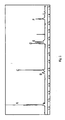
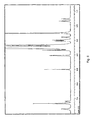
- the degree of product functionalization is evaluated by spectrophotometric analysis (TNBS test) and by 1 H-NMR analysis; a derivatization equal to 0.98 moles of -NH 2 per mole of Z-NH-CO-O-PEG-O-CO-NH 2 is found. From 1.00 g, 0.4 g of pure product are obtained.
- the resin is washed through a Gooch crucible with 150 ml of milliQ H 2 O By evaporating the H 2 O under vacuum by Rotavapor 1.25 g of the compound are obtained.
- the resin is then treated with 90 ml of a 0.1 M HCl solution. After evaporating the H 2 O by Rotavapor a white solid is obtained which is treated as described in the preceding paragraph to remove salts that are present. Following precipitation an overall 0.65 g of compound are obtained.
- PEG derivative 20 mg are dissolved in MeOH in a three-neck 50 ml flask and Pd(OH) 2 is added as catalyst in a quantity equal to 20% by weight on the substrate.
- the system is left under stirring overnight under H 2 atmosphere and room temperature.
- the MeOH is removed under reduced pressure; the solid obtained is re-dissolved in AcCN and then precipitated by MTBE in a ice-bath, filtered through a Gooch 3G crucible, washed with Et 2 O and stored over KOH.
- bifunctional PEG derivatives of the invention can be usefully employed for carrier and/or stabilizer applications by conjugation with biologically active molecules.
- the following example presents the conjugation of a bifunctional PEG, obtained as previously described, with two different amino acids.
- the MeOH is removed under reduced pressure; the solid obtained is re-dissolved in AcCN and then precipitated from Et 2 O in an ice-bath, filtered through a Gooch 3G crucible, washed with Et 2 O and stored over KOH.
Landscapes
- Chemical & Material Sciences (AREA)
- Health & Medical Sciences (AREA)
- Medicinal Chemistry (AREA)
- Chemical Kinetics & Catalysis (AREA)
- Organic Chemistry (AREA)
- Polymers & Plastics (AREA)
- General Chemical & Material Sciences (AREA)
- Public Health (AREA)
- Veterinary Medicine (AREA)
- Pharmacology & Pharmacy (AREA)
- Life Sciences & Earth Sciences (AREA)
- Animal Behavior & Ethology (AREA)
- General Health & Medical Sciences (AREA)
- Engineering & Computer Science (AREA)
- Bioinformatics & Cheminformatics (AREA)
- Epidemiology (AREA)
- Nuclear Medicine, Radiotherapy & Molecular Imaging (AREA)
- Peptides Or Proteins (AREA)
- Medicinal Preparation (AREA)
- Steroid Compounds (AREA)
- Medicines That Contain Protein Lipid Enzymes And Other Medicines (AREA)
- Polyethers (AREA)
Claims (7)
- Bifunktionale Polyethylenglykol- (PEG-) Derivate der allgemeinen Formel (I)
P'HN-(H2C)n,-HN-CO-O-PEG-O-CO-NH-(CH2)n-NHP (I)
in der:das Polyethylenglykol ein Molekulargewicht zwischen 2.000 und 40.000 hat, P, P' gleich oder voneinander verschieden sein können und ein Wasserstoff oder eine Schutzgruppe für die Aminogruppe sein können, n und n', die gleich oder voneinander verschieden sind, zwischen 1 und 6 liegen. - Bifunktionale Polyethylenglykolderivate gemäß Anspruch 1, wobei P, P', wenn sie Schutzgruppen für die Aminogruppe sind, aus der Carbamate und Amide umfassenden Gruppe ausgewählt werden.
- Verfahren zur Herstellung von bifunktionalen Polyethylenglykol- (PEG-) Derivaten gemäß Anspruch 1, gekennzeichnet durch die folgenden Schritte:- Derivatisierung einer ersten terminalen Hydroxylgruppe des Polyethylenglykols mit einer bifunktionalen Verbindung, die an einer funktionalen Gruppe aktiviert ist und gegebenenfalls an der zweiten funktionalen Gruppe einfach geschützt ist,- Derivatisierung der zweiten Hydroxylgruppe des Polyethylenglykols mit einer bifunktionalen Verbindung, die gleich der vorhergehenden oder von ihr verschieden ist,- Ionisierung der freien funktionalen Gruppe des erhaltenen bifunktionalen PEG-Derivats,- Reinigung des erhaltenen ionischen bifunktionalen PEG-Derivats,- Neutralisierung der ionisierten funktionalen Gruppe des gereinigten, ionischen, bifunktionalen PEG-Derivats und sein optionaler Schutz.
- Verwendung von bifunktionalen Polyethylenglykol- (PEG-) Derivaten gemäß Anspruch 1 für die Herstellung von Konjugaten durch Konjugation mit Verbindungen von unterschiedlicher Art, welche die gleichen oder voneinander verschieden sind, die für diagnostische, vorbeugende und therapeutische Zwecke oder für trägergestützte Herstellungsverfahren verwendet werden können.
- Verwendung von bifunktionalen Polyethylenglykol- (PEG-) Derivaten gemäß Anspruch 1 als Träger und/oder Stabilisierungsmittel von Molekülen, die gleich oder voneinander verschieden sind, durch Konjugation der genannten Moleküle an genannte bifunktionale Polyethylenglykolderivate.
- Verwendung gemäß Anspruch 5, wobei genannte Moleküle Verbindungen sind, die für diagnostische, vorbeugende und therapeutische Zwecke geeignet sind.
- Verwendung gemäß Anspruch 5, wobei genannte Moleküle Reagenzien oder Katalysatoren für trägergestützte organische Syntheseverfahren sind.
Applications Claiming Priority (2)
| Application Number | Priority Date | Filing Date | Title |
|---|---|---|---|
| IT000159A ITPD20040159A1 (it) | 2004-06-21 | 2004-06-21 | Derivati bifunzionali del polietilenglicole loro preparazione e uso. |
| PCT/EP2005/052876 WO2005123139A1 (en) | 2004-06-21 | 2005-06-21 | Bifunctional derivatives of polyethylene glycol, their preparation and use |
Publications (2)
| Publication Number | Publication Date |
|---|---|
| EP1776143A1 EP1776143A1 (de) | 2007-04-25 |
| EP1776143B1 true EP1776143B1 (de) | 2008-01-02 |
Family
ID=34973166
Family Applications (1)
| Application Number | Title | Priority Date | Filing Date |
|---|---|---|---|
| EP05771854A Expired - Lifetime EP1776143B1 (de) | 2004-06-21 | 2005-06-21 | Bifunktionale derivate von polyethylenglykol, ihre herstellung und verwendung |
Country Status (6)
| Country | Link |
|---|---|
| US (1) | US20080280998A1 (de) |
| EP (1) | EP1776143B1 (de) |
| AT (1) | ATE382371T1 (de) |
| DE (1) | DE602005004154T2 (de) |
| IT (1) | ITPD20040159A1 (de) |
| WO (1) | WO2005123139A1 (de) |
Families Citing this family (7)
| Publication number | Priority date | Publication date | Assignee | Title |
|---|---|---|---|---|
| CA2584510C (en) * | 2004-10-25 | 2013-05-28 | Intezyne Technologies, Incorporated | Heterobifunctional poly(ethylene glycol) and uses thereof |
| US7560588B2 (en) | 2006-04-27 | 2009-07-14 | Intezyne Technologies, Inc. | Poly(ethylene glycol) containing chemically disparate endgroups |
| EP3077072B1 (de) | 2013-12-02 | 2019-03-06 | Biocartis N.V. | Extraktion von zirkulierenden nukleinsäuren |
| US11725073B2 (en) | 2020-12-29 | 2023-08-15 | Hongene Biotech Corporation | Compositions and methods for liquid phase oligonucleotide synthesis |
| US11851454B2 (en) | 2021-12-30 | 2023-12-26 | Hongene Biotech Corporation | Compositions and methods for liquid phase oligonucleotide synthesis |
| JP2025521412A (ja) | 2022-06-21 | 2025-07-10 | ホンジーン バイオテック コーポレイション | 液相オリゴヌクレオチド合成のための組成物および方法 |
| US12180140B2 (en) | 2022-12-23 | 2024-12-31 | Hongene Biotech Corporation | Compounds and methods for liquid phase oligonucleotide synthesis |
Family Cites Families (3)
| Publication number | Priority date | Publication date | Assignee | Title |
|---|---|---|---|---|
| US5268454A (en) * | 1991-02-08 | 1993-12-07 | La Jolla Pharmaceutical Company | Composition for inducing humoral anergy to an immunogen comprising a t cell epitope-deficient analog of the immunogen conjugated to a nonimmunogenic carrier |
| WO2003031066A1 (en) * | 2001-10-11 | 2003-04-17 | California Institute Of Technology | Devices utilizing self-assembled gel and method of manufacture |
| EP1597299A2 (de) * | 2003-02-19 | 2005-11-23 | Pharmacia Corporation | Mit oxalatestern aktivierte carbonatester von polyethylenglykol |
-
2004
- 2004-06-21 IT IT000159A patent/ITPD20040159A1/it unknown
-
2005
- 2005-06-21 US US11/570,926 patent/US20080280998A1/en not_active Abandoned
- 2005-06-21 DE DE602005004154T patent/DE602005004154T2/de not_active Expired - Lifetime
- 2005-06-21 EP EP05771854A patent/EP1776143B1/de not_active Expired - Lifetime
- 2005-06-21 AT AT05771854T patent/ATE382371T1/de not_active IP Right Cessation
- 2005-06-21 WO PCT/EP2005/052876 patent/WO2005123139A1/en not_active Ceased
Also Published As
| Publication number | Publication date |
|---|---|
| EP1776143A1 (de) | 2007-04-25 |
| WO2005123139A1 (en) | 2005-12-29 |
| ATE382371T1 (de) | 2008-01-15 |
| DE602005004154T2 (de) | 2008-12-18 |
| ITPD20040159A1 (it) | 2004-09-21 |
| US20080280998A1 (en) | 2008-11-13 |
| DE602005004154D1 (de) | 2008-02-14 |
Similar Documents
| Publication | Publication Date | Title |
|---|---|---|
| AU2005232371B2 (en) | Polymeric prodrug with a self-immolative linker | |
| AU2004211522B2 (en) | Multifunctional dendrimers and hyperbranched polymers as drug and gene delivery systems | |
| CN1852740B (zh) | 多支链聚合物的药物前体 | |
| ES2623677T3 (es) | Forma de sal de un producto conjugado de polímero-fármaco multibrazo | |
| EP2284209B1 (de) | Polymerkonjugat aus folsäure oder einem folsäurederivat | |
| EP1080732A1 (de) | Medikamentzusammenstellung | |
| US20090285780A1 (en) | Peg linker compounds and biologically active conjugates thereof | |
| US20030143185A1 (en) | Polymer conjugates of protein kinase C inhibitors | |
| US7273845B2 (en) | Polymeric prodrugs of vancomycin | |
| EP1776143B1 (de) | Bifunktionale derivate von polyethylenglykol, ihre herstellung und verwendung | |
| JP2005514505A (ja) | マルチアーム樹枝状および機能的なpegの調製法および用途 | |
| US8101729B2 (en) | Pegylated amino acid derivatives and the process to synthesize the same | |
| US11890347B2 (en) | PH-responsive polymer and drug delivery system | |
| US20090215979A1 (en) | Process for the preparation of alkoxyamine functionalized polyethylene glycols | |
| US20150306228A1 (en) | Functionalized Water-Soluble Polyphosphazenes and Uses Thereof as Modifiers of Biological Agents | |
| CN100586990C (zh) | 作为药物和基因传输体系的多官能枝状体和超支化聚合物 | |
| CA3215405A1 (en) | Protein-macromolecule conjugates and methods of use thereof | |
| US20060263328A1 (en) | Hydrophilic polymers with pendant functional groups and method thereof | |
| WO2007112794A1 (en) | New activated poly(ethylene glycols) and related polymers and their applications | |
| US11952461B2 (en) | Siloxy polyethylene glycol and derivatives thereof | |
| WO2004044224A2 (en) | Branched polymeric prodrugs of vancomycin | |
| KR100551096B1 (ko) | 신규한 와이-폴리에틸렌글리콜 유도체 및 그의 제조방법 | |
| Campaner et al. | An efficient and selective end-modification of high-molecular weight poly (ethylene glycol) s | |
| US20130303799A1 (en) | Process for the preparation of poly(alkylene oxide) derivatives for modification of biologically active molecules and materials | |
| HK1171366B (en) | Acid salt forms of polymer-drug conjugates and alkoxylation methods |
Legal Events
| Date | Code | Title | Description |
|---|---|---|---|
| PUAI | Public reference made under article 153(3) epc to a published international application that has entered the european phase |
Free format text: ORIGINAL CODE: 0009012 |
|
| 17P | Request for examination filed |
Effective date: 20070119 |
|
| AK | Designated contracting states |
Kind code of ref document: A1 Designated state(s): AT BE BG CH CY CZ DE DK EE ES FI FR GB GR HU IE IS IT LI LT LU MC NL PL PT RO SE SI SK TR |
|
| GRAP | Despatch of communication of intention to grant a patent |
Free format text: ORIGINAL CODE: EPIDOSNIGR1 |
|
| DAX | Request for extension of the european patent (deleted) | ||
| GRAS | Grant fee paid |
Free format text: ORIGINAL CODE: EPIDOSNIGR3 |
|
| GRAA | (expected) grant |
Free format text: ORIGINAL CODE: 0009210 |
|
| AK | Designated contracting states |
Kind code of ref document: B1 Designated state(s): AT BE BG CH CY CZ DE DK EE ES FI FR GB GR HU IE IS IT LI LT LU MC NL PL PT RO SE SI SK TR |
|
| REG | Reference to a national code |
Ref country code: GB Ref legal event code: FG4D |
|
| REG | Reference to a national code |
Ref country code: IE Ref legal event code: FG4D |
|
| REG | Reference to a national code |
Ref country code: CH Ref legal event code: EP |
|
| REF | Corresponds to: |
Ref document number: 602005004154 Country of ref document: DE Date of ref document: 20080214 Kind code of ref document: P |
|
| PG25 | Lapsed in a contracting state [announced via postgrant information from national office to epo] |
Ref country code: SI Free format text: LAPSE BECAUSE OF FAILURE TO SUBMIT A TRANSLATION OF THE DESCRIPTION OR TO PAY THE FEE WITHIN THE PRESCRIBED TIME-LIMIT Effective date: 20080102 Ref country code: NL Free format text: LAPSE BECAUSE OF FAILURE TO SUBMIT A TRANSLATION OF THE DESCRIPTION OR TO PAY THE FEE WITHIN THE PRESCRIBED TIME-LIMIT Effective date: 20080102 |
|
| NLV1 | Nl: lapsed or annulled due to failure to fulfill the requirements of art. 29p and 29m of the patents act | ||
| PG25 | Lapsed in a contracting state [announced via postgrant information from national office to epo] |
Ref country code: LT Free format text: LAPSE BECAUSE OF FAILURE TO SUBMIT A TRANSLATION OF THE DESCRIPTION OR TO PAY THE FEE WITHIN THE PRESCRIBED TIME-LIMIT Effective date: 20080102 Ref country code: ES Free format text: LAPSE BECAUSE OF FAILURE TO SUBMIT A TRANSLATION OF THE DESCRIPTION OR TO PAY THE FEE WITHIN THE PRESCRIBED TIME-LIMIT Effective date: 20080413 Ref country code: IS Free format text: LAPSE BECAUSE OF FAILURE TO SUBMIT A TRANSLATION OF THE DESCRIPTION OR TO PAY THE FEE WITHIN THE PRESCRIBED TIME-LIMIT Effective date: 20080502 Ref country code: CH Free format text: LAPSE BECAUSE OF FAILURE TO SUBMIT A TRANSLATION OF THE DESCRIPTION OR TO PAY THE FEE WITHIN THE PRESCRIBED TIME-LIMIT Effective date: 20080102 Ref country code: FI Free format text: LAPSE BECAUSE OF FAILURE TO SUBMIT A TRANSLATION OF THE DESCRIPTION OR TO PAY THE FEE WITHIN THE PRESCRIBED TIME-LIMIT Effective date: 20080102 Ref country code: LI Free format text: LAPSE BECAUSE OF FAILURE TO SUBMIT A TRANSLATION OF THE DESCRIPTION OR TO PAY THE FEE WITHIN THE PRESCRIBED TIME-LIMIT Effective date: 20080102 |
|
| REG | Reference to a national code |
Ref country code: CH Ref legal event code: PL |
|
| PG25 | Lapsed in a contracting state [announced via postgrant information from national office to epo] |
Ref country code: AT Free format text: LAPSE BECAUSE OF FAILURE TO SUBMIT A TRANSLATION OF THE DESCRIPTION OR TO PAY THE FEE WITHIN THE PRESCRIBED TIME-LIMIT Effective date: 20080102 |
|
| ET | Fr: translation filed | ||
| PG25 | Lapsed in a contracting state [announced via postgrant information from national office to epo] |
Ref country code: PT Free format text: LAPSE BECAUSE OF FAILURE TO SUBMIT A TRANSLATION OF THE DESCRIPTION OR TO PAY THE FEE WITHIN THE PRESCRIBED TIME-LIMIT Effective date: 20080602 Ref country code: PL Free format text: LAPSE BECAUSE OF FAILURE TO SUBMIT A TRANSLATION OF THE DESCRIPTION OR TO PAY THE FEE WITHIN THE PRESCRIBED TIME-LIMIT Effective date: 20080102 Ref country code: BE Free format text: LAPSE BECAUSE OF FAILURE TO SUBMIT A TRANSLATION OF THE DESCRIPTION OR TO PAY THE FEE WITHIN THE PRESCRIBED TIME-LIMIT Effective date: 20080102 |
|
| PG25 | Lapsed in a contracting state [announced via postgrant information from national office to epo] |
Ref country code: CZ Free format text: LAPSE BECAUSE OF FAILURE TO SUBMIT A TRANSLATION OF THE DESCRIPTION OR TO PAY THE FEE WITHIN THE PRESCRIBED TIME-LIMIT Effective date: 20080102 Ref country code: SK Free format text: LAPSE BECAUSE OF FAILURE TO SUBMIT A TRANSLATION OF THE DESCRIPTION OR TO PAY THE FEE WITHIN THE PRESCRIBED TIME-LIMIT Effective date: 20080102 Ref country code: SE Free format text: LAPSE BECAUSE OF FAILURE TO SUBMIT A TRANSLATION OF THE DESCRIPTION OR TO PAY THE FEE WITHIN THE PRESCRIBED TIME-LIMIT Effective date: 20080402 Ref country code: DK Free format text: LAPSE BECAUSE OF FAILURE TO SUBMIT A TRANSLATION OF THE DESCRIPTION OR TO PAY THE FEE WITHIN THE PRESCRIBED TIME-LIMIT Effective date: 20080102 |
|
| PLBE | No opposition filed within time limit |
Free format text: ORIGINAL CODE: 0009261 |
|
| STAA | Information on the status of an ep patent application or granted ep patent |
Free format text: STATUS: NO OPPOSITION FILED WITHIN TIME LIMIT |
|
| PG25 | Lapsed in a contracting state [announced via postgrant information from national office to epo] |
Ref country code: RO Free format text: LAPSE BECAUSE OF FAILURE TO SUBMIT A TRANSLATION OF THE DESCRIPTION OR TO PAY THE FEE WITHIN THE PRESCRIBED TIME-LIMIT Effective date: 20080102 |
|
| 26N | No opposition filed |
Effective date: 20081003 |
|
| PG25 | Lapsed in a contracting state [announced via postgrant information from national office to epo] |
Ref country code: MC Free format text: LAPSE BECAUSE OF NON-PAYMENT OF DUE FEES Effective date: 20080630 |
|
| PG25 | Lapsed in a contracting state [announced via postgrant information from national office to epo] |
Ref country code: IE Free format text: LAPSE BECAUSE OF NON-PAYMENT OF DUE FEES Effective date: 20080623 Ref country code: EE Free format text: LAPSE BECAUSE OF FAILURE TO SUBMIT A TRANSLATION OF THE DESCRIPTION OR TO PAY THE FEE WITHIN THE PRESCRIBED TIME-LIMIT Effective date: 20080102 |
|
| PG25 | Lapsed in a contracting state [announced via postgrant information from national office to epo] |
Ref country code: CY Free format text: LAPSE BECAUSE OF FAILURE TO SUBMIT A TRANSLATION OF THE DESCRIPTION OR TO PAY THE FEE WITHIN THE PRESCRIBED TIME-LIMIT Effective date: 20080102 |
|
| PG25 | Lapsed in a contracting state [announced via postgrant information from national office to epo] |
Ref country code: HU Free format text: LAPSE BECAUSE OF FAILURE TO SUBMIT A TRANSLATION OF THE DESCRIPTION OR TO PAY THE FEE WITHIN THE PRESCRIBED TIME-LIMIT Effective date: 20080703 Ref country code: LU Free format text: LAPSE BECAUSE OF NON-PAYMENT OF DUE FEES Effective date: 20080621 |
|
| PG25 | Lapsed in a contracting state [announced via postgrant information from national office to epo] |
Ref country code: TR Free format text: LAPSE BECAUSE OF FAILURE TO SUBMIT A TRANSLATION OF THE DESCRIPTION OR TO PAY THE FEE WITHIN THE PRESCRIBED TIME-LIMIT Effective date: 20080102 |
|
| PG25 | Lapsed in a contracting state [announced via postgrant information from national office to epo] |
Ref country code: GR Free format text: LAPSE BECAUSE OF FAILURE TO SUBMIT A TRANSLATION OF THE DESCRIPTION OR TO PAY THE FEE WITHIN THE PRESCRIBED TIME-LIMIT Effective date: 20080403 |
|
| PG25 | Lapsed in a contracting state [announced via postgrant information from national office to epo] |
Ref country code: BG Free format text: LAPSE BECAUSE OF FAILURE TO SUBMIT A TRANSLATION OF THE DESCRIPTION OR TO PAY THE FEE WITHIN THE PRESCRIBED TIME-LIMIT Effective date: 20080102 |
|
| PGFP | Annual fee paid to national office [announced via postgrant information from national office to epo] |
Ref country code: DE Payment date: 20130516 Year of fee payment: 9 Ref country code: GB Payment date: 20130514 Year of fee payment: 9 |
|
| PGFP | Annual fee paid to national office [announced via postgrant information from national office to epo] |
Ref country code: IT Payment date: 20130604 Year of fee payment: 9 Ref country code: FR Payment date: 20130604 Year of fee payment: 9 |
|
| REG | Reference to a national code |
Ref country code: DE Ref legal event code: R119 Ref document number: 602005004154 Country of ref document: DE |
|
| GBPC | Gb: european patent ceased through non-payment of renewal fee |
Effective date: 20140621 |
|
| REG | Reference to a national code |
Ref country code: DE Ref legal event code: R119 Ref document number: 602005004154 Country of ref document: DE Effective date: 20150101 |
|
| REG | Reference to a national code |
Ref country code: FR Ref legal event code: ST Effective date: 20150227 |
|
| PG25 | Lapsed in a contracting state [announced via postgrant information from national office to epo] |
Ref country code: IT Free format text: LAPSE BECAUSE OF NON-PAYMENT OF DUE FEES Effective date: 20140621 Ref country code: DE Free format text: LAPSE BECAUSE OF NON-PAYMENT OF DUE FEES Effective date: 20150101 |
|
| PG25 | Lapsed in a contracting state [announced via postgrant information from national office to epo] |
Ref country code: GB Free format text: LAPSE BECAUSE OF NON-PAYMENT OF DUE FEES Effective date: 20140621 Ref country code: FR Free format text: LAPSE BECAUSE OF NON-PAYMENT OF DUE FEES Effective date: 20140630 |