EP1780512B1 - Système de surveillance d`altitude pour aéronef - Google Patents
Système de surveillance d`altitude pour aéronef Download PDFInfo
- Publication number
- EP1780512B1 EP1780512B1 EP05109967A EP05109967A EP1780512B1 EP 1780512 B1 EP1780512 B1 EP 1780512B1 EP 05109967 A EP05109967 A EP 05109967A EP 05109967 A EP05109967 A EP 05109967A EP 1780512 B1 EP1780512 B1 EP 1780512B1
- Authority
- EP
- European Patent Office
- Prior art keywords
- altitude
- aircraft
- pilot
- certain time
- evasive manoeuvre
- Prior art date
- Legal status (The legal status is an assumption and is not a legal conclusion. Google has not performed a legal analysis and makes no representation as to the accuracy of the status listed.)
- Expired - Lifetime
Links
Images


Classifications
-
- G—PHYSICS
- G08—SIGNALLING
- G08G—TRAFFIC CONTROL SYSTEMS
- G08G5/00—Traffic control systems for aircraft
- G08G5/70—Arrangements for monitoring traffic-related situations or conditions
- G08G5/74—Arrangements for monitoring traffic-related situations or conditions for monitoring terrain
-
- G—PHYSICS
- G01—MEASURING; TESTING
- G01C—MEASURING DISTANCES, LEVELS OR BEARINGS; SURVEYING; NAVIGATION; GYROSCOPIC INSTRUMENTS; PHOTOGRAMMETRY OR VIDEOGRAMMETRY
- G01C21/00—Navigation; Navigational instruments not provided for in groups G01C1/00 - G01C19/00
- G01C21/005—Navigation; Navigational instruments not provided for in groups G01C1/00 - G01C19/00 with correlation of navigation data from several sources, e.g. map or contour matching
-
- G—PHYSICS
- G01—MEASURING; TESTING
- G01C—MEASURING DISTANCES, LEVELS OR BEARINGS; SURVEYING; NAVIGATION; GYROSCOPIC INSTRUMENTS; PHOTOGRAMMETRY OR VIDEOGRAMMETRY
- G01C23/00—Combined instruments indicating more than one navigational value, e.g. for aircraft; Combined measuring devices for measuring two or more variables of movement, e.g. distance, speed or acceleration
-
- G—PHYSICS
- G08—SIGNALLING
- G08G—TRAFFIC CONTROL SYSTEMS
- G08G5/00—Traffic control systems for aircraft
- G08G5/80—Anti-collision systems
Definitions
- the present invention generally relates to a system for monitoring the altitude of an aircraft, and more particularly to such a system that provides an alerting indication when a certain selected altitude value is estimated to be violated by the aircraft.
- EP-B1- 1 517 281 discloses a system and a method for alerting of potentially hazardous situations in air traffic such that a radar controller is assisted in controlling air traffic, i.e. a large amount of different aircraft sharing the same air space, and uses stochastic models for trajectory prediction of each of the aircrafts.
- An altitude monitoring system for an aircraft comprising an input unit that makes it possible to receive or enter cleared flight level and cleared maximum and minimum altitudes into the system, and interfaces or other means to gain access to present altitude and speed, where said system also comprises a calculator unit for calculating a future altitude and a comparator unit that compare said future altitude with said maximum and minimum altitude limits, and/or with a cleared flight level plus/minus a tolerance, and also an alerting unit capable of issuing a warning to an aircraft pilot of said aircraft a certain time before an altitude limit is violated, said certain time being calculated such that an evasive manoeuvre using a specified load factor can be performed within said certain time with no or reasonable margin.
- the system may also comprise means to advise the pilot of the proper direction of evasive manoeuvre.
- the certain time may be calculated by continuously calculating an altitude loss/gain for an evasive manoeuvre, using a load factor suitable to the aircraft type in question, and the calculation may also take into consideration the pilot's reaction time, time for load factor build-up and time to roll to 0 or 180 degrees (depending on the evasive manoeuvre in question).
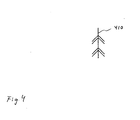
- the alert may comprise an audio signal, and the proper direction of evasive manoeuvre may be indicated by an arrow pointing in the desired direction.
- the arrow may be space stabilized.
- the present invention also concerns a method for altitude monitoring, comprising the following steps:
- the certain time is calculated by repeated calculation of an altitude loss/gain for an evasive manoeuvre, using a load factor suitable for the aircraft in question.
- the calculation also takes into consideration the pilot's reaction time, the time for load factor build-up and the time to roll to 0 or 180 degrees.
- the load factor in the manoeuvre, that is to be used in the calculations can be set to different values, e.g. in the range 2g to 9g.
- the load factor is selected to match the aircraft type or individual aircraft in question.
- the alerting may comprise the steps of issuing an audible signal, and displaying an arrow pointing in the desired direction of the evasive manoeuvre.
- the arrow may have a total length of between 2,0 and 3,0 degrees, and may be shown on a head-up display.
- the arrow may comprise a vertical line and four angles arranged in two groups, such that the vertical line extends beyond both the first and the fourth angle.
- the audible signal may comprise a number of voice frequency impulses.
- the audible signal may comprise four voice frequency impulses of approximately900 Hz, with a duration of approximately 1,0 second each, and a very short break between them.
- the present invention refers to a system having means for issuing an evasive command, including a preferred direction, a suitable time before the aircraft reaches current minimum or maximum altitude. Means are also included to adjust this time such that, after a forceful evasive manoeuvre (e.g. with a load factor of 5 g) the aircraft levels out at the current altitude limit. This function is also useable to help the pilot stay at a cleared flight level plus/minus tolerance. Means for feeding the system with minimum and maximum altitude and cleared flight level are provided.
- the point in time when a warning is issued is arranged to be identical to exactly the last moment, taking into account a predetermined time representative of the reaction time of the pilot, for beginning an evasive manoeuvre with a predetermined maximum g-load that will keep the aircraft at or slightly within the altitude limit in question.
- the predetermined maximum g-load and predetermined time representative of the reaction time of the pilot are set to values that, when repeatedly tested in the air, will lead to an actual levelling out at the altitude limit in question in a majority of cases and an actual levelling out at slightly within the limit in the other cases. This may be due to small variations in the reaction time of the pilot and to small variations in his and the aircraft's momentary ability to perform evasive manoeuvres.
- unit refers to an entity being implemented in hardware or software, or a combination thereof, it can be self-contained or integrated in a larger unit or system.
- FIG. 1 shows an embodiment of the present invention.
- a system 100 for monitoring the altitude of an aircraft comprises means to allow the pilot to enter received altitude limits 110.
- This means may comprise a keyboard 110 with numerical keys and an enter-altitude key.
- the altitude may in other embodiments be entered by means of software-controlled keys.
- the system further comprises an altitude monitoring calculations unit 120, connected to said keyboard 110. Said calculations unit 120 performs calculations necessary to be able to issue an alert at a suitable point in time.
- the calculations unit 120 is further connected to a navigation system interface unit 130, which makes it possible for said calculations unit 120 to get access to navigation data, such as current speed, heading, attitude, angle of attack, load factor and altitude.
- the altitude monitoring calculations unit 120 is further connected to a presentation system interface, which makes it possible for the calculations unit 120 to get access to speaker(s) and display(s) to issue the alert.
- altitude limits are automatically received and entered into the altitude monitoring system.
- the altitude monitoring system is interfaced to a radio communications system, or the like, of the aircraft via a radio communications interface unit 215.
- a method for monitoring the altitude of an aircraft, and alerting the pilot a certain time before an altitude limit is estimated to be violated comprises the following steps, see fig. 3 .
- the certain time, at which the alert is given, is preferably such that the pilot after an evasive manoeuvre of load factor 5 g (reduced at low speeds) is able to level out at the altitude limit in question.
- altitude loss/altitude gain is regularly calculated in advance for an evasive manoeuvre at a certain load factor, e.g. 5 g, taking into consideration the following: the reaction time of the pilot, time for load factor build-up, time to roll to 0 or 180 degrees (depending on current evasive manoeuvre).
- a lower load factor corresponding to an angle of attack in the range 12-20 degrees.
- the embodiment is preferably provided with means to allow a higher angle of attack, within said range, at a higher altitude.
- the altitude change is geometrically calculated with the aid of a radius of curvature for current load factor and aircraft speed.
- the altitude change is subsequently adjusted with the aid of a flight condition depending parameter for the change in turning radius, which usually occurs along the path of the aircraft, partly due to speed gain during dive (speed loss when climbing), and partly due to change of the "turning factor" in the path.
- the "turning factor” is the load factor without the g-component.
- the "turning factor” is 5 g when diving/climbing strictly vertical, 4 g during a flight path angle of 0 degrees curving upwards, and 6 g during a flight path angle of 0 degrees curving downwards.
- Altitude change during time of roll and evasive manoeuvre is calculated both at upper and lower altitude limits for two different cases.
- calculations are performed for the "normal” case, with an initial curvature of path facing away from the altitude limit.
- calculations are performed for the case when the aircraft in the evasive manoeuvre "pulls itself through the vertical position", having the "back” towards the vertical line. The results from the two calculations are subsequently compared, and the manoeuvre is selected that gives the smallest change in altitude.
- the in the above way calculated total altitude change during an evasive manoeuvre is subsequently compared with the altitude difference between the aircraft and the altitude limit to find out if it is time to issue a warning or an evasive manoeuvre command.
- the calculations may be performed repeatedly with a frequency of 4,0 Hz. Calculations are preferably performed for both upper and lower altitude limits in each sample.
- the aircraft is piloted to roll to 180 degrees to be able to pull 5 g downwards (except in the case of evasive manoeuvre via vertical position).
- moderate climbing flight path angles less than 10-15 degrees
- it is in praxis sufficient just to lower the aircraft nose to level out at the altitude limit (a "gentle bunt manoeuvre”). It is not necessary to arrange a certain calculation for the "bunt manoeuvre”. The fact that the turning radius during a bunt becomes much larger is compensated by the fact that also the calculated roll time (to 180 degrees) can be used for "path curving".
- a cleared flight level may also be used as input.
- the same calculations as described above can be made, towards an upper and lower altitude limit.
- the limits are in that case set to cleared flight level plus and minus a tolerance of preferably 61 m (200 feet). As long as you travel in or about the zone of tolerance, it may sound unnecessary to calculate for evasive manoeuvres with 5 g. As in the case with altitude limits with moderate dive and climb angles, they however provide a warning at an appropriate point in time to make it possible to avoid the altitude limit. Additionally, these calculations are necessary when an aircraft approaches a new cleared flight level at high speed and there is a risk for it to pass right through the new tolerance zone.
Landscapes
- Engineering & Computer Science (AREA)
- Radar, Positioning & Navigation (AREA)
- Remote Sensing (AREA)
- Physics & Mathematics (AREA)
- General Physics & Mathematics (AREA)
- Aviation & Aerospace Engineering (AREA)
- Automation & Control Theory (AREA)
- Traffic Control Systems (AREA)
- Vehicle Body Suspensions (AREA)
Claims (12)
- Système de surveillance d'altitude (100) pour un aéronef, comprenant une unité d'entrée (110) permettant de recevoir ou d'entrer un niveau de vol autorisé et des altitudes maximale et minimale autorisées dans le système, et des interfaces (130, 215) ou d'autres moyens d'accéder à l'altitude et la vitesse actuelles, ledit système (100) comprenant également une unité calculatrice (120) destinée à calculer une altitude future et une unité de comparaison comparant ladite altitude future avec lesdites limites d'altitude maximale et minimale, et/ou avec un niveau de vol autorisé plus/moins une tolérance, et également une unité d'alarme pouvant émettre un avertissement à un pilote d'aéronef dudit aéronef un certain temps avant qu'une limite d'altitude soit dépassée, caractérisé en ce que ledit certain temps est calculé de telle façon qu'une manoeuvre d'évitement utilisant un facteur de charge spécifié peut être réalisée durant ledit certain temps, sans ou avec peu de marge, et en ce que ledit système (100) comprend également des moyens (410) pour indiquer au pilote la direction appropriée à ladite manoeuvre d'évitement.
- Système de la revendication 1, caractérisé en ce que ledit certain temps est calculé en calculant de façon continue une perte/un gain d'altitude en vue d'une manoeuvre d'évitement, en utilisant un facteur de charge approprié au type d'aéronef dont il est question, et en ce que ledit calcul prend également en considération le temps de réaction du pilote, le temps d'accroissement du facteur de charge et le temps pour pivoter à 0 ou 180 degrés.
- Système de la revendication 1, caractérisé en ce que ladite alarme comprend également un signal audio, et en ce que la direction appropriée à ladite manoeuvre d'évitement est indiquée par une flèche (410) dirigée dans la direction souhaitée.
- Système de la revendication 3, ladite flèche (410) étant stabilisée dans l'espace.
- Procédé de surveillance d'altitude, comprenant les étapes suivantes :- réception d'une donnée de limite d'altitude (310),- présentation d'une donnée de limite d'altitude (320),- calcul régulier de l'éventualité du besoin de réaliser une manoeuvre d'évitement pour maintenir l'aéronef dans les limites d'altitude (330, 340),- si une manoeuvre d'évitement est nécessaire, avertissement du pilote (350) à ce sujet un certain temps avant le moment estimé du dépassement, de telle façon qu'une manoeuvre d'évitement puisse être réalisée durant ledit certain temps, c'est-à-dire de façon à éviter le dépassement imminent, caractérisé par la suggestion au pilote d'une direction pour une telle manoeuvre d'évitement.
- Procédé de la revendication 5, ledit certain temps étant calculé par un calcul répété de perte/gain d'altitude pour une manoeuvre d'évitement, en utilisant un facteur de charge approprié au type d'aéronef dont il est question, et lesdits calculs prenant également en considération le temps de réaction du pilote, le temps d'accroissement du facteur de charge et le temps pour pivoter à 0 ou 180 degrés.
- Procédé de la revendication 5, le facteur de charge utilisé étant compris entre 2 et 9 g.
- Procédé de la revendication 5, ledit avertissement (350) comprenant les étapes suivantes :- émission d'un signal audible, et- affichage d'une flèche (410) dirigée dans la direction souhaitée pour la manoeuvre d'évitement.
- Procédé de la revendication 8, ladite flèche (410) ayant une longueur totale comprise entre 2,0 et 3,0 degrés, et étant affichée sur un dispositif d'affichage à tête haute.
- Procédé de la revendication 9, ladite flèche (410) comprenant une ligne verticale et quatre angles répartis en deux groupes, de telle façon que la ligne verticale s'étende au-delà du premier et du quatrième angle.
- Procédé de la revendication 10, le signal audible comprenant un certain nombre d'impulsions de fréquence vocale.
- Procédé de la revendication 11, le signal audible comprenant quatre impulsions de fréquence vocale d'approximativement 900 Hz, d'une durée d'environ 1,0 seconde chacune, et une très courte pause entre les impulsions.
Priority Applications (5)
| Application Number | Priority Date | Filing Date | Title |
|---|---|---|---|
| DE602005012279T DE602005012279D1 (de) | 2005-10-25 | 2005-10-25 | Höhenkontrollsystem für ein Flugzeug |
| ES05109967T ES2319437T3 (es) | 2005-10-25 | 2005-10-25 | Sistema de supervision de altitud para aeronave. |
| EP05109967A EP1780512B1 (fr) | 2005-10-25 | 2005-10-25 | Système de surveillance d`altitude pour aéronef |
| AT05109967T ATE420338T1 (de) | 2005-10-25 | 2005-10-25 | Höhenkontrollsystem für ein flugzeug |
| US11/548,291 US20080177429A1 (en) | 2005-10-25 | 2006-10-11 | Altitude monitoring system for aircraft |
Applications Claiming Priority (1)
| Application Number | Priority Date | Filing Date | Title |
|---|---|---|---|
| EP05109967A EP1780512B1 (fr) | 2005-10-25 | 2005-10-25 | Système de surveillance d`altitude pour aéronef |
Publications (2)
| Publication Number | Publication Date |
|---|---|
| EP1780512A1 EP1780512A1 (fr) | 2007-05-02 |
| EP1780512B1 true EP1780512B1 (fr) | 2009-01-07 |
Family
ID=36282848
Family Applications (1)
| Application Number | Title | Priority Date | Filing Date |
|---|---|---|---|
| EP05109967A Expired - Lifetime EP1780512B1 (fr) | 2005-10-25 | 2005-10-25 | Système de surveillance d`altitude pour aéronef |
Country Status (5)
| Country | Link |
|---|---|
| US (1) | US20080177429A1 (fr) |
| EP (1) | EP1780512B1 (fr) |
| AT (1) | ATE420338T1 (fr) |
| DE (1) | DE602005012279D1 (fr) |
| ES (1) | ES2319437T3 (fr) |
Cited By (1)
| Publication number | Priority date | Publication date | Assignee | Title |
|---|---|---|---|---|
| US10228692B2 (en) | 2017-03-27 | 2019-03-12 | Gulfstream Aerospace Corporation | Aircraft flight envelope protection and recovery autopilot |
Families Citing this family (2)
| Publication number | Priority date | Publication date | Assignee | Title |
|---|---|---|---|---|
| GR1006243B (el) * | 2007-11-26 | 2009-01-28 | Γεωργιος Φουρλας | Μεθοδος εντοπισμου αποκλισης πολιτικων αεροσκαφων απο το σχεδιο πτησης τους |
| CN112882488B (zh) * | 2021-01-11 | 2022-08-05 | 成都民航空管科技发展有限公司 | 航空器4d轨迹预测方法及装置 |
Family Cites Families (14)
| Publication number | Priority date | Publication date | Assignee | Title |
|---|---|---|---|---|
| US2556964A (en) * | 1945-11-16 | 1951-06-12 | Bell Telephone Labor Inc | Ground trainer for aircraft personnel |
| US3134100A (en) * | 1959-07-29 | 1964-05-19 | Thompson Ramo Wooldridge Inc | Doppler difference collision warning system |
| US3766552A (en) * | 1970-12-14 | 1973-10-16 | M Hajduk | Unified area surveillance, communication and mobile station guidance system |
| US3680046A (en) * | 1970-12-18 | 1972-07-25 | Us Navy | Alerting system |
| US5001476A (en) * | 1983-05-13 | 1991-03-19 | Sundstrand Data Control, Inc. | Warning system for tactical aircraft |
| US4916448A (en) * | 1988-02-26 | 1990-04-10 | The United States Of America As Represented By The Secretary Of The Air Force | Low altitude warning system for aircraft |
| US5714948A (en) * | 1993-05-14 | 1998-02-03 | Worldwide Notifications Systems, Inc. | Satellite based aircraft traffic control system |
| US5884223A (en) * | 1996-04-29 | 1999-03-16 | Sun Microsystems, Inc. | Altitude sparse aircraft display |
| WO2000023967A1 (fr) * | 1998-10-16 | 2000-04-27 | Universal Avionics Systems Corporation | Systeme et procede d'avertissement relatif a un projet de plan de vol |
| EP1151429B1 (fr) * | 1999-02-01 | 2004-04-07 | Honeywell International Inc. | Appareils, procedes, et programmes informatiques pour generer une enveloppe de marge de franchissement de relief autour d'une piste selectionnee |
| US6700482B2 (en) * | 2000-09-29 | 2004-03-02 | Honeywell International Inc. | Alerting and notification system |
| US6711478B2 (en) * | 2000-12-15 | 2004-03-23 | Garmin At, Inc. | Receiver-autonomous vertical integrity monitoring |
| US6484072B1 (en) * | 2001-09-28 | 2002-11-19 | The United States Of America As Represented By The Secretary Of The Navy | Embedded terrain awareness warning system for aircraft |
| EP1517281B1 (fr) * | 2003-09-16 | 2007-10-31 | COMSOFT GmbH | Réseau de sécurité pour prévenir de situations dangereuses dans la circulation aérienne |
-
2005
- 2005-10-25 EP EP05109967A patent/EP1780512B1/fr not_active Expired - Lifetime
- 2005-10-25 ES ES05109967T patent/ES2319437T3/es not_active Expired - Lifetime
- 2005-10-25 DE DE602005012279T patent/DE602005012279D1/de not_active Expired - Lifetime
- 2005-10-25 AT AT05109967T patent/ATE420338T1/de not_active IP Right Cessation
-
2006
- 2006-10-11 US US11/548,291 patent/US20080177429A1/en not_active Abandoned
Cited By (3)
| Publication number | Priority date | Publication date | Assignee | Title |
|---|---|---|---|---|
| US10228692B2 (en) | 2017-03-27 | 2019-03-12 | Gulfstream Aerospace Corporation | Aircraft flight envelope protection and recovery autopilot |
| US10930164B2 (en) | 2017-03-27 | 2021-02-23 | Gulfstream Aerospace Corporation | Aircraft flight envelope protection and recovery autopilot |
| US11580865B2 (en) | 2017-03-27 | 2023-02-14 | Gulfstream Aerospace Corporation | Aircraft flight envelope protection and recovery autopilot |
Also Published As
| Publication number | Publication date |
|---|---|
| ATE420338T1 (de) | 2009-01-15 |
| EP1780512A1 (fr) | 2007-05-02 |
| US20080177429A1 (en) | 2008-07-24 |
| ES2319437T3 (es) | 2009-05-07 |
| DE602005012279D1 (de) | 2009-02-26 |
Similar Documents
| Publication | Publication Date | Title |
|---|---|---|
| EP4120043B1 (fr) | Procédé et système d'activation automatique d'atterrissage automatique | |
| EP3211621A1 (fr) | Procédé et dispositif électronique permettant d'optimiser une trajectoire de vol d'un avion soumis à des contraintes de commande de temps d'arrivée | |
| EP2428863B1 (fr) | Système d'avion avec un contrôle actif de la décélération | |
| EP2654029B1 (fr) | Procédé de génération d'un affichage | |
| US9132912B2 (en) | Automated take off control system and method | |
| US9257047B2 (en) | Computation of new aircraft trajectory using time factor | |
| US9633567B1 (en) | Ground collision avoidance system (iGCAS) | |
| US8527118B2 (en) | Automated safe flight vehicle | |
| US9870000B2 (en) | Methods and systems for translating an emergency system alert signal to an automated flight system maneuver | |
| Consiglio et al. | Concepts of integration for UAS operations in the NAS | |
| JP6294976B1 (ja) | 無人機管制システム、無人機管制方法、及び無人機管制プログラム | |
| US11113975B2 (en) | Method and device for assisting in the piloting of an aircraft to observe a required time of arrival | |
| US9683864B2 (en) | System for providing aircraft landing instructions | |
| US7647140B2 (en) | System for aiding the piloting of an aircraft during the approach to a runway with a view to a landing | |
| EP3703034B1 (fr) | Systèmes et procédés pour générer un trajet de récupération pour un aéronef | |
| EP2299421A2 (fr) | Système de conservation de position de véhicule | |
| CN103699132B (zh) | 一种用于辅助目视盘旋进近的装置及方法 | |
| EP3667645B1 (fr) | Aéronef et procédé de réglage de la charge de travail d'un pilote | |
| CN104443406A (zh) | 一种检测不符合规定的飞行员动作的飞行器系统和方法 | |
| EP3792724A1 (fr) | Systèmes et procédés de guidage de pilotage automatique à gestion d'énergie utilisant un angle de guidage d'itinéraire de vol potentiel | |
| EP1630766B1 (fr) | Système et méthode anti-collision automatique pour avions | |
| US20120150367A1 (en) | Method And Device For Automatically Monitoring The Ability Of An Aircraft To Follow A Flight Trajectory With At Least One Turn | |
| US20210397183A9 (en) | Non-binary collaborative recovery system | |
| US11273928B2 (en) | Time available before aircraft auto-recovery begins | |
| EP1780512B1 (fr) | Système de surveillance d`altitude pour aéronef |
Legal Events
| Date | Code | Title | Description |
|---|---|---|---|
| PUAI | Public reference made under article 153(3) epc to a published international application that has entered the european phase |
Free format text: ORIGINAL CODE: 0009012 |
|
| AK | Designated contracting states |
Kind code of ref document: A1 Designated state(s): AT BE BG CH CY CZ DE DK EE ES FI FR GB GR HU IE IS IT LI LT LU LV MC NL PL PT RO SE SI SK TR |
|
| AX | Request for extension of the european patent |
Extension state: AL BA HR MK YU |
|
| 17P | Request for examination filed |
Effective date: 20070904 |
|
| 17Q | First examination report despatched |
Effective date: 20071119 |
|
| AKX | Designation fees paid |
Designated state(s): AT BE BG CH CY CZ DE DK EE ES FI FR GB GR HU IE IS IT LI LT LU LV MC NL PL PT RO SE SI SK TR |
|
| GRAP | Despatch of communication of intention to grant a patent |
Free format text: ORIGINAL CODE: EPIDOSNIGR1 |
|
| GRAS | Grant fee paid |
Free format text: ORIGINAL CODE: EPIDOSNIGR3 |
|
| GRAA | (expected) grant |
Free format text: ORIGINAL CODE: 0009210 |
|
| AK | Designated contracting states |
Kind code of ref document: B1 Designated state(s): AT BE BG CH CY CZ DE DK EE ES FI FR GB GR HU IE IS IT LI LT LU LV MC NL PL PT RO SE SI SK TR |
|
| REG | Reference to a national code |
Ref country code: GB Ref legal event code: FG4D |
|
| REG | Reference to a national code |
Ref country code: CH Ref legal event code: EP |
|
| REG | Reference to a national code |
Ref country code: IE Ref legal event code: FG4D |
|
| REF | Corresponds to: |
Ref document number: 602005012279 Country of ref document: DE Date of ref document: 20090226 Kind code of ref document: P |
|
| REG | Reference to a national code |
Ref country code: ES Ref legal event code: FG2A Ref document number: 2319437 Country of ref document: ES Kind code of ref document: T3 |
|
| PG25 | Lapsed in a contracting state [announced via postgrant information from national office to epo] |
Ref country code: NL Free format text: LAPSE BECAUSE OF FAILURE TO SUBMIT A TRANSLATION OF THE DESCRIPTION OR TO PAY THE FEE WITHIN THE PRESCRIBED TIME-LIMIT Effective date: 20090107 Ref country code: SI Free format text: LAPSE BECAUSE OF FAILURE TO SUBMIT A TRANSLATION OF THE DESCRIPTION OR TO PAY THE FEE WITHIN THE PRESCRIBED TIME-LIMIT Effective date: 20090107 |
|
| NLV1 | Nl: lapsed or annulled due to failure to fulfill the requirements of art. 29p and 29m of the patents act | ||
| PG25 | Lapsed in a contracting state [announced via postgrant information from national office to epo] |
Ref country code: FI Free format text: LAPSE BECAUSE OF FAILURE TO SUBMIT A TRANSLATION OF THE DESCRIPTION OR TO PAY THE FEE WITHIN THE PRESCRIBED TIME-LIMIT Effective date: 20090107 Ref country code: LT Free format text: LAPSE BECAUSE OF FAILURE TO SUBMIT A TRANSLATION OF THE DESCRIPTION OR TO PAY THE FEE WITHIN THE PRESCRIBED TIME-LIMIT Effective date: 20090107 |
|
| PG25 | Lapsed in a contracting state [announced via postgrant information from national office to epo] |
Ref country code: AT Free format text: LAPSE BECAUSE OF FAILURE TO SUBMIT A TRANSLATION OF THE DESCRIPTION OR TO PAY THE FEE WITHIN THE PRESCRIBED TIME-LIMIT Effective date: 20090107 Ref country code: LV Free format text: LAPSE BECAUSE OF FAILURE TO SUBMIT A TRANSLATION OF THE DESCRIPTION OR TO PAY THE FEE WITHIN THE PRESCRIBED TIME-LIMIT Effective date: 20090107 Ref country code: PT Free format text: LAPSE BECAUSE OF FAILURE TO SUBMIT A TRANSLATION OF THE DESCRIPTION OR TO PAY THE FEE WITHIN THE PRESCRIBED TIME-LIMIT Effective date: 20090608 Ref country code: PL Free format text: LAPSE BECAUSE OF FAILURE TO SUBMIT A TRANSLATION OF THE DESCRIPTION OR TO PAY THE FEE WITHIN THE PRESCRIBED TIME-LIMIT Effective date: 20090107 Ref country code: IS Free format text: LAPSE BECAUSE OF FAILURE TO SUBMIT A TRANSLATION OF THE DESCRIPTION OR TO PAY THE FEE WITHIN THE PRESCRIBED TIME-LIMIT Effective date: 20090507 Ref country code: SE Free format text: LAPSE BECAUSE OF FAILURE TO SUBMIT A TRANSLATION OF THE DESCRIPTION OR TO PAY THE FEE WITHIN THE PRESCRIBED TIME-LIMIT Effective date: 20090407 |
|
| PG25 | Lapsed in a contracting state [announced via postgrant information from national office to epo] |
Ref country code: BE Free format text: LAPSE BECAUSE OF FAILURE TO SUBMIT A TRANSLATION OF THE DESCRIPTION OR TO PAY THE FEE WITHIN THE PRESCRIBED TIME-LIMIT Effective date: 20090107 |
|
| PG25 | Lapsed in a contracting state [announced via postgrant information from national office to epo] |
Ref country code: EE Free format text: LAPSE BECAUSE OF FAILURE TO SUBMIT A TRANSLATION OF THE DESCRIPTION OR TO PAY THE FEE WITHIN THE PRESCRIBED TIME-LIMIT Effective date: 20090107 Ref country code: DK Free format text: LAPSE BECAUSE OF FAILURE TO SUBMIT A TRANSLATION OF THE DESCRIPTION OR TO PAY THE FEE WITHIN THE PRESCRIBED TIME-LIMIT Effective date: 20090107 Ref country code: CZ Free format text: LAPSE BECAUSE OF FAILURE TO SUBMIT A TRANSLATION OF THE DESCRIPTION OR TO PAY THE FEE WITHIN THE PRESCRIBED TIME-LIMIT Effective date: 20090107 |
|
| PLBE | No opposition filed within time limit |
Free format text: ORIGINAL CODE: 0009261 |
|
| STAA | Information on the status of an ep patent application or granted ep patent |
Free format text: STATUS: NO OPPOSITION FILED WITHIN TIME LIMIT |
|
| PG25 | Lapsed in a contracting state [announced via postgrant information from national office to epo] |
Ref country code: SK Free format text: LAPSE BECAUSE OF FAILURE TO SUBMIT A TRANSLATION OF THE DESCRIPTION OR TO PAY THE FEE WITHIN THE PRESCRIBED TIME-LIMIT Effective date: 20090107 Ref country code: RO Free format text: LAPSE BECAUSE OF FAILURE TO SUBMIT A TRANSLATION OF THE DESCRIPTION OR TO PAY THE FEE WITHIN THE PRESCRIBED TIME-LIMIT Effective date: 20090107 |
|
| 26N | No opposition filed |
Effective date: 20091008 |
|
| PG25 | Lapsed in a contracting state [announced via postgrant information from national office to epo] |
Ref country code: BG Free format text: LAPSE BECAUSE OF FAILURE TO SUBMIT A TRANSLATION OF THE DESCRIPTION OR TO PAY THE FEE WITHIN THE PRESCRIBED TIME-LIMIT Effective date: 20090407 |
|
| PG25 | Lapsed in a contracting state [announced via postgrant information from national office to epo] |
Ref country code: MC Free format text: LAPSE BECAUSE OF NON-PAYMENT OF DUE FEES Effective date: 20091031 |
|
| REG | Reference to a national code |
Ref country code: CH Ref legal event code: PL |
|
| REG | Reference to a national code |
Ref country code: IE Ref legal event code: MM4A |
|
| PG25 | Lapsed in a contracting state [announced via postgrant information from national office to epo] |
Ref country code: LI Free format text: LAPSE BECAUSE OF NON-PAYMENT OF DUE FEES Effective date: 20091031 Ref country code: CH Free format text: LAPSE BECAUSE OF NON-PAYMENT OF DUE FEES Effective date: 20091031 Ref country code: GR Free format text: LAPSE BECAUSE OF FAILURE TO SUBMIT A TRANSLATION OF THE DESCRIPTION OR TO PAY THE FEE WITHIN THE PRESCRIBED TIME-LIMIT Effective date: 20090408 Ref country code: IE Free format text: LAPSE BECAUSE OF NON-PAYMENT OF DUE FEES Effective date: 20091025 |
|
| PG25 | Lapsed in a contracting state [announced via postgrant information from national office to epo] |
Ref country code: LU Free format text: LAPSE BECAUSE OF NON-PAYMENT OF DUE FEES Effective date: 20091025 |
|
| PG25 | Lapsed in a contracting state [announced via postgrant information from national office to epo] |
Ref country code: HU Free format text: LAPSE BECAUSE OF FAILURE TO SUBMIT A TRANSLATION OF THE DESCRIPTION OR TO PAY THE FEE WITHIN THE PRESCRIBED TIME-LIMIT Effective date: 20090708 |
|
| PG25 | Lapsed in a contracting state [announced via postgrant information from national office to epo] |
Ref country code: TR Free format text: LAPSE BECAUSE OF FAILURE TO SUBMIT A TRANSLATION OF THE DESCRIPTION OR TO PAY THE FEE WITHIN THE PRESCRIBED TIME-LIMIT Effective date: 20090107 |
|
| PG25 | Lapsed in a contracting state [announced via postgrant information from national office to epo] |
Ref country code: CY Free format text: LAPSE BECAUSE OF FAILURE TO SUBMIT A TRANSLATION OF THE DESCRIPTION OR TO PAY THE FEE WITHIN THE PRESCRIBED TIME-LIMIT Effective date: 20090107 |
|
| PGFP | Annual fee paid to national office [announced via postgrant information from national office to epo] |
Ref country code: DE Payment date: 20141024 Year of fee payment: 10 Ref country code: FR Payment date: 20141031 Year of fee payment: 10 Ref country code: ES Payment date: 20141028 Year of fee payment: 10 Ref country code: GB Payment date: 20141022 Year of fee payment: 10 |
|
| PGFP | Annual fee paid to national office [announced via postgrant information from national office to epo] |
Ref country code: IT Payment date: 20141024 Year of fee payment: 10 |
|
| REG | Reference to a national code |
Ref country code: DE Ref legal event code: R119 Ref document number: 602005012279 Country of ref document: DE |
|
| GBPC | Gb: european patent ceased through non-payment of renewal fee |
Effective date: 20151025 |
|
| PG25 | Lapsed in a contracting state [announced via postgrant information from national office to epo] |
Ref country code: GB Free format text: LAPSE BECAUSE OF NON-PAYMENT OF DUE FEES Effective date: 20151025 Ref country code: DE Free format text: LAPSE BECAUSE OF NON-PAYMENT OF DUE FEES Effective date: 20160503 Ref country code: IT Free format text: LAPSE BECAUSE OF NON-PAYMENT OF DUE FEES Effective date: 20151025 |
|
| REG | Reference to a national code |
Ref country code: FR Ref legal event code: ST Effective date: 20160630 |
|
| PG25 | Lapsed in a contracting state [announced via postgrant information from national office to epo] |
Ref country code: FR Free format text: LAPSE BECAUSE OF NON-PAYMENT OF DUE FEES Effective date: 20151102 |
|
| REG | Reference to a national code |
Ref country code: ES Ref legal event code: FD2A Effective date: 20161128 |
|
| PG25 | Lapsed in a contracting state [announced via postgrant information from national office to epo] |
Ref country code: ES Free format text: LAPSE BECAUSE OF NON-PAYMENT OF DUE FEES Effective date: 20151026 |