EP1783247A2 - Revêtement stratifié résistant à la corrosion pour la protection des aubes de turbine contre l'environment - Google Patents
Revêtement stratifié résistant à la corrosion pour la protection des aubes de turbine contre l'environment Download PDFInfo
- Publication number
- EP1783247A2 EP1783247A2 EP06255641A EP06255641A EP1783247A2 EP 1783247 A2 EP1783247 A2 EP 1783247A2 EP 06255641 A EP06255641 A EP 06255641A EP 06255641 A EP06255641 A EP 06255641A EP 1783247 A2 EP1783247 A2 EP 1783247A2
- Authority
- EP
- European Patent Office
- Prior art keywords
- corrosion resistant
- particulates
- resistant coating
- layer
- alumina
- Prior art date
- Legal status (The legal status is an assumption and is not a legal conclusion. Google has not performed a legal analysis and makes no representation as to the accuracy of the status listed.)
- Granted
Links
Images


Classifications
-
- C—CHEMISTRY; METALLURGY
- C23—COATING METALLIC MATERIAL; COATING MATERIAL WITH METALLIC MATERIAL; CHEMICAL SURFACE TREATMENT; DIFFUSION TREATMENT OF METALLIC MATERIAL; COATING BY VACUUM EVAPORATION, BY SPUTTERING, BY ION IMPLANTATION OR BY CHEMICAL VAPOUR DEPOSITION, IN GENERAL; INHIBITING CORROSION OF METALLIC MATERIAL OR INCRUSTATION IN GENERAL
- C23C—COATING METALLIC MATERIAL; COATING MATERIAL WITH METALLIC MATERIAL; SURFACE TREATMENT OF METALLIC MATERIAL BY DIFFUSION INTO THE SURFACE, BY CHEMICAL CONVERSION OR SUBSTITUTION; COATING BY VACUUM EVAPORATION, BY SPUTTERING, BY ION IMPLANTATION OR BY CHEMICAL VAPOUR DEPOSITION, IN GENERAL
- C23C24/00—Coating starting from inorganic powder
- C23C24/08—Coating starting from inorganic powder by application of heat or pressure and heat
-
- C—CHEMISTRY; METALLURGY
- C23—COATING METALLIC MATERIAL; COATING MATERIAL WITH METALLIC MATERIAL; CHEMICAL SURFACE TREATMENT; DIFFUSION TREATMENT OF METALLIC MATERIAL; COATING BY VACUUM EVAPORATION, BY SPUTTERING, BY ION IMPLANTATION OR BY CHEMICAL VAPOUR DEPOSITION, IN GENERAL; INHIBITING CORROSION OF METALLIC MATERIAL OR INCRUSTATION IN GENERAL
- C23C—COATING METALLIC MATERIAL; COATING MATERIAL WITH METALLIC MATERIAL; SURFACE TREATMENT OF METALLIC MATERIAL BY DIFFUSION INTO THE SURFACE, BY CHEMICAL CONVERSION OR SUBSTITUTION; COATING BY VACUUM EVAPORATION, BY SPUTTERING, BY ION IMPLANTATION OR BY CHEMICAL VAPOUR DEPOSITION, IN GENERAL
- C23C26/00—Coating not provided for in groups C23C2/00 - C23C24/00
-
- C—CHEMISTRY; METALLURGY
- C23—COATING METALLIC MATERIAL; COATING MATERIAL WITH METALLIC MATERIAL; CHEMICAL SURFACE TREATMENT; DIFFUSION TREATMENT OF METALLIC MATERIAL; COATING BY VACUUM EVAPORATION, BY SPUTTERING, BY ION IMPLANTATION OR BY CHEMICAL VAPOUR DEPOSITION, IN GENERAL; INHIBITING CORROSION OF METALLIC MATERIAL OR INCRUSTATION IN GENERAL
- C23C—COATING METALLIC MATERIAL; COATING MATERIAL WITH METALLIC MATERIAL; SURFACE TREATMENT OF METALLIC MATERIAL BY DIFFUSION INTO THE SURFACE, BY CHEMICAL CONVERSION OR SUBSTITUTION; COATING BY VACUUM EVAPORATION, BY SPUTTERING, BY ION IMPLANTATION OR BY CHEMICAL VAPOUR DEPOSITION, IN GENERAL
- C23C30/00—Coating with metallic material characterised only by the composition of the metallic material, i.e. not characterised by the coating process
-
- F—MECHANICAL ENGINEERING; LIGHTING; HEATING; WEAPONS; BLASTING
- F01—MACHINES OR ENGINES IN GENERAL; ENGINE PLANTS IN GENERAL; STEAM ENGINES
- F01D—NON-POSITIVE DISPLACEMENT MACHINES OR ENGINES, e.g. STEAM TURBINES
- F01D5/00—Blades; Blade-carrying members; Heating, heat-insulating, cooling or antivibration means on the blades or the members
- F01D5/12—Blades
- F01D5/28—Selecting particular materials; Particular measures relating thereto; Measures against erosion or corrosion
- F01D5/288—Protective coatings for blades
-
- F—MECHANICAL ENGINEERING; LIGHTING; HEATING; WEAPONS; BLASTING
- F05—INDEXING SCHEMES RELATING TO ENGINES OR PUMPS IN VARIOUS SUBCLASSES OF CLASSES F01-F04
- F05D—INDEXING SCHEME FOR ASPECTS RELATING TO NON-POSITIVE-DISPLACEMENT MACHINES OR ENGINES, GAS-TURBINES OR JET-PROPULSION PLANTS
- F05D2300/00—Materials; Properties thereof
- F05D2300/50—Intrinsic material properties or characteristics
- F05D2300/502—Thermal properties
- F05D2300/5021—Expansivity
- F05D2300/50212—Expansivity dissimilar
-
- Y—GENERAL TAGGING OF NEW TECHNOLOGICAL DEVELOPMENTS; GENERAL TAGGING OF CROSS-SECTIONAL TECHNOLOGIES SPANNING OVER SEVERAL SECTIONS OF THE IPC; TECHNICAL SUBJECTS COVERED BY FORMER USPC CROSS-REFERENCE ART COLLECTIONS [XRACs] AND DIGESTS
- Y02—TECHNOLOGIES OR APPLICATIONS FOR MITIGATION OR ADAPTATION AGAINST CLIMATE CHANGE
- Y02T—CLIMATE CHANGE MITIGATION TECHNOLOGIES RELATED TO TRANSPORTATION
- Y02T50/00—Aeronautics or air transport
- Y02T50/60—Efficient propulsion technologies, e.g. for aircraft
Definitions
- the present invention relates generally to a corrosion resistant coating and more particularly to a method of applying a corrosion resistant coating to an under platform surface of a gas turbine engine turbine blade.
- the compressors and turbine of the turbine engine can comprise turbine disks (sometimes termed “turbine rotors”) or turbine shafts, as well as a number of blades mounted to the turbine disks/shafts and extending radially outwardly therefrom into the gas flow path, and rotating. Also included in the turbine engine are rotating, as well as static, seal elements that channel the airflow used for cooling certain components such as turbine blades and vanes. The airflow channeled by these rotating, as well as static, seal elements carry corrodant deposits to the non-gas path sides of turbine blades. As the maximum operating temperature of the turbine engine increases, the turbine blades are subjected to higher temperatures. As a result, oxidation and corrosion of the turbine blades have become of greater concern.
- Metal salts such as alkaline sulfate, sulfites, chlorides, carbonates, oxides, and other corrodant salt deposits resulting from ingested dirt, fly ash, volcanic ash, concrete dust, sand, sea salt, etc. are a major source of the corrosion, but other elements in the bleed gas environment can also accelerate the corrosion.
- Alkaline sulfate corrosion in the temperature range and atmospheric region of interest results in pitting of the turbine blade substrate at temperatures typically starting around 1200°F (649°C). This pitting corrosion has been shown to occur on turbine blades, primarily the region beneath platforms of turbine blades. The oxidation and corrosion damage can lead to failure or premature removal and replacement of the turbine blades unless the damage is reduced or repaired.
- Turbine blades for use at the highest operating temperatures are typically made of nickel-base superalloys selected for good elevated temperature toughness and fatigue resistance.
- the turbine blade alloys are coated with environmental coatings to primarily protect the turbine airfoil and platform structures for oxidation and corrosion. These coatings may additionally be deposited on the under platform region of the turbine blade.
- Typical environmental coatings in wide use include MCrA1X overlay coatings (where M is iron, cobalt and/or nickel, and X is yttrium or another rare earth element), and diffusion coatings that contain aluminum intermetallics, predominantly beta-phase nickel aluminide ( ⁇ NiA1) and platinum aluminides (PtAl).
- ⁇ NiA1 beta-phase nickel aluminide
- PtAl platinum aluminides
- Corrosion resistant coating compositions have been suggested for use with various gas turbine components. These include aqueous corrosion resistant coating compositions comprising phosphate/chromate binder systems and aluminum/alumina particles. See, for example, U.S. Pat. No. 4,606,967 (Mosser), issued August 19, 1986 (spheroidal aluminum particles); and U.S. Pat. No. 4,544,408 (Mosser et al), issued October 1, 1985 (dispersible hydrated alumina particles). Corrosion resistant diffusion coatings can also be formed from chromium, or from the respective oxide (i.e., chromia). See, for example, commonly assigned U.S.
- Patent 6,283,715 (Nagaraj et al), issued September 4, 2001 (chromium diffusion coating).
- a number of corrosion resistant coatings have also been specifically considered for use on turbine disk/shaft and seal elements. See, for example, U.S. Patent Application 2004/0013802 A1 (Ackerman et al), published January 22, 2004 (metal-organic chemical vapor deposition of aluminum, silicon, tantalum, titanium or chromium oxide on turbine disks and seal elements to provide a protective coating).
- coatings and coating compositions for turbine blades that: (1) provide corrosion resistance, especially at higher or elevated temperatures; (2) do not affect other mechanical properties of the underlying metal substrate or potentially causing other undesired effects such as spalling; (3) can be formed by relatively uncomplicated and inexpensive methods; (4) can allow for non-destructive evaluation of the underlying substrate during engine overhaul; and (5) can be reapplied or refurbished for continued engine operation.
- the present invention provides these and other related advantages.
- An embodiment of the present method for coating on under platform section of a gas turbine engine blade comprising the step of providing a gas turbine blade comprising a superalloy selected form the group consisting of nickel-base superalloys, cobalt-base superalloys, iron-base superalloys, and combinations thereof, the blade further comprising an airfoil section having at least an exterior surface, a platform section having an exterior surface, an under platform section having an exterior surface, and a dovetail section having an exterior surface.
- the method further comprises the step of masking a preselected portion of the gas turbine blade leaving the exterior surface of a non-masked section selected from the group consisting of the under platform section, the dovetail section, and combinations thereof, unmasked.
- the method further comprises applying a layer of corrosion resistant coating composition, the composition comprising a glass-forming binder and corrosion resistant particulates to the exterior surface of the non-masked section, the particulates comprising from about 5 weight percent to about 100 weight percent non-alumina corrosion resistant particulates having a CTE greater than that of the alumina particulates and balance alumina particulates.
- the method further comprises curing the layer of corrosion resistant coating composition to form a corrosion resistant coating layer.
- the method further comprises removing the maskant.
- FIG. 1 Another embodiment of the present invention is a gas turbine engine turbine blade comprising an airfoil section having at least an exterior surface, a platform section having an exterior surface, an under platform section having an exterior surface, and a dovetail section having an exterior surface.
- the blade further comprises a corrosion resistant coating on a surface of a turbine blade section selected from the group consisting of the exterior surface of the under platform section, the exterior surface of the dovetail section, and combinations thereof, the corrosion resistant coating comprising a particulate corrosion resistant component comprising from about 5 weight percent to about 100 weight percent corrosion resistant non-alumina particulates having a CTE greater than that of alumina particulates and balance alumina particulates, and a binder component.
- Yet another embodiment of the present invention is a gas turbine engine turbine blade comprising an airfoil section having at least an exterior surface, a platform section having an exterior surface, an under platform section having an exterior surface, and a dovetail section having an exterior surface.
- the blade further comprises a corrosion resistant coating on a surface of a turbine blade section selected from the group consisting of the exterior surface of the under platform section, the exterior surface of the dovetail section, and combinations thereof.
- the corrosion resistant coating comprises a plurality of layers, with at least one lower layer adjacent to the exterior surface and at least one upper layer adjacent the at least one lower layer.
- the at least one lower layer comprises a particulate corrosion resistant component comprising from about 5 weight percent to about 100 weight percent corrosion resistant non-alumina particulates having a CTE greater than that of alumina particulates and balance alumina particulates and a binder component.
- the at least one upper layer comprises a particulate corrosion component comprising a higher weight percent of alumina particulates than the lower layer and a binder component.
- An advantage of the present invention is that the corrosion resistant coating of the present invention will provide corrosion resistance at elevated temperatures.
- Another advantage of the present invention is that the coating of the present invention does not affect other mechanical properties of the underlying metal substrate.
- Another advantage of the present invention is that that corrosion resistant coating of the present invention does not cause other undesired effects such as spalling.
- Yet another advantage of the present invention is that the corrosion resistant coating of the present invention may be applied to a gas turbine blade by relatively uncomplicated and inexpensive methods.
- Yet another advantage of the present invention is that the corrosion resistant coating of the present invention allows non-destructive testing of the underlying substrate during engine overhaul.
- Yet another advantage of the present invention is that the corrosion resistant coating of the present invention can be reapplied or refurbished for continued engine operation.
- particle refers to a particle, powder, flake, etc., that inherently exists in a relatively small form (e.g., a size of about 50 microns or less) or can be formed by, for example, grinding, shredding, fragmenting, pulverizing or otherwise subdividing a larger form of the material into a relatively small form.
- unimodal particle size distribution refers to a particle size distribution comprising one particle size fraction. When graphically plotted, a unimodal particle size distribution has essentially a single peak.
- bimodal particle size distribution refers to a particle size distribution that comprises a smaller particle size fraction and a larger particle size fraction. When graphically plotted, a bimodal particle size distribution has essentially two distinct peaks.
- polymodal particle size distribution refers to a particle size distribution that comprises three or more particle size fractions. When graphically plotted, a polymodal particle size distribution has three or more distinct peaks.
- alumina particulates refers to particulates comprising compounds, compositions, etc., of aluminum oxide typically having the formula Al 2 O 3 , including unhydrated and hydrated forms.
- corrosion resistant non-alumina particulates refers to particulates that provide corrosion resistance and comprise a metal (other than solely aluminum), a ceramic or combination thereof that is substantially free of alumina.
- the term "substantially free” means the indicated compound, material, component, etc., is minimally present or not present at all, e.g., at a level of about 0.5% or less, more typically at a level of about 0.1% or less, unless otherwise specified.
- corrosion resistant particulate component refers to a component comprising corrosion resistant non-alumina particulates, with or without alumina particulates.
- the particular level and amount of corrosion resistant non-alumina particulates and alumina particulates present in the corrosion resistant particulate component can be varied depending on the CTE properties desired for the resultant corrosion resistant coating, whether the corrosion resistant coating comprises a single layer or a plurality of layers, the thickness of the coating, the particle size distribution of the corrosion resistant non-alumina particulates and the alumina particulates, etc.
- the non-alumina particulates have a CTE greater than that of alumina particles.
- the corrosion resistant particulate component comprises from about 5 to 100% corrosion resistant non-alumina particulates with balance alumina particulates, preferably from about 25 to 100% corrosion resistant non-alumina particulates with balance alumina particulates and, more preferably from about 50 to 100% corrosion resistant non-alumina particulates balance alumina particulates and can consist essentially of corrosion resistant non-alumina particulates, e.g., about 100% corrosion resistant non-alumina particulates.
- the particulates comprising the corrosion resistant particulate component can have particle sizes in the range of from about 0.01 to about 50 microns, more typically in the range of from about 0.1 to about 25 microns and can comprise particulates having unimodal, bimodal or polymodal particle size distributions.
- the corrosion resistant particulate component comprises corrosion resistant non-alumina particulates and alumina particulates
- a bimodal particle size distribution can be desirable to provide a greater solids packing density for the particulate component.
- the larger particle size fraction can comprise the non-alumina particulates, while the smaller particulate size fraction can comprise the alumina particulates, and vice versa.
- metal can refer to a single metal or a metal alloy, i.e., a blend of at least two metals (e.g., aluminum alloys).
- Metals can include chromium, zirconium, nickel, cobalt, iron, titanium, yttrium, magnesium, platinum group metals (e.g., platinum, palladium, rhodium, iridium, etc.), hafnium, silicon, tantalum, etc., alloys of any of these metals, and alloys of any of these metals with aluminum, e.g., overlay metal alloys.
- rare earth element can refer to a single rare earth element or a combination of rare earth elements.
- Rare earth elements can include lanthanum, cerium, praseodymium, neodymium, samarium, europium, gadolinium, terbium, dysprosium, holmium, erbium, thulium, ytterbium, lutetium and combinations thereof.
- rare earth oxide refers to an oxide(s) of a rare earth element.
- ceramic refers to an oxide, carbide, nitride, etc., of a metal. Ceramics suitable for use herein include oxides, carbides, nitrides, etc., of any of the metals (other than solely aluminum) referred to herein, combinations of such oxides, carbides, nitrides, etc., including, but not limited to zirconia and phase-stabilized zirconias (i.e., various metal oxides, for example, yttrium oxides blended with zirconia), such as yttria-stabilized zirconias, calcia-stabilized zirconias, scandia-stabilized zirconias, magnesia-stabilized zirconias, zirconias stabilized by any rare earth oxide, for example rare earth oxide stabilized zirconia as described in U.S. Pat.
- zirconia and phase-stabilized zirconias i.e., various metal oxides, for example, yttrium
- Suitable yttria-stabilized zirconias can comprise from about 1 to about 65% yttria (based on the combined weight of yttria and zirconia), and more preferably from about 3 to about 10% yttria.
- Suitable ceramics for use herein include titania, ceria, Y 3 Al 5 O 12 , hafnia, and hafnia stabilized by any rare earth oxide, lanthanum hexaluminate, and other metal aluminates, chromium carbide (Cr 2 C 3 ), etc.
- overlay metal alloy refers to metal alloys having the formula MCr, MAl, MCrAl, MCrAlX, MCrX, or MAlX, wherein M is nickel, cobalt, iron, etc., or an alloy thereof and wherein X is hafnium, zirconium, yttrium, tantalum, platinum, palladium, rhenium, silicon, etc., or a combination thereof.
- the overlay metal alloys used herein are MCrAlX alloys, and more typically wherein M is nickel or a nickel-cobalt alloy and wherein X is yttrium (i.e., Y).
- corrosion resistant coating refers to coatings that, after curing of the deposited corrosion resistant coating of this invention, comprise at least one layer adjacent to the metal substrate having an amorphous, glassy matrix and having embedded therein, encapsulated therein, enclosed thereby, or otherwise adhered thereto, particulates from the corrosion resistant particulate component.
- Corrosion resistant coatings of this invention can provide resistance against corrosion caused by various corrodants, including metal (e.g., alkaline) sulfates, sulfites, chlorides, carbonates, oxides, and other corrodant salt deposits resulting from ingested dirt, fly ash, volcanic ash, concrete dust, sand, sea salt, etc., at temperatures typically of at least about 1000°F (538°C), more typically at least about 1200°F (649°C).
- metal e.g., alkaline
- sulfates e.g., alkaline
- sulfites e.g., chlorides, carbonates, oxides, and other corrodant salt deposits resulting from ingested dirt, fly ash, volcanic ash, concrete dust, sand, sea salt, etc.
- the corrosion resistant coatings of this invention can be homogeneous or substantially homogeneous throughout in the terms of the composition of the particulate and binder components, or can comprise a discrete layer(s) adjacent to the metal substrate that comprises a homogenous or substantially homogeneous composition of the particulate and binder components.
- the corrosion resistant coatings of this invention can be a single layer comprising non-alumina particulates throughout that have a CTE greater than that of alumina, or can be a plurality of layers of differing composition, e.g., an inner layer adjacent to the metal substrate that comprises non-alumina particulates having a CTE greater than that of alumina, an intermediate layer that comprises a higher level of alumina particulates, e.g., a level of alumina particulates such that the CTE is not measurably different from that of alumina, and an outer layer that consists essentially of a composition that is similar to a glass-forming binder component but without particulates, e.g., a sealant composition that forms a glassy top coat.
- a sealant composition that forms a glassy top coat.
- glass-forming binder component refers to a component comprising a typically inorganic compound, composition, etc., that, when cured, forms an amorphous, glassy matrix to which the particulates in the particulate component are embedded in, are encapsulated in, are enclosed by, or otherwise adhered to.
- Binder components suitable for use herein typically comprise a phosphate binder, with or without other binder materials. These phosphate binders can be in the form of phosphoric acid or more typically the respective phosphate compounds/compositions, including orthophosphates, pyrophosphates, etc. These phosphate compounds/compositions can be monobasic, dibasic, tribasic or any combination thereof.
- Phosphate-containing binder components can comprise one or more metal phosphates, including aluminum phosphates, magnesium phosphates, chromium phosphates, zinc phosphates, iron phosphates, lithium phosphates, calcium phosphates, etc, or any combination thereof.
- the phosphate-containing binder component comprises an aluminum phosphate, a magnesium phosphate, a chromium phosphate, or a combination thereof.
- the phosphate-containing binder component can optionally comprise other binder material, including one or more chromates, molybdates, etc. See, for example, U.S. Pat. No. 3,248,249 (Collins, Jr.), issued April 26, 1966 ; U.S. Pat. No.
- the phosphate-containing binder component can also be substantially free of other binder materials, e.g., a substantially chromate free phosphate-containing binder component. See, for example, U.S. Pat. No. 6,368,394 (Hughes et al), issued April 9, 2002 (substantially chromate free phosphate binder component), which is incorporated herein by reference in its entirety.
- liquid carrier component refers to any carrier component that is liquid at ambient temperatures and in which the corrosion resistant particulate component and glass-forming binder component is typically carried in, dispersed in, dissolved in, etc.
- Liquid carrier components include aqueous systems (e.g., comprising water), organic systems (e.g., comprising alcohols such as ethanol, propanol, isopropanol, etc., other liquid organic materials or solvents such as ethylene glycol, acetone, etc.) or any combination thereof.
- aqueous systems e.g., comprising water
- organic systems e.g., comprising alcohols such as ethanol, propanol, isopropanol, etc., other liquid organic materials or solvents such as ethylene glycol, acetone, etc.
- These liquid carrier components can comprise other optional materials such as surfactants, buffers, etc.
- Aqueous carrier components can consist essentially of water, i.e., is substantially free of other optional materials, but more typically comprises other optional materials such as compatible organic solvents, surfactants, etc.
- Suitable surfactants for use in aqueous carrier components can include nonionic surfactants, anionic surfactants, cationic surfactants, amphoteric surfactants, zwitterionic surfactants, or any combination thereof.
- surfactants suitable for use herein include ethoxylated alkyl phenols or aliphatic alcohols, nonionic tertiary glycols, cationic secondary and tertiary amines of the polyoxy cocamine type, quaternary amines, as well as sodium heptadecyl sulfate, sodium tetradecyl sulfate and sodium 2-ethylhexyl sulfate.
- the inclusion of surfactants can be for the purpose of improving the wettability of the particulate component, reducing the surface tension of the corrosion resistant coating composition, promoting the formation of improved smoothness in the resultant corrosion resistant coating, etc.
- corrosion resistant coating composition refers to any coating composition of this invention comprising the corrosion resistant particulate component, the glass-forming binder component, optionally a liquid carrier component, etc., and which is used to form at least one layer of the corrosion resistant coating of this invention that is adjacent to the metal substrate.
- the ratio of the corrosion resistant particulate component to glass-forming binder component is typically in the range from about 0.1 to about 10, more typically in the range of from about 0.5 to about 5.
- the optional liquid carrier component when included, typically comprises the balance of the corrosion resistant coating composition of this invention.
- the corrosion resistant coating compositions of this invention can be formulated as flowable solids (e.g., flowable powders), can be formulated as cast tapes comprising a blend, mixture or other combination of the particulate and binder components, with or without a supporting structure such as a film, strip, etc., or can be formulated as liquids.
- the corrosion resistant coating compositions of this invention can comprise other optional components such as colorants or pigments, viscosity modifying or controlling agents, etc.
- the corrosion resistant coating compositions of this invention are formulated as liquid compositions.
- the liquid corrosion resistant coating compositions of this invention can be of any desired consistency, flowability, viscosity, etc., including thixotropic or non-thixotropic compositions.
- the aqueous corrosion resistant coating compositions of this invention usually have an acidic pH (i.e., below about 7).
- an acidic pH i.e., below about 7
- the pH is typically in the range of from about 0 to about 3, and more typically in the range of from about 1.5 to about 3.
- curing refers to any treatment condition or combination of treatment conditions that causes the corrosion resistant coating composition to thereby form the corrosion resistant coating. Typically, curing occurs by heating the corrosion resistant coating composition at a temperature of at least about 250°F (121°C), more typically at a temperature of at least about 500°F (260°C).
- CTE refers to the coefficient of thermal expansion of a material, and is referred to herein in units of 10 -6 /°F.
- alumina which has a coefficient of thermal expansion of about 4 to 5 x 10 -6 /°F at about 1200°F (649°C) is referred to herein as having a CTE of about 4 to 5.
- CTE greater than alumina refers to a CTE of the non-alumina particulate that is measurably greater than that of the CTE of the alumina particulate at the same or similar reference temperature.
- the CTE of the non-alumina particulate is at least about 0.2 greater, more typically, at least about 0.5 greater than that of the CTE of the alumina particulate.
- the term “comprising” means various particulates, materials, coatings, compositions, components, layers, steps, etc., can be conjointly employed in the present invention. Accordingly, the term “comprising” encompasses the more restrictive terms “consisting essentially of” and “consisting of.”
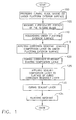
- the initial step 100 is the provision of a gas turbine engine blade having an under platform exterior surface.
- an exemplary gas turbine engine blade 10 has several sections, including a airfoil section 12, a platform section 14, an under platform section 16, and a dovetail section 18.
- the under platform metal substrate 40 shown in FIGS. 4-5, is uncoated.
- the metal substrate 40 of the gas turbine engine blade 10 can comprise any of a variety of metals, or more typically metal alloys, including those based on nickel, cobalt and/or iron alloys.
- Substrate 40 typically comprises a superalloy based on nickel, cobalt and/or iron. Such superalloys are disclosed in various references, such as, for example, commonly assigned U.S. Pat. No. 6,074,602 (Wuskusick et al.), issued June 13, 2000 , which is incorporated by reference herein in its entirety.
- the substrate 40 may also be an aluminide bond coat as known in the art.
- Turbine blade substrate 40 more typically comprises a nickel-based alloy, and particularly a nickel-based superalloy, that has more nickel than any other element.
- the nickel-based superalloy can be strengthened by the precipitation of gamma prime or a related phase.
- a nickel-based superalloy for which the corrosion resistant coating of this invention is particularly useful is available by the trade name René N5, having a nominal composition in weight percent of about 7.5 percent cobalt, about 7.0 percent chromium, about 1.5 percent molybdenum, about 5 percent tungsten, about 3 percent rhenium, about 6.5 percent tantalum, about 6.2 percent aluminum, about 0.15 percent hafnium, about 0.05 percent carbon, about 0.004 percent boron, about 0.01 percent yttrium, balance nickel and incidental impurities.
- the next step 105 is the masking of a preselected portion of the turbine blade 10, wherein the portion masked is the portions of the blade 10 that would not benefit from the roughening and application of the corrosion resistant coating.
- the next step 110 is roughening the under platform exterior surface 42 to make the surface 42 more receptive to the application of the coating of the present invention.
- Such roughening includes chemical and/or mechanic pretreatment. Suitable pretreatment methods include grit blasting, with or without masking of surfaces that are not to be subjected to grit blasting (see U.S. Patent 5,723,078 to Nagaraj et al., issued March 3, 1998 , especially col.
- the surface 42 of metal substrate 40 is pretreated by grit blasting where surface 42 is subjected to the abrasive action of silicon carbide particles, steel particles, alumina particles or other types of abrasive particles.
- These particles used in grit blasting are typically alumina particles and typically have a particle size of from about 600 to about 35 mesh (from about 25 to about 500 micrometers), more typically from about 360 to about 35 mesh (from about 35 to about 500 micrometers).
- the next step 115 is depositing a layer of corrosion resistant coating composition on the surface 42 of the metal substrate 40.
- the corrosion resistant coating composition is disclosed in U.S. Patent Application No. 11/011,695, filed December 15, 2004 , entitled "CORROSION RESISTANT COATING COMPOSITION, COATED TURBINE COMPONENT AND METHOD FOR COATING SAME", which is incorporated by reference herein in its entirety.
- the corrosion resistant coating composition can be deposited in solid form, e.g., as a flowable solid, as a cast tape (e.g., a cast tape formed as a layer or plurality layers of particulates adhered together as a coherent mass or matrix by the binder, with or without a supporting structure such as a film, strip, etc.), etc., to provide a solid uncured layer of the composition comprising the corrosion resistant particulates and binder component. More typically, the coating composition is deposited as a liquid, e.g., an aqueous coating composition.
- Liquid corrosion resistant coating compositions of this invention can be deposited on substrate 40 by any manner of application for depositing liquids including pouring, flowing, dipping, spraying, rolling, etc., to provide an uncured layer of the composition comprising the particulates and binder component.
- the non-alumina corrosion resistant particulates are selected from the group consisting of an overlay metal alloy, zirconia, yttria-stabilized zirconia, zirconia stabilized with a rare earth oxide and combinations thereof.
- the non-alumina corrosion resistant particulates are selected from the group consisting of NiCrAlY, CoCrAlY, zirconia, yttria-stabilized zirconia, and combinations thereof.
- the next step 120 is curing the deposited coating composition at a temperature that causes the corrosion resistant particulate component (i.e., non-alumina particulates, plus any alumina particulates) and glass-forming binder component to form the layer of the corrosion resistant coating 52 adjacent to metal substrate 40 that comprises an amorphous, glassy matrix of binder to which the particulates in the particulate component are embedded in, encapsulated in, enclosed by, or otherwise adhered to.
- This curing is typically accomplished by heating to a temperature of at least about 250°F (121°C), more typically at least about 500°F (260°C) to form corrosion resistant coating 52.
- the liquid carrier component is evaporated and/or vaporized during the step of curing 120.
- the surface 54 of coating 52 is the surface 32 of under platform corrosion resistant coating, shown generally as 50.
- coating 52 can be formed up to a thickness of about 10 mils (254 microns), and typically has a thickness in the range of from about 0.1 to about 5 mils (from about 3 to about 127 microns), more typically from about 0.2 to about 4 mils (from about 5 to about 102 microns).
- the next optional step 125 is applying a sealant composition layer to the surface of the cured corrosion resistant coating layer 54.
- This outer sealant composition layer can comprise a particulate component, but is typically substantially free of particulates.
- the upper sealant composition layer is formed from a sealant composition or a composition that consists essentially of, or entirely of, a glass-forming binder component (i.e., is substantially free of particulates).
- Such outer glassy sealant layers can be formed from commercially available sealant products, for example, Alseal 598 (from Coatings for Industry, Inc. of Souderton, Pennsylvania), SermaSeal TCS (from Sermatech International of Pottstown, Pennsylvania), etc.
- the next optional step 130 is curing the sealant composition layer to form a glassy outer sealant layer 56.
- This curing is typically accomplished by heating the sealant composition layer to a temperature of at least about 250°F (121°C), more typically at least about 500°F (260°C) to form the upper sealant layer 56 of corrosion resistant coating. If any liquid carrier component is present in the sealant composition later, the liquid carrier component is evaporated and/or vaporized during the step of curing 120.
- An embodiment of a corrosion resistant coating of this invention comprising a single corrosion resistant coating layer 54 and an upper sealant layer 58 is shown generally as 56 in FIG. 5.
- Outer layer 58 is also typically thinner than the underlying layer 52, especially when substantially free of particulates. As shown in FIG.
- coating 58 can be formed up to a thickness of about 10 mils (254 microns), and typically has a thickness in the range of from about 0.1 to about 5 mils (from about 3 to about 127 microns), more typically from about 0.2 to about 4 mils (from about 5 to about 102 microns).
- outer layer 58 has a thickness of from about 0.01 to about 2 mils (from about 0.3 to about 51 microns), more typically from about 0.1 to about 1 mils (from about 3 to about 25 microns).
- the final step 135 is removing the maskant as known in the art.
- the first step 200 is the provision of a gas turbine engine blade 10 having an under platform exterior surface.
- the metal substrate 40 of the gas turbine engine blade 10 can comprise any of a variety of metals, or more typically metal alloys, including those based on nickel, cobalt and/or iron alloys.
- the substrate 40 may also be an aluminide bond coat as known in the art.
- the next step 205 is the masking of a preselected portion of the turbine blade 10, wherein the portion masked is the portion of the blade 10 that would not benefit from the roughening and application of the corrosion resistant coating.
- the next step 210 is roughening the under platform surface 42 to make the surface 42 more receptive to the application of the coating of the present invention. As described above, such roughening includes chemical and/or mechanic pretreatment.
- the surface 42 of metal substrate 40 is pretreated by grit blasting where surface 42 is subjected to the abrasive action of silicon carbide particles, steel particles, alumina particles or other types of abrasive particles.
- These particles used in grit blasting are typically alumina particles and typically have a particle size of from about 600 to about 35 mesh (from about 25 to about 500 micrometers), more typically from about 360 to about 35 mesh (from about 35 to about 500 micrometers).
- the next step 215 is depositing a first layer of corrosion resistant coating composition on the surface 42 of the metal substrate 40.
- the corrosion resistant coating composition is disclosed in U.S. Patent Application No. 11/011,695, filed December 15, 2004 , entitled "CORROSION RESISTANT COATING COMPOSITION, COATED TURBINE COMPONENT AND METHOD FOR COATING SAME", which is incorporated by reference herein in its entirety.
- the corrosion resistant coating composition can be deposited in solid form, e.g., as a flowable solid, as a cast tape (e.g., a cast tape formed as a layer or plurality layers of particulates adhered together as a coherent mass or matrix by the binder, with or without a supporting structure such as a film, strip, etc.), etc., to provide a solid uncured layer of the composition comprising the corrosion resistant particulates and binder component. More typically, the coating composition is deposited as a liquid, e.g., an aqueous coating composition.
- Liquid corrosion resistant coating compositions of this invention can be deposited on substrate 40 by any manner of application for depositing liquids including pouring, flowing, dipping, spraying, rolling, etc., to provide an uncured layer of the composition comprising the particulates and binder component.
- the non-alumina corrosion resistant particulates are selected from the group consisting of an overlay metal alloy, zirconia, yttria-stabilized zirconia, and combinations thereof.
- the non-alumina corrosion resistant particulates are selected from the group consisting of NiCaAlY, CoCrAlY, zirconia, yttria-stabilized zirconia, and combinations thereof.
- the next step 220 is curing the first deposited coating at a temperature that causes the corrosion resistant particulate component (i.e., non-alumina particulates, plus any alumina particulates) and glass-forming binder component to form an inner layer of the corrosion resistant coating 64 adjacent to metal substrate 40 that comprises an amorphous, glassy matrix of binder to which the particulates in the particulate component are embedded in, encapsulated in, enclosed by, or otherwise adhered to.
- This curing is typically accomplished by heating to a temperature of at least about 250°F (121°C), more typically at least about 500°F (260°C) to form the inner layer 64 of corrosion resistant coating. If any liquid carrier component is present in the first deposited coating, the liquid carrier component is evaporated and/or vaporized during the step of curing 220.
- the next step 225 is depositing an additional layer of corrosion resistant coating composition of this invention or from other coating compositions. At least the inner layer 64 adjacent to metal substrate 40 is formed from the corrosion resistant coating composition of this invention.
- the corrosion resistant coating composition or other coating compound can be deposited in solid form, e.g., as a flowable solid, as a cast tape (e.g., a cast tape formed as a layer or plurality layers of particulates adhered together as a coherent mass or matrix by the binder, with or without a supporting structure such as a film, strip, etc.), etc., to provide a solid uncured layer of the composition comprising the particulates and binder component.
- the next step 230 is curing the additionally deposited coating composition at a temperature that causes the additionally deposited composition to form an inner layer of the corrosion resistant coating 62 adjacent to metal substrate 40.
- This curing is typically accomplished by heating to a temperature of at least about 250°F (121°C), more typically at least about 500°F (260°C) to form an additional layer 68 of corrosion resistant coating.
- the liquid carrier component is evaporated and/or vaporized during the step of curing 230.
- steps 225 and 230 may be repeated a preselected number of times, with the corrosion resistant particulate component or other being applied a preselected number of times until the total coating thickness is a preselected thickness.
- the surface 70 of the uppermost layer is the surface 32 of the under platform corrosion resistant coating, shown generally as 62.
- the respective layers of coating 62 can have the same or differing thicknesses. These layers typically tend to decrease in thickness in the direction from the inner layers (i.e., those closer to substrate 40) to the outer layers (i.e., those layers further away from substrate 40).
- the coating composition used in forming each of the respective layers can have the same or differing levels of particulate component and glass-forming binder component, as well as the same or differing types of particulates in the particulate component.
- the coating composition used in forming each of the respective layers can also have the same or a differing binder component, for example, magnesium phosphate in the inner layers and aluminum phosphate in the outer layers.
- the level of alumina particulates in the particulate component of the coating composition can differ in the respective layers, and typically increases from the inner layers to the outer layers.
- the inner layer or layers adjacent to the metal substrate can be formed from the corrosion resistant coating compositions of this invention comprising a level or amount of non-alumina particulates (e.g., at least about 5%, typically at least about 25%, more typically at least about 50% and potentially 100%) having a better CTE match with the metal substrate, while the outer layer or layers not adjacent to the metal substrate can comprise a level or amount of alumina particulates (e.g., up to and including 100% alumina particulates) so as not to be measurably different from the CTE of alumina.
- alumina particulates e.g., up to and including 100% alumina particulates
- the next optional step 235 is applying a layer of sealant material to the surface of the cured corrosion resistant layer 54.
- An embodiment of a corrosion resistant coating of this invention comprising a plurality of coating layers 64, 66 and an outer sealant layer 74 is shown in FIG. 7 generally as 72.
- This outer sealant layer 74 can comprise a particulate component, but is typically substantially free of particulates.
- outer layer 74 is formed from a sealant composition or a composition that consists essentially of, or entirely of, a glass-forming binder component (i.e., is substantially free of particulates) to form a glassy outer sealant layer.
- the next step 230 is curing the sealant layer 56.
- This curing is typically accomplished by heating to a temperature of at least about 250°F (121°C), more typically at least about 500°F (260°C) to form corrosion resistant coating 52. If any liquid carrier component is present in the layer of sealant material, the liquid carrier component is evaporated and/or vaporized during the step of curing 230. Outer layer 56 is also typically thinner than the underlying layer 52, especially when substantially free of particulates. If desired, an outer glassy sealant layer can be formed for coating 72 by depositing and curing a composition that is similar to or consists essentially of a glass-forming binder component that is substantially free of the particulate component, e.g., a sealant composition.
- Such outer glassy sealant layers can be formed from commercially available sealant products, for example, Alseal 598 (from Coatings for Industry, Inc. of Souderton, Pennsylvania), SermaSeal TCS (from Sermatech International of Pottstown, Pennsylvania), etc.
- coating 72 comprises a first inner layer 64 that is adjacent to and overlaying metal substrate 60, and is formed from a corrosion resistant coating composition of this invention.
- inner layer 64 is relatively thick compared to any subsequent layers 68, 74 and preferably has a thickness of from about 0.1 to about 5 mils (from about 3 to about 127 microns), more preferably from about 0.2 to about 4 mils (from about 5 to about 102 microns).
- the particulate component comprising inner layer 168 also typically has a greater level or amount of non-alumina particulates, relative to the amount or level of alumina particulates, to provide a better CTE match with substrate 60.
- the particulate component in inner layer 168 comprises from 0 to about 95% alumina particulates and from about 5 to 100% non-alumina particulates, typically from 0 to about 75% alumina particulates and from about 25 to 100% non-alumina particulates, more typically from 0 to about 50% alumina particulates and from about 50 to 100% non-alumina particulates, and can potentially consist essentially of, or entirely of (i.e., is 100%), non-alumina particulates.
- Coating 72 also comprises an additional layer indicated generally as 68 adjacent to and overlaying the surface 66 of inner layer 64.
- Additional layer 68 is typically relatively thinner, especially relative to inner layer 64.
- Additional layer 68 typically has thickness of from about 0.01 to about 5 mils (from about 0.3 to about 127 microns), more typically from about 0.1 to about 3 mils (from about 3 to about 76 microns).
- the particulate component of additional layer 68 can also comprise an increased amount or level of alumina particulates than that present in inner layer 64 because there is less of a need for a CTE match with inner layer 64.
- additional layer 68 can potentially have a CTE that is not measurably different from that of alumina.
- the particulate component in additional layer 68 can comprise from 0 to about 100 % alumina particulates and from 0 to 100 % non-alumina particulates, and can potentially consist essentially of, or entirely of (i.e., is 100%), alumina particulates.
- coating 72 can further comprise an outer sealant layer indicated generally as 74 adjacent to and overlaying the surface 70 of additional layer 68.
- This sealant layer 74 can comprise a particulate component, but is typically substantially free of particulates.
- sealant layer 74 is formed from a sealant composition or a composition that consists essentially of, or entirely of, a glass-forming binder component (i.e., is substantially free of particulates) to form a glassy outer sealant layer.
- Outer sealant layer 74 is also typically the thinnest layer of coating 164, especially when substantially free of particulates.
- outer sealant layer 74 has a thickness of from about 0.01 to about 2 mils (from about 0.3 to about 51 microns), more typically from about 0.1 to about 1 mils (from about 3 to about 25 microns).
- the final step 245 is removing the maskant as known in the art.
- the corrosion resistant coatings of this invention can also be applied during original manufacture of the gas turbine engine blade (i.e., an OEM turbine blade), after the turbine blade has been in operation for a period of time, after other coatings have been removed from the turbine blade (e.g., a repair situation), etc.
Landscapes
- Chemical & Material Sciences (AREA)
- Engineering & Computer Science (AREA)
- Materials Engineering (AREA)
- Mechanical Engineering (AREA)
- Chemical Kinetics & Catalysis (AREA)
- Metallurgy (AREA)
- Organic Chemistry (AREA)
- General Engineering & Computer Science (AREA)
- Other Surface Treatments For Metallic Materials (AREA)
- Turbine Rotor Nozzle Sealing (AREA)
Applications Claiming Priority (1)
| Application Number | Priority Date | Filing Date | Title |
|---|---|---|---|
| US11/266,857 US7311940B2 (en) | 2005-11-04 | 2005-11-04 | Layered paint coating for turbine blade environmental protection |
Publications (3)
| Publication Number | Publication Date |
|---|---|
| EP1783247A2 true EP1783247A2 (fr) | 2007-05-09 |
| EP1783247A3 EP1783247A3 (fr) | 2010-04-28 |
| EP1783247B1 EP1783247B1 (fr) | 2011-08-10 |
Family
ID=37772933
Family Applications (1)
| Application Number | Title | Priority Date | Filing Date |
|---|---|---|---|
| EP06255641A Not-in-force EP1783247B1 (fr) | 2005-11-04 | 2006-11-02 | Méthode de production d'un revêtement stratifié résistant à la corrosion pour la protection des aubes de turbine contre l'environment |
Country Status (2)
| Country | Link |
|---|---|
| US (2) | US7311940B2 (fr) |
| EP (1) | EP1783247B1 (fr) |
Cited By (4)
| Publication number | Priority date | Publication date | Assignee | Title |
|---|---|---|---|---|
| WO2011041026A1 (fr) * | 2009-09-30 | 2011-04-07 | General Electric Company | Compositions pour revêtement de protection contre la corrosion et tolérant à la contrainte et articles pourvus de ce revêtement |
| RU2455392C1 (ru) * | 2011-02-14 | 2012-07-10 | Российская Федерация, от имени которой выступает Государственная корпорация по атомной энергии "Росатом" (Госкорпорация "Росатом") | Покрытие для защиты от жидкометаллической коррозии стальной подложки |
| WO2018038994A1 (fr) * | 2016-08-22 | 2018-03-01 | General Electric Company | Composition de réparation de revêtement faisant barrière thermique et procédés d'utilisation associés |
| RU2678045C1 (ru) * | 2018-01-10 | 2019-01-22 | Федеральное государственное унитарное предприятие "Центральный научно-исследовательский институт конструкционных материалов "Прометей" имени И.В. Горынина Национального исследовательского центра "Курчатовский институт" (НИЦ "Курчатовский институт" - ЦНИИ КМ "Прометей") | Способ получения керамоматричного покрытия на стали, работающего в высокотемпературных агрессивных средах |
Families Citing this family (17)
| Publication number | Priority date | Publication date | Assignee | Title |
|---|---|---|---|---|
| US7604867B2 (en) * | 2005-12-20 | 2009-10-20 | General Electric Company | Particulate corrosion resistant coating composition, coated turbine component and method for coating same |
| US8512871B2 (en) * | 2006-05-30 | 2013-08-20 | United Technologies Corporation | Erosion barrier for thermal barrier coatings |
| US7955694B2 (en) * | 2006-06-21 | 2011-06-07 | General Electric Company | Strain tolerant coating for environmental protection |
| US20090239061A1 (en) * | 2006-11-08 | 2009-09-24 | General Electric Corporation | Ceramic corrosion resistant coating for oxidation resistance |
| DE102007030602A1 (de) * | 2007-06-28 | 2009-01-02 | Siemens Ag | Bauteil mit einer keramischen Schicht, in die Partikel eingelagert sind, und Verfahren zu dessen Herstellung |
| US8545185B2 (en) * | 2007-12-19 | 2013-10-01 | General Electric Company | Turbine engine components with environmental protection for interior passages |
| US20100068062A1 (en) * | 2008-09-12 | 2010-03-18 | General Electric Company | Turbine bucket with dovetail seal and related method |
| US9279187B2 (en) * | 2009-11-11 | 2016-03-08 | Southwest Research Institute | Method for applying a diffusion barrier interlayer for high temperature components |
| US9511572B2 (en) | 2011-05-25 | 2016-12-06 | Southwest Research Institute | Nanocrystalline interlayer coating for increasing service life of thermal barrier coating on high temperature components |
| US20130084190A1 (en) * | 2011-09-30 | 2013-04-04 | General Electric Company | Titanium aluminide articles with improved surface finish and methods for their manufacture |
| RU2471887C1 (ru) * | 2011-10-17 | 2013-01-10 | Российская Федерация в лице Министерства промышленности и торговли Российской Федерации (Минпромторг России) | Способ нанесения покрытия для защиты от высокотемпературного окисления поверхности внутренней полости охлаждаемых лопаток турбин из безуглеродистых жаропрочных сплавов на основе никеля |
| US9011205B2 (en) * | 2012-02-15 | 2015-04-21 | General Electric Company | Titanium aluminide article with improved surface finish |
| WO2014165073A1 (fr) | 2013-03-13 | 2014-10-09 | General Electric Company | Revêtements pour substrats métalliques |
| US10570753B2 (en) | 2017-01-23 | 2020-02-25 | United Technologies Corporation | Apparatus and method for masking under platform areas of airfoil components |
| US11155721B2 (en) | 2017-07-06 | 2021-10-26 | General Electric Company | Articles for high temperature service and related method |
| FR3095650B1 (fr) * | 2019-05-02 | 2021-04-09 | Safran Aircraft Engines | Procédé de revêtement d’une pièce de turbomachine d’aéronef |
| US12618332B2 (en) | 2022-11-01 | 2026-05-05 | General Electric Company | Gas turbine engine |
Family Cites Families (51)
| Publication number | Priority date | Publication date | Assignee | Title |
|---|---|---|---|---|
| US3248251A (en) | 1963-06-28 | 1966-04-26 | Teleflex Inc | Inorganic coating and bonding composition |
| US3248249A (en) | 1963-06-28 | 1966-04-26 | Telefiex Inc | Inorganic coating and bonding composition |
| US3248250A (en) | 1963-06-28 | 1966-04-26 | Teleflex Inc | Coating and bonding composition |
| GB1390526A (en) | 1972-10-28 | 1975-04-16 | Rolls Royce | Method of lauminising a metal surface |
| US4411730A (en) | 1980-10-01 | 1983-10-25 | United Technologies Corporation | Selective chemical milling of recast surfaces |
| US4353780A (en) | 1980-10-01 | 1982-10-12 | United Technologies Corporation | Chemical milling of high tungsten content superalloys |
| US4564555A (en) | 1982-10-27 | 1986-01-14 | Sermatech International Incorporated | Coated part, coating therefor and method of forming same |
| US4544408A (en) | 1983-04-18 | 1985-10-01 | Sermatech International Inc. | Thixotropic alumina coating compositions, parts and methods |
| US4606967A (en) | 1983-10-19 | 1986-08-19 | Sermatech International Inc. | Spherical aluminum particles in coatings |
| US4537632A (en) | 1983-10-19 | 1985-08-27 | Sermatech International, Inc. | Spherical aluminum particles in coatings |
| US4975330A (en) | 1983-11-28 | 1990-12-04 | Sermatech International, Inc. | Coating compositions containing unreacted hexavalent chromium, a method of applying and an article |
| US4917960A (en) | 1983-12-29 | 1990-04-17 | Sermatech International, Inc. | Porous coated product |
| US4659613A (en) | 1983-12-29 | 1987-04-21 | Sermatech International, Inc. | Parts coated with thick coating compositions of uni- and polymodal types |
| US4724172A (en) | 1983-12-29 | 1988-02-09 | Sermatech International, Inc. | Thick coating compositions |
| US4617056A (en) | 1983-12-29 | 1986-10-14 | Sermatech International, Inc. | Thick coating compositions |
| US5514482A (en) | 1984-04-25 | 1996-05-07 | Alliedsignal Inc. | Thermal barrier coating system for superalloy components |
| US4563239A (en) | 1984-10-16 | 1986-01-07 | United Technologies Corporation | Chemical milling using an inert particulate and moving vessel |
| US6074602A (en) | 1985-10-15 | 2000-06-13 | General Electric Company | Property-balanced nickel-base superalloys for producing single crystal articles |
| JPH0560831B1 (fr) | 1986-06-17 | 1993-09-03 | Dainippon Pharmaceutical Co | |
| US5066540A (en) | 1987-01-23 | 1991-11-19 | Sermatech International, Inc. | Flake materials in coating compositions |
| US4863516A (en) | 1987-01-23 | 1989-09-05 | Sermatech International, Inc. | Coating composition |
| US4806161A (en) | 1987-12-04 | 1989-02-21 | Teleflex Incorporated | Coating compositions |
| US4957567A (en) | 1988-12-13 | 1990-09-18 | General Electric Company | Fatigue crack growth resistant nickel-base article and alloy and method for making |
| US5985454A (en) | 1990-02-05 | 1999-11-16 | Sermatech International Incorporated | Anti-fouling coating for turbomachinery |
| US5260099A (en) | 1990-04-30 | 1993-11-09 | General Electric Company | Method of making a gas turbine blade having a duplex coating |
| US5472783A (en) | 1990-09-14 | 1995-12-05 | Sermatech International, Inc. | Coated article |
| US5221354A (en) | 1991-11-04 | 1993-06-22 | General Electric Company | Apparatus and method for gas phase coating of hollow articles |
| US5723078A (en) | 1996-05-24 | 1998-03-03 | General Electric Company | Method for repairing a thermal barrier coating |
| GB9617267D0 (en) | 1996-08-16 | 1996-09-25 | Rolls Royce Plc | A metallic article having a thermal barrier coating and a method of application thereof |
| US6095755A (en) | 1996-11-26 | 2000-08-01 | United Technologies Corporation | Gas turbine engine airfoils having increased fatigue strength |
| US5792267A (en) | 1997-05-16 | 1998-08-11 | United Technologies Corporation | Coating fixture for a turbine engine blade |
| US6074464A (en) | 1998-02-03 | 2000-06-13 | Sermatech International, Inc. | Phosphate bonded aluminum coatings |
| US6521175B1 (en) | 1998-02-09 | 2003-02-18 | General Electric Co. | Superalloy optimized for high-temperature performance in high-pressure turbine disks |
| US6641907B1 (en) * | 1999-12-20 | 2003-11-04 | Siemens Westinghouse Power Corporation | High temperature erosion resistant coating and material containing compacted hollow geometric shapes |
| US6165600A (en) * | 1998-10-06 | 2000-12-26 | General Electric Company | Gas turbine engine component having a thermal-insulating multilayer ceramic coating |
| US6224657B1 (en) | 1998-10-13 | 2001-05-01 | Sermatech International, Inc. | Hexavalent chromium-free phosphate-bonded coatings |
| US6254341B1 (en) | 1998-11-13 | 2001-07-03 | General Electric Company | Engine having resistance to particle deposits |
| US6296447B1 (en) | 1999-08-11 | 2001-10-02 | General Electric Company | Gas turbine component having location-dependent protective coatings thereon |
| US6224673B1 (en) * | 1999-08-11 | 2001-05-01 | General Electric Company | Apparatus for masking turbine components during vapor phase diffusion coating |
| US6485780B1 (en) | 1999-08-23 | 2002-11-26 | General Electric Company | Method for applying coatings on substrates |
| US6368394B1 (en) | 1999-10-18 | 2002-04-09 | Sermatech International, Inc. | Chromate-free phosphate bonding composition |
| SG96589A1 (en) * | 1999-12-20 | 2003-06-16 | United Technologies Corp | Methods of providing article with corrosion resistant coating and coated article |
| ATE303503T1 (de) | 1999-12-20 | 2005-09-15 | United Technologies Corp | Gegenstände mit korrosionsbeständigen beschichtungen |
| US6435835B1 (en) | 1999-12-20 | 2002-08-20 | United Technologies Corporation | Article having corrosion resistant coating |
| US6270318B1 (en) | 1999-12-20 | 2001-08-07 | United Technologies Corporation | Article having corrosion resistant coating |
| US6395406B1 (en) * | 2000-04-24 | 2002-05-28 | General Electric Company | Methods for preparing and applying coatings on metal-based substrates, and related compositions and articles |
| US6391115B1 (en) | 2000-10-10 | 2002-05-21 | United Technologies Corporation | Underplatform coating tool |
| US6544351B2 (en) | 2001-07-12 | 2003-04-08 | General Electric Company | Compositions and methods for producing coatings with improved surface smoothness and articles having such coatings |
| US6676992B2 (en) | 2001-08-22 | 2004-01-13 | General Electric Company | Article protected by a diffusion aluminide coating applied by painting techniques |
| US6616978B1 (en) | 2002-05-09 | 2003-09-09 | General Electric Company | Protecting a substrate with a multilayer oxide/phosphate coating having a temperature-stepped cure |
| US6926928B2 (en) | 2002-07-19 | 2005-08-09 | General Electric Company | Protection of a gas turbine component by a vapor-deposited oxide coating |
-
2005
- 2005-11-04 US US11/266,857 patent/US7311940B2/en not_active Expired - Fee Related
-
2006
- 2006-11-02 EP EP06255641A patent/EP1783247B1/fr not_active Not-in-force
-
2007
- 2007-10-26 US US11/925,360 patent/US20090047135A1/en not_active Abandoned
Cited By (6)
| Publication number | Priority date | Publication date | Assignee | Title |
|---|---|---|---|---|
| WO2011041026A1 (fr) * | 2009-09-30 | 2011-04-07 | General Electric Company | Compositions pour revêtement de protection contre la corrosion et tolérant à la contrainte et articles pourvus de ce revêtement |
| RU2455392C1 (ru) * | 2011-02-14 | 2012-07-10 | Российская Федерация, от имени которой выступает Государственная корпорация по атомной энергии "Росатом" (Госкорпорация "Росатом") | Покрытие для защиты от жидкометаллической коррозии стальной подложки |
| WO2018038994A1 (fr) * | 2016-08-22 | 2018-03-01 | General Electric Company | Composition de réparation de revêtement faisant barrière thermique et procédés d'utilisation associés |
| CN109641809A (zh) * | 2016-08-22 | 2019-04-16 | 通用电气公司 | 热障涂层修复组合物及其使用方法 |
| US10384978B2 (en) | 2016-08-22 | 2019-08-20 | General Electric Company | Thermal barrier coating repair compositions and methods of use thereof |
| RU2678045C1 (ru) * | 2018-01-10 | 2019-01-22 | Федеральное государственное унитарное предприятие "Центральный научно-исследовательский институт конструкционных материалов "Прометей" имени И.В. Горынина Национального исследовательского центра "Курчатовский институт" (НИЦ "Курчатовский институт" - ЦНИИ КМ "Прометей") | Способ получения керамоматричного покрытия на стали, работающего в высокотемпературных агрессивных средах |
Also Published As
| Publication number | Publication date |
|---|---|
| US20090047135A1 (en) | 2009-02-19 |
| US7311940B2 (en) | 2007-12-25 |
| US20070104969A1 (en) | 2007-05-10 |
| EP1783247A3 (fr) | 2010-04-28 |
| EP1783247B1 (fr) | 2011-08-10 |
Similar Documents
| Publication | Publication Date | Title |
|---|---|---|
| US20090047135A1 (en) | Layered corrosion resistant coating for turbine blade environmental protection | |
| US7776143B2 (en) | Particulate corrosion resistant coating composition | |
| US7314674B2 (en) | Corrosion resistant coating composition, coated turbine component and method for coating same | |
| US7993759B2 (en) | Corrosion coating for turbine blade environmental protection | |
| EP1798311B1 (fr) | Revêtement résistant aux contraintes et à la corrosion | |
| JP5459940B2 (ja) | 環境保護用の歪み耐性皮膜 | |
| US6485845B1 (en) | Thermal barrier coating system with improved bond coat | |
| EP3162917B1 (fr) | Procédés de réparation d'un revêtement barrière thermique d'un composant de turbine à gaz et composants ainsi obtenus | |
| US7666515B2 (en) | Turbine component other than airfoil having ceramic corrosion resistant coating and methods for making same | |
| US6283714B1 (en) | Protection of internal and external surfaces of gas turbine airfoils | |
| US9567664B2 (en) | Ceramic thermal barrier coating system with two ceramic layers | |
| US7592071B2 (en) | Layer system | |
| EP1793015A2 (fr) | Revêtement céramique supprisant de la corrosion et méthode d'application | |
| EP2471974B2 (fr) | Composant de turbine à gaz doté d'un revêtement formant barrière thermique et turbine à gaz utilisant le composant | |
| EP1939325A2 (fr) | Revêtement de protection de corrosion tolérant en contrainte et procédé d'application par bande | |
| EP1752559A2 (fr) | Méthode de réparation local d'un composant de turbine | |
| EP4155351A1 (fr) | Revêtement anticorrosion | |
| US20250257694A1 (en) | Gas turbine engine |
Legal Events
| Date | Code | Title | Description |
|---|---|---|---|
| PUAI | Public reference made under article 153(3) epc to a published international application that has entered the european phase |
Free format text: ORIGINAL CODE: 0009012 |
|
| AK | Designated contracting states |
Kind code of ref document: A2 Designated state(s): AT BE BG CH CY CZ DE DK EE ES FI FR GB GR HU IE IS IT LI LT LU LV MC NL PL PT RO SE SI SK TR |
|
| AX | Request for extension of the european patent |
Extension state: AL BA HR MK YU |
|
| PUAL | Search report despatched |
Free format text: ORIGINAL CODE: 0009013 |
|
| AK | Designated contracting states |
Kind code of ref document: A3 Designated state(s): AT BE BG CH CY CZ DE DK EE ES FI FR GB GR HU IE IS IT LI LT LU LV MC NL PL PT RO SE SI SK TR |
|
| AX | Request for extension of the european patent |
Extension state: AL BA HR MK RS |
|
| 17P | Request for examination filed |
Effective date: 20101028 |
|
| AKX | Designation fees paid |
Designated state(s): DE FR GB |
|
| GRAP | Despatch of communication of intention to grant a patent |
Free format text: ORIGINAL CODE: EPIDOSNIGR1 |
|
| RIC1 | Information provided on ipc code assigned before grant |
Ipc: C23C 30/00 20060101ALI20110128BHEP Ipc: C23C 26/00 20060101ALI20110128BHEP Ipc: F01D 5/28 20060101ALI20110128BHEP Ipc: C23C 24/08 20060101AFI20110128BHEP |
|
| RTI1 | Title (correction) |
Free format text: METHOD FOR PRODUCING A LAYERED CORROSION RESISTANT COATING FOR TURBINE BLADE ENVIRONMENTAL PROTECTION |
|
| GRAS | Grant fee paid |
Free format text: ORIGINAL CODE: EPIDOSNIGR3 |
|
| GRAA | (expected) grant |
Free format text: ORIGINAL CODE: 0009210 |
|
| AK | Designated contracting states |
Kind code of ref document: B1 Designated state(s): DE FR GB |
|
| REG | Reference to a national code |
Ref country code: GB Ref legal event code: FG4D |
|
| REG | Reference to a national code |
Ref country code: DE Ref legal event code: R096 Ref document number: 602006023640 Country of ref document: DE Effective date: 20111006 |
|
| PLBE | No opposition filed within time limit |
Free format text: ORIGINAL CODE: 0009261 |
|
| STAA | Information on the status of an ep patent application or granted ep patent |
Free format text: STATUS: NO OPPOSITION FILED WITHIN TIME LIMIT |
|
| 26N | No opposition filed |
Effective date: 20120511 |
|
| REG | Reference to a national code |
Ref country code: DE Ref legal event code: R097 Ref document number: 602006023640 Country of ref document: DE Effective date: 20120511 |
|
| REG | Reference to a national code |
Ref country code: FR Ref legal event code: PLFP Year of fee payment: 10 |
|
| PGFP | Annual fee paid to national office [announced via postgrant information from national office to epo] |
Ref country code: DE Payment date: 20151127 Year of fee payment: 10 Ref country code: GB Payment date: 20151127 Year of fee payment: 10 |
|
| PGFP | Annual fee paid to national office [announced via postgrant information from national office to epo] |
Ref country code: FR Payment date: 20151117 Year of fee payment: 10 |
|
| REG | Reference to a national code |
Ref country code: DE Ref legal event code: R119 Ref document number: 602006023640 Country of ref document: DE |
|
| GBPC | Gb: european patent ceased through non-payment of renewal fee |
Effective date: 20161102 |
|
| REG | Reference to a national code |
Ref country code: FR Ref legal event code: ST Effective date: 20170731 |
|
| PG25 | Lapsed in a contracting state [announced via postgrant information from national office to epo] |
Ref country code: FR Free format text: LAPSE BECAUSE OF NON-PAYMENT OF DUE FEES Effective date: 20161130 |
|
| PG25 | Lapsed in a contracting state [announced via postgrant information from national office to epo] |
Ref country code: DE Free format text: LAPSE BECAUSE OF NON-PAYMENT OF DUE FEES Effective date: 20170601 Ref country code: GB Free format text: LAPSE BECAUSE OF NON-PAYMENT OF DUE FEES Effective date: 20161102 |