EP1786779B1 - Composes de 4-arylazo-3,5-diamino-pyrazole et leur utilisation - Google Patents
Composes de 4-arylazo-3,5-diamino-pyrazole et leur utilisation Download PDFInfo
- Publication number
- EP1786779B1 EP1786779B1 EP05777396A EP05777396A EP1786779B1 EP 1786779 B1 EP1786779 B1 EP 1786779B1 EP 05777396 A EP05777396 A EP 05777396A EP 05777396 A EP05777396 A EP 05777396A EP 1786779 B1 EP1786779 B1 EP 1786779B1
- Authority
- EP
- European Patent Office
- Prior art keywords
- diamino
- pyrazole
- phenylazo
- fluoro
- chloro
- Prior art date
- Legal status (The legal status is an assumption and is not a legal conclusion. Google has not performed a legal analysis and makes no representation as to the accuracy of the status listed.)
- Expired - Lifetime
Links
Images


Classifications
-
- C—CHEMISTRY; METALLURGY
- C07—ORGANIC CHEMISTRY
- C07D—HETEROCYCLIC COMPOUNDS
- C07D231/00—Heterocyclic compounds containing 1,2-diazole or hydrogenated 1,2-diazole rings
- C07D231/02—Heterocyclic compounds containing 1,2-diazole or hydrogenated 1,2-diazole rings not condensed with other rings
- C07D231/10—Heterocyclic compounds containing 1,2-diazole or hydrogenated 1,2-diazole rings not condensed with other rings having two or three double bonds between ring members or between ring members and non-ring members
- C07D231/14—Heterocyclic compounds containing 1,2-diazole or hydrogenated 1,2-diazole rings not condensed with other rings having two or three double bonds between ring members or between ring members and non-ring members with hetero atoms or with carbon atoms having three bonds to hetero atoms with at the most one bond to halogen, e.g. ester or nitrile radicals, directly attached to ring carbon atoms
- C07D231/38—Nitrogen atoms
-
- A—HUMAN NECESSITIES
- A61—MEDICAL OR VETERINARY SCIENCE; HYGIENE
- A61P—SPECIFIC THERAPEUTIC ACTIVITY OF CHEMICAL COMPOUNDS OR MEDICINAL PREPARATIONS
- A61P11/00—Drugs for disorders of the respiratory system
-
- A—HUMAN NECESSITIES
- A61—MEDICAL OR VETERINARY SCIENCE; HYGIENE
- A61P—SPECIFIC THERAPEUTIC ACTIVITY OF CHEMICAL COMPOUNDS OR MEDICINAL PREPARATIONS
- A61P13/00—Drugs for disorders of the urinary system
- A61P13/12—Drugs for disorders of the urinary system of the kidneys
-
- A—HUMAN NECESSITIES
- A61—MEDICAL OR VETERINARY SCIENCE; HYGIENE
- A61P—SPECIFIC THERAPEUTIC ACTIVITY OF CHEMICAL COMPOUNDS OR MEDICINAL PREPARATIONS
- A61P17/00—Drugs for dermatological disorders
- A61P17/06—Antipsoriatics
-
- A—HUMAN NECESSITIES
- A61—MEDICAL OR VETERINARY SCIENCE; HYGIENE
- A61P—SPECIFIC THERAPEUTIC ACTIVITY OF CHEMICAL COMPOUNDS OR MEDICINAL PREPARATIONS
- A61P17/00—Drugs for dermatological disorders
- A61P17/14—Drugs for dermatological disorders for baldness or alopecia
-
- A—HUMAN NECESSITIES
- A61—MEDICAL OR VETERINARY SCIENCE; HYGIENE
- A61P—SPECIFIC THERAPEUTIC ACTIVITY OF CHEMICAL COMPOUNDS OR MEDICINAL PREPARATIONS
- A61P19/00—Drugs for skeletal disorders
- A61P19/02—Drugs for skeletal disorders for joint disorders, e.g. arthritis, arthrosis
-
- A—HUMAN NECESSITIES
- A61—MEDICAL OR VETERINARY SCIENCE; HYGIENE
- A61P—SPECIFIC THERAPEUTIC ACTIVITY OF CHEMICAL COMPOUNDS OR MEDICINAL PREPARATIONS
- A61P25/00—Drugs for disorders of the nervous system
-
- A—HUMAN NECESSITIES
- A61—MEDICAL OR VETERINARY SCIENCE; HYGIENE
- A61P—SPECIFIC THERAPEUTIC ACTIVITY OF CHEMICAL COMPOUNDS OR MEDICINAL PREPARATIONS
- A61P25/00—Drugs for disorders of the nervous system
- A61P25/08—Antiepileptics; Anticonvulsants
-
- A—HUMAN NECESSITIES
- A61—MEDICAL OR VETERINARY SCIENCE; HYGIENE
- A61P—SPECIFIC THERAPEUTIC ACTIVITY OF CHEMICAL COMPOUNDS OR MEDICINAL PREPARATIONS
- A61P25/00—Drugs for disorders of the nervous system
- A61P25/14—Drugs for disorders of the nervous system for treating abnormal movements, e.g. chorea, dyskinesia
-
- A—HUMAN NECESSITIES
- A61—MEDICAL OR VETERINARY SCIENCE; HYGIENE
- A61P—SPECIFIC THERAPEUTIC ACTIVITY OF CHEMICAL COMPOUNDS OR MEDICINAL PREPARATIONS
- A61P25/00—Drugs for disorders of the nervous system
- A61P25/18—Antipsychotics, i.e. neuroleptics; Drugs for mania or schizophrenia
-
- A—HUMAN NECESSITIES
- A61—MEDICAL OR VETERINARY SCIENCE; HYGIENE
- A61P—SPECIFIC THERAPEUTIC ACTIVITY OF CHEMICAL COMPOUNDS OR MEDICINAL PREPARATIONS
- A61P25/00—Drugs for disorders of the nervous system
- A61P25/28—Drugs for disorders of the nervous system for treating neurodegenerative disorders of the central nervous system, e.g. nootropic agents, cognition enhancers, drugs for treating Alzheimer's disease or other forms of dementia
-
- A—HUMAN NECESSITIES
- A61—MEDICAL OR VETERINARY SCIENCE; HYGIENE
- A61P—SPECIFIC THERAPEUTIC ACTIVITY OF CHEMICAL COMPOUNDS OR MEDICINAL PREPARATIONS
- A61P29/00—Non-central analgesic, antipyretic or antiinflammatory agents, e.g. antirheumatic agents; Non-steroidal antiinflammatory drugs [NSAID]
-
- A—HUMAN NECESSITIES
- A61—MEDICAL OR VETERINARY SCIENCE; HYGIENE
- A61P—SPECIFIC THERAPEUTIC ACTIVITY OF CHEMICAL COMPOUNDS OR MEDICINAL PREPARATIONS
- A61P3/00—Drugs for disorders of the metabolism
- A61P3/08—Drugs for disorders of the metabolism for glucose homeostasis
- A61P3/10—Drugs for disorders of the metabolism for glucose homeostasis for hyperglycaemia, e.g. antidiabetics
-
- A—HUMAN NECESSITIES
- A61—MEDICAL OR VETERINARY SCIENCE; HYGIENE
- A61P—SPECIFIC THERAPEUTIC ACTIVITY OF CHEMICAL COMPOUNDS OR MEDICINAL PREPARATIONS
- A61P31/00—Antiinfectives, i.e. antibiotics, antiseptics, chemotherapeutics
- A61P31/04—Antibacterial agents
-
- A—HUMAN NECESSITIES
- A61—MEDICAL OR VETERINARY SCIENCE; HYGIENE
- A61P—SPECIFIC THERAPEUTIC ACTIVITY OF CHEMICAL COMPOUNDS OR MEDICINAL PREPARATIONS
- A61P31/00—Antiinfectives, i.e. antibiotics, antiseptics, chemotherapeutics
- A61P31/10—Antimycotics
-
- A—HUMAN NECESSITIES
- A61—MEDICAL OR VETERINARY SCIENCE; HYGIENE
- A61P—SPECIFIC THERAPEUTIC ACTIVITY OF CHEMICAL COMPOUNDS OR MEDICINAL PREPARATIONS
- A61P31/00—Antiinfectives, i.e. antibiotics, antiseptics, chemotherapeutics
- A61P31/12—Antivirals
-
- A—HUMAN NECESSITIES
- A61—MEDICAL OR VETERINARY SCIENCE; HYGIENE
- A61P—SPECIFIC THERAPEUTIC ACTIVITY OF CHEMICAL COMPOUNDS OR MEDICINAL PREPARATIONS
- A61P31/00—Antiinfectives, i.e. antibiotics, antiseptics, chemotherapeutics
- A61P31/12—Antivirals
- A61P31/14—Antivirals for RNA viruses
- A61P31/18—Antivirals for RNA viruses for HIV
-
- A—HUMAN NECESSITIES
- A61—MEDICAL OR VETERINARY SCIENCE; HYGIENE
- A61P—SPECIFIC THERAPEUTIC ACTIVITY OF CHEMICAL COMPOUNDS OR MEDICINAL PREPARATIONS
- A61P31/00—Antiinfectives, i.e. antibiotics, antiseptics, chemotherapeutics
- A61P31/12—Antivirals
- A61P31/20—Antivirals for DNA viruses
-
- A—HUMAN NECESSITIES
- A61—MEDICAL OR VETERINARY SCIENCE; HYGIENE
- A61P—SPECIFIC THERAPEUTIC ACTIVITY OF CHEMICAL COMPOUNDS OR MEDICINAL PREPARATIONS
- A61P31/00—Antiinfectives, i.e. antibiotics, antiseptics, chemotherapeutics
- A61P31/12—Antivirals
- A61P31/20—Antivirals for DNA viruses
- A61P31/22—Antivirals for DNA viruses for herpes viruses
-
- A—HUMAN NECESSITIES
- A61—MEDICAL OR VETERINARY SCIENCE; HYGIENE
- A61P—SPECIFIC THERAPEUTIC ACTIVITY OF CHEMICAL COMPOUNDS OR MEDICINAL PREPARATIONS
- A61P33/00—Antiparasitic agents
- A61P33/02—Antiprotozoals, e.g. for leishmaniasis, trichomoniasis, toxoplasmosis
- A61P33/06—Antimalarials
-
- A—HUMAN NECESSITIES
- A61—MEDICAL OR VETERINARY SCIENCE; HYGIENE
- A61P—SPECIFIC THERAPEUTIC ACTIVITY OF CHEMICAL COMPOUNDS OR MEDICINAL PREPARATIONS
- A61P35/00—Antineoplastic agents
-
- A—HUMAN NECESSITIES
- A61—MEDICAL OR VETERINARY SCIENCE; HYGIENE
- A61P—SPECIFIC THERAPEUTIC ACTIVITY OF CHEMICAL COMPOUNDS OR MEDICINAL PREPARATIONS
- A61P35/00—Antineoplastic agents
- A61P35/02—Antineoplastic agents specific for leukemia
-
- A—HUMAN NECESSITIES
- A61—MEDICAL OR VETERINARY SCIENCE; HYGIENE
- A61P—SPECIFIC THERAPEUTIC ACTIVITY OF CHEMICAL COMPOUNDS OR MEDICINAL PREPARATIONS
- A61P37/00—Drugs for immunological or allergic disorders
- A61P37/02—Immunomodulators
- A61P37/06—Immunosuppressants, e.g. drugs for graft rejection
-
- A—HUMAN NECESSITIES
- A61—MEDICAL OR VETERINARY SCIENCE; HYGIENE
- A61P—SPECIFIC THERAPEUTIC ACTIVITY OF CHEMICAL COMPOUNDS OR MEDICINAL PREPARATIONS
- A61P43/00—Drugs for specific purposes, not provided for in groups A61P1/00-A61P41/00
-
- A—HUMAN NECESSITIES
- A61—MEDICAL OR VETERINARY SCIENCE; HYGIENE
- A61P—SPECIFIC THERAPEUTIC ACTIVITY OF CHEMICAL COMPOUNDS OR MEDICINAL PREPARATIONS
- A61P9/00—Drugs for disorders of the cardiovascular system
-
- A—HUMAN NECESSITIES
- A61—MEDICAL OR VETERINARY SCIENCE; HYGIENE
- A61P—SPECIFIC THERAPEUTIC ACTIVITY OF CHEMICAL COMPOUNDS OR MEDICINAL PREPARATIONS
- A61P9/00—Drugs for disorders of the cardiovascular system
- A61P9/08—Vasodilators for multiple indications
-
- A—HUMAN NECESSITIES
- A61—MEDICAL OR VETERINARY SCIENCE; HYGIENE
- A61P—SPECIFIC THERAPEUTIC ACTIVITY OF CHEMICAL COMPOUNDS OR MEDICINAL PREPARATIONS
- A61P9/00—Drugs for disorders of the cardiovascular system
- A61P9/10—Drugs for disorders of the cardiovascular system for treating ischaemic or atherosclerotic diseases, e.g. antianginal drugs, coronary vasodilators, drugs for myocardial infarction, retinopathy, cerebrovascula insufficiency, renal arteriosclerosis
Definitions
- the present invention relates to arylazo-3,5-diamino-pyrazole derivatives and their therapeutic activity. More specifically, but not exclusively, the invention relates to compounds that are capable of inhibiting one or more protein kinases.
- CDKs The cyclin-dependent kinases
- Individual CDKs phosphorylate distinct substrates in different phases of the cell cycle and therefore are usually classified as either G1, S, or G2/M phase specific. Regulation of these kinases is tightly controlled at different levels including interactions with negative and positive partners, activation by (de)phosphorylation and subcellular localization.
- Cell cycle dysregulation a hallmark of transformed cells is accompanied with altered CDK activity in many cancers, caused either by changed expression or activation of CDKs and their interacting proteins.
- CDK2 and 4 are promising pharmacological targets for novel anticancer agents.
- CDK inhibitors comprise structurally distinct flat heterocyclic molecules (e.g., purine skeleton ( WO 03/002565 ), pyrazoleaminoaryl skeleton ( WO 02/22601 ) or azapurine skeleton ( WO 2004/018473 )), entering the active site and competing with ATP, a feature usually demonstrated by enzyme kinetic assay and inhibitor-CDK2 co-crystal analysis.
- Anti-CDK drugs possess prominent inhibitory properties against tumor cells both in vitro and in vivo and some of them (e.g. flavopiridol and roscovitine) are already under evaluation in clinical trials as new generation anticancer chemotherapeutics.
- Proliferative disorders such as cancer are recognised as diseases of the cell cycle. It has been found that in tumour cells, the mechanisms that normally function to restrain cell division are defective, whilst those that promote division become more active. Cell-cycle regulatory compounds are pivotal in the modulation of abnormal cellular proliferation as they provide ideal therapeutic targets for a range of proliferative disorders.
- the present invention seeks to provide new therapeutic compounds. More specifically, the invention relates to compounds that have broad therapeutic applications in the treatment of a number of different diseases and/or that are capable of inhibiting one or more protein kinases. In particular, the invention seeks to provide compounds having improved selectivity and efficiency index, i.e. that are less toxic and more efficacious than analogues known heretofore.
- the present invention relates to 4-arylazo-3,5-diamino-pyrazole derivatives.
- the compounds of the invention are useful for the inhibition of cyclin-dependent kinases, and thus have applications as antimitotic and apoptotic drugs, particularly anticancer and/or antiviral drugs.
- the compounds of the invention also have applications as anti-fungal agents, for example, in the treatment of aspergillosis, penicilliosis, actinomycosis and the like.
- a first aspect of the invention relates to compounds of formula I, or pharmaceutically acceptable salts or solvates thereof, wherein each Ar is independently phenyl, 1-naphthyl, 2-naphthyl, o-, m-, and p- phenylene, 1,2-, 1,3-, 1,4-, 1,5-, 1,6-, 1,7-, 1,8-, 2,6-, and 2,7-naphthalen-diyl, 1,2,3,4-tetrahydronaphthyl, optionally substituted with one or more substituents selected from halogen, hydroxy, alkoxy, amino, hydrazo, mercapto, carboxyl, cyano, nitro, amido, sulfo, acylamino, acyloxy, alkylamino, dialkylamino, alkylthio and carbamoyl; each R is independently selected from:
- a second aspect of the invention relates to a pharmaceutical composition
- a pharmaceutical composition comprising a compound of formula I as defined above and a pharmaceutically acceptable diluent, excipient or carrier.
- a third aspect of the invention relates to the use of a compound of formula I as defined above in the preparation of a medicament for treating a proliferative disorder.
- a fourth aspect of the invention relates to the use of a compound of formula I as defined above in the preparation of a medicament for treating a viral disorder.
- a fifth aspect of the invention relates to the use of a compound of formula II, or pharmaceutically acceptable salt or solvate thereof, wherein Ar is phenyl, 1-naphthyl, 2-naphthyl, o-, m-, and p- phenylene, 1,2-, 1,3-, 1,4-, 1,5-, 1,6-, 1,7-, 1,8-, 2,6-, and 2,7-naphthalen-diyl, 1,2,3,4-tetrahydronaphthyl, optionally substituted with one or more substituents selected from halogen, hydroxy, alkoxy, amino, hydrazo, mercapto, carboxyl, cyano, nitro, amido, sulfo, acylamino, acyloxy, alkylamino, dialkylamino, alkylthio and carbamoyl; R is selected from:
- a sixth aspect of the invention relates to the use of a compound of formula II as defined above in the preparation of a medicament for treating a CDK-dependent disorder, a GSK-dependent disorder, an aurora kinase-dependent disorder or a polo-like kinase-dependent disorder.
- a seventh aspect of the invention relates to selected compounds of formula II as set forth in the accompanying claims, and pharmaceutical compositions thereof.
- hydrocarbyl refers to a group comprising at least C and H. If the hydrocarbyl group comprises more than one C then those carbons need not necessarily be linked to each other. For example, at least two of the carbons may be linked via a suitable element or group. Thus, the hydrocarbyl group may contain heteroatoms. Suitable heteroatoms will be apparent to those skilled in the art and include, for instance, sulphur, nitrogen, oxygen, phosphorus and silicon.
- a first aspect of the invention relates to compounds of formula I as defined above.
- each Ar is independently selected from phenyl, naphth-1-yl, naphth-2-yl, each of which may be optionally substituted by one or more substituents selected from halogen, OH, NO 2 , NH 2 , CF 3 , alkyl, substituted alkyl, alkoxy, substituted alkoxy alkylthio and sulfonyl.
- each Ar is independently selected from phenyl, naphth-1-yl, naphth-2-yl, each of which may be optionally substituted by one or more substituents selected from halogen, OH, NO 2 , NH 2 , CF 3 , methyl, methoxy, tetrafluromethoxy, tetrafluoroethoxy, MeS and sulfonyl.
- each Ar is independently a phenyl group, more preferably a 3-phenyl or 4-phenyl group, optionally substituted by one or more substituents selected from halogen, OH, NO 2 , NH 2 , CF 3 , methyl, methoxy, tetrafluromethoxy, tetrafluoroethoxy, MeS and sulfonyl.
- the Ar groups are the same.
- Ar is 2-phenyl, 3-phenyl or 4-phenyl, more preferably 3-phenyl or 4-phenyl.
- n is zero.
- Ar is phenyl and n is zero.
- Ar is 2-phenyl, 3-phenyl or 4-phenyl, more preferably 3-phenyl or 4-phenyl and n is zero.
- the compound of formula I is selected from the following:
- Another aspect of the invention relates to the use of a compound of formula II as defined above, or a pharmaceutically acceptable salt thereof, in the preparation of medicament for treating a viral disorder.
- Another aspect of the invention relates to the use of a compound of formula II as defined above in the preparation of a medicament for treating a CDK-dependent disorder, a GSK-dependent disorder, an aurora kinase-dependent disorder or a polo-like kinase-dependent disorder.
- Ar is phenyl optionally substituted by one or more substituents selected from OH, NO 2 , alkoxy, carboxy, halo, haloalkyl, haloalkoxy, amino, hydroxyalkyl, alkyl and thioalkyl.
- Ar is phenyl optionally substituted by one or more substituents selected from OH, NO 2 , MeO, carboxy, Cl, Br, I, CF 3 , CF 3 O, amino, CH 2 OH,CF 2 HCF 2 O, Me and SMe.
- the compound of formula II is selected from the following:
- the compound of formula II is selected from the following:
- Another aspect of the invention relates to compounds of formula II per se, or pharmaceutically acceptable salts or solvates thereof, selected from the following:
- the compound of formula II is selected from the following:
- Another aspect of the invention relates to the use of a compound selected from the following, or a pharmaceutically acceptable salt or solvate thereof:
- the compound of formula II is selected from the following:
- novel compounds of this invention per se or as intermediates in the preparation of novel compound having a wide variety of industrial utilities.
- the compounds of the present invention have been found to possess anti-proliferative activity and are therefore believed to be of use in the treatment of proliferative disorders such as cancers, leukaemias and other disorders associated with uncontrolled cellular proliferation such as psoriasis and restenosis.
- an anti-proliferative effect within the scope of the present invention may be demonstrated by the ability to inhibit cell proliferation in an in vitro whole cell assay, for example using any of the cell lines A549, HT29 or Saos-2 Using such assays it may be determined whether a compound is anti-proliferative in the context of the present invention.
- One preferred embodiment of the present invention therefore relates to the use of one or more compounds of the invention in the preparation of a medicament for treating a proliferative disorder.
- preparation of a medicament includes the use of a compound of the invention directly as the medicament in addition to its use in a screening programme for further therapeutic agents or in any stage of the manufacture of such a medicament.
- the proliferative disorder is a cancer or leukaemia.
- the term proliferative disorder is used herein in a broad sense to include any disorder that requires control of the cell cycle, for example cardiovascular disorders such as restenosis, cardiomyopathy and myocardial infarction, auto-immune disorders such as glomerulonephritis and rheumatoid arthritis, dermatological disorders such as psoriasis, anti-inflammatory, anti-fungal, antiparasitic disorders such as malaria, emphysema, alopecia, and chronic obstructive pulmonary disorder.
- the compounds of the present invention may induce apoptosis or maintain stasis within the desired cells as required.
- the compounds of the invention may inhibit any of the steps or stages in the cell cycle, for example, formation of the nuclear envelope, exit from the quiescent phase of the cell cycle (G0), G1 progression, chromosome decondensation, nuclear envelope breakdown, START, initiation of DNA replication, progression of DNA replication, termination of DNA replication, centrosome duplication, G2 progression, activation of mitotic or meiotic functions, chromosome condensation, centrosome separation, microtubule nucleation, spindle formation and function, interactions with microtubule motor proteins, chromatid separation and segregation, inactivation of mitotic functions, formation of contractile ring, and cytokinesis functions.
- the compounds of the invention may influence certain gene functions such as chromatin binding, formation of replication complexes, replication licensing, phosphorylation or other secondary modification activity, proteolytic degradation, microtubule binding, actin binding, septin binding, microtubule organising centre nucleation activity and binding to components of cell cycle signalling pathways.
- the compound of the invention is administered in an amount sufficient to inhibit at least one CDK enzyme.
- the compound of the invention is capable of selectively inhibiting one or more CDK enzymes (CDK1, CDK2, CDK3, CDK4, CDK5, CDK6, CDK7, CDK8, CDK9).
- CDK enzymes CDK1, CDK2, CDK3, CDK4, CDK5, CDK6, CDK7, CDK8, CDK9.
- the compound of the invention is administered in an amount sufficient to inhibit at least one of CDK2 and/or CDK4.
- Another aspect of the invention relates to the use of a compound of the invention in the preparation of a medicament for treating a viral disorder, such as human cytomegalovirus (HCMV), herpes simplex virus type 1 (HSV-1), human immunodeficiency virus type 1 (HIV-1), and varicella zoster virus (VZV).
- HCMV human cytomegalovirus
- HSV-1 herpes simplex virus type 1
- HSV-1 human immunodeficiency virus type 1
- VZV varicella zoster virus
- An important aspect of the present invention is a method for inhibiting proliferation of a DNA virus dependent upon events associated with cell proliferation for replication.
- the DNA virus includes any of the retrovirus family.
- the effective amount is that sufficient to inhibit cellular CDK activity to extent impending viral replication.
- the compound of the invention is administered in an amount sufficient to inhibit one or more of the host cell CDKs involved in viral replication, i.e. CDK2, CDK7, CDK8, and CDK9.
- an anti-viral effect within the scope of the present invention may be demonstrated by the ability to inhibit CDK2, CDK7, CDK8 or CDK9.
- the invention relates to the use of one or more compounds of the invention in the treatment of a viral disorder which is CDK dependent or sensitive.
- CDK dependent disorders are associated with an above normal level of activity of one or more CDK enzymes.
- Such disorders preferably associated with an abnormal level of activity of CDK2, CDK7, CDK8 and/or CDK9.
- a CDK sensitive disorder is a disorder in which an aberration in the CDK level is not the primary cause, but is downstream of the primary metabolic aberration.
- CDK2, CDK7, CDK8 and/or CDK9 can be said to be part of the sensitive metabolic pathway and CDK inhibitors may therefore be active in treating such disorders.
- Another preferred embodiment of the invention relates to the use of a compound of formula I or II as an antimitotic compound for treatment of proliferative diseases.
- the subject compounds can be used as a cell culture additive for controlling proliferative and/or differentiation states of cells in vitro, for instance, by controlling the level of activation of a CDK.
- the subject inhibitors can prevent mitotic progression and hence provide a means for ensuring an adequately restrictive environment in order to maintain cells at various stages of differentiations, and can be employed, for instance, in cell cultures designed to test the specific activities of trophic factors.
- Other tissue culture systems which require maintenance of differentiation will be readily apparent to those skilled in the art.
- the compounds, of the invention are active in situations in which the excessive kinase activity results from the kinase being a mutated hyperactive, form of the kinase and situations in which the kinase is present at excessive levels.
- Such compounds can also block excessive kinase activity in situations in which the cyclin regulating the kinase is present at excessive levels or its binding to the kinase is enhanced. Furthermore, compounds which block kinase activity by interacting with the ATP binding site of the enzyme are also useful for inhibiting kinase activity in situations in which a natural inhibitor of cyclin-kinase complexes is mutated.
- differential screening assays can be used to select for those compounds of the present invention with specificity for CDK enzymes.
- compounds, which act specifically on eukaryotic pathogens, e.g., are anti-fungal or anti-parasitic agents, can be selected from the subject of the inhibitors.
- the invention relates to the use of a compound of formula I or II for treating fungal infections (fungi) in animals and plants.
- the assays described in the art can be used to screen for agents which may ultimately be useful for inhibiting at least one fungus implicated in such mycosis as aspergillosis, blastomycosis, chromoblastomycosis, coccidiomycosis, conidiosporosis, actinomycosis, penicilliosis, monoliasis, or sporotrichosis.
- mycotic infection to which treatment is desired is aspergillosis
- an assay as described above or in the appended examples can comprise comparing the relative effectiveness of a test compound on inhibiting a plant CDK enzyme with its effectiveness towards a CDK enzyme from yeast.
- the differential screening assays can be used to identify anti-fungal agents which may have value in the treatment of aspergillosis by making use of the CDK genes cloned from yeast such as Aspergillus fumigatus, Aspergillus flavus, Aspergillus niger, Aspergillus nidulans, or Apergillus terreus.
- certain of the subject CDK inhibitors can be selected on the basis of inhibitory specificity for plant CDKs relative to the mammalian enzyme.
- a plant CDK can be disposed in a differential screen with one or more of the human enzymes to select those compounds of greatest selectivity for inhibiting the plant enzyme.
- the present invention specifically contemplates formulations of the subject CDK inhibitors for agricultural applications, such as in the form of a defoliant or the like.
- Another aspect of the invention relates to the use of compounds of the invention, or pharmaceutically acceptable salts thereof, in the preparation of a medicament for treating diabetes.
- the diabetes is type II diabetes.
- GSK3 is one of several protein kinases that phosphorylate glycogen synthase (GS).
- GS glycogen synthase
- Type II diabetes non-insulin dependent diabetes mellitus
- Hyperglycaemia is due to insulin resistance in the liver, muscles, and other tissues, coupled with impaired secretion of insulin.
- Skeletal muscle is the main site for insulin-stimulated glucose uptake, there it is either removed from circulation or converted to glycogen.
- Muscle glycogen deposition is the main determinant in glucose homeostasis and type II diabetics have defective muscle glycogen storage.
- GSK3 activity is important in type II diabetes.
- GSK3 inhibition is therefore of therapeutic significance in the treatment of diabetes, particularly type II, and diabetic neuropathy.
- GSK3 is known to phosphorylate many substrates other than GS, and is thus involved in the regulation of multiple biochemical pathways. For example, GSK is highly expressed in the central and peripheral nervous systems.
- Another aspect of the invention therefore relates to the use of compounds of the invention, or pharmaceutically acceptable salts thereof, in the preparation of a medicament for treating a CNS disorders, for example neurodegenerative disorders.
- the CNS disorder is Alzheimer's disease.
- Tau is a GSK-3 substrate which has been implicated in the etiology of Alzheimer's disease. In healthy nerve cells, Tau co-assembles with tubulin into microtubules. However, in Alzheimer's disease, tau forms large tangles of filaments, which disrupt the microtubule structures in the nerve cell, thereby impairing the transport of nutrients as well as the transmission of neuronal messages.
- GSK3 inhibitors may be able to prevent and/or reverse the abnormal hyperphosphorylation of the microtubule-associated protein tau that is an invariant feature of Alzheimer's disease and a number of other neurodegenerative diseases, such as progressive supranuclear palsy, corticobasal degeneration and Pick's disease. Mutations in the tau gene cause inherited forms of fronto-temporal dementia, further underscoring the relevance of tau protein dysfunction for the neurodegenerative process.
- Another aspect of the invention relates to the use of compounds of the invention, or pharmaceutically acceptable salts thereof, in the preparation of a medicament for treating bipolar disorder.
- Yet another aspect of the invention relates to the use of compounds of the invention, or pharmaceutically acceptable salts thereof, in the preparation of a medicament for treating a stroke.
- GSK3 as a pro-apoptotic factor in neuronal cells makes this protein kinase an attractive therapeutic target for the design of inhibitory drugs to treat these diseases.
- Yet another aspect of the invention relates to the use of compounds of the invention, or pharmaceutically acceptable salts thereof, in the preparation of a medicament for treating alopecia.
- the compound of the invention, or pharmaceutically acceptable salt thereof is administered in an amount sufficient to inhibit GSK3 ⁇ .
- the compound of the invention is administered in an amount sufficient to inhibit at least one PLK enzyme.
- the polo-like kinases constitute a family of serine/threonine protein kinases. Mitotic Drosophila melanogaster mutants at the polo locus display spindle abnormalities and polo was found to encode a mitotic kinase.
- PLKs polo-like kinases
- PLK1 activity is believed to be necessary for the functional maturation of centrosomes in late G2/early prophase and subsequent establishment of a bipolar spindle.
- Depletion of cellular PLK1 through the small interfering RNA (siRNA) technique has also confirmed that this protein is required for multiple mitotic processes and completion of cytokinesis.
- the compound of the invention is administered in an amount sufficient to inhibit PLK1.
- PLK1 is the best characterized; it regulates a number of cell division cycle effects, including the onset of mitosis, DNA-damage checkpoint activation, regulation of the anaphase promoting complex, phosphorylation of the proteasome, and centrosome duplication and maturation.
- M-phase promoting factor the complex between the cyclin dependent kinase CDK1 and B-type cyclins.
- the latter accumulate during the S and G2 phases of the cell cycle and promote the inhibitory phosphorylation of the MPF complex by WEE1, MIK1, and MYT1 kinases.
- WEE1, MIK1, and MYT1 kinases At the end of the G2 phase, corresponding dephosphorylation by the dual-specificity phosphatase CDC25C triggers the activation of MPF.
- cyclin B localizes to the cytoplasm, it then becomes phosphorylated during prophase and this event causes nuclear translocation. The nuclear accumulation of active MPF during prophase is thought to be important for initiating M-phase events.
- nuclear MPF is kept inactive by WEE1 unless counteracted by CDC25C.
- the nuclear entry of both cyclin B and CDC25C are promoted through phosphorylation by PLK1. This kinase is an important regulator of M-phase initiation.
- the compounds of the invention are ATP-antagonistic inhibitors of PLK1.
- ATP antagonism refers to the ability of an inhibitor compound to diminish or prevent PLK catalytic activity, i.e. phosphotransfer from ATP to a macromolecular PLK substrate, by virtue of reversibly or irreversibly binding at the enzyme's active site in such a manner as to impair or abolish ATP binding.
- the compound of the invention is administered in an amount sufficient to inhibit PLK2 and/or PLK3.
- PLK2 also known as SNK
- PLK3 also known as PRK and FNK
- SNK SNK
- PLK3 PLK3
- PLK3 also plays an important role in the regulation of microtubule dynamics and centrosome function in the cell and deregulated PLK3 expression results in cell cycle arrest and apoptosis.
- PLK2 is the least well understood homologue of the three PLKs. Both PLK2 and PLK3 may have additional important post-mitotic functions.
- Another aspect of the invention relates to a pharmaceutical composition
- a pharmaceutical composition comprising a compound of the invention as defined above admixed with one or more pharmaceutically acceptable diluents, excipients or carriers.
- the compounds of the present invention can be administered alone, they will generally be administered in admixture with a pharmaceutical carrier, excipient or diluent, particularly for human therapy.
- the pharmaceutical compositions may be for human or animal usage in human and veterinary medicine.
- Acceptable carriers or diluents for therapeutic use are well known in the pharmaceutical art, and are described, for example, in Remington's Pharmaceutical Sciences, Mack Publishing Co. (A. R. Gennaro edit. 1985 ).
- suitable carriers include lactose, starch, glucose, methyl cellulose, magnesium stearate, mannitol, sorbitol and the like.
- suitable diluents include ethanol, glycerol and water.
- compositions may comprise as, or in addition to, the carrier, excipient or diluent any suitable binder(s), lubricant(s), suspending agent(s), coating agent(s), solubilising agent(s).
- Suitable binders include starch, gelatin, natural sugars such as glucose, anhydrous lactose, free-flow lactose, beta-lactose, corn sweeteners, natural and synthetic gums, such as acacia, tragacanth or sodium alginate, carboxymethyl cellulose and polyethylene glycol.
- Suitable lubricants include sodium oleate, sodium stearate, magnesium stearate, sodium benzoate, sodium acetate, sodium chloride and the like.
- Preservatives, stabilizers, dyes and even flavoring agents may be provided in the pharmaceutical composition.
- preservatives include sodium benzoate, sorbic acid and esters of p-hydroxybenzoic acid.
- Antioxidants and suspending agents may be also used.
- the compounds of the invention can be present as salts or esters, in particular pharmaceutically acceptable salts or esters.
- salts of the compounds of the invention include suitable acid addition or base salts thereof.
- suitable pharmaceutical salts may be found in Berge et al, J Pharm Sci, 66, 1-19 (1977 ). Salts are formed, for example with strong inorganic acids such as mineral acids, e.g.
- sulphuric acid, phosphoric acid or hydrohalic acids with strong organic carboxylic acids, such as alkanecarboxylic acids of 1 to 4 carbon atoms which are unsubstituted or substituted (e.g., by halogen), such as acetic acid; with saturated or unsaturated dicarboxylic acids, for example oxalic, malonic, succinic, maleic, fumaric, phthalic or tetraphthalic; with hydroxycarboxylic acids, for example ascorbic, glycolic, lactic, malic, tartaric or citric acid; with aminoacids, for example aspartic or glutamic acid; with benzoic acid; or with organic sulfonic acids, such as (C 1 -C 4 )-alkyl- or aryl-sulfonic acids which are unsubstituted or substituted (for example, by a halogen) such as methane- or p-toluene sulfonic acid.
- Esters are formed either using organic acids or alcohols/hydroxides, depending on the functional group being esterified.
- Organic acids include carboxylic acids, such as alkanecarboxylic acids of 1 to 12 carbon atoms which are unsubstituted or substituted (e.g., by halogen), such as acetic acid; with saturated or unsaturated dicarboxylic acid, for example oxalic, malonic, succinic, maleic, fumaric, phthalic or tetraphthalic; with hydroxycarboxylic acids, for example ascorbic, glycolic, lactic, malic, tartaric or citric acid; with aminoacids, for example aspartic or glutamic acid; with benzoic acid; or with organic sulfonic acids, such as (C 1 -C 4 )-alkyl- or aryl-sulfonic acids which are unsubstituted or substituted (for example, by a halogen) such as methane- or p-to
- Suitable hydroxides include inorganic hydroxides, such as sodium hydroxide, potassium hydroxide, calcium hydroxide, aluminium hydroxide.
- Alcohols include alkanealcohols of 1-12 carbon atoms which may be unsubstituted or substituted, e.g. by a halogen).
- the invention includes, where appropriate all enantiomers and tautomers of compounds of the invention.
- the man skilled in the art will recognise compounds that possess an optical properties (one or more chiral carbon atoms) or tautomeric characteristics.
- the corresponding enantiomers and/or tautomers may be isolated/prepared by methods known in the art.
- Some of the compounds of the invention may exist as stereoisomers and/or geometric isomers - e.g. they may possess one or more asymmetric and/or geometric centres and so may exist in two or more stereoisomeric and/or geometric forms.
- the present invention contemplates the use of all the individual stereoisomers and geometric isomers of those agents, and mixtures thereof.
- the terms used in the claims encompass these forms, provided said forms retain the appropriate functional activity (though not necessarily to the same degree).
- the present invention also includes all suitable isotopic variations of the agent or pharmaceutically acceptable salt thereof.
- An isotopic variation of an agent of the present invention or a pharmaceutically acceptable salt thereof is defined as one in which at least one atom is replaced by an atom having the same atomic number but an atomic mass different from the atomic mass usually found in nature.
- isotopes that can be incorporated into the agent and pharmaceutically acceptable salts thereof include isotopes of hydrogen, carbon, nitrogen, oxygen, phosphorus, sulphur, fluorine and chlorine such as 2 H, 3 H, 13 C 14 C, 15 N, 17 O, 18 O, 31 P, 32 P, 35 S, 18 F and 36 Cl, respectively.
- isotopic variations of the agent and pharmaceutically acceptable salts thereof are useful in drug and/or substrate tissue distribution studies. Tritiated, i.e., 3 H, and carbon-14, i.e., 14 C, isotopes are particularly preferred for their ease of preparation and detectability. Further, substitution with isotopes such as deuterium, i.e., 2 H, may afford certain therapeutic advantages resulting from greater metabolic stability, for example, increased in vivo half-life or reduced dosage requirements and hence may be preferred in some circumstances. Isotopic variations of the agent of the present invention and pharmaceutically acceptable salts thereof of this invention can generally be prepared by conventional procedures using appropriate isotopic variations of suitable reagents.
- the present invention also includes the use of solvate forms of the compounds of the present invention.
- the terms used in the claims encompass these forms.
- the invention furthermore relates to the compounds of the present invention in their various crystalline forms, polymorphic forms and (an)hydrous forms. It is well established within the pharmaceutical industry that chemical compounds may be isolated in any of such forms by slightly varying the method of purification and or isolation form the solvents used in the synthetic preparation of such compounds.
- compositions of the present invention may be adapted for oral, rectal, vaginal, parenteral, intramuscular, intraperitoneal, intraarterial, intrathecal, intrabronchial, subcutaneous, intradermal, intravenous, nasal, buccal or sublingual routes of administration.
- compositions For oral administration, particular use is made of compressed tablets, pills, tablets, gellules, drops, and capsules. Preferably, these compositions contain from 1 to 250 mg and more preferably from 10-100 mg, of active ingredient per dose.
- compositions of the present invention may also be in form of suppositories, pessaries, suspensions, emulsions, lotions, ointments, creams, gels, sprays, solutions or dusting powders.
- the active ingredient can be incorporated into a cream consisting of an aqueous emulsion of polyethylene glycols or liquid paraffin.
- the active ingredient can also be incorporated, at a concentration of between 1 and 10% by weight, into an ointment consisting of a white wax or white soft paraffin base together with such stabilisers and preservatives as may be required.
- Injectable forms may contain between 10-1000 mg, preferably between 10-250 mg, of active ingredient per dose.
- compositions may be formulated in unit dosage form, i.e., in the form of discrete portions containing a unit dose, or a multiple or sub-unit of a unit dose.
- a person of ordinary skill in the art can easily determine an appropriate dose of one of the instant compositions to administer to a subject without undue experimentation.
- a physician will determine the actual dosage which will be most suitable for an individual patient and it will depend on a variety of factors including the activity of the specific compound employed, the metabolic stability and length of action of that compound, the age, body weight, general health, sex, diet, mode and time of administration, rate of excretion, drug combination, the severity of the particular condition, and the individual undergoing therapy.
- the dosages disclosed herein are exemplary of the average case. There can of course be individual instances where higher or lower dosage ranges are merited, and such are within the scope of this invention.
- the agent may be administered at a dose of from 0.01 to 30 mg/kg body weight, such as from 0.1 to 10 mg/kg, more preferably from 0.1 to 1 mg/kg body weight.
- one or more doses of 10 to 150 mg/day will be administered to the patient.
- the one or more compounds of the invention are administered in combination with one or more other therapeutically active agents, for example, existing drugs available on the market.
- the compounds of the invention may be administered consecutively, simultaneously or sequentially with the one or more other active agents.
- anticancer drugs in general are more effective when used in combination.
- combination therapy is desirable in order to avoid an overlap of major toxicities, mechanism of action and resistance mechanism(s).
- the major advantages of combining chemotherapeutic drugs are that it may promote additive or possible synergistic effects through biochemical interactions and also may decrease the emergence of resistance in early tumor cells which would have been otherwise responsive to initial chemotherapy with a single agent.
- Beneficial combinations may be suggested by studying the growth inhibitory activity of the test compounds with agents known or suspected of being valuable in the treatment of a particular cancer initially or cell lines derived from that cancer. This procedure can also be used to determine the order of administration of the agents, i.e. before, simultaneously, or after delivery. Such scheduling may be a feature of all the cycle acting agents identified herein.
- Another aspect of the invention relates to the use of a compound of the invention in an assay for identifying further candidate compounds capable of inhibiting one or more protein kinases.
- the assay is a competitive binding assay.
- the competitive binding assay comprises contacting a compound of the invention with a protein kinase and a candidate compound and detecting any change in the interaction between the compound of the invention and the protein kinase.
- One aspect of the invention relates to a process comprising the steps of:
- Another aspect of the invention provides a process comprising the steps of:
- Another aspect of the invention provides a process comprising the steps of:
- the invention also relates to a ligand identified by the method described hereinabove.
- Yet another aspect of the invention relates to a pharmaceutical composition
- a pharmaceutical composition comprising a ligand identified by the method described hereinabove.
- Another aspect of the invention relates to the use of a ligand identified by the method described hereinabove in the preparation of a pharmaceutical composition for use in the treatment of proliferative disorders, viral disorders, a CNS disorder, stroke, alopecia and diabetes.
- said candidate compound is generated by conventional SAR modification of a compound of the invention.
- conventional SAR modification refers to standard methods known in the art for varying a given compound by way of chemical derivatisation.
- the above methods may be used to screen for a ligand useful as an inhibitor of one or more protein kinases.
- the 4-arylazo-3,5-diamino-pyrazoles of formula (b), where R, Ar, and n are defined above for a compound of the formula I are prepared from the appropriate hydrazones (a) after heating with methanolic solution of hydrazine hydrate.
- the hydrazones (a) are synthesised by diazotization of corresponding aromatic amines and followed by reaction with malononitrile in an aqueous solution of sodium acetate.
- Dimeric compounds of formula (d) can be prepared in a similar manner (Scheme 1B) by using the corresponding diamine precursors.
- a further aspect of the invention relates to a process for preparing a compound of formula I as defined above, said process comprising the steps of:
- step (i) comprises treating the amine of formula (e) with NaNO 2 /HCl.
- step (iii) comprises treating said compound of formula (c) with N 2 H 4 .
- the starting material for the compounds of the formula I and II are available from commercial sources (Sigma, Aldrich, Fluka, etc.). Melting points were determined on a Koffler block and are uncorrected. Evaporations were carried out on a rotary evaporator under vacuum at temperatures below 80°C.
- the 1 H NMR spectra ( ⁇ , ppm; J, Hz) were measured on Varian VXR-400 (400MHz) or on Varian Unity 300 (400MHz) instruments. All spectra were obtained at 25°C using tetramethylsilane as an internal standard. Electron impact mass spectra m/z (rel.%, composition, deviation) were measured on a VG 7070E spectrometer (70eV, 200°C, direct inlet).
- Quadrupole mass spectra were measured on a Micromass ZMD detector with electrospray ionization. Merck silica gel Kieselgel 60 (230-400 mesh) was used for column chromatography. All compounds gave satisfactory elemental analyses ( ⁇ 0.4%).
- CDK1/cyclin B and CDK2/cyclin E kinases were produced in Sf9 insect cells coinfected with appropriate baculoviral constructs.
- the cells were harvested 70 h post infection, incubated in lysis buffer (50 mM Tris pH 7.4, 150 mM NaCl, 5mM EDTA, 20 mM NaF, 1% Tween 20, 1 mM DTT, 0.1 mM PMSF, 0.5 ⁇ g/ml leupeptine, 1 ⁇ g/ml aprotonine) for 30 min on ice and the soluble fraction was recovered by centrifugation at 20.000 g for 10 min.
- the enzymes were purified on NiNTA column (Qiagen), stored at 4 °C and used within a week.
- the final point test system for kinase activity measurement was used. Kinase was added to reaction mixture in such a way as to obtain linear activity with respect to the concentration of enzyme and with respect to time.
- the reaction mixture contained 1 mg/ml histone H1 (type III-S, Sigma) in the presence of 15 ⁇ M ATP, 0.05 ⁇ Ci [ ⁇ - 33 P]ATP and the tested compound in a final volume of 10 ⁇ l; all in reaction buffer (50 mM HEPES, 10 mM MgCl 2 , 5 mM EGTA, 10 mM 2-glycerolphosphate, 1 mM NaF, 1mM DTT, pH 7.4).
- reaction buffer 50 mM HEPES, 10 mM MgCl 2 , 5 mM EGTA, 10 mM 2-glycerolphosphate, 1 mM NaF, 1mM DTT, pH 7.4
- kinase inhibition employed digital image analyzer BAS-1800 (Fujifilm, Japan).
- Kinase activity was usually expressed as a percentage of maximum activity.
- the compound concentration decreasing the CDK kinase activity to 50% was determined from dose-response curves and designated as IC 50 .
- the activity was expressed as arbitrary units (AU) of digital image analyzer signal.
- IC 50 values given in ⁇ M Kinase inhibitory activity (IC 50 values given in ⁇ M) of selected 4-arylazo-3,5-diamino-pyrazole derivatives
- IC 50 ( ⁇ M) a CDK1 CDK2 1b 25 22 2b 100 100 3b 25 24 4b 60 45 5b >100 100 6b >100 100 7b 2.6 6.1 8b 4.8 23 9b 16 40 10b 3.6 2.5 11b 6.0 6 12b 2.1 3.5 13b 70 88 14b 34 27 15b 100 100 16b 21 17 17b >100 >100 28b 5.5 10 29b 16 15 30b >100 >100 31b >100 >100 32d >100 >100 33d >100 >100 34d >100 >100 35d >100 >100 36d >100 >100 >100 olomoucine 6.5 5 a All values are averaged from triplicates.
- Table 3 shows the results of inhibitory activity of novel compounds against CDK1 and CDK2 in comparison with the data on a prototype compound (trisubstituted purine olomoucine). Most of the 4-arylazo-3,5-diamino-pyrazole derivatives showed marked inhibitory activity in in vitro kinase assays.
- Routine screening of compound library for protein kinase inhibitors yielded in the identification of 1 as the first representative of a novel substance group able to diminish the catalytic activity of CDK1 and 2.
- identification of 1 as the first representative of a novel substance group able to diminish the catalytic activity of CDK1 and 2.
- a number of analogous derivatives were synthesized and evaluated. Due to the synthetic route used, the derivatives differed only in 4-arylazo moiety.
- the nitrated compounds 7b-9b showed a different positional effect.
- the position of NO 2 group affected CDK activity in order ortho > meta > para, with a 2-4 fold drop of inhibition between the respective isomers.
- an increased selectivity on CDK1 over CDK2 was observed.
- 4-Halogenophenyl derivatives 3b-6b and non-polar 4-methylphenyl derivative 2b displayed decreased activity, although fluorinated compound 3b retained the same activity as 1b carrying the unsubstituted phenyl ring.
- Other non-polar substituents also retained the inhibitory activity on the level of 1b, for example bulky naphthalen-1-yl derivative 28b (but not isomeric 29b) or saturated 30b.
- the last subgroup of new derivatives was obtained from bisdiazonium salts and contained two relatively bulky 3,5-diamino-pyrazole cycles.
- CDK inhibitor 12b was assayed with 10 other protein kinases at a fixed concentration of 10 ⁇ M.
- the panel included purified recombinant human protein kinases listed in Table 4 below. Most of the kinases tested were inhibited poorly or not at all, including another cyclin-dependent kinase family member CDK7, sharing a high similarity with CDK1 and 2, which is also usually sensitive to CDK1 inhibitors. Surprisingly, the compound showed disctinct selectivity profile when compared to other CDK inhibitors.
- the trisubstituted purines (olomoucine, roscovitine) also have a strong effect on MAPK1 and CDK7 ( Knockaert et al, Chem Biol. 2000 Jun;7(6):411-22 , Cohen 2003) and paullones and aloisines block GSK3 ⁇ (Cohen 2003, _Mettey et al, J Med Chem. 2003 Jan 16;46(2):222-36 2003 ).
- 4-phenylazo-3,5-diamino-pyrazole CDK1/2 inhibitors however the structurally different p70S6K was found to be sensitive to 12b with an IC 50 about 10 ⁇ M.
- p70S6 kinase belongs to the potential intracellular targets of purvalanol B as proved by affinity chromatography ( Knockaert et al, 2000, ibid ) , the selectivity of this compound does not resemble any other pharmacological CDK inhibitor and the actual profile of its binding proteins within the cell remains to be verified. Table 4. Selectivity of 12b for various protein kinases.
- Protein Kinase % of kinase activity a CDK1/cyclin B 19 CDK2/cyclin E 31 CDK7/cyclin H 71 c-Abl 84 CHK1 89 CK2 65 GSK3 ⁇ 81 MAPK1 99 p70S6K 51 PKA 67 PKB ⁇ 105 SAPK2 ⁇ 82 a % of kinase activity in the presence of 10 ⁇ M compound.
- HELA human cervical carcinoma
- MCF7 human breast adenocarcinoma
- NIH 3T3 human fibroblasts
- HOS human osteogenic sarcoma
- HL 60 human promyelocytic leukemia
- G 361 human malignant melanoma
- K562 human chronic myeloblastic leukemia
- CEM human lymphoblastoid leukaemia
- the cells cultured in DMEM (supplemented with 10% fetal calf serum, 4 mM glutamine, 100 IU/ml penicillin, 100 ⁇ g/ml streptomycin) in a humidified CO 2 incubator at 37 °C, were redistributed into 96-well microtitre plates (10.000 cells per well). After 12 h preincubation, tested compounds in six-fold dilutions were added. Treatment of cells with the tested compounds (in the 1-100 ⁇ M range) lasted for 72 h.
- DMEM supplied with 10% fetal calf serum, 4 mM glutamine, 100 IU/ml penicillin, 100 ⁇ g/ml streptomycin
- IC 50 values the drug concentrations lethal to 50% of the tumor cells, were determined from the dose-response curves ( Fig. 1 ).
- compound 30b with only a weak impact on CDK activity, showed a cytotoxicity even exceeding olomoucine anticancer properties.
- Such dramatic changes in cytotoxicity of the new substance series is probably connected with changes of molecule polarity, that may facilitate penetration through membranes and also alter the enzyme binding.
- the discrepances between kinase inhibition and cytotoxicity suggest, that some other cellular targets beyond CDK1 and 2 may be hit with the pyrazole compounds.
- total cellular protein lysates were prepared by harvesting treated cells in Laemmli sample buffer. Proteins were separated on 10% SDS-polyacrylamide gel and transferred onto a nitrocellulose membrane. The blotted membranes were stained with Ponceau-S in 1% acetic acid to verify equal protein loading, destained and blocked in PBS and 0,1% Tween 20 (PBS-T) with 5% low fat milk. The probing with anti-PARP monoclonal antibody (clone C-2-10) diluted 1:1000 lasted for 2 h at 22 °C. After washing three times in PBS-T, the membrane was incubated with a 1:1000 dilution of peroxidase conjugated rabbit antimouse immunoglobulin. After another three washes in PBS-T, peroxidase activity was detected by ECL chemiluminiscence reagents (Amersham) according to the manufacturer's instructions.
- the antiproliferative activity of 4-arylazo-3,5-diaminopyrazoles was subsequently verified by flow cytometry with subconfluent and asynchronously growing K562 cell line.
- compound 12b was selected because it showed both good anti-CDK and growth inhibitory activity.
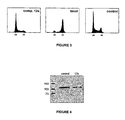
- the compound 12b caused accumulation of cell population in G1 already after 12 h incubation ( Fig. 3 ).
- the cell cycle block in G2/M was not dominant. This result is however consistent with the ability of the compound to inhibit CDK1 as well as CDK2 to the same extent.
Landscapes
- Health & Medical Sciences (AREA)
- Life Sciences & Earth Sciences (AREA)
- Organic Chemistry (AREA)
- Chemical & Material Sciences (AREA)
- Veterinary Medicine (AREA)
- Chemical Kinetics & Catalysis (AREA)
- Medicinal Chemistry (AREA)
- Nuclear Medicine, Radiotherapy & Molecular Imaging (AREA)
- General Chemical & Material Sciences (AREA)
- Pharmacology & Pharmacy (AREA)
- Animal Behavior & Ethology (AREA)
- General Health & Medical Sciences (AREA)
- Public Health (AREA)
- Engineering & Computer Science (AREA)
- Bioinformatics & Cheminformatics (AREA)
- Virology (AREA)
- Oncology (AREA)
- Neurosurgery (AREA)
- Neurology (AREA)
- Biomedical Technology (AREA)
- Communicable Diseases (AREA)
- Immunology (AREA)
- Tropical Medicine & Parasitology (AREA)
- Cardiology (AREA)
- Heart & Thoracic Surgery (AREA)
- Molecular Biology (AREA)
- Diabetes (AREA)
- Pain & Pain Management (AREA)
- Urology & Nephrology (AREA)
- Hematology (AREA)
- Psychiatry (AREA)
- Rheumatology (AREA)
- Dermatology (AREA)
- Biotechnology (AREA)
- Vascular Medicine (AREA)
- Emergency Medicine (AREA)
- AIDS & HIV (AREA)
- Hospice & Palliative Care (AREA)
- Transplantation (AREA)
- Obesity (AREA)
Claims (26)
- Composé de la formule I ou son sel ou solvant pharmaceutiquement acceptable

chaque Ar est indépendamment phényle, 1-naphthyle, 2-naphthyle, o-, m-, et p-phénylène, 1,2-, 1,3-, 1,4-, 1,5-, 1,6-, 1,7-, 1,8-, 2,6-, et 2,7-naphtalène-diyl, 1,2,3,4-tetrahydronapthyle, éventuellement substitué par un ou plusieurs substituants choisis parmi halogène, hydroxy, alcoxy, amino, hydrazo, mercapto, carboxyle, cyano, nitro, amido, sulpho, acylamino, acyloxy, alkylamino, dialkylamino, alkylthio et carbamoyl;
chaque R est indépendamment choisi parmi :halogène, OH, hydroxylamino, NH2, COOH, CN, NO2, amido, sulpho, carbamino;alkyle, qui peut être éventuellement substitué par un ou plusieurs substituants choisis parmi halogène, NO2, OH, alcoxy, NH2, COOH, CONH2 et CF3; etQ est -C(O)-, -S(O2)-;
chaque n est indépendamment 0, 1, 2, 3, 4 ou 5; où"halogène" ou "halo" se rapporte à l'atome de fluore, de brome, de chlore ou d'iode;"hydroxy" se rapporte au groupe -OH;"mercapto" se rapporte au groupe -SH;"alkyle" se rapporte à une chaîne alkylique C1-C8 ramifiée ou non ramifiée qui est saturée ou insaturée;"alkyle substitué" se rapporte à l'alkyle tel qu'il est décrit ci-dessus, substitué par un à six, de préférence 1 à 3 substituants choisis dans le groupe contenant hydroxyle, mercapto, alkylthio, halogène, alkoxy, acyloxy, amino, acylamino, hydrazino, carbamoyl, amido, carboxyle, sulpho, acyl, guanidino, où ces groupes peuvent être attachés à n'importe quel atome de carbone dans l'alkyle donné;"alcoxy" indique le groupe -OR1, où R1 est alkyle, alkyle substitué, aryle, aryle substitué, arylalkyle, arylalkyle substitué, cycloalkyle, cycloalkyle substitué, cyclohétéroalkyle ou cyclohétéroalkyle substitué, tels qu'ils sont définis ici;"alkylthio" indique le groupe -SR2, où R2 est défini de la même manière que R1 ci-dessus;"sulpho" indique le groupe -SO3R3, où R3 est H, alkyle ou alkyle substitué tels qu'ils sont définis ci-dessus;"sulphamido" indique le groupe SO2NR4R5 où R4 et R5 sont chacun indépendamment H, alkyle ou alkyle substitué tels qu'ils sont définis ci-dessus;"acyl" indique le groupe -C(O)R6, où R6 est alkyle, alkyle substitué, aryle, aryle substitué, arylalkyle, arylalkyle substitué, cycloalkyle, cycloalkyle substitué, tels qu'ils sont définis ici;"aryloxy" indique le groupe -OAr1, où Ar1 est aryle, aryle substitué, hétéroaryle ou hétéroaryle substitué, tels qu'ils sont définis ici;"alkylamino" indique le groupe -NR7R8, où R7 et R8 sont chacun indépendamment hydrogène, alkyle, alkyle substitué, aryle, aryle substitué, hétéroaryle ou hétéroaryle substitué, tels qu'ils sont définis ici;"amido" indique le groupe -C(O)NR9R10, où R9 et R10 sont chacun indépendamment hydrogène, alkyle, alkyle substitué, aryle, aryle substitué, hétéroaryle ou hétéroaryle substitué, tels qu'ils sont définis ici;"carboxyle" indique le groupe -C(O)OR11, où R11 est hydrogène, alkyle, alkyle substitué, aryle, aryle substitué, hétéroaryle ou hétéroaryle substitué, tels qu'ils sont définis ici;"carbamino" indique le groupe -NHCOOR11, où R11 est défini ci-dessus;"acylamino" indique le groupe -NHCOR12, où R12 peut-être alkyle, alkyle substitué, hétérocycle, aryle, aryle substitué, hétéroaryle ou hétéroaryle substitué, tels qu'ils sont définis ici;"carbamoylamino" indique le groupe -NHCOOR13, où R13 est alkyle ou aryle;"aryle" ou "Ar" se rapporte au groupe d'hydrocarbure comportant au minimum un cycle aromatique condensé ou non condensé où le groupe d'aryle possède plus de six, de préférence 6 à 10 atomes de carbone;"aryle substitué" se rapporte à aryle tel qu'il est décrit ci-dessus, éventuellement substitué par un ou plusieurs substituants, de préférence par 1 à 5 substituants choisis dans un groupe contenant halogène, alkyle, hydroxy, amino, acylamino, carbamoylamino, hydrazino, mercapto, alcoxy, alkylthio, alkylamino, amido, carboxyle, nitro, sulpho, tels qu'ils sont définis ici;"hétérocycle" se rapporte à un groupe carbocyclique insaturé ou aromatique avec 1 à 3 cycles et possédant au minimum 1, de préférence 1 à 3 hétéroatomes, de plus préférence 1 à 2 hétéroatomes, choisis parmi N, O, ou S, dans le cycle; ce cycle peut être une seule fois (par exemple, pyranyle, pyridyle ou furyle) ou plusieurs fois condensé (par ex. quinazolinyle, purinyle, quinolinyle ou benzofuranyle), dont chacun peut être éventuellement non substitué ou substitué par un ou plusieurs substituants choisis parmi halogène, amino, hydroxy, cyano, nitro, mercapto, alcoxy, alkylamino, acylamino, carbamoylamino, acyloxy, dialkylamino, alkylthio, carboxyle, amido, sulpho, sulphamido, tels qu'ils sont définis ci-dessus;"hétéroaryle" se rapporte à hétérocycle, dans lequel au minimum un cycle hétérocyclique est aromatique;"hétéroaryle substitué" se rapporte à hétérocycle éventuellement mono ou polysubstitué par un ou plusieurs substituants, de préférence par 1 à 3 substituants choisis parmi halogène, amino, hydroxy, cyano, nitro, mercapto, alcoxy, alkylamino, acylamino, carbamoylamino, acyloxy, dialkylamino, alkylthio, carboxyle, amido, sulpho, sulphamido;"arylalkyle" se rapporte au groupe -R14-Ar, où Ar est un groupe d'aryle et R14 est un groupe d'alkyle ou d'alkyle substitué, tels qu'ils sont définis ci-dessus. Les groupes d'aryle peuvent être non substitués ou substitués de façon définie ci-dessus par un ou plusieurs substituants choisis parmi halogène, amino, acylamino, carbamoylamino, hydrazino, acyloxy, alkyle, hydroxyle, alcoxy, alkylthio, alkylamino, amido, carboxyle, hydroxy, aryle, nitro, mercapto, sulpho;"hétéroalkyle" se rapporte à un groupe d'alkyle tel qu'il est défini ci-dessus, dans lequel un ou plusieurs carbones sont remplacés par un hétéroatome, par exemple, où un ou plusieurs carbones sont remplacés par NH, O ou S, le groupe d'hétéroalkyle peut être éventuellement non substitué ou substitué de façon définie ci-dessus par un ou plusieurs substituants choisis parmi halogène, amino, hydroxy, cyano, nitro, mercapto, alcoxy, alkylamino, acylamino, carbamoylamino, acyloxy, dialkylamino, alkylthio, carboxyle, amido, sulpho, sulphamido;"hétéroarylalkyle" se rapporte au groupe -R16-HetAr, où HetAr est un groupe d'hétéroaryle et R16 est alkyle ou alkyle substitué tels qu'ils sont définis ci-dessus, ce groupe d'hétéroarylalkyle peut être éventuellement non substitué ou substitué de façon définie ci-dessus par un ou plusieurs substituants choisis parmi halogène, alkyle, alkyle substitué, alcoxy, alkylthio, nitro, mercapto, sulpho;"cycloalkyle" se rapporte au groupe d'alkyle cyclique ou polycyclique comportant 3 à 15 atomes de carbone, de préférence le cycloalkyle est divalent;"cycloalkyle substitué" se rapporte au groupe de cycloalkyle contenant un ou plusieurs substituants tels qu'ils sont définis ci-dessus avec un ou plusieurs substituants choisis parmi halogène, amino, hydroxy, cyano, nitro, mercapto, alcoxy, alkylamino, acylamino, carbamoylamino, acyloxy, dialkylamino, alkylthio, carboxyle, amido, sulpho, sulphamido;"cyclohétéroalkyle" se rapporte au groupe de cycloalkyle tel qu'il est défini ci-dessus, où un ou plusieurs, de préférence 1 à 3 groupes de méthylène dans le cycle sont remplacés par un hétéroatome choisi dans le groupe contenant NH, O, S;" cyclohétéroalkyle substitué " se rapporte au groupe de cyclohétéroalkyle tel qu'il est défini ici, comportant un ou plusieurs substituants choisis dans le groupe contenant halogène, amino, hydroxy, cyano, nitro, mercapto, alcoxy, alkylamino, acylamino, carbamoylamino, acyloxy, dialkylamino, alkylthio, carboxyle, amido, sulpho, sulphamido;"cycloalkyle alkyle" indique le groupe de -R17-cycloalkyle où cycloalkyle est un groupe de cycloalkyle tel qu'il est défini ci-dessus et R17 est alkyle ou alkyle substitué tels qu'ils sont définis ci-dessus; le groupe de cycloalkyle peut être éventuellement non substitué ou substitué de façon définie ci-dessus par un ou plusieurs substituants choisis parmi halogène, amino, hydroxy, cyano, nitro, mercapto, alcoxy, alkylamino, acylamino, carbamoylamino, acyloxy, dialkylamino, alkylthio, carboxyle, amido, sulpho, sulphamido;"cyclohétéroalkyle alkyle" indique le groupe de -R18-cyclohétéroalkyle, où R18 est alkyle ou alkyle substitué tels qu'ils sont définis ci-dessus et cyclohétéroalkyle tel qu'il est défini ci-dessus, ce groupe de cyclohétéroalkyle alkyle peut être éventuellement non substitué ou substitué de façon définie ci-dessus par un ou plusieurs substituants choisis parmi halogène, amino, hydroxy, cyano, nitro, mercapto, alcoxy, alkylamino, acylamino, carbamoylamino, acyloxy, dialkylamino, alkylthio, carboxyle, amido, sulpho, sulphamido. - Composé selon la revendication 1 où chaque Ar est choisi indépendamment parmi phényle, naphth-1-yle, naphth-2-yle, dont chacun peut être éventuellement substitué par un ou plusieurs substituants choisis parmi halogène, OH, NO2, NH2, CF3, alkyle, alkyle substitué, alcoxy, alcoxy substitué, alkylthio et sulphonyle.
- Composé selon une quelconque revendication précédente, dans lequel chaque Ar est choisi indépendamment parmi phényle, naphth-1-yle, naphth-2-yle, dont chacun peut être éventuellement substitué par un ou plusieurs substituants choisis parmi halogène, OH, NO2, NH2, CF3, méthyle, méthoxy, tetrafluorométhoxy, tetrafluoroéthoxy, MeS et sulphonyle.
- Composé selon une quelconque revendication précédente, dans lequel les groupes d'Ar sont identiques.
- Composé selon une quelconque revendication précédente, choisi parmi les composés suivants :1,1-bis-{4-[(3,5-diamino-pyrazole-4-yl)-azo]-phényle}-méthanone;1,1-bis-{3-[(3,5-diamino-pyrazole-4-yl)-azo]-phényle}-méthanone;1,1-bis-{4-[(3,5-diamino-pyrazole-4-yl)-azo]-phényle}-sulphone;1,1-bis-{3-[(3,5-diamino-pyrazole-4-yl)-azo]-phényle}-sulphone;et leurs sels et solvants pharmaceutiquement acceptables.
- Composition pharmaceutique comportant un composé selon une quelconque des revendications 1 à 5 ou son sel ou solvant pharmaceutiquement acceptable et un diluant, excipient ou entraîneur pharmaceutiquement acceptable.
- Utilisation d'un composé selon une quelconque des revendications 1 à 5 ou de son sel ou solvant pharmaceutiquement acceptable, pour la préparation d'un médicament destiné au traitement d'une maladie proliférative.
- Utilisation selon la revendication 7, lorsque la maladie proliférative est un cancer ou une leucémie.
- Utilisation d'un composé selon une quelconque des revendications 1 à 5 ou de son sel ou solvant pharmaceutiquement acceptable pour la préparation d'un médicament destiné au traitement d'une maladie virale.
- Utilisation selon la revendication 9, lorsque la maladie virale est choisie parmi cytomégalovirus humain (HCMV), herpes simplex virus de type 1 (HSV-1), virus d'immunodéficience humaine de type 1 (HIV-1) et virus varicelle-zona (VZV).
- Utilisation d'un composé selon une quelconque des revendications 1 à 5 ou de son sel ou solvant pharmaceutiquement acceptable lors du test d'identification d'un agent capable d'inhiber une ou plusieurs de la kinase cycline-dépendante, GSK, aurora kinase et/ou Polo-like kinase.
- Utilisation d'un composé de la formule II ou de son sel ou solvant pharmaceutiquement acceptable,

Ar est phényle, 1-naphthyle, 2- naphthyle, o-, m-, et p- phénylène, 1,2-, 1,3-, 1,4-, 1,5-, 1,6-, 1,7-, 1,8-, 2,6-, et 2,7- naphtalène-diyl, 1,2,3,4-tetrahydronaphtyle, éventuellement substitué par un ou plusieurs substituants choisis parmi halogène, hydroxy, alcoxy, amino, hydrazo, mercapto, carboxyle, cyano, nitro, amido, sulpho, acylamino, acyloxy, alkylamino, dialkylamino, alkylthio et carbamoyl;
R est choisi parmi :halogène, OH, hydroxylamino, NH2, COOH, CN, NO2, amido, sulpho, carbamino; alkyle, qui peut être éventuellement substitué par un ou plusieurs substituants choisis parmi halogène, NO2, OH, alcoxy, NH2, COOH, CONH2 et CF3; etn est 0, 1, 2, 3, 4 ou 5; où"halogène" ou "halo" se rapporte à l'atome de fluore, de brome, de chlore ou d'iode;"hydroxy" se rapporte au groupe -OH;"mercapto" se rapporte au groupe -SH;"alkyle" se rapporte à une chaîne alkylique C1-C8 ramifiée ou non ramifiée qui est saturée ou insaturée;"alkyle substitué" se rapporte à l'alkyle tel qu'il est décrit ci-dessus, substitué par un à six substituants choisis dans le groupe contenant hydroxyle, mercapto, alkylthio, halogène, alkoxy, acyloxy, amino, acylamino, hydrazino, carbamoyl, amido, carboxyle, sulpho, acyl, guanidino, où ces groupes peuvent être attachés à n'importe quel atome de carbone dans l'alkyle donné;"alcoxy" indique le groupe -OR1, où R1 est alkyle, alkyle substitué, aryle, aryle substitué, arylalkyle, arylalkyle substitué, cycloalkyle, cycloalkyle substitué, cyclohétéroalkyle ou cyclohétéroalkyle substitué, tels qu'ils sont définis ici;"alkylthio" indique le groupe -SR2, où R2 est défini de la même manière que R1 ci-dessus;"sulpho" indique le groupe -SO3R3, où R3 est H, alkyle ou alkyle substitué tels qu'ils sont définis ci-dessus;"sulphamido" indique le groupe SO2NR4R5 où R4 et R5 sont chacun indépendamment H, alkyle ou alkyle substitué tels qu'ils sont définis ci-dessus;"acyl" indique le groupe -C(O)R6, où R6 est alkyle, alkyle substitué, aryle, aryle substitué, arylalkyle, arylalkyle substitué, cycloalkyle, cycloalkyle substitué, tels qu'ils sont définis ici;"aryloxy" indique le groupe -OAr1, où Ar1 est aryle, aryle substitué, hétéroaryle ou hétéroaryle substitué, tels qu'ils sont définis ici;"alkylamino" indique le groupe -NR7R8, où R7 et R8 sont chacun indépendamment hydrogène, alkyle, alkyle substitué, aryle, aryle substitué, hétéroaryle ou hétéroaryle substitué, tels qu'ils sont définis ici;"amido" indique le groupe -C(O)NR9R10, où R9 et R10 sont chacun indépendamment hydrogène, alkyle, alkyle substitué, aryle, aryle substitué, hétéroaryle ou hétéroaryle substitué, tels qu'ils sont définis ici;"carboxyle" indique le groupe -C(O)OR11, où R11 est hydrogène, alkyle, alkyle substitué, aryle, aryle substitué, hétéroaryle ou hétéroaryle substitué, tels qu'ils sont définis ici;"carbamino" indique le groupe -NHCOOR11, où R11 est défini ci-dessus;"acylamino" indique le groupe -NHCOR12, où R12 peut-être alkyle, alkyle substitué, hétérocycle, aryle, aryle substitué, hétéroaryle ou hétéroaryle substitué, tels qu'ils sont définis ici;"carbamoylamino" indique le groupe -NHCOOR13, où R13 est alkyle ou aryle;"aryle" ou "Ar" se rapporte au groupe d'hydrocarbure comportant au minimum un cycle aromatique condensé ou non condensé où le groupe d'aryle possède plus de six, de préférence 6 à 10 atomes de carbone;"aryle substitué" se rapporte à aryle tel qu'il est décrit ci-dessus, éventuellement substitué par un ou plusieurs substituants choisis dans un groupe contenant halogène, alkyle, hydroxy, amino, acylamino, carbamoylamino, hydrazino, mercapto, alcoxy, alkylthio, alkylamino, amido, carboxyle, nitro, sulpho, tels qu'ils sont définis ici;"hétérocycle" se rapporte à un groupe carbocyclique insaturé ou aromatique avec 1 à 3 cycles et possédant au minimum 1 hétéroatome choisi parmi N, O, ou S, dans le cycle; ce cycle peut être une seule fois (par exemple, pyranyle, pyridyle ou furyle) ou plusieurs fois condensé (par ex. quinazolinyle, purinyle, quinolinyle ou benzofuranyle), dont chacun peut être éventuellement non substitué ou substitué par un ou plusieurs substituants choisis parmi halogène, amino, hydroxy, cyano, nitro, mercapto, alcoxy, alkylamino, acylamino, carbamoylamino, acyloxy, dialkylamino, alkylthio, carboxyle, amido, sulpho, sulphamido, tels qu'ils sont définis ci-dessus;"hétéroaryle" se rapporte à hétérocycle, dans lequel au minimum un cycle hétérocyclique est aromatique;"hétéroaryle substitué" se rapporte à hétérocycle éventuellement mono ou polysubstitué par un ou plusieurs substituants choisis parmi halogène, amino, hydroxy, cyano, nitro, mercapto, alcoxy, alkylamino, acylamino, carbamoylamino, acyloxy, dialkylamino, alkylthio, carboxyle, amido, sulpho, sulphamido;"arylalkyle" se rapporte au groupe -R14-Ar, où Ar est un groupe d'aryle et R14 est un groupe d'alkyle ou d'alkyle substitué, tels qu'ils sont définis ci-dessus; les groupes d'aryle peuvent être non substitués ou substitués de façon définie ci-dessus par un ou plusieurs substituants choisis parmi halogène, amino, acylamino, carbamoylamino, hydrazino, acyloxy, alkyle, hydroxyle, alcoxy, alkylthio, alkylamino, amido, carboxyle, hydroxy, aryle, nitro, mercapto, sulpho;"hétéroalkyle" se rapporte à un groupe d'alkyle tel qu'il est défini ci-dessus, dans lequel un ou plusieurs carbones sont remplacés par un hétéroatome, par exemple, où un ou plusieurs carbones sont remplacés par NH, O ou S, le groupe d'hétéroalkyle peut être éventuellement non substitué ou substitué de façon définie ci-dessus par un ou plusieurs substituants choisis parmi halogène, amino, hydroxy, cyano, nitro, mercapto, alcoxy, alkylamino, acylamino, carbamoylamino, acyloxy, dialkylamino, alkylthio, carboxyle, amido, sulpho, sulphamido;"hétéroarylalkyle" se rapporte au groupe -R16-HetAr, où HetAr est un groupe d'hétéroaryle et R16 est alkyle ou alkyle substitué tels qu'ils sont définis ci-dessus, ce groupe d'hétéroarylalkyle peut être éventuellement non substitué ou substitué de façon définie ci-dessus par un ou plusieurs substituants choisis parmi halogène, alkyle, alkyle substitué, alcoxy, alkylthio, nitro, mercapto, sulpho;"cycloalkyle" se rapporte au groupe d'alkyle cyclique ou polycyclique comportant 3 à 15 atomes de carbone, de préférence le cycloalkyle est divalent;"cycloalkyle substitué" se rapporte au groupe de cycloalkyle contenant un ou plusieurs substituants tels qu'ils sont définis ci-dessus avec un ou plusieurs substituants choisis parmi halogène, amino, hydroxy, cyano, nitro, mercapto, alcoxy, alkylamino, acylamino, carbamoylamino, acyloxy, dialkylamino, alkylthio, carboxyle, amido, sulpho, sulphamido;"cyclohétéroalkyle" se rapporte au groupe de cycloalkyle tel qu'il est défini ci-dessus, où un ou plusieurs groupes de méthylène dans le cycle sont remplacés par un hétéroatome choisi dans le groupe contenant NH, O, S;" cyclohétéroalkyle substitué " se rapporte au groupe de cyclohétéroalkyle tel qu'il est défini ici, comportant un ou plusieurs substituants choisis dans le groupe contenant halogène, amino, hydroxy, cyano, nitro, mercapto, alcoxy, alkylamino, acylamino, carbamoylamino, acyloxy, dialkylamino, alkylthio, carboxyle, amido, sulpho, sulphamido;"cycloalkyle alkyle" indique le groupe de R17-cycloalkyle où cycloalkyle est un groupe de cycloalkyle tel qu'il est défini ci-dessus et R17 est alkyle ou alkyle substitué tels qu'ils sont définis ci-dessus; le groupe de cycloalkyle peut être éventuellement non substitué ou substitué de façon définie ci-dessus par un ou plusieurs substituants choisis parmi halogène, amino, hydroxy, cyano, nitro, mercapto, alcoxy, alkylamino, acylamino, carbamoylamino, acyloxy, dialkylamino, alkylthio, carboxyle, amido, sulpho, sulphamido;"cyclohétéroalkyle alkyle" indique le groupe de -R18-cyclohétéroalkyle, où R18 est alkyle ou alkyle substitué tels qu'ils sont définis ci-dessus et cyclohétéroalkyle tel qu'il est défini ci-dessus, ce groupe de cyclohétéroalkyle alkyle peut être éventuellement non substitué ou substitué de façon définie ci-dessus par un ou plusieurs substituants choisis parmi halogène, amino, hydroxy, cyano, nitro, mercapto, alcoxy, alkylamino, acylamino, carbamoylamino, acyloxy, dialkylamino, alkylthio, carboxyle, amido, sulpho, sulphamido,pour la préparation d'un médicament destiné au traitement d'une maladie virale. - Utilisation selon la revendication 12, où la maladie virale est choisie parmi cytomégalovirus humain (HCMV), herpes simplex virus de type 1 (HSV-1), virus d'immunodéficience humaine de type 1 (HIV-1) et virus varicelle-zona (VZV).
- Utilisation d'un composé de la formule II telle qu'elle est définie dans la revendication 12 ou de son sel ou solvant pharmaceutiquement acceptable 1 pour la préparation d'un médicament destiné au traitement des maladies choisies dans le groupe contenant les cancers, leucémies, maladies auto-immunes, psoriasis, resténose, cardiomyopathie, infarctus du myocarde, glomérulonéphrite, polyarthrite rhumatoïde; maladies inflammatoires, infections fongiques, infections parasitaires, malaria, emphysème, broncho-pneumopathie chronique obstructive, diabète, de préférence diabète de type II; maladies neurodégénératives, maladie d'Alzheimer, paralysie pseudo-bulbaire , dégénérescence cortico-basale, maladie de Pick; traumatismes de tête, accident vasculaire cérébrale, épilepsie, maladie de Charcot, alopécie.
- Utilisation selon une quelconque des revendications 12 à 14, où Ar est choisi parmi phényle, naphth-1-yle, naphth-2-yle, dont chacun peut être éventuellement substitué par un ou plusieurs substituants choisis parmi halogène, OH, NO2, NH2, CF3, alkyle, alkyle substitué, alcoxy, alcoxy substitué, alkylthio et sulphonyle.
- Utilisation selon une quelconque des revendications 12 à 14, où Ar est choisi parmi phényle, naphth-1-yle, naphth-2-yle, dont chacun peut être éventuellement substitué par un ou plusieurs substituants choisis parmi halogène, OH, NO2, NH2, CF3, méthyle, méthoxy, tetrafluorométhoxy, tetrafluoroéthoxy, MeS et sulphonyle.
- Utilisation selon une quelconque des revendications 12 à 14, où le composé de la formule II est choisi parmi les composés suivants:3,5-diamino-4-(2-hydroxy)phénylazo-pyrazole;3,5-diamino-4-(3-hydroxy)phénylazo-pyrazole;3,5-diamino-4-(4-hydroxy)phénylazo-pyrazole;3,5-diamino-4-(2-nitro)phénylazo-pyrazole;3,5-diamino-4-(3-nitro)phénylazo-pyrazole;3,5-diamino-4-(4-nitro)phénylazo-pyrazole;3,5-diamino-4-(2-chloro)phénylazo-pyrazole;3,5-diamino-4-(3-chloro)phénylazo-pyrazole;3,5-diamino-4-(4-chloro)phénylazo-pyrazole;3,5-diamino-4-(2-bromo)phénylazo-pyrazole;3,5-diamino-4-(3-bromo)phénylazo-pyrazole;3,5-diamino-4-(4-bromo)phénylazo-pyrazole;3,5-diamino-4-(2,3-bis(trifluorométhyle))phénylazo-pyrazole;3,5-diamino-4-(2,4-bis(trifluorométhyle))phénylazo-pyrazole;3,5-diamino-4-(2,5-bis(trifluorométhyle))phénylazo-pyrazole;3,5-diamino-4-(3,5-bis(trifluorométhyle))phénylazo-pyrazole;3,5-diamino-4-(4-bromo-3-chloro)phénylazo-pyrazole;3,5-diamino-4-(4-bromo-2-chloro)phénylazo-pyrazole;3,5-diamino-4-(2-bromo-5,6-difluoro)phénylazo-pyrazole;3,5-diamino-4-(2-bromo-4,6-difluoro)phénylazo-pyrazole;3,5-diamino-4-(2-bromo-6-chloro-4-(trifluorométhyle))phénylazo-pyrazole;3,5-diamino-4-(4-bromo-2,6-difluoro)phénylazo-pyrazole;3,5-diamino-4-(4-bromo-2-fluoro)phénylazo-pyrazole;3,5-diamino-4-(2-bromo-4-fluoro)phénylazo-pyrazole;3,5-diamino-4-(2-bromo-4-méthyle)phénylazo-pyrazole;3,5-diamino-4-(3-bromo-2-méthyle)phénylazo-pyrazole;3,5-diamino-4-(4-bromo-3-méthyle)phénylazo-pyrazole;3,5-diamino-4-(2-bromo-4-(trifluorométhoxy)phénylazo-pyrazole;3,5-diamino-4-(3-bromo-4-(trifluorométhoxy)phénylazo-pyrazole;3,5-diamino-4-(4-bromo-2-(trifluorométhoxy)phénylazo-pyrazole;3,5-diamino-4-(2-bromo-4,5,6-trifluoro)phénylazo-pyrazole;3,5-diamino-4-(2,4-dibromo)phénylazo-pyrazole;3,5-diamino-4-(2,5-dibromo)phénylazo-pyrazole;3,5-diamino-4-(2,4-dibromo-3,6-dichloro)phénylazo-pyrazole;3,5-diamino-4-(2,6-dibromo-4-fluoro)phénylazo-pyrazole;3,5-diamino-4-(2,6-dibromo-4-(trifluorométhoxy))phénylazo-pyrazole;3,5-diamino-4-(2,4-dibromo-6-(trifluorométhoxy))phénylazo-pyrazole;3,5-diamino-4-(2,6-dibromo-4-(trifluorométhyle))phénylazo-pyrazole;3,5-diamino-4-(2,3-dichloro)phénylazo-pyrazole;3,5-diamino-4-(2,4-dichloro)phénylazo-pyrazole;3,5-diamino-4-(2,5-dichloro)phénylazo-pyrazole;3,5-diamino-4-(2,6-dichloro)phénylazo-pyrazole;3,5-diamino-4-(3,4-dichloro)phénylazo-pyrazole;3,5-diamino-4-(3,5-dichloro)phénylazo-pyrazole;3,5-diamino-4-(2,6-dichloro-4-(trifluorométhoxy))phénylazo-pyrazole;3,5-diamino-4-(2,4-dichloro-6-(trifluorométhoxy))phénylazo-pyrazole;3,5-diamino-4-(2,6-dichloro-4-(trifluorométhyle))phénylazo-pyrazole;3,5-diamino-4-(2,3-difluoro)phénylazo-pyrazole;3,5-diamino-4-(2,4-difluoro)phénylazo-pyrazole;3,5-diamino-4-(2,5-difluoro)phénylazo-pyrazole;3,5-diamino-4-(2,6-difluoro)phénylazo-pyrazole;3,5-diamino-4-(3,4-difluoro)phénylazo-pyrazole;3,5-diamino-4-(3,5-difluoro)phénylazo-pyrazole;3,5-diamino-4-(2-difluorométhoxy)phénylazo-pyrazole;3,5-diamino-4-(2-difluorométhoxy-5-nitro)phénylazo-pyrazole;3,5-diamino-4-(2,3-difluoro-6-nitro)phénylazo-pyrazole;3,5-diamino-4-(2,4-diiodo)phénylazo-pyrazole;3,5-diamino-4-(2,3-diméthyle)phénylazo-pyrazole;3,5-diamino-4-(2,4-diméthyle)phénylazo-pyrazole;3,5-diamino-4-(2,3-diméthyle-6-nitro)phénylazo-pyrazole;3,5-diamino-4-(2,3-diméthoxy)phénylazo-pyrazole;3,5-diamino-4-(2,4-diméthoxy)phénylazo-pyrazole;3,5-diamino-4-(2,3-dinitro-6-méthyle)phénylazo-pyrazole;3,5-diamino-4-(4-hydroxy-2-méthyle)phénylazo-pyrazole;3,5-diamino-4-(3-chloro-2,6-dibromo-4-fluoro)phénylazo-pyrazole;3,5-diamino-4-(2-chloro-4-fluoro)phénylazo-pyrazole;3,5-diamino-4-(2-chloro-5-fluoro)phénylazo-pyrazole;3,5-diamino-4-(2-chloro-6-fluoro)phénylazo-pyrazole;3,5-diamino-4-(3-chloro-2-fluoro)phénylazo-pyrazole;3,5-diamino-4-(3-chloro-4-fluoro)phénylazo-pyrazole;3,5-diamino-4-(4-chloro-2-fluoro)phénylazo-pyrazole;3,5-diamino-4-(5-chloro-2-fluoro)phénylazo-pyrazole;3,5-diamino-4-(3-chloro-4-fluoro)phénylazo-pyrazole;3,5-diamino-4-(2-chloro-4-fluoro-5-méthyle)phénylazo-pyrazole;3,5-diamino-4-(5-chloro-4-fluoro-2-nitro)phénylazo-pyrazole;3,5-diamino-4-(5-chloro-2-hydroxy)phénylazo-pyrazole;3,5-diamino-4-(4-chloro-2-iodo)phénylazo-pyrazole;3,5-diamino-4-(2-chloro-4-iodo)phénylazo-pyrazole;3,5-diamino-4-(2-chloro-3-méthyle)phénylazo-pyrazole;3,5-diamino-4-(3-chloro-2-méthyle)phénylazo-pyrazole;3,5-diamino-4-(3-chloro-4-(trifluorométhoxy))phénylazo-pyrazole;3,5-diamino-4-(4-chloro-2-(trifluorométhoxy))phénylazo-pyrazole;3,5-diamino-4-(2-fluoro-4-iodo)phénylazo-pyrazole;3,5-diamino-4-(2-fluoro-4-méthyle)phénylazo-pyrazole;3,5-diamino-4-(3-fluoro-2-méthyle)phénylazo-pyrazole;3,5-diamino-4-(2-fluoro-5-nitro)phénylazo-pyrazole;3,5-diamino-4-(3-fluoro-4-méthyle)phénylazo-pyrazole;3,5-diamino-4-(4-fluoro-2-méthyle)phénylazo-pyrazole;3,5-diamino-4-(4-fluoro-3-méthyle)phénylazo-pyrazole;3,5-diamino-4-(5-fluoro-2-méthyle)phénylazo-pyrazole;3,5-diamino-4-(4-fluoro-2-nitro)phénylazo-pyrazole;3,5-diamino-4-(4-fluoro-3-nitro)phénylazo-pyrazole;3,5-diamino-4-(2-fluoro-4-(trifluorométhyle))phénylazo-pyrazole;3,5-diamino-4-(2-iodo)phénylazo-pyrazole;3,5-diamino-4-(3-iodo)phénylazo-pyrazole;3,5-diamino-4-(4-iodo)phénylazo-pyrazole;3,5-diamino-4-(2-méthoxy)phénylazo-pyrazole;3,5-diamino-4-(3-méthoxy)phénylazo-pyrazole;3,5-diamino-4-(4-méthoxy)phénylazo-pyrazole;3,5-diamino-4-(2-méthoxy-5-méthyle)phénylazo-pyrazole;3,5-diamino-4-(2-méthoxy-6-méthyle)phénylazo-pyrazole;3,5-diamino-4-(4-méthoxy-2-méthyle)phénylazo-pyrazole;3,5-diamino-4-(4-méthoxy-3-(trifluorométhyle))phénylazo-pyrazole;3,5-diamino-4-(3-méthoxy-4-(trifluorométhyle)phénylazo-pyrazole;3,5-diamino-4-(2-méthyle)phénylazo-pyrazole;3,5-diamino-4-(3-méthyle)phénylazo-pyrazole;3,5-diamino-4-(4-méthyle)phénylazo-pyrazole;3,5-diamino-4-(2-méthyle-3-(trifluorométhoxy))phénylazo-pyrazole;3,5-diamino-4-(2-méthyle-4-(trifluorométhoxy))phénylazo-pyrazole;3,5-diamino-4-(2-méthylethio)phénylazo-pyrazole;3,5-diamino-4-(4-méthylethio)phénylazo-pyrazole;3,5-diamino-4-(2-nitro-4,5,6-trifluoro)phénylazo-pyrazole;3,5-diamino-4-(2-nitro-4-(trifluorométhoxy))phénylazo-pyrazole;3,5-diamino-4-(2-nitrotetrafluoro)phénylazo-pyrazole;3,5-diamino-4-(2,3,4,5,6-pentabromo)phénylazo-pyrazole;3,5-diamino-4-(2,3,4,5,6-pentafluoro)phénylazo-pyrazole;3,5-diamino-4-(2,3,4,5-tetrachloro)phénylazo-pyrazole;3,5-diamino-4-(2,3,5,6-tetrachloro)phénylazo-pyrazole;3,5-diamino-4-(4-(1,1,2,2-tetrafluoroéthoxy))phénylazo-pyrazole;3,5-diamino-4-(2,3,4,5-tetrafluoro)phénylazo-pyrazole;3,5-diamino-4-(2,3,4,6-tetrafluoro)phénylazo-pyrazole;3,5-diamino-4-(2,3,5,6-tetrafluoro-4-(trifluorométhyle))phénylazo-pyrazole;3,5-diamino-4-(2,4,6-tribromo)phénylazo-pyrazole;3,5-diamino-4-(2,4,6-tribromo-3,5-diiodo)phénylazo-pyrazole;3,5-diamino-4-(2,3,4-trichloro)phénylazo-pyrazole;3,5-diamino-4-(2,4,5-trichloro)phénylazo-pyrazole;3,5-diamino-4-(2,4,6-trichloro)phénylazo-pyrazole;3,5-diamino-4-(2,4,5-trifluoro)phénylazo-pyrazole;3,5-diamino-4-(2,3,5-trifluoro)phénylazo-pyrazole;3,5-diamino-4-(2,3,6-trifluoro)phénylazo-pyrazole;3,5-diamino-4-(2,3,4-trifluoro)phénylazo-pyrazole;3,5-diamino-4-(2-trifluorométhoxy)phénylazo-pyrazole;3,5-diamino-4-(3-trifluorométhoxy)phénylazo-pyrazole;3,5-diamino-4-(4-trifluorométhoxy)phénylazo-pyrazole;3,5-diamino-4-(2,3,4-trifluoro-6-nitro)phénylazo-pyrazole;3,5-diamino-4-(2,4,5-triméthyle)phénylazo-pyrazole;3,5-diamino-4-(2,4,6-triméthyle)phénylazo-pyrazole;3,5-diamino-4-(3-triméthyle)phénylazo-pyrazole;3,5-diamino-4-(3-trichloro-5-amino)phénylazo-pyrazole;3,5-diamino-4-(3-trichloro-4-carboxy)phénylazo-pyrazole;3,5-diamino-4-(3-amino-4-chloro)phénylazo-pyrazole;3,5-diamino-4-(3-chloro-4-amino)phénylazo-pyrazole;3,5-diamino-4-(3-carboxy-4-hydroxy)phénylazo-pyrazole;3,5-diamino-4-(4-fluoro)phénylazo-pyrazole;3,5-diamino-4-(phényle)azo-pyrazole;3,5-diamino-4-(2-carboxy)phénylazo-pyrazole;3,5-diamino-4-(3-carboxy)phénylazo-pyrazole;3,5-diamino-4-(4-carboxy)phénylazo-pyrazole;3,5-diamino-4-(2-hydroxyméthyle)phénylazo-pyrazole;3,5-diamino-4-(4-aminométhyle)phénylazo-pyrazole;3,5-diamino-4-(naphth-1-yle)azo-pyrazole;3,5-diamino-4-(naphth-2-yle)azo-pyrazole;et leurs sels et solvants pharmaceutiquement acceptables.
- Utilisation selon une quelconque des revendications 12 à 17, où le composé est choisi parmi les composés suivants:3,5-diamino-4-(phényle)azo-pyrazole;3,5-diamino-4-(2-nitro)phénylazo-pyrazole;3,5-diamino-4-(3-nitro)phénylazo-pyrazole;3,5-diamino-4-(4-nitro)phénylazo-pyrazole;3,5-diamino-4-(2-hydroxy)phénylazo-pyrazole;3,5-diamino-4-(3-hydroxy)phénylazo-pyrazole;3,5-diamino-4-(4-hydroxy)phénylazo-pyrazole;3,5-diamino-4-(2-hydroxyméthyle)phénylazo-pyrazole;3,5-diamino-4-(naphth-1-yle)azo-pyrazole; andet leurs sels et solvants pharmaceutiquement acceptables.
- Composé choisi parmi les composés suivants:3,5-diamino-4-(2-nitro)phénylazo-pyrazole;3,5-diamino-4-(2,3-bis(trifluorométhyle))phénylazo-pyrazole;3,5-diamino-4-(2,4-bis(trifluorométhyle))phénylazo-pyrazole;3,5-diamino-4-(2,5-bis(trifluorométhyle))phénylazo-pyrazole;3,5-diamino-4-(3,5-bis(trifluorométhyle))phénylazo-pyrazole;3,5-diamino-4-(4-bromo-3-chloro)phénylazo-pyrazole;3,5-diamino-4-(4-bromo-2-chloro)phénylazo-pyrazole;3,5-diamino-4-(2-bromo-5,6-difluoro)phénylazo-pyrazole;3,5-diamino-4-(2-bromo-4,6-difluoro)phénylazo-pyrazole;3,5-diamino-4-(2-bromo-6-chloro-4-(trifluorométhyle))phénylazo-pyrazole;3,5-diamino-4-(4-bromo-2,6-difluoro)phénylazo-pyrazole;3,5-diamino-4-(4-bromo-2-fluoro)phénylazo-pyrazole;3,5-diamino-4-(2-bromo-4-fluoro)phénylazo-pyrazole;3,5-diamino-4-(2-bromo-4-méthyle)phénylazo-pyrazole;3,5-diamino-4-(3-bromo-2-méthyle)phénylazo-pyrazole;3,5-diamino-4-(4-bromo-3-méthyle)phénylazo-pyrazole;3,5-diamino-4-(2-bromo-4-(trifluorométhoxy)phénylazo-pyrazole;3,5-diamino-4-(3-bromo-4-(trifluorométhoxy)phénylazo-pyrazole;3,5-diamino-4-(4-bromo-2-(trifluorométhoxy)phénylazo-pyrazole;3,5-diamino-4-(2-bromo-4,5,6-trifluoro)phénylazo-pyrazole;3,5-diamino-4-(2,4-dibromo)phénylazo-pyrazole;3,5-diamino-4-(2,5-dibromo)phénylazo-pyrazole;3,5-diamino-4-(2,4-dibromo-3,6-dichloro)phénylazo-pyrazole;3,5-diamino-4-(2,6-dibromo-4-fluoro)phénylazo-pyrazole;3,5-diamino-4-(2,6-dibromo-4-(trifluorométhoxy))phénylazo-pyrazole;3,5-diamino-4-(2,4-dibromo-6-(trifluorométhoxy))phénylazo-pyrazole;3,5-diamino-4-(2,6-dibromo-4-(trifluorométhyle))phénylazo-pyrazole;3,5-diamino-4-(2,6-dichloro)phénylazo-pyrazole;3,5-diamino-4-(2,6-dichloro-4-(trifluorométhoxy))phénylazo-pyrazole;3,5-diamino-4-(2,4-dichloro-6-(trifluorométhoxy))phénylazo-pyrazole;3,5-diamino-4-(2,6-dichloro-4-(trifluorométhyle))phénylazo-pyrazole;3,5-diamino-4-(2,3-difluoro)phénylazo-pyrazole;3,5-diamino-4-(2,4-difluoro)phénylazo-pyrazole;3,5-diamino-4-(2,5-difluoro)phénylazo-pyrazole;3,5-diamino-4-(3,5-difluoro)phénylazo-pyrazole;3,5-diamino-4-(2-difluorométhoxy)phénylazo-pyrazole;3,5-diamino-4-(2-difluorométhoxy-5-nitro)phénylazo-pyrazole;3,5-diamino-4-(2,3-difluoro-6-nitro)phénylazo-pyrazole;3,5-diamino-4-(2,4-diiodo)phénylazo-pyrazole;3,5-diamino-4-(2,3-diméthyle)phénylazo-pyrazole;3,5-diamino-4-(2,3-diméthyle-6-nitro)phénylazo-pyrazole;3,5-diamino-4-(2,3-diméthoxy)phénylazo-pyrazole;3,5-diamino-4-(2,4-diméthoxy)phénylazo-pyrazole;3,5-diamino-4-(2,3-dinitro-6-méthyle)phénylazo-pyrazole;3,5-diamino-4-(4-hydroxy-2-méthyle)phénylazo-pyrazole;3,5-diamino-4-(3-chloro-2,6-dibromo-4-fluoro)phénylazo-pyrazole;3,5-diamino-4-(2-chloro-4-fluoro)phénylazo-pyrazole;3,5-diamino-4-(2-chloro-5-fluoro)phénylazo-pyrazole;3,5-diamino-4-(2-chloro-6-fluoro)phénylazo-pyrazole;3,5-diamino-4-(3-chloro-2-fluoro)phénylazo-pyrazole;3,5-diamino-4-(3-chloro-4-fluoro)phénylazo-pyrazole;3,5-diamino-4-(4-chloro-2-fluoro)phénylazo-pyrazole;3,5-diamino-4-(5-chloro-2-fluoro)phénylazo-pyrazole;3,5-diamino-4-(3-chloro-4-fluoro)phénylazo-pyrazole;3,5-diamino-4-(2-chloro-4-fluoro-5-méthyle)phénylazo-pyrazole;3,5-diamino-4-(5-chloro-4-fluoro-2-nitro)phénylazo-pyrazole;3,5-diamino-4-(5-chloro-2-hydroxy)phénylazo-pyrazole;3,5-diamino-4-(4-chloro-2-iodo)phénylazo-pyrazole;3,5-diamino-4-(2-chloro-4-iodo)phénylazo-pyrazole;3,5-diamino-4-(2-chloro-3-méthyle)phénylazo-pyrazole;3,5-diamino-4-(3-chloro-4-(trifluorométhoxy))phénylazo-pyrazole;3,5-diamino-4-(4-chloro-2-(trifluorométhoxy))phénylazo-pyrazole;3,5-diamino-4-(2-fluoro-4-iodo)phénylazo-pyrazole;3,5-diamino-4-(2-fluoro-4-méthyle)phénylazo-pyrazole;3,5-diamino-4-(3-fluoro-2-méthyle)phénylazo-pyrazole;3,5-diamino-4-(2-fluoro-5-nitro)phénylazo-pyrazole;3,5-diamino-4-(3-fluoro-4-méthyle)phénylazo-pyrazole;3,5-diamino-4-(4-fluoro-2-méthyle)phénylazo-pyrazole;3,5-diamino-4-(4-fluoro-3-méthyle)phénylazo-pyrazole;3,5-diamino-4-(5-fluoro-2-méthyle)phénylazo-pyrazole;3,5-diamino-4-(4-fluoro-2-nitro)phénylazo-pyrazole;3,5-diamino-4-(4-fluoro-3-nitro)phénylazo-pyrazole;3,5-diamino-4-(2-fluoro-4-(trifluorométhyle))phénylazo-pyrazole;3,5-diamino-4-(2-iodo)phénylazo-pyrazole;3,5-diamino-4-(2-méthoxy-5-méthyle)phénylazo-pyrazole;3,5-diamino-4-(2-méthoxy-6-méthyle)phénylazo-pyrazole;3,5-diamino-4-(4-méthoxy-2-méthyle)phénylazo-pyrazole;3,5-diamino-4-(4-méthoxy-3-(trifluorométhyle))phénylazo-pyrazole;3,5-diamino-4-(3-méthoxy-4-(trifluorométhyle)phénylazo-pyrazole;3,5-diamino-4-(2-méthyle-3-(trifluorométhoxy))phénylazo-pyrazole;3,5-diamino-4-(2-méthyle-4-(trifluorométhoxy))phénylazo-pyrazole;3,5-diamino-4-(2-méthylethio)phénylazo-pyrazole;3,5-diamino-4-(2-nitro-4,5,6-trifluoro)phénylazo-pyrazole;3,5-diamino-4-(2-nitro-4-(trifluorométhoxy))phénylazo-pyrazole;3,5-diamino-4-(2-nitrotetrafluoro)phénylazo-pyrazole;3,5-diamino-4-(2,3,4,5,6-pentabromo)phénylazo-pyrazole;3,5-diamino-4-(2,3,4,5-tetrachloro)phénylazo-pyrazole;3,5-diamino-4-(2,3,5,6-tetrachloro)phénylazo-pyrazole;3,5-diamino-4-(4-(1,1,2,2-tetrafluoroéthoxy))phénylazo-pyrazole;3,5-diamino-4-(2,3,4,5-tetrafluoro)phénylazo-pyrazole;3,5-diamino-4-(2,3,4,6-tetrafluoro)phénylazo-pyrazole;3,5-diamino-4-(2,3,5,6-tetrafluoro-4-(trifluorométhyle))phénylazo-pyrazole;3,5-diamino-4-(2,4,6-tribromo)phénylazo-pyrazole;3,5-diamino-4-(2,4,6-tribromo-3,5-diiodo)phénylazo-pyrazole;3,5-diamino-4-(2,3,4-trichloro)phénylazo-pyrazole;3,5-diamino-4-(2,4,5-trichloro)phénylazo-pyrazole;3,5-diamino-4-(2,4,5-trifluoro)phénylazo-pyrazole;3,5-diamino-4-(2,3,5-trifluoro)phénylazo-pyrazole;3,5-diamino-4-(2,3,6-trifluoro)phénylazo-pyrazole;3,5-diamino-4-(2-trifluorométhoxy)phénylazo-pyrazole;3,5-diamino-4-(3-trifluorométhoxy)phénylazo-pyrazole;3,5-diamino-4-(4-trifluorométhoxy)phénylazo-pyrazole;3,5-diamino-4-(2,3,4-trifluoro-6-nitro)phénylazo-pyrazole;3,5-diamino-4-(2,4,5-triméthyle)phénylazo-pyrazole;3,5-diamino-4-(2,4,6-triméthyle)phénylazo-pyrazole;3,5-diamino-4-(3-triméthyle)phénylazo-pyrazole;3,5-diamino-4-(3-trichloro-5-amino)phénylazo-pyrazole;3,5-diamino-4-(3-trichloro-4-carboxy)phénylazo-pyrazole;3,5-diamino-4-(3-amino-4-chloro)phénylazo-pyrazole;3,5-diamino-4-(3-chloro-4-amino)phénylazo-pyrazole;3,5-diamino-4-(3-carboxy-4-hydroxy)phénylazo-pyrazole;3,5-diamino-4-(2-carboxy)phénylazo-pyrazole;3,5-diamino-4-(3-carboxy)phénylazo-pyrazole;3,5-diamino-4-(2-hydroxyméthyle)phénylazo-pyrazole;3,5-diamino-4-(4-aminométhyle)phénylazo-pyrazole;3,5-diamino-4-(naphth-1-yle)azo-pyrazole;et leurs sels et solvants pharmaceutiquement acceptables.
- Composé selon la revendication 19, choisi parmi les composés suivants :3,5-diamino-4-(2-nitro)phénylazo-pyrazole;3,5-diamino-4-(2-hydroxyméthyle)phénylazo-pyrazole;3,5-diamino-4-(naphth-1-yle)azo-pyrazole;et leurs sels et solvants pharmaceutiquement acceptables.
- Composition pharmaceutique comportant un composé selon la revendication 19 ou 20 ou son sel ou solvant pharmaceutiquement acceptable et un diluant, excipient ou entraîneur pharmaceutiquement acceptable.
- Utilisation d'un composé choisi par les composés suivants :3,5-diamino-4-(2-hydroxy)phénylazo-pyrazole;3,5-diamino-4-(2-nitro)phénylazo-pyrazole;3,5-diamino-4-(3-nitro)phénylazo-pyrazole;3,5-diamino-4-(4-nitro)phénylazo-pyrazole;3,5-diamino-4-(2,3-bis(trifluorométhyle))phénylazo-pyrazole;3,5-diamino-4-(2,4-bis(trifluorométhyle))phénylazo-pyrazole;3,5-diamino-4-(2,5-bis(trifluorométhyle))phénylazo-pyrazole;3,5-diamino-4-(3,5-bis(trifluorométhyle))phénylazo-pyrazole;3,5-diamino-4-(4-bromo-3-chloro)phénylazo-pyrazole;3,5-diamino-4-(4-bromo-2-chloro)phénylazo-pyrazole;3,5-diamino-4-(2-bromo-5,6-difluoro)phénylazo-pyrazole;3,5-diamino-4-(2-bromo-4,6-difluoro)phénylazo-pyrazole;3,5-diamino-4-(2-bromo-6-chloro-4-(trifluorométhyle))phénylazo-pyrazole;3,5-diamino-4-(4-bromo-2,6-difluoro)phénylazo-pyrazole;3,5-diamino-4-(4-bromo-2-fluoro)phénylazo-pyrazole;3,5-diamino-4-(2-bromo-4-fluoro)phénylazo-pyrazole;3,5-diamino-4-(2-bromo-4-méthyle)phénylazo-pyrazole;3,5-diamino-4-(3-bromo-2-méthyle)phénylazo-pyrazole;3,5-diamino-4-(4-bromo-3-méthyle)phénylazo-pyrazole;3,5-diamino-4-(2-bromo-4-(trifluorométhoxy)phénylazo-pyrazole;3,5-diamino-4-(3-bromo-4-(trifluorométhoxy)phénylazo-pyrazole;3,5-diamino-4-(4-bromo-2-(trifluorométhoxy)phénylazo-pyrazole;3,5-diamino-4-(2-bromo-4,5,6-trifluoro)phénylazo-pyrazole;3,5-diamino-4-(2,4-dibromo)phénylazo-pyrazole;3,5-diamino-4-(2,5-dibromo)phénylazo-pyrazole;3,5-diamino-4-(2,4-dibromo-3,6-dichloro)phénylazo-pyrazole;3,5-diamino-4-(2,6-dibromo-4-fluoro)phénylazo-pyrazole;3,5-diamino-4-(2,6-dibromo-4-(trifluorométhoxy))phénylazo-pyrazole;3,5-diamino-4-(2,4-dibromo-6-(trifluorométhoxy))phénylazo-pyrazole;3,5-diamino-4-(2,6-dibromo-4-(trifluorométhyle))phénylazo-pyrazole;3,5-diamino-4-(2,3-dichloro)phénylazo-pyrazole;3,5-diamino-4-(2,4-dichloro)phénylazo-pyrazole;3,5-diamino-4-(2,5-dichloro)phénylazo-pyrazole;3,5-diamino-4-(2,6-dichloro)phénylazo-pyrazole;3,5-diamino-4-(2,6-dichloro-4-(trifluorométhoxy))phénylazo-pyrazole;3,5-diamino-4-(2,4-dichloro-6-(trifluorométhoxy))phénylazo-pyrazole;3,5-diamino-4-(2,6-dichloro-4-(trifluorométhyle))phénylazo-pyrazole;3,5-diamino-4-(2,3-difluoro)phénylazo-pyrazole;3,5-diamino-4-(2,4-difluoro)phénylazo-pyrazole;3,5-diamino-4-(2,5-difluoro)phénylazo-pyrazole;3,5-diamino-4-(2-difluorométhoxy)phénylazo-pyrazole;3,5-diamino-4-(2-difluorométhoxy-5-nitro)phénylazo-pyrazole;3,5-diamino-4-(2,3-difluoro-6-nitro)phénylazo-pyrazole;3,5-diamino-4-(2,4-diiodo)phénylazo-pyrazole;3,5-diamino-4-(2,3-diméthyle)phénylazo-pyrazole;3,5-diamino-4-(2,4-diméthyle)phénylazo-pyrazole;3,5-diamino-4-(2,3-diméthyle-6-nitro)phénylazo-pyrazole;3,5-diamino-4-(2,3-diméthoxy)phénylazo-pyrazole;3,5-diamino-4-(2,4-diméthoxy)phénylazo-pyrazole;3,5-diamino-4-(2,3-dinitro-6-méthyle)phénylazo-pyrazole;3,5-diamino-4-(4-hydroxy-2-méthyle)phénylazo-pyrazole;3,5-diamino-4-(3-chloro-2,6-dibromo-4-fluoro)phénylazo-pyrazole;'3,5-diamino-4-(2-chloro-4-fluoro)phénylazo-pyrazole;3,5-diamino-4-(2-chloro-5-fluoro)phénylazo-pyrazole;3,5-diamino-4-(2-chloro-6-fluoro)phénylazo-pyrazole;3,5-diamino-4-(3-chloro-2-fluoro)phénylazo-pyrazole;3,5-diamino-4-(3-chloro-4-fluoro)phénylazo-pyrazole;3,5-diamino-4-(4-chloro-2-fluoro)phénylazo-pyrazole;3,5-diamino-4-(5-chloro-2-fluoro)phénylazo-pyrazole;3,5-diamino-4-(3-chloro-4-fluoro)phénylazo-pyrazole;3,5-diamino-4-(2-chloro-4-fluoro-5-méthyle)phénylazo-pyrazole;3,5-diamino-4-(5-chloro-4-fluoro-2-nitro)phénylazo-pyrazole;3,5-diamino-4-(5-chloro-2-hydroxy)phénylazo-pyrazole;3,5-diamino-4-(4-chloro-2-iodo)phénylazo-pyrazole;3,5-diamino-4-(2-chloro-4-iodo)phénylazo-pyrazole;3,5-diamino-4-(2-chloro-3-méthyle)phénylazo-pyrazole;3,5-diamino-4-(3-chloro-2-méthyle)phénylazo-pyrazole;3,5-diamino-4-(3-chloro-4-(trifluorométhoxy))phénylazo-pyrazole;3,5-diamino-4-(4-chloro-2-(trifluorométhoxy))phénylazo-pyrazole;3,5-diamino-4-(2-fluoro-4-iodo)phénylazo-pyrazole;3,5-diamino-4-(2-fluoro-4-méthyle)phénylazo-pyrazole;3,5-diamino-4-(3-fluoro-2-méthyle)phénylazo-pyrazole;3,5-diamino-4-(2-fluoro-5-nitro)phénylazo-pyrazole;3,5-diamino-4-(3-fluoro-4-méthyle)phénylazo-pyrazole;3,5-diamino-4-(4-fluoro-2-méthyle)phénylazo-pyrazole;3,5-diamino-4-(4-fluoro-3-méthyle)phénylazo-pyrazole;3,5-diamino-4-(5-fluoro-2-méthyle)phénylazo-pyrazole;3,5-diamino-4-(4-fluoro-2-nitro)phénylazo-pyrazole;3,5-diamino-4-(4-fluoro-3-nitro)phénylazo-pyrazole;3,5-diamino-4-(2-fluoro-4-(trifluorométhyle))phénylazo-pyrazole;3,5-diamino-4-(2-iodo)phénylazo-pyrazole;3,5-diamino-4-(2-méthoxy)phénylazo-pyrazole;3,5-diamino-4-(2-méthoxy-5-méthyle)phénylazo-pyrazole;3,5-diamino-4-(2-méthoxy-6-méthyle)phénylazo-pyrazole;3,5-diamino-4-(4-méthoxy-2-méthyle)phénylazo-pyrazole;3,5-diamino-4-(4-méthoxy-3-(trifluorométhyle))phénylazo-pyrazole;3,5-diamino-4-(3-méthoxy-4-(trifluorométhyle)phénylazo-pyrazole;3,5-diamino-4-(3-méthyle)phénylazo-pyrazole;3,5-diamino-4-(2-méthyle-3-(trifluorométhoxy))phénylazo-pyrazole;3,5-diamino-4-(2-méthyle-4-(trifluorométhoxy))phénylazo-pyrazole;3,5-diamino-4-(2-méthylethio)phénylazo-pyrazole;3,5-diamino-4-(2-nitro-4,5,6-trifluoro)phénylazo-pyrazole;3,5-diamino-4-(2-nitro-4-(trifluorométhoxy))phénylazo-pyrazole;3,5-diamino-4-(2-nitrotetrafluoro)phénylazo-pyrazole;3,5-diamino-4-(2,3,4,5,6-pentabromo)phénylazo-pyrazole;3,5-diamino-4-(2,3,4,5-tetrachloro)phénylazo-pyrazole;3,5-diamino-4-(2,3,5,6-tetrachloro)phénylazo-pyrazole;3,5-diamino-4-(4-(1,1,2,2-tetrafluoroéthoxy))phénylazo-pyrazole;3,5-diamino-4-(2,3,4,5-tetrafluoro)phénylazo-pyrazole;3,5-diamino-4-(2,3,4,6-tetrafluoro)phénylazo-pyrazole;3,5-diamino-4-(2,3,5,6-tetrafluoro-4-(trifluorométhyle))phénylazo-pyrazole;3,5-diamino-4-(2,4,6-tribromo)phénylazo-pyrazole;3,5-diamino-4-(2,4,6-tribromo-3,5-diiodo)phénylazo-pyrazole;3,5-diamino-4-(2,3,4-trichloro)phénylazo-pyrazole;3,5-diamino-4-(2,4,5-trichloro)phénylazo-pyrazole;3,5-diamino-4-(2,4,6-trichloro)phénylazo-pyrazole;3,5-diamino-4-(2,4,5-trifluoro)phénylazo-pyrazole;3,5-diamino-4-(2,3,5-trifluoro)phénylazo-pyrazole;3,5-diamino-4-(2,3,6-trifluoro)phénylazo-pyrazole;3,5-diamino-4-(2-trifluorométhoxy)phénylazo-pyrazole;3,5-diamino-4-(3-trifluorométhoxy)phénylazo-pyrazole;3,5-diamino-4-(4-trifluorométhoxy)phénylazo-pyrazole;3,5-diamino-4-(2,3,4-trifluoro-6-nitro)phénylazo-pyrazole;3,5-diamino-4-(2,4,5-triméthyle)phénylazo-pyrazole;3,5-diamino-4-(2,4,6-triméthyle)phénylazo-pyrazole;3,5-diamino-4-(3-triméthyle)phénylazo-pyrazole;3,5-diamino-4-(3-trichloro-5-amino)phénylazo-pyrazole;3,5-diamino-4-(3-trichloro-4-carboxy)phénylazo-pyrazole;3,5-diamino-4-(3-amino-4-chloro)phénylazo-pyrazole;3,5-diamino-4-(3-chloro-4-amino)phénylazo-pyrazole;3,5-diamino-4-(3-carboxy-4-hydroxy)phénylazo-pyrazole;3,5-diamino-4-(2-carboxy)phénylazo-pyrazole;3,5-diamino-4-(3-carboxy)phénylazo-pyrazole;3,5-diamino-4-(2-hydroxyméthyle)phénylazo-pyrazole;3,5-diamino-4-(4-aminométhyle)phénylazo-pyrazole;3,5-diamino-4-(naphth-1-yle)azo-pyrazole;3,5-diamino-4-(naphth-2-yle)azo-pyrazole;et de leurs sels et solvants pharmaceutiquement acceptables;
pour la préparation d'un médicament destiné au traitement d'une maladie proliférative. - Utilisation selon la revendication 22, où le composé est choisi par les composés suivants :3,5-diamino-4-(2-nitro)phénylazo-pyrazole;3,5-diamino-4-(3-nitro)phénylazo-pyrazole;3,5-diamino-4-(4-nitro)phénylazo-pyrazole;3,5-diamino-4-(2-hydroxy)phénylazo-pyrazole;3,5-diamino-4-(2-hydroxyméthyle)phénylazo-pyrazole;3,5-diamino-4-(naphth-1-yle)azo-pyrazole;et leurs sels et solvants pharmaceutiquement acceptables.
- Procédé de préparation du composé de la formule I, telle qu'elle est définie dans la revendication 1, sachant que ce mode contient les étapes suivantes :(i) conversion de l'amine de la formule (e) en un composé de diazonium correspondant (f);(ii) réaction du composé de diazonium (f) avec malonitrile et acétate de sodium pour former le composé de la formule (c);(iii) transformation de ce composé de la formule (c) en diaminopyrazole de la formule (d)
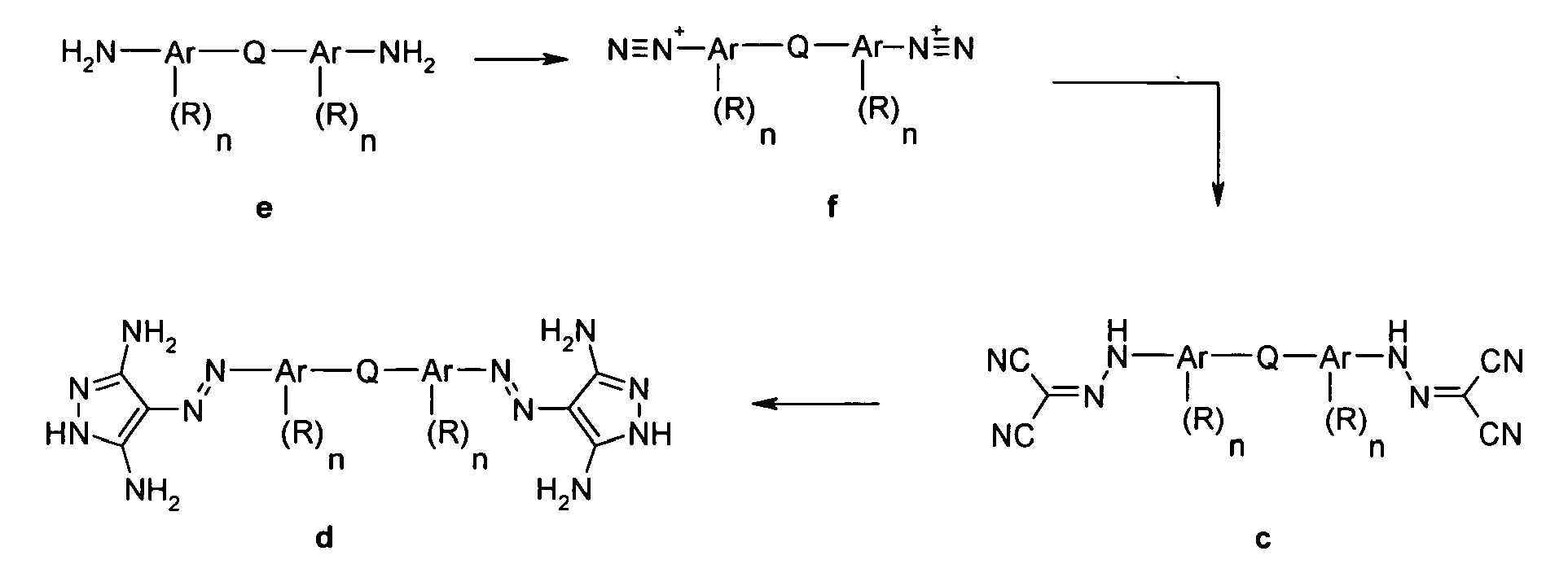
- Procédé selon la revendication 24, où l'étape (i) contient la réaction de l'amine de la formule (e) avec NaNO2/HCl.
- Procédé selon la revendication 24 ou la revendication 25, où l'étape (iii) contient la réaction du composé indiqué de la formule (c) avec N2H4.
Applications Claiming Priority (2)
| Application Number | Priority Date | Filing Date | Title |
|---|---|---|---|
| GBGB0419416.3A GB0419416D0 (en) | 2004-09-01 | 2004-09-01 | 4-Arylazo-3,5-Diamino-Pyrazole compounds and use thereof |
| PCT/GB2005/003383 WO2006024858A1 (fr) | 2004-09-01 | 2005-09-01 | Composes de 4-arylazo-3,5-diamino-pyrazole et leur utilisation |
Publications (2)
| Publication Number | Publication Date |
|---|---|
| EP1786779A1 EP1786779A1 (fr) | 2007-05-23 |
| EP1786779B1 true EP1786779B1 (fr) | 2009-10-28 |
Family
ID=33155857
Family Applications (1)
| Application Number | Title | Priority Date | Filing Date |
|---|---|---|---|
| EP05777396A Expired - Lifetime EP1786779B1 (fr) | 2004-09-01 | 2005-09-01 | Composes de 4-arylazo-3,5-diamino-pyrazole et leur utilisation |
Country Status (7)
| Country | Link |
|---|---|
| US (1) | US8357673B2 (fr) |
| EP (1) | EP1786779B1 (fr) |
| JP (1) | JP2008511602A (fr) |
| AT (1) | ATE446954T1 (fr) |
| DE (1) | DE602005017406D1 (fr) |
| GB (1) | GB0419416D0 (fr) |
| WO (1) | WO2006024858A1 (fr) |
Families Citing this family (17)
| Publication number | Priority date | Publication date | Assignee | Title |
|---|---|---|---|---|
| US8119655B2 (en) | 2005-10-07 | 2012-02-21 | Takeda Pharmaceutical Company Limited | Kinase inhibitors |
| SG158147A1 (en) | 2006-10-09 | 2010-01-29 | Takeda Pharmaceutical | Kinase inhibitors |
| FR2917736B1 (fr) * | 2007-06-22 | 2009-09-11 | Oreal | Derives azoiques a motif pyrazolinone pour la coloration des fibres keratiniques |
| BRPI0817234A2 (pt) | 2007-09-26 | 2014-09-30 | Sinai School Medicine | Análogos de azacitidina e seus usos |
| US8778876B2 (en) * | 2011-03-04 | 2014-07-15 | The Board Of Regents Of The University Of Texas System | Small-molecule inhibitors of Dengue and West Nile virus proteases |
| WO2013059634A1 (fr) | 2011-10-20 | 2013-04-25 | The Regents Of The University Of California | Utilisation d'inhibiteurs de cdk9 pour réduire la dégradation cartilagineuse |
| US10300073B2 (en) | 2014-10-14 | 2019-05-28 | The Regents Of The University Of California | Use of CDK9 and BRD4 inhibitors to inhibit inflammation |
| US10292986B2 (en) * | 2015-05-01 | 2019-05-21 | The Board Of Regents Of The University Of Texas System | Methods for treating epithelian mesenchymal transition related diseases |
| US10039749B1 (en) | 2018-01-15 | 2018-08-07 | King Saud University | Substituted pyrazole derivatives |
| CN109134454B (zh) * | 2018-09-14 | 2021-08-27 | 山西大同大学 | 一种联噻唑类偶氮化合物的制备方法和应用 |
| CN109232428B (zh) * | 2018-10-26 | 2022-02-15 | 上海交通大学 | 一种吡唑基偶氮苯酚化合物及其合成、衍生 |
| KR102128509B1 (ko) | 2018-12-19 | 2020-07-01 | 한국과학기술연구원 | 말단 아민기에 아릴 또는 헤테로아릴기가 치환된 신규한 히드라존 유도체 및 이의 용도 |
| CN111606825B (zh) * | 2019-02-22 | 2023-12-29 | 沈阳化工大学 | 一种1, 1-二氰基腙类化合物及其应用 |
| JP7641994B2 (ja) * | 2020-06-19 | 2025-03-07 | コリア・インスティテュート・オブ・サイエンス・アンド・テクノロジー | 新規な融合複素環-カルボノヒドラゾノイルジシアニド化合物及びその用途 |
| AR122680A1 (es) * | 2020-06-19 | 2022-09-28 | Korea Inst Sci & Tech | Nuevos compuestos de dicianuro de carbonohidrazonoilo que comprenden 2 o más grupos arilo o heteroarilo conectados por medio de un enlazador y uso de los mismos |
| EP4204403A1 (fr) * | 2020-08-27 | 2023-07-05 | Københavns Universitet | Composés ayant des propriétés anti-biofilm de pseudomonas |
| CN118852033A (zh) * | 2024-07-15 | 2024-10-29 | 南京林业大学 | 一种c3-取代的喹喔啉酮衍生物的合成方法及其应用 |
Family Cites Families (14)
| Publication number | Priority date | Publication date | Assignee | Title |
|---|---|---|---|---|
| GB9519275D0 (en) * | 1995-09-21 | 1995-11-22 | Univ Dundee | Substances and their therapeutic use |
| AU753015B2 (en) * | 1998-03-04 | 2002-10-03 | Cyclacel Limited | Cyclin dependent kinase inhibitor |
| US6703395B2 (en) * | 1998-03-04 | 2004-03-09 | Institute Of Experimental Botany Of The Academy Of Sciences Of The Czech Republic | Cyclin dependent kinase inhibitor |
| US6207855B1 (en) * | 1998-06-23 | 2001-03-27 | Duke University Medical Center | Stable no-delivering compounds |
| US6737447B1 (en) * | 1999-10-08 | 2004-05-18 | The University Of Akron | Nitric oxide-modified linear poly(ethylenimine) fibers and uses thereof |
| AU2001242629B2 (en) * | 2000-03-29 | 2005-08-11 | Cyclacel Limited | 2-substituted 4-heteroaryl-pyrimidines and their use in the treatment of proliferative disorders |
| US6214813B1 (en) * | 2000-04-07 | 2001-04-10 | Kinetek Pharmaceuticals, Inc. | Pyrazole compounds |
| US6436915B1 (en) * | 2000-04-07 | 2002-08-20 | Kinetek Pharmaceuticals, Inc. | Pyrazole compounds |
| GB2362648A (en) * | 2000-05-23 | 2001-11-28 | Univerzita Palackeho V Olomouc | Triterpenoid derivatives |
| ES2266258T3 (es) * | 2000-09-15 | 2007-03-01 | Vertex Pharmaceuticals Incorporated | Compuestos de pirazol utiles como inhibidores de proteina cinasas. |
| WO2003002565A1 (fr) | 2001-06-27 | 2003-01-09 | Cyclacel Limited | Derives de purine 2,6,9-substitues et leur utilisation dans le traitement de maladies proliferantes |
| US6703046B2 (en) * | 2001-10-04 | 2004-03-09 | Medtronic Ave Inc. | Highly cross-linked, extremely hydrophobic nitric oxide-releasing polymers and methods for their manufacture and use |
| US7875728B2 (en) * | 2001-11-30 | 2011-01-25 | Valocor Therapeutics, Inc. | Hydrazonopyrazole derivatives and their use as therapeutics |
| GB0219746D0 (en) | 2002-08-23 | 2002-10-02 | Inst Of Ex Botany Ascr | Azapurine derivatives |
-
2004
- 2004-09-01 GB GBGB0419416.3A patent/GB0419416D0/en not_active Ceased
-
2005
- 2005-09-01 JP JP2007528996A patent/JP2008511602A/ja active Pending
- 2005-09-01 WO PCT/GB2005/003383 patent/WO2006024858A1/fr not_active Ceased
- 2005-09-01 AT AT05777396T patent/ATE446954T1/de not_active IP Right Cessation
- 2005-09-01 US US11/661,003 patent/US8357673B2/en not_active Expired - Fee Related
- 2005-09-01 EP EP05777396A patent/EP1786779B1/fr not_active Expired - Lifetime
- 2005-09-01 DE DE602005017406T patent/DE602005017406D1/de not_active Expired - Lifetime
Also Published As
| Publication number | Publication date |
|---|---|
| JP2008511602A (ja) | 2008-04-17 |
| DE602005017406D1 (de) | 2009-12-10 |
| US8357673B2 (en) | 2013-01-22 |
| US20080312238A1 (en) | 2008-12-18 |
| GB0419416D0 (en) | 2004-10-06 |
| ATE446954T1 (de) | 2009-11-15 |
| EP1786779A1 (fr) | 2007-05-23 |
| WO2006024858A1 (fr) | 2006-03-09 |
Similar Documents
| Publication | Publication Date | Title |
|---|---|---|
| US8357673B2 (en) | 4-arylazo-3,5-diamino-pyrazole compounds and use thereof | |
| EP1641805B1 (fr) | Composes a base de thiazolo-, oxazalo et imidazolo-quinazoline capables d'inhibition de proteine-kinases | |
| EP2610256B1 (fr) | Dérivés de pyrimidine en tant qu'inhibiteurs de kinase de protéine | |
| CA2656202C (fr) | Traitement de maladies neurodegeneratives par l'inhibition de hsp90 | |
| DE69836332T2 (de) | Benzyliden-1,3-dihydro-indol-2-on-derivate als inhibitoren von rezeptor tyrosin kinasen, insbesondere von raf kinasen | |
| US20090215805A1 (en) | 4-Heteroaryl Pyrimidine Derivatives and use thereof as Protein Kinase Inhibitors | |
| CN101522683B (zh) | 可用作蛋白激酶抑制剂的吡唑并(1,5-a)(1,3,5)三嗪和吡唑并(1,5-a)嘧啶衍生物 | |
| AU2005306458B2 (en) | Kinase inhibitors | |
| EP1589967B1 (fr) | Oxydes de benzothiazole-3 utiles pour le traitement de troubles proliferatifs | |
| EP2201013B1 (fr) | Nouveaux dérivés 4-substitués de la pyrazolo[3,4-d]pyrimidine et de la pyrrolo[2,3-d]pyrimidine et leurs utilisations | |
| EP3854401A1 (fr) | Dérivés de purine inhibiteurs de cdc7 et leur utilisation pour le traitement de pathologies neurologiques | |
| US20240076272A1 (en) | Activators of Heme Regulated Inhibitor Kinase (HRI) | |
| HK1187895B (en) | Pyrimidine derivatives as protein kinase inhibitors | |
| HK1253803A1 (en) | Treatment of neurodegenerative diseases through inhibition of hsp90 | |
| HK1146042B (en) | Pyrimidine derivatives as protein kinase inhibitors |
Legal Events
| Date | Code | Title | Description |
|---|---|---|---|
| PUAI | Public reference made under article 153(3) epc to a published international application that has entered the european phase |
Free format text: ORIGINAL CODE: 0009012 |
|
| 17P | Request for examination filed |
Effective date: 20070322 |
|
| AK | Designated contracting states |
Kind code of ref document: A1 Designated state(s): AT BE BG CH CY CZ DE DK EE ES FI FR GB GR HU IE IS IT LI LT LU LV MC NL PL PT RO SE SI SK TR |
|
| 17Q | First examination report despatched |
Effective date: 20071008 |
|
| DAX | Request for extension of the european patent (deleted) | ||
| RAP1 | Party data changed (applicant data changed or rights of an application transferred) |
Owner name: UNIVERSITA PALACKEHO V OLOMOUCI Owner name: INSTITUTE OF EXPERIMENTAL BOTANY ASCR |
|
| GRAP | Despatch of communication of intention to grant a patent |
Free format text: ORIGINAL CODE: EPIDOSNIGR1 |
|
| RAP1 | Party data changed (applicant data changed or rights of an application transferred) |
Owner name: UNIVERSITA PALACKEHO V OLOMOUCI Owner name: INSTITUTE OF EXPERIMENTAL BOTANY OF THE ASCR, V.V. |
|
| GRAS | Grant fee paid |
Free format text: ORIGINAL CODE: EPIDOSNIGR3 |
|
| GRAA | (expected) grant |
Free format text: ORIGINAL CODE: 0009210 |
|
| AK | Designated contracting states |
Kind code of ref document: B1 Designated state(s): AT BE BG CH CY CZ DE DK EE ES FI FR GB GR HU IE IS IT LI LT LU LV MC NL PL PT RO SE SI SK TR |
|
| REG | Reference to a national code |
Ref country code: GB Ref legal event code: FG4D |
|
| REG | Reference to a national code |
Ref country code: CH Ref legal event code: EP |
|
| REG | Reference to a national code |
Ref country code: IE Ref legal event code: FG4D |
|
| REF | Corresponds to: |
Ref document number: 602005017406 Country of ref document: DE Date of ref document: 20091210 Kind code of ref document: P |
|
| LTIE | Lt: invalidation of european patent or patent extension |
Effective date: 20091028 |
|
| NLV1 | Nl: lapsed or annulled due to failure to fulfill the requirements of art. 29p and 29m of the patents act | ||
| PG25 | Lapsed in a contracting state [announced via postgrant information from national office to epo] |
Ref country code: IS Free format text: LAPSE BECAUSE OF FAILURE TO SUBMIT A TRANSLATION OF THE DESCRIPTION OR TO PAY THE FEE WITHIN THE PRESCRIBED TIME-LIMIT Effective date: 20100228 Ref country code: ES Free format text: LAPSE BECAUSE OF FAILURE TO SUBMIT A TRANSLATION OF THE DESCRIPTION OR TO PAY THE FEE WITHIN THE PRESCRIBED TIME-LIMIT Effective date: 20100208 Ref country code: LT Free format text: LAPSE BECAUSE OF FAILURE TO SUBMIT A TRANSLATION OF THE DESCRIPTION OR TO PAY THE FEE WITHIN THE PRESCRIBED TIME-LIMIT Effective date: 20091028 Ref country code: SE Free format text: LAPSE BECAUSE OF FAILURE TO SUBMIT A TRANSLATION OF THE DESCRIPTION OR TO PAY THE FEE WITHIN THE PRESCRIBED TIME-LIMIT Effective date: 20091028 Ref country code: PT Free format text: LAPSE BECAUSE OF FAILURE TO SUBMIT A TRANSLATION OF THE DESCRIPTION OR TO PAY THE FEE WITHIN THE PRESCRIBED TIME-LIMIT Effective date: 20100301 Ref country code: FI Free format text: LAPSE BECAUSE OF FAILURE TO SUBMIT A TRANSLATION OF THE DESCRIPTION OR TO PAY THE FEE WITHIN THE PRESCRIBED TIME-LIMIT Effective date: 20091028 |
|
| PG25 | Lapsed in a contracting state [announced via postgrant information from national office to epo] |
Ref country code: SI Free format text: LAPSE BECAUSE OF FAILURE TO SUBMIT A TRANSLATION OF THE DESCRIPTION OR TO PAY THE FEE WITHIN THE PRESCRIBED TIME-LIMIT Effective date: 20091028 Ref country code: LV Free format text: LAPSE BECAUSE OF FAILURE TO SUBMIT A TRANSLATION OF THE DESCRIPTION OR TO PAY THE FEE WITHIN THE PRESCRIBED TIME-LIMIT Effective date: 20091028 Ref country code: CY Free format text: LAPSE BECAUSE OF FAILURE TO SUBMIT A TRANSLATION OF THE DESCRIPTION OR TO PAY THE FEE WITHIN THE PRESCRIBED TIME-LIMIT Effective date: 20091028 Ref country code: PL Free format text: LAPSE BECAUSE OF FAILURE TO SUBMIT A TRANSLATION OF THE DESCRIPTION OR TO PAY THE FEE WITHIN THE PRESCRIBED TIME-LIMIT Effective date: 20091028 |
|
| PG25 | Lapsed in a contracting state [announced via postgrant information from national office to epo] |
Ref country code: AT Free format text: LAPSE BECAUSE OF FAILURE TO SUBMIT A TRANSLATION OF THE DESCRIPTION OR TO PAY THE FEE WITHIN THE PRESCRIBED TIME-LIMIT Effective date: 20091028 Ref country code: BE Free format text: LAPSE BECAUSE OF FAILURE TO SUBMIT A TRANSLATION OF THE DESCRIPTION OR TO PAY THE FEE WITHIN THE PRESCRIBED TIME-LIMIT Effective date: 20091028 |
|
| PG25 | Lapsed in a contracting state [announced via postgrant information from national office to epo] |
Ref country code: DK Free format text: LAPSE BECAUSE OF FAILURE TO SUBMIT A TRANSLATION OF THE DESCRIPTION OR TO PAY THE FEE WITHIN THE PRESCRIBED TIME-LIMIT Effective date: 20091028 Ref country code: RO Free format text: LAPSE BECAUSE OF FAILURE TO SUBMIT A TRANSLATION OF THE DESCRIPTION OR TO PAY THE FEE WITHIN THE PRESCRIBED TIME-LIMIT Effective date: 20091028 Ref country code: EE Free format text: LAPSE BECAUSE OF FAILURE TO SUBMIT A TRANSLATION OF THE DESCRIPTION OR TO PAY THE FEE WITHIN THE PRESCRIBED TIME-LIMIT Effective date: 20091028 Ref country code: BG Free format text: LAPSE BECAUSE OF FAILURE TO SUBMIT A TRANSLATION OF THE DESCRIPTION OR TO PAY THE FEE WITHIN THE PRESCRIBED TIME-LIMIT Effective date: 20100128 |
|
| PG25 | Lapsed in a contracting state [announced via postgrant information from national office to epo] |
Ref country code: CZ Free format text: LAPSE BECAUSE OF FAILURE TO SUBMIT A TRANSLATION OF THE DESCRIPTION OR TO PAY THE FEE WITHIN THE PRESCRIBED TIME-LIMIT Effective date: 20091028 Ref country code: SK Free format text: LAPSE BECAUSE OF FAILURE TO SUBMIT A TRANSLATION OF THE DESCRIPTION OR TO PAY THE FEE WITHIN THE PRESCRIBED TIME-LIMIT Effective date: 20091028 |
|
| PLBE | No opposition filed within time limit |
Free format text: ORIGINAL CODE: 0009261 |
|
| STAA | Information on the status of an ep patent application or granted ep patent |
Free format text: STATUS: NO OPPOSITION FILED WITHIN TIME LIMIT |
|
| 26N | No opposition filed |
Effective date: 20100729 |
|
| PG25 | Lapsed in a contracting state [announced via postgrant information from national office to epo] |
Ref country code: GR Free format text: LAPSE BECAUSE OF FAILURE TO SUBMIT A TRANSLATION OF THE DESCRIPTION OR TO PAY THE FEE WITHIN THE PRESCRIBED TIME-LIMIT Effective date: 20100129 |
|
| PG25 | Lapsed in a contracting state [announced via postgrant information from national office to epo] |
Ref country code: IT Free format text: LAPSE BECAUSE OF FAILURE TO SUBMIT A TRANSLATION OF THE DESCRIPTION OR TO PAY THE FEE WITHIN THE PRESCRIBED TIME-LIMIT Effective date: 20091028 |
|
| PG25 | Lapsed in a contracting state [announced via postgrant information from national office to epo] |
Ref country code: MC Free format text: LAPSE BECAUSE OF NON-PAYMENT OF DUE FEES Effective date: 20100930 |
|
| REG | Reference to a national code |
Ref country code: CH Ref legal event code: PL |
|
| REG | Reference to a national code |
Ref country code: FR Ref legal event code: ST Effective date: 20110531 |
|
| REG | Reference to a national code |
Ref country code: DE Ref legal event code: R119 Ref document number: 602005017406 Country of ref document: DE Effective date: 20110401 |
|
| PG25 | Lapsed in a contracting state [announced via postgrant information from national office to epo] |
Ref country code: FR Free format text: LAPSE BECAUSE OF NON-PAYMENT OF DUE FEES Effective date: 20100930 Ref country code: DE Free format text: LAPSE BECAUSE OF NON-PAYMENT OF DUE FEES Effective date: 20110401 Ref country code: CH Free format text: LAPSE BECAUSE OF NON-PAYMENT OF DUE FEES Effective date: 20100930 Ref country code: LI Free format text: LAPSE BECAUSE OF NON-PAYMENT OF DUE FEES Effective date: 20100930 Ref country code: IE Free format text: LAPSE BECAUSE OF NON-PAYMENT OF DUE FEES Effective date: 20100901 |
|
| PGFP | Annual fee paid to national office [announced via postgrant information from national office to epo] |
Ref country code: GB Payment date: 20110831 Year of fee payment: 7 |
|
| PG25 | Lapsed in a contracting state [announced via postgrant information from national office to epo] |
Ref country code: NL Free format text: LAPSE BECAUSE OF FAILURE TO SUBMIT A TRANSLATION OF THE DESCRIPTION OR TO PAY THE FEE WITHIN THE PRESCRIBED TIME-LIMIT Effective date: 20091028 Ref country code: HU Free format text: LAPSE BECAUSE OF FAILURE TO SUBMIT A TRANSLATION OF THE DESCRIPTION OR TO PAY THE FEE WITHIN THE PRESCRIBED TIME-LIMIT Effective date: 20100429 Ref country code: LU Free format text: LAPSE BECAUSE OF NON-PAYMENT OF DUE FEES Effective date: 20100901 |
|
| PG25 | Lapsed in a contracting state [announced via postgrant information from national office to epo] |
Ref country code: TR Free format text: LAPSE BECAUSE OF FAILURE TO SUBMIT A TRANSLATION OF THE DESCRIPTION OR TO PAY THE FEE WITHIN THE PRESCRIBED TIME-LIMIT Effective date: 20091028 |
|
| GBPC | Gb: european patent ceased through non-payment of renewal fee |
Effective date: 20120901 |
|
| PG25 | Lapsed in a contracting state [announced via postgrant information from national office to epo] |
Ref country code: GB Free format text: LAPSE BECAUSE OF NON-PAYMENT OF DUE FEES Effective date: 20120901 |