EP1786959B1 - Verfahren und anlage zur behandlung von faserigem material, das zum abbau durch biologische aktivität geeignet ist - Google Patents
Verfahren und anlage zur behandlung von faserigem material, das zum abbau durch biologische aktivität geeignet ist Download PDFInfo
- Publication number
- EP1786959B1 EP1786959B1 EP20040761898 EP04761898A EP1786959B1 EP 1786959 B1 EP1786959 B1 EP 1786959B1 EP 20040761898 EP20040761898 EP 20040761898 EP 04761898 A EP04761898 A EP 04761898A EP 1786959 B1 EP1786959 B1 EP 1786959B1
- Authority
- EP
- European Patent Office
- Prior art keywords
- ozone
- ozonization
- vessel
- underpressure
- gas
- Prior art date
- Legal status (The legal status is an assumption and is not a legal conclusion. Google has not performed a legal analysis and makes no representation as to the accuracy of the status listed.)
- Expired - Lifetime
Links
Images
Classifications
-
- D—TEXTILES; PAPER
- D01—NATURAL OR MAN-MADE THREADS OR FIBRES; SPINNING
- D01G—PRELIMINARY TREATMENT OF FIBRES, e.g. FOR SPINNING
- D01G99/00—Subject matter not provided for in other groups of this subclass
- D01G99/005—Conditioning of textile fibre during treatment before spinning
-
- Y—GENERAL TAGGING OF NEW TECHNOLOGICAL DEVELOPMENTS; GENERAL TAGGING OF CROSS-SECTIONAL TECHNOLOGIES SPANNING OVER SEVERAL SECTIONS OF THE IPC; TECHNICAL SUBJECTS COVERED BY FORMER USPC CROSS-REFERENCE ART COLLECTIONS [XRACs] AND DIGESTS
- Y10—TECHNICAL SUBJECTS COVERED BY FORMER USPC
- Y10T—TECHNICAL SUBJECTS COVERED BY FORMER US CLASSIFICATION
- Y10T442/00—Fabric [woven, knitted, or nonwoven textile or cloth, etc.]
- Y10T442/20—Coated or impregnated woven, knit, or nonwoven fabric which is not [a] associated with another preformed layer or fiber layer or, [b] with respect to woven and knit, characterized, respectively, by a particular or differential weave or knit, wherein the coating or impregnation is neither a foamed material nor a free metal or alloy layer
- Y10T442/2762—Coated or impregnated natural fiber fabric [e.g., cotton, wool, silk, linen, etc.]
Definitions
- the present invention relates to a method for treating fibrous material prone to degradation by biological activity, particularly cotton bales, and to a plant for executing the method.
- the cotton bales are defined to have 8.5 % water content inter alia because their price is fixed by weight.
- the cotton is prone to rotting, i.e. biological degradation by bacteria, fungi etc.
- the process is conducted in a manner that even the core of the bales reaches a temperature of about 80°C. At this temperature, most active microbes are destroyed or deactivated. However, e.g. spores of fungi survive, and accordingly, growth of fungi will occur again some time later, e.g. after 1 to 2 months.
- yarns and textile materials consisting at least partly of fibrous material susceptible to such degradation.
- yarns are traded with a water content of 8.5 %, too, which promotes biological activity.
- exemplary step sequence proposes first to perform one or more ozonisations, then one or more steaming phases, optionally combined with irradiation.
- the microbes including their spores are more efficiently and substantially destroyed or inactivated by ozone penetrating the fibrous material, or more precisely by a gas having an effective concentration of ozone.
- the material may be bales of (raw) cotton.
- microbes any kind of microscopic organisms are meant, like bacteria and fungi, either in its active form or spores. By spores, the durable forms of bacteria and fungi are meant.
- the treatment by ozone is performed after a steam treatment, e.g. according to US-6,557,267 .
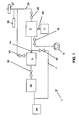
- the plant 1 for performing the method is arranged around a vessel 3 which is filled by the material to be treated.
- the material may be bales of raw cotton, but also uncolored cotton yarn bobbins, cotton textile pieces, webs, felts, fleeces or the like.
- Other natural fibrous materials like ramie, sisal, jute, flax, wool, silk, either as pure material or in combination with cotton may be considered, too, which are susceptible to biological degradation. As a rule, these materials are of biological origin.
- the vessel 3 is connected to an ozone reservoir 5, a purging gas conduit 7, a vacuum pump 9, and a steam generator 11 via respectively an ozone supply valve 14, a purging valve 16, a vacuum valve 18, and a steam valve 20.
- the vessel 3 and the ozone reservoir 5 are connected via respective exhaust valves 22, 23 to the exhaust line 25.
- the exhaust line 25 is provided with a vent ozone destructor (VOD) unit 27 and a sensor 28 for determining the ozone concentration in the exhaust line 25.
- VOD vent ozone destructor
- the vent ozone destructor unit 27 reduces the ozone concentration to a degree that the exhaust gas may be discharged into the environment.
- the exhaust valve 23 of the ozone reservoir 5 allows to dispose ozone in case of overpressure or to exchange its contents entirely after a working interruption or for long non-using periods.
- the ozone reservoir 5 is supplied with ozone via an ozone generator valve 30 by the ozone generator 32.
- the ozone generator 32 is of a known type, e.g. one using a dielectric barrier discharge.
- the ozone generator 32 is supplied with the purging gas as the working gas.
- the gas is furnished by a gas supply 34.
- the ozone generator 32 may have its own gas source, e.g. pure oxygen for producing a gas stream of elevated ozone concentration to the reservoir 5.
- the purging gas may be air which is purified in order to avoid a secondary contamination with microorganisms of the treated material during the purging step.
- the gas source 34 serves the ozone generator 32, the gas needs to comply additionally with the requirements of the latter, i.e. it has to have a dew point of e.g. -60°C at most and must be free of dust and hydrocarbons.
- a dew point of e.g. -60°C at most and must be free of dust and hydrocarbons.
- pure oxygen an ozone concentration of up to about 14 % can be reached, whereas with air, at most about 4.5 % of ozone are feasible with ozone generators of the dielectric barrier discharge type.
- the ozone generator is of a type furnishing ozone containing gas of at least 1 Bar overpressure.
- the material to be treated e.g. cotton bales, is stored in the vessel 3 and the vessel 3 is closed.
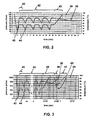
- Fig. 2 shows the development of temperature 38 [°C] and pressure 39 [mBar] versus time [minutes] during the treatment.
- a first vacuum 40 of 100 mBar is produced in the vessel 3 by opening the vacuum valve 18.
- the initially contained air is removed as much as possible.
- higher organisms, like inspects, may already be killed thereby.
- the steaming valve 20 is opened for flooding the vessel 3 with steam. After about 2 minutes, the steam valve 20 is closed and the vacuum valve 18 is opened to reduce the pressure again to about 200 mBar within about 2 minutes.
- the pressure in the vessel is about 500 mBar, and the temperature is about 80 °C.
- the pressure is determined by the vapor pressure of water at the selected steaming temperature, e.g. 80 °C. Still to be noted that the temperature in the core of the bales of cotton, particularly if compacted as is usually the case, reaches about 80°C in the last steaming period 43-only.
- the steaming cycles are repeated as often, and the ratio of steaming duration and withdrawal of steam by vacuum is chosen the way that at least during the last period, the so-called core temperature of the units of treated material (e.g. cotton bales) reaches the steaming temperature.
- the so-called core temperature of the units of treated material e.g. cotton bales
- the temperature in the vessel decreases to about 60°C at the end 44 of each underpressure period.
- This temperature is, however, arbitrary and merely occasioned by the thermal characteristics of the system (insulation, time needed for establishing the reduced pressure, evaporation etc.).
- the fifth steaming period is followed by the ozonization phase 45 which takes about 5 minutes and during which the pressure in the vessel attains ambient pressure (1 Bar).
- the vessel is filled with ozone containing gas from the ozone reservoir 5 by opening the ozone supply valve 14.
- the time between the ozonization phases is used for filling the ozone reservoir 5 using an ozone generator of lower output rate.
- the ozone is drawn into the material. Furthermore, as long as there is free ozone available it remains active in the inner parts of the material and continues to deactivate microorganisms and spores etc., particularly also during the following phases.
- the vessel 3 is purged by opening the purge valve 16.
- the purging process normally with purified air or oxygen furnished by the gas source 34, is maintained until the ozone sensor 28 indicates that the vessel may be opened without danger.
- the purge gas valve 16 is closed and the vessel 3 is opened.
- the material is removed and wrapped in an about microorganism-tight packaging, e.g. a foil.
- the packaging retains the ozone containing atmosphere in the material.
- the material have already been packed in a sealed package in order to maintain the water content of 8.5 %, hence often the conventional packaging step may be sufficient, possibly slightly modified to ameliorate microorganism-tightness.
- the ozone has a sterilizing and anti-microbial effect as well within the material, the long-term danger is merely recontamination from the environment.
- the periphery of the material itself has a filtering effect and impedes penetration and secondary contamination by microorganisms and spores.
- the feared rotting in the core of the material e.g. cotton bales which is almost invisible from the outside is effectively suppressed.
- Fig. 3 shows a generalized execution manner of the process according to the invention in a representation like Fig. 2 with the same numerals designating corresponding steps.
- the m ozonization steps are each preceded by an underpressure period 48 during which the pressure within the vessel 2 is lowered to a pressure between 100 and about 500 mBar.
- the temperature decreases during the ozonisation cycles and approaches ambient temperature, indicated by the cut broken line 49.
- the last step is an ozonization step so that the advantage of the effect of ozone remaining within the wrapped material, e.g. cotton bales is maintained.
- the ozone may also have a bleaching effect which may be an additional advantage at least in the case of treating cotton bales.
- ozone even kills higher organisms like insects. Particularly in border-crossing trading, a special and often environmentally critical treatment like fumigation with e.g. methylbromide, cyanic acid or other biocides may be avoided.
Landscapes
- Engineering & Computer Science (AREA)
- Textile Engineering (AREA)
- Apparatus For Disinfection Or Sterilisation (AREA)
- Chemical Or Physical Treatment Of Fibers (AREA)
- Treatment Of Fiber Materials (AREA)
- Agricultural Chemicals And Associated Chemicals (AREA)
Claims (12)
- Verfahren zur Behandlung von für Zersetzung durch biologische Aktivität anfälligem faserigem Material, wobei das Material mindestens einmal einem Ozonisierungszyklus mit folgenden Schritten unterzogen wird:- Beaufschlagen des Materials mit einem Unterdruck in einem geschlossenen Behälter (3) und nachfolgendes- Anwenden eines Ozonisierungsschritts auf das Material, wobei der Ozonisierungsschritt das Füllen des Behälters mit einem Gas umfasst, das einen wirksamen Ozongehalt aufweist, wahlweise mit nachfolgendem Verbleib des Materials in der ozonhaltigen Atmosphäre, so dass das Material vom Gas wirksam durchsetzt wird,um mit dem Ozon Mikroorganismen im Material abzutöten, und wobei das Material vor oder eingestreut in die Ozonisierung einer Dämpfbehandlung unterzogen wird, die mindestens einen Zyklus mit folgenden Schritten umfasst:- Beaufschlagen des Materials mit einem Unterdruck in einem geschlossenen Behälter (3)- Füllen des Behälters (3) mit Dampf, um das Material durch und durch auf eine Temperatur zu erhitzen, bei der biologische Organismen abgetötet oder inaktiviert werden.
- Verfahren nach Anspruch 1, wobei der Unterdruck ein Druck von höchstens ca. 500 mBar (50 kPa) ist.
- Verfahren nach Anspruch 1, wobei der Unterdruck ein Druck von ca. 100 mBar (10 kPa) bis ca. 500 mBar (50 kPa) ist.
- Verfahren nach Anspruch 1, wobei der Ozonisierungsschritt eine Dauer von 3 Minuten bis 20 Minuten aufweist.
- Verfahren nach Anspruch 1, wobei mindestens der abschliessende Ozonisierungsschritt eine Dauer von ca. 5 Minuten aufweist.
- Verfahren nach Anspruch 1, wobei der Ozongehalt des ozonhaltigen Gases mindestens 4 Gew.-% beträgt.
- Verfahren nach Anspruch 1, wobei das ozonhaltige Gas erzeugt wird, indem ein aus Luft bis reinem Sauerstoff bestehendes Gas durch einen Ozongenerator geleitet wird, der Sauerstoff in Ozon umwandelt.
- Verfahren nach Anspruch 7, wobei das ozonhaltige Gas in einem Ozonspeicher (5) gelagert wird und der Behälter im wesentlichen gefüllt wird, indem der Ozonspeicher (5) in den Behälter (3) entleert wird.
- Verfahren nach Anspruch 1, wobei das Material verdichtete oder unverdichtete Rohbaumwollballen umfasst.
- Verfahren nach Anspruch 1, wobei das Material Ballen, Rollen und/oder Teile von Textilbahnen, Geweben, Fäden, Filzen, Vliesen und/oder Garnen umfasst, die mindestens teilweise aus Baumwolle und/oder anderen für Zersetzung durch biologische Aktivität anfälligen faserigen Materialien bestehen.
- Verfahren nach Anspruch 1, wobei das Material nach dem Abschluss der Ozonisierung mit einer gegenüber Mikroorganismen im wesentlichen dichten Verpackung umhüllt wird, um das Ozon im Material zu halten.
- Verfahren nach Anspruch 1, wobei auf den letzten Dämpfzyklus mindestens ein abschliessender Ozonisierungszyklus folgt, wobei die Erzeugung des Unterdrucks im ersten der abschliessenden Ozonisierungsschritte wahlweise teilweise oder vollständig durch den am Ende des vorangehenden Dämpfzyklus herrschenden Unterdruck erfolgt.
Applications Claiming Priority (1)
| Application Number | Priority Date | Filing Date | Title |
|---|---|---|---|
| PCT/CH2004/000558 WO2006026869A1 (en) | 2004-09-06 | 2004-09-06 | Method and plant for the treatment of fibrous material susceptible to degradation by biological activity |
Publications (2)
| Publication Number | Publication Date |
|---|---|
| EP1786959A1 EP1786959A1 (de) | 2007-05-23 |
| EP1786959B1 true EP1786959B1 (de) | 2009-06-17 |
Family
ID=34958429
Family Applications (1)
| Application Number | Title | Priority Date | Filing Date |
|---|---|---|---|
| EP20040761898 Expired - Lifetime EP1786959B1 (de) | 2004-09-06 | 2004-09-06 | Verfahren und anlage zur behandlung von faserigem material, das zum abbau durch biologische aktivität geeignet ist |
Country Status (11)
| Country | Link |
|---|---|
| US (1) | US20070243102A1 (de) |
| EP (1) | EP1786959B1 (de) |
| JP (1) | JP2008512572A (de) |
| CN (1) | CN101044270A (de) |
| AR (1) | AR053761A1 (de) |
| AT (1) | ATE434066T1 (de) |
| AU (1) | AU2004323163A1 (de) |
| BR (1) | BRPI0419029A (de) |
| DE (1) | DE602004021642D1 (de) |
| ES (1) | ES2329135T3 (de) |
| WO (1) | WO2006026869A1 (de) |
Families Citing this family (7)
| Publication number | Priority date | Publication date | Assignee | Title |
|---|---|---|---|---|
| US7846373B2 (en) * | 2005-10-03 | 2010-12-07 | Xorella Ag | System and method for treatment of wooden materials |
| US20070094887A1 (en) * | 2005-10-03 | 2007-05-03 | Philipp Peter R | System and method for treating wooden materials with ozone |
| GB201713143D0 (en) * | 2017-08-16 | 2017-09-27 | Lpw Technology Ltd | Powder transport container |
| CN108992686B (zh) * | 2018-08-17 | 2019-07-16 | 石敏 | 一种医用消毒柜 |
| CN110448710A (zh) * | 2019-09-18 | 2019-11-15 | 好空气科技发展有限公司 | 一种织品高效率消毒的方法 |
| JP7842036B2 (ja) | 2020-12-25 | 2026-04-07 | 株式会社カネカ | 積層体およびその利用 |
| CN112790325B (zh) * | 2021-02-01 | 2022-12-30 | 广东省农业科学院蚕业与农产品加工研究所 | 一种营养增强型稳定化米糠快速加工方法 |
Family Cites Families (13)
| Publication number | Priority date | Publication date | Assignee | Title |
|---|---|---|---|---|
| US3704096A (en) * | 1970-10-16 | 1972-11-28 | Pollution Control Ind Inc | Sterilizing package and method and means for sterilizing an article and thereafter checking its sterility |
| JPH01110363A (ja) * | 1987-10-26 | 1989-04-27 | Shirakawa Seisakusho:Kk | 脱臭殺菌装置 |
| JPH047190Y2 (de) * | 1989-04-06 | 1992-02-26 | ||
| JP2506607B2 (ja) * | 1993-08-10 | 1996-06-12 | 株式会社織元 | 羽毛ふとん等の殺虫、殺菌、防臭、防かび等の方法 |
| US5749203A (en) * | 1994-09-23 | 1998-05-12 | Kimberly-Clark Corporation | Method of packaging a medical article |
| ES2147276T3 (es) * | 1995-09-08 | 2000-09-01 | Box O3 International | Dispositivo y procedimiento de tratamiento de materiales, especialmente con fines de descontaminacion. |
| US5868999A (en) * | 1996-03-19 | 1999-02-09 | Ozone Sterilization Products, Inc. | Ozone sterilizer and method for ozone sterilization |
| US5932265A (en) * | 1998-05-29 | 1999-08-03 | Morgan; Arthur I. | Method and apparatus for treating raw food |
| US6066348A (en) * | 1998-09-23 | 2000-05-23 | American Air Liquide Inc. | Method of disinfecting a foodstuff using gaseous ozone |
| WO2001037887A1 (en) * | 1999-11-27 | 2001-05-31 | Robert Mayberry Marshall | Waste treatment apparatus and methods |
| US6485769B2 (en) * | 2000-03-10 | 2002-11-26 | Air Liquide Canada, Inc. | Food disinfection using ozone |
| US6557267B2 (en) * | 2000-05-01 | 2003-05-06 | Freddy Wanger | Method for the heat treatment of bales |
| DE10216521A1 (de) * | 2002-04-15 | 2004-08-05 | Bossik, Jair, Dipl.-Ing. | Stabilisierung und Geruchsbeseitigung bei der Fasergewinnung aus pflanzlichen Rohmaterialien, wie Hanf, Jute und anderen pflanzlichen Rohstoffen |
-
2004
- 2004-09-06 US US11/574,693 patent/US20070243102A1/en not_active Abandoned
- 2004-09-06 AU AU2004323163A patent/AU2004323163A1/en not_active Abandoned
- 2004-09-06 ES ES04761898T patent/ES2329135T3/es not_active Expired - Lifetime
- 2004-09-06 WO PCT/CH2004/000558 patent/WO2006026869A1/en not_active Ceased
- 2004-09-06 CN CNA200480043909XA patent/CN101044270A/zh active Pending
- 2004-09-06 EP EP20040761898 patent/EP1786959B1/de not_active Expired - Lifetime
- 2004-09-06 BR BRPI0419029-7A patent/BRPI0419029A/pt not_active IP Right Cessation
- 2004-09-06 DE DE200460021642 patent/DE602004021642D1/de not_active Expired - Lifetime
- 2004-09-06 JP JP2007529308A patent/JP2008512572A/ja active Pending
- 2004-09-06 AT AT04761898T patent/ATE434066T1/de not_active IP Right Cessation
-
2005
- 2005-09-05 AR ARP050103701 patent/AR053761A1/es unknown
Also Published As
| Publication number | Publication date |
|---|---|
| JP2008512572A (ja) | 2008-04-24 |
| ES2329135T3 (es) | 2009-11-23 |
| ATE434066T1 (de) | 2009-07-15 |
| WO2006026869A1 (en) | 2006-03-16 |
| EP1786959A1 (de) | 2007-05-23 |
| DE602004021642D1 (de) | 2009-07-30 |
| AU2004323163A2 (en) | 2006-03-16 |
| CN101044270A (zh) | 2007-09-26 |
| AU2004323163A1 (en) | 2006-03-16 |
| AR053761A1 (es) | 2007-05-23 |
| BRPI0419029A (pt) | 2007-12-11 |
| US20070243102A1 (en) | 2007-10-18 |
Similar Documents
| Publication | Publication Date | Title |
|---|---|---|
| Bacci et al. | Effect of different extraction methods on fiber quality of nettle (Urtica dioica L.) | |
| US7713463B1 (en) | Method of manufacturing embroidered surgical implants | |
| US20110095454A1 (en) | System and method for treatment of wooden materials | |
| US20070243102A1 (en) | Method and Plant for the Treatment of Fibrous Material Susceptible to Degradation by Biological Activity | |
| CN106378846A (zh) | 一种旧藤条的处理工艺 | |
| US6557267B2 (en) | Method for the heat treatment of bales | |
| HK1103768A (en) | Method and plant for the treatment of fibrous material susceptible to degradation by biological activity | |
| KR20070050063A (ko) | 생물학적 활성에 의해 분해되기 쉬운 섬유질 물질을처리하기 위한 방법 및 플랜트 | |
| KR20150066980A (ko) | 친환경 소독제를 이용한 문화재 소독장치 | |
| CN100379910C (zh) | 棉包热处理方法 | |
| Moryganov et al. | Modification of flax fibres: From research to realization. | |
| JP3422951B2 (ja) | 特殊糸の形態安定化処理方法 | |
| US20210108364A1 (en) | Textile product having applied thereon with a treating composition | |
| Golestan et al. | Effect of modified atmosphere on obvious and hidden contamination to control of Plodia interpunctella (Hubner) and Tribolium confusum Jacquelin Du Val inside highly permeable packages | |
| KR20080059178A (ko) | 오존으로 목재들을 처리하는 시스템 및 방법 | |
| JP2006124365A (ja) | 切り花の鮮度保持材の製造方法及び鮮度保持方法。 | |
| US1180894A (en) | Process for sterilizing packaged textile articles. | |
| Ansari et al. | Structure–property relationships in natural cellulosic fibres: part IV: biodegradability of textile fibres | |
| CN116005452A (zh) | 天丝抗菌除臭被套面料制备方法 | |
| CN108567370A (zh) | 一种可连续抽纸的纸巾 | |
| DE88339C (de) | Verfahren zur Conservirung von Jodoformverbandstoffen | |
| WO2023121518A1 (ru) | Способ обработки растительной лубяной культуры | |
| JP2024171135A (ja) | 前処理されたカポック繊維の製造方法 | |
| JP2011156835A (ja) | 天然繊維の製造方法 | |
| HK1056755B (en) | Method for the heat treatment of bales |
Legal Events
| Date | Code | Title | Description |
|---|---|---|---|
| PUAI | Public reference made under article 153(3) epc to a published international application that has entered the european phase |
Free format text: ORIGINAL CODE: 0009012 |
|
| 17P | Request for examination filed |
Effective date: 20070319 |
|
| AK | Designated contracting states |
Kind code of ref document: A1 Designated state(s): AT BE BG CH CY CZ DE DK EE ES FI FR GB GR HU IE IT LI LU MC NL PL PT RO SE SI SK TR |
|
| 17Q | First examination report despatched |
Effective date: 20070924 |
|
| DAX | Request for extension of the european patent (deleted) | ||
| GRAP | Despatch of communication of intention to grant a patent |
Free format text: ORIGINAL CODE: EPIDOSNIGR1 |
|
| GRAS | Grant fee paid |
Free format text: ORIGINAL CODE: EPIDOSNIGR3 |
|
| GRAA | (expected) grant |
Free format text: ORIGINAL CODE: 0009210 |
|
| AK | Designated contracting states |
Kind code of ref document: B1 Designated state(s): AT BE BG CH CY CZ DE DK EE ES FI FR GB GR HU IE IT LI LU MC NL PL PT RO SE SI SK TR |
|
| REG | Reference to a national code |
Ref country code: GB Ref legal event code: FG4D |
|
| REG | Reference to a national code |
Ref country code: CH Ref legal event code: EP |
|
| REG | Reference to a national code |
Ref country code: IE Ref legal event code: FG4D |
|
| REF | Corresponds to: |
Ref document number: 602004021642 Country of ref document: DE Date of ref document: 20090730 Kind code of ref document: P |
|
| REG | Reference to a national code |
Ref country code: CH Ref legal event code: NV Representative=s name: AMMANN PATENTANWAELTE AG BERN |
|
| PG25 | Lapsed in a contracting state [announced via postgrant information from national office to epo] |
Ref country code: FI Free format text: LAPSE BECAUSE OF FAILURE TO SUBMIT A TRANSLATION OF THE DESCRIPTION OR TO PAY THE FEE WITHIN THE PRESCRIBED TIME-LIMIT Effective date: 20090617 Ref country code: AT Free format text: LAPSE BECAUSE OF FAILURE TO SUBMIT A TRANSLATION OF THE DESCRIPTION OR TO PAY THE FEE WITHIN THE PRESCRIBED TIME-LIMIT Effective date: 20090617 |
|
| PGFP | Annual fee paid to national office [announced via postgrant information from national office to epo] |
Ref country code: ES Payment date: 20090922 Year of fee payment: 6 |
|
| REG | Reference to a national code |
Ref country code: ES Ref legal event code: FG2A Ref document number: 2329135 Country of ref document: ES Kind code of ref document: T3 |
|
| PG25 | Lapsed in a contracting state [announced via postgrant information from national office to epo] |
Ref country code: SI Free format text: LAPSE BECAUSE OF FAILURE TO SUBMIT A TRANSLATION OF THE DESCRIPTION OR TO PAY THE FEE WITHIN THE PRESCRIBED TIME-LIMIT Effective date: 20090617 Ref country code: SE Free format text: LAPSE BECAUSE OF FAILURE TO SUBMIT A TRANSLATION OF THE DESCRIPTION OR TO PAY THE FEE WITHIN THE PRESCRIBED TIME-LIMIT Effective date: 20090917 Ref country code: PL Free format text: LAPSE BECAUSE OF FAILURE TO SUBMIT A TRANSLATION OF THE DESCRIPTION OR TO PAY THE FEE WITHIN THE PRESCRIBED TIME-LIMIT Effective date: 20090617 |
|
| PGFP | Annual fee paid to national office [announced via postgrant information from national office to epo] |
Ref country code: GB Payment date: 20090918 Year of fee payment: 6 |
|
| NLV1 | Nl: lapsed or annulled due to failure to fulfill the requirements of art. 29p and 29m of the patents act | ||
| PG25 | Lapsed in a contracting state [announced via postgrant information from national office to epo] |
Ref country code: RO Free format text: LAPSE BECAUSE OF FAILURE TO SUBMIT A TRANSLATION OF THE DESCRIPTION OR TO PAY THE FEE WITHIN THE PRESCRIBED TIME-LIMIT Effective date: 20090617 Ref country code: EE Free format text: LAPSE BECAUSE OF FAILURE TO SUBMIT A TRANSLATION OF THE DESCRIPTION OR TO PAY THE FEE WITHIN THE PRESCRIBED TIME-LIMIT Effective date: 20090617 Ref country code: CZ Free format text: LAPSE BECAUSE OF FAILURE TO SUBMIT A TRANSLATION OF THE DESCRIPTION OR TO PAY THE FEE WITHIN THE PRESCRIBED TIME-LIMIT Effective date: 20090617 |
|
| PG25 | Lapsed in a contracting state [announced via postgrant information from national office to epo] |
Ref country code: SK Free format text: LAPSE BECAUSE OF FAILURE TO SUBMIT A TRANSLATION OF THE DESCRIPTION OR TO PAY THE FEE WITHIN THE PRESCRIBED TIME-LIMIT Effective date: 20090617 Ref country code: NL Free format text: LAPSE BECAUSE OF FAILURE TO SUBMIT A TRANSLATION OF THE DESCRIPTION OR TO PAY THE FEE WITHIN THE PRESCRIBED TIME-LIMIT Effective date: 20090617 Ref country code: BE Free format text: LAPSE BECAUSE OF FAILURE TO SUBMIT A TRANSLATION OF THE DESCRIPTION OR TO PAY THE FEE WITHIN THE PRESCRIBED TIME-LIMIT Effective date: 20090617 |
|
| PG25 | Lapsed in a contracting state [announced via postgrant information from national office to epo] |
Ref country code: PT Free format text: LAPSE BECAUSE OF FAILURE TO SUBMIT A TRANSLATION OF THE DESCRIPTION OR TO PAY THE FEE WITHIN THE PRESCRIBED TIME-LIMIT Effective date: 20091017 Ref country code: BG Free format text: LAPSE BECAUSE OF FAILURE TO SUBMIT A TRANSLATION OF THE DESCRIPTION OR TO PAY THE FEE WITHIN THE PRESCRIBED TIME-LIMIT Effective date: 20090917 |
|
| PLBE | No opposition filed within time limit |
Free format text: ORIGINAL CODE: 0009261 |
|
| STAA | Information on the status of an ep patent application or granted ep patent |
Free format text: STATUS: NO OPPOSITION FILED WITHIN TIME LIMIT |
|
| PG25 | Lapsed in a contracting state [announced via postgrant information from national office to epo] |
Ref country code: DK Free format text: LAPSE BECAUSE OF FAILURE TO SUBMIT A TRANSLATION OF THE DESCRIPTION OR TO PAY THE FEE WITHIN THE PRESCRIBED TIME-LIMIT Effective date: 20090617 Ref country code: MC Free format text: LAPSE BECAUSE OF NON-PAYMENT OF DUE FEES Effective date: 20090930 |
|
| PGFP | Annual fee paid to national office [announced via postgrant information from national office to epo] |
Ref country code: IT Payment date: 20090922 Year of fee payment: 6 |
|
| 26N | No opposition filed |
Effective date: 20100318 |
|
| REG | Reference to a national code |
Ref country code: FR Ref legal event code: ST Effective date: 20100531 |
|
| PGFP | Annual fee paid to national office [announced via postgrant information from national office to epo] |
Ref country code: DE Payment date: 20091211 Year of fee payment: 6 |
|
| PG25 | Lapsed in a contracting state [announced via postgrant information from national office to epo] |
Ref country code: IE Free format text: LAPSE BECAUSE OF NON-PAYMENT OF DUE FEES Effective date: 20090906 Ref country code: FR Free format text: LAPSE BECAUSE OF NON-PAYMENT OF DUE FEES Effective date: 20090930 |
|
| PG25 | Lapsed in a contracting state [announced via postgrant information from national office to epo] |
Ref country code: GR Free format text: LAPSE BECAUSE OF FAILURE TO SUBMIT A TRANSLATION OF THE DESCRIPTION OR TO PAY THE FEE WITHIN THE PRESCRIBED TIME-LIMIT Effective date: 20090918 |
|
| PG25 | Lapsed in a contracting state [announced via postgrant information from national office to epo] |
Ref country code: LU Free format text: LAPSE BECAUSE OF NON-PAYMENT OF DUE FEES Effective date: 20090906 |
|
| GBPC | Gb: european patent ceased through non-payment of renewal fee |
Effective date: 20100906 |
|
| PG25 | Lapsed in a contracting state [announced via postgrant information from national office to epo] |
Ref country code: IT Free format text: LAPSE BECAUSE OF NON-PAYMENT OF DUE FEES Effective date: 20100906 |
|
| PG25 | Lapsed in a contracting state [announced via postgrant information from national office to epo] |
Ref country code: HU Free format text: LAPSE BECAUSE OF FAILURE TO SUBMIT A TRANSLATION OF THE DESCRIPTION OR TO PAY THE FEE WITHIN THE PRESCRIBED TIME-LIMIT Effective date: 20091218 |
|
| REG | Reference to a national code |
Ref country code: DE Ref legal event code: R119 Ref document number: 602004021642 Country of ref document: DE Effective date: 20110401 |
|
| PG25 | Lapsed in a contracting state [announced via postgrant information from national office to epo] |
Ref country code: DE Free format text: LAPSE BECAUSE OF NON-PAYMENT OF DUE FEES Effective date: 20110401 |
|
| PG25 | Lapsed in a contracting state [announced via postgrant information from national office to epo] |
Ref country code: GB Free format text: LAPSE BECAUSE OF NON-PAYMENT OF DUE FEES Effective date: 20100906 Ref country code: TR Free format text: LAPSE BECAUSE OF FAILURE TO SUBMIT A TRANSLATION OF THE DESCRIPTION OR TO PAY THE FEE WITHIN THE PRESCRIBED TIME-LIMIT Effective date: 20090617 |
|
| PG25 | Lapsed in a contracting state [announced via postgrant information from national office to epo] |
Ref country code: CY Free format text: LAPSE BECAUSE OF FAILURE TO SUBMIT A TRANSLATION OF THE DESCRIPTION OR TO PAY THE FEE WITHIN THE PRESCRIBED TIME-LIMIT Effective date: 20090617 |
|
| REG | Reference to a national code |
Ref country code: ES Ref legal event code: FD2A Effective date: 20111019 |
|
| PG25 | Lapsed in a contracting state [announced via postgrant information from national office to epo] |
Ref country code: ES Free format text: LAPSE BECAUSE OF NON-PAYMENT OF DUE FEES Effective date: 20100907 |
|
| PGFP | Annual fee paid to national office [announced via postgrant information from national office to epo] |
Ref country code: CH Payment date: 20170921 Year of fee payment: 14 |
|
| REG | Reference to a national code |
Ref country code: CH Ref legal event code: PL |
|
| PG25 | Lapsed in a contracting state [announced via postgrant information from national office to epo] |
Ref country code: CH Free format text: LAPSE BECAUSE OF NON-PAYMENT OF DUE FEES Effective date: 20180930 Ref country code: LI Free format text: LAPSE BECAUSE OF NON-PAYMENT OF DUE FEES Effective date: 20180930 |