EP1788508A2 - Machine de jeu dotée d'une authentification logicielle de lecture réduite - Google Patents
Machine de jeu dotée d'une authentification logicielle de lecture réduite Download PDFInfo
- Publication number
- EP1788508A2 EP1788508A2 EP07004123A EP07004123A EP1788508A2 EP 1788508 A2 EP1788508 A2 EP 1788508A2 EP 07004123 A EP07004123 A EP 07004123A EP 07004123 A EP07004123 A EP 07004123A EP 1788508 A2 EP1788508 A2 EP 1788508A2
- Authority
- EP
- European Patent Office
- Prior art keywords
- data
- file
- files
- memory
- media
- Prior art date
- Legal status (The legal status is an assumption and is not a legal conclusion. Google has not performed a legal analysis and makes no representation as to the accuracy of the status listed.)
- Withdrawn
Links
Images



Classifications
-
- G—PHYSICS
- G07—CHECKING-DEVICES
- G07F—COIN-FREED OR LIKE APPARATUS
- G07F17/00—Coin-freed apparatus for hiring articles; Coin-freed facilities or services
- G07F17/32—Coin-freed apparatus for hiring articles; Coin-freed facilities or services for games, toys, sports, or amusements
- G07F17/3225—Data transfer within a gaming system, e.g. data sent between gaming machines and users
- G07F17/323—Data transfer within a gaming system, e.g. data sent between gaming machines and users wherein the player is informed, e.g. advertisements, odds, instructions
-
- G—PHYSICS
- G06—COMPUTING OR CALCULATING; COUNTING
- G06F—ELECTRIC DIGITAL DATA PROCESSING
- G06F21/00—Security arrangements for protecting computers, components thereof, programs or data against unauthorised activity
- G06F21/50—Monitoring users, programs or devices to maintain the integrity of platforms, e.g. of processors, firmware or operating systems
- G06F21/57—Certifying or maintaining trusted computer platforms, e.g. secure boots or power-downs, version controls, system software checks, secure updates or assessing vulnerabilities
- G06F21/575—Secure boot
-
- G—PHYSICS
- G07—CHECKING-DEVICES
- G07F—COIN-FREED OR LIKE APPARATUS
- G07F17/00—Coin-freed apparatus for hiring articles; Coin-freed facilities or services
- G07F17/32—Coin-freed apparatus for hiring articles; Coin-freed facilities or services for games, toys, sports, or amusements
-
- G—PHYSICS
- G07—CHECKING-DEVICES
- G07F—COIN-FREED OR LIKE APPARATUS
- G07F17/00—Coin-freed apparatus for hiring articles; Coin-freed facilities or services
- G07F17/32—Coin-freed apparatus for hiring articles; Coin-freed facilities or services for games, toys, sports, or amusements
- G07F17/3241—Security aspects of a gaming system, e.g. detecting cheating, device integrity, surveillance
-
- G—PHYSICS
- G07—CHECKING-DEVICES
- G07F—COIN-FREED OR LIKE APPARATUS
- G07F17/00—Coin-freed apparatus for hiring articles; Coin-freed facilities or services
- G07F17/32—Coin-freed apparatus for hiring articles; Coin-freed facilities or services for games, toys, sports, or amusements
- G07F17/34—Coin-freed apparatus for hiring articles; Coin-freed facilities or services for games, toys, sports, or amusements depending on the stopping of moving members in a mechanical slot machine, e.g. "fruit" machines
Definitions
- the present invention relates generally to gaming machines, and more particularly, to software authentication in a gaming machine.
- Authentication of software programs basically occurs using two different methods in the field, again determined by the local regulatory agency.
- each EPROM is authenticated by a gaming agent prior to being installed in a gaming machine that is to be brought up for play.
- the EPROMs may be shipped directly to the gaming agency for authentication prior to the install date of the machine, or may be authenticated on the casino floor as the software is being installed in the machine.
- authentication is conducted on a spot-check basis. A gaming agent periodically visits a casino and picks machines selectively or at random to remove the software components for authentication.
- the storage media may be comprised of erasable programmable read-only memory devices (EPROMs), electrically erasable programmable read-only memory devices (EEPROMs), PROMs, CompactFlash storage cards, hard disk drives, CD drives, or substantially any non-volatile memory and in some cases volatile memory (e.g., NVRAM, specialty mask semiconductors, battery backed RAM, SRAM, DRAM, etc.).
- the storage media comprises a memory device and the data stored thereon. Authentication of storage media is controlled by the gaming device's central processing unit (CPU). However, authentication by the CPU may take more than several minutes due to increasing complexity of the gaming device's software and thus the storage size of the media.
- the authentication and boot process may require up to or more than three (3) complete (or close to complete) read cycles of the storage media.
- the three read cycles are required to complete software authentication of the gaming program as a whole (the bits of data), the gaming program files individually, and to load the software in an executable memory.
- a media device that is potentially alterable or rewritable throughout execution of the program.
- Such an alterable media device could be, for example, a CompactFlash storage card, EEPROM, ROM, hard drive, CD ROM, DRAM, SRAM, or other non-volatile memory device (or volatile memory device) that can store an executable software program, or parts thereof required for the gaming operation.
- a typical software authentication algorithm would involve first reading all the bits of information from the alterable media device in order to validate the entire software media image 20. If the software media image (all the bits of information in the storage media) is successfully validated 22, then the executable software program stored in the alterable media device is read in order to validate each file of the gaming software program at the file level 24. If the file level authentication is successful 26, the gaming software program is read a third time in order to load the gaming software program into an executable memory device 28 such as a DRAM or any other applicable volatile or non-volatile memory. Thus, in order to authenticate and load the gaming program, the gaming program is read, for example, three times.
- the time it takes to read the gaming program is T, then, at a minimum, the time required to authenticate the gaming program and load the appropriate executable memory devices or storage media of a gaming machine is 3T.
- regulators and gaming operators have expressed a desire to see the time required to authenticate the gaming program in certain commercial products with large storage media components reduced.
- a gaming machine includes a CPU.
- the processor in the CPU requires substantially only a single read of a storage device in order to authenticate the bits of data in the device, to authenticate the files in the device and to move, if necessary, the files in the device to an executable memory device thereby decreasing the amount of time required to authenticate the gaming machine's software at boot-up and after a reset.
- An embodiment of the present invention comprises a gaming machine that authenticates the gaming software at boot-up or after a reset.
- a processor in conjunction with the boot memory reads the bits of data and the files from a non-volatile memory device via a single read of each bit.
- the files are each validated while at substantially the same time the bits of non-volatile memory data are simultaneously validated. After all the files and the data are validated then the gaming software is authenticated.
- a gaming machine 10 is operable to conduct a wagering game such as mechanical or video slots, poker, keno, bingo, or blackjack.
- the gaming machine 10 includes a video display 12 such as a cathode ray tube (CRT), liquid crystal display (LCD), plasma, or other type of visual display known in the art.
- a touch screen preferably overlies the display 12.
- the gaming machine 10 is an "upright” version in which the display 12 is oriented vertically relative to a player.
- the gaming machine may be a "slant-top” version in which the display 12 is slanted at about a thirty-degree angle toward the player.
- the gaming machine 10 includes a plurality of possible credit receiving mechanisms 14 for receiving credits to be used for placing wagers in the game.
- the credit receiving mechanisms 14 may, for example, include a coin acceptor, a bill acceptor, a ticket reader, and a card reader.
- the bill acceptor and the ticket reader may be combined into a single unit.
- the card reader may, for example, accept magnetic cards and smart (chip) cards coded with money or designating an account containing money.
- the gaming machine 10 includes a user interface comprising a plurality of push-buttons 16, the above-noted touch screen, and other possible devices.
- the plurality of push-buttons 16 may, for example, include one or more "bet” buttons for wagering, a "play” button for commencing play, a "collect” button for cashing out, a "help” button for viewing a help screen, a "pay table” button for viewing the pay table(s), and a “call attendant” button for calling an attendant. Additional game-specific buttons may be provided to facilitate play of the specific game executed on the machine.
- the touch screen may define touch keys for implementing many of the same functions as the push-buttons.
- Other possible user interface devices include a keyboard and a pointing device such as a mouse or trackball.
- a central processing unit (CPU) 30 controls operation of the gaming machine 10.
- the CPU 30 randomly selects a game outcome from a plurality of possible outcomes and causes the display 12, via the video circuitry 39 and video out 40, to depict indicia representative of the selected game outcome.
- the game outcome may be centrally determined at a remote computer using either a random number generator (RNG) or pooling schema.
- RNG random number generator
- slots for example, mechanical or simulated slot reels are rotated and stopped to place symbols on the reels in visual association with one or more pay lines. If the selected outcome is one of the winning outcomes defined by a pay table, the CPU 30 awards the player with a number of credits associated with the winning outcome.
- the CPU 30 includes a microprocessor 32 and various memory devices (media devices).
- the microprocessor 32 interfaces with many other components of the gaming machine 10 via an interface bus 34.
- a main memory 36 stores the executable gaming machine software program variables and files for operating the gaming machine 10.
- the main memory may be DRAM or SRAM or substantially any other volatile memory device or reprogrammable non-volatile memory device.
- the battery backed memory 38 stores machine critical data that cannot be lost when power is removed from machine 10.
- the battery backed memory 38 may be battery backed volatile memory or a reprogrammable non-volatile memory device.
- the video circuitry 40 supplies display information to a video display 12 which may comprise a CRT, LCD, plasma, or other display device.
- Audio circuitry 42 generates sounds for game play on the gaming machine 10.
- the I/0 control 44 controls input/output interfaces with the user interfaces such as game buttons 16, coin validators 14, touch screen bill validators, etc.
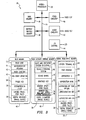
- the various memory devices may also include a boot memory 46, a high capacity storage memory 48, and a serial read-write memory 50.
- the boot memory 46 is preferably a read-only memory such as a one megabit EPROM, EEPROM, PROM or other type of programmable read-only memory.
- the boot memory may also be substantially any type of non-volatile memory.
- the high capacity storage memory 48 is preferably a CompactFlash card, but may also be a hard disk drive, CD drive, or other type of non-volatile memory.
- the serial memory 50 is preferably an EEPROM such as a 512 byte SPI EEPROM, but could be any type of programmable read-only or read/write non-volatile memory.
- all three memories may be adapted to be authenticated outside of the CPU as well as when installed in the CPU at power up or prior to being utilized in the gaming machine.
- the boot memory 46 stores, at least, boot code 52, an authentication program 54, a RAM loader, a decompression utility 56, and a digital signature 58.
- the authentication program includes a hash function 60, a digital signature verify operation 62, and a public key 64.
- the hash function 60 may, for example, be an SHA-1 hash algorithm that reduces a data set to a unique 160 bit message digest.
- a hash algorithm or function is used to calculate an index or message digest corresponding to the files in, for example, a memory device.
- the message digest does not have to be unique, i.e., the function may return the same hash value for two or more items.
- the non-uniqueness of the hash value for each item in the message digest is acceptable because each hash value is positioned in different locations in the index.
- the message digest is a small representation of a large amount of data.
- a message digest is a relatively unique representation of data, from a cryptographic standpoint, and is an irreversible representation of the data. In other words, one cannot recreate the original data from the message digest.
- the digital signature 58 is generated, in effect, from the boot memory's contents as a whole.
- a digital signature is created to enable the origin and authenticity of the digest to be determined.
- FIPS 186-2 a digital signature generation and verification mechanism
- DSA Digital Signature Algorithm
- a digital signature is created from the message digest.
- the DSA uses a private key, a public key, and the message digest.
- a private key and the message digest is used to create an original signature associated with the original message digest.
- the public key, the original signature, and the message digest are used to check a signature associated with a message digest in order to determine the origin and authenticity of the digest. It is understood that neither the message digest nor the data or files used to create the message digest can be recreated using the DSA.
- the digital signature 58 is used to sign the message digest containing the hash(es) of the boot memory contents. Again, the signature may be used to determine the source or manufacturer of the hash or message digest, via a public key, but cannot be used to recreate the hash or the original data.
- the DSA is not being used here as an encryption process, but rather a technique for validating the signature associated with the hash, and the public key.
- the high capacity storage memory 48 stores game and operating system executable program files 66, sound operating system files 68, sound bank files 70, graphics files 72, a manifest file 74, and digital signatures 76, 78.
- the files in the high capacity storage memory 48 taken together, constitute a "gaming program" as that term is used herein, and the various files constitute "data files” as that term is used herein.
- the gaming program includes a plurality of data files.
- the manifest file contains a file name, a file type, a load address, and a file digital signature 76.
- the whole device digital signature 78 is generated from the gaming program as a whole, while each digital signature 76 is generated from the associated data file listed in the manifest file.
- the serial read-write memory 50 stores information/data specific to the jurisdiction where the CPU is to be installed. This information may, for example, include a lottery terminal identification (ID) 80, a part number 82, a jurisdiction ID 84, a jurisdiction name 86, jurisdiction bit code options 88, jurisdiction max bet 90, jurisdiction max win 92, and a digital signature 94.
- the digital signature 94 is generated from the serial memory's contents as a whole.
- the boot memory 46, serial read-write memory 50 and high capacity storage memory 48 may each be removable devices and/or contain alterable software that may be able to be reprogrammed or to download updates from an outside source via a programming device, a network.such as the Internet, an intranet, an Ethernet, a fibre loop, or other type of networking system.
- the boot memory, 46, serial read-write memory 50, and high capacity memory 48 each may be required to be authenticated by the gaming machine 10 at various points during operation of the gaming machine.
- the CPU 30 is powered up.
- the microprocessor 32 within the CPU 30 addresses the boot memory 46 and utilizes the boot code 52 to begin operations.
- the authentication program 54 within the boot memory 46, is initialized so that a predetermined amount of the gaming software stored in a non-volatile memory device (media device) can be authenticated and correctly loaded into or initialized in an executable memory such as the main storage memory 36.
- a non-volatile memory device media device
- an executable memory such as the main storage memory 36.
- one or more of the software components may be properly authenticated prior to use of the gaming machine.
- the items in the high capacity storage memory 48 are only representative of the vast variety of files that could be stored as part of an executable program or gaming program in a gaming machine. In some exemplary embodiments only the flash memory or high capacity storage memory 48 is required to be authenticated at boot-up.
- boot memory 46 Elements, whether a software element or firmware elements that are required to be authenticated at boot-up, are denoted in the boot memory 46. Denotation in the boot memory 46 is done because the boot memory 46 may be externally authenticated to the satisfaction of a regulatory agency. Thus, at boot-up the boot memory may have already been authenticated by an external device.
- Exemplary embodiments of the present system and methods for reduced read software authentication effectively reduce the amount of time required to authenticate the raw data and/or the gaming program software contents of the non-volatile memory devices containing executable programs and/or data.
- the exemplary algorithm or technique reads a reprogrammable, non-volatile storage media (e.g., high capacity storage memory 48 and/or serial read-write memory 50) at boot-up and then maps the executable software into the appropriate volatile memory. The reading and mapping is performed by the processor emulating what an operating system's file system does when reading files from non-volatile memory and mapping the files into executable volatile memory.
- Authenticating the gaming program (the bits) and individual data files, using one read of a storage media device allows the file level authentication to be performed in parallel (in a multiplexed fashion, or at substantially the same time) with a total raw media verification of the high capacity storage memory 48, eliminating a need for additional reads of the non-volatile memory 48 thereby saving time.
- the boot loading software can load the file data into the main memory 30, thus avoiding an additional media read/write cycle for loading the gaming program software into executable non-volatile memory.
- the number of media reads is limited to about one total read thereby decreasing the number read cycles from three to one or by about 66%.
- a raw media read is a reading of each byte in a memory device-for example, a read of each byte of the gaming program (data) in the high capacity storage memory 48.
- a raw media read is not performed using the CPU's standard operating system's file system read utilities. The raw media read is done at a lower level than an operating system's file read.
- the CPU reads each bit, byte, word, or other predetermined amount of data in a predetermined order from, for example, the first memory location to the last memory location of, for example, the high capacity storage memory 48.
- the data bits must be read at this low level in order to verify and authenticate the raw media.
- the CPU emulates what the operating system normally does when files are read. As each bit, byte, word, etc. is read, the CPU, via emulation, determines what, if any, file the bits, bytes or words belong to. The hash for each file is then calculated so that each file can be properly authenticated.
- each file is loaded into the main memory 30 by the boot-up software in the boot memory 46.
- FIG. 4 An exemplary process for booting, performing a raw media read, performing a file read, performing an authentication of the gaming program, and loading the software files into an executable main memory is shown in Figure 4.
- the exemplary processor requires a single read of the high capacity storage memory 48 or any other non-volatile memory device.
- the gaming device is either turned on or being reset.
- a software verification and authentication is required.
- the microprocessor 32 reads a predetermined amount of data from the high capacity storage memory 48.
- the high capacity storage memory is a compact flash memory, but could be substantially any non-volatile type of memory device or devices.
- the microprocessor will probably read a byte of data from the high capacity storage memory 48 at a time, but may also read a word of data or more depending on what is appropriate for the architecture.
- the process checks to determine whether a file verification is in progress because the byte read may or may not be part of a file (as opposed to being part of a pointer or other non-file or related data found in the high capacity storage memory 48). If file verification is not in progress, then the process goes to step 116 and it is determined whether the byte was the last byte of the raw media. If it is not the last byte of the raw media, then the process returns to step 102.
- step 106 if a file verification is in process, meaning that if the byte is part of a file, then the yes path is taken.
- step 108 the operating system's file system is emulated by the microprocessor 32, with the help of the boot memory 46, and it is determined what file the byte belongs to.
- the SHA-1 hash for the determined file is calculated or recalculated and updated using the additional file byte.
- the hash calculations for the raw media and the files contained in the raw media are being performed substantially simultaneously, in parallel and/or in a time shared manner.
- the hash calculation for the raw media and the files contained within the raw media are being performed as a result of a single read of the raw media. Multiple reads of the raw media or data contained in the high capacity storage memory are not required in order to update and calculate respective hash calculations for both the total raw media and the files within the raw media.
- the byte is mapped to the main memory 36 (executable memory) and associated with its correct program file. Once mapped the bytes are copied to their mapped location in the main memory By mapping and copying the file bytes to executable memory here an additional read of the high capacity storage memory 48 is avoided. Since the file system was emulated in step 108, the microprocessor can determine and map where in executable memory the byte belongs in order for the byte to be associated with its appropriate software/firmware file. In other exemplary embodiments of the invention the bytes may be cached until after their associated file is verified and then copied to the main memory.
- This copying of the file(s) may be done at the end of the file signature valid step 120 or the end of file verification step 124 or possible other places in the exemplary flow diagram.
- the memory in which the bytes are being read from may also be an executable non-volatile memory. If the storage memory 48 is the executable memory, then the mapping and copying of the bytes may not be necessary.
- the process determines whether the byte is the last byte of the file. If it is not the last byte, then at step 116 the process determines whether the end of the raw media has been reached. If the end has not been reached then the process returns to step 102 and reads the next byte of data.
- the hash calculation performed at step 110 should be the complete hash for the file.
- the hash calculation result is used, along with a public key in a DSA, to verify the signature for the file.
- a digital signal algorithm (DSA) is used to verify the signature of the file. It is understood that it is possible to verify a file using various types of verification processes from a simple checksum calculation of all the bytes in the file to a hash calculation and on to a public key/private key DSA technique.
- DSA digital signal algorithm
- the process determines if the file is the last file to be validated. If the file is not the last file to be validated, then the process determines if the last byte of media has been read at step 116 and returns to step 102 to read the next byte of raw media.
- the process determines whether or not the file is the last file that needs to have its signature verified. Then, at step 124 the file verification process is completed and if the software files have not been loaded in 112 or 120, then the files areloaded into the main memory 36. In effect any additional raw media reads will not be a byte that belongs to a file. Therefore, since all the files have been verified, the files can be loaded into main memory 36 and/or the battery backed memory 38.
- the process again checks if all the bytes of raw media have been verified. If there are additional bytes then the process goes back to perform another raw media byte read at step 102. If there are no more bytes of media to read, then the process has completed calculating the hash for the raw media (step 110) and is ready to perform the digital signature algorithm (DSA) in order to verify the media signature at step 126. At step 128 if the raw media signature is not valid then the authentication process fails at step 130 and the gaming machine's software does not boot up. On the other hand, if the raw media signature is valid, then both the files and the raw media are deemed valid. The validation and authentication process for booting or resetting the exemplary gaming machine is complete and the system can boot-up at step 132.
- DSA digital signature algorithm
- the files stored in the high capacity storage memory 48 are stored contiguously rather than using the more usual non-contiguous file storage technique that utilizes file pointers for files that are divided into portions throughout the memory media.
- each file can be copied to main memory 36 immediately after each file is verified.
- the file system emulation step may be simplified or eliminated based on the microprocessor being able to look up exactly where each file starts and ends without the need for a file emulation functionality.
- a look-up table may be all that is necessary. As such, each entire file could be checked for its hash and signature easily while the hash for the entire raw media is being calculated.
Landscapes
- Engineering & Computer Science (AREA)
- Physics & Mathematics (AREA)
- General Physics & Mathematics (AREA)
- General Engineering & Computer Science (AREA)
- Computer Security & Cryptography (AREA)
- Computer Hardware Design (AREA)
- Software Systems (AREA)
- Theoretical Computer Science (AREA)
- Storage Device Security (AREA)
Applications Claiming Priority (2)
| Application Number | Priority Date | Filing Date | Title |
|---|---|---|---|
| US10/463,173 US7600108B2 (en) | 2003-06-17 | 2003-06-17 | Gaming machine having reduced-read software authentication |
| EP04014014A EP1489567B1 (fr) | 2003-06-17 | 2004-06-15 | Machine de jeux de hasard avec authentification de logiciel par lecture réduite |
Related Parent Applications (1)
| Application Number | Title | Priority Date | Filing Date |
|---|---|---|---|
| EP04014014A Division EP1489567B1 (fr) | 2003-06-17 | 2004-06-15 | Machine de jeux de hasard avec authentification de logiciel par lecture réduite |
Publications (2)
| Publication Number | Publication Date |
|---|---|
| EP1788508A2 true EP1788508A2 (fr) | 2007-05-23 |
| EP1788508A3 EP1788508A3 (fr) | 2007-09-12 |
Family
ID=33418129
Family Applications (2)
| Application Number | Title | Priority Date | Filing Date |
|---|---|---|---|
| EP04014014A Expired - Lifetime EP1489567B1 (fr) | 2003-06-17 | 2004-06-15 | Machine de jeux de hasard avec authentification de logiciel par lecture réduite |
| EP07004123A Withdrawn EP1788508A3 (fr) | 2003-06-17 | 2004-06-15 | Machine de jeu dotée d'une authentification logicielle de lecture réduite |
Family Applications Before (1)
| Application Number | Title | Priority Date | Filing Date |
|---|---|---|---|
| EP04014014A Expired - Lifetime EP1489567B1 (fr) | 2003-06-17 | 2004-06-15 | Machine de jeux de hasard avec authentification de logiciel par lecture réduite |
Country Status (4)
| Country | Link |
|---|---|
| US (1) | US7600108B2 (fr) |
| EP (2) | EP1489567B1 (fr) |
| CA (1) | CA2471167C (fr) |
| ZA (1) | ZA200404649B (fr) |
Cited By (1)
| Publication number | Priority date | Publication date | Assignee | Title |
|---|---|---|---|---|
| US8386394B1 (en) * | 2011-04-04 | 2013-02-26 | Google Inc. | Verifying that a purchasing request is legitimate |
Families Citing this family (47)
| Publication number | Priority date | Publication date | Assignee | Title |
|---|---|---|---|---|
| US6731313B1 (en) | 2000-06-23 | 2004-05-04 | Igt | Gaming device having touch activated alternating or changing symbol |
| US7695363B2 (en) | 2000-06-23 | 2010-04-13 | Igt | Gaming device having multiple display interfaces |
| US7699699B2 (en) | 2000-06-23 | 2010-04-20 | Igt | Gaming device having multiple selectable display interfaces based on player's wagers |
| US20100062844A1 (en) * | 2003-03-05 | 2010-03-11 | Bally Gaming, Inc. | Authentication and validation systems for gaming devices |
| US7491122B2 (en) * | 2003-07-09 | 2009-02-17 | Wms Gaming Inc. | Gaming machine having targeted run-time software authentication |
| US7963847B2 (en) | 2004-08-19 | 2011-06-21 | Igt | Gaming system having multiple gaming machines which provide bonus awards |
| US8021230B2 (en) | 2004-08-19 | 2011-09-20 | Igt | Gaming system having multiple gaming machines which provide bonus awards |
| US8251791B2 (en) | 2004-08-19 | 2012-08-28 | Igt | Gaming system having multiple gaming machines which provide bonus awards |
| US20060048222A1 (en) * | 2004-08-27 | 2006-03-02 | O'connor Clint H | Secure electronic delivery seal for information handling system |
| US8038530B2 (en) | 2005-02-28 | 2011-10-18 | Wms Gaming Inc. | Method and apparatus for filtering wagering game content |
| US7966495B2 (en) * | 2005-03-21 | 2011-06-21 | Revinetix, Inc. | Conserving file system with backup and validation |
| US20070021195A1 (en) * | 2005-06-24 | 2007-01-25 | Campbell Steven M | Gaming system file authentication |
| US20070021196A1 (en) * | 2005-07-19 | 2007-01-25 | Campbell Steven M | Watermarking downloadable game content in a gaming system |
| US8705739B2 (en) * | 2005-08-29 | 2014-04-22 | Wms Gaming Inc. | On-the-fly encryption on a gaming machine |
| US8128491B2 (en) | 2005-09-09 | 2012-03-06 | Igt | Server based gaming system having multiple progressive awards |
| US8137188B2 (en) | 2005-09-09 | 2012-03-20 | Igt | Server based gaming system having multiple progressive awards |
| US7568973B2 (en) | 2005-09-09 | 2009-08-04 | Igt | Server based gaming system having multiple progressive awards |
| US7841939B2 (en) | 2005-09-09 | 2010-11-30 | Igt | Server based gaming system having multiple progressive awards |
| US8702502B2 (en) | 2005-11-10 | 2014-04-22 | Wms Gaming Inc. | Authenticating files in wagering game machines |
| US20070235517A1 (en) * | 2006-03-30 | 2007-10-11 | O'connor Clint H | Secure digital delivery seal for information handling system |
| WO2007145954A2 (fr) | 2006-06-07 | 2007-12-21 | Wms Gaming Inc. | Traitement des métadonnées dans les systèmes de jeux avec paris |
| AU2007203244B2 (en) * | 2006-07-13 | 2010-08-12 | Aristocrat Technologies Australia Pty Limited | An electronic gaming machine |
| US7827397B2 (en) | 2006-07-13 | 2010-11-02 | Aristocrat Technologies Australia Pty, Ltd. | Gaming machine having a secure boot chain and method of use |
| US8512130B2 (en) | 2006-07-27 | 2013-08-20 | Igt | Gaming system with linked gaming machines that are configurable to have a same probability of winning a designated award |
| US8616959B2 (en) | 2006-09-27 | 2013-12-31 | Igt | Server based gaming system having system triggered loyalty award sequences |
| US7862430B2 (en) | 2006-09-27 | 2011-01-04 | Igt | Server based gaming system having system triggered loyalty award sequences |
| US7674180B2 (en) | 2006-09-27 | 2010-03-09 | Igt | Server based gaming system having system triggered loyalty award sequences |
| US8241115B2 (en) | 2006-10-09 | 2012-08-14 | Wms Gaming Inc. | Multiple key failover validation in a wagering game machine |
| US20080167127A1 (en) * | 2007-01-05 | 2008-07-10 | Microsoft Corporation | Integration of Media on Gaming Consoles |
| US20080167128A1 (en) * | 2007-01-05 | 2008-07-10 | Microsoft Corporation | Television Viewing on Gaming Consoles |
| WO2008108916A1 (fr) * | 2007-03-01 | 2008-09-12 | Wms Gaming Inc. | Sécurité de machine de jeu électronique pour un logiciel stocké dans un support non volatile |
| AU2008200752B2 (en) * | 2007-03-29 | 2010-10-28 | Aristocrat Technologies Australia Pty Limited | A storage method for a gaming machine |
| US20100248816A1 (en) * | 2007-05-15 | 2010-09-30 | Wms Gaming Inc. | Validation scheduling in a wagering game machine |
| US7985133B2 (en) | 2007-07-30 | 2011-07-26 | Igt | Gaming system and method for providing an additional gaming currency |
| US8900053B2 (en) | 2007-08-10 | 2014-12-02 | Igt | Gaming system and method for providing different bonus awards based on different types of triggered events |
| US9142097B2 (en) | 2007-10-26 | 2015-09-22 | Igt | Gaming system and method for providing play of local first game and remote second game |
| US9424712B2 (en) | 2008-06-27 | 2016-08-23 | Bally Gaming, Inc. | Authenticating components in wagering game systems |
| US9039516B2 (en) | 2009-07-30 | 2015-05-26 | Igt | Concurrent play on multiple gaming machines |
| US8777738B2 (en) * | 2011-09-30 | 2014-07-15 | Igt | System and method for an extensible boot image for electronic gaming machines |
| US8627097B2 (en) | 2012-03-27 | 2014-01-07 | Igt | System and method enabling parallel processing of hash functions using authentication checkpoint hashes |
| US9811972B2 (en) * | 2013-12-31 | 2017-11-07 | Video Gaming Technologies, Inc. | System and method for authenticating storage media within an electronic gaming system |
| US10490022B2 (en) | 2013-12-31 | 2019-11-26 | Video Gaming Technologies, Inc. | System and method for authenticating storage media within an electronic gaming system |
| US9875618B2 (en) | 2014-07-24 | 2018-01-23 | Igt | Gaming system and method employing multi-directional interaction between multiple concurrently played games |
| US9678760B2 (en) * | 2014-08-01 | 2017-06-13 | Samsung Electronics Co., Ltd. | Memory card and storage system having authentication program and method for operating thereof |
| US9972171B2 (en) | 2015-09-24 | 2018-05-15 | Igt | Gaming system and method for providing a triggering event based on a collection of units from different games |
| US10861282B2 (en) | 2017-10-18 | 2020-12-08 | Ags Llc | Server process validation |
| US10713888B2 (en) | 2018-03-01 | 2020-07-14 | Ags Llc | Gaming system having boot locked validation of program installs, data installs and program launches |
Family Cites Families (40)
| Publication number | Priority date | Publication date | Assignee | Title |
|---|---|---|---|---|
| US4405829A (en) | 1977-12-14 | 1983-09-20 | Massachusetts Institute Of Technology | Cryptographic communications system and method |
| DE3316414A1 (de) | 1982-05-12 | 1983-12-22 | Bally Manufacturing Corp., 60618 Chicago, Ill. | Geraet und verfahren zum sicherstellen der unversertheit eines spielgeraets |
| US4727544A (en) | 1986-06-05 | 1988-02-23 | Bally Manufacturing Corporation | Memory integrity checking system for a gaming device |
| US5231668A (en) | 1991-07-26 | 1993-07-27 | The United States Of America, As Represented By The Secretary Of Commerce | Digital signature algorithm |
| US5555388A (en) * | 1992-08-20 | 1996-09-10 | Borland International, Inc. | Multi-user system and methods providing improved file management by reading |
| US5668878A (en) | 1994-02-28 | 1997-09-16 | Brands; Stefanus Alfonsus | Secure cryptographic methods for electronic transfer of information |
| RU95103479A (ru) | 1994-03-11 | 1996-12-27 | Уолкер Эссет Мэнеджмент Лимитед Партнершип (US) | Игровая система, игровой компьютер, способ проведения игры, лотереи с участием игрока |
| JPH08141196A (ja) | 1994-11-15 | 1996-06-04 | Daikoku Denki Co Ltd | 遊技機の設定内容照合システム、遊技機の作動制御システム及び遊技機 |
| US5644704A (en) | 1994-11-30 | 1997-07-01 | International Game Technology | Method and apparatus for verifying the contents of a storage device |
| CA2225805C (fr) | 1995-06-29 | 2002-11-12 | Allan E. Alcorn | Systeme de jeux electronique pour casino avec capacite de jeu, authentification et securite ameliorees |
| US5643086A (en) | 1995-06-29 | 1997-07-01 | Silicon Gaming, Inc. | Electronic casino gaming apparatus with improved play capacity, authentication and security |
| US6620047B1 (en) | 1995-06-29 | 2003-09-16 | Igt | Electronic gaming apparatus having authentication data sets |
| US7063615B2 (en) | 1995-06-29 | 2006-06-20 | Igt | Electronic gaming apparatus with authentication |
| US6190257B1 (en) * | 1995-11-22 | 2001-02-20 | Nintendo Co., Ltd. | Systems and method for providing security in a video game system |
| US5892904A (en) * | 1996-12-06 | 1999-04-06 | Microsoft Corporation | Code certification for network transmission |
| US6099408A (en) | 1996-12-31 | 2000-08-08 | Walker Digital, Llc | Method and apparatus for securing electronic games |
| JPH10192533A (ja) | 1997-01-13 | 1998-07-28 | Sophia Co Ltd | 遊技機用演算処理装置 |
| US6071190A (en) | 1997-05-21 | 2000-06-06 | Casino Data Systems | Gaming device security system: apparatus and method |
| US6203427B1 (en) | 1997-07-03 | 2001-03-20 | Walker Digital, Llc | Method and apparatus for securing a computer-based game of chance |
| JP3793629B2 (ja) * | 1997-10-30 | 2006-07-05 | 沖電気工業株式会社 | メモリカードとメモリカード装置 |
| AUPP149998A0 (en) | 1998-01-27 | 1998-02-19 | Aristocrat Leisure Industries Pty Ltd | Multi-platform gaming architecture |
| NZ509018A (en) | 1998-06-17 | 2002-06-28 | Aristocrat Technologies Au | Software verification and authentication |
| US7993194B1 (en) | 1998-06-18 | 2011-08-09 | Aristocrat Technologies Australia Pty Limited | Method of linking devices to gaming machines |
| AUPP734298A0 (en) | 1998-11-26 | 1998-12-24 | Aristocrat Leisure Industries Pty Ltd | Electronic casino gaming with authentication and improved security |
| US7225333B2 (en) * | 1999-03-27 | 2007-05-29 | Microsoft Corporation | Secure processor architecture for use with a digital rights management (DRM) system on a computing device |
| US6565443B1 (en) | 1999-09-14 | 2003-05-20 | Innovative Gaming Corporation | System and method for verifying the contents of a mass storage device before granting access to computer readable data stored on the device |
| AUPQ321699A0 (en) | 1999-09-30 | 1999-10-28 | Aristocrat Leisure Industries Pty Ltd | Gaming security system |
| US6595856B1 (en) | 2000-01-04 | 2003-07-22 | Sigma Game, Inc. | Electronic security technique for gaming software |
| US7043641B1 (en) | 2000-03-08 | 2006-05-09 | Igt | Encryption in a secure computerized gaming system |
| US7080257B1 (en) * | 2000-03-27 | 2006-07-18 | Microsoft Corporation | Protecting digital goods using oblivious checking |
| GB2384593B (en) | 2000-08-21 | 2004-12-01 | Int Game Tech | A method of operating a gaming system and gaming device |
| US6889209B1 (en) * | 2000-11-03 | 2005-05-03 | Shieldip, Inc. | Method and apparatus for protecting information and privacy |
| CN100428751C (zh) * | 2000-12-25 | 2008-10-22 | 松下电器产业株式会社 | 安全通信包处理装置及其方法 |
| US7356188B2 (en) * | 2001-04-24 | 2008-04-08 | Microsoft Corporation | Recognizer of text-based work |
| US20020187828A1 (en) | 2001-06-12 | 2002-12-12 | Jamal Benbrahim | Method and apparatus for securing gaming machine operating data |
| US6685567B2 (en) | 2001-08-08 | 2004-02-03 | Igt | Process verification |
| US7179170B2 (en) * | 2001-11-26 | 2007-02-20 | Igt | Pass-through live validation device and method |
| US7228426B2 (en) * | 2002-04-03 | 2007-06-05 | Microsoft Corporation | Integrity ordainment and ascertainment of computer-executable instructions with consideration for execution context |
| US7401352B2 (en) * | 2002-08-30 | 2008-07-15 | International Business Machines Corporation | Secure system and method for enforcement of privacy policy and protection of confidentiality |
| US7108605B2 (en) * | 2002-09-30 | 2006-09-19 | Igt | EPROM file system in a gaming apparatus |
-
2003
- 2003-06-17 US US10/463,173 patent/US7600108B2/en not_active Expired - Fee Related
-
2004
- 2004-06-11 ZA ZA200404649A patent/ZA200404649B/xx unknown
- 2004-06-15 EP EP04014014A patent/EP1489567B1/fr not_active Expired - Lifetime
- 2004-06-15 EP EP07004123A patent/EP1788508A3/fr not_active Withdrawn
- 2004-06-16 CA CA2471167A patent/CA2471167C/fr not_active Expired - Fee Related
Cited By (2)
| Publication number | Priority date | Publication date | Assignee | Title |
|---|---|---|---|---|
| US8386394B1 (en) * | 2011-04-04 | 2013-02-26 | Google Inc. | Verifying that a purchasing request is legitimate |
| US9818094B1 (en) | 2011-04-04 | 2017-11-14 | Google Inc. | Verifying that a purchasing request is legitimate |
Also Published As
| Publication number | Publication date |
|---|---|
| EP1489567A1 (fr) | 2004-12-22 |
| CA2471167A1 (fr) | 2004-12-17 |
| US7600108B2 (en) | 2009-10-06 |
| US20040259643A1 (en) | 2004-12-23 |
| EP1489567B1 (fr) | 2007-08-29 |
| ZA200404649B (en) | 2006-02-22 |
| EP1788508A3 (fr) | 2007-09-12 |
| AU2004202442A1 (en) | 2005-01-13 |
| CA2471167C (fr) | 2011-05-03 |
Similar Documents
| Publication | Publication Date | Title |
|---|---|---|
| EP1489567B1 (fr) | Machine de jeux de hasard avec authentification de logiciel par lecture réduite | |
| US7491122B2 (en) | Gaming machine having targeted run-time software authentication | |
| AU2004237915B2 (en) | Gaming machine having sampled software verification | |
| AU2004202447B2 (en) | Gaming machine having hardware-accelerated software authentication | |
| EP1352677B1 (fr) | Authentification de logiciel de jeu | |
| AU2009201555B2 (en) | Process verification | |
| US7108605B2 (en) | EPROM file system in a gaming apparatus | |
| US11995190B2 (en) | Secure bootloader for electronic gaming machines and other computing devices | |
| US20200302061A1 (en) | Secure bootloader for electronic gaming machines and other computing devices | |
| JP5411414B2 (ja) | 遊技機 |
Legal Events
| Date | Code | Title | Description |
|---|---|---|---|
| PUAI | Public reference made under article 153(3) epc to a published international application that has entered the european phase |
Free format text: ORIGINAL CODE: 0009012 |
|
| 17P | Request for examination filed |
Effective date: 20070307 |
|
| AC | Divisional application: reference to earlier application |
Ref document number: 1489567 Country of ref document: EP Kind code of ref document: P |
|
| AK | Designated contracting states |
Kind code of ref document: A2 Designated state(s): GB |
|
| PUAL | Search report despatched |
Free format text: ORIGINAL CODE: 0009013 |
|
| AK | Designated contracting states |
Kind code of ref document: A3 Designated state(s): GB |
|
| RIC1 | Information provided on ipc code assigned before grant |
Ipc: G07F 17/34 20060101ALI20070807BHEP Ipc: G07F 17/32 20060101AFI20070807BHEP Ipc: G06F 1/00 20060101ALI20070807BHEP |
|
| 17Q | First examination report despatched |
Effective date: 20080128 |
|
| AKX | Designation fees paid |
Designated state(s): GB |
|
| STAA | Information on the status of an ep patent application or granted ep patent |
Free format text: STATUS: THE APPLICATION IS DEEMED TO BE WITHDRAWN |
|
| 18D | Application deemed to be withdrawn |
Effective date: 20090430 |