EP1789033B1 - Glycin als beikost zur behandlung von gesundheitsproblemen, die aus zugrundeliegenden stoffwechselstörungen resultieren - Google Patents
Glycin als beikost zur behandlung von gesundheitsproblemen, die aus zugrundeliegenden stoffwechselstörungen resultieren Download PDFInfo
- Publication number
- EP1789033B1 EP1789033B1 EP05850750.0A EP05850750A EP1789033B1 EP 1789033 B1 EP1789033 B1 EP 1789033B1 EP 05850750 A EP05850750 A EP 05850750A EP 1789033 B1 EP1789033 B1 EP 1789033B1
- Authority
- EP
- European Patent Office
- Prior art keywords
- glycine
- treatment
- collagen
- health
- daily
- Prior art date
- Legal status (The legal status is an assumption and is not a legal conclusion. Google has not performed a legal analysis and makes no representation as to the accuracy of the status listed.)
- Expired - Lifetime
Links
Images


Classifications
-
- A—HUMAN NECESSITIES
- A61—MEDICAL OR VETERINARY SCIENCE; HYGIENE
- A61K—PREPARATIONS FOR MEDICAL, DENTAL OR TOILETRY PURPOSES
- A61K31/00—Medicinal preparations containing organic active ingredients
- A61K31/185—Acids; Anhydrides, halides or salts thereof, e.g. sulfur acids, imidic, hydrazonic or hydroximic acids
- A61K31/19—Carboxylic acids, e.g. valproic acid
- A61K31/195—Carboxylic acids, e.g. valproic acid having an amino group
- A61K31/197—Carboxylic acids, e.g. valproic acid having an amino group the amino and the carboxyl groups being attached to the same acyclic carbon chain, e.g. gamma-aminobutyric acid [GABA], beta-alanine, epsilon-aminocaproic acid or pantothenic acid
- A61K31/198—Alpha-amino acids, e.g. alanine or edetic acid [EDTA]
-
- A—HUMAN NECESSITIES
- A61—MEDICAL OR VETERINARY SCIENCE; HYGIENE
- A61K—PREPARATIONS FOR MEDICAL, DENTAL OR TOILETRY PURPOSES
- A61K8/00—Cosmetics or similar toiletry preparations
- A61K8/18—Cosmetics or similar toiletry preparations characterised by the composition
- A61K8/30—Cosmetics or similar toiletry preparations characterised by the composition containing organic compounds
- A61K8/40—Cosmetics or similar toiletry preparations characterised by the composition containing organic compounds containing nitrogen
- A61K8/44—Aminocarboxylic acids or derivatives thereof, e.g. aminocarboxylic acids containing sulfur; Salts; Esters or N-acylated derivatives thereof
-
- A—HUMAN NECESSITIES
- A61—MEDICAL OR VETERINARY SCIENCE; HYGIENE
- A61K—PREPARATIONS FOR MEDICAL, DENTAL OR TOILETRY PURPOSES
- A61K9/00—Medicinal preparations characterised by special physical form
- A61K9/0012—Galenical forms characterised by the site of application
- A61K9/0014—Skin, i.e. galenical aspects of topical compositions
-
- A—HUMAN NECESSITIES
- A61—MEDICAL OR VETERINARY SCIENCE; HYGIENE
- A61K—PREPARATIONS FOR MEDICAL, DENTAL OR TOILETRY PURPOSES
- A61K9/00—Medicinal preparations characterised by special physical form
- A61K9/0087—Galenical forms not covered by A61K9/02 - A61K9/7023
- A61K9/0095—Drinks; Beverages; Syrups; Compositions for reconstitution thereof, e.g. powders or tablets to be dispersed in a glass of water; Veterinary drenches
-
- A—HUMAN NECESSITIES
- A61—MEDICAL OR VETERINARY SCIENCE; HYGIENE
- A61K—PREPARATIONS FOR MEDICAL, DENTAL OR TOILETRY PURPOSES
- A61K9/00—Medicinal preparations characterised by special physical form
- A61K9/06—Ointments; Bases therefor; Other semi-solid forms, e.g. creams, sticks, gels
-
- A—HUMAN NECESSITIES
- A61—MEDICAL OR VETERINARY SCIENCE; HYGIENE
- A61P—SPECIFIC THERAPEUTIC ACTIVITY OF CHEMICAL COMPOUNDS OR MEDICINAL PREPARATIONS
- A61P1/00—Drugs for disorders of the alimentary tract or the digestive system
- A61P1/02—Stomatological preparations, e.g. drugs for caries, aphtae, periodontitis
-
- A—HUMAN NECESSITIES
- A61—MEDICAL OR VETERINARY SCIENCE; HYGIENE
- A61P—SPECIFIC THERAPEUTIC ACTIVITY OF CHEMICAL COMPOUNDS OR MEDICINAL PREPARATIONS
- A61P11/00—Drugs for disorders of the respiratory system
- A61P11/06—Antiasthmatics
-
- A—HUMAN NECESSITIES
- A61—MEDICAL OR VETERINARY SCIENCE; HYGIENE
- A61P—SPECIFIC THERAPEUTIC ACTIVITY OF CHEMICAL COMPOUNDS OR MEDICINAL PREPARATIONS
- A61P17/00—Drugs for dermatological disorders
-
- A—HUMAN NECESSITIES
- A61—MEDICAL OR VETERINARY SCIENCE; HYGIENE
- A61P—SPECIFIC THERAPEUTIC ACTIVITY OF CHEMICAL COMPOUNDS OR MEDICINAL PREPARATIONS
- A61P17/00—Drugs for dermatological disorders
- A61P17/02—Drugs for dermatological disorders for treating wounds, ulcers, burns, scars, keloids, or the like
-
- A—HUMAN NECESSITIES
- A61—MEDICAL OR VETERINARY SCIENCE; HYGIENE
- A61P—SPECIFIC THERAPEUTIC ACTIVITY OF CHEMICAL COMPOUNDS OR MEDICINAL PREPARATIONS
- A61P17/00—Drugs for dermatological disorders
- A61P17/06—Antipsoriatics
-
- A—HUMAN NECESSITIES
- A61—MEDICAL OR VETERINARY SCIENCE; HYGIENE
- A61P—SPECIFIC THERAPEUTIC ACTIVITY OF CHEMICAL COMPOUNDS OR MEDICINAL PREPARATIONS
- A61P19/00—Drugs for skeletal disorders
-
- A—HUMAN NECESSITIES
- A61—MEDICAL OR VETERINARY SCIENCE; HYGIENE
- A61P—SPECIFIC THERAPEUTIC ACTIVITY OF CHEMICAL COMPOUNDS OR MEDICINAL PREPARATIONS
- A61P19/00—Drugs for skeletal disorders
- A61P19/02—Drugs for skeletal disorders for joint disorders, e.g. arthritis, arthrosis
-
- A—HUMAN NECESSITIES
- A61—MEDICAL OR VETERINARY SCIENCE; HYGIENE
- A61P—SPECIFIC THERAPEUTIC ACTIVITY OF CHEMICAL COMPOUNDS OR MEDICINAL PREPARATIONS
- A61P19/00—Drugs for skeletal disorders
- A61P19/04—Drugs for skeletal disorders for non-specific disorders of the connective tissue
-
- A—HUMAN NECESSITIES
- A61—MEDICAL OR VETERINARY SCIENCE; HYGIENE
- A61P—SPECIFIC THERAPEUTIC ACTIVITY OF CHEMICAL COMPOUNDS OR MEDICINAL PREPARATIONS
- A61P19/00—Drugs for skeletal disorders
- A61P19/08—Drugs for skeletal disorders for bone diseases, e.g. rachitism, Paget's disease
- A61P19/10—Drugs for skeletal disorders for bone diseases, e.g. rachitism, Paget's disease for osteoporosis
-
- A—HUMAN NECESSITIES
- A61—MEDICAL OR VETERINARY SCIENCE; HYGIENE
- A61P—SPECIFIC THERAPEUTIC ACTIVITY OF CHEMICAL COMPOUNDS OR MEDICINAL PREPARATIONS
- A61P25/00—Drugs for disorders of the nervous system
-
- A—HUMAN NECESSITIES
- A61—MEDICAL OR VETERINARY SCIENCE; HYGIENE
- A61P—SPECIFIC THERAPEUTIC ACTIVITY OF CHEMICAL COMPOUNDS OR MEDICINAL PREPARATIONS
- A61P35/00—Antineoplastic agents
-
- A—HUMAN NECESSITIES
- A61—MEDICAL OR VETERINARY SCIENCE; HYGIENE
- A61P—SPECIFIC THERAPEUTIC ACTIVITY OF CHEMICAL COMPOUNDS OR MEDICINAL PREPARATIONS
- A61P43/00—Drugs for specific purposes, not provided for in groups A61P1/00-A61P41/00
-
- A—HUMAN NECESSITIES
- A61—MEDICAL OR VETERINARY SCIENCE; HYGIENE
- A61P—SPECIFIC THERAPEUTIC ACTIVITY OF CHEMICAL COMPOUNDS OR MEDICINAL PREPARATIONS
- A61P7/00—Drugs for disorders of the blood or the extracellular fluid
-
- A—HUMAN NECESSITIES
- A61—MEDICAL OR VETERINARY SCIENCE; HYGIENE
- A61P—SPECIFIC THERAPEUTIC ACTIVITY OF CHEMICAL COMPOUNDS OR MEDICINAL PREPARATIONS
- A61P7/00—Drugs for disorders of the blood or the extracellular fluid
- A61P7/06—Antianaemics
-
- A—HUMAN NECESSITIES
- A61—MEDICAL OR VETERINARY SCIENCE; HYGIENE
- A61Q—SPECIFIC USE OF COSMETICS OR SIMILAR TOILETRY PREPARATIONS
- A61Q11/00—Preparations for care of the teeth, of the oral cavity or of dentures; Dentifrices, e.g. toothpastes; Mouth rinses
-
- A—HUMAN NECESSITIES
- A61—MEDICAL OR VETERINARY SCIENCE; HYGIENE
- A61Q—SPECIFIC USE OF COSMETICS OR SIMILAR TOILETRY PREPARATIONS
- A61Q19/00—Preparations for care of the skin
-
- A—HUMAN NECESSITIES
- A61—MEDICAL OR VETERINARY SCIENCE; HYGIENE
- A61Q—SPECIFIC USE OF COSMETICS OR SIMILAR TOILETRY PREPARATIONS
- A61Q19/00—Preparations for care of the skin
- A61Q19/08—Anti-ageing preparations
-
- A—HUMAN NECESSITIES
- A61—MEDICAL OR VETERINARY SCIENCE; HYGIENE
- A61Q—SPECIFIC USE OF COSMETICS OR SIMILAR TOILETRY PREPARATIONS
- A61Q7/00—Preparations for affecting hair growth
-
- A—HUMAN NECESSITIES
- A61—MEDICAL OR VETERINARY SCIENCE; HYGIENE
- A61K—PREPARATIONS FOR MEDICAL, DENTAL OR TOILETRY PURPOSES
- A61K2800/00—Properties of cosmetic compositions or active ingredients thereof or formulation aids used therein and process related aspects
- A61K2800/80—Process related aspects concerning the preparation of the cosmetic composition or the storage or application thereof
- A61K2800/92—Oral administration
-
- A—HUMAN NECESSITIES
- A61—MEDICAL OR VETERINARY SCIENCE; HYGIENE
- A61K—PREPARATIONS FOR MEDICAL, DENTAL OR TOILETRY PURPOSES
- A61K9/00—Medicinal preparations characterised by special physical form
- A61K9/0012—Galenical forms characterised by the site of application
- A61K9/0053—Mouth and digestive tract, i.e. intraoral and peroral administration
- A61K9/0056—Mouth soluble or dispersible forms; Suckable, eatable, chewable coherent forms; Forms rapidly disintegrating in the mouth; Lozenges; Lollipops; Bite capsules; Baked products; Baits or other oral forms for animals
-
- A—HUMAN NECESSITIES
- A61—MEDICAL OR VETERINARY SCIENCE; HYGIENE
- A61K—PREPARATIONS FOR MEDICAL, DENTAL OR TOILETRY PURPOSES
- A61K9/00—Medicinal preparations characterised by special physical form
- A61K9/0012—Galenical forms characterised by the site of application
- A61K9/0053—Mouth and digestive tract, i.e. intraoral and peroral administration
- A61K9/0063—Periodont
Definitions
- This invention relates to new therapeutic uses for glycine.
- Glycine has gained some popularity in recent years in the ever-expanding "diet supplement” industry as an orally administered substance which its manufacturers claim, advertise and promote as being helpful in addressing an assortment of health issues.
- the claims include, for glycine consumption rates generally recommended in the range of 0.5 to 1.0 grams/day, the benefits of: (a) promotion of deeper sleep, (b) adult memory retention, (c) supporting healthy functioning of the kidneys, liver and nervous system, and (d) development of a strong immune system.
- US2005176807 A1 describes the administration to a companion animal suffering from a cartilage condition of compositions containing glycine and proline in a certain percentage with respect to the dry matter basis of a daily diet that satisfies their nutrition needs. Focusing in the total amount of glycine administered in the diet, the highest rates correspond to Samples 2 and 5 to a theoretical amount of 2.10%.
- HU9901057 describes the preparation of a bone fortifying formulation in which glycine is only added as reinforcement compound (XP002381253, 2001). Consistently, the quantity of said glycine in the formulation is low - 1450 mg of final product contains from 2 to 50 mg of glycine, which complies for a maximum of 3.4% with respect to the total product. This product is to be administered in small amounts to the diet, diminishing in the corresponding percentage the intake of glycine.
- US5385887 A describes a formulation comprising an osteogenic protein in which glycine is only proposed as vehicle of the main component, in a quantity of 0.5 to 10% (w/v) of the formulation. Again, this formulation is to be added in small quantities to the diet.
- SU1621938 describes the intake of glycine in a low amount in the diet for the treatment of osteoporosis in children.
- the publication recommends 8 g of glycine 3x per day during 1 day each 30 days
- Li et al. uses glycine as an immune-modulator in bacterial-induced arthritis in a rat model ( Li et al, "Dietary glycine prevents peptidoglycan polysaccharide-induced reactive arthritis in the rat: Role for glycine-gated chloride channet". Infection and Immunity, Vol. 69, N° 9, 2001 ). The authors supplement 5% of glycine with respect to the dry matter of the diet together with a 15% of casein protein in an arthritis model. This 5% is a very high dose value.
- U.S. Patent No. (USPN) 5,854,286 discloses the use of orally administered glycine in dietary quantities (i.e., 35 grams/day or 0.4 g/(Kg of body weight)/day) for the treatment of schizophrenia.
- USPN 6,025,327 discloses the oral consumption of low doses of hydrolyzed collagen, or the products of its hydrolysis, or even a selected mixture of amino acids (but without a specific mention of glycine as a necessary ingredient) for the treatment of degenerative joint diseases.
- the recommended dosages of up to 4 g/day of hydrolyzed collagen type II (with ⁇ 9 % glycine) equates to about 0.36g/day of glycine.
- USPN 6,048,543 discloses a method for treating a human having elevated tumor necrosis factor levels by the administration of an effective amount of one of the amino acids: glycine, alanine and serine. They describe three mixtures with a broad variety of compounds, glycine among them, but at an amount equivalent to other amino acids or other products, and always far from any dosage in the range of 10g/day.
- USPN 6,281,244 discloses the daily intake of glycine to prevent or treat acute or chronic graft rejection, optionally in combination with an immune suppressant or an immune modulating agent. This disclosure makes no mention of the applicability of such methods for treating arthrosis or related diseases.
- USPN 6,310,097 discloses a method for preventive and/or the therapeutic treatment of cerebral dysfunction. This method involves administering a preventively and/or therapeutically effective amount of a composition comprising at least one of L-serine, glycine, fatty acid compounds thereof, physiologically acceptable salts thereof, hydrates thereof, and solvates thereof.
- USPN 6,331,569 discloses a method for improving hair growth, skin structure and/or nail regeneration.
- the method involves administering a preparation comprising a mixture of amino acids (up to 10 wt. % glycine) and an effective amount of proline and at least one carrier. It is further stated that the preparation may have a positive effect on a number of other functions, including muscle build up, and the firmness of the connective tissue.
- USPN 6,100,287 discloses a mixture of amino acids, essentially L-arginine and glycine, and other mixtures with different amino acids for enhancing muscle performance and recovery from fatigue. The practice of sports people consuming different mixtures of amino acids is well known in the art.
- IT1238386 B describes the treatment of conditions with an altered local synthesis of connective tissue due to a lack of collagen; In particular, those conditions compromising the articular connective tissue.
- the document discloses the administration of a composition comprising at least proline, glycine and lysine, meaning that the three amino acids are proposed necessary for an efficient synthesis of collagen, instead of a composition consiting only by glycine.
- Disclosed herein is a diet supplement for the treatment of a wide range of health problems that result from underlying disorders in the functioning of one's metabolic system.
- Also disclosed herein is an improved treatment for degenerative diseases affecting connective tissue, cartilage and bone.
- Disclosed herein is a treatment for health problems that arise because of the body's inability to build adequate number of red blood cells.
- a food supplement that can be taken on a regular basis to treat for degenerative diseases affecting connective tissue, cartilage and bone is also disclosed.
- a food supplement that can be taken on a regular basis to treat a wide range of human and animal physical conditions in which the affected parts of the body are its connective tissues, cartilage and bones, or in which a health problem has arisen because of the body's inability to build adequate number of red blood cells.
- Identified herein is a food supplement that humans can take on a regular basis to treat a wide range of health conditions in which the affected parts of the body are its connective tissues, cartilage and bones and the affected bodily processes include the building of red blood cells.
- These health conditions include some that are relatively obvious, such as: degenerative diseases such as arthrosis and arthritis, injuries due to physical trauma, multiple sclerosis, assorted muscular problems including muscular dystrophy, birth defects such as scoliosis, osteoporosis, anemia and others which are probably nonobvious, such as: susceptibility to infectious diseases, asthma, elevated cholesterol levels, cancer, infant strength levels, and assorted health problems with one's skin, teeth and gums, finger nails, eyes, ears and vocal chords.
- a food supplement that can be administered to animals to treat them for a similar wide range of health conditions in which the affected parts of animal's body are its connective tissues, cartilage and bones.
- a dietary supplement that will decrease the extent of heath problems in which the affected body parts are its connective tissues, cartilages and bones.
- a cream which can be applied directly on one's skin to address a number of skin problems, including the treatment and prevention of skin lines, wrinkles, and other more severe skin problems, such as psoriasis.
- the present invention is generally directed to exploiting this opportunity and thereby contributing new treatment method for a wide range of health problems.
- the present invention is a composition consisting of glycine for use in the treatment or prevention of a health problem of a human related to an underlying disorder associated with bones, cartilage or connective tissue in the need of promoting the synthesis of collagen, said health problem selected from the group consisting of degenerative diseases including arthrosis and arthritis, and osteoporosis, in which said glycine is orally administered at a consumption rate in the range of 0.1 to 0.2 g/Kg of body weight per day.
- the present invention is as noted in claims 2 to 4.
- the present invention refers to a composition consisting of glycine for use in the treatment or prevention of a health problem of a human related to an underlying disorder associated with bones, cartilage or connective tissue in the need of promoting the synthesis of collagen, said health problem selected from the group consisting of degenerative diseases including arthrosis and arthritis, and osteoporosis, in which said glycine is orally administered at a consumption rate in the range of 0.1 to 0.2 g/Kg of body weight per day.
- the present invention is as noted in claims 2 to 4.
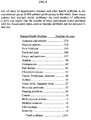
- FIG. 1 lists the diseases and other health problems that were afflicting the study participants.
- degenerative diseases such as arthrosis and arthritis, injuries due to physical trauma, multiple sclerosis, assorted muscular problems including muscular dystrophy, birth defects such as scoliosis, osteoporosis, and others which are probably nonobvious, such as: susceptibility to infectious diseases, asthma, elevated cholesterol levels, cancer, infant strength levels, and assorted health problems with one's skin, teeth and gums, finger nails, eyes, ears and vocal chords.
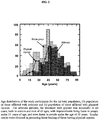
- FIG. 2 shows the age distribution of the study participants for the (a) total population, (b) population of those afflicted with arthrosis and (c) population of those afflicted with physical trauma injuries.
- the basis of my treatment was to provide study participants a daily dosage of glycine, which is a material authorized in most countries for human consumption as a food additive.
- the glycine used in this study was purchased from several chemical companies at a quality degree level of nutritional additive.
- the glycine treatment proved to be effective in all cases; usually in a time period between two weeks and four months and generally according to the participant's age and the nature of the afflicted joint/s. Most of the people under 40 years of age achieved some pain relief in the first week of treatment, while some people over 60 years old needed more than four month to see the first results. Shoulder joints took the longest in which to see improvements.
- glycine may be considered as an essential nutrient as the body whose required amounts cannot be met by one's usual diet. Therefore, it has to be added daily to one's diet to avoid these degenerative diseases.
- Osteoporosis The 65 female participants in this study who were afflicted with this disease or condition were all diagnosed, using bone densitometries, as having bone mass losses of between 5-20 %. After several months of my glycine treatments (daily dosage of 10 grams), all of these participants were measured to have reduced the degree of their bone mass losses. These results may eventually demonstrate that the main cause of osteoporosis, initially thought due to calcium deficiency, is actually glycine deficiency, which it is theorized makes the synthesis of the organic support for calcium (collagen) difficult.
- glycine treatments for skin problems and the ease with which creams may serve as a medium by which medications may be applied to skin problems suggests the possibility of developing a glycine-containing cream, lotion, balm, pomade, etc. for the treatment and prevention of skin lines, wrinkles, and other more severe skin problems, including psoriasis.
- the existence of several commercial skin creams that contain small amount of collagen (e.g., 1 mg of collagen per 100 mg of cream) in their compositions possibly lends further support for the development of a glycine-containing cream.
- Teeth and gum This study included 146 cases of teeth and gum problems (e.g., tooth pain, gums that bleed easily, a high tendency to have tooth decay). The time of treatment necessary to achieve improved results for such problems was observed to be related to the seriousness of the problem. In some cases, improvements were obtained after only two weeks of treatment, while more severe problems sometimes required many months of treatment (e.g., men in their 50s who had suffered all their lives with bleeding gums when brushing their teeth: total elimination of symptoms within 6-12 months). These results suggest my glycine treatments have slower recuperative periods in some parts of the body than in others.
- glycine could be added to: (a) toothpastes, (b) mouth washes, (c) oral rinses and (d) pastes, creams, ointments, oils, liquids or patches, etc. used by dentists in their periodontal practices to prevent and fight weak teeth, bleeding gums, and other gum diseases caused by mechanical weaknesses in the afflicted areas.
- Finger Nails This study's 137 participants afflicted with cases of weak or fragile finger nails reported that their conditions were greatly improved after they began taking my glycine treatments. This suggests to me that the origin of many finger nail problems may be a skin basement weakness. It also suggests to me that it may be able for one to treat various hair growth problems with some variation or form of my glycine treatment methods.
- Anemia is the general name of a broad group of diseases characterized by the occurrence of some problem in the function of red blood cells to take, transport, or delivery oxygen, from the lungs to the tissues.
- Anemia can have many different origins, as in principle, any failure in the process of red blood cell building, or working, can lead to some problem in oxygen transport, but it is obvious that some causes can be more probable than others.
- FIG. 5 shows the structures of heme (the prosthetic group of hemoglobin) and porphobilinogen (the basic intermediate in heme building). It can be seen that eight molecules of glycine are spent to build one heme. Hemoglobin is a very abundant protein in the body representing 90% of the dried weight of the red blood cells (around 2 ⁇ 10 12 cells in the body of an average adult). Moreover, hemoglobin turnover is short (120 days) and there is no recycling of material, as the heme group is destroyed to bile pigments. Blood building is, thus, a high expenditure of glycine, and so its deficiency can be a very probable cause of anemia.
- heme the prosthetic group of hemoglobin
- porphobilinogen the basic intermediate in heme building
- Elevated Cholesterol Levels Hypercholesterolemia or "high blood cholesterol” is the presence of high levels of cholesterol in the blood. It is not a disease but a metabolic derangement that can be secondary to many diseases and can contribute to many forms of disease, most notably cardiovascular disease. 54 people in my experimental group had high blood cholesterol levels, some of them having levels much higher than 280 mg/100 mL. Since many of these participants continued on their prior treatment programs, the results achieved by this study are not somewhat unclear. Only 24 cases of this group were treated exclusively with my glycine treatments, and their cholesterol levels were all decreased so that they fell in the range of 150-180 mg/100 mL.
- Asthma A Chronic Respiratory Disease : Glycine treatments (5-10 grams/day) were observed to be effective at reducing or eliminating the participants' asthma problems. Several cases of asthma were in 10-15 year-olds who suffered continuous asthma attacks with frequent crises of noisy breathing, etc. They had to be frequently under corticosteroid treatment. After 30-60 days of glycine treatment, these asthma crises were much less frequent, and when necessary, the corticosteroid treatments lasted just one day. After five months of glycine treatment, the occurrence of asthma crises ceased.
- Muscular Problems Study participants were afflicted with several different types of problems, including cases of muscular dystrophies. All of these participants reported their conditions to have improved after they began adhering to the recommended glycine treatments (5-10 grams/day).
- glycine intake increases the reinforcement potential of the body's connective tissues, which may conceivably impede the advance of invasive agents (viruses or bacteria), thereby enhancing the capability of the immune system to repel such invasive agents in the same way as it is postulated that glycine strengthened tissues may repel cancer cells.
- the natural food of wild dogs that weigh 30-40 kg, is about 1 kg of meat (whole meat, including the material mentioned above) per day.
- the parts of this meat that is rich in collagen is about half of it.
- glycine is 20% of the mass in collagen, and 5% in other proteins, and that proteins are 20% of the animal tissues, it gives: 1 kg of meat contains 200 g of proteins, of which 25 g is glycine.
- 25 g of glycine is the mean daily diet intake of a wild 30-40 kg dog.
- artificial dog food that is made mainly of carbohydrates and the intake of glycine for such a dog eating such food is only about 1-2 g/day.
- horses, donkeys and other domestic non-ruminant herbivorous almost surely also have a problem with inadequate daily glycine intakes that can promote their premature aging, as manifested by fatigue, loss of strength and their clumsy movements.
- Cows and bulls, even though ruminants, may also have glycine needs because once they are domestic animals they no longer have natural food selections which can supply their glycine needs. They thus are more prone to bone and joint injuries.
- the glycine treatment method that I have discovered is a means for helping the body to meet its heretofore unrecognized glycine demand.
- glycine can be considered a natural nutriment (i.e., it is not a drug). Thus, it can be eaten regularly without any problems or undesirable side effects. It is likely already present in very small amounts in our foods. My discovery is that there are great health improvements to be achieved by marked increasing our consumption of it.
- glycine should be considered as an essential product for one's health.
- its use should be extended as broadly as possible around the world. It is a product that is absolutely necessary to allow one's metabolism to work well, so it must be taken every day, to guarantee metabolic health, and its intake should be maintained without interruption.
- glycine as diet supplement must be increased (e.g., 20-50 grams/day) in some cases to beyond the normal dosages recommended herein of about 10 grams/day. This applies specifically to processes of sinew injury repair, broken bone repair, or in acute cases of all the problems listed in FIG. 1 . Furthermore, some of my additional research suggests that it may be advisable in such situations to complement my daily recommended glycine intakes with the consumption of vitamin C (1 g/day or more).
- my treatments disclosed herein are based on promoting the synthesis of collagen because:
- Glycine is the smallest amino acid; which, although apparently trivial by its very simple structure, H 2 N CH 2 COOH, has two special properties that make it vital in life chemistry, both for structural purposes, and as a chemical reagent.
- Glycine is a common product in the chemical industry, as raw material for many synthesis processes. The reason of this utility is that it is really a one-carbon-unit (C 1 ) with two reactive groups (COOH and NH 2 ), which confers on it a high chemical reagent potential for chemical building process.
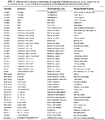
- Cell metabolism uses glycine to build complex molecules, such as the heme group and the purine bases, as well as many other simpler ones, such as creatine. Many important metabolic processes depend on molecules made with glycine, see FIG. 4 .
- Protein structure The role of glycine as an amino acid residue in protein structure is critical, as its small size - the lack of a carbon R-group - allows the protein to have a high capacity for folding, so glycine is like a wild card in occupying difficult sites in protein structure, thereby allowing the structural folding of the protein to be determined by the rest of the amino acids. This property is particularly important in collagen, as it permits the characteristic strong structure of this protein, mainly based on the special folding imposed by proline residues. Elastin also needs glycine to have its elastic properties.
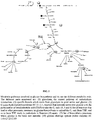
- Glycine is theoretically categorized as a non-essential amino acid, because it can be synthesized in human metabolism. Recognizing its simple structure, as given above, one might think that its synthesis should be easy - but it is not. In fact, glycine biosynthesis is difficult, not really because of chemical problems (its synthesis is achieved in a few steps), but because of problems derived from its various metabolic pathways; see FIG. 3 .
- 3-phosphoglycerate which is taken from glycolysis (see step 1 in FIG. 3 ).
- Glycolysis is the main route of energy carbohydrate metabolism, and a very large central metabolic pathway, so in principle there are no problems to take all necessary material from there.
- 3-P-Glycerate is converted into the amino acid serine in three steps (see step 2); these reactions are not difficult, and so there is, in principle, no reason to have a special requirement of serine in the diet, it being a clear non-essential amino acid.
- step 3 serine is converted into glycine in just one step (see step 3), which is the elimination of a C 1 unit as a carbacation hydroxymethyl group [ + CH2 OH].
- step 4 This reaction is not especially difficult if there is a coenzyme to transport the C 1 group (see step 4).
- This coenzyme is tetrahydrofolate (THF), which is a derivative of folic acid, a B-complex vitamin.
- step 3-4 has two problems: (a) THF is at a very low concentration molecule in metabolism (about 100 times less than other B-coenzymes); this means that there is not much of it available, and (b) when serine is converted to glycine (step 3), THF is loaded with the C 1 group (step 4), which must be released (step 5) in order to recover THF so as to catalyze the reaction again.
- this unloading involves some specific metabolic reactions leading to biosynthesis of purines (step 6), thymine (step 7), or to transfer the methyl group to adenosyl-methionine (step 8), which is, in turn, a coenzyme for most of methyl transfer reactions (step 9).
- This transfer must be fast in order for THF to be ready again for reaction or step 4, as THF concentration is very low.
- the key enzyme in glycine biosynthesis is glycine hydroxymethyl-transferase (EC 2.1.2.1), in whose reaction one molecule of serine is converted into one of glycine plus one C 1 unit which is taken by THF (ser + THF ⁇ gly + THF-C 1 ).
- THF glycine hydroxymethyl-transferase
- it is not a bifurcation point which could alternatively produce glycine or THF-C 1 with the possibility to deviate the flux toward glycine, but just one reaction with fixed stoichiometry.
- step 13 the glycine cleavage system (EC 1.4.4.2/ 2.1.2.10, (step 13), which catalyzes gly + THF + NAD + ⁇ THF-C 1 + CO 2 + NH 3 + NADH; however, the thermodynamic features of this reaction (because of CO 2 release) means that it cannot account for glycine synthesis, but for releasing of a second C 1 unit from glycine degradation, as it can only work in the direction from glycine toward C 1 , not in the opposite direction.
- threonine aldolase catalyzes the reaction: threonine ⁇ glycine + acetaldehyde.
- threonine aldolase catalyzes the reaction: threonine ⁇ glycine + acetaldehyde.
- glycine although having a very simple chemical structure, has a very difficult biosynthetic pathway. Since it is the most used amino acid in metabolism, and since it is difficult to produce freely in high amounts, the result is that glycine is needed in our diets.
- FIG. 5 shows the structures of heme (the prosthetic group of hemoglobin) and porphobilinogen (the basic intermediate in heme building). It can be seen that eight molecules of glycine are spent to build one heme. Hemoglobin is a very abundant protein in the body representing 90% of the dried weight of the red blood cells (around 2 ⁇ 10 12 cells in the body of an average adult). Moreover, hemoglobin turnover is short (120 days) and there is no recycling of material, as the heme group is destroyed to bile pigments. Blood building is, thus, a high expenditure of glycine, and so its deficiency can be a very probable cause of anemia.
- heme the prosthetic group of hemoglobin
- porphobilinogen the basic intermediate in heme building
- Bile salts are cholesterol derivatives (see FIG. 6 ) that are excreted by the liver to the small intestine where they are used as emulsifying agents for lipid digestion. About 20-30 g of bile salts is excreted every day and most of this material returns to the liver by enterohepatic circulation, so only 400 mg (1.5-2.0% of the excreted material) are fully eliminated every day. The rate of cholesterol synthesis is about 800 mg/day in a 80 kg person; one half is excreted as bile salts, and the rest is converted in minor compounds, such as hormones (50 mg), or used for other purposes, and some of it can be accumulated in the body every day.
- hormones 50 mg
- FIG. 4 shows my broad (although probably not complete) view of the metabolic roles of glycine as a precursor for the development of different cell and tissue structures, and the problems that can occur if there are not enough amounts of each material for adequate structure development. I have not yet been able to experimentally demonstrate all of these relationships, but I believe that a form theoretical basis exists for my suggestion of these relationships.
- Heart Conditions Atherosclerosis (“hardening of the arteries") is a well-known progressive heart disease in which deposits of lipids and cholesterol accumulate in the inner arterial wall. Atherosclerosis is strongly correlated with one's level of plasma cholesterol, but its onset appears to be triggered when the endothelial layer of the vessel is damaged. This injury then provokes an immune reaction, which increases the chances that the cholesterol and lipid deposits will accumulate. I believe that a weakness of the connective tissue, due to an insufficient synthesis of collagen, can provoke such vessel damage. Thus, it may be that the origin of a number of cardiovascular problems is a weakness in the mechanical structure of the heart. For example, a weakness in a heart vessel can produce aneurysm (i.e., a permanent arterial enlargement usually caused by weakening of the vessel wall). Such conditions may be treatable with daily glycine dosages.
- Collagen and elastin are important components of the heart, since it has an abundant mass of connective tissue that is rich in collagen and elastin, with this tissue both supporting the organ and its mechanical function.
- connective tissue problems There are many heart diseases that are associated with some kind of connective tissue problems that may be due, in part, to collagen and elastin deficiencies. I suggest that insufficient collagen biosynthesis is often due to glycine deficiency, which can be treated by adding glycine to one's diet.
- Collagen is known to be one of the body's slow turnover proteins. Its biosynthesis rate is estimated between 2 and 5 grams per day in young adults, and approximately half of that in older adults. For young adults with a zero growth rate, we assume that the rate of collagen degradation is the same as that its biosynthesis.
- glycine is about one-third of the amino-acid residues of collagen, and about one-fifth of its mass, a daily collagen turnover of 2-5 g of collagen implies a daily consumption of between 300 and 1,000 mg of glycine for collagen biosynthesis. Taking into account the other metabolic ends of glycine (see FIG. 4 ), let us speculate that about 1.0-2.5 grams are necessary daily. Since no chemical reaction uses its available raw materials at maximum efficiency, I further speculate that one's body needs four times or more of these amounts.
- glycine is about 5% of the mass of many proteins (note: ⁇ 20% of collagen's mass). Assume one's regular intake of protein meals (meat, jam, fish, eggs, etc.) is about 150 g per day. Assume that water makes up most of these meals and only about one-fifth are proteins. This implies a regular intake of 30 g of protein per day. Thus, our normal intake of glycine is around 5% of 30 g or 1.5 g.
- the dosage I often recommend herein (a supplement of 10 g daily) implies increasing our normal intake by about 7 times. This is roughly equivalent to the increase (i.e., a factor of 10 times) used regularly in biochemical experiments to enhance significantly the activity of enzymes.
Landscapes
- Health & Medical Sciences (AREA)
- Life Sciences & Earth Sciences (AREA)
- Veterinary Medicine (AREA)
- Animal Behavior & Ethology (AREA)
- Public Health (AREA)
- General Health & Medical Sciences (AREA)
- Medicinal Chemistry (AREA)
- Chemical & Material Sciences (AREA)
- Pharmacology & Pharmacy (AREA)
- Organic Chemistry (AREA)
- Chemical Kinetics & Catalysis (AREA)
- General Chemical & Material Sciences (AREA)
- Engineering & Computer Science (AREA)
- Nuclear Medicine, Radiotherapy & Molecular Imaging (AREA)
- Bioinformatics & Cheminformatics (AREA)
- Dermatology (AREA)
- Epidemiology (AREA)
- Physical Education & Sports Medicine (AREA)
- Orthopedic Medicine & Surgery (AREA)
- Rheumatology (AREA)
- Oral & Maxillofacial Surgery (AREA)
- Diabetes (AREA)
- Biomedical Technology (AREA)
- Gerontology & Geriatric Medicine (AREA)
- Hematology (AREA)
- Pulmonology (AREA)
- Birds (AREA)
- Immunology (AREA)
- Neurology (AREA)
- Neurosurgery (AREA)
- Acyclic And Carbocyclic Compounds In Medicinal Compositions (AREA)
- Coloring Foods And Improving Nutritive Qualities (AREA)
- Cosmetics (AREA)
- Medicines That Contain Protein Lipid Enzymes And Other Medicines (AREA)
Claims (4)
- Zusammensetzung bestehend aus Glycin für deren Verwendung bei der Behandlung oder Vorbeugung eines Gesundheitsproblems eines Menschen in Bezug auf eine zugrundeliegende Störung, welche mit Knochen, Knorpel oder Bindegewebe assoziiert ist, welche die Förderung der Synthese von Kollagen benötigt, wobei das genannte Gesundheitsproblem aus der Gruppe bestehend aus degenerativen Krankheiten, einschließlich Arthrose und Arthritis, und Osteoporose ausgewählt wird, in welcher das genannte Glycin bei einer Verbrauchsrate im Bereich von 0,1 bis 0,2 g/kg Körpergewicht pro Tag oral verabreicht wird.
- Zusammensetzung bestehend aus Glycin für deren Verwendung nach Anspruch 1, dadurch gekennzeichnet, dass die Dosierung von Glycin größer als 5 Gramm pro Tag ist.
- Zusammensetzung bestehend aus Glycin für deren Verwendung nach Anspruch 2, dadurch gekennzeichnet, dass die Dosierung von Glycin 10 Gramm pro Tag ist.
- Zusammensetzung bestehend aus Glycin für deren Verwendung nach Anspruch 2, dadurch gekennzeichnet, dass die Dosierung von Glycin größer als 10 Gramm pro Tag ist.
Priority Applications (3)
| Application Number | Priority Date | Filing Date | Title |
|---|---|---|---|
| EP20169533.5A EP3701945A1 (de) | 2004-08-09 | 2005-08-08 | Glycin zusammensetzung zur vorbeugung und/oder behandlung von krebs in einem der collagensynthese bedürfenden menschen |
| EP20168629.2A EP3698780A1 (de) | 2004-08-09 | 2005-08-08 | Glycin als nahrungergänzungsmittel zur vorbeugung und/oder behandlung einer durch einen virus in einem der kollagen bedürfenden menschen collagensynthese bedarf verursachten infektionskrankheit |
| EP19153695.2A EP3508201A3 (de) | 2004-08-09 | 2005-08-08 | Glycin als dietätische zugabe zur verwendung in der behandlung von hautproblemen, die aus zugrundeliegenden kollagenstörungen resultieren |
Applications Claiming Priority (2)
| Application Number | Priority Date | Filing Date | Title |
|---|---|---|---|
| US59990804P | 2004-08-09 | 2004-08-09 | |
| PCT/IB2005/004019 WO2006056888A2 (en) | 2004-08-09 | 2005-08-08 | Glycine as a diet supplement for the treatment of health problems that result from underlying metabolic disorders |
Related Child Applications (4)
| Application Number | Title | Priority Date | Filing Date |
|---|---|---|---|
| EP19153695.2A Division-Into EP3508201A3 (de) | 2004-08-09 | 2005-08-08 | Glycin als dietätische zugabe zur verwendung in der behandlung von hautproblemen, die aus zugrundeliegenden kollagenstörungen resultieren |
| EP19153695.2A Division EP3508201A3 (de) | 2004-08-09 | 2005-08-08 | Glycin als dietätische zugabe zur verwendung in der behandlung von hautproblemen, die aus zugrundeliegenden kollagenstörungen resultieren |
| EP20169533.5A Division EP3701945A1 (de) | 2004-08-09 | 2005-08-08 | Glycin zusammensetzung zur vorbeugung und/oder behandlung von krebs in einem der collagensynthese bedürfenden menschen |
| EP20168629.2A Division EP3698780A1 (de) | 2004-08-09 | 2005-08-08 | Glycin als nahrungergänzungsmittel zur vorbeugung und/oder behandlung einer durch einen virus in einem der kollagen bedürfenden menschen collagensynthese bedarf verursachten infektionskrankheit |
Publications (2)
| Publication Number | Publication Date |
|---|---|
| EP1789033A2 EP1789033A2 (de) | 2007-05-30 |
| EP1789033B1 true EP1789033B1 (de) | 2019-04-03 |
Family
ID=36216889
Family Applications (4)
| Application Number | Title | Priority Date | Filing Date |
|---|---|---|---|
| EP19153695.2A Withdrawn EP3508201A3 (de) | 2004-08-09 | 2005-08-08 | Glycin als dietätische zugabe zur verwendung in der behandlung von hautproblemen, die aus zugrundeliegenden kollagenstörungen resultieren |
| EP05850750.0A Expired - Lifetime EP1789033B1 (de) | 2004-08-09 | 2005-08-08 | Glycin als beikost zur behandlung von gesundheitsproblemen, die aus zugrundeliegenden stoffwechselstörungen resultieren |
| EP20169533.5A Withdrawn EP3701945A1 (de) | 2004-08-09 | 2005-08-08 | Glycin zusammensetzung zur vorbeugung und/oder behandlung von krebs in einem der collagensynthese bedürfenden menschen |
| EP20168629.2A Withdrawn EP3698780A1 (de) | 2004-08-09 | 2005-08-08 | Glycin als nahrungergänzungsmittel zur vorbeugung und/oder behandlung einer durch einen virus in einem der kollagen bedürfenden menschen collagensynthese bedarf verursachten infektionskrankheit |
Family Applications Before (1)
| Application Number | Title | Priority Date | Filing Date |
|---|---|---|---|
| EP19153695.2A Withdrawn EP3508201A3 (de) | 2004-08-09 | 2005-08-08 | Glycin als dietätische zugabe zur verwendung in der behandlung von hautproblemen, die aus zugrundeliegenden kollagenstörungen resultieren |
Family Applications After (2)
| Application Number | Title | Priority Date | Filing Date |
|---|---|---|---|
| EP20169533.5A Withdrawn EP3701945A1 (de) | 2004-08-09 | 2005-08-08 | Glycin zusammensetzung zur vorbeugung und/oder behandlung von krebs in einem der collagensynthese bedürfenden menschen |
| EP20168629.2A Withdrawn EP3698780A1 (de) | 2004-08-09 | 2005-08-08 | Glycin als nahrungergänzungsmittel zur vorbeugung und/oder behandlung einer durch einen virus in einem der kollagen bedürfenden menschen collagensynthese bedarf verursachten infektionskrankheit |
Country Status (7)
| Country | Link |
|---|---|
| US (1) | US20060052454A1 (de) |
| EP (4) | EP3508201A3 (de) |
| AU (1) | AU2005308538A1 (de) |
| CA (1) | CA2579962A1 (de) |
| ES (1) | ES2733579T3 (de) |
| PT (1) | PT1789033T (de) |
| WO (1) | WO2006056888A2 (de) |
Families Citing this family (6)
| Publication number | Priority date | Publication date | Assignee | Title |
|---|---|---|---|---|
| ES2355890T3 (es) * | 2002-04-05 | 2011-04-01 | Societe des Produits Nestlé S.A. | Composiciones y métodos para promocionar la asimilación de lípidos en los animales domésticos. |
| CN101472612B (zh) * | 2006-06-14 | 2011-06-08 | 纽崔西亚公司 | 包含甘氨酸和乳铁蛋白的抗炎组合物及其应用 |
| WO2015003021A2 (en) * | 2013-07-01 | 2015-01-08 | The Trustees Of Princeton University | Dietary supplements and composition for treating cancer |
| CN107890116B (zh) * | 2016-10-04 | 2023-01-10 | 株式会社Lg生活健康 | 亮氨酸衍生物、包含其的组合物及其用途 |
| EP3691628A1 (de) * | 2017-10-02 | 2020-08-12 | University of Florida Research Foundation, Incorporated | Materialien und verfahren zur hemmung des tumorwachstums |
| AU2019318209B2 (en) | 2018-08-10 | 2025-09-25 | Diapin Therapeutics, Llc | Tri-peptides and treatment of metabolic, cardiovascular and inflammatory disorders |
Citations (3)
| Publication number | Priority date | Publication date | Assignee | Title |
|---|---|---|---|---|
| US5026728A (en) * | 1989-10-05 | 1991-06-25 | Foodscience Corporation | Treatment of arthritis and inflammation using N,N-dimethylglycine |
| IT1238386B (it) * | 1990-01-08 | 1993-07-16 | Francesco S. Dioguardi | Composizioni a base di prolina,glicina e lisina per il trattamento della carenza di collagene |
| CN1387843A (zh) * | 2001-05-28 | 2003-01-01 | 张经坤 | 一种预防与治疗骨质疏松的药物 |
Family Cites Families (26)
| Publication number | Priority date | Publication date | Assignee | Title |
|---|---|---|---|---|
| US630097A (en) * | 1899-03-08 | 1899-08-01 | Draper Co | Back box-plate for looms. |
| DE2703964A1 (de) * | 1975-07-08 | 1978-08-03 | Walter Dr Schweckendiek | Pharmazeutische zubereitungen zur behandlung von psoriasis |
| RO87957A2 (ro) * | 1983-07-19 | 1985-12-20 | Intreprinderea De Produse Cosmetice "Miraj",Ro | Crema cosmetica antirid |
| US4871718A (en) * | 1987-12-29 | 1989-10-03 | Raymond A. Roncari | Composition of matter for increasing intracellular ATP levels and physical performance levels and for increasing the rate of wound repair |
| SU1621938A1 (ru) * | 1988-05-30 | 1991-01-23 | Институт биохимии им.А.В.Палладина | Способ лечени поражений костной системы при остром лейкозе у детей |
| US5627035A (en) * | 1990-08-22 | 1997-05-06 | Syntello Vaccine Development Ab | Peptides that block human immunodeficiency virus and methods of use thereof |
| US5198465A (en) * | 1991-06-19 | 1993-03-30 | Dioguardi Francesco S | Compositions based on amino acids for preventing and treating precursor deficiencies in the synthesis of collagen |
| US5407958A (en) * | 1993-07-30 | 1995-04-18 | Beauticontrol Cosmetics, Inc. | Therapeutic skin composition |
| US5385887A (en) * | 1993-09-10 | 1995-01-31 | Genetics Institute, Inc. | Formulations for delivery of osteogenic proteins |
| DE4429928C1 (de) * | 1994-08-24 | 1995-11-30 | Goldwell Gmbh | Mittel zur topischen Hautbehandlung |
| FR2725896B1 (fr) * | 1994-10-19 | 1996-11-29 | Sederma Sa | Nouvelles compositions cosmetiques ou dermopharmaceutiques |
| GB9512100D0 (en) * | 1995-06-14 | 1995-08-09 | Sandoz Nutrition Ltd | Improvements in or relating to organic compounds |
| PT871440E (pt) | 1995-12-07 | 2006-07-31 | Daniel C Javitt | Tratamento de sintomas negativos e cognitivos de esquizofrenia com antagonistas da captacao de glicina |
| WO1997025883A1 (de) * | 1996-01-17 | 1997-07-24 | Friedrich Kisters | Aminosäuren-präparat zur haarwuchsförderung |
| JPH10330264A (ja) * | 1997-06-02 | 1998-12-15 | Takeda Shokuhin Kogyo Kk | 脂質代謝促進組成物 |
| US6281244B1 (en) * | 1997-06-05 | 2001-08-28 | Novartis Nutrition Ag | Therapeutic use for glycine |
| AUPO821097A0 (en) * | 1997-07-25 | 1997-08-14 | Cultor Ltd. | A prophylactic |
| CA2298795A1 (en) | 1997-07-28 | 1999-02-04 | The Institute Of Physical And Chemical Research | Agent for protecting central nerve cells and enhancing survival thereof |
| US6025327A (en) * | 1997-08-08 | 2000-02-15 | Biocell Technology, Llc | Hydrolyzed collagen type II and use thereof |
| US6100287A (en) * | 1997-11-13 | 2000-08-08 | University Of Florida | Materials and methods for enhancing muscle performance and recovery from fatigue |
| JP3208381B2 (ja) * | 1998-12-28 | 2001-09-10 | 花王株式会社 | 毛髪化粧料 |
| HUP9901057A2 (hu) * | 1999-04-12 | 2001-02-28 | Béres Részvénytársaság | Csonterősítő készítmény és eljárás előállítására |
| JP2001278778A (ja) * | 2000-03-31 | 2001-10-10 | Shiseido Co Ltd | 皮膚洗浄料 |
| JP2004107238A (ja) * | 2002-09-17 | 2004-04-08 | Fancl Corp | 乾燥肌改善用キット |
| US20050176807A1 (en) * | 2004-02-09 | 2005-08-11 | Friesen Kim G. | Composition and method for use in cartilage affecting conditions |
| WO2005120487A2 (de) * | 2004-06-11 | 2005-12-22 | Egon Tech | Präparat zur prophylaxe und therapie von stresszuständen, von funktionellen und organischen störungen des nervensystems und des stoffwechsels |
-
2005
- 2005-08-08 US US11/199,327 patent/US20060052454A1/en not_active Abandoned
- 2005-08-08 EP EP19153695.2A patent/EP3508201A3/de not_active Withdrawn
- 2005-08-08 WO PCT/IB2005/004019 patent/WO2006056888A2/en not_active Ceased
- 2005-08-08 EP EP05850750.0A patent/EP1789033B1/de not_active Expired - Lifetime
- 2005-08-08 EP EP20169533.5A patent/EP3701945A1/de not_active Withdrawn
- 2005-08-08 EP EP20168629.2A patent/EP3698780A1/de not_active Withdrawn
- 2005-08-08 CA CA002579962A patent/CA2579962A1/en not_active Abandoned
- 2005-08-08 PT PT05850750T patent/PT1789033T/pt unknown
- 2005-08-08 ES ES05850750T patent/ES2733579T3/es not_active Expired - Lifetime
- 2005-08-08 AU AU2005308538A patent/AU2005308538A1/en not_active Abandoned
Patent Citations (3)
| Publication number | Priority date | Publication date | Assignee | Title |
|---|---|---|---|---|
| US5026728A (en) * | 1989-10-05 | 1991-06-25 | Foodscience Corporation | Treatment of arthritis and inflammation using N,N-dimethylglycine |
| IT1238386B (it) * | 1990-01-08 | 1993-07-16 | Francesco S. Dioguardi | Composizioni a base di prolina,glicina e lisina per il trattamento della carenza di collagene |
| CN1387843A (zh) * | 2001-05-28 | 2003-01-01 | 张经坤 | 一种预防与治疗骨质疏松的药物 |
Also Published As
| Publication number | Publication date |
|---|---|
| PT1789033T (pt) | 2019-07-05 |
| CA2579962A1 (en) | 2006-06-01 |
| EP3508201A2 (de) | 2019-07-10 |
| EP3508201A3 (de) | 2019-10-16 |
| WO2006056888A2 (en) | 2006-06-01 |
| WO2006056888A3 (en) | 2006-12-21 |
| AU2005308538A1 (en) | 2006-06-01 |
| ES2733579T3 (es) | 2019-12-02 |
| US20060052454A1 (en) | 2006-03-09 |
| EP3701945A1 (de) | 2020-09-02 |
| EP3698780A1 (de) | 2020-08-26 |
| EP1789033A2 (de) | 2007-05-30 |
Similar Documents
| Publication | Publication Date | Title |
|---|---|---|
| US6368617B1 (en) | Dietary supplement | |
| Braverman | The healing nutrients within: facts, findings, and new research on amino acids | |
| KR101075816B1 (ko) | 종합 경장 영양 조성물 | |
| Roth | Biotin in clinical medicine—a review | |
| US5889055A (en) | L-carnitine and acetyl-L-carnitine combined for prevention and treatment of syndromes related to diseases of energy metabolism | |
| US5973004A (en) | L-carnitine, acetyl-L-carnitine, and pantothenic acid or ubiquinone, combined for prevention and treatment of syndromes related to ineffective energy metabolism | |
| JPH0651626B2 (ja) | 組織退行性炎症性疾患の治療用組成物 | |
| JP2007504182A (ja) | 骨の治癒を促進するための組成物および方法 | |
| EP1083915A1 (de) | Zusammensetzungen und methoden zur steigerung des proteinanabolismus und der entgiftung | |
| WO2005123108A2 (en) | Advanced vitamins and protein based nutritional supplements | |
| EP1789033B1 (de) | Glycin als beikost zur behandlung von gesundheitsproblemen, die aus zugrundeliegenden stoffwechselstörungen resultieren | |
| CN118176011A (zh) | 用于预防和/或治疗重症监护后综合征(pics)的胶原蛋白水解物 | |
| EP2989903A1 (de) | Nahrungsergänzungsmittel für personen mit down-syndrom, autismusstörung und/oder aufmerksamkeitsdefizitstörung mit oder ohne hyperaktivität | |
| JP5722797B2 (ja) | 大量の栄養補給剤の負の副作用なしに、環境ストレスの作用に対抗し、免疫を改善し、活動力を改善し、一方でビタミンおよび無機質の欠乏に対処するための、マルチビタミン/無機質配合物 | |
| US20200030349A1 (en) | Physiologically active preparation comprising n-acetyl-glucosamine for the treatment of back pain | |
| JP2001524080A (ja) | 関節炎の治療用加水分解コラーゲンタンパク質およびグルコサミンを含む組成物 | |
| CN106036387A (zh) | 超级藜麦儿童生长营养包 | |
| US11766458B2 (en) | Method and a dietary composition on regulation, treatment, and prevention of obesity | |
| Sullivan | Digestion and nutrition | |
| McClure | Fluorine and other trace elements in nutrition | |
| RU2680389C1 (ru) | Способ коррекции нарушений метаболических процессов в соединительной ткани | |
| CARSON | Homocystinuria: Trial Treatment of a 5-Year Ola Severely Retarded Child With a Natural Diet Low in Methionine | |
| RU2120297C1 (ru) | Способ нормализации обменных процессов в клетке и препарат для этих целей | |
| RU2154474C2 (ru) | Способ лечения алиментарной дистрофии | |
| Levy et al. | Vitamins: Their Use and Abuse |
Legal Events
| Date | Code | Title | Description |
|---|---|---|---|
| PUAI | Public reference made under article 153(3) epc to a published international application that has entered the european phase |
Free format text: ORIGINAL CODE: 0009012 |
|
| 17P | Request for examination filed |
Effective date: 20070307 |
|
| AK | Designated contracting states |
Kind code of ref document: A2 Designated state(s): AT BE BG CH CY CZ DE DK EE ES FI FR GB GR HU IE IS IT LI LT LU LV MC NL PL PT RO SE SI SK TR |
|
| AX | Request for extension of the european patent |
Extension state: AL BA HR MK YU |
|
| DAX | Request for extension of the european patent (deleted) | ||
| 17Q | First examination report despatched |
Effective date: 20090330 |
|
| STAA | Information on the status of an ep patent application or granted ep patent |
Free format text: STATUS: EXAMINATION IS IN PROGRESS |
|
| GRAP | Despatch of communication of intention to grant a patent |
Free format text: ORIGINAL CODE: EPIDOSNIGR1 |
|
| STAA | Information on the status of an ep patent application or granted ep patent |
Free format text: STATUS: GRANT OF PATENT IS INTENDED |
|
| INTG | Intention to grant announced |
Effective date: 20190107 |
|
| GRAS | Grant fee paid |
Free format text: ORIGINAL CODE: EPIDOSNIGR3 |
|
| GRAA | (expected) grant |
Free format text: ORIGINAL CODE: 0009210 |
|
| STAA | Information on the status of an ep patent application or granted ep patent |
Free format text: STATUS: THE PATENT HAS BEEN GRANTED |
|
| AK | Designated contracting states |
Kind code of ref document: B1 Designated state(s): AT BE BG CH CY CZ DE DK EE ES FI FR GB GR HU IE IS IT LI LT LU LV MC NL PL PT RO SE SI SK TR |
|
| REG | Reference to a national code |
Ref country code: GB Ref legal event code: FG4D |
|
| REG | Reference to a national code |
Ref country code: AT Ref legal event code: REF Ref document number: 1114885 Country of ref document: AT Kind code of ref document: T Effective date: 20190415 Ref country code: CH Ref legal event code: EP |
|
| REG | Reference to a national code |
Ref country code: DE Ref legal event code: R096 Ref document number: 602005055608 Country of ref document: DE |
|
| REG | Reference to a national code |
Ref country code: IE Ref legal event code: FG4D |
|
| REG | Reference to a national code |
Ref country code: PT Ref legal event code: SC4A Ref document number: 1789033 Country of ref document: PT Date of ref document: 20190705 Kind code of ref document: T Free format text: AVAILABILITY OF NATIONAL TRANSLATION Effective date: 20190625 |
|
| REG | Reference to a national code |
Ref country code: NL Ref legal event code: FP |
|
| REG | Reference to a national code |
Ref country code: LT Ref legal event code: MG4D |
|
| REG | Reference to a national code |
Ref country code: AT Ref legal event code: MK05 Ref document number: 1114885 Country of ref document: AT Kind code of ref document: T Effective date: 20190403 |
|
| PG25 | Lapsed in a contracting state [announced via postgrant information from national office to epo] |
Ref country code: LT Free format text: LAPSE BECAUSE OF FAILURE TO SUBMIT A TRANSLATION OF THE DESCRIPTION OR TO PAY THE FEE WITHIN THE PRESCRIBED TIME-LIMIT Effective date: 20190403 Ref country code: CZ Free format text: LAPSE BECAUSE OF FAILURE TO SUBMIT A TRANSLATION OF THE DESCRIPTION OR TO PAY THE FEE WITHIN THE PRESCRIBED TIME-LIMIT Effective date: 20190403 Ref country code: FI Free format text: LAPSE BECAUSE OF FAILURE TO SUBMIT A TRANSLATION OF THE DESCRIPTION OR TO PAY THE FEE WITHIN THE PRESCRIBED TIME-LIMIT Effective date: 20190403 Ref country code: SE Free format text: LAPSE BECAUSE OF FAILURE TO SUBMIT A TRANSLATION OF THE DESCRIPTION OR TO PAY THE FEE WITHIN THE PRESCRIBED TIME-LIMIT Effective date: 20190403 |
|
| PG25 | Lapsed in a contracting state [announced via postgrant information from national office to epo] |
Ref country code: GR Free format text: LAPSE BECAUSE OF FAILURE TO SUBMIT A TRANSLATION OF THE DESCRIPTION OR TO PAY THE FEE WITHIN THE PRESCRIBED TIME-LIMIT Effective date: 20190704 Ref country code: PL Free format text: LAPSE BECAUSE OF FAILURE TO SUBMIT A TRANSLATION OF THE DESCRIPTION OR TO PAY THE FEE WITHIN THE PRESCRIBED TIME-LIMIT Effective date: 20190403 Ref country code: BG Free format text: LAPSE BECAUSE OF FAILURE TO SUBMIT A TRANSLATION OF THE DESCRIPTION OR TO PAY THE FEE WITHIN THE PRESCRIBED TIME-LIMIT Effective date: 20190703 Ref country code: LV Free format text: LAPSE BECAUSE OF FAILURE TO SUBMIT A TRANSLATION OF THE DESCRIPTION OR TO PAY THE FEE WITHIN THE PRESCRIBED TIME-LIMIT Effective date: 20190403 |
|
| REG | Reference to a national code |
Ref country code: ES Ref legal event code: FG2A Ref document number: 2733579 Country of ref document: ES Kind code of ref document: T3 Effective date: 20191202 |
|
| PG25 | Lapsed in a contracting state [announced via postgrant information from national office to epo] |
Ref country code: AT Free format text: LAPSE BECAUSE OF FAILURE TO SUBMIT A TRANSLATION OF THE DESCRIPTION OR TO PAY THE FEE WITHIN THE PRESCRIBED TIME-LIMIT Effective date: 20190403 Ref country code: IS Free format text: LAPSE BECAUSE OF FAILURE TO SUBMIT A TRANSLATION OF THE DESCRIPTION OR TO PAY THE FEE WITHIN THE PRESCRIBED TIME-LIMIT Effective date: 20190803 |
|
| REG | Reference to a national code |
Ref country code: DE Ref legal event code: R097 Ref document number: 602005055608 Country of ref document: DE |
|
| PG25 | Lapsed in a contracting state [announced via postgrant information from national office to epo] |
Ref country code: SK Free format text: LAPSE BECAUSE OF FAILURE TO SUBMIT A TRANSLATION OF THE DESCRIPTION OR TO PAY THE FEE WITHIN THE PRESCRIBED TIME-LIMIT Effective date: 20190403 Ref country code: EE Free format text: LAPSE BECAUSE OF FAILURE TO SUBMIT A TRANSLATION OF THE DESCRIPTION OR TO PAY THE FEE WITHIN THE PRESCRIBED TIME-LIMIT Effective date: 20190403 Ref country code: DK Free format text: LAPSE BECAUSE OF FAILURE TO SUBMIT A TRANSLATION OF THE DESCRIPTION OR TO PAY THE FEE WITHIN THE PRESCRIBED TIME-LIMIT Effective date: 20190403 Ref country code: RO Free format text: LAPSE BECAUSE OF FAILURE TO SUBMIT A TRANSLATION OF THE DESCRIPTION OR TO PAY THE FEE WITHIN THE PRESCRIBED TIME-LIMIT Effective date: 20190403 |
|
| PLBE | No opposition filed within time limit |
Free format text: ORIGINAL CODE: 0009261 |
|
| STAA | Information on the status of an ep patent application or granted ep patent |
Free format text: STATUS: NO OPPOSITION FILED WITHIN TIME LIMIT |
|
| 26N | No opposition filed |
Effective date: 20200106 |
|
| PG25 | Lapsed in a contracting state [announced via postgrant information from national office to epo] |
Ref country code: TR Free format text: LAPSE BECAUSE OF FAILURE TO SUBMIT A TRANSLATION OF THE DESCRIPTION OR TO PAY THE FEE WITHIN THE PRESCRIBED TIME-LIMIT Effective date: 20190403 |
|
| PG25 | Lapsed in a contracting state [announced via postgrant information from national office to epo] |
Ref country code: SI Free format text: LAPSE BECAUSE OF FAILURE TO SUBMIT A TRANSLATION OF THE DESCRIPTION OR TO PAY THE FEE WITHIN THE PRESCRIBED TIME-LIMIT Effective date: 20190403 Ref country code: MC Free format text: LAPSE BECAUSE OF FAILURE TO SUBMIT A TRANSLATION OF THE DESCRIPTION OR TO PAY THE FEE WITHIN THE PRESCRIBED TIME-LIMIT Effective date: 20190403 |
|
| PG25 | Lapsed in a contracting state [announced via postgrant information from national office to epo] |
Ref country code: CY Free format text: LAPSE BECAUSE OF FAILURE TO SUBMIT A TRANSLATION OF THE DESCRIPTION OR TO PAY THE FEE WITHIN THE PRESCRIBED TIME-LIMIT Effective date: 20190403 |
|
| PG25 | Lapsed in a contracting state [announced via postgrant information from national office to epo] |
Ref country code: HU Free format text: LAPSE BECAUSE OF FAILURE TO SUBMIT A TRANSLATION OF THE DESCRIPTION OR TO PAY THE FEE WITHIN THE PRESCRIBED TIME-LIMIT; INVALID AB INITIO Effective date: 20050808 |
|
| PGFP | Annual fee paid to national office [announced via postgrant information from national office to epo] |
Ref country code: NL Payment date: 20230719 Year of fee payment: 19 Ref country code: LU Payment date: 20230726 Year of fee payment: 19 |
|
| PGFP | Annual fee paid to national office [announced via postgrant information from national office to epo] |
Ref country code: IT Payment date: 20230717 Year of fee payment: 19 Ref country code: IE Payment date: 20230710 Year of fee payment: 19 Ref country code: GB Payment date: 20230623 Year of fee payment: 19 Ref country code: CH Payment date: 20230901 Year of fee payment: 19 |
|
| PGFP | Annual fee paid to national office [announced via postgrant information from national office to epo] |
Ref country code: FR Payment date: 20230703 Year of fee payment: 19 Ref country code: DE Payment date: 20230627 Year of fee payment: 19 Ref country code: BE Payment date: 20230719 Year of fee payment: 19 |
|
| PGFP | Annual fee paid to national office [announced via postgrant information from national office to epo] |
Ref country code: PT Payment date: 20240920 Year of fee payment: 20 |
|
| PGFP | Annual fee paid to national office [announced via postgrant information from national office to epo] |
Ref country code: ES Payment date: 20240904 Year of fee payment: 20 |
|
| REG | Reference to a national code |
Ref country code: DE Ref legal event code: R119 Ref document number: 602005055608 Country of ref document: DE |
|
| REG | Reference to a national code |
Ref country code: CH Ref legal event code: PL |
|
| REG | Reference to a national code |
Ref country code: NL Ref legal event code: MM Effective date: 20240901 |
|
| PG25 | Lapsed in a contracting state [announced via postgrant information from national office to epo] |
Ref country code: LU Free format text: LAPSE BECAUSE OF NON-PAYMENT OF DUE FEES Effective date: 20240808 |
|
| GBPC | Gb: european patent ceased through non-payment of renewal fee |
Effective date: 20240808 |
|
| PG25 | Lapsed in a contracting state [announced via postgrant information from national office to epo] |
Ref country code: CH Free format text: LAPSE BECAUSE OF NON-PAYMENT OF DUE FEES Effective date: 20240831 |
|
| PG25 | Lapsed in a contracting state [announced via postgrant information from national office to epo] |
Ref country code: NL Free format text: LAPSE BECAUSE OF NON-PAYMENT OF DUE FEES Effective date: 20240901 |
|
| REG | Reference to a national code |
Ref country code: BE Ref legal event code: MM Effective date: 20240831 |
|
| PG25 | Lapsed in a contracting state [announced via postgrant information from national office to epo] |
Ref country code: DE Free format text: LAPSE BECAUSE OF NON-PAYMENT OF DUE FEES Effective date: 20250301 |
|
| PG25 | Lapsed in a contracting state [announced via postgrant information from national office to epo] |
Ref country code: GB Free format text: LAPSE BECAUSE OF NON-PAYMENT OF DUE FEES Effective date: 20240808 |
|
| PG25 | Lapsed in a contracting state [announced via postgrant information from national office to epo] |
Ref country code: IT Free format text: LAPSE BECAUSE OF NON-PAYMENT OF DUE FEES Effective date: 20240808 Ref country code: BE Free format text: LAPSE BECAUSE OF NON-PAYMENT OF DUE FEES Effective date: 20240831 |
|
| PG25 | Lapsed in a contracting state [announced via postgrant information from national office to epo] |
Ref country code: FR Free format text: LAPSE BECAUSE OF NON-PAYMENT OF DUE FEES Effective date: 20240831 |
|
| PG25 | Lapsed in a contracting state [announced via postgrant information from national office to epo] |
Ref country code: IE Free format text: LAPSE BECAUSE OF NON-PAYMENT OF DUE FEES Effective date: 20240808 |
|
| REG | Reference to a national code |
Ref country code: ES Ref legal event code: FD2A Effective date: 20251002 |
|
| PG25 | Lapsed in a contracting state [announced via postgrant information from national office to epo] |
Ref country code: PT Free format text: LAPSE BECAUSE OF EXPIRATION OF PROTECTION Effective date: 20250819 Ref country code: ES Free format text: LAPSE BECAUSE OF EXPIRATION OF PROTECTION Effective date: 20250809 |