EP1798619A2 - Appareil de traitement de produit et système de contrôle - Google Patents
Appareil de traitement de produit et système de contrôle Download PDFInfo
- Publication number
- EP1798619A2 EP1798619A2 EP07104604A EP07104604A EP1798619A2 EP 1798619 A2 EP1798619 A2 EP 1798619A2 EP 07104604 A EP07104604 A EP 07104604A EP 07104604 A EP07104604 A EP 07104604A EP 1798619 A2 EP1798619 A2 EP 1798619A2
- Authority
- EP
- European Patent Office
- Prior art keywords
- information
- operational
- processing apparatus
- product processing
- product
- Prior art date
- Legal status (The legal status is an assumption and is not a legal conclusion. Google has not performed a legal analysis and makes no representation as to the accuracy of the status listed.)
- Granted
Links
Images



Classifications
-
- G—PHYSICS
- G06—COMPUTING OR CALCULATING; COUNTING
- G06Q—INFORMATION AND COMMUNICATION TECHNOLOGY [ICT] SPECIALLY ADAPTED FOR ADMINISTRATIVE, COMMERCIAL, FINANCIAL, MANAGERIAL OR SUPERVISORY PURPOSES; SYSTEMS OR METHODS SPECIALLY ADAPTED FOR ADMINISTRATIVE, COMMERCIAL, FINANCIAL, MANAGERIAL OR SUPERVISORY PURPOSES, NOT OTHERWISE PROVIDED FOR
- G06Q10/00—Administration; Management
- G06Q10/06—Resources, workflows, human or project management; Enterprise or organisation planning; Enterprise or organisation modelling
-
- G—PHYSICS
- G05—CONTROLLING; REGULATING
- G05B—CONTROL OR REGULATING SYSTEMS IN GENERAL; FUNCTIONAL ELEMENTS OF SUCH SYSTEMS; MONITORING OR TESTING ARRANGEMENTS FOR SUCH SYSTEMS OR ELEMENTS
- G05B19/00—Program-control systems
- G05B19/02—Program-control systems electric
- G05B19/418—Total factory control, i.e. centrally controlling a plurality of machines, e.g. direct or distributed numerical control [DNC], flexible manufacturing systems [FMS], integrated manufacturing systems [IMS] or computer integrated manufacturing [CIM]
- G05B19/41845—Total factory control, i.e. centrally controlling a plurality of machines, e.g. direct or distributed numerical control [DNC], flexible manufacturing systems [FMS], integrated manufacturing systems [IMS] or computer integrated manufacturing [CIM] characterised by system universality, reconfigurability, modularity
-
- G—PHYSICS
- G05—CONTROLLING; REGULATING
- G05B—CONTROL OR REGULATING SYSTEMS IN GENERAL; FUNCTIONAL ELEMENTS OF SUCH SYSTEMS; MONITORING OR TESTING ARRANGEMENTS FOR SUCH SYSTEMS OR ELEMENTS
- G05B19/00—Program-control systems
- G05B19/02—Program-control systems electric
- G05B19/418—Total factory control, i.e. centrally controlling a plurality of machines, e.g. direct or distributed numerical control [DNC], flexible manufacturing systems [FMS], integrated manufacturing systems [IMS] or computer integrated manufacturing [CIM]
- G05B19/4185—Total factory control, i.e. centrally controlling a plurality of machines, e.g. direct or distributed numerical control [DNC], flexible manufacturing systems [FMS], integrated manufacturing systems [IMS] or computer integrated manufacturing [CIM] characterised by the network communication
-
- H—ELECTRICITY
- H04—ELECTRIC COMMUNICATION TECHNIQUE
- H04L—TRANSMISSION OF DIGITAL INFORMATION, e.g. TELEGRAPHIC COMMUNICATION
- H04L67/00—Network arrangements or protocols for supporting network services or applications
- H04L67/01—Protocols
- H04L67/02—Protocols based on web technology, e.g. hypertext transfer protocol [HTTP]
-
- H—ELECTRICITY
- H04—ELECTRIC COMMUNICATION TECHNIQUE
- H04L—TRANSMISSION OF DIGITAL INFORMATION, e.g. TELEGRAPHIC COMMUNICATION
- H04L67/00—Network arrangements or protocols for supporting network services or applications
- H04L67/01—Protocols
- H04L67/02—Protocols based on web technology, e.g. hypertext transfer protocol [HTTP]
- H04L67/025—Protocols based on web technology, e.g. hypertext transfer protocol [HTTP] for remote control or remote monitoring of applications
-
- H—ELECTRICITY
- H04—ELECTRIC COMMUNICATION TECHNIQUE
- H04L—TRANSMISSION OF DIGITAL INFORMATION, e.g. TELEGRAPHIC COMMUNICATION
- H04L67/00—Network arrangements or protocols for supporting network services or applications
- H04L67/01—Protocols
- H04L67/12—Protocols specially adapted for proprietary or special-purpose networking environments, e.g. medical networks, sensor networks, networks in vehicles or remote metering networks
-
- G—PHYSICS
- G05—CONTROLLING; REGULATING
- G05B—CONTROL OR REGULATING SYSTEMS IN GENERAL; FUNCTIONAL ELEMENTS OF SUCH SYSTEMS; MONITORING OR TESTING ARRANGEMENTS FOR SUCH SYSTEMS OR ELEMENTS
- G05B2219/00—Program-control systems
- G05B2219/30—Nc systems
- G05B2219/31—From computer integrated manufacturing till monitoring
- G05B2219/31156—Network structure, internet
-
- G—PHYSICS
- G05—CONTROLLING; REGULATING
- G05B—CONTROL OR REGULATING SYSTEMS IN GENERAL; FUNCTIONAL ELEMENTS OF SUCH SYSTEMS; MONITORING OR TESTING ARRANGEMENTS FOR SUCH SYSTEMS OR ELEMENTS
- G05B2219/00—Program-control systems
- G05B2219/30—Nc systems
- G05B2219/31—From computer integrated manufacturing till monitoring
- G05B2219/31159—Intranet
-
- G—PHYSICS
- G05—CONTROLLING; REGULATING
- G05B—CONTROL OR REGULATING SYSTEMS IN GENERAL; FUNCTIONAL ELEMENTS OF SUCH SYSTEMS; MONITORING OR TESTING ARRANGEMENTS FOR SUCH SYSTEMS OR ELEMENTS
- G05B2219/00—Program-control systems
- G05B2219/30—Nc systems
- G05B2219/31—From computer integrated manufacturing till monitoring
- G05B2219/31186—TCP-IP internet protocol
-
- G—PHYSICS
- G05—CONTROLLING; REGULATING
- G05B—CONTROL OR REGULATING SYSTEMS IN GENERAL; FUNCTIONAL ELEMENTS OF SUCH SYSTEMS; MONITORING OR TESTING ARRANGEMENTS FOR SUCH SYSTEMS OR ELEMENTS
- G05B2219/00—Program-control systems
- G05B2219/30—Nc systems
- G05B2219/31—From computer integrated manufacturing till monitoring
- G05B2219/31422—Upload, download programs, parameters from, to station to, from server
-
- G—PHYSICS
- G05—CONTROLLING; REGULATING
- G05B—CONTROL OR REGULATING SYSTEMS IN GENERAL; FUNCTIONAL ELEMENTS OF SUCH SYSTEMS; MONITORING OR TESTING ARRANGEMENTS FOR SUCH SYSTEMS OR ELEMENTS
- G05B2219/00—Program-control systems
- G05B2219/30—Nc systems
- G05B2219/32—Operator till task planning
- G05B2219/32024—Remote ordering, electronic selection article and fitting to form of client
-
- G—PHYSICS
- G05—CONTROLLING; REGULATING
- G05B—CONTROL OR REGULATING SYSTEMS IN GENERAL; FUNCTIONAL ELEMENTS OF SUCH SYSTEMS; MONITORING OR TESTING ARRANGEMENTS FOR SUCH SYSTEMS OR ELEMENTS
- G05B2219/00—Program-control systems
- G05B2219/30—Nc systems
- G05B2219/32—Operator till task planning
- G05B2219/32036—Enter data, values for custom made articles
-
- G—PHYSICS
- G05—CONTROLLING; REGULATING
- G05B—CONTROL OR REGULATING SYSTEMS IN GENERAL; FUNCTIONAL ELEMENTS OF SUCH SYSTEMS; MONITORING OR TESTING ARRANGEMENTS FOR SUCH SYSTEMS OR ELEMENTS
- G05B2219/00—Program-control systems
- G05B2219/30—Nc systems
- G05B2219/32—Operator till task planning
- G05B2219/32037—Order picking
-
- G—PHYSICS
- G05—CONTROLLING; REGULATING
- G05B—CONTROL OR REGULATING SYSTEMS IN GENERAL; FUNCTIONAL ELEMENTS OF SUCH SYSTEMS; MONITORING OR TESTING ARRANGEMENTS FOR SUCH SYSTEMS OR ELEMENTS
- G05B2219/00—Program-control systems
- G05B2219/30—Nc systems
- G05B2219/34—Director, elements to supervisory
- G05B2219/34038—Web, http, ftp, internet, intranet server
-
- H—ELECTRICITY
- H04—ELECTRIC COMMUNICATION TECHNIQUE
- H04L—TRANSMISSION OF DIGITAL INFORMATION, e.g. TELEGRAPHIC COMMUNICATION
- H04L69/00—Network arrangements, protocols or services independent of the application payload and not provided for in the other groups of this subclass
- H04L69/30—Definitions, standards or architectural aspects of layered protocol stacks
- H04L69/32—Architecture of open systems interconnection [OSI] 7-layer type protocol stacks, e.g. the interfaces between the data link level and the physical level
- H04L69/322—Intralayer communication protocols among peer entities or protocol data unit [PDU] definitions
- H04L69/329—Intralayer communication protocols among peer entities or protocol data unit [PDU] definitions in the application layer [OSI layer 7]
-
- Y—GENERAL TAGGING OF NEW TECHNOLOGICAL DEVELOPMENTS; GENERAL TAGGING OF CROSS-SECTIONAL TECHNOLOGIES SPANNING OVER SEVERAL SECTIONS OF THE IPC; TECHNICAL SUBJECTS COVERED BY FORMER USPC CROSS-REFERENCE ART COLLECTIONS [XRACs] AND DIGESTS
- Y02—TECHNOLOGIES OR APPLICATIONS FOR MITIGATION OR ADAPTATION AGAINST CLIMATE CHANGE
- Y02P—CLIMATE CHANGE MITIGATION TECHNOLOGIES IN THE PRODUCTION OR PROCESSING OF GOODS
- Y02P90/00—Enabling technologies with a potential contribution to greenhouse gas [GHG] emissions mitigation
- Y02P90/02—Total factory control, e.g. smart factories, flexible manufacturing systems [FMS] or integrated manufacturing systems [IMS]
Definitions
- the present invention relates to a product production line control method used in product production lines for such products as industrially produced foodstuffs and industrial parts.
- the mass-produced product is supplied to a measuring apparatus where it is divided into portions of a set quantity; then those portions are put into individual bags by a bagging apparatus, giving the product the form in which it will be sold.
- the bagged products are then transported to an inspection line made up of a metal detector, weight checker, seal checker and the like. Substandard products are set aside by this inspection line, and only the good products are packed by a box-packing apparatus.
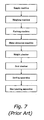
- FIG. 7 provides a representation of a typical such production line.
- each product processing apparatus constituting such a production line The operational conditions of each product processing apparatus constituting such a production line are set in accordance with the product being produced. However, in many cases, simply setting the optimal operational conditions for each of the individual apparatuses will not result in the operational conditions for the production line as a whole being met. In other words, because each of the individual product processing apparatuses operates in tandem with each other, the relationships among the each apparatus have to be considered when setting the operational conditions for each individual machine. Furthermore, because these apparatuses are working together in this way, if just one of these product processing apparatuses stops, then the entire production line stops. Therefore, the operational status of each of the apparatuses constituting the production line have to be monitored constantly. For this reason, as disclosed in Laid-open Japanese Patent Application No. H9-301327 , control systems are used to control the operational conditions of each individual product processing apparatus constituting the production line.
- FIG. 8 is a representation of a control system for the operational conditions in a conventional production line.
- the control system shown in FIG. 8 includes individual product processing apparatuses 81, a host terminal 82 for monitoring these apparatuses, and a dedicated communications line 83 such as an RS 485, an ARCNET or the like.
- the individual apparatuses 81 are interconnected with an RCU (remote control unit) 84 for operating these apparatuses.
- Each RCU has a telecommunications board, and those telecommunication boards and the telecommunications board in the host terminal are interconnected by the dedicated communications line.
- an exclusive communications processing program must be created specifically to correspond with the dedicated communications line 83. Furthermore, an exclusive program for the host terminal must be created in order to display data showing operational information of the production line on the host terminal 82 as well as to make settings, and that program has to be adapted to all the interconnected machines.
- a first aspect of the present invention presents a product processing apparatus used in a product production line and presenting operational information via a network to an information terminal.
- the apparatus includes a network interface, storage means, a WWW server, presentation means, transfer means and conversion means.
- the network interface uses TCP/IP to communicate with the information terminal.
- Storage means stores the operational information.
- the WWW server receives from the WWW browser of the information terminal instructions regarding the operational information to be presented to the information terminal, and based on the received instructions designates such operational information.
- Presentation means presents the designated operational information to the information terminal.
- Delivery means pursuant to the designation, delivers operational information between the storage means and the presentation means.
- Conversion means converts the stored operational information into a format useable by the information terminal.
- a user accesses a web page that presents information of the targeted product processing apparatus.
- a WWW server on the product processing apparatus acquires operational information of the product processing apparatus via delivery means and presents this to the information terminal. If a product processing apparatus of the present invention is used, a user can gain access to the operational information regardless of his location, by using a WWW browser on an information terminal connected to the Internet or an intranet. Therefore the operations of a production line can be monitored at any time. Furthermore, because an ordinary communications specification is used, there is no need to prepare a special program or facilities for communication. Furthermore, because the output formats are kept consistent, the time required for operator training is shortened and the number of operating mistakes is reduced.
- a second aspect of the present invention presents a product processing apparatus according to the first aspect, wherein the conversion means converts operational information into data for display by a WWW browser, and the presentation means is a WWW server that transmits the converted operational information to the WWW browser on the information terminal.
- a third aspect of the present invention presents a product processing apparatus according to the first aspect, wherein the conversion means converts operational information into printable data and the presentation means is a printer client that sends the converted operational information to the information terminal, which has a print server function.
- Operational information that has been printed can be stored as permanent records. These records can be used as materials for such cases as guaranteeing products results, measures against product liability lawsuits, and proposing future production plans.
- a fourth aspect of the present invention presents a product processing apparatus according to the first aspect, wherein the conversion means converts operational information into email and the presentation means is an email client that sends the converted operational information to the information terminal, which has an email server function.
- the operational information can be stored as permanent records.
- the party responsible for the production line can confirm operational status at any time convenient for him.
- a combination of a push-type email server and a portable wireless terminal an even better response to errors is possible.
- a fifth aspect of the present invention presents a product processing apparatus according to the first aspect, wherein the conversion means converts operational information into a file and the presentation means is an FTP client that sends the converted operational information to the information terminal, which has an FTP server function.
- the operational information can be stored as permanent records, with the further advantage of not requiring the physical space for storage required with paper records.
- a sixth aspect of the present invention presents a product processing apparatus according to any of the first through fifth aspects, wherein image information is included in the operational information, and further comprising image-taking means for taking images of the image information.
- Including image information in the operational information has the advantage of allowing confirmation of conditions that are difficult to grasp just with character-based information.
- a seventh aspect of the present invention presents a product processing apparatus used in a product production line wherein drive conditions can be set from an information terminal over a network.
- the product processing apparatus includes a network interface, storage means, a WWW server, and update means.
- the network interface communicates with the information terminal using TCP/IP.
- Storage means stores the drive conditions.
- the WWW server receives from a WWW browser on the information terminal the drive information set from the information terminal.
- Update means updates drive conditions stored in the storage means pursuant to the received drive conditions.
- a WWW browser on an information terminal connected to the Internet or an intranet, a user can reset drive conditions regardless of where he might be. Therefore, a machine on a production line that has a setting error or other problem can easily be put in good order.
- An eighth aspect of the present invention presents a product processing apparatus used in a product production line wherein drive conditions can be set from an information terminal over a network.
- the product processing apparatus comprises a network interface, storage means, reception means, and update means.
- the network interface communicates with the information terminal using TCP/IP.
- Storage means stores the drive conditions.
- Reception means receives files from the information terminal.
- Update means updates drive conditions stored in the storage means pursuant to the received files.
- multiple operational information can be written in a file and reset.
- version upgrades of a drive program for a product processing apparatus can be written into files, so that the program can be updated.
- a ninth aspect of the present invention presents a production line control system that presents over a network operational information from a plurality of product processing apparatuses used in a product production line to an information terminal, or that is capable of setting operational information for a plurality of product processing apparatuses over a network from an information terminal.
- a product processing apparatus includes a network interface, storage means, a WWW server, presentation means, delivery means, conversion means and update means.
- the information terminal comprises output means and a WWW browser.
- the network interface uses TCP/IP to communicate with the information terminal.
- Storage means stores the operational information.
- the WWW server receives from a WWW browser of the information terminal instructions regarding operational information to be presented to the information terminal, and based on the instructions can designate such operational information.
- the WWW server can also receive from the WWW browser of the information terminal drive conditions set from the information terminal.
- Presentation means presents the designated operational information to the information terminal.
- Delivery means delivers operational information between the storage means and the presentation means, pursuant to the designation.
- Conversion means converts the stored operational information into a format useable by the information terminal.
- Update means updates the drive conditions stored in the storage means pursuant to drive conditions received from the WWW browser.
- Output means outputs operational information presented from the presentation means.
- the WWW browser can give the operational information instructions and set drive conditions to the WWW server of the product processing apparatus.
- a tenth aspect of the present invention presents a product processing apparatus used in a product production line and sending operational warning information over a network to information terminals.
- the apparatus includes specification means for specifying a portable wireless terminal among the information terminals, communications means communicating with the designated portable wireless terminal, and conversion means converting the operational warning information into voice data or email, and sends the converted operational warning information over the communications means.
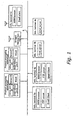
- FIG. 1 shows the overall constitution of a production control system relating to the present invention.
- This system comprises a plurality of product processing apparatuses 2, information terminals 4a, 4b, 4c, 4d, and communications line 5.
- the product processing apparatuses 2 are product processing apparatuses constituting a product production line, which weigh out a set amount of a product such as foodstuffs and industrial parts, and after putting these products into bags, conduct quality checks, and pack the bags into boxes.
- these can be supply machines, combining and weighing machines, bagging machines, seal checkers, metal detectors, weight checkers, sorting machines, and box-packing machines.
- each product processing apparatus 2 is provided with an RCU 3, and loaded onto each RCU 3 are a WWW (World Wide Web) server 34, an email client 35, an FTP client 36, and a print client 37 (see FIG. 2).
- WWW World Wide Web
- the information terminal 4a comprises a personal computer or workstation or the like, and is interconnected with the communications line 5 via a network interface.
- Loaded onto the information terminal 4a is a WWW browser, an FTP server and an email client, making the information terminal 4a capable of accessing the WWW server 34 of each product processing apparatus 2, transmitting files to and receiving files from the FTP client 36 thereof, and transmitting email to and receiving email from the email server 4c thereof.
- the WWW browser specifies with an IP address or the like the product processing apparatus with which it is to communicate, and causes the HTML (Hyper Text Markup Language) documents and the like stored therein to be displayed.
- the information terminal 4b has a print server, and is interconnected with the communications line 5 via a network interface.
- the information terminal 4b is connected to a printer.
- the print server receives print signals from a print client, and the corresponding data is printed by the printer.
- the information terminal 4c has an email server, and is interconnected with the communications line 5 via a network interface.
- the email server saves email for each email address that it manages.
- the email server also has a push function, so that whenever it receives email from an email client, it immediately distributes the email to the email client indicated by the email address.
- the information terminal 4d is a cellular phone, PHS (personal handyphone system), pager or other portable wireless terminal.
- the information terminal 4d is connected with the communications line 5 via a bridge (wireless base station) 6.
- the bridge 6 forwards this data wirelessly to the portable wireless terminal. Because when the recipient is a portable wireless terminal, a different protocol is used, the bridge 6 has a protocol conversion function.
- the communications line 5 may, for example, be a local area network (LAN) comprising a 10Base-T Ethernet line, hubs and routers. This communications line uses TCP/IP as the communication protocol. (2-1) Constitution of a Product Processing Apparatus
- Each product processing apparatus 2 includes a drive unit 20, a sensor 21, an RCU (remote control unit) 3 that processes the signals from the sensor 21 and controls the overall product processing apparatus, and an image-taking unit 22. It further includes display and input means (not shown in the figure) for inputting and displaying product processing apparatus operations.
- RCU remote control unit
- the drive unit 20 can be a scatter feeder, a radiation feeder, a pool hopper, a weight hopper and the like; and when the product processing apparatus 2 is a weight checker, it can be a conveyer belt motor or the like.
- the drive unit 20 drives in a manner matching the processing conducted by each product processing apparatus when a product is being processed.
- the sensor 21 can be a weight measuring sensor such as a load cell or opto-electrical tube that detects the product supply weight.
- the sensor 21 detects physical mass in a manner matching the processing conducted by each product processing apparatus 2.
- a camera such as a CCD camera or video camera, and an image file conversion means constitute the image-taking unit 22.
- the camera takes photographs of the operational conditions of the product processing apparatus. For example, it can take pictures at a set interval of the flow of products being processed or the drive conditions of each drive unit. In the event that the operations of a drive unit are not good, it will photograph that part.
- Image file conversion means converts the photographed image into an image file, and sends this to a processing program 39 (to be explained below) of the RCU 3.
- the RCU 3 includes a CPU 30, a control program 31, a memory 32, a network interface 33, a WWW server 34, an email client 35, a FTP client 36, a print client 37, a CGI (common gateway interface) 38 and a processing program 39.
- the CPU 30 executes, monitors and controls the control program 31, the network interface 33, the WWW server 34, the email client 35, the FTP client 36, the print client 37, the CGI 38 and the processing program 39.
- the CPU 30 also reads various types of information from, and writes such information to, the memory 32.
- the control program 31 is connected with the drive units 20a, 20b, 20c, etc., as well as the sensors 21a, 21b, and 21c, and conducts drive control of the drive units 20 and control of processing of signals from the sensors 21 and control of the product processing apparatus overall. For example, if the product processing apparatus is a combining/weighing machine, the control program 31 drives the scatter feeder, radiation feeder, and pool hopper, and transports the product to the weight hopper. Then, based on the weight signal from the load cell interconnected with the weighing hopper, it conducts combining/weighing. It then drives the weight hopper corresponding to the combining results and causes the products to be discharged. It also causes the error information, drive conditions, operational conditions, which are product processing apparatus operational information, to be stored in the memory 32.
- Operational information that is error information refers to a product processing apparatus stopping, poor driving of a drive unit, sensor abnormalities, and the like.
- status refers to product name ("product name”), product code (“product code”), weighing speed (“speed”), target weight value (“target weight”), upper limit for weight (“upper limit”), feeder drive adjustment (“feeder adjust”), hopper drive adjustment (“hopper adjust”), and the like.
- operational status refers to number over weight ("over”), number at proper weight (“proper”), number under weight (“under”), actual processing speed (“speed”), mean values of proper weight (“mean”) standard deviation of proper weight (“std. dev.”), frequency distribution of weight values for each weighing (“histogram”) and the like.
- the memory 32 stores, in addition to the error information, drive conditions, and operational status, HTML documents used by the WWW server 34 (to be described below), image files created by image file conversion means, email used by email client 35 (to be described below), files used by the FTP client 36 (to be described below), and character data to be used by the print client 37 (to be described below).
- a so-called LAN adapter constitutes the network interface 33 using TCP/IP as its protocol. Unique IP addresses are set on the LAN.
- the network interface 33 is also connected with the communications line 5, the WWW server 34, the email client 35, the FTP client 36, and the print client 37.
- the WWW server 34 includes a designation unit 341 and a presentation unit 342.
- the designation unit 34 based on instructions from the WWW browser (to be described below), designates execution details and execution object.
- the presentation unit 342 displays the execution object on the WWW browser.
- Execution contents may be the displaying, for example, of an HTML document stored in the memory 32, or instructing the CGI to execute the processing program 39.
- the execution object may be operational information stored in the memory 32, such as error information, drive conditions, operational status, image files, as well as email data, file data and print data.
- the WWW browser and the WWW server communicate using HTTP (hypertext transfer protocol).
- the email client 35 transmits email stored in the memory 32 to the information terminal 4c, which is an email server.
- POP post office protocol
- SMTP simple mail transfer protocol
- IMAP Internet message access protocol
- the FTP client 36 transmits files stored in the memory 32 to the FTP server of the information terminal 4a. Communication between the FTP server and FTP client is conducted using FTP (file transfer protocol).
- FTP file transfer protocol
- the print client 37 transmits character data stored in the memory 32 to the information terminal 4b, which contains a print server. Communication between the print server and print client is conducted using, for example, LPS/LPD protocol. This protocol may be a print protocol using TCP/IP.
- the CGI 38 based on the execution details and execution object designated by the designation unit 341, activates the processing program 39.
- This CGI 38 is written in Perl (practical extraction and report language).
- the CGI 38 delivers information between the WWW server 34 and the processing program 39, and activates the processing program of the WWW server 34.
- the CGI 38 includes a plurality of programs corresponding to the designation.
- the CGI 38 when the execution details are for display, receives the display contents from the processing program 39, and, after converting the display contents into HTML format, provides them to the WWW server 34.
- the processing program 39 activates a program based on the designation provided by the CGI 38, and distributes error information email when an error has occurred and writes to the memory 32 image files converted by image file conversion means.
- the processing program 39 also includes a plurality of programs corresponding to execution details and execution objects.
- FIGS. 3 to 5 show examples of screens provided by the WWW server 34 and the CGI 38 and displayed by the WWW browser of the information terminal 4a.
- the screen examples of FIGS. 3 to 5 are examples of a case where the product is potato chips and the apparatus is a weighing machine.
- the display portion to the left is a menu screen to be displayed when the access request from a WWW browser to the web page of the weight checker is allowed.
- the three items of "Status” (settings and display for the overall operations of the apparatus), "Preset” (advance settings), and “Statistics” (display of operational status) are displayed as operational information options.
- Beneath “Statistics,” “Display,” “Mail,” “FTP,” and “Print” are displayed as operational status output options.
- the screen example shown in FIG. 3 is an example of a screen displayed when "Status" is selected.
- the overall operations of the product processing apparatus are displayed. In this example, whether the apparatus is on or off and whether the production of the product is currently stopped or is ongoing is displayed. If a user changes the apparatus on/off settings or the production start/stop settings and then clicks on the "Registration" button, operation control of this product processing apparatus 2 will be conducted based on these settings.
- the screen example shown in FIG. 4 is an example of a screen displayed when "Preset" is selected from the menu.
- “Preset” screen parameter values showing the contents of advance settings are displayed.
- the product name, product code, weighing speed, target weight per bag, upper weight limit and the like are displayed.
- “Feeder adjust” and “Hopper adjust” are selected, more detailed settings for the feeder and hopper of the weighing machine are displayed.
- the user When a user wishes to change parameter values, the user writes the new parameter values and clicks on the "Registration" button at the bottom of the screen. This causes the new parameter values to be written to the memory 32 of the product processing apparatus 2, and based thereupon the control of the product processing apparatus 2 will be conducted.
- the screen example shown in FIG. 5 is an example of a screen displayed when "Display” under “Statistics” is selected from the menu. On the “Statistics” screen, actual operational status is displayed. In this example, number over weight, number at proper weight, number under weight, actual processing speed, mean values of proper weight, standard deviation for proper weighing weight, frequency distribution of weight values for each weighing and the like are displayed. Furthermore, by using the frequency distribution of weight values for each weighing to display image information, production status can be grasped with a single look.
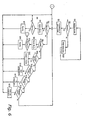
- FIG. 6 will be used to explain the flow of processing in a control system according to the present invention.
- FIG. 6 is a flowchart showing one example of the flow conducted by an RCU in the present embodiment.
- the WWW server 34 can be accessed from the WWW browser on the information terminal 4a by inputting as an URL (uniform resource locator) the IP address and the like assigned to each product processing apparatus.
- URL uniform resource locator
- Step S1 the WWW server 34 waits for access from the WWW browser.
- Step S2 the WWW server 34 performs a predetermined authentication processing.
- the WWW server 34 requests input of user ID and password, and allows access only when these match authentication information registered in advance in the memory 32. If access is allowed, control proceeds to Step S3; if access is denied, then control proceeds to Step S14, described below.
- Step S3 the WWW server 34, in order to receive selection of type of operational information, sends to the WWW browser a menu screen wherein the left-hand side portion of FIG. 3 above is displayed.
- Step S4 the WWW server 34 determines whether or not "Status" has been selected from the menu screen. If it determines "yes,” then control proceeds to Step S5; if it determines "no,” then control proceeds to Step S8 described below.
- Step S5 the WWW server 34 activates the CGI 38.
- the CGI 38 activates the processing program 39, which asks the control program 31 the status of the product processing apparatus 2.
- the control program 31 replies to the processing program 39 by transmitting a signal corresponding to the status of the product processing apparatus 2 at that time.
- the processing program 39 converts the reply contents therefor into HTML format, which it transmits to the CGI 38.
- the CGI 38 provides the WWW server 34 with the product processing apparatus status, which has been put into HTML format.
- the WWW server 34 transmits the HTML-formatted status to the WWW browser.
- the WWW browser displays a screen showing the status of the product processing apparatus, for example, the screen in FIG. 3. Thereafter control proceeds to Step S6.
- Step S6 the WWW server 34 determines whether parameters have been rewritten. More specifically, the WWW server 34 determines whether or not the "registration" button has been clicked. If it determines that it has been clicked, control proceeds to Step S7. If the user has not clicked on the "registration" button, control returns to Step S4, and awaits the selection of a type of operational information.
- Step S7 the WWW server 34 receives from the WWW browser the parameters inputted by the user and activates the CGI 38.
- the CGI 38 activates the processing program 39, which changes the status of the product processing apparatus for the control program 31. Then control returns to Step S4.
- Step S8 the WWW server 34 determines whether "Preset” has been selected from the menu screen. If it determines “Yes,” then control proceeds to Step S9; if it determines "No,” then control proceeds to Step S12, described below.
- Step S9 the WWW server 34 activates the CGI 38.
- the CGI 38 activates the processing program 39, which reads the drive conditions from the memory 32. Having read the drive conditions, the processing program 39 converts the reply contents therefor into HTML format and then sends the same to the CGI 38.
- the CGI 38 provides the WWW server 34 with the HTML-formatted drive conditions.
- the WWW server 34 transmits the HTML-formatted drive conditions to the WWW browser.
- the WWW browser displays the drive conditions it has received in the manner, for example, as shown in FIG. 4. Thereafter control proceeds to Step S10.
- Step S10 the WWW server 34 determines whether parameters have been rewritten. More specifically, the WWW server 34 determines whether or not the "registration" button has been clicked by a user. If it determines that it has been clicked, control proceeds to Step S11. If the user has not clicked on the "registration” button, control returns to Step S4.
- Step S11 the WWW server 34 receives from the WWW browser parameters that the user has set and activates the CGI 38.
- the CGI 38 activates the processing program 39, which stores the rewritten drive conditions in the memory 32. Thereafter control returns to Step S4.
- Step S12 the WWW server 34 determines whether or not "Display” under “Statistics” has been selected or not from the menu screen. If it determines "Yes,” control proceeds to Step S13. If it determines "No,” then control proceeds to Step S14, described below.
- Step S13 the WWW server 34 activates the CGI 38.
- the CGI 38 activates the processing program 39, which reads operational status from the memory 32. Having read operational status, the processing program 39 converts the reply contents therefor into HTML format and sends the same to the CGI 38.
- the CGI 38 Upon receipt thereof, the CGI 38 provides the HTML-formatted operational status to the WWW server 34.
- the WWW server 34 sends the HTML-formatted operational status to the WWW browser.
- the WWW browser displays the operational status it has received in the manner shown, for example, in FIG. 5. Thereafter control returns to Step S4.
- Step S14 the WWW server 34 determines whether "Mail" under "Statistics” on the menu screen has been selected. If it determines "Yes,” then control proceeds to Step S15. If it determines "No,” then control proceeds to Step S16, described below.
- Step S15 the WWW server 34 activates the CGI 38.
- the CGI 38 activates the processing program 39, which reads operational status from the memory 32.
- the processing program 39 having read operational status, converts the set email address as well as the reply contents therefor into email format, which it writes to the memory 32.
- the processing program 39 activates the email client 35 and distributes the created email via the set email server. Thereafter control returns to Step S4.
- Step S16 the WWW server 34 determines whether "FTP" under "Statistics" has been selected from the menu screen. If it determines "Yes,” then control proceeds to Step S17. If it determines "No,” control proceeds to Step S18, described below.
- Step S17 the WWW server 34 activates the CGI 38.
- the CGI 38 activates the processing program 39, which reads operational status from the memory 32. Having read the operational status, the processing program 39 converts the reply contents therefor into a file format, which it writes to the memory 32. Thereafter, it activates the FTP client 36, and causes it to distribute the file to the set FTP server. Thereafter, control returns to Step S4.
- Step S18 the WWW server 34 determines whether or not "Print” under “Statistics” on the menu screen has been selected. If it determines "Yes,” then control proceeds to Step S19. If it determines "No,” then control returns to Step S4.
- Step S19 the WWW server 34 activates the CGI 38.
- the CGI 38 activates the processing program 39, which reads operational status from the memory 32. Having reading operational status, the processing program 39 converts the contents of what it has read into print data, which it writes to the memory 32. Thereafter, it activates the print client 37, and causes it to distribute the created print data to the set print server. Thereafter control returns to Step S4.
- Step S2 if access from the WWW browser is denied, control proceeds to Step S20.
- Step S20 predetermined other processing is conducted.
- the WWW server transmits to the WWW browser message display screens such as "Access Denied.”
- error information is distributed by email.
- the error information is stored in the memory 32 by the control program 31.
- the processing program 39 for error processing is activated by the control program 31.
- the processing program 39 for error processing calls the error information from the memory 32, converts the set email address and the image file of the operational problem recorded at that time into email format, and writes these to the memory 32.
- the email client 35 is activated, and is caused to distribute the created email.
- the error information may also be converted to file and print data format and then sent to the set FTP server or print server.
- the product processing apparatus comprises a WWW server
- the display of operational information and the setting thereof can be conducted by a WWW browser on an information terminal.
- the information terminals and the product processing apparatuses There is no need to connect the information terminals and the product processing apparatuses with a dedicated line, making construction of the control system easy.
- ordinary applications can be used as the applications for controlling the operational information, operation becomes easy.
- the operational information can be output and set in a variety of forms, locational and temporal restrictions in the control of the product processing apparatuses can be greatly relaxed.
- the operational information can be printed on a printer on the network. Thus there is no need to connect the product processing apparatuses to a print device.
- a production line control system using existing applications and network resources can be built, and adapting the system to changes in the production line becomes easy. If a network using TCP/IP is used, restrictions on the places from which a production line can be controlled are reduced. Because control is possible using existing applications, not only is operation easy, but the time needed for learning operation is reduced.
- the present invention also comprises the following subject matter:
Landscapes
- Engineering & Computer Science (AREA)
- Quality & Reliability (AREA)
- Signal Processing (AREA)
- Physics & Mathematics (AREA)
- Computer Networks & Wireless Communication (AREA)
- General Physics & Mathematics (AREA)
- Business, Economics & Management (AREA)
- Automation & Control Theory (AREA)
- Strategic Management (AREA)
- Manufacturing & Machinery (AREA)
- General Engineering & Computer Science (AREA)
- Human Resources & Organizations (AREA)
- Entrepreneurship & Innovation (AREA)
- Economics (AREA)
- General Business, Economics & Management (AREA)
- Medical Informatics (AREA)
- Theoretical Computer Science (AREA)
- Operations Research (AREA)
- Marketing (AREA)
- Game Theory and Decision Science (AREA)
- Health & Medical Sciences (AREA)
- Computing Systems (AREA)
- General Health & Medical Sciences (AREA)
- Tourism & Hospitality (AREA)
- Educational Administration (AREA)
- Development Economics (AREA)
- General Factory Administration (AREA)
- Information Transfer Between Computers (AREA)
- Management, Administration, Business Operations System, And Electronic Commerce (AREA)
- Warehouses Or Storage Devices (AREA)
- Multi-Process Working Machines And Systems (AREA)
Applications Claiming Priority (2)
| Application Number | Priority Date | Filing Date | Title |
|---|---|---|---|
| JP28247299A JP2001101303A (ja) | 1999-10-04 | 1999-10-04 | 商品処理装置及び管理システム |
| EP00963056A EP1150185B1 (fr) | 1999-10-04 | 2000-10-02 | Dispositif de traitement de biens et systeme de gestion |
Related Parent Applications (2)
| Application Number | Title | Priority Date | Filing Date |
|---|---|---|---|
| EP00963056.7 Division | 2000-10-02 | ||
| EP00963056A Division EP1150185B1 (fr) | 1999-10-04 | 2000-10-02 | Dispositif de traitement de biens et systeme de gestion |
Publications (3)
| Publication Number | Publication Date |
|---|---|
| EP1798619A2 true EP1798619A2 (fr) | 2007-06-20 |
| EP1798619A3 EP1798619A3 (fr) | 2007-06-27 |
| EP1798619B1 EP1798619B1 (fr) | 2010-04-14 |
Family
ID=17652884
Family Applications (3)
| Application Number | Title | Priority Date | Filing Date |
|---|---|---|---|
| EP07104605A Expired - Lifetime EP1793295B8 (fr) | 1999-10-04 | 2000-10-02 | Appareil de traitement de produit et système de contrôle |
| EP00963056A Expired - Lifetime EP1150185B1 (fr) | 1999-10-04 | 2000-10-02 | Dispositif de traitement de biens et systeme de gestion |
| EP07104604A Revoked EP1798619B1 (fr) | 1999-10-04 | 2000-10-02 | Appareil de traitement de produit et système de contrôle |
Family Applications Before (2)
| Application Number | Title | Priority Date | Filing Date |
|---|---|---|---|
| EP07104605A Expired - Lifetime EP1793295B8 (fr) | 1999-10-04 | 2000-10-02 | Appareil de traitement de produit et système de contrôle |
| EP00963056A Expired - Lifetime EP1150185B1 (fr) | 1999-10-04 | 2000-10-02 | Dispositif de traitement de biens et systeme de gestion |
Country Status (5)
| Country | Link |
|---|---|
| US (1) | US6615095B1 (fr) |
| EP (3) | EP1793295B8 (fr) |
| JP (1) | JP2001101303A (fr) |
| DE (2) | DE60034311T2 (fr) |
| WO (1) | WO2001025859A1 (fr) |
Cited By (1)
| Publication number | Priority date | Publication date | Assignee | Title |
|---|---|---|---|---|
| TWI401626B (zh) * | 2008-01-18 | 2013-07-11 | Hon Hai Prec Ind Co Ltd | 電子郵件報警系統及方法 |
Families Citing this family (18)
| Publication number | Priority date | Publication date | Assignee | Title |
|---|---|---|---|---|
| US7363100B2 (en) | 2000-08-03 | 2008-04-22 | Nordson Corporation | Material application system with remote access |
| US6942162B2 (en) | 2000-08-03 | 2005-09-13 | Nordson Corporation | Apparatus and method for remote monitoring and servicing material application systems |
| US7004402B2 (en) | 2000-08-22 | 2006-02-28 | Nordson Corporation | Apparatus and method for configuring, installing and monitoring spray coating application systems |
| US20020138317A1 (en) * | 2001-03-21 | 2002-09-26 | Milling Systems And Concepts Pte Ltd. | System for implementing an exchange |
| US20020198609A1 (en) * | 2001-06-21 | 2002-12-26 | Baron Carl N. | Method and apparatus for regulating network access to functions of a controller |
| CA2410114C (fr) * | 2001-10-26 | 2011-07-19 | Research In Motion Limited | Systeme et methode de telecommande de dispositifs de communication mobile |
| JP2003308373A (ja) * | 2002-02-13 | 2003-10-31 | Ishida Co Ltd | 営業情報表示システム、商品情報処理装置、および商品情報処理端末 |
| DE10214541A1 (de) | 2002-04-02 | 2003-10-30 | Siemens Ag | Webserver mit integrierter Automatisierungsfunktionalität |
| US20040124255A1 (en) * | 2002-12-06 | 2004-07-01 | Dieter Heerdt | Hot-melt equipment having internet connectivity and method of servicing and/or monitoring the same via the internet |
| JP2004295348A (ja) * | 2003-03-26 | 2004-10-21 | Mori Seiki Co Ltd | 工作機械の保守管理システム |
| JP4182973B2 (ja) * | 2005-10-31 | 2008-11-19 | ブラザー工業株式会社 | 情報端末装置、データ提供システム、及び、プログラム |
| FR2898200B1 (fr) * | 2006-03-06 | 2008-05-30 | Essilor Int | Appareil de traitement de lentilles adapte a lister et a traiter les donnees de commande des lentilles |
| AT503450B1 (de) * | 2006-04-28 | 2007-10-15 | Mach Relationship Man Llc | Vorrichtung zur überwachung von produktionsabläufen |
| JP4868973B2 (ja) * | 2006-08-09 | 2012-02-01 | 京楽産業.株式会社 | 遊技機のランプ検査装置及びランプ検査方法 |
| US7894934B2 (en) * | 2006-12-05 | 2011-02-22 | Veyance Technologies, Inc. | Remote conveyor belt monitoring system and method |
| JP6577199B2 (ja) | 2015-02-09 | 2019-09-18 | 株式会社イシダ | 包装システム |
| JP7637399B2 (ja) * | 2019-08-26 | 2025-02-28 | 株式会社イシダ | 生産システム |
| JP7584128B2 (ja) | 2021-01-13 | 2024-11-15 | 株式会社イシダ | 管理装置及び物品管理システム |
Citations (2)
| Publication number | Priority date | Publication date | Assignee | Title |
|---|---|---|---|---|
| JPH09301327A (ja) | 1996-05-08 | 1997-11-25 | Ishida Co Ltd | 生産ラインの管理方法並びに管理装置 |
| EP0822473A2 (fr) | 1996-07-31 | 1998-02-04 | Canon Kabushiki Kaisha | Système de maintenance à distance |
Family Cites Families (14)
| Publication number | Priority date | Publication date | Assignee | Title |
|---|---|---|---|---|
| US3938106A (en) * | 1974-12-04 | 1976-02-10 | Becker Bernard E | Production data gathering and processing system |
| US4827423A (en) * | 1987-01-20 | 1989-05-02 | R. J. Reynolds Tobacco Company | Computer integrated manufacturing system |
| JPH0981494A (ja) * | 1995-09-14 | 1997-03-28 | Ricoh Co Ltd | プリントサーバシステム |
| JP2780702B2 (ja) * | 1996-05-30 | 1998-07-30 | 日本電気株式会社 | 生産制御システムおよび生産制御方法 |
| JPH1097966A (ja) * | 1996-07-31 | 1998-04-14 | Canon Inc | 産業用機器の遠隔保守システム及びこれを利用した生産方法 |
| EP0825506B1 (fr) | 1996-08-20 | 2013-03-06 | Invensys Systems, Inc. | Méthodes et appareil de commande à distance de processus |
| JPH10161707A (ja) * | 1996-11-29 | 1998-06-19 | Sukiyan Technol:Kk | Faシステムの制御方法 |
| JP2873222B2 (ja) * | 1997-05-12 | 1999-03-24 | 川崎重工業株式会社 | ロボット情報処理装置 |
| US5847957A (en) * | 1997-06-16 | 1998-12-08 | Base Ten Systems, Inc. | Web access for a manufacturing execution system |
| JPH1158187A (ja) * | 1997-08-26 | 1999-03-02 | Matsushita Electric Works Ltd | 生産ラインにおける部品の移送供給制御方法及びその装置 |
| JPH1185651A (ja) * | 1997-09-01 | 1999-03-30 | Yamatake Honeywell Co Ltd | 通信インタフェース装置及び対象機器並びに通信方法 |
| US6064982A (en) * | 1997-11-12 | 2000-05-16 | Netscape Communication Corporation | Smart configurator |
| JP3381772B2 (ja) * | 1997-11-26 | 2003-03-04 | オムロン株式会社 | 生産ライン監視システム |
| JPH11249950A (ja) * | 1998-03-03 | 1999-09-17 | Omron Corp | 通信装置 |
-
1999
- 1999-10-04 JP JP28247299A patent/JP2001101303A/ja active Pending
-
2000
- 2000-10-02 WO PCT/JP2000/006856 patent/WO2001025859A1/fr not_active Ceased
- 2000-10-02 DE DE60034311T patent/DE60034311T2/de not_active Expired - Lifetime
- 2000-10-02 EP EP07104605A patent/EP1793295B8/fr not_active Expired - Lifetime
- 2000-10-02 DE DE60044218T patent/DE60044218D1/de not_active Expired - Lifetime
- 2000-10-02 EP EP00963056A patent/EP1150185B1/fr not_active Expired - Lifetime
- 2000-10-02 EP EP07104604A patent/EP1798619B1/fr not_active Revoked
- 2000-10-02 US US09/856,956 patent/US6615095B1/en not_active Expired - Lifetime
Patent Citations (2)
| Publication number | Priority date | Publication date | Assignee | Title |
|---|---|---|---|---|
| JPH09301327A (ja) | 1996-05-08 | 1997-11-25 | Ishida Co Ltd | 生産ラインの管理方法並びに管理装置 |
| EP0822473A2 (fr) | 1996-07-31 | 1998-02-04 | Canon Kabushiki Kaisha | Système de maintenance à distance |
Non-Patent Citations (1)
| Title |
|---|
| RICHARD O. LAMAIRE: "Wireless LANs and Mobile Networking: Standards and Future Directions", IEEE COMMUNICATIONS MAGAZINE, August 1996 (1996-08-01), pages 1 - 15, XP002163262 |
Cited By (1)
| Publication number | Priority date | Publication date | Assignee | Title |
|---|---|---|---|---|
| TWI401626B (zh) * | 2008-01-18 | 2013-07-11 | Hon Hai Prec Ind Co Ltd | 電子郵件報警系統及方法 |
Also Published As
| Publication number | Publication date |
|---|---|
| EP1793295A1 (fr) | 2007-06-06 |
| WO2001025859A1 (fr) | 2001-04-12 |
| EP1793295B8 (fr) | 2012-10-17 |
| JP2001101303A (ja) | 2001-04-13 |
| DE60034311D1 (de) | 2007-05-24 |
| DE60034311T2 (de) | 2007-12-20 |
| EP1150185A4 (fr) | 2004-05-26 |
| EP1150185A1 (fr) | 2001-10-31 |
| EP1150185B1 (fr) | 2007-04-11 |
| EP1798619A3 (fr) | 2007-06-27 |
| EP1793295B1 (fr) | 2012-04-11 |
| US6615095B1 (en) | 2003-09-02 |
| EP1798619B1 (fr) | 2010-04-14 |
| DE60044218D1 (de) | 2010-05-27 |
Similar Documents
| Publication | Publication Date | Title |
|---|---|---|
| EP1150185B1 (fr) | Dispositif de traitement de biens et systeme de gestion | |
| US6804629B2 (en) | Production management system and system for checking operating conditions of product processing apparatuses | |
| US10180870B2 (en) | Information transmission system | |
| KR100781832B1 (ko) | 정보를 표시하기 위한 방법 및 시스템 | |
| US20030065718A1 (en) | Data transfer utilizing preview data | |
| EP1674839B1 (fr) | Bascule à combinaison accessible à distance et système de pesage combinatoire | |
| US20020198964A1 (en) | Method and system for wireless remote monitoring and control of a manufacturing execution system | |
| JP2002297522A (ja) | データ送信装置、データ送信方法、プログラム、および記録媒体 | |
| JP3111968B2 (ja) | ファクシミリ装置 | |
| EP1482697A2 (fr) | Prestation de service à distance par protocole de bavardage | |
| JP2001325021A (ja) | 生産管理システム | |
| JP2001324378A (ja) | 商品処理装置の稼働状況チェックシステム | |
| US20040160634A1 (en) | Print service system | |
| JP2004030033A (ja) | メールアーカイブ装置 | |
| JP4195576B2 (ja) | 印刷システム及び受注サーバ | |
| JP2004013554A (ja) | メッセージ送信装置及びメッセージ送信方法 | |
| JP2002374369A (ja) | ターミナルアダプタ、情報処理システム、及び制御プログラム | |
| JP2003308244A (ja) | Httpサーバ | |
| JP3533922B2 (ja) | ファクシミリ装置およびファクシミリ通信方法 | |
| JP2000089741A (ja) | 画像作成装置、情報伝達システムおよび画像作成方法 | |
| JPH11215289A (ja) | ファクシミリ装置およびファクシミリ受信方法 | |
| JPH10222437A (ja) | 分散制御装置 | |
| JP2004206195A (ja) | 監視装置 | |
| JP2002032250A (ja) | 文書管理装置及び文書管理方法 |
Legal Events
| Date | Code | Title | Description |
|---|---|---|---|
| PUAI | Public reference made under article 153(3) epc to a published international application that has entered the european phase |
Free format text: ORIGINAL CODE: 0009012 |
|
| PUAL | Search report despatched |
Free format text: ORIGINAL CODE: 0009013 |
|
| AC | Divisional application: reference to earlier application |
Ref document number: 1150185 Country of ref document: EP Kind code of ref document: P |
|
| AK | Designated contracting states |
Kind code of ref document: A2 Designated state(s): DE FR GB IT |
|
| AK | Designated contracting states |
Kind code of ref document: A3 Designated state(s): DE FR GB IT |
|
| 17P | Request for examination filed |
Effective date: 20071220 |
|
| AKX | Designation fees paid |
Designated state(s): DE FR GB IT |
|
| 17Q | First examination report despatched |
Effective date: 20090406 |
|
| GRAP | Despatch of communication of intention to grant a patent |
Free format text: ORIGINAL CODE: EPIDOSNIGR1 |
|
| GRAS | Grant fee paid |
Free format text: ORIGINAL CODE: EPIDOSNIGR3 |
|
| GRAA | (expected) grant |
Free format text: ORIGINAL CODE: 0009210 |
|
| AC | Divisional application: reference to earlier application |
Ref document number: 1150185 Country of ref document: EP Kind code of ref document: P |
|
| AK | Designated contracting states |
Kind code of ref document: B1 Designated state(s): DE FR GB IT |
|
| REG | Reference to a national code |
Ref country code: GB Ref legal event code: FG4D |
|
| REF | Corresponds to: |
Ref document number: 60044218 Country of ref document: DE Date of ref document: 20100527 Kind code of ref document: P |
|
| PLBI | Opposition filed |
Free format text: ORIGINAL CODE: 0009260 |
|
| PLBI | Opposition filed |
Free format text: ORIGINAL CODE: 0009260 |
|
| PLAX | Notice of opposition and request to file observation + time limit sent |
Free format text: ORIGINAL CODE: EPIDOSNOBS2 |
|
| 26 | Opposition filed |
Opponent name: MULTIVAC SEPP HAGGENMUELLER GMBH & CO. KG Effective date: 20110111 |
|
| 26 | Opposition filed |
Opponent name: BIZERBA GMBH & CO. KG Effective date: 20110113 Opponent name: MULTIVAC SEPP HAGGENMUELLER GMBH & CO. KG Effective date: 20110111 |
|
| PGFP | Annual fee paid to national office [announced via postgrant information from national office to epo] |
Ref country code: DE Payment date: 20100929 Year of fee payment: 11 |
|
| PG25 | Lapsed in a contracting state [announced via postgrant information from national office to epo] |
Ref country code: IT Free format text: LAPSE BECAUSE OF FAILURE TO SUBMIT A TRANSLATION OF THE DESCRIPTION OR TO PAY THE FEE WITHIN THE PRESCRIBED TIME-LIMIT Effective date: 20100414 |
|
| PLBB | Reply of patent proprietor to notice(s) of opposition received |
Free format text: ORIGINAL CODE: EPIDOSNOBS3 |
|
| PG25 | Lapsed in a contracting state [announced via postgrant information from national office to epo] |
Ref country code: FR Free format text: LAPSE BECAUSE OF NON-PAYMENT OF DUE FEES Effective date: 20101102 |
|
| REG | Reference to a national code |
Ref country code: FR Ref legal event code: ST Effective date: 20110630 |
|
| REG | Reference to a national code |
Ref country code: DE Ref legal event code: R103 Ref document number: 60044218 Country of ref document: DE Ref country code: DE Ref legal event code: R064 Ref document number: 60044218 Country of ref document: DE |
|
| RDAF | Communication despatched that patent is revoked |
Free format text: ORIGINAL CODE: EPIDOSNREV1 |
|
| RDAG | Patent revoked |
Free format text: ORIGINAL CODE: 0009271 |
|
| STAA | Information on the status of an ep patent application or granted ep patent |
Free format text: STATUS: PATENT REVOKED |
|
| 27W | Patent revoked |
Effective date: 20120425 |
|
| GBPR | Gb: patent revoked under art. 102 of the ep convention designating the uk as contracting state |
Effective date: 20120425 |
|
| REG | Reference to a national code |
Ref country code: DE Ref legal event code: R107 Ref document number: 60044218 Country of ref document: DE Effective date: 20130117 |
|
| PGFP | Annual fee paid to national office [announced via postgrant information from national office to epo] |
Ref country code: GB Payment date: 20121019 Year of fee payment: 13 |