EP1803732A2 - Peptide und derivate vom apl-typ von hsp60 und pharmazeutische zusammensetzungen - Google Patents
Peptide und derivate vom apl-typ von hsp60 und pharmazeutische zusammensetzungen Download PDFInfo
- Publication number
- EP1803732A2 EP1803732A2 EP05794474A EP05794474A EP1803732A2 EP 1803732 A2 EP1803732 A2 EP 1803732A2 EP 05794474 A EP05794474 A EP 05794474A EP 05794474 A EP05794474 A EP 05794474A EP 1803732 A2 EP1803732 A2 EP 1803732A2
- Authority
- EP
- European Patent Office
- Prior art keywords
- seq
- peptides
- peptide
- cells
- patients
- Prior art date
- Legal status (The legal status is an assumption and is not a legal conclusion. Google has not performed a legal analysis and makes no representation as to the accuracy of the status listed.)
- Granted
Links
Images



Classifications
-
- C—CHEMISTRY; METALLURGY
- C07—ORGANIC CHEMISTRY
- C07K—PEPTIDES
- C07K14/00—Peptides having more than 20 amino acids; Gastrins; Somatostatins; Melanotropins; Derivatives thereof
- C07K14/435—Peptides having more than 20 amino acids; Gastrins; Somatostatins; Melanotropins; Derivatives thereof from animals; from humans
- C07K14/46—Peptides having more than 20 amino acids; Gastrins; Somatostatins; Melanotropins; Derivatives thereof from animals; from humans from vertebrates
- C07K14/47—Peptides having more than 20 amino acids; Gastrins; Somatostatins; Melanotropins; Derivatives thereof from animals; from humans from vertebrates from mammals
-
- A—HUMAN NECESSITIES
- A61—MEDICAL OR VETERINARY SCIENCE; HYGIENE
- A61P—SPECIFIC THERAPEUTIC ACTIVITY OF CHEMICAL COMPOUNDS OR MEDICINAL PREPARATIONS
- A61P19/00—Drugs for skeletal disorders
- A61P19/02—Drugs for skeletal disorders for joint disorders, e.g. arthritis, arthrosis
-
- A—HUMAN NECESSITIES
- A61—MEDICAL OR VETERINARY SCIENCE; HYGIENE
- A61P—SPECIFIC THERAPEUTIC ACTIVITY OF CHEMICAL COMPOUNDS OR MEDICINAL PREPARATIONS
- A61P19/00—Drugs for skeletal disorders
- A61P19/04—Drugs for skeletal disorders for non-specific disorders of the connective tissue
-
- A—HUMAN NECESSITIES
- A61—MEDICAL OR VETERINARY SCIENCE; HYGIENE
- A61P—SPECIFIC THERAPEUTIC ACTIVITY OF CHEMICAL COMPOUNDS OR MEDICINAL PREPARATIONS
- A61P29/00—Non-central analgesic, antipyretic or antiinflammatory agents, e.g. antirheumatic agents; Non-steroidal antiinflammatory drugs [NSAID]
-
- A—HUMAN NECESSITIES
- A61—MEDICAL OR VETERINARY SCIENCE; HYGIENE
- A61P—SPECIFIC THERAPEUTIC ACTIVITY OF CHEMICAL COMPOUNDS OR MEDICINAL PREPARATIONS
- A61P37/00—Drugs for immunological or allergic disorders
- A61P37/02—Immunomodulators
- A61P37/06—Immunosuppressants, e.g. drugs for graft rejection
-
- A—HUMAN NECESSITIES
- A61—MEDICAL OR VETERINARY SCIENCE; HYGIENE
- A61P—SPECIFIC THERAPEUTIC ACTIVITY OF CHEMICAL COMPOUNDS OR MEDICINAL PREPARATIONS
- A61P37/00—Drugs for immunological or allergic disorders
- A61P37/08—Antiallergic agents
-
- A—HUMAN NECESSITIES
- A61—MEDICAL OR VETERINARY SCIENCE; HYGIENE
- A61P—SPECIFIC THERAPEUTIC ACTIVITY OF CHEMICAL COMPOUNDS OR MEDICINAL PREPARATIONS
- A61P43/00—Drugs for specific purposes, not provided for in groups A61P1/00-A61P41/00
-
- A—HUMAN NECESSITIES
- A61—MEDICAL OR VETERINARY SCIENCE; HYGIENE
- A61K—PREPARATIONS FOR MEDICAL, DENTAL OR TOILETRY PURPOSES
- A61K38/00—Medicinal preparations containing peptides
-
- A—HUMAN NECESSITIES
- A61—MEDICAL OR VETERINARY SCIENCE; HYGIENE
- A61K—PREPARATIONS FOR MEDICAL, DENTAL OR TOILETRY PURPOSES
- A61K39/00—Medicinal preparations containing antigens or antibodies
Definitions
- the present invention is related with peptides of human heat shock protein of 60 kDa (abbreviated hHsp60), and Altered Peptide Ligands (abbreviated APL) derived from them. Also, the invention is related with the pharmaceutical compositions comprising such peptides for the treatment of Rheumatoid Arthritis (RA).
- hHsp60 human heat shock protein of 60 kDa
- APL Altered Peptide Ligands
- the RA is an autoimmune disease of unknown etiology that affects approximately 1% of world's population. It is a syndrome characterized by chronic inflammation of the joints, although systemic manifestations can be also observed. This illness begins with the inflammation of the synovial membrane and frequently causes the erosive destruction of the adjacent cartilage and the bone, which result in moderate physical inability of 80% of the patients and an early mortality ( Moctezuma, J.F. (2002) Manifestaalterations articulares de la Artritis Reumatide. Revista Mexicana de Reumatolog ⁇ a 17:211-219 ). RA can be presented at any age, without distinctions of races or ethnic groups, but the maximum incidence of its beginning happens between 25 and 55 years old.
- T lymphocyte The phase of transition of T lymphocyte between tolerance and immunity/autoimmunity is regulated at different levels.
- Two important parameters in this transition are the state of maturation of the Antigen Presenting Cells (abbreviated APC) and the levels of autoantigens that are detected by the immune system ( Ohashi, P.S. (2002) Making and breaking tolerance. Current Opinion in Immmunology 14:744-759 ).
- APC Antigen Presenting Cells
- infectious agents that have been object of study like cause of RA are: Epstein Bar virus, the retrovirus, virus of the hepatitis C, the Mycobacterium tuberculosis (abbreviated Mt) and the Helicobacter pylori, among others.
- the pathogenesis of RA is characterized by the concerted action of different types of cells that cause the progressive destruction of the cartilage and the bone.
- this balance moves however in favor of the inflammatory cytokines ( Arend, W.P. (2001) Cytokine imbalance in the pathogenesis of rheumatoid arthritis: The role of interleukin-1 receiving antagonist.
- TNF ⁇ and IL-1 cause a series of local and systemic actions as regulating the expression of the molecules of adhesion in the endothelial cells (LFA1, ICAM-1), which recruit other cells to the inflammation sites. They also stimulate macrophages, fibroblasts, condrocytes and osteoclasts to the liberation of others mediators of the inflammation, as IL-15 and IL-8.
- TNF ⁇ and IL-1 stimulate the proliferation of the synovial membrane that causes formation of pannus, they can also induce the differentiation of B lymphocytes to cells producing antibodies that potentially participate in the destruction of the joint. They also inhibit the production of anti-inflammatory cytokines (IL-4 and IL-14) produced by Th2 cells and stimulate hepatocytes to liberate IL-6.
- IL-6 favors the production of the proteins of the acute phase, which participate strengthening the immune response ( Forre, O. (2000) New possibilities of treatment in AR. Scand J Rheumatol 29(2):73-84 ).
- Hsp60 a protein that belongs to the family of the Hsp, which are immunogenic proteins with exceptionally evolutionary conservation.
- the immune response against the strange Hsp is an important mechanism of defense against bacterial infections.
- the antibodies against these proteins can be abundant in healthy people and in patient with autoimmune illnesses and they can cross react with the own antigens ( Chen, W. (1999) Human 60-kDa Heat-Shock Protein: To Danger Signal to the Innate Immune System. J Immunol. 162:3212-3219 ).
- the Hsp65 of Mt is homologous to the Hsp60 of the mammals. This suggests that the Hsp60 can be recognized as autoantigen in patient with RA. Comparing patients with osteoarthritis and patients with RA, these last ones have an increase of prolipherative response of B lymphocytes in the synovial liquid to the Hsp65 of mycobacterium. The intensity of the response correlates with the synovial inflammation. This response is not specific for RA compared with other inflammatory illnesses ( Life, P. (1993) Responses to Gram negative enteric bacterial antigens by synovial T cells from patiens with juvenile chronic arthritis: recognition of heat shock protein hsp60. J Rheumatol. 20:1388-1396 ).
- Hsp The concentration of Hsp is a possible sign of danger for the immune system, which are released from dead cells, and can induce an inflammatory response and to begin the maturation of the APC.
- the Hsp are intracellular proteins, which are not expressed in the cellular membrane, neither are secreted, so that the Hsp are attractive candidates for molecules that constitute signs of danger ( Van den Berg, WB. (1998): Joint inflammation and cartilage destruction may occur uncoupled. Springer Semin lmmunopathol. 20:149-164 ).
- Hsp60 or its derived peptides for the treatment of some autoimmune pathologies.
- EPO262710 the use of several peptides of the Hsp60 of Mt is proposed for the treatment and diagnosis of autoimmune illnesses, especially of arthritic conditions.
- This invention is based on the fact that previous infections with several bacteria can trigger the development of autoimmune illnesses, in genetically susceptible people, for example: patients with RA can show a high reactivity to microbial antigens.
- the patent application WO0143691 proposes the use of pharmaceutical preparations composed specifically by peptides of the hHsp60 and their variants for the prevention of inflammatory illnesses such as RA.
- the patent US5993803 protects the use of the Hsp60, the peptide p277 and a group of derived peptides of this protein to reduce the severity of the immune response during the transplant of organs.
- the atherosclerosis presents a series of similar characteristics to autoimmune processes.
- the authors purpose a method for the treatment and diagnosis of the atherosclerosis and coronary illnesses using a preparation that contains the protein Hsp60.
- TNF ⁇ Tumor Necrosis Factor
- IL-1 interleukin 1
- Oral tolerance has been proposed as a method of creating peripheral tolerance in front of certain antigens. This can be induced by mechanisms of active suppression, anergy or clonal deletion, depending on the doses and the frequency of the administration of the antigen.
- the method can induce regulatory T cells that are activated in a specific way by the antigen, but exert its action independently (active suppression). For the regulatory action takes place, it is not necessary to administer the supposedly pathogenic antigen, but any other able to induce the active suppression in the inflammatory focus, inhibiting the activity of the pathogenic effector cells.
- Collagen type II (abbreviated CII) is the autoantigen that has been used more frequently in this sense.
- the patent US6153200 intends the use of a peptide of the Hsp70, protein belonging to the family of Hsp, to induce tolerance for oral route in patients with RA.
- APL peptides Another variant that has been suggested to induce tolerance is through APL peptides, based on the fact that T cells are activated if the specific T CD4+ lymphocytes for a certain antigenic peptide recognize the antigen presented by competent APC. Nevertheless, if the same T cell is first activated with a different form from the antigen, in which one of the contact sites with the TcR are lightly altered, it can result in a partial activation or even inactivation of the T cells. These antigens are named APLs.
- the APLs are similar to immunogenic peptides with one or several substitutions in the essential positions of contact with the TcR or with MHC that interfere the cascade of necessary events for the complete activation of the T cells.
- APLs can be designed with similar properties to the immunogenic peptide (agonist) among other effects for increasing the response of T cells toward specific antigens. This effect is advantageous under pathological conditions as infectious illnesses.
- Peptides can also be designed with antagonistic properties to the immunogenic peptide that could be beneficial in the control of autoimmune illnesses since they can block the response of T cells acting as antagonistic of the TcR ( M. De Magistris (1992) Antigen analog-major complex histocompatibility complexes act as antagonist of the T cell receptor. Cell 68:625 - 634 ), partial agonist or inducing a population of regulatory T cells that mediate the active suppression ( Evavold, B.D.
- the main author of this work analyzes the possible factors that determined these negative results, and outlines that the changes carried out in the APL's sites may originate new motifs of union to the HLA (like it happened in the case of the APL binding to DRB1*0404 present in patient I), the complex APL-HLA can also stimulate T cells not eliminated in the negative selection that can be cross-activated by the native autoantigen.
- high concentrations of the APL were used in the pharmaceutical preparations, which can stimulate T cells with high similarity for the autoantigen and to induce a heteroclitic T cells response. ( Bibiana Bielekova and Roland Martin (2001) Antigen-specific immunomodulation via altered peptide tying. J Mol Med. 79:552-556 ).
- the main challenge in the treatment of the autoimmune diseases is the development of therapeutic strategies that can eliminate pathogenic T cells with specificity, without affecting other non related T cells. Therefore, therapeutic search should find a secure, specific and effective way of turning off an advanced autoimmune process.
- the present invention in contrast to the state of the previous technique, proposes the use of peptides of the hHsp60 and its derived type APL, which induce inhibitory molecular mechanisms, in a specific way, of the course of RA.
- the present invention solves the problem previously mentioned, providing peptides of the human protein of heat shock of 60 kDa that constitute epitopes for T cells, to induce mechanisms of tolerance, in particular anergy induction mechanisms or mediated by clones of regulatory T cells in patients with RA and that present the sequences:
- peptides are in particular useful, according to the present invention, for the design of derived type APL variants of the peptides E18-12 (SEQ. ID. NO: 1) and E18-3 (SEQ. ID. NO: 2), modified in the contact sites with the human MHC molecule and a derived type APL of the peptide F19-6 (SEQ. ID. NO: 3), modified in the contact sites with the rat MHC molecule.
- the respective sequences of amino acids are:
- derived type APL peptides have amino acid sequence selected from the group that consists of SEQ. ID. NO: 4, SEQ. ID. NO: 5, SEQ. ID. NO: 6, SEQ. ID. NO: 7, SEQ. ID. NO: 8, SEQ. ID. NO: 9, SEQ. ID. NO: 10, SEQ. ID. NO: 11, SEQ. ID. NO: 12, SEQ. ID. NO: 13, SEQ. ID. NO: 14, SEQ. ID. NO: 15, SEQ. ID. NO: 16, SEQ. ID. NO: 17, SEQ. ID. NO: 18, SEQ. ID. NO: 19, SEQ. ID. NO: 20 y SEQ. ID. NO: 21.
- the peptides of the present invention can be produced by routine methods of peptide synthesis.
- the specific composition of each peptide can be assayed by the level and the quality of the immune response that it induces in experiments as those are described in the examples that will be presented later on.
- the invention also includes pharmaceutical compositions that include one or more of previously enumerated peptides and optionally a pharmaceutically acceptable vehicle.
- the administration of the pharmaceutical preparations to the patients will be in correspondence with the HLA class II molecules that are expressed by the specific patient.
- compositions will depend on the cytokines pattern that these preparations induce in the "ex vivo" tests.
- the pharmaceutical preparations containing APL peptides inducing a regulatory response will be administered by intradermal or subcutaneous route.
- the pharmaceutical preparations containing the original peptides inducing a TH1 response will be able to be administered by oral route.
- the amounts of peptides in the pharmaceutical compositions of this invention are those that produce an effective immune response in the host.
- the effective amount is the quantity that when is administered induces molecular mechanisms that significantly diminish the inflammatory signs characteristic of the RA and stop the damages in the joints characteristic of the course of this illness.
- the amount of the pharmaceutical composition administered to the host can also vary depending on of several factors that include: the used peptides, ACR score (American College of Rheumatology, abbreviated ACR), HLA type II, time of having diagnosed the illness, age, sex, general health, as well as the level of immunological response in general.
- the present invention also relates a method of treatment of the RA, which includes the administration to a patient of effective amounts of peptides or the pharmaceutical compositions referred previously.
- Example 1 Peptides of the hHsp60 presented by human HLA.
- the selected peptides of the hHsp60 were those reported as epitopes of human T cells by the used programs: SYFPEITHI ( Hans-Georg Rammensee, Jutta Bachmann, Niels Nikolaus Emmerich, Oskar Alexander Bachor and Stefan Stevanovic. 1999. Immunogenetics 50:213-219 .
- SYFPEITHI database for MHC ligands and peptide motifs. (access via: http://www.uni-tuebingen.de/uni/kxi /)) and ProPred ( Singh,H. and Raghava,G.P.S. 2001. ProPred: Prediction of HLA-DR binding sites. Bioinformatics, 17(12):1236-37 ).
- Example 2 Peptide of the hHsp60 for epitope of Lewis rats.
- Example 3 Design of APL with modifications in the amino acids involved in the binding to the MHC.
- Peptide F19-6 has been substituted in the positions 1 and 2 by the amino acids that are specified as follow:
- Example 4 Induction of Arthritis by adjuvant and by collagen in Lewis rats.
- RT1.BI MHC Female inbred Lewis rats (RT1.BI MHC) were used in the experiment supplied by the National Center for the Production of Laboratory Animals (CENPALAB, Cuba). The rats were randomly selected, with an approximate weight of 101-120 g and 5-8 weeks of age.
- inductor agents of the illness used was the Mt (H37Ra, Difco, England) in Incomplete Freund's Adjuvant (IFA) (Sigma, USA).
- IFA Incomplete Freund's Adjuvant
- the other inductor agent of the Arthritis was the bovine type II collagen in IFA.
- the inflammation grade associated with the development of the arthritis that presented each rat was evaluated according with the following average prepared for this purpose:
- each paw could receive up to 4 points. Therefore, each rat could receive a maximum of 16 points.
- the visual evaluation was carried out after the induction of the illness every five days.
- Example 6 Peptides synthesis.
- the peptides were synthesized by the strategy Fmoc/tBu in syringes.
- the resin used was Fmoc-AM-MBHA (0,54 mmol/g) and the synthesis protocol was continued with mechanical agitation. After the treatment with TFA, the peptide was lyophilized and it was characterized by HPLC and mass spectrometry.
- Example 7 Intradermal administration of peptides.
- the animals were separated in four groups of 12 rats each one.
- the illness was induced in three groups of animals (Group I - Group III), and two groups were treated with peptides and one was the control of the induction of the illness.
- the two groups of animals that were treated with peptides received 200 ⁇ g of peptide per each rat in a volume of 100 ⁇ L of PBS, the days 12, 17 and 22 after the induction of the disease with Mt.
- Example 8 mRNA isolation.
- the system Gene Amp RNA PCR Kit (Perkin - Elmmer, USA) was used. 1 mg of mRNA corresponding to each sample and the protocol was used and the protocol was continued as recommended the suppliers. The reaction was incubated in a thermocycler (Minicycler, MJ Research, USA), according to the following outline: a first cycle of 1 hour at 42°C, subsequently 5 minutes at 95°C and 5 minutes at 4°C.
- PCR Polymerase Chain Reaction
- each primer was used, 5 mL of the DNA mold, 0.25 mL of the DNA Thermostable Polymerase (Taq-Pol) (Perkin - Elmmer, USA) in the buffer recommended by the suppliers (KCl 50Mm, Tris-HCl 10mM, pH 9.0, Triton X-100 to 0.1 % and MgCl2 1.5 mm) in a final volume of 25 ⁇ L.
- thermocycler Minicycler, MJ Research, U.S
- a first cycle of 3 minutes at 94°C denaturating temperature
- 1 minute at 94°C 1 minute at 58°C
- 72°C elongation temperature
- the previous outline was continued, varying only the hybridization temperature.
- the IL-10 54°C and for the TNF ⁇ 64°C.
- Example 11 Analysis of the PCR products by electrophoresis in agarose gels.
- the result of the PCR was analyzed by electrophoresis in agarose gel.
- the images of the electrophoretical running were captured and analyzed with the Molecular Program Analyst (BioRad).
- the results were expressed as relative levels of mRNA for each cytokine.
- Example 12 Statistical analysis of the relative levels of mRNA for each cytokine.
- GI corresponds to treated animals with F19-6 peptide
- GII represents the group of rats treated with the F19-7 peptide
- GIII represents the not treated sick group
- GIV includes the healthy animals. It was clearly proven that the treatment with peptides caused a decrease in the relative levels of this cytokine responsible in great measure of inducing the inflammatory process in the animals. There were statistically significant differences for the case of the cytokine TNF ⁇ among the groups treated with the peptides and in the group used as positive control of the illness. Significant difference was not evidenced among the different groups treated with the peptides neither among them and the group taken as negative control of the illness. This result indicates that the administration of these two peptides caused a decrease in the levels of TNF ⁇ , practically until normal levels of this cytokine as in healthy animals.
- the IL-10 is involved in the induction of peripheral tolerance through a T cell mediated response.
- the IL-10 regulates directly the T cells to inhibit the production of IL-2, IL-5 and TNF ⁇ .
- the Figure 3 shows the quantitative measurement of the levels of expression of the 1L-10 in the different groups of treatment, at day 15 after the induction of the illness.
- GI corresponds to treated animals with F19-6 peptide
- GII represents the group of rats treated with F19-7 peptide
- GIII represents the group of sick animals not treated
- GIV includes the healthy animals.
- the treatment of the animals with these peptides induces an increment in the relative expression levels of the IL-10.
- the peptides act inducing a change in the functional phenotype of the T cells involved in the pathogenesis of the illness, increasing the levels of production of anti-inflammatory cytokines like the case of IL-10 and diminishing the levels of production of the pro-inflammatory cytokines like TNF ⁇ .
- the sheets corresponding to the joints were analyzed by the group of Pathology of CIGB.
- the joints were fixed in a neutral buffer of formalin at 10% and decalcified.
- the tissues were dehydrated in an alcohol gradient, absorbed in paraffin and cut in sections of 5 ⁇ m. Later on, the samples were mounted on glass slides and stained with a hematoxiline-eosine mixture and observed in an optical microscope.
- Table 3 Summary of the histological analysis of the animal's joints from group I to group IV.
- Groups # animal Sacrifice day P EC IM HO G PMN I(F19-6) 1 15 X X X 2 x/- X 3 I(F19-6) 1 21 x/- 2 x/- X 3 X X x/- X I(F19-6) 1 28 X X 2 X x/- X X x/- X 3 I (F19-6) 1 35 X x/- X X X X 2 X x x/- 3 X X X X X X II (F19-7) 16 15 17 18 II (F19-7) 16 21 X X x/- X 17 X X x/- X 18 X X x/- X II (FI9-7) 16 28 X X X X x/- X 17
- P represents the pannus
- EC erosion of the cartilage
- IM invasion of the bone marrow
- HO hyperplasia of the osteoclasts
- G granulematose reaction
- PMN polymorphonuclears.
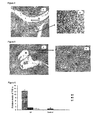
- the Figure 4A corresponds to the joint of an animal of the group III. We can observe the presence of the pannus that invades the whole intra-articular space, extending toward the cartilage where its erosion is evidenced, as well as the invasion toward the bone marrow.
- the Figure 4B shows an amplification of the region corresponding to the bone marrow where the pannus is clearly observed as a granulation tissue rich in phagocytic cells.
- Example 14 In vitro evaluation of the cytokine pattern induced by the F19-6 and F19-7 peptides, using mononuclear cells from rats where the Arthritis was induced with type II collagen.
- the mononuclear cells isolated from the spleen were cultured in 1.5 mL of RPMI 1640 in 24 well plates (Costar, USA). The assay was carried out by triplicate, and a total of 3 ⁇ 10 6 cell/well was cultured during 24 hours with F19-6 and F19-7 peptides at a concentration of 5mg/mL and incubated at 37°C, in humid atmosphere of CO 2 at 5%. The cultivated cells without the peptides were used as negative control.
- FIG. 6 are shown the levels of TNF ⁇ of the cultured cells without peptide and stimulated in vitro with F19-6 and F19-7 peptides corresponding to day 21 after the induction of the illness.
- the letter A represents the levels of TNF ⁇ in the cultivated cells without peptide
- the letter B represents the values of this cytokine when the cells are stimulated with the F19-6 peptide
- the letter C corresponds at the levels of TNF ⁇ when the cells are stimulated with the F19-7 peptide.
- CII represents the group of animals, where the Arthritis was induced with collagen type II and Control represents the group of healthy animals.
- Figure 7 shows the levels of IL-10 of cultivated cells without peptide and stimulated in vitro with F19-6 and F19-7 peptides, corresponding to the day 21 after the induction of the illness
- the letter A represents the levels of IL-10 in the cultivated cells without peptide
- the letter B represents the values of this cytokine when the cells are stimulated with the F19-6 peptide
- the letter C corresponds to the levels of IL-10 when the cells are stimulated with F19-7 peptide.
- CII represents the group of animals, where the AR was induced with collagen type II and Control represents the group of healthy animals.
- F19-6 and F19-7 peptides diminish the levels of TNF ⁇ in vitro, but in the case of the levels of IL-10, only the F19-7 peptide increases it significantly.
- F19-7 peptide is able to modulate the cytokines pattern to a regulating phenotype in the animal model where the Arthritis is induced with collagen. Therefore we can affirm that the immunomodulating action of this peptide derived from the hHsp60 in vitro can be extended to animal models of Arthritis, where the induction agent that participates in the development of the illness is not Mt or related autoantigens.
- F19-7 peptide induces a protection against arthritis induced by Mt or type II collagen in the animals, which is mediated by regulatory T cells that produce IL-10. This effect could extend to other autoantigens present in the joints that progressively contribute to the immunophatogenic process that takes place in the course of RA.
- Example 15 Cytokine measurement in patients with RA induced by F19-6 and F19-7 peptides.
- cytokines TNF ⁇ , IFN ⁇ and IL-10.
- the potentiality of the peptides of the hHsp60 to increase or to diminish the different cytokines involved in the pathogenesis of the illness was evaluated in this assay.
- the pellet of the cell was resuspended in RPMI 1640 containing 10% of bovine fetal serum and supplemented with penicillin (100U/mL), streptomycin (100 ⁇ g/mL), HEPES 25 mM/L and L-glutamine 2mM (all acquired from Gibco BRL).
- the mononuclear cells obtained were seeded in number of 10 6 cells/well in plates of 24 wells (Costar) in a volume of 800 ⁇ L.
- peptides of the hHsp60 were added at a concentration range from 0.5 ⁇ g/mL up to 100 ⁇ g/mL, in order to know the optimimal concentration of each peptide to modulate the cytokines levels.
- Phytohemagglutinin (PHA) 1% was used as positive control of cellular stimulation, while the RPMI 1640 alone was used as control of the basal cell growth.
- the cells were cultured during 24 hours and later on the supernatant of each well was taken, diluted 1 ⁇ 2, and cytokine concentration was determined by specific kits (Quantikine®, R&D Systems) according to recommendations of suppliers.
- the levels of TNF ⁇ modulated by F19-6 and F19-7 peptides in mononuclear cells of patients with RA are represented in the Figure 8.
- B corresponds to cells stimulated in vitro with F19-6 peptide
- C represents cells stimulated in vitro with F19-7 peptide.
- a different letter is assigned in bars for levels of the corresponding cytokine.
- Example 16 Cytokines measurement in patients with RA induced by E18-12 and E18-3 peptides.
- Assays for cytokines measurement using blood of patients with RA were carried out: TNF ⁇ , IFN ⁇ and IL-10.
- the potentiality of the peptides of the hHsp60 to increase or to diminish the different cytokines involved in the pathogenesis of the illness was evaluated in these assays.
- the precipitate was resuspended in RPMI 1640 medium containing 10% of bovine fetal serum supplemented with penicillin (100U/mL), streptomycin (100 ⁇ g/mL), 25 HEPES mM/L and L-glutamine 2mM (all acquired of Gibco BRL).
- the mononuclear cells obtained were seeded in a number of 10 6 cells/well in plates of 24 wells (Costar) in a volume of 800 ⁇ L. Afterwards, the peptides of the hHsp60 were added in a concentration range from 0.5 ⁇ g/ml up to 100 ⁇ g/ml, in order to know the optimal concentration of each peptide to modulate the cytokine levels.
- the Phytohemagglutinin (PHA) to 1% it was used as positive control of cell stimulation, while the RPMI 1640 alone was used as control of the basal cell growth.
- the cells were cultured during 24 hours and later on, the supernatant of each well was taken, diluted 1 ⁇ 2, and cytokine concentration was determined by specific kits (Quantikine®, R&D Systems) according to the recommendations of the suppliers.
- the levels of TNF ⁇ modulated by the E18-3 and E18-12 peptides in mononuclear cells of patients with RA are represented in Figure 9.
- Patients represented by P4, P5 and P16 express the molecule DR 0306
- the patients identified as P7, P8 and P12 express the molecule DR 0303
- patient P9 presents a genotype DR0506
- patient P10 has a genotype DR 0204.
- the letter A represents the cultured cells in vitro without peptides
- B corresponds to the cells stimulated in vitro with E18-3 peptide
- C represents cells stimulated in vitro with E18-12 peptide.
- the modulation of IL-10 levels for E18-3 and E18-12 peptides are represented in Figure 9, where the letter A represents cultured cells in vitro without peptides; while B corresponds to cells stimulated in vitro with the E18-3 peptide and C represents cells stimulated in vitro with E18-12 peptide.
- a therapeutic variant of original peptides: E18-12 or E18-3 could be their administration by oral route, so they will induce mechanisms of tolerance that contributed significantly to decrease the inflammation.
- Example 17 Cytokine measurement in patients with RA induced by derived type APL peptides.
- TNF ⁇ and IL-10 were carry out using blood of patients with RA.
- the potentiality of derived type APL peptides from the hHsp60 to increase or to diminish the different cytokines involved in the pathogenesis of the disease was evaluated in these tests.
- the original peptides were included in this evaluation (E18-3, E18-12) as experimental controls.
- the APL peptides evaluated in these tests were the following:
- the precipitate was resuspended in RPMI 1640 medium containing 10% of bovine fetal serum supplemented with penicillin (100U/mL), streptomycin (100 ⁇ g/mL), 25 HEPES mM/L and L-glutamine 2mM (all acquired of Gibco BRL).
- Obtained mononuclear cells were cultured in number of 10 6 cells / well in plates of 24 wells (Costar) in a volume of 800 ⁇ L. Cells were stimulated with peptides [E18-3, E18-12, E18-3APL1 (SEQ. ID. NO: 18), E18-3APL2 (SEQ. ID. NO: 21), E18-12APL1 (SEQ. ID. NO: 5), E18-12APL3 (SEQ. ID. NO: 12)] at a concentration of 40 ⁇ g/mL and by triplicate. RPMI 1640 was used as control of the basal cellular growth.
- FIG. 11 is shown the levels of IL-10 induced by original peptides (E18-12 and E18-3) and a peptide panel of APLs: E18-3APL1 (SEQ.ID. NO: 18); E18-3APL2 (SEQ. ID. NO: 21); E18-12APL1 (SEQ. ID. NO: 5); E18-12APL3 (SEQ. ID. NO: 12).
- FIG 12 is shown the levels of TNF ⁇ induced by different peptides in the same group of patients.
- the letters indicate statistically significant differences (we only refer statistical significance between different peptides and control cells in each patient individually).
- cells of patients P4 and P6 were not stimulated by peptides E18-3APL2 nor E18-12APL3). As it can be appraised, all the patients do not respond with the same intensity to the stimulus with different peptides, although it is notorious that the response was quite homogenous.
- the peptide that increased more the production of TNF ⁇ was the E18-12APL1, mainly in patients P4 and P5, whereas patients: P1, P2 and P3 showed a slight increase with respect to the negative control.
- peptide E18-3APL1 had a similar behavior in most of the patients.
- the cells of the patients P2, P4 and P5 showed the major increase of the levels of TNF ⁇ , although was less marked.
- IL-10 levels were considerably higher in cells stimulated with peptide E18-3APL1 with respect to cells that constituted the negative control, showing statistically significant differences.
- E18-12APL1 the differences in comparison to the negative control were not so remarkable.
- E18-3APL1 increases the levels of TNF ⁇ , the net predominant effect is the increase in the levels of IL-10, which is translated in a polarization of the response in favor of immunosuppressor cytokines.
- the fundamental advantage of the present invention is the use of pharmaceutical preparations containing immunomodulating peptides of the human stress protein Hsp60, corresponding to T cell epitopes of or variants type APL of these peptides, that can be effectively used in the treatment of patients with RA, inducing a specific immune response directed to silence the clones of involved autorreactive T cells in the immunopathogenic mechanisms of this disease.
- the treatment we propose in this invention is reasonable and can be extended to a large number of patients and also it can be used in combination with current therapies for this disease.
- the animals were separated in twelve groups of eight rats each one.
- the disease was induced in eleven animal groups (Grupo I- Grupo XI), ten of them were treated with peptides and one stayed as control of the induction of the disease.
- Animal groups that were treated with peptides received 50 ⁇ g of peptide by rat in a volume of 100 ⁇ L of PBS, days 12, 14, 16, 18, 20, 22, 24, 26 after induction of the disease with Mt.
- figure 14 we show the graphic of evolution of the disease in four animal groups pertaining to this animal model.
- the groups are: group I (animals treated with E18-12), group II (animals treated with E18-12APL1 SEQ. ID. NO: 5), group XI (control of the disease induction) and group XII (healthy animals).
- group I animals treated with E18-12
- group II animals treated with E18-12APL1 SEQ. ID. NO: 5
- group XI control of the disease induction
- group XII healthy animals.
- different letters indicate significant differences (p ⁇ 0.001) (it refers to the statistical significant between all groups in measured specific days.
Landscapes
- Health & Medical Sciences (AREA)
- Chemical & Material Sciences (AREA)
- Life Sciences & Earth Sciences (AREA)
- Organic Chemistry (AREA)
- General Health & Medical Sciences (AREA)
- Medicinal Chemistry (AREA)
- Engineering & Computer Science (AREA)
- Animal Behavior & Ethology (AREA)
- Veterinary Medicine (AREA)
- Public Health (AREA)
- Pharmacology & Pharmacy (AREA)
- Nuclear Medicine, Radiotherapy & Molecular Imaging (AREA)
- General Chemical & Material Sciences (AREA)
- Chemical Kinetics & Catalysis (AREA)
- Bioinformatics & Cheminformatics (AREA)
- Immunology (AREA)
- Toxicology (AREA)
- Biophysics (AREA)
- Zoology (AREA)
- Genetics & Genomics (AREA)
- Gastroenterology & Hepatology (AREA)
- Proteomics, Peptides & Aminoacids (AREA)
- Molecular Biology (AREA)
- Biochemistry (AREA)
- Physical Education & Sports Medicine (AREA)
- Rheumatology (AREA)
- Orthopedic Medicine & Surgery (AREA)
- Transplantation (AREA)
- Pulmonology (AREA)
- Biomedical Technology (AREA)
- Pain & Pain Management (AREA)
- Medicines That Contain Protein Lipid Enzymes And Other Medicines (AREA)
- Peptides Or Proteins (AREA)
Priority Applications (2)
| Application Number | Priority Date | Filing Date | Title |
|---|---|---|---|
| EP10189769.2A EP2371847B1 (de) | 2004-09-24 | 2005-09-22 | Peptide und ihr abgeleiteter APL-Typ des HSP30 sowie pharmazeutische Zusammensetzungen |
| DK10189769.2T DK2371847T3 (da) | 2004-09-24 | 2005-09-22 | Peptider og deres afledte type APL af HSP60 og farmaceutiske sammensætninger |
Applications Claiming Priority (2)
| Application Number | Priority Date | Filing Date | Title |
|---|---|---|---|
| CU20040207A CU23504A1 (es) | 2004-09-24 | 2004-09-24 | Péptidos y derivados tipo apl de la hsp60 y composiciones farmacéuticas |
| PCT/CU2005/000008 WO2006032216A2 (es) | 2004-09-24 | 2005-09-22 | Peptidos y derivados tipo apl de la hsp60 y composiciones farmacéuticas |
Related Child Applications (1)
| Application Number | Title | Priority Date | Filing Date |
|---|---|---|---|
| EP10189769.2 Division-Into | 2010-11-03 |
Publications (2)
| Publication Number | Publication Date |
|---|---|
| EP1803732A2 true EP1803732A2 (de) | 2007-07-04 |
| EP1803732B1 EP1803732B1 (de) | 2012-02-22 |
Family
ID=40273413
Family Applications (2)
| Application Number | Title | Priority Date | Filing Date |
|---|---|---|---|
| EP10189769.2A Expired - Lifetime EP2371847B1 (de) | 2004-09-24 | 2005-09-22 | Peptide und ihr abgeleiteter APL-Typ des HSP30 sowie pharmazeutische Zusammensetzungen |
| EP05794474A Expired - Lifetime EP1803732B1 (de) | 2004-09-24 | 2005-09-22 | Peptide und derivate vom apl-typ von hsp60 und pharmazeutische zusammensetzungen |
Family Applications Before (1)
| Application Number | Title | Priority Date | Filing Date |
|---|---|---|---|
| EP10189769.2A Expired - Lifetime EP2371847B1 (de) | 2004-09-24 | 2005-09-22 | Peptide und ihr abgeleiteter APL-Typ des HSP30 sowie pharmazeutische Zusammensetzungen |
Country Status (17)
| Country | Link |
|---|---|
| US (2) | US8383771B2 (de) |
| EP (2) | EP2371847B1 (de) |
| JP (1) | JP4755649B2 (de) |
| KR (2) | KR101035283B1 (de) |
| CN (2) | CN101935345B (de) |
| AR (2) | AR051928A1 (de) |
| AT (1) | ATE546462T1 (de) |
| AU (2) | AU2005287757B2 (de) |
| BR (2) | BR122018077204B8 (de) |
| CA (2) | CA2581110C (de) |
| CU (1) | CU23504A1 (de) |
| DK (2) | DK2371847T3 (de) |
| ES (2) | ES2445707T3 (de) |
| MX (1) | MX2007003624A (de) |
| RU (1) | RU2361877C2 (de) |
| WO (1) | WO2006032216A2 (de) |
| ZA (1) | ZA200702938B (de) |
Cited By (3)
| Publication number | Priority date | Publication date | Assignee | Title |
|---|---|---|---|---|
| WO2008094538A3 (en) * | 2007-01-30 | 2009-02-26 | Epivax Inc | Regulatory t cell epitopes, compositions and uses thereof |
| WO2010075824A1 (es) * | 2008-12-29 | 2010-07-08 | Centro De Ingeniería Genética Y Biotecnología | Uso de peptido tipo apl para el tratamiento de enfermedades inflamatorias intestinales y diabetes tipo i |
| EP4378471A4 (de) * | 2021-07-30 | 2024-11-20 | Hebei Fitness Biotechnology Co., Ltd. | Verwendung von se-dr-affinitätspeptid bei der herstellung eines arzneimittels zur behandlung rheumatischer erkrankungen |
Families Citing this family (6)
| Publication number | Priority date | Publication date | Assignee | Title |
|---|---|---|---|---|
| JP5781514B2 (ja) * | 2009-09-06 | 2015-09-24 | プロトエービー リミテッド | Hsp65由来のペプチド6に特異的なヒト化抗体、その方法及び使用 |
| US20110195905A1 (en) * | 2009-10-28 | 2011-08-11 | Argentis Pharmaceuticals, Llc | Apls for treating arthritis |
| CU24508B1 (es) * | 2017-12-29 | 2021-04-07 | Centro De Ingenieria Genetica Y Biotecnologia Biocubafarma | Composición farmacéutica que comprende péptido tipo apl |
| CU20200026A7 (es) * | 2020-04-13 | 2021-11-04 | Ct Ingenieria Genetica Biotecnologia | Péptido para el tratamiento del síndrome de la tormenta de citocinas |
| CN111870697B (zh) * | 2020-09-18 | 2022-09-09 | 山东鲁抗医药股份有限公司 | 糖类物质在提高apl型衍生肽稳定性中的应用和冻干组合物 |
| KR102333645B1 (ko) | 2021-07-27 | 2021-12-02 | (주)문화전기 | 각도조절이 용이한 엘이디조명시스템 |
Family Cites Families (12)
| Publication number | Priority date | Publication date | Assignee | Title |
|---|---|---|---|---|
| NL8701163A (nl) | 1986-09-09 | 1988-04-05 | Nederlanden Staat | Gebruik van een peptide voor de bereiding van preparaten voor het verlichten, het behandelen en de diagnose van autoimmuunziekten, in het bijzonder arthritische toestanden, verbindingen die met dit peptide verwant zijn, alsmede farmaceutische en diagnostische preparaten en testkits. |
| NL8703107A (nl) | 1987-12-22 | 1989-07-17 | Nederlanden Staat | Polypeptiden en derivaten daarvan, alsmede de toepassing daarvan in farmaceutische en diagnostische preparaten. |
| US5773570A (en) | 1994-05-20 | 1998-06-30 | The Regents Of The University Of California | Vaccine compositions and methods useful in inducing immune protection against arthritogenic peptides involved in the pathogenesis of rheumatoid arthritis |
| GB9419553D0 (en) | 1994-09-27 | 1994-11-16 | Univ Bristol | Polypeptides and their use in the treatment of auto-immune disease |
| US6180103B1 (en) | 1994-12-21 | 2001-01-30 | Yeda Research And Development Co., Ltd. | Peptide p277 analogs, and pharmaceutical compositions comprising them for treatment or diagnosis of diabetes |
| GB9519737D0 (en) * | 1995-09-27 | 1995-11-29 | Peptide Therapeutics Ltd | Polypeptides and their use in treatment and prophylaxis of auto-immune |
| IL120561A0 (en) * | 1996-04-24 | 1997-07-13 | Akzo Nobel Nv | Peptides suitable for use in immunosuppressive therapy |
| US5993803A (en) | 1996-08-30 | 1999-11-30 | Yeda Research And Development Co., Ltd. | Method of reducing the severity of host vs graft reaction by down-regulating hsp60 autoimmunity |
| GB9911772D0 (en) | 1999-05-21 | 1999-07-21 | Semmelweis University Of Medic | Diagnosis and treatment of atherosclerosis |
| US20020169302A1 (en) * | 1999-08-23 | 2002-11-14 | Genesis Research And Development Corp. Ltd. | Compositions isolated from bovine mammary gland and methods for their use |
| JP2004501061A (ja) * | 1999-12-15 | 2004-01-15 | ペプトル・リミテツド | 熱ショックタンパク質60のフラグメントおよびアンタゴニスト |
| WO2002057795A2 (en) | 2001-01-19 | 2002-07-25 | Cambridge Scientific, Inc. | Methods of diagnosis and treatment of osteoporosis |
-
2004
- 2004-09-24 CU CU20040207A patent/CU23504A1/es active IP Right Grant
-
2005
- 2005-09-21 AR ARP050103950A patent/AR051928A1/es active IP Right Grant
- 2005-09-22 WO PCT/CU2005/000008 patent/WO2006032216A2/es not_active Ceased
- 2005-09-22 ES ES10189769.2T patent/ES2445707T3/es not_active Expired - Lifetime
- 2005-09-22 AT AT05794474T patent/ATE546462T1/de active
- 2005-09-22 DK DK10189769.2T patent/DK2371847T3/da active
- 2005-09-22 EP EP10189769.2A patent/EP2371847B1/de not_active Expired - Lifetime
- 2005-09-22 BR BR122018077204A patent/BR122018077204B8/pt active IP Right Grant
- 2005-09-22 AU AU2005287757A patent/AU2005287757B2/en not_active Ceased
- 2005-09-22 JP JP2007532752A patent/JP4755649B2/ja not_active Expired - Lifetime
- 2005-09-22 KR KR1020107001135A patent/KR101035283B1/ko not_active Expired - Lifetime
- 2005-09-22 CN CN2010100038161A patent/CN101935345B/zh not_active Expired - Lifetime
- 2005-09-22 EP EP05794474A patent/EP1803732B1/de not_active Expired - Lifetime
- 2005-09-22 US US11/663,603 patent/US8383771B2/en active Active
- 2005-09-22 CA CA2581110A patent/CA2581110C/en not_active Expired - Lifetime
- 2005-09-22 CA CA2797769A patent/CA2797769C/en not_active Expired - Lifetime
- 2005-09-22 DK DK05794474.6T patent/DK1803732T3/da active
- 2005-09-22 BR BRPI0515893A patent/BRPI0515893B8/pt active IP Right Grant
- 2005-09-22 ES ES05794474T patent/ES2386498T3/es not_active Expired - Lifetime
- 2005-09-22 MX MX2007003624A patent/MX2007003624A/es active IP Right Grant
- 2005-09-22 RU RU2007115411/04A patent/RU2361877C2/ru active
- 2005-09-22 CN CN2005800403891A patent/CN101065398B/zh not_active Expired - Lifetime
- 2005-09-22 KR KR1020077008682A patent/KR101054332B1/ko not_active Expired - Lifetime
-
2007
- 2007-04-10 ZA ZA200702938A patent/ZA200702938B/xx unknown
-
2009
- 2009-12-28 AR ARP090105137A patent/AR074924A2/es active IP Right Grant
- 2009-12-30 US US12/649,687 patent/US8324164B2/en not_active Expired - Lifetime
-
2010
- 2010-09-06 AU AU2010219312A patent/AU2010219312B2/en not_active Ceased
Non-Patent Citations (1)
| Title |
|---|
| See references of WO2006032216A2 * |
Cited By (32)
| Publication number | Priority date | Publication date | Assignee | Title |
|---|---|---|---|---|
| US10925941B2 (en) | 2007-01-30 | 2021-02-23 | Epivax, Inc. | Regulatory T cell epitopes, compositions and uses thereof |
| US10925939B2 (en) | 2007-01-30 | 2021-02-23 | Epivax, Inc. | Regulatory T cell epitopes, compositions and uses thereof |
| US7884184B2 (en) | 2007-01-30 | 2011-02-08 | Epivax, Inc. | Regulatory T cell epitopes, compositions and uses thereof |
| EP2423221A1 (de) * | 2007-01-30 | 2012-02-29 | Epivax, Inc. | Regulatorische T-Zellen-Epitopen sowie Zusammensetzungen damit und Anwendungen davon |
| EP2423220A1 (de) * | 2007-01-30 | 2012-02-29 | Epivax, Inc. | Regulatorische T-Zellen-Epitopen sowie Zusammensetzungen damit und Anwendungen davon |
| EP2423222A1 (de) * | 2007-01-30 | 2012-02-29 | Epivax, Inc. | Regulatorische T-Zellen-Epitopen sowie Zusammensetzungen damit und Anwendungen davon |
| EP2423219A1 (de) * | 2007-01-30 | 2012-02-29 | Epivax, Inc. | Regulatorische T-Zellen-Epitopen sowie Zusammensetzungen damit und Anwendungen davon |
| EP2450372A1 (de) * | 2007-01-30 | 2012-05-09 | Epivax, Inc. | Regulatorische t-zellen-epitopen sowie zusammensetzungen damit und anwendungen davon |
| US11045529B2 (en) | 2007-01-30 | 2021-06-29 | Epivax, Inc. | Regulatory T cell epitopes, compositions and uses thereof |
| EP2450368A1 (de) * | 2007-01-30 | 2012-05-09 | Epivax, Inc. | Regulatorische t-zellen-epitopen sowie zusammensetzungen damit und anwendungen davon |
| EP2450371A1 (de) * | 2007-01-30 | 2012-05-09 | Epivax, Inc. | Regulatorische t-zellen-epitopen sowie zusammensetzungen damit und anwendungen davon |
| EP2450370A1 (de) * | 2007-01-30 | 2012-05-09 | Epivax, Inc. | Regulatorische t-zellen-epitopen sowie zusammensetzungen damit und anwendungen davon |
| EP2450369A1 (de) * | 2007-01-30 | 2012-05-09 | Epivax, Inc. | Regulatorische t-zellen-epitopen sowie zusammensetzungen damit und anwendungen davon |
| EP2450366A1 (de) * | 2007-01-30 | 2012-05-09 | Epivax, Inc. | Regulatorische t-zellen-epitopen sowie zusammensetzungen damit und anwendungen davon |
| US11045528B2 (en) | 2007-01-30 | 2021-06-29 | Epivax, Inc. | Regulatory T cell epitopes, compositions and uses thereof |
| KR20140117662A (ko) * | 2007-01-30 | 2014-10-07 | 에피백스, 인크. | 조절 t 세포 에피토프, 그의 조성물 및 용도 |
| EP2450367A1 (de) * | 2007-01-30 | 2012-05-09 | Epivax, Inc. | Regulatorische t-zellen-epitopen sowie zusammensetzungen damit und anwendungen davon |
| US11045532B2 (en) | 2007-01-30 | 2021-06-29 | Epivax, Inc. | Regulatory T cell epitopes, compositions and uses thereof |
| EP2896630A1 (de) * | 2007-01-30 | 2015-07-22 | Epivax, Inc. | Regulatorische T-Zellen-Epitope sowie Zusammensetzungen damit und Anwendungen davon |
| US10213496B2 (en) | 2007-01-30 | 2019-02-26 | Epivax, Inc. | Regulatory T cell epitopes, compositions and uses thereof |
| US10751397B2 (en) | 2007-01-30 | 2020-08-25 | Epivax, Inc. | Regulatory T cell epitopes, compositions and uses thereof |
| US10925942B2 (en) | 2007-01-30 | 2021-02-23 | Epivax, Inc. | Regulatory T cell epitopes, compositions and uses thereof |
| US11045531B2 (en) | 2007-01-30 | 2021-06-29 | Epivax Inc. | Regulatory T cell epitopes, compositions and uses thereof |
| US10925940B2 (en) | 2007-01-30 | 2021-02-23 | Epivax, Inc. | Regulatory T cell epitopes, compositions and uses thereof |
| WO2008094538A3 (en) * | 2007-01-30 | 2009-02-26 | Epivax Inc | Regulatory t cell epitopes, compositions and uses thereof |
| US10980867B2 (en) | 2007-01-30 | 2021-04-20 | Epivax Inc. | Regulatory T cell epitopes, compositions and uses thereof |
| US11045530B2 (en) | 2007-01-30 | 2021-06-29 | Epivax, Inc. | Regulatory T cell epitopes, compositions and uses thereof |
| AU2009335405B2 (en) * | 2008-12-29 | 2013-07-18 | Centro De Ingenieria Genetica Y Biotecnologia | Use of an APL peptide for the treatment of inflammatory bowel disease and type 1 diabetes |
| CN102307587B (zh) * | 2008-12-29 | 2014-04-30 | 遗传工程与生物技术中心 | Apl肽用于治疗炎症性肠病和1型糖尿病的用途 |
| WO2010075824A1 (es) * | 2008-12-29 | 2010-07-08 | Centro De Ingeniería Genética Y Biotecnología | Uso de peptido tipo apl para el tratamiento de enfermedades inflamatorias intestinales y diabetes tipo i |
| RU2524630C2 (ru) * | 2008-12-29 | 2014-07-27 | Сентро Де Инхеньерия Хенетика И Биотекнолохия | Применение apl пептида для лечения воспалительной болезни кишечника и диабета типа 1 |
| EP4378471A4 (de) * | 2021-07-30 | 2024-11-20 | Hebei Fitness Biotechnology Co., Ltd. | Verwendung von se-dr-affinitätspeptid bei der herstellung eines arzneimittels zur behandlung rheumatischer erkrankungen |
Also Published As
Similar Documents
| Publication | Publication Date | Title |
|---|---|---|
| AU2010219312B2 (en) | Peptides and APL-type derivatives of HSP60 and pharmaceutical compositions | |
| CN107011431B (zh) | 调节性t细胞表位、组合物及其用途 | |
| CN107001438A (zh) | 白细胞介素‑15组合物及其用途 | |
| US20230136112A1 (en) | Methods for stratifying diabetes patients | |
| Huan et al. | Single-chain recombinant HLA-DQ2. 5/peptide molecules block α2-gliadin-specific pathogenic CD4+ T-cell proliferation and attenuate production of inflammatory cytokines: a potential therapy for celiac disease | |
| Ghosh et al. | Suppression of TH17-mediated pathology through BET bromodomain inhibition | |
| US20050064555A1 (en) | Ciliary neurotrophic factor variants | |
| JP2006508901A (ja) | T細胞非結合性ペプチド及びその用途 | |
| CN102000323B (zh) | Sj16蛋白在制备免疫抑制药物中的应用 | |
| del Carmen Domínguez et al. | Suppression of the pathogenic responses in an animal model of adjuvant-induced arthritis by a peptide corresponding to a novel epitope from heat-shock protein 60 | |
| HK1242342A1 (en) | Regulatory t cell epitopes, compositions and uses thereof | |
| JPWO1999033873A1 (ja) | 新規なポリペプチド、そのポリペプチドをコードするcDNA、およびその用途 | |
| JPWO1998038304A1 (ja) | 新規なポリペプチド、そのポリペプチドをコードするdna、およびその用途 |
Legal Events
| Date | Code | Title | Description |
|---|---|---|---|
| PUAI | Public reference made under article 153(3) epc to a published international application that has entered the european phase |
Free format text: ORIGINAL CODE: 0009012 |
|
| 17P | Request for examination filed |
Effective date: 20070417 |
|
| AK | Designated contracting states |
Kind code of ref document: A2 Designated state(s): AT BE BG CH CY CZ DE DK EE ES FI FR GB GR HU IE IS IT LI LT LU LV MC NL PL PT RO SE SI SK TR |
|
| AX | Request for extension of the european patent |
Extension state: AL BA HR MK YU |
|
| 17Q | First examination report despatched |
Effective date: 20090305 |
|
| GRAP | Despatch of communication of intention to grant a patent |
Free format text: ORIGINAL CODE: EPIDOSNIGR1 |
|
| GRAS | Grant fee paid |
Free format text: ORIGINAL CODE: EPIDOSNIGR3 |
|
| GRAA | (expected) grant |
Free format text: ORIGINAL CODE: 0009210 |
|
| AK | Designated contracting states |
Kind code of ref document: B1 Designated state(s): AT BE BG CH CY CZ DE DK EE ES FI FR GB GR HU IE IS IT LI LT LU LV MC NL PL PT RO SE SI SK TR |
|
| AX | Request for extension of the european patent |
Extension state: AL BA HR MK YU |
|
| REG | Reference to a national code |
Ref country code: GB Ref legal event code: FG4D |
|
| REG | Reference to a national code |
Ref country code: CH Ref legal event code: EP |
|
| REG | Reference to a national code |
Ref country code: AT Ref legal event code: REF Ref document number: 546462 Country of ref document: AT Kind code of ref document: T Effective date: 20120315 |
|
| REG | Reference to a national code |
Ref country code: IE Ref legal event code: FG4D |
|
| REG | Reference to a national code |
Ref country code: DE Ref legal event code: R096 Ref document number: 602005032826 Country of ref document: DE Effective date: 20120419 |
|
| REG | Reference to a national code |
Ref country code: NL Ref legal event code: T3 |
|
| REG | Reference to a national code |
Ref country code: DK Ref legal event code: T3 |
|
| REG | Reference to a national code |
Ref country code: SE Ref legal event code: TRGR |
|
| REG | Reference to a national code |
Ref country code: CH Ref legal event code: NV Representative=s name: BOVARD AG |
|
| LTIE | Lt: invalidation of european patent or patent extension |
Effective date: 20120222 |
|
| PG25 | Lapsed in a contracting state [announced via postgrant information from national office to epo] |
Ref country code: IS Free format text: LAPSE BECAUSE OF FAILURE TO SUBMIT A TRANSLATION OF THE DESCRIPTION OR TO PAY THE FEE WITHIN THE PRESCRIBED TIME-LIMIT Effective date: 20120622 Ref country code: LT Free format text: LAPSE BECAUSE OF FAILURE TO SUBMIT A TRANSLATION OF THE DESCRIPTION OR TO PAY THE FEE WITHIN THE PRESCRIBED TIME-LIMIT Effective date: 20120222 |
|
| REG | Reference to a national code |
Ref country code: ES Ref legal event code: FG2A Ref document number: 2386498 Country of ref document: ES Kind code of ref document: T3 Effective date: 20120822 |
|
| PG25 | Lapsed in a contracting state [announced via postgrant information from national office to epo] |
Ref country code: GR Free format text: LAPSE BECAUSE OF FAILURE TO SUBMIT A TRANSLATION OF THE DESCRIPTION OR TO PAY THE FEE WITHIN THE PRESCRIBED TIME-LIMIT Effective date: 20120523 Ref country code: FI Free format text: LAPSE BECAUSE OF FAILURE TO SUBMIT A TRANSLATION OF THE DESCRIPTION OR TO PAY THE FEE WITHIN THE PRESCRIBED TIME-LIMIT Effective date: 20120222 Ref country code: LV Free format text: LAPSE BECAUSE OF FAILURE TO SUBMIT A TRANSLATION OF THE DESCRIPTION OR TO PAY THE FEE WITHIN THE PRESCRIBED TIME-LIMIT Effective date: 20120222 |
|
| PG25 | Lapsed in a contracting state [announced via postgrant information from national office to epo] |
Ref country code: CY Free format text: LAPSE BECAUSE OF FAILURE TO SUBMIT A TRANSLATION OF THE DESCRIPTION OR TO PAY THE FEE WITHIN THE PRESCRIBED TIME-LIMIT Effective date: 20120222 |
|
| PG25 | Lapsed in a contracting state [announced via postgrant information from national office to epo] |
Ref country code: RO Free format text: LAPSE BECAUSE OF FAILURE TO SUBMIT A TRANSLATION OF THE DESCRIPTION OR TO PAY THE FEE WITHIN THE PRESCRIBED TIME-LIMIT Effective date: 20120222 Ref country code: SI Free format text: LAPSE BECAUSE OF FAILURE TO SUBMIT A TRANSLATION OF THE DESCRIPTION OR TO PAY THE FEE WITHIN THE PRESCRIBED TIME-LIMIT Effective date: 20120222 Ref country code: PL Free format text: LAPSE BECAUSE OF FAILURE TO SUBMIT A TRANSLATION OF THE DESCRIPTION OR TO PAY THE FEE WITHIN THE PRESCRIBED TIME-LIMIT Effective date: 20120222 Ref country code: EE Free format text: LAPSE BECAUSE OF FAILURE TO SUBMIT A TRANSLATION OF THE DESCRIPTION OR TO PAY THE FEE WITHIN THE PRESCRIBED TIME-LIMIT Effective date: 20120222 Ref country code: CZ Free format text: LAPSE BECAUSE OF FAILURE TO SUBMIT A TRANSLATION OF THE DESCRIPTION OR TO PAY THE FEE WITHIN THE PRESCRIBED TIME-LIMIT Effective date: 20120222 |
|
| PG25 | Lapsed in a contracting state [announced via postgrant information from national office to epo] |
Ref country code: SK Free format text: LAPSE BECAUSE OF FAILURE TO SUBMIT A TRANSLATION OF THE DESCRIPTION OR TO PAY THE FEE WITHIN THE PRESCRIBED TIME-LIMIT Effective date: 20120222 |
|
| PLBE | No opposition filed within time limit |
Free format text: ORIGINAL CODE: 0009261 |
|
| STAA | Information on the status of an ep patent application or granted ep patent |
Free format text: STATUS: NO OPPOSITION FILED WITHIN TIME LIMIT |
|
| 26N | No opposition filed |
Effective date: 20121123 |
|
| REG | Reference to a national code |
Ref country code: DE Ref legal event code: R097 Ref document number: 602005032826 Country of ref document: DE Effective date: 20121123 |
|
| PG25 | Lapsed in a contracting state [announced via postgrant information from national office to epo] |
Ref country code: MC Free format text: LAPSE BECAUSE OF NON-PAYMENT OF DUE FEES Effective date: 20120930 |
|
| PG25 | Lapsed in a contracting state [announced via postgrant information from national office to epo] |
Ref country code: BG Free format text: LAPSE BECAUSE OF FAILURE TO SUBMIT A TRANSLATION OF THE DESCRIPTION OR TO PAY THE FEE WITHIN THE PRESCRIBED TIME-LIMIT Effective date: 20120522 |
|
| PG25 | Lapsed in a contracting state [announced via postgrant information from national office to epo] |
Ref country code: LU Free format text: LAPSE BECAUSE OF NON-PAYMENT OF DUE FEES Effective date: 20120922 |
|
| PG25 | Lapsed in a contracting state [announced via postgrant information from national office to epo] |
Ref country code: HU Free format text: LAPSE BECAUSE OF FAILURE TO SUBMIT A TRANSLATION OF THE DESCRIPTION OR TO PAY THE FEE WITHIN THE PRESCRIBED TIME-LIMIT Effective date: 20050922 Ref country code: PT Free format text: LAPSE BECAUSE OF FAILURE TO SUBMIT A TRANSLATION OF THE DESCRIPTION OR TO PAY THE FEE WITHIN THE PRESCRIBED TIME-LIMIT Effective date: 20120222 |
|
| REG | Reference to a national code |
Ref country code: FR Ref legal event code: PLFP Year of fee payment: 12 |
|
| REG | Reference to a national code |
Ref country code: FR Ref legal event code: PLFP Year of fee payment: 13 |
|
| REG | Reference to a national code |
Ref country code: FR Ref legal event code: PLFP Year of fee payment: 14 |
|
| PGFP | Annual fee paid to national office [announced via postgrant information from national office to epo] |
Ref country code: NL Payment date: 20230725 Year of fee payment: 19 |
|
| PGFP | Annual fee paid to national office [announced via postgrant information from national office to epo] |
Ref country code: TR Payment date: 20230920 Year of fee payment: 19 Ref country code: IE Payment date: 20230920 Year of fee payment: 19 Ref country code: GB Payment date: 20230920 Year of fee payment: 19 Ref country code: AT Payment date: 20230921 Year of fee payment: 19 |
|
| PGFP | Annual fee paid to national office [announced via postgrant information from national office to epo] |
Ref country code: SE Payment date: 20230920 Year of fee payment: 19 Ref country code: FR Payment date: 20230928 Year of fee payment: 19 Ref country code: DK Payment date: 20230925 Year of fee payment: 19 Ref country code: DE Payment date: 20230920 Year of fee payment: 19 Ref country code: BE Payment date: 20230920 Year of fee payment: 19 |
|
| PGFP | Annual fee paid to national office [announced via postgrant information from national office to epo] |
Ref country code: ES Payment date: 20231123 Year of fee payment: 19 |
|
| PGFP | Annual fee paid to national office [announced via postgrant information from national office to epo] |
Ref country code: IT Payment date: 20230927 Year of fee payment: 19 Ref country code: CH Payment date: 20231001 Year of fee payment: 19 |
|
| REG | Reference to a national code |
Ref country code: DE Ref legal event code: R119 Ref document number: 602005032826 Country of ref document: DE |
|
| REG | Reference to a national code |
Ref country code: DK Ref legal event code: EBP Effective date: 20240930 |
|
| REG | Reference to a national code |
Ref country code: SE Ref legal event code: EUG |
|
| REG | Reference to a national code |
Ref country code: CH Ref legal event code: PL |
|
| REG | Reference to a national code |
Ref country code: NL Ref legal event code: MM Effective date: 20241001 |
|
| REG | Reference to a national code |
Ref country code: AT Ref legal event code: MM01 Ref document number: 546462 Country of ref document: AT Kind code of ref document: T Effective date: 20240922 |
|
| GBPC | Gb: european patent ceased through non-payment of renewal fee |
Effective date: 20240922 |
|
| PG25 | Lapsed in a contracting state [announced via postgrant information from national office to epo] |
Ref country code: NL Free format text: LAPSE BECAUSE OF NON-PAYMENT OF DUE FEES Effective date: 20241001 |
|
| PG25 | Lapsed in a contracting state [announced via postgrant information from national office to epo] |
Ref country code: DE Free format text: LAPSE BECAUSE OF NON-PAYMENT OF DUE FEES Effective date: 20250401 |
|
| PG25 | Lapsed in a contracting state [announced via postgrant information from national office to epo] |
Ref country code: GB Free format text: LAPSE BECAUSE OF NON-PAYMENT OF DUE FEES Effective date: 20240922 |
|
| REG | Reference to a national code |
Ref country code: BE Ref legal event code: MM Effective date: 20240930 |
|
| PG25 | Lapsed in a contracting state [announced via postgrant information from national office to epo] |
Ref country code: BE Free format text: LAPSE BECAUSE OF NON-PAYMENT OF DUE FEES Effective date: 20240930 Ref country code: IT Free format text: LAPSE BECAUSE OF NON-PAYMENT OF DUE FEES Effective date: 20240922 |
|
| PG25 | Lapsed in a contracting state [announced via postgrant information from national office to epo] |
Ref country code: FR Free format text: LAPSE BECAUSE OF NON-PAYMENT OF DUE FEES Effective date: 20240930 |
|
| PG25 | Lapsed in a contracting state [announced via postgrant information from national office to epo] |
Ref country code: CH Free format text: LAPSE BECAUSE OF NON-PAYMENT OF DUE FEES Effective date: 20240930 |
|
| PG25 | Lapsed in a contracting state [announced via postgrant information from national office to epo] |
Ref country code: AT Free format text: LAPSE BECAUSE OF NON-PAYMENT OF DUE FEES Effective date: 20240922 |
|
| PG25 | Lapsed in a contracting state [announced via postgrant information from national office to epo] |
Ref country code: IE Free format text: LAPSE BECAUSE OF NON-PAYMENT OF DUE FEES Effective date: 20240922 |
|
| PG25 | Lapsed in a contracting state [announced via postgrant information from national office to epo] |
Ref country code: DK Free format text: LAPSE BECAUSE OF NON-PAYMENT OF DUE FEES Effective date: 20240930 |
|
| PG25 | Lapsed in a contracting state [announced via postgrant information from national office to epo] |
Ref country code: SE Free format text: LAPSE BECAUSE OF NON-PAYMENT OF DUE FEES Effective date: 20240923 |
|
| REG | Reference to a national code |
Ref country code: ES Ref legal event code: FD2A Effective date: 20251031 |
|
| PG25 | Lapsed in a contracting state [announced via postgrant information from national office to epo] |
Ref country code: ES Free format text: LAPSE BECAUSE OF NON-PAYMENT OF DUE FEES Effective date: 20240923 |