EP1806366A1 - Verfahren zur herstellung fäulnisbeständigen dextrins mit isomerisiertem zucker - Google Patents
Verfahren zur herstellung fäulnisbeständigen dextrins mit isomerisiertem zucker Download PDFInfo
- Publication number
- EP1806366A1 EP1806366A1 EP05800367A EP05800367A EP1806366A1 EP 1806366 A1 EP1806366 A1 EP 1806366A1 EP 05800367 A EP05800367 A EP 05800367A EP 05800367 A EP05800367 A EP 05800367A EP 1806366 A1 EP1806366 A1 EP 1806366A1
- Authority
- EP
- European Patent Office
- Prior art keywords
- glucose
- fructose
- indigestible dextrin
- sugar syrup
- liquid sugar
- Prior art date
- Legal status (The legal status is an assumption and is not a legal conclusion. Google has not performed a legal analysis and makes no representation as to the accuracy of the status listed.)
- Granted
Links
Images



Classifications
-
- C—CHEMISTRY; METALLURGY
- C12—BIOCHEMISTRY; BEER; SPIRITS; WINE; VINEGAR; MICROBIOLOGY; ENZYMOLOGY; MUTATION OR GENETIC ENGINEERING
- C12P—FERMENTATION OR ENZYME-USING PROCESSES TO SYNTHESISE A DESIRED CHEMICAL COMPOUND OR COMPOSITION OR TO SEPARATE OPTICAL ISOMERS FROM A RACEMIC MIXTURE
- C12P19/00—Preparation of compounds containing saccharide radicals
- C12P19/14—Preparation of compounds containing saccharide radicals produced by the action of a carbohydrase (EC 3.2.x), e.g. by alpha-amylase, e.g. by cellulase, hemicellulase
-
- A—HUMAN NECESSITIES
- A23—FOODS OR FOODSTUFFS; TREATMENT THEREOF, NOT COVERED BY OTHER CLASSES
- A23L—FOODS, FOODSTUFFS OR NON-ALCOHOLIC BEVERAGES, NOT OTHERWISE PROVIDED FOR; PREPARATION OR TREATMENT THEREOF
- A23L29/00—Foods or foodstuffs containing additives; Preparation or treatment thereof
- A23L29/30—Foods or foodstuffs containing additives; Preparation or treatment thereof containing carbohydrate syrups; containing sugars; containing sugar alcohols, e.g. xylitol; containing starch hydrolysates, e.g. dextrin
- A23L29/35—Degradation products of starch, e.g. hydrolysates, dextrins; Enzymatically modified starches
-
- A—HUMAN NECESSITIES
- A61—MEDICAL OR VETERINARY SCIENCE; HYGIENE
- A61P—SPECIFIC THERAPEUTIC ACTIVITY OF CHEMICAL COMPOUNDS OR MEDICINAL PREPARATIONS
- A61P1/00—Drugs for disorders of the alimentary tract or the digestive system
- A61P1/14—Prodigestives, e.g. acids, enzymes, appetite stimulants, antidyspeptics, tonics, antiflatulents
-
- A—HUMAN NECESSITIES
- A61—MEDICAL OR VETERINARY SCIENCE; HYGIENE
- A61P—SPECIFIC THERAPEUTIC ACTIVITY OF CHEMICAL COMPOUNDS OR MEDICINAL PREPARATIONS
- A61P3/00—Drugs for disorders of the metabolism
-
- A—HUMAN NECESSITIES
- A61—MEDICAL OR VETERINARY SCIENCE; HYGIENE
- A61P—SPECIFIC THERAPEUTIC ACTIVITY OF CHEMICAL COMPOUNDS OR MEDICINAL PREPARATIONS
- A61P3/00—Drugs for disorders of the metabolism
- A61P3/06—Antihyperlipidemics
-
- A—HUMAN NECESSITIES
- A61—MEDICAL OR VETERINARY SCIENCE; HYGIENE
- A61P—SPECIFIC THERAPEUTIC ACTIVITY OF CHEMICAL COMPOUNDS OR MEDICINAL PREPARATIONS
- A61P3/00—Drugs for disorders of the metabolism
- A61P3/08—Drugs for disorders of the metabolism for glucose homeostasis
- A61P3/10—Drugs for disorders of the metabolism for glucose homeostasis for hyperglycaemia, e.g. antidiabetics
-
- C—CHEMISTRY; METALLURGY
- C07—ORGANIC CHEMISTRY
- C07H—SUGARS; DERIVATIVES THEREOF; NUCLEOSIDES; NUCLEOTIDES; NUCLEIC ACIDS
- C07H3/00—Compounds containing only hydrogen atoms and saccharide radicals having only carbon, hydrogen, and oxygen atoms
- C07H3/02—Monosaccharides
-
- C—CHEMISTRY; METALLURGY
- C07—ORGANIC CHEMISTRY
- C07H—SUGARS; DERIVATIVES THEREOF; NUCLEOSIDES; NUCLEOTIDES; NUCLEIC ACIDS
- C07H3/00—Compounds containing only hydrogen atoms and saccharide radicals having only carbon, hydrogen, and oxygen atoms
- C07H3/04—Disaccharides
-
- C—CHEMISTRY; METALLURGY
- C08—ORGANIC MACROMOLECULAR COMPOUNDS; THEIR PREPARATION OR CHEMICAL WORKING-UP; COMPOSITIONS BASED THEREON
- C08B—POLYSACCHARIDES; DERIVATIVES THEREOF
- C08B30/00—Preparation of starch, degraded or non-chemically modified starch, amylose, or amylopectin
- C08B30/12—Degraded, destructured or non-chemically modified starch, e.g. mechanically, enzymatically or by irradiation; Bleaching of starch
- C08B30/18—Dextrin, e.g. yellow canari, white dextrin, amylodextrin or maltodextrin; Methods of depolymerisation, e.g. by irradiation or mechanically
-
- C—CHEMISTRY; METALLURGY
- C08—ORGANIC MACROMOLECULAR COMPOUNDS; THEIR PREPARATION OR CHEMICAL WORKING-UP; COMPOSITIONS BASED THEREON
- C08L—COMPOSITIONS OF MACROMOLECULAR COMPOUNDS
- C08L3/00—Compositions of starch, amylose or amylopectin or of their derivatives or degradation products
- C08L3/02—Starch; Degradation products thereof, e.g. dextrin
-
- A—HUMAN NECESSITIES
- A23—FOODS OR FOODSTUFFS; TREATMENT THEREOF, NOT COVERED BY OTHER CLASSES
- A23V—INDEXING SCHEME RELATING TO FOODS, FOODSTUFFS OR NON-ALCOHOLIC BEVERAGES AND LACTIC OR PROPIONIC ACID BACTERIA USED IN FOODSTUFFS OR FOOD PREPARATION
- A23V2002/00—Food compositions, function of food ingredients or processes for food or foodstuffs
Definitions
- the present invention relates to indigestible dextrin comprising isoglucose and a method for production of the same.
- Indigestible dextrin has effects of regulating intestinal function, preventing sudden increases in blood sugar after eating, and reducing neutral fats and cholesterol in blood serum with long-term intake, and it is widely used as a functional food product ingredient. However, if the number of steps in a method for preparation of indigestible dextrin is small, the content of digestion-resistant components in the product is low.
- indigestible dextrin and isoglucose which are separately prepared are premixed at desired concentrations and then added to the foods, or these are added separately.
- conventional methods used to prepare foods and beverages comprising both indigestible dextrin and isoglucose are deficient because the methods need complicated steps, and high production costs. It may be possible to obtain indigestible dextrin comprising isoglucose by acting glucose isomerase on glucose that is a byproduct in a step of producing indigestible dextrin from pyrodextrin, or by adding fructose.
- indigestible dextrin comprising glucose
- indigestible dextrin comprising glucose
- Patent Document 2 glucose isomerase is acted on not less than 95% high-purity glucose. This is because that isomerization reaction is an equilibrium reaction, the maximum yield of fructose from glucose is 50%, and the higher the purity of the glucose in the feedstock liquid sugar, the easier the isomerization reaction progresses (Non-Patent Document 1).
- An object of the present invention is to provide a low-cost method for production of indigestible dextrin comprising isoglucose that has a high value of use in foods and beverages.
- the present invention provides a method for production of indigestible dextrin comprising isoglucose at a low cost, as will be described below.
- the indigestible dextrin comprising isoglucose can easily be obtained by adding fructose to a mixed solution of glucose and indigestible dextrin that is obtained as an intermediate in a process of production of indigestible dextrin, or by using glucose as a substrate for glucose isomerase. Therefore, the step of separating indigestible dextrin can be omitted and it is possible to produce, at a low-cost, indigestible dextrin comprising isoglucose which is highly valuable for use in food and beverages. Moreover, it is possible to produce foods and beverages containing both indigestible dextrin and isoglucose efficiently at a low cost.
- indigestible dextrin in the present invention means a dextrin comprising digestion-resistant components in an amount of preferably 35 to 95 % by mass, more preferably 60 to 90 % by mass based on the total amount of the dextrin comprising the digestion-resistant components as measured according to the high-performance liquid chromatography method (enzyme-HPLC method) for analysis of dietary fiber specified in Ei-Shin No. 13 (Notification No. 13 by Office of Health Policy on Newly Developed Foods, MHW, regarding methods for analysis of nutritional components in nutritional labeling guidelines).
- Whiteness of pyrodextrin used in the present invention means a relative value of a reflected light intensity of a sample to a reflected light intensity of a standard white magnesium oxide plate having a reflected light intensity value of 100 measured by a color-difference meter (available from, for example, Nippon Denshoku Industries Co., Ltd.) and the maximum value is 100.
- isoglucose in the present invention means a liquid sugar syrup comprising glucose and fructose.
- Glucose-fructose liquid sugar syrup in the present invention means an isoglucose in which the relative concentration of glucose is equal to or greater than that of fructose, while “fructose-glucose liquid sugar syrup” means an isoglucose in which the relative concentration of fructose is greater than that of glucose.
- the method for production of indigestible dextrin comprising isoglucose in the present invention comprises step (A) wherein pyrodextrin comprising digestion-resistant components is dissolved in water, on which glucoamylase is acted to hydrolyze digestible components to glucose; then step (B) wherein fructose is added, or step (C) wherein a portion of the glucose produced is converted into fructose with glucose isomerase; or further comprises step (D) wherein the product obtained in at least one of the steps (B) and (C) is hydrogenated.
- the method for production of the indigestible dextrin comprising isoglucose of the present invention may comprise all the steps (A), (B), (C), and (D).
- Raw starches include those widely used such as corn, wheat, cassava, potato, and other commercially available processed starches.
- aqueous solution of mineral acid such as sulfuric acid, nitric acid, hydrochloric acid, preferably hydrochloric acid
- mineral acid such as sulfuric acid, nitric acid, hydrochloric acid, preferably hydrochloric acid
- a uniform mixture which mixture is then pre-dried at about 100 to 120 °C so that the moisture content is reduced to preferably 2 to 6 % by mass, more preferably about 3 % by mass.
- the mixture is roasted at a temperature of preferably 130 to 180 °C for about 0.5 to 5 hours to obtain pyrodextrin.
- the pyrodextrin thus obtained has preferably a DE of 1 to 10, whiteness of 55 to 65, and a content of digestion-resistant components of 50 to 65 % by mass.
- glucoamylase (a digestive enzyme) is acted.
- ⁇ -amylase a digestive enzyme
- ⁇ -amylase prior to acting the glucoamylase in the enzyme digesting step.
- An example of the enzyme digesting step of the present invention will be explained.
- pyrodextrin is dissolved in water to obtain a solution of preferably 30 to 50 % by mass.
- a pH of the solution is adjusted with for example, sodium hydroxide aqueous solution to preferably 5.5 to 6.5, more preferably 5.8.
- ⁇ -amylase preparation derived from mold or bacilli is added in an amount of preferably 0.5 to 0.2 % by mass to the solution.
- the mixture is kept at a temperature of preferably 50 to 100 °C for preferably 0.5 to 2.0 hours.
- the mixture is cooled to preferably 40 to 60 °C and adjusted to a pH of preferably 4.5 to 5.5.
- commercially available glucoamylase preparation is added in an amount of preferably 0.1 to 0.5 % by mass at a temperature of preferably 45 to 55 °C.
- the mixture is held for preferably 1 to 10 hours to convert the digestible components into glucose.
- ⁇ -amylase may not be used in this enzyme-digesting step.
- This aqueous solution may be decolorized if necessary by activated charcoal, diatomaceous earth, or the like, and moreover desalinated by ion-exchange resin or the like, and concentrated to produce an aqueous solution of indigestible dextrin comprising isoglucose.
- the present invention further comprises a step wherein fructose is added to the aqueous solution of indigestible dextrin comprising isoglucose (Step (B)), and/or a step wherein a portion of the glucose produced is converted into fructose by means of glucose isomerase (Step (C)).
- step (C) for example, an aqueous solution of indigestible dextrin comprising glucose is passed through a column packed with glucose isomerase immobilized to a carrier to continuously convert a portion of the glucose to fructose and to obtain an aqueous solution of indigestible dextrin comprising glucose-fructose liquid sugar syrup or fructose-glucose liquid sugar syrup.
- This solution can be decolorized if necessary by activated charcoal, diatomaceous earth, or the like, desalinated by ion-exchange resin or the like and concentrated to obtain a highly-concentrated product.
- a ratio of glucose to fructose can be adjusted as appropriate by varying an amount of fructose added and the processing parameters in step (C).
- the indigestible dextrin comprising isoglucose obtained in step (B) and/or (C) can be reduced with hydrogen to form hydrogenated indigestible dextrin comprising hydrogenated isoglucose.
- an aqueous solution of indigestible dextrin comprising glucose-fructose liquid sugar syrup or fructose-glucose liquid sugar syrup is decolorized if necessary by activated charcoal, diatomaceous earth, or the like, desalinated by ion-exchange resin or the like, to produce a concentrated solution to which hydrogen is added using conventional methods of introducing gaseous hydrogen under pressure in the presence of Raney nickel or the like as a catalyst.
- the catalyst is removed, the product is decolorized if necessary by activated charcoal, diatomaceous earth, or the like, desalinated by ion-exchange resin or the like, and concentrated to obtain a concentrated solution of hydrogenated indigestible dextrin comprising isoglucose.
- the indigestible dextrin comprising isoglucose or the hydrogenated indigestible dextrin comprising hydrogenated isoglucose thus obtained can be suitably used in the production of, for example, Japanese and Western-style cakes comprising both indigestible dextrin and isoglucose, such as carbonated beverages, fruit juice drinks, yogurt, jams, jellies, and cakes.
- These foods and beverages may contain the indigestible dextrin comprising isoglucose or the hydrogenated indigestible dextrin comprising hydrogenated isoglucose of the present invention in an optional amount, typically 5 to 15 % by mass.
- indigestible dextrin comprising isoglucose
- hydrogenated indigestible dextrin comprising hydrogenated isoglucose of the present invention in an optional amount, typically 5 to 15 % by mass.
- corn starch (1 kg) was placed in a heating device equipped with a mixer, was stirred while 30 ml of 1% hydrochloric acid was sprayed, and then mixed uniformly while gradually raising the temperature to 110 °C to obtain a preliminary dried mixture with a 3 % by mass moisture content, which was then heated for 40 minutes at 150 °C to obtain pyrodextrin with a whiteness of 60. Water (1,000 ml) was added to 500 g of the pyrodextrin to dissolve it.
- the mixture was then passed through a diatomaceous earth filter to decolorize it, and then desalinated by ion-exchange resin and concentrated to a Brix concentration of 60% to obtain 750 g of mixed solution containing glucose and indigestible dextrin whose solid content was about 450 g.
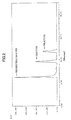
- This mixed solution contained 41.4 parts of glucose and 58.6 parts of indigestible dextrin ( Figure 1).
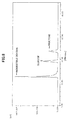
- Fructose was added to this mixed solution to obtain a mixed solution of indigestible dextrin (58.6 parts), glucose (41.4 parts), and fructose (30.0 parts) ( Figure 2), and a mixed solution of indigestible dextrin (58.6 parts), glucose (41.4 parts), and fructose (50.6 parts) ( Figure 3).
- HPLC high-performance liquid chromatography
- the mixed solution of glucose and indigestible dextrin obtained in Example 1 was adjusted to a Brix concentration of 10%, and was passed through a column (57 ml) packed with immobilized glucose isomerase preparation (Sweetzyme IT, Novozyme Corp.) at an SV (ml amount of liquid passed through/hr/ml column volume) of 3.5 and at a column temperature of 70 °C to obtain a mixed solution of glucose, fructose, and indigestible dextrin.
- the composition of this solution was 58.6 parts of indigestible dextrin, 21.1 parts of glucose, and 20.3 parts of fructose.
- the isomerization rate of fructose from glucose was 49.0%.
- the same experiments were performed using a glucose solution having a Brix concentration of 10%.
- a composition comprising 50.5 parts of glucose and 49.5 parts of fructose with an isomerization rate of 49.5% was obtained ( Figure 5).
- the mixed solution of glucose and indigestible dextrin obtained in Example 1 was adjusted to a Brix concentration of 45%, and was passed through a column (2000 ml) packed with immobilized glucose isomerase preparation (Sweetzyme IT, Novozyme Corp.) at an SV (ml amount of liquid passed through/hr/ml column volume) of 3.5 and at a column temperature of 55 °C to obtain a mixed solution of glucose, fructose, and indigestible dextrin. Then the mixed solution was passed through the mixed ion-exchange resin and desalinated to obtain a concentrated liquid.
- the composition of this solution was 58.6 parts of indigestible dextrin, 21.1 parts of glucose, and 20.3 parts of fructose, and the isomerization rate of fructose from glucose was 49.0%.
- the same experiments were performed for a glucose solution having a Brix concentration of 45% at an SV of 1.2.
- a composition containing 55 parts of glucose and 45 parts of fructose was obtained with an isomerization rate of 45.0% ( Figure 7).
- the mixed solution of glucose and indigestible dextrin obtained in Example 1 was adjusted to a Brix concentration of 45%, and a similar experiment was performed at an SV of 1.75.
- Fructose (13.7 parts) was added to 100 parts of indigestible dextrin comprising isoglucose obtained in Example 4 under SV 1.75 conditions to obtain an indigestible dextrin liquid sugar syrup comprising isoglucose with a ratio of fructose to glucose of 55:45.
- 206.6 parts fructose was added to obtain an indigestible dextrin solution comprising isoglucose with a ratio of fructose to glucose of 90:10.
- the indigestible dextrin comprising isoglucose obtained in Example 1 (indigestible dextrin: 58.6 parts, glucose: 41.4 parts, fructose: 50.6 parts) was adjusted to a Brix concentration of 50%, and a portion of it was used to prepare orangeade according to the recipe indicated in Table 1 below. The ingredients were blended, heated and filled in a container to obtain the desired beverage. This orangeade comprised 3.4 g of glucose, 4.2 g of fructose, and 4.9 g of indigestible dextrin derived from the preparation of the present invention.
- Table 1 Ingredient Ratio (grams) Indigestible dextrin comprising isoglucose of the present invention 25 5 ⁇ concentrated orange juice 5.75 5 ⁇ concentrated lemon juice 0.25 Citric acid 0.01 Vitamin C 0.01 Flavor 0.15 Water To make up to a total volume of 100 ml
- Example 2 The solution obtained in Example 2 comprising 20.3 parts of fructose, 21.1 1 parts of glucose, and 58.6 parts of indigestible dextrin was adjusted to a Brix concentration of 65%.
- the adjusted solution (1.0 kg) was placed in a 2.0 L autoclave (NAC Autoclave Co., Ltd.), and 20 g of Raney nickel (R239, product of Nikko Rika) was added.
- hydrogen gas was introduced for 2 hours at 130 °C and 100 kg/cm 2 to perform a hydrogenation reaction.
- the reaction product was decolorized by activated charcoal, desalinated by the mixed ion-exchange resin column and then concentrated.
- the composition of the concentrated liquid thus obtained was 10.1 parts of mannitol, 31.1 parts of sorbitol, and 58.7 parts of hydrogenated indigestible dextrin. (It is well known to skilled in the art that equal amounts of mannitol and sorbitol can be produced by hydrogenating fructose.)
- the energy of the hydrogenated indigestible dextrin comprising hydrogenated isoglucose was 1.5 kcal/g.
- a relative sweetness of the hydrogenated indigestible dextrin to that of sugar whose sweetness is 100 was 30.
- Example 6 Example 6
- the mixture was placed in a stainless steel vessel, electrically heated while gently being stirred until it was heated to a temperature of 160 °C and then boiled down.
- the mixture was then allowed to cool to about 80 °C and poured into a mold to obtain a candy.
- the candy thus obtained was released well from the mold, was clear in appearance with a surface free of irregularities with an appropriate amount of firmness while being chewed. It had low moisture absorbency as well as superior storage stability and heat stability.
Landscapes
- Chemical & Material Sciences (AREA)
- Health & Medical Sciences (AREA)
- Organic Chemistry (AREA)
- Life Sciences & Earth Sciences (AREA)
- Engineering & Computer Science (AREA)
- General Health & Medical Sciences (AREA)
- Biochemistry (AREA)
- Chemical Kinetics & Catalysis (AREA)
- Genetics & Genomics (AREA)
- Biotechnology (AREA)
- Molecular Biology (AREA)
- Medicinal Chemistry (AREA)
- General Chemical & Material Sciences (AREA)
- Bioinformatics & Cheminformatics (AREA)
- Wood Science & Technology (AREA)
- Polymers & Plastics (AREA)
- Zoology (AREA)
- Diabetes (AREA)
- Public Health (AREA)
- Veterinary Medicine (AREA)
- Nuclear Medicine, Radiotherapy & Molecular Imaging (AREA)
- Pharmacology & Pharmacy (AREA)
- Animal Behavior & Ethology (AREA)
- Hematology (AREA)
- General Engineering & Computer Science (AREA)
- Obesity (AREA)
- Microbiology (AREA)
- Nutrition Science (AREA)
- Materials Engineering (AREA)
- Crystallography & Structural Chemistry (AREA)
- Food Science & Technology (AREA)
- Emergency Medicine (AREA)
- Endocrinology (AREA)
- Coloring Foods And Improving Nutritive Qualities (AREA)
- Preparation Of Compounds By Using Micro-Organisms (AREA)
- Pharmaceuticals Containing Other Organic And Inorganic Compounds (AREA)
- Polysaccharides And Polysaccharide Derivatives (AREA)
Applications Claiming Priority (3)
| Application Number | Priority Date | Filing Date | Title |
|---|---|---|---|
| JP2004316301 | 2004-10-29 | ||
| JP2005193842A JP4945096B2 (ja) | 2004-10-29 | 2005-07-01 | 異性化糖を含む難消化性デキストリンの製造方法 |
| PCT/JP2005/019987 WO2006046738A1 (ja) | 2004-10-29 | 2005-10-31 | 異性化糖を含む難消化性デキストリンの製造方法 |
Publications (3)
| Publication Number | Publication Date |
|---|---|
| EP1806366A1 true EP1806366A1 (de) | 2007-07-11 |
| EP1806366A4 EP1806366A4 (de) | 2011-08-10 |
| EP1806366B1 EP1806366B1 (de) | 2012-09-05 |
Family
ID=36227970
Family Applications (1)
| Application Number | Title | Priority Date | Filing Date |
|---|---|---|---|
| EP05800367A Ceased EP1806366B1 (de) | 2004-10-29 | 2005-10-31 | Verfahren zur herstellung fäulnisbeständigen dextrins mit isomerisiertem zucker |
Country Status (6)
| Country | Link |
|---|---|
| US (1) | US20070231454A1 (de) |
| EP (1) | EP1806366B1 (de) |
| JP (1) | JP4945096B2 (de) |
| KR (1) | KR100934746B1 (de) |
| CN (1) | CN101052657B (de) |
| WO (1) | WO2006046738A1 (de) |
Families Citing this family (7)
| Publication number | Priority date | Publication date | Assignee | Title |
|---|---|---|---|---|
| JP5152474B2 (ja) * | 2007-05-29 | 2013-02-27 | 松谷化学工業株式会社 | オリゴ糖、その製造方法、及びその用途 |
| KR100910081B1 (ko) | 2007-12-20 | 2009-07-30 | 재단법인서울대학교산학협력재단 | 지소화성이 증진된 전분의 제조방법 |
| JP6019493B2 (ja) * | 2008-03-14 | 2016-11-02 | 松谷化学工業株式会社 | 分岐デキストリン、その製造方法及び飲食品 |
| CN102960741B (zh) * | 2012-11-02 | 2014-05-14 | 翁源广业清怡食品科技有限公司 | 一种难消化糊精的制备工艺 |
| JP6314340B2 (ja) * | 2014-03-26 | 2018-04-25 | 松谷化学工業株式会社 | 難消化性デキストリンの製造方法 |
| KR101693477B1 (ko) | 2015-05-14 | 2017-01-06 | 한림대학교 산학협력단 | 알파 아밀라아제를 이용한 지소화성 전분의 제조방법 |
| KR101832799B1 (ko) * | 2016-05-19 | 2018-02-27 | 주식회사 삼양사 | 난소화성 말토덱스트린 제조 방법 |
Family Cites Families (26)
| Publication number | Priority date | Publication date | Assignee | Title |
|---|---|---|---|---|
| US1471347A (en) * | 1922-11-16 | 1923-10-23 | Corn Prod Refining Co | Method of making grape sugar |
| JPS5118518B2 (de) * | 1973-03-07 | 1976-06-10 | ||
| JPS52120190A (en) * | 1976-04-02 | 1977-10-08 | Cpc International Inc | Fixing method of glucose isomerase and cotinuous isomerization of glucose |
| US4605619A (en) * | 1982-06-30 | 1986-08-12 | Nabisco Brands, Inc. | Process for preparing fructose from starch |
| CN1034304A (zh) * | 1987-09-28 | 1989-08-02 | 纳比斯克布兰德斯公司 | 被果糖天然甜化的谷物产品 |
| US4857339A (en) * | 1987-09-28 | 1989-08-15 | Nabisco/Cetus Food Biotechnology Research Partnership | Method for making cereal products naturally sweetened with fructose |
| JPH02154664A (ja) * | 1988-12-05 | 1990-06-14 | Matsutani Kagaku Kogyo Kk | 食物繊維高含有デキストリンの製造法 |
| KR0135075B1 (ko) * | 1988-10-07 | 1998-04-20 | 마쓰따니 히데지로 | 식이섬유를 함유한 덱스트린의 제조방법 |
| DE69133491T2 (de) * | 1990-01-04 | 2006-07-27 | Genencor International, Inc., Palo Alto | Glucose-Isomerase mit geändertem pH-Optimum |
| JPH04237497A (ja) * | 1991-01-14 | 1992-08-25 | Kikuo Ono | 難消化性デキストリンの製造法 |
| JP3003008B2 (ja) * | 1991-02-28 | 2000-01-24 | 天野製薬株式会社 | 耐酸、耐熱性グルコースイソメラーゼ、その製造法及びそれを用いるフラクトースの製造法 |
| US5358729A (en) * | 1991-08-28 | 1994-10-25 | Matsutani Chemical Industries Co., Ltd. | Indigestible dextrin |
| US5236719A (en) * | 1991-09-27 | 1993-08-17 | Wm. Wrigley Jr. Company | Chewing gum and other comestibles containing purified indigestible dextrin |
| JPH05178902A (ja) * | 1991-10-29 | 1993-07-20 | Matsutani Kagaku Kogyo Kk | 難消化デキストリン |
| JPH05199855A (ja) * | 1992-01-24 | 1993-08-10 | Kanebo Ltd | 健康飲料 |
| JPH0870842A (ja) * | 1994-07-05 | 1996-03-19 | Matsutani Chem Ind Ltd | 醸造用糖類およびその製造法 |
| CN1037444C (zh) * | 1994-09-17 | 1998-02-18 | 华南理工大学 | 难消化糊精的制备方法 |
| JP2779616B1 (ja) * | 1997-09-10 | 1998-07-23 | 株式会社紀文フードケミファ | 食物繊維含有組成物 |
| JP2001000200A (ja) * | 1999-06-23 | 2001-01-09 | Nippon Rensui Co Ltd | 高果糖異性化糖の製造方法 |
| JP4407006B2 (ja) * | 2000-05-10 | 2010-02-03 | 大正製薬株式会社 | 鉄化合物配合内服液剤 |
| US8187624B1 (en) * | 2000-06-14 | 2012-05-29 | Kao Corporation | Compositions for taking dietary fibers |
| JP2002330735A (ja) * | 2001-05-11 | 2002-11-19 | Matsutani Chem Ind Ltd | 炭酸飲料の製造法 |
| JP4674319B2 (ja) * | 2001-06-22 | 2011-04-20 | 松谷化学工業株式会社 | 茶飲料の製造法 |
| US8784171B2 (en) * | 2002-12-23 | 2014-07-22 | Nintendo Co., Ltd. | Method and apparatus for modeling a track in video games using arcs and splines that enables efficient collision detection |
| US7981639B2 (en) * | 2003-02-19 | 2011-07-19 | Academia Sinica | Starch-derived products |
| JP2005287454A (ja) * | 2004-04-02 | 2005-10-20 | Matsutani Chem Ind Ltd | 保健機能付与飲食品及び飲食品へ保健機能を付与する方法 |
-
2005
- 2005-07-01 JP JP2005193842A patent/JP4945096B2/ja not_active Expired - Fee Related
- 2005-10-31 WO PCT/JP2005/019987 patent/WO2006046738A1/ja not_active Ceased
- 2005-10-31 EP EP05800367A patent/EP1806366B1/de not_active Ceased
- 2005-10-31 KR KR1020077012040A patent/KR100934746B1/ko not_active Expired - Fee Related
- 2005-10-31 CN CN2005800374719A patent/CN101052657B/zh not_active Expired - Fee Related
-
2007
- 2007-04-27 US US11/790,766 patent/US20070231454A1/en not_active Abandoned
Also Published As
| Publication number | Publication date |
|---|---|
| EP1806366B1 (de) | 2012-09-05 |
| JP4945096B2 (ja) | 2012-06-06 |
| US20070231454A1 (en) | 2007-10-04 |
| CN101052657B (zh) | 2010-11-03 |
| CN101052657A (zh) | 2007-10-10 |
| KR20070073945A (ko) | 2007-07-10 |
| EP1806366A4 (de) | 2011-08-10 |
| WO2006046738A1 (ja) | 2006-05-04 |
| KR100934746B1 (ko) | 2009-12-30 |
| JP2006149369A (ja) | 2006-06-15 |
Similar Documents
| Publication | Publication Date | Title |
|---|---|---|
| US7608436B2 (en) | Process for producing saccharide oligomers | |
| US20070231454A1 (en) | Method for production of indigestible dextrin comprising isoglucose | |
| DK2662381T3 (en) | Sukkerkondensat, method for producing the same and use thereof | |
| TWI627271B (zh) | Beer-flavored beverage with saponin | |
| EP3336167B1 (de) | Bierähnliches brausegetränk | |
| KR102224100B1 (ko) | 난소화성 덱스트린의 제조 방법 | |
| KR101445432B1 (ko) | 수소화된 이소말토올리고당의 제조 방법 | |
| MX2007009899A (es) | Metodos para fabricar jarabes. | |
| US20090123638A1 (en) | Monosaccharide production system | |
| US9237765B2 (en) | Non-digestible hydroxypropyl starch hydrolysate, method for production thereof and food and beverage | |
| AU2004263221B2 (en) | Process for preparing maltitol enriched products | |
| EP1866426B1 (de) | Herstellung langsam verdaubarer kohlenhydrate durch ssmb-chromatographie | |
| JP5507105B2 (ja) | 新規な澱粉分解物、該澱粉分解物を含有する食品添加剤、飲食物、及び薬剤 | |
| JP7470512B2 (ja) | ビールテイスト飲料 | |
| JP5859103B1 (ja) | ビールテイストの発酵アルコール飲料およびその製造方法 | |
| JP3497468B2 (ja) | アミノ酸・ミネラル含有米水飴、およびその製造方法 | |
| JP4468831B2 (ja) | γ−アミノ酪酸を多量に含有する発酵アセロラ製品及びその製造方法 | |
| JP2025114846A (ja) | ビールテイスト飲料の製造方法、及びビールテイスト飲料、並びにビールテイスト飲料の総プリン体含有量を低減する方法 |
Legal Events
| Date | Code | Title | Description |
|---|---|---|---|
| PUAI | Public reference made under article 153(3) epc to a published international application that has entered the european phase |
Free format text: ORIGINAL CODE: 0009012 |
|
| 17P | Request for examination filed |
Effective date: 20070427 |
|
| AK | Designated contracting states |
Kind code of ref document: A1 Designated state(s): DE FR GB |
|
| DAX | Request for extension of the european patent (deleted) | ||
| RBV | Designated contracting states (corrected) |
Designated state(s): DE FR GB |
|
| RIC1 | Information provided on ipc code assigned before grant |
Ipc: C08B 37/00 20060101AFI20110627BHEP Ipc: A61P 1/14 20060101ALI20110627BHEP Ipc: A23L 1/09 20060101ALI20110627BHEP Ipc: A61K 31/718 20060101ALI20110627BHEP Ipc: C12P 19/14 20060101ALI20110627BHEP Ipc: C07H 3/02 20060101ALI20110627BHEP Ipc: A61P 3/06 20060101ALI20110627BHEP Ipc: C07H 3/04 20060101ALI20110627BHEP Ipc: A61P 3/10 20060101ALI20110627BHEP |
|
| A4 | Supplementary search report drawn up and despatched |
Effective date: 20110708 |
|
| REG | Reference to a national code |
Ref country code: DE Ref legal event code: R079 Ref document number: 602005036027 Country of ref document: DE Free format text: PREVIOUS MAIN CLASS: C08B0037000000 Ipc: C08B0030180000 |
|
| RIC1 | Information provided on ipc code assigned before grant |
Ipc: C08B 30/18 20060101AFI20120328BHEP Ipc: C08L 3/02 20060101ALI20120328BHEP |
|
| GRAP | Despatch of communication of intention to grant a patent |
Free format text: ORIGINAL CODE: EPIDOSNIGR1 |
|
| GRAS | Grant fee paid |
Free format text: ORIGINAL CODE: EPIDOSNIGR3 |
|
| GRAA | (expected) grant |
Free format text: ORIGINAL CODE: 0009210 |
|
| AK | Designated contracting states |
Kind code of ref document: B1 Designated state(s): DE FR GB |
|
| REG | Reference to a national code |
Ref country code: GB Ref legal event code: FG4D |
|
| REG | Reference to a national code |
Ref country code: DE Ref legal event code: R096 Ref document number: 602005036027 Country of ref document: DE Effective date: 20121031 |
|
| PLBE | No opposition filed within time limit |
Free format text: ORIGINAL CODE: 0009261 |
|
| STAA | Information on the status of an ep patent application or granted ep patent |
Free format text: STATUS: NO OPPOSITION FILED WITHIN TIME LIMIT |
|
| 26N | No opposition filed |
Effective date: 20130606 |
|
| REG | Reference to a national code |
Ref country code: DE Ref legal event code: R097 Ref document number: 602005036027 Country of ref document: DE Effective date: 20130606 |
|
| REG | Reference to a national code |
Ref country code: FR Ref legal event code: PLFP Year of fee payment: 12 |
|
| REG | Reference to a national code |
Ref country code: FR Ref legal event code: PLFP Year of fee payment: 13 |
|
| REG | Reference to a national code |
Ref country code: FR Ref legal event code: PLFP Year of fee payment: 14 |
|
| PGFP | Annual fee paid to national office [announced via postgrant information from national office to epo] |
Ref country code: GB Payment date: 20231020 Year of fee payment: 19 |
|
| PGFP | Annual fee paid to national office [announced via postgrant information from national office to epo] |
Ref country code: FR Payment date: 20231023 Year of fee payment: 19 Ref country code: DE Payment date: 20231020 Year of fee payment: 19 |
|
| REG | Reference to a national code |
Ref country code: DE Ref legal event code: R119 Ref document number: 602005036027 Country of ref document: DE |
|
| GBPC | Gb: european patent ceased through non-payment of renewal fee |
Effective date: 20241031 |
|
| PG25 | Lapsed in a contracting state [announced via postgrant information from national office to epo] |
Ref country code: DE Free format text: LAPSE BECAUSE OF NON-PAYMENT OF DUE FEES Effective date: 20250501 |
|
| PG25 | Lapsed in a contracting state [announced via postgrant information from national office to epo] |
Ref country code: GB Free format text: LAPSE BECAUSE OF NON-PAYMENT OF DUE FEES Effective date: 20241031 |
|
| PG25 | Lapsed in a contracting state [announced via postgrant information from national office to epo] |
Ref country code: FR Free format text: LAPSE BECAUSE OF NON-PAYMENT OF DUE FEES Effective date: 20241031 |