EP1815247B1 - Utilisation therapeutique d'inhibiteurs de farnesyltransferase et procedes de controle de leur efficacite - Google Patents
Utilisation therapeutique d'inhibiteurs de farnesyltransferase et procedes de controle de leur efficacite Download PDFInfo
- Publication number
- EP1815247B1 EP1815247B1 EP05851365A EP05851365A EP1815247B1 EP 1815247 B1 EP1815247 B1 EP 1815247B1 EP 05851365 A EP05851365 A EP 05851365A EP 05851365 A EP05851365 A EP 05851365A EP 1815247 B1 EP1815247 B1 EP 1815247B1
- Authority
- EP
- European Patent Office
- Prior art keywords
- alkyl
- hydrogen
- alkyloxy
- lps
- formula
- Prior art date
- Legal status (The legal status is an assumption and is not a legal conclusion. Google has not performed a legal analysis and makes no representation as to the accuracy of the status listed.)
- Expired - Lifetime
Links
- MCTWTZJPVLRJOU-UHFFFAOYSA-N C[n]1cncc1 Chemical compound C[n]1cncc1 MCTWTZJPVLRJOU-UHFFFAOYSA-N 0.000 description 1
- 0 Cc1cnc[n]1* Chemical compound Cc1cnc[n]1* 0.000 description 1
Images










Classifications
-
- C—CHEMISTRY; METALLURGY
- C12—BIOCHEMISTRY; BEER; SPIRITS; WINE; VINEGAR; MICROBIOLOGY; ENZYMOLOGY; MUTATION OR GENETIC ENGINEERING
- C12Q—MEASURING OR TESTING PROCESSES INVOLVING ENZYMES, NUCLEIC ACIDS OR MICROORGANISMS; COMPOSITIONS OR TEST PAPERS THEREFOR; PROCESSES OF PREPARING SUCH COMPOSITIONS; CONDITION-RESPONSIVE CONTROL IN MICROBIOLOGICAL OR ENZYMOLOGICAL PROCESSES
- C12Q1/00—Measuring or testing processes involving enzymes, nucleic acids or microorganisms; Compositions therefor; Processes of preparing such compositions
- C12Q1/68—Measuring or testing processes involving enzymes, nucleic acids or microorganisms; Compositions therefor; Processes of preparing such compositions involving nucleic acids
- C12Q1/6876—Nucleic acid products used in the analysis of nucleic acids, e.g. primers or probes
- C12Q1/6883—Nucleic acid products used in the analysis of nucleic acids, e.g. primers or probes for diseases caused by alterations of genetic material
-
- A—HUMAN NECESSITIES
- A61—MEDICAL OR VETERINARY SCIENCE; HYGIENE
- A61K—PREPARATIONS FOR MEDICAL, DENTAL OR TOILETRY PURPOSES
- A61K31/00—Medicinal preparations containing organic active ingredients
- A61K31/33—Heterocyclic compounds
- A61K31/395—Heterocyclic compounds having nitrogen as a ring hetero atom, e.g. guanethidine or rifamycins
- A61K31/435—Heterocyclic compounds having nitrogen as a ring hetero atom, e.g. guanethidine or rifamycins having six-membered rings with one nitrogen as the only ring hetero atom
- A61K31/47—Quinolines; Isoquinolines
- A61K31/4709—Non-condensed quinolines and containing further heterocyclic rings
-
- A—HUMAN NECESSITIES
- A61—MEDICAL OR VETERINARY SCIENCE; HYGIENE
- A61P—SPECIFIC THERAPEUTIC ACTIVITY OF CHEMICAL COMPOUNDS OR MEDICINAL PREPARATIONS
- A61P7/00—Drugs for disorders of the blood or the extracellular fluid
-
- G—PHYSICS
- G01—MEASURING; TESTING
- G01N—INVESTIGATING OR ANALYSING MATERIALS BY DETERMINING THEIR CHEMICAL OR PHYSICAL PROPERTIES
- G01N33/00—Investigating or analysing materials by specific methods not covered by groups G01N1/00 - G01N31/00
- G01N33/48—Biological material, e.g. blood, urine; Haemocytometers
- G01N33/50—Chemical analysis of biological material, e.g. blood, urine; Testing involving biospecific ligand binding methods; Immunological testing
- G01N33/5005—Chemical analysis of biological material, e.g. blood, urine; Testing involving biospecific ligand binding methods; Immunological testing involving human or animal cells
- G01N33/5008—Chemical analysis of biological material, e.g. blood, urine; Testing involving biospecific ligand binding methods; Immunological testing involving human or animal cells for testing or evaluating the effect of chemical or biological compounds, e.g. drugs, cosmetics
- G01N33/5044—Chemical analysis of biological material, e.g. blood, urine; Testing involving biospecific ligand binding methods; Immunological testing involving human or animal cells for testing or evaluating the effect of chemical or biological compounds, e.g. drugs, cosmetics involving specific cell types
- G01N33/5047—Cells of the immune system
-
- G—PHYSICS
- G01—MEASURING; TESTING
- G01N—INVESTIGATING OR ANALYSING MATERIALS BY DETERMINING THEIR CHEMICAL OR PHYSICAL PROPERTIES
- G01N33/00—Investigating or analysing materials by specific methods not covered by groups G01N1/00 - G01N31/00
- G01N33/48—Biological material, e.g. blood, urine; Haemocytometers
- G01N33/50—Chemical analysis of biological material, e.g. blood, urine; Testing involving biospecific ligand binding methods; Immunological testing
- G01N33/68—Chemical analysis of biological material, e.g. blood, urine; Testing involving biospecific ligand binding methods; Immunological testing involving proteins, peptides or amino acids
- G01N33/6863—Cytokines, i.e. immune system proteins modifying a biological response such as cell growth proliferation or differentiation, e.g. TNF, CNF, GM-CSF, lymphotoxin, MIF or their receptors
-
- C—CHEMISTRY; METALLURGY
- C12—BIOCHEMISTRY; BEER; SPIRITS; WINE; VINEGAR; MICROBIOLOGY; ENZYMOLOGY; MUTATION OR GENETIC ENGINEERING
- C12Q—MEASURING OR TESTING PROCESSES INVOLVING ENZYMES, NUCLEIC ACIDS OR MICROORGANISMS; COMPOSITIONS OR TEST PAPERS THEREFOR; PROCESSES OF PREPARING SUCH COMPOSITIONS; CONDITION-RESPONSIVE CONTROL IN MICROBIOLOGICAL OR ENZYMOLOGICAL PROCESSES
- C12Q2600/00—Oligonucleotides characterized by their use
- C12Q2600/158—Expression markers
-
- G—PHYSICS
- G01—MEASURING; TESTING
- G01N—INVESTIGATING OR ANALYSING MATERIALS BY DETERMINING THEIR CHEMICAL OR PHYSICAL PROPERTIES
- G01N2800/00—Detection or diagnosis of diseases
- G01N2800/26—Infectious diseases, e.g. generalised sepsis
-
- G—PHYSICS
- G01—MEASURING; TESTING
- G01N—INVESTIGATING OR ANALYSING MATERIALS BY DETERMINING THEIR CHEMICAL OR PHYSICAL PROPERTIES
- G01N2800/00—Detection or diagnosis of diseases
- G01N2800/52—Predicting or monitoring the response to treatment, e.g. for selection of therapy based on assay results in personalised medicine; Prognosis
Definitions
- the present invention relates to the use of farnesyltransferase inhibitors for the treatment of sepsis or septic shock.
- the disclosure also relates to methods of determining or monitoring a patient's response to treatment with a farnesyltransferase inhibitor.
- statins inhibit the activity of 3-hydroxyl-3-methylglutaryl-coenzyme A (HMG-CoA) reductase, the rate-limiting enzyme in cholesterol biosynthesis (Brown 1990), and are widely prescribed to lower cholesterol in hyperlipidemic patients. Recent observations from clinical trials suggest that statins provide cardiovascular benefit beyond their lipid lowering effects. The recognition that atherosclerosis involves an inflammatory component suggests that some of the beneficial effects of statins may be related to their modulation of immunity and inflammation (Schonbeck U 2004).
- HMG-CoA 3-hydroxyl-3-methylglutaryl-coenzyme A
- Inflammation is normally an acute response by the immune system to microbial pathogens, chemicals or physical injury, and is characterized by redness, heat, swelling and pain. These symptoms are the result of a cascade of events including cytokine and chemokine production, cell migration and accumulation, coagulation, fibrinolysis, blood vessel dilation and increased permeability, extravasation of plasma and proteins. If the inflammatory response is not appropriately regulated, it can progress to a chronic state, and be the cause of inflammatory diseases, a major cause of morbidity and mortality. A functional relationship between inflammation and cancer has been recognized for a long time, but the molecular pathways underlying this link were unknown.
- LPS lipopolysaccharide
- statins in inflammatory diseases have been supported by several animal studies using LPS treatment as well as other animal models for inflammatory diseases. Cerivastatin was shown to reduce the serum levels of TNF- ⁇ , IL-1 ⁇ , nitric oxide, and improve survival of mice in an LPS-induced sepsis model (Ando, Takamura et al. 2000).
- Atorvastatin and lovastatin were reported to prevent or reverse experimental autoimmune encephalomyelitis (EAE) (Stanislaus, Pahan et al. 1999; Youssef, Stueve et al. 2002).
- Simvastatin has shown anti-inflammatory activity in collagen-induced arthritis (Leung, Sattar et al. 2003), and in an allergic asthma model (McKay A 2004) It was also found that pravastatin relieved cachexia, hematochezia and intestinal epithelial permeability in dextran sulfate-induced colitis ( Sasaki M, et al. 2003. J Pharmacol Exp Ther 305(1), 78-85 ).
- MCP-1, IL-1b, IL-6, MMP-9, MyD88 and TNF- ⁇ have been implicated in the pathology of atherosclerosis (Gu, Okada et al. 1998; Aiello, Bourassa et al. 1999; Dawson, Kuziel et al. 1999; Ito, Ikeda et al. 2002; Haddy, Sass et al. 2003; Kudi, Niwa et al. 2003; Luttun, Lutgens et al. 2004; Michelsen, Wong et al. 2004) and sepsis (Bossink, Paemen et al. 1995; Weighardt, Kaiser-Moore et al.
- Statins are used for treatment of atherosclerosis, where their beneficial effect are believed to be due both to lipid-lowering-dependent and -independent effects.
- Rezaie-Majd et al. 2002. Arterioscler Thromb Vasc Biol 22, 1194-9 ) reported that simvastatin reduced both protein and RNA levels of the cytokines, IL-6, IL-8 and monocyte chemoattractant protein-1 (MCP-1), in hypercholesterolemic patients after 6 weeks of treatment.
- statins for inflammatory diseases has been highlighted by recent findings in the Trial of Atorvastatin in Rheumatoid Arthritis (TARA), which have shown that the disease activity score, erythrocyte sedimentation and C-reactive protein were significantly improved compared to existing therapy after 6 months treatment with atorvastatin (McCarey DW 2004).
- statins have been at higher than therapeutic doses.
- statins have anti-inflammatory effects in human clinical trials at therapeutic doses.
- statins have anti-inflammatory properties, the mechanism underlying these properties is currently unclear.
- In vitro studies on cells have shown that statins affect many different processes and it is not known which processes are required for anti-inflammatory effects in vivo.
- transcription factors such as NF- ⁇ B, AP-1 and hypoxia-inducible factor-1 ⁇ , which regulate the transcription of many inflammatory genes, is down-regulated in vitro by simvastatin, atorvastatin and lovastatin (Ortego M 1999; Dichtl, Dulak et al. 2003).
- Statins inhibit mevalonate synthesis, the rate-limiting step in production of cholesterol (Brown 1990) and also decrease the synthesis of the isoprenoids, farnesyl pyrophosphate (FPP) and geranylgeranyl pyrophosphate (GGPP) (see Figure 1 ).
- GGPP and FPP are required for prenylation, activation and sub-cellular location of numerous intracellular proteins (Casey PJ. 1995; Zhang FL 1996).
- exogenous GGPP or geraniol
- FPP or farnesol
- statin-mediated anti-inflammatory functions including: (1) leukocyte adhesion (Liu L 1999); (2) cell proliferation/apoptosis (Guijarro C 1998; Wen-Bin Zhong 2003); and (3) NF- ⁇ B activity (Ortego M 1999), and (4) LPS-induced MMP-9 production (Wong, Lumma et al. 2001).
- squalestatin a selective inhibitor of squalene synthase and cholesterol synthesis, is unable to mimic the inhibitory effect of a statin on LPS-induced leukocyte recruitment and chemokine production (Diomede L 2001).
- statins suppress LPS-induced MMP-9 secretion by THP-1 cells, but that inhibition of farnesyltransferase (Ftase, also referred to as farnesyl protein transferase or FPTase) has no effect ( Wong, B., et al. 2001. J Leukoc Biol 69, 959-62 ).
- FTIs were originally developed to prevent post-translational farnesylation and activation of Ras oncoproteins (Prendergast and Rane 2001). Recent studies demonstrated inhibition by an FTI of NF- ⁇ B activation ( Takada, Y., et al. 2004. J Biol Chem 279, 26287-99 ) and downregulation of inflammatory gene expression through suppression of Ras-dependent NF- ⁇ B activation (Na et al. 2004). Thus FTIs share some, but not all, properties with statins.
- FTase inhibitors are known. For example, see U.S. Patent No. 6,451,812 , which describes certain FTIs and their use in treating arthropathies such as rheumatoid arthritis, osteoarthritis, juvenile arthritis, and gout.
- WO-97/21701 and U.S. Patent No. 6,037,350 describe the preparation, formulation and pharmaceutical properties of certain farnesyl transferase inhibiting (imidazoly-5-yl)methyl-2-quinolinone derivatives of formulas (I), (II) and (III), as well as intermediates of formula (II) and (III) that are metabolized in vivo to the compounds of formula (I).
- the compounds of formulas (I), (II) and (III) are represented by the pharmaceutically acceptable acid or base addition salts and the stereochemically isomeric forms thereof, wherein the dotted line represents an optional bond;
- X is oxygen or sulfur;
- WO-97/16443 and U.S. Patent No. 5,968,952 describe the preparation, formulation and pharmaceutical properties of farnesyltransferase inhibiting compounds of formula (IV), as well as intermediates of formula (V) and (VI) that are metabolized in vivo to the compounds of formula (IV).
- the compounds of formulas (IV), (V) and (VI) are represented by the pharmaceutically acceptable acid or base addition salts and the stereochemically isomeric forms thereof, wherein the dotted line represents an optional bond;
- X is oxygen or sulfur;
- WO-98/40383 and U.S. Patent No. 6,187,786 disclose the preparation, formulation and pharmaceutical properties of farnesyltransferase inhibiting compounds of formula (VII) the pharmaceutically acceptable acid addition salts and the stereochemically isomeric forms thereof, wherein the dotted line represents an optional bond;
- X is oxygen or sulfur;
- WO-98/49157 and U.S. Patent No. 6,117,432 concern the preparation, formulation and pharmaceutical properties of farnesyltransferase inhibiting compounds of formula (VIII) the pharmaceutically acceptable acid addition salts and the stereochemically isomeric forms thereof, wherein the dotted line represents an optional bond;
- X is oxygen or sulfur;
- R 1 and R 2 each independently are hydrogen, hydroxy, halo, cyano, C 1-6 alkyl, trihalomethyl, trihalomethoxy, C 2-6 alkenyl, C 1-6 alkyloxy, hydroxyC 1-6 alkyloxy, C 1-6 alkyloxyC 1-6 alkyloxy, C 1-6 alkyloxycarbonyl, aminoC 1-6 alkyloxy, mono- or di(C 1-6 alkyl)aminoC 1-6 alkyloxy, Ar 1 , Ar 1 C 1-6 alkyl, Ar 1 oxy or Ar 1 C 1-6 alkyloxy;
- R 3 and R 4 each independently are hydrogen, halo
- potent FTIs including tipifarnib (also known as R115777 or ZARNESTRA ® ), have been described in the literature. See, e.g., Kurzrock, R. et al. (2003), WO 98/43629 , and WO 02/40015 .
- Other known farnesyltransferase inhibitors include Arglabin (i.e.1(R)-10-epoxy-5(S),7(S)-guaia-3(4),11(13)-dien-6,12-olide described in WO-98/28303 (NuOncology Labs); perrilyl alcohol described in WO-99/45912 (Wisconsin Genetics); SCH-66336, i.e.
- FTIs have been studied in the area of anti-cancer therapy. More recently, the use of certain FTIs as therapeutic agents for treating inflammatory diseases, particularly those involving an immune component, and for treating pain associated with inflammatory conditions has been disclosed. See WO 98/43629 , which describes the use of certain FTIs for treating conditions including ulcerative colitis, Crohn's disease, allergic rhinitis, graft-vs-host disease, conjunctivitis, asthma, rheumatoid arthritis, osteoarthritis, ARDS, Behcet's disease, transplant rejection, uticaria, allergic dermatitis, allopecia areata, scleroderma, exanthem, eczema, dermatomyositis, acne, diabetes, systemic lupus erythematosis, Kawasaki's disease, multiple sclerosis, emphysema, cystic fibrosis, chronic bronchitis, and psoria
- the invention relates to farnesyltransferase inhibitors for use in treatment of sepsis or septic shock, as defined in the claims.
- the farnesyltransferase inhibitor is selected from the farnesyltransferase inhibitor compounds disclosed herein. More preferably, the farnesyltransferase inhibitor is tipifarnib.
- the disclosure relates to methods for determining a subject's response to treatment with a farnesyltransferase inhibitor.
- One general embodiment of such a method comprises: (a) taking an untreated blood sample from the subject before treatment with the farnesyltransferase inhibitor, and taking a treated blood sample from the subject at least one time after treatment with the farnesyltransferase inhibitor has commenced; (b) optionally isolating cells, plasma or serum from the untreated blood sample to obtain an untreated sample extract, and isolating cells, plasma or serum from each treated blood sample to obtain a treated sample extract; (c) optionally measuring a level of IL-8 in the untreated blood sample or extract, measuring a level of IL-8 in each treated blood sample or extract, and comparing the levels of IL-8 to obtain a control measurement; and (d) measuring a level of at least one of IL-6, MCP-1, IL-1 ⁇ , MMP-9, and TNF- ⁇ in the untreated blood sample or extract, measuring
- the extracts are plasma samples (isolated by, e.g., centrifuging the blood).
- the extracts are peripheral blood mononuclear cells isolated by, e.g., Ficoll-Paque gradient. Before measuring, the blood or cells may be stimulated with LPS.
- Another general disclosure relates to a method for monitoring a subject's response to treatment with a farnesyltransferase inhibitor, comprising: (a) taking an untreated blood sample from the subject before treatment with the farnesyltransferase inhibitor, and taking a treated blood sample from the subject at least one time after treatment with the farnesyltransferase inhibitor has commenced; (b) optionally isolating peripheral blood mononuclear cells (PBMC) from the untreated blood sample to obtain an untreated PBMC sample, and isolating peripheral blood mononuclear cells from each treated blood sample to obtain a treated PBMC sample; (c) stimulating the untreated blood or PBMC sample with lipopolysaccharide to obtain an LPS-stimulated untreated blood or PBMC sample, and stimulating each treated blood or PBMC sample with lipopolysaccharide to obtain an LPS-stimulated treated blood or PBMC sample; (d) isolating RNA of the untreated LPS-stimul
- plural treated blood samples from the subject are taken over periodic intervals of time after treatment with the farnesyltransferase inhibitor has commenced.
- FPTase farnesyltransferase
- Table 2 Genes for which LPS-induced transcription was downregulated by inhibition of farnesyltransferase, as measured by cDNA microarray analysis Accession number GeneName GeneDescription NM_002982 CCL2 monocyte chemotactic protein 1 (MCP-1) NM_005623 CCL8 monocyte chemotactic protein 2 (MCP-2) NM_002983 CCL3 small inducible cytokine A3 (homologous to mouse Mip-1a) (SCYA3) NM_002984 CCL4 small inducible cytokine A4 (homologous to mouse Mip-1b) (SCYA4) NM_005409 CXCL11 small inducible cytokine subfamily B, member 11 (SCYB11) NM_000576 IL1B interleukin 1, beta MM_000577 IL1RN interleukin-1 receptor antagonist MM_002852 PTX3 pentaxin-related qene, rapidly induced by IL-1B NM
- one or more of the above-identified genes and proteins may be used as a marker to study a subject's response to treatment with an FTI.
- Inhibition of FPTase may decrease LPS-induced transcription of, e.g., IL-1 ⁇ , MCP-1, MMP-9, MyD88, STAT1, MIP-1 ⁇ , TNF- ⁇ or IL-6. Consequently, transcription of IL-1 ⁇ , MCP-1, MMP-9, MyD88, STAT1, MIP-1 ⁇ , TNF- ⁇ or IL-6 may be decreased by administration of a farnesyltransferase inhibitor and these may be used as a panel of markers for monitoring patients in a clinical study. Inhibition of FPTase may also decrease or inhibit transcription of IL-1 ⁇ , MCP-1, MMP-9, MyD88, STAT1, MIP-1 ⁇ , TNF- ⁇ or IL-6 induced by agents other than LPS.
- IL-1 ⁇ LPS-induced transcription of, e.g., IL-1 ⁇ , MCP-1, MMP-9, MyD88, STAT1, MIP-1 ⁇ , TNF- ⁇ or IL-6.
- administering may be useful to treat diseases and medical conditions mediated through transcription of IL-1 ⁇ , MCP-1, MMP-9, MyD88, STAT1, MIP-1 ⁇ , TNF- ⁇ or IL-6.
- Inhibition of FPTase may also decrease LPS-induced protein translation or secretion of IL-1 ⁇ , MCP-1, MMP-9, MyD88, STAT1, MIP-1 ⁇ , TNF- ⁇ or IL-6.
- a disease or medical condition mediated by LPS-induced protein translation or secretion of IL-1 ⁇ , MCP-1, MMP-9, MyD88, STAT1, MIP-1 ⁇ , TNF- ⁇ or IL-6 may be treated by administering to a subject in need of such treatment a farnesyltransferase inhibitor, and the progress of treatment may be monitored by measuring levels of such markers.
- inhibition of FPTase may serve to inhibit protein translation or secretion of IL-1 ⁇ , MCP-1, MMP-9, MyD88, STAT1, MIP-1 ⁇ , TNF- ⁇ or IL-6 induced by agents other than LPS
- administration of an FTI may be useful to treat diseases and medical conditions mediated through protein translation or secretion of IL-1 ⁇ , MCP-1, MMP-9, MyD88, STAT1, MIP-1 ⁇ , TNF- ⁇ and/or IL-6.
- Inhibition of FPTase may also serve to inhibit transcription or translation of MyD88 or STAT1.
- Inhibition of transcription or protein translation or secretion of TNF- ⁇ , IL-1 ⁇ , MCP-1, IL-6, MMP-9, or MIP-1 ⁇ may also be attained by administration of a farnesyltransferase inhibitor, and the progress of treatment may be monitored by measuring levels of this set of markers.
- FTIs may be used to treat inflammation and inflammatory conditions.
- Diseases and medical conditions that may benefit from treatment with an FTI include: atherosclerosis and other vascular diseases such as thrombosis, restenosis after angioplasty and/or stenting, and vein-graft disease after bypass surgery, as well as ulcerative colitis, Crohn's disease, allergic rhinitis, graft-versus-host disease, conjunctivitis, asthma, rheumatoid arthritis, osteoarthritis, ARDS, Behcet's disease, transplant rejection, urticaria, allergic dermatitis, alopecia areata, scleroderma, exanthema, eczema, dermatomyositis, acne, diabetes, systemic lupus erythematosis, Kawasaki's disease, multiple sclerosis, emphysema, cystic fibrosis, chronic bronchitis and psoriasis.
- FTIs may also be used to treat LPS-induced inflammation in particular.
- a therapeutically effective amount of an FTI may be administered to treat a patient in need of treatment for one of the following diseases or medical conditions: sepsis, endotoxic shock, multiple organ dysfunction syndrome, periodontitis, peritonitis, anorexia, microvascular leukocytosis, pulmonary inflammation, airway hyperreactivity, acute lung injury, acute respiratory distress syndrome, chronic airway disease, goblet cell hyperplasia, pancreatitis, nephrotic syndrome, pyrexia, liver injury, premature delivery, Crohn's disease, ulcerative colitis, cerebral edema, atherosclerosis, cardiac failure, obstructive jaundice, neuroinflammation, cerebral ischemia, hyperalgesia, rectal allodynia, disseminated intravascular coagulation syndrome, hyperglycemia, insulin resistance, obstructive sleep apnea.
- FTIs may also be used to treat atherosclerosis.
- a therapeutically effective amount of an FTI may be administered to a subject diagnosed with atherosclerosis to treat the subject in need of such treatment.
- FTIs may be used to treat asthma.
- a therapeutically effective amount of an FTI may therefore be administered to a subject in need of treatment for asthma.
- a therapeutically effective amount of an FTI may be administered to a subject diagnosed with multiple sclerosis (MS) to treat the subject in need of such treatment.
- MS multiple sclerosis
- a therapeutically effective amount of an FTI may be administered to a subject diagnosed with or experiencing sepsis or septic shock to treat the subject in need of such treatment.
- the monitoring methods are therefore useful in connection with determining FTI efficacy in treating the above-described indications.
- the present disclosure provides various methods for determining a subject's response to treatment, such as for one of the diseases or medical conditions described above, with a farnesyltransferase inhibitor (FTI).
- FTI farnesyltransferase inhibitor
- an untreated blood sample and an FTI-treated blood sample are taken.
- the following may be used as types of "blood samples”: whole blood; plasma (e.g., separated by centrifugation); serum from plasma (e.g., obtained by clotting or serum separator tubes); or total cells or isolated subsets (e.g., PBMC).
- IL-8 protein levels may optionally be determined before and after treatment with an FTI (e.g., tipifarnib), e.g., by using immunofluorescence staining, flow cytometry, immunocytochemistry, immunohistochemistry, immunoblotting, ELISA, or multiplex cytokine array analysis.
- FTI e.g., tipifarnib
- other measurements may be used as a control, or the method may be practiced without the use of a control.
- levels of albumin protein can be used as a control.
- the method may be practiced without an internal control by comparing measurements in an untreated blood sample to an FTI- treated blood sample.
- protein levels for one or more of the genes or proteins in Tables 2, 3, and 4 may be measured before and after FTI treatment, e.g., by using any of the methods described above, where a decrease is indicative of a response to treatment.
- IL-8 RNA levels may optionally be measured as a control before and after FTI treatment (under conditions where IL-8 levels do not change with treatment, this gene serves as a control), e.g., by performing RNase protection, reverse transcriptase (RT) polymerase chain reaction (PCR), RT and real-time quantitative PCR, Northern blotting, and cDNA- or oligonucleotide- microarray analysis.
- RT reverse transcriptase
- PCR reverse transcriptase
- RT reverse transcriptase
- PCR reverse transcriptase
- RT reverse transcriptase
- real-time quantitative PCR e.g., Northern blotting, and cDNA- or oligonucleotide- microarray analysis.
- other measurements may be used as a control, or the method may be practiced without the use of a control.
- control measurements include mRNA levels of glyceraldehyde-3-phosphate dehydrogenase (GAPDH) or beta-actin. Additionally, the method may be practiced without an internal control by comparing measurements in an untreated blood sample to an FTI- treated blood sample.
- GPDH glyceraldehyde-3-phosphate dehydrogenase
- beta-actin beta-actin
- RNA levels of one or more of the genes or proteins listed in Tables 2, 3, and 4 are measured before and after treatment with an FTI (where a decrease with treatment reflects response).
- whole blood, total cells, or PBMC or other subsets of cells are treated with LPS.
- levels of IL-8 are optionally measured in protein or RNA, or as otherwise known in the art, as described above.
- the levels of one or more markers of Tables 2, 3, and 4 are measured in LPS-treated samples of protein or RNA as in the other disclosures, with a decrease in protein/RNA levels with treatment with an FTI over time indicated response to the treatment.
- an agent other than LPS that also induces RNA or protein for the marker(s) may be used in place of LPS to treat the samples, and then protein or RNA levels of optionally IL-8 (or other controls) and one or more markers may be measured as before to monitor response to FTI treatment.
- the response of a subject undergoing such treatment comprises the following steps: (1) taking a blood sample from said subject before FTI treatment and after FTI treatment, and optionally at different times during FTI treatment; (2) optionally separating cells and plasma (preferably by centrifugation); (3) optionally measuring a level of IL-8 or other control (preferably by immunoblotting , ELISA or multiplex cytokine array analysis) in the plasma before and after FTI treatment as a control; (4) measuring (preferably by immunoblotting or ELISA or multiplex cytokine array analysis) a level of one or more of the markers identified in Tables 2, 3, and 4, preferably one or more of IL-6, MCP-1, IL-1 ⁇ , MMP-9, TNF- ⁇ in the plasma before and after FTI treatment; and (5) comparing the levels of such marker(s) measured before and after FTI treatment.
- the present disclosure provides a method for determining response to treatment with a farnesyltransferase inhibitor (FTI) comprising: (1) taking a blood sample from the subject before FTI treatment and after FTI treatment, and optionally at different times during FTI treatment; (2) optionally isolating peripheral blood mononuclear cells (PBMC) from blood (preferably by Ficoll-Paque gradient separation); (3) stimulating the isolated PBMC with LPS (preferably 10 ng/ml LPS); (4) optionally measuring a level of IL-8 or other control (preferably by immunoblotting or ELISA or multiplex cytokine array analysis) in the plasma before and after FTI treatment as a control; (4) measuring (preferably by immunoblotting or ELISA or multiplex cytokine array analysis) a level of one or more of the markers of Tables 2, 3, and 4 (e.g., IL-6, MCP-1, IL-1 ⁇ , MMP-9, MIP-1 ⁇ and/or TNF- ⁇ ) in the PBMC before and after FTI treatment;
- the present disclosure also provides a method for determining response to treatment with a farnesyltransferase inhibitor (FTI), in a subject in need of treatment therewith, comprising the following steps: (1) taking a blood sample from said subject before FTI treatment, after FTI treatment, and optionally at different times during FTI treatment; (2) isolating peripheral blood mononuclear cells (PBMC) from blood (preferably by Ficoll-Paque gradient separation), (3) stimulating the isolated PBMC with LPS (preferably 10 ng/ml LPS); (4) isolating RNA from the blood or PBMC samples; (5) measuring RNA expression (preferably by Northern blotting, cDNA- or oligonucleotide- microarray analysis, or reverse transcriptase and real-time PCR) of one or more markers (preferably IL-1 ⁇ , MCP-1, MMP-9, MyD88, STAT1 and/or IL-6) in the RNA samples; (6) optionally measuring RNA expression of IL-8 (or others) as a control
- Examples of farnesyltransferase inhibitors which may be employed in accordance with the present invention are the compounds of claim 1 of formula I. The scope of the claims is limited by the appended claims. Also disclosed are compounds of formula (II), (III), (IV), (V), (VI), (VII), (VII1) or (IX).
- Preferred FTIs include compounds of formula (II) or (III): the pharmaceutically acceptable acid or base addition salts and the stereochemically isomeric forms thereof, wherein the dotted line represents an optional bond;
- X is oxygen or sulfur;
- R 4 or R 5 may also be bound to one of the nitrogen atoms in the imidazole ring.
- the hydrogen on the nitrogen is replaced by R 4 or R 5 and the meaning of R 4 and R 5 when bound to the nitrogen is limited to hydrogen, Ar 1 , C 1-6 alkyl, hydroxyC 1-6 alkyl, C 1-6 alkyloxyC 1-6 alkyl, C 1-6 alkyloxycarbonyl, C 1-6 alkylS(O)C 1-6 alkyl, C 1-6 alkylS(O) 2 C 1-6 alkyl.
- substituent R 18 is situated on the 5 or 7 position of the quinolinone moiety and substituent R 19 is situated on the 8 position when R 18 is on the 7-position.
- FTIs are those compounds of formula (I) wherein X is oxygen.
- examples of useful FPTase-inhibiting compounds are these compounds of formula (I) wherein the dotted line represents a bond, so as to form a double bond.
- Still another group of exemplary compounds are those compounds of formula (I) wherein R 3 is hydrogen or halo; and R 2 is halo, C 1-6 alkyl, C 2-6 alkenyl, C 1-6 alkyloxy, trihalomethoxy or hydroxyC 1-6 alkyloxy.
- a further group of illustrative compounds are those compounds of formula (I) wherein R 2 and R 3 are on adjacent positions and taken together to form a bivalent radical of formula (a-1), (a-2) or (a-3).
- a still further group of exemplary compounds are those compounds of formula (I) wherein R 5 is hydrogen and R 4 is hydrogen or C 1-6 alkyl.
- Yet another group of illustrative compounds are those compounds of formula (I) wherein R 7 is hydrogen; and R 6 is C 1-6 alkyl or halo, preferably chloro, especially 4-chloro.
- Another exemplary group of compounds are those compounds of formula (I) wherein R 8 is hydrogen, hydroxy, haloC 1-6 alkyl, hydroxyC 1-6 alkyl, cyanoC 1-6 alkyl, C 1-6 alkyloxycarbonylC 1-6 alkyl, imidazolyl, or a radical of formula -NR 11 R 12 wherein R 11 is hydrogen or C 1-12 alkyl and R 12 is hydrogen, C 1-6 alkyl, C 1-6 alkyloxy, hydroxy, C 1-6 alkyloxyC 1-6 alkylcarbonyl, or a radical of formula -Alk 2 -OR 13 wherein R 13 is hydrogen or C 1-6 alkyl.
- Especially preferred compounds are:
- Tipifarnib or ZARNESTRA ® is an especially preferred FTI.
- Also disclosed are compounds of formula (IX) wherein X 1 -X 2 -X 3 is a trivalent radical of formula (x-1) or (x-4), >Y1-Y2 is a trivalent radical of formula (y-4), r is 0 or 1, s is 1, t is 0, R 1 is halo, preferably chloro and most preferably 3-chloro, R 2 is halo, preferably 4-chloro or 4-fluoro, R 3 is hydrogen or a radical of formula (b-1) or (b-3), R 4 is a radical of formula (c-1) or (c-2), R 6 is hydrogen, R 7 is hydrogen, R 9 is hydrogen, R 10 is hydrogen, R 11 is hydrogen and R 12 is hydrogen.
- halo encompasses fluoro, chloro, bromo and iodo
- C 1-6 alkyl encompasses straight and branched chained saturated hydrocarbon radicals having from 1 to 6 carbon atoms such as, for example, methyl, ethyl, propyl, butyl, pentyl, hexyl and the like
- C 1-8 alkyl encompasses the straight and branched chained saturated hydrocarbon radicals as defined for C 1-6 alkyl as well as the higher homologues thereof containing 7 or 8 carbon atoms, such as heptyl or octyl
- C 1-12 alkyl likewise encompasses C 1-8 alkyl and the higher homologues thereof containing 9 to 12 carbon atoms, such as nonyl, decyl, undecyl, dodecyl
- C 1-16 alkyl similarly encompasses C 1-12 alkyl and the higher homo
- S(O) refers to a sulfoxide
- S(O) 2 refers to a sulfon.
- natural amino acid refers to a natural amino acid that is bound via a covalent amide linkage formed by loss of a molecule of water between the carboxyl group of the amino acid and the amino group of the remainder of the molecule (examples of natural amino acids are glycine, alanine, valine, leucine, isoleucine, methionine, proline, phenylanaline, tryptophan, serine, threonine, cysteine, tyrosine, asparagine, glutamine, aspartic acid, glutamic acid, lysine, arginine, and histidine).
- the pharmaceutically acceptable acid or base addition salts as mentioned hereinabove are meant to comprise the therapeutically active non-toxic acid and non-toxic base addition salt forms which the compounds of formulas (I), (II), (III), (IV), (V), (VI), (VII), (VIII) or (IX) are able to form.
- the compounds of formulas (I), (II), (III), (IV), (V), (VI), (VII), (VIII) or (IX) which have basic properties can be converted in their pharmaceutically acceptable acid addition salts by treating the base form with an appropriate acid.
- Appropriate acids include, for example, inorganic acids such as hydrohalic acids, e.g.
- hydrochloric or hydrobromic acid sulfuric; nitric; phosphoric and the like acids; or organic acids, such as acetic, propanoic, hydroxyacetic, lactic, pyruvic, oxalic, malonic, succinic (i.e. butanedioic acid), maleic, fumaric, malic, tartaric, citric, methanesulfonic, ethanesulfonic, benzenesulfonic, p-toluenesulfonic, cyclamic, salicylic, p-aminosalicylic, pamoic and the like acids.
- succinic i.e. butanedioic acid
- maleic fumaric, malic, tartaric, citric, methanesulfonic, ethanesulfonic, benzenesulfonic, p-toluenesulfonic, cyclamic, salicylic, p-aminosalicylic,
- the compounds of formula (I) which have acidic properties may be converted in their pharmaceutically acceptable base addition salts by treating the acid form with a suitable organic or inorganic base.
- suitable organic or inorganic base e.g. the ammonium salts, the alkali and earth alkaline metal salts, e.g. the lithium, sodium, potassium, magnesium, calcium salts and the like, salts with organic bases, e.g. the benzathine, N-methyl-D-glucamine, hydrabamine salts, and salts with amino acids, for example, arginine, lysine and the like.
- Acid and base addition salts also comprise the hydrates and the solvent addition forms which the compounds of formula (I) are able to form. Examples of such forms are e.g. hydrates, alcoholates and the like.
- farnesyltransferase inhibitors disclosed include Arglabin, perrilyl alcohol, SCH-66336, 2(S)-[2(S)-[2(R)-amino-3-mercapto]propylamino-3(S)-methyl]-pentyloxy-3-phenylpropionyl-methionine sulfone (Merck); L778123, BMS 214662, Pfizer compounds A and B described above.
- Suitable dosages or therapeutically effective amounts for the compounds Arglabin ( WO98/28303 ), perrilyl alcohol ( WO 99/45712 ), SCH-66336 ( US 5,874,442 ), L778123 ( WO 00/01691 ), 2(S)-[2(S)-[2(R)-amino-3-mercapto]propylamino-3(S)-methyl]-pentyloxy-3-phenylpropionyl-methionine sulfone ( WO94/10138 BMS 214662 ( WO 97/30992 ), Pfizer compounds A and B ( WO 00/12499 and WO 00/12498 ) are given in the published patent specifications or are known to or can be readily determined by a person skilled in the art.
- a variety of farnesyltransferase inhibitors can be prepared and formulated into pharmaceutical compositions by methods described in the art, such as the publications cited herein.
- suitable examples can be found in WO-97/21701 .
- Compounds of formulae (IV), (V), and (VI) can be prepared and formulated using methods described in WO 97/16443 , compounds of formulae (VII) and (VIII) according to methods described in WO 98/40383 and WO 98/49157 and compounds of formula (IX) according to methods described in WO 00/39082 respectively.
- Tipifarnib (R115777) and its less active enantiomer can be synthesized by methods described in WO 97/21701 .
- compositions a therapeutically effective amount of the particular compound, optionally in addition salt form, as the active ingredient is combined or admixed with a pharmaceutically acceptable carrier, vehicle, or diluent, which may take a wide variety of forms depending on the form of preparation desired for administration.
- a pharmaceutically acceptable carrier such as oral, percutaneous, or parenteral administration; or topical administration, such as via inhalation, a nose spray, eye drops or via a cream, gel, shampoo or the like.
- any of the usual pharmaceutical media may be employed, such as, for example, water, glycols, oils, alcohols and the like in the case of oral liquid preparations such as suspensions, syrups, elixirs and solutions; or solid carriers such as starches, sugars, kaolin, lubricants, binders, disintegrating agents and the like in the case of powders, pills, capsules and tablets.
- tablets and capsules represent a preferred oral dosage unit form, in which case solid pharmaceutical carriers are obviously employed.
- the carrier will usually comprise sterile water, at least in large part, though other ingredients, for example, to aid solubility, may be included.
- injectable solutions for example, may be prepared in which the carrier comprises saline solution, glucose solution or a mixture of saline and glucose solution.
- injectable solutions containing compounds of formula (I) may be formulated in an oil for prolonged action.
- Appropriate oils for this purpose are, for example, peanut oil, sesame oil, cottonseed oil, corn oil, soy bean oil, synthetic glycerol esters of long chain fatty acids and mixtures of these and other oils.
- compositions suitable for percutaneous administration may also be prepared in which case appropriate liquid carriers, suspending agents and the like may be employed.
- the carrier optionally comprises a penetration enhancing agent and/or a suitable wettable agent, optionally combined with suitable additives of any nature in minor proportions, which additives do not cause any significant deleterious effects on the skin. Said additives may facilitate the administration to the skin and/or may be helpful for preparing the desired compositions.
- These compositions may be administered in various ways, e.g., as a transdermal patch, as a spot-on or as an ointment.
- compositions for topical application may include all compositions usually employed for topically administering drugs e.g.
- compositions may be by aerosol, e.g. with a propellent such as nitrogen, carbon dioxide, a freon, or without a propellent such as a pump spray, drops, lotions, or a semisolid such as a thickened composition which can be applied by a swab.
- a propellent such as nitrogen, carbon dioxide, a freon
- a propellent such as a pump spray
- drops lotions
- a semisolid compositions such as salves, creams, gellies, ointments and the like will conveniently be used.
- Dosage unit or unitary form refers to physically discrete units suitable as unitary dosages, each unit containing a predetermined quantity of active ingredient calculated to produce the desired therapeutic effect in association with the required pharmaceutical carrier.
- dosage unit forms are tablets (including scored or coated tablets), capsules, pills, powder packets, wafers, injectable solutions or suspensions, teaspoonfuls, tablespoonfuls and the like, and segregated multiples thereof.
- a farnesyltransferase inhibiting compound or a composition containing such a compound is used in a therapeutic use of the invention to treat a subject diagnosed with or suffering from a disorder or condition mediated through farnesyltransferase inhibition.
- Treatments according to the invention comprise administering to a subject an effective amount of an FTI or composition containing an FTI to treat the disorder or condition.
- the term "treat” or “treating” as used herein is intended to refer to administration of an compound or composition to a subject in need of treatment for the purpose of effecting a desired therapeutic or prophylactic benefit through inhibition of farnesyltransferase activity.
- Treating includes reversing, ameliorating, alleviating, inhibiting the progress of, lessening the severity of, or preventing a disorder or condition, or one or more symptoms of such disorder or condition.
- subject refers to a mammalian patient, such as a human.
- an effective amount of a TFI compound or composition is administered to a patient suffering from or diagnosed as having the specified disorder or condition.
- An "effective amount” means an amount or dose generally sufficient to bring about the desired therapeutic or prophylactic benefit in subjects undergoing treatment.
- Effective amounts or doses of the agents of the present invention may be ascertained by routine methods such as modeling, dose escalation studies or clinical trials, and by taking into consideration routine factors, e.g., the mode or route of administration or drug delivery, the pharmacokinetics of the agent, the severity and course of the disorder or condition, the subject's previous or ongoing therapy, the subject's health status and response to drugs, and the judgment of the treating physician.
- An exemplary dose is in the range of from about 0.001 to about 200 mg per kg of subject's body weight per day, preferably about 0.05 to 100 mg/kg/day, or about 1 to 35 mg/kg/day, in single or divided dosage units (e.g., BID, TID, QID).
- an illustrative dosage amount is from about 0.05 to about 7 g/day, or about 0.2 to about 2.5 g/day.
- statin statin
- tipifarnib Rostenedione
- ZarnestraTM a potent, orally active inhibitor
- Reagent chemicals were purchased from Sigma-Aldrich (St. Louis, MO). Simvastatin (active form) was purchased from Calbiochem (La Jolla, CA). Tipifarnib (R115777) and its less active enantiomer were obtained from Johnson & Johnson Pharmaceutical Research & Development, LLC. Human THP-1 cells were obtained from the American Type Culture Collection (Manassas, VA). RPMI-1640 cell culture medium and Penicillin-Streptomycin were purchased from Sigma-Aldrich, and fetal bovine serum (FBS) from Gibco/Invitrogen (Carlsbad, CA). LPS was from Sigma-Aldrich.
- THP-1 cells were cultured in RPMI1640 medium, supplemented with 10% FBS/100 units/ml Penicillin/10 ⁇ g/ml Streptomycin at 37°C, under 5% CO 2 . The components in the medium were all tested for endotoxin contamination and shown to contain less than 0.3 endotoxin units/ml.
- THP-1 cells were harvested and washed twice with PBS, then resuspended at 4.5x10 5 /ml in 20ml RPMI 1640 medium containing 0.5%FBS/ 100ng/ml LPS and simvastatin (10 ⁇ M), or tipifarnib (5 ⁇ M).
- Cells were cultured in medium containing 0.5%FBS/RPMI 1640, in the absence or presence of 100ng/ml LPS and simvastatin (5 ⁇ M and 10 ⁇ M), or tipifarnib (2 ⁇ M and 5 ⁇ M). Supernatants were collected at different time points as indicated in the figures and were kept at ⁇ -20°C until analysis of cytokine production.
- RNA samples were stored at -80°C.
- RNA Five ⁇ g of total RNA was linearly amplified to double-stranded cDNA using T7-based amplification.
- the cDNA was purified using the QIAquick 96 PCR purification kit (QIAGEN Valencia, CA), and used to generate amplified (a)RNA using AmpliScribeTM T7 High Yield Transcription Kit (Epicentre, Madison, WI).
- Ten ⁇ g of purified aRNA was reverse transcribed to cDNA using the SuperScript RTII kit (Invitrogen) and labeled by direct incorporation of Cy3-dCTP.
- the generated cDNA probe was used for hybridizing to cDNA microarrays.
- the human cDNA microarrays were custom made as described previously (Peterson KS 2004), and contained approximately 8,000 human genes and ESTs. Each clone was spotted in duplicate on the array. RNA preparation, cDNA probe synthesis and hybridization were performed as described by Shaw et al. (Shaw KJ 2003).
- Genes were selected as LPS-regulated if the ratios between LPS-treated and non-treated samples were greater than 1.5-fold at more than two time points. Genes that were further regulated by the statin or FTI were selected if their expression was at least 40% lower, at one or more time points, for treatment by LPS and statin, or LPS and FTI, versus LPS alone. After removing the redundancy, there were 22 genes selected as LPS-induced genes that were inhibited by statin or FTI treatment.
- Real-time PCR was carried out with the LightCycler FastStart DNA Master plus SYBR Green I kit (Roche Diagnostics) according to the manufacturer's instructions.
- the 20 ⁇ L final volume contained: 4 mM MgCl 2 , 0.5 ⁇ M of each primer, 2 ⁇ L Master mix and 2 ⁇ L of cDNA.
- the PCR profile was as follows: (i) denaturation at 95°C for 10 min. (ii) 45 cycles of 0 s at 95 °C, 5 s at 54-58°C (depending on Tm of the primers), 6-16 s (determined by the length of amplicon) at 72 °C. (iii) melting curves for 0 s at 95°C, 15s at 65°C and 0 s at 95 °C. (iv) cooling at 40°C for 30 s. Transition rates were: 20 °C/s for all steps except 0.1 °C/s for 95 °C segment 3 of the melting curves.
- the primers used for real-time PCR were as follows (5' to 3'):
- mice Female BALB/c mice (6-7 week old; Charles River Laboratories, Inc. MA). Simvastatin and tipifarnib were dissolved in 20% cyclodextran at a concentration of 10 mg/ml and orally administered to mice at a dose level of 50mg/kg at 24 hours, 17 hours and 1 hour before LPS injection.
- the control mice received the vehicle (20% cyclodextran) only.
- Blood samples were collected either by eye bleeding or cardiac puncture at 1 and 2 hours after LPS injection in one experiment, and at 2 and 3 hours after LPS injection in a second experiment. Plasma samples were collected by centrifugation, and stored at ⁇ -20°C before being tested for cytokines using individual ELISA kits or Luminex analysis (see below).
- Human IL-6, IL8, IL1 ⁇ , MCP-1, MMP-9, and mouse IL-6, IL8, TNF ⁇ , MCP-1 and IL-1 ⁇ were measured with ELISA kits (R&D Systems) according to the manufacturer's instructions.
- Samples were tested for cytokines using the Bio-plex cytokine assay kit (Bio-Rad Laboratories, Inc.) according to the manufacturer's instructions. Briefly, 50 ⁇ L anti-cytokine antibody conjugated beads were added to wells of a filter plate pre-equilibrated with assay buffer. The beads were washed, then 50 ⁇ L of undiluted cell culture supernatant or 4-fold diluted plasma samples were added and incubated for 2 hours. Biotinylated anti-cytokine antibody (25 ⁇ L) was added to each well and the plate was incubated with shaking for 1.5 hours. Streptavidin-PE (50 ⁇ L) was added to each well and the plate was incubated with shaking for 45 min.
- Bio-plex cytokine assay kit Bio-Rad Laboratories, Inc.
- PBMC peripheral blood mononuclear cells
- Heparinized human blood (25 ml) from a healthy donor was overlaid into a 50 ml conical tubes containing 20 ml Ficoll-Paque, and centrifuged for 20 min at 2000 rpm at room temperature and then allowed to stop without using the brake on the centrifuge. The upper layer was aspirated, leaving the mononuclear cell layer undisturbed at the interface. Cells were carefully transferrred the to a new 250 ml conical tube. The conical tube was filled with PBS, mixed and centrifuged at 1500rpm for 15 minutes at room temperature. The supernatant was carefully and completely removed. The cell pellet was resupended in 50 ml of PBS and centrifuged at 1500 rpm for 5 minutes. This wash step was repeated once more. The cells were counted and resuspended cells at 1.7x10 6 /ml in low-endotoxin RPMI1 640/10%FBS.
- Human PBMC (180 ⁇ l at 1.7x10 6 /ml) were pipetted into each well of a 96-well plate. 10ul of tipifarnib (R115777) or its less active enantiomer (100-fold less active for inhibition of farnesyltransferase) were added to make final concentrations of 5 ⁇ M and 2 ⁇ M. Cells were incubated at 37°C, under 5% CO 2 for 1 hour, then 10 ⁇ l LPS (diluted in medium) were added per well to reach a final concentration of 10ng/ml. Cells were cultured at 37°C, under 5% CO 2 . Supernatants were collected at 16 hours, 24 hours and 40 hours of LPS treatment, and IL-6 secretion was quantified.
- HEK293 cells were transfected with the NF- ⁇ B-LH plasmid (Biomyx) using Lipofectamine 2000, and stable clones were selected by culture in hygromycin (176 ⁇ g/ml).
- the resulting NF- ⁇ B-LH-transfected cells were seeded in DMEM/10% FCS in 96-well plates for use in luciferase reporter assays.
- cells were treated with tipifarnib for 18 hours, then stimulated with TNF- ⁇ (10ng/ml) for 4 hours, after which NF- ⁇ B activity was measured using the Steady-Glo® luciferase reporter assay system (Promega).
- NF- ⁇ B activation was calculated as the fold-induction by TNF- ⁇ over unstimulated control samples.
- THP-1 cells in 0.5 % FBS/RPMI were pre-treated with or without tipifarnib for 18 hours, and subsequently stimulated with LPS (100 ng/ml), TNF- ⁇ (10 ng/ml) or IL-1 ⁇ (5 ng/ml) for 30 minutes.
- Cells were harvested, washed three times in ice-cold PBS, and lysed in lysis buffer (20 mM Tris (pH 7.5), 150 mM NaCl, I mM EDTA, ImM EGTA, 1% Triton X-100, 2.5 mM sodium pyrophosphate, 1mM ⁇ -glycerolphosphate, 1 mM Na 3 VO 4 , 1 ⁇ g/ml Leupeptin, 1 mM PMSF).
- the primary antibodies used were rabbit polyclonal anti-I ⁇ B ⁇ , and -p38 (Santa Cruz), mouse monoclonal anti-H-Ras (Chemicon), mouse monoclonal anti-phospho-p38 and rabbit polyclonal anti-phospho-Erk (Cell Signaling Technology).
- MCP-1 and -2 chemokines
- IL-1 ⁇ cytokines
- STAT-1 interferon ⁇ 1
- receptors urokinase receptor
- MMP-9 proteases
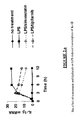
- Tables 1a, 1b, 1c and 1d show LPS-induced genes that were inhibited by simvastatin or tipifarnib. Genes were selected (see Table 1a for description of genes) as LPS-induced if the ratio between LPS-treated and non-treated samples was greater than 1.5-fold at more than two time points. These are shown as bold italicized numbers in the "Fold-change (LPS versus control)" column (Table 1.b). Gene expression during treatment with LPS and the statin (simvastatin/LPS) (Table 1.c), or LPS and the FTI (tipifarnib/LPS) (Table 1.d), was compared with LPS alone at corresponding time points.
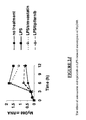
- MMP-9 induction by LPS increased up to 12 hours, at which time point a 50% decrease in induction was observed for simvastatin, and no induction in the presence of tipifarnib ( Figure 2.c ).
- Induction of IL-8 by LPS was evident as early as 3 hours and was unaffected by the drugs at this time point.
- IL-8 induction was inhibited by simvastatin, while the FTI showed no significant effect ( Figure 2.d ).
- STAT1 induction was inhibited by tipifarnib at 6 and 12 hours, while inhibition by the statin was only observed at 12 hours ( Figure 2.e ).
- Myeloid differentiation factor, MyD88 the adaptor for Toll-like receptor-mediated responses
- simvastatin the adaptor for Toll-like receptor-mediated responses
- tipifarnib showed almost complete inhibition of MyD88 induction, down to levels similar to that in unchallenged cells.
- IL-6 transcription did not meet the criteria from the microarray analysis for inclusion in Table 1, analysis by quantitative real-time PCR showed inhibition by simvastatin, and particularly tipifarnib, of the peak of LPS-induced IL-6 transcription at 6 hours ( Figure 2g). At 12 hours, only tipifarnib showed inhibition.
- simvastatin and tipifarnib were able to inhibit LPS induction of numerous inflammatory genes and tipifarnib showed stronger inhibition in most cases. Tipifarnib also showed downregulation of some transcripts not affected by the statin.
- cytokine and MMP-9 secretion by THP-1 cells in response to LPS was examined at different time points over 48 hours, in the presence or absence of simvastatin (5 and 10 ⁇ M) or tipifarnib (2 and 5 ⁇ M), respectively.
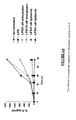
- MCP-1 secretion ( Figure 3.a ) was dose-dependently inhibited by simvastatin at 22 and 30 h after LPS addition, but the inhibitory effect was lost at 48 hours.
- Tipifarnib showed dose-dependent inhibition of MCP-1 secretion up to 48 hours. Even at 2 ⁇ M, the extent of inhibition by tipifarnib was much greater than that observed for 10 ⁇ M simvastatin.
- Both drugs showed inhibition of IL-6 secretion ( Figure 3.b ), the extent of which was again greater in the presence of tipifarnib. Inhibition by 5 ⁇ M simvastatin was observed only at 30 hours, and at 10 ⁇ M, was observed at both 30 and 48 hours. The extent of inhibition of IL-6 release was similar for 2 and 5 ⁇ M tipifarnib and inhibition was observed at all time points.
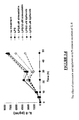
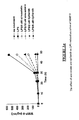
- IC 50 of approximately 1 ⁇ M was obtained for tipifarnib inhibition of LPS-induced IL-6 secretion in a separate experiment ( Figure 4 ).
- the IC 50 of approximately 1 ⁇ M was obtained for inhibition of LPS-induced IL-6 release by tipifarnib in the following manner: THP-1 cells were cultured in RPMI-1640 medium, containing 10% FBS, 100 units/ml Penicillin, 10 mg/ml Streptomycin, at 37°C, under 5% CO 2 . Medium components were certified to contain less than 0.3 endotoxin units/ml.
- THP-1 cells at 3.4 x 10 5 /ml were cultured in 96-well plates in 0.5%FBS/RPMI 1640, in the absence or presence of 100ng/ml LPS plus or minus tipifarnib (starting from 5uM, followed by 3-fold series dilution).
- the concentrations of tipifarnib were: 5 ⁇ M, 1.67 ⁇ M, 0.56uM, 0.19 uM and 0,06uM.
- Supernatants were collected at 48hr.
- IL6 was tested using ELISA kit from R&D Systems. Results are shown in Figure 4 .
- simvastatin and tipifarnib showed significant inhibition of LPS-induced IIL-1 ⁇ transcription ( Figure 2.a ). However, the results on IL-1 ⁇ secretion were more complex ( Figure 3.c ). While tipifarnib showed dose-dependent inhibition of IL-1 ⁇ secretion, simvastatin at 5 ⁇ M had little effect, and at 10 ⁇ M showed significant stimulation of IL-1 ⁇ secretion at 22 and 30 hours. Simvastatin inhibited LPS-induced IL-8 production at 22, 30 and 48 hours, showing dose-dependence at 48h ( Figure 3.d ). In contrast, tipifarnib, showed no significant inhibition of IL-8 production, except for 5 ⁇ M at 22 hours.
- LPS-induced TNF- ⁇ production by THP-1 cells peaked between 5 and 10 hours, and then showed a secondary induction after 22 h up to 48 hours.
- the initial peak of induction appeared to be unaffected by the presence of either inhibitor, but the second phase of induction showed dose-dependent inhibition by simvastatin, and, more significantly, by tipifarnib ( Figure 3.f ).
- tipifarnib totally inhibited the second phase of LPS-induced TNF- ⁇ production, while 2 ⁇ M tipifarnib showed a similar extent of inhibition to 10 ⁇ M simvastatin.
- PBMC peripheral blood mononuclear cells
- the enantiomer of tipifarnib is about 100-fold less active than tipifarnib (R 115777) for inhibition of farnesyltransferase ( Venet M., "R115777 as farnesyl protein transferase inhibitor: Synthesis and SAR.” ACS Meeting 2001, 222nd:Chicago (Abs MEDI 5)). IL-6 could not be detected after incubation of human PBMC for up to 40 hours.
- the concentration required for inhibition in PBMC was higher than that required for inhibition in THP-1 cells and this difference may be related to the different concentrations of fetal bovine serum in these two experiments (10% and 0.5% FBS, respectively) because tipifarnib is known to be highly protein-bound.
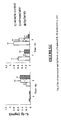
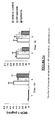
- statin and the FTI were their highly significant inhibition of LPS-induced TNF- ⁇ production at 1 and 2 hours ( Figure 5.a ).
- statin another statin, cerivastatin (Ando, Takamura et al. 2000). This effect has now been observed for an FTI.
- results show significant downregulation of numerous LPS-induced cytokines in vivo by tipifarnib, and of TNF- ⁇ and MIP-1 ⁇ for simvastatin.
- tipifarnib The effect of tipifarnib on several signalling pathways was also examined in THP-1 cells.
- Cells were treated with 2 ⁇ M tipifarnib for 18 hours, then stimulated with LPS or TNF- ⁇ for 4 hours.
- Cell lysates were tested for p38 expression and p38 phosphorylation by western blot analysis. Phosphorylation of p38 was significantly increased by LPS and TNF- ⁇ stimulation, and only the LPS-induced increase was partially reduced by tipifarnib treatment. No significant inhibition was observed for TNF- ⁇ induced p38 phosphorylation.
- P38 protein expression was not affected by LPS or TNF- ⁇ stimulation and/or tipifarnib treatment.
- IL-1 ⁇ was also included as a stimulus besides LPS and TNF- ⁇ , and these three stimuli all significantly increased I ⁇ B- ⁇ degradation.
- tipifarnib significantly inhibited LPS-induced I ⁇ B degradation, but showed no inhibition of I ⁇ B degradation induced by TNF- ⁇ and IL-1 ⁇ . Similar results were observed in three separate experiments.
- the level of ERK phosphorylation was similar in control and stimulated cells, and tipifarnib pre-treatment reduced the ERK phosphorylation to a similar extent in all samples.
- the effect of tipifarnib on H-Ras farnesylation was also examined. The level of farnesylated H-Ras was not significantly changed in the absence or presence of stimuli. Tipifarnib partially inhibited H-Ras farnesylation to the same degree in the different treatment groups, and this inhibition correlated with the extent of inhibition of ERK phosphorylation
- statins Some of the anti-inflammatory effects of statins appear to be mediated through their inhibition of protein prenylation, including farnesylation.
- statin statin
- FTI tipifarnib
- Both drugs inhibited transcription and secretion of IL-6, MCP-1 and MMP-9, and the secondary phase of TNF- ⁇ secretion in vitro.
- Simvastatin and tipifarnib had contrasting effects on inhibition of LPS-induced IL-8 and IL-1 ⁇ .
- Simvastatin inhibited IL-8 mRNA induction and IL-8 secretion by THP-1 cells, as previously reported ( Ito, T., et al. 2002. Atherosclerosis 165, 51-5 ; Takata, M., et al. 2001. Br J Pharmacol 134, 753-62 ; Terkeltaub, R., et al. 1994. J Leukoc Biol 55, 749-55 .)
- statin While both the statin and the FTI inhibited LPS-induced IL-1 ⁇ transcription, only the FTI showed inhibition of IL-1 ⁇ secretion. Simvastatin showed no effect on IL-1 ⁇ secretion at 5 ⁇ M, and induction at 10 ⁇ M. Similar potentiation of inflammatory mediators by statin treatment has previously been observed in numerous studies ( Terkeltaub, R., et al. 1994. J Leukoc Biol 55, 749-55 ; Sadeghi, M. M., et al. 2000. J Immunol 165, 2712-8 ; Sun, D. et al. 2003. Cell Immunol 223, 52-62 ; Monick, M. M., et al. 2003. J Immunol 171, 2625-30 ; and Matsumoto, M., et al. 2004. J Immunol 172, 7377-84 .)
- the difference between the effects of simvastatin on transcription and secretion of IL-1 ⁇ may be related to the requirement for cleavage of the immature precursor protein by caspase-1 for secretion.
- a lipophilic statin similar to simvastatin, has been shown to stimulate caspase-1 activity and IL-1 ⁇ secretion in human peripheral blood mononuclear cells (Montero, Hernandez et al. 2000).
- LPS has been shown to activate caspase-1 in THP-1 cells, and this activation contributes to LPS induction of IL-1 ⁇ secretion (Schumann, Belka et al. 1998) Additional activation of caspase-1 by simvastatin may therefore potentiate LPS-induced secretion of mature IL-1 ⁇ protein, even though transcription is inhibited.
- the studies of the present invention additionally showed downregulation of LPS-induced MIP-1 ⁇ by simvastatin. This has not previously been shown in vivo, although a prior study reported decreased spontaneous release of MIP-1 ⁇ in cultured, cryopreserved PBMCs from patients after six months treatment with atorvastatin ( Waehre T, et al. 2003. J Am Coll Cardiol 41(9), 1460-7 ).
- simvastatin In the studies of the present invention, inhibition of IL-8 production in vivo by either simvastatin or tipifarnib was not observed, although downregulation of this cytokine in vitro by simvastatin was observed. Similarly, Waehre at al observed a modest decrease in spontaneous, and no decrease in LPS-induced IL-8 from PBMC before and after atorvastatin treatment. In contrast, it has been reported that simvastatin reduced serum levels of IL-8 in hypercholesterolemic patients after 6 weeks of treatment ( Rezaie-Majd, A., et al. 2002.
- the differences in effects on IL-8 production may be related to different statins, different patient populations (CAD versus hypercholesterolemia), and/or in vivo versus ex vivo culture measurements.
- the studies of the present invention provide in vivo evidence for global anti-inflammatory effects of FTIs, tipifarnib in particular, including downregulation of LPS-induced TNF ⁇ , IL-6, IL-1 ⁇ and MIP-1 ⁇ .
- Previous research with tipifarnib has shown inhibition of cachexia ( U.S. Published Patent Application No. 2004/0157773 and WO 02/085364 ), and reduction of disease scores in dextran sodium sulphate-induced colitis ( WO 02/43733 ) and collagen-induced arthritis ( WO 00/01386 ), but the mechanism for these effects was not reported.
- TNF- ⁇ The major roles of the TNF- ⁇ , IL-6, and IL-1 ⁇ in the pathogenesis of these diseases suggest that their inhibition by the FTI may have been responsible for the observed amelioration. It is of interest to note that in Phase I studies with tipifarnib in myelodysplastic syndrome, the only correlation with positive response to treatment was a decrease in serum levels of TNF- ⁇ (Kurzrock, Kantarjian et al. 2003).
- tipifarnib 300 mg twice a day was the maximum tolerated dose in a number of studies (Head and Johnston 2003). At this dose, plasma levels reach approximately 2 ⁇ M (Karp, Lancet et al. 2001), at which concentration significant effects were obtained in vitro in the experiments of the present invention.
- the doses used in the LPS-induced murine inflammation model of the present invention were similar to those used in reported tumoricidal effects in mouse models (End, Smets et al. 2001).
- cytokines such as IL-1 ⁇ and IL-8 showed significant transcriptional induction by LPS as early as 3 hours in vitro.
- drug treatment in vitro was started at the same time as the LPS stimulation, the earliest signs of transcriptional inhibition were only observed after 6 hours, and of cytokine release only after 22 hours.
- the initial peak of LPS-induced TNF- ⁇ release was unaffected by the presence of either inhibitor, but the second phase after 22 hours, showed dose- and time-dependent inhibition by simvastatin and tipifarnib.
- statins and FTIs may be related to their inhibition of common steps in the mevalonate pathway, and/or the recent evidence that both classes of drugs inhibit activation of NF ⁇ B (Ortego M 1999; Takada, Khuri et al. 2004, Na et al. 2004).
- tipifarnib did not affect TNF- ⁇ induced NF- ⁇ B activity (as measured by a luciferase reporter assay).
- tipifarnib showed no inhibition of TNF- ⁇ induced I ⁇ B degradation in THP-1 cells. The reason for such contrasting results is not clear, but it can be noted that these two FTIs have also shown different efficacy in clinical trials for different tumor types. (Lancet and Karp, 2003)
- the Ras/Raf/MAPK pathway has been well studied.
- the studies of the present invention demonstrate that tipifarnib partially inhibits ERK1/2 phosphorylation, and that the extent of inhibition correlates with that of inhibition of Ras farnesylation both in the absence or in the presence of inflammatory stimuli. This data confirms that tipifarnib suppresses ERK1/2 phosphorylation through Ras inhibition.
- TNF- ⁇ ⁇ signaling links to IKK through TNFR/RIP ( Aggarwal, B. Nat Rev Immunol 2003 ).
- IL-1/IL-1R and LPS/TLR4 signaling both link to IKK through the shared MyD88/IRAK4/TRAF6/TAK pathway ( Takeda, S. A. K. Nature Reviews Immunology 2004 ).
- IKK phosphorylates I ⁇ B, which leads to the ubiquitination and degradation of I ⁇ B, and thus enables the translocation of NF- ⁇ B to the nucleus and induction of target gene expression such as TNF- ⁇ , IL-1 ⁇ , IL-6, and others.
- tipifarnib did not inhibit TNF- and IL-1 induced I ⁇ B degradation, suggesting that the target protein for tipifarnib is not involved in these two signal pathways.
- the LPS/TLR4 pathway also induces I ⁇ B degradation through MyD88-independent pathways, i.e . through TRIF and TRAM ( Takeda, S. A. K. Nature Reviews Immunology, 2004 ).
- the specific inhibition by tipifarnib only of LPS-induced I ⁇ B degradation suggests that the protein affected by tipifarnib is either associated with TLR4 or involved in a pathway exclusive for LPS/TLR4, such as the MyD88-independent pathway.
- Ras is involved in CpG oligonucleotide signaling as an early event, by associating with TLR9 and promoting IRAK/TRAF6 complex formation ( Xu, H. A, J Bio Chem. 2003 ).
- Another study has shown that Ras controls TRAF-6-dependent induction of NF- ⁇ B ( Caunt, C. J. J Bio Chem. 2001 )
- inhibition of Ras farnesylation was consistently observed in control, LPS-, IL-1- and TNF- ⁇ treated cells, but inhibition of I ⁇ B degradation was only observed in the LPS-treated cells. This lack of correlation indicates that Ras is unlikely the target protein involved in mediating the anti-inflammatory effects of tipifarnib.
Landscapes
- Health & Medical Sciences (AREA)
- Life Sciences & Earth Sciences (AREA)
- Chemical & Material Sciences (AREA)
- Engineering & Computer Science (AREA)
- Immunology (AREA)
- Molecular Biology (AREA)
- Biomedical Technology (AREA)
- Hematology (AREA)
- General Health & Medical Sciences (AREA)
- Cell Biology (AREA)
- Proteomics, Peptides & Aminoacids (AREA)
- Analytical Chemistry (AREA)
- Urology & Nephrology (AREA)
- Organic Chemistry (AREA)
- Medicinal Chemistry (AREA)
- Physics & Mathematics (AREA)
- Biochemistry (AREA)
- Microbiology (AREA)
- Pathology (AREA)
- Biotechnology (AREA)
- Bioinformatics & Cheminformatics (AREA)
- Zoology (AREA)
- General Physics & Mathematics (AREA)
- Genetics & Genomics (AREA)
- Food Science & Technology (AREA)
- Wood Science & Technology (AREA)
- Public Health (AREA)
- Pharmacology & Pharmacy (AREA)
- Animal Behavior & Ethology (AREA)
- Veterinary Medicine (AREA)
- Toxicology (AREA)
- Epidemiology (AREA)
- General Engineering & Computer Science (AREA)
- Biophysics (AREA)
- Tropical Medicine & Parasitology (AREA)
- Chemical Kinetics & Catalysis (AREA)
- Diabetes (AREA)
- General Chemical & Material Sciences (AREA)
- Nuclear Medicine, Radiotherapy & Molecular Imaging (AREA)
- Pharmaceuticals Containing Other Organic And Inorganic Compounds (AREA)
Claims (1)
- Inhibiteur de la farnésyltransférase destiné à être utilisé dans le traitement de l'état sceptique ou du choc sceptique, l'inhibiteur de la farnésyltransférase comprenant un composé de formule (I) :

la ligne en pointillés représente une éventuelle liaison ;
X est oxygène ou soufre ;
R1 est hydrogène, C1-12alkyle, Ar1, Ar2C1-6alkyle, quinoléinylC1-6alkyle, pyridylC1-6alkyle, hydroxyC1-6alkyle, C1-6alkyloxyC1-6alkyle, mono- ou di(C1-6alkyl)aminoC1-6alkyle, aminoC1-6alkyle, ou un radical de formule -Alk1-C(=O)-R9, -Alk1-S(O)-R9 ou -Alk1-S(O)2-R9, dans lesquelles Alk1 est C1-6alcanediyle, R9 est hydroxy, C1-6alkyle, C1-6alkyloxy, amino, C1-8alkylamino ou C1-8alkylamino substitué par C1-6alkyloxycarbonyle ;
R2 R3 et R16, chacun indépendamment, sont hydrogène, hydroxy, halogéno, cyano, C1-6alkyle, C1-6alkyloxy, hydroxyC1-6alkyloxy, C1-6alkyloxyC1-6alkyloxy, aminoC1-6alkyloxy, mono- ou di(C1-6alkyl)aminoC1-6alkyloxy, Ar1, Ar2C1-6alkyle, Ar2oxy, Ar2C1-6alkyloxy, hydroxycarbonyle, C1-6alkyloxycarbonyle, trihalogénométhyle, trihalogénométhoxy, C2-6alcényle, 4,4-diméthyloxazolyle ; ou
lorsqu'ils sont en positions adjacentes, R2 et R3 pris ensemble peuvent former un radical bivalent de formule
-O-CH2-O- (a-1),
-O-CH2-CH2-O- (a-2),
-O-CH=CH- (a-3),
-O-CH2-CH2- (a-4),
-O -CH2-CH2-CH2- (a-5),
ou
-CH=CH-CH=CH- (a-6) ;
R4 et R5, chacun indépendamment, sont hydrogène, halogéno, Ar1, C1-6alkyle, hydroxy-C1-6alkyle, C1-6alkyloxyC1-6alkyle , C1-6alkyloxy, C1-6alkylthio, amino, hydroxycarbonyle, C1-6alkyloxycarbonyle, C1-6alkylS(O)2C1-6alkyle ou C1-6alkylS(O)2C1-6alkyle ;
R6 et R7, chacun indépendamment, sont hydrogène, halogéno, cyano, C1-6alkyle, C1-6alkyloxy, Ar2oxy, trihalogénométhyle, C1-6alkylthio, di(C1-6alkyl)amino, ou lorsqu'ils sont en positions adjacentes, R6 et R7, pris ensemble, peuvent former un radical bivalent de formule
-O-CH2-O- (c-1),
ou
-CH=CH-CH=CH- (c-2) ;
R8 est hydrogène, C1-6alkyle, cyano, hydroxycarbonyle, C1-6alkyloxycarbonyle, C1-6alkylcarbonylC1-6alkyle, cyanoC1-6alkyle, C1-6alkyloxycarbonylC1-6alkyle, carboxyC1-6alkyle, hydroxyC1-6alkyle, aminoC1-6alkyle, mono- ou di(C1-6alkyl) -aminoC1-6alkyle, imidazolyle, halogénoC1-6alkyle, C1-6alkyloxyC1-6alkyle, aminocarbonyle, C1-6alkyle, ou un radical de formule
-O-R10 (b-1),
-S-R10 (b-2),
-N-R11R12 (b-3),
dans lesquelles R10 est hydrogène, C1-6alkyle, C1-6alkylcarbonyle, Ar1, Ar2C1-6alkyle, C1-6alkyloxycarbonylC1-6alkyle, un radical de formule -Alk2-OR13 ou -Alk2-NR14R15;
R11 est hydrogène, C1-12alkyle, Ar1 ou Ar2C1-6alkyle ;
R12 est hydrogène, C1-6alkyle, C1-6alkylcarbonyle, C1-6alkyloxycarbonyle, C1-6alkylaminocarbonyle, Ar1, Ar2C1-6alkyle, C1-6alkylcarbonylC1-6alkyle, un acide aminé naturel, Ar1carbonyle, Ar2C1-6alkylcarbonyle, aminocarbonylcarbonyle, C1-6alkyloxyC1-6alkylcarbonyle, hydroxy, C1-6alkyloxy, aminocarbonyle, di(C1-6alkyl)aminoC1-6alkylcarbonyle, amino, C1-6alkylamino, C1-6alkylcarbonylamino, ou un radical de formule -Alk2-OR13 ou -Alk2-NR14R15 ;
dans lesquelles Alk2 est C1-6alcanediyle ; R13 est hydrogène, C1-6alkyle, C1-6alkylcarbonyle, hydroxyC1-6alkyle, Ar1 ou Ar2C1-6alkyle ; R14 est hydrogène, C1-6alkyle, Ar1 ou Ar2C1-6alkyle ; R15 est hydrogène, C1-6alkyle, C1-6alkylcarbonyle, Ar1 ou Ar2C1-6alkyle ;
R17 est hydrogène, halogéno, cyano, C1-6alkyle, C1-6alkyloxycarbonyle, Ar1 ;
R18 est hydrogène, C1-6alkyle, C1-6alkyloxy ou halogéno ;
R19 est hydrogène ou C1-6alkyle ;
Ar1 est phényle ou phényle substitué par C1-6alkyle, hydroxy, amino, C1-6alkyloxy ou halogéno ; et
Ar2 est phényle ou phényle substitué par C1-6alkyle, hydroxy, amino, C1-6akyloxy ou halogéno.
Priority Applications (7)
| Application Number | Priority Date | Filing Date | Title |
|---|---|---|---|
| SI200531698T SI1815247T1 (sl) | 2004-11-05 | 2005-11-02 | Terapevtska uporaba inhibitorjev farneziltransferaze in postopki nadziranja njihove učinkovitosti |
| MEP-2013-46A ME01509B (me) | 2004-11-05 | 2005-11-02 | Terapeutska upotreba inhibitora farneziltransferaze i postupci praćenja njihove efikasnosti |
| DK11158145.0T DK2362218T3 (en) | 2004-11-05 | 2005-11-02 | Methods for monitoring the effectiveness of farnesyl transferase |
| PL05851365T PL1815247T3 (pl) | 2004-11-05 | 2005-11-02 | Terapeutyczne zastosowanie inhibitorów transferazy farnezylowej i metody kontroli ich skuteczności |
| EP11158145.0A EP2362218B1 (fr) | 2004-11-05 | 2005-11-02 | Methodes de controle de l'efficacite d'inhibiteurs de farnesyltransferase |
| PL11158145T PL2362218T3 (pl) | 2004-11-05 | 2005-11-02 | Sposoby kontroli skuteczności inhibitorów transferazy farnezylowej |
| CY20131100352T CY1113968T1 (el) | 2004-11-05 | 2013-04-29 | Θεραπευτικη χρηση αναστολεων φαρνεζυλ τρανσφερασης και μεθοδοι παρακολουθησης της αποτελεσματικοτητας αυτων |
Applications Claiming Priority (3)
| Application Number | Priority Date | Filing Date | Title |
|---|---|---|---|
| US62520404P | 2004-11-05 | 2004-11-05 | |
| US70807505P | 2005-08-12 | 2005-08-12 | |
| PCT/US2005/039948 WO2006052718A2 (fr) | 2004-11-05 | 2005-11-02 | Utilisation therapeutique d'inhibiteurs de farnesyltransferase et procedes de controle de leur efficacite |
Related Child Applications (2)
| Application Number | Title | Priority Date | Filing Date |
|---|---|---|---|
| EP11158145.0A Division EP2362218B1 (fr) | 2004-11-05 | 2005-11-02 | Methodes de controle de l'efficacite d'inhibiteurs de farnesyltransferase |
| EP11158145.0 Division-Into | 2011-03-14 |
Publications (2)
| Publication Number | Publication Date |
|---|---|
| EP1815247A2 EP1815247A2 (fr) | 2007-08-08 |
| EP1815247B1 true EP1815247B1 (fr) | 2013-02-20 |
Family
ID=35840451
Family Applications (2)
| Application Number | Title | Priority Date | Filing Date |
|---|---|---|---|
| EP11158145.0A Expired - Lifetime EP2362218B1 (fr) | 2004-11-05 | 2005-11-02 | Methodes de controle de l'efficacite d'inhibiteurs de farnesyltransferase |
| EP05851365A Expired - Lifetime EP1815247B1 (fr) | 2004-11-05 | 2005-11-02 | Utilisation therapeutique d'inhibiteurs de farnesyltransferase et procedes de controle de leur efficacite |
Family Applications Before (1)
| Application Number | Title | Priority Date | Filing Date |
|---|---|---|---|
| EP11158145.0A Expired - Lifetime EP2362218B1 (fr) | 2004-11-05 | 2005-11-02 | Methodes de controle de l'efficacite d'inhibiteurs de farnesyltransferase |
Country Status (11)
| Country | Link |
|---|---|
| US (3) | US20060111398A1 (fr) |
| EP (2) | EP2362218B1 (fr) |
| DK (2) | DK1815247T3 (fr) |
| ES (2) | ES2522830T3 (fr) |
| HR (1) | HRP20130399T1 (fr) |
| ME (1) | ME01509B (fr) |
| PL (2) | PL2362218T3 (fr) |
| PT (2) | PT2362218E (fr) |
| RS (1) | RS52741B (fr) |
| SI (1) | SI2362218T1 (fr) |
| WO (1) | WO2006052718A2 (fr) |
Families Citing this family (30)
| Publication number | Priority date | Publication date | Assignee | Title |
|---|---|---|---|---|
| JP2007529555A (ja) * | 2004-03-18 | 2007-10-25 | ザ ブライハム アンド ウイメンズ ホスピタル, インコーポレイテッド | シヌクレイノパチーを治療する方法 |
| CA2559285A1 (fr) * | 2004-03-18 | 2005-09-29 | Brigham And Women's Hospital, Inc. | Traitement des synucleinopathies |
| US20070293539A1 (en) * | 2004-03-18 | 2007-12-20 | Lansbury Peter T | Methods for the treatment of synucleinopathies |
| US20060106060A1 (en) * | 2004-03-18 | 2006-05-18 | The Brigham And Women's Hospital, Inc. | Methods for the treatment of synucleinopathies (Lansbury) |
| WO2009151683A2 (fr) * | 2008-03-12 | 2009-12-17 | Link Medicine Corporation | Inhibiteurs de quinolinone farnésyl transférase pour le traitement de synucléinopathies et d'autres indications |
| US20110060005A1 (en) * | 2008-11-13 | 2011-03-10 | Link Medicine Corporation | Treatment of mitochondrial disorders using a farnesyl transferase inhibitor |
| NZ593090A (en) * | 2008-11-13 | 2013-06-28 | Link Medicine Corp | Azaquinolinone derivatives and uses thereof |
| US20110294794A1 (en) * | 2008-11-13 | 2011-12-01 | Link Medicine Corporation | Treatment of proteinopathies using a farnesyl transferase inhibitor |
| US20100331363A1 (en) * | 2008-11-13 | 2010-12-30 | Link Medicine Corporation | Treatment of mitochondrial disorders using a farnesyl transferase inhibitor |
| US9290476B2 (en) | 2012-10-16 | 2016-03-22 | Janssen Pharmaceutica Nv | Methylene linked quinolinyl modulators of RORγt |
| CN104884448A (zh) | 2012-10-16 | 2015-09-02 | 詹森药业有限公司 | Rorγt的杂芳基连接的喹啉基调节剂 |
| CN105073729A (zh) | 2012-10-16 | 2015-11-18 | 詹森药业有限公司 | RORγt的苯基连接的喹啉基调节剂 |
| US9328095B2 (en) | 2013-10-15 | 2016-05-03 | Janssen Pharmaceutica Nv | Heteroaryl linked quinolinyl modulators of RORgammat |
| US9403816B2 (en) | 2013-10-15 | 2016-08-02 | Janssen Pharmaceutica Nv | Phenyl linked quinolinyl modulators of RORγt |
| US9221804B2 (en) | 2013-10-15 | 2015-12-29 | Janssen Pharmaceutica Nv | Secondary alcohol quinolinyl modulators of RORγt |
| BR112016008258A2 (pt) | 2013-10-15 | 2017-10-10 | Janssen Pharmaceutica Nv | moduladores de ror?t de quinolinila |
| BR112016008215A2 (pt) | 2013-10-15 | 2017-09-26 | Janssen Pharmaceutica Nv | moduladores de quinolinila ligados por alquila de roryt |
| US10555941B2 (en) | 2013-10-15 | 2020-02-11 | Janssen Pharmaceutica Nv | Alkyl linked quinolinyl modulators of RORγt |
| US9284308B2 (en) | 2013-10-15 | 2016-03-15 | Janssen Pharmaceutica Nv | Methylene linked quinolinyl modulators of RORγt |
| US11311519B2 (en) | 2014-05-01 | 2022-04-26 | Eiger Biopharmaceuticals, Inc. | Treatment of hepatitis delta virus infection |
| US10076512B2 (en) | 2014-05-01 | 2018-09-18 | Eiger Biopharmaceuticals, Inc. | Treatment of hepatitis delta virus infection |
| US10564162B2 (en) * | 2014-07-02 | 2020-02-18 | Bionomics Limited | Predictive biomarkers |
| US20180338993A1 (en) * | 2014-12-04 | 2018-11-29 | Eiger Biopharmaceuticals, Inc. | Treatment of hepatitis delta virus infection |
| WO2016172342A1 (fr) | 2015-04-21 | 2016-10-27 | Eiger Biopharmaceuticals, Inc. | Compositions pharmaceutiques comprenant du lonafarnib et du ritonavir |
| SMT202100712T1 (it) | 2015-08-17 | 2022-01-10 | Kura Oncology Inc | Metodi di trattamento di pazienti di cancro con inibitori di farnesil trasferasi |
| CN105510187B (zh) * | 2016-01-28 | 2018-01-23 | 青岛啤酒股份有限公司 | 用于啤酒糖化过程中快速判定麦汁发酵度的方法 |
| TW201818965A (zh) | 2016-11-03 | 2018-06-01 | 美商庫拉腫瘤技術股份有限公司 | 以法呢基轉移酶(farnesyl transferase)抑制劑治療癌症病患之方法 |
| WO2021209473A1 (fr) * | 2020-04-16 | 2021-10-21 | F. Hoffmann-La Roche Ag | Dérivés de biphényle |
| US20250049837A1 (en) * | 2023-01-09 | 2025-02-13 | Unity Health Toronto | Microrna-based particle for the treatment of dysregulated immune response |
| WO2025101692A1 (fr) * | 2023-11-10 | 2025-05-15 | The Children's Medical Center Corporation | Méthodes et compositions pour le traitement d'anomalies vasculaires |
Family Cites Families (21)
| Publication number | Priority date | Publication date | Assignee | Title |
|---|---|---|---|---|
| US5686472A (en) | 1992-10-29 | 1997-11-11 | Merck & Co., Inc. | Inhibitors of farnesyl-protein transferase |
| US6117432A (en) | 1995-04-20 | 2000-09-12 | Societe D'exploitation De Produits Pour Les Industries Chimiques (S.E.P.P.I.C.) | Therapeutic composition comprising an antigen or an in vivo generator of a compound comprising an amino acid sequence |
| TW349948B (en) | 1995-10-31 | 1999-01-11 | Janssen Pharmaceutica Nv | Farnesyl transferase inhibiting 2-quinolone derivatives |
| SK283335B6 (sk) | 1995-12-08 | 2003-06-03 | Janssen Pharmaceutica N. V. | (Imidazol-5-yl)metyl-2-chinolinónové deriváty, spôsob a medziprodukty na ich prípravu, ich použitie a farmaceutické kompozície na ich báze |
| US5874442A (en) | 1995-12-22 | 1999-02-23 | Schering-Plough Corporation | Tricyclic amides useful for inhibition of G-protein function and for treatment of proliferative disease |
| US6011029A (en) * | 1996-02-26 | 2000-01-04 | Bristol-Myers Squibb Company | Inhibitors of farnesyl protein transferase |
| DE69725604T2 (de) | 1996-12-20 | 2005-03-03 | Sergazy Mynzhasarovich Adekenov | VERFAHREN UND GERÄT ZUR HERSTELLUNG VPM LYOPHILISIERTEM 1ß, 10ß-EPOXY-13-DIMETHYLAMINO-GUAIA-3(4)-EN-6,12-OLID-HYDROCHLORID |
| TW591030B (en) | 1997-03-10 | 2004-06-11 | Janssen Pharmaceutica Nv | Farnesyl transferase inhibiting 1,8-annelated quinolinone derivatives substituted with N- or C-linked imidazoles |
| GB2323783A (en) | 1997-04-02 | 1998-10-07 | Ferring Bv Group Holdings | Inhibitors of farnesyl protein transferase |
| RU2205831C2 (ru) | 1997-04-25 | 2003-06-10 | Янссен Фармацевтика Н.В. | Хиназолиноны, ингибирующие фарнезилтрансферазу |
| CN1196336C (zh) | 1998-03-05 | 2005-04-06 | 第一程式管理有限公司 | 数据通信系统 |
| US6303654B1 (en) | 1998-03-12 | 2001-10-16 | Wisconsin Alumni Research Foundation | Acyclic monoterpenoid derivatives |
| AU5086499A (en) | 1998-07-01 | 2000-01-24 | Merck & Co., Inc. | Process for making farnesyl-protein transferase inhibitors |
| HRP20000904A2 (en) | 1998-07-06 | 2001-12-31 | Janssen Pharmaceutica Nv | Farnesyl protein transferase inhibitors for treating arthropathies |
| ES2237125T3 (es) | 1998-08-27 | 2005-07-16 | Pfizer Products Inc. | Derivados de quinolin-2-ona utiles como agentes anticancerigenos. |
| ID27562A (id) | 1998-08-27 | 2001-04-12 | Pfizer Prod Inc | Turunan-turunan kinolin-2-ona tersubstitusi alkunil yang berguna sebagai zat anti kanker |
| ID29241A (id) | 1998-12-23 | 2001-08-16 | Janssen Pharmaceutica Nv | Turunan-turunan kinolin teranelasi-1,2 |
| GB0023915D0 (en) | 2000-09-29 | 2000-11-15 | Inst Of Ophthalmology | Treatment of neuroinflammatory disease |
| DK1339407T3 (da) | 2000-11-28 | 2006-08-14 | Janssen Pharmaceutica Nv | Farnesylproteintransferaseinhibitorer til behandling af inflammatorisk tarmsygdom |
| EP1390033A1 (fr) | 2001-04-25 | 2004-02-25 | Janssen Pharmaceutica N.V. | Inhibiteurs de la farnesyl proteine transferase destines au traitement de la cachexie |
| MXPA05005073A (es) * | 2002-11-12 | 2005-11-17 | Becton Dickinson Co | Diagnostico de la sepsis o sirs usando perfiles de biomarcadores. |
-
2005
- 2005-11-02 HR HRP20130399TT patent/HRP20130399T1/hr unknown
- 2005-11-02 DK DK05851365.6T patent/DK1815247T3/da active
- 2005-11-02 ES ES11158145.0T patent/ES2522830T3/es not_active Expired - Lifetime
- 2005-11-02 ME MEP-2013-46A patent/ME01509B/me unknown
- 2005-11-02 PT PT111581450T patent/PT2362218E/pt unknown
- 2005-11-02 EP EP11158145.0A patent/EP2362218B1/fr not_active Expired - Lifetime
- 2005-11-02 WO PCT/US2005/039948 patent/WO2006052718A2/fr not_active Ceased
- 2005-11-02 US US11/265,445 patent/US20060111398A1/en not_active Abandoned
- 2005-11-02 DK DK11158145.0T patent/DK2362218T3/en active
- 2005-11-02 SI SI200531911T patent/SI2362218T1/sl unknown
- 2005-11-02 PL PL11158145T patent/PL2362218T3/pl unknown
- 2005-11-02 PL PL05851365T patent/PL1815247T3/pl unknown
- 2005-11-02 PT PT58513656T patent/PT1815247E/pt unknown
- 2005-11-02 ES ES05851365T patent/ES2403060T3/es not_active Expired - Lifetime
- 2005-11-02 EP EP05851365A patent/EP1815247B1/fr not_active Expired - Lifetime
- 2005-11-02 RS RS20130146A patent/RS52741B/sr unknown
-
2009
- 2009-02-02 US US12/363,810 patent/US20110195419A1/en not_active Abandoned
-
2012
- 2012-03-27 US US13/431,200 patent/US20120196766A1/en not_active Abandoned
Also Published As
| Publication number | Publication date |
|---|---|
| PL2362218T3 (pl) | 2015-02-27 |
| EP2362218B1 (fr) | 2014-08-27 |
| US20060111398A1 (en) | 2006-05-25 |
| PT2362218E (pt) | 2014-12-04 |
| DK2362218T3 (en) | 2014-11-17 |
| DK1815247T3 (da) | 2013-03-11 |
| US20110195419A1 (en) | 2011-08-11 |
| RS52741B (sr) | 2013-08-30 |
| US20120196766A1 (en) | 2012-08-02 |
| ME01509B (me) | 2014-04-20 |
| ES2403060T3 (es) | 2013-05-13 |
| EP2362218A2 (fr) | 2011-08-31 |
| EP2362218A3 (fr) | 2011-10-26 |
| WO2006052718A2 (fr) | 2006-05-18 |
| HRP20130399T1 (hr) | 2013-06-30 |
| WO2006052718A8 (fr) | 2007-02-08 |
| WO2006052718A3 (fr) | 2007-06-28 |
| ES2522830T3 (es) | 2014-11-18 |
| PL1815247T3 (pl) | 2013-08-30 |
| HK1110651A1 (en) | 2008-07-18 |
| PT1815247E (pt) | 2013-04-23 |
| SI2362218T1 (sl) | 2014-12-31 |
| EP1815247A2 (fr) | 2007-08-08 |
Similar Documents
| Publication | Publication Date | Title |
|---|---|---|
| EP1815247B1 (fr) | Utilisation therapeutique d'inhibiteurs de farnesyltransferase et procedes de controle de leur efficacite | |
| Gigon et al. | Eosinophils from A to Z | |
| Allavena et al. | Anti-inflammatory properties of the novel antitumor agent yondelis (trabectedin): inhibition of macrophage differentiation and cytokine production | |
| KR20230025458A (ko) | Irak 분해제 및 이의 용도 | |
| Del Duca et al. | Intrapatient comparison of atopic dermatitis skin transcriptome shows differences between tape‐strips and biopsies | |
| Irvine et al. | Colony-stimulating factor-1 (CSF-1) delivers a proatherogenic signal to human macrophages | |
| JP2020002164A (ja) | ファルネシルトランスフェラーゼ阻害剤を用いて癌患者を治療する方法 | |
| EP2513336B1 (fr) | Procédé pour caractériser la fonction immunitaire de l'hôte par induction ex vivo de marqueurs immunitaires offensifs et défensifs | |
| KR20210045394A (ko) | 아데노신 경로 활성화를 갖는 암의 검출 및 치료 방법 | |
| Ahmad et al. | The role of poly (ADP-ribose) polymerase-1 inhibitor in carrageenan-induced lung inflammation in mice | |
| Günther et al. | Up-regulation of the chemokine CCL18 by macrophages is a potential immunomodulatory pathway in cutaneous T-cell lymphoma | |
| KR20210043578A (ko) | 아데노신 경로 활성화를 갖는 암의 검출 및 치료 방법 | |
| Solleti et al. | Serpine2 deficiency results in lung lymphocyte accumulation and bronchus-associated lymphoid tissue formation | |
| US20050153991A1 (en) | Methods of treatment of chronic lymphocytic leukemia using roscovitine | |
| Sato et al. | Increased expression of CCAAT/enhancer binding protein-β and-δ and monocyte chemoattractant protein-1 genes in aortas from hyperinsulinaemic rats | |
| EP2453234A2 (fr) | Procédés pour le pronostic de la capacité d'un composé à base d'un analogue de la zéaralénone à traiter le cancer | |
| HK1110651B (en) | Therapeutic use of farnesyltransferase inhibitors and methods of monitoring the efficacy thereof | |
| Raychaudhuri et al. | Circulating monocytes from patients with primary pulmonary hypertension are hyporesponsive | |
| US20240053326A1 (en) | Testing colon cancer drugs for immunomodulatory effects | |
| KR20250016230A (ko) | 만성 피로 증후군 및 롱 covid에 대한 바이오마커 및 이의 용도 | |
| van der Heijden et al. | CATECHOLAMINES INDUCE TRAINED IMMUNITY IN VITRO AND IN VIVO | |
| US20230017266A1 (en) | Cyclooxygenase-2 Inhibition for the Treatment of SAA-high Asthma | |
| Stanilova et al. | Effect of a Small Selective Inhibitor of C-Jun N-Terminal Kinase on the Inducible mRNA Expression of Interleukin-6 and Interleukin-18. Open Access Maced J Med Sci | |
| Receptor-Triggered | A p53 Axis Regulates B Cell | |
| US20170266182A1 (en) | Treatment of IgG-Immune Complex-Mediated Organ Damage |
Legal Events
| Date | Code | Title | Description |
|---|---|---|---|
| PUAI | Public reference made under article 153(3) epc to a published international application that has entered the european phase |
Free format text: ORIGINAL CODE: 0009012 |
|
| 17P | Request for examination filed |
Effective date: 20070531 |
|
| AK | Designated contracting states |
Kind code of ref document: A2 Designated state(s): AT BE BG CH CY CZ DE DK EE ES FI FR GB GR HU IE IS IT LI LT LU LV MC NL PL PT RO SE SI SK TR |
|
| AX | Request for extension of the european patent |
Extension state: AL BA HR MK YU |
|
| RAP1 | Party data changed (applicant data changed or rights of an application transferred) |
Owner name: JANSSEN PHARMACEUTICA N.V. |
|
| RIN1 | Information on inventor provided before grant (corrected) |
Inventor name: FOURIE, ANNE |
|
| REG | Reference to a national code |
Ref country code: HK Ref legal event code: DE Ref document number: 1110651 Country of ref document: HK |
|
| 17Q | First examination report despatched |
Effective date: 20090302 |
|
| GRAP | Despatch of communication of intention to grant a patent |
Free format text: ORIGINAL CODE: EPIDOSNIGR1 |
|
| GRAS | Grant fee paid |
Free format text: ORIGINAL CODE: EPIDOSNIGR3 |
|
| GRAA | (expected) grant |
Free format text: ORIGINAL CODE: 0009210 |
|
| AK | Designated contracting states |
Kind code of ref document: B1 Designated state(s): AT BE BG CH CY CZ DE DK EE ES FI FR GB GR HU IE IS IT LI LT LU LV MC NL PL PT RO SE SI SK TR |
|
| AX | Request for extension of the european patent |
Extension state: AL BA HR MK YU |
|
| REG | Reference to a national code |
Ref country code: GB Ref legal event code: FG4D |
|
| REG | Reference to a national code |
Ref country code: CH Ref legal event code: NV Representative=s name: E. BLUM AND CO. AG PATENT- UND MARKENANWAELTE , CH Ref country code: CH Ref legal event code: EP |
|
| REG | Reference to a national code |
Ref country code: DK Ref legal event code: T3 |
|
| REG | Reference to a national code |
Ref country code: AT Ref legal event code: REF Ref document number: 597765 Country of ref document: AT Kind code of ref document: T Effective date: 20130315 |
|
| REG | Reference to a national code |
Ref country code: IE Ref legal event code: FG4D |
|
| REG | Reference to a national code |
Ref country code: DE Ref legal event code: R096 Ref document number: 602005038246 Country of ref document: DE Effective date: 20130418 |
|
| REG | Reference to a national code |
Ref country code: RO Ref legal event code: EPE Ref country code: PT Ref legal event code: SC4A Free format text: AVAILABILITY OF NATIONAL TRANSLATION Effective date: 20130410 |
|
| REG | Reference to a national code |
Ref country code: SE Ref legal event code: TRGR |
|
| REG | Reference to a national code |
Ref country code: HR Ref legal event code: TUEP Ref document number: P20130399 Country of ref document: HR |
|
| REG | Reference to a national code |
Ref country code: ES Ref legal event code: FG2A Ref document number: 2403060 Country of ref document: ES Kind code of ref document: T3 Effective date: 20130513 |
|
| REG | Reference to a national code |
Ref country code: NL Ref legal event code: T3 |
|
| REG | Reference to a national code |
Ref country code: HR Ref legal event code: T1PR Ref document number: P20130399 Country of ref document: HR |
|
| REG | Reference to a national code |
Ref country code: SK Ref legal event code: T3 Ref document number: E 14132 Country of ref document: SK |
|
| REG | Reference to a national code |
Ref country code: EE Ref legal event code: FG4A Ref document number: E008103 Country of ref document: EE Effective date: 20130517 |
|
| REG | Reference to a national code |
Ref country code: PL Ref legal event code: T3 Ref country code: GR Ref legal event code: EP Ref document number: 20130400965 Country of ref document: GR Effective date: 20130614 |
|
| REG | Reference to a national code |
Ref country code: HK Ref legal event code: GR Ref document number: 1110651 Country of ref document: HK |
|
| PLBE | No opposition filed within time limit |
Free format text: ORIGINAL CODE: 0009261 |
|
| STAA | Information on the status of an ep patent application or granted ep patent |
Free format text: STATUS: NO OPPOSITION FILED WITHIN TIME LIMIT |
|
| REG | Reference to a national code |
Ref country code: HU Ref legal event code: AG4A Ref document number: E017706 Country of ref document: HU |
|
| 26N | No opposition filed |
Effective date: 20131121 |
|
| REG | Reference to a national code |
Ref country code: DE Ref legal event code: R097 Ref document number: 602005038246 Country of ref document: DE Effective date: 20131121 |
|
| REG | Reference to a national code |
Ref country code: FR Ref legal event code: PLFP Year of fee payment: 12 |
|
| REG | Reference to a national code |
Ref country code: FR Ref legal event code: PLFP Year of fee payment: 13 |
|
| REG | Reference to a national code |
Ref country code: FR Ref legal event code: PLFP Year of fee payment: 14 |
|
| REG | Reference to a national code |
Ref country code: HR Ref legal event code: ODRP Ref document number: P20130399 Country of ref document: HR Payment date: 20191007 Year of fee payment: 15 |
|
| REG | Reference to a national code |
Ref country code: HR Ref legal event code: ODRP Ref document number: P20130399 Country of ref document: HR Payment date: 20201008 Year of fee payment: 16 |
|
| REG | Reference to a national code |
Ref country code: HR Ref legal event code: ODRP Ref document number: P20130399 Country of ref document: HR Payment date: 20211022 Year of fee payment: 17 |
|
| REG | Reference to a national code |
Ref country code: HR Ref legal event code: ODRP Ref document number: P20130399 Country of ref document: HR Payment date: 20221026 Year of fee payment: 18 |
|
| P01 | Opt-out of the competence of the unified patent court (upc) registered |
Effective date: 20230527 |
|
| REG | Reference to a national code |
Ref country code: HR Ref legal event code: ODRP Ref document number: P20130399 Country of ref document: HR Payment date: 20231011 Year of fee payment: 19 |
|
| PGFP | Annual fee paid to national office [announced via postgrant information from national office to epo] |
Ref country code: NL Payment date: 20231013 Year of fee payment: 19 |
|
| PGFP | Annual fee paid to national office [announced via postgrant information from national office to epo] |
Ref country code: LU Payment date: 20231026 Year of fee payment: 19 |
|
| PGFP | Annual fee paid to national office [announced via postgrant information from national office to epo] |
Ref country code: SK Payment date: 20231013 Year of fee payment: 19 |
|
| PGFP | Annual fee paid to national office [announced via postgrant information from national office to epo] |
Ref country code: GR Payment date: 20231012 Year of fee payment: 19 |
|
| PGFP | Annual fee paid to national office [announced via postgrant information from national office to epo] |
Ref country code: MC Payment date: 20231027 Year of fee payment: 19 |
|
| PGFP | Annual fee paid to national office [announced via postgrant information from national office to epo] |
Ref country code: ES Payment date: 20231207 Year of fee payment: 19 |
|
| PGFP | Annual fee paid to national office [announced via postgrant information from national office to epo] |
Ref country code: IS Payment date: 20231026 Year of fee payment: 19 |
|
| PGFP | Annual fee paid to national office [announced via postgrant information from national office to epo] |
Ref country code: TR Payment date: 20231101 Year of fee payment: 19 Ref country code: SI Payment date: 20231016 Year of fee payment: 19 Ref country code: SE Payment date: 20231002 Year of fee payment: 19 Ref country code: RO Payment date: 20231013 Year of fee payment: 19 Ref country code: PT Payment date: 20231102 Year of fee payment: 19 Ref country code: LV Payment date: 20231003 Year of fee payment: 19 Ref country code: LT Payment date: 20231019 Year of fee payment: 19 Ref country code: IT Payment date: 20231010 Year of fee payment: 19 Ref country code: IE Payment date: 20231009 Year of fee payment: 19 Ref country code: HU Payment date: 20231019 Year of fee payment: 19 Ref country code: FI Payment date: 20231116 Year of fee payment: 19 Ref country code: EE Payment date: 20231003 Year of fee payment: 19 Ref country code: CZ Payment date: 20231018 Year of fee payment: 19 Ref country code: CY Payment date: 20231221 Year of fee payment: 19 Ref country code: BG Payment date: 20231016 Year of fee payment: 19 Ref country code: AT Payment date: 20231025 Year of fee payment: 19 |
|
| PGFP | Annual fee paid to national office [announced via postgrant information from national office to epo] |
Ref country code: PL Payment date: 20231030 Year of fee payment: 19 Ref country code: BE Payment date: 20231016 Year of fee payment: 19 |
|
| PGFP | Annual fee paid to national office [announced via postgrant information from national office to epo] |
Ref country code: CH Payment date: 20240127 Year of fee payment: 19 |
|
| PGFP | Annual fee paid to national office [announced via postgrant information from national office to epo] |
Ref country code: DK Payment date: 20240105 Year of fee payment: 19 |
|
| PGFP | Annual fee paid to national office [announced via postgrant information from national office to epo] |
Ref country code: DE Payment date: 20241001 Year of fee payment: 20 |
|
| PGFP | Annual fee paid to national office [announced via postgrant information from national office to epo] |
Ref country code: GB Payment date: 20241001 Year of fee payment: 20 |
|
| PGFP | Annual fee paid to national office [announced via postgrant information from national office to epo] |
Ref country code: FR Payment date: 20241001 Year of fee payment: 20 |
|
| REG | Reference to a national code |
Ref country code: HR Ref legal event code: PBON Ref document number: P20130399 Country of ref document: HR Effective date: 20241102 |
|
| REG | Reference to a national code |
Ref country code: LT Ref legal event code: MM4D Effective date: 20241102 |
|
| REG | Reference to a national code |
Ref country code: SK Ref legal event code: MM4A Ref document number: E 14132 Country of ref document: SK Effective date: 20241102 |
|
| REG | Reference to a national code |
Ref country code: EE Ref legal event code: MM4A Ref document number: E008103 Country of ref document: EE Effective date: 20241130 |
|
| REG | Reference to a national code |
Ref country code: DK Ref legal event code: EBP Effective date: 20241130 |
|
| REG | Reference to a national code |
Ref country code: CH Ref legal event code: PL |
|
| REG | Reference to a national code |
Ref country code: SE Ref legal event code: EUG |
|
| PG25 | Lapsed in a contracting state [announced via postgrant information from national office to epo] |
Ref country code: MC Free format text: LAPSE BECAUSE OF NON-PAYMENT OF DUE FEES Effective date: 20241202 |
|
| PG25 | Lapsed in a contracting state [announced via postgrant information from national office to epo] |
Ref country code: FI Free format text: LAPSE BECAUSE OF NON-PAYMENT OF DUE FEES Effective date: 20241102 |
|
| REG | Reference to a national code |
Ref country code: NL Ref legal event code: MM Effective date: 20241201 |
|
| PG25 | Lapsed in a contracting state [announced via postgrant information from national office to epo] |
Ref country code: LT Free format text: LAPSE BECAUSE OF NON-PAYMENT OF DUE FEES Effective date: 20241102 |
|
| PG25 | Lapsed in a contracting state [announced via postgrant information from national office to epo] |
Ref country code: LU Free format text: LAPSE BECAUSE OF NON-PAYMENT OF DUE FEES Effective date: 20241102 |
|
| REG | Reference to a national code |
Ref country code: AT Ref legal event code: MM01 Ref document number: 597765 Country of ref document: AT Kind code of ref document: T Effective date: 20241102 Ref country code: CH Ref legal event code: PL |
|
| PG25 | Lapsed in a contracting state [announced via postgrant information from national office to epo] |
Ref country code: PT Free format text: LAPSE BECAUSE OF NON-PAYMENT OF DUE FEES Effective date: 20250502 Ref country code: LV Free format text: LAPSE BECAUSE OF NON-PAYMENT OF DUE FEES Effective date: 20241102 |
|
| PG25 | Lapsed in a contracting state [announced via postgrant information from national office to epo] |
Ref country code: EE Free format text: LAPSE BECAUSE OF NON-PAYMENT OF DUE FEES Effective date: 20241130 |
|
| PG25 | Lapsed in a contracting state [announced via postgrant information from national office to epo] |
Ref country code: GR Free format text: LAPSE BECAUSE OF NON-PAYMENT OF DUE FEES Effective date: 20250610 Ref country code: BG Free format text: LAPSE BECAUSE OF NON-PAYMENT OF DUE FEES Effective date: 20241102 |
|
| PG25 | Lapsed in a contracting state [announced via postgrant information from national office to epo] |
Ref country code: CH Free format text: LAPSE BECAUSE OF NON-PAYMENT OF DUE FEES Effective date: 20241130 |
|
| PG25 | Lapsed in a contracting state [announced via postgrant information from national office to epo] |
Ref country code: RO Free format text: LAPSE BECAUSE OF NON-PAYMENT OF DUE FEES Effective date: 20241102 Ref country code: AT Free format text: LAPSE BECAUSE OF NON-PAYMENT OF DUE FEES Effective date: 20241102 |
|
| PG25 | Lapsed in a contracting state [announced via postgrant information from national office to epo] |
Ref country code: CY Free format text: LAPSE BECAUSE OF NON-PAYMENT OF DUE FEES Effective date: 20241102 Ref country code: SK Free format text: LAPSE BECAUSE OF NON-PAYMENT OF DUE FEES Effective date: 20241102 |
|
| PG25 | Lapsed in a contracting state [announced via postgrant information from national office to epo] |
Ref country code: CZ Free format text: LAPSE BECAUSE OF NON-PAYMENT OF DUE FEES Effective date: 20241102 |
|
| PG25 | Lapsed in a contracting state [announced via postgrant information from national office to epo] |
Ref country code: HU Free format text: LAPSE BECAUSE OF NON-PAYMENT OF DUE FEES Effective date: 20241103 |
|
| PG25 | Lapsed in a contracting state [announced via postgrant information from national office to epo] |
Ref country code: NL Free format text: LAPSE BECAUSE OF NON-PAYMENT OF DUE FEES Effective date: 20241201 |
|
| REG | Reference to a national code |
Ref country code: BE Ref legal event code: MM Effective date: 20241130 |
|
| PG25 | Lapsed in a contracting state [announced via postgrant information from national office to epo] |
Ref country code: DK Free format text: LAPSE BECAUSE OF NON-PAYMENT OF DUE FEES Effective date: 20241130 |
|
| PG25 | Lapsed in a contracting state [announced via postgrant information from national office to epo] |
Ref country code: IT Free format text: LAPSE BECAUSE OF NON-PAYMENT OF DUE FEES Effective date: 20241102 Ref country code: SE Free format text: LAPSE BECAUSE OF NON-PAYMENT OF DUE FEES Effective date: 20241103 |
|
| PG25 | Lapsed in a contracting state [announced via postgrant information from national office to epo] |
Ref country code: BE Free format text: LAPSE BECAUSE OF NON-PAYMENT OF DUE FEES Effective date: 20241130 |
|
| PG25 | Lapsed in a contracting state [announced via postgrant information from national office to epo] |
Ref country code: IE Free format text: LAPSE BECAUSE OF NON-PAYMENT OF DUE FEES Effective date: 20241102 |
|
| REG | Reference to a national code |
Ref country code: DE Ref legal event code: R071 Ref document number: 602005038246 Country of ref document: DE |
|
| REG | Reference to a national code |
Ref country code: GB Ref legal event code: PE20 Expiry date: 20251101 |
|
| PG25 | Lapsed in a contracting state [announced via postgrant information from national office to epo] |
Ref country code: PT Free format text: LAPSE BECAUSE OF EXPIRATION OF PROTECTION Effective date: 20251112 |
|
| REG | Reference to a national code |
Ref country code: ES Ref legal event code: FD2A Effective date: 20251230 |
|
| PG25 | Lapsed in a contracting state [announced via postgrant information from national office to epo] |
Ref country code: ES Free format text: LAPSE BECAUSE OF NON-PAYMENT OF DUE FEES Effective date: 20241103 |
|
| PG25 | Lapsed in a contracting state [announced via postgrant information from national office to epo] |
Ref country code: PT Free format text: LAPSE BECAUSE OF FAILURE TO SUBMIT A TRANSLATION OF THE DESCRIPTION OR TO PAY THE FEE WITHIN THE PRESCRIBED TIME-LIMIT Effective date: 20241104 |