EP1816121B1 - 9-Chloro-15-deoxyprostaglandinderivate, Verfahren zu ihrer Herstellung und deren Verwendung als Medikamente - Google Patents
9-Chloro-15-deoxyprostaglandinderivate, Verfahren zu ihrer Herstellung und deren Verwendung als Medikamente Download PDFInfo
- Publication number
- EP1816121B1 EP1816121B1 EP05090321A EP05090321A EP1816121B1 EP 1816121 B1 EP1816121 B1 EP 1816121B1 EP 05090321 A EP05090321 A EP 05090321A EP 05090321 A EP05090321 A EP 05090321A EP 1816121 B1 EP1816121 B1 EP 1816121B1
- Authority
- EP
- European Patent Office
- Prior art keywords
- group
- acid
- medicaments according
- alkyl
- general formula
- Prior art date
- Legal status (The legal status is an assumption and is not a legal conclusion. Google has not performed a legal analysis and makes no representation as to the accuracy of the status listed.)
- Expired - Lifetime
Links
- 0 *C1(CCS(c2ccccc2)(=O)=O)CC1 Chemical compound *C1(CCS(c2ccccc2)(=O)=O)CC1 0.000 description 8
- CGNLRGOIQFPDHQ-RSWGSQKBSA-N CCCCC(C)(C)[C@@H](C1O[C@H]1[C@H]([C@@H](C/C=C\CCCC(OC)=O)[C@@H](C1)Cl)[C@@H]1N=O)O Chemical compound CCCCC(C)(C)[C@@H](C1O[C@H]1[C@H]([C@@H](C/C=C\CCCC(OC)=O)[C@@H](C1)Cl)[C@@H]1N=O)O CGNLRGOIQFPDHQ-RSWGSQKBSA-N 0.000 description 1
Images


Classifications
-
- A—HUMAN NECESSITIES
- A61—MEDICAL OR VETERINARY SCIENCE; HYGIENE
- A61K—PREPARATIONS FOR MEDICAL, DENTAL OR TOILETRY PURPOSES
- A61K31/00—Medicinal preparations containing organic active ingredients
- A61K31/557—Eicosanoids, e.g. leukotrienes or prostaglandins
-
- A—HUMAN NECESSITIES
- A61—MEDICAL OR VETERINARY SCIENCE; HYGIENE
- A61K—PREPARATIONS FOR MEDICAL, DENTAL OR TOILETRY PURPOSES
- A61K31/00—Medicinal preparations containing organic active ingredients
- A61K31/557—Eicosanoids, e.g. leukotrienes or prostaglandins
- A61K31/5575—Eicosanoids, e.g. leukotrienes or prostaglandins having a cyclopentane, e.g. prostaglandin E2, prostaglandin F2-alpha
-
- A—HUMAN NECESSITIES
- A61—MEDICAL OR VETERINARY SCIENCE; HYGIENE
- A61P—SPECIFIC THERAPEUTIC ACTIVITY OF CHEMICAL COMPOUNDS OR MEDICINAL PREPARATIONS
- A61P1/00—Drugs for disorders of the alimentary tract or the digestive system
- A61P1/04—Drugs for disorders of the alimentary tract or the digestive system for ulcers, gastritis or reflux esophagitis, e.g. antacids, inhibitors of acid secretion, mucosal protectants
-
- A—HUMAN NECESSITIES
- A61—MEDICAL OR VETERINARY SCIENCE; HYGIENE
- A61P—SPECIFIC THERAPEUTIC ACTIVITY OF CHEMICAL COMPOUNDS OR MEDICINAL PREPARATIONS
- A61P13/00—Drugs for disorders of the urinary system
- A61P13/12—Drugs for disorders of the urinary system of the kidneys
-
- A—HUMAN NECESSITIES
- A61—MEDICAL OR VETERINARY SCIENCE; HYGIENE
- A61P—SPECIFIC THERAPEUTIC ACTIVITY OF CHEMICAL COMPOUNDS OR MEDICINAL PREPARATIONS
- A61P15/00—Drugs for genital or sexual disorders; Contraceptives
-
- A—HUMAN NECESSITIES
- A61—MEDICAL OR VETERINARY SCIENCE; HYGIENE
- A61P—SPECIFIC THERAPEUTIC ACTIVITY OF CHEMICAL COMPOUNDS OR MEDICINAL PREPARATIONS
- A61P15/00—Drugs for genital or sexual disorders; Contraceptives
- A61P15/08—Drugs for genital or sexual disorders; Contraceptives for gonadal disorders or for enhancing fertility, e.g. inducers of ovulation or of spermatogenesis
-
- A—HUMAN NECESSITIES
- A61—MEDICAL OR VETERINARY SCIENCE; HYGIENE
- A61P—SPECIFIC THERAPEUTIC ACTIVITY OF CHEMICAL COMPOUNDS OR MEDICINAL PREPARATIONS
- A61P17/00—Drugs for dermatological disorders
- A61P17/06—Antipsoriatics
-
- A—HUMAN NECESSITIES
- A61—MEDICAL OR VETERINARY SCIENCE; HYGIENE
- A61P—SPECIFIC THERAPEUTIC ACTIVITY OF CHEMICAL COMPOUNDS OR MEDICINAL PREPARATIONS
- A61P17/00—Drugs for dermatological disorders
- A61P17/14—Drugs for dermatological disorders for baldness or alopecia
-
- A—HUMAN NECESSITIES
- A61—MEDICAL OR VETERINARY SCIENCE; HYGIENE
- A61P—SPECIFIC THERAPEUTIC ACTIVITY OF CHEMICAL COMPOUNDS OR MEDICINAL PREPARATIONS
- A61P19/00—Drugs for skeletal disorders
- A61P19/02—Drugs for skeletal disorders for joint disorders, e.g. arthritis, arthrosis
-
- A—HUMAN NECESSITIES
- A61—MEDICAL OR VETERINARY SCIENCE; HYGIENE
- A61P—SPECIFIC THERAPEUTIC ACTIVITY OF CHEMICAL COMPOUNDS OR MEDICINAL PREPARATIONS
- A61P19/00—Drugs for skeletal disorders
- A61P19/08—Drugs for skeletal disorders for bone diseases, e.g. rachitism, Paget's disease
-
- A—HUMAN NECESSITIES
- A61—MEDICAL OR VETERINARY SCIENCE; HYGIENE
- A61P—SPECIFIC THERAPEUTIC ACTIVITY OF CHEMICAL COMPOUNDS OR MEDICINAL PREPARATIONS
- A61P19/00—Drugs for skeletal disorders
- A61P19/08—Drugs for skeletal disorders for bone diseases, e.g. rachitism, Paget's disease
- A61P19/10—Drugs for skeletal disorders for bone diseases, e.g. rachitism, Paget's disease for osteoporosis
-
- A—HUMAN NECESSITIES
- A61—MEDICAL OR VETERINARY SCIENCE; HYGIENE
- A61P—SPECIFIC THERAPEUTIC ACTIVITY OF CHEMICAL COMPOUNDS OR MEDICINAL PREPARATIONS
- A61P25/00—Drugs for disorders of the nervous system
-
- A—HUMAN NECESSITIES
- A61—MEDICAL OR VETERINARY SCIENCE; HYGIENE
- A61P—SPECIFIC THERAPEUTIC ACTIVITY OF CHEMICAL COMPOUNDS OR MEDICINAL PREPARATIONS
- A61P25/00—Drugs for disorders of the nervous system
- A61P25/04—Centrally acting analgesics, e.g. opioids
-
- A—HUMAN NECESSITIES
- A61—MEDICAL OR VETERINARY SCIENCE; HYGIENE
- A61P—SPECIFIC THERAPEUTIC ACTIVITY OF CHEMICAL COMPOUNDS OR MEDICINAL PREPARATIONS
- A61P27/00—Drugs for disorders of the senses
- A61P27/02—Ophthalmic agents
-
- A—HUMAN NECESSITIES
- A61—MEDICAL OR VETERINARY SCIENCE; HYGIENE
- A61P—SPECIFIC THERAPEUTIC ACTIVITY OF CHEMICAL COMPOUNDS OR MEDICINAL PREPARATIONS
- A61P27/00—Drugs for disorders of the senses
- A61P27/02—Ophthalmic agents
- A61P27/06—Antiglaucoma agents or miotics
-
- A—HUMAN NECESSITIES
- A61—MEDICAL OR VETERINARY SCIENCE; HYGIENE
- A61P—SPECIFIC THERAPEUTIC ACTIVITY OF CHEMICAL COMPOUNDS OR MEDICINAL PREPARATIONS
- A61P29/00—Non-central analgesic, antipyretic or antiinflammatory agents, e.g. antirheumatic agents; Non-steroidal antiinflammatory drugs [NSAID]
-
- A—HUMAN NECESSITIES
- A61—MEDICAL OR VETERINARY SCIENCE; HYGIENE
- A61P—SPECIFIC THERAPEUTIC ACTIVITY OF CHEMICAL COMPOUNDS OR MEDICINAL PREPARATIONS
- A61P31/00—Antiinfectives, i.e. antibiotics, antiseptics, chemotherapeutics
-
- A—HUMAN NECESSITIES
- A61—MEDICAL OR VETERINARY SCIENCE; HYGIENE
- A61P—SPECIFIC THERAPEUTIC ACTIVITY OF CHEMICAL COMPOUNDS OR MEDICINAL PREPARATIONS
- A61P31/00—Antiinfectives, i.e. antibiotics, antiseptics, chemotherapeutics
- A61P31/12—Antivirals
-
- A—HUMAN NECESSITIES
- A61—MEDICAL OR VETERINARY SCIENCE; HYGIENE
- A61P—SPECIFIC THERAPEUTIC ACTIVITY OF CHEMICAL COMPOUNDS OR MEDICINAL PREPARATIONS
- A61P31/00—Antiinfectives, i.e. antibiotics, antiseptics, chemotherapeutics
- A61P31/12—Antivirals
- A61P31/14—Antivirals for RNA viruses
- A61P31/18—Antivirals for RNA viruses for HIV
-
- A—HUMAN NECESSITIES
- A61—MEDICAL OR VETERINARY SCIENCE; HYGIENE
- A61P—SPECIFIC THERAPEUTIC ACTIVITY OF CHEMICAL COMPOUNDS OR MEDICINAL PREPARATIONS
- A61P35/00—Antineoplastic agents
-
- A—HUMAN NECESSITIES
- A61—MEDICAL OR VETERINARY SCIENCE; HYGIENE
- A61P—SPECIFIC THERAPEUTIC ACTIVITY OF CHEMICAL COMPOUNDS OR MEDICINAL PREPARATIONS
- A61P35/00—Antineoplastic agents
- A61P35/02—Antineoplastic agents specific for leukemia
-
- A—HUMAN NECESSITIES
- A61—MEDICAL OR VETERINARY SCIENCE; HYGIENE
- A61P—SPECIFIC THERAPEUTIC ACTIVITY OF CHEMICAL COMPOUNDS OR MEDICINAL PREPARATIONS
- A61P37/00—Drugs for immunological or allergic disorders
-
- A—HUMAN NECESSITIES
- A61—MEDICAL OR VETERINARY SCIENCE; HYGIENE
- A61P—SPECIFIC THERAPEUTIC ACTIVITY OF CHEMICAL COMPOUNDS OR MEDICINAL PREPARATIONS
- A61P37/00—Drugs for immunological or allergic disorders
- A61P37/02—Immunomodulators
- A61P37/06—Immunosuppressants, e.g. drugs for graft rejection
-
- A—HUMAN NECESSITIES
- A61—MEDICAL OR VETERINARY SCIENCE; HYGIENE
- A61P—SPECIFIC THERAPEUTIC ACTIVITY OF CHEMICAL COMPOUNDS OR MEDICINAL PREPARATIONS
- A61P43/00—Drugs for specific purposes, not provided for in groups A61P1/00-A61P41/00
-
- A—HUMAN NECESSITIES
- A61—MEDICAL OR VETERINARY SCIENCE; HYGIENE
- A61P—SPECIFIC THERAPEUTIC ACTIVITY OF CHEMICAL COMPOUNDS OR MEDICINAL PREPARATIONS
- A61P9/00—Drugs for disorders of the cardiovascular system
- A61P9/10—Drugs for disorders of the cardiovascular system for treating ischaemic or atherosclerotic diseases, e.g. antianginal drugs, coronary vasodilators, drugs for myocardial infarction, retinopathy, cerebrovascula insufficiency, renal arteriosclerosis
-
- A—HUMAN NECESSITIES
- A61—MEDICAL OR VETERINARY SCIENCE; HYGIENE
- A61P—SPECIFIC THERAPEUTIC ACTIVITY OF CHEMICAL COMPOUNDS OR MEDICINAL PREPARATIONS
- A61P9/00—Drugs for disorders of the cardiovascular system
- A61P9/12—Antihypertensives
-
- A—HUMAN NECESSITIES
- A61—MEDICAL OR VETERINARY SCIENCE; HYGIENE
- A61P—SPECIFIC THERAPEUTIC ACTIVITY OF CHEMICAL COMPOUNDS OR MEDICINAL PREPARATIONS
- A61P9/00—Drugs for disorders of the cardiovascular system
- A61P9/14—Vasoprotectives; Antihaemorrhoidals; Drugs for varicose therapy; Capillary stabilisers
-
- C—CHEMISTRY; METALLURGY
- C07—ORGANIC CHEMISTRY
- C07C—ACYCLIC OR CARBOCYCLIC COMPOUNDS
- C07C405/00—Compounds containing a five-membered ring having two side-chains in ortho position to each other, and having oxygen atoms directly attached to the ring in ortho position to one of the side-chains, one side-chain containing, not directly attached to the ring, a carbon atom having three bonds to hetero atoms with at the most one bond to halogen, and the other side-chain having oxygen atoms attached in gamma-position to the ring, e.g. prostaglandins ; Analogues or derivatives thereof
-
- C—CHEMISTRY; METALLURGY
- C07—ORGANIC CHEMISTRY
- C07C—ACYCLIC OR CARBOCYCLIC COMPOUNDS
- C07C2601/00—Systems containing only non-condensed rings
- C07C2601/04—Systems containing only non-condensed rings with a four-membered ring
-
- C—CHEMISTRY; METALLURGY
- C07—ORGANIC CHEMISTRY
- C07C—ACYCLIC OR CARBOCYCLIC COMPOUNDS
- C07C2601/00—Systems containing only non-condensed rings
- C07C2601/06—Systems containing only non-condensed rings with a five-membered ring
- C07C2601/08—Systems containing only non-condensed rings with a five-membered ring the ring being saturated
Definitions
- the present invention relates to 9-chloroprostaglandin derivatives, process for their preparation and their use as medicaments.
- prostaglandins are the key molecules in the processes of female reproductive biology such as, for example, control of ovulation, of fertilisation, of nidation, of decidualisation (e.g. placenta formation) and of menstruation.
- Prostaglandins likewise play an important part in the pathological changes in the reproductive tract, including menorrhagia, dysmenorrhoea, endometriosis and cancer.
- the mechanism by which prostaglandins bring about these changes has not yet been completely elucidated.
- Recent results indicate that prostaglandins, their receptors and signal transduction pathways thereof are involved in processes such as angiogenesis, apoptosis and proliferation.
- Prostaglandin E 2 is of particular interest, having a wide variety of cellular effects through binding to functionally different receptor subtypes, namely the EP 1 , EP 2 , EP 3 and EP 4 receptors.
- EP 2 -knockout mice mice
- these animals have a smaller "litter size” ( Matsumoto et al., 2001, Biology of Reproduction 64, 1557-1565 ). It was likewise possible to show that these EP 2 -knockout mice ( Hizaki et al. Proc Natl Acad Sci U. S. A.
- EP 2 receptor accordingly represents an important target for the development of medicaments for controlling female fertility.
- the 4 subclasses of the EP 2 receptor open up the possibility of targeted development of selectively active PGE 2 compounds.
- scarcely any selective EP 2 receptor ligands are known, and most of the known compounds also bind to the other EP 2 receptor subtypes such as, for example, to the EP 4 receptor.
- European patent EP 1306087 describes EP 2 receptor agonists which are used in the treatment of erectile dysfunction.
- European patent EP 860430 The same structural class is described in European patent EP 860430 , and their use for producing a medicament for the treatment of immunological disorders, asthma and abortion is claimed.
- the application WO 04/32965 describes the EP 2 receptor agonists which are used for the treatment and prevention of disorders caused by an organ dysfunction caused by ischemia.
- WO 04/009117 describes EP 2 and EP 4 receptor agonists for the treatment of disorders caused by uterine contraction, for example painful menstruation.
- the applications WO 03/74483 and WO 03/09872 describe agonists which bind equally to the EP 2 and the EP 4 receptor (Ono Pharmaceuticals).
- Agonists of the EP 2 and of the EP 4 receptor are frequently described in connection with the treatment of osteoporosis ( WO 99/19300 , US 2003/0166631 , WO 03/77910 , WO 03/45371 , WO 03/74483 and WO 03/09872 ) and for glaucoma treatment ( WO 04/37813 , WO 04/37786 , WO 04/19938 , WO 03/103772 , WO 03/103664 , US 6747037 , US 6410591 , WO 03/40123 , WO 03/47513 , WO 03/47417 ).
- the patent application WO 04/12656 claims EP 2 receptor agonists in connection with inflammation.
- EP 0030377 and EP 1306087 disclose prostaglandin derivatives having a chlorine atom in position 9.
- the compounds claimed in these patents comprise inter alia a hydroxy group in the lower side chain, e.g. in position 15 or 16.
- Alkyl groups are linear or branched alkyl groups, saturated and unsaturated alkyl radicals having 1-10 C atoms. Examples which may be mentioned are methyl, ethyl, propyl, butyl, isobutyl, tert-butyl, pentyl, neopentyl, hexyl, heptyl, octyl, decyl, butenyl, isobutenyl, propenyl, pentenyl, benzyl, m- and p-chlorobenzyl groups.
- the alkyl groups may optionally be mono- to polysubstituted by halogen atoms, e.g.
- alkoxy groups such as, for example, methoxy, ethoxy, optionally by substituted aryl or aroyl groups, e.g. phenyl, or by dialkylamino, e.g. dimethylamino, diethylamino, dimethylaminopropyl and trialkylammonium, where monosubstitution is to be preferred.
- Suitable aryl groups are both substituted and unsubstituted aryl groups such as, for example, phenyl, 1-naphthyl and 2-naphthyl, each of which may be substituted by 1-3 halogen atoms, a phenyl group, 1-3 alkyl groups each having 1-4 C atoms, a chloromethyl, fluoromethyl, trifluoromethyl, carboxy, hydroxy or alkoxy group having 1-4 C atoms.
- the cycloalkyl group may comprise 3-10 carbon atoms in the ring.
- the rings may be substituted by alkyl groups having 1-4 carbon atoms. Examples which may be mentioned are cyclopentyl, cyclohexyl, methylcyclohexyl and adamantyl.
- Suitable heterocyclic groups are 5- and 6-membered heterocycles which comprise at least 1 heteroatom, preferably nitrogen, oxygen or sulphur.
- Examples which may be mentioned are 2-furyl, 2-thienyl, 2-pyridyl, 3-pyridyl, 4-pyridyl, oxazolyl, thiazolyl, pyrimidinyl, pyridazinyl, pyrazinyl, 3-furyl, 3-thienyl, 2-tetrazolyl.
- Physiologically tolerated acid residues are suitable as acid residue.
- Preferred acids are organic carboxylic acids and sulphonic acids having 1-15 carbon atoms which belong to the aliphatic, cycloaliphatic, aromatic, and heterocyclic series. Examples which may be mentioned of substituents are C 1 -C 15 -alkyl, hydroxy, C 1 -C 15 -alkoxy, oxo and amino groups or halogen atoms.
- carboxylic acids which may be mentioned are the following: formic acid, acetic acid, propionic acid, butyric acid, isobutyric acid, valeric acid, isovaleric acid, caproic acid, oenanthic acid, caprylic acid, pelargonic acid, capric acid, undecylic acid, lauric acid, tridecylic acid, myristic acid, pentadecylic acid, trimethylacetic acid, diethylacetic acid, tert-butylacetic acid, cyclopropylacetic acid, cyclopentylacetic acid, cyclohexylacetic acid, cyclopropanecarboxylic acid, cyclohexanecarboxylic acid, phenylacetic acid, phenoxyacetic acid, methoxyacetic acid, ethoxyacetic acid, mono-, di- and trichloroacetic acid, aminoacetic acid, diethylaminoacetic acid, piperidinoacetic acid, a
- Suitable sulphonic acids are methanesulphonic acid, ethanesulphonic acid, isopropanesulphonic acid, ⁇ -chloroethanesulphonic acid, butanesulphonic acid, cyclopentanesulphonic acid, cyclohexanesulphonic acid, benzenesulphonic acid, p-toluenesulphonic acid, p-chlorobenzenesulphonic acid, N,N-dimethylaminosulphonic acid, N,N-diethylaminosulphonic acid, N,N-bis( ⁇ -chloroethyl)aminosulphonic acid, N,N-diisobutylaminosulphonic acid, N,N-dibutylaminosulphonic acid, pyrrolidino-, piperidino-, piperazino-, N-methylpiperazino- and morpholinosulphonic acid.
- the hydroxy group may be functionally modified, for example by etherification or esterification.
- Suitable ether residues are the residues known to the skilled person. Preference is given to ether residues which can easily be eliminated, such as, for example, the tetrahydropyranyl, tetrahydrofuranyl, trimethylsilyl, tert-butyldimethylsilyl, tert-butyldiphenylsilyl or tribenzylsilyl radicals.
- Suitable acyl radicals are the carboxylic acids mentioned under R 7 . Examples of those which may be mentioned by name are acetyl, propionyl, butyryl and benzoyl.
- Suitable for the salt formation are inorganic and organic bases as known to the skilled person for the formation of physiologically tolerated salts.
- alkali metal hydroxides such as sodium and potassium hydroxides
- alkaline earth metal hydroxides such as calcium hydroxide
- ammonia amines such as ethanolamine, diethanolamine, triethanolamine, N-methylglucamine, morpholine, tris(hydroxymethyl)methylamine.
- the invention additionally relates to a process for preparing the prostane derivatives according to the invention of the general formula I, characterized in that an aldehyde of the general formula II, in which R 1 has the meaning of the radicals -COOR 2 , -CONHR 3 , and A and R 4 have the meanings indicated above, where the free OH group in R 4 is protected, is reacted with the carbanion of the sulphone of the general formula III
- Reaction of the aldehyde of the general formula II with the carbanion generated from the sulphone III takes place in a manner known per se using an inert solvent such as, for example, tetrahydrofuran or diethyl ether at temperatures between -100°C and 24°C, preferably -100°C to -70°C.
- the carbanion of the sulphone III is generated in a conventional way with a base such as, for example, butyllithium, methyllithium, potassium tert-butoxide, sodium hydride, lithium diisopropylamide, preferably butyllithium.
- the carbanion formation is carried out at temperatures from -78°C to 25°C, preferably at -78°C.
- Acetylation of the generated hydroxy group takes place in a known manner with acetic anhydride, where appropriate in the presence of a base, for example pyridine, at temperatures between -78°C and 25°C.
- a base for example pyridine
- Reductive elimination of the intermediate acetoxy sulphone to give the trans-olefin of the general formula I takes place with magnesium powder in methanol with the addition of a catalytic amount of chlorotrimethylsilane.
- the reaction is carried out at temperatures between 0°C and 60°C, preferably between 15°C and 25°C.
- the reductive elimination can also be carried out with sodium amalgam.
- Reduction to give the compounds of the general formula I with R 1 in the meaning of a -CH 2 OH group is carried out with a reducing agent suitable for reducing esters or carboxylic acids, such as, for example, lithium aluminium hydride, diisobutylaluminium hydride.
- a reducing agent suitable for reducing esters or carboxylic acids such as, for example, lithium aluminium hydride, diisobutylaluminium hydride.
- Suitable solvents are diethyl ether, tetrahydrofuran, dimethoxyethane, toluene.
- the reduction is carried out at temperatures from -30°C to the boiling point of the solvent used, preferably 0°C to 30°C.
- hydroxy protective groups such as, for example, the tetrahydropyranyl radical
- an organic acid such as, for example, oxalic acid, acetic acid, propionic acid, inter alia
- an inorganic acid such as, for example, hydrochloric acid.
- suitable organic solvents are alcohols such as methanol and ethanol, and ethers such as dimethoxyethane, dioxane and tetrahydrofuran. Tetrahydrofuran is preferably used.
- the elimination is preferably carried out at temperatures between 20°C and 80°C.
- the acyl groups are hydrolysed for example with alkali metal or alkaline earth metal carbonates or hydroxides in an alcohol or in the aqueous solution of an alcohol.
- Suitable alcohols are aliphatic alcohols such as, for example, methanol, ethanol, butanol, preferably methanol.
- Alkali metal carbonates and hydroxides which may be mentioned are potassium and sodium salts. The potassium salts are preferred.
- alkaline earth carbonates and hydroxides- are calcium carbonate, calcium hydroxide and barium carbonate.
- the reaction takes place at from -10°C to +70°C, preferably at +25°C.
- the ester group -COOR 2 for R 1 is introduced by the methods known to the skilled person.
- the 1-carboxy compounds are reacted for example with diazohydrocarbons in a manner known per se. Esterification with diazohydrocarbons takes place for example by mixing a solution of the diazohydrocarbon in an inert solvent, preferably in diethyl ether, with the 1-carboxy compound in the same or in a different inert solvent, such as, for example, methylene chloride. After the reaction is complete in 1 to 30 minutes, the solvent is removed and the ester is purified in a conventional way.
- Diazoalkanes are either known or can be prepared by known methods ( Org. Reactions Vol. 8, pages 389-394 (1954) ).
- the ester group COOR 2 for R 1 in which R 2 is a substituted or unsubstituted aryl group, is introduced by the methods known to the skilled person.
- the 1-carboxy compounds are reacted with the appropriate aryl hydroxy compounds with dicyclohexylcarbodiimide in the presence of a suitable base, for example pyridine, DMAP, triethylamine, in an inert solvent.
- a suitable base for example pyridine, DMAP, triethylamine
- Suitable solvents are methylene chloride, ethylene chloride, chloroform, ethyl acetate, tetrahydrofuran, preferably chloroform.
- the reaction is carried out at temperatures between -30°C and +50°C, preferably at 10°C.
- Hydrogenation of the 5,6 double bond is carried out in a manner known per se at low temperatures, preferably at about -20°C, in a hydrogen atmosphere in the presence of a noble metal catalyst.
- a noble metal catalyst is 10% palladium on carbon.
- a higher temperature is used, preferably about 20°C.
- the prostaglandin derivatives of the general formula I with R 2 meaning a hydrogen atom can be converted into a salt by neutralization using suitable amounts of the appropriate inorganic bases. For example, dissolving the appropriate prostaglandin acids in water containing the stoichiometric amount of the base results, after the water has been evaporated off or a water-miscible solvent, e.g. alcohol or acetone, has been added, in the solid organic salt.
- a water-miscible solvent e.g. alcohol or acetone
- An amine salt is prepared in a conventional way by dissolving the prostaglandin acid for example in a suitable solvent, for example ethanol, acetone, diethyl ether, acetonitrile or benzene, and adding at least the stoichiometric amount of the amine to this solution. This usually results in the salt in solid form, or it is isolated in the usual way after evaporation of the solvent.
- a suitable solvent for example ethanol, acetone, diethyl ether, acetonitrile or benzene
- the amide group -CONHR 3 for R 1 is introduced by methods known to the skilled person.
- a tertiary amine such as, for example, triethylamine or pyridine.
- the reaction can be carried out without solvent or in an inert solvent, preferably acetonitrile, tetrahydrofuran, acetone, dimethylacetamide, methylene chloride, diethyl ether, toluene, at temperatures between -80°C to 100°C, preferably at 0°C to 30°C.
- the starting material comprises OH groups in the prostane residue
- these OH groups are also reacted.
- the final products eventually desired comprise free hydroxy groups in the prostane residue, it is expedient to start from starting materials with intermediate protection thereof by ether or acyl radicals which can preferably be easily eliminated.
- aldehydes of the general formula II which are used as starting material are known or can be prepared for example by selective epoxidation in a manner known per se of the 13,14 double bond of a 9-haloprostaglandin of the general formula V, preferably with R 1 meaning a -COOCH 3 group, with tert-butyl hydroperoxide and titanium(IV) isopropoxide in methylene chloride at -20°C.
- the sulphone of the general formula III used as starting material can be prepared from cycloalkylcarboxylic acids of the general formula VII in which n has the meaning indicated above by alkylation with an alkyl halide of the general formula VIII in which R 5 has the meaning indicated above, and halogen can be iodine, chlorine or bromine.
- novel EP 2 agonists are distinguished by greater selectivity and stability.
- the novel prostaglandin analogues of the EP 2 type are suitable for example for the treatment and prophylaxis of disorders which include fertility disorders, infectious diseases, cancer, viral infections, cardiovascular disorders, elevated intraocular pressure, glaucoma, disorders of the skeletal system, angiogenic disorders, abnormalities of uterine contraction, pain and nephrological disorders.
- fertility disorders disorders leading to no ovulation taking place, to the ovulated oocyte/cumulus cell complex not being fertilisable, to nidation of a fertilised oocyte not taking place and no decidualisation taking place
- infectious diseases are meant diseases caused by unicellular parasites
- cancer are meant solid tumours and leukaemia
- viral infections are meant cytomegalovirus infections
- cardiovascular disorders are meant ischemic reperfusion disorder
- angiogenic disorders are meant for example endometriosis
- elevated intraocular pressure is meant glaucoma
- abnormalities of uterine contraction are meant for example painful menstruation
- disorders of the skeletal system are meant osteoporosis and by nephrological disorders are meant glomerulonephritis.
- the compounds according to the invention are converted into the form of a pharmaceutical product which, besides the active ingredient, comprises pharmaceutical, organic or inorganic inert carrier materials suitable for enteral or parenteral administration, such as, for example, water, gelatine, gum arabic, lactate, starch, magnesium stearate, talc, vegetable oils, polyalkylene glycols.
- the pharmaceutical products may be in solid form, for example as tablets, coated tablets, suppositories, capsules, or in liquid form, for example as solutions, suspensions or emulsions. They additionally comprise where appropriate excipients such as preservatives, stabilizers, wetting agents or emulsifiers; salts to alter the osmotic pressure or buffers.
- the present invention likewise relates to these pharmaceutical products.
- Aerosol solutions are expediently produced by inhalation.
- Particularly suitable for oral use are tablets, coated tablets or capsules with talc and/or carbohydrate carriers or binders, such as, for example, lactose, maize starch or potato starch.
- Use is also possible in liquid form, such as, for example, as fluid to which a sweetener is added where appropriate.
- Sterile, injectable, aqueous or oily solutions are used for parenteral administration. Solutions for injection or suspensions are particularly suitable, especially aqueous solutions of the active compounds in polyethoxylated castor oil are suitable.
- Suppositories for example are suitable and customary for vaginal administration.
- Carrier systems which can also be used are surface-active excipients such as salts of bile acids or animal or vegetable phospholipids, but also mixtures thereof, and liposomes or constituents thereof.
- the present invention likewise relates to the enteral, parenteral, vaginal and oral administrations.
- an effective amount is meant an amount or dosage necessary to treat or prevent a particular disorder, which amount or dosage can be determined by methods known in the art without undue experimentation.
- the dosage of the active ingredients may vary depending on the route of administration, age and weight of the patient, nature and severity of the disorder to be treated and similar factors.
- the daily dose is 0.5-1000 mg, preferably 50-200 mg, it being possible for the dose to be given as a single dose to be administered once or divided into 2 or more daily doses.
- the present invention likewise relates to medicaments for the treatment of the disorders listed above, which comprise at least one compound according to the general formula I, and medicaments with suitable formulating substances and carriers.
- the present invention likewise relates to the use of the compounds of the general formula (I) for producing a medicament for the treatment and prophylaxis of disorders which include fertility disorders, infectious diseases, cancer, viral infections, cardiovascular disorders, elevated intraocular pressure, glaucoma, disorders of the skeletal system, angiogenic disorders, abnormalities of uterine contraction, pain and nephrological disorders.
- disorders include fertility disorders, infectious diseases, cancer, viral infections, cardiovascular disorders, elevated intraocular pressure, glaucoma, disorders of the skeletal system, angiogenic disorders, abnormalities of uterine contraction, pain and nephrological disorders.
- fertility disorders disorders leading to no ovulation taking place, to the ovulated oocyte/cumulus cell complex not being fertilisable, to nidation of a fertilised oocyte not taking place and no decidualisation taking place
- infectious diseases are meant diseases caused by unicellular parasites
- cancer are meant solid tumours and leukaemia
- viral infections are meant cytomegalovirus infections
- cardiovascular disorders are meant ischemic reperfusion disorder
- angiogenic disorders are meant for example endometriosis
- elevated intraocular pressure is meant glaucoma
- abnormalities of uterine contraction are meant for example painful menstruation
- disorders of the skeletal system are meant osteoporosis and by nephrological disorders are meant glomerulonephritis.
- the compounds according to the invention of the general formula I bind to the EP 2 receptor and have agonistic action.
- the binding of PGE 2 to the EP 2 subtype of the human PGE 2 receptor induces the activation of membrane-associated adenylate cyclases and leads to the formation of cAMP.
- Figure 1 shows a very high activity (EC50 ⁇ 9.5x10e-10M), in the cellular agonism test without any inhibition in the antagonism test (IC 50 > 2x10e-5M).
- the present invention likewise relates to the use of the substances according to the invention as EP 2 receptor agonists.
- the compounds according to the invention of the general formula I have a profertile effect.
- the oocyte is surrounded in the preovulatory antral follicle by cumulus cells which form a dense ring of cells around the oocyte.
- LH peak lutenising hormone peak
- a series of processes is activated and leads to a large morphological change in this ring of cells composed of cumulus cells.
- the cumulus cells form an extracellular matrix which leads to so-called cumulus expansion ( Vanderhyden et al. Dev Biol. 1990 Aug;140(2):307-317 ).
- This cumulus expansion is an important component of the ovulatory process and of the subsequent possibility of fertilisation.
- Prostaglandins and here prostaglandin E 2 , whose synthesis is induced by the LH peak, are of crucial importance in cumulus expansion.
- Prostanoid EP 2 knockout mice Hizaki et al. Proc Natl Acad Sci U S A. 1999 Aug 31;96(18):10501-6 .) show a markedly reduced cumulus expansion and severe subfertility, demonstrating the importance of the prostanoid EP 2 receptor for this process.
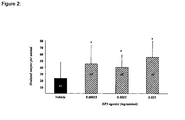
- the EP 2 agonist leads to a concentration-dependent large expansion in the cumulus complex.
- the EP 2 agonist leads to a concentration-dependent significant increase in ovulated oocytes.
- the present invention likewise relates to the use of the compounds according to the invention for the treatment of fertility disorders such as impaired or absent ovulation, impaired fertilisation of the oocyte/cumulus cell complex, impaired implantation and impaired decidualisation.
- Prostaglandins play an important part in angiogenesis ( Sales, Jabbour, 2003, Reproduction 126, 559 - 567 ).
- Endometriosis is a chronic disorder caused by impairments of blood vessels. About 10% of women regularly suffer from heavy bleeding during menstruation, caused by changes in the blood vessels of the endometrium. In addition, structural differences in the blood vessels have been observed, such as, for example, incomplete formation of the smooth muscle cell layer ( Abberton et al. 1999, Hum. Reprod. 14, 1072-1079 ). Since the blood loss during menstruation is partly controlled by constriction of the blood vessels, it is obvious that the defects in the smooth muscles make a substantial contribution to the bleeding.
- Prostaglandins and effects mediated by the EP 2 receptor likewise play a part in the hormonal regulation of endometriotic lesions ( Sun et al. 2003, Endocrinology 144, 3934-3942 ).
- endometriosis is associated with a significant inflammatory response that may be mediated by activated macrophages and lymphocytes and increased levels of cytokines, chemokines, and growth factors. These inflammatory processes have been hypothesised to mediate some of the clinical features associated with endometriosis.
- the peritoneal fluid of women with endometriosis is known to contain more inflammatory cells and their associated cytokines, chemokines, and growth factors ( Murphy AA. Clinical aspects of endometriosis. Ann NY Acad Sci. March 2002;955:1-10 ). The result is an environment that promotes implantation and proliferation.
- Prostaglandins and here prostaglandin E 2 , reduces the expression of inflammatory cytokines, such as TNF ⁇ from activated macrophages.
- Prostanoid EP 2 knockout mice (Shinomiya S et al. Regulation of TNF ⁇ and IL-10 production by prostaglandins 12 and E2: studies with prostaglandin receptor-deficient mice and prostaglandin E-receptor subtype-selective synthetic agonists (Bioch Phar 2001; 61 1153) fail to respond to EP 2 agonists, demonstrating the importance of the prostanoid EP 2 receptor for this process.
- Table 1 shows that an EP 2 agonist leads to an inhibition in the cytokine levels measured in the culture supernatant. The EP 2 agonist also causes a significant decrease in TNF ⁇ as shown in Figure 3 .
- the present invention relates to the use of the compounds of the general formula I for the treatment of endometriosis.
- Prostaglandins play an important part in uterine contraction, and excessively strong contractions are responsible for painful menstruation ( Sales, Jabbour, 2003, Reproduction 126, 559 - 567 ).
- the present invention relates to the use of the substances of the general formula I for the treatment of painful menstruation.
- EP 2 receptor agonists additionally play a significant part in controlling the intraocular pressure. It has been possible to show that in particular EP 2 receptors are present in high concentrations in the vessels of the trabecular meshwork (TM) of the eye. Tears leave the eye via the TM and Schlemm's canal, and EP 2 receptor agonists influence the dynamics of tear fluid by stimulating outflow of tear fluid and thus leading to a reduction in the intraocular pressure ( W. Kamphuis et al. Current Eye Res. 2004, 29, 17-26 ).
- the present invention relates to the use of the substances according to the invention for the treatment of elevated intraocular pressure as associated inter alia with glaucoma.
- Prostaglandins also play an important part in processes counteracting osteoporosis.
- the present invention therefore relates to the use of the substances according to the invention for the treatment of osteoporosis.
- Prostaglandins also play an important part in processes controlling blood pressure.
- the present invention therefore relates to the use of the substances according to the invention for the treatment of high blood pressure.
- MS Multiple Sclerosis
- Th-1 or Th-2 T helper 2
- Th-1 cells secrete cytokines such as interferon gamma (INF- ⁇ ) and induce a cell-mediated immune response
- Th-2 cells secrete IL-4, IL-5 and IL-10 and induce a humoral or antibody-mediated response
- INF- ⁇ interferon gamma
- INF- ⁇ expression is associated with MS and using a multifactorial measure of disability, the expression of IFN- ⁇ in response to PLP peptides and MBP peptides is significantly correlated with disability ( Hirsch et al. 1985, J. Clin Immunol Nov; 5(6):386-389 ; Moldovan et al. 2003, J. Neuroimmunol. Aug; 141(1-2):132-140 ).
- clinical studies show administration of IFN- ⁇ causes exacerbations in MS patients ( Panitch et al., Lancet, Apr 18; (8538):893-895 ).
- Table 2 shows the EP 2 agonist leads to an inhibition of INF- ⁇ expression from activated human donor T cells in the activated T cell assay.
- Table 3 shows a downregulation of Th-1-associated cytokines in an activated human donor monocyte derived dendritic cell assay in the presence of an EP 2 agonist. Therefore, both by inhibiting INF- ⁇ expression directly and by skewing the dendritic cell mediated polarization of CD4+ T cells away from the Th-1 lineage that express INF- ⁇ , the EP 2 agonist is predicted to reduce the expression of INF- ⁇ in MS patients.
- the present invention likewise relates to the use of the compounds according to the invention for the treatment of autoimmune diseases such as autoimmune disease is selected from the group consisting of multiple sclerosis, secondary progressive multiple sclerosis, psoriasis, rheumatoid arthritis, Crohn's disease, and alopecia areata.
- autoimmune diseases such as autoimmune disease is selected from the group consisting of multiple sclerosis, secondary progressive multiple sclerosis, psoriasis, rheumatoid arthritis, Crohn's disease, and alopecia areata.
- Mixtures of isomers can be fractionated by conventional methods such as, for example, crystallization, chromatography or salt formation into the enantiomers or E/Z isomers.
- Salts are prepared in a conventional way by adding the equivalent amount or an excess of a base or acid, which is in solution where appropriate, to a solution of the compound of the formula I, and separating off the precipitate or working up the solution in a conventional way.
- the invention thus also relates to medicaments based on the compounds of the general formula I and conventional excipients or carriers.
- the starting aldehyde is prepared as follows:
- a solution of 18.3 ml of triethyl phosphonoacetate in 20 ml of tetrahydrofuran is added dropwise to a suspension of 3.39 g of sodium hydride in 60 ml of tetrahydrofuran at 0°C under nitrogen, and the mixture is stirred at room temperature for 30 min.
- the aldehyde (prepared in 1e) is then added dropwise to the reaction mixture at 0°C, and the mixture is stirred at room temperature for 3 hours. It is then quenched with saturated ammonium chloride solution and extracted 3 ⁇ with ether, and the combined organic phases are washed 1 ⁇ with water and 1 ⁇ with saturated sodium chloride solution, dried over sodium sulphate and concentrated in vacuo.
- the substance solutions (0.75 ⁇ l) introduced into an assay plate and 30% DMSO are dissolved in 16 ⁇ l of a KRSB+IBMX stimulation solution (1 X Krebs-Ringer Bicarbonate Buffer; Sigma-Aldrich # K-4002; including 750 ⁇ M 3-isobutyl-1-methylxanthine Sigma-Aldrich # I-7018), and then 15 ⁇ l thereof are transferred into a media-free cell culture plate which has been washed with KRSB shortly beforehand.
- a KRSB+IBMX stimulation solution (1 X Krebs-Ringer Bicarbonate Buffer; Sigma-Aldrich # K-4002; including 750 ⁇ M 3-isobutyl-1-methylxanthine Sigma-Aldrich # I-7018
- the substance solutions (0.75 ⁇ l) introduced into an assay plate and 30% DMSO are dissolved in 16 ⁇ l of a KRSB+IBMX stimulation solution (1 X Krebs-Ringer Bicarbonate Buffer; Sigma-Aldrich # K-4002; including 750 ⁇ M 3-isobutyl-1-methylxanthine Sigma-Aldrich # I-7018), and then 15 ⁇ l thereof are transferred into a media-free cell culture plate which has been washed with KRSB shortly beforehand. After incubation at room temperature (RT; volume: ⁇ 15 ⁇ l) for 60 minutes, the reaction is then stopped by adding 5 ⁇ l of lysis buffer and incubated at RT for a further 20 min (volume: ⁇ 20 ⁇ l).
- a KRSB+IBMX stimulation solution (1 X Krebs-Ringer Bicarbonate Buffer; Sigma-Aldrich # K-4002; including 750 ⁇ M 3-isobutyl-1-methylxanthine Sigma-Aldrich # I-70
- the cell lysate is then transferred into a measuring plate and measured in accordance with the manufacturer's information (cyclic AMP kit Cisbio International # 62AMPPEC).
- the test compound showed in the cellular agonism assay a very high activity (EC 50 ⁇ 9.5x10e-10M) without any inhibition in the antagonism assay (IC 50 > 2x10e-5M).
- the oocyte In the preovulatory antral follicle, the oocyte is surrounded by cumulus cells which form a dense ring of cells around the oocyte. After the LH peak (lutenising hormone), a series of processes is activated and leads to a large morphological change in this ring of cells composed of cumulus cells. In this case, the cumulus cells form an extracellular matrix which leads to so-called cumulus expansion ( Vanderhyden et al. Dev Biol. 1990 Aug;140(2):307-317 ). This cumulus expansion is an important component of the ovulatory process and of the subsequent possibility of fertilisation.
- Prostaglandins and here prostaglandin E 2 , whose synthesis is induced by the LH peak, are of crucial importance in cumulus expansion.
- Prostanoid EP 2 knockout mice Hizaki et al. Proc Natl Acad Sci U S A. 1999 Aug 31;96(18):10501-6 .) show a markedly reduced cumulus expansion and severe subfertility, demonstrating the importance of the prostanoid EP 2 receptor for this process.
- Folliculogenesis is induced in immature female mice (strain: CD1 (ICR) from Charles River) at an age of 20-24 days by a single dose (intraperitonal) of 7.5 I.U. of PMSG (Pregnant Mare Serum Gonadotropine; Sigma G-4877, Lot 68H0909). 47-50 hours after the injection, the ovaries are removed and the cumulus-oocyte complexes are removed. The cumulus complex is not yet expanded at this stage. The cumulus-oocyte complexes are then incubated with prostaglandin E2 (PGE 2 ) (1 ⁇ M), vehicle control (ethanol) or test substances for 20-24 hours.
- PGE 2 prostaglandin E2
- the test substance leads to a concentration-dependent great expansion in the cumulus complex.
- Folliculogenesis is induced in immature female mice (strain: (B6D2F1) from Charles River) at an age of 16-20 days by a single dose (intraperitonal) of 10 I.U. of PMSG (Pregnant Mare Serum Gonadotropine; Sigma G-4877, Lot 68H0909). 47-50 hours after the PMSG stimulation, a dose of 10 IU of HCG (human chorion gonadotropin) is used to induce final follicle maturation and ovulation. The test substance is administered 10 hours, 5 hours and 0 hours before the HCG dose (s.c. in benzyl benzoate/castor oil 1+4 v/v). Fourteen hours after the HCG dose, the autopsy is performed and the number of ovulated oocytes in the fallopian tube is determined.
- PMSG Pregnant Mare Serum Gonadotropine
- HCG human chorion gonadotropin
- the EP 2 agonist leads to a concentration-dependent significant increase in ovulated oocytes.
- endometriosis is associated with a significant inflammatory response that may be mediated by activated macrophages and lymphocytes and increased levels of cytokines, chemokines, and growth factors. These inflammatory processes have been hypothesized to mediate some of the clinical features associated with endometriosis.
- the peritoneal fluid of women with endometriosis is known to contain more inflammatory cells and their associated cytokines, chemokines, and growth factors. ( Murphy AA. Clinical aspects of endometriosis. Ann NY Acad Sci. March 2002;955:1-10 ). The result is an environment that promotes implantation and proliferation.
- Prostaglandins and here prostaglandin E 2 , reduces the expression of inflammatory cytokines, such as TNF ⁇ from activated macrophages.
- Prostanoid EP 2 knockout mice ( Shinomiya S et al., Bioch Phar 2001; 61 1153 ) fail to respond to EP 2 agonists, demonstrating the importance of the prostanoid EP 2 receptor for this process.
- Human donor monocyte derived dendritic cells are cultured in RPMI-1640 containing 10% fetal bovine serum for six days in the presence of 10 ng/ml IL-4 and 200ng/ml GM-CSF.
- the cells are activated with various activation stimuli: 10 ng/ml LPS (Sigma), 5 ⁇ g/ml recombinant human CD-40 ligand (R&D Systems), or 5 ⁇ M Human CpG-DNA (HyCult Biotechnology) in the presence of prostaglandin E 2 (PGE 2 ) (1 ⁇ M), vehicle control (DMSO) or test substances (1 ⁇ M) for 18 hours.
- PGE 2 prostaglandin E 2
- DMSO vehicle control
- test substances (1 ⁇ M) for 18 hours.
- the levels of cell culture supernatant TNF ⁇ for individual donors is measured by commercial ELISA kits.
- the test substances lead to an inhibition in the cytokine levels measured in the culture supernatant as shown in Table 1.
- ConA Concanavilin A
- INF- ⁇ is a dimer of the expressed 143 amino acid protein.
- Enzyme linked immuno sorbant assays based on antibodies specific to INF- ⁇ are commercially available. Standards and samples are pipetted into the wells of a microplate. An antibody specific to human INF- ⁇ is added to the wells. A substrate is added to the wells and color develops in proportion to the amount of INF- ⁇ bound. The intensity of the color is measured.
- Peripheral blood lymphocytes are isolated from human donors using a Ficoll density gradient and residual erythrocytes removed by selective lysis.
- the lymphocytes are cultured at approximately 10 6 cells per ml in RPMI1640 with 10% additional fetal bovine serum.
- the cell cultures are activated with 2 ⁇ g/ml of ConA as described above.
- Test substance is added at various dilutions during the ConA activation.
- Cells are incubated for approximately 18 hr at 37C. INF- ⁇ released during activation is measured by ELISA.
- Dendritic cells are the most potent antigen presenting cells and play a central role in the immune response. Following stimulation through the toll-like receptors (TLR) DCs express and release proinflammatory cytokines and chemokines and may induce activation and proliferation of na ⁇ ve T cells.
- TLR toll-like receptors
- the binding of an EP 2 agonist to the DC EP receptor inhibits TLR4 ligand (LPS) stimulated Interleukin 12 (IL-12) release.
- LPS TLR4 ligand
- IL-12 Interleukin 12
- the binding of an EP 2 agonist to the DC EP receptor does not inhibit TLR4, ligand (LPS) stimulated Interleukin 10 (IL-10) release. Therefore an EP 2 agonist skews the CD4 T cell differentiation away from the Th- lineage.
- IL-12 is a 75 kDa glycoprotein heterodimer (p70) composed of two genetically unrelated subunits linked by a disulfide bond.
- Enzyme linked immuno sorbant assays based on antibodies specific to IL-12 p70 are commercially available. Standards and samples are pipetted into the wells of a microplate. An antibody specific to human IL-12 is added to the wells. A substrate is added to the wells and color develops in proportion to the amount of IL-12 bound. The intensity of the color is measured.
- IL-10 initially designated cytokine synthesis inhibitory factor (CSIF), was originally identified as a product of Th-2 clones that suppressed the production of cytokines by Th-1 clones responding to stimulation by antigen in the presence of antigen-presenting cells.
- IL-10 is a dimer composed of two identical 160 amino acid subunits.
- Enzyme linked immuno sorbant assays (ELISA) based on antibodies specific to IL-10 are commercially available. Standards and samples are pipetted into the wells of a microplate. An antibody specific to human IL-10 is added to the wells. A substrate is added to the wells and color develops in proportion to the amount of IL-10 bound. The intensity of the color is measured.
- Human monocyte derived dendritic cells are isolated from human donors using a Ficoll density gradient and residual erythrocytes removed by selective lysis.
- CD14 MicroBeads are used for separation of human cells based on the expression of the CD14 antigen.
- the dendritic cells are cultured at approximately 1.5 x 10 6 cells per ml in RPMI 1640 with fetal bovine serum, 200 ng/ml GM-CSF (Leukine) and 10 ng/ml IL-4. The cells grow-for a period of 3 days and then the media is changed. 10ng/ml LPS is used to activate the cells. 1 ⁇ M of substance (EP 2 agonist) and 1 ⁇ M of PGE 2 are added during the LPS stimulation. Cells are incubated for approximately 18 hr at 37C. IL-12 and II-10 released during activation is measured by ELISA.
- Table 1 shows the effect of test substance on the TNF ⁇ release from activated monocytic cells in vitro.
- the test substance is administered in a concentration of 18 mM. Cells are activated for 18 hours.
- Test substance shows dose responsively very high inhibitory activity in the T lymphocyte Th-1 cytokine release.
- Table 2 demonstrates the effect of test substance on the inhibition of T lymphocyte Th-1 cytokine release.
- the test substance is added dose dependently (0-20 nM) to cells during their activation by ConA, cells are incubated for 18 hours.
- Tables 3 a) and b) demonstrate the effect of test substance on the inhibition of human monocytes derived dendrite cell cytokine release.
- Test substance or PGE 2 is added at a concentration of 1 ⁇ M during stimulation of cells with LPS. Cells are incubated for 18 hours.
- the test compound shows high immunomodulatory activity in the human monocyte derived dendritic cell (DC) cytokine release assay and a suppression of the Th-1 promoting cytokine IL-12 (3a) while it spared, in fact increased, the Th-2 promoting cytokine IL-10 (3b).
- DC human monocyte derived dendritic cell
Landscapes
- Health & Medical Sciences (AREA)
- Chemical & Material Sciences (AREA)
- Organic Chemistry (AREA)
- Life Sciences & Earth Sciences (AREA)
- Veterinary Medicine (AREA)
- Public Health (AREA)
- General Health & Medical Sciences (AREA)
- Animal Behavior & Ethology (AREA)
- Pharmacology & Pharmacy (AREA)
- Medicinal Chemistry (AREA)
- General Chemical & Material Sciences (AREA)
- Nuclear Medicine, Radiotherapy & Molecular Imaging (AREA)
- Chemical Kinetics & Catalysis (AREA)
- Bioinformatics & Cheminformatics (AREA)
- Engineering & Computer Science (AREA)
- Physical Education & Sports Medicine (AREA)
- Immunology (AREA)
- Rheumatology (AREA)
- Oncology (AREA)
- Orthopedic Medicine & Surgery (AREA)
- Cardiology (AREA)
- Reproductive Health (AREA)
- Heart & Thoracic Surgery (AREA)
- Virology (AREA)
- Communicable Diseases (AREA)
- Ophthalmology & Optometry (AREA)
- Endocrinology (AREA)
- Vascular Medicine (AREA)
- Pain & Pain Management (AREA)
- Neurology (AREA)
- Biomedical Technology (AREA)
- Neurosurgery (AREA)
- Epidemiology (AREA)
- Urology & Nephrology (AREA)
- Dermatology (AREA)
- AIDS & HIV (AREA)
- Hematology (AREA)
- Molecular Biology (AREA)
- Transplantation (AREA)
- Gynecology & Obstetrics (AREA)
Claims (23)
- Verbindungen der allgemeinen Formel I,
 R1 eine CH2OH-, -COOR2-, -CONHR2- oder -CONHR3-Gruppe,R2 ein Wasserstoff,
ein C1-C10-Alkylrest, der gerade oder verzweigt, gegebenenfalls ein- bis mehrfach gesättigt oder ungesättigt ist und gegebenenfalls ein- bis mehrfach substituiert ist durch Halogen, C1-C4-Alkoxy, substituiertes C3-C10-Aryl oder gegebenenfalls substituiertes C3-C10-Aroyl, Di-C1-C5-alkylamino oder Tri-C1-C5-alkylamino,
ein C3-C10-Cycloalkyl, das gegebenenfalls substituiert ist durch C1-C4-Alkyl,
ein C3-C10-Aryl, das gegebenenfalls substituiert ist mit Phenyl, 1-Naphthyl, 2-Naphthyl, das wiederum in 3-und in 4-Stellung durch Fluor, Chlor, Alkoxy oder Trifluormethyl oder in 4-Stellung durch Hydroxy, Halogen, Phenyl, ein oder mehrere C1-C4-Alkylgruppen, Chlormethyl, Fluormethyl, Trifluormethyl, Carboxy-, Hydroxy- oder C1-C4-Alkoxy substituiert sein kann,
oder ein C3-C7-Heterocycloalkyl,R3 eine C1-C15-Carbonsäure oder C1-C15-Sulfonsäure,A eine cis-CH=CH- oder -CH2-CH2-Gruppe,B eine trans-CH=CH- oder -CH2-CH2-Gruppe,W ein C2-C6-Alkylen,R4 eine Hydroxygruppe, ein Rest O-R6 oder O-R7, wobei R6 ein Tetrahydropyranyl-, Tetrahydrofuranyl-, Trimethylsilyl-, tert.-Butyldimethylsilyl-, tert.-Butyldiphenylsilyl- oder Tribenzylsilylrest und R7 eine C1-C15-Carbonsäure ist,R5 ein Wasserstoff, eine C1-C10-Alkyl- oder C1-C10-Alkenylgruppe undn die Zahl 1-4
bedeuten, sowie deren Salze und deren Cyclodextrinclathrate mit physiologisch verträgliche Basen. - Verbindungen gemäß Anspruch 1,
wobeiR1 eine CH2OH-, -COOR2-, -CONHR2- oder -CONHR3-Gruppe,R2 ein Wasserstoff oder
ein C1-C10-Alkylrest, der gerade oder verzweigt, gegebenenfalls ein- bis mehrfach gesättigt oder ungesättigt ist und gegebenenfalls einfach substituiert ist durch Fluor, Chlor oder Brom, durch C1-C4-Alkoxy, substituiertes C3-C10-Aryl oder gegebenenfalls substituiertes C3-C10-Aroyl, Di-C1-C5-Alkylamino oder Tri-C1-C5-Alkylamino,
ein C5-C6-Cycloalkyl, das gegebenenfalls substituiert ist durch C1-C4-Alkyl,
ein C3-C10-Arylrest, der gegebenenfalls substituiert ist mit Phenyl, das in 3- oder 4 Stellung substituiert sein kann durch Fluor, Chlor, Alkoxy oder Trifluormethyl oder in 4-Stellung durch Hydroxy,
ein C5-C6-Heterocycloalkyl, das ein- oder mehrfach durch Stickstoff, Sauerstoff oder Schwefel unterbrochen sein kann,R3 eine C1-C10-Carbonsäure oder C1-C10-Sulfonsäure,A eine cis-CH=CH- oder -CH2-CH2-Gruppe,B eine trans-CH=CH- oder -CH2-CH2-Gruppe,W ein C2-C6-Alkylen,R4 eine Hydroxygruppe,R5 ein Wasserstoff, eine C1-C6-Alkyl- oder C1-C10-Alkenylgruppe undn die Zahl 1-4
bedeuten. - Verbindungen gemäß Anspruch 1 oder 2, wobeiR1 eine -CH2OH-, -COOR2-, -CONHR2- oder -CONHR3-Gruppe,R2 ein Wasserstoff oder ein C1-C4-Alkyl, das gegebenenfalls mit Phenyl substituiert ist,
ein C5-C6-Cycloalkyl,
ein C3-C6-Aryl, das gegebenenfalls mit Phenyl substituiert ist,R3 eine C1-C6-Carbonsäure oder C1-C6-Sulfonsäure,A eine cis-CH=CH- oder -CH2-CH2-Gruppe,B eine trans-CH=CH- oder -CH2-CH2-Gruppe,W ein C2-Alkylen,R4 eine Hydroxygruppe,R5 ein Wasserstoff, gesättigtes C1-C4-Alkyl- oder C1-C5-Alkenyl undn die Zahl 1-4
bedeuten. - Arzneimittel, die mindestens eine der Verbindungen der Formel I enthalten, gemäß den Ansprüchen 1-3.
- Arzneimittel gemäß Anspruch 4, dadurch gekennzeichnet, dass das Prostaglandinderivat der allgemeinen Formel I in einer wirksamen Menge enthalten ist.
- Verbindungen gemäß Anspruch 1-3 und Arzneimittel gemäß den Ansprüchen 4 und 5 mit geeigneten Formulierungs- und Trägerstoffen.
- Prostaglandinderivat der allgemeinen Formel I gemäß den Ansprüchen 1-3 zur Verwendung als Arzneimittel.
- Arzneimittel gemäß Anspruch 7 zur Förderung der Fertilität.
- Arzneimittel gemäß Anspruch 7 zur in vitro Fertilisation.
- Arzneimittel gemäß Anspruch 7 zur Ovulationsförderung.
- Arzneimittel gemäß Anspruch 7 zur Behebung gestörter Kumulusexpansion und deren Folgen.
- Arzneimittel gemäß Anspruch 7 zur Behandlung von Erkrankungen.
- Arzneimittel gemäß Anspruch 12, dadurch gekennzeichnet, dass es sich bei der Erkrankung um Fertilitätsstörungen handelt
- Arzneimittel gemäß Anspruch 12, dadurch gekennzeichnet, dass es sich bei der Erkrankung um Menstruationsbeschwerden handelt.
- Arzneimittel gemäß Anspruch 12, dadurch gekennzeichnet, dass es sich bei der Erkrankung um Endometriose handelt.
- Arzneimittel gemäß Anspruch 12, dadurch gekennzeichnet, dass es sich bei der Erkrankung um erhöhten Augeninnendruck handelt.
- Arzneimittel gemäß Anspruch 12, dadurch gekennzeichnet, dass es sich bei der Erkrankung um Osteoporose handelt.
- Arzneimittel gemäß Anspruch 12, dadurch gekennzeichnet, dass es sich bei der Erkrankung um erhöhten Blutdruck handelt.
- Arzneimittel gemäß Anspruch 12, dadurch gekennzeichnet, dass es sich bei der Erkrankung um eine Autoimmunkrankheit handelt.
- Arzneimittel gemäß Anspruch 19, dadurch gekennzeichnet, dass die Autoimmunkrankheit ausgewählt ist aus der aus multipler Sklerose, sekundärer progressiver multipler Sklerose, Psoriasis, rheumatoider Arthritis, Morbus Crohn und Alopecia areata bestehenden Gruppe.
- Arzneimittel gemäß Anspruch 19, dadurch gekennzeichnet, dass es sich bei der Autoimmunkrankheit um multiple Sklerose handelt.
- Prostaglandinderivate der allgemeinen Formel I gemäß den Ansprüchen 1 bis 3 in Form eines pharmazeutischen Präparates für die enterale, parenterale, vaginale und orale Applikation.
- Verfahren zur Herstellung der Verbindungen gemäß Anspruch 1-3, dadurch gekennzeichnet, dass ein Aldehyd der allgemeinen Formel II

wobei die freie OH-Gruppe in R4 geschützt ist,
mit dem Carbanion des Sulfons der allgemeinen Formel III
das erhaltene Hydroxysulfon nach Acetylierung reduktiv zum Olefin eliminiert und gegebenenfalls anschließend die in beliebiger Reihenfolge geschützten Hydroxygruppen entschützt und gegebenenfalls verestert, verethert und/oder Doppelbindungen hydriert und/oder eine veresterte Carboxylgruppe (R1 = COOR2) und/oder eine freie Carboxylgruppe (COOR2 mit R2 = H) verestert und/oder eine freie Carboxylgruppe (COOR2 mit R2 = H) in ein Amid (R1 = CONR2)) überführt und/oder eine freie oder veresterte Carboxylgruppe (R1 = CONHR3) reduziert wird.
Priority Applications (25)
| Application Number | Priority Date | Filing Date | Title |
|---|---|---|---|
| PT05090321T PT1816121E (pt) | 2005-11-21 | 2005-11-21 | Derivados de 9-cloro-15-desoxiprostaglandina, processo para a sua preparação e sua utilização como medicamentos |
| EP05090321A EP1816121B1 (de) | 2005-11-21 | 2005-11-21 | 9-Chloro-15-deoxyprostaglandinderivate, Verfahren zu ihrer Herstellung und deren Verwendung als Medikamente |
| DE602005005355T DE602005005355T2 (de) | 2005-11-21 | 2005-11-21 | 9-Chloro-15-deoxyprostaglandinderivate, Verfahren zu ihrer Herstellung und deren Verwendung als Medikamente |
| AT05090321T ATE388936T1 (de) | 2005-11-21 | 2005-11-21 | 9-chloro-15-deoxyprostaglandinderivate, verfahren zu ihrer herstellung und deren verwendung als medikamente |
| DK05090321T DK1816121T3 (da) | 2005-11-21 | 2005-11-21 | 9-chlor-15-deoxyprostaglandinderivater, fremgangsmåde til deres fremstilling og deres anvendelse som medikamenter |
| PL05090321T PL1816121T3 (pl) | 2005-11-21 | 2005-11-21 | Pochodne 9-chloro-15-deoksyprostaglandyny, sposób ich wytwarzania oraz ich zastosowanie jako leków |
| ES05090321T ES2302122T3 (es) | 2005-11-21 | 2005-11-21 | Derivados de 9-cloro-15-desoxiprostaglandina, proceso para su preparacion y su uso como medicamento. |
| TW095141974A TW200738611A (en) | 2005-11-21 | 2006-11-13 | 9-Chloro-15-deoxyprostaglandin derivatives, process for their preparation and their use as medicaments |
| UY29925A UY29925A1 (es) | 2005-11-21 | 2006-11-17 | Derivados de 9-cloro-15-desoxiprostaglandina, procesos para su preparación y su uso como medicamento. |
| ARP060105047A AR057900A1 (es) | 2005-11-21 | 2006-11-17 | Derivados de 9- cloro-15-desoxiprostaglandina, procesos para su preparacion y su uso como medicamento |
| AU2006314733A AU2006314733A1 (en) | 2005-11-21 | 2006-11-20 | 9-chloro-15-deoxyprostaglandin derivatives, process for their preparation and their use as medicaments |
| JP2008540536A JP2009516665A (ja) | 2005-11-21 | 2006-11-20 | 9−クロロ−15−デオキシプロスタグランジン誘導体類、それらの調製方法及び薬剤としてのそれらの使用 |
| PE2006001471A PE20070644A1 (es) | 2005-11-21 | 2006-11-20 | Derivados de 9-cloro-15-desoxiprostaglandina como agonistas del receptor de prostaglandina e2 (ep2) y procesos para su preparacion |
| CNA2006800435083A CN101312946A (zh) | 2005-11-21 | 2006-11-20 | 9-氯-15-脱氧前列腺素衍生物、其制备方法及其作为药物的应用 |
| EA200801211A EA200801211A1 (ru) | 2005-11-21 | 2006-11-20 | Производные 9-хлор-15-простагландина, способ их получения и использования в лекарственных препаратах |
| KR1020087012052A KR20080068877A (ko) | 2005-11-21 | 2006-11-20 | 9-클로로-15-데옥시프로스타글란딘 유도체, 이들의 제조방법 및 이들의 의약으로서의 용도 |
| DO2006000257A DOP2006000257A (es) | 2005-11-21 | 2006-11-20 | Derivados de 9-cloro-15-desoxiprostaglandina, procesos para su preparación y su uso como medicamento |
| BRPI0618756-0A BRPI0618756A2 (pt) | 2005-11-21 | 2006-11-20 | derivados de 9-cloro-15-desoxiprostaglandina, processo para sua preparação e seu uso como medicamentos |
| CA002629031A CA2629031A1 (en) | 2005-11-21 | 2006-11-20 | 9-chloro-15-deoxyprostaglandin derivatives, process for their preparation and their use as medicaments |
| PCT/EP2006/011378 WO2007057232A1 (en) | 2005-11-21 | 2006-11-20 | 9-chloro-15-deoxyprostaglandin derivatives, process for their preparation and their use as medicaments |
| IL190596A IL190596A0 (en) | 2005-11-21 | 2008-04-03 | 9-chloro-15-deoxyprostaglandin derivatives, process for their preparation and their use as medicaments |
| GT200800066A GT200800066A (es) | 2005-11-21 | 2008-05-16 | Derivados de 9-cloro-15-deoxiprostaglandina, procedimiento para su preparacion y su uso como medicamento. |
| CR10006A CR10006A (de) | 2005-11-21 | 2008-05-21 | |
| EC2008008472A ECSP088472A (es) | 2005-11-21 | 2008-05-26 | Derivados de 9-cloro-15-desoxiprostaglandina, procesos para su preparación y su uso como medicamento |
| NO20082838A NO20082838L (no) | 2005-11-21 | 2008-06-20 | 9-klor-15-deoksyprostaglandinderivater, fremgangsmate for fremstilling av disse, og anvendelse som medikamenter |
Applications Claiming Priority (1)
| Application Number | Priority Date | Filing Date | Title |
|---|---|---|---|
| EP05090321A EP1816121B1 (de) | 2005-11-21 | 2005-11-21 | 9-Chloro-15-deoxyprostaglandinderivate, Verfahren zu ihrer Herstellung und deren Verwendung als Medikamente |
Publications (2)
| Publication Number | Publication Date |
|---|---|
| EP1816121A1 EP1816121A1 (de) | 2007-08-08 |
| EP1816121B1 true EP1816121B1 (de) | 2008-03-12 |
Family
ID=35744724
Family Applications (1)
| Application Number | Title | Priority Date | Filing Date |
|---|---|---|---|
| EP05090321A Expired - Lifetime EP1816121B1 (de) | 2005-11-21 | 2005-11-21 | 9-Chloro-15-deoxyprostaglandinderivate, Verfahren zu ihrer Herstellung und deren Verwendung als Medikamente |
Country Status (25)
| Country | Link |
|---|---|
| EP (1) | EP1816121B1 (de) |
| JP (1) | JP2009516665A (de) |
| KR (1) | KR20080068877A (de) |
| CN (1) | CN101312946A (de) |
| AR (1) | AR057900A1 (de) |
| AT (1) | ATE388936T1 (de) |
| AU (1) | AU2006314733A1 (de) |
| BR (1) | BRPI0618756A2 (de) |
| CA (1) | CA2629031A1 (de) |
| CR (1) | CR10006A (de) |
| DE (1) | DE602005005355T2 (de) |
| DK (1) | DK1816121T3 (de) |
| DO (1) | DOP2006000257A (de) |
| EA (1) | EA200801211A1 (de) |
| EC (1) | ECSP088472A (de) |
| ES (1) | ES2302122T3 (de) |
| GT (1) | GT200800066A (de) |
| IL (1) | IL190596A0 (de) |
| NO (1) | NO20082838L (de) |
| PE (1) | PE20070644A1 (de) |
| PL (1) | PL1816121T3 (de) |
| PT (1) | PT1816121E (de) |
| TW (1) | TW200738611A (de) |
| UY (1) | UY29925A1 (de) |
| WO (1) | WO2007057232A1 (de) |
Families Citing this family (7)
| Publication number | Priority date | Publication date | Assignee | Title |
|---|---|---|---|---|
| JP5271272B2 (ja) * | 2006-11-16 | 2013-08-21 | ジェンムス ファーマ インコーポレイティド | A型インフルエンザウィルス感染の治療のための薬剤としてのep2およびep4作動薬 |
| EP2149551A1 (de) | 2008-07-30 | 2010-02-03 | Bayer Schering Pharma AG | N-(Indol-3-ylalkyl)-(hetero)arylamidderivate als Modulatoren des EP2-Rezeptors |
| EP2149552A1 (de) | 2008-07-30 | 2010-02-03 | Bayer Schering Pharma AG | 5,6 substituierte Benzamid-Derivate als Modulatoren des EP2-Rezeptors |
| EP2149554A1 (de) | 2008-07-30 | 2010-02-03 | Bayer Schering Pharma Aktiengesellschaft | Indolylamide als Modulatoren des EP2-Rezeptors |
| DE102009049662A1 (de) | 2009-10-13 | 2011-04-14 | Bayer Schering Pharma Aktiengesellschaft | 2,5-Disubstituierte 2H-Indazole als EP2-Rezeptor-Antagonisten |
| TW201326154A (zh) | 2011-11-28 | 2013-07-01 | 拜耳知識產權公司 | 作為ep2受體拮抗劑之新穎2h-吲唑 |
| AU2021220877A1 (en) | 2020-02-12 | 2022-09-01 | Cytoagents, Inc. | Compositions and methods for treating coronavirus infections |
Family Cites Families (5)
| Publication number | Priority date | Publication date | Assignee | Title |
|---|---|---|---|---|
| US4171331A (en) * | 1978-06-05 | 1979-10-16 | Miles Laboratories, Inc. | 1 And 2-substituted analogues of certain prostaglandins |
| DE2950027A1 (de) * | 1979-12-10 | 1981-06-11 | Schering Ag Berlin Und Bergkamen, 1000 Berlin | 9-chlor-prostaglandinderivate, verfahren zur herstellung und verwendung als arzneimittel |
| JP3162668B2 (ja) * | 1997-02-04 | 2001-05-08 | 小野薬品工業株式会社 | ω−シクロアルキル−プロスタグランジンE2誘導体 |
| JP2000095755A (ja) * | 1998-07-21 | 2000-04-04 | Ono Pharmaceut Co Ltd | ω―シクロアルキル―プロスタグランジンE1誘導体、その製造方法およびその誘導体を有効成分とする医薬組成物 |
| EP1306087A4 (de) * | 2000-07-31 | 2007-07-25 | Ono Pharmaceutical Co | Heilmittel zur behandlung von erektionsstörungen enthaltend prostaglandinderivate als aktive komponenten |
-
2005
- 2005-11-21 DE DE602005005355T patent/DE602005005355T2/de not_active Expired - Lifetime
- 2005-11-21 DK DK05090321T patent/DK1816121T3/da active
- 2005-11-21 PL PL05090321T patent/PL1816121T3/pl unknown
- 2005-11-21 AT AT05090321T patent/ATE388936T1/de not_active IP Right Cessation
- 2005-11-21 ES ES05090321T patent/ES2302122T3/es not_active Expired - Lifetime
- 2005-11-21 EP EP05090321A patent/EP1816121B1/de not_active Expired - Lifetime
- 2005-11-21 PT PT05090321T patent/PT1816121E/pt unknown
-
2006
- 2006-11-13 TW TW095141974A patent/TW200738611A/zh unknown
- 2006-11-17 AR ARP060105047A patent/AR057900A1/es unknown
- 2006-11-17 UY UY29925A patent/UY29925A1/es not_active Application Discontinuation
- 2006-11-20 JP JP2008540536A patent/JP2009516665A/ja active Pending
- 2006-11-20 CA CA002629031A patent/CA2629031A1/en not_active Abandoned
- 2006-11-20 PE PE2006001471A patent/PE20070644A1/es not_active Application Discontinuation
- 2006-11-20 CN CNA2006800435083A patent/CN101312946A/zh active Pending
- 2006-11-20 WO PCT/EP2006/011378 patent/WO2007057232A1/en not_active Ceased
- 2006-11-20 DO DO2006000257A patent/DOP2006000257A/es unknown
- 2006-11-20 AU AU2006314733A patent/AU2006314733A1/en not_active Abandoned
- 2006-11-20 BR BRPI0618756-0A patent/BRPI0618756A2/pt not_active Application Discontinuation
- 2006-11-20 KR KR1020087012052A patent/KR20080068877A/ko not_active Withdrawn
- 2006-11-20 EA EA200801211A patent/EA200801211A1/xx unknown
-
2008
- 2008-04-03 IL IL190596A patent/IL190596A0/en unknown
- 2008-05-16 GT GT200800066A patent/GT200800066A/es unknown
- 2008-05-21 CR CR10006A patent/CR10006A/xx not_active Application Discontinuation
- 2008-05-26 EC EC2008008472A patent/ECSP088472A/es unknown
- 2008-06-20 NO NO20082838A patent/NO20082838L/no not_active Application Discontinuation
Also Published As
| Publication number | Publication date |
|---|---|
| JP2009516665A (ja) | 2009-04-23 |
| PE20070644A1 (es) | 2007-07-31 |
| EP1816121A1 (de) | 2007-08-08 |
| AU2006314733A1 (en) | 2007-05-24 |
| IL190596A0 (en) | 2008-11-03 |
| PT1816121E (pt) | 2008-05-28 |
| CR10006A (de) | 2008-07-29 |
| ATE388936T1 (de) | 2008-03-15 |
| DE602005005355D1 (de) | 2008-04-24 |
| TW200738611A (en) | 2007-10-16 |
| UY29925A1 (es) | 2007-06-29 |
| GT200800066A (es) | 2009-03-12 |
| PL1816121T3 (pl) | 2008-08-29 |
| KR20080068877A (ko) | 2008-07-24 |
| BRPI0618756A2 (pt) | 2011-09-13 |
| DK1816121T3 (da) | 2008-06-16 |
| CN101312946A (zh) | 2008-11-26 |
| DE602005005355T2 (de) | 2009-03-26 |
| ECSP088472A (es) | 2008-06-30 |
| ES2302122T3 (es) | 2008-07-01 |
| NO20082838L (no) | 2008-06-20 |
| EA200801211A1 (ru) | 2008-10-30 |
| AR057900A1 (es) | 2007-12-26 |
| WO2007057232A1 (en) | 2007-05-24 |
| DOP2006000257A (es) | 2007-06-15 |
| CA2629031A1 (en) | 2007-05-24 |
Similar Documents
| Publication | Publication Date | Title |
|---|---|---|
| EP2094273B1 (de) | EP2- und EP4-Agonisten als Mittel zur Behandlung von viraler Influenza A Infektion | |
| US4789685A (en) | 9-fluoroprostaglandin derivatives, their preparation and use as medicinal agents | |
| US6225347B1 (en) | 9-halogen-(Z)-prostaglandin derivatives, process for their production and their use as pharmaceutical agents | |
| EP0030377A1 (de) | 9-Chlor-prostaglandinderivate, Verfahren zur Herstellung und Verwendung als Arzneimittel | |
| EP1816121A1 (de) | 9-Chloro-15-deoxyprostaglandinderivate, Verfahren zu ihrer Herstellung und deren Verwendung als Medikamente | |
| US4870104A (en) | 11-haloprostane derivatives, processes for their preparation and their use as medicinal agents | |
| EP0847276B1 (de) | Methode zur gefässerweiterung mit (1,5-inter)arylprostaglandinderivaten | |
| US7563924B2 (en) | 9-chloro-15-deoxyprostaglandin derivatives, process for their preparation and their use as medicaments | |
| US4560786A (en) | Δ8,9 -Prostaglandin derivatives, their preparation and use as medicinal agents | |
| US20080021099A1 (en) | 5-Cyano-prostacyclin derivatives as agents for the treatment of autoimmune disease | |
| US5204371A (en) | Pharmaceutically active 9-chloroprostaglandins | |
| US5891910A (en) | 9-halogen-(Z) prostaglandin derivatives, process for their production and their use as pharmaceutical agents | |
| US4983629A (en) | 11-haloprostane derivatives, processes for their preparation and their use as medicinal agents | |
| HK1152656A (en) | Ep2 and ep4 agonists as agents for the treatment of influenza a viral infection | |
| US4487953A (en) | 9-Bromoprostaglandins, their preparation, and their use as medicaments | |
| KR790001979B1 (ko) | 사이클로펜탄 유도체의 제조방법 |
Legal Events
| Date | Code | Title | Description |
|---|---|---|---|
| PUAI | Public reference made under article 153(3) epc to a published international application that has entered the european phase |
Free format text: ORIGINAL CODE: 0009012 |
|
| 17P | Request for examination filed |
Effective date: 20051121 |
|
| AK | Designated contracting states |
Kind code of ref document: A1 Designated state(s): AT BE BG CH CY CZ DE DK EE ES FI FR GB GR HU IE IS IT LI LT LU LV MC NL PL PT RO SE SI SK TR |
|
| AX | Request for extension of the european patent |
Extension state: AL BA HR MK YU |
|
| GRAP | Despatch of communication of intention to grant a patent |
Free format text: ORIGINAL CODE: EPIDOSNIGR1 |
|
| RIN1 | Information on inventor provided before grant (corrected) |
Inventor name: GUILFORD, WILLIAM, J. Inventor name: SKUBALLA, WERNER Inventor name: FAULDS, DARYL Inventor name: LINDENTHAL, BERNHARD Inventor name: LI, JUDY Inventor name: TOSCHI, LUISELLA Inventor name: LANGER, GERNOT Inventor name: BUCHMANN, BERND |
|
| GRAS | Grant fee paid |
Free format text: ORIGINAL CODE: EPIDOSNIGR3 |
|
| GRAA | (expected) grant |
Free format text: ORIGINAL CODE: 0009210 |
|
| AK | Designated contracting states |
Kind code of ref document: B1 Designated state(s): AT BE BG CH CY CZ DE DK EE ES FI FR GB GR HU IE IS IT LI LT LU LV MC NL PL PT RO SE SI SK TR |
|
| REG | Reference to a national code |
Ref country code: GB Ref legal event code: FG4D |
|
| REG | Reference to a national code |
Ref country code: CH Ref legal event code: EP |
|
| AKX | Designation fees paid |
Designated state(s): AT BE BG CH CY CZ DE DK EE ES FI FR GB GR HU IE IS IT LI LT LU LV MC NL PL PT RO SE SI SK TR |
|
| REG | Reference to a national code |
Ref country code: IE Ref legal event code: FG4D |
|
| REF | Corresponds to: |
Ref document number: 602005005355 Country of ref document: DE Date of ref document: 20080424 Kind code of ref document: P |
|
| REG | Reference to a national code |
Ref country code: PT Ref legal event code: SC4A Free format text: AVAILABILITY OF NATIONAL TRANSLATION Effective date: 20080515 |
|
| REG | Reference to a national code |
Ref country code: SE Ref legal event code: TRGR |
|
| REG | Reference to a national code |
Ref country code: DK Ref legal event code: T3 |
|
| REG | Reference to a national code |
Ref country code: ES Ref legal event code: FG2A Ref document number: 2302122 Country of ref document: ES Kind code of ref document: T3 |
|
| PG25 | Lapsed in a contracting state [announced via postgrant information from national office to epo] |
Ref country code: LT Free format text: LAPSE BECAUSE OF FAILURE TO SUBMIT A TRANSLATION OF THE DESCRIPTION OR TO PAY THE FEE WITHIN THE PRESCRIBED TIME-LIMIT Effective date: 20080312 |
|
| REG | Reference to a national code |
Ref country code: PL Ref legal event code: T3 |
|
| REG | Reference to a national code |
Ref country code: HU Ref legal event code: AG4A Ref document number: E003474 Country of ref document: HU |
|
| PG25 | Lapsed in a contracting state [announced via postgrant information from national office to epo] |
Ref country code: LV Free format text: LAPSE BECAUSE OF FAILURE TO SUBMIT A TRANSLATION OF THE DESCRIPTION OR TO PAY THE FEE WITHIN THE PRESCRIBED TIME-LIMIT Effective date: 20080312 Ref country code: SI Free format text: LAPSE BECAUSE OF FAILURE TO SUBMIT A TRANSLATION OF THE DESCRIPTION OR TO PAY THE FEE WITHIN THE PRESCRIBED TIME-LIMIT Effective date: 20080312 |
|
| PG25 | Lapsed in a contracting state [announced via postgrant information from national office to epo] |
Ref country code: SK Free format text: LAPSE BECAUSE OF FAILURE TO SUBMIT A TRANSLATION OF THE DESCRIPTION OR TO PAY THE FEE WITHIN THE PRESCRIBED TIME-LIMIT Effective date: 20080312 |
|
| ET | Fr: translation filed | ||
| PG25 | Lapsed in a contracting state [announced via postgrant information from national office to epo] |
Ref country code: RO Free format text: LAPSE BECAUSE OF FAILURE TO SUBMIT A TRANSLATION OF THE DESCRIPTION OR TO PAY THE FEE WITHIN THE PRESCRIBED TIME-LIMIT Effective date: 20080312 |
|
| PG25 | Lapsed in a contracting state [announced via postgrant information from national office to epo] |
Ref country code: IS Free format text: LAPSE BECAUSE OF FAILURE TO SUBMIT A TRANSLATION OF THE DESCRIPTION OR TO PAY THE FEE WITHIN THE PRESCRIBED TIME-LIMIT Effective date: 20080712 |
|
| PLBE | No opposition filed within time limit |
Free format text: ORIGINAL CODE: 0009261 |
|
| STAA | Information on the status of an ep patent application or granted ep patent |
Free format text: STATUS: NO OPPOSITION FILED WITHIN TIME LIMIT |
|
| PGFP | Annual fee paid to national office [announced via postgrant information from national office to epo] |
Ref country code: CZ Payment date: 20081029 Year of fee payment: 4 Ref country code: DK Payment date: 20081015 Year of fee payment: 4 Ref country code: IE Payment date: 20081016 Year of fee payment: 4 Ref country code: NL Payment date: 20081017 Year of fee payment: 4 Ref country code: TR Payment date: 20081021 Year of fee payment: 4 |
|
| 26N | No opposition filed |
Effective date: 20081215 |
|
| PGFP | Annual fee paid to national office [announced via postgrant information from national office to epo] |
Ref country code: AT Payment date: 20081009 Year of fee payment: 4 Ref country code: FI Payment date: 20081016 Year of fee payment: 4 Ref country code: PL Payment date: 20081110 Year of fee payment: 4 Ref country code: PT Payment date: 20081020 Year of fee payment: 4 |
|
| PGFP | Annual fee paid to national office [announced via postgrant information from national office to epo] |
Ref country code: BE Payment date: 20081128 Year of fee payment: 4 Ref country code: SE Payment date: 20081020 Year of fee payment: 4 |
|
| PG25 | Lapsed in a contracting state [announced via postgrant information from national office to epo] |
Ref country code: EE Free format text: LAPSE BECAUSE OF FAILURE TO SUBMIT A TRANSLATION OF THE DESCRIPTION OR TO PAY THE FEE WITHIN THE PRESCRIBED TIME-LIMIT Effective date: 20080312 Ref country code: BG Free format text: LAPSE BECAUSE OF FAILURE TO SUBMIT A TRANSLATION OF THE DESCRIPTION OR TO PAY THE FEE WITHIN THE PRESCRIBED TIME-LIMIT Effective date: 20080612 |
|
| PG25 | Lapsed in a contracting state [announced via postgrant information from national office to epo] |
Ref country code: MC Free format text: LAPSE BECAUSE OF NON-PAYMENT OF DUE FEES Effective date: 20081130 |
|
| PG25 | Lapsed in a contracting state [announced via postgrant information from national office to epo] |
Ref country code: CY Free format text: LAPSE BECAUSE OF FAILURE TO SUBMIT A TRANSLATION OF THE DESCRIPTION OR TO PAY THE FEE WITHIN THE PRESCRIBED TIME-LIMIT Effective date: 20080312 |
|
| PGFP | Annual fee paid to national office [announced via postgrant information from national office to epo] |
Ref country code: HU Payment date: 20081030 Year of fee payment: 4 |
|
| REG | Reference to a national code |
Ref country code: PT Ref legal event code: MM4A Free format text: LAPSE DUE TO NON-PAYMENT OF FEES Effective date: 20100521 |
|
| BERE | Be: lapsed |
Owner name: BAYER SCHERING PHARMA A.G. Effective date: 20091130 |
|
| REG | Reference to a national code |
Ref country code: NL Ref legal event code: V1 Effective date: 20100601 |
|
| EUG | Se: european patent has lapsed | ||
| REG | Reference to a national code |
Ref country code: CH Ref legal event code: PL |
|
| REG | Reference to a national code |
Ref country code: DK Ref legal event code: EBP |
|
| PG25 | Lapsed in a contracting state [announced via postgrant information from national office to epo] |
Ref country code: LU Free format text: LAPSE BECAUSE OF NON-PAYMENT OF DUE FEES Effective date: 20081121 Ref country code: PT Free format text: LAPSE BECAUSE OF NON-PAYMENT OF DUE FEES Effective date: 20100521 |
|
| PG25 | Lapsed in a contracting state [announced via postgrant information from national office to epo] |
Ref country code: CZ Free format text: LAPSE BECAUSE OF NON-PAYMENT OF DUE FEES Effective date: 20091121 Ref country code: AT Free format text: LAPSE BECAUSE OF NON-PAYMENT OF DUE FEES Effective date: 20091121 Ref country code: FI Free format text: LAPSE BECAUSE OF NON-PAYMENT OF DUE FEES Effective date: 20091121 |
|
| PG25 | Lapsed in a contracting state [announced via postgrant information from national office to epo] |
Ref country code: NL Free format text: LAPSE BECAUSE OF NON-PAYMENT OF DUE FEES Effective date: 20100601 Ref country code: CH Free format text: LAPSE BECAUSE OF NON-PAYMENT OF DUE FEES Effective date: 20091130 Ref country code: IE Free format text: LAPSE BECAUSE OF NON-PAYMENT OF DUE FEES Effective date: 20091123 Ref country code: LI Free format text: LAPSE BECAUSE OF NON-PAYMENT OF DUE FEES Effective date: 20091130 Ref country code: BE Free format text: LAPSE BECAUSE OF NON-PAYMENT OF DUE FEES Effective date: 20091130 Ref country code: GR Free format text: LAPSE BECAUSE OF FAILURE TO SUBMIT A TRANSLATION OF THE DESCRIPTION OR TO PAY THE FEE WITHIN THE PRESCRIBED TIME-LIMIT Effective date: 20080613 |
|
| PG25 | Lapsed in a contracting state [announced via postgrant information from national office to epo] |
Ref country code: DK Free format text: LAPSE BECAUSE OF NON-PAYMENT OF DUE FEES Effective date: 20091130 |
|
| PGFP | Annual fee paid to national office [announced via postgrant information from national office to epo] |
Ref country code: FR Payment date: 20101130 Year of fee payment: 6 |
|
| PGFP | Annual fee paid to national office [announced via postgrant information from national office to epo] |
Ref country code: DE Payment date: 20101119 Year of fee payment: 6 |
|
| PGFP | Annual fee paid to national office [announced via postgrant information from national office to epo] |
Ref country code: GB Payment date: 20101118 Year of fee payment: 6 Ref country code: IT Payment date: 20101125 Year of fee payment: 6 |
|
| PG25 | Lapsed in a contracting state [announced via postgrant information from national office to epo] |
Ref country code: PL Free format text: LAPSE BECAUSE OF NON-PAYMENT OF DUE FEES Effective date: 20091121 Ref country code: SE Free format text: LAPSE BECAUSE OF NON-PAYMENT OF DUE FEES Effective date: 20091122 |
|
| PGFP | Annual fee paid to national office [announced via postgrant information from national office to epo] |
Ref country code: ES Payment date: 20101126 Year of fee payment: 6 |
|
| REG | Reference to a national code |
Ref country code: PL Ref legal event code: LAPE |
|
| GBPC | Gb: european patent ceased through non-payment of renewal fee |
Effective date: 20111121 |
|
| REG | Reference to a national code |
Ref country code: FR Ref legal event code: ST Effective date: 20120731 |
|
| PG25 | Lapsed in a contracting state [announced via postgrant information from national office to epo] |
Ref country code: IT Free format text: LAPSE BECAUSE OF NON-PAYMENT OF DUE FEES Effective date: 20111121 |
|
| REG | Reference to a national code |
Ref country code: DE Ref legal event code: R119 Ref document number: 602005005355 Country of ref document: DE Effective date: 20120601 |
|
| PG25 | Lapsed in a contracting state [announced via postgrant information from national office to epo] |
Ref country code: HU Free format text: LAPSE BECAUSE OF FAILURE TO SUBMIT A TRANSLATION OF THE DESCRIPTION OR TO PAY THE FEE WITHIN THE PRESCRIBED TIME-LIMIT Effective date: 20080913 |
|
| PG25 | Lapsed in a contracting state [announced via postgrant information from national office to epo] |
Ref country code: GB Free format text: LAPSE BECAUSE OF NON-PAYMENT OF DUE FEES Effective date: 20111121 Ref country code: HU Free format text: LAPSE BECAUSE OF FAILURE TO SUBMIT A TRANSLATION OF THE DESCRIPTION OR TO PAY THE FEE WITHIN THE PRESCRIBED TIME-LIMIT Effective date: 20081121 |
|
| PG25 | Lapsed in a contracting state [announced via postgrant information from national office to epo] |
Ref country code: HU Free format text: LAPSE BECAUSE OF FAILURE TO SUBMIT A TRANSLATION OF THE DESCRIPTION OR TO PAY THE FEE WITHIN THE PRESCRIBED TIME-LIMIT Effective date: 20111122 |
|
| PG25 | Lapsed in a contracting state [announced via postgrant information from national office to epo] |
Ref country code: FR Free format text: LAPSE BECAUSE OF NON-PAYMENT OF DUE FEES Effective date: 20111130 |
|
| PG25 | Lapsed in a contracting state [announced via postgrant information from national office to epo] |
Ref country code: TR Free format text: LAPSE BECAUSE OF NON-PAYMENT OF DUE FEES Effective date: 20091121 |
|
| REG | Reference to a national code |
Ref country code: ES Ref legal event code: FD2A Effective date: 20130604 |
|
| PG25 | Lapsed in a contracting state [announced via postgrant information from national office to epo] |
Ref country code: DE Free format text: LAPSE BECAUSE OF NON-PAYMENT OF DUE FEES Effective date: 20120601 |
|
| PG25 | Lapsed in a contracting state [announced via postgrant information from national office to epo] |
Ref country code: ES Free format text: LAPSE BECAUSE OF NON-PAYMENT OF DUE FEES Effective date: 20111122 |
|
| PG25 | Lapsed in a contracting state [announced via postgrant information from national office to epo] |
Ref country code: HU Free format text: LAPSE BECAUSE OF FAILURE TO SUBMIT A TRANSLATION OF THE DESCRIPTION OR TO PAY THE FEE WITHIN THE PRESCRIBED TIME-LIMIT Effective date: 20091122 |