EP1821503A2 - Terminal de communication mobile et programme de traitement correspondant pour sélectionner un numéro d'appelant propre lors de l'établissement d'un appel - Google Patents
Terminal de communication mobile et programme de traitement correspondant pour sélectionner un numéro d'appelant propre lors de l'établissement d'un appel Download PDFInfo
- Publication number
- EP1821503A2 EP1821503A2 EP07001402A EP07001402A EP1821503A2 EP 1821503 A2 EP1821503 A2 EP 1821503A2 EP 07001402 A EP07001402 A EP 07001402A EP 07001402 A EP07001402 A EP 07001402A EP 1821503 A2 EP1821503 A2 EP 1821503A2
- Authority
- EP
- European Patent Office
- Prior art keywords
- call origination
- party
- control section
- call
- section
- Prior art date
- Legal status (The legal status is an assumption and is not a legal conclusion. Google has not performed a legal analysis and makes no representation as to the accuracy of the status listed.)
- Granted
Links
Images




Classifications
-
- H—ELECTRICITY
- H04—ELECTRIC COMMUNICATION TECHNIQUE
- H04B—TRANSMISSION
- H04B1/00—Details of transmission systems, not covered by a single one of groups H04B3/00 - H04B13/00; Details of transmission systems not characterised by the medium used for transmission
- H04B1/38—Transceivers, i.e. devices in which transmitter and receiver form a structural unit and in which at least one part is used for functions of transmitting and receiving
- H04B1/40—Circuits
-
- H—ELECTRICITY
- H04—ELECTRIC COMMUNICATION TECHNIQUE
- H04M—TELEPHONIC COMMUNICATION
- H04M1/00—Substation equipment, e.g. for use by subscribers
- H04M1/56—Arrangements for indicating or recording the called number at the calling subscriber's set
-
- H—ELECTRICITY
- H04—ELECTRIC COMMUNICATION TECHNIQUE
- H04M—TELEPHONIC COMMUNICATION
- H04M1/00—Substation equipment, e.g. for use by subscribers
- H04M1/26—Devices for calling a subscriber
- H04M1/27—Devices whereby a plurality of signals may be stored simultaneously
- H04M1/274—Devices whereby a plurality of signals may be stored simultaneously with provision for storing more than one subscriber number at a time, e.g. using toothed disc
- H04M1/2745—Devices whereby a plurality of signals may be stored simultaneously with provision for storing more than one subscriber number at a time, e.g. using toothed disc using static electronic memories, e.g. chips
-
- H—ELECTRICITY
- H04—ELECTRIC COMMUNICATION TECHNIQUE
- H04M—TELEPHONIC COMMUNICATION
- H04M1/00—Substation equipment, e.g. for use by subscribers
- H04M1/26—Devices for calling a subscriber
- H04M1/27—Devices whereby a plurality of signals may be stored simultaneously
- H04M1/274—Devices whereby a plurality of signals may be stored simultaneously with provision for storing more than one subscriber number at a time, e.g. using toothed disc
- H04M1/2745—Devices whereby a plurality of signals may be stored simultaneously with provision for storing more than one subscriber number at a time, e.g. using toothed disc using static electronic memories, e.g. chips
- H04M1/27453—Directories allowing storage of additional subscriber data, e.g. metadata
-
- H—ELECTRICITY
- H04—ELECTRIC COMMUNICATION TECHNIQUE
- H04M—TELEPHONIC COMMUNICATION
- H04M1/00—Substation equipment, e.g. for use by subscribers
- H04M1/26—Devices for calling a subscriber
- H04M1/27—Devices whereby a plurality of signals may be stored simultaneously
- H04M1/274—Devices whereby a plurality of signals may be stored simultaneously with provision for storing more than one subscriber number at a time, e.g. using toothed disc
- H04M1/2745—Devices whereby a plurality of signals may be stored simultaneously with provision for storing more than one subscriber number at a time, e.g. using toothed disc using static electronic memories, e.g. chips
- H04M1/2753—Devices whereby a plurality of signals may be stored simultaneously with provision for storing more than one subscriber number at a time, e.g. using toothed disc using static electronic memories, e.g. chips providing data content
- H04M1/2757—Devices whereby a plurality of signals may be stored simultaneously with provision for storing more than one subscriber number at a time, e.g. using toothed disc using static electronic memories, e.g. chips providing data content by data transmission, e.g. downloading
-
- H—ELECTRICITY
- H04—ELECTRIC COMMUNICATION TECHNIQUE
- H04M—TELEPHONIC COMMUNICATION
- H04M2250/00—Details of telephonic subscriber devices
- H04M2250/66—Details of telephonic subscriber devices user interface aspects for indicating selection options for a communication line
Definitions
- the present invention relates to a mobile communication terminal and a program thereof.
- the mobile communication terminal includes a plurality of pieces of own identification information and selectively uses the pieces of own identification information.
- the portable wireless terminal registers a plurality of own telephone numbers in a user identity module (UIM) card and communicates using a telephone number selected from among the registered telephone numbers by user operation.
- UIM user identity module
- a portable wireless terminal of this type is disclosed in, for example, the Japanese Laid-open Patent Publication No. Heisei 5-284103 .
- a portable wireless terminal that selectively uses a plurality of own telephone numbers (hereinafter, referred to as own numbers), it necessary to use the own numbers according to their intended use, such as business telephone numbers and private telephone numbers. Therefore, the portable wireless terminal is required to select an own number every time the portable wireless terminal originates a call. For example, when communicating with another-party to which the portable wireless terminal previously called, the portable wireless terminal is required to select the same own number as that used for the previous call. As a result, this operation becomes bothersome.
- a mobile communication terminal that selectively uses a plurality of own numbers, comprising: a number information memory means for storing number information corresponding to an own number and an other-party number; a call origination directing means for directing an originating call to the other-party number; a judgment means for judging whether or not the other-party number to which an originating call has been directed by the call origination directing means is present among the number information stored in the number information memory means; a retrieval means for retrieving the own number corresponding to the other-party number when the other-party number has been judged as being present by the judgment means; and a first call origination means for calling the other-party number to which an originating call has been directed by the call origination directing means using the own number retrieved by the retrieval means.
- a program executed by a processor in a mobile communication terminal that selectively uses a plurality of own numbers, comprising: a number information memory step of storing number information corresponding to an own number and an other-party number; a call origination directing step of directing an originating call to the other-party number; a judgment step of judging whether or not the other-party number to which an originating call has been directed by the call origination directing step is present among the number information stored by the number information memory step; a retrieval step of retrieving the own number corresponding to the other-party number when the other-party number has been judged as being present by the judgment step; and a first call origination step for calling the other-party number to which an originating call has been directed by the call origination directing step using the own number retrieved by the retrieval step.
- FIG. 1 is a block diagram of a configuration of a cellular phone 100 (mobile communication terminal) according to a first embodiment of the present invention.
- the cellular phone 100 has, for example,afolding,open/close-type bodystructure.
- Thebody of the cellular phone 100 (not shown) includes an antenna 2, a speaker 3, a display section 4, a key input section 5 , a microphone 6, UIM cards 7-1 to 7-2, card slots SL1 to SL2, a camera 8, a speaker 9, and a vibrator 10.
- the antenna 2 is used for transmission and reception.
- the speaker 3 is used to generate a voice.
- the display section 4 includes a color liquid crystal panel or the like.
- the microphone 6 is used to input a voice.
- the UIM cards 7-1 to 7-2 are removable memory media (for example, an integrated circuit [IC] card) that store personal information of a terminal owner, including own number.
- the UIM cards 7-1 to 7-2 are inserted into the card slots SL1 and SL2.
- the camera 8 picks up an image.
- the speaker 9 gives notice of an incoming call.
- the vibrator 10 gives notice of an incoming call using vibrations.
- the key input section 5 includes various dedicated switches and functional switches to which various functions are assigned. As representative dedicated switches, the key input section 5 includes a power switch for turning power ON and OFF, an off-hook/on-hook switch that is operated upon call initiation and line disconnection, and the like.
- a wireless transmitting and receiving section 11 amplifies a high frequency signal received via the antenna 2 and outputs the amplified signal to a wireless signal processing section 12 in the subsequent stage. At the same time, the wireless transmitting and receiving section 11 performs high frequency amplification of a transmission signal outputted from the wireless signal processing section 12 and sends the amplified signal from the antenna 2.
- the wireless signal processing section 12 demodulates the high frequency signal amplified by the wireless transmitting and receiving section 11. At the same time, the wireless signal processing section 12 generates a transmission signal created by modulating transmission data supplied from a control section 13.
- the control section 13 controls the overall apparatus by sending and receiving commands and data via a system bus. Respective operations related to the summary of the present invention that are performed by the control section 13 will be described in detail hereafter. The operations are a "process at call origination” , an "own number extracting process” , a “call origination own number extracting process”, an “address book updating process”, and a “call origination own number switching process”, described in detail hereafter.
- control 13 functions as call origination directing means, a judgment means, a retrieval means, a first call origination means, a second call origination means, a third call origination means, a selection means, a number information registration means, a usability judgment means, and an update registration means.
- the subscriber information memory section 14 includes an address book storing section 14a, an own number storing section 14b, a call origination own number storing section 14c, and a user-designated own number storing section 14d, as shown in FIG. 2 .
- the address book storing section 14a stores address book data corresponding the telephone numbers of other parties (hereinafter, referred to as "other-party number") with the own numbers.
- the own number storing section 14b stores an own number read from the UIM card 7-1 (or 7-2) by the control section 13, via the card slot SL1 (or SL2). In other words, the own number storing section 14b stores the own number that can currently be used.
- the call origination own number storing section 14c stores the call origination own number that is used to originate a call.
- the user-designated own number storing section 14d stores an own number designated by the user in advance (user-designated own number).
- the own number is equivalent to a personal telephone number of the calling party, namely, that of the caller.
- the other-party number is equivalent to the telephone number of an other-party destination.
- the subscriber information memory section 14 functions as a number information storing means and an own number storing means.
- a system read-only memory (ROM) 15 stores various screen data that forms an idle screen and the like, in addition to a program executed by the control section 13.
- the program executed by the control section 13 includes the "process at call origination", the "own number extracting process”, the “call origination own number extracting process”, the “address book updating process”, and the "call origination own number switching process” , described hereafter.
- a memory 16 includes a work area, a mail area, and an image data area.
- the work area temporarily stores various register and flag data to be used in the processes performed by the control section 13.
- the mail area stores mail addresses and transmitted and received mail.
- the image data area stores image pickup data supplied from the camera 8.
- An audio signal processing section 17 performs a digital-to-analog (D/A) conversion to convert audio data during a call to audio signals and generates sound from the speaker 3.
- the audio signal processing section 17 also performs an analog-to-digital (A/D) conversion to convert audio signals outputted from the microphone 6 to audio data and inputs the audio data into the control section 13.
- a driver 18 drives a light-emitting diode (LED), the speaker 9, and the vibrator 10. The LED is provided in the camera 8.
- the speaker 9 and the vibrator 10 give notice of an incoming call.
- a driver 19 drives and displays the display section 4 in accordance with an instruction from the control section 13.
- the card slots SL1 to SL2 provide the control section 13 with signals indicating the insertion of UIM cards 7-1 to 7-2.
- An input and output interface 21 exchanges data with an external device that is connected via a serial interface, such as a universal serial bus (USB) cable, under the control of the control section 13.
- USB universal serial bus
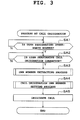
- FIG. 3 is a flowchart of operations of the process at call origination executed by the control section 13 .
- the control section 13 judges whether a key input operation designating an other-party number of the call recipient is performed. More specifically, the control section 13 judges whether a key input operation for inputting the other-party number of the call recipient is performed. Alternatively, the control section 13 judges whether a key input operation designating address book data of the call recipient from the address book data stored in the address book storing section 14a is performed.
- the control section 13 proceeds to Step SA2.
- the control section 13 waits until an off-hook switch operation (call origination operation) is performed. The judgment result is "YES” in response to the off-hook switch operation, and the control section 13 proceeds to SA3.
- the control section 13 performs the own number extraction process. As described hereafter, in the own number extraction process, when the other-party number of the call recipient is registered in the address book storing section 14a and an own number corresponding with the other-party number is registered in the address book storing section 14a, the control section 13 extracts the corresponding own number from the own number storing section 14b.
- the control section 13 extracts either one of the own number in the user-specified own number storing section 14d designated by the user in advance or the own number selected from the own number storing section 14b by the user.
- Step SA4 the control section 13 performs the call origination own number setting process.
- the control section 13 stores the extracted own number in the call origination own number storing section 14c.
- the control section 13 performs the address book updating process.
- the control section 13 corresponds the own number in the call origination own number storing section 14c with the other-party number and registers the corresponded own number and other-party number in the address book storing section 14a.
- the own number is already corresponded with the other-party number and registered, the own number is updated to the call origination own number in the call origination own number storing section 14c, and updated own number is registered.
- control section 13 proceeds to Step SA5.
- the control section 13 originates a call to a network using the call origination own number stored in the call origination own telephone number 14c by the call origination own number setting process at Step SA4.
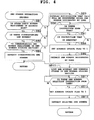
- Step SB1 the control section 13 judges whether the other-party number designated by the user is registered in the address book storing section 14a.
- the judgment result is "NO" , and the control section 13 proceeds to Step SB5, described hereafter.
- Step SB2 the control section 13 searches the address book storing section 14a for the own number corresponding with the other-party number and judges whether the own number is found.
- the judgment result is "YES”
- the control section 13 proceeds to Step SB3.
- the judgment result is "NO”
- the control section 13 proceeds to Step SB5, described hereafter.
- Step SB3 the control section 13 judges whether the own number corresponding with the other-party number designated by the user is registered in the own number storing section 14b. In other words, the control section 13 judges whether the own number corresponding with the other-party number designated by the user can currently be used, since the own number that can currently be used is stored in the own number storing section 14b. When the own number corresponding with the other-party is registered in the own number storing section 14b, the judgment result is "YES", and the control section 13 proceeds to Step SB4. At Step SB4, the control section 13 extracts the own number registered in the own number storing section 14b and completes the process.
- Step SB5 the control section 13 displays a notification on a screen in the display section 4 notifying the user that the call will be originated using the own number in the user-designated own number storing section 14d, designated by the user in advance.
- Step SB6 the control section 13 waits for an instruction from the user (key operation) in response to the notification. Then, when the user performs a key operation, the judgment result is "YES", and the control section 13 proceeds to Step SB7.
- Step SB7 the control section 13 judges whether the key operation performed by the user is an instruction to execute call origination.
- the key operation is the instruction to execute call origination or, in other words, when the call is originated using the own number designated by the user, the judgment result at Step SB7 is "YES".
- the control section 13 proceeds to Step SB8 and sets the address book update flag to "1" .
- Step SB9 the control section 13 extracts the own number designated by the user from the user-designated own number storing section 14d and completes the process.
- Step SB10 the control section 13 reads the own numbers stored in the own number storing section 14b and lists the own numbers in the display section 4.
- Step SB11 the control section 13 waits until the user selects an own number from among any one of the own numbers listed in the display section 4. Then, the judgment result is "YES" in response to the selection instruction from the user.
- the control section 13 proceeds to Step SB12 and sets the address book update flag to "1". Subsequently, the control section 13 proceeds to Step SB13, extracts the selected own number, and completes the process.
- the control section 13 extracts the corresponding own number from the own number storing section 14b.
- the control section 13 instructs the update of the address book (address book storing section 14a).
- the control section 13 extracts either one of the own number stored in the user-designated own number storing section 14d or the own number selected from within the own number storing section 14b.
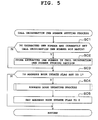
- Step SC1 the control section 13 judges whether the own number extracted by the own number extracting process (refer to FIG. 4) and the call origination own number stored in the call origination own number 14c do not match.
- the judgment result is "NO”
- the control section 13 proceeds to Step SC3, described hereafter.
- the control section 13 stores the own number extracted by the own number extracting process (refer to FIG. 4) in the call origination own number storing section 14c as the call origination own number.
- Step SC3 the control section 13 judges whether the address book update flag is set to "1". When the address book update flag is not set to "1", the judgment result is "NO", and the control section 13 completes the process. At the same time when the address book update flag is set to "1" or, in other words, when the control section 13 extracts the own number designated by the user from the user-designated own number storing section 14d or extracts the own number selected from within the own number storing section 14b in the above-described own number extracting process, the judgment result is "YES". The control section 13 performs an address updating process via Step SC4.
- the control section 13 corresponds the call origination own number stored in the call origination own number storing section 14c with the other-party number and registers the corresponding call origination own number and other-party number in the address book storing section 14a.
- the control section 13 updates the registered own number to the call origination own number in the call origination own number storing section 14c and registers the updated own number.
- the control section 13 updates the own numbers to the call origination own number in the call origination own number storing section 14c and registers the updated own numbers. Subsequently, the control section 13 proceeds to Step SC5, resets the address book update flag to "0", and completes the process.
- the own number extracted by the own number extracting process (refer to FIG. 4) and the call origination own number stored in the call origination own number storing section 14c differ, the own number extracted by the own number extracting process is stored in the call origination own number storing section 14c.
- the control section 13 When the address book update flag is "1" or, in other words, when the control section 13 extracts the own number designated by the user from the user-designated own number storing section 14d or extracts the own number selected from within the own number storing section 14b, the control section 13 performs the address updating process.
- the control section 13 corresponds the own number in the call origination own number storing section 14c with the other-party number and registers the corresponding own party number and other-party number in the address book storing section 14a.
- the own number is already corresponded with the other-party number and registered, the own number is updated to the call origination own number in the call origination own number storing section 14c and registered.
- Step SD1 the control section 13 judges whether the other-party number designated by the user is registered in the address book storing section 14a. When the other-party number is not registered in the address book storing section 14a, the judgment result is "NO", and the control section 13 proceeds to Step SD2.
- the control section 13 corresponds the other-party number designated by the user with the call origination own number stored in the call origination own number storing section 14c and registers the corresponding other-party number and call origination own number in the address book storing section 14a. Then, the control section 13 completes the process.
- Step SD3 the control section 13 judges whether the own number corresponding with the other-party number is stored. When the own number corresponding with the other-party number is not stored, the judgment result is "NO” , and the control section 13 proceeds to Step SD2.
- Step SD2 the control section 13 corresponds the call origination own number stored in the call origination own number storing section 14c with the other-party number and registers the corresponding call origination own number and other-party number in the address book storing section 14a. Then, the control section 13 completes the process.
- Step SD4 the control section 13 extracts the number of entries registered in the address book storing section 14a.
- Step SD5 the control section 13 stores an initial value "1" in a pointer register N designating address book data.
- Steps SD6 to SD7 the control section 13 searches the address book storing section 14 for the own number corresponding with the other-party number, while incrementing the value in the point register N in steps until the value reaches the number of registered entries extracted at Step SD4.
- the control section 13 updates the own number to the call origination own number in the call origination own number storing section 14c and registers the updated own number.
- Step SD6 the control section 13 judges whether the own number within the Nth address book data, designated by the value in the pointer register N, matches the own number corresponding with the other-party number, in the address book storing section 14a. When the numbers do not match, the judgment result is "NO", and the control section 13 proceeds to Step SD8 .
- Step SD8 the control section 13 judges whether the value in the pointer register N has reached the number of registered entries extracted at Step SD4. In other words, the control section 13 judges whether the search is completed. When the search is not completed, the judgment result is "NO", and the control section 13 proceeds to Step SD9. After incrementing the pointer register N in steps, the control section 13 returns the process to Step SD6.
- Step SD6 the judgment result at Step SD6 is "YES"
- the control section 13 updates the call origination own number read from the call origination own number storing section 14c to the Nth own number and registers the updated own number in the address book storing section 14a.
- Step SD8 judges whether the search is completed. When the search is completed, the judgment result is "YES” , and the control section 13 completes the process.
- the control section 13 corresponds the other-party number with the call origination own number in the call origination own number storing section 14c and registers the corresponding other-party number and call origination number in the address book storing section 14a.
- the control section 13 updates the own number to the call origination own number stored in the call origination own number storing section 14c and registers the updated own number.
- the control section 13 updates the own numbers to the call origination own number in the call origination own number storing section 14c and registers the updated own numbers.
- the control section 13 performs a process at communication termination shown in FIG.7 and proceeds to Step SE1, in response to an on-hook switch operation performed upon communication termination. Then, the judgment result at Step SE1 is "YES" in response to the communication termination, and the control section 13 proceeds to Step SE2.
- Step SE2 the control section 13 judges whether the call origination own number stored in the call origination own number storing section 14c and the user-designated own number stored in the user-designated own number storing section 14d do not match. When the call origination own number and the user-designated own number match, the judgment result is "YES".
- the control section 13 completes the process without performing any operations.
- Step SE3 the control section 13 registers the user-designated own number read from the user-designated own number storing section 14d in the call origination own number storing section 14c as the call origination own number and completes the process.
- the control section 13 when the own number corresponding with the other-party number of the call recipient is registered in the address book storing section 14a, the control section 13 extracts the corresponding own number from the own number storing section 14b. When the extracted own number and the call origination own number stored in the call origination own number storing section 14c match, the control section 13 uses the call origination own number and originates the call to the other-party number. As a result, the operation for selecting the own number every time a call is originated becomes unnecessary.
- the own numbers to be used at call origination can be used separately based on use, without the selection operation being performed.
- the control section 13 extracts either one of the own number designated by the user or the own number selected by the user from the own number storing section 14b.
- the control section 13 stores the extracted own number in the call origination own number storing section 14c.
- the control section 13 corresponds the call origination own number stored in the call origination own number storing section 14c with the other-party number and registers the other-party number in the address book storing section 14a.
- the control section 13 updates the own number to the call origination own number stored in the call origination own number storing section 14c and registers the updated own number. Furthermore, when the own numbers are the same, the control section 13 updates the own numbers to the call origination own number in the call origination own number storing section 14c and registers the updated own numbers. As a result, when the next and subsequent calls are originated, the operation to select the own number becomes unnecessary.
- the own numbers to be used at call origination can be used separately based on use, without the selection operation being performed.
- the control section 13 judges whether the call origination number stored in the call origination own number storing section 14c and the user-designated own number stored in the user-designated own number storing section 14d differ upon communication termination and judges that both own numbers differ, the user-designated own number stored in the user-designated own number storing section 14d is registered in the call origination own number storing section 14c as the call origination own number. Therefore, when registering an other-party number to which the user is calling for the first time in the address book storing section 14a, the control section 13 can correspond the own number designated by the user with the other-party number and register the corresponding own number as the other-party number. As a result, when the next and subsequent calls are originated, the operation to select the own number becomes unnecessary.
- the own numbers to be used at call origination can be used separately based on use, without the selection operation being performed.
- the overall configuration according to the second embodiment is the same as that according to the first embodiment, shown in FIG. 1. Therefore, explanations thereof are omitted.
- the data configurations in the address book storing section 14a and the own number storing section 14b of the subscriber information memory section 14 differ from those according to the first embodiment.
- a configuration of the subscriber information memory section 14 according to the second embodiment will be described with reference to FIG. 8.
- the subscriber information memory section 14 includes the address book storing section 14a, the own number storing section 14b, the call origination own number storing section 14c, and the user-designated own number storing section 14d.
- the own number storing section 14b corresponds the own number read by the control section 13 from the UIM card 7-1 (or 7-2), via the card slot SL1 (or SL2), with the slot number and stores the corresponding own number and slot number.
- the own number storing section 14b corresponds the own number than can currently be used with the slot number and stores the corresponding own number and slot number.
- the address book storing section 14a stores address book data including the other-party number, the slot number corresponding with the own number and stored in the own number storing section 14b, and a UIM card replacement flag (described hereafter).
- the call origination own number storing section 14c stores the call origination own number used to originate a call.
- the user-designated own number storing section 14d stores the own number designated by the user in advance (user-designated own number).
- the subscriber information storing section 14 functions as a memory means.
- FIG. 9 is a flowchart showing operations of the UIM card replacing process.
- the control section 13 advances the process to Step SF1, shown in FIG. 9, and judges whether the UIM card is replaced. When the UIM card is not replaced, the judgment result is "NO". The control section 13 completes the process without performing any operations. On the other hand, when the UIM card is replaced, the judgment result is "YES", and the control section 13 proceeds to Step SF2.
- the control section 13 corresponds the own number read from the UIM card 7-1 (or 7-1), via the card slot SL1 (or SL2), with the slot number and stores the corresponding own number and slot number in the own number storing section 14b.
- Step SF3 the control section 13 sets the replacement flags of all address book data stored in the address book storing section 14a to "1" and completes the process. Setting the replacement flags within all address book data to "1" indicates that the UIM card has been replaced.
- Step SG1 the control section 13 judges whether an address book data selection operation is performed.
- the address book data selection operation refers to, for example, the control section 13 displaying the other-party numbers within the address book data registered in the address book storing section 14a on the screen of the display section 4 and selecting the address book data including the desired other-party number from among the displayed other-party numbers.
- the judgment result is "YES”
- the control section 13 proceeds to Step SG2.
- Step SG2 the control section 13 displays the content of the selected address book data (the other-party number, the slot number, and the replacement flag) on the screen of the display section 4.
- Step SG3 the control section 13 judges whether a slot number and own number registration operation is performed. When the user performs the slot number and own number registration operation, the judgment result is "YES”, and the control section 13 proceeds to Step SG4.
- Step SG4 the control section 13 lists the slot numbers stored in the own number storing section 14b and the own numbers corresponding with the slot numbers in the display section 4.
- Step SG5 the control section 13 judges whether the selection operation is performed. When the user performs the selection operation, the judgment result is "YES”, and the control section 13 proceeds to Step SG6.
- Step SG6 the control section 13 registers the selected slot number in the address book storing section 14a as the slot number of the address book data selected by the address book data selection operation performed at Step SG1.
- Step SG7 the control section 13 resets the replacement flag to zero. The replacement flag is that within the address book data of which the slot number is updated. Then, the control section 13 completes the process.
- Step SH1 the control section 13 judges whether the other-party number designated by the user is registered in the address book storing section 14a of the subscriber information memory section 14. When the other-party number is not registered in the address book storing section 14a, the judgment result is "NO", and the control section 13 proceeds to Step SH5, described hereafter.
- Step SH2 the control section 13 searches the address book storing section 14a for the slot number corresponding with the other-party number and judges whether the slot number is found.
- the judgment result is "YES”
- the control section 13 proceeds to Step SH3.
- the judgment result is "NO”
- the control section 13 proceeds to Step SH5, described hereafter.
- Step SH3 the control section 13 judges whether the replacement flag corresponding with the other-party number designated by the user is set to "0".
- the control section 13 extracts the own number that is corresponded with the slot number and stored. Then, the control section 13 completes the process.
- Step SH4 the control section 13 displays a notification on the screen in the display section 4 notifying the user that the call will be originated using the own number designated by the user.
- Step SH6 the control section 13 waits for an instruction from the user (key operation) in response to the notification.
- Step SH7 the control section 13 judges whether the key operation performed by the user is an instruction to execute call origination.
- the key operation is the instruction to execute call origination or, in other words, when the call is originated using the own number designated by the user, the judgment result at Step SH7 is "YES".
- the control section 13 proceeds to Step SH8 and sets the address book update flag to "1".
- Step SH9 the control section 13 extracts the own number designated by the user from the user-designated own number storing section 14d in the subscriber information memory section 14 and completes the process.
- Step SH10 the control section 13 reads the own numbers stored in the own number storing section 14b of the subscriber information memory section 14 and lists the own numbers in the display section 4.
- Step SH11 the control section 13 waits until the user selects any one of the own numbers listed in the display section 4. Then, the judgment result is "YES” in response to the selection instruction from the user.
- the control section 13 proceeds to Step SH12 and sets the address book update flag to "1". Subsequently, the control section 13 proceeds to Step SH13, extracts the selected own number from the own number storing section 14b, and completes the process.
- the control section 13 extracts the own number corresponding with the slot number from the own number storing section 14b.
- the control section 13 instructs the updating of the address book.
- the control section 13 extracts either one of the own number designated by the user or the own number selected from within the own number storing section 14b.
- Step SJ1 the control section 13 judges whether the other-party number designated by the user is registered in the address book storing section 14a of the subscriber information memory section 14. When the other-party number is not registered in the address book storing section 14a, the judgment result is "NO" , and the control section 13 proceeds to Step SJ2.
- the control section reads the slot number corresponding with the own number matching the call origination own number stored in the call origination own number storing section 14c from the own number storing section 14b.
- the control section 13 corresponds the read slot number with the other-party number designated by the user and registers the corresponding slot number and other-party number in the address book storing section 14a. Then, the control section 13 completes the process.
- Step SJ1 the judgment result at Step SJ1 is "YES”, and the control section 13 proceeds to Step SJ3.
- Step SJ3 the control section 13 judges whether the slot number corresponding with the other-party number is stored. When the slot number corresponding to the other-party number is not stored, the judgment result is "NO” , and the control section 13 proceeds to Step SJ2.
- Step SJ2 the control section 13 corresponds the slot number of the own number matching the call origination own number with the other-party number and registers the corresponding slot number and other-party number in the address book storing section 14a.
- Step SJ4 the control section 13 extracts the number of entries registered in the address book storing section 14a.
- Step SJ5 the control section stores the initial value "1" in the pointer register N designating the address book data.
- Step SJ6 the control section 13 judges whether the replacement flag of the Nth address book data designated by the value in the pointer register N in the address book storing section 14a is set to "1".
- the replacement flag of the Nth address book data is set to "0" or, in other words, when the UIM card is not replaced, the judgment result is "NO” , and the control section 13 proceeds to Step SJ10.
- Step SJ10 the control section 13 judges whether the value of the pointer register N has reached the number of registered entries extracted at Step SJ4. In other words, the control section 13 judges whether the search is completed. When the search is not completed, the judgment result is "NO", and the control section 13 proceeds to Step SJ11. After the control section 13 increments the value in the pointer register N by steps, the control section 13 returns the process to Step SJ6. When the replacement flag of the Nth address book data designated by the value of the incremented pointer register N is set to "1" , the judgment result at Step SJ6 is "YES", and the control section 13 proceeds to Step SJ7.
- Step SJ7 the control section 13 judges whether the slot number of the Nth address book data designated by the value in the pointer register N matches the slot number corresponding with the other-party number designated by the user. When the slot numbers do not match, the judgment result is "NO" , and the control section 13 proceeds to Step SJ10.
- Step SJ8 the control section 13 reads the slot number corresponding with the own number matching the call origination own number stored in the call origination own number storing section 14b from the own number storing section 14b. The control section 13 updates the read slot number to the Nth slot number and registers the updated slot number in the address book storing section 14a.
- Step SJ9 sets the replacement flag of the Nth address book data designated by the value in the pointer register N to "0" and proceeds to Step SJ10. Then, at Step SJ10, when the value in the pointer register N reaches the number of registered entries and the control section 13 completes the search, the judgment result is "YES", and the control section 13 completes the process.
- the control section 13 reads the slot number corresponding with the own number matching the call origination own number stored in the call origination own number storing section 14c from the own number storing section 14b. Then, the control section 13 corresponds the read slot number with the other-party number designated by the user and registers the corresponding slot number and other-party number in the address book storing section 14a.
- the control section 13 reads the slot number corresponding with the own numbermatching the call origination own number stored in the call origination own number storing section 14c from the own number storing section 14b.
- the control section 13 corresponds the read slot number with the other-party number designated by the user.
- the control section updates and registers the corresponding slot number and other-party number in the address book storing section 14a.
- the control section 13 resets the corresponding replacement flag to zero.
- the control section 13 extracts the own number corresponding with the slot number from the own number storing section 14b.
- the control section 13 originates a call to the other-party number using the call origination own number.
- the own numbers to be used at call origination can be used separately based on use, without the selection operation being performed.
- the control section 13 instructs the update of the address book.
- the control section 13 extracts either one of the own number designated by the user or the own number selected from within the own number storing section 14b.
- the control section 13 stores the extracted own number in the call origination own number storing section 14c.
- the control section 13 reads the slot number corresponding with the own number matching the call origination own number stored in the call origination own number storing section 14c from the own number storing section 14b.
- the control section 13 corresponds the read slot number with the other-party number designated by the user and registers the corresponding slot number and other-party number in the address book storing section 14a.
- the control section 13 reads the slot number corresponding with the own number matching the call origination own number stored in the call origination own number storing section 14c.
- the control section 13 corresponds the read slot number with the other-party number designated by the user.
- the control section 13 updates and registers the corresponding slot number and other-party number in the address book storing section 14a.
- the control section 13 resets the corresponding replacement flag to zero.
- the computer program product of the mobile communication terminal that is a preferred embodiment of the present invention is stored in the memory (for example, ROM, etc.) of the mobile communication terminal
- this processing program is stored on a computer-readable medium and should also be protected in the case of manufacturing, selling, etc. of only the program.
- the method of protecting the program with a patent will be realized by the form of the computer-readable medium on which the computer program product is stored.
Landscapes
- Engineering & Computer Science (AREA)
- Signal Processing (AREA)
- Computer Networks & Wireless Communication (AREA)
- Mobile Radio Communication Systems (AREA)
- Telephone Function (AREA)
Applications Claiming Priority (1)
| Application Number | Priority Date | Filing Date | Title |
|---|---|---|---|
| JP2006037325A JP4130461B2 (ja) | 2006-02-15 | 2006-02-15 | 携帯無線端末および携帯無線端末の処理プログラム |
Publications (3)
| Publication Number | Publication Date |
|---|---|
| EP1821503A2 true EP1821503A2 (fr) | 2007-08-22 |
| EP1821503A3 EP1821503A3 (fr) | 2008-10-08 |
| EP1821503B1 EP1821503B1 (fr) | 2016-01-20 |
Family
ID=38016401
Family Applications (1)
| Application Number | Title | Priority Date | Filing Date |
|---|---|---|---|
| EP07001402.2A Not-in-force EP1821503B1 (fr) | 2006-02-15 | 2007-01-23 | Terminal de communication mobile et programme de traitement correspondant pour sélectionner un numéro d'appelant propre lors de l'établissement d'un appel |
Country Status (5)
| Country | Link |
|---|---|
| US (1) | US7860534B2 (fr) |
| EP (1) | EP1821503B1 (fr) |
| JP (1) | JP4130461B2 (fr) |
| KR (1) | KR100843029B1 (fr) |
| CN (1) | CN101022617B (fr) |
Cited By (2)
| Publication number | Priority date | Publication date | Assignee | Title |
|---|---|---|---|---|
| EP2043340A3 (fr) * | 2007-09-25 | 2013-03-06 | NEC CASIO Mobile Communications, Ltd. | Terminal de télécommunication mobile, système de communication et support de stockage lisible sur ordinateur |
| EP3270578A4 (fr) * | 2015-03-12 | 2019-01-23 | NTT Docomo, Inc. | Dispositif et procédé d'utilisation d'un numéro de téléphone approprié pour la connexion d'appel |
Families Citing this family (3)
| Publication number | Priority date | Publication date | Assignee | Title |
|---|---|---|---|---|
| JP5207279B2 (ja) * | 2008-01-09 | 2013-06-12 | Necカシオモバイルコミュニケーションズ株式会社 | 通信端末装置及びプログラム |
| US8579442B2 (en) * | 2009-05-27 | 2013-11-12 | Transpacific Image, Llc | Advertisement content selection and presentation |
| JP2015111789A (ja) * | 2013-12-06 | 2015-06-18 | サクサ株式会社 | 電話装置及びそのプログラム |
Citations (3)
| Publication number | Priority date | Publication date | Assignee | Title |
|---|---|---|---|---|
| EP1051052A1 (fr) | 1999-05-07 | 2000-11-08 | Darwish Bin Karam Humaid | Radiotéléphone avec plusieurs lecteurs de carte SIM |
| EP1553793A2 (fr) | 2004-01-07 | 2005-07-13 | Aruze Corp. | Téléphone cellulaire et procédé de contrôle d'un téléphone cellulaire |
| EP1718087A1 (fr) | 2005-04-28 | 2006-11-02 | Koninklijke KPN N.V. | Dispositif et procédé pour sélectionner automatiquement un d'un ensemble de lecteurs de cartes de SIM comporté par un dispositif de communications pour l'établissement d'un appel sortant |
Family Cites Families (8)
| Publication number | Priority date | Publication date | Assignee | Title |
|---|---|---|---|---|
| JPH05284103A (ja) | 1992-03-31 | 1993-10-29 | Toshiba Corp | 無線電話システム |
| WO1999045730A1 (fr) * | 1998-03-06 | 1999-09-10 | Giovanni Ferrara | Dispositif electronique permettant un dedoublement fonctionnel de telephones cellulaires et analogue par cartes multiples |
| JP3576977B2 (ja) * | 2001-01-12 | 2004-10-13 | 株式会社東芝 | 携帯端末 |
| JP2005072931A (ja) | 2003-08-25 | 2005-03-17 | Nec Corp | 携帯端末 |
| KR100651937B1 (ko) * | 2004-07-30 | 2006-12-06 | 엘지전자 주식회사 | 두 개의 발신번호를 갖는 이동통신 단말기 |
| KR100713413B1 (ko) * | 2004-10-30 | 2007-05-04 | 삼성전자주식회사 | 카드 정보를 자동으로 인식하여 구동 모드를 선택하는듀얼모드 이동통신 단말기 및 그 방법 |
| KR100749184B1 (ko) * | 2005-09-23 | 2007-08-13 | 에스케이 텔레콤주식회사 | 폰북 기능을 갖는 통신 단말기의 발신 처리 방법 |
| US20070184858A1 (en) * | 2006-02-09 | 2007-08-09 | Agere Systems Inc. | Method of attaching mobile communication tasks to a Subscriber Information Module card and mobile communication device incorporating the same |
-
2006
- 2006-02-15 JP JP2006037325A patent/JP4130461B2/ja not_active Expired - Fee Related
-
2007
- 2007-01-23 EP EP07001402.2A patent/EP1821503B1/fr not_active Not-in-force
- 2007-02-07 US US11/703,622 patent/US7860534B2/en active Active
- 2007-02-12 KR KR1020070014214A patent/KR100843029B1/ko not_active Expired - Fee Related
- 2007-02-14 CN CN2007100053085A patent/CN101022617B/zh not_active Expired - Fee Related
Patent Citations (3)
| Publication number | Priority date | Publication date | Assignee | Title |
|---|---|---|---|---|
| EP1051052A1 (fr) | 1999-05-07 | 2000-11-08 | Darwish Bin Karam Humaid | Radiotéléphone avec plusieurs lecteurs de carte SIM |
| EP1553793A2 (fr) | 2004-01-07 | 2005-07-13 | Aruze Corp. | Téléphone cellulaire et procédé de contrôle d'un téléphone cellulaire |
| EP1718087A1 (fr) | 2005-04-28 | 2006-11-02 | Koninklijke KPN N.V. | Dispositif et procédé pour sélectionner automatiquement un d'un ensemble de lecteurs de cartes de SIM comporté par un dispositif de communications pour l'établissement d'un appel sortant |
Cited By (3)
| Publication number | Priority date | Publication date | Assignee | Title |
|---|---|---|---|---|
| EP2043340A3 (fr) * | 2007-09-25 | 2013-03-06 | NEC CASIO Mobile Communications, Ltd. | Terminal de télécommunication mobile, système de communication et support de stockage lisible sur ordinateur |
| EP3270578A4 (fr) * | 2015-03-12 | 2019-01-23 | NTT Docomo, Inc. | Dispositif et procédé d'utilisation d'un numéro de téléphone approprié pour la connexion d'appel |
| US10462280B2 (en) | 2015-03-12 | 2019-10-29 | Ntt Docomo, Inc. | Device and method for using appropriate telephone number for call connection |
Also Published As
| Publication number | Publication date |
|---|---|
| JP2007221281A (ja) | 2007-08-30 |
| EP1821503A3 (fr) | 2008-10-08 |
| US7860534B2 (en) | 2010-12-28 |
| JP4130461B2 (ja) | 2008-08-06 |
| EP1821503B1 (fr) | 2016-01-20 |
| CN101022617B (zh) | 2013-04-24 |
| KR100843029B1 (ko) | 2008-07-01 |
| CN101022617A (zh) | 2007-08-22 |
| US20070201680A1 (en) | 2007-08-30 |
| KR20070082523A (ko) | 2007-08-21 |
Similar Documents
| Publication | Publication Date | Title |
|---|---|---|
| JP4296598B2 (ja) | 通信端末装置および通信端末処理プログラム | |
| US8527010B2 (en) | Device, system, and method for informing users of functions and characters associated with telephone keys | |
| EP1821503A2 (fr) | Terminal de communication mobile et programme de traitement correspondant pour sélectionner un numéro d'appelant propre lors de l'établissement d'un appel | |
| KR100627718B1 (ko) | 문자 메시지에 포함되어 있는 전화 번호에 하이퍼링크기능을 제공하는 이동통신 단말기 및 그 방법 | |
| KR101395154B1 (ko) | 휴대 전화기, 확인 정보 표시 프로그램, 확인 정보 표시방법 및 휴대 전화기의 발신방법 | |
| CN100403707C (zh) | 信息检索系统、信息检索系统的一种终端和一种中心 | |
| JP5751607B2 (ja) | 端末装置およびプログラム | |
| JP4197335B2 (ja) | 携帯無線端末およびプログラム | |
| US20060140379A1 (en) | Telephone device | |
| EP1221799B1 (fr) | Terminal téléphonique portable | |
| KR20070054070A (ko) | 휴대 단말 장치, 부재 착신 프로그램을 기록한 컴퓨터 판독가능한 기록 매체 및 화상 표시 방법 | |
| JP5537198B2 (ja) | 携帯電子機器 | |
| JP6838464B2 (ja) | 電話システム | |
| JPH11252216A (ja) | 電話機 | |
| JP4839486B2 (ja) | 通信端末装置および通信端末処理プログラム | |
| JP2000332904A (ja) | 携帯テレビ電話端末 | |
| JP5261005B2 (ja) | 携帯情報機器 | |
| JP2001320469A (ja) | 電話機 | |
| JP2003087360A (ja) | 携帯端末 | |
| KR100810199B1 (ko) | 휴대단말기에서 발신정보표시를 위한 장치 및 방법 | |
| JP4246649B2 (ja) | 携帯電話機 | |
| CN1322776C (zh) | 蜂窝手提电话机输出信息一览表的方法 | |
| KR20070065752A (ko) | 이동통신 단말기에서 저장된 이미지를 이용하여다이얼링하는 방법 및 시스템 | |
| JP2000197135A (ja) | 携帯電話機 | |
| JP2002135398A (ja) | 通信端末装置 |
Legal Events
| Date | Code | Title | Description |
|---|---|---|---|
| PUAI | Public reference made under article 153(3) epc to a published international application that has entered the european phase |
Free format text: ORIGINAL CODE: 0009012 |
|
| 17P | Request for examination filed |
Effective date: 20070123 |
|
| AK | Designated contracting states |
Kind code of ref document: A2 Designated state(s): AT BE BG CH CY CZ DE DK EE ES FI FR GB GR HU IE IS IT LI LT LU LV MC NL PL PT RO SE SI SK TR |
|
| AX | Request for extension of the european patent |
Extension state: AL BA HR MK RS |
|
| PUAL | Search report despatched |
Free format text: ORIGINAL CODE: 0009013 |
|
| AK | Designated contracting states |
Kind code of ref document: A3 Designated state(s): AT BE BG CH CY CZ DE DK EE ES FI FR GB GR HU IE IS IT LI LT LU LV MC NL PL PT RO SE SI SK TR |
|
| AX | Request for extension of the european patent |
Extension state: AL BA HR MK RS |
|
| 17Q | First examination report despatched |
Effective date: 20081210 |
|
| AKX | Designation fees paid |
Designated state(s): DE FR GB |
|
| RAP1 | Party data changed (applicant data changed or rights of an application transferred) |
Owner name: NEC CASIO MOBILE COMMUNICATIONS LTD. |
|
| RAP1 | Party data changed (applicant data changed or rights of an application transferred) |
Owner name: NEC CASIO MOBILE COMMUNICATIONS, LTD. |
|
| RAP1 | Party data changed (applicant data changed or rights of an application transferred) |
Owner name: NEC CORPORATION |
|
| RAP1 | Party data changed (applicant data changed or rights of an application transferred) |
Owner name: LENOVO INNOVATIONS LIMITED (HONG KONG) |
|
| GRAP | Despatch of communication of intention to grant a patent |
Free format text: ORIGINAL CODE: EPIDOSNIGR1 |
|
| RIC1 | Information provided on ipc code assigned before grant |
Ipc: H04M 1/56 20060101ALI20150709BHEP Ipc: H04M 1/2745 20060101AFI20150709BHEP |
|
| INTG | Intention to grant announced |
Effective date: 20150722 |
|
| GRAS | Grant fee paid |
Free format text: ORIGINAL CODE: EPIDOSNIGR3 |
|
| GRAA | (expected) grant |
Free format text: ORIGINAL CODE: 0009210 |
|
| AK | Designated contracting states |
Kind code of ref document: B1 Designated state(s): DE FR GB |
|
| REG | Reference to a national code |
Ref country code: GB Ref legal event code: FG4D |
|
| REG | Reference to a national code |
Ref country code: DE Ref legal event code: R096 Ref document number: 602007044607 Country of ref document: DE |
|
| REG | Reference to a national code |
Ref country code: DE Ref legal event code: R097 Ref document number: 602007044607 Country of ref document: DE |
|
| PLBE | No opposition filed within time limit |
Free format text: ORIGINAL CODE: 0009261 |
|
| STAA | Information on the status of an ep patent application or granted ep patent |
Free format text: STATUS: NO OPPOSITION FILED WITHIN TIME LIMIT |
|
| 26N | No opposition filed |
Effective date: 20161021 |
|
| REG | Reference to a national code |
Ref country code: FR Ref legal event code: ST Effective date: 20161219 |
|
| PG25 | Lapsed in a contracting state [announced via postgrant information from national office to epo] |
Ref country code: FR Free format text: LAPSE BECAUSE OF NON-PAYMENT OF DUE FEES Effective date: 20160321 |
|
| PGFP | Annual fee paid to national office [announced via postgrant information from national office to epo] |
Ref country code: GB Payment date: 20190130 Year of fee payment: 13 Ref country code: DE Payment date: 20190131 Year of fee payment: 13 |
|
| PGFP | Annual fee paid to national office [announced via postgrant information from national office to epo] |
Ref country code: DE Payment date: 20190131 Year of fee payment: 13 |
|
| REG | Reference to a national code |
Ref country code: DE Ref legal event code: R119 Ref document number: 602007044607 Country of ref document: DE |
|
| GBPC | Gb: european patent ceased through non-payment of renewal fee |
Effective date: 20200123 |
|
| PG25 | Lapsed in a contracting state [announced via postgrant information from national office to epo] |
Ref country code: DE Free format text: LAPSE BECAUSE OF NON-PAYMENT OF DUE FEES Effective date: 20200801 Ref country code: GB Free format text: LAPSE BECAUSE OF NON-PAYMENT OF DUE FEES Effective date: 20200123 |