EP1826890A2 - Générateur de démarrage sans balai avec champ d'excitateur contrôlable indépendamment - Google Patents
Générateur de démarrage sans balai avec champ d'excitateur contrôlable indépendamment Download PDFInfo
- Publication number
- EP1826890A2 EP1826890A2 EP07102815A EP07102815A EP1826890A2 EP 1826890 A2 EP1826890 A2 EP 1826890A2 EP 07102815 A EP07102815 A EP 07102815A EP 07102815 A EP07102815 A EP 07102815A EP 1826890 A2 EP1826890 A2 EP 1826890A2
- Authority
- EP
- European Patent Office
- Prior art keywords
- exciter
- rotor
- phase
- main
- generator
- Prior art date
- Legal status (The legal status is an assumption and is not a legal conclusion. Google has not performed a legal analysis and makes no representation as to the accuracy of the status listed.)
- Ceased
Links
- 238000004804 winding Methods 0.000 claims abstract description 56
- 230000005284 excitation Effects 0.000 claims abstract description 43
- 230000004907 flux Effects 0.000 claims abstract description 21
- 230000004044 response Effects 0.000 claims abstract description 8
- 238000000819 phase cycle Methods 0.000 claims 3
- 238000010586 diagram Methods 0.000 description 4
- 230000005672 electromagnetic field Effects 0.000 description 3
- 238000012423 maintenance Methods 0.000 description 3
- 230000001360 synchronised effect Effects 0.000 description 3
- 238000004140 cleaning Methods 0.000 description 2
- 230000000712 assembly Effects 0.000 description 1
- 238000000429 assembly Methods 0.000 description 1
- 230000000694 effects Effects 0.000 description 1
- 230000003993 interaction Effects 0.000 description 1
- 239000000463 material Substances 0.000 description 1
- 238000000034 method Methods 0.000 description 1
- 238000012986 modification Methods 0.000 description 1
- 230000004048 modification Effects 0.000 description 1
- 230000000737 periodic effect Effects 0.000 description 1
- 239000007858 starting material Substances 0.000 description 1
Images



Classifications
-
- H—ELECTRICITY
- H02—GENERATION; CONVERSION OR DISTRIBUTION OF ELECTRIC POWER
- H02K—DYNAMO-ELECTRIC MACHINES
- H02K19/00—Synchronous motors or generators
- H02K19/02—Synchronous motors
- H02K19/10—Synchronous motors for multi-phase current
- H02K19/12—Synchronous motors for multi-phase current characterised by the arrangement of exciting windings, e.g. for self-excitation, compounding or pole-changing
-
- H—ELECTRICITY
- H02—GENERATION; CONVERSION OR DISTRIBUTION OF ELECTRIC POWER
- H02K—DYNAMO-ELECTRIC MACHINES
- H02K19/00—Synchronous motors or generators
- H02K19/16—Synchronous generators
- H02K19/26—Synchronous generators characterised by the arrangement of exciting windings
- H02K19/28—Synchronous generators characterised by the arrangement of exciting windings for self-excitation
Definitions
- the present invention relates to rotating electrical machines such as starter-generators for gas turbine engines and, more particularly, to a brushless starter-generator with an independently controllable exciter field.
- An aircraft may include various types of rotating electrical machines such as, for example, generators, motors, and motor/generators.
- Motor/generators are used as staiter-generators in some aircraft, since this type of rotating electrical machine may be operated in both a motor mode and a generator mode.
- a starter-generator may be used to start the engines or auxiliary power unit (APU) of an aircraft when operating as a motor, and to supply electrical power to the aircraft power distribution system when operating as a generator.
- a starter-generator may be used to start the engines.
- One particular type of aircraft starter-generator includes three separate brushless generators, namely, a permanent magnet generator (PMG), an exciter generator, and a motor/generator.
- the PMG includes permanent magnets on its rotor. When the PMG rotor rotates, AC currents are induced in stator windings of the PMG. These AC currents are typically fed to a regulator or a control device, which in turn outputs a DC current if the starter-generator is operating in a generator mode. Conversely, if the starter-generator is operating in a motor mode, the control device supplies AC power.
- AC power from the control device is supplied to the exciter stator.
- This AC power induces, via a transformer effect, an electromagnetic field in the exciter armature, whether the exciter rotor is stationary or rotating.
- the AC currents produced by this induced field are rectified by the rectifier circuits and supplied to the main motor/generator rotor, which produces a DC field in the rotor.
- Variable frequency AC power is supplied from the control device to the main motor/generator stator. This AC power produces a rotating magnetic field in the main stator, which causes the main rotor to rotate and supply mechanical output power.
- the above-described starter-generator can potentially provide overall weight savings and improved operating costs in, for example, a More Electric Aircraft (MEA) system architecture. It is noted, however, that the starter-generator in such architectures may be used to start the aircraft main engines, and may thus need to generate a starting torque that is significantly higher than for existing auxiliary power unit (APU) starter-generator applications.
- MEA More Electric Aircraft
- Current starter-generators typically include relatively complex and heavy power electronics circuits in the control device,
- some control devices may include inverters, for converting DC to AC power, rectifiers, for converting AC power to DC power, and potentially complex voltage and frequency control circuits, which can increase overall complexity, cost, and maintenance
- brush-type DC machines may alleviate the need for some of these complex and heavy electronic circuits, these also suffer certain drawbacks.
- the brushes tend to wear fairly quickly, which can reduce machine reliability and increase the need for periodic maintenance and cleaning.
- Some brush-type DC machines can also suffer what is known as torque ripple during startup. In some instances, the torque ripple can be large, which can result in poor starter performance.
- the present invention provides a starter-generator system that supplies a controllable torque to a gas turbine engine, to thereby assist in starting the gas turbine engine, by independently controlling excitation frequency and/or voltage magnitude.
- a starter-generator includes a multi-phase exciter stator, a rotationally mounted multi-phase exciter rotor, a multi-phase main stator, a rotationally mounted multi-phase main rotor, and an exciter controller
- the multi-phase exciter stator has a plurality of exciter stator windings wound thereon that, upon electrical excitation thereof, generate a rotating exciter stator electromagnetic flux
- the rotationally mounted multi-phase exciter rotor is disposed at least partially within the multi-phast exciter stator, and has a plurality of exciter rotor windings wound thereon that, upon excitation thereof with the rotating exciter stator exciter flux, have non-rectified excitation currents induced therein.
- the multi-phase main stator has a plurality of main stator windings wound thereon that, upon electrical excitation thereof from main AC power source, generate a rotating main stator electromagnetic flux.
- the rotationally mounted multi-phase main rotor is disposed at least partially within the multi-phase main stator and is mechanically coupled to the exciter rotor.
- the multi-phase main rotor has a plurality of main rotor windings wound thereon that are electrically connected to receive the non-rectified excitation currents induced in the exciter rotor windings and that, upon excitation thereof with the main stator rotating electromagnetic flux and in response to the non-rectified excitation currents supplied thereto, have currents induced therein that generate a main rotor torque to thereby cause the multi-phase main rotor and the multi-phase exciter rotor to rotate.
- the exciter controller is electrically coupled to at least the exciter stator windings and is configured to selectively supply the electrical excitation thereto, to thereby selectively control the generated main rotor torque.
- a starter-generator in yet another exemplary embodiment, includes a multi-phase exciter stator, a multi-phase exciter rotor, a multi-phase main stator, and a multi-phase main rotor.
- the multi-phase exciter stator has a plurality of exciter stator windings wound thereon.
- the multi-phase exciter rotor is rotationally mounted, is disposed at least partially within the multi-phase exciter stator, and has a plurality of exciter rotor windings wound thereon.
- the multi-phase main stator has a plurality of main stator windings wound thereon that upon electrical excitation thereof from a main AC power source, generate a rotating main stator electromagnetic flux.
- the multi-phase main rotor is rotationally mounted, is disposed at least partially within the multi-phase stator, and is mechanically coupled to the exciter rotor.
- the multi-phase main rotor further has a plurality of main rotor windings wound thereon that are directly connected to the exciter rotor windings and upon excitation thereof with the main stator rotating electromagnetic flux, have currents induced therein that generate a main rotor torque to thereby cause the multi-phase main rotor and the multi-phase exciter rotor to rotate,
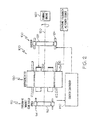
- FIG. 1 is a functional block diagram of an exemplary high speed stmer-gmeroor system according to an embodiment of the present invention when operating in a generator mode;
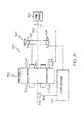
- FIG. 2 is a functional block diagram of the exemplary high speed starter-generator system of FIG. 1, when operating in a motor mode;
- FIG. 3 is a functional block diagram of the exemplary high speed starter-generator system of FIGS. 1 and 2, according to an alternative embodiment of the present invention
- FIG. 4 is a perspective view of a physical embodiment of the high speed starter-generators shown in FIGS. 1-3;
- FIG. 5 is a schematic representation of at least a portion of the high speed starter-generators of FIGS. 1-3,
- starter-generator is described herein as being used with, for example, an aircraft gas turbine engine, it will be appreciated that may be used as a starter-generator with gas turbine engines in numerous other environments included, for example, space, marine, land, or other vehicle-related applications where gas turbine engines are used.
- FIG. 1 a functional schematic block diagram of an exemplary starter-generator system 100 for use with, for example, an aircraft gas turbine engine, is shown.
- This exemplary starter-generator system 100 includes a permanent magnet generator (PMG) 110, which includes a PMG rotor 112 and a PMG stator 114, an exciter 120, which includes an exciter rotor 122 and an exciter stator 124, a main starter-generator 130, which includes a main rotor 132 and a main stator 134, and an exciter controller 140.
- PMG permanent magnet generator
- the starter-generator system 100 may include one or more additional components, sensors, or controllers. However, a description of these additional components, sensors, and controllers, if included, is not needed, and will therefore not be further depicted or described,
- the PMG rotor 112, the exciter rotor 122, and the main rotor 132 are all mounted on a common shaft 150.
- the shaft 150 receives a rotational drive force from, for example, an aircraft gas turbine engine 160, which causes the PMG rotor 112, the exciter rotor 122, and the main rotor 132 to all rotate at the same rotational speed.
- the rotational speed of the engine 160, and these starter-generator system components may vary.
- the rotational speed may vary in the range of about 1,200 rpm to about 4,800 rpm.
- this rotational speed range is merely exemplary, and that various other speed ranges may be used. It will be further appreciated that the relative positions of the PMG 110, the exciter 120, and the main starter-generator 130 may differ. For example, the exciter generator 120 could be located between PMG 110 and main starter-generator 130, just to describe a single alternative configuration.
- the PMG 110 generates and supplies, via the PMG stator 114, AC power to the exciter controller 140.
- the exciter controller 140 supplies AC power to the exciter stator 124.
- this causes the exciter rotor 122 to supply AC power to the main rotor 132.
- the main rotor 132 rotates, it induces AC current in a main stator 134, which is in turn supplied to one or more loads.
- the main stator 134 is coupled to receive AC power from a constant frequency AC power source 202.
- the constant frequency AC power source 202 may vary, and may include, for example, an aircraft auxiliary power unit (APU) or an external power source.
- APU aircraft auxiliary power unit
- the AC power generates a rotating magnetic field in windings of the main stator 134. This rotating magnetic field induces currents in windings of the main rotor 132. As will be described further below, the induced currents are also supplied to windings of the exciter rotor 122.
- the interaction of the induced currents and rotating magnetic field generates a torque and causes the main rotor 132 to rotate and supply rotational power to the engine 160. Because the exciter rotor 122, and the PMG rotor 112 are also mounted on the shaft 150, these components also rotate. As will also be described further below, during motor mode operation, the exciter controller 140 is configured to selectively supply AC power to the exciter stator 124, which in turn causes the exciter rotor 122 to supply AC power to the main rotor 132, to thereby control the torque that the main rotor 132 generates.
- the starter-generator system 100 described above is implemented with a PMG 110
- the starter-generator system 100 could alternatively be implemented without the PMG 110.
- the starter-generator system 100 includes a speed sensor 302 rather than the PMG 110.
- the speed sensor 302 which may be implemented using any one of numerous types of rotational speed sensors, is typically used during operation in the generator mode and is configured to sense the rotational speed of the shaft 150 and supply a speed signal (N 5 ) representative thereof to the exciter controller 140.
- the exciter controller 140 in the alternative embodiment also supplies AC power to the exciter stator 124 during generator mode operation, it does so in response to the speed signal from the speed sensor 302 rather than in response to the AC power supplied from the PMG 110.
- the signal supplied to the exciter controller 140 is representative of shaft rotational speed.
- the exciter controller 140 can be configured to receive the AC power signal from the PMG 110, the speed signal from the speed sensor 302, or no signal at all that is representative of shaft rotational speed,
- the starter-generator system 100 is preferably housed within a generator housing 402, a perspective view of which is illustrated in FIG. 4.
- the exemplary starter-generator systems 100 described above and shown in FIGS. 1-3 are, in some aspects, configured similar to conventional brushless starter-generators; however, each is quite different in certain other aspects.
- the exciter rotor 122 and the main stator 134 are both implemented similar to a conventional brushless AC generator, whereas the exciter stator 124 and main rotor 132 are not.
- the exciter rotor 122 and the main stator 134 are both implemented with multiphase (e.g., three-phase) exciter rotor windings 502 and multi-phase (e.g., three-phase) main stator windings 504, respectively.
- the exciter stator 124 and the main rotor 132 are implemented with multi-phase (e.g., three-phase) exciter stator windings 506 and multi-phase (e.g., three-phase) main rotor field windings 508, respectively.
- the exciter controller 140 is implemented, at least in part, as a power converter circuit that is configured to supply variable-frequency, variable-voltage, three-phase excitation to the exciter stator windings 506. It will be appreciated that that when the starter-generator 100 is operating in the motor mode, the exciter controller 140, as mentioned above, may be configured to supply excitation to the exciter stator windings 506, based on one or more predetermined torque profiles stored in a memory 512 within, or external to, the exciter controller 140, or in response to a signal supplied to the exciter controller 140 from either the PMG 110 or the speed sensor 202, or one or more combinations of stored profiles and signals supplied to the exciter controller 140,
- the frequency and phase of the excitation that the exciter controller 140 supplies to the exciter stator windings 506 when the starter-generator system 100 is operating in the generator mode depends upon the rotational speed at which the engine 160 is rotating the shaft 150 (and thus the PMG rotor 112, the rotor 122, and the main rotor 132), upon the number of poles with which the exciter 120 and the main starter-generator 130 are implemented, and upon the desired frequency that the starter-generator system 100 is to supply.
- a detailed description of the operation of the starter-gentratot system 100 in the generator mode is described in more detail in U.S. Patent Application Serial No. 11/111,084, filed April 20, 2005 , and assigned to the assignee of the present invention. Hence, a description of operation in the generator mode will not be included herein. Rather, only a description of the operation of the starter-generator system 100 in the motor mode will be provided.
- the frequency and voltage of the excitation that the exciter controller 140 supplies to the exciter stator windings 506 when the starter-generator system 100 is operating in the motor mode depends upon the torque to be generated and supplied to the engine 160, upon the number of poles with which the exciter 120 and the main starter-generator 130 are implemented, and upon the frequency and voltage supplied to the main stator 134.
- the exciter 120 is implemented as a 10-pole machine
- the main starter-generator 130 is implemented as a 4-pole machine
- the constant frequency supplied to the main stator 134 is 400 Hz.
- the exciter 120 and main starter-generator 130 could be implemented with different numbers of poles, and the main stator could be supplied with AC power at a different, albeit constant, frequency. It will additionally be appreciated that in some embodiments, the starter-generator system 100 may be operated in the motor mode without the exciter controller 140 supplying any excitation to the exciter stator windings 506, during either a portion of an engine sequence or throughout an entire engine start sequence.
- the starter-generator system 100 when operating in the motor mode, may be configured to operate as either a synchronous motor or an asynchronous motor.
- a synchronous motor is one in which the rotational speed of the main rotor 132 matches the rotational speed of the rotating magnetic flux in the stator 134
- an asynchronous motor is one in which the rotational speed of the main rotor 132 is less than the rotational speed of the rotating magnetic field in the main stator 134.
- the starter-generator system 100 may be configured to operate as a synchronous motor during one or more phases of an engine start sequence, and as an asynchronous motor during one or more different phases of an engine start sequence.
- the torque generated by the main rotor 132 and supplied to the engine 160 may be controlled by controlling the supply voltage magnitude from the constant frequency AC power source to the main starter-generator stator 134, controlling the frequency of the excitation supplied from the exciter controller 140 to the exciter stator windings 506, controlling the voltage magnitude of the excitation supplied from the exciter controller to the exciter stator windings 506, or controlling various combinations of these parameters.
- the torque generated thereby and supplied to the engine 160 may be controlled by controlling both the frequency and the voltage magnitude of the excitation supplied from the exciter controller 140 to the exciter stator windings 506.
- the starter-generator system 100 When the starter-generator system 100 is configured to operate either synchronously or asynchronously, and the torque is being controlled by the exciter controller 140, the main rotor windings 508 will be excited by the rotating electromagnetic field that is generated by the main stator windings 504 and will be supplied with non-rectified excitation currents induced in the exciter rotor windings 502.
- the rotating electromagnetic field excitation will, as is generally known, induce currents in the main rotor windings 508.
- the induced currents in combination with the non-rectified currents supplied to the main rotor windings 508 from the exciter rotor windings 502, will generate a torque and cause the main rotor 132, exciter rotor 122, and shaft 150 to rotate and drive the engine 160.
- the generated torque is controlled.
- the AC starter-generator system described herein generates a torque for supply to a gas turbine engine when the starter-generator is operating in a motor mode, by independently controlling the field rotational speeds.
- the disclosed starter-generator system can be implemented with no restrictions on the number of poles for the exciter or main starter-generator.
Landscapes
- Engineering & Computer Science (AREA)
- Power Engineering (AREA)
- Control Of Eletrric Generators (AREA)
Applications Claiming Priority (1)
| Application Number | Priority Date | Filing Date | Title |
|---|---|---|---|
| US11/360,116 US7301311B2 (en) | 2006-02-22 | 2006-02-22 | Brushless starter-generator with independently controllable exciter field |
Publications (2)
| Publication Number | Publication Date |
|---|---|
| EP1826890A2 true EP1826890A2 (fr) | 2007-08-29 |
| EP1826890A3 EP1826890A3 (fr) | 2008-04-09 |
Family
ID=38068544
Family Applications (1)
| Application Number | Title | Priority Date | Filing Date |
|---|---|---|---|
| EP07102815A Ceased EP1826890A3 (fr) | 2006-02-22 | 2007-02-21 | Générateur de démarrage sans balai avec champ d'excitateur contrôlable indépendamment |
Country Status (2)
| Country | Link |
|---|---|
| US (1) | US7301311B2 (fr) |
| EP (1) | EP1826890A3 (fr) |
Cited By (4)
| Publication number | Priority date | Publication date | Assignee | Title |
|---|---|---|---|---|
| WO2010135030A3 (fr) * | 2009-05-19 | 2011-09-01 | General Electric Company | Système de démarrage et de génération d'un moteur d'aéronef, et procédé de régulation |
| GB2504754A (en) * | 2012-08-09 | 2014-02-12 | Safran Power Uk Ltd | Aircraft engine starter motor control |
| CN103795307A (zh) * | 2012-10-31 | 2014-05-14 | 通用电气航空系统有限责任公司 | 用于启动电机的方法 |
| EP3562028A1 (fr) * | 2018-04-23 | 2019-10-30 | The Boeing Company | Générateur à fréquence variable, à vitesse indépendante et à modulation externe |
Families Citing this family (18)
| Publication number | Priority date | Publication date | Assignee | Title |
|---|---|---|---|---|
| US7508086B2 (en) * | 2006-03-24 | 2009-03-24 | General Electric Company | Aircraft engine starter/generator and controller |
| US7514806B2 (en) * | 2007-06-05 | 2009-04-07 | Honeywell International Inc. | Engine start system with quadrature AC excitation |
| US7863868B2 (en) * | 2007-06-05 | 2011-01-04 | Honeywell International Inc. | Generator with quadrature AC excitation |
| US7977925B2 (en) * | 2008-04-04 | 2011-07-12 | General Electric Company | Systems and methods involving starting variable speed generators |
| US7466109B1 (en) * | 2008-04-07 | 2008-12-16 | General Electric Company | Systems and methods involving variable speed generators |
| US8450888B2 (en) * | 2009-04-20 | 2013-05-28 | General Electric Company | Integrated brushless starter/generator system |
| EP2704310B1 (fr) * | 2012-08-28 | 2019-02-13 | GE Renewable Technologies | Procédé pour le fonctionnement d'une telle machine électrique |
| US9257889B2 (en) * | 2013-03-15 | 2016-02-09 | Hamilton Sundstrand Corporation | EPGS architecture with multi-channel synchronous generator and common field regulated exciter |
| US9209741B2 (en) * | 2014-02-24 | 2015-12-08 | The Boeing Company | Method and system for controlling synchronous machine as generator/starter |
| US9450527B2 (en) | 2014-03-05 | 2016-09-20 | Honeywell International Inc. | Controlled frequency generator with optimized power factor |
| US9882518B2 (en) | 2014-07-08 | 2018-01-30 | Generac Power Systems, Inc. | Auxiliary winding for a generator |
| US10305356B2 (en) | 2014-09-26 | 2019-05-28 | The Boeing Company | Synchronous machine with common motor/generator exciter stage |
| US9660563B2 (en) | 2015-06-19 | 2017-05-23 | Hamilton Sundstrand Corporation | High voltage direct current system with improved generator excitation |
| AT517397B1 (de) * | 2015-07-07 | 2017-10-15 | Ge Jenbacher Gmbh & Co Og | Anordnung mit einem Synchrongenerator und einer Asynchronmaschine |
| US10472084B2 (en) | 2016-03-21 | 2019-11-12 | Honeywell International Inc. | Motor-generator for high efficiency auxiliary power system |
| US10794216B2 (en) * | 2018-06-19 | 2020-10-06 | Raytheon Technologies Corporation | Fan drive gear system DC motor and generator |
| US10723469B2 (en) | 2018-09-21 | 2020-07-28 | Hamilton Sunstrand Corporation | System and method for driving electrically driving a gas turbine engine via a wound field synchronous machine assisted by a PMG |
| EP3792177B1 (fr) * | 2019-09-10 | 2022-08-03 | Ratier-Figeac SAS | Système comprenant un moteur électrique à courant continu sans balais pour un moteur à hélice |
Citations (4)
| Publication number | Priority date | Publication date | Assignee | Title |
|---|---|---|---|---|
| GB975102A (en) | 1960-01-27 | 1964-11-11 | English Electric Co Ltd | Improvements relating to electric generating apparatus |
| US20040080300A1 (en) | 2002-10-23 | 2004-04-29 | Mingzhou Xu | Gas turbine engine starter-generator exciter starting system and method |
| US20050180862A1 (en) | 2003-09-11 | 2005-08-18 | Airbus France | Fixed frequency electrical generation system and corresponding control procedure |
| US20060087293A1 (en) | 2004-10-26 | 2006-04-27 | Honeywell International, Inc. | AC generator with independently controlled field rotational speed |
Family Cites Families (28)
| Publication number | Priority date | Publication date | Assignee | Title |
|---|---|---|---|---|
| US4536126A (en) | 1970-12-18 | 1985-08-20 | Westinghouse Electric Corp. | System and method employing a digital computer for automatically synchronizing a gas turbine or other electric power plant generator with a power system |
| US3676764A (en) | 1971-01-29 | 1972-07-11 | Kohler Co | Brushless alternating current generator |
| CH544447A (de) | 1972-02-07 | 1973-11-15 | Bbc Brown Boveri & Cie | Anlasseinrichtung für eine Synchronmaschine |
| US3908161A (en) * | 1974-02-07 | 1975-09-23 | Gen Electric | Field excitation system for synchronous machines utilizing a rotating transformer brushless exciter generating combination |
| US4093869A (en) | 1976-04-13 | 1978-06-06 | Westinghouse Electric Corp. | Quadrature axis field brushless exciter |
| US4219739A (en) | 1978-04-27 | 1980-08-26 | Lear Avia Corporation | Starter motor-alternator apparatus |
| US4473752A (en) | 1982-05-27 | 1984-09-25 | Lockheed Corporation | Aircraft engine starting with synchronous ac generator |
| US4743777A (en) | 1986-03-07 | 1988-05-10 | Westinghouse Electric Corp. | Starter generator system with two stator exciter windings |
| US4786852A (en) | 1986-07-18 | 1988-11-22 | Sundstrand Corporation | Inverter operated turbine engine starting system |
| US4743776A (en) | 1986-09-02 | 1988-05-10 | Sundstrand Corporation | Starter-generator for engines |
| JPS6430500A (en) | 1987-07-24 | 1989-02-01 | Shinko Electric Co Ltd | Brushless starting generator exciter |
| US4830412A (en) * | 1987-10-26 | 1989-05-16 | Sundstrand Corporation | Starting system and method using a hybrid permanent magnet/induction machine |
| US5028803A (en) * | 1989-03-22 | 1991-07-02 | Sundstrand Corporation | Integrated drive generator system with direct motor drive prime mover starting |
| US4939441A (en) * | 1989-10-27 | 1990-07-03 | Sundstrand Corporation | Excitation system for a brushless generator having separate AC and DC exciter field windings |
| US5068590A (en) * | 1989-12-20 | 1991-11-26 | Sundstrand Corporation | Brushless generator having AC excitation in generating and starting modes |
| GB9412410D0 (en) * | 1994-06-21 | 1994-08-10 | Lucas Ind Plc | Control circuit for electrical generator |
| US6628104B2 (en) | 2001-02-08 | 2003-09-30 | Honeywell International Inc. | Load-off transient acceleration generator control apparatus/method |
| EP1289118A1 (fr) * | 2001-08-24 | 2003-03-05 | Siemens Aktiengesellschaft | Méthode et dispositif pour démarrer un turbogénérateur |
| US6838779B1 (en) * | 2002-06-24 | 2005-01-04 | Hamilton Sundstrand Corporation | Aircraft starter generator for variable frequency (vf) electrical system |
| US6906479B2 (en) | 2002-08-06 | 2005-06-14 | Honeywell International, Inc. | Gas turbine engine starter generator with multiple windings on each exciter stator pole |
| US6768278B2 (en) | 2002-08-06 | 2004-07-27 | Honeywell International, Inc. | Gas turbine engine starter generator with switchable exciter stator windings |
| US6791204B2 (en) | 2002-09-20 | 2004-09-14 | Honeywell International Inc. | Torque generation for salient-pole synchronous machine for start-up of a prime mover |
| US6847194B2 (en) * | 2002-09-20 | 2005-01-25 | Honeywell International Inc. | Electric start for a prime mover |
| US6933704B2 (en) | 2002-10-11 | 2005-08-23 | Siemens Westinghouse Power Corporation | Slip-inducing rotation starting exciter for turbine generator |
| US20040183308A1 (en) | 2003-03-17 | 2004-09-23 | Mingzhou Xu | Gas turbine engine starter generator that selectively changes the number of rotor poles |
| US6844707B1 (en) * | 2003-12-30 | 2005-01-18 | Pacific Scientific/Electro Kinetics Division | AC/DC brushless starter-generator |
| US7184927B2 (en) | 2004-03-26 | 2007-02-27 | Honeywell International Inc. | Adaptive position sensing method and apparatus for synchronous motor generator system |
| US7078826B2 (en) * | 2004-08-17 | 2006-07-18 | Honeywell International, Inc. | Hybrid gas turbine engine starter-generator |
-
2006
- 2006-02-22 US US11/360,116 patent/US7301311B2/en not_active Expired - Fee Related
-
2007
- 2007-02-21 EP EP07102815A patent/EP1826890A3/fr not_active Ceased
Patent Citations (4)
| Publication number | Priority date | Publication date | Assignee | Title |
|---|---|---|---|---|
| GB975102A (en) | 1960-01-27 | 1964-11-11 | English Electric Co Ltd | Improvements relating to electric generating apparatus |
| US20040080300A1 (en) | 2002-10-23 | 2004-04-29 | Mingzhou Xu | Gas turbine engine starter-generator exciter starting system and method |
| US20050180862A1 (en) | 2003-09-11 | 2005-08-18 | Airbus France | Fixed frequency electrical generation system and corresponding control procedure |
| US20060087293A1 (en) | 2004-10-26 | 2006-04-27 | Honeywell International, Inc. | AC generator with independently controlled field rotational speed |
Cited By (11)
| Publication number | Priority date | Publication date | Assignee | Title |
|---|---|---|---|---|
| WO2010135030A3 (fr) * | 2009-05-19 | 2011-09-01 | General Electric Company | Système de démarrage et de génération d'un moteur d'aéronef, et procédé de régulation |
| US8148834B2 (en) | 2009-05-19 | 2012-04-03 | General Electric Company | Aircraft engine starting/generating system and method of control |
| CN102428265A (zh) * | 2009-05-19 | 2012-04-25 | 通用电气公司 | 飞机发动机起动/发电系统和控制的方法 |
| JP2012527863A (ja) * | 2009-05-19 | 2012-11-08 | ゼネラル・エレクトリック・カンパニイ | 航空機エンジンの始動/発電システム及び制御方法 |
| CN102428265B (zh) * | 2009-05-19 | 2013-06-19 | 通用电气公司 | 飞机发动机起动/发电系统和控制的方法 |
| GB2504754A (en) * | 2012-08-09 | 2014-02-12 | Safran Power Uk Ltd | Aircraft engine starter motor control |
| GB2504754B (en) * | 2012-08-09 | 2018-07-04 | Safran Power Uk Ltd | Aircraft engine electrical apparatus |
| CN103795307A (zh) * | 2012-10-31 | 2014-05-14 | 通用电气航空系统有限责任公司 | 用于启动电机的方法 |
| EP2728737A3 (fr) * | 2012-10-31 | 2017-08-16 | GE Aviation Systems LLC | Procédé de démarrage d'un moteur électrique |
| EP3562028A1 (fr) * | 2018-04-23 | 2019-10-30 | The Boeing Company | Générateur à fréquence variable, à vitesse indépendante et à modulation externe |
| US10498273B2 (en) | 2018-04-23 | 2019-12-03 | The Boeing Company | Externally modulated independent speed variable frequency generator |
Also Published As
| Publication number | Publication date |
|---|---|
| US20070194572A1 (en) | 2007-08-23 |
| EP1826890A3 (fr) | 2008-04-09 |
| US7301311B2 (en) | 2007-11-27 |
Similar Documents
| Publication | Publication Date | Title |
|---|---|---|
| US7301311B2 (en) | Brushless starter-generator with independently controllable exciter field | |
| EP0237246B1 (fr) | Système démarreur de générateurs | |
| US7388300B2 (en) | Starter-generator operable with multiple variable frequencies and voltages | |
| US6768278B2 (en) | Gas turbine engine starter generator with switchable exciter stator windings | |
| US7078826B2 (en) | Hybrid gas turbine engine starter-generator | |
| US6906479B2 (en) | Gas turbine engine starter generator with multiple windings on each exciter stator pole | |
| JP5568129B2 (ja) | 航空機エンジンの始動/発電システム及び制御方法 | |
| US7514806B2 (en) | Engine start system with quadrature AC excitation | |
| US7863868B2 (en) | Generator with quadrature AC excitation | |
| EP1906008A2 (fr) | Démarreur-générateur optimisé pour la fonction de démarrage | |
| US6995478B2 (en) | Gas turbine engine starter generator that selectively changes the number of rotor poles | |
| WO2004038196A2 (fr) | Systeme et procede de demarrage d'un excitateur demarreur-alternateur de turbine a gaz | |
| US20190331080A1 (en) | Brushless starter generator | |
| KR980006797A (ko) | 내연기관용 발전장치 | |
| US7990115B2 (en) | High frequency generator without rotating diode rectifier | |
| US9729036B2 (en) | Permanent magnet machine for integrated starter generator | |
| US20060087293A1 (en) | AC generator with independently controlled field rotational speed | |
| US7576508B2 (en) | Gas turbine engine starter generator with AC generator and DC motor modes |
Legal Events
| Date | Code | Title | Description |
|---|---|---|---|
| PUAI | Public reference made under article 153(3) epc to a published international application that has entered the european phase |
Free format text: ORIGINAL CODE: 0009012 |
|
| AK | Designated contracting states |
Kind code of ref document: A2 Designated state(s): AT BE BG CH CY CZ DE DK EE ES FI FR GB GR HU IE IS IT LI LT LU LV MC NL PL PT RO SE SI SK TR |
|
| AX | Request for extension of the european patent |
Extension state: AL BA HR MK YU |
|
| PUAL | Search report despatched |
Free format text: ORIGINAL CODE: 0009013 |
|
| AK | Designated contracting states |
Kind code of ref document: A3 Designated state(s): AT BE BG CH CY CZ DE DK EE ES FI FR GB GR HU IE IS IT LI LT LU LV MC NL PL PT RO SE SI SK TR |
|
| AX | Request for extension of the european patent |
Extension state: AL BA HR MK RS |
|
| 17P | Request for examination filed |
Effective date: 20080929 |
|
| 17Q | First examination report despatched |
Effective date: 20081030 |
|
| AKX | Designation fees paid |
Designated state(s): DE FR GB |
|
| STAA | Information on the status of an ep patent application or granted ep patent |
Free format text: STATUS: THE APPLICATION HAS BEEN REFUSED |
|
| 18R | Application refused |
Effective date: 20110313 |