EP1840540A2 - Postverarbeitungssystem - Google Patents
Postverarbeitungssystem Download PDFInfo
- Publication number
- EP1840540A2 EP1840540A2 EP07105371A EP07105371A EP1840540A2 EP 1840540 A2 EP1840540 A2 EP 1840540A2 EP 07105371 A EP07105371 A EP 07105371A EP 07105371 A EP07105371 A EP 07105371A EP 1840540 A2 EP1840540 A2 EP 1840540A2
- Authority
- EP
- European Patent Office
- Prior art keywords
- mailing system
- mailing
- weight
- item
- Prior art date
- Legal status (The legal status is an assumption and is not a legal conclusion. Google has not performed a legal analysis and makes no representation as to the accuracy of the status listed.)
- Withdrawn
Links
Images

Classifications
-
- G—PHYSICS
- G01—MEASURING; TESTING
- G01G—WEIGHING
- G01G19/00—Weighing apparatus or methods adapted for special purposes not provided for in the preceding groups
- G01G19/40—Weighing apparatus or methods adapted for special purposes not provided for in the preceding groups with provisions for indicating, recording, or computing price or other quantities dependent on the weight
- G01G19/413—Weighing apparatus or methods adapted for special purposes not provided for in the preceding groups with provisions for indicating, recording, or computing price or other quantities dependent on the weight using electromechanical or electronic computing means
- G01G19/414—Weighing apparatus or methods adapted for special purposes not provided for in the preceding groups with provisions for indicating, recording, or computing price or other quantities dependent on the weight using electromechanical or electronic computing means using electronic computing means only
- G01G19/4148—Weighing apparatus or methods adapted for special purposes not provided for in the preceding groups with provisions for indicating, recording, or computing price or other quantities dependent on the weight using electromechanical or electronic computing means using electronic computing means only for controlling postal rate in articles to be mailed
-
- G—PHYSICS
- G06—COMPUTING OR CALCULATING; COUNTING
- G06F—ELECTRIC DIGITAL DATA PROCESSING
- G06F17/00—Digital computing or data processing equipment or methods, specially adapted for specific functions
- G06F17/40—Data acquisition and logging
-
- G—PHYSICS
- G07—CHECKING-DEVICES
- G07B—TICKET-ISSUING APPARATUS; FARE-REGISTERING APPARATUS; FRANKING APPARATUS
- G07B17/00—Franking apparatus
- G07B17/00459—Details relating to mailpieces in a franking system
- G07B17/00467—Transporting mailpieces
-
- G—PHYSICS
- G07—CHECKING-DEVICES
- G07B—TICKET-ISSUING APPARATUS; FARE-REGISTERING APPARATUS; FRANKING APPARATUS
- G07B17/00—Franking apparatus
- G07B17/00016—Relations between apparatus, e.g. franking machine at customer or apparatus at post office, in a franking system
- G07B17/0008—Communication details outside or between apparatus
- G07B2017/00153—Communication details outside or between apparatus for sending information
- G07B2017/00169—Communication details outside or between apparatus for sending information from a franking apparatus, e.g. for verifying accounting
-
- G—PHYSICS
- G07—CHECKING-DEVICES
- G07B—TICKET-ISSUING APPARATUS; FARE-REGISTERING APPARATUS; FRANKING APPARATUS
- G07B17/00—Franking apparatus
- G07B17/00185—Details internally of apparatus in a franking system, e.g. franking machine at customer or apparatus at post office
- G07B17/00362—Calculation or computing within apparatus, e.g. calculation of postage value
- G07B2017/00427—Special accounting procedures, e.g. storing special information
-
- G—PHYSICS
- G07—CHECKING-DEVICES
- G07B—TICKET-ISSUING APPARATUS; FARE-REGISTERING APPARATUS; FRANKING APPARATUS
- G07B17/00—Franking apparatus
- G07B17/00459—Details relating to mailpieces in a franking system
- G07B17/00467—Transporting mailpieces
- G07B2017/00483—Batch processing of mailpieces
-
- G—PHYSICS
- G07—CHECKING-DEVICES
- G07B—TICKET-ISSUING APPARATUS; FARE-REGISTERING APPARATUS; FRANKING APPARATUS
- G07B17/00—Franking apparatus
- G07B17/00459—Details relating to mailpieces in a franking system
- G07B17/00467—Transporting mailpieces
- G07B2017/00491—Mail/envelope/insert handling system
-
- G—PHYSICS
- G07—CHECKING-DEVICES
- G07B—TICKET-ISSUING APPARATUS; FARE-REGISTERING APPARATUS; FRANKING APPARATUS
- G07B17/00—Franking apparatus
- G07B17/00459—Details relating to mailpieces in a franking system
- G07B17/00661—Sensing or measuring mailpieces
- G07B2017/00701—Measuring the weight of mailpieces
Definitions
- the present invention relates to the field of automatic mailing machines.
- Automatic mailing machines are known in which documents may be folded, collated and stuffed into envelopes for mailing to recipients. Examples of such mailing machines are those manufactured by the Applicant and sold under the Registered Trade Marks AUTOMAILER, MAXIMAILER, MINIMAILER and many others.
- Envelopes emerging from known mailing machines must then have stamps applied to them to pay for the postal service to deliver them.
- stamps may be purchased from the postal service as required and applied to individual envelopes by hand. This requires the user either to take the envelopes to a postal service retail outlet to weigh the envelopes and purchase the appropriate stamps, or to make advance purchases and to know in advance the required denominations of the stamps which will be required for envelopes, and other packets of different weights, and to apply the correct value stamp in each case.
- Business users have had the opportunity to print their own form of stamp using a franking machine. Such franking machines are kept in monetary credit by advance payments made by the user to the postal service and every time a stamp is printed by the user, the credit is debited.
- Franking machines are a versatile way to apply postage stamps to mail for business users because the correct denomination can be printed at the appropriate time.
- franking machines require a relatively substantial advance monetary outlay to keep them in credit and still require each envelope to be dealt with individually, which is time consuming and labour intensive and thus expensive for business users.
- PPI Printed Postage Impression
- the user applies a PPI label to each of a batch of envelopes and postal packets and produces a list of the mail items identifying the weight of each, which he then delivers to the postal service with the items to be mailed.
- the postal service then calculates the cost of the batch of items and sends an invoice to the user. This is advantageous to the user because he does not have to pay money in advance for use of the postal service. It is advantageous to the postal service because there is no need to maintain expensive franking machines or produce copy-resistant stamps and no need for the security necessary to protect them.
- the present invention uses a PPI type mailing system in which the list of mail items is supplied in a structured form to the postal service over a network. This may either be directly from a mailing machine via a wide area network to the postal services computer systems, or via a local area network and the user's own computer systems to the postal services.
- a mailing system comprising:
- envelopes already pre-printed with the PPI marks are used.
- a mailing system comprising:
- the mail item creation station may comprise:
- One or more inserter stations may also be provided to add optional inserts to the document to be put into the envelope, e.g. leaflets, return postcards, or business reply envelopes.
- the mail item may comprise a pre-printed one piece document which is folded and sealed such that a message is inside the item and the address is on the outside.
- a mail impression mark as intended herein is one which indicates that postage is payable to a postal carrier if the envelope carrying the mark is actually posted. This is distinct from a franking machine mark, or a traditional stamp, which indicate that postage has already been paid.
- the mail impression mark may be a PPI mark or any other similar mark approved by a postal service provider.
- Such a system may be arranged to selectively print a mail impression mark on envelopes in dependence upon indicia marks on the document or the envelope to be mailed, e.g. dots or other simple marks may be printed in predetermined parts of a document to indicate whether the item is to be posted, or bar codes could be used. Alternatively the user could manually instruct the system regarding which envelopes are to be printed with the mail impression mark.
- the system may add the mail impression mark to the envelope before it is filled, while it is being filled, after it has been filled but before it is sealed, or after it has been sealed.
- the system preferably records the number of mail impression marks printed during a predetermined session, for example while a particular batch of a predetermined number of mail items are produced, or during a particular time interval. This number may be stored in memory incorporated in the mailing machine itself or on a computer nearby or at a remote location.
- the weight of each mail item is also assessed and recorded.
- the weight may be directly measured at a weighing station forming an integral part of the machine, or assessed by calculation taking into account the number of sheets making up the document in the envelope and their weight as well as the weight of the envelope and the weight of any inserts.
- the weight data may also be stored in memory incorporated in the mailing machine itself or on a computer nearby or at a remote location.
- the weight data is preferably used to identify the number of mail items in particular weight bands, and any and all of the data may be made available to a user via a screen, either at the machine or remote therefrom, or by a printout.
- the weight and number data is preferably communicated via the network in a structured format determined by protocols dictated by the postal service provider. This ensures the efficacy and security of the data and that the data is readable by the intended receiver.
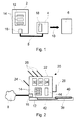
- Figure 1 shows a computer 4 connected to a mailing machine 2 via a network 8 and an electronic docketing system 6 via a secure communications link 10, which would typically comprise an Internet protocol link.
- the mailing machine 2 creates mail items, assesses the weight of each item, prints a mail impression mark on each item and counts the number of mail impression marks printed. It records the number and the weight of each item in internal memory 12 during a predetermined session such as over a particular time period. This number and weight data is used to create a structured electronic docket to send to the postal service provider.
- the mail impression marks may be standard Printed Postage Impression (PPI) marks or other marks recognized by postal service providers.
- the mailing machine 2 is capable of creating multiple weight band logs 14 within the internal memory 12.
- a separate weight band log 14 is created for each charging weight threshold set by the postal service.
- Each weight band log 14 contains a count of the number of envelopes processed within the weight threshold since the last electronic docket was created.
- a new set of weight band logs 14 are created after each electronic docket is created, which signifies the end of one mailing period and the start of the next mailing period.
- the memory 12 of the mailing machine 2 will contain two weight band logs 14.
- the first weight band log 14 will contain data on the 20 envelopes weighing less than 100 grams and the second weight band log 14 will contain data on the 50 envelopes weighing between 100 grams and 150 grams.
- the mailing machine 2 is connected to the network 8 via a network interface 16 such as an Ethernet port.
- the Internet protocol address of the mailing machine 2 may be set locally or, alternatively, acquired automatically using the Dynamic Host Configuration Protocol (DHCP) over the network 8.
- DHCP Dynamic Host Configuration Protocol
- the weight band logs 14 of the mailing machine 2 can be accessed over the network 8.
- the computer 4 on the network 8 can be configured to access the memory 12 and specifically the weight band logs 14 of the mailing machine 2, as a readable network resource, for example as a mapped network drive.
- Direct access to the weight band logs 14 enables the data to be accessed directly by the remote electronic docketing system 6, which may for example be the E*Pro TM docketing system used by Royal Mail, via the secure Internet connection 10.
- the mailing machine 2 may, alternatively, be directly connected to the computer 4 which has access to the network 8.
- a program 18 running on the computer 4 may access the weight band logs 14 and collate and convert the data into the required protocol format of the electronic docketing system 6, for example the XML-based SOAP standard.
- the software can also allow for manually inserted envelopes or the removal of envelopes from the mailing stream by the user.
- the formatted data can then be transmitted directly to the electronic docketing system 6 over the secure Internet connection 10 without the need for further manual input from the user.
- the program 18 can retrieve any status and error reports generated by the electronic docketing system 6, and either automatically resolve any issues if possible, for example resend data if a transmission failure is reported, or display the report and prompt the user for further input if required. Any user input during the process can be recorded in a log file for later review.
- the required features of the computer 4 described above can be integrated into the mailing machine 2, so that it is capable of directly communicating with the remote electronic docketing system 6 over the secure Internet connection 10.
- the mailing machine 2 can be equipped with a visual display and a data input means such as a keypad, to allow direct access to the configuration settings of the mailing machine 2 and the weight band logs 14.
- the mailing machine 2 can also be equipped with a simple web server allowing access to configuration settings and weight band logs 14 over a secure network connection 8.
- the weight band logs 14 from previous mailing periods can be stored on the mailing machine 2 for future reference.
- the weight band logs 14 may also be written to or deleted remotely, over the network 8, or via an interface on the mailing machine 2, if the user enters the correct security credentials.
- the weight band logs 14 may be created and stored directly on the computer 4, which would require fewer resources on the mailing machine 2.
- FIG. 2 illustrates a mailing machine 20 incorporating functionality according to the system of the invention.
- the mailing machine 20 comprises a folder-inserter machine 22 with an envelope hopper 24 for feeding envelopes into the folder-inserter machine 22, one or more document hoppers 26 for feeding documents and inserts, to be folded if required, and stuffed into the envelopes, and an envelope eject and collect hopper 28 for collecting the processed envelopes.
- the folder-inserter machine 22 comprises a mail impression printer 30, a folding station 32 for folding documents if required, an inserter 34 for stuffing documents into the envelopes, a network interface 16 for connecting the system to the network 8, memory area 12 in which to store the weight band logs 14, and a lookup table 44 used to calculate the correct postage band.
- the folder-inserter machine 22 can be mounted onto a moulded base 38 comprising an electronic weighing scale 40, the scale 40 communicating with the folder-inserter machine 22 via a USB cable 42 which can be powered either though the USB cable or an external power supply.
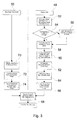
- Figure 3 is a flow chart showing the process steps of a mailing machine such as that shown in Figure 2, illustrating methods for both machine processed mail 48 and hand processed mail, or mixed mail 50.
- the envelopes without mail impressions are loaded into the envelope hopper 24, and the documents to be stuffed into the envelopes are load into the document hoppers 26.
- the folder-inserter machine 22 When the folder-inserter machine 22 is activated, an envelope is fed into the folder-inserter machine 22 from the envelope hopper 24.
- the folder-inserter machine 22 determines whether or not a mail impression is to be added to the envelope. This can be determined by input from an external source, such as a user, a program controlling the folder-inserter machine 22 over the network 8, or determined automatically by the folder-inserter machine 22 using optical recognition. If a mail impression is required then the impression is printed onto the outside of the empty envelope at stage 56 using the mail impression printer 30.
- the postal impression pre-stuffing is flat and easier to manipulate within the folder-inserter machine 22.
- the postal impression can be printed on the envelope at any stage pre, post or during stuffing of the envelope. This is in contrast to franking marks which must be printed post stuffing, because a franking mark is dependent on the weight of the envelope.
- the relative simplicity, and low print quality requirements of mail with impression marks means that cheaper and simpler printing equipment can be used within the folder-inserter machine 22, when compared to other postal marking systems, for example franking.
- a further advantage over franking is that there is no requirement for additional hardware to manage a pre-pay postal account with the postal service provider when using PPI.
- the documents to be inserted are fed into the folder-inserter machine 22 from the document hoppers 26 and processed according to control marks on the documents. If the documents are to be folded, then this action is performed by the folding station 32 within the folder-inserter machine 22.
- the end weight of the stuffed envelope can be calculated automatically by the folder-inserter machine 22 without the need to physically weight the stuffed envelope itself.
- the folder-inserter machine 22 then stuffs the documents and inserts into the envelope using the inserter 34, and on successful completion of the insertion at stage 64 the folder-inserter machine 22 ejects the stuffed envelope into the envelope collection hopper 28 ready to be posted.
- the folder-inserter machine 22 uses the lookup table 44 based on the charging scheme of the postal service provider, combined with the calculated weight of the stuffed envelope to determine the weight band for the envelope.
- this data is used to select the correct weight band log 14 within the memory 12, and increment the count within that weight band log 14 by 1.
- a new set of weight band logs 14 are created after each completed mail posting, therefore the count in each current weight band log 14 represents the quantity of envelopes ready for posting which fall within the specified weight band in the current mailing period.
- pre-stuffed envelopes can be placed on the electronic weigh scale 40, which has a button that when pressed at stage 72 transmits the weight reading to the folder-inserter machine 22 via the cable 42.
- the folder-inserter machine 22 uses a combination of the lookup table 44 at stage 74 and the recorded weight to determine the weight band for the envelope. As with the machine processed mail 50, at stage 68 this data is used to select the correct weight band log 14 within the memory 12 and increment the count within that log by 1.
- FIG. 4 is a flow chart showing how the weight band logs 14 can be formatted and transmitted to the designated postal service provider.
- the formatting and transmission can be performed either by a separate computer on the network 8, or alternatively within the folder-inserter machine 22 itself.
- the weight band logs 14 for that period are collated and formatted at stage 82 into a format suitable for the direct transmission of the data to the postal service provider.
- the postal impression system used by the Royal Mail accepts data directly into its electronic docketing system 6 in SOAP format.
- a secure connection is automatically established with the postal service provider via the Internet connection 10 and the formatted data is transmitted to the postal service provider's electronic docketing system 6 at stage 86.
- the secure connection remains open at stage 88 until all of the data has been transmitted and an acknowledgment of the transmission is received from the postal service provider's electronic docketing system 6.
- the folder-inserter machine 22 records the successful transmission, and prepares to create a new set of weight band logs 14 for the next mailing period. If however an error is identified in the transmission process which cannot be resolved automatically, then at stage 92 the user is informed of the error so that manual corrective action can be taken.
- the cycle is completed and the machine is set in a state ready for the start of the next postal period.
- the data for the electronic dockets is collected during the insertion phase of the mail stream.
- a program that collects and collates the required data during the pre-insertion phase by using pre processed print files.
- the print files are electronic versions of the documents to be printed and stuffed into the envelopes.
- the print files can be use to calculate the weight of the final stuffed envelope if the weight of the paper, envelopes and inserts is known.
- This data can be used to create the weight band logs 14 that are then collated and formatted to create an electronic docket for transmission to the electronic docketing system 6 at the end of the mailing period.
- the present invention is not limited to traditional envelopes and can be used for a variety of postal packaging, for example pressure-seal envelopes and postcards.
Landscapes
- Physics & Mathematics (AREA)
- Engineering & Computer Science (AREA)
- Theoretical Computer Science (AREA)
- Mathematical Physics (AREA)
- General Physics & Mathematics (AREA)
- General Engineering & Computer Science (AREA)
- Data Mining & Analysis (AREA)
- Databases & Information Systems (AREA)
- Software Systems (AREA)
- Computer Hardware Design (AREA)
- Devices For Checking Fares Or Tickets At Control Points (AREA)
- Management, Administration, Business Operations System, And Electronic Commerce (AREA)
- Sorting Of Articles (AREA)
Applications Claiming Priority (1)
| Application Number | Priority Date | Filing Date | Title |
|---|---|---|---|
| GB0606457A GB2436628A (en) | 2006-03-31 | 2006-03-31 | Mailing machine which sends weight and number data to postal service provider |
Publications (2)
| Publication Number | Publication Date |
|---|---|
| EP1840540A2 true EP1840540A2 (de) | 2007-10-03 |
| EP1840540A3 EP1840540A3 (de) | 2008-05-21 |
Family
ID=36424953
Family Applications (1)
| Application Number | Title | Priority Date | Filing Date |
|---|---|---|---|
| EP07105371A Withdrawn EP1840540A3 (de) | 2006-03-31 | 2007-03-30 | Postverarbeitungssystem. |
Country Status (3)
| Country | Link |
|---|---|
| US (1) | US20070250457A1 (de) |
| EP (1) | EP1840540A3 (de) |
| GB (1) | GB2436628A (de) |
Family Cites Families (10)
| Publication number | Priority date | Publication date | Assignee | Title |
|---|---|---|---|---|
| US5229932A (en) * | 1988-08-23 | 1993-07-20 | Pitney Bowes Inc. | Method and apparatus for categorizing and certifying mail batches |
| US5008827A (en) * | 1988-12-16 | 1991-04-16 | Pitney Bowes Inc. | Central postage data communication network |
| US5264665A (en) * | 1992-06-24 | 1993-11-23 | Delfer Iii Frank W | Postal processing system |
| JPH0991477A (ja) * | 1995-09-26 | 1997-04-04 | Dainippon Printing Co Ltd | 料金後納郵便物差出票作成装置 |
| GB2363888B (en) * | 2000-06-19 | 2004-02-18 | Pitney Bowes Ltd | Verification of batch items |
| GB2363887B (en) * | 2000-06-19 | 2004-02-11 | Pitney Bowes Ltd | Mailer-postal service interfaces |
| WO2002082235A2 (en) * | 2001-04-06 | 2002-10-17 | United States Postal Service | Return merchandise processing system |
| FR2835339B1 (fr) * | 2002-01-29 | 2004-06-04 | Neopost Ind | Systeme d'affranchissement d'articles de courrier a fichier de donnees associe |
| US6804576B2 (en) * | 2002-03-26 | 2004-10-12 | First Data Corporation | Insertion control |
| US20040128265A1 (en) * | 2002-04-05 | 2004-07-01 | Holtz Lyn M. | Return mechandise processing system |
-
2006
- 2006-03-31 GB GB0606457A patent/GB2436628A/en not_active Withdrawn
-
2007
- 2007-03-30 EP EP07105371A patent/EP1840540A3/de not_active Withdrawn
- 2007-03-30 US US11/730,210 patent/US20070250457A1/en not_active Abandoned
Also Published As
| Publication number | Publication date |
|---|---|
| GB0606457D0 (en) | 2006-05-10 |
| EP1840540A3 (de) | 2008-05-21 |
| GB2436628A (en) | 2007-10-03 |
| US20070250457A1 (en) | 2007-10-25 |
Similar Documents
| Publication | Publication Date | Title |
|---|---|---|
| US6098057A (en) | Method and apparatus for batch mail processing with integrated scale and automatic manifest compilation | |
| US5925864A (en) | Metering incoming deliverable mail to automatically enable address correction | |
| CA2246592C (en) | Metering incoming deliverable mail | |
| CA2236744C (en) | Digital printing, metering and recording of other post services on the face of the mail piece | |
| US6112193A (en) | Reading encrypted data on a mail piece to cancel the mail piece | |
| AU2005314480A1 (en) | Automatic revenue protection and adjustment of postal indicia products | |
| CA2324098C (en) | System and method for management of correspondence | |
| JPS62241091A (ja) | 料金更新システムおよび料金レジスタの変更方法 | |
| US7987119B2 (en) | Inventory management for postage supplies | |
| CA2411843A1 (en) | Method to account for domestic and international mail fees | |
| US8160974B2 (en) | Multiple carrier mailing machine | |
| EP0485944B1 (de) | Postgutgewichtsüberwachungssystem und Verfahren | |
| JP4691566B2 (ja) | 郵便物の自動受取および自動フランキング方法、及び装置 | |
| EP1840540A2 (de) | Postverarbeitungssystem | |
| US6925451B1 (en) | Mail receipt terminal having deposit tracking capability | |
| CA2058866C (en) | Process for mailing electronically stored contents of letters | |
| EP0845759B1 (de) | System zum Verbessern der auf Information basierten Zeichen und Frankiersicherheitsvorrichtung | |
| WO2002069103A3 (en) | An internet franking system | |
| US7813833B2 (en) | Automated mail preparation system and method | |
| EP1341130A2 (de) | Geldmittelübertragung unter Verwendung von Postwertzeichen | |
| EP1507238B1 (de) | Generieren eines postalischen Aufdrucks für Massensendungen und dessen Weiterverfolgen in einer Frankiermaschine | |
| EP1178440A1 (de) | Vorrichtung und Methode zur automatischen Annahme von Postgut | |
| US20070179913A1 (en) | Intelligent indicia for document handling apparatus and method of use | |
| US6897973B1 (en) | System and method for management of correspondence | |
| EP1683585A1 (de) | Verfahren und Vorrichtung zum Druck eines Dokumentes |
Legal Events
| Date | Code | Title | Description |
|---|---|---|---|
| PUAI | Public reference made under article 153(3) epc to a published international application that has entered the european phase |
Free format text: ORIGINAL CODE: 0009012 |
|
| AK | Designated contracting states |
Kind code of ref document: A2 Designated state(s): AT BE BG CH CY CZ DE DK EE ES FI FR GB GR HU IE IS IT LI LT LU LV MC MT NL PL PT RO SE SI SK TR |
|
| AX | Request for extension of the european patent |
Extension state: AL BA HR MK YU |
|
| PUAL | Search report despatched |
Free format text: ORIGINAL CODE: 0009013 |
|
| AK | Designated contracting states |
Kind code of ref document: A3 Designated state(s): AT BE BG CH CY CZ DE DK EE ES FI FR GB GR HU IE IS IT LI LT LU LV MC MT NL PL PT RO SE SI SK TR |
|
| AX | Request for extension of the european patent |
Extension state: AL BA HR MK RS |
|
| RIC1 | Information provided on ipc code assigned before grant |
Ipc: G07B 17/00 20060101ALI20080416BHEP Ipc: G01G 19/414 20060101AFI20070816BHEP |
|
| AKX | Designation fees paid | ||
| REG | Reference to a national code |
Ref country code: DE Ref legal event code: 8566 |
|
| STAA | Information on the status of an ep patent application or granted ep patent |
Free format text: STATUS: THE APPLICATION IS DEEMED TO BE WITHDRAWN |
|
| 18D | Application deemed to be withdrawn |
Effective date: 20081122 |