EP1844064B1 - Axmi-018, axmi-020, et axmi-021, famille de genes de delta-endotoxine et leurs methodes d'utilisation - Google Patents
Axmi-018, axmi-020, et axmi-021, famille de genes de delta-endotoxine et leurs methodes d'utilisation Download PDFInfo
- Publication number
- EP1844064B1 EP1844064B1 EP20060734133 EP06734133A EP1844064B1 EP 1844064 B1 EP1844064 B1 EP 1844064B1 EP 20060734133 EP20060734133 EP 20060734133 EP 06734133 A EP06734133 A EP 06734133A EP 1844064 B1 EP1844064 B1 EP 1844064B1
- Authority
- EP
- European Patent Office
- Prior art keywords
- polypeptide
- nucleotide sequence
- sequence
- seq
- amino acid
- Prior art date
- Legal status (The legal status is an assumption and is not a legal conclusion. Google has not performed a legal analysis and makes no representation as to the accuracy of the status listed.)
- Expired - Lifetime
Links
Images




Classifications
-
- C—CHEMISTRY; METALLURGY
- C07—ORGANIC CHEMISTRY
- C07K—PEPTIDES
- C07K14/00—Peptides having more than 20 amino acids; Gastrins; Somatostatins; Melanotropins; Derivatives thereof
- C07K14/195—Peptides having more than 20 amino acids; Gastrins; Somatostatins; Melanotropins; Derivatives thereof from bacteria
- C07K14/32—Peptides having more than 20 amino acids; Gastrins; Somatostatins; Melanotropins; Derivatives thereof from bacteria from Bacillus (G)
- C07K14/325—Bacillus thuringiensis crystal peptides, i.e. delta-endotoxins
-
- A—HUMAN NECESSITIES
- A01—AGRICULTURE; FORESTRY; ANIMAL HUSBANDRY; HUNTING; TRAPPING; FISHING
- A01N—PRESERVATION OF BODIES OF HUMANS OR ANIMALS OR PLANTS OR PARTS THEREOF; BIOCIDES, e.g. AS DISINFECTANTS, AS PESTICIDES OR AS HERBICIDES; PEST REPELLANTS OR ATTRACTANTS; PLANT GROWTH REGULATORS
- A01N63/00—Biocides, pest repellants or attractants, or plant growth regulators containing microorganisms, viruses, microbial fungi, animals or substances produced by, or obtained from, microorganisms, viruses, microbial fungi or animals, e.g. enzymes or fermentates
- A01N63/50—Isolated enzymes; Isolated proteins
-
- C—CHEMISTRY; METALLURGY
- C12—BIOCHEMISTRY; BEER; SPIRITS; WINE; VINEGAR; MICROBIOLOGY; ENZYMOLOGY; MUTATION OR GENETIC ENGINEERING
- C12N—MICROORGANISMS OR ENZYMES; COMPOSITIONS THEREOF; PROPAGATING, PRESERVING, OR MAINTAINING MICROORGANISMS; MUTATION OR GENETIC ENGINEERING; CULTURE MEDIA
- C12N15/00—Mutation or genetic engineering; DNA or RNA concerning genetic engineering, vectors, e.g. plasmids, or their isolation, preparation or purification; Use of hosts therefor
- C12N15/09—Recombinant DNA-technology
- C12N15/63—Introduction of foreign genetic material using vectors; Vectors; Use of hosts therefor; Regulation of expression
- C12N15/79—Vectors or expression systems specially adapted for eukaryotic hosts
- C12N15/82—Vectors or expression systems specially adapted for eukaryotic hosts for plant cells, e.g. plant artificial chromosomes (PACs)
- C12N15/8241—Phenotypically and genetically modified plants via recombinant DNA technology
- C12N15/8261—Phenotypically and genetically modified plants via recombinant DNA technology with agronomic (input) traits, e.g. crop yield
- C12N15/8271—Phenotypically and genetically modified plants via recombinant DNA technology with agronomic (input) traits, e.g. crop yield for stress resistance, e.g. heavy metal resistance
- C12N15/8279—Phenotypically and genetically modified plants via recombinant DNA technology with agronomic (input) traits, e.g. crop yield for stress resistance, e.g. heavy metal resistance for biotic stress resistance, pathogen resistance, disease resistance
- C12N15/8281—Phenotypically and genetically modified plants via recombinant DNA technology with agronomic (input) traits, e.g. crop yield for stress resistance, e.g. heavy metal resistance for biotic stress resistance, pathogen resistance, disease resistance for bacterial resistance
-
- C—CHEMISTRY; METALLURGY
- C12—BIOCHEMISTRY; BEER; SPIRITS; WINE; VINEGAR; MICROBIOLOGY; ENZYMOLOGY; MUTATION OR GENETIC ENGINEERING
- C12N—MICROORGANISMS OR ENZYMES; COMPOSITIONS THEREOF; PROPAGATING, PRESERVING, OR MAINTAINING MICROORGANISMS; MUTATION OR GENETIC ENGINEERING; CULTURE MEDIA
- C12N15/00—Mutation or genetic engineering; DNA or RNA concerning genetic engineering, vectors, e.g. plasmids, or their isolation, preparation or purification; Use of hosts therefor
- C12N15/09—Recombinant DNA-technology
- C12N15/63—Introduction of foreign genetic material using vectors; Vectors; Use of hosts therefor; Regulation of expression
- C12N15/79—Vectors or expression systems specially adapted for eukaryotic hosts
- C12N15/82—Vectors or expression systems specially adapted for eukaryotic hosts for plant cells, e.g. plant artificial chromosomes (PACs)
- C12N15/8241—Phenotypically and genetically modified plants via recombinant DNA technology
- C12N15/8261—Phenotypically and genetically modified plants via recombinant DNA technology with agronomic (input) traits, e.g. crop yield
- C12N15/8271—Phenotypically and genetically modified plants via recombinant DNA technology with agronomic (input) traits, e.g. crop yield for stress resistance, e.g. heavy metal resistance
- C12N15/8279—Phenotypically and genetically modified plants via recombinant DNA technology with agronomic (input) traits, e.g. crop yield for stress resistance, e.g. heavy metal resistance for biotic stress resistance, pathogen resistance, disease resistance
- C12N15/8285—Phenotypically and genetically modified plants via recombinant DNA technology with agronomic (input) traits, e.g. crop yield for stress resistance, e.g. heavy metal resistance for biotic stress resistance, pathogen resistance, disease resistance for nematode resistance
-
- C—CHEMISTRY; METALLURGY
- C12—BIOCHEMISTRY; BEER; SPIRITS; WINE; VINEGAR; MICROBIOLOGY; ENZYMOLOGY; MUTATION OR GENETIC ENGINEERING
- C12N—MICROORGANISMS OR ENZYMES; COMPOSITIONS THEREOF; PROPAGATING, PRESERVING, OR MAINTAINING MICROORGANISMS; MUTATION OR GENETIC ENGINEERING; CULTURE MEDIA
- C12N15/00—Mutation or genetic engineering; DNA or RNA concerning genetic engineering, vectors, e.g. plasmids, or their isolation, preparation or purification; Use of hosts therefor
- C12N15/09—Recombinant DNA-technology
- C12N15/63—Introduction of foreign genetic material using vectors; Vectors; Use of hosts therefor; Regulation of expression
- C12N15/79—Vectors or expression systems specially adapted for eukaryotic hosts
- C12N15/82—Vectors or expression systems specially adapted for eukaryotic hosts for plant cells, e.g. plant artificial chromosomes (PACs)
- C12N15/8241—Phenotypically and genetically modified plants via recombinant DNA technology
- C12N15/8261—Phenotypically and genetically modified plants via recombinant DNA technology with agronomic (input) traits, e.g. crop yield
- C12N15/8271—Phenotypically and genetically modified plants via recombinant DNA technology with agronomic (input) traits, e.g. crop yield for stress resistance, e.g. heavy metal resistance
- C12N15/8279—Phenotypically and genetically modified plants via recombinant DNA technology with agronomic (input) traits, e.g. crop yield for stress resistance, e.g. heavy metal resistance for biotic stress resistance, pathogen resistance, disease resistance
- C12N15/8286—Phenotypically and genetically modified plants via recombinant DNA technology with agronomic (input) traits, e.g. crop yield for stress resistance, e.g. heavy metal resistance for biotic stress resistance, pathogen resistance, disease resistance for insect resistance
-
- Y—GENERAL TAGGING OF NEW TECHNOLOGICAL DEVELOPMENTS; GENERAL TAGGING OF CROSS-SECTIONAL TECHNOLOGIES SPANNING OVER SEVERAL SECTIONS OF THE IPC; TECHNICAL SUBJECTS COVERED BY FORMER USPC CROSS-REFERENCE ART COLLECTIONS [XRACs] AND DIGESTS
- Y02—TECHNOLOGIES OR APPLICATIONS FOR MITIGATION OR ADAPTATION AGAINST CLIMATE CHANGE
- Y02A—TECHNOLOGIES FOR ADAPTATION TO CLIMATE CHANGE
- Y02A40/00—Adaptation technologies in agriculture, forestry, livestock or agroalimentary production
- Y02A40/10—Adaptation technologies in agriculture, forestry, livestock or agroalimentary production in agriculture
- Y02A40/146—Genetically Modified [GMO] plants, e.g. transgenic plants
Definitions
- This invention relates to the field of molecular biology. Provided are novel genes that encode pesticidal proteins. These proteins and the nucleic acid sequences that encode them are useful in preparing pesticidal formulations and in the production of transgenic pest-resistant plants.
- Bacillus thuringiensis is a Gram-positive spore forming soil bacterium characterized by its ability to produce crystalline inclusions that are specifically toxic to certain orders and species of insects, but are harmless to plants and other non-targeted organisms. For this reason, compositions including Bacillus thuringiensis strains or their insecticidal proteins can be used as environmentally-acceptable insecticides to control agricultural insect pests or insect vectors for a variety of human or animal diseases.
- Crystal (Cry) proteins (delta-endotoxins) from Bacillus thuringiensis have potent insecticidal activity against predominantly Lepidopteran, Dipteran, and Coleopteran larvae. These proteins also have shown activity against Hymenoptera, Homoptera , Phthiraptera , Mallophaga , and Acari pest orders, as well as other invertebrate orders such as Nemathelminthes , Platyhelminthes , and Sarcomastigorphora ( Feitelson (1993) "The Bacillus Thuringiensis family tree” in Advanced Engineered Pesticides, Marcel Dekker, Inc., New York, NY ) These proteins were originally classified as CryI to CryV based primarily on their insecticidal activity.
- the major classes were Lepidoptera-specific (I), Lepidoptera- and Diptera- specific (II), Coleoptera- specific (III), Diptera- specific (IV), and nematode-specific (V) and (VI).
- the proteins were further classified into subfamilies; more highly related proteins within each family were assigned divisional letters such as Cry1A, Cry1B, Cry1C, etc. Even more closely related proteins within each division were given names such as Cry1C1 , Cry1C2 , etc.
- each toxin is assigned a unique name incorporating a primary rank (an Arabic number), a secondary rank (an uppercase letter), a tertiary rank (a lowercase letter), and a quaternary rank (another Arabic number).
- a primary rank an Arabic number
- a secondary rank an uppercase letter
- a tertiary rank a lowercase letter
- a quaternary rank another Arabic number
- the crystal protein does not exhibit insecticidal activity until it has been ingested and solubilized in the insect midgut.
- the ingested protoxin is hydrolyzed by proteases in the insect digestive tract to an active toxic molecule. ( Höfte and Whiteley (1989) Microbiol. Rev. 53:242-255 ). This toxin binds to apical brush border receptors in the midgut of the target larvae and inserts into the apical membrane creating ion channels or pores, resulting in larval death.
- Delta-endotoxins generally have five conserved sequence domains, and three conserved structural domains (see, for example, de Maagd et al. (2001) Trends Genetics 17:193-199 ).
- the first conserved structural domain consists of seven alpha helices and is involved in membrane insertion and pore formation.
- Domain II consists of three beta-sheets arranged in a Greek key configuration, and domain III consists of two antiparallel beta-sheets in "jelly-roll" formation (de Maagd et al., 2001, supra ). Domains II and III are involved in receptor recognition and binding, and are therefore considered determinants of toxin specificity.
- compositions and methods for conferring pesticide resistance to bacteria, plants, plant cells, tissues and seeds are provided.
- Compositions include nucleic acid molecules encoding sequences for delta-endotoxin polypeptides, vectors comprising those nucleic acid molecules, and host cells comprising the vectors.
- Compositions also include the polypeptide sequences of the endotoxin, and antibodies to those polypeptides.
- the nucleotide sequences can be used in DNA constructs or expression cassettes for transformation and expression in organisms, including microorganisms and plants.
- the nucleotide or amino acid sequences may be synthetic sequences that have been designed for expression in an organism including, but not limited to, a microorganism or a plant.
- Compositions also comprise transformed bacteria, plants, plant cells, tissues, and seeds.
- isolated nucleic acid molecules corresponding to delta-endotoxin nucleic acid sequences are provided.
- amino acid sequences corresponding to the polynucleotides are encompassed.
- the present invention provides for an isolated nucleic acid molecule comprising a nucleotide sequence encoding the amino acid sequence shown in SEQ ID NO: 2, 4, or 6, a nucleotide sequence set forth in SEQ ID NO: 1, 3, or 5, or the delta-endotoxin nucleotide sequence deposited in a bacterial host as Accession Nos. NRRL B-30805, NRRL B-30809, and NRRL B-30808.
- Nucleotide sequences that are complementary to a nucleotide sequence of the invention, or that hybridize to a sequence of the invention are also encompassed.
- Methods are provided for producing the polypeptides of the invention, and for using those polypeptides for controlling or killing a lepidopteran or coleopteran pest. Methods and kits for detecting the nucleic acids and polypeptides of the invention in a sample are also included.
- compositions and methods of the invention are useful for the production of organisms with pesticide resistance, specifically bacteria and plants. These organisms and compositions derived from them are desirable for agricultural purposes.
- compositions of the invention are also useful for generating altered or improved delta-endotoxin proteins that have pesticidal activity, or for detecting the presence of delta-endotoxin proteins or nucleic acids in products or organisms.
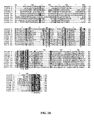
- Figure 1 shows an alignment of AXMI-018 (SEQ ID NO: 2), AXMI-020 (SEQ ID NO: 4) and AXMI-21 (SEQ ID NO: 6). Toxins having C-terminal non-toxic domains were artificially truncated as shown. AXMI-018 and AXMI-020 have the C-terminal domain common to many crystal proteins, while AXMI-021 occurs naturally truncated.
- the alignment shows the most highly conserved amino acid residues highlighted in black, and highly conserved amino acid residues highlighted in gray.
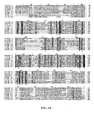
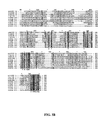
- Figures 2A and 2B show an alignment of the truncated portion of AXMI-018 with cryl2Aa (SEQ ID NO:13), cry21Aa (SEQ ID NO:14), cry21Ba1 (SEQ ID NO:15), cry5Aa (SEQ ID NO:10), cry5Ab (SEQ ID NO:11), cry5Ba (SEQ ID NO:12), cry1Ac (SEQ ID NO:7), cry1Ba (SEQ ID NO:8), and cry1Ca (SEQ ID NO:9).
- the alignment shows the most highly conserved amino acid residues highlighted in black, and highly conserved amino acid residues highlighted in gray.
- conserveed group 1 in AXMI-018 is found from about amino acid residue 200 to about 222 of SEQ ID NO:2.
- conserveed group 2 is found from about amino acid residue 274 to about 312 of SEQ ID NO:2.
- conserveed group 3 is found from about amino acid residue 480 to about 533 of SEQ ID NO:2.
- conserveed group 4 is found from about amino acid residue 550 to about 559 of SEQ ID NO:4.
- conserveed group 5 is found from about amino acid residue 635 to about 644 of SEQ ID NO:2.
- Figures 3A and 3B show an alignment of the truncated portion of AXMI-020 with cry12Aa (SEQ ID NO:13), cry21Aa (SEQ ID NO:14), cry21Ba1 (SEQ ID NO:15), cry5Aa (SEQ ID NO:10), cry5Ab (SEQ ID NO:11), cry5Ba (SEQ ID NO:12), cry1Ac (SEQ ID NO:7), cry1Ba (SEQ ID NO:8), and cry1Ca (SEQ ID NO:9).
- the alignment shows the most highly conserved amino acid residues highlighted in black, and highly conserved amino acid residues highlighted in gray.
- conserved group 1 in AXMI-020 is found from about amino acid residue 200 to about 222 of SEQ ID NO:4.
- conserved group 2 is found from about amino acid residue 274 to about 312 of SEQ ID NO:4.
- conserved group 3 is found from about amino acid residue 480 to about 533 of SEQ ID NO:4.
- conserveed group 4 is found from about amino acid residue 550 to about 559 of SEQ ID NO:4.
- conserveed group 5 is found from about amino acid residue 635 to about 644 of SEQ ID NO:4.
- Figures 4A and 4B show an alignment of the truncated portion of AXMI-021 (SEQ ID NO:6) with cry12Aa (SEQ ID NO:13), cry21Aa (SEQ ID NO:14), cry21Ba1 (SEQ ID NO:15), cry5Aa (SEQ ID NO:10), cry5Ab (SEQ ID NO:11), cry5Ba (SEQ ID NO:12), cry1Ac (SEQ ID NO:7), cry1Ba (SEQ ID NO:8), and cry1Ca (SEQ ID NO:9).
- Toxins having C-terminal non-toxic domains were artificially truncated as shown.
- conserved group 1 in AXMI-021 is found from about amino acid residue 200 to about 222 of SEQ ID NO:6.
- conserveed group 2 is found from about amino acid residue 274 to about 316 of SEQ ID NO:6.
- conserveed group 3 is found from about amino acid residue 491 to about 537 of SEQ ID NO:6.
- conserveed group 4 is found from about amino acid residue 554 to about 564 of SEQ ID NO:6.
- conserveed group 5 is found from about amino acid residue 635 to about 645 of SEQ ID NO:6.
- the present invention is drawn to compositions and methods for regulating pest resistance in organisms, particularly plants or plant cells.
- the methods involve transforming organisms with a nucleotide sequence encoding a delta-endotoxin protein of the invention.
- the nucleotide sequences of the invention are useful for preparing plants and microorganisms that possess pesticidal activity.
- transformed bacteria, plants, plant cells, plant tissues and seeds are provided.
- Compositions are delta-endotoxin nucleic acids and proteins ofBacillus thuringiensis.
- sequences find use in the construction of expression vectors for subsequent transformation into organisms of interest, as probes for the isolation of other delta-endotoxin genes, and for the generation of altered pesticidal proteins by methods known in the art, such as domain swapping or DNA shuffling.
- the proteins find use in controlling or killing lepidopteran or coleopteran pest populations and for producing compositions with pesticidal activity.
- Plasmids containing the herbicide resistance nucleotide sequences of the invention were deposited in the permanent collection of the Agricultural Research Service Culture Collection, Northern Regional Research Laboratory (NRRL) on January 13, 2005, and assigned Accession Nos. NRRL B-30805, NRRL B-30809, and NRRL B-30808, for AXMI-018, AXMI-020, and AXMI-021, respectively.
- the plasmid assigned Accession No. NRRL B-30805 contains an insert having nucleotides 1-3605 of AXMI-018 (SEQ ID NO:1). These deposits will be maintained under the terms of the Budapest Treaty on the International Recognition of the Deposit of Microorganisms for the Purposes of Patent Procedure. These deposits were made merely as a convenience for those of skill in the art and are not an admission that a deposit is required under 35 U.S.C. ⁇ 112.
- delta-endotoxin is intended a toxin from Bacillus thuringiensis that has toxic activity against one or more pests, including, but not limited to, members of the Lepidoptera, Diptera, and Coleoptera orders, or a protein that has homology to such a protein. In some cases, delta-endotoxin proteins have been isolated from other organisms, including Clostridium bifermentans and Paenibacillus popilliae.
- Delta-endotoxin proteins include amino acid sequences deduced from the full-length nucleotide sequences disclosed herein, and amino acid sequences that are shorter than the full-length sequences, either due to the use of an alternate downstream start site, or due to processing that produces a shorter protein having pesticidal activity. Processing may occur in the organism the protein is expressed in, or in the pest after ingestion of the protein.
- Delta-endotoxins include proteins identified as cry1 through cry43 , cyt1 and cyt2, and Cyt-like toxin. There are currently over 250 known species of delta-endotoxins with a wide range of specificities and toxicities. For an expansive list see Crickmore et al. (1998), Microbiol. Mol. Biol. Rev.
- novel isolated nucleotide sequences that confer pesticidal activity. Also provided are the amino acid sequences of the delta-endotoxin proteins. The protein resulting from translation of this gene allows cells to control or kill pests that ingest it.
- nucleic acid molecules comprising nucleotide sequences encoding delta-endotoxin proteins and polypeptides or biologically active portions thereof, as well as nucleic acid molecules sufficient for use as hybridization probes to identify delta-endotoxin encoding nucleic acids.
- nucleic acid molecule is intended to include DNA molecules (e.g., cDNA or genomic DNA) and RNA molecules (e.g., mRNA). The nucleic acid molecule can be single-stranded or double-stranded.
- nucleic acid molecule or protein is substantially free of other cellular material, or culture medium when produced by recombinant techniques, or substantially free of chemical precursors or other chemicals when chemically synthesized.
- an "isolated" nucleic acid is free of sequences (such as, for example, protein encoding sequences) that naturally flank the nucleic acid (i.e., sequences located at the 5' and 3' ends of the nucleic acid) in the genomic DNA of the organism from which the nucleic acid is derived.
- isolated when used to refer to nucleic acid molecules excludes isolated chromosomes.
- the isolated delta-endotoxin encoding nucleic acid molecule can contain less than about 5 kb, 4 kb, 3 kb, 2 kb, 1 kb, 0.5 kb, or 0.1 kb of nucleotide sequences that naturally flank the nucleic acid molecule in genomic DNA of the cell from which the nucleic acid is derived.
- a delta-endotoxin protein that is substantially free of cellular material includes preparations of protein having less than about 30%, 20%, 10%, or 5% (by dry weight) of non-delta-endotoxin protein (also referred to herein as a "contaminating protein").
- Nucleotide sequences encoding the proteins of the present invention include the sequence set forth in SEQ ID NO:1, 3, or 5, the delta endotoxin nucleotide sequences deposited in bacterial hosts as Accession Nos. NRRL B-30805, NRRL B-30809, and NRRL B-30808, and complements thereof.
- complement is intended a nucleotide sequence that is sufficiently complementary to a given nucleotide sequence such that it can hybridize to the given nucleotide sequence to thereby form a stable duplex.
- the corresponding amino acid sequences for the delta-endotoxin proteins encoded by these nucleotide sequences are set forth in SEQ ID NO:2, 4, or 6.
- Nucleic acid molecules that are fragments of these delta-endotoxin encoding nucleotide sequences are also disclosed.
- fragment is intended a portion of the nucleotide sequence encoding a delta-endotoxin protein.
- a fragment of a nucleotide sequence may encode a biologically active portion of a delta-endotoxin protein, or it may be a fragment that can be used as a hybridization probe or PCR primer using methods disclosed below.
- Nucleic acid molecules that are fragments of a delta-endotoxin nucleotide sequence comprise at least about 50, 100, 200, 300, 400, 500, 600, 704, 800, 900, 1000, 1050, 1100, 1150, 1200, 1250, 1300, 1350, 1400, 1450, 1500, 1550, 1600, 1650, 1700, 1750, 1.800, 1850, 1900, 1950, 2000, 2050, 2100, 2150, 2200, 2250, 2300, 2350, 2400, 2450, 2500, 2550, 2600, 2650, 2700, 2750, 2800, 2850, 2900, 2950, 3000, 3050, 3100, 3150, 3200, 3250, 3300, 3350, 3400, 3450, 3500, 3550, 3600, 3650 contiguous nucleotides, or up to the number of nucleotides present in a full-length delta-endotoxin encoding nucleotide sequence disclosed herein (for example
- nucleotide sequences of the present invention will encode protein fragments that retain the biological activity of the delta-endotoxin protein and, hence, retain pesticidal activity.
- contains activity is intended that the fragment will have at least about 30%, at least about 50%, at least about 70%, or at least about 80% of the pesticidal activity of the delta-endotoxin protein.
- Methods for measuring pesticidal activity are well known in the art. See, for example, Czapla and Lang (1990) JEcon. Entomol. 83:2480-2485 ; Andrews et al. (1988) Biochem. J. 252:199-206 ; Marrone et al. (1985) J. of Economic Entomology 78:290-293 ; and U.S. Patent No. 5,743,477 .
- a fragment of a delta-endotoxin encoding nucleotide sequence that encodes a biologically active portion of a protein of the invention will encode at least about 15, 25, 30, 50, 75, 100, 125, 150, 175, 200, 250, 300, 350, 400, 450, 500, 550, 600, 650, 700, 750, 800, 850, 900, 950, 1000, 1050, 1100, 1150, or 1200 contiguous amino acids, or up to the total number of amino acids present in a full-length delta-endotoxin protein of the invention (for example, 1224 amino acids for SEQ ID NO: 2).
- delta-endotoxin proteins of the present invention are encoded by a nucleotide sequence sufficiently identical to the nucleotide sequence of SEQ ID NO: 1, 3, or 5.
- a nucleotide sequence sufficiently identical to the nucleotide sequence of SEQ ID NO: 1, 3, or 5.
- sufficiently identical is intended an amino acid or nucleotide sequence that has at least 80% or 85% sequence identity, about 90%, 91%, 92%, 93%, 94%, 95%, 96%, 97%, 98% or 99% sequence identity compared to a reference sequence using one of the alignment programs described herein using standard parameters.
- these values can be appropriately adjusted to determine corresponding identity of proteins encoded by two nucleotide sequences by taking into account codon degeneracy, amino acid similarity, reading frame positioning, and the like.
- the sequences are aligned for optimal comparison purposes.
- the two sequences are the same length.
- the percent identity between two sequences can be determined using techniques similar to those described below, with or without allowing gaps. In calculating percent identity, typically exact matches are counted.
- the determination of percent identity between two sequences can be accomplished using a mathematical algorithm.
- a nonlimiting example of a mathematical algorithm utilized for the comparison of two sequences is the algorithm of Karlin and Altschul (1990) Proc. Natl. Acad. Sci. USA 87:2264 , modified as in Karlin and Altschul (1993) Proc. Natl. Acad. Sci. USA 90:5873-5877 .
- Such an algorithm is incorporated into the BLASTN and BLASTX programs of Altschul et al. (1990) J. Mol. Biol. 215:403 .
- Gapped BLAST in BLAST 2.0
- PSI-Blast can be used to perform an iterated search that detects distant relationships between molecules. See Altschul et al. (1997) supra.
- the default parameters of the respective programs e.g., BLASTX and BLASTN
- Alignment may also be performed manually by inspection.
- ClustalW compares sequences and aligns the entirety of the amino acid or DNA sequence, and thus can provide data about the sequence conservation of the entire amino acid sequence.
- the ClustalW algorithm is used in several commercially available DNA/amino acid analysis software packages, such as the ALIGNX module of the Vector NTI Program Suite (Invitrogen Corporation, Carlsbad, CA). After alignment of amino acid sequences with ClustalW, the percent amino acid identity can be assessed.
- a non-limiting example of a software program useful for analysis of ClustalW alignments is GeneDoc(TM).
- Genedoc(TM) (Karl Nicholas) allows assessment of amino acid (or DNA) similarity and identity between multiple proteins.
- Another non-limiting example of a mathematical algorithm utilized for the comparison of sequences is the algorithm of Myers and Miller (1988) CABIOS 4:11- 17 . Such an algorithm is incorporated into the ALIGN program (version 2.0), which is part of the GCG Wisconsin Genetics Software Package, Version 10 (Accelrys, Inc., San Diego, CA).
- ALIGN program version 2.0
- a gap length penalty of 12 can be used.
- GAP Version 10 which uses the algorithm of Needleman and Wunsch (1970) J. MoI. Biol. 48(3):443-453 , will be used to determine sequence identity or similarity using the following parameters: % identity and % similarity for a nucleotide sequence using GAP Weight of 50 and Length Weight of 3, and the nwsgapdna.cmp scoring matrix; % identity or % similarity for an amino acid sequence using GAP weight of 8 and length weight of 2, and the BLOSUM62 scoring program. Equivalent programs may also be used.
- nucleic acid molecules selected from the group consisting of: (a) a nucleic acid molecule comprising a nucleotide sequence having at least 80% sequence identity to the nucleotide sequence of SEQ ID NO: 1, 3, or 5, or a complement thereof, wherein said nucleotide sequence encodes a polypeptide having pesticidal activity; and (b) a nucleic acid molecule which encodes a polypeptide comprising an amino acid sequence having at least 80% sequence identity to the amino acid sequence of SEQ ID NO: 2, 4, or 6, wherein said nucleotide sequence encodes a polypeptide having pesticidal activity.
- “Variants” of the delta-endotoxin encoding nucleotide sequences include those sequences that encode the delta-endotoxin proteins disclosed herein but that differ conservatively because of the degeneracy of the genetic code as well as those that are sufficiently identical as discussed above.
- Naturally occurring allelic variants can be identified with the use of well-known molecular biology techniques, such as polymerase chain reaction (PCR) and hybridization techniques as outlined below.
- Variant nucleotide sequences also include synthetically derived nucleotide sequences that have been generated, for example, by using site-directed mutagenesis but which still encode the delta-endotoxin proteins disclosed in the present invention as discussed below.
- Variant proteins encompassed by the present invention are biologically active, that is they continue to possess the desired biological activity of the native protein, that is, retaining pesticidal activity.
- By "retains activity” is intended that the variant will have at least about 30%, at least about 50%, at least about 70%, or at least about 80% of the pesticidal activity of the native protein.
- Methods for measuring pesticidal activity are well known in the art. See, for example, Czapla and Lang (1990) J. Econ. Entomol. 83: 2480-2485 ; Andrews et al, (1988) Biochem. J. 252:199-206 ; Marrone et al. (1985) J. of Economic Entomology 78:290-293 ; and U.S. Patent No. 5,743,477 .
- variant isolated nucleic acid molecules can be created by introducing one or more nucleotide substitutions, additions, or deletions into the corresponding nucleotide sequence disclosed herein, such that one or more amino acid substitutions, additions or deletions are introduced into the encoded protein. Mutations can be introduced by standard techniques, such as site-directed mutagenesis and PCR-mediated mutagenesis.
- nucleotide sequences are also encompassed by the present invention provided they are selected from the group consisting of: (a) a nucleic acid molecule comprising a nucleotide sequence having at least 80% sequence identity to the nucleotide sequence of SEQ ID NO: 1, 3, or 5, or a complement thereof, wherein said nucleotide sequence encodes a polypeptide having pesticidal activity; and (b) a nucleic acid molecule which encodes a polypeptide comprising an amino acid sequence having at least 80% sequence identity to the amino acid sequence of SEQ ID NO: 2, 4, or 6, wherein said nucleotide sequence encodes a polypeptide having pesticidal activity.
- conservative amino acid substitutions may be made at one or more predicted, nonessential amino acid residues.
- a “nonessential” amino acid residue is a residue that can be altered from the wild-type sequence of a delta-endotoxin protein without altering the biological activity, whereas an "essential” amino acid residue is required for biological activity.
- a “conservative amino acid substitution” is one in which the amino acid residue is replaced with an amino acid residue having a similar side chain. Families of amino acid residues having similar side chains have been defined in the art.
- amino acids with basic side chains e.g., lysine, arginine, histidine
- acidic side chains e.g., aspartic acid, glutamic acid
- uncharged polar side chains e.g., glycine, asparagine, glutamine, serine, threonine, tyrosine, cysteine
- nonpolar side chains e.g., alanine, valine, leucine, isoleucine, proline, phenylalanine, methionine, tryptophan
- beta-branched side chains e.g., threonine, valine, isoleucine
- aromatic side chains e.g., tyrosine, phenylalanine, tryptophan, histidine
- Delta-endotoxins generally have five conserved sequence domains, and three conserved structural domains (see, for example, de Maagd et al. (2001) Trends Genetics 17:193-199 ).
- the first conserved structural domain consists of seven alpha helices and is involved in membrane insertion and pore formation.
- Domain II consists of three beta-sheets arranged in a Greek key configuration, and domain III consists of two antiparallel beta-sheets in "jelly-roll" formation (de Maagd et al ., 2001, supra ) . Domains II and III are involved in receptor recognition and binding, and are therefore considered determinants of toxin specificity.
- Amino acid substitutions may be made in nonconserved regions that retain function. In general, such substitutions would not be made for conserved amino acid residues, or for amino acid residues residing within a conserved motif, where such residues are essential for protein activity. Examples of residues that are conserved and that may be essential for protein activity include, for example, residues that are identical between all proteins contained in the alignments of Figures 1 , 2 , 3 , and 4 . Examples of residues that are conserved but that may allow conservative amino acid substitutions and still retain activity include, for example, residues that have only conservative substitutions between all proteins contained in the alignments of Figures 1 , 2 , 3 , and 4 . However, one of skill in the art would understand that functional variants may have minor conserved or nonconserved alterations in the conserved residues.
- variant nucleotide sequences can be made by introducing mutations randomly along all or part of the coding sequence, such as by saturation mutagenesis, and the resultant mutants can be screened for the ability to confer delta-endotoxin activity to identify mutants that retain activity.
- the encoded protein can be expressed recombinantly, and the activity of the protein can be determined using standard assay techniques.
- delta-endotoxin sequences can be identified, such sequences having substantial identity to the sequences of the invention. See, for example, Sambrook J., and Russell, D.W. (2001) Molecular Cloning: A Laboratory Manual. (Cold Spring Harbor Laboratory Press, Cold Spring Harbor, NY ) and Innis, et al. (1990) PCR Protocols: A Guide to Methods and Applications (Academic Press, NY ).
- hybridization probes may be genomic DNA fragments, cDNA fragments, RNA fragments, or other oligonucleotides, and may be labeled with a detectable group such as 32 P, or any other detectable marker, such as other radioisotopes, a fluorescent compound, an enzyme, or an enzyme co-factor.
- Probes for hybridization can be made by labeling synthetic oligonucleotides based on the known delta-endotoxin-encoding nucleotide sequence disclosed herein. Degenerate primers designed on the basis of conserved nucleotides or amino acid residues in the nucleotide sequence or encoded amino acid sequence can additionally be used.
- the probe typically comprises a region of nucleotide sequence that hybridizes under stringent conditions to at least about 12, about 25, at least about 50, 75, 100, 125, 150, 175, 200, 250, 300, 350, or 400 consecutive nucleotides of delta-endotoxin encoding nucleotide sequence(s) of the invention or a fragment or variant thereof. Methods for the preparation of probes for hybridization are generally known in the art and are disclosed in Sambrook and Russell, 2001, supra .
- an entire delta-endotoxin sequence disclosed herein, or one or more portions thereof may be used as a probe capable of specifically hybridizing to corresponding delta-endotoxin-like sequences and messenger RNAs.
- probes include sequences that are unique and are at least about 10 nucleotides in length, or at least about 20 nucleotides in length.
- Such probes may be used to amplify corresponding delta-endotoxin sequences from a chosen organism by PCR. This technique may be used to isolate additional coding sequences from a desired organism or as a diagnostic assay to determine the presence of coding sequences in an organism.
- Hybridization techniques include hybridization screening of plated DNA libraries (either plaques or colonies; see, for example, Sambrook et al. (1989) Molecular Cloning: A Laboratory Manual (2d ed., Cold Spring Harbor Laboratory Press, Cold Spring Harbor, New York ).
- Hybridization of such sequences may be carried out under stringent conditions.
- stringent conditions or “stringent hybridization conditions” is intended conditions under which a probe will hybridize to its target sequence to a detectably greater degree than to other sequences (e.g., at least 2-fold over background).
- Stringent conditions are sequence-dependent and will be different in different circumstances.
- target sequences that are 100% complementary to the probe can be identified (homologous probing).
- stringency conditions can be adjusted to allow some mismatching in sequences so that lower degrees of similarity are detected (heterologous probing).
- a probe is less than about 1000 nucleotides in length, or less than 500 nucleotides in length.
- stringent conditions will be those in which the salt concentration is less than about 1.5 M Na ion, typically about 0.01 to 1.0 M Na ion concentration (or other salts) at pH 7.0 to 8.3 and the temperature is at least about 30°C for short probes (e.g., 10 to 50 nucleotides) and at least about 60°C for long probes (e.g., greater than 50 nucleotides).
- Stringent conditions may also be achieved with the addition of destabilizing agents such as formamide.
- Exemplary moderate stringency conditions include hybridization in 40 to 45% formamide, 1.0 M NaCl, 1% SDS at 37°C, and a wash in 0.5X to 1X SSC at 55 to 60°C.
- Exemplary high stringency conditions include hybridization in 50% formamide, 1 M NaCl, 1% SDS at 37°C, and a wash in 0.1X SSC at 60 to 65°C.
- wash buffers may comprise about 0.1% to about 1% SDS. Duration of hybridization is generally less than about 24 hours, usually about 4 to about 12 hours.
- T m 81.5°C + 16.6 (log M) + 0.41 (%GC) - 0.61 (% form) - 500/L; where M is the molarity of monovalent cations, %GC is the percentage of guanosine and cytosine nucleotides in the DNA, % form is the percentage of formamide in the hybridization solution, and L is the length of the hybrid in base pairs.
- the T m is the temperature (under defined ionic strength and pH) at which 50% of a complementary target sequence hybridizes to a perfectly matched probe. T m is reduced by about 1°C for each 1% of mismatching; thus, T m , hybridization, and/or wash conditions can be adjusted to hybridize to sequences of the desired identity. For example, if sequences with ⁇ 90% identity are sought, the T m can be decreased 10°C.
- stringent conditions are selected to be about 5°C lower than the thermal melting point (T m ) for the specific sequence and its complement at a defined ionic strength and pH.
- the SSC concentration can be increased so that a higher temperature can be used.
- Delta-endotoxin proteins are also encompassed within the present invention.
- delta-endotoxin protein is intended a protein having the amino acid sequence set forth in SEQ ID No: 2, 4, or 6. Fragments, biologically active portions, and variants thereof are also provided which have at least 80% sequence identity to the amino acid sequence of SEQ ID No: 2, 4 or 6 and which have pesticidal activity, and may be used to practice the methods of the present invention.
- “Fragments” or “biologically active portions” include polypeptide fragments comprising amino acid sequences sufficiently identical to the amino acid sequence set forth in SEQ ID No: 2, 4, or 6, and that exhibit pesticidal activity. Such “fragments” or “biologically active portions” have at least 80% sequence identity to the amino acid sequence of SEQ ID No: 2, 4 or 6. Such biologically active portions can be prepared by recombinant techniques and evaluated for pesticidal activity. Methods for measuring pesticidal activity are well known in the art. See, for example, Czapla and Lang (1990) J. Econ. Entomol. 83:2480-2485 ; Andrews et al. (1988) Biochem. J. 252:199-206 ; Marrone et al.
- a fragment comprises at least 8 contiguous amino acids of SEQ ID No: 2, 4, or 6.
- the invention encompasses other fragments, however, such as any fragment in the protein greater than about 600, 650, 700, 750, 800, 850, 900, 950, 1000, 1050, 1100, 1150, or 1200 amino acids.
- variants proteins or polypeptides having an amino acid sequence that is at least 80%, 85%, 90%, 91%, 92%, 93%, 94%, 95%, 96%, 97%, 98% or 99% identical to the amino acid sequence of SEQ ID No: 2, 4, or 6.
- variants may also be encoded by a nucleic acid molecule that hybridizes to the nucleic acid molecule of SEQ ID No: 1, 3, or 5, or a complement thereof, under stringent conditions. Such variants will retain pesticidal activity.
- variants include polypeptides that differ in amino acid sequence due to mutagenesis but which have at least 80% sequence identity to the amino acid sequence of SEQ ID No: 2, 4 or 6.
- Variant proteins encompassed by the present invention are biologically active, that is they continue to possess the desired biological activity of the native protein, that is, retaining pesticidal activity. Methods for measuring pesticidal activity are well known in the art. See, for example, Czapla and Lang (1990) J. Econ. Entomol. 83:2480-2485 ; Andrews et al. (1988) Biochem. J. 252:199-206 ; Marrone et al. (1985) J. of Economic Entomology 78:290-293 ; and U.S. Patent No. 5,743,477 .
- Bacterial genes such as the AXMI-018, AXMI-020, and AXMI-021 genes of this invention, quite often possess multiple methionine initiation codons in proximity to the start of the open reading frame. Often, translation initiation at one or more of these start codons will lead to generation of a functional protein. These start codons can include ATG codons. However, bacteria such as Bacillus sp. also recognize the codon GTG as a start codon, and proteins that initiate translation at GTG codons contain a methionine at the first amino acid. Furthermore, it is not often determined a priori which of these codons are used naturally in the bacterium.
- Antibodies to the polypeptides of the present invention, or to variants or fragments thereof, are also encompassed. Methods for producing antibodies are well known in the art (see, for example, Harlow and Lane (1988) Antibodies: A Laboratory Manual, Cold Spring Harbor Laboratory, Cold Spring Harbor, NY ; U.S. Patent No. 4,196,265 ).
- DNA sequences of a delta-endotoxin may be altered by various methods, and that these alterations may result in DNA sequences encoding proteins with amino acid sequences different than that encoded by a delta-endotoxin of the present invention.
- This protein may be altered in various ways including amino acid substitutions, deletions, truncations, and insertions. Methods for such manipulations are generally known in the art.
- amino acid sequence variants of a delta-endotoxin protein can be prepared by mutations in the DNA. This may also be accomplished by one of several forms of mutagenesis and/or in directed evolution. In some aspects, the changes encoded in the amino acid sequence will not substantially affect the function of the protein. Such variants will possess the desired pesticidal activity.
- a delta-endotoxin to confer pesticidal activity may be improved by the use of such techniques upon the compositions of this invention.
- a delta-endotoxin in host cells that exhibit high rates of base misincorporation during DNA replication, such as XL-1 Red (Stratagene, La Jolla, CA).
- delta-endotoxin DNA for example by preparing plasmid DNA, or by amplifying by PCR and cloning the resulting PCR fragment into a vector
- culture the delta-endotoxin mutations in a non-mutagenic strain and identify mutated delta-endotoxin genes with pesticidal activity, for example by performing an assay to test for pesticidal activity.
- the protein is mixed and used in feeding assays. See, for example Marrone et al. (1985) J. of Economic Entomology 78:290-293 .
- Such assays can include contacting plants with one or more pests and determining the plant's ability to survive and/or cause the death of the pests. Examples of mutations that result in increased toxicity are found in Schnepf et al. (1998) Microbiol. Mol. Biol. Rev. 62:775-806 .
- alterations may be made to the protein sequence of many proteins at the amino or carboxy terminus without substantially affecting activity.
- alterations can include insertions, deletions, or alterations introduced by modem molecular methods, such as PCR, including PCR amplifications that alter or extend the protein coding sequence by virtue of inclusion of amino acid encoding sequences in the oligonucleotides utilized in the PCR amplification.
- the protein sequences added can include entire protein-coding sequences, such as those used commonly in the art to generate protein fusions.
- Such fusion proteins are often used to (1) increase expression of a protein of interest (2) introduce a binding domain, enzymatic activity, or epitope to facilitate either protein purification, protein detection, or other experimental uses known in the art (3) target secretion or translation of a protein to a subcellular organelle, such as the periplasmic space of Gram-negative bacteria, or the endoplasmic reticulum of eukaryotic cells, the latter of which often results in glycosylation of the protein.
- a subcellular organelle such as the periplasmic space of Gram-negative bacteria, or the endoplasmic reticulum of eukaryotic cells, the latter of which often results in glycosylation of the protein.
- Variant nucleotide and amino acid sequences of the present invention also encompass sequences derived from mutagenic and recombinogenic procedures such as DNA shuffling. With such a procedure, one or more different delta-endotoxin protein coding regions can be used to create a new delta-endotoxin protein possessing the desired properties. In this manner, libraries of recombinant polynucleotides are generated from a population of related sequence polynucleotides comprising sequence regions that have substantial sequence identity and can be homologously recombined in vitro or in vivo.
- sequence motifs encoding a domain of interest may be shuffled between a delta-endotoxin gene of the invention and other known delta-endotoxin genes to obtain a new gene coding for a protein with an improved property of interest, such as an increased insecticidal activity.
- Strategies for such DNA shuffling are known in the art. See, for example, Stemmer (1994) Proc. Natl. Acad. Sci. USA 91:10747-10751 ; Stemmer (1994) Nature 370:389-391 ; Crameri et al. (1997) Nature Biotech. 15:436-438 ; Moore et al. (1997) J. Mol. Biol. 272:336-347 ; Zhang et al.
- Domain swapping or shuffling is another mechanism for generating altered delta-endotoxin proteins. Domains II and III may be swapped between delta-endotoxin proteins, resulting in hybrid or chimeric toxins with improved pesticidal activity or target spectrum. Methods for generating recombinant proteins and testing them for pesticidal activity are well known in the art (see, for example, Naimov et al. (2001) Appl. Environ. Microbiol. 67:5328-5330 ; de Maagd et al. (1996) Appl. Environ. Microbiol. 62:1537-1543 ; Ge et al. (1991) J. Biol. Chem.
- a delta-endotoxin sequence of the invention may be provided in an expression cassette for expression in a plant of interest.
- plant expression cassette is intended a DNA construct that is capable of resulting in the expression of a protein from an open reading frame in a plant cell.
- casssettes contain a promoter and a coding sequence.
- constructs will also contain a 3' untranslated region.
- constructs may contain a "signal sequence” or “leader sequence” to facilitate co-translational or post-translational transport of the peptide to certain intracellular structures such as the chloroplast (or other plastid), endoplasmic reticulum, or Golgi apparatus.
- signal sequence is intended a sequence that is known or suspected to result in cotranslational or post-translational peptide transport across the cell membrane. In eukaryotes, this transport typically involves secretion into the Golgi apparatus, with some resulting glycosylation.
- leader sequence is intended any sequence that, when translated, results in an amino acid sequence sufficient to trigger co-translational transport of the peptide chain to a sub-cellular organelle. Thus, this includes leader sequences targeting transport and/or glycosylation by passage into the endoplasmic reticulum, passage to vacuoles, plastids including chloroplasts, mitochondria, and the like.
- plant transformation vector is intended a DNA molecule that is necessary for efficient transformation of a plant cell. Such a molecule may consist of one or more plant expression cassettes, and may be organized into more than one "vector" DNA molecule.
- binary vectors are plant transformation vectors that utilize two non-contiguous DNA vectors to encode all requisite cis- and trans-acting functions for transformation of plant cells ( Hellens and Mullineaux (2000) Trends in Plant Science 5:446-451 ).
- Vector refers to a nucleic acid construct designed for transfer between different host cells.
- Expression vector refers to a vector that has the ability to incorporate, integrate and express heterologous DNA sequences or fragments in a foreign cell.
- the cassette will include 5' and 3' regulatory sequences operably linked to a sequence of the invention.
- operably linked is intended a functional linkage between a promoter and a second sequence, wherein the promoter sequence initiates and mediates transcription of the DNA sequence corresponding to the second sequence.
- operably linked means that the nucleic acid sequences being linked are contiguous and, where necessary to join two protein coding regions, contiguous and in the same reading frame.
- the cassette may additionally contain at least one additional gene to be cotransformed into the organism. Alternatively, the additional gene(s) can be provided on multiple expression cassettes.
- Promoter refers to a nucleic acid sequence that functions to direct transcription of a downstream coding sequence.
- the promoter together with other transcriptional and translational regulatory nucleic acid sequences are necessary for the expression of a DNA sequence of interest.
- Such an expression cassette is provided with a plurality of restriction sites for insertion of the delta-endotoxin sequence to be under the transcriptional regulation of the regulatory regions.
- the expression cassette will include in the 5'-3' direction of transcription, a transcriptional and translational initiation region (i.e., a promoter), a DNA sequence of the invention, and a translational and transcriptional termination region (i.e., termination region) functional in plants.
- the promoter may be native or analogous, or foreign or heterologous, to the plant host and/or to the DNA sequence of the invention. Additionally, the promoter may be the natural sequence or alternatively a synthetic sequence. Where the promoter is "native" or "analogous" to the plant host, it is intended that the promoter is found in the native plant into which the promoter is introduced. Where the promoter is "foreign" or “heterologous” to the DNA sequence of the invention, it is intended that the promoter is not the native or naturally occurring promoter for the operably linked DNA sequence of the invention.
- the termination region may be native with the transcriptional initiation region, may be native with the operably linked DNA sequence of interest, may be native with the plant host, or may be derived from another source (i.e., foreign or heterologous to the promoter, the DNA sequence of interest, the plant host, or any combination thereof).
- Convenient termination regions are available from the Ti-plasmid of A . tumefaciens, such as the octopine synthase and nopaline synthase termination regions. See also Guerineau et al. (1991) Mol. Gen. Genet. 262:141-144 ; Proudfoot (1991) Cell 64:671-674 ; Sanfacon et al. (1991) Genes Dev.
- the gene(s) may be optimized for increased expression in the transformed host cell. That is, the genes can be synthesized using host cell-preferred codons for improved expression, or may be synthesized using codons at a host-preferred codon usage frequency. Generally, the GC content of the gene will be increased. See, for example, Campbell and Gowri (1990) Plant Physiol. 92:1-11 for a discussion of host-preferred codon usage. Methods are available in the art for synthesizing plant-preferred genes. See, for example, U.S. Patent Nos. 5,380,831 , and 5,436,391 , and Murray et al. (1989) Nucleic Acids Res. 17:477-498 .
- the delta-endotoxin is targeted to the chloroplast for expression.
- the expression cassette will additionally contain a nucleic acid encoding a transit peptide to direct the delta-endotoxin to the chloroplasts.
- transit peptides are known in the art. See, for example, Von Heijne et al. (1991) Plant Mol. Biol. Rep. 9:104-126 ; Clark et al. (1989) J. Biol. Chem. 264:17544-17550 ; Delta-Cioppa et al. (1987) Plant Physiol. 84:965-968 ; Romer et al. (1993) Biochem. Biophys. Res. Commun. 196:1414-1421 ; and Shah et al. (1986) Science 233:478-481 .
- the delta-endotoxin gene to be targeted to the chloroplast may be optimized for expression in the chloroplast to account for differences in codon usage between the plant nucleus and this organelle.
- the nucleic acids of interest may be synthesized using chloroplast-preferred codons. See, for example, U.S. Patent No. 5,380,831 .
- Methods of the invention involve introducing a nucleotide construct into a plant.
- introducing is intended to present to the plant the nucleotide construct in such a manner that the construct gains access to the interior of at least one cell of the plant.
- the methods of the invention do not require that a particular method for introducing a nucleotide construct to a plant be used, only that the nucleotide construct gains access to the interior of at least one cell of the plant.
- Methods for introducing nucleotide constructs into plants are known in the art including, but not limited to, stable transformation methods, transient transformation methods, and virus-mediated methods.
- plant is intended whole plants, plant organs (e.g., leaves, stems, roots, etc.), seeds, plant cells, propagules, embryos and progeny of the same.
- Plant cells can be differentiated or undifferentiated (e.g. callus, suspension culture cells, protoplasts, leaf cells, root cells, phloem cells, pollen).
- Transgenic plants or “transformed plants” or “stably transformed” plants or cells or tissues refers to plants that have incorporated or integrated exogenous nucleic acid sequences or DNA fragments into the plant cell. These nucleic acid sequences include those that are exogenous, or not present in the untransformed plant cell, as well as those that may be endogenous, or present in the untransformed plant cell.
- “Heterologous” generally refers to the nucleic acid sequences that are not endogenous to the cell or part of the native genome in which they are present, and have been added to the cell by infection, transfection, microinjection, electroporation, microprojection, or the like.
- the delta-endotoxin gene of the invention may be modified to obtain or enhance expression in plant cells.
- a construct that expresses such a protein would contain a promoter to drive transcription of the gene, as well as a 3' untranslated region to allow transcription termination and polyadenylation.
- the organization of such constructs is well known in the art.
- the gene can be engineered to contain a signal peptide to facilitate transfer of the peptide to the endoplasmic reticulum. It may also be preferable to engineer the plant expression cassette to contain an intron, such that mRNA processing of the intron is required for expression.
- This "plant expression cassette” will be inserted into a "plant transformation vector.”
- This plant transformation vector may be comprised of one or more DNA vectors needed for achieving plant transformation.
- DNA vectors needed for achieving plant transformation.
- Binary vectors as well as vectors with helper plasmids are most often used for Agrobacterium- mediated transformation, where the size and complexity of DNA segments needed to achieve efficient transformation is quite large, and it is advantageous to separate functions onto separate DNA molecules.
- Binary vectors typically contain a plasmid vector that contains the cis-acting sequences required for T-DNA transfer (such as left border and right border), a selectable marker that is engineered to be capable of expression in a plant cell, and a "gene of interest" (a gene engineered to be capable of expression in a plant cell for which generation of transgenic plants is desired). Also present on this plasmid vector are sequences required for bacterial replication. The cis-acting sequences are arranged in a fashion to allow efficient transfer into plant cells and expression therein. For example, the selectable marker gene and the delta-endotoxin are located between the left and right borders.
- a second plasmid vector contains the trans-acting factors that mediate T-DNA transfer from Agrobacterium to plant cells.
- This plasmid often contains the virulence functions (Vir genes) that allow infection of plant cells by Agrobacterium, and transfer of DNA by cleavage at border sequences and vir-mediated DNA transfer, as in understood in the art ( Hellens and Mullineaux (2000) Trends in Plant Science 5 :446-451 ) .
- Several types of Agrobacterium strains e.g. LBA4404, GV3101, EHA101, EHA105, etc.
- the second plasmid vector is not necessary for transforming the plants by other methods such as microprojection, microinjection, electroporation, polyethylene glycol, etc.
- plant transformation methods involve transferring heterologous DNA into target plant cells (e.g. immature or mature embryos, suspension cultures, undifferentiated callus, protoplasts, etc.), followed by applying a maximum threshold level of appropriate selection (depending on the selectable marker gene) to recover the transformed plant cells from a group of untransformed cell mass.
- Explants are typically transferred to a fresh supply of the same medium and cultured routinely.
- the transformed cells are differentiated into shoots after placing on regeneration medium supplemented with a maximum threshold level of selecting agent.
- the shoots are then transferred to a selective rooting medium for recovering rooted shoot or plantlet.
- the transgenic plantlet then grows into a mature plant and produces fertile seeds (e.g. Hiei et al.
- Transformation protocols as well as protocols for introducing nucleotide sequences into plants may vary depending on the type of plant or plant cell, i.e., monocot or dicot, targeted for transformation.
- Generation of transgenic plants may be performed by one of several methods, including, but not limited to, microinjection, electroporation, direct gene transfer, introduction of heterologous DNA by Agrobacterium into plant cells ( Agrobacterimn-mediated transformation), bombardment of plant cells with heterologous foreign DNA adhered to particles, ballistic particle acceleration, aerosol beam transformation ( U.S. Published Application No. 20010026941 ; U.S. Patent No. 4,945,050 ; International Publication No. WO 91/00915 ; U.S. Published Application No. 2002015066 ), Lec1 transformation, and various other non-particle direct-mediated methods to transfer DNA.
- plastid transformation can be accomplished by transactivation of a silent plastid-borne transgene by tissue-preferred expression of a nuclear-encoded and plastid-directed RNA polymerase.
- tissue-preferred expression of a nuclear-encoded and plastid-directed RNA polymerase Such a system has been reported in McBride et al. (1994) Proc. Natl. Acad. Sci. USA 91:7301-7305 .
- heterologous foreign DNA Following integration of heterologous foreign DNA into plant cells, one then applies a maximum threshold level of appropriate selection in the medium to kill the untransformed cells and separate and proliferate the putatively transformed cells that survive from this selection treatment by transferring regularly to a fresh medium. By continuous passage and challenge with appropriate selection, one identifies and proliferates the cells that are transformed with the plasmid vector. Molecular and biochemical methods can then be used to confirm the presence of the integrated heterologous gene(s) of interest into the genome of the transgenic plant.
- the cells that have been transformed may be grown into plants in accordance with conventional ways. See, for example, McCormick et al. (1986) Plant Cell Reports 5:81-84 . These plants may then be grown, and either pollinated with the same transformed strain or different strains, and the resulting hybrid having constitutive expression of the desired phenotypic characteristic identified. Two or more generations may be grown to ensure that expression of the desired phenotypic characteristic is stably maintained and inherited and then seeds harvested to ensure expression of the desired phenotypic characteristic has been achieved. In this manner, the present invention provides transformed seed (also referred to as "transgenic seed") having a nucleotide construct of the invention, for example, an expression cassette of the invention, stably incorporated into their genome.
- heterologous foreign DNA Following introduction of heterologous foreign DNA into plant cells, the transformation or integration of the heterologous gene(s) in the plant genome is confirmed by various methods such as analysis of nucleic acids, proteins and metabolites associated with the integrated gene.
- PCR analysis is a rapid method to screen transformed cells, tissue or shoots for the presence of incorporated gene(s) at the earlier stage before transplanting into the soil ( Sambrook and Russell (2001) Molecular Clowning: A Laboratory Manual, Cold Spring Harbor Laboratory Press, Cold Spring Harbor, NY ). PCR is carried out using oligonucleotide primers specific to the gene of interest or Agrobacterium vector background, etc.
- Plant transformation may be confirmed by Southern blot analysis of genomic DNA (Sambrook and Russell, 2001, supra ).
- total DNA is extracted from the transformant, digested with appropriate restriction enzymes, fractionated in an agarose gel and transferred to a nitrocellulose or nylon membrane.
- the membrane or "blot" is subsequently probed with, for example, radiolabeled 32 P target DNA fragment to confirm the integration of introduced gene in the plant genome according to standard techniques (Sambrook and Russell, 2001, supra ).
- RNA is isolated from specific tissues of transformant, fractionated in a formaldehyde agarose gel, and blotted onto a nylon filter according to standard procedures that are routinely used in the art (Sambrook and Russell, 2001, supra ) . Expression of RNA encoded by the delta-endotoxin is then tested by hybridizing the filter to a radioactive probe derived from a delta-endotoxin, by methods known in the art (Sambrook and Russell, 2001, supra ) .
- Western blot and biochemical assays and the like may be carried out on the transgenic plants to confirm the presence of protein encoded by the delta-endotoxin gene by standard procedures (Sambrook and Russell, 2001, supra) using antibodies that bind to one or more epitopes present on the delta-endotoxin protein.
- Methods described above by way of example may be utilized to generate transgenic plants, but the manner in which the transgenic plant cells are generated is not critical to this invention. Methods known or described in the art such as Agrobacterium- mediated transformation, biolistic transformation, and non-particle-mediated methods may be used at the discretion of the experimenter.
- Plants expressing a delta-endotoxin may be isolated by common methods described in the art, for example by transformation of callus, selection of transformed callus, and regeneration of fertile plants from such transgenic callus. In such process, one may use any gene as a selectable marker so long as its expression in plant cells confers ability to identify or select for transformed cells.
- markers have been developed for use with plant cells, such as resistance to chloramphenicol, the aminoglycoside G418, hygromycin, or the like.
- Other genes that encode a product involved in metabolism may also be used as selectable markers.
- genes that provide resistance to plant herbicides such as glyphosate, bromoxynil, or imidazolinone may find particular use.
- Such genes have been reported ( Stalker et al. (1985) J. Biol. Chem. 263:6310-6314 (bromoxynil resistance nitrilase gene); and Sathasivan et al. (1990) Nucl. Acids Res. 18:2188 (AHAS imidazolinone resistance gene).
- Fertile plants expressing a delta-endotoxin may be tested for pesticidal activity, and the plants showing optimal activity selected for further breeding. Methods are available in the art to assay for pest activity. Generally, the protein is mixed and used in feeding assays. See, for example Marrone et al. (1985) J. of Economic Entomology 78:290-293 .
- the present invention may be used for transformation of any plant species, including, but not limited to, monocots and dicots.
- plants of interest include, but are not limited to, corn (maize), sorghum, wheat, sunflower, tomato, crucifers, peppers, potato, cotton, rice, soybean, sugarbeet, sugarcane, tobacco, barley, and oilseed rape, Brassica sp., alfalfa, rye, millet, safflower, peanuts, sweet potato, cassava, coffee, coconut, pineapple, citrus trees, cocoa, tea, banana, avocado, fig, guava, mango, olive, papaya, cashew, macadamia, almond, oats, vegetables, ornamentals, and conifers.
- Vegetables include, but are not limited to, tomatoes, lettuce, green beans, lima beans, peas, and members of the genus Curcumis such as cucumber, cantaloupe, and musk melon.
- Ornamentals include, but are not limited to, azalea, hydrangea, hibiscus, roses, tulips, daffodils, petunias, carnation, poinsettia , and chrysanthemum.
- plants of the present invention are crop plants (for example, maize, sorghum, wheat, sunflower, tomato, crucifers, peppers, potato, cotton, rice, soybean, sugarbeet, sugarcane, tobacco, barley, oilseed rape., etc.).
- crop plants for example, maize, sorghum, wheat, sunflower, tomato, crucifers, peppers, potato, cotton, rice, soybean, sugarbeet, sugarcane, tobacco, barley, oilseed rape., etc.
- Bacillus strains containing a nucleotide sequence of the present invention, or a variant thereof, or the microorganisms that have been genetically altered to contain a pesticidal gene and protein may be used for protecting agricultural crops and products from pests.
- whole, i.e., unlysed, cells of a toxin (i.e., pesticide)-producing organism are treated with reagents that prolong the activity of the toxin produced in the cell when the cell is applied to the environment of target pest(s).
- the pesticide is produced by introducing a delta-endotoxin gene into a cellular host. Expression of the delta-endotoxin gene results, directly or indirectly, in the intracellular production and maintenance of the pesticide.
- these cells are then treated under conditions that prolong the activity of the toxin produced in the cell when the cell is applied to the environment of target pest(s).
- the resulting product retains the toxicity of the toxin.
- These naturally encapsulated pesticides may then be formulated in accordance with conventional techniques for application to the environment hosting a target pest, e.g., soil, water, and foliage of plants. See, for example EPA 0192319, and the references cited therein.
- one may formulate the cells expressing a gene of this invention such as to allow application of the resulting material as a pesticide.
- the active ingredients of the present invention are normally applied in the form of compositions and can be applied to the crop area or plant to be treated, simultaneously or in succession, with other compounds.
- These compounds can be fertilizers, weed killers, cryoprotectants, surfactants, detergents, pesticidal soaps, dormant oils, polymers, and/or time-release or biodegradable carrier formulations that permit long-term dosing of a target area following a single application of the formulation.
- Suitable carriers and adjuvants can be solid or liquid and correspond to the substances ordinarily employed in formulation technology, e.g. natural or regenerated mineral substances, solvents, dispersants, wetting agents, tackifiers, binders or fertilizers.
- the formulations may be prepared into edible "baits” or fashioned into pest "traps” to permit feeding or ingestion by a target pest of the pesticidal formulation.
- Methods of applying an active ingredient of the present invention or an agrochemical composition of the present invention that contains at least one of the pesticidal proteins produced by the bacterial strains of the present invention include leaf application, seed coating and soil application. The number of applications and the rate of application depend on the intensity of infestation by the corresponding pest.
- the composition may be formulated as a powder, dust, pellet, granule, spray, emulsion, colloid, solution, or such like, and may be prepared by such conventional means as desiccation, lyophilization, homogenation, extraction, filtration, centrifugation, sedimentation, or concentration of a culture of cells comprising the polypeptide.
- the polypeptide may be present in a concentration of from about 1% to about 99% by weight.
- Lepidopteran or coleopteran pests may be killed or reduced in numbers in a given area by the methods of the invention, or may be prophylactically applied to an environmental area to prevent infestation by a susceptible pest.
- the pest ingests, or is contacted with, a pesticidally-effective amount of the polypeptide.
- pesticidally-effective amount is intended an amount of the pesticide that is able to bring about death to at least one pest, or to noticeably reduce pest growth, feeding, or normal physiological development.
- the formulations may also vary with respect to climatic conditions, environmental considerations, and/or frequency of application and/or severity of pest infestation.
- the pesticide compositions described may be made by formulating either the bacterial cell, crystal and/or spore suspension, or isolated protein component with the desired agriculturally-acceptable carrier.
- the compositions may be formulated prior to administration in an appropriate means such as lyophilized, freeze-dried, desiccated, or in an aqueous carrier, medium or suitable diluent, such as saline or other buffer.
- the formulated compositions may be in the form of a dust or granular material, or a suspension in oil (vegetable or mineral), or water or oil/water emulsions, or as a wettable powder, or in combination with any other carrier material suitable for agricultural application.
- Suitable agricultural carriers can be solid or liquid and are well known in the art.
- agriculturally-acceptable carrier covers all adjuvants, inert components, dispersants, surfactants, tackifiers, binders, etc. that are ordinarily used in pesticide formulation technology; these are well known to those skilled in pesticide formulation.
- the formulations may be mixed with one or more solid or liquid adjuvants and prepared by various means, e.g., by homogeneously mixing, blending and/or grinding the pesticidal composition with suitable adjuvants using conventional formulation techniques. Suitable formulations and application methods are described in U.S. Patent No. 6,468,523 .
- Pests includes but is not limited to, insects, fungi, bacteria, nematodes, mites, ticks, and the like.
- Insect pests include insects selected from the orders Coleoptera, Diptera, Hymenoptera, Lepidoptera, Mallophaga, Homoptera, Hemiptera, Orthroptera, Thysanoptera, Dermaptera, Isoptera, Anoplura, Siphonaptera, Trichoptera , etc., particularly Coleoptera , Lepidoptera , and Diptera.
- Insect pests of the invention for the major crops include: Maize: Ostrinia nubilalis, European corn borer; Agrotis ipsilon, black cutworm; Helicoverpa zea, corn earworm; Spodoptera frugiperda, fall armyworm; Diatraea grandiosella, southwestern corn borer; Elasmopalpus lignosellus, lesser cornstalk borer; Diatraea saccharalis, surgarcane borer; Diabrotica virgifera, western corn rootworm; Diabrotica longicornis barberi, northern corn rootworm; Diabrotica undecimpunctata howardi, southern corn rootworm; Melanotus spp., wireworms; Cyclocephala borealis, northern masked chafer (white grub); Cyclocephala immaculata, southern masked chafer (white grub); Popillia japonica, Japanese beetle; Chaetocnema pulicaria
- Nematodes include Caenorhabitis elegans and parasitic nematodes such as root-knot, cyst, and lesion nematodes, including Heterodera spp., Meloidogyne spp., and Globodera spp.; particularly members of the cyst nematodes, including, but not limited to, Heterodera glycines (soybean cyst nematode); Heterodera schachtii (beet cyst nematode); Heterodera avenae (cereal cyst nematode); and Globodera rostochiensis and Globodera pailida (potato cyst nematodes).
- Lesion nematodes include Pratylenchus spp.
- a pure culture of strain ATX14875 was grown in large quantities of rich media. The culture was spun to harvest the cell pellet. The cell pellet was then prepared by treatment with SDS by methods known in the art, resulting in breakage of the cell wall and release of DNA. Proteins and large genomic DNA were then precipitated by a high salt concentration. The plasmid DNA was then precipitated by standard ethanol precipitation. The plasmid DNA was separated from any remaining chromosomal DNA by high-speed centrifugation through a cesium chloride gradient. The DNA was visualized in the gradient by UV light and the band of lower density (i.e. the lower band) was extracted using a syringe. This band contained the plasmid DNA from Strain ATX14875. The quality of the DNA was checked by visualization on an agarose gel.
- the purified plasmid DNA was sheared into 5-10 kb sized fragments and the 5' and 3' single stranded overhangs repaired using T4 DNA polymerase and Klenow fragment in the presence of all four dNTPs. Phosphates were then attached to the 5' ends by treatment with T4 polynucleotide kinase.
- the repaired DNA fragments were then ligated overnight into a standard high copy vector (i.e. pBluescript SK+), suitably prepared to accept the inserts as known in the art (for example by digestion with a restriction enzyme producing blunt ends).
- the quality of the library was analyzed by digesting a subset of clones with a restriction enzyme known to have a cleavage site flanking the cloning site. A high percentage of clones were determined to contain inserts, with an average insert size of 5-6 kb.
- colonies were grown in a rich broth in 2ml 96-well blocks overnight at 37°C at a shaking speed of 350 rpm.
- the blocks were spun to harvest the cells to the bottom of the block.
- the blocks were then prepared by standard alkaline lysis prep in a high throughput format.
- the end sequences of clones from this library were then determined for a large number of clones from each block in the following way:
- the DNA sequence of each clone chosen for analysis was determined using the fluorescent dye terminator sequencing technique (Applied Biosystems, Foster City, CA) and standard primers flanking each side of the cloning site. Once the reactions had been carried out in the thermocycler, the DNA was precipitated using standard ethanol precipitation. The DNA was resuspended in water and loaded onto a capillary sequencing machine. Each library plate of DNA was sequenced from either end of the cloning site, yielding two reads per plate over each insert.
- DNA sequences obtained were compiled into an assembly project and aligned together to form contigs. This can be done efficiently using a computer program, such as Vector NTi, or alternatively by using the Pred/Phrap suite of DNA alignment and analysis programs. These contigs, along with any individual read that may not have been added to a contig, were compared to a compiled database of all classes of known pesticidal genes. Contigs or individual reads identified as having identity to a known endotoxin or pesticidal gene were analyzed further. Among the sequences obtained, clones pAX018, pAX020, and pAx021 contained DNA identified as having homology to known endotoxin genes. Therefore, these clones were selected for further sequencing.
- Primers were designed to anneal to the clones of interest (pAX018, pAX020 and pAX021), in a manner such that DNA sequences generated from such primers will overlap existing DNA sequence of the clone(s).
- This process known as "oligo walking", is well known in the art. This process was utilized to determine the entire DNA sequence of the region exhibiting homology to a known endotoxin gene. In the case of pAX021, this process was used to determine the DNA sequence of the entire clone, resulting in a single nucleotide sequence. The completed DNA sequence was then placed back into the original large assembly for further validation. This allowed incorporation of more DNA sequence reads into the contig, resulting in multiple reads of coverage over the entire region.
- AXMI-018 is provided as SEQ ID NO:1
- amino acid sequence of the predicted protein is designated SEQ ID NO:2.
- the DNA sequence of AXMI-020 is provided as SEQ ID NO:3 and its predicted protein sequence is provided in SEQ ID NO: 4.
- the DNA sequence of AXMI-021 is provided as SEQ ID NO:5, and the amino acid sequence of the predicted protein is provided in SEQ ID NO:6.
- AXMI-018 and AXMI-020 are full-length endotoxin genes, and contain a C-terminal non-toxic domain.
- AXMI-021 appears to be a naturally truncated endotoxin belonging to the same family.
- Figure 1 shows an alignment of the proteins, truncated to their predicted toxic portion.
- Table 1 shows the percent identity between the novel endotoxins at the amino acid level. Table 1.
- FIGS. 2A and 2B show an alignment of AXMI-018 with several endotoxins.
- Blast searches identify cry12Aa1 (Accession No. L07027) as having the strongest block of homology.
- alignment of the entire AMXI-018 protein (SEQ ID NO:2) to a large set of endotoxin proteins shows that AXMI-018 is most homologous to cry21Ba1 (Accession No. AB088406), and shares 25% amino acid identity with this toxin (see Table 2).
- the second column of Table 2 shows the amino acid identities of the untrimmed, full-length proteins.
- the third column of Table 2 reflects the homology of AXMI-018 within the toxin domains.
- cry5Ab1 accesion No. L07026
- amino acid identity of the truncated cry5Ab1 to the truncated AXMI-018 is 18% (see Table 2). Table 2.
- Figures 3A and 3B show an alignment of AXMI-020 with several endotoxins.
- Blast searches identify cry12Aa1 (Accession No. L07027) as having the strongest block of homology.
- aligning the AMXI-020 protein (SEQ ID NO:4) to a large set of endotoxin proteins shows that the most homologous protein throughout the full length gene is actually cry21Ba1 (Accession No. AB088406), at 25% amino acid identity (see Table 3).
- the second column of Table 3 shows the amino acid identities of the untrimmed, full-length proteins.
- the third column reflects the true identity of the active portion of the protein by aligning only the toxic domains.
- cry5Ab1 accesion No. L07026
- amino acid identity of the truncated cry5Ab1 to the truncated AXMI-020 is 18% (see Table 3). Table 3.
- FIGS 4A and 4B show an alignment of AXMI-021 with several endotoxins. Alignment of AMXI-021 protein (SEQ ID NO:6) to a large set of endotoxin proteins shows that the most homologous protein is cry5Ab1 (Accession No. L07026). The overall amino acid identity of the artificially truncated cry5Ab1 to AXMI-021 is 17% (see Table 4). Inspection of the amino acid sequence of AXMI-021 suggests that it does not contain a C-terminal non-toxic domain as is present in several endotoxin families.
- AXMI-018, AXMI-020, and AXMI-021 as having homology to the delta endotoxin, N-terminal domain family (PFAM Accession No. PF03945).
- An Endotoxin _N domain is found between amino acid residues 70 and 302 of each protein (SEQ ID NOS:2, 4, and 6).
- An Endotoxin_C domain is found between amino acid residues 507 and 646 of each protein (SEQ ID NOS:2, 4, and 6).
- This family contains insecticidal toxins produced by Bacillus species of bacteria.
- the N terminus of the crystalized protein is cleaved after insect ingestion, resulting in an activated protein.
- the C terminal extension is cleaved in some protein members.
- This activated region of the delta endotoxin is composed of three structural domains.
- the N-terminal helical domain is involved in membrane insertion and pore formation.
- the second and third domains are involved in receptor binding.
- the insecticidal genes AXMI-018 and AXMI-021 are amplified by PCR from pAX018 and pAX021, respectively.
- the PCR products are cloned into the Bacillus expression vector pAX916 by methods well known in the art.
- the Bacillus strain containing the vector with either AXMI-018, designated pAX920, or AXMI-021, designated pAX931, is grown in CYS media (10 g/l Bacto-casitone; 3 g/l yeast extract; 6 g/l KH2PO4; 14 g/l K2HPO4; 0.5 mM MgSO4; 0.05 mM MnCl2; 0.05 mM FeSO4), until sporulation is evident by microscopic examination.
- the resulting proteins are then tested for insecticidal activity in bioassays against important insect pests.
- CYS media 10 g/l Bacto-casitone; 3 g/l yeast extract; 6 g/l KH 2 PO 4 ; 14 g/l K 2 HPO 4 ; 0.5 mM MgSO 4 ; 0.05 mM MnCl 2 ; 0.05 mM FeSO 4 .
- the CYS mix should be pH 7, if adjustment is necessary. NaOH or HCl are preferred.
- the media is then autoclaved and 100 ml of 10X filtered glucose is added after autoclaving. If the resultant solution is cloudy it can be stirred at room temperature to clear.
- a pesticidal protein to act as a pesticide upon a pest is often assessed in a number of ways.
- One way well known in the art is to perform a feeding assay.
- a feeding assay one exposes the pest to a sample containing either compounds to be tested (i.e, compositions of the present invention), or control samples (samples not containing the test compound). Often this is performed by placing the material to be tested, or a suitable dilution of such material, onto a material that the pest will ingest, such as an artificial diet.
- the material to be tested may be composed of a liquid, solid, or slurry.
- the material to be tested may be placed upon the surface and then allowed to dry. Alternatively, the material to be tested may be mixed with a molten artificial diet, then dispensed into the assay chamber.
- the assay chamber may be, for example, a cup, a dish, or a well of a microtiter plate.
- Assays for sucking pests may involve separating the test material from the insect by a partition, ideally a portion that can be pierced by the sucking mouth parts of the sucking insect, to allow ingestion of the test material. Often the test material is mixed with a feeding stimulant, such as sucrose, to promote ingestion of the test compound.
- a feeding stimulant such as sucrose
- test material can include microinjection of the test material into the mouth, or gut of the pest, as well as development of transgenic plants, followed by test of the ability of the pest to feed upon the transgenic plant.
- Plant testing may involve isolation of the plant parts normally consumed, for example, small cages attached to a leaf, or isolation of entire plants in cages containing insects.
- C. elegans The activity of a pesticidal protein(s) upon the nematode Caenorhabitis elegans ( C. elegans ) is a useful predictor of general nematicidal activity.
- C . elegans hermaphrodites are reared as known in the art, to generate populations of healthy animals for bioassay.
- General procedures for growth, harvesting, and genetic manipulation of C. elegans including growth media, etc. may be found in the art, for example, in Wood, ed. (1988) The Nematode Caenorhabditis elegans, Cold Spring Harbor Laboratory Press, Cold Spring Harbor, NY .
- Sterile supernatants from organisms such as those expressing the polypeptides of the invention may be tested for activity upon C. elegans.
- Bioassays are performed in 96-well plates. For the test samples, five to ten nematodes are added to, for example, 80 ⁇ l of S medium (Woods, 1998, supra) and mixed with, for example, 20 ⁇ l of sterile supernatant, and 0.5 ⁇ l of concentrated HB101 (prepared as described in Woods, 1998, supra) and rifampicin (final concentration of 0.1 ⁇ g/ ⁇ l). Assays are allowed to proceed at room temperature for 3 days, and the effects of the test compound on the C. elegans organisms are recorded.
- the coding regions ofAXMI-018, AXMI-020, and AXMI-021 are operably connected with appropriate promoter and terminator sequences for expression in plants.
- Such sequences are well known in the art and may include the rice actin promoter or maize ubiquitin promoter for expression in monocots, the Arabidopsis UBQ3 promoter or CaMV 35S promoter for expression in dicots, and the nos or PinII terminators.
- Techniques for producing and confirming promoter - gene - terminator constructs also are well known in the art.
- the plant expression cassettes described above are combined with an appropriate plant selectable marker to aid in the selection of transformed cells and tissues, and ligated into plant transformation vectors.
- These vectors may include binary vectors from Agrobacterium -mediated transformation or simple plasmid vectors for aerosol or biolistic transformation.
- Embryos are isolated from the ears, and those embryos 0.8-1.5 mm in size are preferred for use in transformation. Embryos are plated scutellum side-up on a suitable incubation media, such as DN62A5S media (3.98 g/L N6 Salts; 1 mL/L (of 1000x Stock) N6 Vitamins; 800 mg/L L-Asparagine; 100 mg/L Myo-inositol; 1.4 g/L L-Proline; 100 mg/L Casamino acids; 50 g/L sucrose; 1 mL/L (of 1 mg/mL Stock) 2,4-D). However, media and salts other than DN62A5S are suitable and are known in the art. Embryos are incubated overnight at 25°C in the dark. However, it is not necessary per se to incubate the embryos overnight.
- DN62A5S media 3.98 g/L N6 Salts; 1 mL/L (of
- the resulting explants are transferred to mesh squares (30-40 per plate), transferred onto osmotic media for about 30-45 minutes, then transferred to a beaming plate (see, for example, PCT Publication No. WO/0138514 and U.S. Patent No. 5,240,842 ).
- DNA constructs designed to express the pesticidal polypeptides of the invention in plant cells are accelerated into plant tissue using an aerosol beam accelerator, using conditions essentially as described in PCT Publication No. WO/0138514 .
- embryos are incubated for about 30 min on osmotic media, then placed onto incubation media overnight at 25°C in the dark.
- incubation media For avoid unduly damaging beamed explants, they are incubated for at least 24 hours prior to transfer to recovery media.
- Embryos are then spread onto recovery period media, for about 5 days at 25°C in the dark, then transferred to selection media. Explants are incubated in selection media for up to eight weeks, depending on the nature and characteristics of the particular selection utilized.
- the resulting callus is transferred to embryo maturation media, until the formation of mature somatic embryos is observed.
- the resulting mature somatic embryos are then placed under low light, and the process of regeneration is initiated by methods known in the art.
- the resulting shoots are allowed to root on rooting media, and the resulting plants are transferred to nursery pots and propagated as transgenic plants.
- Source Chu's N6 Basal Salt Mixture (Prod. No. C 416) 3.98 g/L Phytotechnology Labs Chu's N6 Vitamin Solution (Prod. No. C 149) 1 mL/L (of 1000x Stock) Phytotechnology Labs L-Asparagine 800 mg/L Phytotechnology Labs Myo-inositol 100 mg/L Sigma L-Proline 1.4 g/L Phytotechnology Labs Casamino acids 100 mg/L Fisher Scientific Sucrose 50 g/L Phytotechnology Labs 2,4-D (Prod. No. D-7299) 1 mL/L (of 1 mg/mL Stock) Sigma
- the pH of the solution is adjusted to pH 5.8 with 1N KOH/1N KCI, Gelrite (Sigma) up to 3g/L is added, and the mixture is autoclaved. After cooling to 50°C, 2 ml/L of a 5 mg/ml stock solution of Silver Nitrate (Phytotechnology Labs) is added. The recipe yields about 20 plates.
- Ears are best collected 8-12 days after pollination. Embryos are isolated from the ears, and those embryos 0.8-1.5 mm in size are preferred for use in transformation. Embryos are plated scutellum side-up on a suitable incubation medium, and incubated overnight at 25°C in the dark. However, it is not necessary per se to incubate the embryos overnight. Embryos are contacted with an Agrobacterium strain containing the appropriate vectors for Ti plasmid mediated transfer for about 5-10 min, and then plated onto co-cultivation media for about 3 days (25°C in the dark). After co-cultivation, explants are transferred to recovery period media for about five days (at 25°C in the dark).
- Explants are incubated in selection media for up to eight weeks, depending on the nature and characteristics of the particular selection utilized. After the selection period, the resulting callus is transferred to embryo maturation media, until the formation of mature somatic embryos is observed. The resulting mature somatic embryos are then placed under low light, and the process of regeneration is initiated as known in the art. The resulting shoots are allowed to root on rooting media, and the resulting plants are transferred to nursery pots and propagated as transgenic plants.
Landscapes
- Health & Medical Sciences (AREA)
- Life Sciences & Earth Sciences (AREA)
- Genetics & Genomics (AREA)
- Engineering & Computer Science (AREA)
- Chemical & Material Sciences (AREA)
- Zoology (AREA)
- Organic Chemistry (AREA)
- Molecular Biology (AREA)
- Biotechnology (AREA)
- Wood Science & Technology (AREA)
- Biomedical Technology (AREA)
- General Engineering & Computer Science (AREA)
- General Health & Medical Sciences (AREA)
- Bioinformatics & Cheminformatics (AREA)
- Biophysics (AREA)
- Microbiology (AREA)
- Plant Pathology (AREA)
- Biochemistry (AREA)
- Physics & Mathematics (AREA)
- Cell Biology (AREA)
- Proteomics, Peptides & Aminoacids (AREA)
- Pest Control & Pesticides (AREA)
- Gastroenterology & Hepatology (AREA)
- Crystallography & Structural Chemistry (AREA)
- Medicinal Chemistry (AREA)
- Insects & Arthropods (AREA)
- Agronomy & Crop Science (AREA)
- Virology (AREA)
- Dentistry (AREA)
- Environmental Sciences (AREA)
- Micro-Organisms Or Cultivation Processes Thereof (AREA)
- Peptides Or Proteins (AREA)
- Breeding Of Plants And Reproduction By Means Of Culturing (AREA)
Claims (15)
- Molécule d'acide nucléique choisie dans le groupe comprenant:a) une molécule d'acide nucléique comprenant la séquence de nucléotides de Séquence n° 1, 3 ou 5, ou une séquence complémentaire de celle-ci;b) une molécule d'acide nucléique comprenant une séquence de nucléotides présentant au moins 80% d'identité de séquence avec la séquence de nucléotides de Séquence n°1, 3 ou 5, ou une séquence complémentaire de celle-ci, ladite séquence de nucléotides codant un polypeptide possédant une activité antiparasitaire;c) une molécule d'acide nucléique qui code un polypeptide comprenant la séquence d'acides aminés de Séquence n° 2, 4 ou 6;d) une molécule d'acide nucléique qui code un polypeptide comprenant une séquence d'acides aminés présentant au moins 80% d'identité de séquence avec la séquence d'acides aminés de Séquence n° 2, 4 ou 6, ladite séquence de nucléotides codant un polypeptide possédant une activité antiparasitaire; ete) la séquence de nucléotides de l'endotoxine delta de l'insert d'ADN du plasmide déposé sous le Numéro d'enregistrement NRRL B-30805, NRRL B-30809, NRRL B-30808 ou une séquence complémentaire de celle-ci;ladite séquence de nucléotides étant facultativement une séquence synthétique qui a été conçue pour s'exprimer chez une plante.
- Molécule d'acide nucléique de la revendication 1, ladite séquence de nucléotides étant liée opérationnellement à un promoteur capable de diriger l'expression de la séquence de nucléotides dans une cellule végétale.
- Vecteur comprenant la molécule d'acide nucléique de la revendication 1 ou 2, comprenant facultativement en outre une molécule d'acide nucléique codant un polypeptide hétérologue.
- Cellule hôte végétale ou bactérienne comprenant la molécule d'acide nucléique de la revendication 2 ou le vecteur de la revendication 3.
- Polypeptide isolé présentant une activité antiparasitaire, choisi dans le groupe comprenant:a) un polypeptide comprenant la séquence d'acides aminés de Séquence n° 2, 4 ou 6;b) un polypeptide comprenant une séquence d'acides aminés présentant au moins 80% d'identité de séquence avec la séquence d'acides aminés de Séquence n° 2, 4 ou 6, ledit polypeptide possédant une activité antiparasitaire;c) un polypeptide codé par la séquence de nucléotides de Séquence n° 1, 3 ou 5;d) un polypeptide codé par la séquence de nucléotides qui est identique au moins à 80% à la séquence de nucléotides de Séquence n° 1, 3 ou 5, ledit polypeptide possédant une activité antiparasitaire; ete) un polypeptide codé par la séquence de nucléotides de l'endotoxine delta de l'insert d'ADN du plasmide déposé sous le Numéro d'enregistrement NRRL B-30805, NRRL B-30809 ou NRRL B-30808.
- Polypeptide de la revendication 5 comprenant en outre des séquences d'acides aminés hétérologues.
- Composition comprenant le polypeptide de la revendication 5, ladite composition comprenant facultativement une poudre, poudre pour poudrage, des pastilles, des granules, un aérosol, une émulsion, un colloïde et une solution, et ladite composition étant préparée par dessiccation, lyophilisation, homogénéisation, extraction, filtration, centrifugation, sédimentation ou concentration d'une culture de la cellule hôte bactérienne de la revendication 4.
- Composition de la revendication 7, comprenant d'environ 1% à environ 99% en poids dudit polypeptide.
- Procédé d'éradication ou de contrôle d'une population de parasites lepidoptères, coleoptères ou nématodes, comprenant le fait de mettre en contact ladite population, ou de nourrir lesdits parasites, avec une quantité efficace du point de vue antiparasitaire d'un polypeptide de la revendication 5.
- Procédé de production d'un polypeptide à activité antiparasitaire, comprenant le fait de cultiver la cellule hôte bactérienne de la revendication 4 en conditions dans lesquelles une molécule d'acide nucléique codant le polypeptide est exprimée, ledit polypeptide étant choisi dans le groupe comprenant:a) un polypeptide comprenant la séquence d'acides aminés de Séquence n° 2, 4 ou 6;b) un polypeptide codé par la séquence de nucléotides de Séquence n° 1, 3 ou 5;c) un polypeptide comprenant une séquence d'acides aminés présentant au moins 80% d'identité de séquence avec un polypeptide portant la séquence d'acides aminés de Séquence n° 2, 4 ou 6, ledit polypeptide possédant une activité antiparasitaire;d) un polypeptide codé par une molécule d'acide nucléique comprenant une séquence de nucléotides présentant au moins 80% d'identité de séquence avec la séquence d'acide nucléique de Séquence n° 1, 3 ou 5, ledit polypeptide possédant une activité antiparasitaire; ete) un polypeptide codé par la séquence de nucléotides de l'endotoxine delta de l'insert d'ADN du plasmide déposé sous le Numéro d'enregistrement NRRL B-30805, NRRL B-30809 ou NRRL B-30808.
- Plante présentant un assemblage d'ADN incorporé de manière stable dans son génome, comprenant une séquence de nucléotides qui code une protéine possédant une activité antiparasitaire, ladite séquence de nucléotides étant choisie dans le groupe comprenant:a) la séquence de nucléotides de Séquence n° 1, 3 ou 5;b) une séquence de nucléotides présentant au moins 80% d'identité de séquence avec la séquence de nucléotides de Séquence n°1, 3 ou 5, ladite séquence de nucléotides codant un polypeptide possédant une activité antiparasitaire;c) une séquence de nucléotides qui code un polypeptide comprenant la séquence d'acides aminés de Séquence n° 2, 4 ou 6;d) une séquence de nucléotides qui code un polypeptide présentant au moins 80% d'identité de séquence d'acides aminés avec la séquence d'acides aminés de Séquence n° 2, 4 ou 6, ladite séquence de nucléotides codant un polypeptide possédant une activité antiparasitaire; ete) la séquence de nucléotides de l'endotoxine delta de l'insert d'ADN du plasmide déposé sous le Numéro d'enregistrement NRRL B-30805, NRRL B-30809 ou NRRL B-30808, ou une séquence complémentaire de celle-ci;ladite séquence de nucléotides étant liée opérationnellement à un promoteur qui commande l'expression d'une séquence codante dans une cellule végétale.
- Plante de la revendication 11, ladite plante étant choisie dans le groupe comprenant le maïs, le sorgho, le blé, le chou, le tournesol, la tomate, les crucifères, les poivres, la pomme de terre, le coton, le riz, le soja, la betterave à sucre, la canne à sucre, le tabac, l'orge et la navette oléagineuse.
- Graine transformée de la plante de la revendication 12, ladite graine comprenant, incorporé dans son génome, un assemblage tel que défini en revendication 11.
- Procédé de protection d'une plante contre un parasite, comprenant le fait d'introduire dans ladite plante, ou dans une cellule de ladite plante, au moins un vecteur d'expression comprenant une séquence de nucléotides qui code un polypeptide antiparasitaire, ladite séquence de nucléotides étant choisie dans le groupe comprenant:a) une molécule d'acide nucléique comprenant la séquence de nucléotides de Séquence n° 1, 3 ou 5;b) une molécule d'acide nucléique comprenant une séquence de nucléotides présentant au moins 80% d'identité de séquence avec une séquence de nucléotides de Séquence n° 1, 3 ou 5, ladite séquence de nucléotides codant un polypeptide possédant une activité antiparasitaire;c) une molécule d'acide nucléique qui code un polypeptide comprenant la séquence d'acides aminés de Séquence n° 2, 4 ou 6;d) une molécule d'acide nucléique qui code un polypeptide présentant au moins 80% d'identité de séquence avec la séquence d'acides aminés de Séquence n° 2, 4 ou 6, ladite séquence de nucléotides codant un polypeptide présentant une activité antiparasitaire; ete) la séquence de nucléotides de l'endotoxine delta de l'insert d'ADN du plasmide déposé sous le Numéro d'enregistrement NRRL B-30805, NRRL B-30809, NRRL B-30808, ou une séquence complémentaire de celle-ci.
- Procédé selon la revendication 14, ladite plante produisant un polypeptide antiparasitaire possédant une activité antiparasitaire contre un parasite lepidoptère, coleoptère ou nématode.
Applications Claiming Priority (2)
| Application Number | Priority Date | Filing Date | Title |
|---|---|---|---|
| US64857805P | 2005-01-31 | 2005-01-31 | |
| PCT/US2006/003434 WO2006083891A2 (fr) | 2005-01-31 | 2006-01-31 | Axmi-018, axmi-020, et axmi-021, famille de genes de delta-endotoxine et leurs methodes d'utilisation |
Publications (2)
| Publication Number | Publication Date |
|---|---|
| EP1844064A2 EP1844064A2 (fr) | 2007-10-17 |
| EP1844064B1 true EP1844064B1 (fr) | 2013-01-30 |
Family
ID=36777850
Family Applications (1)
| Application Number | Title | Priority Date | Filing Date |
|---|---|---|---|
| EP20060734133 Expired - Lifetime EP1844064B1 (fr) | 2005-01-31 | 2006-01-31 | Axmi-018, axmi-020, et axmi-021, famille de genes de delta-endotoxine et leurs methodes d'utilisation |
Country Status (8)
| Country | Link |
|---|---|
| US (2) | US20060212965A1 (fr) |
| EP (1) | EP1844064B1 (fr) |
| AU (1) | AU2006210880B2 (fr) |
| BR (1) | BRPI0606803A2 (fr) |
| CA (1) | CA2595901C (fr) |
| MX (1) | MX2007009206A (fr) |
| NZ (1) | NZ560935A (fr) |
| WO (1) | WO2006083891A2 (fr) |
Families Citing this family (83)
| Publication number | Priority date | Publication date | Assignee | Title |
|---|---|---|---|---|
| CA2595901C (fr) * | 2005-01-31 | 2015-02-17 | Athenix Corporation | Axmi-018, axmi-020, et axmi-021, famille de genes de delta-endotoxine et leurs methodes d'utilisation |
| US8609936B2 (en) | 2007-04-27 | 2013-12-17 | Monsanto Technology Llc | Hemipteran-and coleopteran active toxin proteins from Bacillus thuringiensis |
| US8129594B2 (en) * | 2008-06-11 | 2012-03-06 | Pioneer Hi-Bred International, Inc. | Bacillus thuringiensis gene with lepidopteran activity |
| US20110214208A1 (en) * | 2008-08-25 | 2011-09-01 | Dow Agrosciences Llc | Modified Bacillus Thuringiensis Cry5 Proteins For Nematode Control |
| US20110239334A1 (en) * | 2008-08-25 | 2011-09-29 | Dow Agrosciences Llc | Nematode-resistant plants, and modified bacillus thuringiensis cry genes and proteins |
| CA3081727A1 (fr) | 2009-02-27 | 2010-09-02 | BASF Agricultural Solutions Seed US LLC | Proteines pesticides et procedes d'utilisation associes |
| CA2769643C (fr) * | 2009-07-31 | 2020-01-07 | Athenix Corp. | Famille des genes pesticides axmi-192 et leurs methodes d'utilisation |
| AU2013205249B2 (en) * | 2009-07-31 | 2016-05-19 | Athenix Corp. | Axmi-192 family of pesticidal genes and methods for their use |
| WO2011050271A1 (fr) | 2009-10-23 | 2011-04-28 | Monsanto Technology Llc | Méthodes et compositions pour l'expression de transgènes chez des plantes |
| WO2011084324A2 (fr) * | 2009-12-21 | 2011-07-14 | Pioneer Hi-Bred International, Inc. | Nouveau gène de bacillus thuringiensis ayant une activité anti-lépidoptères |
| US8609937B2 (en) * | 2009-12-21 | 2013-12-17 | Pioneer Hi Bred International Inc | Bacillus thuringiensis gene with coleopteran activity |
| EA022553B1 (ru) | 2010-01-22 | 2016-01-29 | Байер Интеллектуэль Проперти Гмбх | Применение комбинации биологически активных веществ, набор и средство, содержащие комбинацию биологически активных веществ, для борьбы с вредителями животного происхождения и способ улучшения использования продукционного потенциала трансгенного растения |
| CA2790023A1 (fr) | 2010-02-18 | 2011-08-25 | Athenix Corp. | Genes de delta-endotoxine axmi218, axmi219, axmi220, axmi226, axmi227, axmi228, axmi229, axmi230, et axmi231 et leurs procedes d'utilisation |
| JP2012082186A (ja) | 2010-09-15 | 2012-04-26 | Bayer Cropscience Ag | 殺虫性アリールピロリジン類 |
| AR083875A1 (es) | 2010-11-15 | 2013-03-27 | Bayer Cropscience Ag | N-aril pirazol(tio)carboxamidas |
| IN2014DN00156A (fr) | 2011-08-10 | 2015-05-22 | Bayer Ip Gmbh | |
| TWI654180B (zh) | 2012-06-29 | 2019-03-21 | 美商艾佛艾姆希公司 | 殺真菌之雜環羧醯胺 |
| CN104884625A (zh) | 2012-10-15 | 2015-09-02 | 先锋国际良种公司 | 增强cry内毒素的活性的方法和组合物 |
| WO2014071182A1 (fr) | 2012-11-01 | 2014-05-08 | Massachusetts Institute Of Technology | Évolution dirigée d'une batterie de gènes synthétiques |
| EP2735231A1 (fr) | 2012-11-23 | 2014-05-28 | Bayer CropScience AG | Combinaisons de composés actifs |
| BR112015012473A2 (pt) | 2012-11-30 | 2017-07-11 | Bayer Cropscience Ag | misturas binárias pesticidas e fungicidas |
| EP2925138A1 (fr) | 2012-11-30 | 2015-10-07 | Bayer CropScience AG | Mélanges fongicides et pesticides ternaires |
| EP2925134B1 (fr) | 2012-11-30 | 2019-12-25 | Bayer CropScience AG | Mélanges fongicides ternaires |
| WO2014153254A2 (fr) | 2013-03-14 | 2014-09-25 | Pioneer Hi-Bred International Inc. | Compositions et procédés pour contrôler des insectes ravageurs |
| CA2901316A1 (fr) | 2013-03-15 | 2014-09-25 | Pioneer Hi-Bred International, Inc. | Polypeptides phi-4 et leurs procedes d'utilisation |
| BR112016003225B1 (pt) | 2013-08-16 | 2022-10-25 | Pioneer Hi-Bred International, Inc. | Polipeptídeo pip-47, polipeptídeo pip-47 quimérico, composição, proteína de fusão, método para controlar uma população de inseto-praga, método para inibir o crescimento ou matar um inseto-praga, construto de dna, polinucleotídeo isolado, cassete de expressão, método de obtenção de uma planta transgênica e método para controlar infestação de inseto |
| BR122020001770B1 (pt) | 2013-09-13 | 2022-11-29 | Pioneer Hi-Bred International, Inc | Construto de dna, método de obtenção de planta transgênica, proteína de fusão, método para controlar uma população de praga de inseto, método para inibir o crescimento ou matar uma praga de inseto |
| CN106536545B (zh) | 2014-02-07 | 2026-03-03 | 先锋国际良种公司 | 杀昆虫蛋白及其使用方法 |
| BR112016018103B1 (pt) | 2014-02-07 | 2024-01-16 | E.I. Du Pont De Nemours And Company | Polipeptídeo e seu uso, polinucleotídeo, composição, proteína de fusão, método para controlar uma população, método para inibir o crescimento, método para controlar a infestação, método para obtenção de uma planta ou célula vegetal, construto |
| WO2016000237A1 (fr) | 2014-07-03 | 2016-01-07 | Pioneer Overseas Corporation | Plantes ayant une tolérance accrue à des insectes nuisibles et constructions s'y rapportant et procédés mettant en jeu des gènes de tolérance aux insectes |
| WO2016044092A1 (fr) | 2014-09-17 | 2016-03-24 | Pioneer Hi Bred International Inc | Compositions et procédés de lutte contre des insectes ravageurs |
| CN113372421B (zh) | 2014-10-16 | 2024-08-06 | 先锋国际良种公司 | 杀昆虫蛋白及其使用方法 |
| CN114075267B (zh) | 2015-01-15 | 2025-03-18 | 先锋国际良种公司 | 杀昆虫蛋白及其使用方法 |
| CA2977026A1 (fr) | 2015-03-11 | 2016-09-15 | E.I. Du Pont De Nemours And Company | Combinaisons de pip-72 insecticides et procedes d'utilisation |
| CA2985198A1 (fr) | 2015-05-19 | 2016-11-24 | Pioneer Hi-Bred International, Inc. | Proteines insecticides et leurs procedes d'utilisation |
| EP3310803A1 (fr) | 2015-06-16 | 2018-04-25 | Pioneer Hi-Bred International, Inc. | Compositions et procédés de lutte contre des insectes nuisibles |
| KR102804055B1 (ko) | 2015-07-13 | 2025-05-08 | 피벗 바이오, 인크. | 식물 형질 개선을 위한 방법 및 조성물 |
| BR112018002535A2 (pt) | 2015-08-06 | 2018-09-25 | Du Pont | polipeptídeo inseticida recombinante, polinucleotídeo recombinante, construto de dna, planta transgênica ou célula de planta, composição, proteína de fusão, método para controlar uma praga, método para inibir crescimento ou para exterminar uma população de pragas ou uma praga e uso do polipeptídeo |
| DK3341483T3 (da) | 2015-08-28 | 2020-03-16 | Pioneer Hi Bred Int | Ochrobactrum-medieret transformation af planter |
| CA3001001A1 (fr) | 2015-10-05 | 2017-04-13 | Massachusetts Institute Of Technology | Fixation d'azote a l'aide d'agregats nif remodeles |
| CN108575091A (zh) | 2015-12-18 | 2018-09-25 | 先锋国际良种公司 | 杀昆虫蛋白及其使用方法 |
| RU2018137045A (ru) | 2016-04-14 | 2020-05-14 | Пайонир Хай-Бред Интернэшнл, Инк. | Инсектицидные полипептиды, обладающие улучшенным спектром активности, и пути их применения |
| EP3445861B1 (fr) | 2016-04-19 | 2021-12-08 | Pioneer Hi-Bred International, Inc. | Combinaisons insecticides de polypeptides ayant un spectre d'activité amélioré et leurs utilisations |
| CA3018384A1 (fr) | 2016-05-04 | 2017-11-09 | Pioneer Hi-Bred International, Inc. | Proteines insecticides et procedes pour les utiliser |
| CA3022858A1 (fr) | 2016-06-16 | 2017-12-21 | Pioneer Hi-Bred International, Inc. | Compositions et procedes de lutte contre des insectes nuisibles |
| UA127388C2 (uk) | 2016-06-24 | 2023-08-09 | Піонір Хай-Бред Інтернешнл, Інк. | Регуляторний елемент рослини і спосіб його застосування |
| EP3478052B1 (fr) | 2016-07-01 | 2021-08-25 | Pioneer Hi-Bred International, Inc. | Protéines insecticides issues de plantes et procédés pour leur utilisation |
| WO2018013333A1 (fr) | 2016-07-12 | 2018-01-18 | Pioneer Hi-Bred International, Inc. | Compositions et procédés de lutte contre des insectes nuisibles |
| EP3535285B1 (fr) | 2016-11-01 | 2022-04-06 | Pioneer Hi-Bred International, Inc. | Protéines insecticides et leurs procédés d'utilisation |
| BR112019012339A2 (pt) | 2016-12-14 | 2019-11-26 | Pioneer Hi Bred Int | polipeptídeo inseticida recombinante, composição, construto de dna, célula hospedeira, planta transgênica, método para inibir o crescimento ou extermínio de uma praga de inseto ou população de praga, polipeptídeo ipd093 quimérico e proteína de fusão |
| US11213028B2 (en) | 2016-12-22 | 2022-01-04 | Pioneer Hi-Bred International, Inc. | Insecticidal proteins and methods for their use |
| CN116904333A (zh) | 2017-01-12 | 2023-10-20 | 皮沃特生物公司 | 用于改良植物性状的方法及组合物 |
| WO2018140214A1 (fr) | 2017-01-24 | 2018-08-02 | Pioneer Hi-Bred International, Inc. | Protéine nématicide de pseudomonas |
| WO2018148001A1 (fr) | 2017-02-08 | 2018-08-16 | Pioneer Hi-Bred International Inc | Associations insecticides de protéines insecticides d'origine végétale et leurs procédés d'utilisation |
| CN110914438A (zh) | 2017-05-26 | 2020-03-24 | 先锋国际良种公司 | 具有改善的活性谱的杀昆虫多肽及其用途 |
| US20200165626A1 (en) | 2017-10-13 | 2020-05-28 | Pioneer Hi-Bred International, Inc. | Virus-induced gene silencing technology for insect control in maize |
| CN111527057A (zh) | 2017-10-25 | 2020-08-11 | 皮沃特生物股份有限公司 | 靶向改良植物性状的固氮的基因靶标 |
| MX2020004343A (es) | 2017-10-25 | 2021-01-08 | Pivot Bio Inc | Métodos y composiciones para mejorar microbios modificados que fijan nitrógeno. |
| KR20200123144A (ko) | 2018-02-22 | 2020-10-28 | 지머젠 인코포레이티드 | 바실러스가 농축된 게놈 라이브러리를 생성하고 새로운 cry 독소를 동정하기 위한 방법 |
| EP3759489A1 (fr) | 2018-03-02 | 2021-01-06 | Pioneer Hi-Bred International, Inc. | Analyse phytosanitaire |
| CA3088011A1 (fr) | 2018-03-02 | 2019-09-06 | Zymergen Inc. | Plateforme de decouverte de proteine insecticide et proteines insecticides decouvertes a partir de celle-ci |
| CA3092078A1 (fr) | 2018-03-14 | 2019-09-19 | Pioneer Hi-Bred International, Inc. | Proteines insecticides issues de plantes et procedes pour leur utilisation |
| AU2019234562B2 (en) | 2018-03-14 | 2024-08-01 | Pioneer Hi-Bred International, Inc. | Insecticidal proteins from plants and methods for their use |
| WO2019226508A1 (fr) | 2018-05-22 | 2019-11-28 | Pioneer Hi-Bred International, Inc. | Éléments régulateurs de plante et leurs procédés d'utilisation |
| WO2020006064A2 (fr) | 2018-06-27 | 2020-01-02 | Pivot Bio, Inc. | Compositions agricoles comprenant des microbes de fixation d'azote remodelés |
| EP3813511A4 (fr) | 2018-06-27 | 2022-08-03 | Pivot Bio, Inc. | Remodelage microbien guidé, plate-forme pour l'amélioration rationnelle d'espèces microbiennes pour l'agriculture |
| KR20210060434A (ko) | 2018-07-11 | 2021-05-26 | 피벗 바이오, 인크. | 리모델링된 미생물에 의한 시간적 및 공간적 표적화 동적 질소 전달 |
| WO2020046701A1 (fr) | 2018-08-29 | 2020-03-05 | Pioneer Hi-Bred International, Inc. | Protéines insecticides et leurs procédés d'utilisation |
| WO2020190363A1 (fr) | 2019-03-19 | 2020-09-24 | Massachusetts Institute Of Technology | Contrôle de la fixation de l'azote dans les bactéries rhizobium s'associant à des céréales |
| CA3129539A1 (fr) | 2019-04-25 | 2020-10-29 | Min-Hyung RYU | Methodes a haut debit d'isolement et de caracterisation de bibliotheques de mutants excretant de l'ammonium generees par mutagenese chimique |
| WO2021076346A1 (fr) | 2019-10-18 | 2021-04-22 | Pioneer Hi-Bred International, Inc. | Événement de maïs dp-202216-6 et empilement dp-023211-2 |
| AU2020445067A1 (en) | 2020-05-01 | 2022-12-01 | Pivot Bio, Inc. | Measurement of nitrogen fixation and incorporation |
| BR112022027035A2 (pt) | 2020-07-14 | 2023-04-11 | Pioneer Hi Bred Int | Proteínas inseticidas e métodos para uso das mesmas |
| CN116096903A (zh) | 2020-08-10 | 2023-05-09 | 先锋国际良种公司 | 植物调节元件及其使用方法 |
| WO2025178772A1 (fr) | 2024-02-23 | 2025-08-28 | Genective Sa | Compositions de protéines insecticides et procédés d'utilisation |
| WO2025193453A1 (fr) | 2024-03-14 | 2025-09-18 | Genective Sa | Compositions de protéines insecticides et procédés d'utilisation |
| WO2025235220A1 (fr) | 2024-05-08 | 2025-11-13 | Genective Sa | Compositions de protéines insecticides et leurs procédés d'utilisation |
| WO2025264584A1 (fr) | 2024-06-20 | 2025-12-26 | Genective Sa | Protéines insecticides, compositions et procédés d'utilisation |
| WO2025264577A1 (fr) | 2024-06-20 | 2025-12-26 | Genective Sa | Protéines insecticides, compositions et leurs procédés d'utilisation |
| WO2026006045A1 (fr) | 2024-06-25 | 2026-01-02 | Genective Sa | Protéines insecticides, compositions et procédés d'utilisation |
| WO2026043743A1 (fr) | 2024-08-21 | 2026-02-26 | Genective Sa | Compositions de protéines insecticides et leurs procédés d'utilisation |
| WO2026055006A2 (fr) | 2024-09-03 | 2026-03-12 | Genective Sa | Compositions de protéines insecticides et procédés d'utilisation |
| WO2026076007A1 (fr) | 2024-10-04 | 2026-04-09 | Genective Sa | Compositions de protéines insecticides et procédés d'utilisation |
Family Cites Families (4)
| Publication number | Priority date | Publication date | Assignee | Title |
|---|---|---|---|---|
| US4196265A (en) | 1977-06-15 | 1980-04-01 | The Wistar Institute | Method of producing antibodies |
| US5589382A (en) * | 1990-07-27 | 1996-12-31 | Mycogen Corporation | Bacillus thuringiensis genes encoding nematode-active toxins |
| US5670365A (en) * | 1995-10-06 | 1997-09-23 | Mycogen Corporation | Identification of, and uses for, nematicidal bacillus thuringiensis genes, toxins, and isolates |
| CA2595901C (fr) * | 2005-01-31 | 2015-02-17 | Athenix Corporation | Axmi-018, axmi-020, et axmi-021, famille de genes de delta-endotoxine et leurs methodes d'utilisation |
-
2006
- 2006-01-31 CA CA 2595901 patent/CA2595901C/fr not_active Expired - Fee Related
- 2006-01-31 EP EP20060734133 patent/EP1844064B1/fr not_active Expired - Lifetime
- 2006-01-31 MX MX2007009206A patent/MX2007009206A/es active IP Right Grant
- 2006-01-31 AU AU2006210880A patent/AU2006210880B2/en not_active Ceased
- 2006-01-31 NZ NZ560935A patent/NZ560935A/en not_active IP Right Cessation
- 2006-01-31 WO PCT/US2006/003434 patent/WO2006083891A2/fr not_active Ceased
- 2006-01-31 BR BRPI0606803-0A patent/BRPI0606803A2/pt not_active Application Discontinuation
- 2006-01-31 US US11/343,533 patent/US20060212965A1/en not_active Abandoned
-
2008
- 2008-08-15 US US12/192,904 patent/US20090100543A1/en not_active Abandoned
Also Published As
| Publication number | Publication date |
|---|---|
| AU2006210880B2 (en) | 2012-09-20 |
| WO2006083891A2 (fr) | 2006-08-10 |
| US20060212965A1 (en) | 2006-09-21 |
| US20090100543A1 (en) | 2009-04-16 |
| CA2595901A1 (fr) | 2006-08-10 |
| AU2006210880A1 (en) | 2006-08-10 |
| EP1844064A2 (fr) | 2007-10-17 |
| CA2595901C (fr) | 2015-02-17 |
| WO2006083891A3 (fr) | 2006-11-30 |
| BRPI0606803A2 (pt) | 2009-07-14 |
| NZ560935A (en) | 2009-06-26 |
| MX2007009206A (es) | 2008-02-19 |
Similar Documents
| Publication | Publication Date | Title |
|---|---|---|
| EP1844064B1 (fr) | Axmi-018, axmi-020, et axmi-021, famille de genes de delta-endotoxine et leurs methodes d'utilisation | |
| US8299323B2 (en) | AXMI-010, a delta-endotoxin gene and methods for its use | |
| US7351881B2 (en) | AXMI-008, a delta-endotoxin gene and methods for its use | |
| US7355099B2 (en) | AXMI-004, a delta-endotoxin gene and methods for its use | |
| AU2004213873C1 (en) | Delta-endotoxin genes and methods for their use | |
| US8314292B2 (en) | AXMI-028 and AXMI-029, a family of novel delta-endotoxin genes and methods for their use | |
| US20040216186A1 (en) | AXMI-006, a delta-endotoxin gene and methods for its use | |
| US20040210965A1 (en) | AXMI-007, a delta-endotoxin gene and methods for its use | |
| US20040210964A1 (en) | AXMI-009, a delta-endotoxin gene and methods for its use | |
| US20040197917A1 (en) | AXMI-014, delta-endotoxin gene and methods for its use | |
| EP2130839A2 (fr) | AXMI-027, AXMI-036 et AXMI-038, famille de gènes delta-endotoxines et leurs procédés d'utilisation | |
| AU2013203135B2 (en) | Delta-endotoxin genes and methods for their use |
Legal Events
| Date | Code | Title | Description |
|---|---|---|---|
| PUAI | Public reference made under article 153(3) epc to a published international application that has entered the european phase |
Free format text: ORIGINAL CODE: 0009012 |
|
| 17P | Request for examination filed |
Effective date: 20070807 |
|
| AK | Designated contracting states |
Kind code of ref document: A2 Designated state(s): AT BE BG CH CY CZ DE DK EE ES FI FR GB GR HU IE IS IT LI LT LU LV MC NL PL PT RO SE SI SK TR |
|
| AX | Request for extension of the european patent |
Extension state: AL BA HR MK YU |
|
| 17Q | First examination report despatched |
Effective date: 20090311 |
|
| GRAP | Despatch of communication of intention to grant a patent |
Free format text: ORIGINAL CODE: EPIDOSNIGR1 |
|
| GRAS | Grant fee paid |
Free format text: ORIGINAL CODE: EPIDOSNIGR3 |
|
| GRAA | (expected) grant |
Free format text: ORIGINAL CODE: 0009210 |
|
| AK | Designated contracting states |
Kind code of ref document: B1 Designated state(s): AT BE BG CH CY CZ DE DK EE ES FI FR GB GR HU IE IS IT LI LT LU LV MC NL PL PT RO SE SI SK TR |
|
| AX | Request for extension of the european patent |
Extension state: AL BA HR MK YU |
|
| REG | Reference to a national code |
Ref country code: GB Ref legal event code: FG4D |
|
| REG | Reference to a national code |
Ref country code: CH Ref legal event code: EP |
|
| REG | Reference to a national code |
Ref country code: CH Ref legal event code: EP Ref country code: AT Ref legal event code: REF Ref document number: 595703 Country of ref document: AT Kind code of ref document: T Effective date: 20130215 |
|
| REG | Reference to a national code |
Ref country code: IE Ref legal event code: FG4D |
|
| REG | Reference to a national code |
Ref country code: DE Ref legal event code: R096 Ref document number: 602006034442 Country of ref document: DE Effective date: 20130328 |
|
| REG | Reference to a national code |
Ref country code: AT Ref legal event code: MK05 Ref document number: 595703 Country of ref document: AT Kind code of ref document: T Effective date: 20130130 |
|
| REG | Reference to a national code |
Ref country code: LT Ref legal event code: MG4D |
|
| REG | Reference to a national code |
Ref country code: NL Ref legal event code: VDEP Effective date: 20130130 |
|
| PG25 | Lapsed in a contracting state [announced via postgrant information from national office to epo] |
Ref country code: CY Free format text: LAPSE BECAUSE OF FAILURE TO SUBMIT A TRANSLATION OF THE DESCRIPTION OR TO PAY THE FEE WITHIN THE PRESCRIBED TIME-LIMIT Effective date: 20130130 Ref country code: ES Free format text: LAPSE BECAUSE OF FAILURE TO SUBMIT A TRANSLATION OF THE DESCRIPTION OR TO PAY THE FEE WITHIN THE PRESCRIBED TIME-LIMIT Effective date: 20130511 Ref country code: BE Free format text: LAPSE BECAUSE OF FAILURE TO SUBMIT A TRANSLATION OF THE DESCRIPTION OR TO PAY THE FEE WITHIN THE PRESCRIBED TIME-LIMIT Effective date: 20130130 Ref country code: IS Free format text: LAPSE BECAUSE OF FAILURE TO SUBMIT A TRANSLATION OF THE DESCRIPTION OR TO PAY THE FEE WITHIN THE PRESCRIBED TIME-LIMIT Effective date: 20130530 Ref country code: AT Free format text: LAPSE BECAUSE OF FAILURE TO SUBMIT A TRANSLATION OF THE DESCRIPTION OR TO PAY THE FEE WITHIN THE PRESCRIBED TIME-LIMIT Effective date: 20130130 Ref country code: SE Free format text: LAPSE BECAUSE OF FAILURE TO SUBMIT A TRANSLATION OF THE DESCRIPTION OR TO PAY THE FEE WITHIN THE PRESCRIBED TIME-LIMIT Effective date: 20130130 Ref country code: LT Free format text: LAPSE BECAUSE OF FAILURE TO SUBMIT A TRANSLATION OF THE DESCRIPTION OR TO PAY THE FEE WITHIN THE PRESCRIBED TIME-LIMIT Effective date: 20130130 Ref country code: BG Free format text: LAPSE BECAUSE OF FAILURE TO SUBMIT A TRANSLATION OF THE DESCRIPTION OR TO PAY THE FEE WITHIN THE PRESCRIBED TIME-LIMIT Effective date: 20130430 |
|
| PG25 | Lapsed in a contracting state [announced via postgrant information from national office to epo] |
Ref country code: SI Free format text: LAPSE BECAUSE OF FAILURE TO SUBMIT A TRANSLATION OF THE DESCRIPTION OR TO PAY THE FEE WITHIN THE PRESCRIBED TIME-LIMIT Effective date: 20130130 Ref country code: PT Free format text: LAPSE BECAUSE OF FAILURE TO SUBMIT A TRANSLATION OF THE DESCRIPTION OR TO PAY THE FEE WITHIN THE PRESCRIBED TIME-LIMIT Effective date: 20130530 Ref country code: NL Free format text: LAPSE BECAUSE OF FAILURE TO SUBMIT A TRANSLATION OF THE DESCRIPTION OR TO PAY THE FEE WITHIN THE PRESCRIBED TIME-LIMIT Effective date: 20130130 Ref country code: LV Free format text: LAPSE BECAUSE OF FAILURE TO SUBMIT A TRANSLATION OF THE DESCRIPTION OR TO PAY THE FEE WITHIN THE PRESCRIBED TIME-LIMIT Effective date: 20130130 Ref country code: GR Free format text: LAPSE BECAUSE OF FAILURE TO SUBMIT A TRANSLATION OF THE DESCRIPTION OR TO PAY THE FEE WITHIN THE PRESCRIBED TIME-LIMIT Effective date: 20130501 Ref country code: PL Free format text: LAPSE BECAUSE OF FAILURE TO SUBMIT A TRANSLATION OF THE DESCRIPTION OR TO PAY THE FEE WITHIN THE PRESCRIBED TIME-LIMIT Effective date: 20130130 Ref country code: FI Free format text: LAPSE BECAUSE OF FAILURE TO SUBMIT A TRANSLATION OF THE DESCRIPTION OR TO PAY THE FEE WITHIN THE PRESCRIBED TIME-LIMIT Effective date: 20130130 Ref country code: MC Free format text: LAPSE BECAUSE OF NON-PAYMENT OF DUE FEES Effective date: 20130131 |
|
| REG | Reference to a national code |
Ref country code: CH Ref legal event code: PL |
|
| REG | Reference to a national code |
Ref country code: IE Ref legal event code: MM4A |
|
| PG25 | Lapsed in a contracting state [announced via postgrant information from national office to epo] |
Ref country code: CZ Free format text: LAPSE BECAUSE OF FAILURE TO SUBMIT A TRANSLATION OF THE DESCRIPTION OR TO PAY THE FEE WITHIN THE PRESCRIBED TIME-LIMIT Effective date: 20130130 Ref country code: DK Free format text: LAPSE BECAUSE OF FAILURE TO SUBMIT A TRANSLATION OF THE DESCRIPTION OR TO PAY THE FEE WITHIN THE PRESCRIBED TIME-LIMIT Effective date: 20130130 Ref country code: EE Free format text: LAPSE BECAUSE OF FAILURE TO SUBMIT A TRANSLATION OF THE DESCRIPTION OR TO PAY THE FEE WITHIN THE PRESCRIBED TIME-LIMIT Effective date: 20130130 Ref country code: DE Free format text: LAPSE BECAUSE OF NON-PAYMENT OF DUE FEES Effective date: 20130801 Ref country code: SK Free format text: LAPSE BECAUSE OF FAILURE TO SUBMIT A TRANSLATION OF THE DESCRIPTION OR TO PAY THE FEE WITHIN THE PRESCRIBED TIME-LIMIT Effective date: 20130130 Ref country code: LI Free format text: LAPSE BECAUSE OF NON-PAYMENT OF DUE FEES Effective date: 20130131 Ref country code: RO Free format text: LAPSE BECAUSE OF FAILURE TO SUBMIT A TRANSLATION OF THE DESCRIPTION OR TO PAY THE FEE WITHIN THE PRESCRIBED TIME-LIMIT Effective date: 20130130 Ref country code: CH Free format text: LAPSE BECAUSE OF NON-PAYMENT OF DUE FEES Effective date: 20130131 |
|
| REG | Reference to a national code |
Ref country code: DE Ref legal event code: R119 Ref document number: 602006034442 Country of ref document: DE Effective date: 20130801 |
|
| PLBE | No opposition filed within time limit |
Free format text: ORIGINAL CODE: 0009261 |
|
| STAA | Information on the status of an ep patent application or granted ep patent |
Free format text: STATUS: NO OPPOSITION FILED WITHIN TIME LIMIT |
|
| GBPC | Gb: european patent ceased through non-payment of renewal fee |
Effective date: 20130430 |
|
| PG25 | Lapsed in a contracting state [announced via postgrant information from national office to epo] |
Ref country code: IT Free format text: LAPSE BECAUSE OF FAILURE TO SUBMIT A TRANSLATION OF THE DESCRIPTION OR TO PAY THE FEE WITHIN THE PRESCRIBED TIME-LIMIT Effective date: 20130130 |
|
| REG | Reference to a national code |
Ref country code: FR Ref legal event code: ST Effective date: 20131203 |
|
| 26N | No opposition filed |
Effective date: 20131031 |
|
| PG25 | Lapsed in a contracting state [announced via postgrant information from national office to epo] |
Ref country code: IE Free format text: LAPSE BECAUSE OF NON-PAYMENT OF DUE FEES Effective date: 20130131 Ref country code: GB Free format text: LAPSE BECAUSE OF NON-PAYMENT OF DUE FEES Effective date: 20130430 Ref country code: FR Free format text: LAPSE BECAUSE OF NON-PAYMENT OF DUE FEES Effective date: 20130402 |
|
| PG25 | Lapsed in a contracting state [announced via postgrant information from national office to epo] |
Ref country code: TR Free format text: LAPSE BECAUSE OF FAILURE TO SUBMIT A TRANSLATION OF THE DESCRIPTION OR TO PAY THE FEE WITHIN THE PRESCRIBED TIME-LIMIT Effective date: 20130130 |
|
| PG25 | Lapsed in a contracting state [announced via postgrant information from national office to epo] |
Ref country code: HU Free format text: LAPSE BECAUSE OF FAILURE TO SUBMIT A TRANSLATION OF THE DESCRIPTION OR TO PAY THE FEE WITHIN THE PRESCRIBED TIME-LIMIT; INVALID AB INITIO Effective date: 20060131 Ref country code: LU Free format text: LAPSE BECAUSE OF NON-PAYMENT OF DUE FEES Effective date: 20130131 |