EP1844706A1 - Procede de traitement d'un signal electrocardiographique et dispositif de traitement d'un signal electrocardiographique - Google Patents
Procede de traitement d'un signal electrocardiographique et dispositif de traitement d'un signal electrocardiographique Download PDFInfo
- Publication number
- EP1844706A1 EP1844706A1 EP05819693A EP05819693A EP1844706A1 EP 1844706 A1 EP1844706 A1 EP 1844706A1 EP 05819693 A EP05819693 A EP 05819693A EP 05819693 A EP05819693 A EP 05819693A EP 1844706 A1 EP1844706 A1 EP 1844706A1
- Authority
- EP
- European Patent Office
- Prior art keywords
- signal
- electrocardiogram
- maternal
- mother
- biopotential
- Prior art date
- Legal status (The legal status is an assumption and is not a legal conclusion. Google has not performed a legal analysis and makes no representation as to the accuracy of the status listed.)
- Granted
Links
Images




Classifications
-
- A—HUMAN NECESSITIES
- A61—MEDICAL OR VETERINARY SCIENCE; HYGIENE
- A61B—DIAGNOSIS; SURGERY; IDENTIFICATION
- A61B5/00—Measuring for diagnostic purposes; Identification of persons
- A61B5/24—Detecting, measuring or recording bioelectric or biomagnetic signals of the body or parts thereof
- A61B5/316—Modalities, i.e. specific diagnostic methods
- A61B5/318—Heart-related electrical modalities, e.g. electrocardiography [ECG]
- A61B5/344—Foetal cardiography
-
- A—HUMAN NECESSITIES
- A61—MEDICAL OR VETERINARY SCIENCE; HYGIENE
- A61B—DIAGNOSIS; SURGERY; IDENTIFICATION
- A61B5/00—Measuring for diagnostic purposes; Identification of persons
- A61B5/43—Detecting, measuring or recording for evaluating the reproductive systems
- A61B5/4306—Detecting, measuring or recording for evaluating the reproductive systems for evaluating the female reproductive systems, e.g. gynaecological evaluations
- A61B5/4343—Pregnancy and labour monitoring, e.g. for labour onset detection
- A61B5/4362—Assessing foetal parameters
-
- A—HUMAN NECESSITIES
- A61—MEDICAL OR VETERINARY SCIENCE; HYGIENE
- A61B—DIAGNOSIS; SURGERY; IDENTIFICATION
- A61B8/00—Diagnosis using ultrasonic, sonic or infrasonic waves
- A61B8/08—Clinical applications
Definitions
- extraction processing is performed using independent component analysis for extracting an electrocardiogram signal primarily on the basis of differences in a probability distribution.
- the electrocardiogram signal extraction magnitude and order cannot be specified, and the method is susceptible to contamination by electromyogram signals and other signals that are close to the probability distribution.
- Another problem is that the components of a different electrocardiogram of the probability distribution cannot be simultaneously extracted.
- the present invention was devised with attention to such problems, and it is therefore an object of the present invention to provide an electrocardiogram signal-processing method and an electrocardiogram signal-processing device for extracting fetal electrocardiogram signals included in biopotential signals (abdominal electrocardiogram signals) detected from electrodes attached to the mother's body.
- a transformation vector is created by weighting using the least-squares method from the averaged maternal electrocardiogram signal generated in the averaged maternal electrocardiogram-signal generating step and/or an averaged maternal electrocardiogram signal generated by averaging a plurality of temporally repeating units included in the electrocardiogram signal of the mother's body inputted from one maternal electrode.
- An electrocardiogram signal-processing device is the electrocardiogram signal-processing device according to claim 8, characterized in that the heartbeat-period generating signal inputted to the heartbeat-period generating signal inputting section is an ultrasound signal inputted from an ultrasound sensor that can be attached to the mother's body. According to this characteristic, an ultrasound signal of the heart of the fetus can be unambiguously recovered at all weeks of pregnancy. The SN ratio of the ultrasound signal is also good, and therefore the reference signal generated on the basis of this ultrasound signal is used in the independent component analysis of the fetal electrocardiogram-signal extracting means, thereby allowing the fetal electrocardiogram signal to be extracted from the biopotential signal at a high probability.
- FIG. 1 is an initial description of the example of the present invention shown in the drawings and shows an overall representation of an electrocardiogram signal-processing device A of the example of the present invention.
- the symbol "1" in FIG. 1 designates a pregnant mother's body as a detection object.
- a plurality of electrodes E are attached to the skin on the abdomen of the mother's body 1.
- a biopotential signal is detected by the electrodes E positioned on the abdomen.
- This biopotential signal is a composite biosignal resulting from the combination of the maternal electrocardiogram signal produced by the maternal heart 1a of the mother's body 1, uterine-muscle electromyogram signals, maternal electromyogram signals, and a variety of other signals. Included in this biopotential signal (composite biosignal) is a fetal electrocardiogram signal produced by the fetal heart 1c of a fetus 1b within the uterus of the mother's body 1.
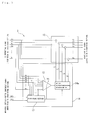
- the symbol "2" in FIG. 1 designates a pre-processing section for converting the biopotential signal, which is detected by the electrodes E attached to the mother's body 1, into a digital signal for analysis.
- the pre-processing section 2 divides data into intervals for measurement of the biopotential signal, signal amplification, AD conversion, and online processing; augments the fetal electrocardiogram signal included in the biopotential signal; and performs the re-montaging step for reducing shared noise.
- the symbol "3" in FIG. 1 designates a maternal electrocardiogram signal removing section that acts as the maternal electrocardiogram signal removing means in the present example in order to remove the primary components of the maternal electrocardiogram signal from the biopotential signal input from the electrodes E of the mother's body 1.
- the maternal electrocardiogram signal removing step is performed in the maternal-signal removing section 3.
- the maternal electrocardiogram signal which has the potential to become highly correlated with the hereinafter described reference signal, is removed from the biopotential signal beforehand.
- the symbol "5" in FIG. 1 designates a main computing section that acts as the fetal electrocardiogram-signal extracting means in the present example for performing the fetal electrocardiogram-signal extracting step, in which a fetal electrocardiogram signal of the designated lead type is actively extracted from the biopotential signal using the reference signal generated in the reference-signal generating step.
- Referential independent component analysis is used in the main computing section 5 on the basis of the reference signal generated in the reference-signal generating step, whereby the fetal electrocardiogram signal is extracted from the biopotential signal.
- the electrocardiogram waveform of the fetal heart 1c generated on the basis of the extracted fetal electrocardiogram signal is displayed on a monitor 6.
- the measuring section 7 contains spatially independent maternal cardiac vector-component signals that act as the measured biopotential signal.
- the measuring section comprises a maternal cardiac vector-component signal measuring section 7a for measuring the maternal electrocardiogram signals that are input from at least two or more maternal electrodes E' and that do not include the fetal electrocardiogram signal; and a biopotential-signal measuring section 7b for measuring the biopotential signal, which includes the fetal electrocardiogram signal and is input from at least two or more electrodes E.
- the pre-processing section 2 is also provided with the signal-amplifying section 8, which comprises a preamp, a filter circuit, and a main amp for amplifying the resulting biopotential signal; the AD converting section 9 for AD converting the amplified signal; and the data buffer-memory section 10 for storing data for each block capable of online computation and for outputting to the next step.
- the time interval of the stored data blocks is of a length that allows calculations to be performed online. If the length allows convergence using iterative estimation, which is described hereinafter, a special time interval is not necessary, but a time interval of 5 seconds is used in the present example.
- Data are stored consecutively in block units for each period of n seconds (n is preferably 5 seconds or less) in the data buffer-memory section 10, and the blocks are output in the order of storage.
- the re-montaging step is performed in the re-montaging section 11 shown in FIG. 2.
- the bipolar terminals of the electrodes E and the maternal electrodes E' attached to the mother's body 1 are reorganized into an optimal configuration on the basis of input information concerning the position of the fetus 1b in order to perform data analysis in the maternal electrocardiogram signal removing step and the fetal electrocardiogram-signal extracting step, and the biopotential signal is output to the maternal-signal removing section 3.
- Optimal in this instance refers to a state wherein a maximized fetal electrocardiogram signal is included, the maternal electrocardiogram signal and other noise are excluded using a method for minimizing common noise, and the SN ratio (signal-to-noise ratio) relative to other noise is approximately 1 or less.
- This function is useful for optimization and clarification of the signal when a good fetal electrocardiogram signal is not obtained, but this function is not necessarily essential in general cases in which a clear signal is obtained.
- the maternal electrocardiogram signals (m1 through mn) of the detection values are estimated using the transformation Wm and aiM1 + biM2 (maternal electrocardiogram-signal estimating section 14a).
- the maternal electrocardiogram signals (m1 through mn) of the detection values estimated using the transformation Wm in the maternal cardiogram-estimating section 14 are removed from the biopotential signal (estimated maternal-cardiogram removing section 15).
- This maternal electrocardiogram signal removing step involves removing to a certain extent the components that may become highly correlated with the reference signal in the fetal electrocardiogram-signal extracting step, which is described hereinafter, and is performed in order to reduce this correlation. Complete removal is preferable but is not necessarily essential.
- the maternal electrocardiogram signal included in the biopotential signal may also be estimated using the average value determined from averaging the plurality of maternal electrocardiogram signals detected by the electrodes E attached to the mother's body 1 without performing these calculations, i.e., without averaging a plurality of temporally repeating units and calculating the averaged maternal electrocardiogram signal.
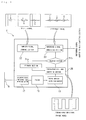
- the reference-signal generating section 4 will be described in detail next using FIG. 4, which is a block diagram of the reference-signal generating section 4.
- the reference-signal generating section 4 comprises a template-signal storing section 22 for storing a plurality of previously generated template signals; a heartbeat-period generating signal inputting section 17 for inputting the heartbeat-period generating signals obtained from at least one or more ultrasound sensors S or like attached to the abdomen of the mother's body 1; a filter 18 for filtering the input heartbeat-period signals; a timing-function calculating section 19 for determining an approximate value for the fetal heartbeat period (the timing function) from the input heartbeat-period signals; a timing-function signal generating section 20 for generating a timing-function signal on the basis of the value of the fetal heartbeat period; a checking section 21b for detecting abnormalities in the timing-function signal generated by the timing-function signal generating section 20; a feedback section 21a for feeding back the timing-function
- the timing-function signal will next be described in more detail.
- the band-pass filter 18 is used to extract fetal cardiac Doppler components in the band from 100 Hz to 600 Hz when the heartbeat-period signal is a fetal cardiac ultrasound signal.
- Calculation is performed in the timing-function calculating section 19 using autocorrelation. Specifically, an envelope is taken at 14 Hz on the Doppler signal that has passed through the filter 18, the time interval (value of the fetal heartbeat period) from each 1.5-second autocorrelation to the next heartbeat is calculated, and a timing-function signal (square wave), which changes to square form in time with the generation of heartbeats, is generated on the basis of this value.
- a plurality of template signals (single-period waveforms) that approximate fetal electrocardiogram signals of designated lead types are stored beforehand in the template-signal storing section 22 of FIG. 4.
- the template signal that conforms to the designated lead type is selected from among these template signals and output to the reference-signal generating section 23.
- the template signal selected by the template-signal storing section 22 is harmonized with the timing of the square wave of the timing-function signal and linked on the time axis in the reference-signal generating section 23, and a reference signal r is generated.
- the reference signal r is generated on the basis of the heartbeat-period signal so as to have the strongest correlation with the fetal electrocardiogram signal of the designated lead type that is the object of extraction within the biopotential signal. This reference signal is used in the referential independent component analysis, which is described hereinafter.
- the main computing section 5 will be described in detail next using FIG. 5, which is a block diagram of the main computing section 5.
- Referential independent component analysis is used in the main computing section 5, and the fetal electrocardiogram-signal extracting step is performed.
- the reference signal is used as a key, and the fetal electrocardiogram signal is extracted from the biopotential signal.
- the main computing section 5 comprises a pre-whitening section 24 for mutually de-correlating (pre-whitening) at least two or more biopotential signals; and a repetitive estimating section 25 for performing iterative estimation (referential independent component analysis) in order to extract a fetal electrocardiogram signal of the designated lead type using the reference signal.
- Iterative estimation which is the primary procedure in referential independent component analysis, is performed in the repetitive estimating section 25.
- wj is slightly modified, and wj + 1 is calculated so that the fourth-order cumulant of the correlation yjr of yj and the reference signal r is reduced.
- This procedure is repeated, and wj, yj is calculated so that the fourth-order cumulant of the correlation yjr is minimized (see the learning-algorithm section 26 of FIG. 5).
- the yj at this point is the fetal electrocardiogram signal that uses r as the reference series.
- ⁇ (yj) (yjr) L
- L is an integer from 1 to 3
- r is the reference signal
- E(*) is the average value during the measurement period.
- the referential independent component analysis of the present example involves the correlation of the weighted biopotential signal and the reference signal of the designated induction type having a maximum cumulant of the fourth or second order, and may involve a iterative estimation algorithm so that the absolute value of the weighting of the biopotential signal is 1.
- FIG. 6 shows photographs of the electrocardiogram signal-processing device A and of the circumstances of implementation when a plurality of the electrodes E are attached to the mother's body 1.
- FIG. 7 shows an example of a fetal electrocardiogram waveform displayed on the monitor 6 of the electrocardiogram signal-processing device A. It can be seen that P-waves and T-waves can be properly extracted using only an approximate timing function as a reference.
- FIG. 8A shows extraction results using the random reference series.
- FIG. 8B shows analysis results using the conventional natural gradient method.
- FIG. 8C shows the waveform of the scalp-electrode electrocardiogram during the same interval.
- FIG. 8D shows a graph in which the variation over 10 correlations is seen.
- the results using the two referential independent component analysis methods display substantially identical precision, which is higher in all cases than the natural gradient method.
- FIG. 8E is a bar graph comparing the average values of 10 correlations.
- the results in which the two referential independent component analysis methods were used display substantially identical precision, which is significantly higher than the natural gradient method.
- the electrocardiogram signal-processing device A of the present example allows a fetal electrocardiogram signal to be non-invasively extracted using the electrodes E attached to the abdomen of the mother's body 1 without damaging the mother's body 1 or the fetus 1b, and also allows extraction regardless of the position or age in weeks of the fetus 1b.
- the fetal electrocardiogram signal can be extracted without measurement being limited to the time of delivery or other such periods.
- the reference signal used in the electrocardiogram signal-processing device A of the present example is based on the heartbeat period of the fetus 1b detected by the ultrasound sensor S, and referential independent component analysis is used to separate and extract the fetal electrocardiogram signal from the biopotential signal detected by the electrodes E, whereby a fetal electrocardiogram signal of the designated lead type (R-wave, P-wave, T-wave) can be actively extracted.
- the fetal electrocardiogram signal After the maternal electrocardiogram signal, which is the primary source of noise, has been removed in the electrocardiogram signal-processing device A of the present example, the fetal electrocardiogram signal to be determined by repetitive referential independent component analysis is retrieved directly from the biopotential signal. Therefore, electromyogram noise, 50-Hz high-frequency noise, and noise due to other signal sources of similar probability distributions or frequency distributions can be effectively separated, and a fetal electrocardiogram signal can be actively extracted online at high speed.
- fetal electrocardiogram signals can be actively extracted online at high speed with high detection sensitivity for not only R-waves, but P-waves and T-waves.
- a fetal electrocardiogram signal of any lead type can be extracted using the reference signal, and fetal electrocardiogram signals can be actively extracted online at high speed.
- the electrocardiogram-signal processing method of the present invention in which a fetal electrocardiogram signal is separated and extracted from a biopotential signal using independent component analysis on the basis of a reference signal, was used in an electrocardiograph for detecting a biopotential signal using electrodes in the aforedescribed example, but the present invention is not limited to this case and may also be applied to a magnetocardiograph or the like for measuring the slight magnetic signal produced by the heart and using back calculation to determine the electrocardiogram signal from the measured magnetic signal.
- the fetal heartbeat-period generating signal for generating the reference signal was detected in the aforedescribed example using an ultrasound sensor in which ultrasound waves were employed and which was attached to the abdomen of the mother's body, but the present invention is not limited to this case.
- a sensor (detector) for detecting the fetal heartbeat-period generating signal using heart sounds, magnetism, or other means may also be used.
- a re-montaging step was performed in the aforedescribed example for reorganizing the bipolar terminals of the electrodes into an optimal combination, but the present invention is not limited to this case.
- the fetal electrocardiogram signal may also be extracted from the biopotential signal in the fetal electrocardiogram-signal extracting step without performing the re-montaging step, or the re-montaging step may be performed only when a good fetal electrocardiogram signal is not obtained in the fetal electrocardiogram-signal extracting step, and the fetal electrocardiogram signal may then be re-extracted in the fetal electrocardiogram-signal extracting step.
- a template signal conforming to the designated induction type was selected from a plurality of template signals stored in advance in the reference-signal generating means in the aforedescribed example, and a reference signal was generated in the reference-signal generating step, but the present invention is not limited to this case.
- a template signal of the necessary lead type may also be generated using another means for generating template signals without storing template signals in the reference-signal generating means.
Landscapes
- Health & Medical Sciences (AREA)
- Life Sciences & Earth Sciences (AREA)
- Molecular Biology (AREA)
- Surgery (AREA)
- Biophysics (AREA)
- Pathology (AREA)
- Engineering & Computer Science (AREA)
- Biomedical Technology (AREA)
- Heart & Thoracic Surgery (AREA)
- Medical Informatics (AREA)
- Cardiology (AREA)
- Physics & Mathematics (AREA)
- Animal Behavior & Ethology (AREA)
- General Health & Medical Sciences (AREA)
- Public Health (AREA)
- Veterinary Medicine (AREA)
- Pediatric Medicine (AREA)
- Pregnancy & Childbirth (AREA)
- Gynecology & Obstetrics (AREA)
- Reproductive Health (AREA)
- Measurement And Recording Of Electrical Phenomena And Electrical Characteristics Of The Living Body (AREA)
- Ultra Sonic Daignosis Equipment (AREA)
Applications Claiming Priority (2)
| Application Number | Priority Date | Filing Date | Title |
|---|---|---|---|
| JP2005023982A JP4590554B2 (ja) | 2005-01-31 | 2005-01-31 | 心電図信号処理方法および心電図信号処理装置 |
| PCT/JP2005/023601 WO2006080167A1 (fr) | 2005-01-31 | 2005-12-22 | Procede de traitement d'un signal electrocardiographique et dispositif de traitement d'un signal electrocardiographique |
Publications (3)
| Publication Number | Publication Date |
|---|---|
| EP1844706A1 true EP1844706A1 (fr) | 2007-10-17 |
| EP1844706A4 EP1844706A4 (fr) | 2010-05-05 |
| EP1844706B1 EP1844706B1 (fr) | 2016-03-30 |
Family
ID=36740200
Family Applications (1)
| Application Number | Title | Priority Date | Filing Date |
|---|---|---|---|
| EP05819693.2A Expired - Lifetime EP1844706B1 (fr) | 2005-01-31 | 2005-12-22 | Procédé de traitement d'un signal électrocardiographique et dispositif de traitement d'un signal électrocardiographique |
Country Status (5)
| Country | Link |
|---|---|
| US (1) | US8175692B2 (fr) |
| EP (1) | EP1844706B1 (fr) |
| JP (1) | JP4590554B2 (fr) |
| AU (1) | AU2005326223A1 (fr) |
| WO (1) | WO2006080167A1 (fr) |
Cited By (7)
| Publication number | Priority date | Publication date | Assignee | Title |
|---|---|---|---|---|
| GB2456375A (en) * | 2008-01-08 | 2009-07-15 | Gen Electric | Distinguishing maternal and foetal electrocardiograph signals using independent component analysis of waveforms from abdominal electrodes |
| GB2457567A (en) * | 2008-02-20 | 2009-08-26 | Gen Electric | Extrapolating ica knowledge from one epoch to another for fetal ecg separation |
| WO2011003132A1 (fr) * | 2009-07-06 | 2011-01-13 | Heard Systems Pty Ltd | Mesure non invasive dun processus physiologique |
| US8211015B2 (en) | 2006-02-01 | 2012-07-03 | University Of Florida Research Foundation, Inc. | Obstetric analgesia system |
| US8275451B2 (en) | 2004-05-28 | 2012-09-25 | University Of Florida Research Foundation, Inc. | Maternal-fetal monitoring system |
| EP2276401A4 (fr) * | 2008-04-15 | 2014-02-05 | Tufts Medical Ct | Contrôle de l e.c.g. foetal |
| CN112040862A (zh) * | 2018-05-10 | 2020-12-04 | 阿童木医疗有限公司 | 胎儿心电信号处理方法及胎儿心电信号处理装置 |
Families Citing this family (23)
| Publication number | Priority date | Publication date | Assignee | Title |
|---|---|---|---|---|
| AU2006288486A1 (en) * | 2005-09-05 | 2007-03-15 | Tohoku Techno Arch Co., Ltd. | Non-linear signal separation method using non-linear state space projection method |
| US9351682B2 (en) * | 2006-10-18 | 2016-05-31 | Convergent Engineering, Inc. | Sensor interface system |
| WO2008090862A1 (fr) * | 2007-01-23 | 2008-07-31 | Tohoku Techno Arch Co., Ltd. | Procédé de mesure d'un signal d'électrocardiogramme fœtal et son dispositif |
| WO2009110051A1 (fr) * | 2008-03-03 | 2009-09-11 | 株式会社 東北テクノアーチ | Procédé de traitement d'un signal vital en temps réel, opérationnel pendant un mouvement fœtal, et appareil associé |
| US8707138B2 (en) * | 2009-05-28 | 2014-04-22 | Xieon Networks S.A.R.L. | Method and arrangement for blind demultiplexing a polarisation diversity multiplex signal |
| JP5769309B2 (ja) | 2009-09-18 | 2015-08-26 | 国立大学法人東北大学 | 1計測信号からの独立成分分析による信号抽出装置、その信号抽出プログラム及びその信号抽出方法 |
| US20110251493A1 (en) * | 2010-03-22 | 2011-10-13 | Massachusetts Institute Of Technology | Method and system for measurement of physiological parameters |
| US9129426B2 (en) * | 2010-08-31 | 2015-09-08 | General Electric Company | Motion compensation in image processing |
| JP6043920B2 (ja) * | 2011-01-25 | 2016-12-14 | 公立大学法人奈良県立医科大学 | 胎児心電位信号抽出プログラム、胎児心電位信号判別装置及びこれを用いた妊婦見守りシステム |
| CN102178522B (zh) * | 2011-04-29 | 2013-03-06 | 华南理工大学 | 一种母亲及胎儿心电信号qrs波中r波的检测定位方法 |
| US9366754B2 (en) * | 2012-08-17 | 2016-06-14 | General Electric Company | Ultrasound imaging system and method |
| JP6324490B2 (ja) | 2014-03-26 | 2018-05-16 | 国立大学法人東北大学 | 胎児状態推定装置、胎児状態推定方法、及び、胎児状態推定プログラム |
| JP6359084B2 (ja) | 2014-03-26 | 2018-07-18 | 国立大学法人東北大学 | 生体状態推定装置、生体状態推定装置の作動方法、及び、生体状態推定プログラム |
| US9392952B1 (en) * | 2015-03-10 | 2016-07-19 | Nuvo Group Ltd. | Systems, apparatus and methods for sensing fetal activity |
| CN107684422A (zh) * | 2016-08-05 | 2018-02-13 | 深圳先进技术研究院 | 一种胎儿心电分离方法及装置 |
| EP3554360B1 (fr) * | 2016-12-13 | 2023-06-21 | King Abdullah University Of Science And Technology | Système et procédé d'extraction non invasive de signaux d'électrocardiogramme foetal |
| WO2019004394A1 (fr) | 2017-06-29 | 2019-01-03 | アトムメディカル株式会社 | Dispositif de monitorage maternel et fœtal et dispositif d'affichage associé |
| JP7182391B2 (ja) * | 2018-07-24 | 2022-12-02 | 富士フイルムヘルスケア株式会社 | 超音波診断装置 |
| EP3916645A4 (fr) * | 2019-01-25 | 2022-10-12 | Tohoku University | Procédé de traitement de signal, dispositif de traitement de signal et programme de traitement de signal |
| JP7418740B2 (ja) * | 2019-02-21 | 2024-01-22 | 株式会社クラウドセンス | 胎児心拍監視システム |
| EP3954283A4 (fr) | 2019-04-10 | 2023-01-04 | Atom Medical Corporation | Dispositif de surveillance de la fluctuation de la fréquence cardiaque foetale |
| KR102426398B1 (ko) * | 2020-05-14 | 2022-07-28 | 한양대학교 산학협력단 | 태아의 움직임을 고려한 모터 구동 방식의 태아 심박 측정 시스템 및 그 방법 |
| DE202023103116U1 (de) | 2023-06-06 | 2023-06-13 | Anil Kumar | Ein hybrides Kompressionssystem für zweidimensionale Elektrokardiogrammsignale unter Verwendung der diskreten Kosinus- und Tunable-Q-Wavelet-Transformation |
Family Cites Families (5)
| Publication number | Priority date | Publication date | Assignee | Title |
|---|---|---|---|---|
| GB2342449B (en) | 1998-12-22 | 2000-09-20 | Neoventa Medical Ab | Device for reducing signal noise in a fetal ECG signal |
| CA2345720C (fr) * | 1999-03-15 | 2005-01-04 | The Johns Hopkins University | Appareil et procede passifs et non invasifs pour surveiller la frequence cardiaque foetale |
| US7333850B2 (en) * | 2004-05-28 | 2008-02-19 | University Of Florida Research Foundation, Inc. | Maternal-fetal monitoring system |
| US7509170B2 (en) * | 2005-05-09 | 2009-03-24 | Cardiac Pacemakers, Inc. | Automatic capture verification using electrocardiograms sensed from multiple implanted electrodes |
| US7474915B2 (en) * | 2005-07-26 | 2009-01-06 | American University Of Sharjah And Arab Science And Technology Foundation | Separating mixed signals containing a distorted signal |
-
2005
- 2005-01-31 JP JP2005023982A patent/JP4590554B2/ja not_active Expired - Lifetime
- 2005-12-22 EP EP05819693.2A patent/EP1844706B1/fr not_active Expired - Lifetime
- 2005-12-22 WO PCT/JP2005/023601 patent/WO2006080167A1/fr not_active Ceased
- 2005-12-22 US US11/814,230 patent/US8175692B2/en active Active
- 2005-12-22 AU AU2005326223A patent/AU2005326223A1/en not_active Abandoned
Non-Patent Citations (4)
| Title |
|---|
| LIEVEN DE LATHAUWER ET AL: "Fetal Electrocardiogram Extraction by Blind Source Subspace Separation" IEEE TRANSACTIONS ON BIOMEDICAL ENGINEERING, IEEE SERVICE CENTER, PISCATAWAY, NJ, US, vol. 47, no. 5, 1 May 2000 (2000-05-01), XP011006884 ISSN: 0018-9294 * |
| LU W ET AL: "Approach and Applications of Constrained ICA" IEEE TRANSACTIONS ON NEURAL NETWORKS, IEEE SERVICE CENTER, PISCATAWAY, NJ, US, vol. 16, no. 1, 1 January 2005 (2005-01-01), pages 203-212, XP011125991 ISSN: 1045-9227 * |
| See also references of WO2006080167A1 * |
| SHAVIT D ET AL: "CORRELATING FETAL DOPPLER CARDIOGRAPHY AND ELECTROCARDIOGRAPHY" PROCEEDINGS OF THE 15TH CONFERENCE OF ELECTRICAL AND ELECTRONICS ENGINEERS IN ISRAEL. TEL AVIV, APR. 7 - 9, 1987, IEEE, 7 April 1987 (1987-04-07), pages 1-3, XP000092922 * |
Cited By (15)
| Publication number | Priority date | Publication date | Assignee | Title |
|---|---|---|---|---|
| US8275451B2 (en) | 2004-05-28 | 2012-09-25 | University Of Florida Research Foundation, Inc. | Maternal-fetal monitoring system |
| US8211015B2 (en) | 2006-02-01 | 2012-07-03 | University Of Florida Research Foundation, Inc. | Obstetric analgesia system |
| GB2456375A (en) * | 2008-01-08 | 2009-07-15 | Gen Electric | Distinguishing maternal and foetal electrocardiograph signals using independent component analysis of waveforms from abdominal electrodes |
| US8064991B2 (en) | 2008-01-08 | 2011-11-22 | The General Electric Company | Method of fetal and maternal ECG identification across multiple EPOCHS |
| GB2456375B (en) * | 2008-01-08 | 2012-05-23 | Gen Electric | Method of fetal and maternal ECG identification over multiple epochs |
| GB2457567A (en) * | 2008-02-20 | 2009-08-26 | Gen Electric | Extrapolating ica knowledge from one epoch to another for fetal ecg separation |
| US7831300B2 (en) | 2008-02-20 | 2010-11-09 | The General Electric Company | Extrapolating ICA knowledge from one epoch to another for improved fetal ECG separation |
| GB2457567B (en) * | 2008-02-20 | 2013-02-27 | Gen Electric | Extrapolating ICA knowledge from one epoch to another for improved fetal ECG separation |
| EP2276401A4 (fr) * | 2008-04-15 | 2014-02-05 | Tufts Medical Ct | Contrôle de l e.c.g. foetal |
| WO2011003132A1 (fr) * | 2009-07-06 | 2011-01-13 | Heard Systems Pty Ltd | Mesure non invasive dun processus physiologique |
| EP2451347A4 (fr) * | 2009-07-06 | 2013-07-17 | Heard Systems Pty Ltd | Mesure non invasive d un processus physiologique |
| US8652063B2 (en) | 2009-07-06 | 2014-02-18 | Heard Systems Pty Ltd | Non-invasively measuring physiological process |
| AU2010269114B2 (en) * | 2009-07-06 | 2014-05-08 | Heard Systems Pty Ltd | Non-invasively measuring physiological process |
| CN112040862A (zh) * | 2018-05-10 | 2020-12-04 | 阿童木医疗有限公司 | 胎儿心电信号处理方法及胎儿心电信号处理装置 |
| EP3791784A4 (fr) * | 2018-05-10 | 2022-01-26 | Atom Medical Corporation | Procédé de traitement de signal électrocardiographique foetal et dispositif de traitement de signal électrocardiographique foetal |
Also Published As
| Publication number | Publication date |
|---|---|
| AU2005326223A1 (en) | 2006-08-03 |
| JP4590554B2 (ja) | 2010-12-01 |
| EP1844706B1 (fr) | 2016-03-30 |
| WO2006080167A1 (fr) | 2006-08-03 |
| US20080146953A1 (en) | 2008-06-19 |
| EP1844706A4 (fr) | 2010-05-05 |
| JP2006204759A (ja) | 2006-08-10 |
| US8175692B2 (en) | 2012-05-08 |
Similar Documents
| Publication | Publication Date | Title |
|---|---|---|
| EP1844706B1 (fr) | Procédé de traitement d'un signal électrocardiographique et dispositif de traitement d'un signal électrocardiographique | |
| US6751498B1 (en) | Apparatus and method for non-invasive, passive fetal heart monitoring | |
| Taylor et al. | Non-invasive fetal electrocardiography in singleton and multiple pregnancies | |
| US7333850B2 (en) | Maternal-fetal monitoring system | |
| Abdulhay et al. | Monitoring techniques | |
| EP2185068B1 (fr) | Surveillance foetale | |
| TW568770B (en) | Apparatus for monitoring fetal heart-beat | |
| EP1220640B1 (fr) | Appareil et procede de detection du rythme cardiaque d'un foetus | |
| CA2345720C (fr) | Appareil et procede passifs et non invasifs pour surveiller la frequence cardiaque foetale | |
| JP2006523112A (ja) | 電気的筋肉活動の監視 | |
| US8116857B2 (en) | Non-linear signal separation method using non-linear state space projection method | |
| Petrolis et al. | Multi stage principal component analysis based method for detection of fetal heart beats in abdominal ECGs | |
| Niida et al. | Fetal Heart Rate Detection Using First Derivative of ECG Waveform and Multiple Weighting Functions | |
| Jezewski et al. | A new approach to cardiotocographic fetal monitoring based on analysis of bioelectrical signals | |
| Hasan et al. | Fetal electrocardiogram extraction and R-peak detection for fetal heart rate monitoring using artificial neural network and Correlation | |
| Ruffo et al. | Non-invasive foetal monitoring with combined ECG-PCG system | |
| AbuHantash et al. | Swarm decomposition of abdominal signals for non-invasive fetal ECG extraction | |
| Ali et al. | A novel technique for extraction foetal electrocardiogram using adaptive filtering and simple genetic algorithm | |
| AbuHantash | Development of Techniques for Simultaneous Extraction of Maternal Electrocardiogram and Fetal Electrocardiogram Signal from Abdominal Electrography Signals | |
| Kazem | Design and Construction of Fetal Heart Rate Monitoring | |
| Sriram et al. | The effect of applying orthogonal projection technique in short window segments to obtain fetal magnetocardiogram | |
| Matonia et al. | Simultaneous recording and analysis of direct and indirect fetal electrocardiography |
Legal Events
| Date | Code | Title | Description |
|---|---|---|---|
| PUAI | Public reference made under article 153(3) epc to a published international application that has entered the european phase |
Free format text: ORIGINAL CODE: 0009012 |
|
| 17P | Request for examination filed |
Effective date: 20070810 |
|
| AK | Designated contracting states |
Kind code of ref document: A1 Designated state(s): AT BE BG CH CY CZ DE DK EE ES FI FR GB GR HU IE IS IT LI LT LU LV MC NL PL PT RO SE SI SK TR |
|
| DAX | Request for extension of the european patent (deleted) | ||
| A4 | Supplementary search report drawn up and despatched |
Effective date: 20100401 |
|
| 17Q | First examination report despatched |
Effective date: 20100713 |
|
| GRAP | Despatch of communication of intention to grant a patent |
Free format text: ORIGINAL CODE: EPIDOSNIGR1 |
|
| RIC1 | Information provided on ipc code assigned before grant |
Ipc: A61B 5/0444 20060101AFI20151001BHEP Ipc: A61B 8/08 20060101ALN20151001BHEP |
|
| INTG | Intention to grant announced |
Effective date: 20151022 |
|
| GRAS | Grant fee paid |
Free format text: ORIGINAL CODE: EPIDOSNIGR3 |
|
| GRAA | (expected) grant |
Free format text: ORIGINAL CODE: 0009210 |
|
| AK | Designated contracting states |
Kind code of ref document: B1 Designated state(s): AT BE BG CH CY CZ DE DK EE ES FI FR GB GR HU IE IS IT LI LT LU LV MC NL PL PT RO SE SI SK TR |
|
| REG | Reference to a national code |
Ref country code: GB Ref legal event code: FG4D |
|
| REG | Reference to a national code |
Ref country code: CH Ref legal event code: EP |
|
| REG | Reference to a national code |
Ref country code: AT Ref legal event code: REF Ref document number: 784398 Country of ref document: AT Kind code of ref document: T Effective date: 20160415 |
|
| REG | Reference to a national code |
Ref country code: IE Ref legal event code: FG4D |
|
| REG | Reference to a national code |
Ref country code: DE Ref legal event code: R096 Ref document number: 602005048834 Country of ref document: DE |
|
| REG | Reference to a national code |
Ref country code: NL Ref legal event code: FP |
|
| REG | Reference to a national code |
Ref country code: SE Ref legal event code: TRGR |
|
| REG | Reference to a national code |
Ref country code: LT Ref legal event code: MG4D |
|
| REG | Reference to a national code |
Ref country code: GB Ref legal event code: 732E Free format text: REGISTERED BETWEEN 20160701 AND 20160706 |
|
| PG25 | Lapsed in a contracting state [announced via postgrant information from national office to epo] |
Ref country code: GR Free format text: LAPSE BECAUSE OF FAILURE TO SUBMIT A TRANSLATION OF THE DESCRIPTION OR TO PAY THE FEE WITHIN THE PRESCRIBED TIME-LIMIT Effective date: 20160701 Ref country code: FI Free format text: LAPSE BECAUSE OF FAILURE TO SUBMIT A TRANSLATION OF THE DESCRIPTION OR TO PAY THE FEE WITHIN THE PRESCRIBED TIME-LIMIT Effective date: 20160330 |
|
| REG | Reference to a national code |
Ref country code: AT Ref legal event code: MK05 Ref document number: 784398 Country of ref document: AT Kind code of ref document: T Effective date: 20160330 |
|
| PG25 | Lapsed in a contracting state [announced via postgrant information from national office to epo] |
Ref country code: LT Free format text: LAPSE BECAUSE OF FAILURE TO SUBMIT A TRANSLATION OF THE DESCRIPTION OR TO PAY THE FEE WITHIN THE PRESCRIBED TIME-LIMIT Effective date: 20160330 Ref country code: LV Free format text: LAPSE BECAUSE OF FAILURE TO SUBMIT A TRANSLATION OF THE DESCRIPTION OR TO PAY THE FEE WITHIN THE PRESCRIBED TIME-LIMIT Effective date: 20160330 |
|
| REG | Reference to a national code |
Ref country code: NL Ref legal event code: PD Owner name: ATOM MEDICAL CORPORATION; JP Free format text: DETAILS ASSIGNMENT: VERANDERING VAN EIGENAAR(S), OVERDRACHT; FORMER OWNER NAME: TOHOKU UNIVERSITY Effective date: 20160428 |
|
| REG | Reference to a national code |
Ref country code: FR Ref legal event code: TP Owner name: TOHOKU TECNHO ARCH CO., LTD, JP Effective date: 20160912 |
|
| PG25 | Lapsed in a contracting state [announced via postgrant information from national office to epo] |
Ref country code: IS Free format text: LAPSE BECAUSE OF FAILURE TO SUBMIT A TRANSLATION OF THE DESCRIPTION OR TO PAY THE FEE WITHIN THE PRESCRIBED TIME-LIMIT Effective date: 20160730 Ref country code: PL Free format text: LAPSE BECAUSE OF FAILURE TO SUBMIT A TRANSLATION OF THE DESCRIPTION OR TO PAY THE FEE WITHIN THE PRESCRIBED TIME-LIMIT Effective date: 20160330 Ref country code: EE Free format text: LAPSE BECAUSE OF FAILURE TO SUBMIT A TRANSLATION OF THE DESCRIPTION OR TO PAY THE FEE WITHIN THE PRESCRIBED TIME-LIMIT Effective date: 20160330 |
|
| PG25 | Lapsed in a contracting state [announced via postgrant information from national office to epo] |
Ref country code: ES Free format text: LAPSE BECAUSE OF FAILURE TO SUBMIT A TRANSLATION OF THE DESCRIPTION OR TO PAY THE FEE WITHIN THE PRESCRIBED TIME-LIMIT Effective date: 20160330 Ref country code: AT Free format text: LAPSE BECAUSE OF FAILURE TO SUBMIT A TRANSLATION OF THE DESCRIPTION OR TO PAY THE FEE WITHIN THE PRESCRIBED TIME-LIMIT Effective date: 20160330 Ref country code: SK Free format text: LAPSE BECAUSE OF FAILURE TO SUBMIT A TRANSLATION OF THE DESCRIPTION OR TO PAY THE FEE WITHIN THE PRESCRIBED TIME-LIMIT Effective date: 20160330 Ref country code: RO Free format text: LAPSE BECAUSE OF FAILURE TO SUBMIT A TRANSLATION OF THE DESCRIPTION OR TO PAY THE FEE WITHIN THE PRESCRIBED TIME-LIMIT Effective date: 20160330 Ref country code: CZ Free format text: LAPSE BECAUSE OF FAILURE TO SUBMIT A TRANSLATION OF THE DESCRIPTION OR TO PAY THE FEE WITHIN THE PRESCRIBED TIME-LIMIT Effective date: 20160330 Ref country code: PT Free format text: LAPSE BECAUSE OF FAILURE TO SUBMIT A TRANSLATION OF THE DESCRIPTION OR TO PAY THE FEE WITHIN THE PRESCRIBED TIME-LIMIT Effective date: 20160801 |
|
| REG | Reference to a national code |
Ref country code: FR Ref legal event code: PLFP Year of fee payment: 12 |
|
| PG25 | Lapsed in a contracting state [announced via postgrant information from national office to epo] |
Ref country code: BE Free format text: LAPSE BECAUSE OF FAILURE TO SUBMIT A TRANSLATION OF THE DESCRIPTION OR TO PAY THE FEE WITHIN THE PRESCRIBED TIME-LIMIT Effective date: 20160330 Ref country code: IT Free format text: LAPSE BECAUSE OF FAILURE TO SUBMIT A TRANSLATION OF THE DESCRIPTION OR TO PAY THE FEE WITHIN THE PRESCRIBED TIME-LIMIT Effective date: 20160330 |
|
| REG | Reference to a national code |
Ref country code: DE Ref legal event code: R097 Ref document number: 602005048834 Country of ref document: DE |
|
| PG25 | Lapsed in a contracting state [announced via postgrant information from national office to epo] |
Ref country code: DK Free format text: LAPSE BECAUSE OF FAILURE TO SUBMIT A TRANSLATION OF THE DESCRIPTION OR TO PAY THE FEE WITHIN THE PRESCRIBED TIME-LIMIT Effective date: 20160330 |
|
| PLBE | No opposition filed within time limit |
Free format text: ORIGINAL CODE: 0009261 |
|
| STAA | Information on the status of an ep patent application or granted ep patent |
Free format text: STATUS: NO OPPOSITION FILED WITHIN TIME LIMIT |
|
| 26N | No opposition filed |
Effective date: 20170103 |
|
| PG25 | Lapsed in a contracting state [announced via postgrant information from national office to epo] |
Ref country code: SI Free format text: LAPSE BECAUSE OF FAILURE TO SUBMIT A TRANSLATION OF THE DESCRIPTION OR TO PAY THE FEE WITHIN THE PRESCRIBED TIME-LIMIT Effective date: 20160330 |
|
| REG | Reference to a national code |
Ref country code: CH Ref legal event code: PL |
|
| PG25 | Lapsed in a contracting state [announced via postgrant information from national office to epo] |
Ref country code: MC Free format text: LAPSE BECAUSE OF FAILURE TO SUBMIT A TRANSLATION OF THE DESCRIPTION OR TO PAY THE FEE WITHIN THE PRESCRIBED TIME-LIMIT Effective date: 20160330 |
|
| REG | Reference to a national code |
Ref country code: IE Ref legal event code: MM4A |
|
| PG25 | Lapsed in a contracting state [announced via postgrant information from national office to epo] |
Ref country code: LI Free format text: LAPSE BECAUSE OF NON-PAYMENT OF DUE FEES Effective date: 20161231 Ref country code: CH Free format text: LAPSE BECAUSE OF NON-PAYMENT OF DUE FEES Effective date: 20161231 Ref country code: LU Free format text: LAPSE BECAUSE OF NON-PAYMENT OF DUE FEES Effective date: 20161222 |
|
| PG25 | Lapsed in a contracting state [announced via postgrant information from national office to epo] |
Ref country code: IE Free format text: LAPSE BECAUSE OF NON-PAYMENT OF DUE FEES Effective date: 20161222 |
|
| REG | Reference to a national code |
Ref country code: FR Ref legal event code: PLFP Year of fee payment: 13 |
|
| PG25 | Lapsed in a contracting state [announced via postgrant information from national office to epo] |
Ref country code: CY Free format text: LAPSE BECAUSE OF FAILURE TO SUBMIT A TRANSLATION OF THE DESCRIPTION OR TO PAY THE FEE WITHIN THE PRESCRIBED TIME-LIMIT Effective date: 20160330 Ref country code: HU Free format text: LAPSE BECAUSE OF FAILURE TO SUBMIT A TRANSLATION OF THE DESCRIPTION OR TO PAY THE FEE WITHIN THE PRESCRIBED TIME-LIMIT; INVALID AB INITIO Effective date: 20051222 |
|
| PG25 | Lapsed in a contracting state [announced via postgrant information from national office to epo] |
Ref country code: TR Free format text: LAPSE BECAUSE OF FAILURE TO SUBMIT A TRANSLATION OF THE DESCRIPTION OR TO PAY THE FEE WITHIN THE PRESCRIBED TIME-LIMIT Effective date: 20160330 |
|
| PG25 | Lapsed in a contracting state [announced via postgrant information from national office to epo] |
Ref country code: BG Free format text: LAPSE BECAUSE OF FAILURE TO SUBMIT A TRANSLATION OF THE DESCRIPTION OR TO PAY THE FEE WITHIN THE PRESCRIBED TIME-LIMIT Effective date: 20160330 |
|
| REG | Reference to a national code |
Ref country code: DE Ref legal event code: R079 Ref document number: 602005048834 Country of ref document: DE Free format text: PREVIOUS MAIN CLASS: A61B0005044400 Ipc: A61B0005344000 |
|
| PGFP | Annual fee paid to national office [announced via postgrant information from national office to epo] |
Ref country code: DE Payment date: 20241029 Year of fee payment: 20 |
|
| PGFP | Annual fee paid to national office [announced via postgrant information from national office to epo] |
Ref country code: NL Payment date: 20241219 Year of fee payment: 20 |
|
| PGFP | Annual fee paid to national office [announced via postgrant information from national office to epo] |
Ref country code: GB Payment date: 20241224 Year of fee payment: 20 |
|
| PGFP | Annual fee paid to national office [announced via postgrant information from national office to epo] |
Ref country code: FR Payment date: 20241223 Year of fee payment: 20 |
|
| PGFP | Annual fee paid to national office [announced via postgrant information from national office to epo] |
Ref country code: SE Payment date: 20241219 Year of fee payment: 20 |
|
| REG | Reference to a national code |
Ref country code: DE Ref legal event code: R071 Ref document number: 602005048834 Country of ref document: DE |
|
| REG | Reference to a national code |
Ref country code: NL Ref legal event code: MK Effective date: 20251221 |
|
| REG | Reference to a national code |
Ref country code: GB Ref legal event code: PE20 Expiry date: 20251221 |
|
| REG | Reference to a national code |
Ref country code: SE Ref legal event code: EUG |