EP1847626A2 - Magnesiumlegierungen - Google Patents
Magnesiumlegierungen Download PDFInfo
- Publication number
- EP1847626A2 EP1847626A2 EP07106312A EP07106312A EP1847626A2 EP 1847626 A2 EP1847626 A2 EP 1847626A2 EP 07106312 A EP07106312 A EP 07106312A EP 07106312 A EP07106312 A EP 07106312A EP 1847626 A2 EP1847626 A2 EP 1847626A2
- Authority
- EP
- European Patent Office
- Prior art keywords
- weight
- alloys
- alloy
- sample
- added
- Prior art date
- Legal status (The legal status is an assumption and is not a legal conclusion. Google has not performed a legal analysis and makes no representation as to the accuracy of the status listed.)
- Withdrawn
Links
Images




Classifications
-
- C—CHEMISTRY; METALLURGY
- C22—METALLURGY; FERROUS OR NON-FERROUS ALLOYS; TREATMENT OF ALLOYS OR NON-FERROUS METALS
- C22C—ALLOYS
- C22C23/00—Alloys based on magnesium
- C22C23/02—Alloys based on magnesium with aluminium as the next major constituent
Definitions
- the present invention relates to magnesium alloys, and more particularly to magnesium alloys for use in casting.
- Magnesium (Mg) has the specific gravity of 1.74, which is approximately two seconds of the specific gravity of aluminum (Al) and approximate one fourth of the specific gravity of iron (Fe).
- Magnesium is most lightweight among practical metals, and has various favorable properties such as excellent specific tensile strength, specific rigidity, shielding of electromagnetic waves, heat conduction, size invariance and cutting facility, as well as availability for recycle. Because of these properties, magnesium is used in bodies of cell phones, note-type personal computers and mobile electronic devices that require weight saving. Also for weight saving of vehicles, which is the most effective way for improving the fuel consumption rate, the car industry is promoting development and practical use of automotive parts made of magnesium alloys (hereafter called Mg alloys as well).
- Ma-Al-Zn based AZ91D alloys and Mg-Al based AM60B alloys are known as typical magnesium alloys for use in casting. Names of the magnesium alloys are determined in accordance with the ASTM standards.
- the JIS standards Japanese Industrial Standards
- the notation system according to these standards assigns specific alphabetical letters to respective elements contained in alloys.
- the notation system uses A for aluminum (Al), Z for zinc (Zn), M for manganese (Mn), K for zirconium (Zr), E for rare earth elements, S for silicon (Si), Q for silver (Ag), L for lithium (Li), C for copper (Cu), W for yttrium (Y), H for terbium (Tb), for example.
- Numerals following the atomic symbols represent quantities of the components, and alphabetical letters suffixed at the ends indicate the sequential order of establishment of the alloys.
- the AZ91D alloy is not only excellent in balance between its castability, such as flow, hot cracking resistance and shrinkage property, and its mechanical properties, but it is also economical. Therefore, applications of the AZ91D alloy widely range from vehicle parts to electronic devices. On the other hand, the AM60B alloy is used mostly in vehicle parts because of its better ductility than the AZ91 D alloy.
- Exemplary applications of the AZ91D alloy are key lock housings, sunroofs, retractable roofs, glove boxes, ashtrays, and so on.
- Exemplary applications of the AM60B alloy are beams of instrument panels, pedal brackets, sheet frames, airbag housings, steering columns, pedal brackets, ABS mount brackets, road wheels, and so on.
- magnesium alloys for weight saving of vehicles, the use of magnesium alloys in transmissions, engine-peripherals and other parts, which are subject to severe environments, is under research.
- existing magnesium alloys including AZ91D and AM60B involve the issue of creep strain or deformation under the temperature of 100°C or more, and the creep deformation degrades the dimensional accuracy of the bolt-tightening portions and degrades the tightening strength.
- Mg-Al-Si based alloys such as AS21 and AS41 are liable to seize up to the mold in the course of casting, and their heat resistance is still insufficient for use in engine parts.
- Mg-RE based alloys, WE54, ZE41 and QE22 are good in heat resistance, but they are expensive and will increase the cost of the products.
- rare earth elements RE are too expensive to use as additive elements. Furthermore, alloys containing RE involve the problems that their melts degrade in fluidity and are liable to seize up to the mold, which lead to degrading castability and strength at room temperature.
- Mg-RE based alloys based upon WE54 and QE22 alloys
- development based upon Mg-Al based alloys such as AZ91D and AM60B.
- Mg-RE based alloys they were developed as substitutes for Mg-Th based alloys. Therefore, these alloys demonstrate sufficient heat resistance at 200 through 300 °C.
- the target of their development was military and car-racing purposes, these alloys have not been prepared for commercial production required for use in public vehicles.
- Mg-RE based alloys tends to incline toward alloys adjusted in amount of additive Zn or Ag to improve the castability and alloys added with Ca or Si to enhance the heat resistance.
- alloys based on the Mg-Al system has become active in recent years and, for enhancing heat resistance, various trials have been made to add combinations of RE, Ca, Si and Sr to Mg-Al based alloys such as AZ91 D and AM60B, for example, as basic alloys.
- these additive elements if added excessively, not only degrade the castability, but also deteriorate the room temperature strength and the corrosion resistance.
- a further object of the invention is to provide a heat-resistant casting Mg alloy well balanced in heat-resistance and room temperature strength.
- a still further object of the invention is to provide a heat-resistant casting Mg alloy that can be inhibited from deterioration of corrosion resistance while keeping well balanced in heat resistance and room temperature strength.
- a casting Mg alloy comprising an Mg-Al based alloy containing approximately 5.0-9.0 weight % Al and added with Cu.
- the Mg-Al based alloy preferably contains approximately 8.0 weight % aluminum (Al). If the amount of Cu added to the alloy is in the range approximately from 1.0 to 5.0 weight %, heat resistance and room temperature strength will be well balanced. However, it is preferable to limit the amount of Cu to the range approximately from 1.0 to 1.5 weight % and add manganese (Mn) to prevent deterioration of the corrosion resistance. Preferable amount of Mn added here is approximately 0.5-1.0 weight %.
- FIG. 1 shows creep curves of sample Mg alloys added with 1.0-5.0 weight % Cu and comparative alloys.
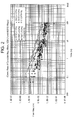
- FIG. 2 is a diagram plotting creep rate of sample Mg alloys added with 1.0-5.0 weight % Cu together with that of comparative alloys.
- FIG. 3 is a graph showing 0.2% proof strength of sample Mg alloys added with 1.0-5.0 weight % Cu at 23°C (room temperature) and 150°C (high temperature), together with that of comparative alloys.
- FIG. 4 is a graph showing maximum tensile stress of sample Mg alloys added with 1.0-5.0 weight % Cu at 23°C (room temperature) and 150°C (high temperature), together with that of comparative alloys.
- FIG. 5 is a graph showing tensile elongation of sample Mg alloys added with 1.0-5.0 weight % Cu at 23°C (room temperature) and 150°C (high temperature), together with that of comparative alloys.
- FIG. 6 is a graph showing corrosion rate of sample Mg alloys added with 1.0-5.0 weight % Cu, together with that of comparative alloys.
- FIG. 7 is a graph showing corrosion rate of sample Mg alloys containing 1.5 weight % Cu and 0.25-1.0 weight % Mn, together with that of comparative alloys.
- FIG. 8 shows creep curves of sample Mg alloys containing 1.5 weight % Cu and 0.25-1.0 weight % Mn, together with those of comparative alloys.
- FIG. 9 is a diagram plotting creep rate of sample Mg alloys containing 1.5 weight % Cu and 0.25-1.0 weight % Mn, together with that of comparative alloys.
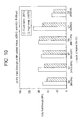
- FIG. 10 is a graph showing 0.2% proof strength of sample Mg alloys containing 1.5 weight % Cu and 0.25-1.0 weight % Mn at 23°C (room temperature) and 150°C (high temperature), together with that of comparative alloys.
- FIG. 11 is a graph showing maximum tensile stress of sample Mg alloys containing 1.5 weight % Cu and 0.25-1.0 weight % Mn at 23°C (room temperature) and 150°C (high temperature), together with that of comparative alloys.
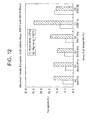
- FIG. 12 is a graph showing maximum tensile elongation of sample Mg alloys containing 1.5 weight % Cu and 0.25-1.0 weight % Mn at 23°C (room temperature) and 150°C (high temperature), together with that of comparative alloys.
- the Inventors considered it advantageous to use Mg-Al based alloys as a master and add one or more elements that contribute to enhancement of heat resistance. Consequently, the Inventors selected copper (Cu) as an element that can enhance the heat resistance. Cu not only enhances heat resistance without degrading room temperature strength and castability, but also is available at a lower cost than rare earth elements (RE). Cu enhances heat resistance by accelerating solid solution and generating compounds in the system. Solid-soluble limit of Cu was examined on a Mg-Al-Cu ternary alloy, and it has been confirmed that Cu can be solid-soluble to the maxim, 3.0 weight %, when Al is added to Mg by 8.0 weight %.
- Cu copper
- Mg-Al based alloys are added with 5.0-9.0 weight % Al to improve castability and room temperature strength. Therefore, from the viewpoint of heat resistance and other properties, appropriate amount of Al to be added will be 5.0-9.0 weight %, and preferable amount of Al is 8.0 weight %.
- Zn has a function to improve the mechanical strength of Mg and the fluidity of the melt during casting, room temperature strength and castability similar to those of the most demanded AZ91D alloy by adding Zn. However, if the amount of added Zn reaches 2.0% or more, it disturbs alloying. Therefore, appropriate amount of Zn is 2.0 %. Additionally, since the use of SF 6 , etc. for preventing combustion of magnesium will be prohibited for protection of the environment, beryllium (Be) having a combustion-preventing effect was added by 0.1 %. Beryllium prevents the surface of the Mg melt from contact with and oxidation by air, and prevents combustion of the melt. Therefore, AZ91D alloys are added with a slight amount of Be as well.
- Be beryllium
- creep deformation resistance is one of the most important properties of materials.
- creep deformation if a metal is exposed to continuous application of a stress of a level even lower than the maximum tensile stress, the metal deforms and breaks down in the long run. This phenomenon of deformation with time under a certain stress is called “creep deformation” or simply “creep”.
- Tm is the melting point in absolute temperature, which is 461.5 K for pure Mg.
- creep deformation resistance was examined as an index of heat resistance with the following five Mg alloys prepared as samples different in amount of added Cu.
- melts for the first to fifth sample alloys were prepared in the following manner. First prepared is a crucible plated with molten alumina (SUS430 stainless steel). The crucible was heated to 750°C in an electric furnace, and weighed amounts of pure Mg, pure Al, pure Cu, Al-2.98%Be master alloy and Zn of Norsk-Hydro were molten. The melts of the alloys were next poured into a mold, and cooled at room temperature. Thus, the first to fifth sample alloys were obtained. As comparative alloys, AZ91D and AS21B were used. For preparing a melt of As21B, high-purity Si (6N) was used.
- composition details of the comparative alloys AZ91 D and AS21 B were as follows. Composition of AZ91D used as the first comparative alloy: Al (8.7 weight %), Zn (0.7 weight %), Be (0.0013 weight %), and Mg (the rest). Composition of AS21 B used as the second comparative alloy: Al (2.5 weight %), Zn (0.2 weight %), Si (1.2 weight %) and Mg (the rest).
- Creep test is the commonest test for examining heat resistance. It reveals deformation conditions of materials at high temperatures. The examination was conducted by using a single type creep tester. Under the test conditions of test temperature: 150°C, test load: 50 MPa, warm-up time length: 24 hours, and test time length: 100 hours, creep elongation and creep rate were measured.
- FIG. 1 shows creep curves of the first to fifth sample alloys (S1 through S5) and the first and second comparative alloys (C1 and C2). It is acknowledged from the creep curves of FIG. 1 that the first to fifth sample alloys exhibit creep strains lower than those of the AS21B and AZ91D alloys as the first and second comparative alloys.
- the sample alloys added with 3.0-5.0 weight % Cu decreased in creep stress as the amount of added Cu increased
- the sample alloys added with 1.0-1.5 weight % Cu first and second alloys
- exhibited equivalent values of creep strain From these results, it has been confirmed that creep deformation resistance is enhanced by addition of 1.0 weight % or more Cu.
- FIG. 2 shows the relation between creep rates and time of the first to fifth sample alloys (S1 to S5) as well as the first and second comparative alloys (C1 and C2) on logarithmic scales. Since any of the first to fifth sample alloys as well as the first and second comparative alloys exhibits a creep rate in form of a straight line having a negative inclination, they are assumed to be in the stage of transient creep.
- FIGS. 3, 4 and 5 maximum tensile stress and tensile elongation of respective alloys are shown in FIGS. 3, 4 and 5.
- the comparative alloy, AZ91D exhibited the highest maximum tensile stress both at room temperature and at the high temperature.
- tensile strength of the first to fifth sample Mg alloys (S1 to S5) added with Cu was slightly lower than that of the comparative alloy AZ91D at room temperature, but it became approximately equal at the high temperature.
- the 0.2% proof strength of FIG. 3 although the sample alloys exhibited similar tendency at room temperature, the alloys containing 3.0 weight % or more Cu exhibited higher 0.2% proof strength than AZ91D alloy at the high temperature.
- the AZ91D alloy largely varied in tensile elongation from 8.0% at room temperature to 24.3% at the high temperature.
- variance in tensile elongation tended to decrease with increase of the amount of Cu added. From this result, Cu is appreciated to increase its effect of suppressing tensile deformation at high temperatures as its amount of addition increases.
- 1.0-5.0 weight % Cu added to Mg-8.0% Al alloys enhances heat resistance properties of the alloys, such as creep resistance and hot tensile resistance.
- electrode potential of Cu is as high as 0.153 V as compared to electrode potential -2.363 V of Mg. Because of this large potential difference, Cu may degrade the corrosion resistance.
- salt water immersion test was also conducted.
- As the salt water for the test 5.0 weight % NaCl water solution was prepared by dissolving special grade NaCl (sodium chloride) into distilled water.
- the first to fifth sample alloys as well as the first and second comparative alloys were immersed into the test salt water for 12 hours, and they were washed with distilled water. After that, the alloys were immersed into 10% chromium oxide water solution heated to 100 °C, and corrosive products (magnesium hydroxide adhering on the alloys were removed.
- The, the corrosion rate of each alloy was calculated by introducing its mass loss, pre-test surface area and test time into the following equation to evaluate the corrosion resistance.
- Corrosion rate mm / year ⁇ corrosion amount mg ⁇ 365 ( day / year ) ⁇ 10 mm / cm ⁇ / ⁇ density 1810 mg / cm 3 ⁇ surface area ( cm 2 ) ⁇ lapsed time day
- FIG. 6 shows corrosion rates of the first to fifth sample alloys and the first and second comparative alloys.
- the Mg alloys added with Cu (first to fifth sample alloys) exhibited higher corrosion rates than those of the comparative alloys AZ91D and AS21B, and were inferior in corrosion resistance.
- the first to fifth sample alloys tend to deteriorate in corrosion resistance as the amount of Cu added increases.
- the Mg alloys containing 1.5% or less Cu (first and second sample alloys) have lower corrosion rates.
- Mn was added as a trial. Since mn was considered to separate out as simple substance without forming compounds when added by 1.0% or more, corrosion resistance test and heat resistance test were conducted with alloys added with 0.25-1.0 weight % Mn.
- Melts of the sixth to eighth sample alloys were prepared in the same manner as the first to fifth sample alloys. To add Mn, an Al-Mn master alloy and high-purity aluminum were molten in a high-frequency melting furnace, and Al-Mn master alloys adjusted in components and having the target compounding ratios were used. Further, Mg melt was heated to 800°C in an electric furnace and, after adding the Al-Mn master alloy, the melt was stirred for 60 seconds approximately.
- Fig. 7 shows corrosion rates of the sixth to eighth Mn-added sample alloys (S6 to S8), first and second comparative alloys (AZ91D and AS21 B) and the second sample alloy (1.5% Cu-Mg alloy) as another comparative alloy.
- the corrosion rate is 40.96 mm/year, which is not so different from 46.23 mm/year of the alloy not containing Mn (second sample alloy).
- the corrosion rate decreased to 22.80-26.18 mm/year. This demonstrates that addition of 0.5-1.0 weight % Mn contributes to improvement of corrosion resistance.
- Figs. 8 and 9 show creep curves and creep rates of the sixth to eighth sample alloys and the first, second comparative examples and the second sample alloy. All of the alloys added with Mn exhibited creep strain equivalent to those of alloys not containing Mn. Creep rates appeared in form of similar straight lines as well. It is assumed from this result that addition of Mn does not adversely affect the creep deformation resistance.
- Figs. 10 through 12 show 0.2% proof strength, maximum tensile stress and tensile elongation of the sixth to eighth sample alloys, first and second comparative alloys, and the second sample alloy.
- alloys containing 0.5% and 1.0% Mn exhibited equivalent tensile properties to those of the alloy not containing Mn (second sample) both at the high temperature (150°C) and at room temperature (23°C).
- maximum tensile stress and tensile elongation were significantly low at the high temperature (150°C).
- increase of temperature activates dislocations and increases tensile deformation of a material.
- the 0.25% Mn alloy (sixth sample) exhibited the low tensile property probably because some defects such as inclusions existed in the sample piece and functioned to start the fracture.
Landscapes
- Chemical & Material Sciences (AREA)
- Engineering & Computer Science (AREA)
- Materials Engineering (AREA)
- Mechanical Engineering (AREA)
- Metallurgy (AREA)
- Organic Chemistry (AREA)
- Conductive Materials (AREA)
- Continuous Casting (AREA)
- Body Structure For Vehicles (AREA)
- Ceramic Products (AREA)
Applications Claiming Priority (1)
| Application Number | Priority Date | Filing Date | Title |
|---|---|---|---|
| JP2006112941A JP2007284743A (ja) | 2006-04-17 | 2006-04-17 | Mg合金 |
Publications (2)
| Publication Number | Publication Date |
|---|---|
| EP1847626A2 true EP1847626A2 (de) | 2007-10-24 |
| EP1847626A3 EP1847626A3 (de) | 2007-10-31 |
Family
ID=38434192
Family Applications (1)
| Application Number | Title | Priority Date | Filing Date |
|---|---|---|---|
| EP07106312A Withdrawn EP1847626A3 (de) | 2006-04-17 | 2007-04-17 | Magnesiumlegierungen |
Country Status (8)
| Country | Link |
|---|---|
| US (1) | US20080175744A1 (de) |
| EP (1) | EP1847626A3 (de) |
| JP (1) | JP2007284743A (de) |
| KR (1) | KR20070102952A (de) |
| CN (1) | CN101058860A (de) |
| AU (1) | AU2007201703A1 (de) |
| CA (1) | CA2585318A1 (de) |
| NO (1) | NO20071955L (de) |
Cited By (2)
| Publication number | Priority date | Publication date | Assignee | Title |
|---|---|---|---|---|
| WO2010146804A1 (en) * | 2009-06-17 | 2010-12-23 | Kabushiki Kaisha Toyota Chuo Kenkyusho | Recycled magnesium alloy, process for producing the same, and magnesium alloy |
| EP3438303A4 (de) * | 2016-03-31 | 2019-02-06 | Kurimoto, Ltd. | Abbaubare mg-legierung |
Families Citing this family (22)
| Publication number | Priority date | Publication date | Assignee | Title |
|---|---|---|---|---|
| CN101588521A (zh) * | 2008-05-23 | 2009-11-25 | 富准精密工业(深圳)有限公司 | 音箱结构 |
| EP2613710B1 (de) * | 2010-09-08 | 2019-12-04 | Synthes GmbH | Fixiervorrichtung mit einem magnesiumkern |
| US9759035B2 (en) * | 2012-06-08 | 2017-09-12 | Halliburton Energy Services, Inc. | Methods of removing a wellbore isolation device using galvanic corrosion of a metal alloy in solid solution |
| US9777549B2 (en) | 2012-06-08 | 2017-10-03 | Halliburton Energy Services, Inc. | Isolation device containing a dissolvable anode and electrolytic compound |
| US9689231B2 (en) | 2012-06-08 | 2017-06-27 | Halliburton Energy Services, Inc. | Isolation devices having an anode matrix and a fiber cathode |
| US9689227B2 (en) | 2012-06-08 | 2017-06-27 | Halliburton Energy Services, Inc. | Methods of adjusting the rate of galvanic corrosion of a wellbore isolation device |
| US10758974B2 (en) | 2014-02-21 | 2020-09-01 | Terves, Llc | Self-actuating device for centralizing an object |
| US20170268088A1 (en) | 2014-02-21 | 2017-09-21 | Terves Inc. | High Conductivity Magnesium Alloy |
| CA2936816A1 (en) | 2014-02-21 | 2015-08-27 | Terves, Inc. | Manufacture of controlled rate dissolving materials |
| US10689740B2 (en) | 2014-04-18 | 2020-06-23 | Terves, LLCq | Galvanically-active in situ formed particles for controlled rate dissolving tools |
| US11167343B2 (en) | 2014-02-21 | 2021-11-09 | Terves, Llc | Galvanically-active in situ formed particles for controlled rate dissolving tools |
| CA2936851A1 (en) | 2014-02-21 | 2015-08-27 | Terves, Inc. | Fluid activated disintegrating metal system |
| WO2015161171A1 (en) | 2014-04-18 | 2015-10-22 | Terves Inc. | Galvanically-active in situ formed particles for controlled rate dissolving tools |
| GB201413327D0 (en) | 2014-07-28 | 2014-09-10 | Magnesium Elektron Ltd | Corrodible downhole article |
| AU2014404415B2 (en) * | 2014-08-28 | 2018-06-28 | Halliburton Energy Services, Inc. | Degradable downhole tools comprising magnesium alloys |
| CN104561713A (zh) * | 2014-12-15 | 2015-04-29 | 镁联科技(芜湖)有限公司 | 耐腐蚀镁合金及其制备方法和应用 |
| CN106756362A (zh) * | 2016-12-14 | 2017-05-31 | 宁波翔博机械有限公司 | 一种耐热的镁合金及制备方法 |
| CA3012511A1 (en) | 2017-07-27 | 2019-01-27 | Terves Inc. | Degradable metal matrix composite |
| JP7078839B2 (ja) * | 2017-12-12 | 2022-06-01 | 富士通株式会社 | マグネシウム合金、及びその製造方法、並びに電子機器 |
| CN115287514B (zh) * | 2018-04-23 | 2023-11-03 | 佳能株式会社 | 镁-锂系合金 |
| CN114502758B (zh) * | 2019-10-18 | 2023-01-10 | 株式会社栗本铁工所 | 可降解性镁合金 |
| CN118441185B (zh) * | 2024-07-08 | 2024-08-30 | 淄博德源金属材料有限公司 | 超长规格镁合金牺牲阳极及其制造方法 |
Family Cites Families (8)
| Publication number | Priority date | Publication date | Assignee | Title |
|---|---|---|---|---|
| US1743849A (en) * | 1926-07-26 | 1930-01-14 | Dow Chemical Co | Light metal alloy |
| US2000115A (en) * | 1933-09-20 | 1935-05-07 | Magnesium Dev Corp | Alloy |
| US3947268A (en) * | 1973-08-24 | 1976-03-30 | Vera Viktorovna Tikhonova | Magnesium-base alloy |
| JP3132693B2 (ja) * | 1992-10-23 | 2001-02-05 | トヨタ自動車株式会社 | ダイカスト用マグネシウム合金 |
| JPH0853722A (ja) * | 1994-08-10 | 1996-02-27 | Kobe Steel Ltd | 高温クリープ強度に優れたMg系合金の製法 |
| GB9502238D0 (en) * | 1995-02-06 | 1995-03-29 | Alcan Int Ltd | Magnesium alloys |
| IL125681A (en) * | 1998-08-06 | 2001-06-14 | Dead Sea Magnesium Ltd | Magnesium alloy for high temperature applications |
| JP2005054233A (ja) * | 2003-08-04 | 2005-03-03 | Chiba Inst Of Technology | 耐熱マグネシウム合金 |
-
2006
- 2006-04-17 JP JP2006112941A patent/JP2007284743A/ja active Pending
-
2007
- 2007-04-16 KR KR1020070036872A patent/KR20070102952A/ko not_active Withdrawn
- 2007-04-16 CN CNA2007101013102A patent/CN101058860A/zh active Pending
- 2007-04-16 US US11/787,426 patent/US20080175744A1/en not_active Abandoned
- 2007-04-17 NO NO20071955A patent/NO20071955L/no not_active Application Discontinuation
- 2007-04-17 CA CA002585318A patent/CA2585318A1/en not_active Abandoned
- 2007-04-17 EP EP07106312A patent/EP1847626A3/de not_active Withdrawn
- 2007-04-17 AU AU2007201703A patent/AU2007201703A1/en not_active Abandoned
Cited By (3)
| Publication number | Priority date | Publication date | Assignee | Title |
|---|---|---|---|---|
| WO2010146804A1 (en) * | 2009-06-17 | 2010-12-23 | Kabushiki Kaisha Toyota Chuo Kenkyusho | Recycled magnesium alloy, process for producing the same, and magnesium alloy |
| US9169542B2 (en) | 2009-06-17 | 2015-10-27 | Kabushiki Kaisha Toyota Chuo Kenkyusho | Recycled magnesium alloy, process for producing the same, and magnesium alloy |
| EP3438303A4 (de) * | 2016-03-31 | 2019-02-06 | Kurimoto, Ltd. | Abbaubare mg-legierung |
Also Published As
| Publication number | Publication date |
|---|---|
| JP2007284743A (ja) | 2007-11-01 |
| AU2007201703A1 (en) | 2007-11-01 |
| CN101058860A (zh) | 2007-10-24 |
| CA2585318A1 (en) | 2007-10-17 |
| US20080175744A1 (en) | 2008-07-24 |
| KR20070102952A (ko) | 2007-10-22 |
| NO20071955L (no) | 2007-10-18 |
| EP1847626A3 (de) | 2007-10-31 |
Similar Documents
| Publication | Publication Date | Title |
|---|---|---|
| EP1847626A2 (de) | Magnesiumlegierungen | |
| KR101127113B1 (ko) | 다이캐스트용 마그네슘 합금 및 이것을 사용한 마그네슘다이캐스트 제품 | |
| Weiler | Exploring the concept of castability in magnesium die-casting alloys | |
| Srinivasan et al. | Microstructure and mechanical properties of Si and Sb added AZ91 magnesium alloy | |
| Bettles et al. | Microstructure and mechanical behaviour of an elevated temperature Mg-rare earth based alloy | |
| Anyanwu et al. | Development of new die-castable Mg-Zn-Al-Ca-RE alloys for high temperature applications | |
| Nakaura et al. | Effects of Ca, Sr additions on properties of Mg-Al based alloys | |
| Ghorbani et al. | Enhanced tensile properties of as-cast Mg-10Al magnesium alloy via strontium addition and hot working | |
| WO2015052776A1 (ja) | 鋳造用アルミニウム合金及びそれを用いた鋳物 | |
| JP4723835B2 (ja) | ダイカスト用マグネシウム合金及びこれを用いたマグネシウムダイカスト製品 | |
| Dobrzański et al. | Heat treatment impact on the structure of die-cast magnesium alloys | |
| Aravindh et al. | Effect of samarium (Sm) addition on microstructure and mechanical properties of AA5083 alloy | |
| Yan et al. | Effect of Sr addition on microstructure of as-cast Mg-Al-Ca alloy | |
| Gandel | The effect of Mn and Zr additions on Fe impurities and the corrosion performance of Mg | |
| Kılınç et al. | Investigation of A New Type of Aluminum–Magnesium Alloy with Bismuth Additions Subjected to Thermomechanical Heat Treatment | |
| CN100366775C (zh) | 高强度抗蠕变镁基合金 | |
| Allameh et al. | The effect of Ca content on the microstructure, hardness and tensile properties of AZ81 Mg cast alloy | |
| CN102051510B (zh) | 具有改进的铸造性能的抗蠕变镁合金 | |
| Westengen et al. | Magnesium casting alloys | |
| Wu et al. | Influence of Zn Content on Microstructure and Mechanical Properties of High-Mg-Containing as-Cast Al-8Mg-0.6 Mn-x Zn Alloy | |
| Mizutani et al. | Features and vehicle application of heat resistant die cast magnesium alloy | |
| Schwam et al. | Enhancements in magnesium die casting impact properties | |
| JP2005054233A (ja) | 耐熱マグネシウム合金 | |
| Leil | Development of new magnesium alloys for high temperature applications | |
| Sadeghi et al. | 3.1. Precipitation during the Solidification of Mg-3wt% Al-1wt% Zn-(0.001-1%) Sr Alloys |
Legal Events
| Date | Code | Title | Description |
|---|---|---|---|
| PUAI | Public reference made under article 153(3) epc to a published international application that has entered the european phase |
Free format text: ORIGINAL CODE: 0009012 |
|
| PUAL | Search report despatched |
Free format text: ORIGINAL CODE: 0009013 |
|
| AK | Designated contracting states |
Kind code of ref document: A2 Designated state(s): AT BE BG CH CY CZ DE DK EE ES FI FR GB GR HU IE IS IT LI LT LU LV MC MT NL PL PT RO SE SI SK TR |
|
| AX | Request for extension of the european patent |
Extension state: AL BA HR MK YU |
|
| AK | Designated contracting states |
Kind code of ref document: A3 Designated state(s): AT BE BG CH CY CZ DE DK EE ES FI FR GB GR HU IE IS IT LI LT LU LV MC MT NL PL PT RO SE SI SK TR |
|
| AX | Request for extension of the european patent |
Extension state: AL BA HR MK YU |
|
| AKX | Designation fees paid | ||
| STAA | Information on the status of an ep patent application or granted ep patent |
Free format text: STATUS: THE APPLICATION IS DEEMED TO BE WITHDRAWN |
|
| 18D | Application deemed to be withdrawn |
Effective date: 20080503 |
|
| REG | Reference to a national code |
Ref country code: DE Ref legal event code: 8566 |