EP1857925A2 - Verfahren und Vorrichtung zum Multiplizieren von Dezimalzahlen unter Verwendung von Hardware für binäre Operationen - Google Patents
Verfahren und Vorrichtung zum Multiplizieren von Dezimalzahlen unter Verwendung von Hardware für binäre Operationen Download PDFInfo
- Publication number
- EP1857925A2 EP1857925A2 EP07251933A EP07251933A EP1857925A2 EP 1857925 A2 EP1857925 A2 EP 1857925A2 EP 07251933 A EP07251933 A EP 07251933A EP 07251933 A EP07251933 A EP 07251933A EP 1857925 A2 EP1857925 A2 EP 1857925A2
- Authority
- EP
- European Patent Office
- Prior art keywords
- product
- decimal
- rounding
- result
- binary
- Prior art date
- Legal status (The legal status is an assumption and is not a legal conclusion. Google has not performed a legal analysis and makes no representation as to the accuracy of the status listed.)
- Granted
Links
Images



Classifications
-
- G—PHYSICS
- G06—COMPUTING OR CALCULATING; COUNTING
- G06F—ELECTRIC DIGITAL DATA PROCESSING
- G06F7/00—Methods or arrangements for processing data by operating upon the order or content of the data handled
- G06F7/38—Methods or arrangements for performing computations using exclusively denominational number representation, e.g. using binary, ternary, decimal representation
- G06F7/48—Methods or arrangements for performing computations using exclusively denominational number representation, e.g. using binary, ternary, decimal representation using non-contact-making devices, e.g. tube, solid state device; using unspecified devices
- G06F7/491—Computations with decimal numbers radix 12 or 20.
- G06F7/4915—Multiplying; Dividing
-
- G—PHYSICS
- G06—COMPUTING OR CALCULATING; COUNTING
- G06F—ELECTRIC DIGITAL DATA PROCESSING
- G06F2207/00—Indexing scheme relating to methods or arrangements for processing data by operating upon the order or content of the data handled
- G06F2207/491—Indexing scheme relating to groups G06F7/491 - G06F7/4917
- G06F2207/4911—Decimal floating-point representation
Definitions
- This disclosure relates generally to processor systems, and more specifically but not exclusively, to methods and apparatus for arithmetic operations performed by processors.
- Decimal floating-point multiplications are typically implemented in software because there is no specialized hardware for decimal floating-point multiplications in most modern processors.
- C coefficient
- E exponent
- the precision of such a representation may be determined by the number of decimal digits in C, with more decimal digits in C resulting in more precise representation of D.
- coefficients and exponents of decimal floating-point numbers are stored in a binary format in a computer.
- a typical process for calculating a multiplication between two decimal floating-point numbers is as follows: convert coefficients (C1 and C2) and exponents (E1 and E2) from binary to decimal; perform a decimal integer multiplication between C1 and C2 and a decimal integer addition between E1 and E2; round exact decimal results (C1 ⁇ C2 and E1 +E2) correctly to the destination precision; and then convert the coefficient and exponent of the final results from decimal back to binary.
- decimal floating-point multiplication conversion back and forth between decimal and binary formats and decimal integer multiplication and addition consume a number of clock cycles. More importantly, the rounding operation for the final results, which typically uses remainder-based calculation, is very expensive in terms of clock cycles. Thus, it is desirable to have faster approaches for decimal floating-point multiplications so that the overall performance of a computing system can be improved.
- a decimal format e.g., Binary-Coded Decimal (BCD) format
- decimal floating-point multiplications and/or decimal fixed-point multiplications may be implemented using existing hardware for binary number operations.
- the implementation can be carried out in software (e.g., using machine instructions for the existing underlying hardware for binary operations), in hardware (e.g., re-using existing circuitry for operations on binary numbers), or in a combination of software and hardware.
- pre-calculated constants that are approximations to negative powers of 10 and stored in binary format may be used for rounding multiplication results to a designated precision.
- a rounding operation may be implemented as a multiplication between multiplication result and a pre-calculated constant.
- several parts of a decimal multiplication may be carried out in parallel.
- a simple comparison with a constant instead of an expensive remainder calculation may be used for determining whether a multiplication result is a midpoint between two consecutive decimal floating-point numbers (for multiplications with rounding to the nearest number within the pre-determined precision) and determining whether the rounded result is an exact representation of the real multiplication result.
- FIG. 1 shows one example computing system 100 where decimal number multiplications may be performed using hardware for binary number operations.
- Computing system 100 may comprise one or more processors 110 coupled to a system interconnect 115.
- Processor 110 may include one or more processing cores.
- At least one processing core may have a decimal multiplication module 120 that uses existing hardware for binary number operations.
- the decimal multiplication module may be implemented in hardware (e.g., as a part of the arithmetic and logic unit (ALU)) by re-using existing circuitry for binary number operations, in software by using instructions for the existing underlying binary hardware, or in a combination of hardware and software.
- ALU arithmetic and logic unit
- the decimal multiplication module may use pre-calculated binary approximations to certain negative powers of 10 and store these pre-calculated binary numbers as constants in a table.
- a pre-calculated constant corresponding to the pre-determined precision may be looked up in a table and used to multiply with the multiplication result.
- the conventional expensive division operations are replaced with less expensive binary multiplication operations.
- several parts of a decimal multiplication may be carried out in parallel.
- midpoint detection i.e., determining whether a multiplication result is a midpoint between two consecutive decimal floating-point numbers for multiplications with rounding to the nearest number within the pre-determined precision
- exactness detection of the final multiplication results may be performed by using a simple comparison with a constant instead of more expensive remainder calculations.
- the computing system 100 may also include a chipset 130 coupled to the system interconnect 115.
- Chipset 130 may include one or more integrated circuit packages or chips.
- Chipset 130 may comprise one or more device interfaces 135 to support data transfers to and/or from other components 160 of the computing system 100 such as, for example, BIOS firmware, keyboards, mice, storage devices, network interfaces, etc.
- Chipset 130 may be coupled to a Peripheral Component Interconnect (PCI) bus 170.
- PCI Peripheral Component Interconnect
- Chipset 130 may include a PCI bridge 145 that provides an interface to the PCI bus 170.
- the PCI Bridge 145 may provide a data path between the processor 110 as well as other components 160, and peripheral devices such as, for example, an audio device 180 and a disk drive 190. Although not shown, other devices may also be coupled to the PCI bus 170.
- chipset 130 may comprise a memory controller 125 that is coupled to a main memory 150.
- the main memory 150 may store data and sequences of instructions that are executed by the processor 110 or any other device included in the system.
- the memory controller 125 may access the main memory 150 in response to memory transactions associated with the processor 110, and other devices in the computing system 100.
- memory controller 150 may be located in processor 110 or some other circuitries.
- the main memory 150 may comprise various memory devices that provide addressable storage locations which the memory controller 125 may read data from and/or write data to.
- the main memory 150 may comprise one or more different types of memory devices such as Dynamic Random Access Memory (DRAM) devices, Synchronous DRAM (SDRAM) devices, Double Data Rate (DDR) SDRAM devices, or other memory devices.
- DRAM Dynamic Random Access Memory
- SDRAM Synchronous DRAM
- DDR Double Data Rate
- the decimal multiplication module may be used in any processing unit of any system.
- the decimal multiplication module may be used in a symmetric multiprocessor system (SMP), a chip multiprocessor system (CMP), or any other multiprocessor systems.
- SMP symmetric multiprocessor system
- CMP chip multiprocessor system
- decimal floating-point multiplication is used for illustration purposes, but the subject matter disclosed in this application is not limited to decimal floating-point multiplications. A person of ordinary skill in the art can easily understand that the disclosed subject matter also applies to decimal integer multiplications and decimal fixed-point multiplications.
- the Institute of Electrical and Electronics Engineers (IEEE) has a standard 754-1985 for binary floating-point arithmetic that is being revised. A new revision to IEEE standard 754 is proposed to add definitions of decimal floating-point arithmetic.
- decimal numbers have their coefficients and exponents stored in a binary format (even if coefficients and exponents are stored in a decimal format, they can be efficiently converted to binary by taking advantage of available instruction-level parallelism).
- the subject matter disclosed in this application can be used by IEEE 754R, but it is not limited to or by IEEE 754R.
- FIG. 2 is a block diagram of an example decimal multiplication module 200 that performs decimal number multiplications with rounding to the nearest number within the pre-determined precision using hardware for binary number operations, according to the subject matter disclosed in the present application.
- the decimal multiplication module may comprise at least one binary integer multiplier 210, a decimal digit number identifier 220, at least one binary integer adder 230, a rounding module 240, a binary shifter 250, a midpoint detector 260, and an exactness detector 270.
- the decimal multiplication module may also comprise a decimal-to-binary converter to convert a number from a decimal format to a binary format and/or a binary-to-decimal converter to convert a number from a binary format to a decimal format.
- a number with 6 binary valid digits i.e., from 100000 to 111111
- a simple table lookup will tell the number of decimal digits that C' may have.
- a number with 4 binary valid digits i.e., from 1000 to 1111
- a simple table lookup is not sufficient to determine the number of decimal digits in C'. In this case, a simple comparison in addition to table lookup may be needed.
- C' may be rounded to a pre-determined precision p by rounding module 240.
- the rounding module may obtain binary representations of 10 ⁇ (-x) and (1 ⁇ 2 ⁇ 10 ⁇ x) by looking up the table. Rounding of C' may be done using Property 1 from U.S. Patent Application No. 11/133,811 , which is incorporated by reference herein in its entirety. For convenience of description, this property is summarized below.
- C' (C' + 1 ⁇ 2 ⁇ 10 ⁇ x) ⁇ 10 ⁇ (-x).
- Binary approximation for 10 ⁇ (-x) may be pre-calculated according to Property 1 and stored in a table.
- binary representation of (1 ⁇ 2 ⁇ 10 ⁇ x) may also be pre-calculated and stored in a table.
- f* is larger than 0 but smaller than 10 ⁇ (-p) and if C is odd, then the midpoint detector decrements C by 1 so that C' is rounded to the nearest even number; otherwise, C' is rounded correctly and no adjustment of C by the midpoint detector is necessary.
- E is an exact representation of the real product of D1 and D2. If q ⁇ p + 1, E is inexact unless the x decimal digits removed from the lower part of C* are all zeros.
- exactness detector 270 may use comparison operations to determine the exactness of D.
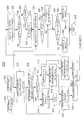
- Figure 3 is a flowchart illustrating an example process 300 for performing decimal number multiplications with rounding to the nearest number within the pre-determined precision using hardware for binary number operations, according to the subject matter disclosed in the present application.
- two exponents, E1 and E2 may be received; and at block 304 two coefficients, C1 and C2, corresponding to E1 and E2, respectively, may be received.
- a binary integer multiplication may be performed between C1 and C2 to produce a product C'.
- the number of decimal digits in C', q may be determined based on the number of binary digits in C' and if necessary, also by a comparison operation, as disclosed above along with Figure 2.
- the corresponding relationship between the number of decimal digits and the number of binary digits in C' may be stored in a table.
- Operations in blocks 312 and 318-326 together perform rounding operations for C' according to Property 1 as disclosed above.
- a comparison may be made between 0, f*, and 10 ⁇ (-p) at block 328 and a check whether C is even may be made at block 330, both for midpoint detection. If f* is larger than 0 but smaller than 10 ⁇ (-p) and if C is odd, then the midpoint detector decrements C by 1 at block 332 so that C' is rounded to the nearest even number; otherwise, C' is rounded correctly and no adjustment of C is necessary.
- comparisons are made to determine whether D from block 334 or from block 338 is an exact representation of the real product D1 ⁇ D2, i.e., whether x digits removed from the lower part of C* during rounding are all zeros.
- Process 300 may end at block 346.
- Process 300 as shown in Figure 3 for decimal floating-point multiplication in the round-to-nearest mode using hardware for binary number operations may be summarized as Property 2 below.
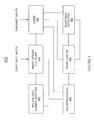
- FIG. 4 is a block diagram of an example decimal multiplication module 400 that performs decimal number multiplications with rounding down using hardware for binary number operations, according to the subject matter disclosed in the present application.
- Decimal multiplication module 400 may comprise at least one binary integer multiplier 410, a decimal digit number identifier 420, at least one adder 430, a rounding module 440, a binary shifter 450, and an exactness detector 460.
- the decimal multiplication module may also comprise a decimal-to-binary converter to convert a number from a decimal format to a binary format and a binary-to-decimal converter to convert a number from a binary format to a decimal format.
- exactness detector 460 does not need to detect rounding overflow and perform adjustment to C and E accordingly if there is rounding overflow.
- Exactness detector 460 simply determines whether (f* 1 ⁇ 2) is larger than 0 but smaller than the pre-calculation constant, 10 ⁇ (-p). If it is, D from rounding module 440 is an exact representation of the real product of D1 and D2; otherwise, D is an inexact result.
- FIG. 5 is a flowchart illustrating an example process 500 for performing decimal number multiplications with rounding down using hardware for binary number operations, according to the subject matter disclosed in the present application.
- two exponents, E1 and E2 may be received; and at block 510 two coefficients, C1 and C2, corresponding to E1 and E2, respectively, may be received.
- a binary integer multiplication may be performed between C1 and C2 to produce a product C'.
- the number of decimal digits in C', q may be determined.
- a comparison between q and p is made.
- Operations in blocks 540-555 perform rounding operations for C' according to Property 1 as disclosed above.
- comparisons are made to determine whether D is an exact representation of the real product (D1 ⁇ D2), i.e., whether x digits removed from the end of C* during rounding are all zeros. If f* is larger than 0 but smaller than 10 ⁇ (-p), that result is exact may be outputted at block 575; otherwise, that result is inexact may be outputted at block 570.
- Process 500 may end at block 580.
- Process 500 as shown in Figure 5 for decimal floating-point multiplication in the rounding-down mode using hardware for binary number operations may be summarized as Property 3 below.
- a rounding-to-zero may be mentioned/used. This mode is not treated separately here because for positive values it is identical to the rounding-down mode and for negative values it is identical to the rounding-up mode.
- decimal multiplications in a rounding-to-nearest mode and in a rounding-down mode are disclosed along with Figures 2-5.
- a decimal multiplication result may also be rounded up. Since a decimal multiplication in the rounding-up mode works very similarly to a decimal multiplication in the rounding-down mode, no extra figures are provided for this mode. Instead, only differences between the rounding-down mode and the rounding-up are pointed out below.
- Various embodiments of the disclosed subject matter may be implemented in hardware, firmware, software, or combination thereof, and may be described by reference to or in conjunction with program code, such as instructions, functions, procedures, data structures, logic, application programs, design representations or formats for simulation, emulation, and fabrication of a design, which when accessed by a machine results in the machine performing tasks, defining abstract data types or low-level hardware contexts, or producing a result.
- program code such as instructions, functions, procedures, data structures, logic, application programs, design representations or formats for simulation, emulation, and fabrication of a design, which when accessed by a machine results in the machine performing tasks, defining abstract data types or low-level hardware contexts, or producing a result.
- program code may represent hardware using a hardware description language or another functional description language which essentially provides a model of how designed hardware is expected to perform.
- Program code may be assembly or machine language, or data that may be compiled and/or interpreted.
- Program code may be stored in, for example, volatile and/or non-volatile memory, such as storage devices and/or an associated machine readable or machine accessible medium including solid-state memory, hard-drives, floppy-disks, optical storage, tapes, flash memory, memory sticks, digital video disks, digital versatile discs (DVDs), etc., as well as more exotic mediums such as machine-accessible biological state preserving storage.
- a machine readable medium may include any mechanism for storing, transmitting, or receiving information in a form readable by a machine, and the medium may include a tangible medium through which electrical, optical, acoustical or other form of propagated signals or carrier wave encoding the program code may pass, such as antennas, optical fibers, communications interfaces, etc.
- Program code may be transmitted in the form of packets, serial data, parallel data, propagated signals, etc., and may be used in a compressed or encrypted format.
- Program code may be implemented in programs executing on programmable machines such as mobile or stationary computers, personal digital assistants, set top boxes, cellular telephones and pagers, and other electronic devices, each including a processor, volatile and/or non-volatile memory readable by the processor, at least one input device and/or one or more output devices.
- Program code may be applied to the data entered using the input device to perform the described embodiments and to generate output information.
- the output information may be applied to one or more output devices.
- programmable machines such as mobile or stationary computers, personal digital assistants, set top boxes, cellular telephones and pagers, and other electronic devices, each including a processor, volatile and/or non-volatile memory readable by the processor, at least one input device and/or one or more output devices.
- Program code may be applied to the data entered using the input device to perform the described embodiments and to generate output information.
- the output information may be applied to one or more output devices.
- One of ordinary skill in the art may appreciate that embodiments of the disclosed subject
Landscapes
- Engineering & Computer Science (AREA)
- Computing Systems (AREA)
- Physics & Mathematics (AREA)
- General Physics & Mathematics (AREA)
- Theoretical Computer Science (AREA)
- Computational Mathematics (AREA)
- Mathematical Analysis (AREA)
- Mathematical Optimization (AREA)
- Pure & Applied Mathematics (AREA)
- General Engineering & Computer Science (AREA)
- Complex Calculations (AREA)
- Executing Machine-Instructions (AREA)
Applications Claiming Priority (1)
| Application Number | Priority Date | Filing Date | Title |
|---|---|---|---|
| US11/432,813 US7912890B2 (en) | 2006-05-11 | 2006-05-11 | Method and apparatus for decimal number multiplication using hardware for binary number operations |
Publications (3)
| Publication Number | Publication Date |
|---|---|
| EP1857925A2 true EP1857925A2 (de) | 2007-11-21 |
| EP1857925A3 EP1857925A3 (de) | 2008-12-10 |
| EP1857925B1 EP1857925B1 (de) | 2011-10-26 |
Family
ID=38328456
Family Applications (1)
| Application Number | Title | Priority Date | Filing Date |
|---|---|---|---|
| EP07251933A Not-in-force EP1857925B1 (de) | 2006-05-11 | 2007-05-10 | Verfahren und Vorrichtung zum Multiplizieren von Dezimalzahlen unter Verwendung von Hardware für binäre Operationen |
Country Status (4)
| Country | Link |
|---|---|
| US (1) | US7912890B2 (de) |
| EP (1) | EP1857925B1 (de) |
| AT (1) | ATE530980T1 (de) |
| ES (1) | ES2373576T3 (de) |
Families Citing this family (19)
| Publication number | Priority date | Publication date | Assignee | Title |
|---|---|---|---|---|
| US7707233B2 (en) * | 2005-05-19 | 2010-04-27 | Intel Corporation | Coverting a number from a first base to a second base |
| US7814138B2 (en) * | 2006-05-11 | 2010-10-12 | Intel Corporation | Method and apparatus for decimal number addition using hardware for binary number operations |
| US20080270495A1 (en) * | 2007-04-26 | 2008-10-30 | International Business Machines Corporation | Insert/extract biased exponent of decimal floating point data |
| US8051117B2 (en) | 2007-04-26 | 2011-11-01 | International Business Machines Corporation | Shift significand of decimal floating point data |
| US8190664B2 (en) * | 2007-04-26 | 2012-05-29 | International Business Machines Corporation | Employing a mask field of an instruction to encode a sign of a result of the instruction |
| US8572141B2 (en) * | 2008-03-19 | 2013-10-29 | International Business Machines Corporation | Execution of fixed point instructions using a decimal floating point unit |
| US20100023569A1 (en) * | 2008-07-22 | 2010-01-28 | Daw Shien Scientific Research & Development, Inc. | Method for computerized arithmetic operations |
| US8416955B2 (en) * | 2009-12-07 | 2013-04-09 | Mitsubishi Electric Research Laboratories, Inc. | Method for determining functions applied to signals |
| US8311213B2 (en) * | 2009-12-07 | 2012-11-13 | Mitsubishi Electric Research Laboratories, Inc. | Method for determining functions applied to signals |
| US9128759B2 (en) | 2012-11-27 | 2015-09-08 | International Business Machines Corporation | Decimal multi-precision overflow and tininess detection |
| US10109014B1 (en) * | 2013-03-15 | 2018-10-23 | Allstate Insurance Company | Pre-calculated insurance premiums with wildcarding |
| US10127015B2 (en) | 2016-09-30 | 2018-11-13 | International Business Machines Corporation | Decimal multiply and shift instruction |
| US10241757B2 (en) | 2016-09-30 | 2019-03-26 | International Business Machines Corporation | Decimal shift and divide instruction |
| US10310815B1 (en) | 2017-11-30 | 2019-06-04 | International Business Machines Corporation | Parallel decimal multiplication hardware with a 3X generator |
| CN111258641B (zh) * | 2018-11-30 | 2022-12-09 | 上海寒武纪信息科技有限公司 | 运算方法、装置及相关产品 |
| CN111260070B (zh) * | 2018-11-30 | 2022-11-29 | 上海寒武纪信息科技有限公司 | 运算方法、装置及相关产品 |
| JP7304295B2 (ja) * | 2020-01-09 | 2023-07-06 | 日立Astemo株式会社 | 演算装置、認識装置および制御装置 |
| CN112506935B (zh) * | 2020-12-21 | 2023-08-29 | 北京百度网讯科技有限公司 | 数据处理方法、装置、电子设备、存储介质及程序产品 |
| US12578925B2 (en) * | 2022-02-25 | 2026-03-17 | International Business Machines Corporation | Dynamic algorithm selection |
Family Cites Families (8)
| Publication number | Priority date | Publication date | Assignee | Title |
|---|---|---|---|---|
| EP1236086A2 (de) * | 1999-12-10 | 2002-09-04 | Broadcom Corporation | Vorrichtung und verfahren zur datengenauigkeitsverminderung |
| US7395297B2 (en) * | 2001-05-25 | 2008-07-01 | Sun Microsystems, Inc. | Floating point system that represents status flag information within a floating point operand |
| US7069289B2 (en) * | 2001-05-25 | 2006-06-27 | Sun Microsystems, Inc. | Floating point unit for detecting and representing inexact computations without flags or traps |
| US7546328B2 (en) * | 2004-08-31 | 2009-06-09 | Wisconsin Alumni Research Foundation | Decimal floating-point adder |
| US7519647B2 (en) * | 2005-02-09 | 2009-04-14 | International Business Machines Corporation | System and method for providing a decimal multiply algorithm using a double adder |
| US7519645B2 (en) | 2005-02-10 | 2009-04-14 | International Business Machines Corporation | System and method for performing decimal floating point addition |
| US7747669B2 (en) * | 2006-03-31 | 2010-06-29 | Intel Corporation | Rounding of binary integers |
| US7814138B2 (en) | 2006-05-11 | 2010-10-12 | Intel Corporation | Method and apparatus for decimal number addition using hardware for binary number operations |
-
2006
- 2006-05-11 US US11/432,813 patent/US7912890B2/en not_active Expired - Fee Related
-
2007
- 2007-05-10 EP EP07251933A patent/EP1857925B1/de not_active Not-in-force
- 2007-05-10 AT AT07251933T patent/ATE530980T1/de not_active IP Right Cessation
- 2007-05-10 ES ES07251933T patent/ES2373576T3/es active Active
Non-Patent Citations (1)
| Title |
|---|
| K.DUKE: "Decimal Floating Point Processor", IBM TECHNICAL DISCLOSURE BULLETIN, vol. 12, no. 6, 1 November 1969 (1969-11-01), pages 862 |
Also Published As
| Publication number | Publication date |
|---|---|
| EP1857925B1 (de) | 2011-10-26 |
| ATE530980T1 (de) | 2011-11-15 |
| US7912890B2 (en) | 2011-03-22 |
| ES2373576T3 (es) | 2012-02-06 |
| EP1857925A3 (de) | 2008-12-10 |
| US20070266072A1 (en) | 2007-11-15 |
Similar Documents
| Publication | Publication Date | Title |
|---|---|---|
| EP1857925B1 (de) | Verfahren und Vorrichtung zum Multiplizieren von Dezimalzahlen unter Verwendung von Hardware für binäre Operationen | |
| Zhang et al. | Efficient multiple-precision floating-point fused multiply-add with mixed-precision support | |
| US8694572B2 (en) | Decimal floating-point fused multiply-add unit | |
| US6697832B1 (en) | Floating-point processor with improved intermediate result handling | |
| JP2012174269A (ja) | 浮動小数点加算を実行するための装置および方法 | |
| WO2014035449A1 (en) | Microarchitecture for floating point fused multiply-add with exponent scaling | |
| Hickmann et al. | A parallel IEEE P754 decimal floating-point multiplier | |
| CN116643718B (zh) | 一种流水线结构的浮点融合乘加装置、方法及处理器 | |
| US5548545A (en) | Floating point exception prediction for compound operations and variable precision using an intermediate exponent bus | |
| CN117873427A (zh) | 一种算术逻辑单元、运算处理方法、芯片及电子设备 | |
| Gonzalez-Navarro et al. | Binary integer decimal-based floating-point multiplication | |
| US6542915B1 (en) | Floating point pipeline with a leading zeros anticipator circuit | |
| EP1956479A1 (de) | Arithmetikeinheit zur durchführung einer divisions- oder quadratwurzeloperation einer fliesskommazahl und betriebsverfahren | |
| KR20170138143A (ko) | 단일 곱셈-누산 방법 및 장치 | |
| US20050114422A1 (en) | High performance implementation of exponent adjustment in a floating point design | |
| US7814138B2 (en) | Method and apparatus for decimal number addition using hardware for binary number operations | |
| Tsen et al. | A combined decimal and binary floating-point multiplier | |
| Tsen et al. | Hardware design of a binary integer decimal-based floating-point adder | |
| US8244783B2 (en) | Normalizer shift prediction for log estimate instructions | |
| US9720648B2 (en) | Optimized structure for hexadecimal and binary multiplier array | |
| US20140059104A1 (en) | Arithmetic circuit for calculating correction value | |
| US8250126B2 (en) | Efficient leading zero anticipator | |
| US8185723B2 (en) | Method and apparatus to extract integer and fractional components from floating-point data | |
| KR20030056012A (ko) | 비동기식 덧셈 곱셈 부동 소수점 연산기 | |
| US20260104858A1 (en) | Arithmetic processing apparatus, processor, and computer-implemented arithmetic method |
Legal Events
| Date | Code | Title | Description |
|---|---|---|---|
| PUAI | Public reference made under article 153(3) epc to a published international application that has entered the european phase |
Free format text: ORIGINAL CODE: 0009012 |
|
| AK | Designated contracting states |
Kind code of ref document: A2 Designated state(s): AT BE BG CH CY CZ DE DK EE ES FI FR GB GR HU IE IS IT LI LT LU LV MC MT NL PL PT RO SE SI SK TR |
|
| AX | Request for extension of the european patent |
Extension state: AL BA HR MK YU |
|
| 17P | Request for examination filed |
Effective date: 20080325 |
|
| PUAL | Search report despatched |
Free format text: ORIGINAL CODE: 0009013 |
|
| AK | Designated contracting states |
Kind code of ref document: A3 Designated state(s): AT BE BG CH CY CZ DE DK EE ES FI FR GB GR HU IE IS IT LI LT LU LV MC MT NL PL PT RO SE SI SK TR |
|
| AX | Request for extension of the european patent |
Extension state: AL BA HR MK RS |
|
| 17Q | First examination report despatched |
Effective date: 20090225 |
|
| AKX | Designation fees paid |
Designated state(s): AT BE BG CH CY CZ DE DK EE ES FI FR GB GR HU IE IS IT LI LT LU LV MC MT NL PL PT RO SE SI SK TR |
|
| GRAP | Despatch of communication of intention to grant a patent |
Free format text: ORIGINAL CODE: EPIDOSNIGR1 |
|
| GRAS | Grant fee paid |
Free format text: ORIGINAL CODE: EPIDOSNIGR3 |
|
| GRAA | (expected) grant |
Free format text: ORIGINAL CODE: 0009210 |
|
| AK | Designated contracting states |
Kind code of ref document: B1 Designated state(s): AT BE BG CH CY CZ DE DK EE ES FI FR GB GR HU IE IS IT LI LT LU LV MC MT NL PL PT RO SE SI SK TR |
|
| REG | Reference to a national code |
Ref country code: GB Ref legal event code: FG4D |
|
| REG | Reference to a national code |
Ref country code: CH Ref legal event code: EP |
|
| REG | Reference to a national code |
Ref country code: IE Ref legal event code: FG4D |
|
| REG | Reference to a national code |
Ref country code: NL Ref legal event code: T3 |
|
| REG | Reference to a national code |
Ref country code: DE Ref legal event code: R096 Ref document number: 602007018168 Country of ref document: DE Effective date: 20120126 |
|
| REG | Reference to a national code |
Ref country code: SE Ref legal event code: TRGR |
|
| REG | Reference to a national code |
Ref country code: ES Ref legal event code: FG2A Ref document number: 2373576 Country of ref document: ES Kind code of ref document: T3 Effective date: 20120206 |
|
| LTIE | Lt: invalidation of european patent or patent extension |
Effective date: 20111026 |
|
| REG | Reference to a national code |
Ref country code: AT Ref legal event code: MK05 Ref document number: 530980 Country of ref document: AT Kind code of ref document: T Effective date: 20111026 |
|
| PG25 | Lapsed in a contracting state [announced via postgrant information from national office to epo] |
Ref country code: BE Free format text: LAPSE BECAUSE OF FAILURE TO SUBMIT A TRANSLATION OF THE DESCRIPTION OR TO PAY THE FEE WITHIN THE PRESCRIBED TIME-LIMIT Effective date: 20111026 Ref country code: IS Free format text: LAPSE BECAUSE OF FAILURE TO SUBMIT A TRANSLATION OF THE DESCRIPTION OR TO PAY THE FEE WITHIN THE PRESCRIBED TIME-LIMIT Effective date: 20120226 Ref country code: LT Free format text: LAPSE BECAUSE OF FAILURE TO SUBMIT A TRANSLATION OF THE DESCRIPTION OR TO PAY THE FEE WITHIN THE PRESCRIBED TIME-LIMIT Effective date: 20111026 |
|
| PG25 | Lapsed in a contracting state [announced via postgrant information from national office to epo] |
Ref country code: GR Free format text: LAPSE BECAUSE OF FAILURE TO SUBMIT A TRANSLATION OF THE DESCRIPTION OR TO PAY THE FEE WITHIN THE PRESCRIBED TIME-LIMIT Effective date: 20120127 Ref country code: PT Free format text: LAPSE BECAUSE OF FAILURE TO SUBMIT A TRANSLATION OF THE DESCRIPTION OR TO PAY THE FEE WITHIN THE PRESCRIBED TIME-LIMIT Effective date: 20120227 Ref country code: PL Free format text: LAPSE BECAUSE OF FAILURE TO SUBMIT A TRANSLATION OF THE DESCRIPTION OR TO PAY THE FEE WITHIN THE PRESCRIBED TIME-LIMIT Effective date: 20111026 Ref country code: LV Free format text: LAPSE BECAUSE OF FAILURE TO SUBMIT A TRANSLATION OF THE DESCRIPTION OR TO PAY THE FEE WITHIN THE PRESCRIBED TIME-LIMIT Effective date: 20111026 Ref country code: SI Free format text: LAPSE BECAUSE OF FAILURE TO SUBMIT A TRANSLATION OF THE DESCRIPTION OR TO PAY THE FEE WITHIN THE PRESCRIBED TIME-LIMIT Effective date: 20111026 |
|
| PG25 | Lapsed in a contracting state [announced via postgrant information from national office to epo] |
Ref country code: CY Free format text: LAPSE BECAUSE OF FAILURE TO SUBMIT A TRANSLATION OF THE DESCRIPTION OR TO PAY THE FEE WITHIN THE PRESCRIBED TIME-LIMIT Effective date: 20111026 |
|
| PG25 | Lapsed in a contracting state [announced via postgrant information from national office to epo] |
Ref country code: BG Free format text: LAPSE BECAUSE OF FAILURE TO SUBMIT A TRANSLATION OF THE DESCRIPTION OR TO PAY THE FEE WITHIN THE PRESCRIBED TIME-LIMIT Effective date: 20120126 Ref country code: EE Free format text: LAPSE BECAUSE OF FAILURE TO SUBMIT A TRANSLATION OF THE DESCRIPTION OR TO PAY THE FEE WITHIN THE PRESCRIBED TIME-LIMIT Effective date: 20111026 Ref country code: SK Free format text: LAPSE BECAUSE OF FAILURE TO SUBMIT A TRANSLATION OF THE DESCRIPTION OR TO PAY THE FEE WITHIN THE PRESCRIBED TIME-LIMIT Effective date: 20111026 Ref country code: DK Free format text: LAPSE BECAUSE OF FAILURE TO SUBMIT A TRANSLATION OF THE DESCRIPTION OR TO PAY THE FEE WITHIN THE PRESCRIBED TIME-LIMIT Effective date: 20111026 Ref country code: CZ Free format text: LAPSE BECAUSE OF FAILURE TO SUBMIT A TRANSLATION OF THE DESCRIPTION OR TO PAY THE FEE WITHIN THE PRESCRIBED TIME-LIMIT Effective date: 20111026 |
|
| PGFP | Annual fee paid to national office [announced via postgrant information from national office to epo] |
Ref country code: DE Payment date: 20120502 Year of fee payment: 6 Ref country code: NL Payment date: 20120515 Year of fee payment: 6 |
|
| PG25 | Lapsed in a contracting state [announced via postgrant information from national office to epo] |
Ref country code: RO Free format text: LAPSE BECAUSE OF FAILURE TO SUBMIT A TRANSLATION OF THE DESCRIPTION OR TO PAY THE FEE WITHIN THE PRESCRIBED TIME-LIMIT Effective date: 20111026 |
|
| PGFP | Annual fee paid to national office [announced via postgrant information from national office to epo] |
Ref country code: SE Payment date: 20120511 Year of fee payment: 6 Ref country code: FI Payment date: 20120510 Year of fee payment: 6 Ref country code: FR Payment date: 20120608 Year of fee payment: 6 Ref country code: GB Payment date: 20120509 Year of fee payment: 6 |
|
| PLBE | No opposition filed within time limit |
Free format text: ORIGINAL CODE: 0009261 |
|
| STAA | Information on the status of an ep patent application or granted ep patent |
Free format text: STATUS: NO OPPOSITION FILED WITHIN TIME LIMIT |
|
| PGFP | Annual fee paid to national office [announced via postgrant information from national office to epo] |
Ref country code: IT Payment date: 20120516 Year of fee payment: 6 |
|
| 26N | No opposition filed |
Effective date: 20120727 |
|
| REG | Reference to a national code |
Ref country code: DE Ref legal event code: R097 Ref document number: 602007018168 Country of ref document: DE Effective date: 20120727 |
|
| PG25 | Lapsed in a contracting state [announced via postgrant information from national office to epo] |
Ref country code: MC Free format text: LAPSE BECAUSE OF NON-PAYMENT OF DUE FEES Effective date: 20120531 |
|
| PGFP | Annual fee paid to national office [announced via postgrant information from national office to epo] |
Ref country code: ES Payment date: 20120607 Year of fee payment: 6 |
|
| REG | Reference to a national code |
Ref country code: CH Ref legal event code: PL |
|
| PG25 | Lapsed in a contracting state [announced via postgrant information from national office to epo] |
Ref country code: AT Free format text: LAPSE BECAUSE OF FAILURE TO SUBMIT A TRANSLATION OF THE DESCRIPTION OR TO PAY THE FEE WITHIN THE PRESCRIBED TIME-LIMIT Effective date: 20111026 Ref country code: CH Free format text: LAPSE BECAUSE OF NON-PAYMENT OF DUE FEES Effective date: 20120531 Ref country code: LI Free format text: LAPSE BECAUSE OF NON-PAYMENT OF DUE FEES Effective date: 20120531 |
|
| REG | Reference to a national code |
Ref country code: IE Ref legal event code: MM4A |
|
| PG25 | Lapsed in a contracting state [announced via postgrant information from national office to epo] |
Ref country code: IE Free format text: LAPSE BECAUSE OF NON-PAYMENT OF DUE FEES Effective date: 20120510 |
|
| PG25 | Lapsed in a contracting state [announced via postgrant information from national office to epo] |
Ref country code: MT Free format text: LAPSE BECAUSE OF FAILURE TO SUBMIT A TRANSLATION OF THE DESCRIPTION OR TO PAY THE FEE WITHIN THE PRESCRIBED TIME-LIMIT Effective date: 20111026 |
|
| REG | Reference to a national code |
Ref country code: NL Ref legal event code: V1 Effective date: 20131201 |
|
| REG | Reference to a national code |
Ref country code: SE Ref legal event code: EUG |
|
| GBPC | Gb: european patent ceased through non-payment of renewal fee |
Effective date: 20130510 |
|
| PG25 | Lapsed in a contracting state [announced via postgrant information from national office to epo] |
Ref country code: DE Free format text: LAPSE BECAUSE OF NON-PAYMENT OF DUE FEES Effective date: 20131203 Ref country code: SE Free format text: LAPSE BECAUSE OF NON-PAYMENT OF DUE FEES Effective date: 20130511 |
|
| REG | Reference to a national code |
Ref country code: DE Ref legal event code: R119 Ref document number: 602007018168 Country of ref document: DE Effective date: 20131203 |
|
| PG25 | Lapsed in a contracting state [announced via postgrant information from national office to epo] |
Ref country code: NL Free format text: LAPSE BECAUSE OF NON-PAYMENT OF DUE FEES Effective date: 20131201 Ref country code: IT Free format text: LAPSE BECAUSE OF NON-PAYMENT OF DUE FEES Effective date: 20130510 Ref country code: FI Free format text: LAPSE BECAUSE OF NON-PAYMENT OF DUE FEES Effective date: 20130510 |
|
| REG | Reference to a national code |
Ref country code: FR Ref legal event code: ST Effective date: 20140131 |
|
| PG25 | Lapsed in a contracting state [announced via postgrant information from national office to epo] |
Ref country code: GB Free format text: LAPSE BECAUSE OF NON-PAYMENT OF DUE FEES Effective date: 20130510 Ref country code: TR Free format text: LAPSE BECAUSE OF FAILURE TO SUBMIT A TRANSLATION OF THE DESCRIPTION OR TO PAY THE FEE WITHIN THE PRESCRIBED TIME-LIMIT Effective date: 20111026 |
|
| PG25 | Lapsed in a contracting state [announced via postgrant information from national office to epo] |
Ref country code: LU Free format text: LAPSE BECAUSE OF NON-PAYMENT OF DUE FEES Effective date: 20120510 Ref country code: FR Free format text: LAPSE BECAUSE OF NON-PAYMENT OF DUE FEES Effective date: 20130531 |
|
| REG | Reference to a national code |
Ref country code: ES Ref legal event code: FD2A Effective date: 20140612 |
|
| PG25 | Lapsed in a contracting state [announced via postgrant information from national office to epo] |
Ref country code: HU Free format text: LAPSE BECAUSE OF FAILURE TO SUBMIT A TRANSLATION OF THE DESCRIPTION OR TO PAY THE FEE WITHIN THE PRESCRIBED TIME-LIMIT Effective date: 20070510 |
|
| PG25 | Lapsed in a contracting state [announced via postgrant information from national office to epo] |
Ref country code: ES Free format text: LAPSE BECAUSE OF NON-PAYMENT OF DUE FEES Effective date: 20130511 |