EP1863224A2 - Bildschirmsteuerungssystem, Endgerät zur Informationsverarbeitung, Bildschirmsteuerungsverfahren und Programm - Google Patents
Bildschirmsteuerungssystem, Endgerät zur Informationsverarbeitung, Bildschirmsteuerungsverfahren und Programm Download PDFInfo
- Publication number
- EP1863224A2 EP1863224A2 EP07252107A EP07252107A EP1863224A2 EP 1863224 A2 EP1863224 A2 EP 1863224A2 EP 07252107 A EP07252107 A EP 07252107A EP 07252107 A EP07252107 A EP 07252107A EP 1863224 A2 EP1863224 A2 EP 1863224A2
- Authority
- EP
- European Patent Office
- Prior art keywords
- snmp
- alarm signal
- monitor
- target unit
- alarm
- Prior art date
- Legal status (The legal status is an assumption and is not a legal conclusion. Google has not performed a legal analysis and makes no representation as to the accuracy of the status listed.)
- Withdrawn
Links
- 238000000034 method Methods 0.000 title abstract description 12
- 230000010365 information processing Effects 0.000 title abstract description 7
- 230000000977 initiatory effect Effects 0.000 abstract description 9
- 238000012545 processing Methods 0.000 description 12
- 238000006243 chemical reaction Methods 0.000 description 11
- 238000010586 diagram Methods 0.000 description 11
- 230000008901 benefit Effects 0.000 description 3
- 230000003213 activating effect Effects 0.000 description 2
- 239000003086 colorant Substances 0.000 description 2
- 238000004590 computer program Methods 0.000 description 2
- 239000000470 constituent Substances 0.000 description 2
- 238000007689 inspection Methods 0.000 description 2
- 238000012423 maintenance Methods 0.000 description 2
- 230000004075 alteration Effects 0.000 description 1
- 238000004891 communication Methods 0.000 description 1
- 238000007796 conventional method Methods 0.000 description 1
- 238000011161 development Methods 0.000 description 1
- 238000009434 installation Methods 0.000 description 1
- 238000012544 monitoring process Methods 0.000 description 1
Images


Classifications
-
- H—ELECTRICITY
- H04—ELECTRIC COMMUNICATION TECHNIQUE
- H04L—TRANSMISSION OF DIGITAL INFORMATION, e.g. TELEGRAPHIC COMMUNICATION
- H04L41/00—Arrangements for maintenance, administration or management of data switching networks, e.g. of packet switching networks
- H04L41/06—Management of faults, events, alarms or notifications
-
- H—ELECTRICITY
- H04—ELECTRIC COMMUNICATION TECHNIQUE
- H04L—TRANSMISSION OF DIGITAL INFORMATION, e.g. TELEGRAPHIC COMMUNICATION
- H04L41/00—Arrangements for maintenance, administration or management of data switching networks, e.g. of packet switching networks
- H04L41/02—Standardisation; Integration
- H04L41/0226—Mapping or translating multiple network management protocols
-
- H—ELECTRICITY
- H04—ELECTRIC COMMUNICATION TECHNIQUE
- H04L—TRANSMISSION OF DIGITAL INFORMATION, e.g. TELEGRAPHIC COMMUNICATION
- H04L41/00—Arrangements for maintenance, administration or management of data switching networks, e.g. of packet switching networks
- H04L41/02—Standardisation; Integration
- H04L41/0213—Standardised network management protocols, e.g. simple network management protocol [SNMP]
Definitions
- the present invention pertains to a monitor control system, an information processing terminal, a monitor control method, and a program for conducting monitoring, operation, and setting for a monitor target unit to be monitored on a network using a Simple Network Management Protocol (SNMP).
- SNMP Simple Network Management Protocol
- a monitor control system used to employ units or devices, and Operating Systems (OS) such as a workstation and UNIX (registered trademark) which are expensive and require special knowledge.
- OS Operating Systems
- UNIX registered trademark
- a local craft terminal used to be directly connected via a cable to a unit in a location where the unit is installed.
- IP Internet Protocol
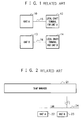
- FIG. 1 shows an example of the monitor control system of this type.
- Unit A 10 and unit B 13, which are to be monitored, are connected respectively via cables 15 and 16 to local craft terminals 12 and 14.
- the monitor control, the operation or maintenance, and the setting of a monitor target unit can be conducted only if the monitor target unit is physically connected to a local craft terminal.
- the monitor control system does not include the function to convert an alarm signal of the unit into an SNMP alarm signal. This is because manager software has not been the SNMP manager.
- the SNMP manager is adopted as a single device and can display an alarm state of the monitor target unit, but cannot conduct operations such as a control operation and an alteration of settings for the monitor target unit. This is because there does not exist a function in which the SNMP manager and the local craft terminal are installed in one personal computer and are mutually connected to each other.
- FIG. 2 shows an example of such monitor control system.
- an SNMP manager 21 is coupled via a Local Area Network (LAN) to unit A 22 and unit B 23.
- LAN Local Area Network
- the SNMP manager 21 is used and only the alarm display is done.
- Japanese Patent Application Laid-Open Ser. No. 2004-086522 (document 1) describes a conventional example in a configuration similar to that of the system shown in FIG. 2.
- An exemplary object of the invention is to provide a monitor control system, an information processing terminal, a monitor control method, and a program that are economically advantageously implemented by using inexpensive modules such as a personal computer, an SNMP manager, and a local craft terminal not requiring high technical knowledge; that are easily operable without particular experiences and are easily expandable using additional unit types of monitor target units; and that are operable at a remote place.
- a monitor control system including at least one monitor target unit that is monitored, and a monitor controller that is connected via a network to the monitor target unit and controls the monitor target unit, the controller conducting monitor control, operation, and setting for the monitor target unit by use of a Simple Network Management Protocol (SNMP).
- SNMP Simple Network Management Protocol
- the monitor controller includes an SNMP mediator that receives an alarm signal from a monitor target unit in which an alarm has occurred and converts the alarm signal into an SNMP alarm signal, an SNMP manager that receives an SNMP alarm signal from the SNMP mediator or a monitor target unit in which an alarm has occurred and displays the alarm according to the SNMP alarm signal, at least one local craft terminal, corresponding to monitor target units, that logs into monitor target units, and an application initiating module that activates, when an operation is conducted to designate a predetermined monitor target unit, a local craft terminal associated with the monitor target unit.
- an information processing terminal employed in the monitor control system.
- a monitor control method of conducting monitor control, operation, and setting for at least one monitor target unit arranged on a network, by use of an SNMP includes an SNMP alarm signal acquiring step of receiving an SNMP alarm signal directly from the monitor target unit or receiving an alarm signal from the monitor target unit and converting the alarm signal into an SNMP alarm signal, an alarm display step of displaying the alarm according to the SNMP alarm signal, an application initiating step of activating, when an operation is conducted to designate a predetermined monitor target unit, a local craft terminal corresponding to the monitor target unit, and a monitor target unit control step of logging into the monitor target unit by use of the local craft terminal and conducting monitor control, operation, and setting for the monitor target unit.
- a computer program product for conducting monitor control, operation, and setting for at least one monitor target unit arranged on a network, by use of an SNMP.
- the program causes a computer to perform SNMP alarm signal acquiring processing for receiving an SNMP alarm signal directly from the monitor target unit or receiving an alarm signal from the monitor target unit and converting the alarm signal into an SNMP alarm signal, alarm display processing for displaying the alarm according to the SNMP alarm signal, application initiating processing for activating, when an operation is conducted to designate a predetermined monitor target unit, a local craft terminal corresponding to the monitor target unit, and monitor target unit control processing for logging into the monitor target unit by use of the local craft terminal and conducting monitor control, operation, and setting for the monitor target unit.
- FIG. 3 shows a configuration of a monitor control system and a monitor controller.
- the system includes a monitor controller 1 and a unit A 8 and a unit B 7, and a Local Area Network (LAN) 9 connecting the controller 1 and the units A and B to each other as shown in FIG. 3.
- the unit A 8 and the unit B 7 are installed at remote locations as monitor target units to be monitored by the controller 1.
- the monitor controller (network management system) 1 is one personal computer (information processing terminal).
- the controller 1 includes an SNMP manager 2, an SNMP mediator 3, local craft terminals 4 and 5 used for monitor target units, and an application initiating function 6 as shown in FIG. 3.
- the problems mentioned above are removed through cooperative operations of the constituent components.
- the SNMP manager 2 of FIG. 3 directly receives an SNMP alarm signal from a monitor target unit in which an alarm has occurred.
- the SNMP mediator 3 converts into a SNMP alarm signal an alarm signal sent from a monitor target unit.
- the manager 2 receives the SNMP alarm signal. According to the SNMP alarm signal, the manager 2 displays information items such as an alarm name and a category of the alarm on a screen of the monitor controller 1.
- the SNMP mediator 3 converts an alarm signal from a monitor target unit that cannot produce an SNMP alarm signal into an SNMP alarm signal.
- the local craft terminal 4 of FIG. 3 logs into the unit B 7 arranged as a monitor target unit in a remote place and carries out the control operation, the setting change, and the like for the unit B 7.
- the local craft terminal is application software inherently and directly coupled with the monitor target unit to conduct operations for the target unit such as a monitor control, an operation, and the setting for the target unit.
- the monitor control, the operation, and the setting for the monitor target unit are not possible without a local craft terminal. Therefore, the local craft terminal is ordinarily designed together with the monitor target unit.
- the local craft terminal 5 conducts a login operation for the unit A 8 as a monitor target unit in a remote place and achieves the control operation, the setting change, and the like for the unit A 8.
- the local craft terminal is application software that is to be directly connected to the monitor target unit to carry out operations for the target unit, for example, the monitor control, the operation, and the setting for the target unit.
- the monitor control, the operation, and the setting for the target unit are possible only when the local craft terminal is present. Therefore, ordinarily, the local craft terminal is designed together with the monitor target unit.
- the application initiating module 6 includes a function to detect an operation conducted by the operator of the monitor controller 1 to designate an inspection target unit, i.e., a monitor target unit in which an alarm has taken place (or of which an operation state is to be examined) to resultantly activate the local craft terminal 4 or 5 of the designated target unit.
- an inspection target unit i.e., a monitor target unit in which an alarm has taken place (or of which an operation state is to be examined) to resultantly activate the local craft terminal 4 or 5 of the designated target unit.
- the SNMP manager 2 is well known to those skilled in the art and hence description of detailed structure thereof will be avoided.
- FIG. 4 shows an operation of the monitor controller in a flowchart.
- the controller conducts the processing (a monitor control method) under the control of a program.
- step S1 of FIG. 4 it is assumed that an alarm occurs, for example, in the unit B 7, i.e., a monitor target unit shown in FIG. 3.
- Each of the units A and B includes a function to automatically send an alarm signal to an external device at occurrence of an alarm.
- the alarm signal includes a text message indicating an alarm's name and category information indicating a categorized degree of importance of the alarm such as "major", "minor", or "warning".
- step S2 the unit B in which an alarm has occurred transmits, if possible (yes in step S2), an SNMP alarm signal via the LAN 9 to the SNMP manager 2. If the unit B cannot send the alarm signal (no in step S2), the signal is delivered to a SNMP mediator task.
- step S3 the mediator 3 receives the alarm signal and converts the signal into an SNMP alarm signal to feed the signal to the SNMP manager 2.
- the SNMP alarm signal sent in step S2 or S3 is received by the manager 2 in step S4.
- the manager 2 displays associated information on the screen of the monitor controller 1. Specifically, the manager 2 displays a text of the alarm name, an icon indicating the unit B 7, and a network diagram showing connections between the units. According to the category of the alarm, the icon of the associated unit, i.e., the unit B 7 is displayed, for example, in red for "major", pink for "minor", and yellow for "warning".
- the operator of the monitor controller 1 can recognize only the category and the alarm name of the alarm automatically displayed on the screen.
- step S5 to examine details of the alarm, the operator conducts an operation to specify the device, i.e., the unit B, for example, by clicking the icon of the unit B on the screen. Thereafter, the application initiating section 6 detects the operation, activates the local craft terminal 4 associated with the unit B, and then logs via the LAN 9 into the unit B using, for example, an IP address.
- the device i.e., the unit B
- the application initiating section 6 detects the operation, activates the local craft terminal 4 associated with the unit B, and then logs via the LAN 9 into the unit B using, for example, an IP address.
- step S7 by use of the local craft terminal 4 having logged into the unit B via the LAN 9, the operator of the monitor controller 1 is able to obtain alarm information indicating details of the alarm and carry out the monitor control, the operation or maintenance, and the setting change for the unit B.
- the operations achievable by the task such as the monitor control, the operation, and the setting change for the unit are substantially equal to those feasible at the installation site of the single-unit local craft terminal according to the conventional technique as shown in FIG. 1. That is, operation items are not restricted and hence the operations allowed according to the specifications of the device are available.
- step 8 the alarm information, data associated with operation of the monitor controller, and data related to the operator of the controller are accumulated in a storage module of the monitor controller 1.
- the application initiating module 6 activates the local craft terminal of the designated target unit.
- the craft terminal it is possible to log into the unit via the LAN 9 using an IP address or the like.
- the embodiment described above includes local craft terminals for various types of monitor target units. Therefore, the monitor control, the operation, and the setting can be conducted for the monitor target units of various types. By increasing the types of local craft terminals, the types of monitor target units can be increased.
- the monitor control can be carried out for monitor target units that cannot transmit the SNMP alarm signal.
- an alarm of a monitor target unit at a remote location can be automatically displayed.
- the monitor control system is connected via a LAN to the monitor target unit.
- the SNMP mediator converts an alarm signal from the target unit into an SNMP alarm signal and sends the signal to the SNMP manager.
- the operations required for the monitor target unit such as the monitor control, the operation, and the setting can be carried out at a remote place.
- the local craft terminal for the target unit it is possible to log into the target unit via a LAN.
- the monitor controller if it is required that a monitor target unit continuously occupy a particular software port of the SNMP manager for a predetermined period of time to conduct, for example, the monitor control setting operation, the monitor controller allows the unit to occupy the software port. During the period of time in which the unit is allowed to occupy the software port, the controller successively receives SNMP traps from another monitor target unit. However, while a particular software port is being occupied, the SNMP manager cannot receive an SNMP trap sent from another monitor target unit to the software port thus occupied. This consequently leads to a problem that the information of the SNMP manager is not successively updated to the latest information.
- the monitor controller of the second embodiment includes an SNMP software port conversion function. Thanks to the function that executes SNMP software port conversion processing, during the period of time in which a monitor target unit occupies a particular software port and the port cannot receive a signal, an SNMP trap sent from another monitor target unit to the software port is delivered to be received by the SNMP manager by use of an empty port that can receive a signal. Resultantly, it is guaranteed that the information possessed by the SNMP manager is continuously updated by the latest SNMP trap in any situation.
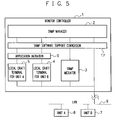
- FIG. 5 shows structure of a monitor control system and a monitor controller.
- the same constituent components as those of FIG. 3 are assigned with the same reference numerals, and description thereof will be avoided.
- the SNMP software port conversion module 17 makes it possible to continuously receive an SNMP trap from another monitor target unit even while the particular software port is being occupied. That is, the module transfers the SNMP trap, which is addressed to the software port being occupied as above, to the SNMP manager via an empty port.
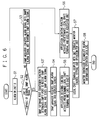
- FIG. 6 shows operation of the monitor controller of the second embodiment.
- the controller carries out processing (of a monitor control method) under the control of a program.
- each of the units A and B includes a function to automatically deliver an alarm signal to an external device at occurrence of an alarm.
- the alarm signal includes a text message indicating the alarm name and category information indicating importance of the alarm, for example, "major", “minor”, or "warning".
- step S2 of FIG. 6 if the unit B 7 in which the alarm has occurred can deliver an SNMP alarm signal (yes in step S2), the signal is sent via the LAN 9 to the conversion module 17. If the unit B 7 cannot transmit the SNMP alarm signal (no in step S2), an alarm signal is fed to a SNMP mediator task.
- step S3 when the alarm signal from the unit B 7 is received, the SNMP mediator 3 converts the signal into an SNMP alarm signal to send the alarm signal to the conversion module 17.
- step S3' of FIG. 6 the conversion module 17 determines whether the destination of the SNMP alarm signal is a software port of the SNMP manager 2 in a signal receivable state. If the software port is in a signal receivable state, the SNMP alarm signal is delivered thereto. If the software port is occupied by another unit and is in a signal unreceivable state, the conversion function 17 selects an empty port capable of receiving the SNMP alarm signal and transmits the signal to the SNMP manager 2 by using the empty port.
- step S4 The processing flow after step S4 is substantially equal to that described for the first embodiment by referring to FIG. 4, and hence description thereof will be omitted.
- the monitor controller can continuously display the latest alarm information of the monitor target unit in any case for the following reason. Due to the SNMP software port conversion function, the monitor controller can successively receive the latest alarm information of the monitor target unit. In this way, the monitor controller can display the latest alarm information in any situation.
- the monitor target unit may send the SNMP alarm signal directly to the SNMP manager if the unit includes a function to transmit the SNMP alarm signal. Otherwise the monitor target unit may send the alarm signal to the SNMP mediator.
- the SNMP alarm signal may include a category and a name of the alarm having occurred in the monitor target unit, and the SNMP manager may display, at reception of the SNMP alarm signal, the category and the name of the alarm according to the SNMP alarm signal.
- the SNMP manager may display a network diagram indicating a relation of connections between units on the network and an icon in the diagram to indicate the monitor target unit in which the alarm has occurred, the icon being displayed in colors corresponding to the category of the alarm.
- the monitor control system may further include an SNMP software port conversion module that relays an SNMP alarm signal transmitted to the SNMP manager, determines, if a software port as a destination of the SNMP alarm signal is occupied by another monitor target unit and hence cannot receive the SNMP alarm signal, an empty port capable of receiving the SNMP alarm signal, and transmits the SNMP alarm signal via the empty port to the SNMP manager.
- an SNMP software port conversion module that relays an SNMP alarm signal transmitted to the SNMP manager, determines, if a software port as a destination of the SNMP alarm signal is occupied by another monitor target unit and hence cannot receive the SNMP alarm signal, an empty port capable of receiving the SNMP alarm signal, and transmits the SNMP alarm signal via the empty port to the SNMP manager.
- the SNMP alarm signal may include a category and a name of the alarm having occurred in the monitor target unit.
- the alarm display step may include displaying the category and the name of the alarm having occurred in the monitor target unit, according to the SNMP alarm signal.
- the alarm display step may include displaying a network diagram indicating a relation of connections between units arranged on the network and an icon in the diagram to indicate the monitor target unit in which the alarm has occurred, the icon being displayed in colors corresponding to the category of the alarm.
- the monitor control method may further include an SNMP software port conversion step of relaying an SNMP alarm signal transmitted to the SNMP manager, determining, if a software port as a destination of the SNMP alarm signal is occupied by a second monitor target unit and hence cannot receive the SNMP alarm signal, an empty port capable of receiving the SNMP alarm signal, and transmitting the SNMP alarm signal via the empty port to the SNMP manager.
- the SNMP alarm signal may include a category and a name of the alarm having occurred in the monitor target unit and the program causes a computer to perform, as the alarm display processing, processing to display the category and the name of the alarm having occurred in the monitor target unit, according to the SNMP alarm signal.
- the program may cause a computer to perform processing to display a network diagram indicating a relation of connections between units on the network and an icon in the diagram to indicate the monitor target unit in which the alarm has occurred, the icon being displayed in a color changed according to the category of the alarm.
- the program may cause a computer to perform SNMP software port conversion processing for relaying an SNMP alarm signal transmitted to the SNMP manager, determining, if a software port as a destination of the SNMP alarm signal is occupied by another monitor target unit and hence cannot receive the SNMP alarm signal, an empty port capable of receiving the SNMP alarm signal, and transmitting the SNMP alarm signal via the empty port to the SNMP manager.
- the present invention is applicable to the control operation to monitor, to operate, and to install a monitor target unit at a remote place.
- An exemplary advantage according to the invention is that it is possible to implement a monitor control system, an information processing terminal, a monitor control method, and a program that are economically advantageously implemented and are easily operable without particular experiences and which are easily expandable using additional unit types of monitor target units and are operable at a remote place.
Landscapes
- Engineering & Computer Science (AREA)
- Computer Networks & Wireless Communication (AREA)
- Signal Processing (AREA)
- Computer And Data Communications (AREA)
- Debugging And Monitoring (AREA)
Applications Claiming Priority (2)
| Application Number | Priority Date | Filing Date | Title |
|---|---|---|---|
| JP2006148778A JP2007318677A (ja) | 2006-05-29 | 2006-05-29 | 監視制御システム、情報処理端末装置、監視制御方法及びプログラム |
| JP2007108515A JP2008269092A (ja) | 2007-04-17 | 2007-04-17 | 監視制御システム、情報処理端末装置、監視制御方法及びプログラム |
Publications (2)
| Publication Number | Publication Date |
|---|---|
| EP1863224A2 true EP1863224A2 (de) | 2007-12-05 |
| EP1863224A3 EP1863224A3 (de) | 2008-09-24 |
Family
ID=38616247
Family Applications (1)
| Application Number | Title | Priority Date | Filing Date |
|---|---|---|---|
| EP07252107A Withdrawn EP1863224A3 (de) | 2006-05-29 | 2007-05-22 | Bildschirmsteuerungssystem, Endgerät zur Informationsverarbeitung, Bildschirmsteuerungsverfahren und Programm |
Country Status (2)
| Country | Link |
|---|---|
| US (1) | US20070288631A1 (de) |
| EP (1) | EP1863224A3 (de) |
Citations (3)
| Publication number | Priority date | Publication date | Assignee | Title |
|---|---|---|---|---|
| EP0963076A2 (de) | 1998-05-31 | 1999-12-08 | Lucent Technologies Inc. | Verfahren zur computerunterstützten Fernverwaltung eines Telekommunikations Netzwerkelementes über das Internet |
| US6539422B1 (en) | 1998-05-04 | 2003-03-25 | Intermec Ip Corp. | Automatic data collection device having a network communications capability |
| JP2004086522A (ja) | 2002-08-27 | 2004-03-18 | Fujitsu Access Ltd | 通信ネットワーク監視システム |
Family Cites Families (9)
| Publication number | Priority date | Publication date | Assignee | Title |
|---|---|---|---|---|
| US5740368A (en) * | 1995-06-30 | 1998-04-14 | Canon Kabushiki Kaisha | Method and apparatus for providing information on a managed peripheral device to plural agents |
| JP3617770B2 (ja) * | 1998-05-29 | 2005-02-09 | 株式会社日立製作所 | ネットワーク管理システム及びネットワーク管理方式 |
| JP3886309B2 (ja) * | 1999-11-16 | 2007-02-28 | 日本電気株式会社 | ネットワーク管理システム及びネットワーク管理方法 |
| US6754705B2 (en) * | 2001-12-21 | 2004-06-22 | Networks Associates Technology, Inc. | Enterprise network analyzer architecture framework |
| US20050108486A1 (en) * | 2003-08-05 | 2005-05-19 | Miklos Sandorfi | Emulated storage system supporting instant volume restore |
| US8701175B2 (en) * | 2005-03-01 | 2014-04-15 | Tavve Software Company | Methods, devices, systems and computer program products for providing secure communications between managed devices in firewall protected areas and networks segregated therefrom |
| JP2006268205A (ja) * | 2005-03-23 | 2006-10-05 | Fujitsu Ltd | Snmpインタフェースが使えないネットワーク機器の監視装置 |
| US8244844B2 (en) * | 2006-03-17 | 2012-08-14 | Samsung Electronics Co., Ltd. | Tool for data generation for simple network management protocol (SNMP) |
| US20070220157A1 (en) * | 2006-03-17 | 2007-09-20 | Samsung Electronics Co., Ltd. | Simple network management protocol (SNMP) agent system and method |
-
2007
- 2007-05-22 EP EP07252107A patent/EP1863224A3/de not_active Withdrawn
- 2007-05-25 US US11/802,919 patent/US20070288631A1/en not_active Abandoned
Patent Citations (3)
| Publication number | Priority date | Publication date | Assignee | Title |
|---|---|---|---|---|
| US6539422B1 (en) | 1998-05-04 | 2003-03-25 | Intermec Ip Corp. | Automatic data collection device having a network communications capability |
| EP0963076A2 (de) | 1998-05-31 | 1999-12-08 | Lucent Technologies Inc. | Verfahren zur computerunterstützten Fernverwaltung eines Telekommunikations Netzwerkelementes über das Internet |
| JP2004086522A (ja) | 2002-08-27 | 2004-03-18 | Fujitsu Access Ltd | 通信ネットワーク監視システム |
Non-Patent Citations (1)
| Title |
|---|
| G.H. AICKLEN; P.M. MAIN: "Remote Control of Diverse Network Elements Using SNMP", 5 November 1995, IEEE, pages: 673 - 677 |
Also Published As
| Publication number | Publication date |
|---|---|
| EP1863224A3 (de) | 2008-09-24 |
| US20070288631A1 (en) | 2007-12-13 |
Similar Documents
| Publication | Publication Date | Title |
|---|---|---|
| US4847837A (en) | Local area network with fault-checking, priorities and redundant backup | |
| US20040078094A1 (en) | Plant operating apparatus and method | |
| JPH02182057A (ja) | ネツトワーク管理方式 | |
| EP2779641A2 (de) | Videoüberwachungssystem mit geschlossenem Kreislauf | |
| JP2013502865A (ja) | モニタリングシステム | |
| JPH10187498A (ja) | 障害通知方式 | |
| EP3282604A1 (de) | Integrierte überwachungssteuerungsvorrichtung und integriertes überwachungssteuerungssystem | |
| EP1863224A2 (de) | Bildschirmsteuerungssystem, Endgerät zur Informationsverarbeitung, Bildschirmsteuerungsverfahren und Programm | |
| US20130054676A1 (en) | Computer network based hazardous condition monitoring system and server | |
| JP2008269092A (ja) | 監視制御システム、情報処理端末装置、監視制御方法及びプログラム | |
| WO2015199285A1 (ko) | Smt 생산라인의 이상 감시 및 예측 시스템의 기준 정보 설정 시스템 및 그 제어방법 | |
| CN113009246B (zh) | Pse设备检测装置及pse设备检测方法 | |
| JP4965239B2 (ja) | 遠隔監視システム | |
| JPH10326395A (ja) | 防災集中監視制御システム | |
| JP2007318677A (ja) | 監視制御システム、情報処理端末装置、監視制御方法及びプログラム | |
| JP2008242951A (ja) | デジタル保護リレーのモニターシステム | |
| US20050088526A1 (en) | Remote audio controlling system and method | |
| JP3336214B2 (ja) | ビルの遠隔管理装置 | |
| JP2004206598A (ja) | 警報監視システム | |
| KR100416044B1 (ko) | 운용자 인터페이스 시스템에서 시스템 상태 정보 처리 방법 | |
| JPH10107792A (ja) | サーバ監視装置 | |
| CN120091045A (zh) | 矿鸿机电设备的统一应用控制方法、设备、介质及产品 | |
| KR100244780B1 (ko) | 아이2씨 버스를 이용한 시스템 관리 방법 | |
| KR20120007951A (ko) | 원격 유지보수 서비스 제공 시스템 및 방법 | |
| JPH11283167A (ja) | 伝送線路断線補償装置およびトンネル防災システム |
Legal Events
| Date | Code | Title | Description |
|---|---|---|---|
| PUAI | Public reference made under article 153(3) epc to a published international application that has entered the european phase |
Free format text: ORIGINAL CODE: 0009012 |
|
| AK | Designated contracting states |
Kind code of ref document: A2 Designated state(s): AT BE BG CH CY CZ DE DK EE ES FI FR GB GR HU IE IS IT LI LT LU LV MC MT NL PL PT RO SE SI SK TR |
|
| AX | Request for extension of the european patent |
Extension state: AL BA HR MK YU |
|
| PUAL | Search report despatched |
Free format text: ORIGINAL CODE: 0009013 |
|
| AK | Designated contracting states |
Kind code of ref document: A3 Designated state(s): AT BE BG CH CY CZ DE DK EE ES FI FR GB GR HU IE IS IT LI LT LU LV MC MT NL PL PT RO SE SI SK TR |
|
| AX | Request for extension of the european patent |
Extension state: AL BA HR MK RS |
|
| 17P | Request for examination filed |
Effective date: 20090112 |
|
| 17Q | First examination report despatched |
Effective date: 20090319 |
|
| AKX | Designation fees paid |
Designated state(s): FR GB |
|
| REG | Reference to a national code |
Ref country code: DE Ref legal event code: 8566 |
|
| STAA | Information on the status of an ep patent application or granted ep patent |
Free format text: STATUS: THE APPLICATION HAS BEEN WITHDRAWN |
|
| 18W | Application withdrawn |
Effective date: 20100616 |