EP1867698A1 - Luminophore et procédé servant à produire celui-ci - Google Patents
Luminophore et procédé servant à produire celui-ci Download PDFInfo
- Publication number
- EP1867698A1 EP1867698A1 EP06729577A EP06729577A EP1867698A1 EP 1867698 A1 EP1867698 A1 EP 1867698A1 EP 06729577 A EP06729577 A EP 06729577A EP 06729577 A EP06729577 A EP 06729577A EP 1867698 A1 EP1867698 A1 EP 1867698A1
- Authority
- EP
- European Patent Office
- Prior art keywords
- phosphor
- crystal
- sialon
- powder
- formula
- Prior art date
- Legal status (The legal status is an assumption and is not a legal conclusion. Google has not performed a legal analysis and makes no representation as to the accuracy of the status listed.)
- Granted
Links
Images

Classifications
-
- C—CHEMISTRY; METALLURGY
- C09—DYES; PAINTS; POLISHES; NATURAL RESINS; ADHESIVES; COMPOSITIONS NOT OTHERWISE PROVIDED FOR; APPLICATIONS OF MATERIALS NOT OTHERWISE PROVIDED FOR
- C09K—MATERIALS FOR MISCELLANEOUS APPLICATIONS, NOT PROVIDED FOR ELSEWHERE
- C09K11/00—Luminescent materials, e.g. electroluminescent or chemiluminescent
- C09K11/08—Luminescent materials, e.g. electroluminescent or chemiluminescent containing inorganic luminescent materials
- C09K11/0883—Arsenides; Nitrides; Phosphides
-
- C—CHEMISTRY; METALLURGY
- C09—DYES; PAINTS; POLISHES; NATURAL RESINS; ADHESIVES; COMPOSITIONS NOT OTHERWISE PROVIDED FOR; APPLICATIONS OF MATERIALS NOT OTHERWISE PROVIDED FOR
- C09K—MATERIALS FOR MISCELLANEOUS APPLICATIONS, NOT PROVIDED FOR ELSEWHERE
- C09K11/00—Luminescent materials, e.g. electroluminescent or chemiluminescent
- C09K11/08—Luminescent materials, e.g. electroluminescent or chemiluminescent containing inorganic luminescent materials
- C09K11/77—Luminescent materials, e.g. electroluminescent or chemiluminescent containing inorganic luminescent materials containing rare earth metals
- C09K11/7728—Luminescent materials, e.g. electroluminescent or chemiluminescent containing inorganic luminescent materials containing rare earth metals containing europium
- C09K11/77348—Silicon Aluminium Nitrides or Silicon Aluminium Oxynitrides
-
- H—ELECTRICITY
- H05—ELECTRIC TECHNIQUES NOT OTHERWISE PROVIDED FOR
- H05B—ELECTRIC HEATING; ELECTRIC LIGHT SOURCES NOT OTHERWISE PROVIDED FOR; CIRCUIT ARRANGEMENTS FOR ELECTRIC LIGHT SOURCES, IN GENERAL
- H05B33/00—Electroluminescent light sources
- H05B33/12—Light sources with substantially two-dimensional [2D] radiating surfaces
- H05B33/14—Light sources with substantially two-dimensional [2D] radiating surfaces characterised by the chemical or physical composition or the arrangement of the electroluminescent material, or by the simultaneous addition of the electroluminescent material in or onto the light source
-
- H—ELECTRICITY
- H10—SEMICONDUCTOR DEVICES; ELECTRIC SOLID-STATE DEVICES NOT OTHERWISE PROVIDED FOR
- H10H—INORGANIC LIGHT-EMITTING SEMICONDUCTOR DEVICES HAVING POTENTIAL BARRIERS
- H10H20/00—Individual inorganic light-emitting semiconductor devices having potential barriers, e.g. light-emitting diodes [LED]
- H10H20/01—Manufacture or treatment
- H10H20/036—Manufacture or treatment of packages
- H10H20/0361—Manufacture or treatment of packages of wavelength conversion means
-
- H—ELECTRICITY
- H10—SEMICONDUCTOR DEVICES; ELECTRIC SOLID-STATE DEVICES NOT OTHERWISE PROVIDED FOR
- H10H—INORGANIC LIGHT-EMITTING SEMICONDUCTOR DEVICES HAVING POTENTIAL BARRIERS
- H10H20/00—Individual inorganic light-emitting semiconductor devices having potential barriers, e.g. light-emitting diodes [LED]
- H10H20/80—Constructional details
- H10H20/85—Packages
- H10H20/851—Wavelength conversion means
- H10H20/8511—Wavelength conversion means characterised by their material, e.g. binder
- H10H20/8512—Wavelength conversion materials
Definitions
- the present invention relates to a phosphor which emits a green fluorescent light having an emission peak in a wavelength region that is at least 500 nm and does not exceed 600 nm upon irradiation of an ultraviolet ray or a visible light having a wavelength of 250 nm to 500 nm or an electron beam, wherein the phosphor has a ⁇ -Si 3 N 4 crystal structure, and a manufacturing method thereof.
- the phosphor is utilized in a fluorescent display tube (VFD: vacuum fluorescent display), a field emission display (FED), a plasma display panel (PDP), a cathode-ray tube (CRT), a white light-emitting diode (LED), and so on.
- VFD vacuum fluorescent display
- FED field emission display
- PDP plasma display panel
- CRT cathode-ray tube
- LED white light-emitting diode
- an excitation source with high energy such as a vacuum ultraviolet ray, an ultraviolet ray, an electron beam, and a blue light so as to emit a visible light ray.
- a sialon phosphor has been proposed as a phosphor having the brightness little degraded instead for the conventional phosphor such as silicate phosphor, phosphate phosphor, aluminate phosphor, and sulfide phosphor.
- sialon phosphors As an example of these sialon phosphors is manufactured in the following manufacturing process as generally described below. First, silicon nitride (Si 3 N 4 ), aluminum nitride (AlN), Europium oxide (Eu 2 O 3 ) are mixed at predetermined molar ratios thereof and the resultant mixture is fired by a hot press method in one atmosphere (0.1 MPa) of nitrogen atmosphere at 1700 degree Celsius for one hour (for example, refer to Patent reference 1). It was reported that ⁇ -sialon activated by Eu ion manufactured in the above process became a phosphor to emit a yellow light of wavelength region of 550 nm to 600 nm if it is excited by the blue light having a wavelength region of 450 to 500 nm.
- a blue phosphor activated by Ce having a host crystal of JEM phase (LaAl(Si 6-z Al z )N 10-z O z ) (refer to Patent reference 2)
- a blue phosphor activated by Ce having a host crystal of La 3 Si 8 N 11 O 9 (refer to Patent reference 3)
- a red phosphor activated by Eu having a host crystal of CaAlSiN 3 (refer to Patent reference 4)
- a phosphor which emits a green luminescence as well as phosphors which emit a blue luminescence and a yellow luminescence, respectively, is in demand for the application to a plasma display and a white light LED utilizing an ultraviolet LED as an excitation source.
- Patent reference 1 Japanese patent application publication No. 2002-363554 .
- Patent reference 2 Japanese patent application No. 2003-208409 .
- Patent reference 3 Japanese patent application No. 2003-346013 .
- Patent reference 4 Japanese patent application No. 2003-394855 .
- a phosphor of ⁇ -sialon doped with a rare earth element is also known (refer to Patent reference 5) and it is shown that phosphors activated by Tb, Yb, and Ag are those which emit a green light of 525 nm to 545 nm.
- a phosphor having a high brightness has not been obtained since the activating elements do not solid solve adequately into the host crystal, but reside in the boundary phase because the synthesis temperature is so low as 1500 degree Celsius.
- Patent reference 5 Japanese patent application publication No. S60-206889 .
- Patent reference 6 Japanese patent application No. 2004-070894 .
- An object of the present invention is to try to satisfy such demand and to provide a green phosphor that has high durability and emits a green light with a particularly high brightness wherein the green phosphor is a sialon phosphor activated by a rare earth element, i.e., to which Eu is added.
- the present inventor has found, as a result of intensive investigations on the nitrides, that some of the nitrides including Eu and Si, Al, O, and N can become a phosphor that emits a fluorescent light having an emission peak in a wavelength region that is at least 500 nm and does not exceed 600 nm if such nitrides have a specific composition range, a specific solid solution state, and a specific crystal phase.
- a solid solution crystal doped with divalent Eu ion as the center of luminance which includes a nitride or oxynitride having a ⁇ -Si 3 N 4 crystal structure as a host crystal, could become a phosphor that emits a fluorescent light having a peak in a wavelength region that is at least 500 nm and does not exceed 600 nm.
- a ⁇ -type sialon having synthesized at a temperature higher than 1820 degree Celsius could emit a green fluorescent light having a good chromatic purity and a peak in a wavelength of 500 nm to 550 nm as the ⁇ -type sialon crystal solid-solves Eu.
- the ⁇ -Si 3 N 4 crystal structure has symmetry of P6 3 or P6 3 /m and is defined as a structure which has ideal atomic positions (refer to Non-Patent reference 1).
- nitride or oxynitride having this type of crystal structure ⁇ -Si 3 N 4 , ⁇ -sialon (Si 6-z Al z O z N 8-z , Here, 0 ⁇ z ⁇ 4.2) and so on are known.
- ⁇ -sialon does not solid-solve a metal element if the ⁇ -sialon is synthesized at a temperature lower than 1700 degree Celsius and it is known that a metal oxide added as a sintering agent forms a glass phase in the grain boundaries in which the metal oxide resides.
- ⁇ -sialon is used as disclosed in Patent reference 1.
- Table 1 the crystallographic structural data is shown based on the atomic coordinate of ⁇ -silicon nitride.
- Patent reference 5 as a phosphor having a fluorescent peak in a wavelength region of 500 nm to 600 nm, only the phosphors with the addition of Tb, Yb, and Ag were reported.
- the phosphor doped with Tb shows the excitation wavelength is equal to 300 nm or less so that it cannot be used for the application to the white LED. Since it has a long emission lifetime such that it causes the image lag, it is not easy to apply it to the display application. Further, the phosphor doped with Yb or Ag has a low brightness. Also, it was attempted to apply the crystal having the ⁇ -Si 3 N 4 crystal structure as the phosphor in Patent reference 6, but it is always desired to improve the emission intensity even more.
- the sialon crystal having a ⁇ -Si 3 N 4 crystal structure in which Eu is solid solved can be used as a phosphor that can emit a green emission light with a high brightness as being excited by an ultraviolet ray and a visible light, and an electron beam or an X-ray and such effects are extremely significant in the sialon phosphor having a specific composition.
- the configurations recited in the following (1) to (5) are rendered so as to provide a phosphor and a method of manufacturing the same showing a luminescence phenomenon characterized by an extremely high brightness in a specific wavelength region. The configurations are described in the following (1) to (5).
- a phosphor according to the present invention is excellent as a green phosphor because the emission intensity in the wavelength region of 500 nm to 600 nm is stronger than that of the conventional sialon or oxynitride phosphor since the phosphor includes a sialon crystal having ⁇ -Si 3 N 4 crystal structure as a main component. Even if the phosphor is exposed to the excitation source, the brightness of this phosphor is not lowered and nitride compound which leads to a useful phosphor to be utilized in VFD, FED, PDP, CRT, and, white LED is provided.
- the fluorescent substance (or phosphor) of the present invention includes a sialon solid solution having the ⁇ -Si 3 N 4 crystal structure (hereinafter, the solid solution being called ⁇ -Si 3 N 4 type crystal) as a main component.
- the ⁇ -Si 3 N 4 type crystal can be identified by the X-ray diffraction or neutron diffraction. Not only a substance showing the same diffraction pattern as the pure ⁇ -Si 3 N 4 , but also a substance having changed lattice parameters as other elements substitute original constituent elements may be included in the ⁇ -Si 3 N 4 type crystal.
- a point defect, a plane defect, and a stacking fault are introduced into the crystal such that solid-solved elements may be concentrated in defect parts in grains.
- sialon solid solution can also be included in the ⁇ -Si 3 N 4 type crystal as long as the basic pattern in the chart of the X-ray diffraction does not change.
- a polytype having a long period structure may sometimes be formed due to the periodicity of defect formation in a crystal.
- such crystal may also be included in the ⁇ -Si 3 N 4 type crystal as long as the basic crystal structure is ⁇ -Si 3 N 4 crystal structure.
- the pure ⁇ -Si 3 N 4 crystal structure belongs to the hexagonal system having P6 3 or P6 3 /m symmetry, and is a crystal defined as a structure having ideal atom positions (refer to Non-patent reference 1).
- the position of each atom may deviate from the ideal position by about ⁇ 0.05 depending on the kind of the atom.
- the lattice constants change.
- the basic crystal structure, sites occupied by the atoms, and atom positions designated by the coordinates do not change greatly. Therefore, once the lattice constants and the plane indices of the pure ⁇ -Si 3 N 4 are given, the positions of X-ray diffraction peaks (2 ⁇ ) are almost uniquely determined.
- the crystal structure of the new substance is determined to be identical to that of the pure substance.
- the phosphor in the present invention, from a view point of fluorescent luminescence, it is preferable for the phosphor to have a high volume of pure sialon crystalline phase, which comprises preferably a single phase, wherein the sialon crystalline phase has the ⁇ -Si 3 N 4 crystal structure as a configuration component.
- the phosphor may be configured with a mixture of other crystalline phases or an amorphous phase as long as the fluorescent property is not lowered. In such an event, it is preferable to make the content of the sialon crystalline phase having the ⁇ -Si 3 N 4 crystal structure at least 50 mass % in order to obtain a high brightness.
- metal element: Eu is solid-solved into a host crystal of sialon crystal having the ⁇ -Si 3 N 4 crystal structure, divalent europium ion can serve as a luminescent center such that the fluorescent property is exhibited.
- the phosphor emits a fluorescent light having a peak in a wavelength region of 500 nm to 600 nm upon irradiation of the excitation source according to the present invention.
- the emission spectrum having the peak in the wavelength region is a green color.
- a spectrum of rather sharp shape with a certain width which has a peak in a wavelength region of 500 nm to 550 nm is a green light with a high color purity and falls on an area of 0 ⁇ x ⁇ 0.3 and 0.5 ⁇ y ⁇ 0.83 in the CIE chromaticity coordinate (x, y).
- light a vacuum ultraviolet ray, a deep ultraviolet ray, an ultraviolet ray, a near-ultraviolet ray, a visible light from violet to blue
- an electron beam and an X-ray are utilized for the fluorescent light with a high brightness.
- the parameter: 'a' represents an amount of Eu ion which functions to emit a luminescence light and the emission intensity may be lowered if 'a' is less than 0.00035. On the other hand, the emission intensity may also be lowered due to the concentration quenching caused by interactions between luminescence ions if 'a' is larger than 0.002.
- the parameter: 'c' represents an amount of Al which constitutes the sialon and if 'c' is less than 0.008, it would be difficult to form the stable sialon so that it is considered that it would be more difficult to incorporate Eu ion in the crystal such that the emission intensity may be lowered.
- the emission intensity may also be lowered because of too much amount of solid solution of Al.
- the parameter: 'd' represents an amount of oxygen and the emission intensity may be lowered since it becomes more difficult to solid solute Eu if 'd' is smaller than 0.0005.
- 'd' is larger than 0. 01, it is considered that the electron state as the nitride crystal would be changed such that the emission intensity may be lowered.
- the present invention it is preferable to form single crystalline phase of nitride or oxynitride having the ⁇ -Si 3 N 4 crystal structure as the crystalline phase, but it is also possible to have a mixture with other crystalline phases or an amorphous phase as long as the luminescence characteristics are not lowered. In this case, it is preferable to make the amount of crystalline phase of the nitride or oxynitride having the ⁇ -Si 3 N 4 crystal structure at least 50 mass% such that the brightness may be high.
- the relative amount of the crystalline phase may be obtained from the ratio of the strongest peaks of respective phases: the crystalline phase of the nitride or oxynitride having the ⁇ -Si 3 N 4 crystal structure and the other crystalline phases as the X-ray diffraction measurement is conducted.
- the shape of the phosphor of the present invention is not particularly limited thereto, if the phosphor is used in a powder state, it is preferable to prepare a single crystal thereof having an average particle diameter that is at least 50 nm and does not exceed 20 ⁇ m such that the phosphor has a high brightness. Further, it is preferable for the phosphor particle to have an aspect ratio (a value given by dividing a long axis of the particle by a short axis thereof) less than 1.5, which a sphere shape typically shows, such that the phosphor is easy to handle in a dispersion process and a paint-applying process.
- the method of manufacturing the phosphor according to the present invention is not particularly limited hereto, but, by way of example, the following method may be utilized.
- a raw material mixture which is a mixture of metal compounds and capable of forming a Eu a Si b Al c O d N e composition by firing is fired in a nitrogen atmosphere.
- the optimum firing temperature depends on the composition and cannot be specified for all cases, but, generally, a temperature range that is at least 1820 degree Celsius and does not exceed 2200 degree Celsius is utilized so as to obtain a stable green phosphor.
- the firing temperature is lower than 1820 degree Celsius, it is considered that the element Eu to form a luminescence center is not sufficiently solid-solved in the nitride or oxynitride of the ⁇ -Si 3 N 4 crystal structure and may often remain in grain boundaries in which a large amount of oxygen exists so that the phosphor emits a fluorescent light from the luminescence center hosted by an oxide glass so that the fluorescent light is in a shorter wavelength region such as a blue light and it is unlikely to be a green light.
- the emission wavelength resides in a blue region of 410 to 440 nm, which is interpreted as essentially different from the green emission wavelength of 500 to 550 nm, which is the emission wavelength of the phosphor of the present invention.
- the firing temperature of 2200°C or higher is made, special facilities are generally required in consideration of the device durability, which is not necessarily suitable for the industrial production.
- a general manufacturing method utilizing a solid phase reaction (a liquid phase reaction or a vapor phase reaction may be partially involved) is described, but the manufacturing method is not limited hereto. It should be understood that another manufacturing method may be employed and another condition in which Eu is capable of forming a solid solution may be applied to manufacture the phosphor.
- the mixture of metal compounds may be a mixture of: a metal compound including Eu selected from metal, oxide, carbonate, nitride, or oxynitride of Eu; silicon nitride; and aluminum nitride.
- a metal compound including Eu selected from metal, oxide, carbonate, nitride, or oxynitride of Eu
- silicon nitride silicon nitride
- aluminum nitride aluminum nitride
- a raw material including Eu is europium oxide. It is preferable to use silicon nitride, aluminum nitride, and europium oxide since they are reactive and easy to handle.
- a gaseous atmosphere in a pressure range that is at least 0.1 MPa and does not exceed 100 MPa is preferable. It is more preferable to have the pressure range that is at least 0.5 MPa and does not exceed 10 MPa.
- silicon nitride is used as a raw material and the firing process is performed at a temperature of 1820 degree Celsius or higher, the silicon nitride contained in the raw materials decomposes easily in a nitrogen atmosphere of 0.1 MPa or lower.
- the nitrogen atmosphere has a pressure of higher than 0.5 MPa, the silicon nitride as the raw material hardly decomposes. If the nitrogen atmosphere has a pressure of 10 MPa, the pressure is high enough.
- a pressure of 100 MPa or higher requires special facilities for the durability since the pressure is very high and it is considered that such high pressure does not suit for the industrial production.
- the phosphor emitting a fluorescent light having a particularly high brightness may be obtained.
- fine powder of a particle diameter of several micrometers is employed as a starting material, a mixture of metal compound after completion of a mixing process exhibits morphology in which the fine powder of a particle diameter of several micrometers aggregates to a size of several hundreds of micrometers to several millimeters (hereinafter called powder aggregate).
- powder aggregate is fired in a state of maintaining a filling rate of a bulk density that does not exceed 40%.
- the firing process is performed after molding by a hot-press method or die molding, and hence the firing process is applied to a state in which a powder filling rate is high.
- the powder aggregate of a mixture in which the particle size is made uniform is charged into a container or the like with a filling rate of a bulk density that does not exceed 40% without applying any mechanical force or without molding with a die in advance.
- the powder aggregate may be subjected to particle size control by granulating to an averaged particle diameter that does not exceed 500 ⁇ m by using a sieve or an air classifier. Otherwise, the powder aggregate may be granulated directly into a shape of 500 ⁇ m or smaller using a spray dryer.
- a container of boron nitride has an advantage of little reactivity with the phosphor.
- the reason why the firing process is performed while holding the bulk density that does not exceed 40% is that, when the raw material powder is fired while leaving a free space around the raw material powder, the reaction product as a crystal grows into a free space, it is more unlikely that growing crystals as the product come into contact with each other and it is likely that the synthesized crystals have a smaller number of surface defects. Therefore, a phosphor with a high brightness is obtained.
- the bulk density exceeds 40% partial densification takes place during the firing, and a dense sintered body appears, which hinders crystal growth. As a result, the brightness of the phosphor may be lowered, and fine powder may hardly be obtained.
- the size of the powder aggregate of 500 ⁇ m or smaller is particularly preferable to achieve excellent grinding properties after the firing.
- the lower limit of the bulk density is not particularly specified, but may be considered as follows from an industrial point of view; the range of the bulk density depends on the size or shape of raw material powder particles, and it is reasonable to take a value of around 10% as the lower limit when the general raw material powder commercially available is employed.
- the powder aggregate having a filling rate of 40% or smaller is fired under the above condition.
- a furnace used for firing is preferably heated by metal resistance heating or graphite resistance heating, and carbon is preferably used as the high temperature part of the furnace because the firing temperature is high and nitrogen is employed as the firing atmosphere.
- a sintering method in which no mechanical pressure is applied from the outside such as normal pressure sintering and gas pressure sintering, is preferable to perform the firing while keeping high bulk density.
- the aggregate is milled with a mill usually employed in the factory such as a ball mill, jet mill, and the like. Among them, the particle size is controlled most easily in ball milling. It is preferable that balls and pots are made of sintered silicon nitride body or sintered sialon body for the present purpose. It is particularly preferable to use the equipment made of ceramic having the same composition as the phosphor product.
- the powder aggregate is continuously ground until an averaged particle diameter thereof becomes 20 ⁇ m or smaller. It is particularly desirable to obtain the average particle diameter range that is at least 20 nm and does not exceed 5 ⁇ m.
- the average particle diameter exceeds 20 ⁇ m, the fluidity of the powder and dispersion into resin is deteriorated, and emission intensity may not be uniform from part to part when a light emitting device is built by combining the phosphor with a light-emitting device.
- the averaged particle diameter reaches a level of 20 nm or smaller, it becomes more difficult to handle the phosphor powder.
- classification may be used in combination with the grinding. Sieving, air classification, and settling in a liquid may be employed as means of classification.
- Acid treatment may be used as one of the methods of pulverization and classification.
- a single crystal of nitride or oxynitride of the ⁇ -Si 3 N 4 crystal structure is in most cases fixed hard at a grain boundary phase which is mainly composed of a small quantity of glass phase.
- the grain boundary phase mainly consisting of the glass phase is selectively dissolved and single crystals are separated.
- every particle is obtained not as an aggregate of single crystals but as a particle consisting of one single crystal of the nitride or oxynitride of the ⁇ -Si 3 N 4 crystal structure.
- Such a particle is composed of a single crystal which has only a small number of surface defects, thereby resulting in a phosphor with a high brightness.
- the heat treatment is effective in order to further improve the brightness.
- the powder after firing or the powder after particle size adjustment by pulverization and classification can be subject to the heat treatment at a temperature that is at least 1000 degree Celsius and does not exceed the firing temperature. At a temperature lower than 1000°C, the effect of removing surface defects may be relatively low.
- the heat treatment at a temperature higher than or equal to the firing temperature is not preferable because particles of the ground phosphor tend to aggregate again with each other.
- An atmosphere suitable for the heat treatment depends on phosphor compositions.
- the atmosphere suitable for the heat treatment the atmosphere having one or more gases selected from the group consisting of nitrogen, air, ammonia, and hydrogen can be used. Among them, a nitrogen atmosphere is particularly preferable since this atmosphere exhibits a pronounced effect of removing defects.
- the thus-obtained nitride of the present invention can have an excitation region extending from the ultraviolet to visible light, which is broader than the excitation region of a usual oxide phosphor and sialon phosphor of the prior art, and can show a green emission having a peak in a wavelength region that is at least 500 nm and does not exceed 600 nm. And hence it is suitable for a lighting device and an image display device. Further, the nitride does not deteriorate even when exposed to high temperatures and then has superior thermal resistance, and excels in a long-term stability in an oxidizing atmosphere and moist environment.
- Silicon nitride powder of 92%- ⁇ -type (E10 grade manufactured by Ube Industries, Ltd.) having an averaged particle diameter of 0.5 ⁇ m and containing 0.93 wt% of oxygen; and aluminum nitride powder having a specific surface area of 3.3 m 2 /g and containing 0.79% oxygen; and europium-oxide powder of 99.9% purity were used for a raw material powder.
- the raw material powder for example, F-grade aluminum nitride produced by Tokuyama Corporation and europium-oxide powder produced by Shin-Etsu Chemical Co., Ltd. were used.
- Example 2 0.00089 0.4203 0.0085 0.00134 0.56894
- Example 3 0.00062 0.4136 0.0167 0.00093 0.56815
- Example 4 0. 00061 0.4150 0.0151 0.00092 0.56840
- Example 5 0.00061 0.4164 0.0134 0.00092 0.56864
- Example 6 0.00094 0.4119 0.0183 0.00140 0.56748
- Example 7 0.00093 0.4134 0.0166 0.00139 0.56773
- Example 8 0.00093 0.4141 0.0157 0.00139 0.56786
- Example 9 0.00092 0.4155 0.0141 0.00138 0.56811
- Example 10 0.00091 0.4162 0.0133 0.00137 0.56823
- Example 11 0.00124 0.4132 0.0164 0.00186 0.56732
- Example 12 0.00123 0.4146 0.0147 0.00184 0.56757
- Example 13 0.00122 0.4160 0.0131 0.00183 0.56781
- Example 14 0.00184 0.4142 0.0144 0.00276
- Example 940 0. 057 0. 00300 97. 492 1. 728 0. 781
- Example 3 0. 890 0.108 0. 00200 96. 052 3.
- 406 0.542
- Example 4 0. 900 0.098 0. 00200 96. 395 3. 067 0. 537
- Example 5 0.910 0. 088 0. 00200 96. 733 2.
- Example 6 0.880 0.117 0.00300 95.474 3.709 0. 817
- Example 8 0.895 0.102 0.00300 95.996 3.197 0.807
- Example 10 0.910 0.087 0.00300 96.506 2.696 0.798
- Example 11 0. 890 0.106 0. 00400 95. 595 3. 327 1.078
- Exemple 12 0.900 0.096 0.00400 95.940 2.990 1.070
- Example 13 0.910 0.086 0.00400 96.279 2.659 1.062
- Example 14 0.900 0.094 0.00600 95.489 2.914 1. 597 Comparative 1 0. 903 0. 087 0. 00970 94. 769 2.
- the n-hexane was removed using a rotary evaporator to obtain a dried material of the mixed powder.
- the resultant mixture was passed through a 500 ⁇ m sieve, thereby obtaining a powder aggregate having excellent fluidity.
- This powder aggregate was allowed to fall freely into a boron nitride crucible having a diameter of 20 mm and a height of 20 mm.
- the crucible was set into an electric furnace of a graphite resistance heating type. In the firing operation, a firing atmosphere was made vacuum with a diffusion pump, and the furnace temperature was raised at a rate of 500 °C/h from a room temperature to 800 degree Celsius. Nitrogen of 99.
- Inorganic compound powders as shown in Tables 2 to 4 were prepared in the same manner as the examples except for the compositions and the firing temperatures as shown in Tables 2 to 4.
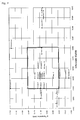
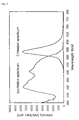
- Figs. 1 and 2 show parameters. As the excitation luminescence spectra of the obtained powders were measured, they showed green color emission, but the emission intensity is lower since the composition range is out of the range of the present invention.
Landscapes
- Chemical & Material Sciences (AREA)
- Inorganic Chemistry (AREA)
- Engineering & Computer Science (AREA)
- Materials Engineering (AREA)
- Organic Chemistry (AREA)
- Luminescent Compositions (AREA)
Applications Claiming Priority (2)
| Application Number | Priority Date | Filing Date | Title |
|---|---|---|---|
| JP2005081573 | 2005-03-22 | ||
| PCT/JP2006/305609 WO2006101095A1 (fr) | 2005-03-22 | 2006-03-20 | Luminophore et procédé servant à produire celui-ci |
Publications (3)
| Publication Number | Publication Date |
|---|---|
| EP1867698A1 true EP1867698A1 (fr) | 2007-12-19 |
| EP1867698A4 EP1867698A4 (fr) | 2009-09-02 |
| EP1867698B1 EP1867698B1 (fr) | 2010-06-30 |
Family
ID=37023755
Family Applications (1)
| Application Number | Title | Priority Date | Filing Date |
|---|---|---|---|
| EP06729577A Expired - Lifetime EP1867698B1 (fr) | 2005-03-22 | 2006-03-20 | Luminophore et procédé servant à produire celui-ci |
Country Status (8)
| Country | Link |
|---|---|
| US (1) | US7815817B2 (fr) |
| EP (1) | EP1867698B1 (fr) |
| JP (1) | JP4894048B2 (fr) |
| KR (1) | KR100984822B1 (fr) |
| CN (2) | CN102226085B (fr) |
| DE (1) | DE602006015175D1 (fr) |
| TW (1) | TWI367932B (fr) |
| WO (1) | WO2006101095A1 (fr) |
Cited By (7)
| Publication number | Priority date | Publication date | Assignee | Title |
|---|---|---|---|---|
| EP2045308A4 (fr) * | 2006-06-09 | 2010-12-01 | Denki Kagaku Kogyo Kk | Matériau fluorescent, son procédé de fabrication et illuminateur l'utilisant |
| EP2172983A4 (fr) * | 2007-07-19 | 2011-07-27 | Sharp Kk | Dispositif électroluminescent |
| US8084942B2 (en) | 2007-07-09 | 2011-12-27 | Sharp Kabushiki Kaisha | Phosphor particle group and light emitting apparatus using the same |
| US8404152B2 (en) | 2006-11-20 | 2013-03-26 | Denki Kagaku Kogyo Kabushiki Kaisha | Fluorescent substance and production method thereof, and light emitting device |
| EP2500333A4 (fr) * | 2009-11-13 | 2013-05-08 | Denki Kagaku Kogyo Kk | Procédé de production de phosphore beta-sialon |
| EP2213711B1 (fr) * | 2007-10-10 | 2017-04-19 | Ube Industries, Ltd. | Phosphore de -sialone pulvérulent et son procédé de production |
| WO2019020566A1 (fr) * | 2017-07-27 | 2019-01-31 | Osram Opto Semiconductors Gmbh | Convertisseurs de longueur d'onde bêta-sialon et leurs procédés de fabrication |
Families Citing this family (13)
| Publication number | Priority date | Publication date | Assignee | Title |
|---|---|---|---|---|
| JP2008120938A (ja) * | 2006-11-14 | 2008-05-29 | Sharp Corp | 蛍光体およびその製造方法、ならびに半導体発光装置および画像表示装置 |
| JP5367218B2 (ja) | 2006-11-24 | 2013-12-11 | シャープ株式会社 | 蛍光体の製造方法および発光装置の製造方法 |
| US9279079B2 (en) | 2007-05-30 | 2016-03-08 | Sharp Kabushiki Kaisha | Method of manufacturing phosphor, light-emitting device, and image display apparatus |
| US8158026B2 (en) * | 2008-08-12 | 2012-04-17 | Samsung Led Co., Ltd. | Method for preparing B-Sialon phosphor |
| KR101103735B1 (ko) * | 2009-09-21 | 2012-01-11 | 금호전기주식회사 | 산질화물 형광체, 그 제조방법 및 발광장치 |
| CN102483543A (zh) * | 2009-08-31 | 2012-05-30 | 夏普株式会社 | 液晶显示装置 |
| JP4740379B1 (ja) * | 2010-02-25 | 2011-08-03 | 電気化学工業株式会社 | β型サイアロン蛍光体、その用途及びβ型サイアロン蛍光体の製造方法 |
| JP2012057071A (ja) * | 2010-09-09 | 2012-03-22 | Denki Kagaku Kogyo Kk | β型サイアロンの製造方法 |
| KR101215342B1 (ko) * | 2010-09-20 | 2012-12-26 | 삼성전자주식회사 | 사이알론 형광체, 그 제조방법 및 이를 이용한 발광소자 패키지 |
| DE102013105304A1 (de) * | 2013-05-23 | 2014-11-27 | Osram Opto Semiconductors Gmbh | Verfahren zur Herstellung eines pulverförmigen Precursormaterials, pulverförmiges Precursormaterial und seine Verwendung |
| CN109699179B (zh) * | 2016-09-26 | 2022-03-29 | 三菱化学株式会社 | 荧光体、发光装置、照明装置以及图像显示装置 |
| US10466176B2 (en) * | 2017-05-01 | 2019-11-05 | Bae Systems Information And Electronic Systems Integration Inc. | System and method for detecting contaminants on a circuit |
| KR102886486B1 (ko) | 2023-12-20 | 2025-11-14 | 주식회사 유제이엘 | 베타-사이알론 형광체의 합성 방법 |
Family Cites Families (18)
| Publication number | Priority date | Publication date | Assignee | Title |
|---|---|---|---|---|
| NL8400660A (nl) * | 1984-03-01 | 1985-10-01 | Philips Nv | Luminescerend scherm. |
| JP3726131B2 (ja) | 2002-05-23 | 2005-12-14 | 独立行政法人物質・材料研究機構 | サイアロン系蛍光体 |
| JP3668770B2 (ja) * | 2001-06-07 | 2005-07-06 | 独立行政法人物質・材料研究機構 | 希土類元素を付活させた酸窒化物蛍光体 |
| US6632379B2 (en) | 2001-06-07 | 2003-10-14 | National Institute For Materials Science | Oxynitride phosphor activated by a rare earth element, and sialon type phosphor |
| DE10146719A1 (de) | 2001-09-20 | 2003-04-17 | Patent Treuhand Ges Fuer Elektrische Gluehlampen Mbh | Beleuchtungseinheit mit mindestens einer LED als Lichtquelle |
| JP3643868B2 (ja) | 2001-09-21 | 2005-04-27 | 独立行政法人物質・材料研究機構 | セリウムイオンの付活したランタン窒化ケイ素蛍光体 |
| JP4072632B2 (ja) | 2002-11-29 | 2008-04-09 | 豊田合成株式会社 | 発光装置及び発光方法 |
| US7074346B2 (en) * | 2003-02-06 | 2006-07-11 | Ube Industries, Ltd. | Sialon-based oxynitride phosphor, process for its production, and use thereof |
| JP4052136B2 (ja) * | 2003-02-06 | 2008-02-27 | 宇部興産株式会社 | サイアロン系酸窒化物蛍光体およびその製造方法 |
| JP2004277663A (ja) | 2003-03-18 | 2004-10-07 | National Institute For Materials Science | サイアロン蛍光体とその製造方法 |
| JP3837551B2 (ja) | 2003-06-20 | 2006-10-25 | 独立行政法人物質・材料研究機構 | 酸窒化物蛍光体 |
| KR101102304B1 (ko) | 2003-08-22 | 2012-01-03 | 도쿠리츠교세이호징 붓시쯔 자이료 겐큐키코 | 산질화물 형광체 및 발광기구 |
| JP4834827B2 (ja) | 2003-10-03 | 2011-12-14 | 独立行政法人物質・材料研究機構 | 酸窒化物蛍光体 |
| JP3837588B2 (ja) | 2003-11-26 | 2006-10-25 | 独立行政法人物質・材料研究機構 | 蛍光体と蛍光体を用いた発光器具 |
| CN1239432C (zh) * | 2004-01-19 | 2006-02-01 | 中国科学院上海硅酸盐研究所 | 稀土离子稳定的阿尔发赛隆粉体的自蔓延合成方法 |
| JP3921545B2 (ja) | 2004-03-12 | 2007-05-30 | 独立行政法人物質・材料研究機構 | 蛍光体とその製造方法 |
| JP4104013B2 (ja) * | 2005-03-18 | 2008-06-18 | 株式会社フジクラ | 発光デバイス及び照明装置 |
| JP5025474B2 (ja) | 2005-05-12 | 2012-09-12 | 独立行政法人物質・材料研究機構 | β型サイアロン蛍光体 |
-
2006
- 2006-03-20 DE DE602006015175T patent/DE602006015175D1/de not_active Expired - Lifetime
- 2006-03-20 CN CN201110100509.XA patent/CN102226085B/zh not_active Expired - Lifetime
- 2006-03-20 CN CN2006800095359A patent/CN101146891B/zh not_active Expired - Lifetime
- 2006-03-20 EP EP06729577A patent/EP1867698B1/fr not_active Expired - Lifetime
- 2006-03-20 US US11/909,367 patent/US7815817B2/en active Active
- 2006-03-20 KR KR1020077022346A patent/KR100984822B1/ko not_active Expired - Lifetime
- 2006-03-20 JP JP2007509281A patent/JP4894048B2/ja not_active Expired - Lifetime
- 2006-03-20 WO PCT/JP2006/305609 patent/WO2006101095A1/fr not_active Ceased
- 2006-03-22 TW TW095109758A patent/TWI367932B/zh active
Cited By (11)
| Publication number | Priority date | Publication date | Assignee | Title |
|---|---|---|---|---|
| EP2045308A4 (fr) * | 2006-06-09 | 2010-12-01 | Denki Kagaku Kogyo Kk | Matériau fluorescent, son procédé de fabrication et illuminateur l'utilisant |
| US8404152B2 (en) | 2006-11-20 | 2013-03-26 | Denki Kagaku Kogyo Kabushiki Kaisha | Fluorescent substance and production method thereof, and light emitting device |
| US8084942B2 (en) | 2007-07-09 | 2011-12-27 | Sharp Kabushiki Kaisha | Phosphor particle group and light emitting apparatus using the same |
| US8686631B2 (en) | 2007-07-09 | 2014-04-01 | Sharp Kabushiki Kaisha | Phosphor particle group and light emitting apparatus using the same |
| US20140184056A1 (en) | 2007-07-09 | 2014-07-03 | Sharp Kabushiki Kaisha | Phosphor particle group and light emitting apparatus using the same |
| US9356203B2 (en) | 2007-07-09 | 2016-05-31 | Ge Phosphors Technology, Llc | Phosphor particle group and light emitting apparatus using the same |
| EP2172983A4 (fr) * | 2007-07-19 | 2011-07-27 | Sharp Kk | Dispositif électroluminescent |
| EP2213711B1 (fr) * | 2007-10-10 | 2017-04-19 | Ube Industries, Ltd. | Phosphore de -sialone pulvérulent et son procédé de production |
| EP2500333A4 (fr) * | 2009-11-13 | 2013-05-08 | Denki Kagaku Kogyo Kk | Procédé de production de phosphore beta-sialon |
| US8945461B2 (en) | 2009-11-13 | 2015-02-03 | Denki Kagaku Kogyo Kabushiki Kaisha | Method for producing β-sialon phosphor |
| WO2019020566A1 (fr) * | 2017-07-27 | 2019-01-31 | Osram Opto Semiconductors Gmbh | Convertisseurs de longueur d'onde bêta-sialon et leurs procédés de fabrication |
Also Published As
| Publication number | Publication date |
|---|---|
| TW200641099A (en) | 2006-12-01 |
| TWI367932B (en) | 2012-07-11 |
| JP4894048B2 (ja) | 2012-03-07 |
| CN102226085B (zh) | 2014-07-30 |
| EP1867698B1 (fr) | 2010-06-30 |
| KR20070113266A (ko) | 2007-11-28 |
| DE602006015175D1 (de) | 2010-08-12 |
| EP1867698A4 (fr) | 2009-09-02 |
| WO2006101095A1 (fr) | 2006-09-28 |
| JPWO2006101095A1 (ja) | 2008-09-04 |
| CN101146891B (zh) | 2011-06-08 |
| KR100984822B1 (ko) | 2010-10-04 |
| CN101146891A (zh) | 2008-03-19 |
| US7815817B2 (en) | 2010-10-19 |
| US20090057611A1 (en) | 2009-03-05 |
| CN102226085A (zh) | 2011-10-26 |
Similar Documents
| Publication | Publication Date | Title |
|---|---|---|
| EP1867698B1 (fr) | Luminophore et procédé servant à produire celui-ci | |
| KR101624390B1 (ko) | 형광체의 제조 방법 | |
| JP4362625B2 (ja) | 蛍光体の製造方法 | |
| JP5549001B2 (ja) | 蛍光体とその製造方法 | |
| KR101037616B1 (ko) | 형광체와 그 제조방법, 조명기구, 및 화상표시장치 | |
| US7074346B2 (en) | Sialon-based oxynitride phosphor, process for its production, and use thereof | |
| EP1873225B1 (fr) | Substance fluorescente, procédé servant à produire celle-ci et dispositif luminescent | |
| JP2006016413A (ja) | 蛍光体と発光器具 | |
| JP2010185009A (ja) | 窒化物系または酸窒化物系の蛍光体原料混合物及び窒化物系または酸窒化物系の蛍光体の製造方法 | |
| JP2007113019A (ja) | 蛍光体の製造方法 |
Legal Events
| Date | Code | Title | Description |
|---|---|---|---|
| PUAI | Public reference made under article 153(3) epc to a published international application that has entered the european phase |
Free format text: ORIGINAL CODE: 0009012 |
|
| 17P | Request for examination filed |
Effective date: 20071016 |
|
| AK | Designated contracting states |
Kind code of ref document: A1 Designated state(s): DE NL |
|
| DAX | Request for extension of the european patent (deleted) | ||
| RBV | Designated contracting states (corrected) |
Designated state(s): DE NL |
|
| A4 | Supplementary search report drawn up and despatched |
Effective date: 20090731 |
|
| 17Q | First examination report despatched |
Effective date: 20091125 |
|
| GRAP | Despatch of communication of intention to grant a patent |
Free format text: ORIGINAL CODE: EPIDOSNIGR1 |
|
| GRAS | Grant fee paid |
Free format text: ORIGINAL CODE: EPIDOSNIGR3 |
|
| GRAA | (expected) grant |
Free format text: ORIGINAL CODE: 0009210 |
|
| RIN1 | Information on inventor provided before grant (corrected) |
Inventor name: HIROSAKI, NAOTO |
|
| AK | Designated contracting states |
Kind code of ref document: B1 Designated state(s): DE NL |
|
| REG | Reference to a national code |
Ref country code: NL Ref legal event code: T3 |
|
| REF | Corresponds to: |
Ref document number: 602006015175 Country of ref document: DE Date of ref document: 20100812 Kind code of ref document: P |
|
| PLBE | No opposition filed within time limit |
Free format text: ORIGINAL CODE: 0009261 |
|
| STAA | Information on the status of an ep patent application or granted ep patent |
Free format text: STATUS: NO OPPOSITION FILED WITHIN TIME LIMIT |
|
| 26N | No opposition filed |
Effective date: 20110331 |
|
| REG | Reference to a national code |
Ref country code: DE Ref legal event code: R097 Ref document number: 602006015175 Country of ref document: DE Effective date: 20110330 |
|
| P01 | Opt-out of the competence of the unified patent court (upc) registered |
Effective date: 20230526 |
|
| PGFP | Annual fee paid to national office [announced via postgrant information from national office to epo] |
Ref country code: DE Payment date: 20250325 Year of fee payment: 20 |
|
| PGFP | Annual fee paid to national office [announced via postgrant information from national office to epo] |
Ref country code: NL Payment date: 20250324 Year of fee payment: 20 |
|
| REG | Reference to a national code |
Ref country code: DE Ref legal event code: R071 Ref document number: 602006015175 Country of ref document: DE |
|
| REG | Reference to a national code |
Ref country code: NL Ref legal event code: MK Effective date: 20260319 |